living-room

23 Minimalist Japandi Living Room Ideas: Zen Meets Hygge That Create a Welcoming Living Room

Minimalist Japandi Living Room with Zen and Hygge Elements

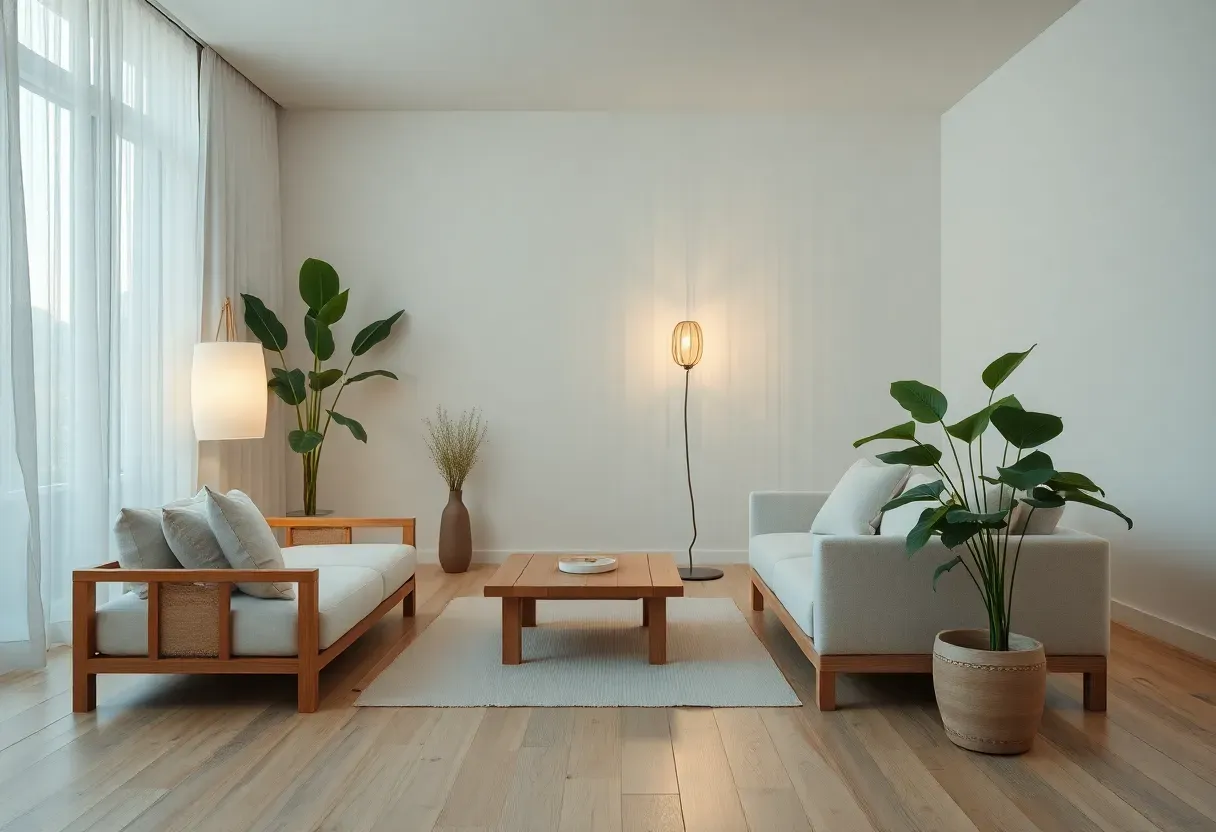
A minimalist Japandi living room combines the best of Japanese zen philosophy and Scandinavian hygge comfort, creating spaces that feel both calm and inviting. This design approach emphasizes clean lines, natural materials, and intentional simplicity while maintaining warmth through textures and thoughtful details. The result is a living room that promotes tranquility without sacrificing coziness.

The Japandi aesthetic works particularly well in living rooms because it balances functionality with emotional comfort. By incorporating light woods, neutral color palettes, and handcrafted elements, you can design a space that feels both sophisticated and livable. This fusion style celebrates imperfect beauty through wabi-sabi principles while keeping spaces clutter-free and organized.

These 23 minimalist Japandi living room ideas will help you transform your space into a serene sanctuary that still feels warm and welcoming. Each concept focuses on essential design principles rather than temporary trends, ensuring your living room remains timeless and adaptable.

Quick FAQ

What makes Japandi different from pure minimalism?

Japandi retains warmth through textures, natural materials, and cozy elements like throws and rugs, while pure minimalism can feel stark or cold. The Japanese influence adds layers of tactile comfort that make spaces feel lived-in and inviting.

How do I add warmth to a minimalist living room?

Incorporate natural wood tones, textured textiles like wool or linen, layer rugs for softness underfoot, and add warm lighting through floor lamps and candles. Plants and ceramic pieces also bring organic warmth to clean spaces.

What colors work best in Japandi living rooms?

Stick to a neutral foundation of white, cream, beige, and soft gray, then add warm accents through light woods like oak or birch. Muted earth tones like sage green, terracotta, or warm taupe can add depth without overwhelming the serene palette.

Should I avoid patterns in a Japandi space?

Patterns aren't forbidden, but keep them subtle and minimal. Think tone-on-tone textures, simple geometric shapes, or organic patterns inspired by nature. Limit patterns to one or two elements, such as a throw pillow or rug, rather than covering multiple surfaces.

How can I make a small living room feel more spacious?

Choose low-profile furniture with exposed legs, use mirrors to reflect light, keep the floor relatively clear, and opt for a limited color palette. Multi-functional pieces like storage ottomans or nesting tables help maintain openness while providing practical utility.

Table of Contents

  1. 1. Light Wood Foundation with Creamy Neutrals
  2. 2. Low-Profile Furniture for Airy Spaciousness
  3. 3. Statement Single Art Piece with Negative Space
  4. 4. Layered Natural Textures for Depth
  5. 5. Integrated Plant Displays as Living Decor
  6. 6. Shoji Screen Inspired Room Dividers
  7. 7. Monochromatic Warm Beige Scheme
  8. 8. Handwoven Textile Accents
  9. 9. Sunken Floor Seating Area
  10. 10. Asymmetric Furniture Arrangement
  11. 11. Paper Lantern Style Lighting
  12. 12. Raw Edge Wood Coffee Table
  13. 13. Sliding Wood Panel Doors
  14. 14. Tatami-Inspired Floor Cushions
  15. 15. Built-In Minimal Shelving
  16. 16. Stone or Ceramic Accents
  17. 17. Transparent or Lucite Furniture Pieces
  18. 18. Warm LED Strip Lighting
  19. 19. Curved Furniture for Soft Contrast
  20. 20. Hidden Storage Solutions
  21. 21. Seasonal Rotation of Decor
  22. 22. Neutral Textured Wall Treatment
  23. 23. Meditation Corner Nook

1. Light Wood Foundation with Creamy Neutrals

A minimalist Japandi living room anchored in light oak or birch flooring creates an immediate sense of warmth and spaciousness. The pale wood tones provide a natural foundation that pairs beautifully with cream-colored walls and furniture, establishing the serene canvas essential to this design philosophy. Unlike stark white minimalist spaces, the warmth of light wood prevents the room from feeling clinical or cold.
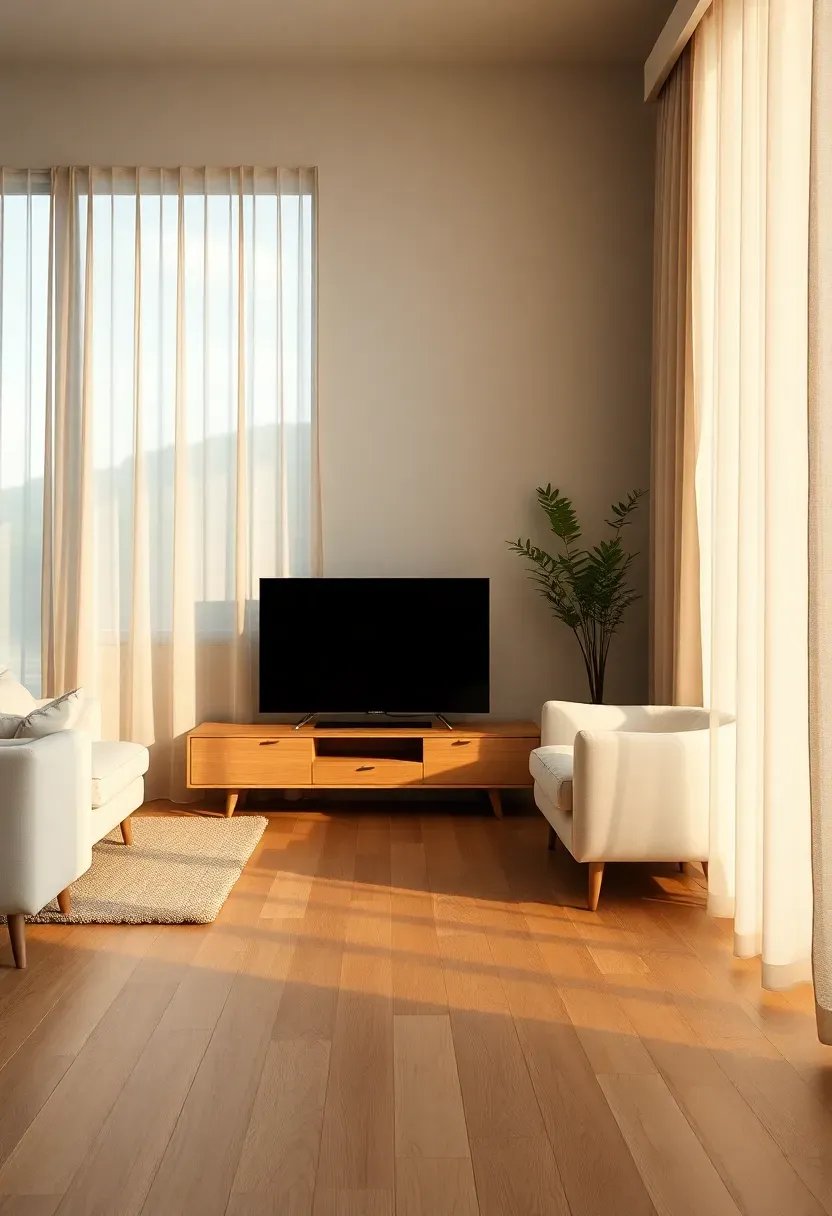
Hyper-realistic 3/4 view of a minimalist Japandi living room with light oak wood flooring, cream sofa, low-profile wooden media console, and sheer white curtains. Materials: light oak wood, cream linen upholstery, sheer cotton fabric. Soft diffused natural light from large window with warm golden hour tones, creating gentle shadows. Tranquil serene mood with organic minimalist shapes. Shallow depth of field, sharp details on wood grain textures, balanced composition with negative space, visible room context including part of window and indoor plant. No text, no logos, no watermarks.</p>
A minimalist Japandi living room combines the best of Japanese zen philosophy and Scandinavian hygge comfort, creating spaces that feel both calm and inviting. This design approach emphasizes clean lines, natural materials, and intentional simplicity while maintaining warmth through textures and thoughtful details. The result is a living room that promotes tranquility without sacrificing coziness.. Hyper-realistic 3/4 view of a minimalist Japandi living room with light oak wood flooring, cream s
Prompt: Nature documentary captured on Hasselblad X2D 100C with XCD 90V lens at f/4. Hyper-realistic 3/4 view of a minimalist Japandi living room with light oak wood flooring, cream sofa, low-profile wooden media console, and sheer white curtains. Materials: light oak wood, cream linen upholstery, sheer cotton fabric. Soft diffused natural light from large window with warm golden hour tones, creating gentle shadows. Tranquil serene mood with organic minimalist shapes. Shallow depth of field, sharp details on wood grain textures, balanced composition with negative space, visible room context including part of window and indoor plant. No text, no logos, no watermarks.

Tips

  • Choose consistent wood tones throughout the space for visual cohesion
  • Add warmth through wool or linen textiles in neutral shades
  • Keep wood tones light to maximize natural light reflection

Best for: North-facing rooms or spaces with limited natural light

What this gives you: A bright, airy foundation that feels warm rather than stark

2. Low-Profile Furniture for Airy Spaciousness

Furniture that sits close to the ground creates an immediate sense of spaciousness and calm, a principle drawn directly from Japanese interior design where low seating promotes humility and connection. A low-profile sofa paired with floor cushions or a sleek coffee table at seat height makes ceilings feel higher and creates more visible floor space. This approach works exceptionally well in smaller living rooms where every inch counts.

The visual lightness of low furniture also allows for better flow and movement through the space, reducing the feeling of clutter even in rooms with multiple pieces. Avoid low, bulky furniture that dominates the room—instead, choose pieces with slender profiles and exposed legs that maintain a sense of openness and airiness.
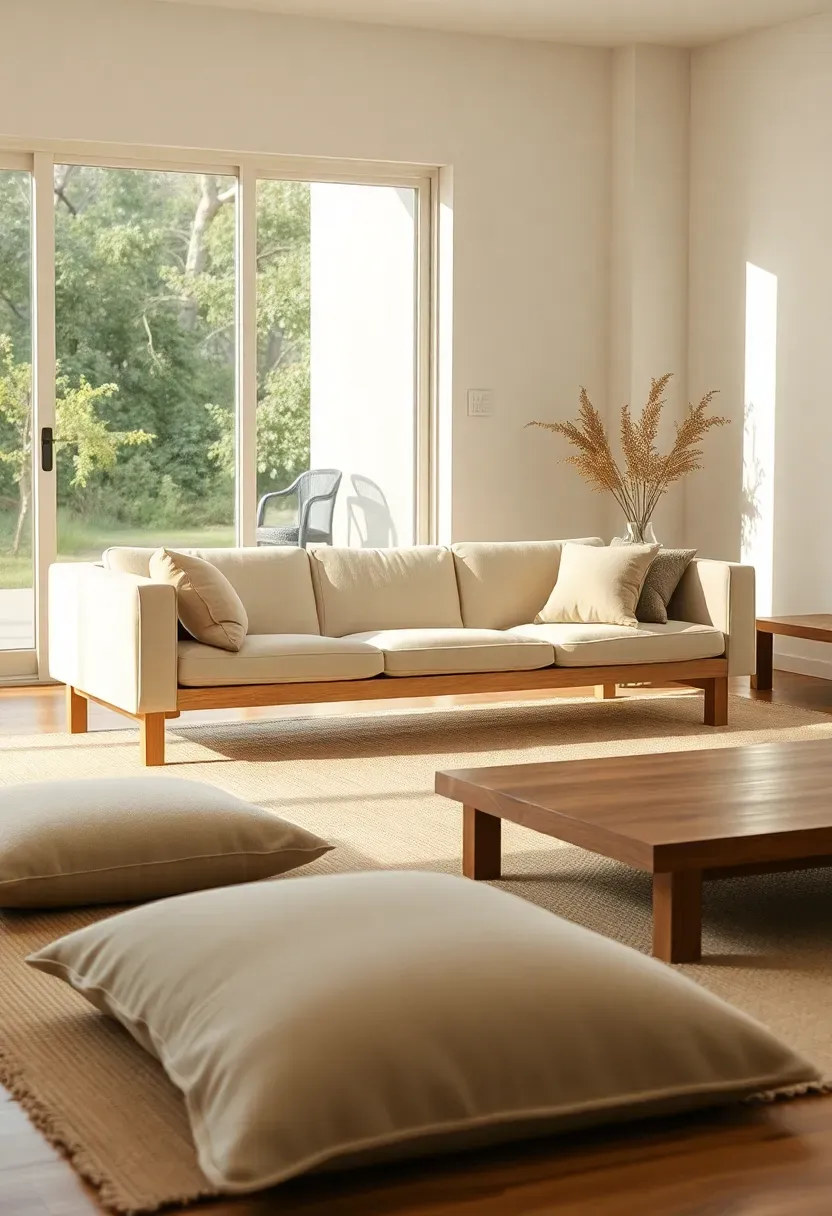
Hyper-realistic 3/4 view of minimalist Japandi living room featuring low-profile cream sofa with exposed wooden legs, floor cushions in neutral tones, low rectangular wooden coffee table. Materials: light wood frame, cream linen fabric, wool felt cushions. Soft natural light from sliding glass door, gentle shadows under furniture. Serene spacious mood with emphasis on floor space visible. Shallow depth of field, sharp details on furniture joinery, rule-of-thirds composition, minimalist room context with neutral walls. No text, no logos, no watermarks.</p>
A minimalist Japandi living room combines the best of Japanese zen philosophy and Scandinavian hygge comfort, creating spaces that feel both calm and inviting. This design approach emphasizes clean lines, natural materials, and intentional simplicity while maintaining warmth through textures and thoughtful details. The result is a living room that promotes tranquility without sacrificing coziness.. Hyper-realistic 3/4 view of minimalist Japandi living room featuring low-profile cream sofa with e
Prompt: Nature documentary captured on Hasselblad X2D 100C with XCD 90V lens at f/4. Hyper-realistic 3/4 view of minimalist Japandi living room featuring low-profile cream sofa with exposed wooden legs, floor cushions in neutral tones, low rectangular wooden coffee table. Materials: light wood frame, cream linen fabric, wool felt cushions. Soft natural light from sliding glass door, gentle shadows under furniture. Serene spacious mood with emphasis on floor space visible. Shallow depth of field, sharp details on furniture joinery, rule-of-thirds composition, minimalist room context with neutral walls. No text, no logos, no watermarks.

Tips

  • If you have existing standard-height furniture, create contrast with one low focal piece like a coffee table
  • Use floor cushions that can be stacked or moved for flexibility
  • Ensure low seating still provides adequate back support for comfort

Budget/Time: Floor cushions are an affordable entry point (starting at $50-100)

What this gives you: Enhanced sense of space and better visual flow

3. Statement Single Art Piece with Negative Space

Instead of covering walls with multiple artworks or gallery walls, Japandi minimalism embraces the power of one carefully chosen piece. A single large artwork, textile, or handcrafted ceramic installation becomes a focal point precisely because of the surrounding empty space. This approach draws the eye while maintaining the calm, uncluttered aesthetic essential to zen-inspired design.

The negative space around the artwork is as important as the piece itself—it allows the eye to rest and appreciate both the art and the architecture of the room. Avoid multiple competing pieces that create visual noise. Instead, invest in one piece that truly resonates, whether it's a large abstract painting, a woven textile wall hanging, or a collection of ceramics arranged as a single installation.
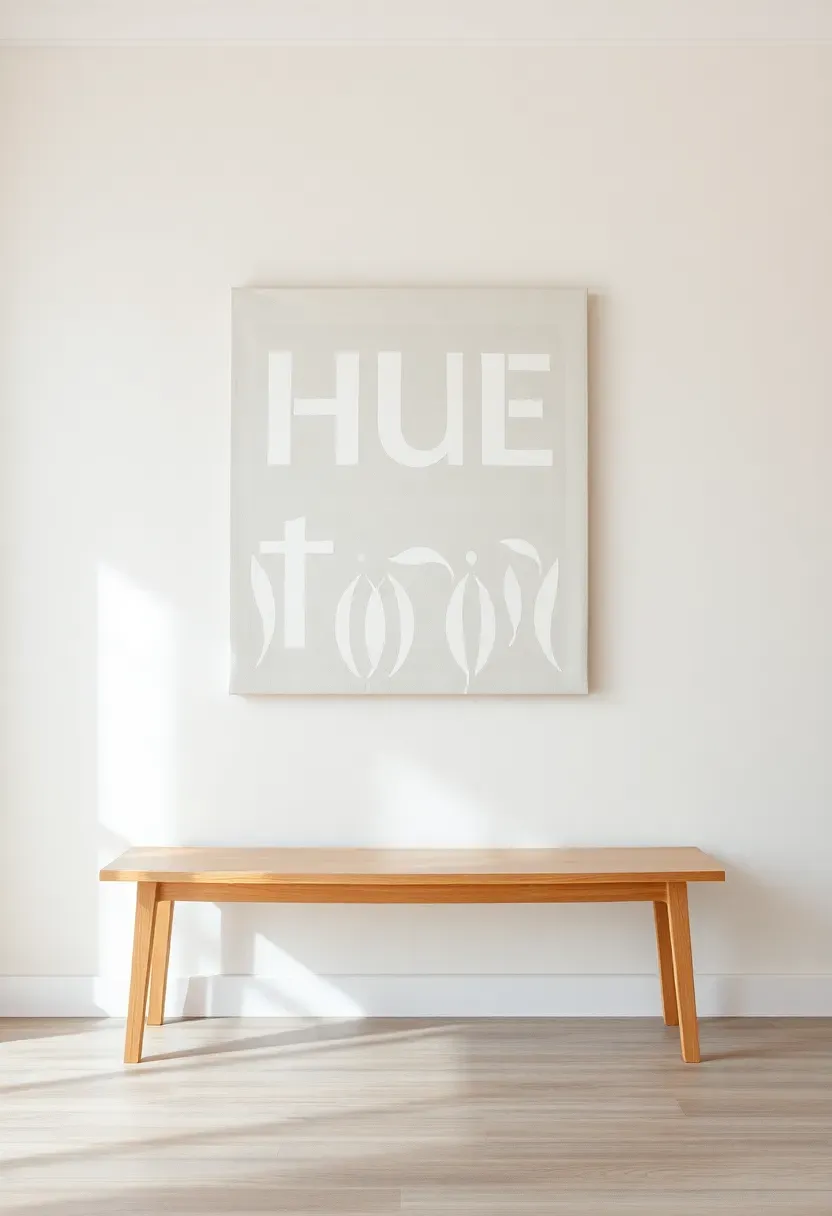
Hyper-realistic straight-on view of minimalist living room wall featuring one large abstract artwork with earthy organic shapes, ample white space surrounding it, low wooden bench beneath. Materials: linen canvas artwork texture, light oak bench, cream painted wall. Soft even natural light, subtle shadows from bench edge. Contemplative serene mood with emphasis on negative space. Sharp focus on artwork texture, centered composition, visible room context with neutral flooring. No text, no logos, no watermarks.</p>
A minimalist Japandi living room combines the best of Japanese zen philosophy and Scandinavian hygge comfort, creating spaces that feel both calm and inviting. This design approach emphasizes clean lines, natural materials, and intentional simplicity while maintaining warmth through textures and thoughtful details. The result is a living room that promotes tranquility without sacrificing coziness.. Hyper-realistic straight-on view of minimalist living room wall featuring one large abstract artwo
Prompt: Nature documentary captured on Hasselblad X2D 100C with XCD 90V lens at f/4. Hyper-realistic straight-on view of minimalist living room wall featuring one large abstract artwork with earthy organic shapes, ample white space surrounding it, low wooden bench beneath. Materials: linen canvas artwork texture, light oak bench, cream painted wall. Soft even natural light, subtle shadows from bench edge. Contemplative serene mood with emphasis on negative space. Sharp focus on artwork texture, centered composition, visible room context with neutral flooring. No text, no logos, no watermarks.

Tips

  • Hang artwork at eye level (approximately 60 inches from center to floor)
  • Leave at least 12-18 inches of space around the artwork on all sides
  • Consider leaning large pieces against the wall for a more casual, modern look

What this gives you: A calming focal point that enhances rather than competes with the space

4. Layered Natural Textures for Depth

Minimalist Japandi design achieves warmth and visual interest through texture rather than color or pattern. Layer natural materials like wool rugs, linen upholstery, cotton throws, leather accents, and wood furniture to create a space that feels rich and inviting despite its simplicity. The key is varying textures in a similar color palette, creating depth through tactile diversity rather than visual noise.

This layered approach means you can include multiple textiles and materials without cluttering the space visually. A wool rug provides softness underfoot, linen curtains add breezy texture, a leather cushion introduces smooth contrast, and wooden furniture brings natural grain patterns. Each material contributes to the sensory experience while maintaining the cohesive, calm aesthetic.
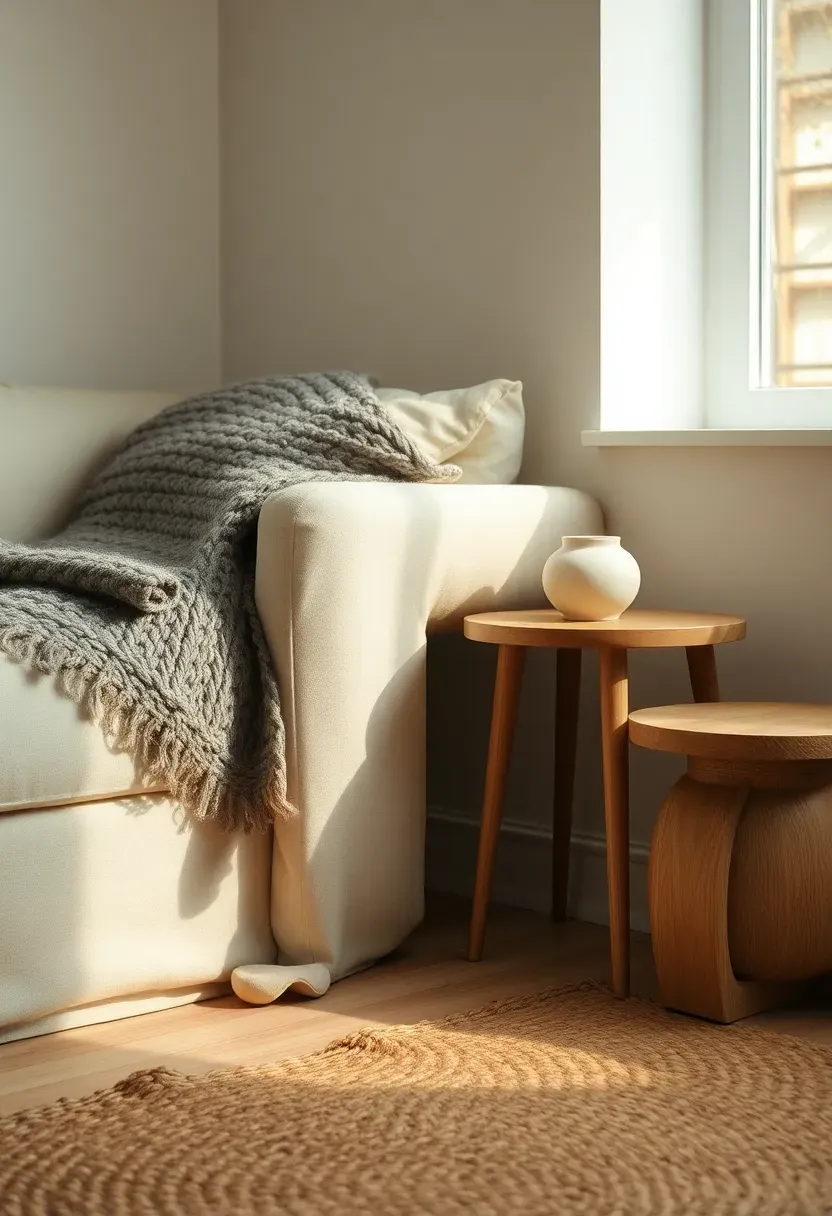
Hyper-realistic 3/4 view of minimalist Japandi living room corner showing layered textures: chunky wool throw draped over cream sofa arm, linen cushion, wooden side table with ceramic vase, jute rug on light wood floor. Materials: wool knit texture, linen weave, light oak wood grain, matte ceramic, jute rope texture. Warm diffused side light from window accentuating texture variations. Cozy serene mood with emphasis on material contrasts. Shallow depth of field, sharp details on textile textures, diagonal composition, visible room context with neutral walls. No text, no logos, no watermarks.</p>
A minimalist Japandi living room combines the best of Japanese zen philosophy and Scandinavian hygge comfort, creating spaces that feel both calm and inviting. This design approach emphasizes clean lines, natural materials, and intentional simplicity while maintaining warmth through textures and thoughtful details. The result is a living room that promotes tranquility without sacrificing coziness.. Hyper-realistic 3/4 view of minimalist Japandi living room corner showing layered textures: chunky
Prompt: Nature documentary captured on Hasselblad X2D 100C with XCD 90V lens at f/4. Hyper-realistic 3/4 view of minimalist Japandi living room corner showing layered textures: chunky wool throw draped over cream sofa arm, linen cushion, wooden side table with ceramic vase, jute rug on light wood floor. Materials: wool knit texture, linen weave, light oak wood grain, matte ceramic, jute rope texture. Warm diffused side light from window accentuating texture variations. Cozy serene mood with emphasis on material contrasts. Shallow depth of field, sharp details on textile textures, diagonal composition, visible room context with neutral walls. No text, no logos, no watermarks.

Tips

  • Aim for 3-5 different textures in a room for richness without overwhelming
  • Keep textures in the same color family for cohesion
  • Include both soft (textiles) and hard (wood, ceramic) elements for balance

What this gives you: Visual and tactile depth without color clutter

5. Integrated Plant Displays as Living Decor

Plants bring life, movement, and organic beauty to minimalist spaces, serving as living sculptures that soften hard edges and purify the air. In Japandi design, plants aren't just accessories—they're integral to the philosophy of connecting with nature. A single large statement plant or a curated collection of smaller specimens in consistent ceramic pots adds both visual interest and a sense of vitality.

The key is restraint: choose plants that complement the space rather than overwhelm it. A dramatic fiddle leaf fig in the corner, a cascading pothos on a shelf, or a cluster of succulents on the coffee table. Place plants where they can thrive and where they'll create the most visual impact—near windows for light, in corners to soften transitions, or as natural dividers between seating areas.
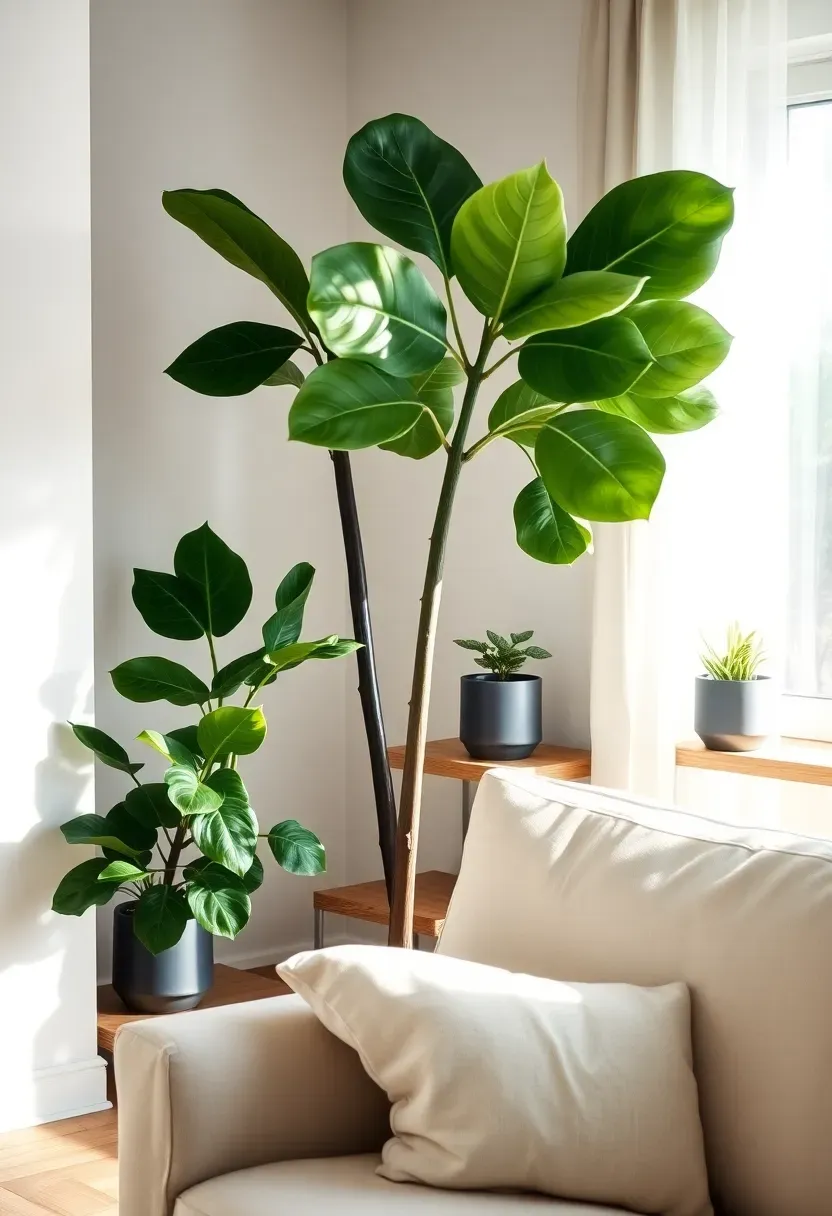
Hyper-realistic 3/4 view of minimalist Japandi living room featuring large potted fiddle leaf fig plant in corner, smaller plants in matching matte ceramic pots on wooden shelves, cream sofa visible in foreground. Materials: glossy green leaves, matte charcoal ceramic pots, light oak wood shelves, cream linen upholstery. Bright natural light from window filtering through plant leaves creating dappled shadows. Refreshing serene mood with organic living elements. Sharp focus on plant foliage textures, rule-of-thirds composition, visible room context with neutral walls and light wood floor. No text, no logos, no watermarks.</p>
A minimalist Japandi living room combines the best of Japanese zen philosophy and Scandinavian hygge comfort, creating spaces that feel both calm and inviting. This design approach emphasizes clean lines, natural materials, and intentional simplicity while maintaining warmth through textures and thoughtful details. The result is a living room that promotes tranquility without sacrificing coziness.. Hyper-realistic 3/4 view of minimalist Japandi living room featuring large potted fiddle leaf fig
Prompt: Nature documentary captured on Hasselblad X2D 100C with XCD 90V lens at f/4. Hyper-realistic 3/4 view of minimalist Japandi living room featuring large potted fiddle leaf fig plant in corner, smaller plants in matching matte ceramic pots on wooden shelves, cream sofa visible in foreground. Materials: glossy green leaves, matte charcoal ceramic pots, light oak wood shelves, cream linen upholstery. Bright natural light from window filtering through plant leaves creating dappled shadows. Refreshing serene mood with organic living elements. Sharp focus on plant foliage textures, rule-of-thirds composition, visible room context with neutral walls and light wood floor. No text, no logos, no watermarks.

Tips

  • Choose pots in consistent materials and colors for visual harmony
  • Consider the plant's mature size when positioning to avoid overcrowding
  • Group plants in odd numbers (3 or 5) for more natural, pleasing arrangements

Avoid if: You travel frequently and can't maintain consistent watering schedules

What this gives you: Organic vitality and improved air quality without adding clutter

6. Shoji Screen Inspired Room Dividers

Traditional Japanese shoji screens, adapted for modern spaces, offer an elegant way to zone an open-plan living room without blocking light or closing off areas. These translucent partitions create visual separation between living, dining, or workspace areas while maintaining the sense of openness and flow essential to minimalist design. The diffused light filtering through the screens adds soft, atmospheric quality to the room.

Modern interpretations might use frosted glass panels, wooden slats, or even fabric screens on minimal frames. Unlike solid walls, these dividers define spaces while allowing light to pass through, creating subtle transitions rather than hard barriers. They're particularly effective in studio apartments or open-concept homes where you need distinct zones without sacrificing spaciousness.
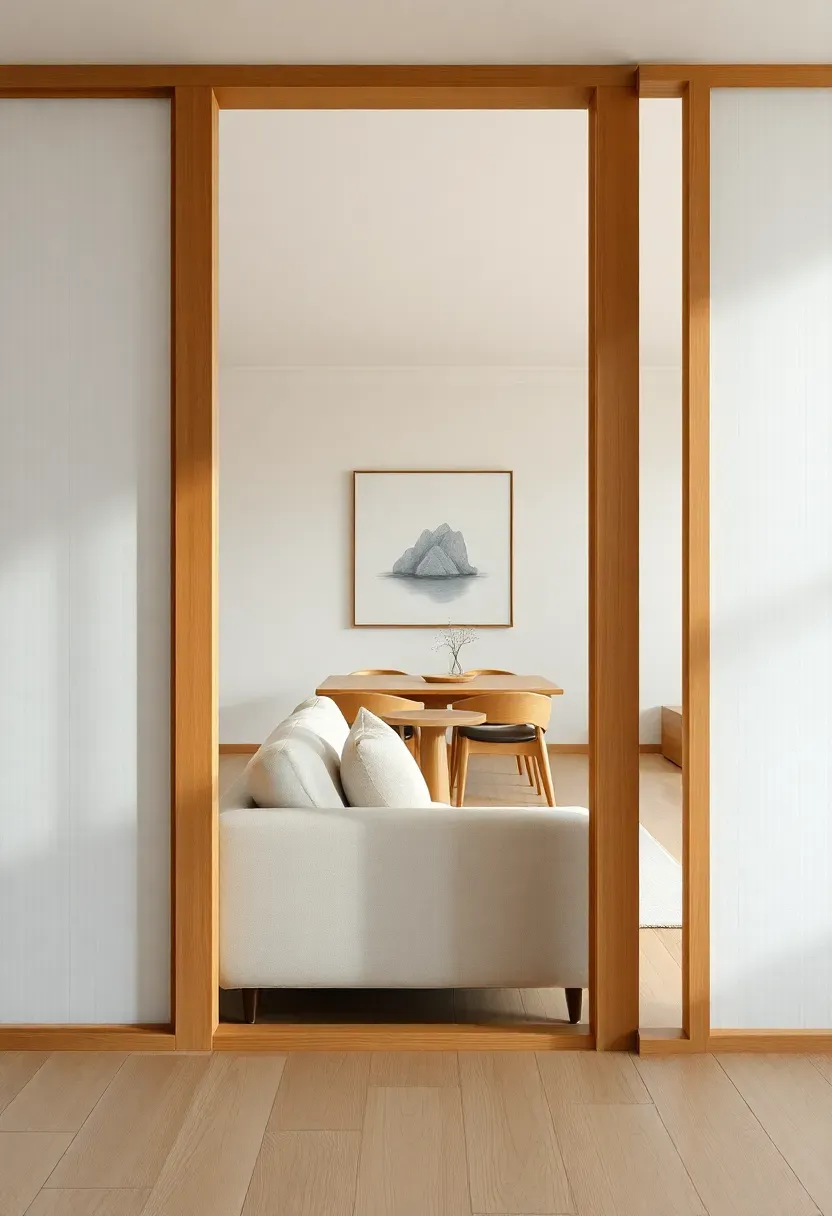
Hyper-realistic 3/4 view of modern Japandi living room featuring wooden frame shoji-style room divider with translucent paper panels, partially separating living area with cream sofa from dining area beyond. Materials: light wood frame, rice paper translucent panels, light oak flooring, cream linen sofa. Soft diffused natural light creating gentle shadows through divider panels. Serene separated-yet-connected mood. Shallow depth of field, sharp details on wood frame joinery, layered composition, visible room context extending through divider. No text, no logos, no watermarks.</p>
A minimalist Japandi living room combines the best of Japanese zen philosophy and Scandinavian hygge comfort, creating spaces that feel both calm and inviting. This design approach emphasizes clean lines, natural materials, and intentional simplicity while maintaining warmth through textures and thoughtful details. The result is a living room that promotes tranquility without sacrificing coziness.. Hyper-realistic 3/4 view of modern Japandi living room featuring wooden frame shoji-style room div
Prompt: Nature documentary captured on Hasselblad X2D 100C with XCD 90V lens at f/4. Hyper-realistic 3/4 view of modern Japandi living room featuring wooden frame shoji-style room divider with translucent paper panels, partially separating living area with cream sofa from dining area beyond. Materials: light wood frame, rice paper translucent panels, light oak flooring, cream linen sofa. Soft diffused natural light creating gentle shadows through divider panels. Serene separated-yet-connected mood. Shallow depth of field, sharp details on wood frame joinery, layered composition, visible room context extending through divider. No text, no logos, no watermarks.

Tips

  • Use dividers on wheels or track systems for flexibility as needs change
  • Consider freestanding screens if you're renting and can't install permanent fixtures
  • Maintain the same wood tone as other furniture for visual continuity

Rental note: Freestanding screens are perfect temporary solutions for apartments

What this gives you: Zoned spaces that feel connected yet distinct

7. Monochromatic Warm Beige Scheme

A monochromatic palette based on warm beige tones creates a serene, cohesive atmosphere that feels both sophisticated and incredibly welcoming. By working with varying shades of beige—from cream to tan to camel—you create visual interest through subtle tonal shifts rather than contrasting colors. This approach epitomizes Japandi's balance of Japanese minimalism and Scandinavian warmth.

The beauty of a monochromatic scheme lies in its versatility and timelessness. It makes spaces feel larger, creates a calming backdrop for daily life, and allows textures and forms to take center stage. Layer different materials in the same color family: cream walls, beige sofa, tan leather accents, light wood furniture. The result is a space that feels cohesive without feeling matched or boring.
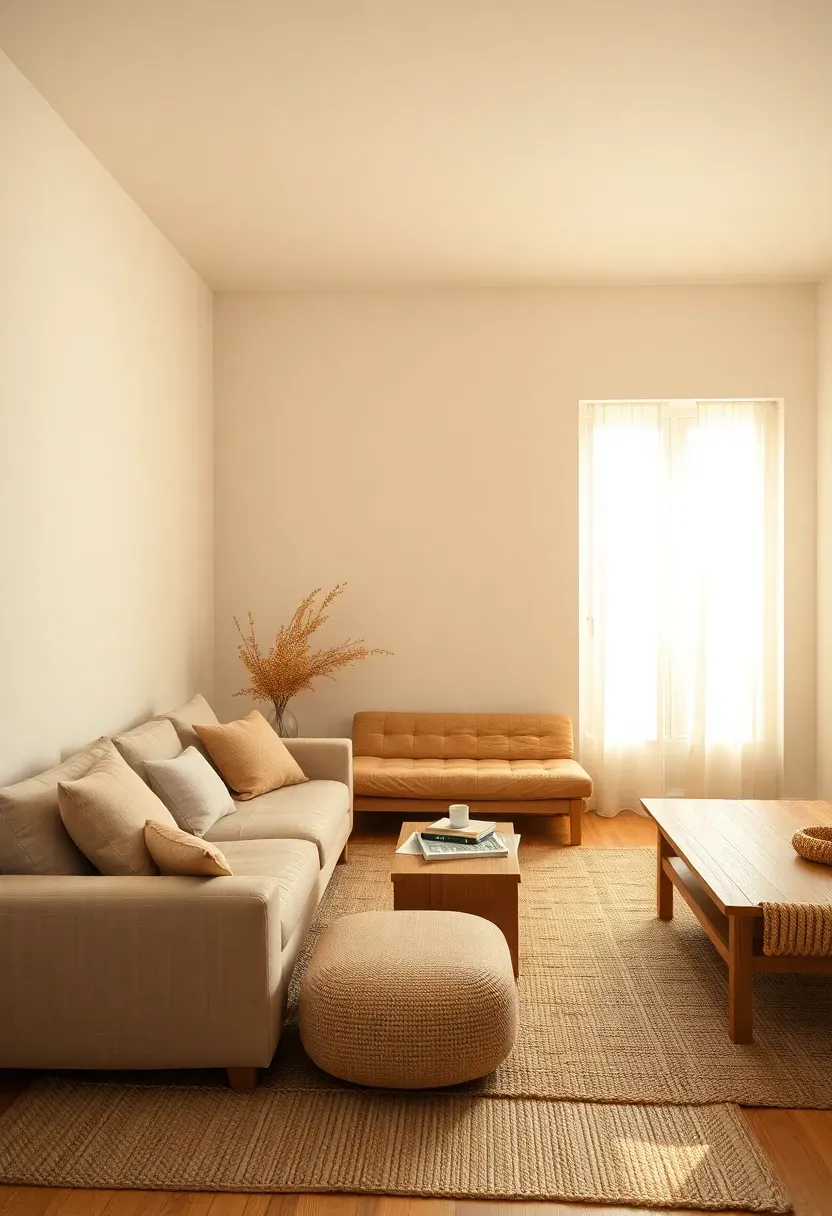
Hyper-realistic wide view of minimalist Japandi living room in monochromatic warm beige palette: cream walls, beige linen sofa, tan leather cushions, light oak wood furniture, beige wool rug. Materials: varying textures in beige tones—linen weave, leather smoothness, wool chunky knit, oak wood grain. Warm golden natural light streaming through window, soft shadows. Serene cohesive mood with emphasis on tonal layering. Sharp focus on texture contrasts, symmetrical composition, full room context showing seamless color flow. No text, no logos, no watermarks.</p>
A minimalist Japandi living room combines the best of Japanese zen philosophy and Scandinavian hygge comfort, creating spaces that feel both calm and inviting. This design approach emphasizes clean lines, natural materials, and intentional simplicity while maintaining warmth through textures and thoughtful details. The result is a living room that promotes tranquility without sacrificing coziness.. Hyper-realistic wide view of minimalist Japandi living room in monochromatic warm beige palette: c
Prompt: Nature documentary captured on Hasselblad X2D 100C with XCD 90V lens at f/4. Hyper-realistic wide view of minimalist Japandi living room in monochromatic warm beige palette: cream walls, beige linen sofa, tan leather cushions, light oak wood furniture, beige wool rug. Materials: varying textures in beige tones—linen weave, leather smoothness, wool chunky knit, oak wood grain. Warm golden natural light streaming through window, soft shadows. Serene cohesive mood with emphasis on tonal layering. Sharp focus on texture contrasts, symmetrical composition, full room context showing seamless color flow. No text, no logos, no watermarks.

Tips

  • Include at least 3-5 shades of your base color for depth
  • Add one contrasting element (like a black lamp or green plant) for anchor
  • Use texture variations to prevent the monochrome look from feeling flat

What this gives you: A calming, sophisticated space that never goes out of style

8. Handwoven Textile Accents

Handwoven textiles, whether throws, cushions, or wall hangings, bring the craftsman spirit and imperfect beauty central to wabi-sabi philosophy into your living room. These pieces add tactile richness and visual warmth while celebrating the human touch—slight irregularities and visible weaving techniques become part of their charm. Each piece tells a story of making, connecting your space to traditional craftsmanship.

Incorporate handwoven elements through throw blankets with visible weave patterns, cushions with macramé or woven details, or wall hangings that serve as textile art. Look for natural fibers like wool, cotton, or linen in neutral tones that complement your palette. The texture and craftsmanship of these pieces add depth and interest without needing pattern or color.

Hyper-realistic close-up detail shot of handwoven textile accents in Japandi living room: chunky knit wool throw draped over sofa arm showing visible stitch texture, woven cushion with geometric pattern, macramé wall hanging in background. Materials: thick wool yarn with visible twist, cotton woven fabric with raised texture, knotted macramé cords. Soft directional light highlighting weave patterns and textures. Artisanal warm mood celebrating craftsmanship. Sharp focus on textile details, shallow depth of field, visible room context with neutral sofa and wood floor. No text, no logos, no watermarks.</p>
A minimalist Japandi living room combines the best of Japanese zen philosophy and Scandinavian hygge comfort, creating spaces that feel both calm and inviting. This design approach emphasizes clean lines, natural materials, and intentional simplicity while maintaining warmth through textures and thoughtful details. The result is a living room that promotes tranquility without sacrificing coziness.. Hyper-realistic close-up detail shot of handwoven textile accents in Japandi living room: chunky k
Prompt: Nature documentary captured on Hasselblad X2D 100C with XCD 90V lens at f/4. Hyper-realistic close-up detail shot of handwoven textile accents in Japandi living room: chunky knit wool throw draped over sofa arm showing visible stitch texture, woven cushion with geometric pattern, macramé wall hanging in background. Materials: thick wool yarn with visible twist, cotton woven fabric with raised texture, knotted macramé cords. Soft directional light highlighting weave patterns and textures. Artisanal warm mood celebrating craftsmanship. Sharp focus on textile details, shallow depth of field, visible room context with neutral sofa and wood floor. No text, no logos, no watermarks.

Tips

  • Support local artisans or fair-trade cooperatives when purchasing handwoven pieces
  • Mix weave scales—fine weaves alongside chunky knits for contrast
  • Use handwoven pieces as statement accents rather than overwhelming the space

Budget/Time: Start with one handwoven cushion ($40-80) and build from there

What this gives you: Handcrafted character and tactile warmth

9. Sunken Floor Seating Area

Inspired by traditional Japanese tatami rooms, a sunken or recessed seating area creates a distinct, intimate zone within your living room while promoting a sense of grounding and calm. This architectural feature defines the lounging area without walls or partitions, making it feel special and intentional. Even a step down of just 6-8 inches creates a significant psychological shift between zones.

While major structural changes aren't always possible, you can approximate this effect with a large platform or raised floor section around the seating area. Layer plush rugs and floor cushions on the sunken section to create a cozy, conversation-friendly space. This approach works particularly well for defining living areas in open-plan spaces or creating a dedicated relaxation zone.
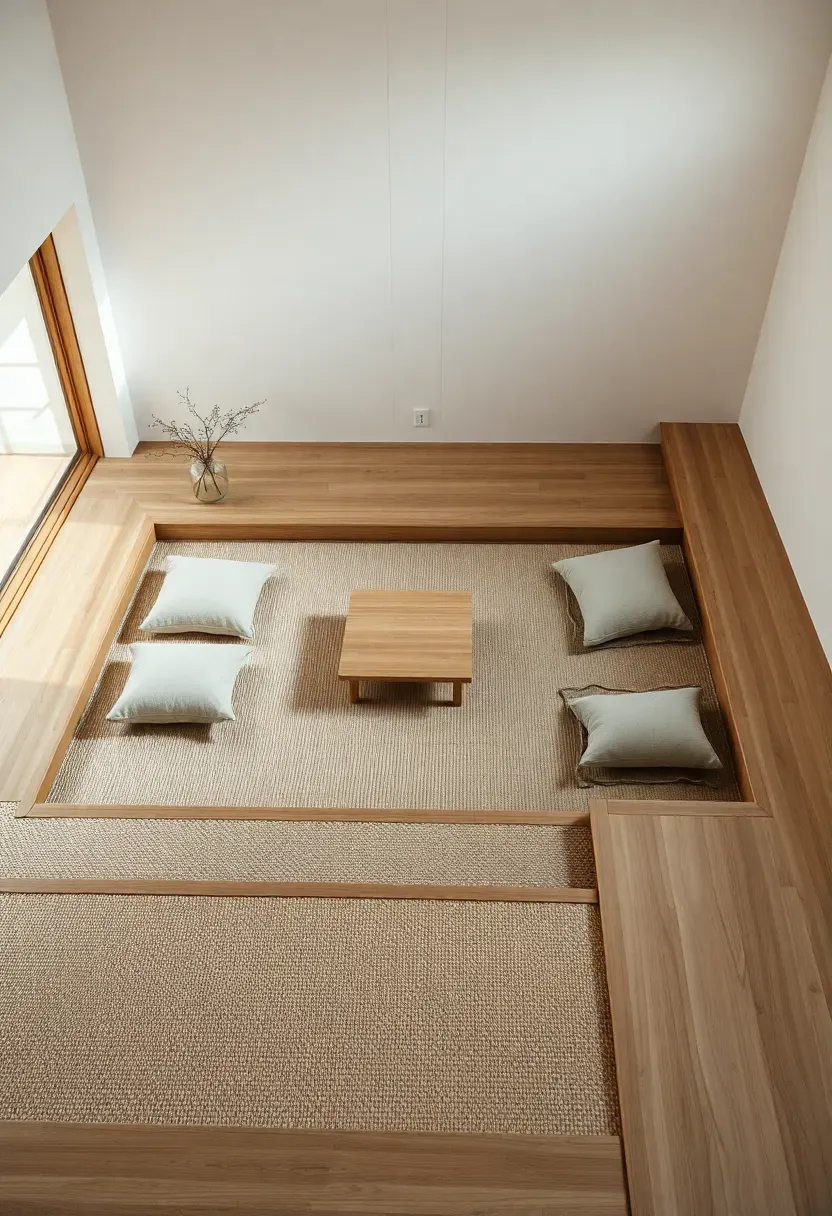
Hyper-realistic 3/4 elevated view of minimalist Japandi living room featuring sunken seating area with step-down design: floor covered in tatami-style light woven floor covering, scattered neutral floor cushions, low wooden coffee table, surrounding raised floor with light oak wood. Materials: woven floor texture, linen floor cushions, light oak wood platform, wool rug edges visible. Soft ambient lighting from above, subtle shadows at step edges. Grounded intimate mood. Sharp focus on floor texture contrast, wide-angle composition showing full room context with neutral walls. No text, no logos, no watermarks.</p>
A minimalist Japandi living room combines the best of Japanese zen philosophy and Scandinavian hygge comfort, creating spaces that feel both calm and inviting. This design approach emphasizes clean lines, natural materials, and intentional simplicity while maintaining warmth through textures and thoughtful details. The result is a living room that promotes tranquility without sacrificing coziness.. Hyper-realistic 3/4 elevated view of minimalist Japandi living room featuring sunken seating area
Prompt: Nature documentary captured on Hasselblad X2D 100C with XCD 90V lens at f/4. Hyper-realistic 3/4 elevated view of minimalist Japandi living room featuring sunken seating area with step-down design: floor covered in tatami-style light woven floor covering, scattered neutral floor cushions, low wooden coffee table, surrounding raised floor with light oak wood. Materials: woven floor texture, linen floor cushions, light oak wood platform, wool rug edges visible. Soft ambient lighting from above, subtle shadows at step edges. Grounded intimate mood. Sharp focus on floor texture contrast, wide-angle composition showing full room context with neutral walls. No text, no logos, no watermarks.

Tips

  • Consider built-in bench seating around the perimeter for added functionality
  • Ensure adequate lighting—floor lamps or overhead pendants—for the recessed area
  • If structural changes aren't possible, use a large rug to visually define the zone

Avoid if: You have mobility concerns or small children (the step can be a tripping hazard)

What this gives you: A defined, intimate conversation zone without visual barriers

10. Asymmetric Furniture Arrangement

Breaking away from rigid symmetry embraces the Japanese aesthetic of natural asymmetry found in traditional gardens and tea ceremonies. Instead of placing furniture in perfectly balanced pairs, arrange pieces organically to create flow and visual interest. A sofa off-center with a single armchair, a floor lamp balancing a plant, or side tables of different heights—all create dynamic, lived-in arrangements that feel intentional yet relaxed.

The key to making asymmetry work is visual balance rather than mirror symmetry. A large piece on one side can be balanced by multiple smaller pieces on the other. Consider the visual weight of each element—a dark cabinet might balance a light-colored sofa, or a tall floor lamp might offset a low coffee table. This approach makes spaces feel more natural and less staged.
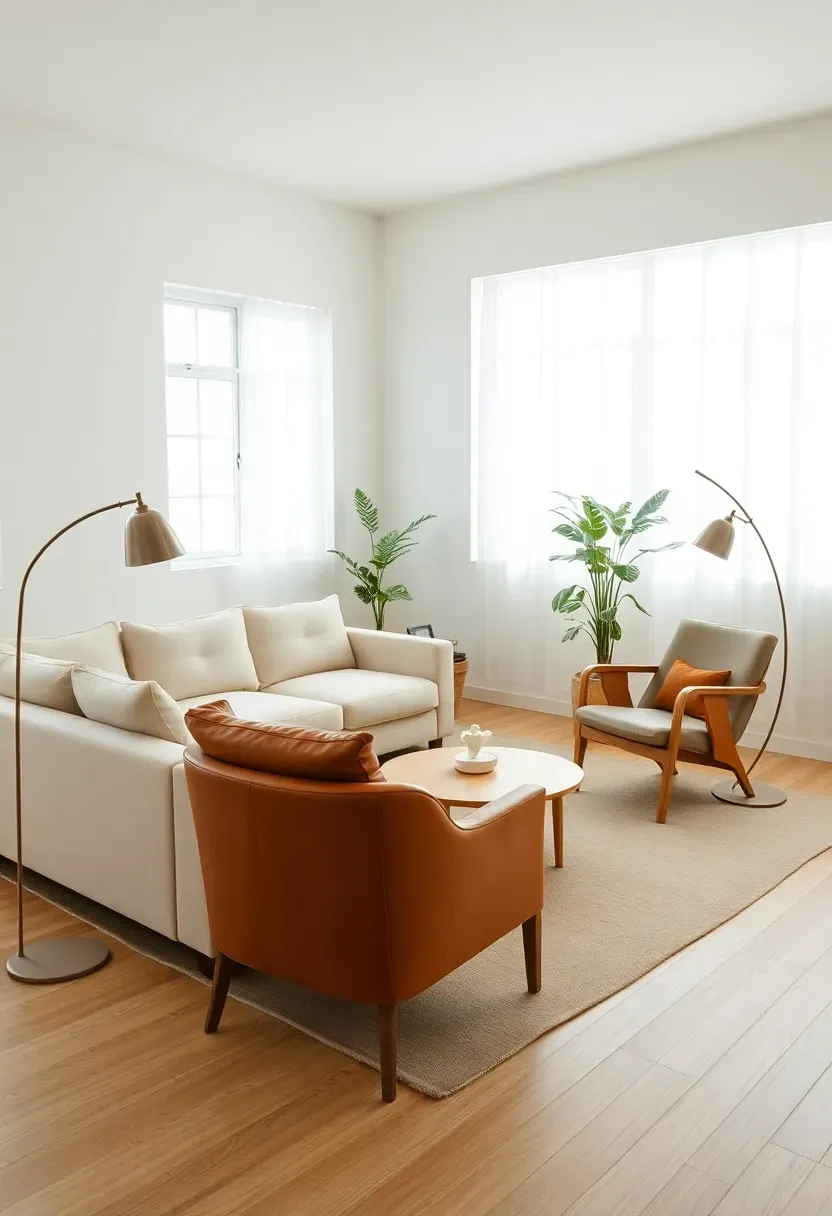
Hyper-realistic wide view of minimalist Japandi living room with asymmetric furniture arrangement: cream sectional placed off-center to left, single tan leather armchair on right, floor lamp with arc base balancing potted plant in corner, low wooden coffee table offset from sofa center. Materials: cream linen upholstery, tan leather with visible grain, metal lamp finish, light oak wood, green plant leaves. Soft diffused natural light from multiple windows, varied shadow lengths. Dynamic yet calm mood. Sharp focus on furniture placement, wide composition showing full room context. No text, no logos, no watermarks.</p>
A minimalist Japandi living room combines the best of Japanese zen philosophy and Scandinavian hygge comfort, creating spaces that feel both calm and inviting. This design approach emphasizes clean lines, natural materials, and intentional simplicity while maintaining warmth through textures and thoughtful details. The result is a living room that promotes tranquility without sacrificing coziness.. Hyper-realistic wide view of minimalist Japandi living room with asymmetric furniture arrangement:
Prompt: Nature documentary captured on Hasselblad X2D 100C with XCD 90V lens at f/4. Hyper-realistic wide view of minimalist Japandi living room with asymmetric furniture arrangement: cream sectional placed off-center to left, single tan leather armchair on right, floor lamp with arc base balancing potted plant in corner, low wooden coffee table offset from sofa center. Materials: cream linen upholstery, tan leather with visible grain, metal lamp finish, light oak wood, green plant leaves. Soft diffused natural light from multiple windows, varied shadow lengths. Dynamic yet calm mood. Sharp focus on furniture placement, wide composition showing full room context. No text, no logos, no watermarks.

Tips

  • Create a focal point and arrange furniture around it, not around symmetry
  • Leave negative space on one side to enhance the asymmetrical balance
  • Test arrangements by moving pieces and living with them for a few days

What this gives you: A more natural, relaxed feel that embraces imperfection

11. Paper Lantern Style Lighting

Modern interpretations of traditional Japanese paper lanterns provide soft, diffuse illumination that creates an immediate sense of calm and warmth. These lighting fixtures, whether floor lamps, pendants, or table lamps, filter light through paper or fabric shades, casting gentle shadows and eliminating harsh glare. The soft glow transforms the living room into an inviting sanctuary as evening approaches.

The beauty of paper lantern lighting lies in its ability to provide ambient light without becoming a visual distraction. The simple forms blend seamlessly with minimalist aesthetics, while the translucent quality adds ethereal lightness to the space. Choose larger scale lanterns as statement pieces or cluster smaller ones for added impact. Avoid overly delicate paper that tears easily—opt for washi paper or reinforced paper alternatives.
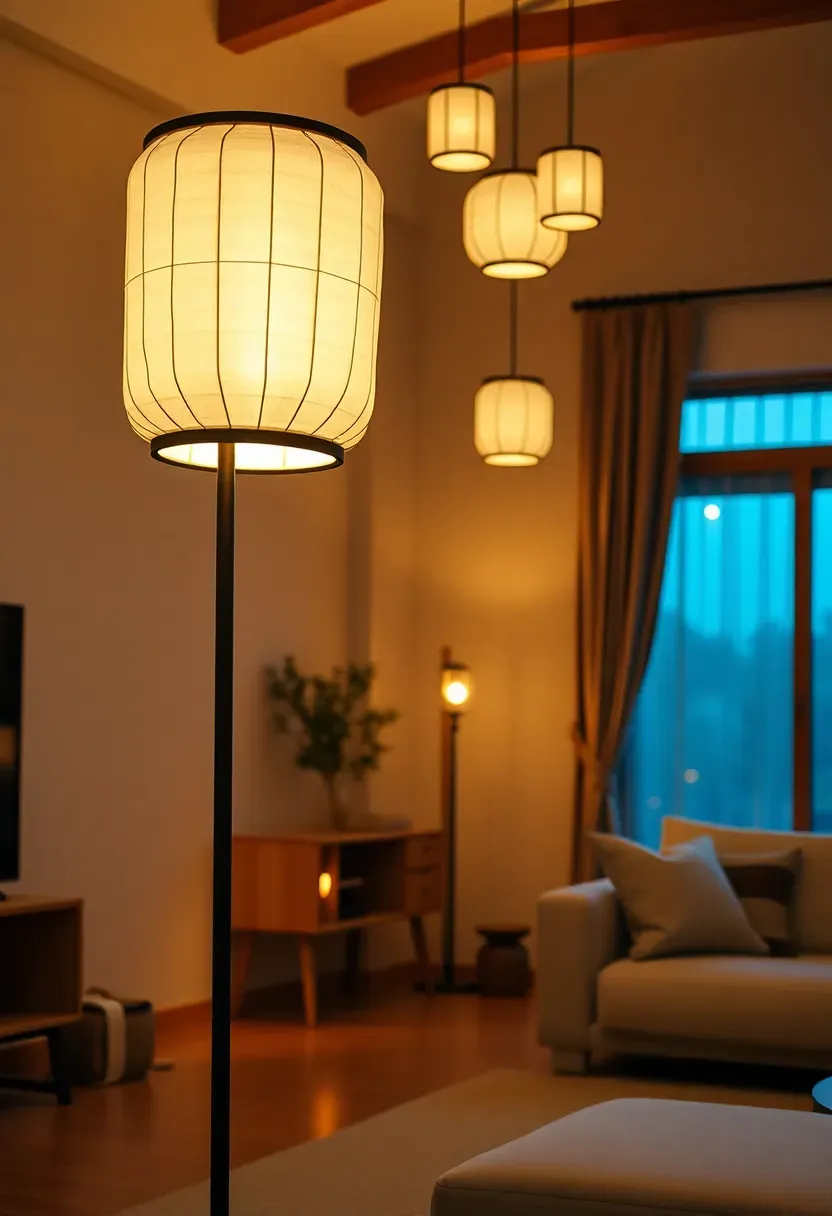
Hyper-realistic 3/4 view of minimalist Japandi living room at dusk featuring large floor lamp with paper lantern shade casting soft glow, smaller paper pendant lights above, warm ambient light filling room. Materials: translucent white paper lantern shades with visible subtle texture, black minimal metal frames, light oak furniture, cream sofa visible. Warm glowing light from lanterns creating soft shadows, cool blue light through window. Tranquil evening mood. Shallow depth of field, sharp details on paper texture, vertical composition, visible room context with neutral walls. No text, no logos, no watermarks.</p>
A minimalist Japandi living room combines the best of Japanese zen philosophy and Scandinavian hygge comfort, creating spaces that feel both calm and inviting. This design approach emphasizes clean lines, natural materials, and intentional simplicity while maintaining warmth through textures and thoughtful details. The result is a living room that promotes tranquility without sacrificing coziness.. Hyper-realistic 3/4 view of minimalist Japandi living room at dusk featuring large floor lamp with
Prompt: Nature documentary captured on Hasselblad X2D 100C with XCD 90V lens at f/4. Hyper-realistic 3/4 view of minimalist Japandi living room at dusk featuring large floor lamp with paper lantern shade casting soft glow, smaller paper pendant lights above, warm ambient light filling room. Materials: translucent white paper lantern shades with visible subtle texture, black minimal metal frames, light oak furniture, cream sofa visible. Warm glowing light from lanterns creating soft shadows, cool blue light through window. Tranquil evening mood. Shallow depth of field, sharp details on paper texture, vertical composition, visible room context with neutral walls. No text, no logos, no watermarks.

Tips

  • Use warm white bulbs (2700K-3000K) for cozy ambient lighting
  • Dimmable options let you adjust brightness for different moods and times
  • Combine paper lanterns with task lighting for functionality alongside ambiance

Budget/Time: Paper lantern floor lamps start around $100-200 depending on size and quality

What this gives you: Soft, calming illumination that transforms evening atmosphere

12. Raw Edge Wood Coffee Table

A coffee table with a raw or live edge brings the wabi-sabi appreciation for natural imperfections into your living room, serving as both functional surface and sculptural element. The organic, uneven edge celebrates the tree's natural form, providing striking contrast to clean lines and smooth surfaces elsewhere in the room. This single piece adds character, warmth, and visual interest without needing additional decor.

When choosing a raw edge table, look for woods with distinctive grain patterns like walnut, oak, or maple. The natural edge should feel intentional, not rough—finished smooth to the touch while retaining its organic shape. Pair with minimalist sofas and streamlined furniture to let the table be the star, or balance with other natural elements like plants or stone accessories.
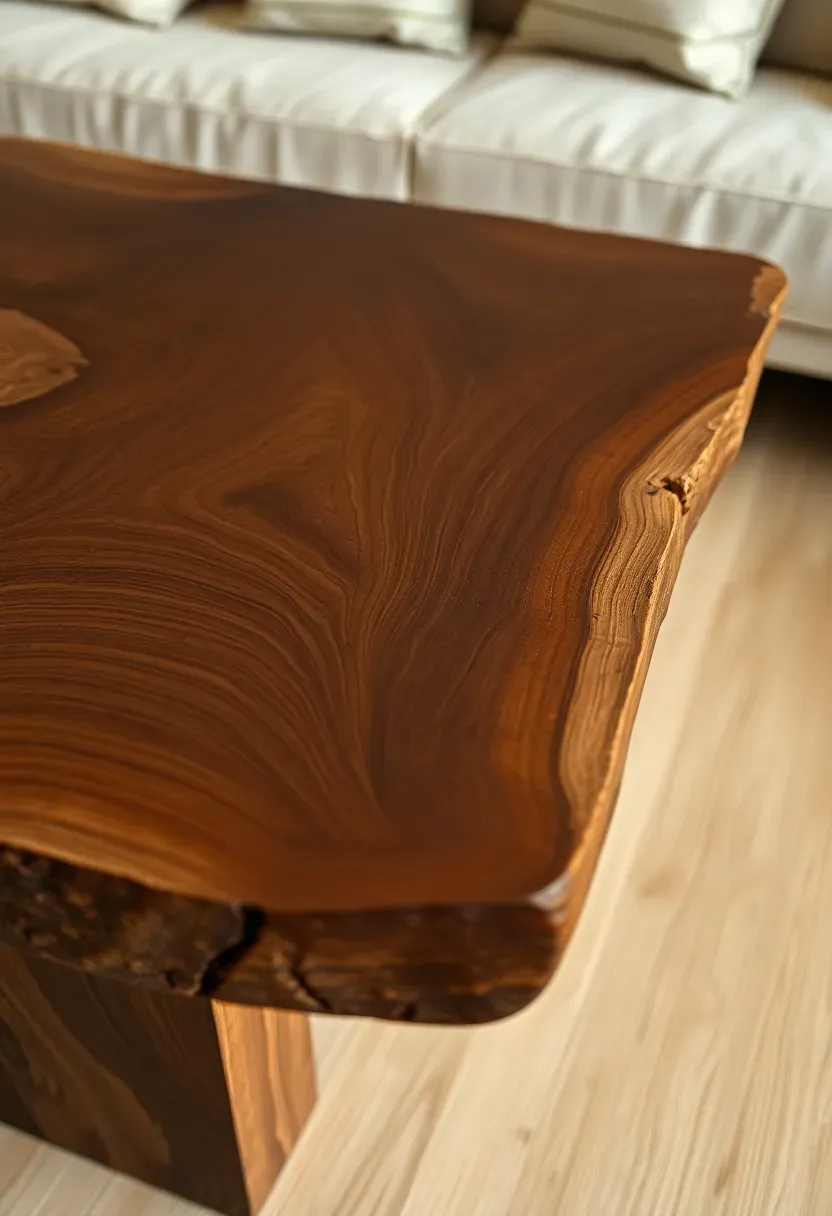
Hyper-realistic slightly elevated close shot of raw edge wood coffee table in Japandi living room: walnut slab table with natural live edge showing organic wavy line and bark inclusion, smooth sanded top surface, matte finish, cream sofa and light wood floor visible beneath and around. Materials: rich walnut wood grain with visible growth rings, natural edge texture, cream linen sofa, light oak floor. Soft side lighting emphasizing wood grain and edge detail. Organic sculptural mood. Sharp focus on table edge texture, medium depth of field, visible room context with neutral sofa. No text, no logos, no watermarks.</p>
A minimalist Japandi living room combines the best of Japanese zen philosophy and Scandinavian hygge comfort, creating spaces that feel both calm and inviting. This design approach emphasizes clean lines, natural materials, and intentional simplicity while maintaining warmth through textures and thoughtful details. The result is a living room that promotes tranquility without sacrificing coziness.. Hyper-realistic slightly elevated close shot of raw edge wood coffee table in Japandi living room:
Prompt: Nature documentary captured on Hasselblad X2D 100C with XCD 90V lens at f/4. Hyper-realistic slightly elevated close shot of raw edge wood coffee table in Japandi living room: walnut slab table with natural live edge showing organic wavy line and bark inclusion, smooth sanded top surface, matte finish, cream sofa and light wood floor visible beneath and around. Materials: rich walnut wood grain with visible growth rings, natural edge texture, cream linen sofa, light oak floor. Soft side lighting emphasizing wood grain and edge detail. Organic sculptural mood. Sharp focus on table edge texture, medium depth of field, visible room context with neutral sofa. No text, no logos, no watermarks.

Tips

  • Ensure the table height works with your seating (16-18 inches is standard)
  • Choose a finish that protects the wood while maintaining its natural appearance
  • Keep decor minimal on the table to let the raw edge be the focal point

What this gives you: A sculptural focal point celebrating natural beauty

13. Sliding Wood Panel Doors

Sliding wooden doors, inspired by traditional Japanese fusuma or shoji panels, offer space-saving functionality while adding architectural elegance to your living room. Unlike swinging doors that require clearance space, sliders move along tracks, making them ideal for smaller rooms or for separating zones in open-plan layouts. The smooth, silent operation feels both luxurious and meditative.

Modern interpretations range from full wood panels to versions with glass or translucent inserts. Choose a wood tone that matches or complements your existing furniture for continuity. In living rooms, sliding panels can hide entertainment centers, create privacy for a workspace nook, or close off a dining area when entertaining. The clean lines and minimal hardware contribute to the uncluttered Japandi aesthetic.
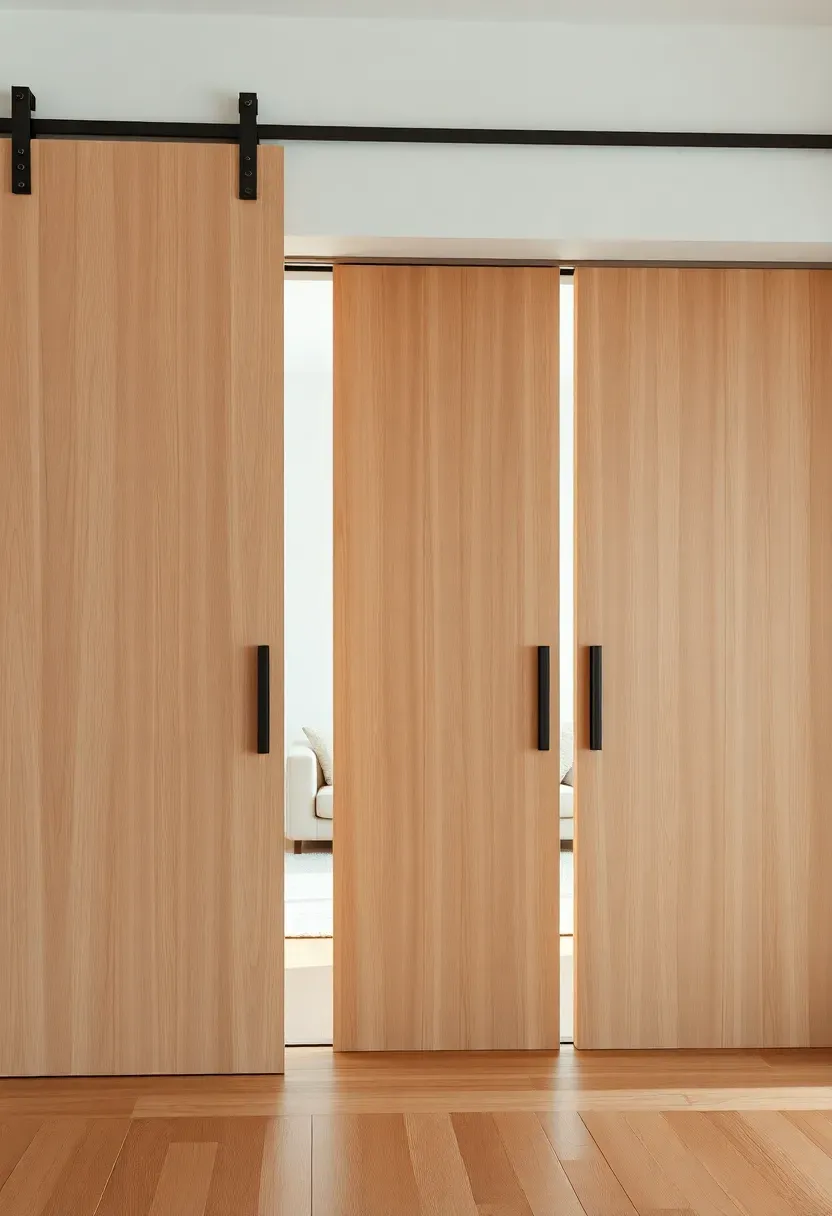
Hyper-realistic front view of sliding wood panel doors in minimalist Japandi living room: three vertical light oak wood panels with minimal black metal track hardware, partially closed to reveal living room beyond with cream sofa, soft shadow gaps between panels. Materials: vertical grain light oak wood, matte black metal hardware, cream walls visible. Soft even natural light, subtle shadows emphasizing panel seams. Architectural serene mood. Sharp focus on wood grain and hardware detail, vertical composition, visible room context through partially open doors. No text, no logos, no watermarks.</p>
A minimalist Japandi living room combines the best of Japanese zen philosophy and Scandinavian hygge comfort, creating spaces that feel both calm and inviting. This design approach emphasizes clean lines, natural materials, and intentional simplicity while maintaining warmth through textures and thoughtful details. The result is a living room that promotes tranquility without sacrificing coziness.. Hyper-realistic front view of sliding wood panel doors in minimalist Japandi living room: three ve
Prompt: Nature documentary captured on Hasselblad X2D 100C with XCD 90V lens at f/4. Hyper-realistic front view of sliding wood panel doors in minimalist Japandi living room: three vertical light oak wood panels with minimal black metal track hardware, partially closed to reveal living room beyond with cream sofa, soft shadow gaps between panels. Materials: vertical grain light oak wood, matte black metal hardware, cream walls visible. Soft even natural light, subtle shadows emphasizing panel seams. Architectural serene mood. Sharp focus on wood grain and hardware detail, vertical composition, visible room context through partially open doors. No text, no logos, no watermarks.

Tips

  • Install soft-close mechanisms for smooth, quiet operation

  • Consider pocket slides that disappear into walls for maximum openness
  • If renovating, ensure structural support for the track system above the opening

Rental note: Freestanding room dividers can mimic the look without permanent installation

What this gives you: Space-efficient separation with architectural elegance

14. Tatami-Inspired Floor Cushions

Floor cushions inspired by traditional Japanese tatami seating offer flexible, low seating that encourages relaxation and closer connection to the ground. These cushions, typically larger and thicker than standard floor pillows, provide comfortable alternative seating that can be moved or stored as needed. They're perfect for casual gatherings, meditation, or simply lounging with a book.

Incorporate floor cushions in coordinating fabrics that complement your sofa and chairs—linen, canvas, or wool in neutral tones work beautifully. Stack them neatly in a corner when not in use, or scatter them around a low coffee table for impromptu seating. This flexible approach to seating embodies the Japandi principles of adaptability and intentional simplicity.
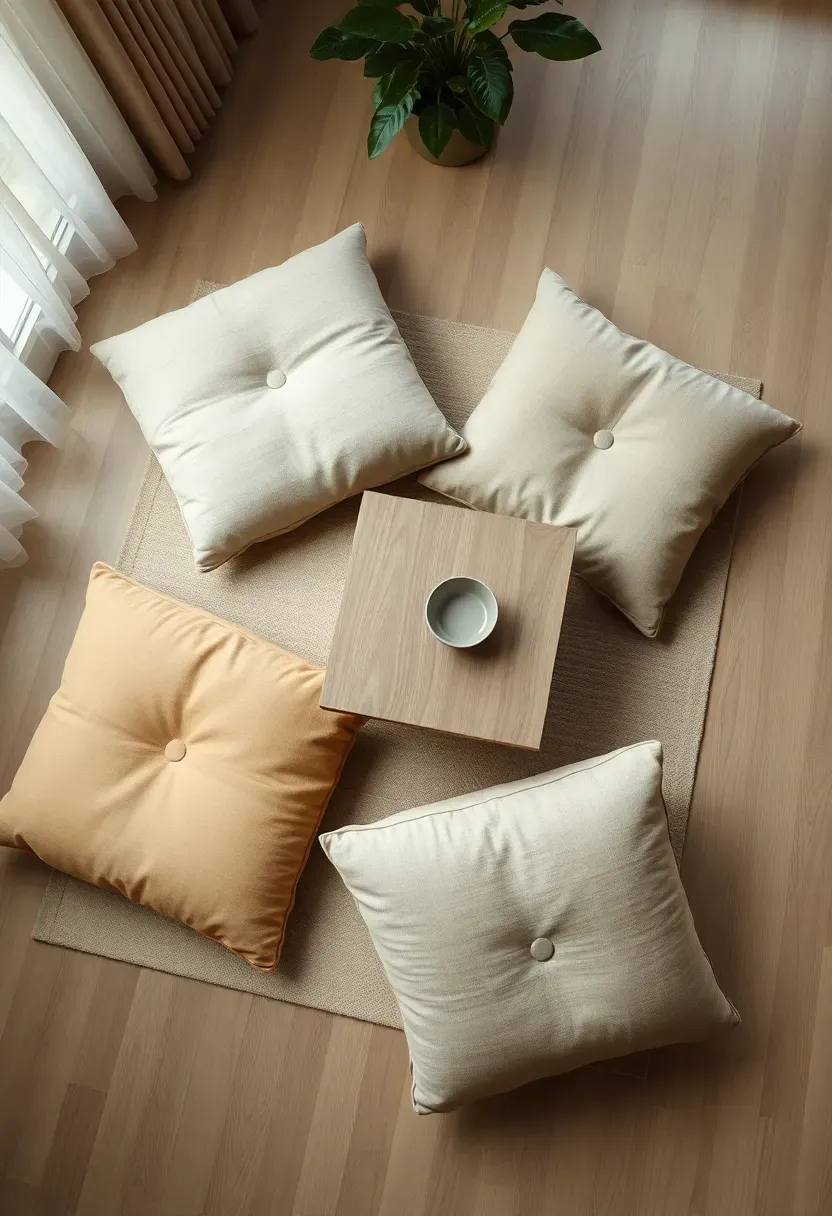
Hyper-realistic 3/4 view from above of floor cushions arranged on light wood floor in Japandi living room: four large square floor cushions in varying neutral tones—cream linen, tan canvas, beige wool—some stacked, some scattered around low rectangular wooden coffee table with small ceramic bowl. Materials: linen weave texture, canvas fabric, wool felt, light oak wood, matte ceramic. Soft diffused natural light from window side, gentle shadows around cushions. Casual flexible mood. Sharp focus on cushion fabric textures, overhead composition, visible room context with plant pot in corner. No text, no logos, no watermarks.</p>
A minimalist Japandi living room combines the best of Japanese zen philosophy and Scandinavian hygge comfort, creating spaces that feel both calm and inviting. This design approach emphasizes clean lines, natural materials, and intentional simplicity while maintaining warmth through textures and thoughtful details. The result is a living room that promotes tranquility without sacrificing coziness.. Hyper-realistic 3/4 view from above of floor cushions arranged on light wood floor in Japandi livi
Prompt: Nature documentary captured on Hasselblad X2D 100C with XCD 90V lens at f/4. Hyper-realistic 3/4 view from above of floor cushions arranged on light wood floor in Japandi living room: four large square floor cushions in varying neutral tones—cream linen, tan canvas, beige wool—some stacked, some scattered around low rectangular wooden coffee table with small ceramic bowl. Materials: linen weave texture, canvas fabric, wool felt, light oak wood, matte ceramic. Soft diffused natural light from window side, gentle shadows around cushions. Casual flexible mood. Sharp focus on cushion fabric textures, overhead composition, visible room context with plant pot in corner. No text, no logos, no watermarks.

Tips

  • Choose cushions with removable covers for easy cleaning
  • Consider a dedicated storage basket or shelf for cushions when not in use
  • Ensure cushion density provides adequate support for comfortable sitting

Budget/Time: Large floor cushions range from $60-150 each; buy 2-4 to start

What this gives you: Flexible seating that adapts to different needs and occasions

15. Built-In Minimal Shelving

Built-in shelving provides storage and display without the visual bulk of freestanding bookcases, maintaining clean lines and open space essential to Japandi minimalism. Floor-to-ceiling or waist-height built-ins can be designed to blend seamlessly with walls, creating storage that feels architectural rather than functional. The key is keeping shelves relatively uncluttered to maintain the minimalist aesthetic.

Design built-ins with closed cabinet doors below for concealing clutter and open shelving above for displaying curated objects. Maintain consistency by using the same wood tone as other furniture or painting shelves to match walls. Style shelves sparingly—books, a few ceramics, perhaps a plant or two—leaving negative space around objects. Each item gets attention because there's room to breathe.
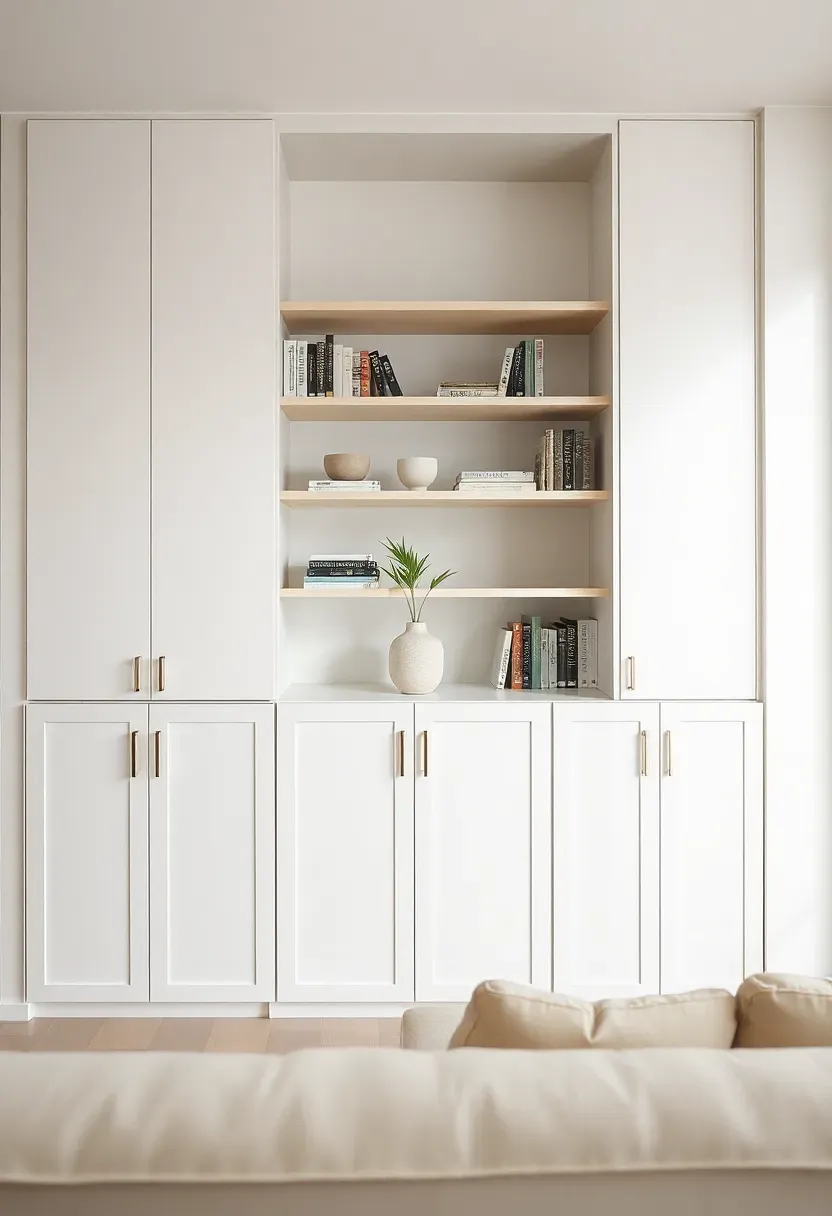
Hyper-realistic straight-on view of minimalist built-in shelving unit in Japandi living room: floor-to-ceiling white built-ins with lower cabinet doors and upper open shelves, sparsely styled with neatly arranged books, ceramic vases, single small plant, cream sofa visible in foreground. Materials: matte white lacquer cabinets, light wood shelves, colorful book spines, matte ceramic, plant greenery. Soft even natural light, subtle shadows at shelf edges. Organized serene mood. Sharp focus on shelf styling, medium depth of field, visible room context with sofa and window. No text, no logos, no watermarks.</p>
A minimalist Japandi living room combines the best of Japanese zen philosophy and Scandinavian hygge comfort, creating spaces that feel both calm and inviting. This design approach emphasizes clean lines, natural materials, and intentional simplicity while maintaining warmth through textures and thoughtful details. The result is a living room that promotes tranquility without sacrificing coziness.. Hyper-realistic straight-on view of minimalist built-in shelving unit in Japandi living room: floo
Prompt: Nature documentary captured on Hasselblad X2D 100C with XCD 90V lens at f/4. Hyper-realistic straight-on view of minimalist built-in shelving unit in Japandi living room: floor-to-ceiling white built-ins with lower cabinet doors and upper open shelves, sparsely styled with neatly arranged books, ceramic vases, single small plant, cream sofa visible in foreground. Materials: matte white lacquer cabinets, light wood shelves, colorful book spines, matte ceramic, plant greenery. Soft even natural light, subtle shadows at shelf edges. Organized serene mood. Sharp focus on shelf styling, medium depth of field, visible room context with sofa and window. No text, no logos, no watermarks.

Tips

  • Include integrated lighting on shelves for both display and ambiance
  • Extend built-ins to the ceiling to maximize storage and eliminate dusting space
  • If renting, use freestanding units placed flush against walls for a similar effect

What this gives you: Maximum storage with minimal visual presence

16. Stone or Ceramic Accents

Stone and ceramic pieces bring earthy, grounding energy to Japandi living rooms, connecting the space to natural materials beyond wood. Whether a rough-hewn stone bowl, a collection of ceramic vessels, or a slate side table, these pieces add sculptural interest and tactile contrast. The coolness and weight of stone balance the warmth of wood and textiles, creating material harmony.

Incorporate stone and ceramic through accessories rather than large furniture—this keeps the feel minimal and collected. A stone sculpture on the coffee table, ceramic vases on shelves, or a slate serving tray. Look for pieces with visible texture and natural variation rather than perfect factory finishes. The irregularities become part of their beauty, aligning with wabi-sabi appreciation for imperfection.
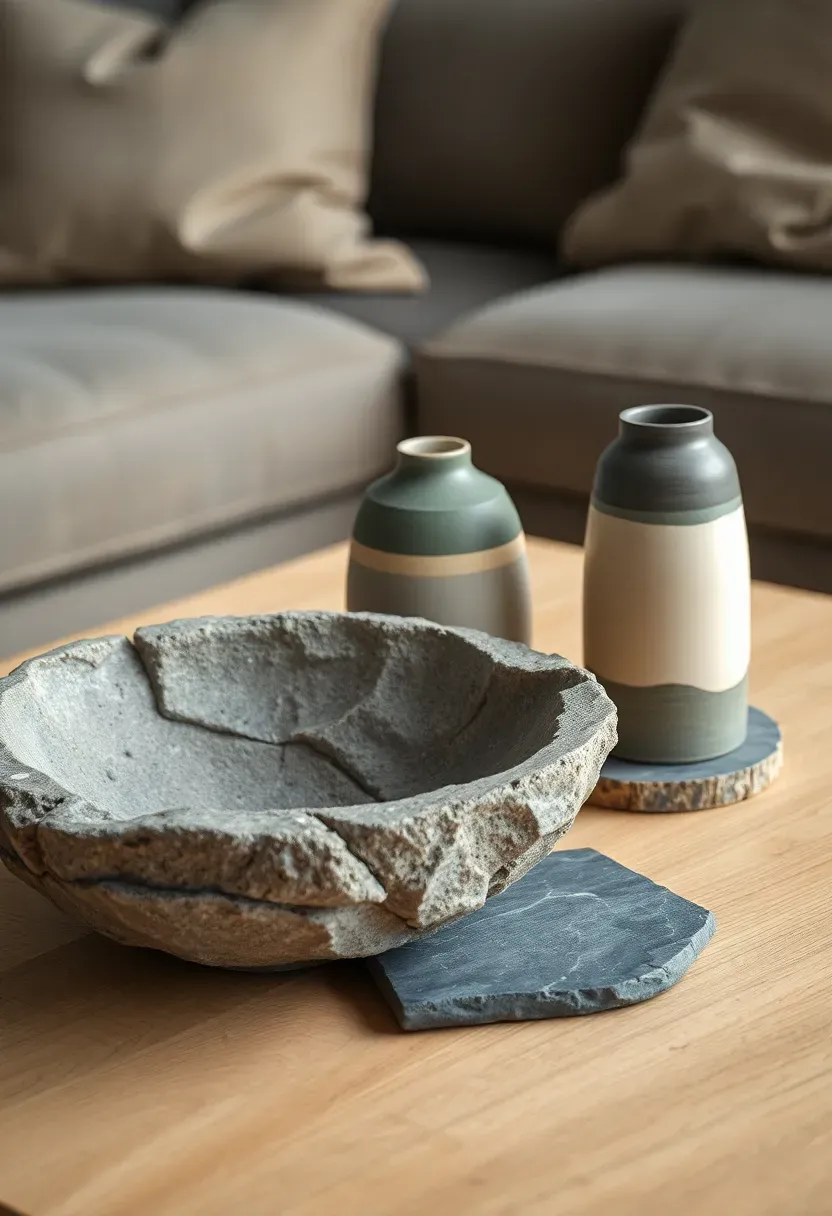
Hyper-realistic close-up detail shot of stone and ceramic accents on wooden coffee table: rough-hewn grey shallow stone bowl with natural pitted texture, three ceramic vases in varying heights with matte glaze in cream and charcoal, slate coaster with visible grain, light wood table surface visible. Materials: natural stone with crystalline texture, matte ceramic glaze with subtle variation, slate with natural grain, light oak wood. Side lighting emphasizing texture contrasts. Earthy grounded mood. Sharp focus on material textures, shallow depth of field, visible room context with blurred sofa. No text, no logos, no watermarks.</p>
A minimalist Japandi living room combines the best of Japanese zen philosophy and Scandinavian hygge comfort, creating spaces that feel both calm and inviting. This design approach emphasizes clean lines, natural materials, and intentional simplicity while maintaining warmth through textures and thoughtful details. The result is a living room that promotes tranquility without sacrificing coziness.. Hyper-realistic close-up detail shot of stone and ceramic accents on wooden coffee table: rough-he
Prompt: Nature documentary captured on Hasselblad X2D 100C with XCD 90V lens at f/4. Hyper-realistic close-up detail shot of stone and ceramic accents on wooden coffee table: rough-hewn grey shallow stone bowl with natural pitted texture, three ceramic vases in varying heights with matte glaze in cream and charcoal, slate coaster with visible grain, light wood table surface visible. Materials: natural stone with crystalline texture, matte ceramic glaze with subtle variation, slate with natural grain, light oak wood. Side lighting emphasizing texture contrasts. Earthy grounded mood. Sharp focus on material textures, shallow depth of field, visible room context with blurred sofa. No text, no logos, no watermarks.

Tips

  • Group stone and ceramic pieces in odd numbers (3 or 5) for natural arrangements
  • Place heavier pieces on lower surfaces for visual stability and safety
  • Mix raw, unpolished pieces with refined ceramics for contrast

What this gives you: Grounding natural energy and sculptural interest

17. Transparent or Lucite Furniture Pieces

Transparent furniture, particularly lucite or glass coffee tables and side tables, provides function without visual weight, maintaining the sense of spaciousness central to minimalism. These pieces virtually disappear, letting light pass through and allowing views of the rug or floor beneath. In smaller living rooms, this transparency can make the difference between feeling cramped and feeling open.

The key is using transparency strategically—one or two transparent pieces rather than filling the room with glass furniture. A lucite coffee table paired with a solid wood console, or glass side tables flanking a fabric sofa. This mix of transparent and solid creates visual interest while keeping the overall feel light and airy. Quality matters—cheap acrylic can yellow or scratch, so invest in high-quality lucite or tempered glass.
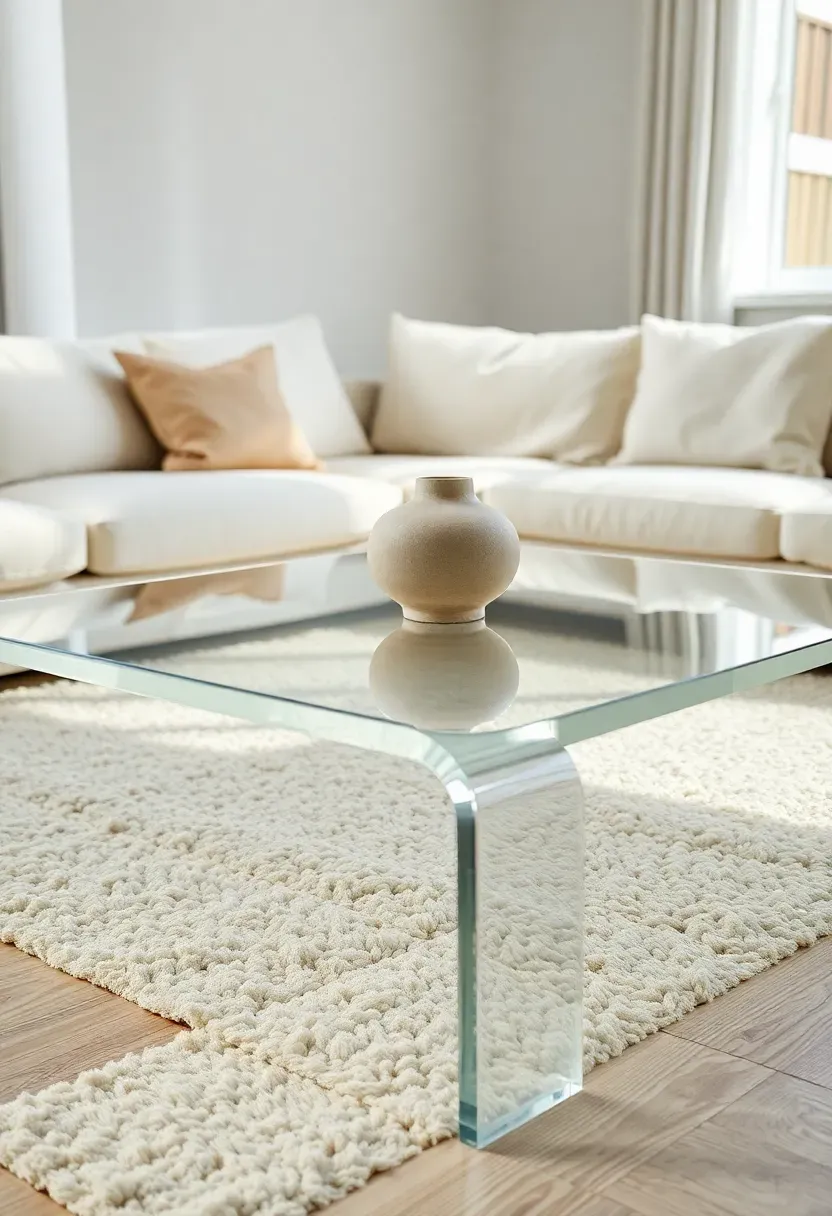
Hyper-realistic 3/4 view of minimalist Japandi living room featuring transparent lucite coffee table: clear acrylic table with subtle rounded edges showing cream wool rug and light oak floor visible through it, cream sofa behind, ceramic vase on table surface. Materials: transparent lucite with minimal reflections, cream linen sofa, chunky wool rug texture, light oak wood grain, matte ceramic. Bright natural light creating minimal shadows on transparent surface. Airy spacious mood. Sharp focus on table edges and transparency, medium depth of field, visible room context with window. No text, no logos, no watermarks.</p>
A minimalist Japandi living room combines the best of Japanese zen philosophy and Scandinavian hygge comfort, creating spaces that feel both calm and inviting. This design approach emphasizes clean lines, natural materials, and intentional simplicity while maintaining warmth through textures and thoughtful details. The result is a living room that promotes tranquility without sacrificing coziness.. Hyper-realistic 3/4 view of minimalist Japandi living room featuring transparent lucite coffee tab
Prompt: Nature documentary captured on Hasselblad X2D 100C with XCD 90V lens at f/4. Hyper-realistic 3/4 view of minimalist Japandi living room featuring transparent lucite coffee table: clear acrylic table with subtle rounded edges showing cream wool rug and light oak floor visible through it, cream sofa behind, ceramic vase on table surface. Materials: transparent lucite with minimal reflections, cream linen sofa, chunky wool rug texture, light oak wood grain, matte ceramic. Bright natural light creating minimal shadows on transparent surface. Airy spacious mood. Sharp focus on table edges and transparency, medium depth of field, visible room context with window. No text, no logos, no watermarks.

Tips

  • Use transparent pieces in high-traffic areas to maintain sight lines
  • Clean regularly—dust and fingerprints are more visible on clear surfaces
  • Pair transparent tables with rugs that deserve to be seen as part of the design

What this gives you: Functional surfaces without visual clutter

18. Warm LED Strip Lighting

Concealed LED strip lighting creates ambient glow that transforms the living room atmosphere, providing both functional illumination and mood-enhancing ambiance. Installed under shelving, behind media consoles, or along ceiling perimeter, LED strips wash walls and surfaces in soft light without visible fixtures. This indirect lighting approach eliminates harsh shadows while highlighting architectural features.

For Japandi spaces, choose warm white LED strips (2700K-3000K) that complement rather than cool the room. Install them so the light source is hidden—only the glow should be visible. Dimmable strips let you adjust from bright task lighting to moody ambient glow. This lighting technique is particularly effective for evening relaxation, creating a sanctuary-like atmosphere as natural light fades.
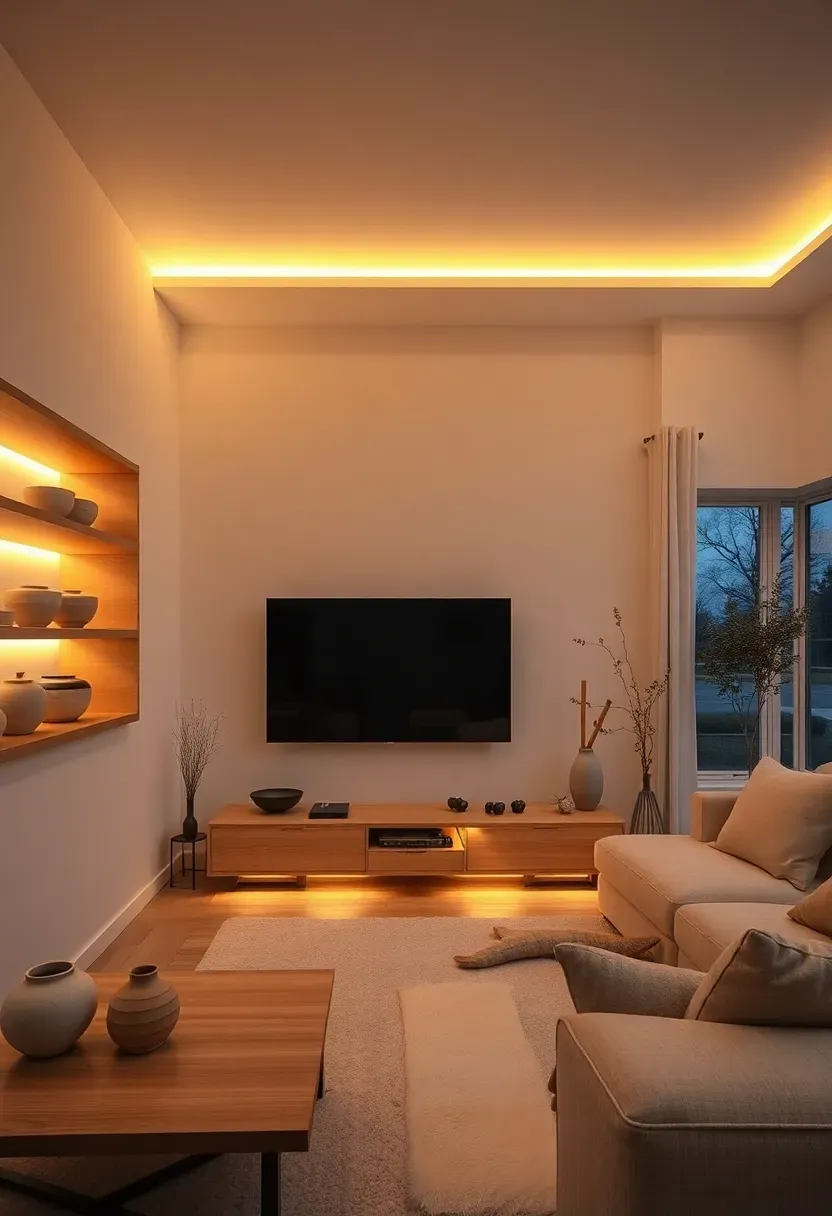
Hyper-realistic dusk view of minimalist Japandi living room with warm LED strip lighting: under-shelf glow illuminating ceramic objects below, strip light behind media console creating upward wash, subtle ceiling perimeter lighting, overall warm ambient glow filling room. Materials: light wood shelving, white walls catching warm light, ceramic vessels, cream sofa silhouette. Warm LED lighting as primary light source, cool blue outdoor light through window visible. Cozy sanctuary mood. Sharp focus on lit surfaces, wide composition showing multiple LED applications, full room context. No text, no logos, no watermarks.</p>
A minimalist Japandi living room combines the best of Japanese zen philosophy and Scandinavian hygge comfort, creating spaces that feel both calm and inviting. This design approach emphasizes clean lines, natural materials, and intentional simplicity while maintaining warmth through textures and thoughtful details. The result is a living room that promotes tranquility without sacrificing coziness.. Hyper-realistic dusk view of minimalist Japandi living room with warm LED strip lighting: under-sh
Prompt: Nature documentary captured on Hasselblad X2D 100C with XCD 90V lens at f/4. Hyper-realistic dusk view of minimalist Japandi living room with warm LED strip lighting: under-shelf glow illuminating ceramic objects below, strip light behind media console creating upward wash, subtle ceiling perimeter lighting, overall warm ambient glow filling room. Materials: light wood shelving, white walls catching warm light, ceramic vessels, cream sofa silhouette. Warm LED lighting as primary light source, cool blue outdoor light through window visible. Cozy sanctuary mood. Sharp focus on lit surfaces, wide composition showing multiple LED applications, full room context. No text, no logos, no watermarks.

Tips

  • Use LED strips with high CRI (90+) for accurate color rendering
  • Install with dimmers for maximum control over ambiance
  • Consider smart LED strips that can be controlled via phone for convenience

Budget/Time: Quality LED strips with installation: $150-400 depending on length and complexity

What this gives you: Transformable ambient lighting for any mood or time

19. Curved Furniture for Soft Contrast

While Japandi design often emphasizes clean lines and rectilinear forms, introducing curved furniture pieces creates welcome softness and visual contrast. A rounded sofa, arched mirror, or cylindrical side table breaks up linear rigidity while maintaining the minimalist ethos. These gentle curves add femininity and flow without adding clutter or ornamentation.

The contrast between straight and curved forms makes each more pronounced—a curved sofa stands out against rectangular walls, while linear shelving highlights an arched mirror above. Use curves deliberately rather than randomly: one or two curved pieces as focal points in an otherwise rectilinear room. This approach maintains the calm, orderly feel while adding organic movement and softness.
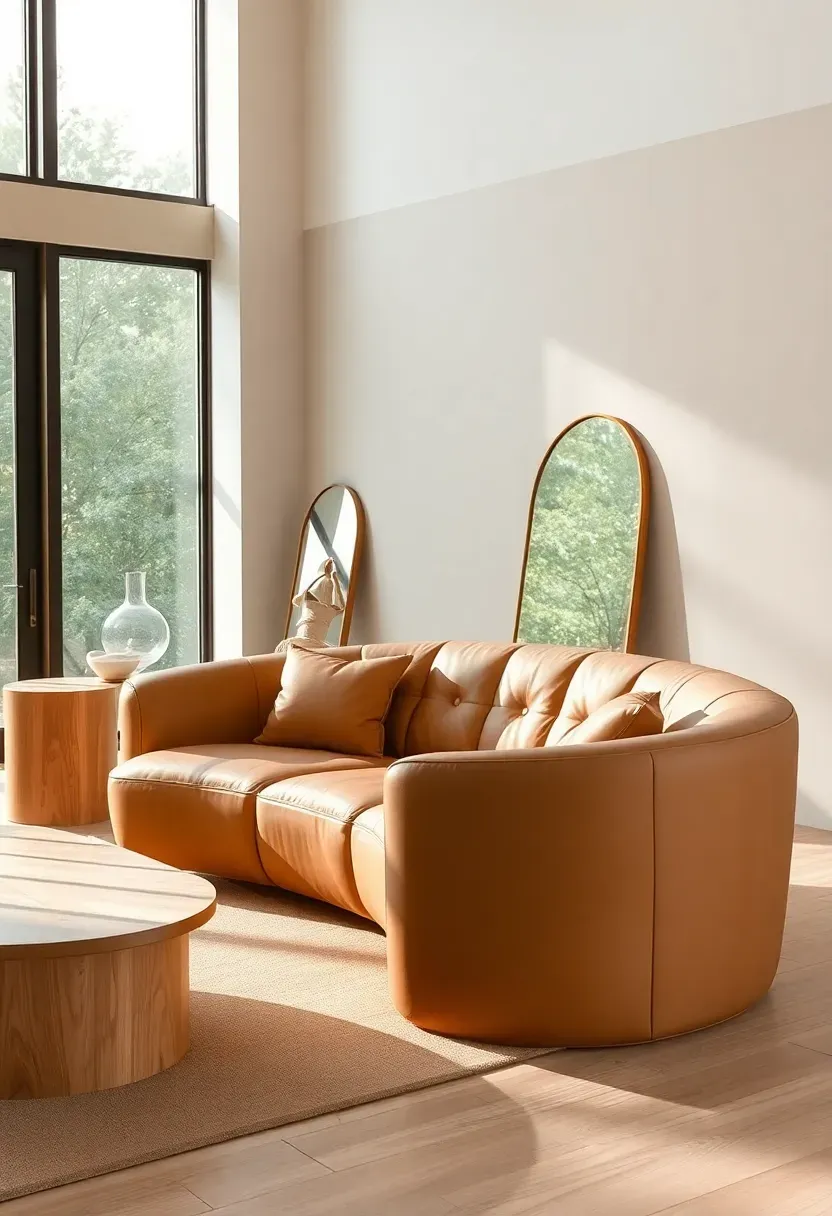
Hyper-realistic 3/4 view of minimalist Japandi living room featuring curved furniture: large rounded camel-colored sofa as centerpiece, cylindrical side table, arched floor mirror leaning against wall, rectangular low coffee table. Materials: camel leather upholstery with visible stitching, cylindrical wood table, mirrored surface, light oak wood. Soft diffused natural light from large window, curved shadows from sofa. Soft elegant mood with line contrast. Shallow depth of field, sharp focus on sofa curve, medium composition, visible room context with neutral walls and light wood floor. No text, no logos, no watermarks.</p>
A minimalist Japandi living room combines the best of Japanese zen philosophy and Scandinavian hygge comfort, creating spaces that feel both calm and inviting. This design approach emphasizes clean lines, natural materials, and intentional simplicity while maintaining warmth through textures and thoughtful details. The result is a living room that promotes tranquility without sacrificing coziness.. Hyper-realistic 3/4 view of minimalist Japandi living room featuring curved furniture: large round
Prompt: Nature documentary captured on Hasselblad X2D 100C with XCD 90V lens at f/4. Hyper-realistic 3/4 view of minimalist Japandi living room featuring curved furniture: large rounded camel-colored sofa as centerpiece, cylindrical side table, arched floor mirror leaning against wall, rectangular low coffee table. Materials: camel leather upholstery with visible stitching, cylindrical wood table, mirrored surface, light oak wood. Soft diffused natural light from large window, curved shadows from sofa. Soft elegant mood with line contrast. Shallow depth of field, sharp focus on sofa curve, medium composition, visible room context with neutral walls and light wood floor. No text, no logos, no watermarks.

Tips

  • Limit curved pieces to one or two to maintain minimalist balance
  • Position curved pieces where they can be appreciated from multiple angles
  • Balance curves with equally strong linear elements for visual equilibrium

What this gives you: Visual interest through form contrast rather than decoration

20. Hidden Storage Solutions

Effective storage that disappears when not in use is fundamental to maintaining Japandi minimalism without sacrificing functionality. The calm, uncluttered aesthetic requires that everyday items be concealed rather than constantly on display. Hidden storage—whether built-in cabinets, ottomans with interior storage, or furniture with integrated compartments—keeps essentials accessible but out of sight.

Every piece of furniture can potentially offer storage: a media console with closed cabinets for electronics, a coffee table with a lift-top for remotes and coasters, a sofa with storage underneath, or window seats with hinge-lift tops. The key is prioritizing furniture that serves dual purposes—providing both function and storage—rather than pieces that are purely decorative. This approach reduces the need for additional storage furniture, maintaining the minimal, uncluttered feel.
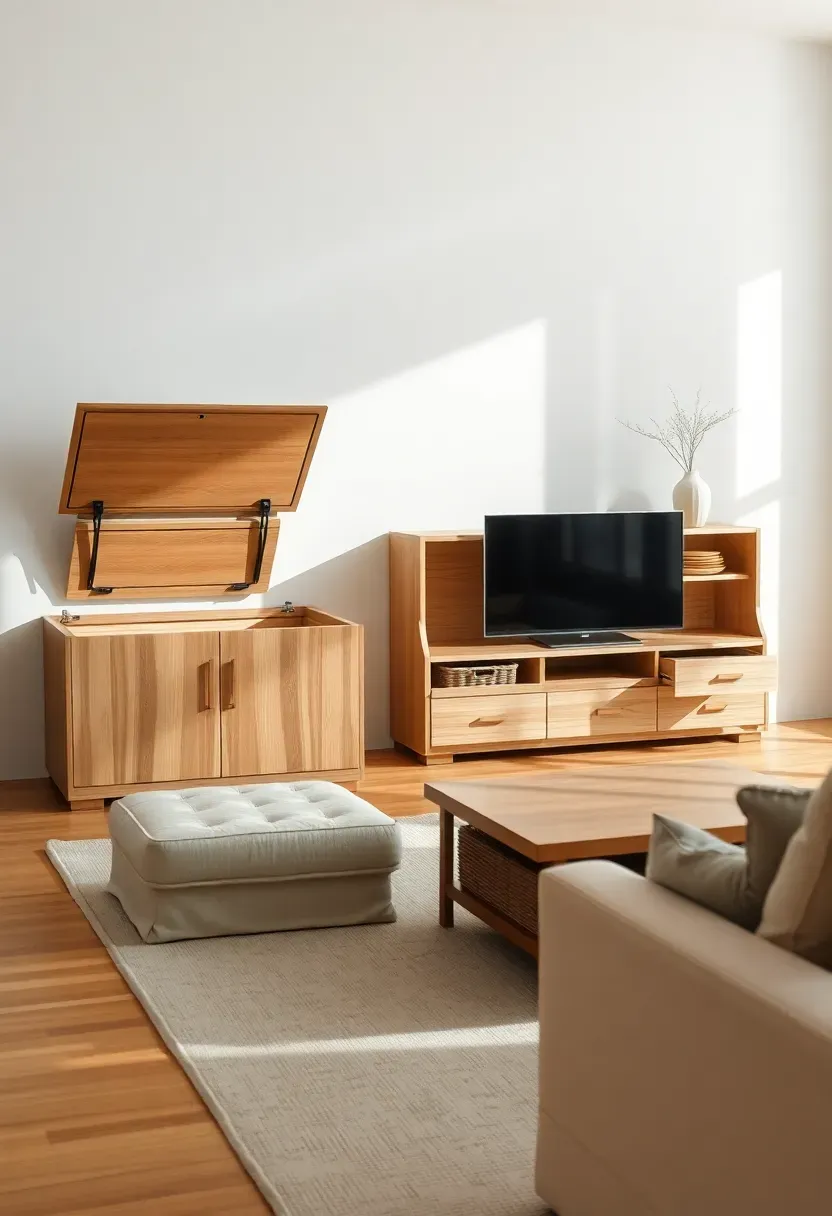
Hyper-realistic 3/4 view of minimalist Japandi living room showcasing hidden storage: ottoman with lift-top storage open showing interior, low media console with cabinet doors closed, coffee table with drawer partially open, sofa skirted to reveal under-sofa storage. Materials: light wood storage furniture, cream upholstery on ottoman, woven storage bins visible in console. Soft natural light, shadows emphasizing storage accessibility. Organized calm mood. Medium depth of field, sharp focus on storage features, wide composition showing full room context. No text, no logos, no watermarks.</p>
A minimalist Japandi living room combines the best of Japanese zen philosophy and Scandinavian hygge comfort, creating spaces that feel both calm and inviting. This design approach emphasizes clean lines, natural materials, and intentional simplicity while maintaining warmth through textures and thoughtful details. The result is a living room that promotes tranquility without sacrificing coziness.. Hyper-realistic 3/4 view of minimalist Japandi living room showcasing hidden storage: ottoman with
Prompt: Nature documentary captured on Hasselblad X2D 100C with XCD 90V lens at f/4. Hyper-realistic 3/4 view of minimalist Japandi living room showcasing hidden storage: ottoman with lift-top storage open showing interior, low media console with cabinet doors closed, coffee table with drawer partially open, sofa skirted to reveal under-sofa storage. Materials: light wood storage furniture, cream upholstery on ottoman, woven storage bins visible in console. Soft natural light, shadows emphasizing storage accessibility. Organized calm mood. Medium depth of field, sharp focus on storage features, wide composition showing full room context. No text, no logos, no watermarks.

Tips

  • Choose storage furniture with soft-close hinges for quiet, luxurious operation
  • Use uniform containers inside cabinets to keep contents organized and accessible
  • Prioritize storage near where items are used for convenience

What this gives you: Clutter-free surfaces without sacrificing accessibility

21. Seasonal Rotation of Decor

Embracing seasonal change through decor rotation keeps the living room feeling fresh and connected to natural cycles while maintaining minimalism year-round. Rather than accumulating permanent collections of objects, Japandi philosophy encourages rotating a few seasonal pieces that reflect the time of year: lightweight linens and fresh flowers in spring, warm throws and dried botanicals in autumn, cozy textiles and candlelight in winter.

This seasonal approach means you need fewer items overall—each piece gets its moment to shine before being stored and replaced. Store off-season items in labeled bins, bringing out only what's current. A few thoughtful changes—switching cushion covers, adding a seasonal rug, displaying different botanical elements—can significantly shift the room's mood to align with the season, keeping the space feeling alive and responsive.
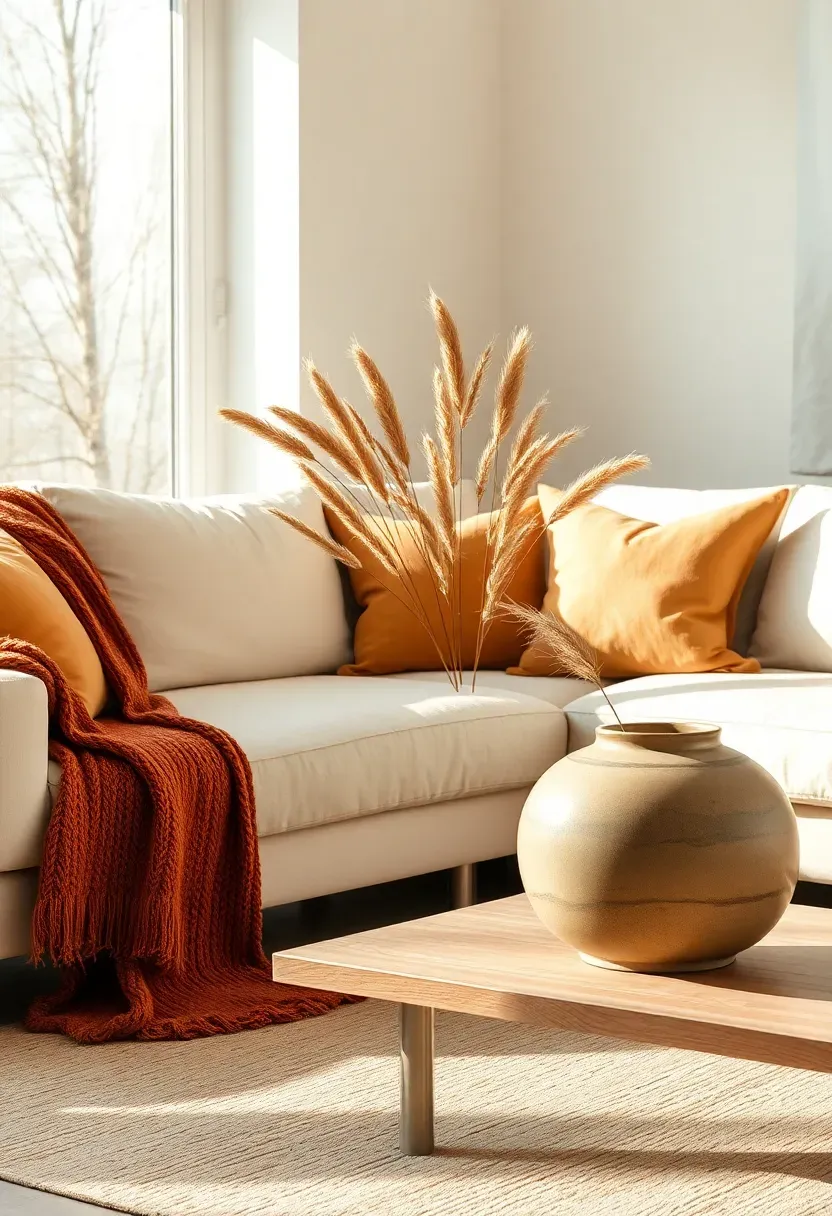
Hyper-realistic 3/4 view of minimalist Japandi living room in autumn season: cream sofa with rust-colored wool throw draped over arm, cushion covers changed to warm tan tones, dried wheat and pampas grass in ceramic vase on coffee table, soft warm afternoon light. Materials: cream linen upholstery, rust wool knit throw, tan cushions, dried grasses texture, matte ceramic vase, light oak wood. Warm golden autumn light with longer shadows. Seasonal cozy mood. Sharp focus on seasonal accents, medium composition, visible room context with window showing bare trees. No text, no logos, no watermarks.</p>
A minimalist Japandi living room combines the best of Japanese zen philosophy and Scandinavian hygge comfort, creating spaces that feel both calm and inviting. This design approach emphasizes clean lines, natural materials, and intentional simplicity while maintaining warmth through textures and thoughtful details. The result is a living room that promotes tranquility without sacrificing coziness.. Hyper-realistic 3/4 view of minimalist Japandi living room in autumn season: cream sofa with rust-
Prompt: Nature documentary captured on Hasselblad X2D 100C with XCD 90V lens at f/4. Hyper-realistic 3/4 view of minimalist Japandi living room in autumn season: cream sofa with rust-colored wool throw draped over arm, cushion covers changed to warm tan tones, dried wheat and pampas grass in ceramic vase on coffee table, soft warm afternoon light. Materials: cream linen upholstery, rust wool knit throw, tan cushions, dried grasses texture, matte ceramic vase, light oak wood. Warm golden autumn light with longer shadows. Seasonal cozy mood. Sharp focus on seasonal accents, medium composition, visible room context with window showing bare trees. No text, no logos, no watermarks.

Tips

  • Invest in neutral base pieces and add seasonal color through textiles and botanicals
  • Choose storage that makes rotation easy—clear bins, labeled containers
  • Use natural cues: bare branches in winter, fresh blooms in spring, dried grasses in autumn

What this gives you: A space that feels fresh and seasonally aligned without permanent accumulation

22. Neutral Textured Wall Treatment

Instead of plain painted walls, consider subtle textured wall treatments that add depth and interest without color or pattern. Limewash, plaster, grasscloth, or board-and-batten in neutral tones create walls that feel warm and alive rather than flat and sterile. These treatments catch light differently throughout the day, adding visual dimension that supports rather than competes with the minimalist aesthetic.

Textured walls work particularly well because they allow you to keep walls relatively decor-free—the texture itself provides visual interest. Limewash or plaster create organic variations that feel手工 and natural. Grasscloth adds woven texture that softens acoustics. Board-and-benton adds architectural linearity that complements Japandi's clean aesthetic. Choose one wall or the entire room—either approach creates impact without overwhelming.
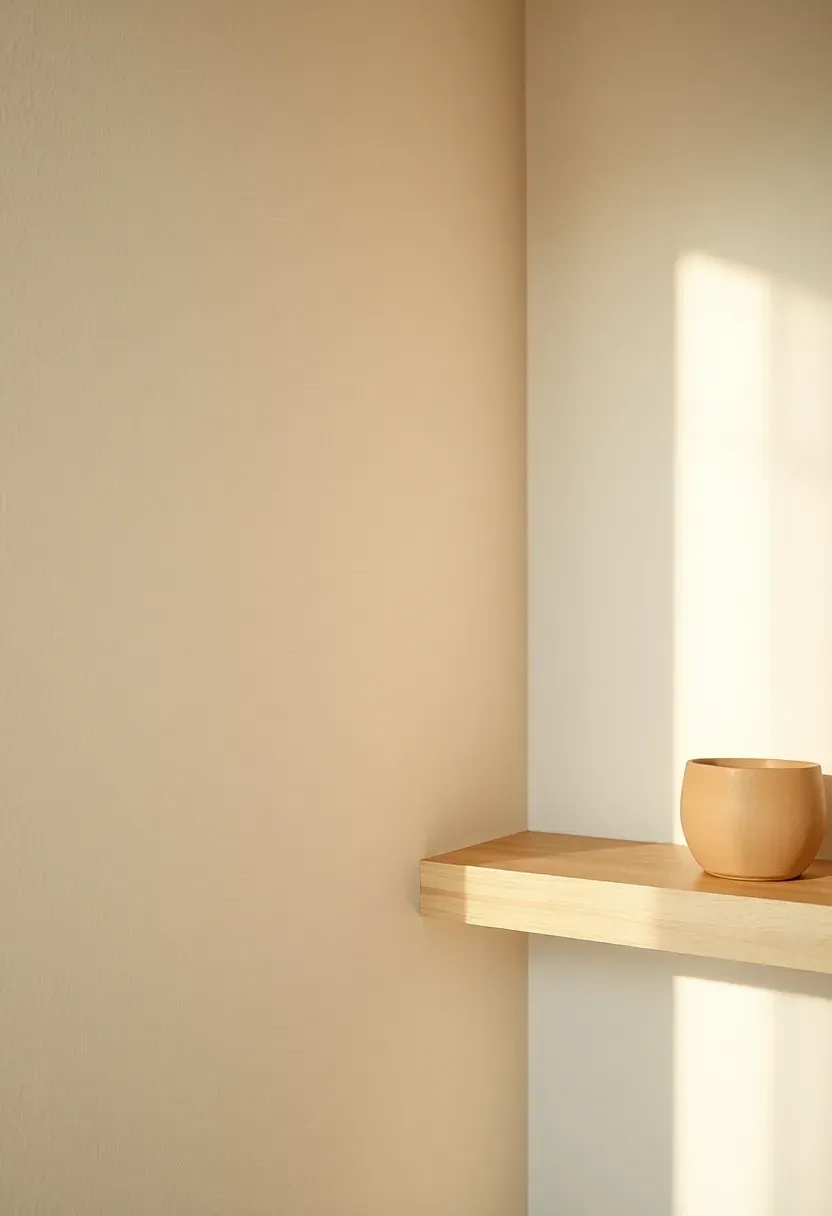
Hyper-realistic close-up detail of neutral textured wall treatment in Japandi living room: limewash plaster finish with subtle organic variations and mottled texture, warm cream color with slight unevenness, corner of room showing transition to smooth plaster wall, minimal wooden shelf with single ceramic object. Materials: limewash plaster with visible texture variation, smooth plaster contrast, light oak shelf, matte ceramic vessel. Side lighting raking across wall to emphasize texture. Organic warm mood. Sharp focus on wall texture, shallow depth of field, visible room context with window frame edge. No text, no logos, no watermarks.</p>
A minimalist Japandi living room combines the best of Japanese zen philosophy and Scandinavian hygge comfort, creating spaces that feel both calm and inviting. This design approach emphasizes clean lines, natural materials, and intentional simplicity while maintaining warmth through textures and thoughtful details. The result is a living room that promotes tranquility without sacrificing coziness.. Hyper-realistic close-up detail of neutral textured wall treatment in Japandi living room: limewas
Prompt: Nature documentary captured on Hasselblad X2D 100C with XCD 90V lens at f/4. Hyper-realistic close-up detail of neutral textured wall treatment in Japandi living room: limewash plaster finish with subtle organic variations and mottled texture, warm cream color with slight unevenness, corner of room showing transition to smooth plaster wall, minimal wooden shelf with single ceramic object. Materials: limewash plaster with visible texture variation, smooth plaster contrast, light oak shelf, matte ceramic vessel. Side lighting raking across wall to emphasize texture. Organic warm mood. Sharp focus on wall texture, shallow depth of field, visible room context with window frame edge. No text, no logos, no watermarks.

Tips

  • Test wall treatments on a small patch first to ensure you like the effect
  • Consider hiring professionals for plaster or limewash—technique affects the final look
  • If renting, removable wallpaper or temporary panels can mimic textured walls

Budget/Time: Grasscloth or plaster installation: $8-15 per square foot depending on material and labor

What this gives you: Walls with visual depth that need minimal additional decor

23. Meditation Corner Nook

Dedicating a small corner or nook of the living room to meditation or quiet reflection embodies the Japandi principles of mindfulness and intentional living. This sacred space, however minimal, serves as a daily reminder to pause and breathe. Whether it's a cushion by the window, a small altar with meaningful objects, or simply a cleared corner with a single plant, having a designated space for stillness enriches the entire room.

A meditation nook doesn't need to be large—even a 3x3 foot corner works. Include elements that support practice: a cushion or small bench, perhaps a candle or incense holder, a plant for connection to nature, and any meaningful objects. Keep it simple and uncluttered—the point is to reduce distractions, not add them. This space becomes a visual anchor for the room, representing the values of calm and presence at the heart of Japandi philosophy.
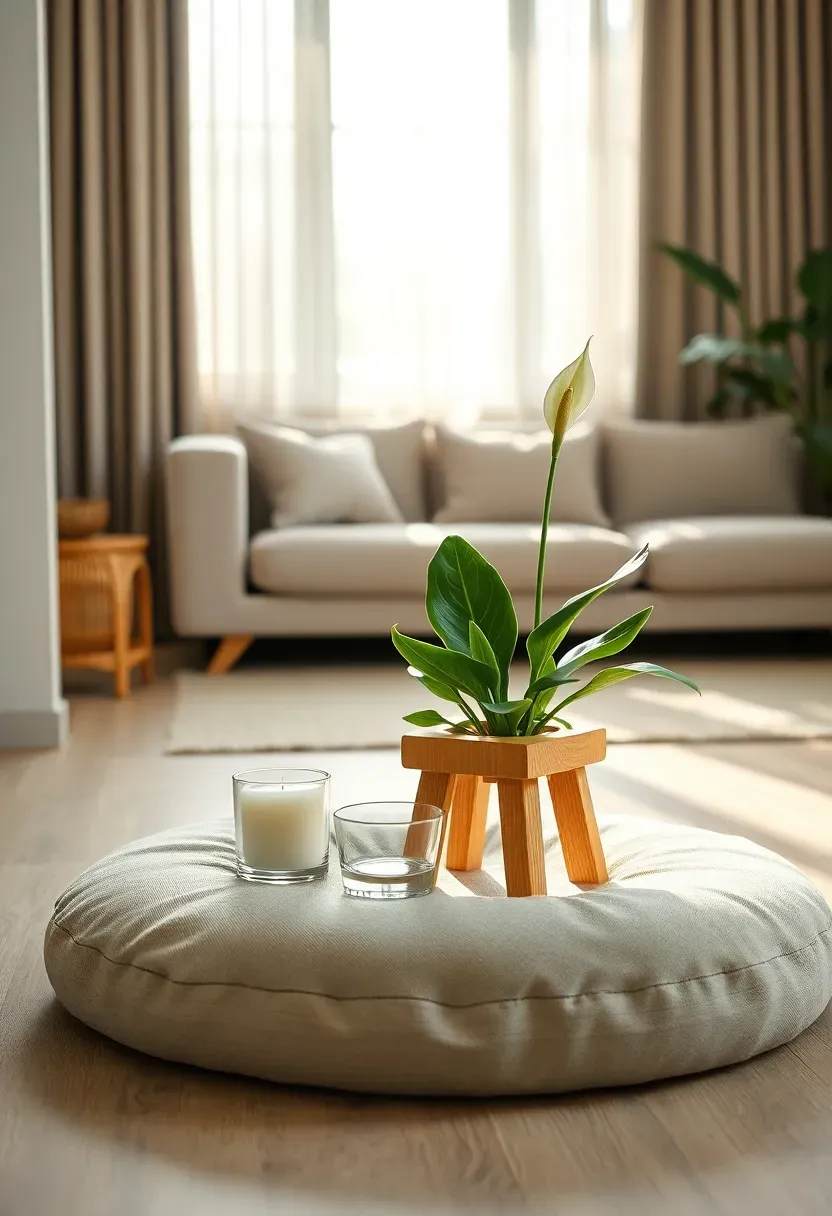
Hyper-realistic straight-on view of small meditation corner nook in Japandi living room: round floor cushion in neutral linen, small wooden stool with white candle in glass holder, potted peace lily plant, window behind showing soft natural light, rest of room with sofa visible in background. Materials: linen cushion texture, light wood stool, cotton wick candle, glossy green plant leaves, glass vessel. Soft diffused natural light creating serene atmosphere. Meditative peaceful mood. Sharp focus on nook elements, medium depth of field with room beyond, visible context of minimalist living space. No text, no logos, no watermarks.</p>
A minimalist Japandi living room combines the best of Japanese zen philosophy and Scandinavian hygge comfort, creating spaces that feel both calm and inviting. This design approach emphasizes clean lines, natural materials, and intentional simplicity while maintaining warmth through textures and thoughtful details. The result is a living room that promotes tranquility without sacrificing coziness.. Hyper-realistic straight-on view of small meditation corner nook in Japandi living room: round flo
Prompt: Nature documentary captured on Hasselblad X2D 100C with XCD 90V lens at f/4. Hyper-realistic straight-on view of small meditation corner nook in Japandi living room: round floor cushion in neutral linen, small wooden stool with white candle in glass holder, potted peace lily plant, window behind showing soft natural light, rest of room with sofa visible in background. Materials: linen cushion texture, light wood stool, cotton wick candle, glossy green plant leaves, glass vessel. Soft diffused natural light creating serene atmosphere. Meditative peaceful mood. Sharp focus on nook elements, medium depth of field with room beyond, visible context of minimalist living space. No text, no logos, no watermarks.

Tips

  • Position the nook where it won't become a pass-through or catch-all for clutter
  • Include elements that engage multiple senses: sight (plant), touch (cushion), smell (candle/incense)
  • Keep only essential pieces—avoid the urge to decorate or add unnecessary objects

What this gives you: A dedicated space that supports daily mindfulness and calm

These 23 minimalist Japandi living room ideas demonstrate how the fusion of Japanese zen and Scandinavian hygge creates spaces that are both calm and welcoming. By prioritizing natural materials, intentional simplicity, and thoughtful functionality, you can design a living room that serves as a daily sanctuary—serene enough for quiet reflection yet warm enough for gathering with loved ones. The beauty of this approach lies in its timelessness and adaptability, ensuring your living room remains a source of comfort and inspiration for years to come.

Pinterest cover for 23 Minimalist Japandi Living Room Ideas: Zen Meets Hygge That Create a Welcoming Living Room