19 Minimalist Organic Living Room Ideas That Bring Nature Home
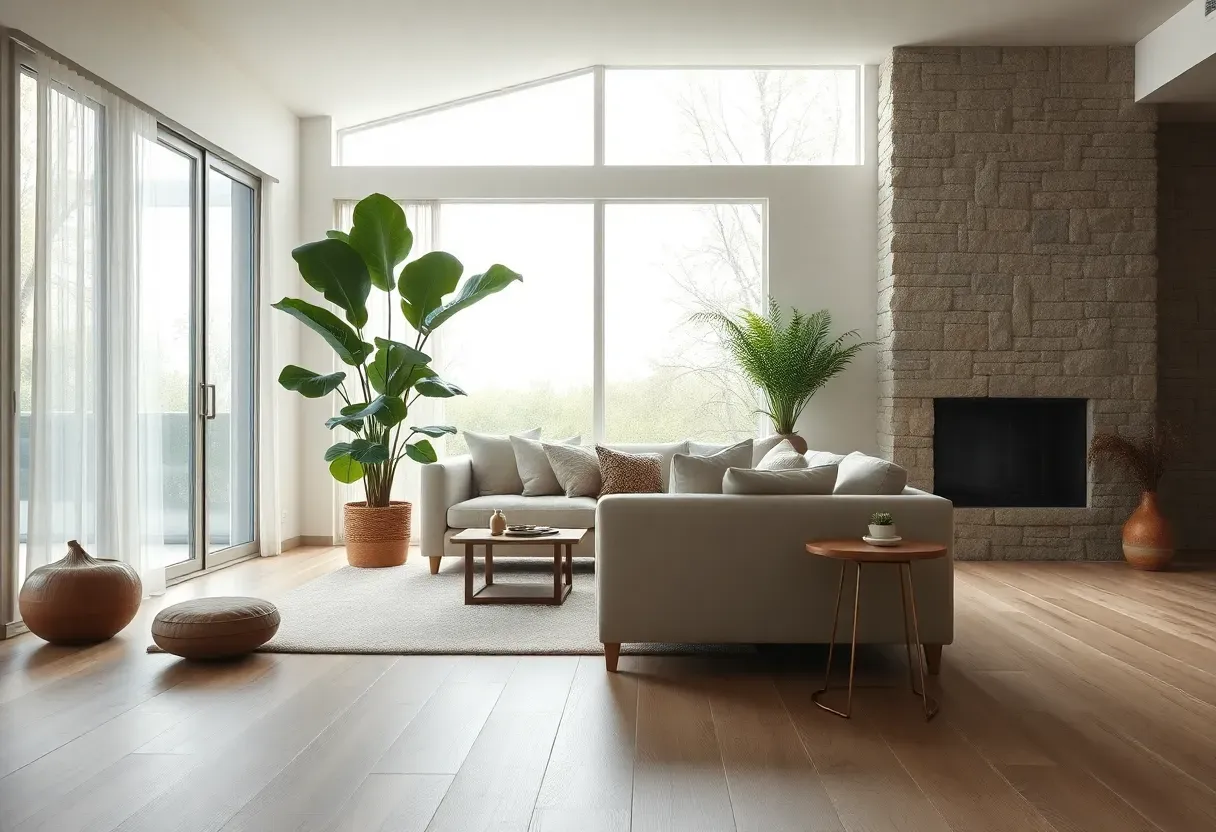
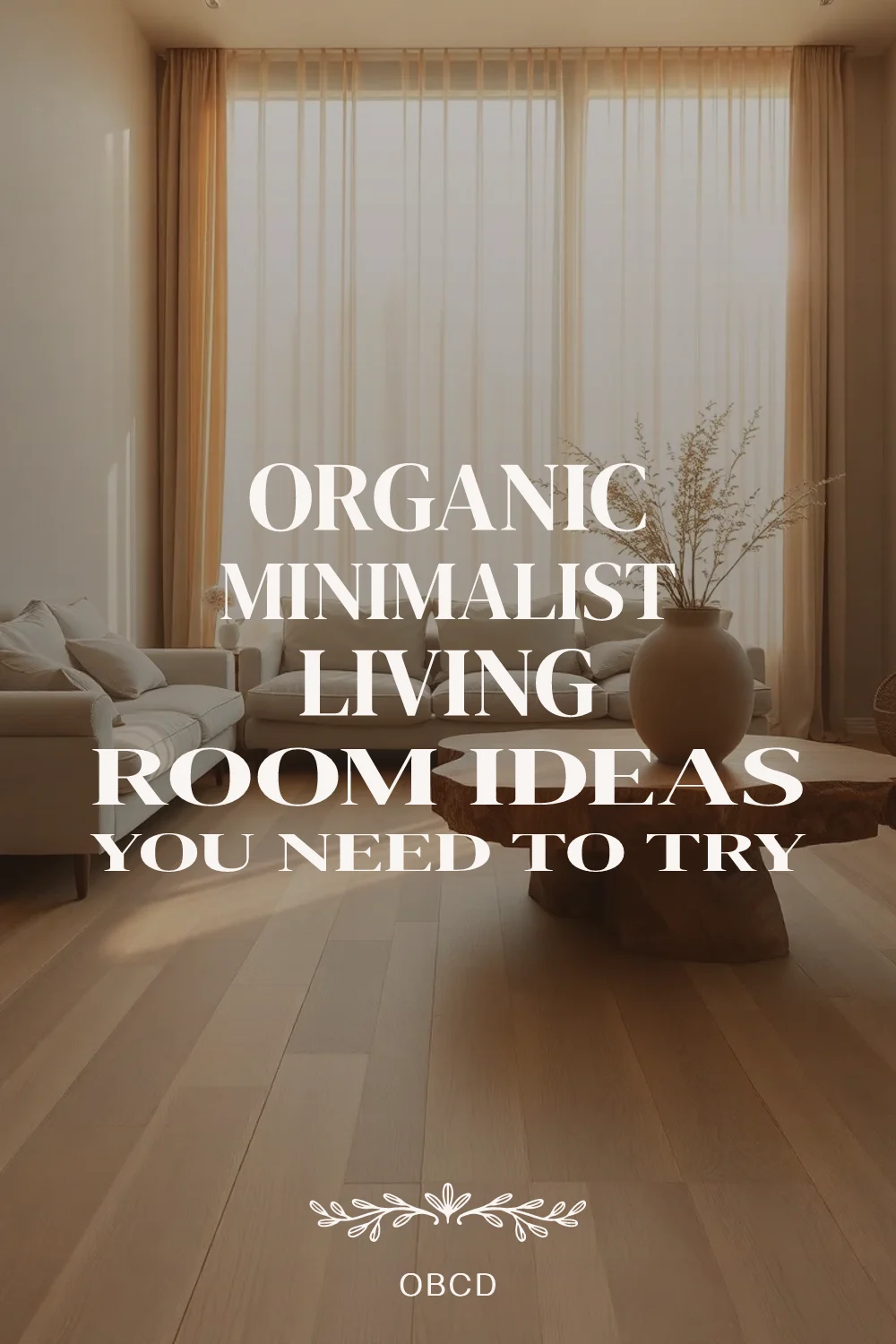
Looking for minimalist organic living room ideas that bring the calming essence of nature into your home? This design approach creates a serene sanctuary using natural materials, earthy color palettes, and uncluttered spaces that breathe -- and many of these ideas work beautifully in rental apartments and small spaces.
By embracing organic forms and sustainable elements, you can craft a living space that feels both modern and timeless. The beauty of an organic minimalist living room lies in its ability to create harmony between clean lines and the imperfect warmth of nature, without permanent modifications or a large budget.
These 19 ideas will help you transform your living room into a tranquil retreat that celebrates the authenticity of natural materials while maintaining a refined, sophisticated aesthetic perfect for modern renters and homeowners alike.
Quick FAQ
What defines an organic minimalist living room?
An organic minimalist living room combines clean, uncluttered design with natural materials like wood, stone, linen, and leather. The focus is on creating harmony through earthy colors, sustainable furnishings, and decor that celebrates the imperfect beauty of nature.
How do I choose colors for an organic minimalist space?
Start with a neutral base of warm whites, creams, or soft grays, then layer in earthy tones like terracotta, sage green, warm beige, and muted blues. Draw inspiration from natural landscapes—sand, stone, wood, and dried grasses provide perfect color references.
What materials work best in organic minimalist interiors?
Prioritize raw and lightly finished materials: white oak or walnut wood, natural stone like limestone or travertine, organic linen, unbleached cotton, leather, jute, and rattan. These materials develop patina over time, adding character to your space.
Can organic minimalism work in small apartments?
Absolutely. In fact, the principles of organic minimalism—fewer pieces, better quality, natural light, and connection to nature—are ideal for small spaces. Choose multifunctional furniture with organic shapes and use mirrors to amplify natural light.
How do I add warmth to a minimalist living room?
Layer textures rather than colors: a wool rug, linen curtains, a leather chair, and wooden accents create warmth without clutter. Incorporate plants, use warm lighting (2700-3000K), and choose wood tones that complement each other for a cohesive, inviting feel.
Should I avoid all decorative objects in organic minimalism?
Not at all. The key is intentionality. Choose a few meaningful pieces—a handmade ceramic vase, a driftwood sculpture, a woven basket—that align with the organic aesthetic. Display them with breathing room so each piece can be appreciated.
As an Amazon Associate I earn from qualifying purchases.
Table of Contents
- 1. Warm White Oak Foundation with Linen Softness for an Organic Feel
- 2. Stone-Accent Living Room with Raw Beauty
- 3. Earth-Toned Serenity with Curved Silhouettes
- 4. Monochromatic Beige Sanctuary with Texture Layers
- 5. Indoor Garden Living Room with Biophilic Design for Renters
- 6. Low-Scale Lounge with Grounded Energy
- 7. Clay and Terracotta Warmth with Neutral Base
- 8. Driftwood-Inspired Space with Coastal Calm
- 9. Hemp and Rattan Bohemian Minimalism
- 10. Sun-Drenched Organic Room with Sheer Layers
- 11. Stone-Floor Living Room with Underfloor Heating
- 12. Vertical Garden Wall as Living Art
- 13. Leather and Wood Masculine Organic Space
- 14. Bamboo-Inspired Minimalist Retreat
- 15. Wabi-Sabi Imperfect Perfection in an Organic Minimalist Room
- 16. Skylit Organic Living Room with Natural Light
- 17. Moss and Fern Green Botanical Sanctuary
- 18. Handcrafted Ceramic Focal Point Display
- 19. Seasonal Rotation with Natural Elements
1. Warm White Oak Foundation with Linen Softness for an Organic Feel
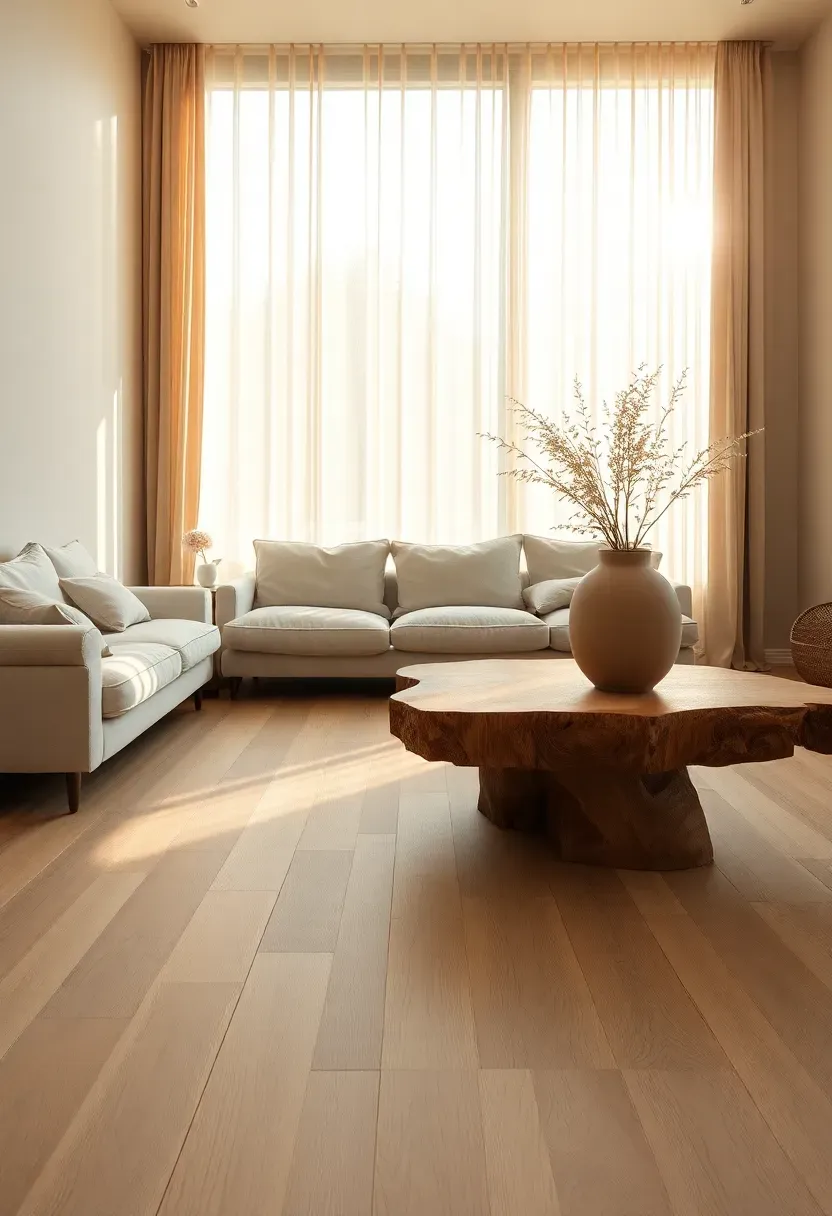
Creating an organic minimalist living room starts with the foundation—white oak flooring or wall paneling sets a warm, neutral tone that naturally brightens your space while maintaining connection to the outdoors. The subtle grain patterns of white oak add visual interest without overwhelming the senses, providing perfect backdrop for layering organic textures. Pair this with cream-colored linen upholstery and sheer linen drapes that filter natural light beautifully, creating soft shadows that change throughout the day. This combination of materials works because white oak contains warm undertones that complement linen's natural irregularities, resulting in a space that feels simultaneously refined and comfortably lived-in.
Tips
- Choose white oak with visible grain patterns—avoid heavily stained or wire-brushed finishes that obscure natural beauty
- Layer linen in different weights: heavyweight for upholstery, medium-weight for drapes, lightweight for decorative pillows
- If white oak exceeds budget, consider white oak engineered flooring or white oak veneer on key furniture pieces
Best for: north-facing rooms that need warmth, open-concept main floors, homes with abundant natural light
What this gives you: a timeless foundation that ages gracefully and becomes more beautiful with years of use
2. Stone-Accent Living Room with Raw Beauty
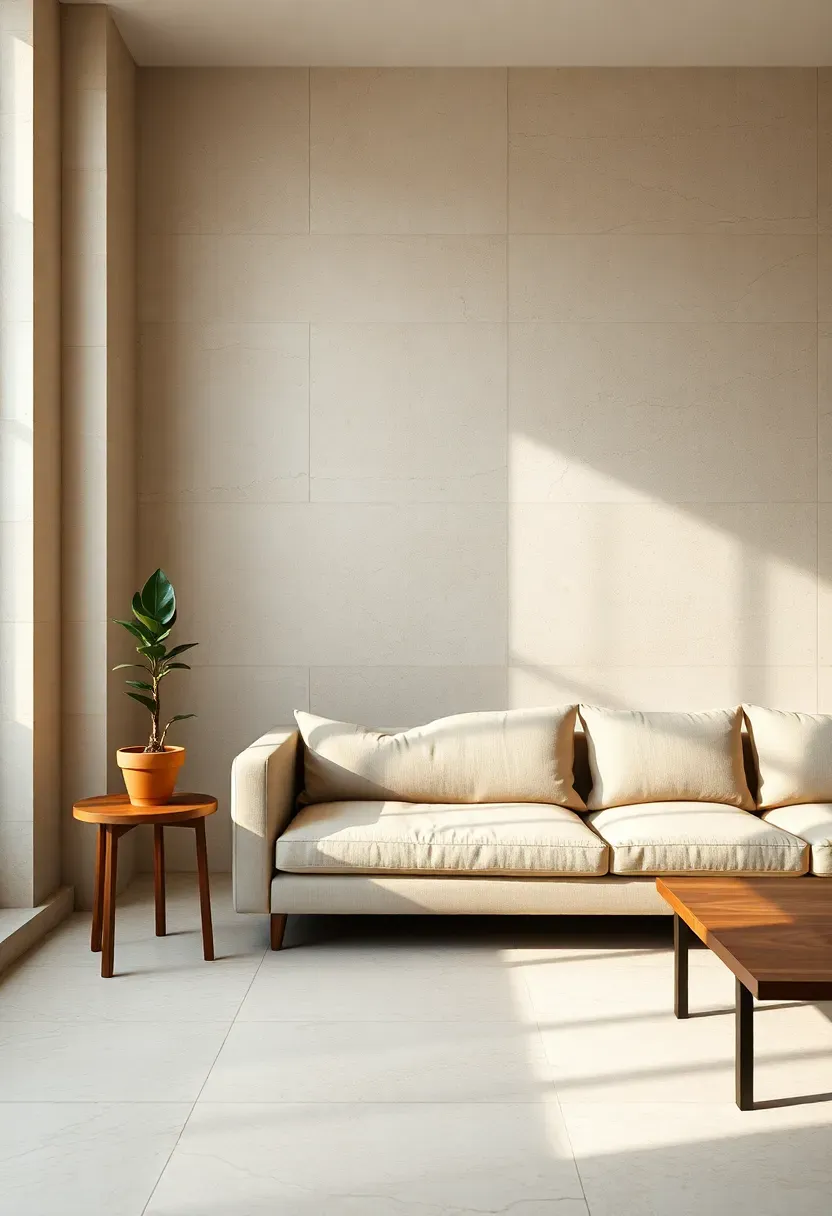
Introducing natural stone as a focal wall or fireplace surround anchors your minimalist organic living room with millennia-old authenticity that manufactured materials simply cannot replicate. Limestone, travertine, or slate each bring distinct personalities—limestone offers subtle fossil patterns and creamy warmth, travertine provides natural pits and varied coloration, while slate delivers dramatic depth with its layered formation. The key is leaving stone in its raw state: honed rather than polished, with minimal grout lines that disappear into the stone's natural variations. This rugged element creates beautiful tension when paired with streamlined furnishings—the stone's imperfect nature becomes art, requiring no additional decoration. Position a simple bench or pair of armchairs facing the stone feature to create a meditation corner that draws the eye and calms the mind.
Recommended
Items for this idea
Tips
- Do use honed finish for stone—it feels more organic and shows fewer scratches/etches than polished
- Don't over-grout; use grout color matched to stone so joints become invisible
- If budget limits full stone wall, consider stone veneer or limit stone to fireplace surround
Budget/Time: $15-40/sq ft installed depending on stone type; expect 2-3 days for installation
What this gives you: architectural drama that serves as sculptural art while grounding the space with earth's ancient materials
3. Earth-Toned Serenity with Curved Silhouettes
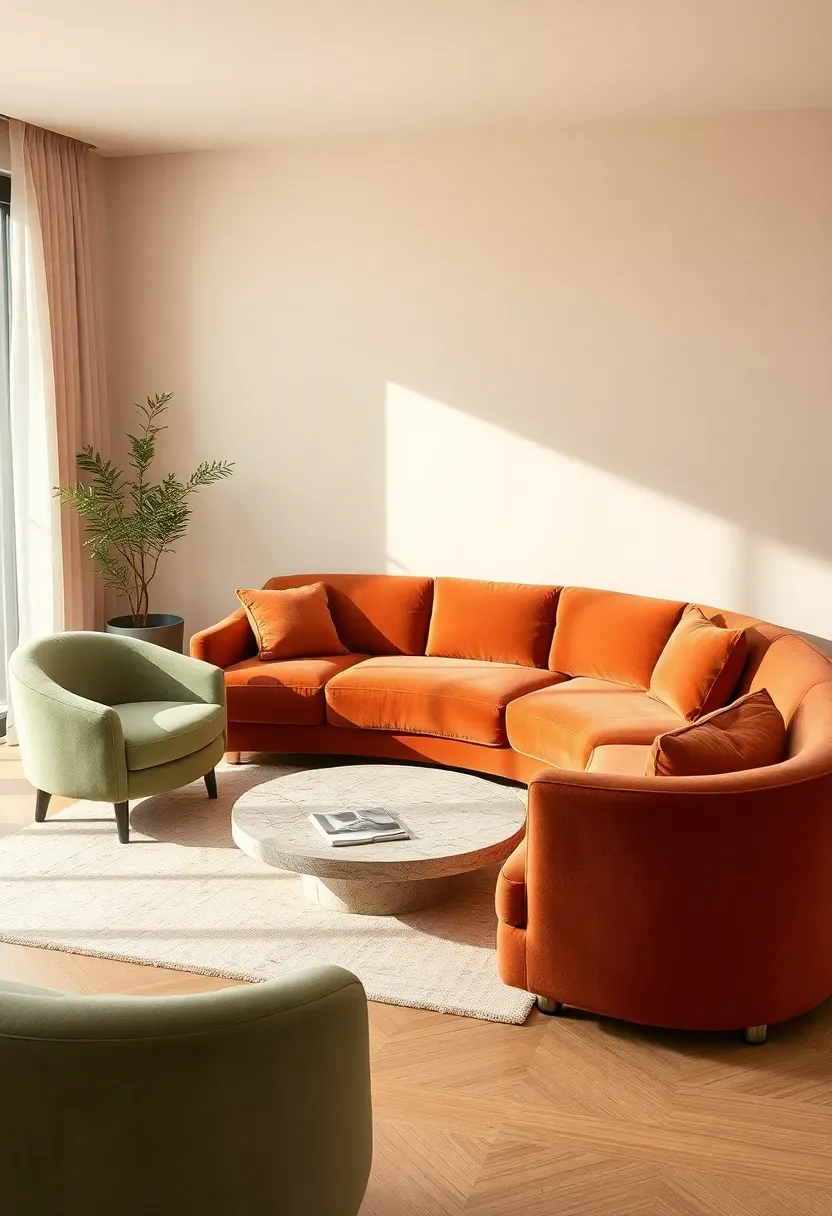
Breaking the dominance of straight lines in minimalist design, curved furniture pieces introduce organic movement that mimics natural forms—river stones, rolling hills, flower petals—bringing subconscious comfort to your living room. Choose a curved sofa or rounded armchair in a warm earth tone like terracotta, sage, or ochre, then support it with a round coffee table and curved accessories. The psychology behind this approach is profound: humans naturally gravitate toward curves, finding them more welcoming and relaxing than sharp angles. In an organic minimalist space, one or two curved pieces create sufficient softness without sacrificing clean lines. Terracotta upholstery particularly shines because it adds warmth while remaining neutral enough to work with changing decor—the color evokes sun-baked clay and desert landscapes, creating instant connection to earth's natural palette.
Tips
- If committing to curved sofa feels daunting, start with curved accent chair or round coffee table
- Then ground curved pieces with area rug that has subtle pattern to prevent floating feeling
- Balance curvy furniture with one or two linear pieces (rectangular console, linear light fixture)
Best for: open floor plans where furniture floats in room, spaces with children (curves = safer corners)
What this gives you: subliminal comfort and visual flow that makes spaces feel more intuitive and less rigid
4. Monochromatic Beige Sanctuary with Texture Layers
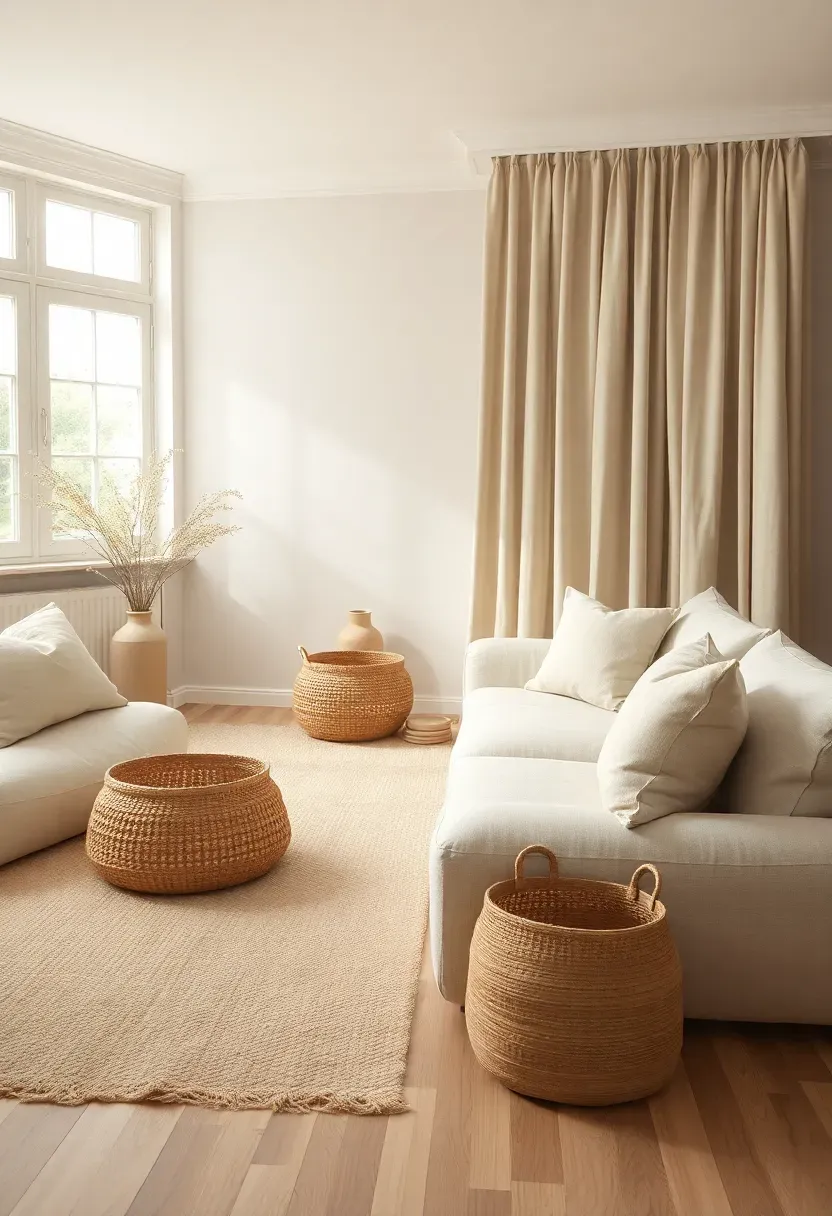
The secret to monochromatic organic minimalism lies in texture variation rather than color contrast—working within a spectrum of beige, cream, and oatmeal creates sophisticated calm when each material brings distinct tactile quality. Layer a jute rug over seagrass carpeting, pair a rough-hewn wool throw with smooth linen pillows, combine matte plaster walls with glossy ceramic vases. The monochromatic approach eliminates visual noise, allowing your eye to rest and notice subtle details: the weave of basket, the grain of wood side table, the irregular edge of hand-thrown bowl. This palette particularly suits organic minimalism because it emphasizes material authenticity—color doesn't distract from texture, so the natural qualities of each element become the focus. The result is a living room that feels like a capsule of serenity, where everything belongs and nothing competes for attention.
Recommended
Items for this idea
Tips
- Include at least 4-5 distinct textures in monochromatic room to prevent flat feeling
- Use different sheen levels: matte walls, semi-matte upholstery, slightly glossy ceramics for contrast
- Add one living element (plant, fresh flowers) to prevent monochromatic space from feeling sterile
Avoid if: your home lacks natural light—monochromatic rooms can feel drab without sunlight's warmth
What this gives you: a restorative environment that calms the nervous system through absence of visual stimulation
5. Indoor Garden Living Room with Biophilic Design for Renters
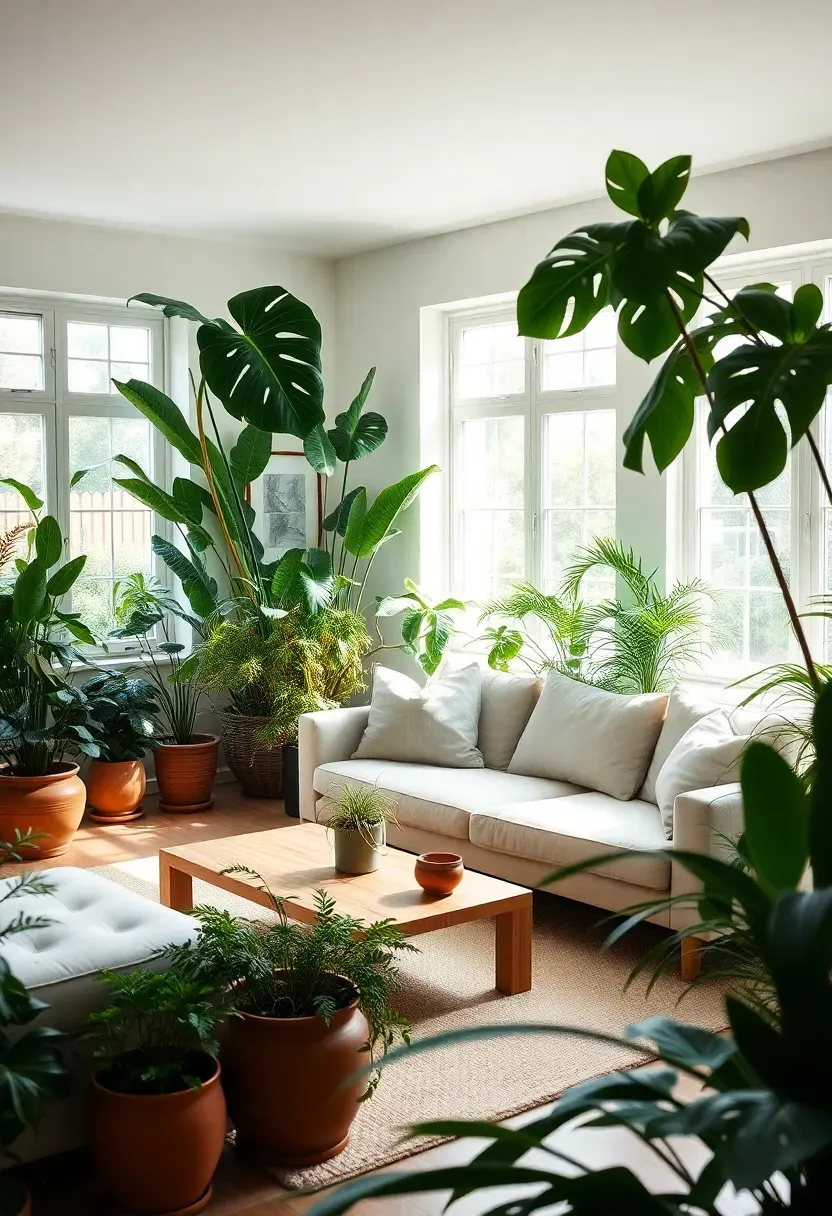
Bringing the outdoors inside doesn't mean placing a few potted plants—it means designing your living room as an indoor garden where plants are integral to the space, not afterthoughts. This approach to organic minimalism pairs perfectly with minimalist furniture because abundant greenery provides the "decoration" while maintaining clean lines. Choose large statement plants: fiddle leaf fig in corner, monstera beside sofa, snake plant grouping as room divider. Use varying heights and pot materials—terracotta for warmth, ceramic for sleekness, woven baskets for texture—to create visual diversity. The psychological benefits are profound: studies show indoor plants reduce stress, improve air quality, and increase creativity. In terms of design, plants introduce organic shapes, living movement (leaves respond to air and light), and seasonal changes that connect your interior to nature's cycles. This is organic minimalism in its truest form—coexisting with nature rather than merely representing it.
Tips
- Group plants in odd numbers (3, 5, 7) for more natural, less designed appearance
- Choose plants with varied leaf shapes—some large and heart-shaped, others spiky or fern-like
- Consider plant stand heights to create verticality and prevent plants from all sitting at floor level
Best for: spaces with ample natural light, plant enthusiasts willing to commit to care routine
What this gives you: daily connection to nature that boosts mood and air quality while creating dynamic, ever-changing living space
6. Low-Scale Lounge with Grounded Energy
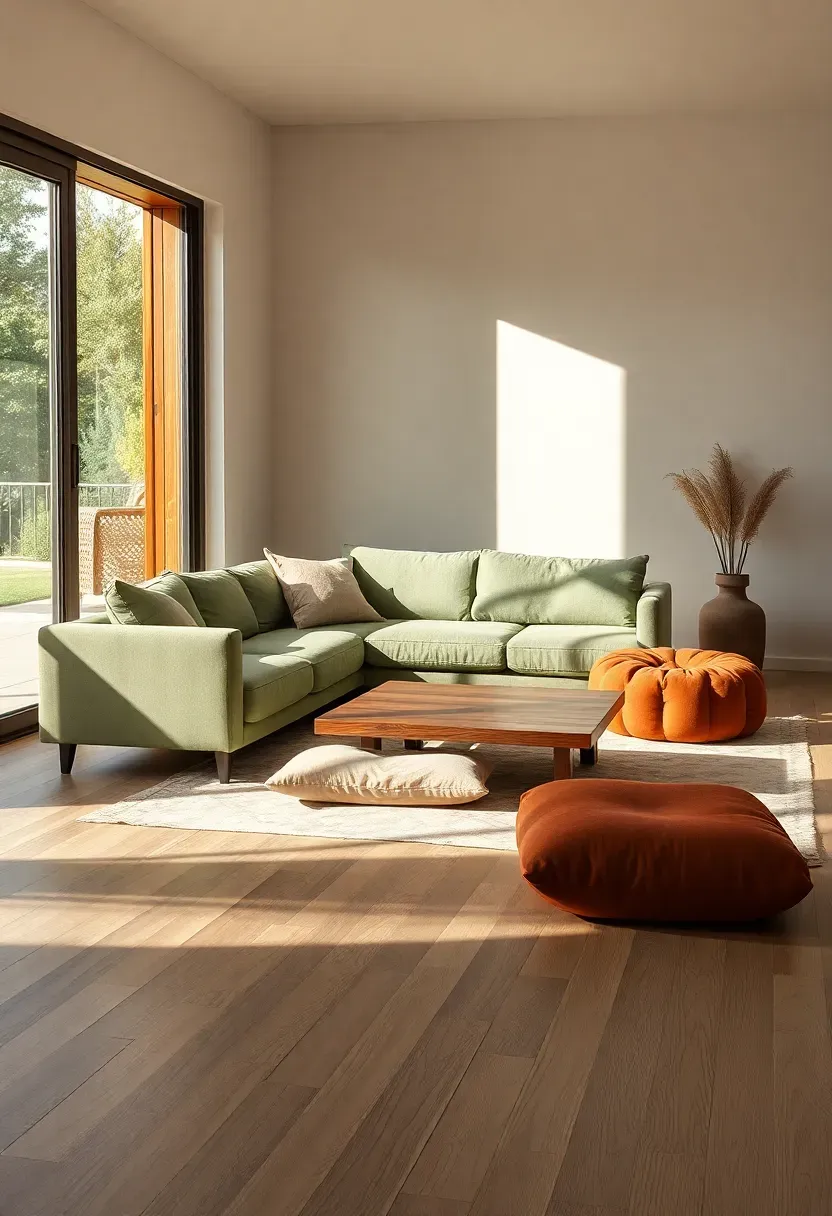
Embracing low-scale furniture—sofas and chairs that sit closer to the floor—creates an inherently organic, grounded feeling that connects inhabitants to earth's stability. Japanese and Moroccan design traditions have long utilized low seating for meditation, conversation, and relaxation, recognizing that proximity to the floor induces calm. In organic minimalism, low-profile pieces make ceilings feel higher and rooms more spacious, creating breathing room above furniture that contributes to uncluttered aesthetic. The approach works beautifully with natural floor materials: wood, stone, or polished concrete become integral to design rather than backdrop. Low-slung upholstered pieces in linen or velvet combined with floor cushions, poufs, and low wood tables create casual elegance that invites lounging, stretching out, and informal gatherings. This is furniture that says "relax" rather than "sit up straight"—perfect for modern living where comfort and authenticity take precedence over formality.
Recommended
Items for this idea
Tips
- Standard sofa seat height is 18"; aim for 15-16" for low-profile look without discomfort
- If replacing furniture isn't feasible, remove sofa legs or choose furniture with exposed/short legs
- Balance low furniture with one tall element (floor lamp, tall plant) to prevent room from feeling squat
Avoid if: you have knee/back mobility issues—low furniture can be difficult to rise from
What this gives you: psychological grounding and spatial generosity that makes rooms feel larger and more relaxing
7. Clay and Terracotta Warmth with Neutral Base
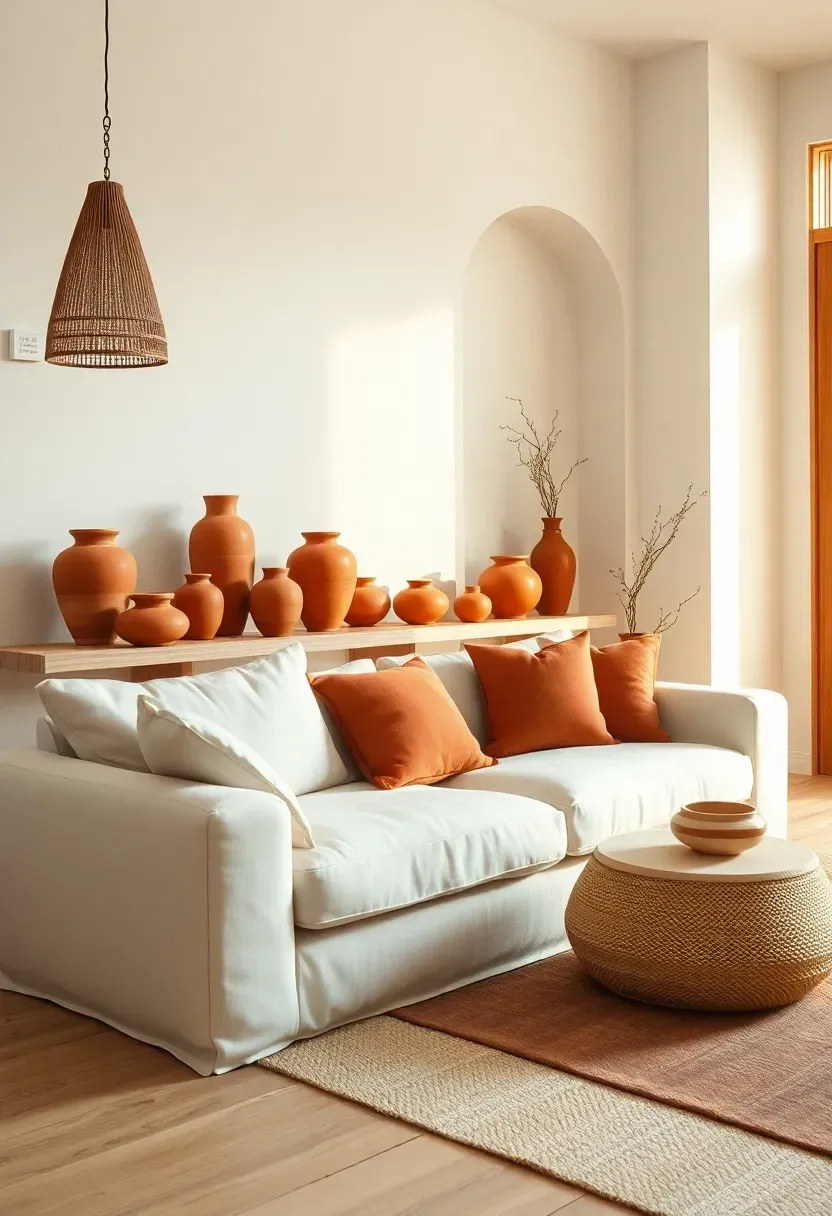
While many organic minimalist spaces lean toward cool neutrals, incorporating warm clay and terracotta tones adds depth and soulfulness that prevents rooms from feeling clinical. The key is using terracotta as accent rather than dominant color: terracotta vase collection on oak shelf, rust-colored throw pillows on cream sofa, clay pendant lights over neutral seating area. This approach draws inspiration from adobe architecture, Mediterranean interiors, and Japanese wabi-sabi philosophy—traditions that celebrate earth's raw, unrefined beauty. Terracotta contains iron oxide, the same pigment that gives desert landscapes their warm glow, explaining its ability to make spaces feel sun-drenched even on gray days. In organic minimalism, where material authenticity is paramount, terracotta vessels and accessories represent the purest expression of earth: formed from clay, kiln-fired, left unglazed to reveal natural texture and color variation.
Tips
- Group terracotta pieces in odd numbers (3, 5) for more natural, gallery-like arrangement
- Mix terracotta shades from pale salmon to deep rust to prevent color from feeling flat
- Choose unglazed terracotta over glazed—unglazed shows natural clay texture and develops patina
Best for: north-facing rooms that need warmth, spaces lacking architectural character, winter interiors
What this gives you: inherent coziness and color depth without introducing artificial or saturated tones
8. Driftwood-Inspired Space with Coastal Calm
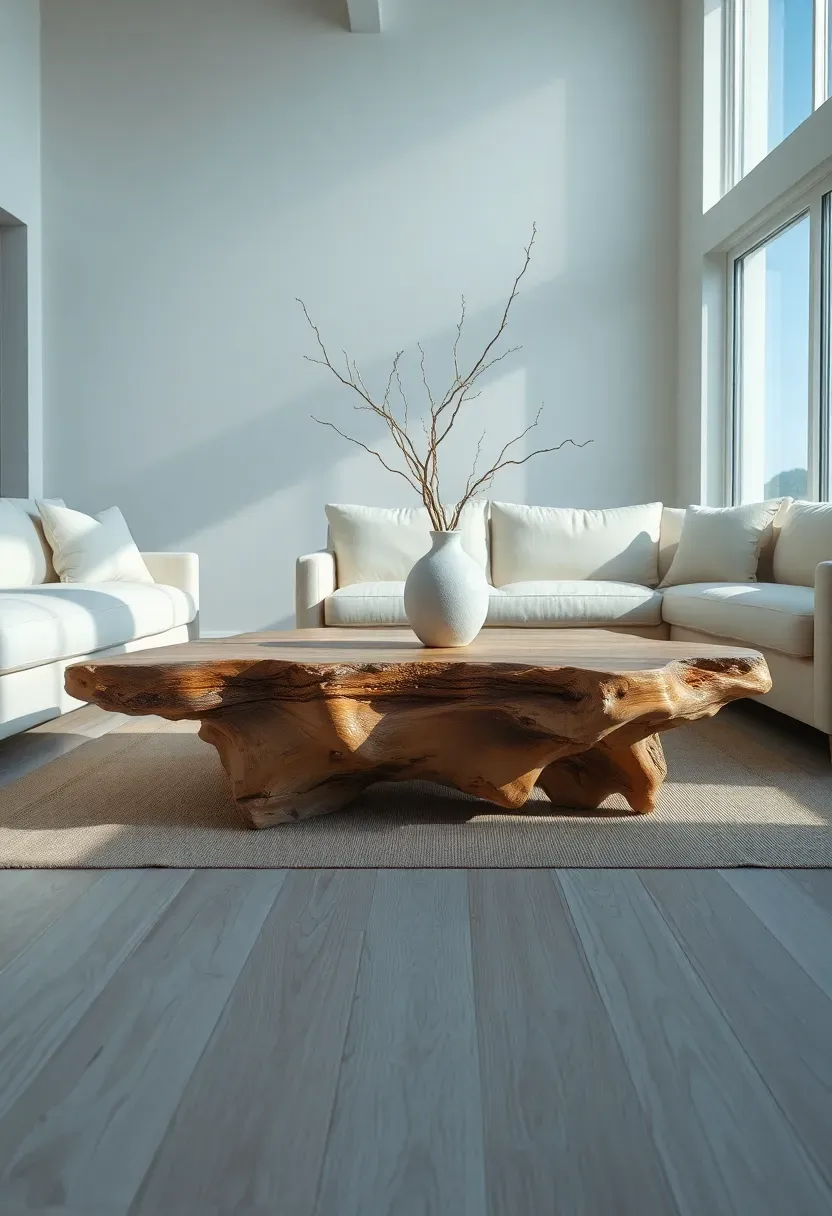
The weathered beauty of driftwood—smoothed by ocean tides, sun-bleached to pale silver-gray—offers organic minimalism a naturally refined aesthetic that requires no artifice. Driftwood coffee tables, sculptural branches displayed in ceramic vessels, or wall art composed of found driftwood pieces bring seaside tranquility into any living room, regardless of proximity to coast. This material embodies wabi-sabi principles: finding beauty in imperfection, celebrating wear and weathering, honoring nature's transformations over time. In practical terms, driftwood's pale, neutral color palette integrates seamlessly with minimalist interiors while its organic shapes provide counterpoint to clean-lined furniture. The emotional effect is transporting—gazing at driftwood surfaces triggers memories of beach walks, ocean sounds, salt air, creating mental escape from urban stress. This is organic minimalism that tells a story: each piece carries journey from forest to river to ocean to shore to home.
Recommended
Items for this idea
Tips
- Sourced driftwood should be fully dried and treated with clear finish to prevent moisture issues
- If ethical sourcing concerns exist, choose furniture that mimics driftwood's weathered aesthetic
- Balance driftwood's gray tones with warmth: linen in natural/cream, wood furniture with honey tones
Best for: coastal homes, spaces with blue-gray views (water, sky), anyone seeking beach vacation vibe year-round
What this gives you: vacation mental state and tactile connection to nature's elemental forces
9. Hemp and Rattan Bohemian Minimalism
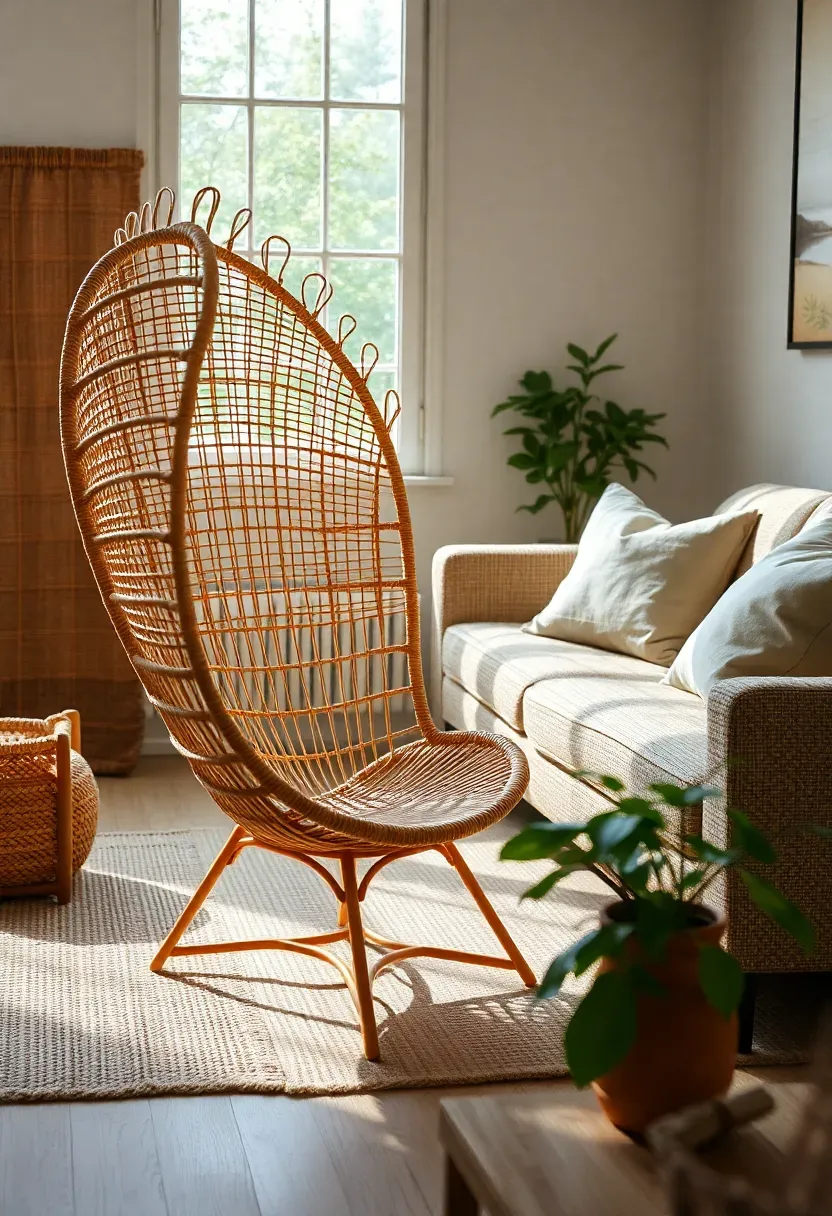
Bohemian minimalism might sound contradictory, but the intersection of these styles creates one of the most authentic expressions of organic design: minimal objects, maximal natural materials, layered textures that feel collected rather than decorated. Hemp fabric—with its nubby texture and natural color variation—makes exceptional upholstery for sofas or armchairs, developing beautiful patina over years of use that only improves with age. Rattan furniture, whether vintage pieces or new designs with cane webbing, adds visual rhythm through its woven patterns and brings lightness to furniture arrangements. The key to keeping this organic look minimalist is restraint: choose one rattan piece (perhaps a peacock chair or cane-back sofa) and one hemp element (upholstery or rug), then keep surroundings streamlined. This approach celebrates craftsmanship—the visible hand-weaving in rattan, the subtle irregularities in hemp fabric—connecting your living room to humans who made materials, not just materials themselves.
Tips
- Choose hemp in natural/undied state—dyed colors compromise organic appeal and may fade
- Vintage rattan often has superior craftsmanship compared to new reproductions
- If rattan feels too bohemian, choose furniture with cane accents rather than full rattan construction
Avoid if: your home has high humidity (rattan can warp) or pets with claws (natural fibers snag easily)
What this gives you: relaxed sophistication and material authenticity that makes spaces feel globally collected and intentionally casual
10. Sun-Drenched Organic Room with Sheer Layers
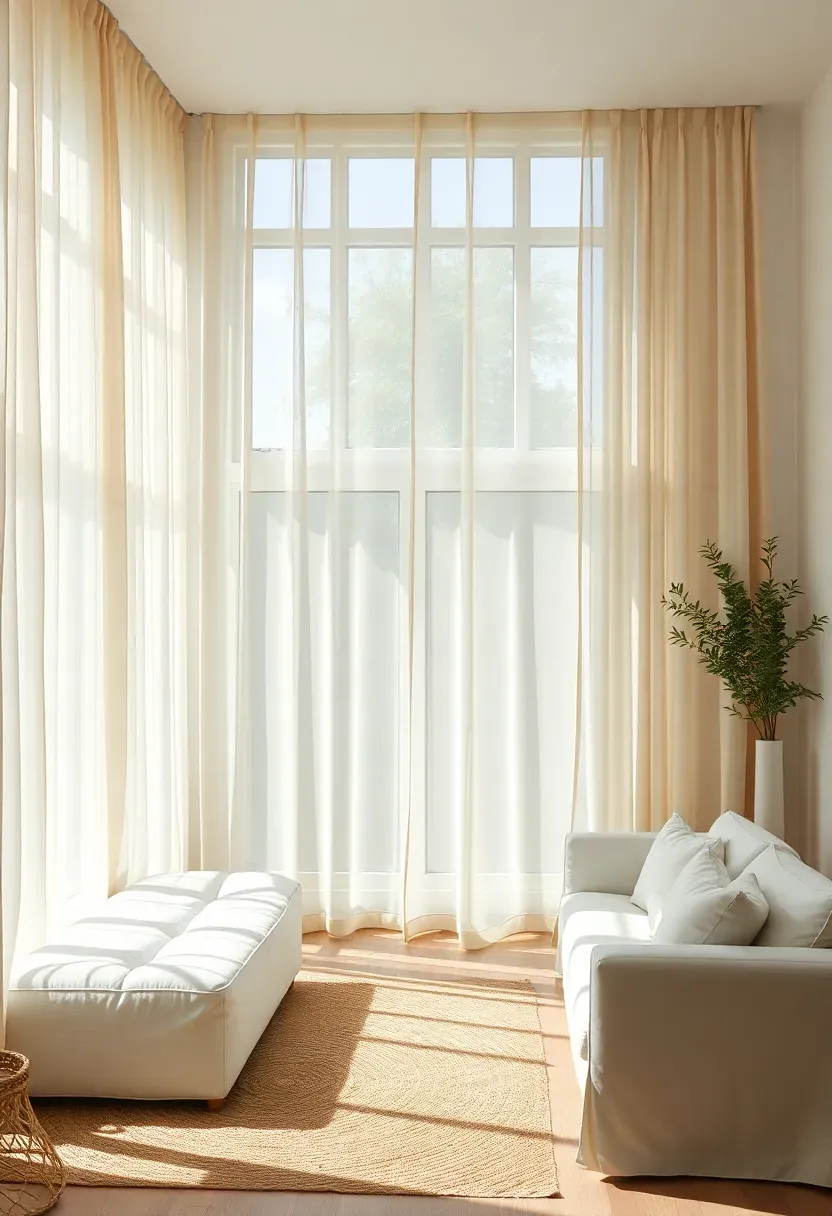
Natural light is the most essential element in organic minimalist design—it's free, constantly changing, and makes every material look more beautiful. Maximizing daylight while maintaining privacy requires thoughtful window treatments: sheer linen curtains layered at least two-deep create filtered light that softens harsh sun while preserving brightness. The trick is installing curtains as high as possible (ceiling height or just below crown molding) and extending rods 8-12 inches beyond window frames—this allows curtains to be pushed completely clear of glass when open, maximizing light admission. During day, sheer layers create luminous glow; at twilight, they provide privacy without feeling heavy or blocking evening sky views. Color-wise, choose white, cream, or oatmeal sheers—these colors reflect rather than absorb light, making rooms feel airier. The psychological effect of living in sun-drenched space cannot be overstated: morning light sets circadian rhythms, midday brightness boosts mood, golden hour creates daily moment of beauty.
Recommended
Items for this idea
Tips
- Choose linen sheers with 10-15% openness factor—more sheer and they lose texture, less and they block light
- Install curtain rods using ceiling-mount brackets when possible for maximum height
- Layer white blackout panels behind sheers if room-darkening needed occasionally
Best for: south/east-facing rooms, anyone affected by seasonal affective disorder, morning people
What this gives you: daily connection to natural light cycles that regulates mood, energy, and sleep quality
11. Stone-Floor Living Room with Underfloor Heating
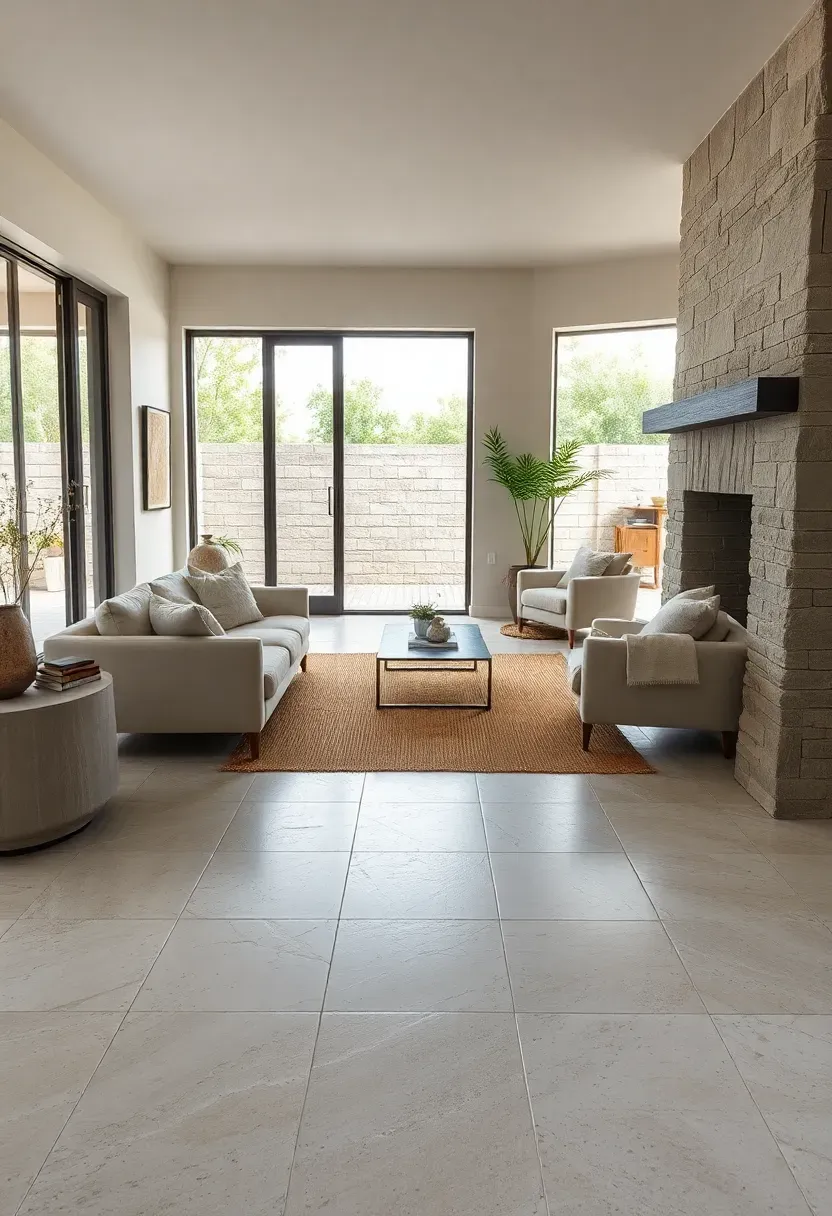
While carpet offers warmth, stone flooring embodies organic minimalism's commitment to authentic, unprocessed materials—but the traditional drawback (cold underfoot) disappears with modern underfloor heating systems. Limestone, travertine, or slate floors provide visual continuity from outdoor to indoor spaces, particularly effective in living rooms with sliding glass doors or garden access. The practical benefits align beautifully with minimalist values: stone floors never need replacing, develop patina rather than showing wear, clean effortlessly, and work with any furniture style. Aesthetically, stone floors ground rooms with substantial, elemental presence—these are floors formed over millions of years, containing fossils, mineral veins, and color variations that make each installation unique. Pair stone floors with area rugs in natural fibers (jute, wool, sisal) to define seating zones while maintaining stone's visual continuity. The result is living room that feels permanently anchored to earth rather than merely decorated.
Tips
- Choose honed over polished finish for living areas—honed feels warmer and shows fewer scratches
- Larger tiles (24x24 or larger) minimize grout lines for more seamless, organic appearance
- If full stone floor exceeds budget, consider stone in high-traffic areas with hardwood elsewhere
Budget/Time: $12-30/sq ft for stone + $8-15/sq ft for hydronic heating; significant investment but permanent solution
What this gives you: zero-maintenance flooring that connects interior to earth's ancient materials while providing luxurious warmth
12. Vertical Garden Wall as Living Art
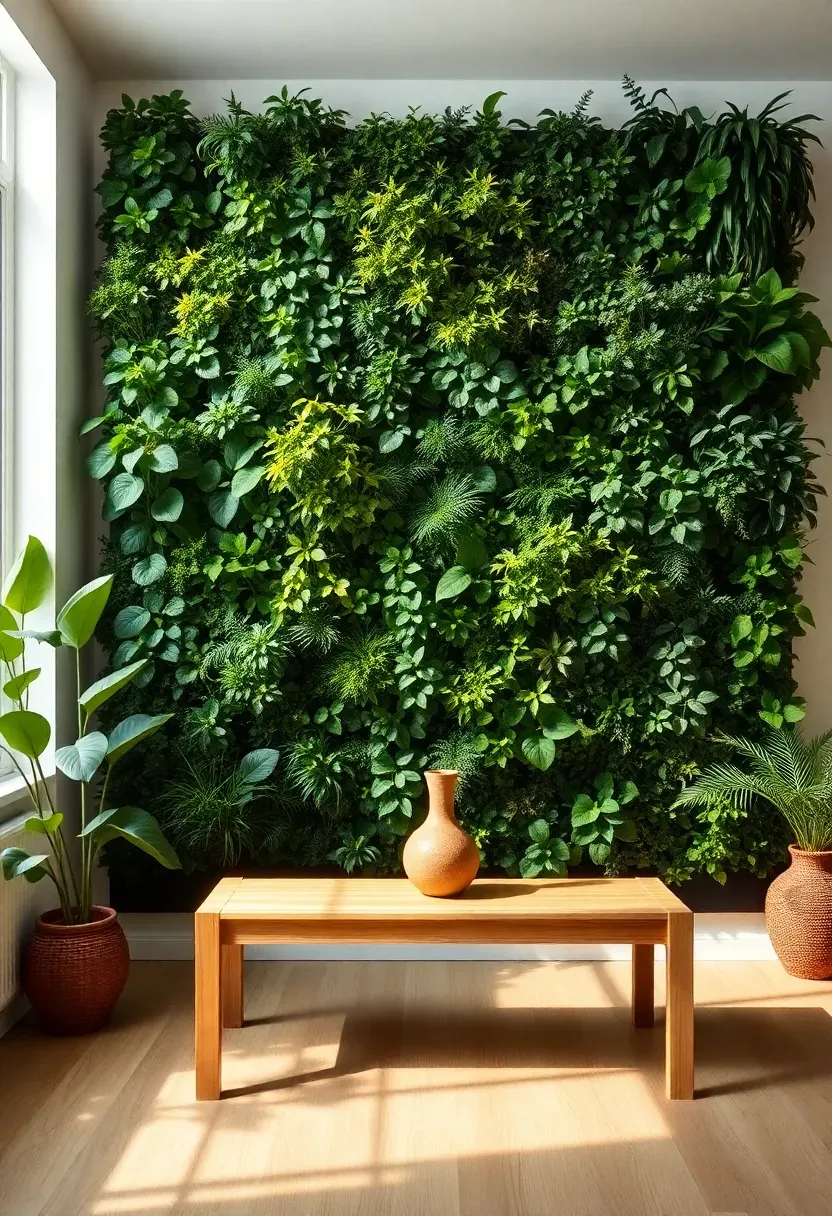
Taking biophilic design to its logical conclusion, a living wall transforms ordinary living room into vertical garden that functions as both art and air-purifying system. Modern systems make this achievable even for novice gardeners: modular panels with built-in irrigation, felt pocket systems, or tray-based options all support variety of plants from pothos and ferns to herbs and succulents. The visual impact is extraordinary—walls that breathe, change, grow, providing constantly changing "painting" that connects interior to nature's rhythms. In organic minimalist interiors, where decorative objects are minimized, living wall becomes primary focus, eliminating need for additional artwork or accessories. Beyond aesthetics, living walls provide significant environmental benefits: air purification (NASA studies show certain plants remove formaldehyde, benzene, and other VOCs), humidity regulation, and sound absorption. The psychological effect is profound—being surrounded by living plants reduces stress and increases feelings of wellbeing in measurable ways.
Recommended
Items for this idea
Tips
- Start with plants known for resilience: pothos, philodendron, snake plant, zz plant
- Install irrigation system or commit to weekly watering routine—living walls dry faster than potted plants
- Consider grow light if wall doesn't receive at least 4-6 hours indirect daylight daily
Best for: plant enthusiasts, rooms with good natural light, anyone seeking maximum biophilic impact
What this gives you: dramatic visual statement that improves air quality while creating daily connection to growing things
13. Leather and Wood Masculine Organic Space
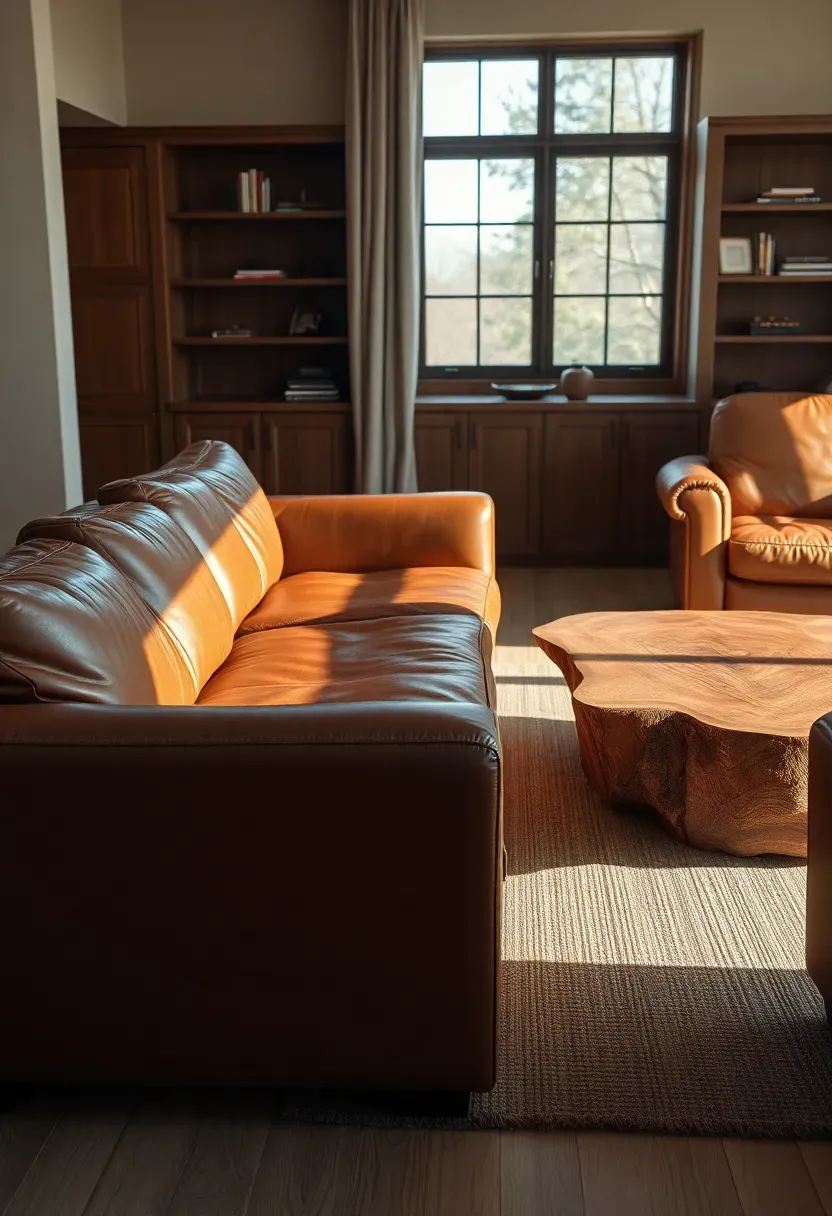
Organic minimalism often leans feminine with soft linens and pale colors, but introducing leather creates warmer, more masculine iteration that feels grounded and substantial. Quality leather—in cognac, chestnut, or natural tan—develops rich patina over years, improving with age rather than deteriorating, embodying wabi-sabi appreciation for authenticity and wear. Paired with prominent wood elements (oak flooring, walnut coffee table, maple side tables), leather furniture creates living room that feels like study in library or clubhouse: sophisticated, durable, timelessly handsome. The material combination works because leather represents animal origin while wood represents plant origin—together they create complete natural material story. Leather's practical advantages align with minimalist values: it wipes clean, resists stains, doesn't trap pet hair, and lasts decades, making it investment rather than disposable purchase. Choose full-grain or top-grain leather with minimal processing—the more natural finish, the more organic authenticity.
Tips
- Full-grain leather shows most natural markings but is most durable; top-grain offers balance of quality and consistency
- Condition leather 2-3 times yearly to prevent drying and maintain suppleness
- Balance leather's warmth with light elements: cream throw pillows, light rug, pale walls to prevent cave-like feeling
Budget/Time: quality leather sofa $3,000-8,000; investment piece lasting 20+ years with proper care
What this gives you: sophisticated, low-maintenance space that improves with age and tells story of use and care
14. Bamboo-Inspired Minimalist Retreat
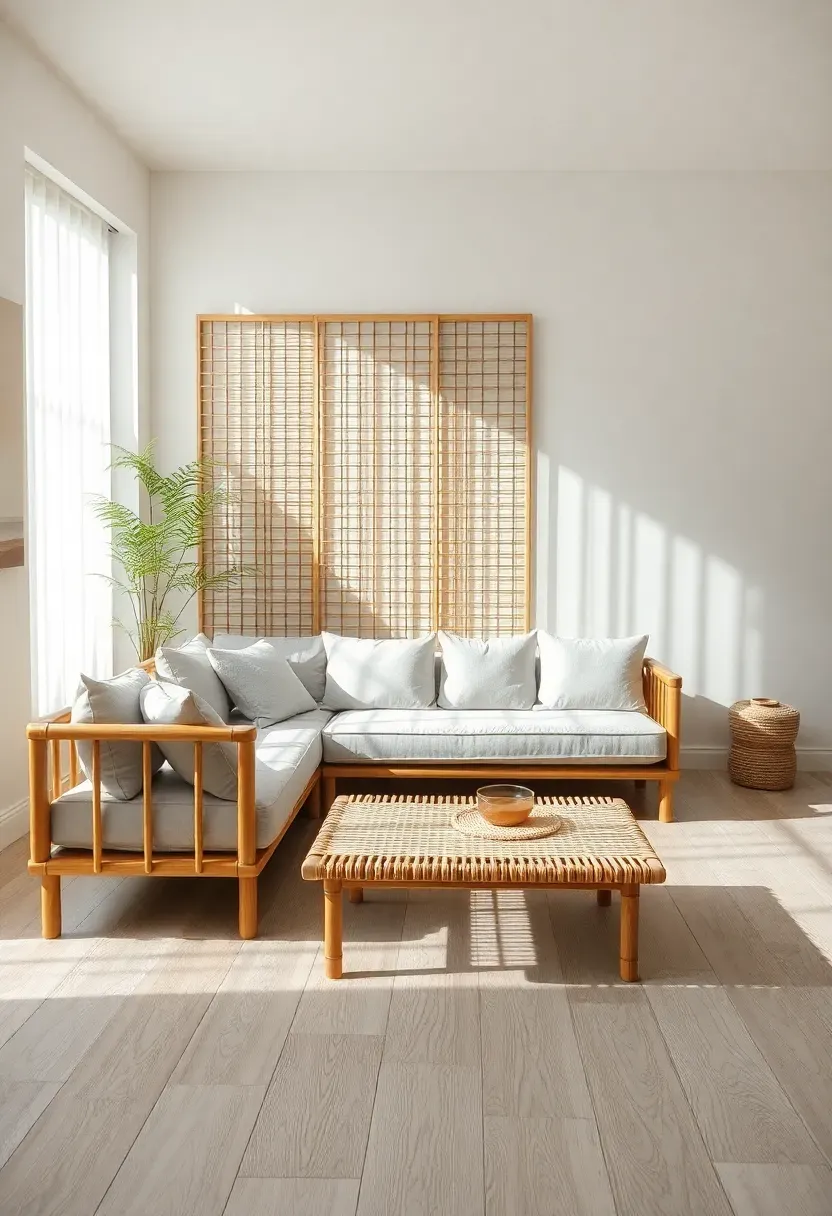
While Western organic minimalism often emphasizes oak, walnut, and stone, Asian traditions offer bamboo as sustainable, rapidly renewable material that brings serenity and lightness to living spaces. Bamboo furniture—whether actual bamboo construction or designs inspired by bamboo's segmented, cylindrical form—introduces vertical rhythm and visual delicacy that balances heavier organic materials like stone or leather. The sustainability credentials are impressive: bamboo reaches maturity in 3-5 years compared to decades for hardwood trees, regenerates without replanting, and sequesters more carbon per acre than most forests. Aesthetically, bamboo's pale yellow-green color adds warmth without heaviness, its visible nodes create natural pattern, and its hollow construction makes furniture surprisingly lightweight and easy to rearrange. In organic minimalist interiors, bamboo pieces work especially well as accents: chair, coffee table, room divider, or lighting fixtures. The material carries cultural associations with Zen philosophy, Japanese aesthetics, and feng shui principles—all emphasizing harmony, simplicity, and connection to nature.
Recommended
Items for this idea
Tips
- Choose laminated bamboo furniture for durability—solid bamboo can crack in dry climates
- If actual bamboo feels too thematic, choose furniture inspired by bamboo form (segmented designs, cylindrical elements)
- Mix bamboo with one substantial material (stone, heavy wood) to prevent room from feeling too delicate
Best for: humidity-controlled environments (bamboo can crack in very dry conditions), light-filled spaces
What this gives you: sustainable, lightweight furniture that brings Asian-inspired serenity and vertical visual rhythm
15. Wabi-Sabi Imperfect Perfection in an Organic Minimalist Room
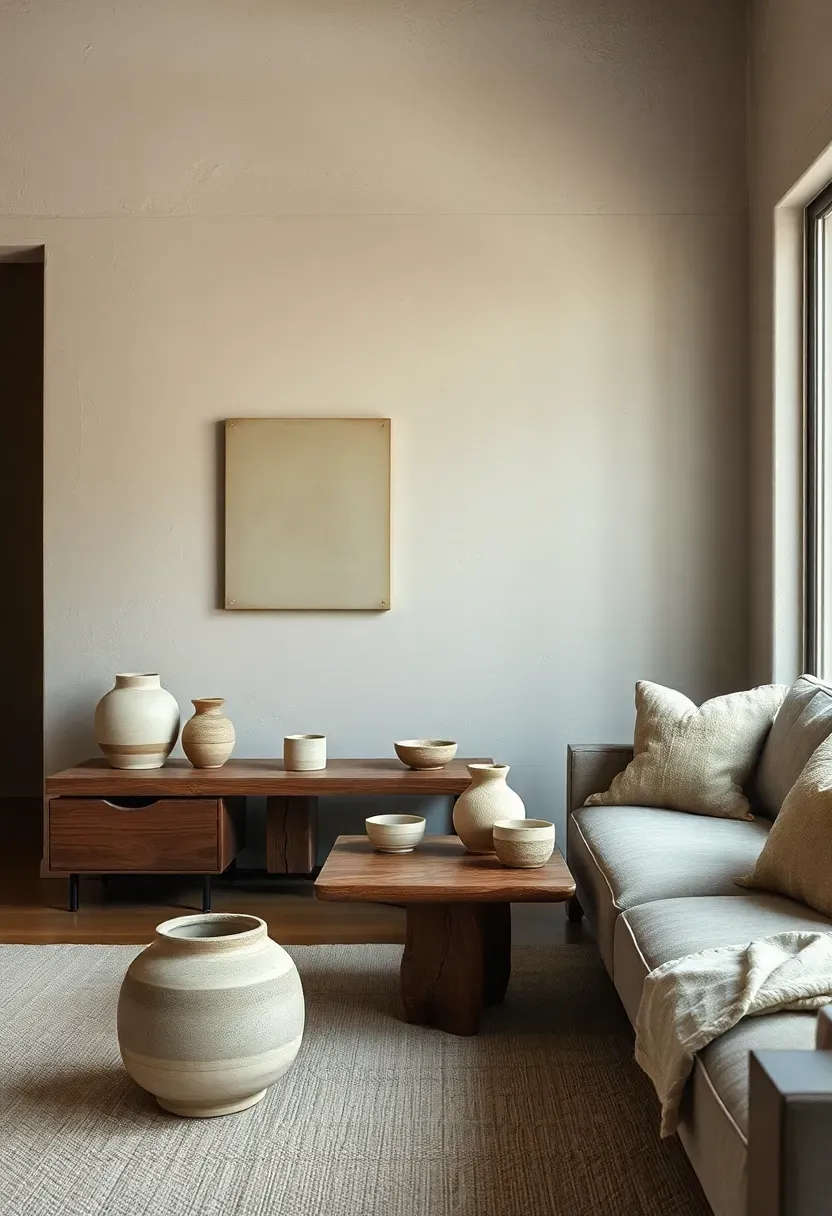
Wabi-sabi, the Japanese aesthetic philosophy that finds beauty in imperfection, impermanence, and incompleteness, offers organic minimalism its soul: permission to embrace materials that show wear, age, and handmade irregularity. Instead of pristine white surfaces, choose hand-troweled plaster walls with subtle variation; rather than mass-produced perfection, select furniture with visible joinery, knots, natural edges; in place of perfect symmetry, arrange objects with slightly asymmetrical balance. The psychological freedom this approach offers is profound—living spaces become forgiving rather than demanding, celebrating life's inevitable marks rather than fighting against them. A scratch on wood table becomes story, not flaw; crack in ceramic vase becomes character, not damage; uneven edge of woven basket becomes evidence of human hands, not manufacturing defect. This approach particularly suits organic materials because wood, stone, clay, and fiber all naturally vary—each piece unique, each carrying evidence of its formation. Wabi-sabi minimalism feels more livable, more human, more real than perfection-obsessed design.
Tips
- Choose hand-thrown ceramics over mass-produced—irregular shapes and glaze variations embody wabi-sabi
- Embrace one statement piece with visible "flaws": live-edge table, cracked leather, repaired pottery (kintsugi)
- Practice restraint—wabi-sabi requires editing, not accumulating; choose few imperfect pieces over many perfect ones
Best for: perfectionists seeking mindset shift, families with children/pets (forgiving spaces), anyone drawn to Japanese aesthetics
What this gives you: mental liberation from pressure to maintain perfection, creating home that feels genuinely, comfortably livable
16. Skylit Organic Living Room with Natural Light
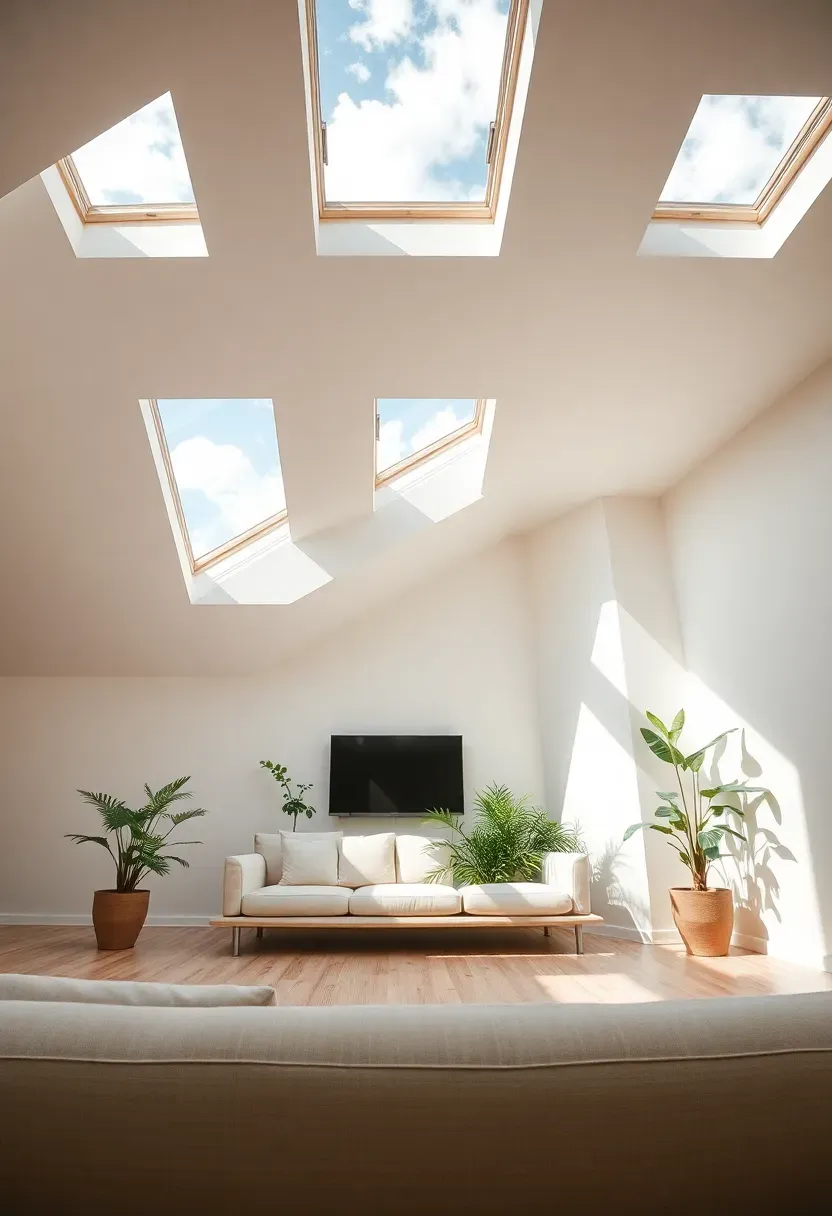
While windows connect rooms to horizontal world, skylights open spaces to sky above, bringing dynamic quality of light that changes throughout day and season. In organic minimalist living rooms, where artificial decoration is minimized, skylights become living artwork: clouds drifting, rain falling, stars emerging, moon rising—each natural phenomenon becomes daily entertainment. Beyond drama, skylights provide practical benefits: they introduce significantly more daylight than vertical windows (particularly valuable in north-facing rooms), they maintain privacy without window coverings, and they create chimney effect for passive cooling when opened. Design-wise, skylights work beautifully with organic materials because natural light reveals texture, grain, and color variation that artificial lighting flattens. White oak flooring shows more depth, stone walls reveal more fossil patterns, linen upholstery displays more weave variation—all illuminated by daylight pouring from above. This is organic minimalism working in partnership with nature's most powerful design element: light itself.
Recommended
Items for this idea
Tips
- Install skylights with UV-blocking glass to protect furniture and flooring from sun damage
- Consider solar-powered skylight blinds for light control and temperature regulation
- Position seating to take advantage of skylight views—reclining or lounge chairs maximize sky-gazing
Budget/Time: $2,000-5,000 per skylight installed; significant but transformative investment
What this gives you: daily connection to sky's changing beauty and significantly enhanced natural light without sacrificing privacy
17. Moss and Fern Green Botanical Sanctuary
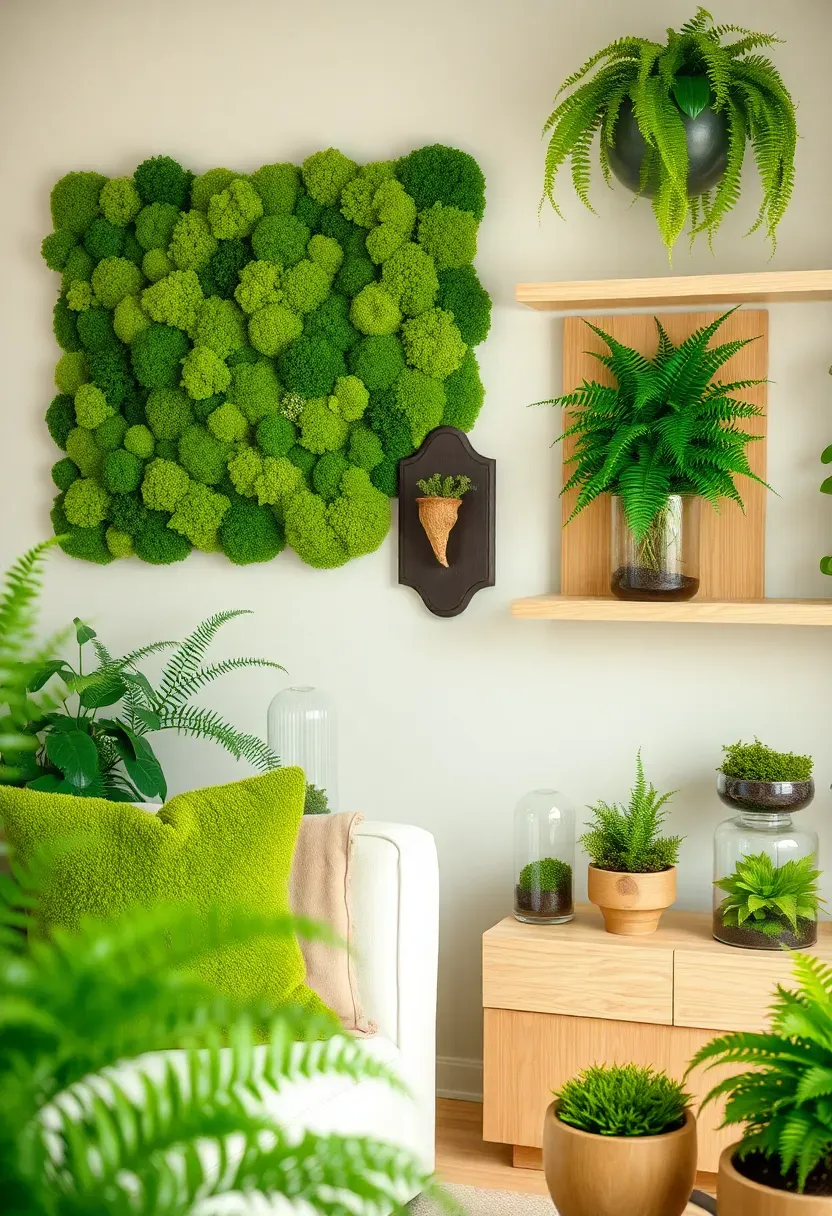
While large statement plants create impact, embracing the smallest scale of plant life—moss and ferns—transforms living room into enchanted forest floor, where every surface supports growing things. Modern preserved moss products make this achievable without maintenance: preserved moss panels create living walls that require no water or light, terrariums housing ferns create self-sustaining ecosystems, and moss art pieces frame nature in minimalist frames. The color psychology of moss and fern greens is profound: these are the most restful colors in spectrum, proven to lower heart rate and reduce eye strain, explaining why forest bathing has measurable health benefits. In organic minimalism, where visual noise is minimized, introducing multiple shades of green—from chartreuse fern fronds to deep emerald moss—creates sophisticated monochromatic palette that feels alive rather than decorated. The textures are equally varied: fuzzy moss, glossy fern leaves, spiky moss varieties, creating tactile diversity that rewards close examination and slow living.
Tips
- Preserved moss lasts 7-10 years without maintenance—ideal for those lacking green thumb
- Ferns generally need consistent humidity and indirect light—bathrooms are ideal, terrariums create own environment
- Mix moss heights and textures to prevent moss art from looking like flat green carpet
Best for: nature lovers, humidity-controlled homes, anyone seeking maximum botanical impact with minimal maintenance
What this gives you: daily forest bathing experience at home with proven stress-reduction and visual tranquility benefits
18. Handcrafted Ceramic Focal Point Display
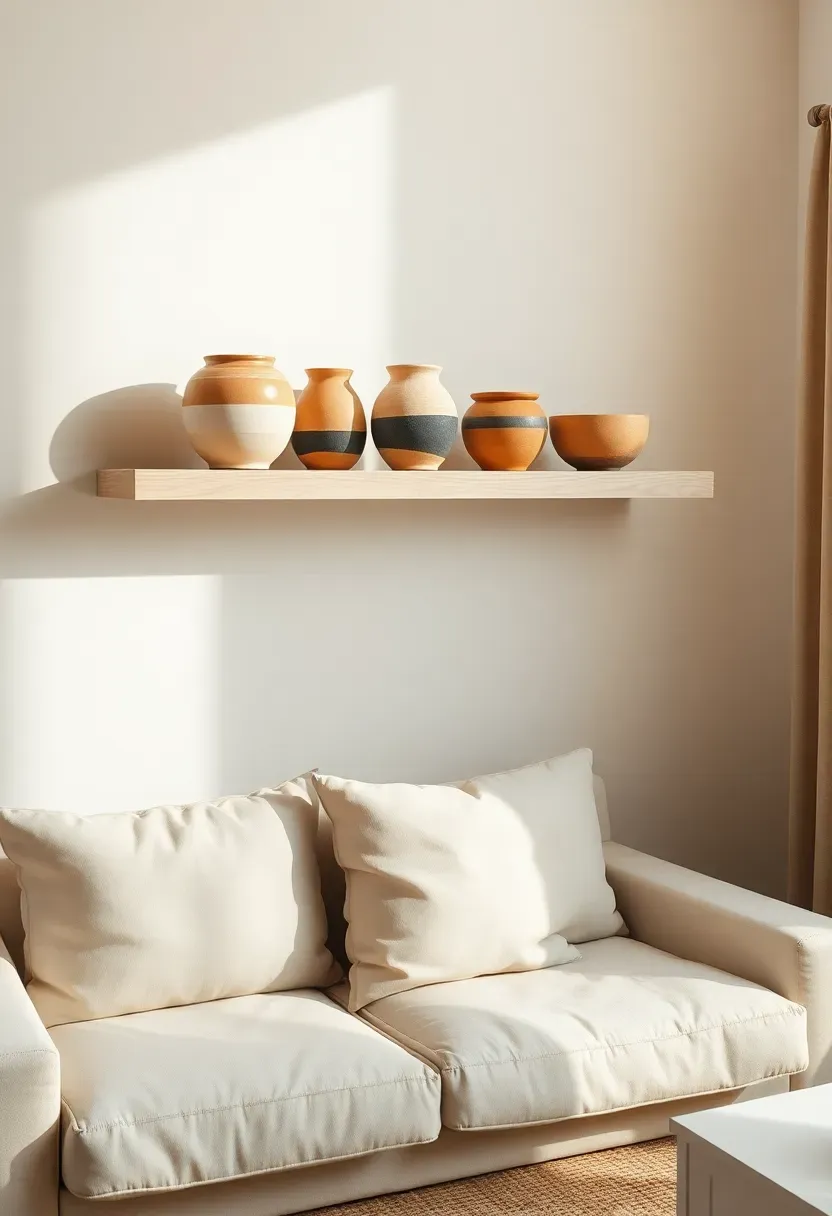
In organic minimalist living rooms where artwork and accessories are minimized, handcrafted ceramics become elevated to art status while maintaining functional purpose. Displaying collection of ceramic vessels—whether handmade plates on wall, vases on floating shelf, or bowls on low table—introduces human craft and material authenticity into space. The beauty of ceramics lies in their narrative: each piece bears evidence of maker's hands—throwing rings, finger marks, glaze variations, firing irregularities—that connect your home to community of artisans rather than faceless manufacturing. Display these pieces intentionally rather than randomly: grouping odd numbers (3, 5, 7) feels more natural, varying heights creates visual rhythm, incorporating negative space lets each piece breathe. For organic minimalism, choose ceramics with earthy palettes and matte or satin glazes rather than glossy primary colors—think the work of Lucie Rie, Hans Coper, or contemporary potters working in Japanese traditions. The result is living room that feels like small gallery, where functional objects become sculptural elements.
Recommended
Items for this idea
Tips
- Source ceramics directly from potters or galleries featuring makers—the story adds value
- Group ceramics by color family (all neutrals, all blues) or by maker for cohesive display
- Incorporate one larger statement piece (20+ inches) among smaller vessels to create anchor
Best for: art lovers, supporters of craft, anyone seeking minimal decor with maximum personality
What this gives you: functional art that tells story of human making while adding sophisticated, personal touch to minimalist space
19. Seasonal Rotation with Natural Elements
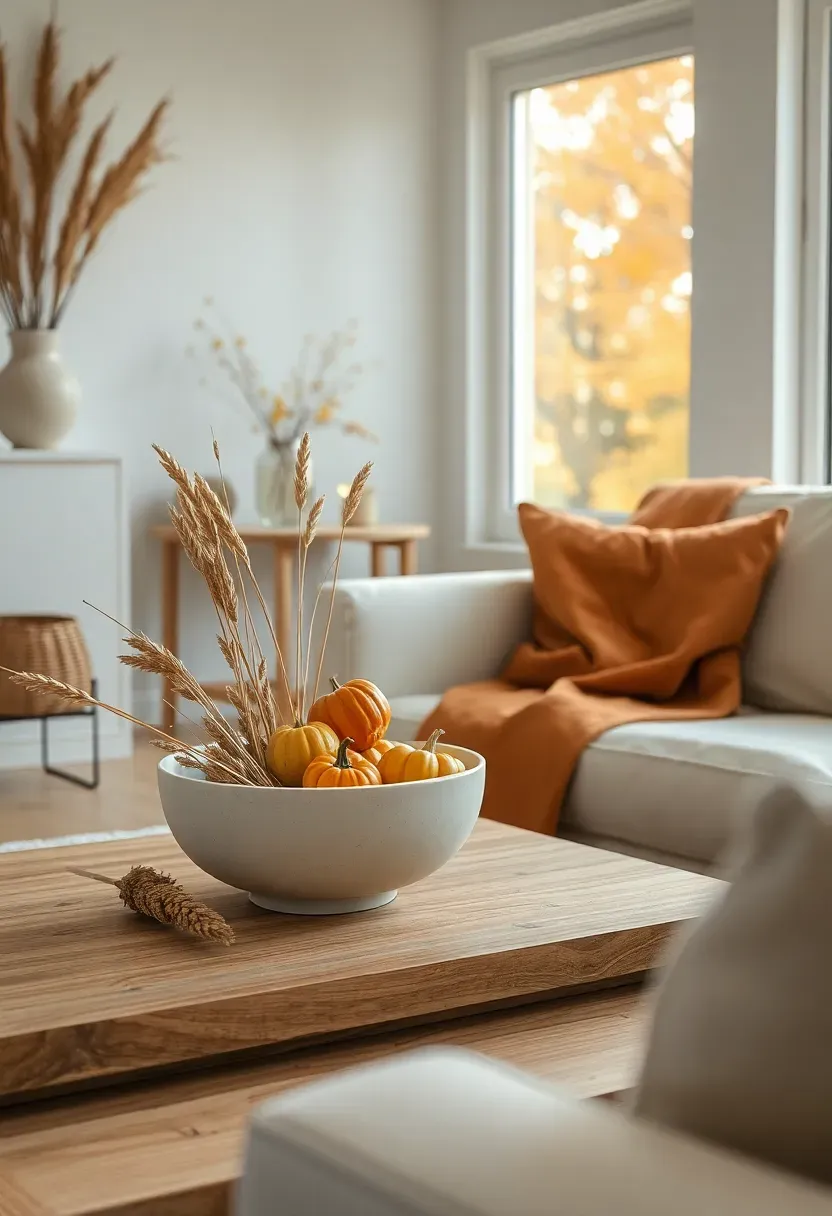
The most dynamic organic minimalist living rooms embrace seasonal change, rotating accessories and accent pieces to reflect nature's cycles: spring branches with new leaves, summer wildflowers, autumn dried grasses and gourds, winter pinecones and evergreen boughs. This approach keeps interiors feeling fresh and connected to outdoor world without requiring furniture changes or major redecoration. Designate specific vessels or spaces for seasonal rotation: ceramic vase on mantel, bowl on coffee table, arrangement on console table—these become designated spots for bringing nature indoors as it changes throughout year. The psychological benefit is powerful: your living room remains current, reminding you of present season rather than existing in timeless void. Practically, this approach aligns perfectly with organic minimalism because seasonal elements are by definition temporary and ephemeral—they don't accumulate as permanent clutter, don't require storage for 11 months of year, and they're often free or inexpensive (foraged from nature rather than purchased).
Tips
- Forage ethically: take only 10% from any patch, avoid protected species, never take from private land without permission
- Designate 2-3 specific vessels/spots for seasonal rotation to prevent scattered, cluttered appearance
- Photograph your seasonal arrangements to create record of year's changes and inspire future rotations
Best for: nature lovers, anyone who craves seasonal change, households that enjoy seasonal decorating without storage burden
What this gives you: living space that feels perpetually current and connected to natural world's rhythms, providing psychological marker of time's passage
Creating a minimalist organic living room means embracing materials and design principles that connect your home to nature's authenticity: wood with visible grain, stone with ancient patterns, linen with natural slubs, leather that develops patina, plants that grow and change. These 19 minimalist organic living room ideas demonstrate that organic minimalism isn't deprivation -- it's elevation of materials over decoration, authenticity over artifice, quality over quantity. Whether you choose a white oak foundation, a stone accent wall, an indoor garden approach, or a seasonal rotation, the result is a living space that feels simultaneously sophisticated and comfortable, modern and timeless. Many of these ideas are renter-friendly and work beautifully in small apartments, so you can start building your nature-inspired sanctuary today without permanent changes. By prioritizing natural materials, earthy palettes, and uncluttered spaces, you create a room that supports wellbeing while celebrating the beauty of the imperfect, authentic world we inhabit.
About the author
OBCD
CGI visualization and interior design content. We create detailed 3D renders and curate practical design ideas for every room in your home.