21 Ways to Live a Minimalist Life and Simplify Home
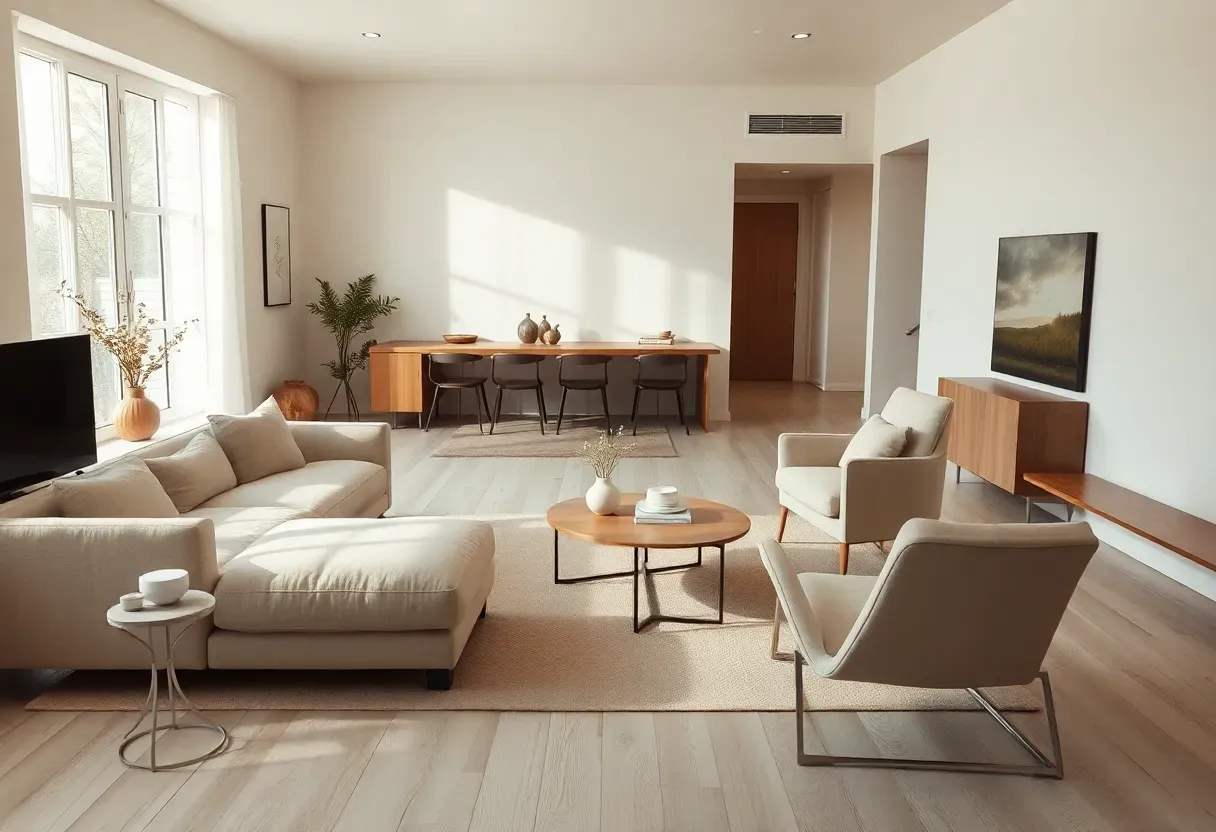
Learning how to live a minimalist life starts at home, where layout, light, and materials set the tone for every daily routine.
This guide covers 21 minimalist living ideas focused on minimalist home design that simplifies your space without stripping it of warmth or personality.
Whether you rent a small apartment or own a house, use these minimalist interior tips to refine one room or set a clear whole-home baseline.
Quick FAQ
How does a minimalist life start with interior design?
Begin with the floor plan and reduce the number of zones in each room. Clear circulation and planned storage make minimalism feel effortless instead of strict.
Which rooms matter most for minimalist living?
Start with the living room and entry because they set the visual tone for the entire home. Simplifying those spaces makes every other room feel calmer.
Why does a neutral palette help a minimalist lifestyle feel warm?
Neutral colors reduce visual noise so texture and light can carry the mood. Warm whites, soft taupes, and light woods keep it inviting while staying simple.
Should I avoid decor in a minimalist life?
No, keep a few pieces that earn their place through meaning or function. One large artwork or a single sculptural vase is usually enough.
How do I keep a minimalist home practical for daily routines?
Plan storage where daily clutter happens and keep surfaces open. A short reset routine and consistent zones keep the space functional.
As an Amazon Associate I earn from qualifying purchases.
Table of Contents
- 1. Map the Minimalist Life into Two Calm Zones
- 2. Unify Rooms with One Quiet Palette
- 3. Carry a Continuous Floor Line
- 4. Scale Furniture for Open Breathing Space
- 5. Build Storage into the Architecture
- 6. Align Sightlines for Visual Rhythm
- 7. Choose Low Profiles to Lift the Ceiling
- 8. Let One Natural Material Lead
- 9. Layer Lighting Instead of Decor
- 10. Use Texture Contrast, Not Extra Objects
- 11. Create a Clear Entry Landing Zone
- 12. Hide Daily Clutter Behind Flush Fronts
- 13. Keep Walls Simple with One Large Art
- 14. Pick Modular Pieces for Flexible Minimalist Living
- 15. Keep Windows Bare and Light-Forward
- 16. Design One Focal Point Per Room
- 17. Limit Color to a Single Accent Tone
- 18. Work with Patina-Ready Materials
- 19. Clear Surfaces with Built-In Charging
- 20. Define Transitions with Quiet Boundaries
- 21. Set a Weekly Reset Layout Ritual
1. Map the Minimalist Life into Two Calm Zones
The minimalist life starts in the living room when you reduce it to two clear zones: a social seat and a quiet reset corner. This kind of open-plan zoning makes circulation obvious and keeps visual clutter from spreading. Begin by marking a 36-inch path from entry to seating, then center an 8x10 rug to anchor the main zone. A single lounge chair or floor cushion can define the second zone without adding another full furniture cluster. Keep the center of the room open so the eye reads a calm, continuous field.
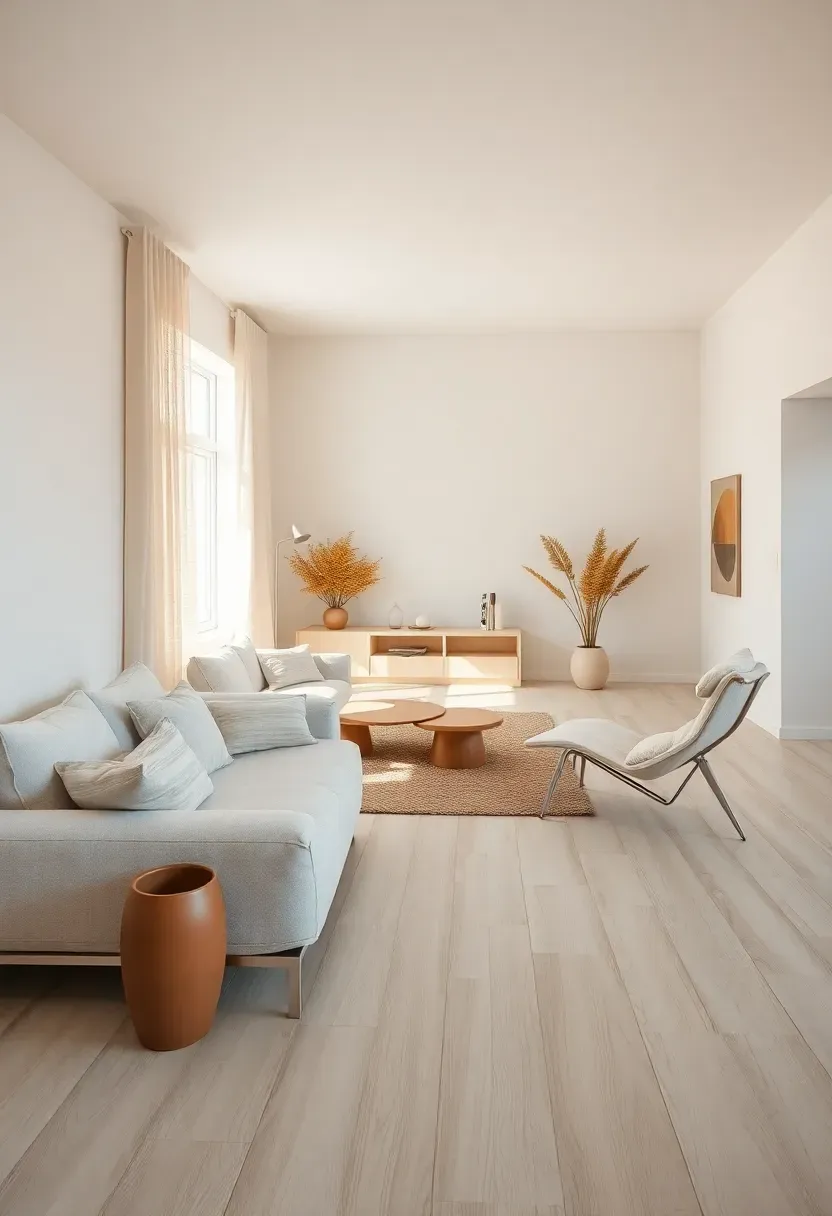
Choose a sofa around 84 inches long and leave 18 inches between it and the coffee table for easy movement. Instead of adding two side tables, use one shared table so the silhouette stays simple. If you need storage, opt for a low 60-inch media bench rather than a tall cabinet that interrupts the sightline. This edit keeps the room breathable and makes daily cleaning faster because fewer surfaces compete for attention.
Tips
- Do: map zones with painter's tape before moving furniture.
- Don't: push every piece to the wall; let one edge float.
- Do: keep one wall fully blank to reinforce visual calm.
Best for: open-plan apartments or living rooms that need a clear circulation path.
What this gives you: a floor plan that feels larger, calmer, and easy to maintain.
2. Unify Rooms with One Quiet Palette
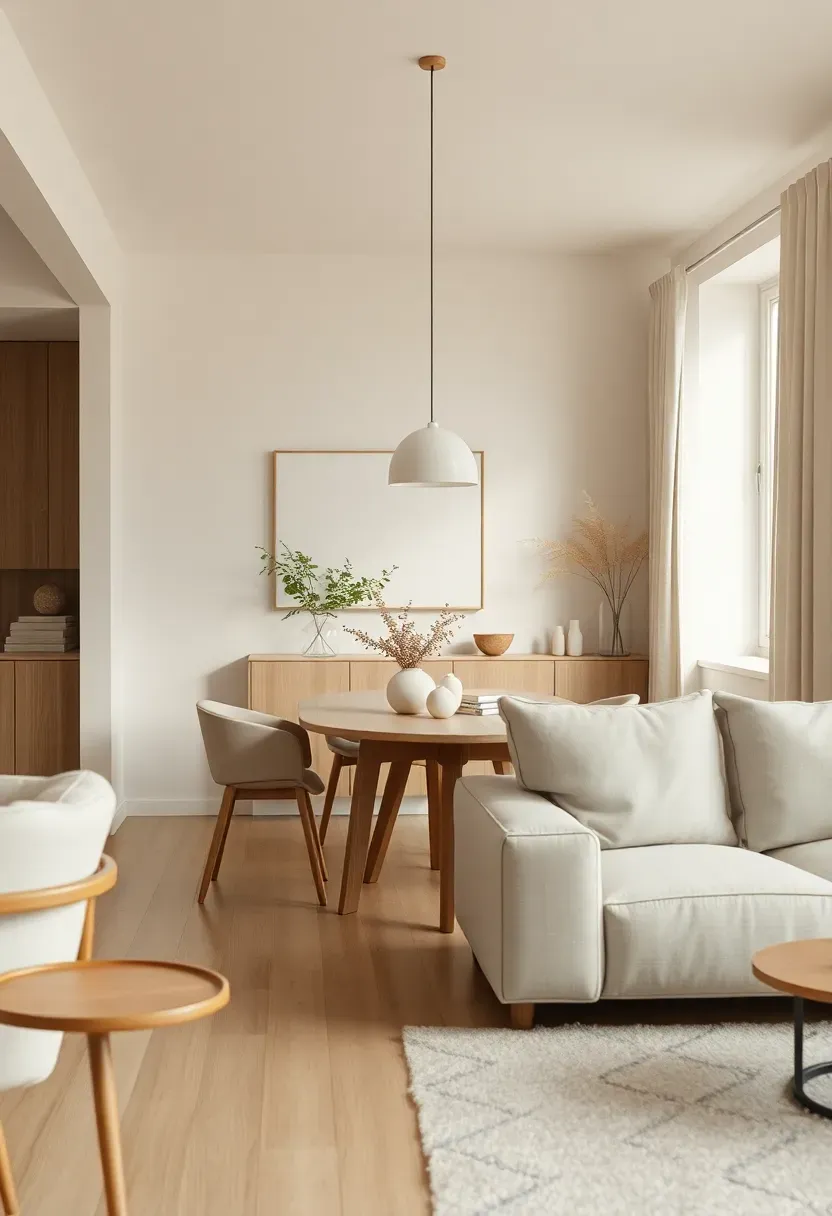
Minimalist living feels cohesive when the whole home shares one quiet palette, so your eye does not reset at every doorway. Choose a neutral palette of three core tones: warm white walls, light oak, and soft greige upholstery. Aim for paint with an LRV around 75 so rooms stay bright without glare, then keep trim and ceiling in the same white. Limit bold color to about 10 percent of the room, using it as a single accent chair or cushion. This approach makes open rooms feel continuous rather than chopped.
Recommended
Items for this idea
Placement note: put the deepest tone on the floor level or largest rug to ground the room.
Use one metal finish across fixtures to avoid a busy, mixed look. If you want more personality, vary textures instead of adding new colors, such as boucle with linen or ribbed glass with matte ceramic. A single darker piece, like a charcoal side chair, can be the contrast without breaking the palette. This keeps the room calm while still feeling designed and intentional.
For more palette-led layouts, see 19 Inspiring Minimalist Living Room Ideas with Earth Tones for a Comfortable Living Space and borrow the tonal balance.
Tips
- If your floors are warm, then choose creamy whites instead of blue-white paint.
- If two rooms connect, then repeat one textile color in both spaces.
What this gives you: whole-home cohesion that reads calm from any angle.
3. Carry a Continuous Floor Line
A minimalist lifestyle feels effortless when the floor reads as one continuous plane instead of chopped segments. Material continuity is strongest when the same flooring runs through the living room, dining area, and hall, such as 7-inch white oak planks or 24x48 limestone tiles. Keep transitions flush and limit thresholds to under 1/4 inch so the eye travels smoothly across the space. This simple move makes a modest home feel expansive and reduces visual noise at every doorway.
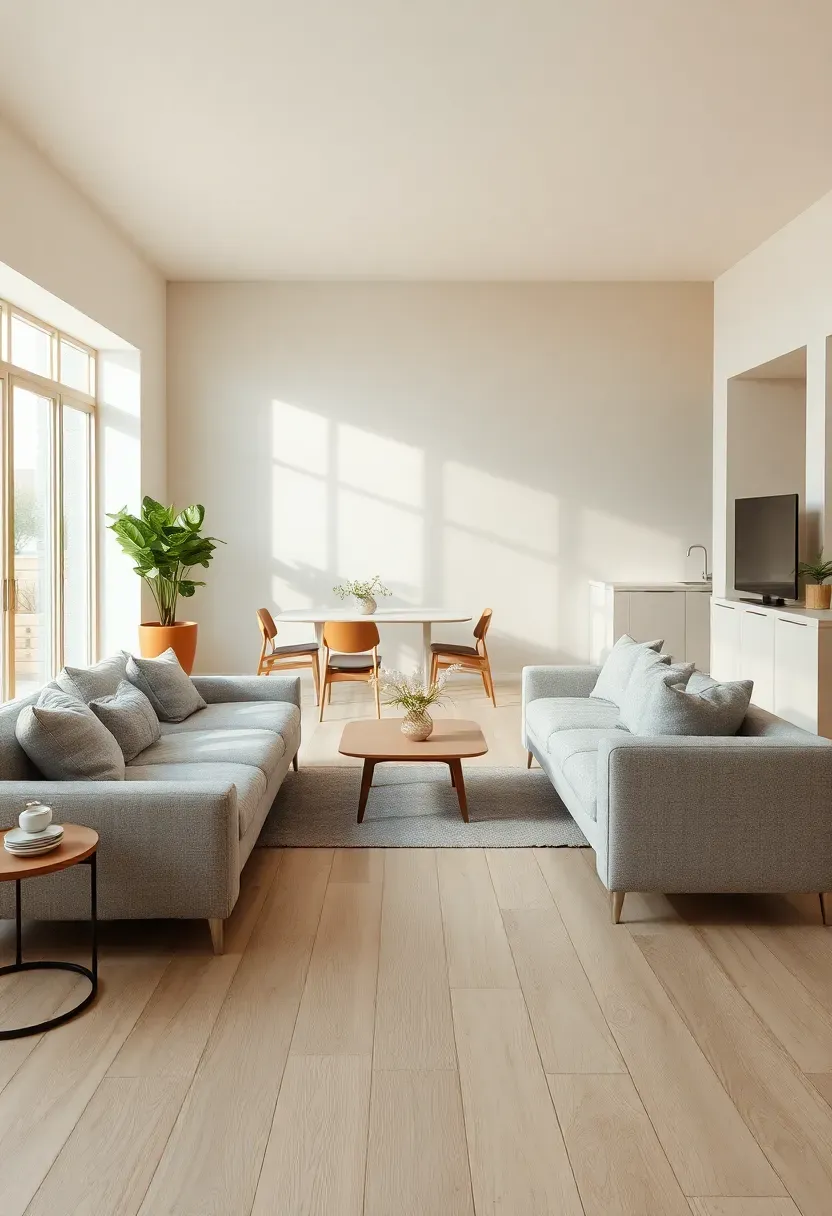
Why it works: a continuous floor acts like a visual runway that quietly organizes the whole house.
If you need separation between zones, use a low-profile rug or a narrow runner instead of a new material. A simple 8x10 rug can define the seating area while still letting the floor be the dominant surface. The contrast move is to skip patterned tile in the entry and rely on a durable doormat instead. This keeps the architecture quiet and lets furniture and light do the styling.
Tips
- Pro: wide planks or large-format tiles reduce grout lines and visual breaks.
- Con: continuous flooring can show wear in high-traffic zones faster.
- Fix: use a washable runner and felt pads to protect the main path.
Budget/Time: $6-12 per sq ft installed for engineered oak; plan 2-4 days for open-plan spaces.
What this gives you: a larger-feeling home with fewer visual interruptions.
4. Scale Furniture for Open Breathing Space
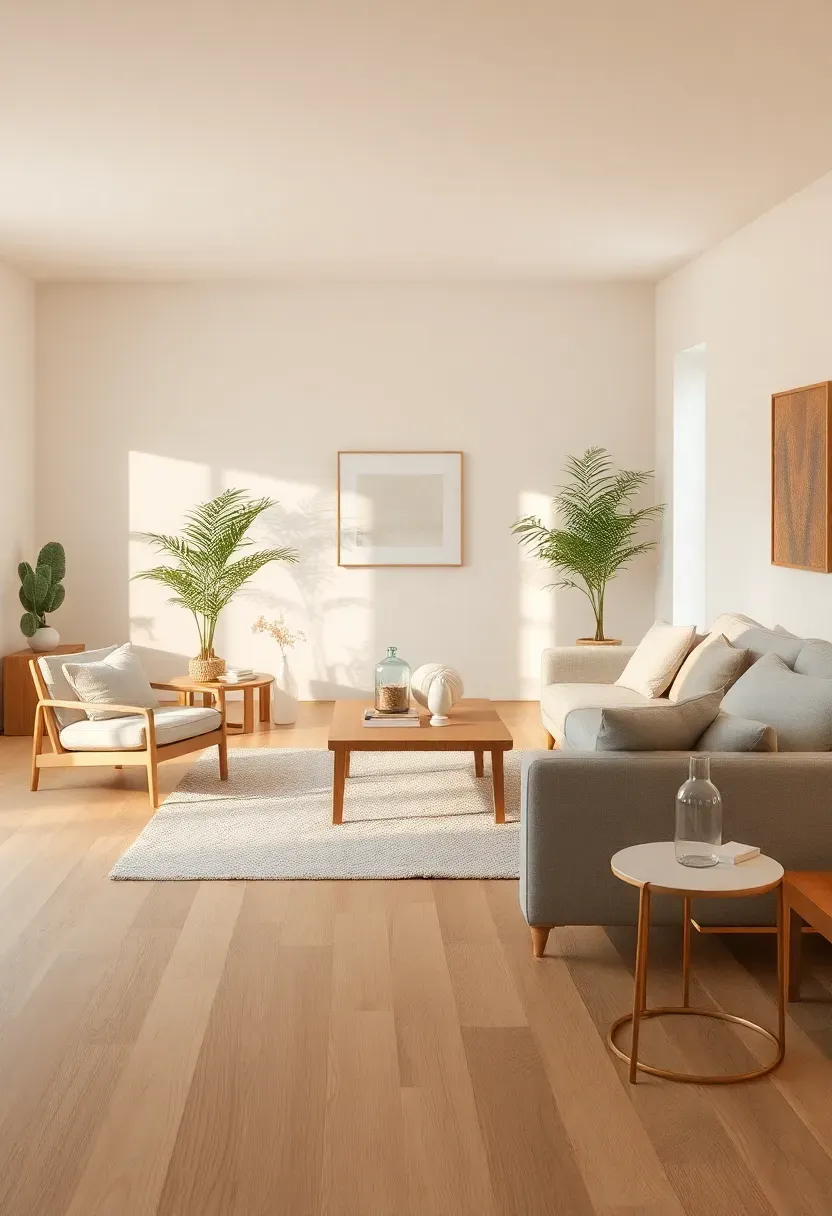
The minimalist life feels lighter when scale and proportion are calibrated to leave real breathing space. Choose a sofa depth of 34-36 inches instead of oversized, and size the coffee table to about two-thirds of the sofa length. Keep at least 24 inches of circulation on one side of the seating area so movement stays effortless. These proportions create a room that feels composed rather than crowded.
Recommended
Items for this idea
Common mistake: buying a massive sectional that eats the walkway and forces every other piece into the edges.
Instead of a bulky L-shape, try a two-seat sofa plus a single lounge chair that can rotate as needed. If you want extra seating, add a slim bench that tucks under a console rather than another full chair. The contrast move is to keep the rug large (9x12 in a big room) while reducing furniture bulk, so the floor still reads open. This keeps the room flexible for both hosting and quiet nights.
For more refined minimalist proportions, see 27 Elegant Minimalist Living Room Ideas for Refined Calm and borrow the scale logic.
Tips
- Use a round 30-36 inch table when the seating is compact.
- Leave one corner empty to preserve a clear visual exit.
- Swap one bulky chair for a low stool that slides away.
- Choose nesting tables when you need flexible surface area.
What this gives you: a room that feels open, functional, and intentionally proportioned.
5. Build Storage into the Architecture
A minimalist life depends on storage that disappears, which is why built-in storage is the most effective design move you can make. Floor-to-ceiling cabinets or a wall of flush fronts hide the everyday clutter that usually lives on surfaces. Keep depth between 16 and 24 inches so storage is useful without swallowing the room. Use the same finish as the wall or a matching wood tone so the storage reads like part of the architecture.
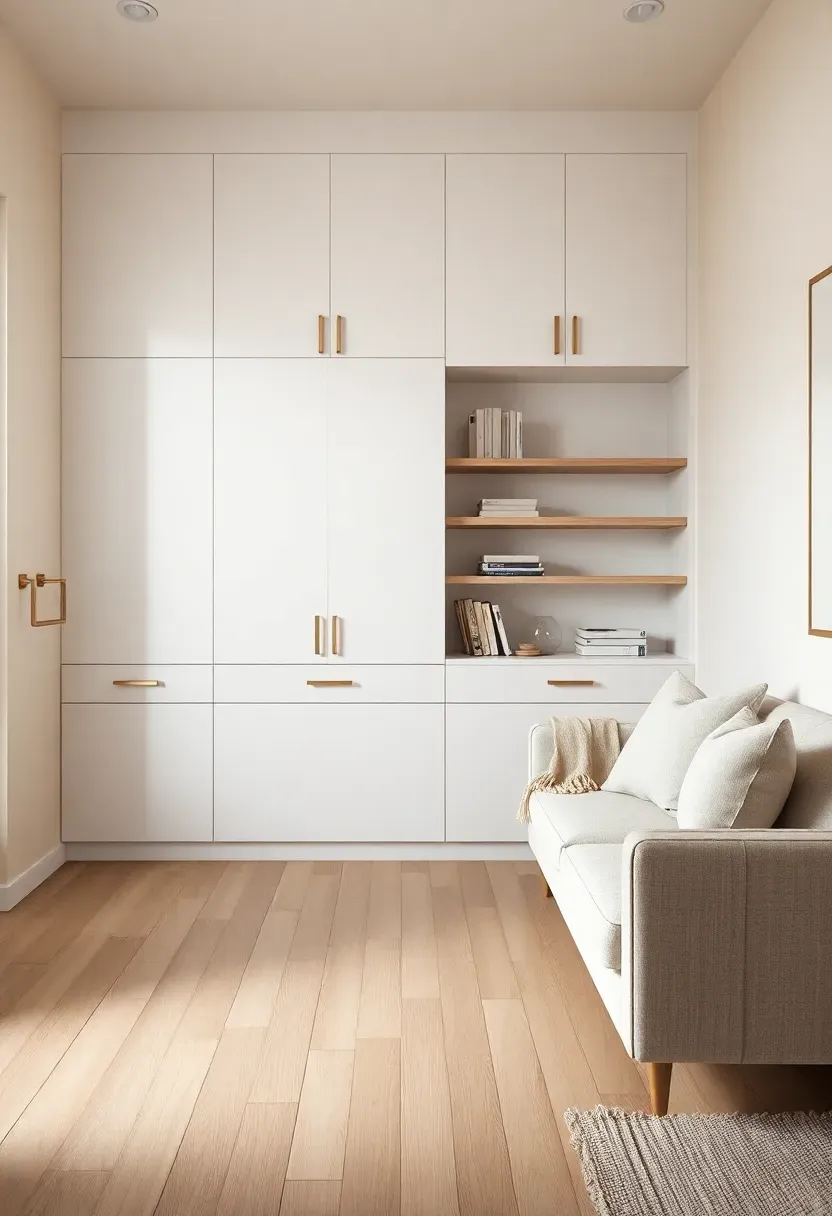
Keep open shelves to 20 percent or less so the room does not drift into visual clutter. If you cannot do a full wall, use one long, low built-in with doors and a 4-inch toe kick to keep it feeling light. The contrast move is to avoid open cubbies for general storage, since they make even tidy items look busy. This keeps surfaces clean and the room ready for daily life.
Tips
- Do: use push-latch doors for a handle-free, calm surface.
- Don't: mix multiple cabinet door styles in one wall.
Rental note: use tall freestanding cabinets in the same finish as the wall to mimic built-ins.
What this gives you: daily clutter disappears and the room reads calm at all times.
6. Align Sightlines for Visual Rhythm
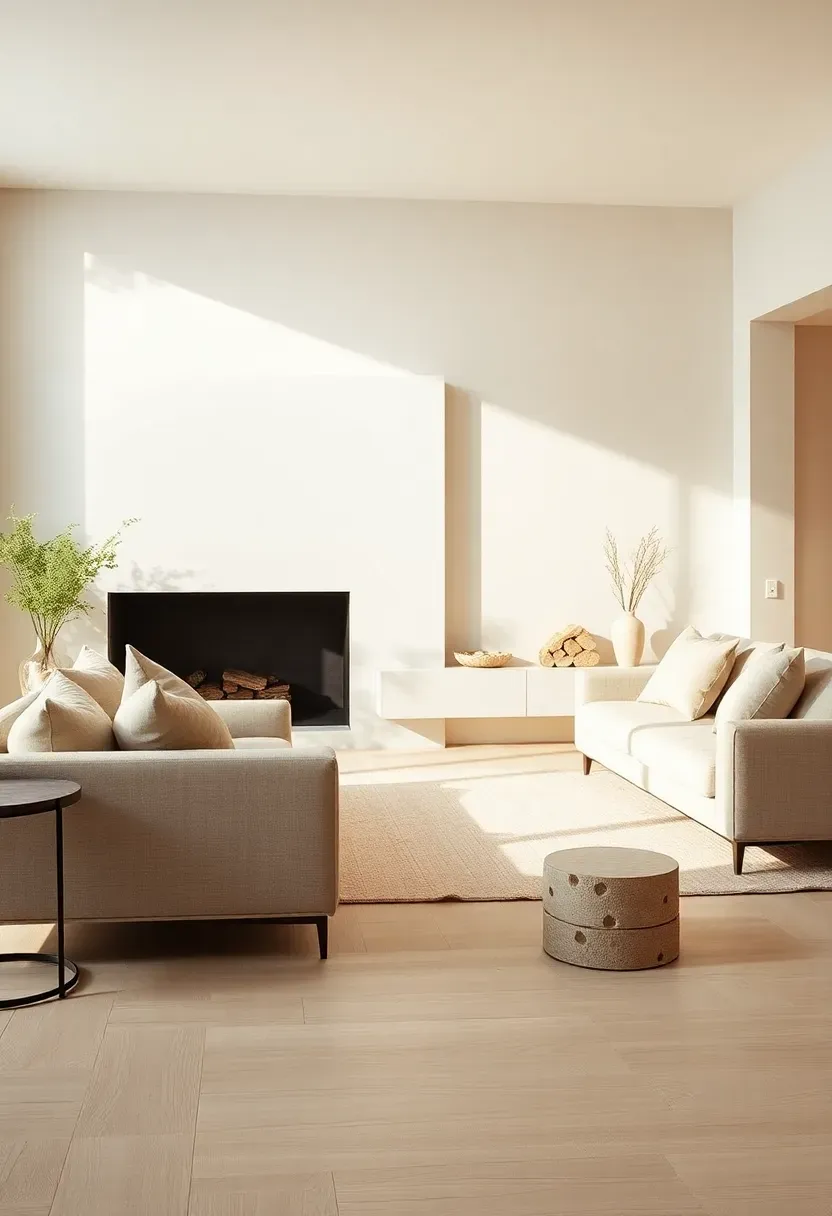
Minimalist living improves when you align key pieces so clean sightlines carry the eye through the room. Place the sofa square to the fireplace or main window, then align the coffee table and rug to that axis. This clean sightlines approach reduces visual friction and makes the room feel intentional. Keep at least 42 inches between the sofa and a console to preserve a clear path.
Recommended
Items for this idea
Placement note: center the main seating on the longest wall before adding any secondary pieces.
If you need extra seating, keep it parallel or perpendicular, not diagonal, so the sightline stays clear. A single armless chair can sit across from the sofa without breaking the axis. The contrast move is to avoid placing a tall bookcase at the end of the room, since it blocks the long view. This geometry makes the whole space feel calmer even with minimal decor.
For more clean geometry ideas, see 27 Minimalist Living Room Ideas: Serene Spaces Unveiled for a Comfortable Living Space and mirror the alignment cues.
Tips
- If the room is narrow, then float the sofa 8-12 inches from the wall.
- If you add a chair, then keep its back aligned to the sofa edge.
- If you need storage, then place it on the side wall instead of the end wall.
What this gives you: a room that feels composed from every doorway and seat.
7. Choose Low Profiles to Lift the Ceiling
A minimalist lifestyle benefits from negative space above the furniture, so choose low-profile pieces that let the room breathe. Look for seat heights around 16-17 inches and coffee tables close to 14 inches, which keep the eye low and leave walls open. A low media console or bench keeps storage grounded without adding visual weight. This makes ceilings feel taller and the room more serene.
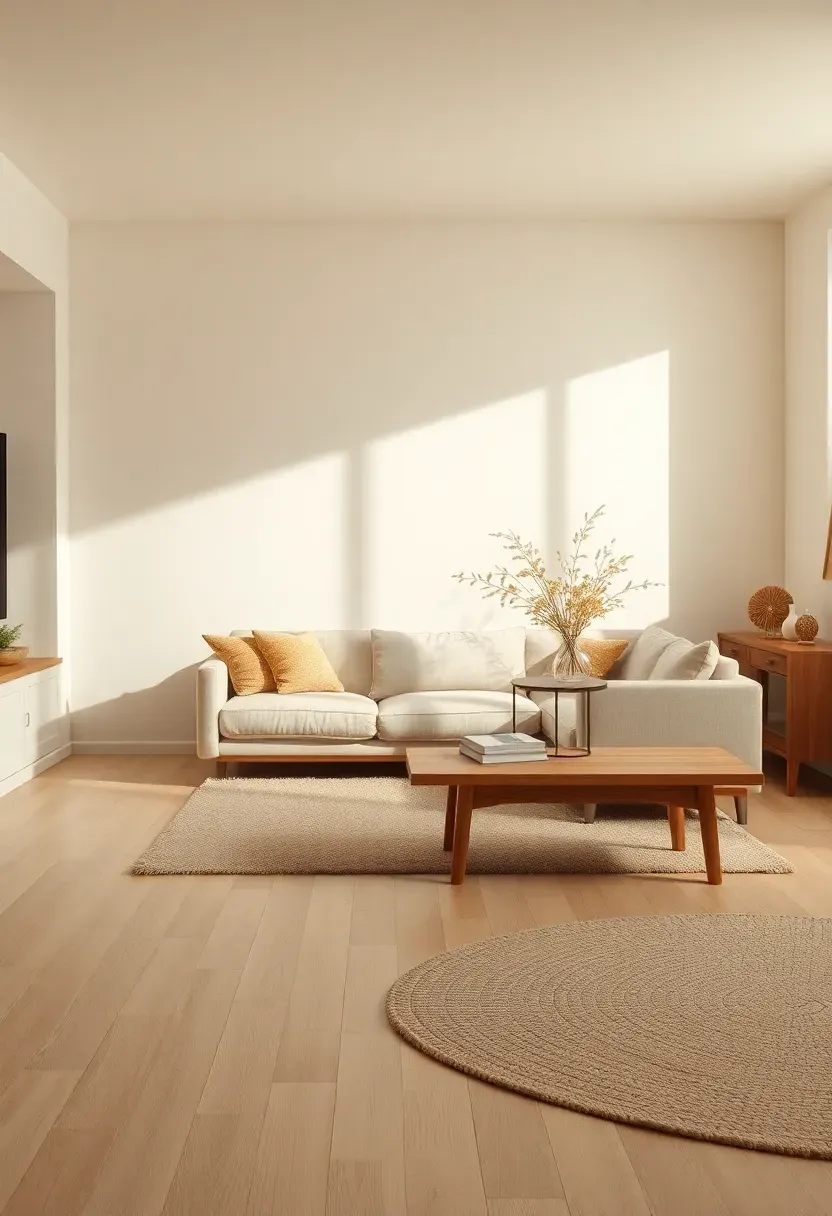
Why it works: low silhouettes create a wide band of open wall that reads as calm negative space.
If you need storage, choose a long, low credenza instead of a tall cabinet. The contrast move is to skip oversized floor lamps and use small sconces that sit higher on the wall to keep the floor clear. Keep accessories to one low tray or stack of books so the low line stays consistent. The result is a room that feels taller and quieter without changing the architecture.
Tips
- Pro: low seating makes the room feel wider and more open.
- Con: very low sofas can feel casual and less formal.
- Fix: add one structured chair to balance the lounge vibe.
Best for: rooms with low ceilings or heavy beams that need visual lift.
What this gives you: taller-feeling walls and a lighter visual footprint.
8. Let One Natural Material Lead
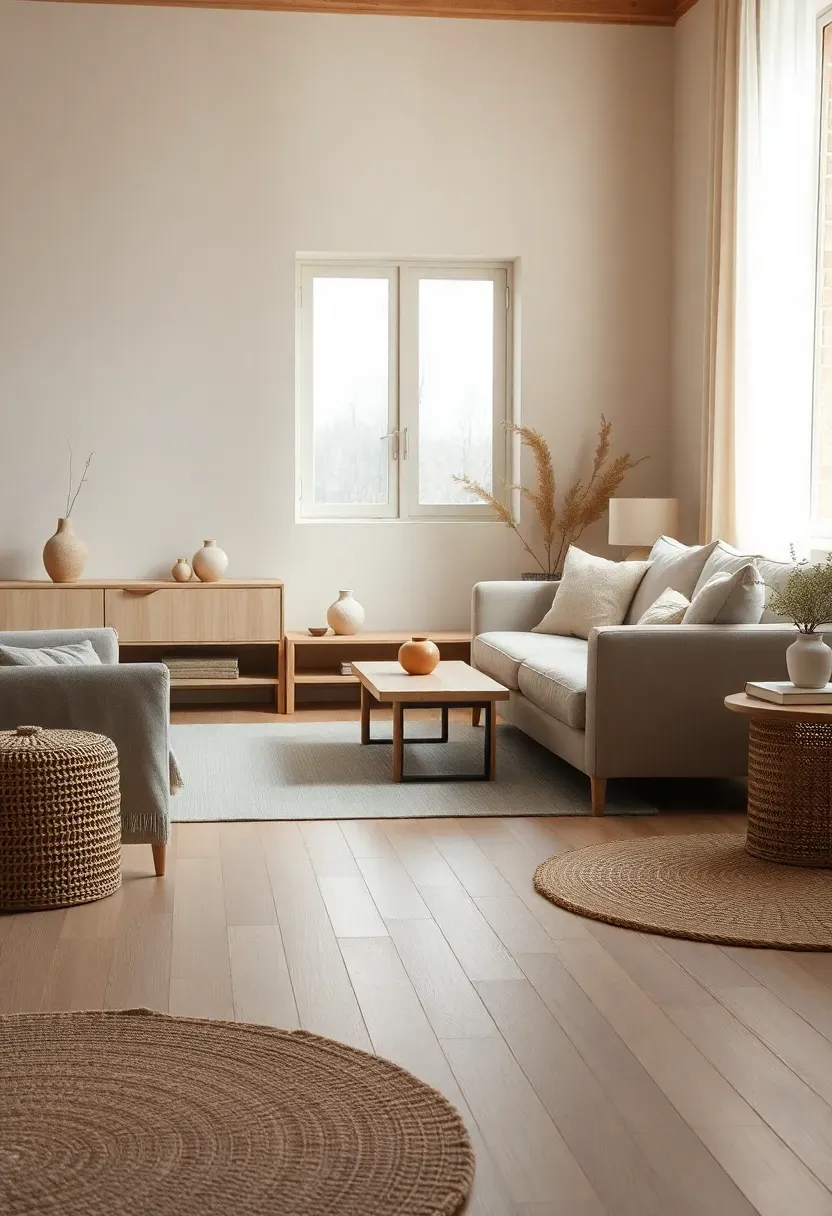
The minimalist life looks richer when one natural material becomes the anchor across the room. Choose a lead material like white oak and repeat it in the floor, a coffee table, and open shelving for material continuity. Keep the dominant material to about 60 percent of visible surfaces, then balance it with soft linen and matte ceramics. This keeps the room cohesive without looking monotonous.
Recommended
Items for this idea
Common mistake: mixing too many wood tones, which makes a minimalist room feel busy.
If budget is tight, use veneer for secondary pieces and reserve solid wood for the main surface. The contrast move is to skip glossy wood finishes and choose matte oil or soap finishes, which read softer. Keep metal accents limited to one finish so the material story stays consistent. This makes the room feel intentional rather than collected from multiple eras.
For more warm, material-led spaces, see 19 Inspiring Earthy Modern Living Room Ideas for Soft Warmth That Create a Welcoming Living Room and echo the material focus.
Tips
- Repeat the lead material at least three times for visual cohesion.
- Limit wood tones to two at most, one warm and one neutral.
- Use matte finishes to keep reflections quiet and soft.
- Keep textiles in one weave family to avoid visual noise.
What this gives you: a room that feels cohesive, warm, and quietly luxurious.
9. Layer Lighting Instead of Decor
Minimalist living rooms rely on layered lighting to create mood without piling on decor. Plan for three light sources: a floor lamp, a table lamp, and a wall or ceiling light, all around 2700K. This layered lighting approach lets you shift the atmosphere without adding objects. Keep lamps within a 6-8 foot radius of seating so the glow feels intentional.
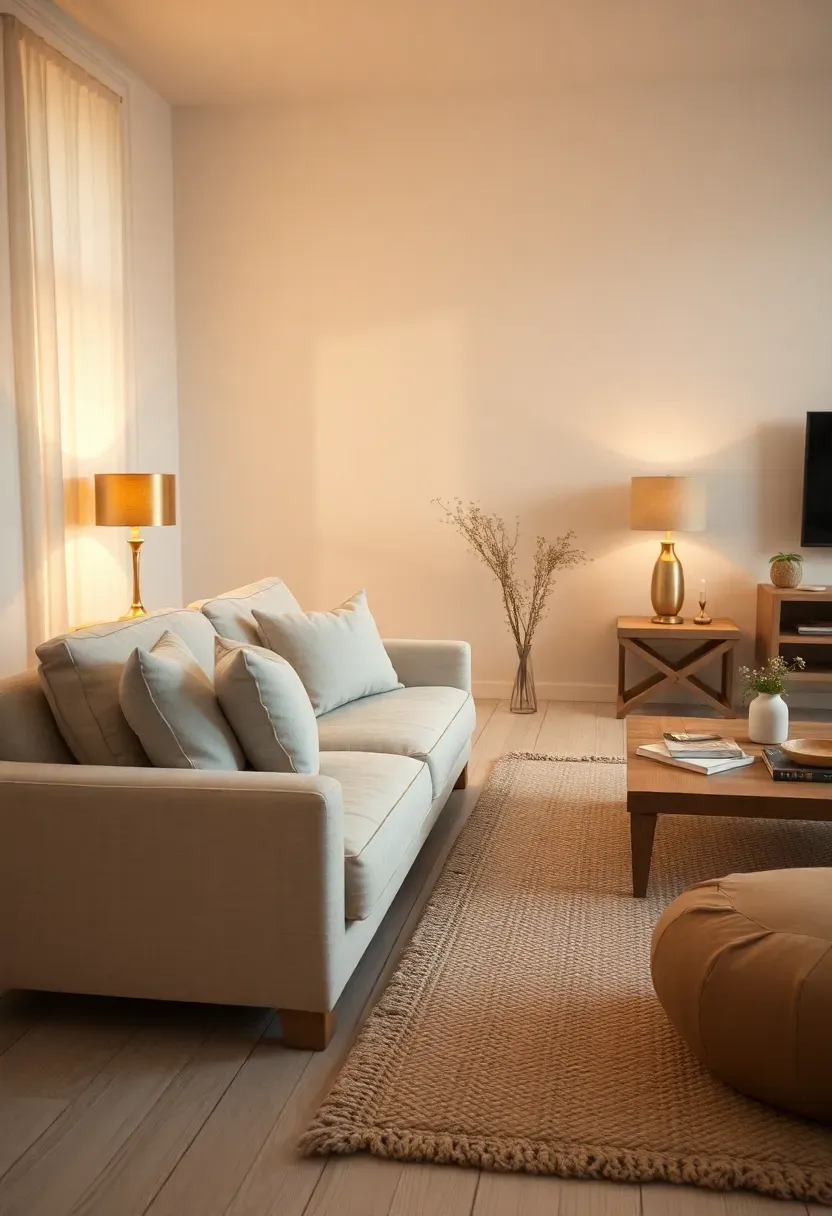
Instead of a big chandelier, use smaller lamps that sit closer to eye level for a softer look. The contrast move is to avoid cool LEDs, since 4000K light can make neutral rooms feel sterile. A simple dimmer adds flexibility without adding any visual clutter. Aim for a soft pool of light near the sofa after sunset. This keeps the room feeling warm and lived-in even with minimal objects.
Tips
- Do: add a dimmer on the main switch for quick mood shifts.
- Don't: rely on a single overhead light for the entire room.
Budget/Time: $150-300 can cover two lamps and warm LED bulbs.
What this gives you: a calm, adaptable room that feels inviting at any hour.
10. Use Texture Contrast, Not Extra Objects
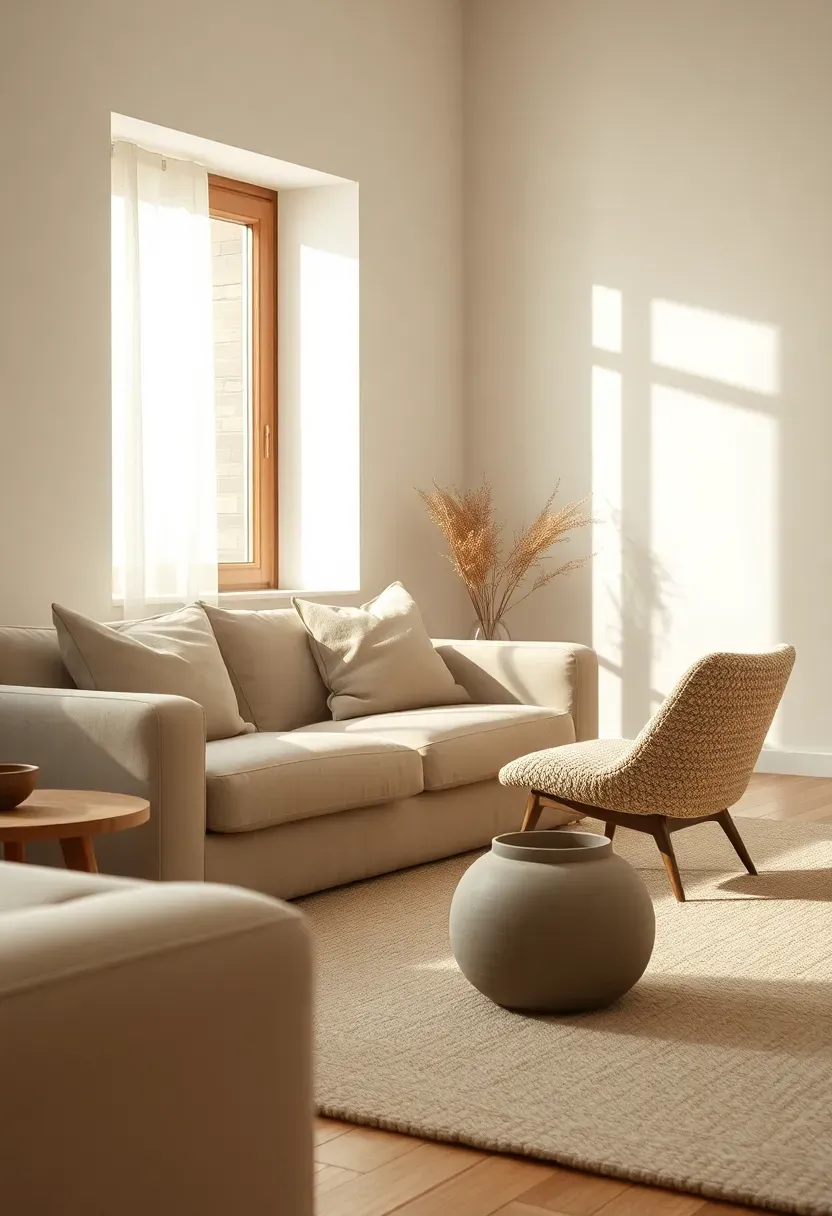
A minimalist life still needs depth, and texture layering provides it without adding more things. Start with a linen sofa, then add a wool rug and a boucle chair for three distinct textures. Keep the palette quiet so texture becomes the contrast rather than color. This makes the room feel rich while staying visually edited.
Recommended
Items for this idea
Placement note: place the most textured piece closest to the main seating zone for daily touch.
If you want more variety, switch pillow covers or throws instead of adding new decor. The contrast move is to skip patterned rugs and rely on nubby weaves or ribbed fabrics for interest. Keep the count to three primary textures so the room feels layered but not busy. This approach makes minimalism feel warm and tactile, not bare.
For more texture-first ideas, see 19 Eclectic Minimalist Living Room Ideas for Character and Calm and borrow the mix strategy.
Tips
- If your sofa is smooth, then choose a chunky knit throw.
- If the rug is flatweave, then add a textured pillow cover.
- If you need contrast, then pick one ribbed or pleated surface.
What this gives you: richness and comfort without visual clutter.
11. Create a Clear Entry Landing Zone
Minimalist living stays practical when the entry has a defined landing zone that prevents clutter from spreading. Use open-plan zoning to carve out a small area with a 42-inch bench, a 10-inch shelf, and one hook rail. This small setup catches keys, bags, and shoes without inviting piles. Keep the wall above it mostly open so the first view of the home feels calm.
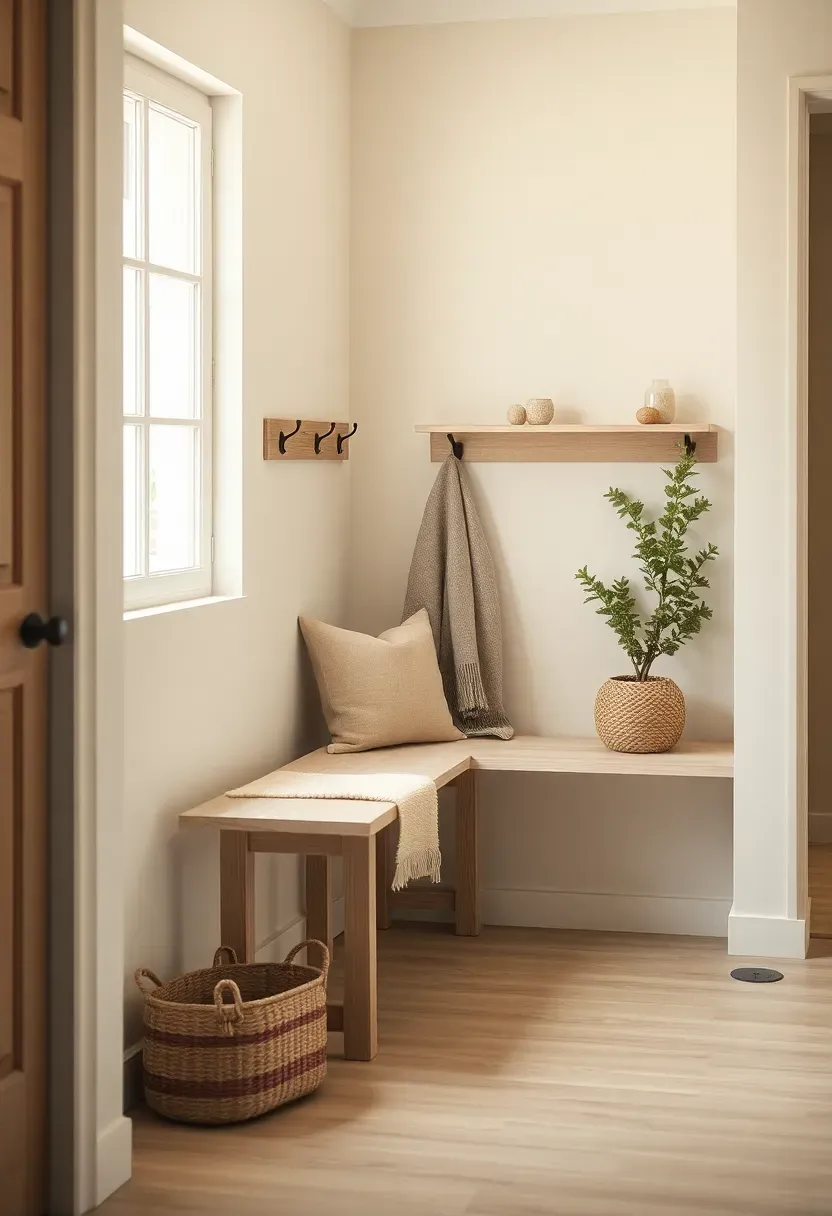
Why it works: a small, defined zone keeps daily drop-offs contained to one surface.
If you do not want an entry table, add a wall hook and a slim ledge instead. The contrast move is to avoid a deep console, since it invites decorative clutter and blocks the passage. Keep only one tray or basket on the shelf so there is a clear limit. This keeps the rest of the home free from entry spillover.
Tips
- Pro: a narrow shelf sets a clear limit on what can land there.
- Con: open entry storage looks messy fast if it overfills.
- Fix: use one lidded basket for overflow on busy days.
Rental note: use removable hooks and a freestanding bench to avoid wall damage.
What this gives you: a tidy first impression and less clutter creeping into the home.
12. Hide Daily Clutter Behind Flush Fronts
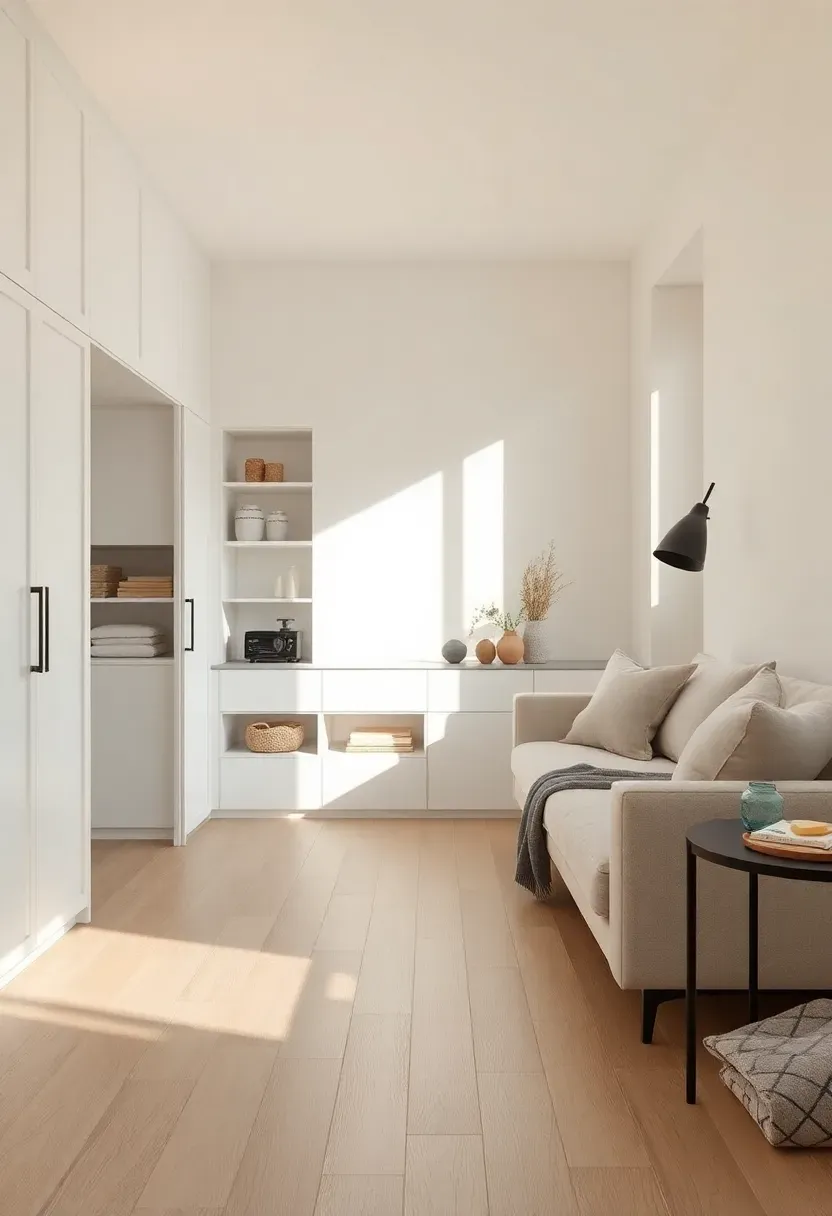
A minimalist life stays calm when daily items disappear behind flush fronts. Use handle-free cabinets or push-latch doors so storage blends into the wall. Keep reveals around 1/8 inch for a clean, uniform grid that reads architectural. This built-in storage approach keeps the room from looking busy even when it is fully functional.
Recommended
Items for this idea
Common mistake: mixing open shelves with deep storage, which creates visual clutter at eye level.
If you need display, keep it to one narrow shelf and treat it like a curated vignette. The contrast move is to skip glass fronts, which show every stack and cable. A single closed wall keeps the room looking serene even during busy weeks. This makes the home feel orderly without constant tidying.
For more calm storage concepts, see 17 Rustic Minimalist Living Room Ideas: Cozy Simplicity That Create a Welcoming Living Room and adapt the hidden-storage approach.
Tips
- Group items by activity so each cabinet has a clear purpose.
- Keep one empty shelf per cabinet for future flexibility.
What this gives you: calm surfaces even when life is busy.
13. Keep Walls Simple with One Large Art
A minimalist lifestyle looks intentional when walls are quiet and the focus is a single large piece. Use clean sightlines by centering one artwork at about 57 inches from the floor to the midpoint. A 40x60 inch print or textile fills the wall without needing a gallery cluster. This keeps the room calm while still adding personality.
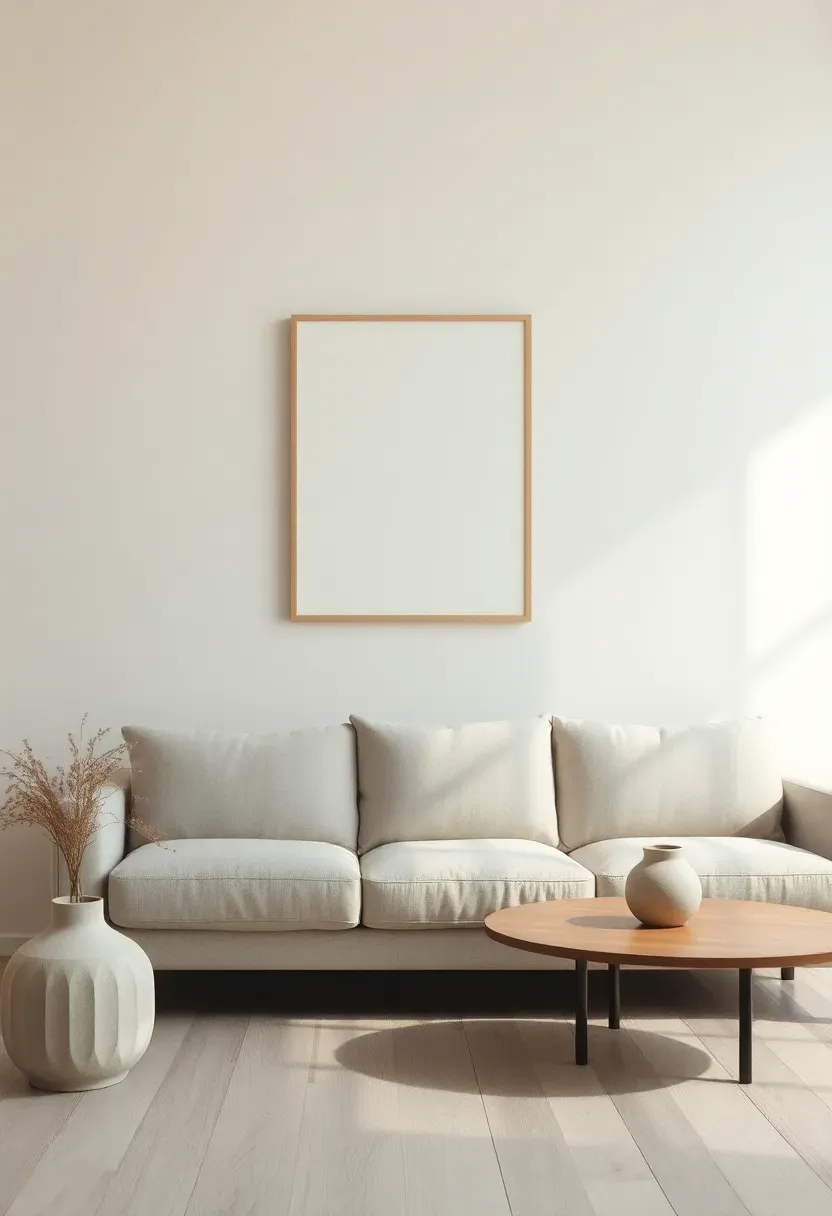
Instead of several small frames, go large so the wall feels settled. The contrast move is to skip bold patterns in the art and choose a soft abstract or monochrome print that matches the palette. Keep frames slim and matte to avoid glare. This delivers impact without breaking the minimalist calm.
Tips
- Do: hang the art so its center aligns with eye level.
- Don't: place art too high, which makes the wall feel empty.
- Do: choose one piece with a simple, readable composition.
- Don't: use glossy frames that reflect light and distract.
Best for: living rooms with long walls that feel bare or under-scaled.
What this gives you: visual focus without cluttering the wall.
14. Pick Modular Pieces for Flexible Minimalist Living
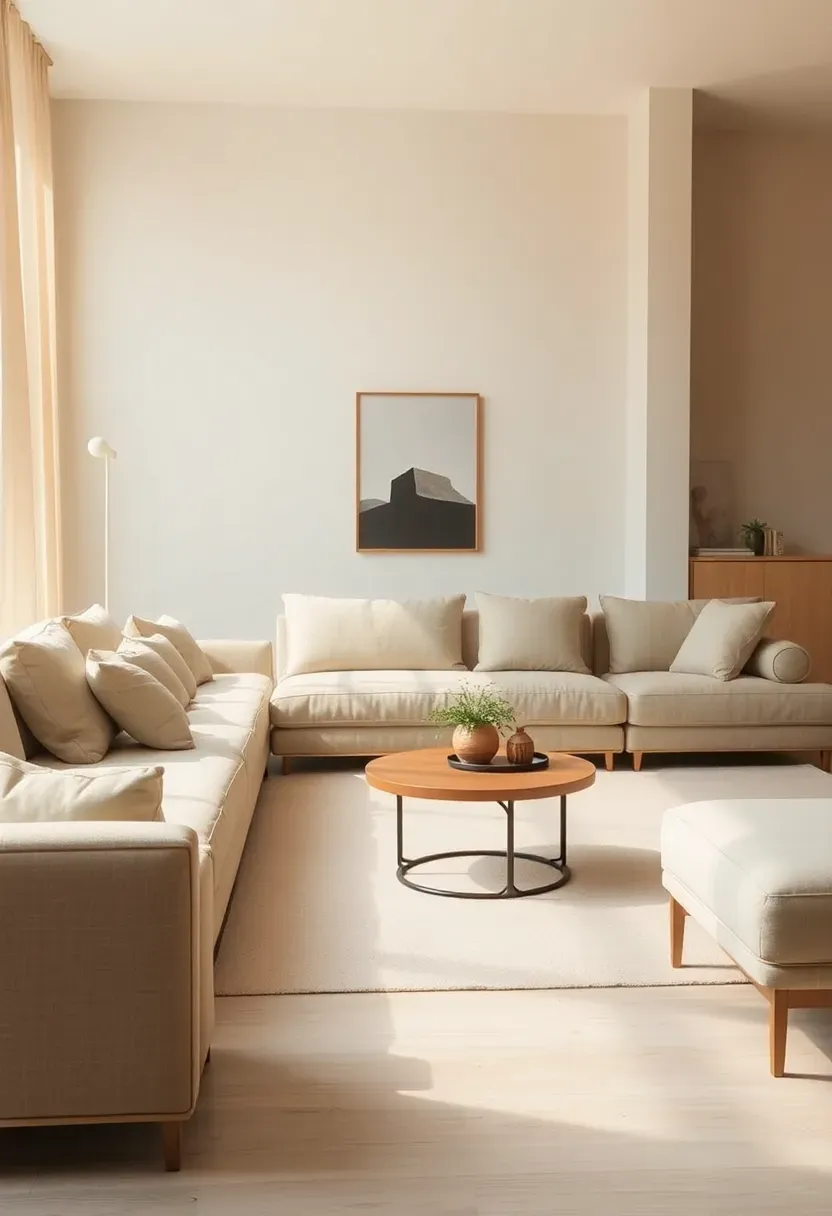
Minimalist living stays functional when furniture can shift with your needs. Modular sofas or benches let you scale and proportion the room to the moment, whether you are hosting or relaxing. Choose 30-inch modules that can separate into two seats or combine into one longer line. Keep the base low so the modular set still reads light and minimal.
Recommended
Items for this idea
Placement note: keep at least one module against a wall to anchor the layout.
If you want a chaise, add a single ottoman module instead of a fixed extension. The contrast move is to avoid bulky recliners, which dominate minimalist rooms. A clean modular set can adapt while keeping the overall silhouette simple. This makes the room feel open even on high-traffic days.
For more flexible layout ideas, see 21 Cozy Mid Century Modern Living Room Decor Ideas to Try and adapt the modular approach.
Tips
- If you host often, then keep one module as a movable seat.
- If the room is narrow, then use armless modules for a slimmer profile.
What this gives you: a minimalist layout that can evolve without extra furniture.
15. Keep Windows Bare and Light-Forward
Minimalist living thrives on negative space and natural light, so keep window treatments simple. Use a slim 2-inch rod and hang curtains high to increase the sense of height. Choose linen panels with 1.5x fullness so they hang softly without heavy folds. This makes the window feel like architecture instead of decor.
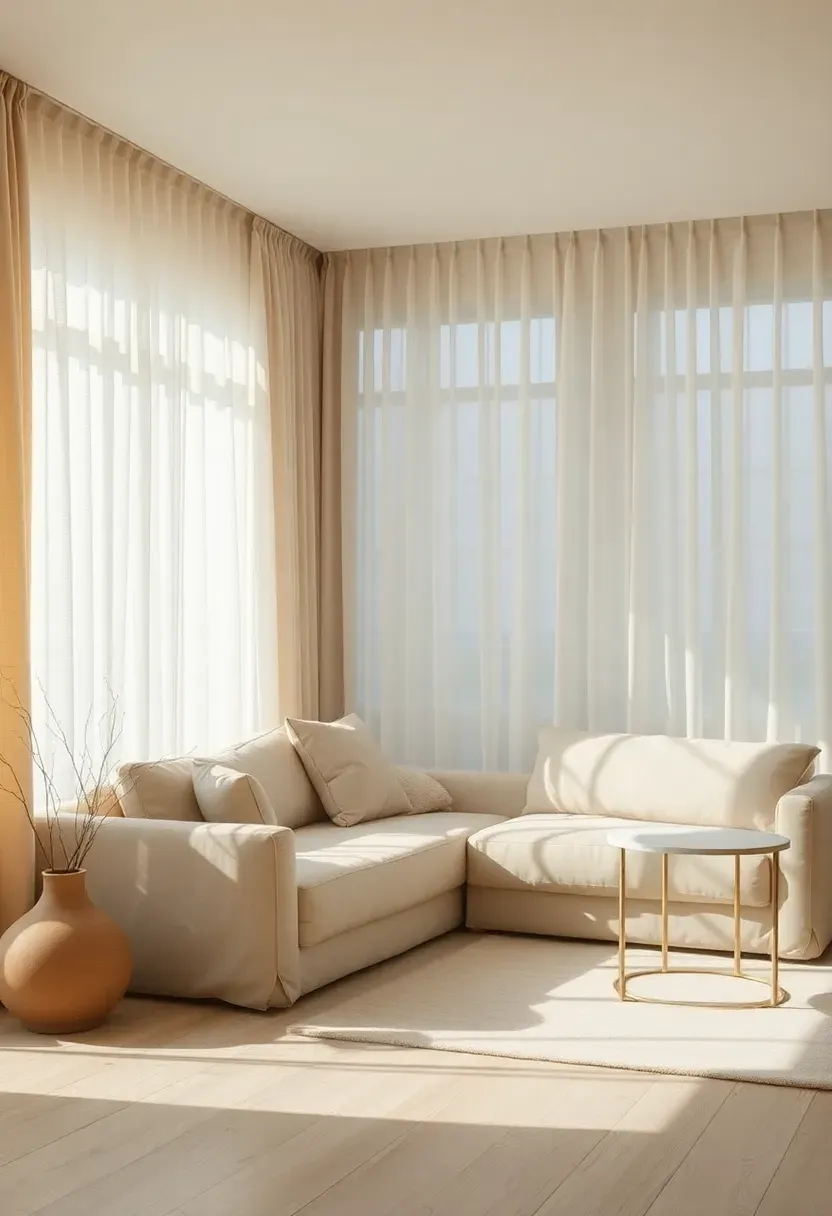
Why it works: simple treatments keep the window as a large, calm light source.
If privacy is a concern, use top-down shades that still let light wash the walls. The contrast move is to avoid heavy patterned drapes that break the light and add visual noise. Keep the palette consistent with wall color so the window blends into the architecture. This makes the room feel bigger and brighter without extra effort.
Tips
- Pro: light-filtering linen softens glare without blocking daylight.
- Con: sheer curtains may not provide full nighttime privacy.
- Fix: add a discreet roller shade for after-dark use.
Budget/Time: $80-200 for quality linen panels and simple hardware.
What this gives you: brighter rooms and a cleaner architectural look.
16. Design One Focal Point Per Room
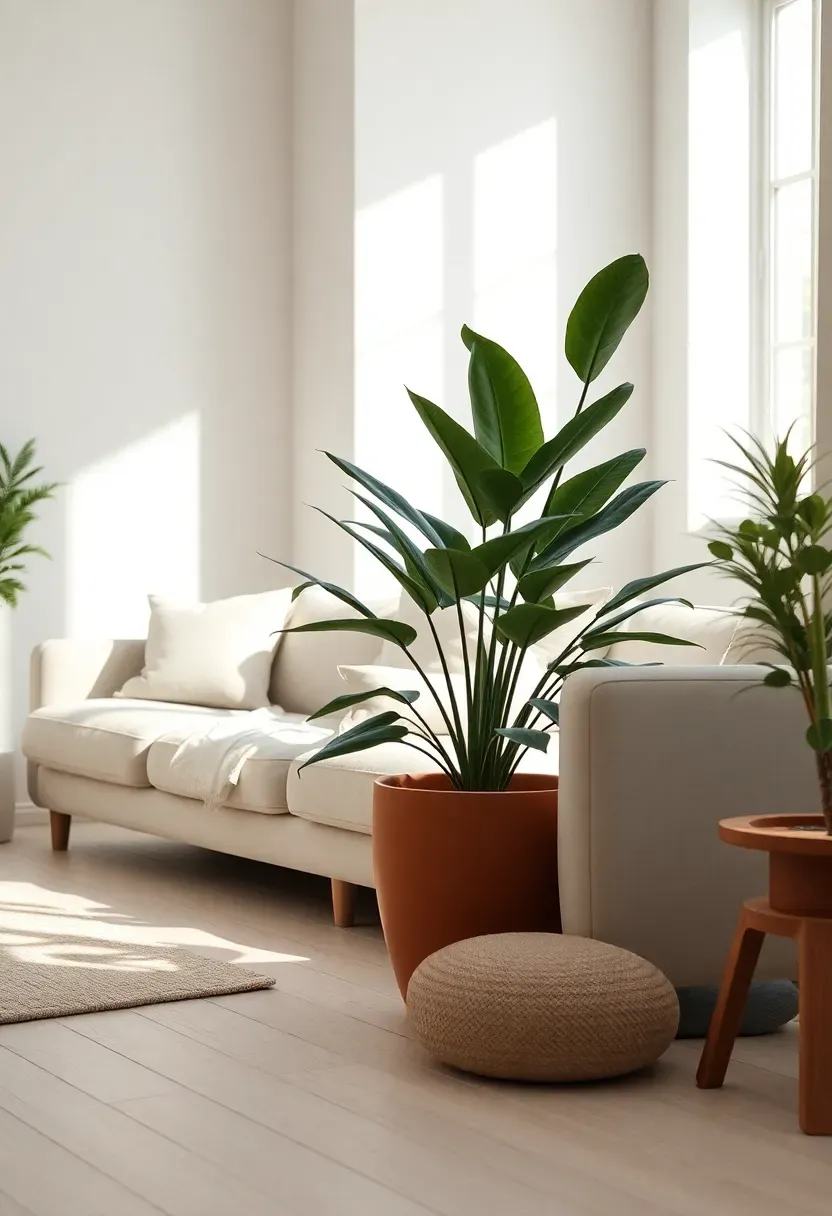
The minimalist life stays clear when every room has one focal point, not many competing ones. Biophilic accents like a single 5-6 foot plant or a stone fireplace provide a grounded anchor. Keep the rest of the room intentionally quiet so the focal point reads as the main event. This keeps the room calm while still feeling alive.
Recommended
Items for this idea
Common mistake: adding multiple focal points, which makes the room feel unsettled.
If you choose a statement plant, keep art and accessories minimal so it can breathe. The contrast move is to avoid grouping several medium plants; one large one is stronger and simpler. Place it where it is visible from the entry or main seat for maximum impact. This gives the room a quiet hierarchy and keeps minimalism intentional.
For more calm focal-point ideas, see 21 Cozy Scandinavian Living Room Ideas for Calm Spaces That Create a Welcoming Living Room and mirror the single-anchor strategy.
Tips
- Keep the focal point within the main seating sightline.
- Use one large piece instead of several small ones.
- Leave at least 24 inches of clear space around it.
- Choose a matte planter or stone base to keep it understated.
What this gives you: a room with clear hierarchy and effortless calm.
17. Limit Color to a Single Accent Tone
A minimalist lifestyle stays serene when the neutral palette is dominant and color is limited to one accent tone. Keep the accent at about 10 percent of the room, such as a rust chair, a navy pillow, or a single art piece. This keeps the room calm while still adding personality. Choose a muted version of the color so it blends into the overall palette.
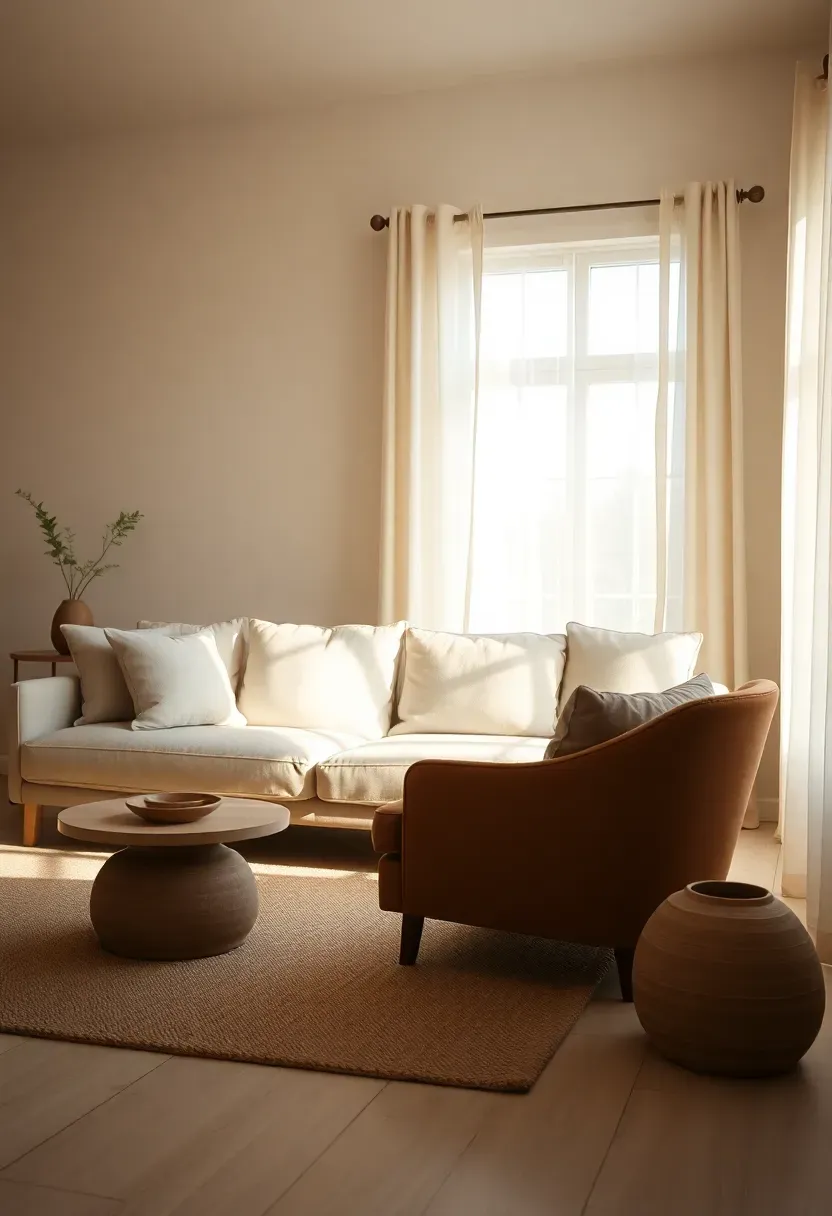
If you want variety, change shade within the same color family rather than introducing a new hue. The contrast move is to avoid bright primary colors, which fight the calm base. Keep textiles and art in the accent tone so the color feels deliberate instead of scattered. This creates a quiet, cohesive look that still feels personal.
Tips
- Do: repeat the accent tone at least twice for balance.
- Don't: add two competing accent colors in the same room.
Avoid if: you rely on bright, high-contrast color for energy and mood.
What this gives you: a calm palette with just enough personality.
18. Work with Patina-Ready Materials
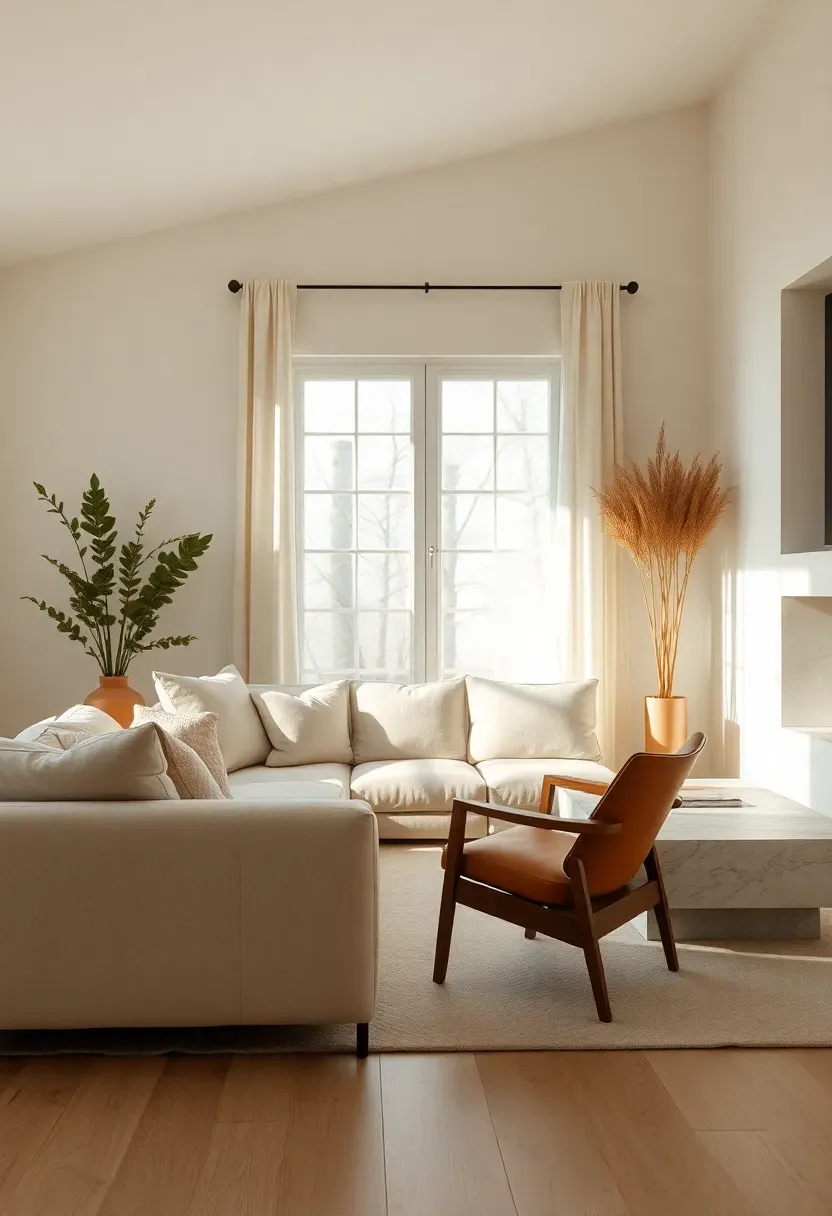
The minimalist life feels grounded when materials improve with age instead of looking worn. Choose material continuity through patina-ready surfaces like linen, leather, limestone, and hand-thrown ceramics. Keep finishes matte or oiled so scratches and wear blend into the texture. This makes the room feel lived-in and intentional over time.
Recommended
Items for this idea
Placement note: use the most durable material on the piece that gets daily contact.
If you want a softer look, use linen on seating and reserve leather for a single chair. The contrast move is to avoid glossy stone, which shows fingerprints and interrupts the calm finish. Keep cleaning simple with a dry cloth and occasional oiling where needed. This creates a room that ages gracefully without constant maintenance.
For more natural material ideas, see 23 Minimalist Japandi Living Room Ideas: Zen Meets Hygge for a Comfortable Living Space and echo the patina-first approach.
Tips
- If you have pets, then choose tightly woven linen blends.
- If you want stone, then pick honed finishes over polished.
- If you add leather, then keep it to one seat for balance.
What this gives you: a room that looks better as it ages.
19. Clear Surfaces with Built-In Charging
Minimalist living stays practical when cables disappear into built-in storage. Add a charging drawer or a sideboard with a hidden power strip and a 2-inch grommet for cable access. Keep phones, tablets, and chargers inside so countertops and tables stay clear. This keeps the room calm without sacrificing daily convenience.
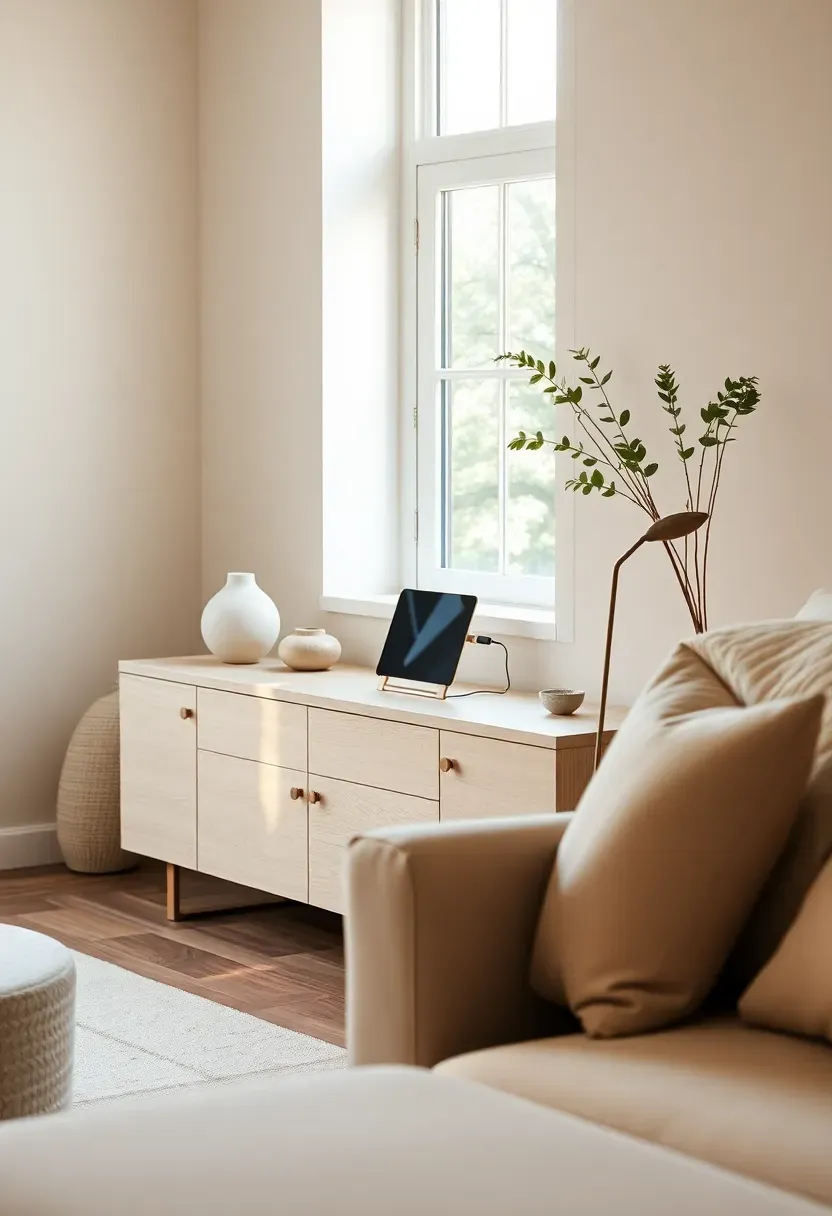
Why it works: hiding cables removes the most common source of visual clutter.
If you do not want built-ins, use a simple charging box inside a cabinet. The contrast move is to avoid leaving devices on tables overnight, which turns the surface into a tech display. Keep one charging zone per room so wires do not migrate. This preserves clean surfaces without extra effort.
Tips
- Pro: a single charging zone reduces visual noise everywhere else.
- Con: a hidden drawer can trap heat if devices are stacked.
- Fix: keep ventilation gaps and avoid covering adapters.
Best for: families or work-from-home setups with multiple devices.
What this gives you: clean surfaces and fewer visual distractions.
20. Define Transitions with Quiet Boundaries
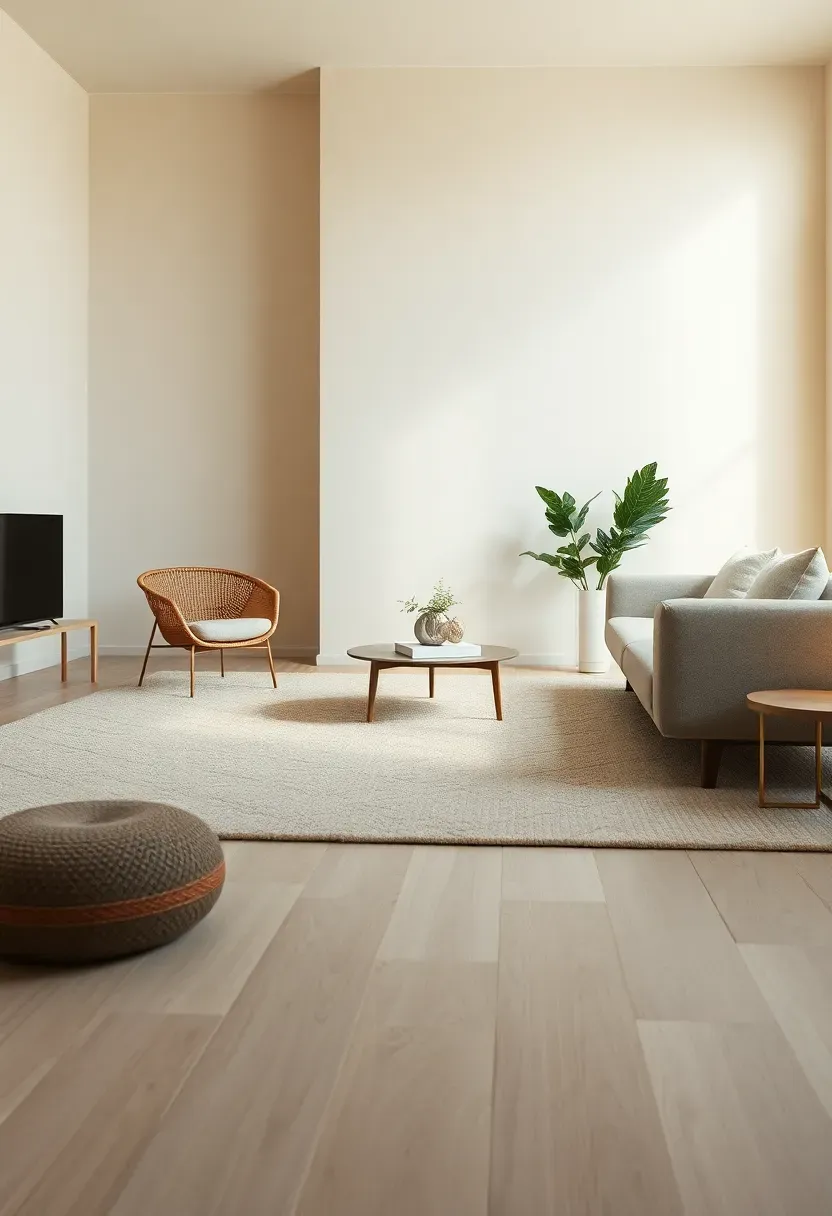
The minimalist life feels intentional when transitions are defined without heavy borders. Use texture layering with a large rug, a slim runner, or a subtle metal floor strip to mark changes between zones. Choose an 8x10 rug to anchor the living room and a 2.5-foot runner for the hall. These quiet boundaries guide movement without adding visual noise.
Recommended
Items for this idea
Common mistake: using bold patterns or high-contrast borders that chop the space.
If you want definition, choose a solid rug with a low pile and match it to the palette. The contrast move is to avoid multiple small rugs, which fragment the floor and break the calm. Keep the boundary simple so the room still reads as one cohesive space. This supports flow while keeping the design minimal.
For more zoning inspiration, see 25 Minimalist Living Room Ideas for Small Spaces That Create a Welcoming Living Room and borrow the boundary tricks.
Tips
- Choose low-pile rugs so furniture feels stable and grounded.
- Keep rug edges 12-18 inches from walls for breathing room.
- Use one metal strip if you must switch materials.
What this gives you: smooth flow between zones without visual clutter.
21. Set a Weekly Reset Layout Ritual
A minimalist life stays consistent when you reset the layout each week. Use open-plan zoning as your guide: return chairs to their anchor points, clear the coffee table, and re-center the rug if it has drifted. A 10-minute reset restores the original calm and prevents clutter from building up. This keeps the room aligned with the intention of the design.
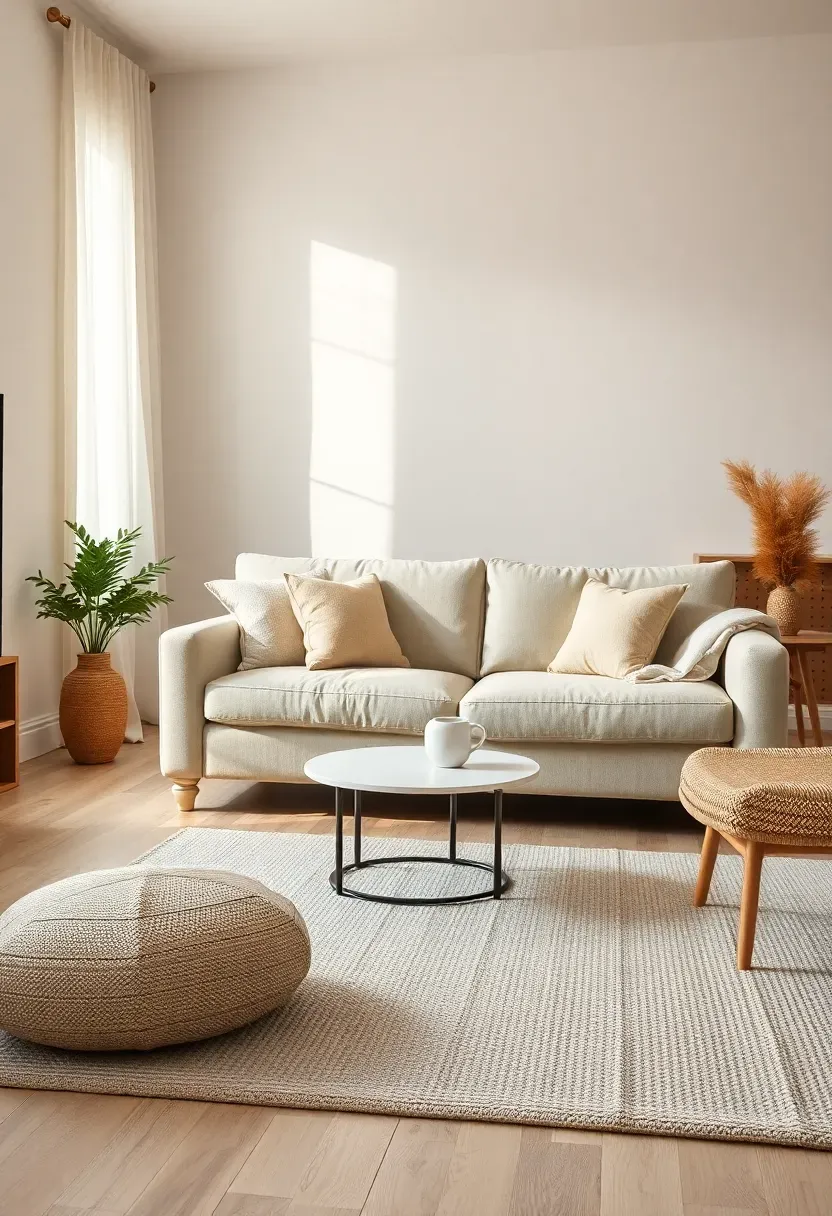
If you add seasonal decor, rotate it monthly instead of letting it accumulate. The contrast move is to avoid permanent piles on the dining table or console; those are signs the layout needs a reset. Keep one small basket for quick pickup so the ritual stays easy. This keeps the room clean without turning minimalism into a chore.
Tips
- Do: pick a consistent reset time, like Sunday evening.
- Don't: leave mail or chargers on the main table all week.
- Do: reset the seating to its original alignment each time.
Budget/Time: 10-15 minutes weekly keeps the layout intact.
What this gives you: a home that stays aligned with your minimalist intention.
Knowing how to live a minimalist life comes down to letting your home support simplicity, flow, and calm. By focusing on layout, light, and materials, minimalist living becomes a design system rather than a strict set of rules. Start with one room, carry the palette and storage logic forward, and let the space do the heavy lifting. The result is a home that feels clearer, quieter, and easier to live in every day.
About the author
OBCD
CGI visualization and interior design content. We create detailed 3D renders and curate practical design ideas for every room in your home.