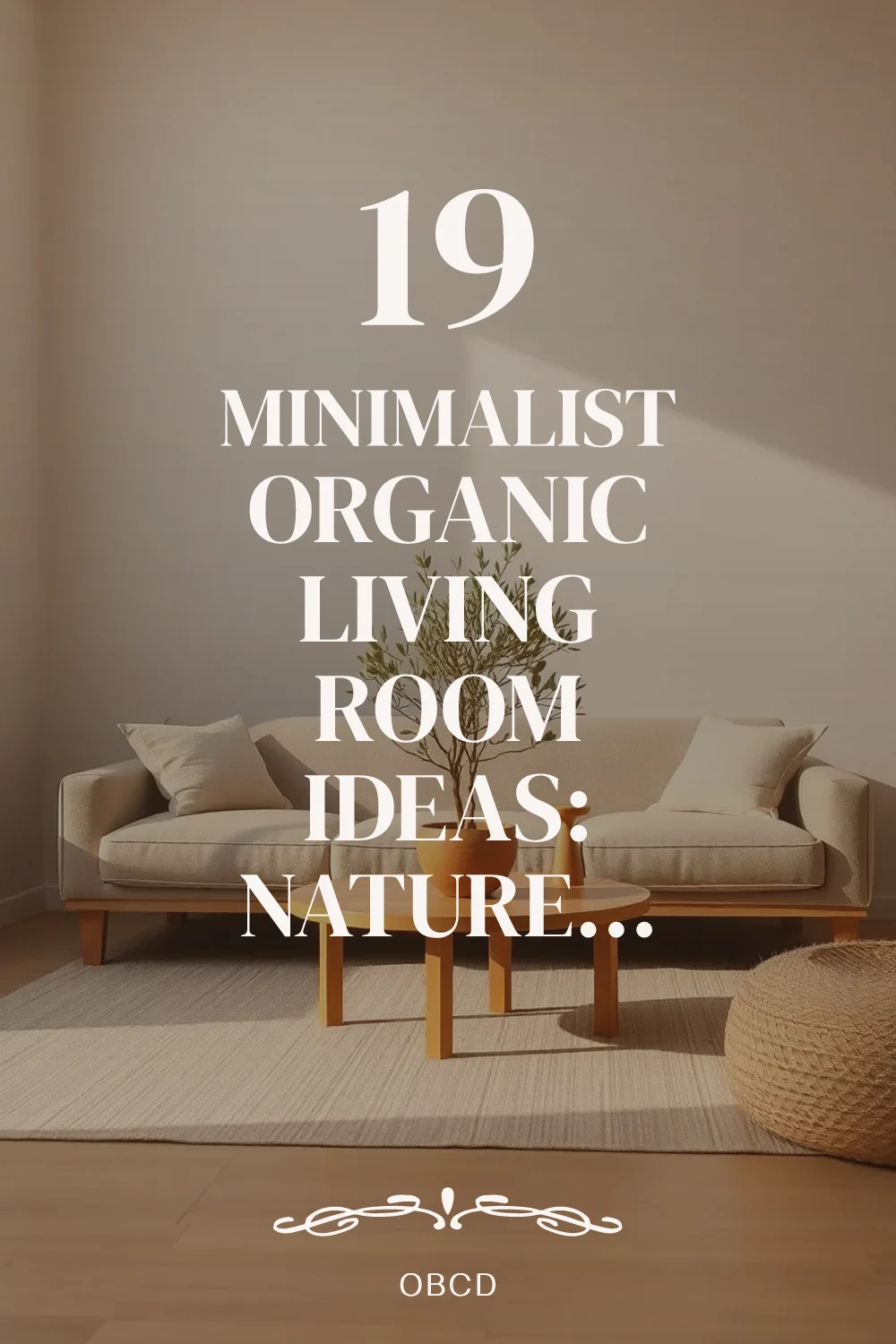
19 Minimalist Organic Living Room Ideas for Calm Spaces
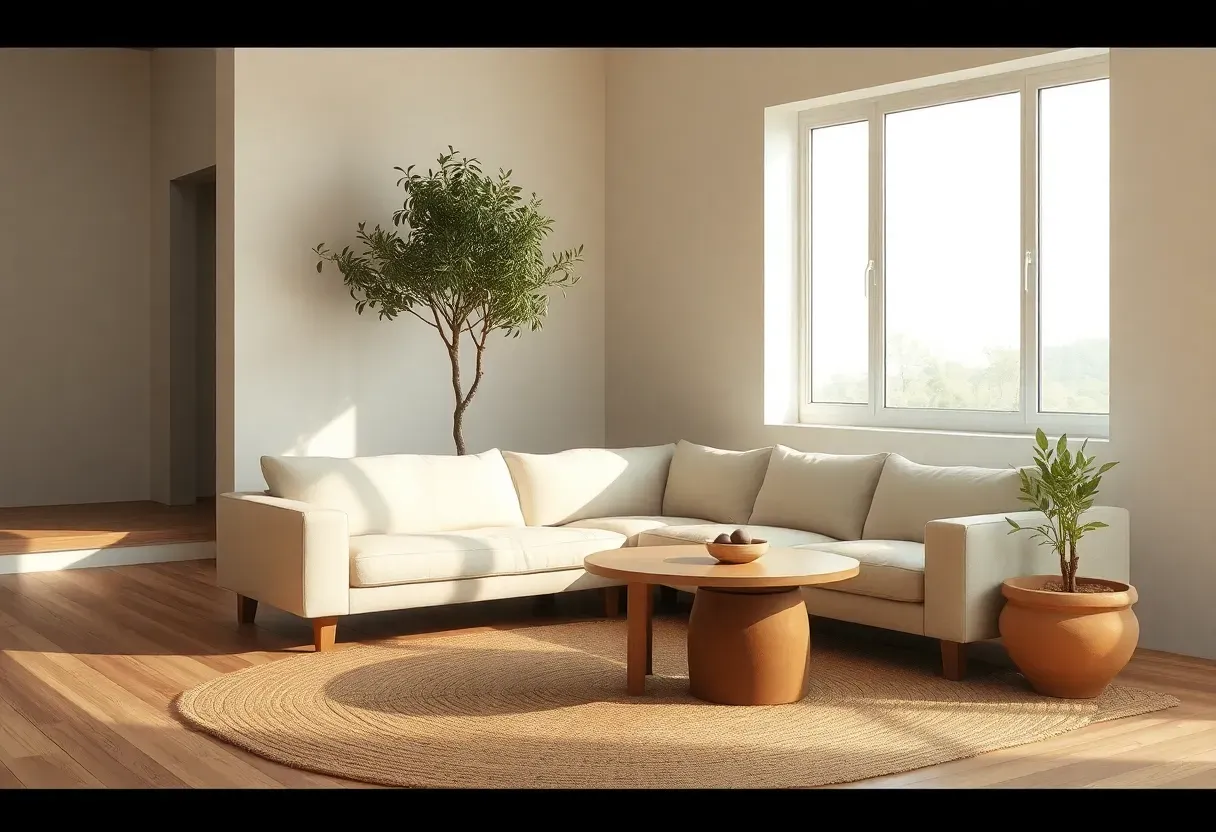
These minimalist organic living room ideas show how to bring nature indoors while keeping the layout calm, purposeful, and easy to maintain. Each idea pairs biophilic design cues with practical zoning that supports real life, whether you rent a small apartment or own a house.
Organic minimalist design works because it prioritizes natural materials, earthy tones, and comfortable circulation over decorative clutter. The goal is a living room that feels open, warm, and connected to the outdoors even in a city apartment.
Quick FAQ
What makes a minimalist organic living room different?
It combines clean lines and limited decor with earthy materials like wood, stone, linen, and clay. The space feels open and intentional, but still warm and tactile.
Which colors feel right for an organic minimalist living room?
Stick to warm whites, sand, oat, and soft clay tones, then add muted greens or charcoal for depth. The palette should feel sun-faded and calm, not high-contrast.
How do I keep a minimalist organic living room from feeling empty?
Use texture instead of clutter: woven rugs, linen upholstery, and matte ceramics add depth without visual noise. A single large plant or sculptural branch can also anchor the room.
What lighting works best for organic minimalism?
Soft, diffused light is key. Use sheer curtains for daylight and warm 2700K to 3000K lamps in the evening to keep the mood gentle.
Can I do this style in a small living room?
Yes. Focus on one strong layout idea, keep the furniture low and leggy, and use a cohesive palette. The simplicity actually makes small rooms feel larger.
As an Amazon Associate I earn from qualifying purchases.
Table of Contents
- 1. Green Axis Layout with a Central Sightline
- 2. Layered Neutral Envelope with Natural Materials
- 3. Low Modular Seating Island
- 4. Soft Zoning with a Jute Rug and Plant Screen
- 5. Clay Plaster Feature Wall as a Calm Backdrop
- 6. Stone-and-Wood Hearth as the Anchor
- 7. Sheer Linen Window Wall for Filtered Light
- 8. Curved Circulation with an Organic Coffee Table
- 9. Built-In Bench Niche with Natural Fiber Texture
- 10. Open Shelving Gallery of Quiet Objects
- 11. Indoor Tree Moment as Living Sculpture
- 12. Micro-Study Corner with Reclaimed Wood
- 13. Sun-Warmed Reading Nook with Soft Textures
- 14. Calm Media Wall with Hidden Tech
- 15. Earth-Tone Color Blocking with Gentle Contrast
- 16. Layered Lighting Plan with Warm Pools
- 17. Material Rhythm on a Long Wall
- 18. Floor-to-Ceiling Drapes as a Soft Frame
- 19. Seasonal Organic Layers that Stay Minimal
1. Green Axis Layout with a Central Sightline
A minimalist organic living room feels calm when furniture aligns to a single green axis that draws the eye to a plant or view. This layout borrows from biophilic design by using a clear visual corridor instead of multiple focal points. Place a low sofa parallel to the longest wall, align a slim coffee table and one statement plant. Keep a 36-inch walkway on one side so circulation stays effortless.
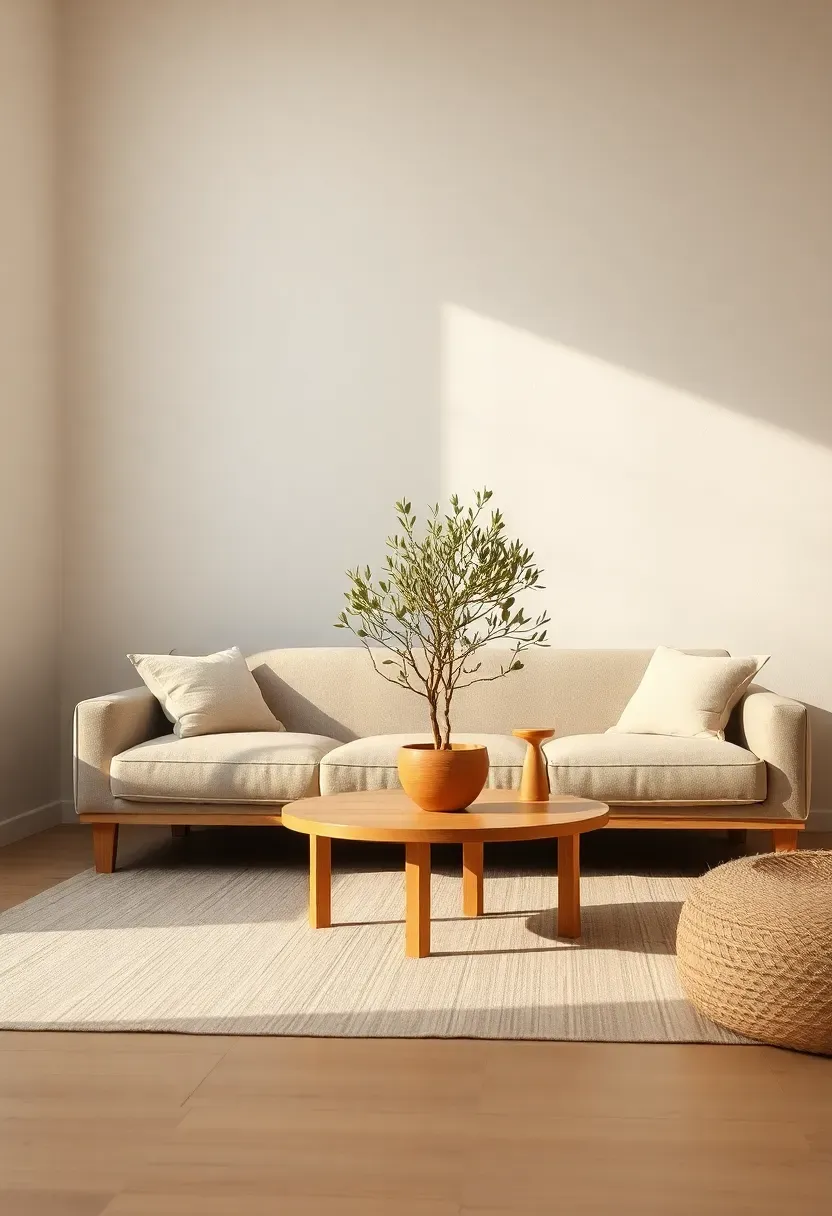
The axis makes the room feel longer even in a modest footprint. A 72-inch sofa with a 48-inch table keeps proportions grounded. Choose one sculptural plant with a clean canopy and avoid clusters that break the line.
For contrast, add a single charcoal side chair at the far end to sharpen depth. Keep side storage shallow and use one wall lamp so the line stays clear. Every object supports the same direction.
Tips
- Do keep the main walkway 36 inches wide so the axis reads open and intentional
- Don't scatter small plants across the room; use one strong anchor
- Do center the rug so the sofa and coffee table sit fully on it
Best for: long, narrow living rooms that need a clear visual direction
What this gives you: a calm, elongated room that feels quietly connected to nature
2. Layered Neutral Envelope with Natural Materials
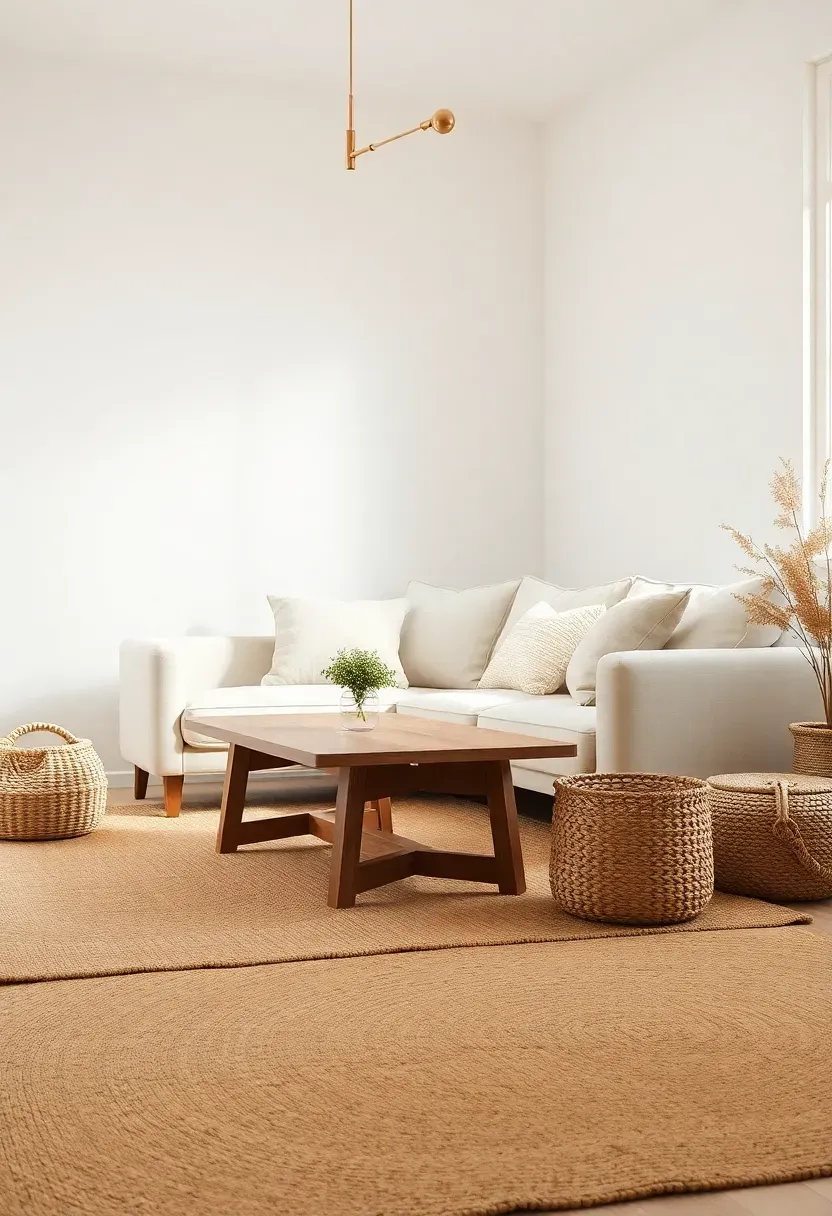
An organic minimalist living room starts with a soft neutral envelope so natural materials feel intentional. Build the base with warm white walls, a sand rug, and a cream sofa, then add a light wood table and a woven stool. Keep the palette within a 10 percent value shift and swap the rug to deeper oat if it feels flat.
Recommended
Items for this idea
Use a 9x12 rug to ground the seating area and linen upholstery for quiet texture. A single wood table with visible grain adds depth, while a matte ceramic vessel keeps styling honest. The neutral envelope unifies walls, flooring, and furniture.
Placement note: keep the heaviest piece on the longest wall so the palette reads continuous from entry to window.
Lighting matters more than accessories, so choose one floor lamp with a linen shade and keep bulbs at 2700K. If you need contrast, place the lamp at the rug edge to create shadow.
Tips
- If the room feels too washed out, then deepen one large surface like the rug or sofa
- If you need warmth, then add one textured wood surface instead of extra decor
- If the palette feels busy, then remove the smallest accessories first
What this gives you: a unified, calm room where texture replaces clutter
3. Low Modular Seating Island
A minimalist organic living room feels livable when the seating reads as one low island rather than scattered pieces. Choose a modular sofa with linen upholstery and keep the height under 30 inches so sightlines stay open. Add a single side chair and a low table to create a contained zone that still feels airy. Leave a 60-inch clearance to the media wall so the layout breathes.
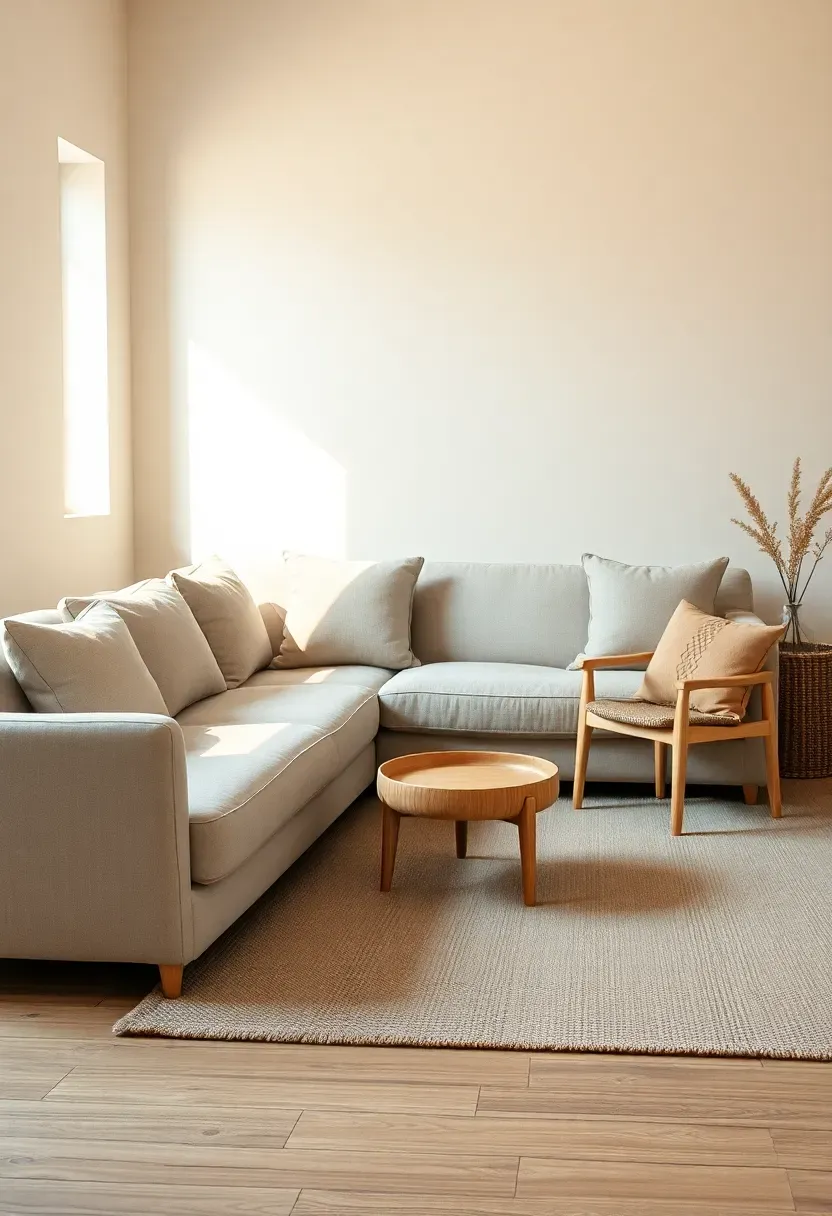
The seating island acts like a single piece of architecture, keeping the perimeter calm. Use one rug large enough to hold all legs and keep everything 12 to 18 inches from the walls. For contrast, upgrade the coffee table to darker walnut without breaking the organic feel.
Why it works: the low profile keeps the ceiling line clean while the unified footprint reduces visual noise and stress.
Choose a modular with movable corner pieces so the island can rotate toward a window. Keep accessories to three items max on the table. For another clean-layout approach, see 25 Minimalist Living Room Ideas for Small Spaces and adapt the spacing rules to your footprint.
Tips
- Pro: a low sofa keeps sightlines open and makes the room feel larger
- Con: low seating can feel too casual for guests without one higher perch
- Fix: add a single elevated chair with the same upholstery tone
Rental note: use a large rug to define the island without anchoring furniture to walls
What this gives you: a clear, relaxed seating zone that reads like a single calm gesture
4. Soft Zoning with a Jute Rug and Plant Screen
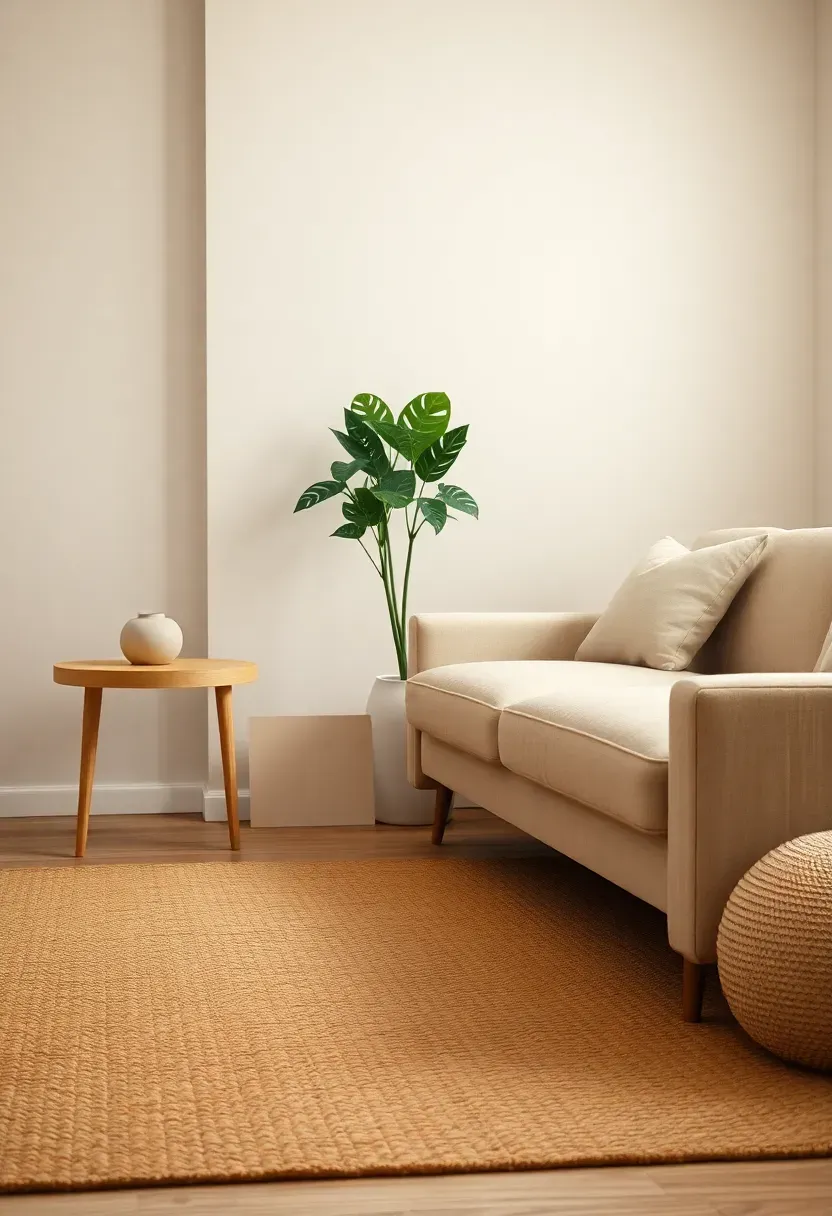
A minimalist organic living room can feel open and defined when you zone the space with a jute rug and a simple plant screen. Lay a large natural fiber rug, then use one tall plant on a slim stand to suggest a boundary. An 8x10 rug usually holds a sofa and chair without crowding. If it feels boxed in, swap the stand for a low planter to keep sightlines open.
Recommended
Items for this idea
The rug grounds the seating and the plant adds vertical definition without a wall. Keep the plant on the rug edge so it frames rather than crowds. Use one or two plants only; a cluster reads like clutter.
Common mistake: using a dark divider or tall shelf that breaks the room into boxes and blocks light.
Choose a plant with a clear silhouette and a matte pot. For contrast, swap the jute rug to a flatweave wool if you need more softness underfoot.
Tips
- Keep the rug at least 12 inches beyond the sofa arms
- Place the plant screen on the rug edge, not in the center
- Use one large plant rather than several small ones
What this gives you: clear zoning without walls, so the room stays airy and natural
5. Clay Plaster Feature Wall as a Calm Backdrop
A minimalist organic living room gains depth when one wall is finished in clay plaster, creating a soft, earthy canvas. This surface adds subtle movement, so furniture can stay simple. Place the sofa against the plaster wall and keep everything else light and low. If it feels too rustic, balance it with a smooth stone table for contrast.
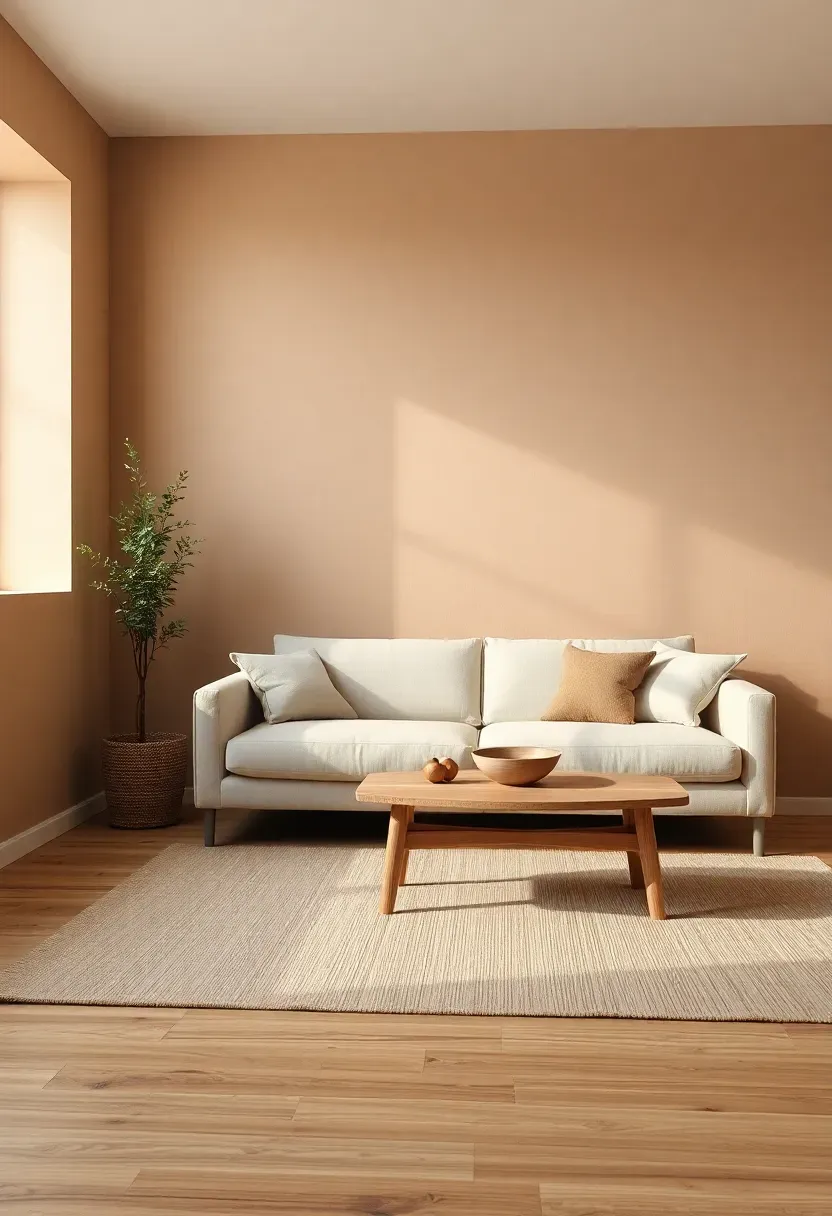
Plaster works best when the palette stays tight, so keep upholstery in warm whites and use one wood species. The wall should sit behind the seating zone to read as a background. Choose a low-pile rug so the room stays serene.
Clay plaster also helps with acoustics in open-plan spaces. Add one soft throw for balance, but avoid busy patterns.
Tips
- Do test a 2-foot sample patch before committing to the full wall
- Don't pair plaster with glossy finishes that fight the matte texture
- Do keep art minimal and oversized if you add any at all
Budget/Time: expect 2 to 3 days for a pro finish and drying time
What this gives you: a serene backdrop that makes the whole room feel warmer and deeper
6. Stone-and-Wood Hearth as the Anchor
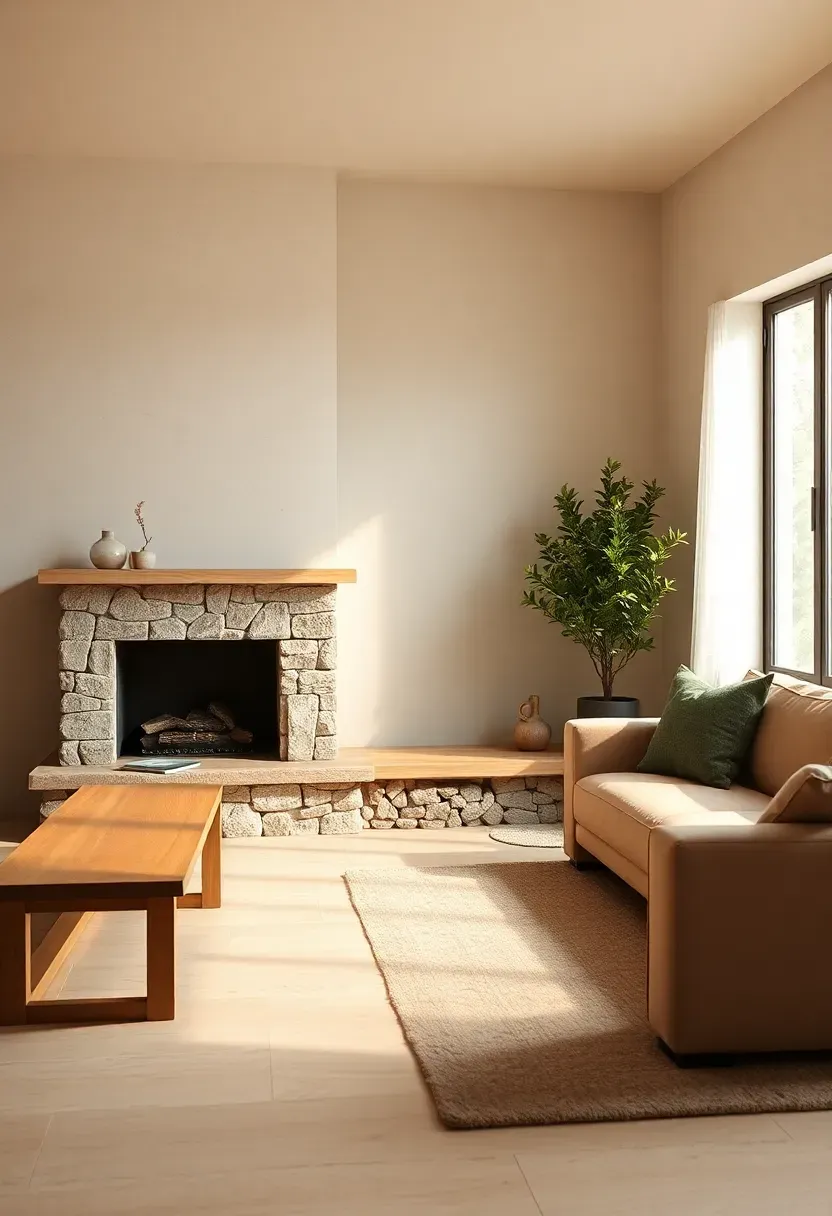
A minimalist organic living room feels grounded when the hearth becomes the anchor, especially with a travertine or limestone surround. Keep the fireplace linear, then pair it with a long wood bench to extend the line. A 60-inch surround gives weight without dominating. If you want softness, add a wool rug in front rather than cluttering the mantel.
Recommended
Items for this idea
Keep the hearth area free of small objects so the stone reads architectural. Use one large vessel or a single piece of driftwood, and align the bench with the firebox. For contrast, choose a darker oak stain for the bench, but avoid black hardware.
Placement note: align the sofa to face the hearth and keep a 24-inch clearance so heat and circulation stay comfortable.
For variations on this calm focal point, see 17 Minimalist Fireplace Living Room Ideas. The hearth-led layout gives the room a natural center without clutter.
Tips
- If the stone feels cold, then add one warm wood element beside it
- If the hearth wall feels too heavy, then lighten the sofa upholstery
- If you need storage, then choose a floating shelf instead of cabinets
What this gives you: a quiet focal point that anchors the entire room
7. Sheer Linen Window Wall for Filtered Light
A minimalist organic living room can feel almost outdoor when the main wall is treated as a light filter. Use sheer linen curtains from ceiling to floor and keep the window wall free of furniture. This soft veil washes the room and enhances texture. If you want more privacy, double-layer with another sheer rather than heavy drapes.
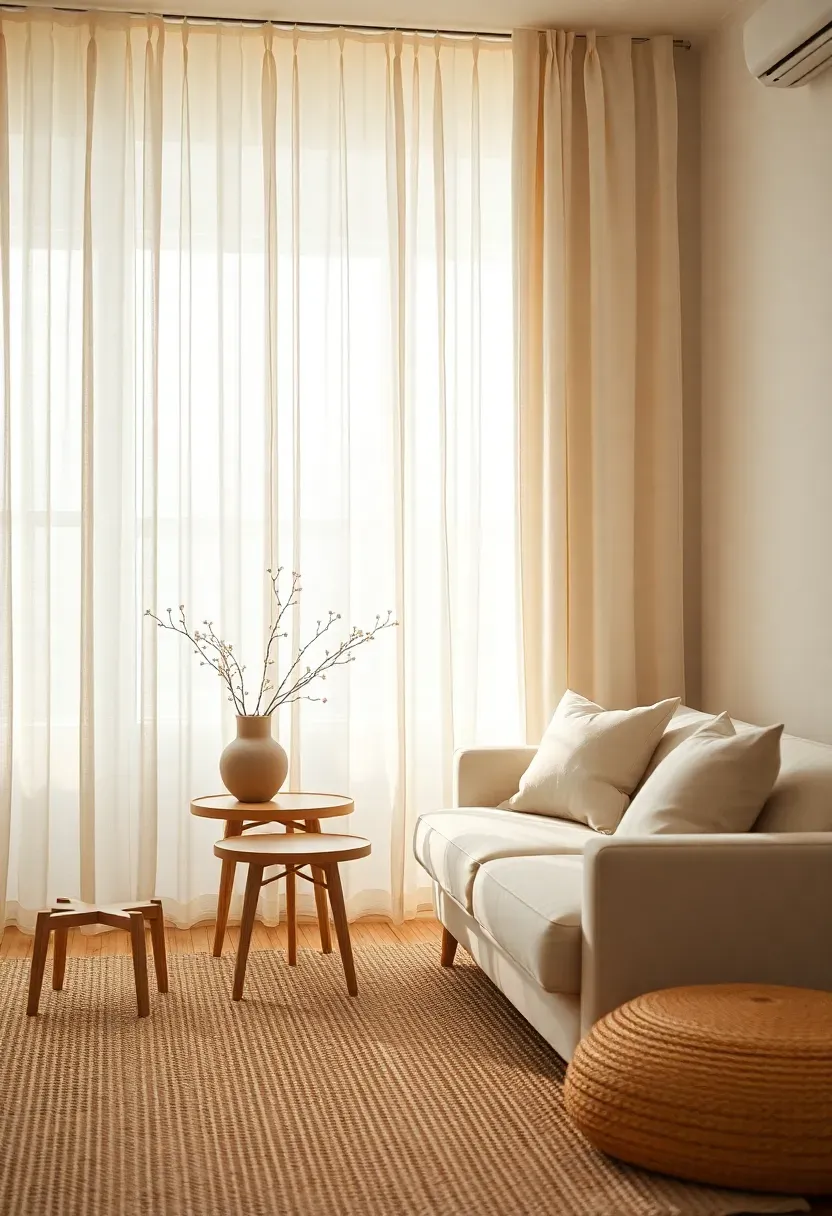
Keep the seating zone at least 18 inches away from the curtains so they can move freely. A low sofa and a slim table preserve the clean line of the wall. For contrast, add a single dark wood stool or a clay lamp base.
Why it works: the softened light reduces visual noise and makes organic textures feel richer.
If you want more Scandinavian softness, see 21 Cozy Scandinavian Living Room Ideas and borrow the light-handling tricks without adding extra decor. The sheer wall gives you a whole-room atmosphere that supports minimal styling.
Tips
- Pro: sheer linen makes even small rooms feel brighter and larger
- Con: it can look flimsy if the fabric weight is too light
- Fix: choose 6 to 8 oz linen for a soft but substantial drape
Best for: rooms with strong daylight that need gentle diffusion
What this gives you: a luminous room that feels soft, open, and natural
8. Curved Circulation with an Organic Coffee Table
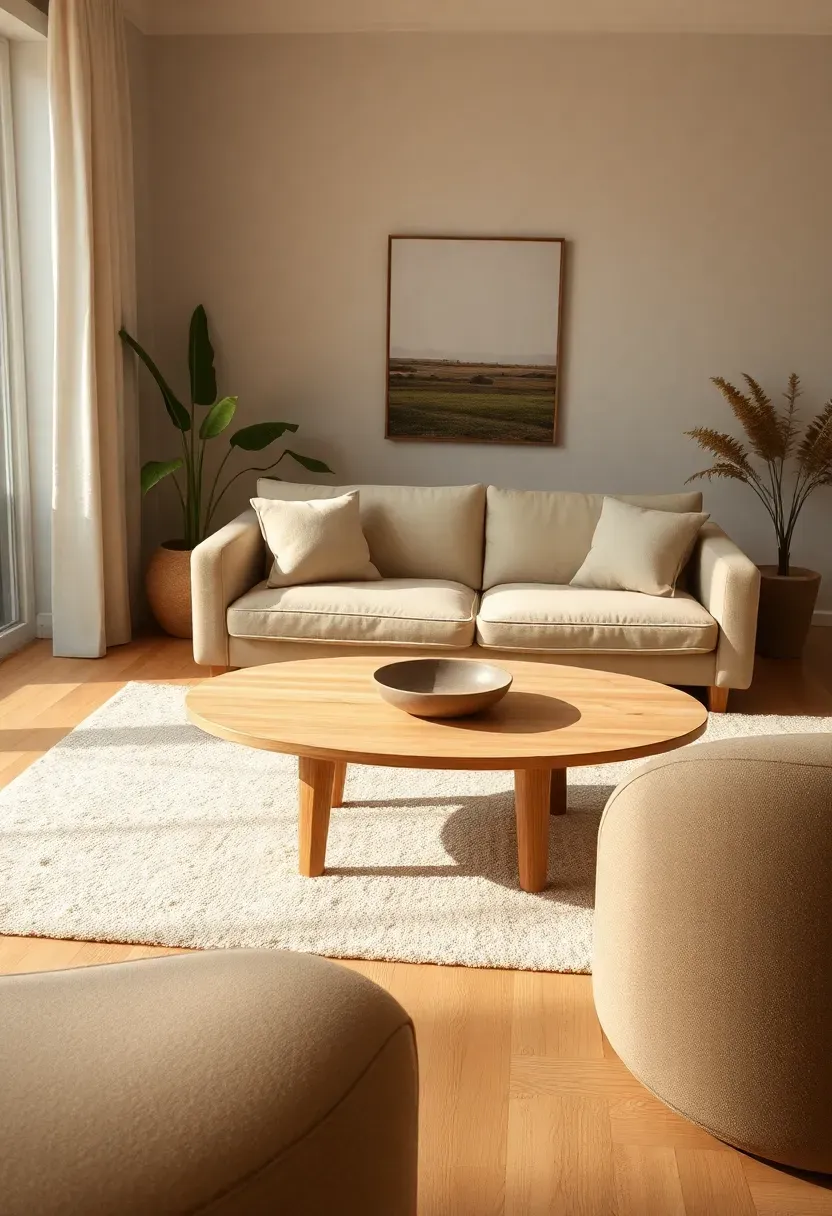
A minimalist organic living room benefits from a single curved element that softens the geometry and guides movement. Choose an oval or kidney-shaped coffee table and place seating to create a smooth circulation path around it. This helps the room feel more natural, especially in boxy layouts. Keep the table low and in light oak so it feels airy rather than heavy. If the space feels too rigid, switch the side chair to a rounded silhouette instead of adding extra pieces.
Recommended
Items for this idea
The curved table creates a natural loop for foot traffic, which is especially helpful in open-plan spaces. Keep the distance between the sofa and table at about 16 inches for comfortable reach. A simple rug anchors the curve without competing with it. For contrast, place a rectangular bench against the wall to sharpen the room's balance of shapes.
Common mistake: choosing a table that is too large and blocks the walkway, which makes the room feel tight.
Stick to a table that is 36 to 42 inches wide for most living rooms. The curved element becomes the centerpiece, while everything else stays quiet. The whole layout reads intentional and organic without any visual clutter.
Tips
- Use an oval table to keep the circulation path clear
- Keep at least 30 inches of walking space around the seating zone
- Choose one curved piece only to avoid a playful look
What this gives you: a softer, more natural flow through the room
9. Built-In Bench Niche with Natural Fiber Texture
A minimalist organic living room can gain structure from a built-in bench that creates a quiet niche for lounging or reading. Keep the bench low and run it along a wall, then add a rattan or woven cushion for texture. A bench depth of 20 inches keeps the line crisp while still comfortable. If you want softness, add one oversized pillow instead of several small ones.
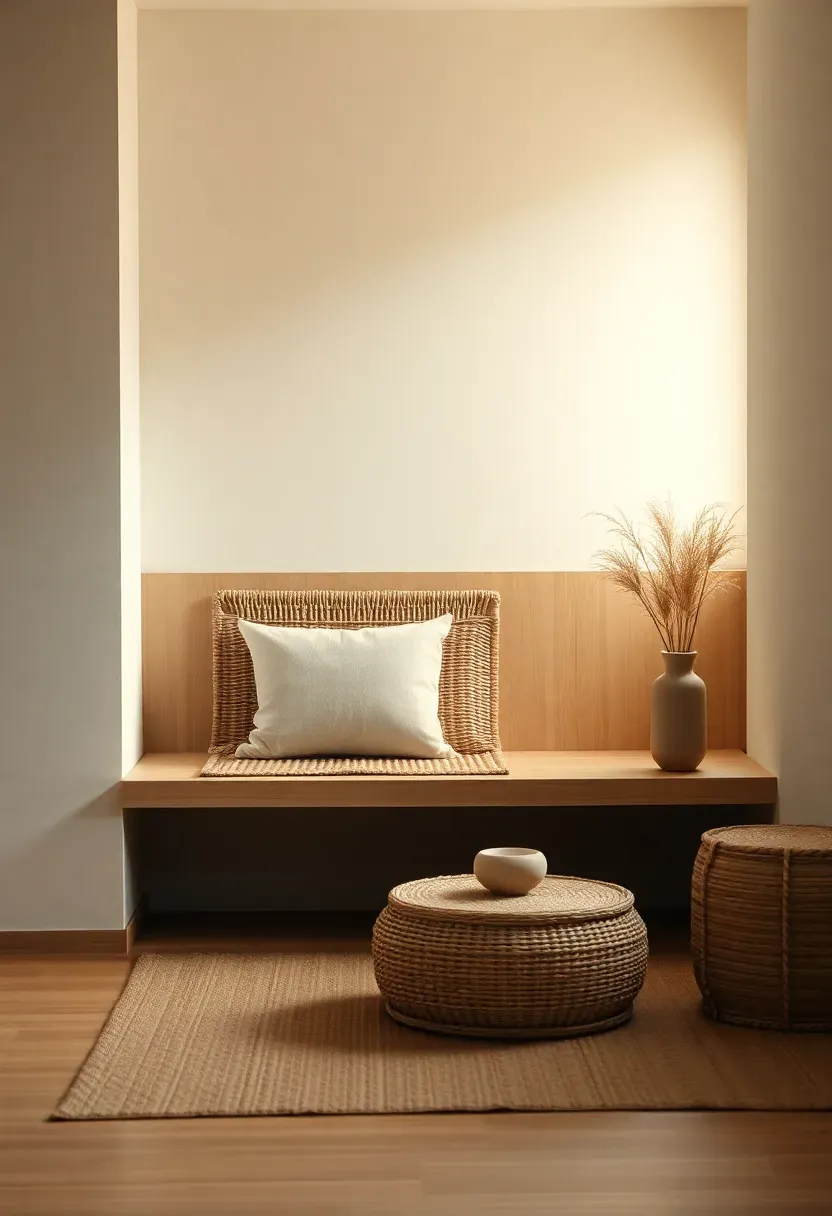
The bench works as a built-in anchor, which helps the rest of the room stay minimal and open. Pair it with a simple coffee table and keep the main sofa opposite. For contrast, add a smooth stone side table to offset the woven texture.
Leave a clear 30-inch path in front of it and limit decor to one or two objects. If you like this calm, built-in approach, see 19 Inspiring Earthy Modern Living Room Ideas for other ways to integrate texture without clutter.
Tips
- Do align the bench length with a window or wall break for symmetry
- Don't overfill the niche; keep it to one cushion and one throw
- Do choose a washable cushion cover for everyday use
Best for: rooms with an underused wall that needs purpose
What this gives you: a built-in zone that adds function without visual noise
10. Open Shelving Gallery of Quiet Objects
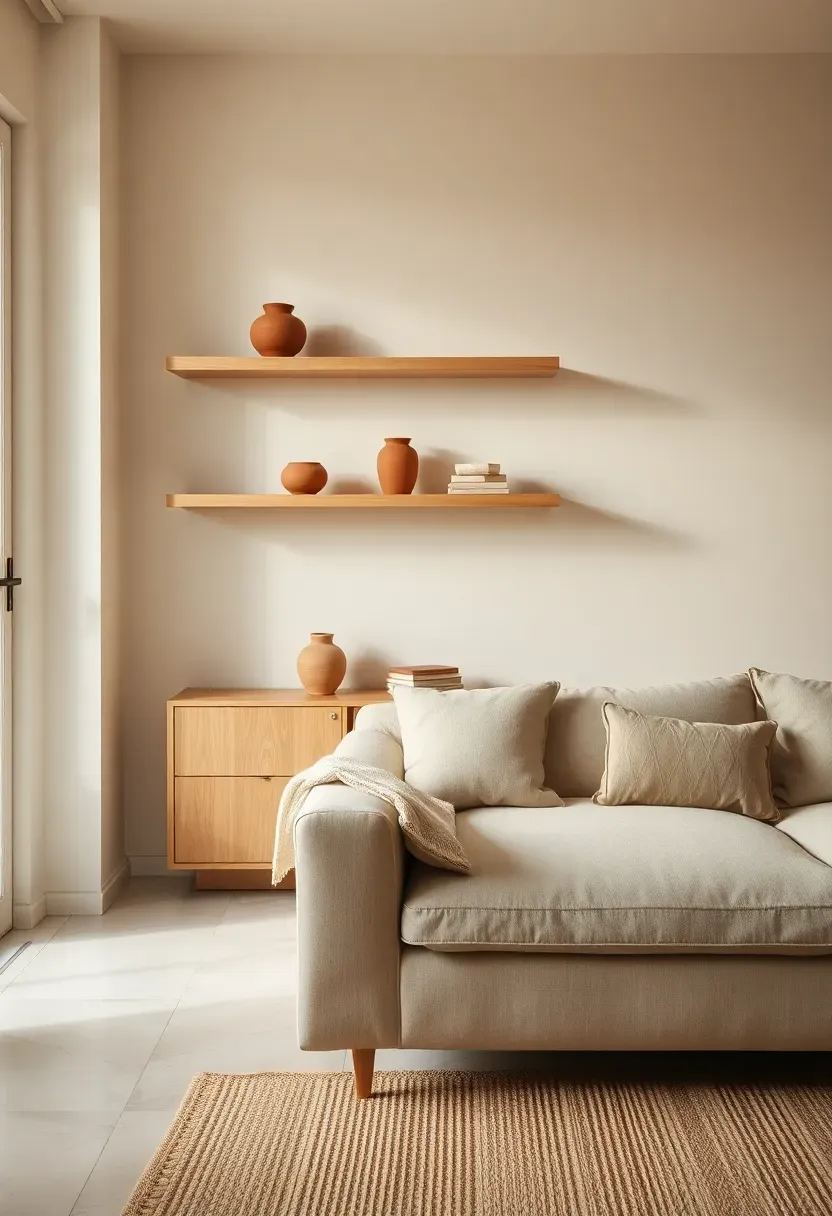
An organic minimalist living room can still show personality by using open shelving as a curated gallery of natural objects. Keep the shelves slim and aligned, then display only a few ceramic vessels and woven pieces. Limit the display to three to five objects per shelf and use one darker vessel for contrast.
Recommended
Items for this idea
Keep shelves proportional to the room, so use a 6-inch depth and leave generous space above and below. Pair the shelf wall with a low sofa and a simple rug so it reads as design, not decor. For contrast, upgrade the shelf brackets to brushed brass for a subtle warm accent.
Placement note: place shelves at eye level and align them with the sofa back for a clean horizon line.
For a broader minimal layout mix, see 27 Minimalist Living Room Ideas: Serene Spaces Unveiled for a Comfortable Living Space and borrow the spacing rules.
Open shelving works best when the rest of the room is restrained, so avoid extra side tables or tall plants nearby.
Tips
- If the shelves feel busy, then remove the smallest item first
- If you want more texture, then swap one vessel for a woven basket
- If the wall feels empty, then extend the shelf length, not the object count
What this gives you: personality and texture without losing the calm, open feel
11. Indoor Tree Moment as Living Sculpture
A minimalist organic living room can feel like a retreat when a single indoor tree becomes the living sculpture. Choose one plant with a clean silhouette, like an olive or fiddle-leaf fig, and place it in a matte clay pot. Keep the rest of the room simple so the tree reads as a focal point, not just another accessory. A 7-foot tree adds height without overwhelming typical ceiling heights. If you want contrast, add a dark stone tray on the coffee table for weight.
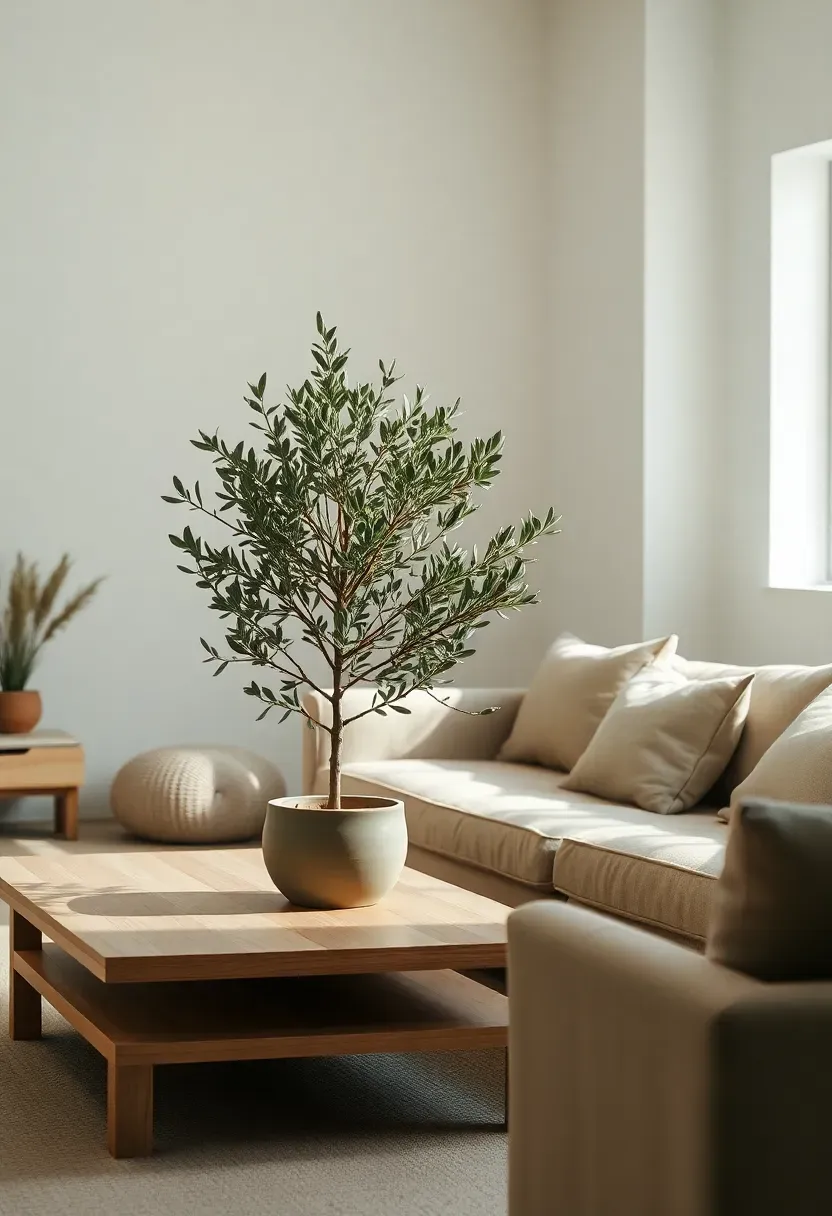
The tree should sit near the window for real light, but still within the seating zone so it feels intentional. Keep the pot diameter around 14 to 18 inches so it looks proportional to the room. This is a whole-room strategy because the plant sets the mood and scale for everything else. For contrast, choose a low, square coffee table to keep the shapes balanced.
Why it works: a single tall element adds life and verticality without adding visual clutter.
Use minimal accessories so the tree can breathe, and keep the palette neutral to highlight the green. Avoid multiple medium plants here; one strong silhouette looks more architectural.
Tips
- Pro: one tall plant adds life without clutter
- Con: low light can make the tree drop leaves
- Fix: use a grow light on a timer set to 8 hours
Avoid if: the room has no usable daylight for a real plant
What this gives you: a natural focal point that elevates the entire room
12. Micro-Study Corner with Reclaimed Wood
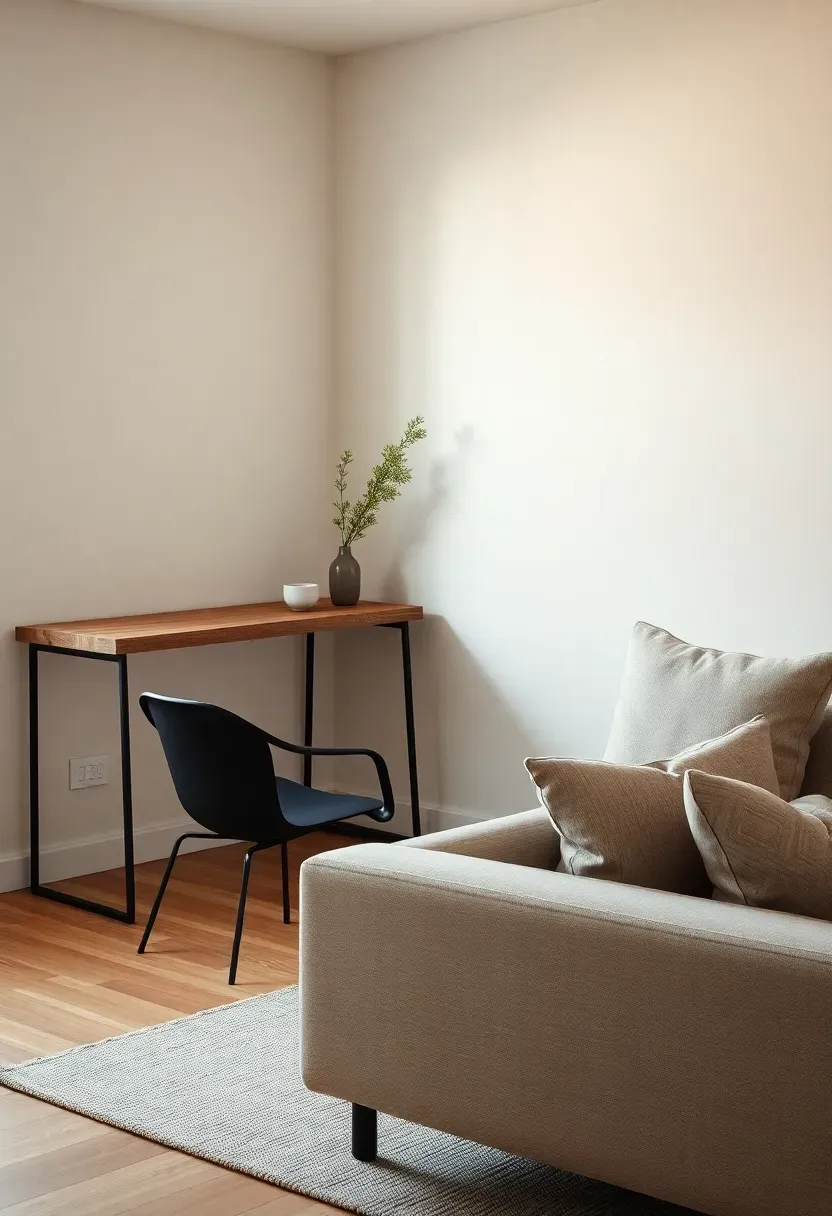
A minimalist organic living room can include a micro-study corner without breaking the calm. Use a slim reclaimed wood desk and a low-profile chair, then keep the zone visually light. This adds function while preserving the overall serenity of the room. A 42-inch desk is enough for a laptop and notebook without taking over. If the desk feels too heavy, float it and keep the floor clear underneath.
Recommended
Items for this idea
Place the desk at the edge of the seating area so it feels like part of the living room, not a separate office. Keep the wall above it clear, or hang one simple print to avoid clutter. For contrast, pair the desk with a lighter chair in woven material to soften the look. The goal is a room that does double duty without losing its relaxed vibe.
Common mistake: adding office storage that turns the corner into a busy work zone.
Use a single drawer or a small box for supplies and keep cables hidden. For more space-aware ideas, see 25 Inspiring Home Library Ideas and translate the quiet, built-in feel into a smaller corner.
Tips
- Use a slim desk under 18 inches deep to keep the room open
- Keep only one surface item visible, like a lamp or tray
- Choose a chair that can tuck fully under the desk
What this gives you: a functional work spot that still feels like part of the calm
13. Sun-Warmed Reading Nook with Soft Textures
A minimalist organic living room feels inviting when you create one sun-warmed reading nook with soft textures. Place a low armchair near the brightest window, then add a small side table and a textured throw. Keep the rest of the room uncluttered so the nook reads as intentional. A 24-inch round table is enough for a book and tea. If you want contrast, choose a darker pillow instead of adding more accessories.
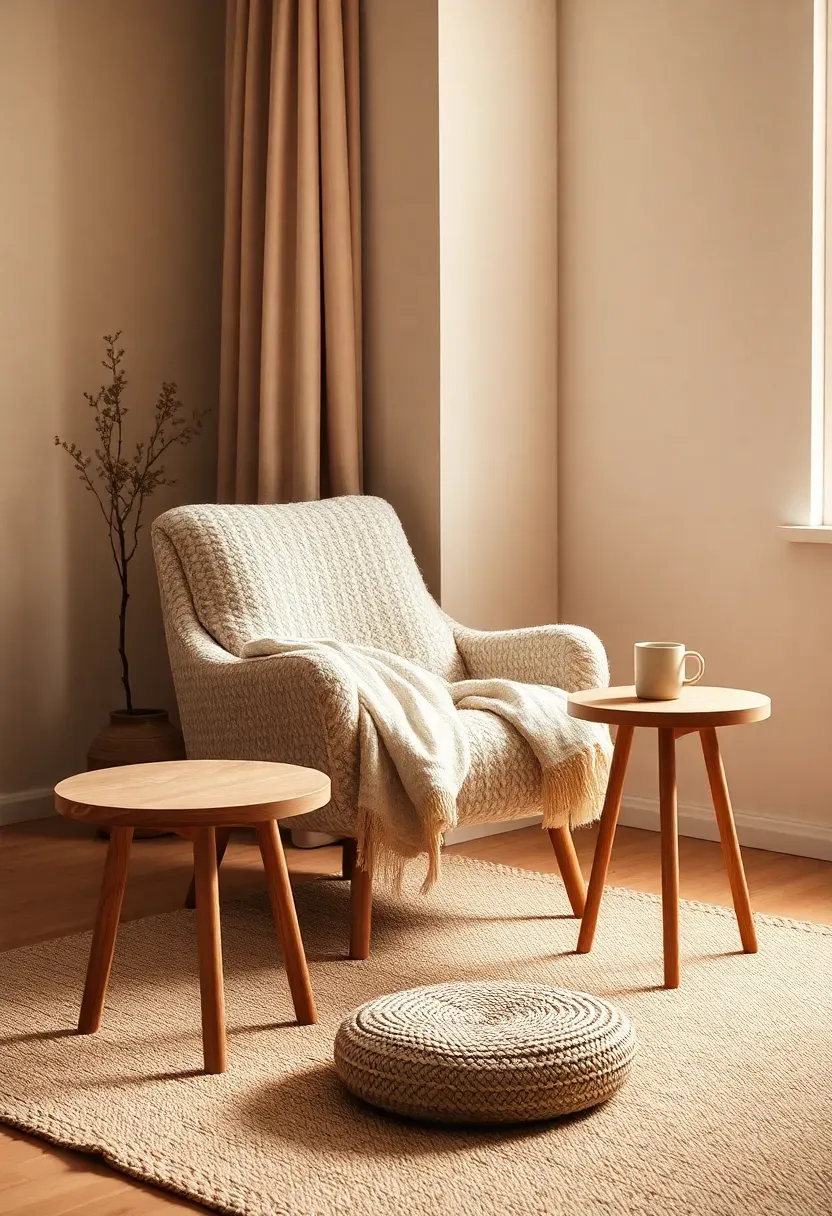
The nook works because it creates a dedicated moment within the larger layout, which makes the room feel thoughtful. Keep the chair low and rounded so it complements the rest of the minimal furniture. Use one textured throw and a small lamp if evening reading is part of your routine. For contrast, place a flatweave rug under the chair if the main rug is plush.
This is a whole-room move because it gives the living room a human scale and a daily ritual spot. The chair becomes a soft anchor while the rest of the space stays clean and open.
Tips
- Do place the chair within 18 inches of the window for good light
- Don't add a tall bookcase that competes with the seating area
- Do keep the nook to three items: chair, table, lamp
Best for: rooms that need a cozy, human-scale zone
What this gives you: a calm reading spot that warms up the entire layout
14. Calm Media Wall with Hidden Tech
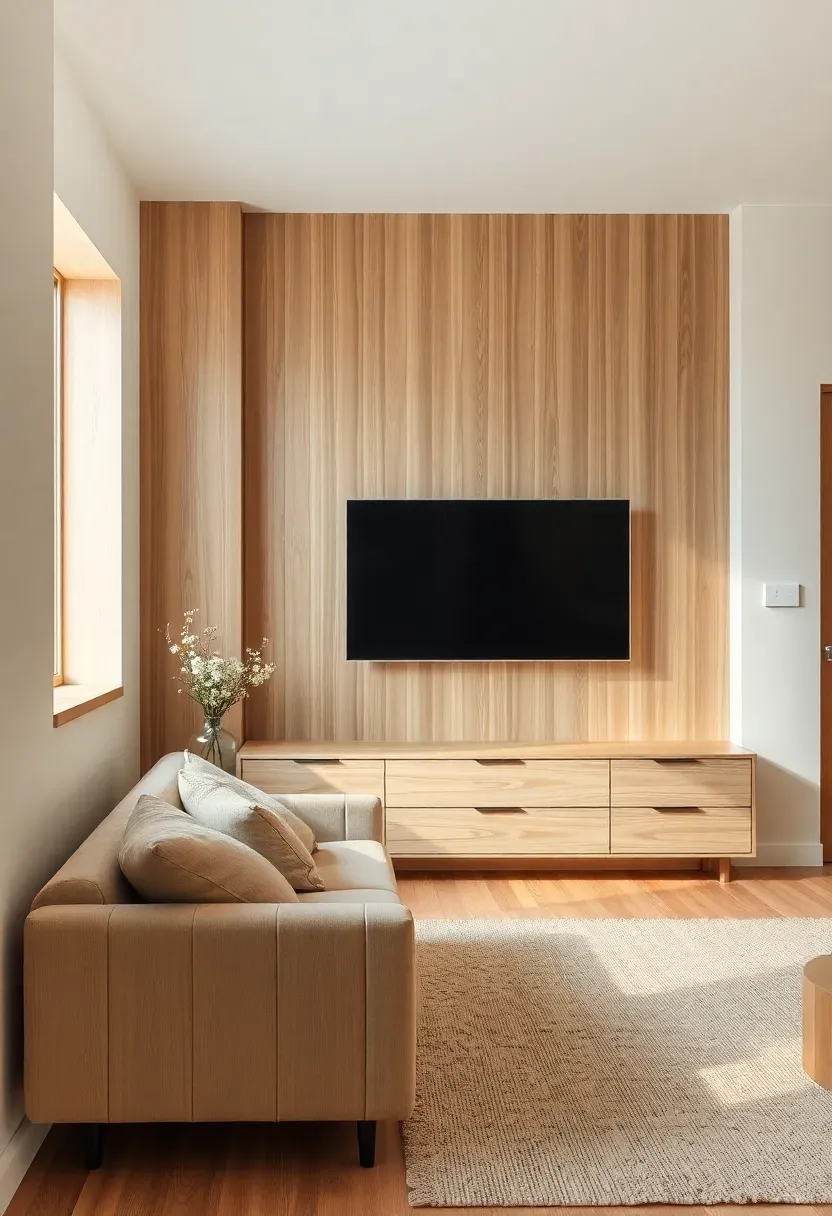
A minimalist organic living room can still include a media wall if the tech is hidden within a calm, natural surface. Use a low cabinet in light oak and keep the TV mounted above a simple panel or slatted backing. A 72-inch cabinet works well under most screens. If you want a softer look, add a linen panel that can slide over the screen.
Recommended
Items for this idea
Keep cables hidden and use one long cabinet rather than multiple small pieces. The slatted backing gives texture without adding decor, so the wall reads as architectural. For contrast, choose a darker table or a textured rug to prevent the wall from feeling too pale.
Placement note: mount the screen so the center sits at 42 inches from the floor for comfortable viewing.
If you want a softer ambient layer, see 27 Minimalist Living Room Lighting Ideas: Light Reimagined for a Comfortable Living Space and pair the glow with this media wall.
If you prefer a softer approach, add a textured linen panel that can slide in front of the TV. This keeps the organic vibe intact while still giving you entertainment when needed.
Tips
- If the wall feels heavy, then lower the cabinet height
- If you see clutter, then add one closed drawer section
- If glare is an issue, then angle the seating slightly off-axis
What this gives you: a media zone that feels integrated and serene
15. Earth-Tone Color Blocking with Gentle Contrast
A minimalist organic living room can feel richer when you use earth-tone color blocking in large, soft bands. Paint the lower third of a wall in warm clay, then keep the upper area in warm white. This adds depth while staying quiet and natural. A 36-inch paint line feels intentional without cutting the room in half. If you want contrast, add a darker terracotta cushion rather than extra decor.
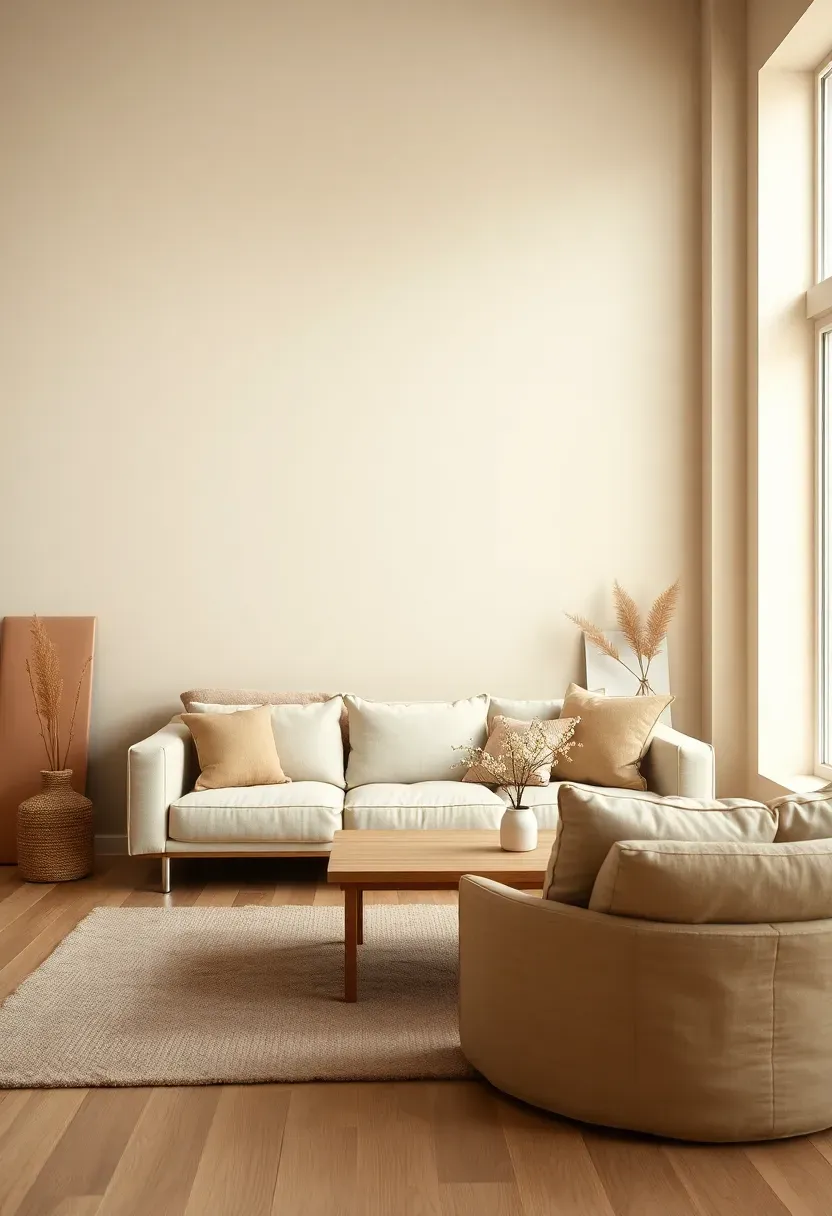
Color blocking works because it changes the room's proportions in a subtle way, making ceilings feel taller or lower depending on placement. Keep furniture tones close to the wall colors so the transition feels seamless. The whole room looks intentional because the walls themselves become the design feature, not just the backdrop. For contrast, use a warm gray throw to bridge the two tones.
Why it works: a large color shift creates structure without adding objects or visual noise.
If you want a slightly stronger look, pair the blocked wall with a darker rug and light seating. For more grounded palettes, see 19 Inspiring Minimalist Living Room Ideas with Earth Tones and borrow the color ratios that keep rooms calm.
Tips
- Pro: two-tone walls add depth without extra furniture
- Con: a sharp line can feel harsh if the colors are too different
- Fix: choose tones within the same warm family
Best for: rooms that need visual depth without adding decor
What this gives you: gentle contrast that makes the room feel designed, not decorated
16. Layered Lighting Plan with Warm Pools
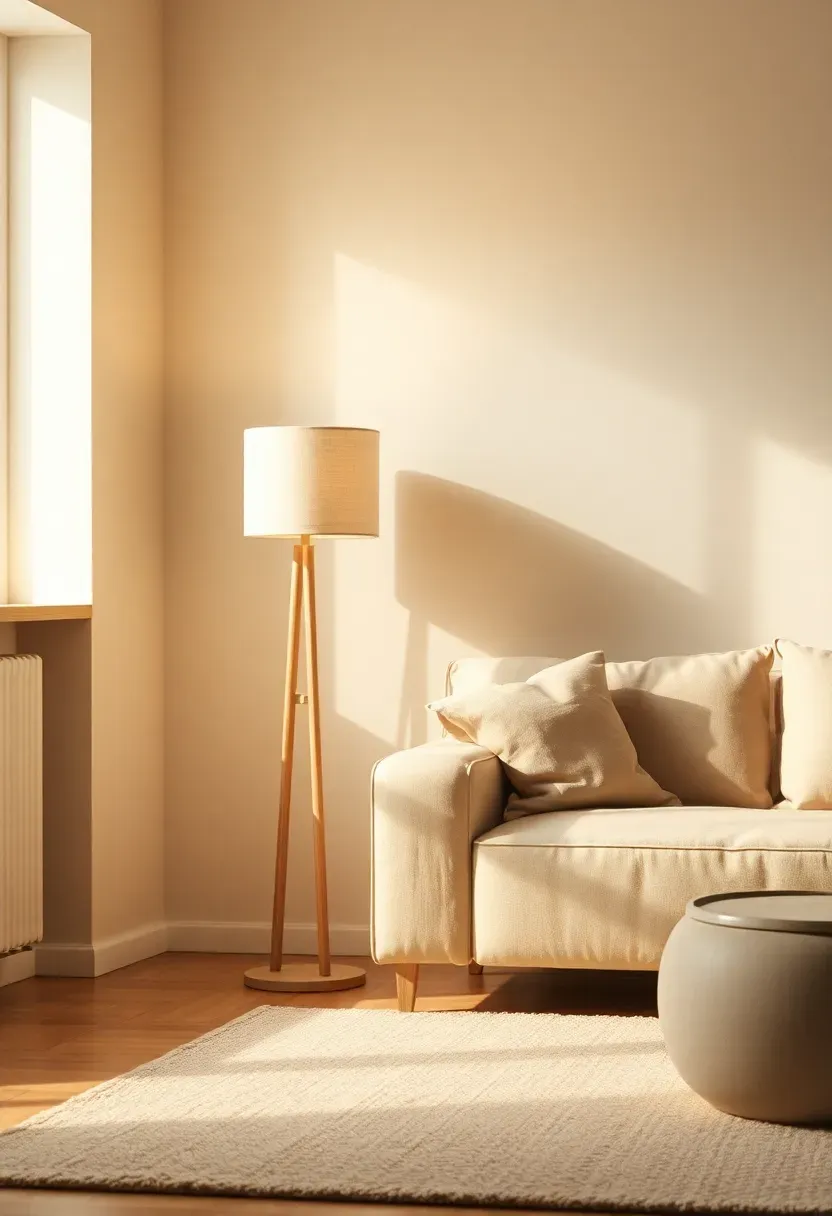
A minimalist organic living room feels intimate when light is layered in warm pools rather than one harsh source. Use a floor lamp with a linen shade, a small table lamp, and soft ambient light from the window. This creates depth while keeping the room calm. Keep bulbs in the 2700K to 3000K range for a natural glow. If you need contrast, add a dimmable wall sconce instead of a bright overhead fixture.
Recommended
Items for this idea
Place the floor lamp behind the sofa to wash the wall, then use the table lamp near the seating for task light. The goal is a whole-room glow, not a spotlight on a single corner. For contrast, use one lamp with a darker base to add weight. Keep cords hidden to preserve the minimal look.
Common mistake: relying on a single overhead light that makes the room feel flat and clinical.
Use dimmers on every lamp so the mood shifts from day to evening. This lighting plan supports the organic materials by making textures look richer and more tactile.
Tips
- Use three light sources for balance and softness
- Keep bulbs at 2700K for a warm, natural glow
- Hide cords with a slim cable channel along the baseboard
What this gives you: a calm, layered atmosphere that flatters every material
17. Material Rhythm on a Long Wall
A minimalist organic living room looks intentional when a long wall repeats a rhythm of natural materials. Pair a slim wood console with a textured wall panel and a single sculptural object, then repeat the spacing to create visual cadence. This approach keeps the room cohesive while still adding depth. A 6-inch gap between elements keeps the wall breathable. If you want contrast, switch one panel to limewash paint instead of adding extra objects.
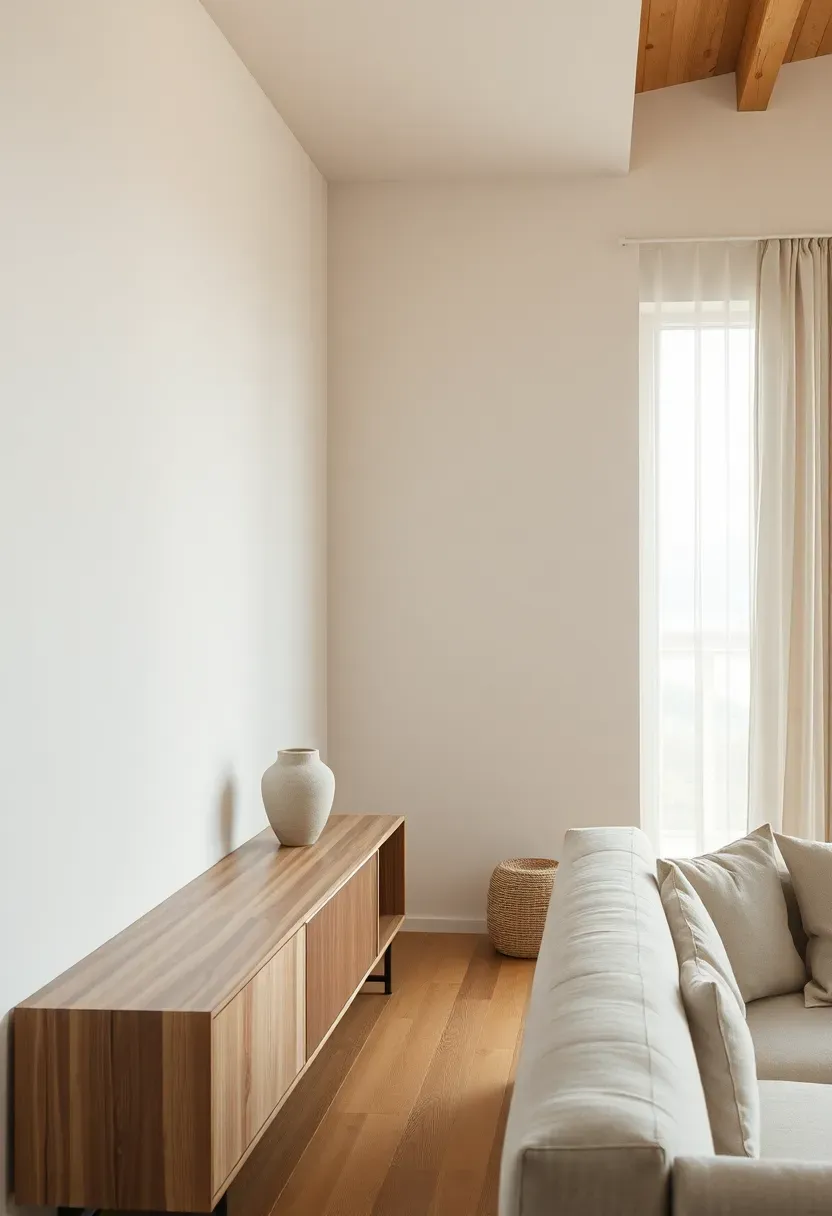
The rhythm should feel subtle, so keep each element low and simple. A 60-inch console paired with one tall panel gives balance without busy decor. The seating can stay minimal because the wall itself provides the room's structure. For contrast, choose a darker ceramic piece that anchors the sequence visually.
This is an all-room idea because it gives a long wall purpose without crowding the space. The repeating materials make the room feel designed, not decorated.
Tips
- Do keep the console shallow so the walkway stays open
- Don't overfill the wall; let negative space carry the rhythm
- Do repeat one material at least twice for cohesion
Best for: long walls that feel empty but should stay minimal
What this gives you: a structured wall that adds depth without clutter
18. Floor-to-Ceiling Drapes as a Soft Frame
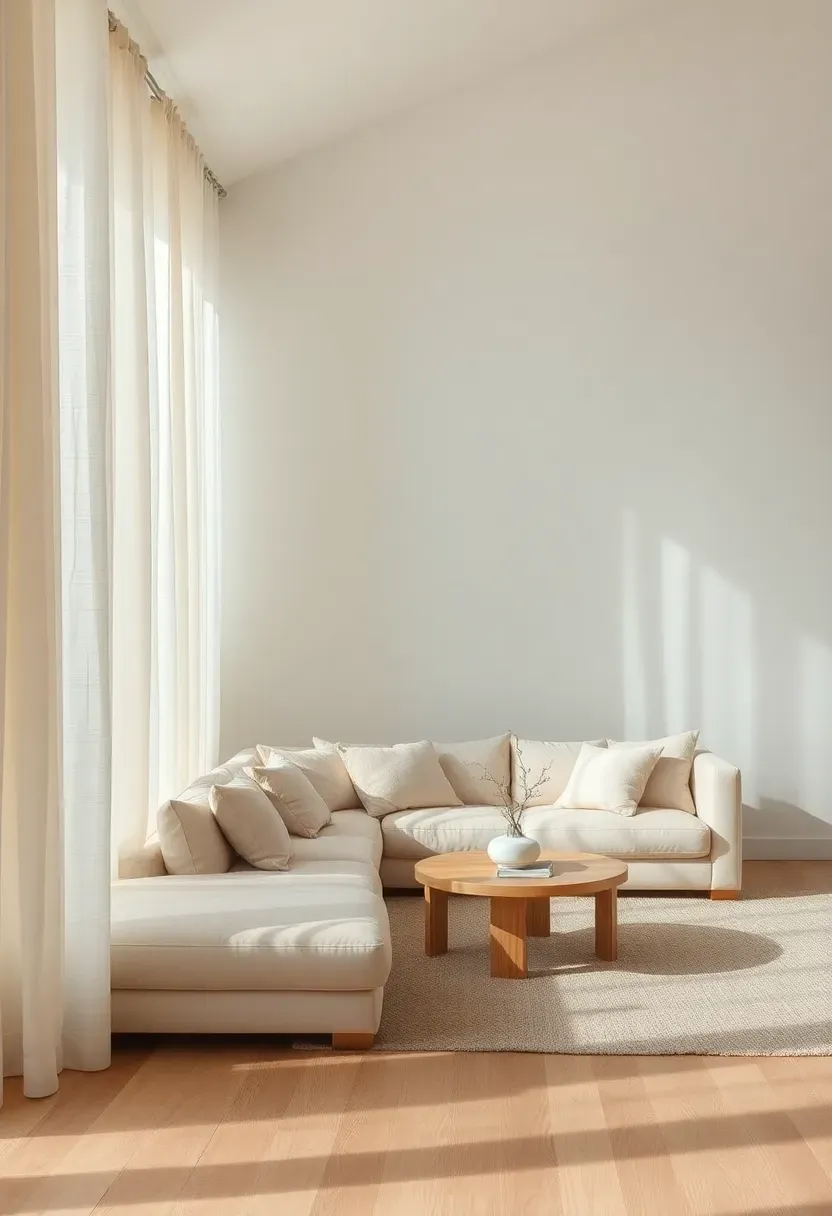
A minimalist organic living room can feel taller and more cohesive when floor-to-ceiling drapes frame the windows. Choose a natural fiber like linen or hemp and keep the panels wide so they stack generously. This gives the room a calm, hotel-like softness without adding decor. A 4-inch puddle at the floor adds a relaxed feel. If the room feels heavy, swap to a lighter weave rather than shortening the panels.
Recommended
Items for this idea
Keep the drape color close to the wall tone so the window feels integrated. This makes the room look larger and more serene. For contrast, use a slightly darker rug or a warm wood chair. The overall layout stays minimal because the drapes are doing the heavy lifting visually.
Placement note: mount the rod 6 inches above the window frame and extend it 8 inches past each side.
For a softer, refined look, see 27 Elegant Minimalist Living Room Ideas for Refined Calm and apply the same drape proportions.
Wide drapes also help with acoustics and light control, which makes the room feel more restful. The result is a whole-room softness that still reads clean and minimal.
Tips
- If the drapes look thin, then double the panel width
- If the light feels harsh, then add a second sheer layer
- If the room feels too formal, then let the panels lightly puddle
What this gives you: a soft frame that makes the whole room feel taller and calmer
19. Seasonal Organic Layers that Stay Minimal
A minimalist organic living room stays fresh when you rotate a few seasonal layers instead of redoing the decor. Swap the throw, the cushion cover, and one tabletop object to reflect the season while keeping the base neutral. A 15-minute swap changes the mood; choose one deeper color for winter and keep everything else neutral.
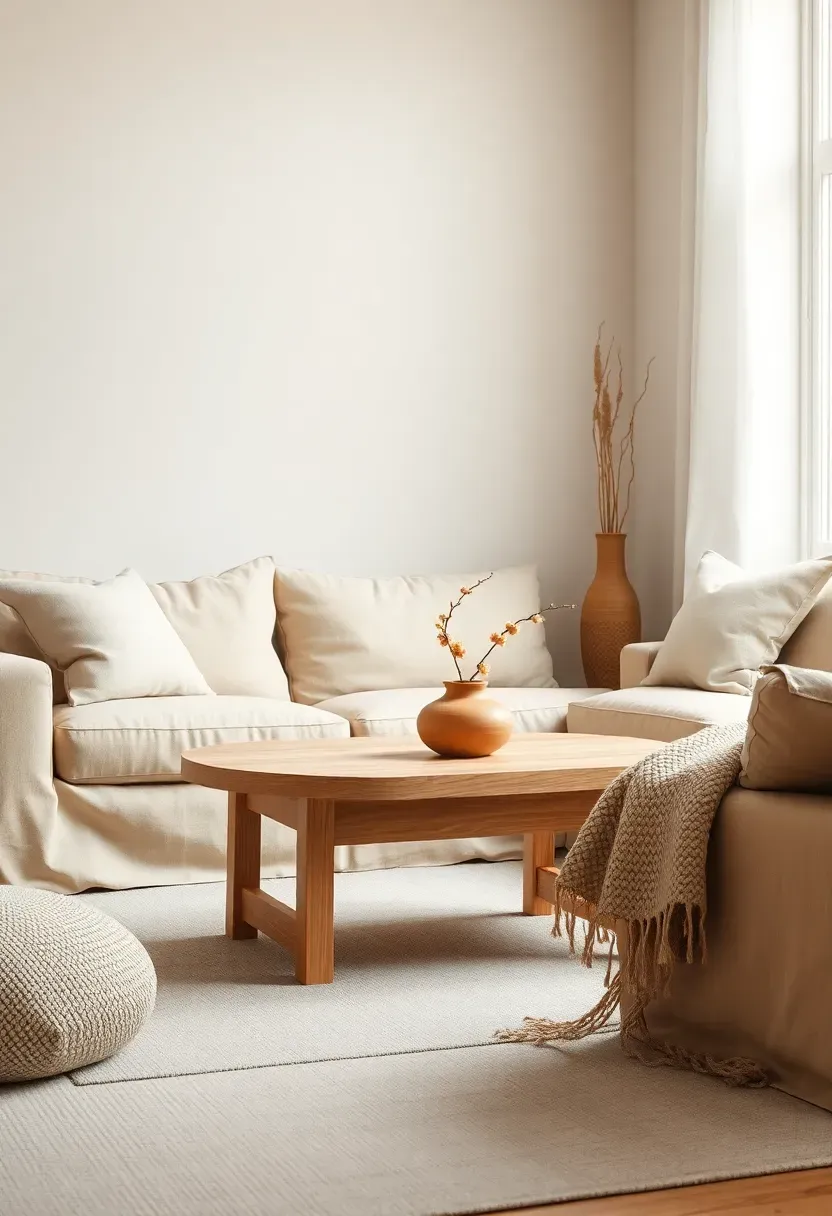
Keep the base palette consistent, then layer one seasonal tone like muted olive for spring or rust for fall. For contrast, replace the tabletop object with a darker stone for winter instead of adding more pillows. This keeps the structure intact while allowing subtle shifts.
Why it works: small, deliberate swaps keep the space feeling alive without breaking the minimalist rhythm.
Store extra textiles in a single box and rotate them every three months to avoid clutter.
Tips
- Pro: seasonal swaps refresh the room without major spending
- Con: too many changes can break the calm look
- Fix: limit changes to three items per season
Best for: people who want variety without visual clutter
What this gives you: a living room that evolves gently while staying minimalist
These minimalist organic living room ideas prove that a few whole-room decisions can bring nature indoors without overdecorating. By leaning on biophilic design, natural materials, and earthy tones, you get a space that feels calm, warm, and truly lived in. Choose the layout strategy that fits your room, keep the palette tight, and let honest textures do the styling for the most cohesive result.
About the author
OBCD
CGI visualization and interior design content. We create detailed 3D renders and curate practical design ideas for every room in your home.