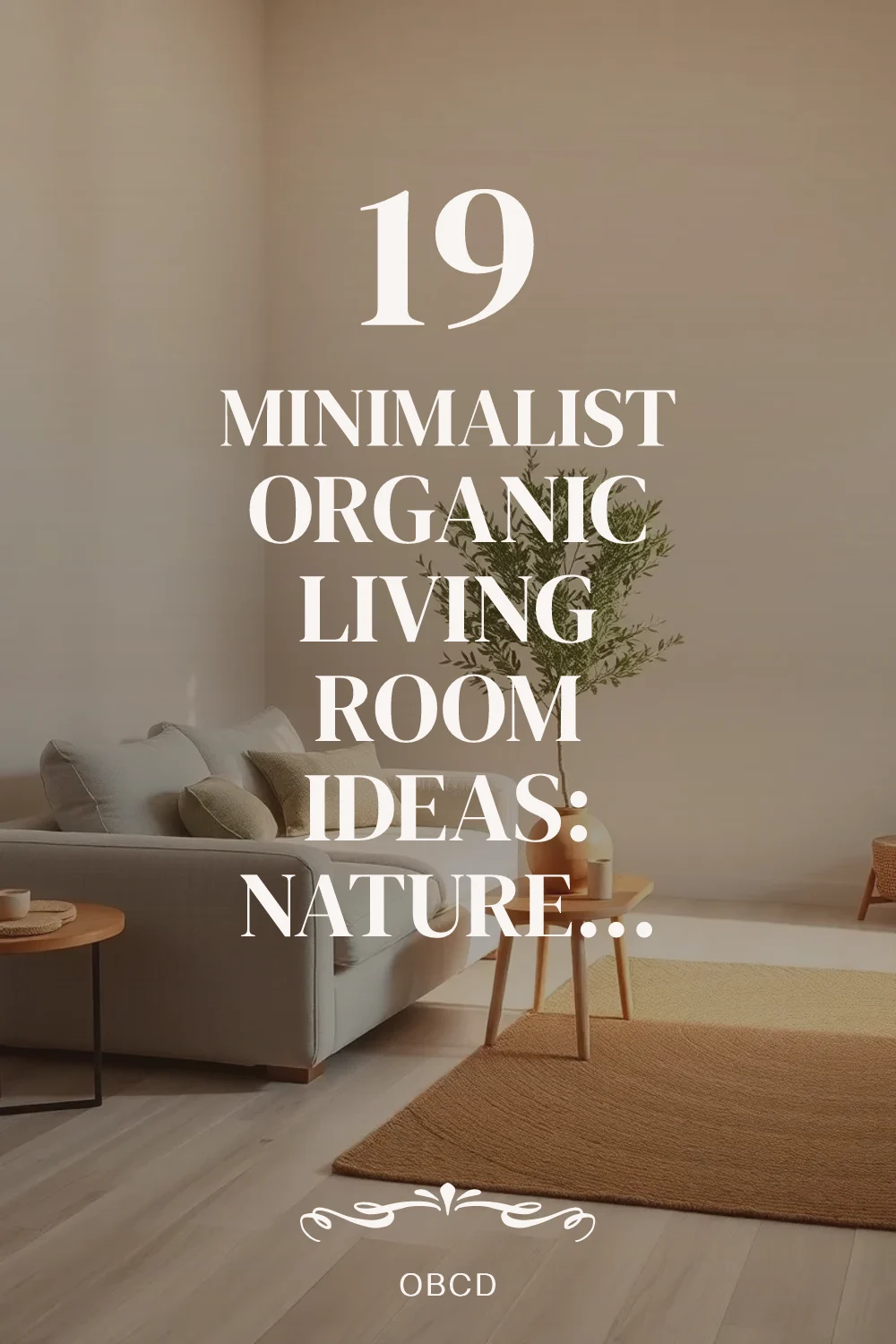
19 Minimalist Organic Living Room Ideas for Calm, Natural Comfort
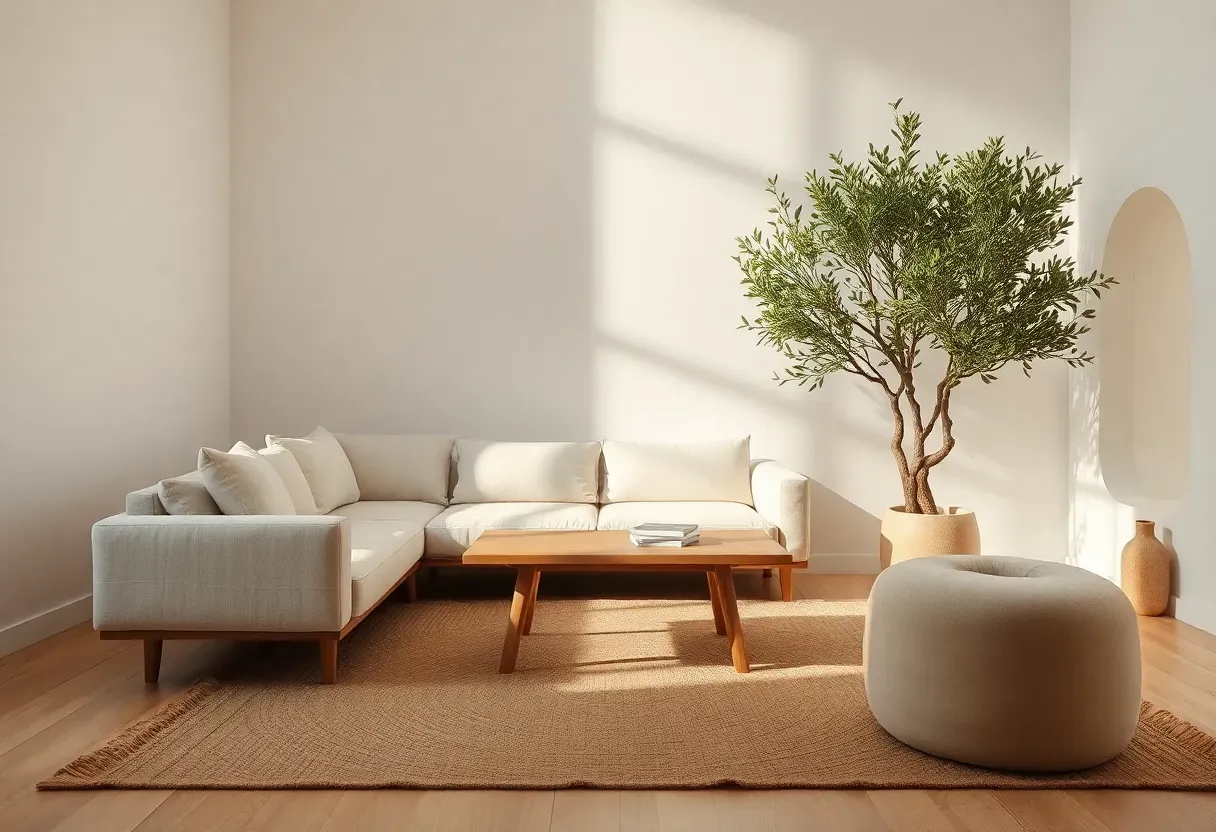
Minimalist organic living room ideas help you build a calm, nature-forward space that feels open and comfortable even with a tight footprint, using natural materials and warm light instead of heavy furniture or bold color.
These organic minimalist living room layouts rely on biophilic design cues, soft earth tones, and tactile surfaces like linen, jute, and light oak to create organic living room decor that reads effortless but intentional.
Use the ideas as a whole-room plan or mix a few for a simple, renter-friendly refresh that works in a small apartment without any permanent changes.
Quick FAQ
How do minimalist organic living room ideas feel warm, not bare?
Use texture instead of extra decor: linen upholstery, jute rugs, and matte ceramics add depth without clutter. Keep lighting warm at 2700K to soften the palette.
Which colors work best for an organic minimalist living room?
Warm whites, sand, oat, and muted clay keep the room calm while still grounded. Add a soft green or charcoal accent only if you need contrast.
Do minimalist organic living room ideas require lots of plants?
No. One sculptural plant or a few branches can provide the biophilic cue without taking over the room. The rest can come from wood, stone, and woven textures.
What lighting keeps organic minimalism calm at night?
Layer two to three warm light sources, like a floor lamp and a table lamp, instead of relying on a single overhead fixture. Linen or paper shades keep the glow soft.
Can this style work in small or rental living rooms?
Yes. Focus on layout, rugs, and textiles first, then add removable window treatments or lighting. The style is flexible and easy to scale down.
As an Amazon Associate I earn from qualifying purchases.
Table of Contents
- 1. Central Green Axis With Open Sightline
- 2. Neutral Shell With Linen and Light Oak
- 3. Low Seating Island With Clear Circulation
- 4. Rug-Led Conversation Zone
- 5. Stone-and-Wood Anchor Wall
- 6. Sheer Window Wall for Soft Daylight
- 7. Curved Coffee Table for Gentle Flow
- 8. Built-In Bench With Storage and Plants
- 9. Quiet Media Wall With Concealed Tech
- 10. Sun-Track Reading Nook
- 11. Asymmetrical Balance With Organic Shapes
- 12. Slatted Timber Ceiling Accent
- 13. Single Tree Corner as Living Sculpture
- 14. Earth-Tone Color Blocking for Depth
- 15. Layered Lighting With Warm Pools
- 16. Open Shelves With Negative Space
- 17. Mixed-Material Coffee Table Pairing
- 18. Floor-to-Ceiling Drapes as Soft Perimeter
- 19. Seasonal Natural Layers That Stay Minimal
1. Central Green Axis With Open Sightline
A minimalist organic living room idea that works in almost any plan is a central green axis that draws the eye toward a plant or view. This biophilic layout keeps furniture aligned to one sightline so the space reads longer and calmer. Place a 78-inch low sofa parallel to the longest wall, center a slim coffee table, and anchor the far end with one tall tree. The contrast line is simple: avoid scattering many small plants, or the axis gets noisy. Keep a 36-inch walkway along one side so circulation stays effortless.
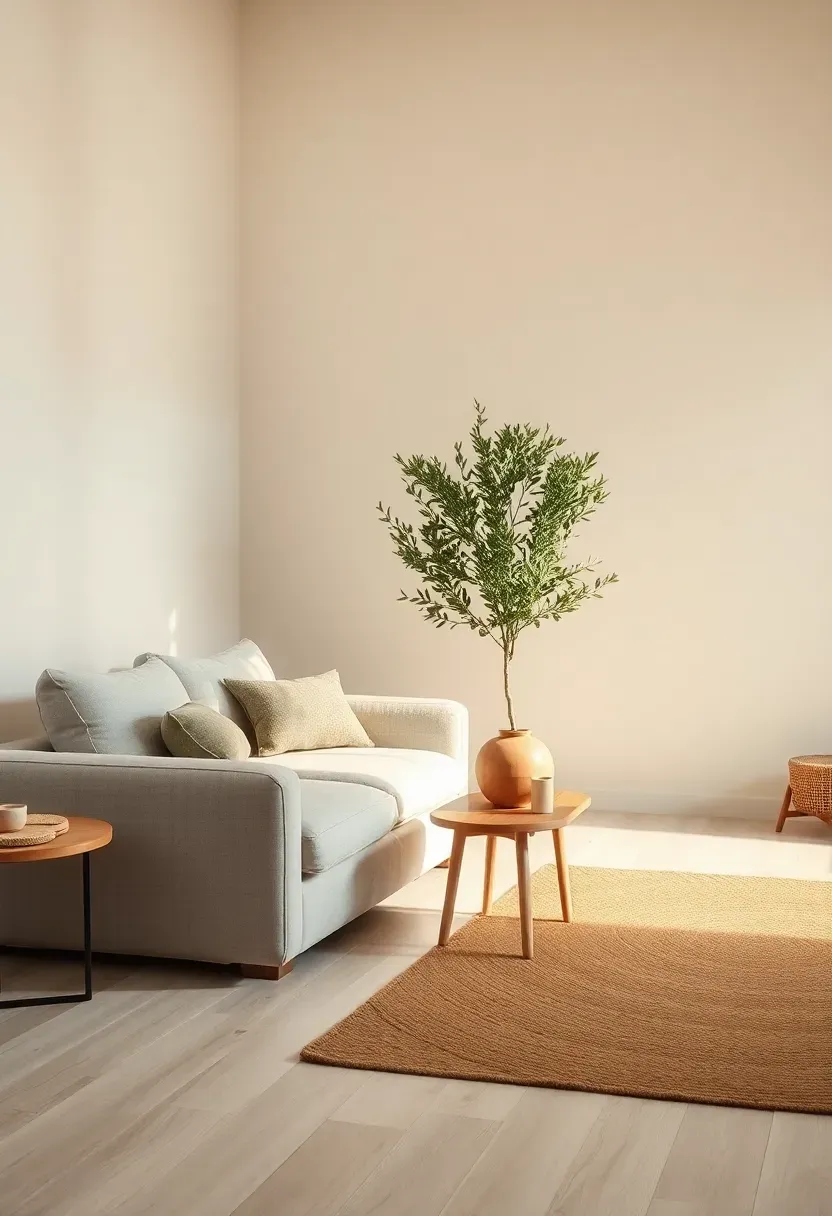
A 9x12 jute rug tied to the sofa fronts makes the line feel continuous and soft underfoot. Keep the coffee table about 48 inches long so it stays slim and leaves breathing space. If you need extra seating, choose one armless chair in light oak so the axis remains open instead of bulky. Finish with a matte clay planter to keep the organic feel consistent.
Tips
- Do keep one strong plant as the focal point.
- Don't use many small pots that interrupt the line.
Best for: Long or narrow rooms that need a clear visual direction.
What this gives you: A calm, elongated space that feels connected to nature.
2. Neutral Shell With Linen and Light Oak
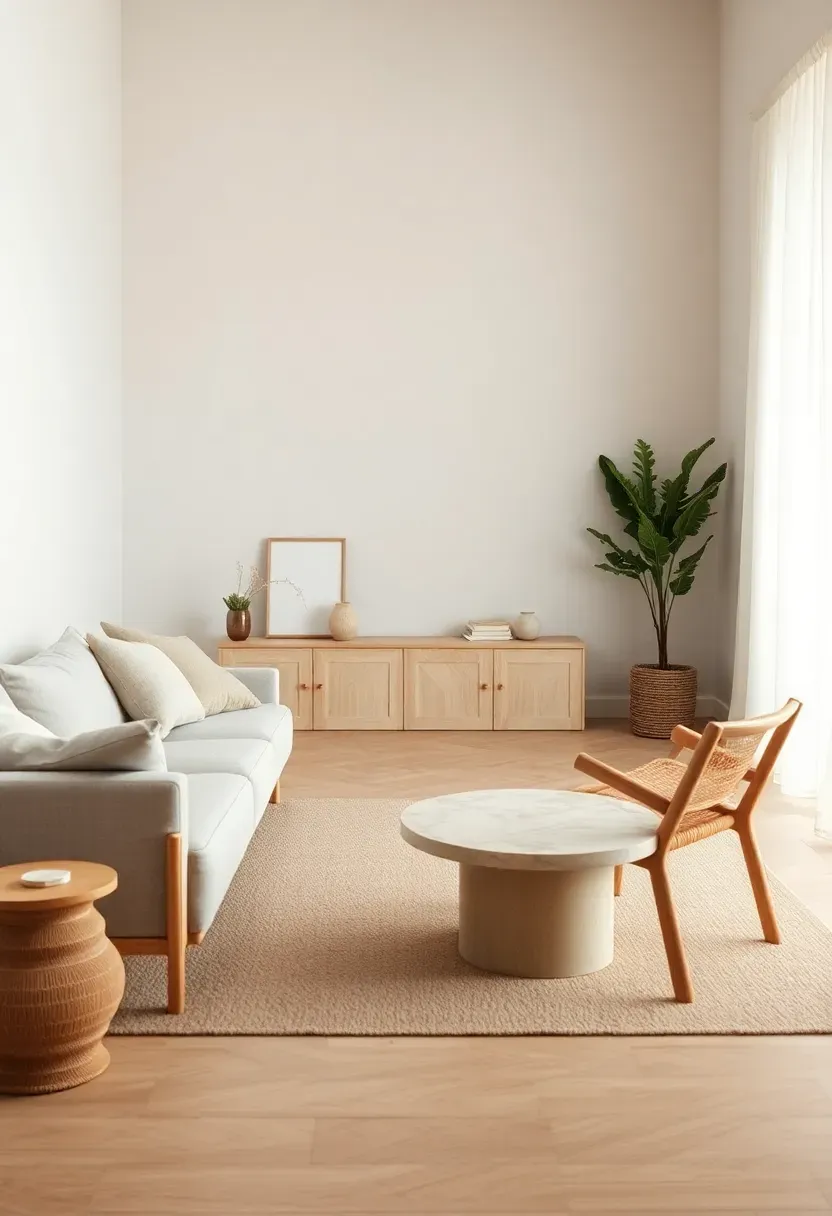
An organic minimalist living room feels grounded when the room shell stays neutral and the texture does the work. Start with warm white walls, a sand rug, and a linen sofa so the neutral palette reads cohesive. The contrast line is key: cool gray paint can make the room feel sterile, so stick to warm undertones. Add one light oak chair to echo the natural materials and keep the room airy. A 9x12 rug under the seating zone defines the space without visual weight.
Recommended
Items for this idea
Placement note: Keep the largest piece on the longest wall so the neutral shell feels continuous from entry to window.
Layer a travertine side table and a woven basket for depth, but stop at two accent textures to avoid clutter. Keep bulbs at 2700K so the whites stay creamy at night. If you need more contrast, add a single charcoal frame rather than a dark sofa. The room stays soft but never flat.
For more warm, grounded palettes, see 19 Inspiring Minimalist Living Room Ideas with Earth Tones for a Comfortable Living Space.
Tips
- If the room feels washed out, then deepen the rug tone.
- If you need warmth, then add one oak surface, not more decor.
- If it feels busy, then remove the smallest objects first.
What this gives you: A calm envelope where texture replaces clutter.
3. Low Seating Island With Clear Circulation
Use a low seating island to make a minimalist organic living room layout feel open and social. A modular sectional under 30 inches high keeps sightlines clear, and a 60-inch circulation path around it prevents the room from feeling jammed. Add a low oval table and a compact side chair to finish the island. The contrast line is to avoid tall backs or bulky recliners that block light.
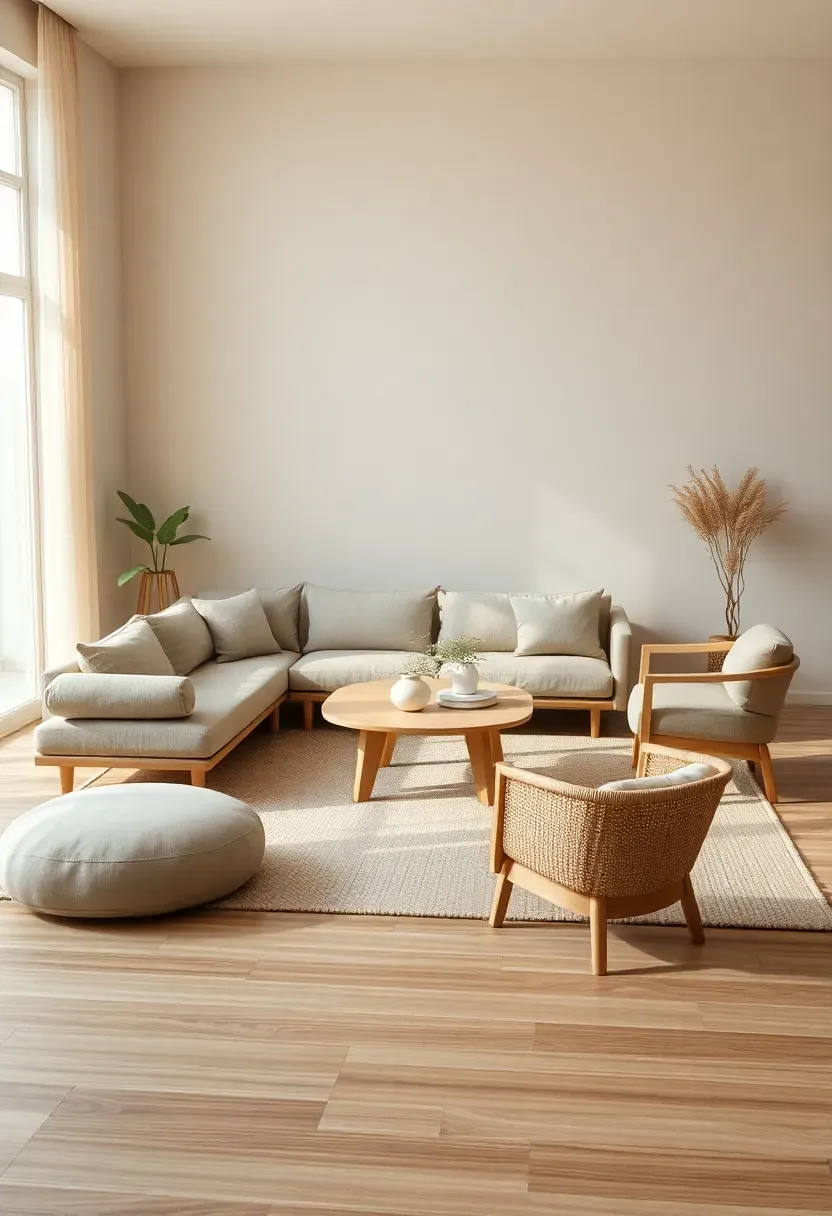
Why it works: the low profile preserves volume, so ceilings feel higher and the room breathes.
Anchor the island with an 8x10 wool rug and keep at least 18 inches of floor visible around it for lightness. If you need storage, add a slim console behind the sofa rather than a heavy credenza. Keep accessories minimal with one ceramic bowl and a linen throw so the circulation path stays clear.
For another relaxed seating layout, see 25 Minimalist Vintage Living Room That Create a Welcoming Living Room.
Tips
- Pro: Low seating makes small rooms feel taller.
- Con: It can feel too casual if tables are too low.
- Fix: Keep the coffee table height around 14 to 16 inches.
Budget/Time: Mid-range, one weekend to rearrange and style.
What this gives you: A social layout that feels airy and unforced.
4. Rug-Led Conversation Zone
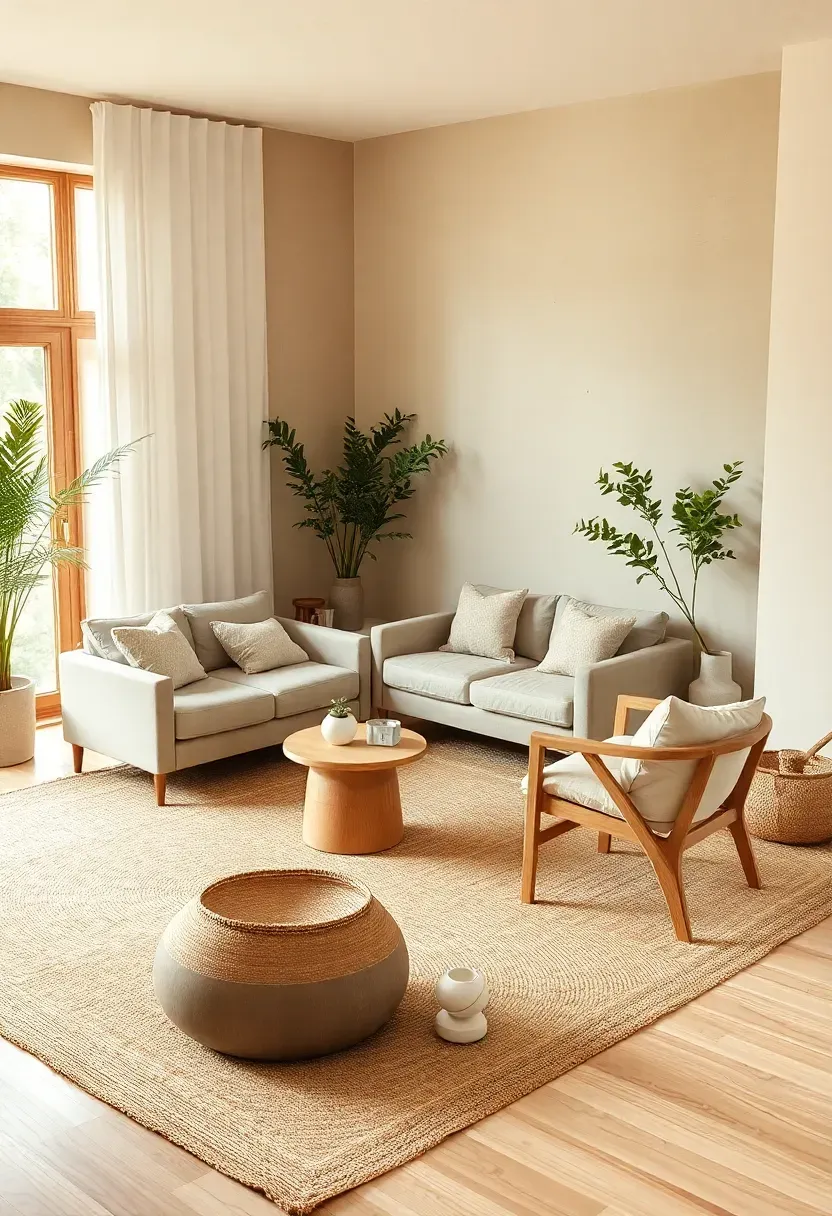
A rug-led conversation zone is an organic minimalist living room idea that instantly organizes seating. Choose a 9x12 natural fiber rug and float the sofa and chairs so at least the front legs sit on it. This zoning move keeps the room grounded and makes conversation feel intentional. The contrast line is simple: avoid tiny rugs that leave furniture half on, half off.
Recommended
Items for this idea
Common mistake: pairing a chunky rug with bulky furniture, which makes the zone feel heavy instead of airy.
Use two low chairs opposite the sofa with a 36-inch gap around a round table so the layout flows. Keep the rug tone close to the sofa so the palette stays calm, then add a small plant at the edge for a soft boundary. This is a simple fix for open-plan rooms that need structure without walls.
Tips
- Use a rug pad so the zone feels plush and quiet.
- Angle one chair slightly to break up rigid symmetry.
- Keep the table center 18 inches from seating edges.
What this gives you: A defined conversation zone that still feels open.
5. Stone-and-Wood Anchor Wall
Minimalist organic living room ideas often need one grounded surface, and a stone-and-wood anchor wall does it without adding clutter. Build a low hearth or floating console in light oak, then back it with honed stone or limewash. These natural materials add weight while the rest of the room can stay light. The contrast line: glossy stone or dark stain will look harsh, so stay matte and warm. Keep the anchor around 72 inches wide for a balanced scale in an average living room.
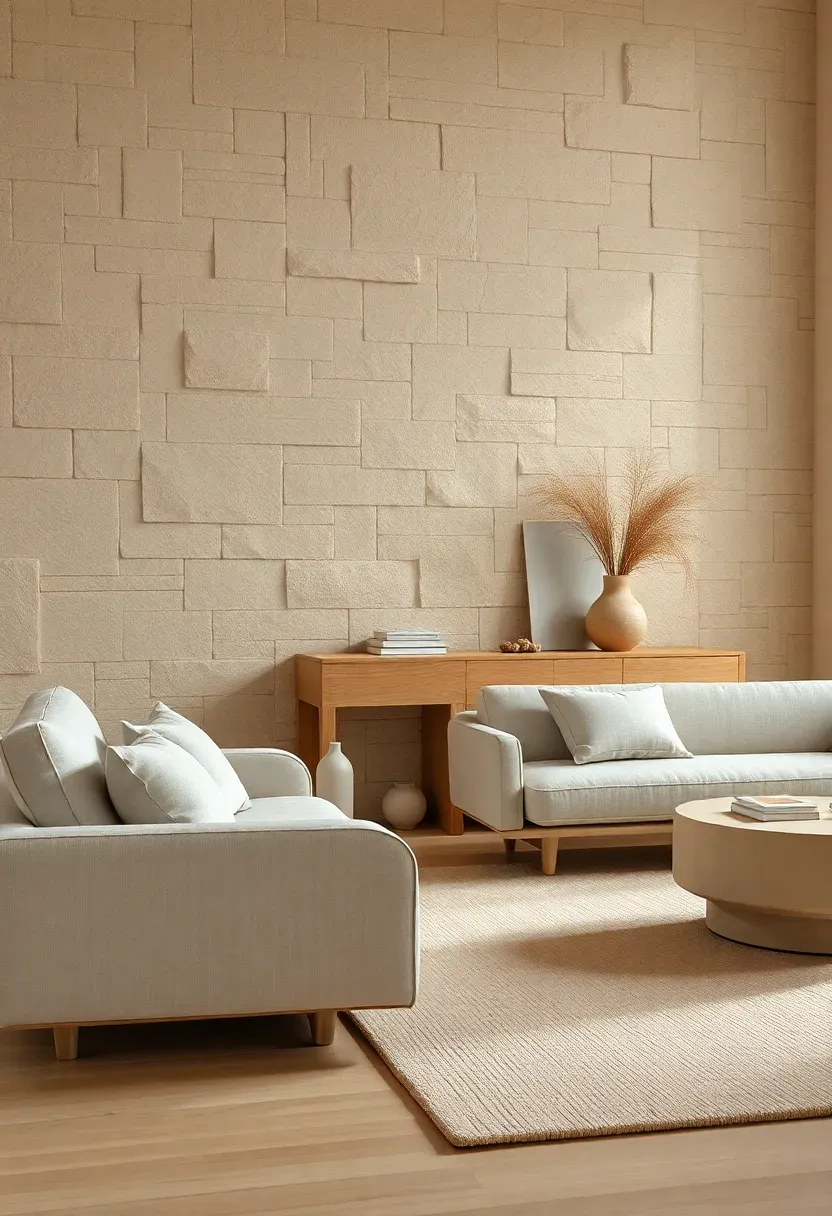
A slim sofa facing the wall keeps the focus on the texture and reduces visual noise. If you add decor, limit it to one ceramic vessel and a single branch. This anchor pairs well with a simple jute rug and linen curtains so the wall feels like part of the shell. The result is a focal point that feels architectural instead of styled.
For a related warm material mix, see 19 Inspiring Earthy Modern Living Room Ideas for Soft Warmth That Create a Welcoming Living Room.
Tips
- Do use a matte finish so the stone reads soft.
- Don't add more than one statement object on the console.
Budget/Time: Higher budget, one to two weekends for install.
What this gives you: A grounded focal wall that feels calm and timeless.
6. Sheer Window Wall for Soft Daylight
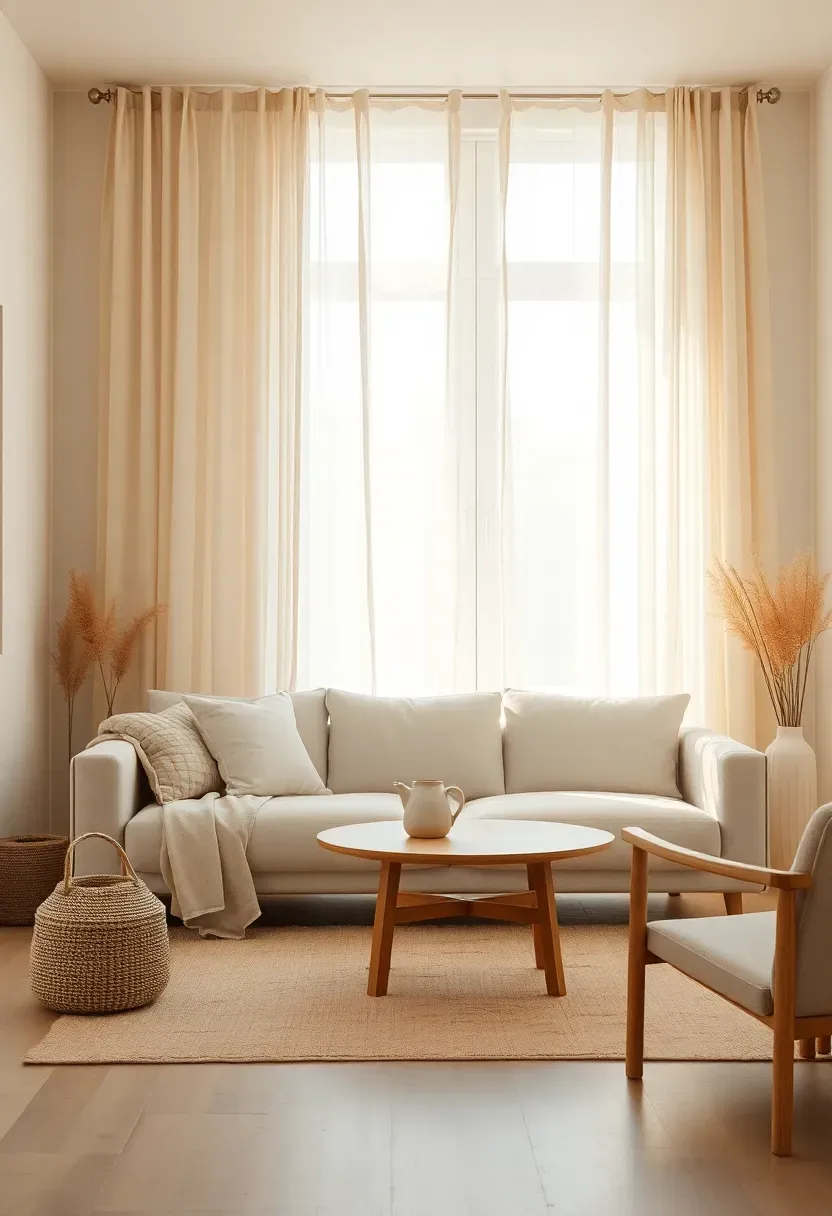
An organic minimalist living room benefits from diffused daylight, and a sheer window wall does it better than heavy drapes. Hang floor-length linen sheers to soften glare while keeping the view open. The contrast line is clear: blackout panels can make the room feel heavy, so use them only in bedrooms. A 108-inch panel length works well for standard 8- to 9-foot ceilings. Keep the palette pale so light bounces deeper into the room.
Recommended
Items for this idea
Placement note: Mount the rod 2 inches below the ceiling and extend it 6 inches past each side.
Layer a slim bamboo shade behind the sheers if you need privacy without losing glow. Use a light oak coffee table and a low sofa so the window remains the hero. At night, pair the sheers with 2700K lamps for a warm wash. The whole room feels airy without looking empty.
Tips
- If the light feels harsh, then add a second sheer layer.
- If privacy is a concern, then use a woven shade behind the curtain.
What this gives you: Soft daylight that keeps the room bright and calm.
7. Curved Coffee Table for Gentle Flow
Curved forms are a quick way to bring organic shapes into minimalist organic living room ideas without adding clutter. Swap a sharp rectangular table for a 36- to 42-inch oval in light wood or stone. The curve softens the circulation path and keeps knees comfortable in a tight layout. The contrast line: avoid glass tops if you want a calm, tactile vibe. Keep the rest of the furniture low and clean.
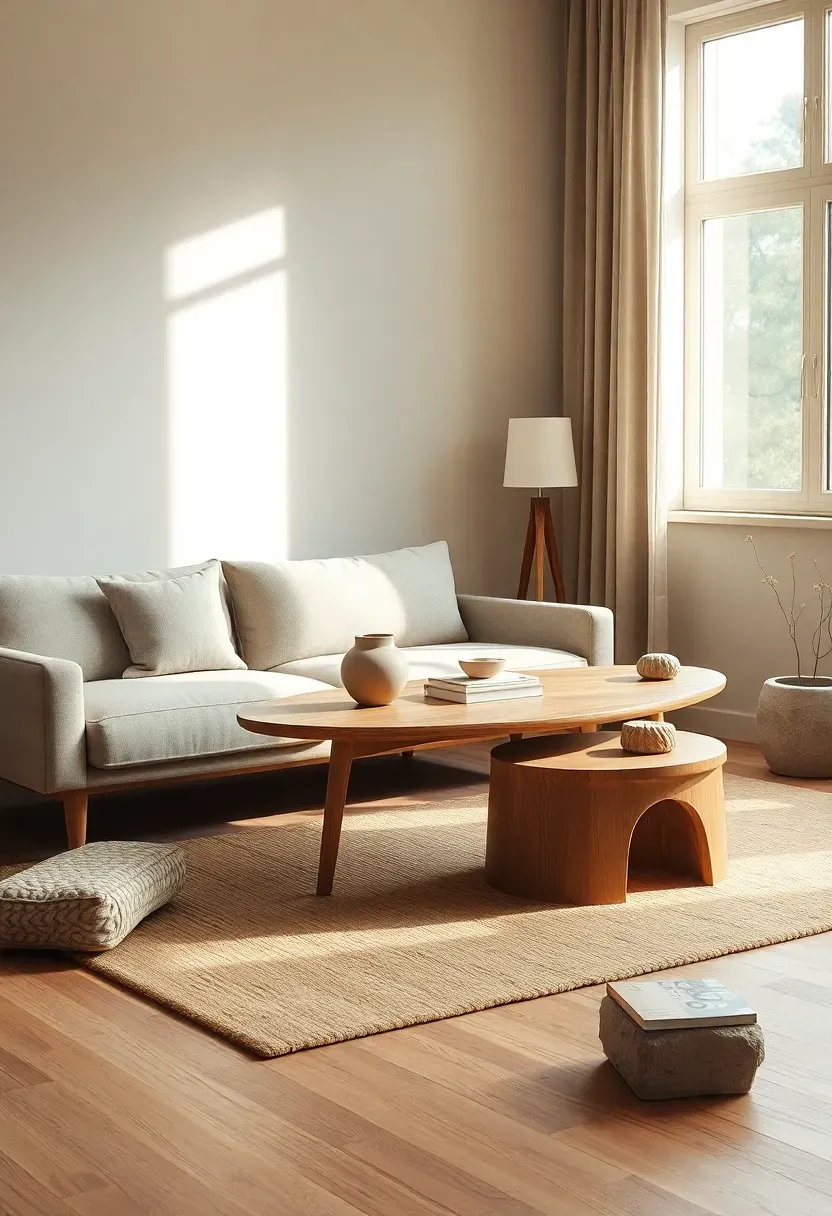
Why it works: rounded edges guide movement, so the room feels fluid instead of boxed in.
Pair the curve with a straight sofa to balance geometry and prevent the room from feeling too soft. Leave 18 inches between the table and seating for easy reach. A wool rug and one sculptural lamp are enough to finish the scene. This move also photographs well because the curves catch soft light.
Tips
- Pro: Rounded edges make tight spaces easier to navigate.
- Con: Large ovals can overwhelm small rugs.
- Fix: Size the rug so the table stays centered with space to breathe.
Avoid if: Your room is extremely narrow and needs crisp edges to align pathways.
What this gives you: A softer flow that makes the room feel relaxed.
8. Built-In Bench With Storage and Plants
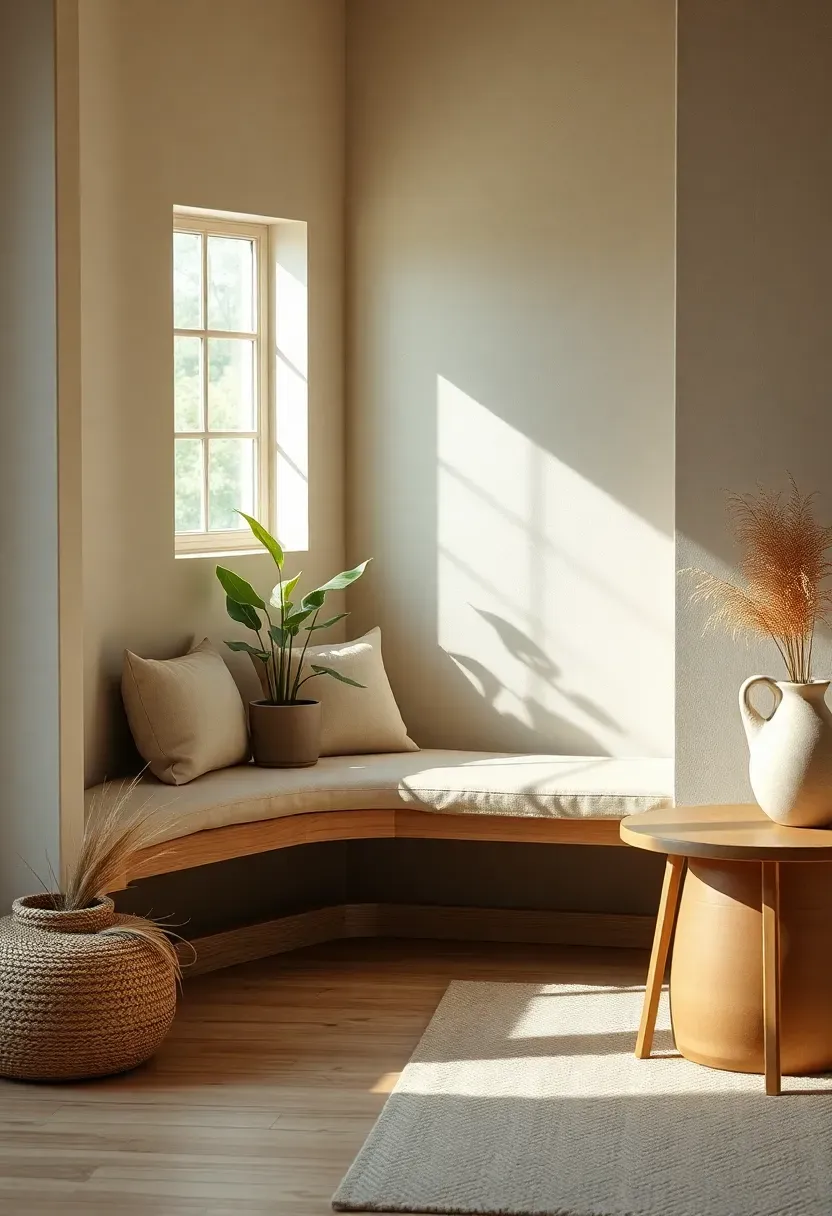
A built-in bench is an organic minimalist living room idea that adds storage, seating, and a plant perch in one clean line. Place it under a window or along a long wall, then top it with a 2-inch cushion in linen. Keep the bench depth around 18 inches so it feels light. The contrast line: avoid deep banquettes that turn into bulky sofas.
Recommended
Items for this idea
Common mistake: cluttering the bench with many pillows, which defeats the clean, built-in look.
Use drawers or baskets under the bench for throws and games, and reserve the top for one or two plants. A small round table in front keeps the area usable without blocking flow. This is especially useful in open plans where you need an extra perch without adding another chair.
If you need more small-space strategies, see 25 Minimalist Living Room Ideas for Small Spaces That Create a Welcoming Living Room.
Tips
- Use two baskets max so the base stays light.
- Add a cushion with removable cover for easy cleaning.
- Keep plants on one end to avoid a crowded line.
What this gives you: Extra seating and storage without visual bulk.
9. Quiet Media Wall With Concealed Tech
If you need a TV, build a quiet media wall so minimalist organic living room ideas stay calm. Use a flush panel in warm white or microcement and a low console in light oak. Hide cords and boxes inside the cabinet so the wall reads clean. The contrast line: glossy black screens and shiny hardware fight the organic mood. Keep the console depth around 12 to 14 inches for a slim profile.
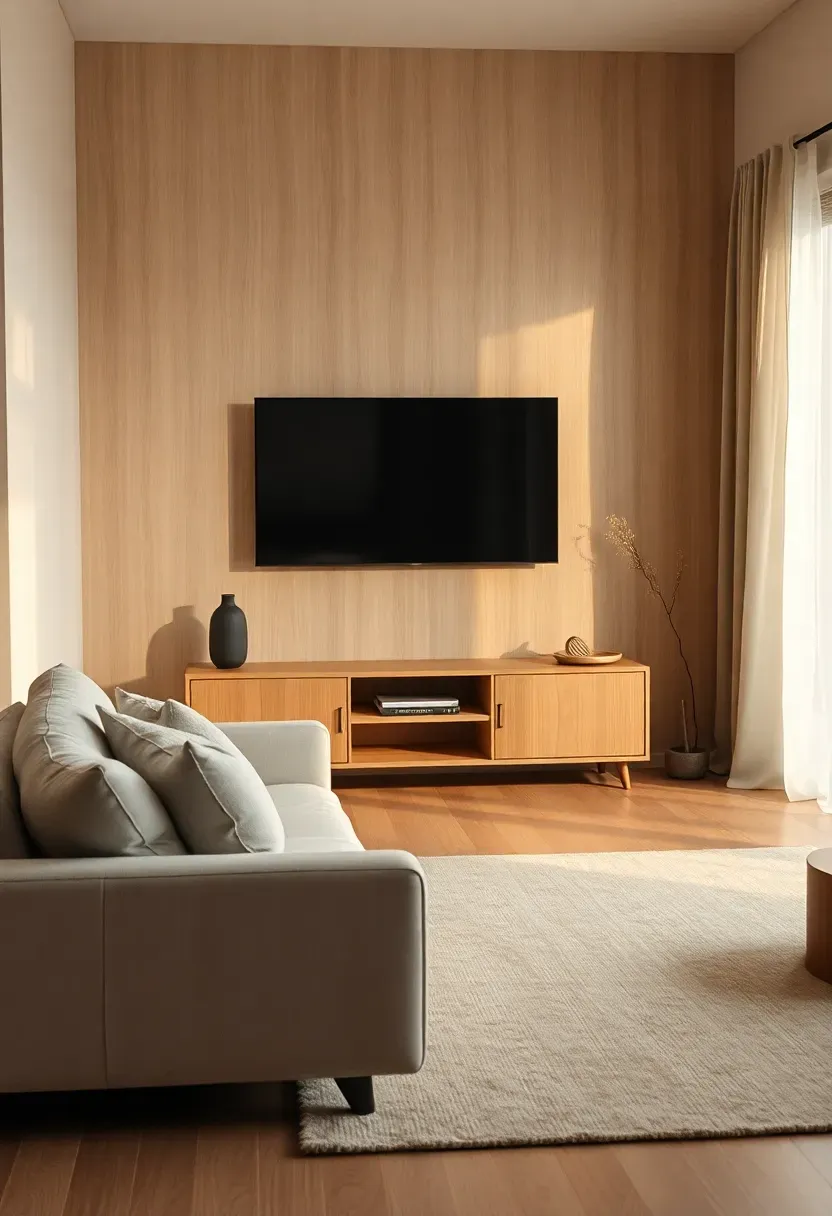
Add a simple linen rug and a low sofa so the wall does not dominate. If you want art, choose one oversized line drawing rather than multiple frames. This approach keeps technology present but visually quiet. It also makes the room feel more like a lounge than a media room.
For another clean-lined approach, see 27 Elegant Minimalist Living Room Ideas for Refined Calm.
Tips
- Do route power inside the console for a cleaner wall.
- Don't add extra shelves that create visual noise.
Rental note: Use a slim media console with a cable cover instead of cutting into walls.
What this gives you: A calm media zone that does not steal the room.
10. Sun-Track Reading Nook
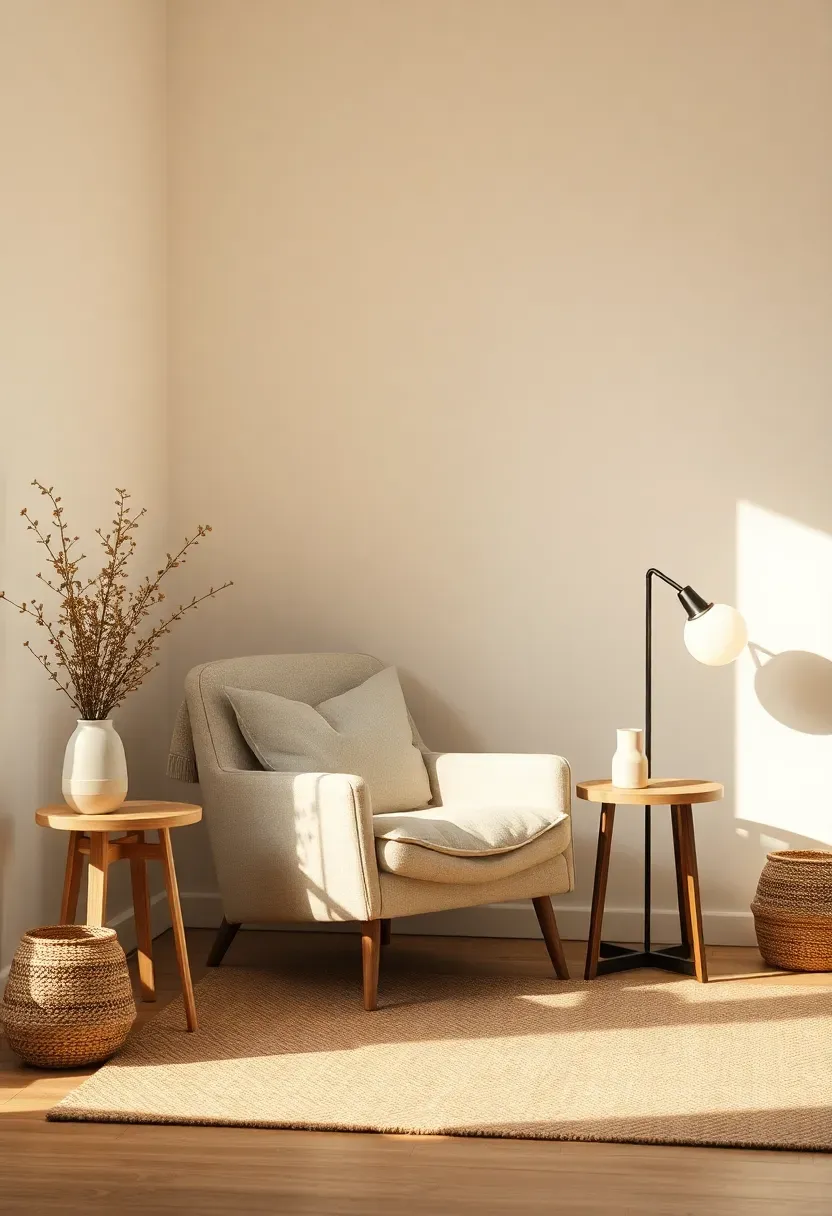
Carve a sun-track reading nook to give organic minimalist living room ideas a relaxed, human scale. Place a lounge chair where morning or late-afternoon light falls, then add a small side table for a cup and book. The contrast line: avoid placing the chair in a dark corner where it becomes dead space. A 24-inch table is enough for essentials. Keep the chair silhouette low and airy.
Recommended
Items for this idea
Placement note: Angle the chair about 30 degrees toward the window so light falls across the seat.
Add a floor lamp with a linen shade for evenings and a 5x7 rug to define the zone. Keep the materials consistent with the rest of the room--linen, light wood, and matte ceramic. The nook should feel like a soft extension of the living area, not a separate theme. Keep a slim footstool if space allows.
Tips
- If the chair feels isolated, then add a small round rug beneath it.
- If glare is strong, then layer a sheer shade at the window.
What this gives you: A relaxing corner that feels integrated, not staged.
11. Asymmetrical Balance With Organic Shapes
Asymmetrical balance makes minimalist organic living room ideas feel relaxed instead of rigid. Pair a long sofa with a single rounded chair on the opposite side and offset the coffee table slightly. This asymmetry balance keeps the room dynamic while the palette stays calm. The contrast line: perfect symmetry can feel stiff, especially in rooms with irregular windows. Keep the spacing consistent--about 24 inches between pieces--for ease of movement.
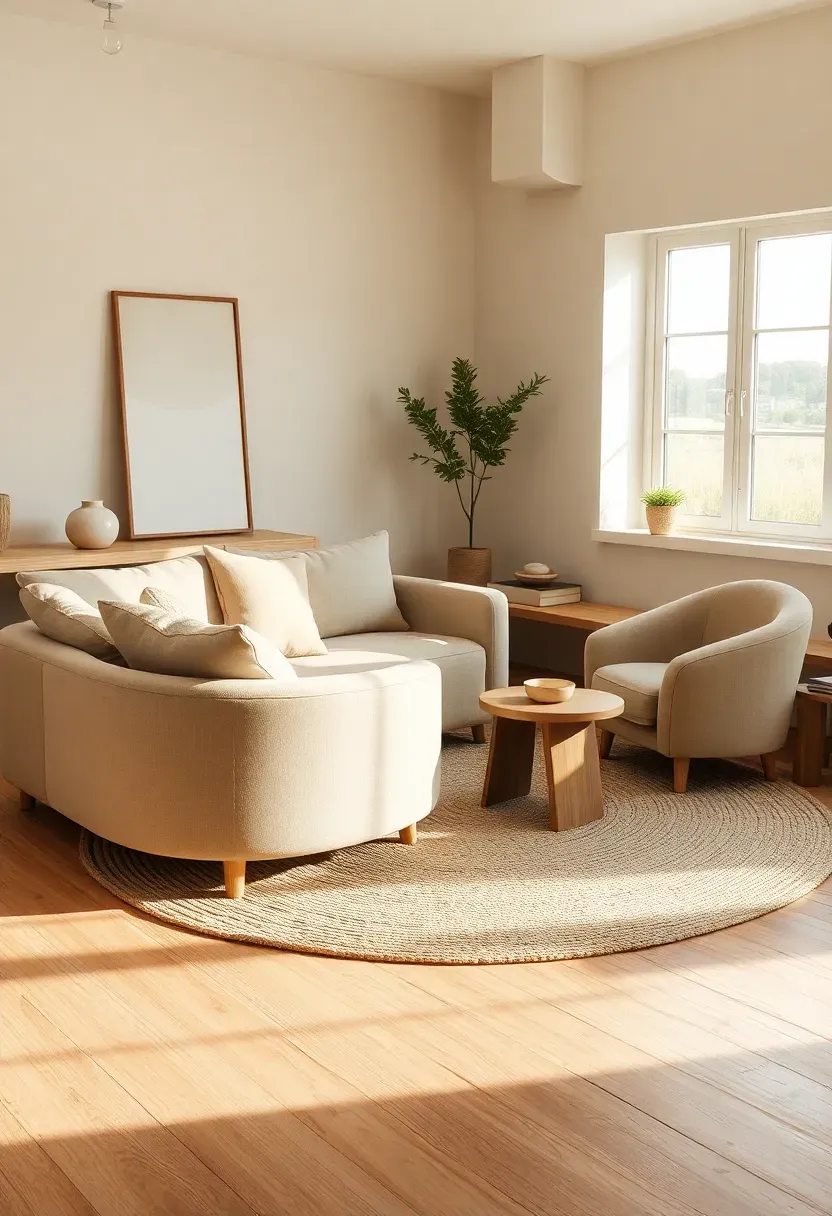
Why it works: gentle imbalance adds life, so the room feels curated, not staged.
Use a neutral palette and repeat one shape, like a round side table, to tie the composition together. Add a single plant on the lighter side to keep the weight even. The goal is a living space that feels effortless but intentional.
For more layout ideas with clean lines, see 27 Minimalist Living Room Ideas: Serene Spaces Unveiled for a Comfortable Living Space.
Tips
- Pro: Asymmetry hides irregular wall lengths.
- Con: It can look accidental if spacing varies too much.
- Fix: Keep clear gaps consistent on both sides of the sofa.
Best for: Rooms with off-center windows or awkward entries.
What this gives you: A relaxed layout that still feels composed.
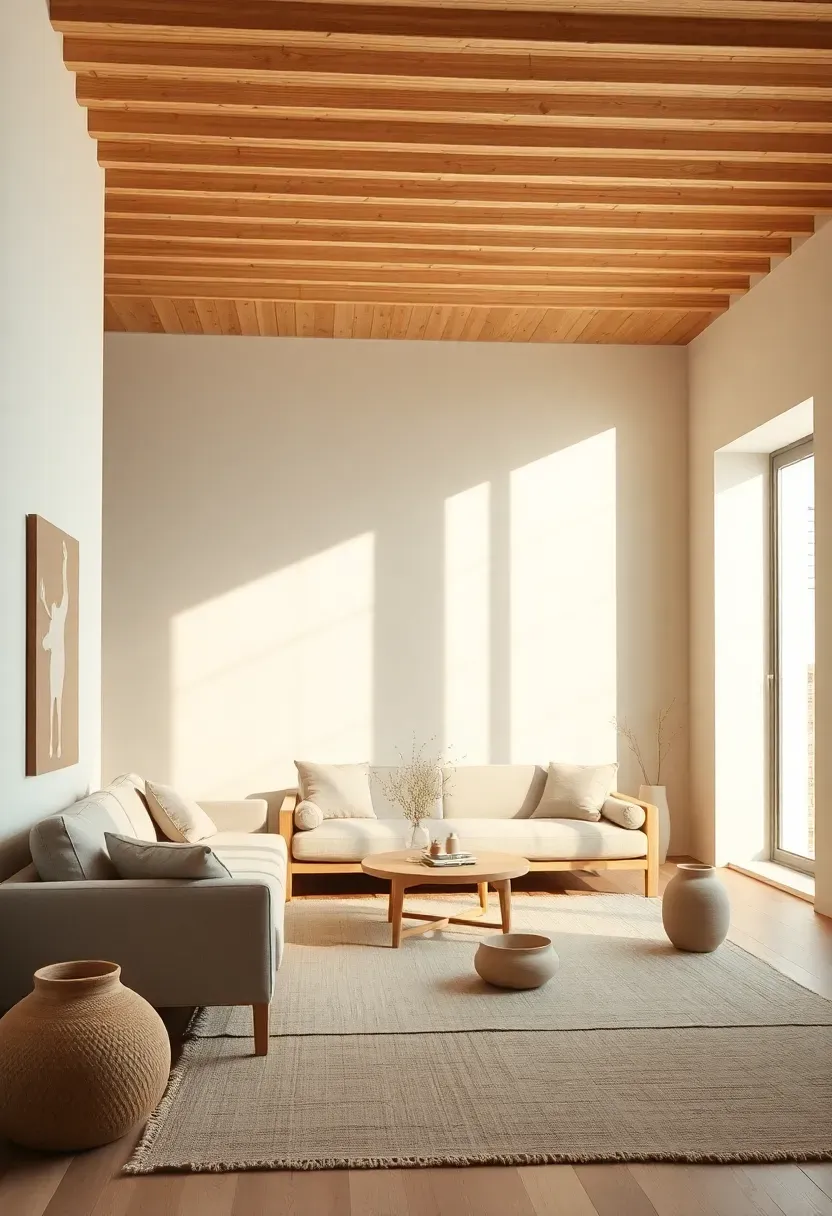
12. Slatted Timber Ceiling Accent
A slatted timber ceiling strip introduces architectural texture and makes an organic minimalist living room feel designed from top to bottom. Use 1-inch-wide slats in light oak running perpendicular to the longest wall to widen the room. The contrast line: dark stains or wide boards can feel heavy, so keep the slats light and narrow. Pair with white walls so the ceiling detail reads subtle, not busy. This works especially well in open-plan spaces that need a gentle zone marker.
Recommended
Items for this idea
Common mistake: covering the entire ceiling with slats, which can make the room feel lower.
Run the slats just over the seating zone and stop at a clean edge near the wall line. Keep furniture low to maintain a clear sightline to the ceiling. Add one pendant in a matte ceramic finish to echo the wood tone.
Tips
- Use a 1-inch gap between slats for light rhythm.
- Align the slats with the sofa length for clean geometry.
- Keep ceiling lights minimal so the wood stays the focus.
What this gives you: Architectural warmth without visual clutter.
13. Single Tree Corner as Living Sculpture
A single tree corner is a minimalist organic living room idea that brings nature indoors without clutter. Choose one statement plant like an olive tree or fiddle leaf fig and give it room to breathe. The contrast line: multiple small pots create visual noise, so keep it to one large planter. A 6- to 7-foot tree in a 16-inch pot fits most rooms without crowding. Place it in a corner that catches indirect light.
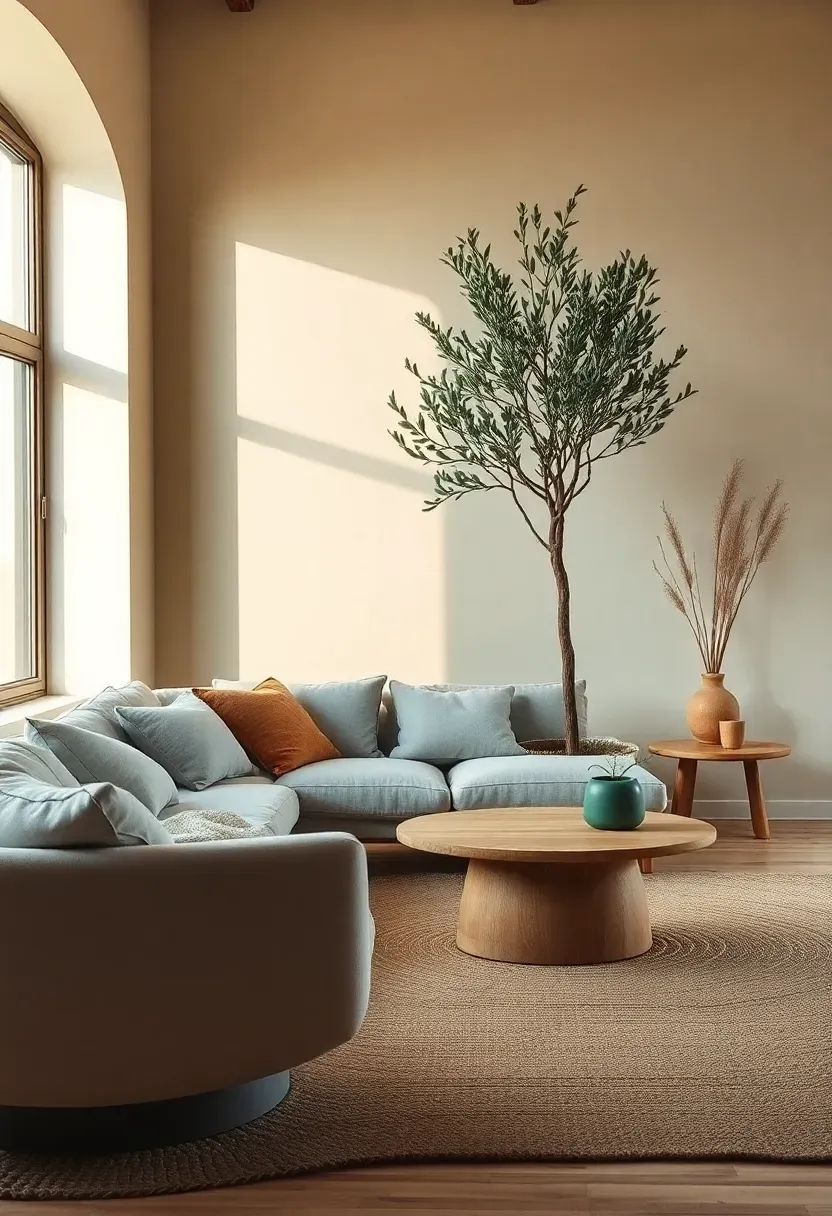
Keep nearby furniture low so the canopy stays visible and feels sculptural. Use a woven basket or matte clay planter to connect to the natural materials. If you want extra texture, add a small stone side table next to the plant. The tree becomes a living focal point that also softens hard edges.
For more nature-forward calm, see 19 Eclectic Minimalist Living Room Ideas for Character and Calm.
Tips
- Do rotate the plant monthly for even growth.
- Don't tuck it behind tall furniture where light is weak.
Avoid if: You travel often or have very low light.
What this gives you: A sculptural natural anchor without extra decor.
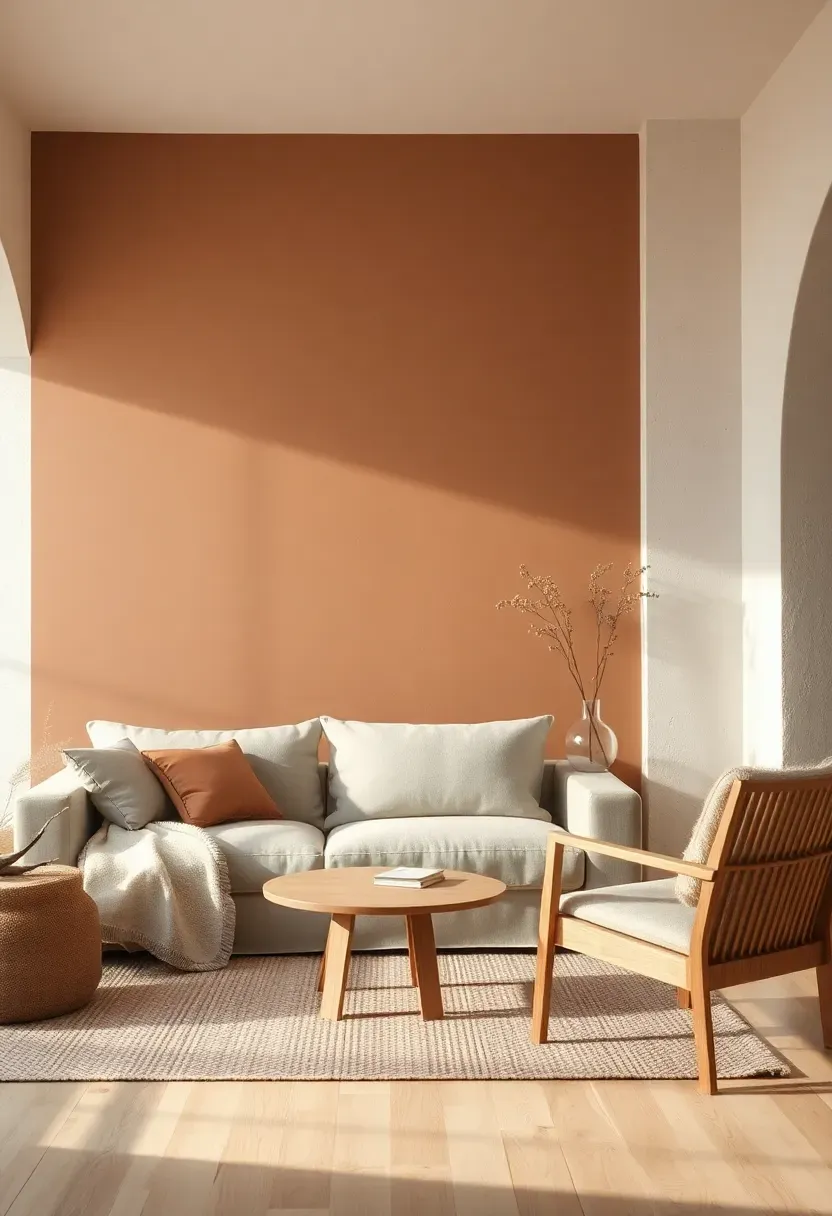
14. Earth-Tone Color Blocking for Depth
Earth-tone color blocking adds depth to organic minimalist living room ideas without introducing busy patterns. Paint the lower two-thirds of a wall in warm clay and keep the upper portion soft white to elongate the space. The contrast line: a full-height dark wall can feel heavy, so keep the block light and sun-faded. A 42-inch height works well behind a sofa. Stick to matte paint so the transition stays calm.
Recommended
Items for this idea
Placement note: Align the color break with the top of the sofa back for a clean visual line.
Repeat the clay tone in one textile, like a throw, to make the block feel intentional. Use light oak furniture and a neutral rug to keep the palette open. This is a high-impact change that still feels minimalist because the shapes are simple. A single clay vase on a side table echoes the wall.
Tips
- If the wall looks choppy, then soften the edge with a thin white trim.
- If the room feels small, then keep the clay tone lighter than the sofa.
What this gives you: Subtle depth without adding pattern or clutter.
15. Layered Lighting With Warm Pools
Layered lighting is essential for minimalist organic living room ideas because it replaces clutter with atmosphere. Use one ceiling light, one floor lamp, and one table lamp to create warm pools. The contrast line: a single overhead fixture makes the room feel flat, so add at least two lower sources. Choose 2700K bulbs for a candle-like glow. Keep shades in linen or paper to soften the light.
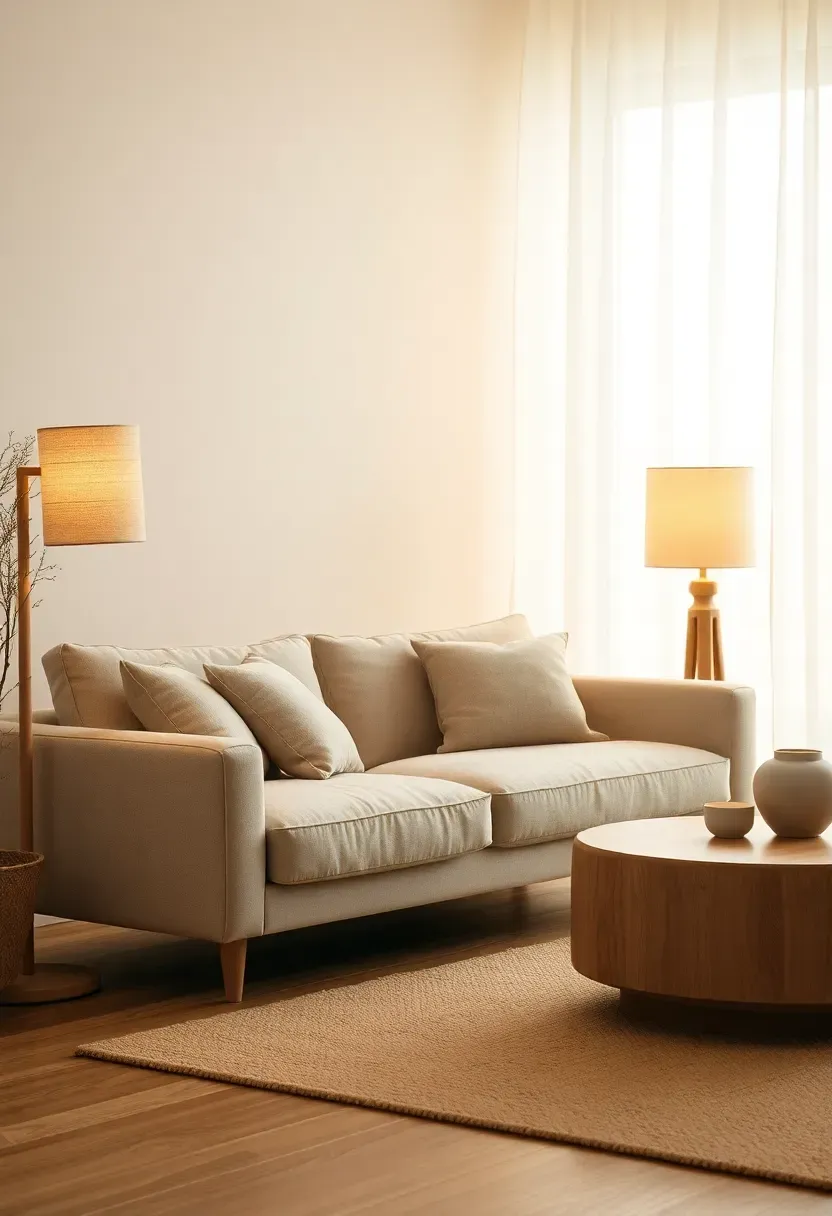
Why it works: multiple warm sources create depth, so textures look richer and the room feels calmer.
Place the floor lamp near the sofa corner and the table lamp on a low side table. Use dimmers if possible to control evening mood. A small clay sconce can add a subtle accent without visual noise. The lighting plan becomes part of the design rather than an afterthought.
If you want more lighting-specific guidance, see 27 Minimalist Living Room Lighting Ideas: Light Reimagined for a Comfortable Living Space.
Tips
- Pro: Warm lamps make white walls feel creamy.
- Con: Mixed bulb temperatures can look messy.
- Fix: Use the same 2700K temperature throughout.
Budget/Time: Low to mid cost, one evening to swap lamps and bulbs.
What this gives you: A softer, calmer room after dark.
16. Open Shelves With Negative Space
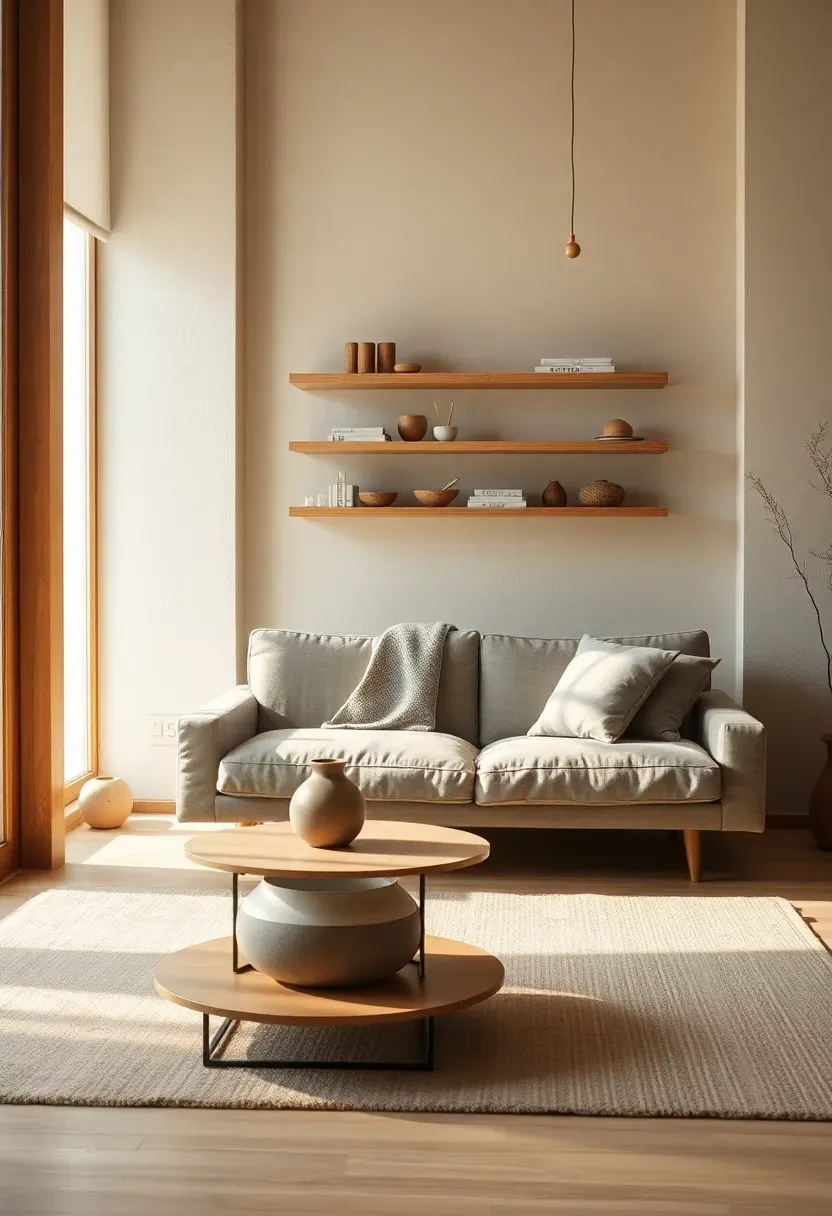
Open shelving can fit organic minimalist living room ideas when you lean into negative space. Use two or three floating shelves, each 10 to 12 inches deep, and keep only a few objects per shelf. The contrast line: crowded shelves read as clutter, so leave visible wall between items. Choose shelves in light oak to match other natural materials. This gives storage without heavy cabinetry.
Recommended
Items for this idea
Common mistake: mixing too many small decor pieces, which makes the shelf look busy and dusty.
Limit styling to two ceramics, one small stack of books, and a single plant. Keep the background wall a warm white so the objects pop gently. If you need more storage, add closed baskets on the lowest shelf to hide everyday items. The shelves should feel airy, not like a display case. Choose matte finishes to avoid glare.
Tips
- Group objects in odd numbers for calm balance.
- Leave at least one-third of each shelf empty.
- Dust weekly so the light palette stays fresh.
What this gives you: Light storage that still feels breathable.
17. Mixed-Material Coffee Table Pairing
A mixed-material coffee table pair is a quick way to enrich minimalist organic living room ideas without adding extra decor. Combine a low travertine drum with a slim light oak table so the surfaces feel layered. The contrast line: matching tables can look flat, so mix one stone and one wood piece. Keep heights within 2 inches of each other for a tidy profile. A 30-inch stone table beside a 40-inch wood table works well.
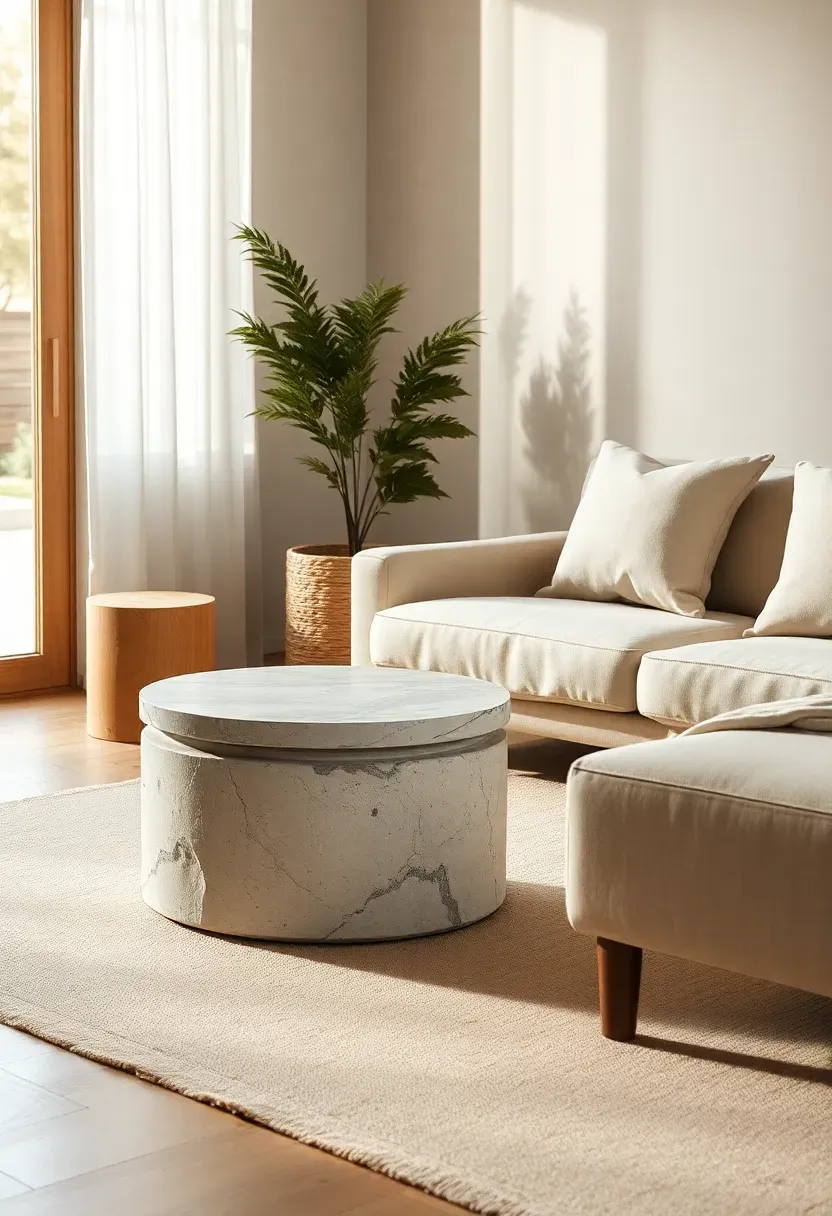
Anchor the pair on a neutral rug and keep seating simple so the tables read as the focal point. Add one ceramic bowl and a linen book stack, then stop. This pairing works especially well with a low sofa and a single accent chair.
For a soft, layered lounge feel, see 21 Cozy Mid Century Modern Living Room Decor Ideas to Try.
Tips
- Do keep the heavier stone table closer to the sofa.
- Don't crowd the surfaces with multiple trays.
Best for: Rooms that feel flat and need subtle depth.
What this gives you: Material contrast without extra clutter.
18. Floor-to-Ceiling Drapes as Soft Perimeter
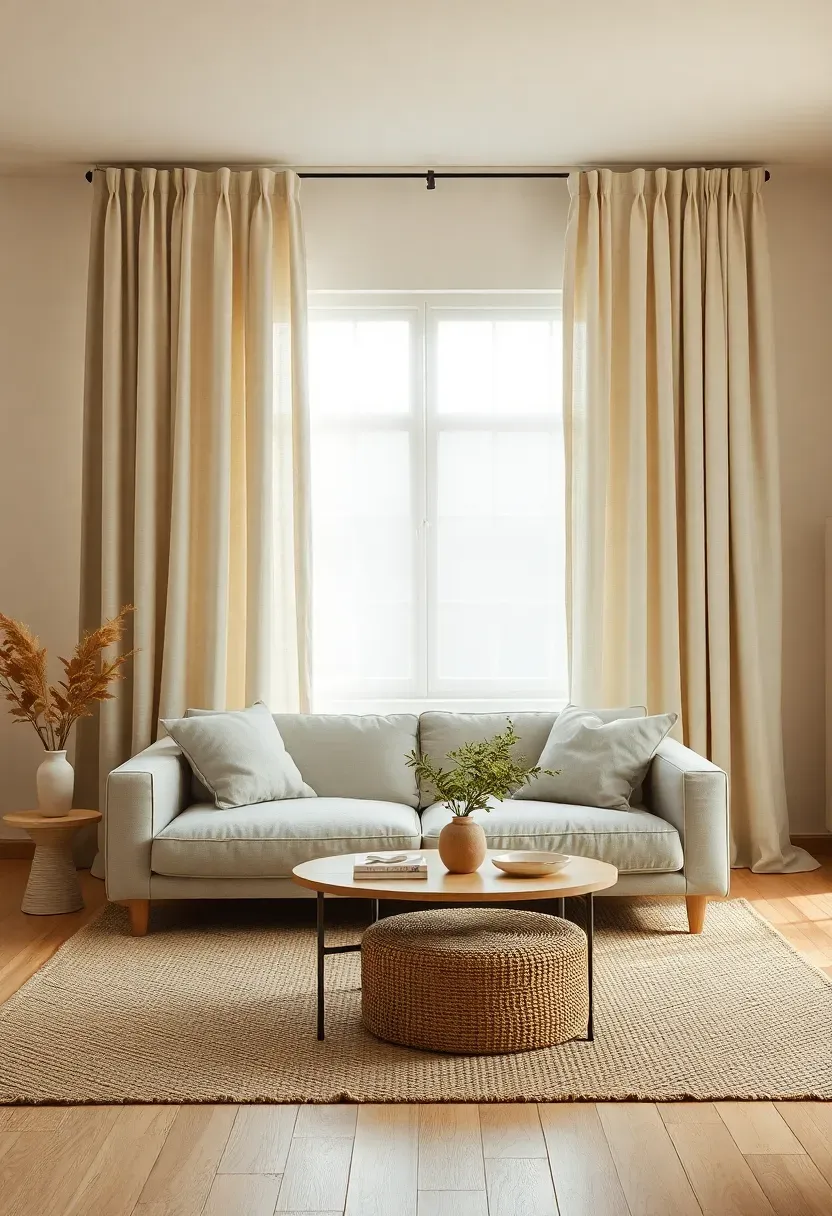
Floor-to-ceiling drapes create a soft perimeter, a core move in organic minimalist living room ideas. Hang linen panels from ceiling height to visually stretch the room and soften hard corners. The contrast line: short curtains can chop the wall, so go full length even if the window is small. Use panels that are at least twice the window width for gentle folds. Keep the fabric in warm white or oatmeal.
Recommended
Items for this idea
Placement note: Mount the rod 2 inches below the ceiling and extend it 6 inches past each side.
Let the drapes skim the floor by half an inch for a tailored look. Pair them with a light oak coffee table and a low sofa so the perimeter stays soft. At night, the drapes diffuse lamp light and make the room feel cocooned. Use a simple tieback only if needed.
Tips
- If the panels look flat, then add ring clips for deeper folds.
- If the room feels dim, then choose a lighter oatmeal tone.
What this gives you: A softer edge that makes the room feel serene.
19. Seasonal Natural Layers That Stay Minimal
Seasonal natural layers keep minimalist organic living room ideas fresh without disrupting the calm. Swap in a wool throw for winter or a linen cover for summer, and change only one pillow to match. The contrast line: too many seasonal accessories create clutter, so limit swaps to two or three items. Keep a woven basket nearby to store off-season textiles. This approach keeps the room feeling alive year-round.
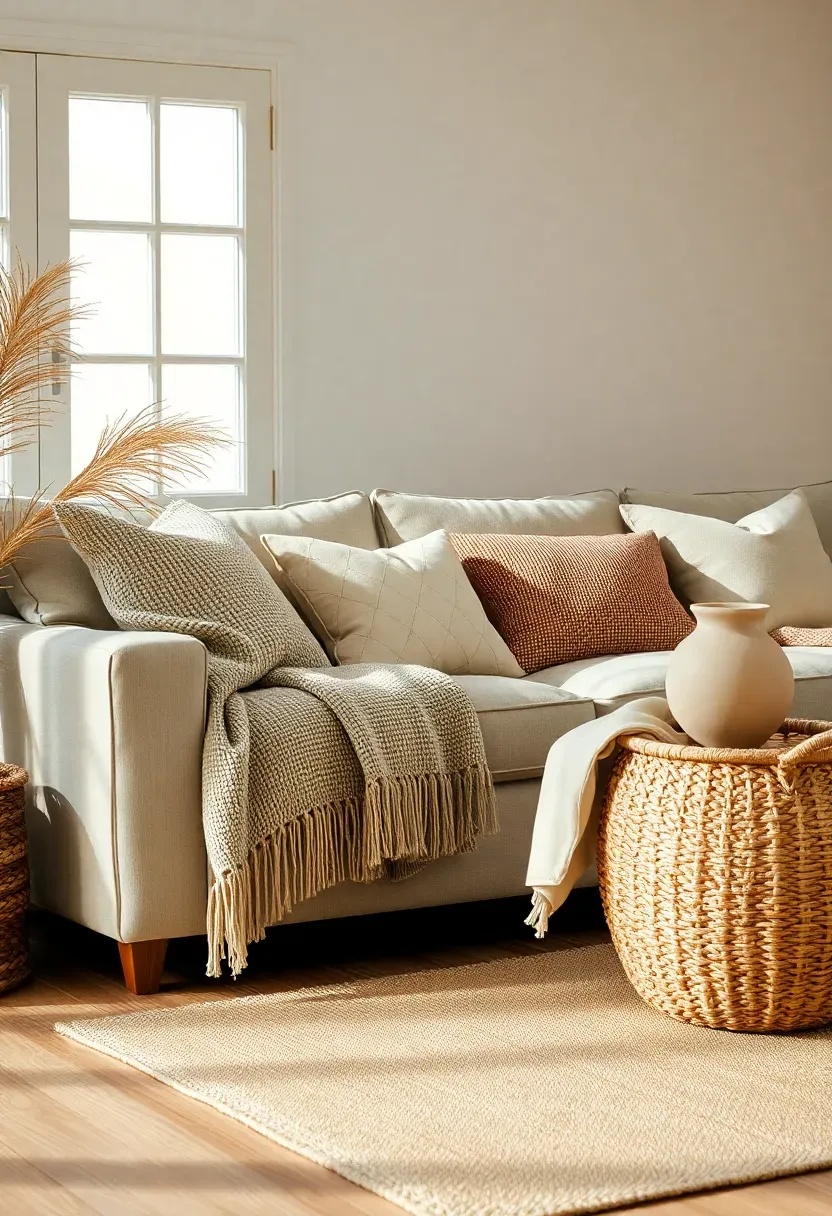
Why it works: small changes refresh the mood without changing the core layout.
Use a neutral base so each seasonal texture feels intentional rather than decorative. A branch in a matte vase or a bowl of dried seed pods adds a subtle natural note. The room stays minimalist while still reflecting the season.
Tips
- Pro: Seasonal swaps keep the palette feeling current.
- Con: Too many textiles can feel messy fast.
- Fix: Store extras in one basket and rotate monthly.
Rental note: Textiles are the easiest way to refresh without permanent changes.
What this gives you: A room that stays calm but never stale.
Minimalist organic living room ideas work best when the layout, light, and natural materials all point to the same calm goal. By leaning on biophilic design, warm neutrals, and tactile surfaces, you can create organic living room decor that feels open yet grounded, even in a rental. Keep changes simple and repeatable, and the room will stay comfortable as life shifts. Let these minimalist organic living room ideas guide your choices instead of chasing too many details.
About the author
OBCD
CGI visualization and interior design content. We create detailed 3D renders and curate practical design ideas for every room in your home.