Tiny House on Wheels Interior Design: 19 Smart Ideas
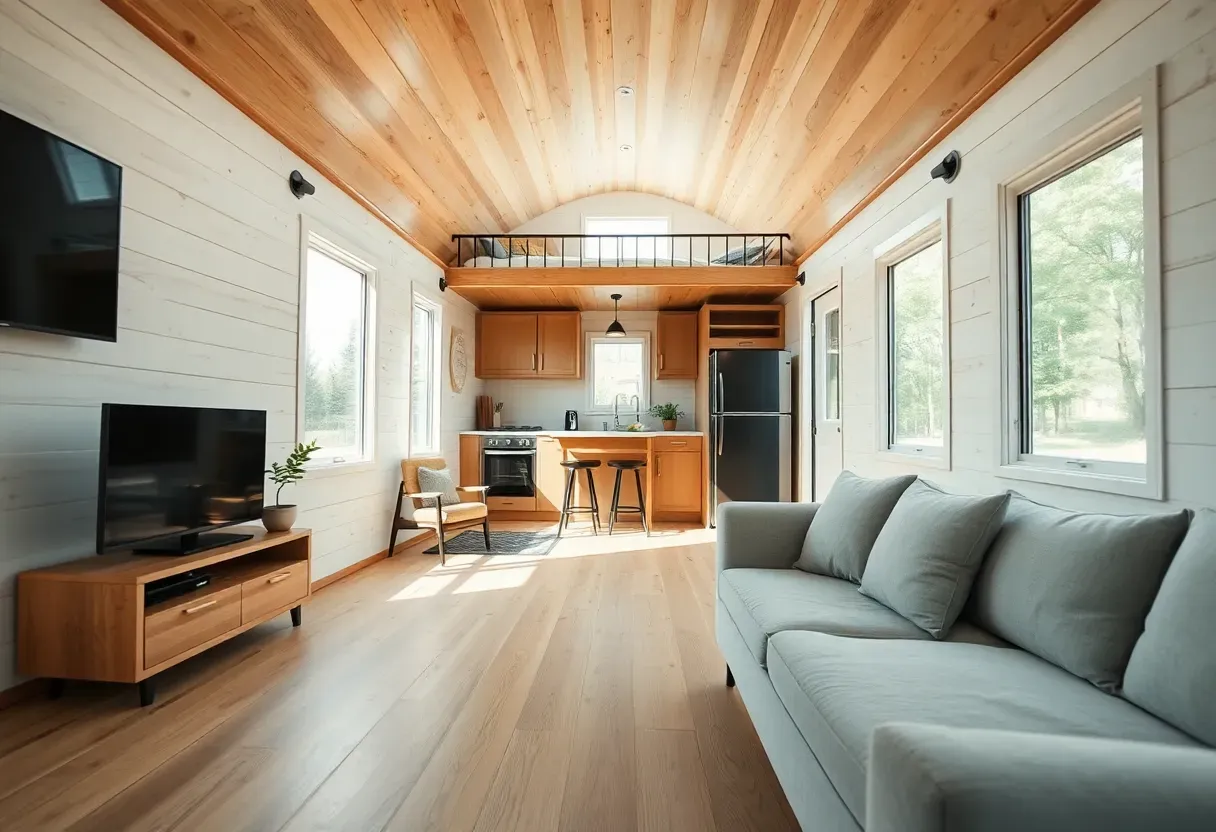
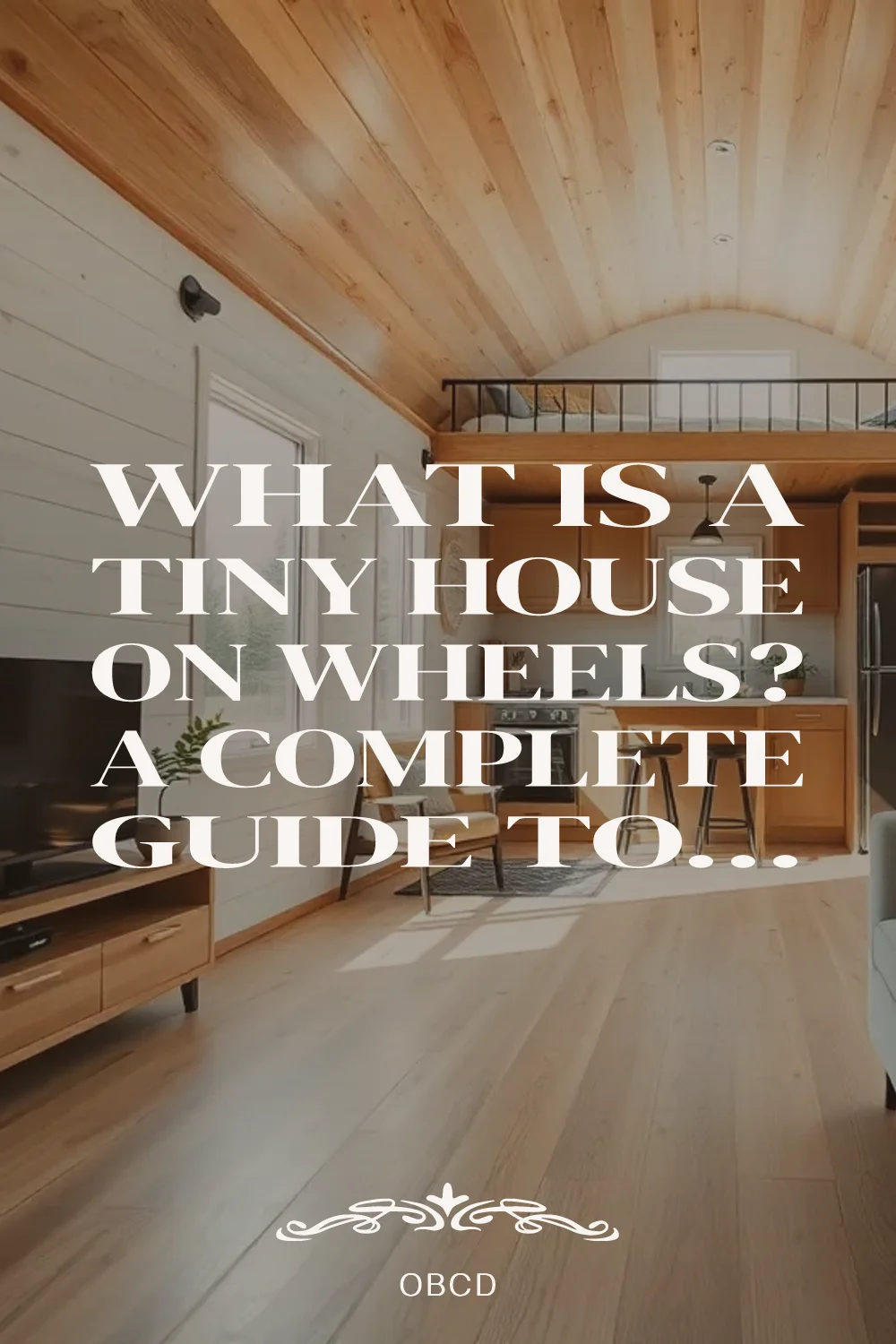
A tiny house on wheels represents the ultimate expression of minimalist interior design, where every square inch serves a purpose and comfort meets efficiency. These compact dwellings typically range from 100 to 400 square feet, demanding thoughtful spatial planning and intentional living. The tiny house movement has gained momentum as renters and budget-conscious homeowners seek financial freedom, environmental sustainability, and a simpler lifestyle focused on experiences over possessions.
Tiny house on wheels interior design revolves around maximizing functionality while maintaining aesthetic appeal. The philosophy embraces quality over quantity, multipurpose furniture, and innovative storage systems that make small spaces feel expansive and inviting. We found that smart design principles transform potential limitations into creative opportunities, proving that luxury and comfort are not defined by square footage.
Whether you are considering building a tiny house or simply looking to incorporate space-saving ideas into your current rental apartment, understanding these design principles offers valuable insights. From vertical storage solutions to convertible furniture systems, these 19 tiny house interior ideas demonstrate how intentional design can create spaces that feel both spacious and deeply personal.
Quick FAQ
What makes tiny house on wheels interior design different from regular small spaces?
Tiny house design must accommodate mobility requirements, weight restrictions, and multi-functional needs. Every element serves double duty, and vertical space becomes prime real estate. The design prioritizes lightweight materials and essential systems that can withstand travel while maintaining comfort.
How do you make a tiny house feel spacious?
Strategic use of light colors, ample windows, and reflective surfaces creates visual expansion. Open sightlines, minimal furniture, and vertical design elements draw the eye upward. Removing visual clutter and using cohesive color schemes prevents the space from feeling cramped or overwhelming.
What are the most important tiny house on wheels interior design principles?
Prioritize multi-functional furniture, vertical storage, and hidden compartments. Embrace minimalism by keeping only essentials. Use light colors and natural light effectively. Design custom solutions for awkward spaces. Every item must earn its place through either daily utility or deep joy.
Can tiny houses accommodate comfortable seating areas?
Yes, through convertible furniture and built-in solutions. Bench seating with storage, fold-down tables, and daybeds that transform into guest beds provide flexibility. Loft spaces create intimate reading nooks without sacrificing floor space. The key is designing seating that serves multiple functions throughout the day.
How do you handle storage in a tiny house on wheels?
Think vertically and utilize every hidden space. Under-floor compartments, stair storage, overhead cabinets, and toe-kick drawers maximize capacity. Custom-built solutions tailor storage to specific needs. Decluttering regularly and adopting a one-in-one-out policy maintains balance.
What materials work best for tiny house interiors?
Lightweight, durable materials like plywood, pine, and bamboo reduce weight while adding warmth. Multipurpose surfaces like butcher block counters serve as both prep space and dining areas. Reflective materials like mirrors and glass create depth. Natural materials improve air quality in compact spaces.
As an Amazon Associate I earn from qualifying purchases.
Table of Contents
- 1. Open Concept Layout
- 2. Vertical Design Philosophy
- 3. Multipurpose Furniture for Small Spaces
- 4. Light Color Palettes
- 5. Abundant Natural Light
- 6. Hidden Storage Solutions for Tiny Houses
- 7. Loft Sleeping Areas
- 8. Compact Kitchen Design on a Budget
- 9. Space-Efficient Bathrooms
- 10. Zone Definition
- 11. Reflective Surfaces
- 12. Minimal Window Treatments
- 13. Built-In Furniture
- 14. Fold-Away Elements
- 15. Cohesive Color Schemes
- 16. Strategic Lighting Design
- 17. Material Consistency
- 18. Decluttered Surfaces
- 19. Personal Touches
1. Open Concept Layout
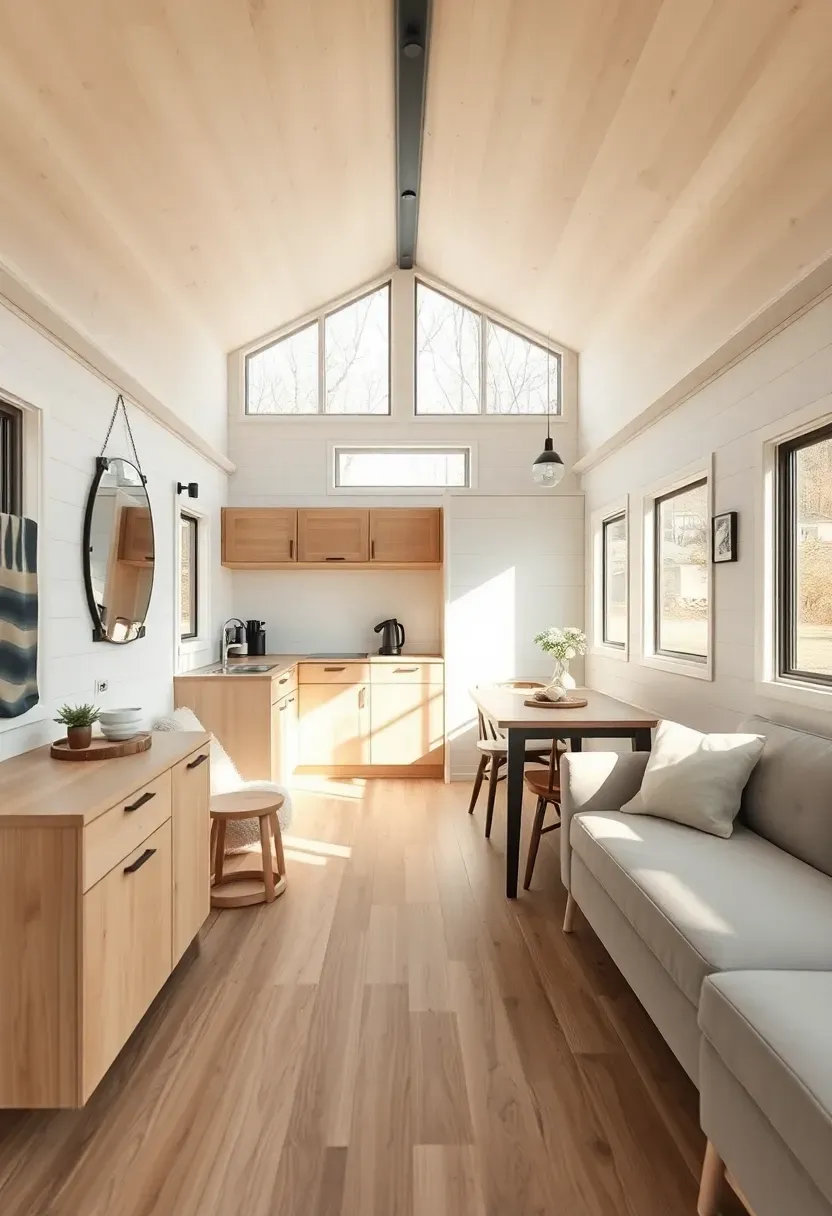
Removing interior walls creates a sense of spaciousness that defines successful tiny house on wheels interior design. The open concept allows natural light to penetrate deeply into the space, eliminates visual barriers, and enables flexible furniture arrangements. Living areas, kitchen, and dining spaces flow seamlessly together, making the entire home feel larger than its actual square footage. This approach requires thoughtful zoning through furniture placement and lighting rather than physical walls.
Tips
- Do use area rugs to define separate zones within the open space
- Don't place tall furniture that blocks light or sightlines
- Consider partial walls or open shelving to create subtle separation
Best for: tiny houses under 200 square feet where every visual connection matters
What this gives you: maximum spatial perception and flexibility in how you use your home daily
2. Vertical Design Philosophy
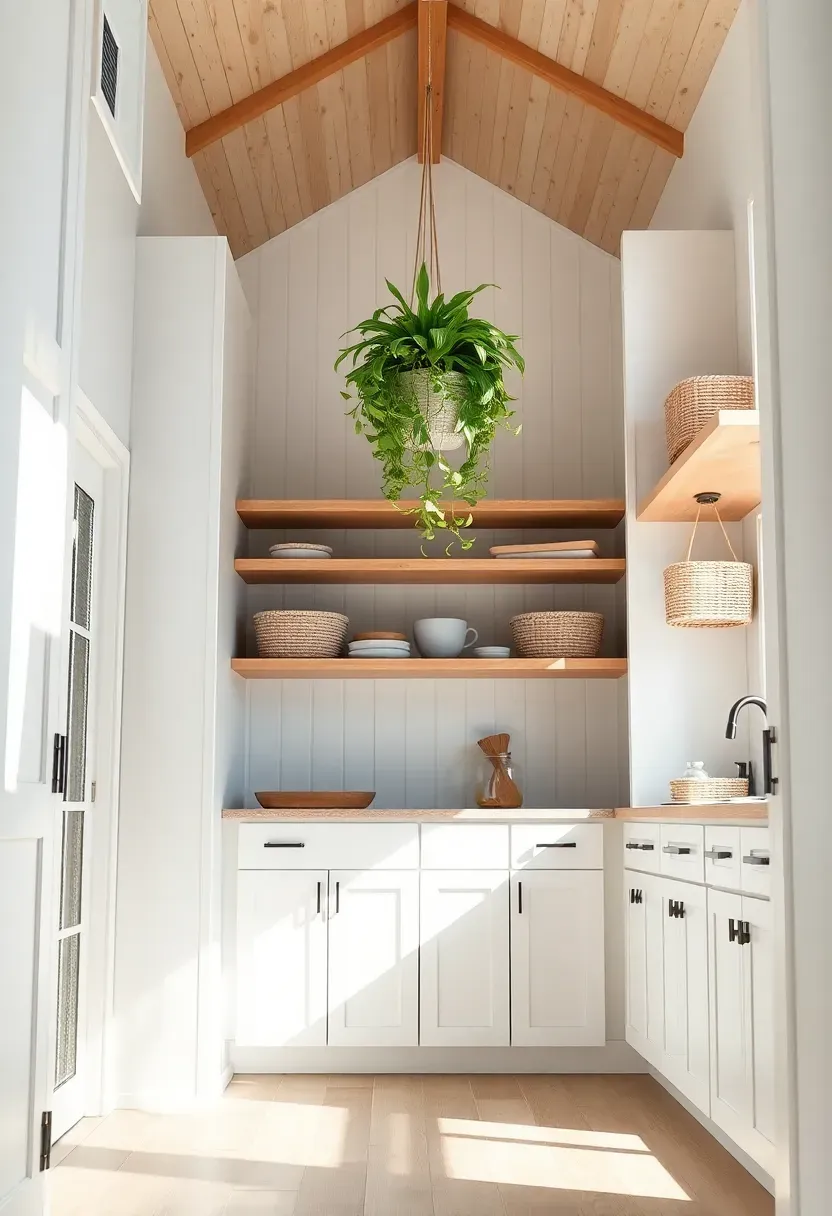
When floor space is limited, tiny house on wheels interior design must embrace vertical thinking. Walls become valuable real estate for storage, display, and functionality. Floor-to-ceiling cabinets, tall bookshelves, and hanging systems utilize the full height of the space. Vertical design draws the eye upward, creating a sense of volume and grandeur that counteracts the limited footprint. This philosophy extends to tall, slender furniture pieces that provide function without consuming valuable floor area.
Recommended
Items for this idea
Tips
- If you need step stools, store them vertically or make them decorative
- Install rail systems with hooks for flexible vertical storage
- Use tension rods to create temporary vertical dividers or hanging spaces
Best for: tiny houses with vaulted or raised ceilings that maximize vertical potential
What this gives you: triple your effective storage capacity while maintaining open floor space
3. Multipurpose Furniture for Small Spaces
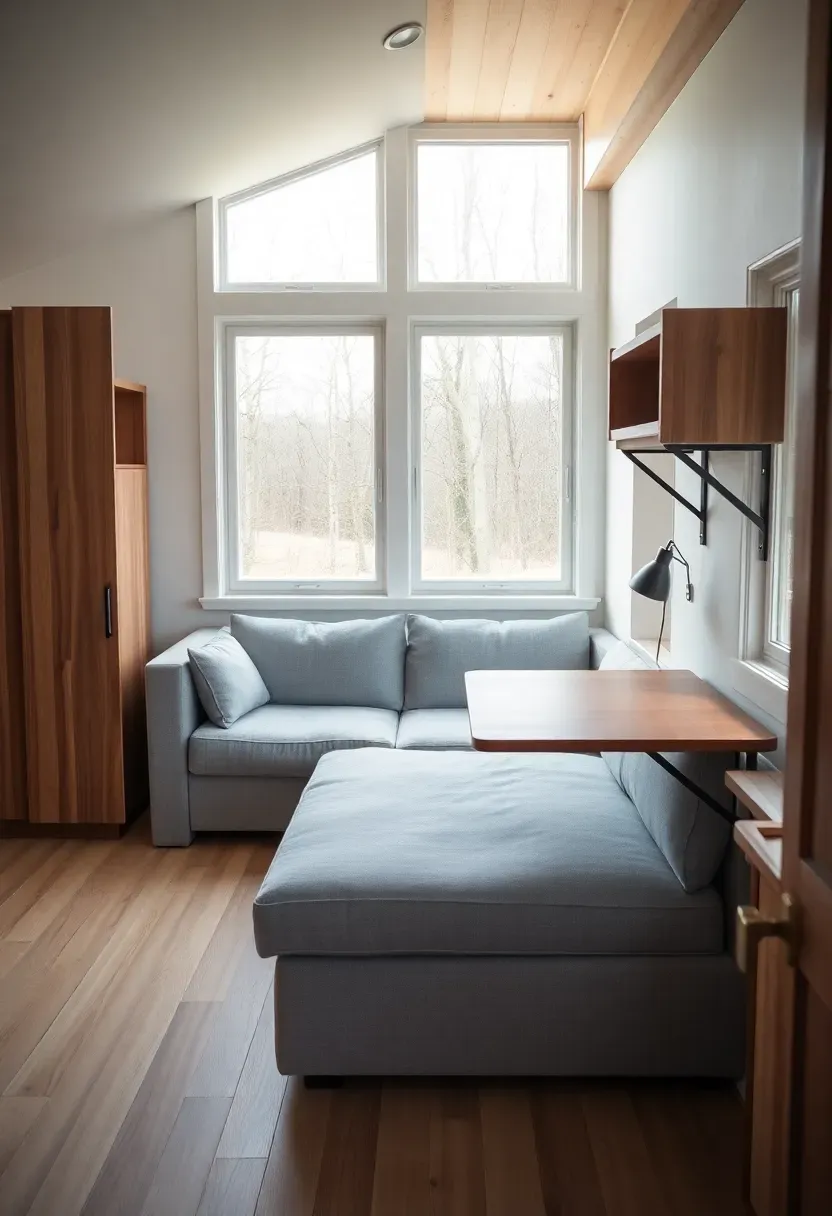
The cornerstone of tiny house on wheels interior design is furniture that performs multiple functions. A dining table that converts to a workspace, a sofa that transforms into a guest bed, or ottomans with hidden storage exemplify this principle. Each piece must justify its existence through versatility. These systems eliminate the need for single-purpose items, dramatically reducing the total furniture count while maintaining full functionality. The key is selecting high-quality transformable pieces that operate smoothly and feel substantial, not flimsy.
Tips
- Do test convertible mechanisms before purchasing—smooth operation is essential
- Consider custom-built solutions that perfectly match your specific needs
- Prioritize comfort for primary use over secondary functions
Budget/Time: custom multipurpose furniture costs 30-50% more but lasts 3x longer
What this gives you: full home functionality with half the furniture footprint
4. Light Color Palettes
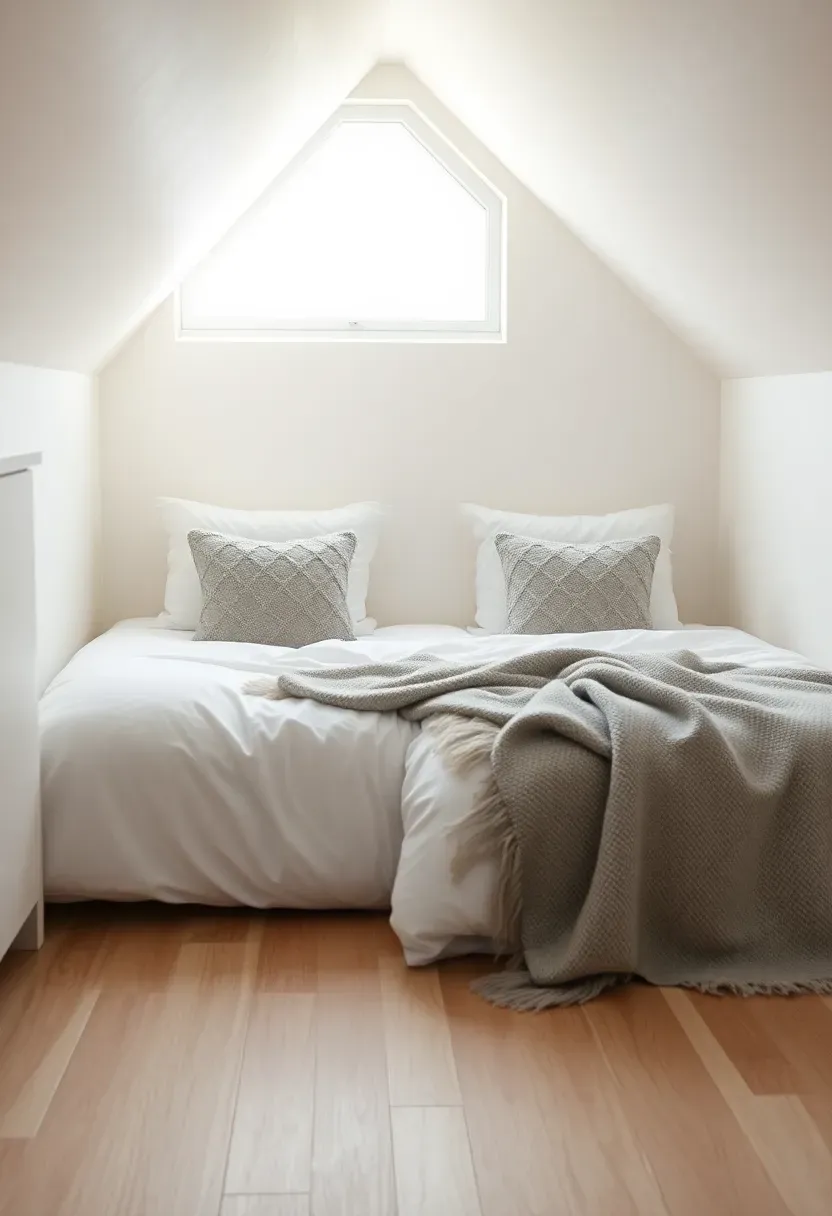
Light colors form the foundation of tiny house on wheels interior design because they visually expand space and reflect light optimally. White, cream, soft gray, and pale wood tones create a bright, airy atmosphere that prevents small spaces from feeling closed-in or claustrophobic. These palettes serve as a neutral backdrop that makes the space feel clean and intentional. Darker accents can be incorporated strategically, but the dominant colors should remain light and reflective to maximize the sense of openness.
Recommended
Items for this idea
Tips
- Pro/Con: Light colors expand space but show dirt more quickly
- Fix: Choose washable materials and keep easy-clean supplies accessible
- Vary textures within light colors to add depth without darkening the space
Avoid if: you prefer dramatic, moody interiors or have young children and pets
What this gives you: a space that feels 30% larger and maintains consistent brightness throughout the day
5. Abundant Natural Light
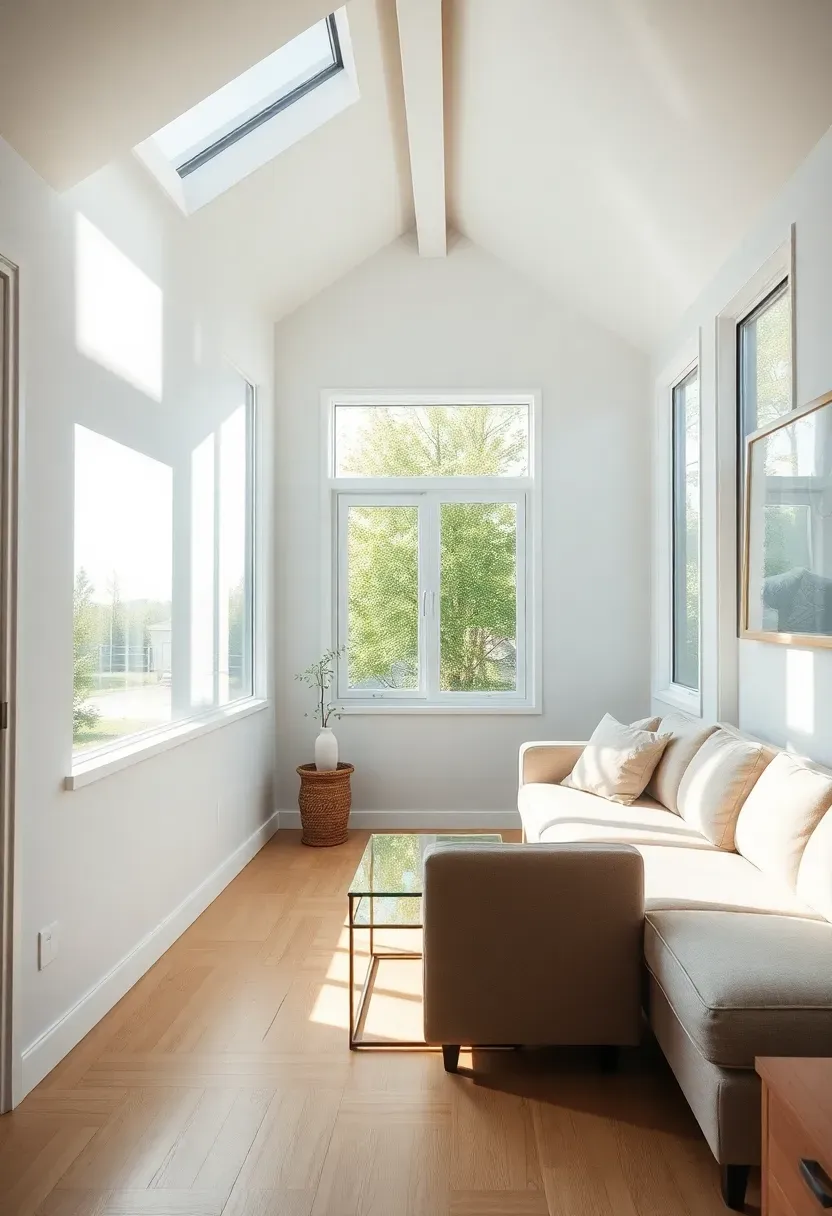
Windows are transformative elements in tiny house on wheels interior design, serving multiple functions beyond providing views. Large windows, skylights, and glass doors flood the space with natural light, eliminating shadows and creating a seamless connection to the outdoors. This abundant light makes the interior feel larger, brighter, and more open. Strategic window placement also enables cross-ventilation, reducing the need for artificial lighting and climate control. The goal is maximizing glass area while maintaining structural integrity and thermal efficiency.
Tips
- Do: Position windows to capture light from multiple directions throughout the day
- Don't: Sacrifice wall space for windows without considering furniture placement
- Install operable windows high and low for passive ventilation
Best for: tiny houses parked in scenic locations where views enhance the living experience
What this gives you: reduced energy costs and a constantly changing, naturally illuminated space
6. Hidden Storage Solutions for Tiny Houses
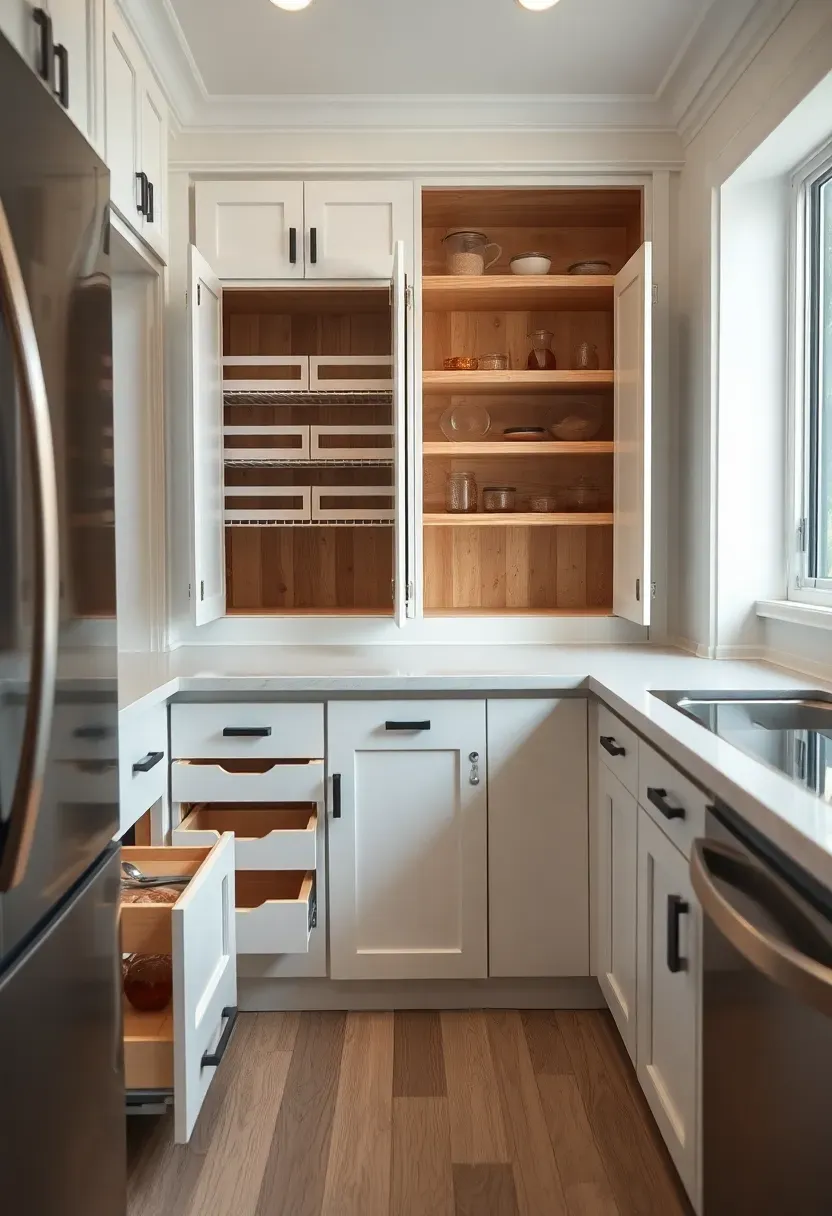
The magic of successful tiny house on wheels interior design lies in concealed storage that maintains visual calm while providing ample capacity. Toe-kick drawers, under-floor compartments, hollow benches, and staircase compartments hide belongings while keeping surfaces uncluttered. These hidden systems reduce visual noise and create a sense of order that makes small spaces feel larger. The principle is that everything should have a designated home, preferably out of sight, contributing to a serene and organized environment.
Recommended
Items for this idea
Tips
- If custom cabinetry exceeds budget, retrofit existing furniture with hidden compartments
- Label hidden storage contents to avoid forgetting what's stored where
- Then: Install soft-close mechanisms to prevent damage from frequent use
Budget/Time: custom hidden storage adds $2,000-5,000 but dramatically improves livability
What this gives you: double the storage capacity without visual clutter or sacrificing floor space
7. Loft Sleeping Areas
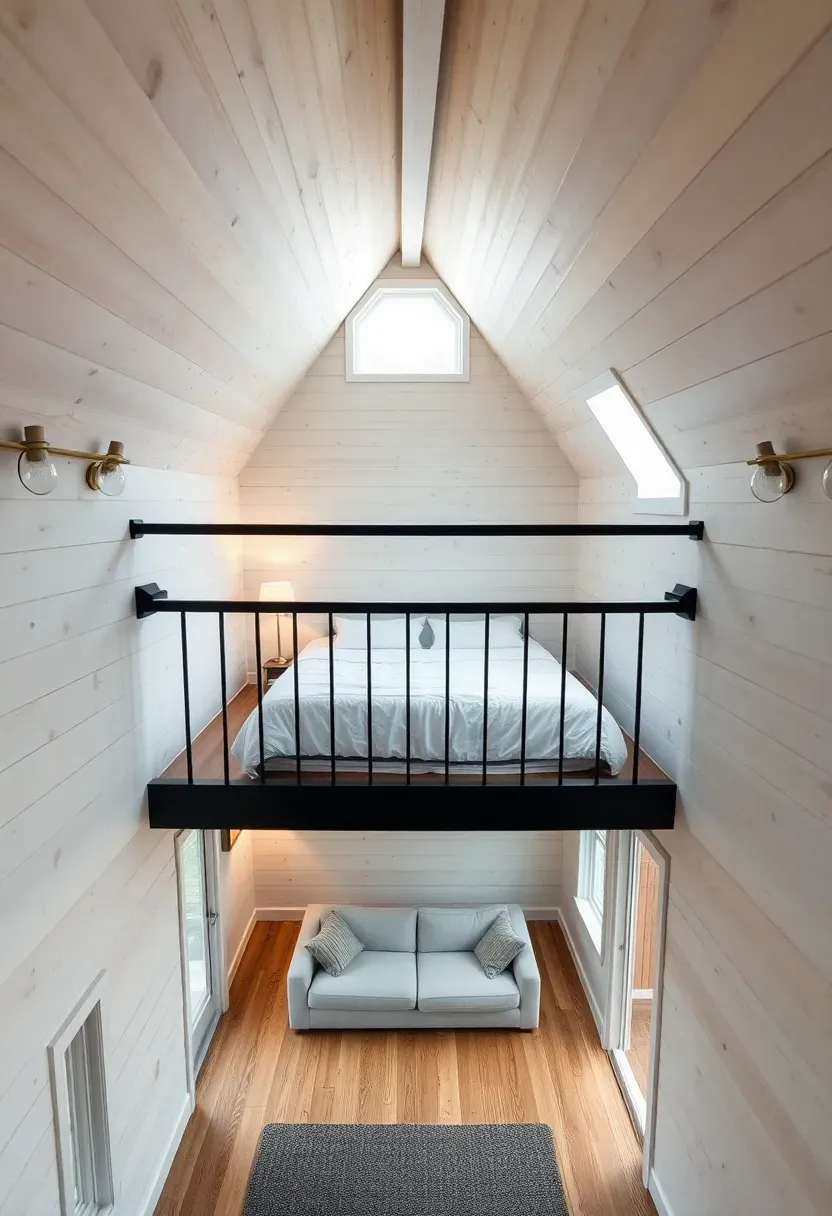
Lofts exemplify smart tiny house on wheels interior design by utilizing vertical space for sleeping while preserving the main floor for daytime activities. Elevated sleeping quarters free up valuable square footage below for living, kitchen, or bathroom areas. Lofts can accommodate queen or even king-size beds while creating cozy, intimate retreats. The space underneath can serve as storage, workspace, or passage. Proper loft design requires careful attention to height, access, ventilation, and natural light to ensure comfort rather than claustrophobia.
Tips
- Do ensure at least 3 feet of seated headroom for comfortable dressing
- Don't place lofts over cooking areas due to heat and ventilation concerns
- Install reading lights and outlets in the loft for functionality
Avoid if: you have mobility issues or dislike stairs and climbing for nighttime access
What this gives you: full-size bed comfort while reclaiming 40+ square feet of main floor space
8. Compact Kitchen Design on a Budget
Tiny house on wheels interior design demands kitchen efficiency without sacrificing cooking capability. Compact kitchens employ space-saving strategies like narrow refrigerators, two-burner stoves, and scaled-down sinks arranged in functional zones. Vertical storage for cookware, magnetic knife strips, and pegboard systems keep essentials accessible while preserving counter space. The layout follows work triangle principles compressed for smaller spaces. Every inch serves a purpose, and appliances are chosen for both size and performance.
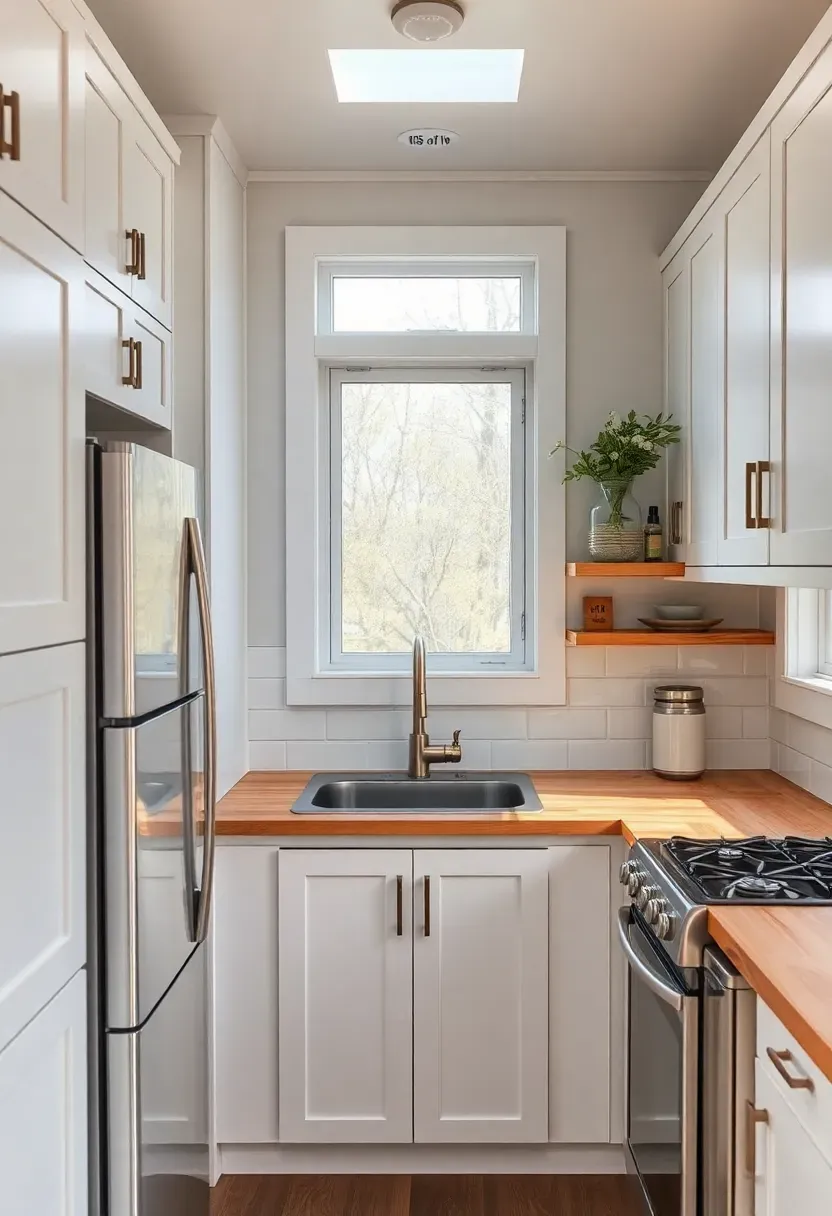
Recommended
Items for this idea
Tips
- Do: Prioritize counter space over upper cabinet storage if forced to choose
- Don't: Install full-sized appliances that consume disproportionate space
- Consider fold-down or pull-out counter extensions for prep workspace
Best for: cooks who prepare simple meals and are willing to scale down kitchen expectations
What this gives you: full cooking capability in under 30 square feet of floor space
9. Space-Efficient Bathrooms
Tiny house bathrooms challenge conventional design assumptions by combining functions and eliminating wasted space. Wet bathrooms, where the shower, toilet, and sink share one waterproof area, maximize efficiency in minimal square footage. Composting toilets reduce plumbing complexity while space-saving sinks integrate with shower stalls or fold down when not in use. Every element serves multiple functions, and materials are chosen for durability and visual continuity. The goal is creating a functional, comfortable bathroom in often less than 20 square feet.
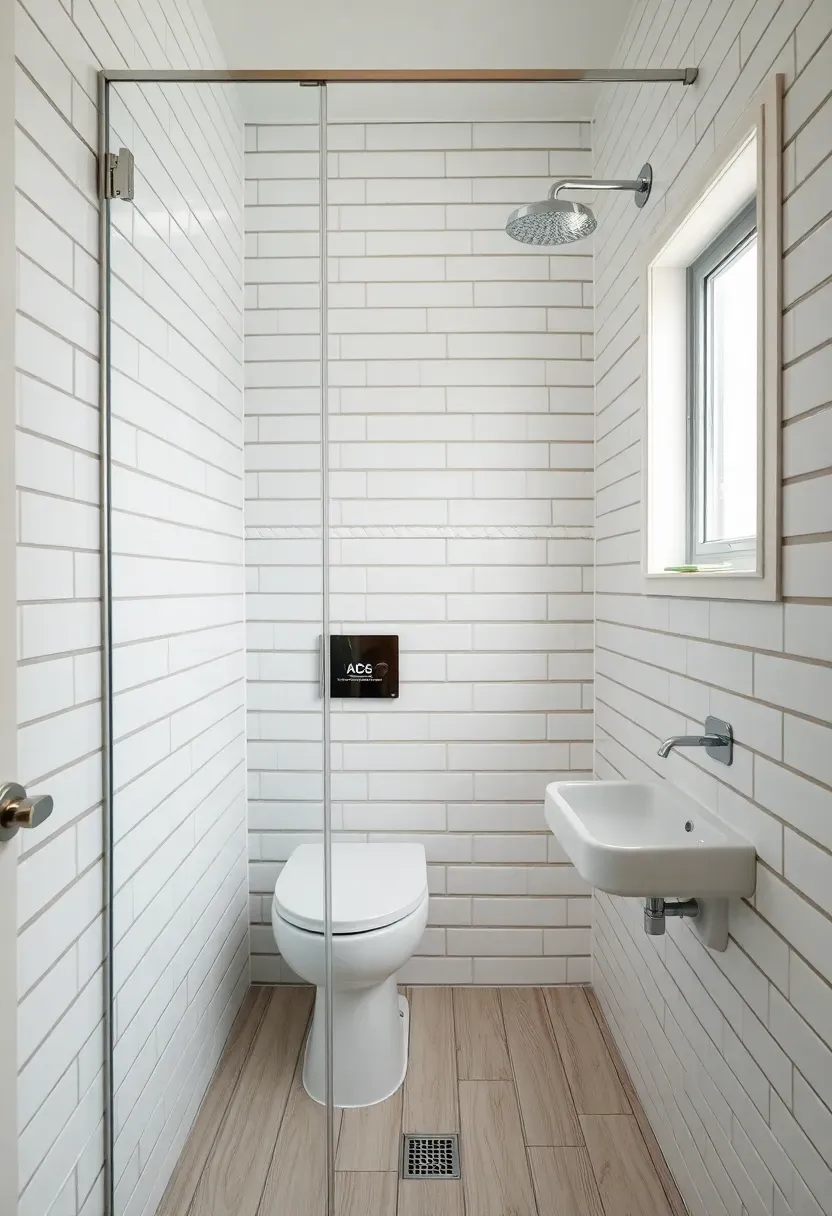
Tips
- Pro: Wet bathrooms maximize space but require waterproofing everything
- Con: Shared space means the entire bathroom gets wet during showers
- Fix: Install adequate ventilation and choose quick-drying materials
Best for: tiny houses under 200 square feet where every square foot must justify itself
What this gives you: a full bathroom experience in the footprint of a standard shower stall
10. Zone Definition
Without walls, tiny house on wheels interior design relies on subtle cues to define functional zones within the open space. Rugs, lighting changes, furniture arrangement, and partial dividers create distinct areas for sleeping, eating, working, and relaxing without sacrificing the sense of openness. These invisible boundaries help the space feel organized and purposeful rather than chaotic or undefined. Successful zoning ensures each area feels complete while maintaining flow and connection to the whole.
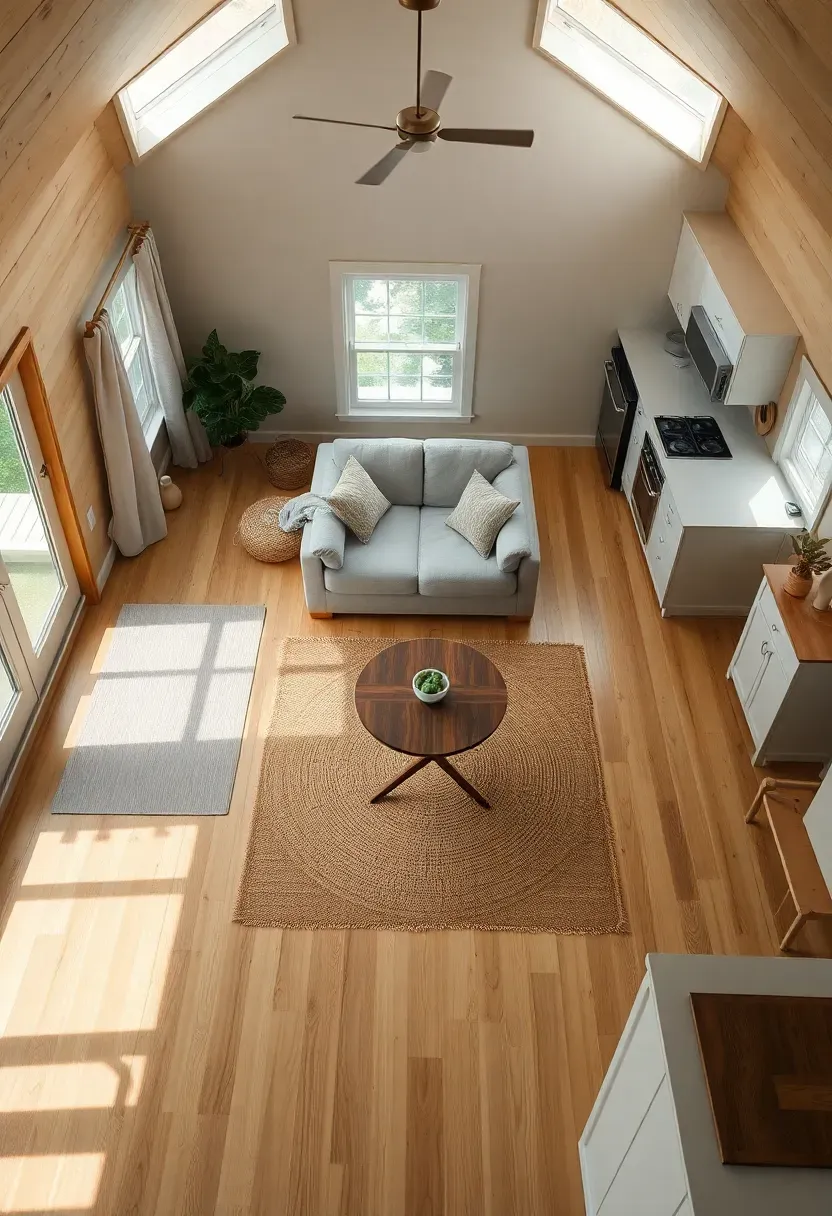
Recommended
Items for this idea
Tips
- Do use rugs to create visual boundaries that feel warm and intentional
- Don't arrange furniture in ways that block natural pathways or light flow
- Consider open shelving as a subtle room divider that also provides storage
Best for: open-concept tiny houses where defined areas help create mental separation of activities
What this gives you: organized functionality without sacrificing the spacious feel of open design
11. Reflective Surfaces
Mirrors and glossy surfaces act as visual expanders in tiny house on wheels interior design, creating illusions of depth and multiplying light. Strategic mirror placement can double the perceived space, reflect views, and brighten dark corners. Glass tabletops, glossy cabinet finishes, and metallic accents add reflectivity without consuming visual weight. These surfaces bounce light around the space, reducing shadows and creating a brighter, more open atmosphere. The key is placement that reflects something worth seeing—windows, artwork, or attractive interior views.
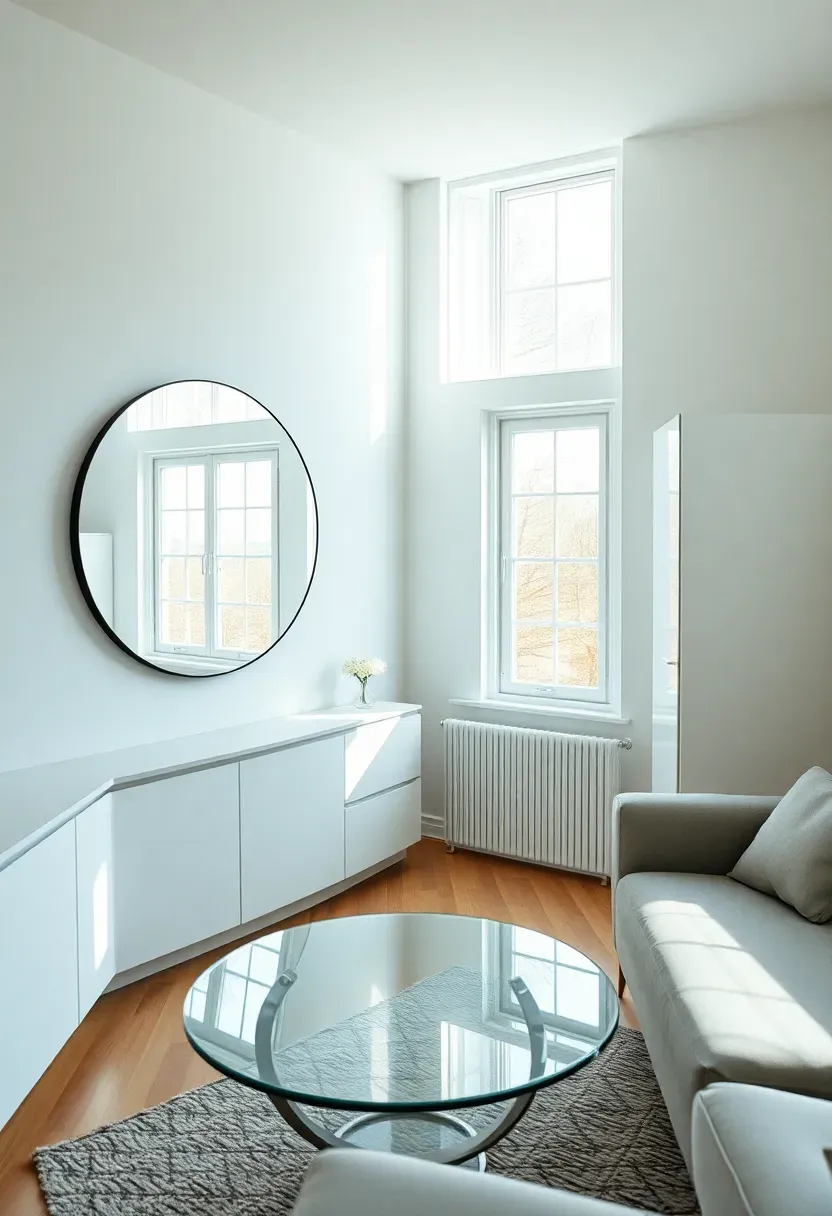
Tips
- If full wall mirrors feel overwhelming, start with strategically sized round mirrors
- Position mirrors to reflect windows rather than blank walls
- Then: Consider glossy backsplash tiles in kitchens to reflect both natural and task lighting
Best for: tiny houses with limited window count or north-facing orientations that need brightness amplification
What this gives you: perceived space increase of 20-30% through visual illusion alone
12. Minimal Window Treatments
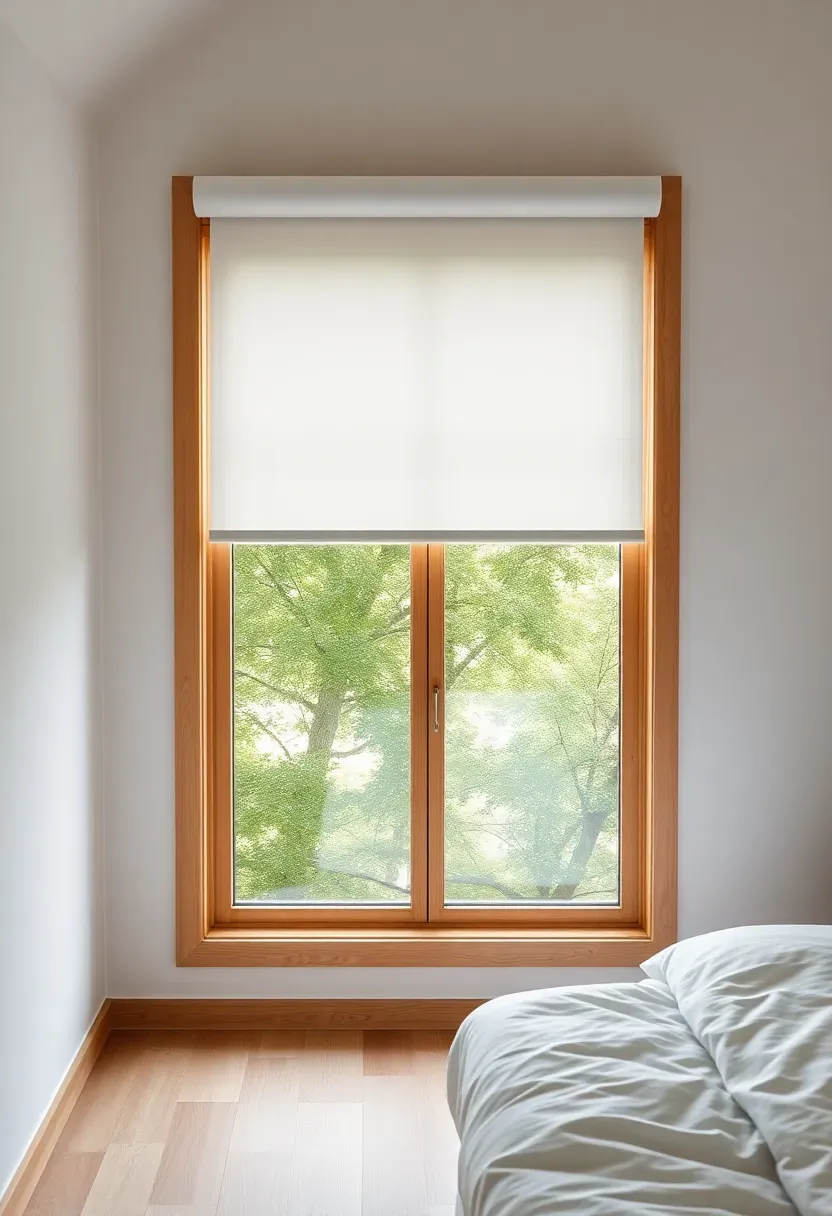
In tiny house on wheels interior design, windows should remain as unobstructed as possible to maximize light and views. Minimal treatments like simple roller shades, lightweight curtains, or smart glass provide privacy when needed while preserving the connection to outdoors. Heavy drapes or complicated treatments consume visual weight and block precious light. The philosophy embraces transparency during daylight hours and simple privacy solutions at night. When privacy isn't a concern based on parking location, many tiny houses skip treatments entirely.
Recommended
Items for this idea
Tips
- Do choose light-filtering rather than blackout materials unless you're a light-sensitive sleeper
- Don't mount treatments outside the window frame—they consume valuable wall space
- Consider motorized shades for hard-to-reach windows like skylights and lofts
Rental note: minimal treatments are ideal for tiny houses in private locations but may need adjustment for closer neighbors
What this gives you: maximum light and views with simple, unobtrusive privacy when needed
13. Built-In Furniture
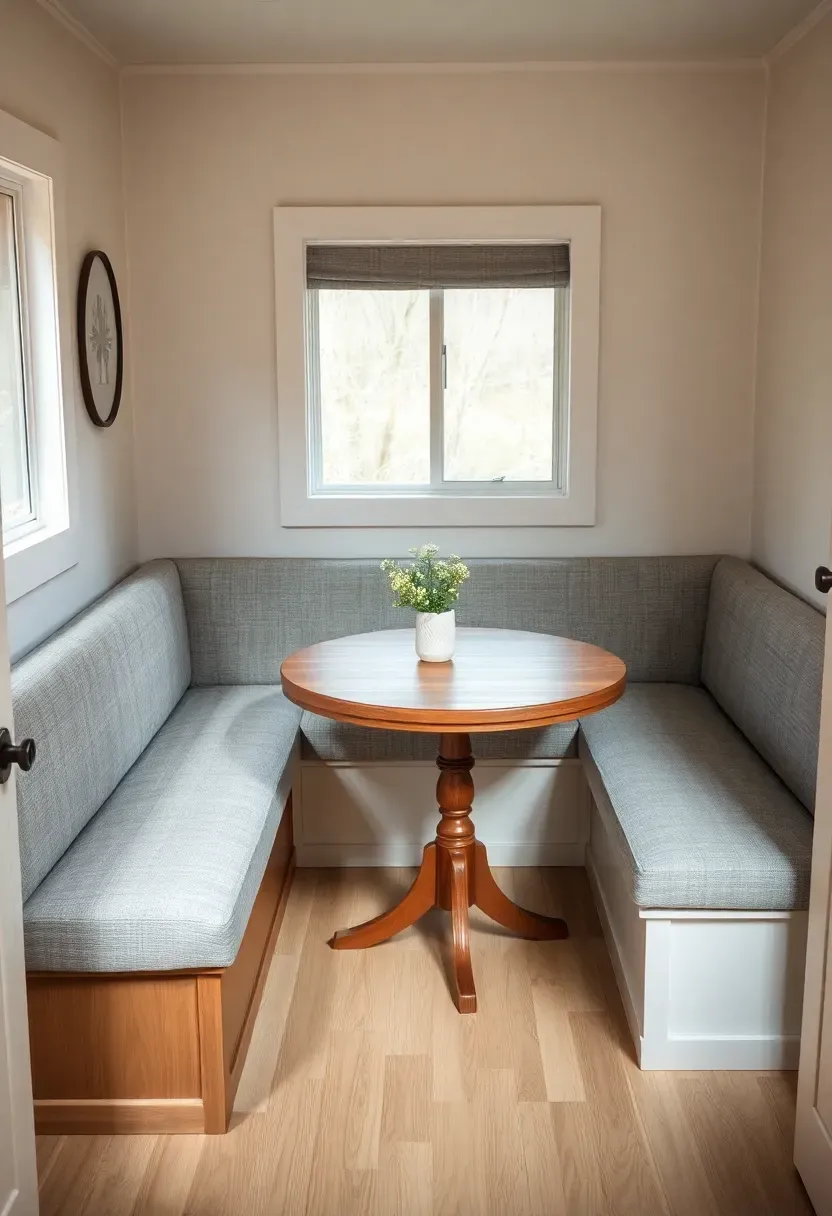
Custom built-ins represent the pinnacle of efficient tiny house on wheels interior design, utilizing every available inch while creating seamless integration. Built-in seating with storage underneath, desk units that fold into walls, and platforms that hide compartments are tailored precisely to available space and specific needs. These permanent solutions feel substantial and intentional while maximizing functionality. Built-ins eliminate wasted space around furniture and create a polished, cohesive appearance that makes the home feel custom-designed rather than makeshift.
Tips
- Do invest in quality hardware for built-ins—hinges and lifts get heavy use
- Don't make built-ins so permanent they can't be modified for future needs
- Consider lightweight construction materials to respect weight limitations
Budget/Time: built-ins cost 2-3x more than freestanding furniture but last indefinitely and add value
What this gives you: maximized space utilization and a custom, polished feel that elevates the entire home
14. Fold-Away Elements
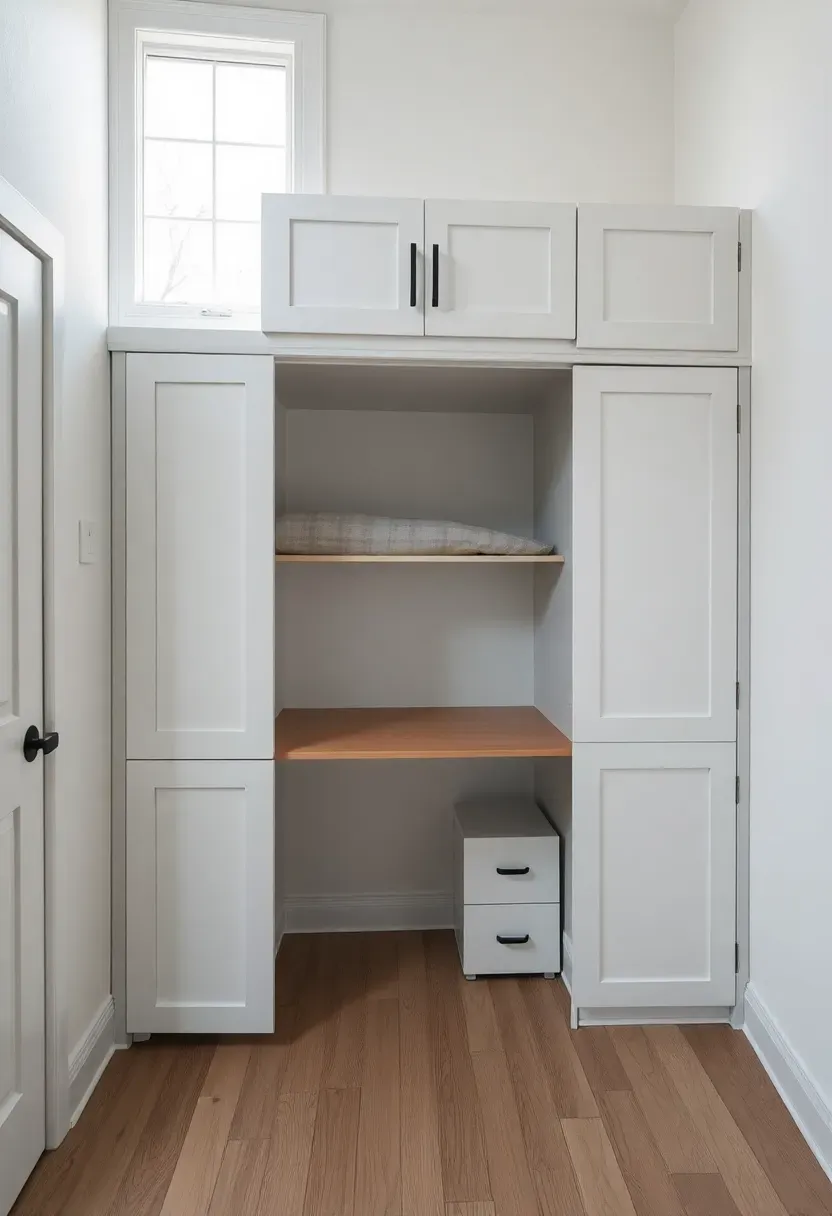
Fold-away furniture and fixtures represent the ultimate adaptability in tiny house on wheels interior design, allowing spaces to transform instantly for different uses. Drop-leaf tables, Murphy beds, folding chairs, and retractable work surfaces appear when needed and disappear when not, preserving open space. These elements enable a single area to serve multiple functions throughout the day—office by morning, dining room by evening, guest room at night. Quality fold-away mechanisms operate smoothly and feel sturdy, not flimsy or temporary.
Recommended
Items for this idea
Tips
- If daily folding feels burdensome, choose convertible furniture instead of wall-mounted systems
- Provide dedicated storage nearby for bedding when Murphy beds are stowed
- Then: Install interior cabinet lighting that turns on when beds or desks unfold
Avoid if: you have physical limitations that make lifting or folding mechanisms difficult
What this gives you: one space serving as bedroom, office, and living room based on daily needs
15. Cohesive Color Schemes
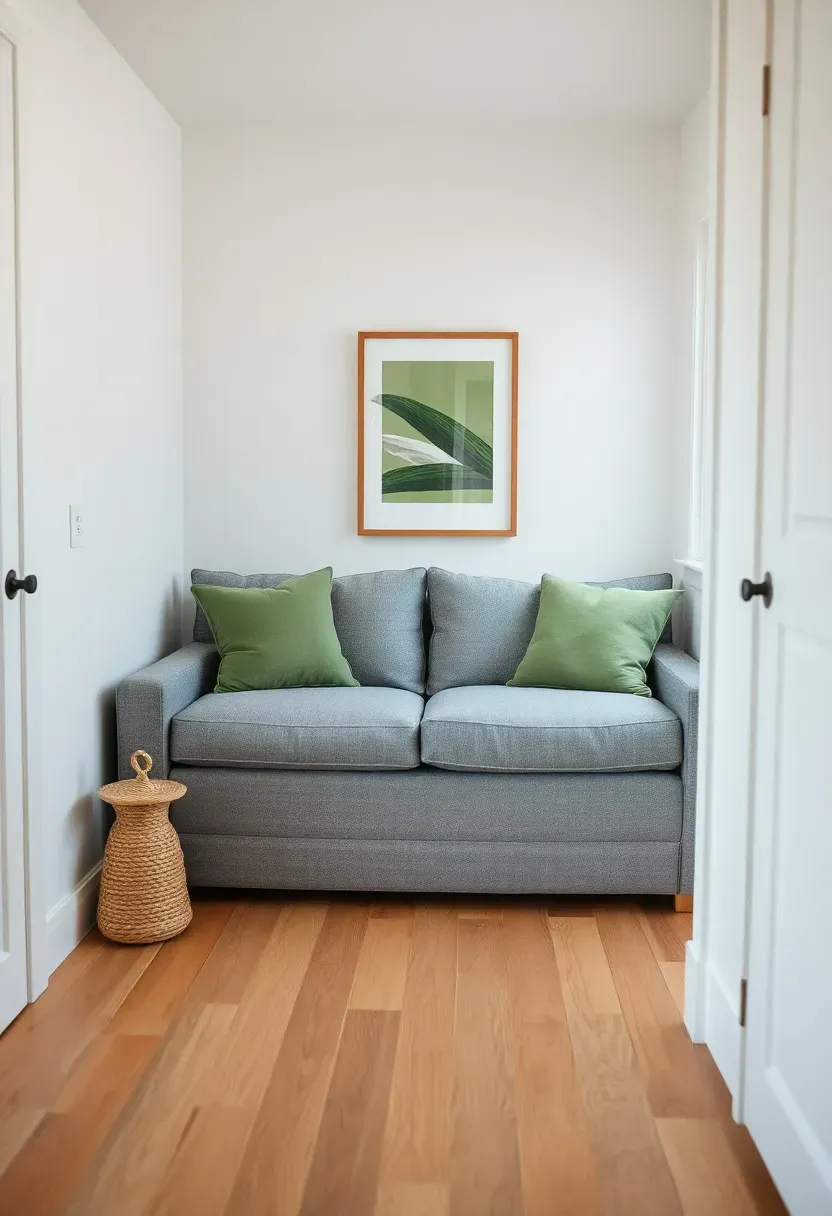
Unified color palettes create visual harmony that makes tiny house on wheels interior design feel intentional and serene. Limiting the color range to three or four complementary tones eliminates visual noise and creates flow throughout the space. This cohesion prevents small spaces from feeling busy or fragmented. The base typically consists of neutral walls and larger furniture pieces, with accent colors introduced through textiles, artwork, and accessories. A well-executed color scheme creates a sense of completeness and sophistication.
Tips
- Pro: Cohesive colors create sophistication but can feel monotonous without variation
- Fix: Introduce texture variety within your color palette to maintain visual interest
- Choose a 60-30-10 ratio: dominant color, secondary color, accent color
Best for: tiny houses where visual calm and continuity are priorities over dramatic design statements
What this gives you: a polished, intentional appearance that feels larger and more sophisticated
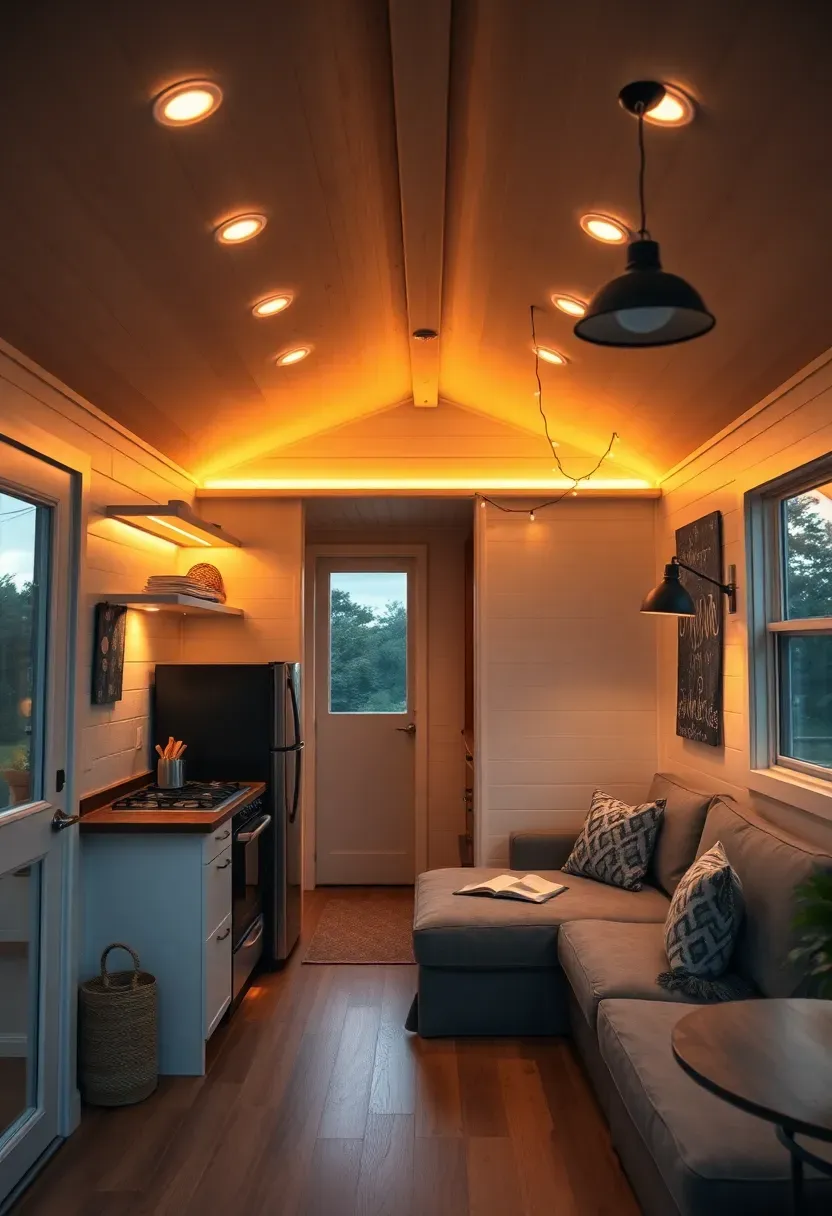
16. Strategic Lighting Design
Layered lighting transforms tiny house on wheels interior design by extending functionality into evening hours and creating ambiance beyond natural light. Multiple light sources at different levels—overhead, task, and accent—provide flexibility for various activities and moods. Dimmable LEDs, under-cabinet strips, reading lamps, and string lights create warmth while reducing energy consumption. Proper lighting eliminates dark corners, highlights architectural features, and can completely change the perceived size and mood of the space.
Recommended
Items for this idea
Tips
- Do install dimmers on all overhead lights for maximum flexibility
- Don't rely solely on overhead lighting—it creates shadows and feels clinical
- Choose warm white (2700K) LEDs for cozy atmosphere, cool white for task areas
Budget/Time: layered lighting requires $800-2,000 investment but dramatically improves livability
What this gives you: 24/7 functionality and the ability to transform your space's mood instantly
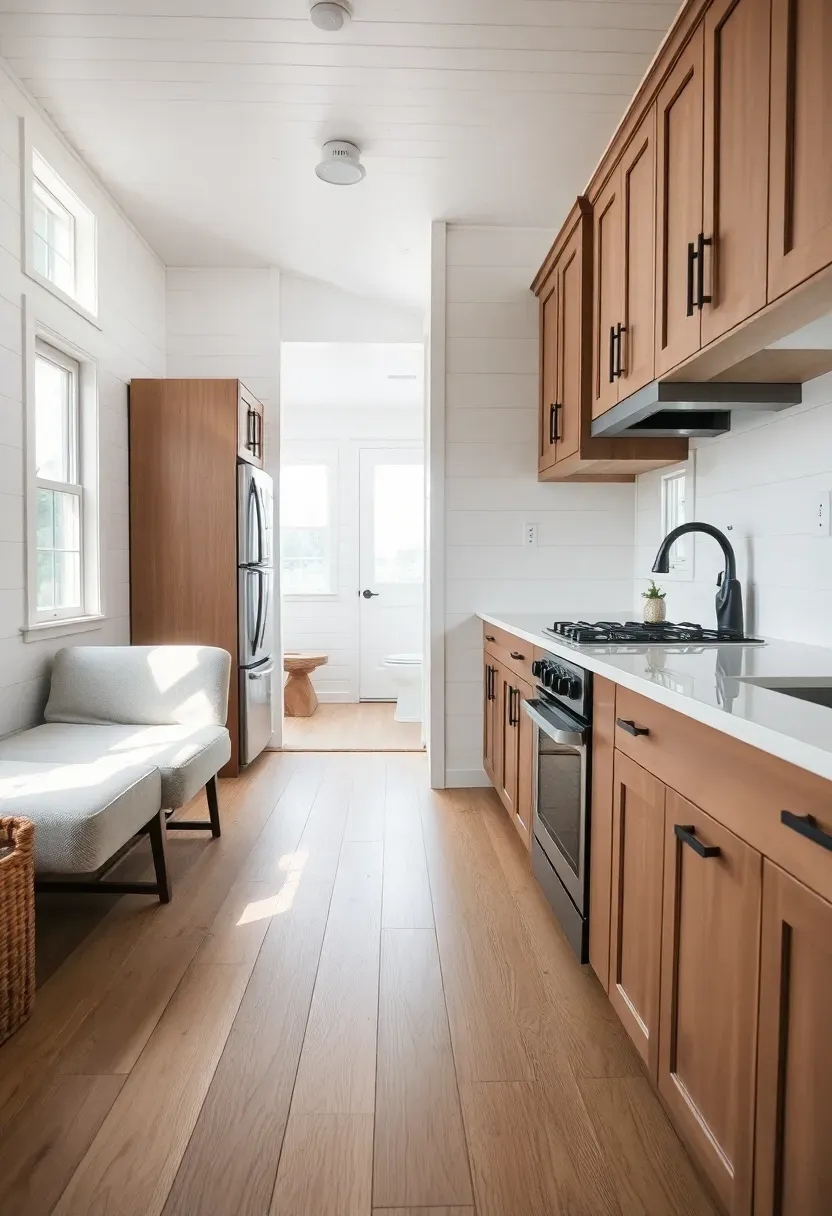
17. Material Consistency
Repeating materials throughout tiny house on wheels interior design creates visual continuity that makes small spaces feel larger and more cohesive. Using the same flooring, wood species, or metal finish throughout eliminates visual boundaries and creates flow. This consistency reduces the number of transitions that break up space, making the home feel unified rather than compartmentalized. The repetition of materials creates a signature aesthetic and reinforces the minimalist philosophy of quality over quantity.
Tips
- If consistent flooring feels monotonous, add area rugs for texture and zone definition
- Choose one metal finish and commit to it throughout for fixtures and hardware
- Then select one wood species and use it for flooring, furniture, and accents
Best for: tiny houses under 200 square feet where visual continuity maximizes perceived space
What this gives you: a unified, polished aesthetic that feels intentional and sophisticated
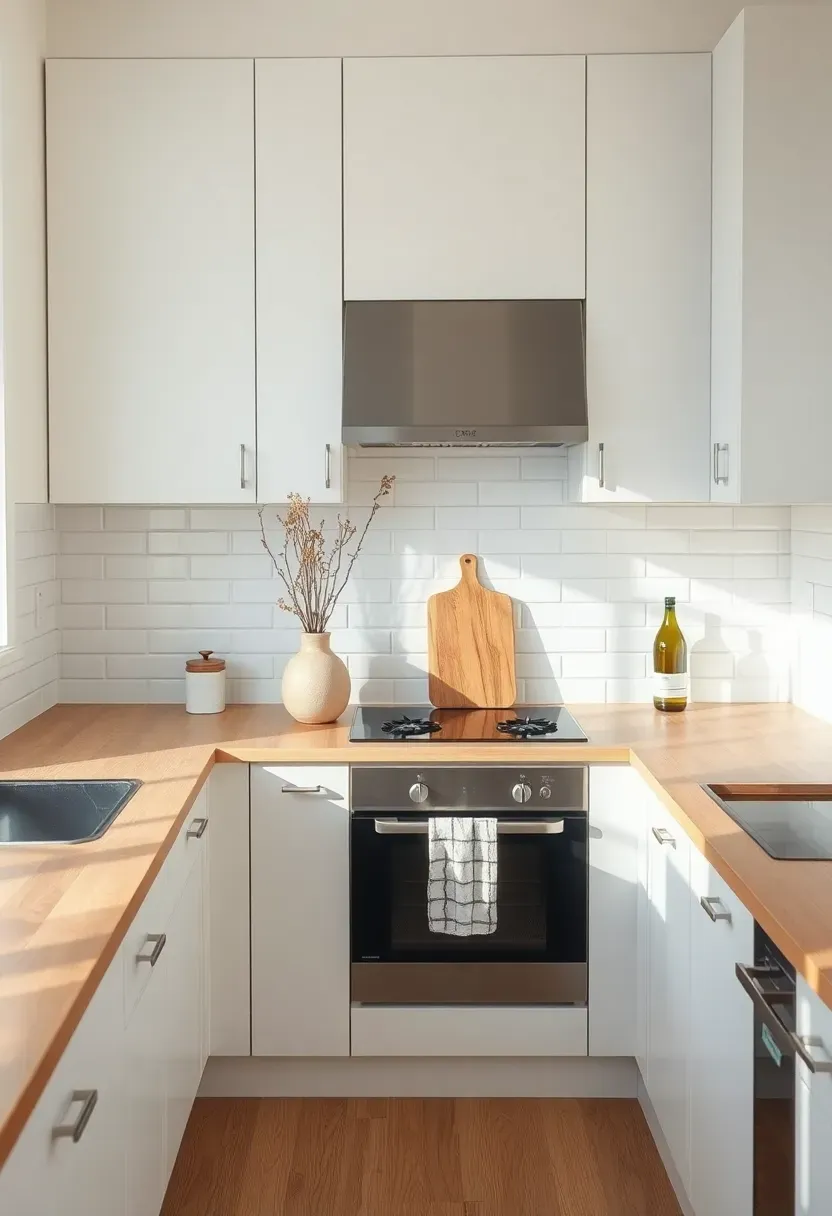
18. Decluttered Surfaces
Flat surfaces in tiny house on wheels interior design must remain largely clear to maintain the sense of spaciousness and calm. Cluttered counters, tables, and shelves make small spaces feel chaotic and cramped. The philosophy embraces "clear surfaces, clear mind" by providing adequate storage for items when not in use and being selective about what remains visible. Daily habits of returning items to designated homes prevent accumulation. A few intentionally chosen objects on display create focus without chaos.
Recommended
Items for this idea
Tips
- Do: Create designated homes for every single item to prevent surface accumulation
- Don't: Keep items on counters "just in case"—if you use them weekly, store them away
- Practice daily five-minute resets to return items to their proper places
Best for: those who naturally maintain organization and find calm in tidy spaces
What this gives you: a perpetually calm environment that feels larger and more peaceful
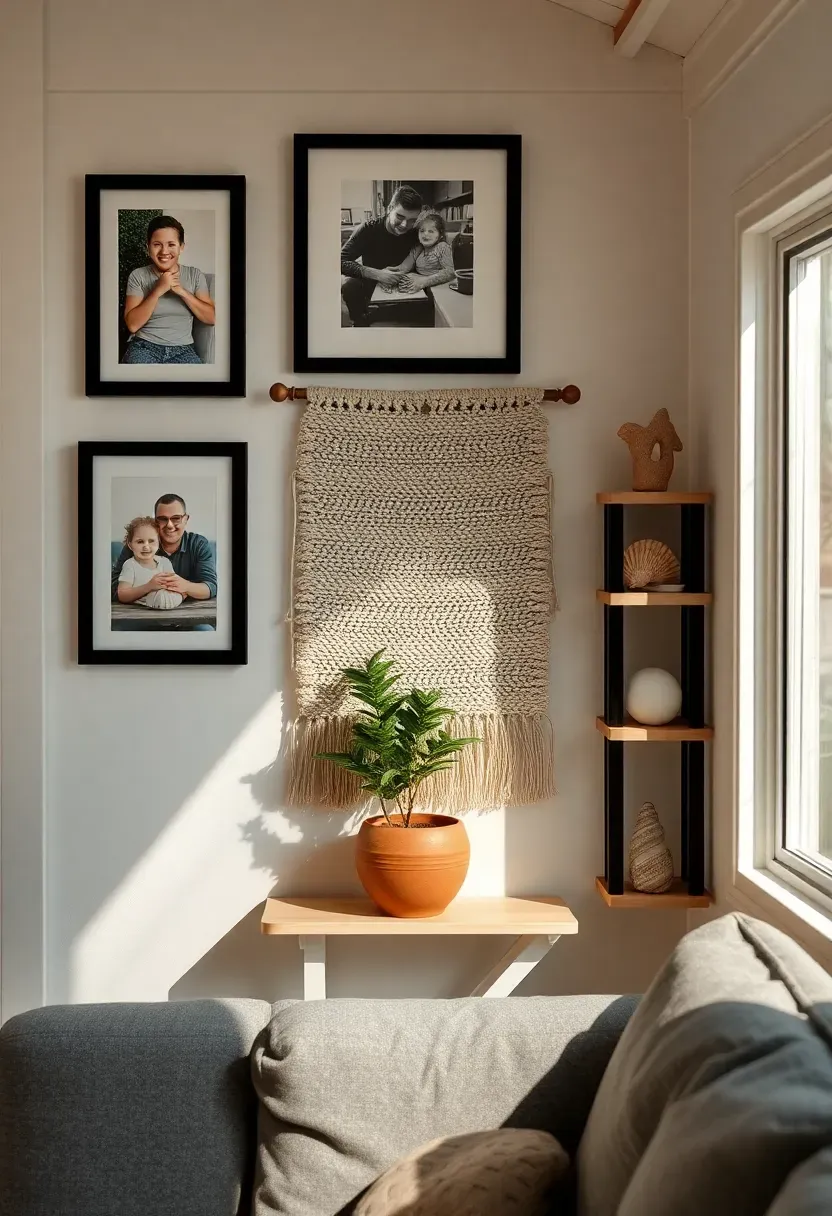
19. Personal Touches
Despite space constraints, tiny house on wheels interior design must reflect individual personality to feel like home rather than a showroom. Curated artwork, collected objects, personal photos, and sentimental items transform the structure into a personalized sanctuary. The key is selectivity—choosing a few meaningful pieces rather than overwhelming surfaces. These personal touches connect the space to its inhabitants' stories, values, and experiences. The result is a tiny house that feels expansive in personality despite its physical dimensions.
Tips
- Do rotate personal items seasonally to keep displays fresh without accumulation
- Don't display every personal treasure at once—curate the most meaningful
- Group related items together for visual impact rather than scattering them
Best for: anyone who wants their tiny house to feel like a personalized home rather than generic design
What this gives you: a space that feels expansive in personality and connection to what matters most
Tiny house on wheels interior design demonstrates that luxury and comfort are not defined by square footage but by intentionality and smart planning. The principles of vertical thinking, multipurpose furniture, and visual expansion can transform any small space into a functional, beautiful home. Whether you are planning a tiny house build or simply seeking space-saving ideas for your rental apartment, these strategies prove that less truly can be more when every element serves a purpose and reflects thoughtful consideration of how you want to live.
About the author
OBCD
CGI visualization and interior design content. We create detailed 3D renders and curate practical design ideas for every room in your home.