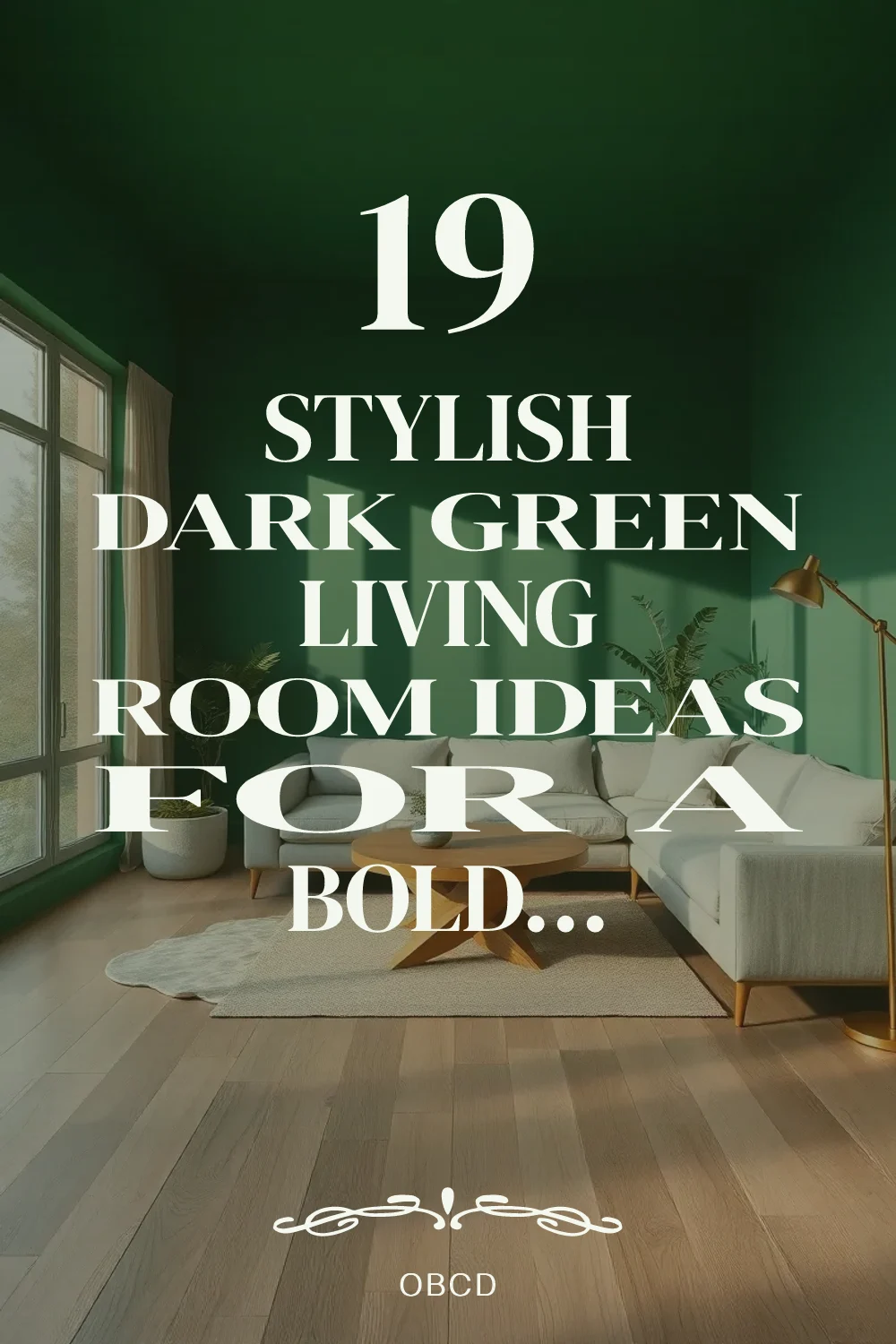
19 Dark Green Living Room Ideas That Feel Bold and Inviting
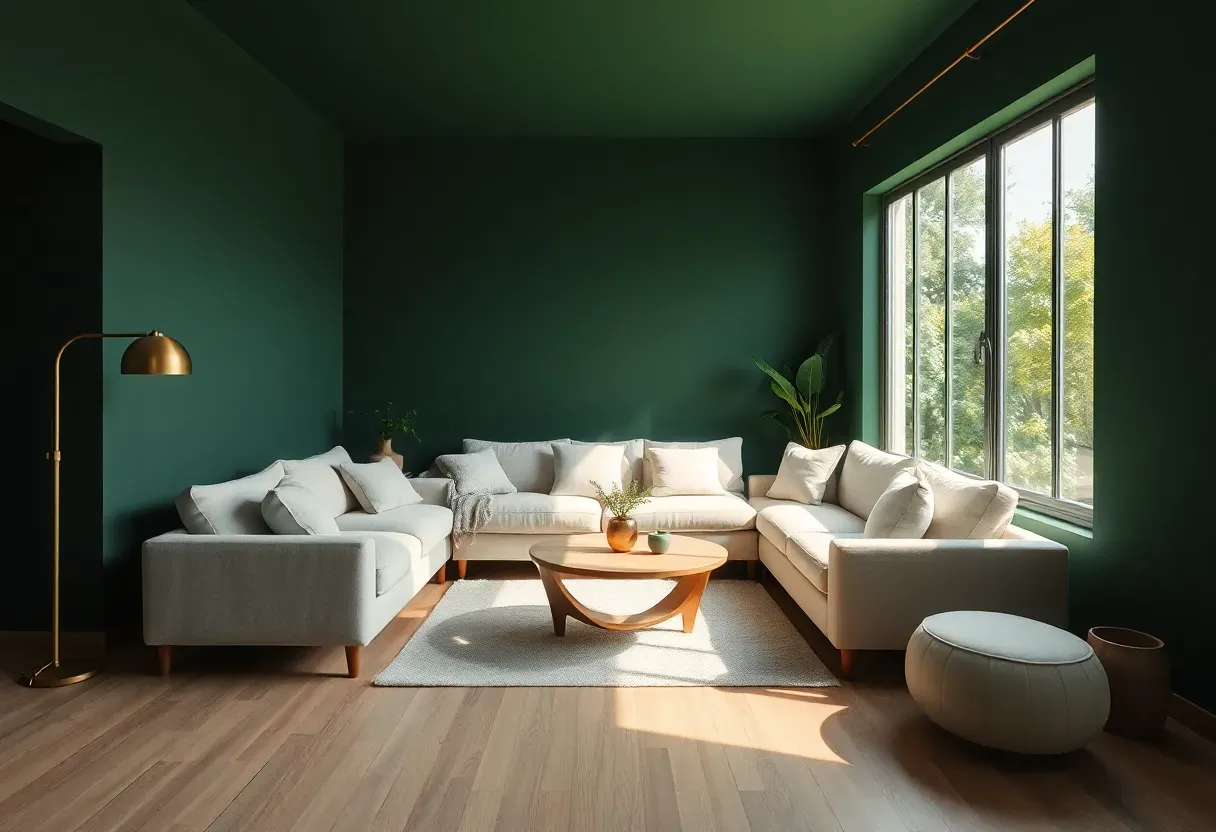
Looking for dark green living room ideas that actually feel welcoming? This rich, nature-inspired palette brings sophisticated depth to any home, whether you rent a small apartment or own a spacious house. From moody emerald walls to subtle forest green accents, dark green bridges the gap between dramatic statement and serene retreat.
Forest green, emerald, and sage tones work exceptionally well in living rooms because they connect interior spaces to nature while providing a rich backdrop for furniture and artwork. Whether you prefer full-wall immersion or strategic accent touches, dark green creates a cocooning effect that makes large rooms feel intimate and small spaces feel purposefully designed.
The key to a successful dark green living room lies in balancing color depth with adequate lighting, natural materials, and thoughtful contrast. From modern minimalist to bohemian eclectic, this color adapts seamlessly to your preferred aesthetic while maintaining its inherent sense of luxury and calm. If you already love green tones, you might also enjoy our [green couch living room ideas](/posts/37_17-stunning-green-couch-living-room-ideas-for-cozy-comfort/) for pairing furniture with these wall treatments.
Quick FAQ
Is dark green too dark for a small living room?
Not when balanced properly. Dark green can actually make small spaces feel intentional and cozy. Use it on one accent wall, pair with light flooring, and incorporate multiple light sources to maintain brightness.
What colors go best with dark green walls?
Natural wood tones, brass or gold accents, cream/off-white trim, and warm neutrals create sophisticated pairings. For bold contrast, try terracotta, mustard yellow, or blush pink as accent colors.
Should I paint all walls dark green?
Full room immersion creates drama and works well in north-facing rooms. For south-facing spaces, consider an accent wall or wainscoting combination. Test samples at different times of day to see how light affects the color.
How do I keep a dark green room from feeling cave-like?
Layer lighting is essential—combine ambient, task, and accent lights. Incorporate mirrors to reflect light, use glossy or metallic finishes sparingly, and ensure at least one light-colored surface (ceilings, trim, or flooring) to create breathing room.
What style of furniture works in dark green living rooms?
Almost any style works. Mid-century modern pieces with walnut tones complement the retro vibe, while white oak Scandinavian furniture keeps it fresh. Velvet sofas enhance luxury, and linen adds casual elegance.
Can I mix multiple shades of green?
Absolutely. Layering forest, emerald, olive, and sage creates depth and dimension. Keep undertones consistent—warm yellows for earthy vibes or cool blues for coastal feels. Use the darkest shade as your anchor and lighter tones for accents.
As an Amazon Associate I earn from qualifying purchases.
Table of Contents
- 1. Full Emerald Immersion
- 2. Forest Green Accent Wall with Wainscoting
- 3. Two-Toned Green with Natural Division
- 4. Dark Green Built-in Shelving Statement
- 5. Sage Green with Dark Green Trim Inversion
- 6. Moody Green Board and Batten
- 7. Dark Green Ceiling Dramatic Effect
- 8. Green Paneling with Chair Rail Detail
- 9. Ombré Green Wall Treatment
- 10. Dark Green Open Concept Zoning
- 11. Forest Green with Natural Wood Ceiling
- 12. Green Wallpaper Accent Wall
- 13. Dark Green Fireplace Surround
- 14. Green Window Trim and Casings
- 15. Painted Brick Green Feature
- 16. Dark Green Archway and Niche Design
- 17. Green Built-in Banquette Seating
- 18. Two-Tone Green with Horizontal Stripe
- 19. Dark Green Slatted Wood Wall
1. Full Emerald Immersion
Painting all four walls in a rich emerald green creates an instantly dramatic and sophisticated living room that wraps you in color. This bold approach works particularly well in rooms with abundant natural light, where sunlight shifts the green from deep jewel tones to vibrant brilliance throughout the day. The key is selecting an emerald shade with blue undertones for a modern feel or yellow undertones for earthier warmth.
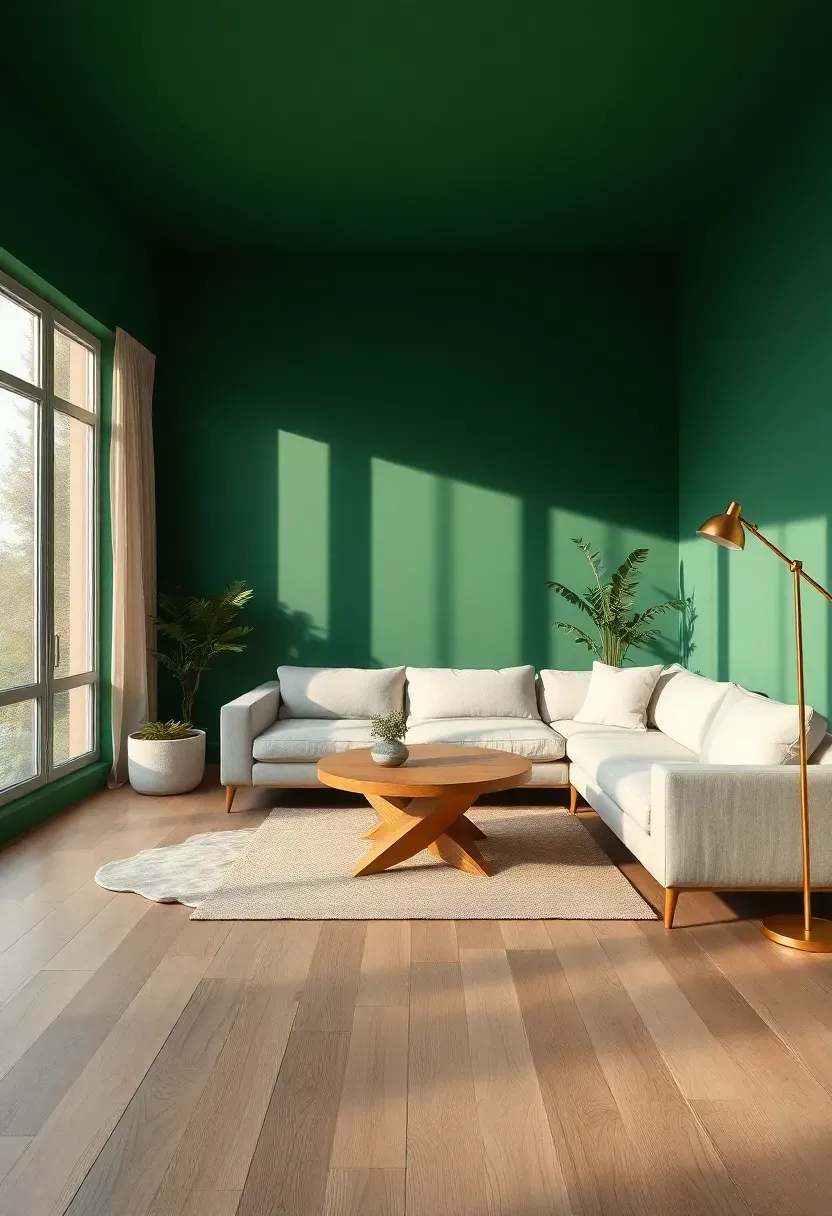
Tips
- Choose a emerald with at least 15% light reflectance value to prevent the room from feeling too heavy
- Paint ceiling white or very pale cream to maintain visual height and prevent closed-in feelings
- Incorporate at least three light sources: floor lamp, table lamps, and overhead fixture for layered illumination
Best for: North-facing rooms where cooler emerald tones counteract low natural light
What this gives you: A cocooning, luxurious space that feels both intimate and expansively sophisticated
We picked a few things that go well with this idea: ELUCHANG 116-inch L-Shaped Chenille Sectional Sofa (★4.7), 140-inch Oversized Green Velvet Curved Sectional Couch (★4.2) and Oprisen 120-inch Green Chenille U-Shape Sectional Sofa (★4.1). As an Amazon Associate we earn from qualifying purchases.
2. Forest Green Accent Wall with Wainscoting
A single forest green wall featuring white wainscoting creates architectural interest while keeping the space bright and airy. This traditional-meets-modern approach grounds the room with color below chair rail height while maintaining white-painted upper walls that reflect light throughout the space. The forest green should extend from floor to approximately 36-42 inches up the wall, with crisp white molding creating clean horizontal lines that visually expand the room.
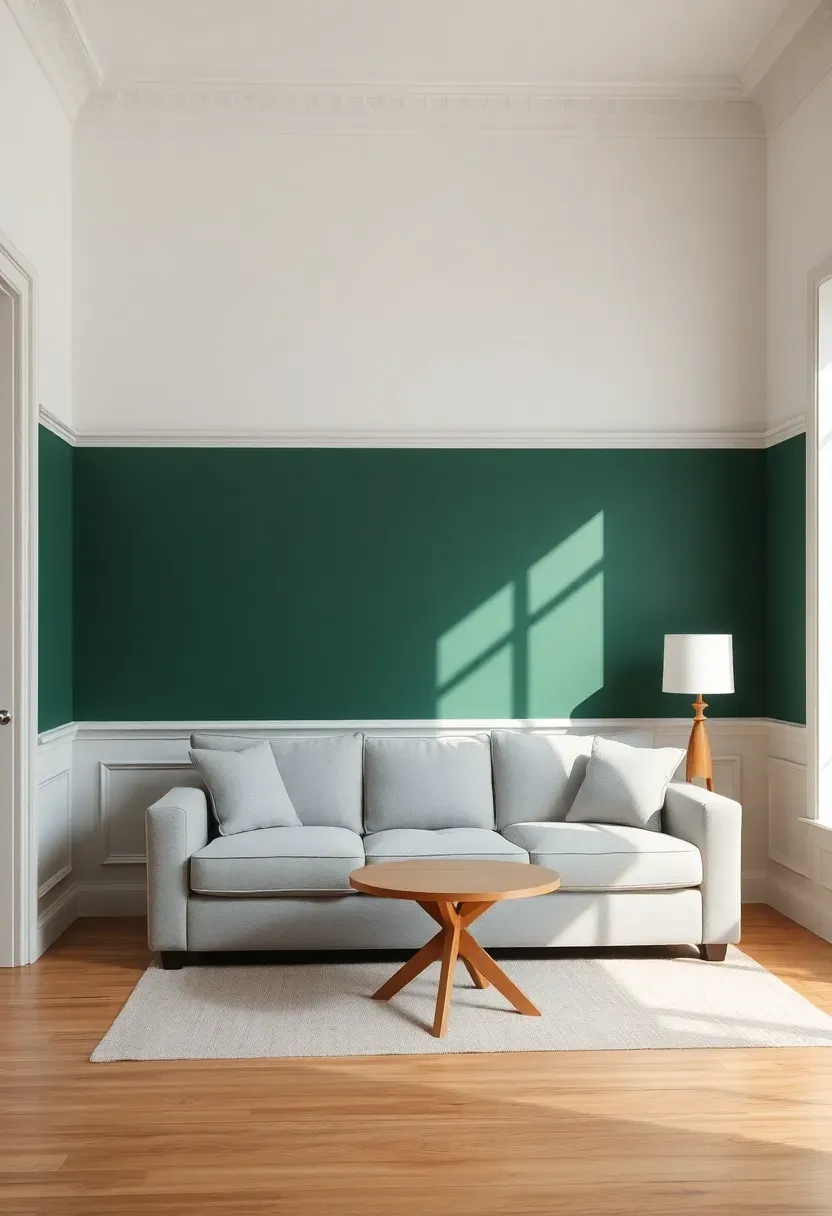
Tips
- Standard chair rail height is 32-36 inches from floor—adjust based on your ceiling height for proportion
- Use semi-gloss finish on wainscoting for durability and subtle light reflection that adds dimension
- Extend the forest green to window and door trim for a cohesive, built-in appearance
Budget/Time: Moderate—requires molding installation but less paint than full-room coverage
What this gives you: Timeless architectural character with the drama of dark green without overwhelming the space
We picked a few things that go well with this idea: Rust-Oleum Satin Vermont Green Trim Paint Quart (★4.6), Rust-Oleum Gloss Hunter Green Interior Paint Quart (★4.5) and Magnolia Home Step Stool Green Satin Wall Paint Gallon (★4.4). As an Amazon Associate we earn from qualifying purchases.
3. Two-Toned Green with Natural Division
Dividing walls horizontally into two shades of green—darker on bottom, lighter on top—creates visual weight at eye level while maintaining brightness overhead. This technique draws the eye upward, making ceilings feel higher while still delivering the richness of dark green where it matters most. For optimal results, choose colors from the same paint strip to ensure undertone consistency, with approximately 3-4 shades of difference between upper and lower sections.
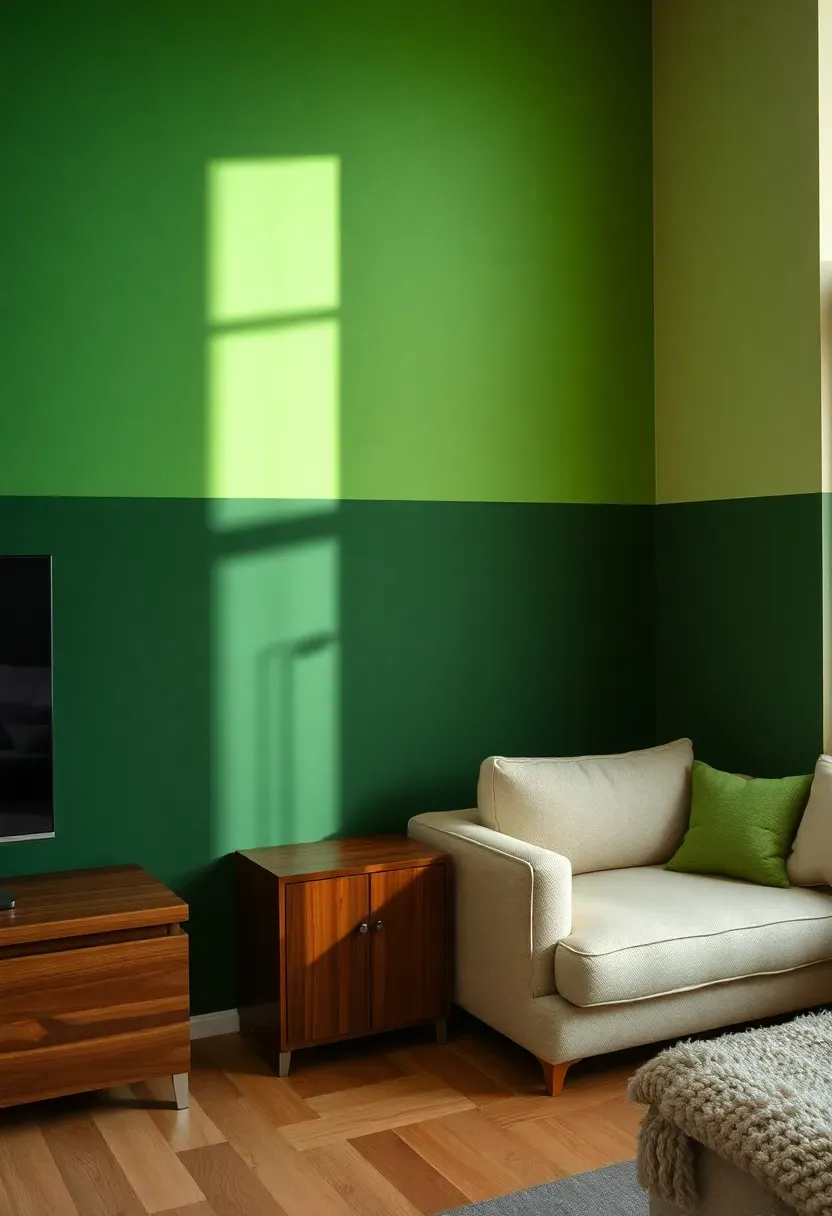
Tips
- Install picture molding or a simple painted line to create a crisp transition between colors
- Keep ceiling white or very pale cream to maximize the height-enhancing effect
- Position the color division at approximately 7 feet from floor, or align with existing architectural features
Placement note: Particularly effective in rooms with 8-9 foot ceilings where you want to create vertical emphasis
What this gives you: Maximum color impact with enhanced perceived ceiling height and sophisticated layered depth
We picked a few things that go well with this idea: 2-Pack Velvet Dark Green 18x18 Throw Pillow Covers (★4.6), JIAHANNHA Emerald Velvet 18x18 Pillow Covers 2-Pack (★4.6) and MIULEE Corduroy Forest Green 18x18 Pillow Covers 4-Pack (★4.6). As an Amazon Associate we earn from qualifying purchases.
4. Dark Green Built-in Shelving Statement
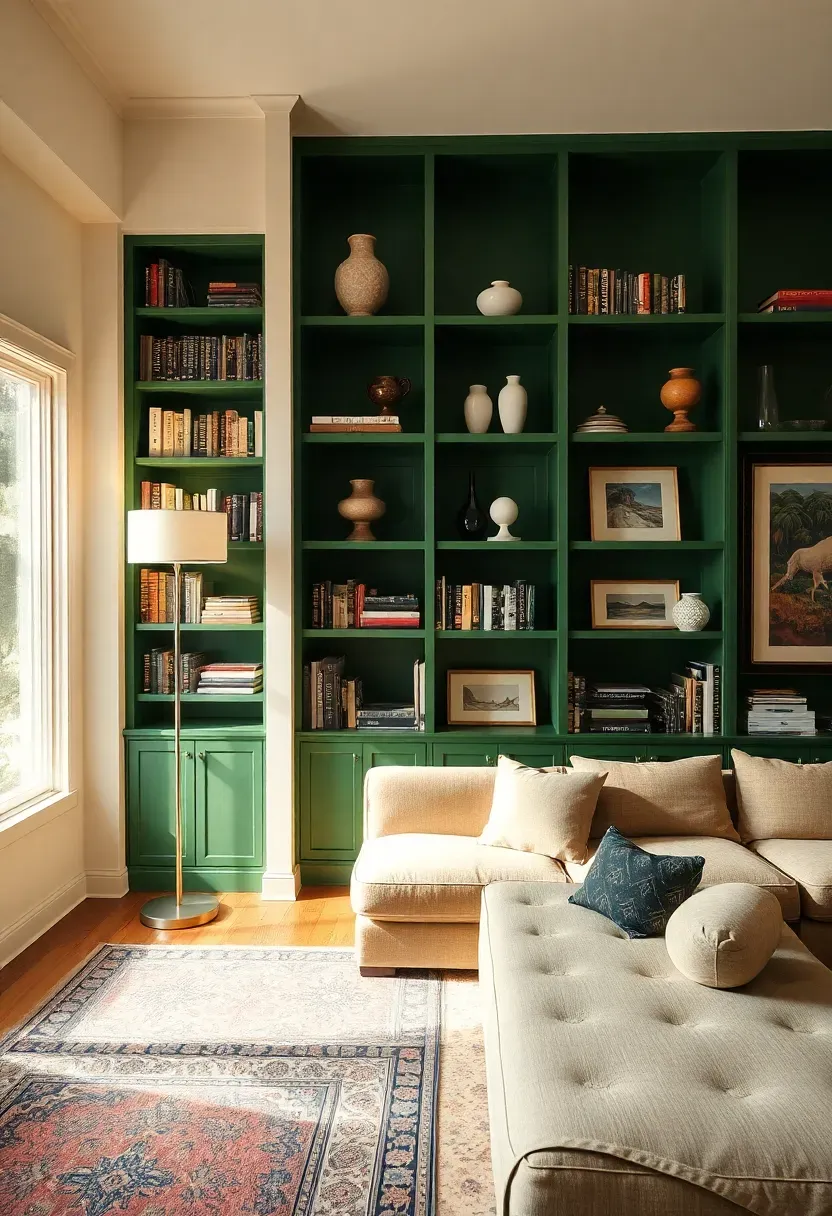
Painting built-in bookshelves or cabinetry in dark green while keeping surrounding walls neutral creates a striking focal point that showcases collections and decor. This approach allows you to experiment with bold color commitment-wise while maintaining flexibility with the rest of the room's palette. The green background makes books, artwork, and objects pop while providing a sophisticated alternative to standard white or wood built-ins.
Recommended
Items for this idea
Tips
- If you need a practical guide, measure your built-ins first—standard depth is 12-15 inches for books
- Use the same green on shelf backs and side walls for seamless color, or paint only backs for a more subtle effect
- Add integrated LED strip lighting at each shelf level to highlight displayed objects and prevent dark corners
Best for: Rooms with existing architectural features or those you're willing to add custom carpentry to
What this gives you: A gallery-like display space where dark green creates drama without overwhelming the entire room
5. Sage Green with Dark Green Trim Inversion
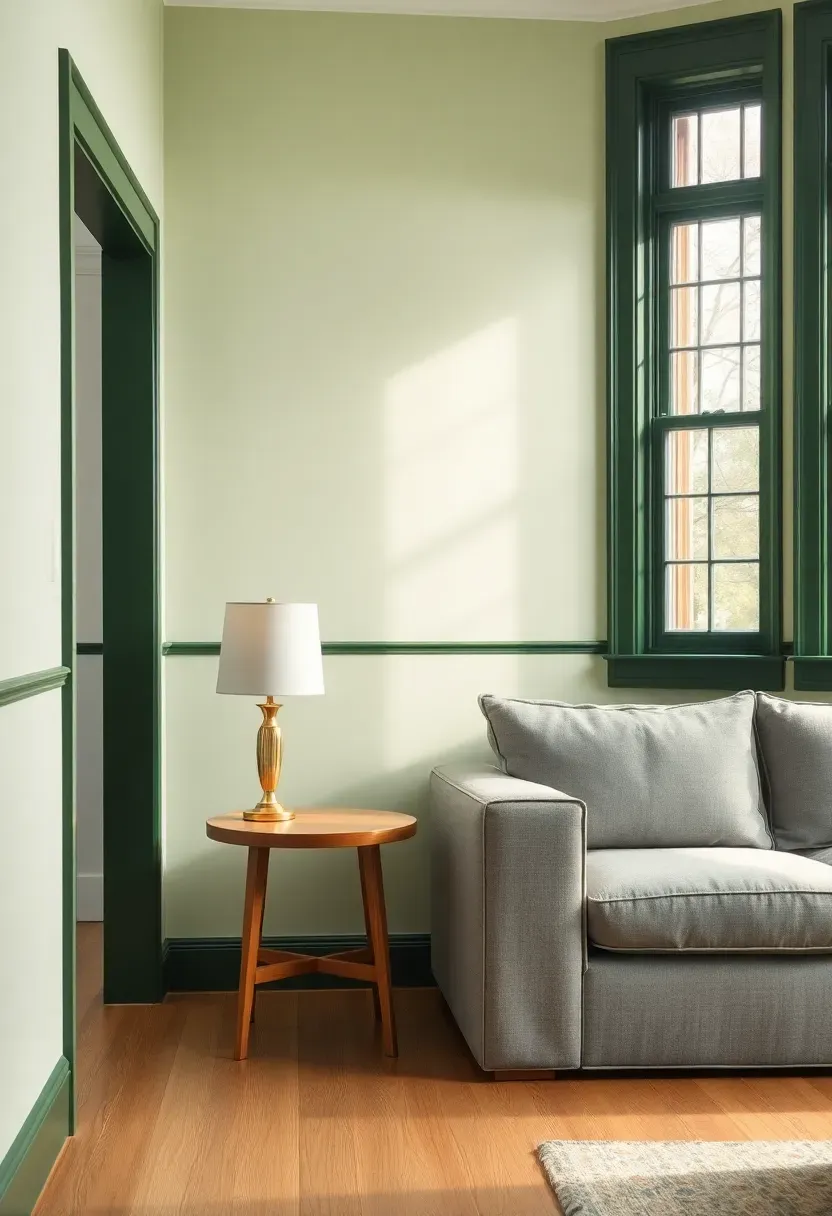
Flipping traditional color schemes by painting walls in pale sage and trim, doors, and built-ins in dark green creates a fresh, modern take on classic color blocking. This unexpected approach makes architectural details stand out while maintaining an overall light and airy feel. The dark green trim creates crisp lines that define the room's structure, while sage walls provide a neutral backdrop that works with numerous accent colors.
Tips
- Use satin or semi-gloss finish on trim for subtle shine that contrasts with flat wall paint
- Extend the dark green to ceiling crown molding if you have it for a fully cocooned effect
- This scheme works particularly well in rooms with generous trim and architectural details to highlight
Avoid if: Your room lacks architectural trim—dark green on plain baseboard-only rooms can feel unfinished
What this gives you: A contemporary twist on traditional color blocking that emphasizes architecture while keeping the room bright
6. Moody Green Board and Batten
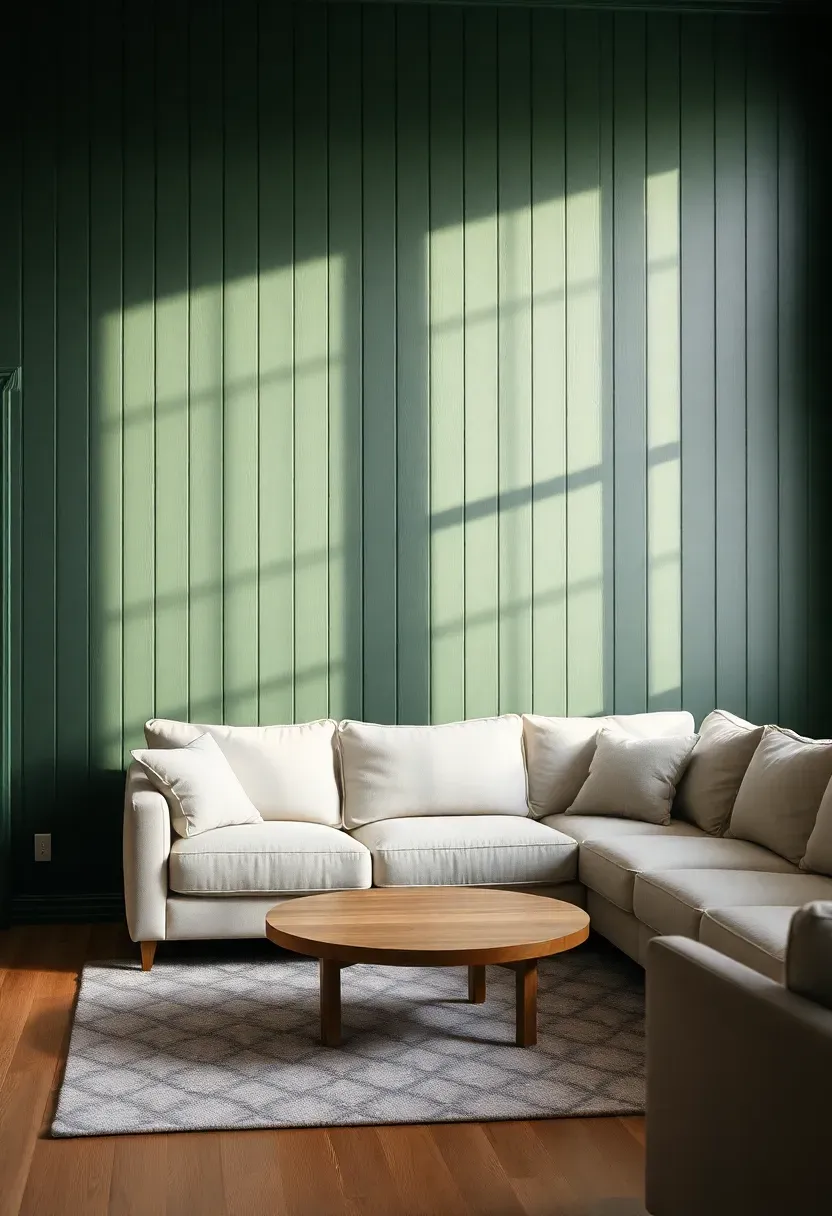
Installing board and batten wall treatment in deep forest green creates texture and shadow that adds sophisticated dimension to your living room. The vertical lines draw the eye upward, making ceilings feel higher while the green color provides warmth and depth. This architectural detail works beautifully as a single accent wall or carried throughout the room for cohesive impact, pairing exceptionally well with both modern and traditional furniture styles.
Recommended
Items for this idea
Tips
- Standard batten spacing is 8-12 inches—wider spacing feels more modern, tighter feels more traditional
- Use the same green on both the battens and wall surface for seamless color, or try contrasting shades
- Consider extending board and batten only to chair rail height for a wainscoting alternative
Budget/Time: Moderate—DIY-friendly for handy homeowners but requires careful measuring and cutting
What this gives you: Architectural character and shadow play that transforms plain walls into sophisticated design features
7. Dark Green Ceiling Dramatic Effect
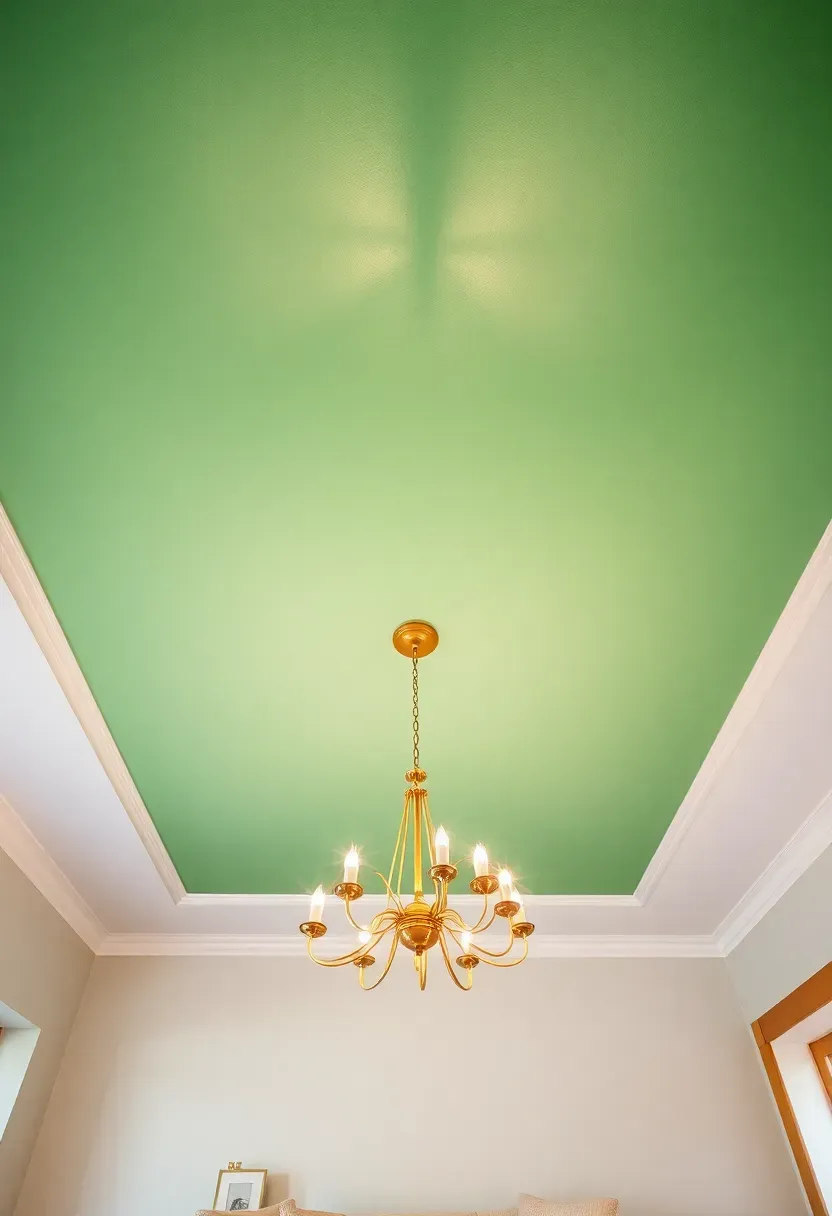
Painting your ceiling dark green while keeping walls neutral creates an unexpected inverted color scheme that makes rooms with high ceilings feel more intimate and cozier spaces feel architecturally intentional. This bold choice draws attention upward, highlighting ceiling height and any overhead fixtures while creating a jewel-box effect. Pair with lighter wall colors in cream, soft gray, or pale sage to maintain brightness and prevent the room from feeling cave-like.
Tips
- This technique works best in rooms with ceiling heights of 9 feet or more to avoid feeling oppressive
- Use flat paint on ceilings to minimize imperfections and create a velvety, sophisticated finish
- Ensure you have adequate lighting—layered fixtures help counterbalance the dark ceiling's light absorption
Best for: Rooms with architectural ceiling details like beams, trays, or coffers that you want to highlight
What this gives you: A conversation-starting design feature that adds luxury and intimacy while showcasing ceiling architecture
8. Green Paneling with Chair Rail Detail
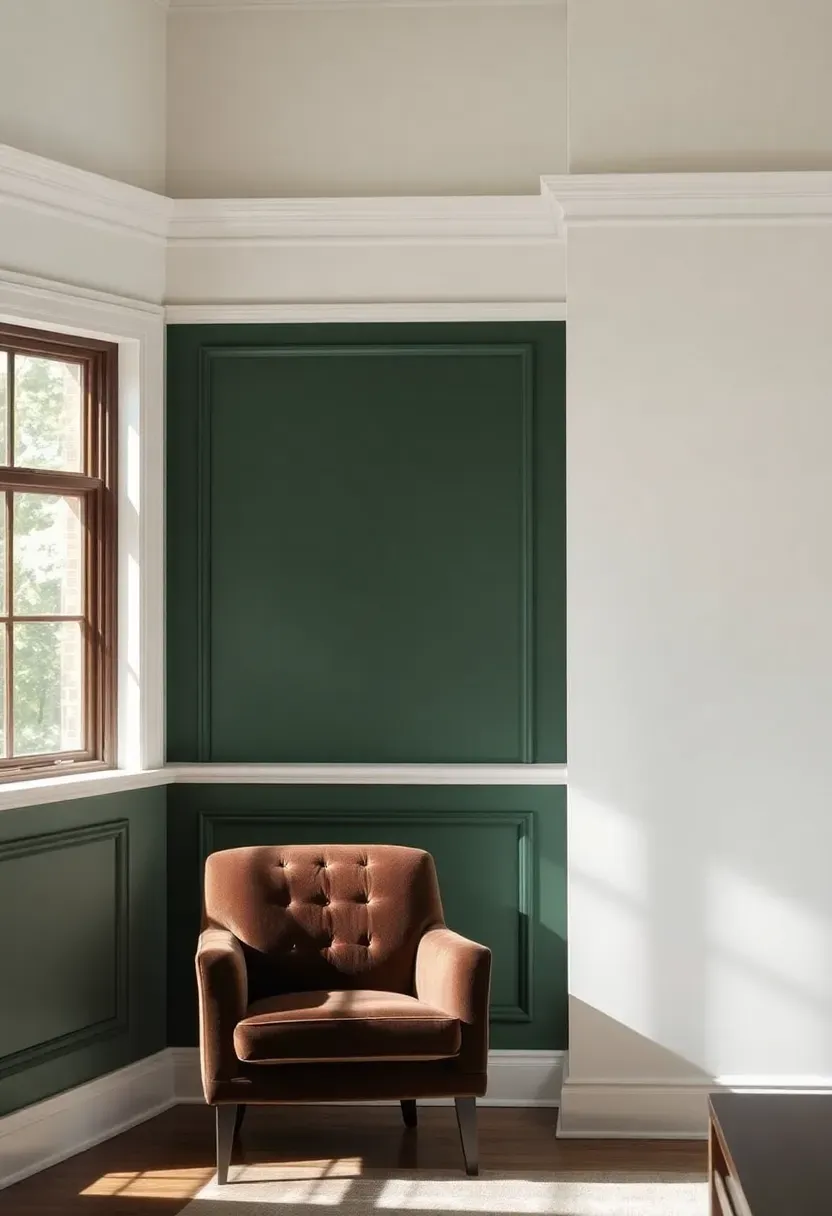
Traditional picture frame paneling painted in dark green below chair rail height creates elegant sophistication that bridges classic and contemporary design. The rectangular frames create architectural rhythm while the dark green color adds modern depth, making this treatment ideal for formal living rooms or spaces where you want polished refinement. Combine with cream or white upper walls and crisp white molding for a fresh, updated take on traditional paneling.
Recommended
Items for this idea
Tips
- Standard picture frame panels are approximately 30-36 inches wide with 3-4 inch spacing between frames
- Position chair rail at 32-36 inches from floor, or align with existing window sill height for continuity
- Use the same dark green on both the panel insets and molding for monochrome sophistication
Rental note: Create a temporary version with removable picture-frame molding and peel-and-stick wallpaper
What this gives you: Timeless architectural elegance with modern color sophistication that adds value and character
9. Ombré Green Wall Treatment
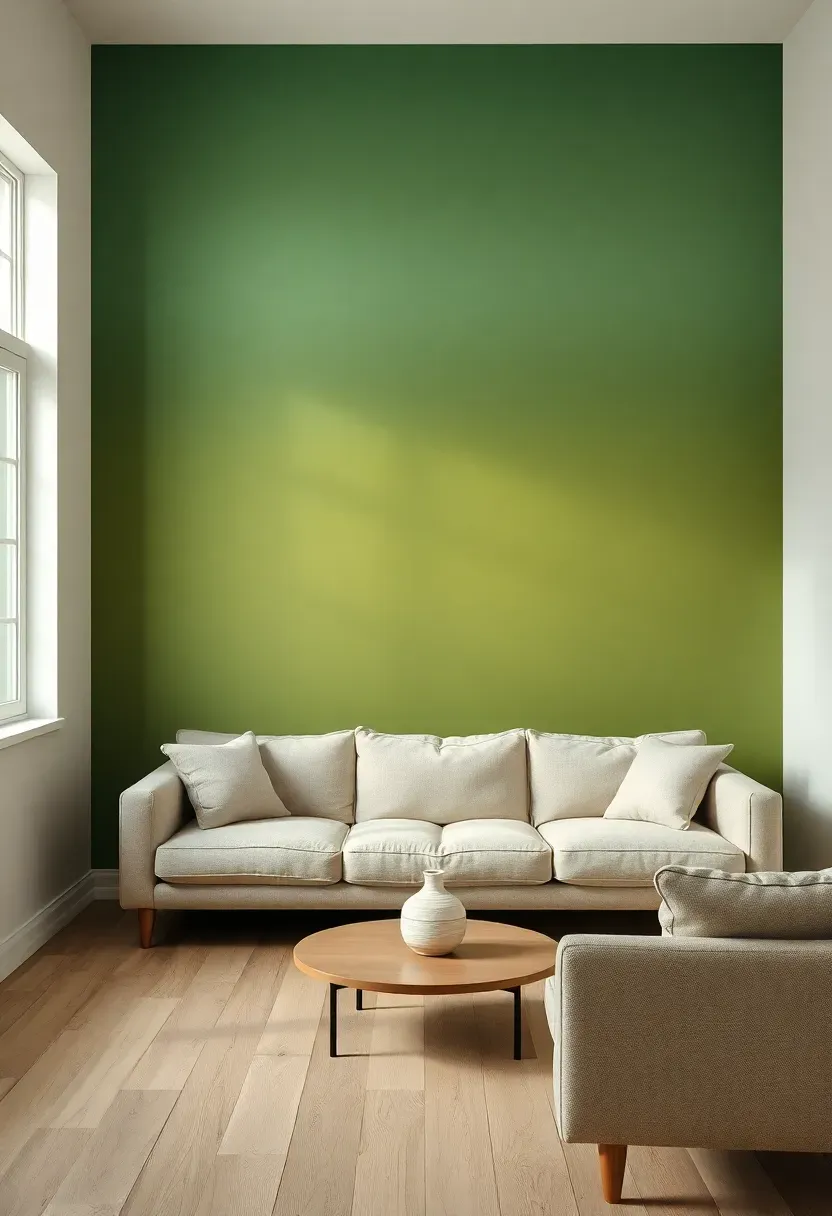
Creating an ombré effect by graduating green from dark at the bottom to light at the top adds artistic dimension and makes ceilings feel higher while maintaining color interest throughout the vertical space. This painterly technique softens the transition between colors, creating a watercolor-like effect that feels organic and sophisticated. The gradual lightening toward the ceiling maximizes light reflection while still delivering the dramatic impact of dark green where it matters most at eye level.
Tips
- Plan for 4-6 color bands with 6-12 inch blending zones between each for smooth transitions
- Work quickly while paint is wet, using dry brushes to blend edges between color sections
- Choose colors from the same manufacturer's paint strip for guaranteed undertone consistency
Budget/Time: Higher—requires multiple paint colors and more labor for blending, but creates a unique artistic effect
What this gives you: A custom art-like wall treatment that adds sophistication and vertical emphasis while maximizing color versatility
10. Dark Green Open Concept Zoning
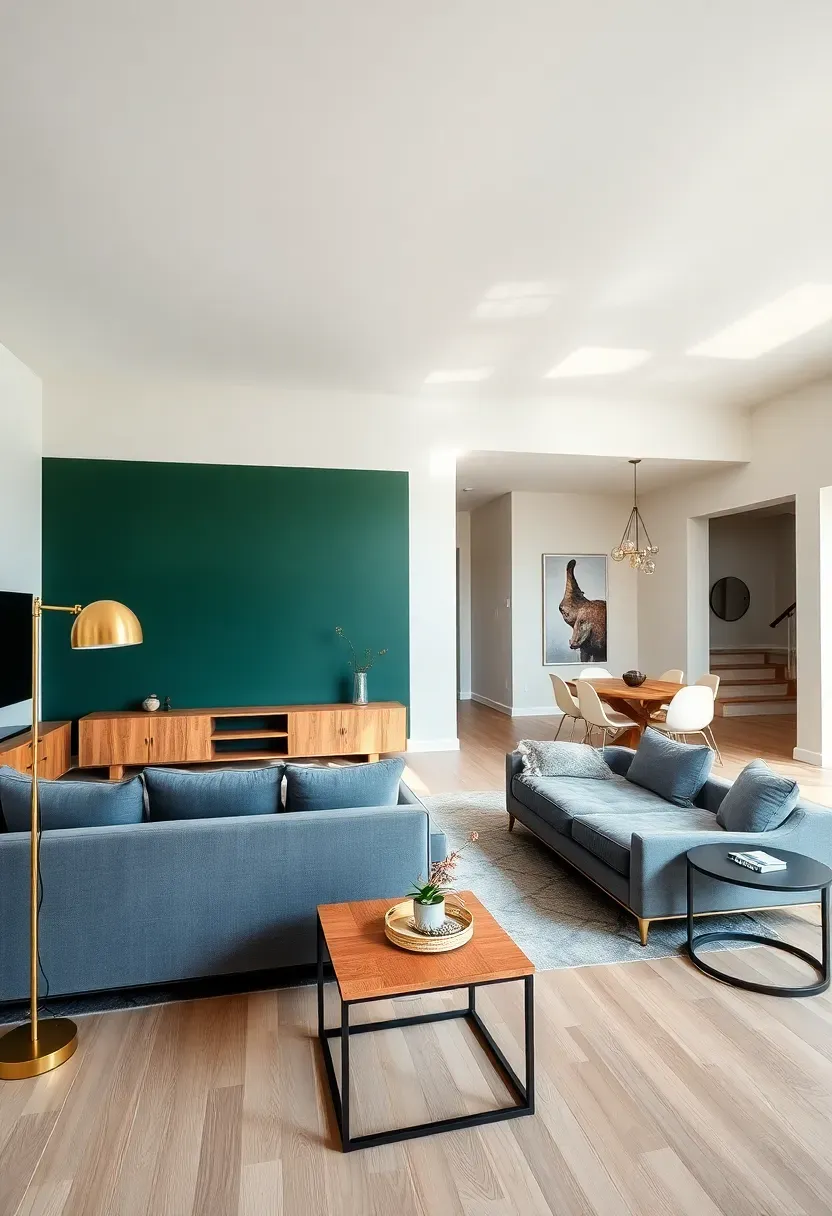
In open floor plans, using dark green on specific walls or architectural elements creates visual separation that defines living room zones without physical barriers. This strategic color application helps delineate spaces for conversation, dining, or work areas while maintaining visual flow throughout the open concept. The key is identifying natural stopping points—like behind built-ins, around fireplaces, or on partial walls—to create intentional color zones that guide the eye and establish hierarchy.
Recommended
Items for this idea
Tips
- Limit dark green to one full wall or two connected walls per zone to avoid overwhelming the open space
- Use the same green on built-in cabinetry or shelving to reinforce the zone's boundaries
- Carry accent colors from the green zone (throw pillows, rugs) into adjacent areas for subtle continuity
Best for: Open concept layouts where you want to create distinct areas without closing off the space
What this gives you: Clear visual definition of living zones while maintaining the spacious feel of open concept living
11. Forest Green with Natural Wood Ceiling
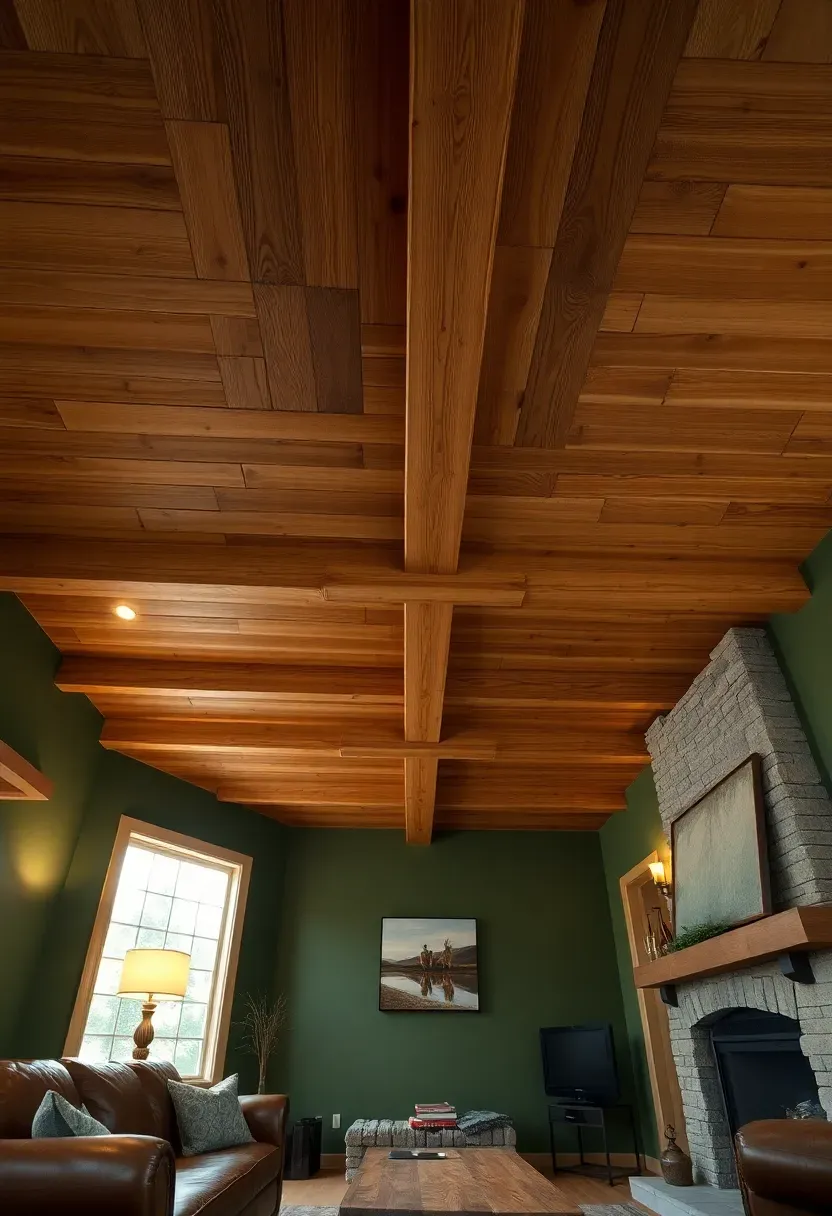
Pairing dark green walls with a natural wood ceiling creates a cabin-like retreat feel that brings warmth and organic sophistication to your living room. If you love this nature-forward approach, our [organic living room ideas](/posts/119_19-minimalist-organic-living-room-ideas-nature-indoors-for-a-comfortable-living-space/) explore similar earth-inspired designs. The combination of green's natural connection to foliage with wood's earthy texture results in a space that feels connected to the outdoors while remaining refined and contemporary. This treatment works exceptionally well in rooms with vaulted, beamed, or tongue-and-groove ceilings where the wood can become a design feature.
Tips
- Balance warm wood tones (oak, walnut) with cool green undertones (blue-leaning emerald) for visual contrast
- Consider the room's lighting—wood ceilings absorb light, so layer multiple sources throughout the space
- Keep flooring light or neutral to prevent the room from feeling too dark with both dark ceiling and walls
Avoid if: Your room has low ceilings or limited natural light—the combination can feel heavy without proper illumination
What this gives you: A retreat-like sanctuary that combines sophisticated color with organic warmth and architectural character
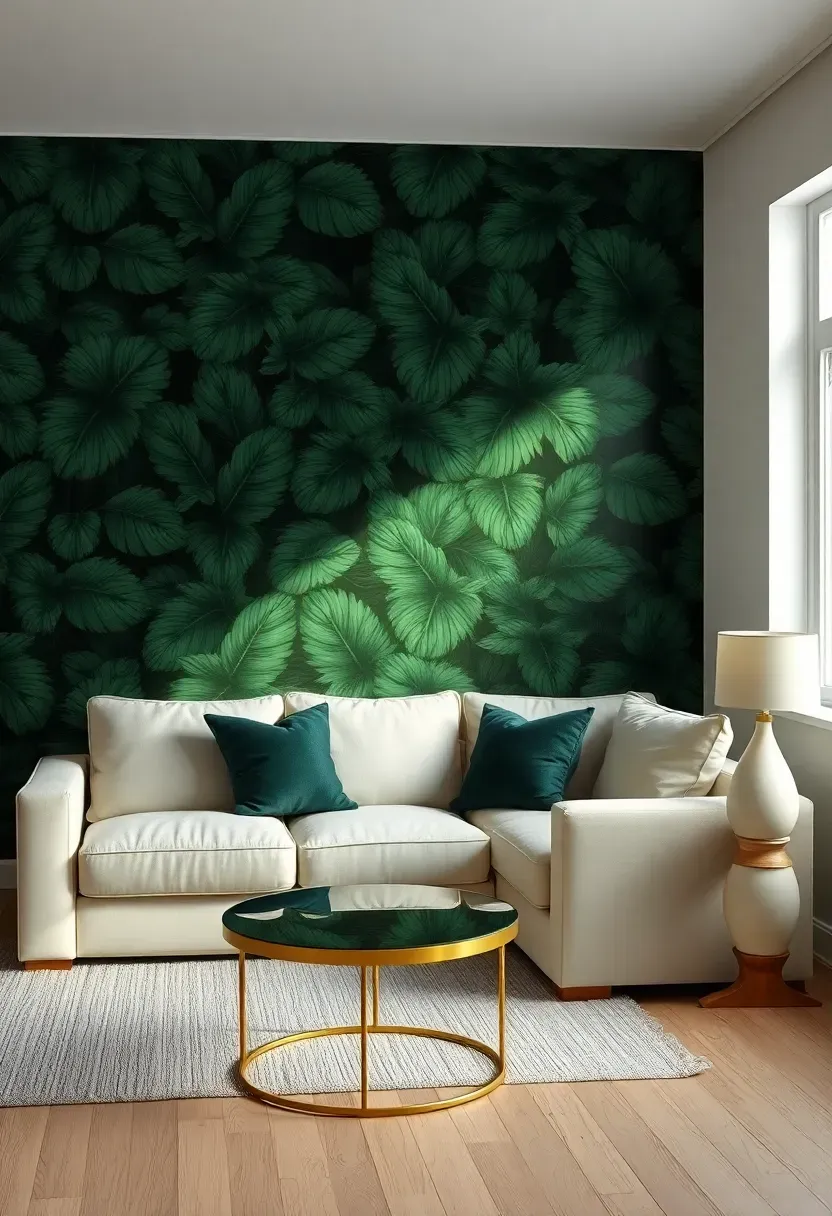
12. Green Wallpaper Accent Wall
Using dark green wallpaper with texture or pattern on a single wall creates instant visual interest and sophistication that paint alone cannot achieve. Whether you choose botanical prints, geometric patterns, grasscloth texture, or metallic accents, wallpaper adds dimension and luxury while maintaining the cocooning effect of dark green. This approach allows you to introduce pattern without committing to an entire room, making it perfect for experimenting with bold design.
Recommended
Items for this idea
Tips
- For beginners, measure your wall and add 15% extra wallpaper to account for pattern matching and trimming
- Choose the wall opposite the entry or behind major furniture for maximum impact from key viewing angles
- Pull wallpaper colors into the room through solid accessories—rugs, pillows, curtains—for cohesion
Rental note: Use removable wallpaper for commitment-free pattern that won't damage walls upon removal
What this gives you: Instant character and pattern sophistication with the luxurious depth of dark green without overwhelming the space
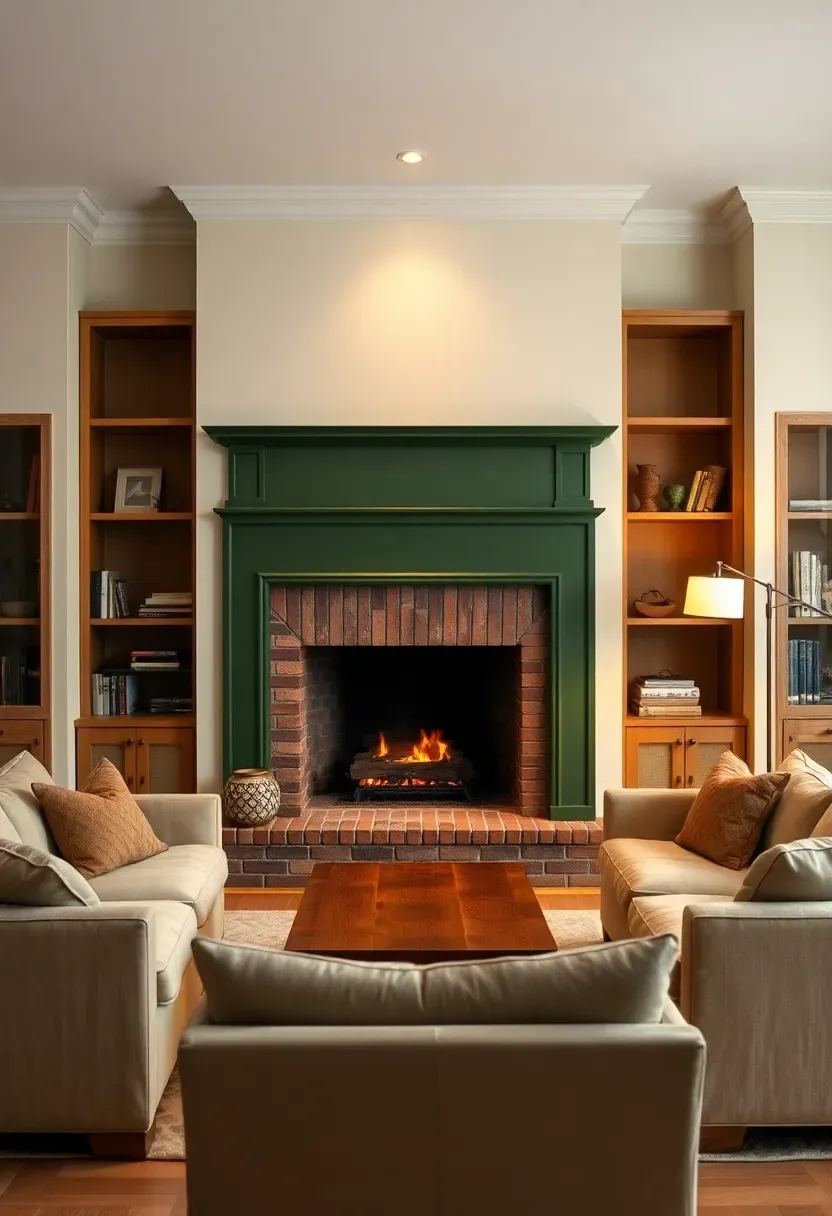
13. Dark Green Fireplace Surround
Painting your fireplace surround in dark green creates a stunning focal point that frames the hearth while adding sophisticated color to your living room. This approach draws attention to the fireplace as the room's heart, whether it's functional wood-burning, gas, or purely decorative. The green color works with virtually any fireplace material—brick, stone, tile, or drywall—and creates a cozy, gathering-focused atmosphere that feels both refined and welcoming.
Tips
- If you need practical guidance, use heat-resistant paint for functional fireplaces and follow curing time carefully
- Extend the green to the hearth and any built-in cabinetry flanking the fireplace for cohesive impact
- Consider a contrasting white or cream mantel shelf to create a clean, finished edge at the top
Best for: Rooms where the fireplace is the natural focal point and you want to enhance its architectural presence
What this gives you: A sophisticated, color-rich focal point that anchors the room and creates natural conversation areas
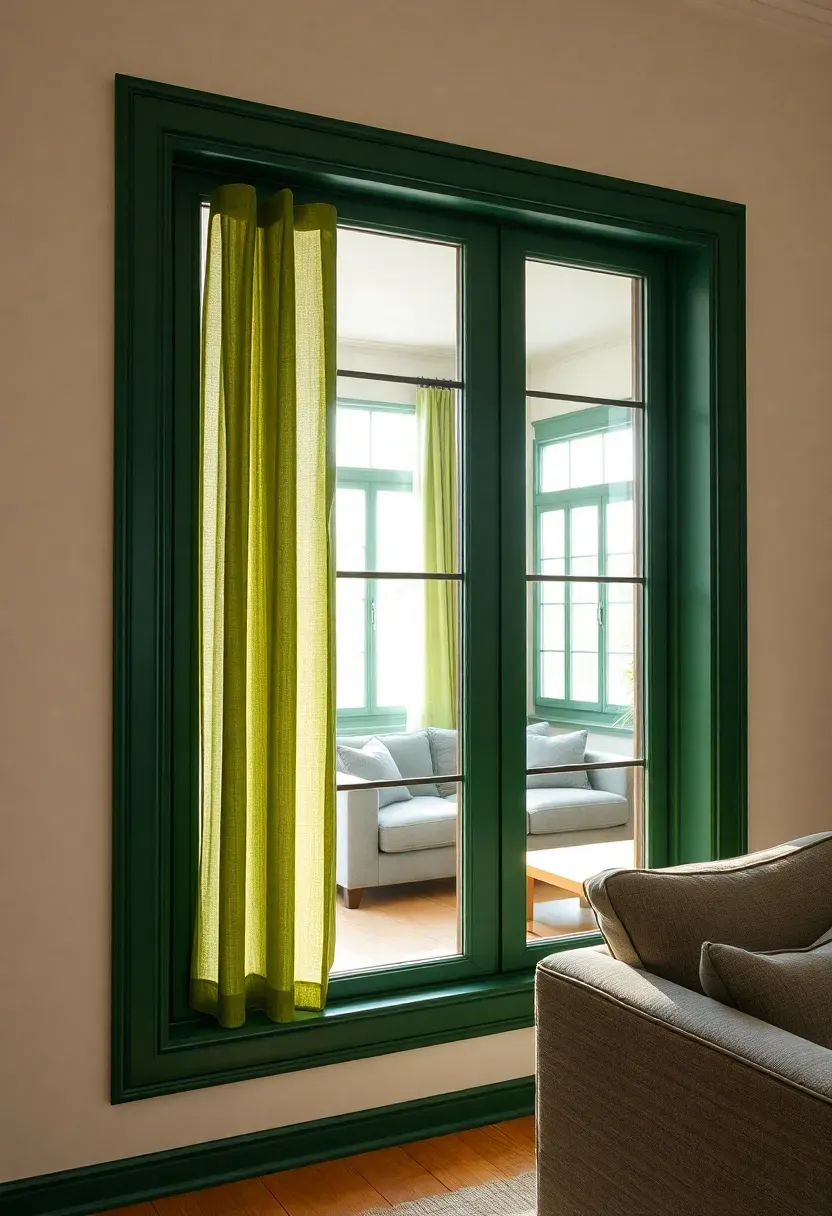
14. Green Window Trim and Casings
Painting window trim and door casings in dark green while keeping walls neutral creates an unexpected frame effect that draws attention to views and adds architectural interest. This inverted traditional approach makes windows feel larger and more intentional while introducing color in smaller doses that feel sophisticated rather than overwhelming. The green frames create visual rhythm throughout the room and provide a beautiful backdrop for curtains or shades.
Recommended
Items for this idea
Tips
- Use satin or semi-gloss finish on trim for durability and subtle light reflection that highlights the architectural detail
- Extend the green to baseboards for consistency, or keep baseboards neutral to ground the room
- Pair with curtain panels in complementary colors—cream, gold, or even deeper green—for layered sophistication
Rental note: Use peel-and-stick wood trim painted green for temporary architectural enhancement
What this gives you: Architectural sophistication and color drama without full-wall commitment while highlighting your windows as features
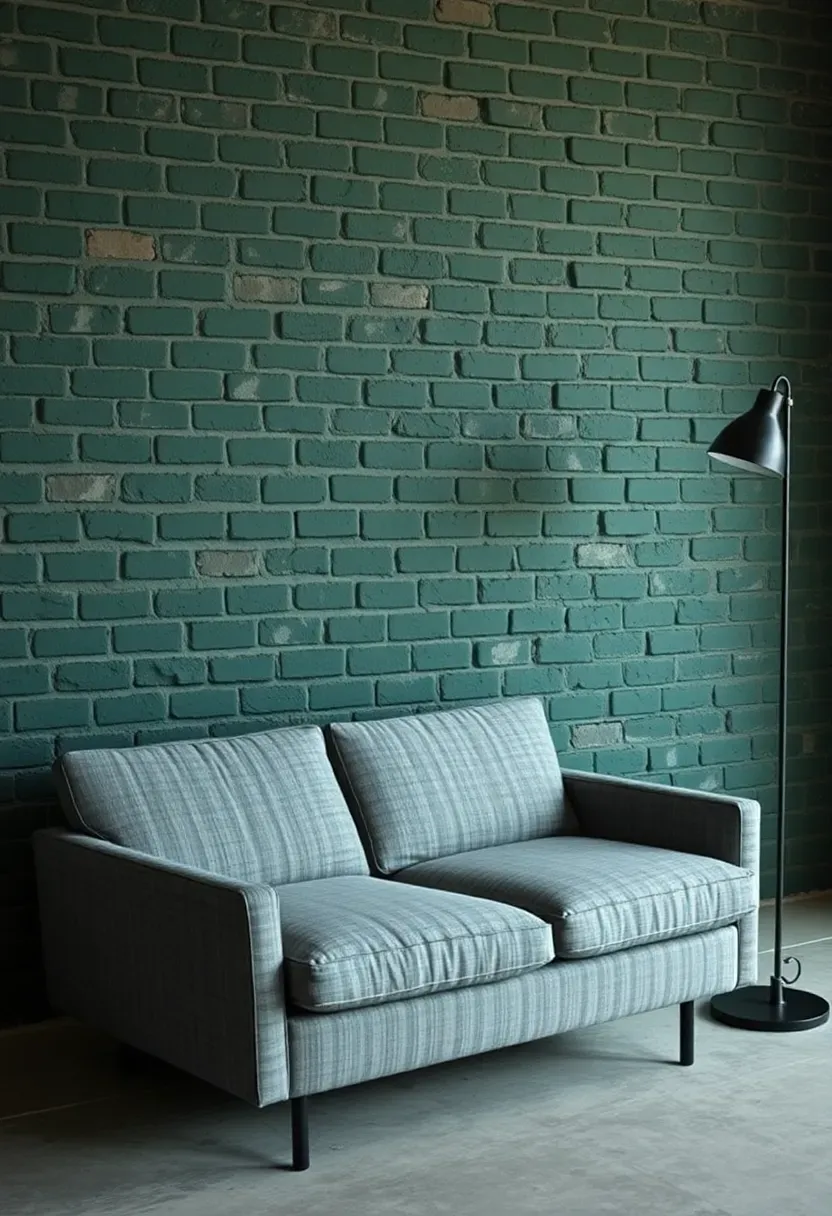
15. Painted Brick Green Feature
Painting exposed brick in dark green transforms industrial texture into a sophisticated feature that adds depth and character to your living room. The brick's natural mortar lines create automatic texture and shadow, while the green paint adds richness that makes the wall feel like a modern art piece. This treatment particularly suits lofts, industrial spaces, or rooms with existing fireplaces or partial brick walls that you want to celebrate rather than conceal.
Tips
- Use a masonry-specific primer and at least two coats of paint for complete coverage and adhesion
- Flat paint best highlights brick texture—higher sheen can look plastic on porous brick surfaces
- Consider limewash instead of solid paint for a more translucent, aged look that allows brick variation to show
Avoid if: You're interested in authentic brick restoration—paint is difficult to remove if you change your mind
What this gives you: Textural sophistication and industrial chic that transforms rough brick into a refined architectural feature
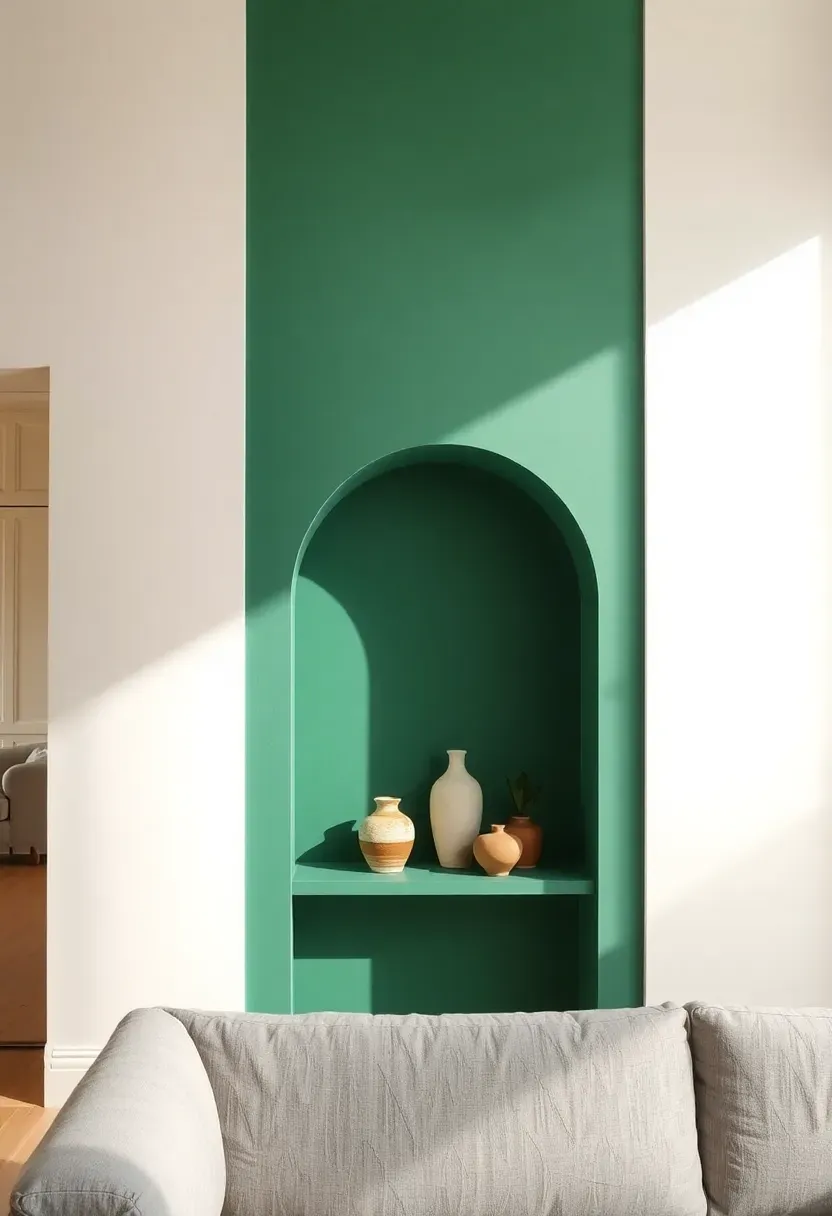
16. Dark Green Archway and Niche Design
Incorporating arched openings or built-in niches painted in dark green creates architectural interest and visual depth that elevates your living room's design. The arch shape softens the bold color while creating elegant framing for artwork, plants, or decorative objects. This approach works beautifully for transition areas between rooms, around built-in media centers, or as standalone decorative arches that add whimsical sophistication to blank walls.
Recommended
Items for this idea
Tips
- For archways, standard height is 7-8 feet with a width of 3-4 feet for comfortable passage
- Add LED strip lighting inside niches at the top or bottom to highlight displayed objects
- Extend the green color to surrounding trim for a cohesive built-in appearance
Budget/Time: Moderate—requires skilled carpentry for arches but niches can be simpler DIY projects
What this gives you: Architectural sophistication and display space that adds character while showcasing your collections
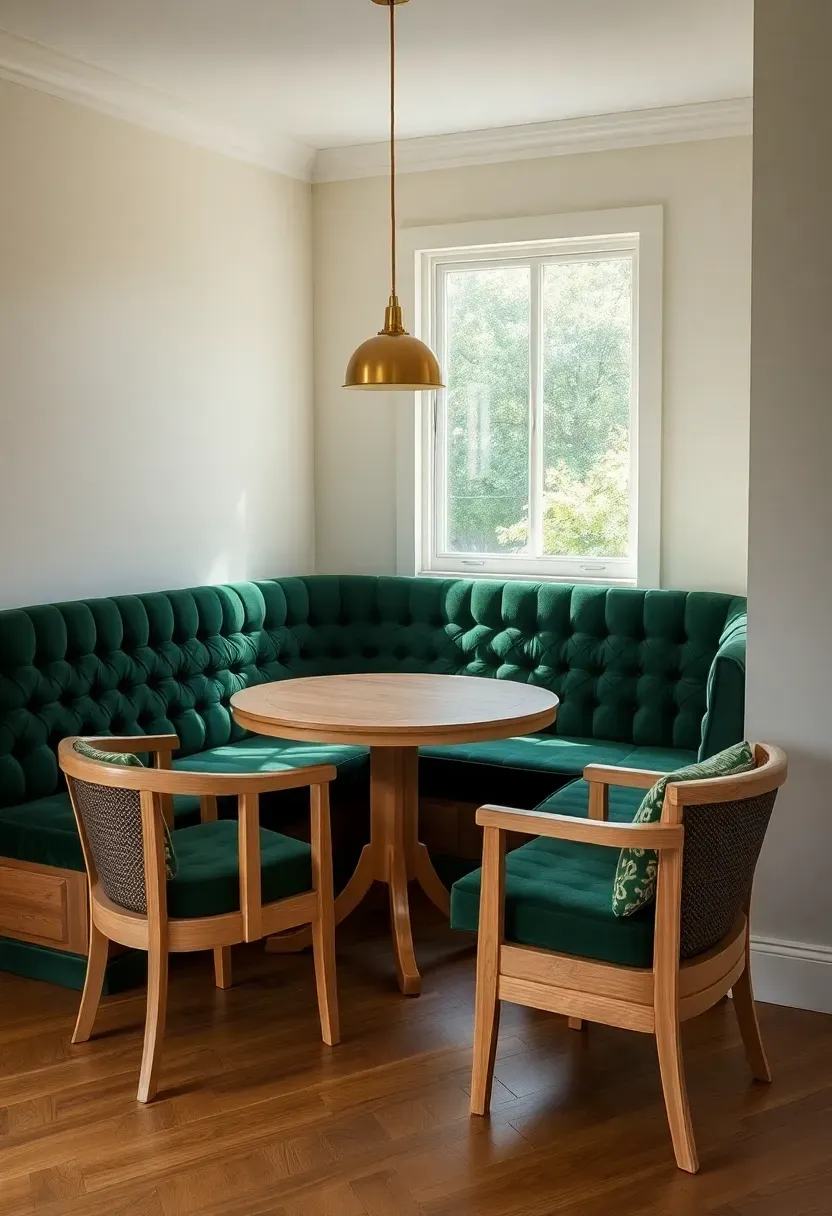
17. Green Built-in Banquette Seating
Creating a built-in banquette in dark green adds both functional seating and bold color while maximizing space efficiency in your living room. This permanent seating solution works particularly well in bay windows, corners, or adjacent to fireplaces, creating intimate conversation areas and reading nooks. The green upholstery or paint creates a sophisticated statement while providing practical seating that feels luxurious and intentional, especially when paired with a complementary table.
Tips
- Standard banquette height is 18-20 inches with 12-15 inches depth for comfortable seating
- Consider durable performance fabrics like indoor-outdoor velvet or treated linen for high-traffic areas
- Incorporate hidden storage beneath the seat bench for practical functionality
Best for: Breakfast nooks, bay windows, or corners where you want to create a dedicated seating or dining area
What this gives you: Functional built-in seating with sophisticated color that creates cozy, intimate gathering spaces
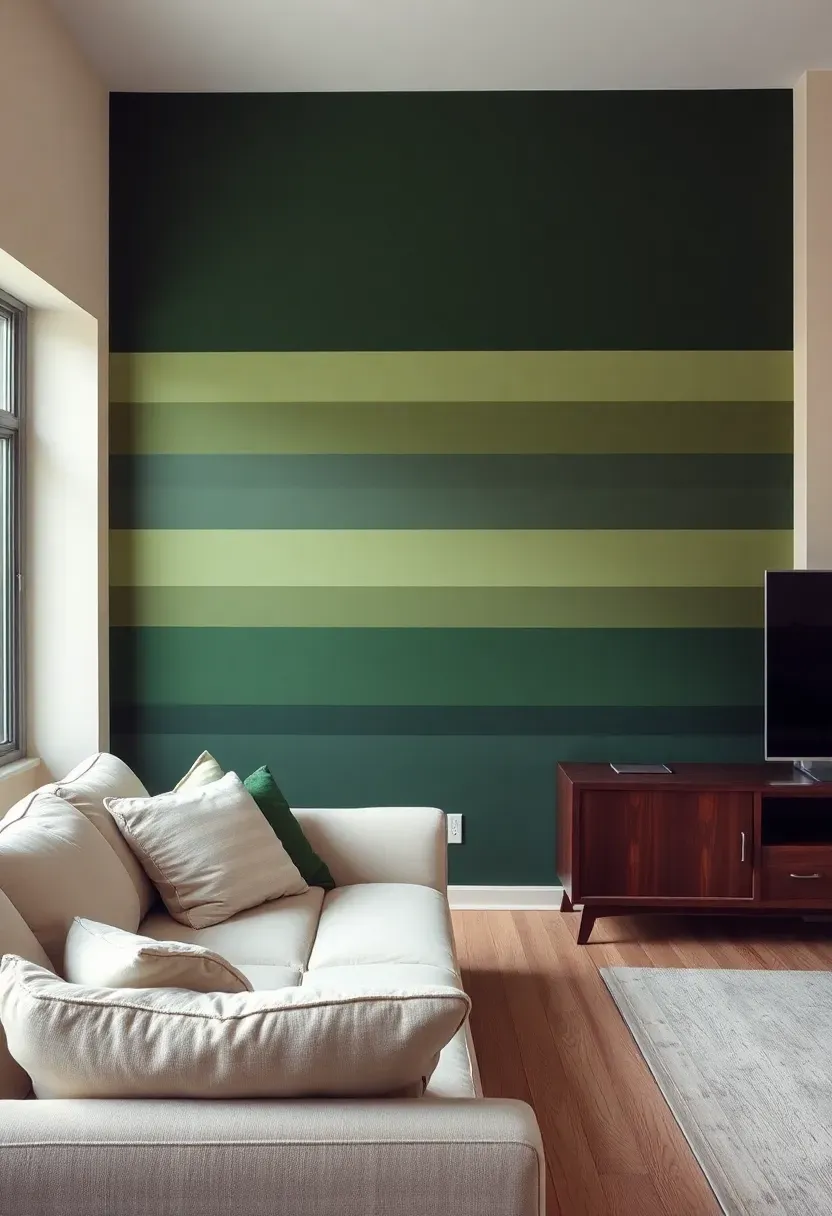
18. Two-Tone Green with Horizontal Stripe
Creating a horizontal stripe treatment with two shades of green adds dynamic visual interest while maintaining the sophistication of monochromatic color. This graphic approach can be subtle with close shades or bold with high-contrast greens, and the horizontal orientation makes rooms feel wider and ceilings feel higher. Whether you choose wide bands for drama or thin pinstripes for understated pattern, this treatment adds movement and energy while staying within your green color palette.
Recommended
Items for this idea
Tips
- For bold stripes, use painter's tape and a level to ensure perfectly horizontal lines
- Wide stripes (12-24 inches) feel more modern, while thin pinstripes (1-3 inches) create subtle texture
- Keep ceiling and baseboard areas in a neutral color to frame the striped section cleanly
Budget/Time: Moderate—requires careful measuring and taping but creates high-impact results with just paint
What this gives you: Graphic sophistication and visual energy that adds pattern while maintaining color harmony
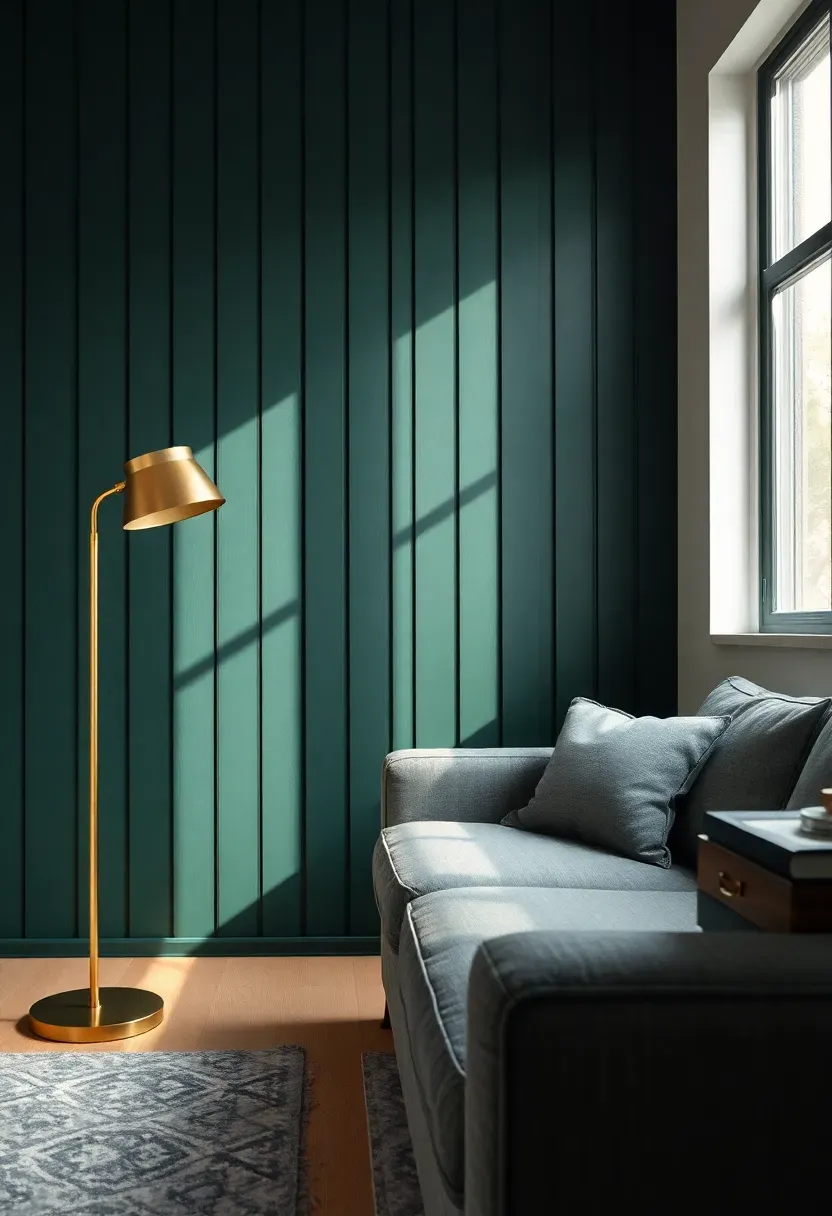
19. Dark Green Slatted Wood Wall
Installing a slatted wood wall treatment in dark green creates modern architectural interest with shadow play and texture that elevates contemporary living rooms. The vertical slats add rhythm and dimension while the green color provides warmth and sophistication, making this treatment particularly effective as an accent wall behind media consoles or seating areas. The gaps between slats create interesting shadow patterns throughout the day as light shifts, adding dynamic movement to the space.
Tips
- Standard slat width is 2-3 inches with 0.5-1 inch gaps for balanced proportions
- Consider acoustical benefits—slatted walls can help reduce sound reflection in large rooms
- Use pre-finished slat wall panels for easier installation, or build custom for truly unique spacing
Best for: Modern or contemporary spaces where you want architectural interest and improved acoustics
What this gives you: Modern architectural sophistication with dynamic shadow play and textural depth
These 19 dark green living room ideas demonstrate the remarkable versatility of sophisticated green tones, from full-room emerald immersion to strategic accent applications that create bold, welcoming spaces. If you love dramatic color but want to explore beyond green, our [navy blue living room ideas](/posts/103_21-minimalist-navy-blue-living-room-ideas/) offer a similarly rich alternative. Whether you choose dramatic treatments like green ceilings and ombré walls or architectural details like board and batten and slatted wood, dark green brings depth, warmth, and natural sophistication to your living room. The key is balancing color intensity with adequate lighting, natural materials, and thoughtful contrast to create spaces that feel both luxuriously bold and refreshingly livable. By selecting treatments that complement your room's architecture, light conditions, and personal style, you can transform your living room into a sophisticated sanctuary that celebrates the rich, restorative beauty of dark green.
About the author
OBCD
CGI visualization and interior design content. We create detailed 3D renders and curate practical design ideas for every room in your home.