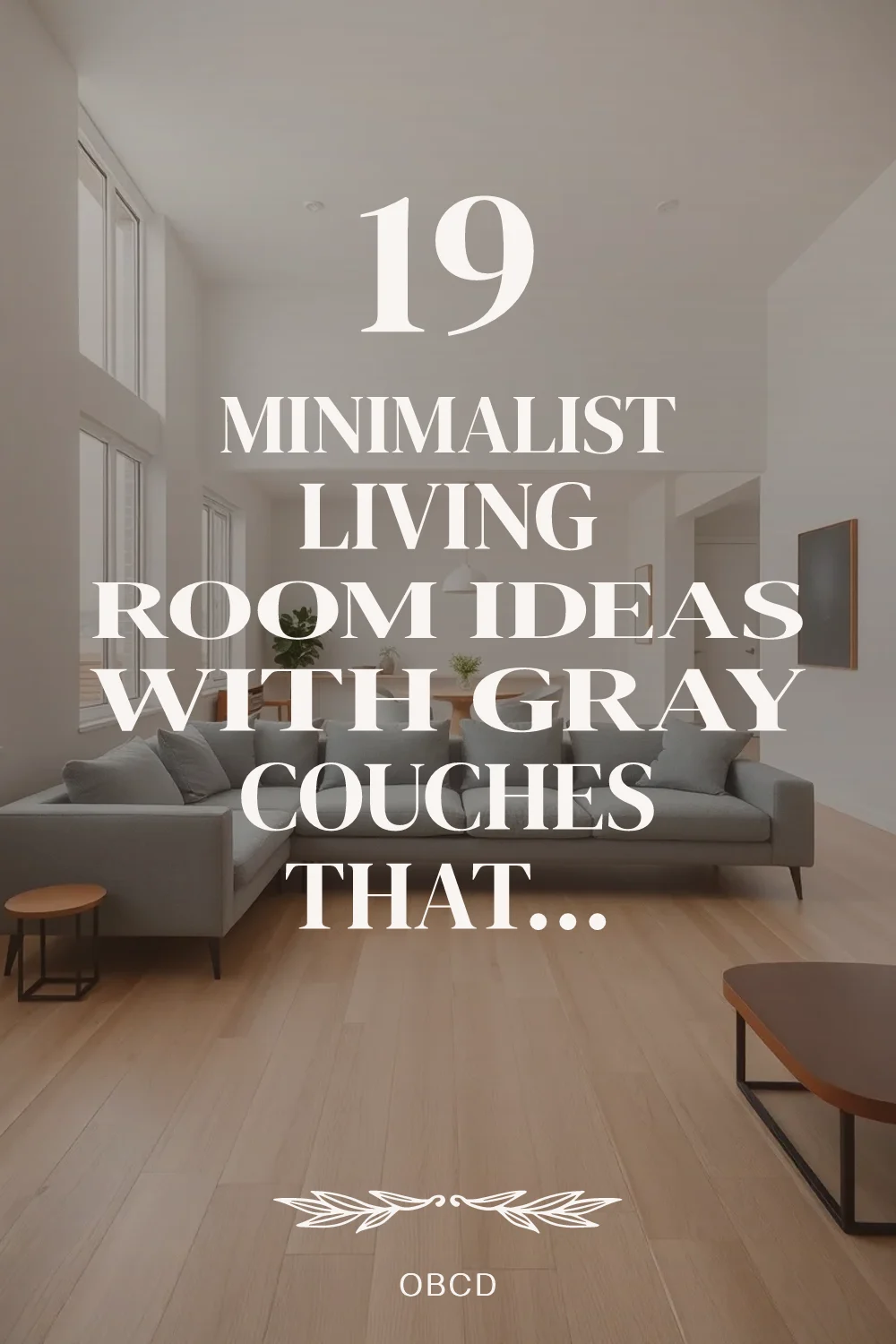
19 Minimalist Living Room Ideas with Gray Couches (2026)
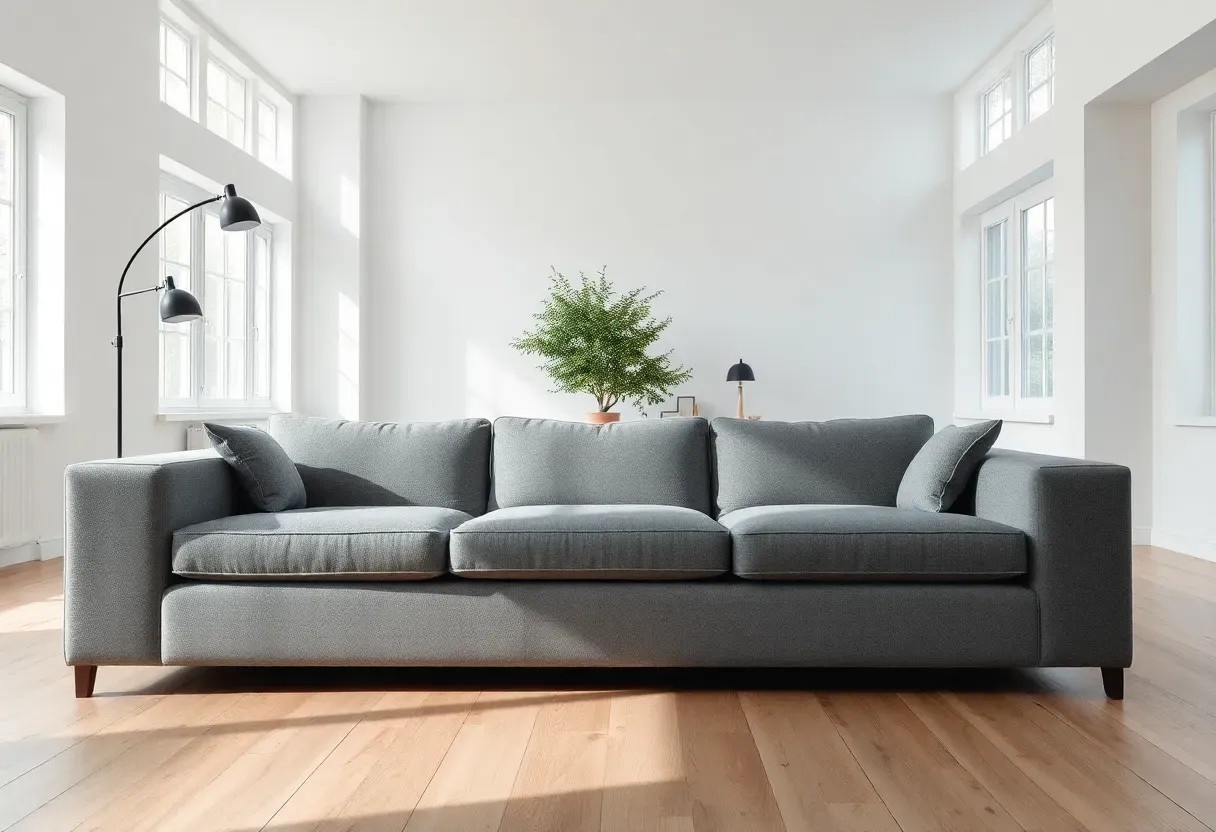
Looking for minimalist living room ideas with a gray couch? A gray sofa anchors your space with unmatched versatility and sophisticated calm, making it the ideal starting point for a serene, modern environment that feels both welcoming and intentional.
Gray sofas work beautifully with minimalist decor because they add depth without visual weight, giving you room to play with light, texture, and subtle color accents. Whether you prefer light gray for airy spaciousness or charcoal for dramatic contrast, the right gray couch styling transforms even a small apartment living room into a balanced sanctuary.
Below you will find 19 curated gray couch living room ideas -- from floating layouts and monochromatic palettes to renter-friendly wall treatments and cozy reading nooks. Each one shows how to let your gray sofa shine while keeping that essential minimalist breathing room.
Quick FAQ
Why choose a gray couch for minimalist design?
Gray is inherently neutral and calming, making it ideal for minimalist spaces. It provides visual interest without overwhelming the room, allowing other design elements to breathe while serving as a sophisticated anchor piece.
How do I style a gray sofa without clutter?
Focus on 2-3 statement pieces rather than many small items. A textural throw, one large artwork, and a sculptural side table can complete the look. Edit regularly and only display what you genuinely use or love.
What colors work best with gray couches?
White walls create crisp contrast, while black accents add sophistication. Natural wood tones bring warmth, and muted blues or greens provide subtle color without disturbing the serene minimalist palette.
Should I choose light or dark gray for small spaces?
Light gray visually expands small rooms and reflects more light, making spaces feel open. Dark charcoal can work beautifully in small rooms if contrasted with light walls and flooring, creating a cozy, intimate atmosphere.
How do I add warmth to a gray couch living room?
Incorporate natural materials like wood furniture, jute rugs, and linen textiles. Warm lighting through layered fixtures and organic textures in throws or pillows prevents gray from feeling cold or sterile.
What rug styles complement gray sofas?
Natural fiber rugs like jute or sisal add organic texture. Low-pile wool in neutral tones creates subtle contrast. For pattern, opt for geometric designs in muted colors that enhance rather than compete with the sofa.
As an Amazon Associate I earn from qualifying purchases.
Table of Contents
- 1. Open Layout with Floating Gray Sofa
- 2. Gallery Wall Above Gray Sectional
- 3. Low-Profile Gray Couch on Bare Floors
- 4. Gray Sofa with Statement Pendant Light
- 5. Monochromatic Gray Living Room
- 6. Gray Couch Against White Brick Wall
- 7. Asymmetric Layout with Angular Gray Sofa
- 8. Gray Sofa with Indoor Tree
- 9. Gray Couch in Sunroom-Style Living Room
- 10. Low Gray Sofa with Floor Cushions
- 11. Gray Couch as Room Divider
- 12. Industrial Gray Sofa with Exposed Elements
- 13. Gray Couch with Built-In Storage Wall
- 14. Gray Sofa in Reading Nook Corner
- 15. Double Gray Sofa Layout
- 16. Gray Couch with Marble Accents
- 17. Gray Sofa with Curved Furniture
- 18. Gray Couch in Alcove Nook
- 19. Gray Sofa with Wall Sconces
1. Open Layout with Floating Gray Sofa
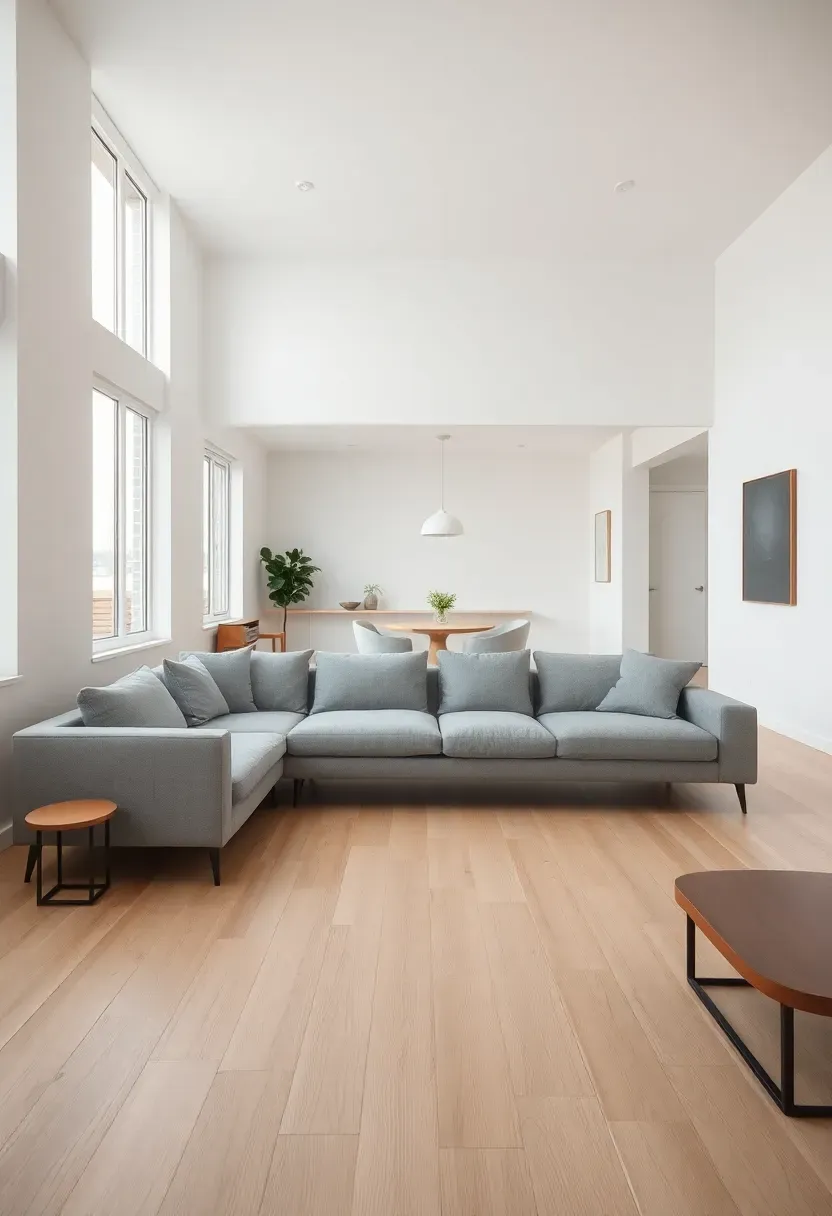
Positioning your gray sofa away from walls creates a natural flow that defines conversation zones while maintaining sightlines through the space. This floating arrangement works exceptionally well in open-concept homes where the living room connects to dining or kitchen areas. The gray couch anchors the seating area without blocking the visual connection between zones, creating distinct yet cohesive spaces within one larger room.
Tips
- Use a console table behind the sofa to provide surface space and visually ground the floating arrangement
- Add a large area rug that extends 18-24 inches beyond the sofa on all sides to define the zone
- Keep the back of the sofa visually interesting with books, lamps, or decorative objects on the console
Best for: Open-concept spaces over 300 square feet where you need distinct zones without visual barriers
What this gives you: Improved traffic flow and better conversation dynamics while maintaining an airy, spacious feel
2. Gallery Wall Above Gray Sectional
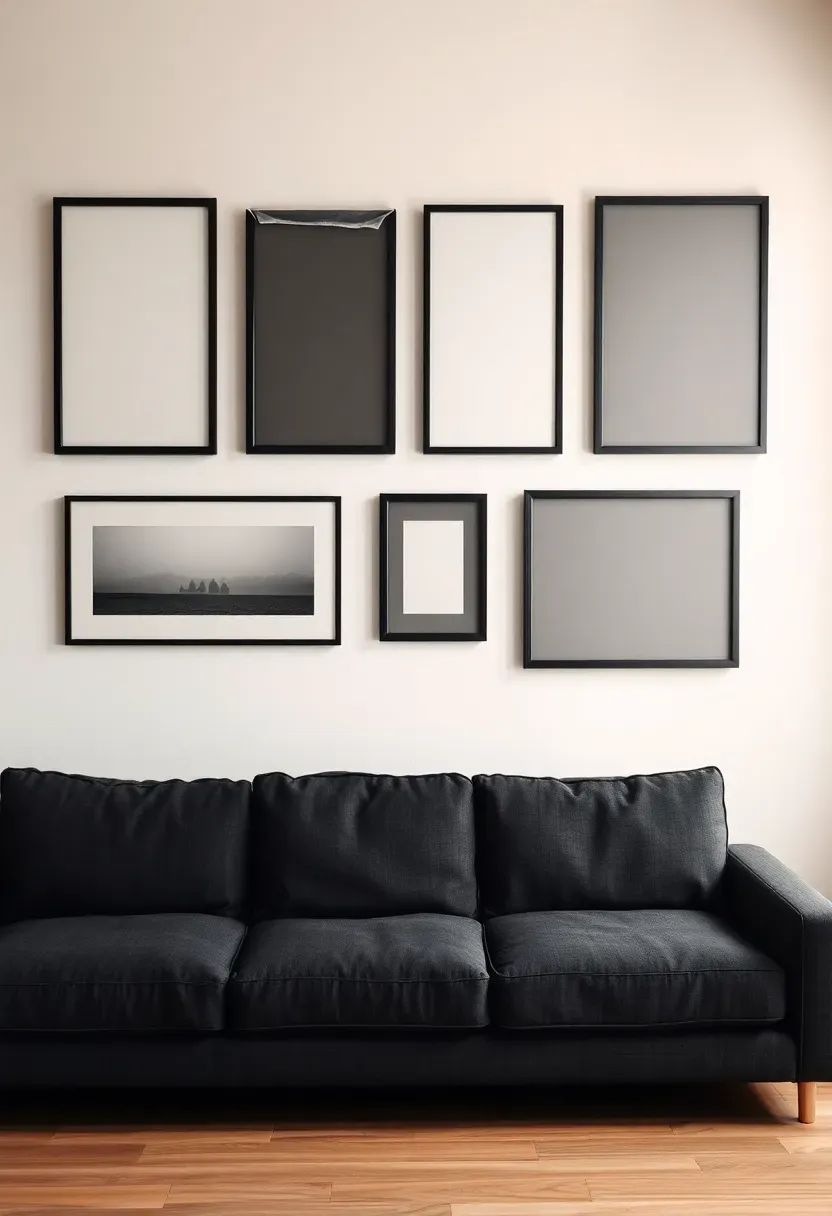
A gray sectional provides the perfect neutral canvas for an artful gallery wall that adds personality without disrupting minimalism. The key is maintaining consistent spacing and frames—choose identical frames in black, white, or natural wood to create cohesion. Mix artwork sizes but keep the color palette restrained to 2-3 hues that complement your gray sofa, ensuring the display feels curated rather than cluttered.
Recommended
Items for this idea
Tips
- Start with the largest piece centered above the sofa, then work outward with smaller frames
- Keep 2-3 inches of space between frames for consistency—the eye reads this as intentional design
- Include at least one piece with gray tones to create visual connection with the sofa below
Budget/Time: Affordable if you collect art gradually; plan 2-3 hours for careful hanging and adjusting
What this gives you: A personalized focal point that reflects your style while maintaining minimalist restraint
3. Low-Profile Gray Couch on Bare Floors
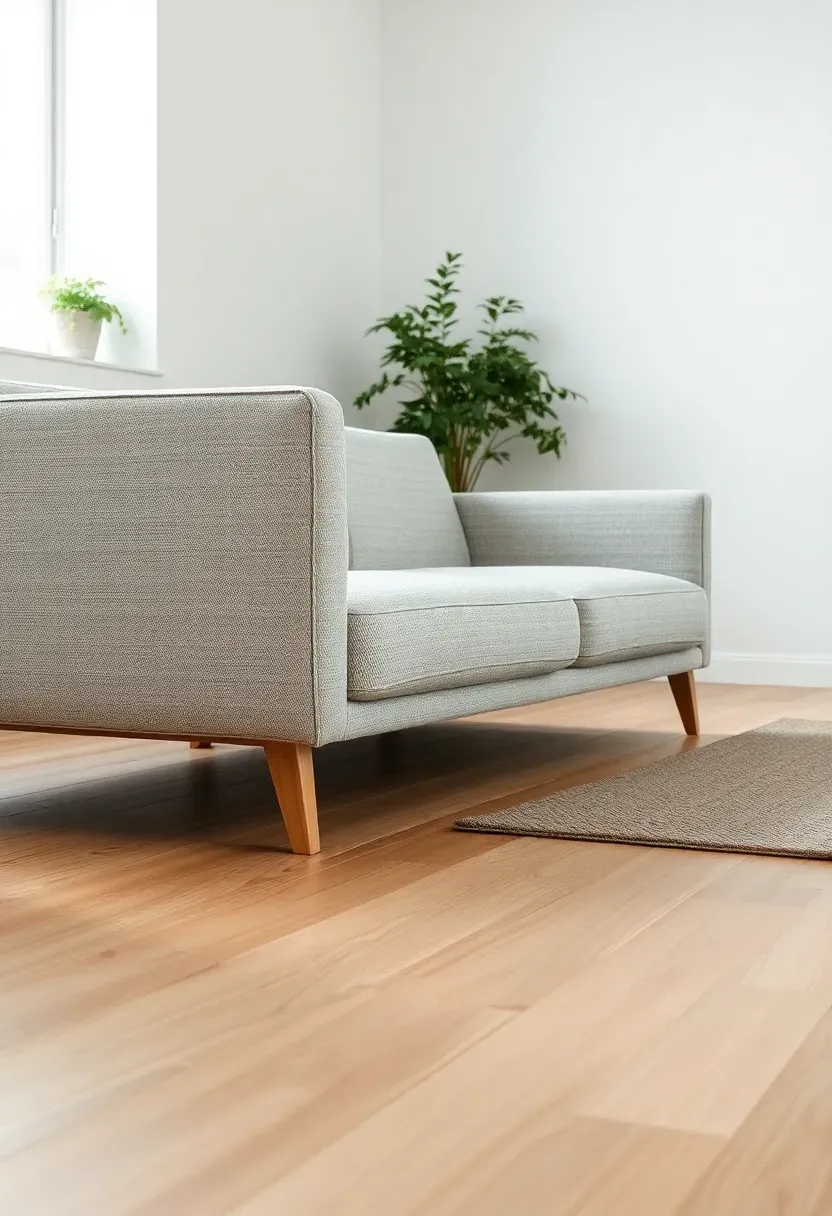
Eschewing rugs entirely and placing a low-profile gray sofa directly on hardwood or polished concrete floors creates Scandinavian-inspired minimalism that emphasizes clean lines and material honesty. This approach works particularly well with light gray upholstery that echoes the tonal range of natural wood flooring. The absence of a rug makes the room feel larger and more architectural—ideal for spaces with beautiful flooring you want to showcase.
Tips
- Choose a sofa with exposed legs that shows at least 6 inches of floor underneath for visual lightness
- If you need softness underfoot, add a single small sheepskin or textured throw instead of a full rug
- Use furniture pads to protect floors and prevent the sofa from sliding on smooth surfaces
Avoid if: Your floors are cold, uneven, or you live in a climate where bare floors feel uncomfortable in winter
What this gives you: Enhanced sense of space and architectural clarity that highlights beautiful flooring
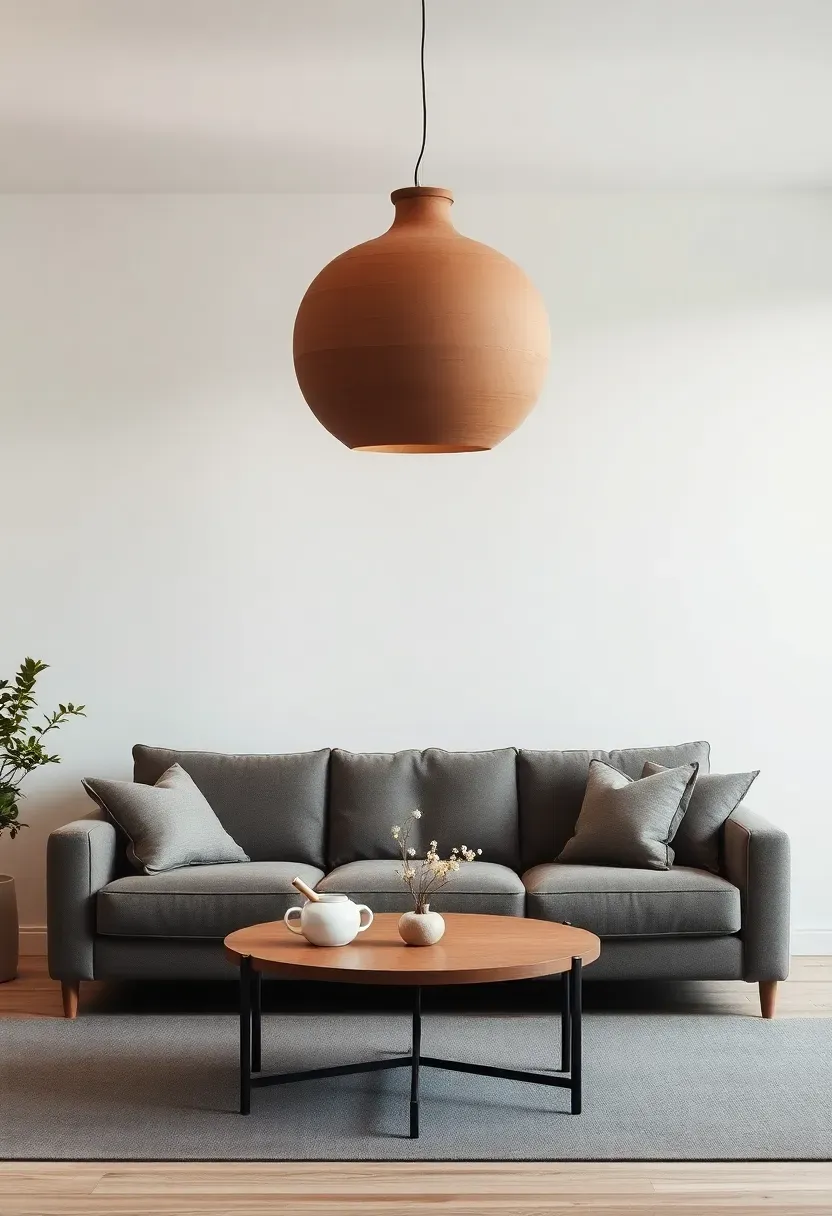
4. Gray Sofa with Statement Pendant Light
A single dramatic pendant light suspended above your gray sofa creates an instant focal point that elevates the entire room without adding clutter. The vertical draw of the pendant balances the horizontal presence of the sofa, creating dynamic visual tension that feels intentional and designed. (For more fixture inspiration, see our minimalist living room lighting ideas.) Choose a fixture with sculptural presence—whether it's a large woven shade, a metal sphere, or a handblown glass form—that holds its own as artwork while providing warm, focused light for reading or ambiance.
Recommended
Items for this idea
Tips
- Hang the pendant 28-34 inches above the coffee table for ideal scale and lighting distribution
- Choose a fixture with a diameter roughly one-third to one-half the width of your sofa for proportion
- If your sofa isn't centered, position the pendant to align with the coffee table rather than the sofa
Placement note: This works best when the sofa floats in the room or sits against a wall without competing ceiling elements
What this gives you: Architectural interest and layered lighting that transforms the room's atmosphere day and night
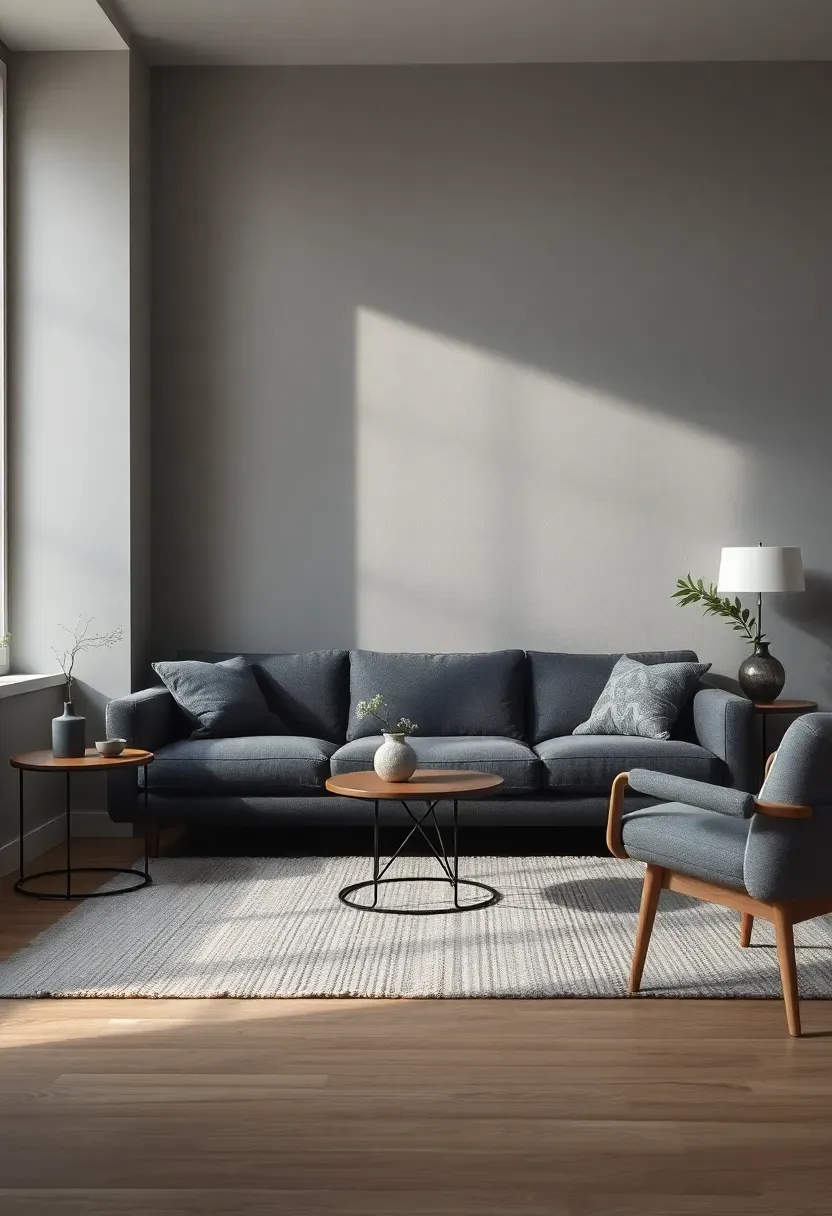
5. Monochromatic Gray Living Room
Embracing gray at multiple values—from near-white walls to charcoal furniture—creates sophisticated monochromatic minimalism that feels layered rather than flat. The secret is incorporating varied textures: smooth walls, nubby wool upholstery, sleek metal surfaces, and rough-hewn wood accents. This textural diversity keeps the room visually interesting despite the limited palette, while different shades of gray create depth and dimension through subtle contrast.
Tips
- Use at least 4-5 distinct gray values to create depth, from nearly white to nearly black
- Layer textures aggressively—smooth vs rough, matte vs shiny, soft vs hard—to prevent flatness
- Add one warm accent material like brass or wood to prevent the room from feeling too cool
Best for: North-facing rooms or spaces where you want a cocooning, calming atmosphere that feels sophisticated
What this gives you: A visually cohesive, serene environment that feels both modern and timeless
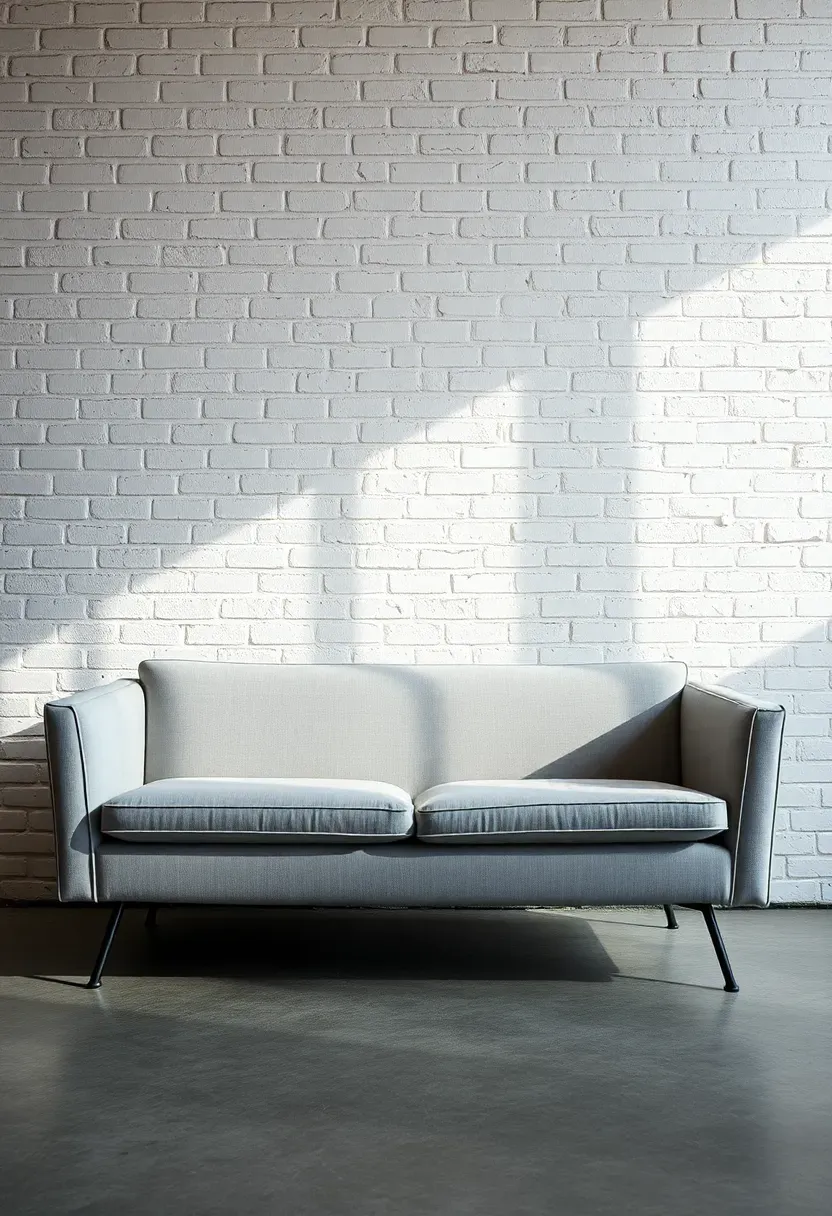
6. Gray Couch Against White Brick Wall
The tactile contrast between a smooth gray sofa and the shadowed texture of white brick creates industrial-tinged minimalism with rich visual depth. The mortar lines and brick surface catch light variably throughout the day, creating a living backdrop that adds interest without requiring artwork or additional decor. This pairing works particularly well in lofts, converted industrial spaces, or any room where you want to introduce architectural character without sacrificing minimalist principles.
Recommended
Items for this idea
Tips
- If you don't have exposed brick, create the look with white brick wallpaper or painted shiplap for similar texture
- Keep other decor minimal—the brick wall is your artwork, so don't compete with it
- Embrace the imperfections; chips and variations in the brick add authentic character
Rental note: Removable brick wallpaper or peel-and-stick panels can create this look temporarily without damaging walls
What this gives you: Built-in architectural interest that eliminates the need for additional wall decor
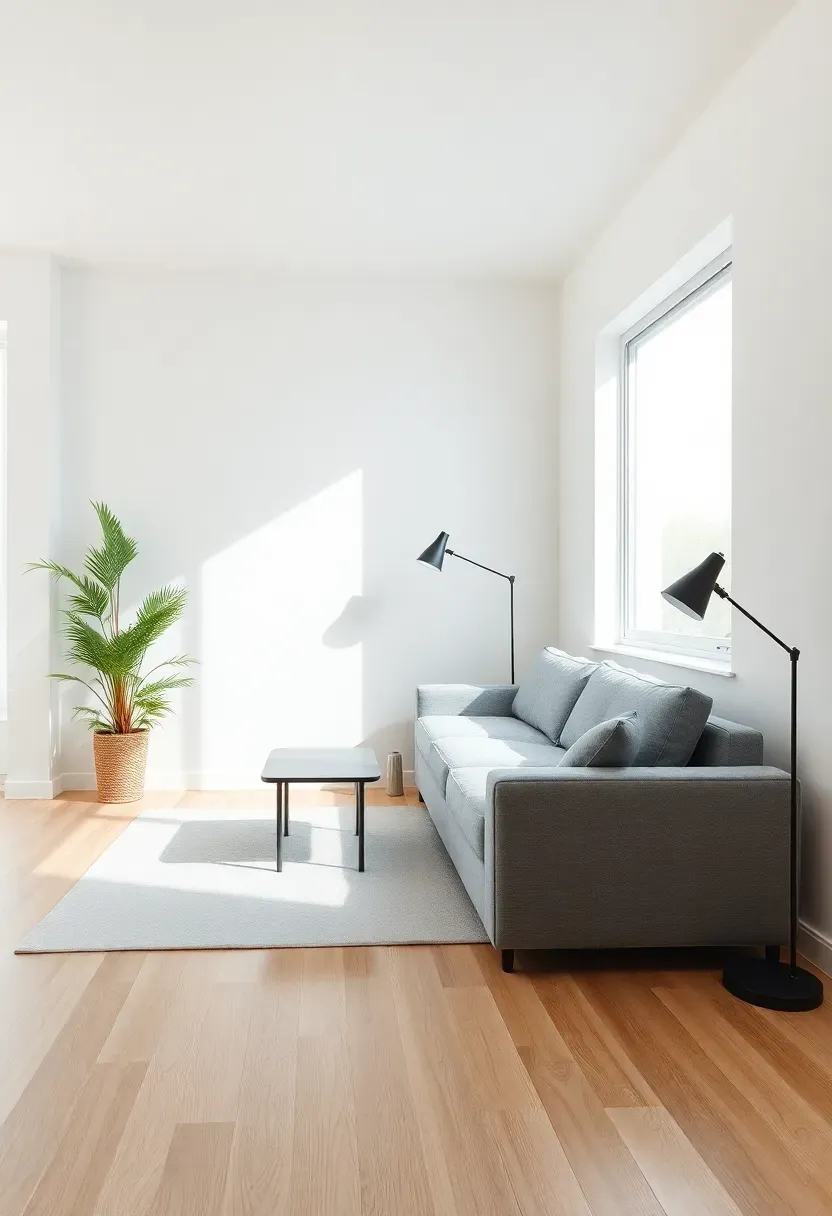
7. Asymmetric Layout with Angular Gray Sofa
Breaking symmetry through deliberate angular placement of your gray sofa creates dynamic minimalism that feels modern and unstudied. Instead of centering the sofa on a wall or facing it directly toward a focal point, rotate it slightly or position it at an angle that acknowledges the room's architecture—perhaps toward a window view, a fireplace, or an interesting corner. This asymmetric approach makes the space feel more relaxed and less formally arranged while maintaining clean lines.
Tips
- Angle the sofa 15-30 degrees from parallel to the wall—enough to notice but not so much it feels random
- Use the angle to direct sightlines toward something worth seeing: a view, architectural feature, or artwork
- Support the asymmetric sofa with intentionally off-center accessory placement for cohesion
Placement note: This approach works best in rooms where the sofa doesn't block traffic flow or create awkward pathways
What this gives you: A more relaxed, contemporary feel that avoids the stiffness of traditionally arranged furniture
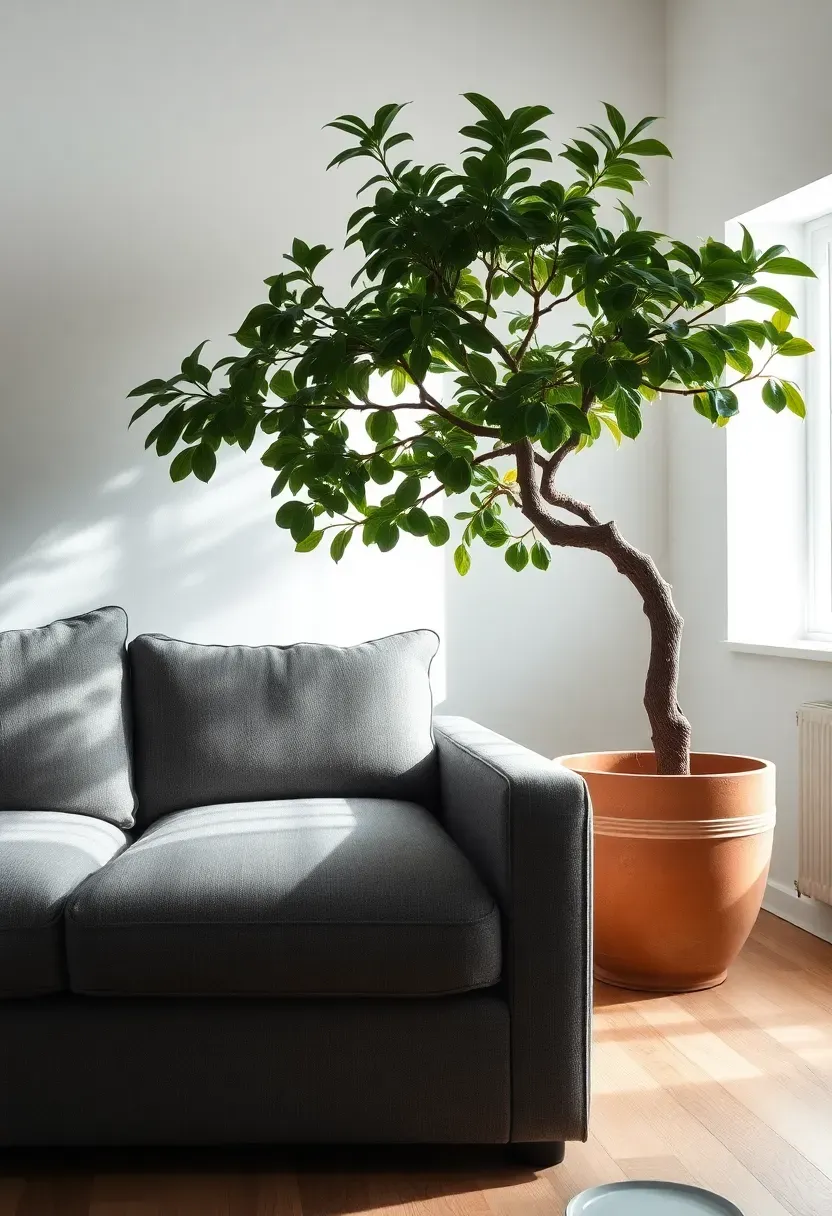
8. Gray Sofa with Indoor Tree
Introducing a living tree beside your gray sofa brings organic contrast that softens minimalism while reinforcing connection to nature. The tree's irregular form provides natural counterpoint to the sofa's geometric lines, while its green leaves create subtle color pop that feels fresh rather than jarring. Choose a tree with architectural branching—ficus, olive, or bird of paradise—that creates strong silhouette against the wall and provides dappled shadows that enhance the room's ambiance.
Recommended
Items for this idea
Tips
- Position the tree where it receives adequate light for its species—most prefer bright indirect light near windows
- Choose a pot that grounds the tree visually—substantial ceramic or terracotta in a neutral tone
- If you lack light, choose low-light tolerant species like snake plant or ZZ plant for similar vertical effect
Best for: Rooms with good natural light where you want to bring life and movement into static minimalist design
What this gives you: Organic softness and living presence that makes the room feel nurtured rather than sterile
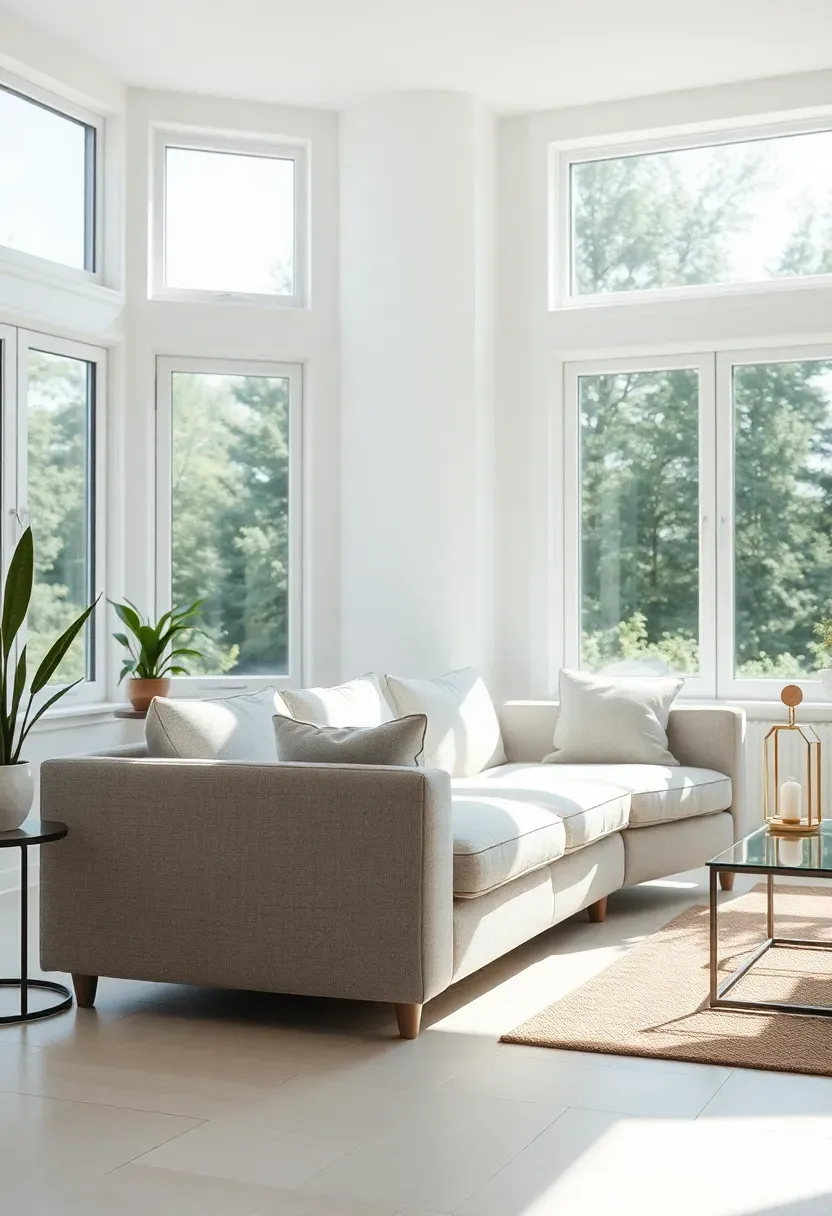
9. Gray Couch in Sunroom-Style Living Room
Creating a sunroom atmosphere with your gray sofa as the centerpiece maximizes natural light and blurs indoor-outdoor boundaries for uplifting minimalism. Frame views with floor-to-ceiling windows, keep window treatments minimal or nonexistent, and choose light-reflecting surfaces—pale floors, white walls, glass accents—that amplify brightness. The gray sofa anchors the space without feeling heavy, especially if you choose a lighter gray upholstery that seems to glow in sunlight.
Tips
- Skip heavy drapes entirely or use solar shades that cut glare but preserve the view and light
- Choose light-reflecting flooring: white oak, pale stone, or polished concrete in light tones
- Avoid dark furniture that will create visual blocks in the path of natural light
Avoid if: Your living room lacks natural light—this approach relies on abundant sunshine for its uplifting effect
What this gives you: An energizing, mood-boosting space that feels expansive and connected to the outdoors
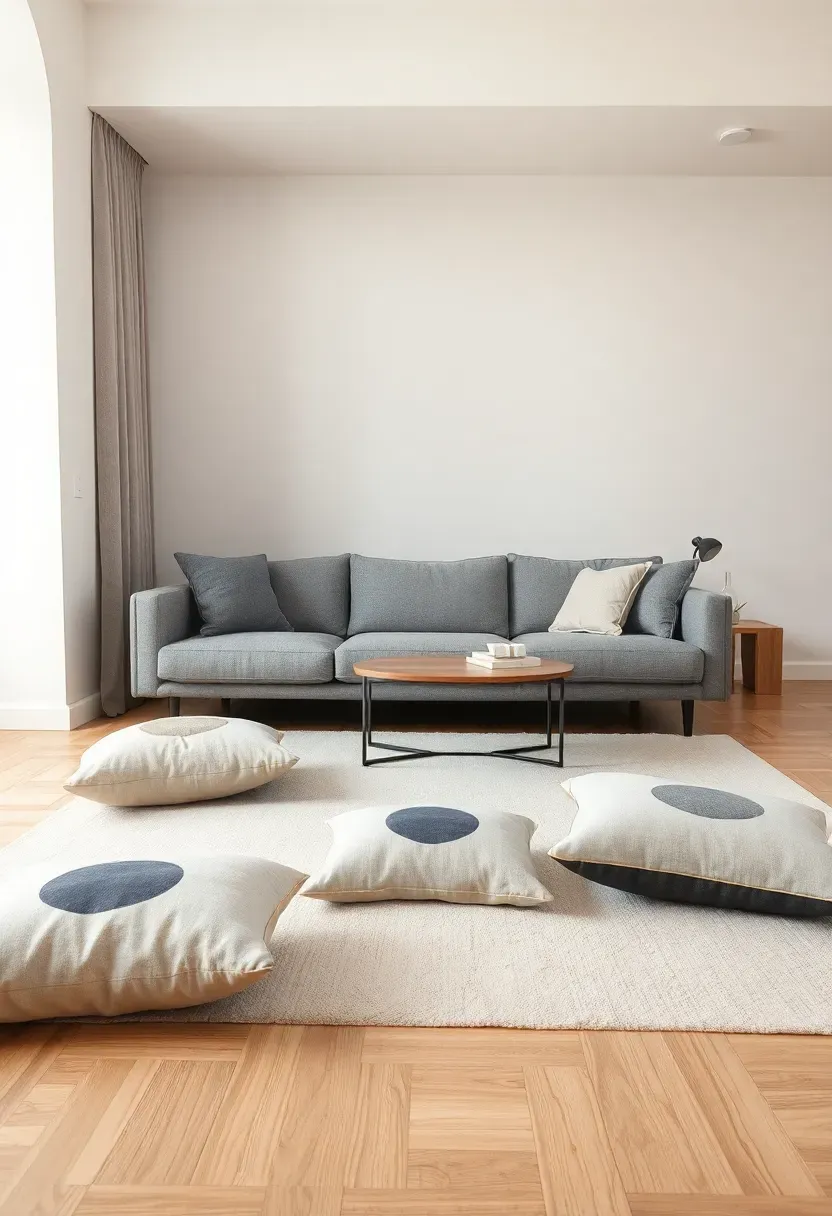
10. Low Gray Sofa with Floor Cushions
Combining a low-profile gray sofa with scattered floor cushions creates relaxed, lounge-style minimalism that invites casual sitting and versatility. The low sofa keeps sightlines open, while floor cushions provide flexible seating that can be rearranged or stored as needed. This approach works beautifully for those who entertain informally or prefer a living room that feels less formal and more conducive to sprawling, reading, or casual conversation.
Recommended
Items for this idea
Tips
- Choose floor cushions with removable covers for easy cleaning and seasonal color updates
- Look for cushions with some structure—too soft and they'll feel sloppy rather than designed
- Create cohesion by using fabric from the sofa for one cushion, or by choosing a unified color palette
Best for: Casual households, frequent entertainers, or anyone who prefers relaxed, informal living room vibes
What this gives you: Flexible seating and a low-profile layout that maximizes the feeling of space and openness
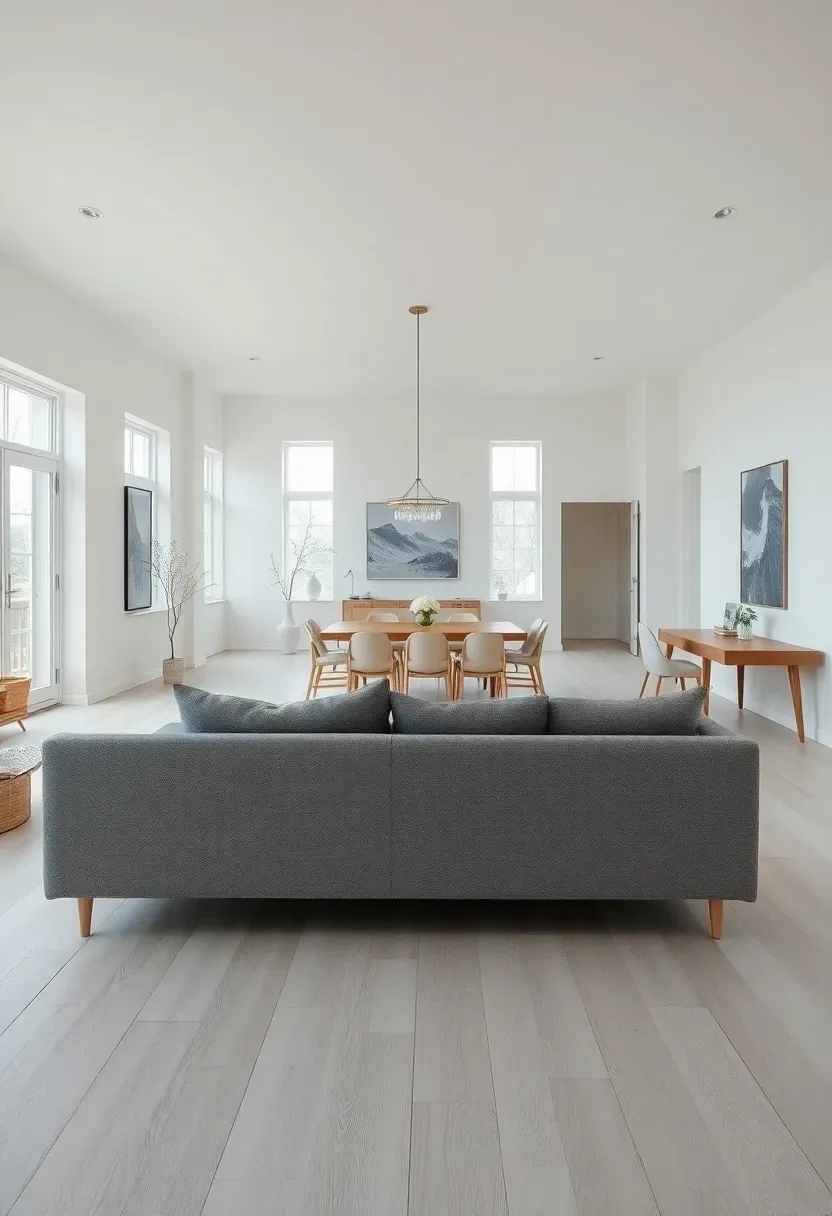
11. Gray Couch as Room Divider
Using your gray sofa to subtly divide a large space creates distinct functional zones while maintaining visual continuity and openness. This approach works beautifully in studios or open-concept layouts where you need to separate living from dining, sleeping, or working areas without building walls -- especially handy if you are working with minimalist living room ideas for small spaces. The sofa's back creates a psychological boundary while allowing light and sight to pass through, preserving the spacious feel of the larger room.
Tips
- Choose a sofa with an attractive back since it will be visible from the adjacent zone
- Allow at least 36 inches of walking space behind the sofa for comfortable traffic flow
- Consider a console table behind the sofa to provide storage for both zones and reinforce the division
Placement note: Ensure the sofa placement doesn't create awkward pathways or block natural light from reaching either zone
What this gives you: Defined functional areas without sacrificing the spacious, airy feel of open-plan living
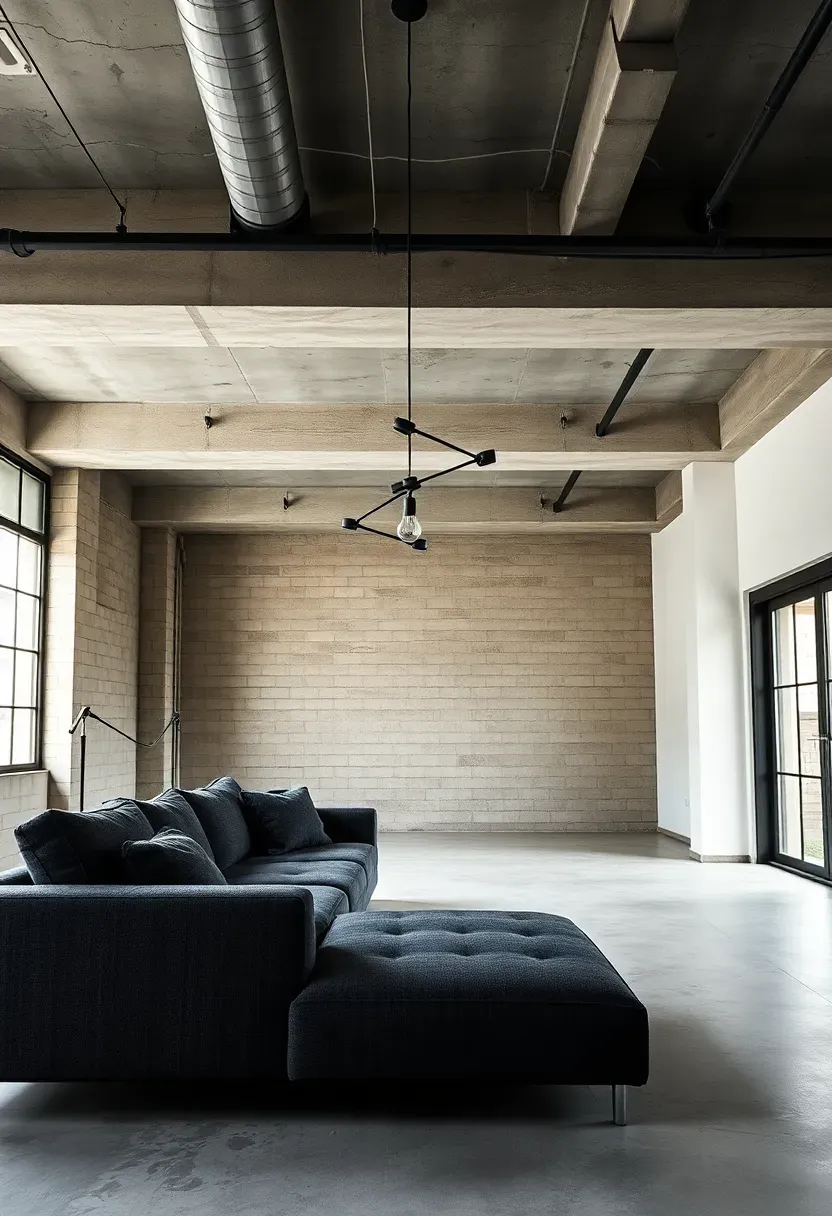
12. Industrial Gray Sofa with Exposed Elements
Embracing industrial architecture—exposed ductwork, concrete ceilings, visible structure—creates raw minimalism where a gray sofa feels perfectly at home. The sofa's smooth upholstery provides necessary softness against the rough industrial backdrop, while its neutral color lets architectural elements take center stage. This approach celebrates materials and structure rather than decoration, resulting in spaces that feel honest, modern, and unpretentiously sophisticated.
Recommended
Items for this idea
Tips
- Balance rough industrial surfaces with at least one soft material—a rug, throw pillows, or window treatments
- Choose lighting with industrial aesthetics: metal shades, exposed bulbs, visible cords and conduits
- Don't fight the architecture—let concrete be concrete, let ductwork be visible rather than boxed in
Best for: Lofts, converted industrial spaces, or new builds with modern architectural character
What this gives you: Authentic modern character that celebrates structural elements as design rather than hiding them
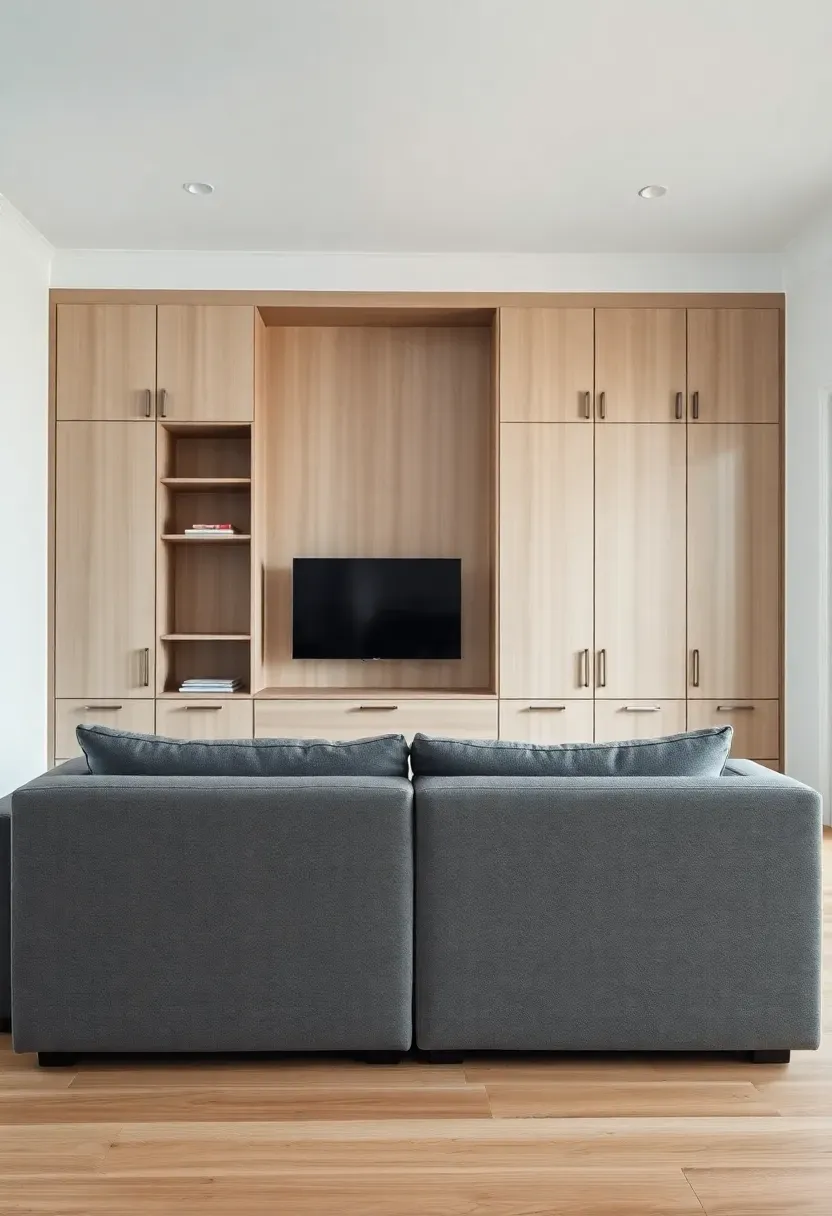
13. Gray Couch with Built-In Storage Wall
Pairing your gray sofa with a floor-to-ceiling built-in storage wall creates ultra-organized minimalism where everything has its place behind closed doors. This approach eliminates the need for additional storage furniture, allowing the sofa to exist as the primary furniture piece without competition. The built-in provides concealed storage for media, books, and clutter while maintaining a seamless wall of cabinetry that feels architectural rather than furniture-like.
Tips
- Choose push-to-open hardware or integrated pulls rather than prominent handles for seamless minimalism
- Design the storage wall with at least 20-30% open shelving for displaying curated objects and books
- Extend cabinetry to the ceiling to maximize storage and eliminate the dust-catching gap above
Budget/Time: Significant investment but transformative; plan 3-6 months from design to installation for custom work
What this gives you: Maximum storage and organization without visual clutter, creating a calm, orderly living environment
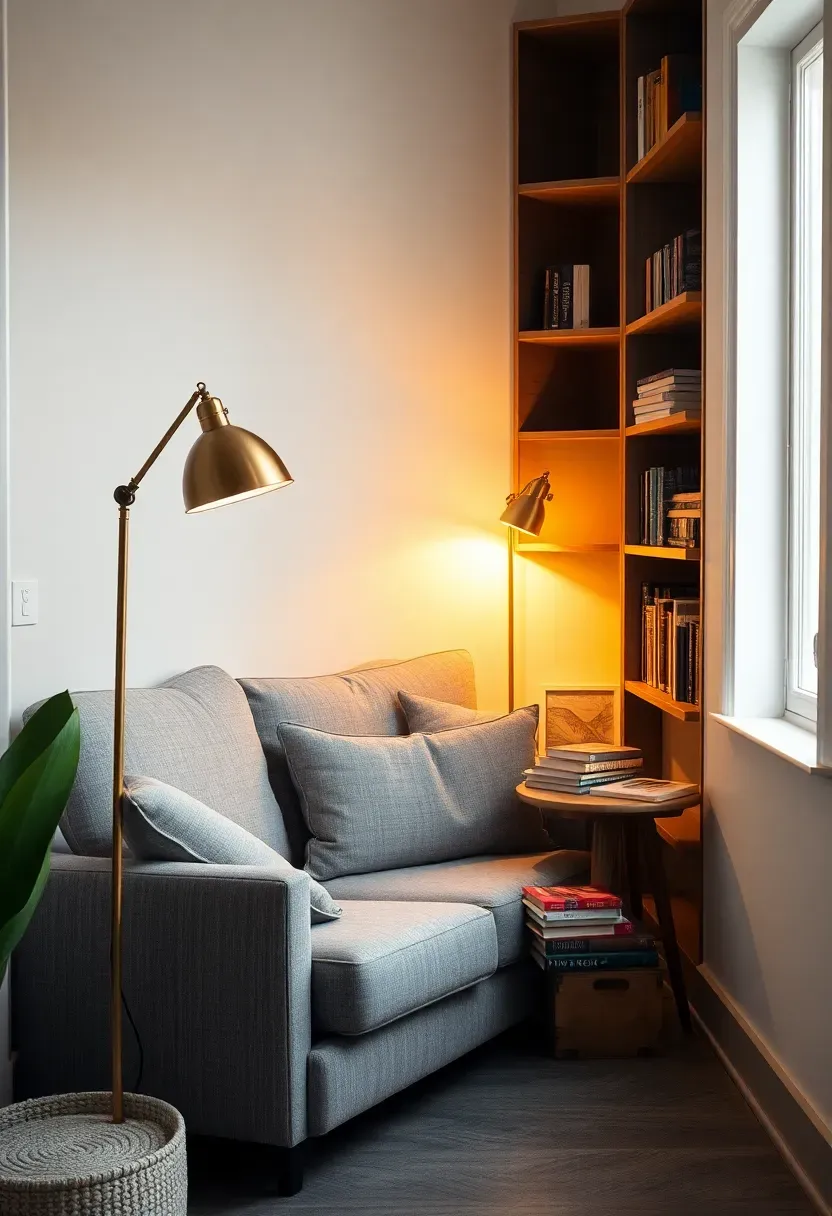
14. Gray Sofa in Reading Nook Corner
Tucking a gray sofa into a corner or alcove creates an intimate reading nook that feels like a retreat within a larger room. This arrangement maximizes space efficiency while providing a cozy, defined spot for relaxation. Add a floor lamp, small side table, and perhaps a built-in bookshelf or wall-mounted shelving to complete the nook. The gray sofa's neutral presence allows the corner to feel distinct yet connected to the overall room.
Recommended
Items for this idea
Tips
- Consider a loveseat (60-72 inches) rather than full sofa for smaller corners to maintain proper proportions
- Position a floor lamp behind or beside the sofa for task lighting that doesn't require table space
- Define the nook further with a small area rug that sits entirely under the seating area
Best for: Unused corners in larger living rooms or apartments where you want to create a dedicated reading or relaxation zone
What this gives you: A defined retreat space within a larger room, perfect for reading, working, or quiet contemplation
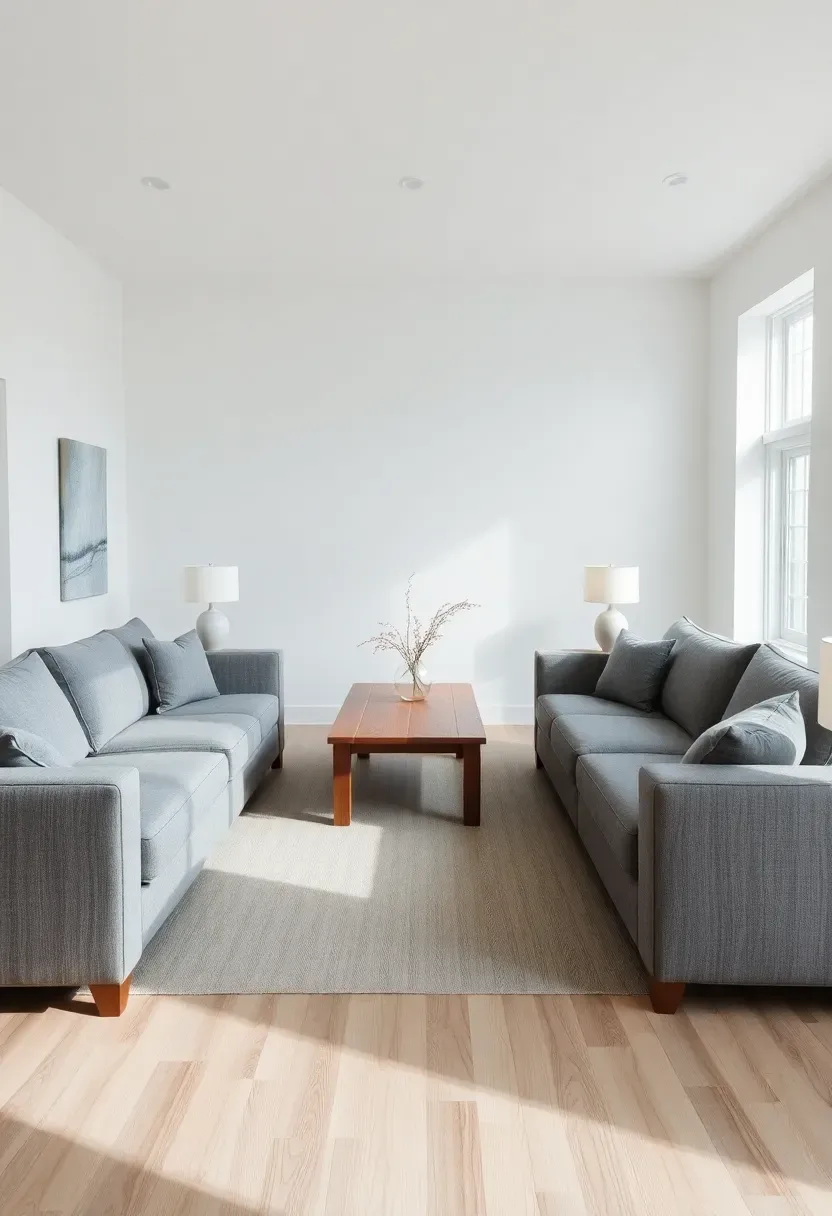
15. Double Gray Sofa Layout
Using two matching gray sofas facing each other creates symmetrical, conversation-focused minimalism that's ideal for those who entertain frequently or prefer balanced, formal arrangements. This layout encourages face-to-face conversation and provides ample seating without requiring additional chairs or ottomans. The symmetry creates visual calm and order, while the matching sofas reinforce minimalist principles of restraint and repetition.
Tips
- Allow 48-60 inches between sofas for comfortable conversation and walking space
- Use a single coffee table rather than two to avoid breaking up the conversation space
- Break the symmetry slightly with one asymmetrical element to prevent the room from feeling too formal
Avoid if: Your room is narrow or less than 12 feet wide—facing sofas require adequate width for proper proportion
What this gives you: Optimal conversation layout and balanced visual presence that feels both formal and welcoming
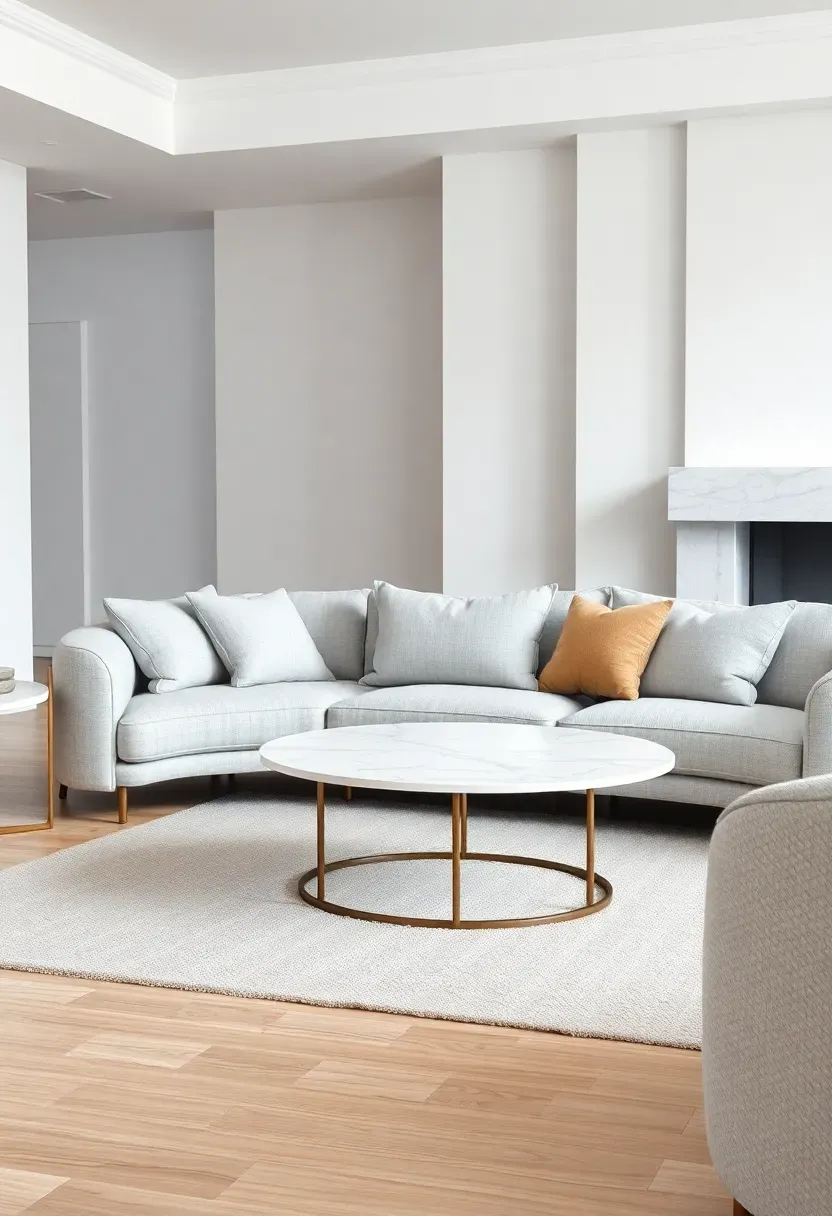
16. Gray Couch with Marble Accents
Combining a gray sofa with marble surfaces—coffee table, side tables, or fireplace surround—creates luxury minimalism that feels cool, sophisticated, and elegant. The gray veins in marble naturally echo the sofa's color, creating visual harmony without exact matching. The polished stone provides textural contrast to upholstery while introducing subtle pattern that enlivens the room without clutter. This pairing works particularly well in modern spaces or urban apartments, and pairs nicely with other elegant minimalist living room ideas.
Recommended
Items for this idea
Tips
- Choose marble with subtle gray veining rather than dramatic patterns to maintain minimalism
- Protect marble surfaces from scratches and stains—use coasters and clean spills immediately
- Consider marble-look quartz or porcelain for similar aesthetics with less maintenance and cost
Budget/Time: Marble is premium; marble-look alternatives provide similar aesthetics at 30-50% of the cost
What this gives you: Refined luxury and natural pattern that elevates the room while maintaining minimalist restraint
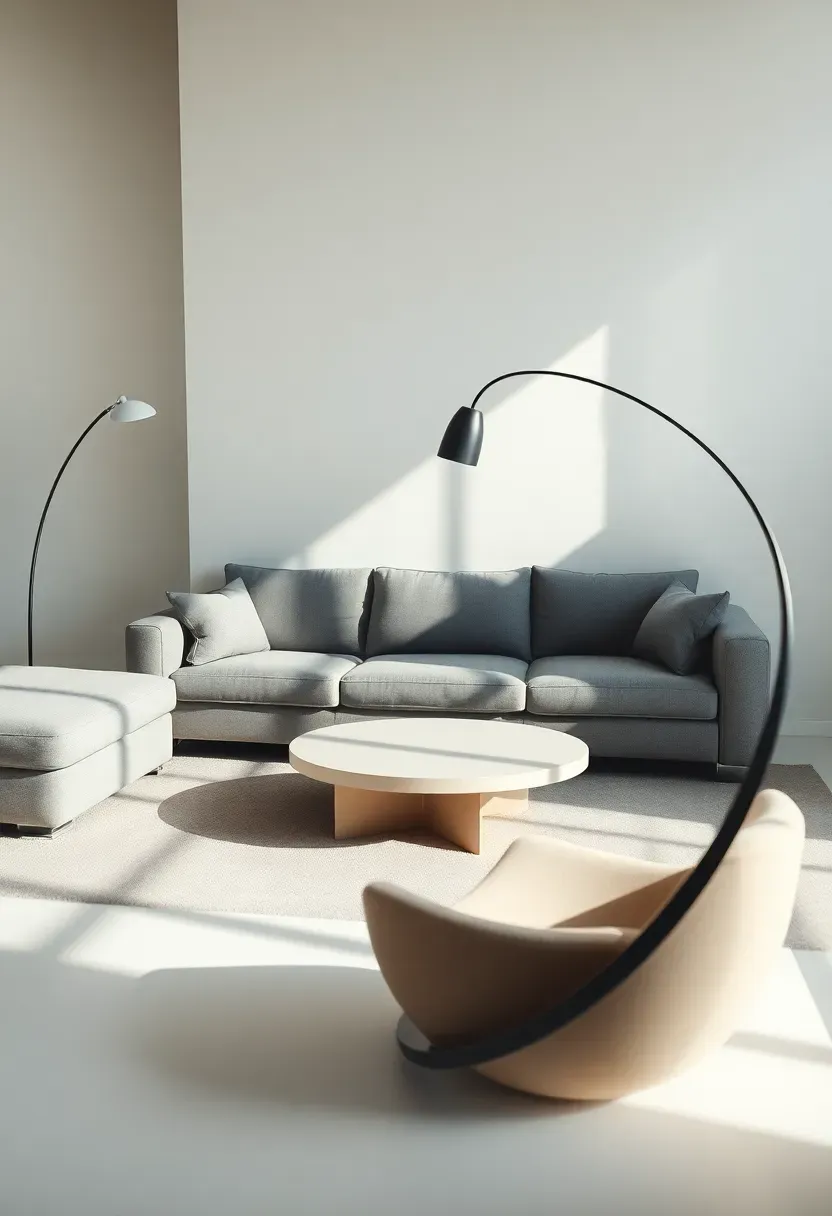
17. Gray Sofa with Curved Furniture
Introducing curved furniture—round coffee table, arched lamp, curved console—alongside your rectangular gray sofa creates dynamic minimalism through shape contrast. The curves soften the sofa's straight lines while maintaining minimalist restraint through limited forms and neutral palette. This approach adds visual interest and movement without clutter, as the interplay of shapes becomes the decorative element rather than objects or accessories.
Tips
- Limit curved pieces to 2-3 maximum—too many curves compete and defeat the minimalist intent
- Position curves to create movement: round table between sofa and chair, curved lamp arcing over seating
- Choose curves in the same material family—metal, wood, or white—for cohesion despite shape variety
Best for: Rectangular rooms where curves can counterbalance boxy architecture and create more dynamic flow
What this gives you: Visual interest and movement through shape contrast rather than decoration, keeping the room feeling dynamic yet minimal
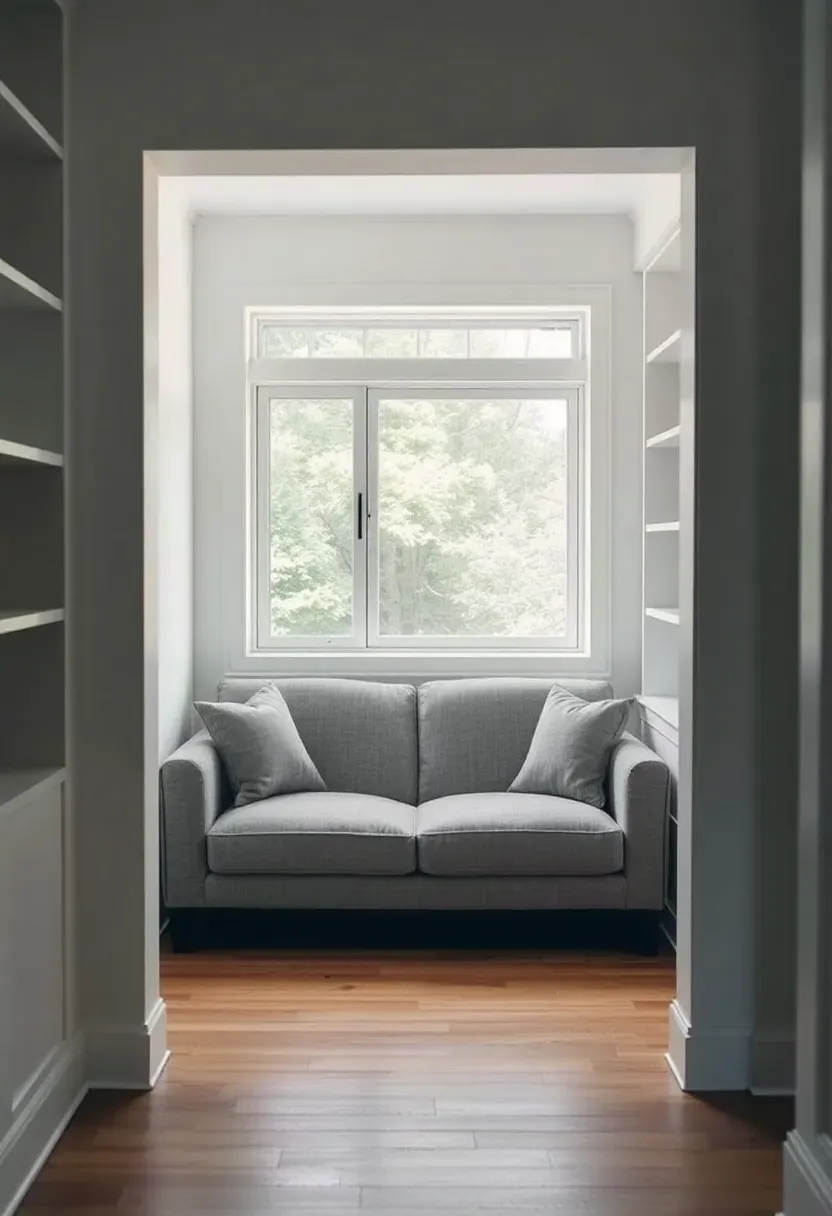
18. Gray Sofa in Alcove Nook
Built-in or naturally occurring alcoves provide perfect opportunities for creating a defined living area around your gray sofa. Framing the alcove with the sofa creates a room-within-a-room effect that feels intimate and purposeful. This approach works particularly well in older buildings with nooks, or you can create a similar effect with partial walls or room dividers. The alcove provides natural boundaries while maintaining connection to the larger space.
Recommended
Items for this idea
Tips
- Paint the alcove's interior a shade darker or lighter than the main room to emphasize the nook effect
- Add built-in lighting or sconces to make the alcove functional and intimate after dark
- If creating an artificial alcove, use open shelving units as room dividers rather than solid walls
Placement note: This approach works best when the alcove is at least 8 feet wide to accommodate properly proportioned furniture
What this gives you: A defined, intimate seating area that feels separate yet connected to the larger room
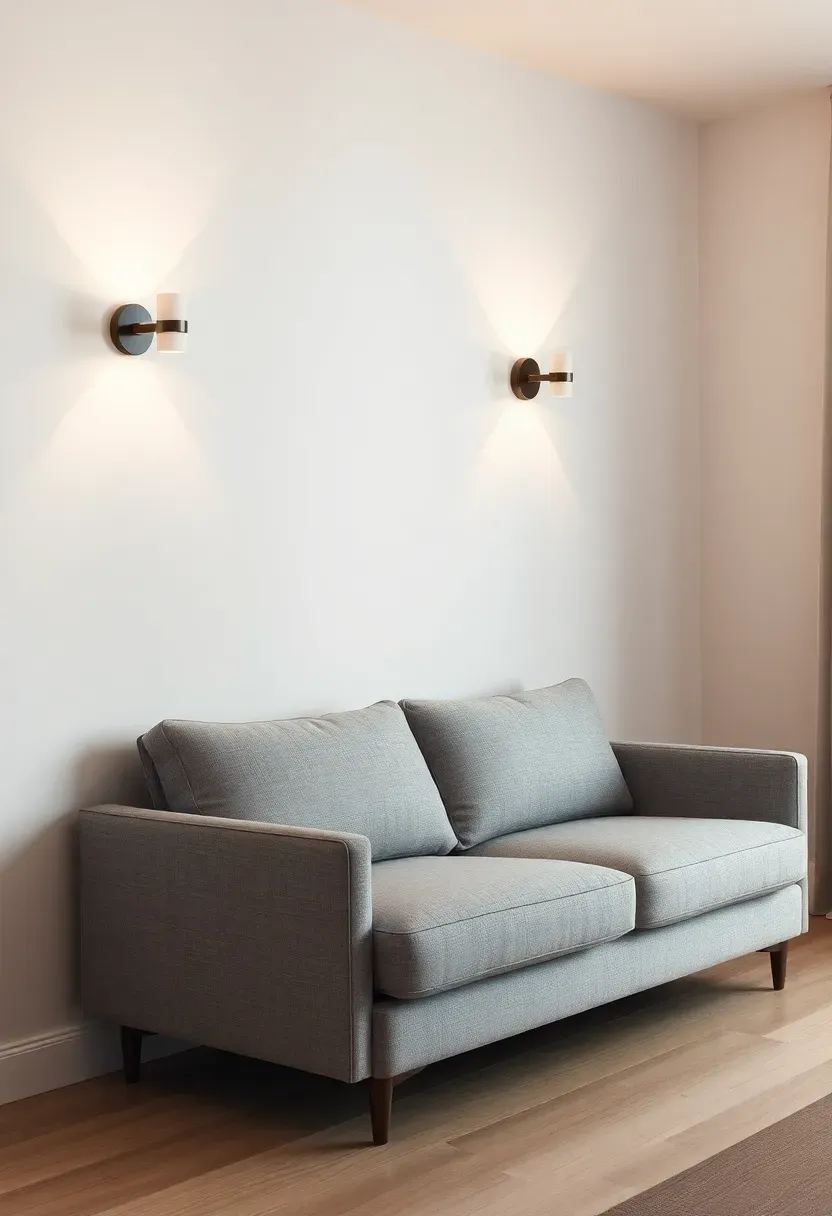
19. Gray Sofa with Wall Sconces
Flanking your gray sofa with wall sconces creates sophisticated minimalism that provides ambient lighting without consuming floor or table space. The sconces become sculptural elements that frame the sofa, adding detail and interest without clutter. Hardwired sconces eliminate cord clutter while providing layered lighting that enhances the room's ambiance. This approach is particularly valuable in smaller rooms where surface space is at a premium.
Tips
- Mount sconces approximately 60 inches from the floor and 6-8 feet apart for ideal proportion with standard sofas
- Choose sconces with articulated arms or adjustable shades for versatile task and ambient lighting
- Install dimmers to control ambiance and adapt lighting for different activities and moods
Rental note: Plug-in sconces with concealed cord routing can provide this look without electrical modifications
What this gives you: Layered lighting and sculptural wall detail without sacrificing valuable floor or table surface area
Whether you're working with an open-concept space or a compact apartment, a gray couch minimalist living room offers endless possibilities for creating a welcoming, balanced environment. The neutral foundation of gray allows you to experiment with layouts, textures, and architectural elements while maintaining the essential minimalist principle that less truly can be more when every choice is intentional.
From floating arrangements that enhance flow to corner nooks that create intimacy, the key is finding the approach that reflects how you actually live in your space. A well-designed minimalist living room isn't about austerity—it's about surrounding yourself with what you need and love, edited down to its essential, beautiful core.
About the author
OBCD
CGI visualization and interior design content. We create detailed 3D renders and curate practical design ideas for every room in your home.