inspiration

How to Start a Minimalist Lifestyle: A Beginner's Guide
How to Start a Minimalist Lifestyle: A Beginner's Guide

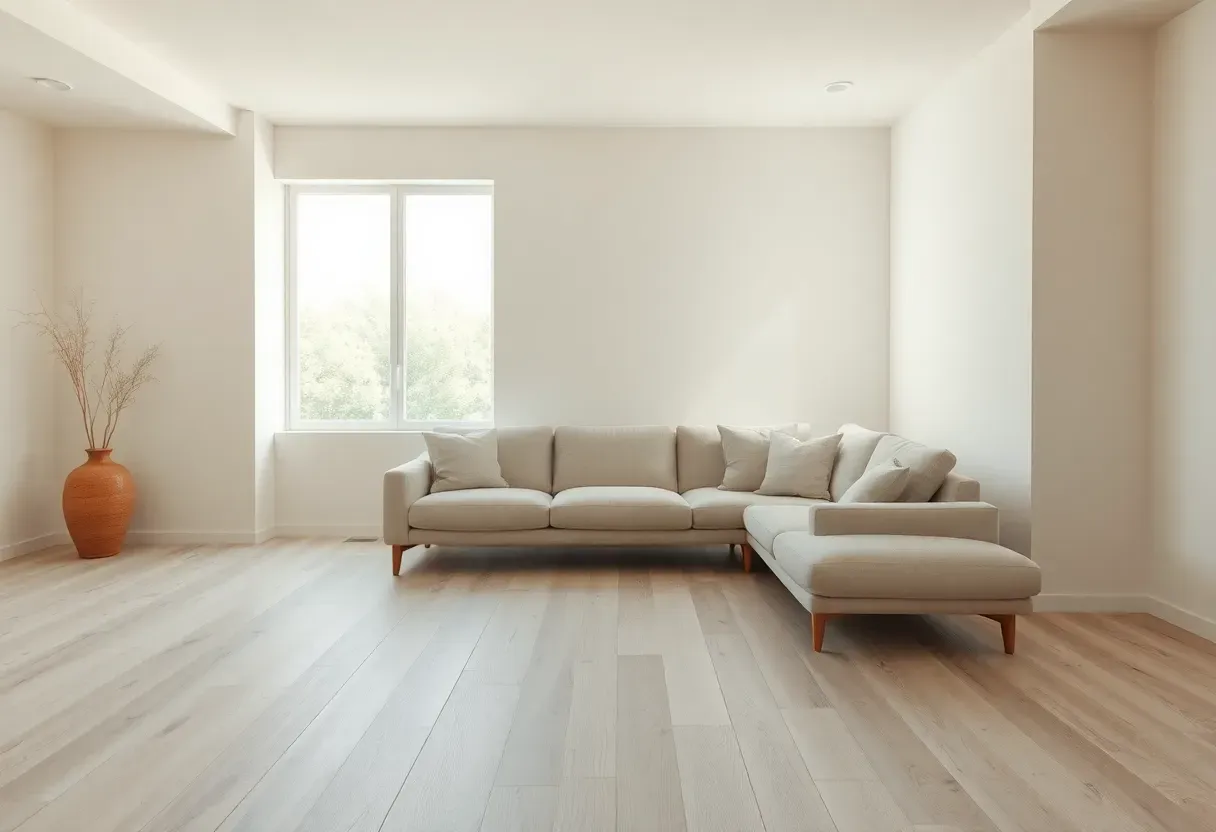
Starting a minimalist lifestyle becomes easier when your home is designed to support calm, spacious rooms that feel intentional rather than empty.

This beginner's guide focuses on interior design choices that make minimalist living sustainable through layout, light, and materials.

Use these ideas to start your minimalist journey in one room or across your entire home.

Quick FAQ

How do I start a minimalist lifestyle in my home?

Begin with one room and edit it to essential zones. Clear circulation, planned storage, and a quiet palette make the space feel calm and intentional. Start with the living room or bedroom since those set the daily tone.

Does a minimalist lifestyle mean getting rid of everything I own?

No, it means keeping what you use and love. Design your home with enough storage to hide daily items, and limit visible objects to pieces that serve function or hold meaning. Minimalism is about intention, not deprivation.

What if my family or roommates are not interested in minimalism?

Start with shared zones and keep the rules simple. Focus on clear surfaces and closed storage for communal items, then let private rooms reflect individual needs. Consistency in shared areas makes the biggest difference.

How does interior design support a minimalist lifestyle?

Good design does the work for you. Built-in storage, continuous materials, and layered lighting create calm without constant tidying. When the room is organized, minimalist habits feel natural instead of forced.

Can a minimalist lifestyle work in a small home or rental?

Yes, small spaces often benefit most from minimalism. Use fewer pieces, scale furniture to the room, and keep the palette light and unified. Rentals can use freestanding storage and removable hooks to achieve the same calm effect.

Table of Contents

  1. 1. Begin with One Room and Edit to Essential Zones
  2. 2. Choose a Quiet Neutral Palette for Calm
  3. 3. Create Storage Before You Declutter
  4. 4. Let Empty Space Be a Design Element
  5. 5. Use Layered Lighting Instead of Decor
  6. 6. Build with One Primary Material
  7. 7. Design for Daily Reset Rituals
  8. 8. Start with Flat Surfaces and Keep Them Clear
  9. 9. Scale Furniture to Leave Breathing Room
  10. 10. Limit Each Room to One Focal Point

1. Begin with One Room and Edit to Essential Zones

Starting a minimalist lifestyle feels manageable when you choose one room and reduce it to two or three clear zones. The living room works well as a starting point because it sets the visual tone for the entire home. Map a 36-inch circulation path from entry to seating, then anchor the main zone with an 8x10 rug and a sofa. Add one quiet zone like a reading corner or work nook, then leave the rest as open space. This approach makes the room feel larger without removing function.
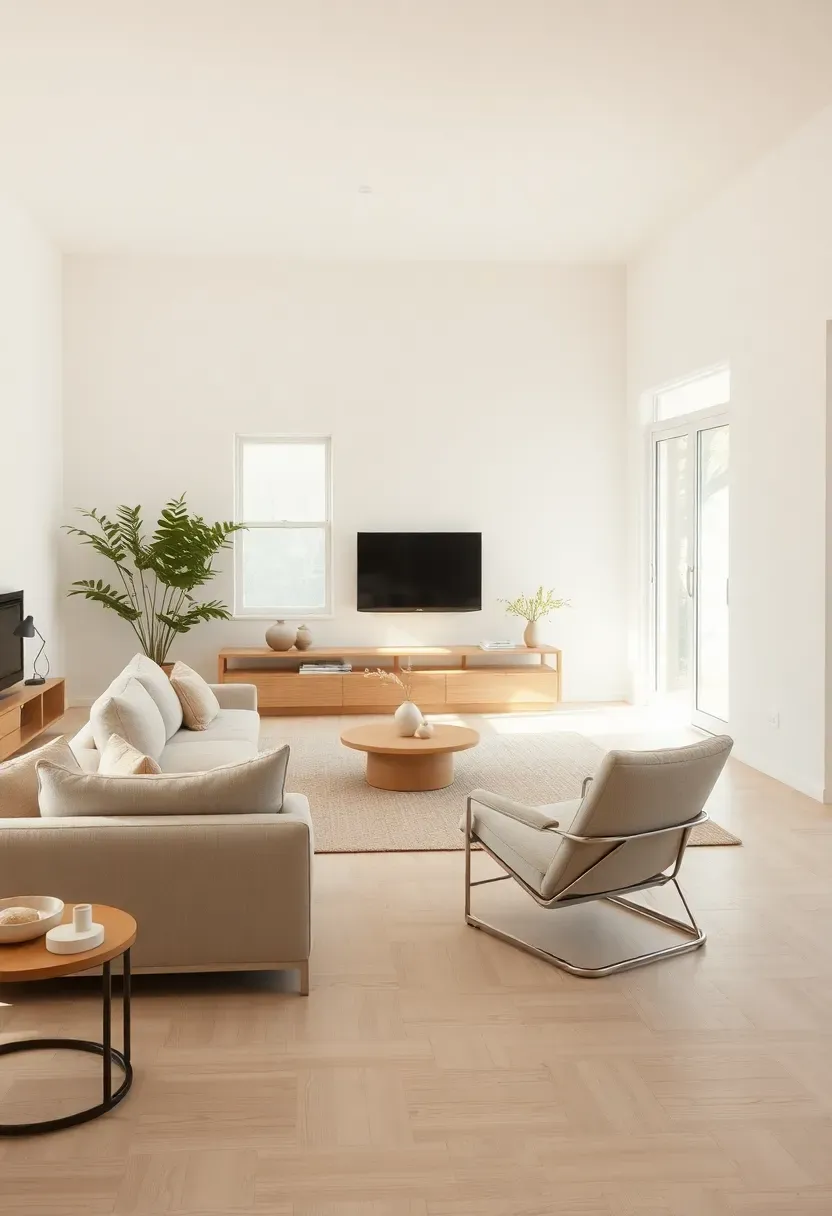
Hyper-realistic 3/4 view of a minimalist living room with two clear zones, low sofa, lounge chair, and open circulation path. Materials: white oak floor, linen upholstery, matte ceramic, brushed steel. Warm diffused window light, creamy neutrals with soft sand accents. Mood: serene, spacious, intentional. Shallow depth of field, sharp details on products, balanced composition, soft shadows, visible room context. No text, no logos, no watermarks.</p>
Starting a minimalist lifestyle becomes easier when your home is designed to support calm, spacious rooms that feel intentional rather than empty.. Hyper-realistic 3/4 view of a minimalist living room with two clear zones, low sofa, lounge chair, and open circulation path. Materials: white oak floor, linen upholstery, matte ceramic, brushed steel. Warm diffused window light, creamy neutrals with soft sand accents. Mood: serene, spacious, intentional. Shallow depth of field, sharp details on prod
Prompt: Nature documentary captured on Hasselblad X2D 100C with XCD 90V lens at f/4. Hyper-realistic 3/4 view of a minimalist living room with two clear zones, low sofa, lounge chair, and open circulation path. Materials: white oak floor, linen upholstery, matte ceramic, brushed steel. Warm diffused window light, creamy neutrals with soft sand accents. Mood: serene, spacious, intentional. Shallow depth of field, sharp details on products, balanced composition, soft shadows, visible room context. No text, no logos, no watermarks.

Tips

  • Do: use painter's tape to map zones before moving furniture.
  • Don't: fill every corner—leave one wall blank for negative space.

Best for: beginners who want to see immediate results in one space.

What this gives you: a calm room that proves minimalism works without overwhelming change.

2. Choose a Quiet Neutral Palette for Calm

A minimalist lifestyle feels sustainable when the palette is unified and neutral. Choose three core tones such as warm white walls, light oak floors, and soft greige upholstery. Keep trim and ceiling in the same white as walls so the room reads as one continuous surface. Limit bold color to one accent piece, like a single chair or cushion, that makes up about 10 percent of the room. This reduces visual noise and makes the space feel larger.
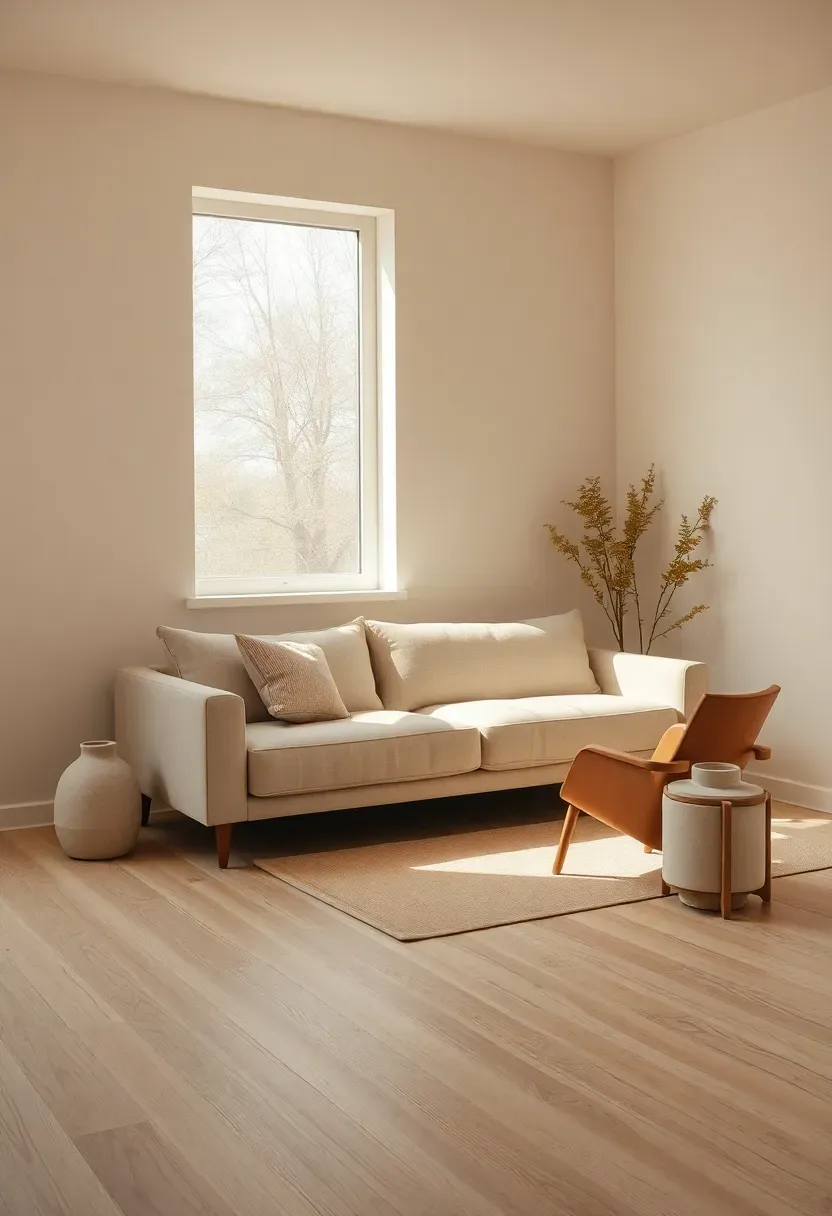
Hyper-realistic 3/4 view of a minimalist room with quiet neutral palette, white oak floor, low sofa, single accent chair. Materials: white oak, linen, matte plaster, ceramic. Warm diffused window light, creamy neutrals with soft beige undertones. Mood: calm, cohesive, serene. Shallow depth of field, sharp details on products, balanced composition, soft shadows, visible room context. No text, no logos, no watermarks.</p>
Starting a minimalist lifestyle becomes easier when your home is designed to support calm, spacious rooms that feel intentional rather than empty.. Hyper-realistic 3/4 view of a minimalist room with quiet neutral palette, white oak floor, low sofa, single accent chair. Materials: white oak, linen, matte plaster, ceramic. Warm diffused window light, creamy neutrals with soft beige undertones. Mood: calm, cohesive, serene. Shallow depth of field, sharp details on products, balanced composition, so
Prompt: Nature documentary captured on Hasselblad X2D 100C with XCD 90V lens at f/4. Hyper-realistic 3/4 view of a minimalist room with quiet neutral palette, white oak floor, low sofa, single accent chair. Materials: white oak, linen, matte plaster, ceramic. Warm diffused window light, creamy neutrals with soft beige undertones. Mood: calm, cohesive, serene. Shallow depth of field, sharp details on products, balanced composition, soft shadows, visible room context. No text, no logos, no watermarks.

Placement note: place the deepest tone at floor level or on the largest rug to ground the room.

If you want more depth, vary textures instead of adding colors—boucle, linen, and wool each read differently without breaking the palette. The trade-off is that neutrals require good lighting to avoid feeling flat. Layer lamps at 2700K so the room stays warm in the evening.

Tips

  • If your floors are warm, then choose creamy whites instead of blue-based paints.
  • If you need contrast, then change sheen levels instead of adding new colors.

What this gives you: a calm room where light and texture do the visual work.

3. Create Storage Before You Declutter

The most common mistake when starting a minimalist lifestyle is decluttering without having a place for what remains. Built-in storage or a wall of closed cabinets keeps surfaces clear so the room stays calm on busy days. Aim for floor-to-ceiling units with consistent depth around 18 inches and use push-latch hardware for a handle-free look. This turns storage into architecture and makes the room feel intentional.
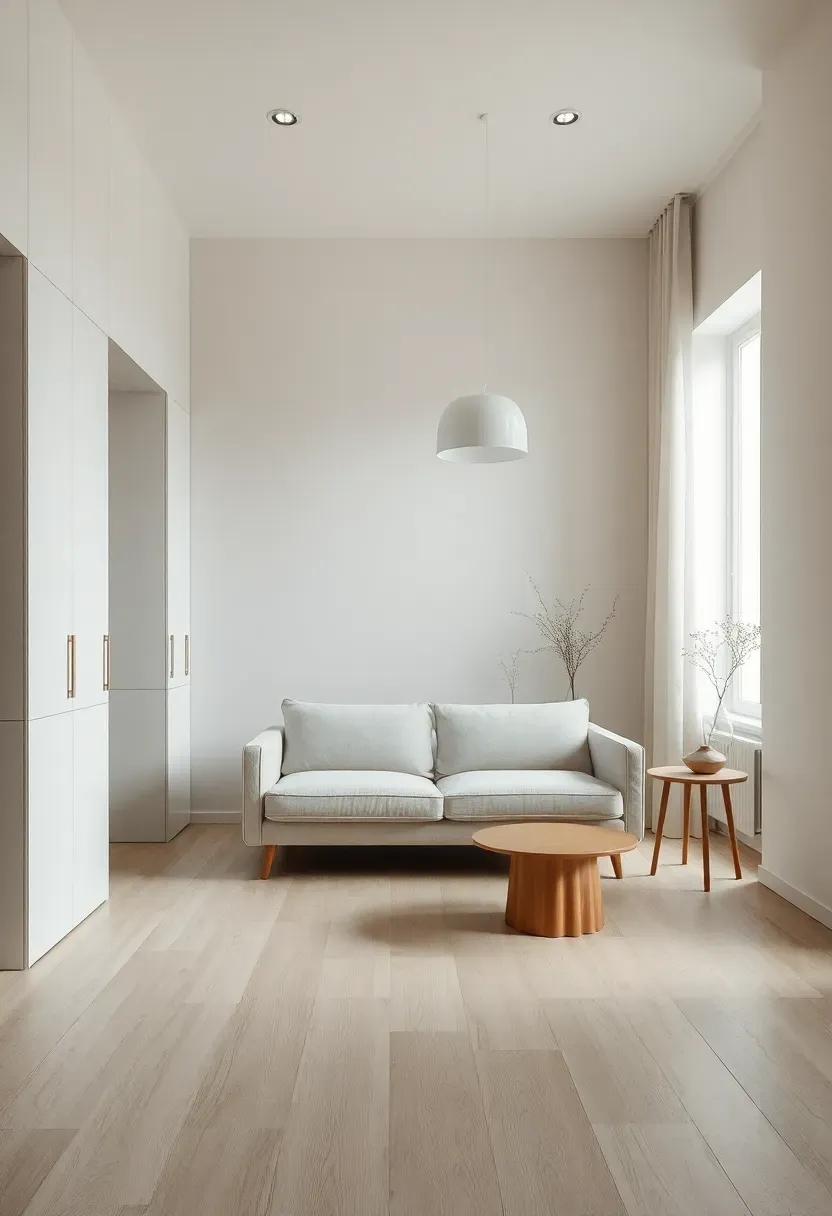
Hyper-realistic 3/4 view of a minimalist room with floor-to-ceiling flush storage, low sofa, simple side table. Materials: matte white cabinetry, white oak floor, linen, brushed steel. Warm diffused window light, soft neutrals with warm wood accents. Mood: orderly, architectural, quiet. Shallow depth of field, sharp details on products, balanced composition, soft shadows, visible room context. No text, no logos, no watermarks.</p>
Starting a minimalist lifestyle becomes easier when your home is designed to support calm, spacious rooms that feel intentional rather than empty.. Hyper-realistic 3/4 view of a minimalist room with floor-to-ceiling flush storage, low sofa, simple side table. Materials: matte white cabinetry, white oak floor, linen, brushed steel. Warm diffused window light, soft neutrals with warm wood accents. Mood: orderly, architectural, quiet. Shallow depth of field, sharp details on products, balanced comp
Prompt: Nature documentary captured on Hasselblad X2D 100C with XCD 90V lens at f/4. Hyper-realistic 3/4 view of a minimalist room with floor-to-ceiling flush storage, low sofa, simple side table. Materials: matte white cabinetry, white oak floor, linen, brushed steel. Warm diffused window light, soft neutrals with warm wood accents. Mood: orderly, architectural, quiet. Shallow depth of field, sharp details on products, balanced composition, soft shadows, visible room context. No text, no logos, no watermarks.

Why it works: closed storage hides daily clutter while keeping the room visually calm.

Keep open shelves to 20 percent or less of the wall. If you cannot do built-ins, use tall freestanding cabinets in the same finish as the wall to mimic the effect. The consequence of skipping storage is that clutter migrates to surfaces, which makes minimalism feel like constant work. A good storage system makes the lifestyle effortless.

Tips

  • Pro: full-height cabinetry removes visual breaks and maximizes storage.
  • Con: it can feel heavy in small rooms.
  • Fix: add recessed toe-kicks and a 2-inch shadow gap for lightness.

What this gives you: a room that stays clear without daily tidying.

4. Let Empty Space Be a Design Element

A key shift when starting a minimalist lifestyle is treating empty space as intentional rather than unfinished. Leave 18-24 inches around major furniture pieces so the room breathes. Keep one wall fully blank and avoid filling every surface with accessories. This negative space makes the room feel larger and gives the eye a place to rest.
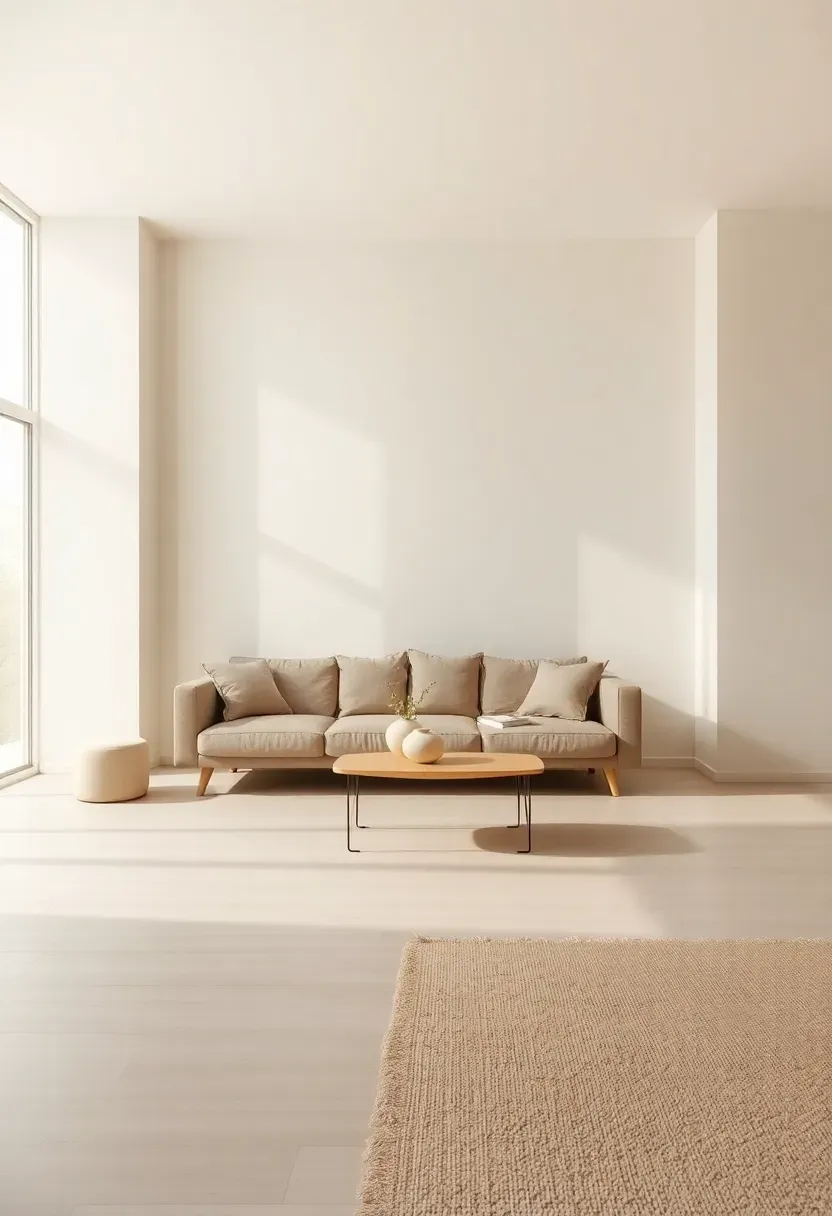
Hyper-realistic 3/4 view of a spacious minimalist room with generous empty space, low sofa, simple coffee table, one blank wall. Materials: white oak floor, linen upholstery, matte ceramic, wool rug. Warm diffused window light, creamy neutrals with soft sand tones. Mood: expansive, calm, refined. Shallow depth of field, sharp details on products, balanced composition, soft shadows, visible room context. No text, no logos, no watermarks.</p>
Starting a minimalist lifestyle becomes easier when your home is designed to support calm, spacious rooms that feel intentional rather than empty.. Hyper-realistic 3/4 view of a spacious minimalist room with generous empty space, low sofa, simple coffee table, one blank wall. Materials: white oak floor, linen upholstery, matte ceramic, wool rug. Warm diffused window light, creamy neutrals with soft sand tones. Mood: expansive, calm, refined. Shallow depth of field, sharp details on products, bal
Prompt: Nature documentary captured on Hasselblad X2D 100C with XCD 90V lens at f/4. Hyper-realistic 3/4 view of a spacious minimalist room with generous empty space, low sofa, simple coffee table, one blank wall. Materials: white oak floor, linen upholstery, matte ceramic, wool rug. Warm diffused window light, creamy neutrals with soft sand tones. Mood: expansive, calm, refined. Shallow depth of field, sharp details on products, balanced composition, soft shadows, visible room context. No text, no logos, no watermarks.

Choose one or two objects per surface instead of arranging collections. The contrast move is to avoid scattering small pieces across the room—one large vase is calmer than five small ones. If the room feels too sparse, add texture through materials rather than more objects. A linen throw or wool rug adds warmth without visual clutter.

Tips

  • Do: leave the center of the room open to preserve circulation.
  • Don't: push furniture against every wall—let one piece float.

What this gives you: a room that feels expansive rather than empty.

5. Use Layered Lighting Instead of Decor

Minimalist living rooms rely on layered lighting to create mood without adding objects. Plan for three sources: a floor lamp near seating, a table lamp, and an overhead or wall light, all around 2700K for warmth. This lets you shift the atmosphere from bright to cozy without introducing more decor. Keep lamps within 6-8 feet of the main seating so the light feels intentional.
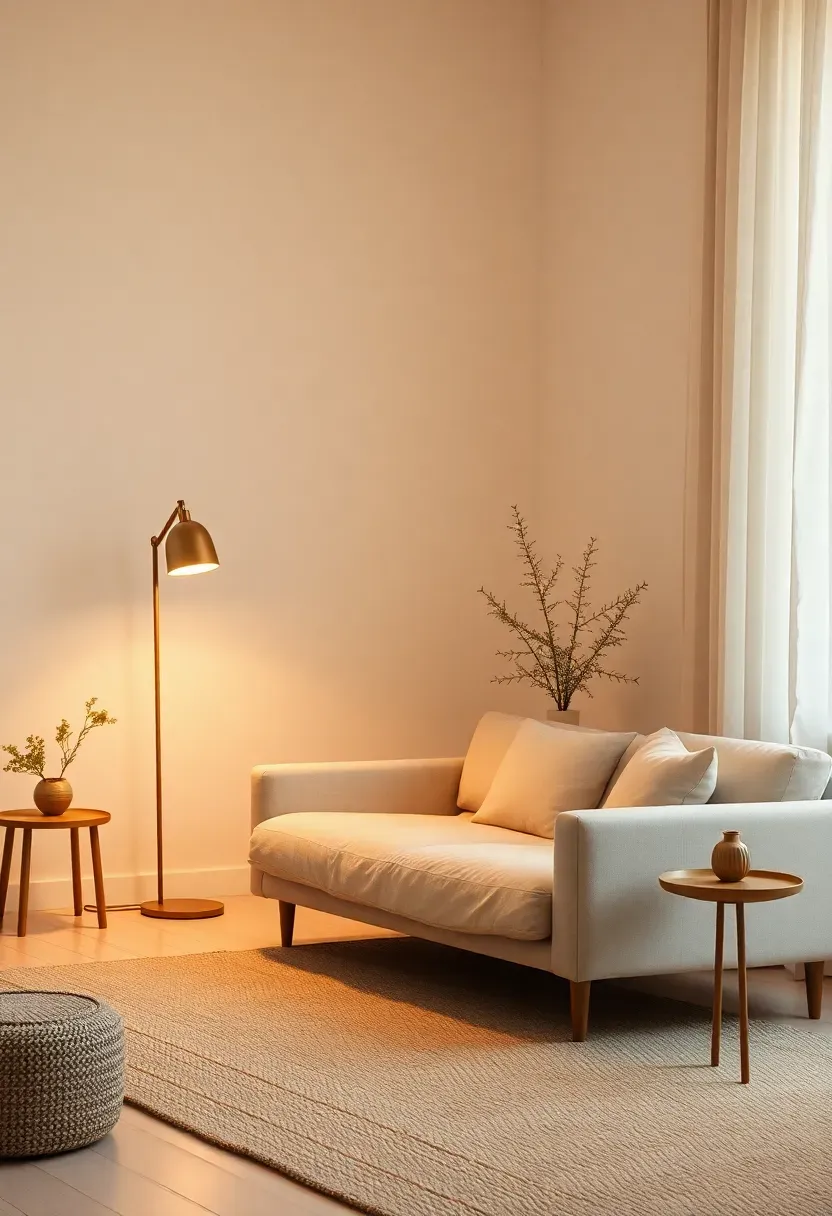
Hyper-realistic 3/4 view of a minimalist living room with layered lighting, floor lamp, table lamp, low sofa. Materials: linen upholstery, white oak floor, brushed brass, wool rug. Warm diffused lamp light, creamy neutrals with amber highlights. Mood: cozy, minimal, evening calm. Shallow depth of field, sharp details on products, balanced composition, soft shadows, visible room context. No text, no logos, no watermarks.</p>
Starting a minimalist lifestyle becomes easier when your home is designed to support calm, spacious rooms that feel intentional rather than empty.. Hyper-realistic 3/4 view of a minimalist living room with layered lighting, floor lamp, table lamp, low sofa. Materials: linen upholstery, white oak floor, brushed brass, wool rug. Warm diffused lamp light, creamy neutrals with amber highlights. Mood: cozy, minimal, evening calm. Shallow depth of field, sharp details on products, balanced composition
Prompt: Nature documentary captured on Hasselblad X2D 100C with XCD 90V lens at f/4. Hyper-realistic 3/4 view of a minimalist living room with layered lighting, floor lamp, table lamp, low sofa. Materials: linen upholstery, white oak floor, brushed brass, wool rug. Warm diffused lamp light, creamy neutrals with amber highlights. Mood: cozy, minimal, evening calm. Shallow depth of field, sharp details on products, balanced composition, soft shadows, visible room context. No text, no logos, no watermarks.

Common mistake: relying on a single overhead light, which makes the room feel flat and harsh.

Use dimmers on main switches for flexibility. The contrast move is to skip a large chandelier and choose smaller lamps that sit closer to eye level. If natural light is strong, keep window treatments sheer so daylight can enhance the layered effect at sunset. This makes the room feel inviting at every hour.

Tips

  • Do: add warm LED bulbs around 2700K for a cozy evening mood.
  • Don't: mix cool and warm bulbs in the same room.

Budget/Time: $150-300 covers two quality lamps and warm LED bulbs.

What this gives you: a room that changes mood without adding visual clutter.

6. Build with One Primary Material

A minimalist lifestyle feels cohesive when one material leads the design. Choose a primary material like white oak and repeat it across the floor, coffee table, and shelving. Keep this dominant material at about 60 percent of visible surfaces, then balance with soft linen and matte ceramics. This material continuity reduces visual noise and makes the room feel intentional.
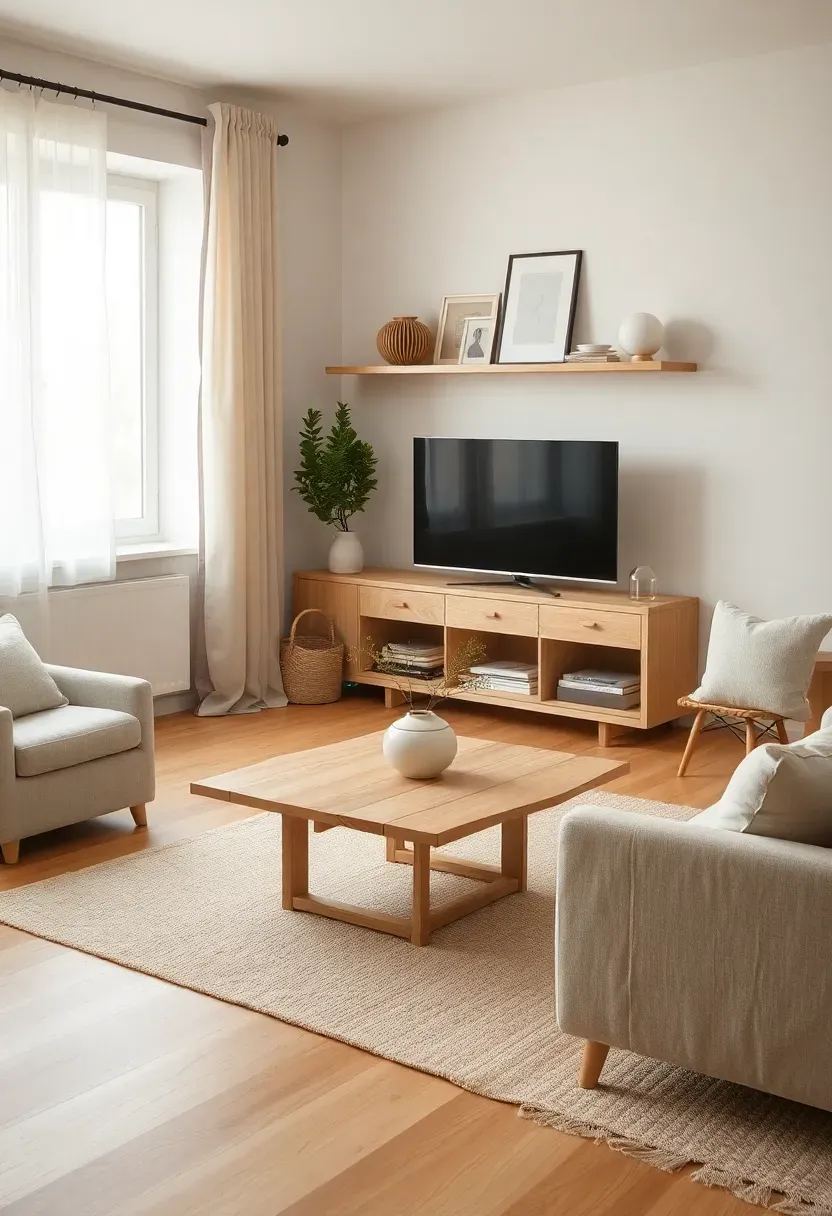
Hyper-realistic 3/4 view of a minimalist living room with white oak as the primary material across floor, table, and shelf. Materials: white oak, linen upholstery, matte ceramic, wool rug. Warm diffused window light, creamy neutrals with soft honey tones. Mood: natural, cohesive, warm. Shallow depth of field, sharp details on products, balanced composition, soft shadows, visible room context. No text, no logos, no watermarks.</p>
Starting a minimalist lifestyle becomes easier when your home is designed to support calm, spacious rooms that feel intentional rather than empty.. Hyper-realistic 3/4 view of a minimalist living room with white oak as the primary material across floor, table, and shelf. Materials: white oak, linen upholstery, matte ceramic, wool rug. Warm diffused window light, creamy neutrals with soft honey tones. Mood: natural, cohesive, warm. Shallow depth of field, sharp details on products, balanced compo
Prompt: Nature documentary captured on Hasselblad X2D 100C with XCD 90V lens at f/4. Hyper-realistic 3/4 view of a minimalist living room with white oak as the primary material across floor, table, and shelf. Materials: white oak, linen upholstery, matte ceramic, wool rug. Warm diffused window light, creamy neutrals with soft honey tones. Mood: natural, cohesive, warm. Shallow depth of field, sharp details on products, balanced composition, soft shadows, visible room context. No text, no logos, no watermarks.

Placement note: repeat the primary material at least three times for visual cohesion.

If budget limits solid wood, use veneer for secondary pieces. The trade-off is that too many wood tones make the room feel busy, so limit to two at most. Keep finishes matte or oiled rather than glossy so reflections stay quiet. This approach makes the space feel curated rather than collected.

Tips

  • If the floor is strong, then keep walls muted and quiet.
  • If you need contrast, then swap sheen levels instead of adding new materials.

What this gives you: a unified room where materials create the richness.

7. Design for Daily Reset Rituals

Starting a minimalist lifestyle works best when the home supports small daily habits. Give every object a clear home and limit what stays on open surfaces. A single tray for keys, a closed basket for throws, and one shelf for books are enough. Plan for a ten-minute evening reset to return items to storage and clear tables. This simple ritual keeps the room calm with minimal effort.
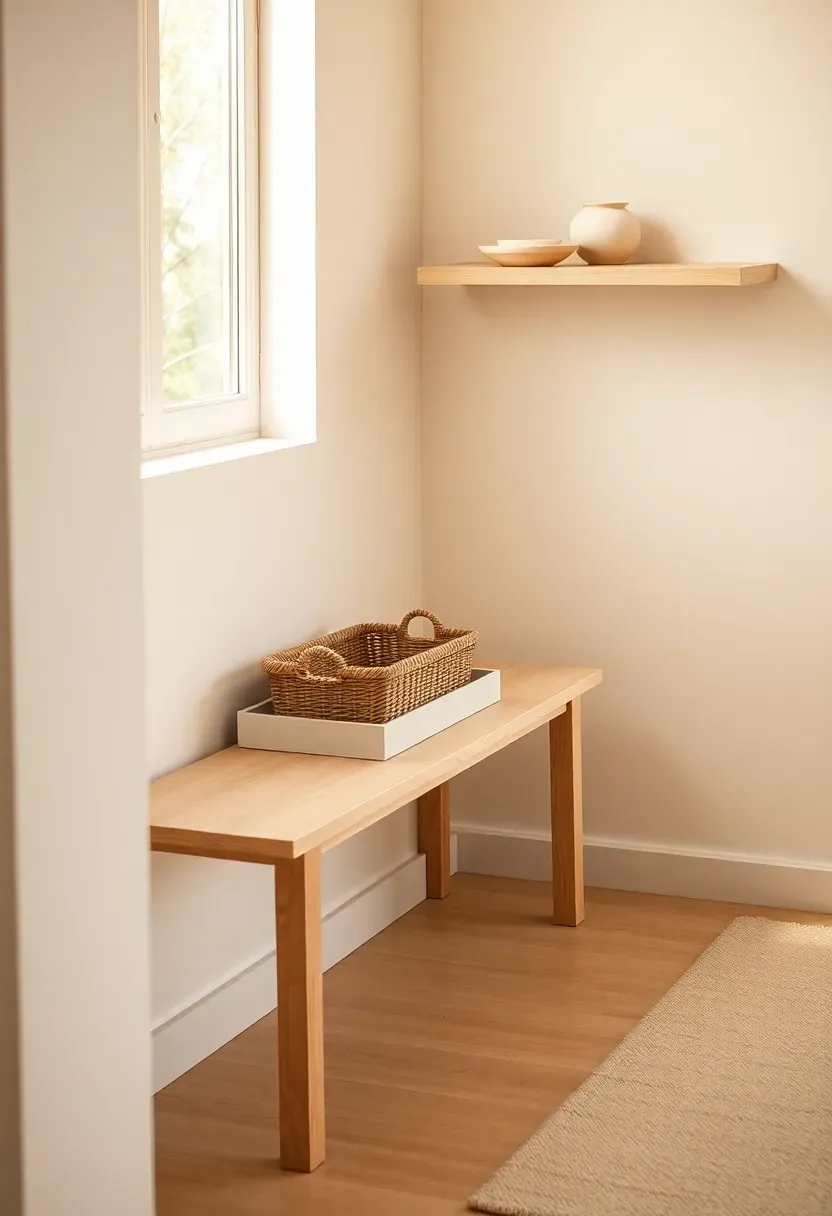
Hyper-realistic 3/4 view of a minimalist corner with slim bench, single tray, closed basket, floating shelf. Materials: white oak bench, linen basket, matte ceramic tray, plaster wall. Warm diffused window light, creamy neutral palette with soft beige accents. Mood: orderly, ritual-focused calm. Shallow depth of field, sharp details on products, balanced composition, soft shadows, visible room context. No text, no logos, no watermarks.</p>
Starting a minimalist lifestyle becomes easier when your home is designed to support calm, spacious rooms that feel intentional rather than empty.. Hyper-realistic 3/4 view of a minimalist corner with slim bench, single tray, closed basket, floating shelf. Materials: white oak bench, linen basket, matte ceramic tray, plaster wall. Warm diffused window light, creamy neutral palette with soft beige accents. Mood: orderly, ritual-focused calm. Shallow depth of field, sharp details on products, bala
Prompt: Nature documentary captured on Hasselblad X2D 100C with XCD 90V lens at f/4. Hyper-realistic 3/4 view of a minimalist corner with slim bench, single tray, closed basket, floating shelf. Materials: white oak bench, linen basket, matte ceramic tray, plaster wall. Warm diffused window light, creamy neutral palette with soft beige accents. Mood: orderly, ritual-focused calm. Shallow depth of field, sharp details on products, balanced composition, soft shadows, visible room context. No text, no logos, no watermarks.

Why it works: a consistent reset prevents visual drift and keeps the space aligned with your intention.

Build a simple routine: clear surfaces nightly, return items to storage, and keep the focal point open. The contrast move is to avoid open shelving for daily clutter, which quickly adds weight. If you need display, choose one shelf and refresh it monthly rather than weekly. This creates a sustainable baseline.

Tips

  • Pro: a 10-minute reset keeps the room guest-ready at all times.
  • Con: strict routines can feel rigid on busy days.
  • Fix: keep one closed bin for temporary overflow.

Budget/Time: 2-3 hours for initial setup, then 10 minutes daily.

What this gives you: a minimalist home that stays calm without constant effort.

8. Start with Flat Surfaces and Keep Them Clear

The simplest way to begin a minimalist lifestyle is to edit flat surfaces first. Clear coffee tables, consoles, and countertops except for one or two intentional objects. A single tray, one vase, or a stack of two books is enough. This immediately changes how the room feels and builds the habit of intentional placement. Flat surfaces are the first place clutter accumulates, so keeping them clear has an outsized impact.
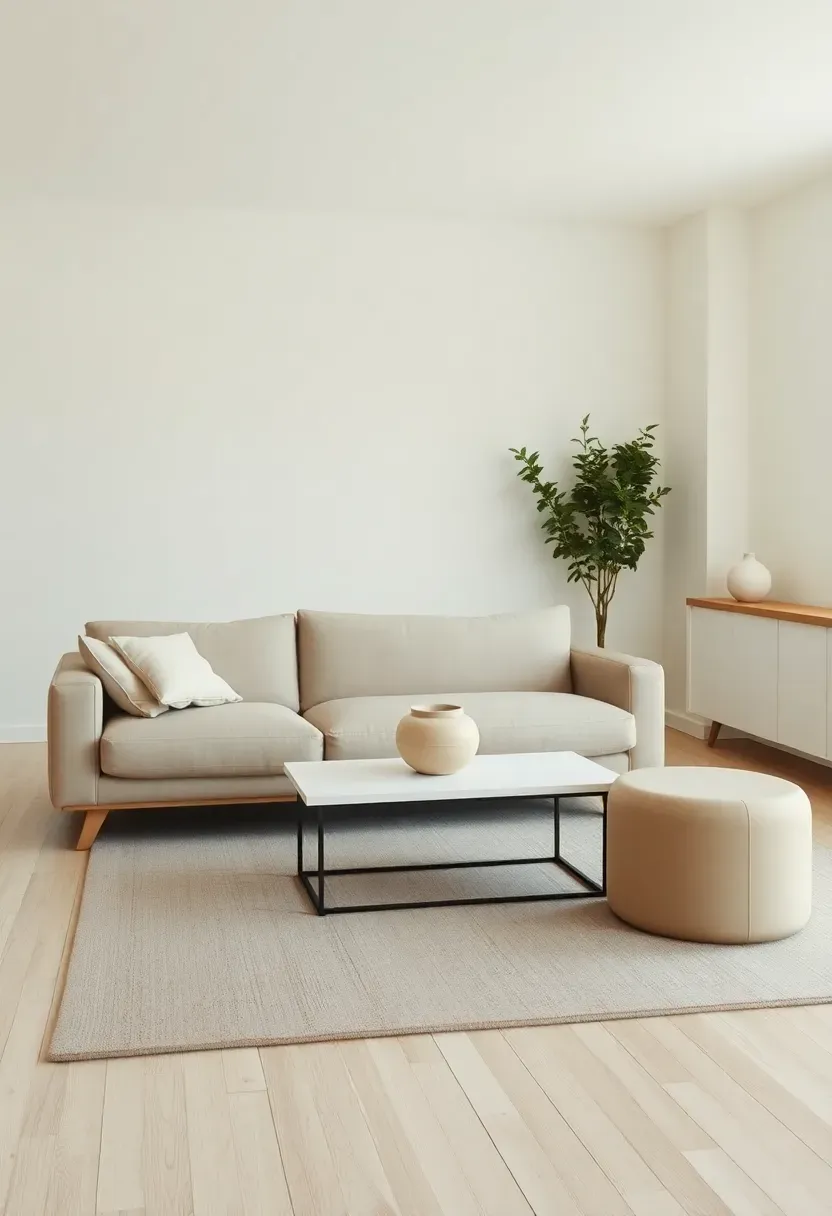
Hyper-realistic 3/4 view of a minimalist living room with cleared surfaces, low sofa, simple coffee table with single object, blank console. Materials: white oak floor, linen upholstery, matte ceramic, wool rug. Warm diffused window light, creamy neutrals with soft taupe accents. Mood: orderly, calm, spacious. Shallow depth of field, sharp details on products, balanced composition, soft shadows, visible room context. No text, no logos, no watermarks.</p>
Starting a minimalist lifestyle becomes easier when your home is designed to support calm, spacious rooms that feel intentional rather than empty.. Hyper-realistic 3/4 view of a minimalist living room with cleared surfaces, low sofa, simple coffee table with single object, blank console. Materials: white oak floor, linen upholstery, matte ceramic, wool rug. Warm diffused window light, creamy neutrals with soft taupe accents. Mood: orderly, calm, spacious. Shallow depth of field, sharp details on
Prompt: Nature documentary captured on Hasselblad X2D 100C with XCD 90V lens at f/4. Hyper-realistic 3/4 view of a minimalist living room with cleared surfaces, low sofa, simple coffee table with single object, blank console. Materials: white oak floor, linen upholstery, matte ceramic, wool rug. Warm diffused window light, creamy neutrals with soft taupe accents. Mood: orderly, calm, spacious. Shallow depth of field, sharp details on products, balanced composition, soft shadows, visible room context. No text, no logos, no watermarks.

If you need functionality on a surface, use a tray to corral items. The consequence of letting flat surfaces fill up is that the entire room feels cluttered, even if storage is organized. Keep mail, keys, and daily items behind closed doors or in one designated tray. This simple edit makes minimalism visible immediately.

Tips

  • Do: limit each surface to one or two objects maximum.
  • Don't: use horizontal surfaces as permanent storage for daily items.

What this gives you: instant visual calm with minimal effort.

9. Scale Furniture to Leave Breathing Room

A minimalist lifestyle requires furniture that fits the room without overwhelming it. Choose a sofa depth of 34-36 inches instead of oversized sections, and size the coffee table to about two-thirds of the sofa length. Keep at least 24 inches of circulation on one side of seating. These proportions create a room that feels open and easy to move through.
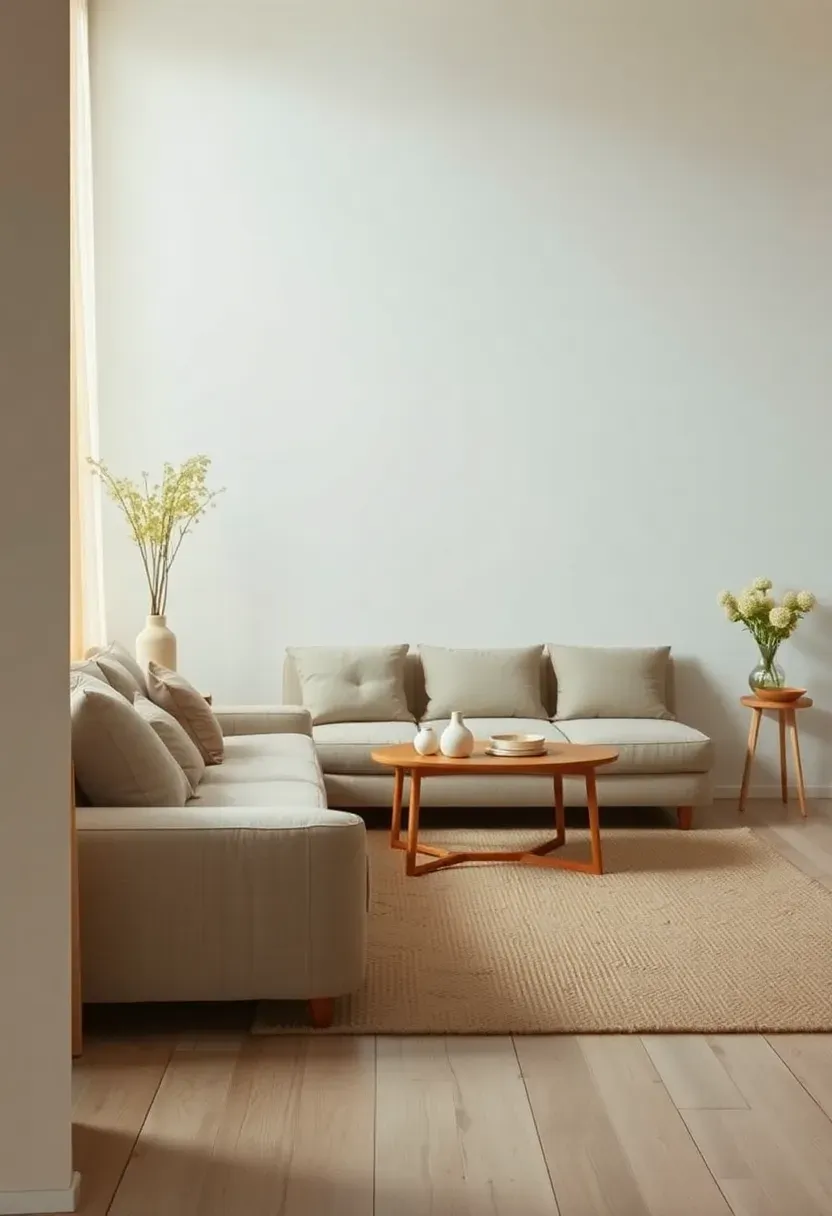
Hyper-realistic 3/4 view of a minimalist living room with properly scaled furniture, low sofa, modest coffee table, open floor space. Materials: white oak floor, linen sofa, oak table, wool rug. Warm diffused window light, creamy neutrals with soft oatmeal accents. Mood: balanced, airy, relaxed. Shallow depth of field, sharp details on products, balanced composition, soft shadows, visible room context. No text, no logos, no watermarks.</p>
Starting a minimalist lifestyle becomes easier when your home is designed to support calm, spacious rooms that feel intentional rather than empty.. Hyper-realistic 3/4 view of a minimalist living room with properly scaled furniture, low sofa, modest coffee table, open floor space. Materials: white oak floor, linen sofa, oak table, wool rug. Warm diffused window light, creamy neutrals with soft oatmeal accents. Mood: balanced, airy, relaxed. Shallow depth of field, sharp details on products, bala
Prompt: Nature documentary captured on Hasselblad X2D 100C with XCD 90V lens at f/4. Hyper-realistic 3/4 view of a minimalist living room with properly scaled furniture, low sofa, modest coffee table, open floor space. Materials: white oak floor, linen sofa, oak table, wool rug. Warm diffused window light, creamy neutrals with soft oatmeal accents. Mood: balanced, airy, relaxed. Shallow depth of field, sharp details on products, balanced composition, soft shadows, visible room context. No text, no logos, no watermarks.

Common mistake: buying furniture that is too large, which makes the room feel cramped and defeats the calm effect.

Instead of a bulky L-shaped sofa, try a two-seat sofa plus one lounge chair. If you need extra seating, add a slim bench that tucks away when not in use. The contrast move is to keep the rug large (8x10 or 9x12) while reducing furniture bulk, so the floor still reads open. This makes the room feel flexible.

Tips

  • Use painter's tape on the floor to test furniture scale before buying.
  • Leave one corner empty to preserve a clear visual exit.
  • Choose nesting tables when you need flexible surface area.

What this gives you: a room that feels open, functional, and intentionally proportioned.

10. Limit Each Room to One Focal Point

Minimalist living feels calm when each room has one clear focal point rather than competing elements. Choose one anchor—a large window, a fireplace, a piece of art, or a statement plant—and keep the rest of the room quiet. This creates visual hierarchy and prevents the space from feeling busy or scattered.
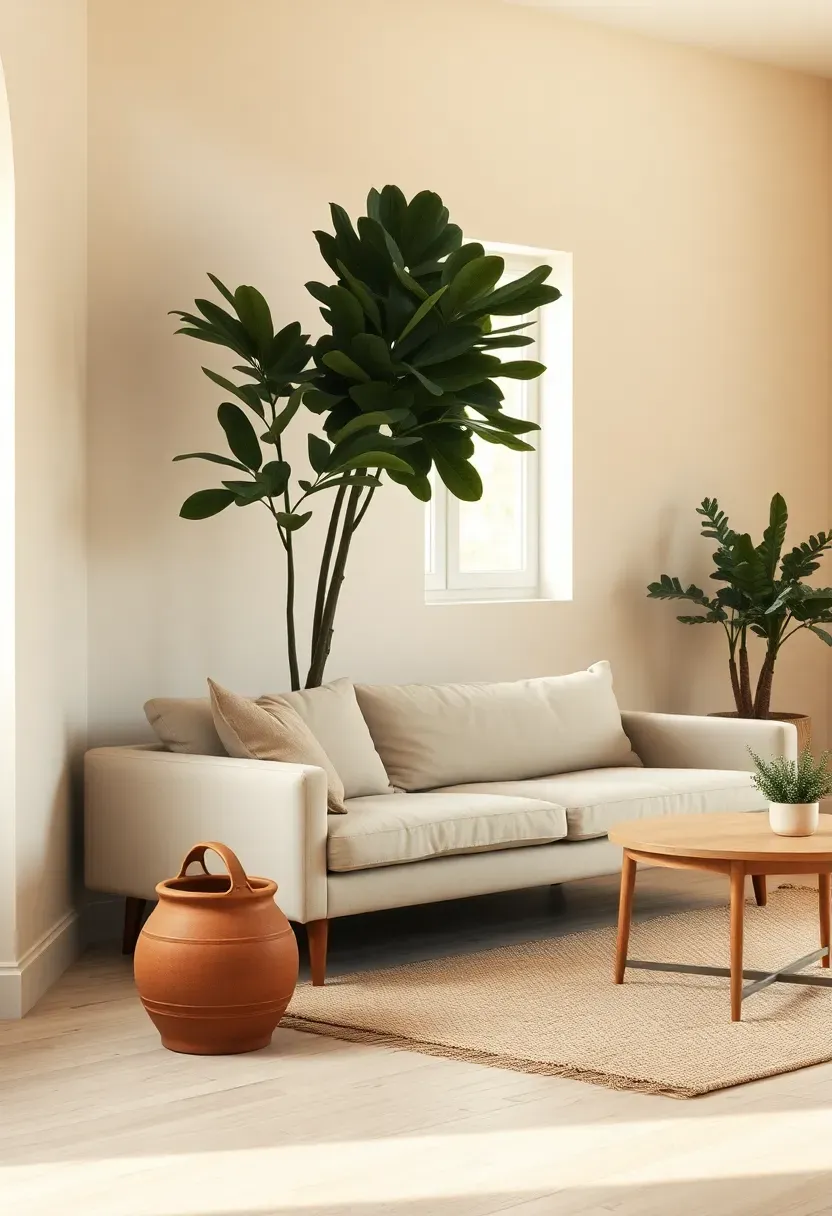
Hyper-realistic 3/4 view of a minimalist living room with one large indoor plant as the focal point, low sofa, simple table. Materials: linen sofa, white oak floor, terracotta planter, wool rug. Warm diffused window light, creamy neutrals with soft green accents. Mood: grounded, calm, natural. Shallow depth of field, sharp details on products, balanced composition, soft shadows, visible room context. No text, no logos, no watermarks.</p>
Starting a minimalist lifestyle becomes easier when your home is designed to support calm, spacious rooms that feel intentional rather than empty.. Hyper-realistic 3/4 view of a minimalist living room with one large indoor plant as the focal point, low sofa, simple table. Materials: linen sofa, white oak floor, terracotta planter, wool rug. Warm diffused window light, creamy neutrals with soft green accents. Mood: grounded, calm, natural. Shallow depth of field, sharp details on products, balanc
Prompt: Nature documentary captured on Hasselblad X2D 100C with XCD 90V lens at f/4. Hyper-realistic 3/4 view of a minimalist living room with one large indoor plant as the focal point, low sofa, simple table. Materials: linen sofa, white oak floor, terracotta planter, wool rug. Warm diffused window light, creamy neutrals with soft green accents. Mood: grounded, calm, natural. Shallow depth of field, sharp details on products, balanced composition, soft shadows, visible room context. No text, no logos, no watermarks.

Placement note: position the focal point where it is visible from the main entry or seating area.

If you choose a statement plant, keep art minimal so it can breathe. The trade-off is that the single focal point needs to be strong enough to carry the room—one 5-6 foot plant has more impact than several small ones. Place it where it draws the eye immediately upon entering. This gives the room quiet hierarchy.

Tips

  • Do: keep at least 24 inches of clear space around the focal point.
  • Don't: add competing elements that fight for attention.

What this gives you: a room with clear focus and effortless calm.

Starting a minimalist lifestyle begins at home with design choices that make simplicity feel natural rather than forced. By editing zones, choosing a quiet palette, building storage, and letting empty space be intentional, the room itself supports calm daily living. Layered lighting, one primary material, and simple reset rituals turn minimalism from a project into a sustainable way of living. Begin with one room, let the results build confidence, and carry the principles forward at your own pace.

Pinterest cover for How to Start a Minimalist Lifestyle: A Beginner's Guide