inspiration

27 Tiny House Living Hacks: Transform Your Small Space for a More Thoughtful Home

27 Tiny House Living Hacks: Transform Your Small Space for a More Thoughtful Home

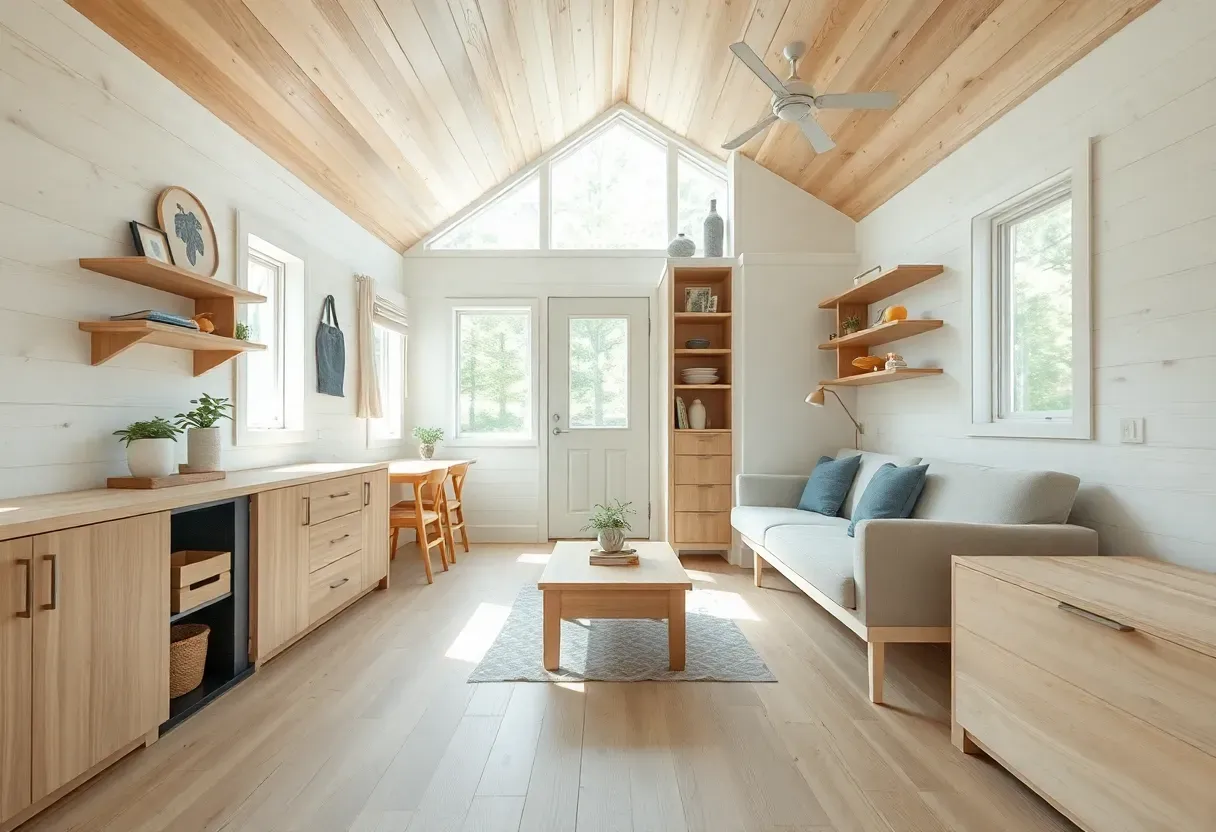
Tiny house living thrives when every square inch serves multiple purposes through smart design that makes small spaces feel generous.

This collection of 27 living hacks focuses on layout, built-in storage, and multi-functional furniture that transforms tight footprints into intentional homes.

Use these ideas to maximize your tiny house or small apartment without sacrificing comfort or style.

Quick FAQ

How does tiny house living work with design choices instead of just decluttering?

Good design does the heavy lifting by using vertical space, built-in storage, and multi-purpose furniture. When the home itself is organized, tiny house living feels spacious rather than restricted.

What are the most effective tiny house living hacks for small bedrooms?

Loft beds with storage underneath, wall-mounted nightstands, and built-in wardrobes that use full ceiling height. These moves free floor space while keeping essentials accessible.

Can tiny house living work for families or couples?

Yes, with thoughtful zoning and convertible spaces. Use room dividers, fold-down surfaces, and defined storage zones so each person has territory without crowding.

How do you keep tiny house living from feeling cramped?

Use light colors, continuous flooring, and minimal visual breaks. Let one material lead the design and keep the palette unified so the eye reads the space as larger.

What tiny house living hacks work for rentals without permanent changes?

Focus on multi-purpose furniture, vertical storage, and light-reflecting surfaces. Tall bookcases, over-door organizers, and mirrors can transform small spaces without construction.

Table of Contents

  1. 1. Build Storage into Every Vertical Inch
  2. 2. Use Lofts for Sleeping and Free the Floor
  3. 3. Choose Multi-Purpose Furniture That Adapts
  4. 4. Create Zones Without Walls
  5. 5. Hide Storage Under Stairs and Seating
  6. 6. Mount Desks and Tables to Fold Away
  7. 7. Use Light Colors and One Continuous Floor
  8. 8. Install Sliding Doors Instead of Swinging
  9. 9. Maximize Natural Light with Minimal Treatments
  10. 10. Build Window Seats with Hidden Storage
  11. 11. Use Over-Door and Wall-Mounted Organizers
  12. 12. Choose Furniture Exposed Legs for Visual Lightness
  13. 13. Extend Living Space with Outdoor Decks
  14. 14. Build Murphy Beds for Daytime Living Space
  15. 15. Use Mirrors to Double Perceived Space
  16. 16. Create a Kitchen Galley with Pull-Out Pantry
  17. 17. Build Bathroom Storage into Nooks and Recesses
  18. 18. Use Pocket Doors and Curtains for Separation
  19. 19. Choose Compact Appliances That Still Function
  20. 20. Create Defined Storage Zones by Activity
  21. 21. Use the Space Above Cabinets for Seasonal Items
  22. 22. Build a Wet Bath with Curved Walls
  23. 23. Install Built-Ins from Floor to Ceiling
  24. 24. Use Lightweight Furniture That Moves Easily
  25. 25. Create a Closet Nook Behind the Bed
  26. 26. Build a Deck That Expands Living Space
  27. 27. Design One Reset Ritual for Daily Calm

1. Build Storage into Every Vertical Inch

Tiny house living succeeds when storage claims every vertical surface. Build floor-to-ceiling cabinets with consistent 18-inch depth and use the top third for seasonal items. Keep doors flush with push-latch hardware so storage reads as architecture rather than furniture. This approach makes small spaces feel organized without consuming floor area.
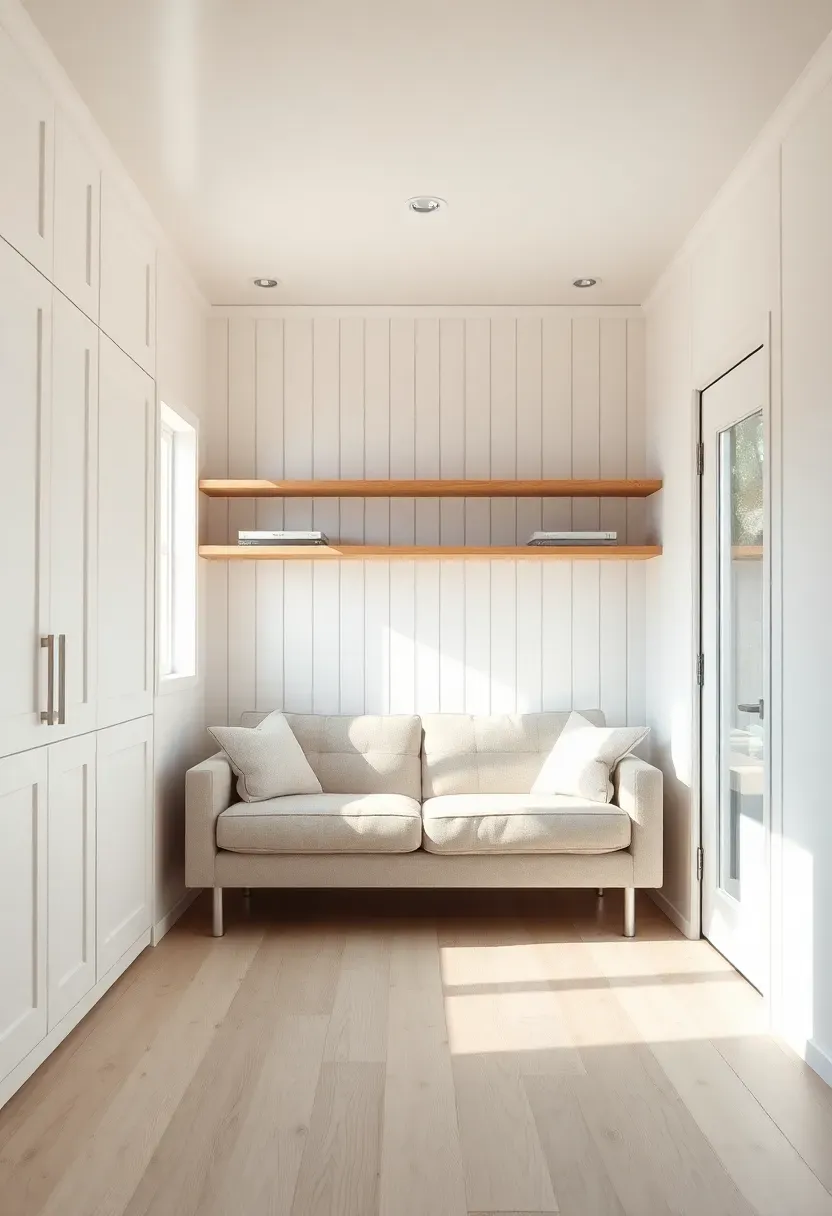
Hyper-realistic 3/4 view of a tiny house interior with floor-to-ceiling white storage wall, low sofa, floating shelves. Materials: white oak floor, matte white cabinetry, linen upholstery, brushed steel. Warm diffused window light, creamy neutrals with soft wood accents. Mood: orderly, compact, calm. Shallow depth of field, sharp details, balanced composition, soft shadows, visible room context. No text, no logos, no watermarks.</p>
Tiny house living thrives when every square inch serves multiple purposes through smart design that makes small spaces feel generous.. Hyper-realistic 3/4 view of a tiny house interior with floor-to-ceiling white storage wall, low sofa, floating shelves. Materials: white oak floor, matte white cabinetry, linen upholstery, brushed steel. Warm diffused window light, creamy neutrals with soft wood accents. Mood: orderly, compact, calm. Shallow depth of field, sharp details, balanced composition, so
Prompt: Nature documentary captured on Hasselblad X2D 100C with XCD 90V lens at f/4. Hyper-realistic 3/4 view of a tiny house interior with floor-to-ceiling white storage wall, low sofa, floating shelves. Materials: white oak floor, matte white cabinetry, linen upholstery, brushed steel. Warm diffused window light, creamy neutrals with soft wood accents. Mood: orderly, compact, calm. Shallow depth of field, sharp details, balanced composition, soft shadows, visible room context. No text, no logos, no watermarks.

Tips

  • Do: use the top 24 inches for items accessed only seasonally.
  • Don't: leave wasted space above cabinets—build to the ceiling.

What this gives you: maximum storage without sacrificing floor space.

2. Use Lofts for Sleeping and Free the Floor

The most effective tiny house living hack is moving the bed to a loft. Keep 36-42 inches of clearance above the mattress for comfort and add a railing or partial wall for safety. The space below becomes a living area, office, or storage zone. Use a built-in ladder with storage rungs or a staircase with drawers underneath.
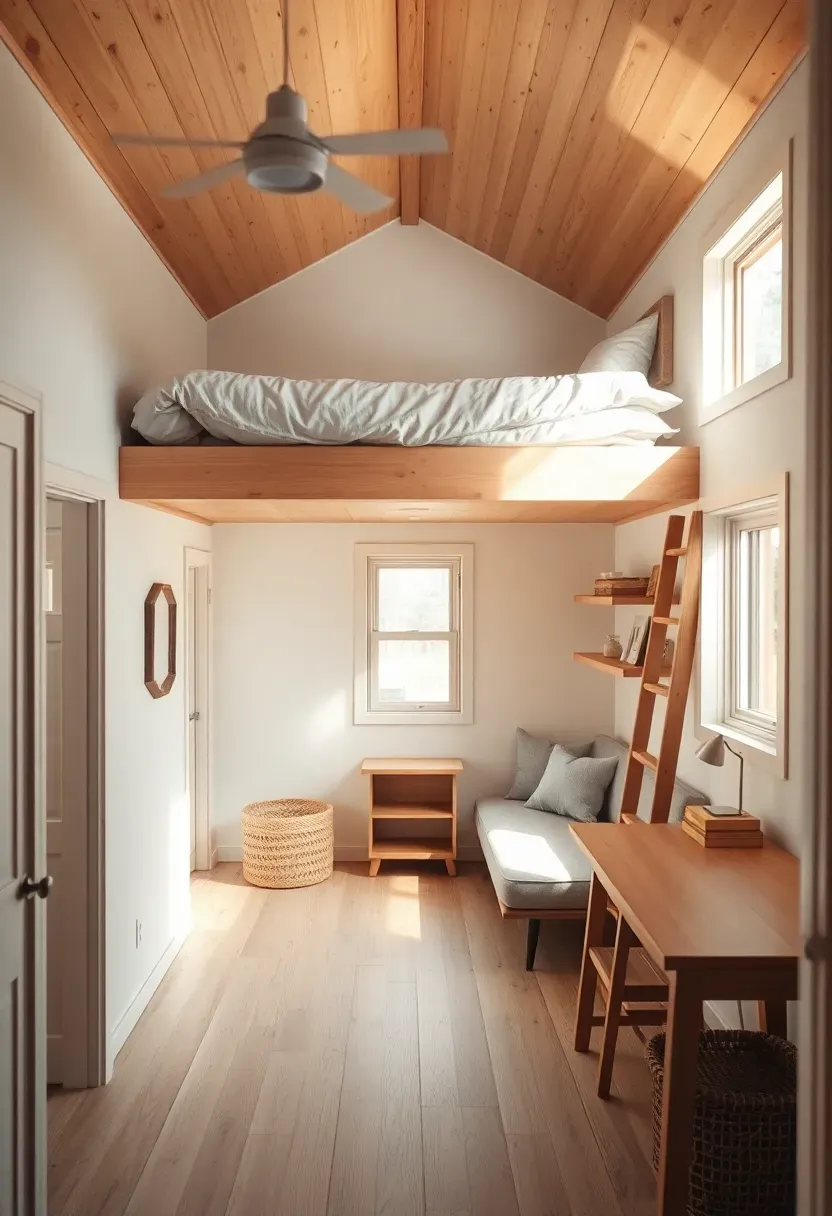
Hyper-realistic 3/4 view of a tiny house with sleeping loft above, living space below with low sofa and desk. Materials: white oak floor, linen bedding, matte white walls, wood ladder. Warm diffused window light, creamy neutrals with soft honey tones. Mood: cozy, efficient, intentional. Shallow depth of field, sharp details, balanced composition, soft shadows, visible room context. No text, no logos, no watermarks.</p>
Tiny house living thrives when every square inch serves multiple purposes through smart design that makes small spaces feel generous.. Hyper-realistic 3/4 view of a tiny house with sleeping loft above, living space below with low sofa and desk. Materials: white oak floor, linen bedding, matte white walls, wood ladder. Warm diffused window light, creamy neutrals with soft honey tones. Mood: cozy, efficient, intentional. Shallow depth of field, sharp details, balanced composition, soft shadows, vi
Prompt: Nature documentary captured on Hasselblad X2D 100C with XCD 90V lens at f/4. Hyper-realistic 3/4 view of a tiny house with sleeping loft above, living space below with low sofa and desk. Materials: white oak floor, linen bedding, matte white walls, wood ladder. Warm diffused window light, creamy neutrals with soft honey tones. Mood: cozy, efficient, intentional. Shallow depth of field, sharp details, balanced composition, soft shadows, visible room context. No text, no logos, no watermarks.

Placement note: position the loft above a bathroom or kitchen to preserve headroom in living areas.

If ceiling height limits a loft, consider a murphy bed instead. The trade-off is that loft access requires some climbing, but the floor space gain is substantial. Add a skylight above the loft for light and ventilation.

Tips

  • Install a reading light at the head of the bed for evening use.
  • Use low-profile bedding to maximize headroom.

What this gives you: a full floor reclaimed for daytime living.

3. Choose Multi-Purpose Furniture That Adapts

Tiny house living requires furniture that shifts functions throughout the day. Choose a sofa that converts to a guest bed, a dining table that folds against the wall, or ottomans with hidden storage. Each piece should earn its footprint by serving at least two purposes. This keeps the space flexible without adding more objects.
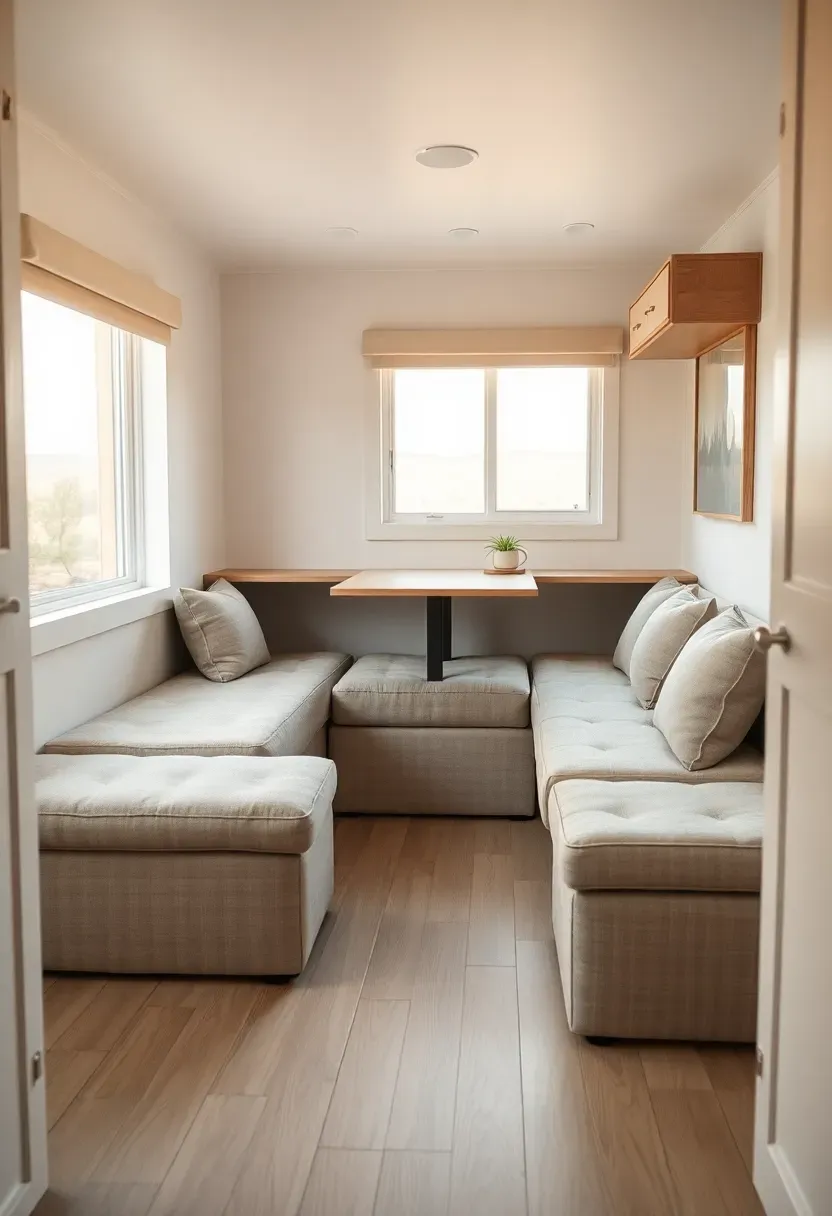
Hyper-realistic 3/4 view of a tiny house living area with convertible sofa, fold-down table, storage ottomans. Materials: white oak floor, linen upholstery, matte white walls, brushed steel hardware. Warm diffused window light, creamy neutrals with soft sand accents. Mood: flexible, efficient, calm. Shallow depth of field, sharp details, balanced composition, soft shadows, visible room context. No text, no logos, no watermarks.</p>
Tiny house living thrives when every square inch serves multiple purposes through smart design that makes small spaces feel generous.. Hyper-realistic 3/4 view of a tiny house living area with convertible sofa, fold-down table, storage ottomans. Materials: white oak floor, linen upholstery, matte white walls, brushed steel hardware. Warm diffused window light, creamy neutrals with soft sand accents. Mood: flexible, efficient, calm. Shallow depth of field, sharp details, balanced composition, sof
Prompt: Nature documentary captured on Hasselblad X2D 100C with XCD 90V lens at f/4. Hyper-realistic 3/4 view of a tiny house living area with convertible sofa, fold-down table, storage ottomans. Materials: white oak floor, linen upholstery, matte white walls, brushed steel hardware. Warm diffused window light, creamy neutrals with soft sand accents. Mood: flexible, efficient, calm. Shallow depth of field, sharp details, balanced composition, soft shadows, visible room context. No text, no logos, no watermarks.

Why it works: multi-purpose furniture doubles functionality without doubling the footprint.

Look for hydraulic mechanisms that make conversion easy. The consequence of single-purpose furniture in tiny houses is that half the space sits unused most of the time. A lift-top coffee table that becomes a desk, or a bench that stores blankets, transforms how the room functions.

Tips

  • Pro: convertible pieces let one room serve as living, dining, and guest space.
  • Con: mechanisms can add cost and complexity.
  • Fix: choose simple designs with fewer moving parts.

Budget/Time: $500-1500 for quality convertible pieces that last.

What this gives you: a space that adapts to daily needs without feeling cramped.

4. Create Zones Without Walls

Tiny house living feels larger when you define zones without building walls. Use rugs, furniture placement, and ceiling changes to separate sleeping, living, and eating areas. A sofa backing defines a living zone, while a rug anchors dining space. This preserves flow while creating visual separation.
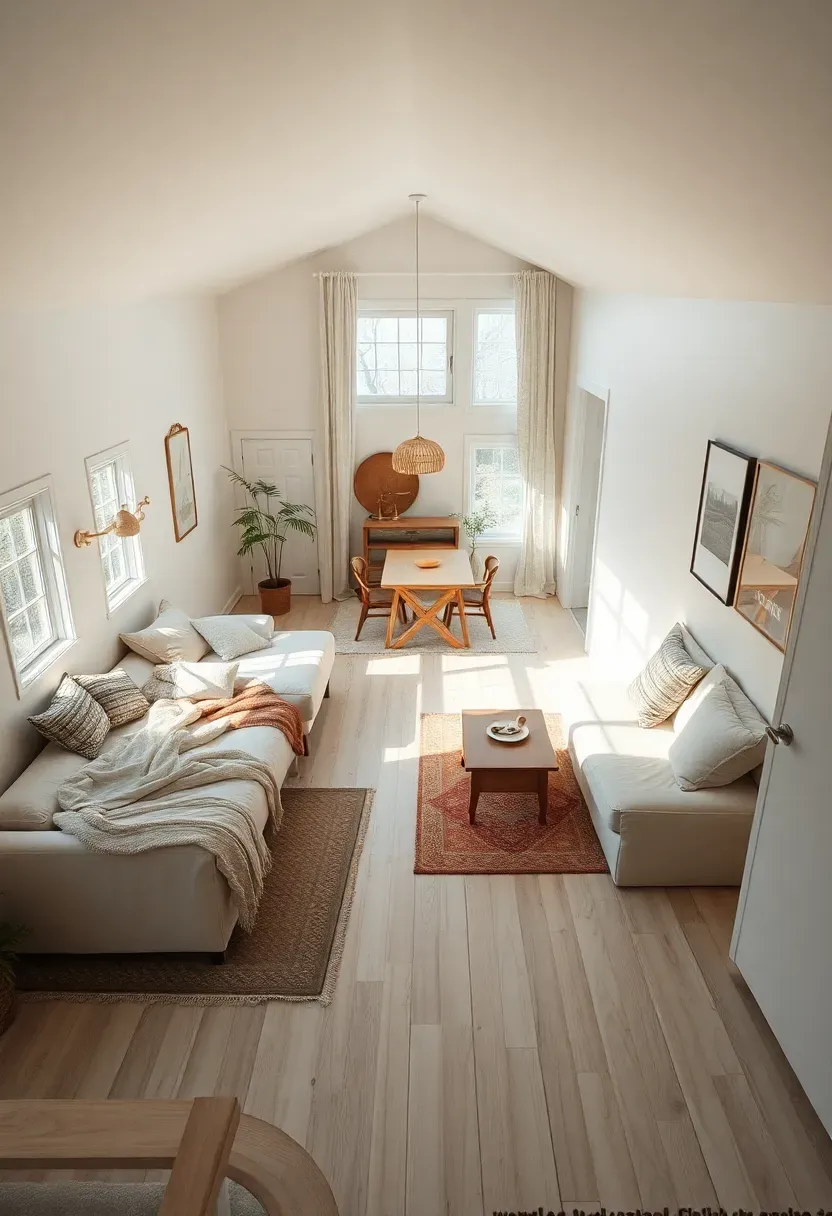
Hyper-realistic 3/4 view of a tiny house with open zones defined by rugs and furniture placement, sleeping corner, living area, small dining table. Materials: white oak floor continuous throughout, linen sofa, wool rugs, matte white walls. Warm diffused window light, creamy neutrals with soft beige accents. Mood: open, zoned, airy. Shallow depth of field, sharp details, balanced composition, soft shadows, visible room context. No text, no logos, no watermarks.</p>
Tiny house living thrives when every square inch serves multiple purposes through smart design that makes small spaces feel generous.. Hyper-realistic 3/4 view of a tiny house with open zones defined by rugs and furniture placement, sleeping corner, living area, small dining table. Materials: white oak floor continuous throughout, linen sofa, wool rugs, matte white walls. Warm diffused window light, creamy neutrals with soft beige accents. Mood: open, zoned, airy. Shallow depth of field, sharp d
Prompt: Nature documentary captured on Hasselblad X2D 100C with XCD 90V lens at f/4. Hyper-realistic 3/4 view of a tiny house with open zones defined by rugs and furniture placement, sleeping corner, living area, small dining table. Materials: white oak floor continuous throughout, linen sofa, wool rugs, matte white walls. Warm diffused window light, creamy neutrals with soft beige accents. Mood: open, zoned, airy. Shallow depth of field, sharp details, balanced composition, soft shadows, visible room context. No text, no logos, no watermarks.

Keep circulation paths at least 30 inches wide. The contrast move is to avoid placing furniture in the center of the room—push pieces to walls to preserve open space. If privacy is needed, use curtains or open shelving as dividers instead of solid walls.

Tips

  • Do: use different rugs to define separate zones.
  • Don't: block natural paths with furniture arrangements.

What this gives you: defined spaces without sacrificing openness.

5. Hide Storage Under Stairs and Seating

The most valuable tiny house living hack is using otherwise dead space for storage. Build drawers under staircase treads, add storage inside benches, and use hollow ottomans. These hidden compartments store bulky items like blankets, shoes, or seasonal gear without using visible shelf space.
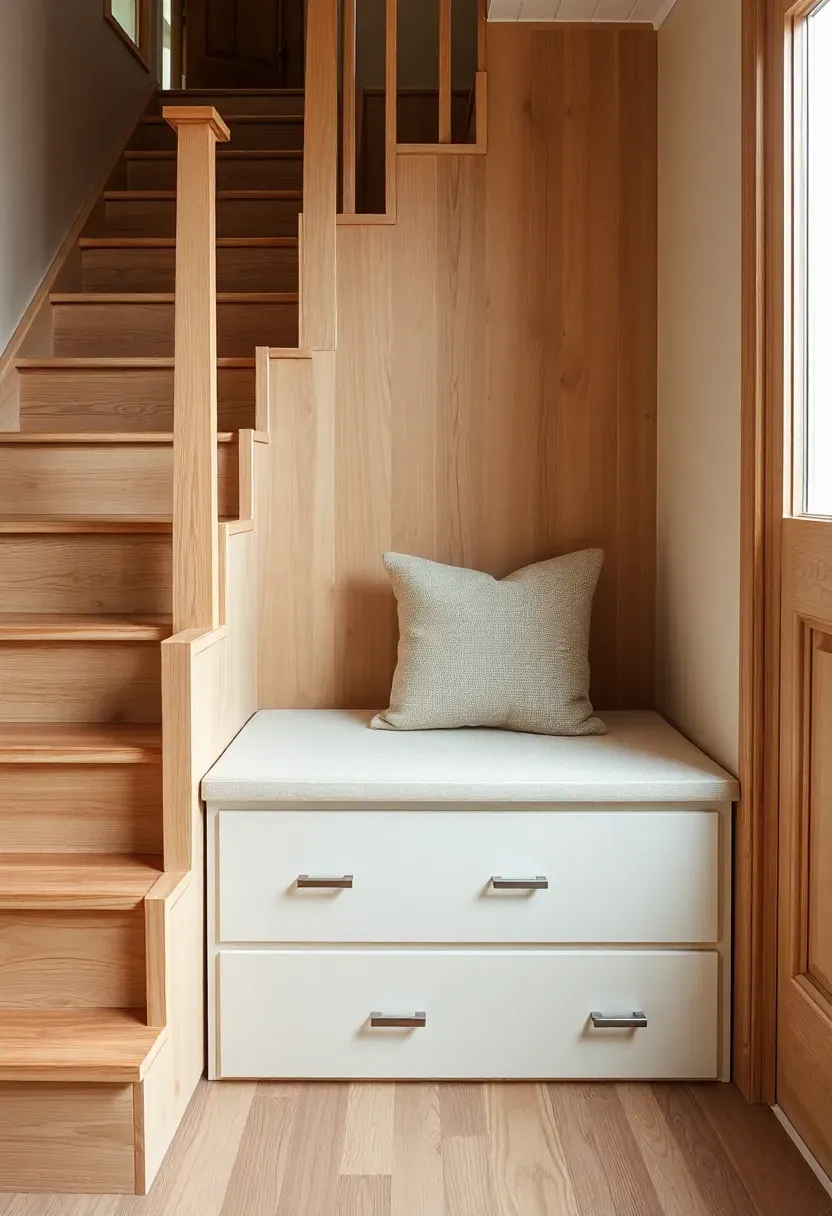
Hyper-realistic 3/4 view of a tiny house staircase with drawer storage underneath and storage bench at landing. Materials: white oak stairs, matte white drawer fronts, linen cushion on bench, brushed steel pulls. Warm diffused window light, creamy neutrals with warm wood tones. Mood: clever, efficient, organized. Shallow depth of field, sharp details, balanced composition, soft shadows, visible room context. No text, no logos, no watermarks.</p>
Tiny house living thrives when every square inch serves multiple purposes through smart design that makes small spaces feel generous.. Hyper-realistic 3/4 view of a tiny house staircase with drawer storage underneath and storage bench at landing. Materials: white oak stairs, matte white drawer fronts, linen cushion on bench, brushed steel pulls. Warm diffused window light, creamy neutrals with warm wood tones. Mood: clever, efficient, organized. Shallow depth of field, sharp details, balanced co
Prompt: Nature documentary captured on Hasselblad X2D 100C with XCD 90V lens at f/4. Hyper-realistic 3/4 view of a tiny house staircase with drawer storage underneath and storage bench at landing. Materials: white oak stairs, matte white drawer fronts, linen cushion on bench, brushed steel pulls. Warm diffused window light, creamy neutrals with warm wood tones. Mood: clever, efficient, organized. Shallow depth of field, sharp details, balanced composition, soft shadows, visible room context. No text, no logos, no watermarks.

Why it works: under-stair and seating storage uses structural space that would otherwise be empty.

Design drawers with 6-8 inch depth for shoes or 12 inches for bedding. The trade-off is that hardware must be durable—choose recessed pulls or push-latches to avoid catching on clothing. A storage bench with a hinge lid is simpler than drawers and can hold bulkier items.

Tips

  • Use soft-close hinges to prevent slamming in tight spaces.
  • Label contents on the inside of drawer fronts for quick identification.

What this gives you: hidden storage that does not impact visual space.

6. Mount Desks and Tables to Fold Away

Tiny house living gains usable space when surfaces fold down when not in use. Mount a desk to the wall with folding brackets, install a murphy table that drops from the wall, or use a leaf that extends only when needed. This keeps circulation clear and makes the room feel larger.
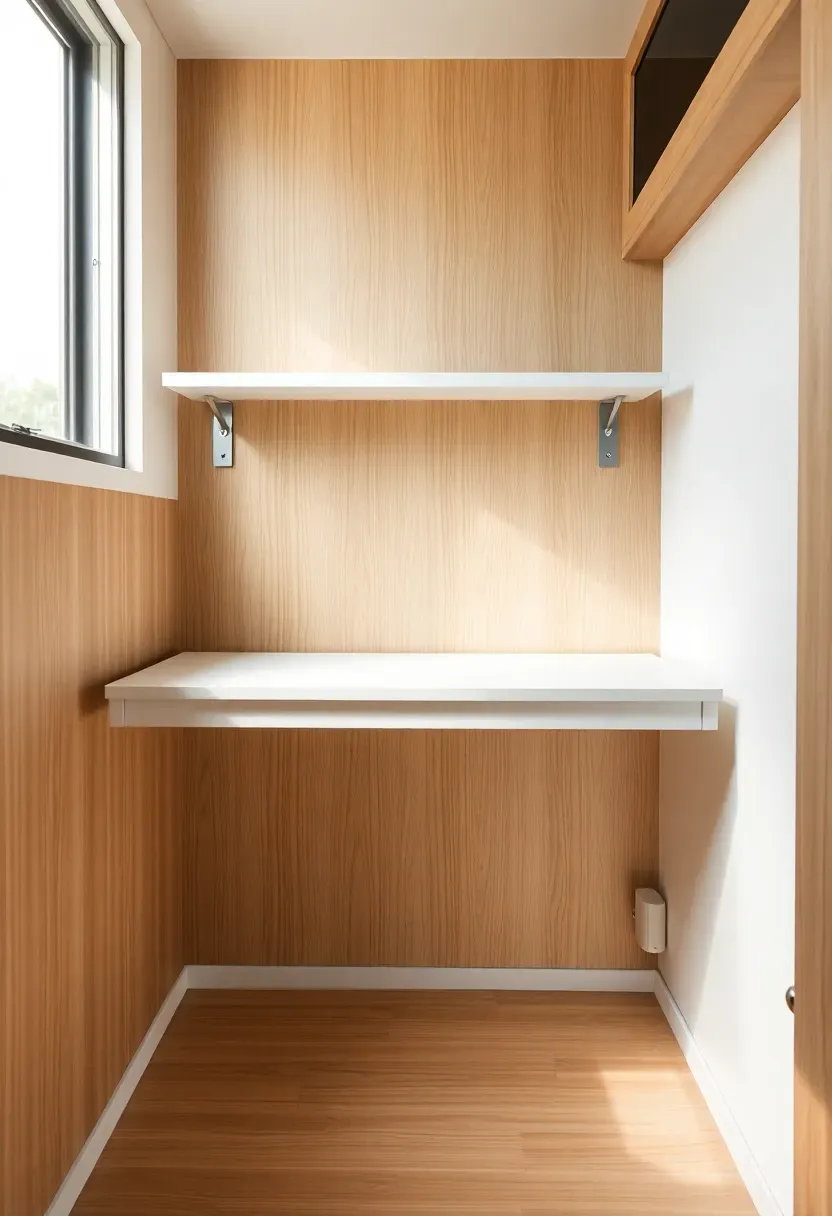
Hyper-realistic 3/4 view of a tiny house with wall-mounted folding desk, wall-mounted table, clear floor space below. Materials: white oak wall panel, white lacquer desktop, matte white walls, brushed steel brackets. Warm diffused window light, creamy neutrals with soft wood accents. Mood: adaptable, clean, efficient. Shallow depth of field, sharp details, balanced composition, soft shadows, visible room context. No text, no logos, no watermarks.</p>
Tiny house living thrives when every square inch serves multiple purposes through smart design that makes small spaces feel generous.. Hyper-realistic 3/4 view of a tiny house with wall-mounted folding desk, wall-mounted table, clear floor space below. Materials: white oak wall panel, white lacquer desktop, matte white walls, brushed steel brackets. Warm diffused window light, creamy neutrals with soft wood accents. Mood: adaptable, clean, efficient. Shallow depth of field, sharp details, balanc
Prompt: Nature documentary captured on Hasselblad X2D 100C with XCD 90V lens at f/4. Hyper-realistic 3/4 view of a tiny house with wall-mounted folding desk, wall-mounted table, clear floor space below. Materials: white oak wall panel, white lacquer desktop, matte white walls, brushed steel brackets. Warm diffused window light, creamy neutrals with soft wood accents. Mood: adaptable, clean, efficient. Shallow depth of field, sharp details, balanced composition, soft shadows, visible room context. No text, no logos, no watermarks.

Common mistake: leaving fold-down surfaces permanently deployed, which defeats the space-saving purpose.

Use sturdy folding brackets that support at least 50 pounds. The contrast move is to avoid bulky legs—mount directly to wall studs. Add a magnetic catch to keep surfaces secured when folded. This makes tiny house living feel spacious during the day.

Tips

  • Install a power strip on the wall behind the desk for easy access.
  • Use lightweight materials to make folding easier.

Best for

What this gives you: floor space when you need it, workspace when you don't.

7. Use Light Colors and One Continuous Floor

Tiny house living feels expansive when the palette is light and unified. Choose warm white walls, a continuous floor material like white oak or light tile, and limit dark accents to small pieces. This reduces visual breaks and makes the eye read the space as larger. Light colors reflect more daylight, which further expands the perceived size.
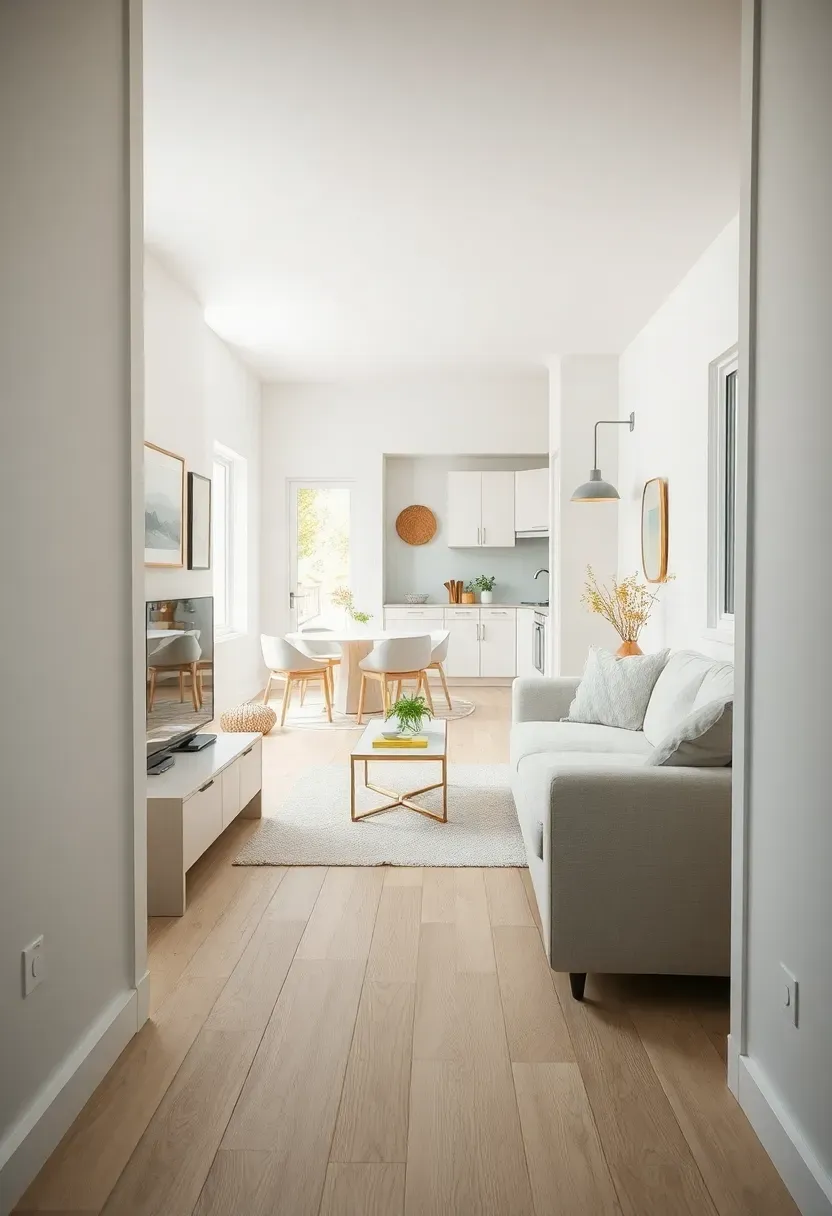
Hyper-realistic 3/4 view of a tiny house interior with light neutral palette, continuous white oak floor from living to kitchen, white walls. Materials: white oak floor, matte white walls, light linen upholstery, pale ceramic. Warm diffused window light, creamy neutrals throughout. Mood: spacious, bright, calm. Shallow depth of field, sharp details, balanced composition, soft shadows, visible room context. No text, no logos, no watermarks.</p>
Tiny house living thrives when every square inch serves multiple purposes through smart design that makes small spaces feel generous.. Hyper-realistic 3/4 view of a tiny house interior with light neutral palette, continuous white oak floor from living to kitchen, white walls. Materials: white oak floor, matte white walls, light linen upholstery, pale ceramic. Warm diffused window light, creamy neutrals throughout. Mood: spacious, bright, calm. Shallow depth of field, sharp details, balanced comp
Prompt: Nature documentary captured on Hasselblad X2D 100C with XCD 90V lens at f/4. Hyper-realistic 3/4 view of a tiny house interior with light neutral palette, continuous white oak floor from living to kitchen, white walls. Materials: white oak floor, matte white walls, light linen upholstery, pale ceramic. Warm diffused window light, creamy neutrals throughout. Mood: spacious, bright, calm. Shallow depth of field, sharp details, balanced composition, soft shadows, visible room context. No text, no logos, no watermarks.

Placement note: carry the same flooring material throughout without thresholds to maximize the sense of space.

If you want contrast, use texture instead of color—a boucle throw or nubby rug adds depth without darkening the room. The consequence of dark colors in tiny houses is that walls advance visually, making the space feel smaller. Keep the LRV of wall paint above 75 for maximum light reflection.

Tips

  • If the floor is continuous, then use area rugs to define zones.
  • If you need contrast, then add it in small accessories rather than large surfaces.

What this gives you: a tiny house that feels twice its actual size.

8. Install Sliding Doors Instead of Swinging

The simplest tiny house living hack is replacing swinging doors with sliding versions. Barn doors, pocket doors, or sliding panels preserve floor space because they do not require clearance arcs. A standard swinging door claims up to 10 square feet when open—a sliding door uses zero.
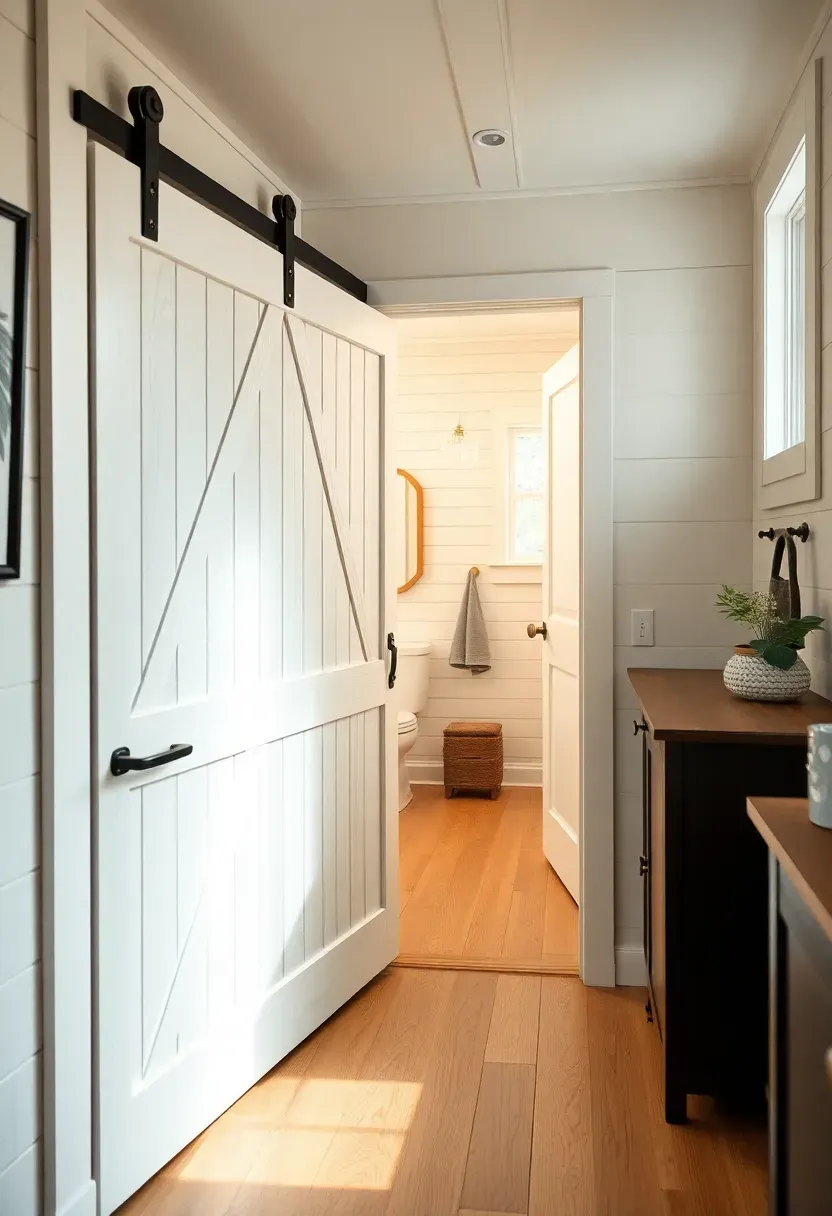
Hyper-realistic 3/4 view of a tiny house with white sliding barn door on track, open doorway revealing bathroom, living area beyond. Materials: white oak door with black hardware, white shiplap walls, light oak floor. Warm diffused window light, creamy neutrals with black accents. Mood: clean, space-saving, modern. Shallow depth of field, sharp details, balanced composition, soft shadows, visible room context. No text, no logos, no watermarks.</p>
Tiny house living thrives when every square inch serves multiple purposes through smart design that makes small spaces feel generous.. Hyper-realistic 3/4 view of a tiny house with white sliding barn door on track, open doorway revealing bathroom, living area beyond. Materials: white oak door with black hardware, white shiplap walls, light oak floor. Warm diffused window light, creamy neutrals with black accents. Mood: clean, space-saving, modern. Shallow depth of field, sharp details, balanced
Prompt: Nature documentary captured on Hasselblad X2D 100C with XCD 90V lens at f/4. Hyper-realistic 3/4 view of a tiny house with white sliding barn door on track, open doorway revealing bathroom, living area beyond. Materials: white oak door with black hardware, white shiplap walls, light oak floor. Warm diffused window light, creamy neutrals with black accents. Mood: clean, space-saving, modern. Shallow depth of field, sharp details, balanced composition, soft shadows, visible room context. No text, no logos, no watermarks.

Why it works: sliding doors free up floor space that swinging doors would claim.

Install a flush-mounted track so the door slides parallel to the wall. The trade-off is that sliding doors do not seal as tightly as swinging doors, so use weatherstripping for bathrooms. If a pocket door is not possible, a surface-mounted barn door adds character while saving space.

Tips

  • Use soft-close mechanisms to prevent slamming in tight quarters.
  • Choose flush pulls so the door does not catch on clothing.

Rental note: use tension-mounted room dividers or curtains instead of replacing doors.

What this gives you: up to 10 square feet of reclaimed floor space per door.

9. Maximize Natural Light with Minimal Treatments

Tiny house living feels larger when natural light fills the space. Use large windows if possible, keep treatments sheer or remove them entirely, and position mirrors to reflect daylight deeper into the room. Light makes boundaries recede and creates a sense of connection to the outdoors.
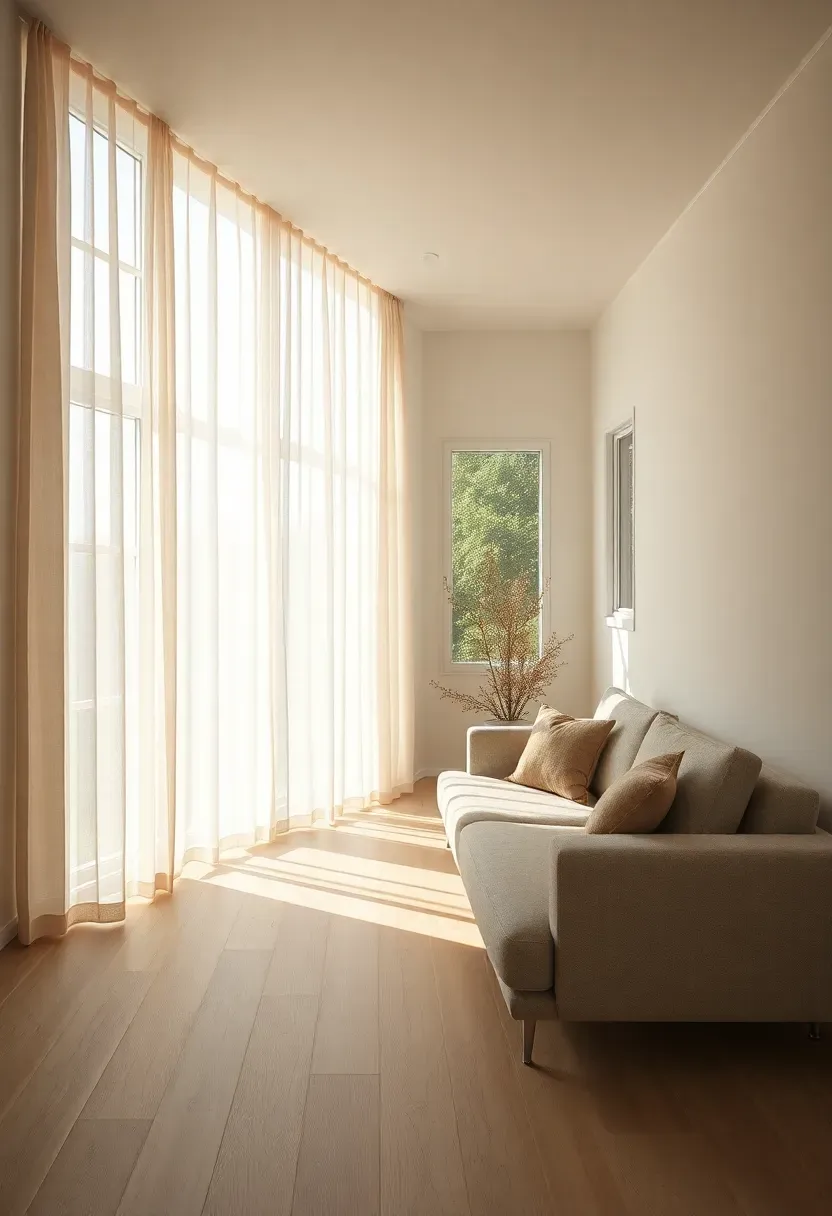
Hyper-realistic 3/4 view of a tiny house with large windows, minimal sheer curtains, abundant natural light filling the space, white oak floor, low sofa. Materials: linen sheer panels, white oak floor, linen sofa, matte white walls. Bright diffused daylight, creamy neutrals with soft glow. Mood: bright, airy, expansive. Shallow depth of field, sharp details, balanced composition, soft shadows, visible room context. No text, no logos, no watermarks.</p>
Tiny house living thrives when every square inch serves multiple purposes through smart design that makes small spaces feel generous.. Hyper-realistic 3/4 view of a tiny house with large windows, minimal sheer curtains, abundant natural light filling the space, white oak floor, low sofa. Materials: linen sheer panels, white oak floor, linen sofa, matte white walls. Bright diffused daylight, creamy neutrals with soft glow. Mood: bright, airy, expansive. Shallow depth of field, sharp details, bala
Prompt: Nature documentary captured on Hasselblad X2D 100C with XCD 90V lens at f/4. Hyper-realistic 3/4 view of a tiny house with large windows, minimal sheer curtains, abundant natural light filling the space, white oak floor, low sofa. Materials: linen sheer panels, white oak floor, linen sofa, matte white walls. Bright diffused daylight, creamy neutrals with soft glow. Mood: bright, airy, expansive. Shallow depth of field, sharp details, balanced composition, soft shadows, visible room context. No text, no logos, no watermarks.

Common mistake: using heavy blackout curtains that block light and make tiny houses feel like caves.

If privacy is needed, use top-down shades that admit light while obscuring the lower portion of windows. The contrast move is to skip curtains entirely on windows that face private outdoor areas. Place a mirror opposite the largest window to double the daylight effect.

Tips

  • Do: keep window treatments minimal to maximize light.
  • Don't: place furniture where it blocks natural light paths.

What this gives you: a tiny house that feels open and connected to outdoors.

10. Build Window Seats with Hidden Storage

Window seats are a tiny house living hack that adds comfort, storage, and visual interest. Build a bench under a window with a hinged lid for blankets or seasonal items. Add a cushion in durable upholstery like canvas or performance fabric. This uses dead space while creating a cozy reading nook.
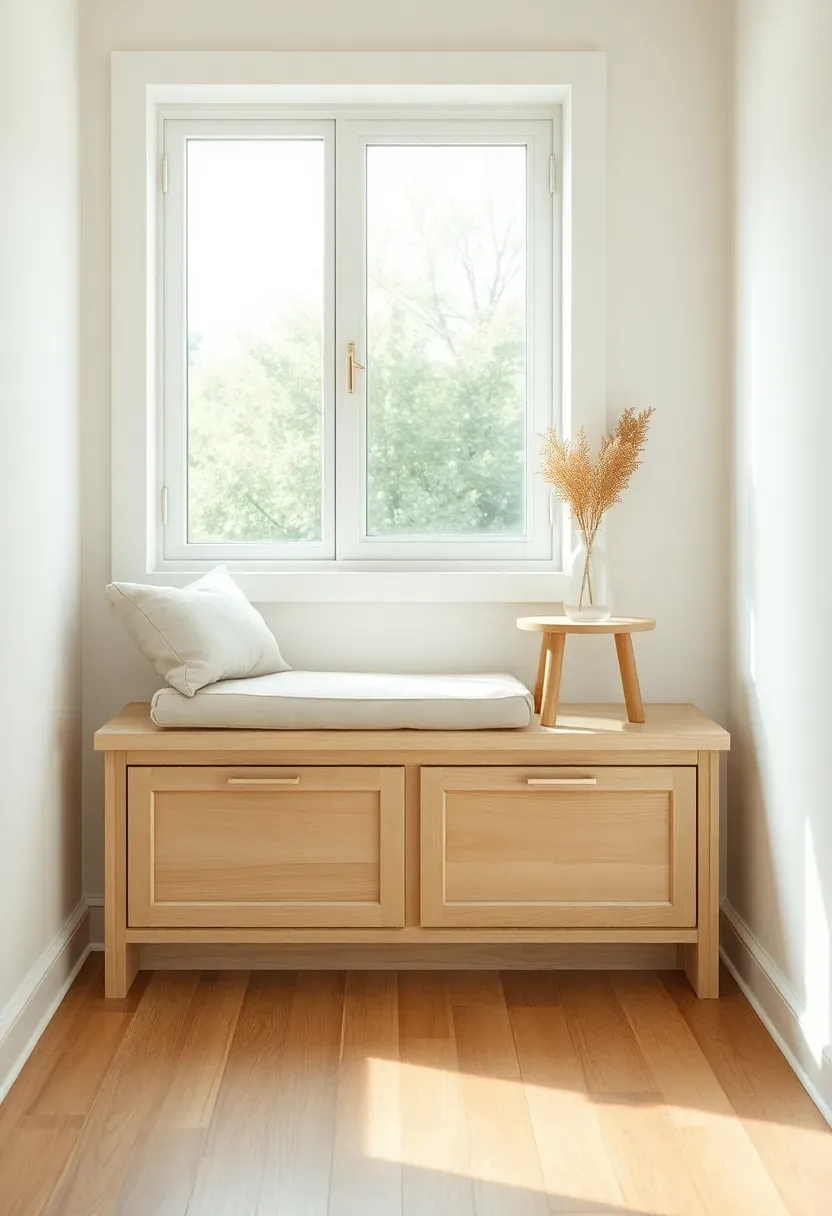
Hyper-realistic 3/4 view of a tiny house window seat with storage beneath, linen cushion, small side table. Materials: white oak bench base, linen cushion, matte white walls, oak floor. Warm diffused window light, creamy neutrals with soft beige tones. Mood: cozy, functional, charming. Shallow depth of field, sharp details, balanced composition, soft shadows, visible room context. No text, no logos, no watermarks.</p>
Tiny house living thrives when every square inch serves multiple purposes through smart design that makes small spaces feel generous.. Hyper-realistic 3/4 view of a tiny house window seat with storage beneath, linen cushion, small side table. Materials: white oak bench base, linen cushion, matte white walls, oak floor. Warm diffused window light, creamy neutrals with soft beige tones. Mood: cozy, functional, charming. Shallow depth of field, sharp details, balanced composition, soft shadows, vis
Prompt: Nature documentary captured on Hasselblad X2D 100C with XCD 90V lens at f/4. Hyper-realistic 3/4 view of a tiny house window seat with storage beneath, linen cushion, small side table. Materials: white oak bench base, linen cushion, matte white walls, oak floor. Warm diffused window light, creamy neutrals with soft beige tones. Mood: cozy, functional, charming. Shallow depth of field, sharp details, balanced composition, soft shadows, visible room context. No text, no logos, no watermarks.

Keep the seat depth at 18-20 inches for comfort. The trade-off is that window seats consume floor space, so use them only where circulation is not impacted. If the window is low, build the seat at standard chair height rather than bench height.

Tips

  • Use gas struts to make the lid easy to open.
  • Add a removable cushion cover for washing.

What this gives you: storage plus seating in otherwise unused space.

11. Use Over-Door and Wall-Mounted Organizers

Tiny house living gains storage from surfaces that are often overlooked. Over-door racks store shoes or pantry items, wall-mounted pegboards hold tools or kitchen supplies, and magnetic knife racks free counter space. These organizers use vertical space without requiring floor area.
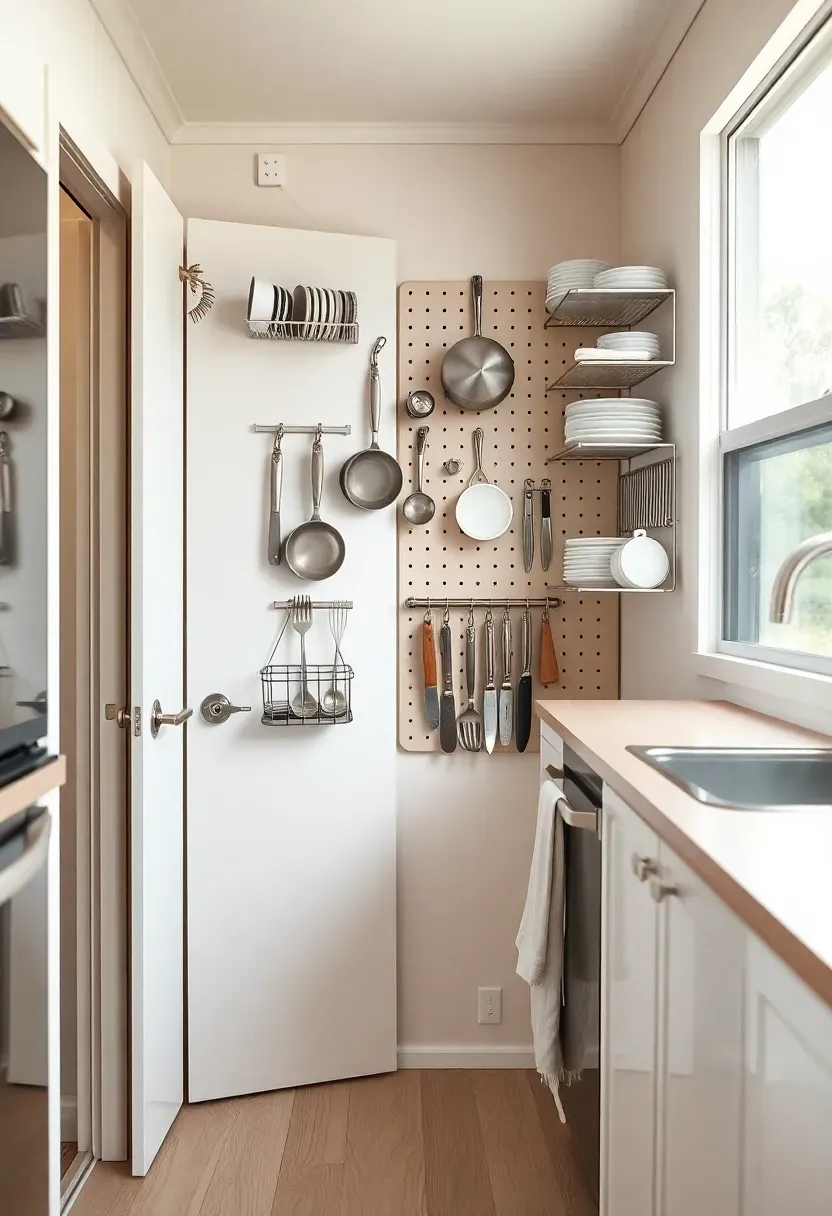
Hyper-realistic 3/4 view of a tiny house kitchen with over-door organizer, wall-mounted pegboard with pots and utensils, magnetic knife rack. Materials: white oak floor, matte white walls, brushed steel organizers, white ceramic dishes. Warm diffused window light, creamy neutrals with steel accents. Mood: organized, efficient, tidy. Shallow depth of field, sharp details, balanced composition, soft shadows, visible room context. No text, no logos, no watermarks.</p>
Tiny house living thrives when every square inch serves multiple purposes through smart design that makes small spaces feel generous.. Hyper-realistic 3/4 view of a tiny house kitchen with over-door organizer, wall-mounted pegboard with pots and utensils, magnetic knife rack. Materials: white oak floor, matte white walls, brushed steel organizers, white ceramic dishes. Warm diffused window light, creamy neutrals with steel accents. Mood: organized, efficient, tidy. Shallow depth of field, sharp
Prompt: Nature documentary captured on Hasselblad X2D 100C with XCD 90V lens at f/4. Hyper-realistic 3/4 view of a tiny house kitchen with over-door organizer, wall-mounted pegboard with pots and utensils, magnetic knife rack. Materials: white oak floor, matte white walls, brushed steel organizers, white ceramic dishes. Warm diffused window light, creamy neutrals with steel accents. Mood: organized, efficient, tidy. Shallow depth of field, sharp details, balanced composition, soft shadows, visible room context. No text, no logos, no watermarks.

Placement note: mount organizers on the back of doors or unused wall sections near work zones.

Choose slim-profile organizers that do not protrude more than 4-6 inches. The consequence of deep racks is that they block circulation in already-tight spaces. A pegboard is particularly versatile because hooks can be rearranged as needs change.

Tips

  • If using over-door storage, then check that the door can still fully open.
  • If mounting pegboard, then use at least 4 anchors for stability.

Rental note: over-door hooks and tension-rod organizers require no installation.

What this gives you: storage that does not consume precious floor space.

12. Choose Furniture Exposed Legs for Visual Lightness

Tiny house living feels airier when furniture shows the floor beneath. Choose sofas, tables, and cabinets with exposed legs rather than solid bases. This allows the eye to travel continuously across the floor, making the room feel larger. Mid-century or Scandinavian designs work well because they emphasize leggy silhouettes.
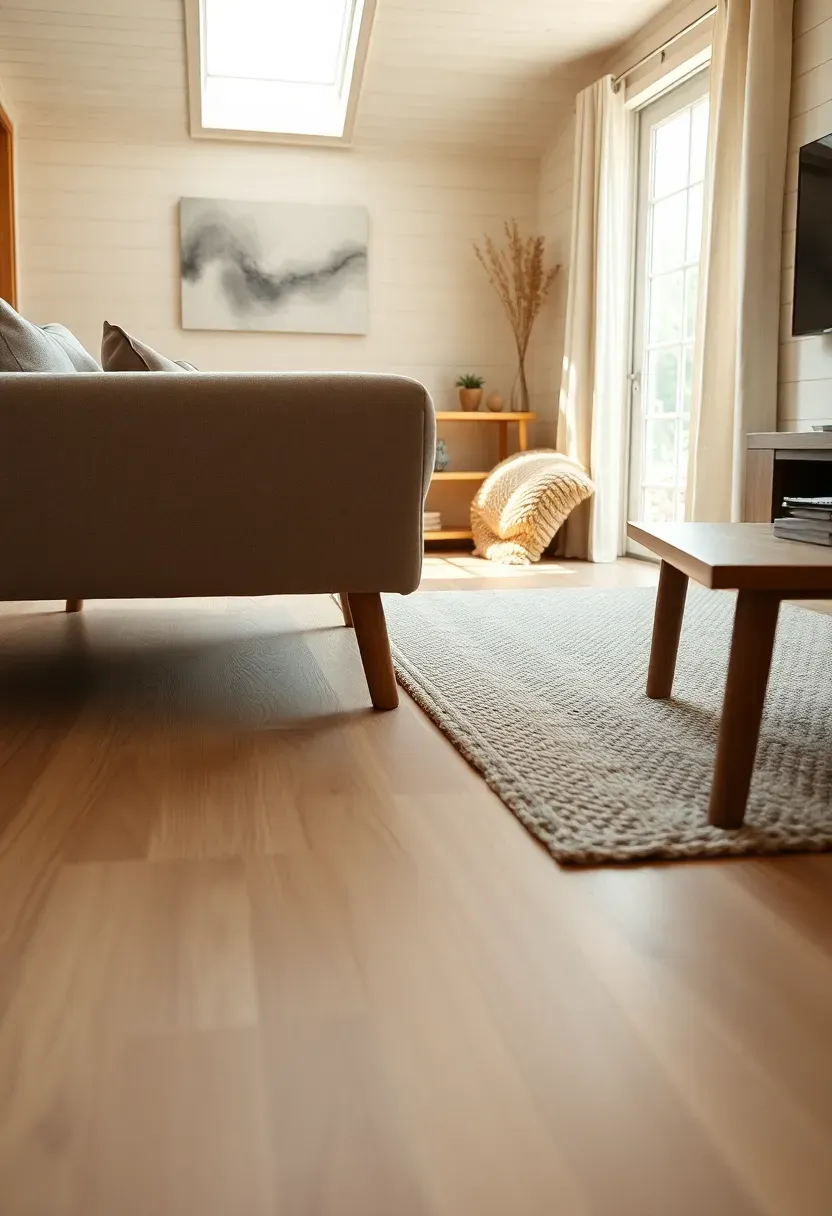
Hyper-realistic 3/4 view of a tiny house living room with furniture on exposed legs—sofa, coffee table, side table all showing floor beneath. Materials: white oak floor, linen sofa with wood legs, oak coffee table, light wool rug. Warm diffused window light, creamy neutrals with wood tones. Mood: light, airy, spacious. Shallow depth of field, sharp details, balanced composition, soft shadows, visible room context. No text, no logos, no watermarks.</p>
Tiny house living thrives when every square inch serves multiple purposes through smart design that makes small spaces feel generous.. Hyper-realistic 3/4 view of a tiny house living room with furniture on exposed legs—sofa, coffee table, side table all showing floor beneath. Materials: white oak floor, linen sofa with wood legs, oak coffee table, light wool rug. Warm diffused window light, creamy neutrals with wood tones. Mood: light, airy, spacious. Shallow depth of field, sharp details, balan
Prompt: Nature documentary captured on Hasselblad X2D 100C with XCD 90V lens at f/4. Hyper-realistic 3/4 view of a tiny house living room with furniture on exposed legs—sofa, coffee table, side table all showing floor beneath. Materials: white oak floor, linen sofa with wood legs, oak coffee table, light wool rug. Warm diffused window light, creamy neutrals with wood tones. Mood: light, airy, spacious. Shallow depth of field, sharp details, balanced composition, soft shadows, visible room context. No text, no logos, no watermarks.

Why it works: visible floor creates a sense of continuous space and visual lightness.

Avoid skirted furniture or boxy bases that sit flush with the floor. The contrast move is to choose acrylic or glass tables that practically disappear. Keep legs tapered rather than chunky to maintain a delicate profile.

Tips

  • Pro: leggy furniture makes cleaning underneath easier.
  • Con: storage beneath is visible and must stay tidy.
  • Fix: use bins or baskets to conceal under-furniture storage.

What this gives you: a room that feels visually lighter and larger.

13. Extend Living Space with Outdoor Decks

Tiny house living effectively doubles when you create usable outdoor space. A deck even half the size of the interior becomes a living room in good weather. Use folding doors that open fully to connect indoors and out, and choose durable outdoor furniture that can handle weather while matching interior style.
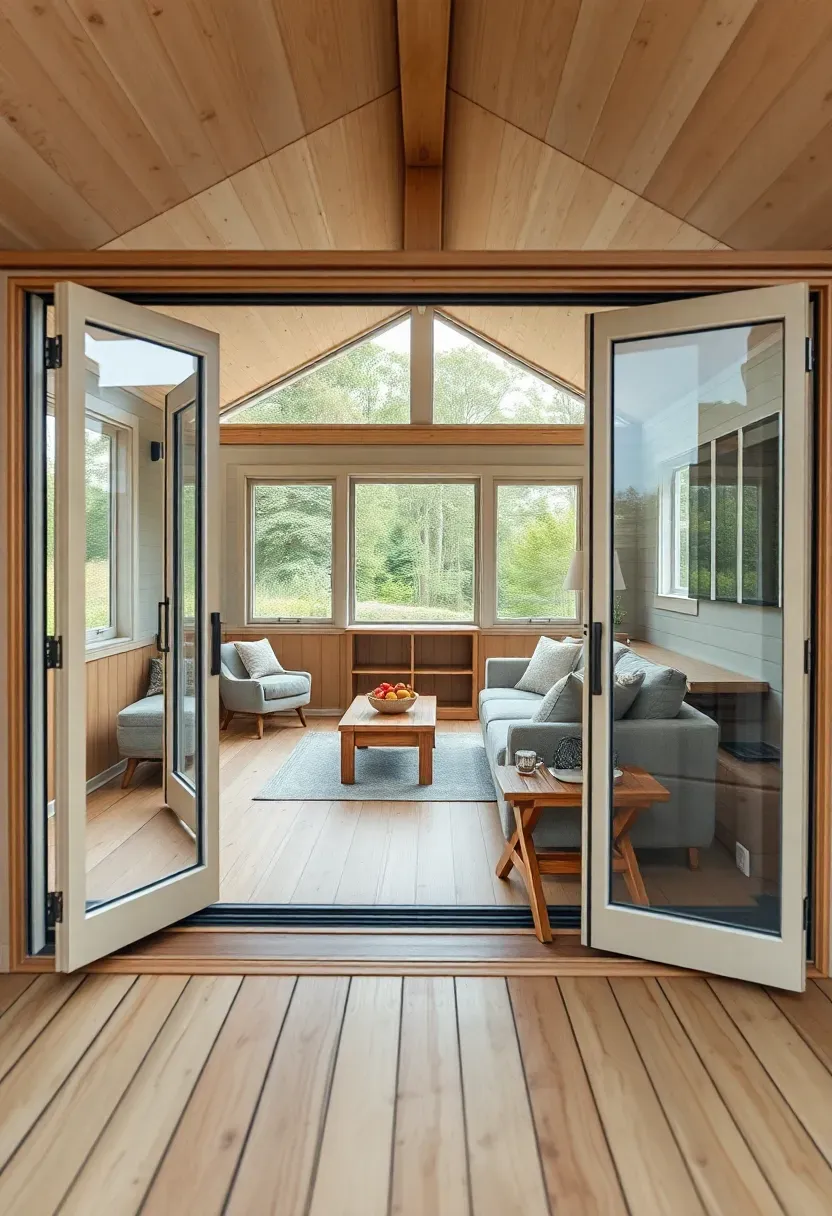
Hyper-realistic 3/4 view of a tiny house with folding glass doors open to wooden deck, outdoor seating area, interior visible. Materials: cedar decking, white oak interior floor, linen indoor sofa, teak outdoor furniture. Warm diffused light, creamy neutrals with natural wood tones. Mood: expanded, connected, airy. Shallow depth of field, sharp details, balanced composition, soft shadows, visible room context. No text, no logos, no watermarks.</p>
Tiny house living thrives when every square inch serves multiple purposes through smart design that makes small spaces feel generous.. Hyper-realistic 3/4 view of a tiny house with folding glass doors open to wooden deck, outdoor seating area, interior visible. Materials: cedar decking, white oak interior floor, linen indoor sofa, teak outdoor furniture. Warm diffused light, creamy neutrals with natural wood tones. Mood: expanded, connected, airy. Shallow depth of field, sharp details, balanced
Prompt: Nature documentary captured on Hasselblad X2D 100C with XCD 90V lens at f/4. Hyper-realistic 3/4 view of a tiny house with folding glass doors open to wooden deck, outdoor seating area, interior visible. Materials: cedar decking, white oak interior floor, linen indoor sofa, teak outdoor furniture. Warm diffused light, creamy neutrals with natural wood tones. Mood: expanded, connected, airy. Shallow depth of field, sharp details, balanced composition, soft shadows, visible room context. No text, no logos, no watermarks.

Placement note: orient the deck to capture afternoon sun or morning shade depending on climate.

If a full deck is not possible, a Juliet balcony or even a large window shelf can provide a sense of outdoor connection. The trade-off is that outdoor spaces require maintenance, so choose durable materials like cedar or composite decking.

Tips

  • Install an overhang or awning for rain protection.
  • Use outdoor rugs to visually extend the interior floor.

Best for: tiny houses on foundations with accessible outdoor space.

What this gives you: living space that effectively doubles in good weather.

14. Build Murphy Beds for Daytime Living Space

When lofts are not an option, murphy beds are the tiny house living solution. Build a bed into the wall that folds vertically when not in use, freeing floor space for daytime activities. Add a sofa or desk in front that can be moved aside when the bed is lowered. This transforms one room from bedroom to living room.
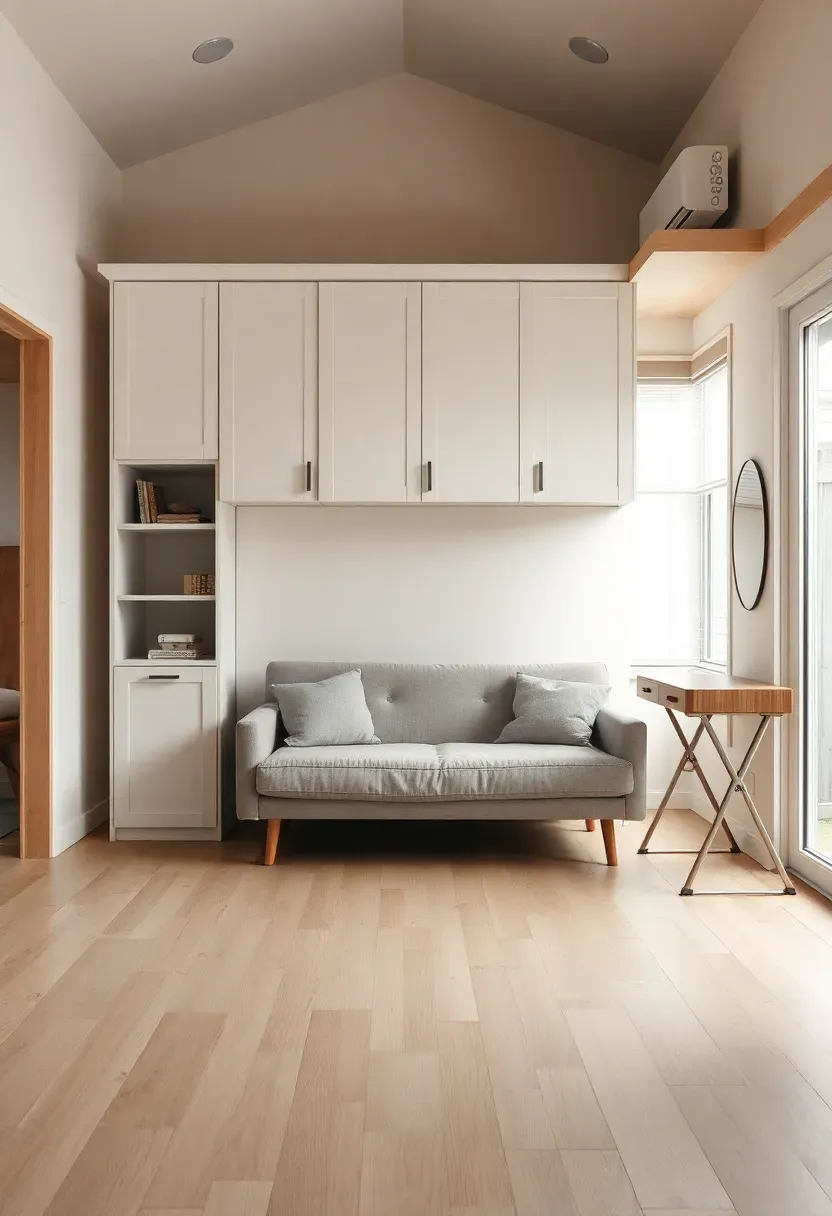
Hyper-realistic 3/4 view of a tiny house with murphy bed folded into wall, sofa and desk in front of cabinet, floor space open. Materials: white oak floor, matte white murphy cabinet, linen sofa, oak desk. Warm diffused window light, creamy neutrals with wood accents. Mood: flexible, spacious, adaptable. Shallow depth of field, sharp details, balanced composition, soft shadows, visible room context. No text, no logos, no watermarks.</p>
Tiny house living thrives when every square inch serves multiple purposes through smart design that makes small spaces feel generous.. Hyper-realistic 3/4 view of a tiny house with murphy bed folded into wall, sofa and desk in front of cabinet, floor space open. Materials: white oak floor, matte white murphy cabinet, linen sofa, oak desk. Warm diffused window light, creamy neutrals with wood accents. Mood: flexible, spacious, adaptable. Shallow depth of field, sharp details, balanced composition
Prompt: Nature documentary captured on Hasselblad X2D 100C with XCD 90V lens at f/4. Hyper-realistic 3/4 view of a tiny house with murphy bed folded into wall, sofa and desk in front of cabinet, floor space open. Materials: white oak floor, matte white murphy cabinet, linen sofa, oak desk. Warm diffused window light, creamy neutrals with wood accents. Mood: flexible, spacious, adaptable. Shallow depth of field, sharp details, balanced composition, soft shadows, visible room context. No text, no logos, no watermarks.

Why it works: a murphy bed reclaims floor space that a permanent bed would claim.

Use piston mechanisms that make lifting easy—avoid DIY gravity designs that can slam. The consequence of cheap murphy hardware is failure under weight, so invest in commercial-grade pistons. Build a shallow shelf or desk into the bed cabinet for additional function.

Tips

  • Secure the bed to wall studs, not just drywall.
  • Use lightweight mattress materials to reduce lift weight.

Budget/Time: $2000-5000 for a professionally installed murphy bed system.

What this gives you: a bedroom that disappears during daytime hours.

15. Use Mirrors to Double Perceived Space

Tiny house living gains an immediate sense of size with strategic mirror placement. Position a large mirror opposite a window to reflect daylight and create the illusion of depth. Use mirrored closet doors or a full-wall mirror to double the perceived dimensions of the room.
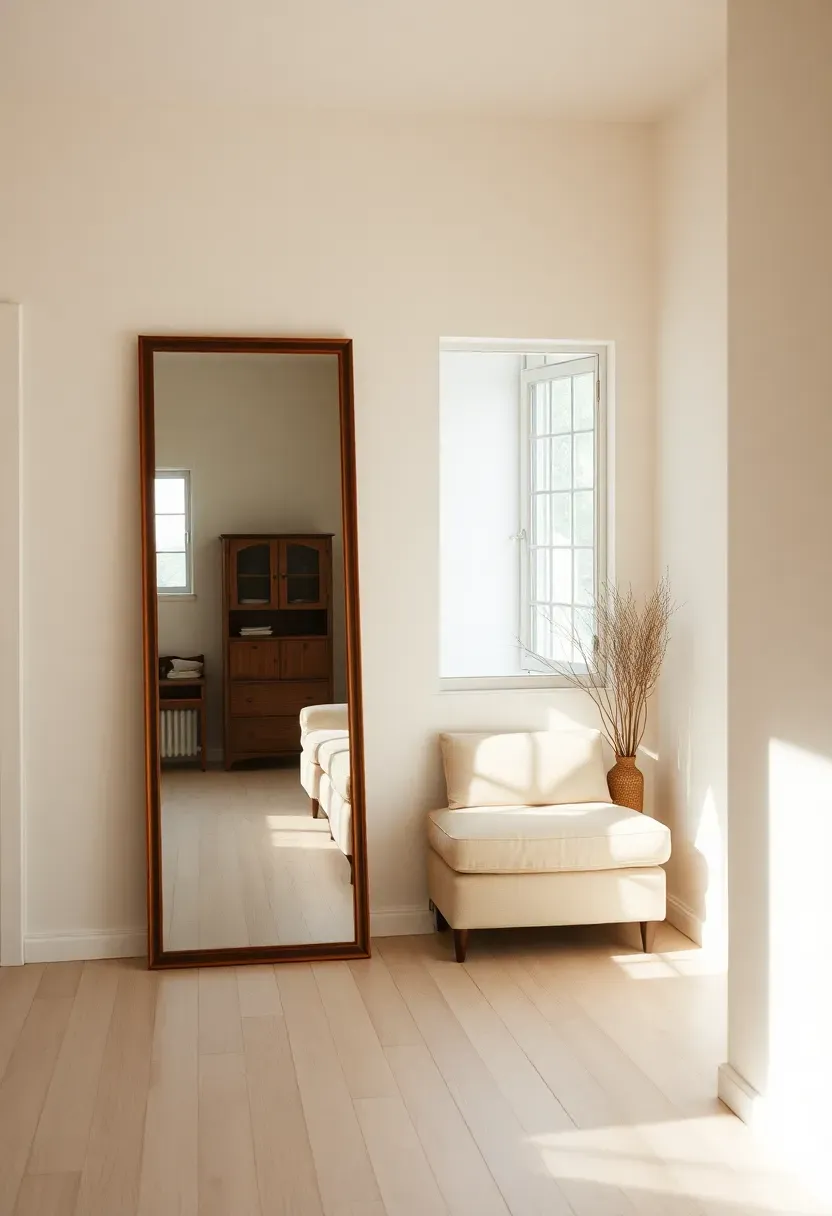
Hyper-realistic 3/4 view of a tiny house with large wall mirror opposite window, reflection doubling space, white oak floor, low furniture. Materials: framed mirror, white oak floor, linen sofa, matte white walls. Warm diffused reflected light, creamy neutrals with sense of expanded space. Mood: doubled, bright, open. Shallow depth of field, sharp details, balanced composition, soft shadows, visible room context. No text, no logos, no watermarks.</p>
Tiny house living thrives when every square inch serves multiple purposes through smart design that makes small spaces feel generous.. Hyper-realistic 3/4 view of a tiny house with large wall mirror opposite window, reflection doubling space, white oak floor, low furniture. Materials: framed mirror, white oak floor, linen sofa, matte white walls. Warm diffused reflected light, creamy neutrals with sense of expanded space. Mood: doubled, bright, open. Shallow depth of field, sharp details, balanc
Prompt: Nature documentary captured on Hasselblad X2D 100C with XCD 90V lens at f/4. Hyper-realistic 3/4 view of a tiny house with large wall mirror opposite window, reflection doubling space, white oak floor, low furniture. Materials: framed mirror, white oak floor, linen sofa, matte white walls. Warm diffused reflected light, creamy neutrals with sense of expanded space. Mood: doubled, bright, open. Shallow depth of field, sharp details, balanced composition, soft shadows, visible room context. No text, no logos, no watermarks.

Common mistake: placing mirrors where they reflect clutter or unattractive views.

Aim mirrors toward windows, artwork, or architectural features. The contrast move is to avoid multiple small mirrors—one large statement mirror has more impact. Lean a floor mirror if wall mounting is not possible, but secure it to prevent tipping.

Tips

  • Do: place mirrors opposite windows to maximize light reflection.
  • Don't: use mirrored ceilings, which feel dated and oppressive.

What this gives you: a room that feels up to twice its actual size.

16. Create a Kitchen Galley with Pull-Out Pantry

Tiny house living kitchens work best as compact galleys with storage pushed to the walls. Build a pull-out pantry that slides out from a 6-inch gap between cabinets, storing spices and canned goods vertically. Use upper cabinets to the ceiling and keep the counter clear with appliance garages.
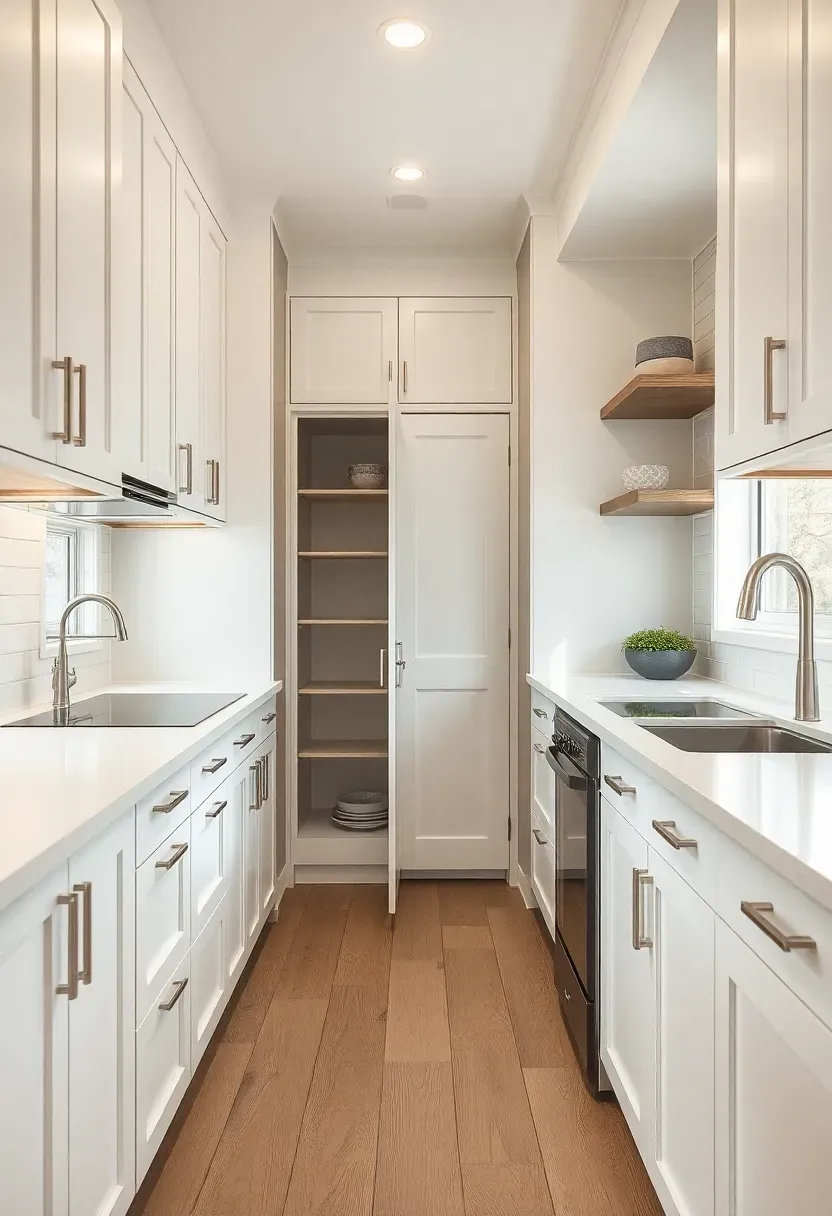
Hyper-realistic 3/4 view of a tiny house kitchen galley with pull-out pantry extended, narrow aisle, upper cabinets to ceiling. Materials: white oak floor, matte white cabinets, brushed steel pulls, white quartz counters. Warm diffused window light, creamy neutrals with steel accents. Mood: efficient, compact, organized. Shallow depth of field, sharp details, balanced composition, soft shadows, visible room context. No text, no logos, no watermarks.</p>
Tiny house living thrives when every square inch serves multiple purposes through smart design that makes small spaces feel generous.. Hyper-realistic 3/4 view of a tiny house kitchen galley with pull-out pantry extended, narrow aisle, upper cabinets to ceiling. Materials: white oak floor, matte white cabinets, brushed steel pulls, white quartz counters. Warm diffused window light, creamy neutrals with steel accents. Mood: efficient, compact, organized. Shallow depth of field, sharp details, bal
Prompt: Nature documentary captured on Hasselblad X2D 100C with XCD 90V lens at f/4. Hyper-realistic 3/4 view of a tiny house kitchen galley with pull-out pantry extended, narrow aisle, upper cabinets to ceiling. Materials: white oak floor, matte white cabinets, brushed steel pulls, white quartz counters. Warm diffused window light, creamy neutrals with steel accents. Mood: efficient, compact, organized. Shallow depth of field, sharp details, balanced composition, soft shadows, visible room context. No text, no logos, no watermarks.

Placement note: place the pull-out pantry near the cooking zone for easy access while preparing meals.

Keep the aisle width at least 36 inches for comfortable movement. The trade-off is that galley kitchens can feel narrow, so use light colors and under-cabinet lighting to brighten the space. A pull-out pantry maximizes a gap that would otherwise be wasted.

Tips

  • Use soft-close slides to prevent the pantry from slamming.
  • Adjust shelves to fit your tallest items.

What this gives you: full kitchen function in minimal square footage.

17. Build Bathroom Storage into Nooks and Recesses

Tiny house living bathrooms gain storage by carving into wall depth. Build recessed medicine cabinets, use the space behind the shower wall for shelves, or install a vanity with drawers that pull out rather than doors that swing open. Every inch counts in compact bathrooms.
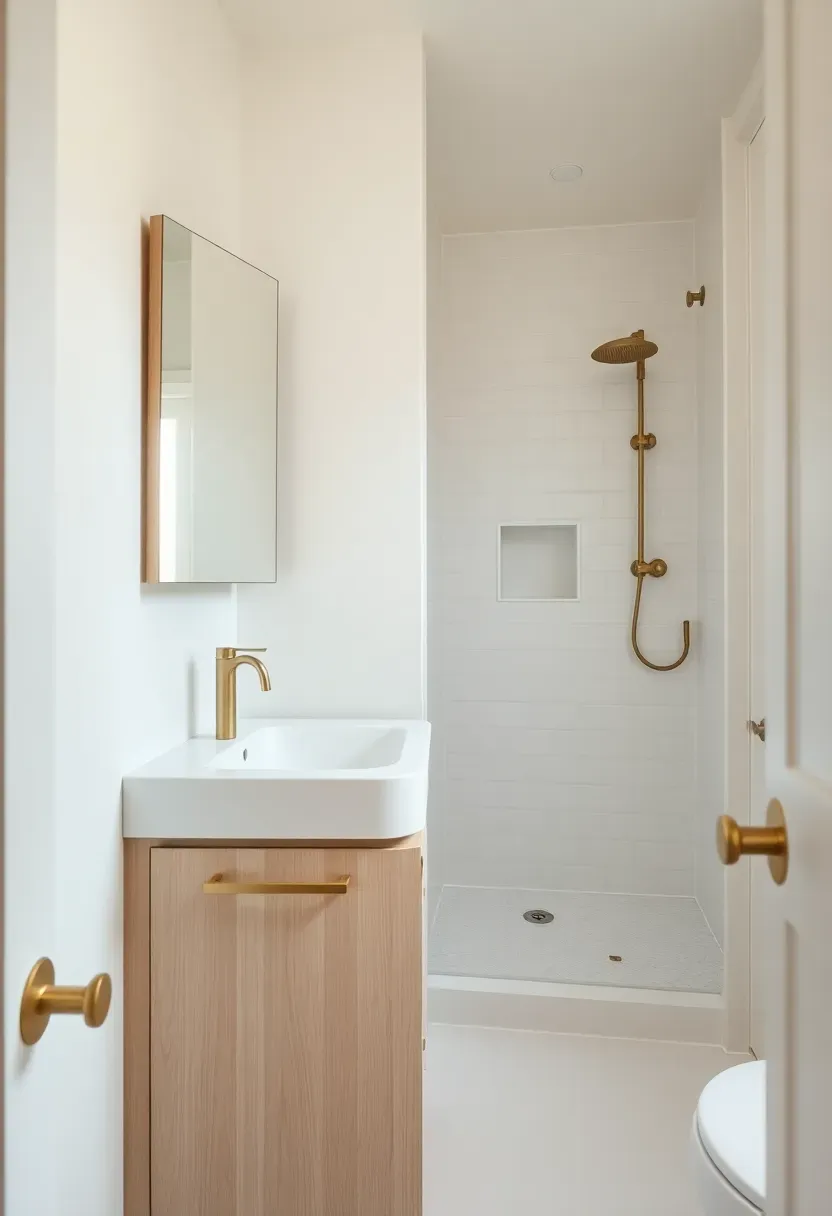
Hyper-realistic 3/4 view of a tiny house bathroom with recessed medicine cabinet, built-in niches in shower, vanity with drawers. Materials: white oak vanity, white ceramic tile, matte white walls, brushed brass fixtures. Warm diffused window light, creamy neutrals with warm brass accents. Mood: compact, organized, clean. Shallow depth of field, sharp details, balanced composition, soft shadows, visible room context. No text, no logos, no watermarks.</p>
Tiny house living thrives when every square inch serves multiple purposes through smart design that makes small spaces feel generous.. Hyper-realistic 3/4 view of a tiny house bathroom with recessed medicine cabinet, built-in niches in shower, vanity with drawers. Materials: white oak vanity, white ceramic tile, matte white walls, brushed brass fixtures. Warm diffused window light, creamy neutrals with warm brass accents. Mood: compact, organized, clean. Shallow depth of field, sharp details, ba
Prompt: Nature documentary captured on Hasselblad X2D 100C with XCD 90V lens at f/4. Hyper-realistic 3/4 view of a tiny house bathroom with recessed medicine cabinet, built-in niches in shower, vanity with drawers. Materials: white oak vanity, white ceramic tile, matte white walls, brushed brass fixtures. Warm diffused window light, creamy neutrals with warm brass accents. Mood: compact, organized, clean. Shallow depth of field, sharp details, balanced composition, soft shadows, visible room context. No text, no logos, no watermarks.

Why it works: recessed storage uses wall depth instead of claiming floor space.

If building recesses is not possible, use over-toilet storage and shallow wall-mounted cabinets. The consequence of inadequate bathroom storage is that toiletries migrate to other rooms, creating clutter. A well-organized tiny bathroom keeps everything contained.

Tips

  • waterproof niches with tile or acrylic for shower use.
  • Use magnetic catches for cabinet doors to save space.

Rental note: over-toilet organizers and tension rod shelves require no construction.

What this gives you: bathroom storage that does not encroach on limited floor area.

18. Use Pocket Doors and Curtains for Separation

Tiny house living requires flexible separation between zones. Pocket doors disappear into walls when open, while curtains can be drawn for privacy and pushed aside when not needed. Both preserve space that swinging doors would claim and allow you to adjust privacy as needed.
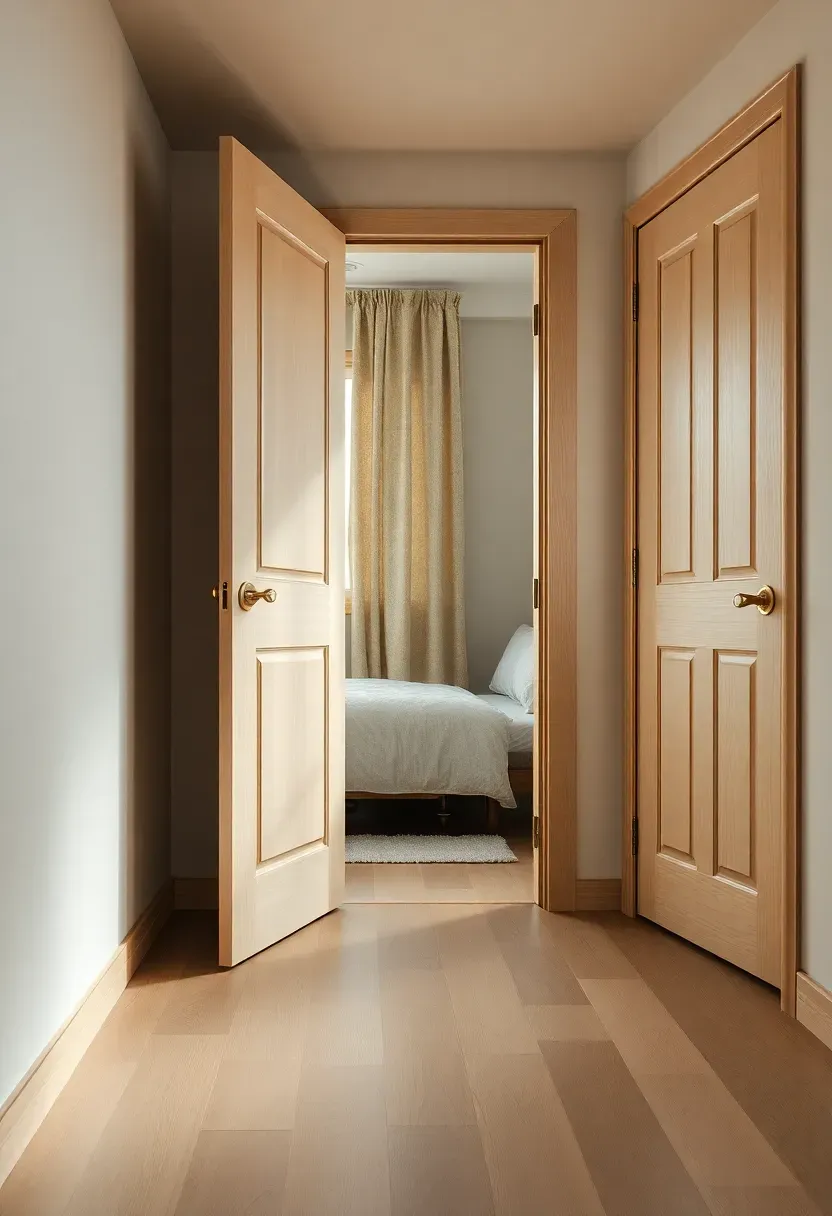
Hyper-realistic 3/4 view of a tiny house with pocket door open revealing bedroom beyond, curtain partially drawn across another opening. Materials: white oak floor, matte white walls, linen curtain panel, white oak door. Warm diffused window light, creamy neutrals with soft fabric texture. Mood: flexible, private, calm. Shallow depth of field, sharp details, balanced composition, soft shadows, visible room context. No text, no logos, no watermarks.</p>
Tiny house living thrives when every square inch serves multiple purposes through smart design that makes small spaces feel generous.. Hyper-realistic 3/4 view of a tiny house with pocket door open revealing bedroom beyond, curtain partially drawn across another opening. Materials: white oak floor, matte white walls, linen curtain panel, white oak door. Warm diffused window light, creamy neutrals with soft fabric texture. Mood: flexible, private, calm. Shallow depth of field, sharp details, bala
Prompt: Nature documentary captured on Hasselblad X2D 100C with XCD 90V lens at f/4. Hyper-realistic 3/4 view of a tiny house with pocket door open revealing bedroom beyond, curtain partially drawn across another opening. Materials: white oak floor, matte white walls, linen curtain panel, white oak door. Warm diffused window light, creamy neutrals with soft fabric texture. Mood: flexible, private, calm. Shallow depth of field, sharp details, balanced composition, soft shadows, visible room context. No text, no logos, no watermarks.

Common mistake: using heavy drapes that visually weigh down small spaces.

Choose lightweight curtains in the same tone as walls so they blend when open. The trade-off is that pocket doors require wall cavity space during construction. If pockets are not possible, surface-mounted sliding doors or curtains are effective alternatives.

Tips

  • Do: use ceiling-mounted tracks for curtains to avoid floor hardware.
  • Don't: choose dark curtains that contrast sharply with walls.

What this gives you: privacy when needed, openness when it's not.

19. Choose Compact Appliances That Still Function

Tiny house living kitchens require downsized appliances that maintain full functionality. Use a 24-inch range, an under-counter refrigerator, and a combination washer-dryer unit. These compact versions work as well as full-sized while consuming half the floor space.
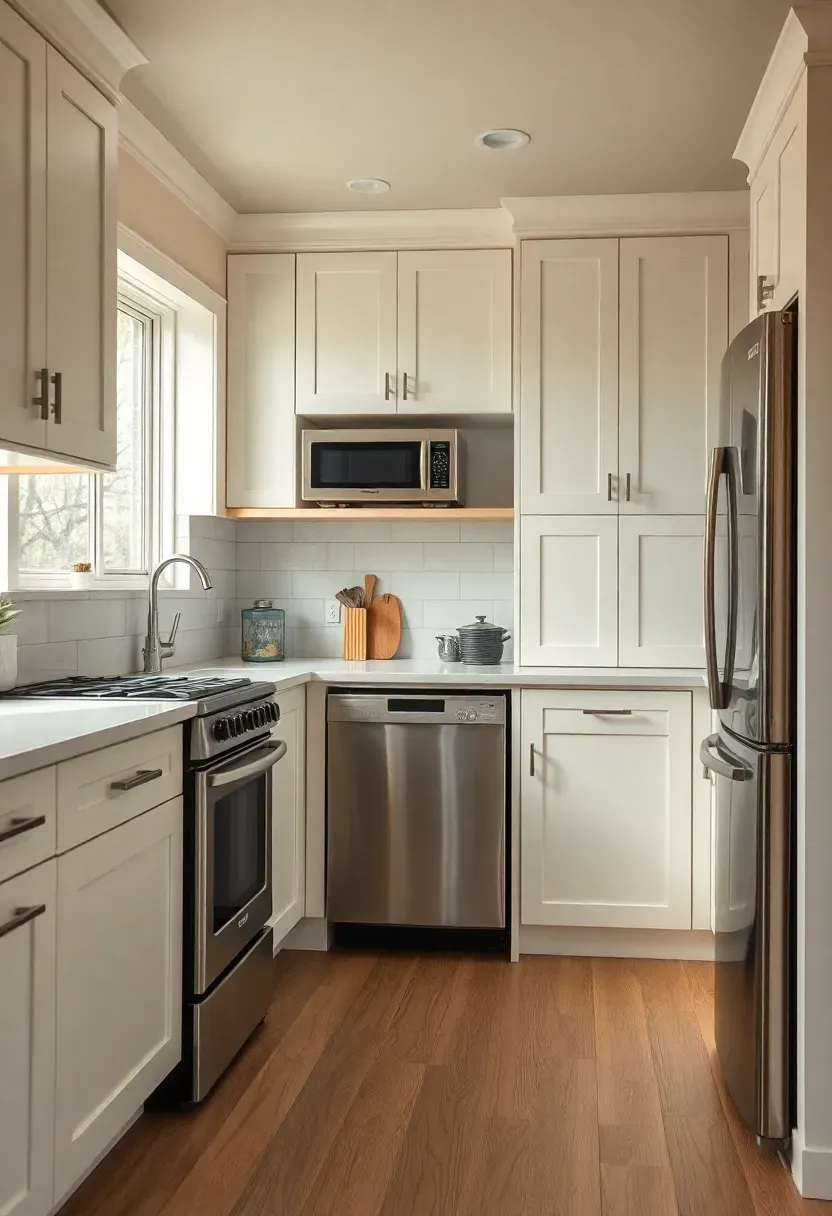
Hyper-realistic 3/4 view of a tiny house kitchen with 24-inch stove, under-counter refrigerator, compact dishwasher, white oak floor. Materials: white oak floor, matte white cabinets, stainless steel appliances, white quartz counters. Warm diffused window light, creamy neutrals with steel accents. Mood: efficient, functional, modern. Shallow depth of field, sharp details, balanced composition, soft shadows, visible room context. No text, no logos, no watermarks.</p>
Tiny house living thrives when every square inch serves multiple purposes through smart design that makes small spaces feel generous.. Hyper-realistic 3/4 view of a tiny house kitchen with 24-inch stove, under-counter refrigerator, compact dishwasher, white oak floor. Materials: white oak floor, matte white cabinets, stainless steel appliances, white quartz counters. Warm diffused window light, creamy neutrals with steel accents. Mood: efficient, functional, modern. Shallow depth of field, sharp
Prompt: Nature documentary captured on Hasselblad X2D 100C with XCD 90V lens at f/4. Hyper-realistic 3/4 view of a tiny house kitchen with 24-inch stove, under-counter refrigerator, compact dishwasher, white oak floor. Materials: white oak floor, matte white cabinets, stainless steel appliances, white quartz counters. Warm diffused window light, creamy neutrals with steel accents. Mood: efficient, functional, modern. Shallow depth of field, sharp details, balanced composition, soft shadows, visible room context. No text, no logos, no watermarks.

Placement note: group appliances to minimize plumbing and electrical runs.

Test appliance capacity before committing—a compact refrigerator may not fit weekly groceries. The contrast move is to skip a dishwasher if hand-washing is manageable, freeing counter space. Choose apartment-sized appliances from reputable brands for reliability.

Tips

  • Measure all doorways and stairs before appliance delivery.
  • Consider drawer-style refrigerators for easier access in tight spaces.

Budget/Time: compact appliances often cost more than full-sized versions.

What this gives you: full kitchen function in minimal square footage.

20. Create Defined Storage Zones by Activity

Tiny house living stays organized when storage is zoned by activity rather than by item type. Keep kitchen items near the kitchen, work supplies near the desk, and linens close to where they are used. This prevents carrying items across the house and keeps clutter contained.
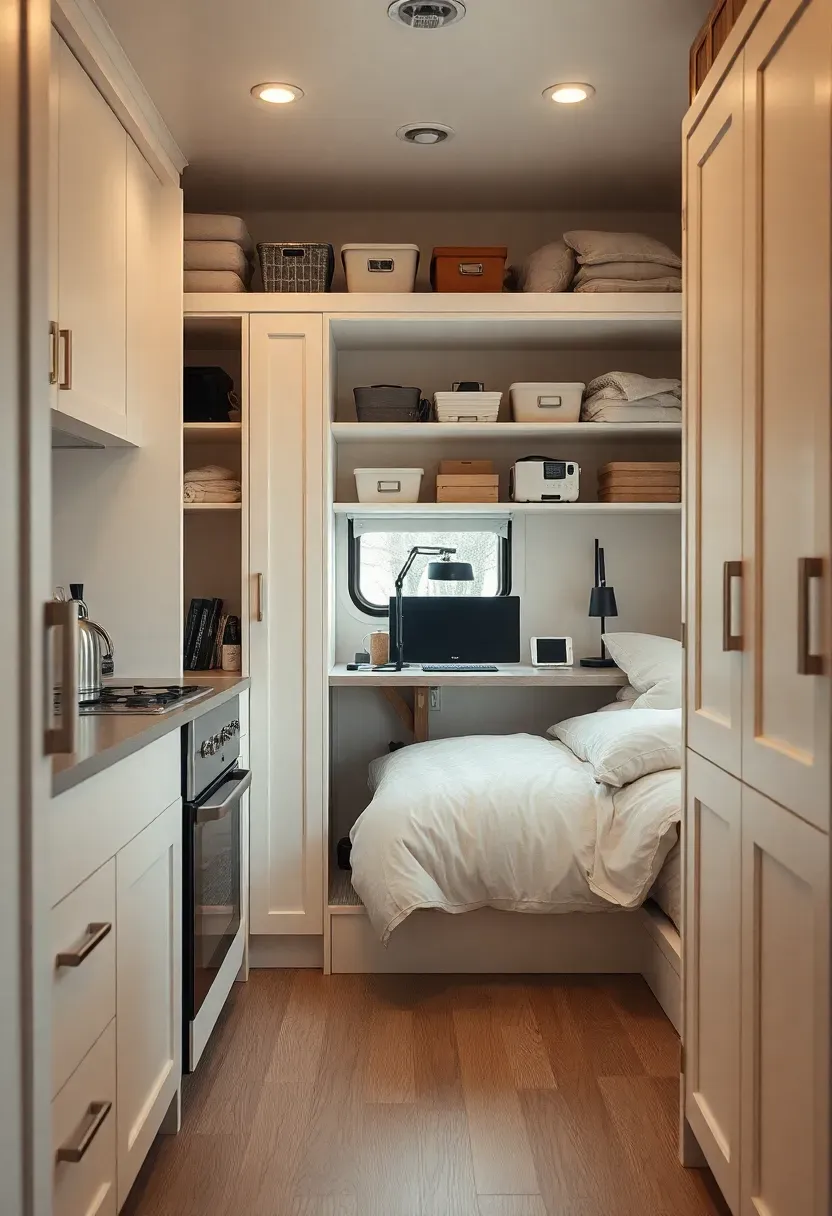
Hyper-realistic 3/4 view of a tiny house with zoned storage—kitchen items near kitchenette, desk supplies at workstation, linen cabinet near sleeping area. Materials: white oak floor, matte white cabinets, linen bedding, brushed steel pulls. Warm diffused window light, creamy neutrals with organized clutter. Mood: zoned, logical, calm. Shallow depth of field, sharp details, balanced composition, soft shadows, visible room context. No text, no logos, no watermarks.</p>
Tiny house living thrives when every square inch serves multiple purposes through smart design that makes small spaces feel generous.. Hyper-realistic 3/4 view of a tiny house with zoned storage—kitchen items near kitchenette, desk supplies at workstation, linen cabinet near sleeping area. Materials: white oak floor, matte white cabinets, linen bedding, brushed steel pulls. Warm diffused window light, creamy neutrals with organized clutter. Mood: zoned, logical, calm. Shallow depth of field, sha
Prompt: Nature documentary captured on Hasselblad X2D 100C with XCD 90V lens at f/4. Hyper-realistic 3/4 view of a tiny house with zoned storage—kitchen items near kitchenette, desk supplies at workstation, linen cabinet near sleeping area. Materials: white oak floor, matte white cabinets, linen bedding, brushed steel pulls. Warm diffused window light, creamy neutrals with organized clutter. Mood: zoned, logical, calm. Shallow depth of field, sharp details, balanced composition, soft shadows, visible room context. No text, no logos, no watermarks.

Common mistake: storing items far from where they are used, leading to constant transport.

Use clear bins or labels so zones remain intuitive. The consequence of poor zoning is that items pile up on surfaces instead of being put away. A well-zoned tiny house feels larger because each item has a logical home near its point of use.

Tips

  • Group items by frequency of use within each zone.
  • Keep daily items at waist level and seasonal items higher up.

What this gives you: a house that stays organized with minimal daily effort.

21. Use the Space Above Cabinets for Seasonal Items

The space above upper cabinets is often wasted in tiny houses. Build a shallow platform or use the gap for seasonal items like holiday decorations, winter gear, or special occasion serving pieces. This storage is low-access but perfect for items used only occasionally.
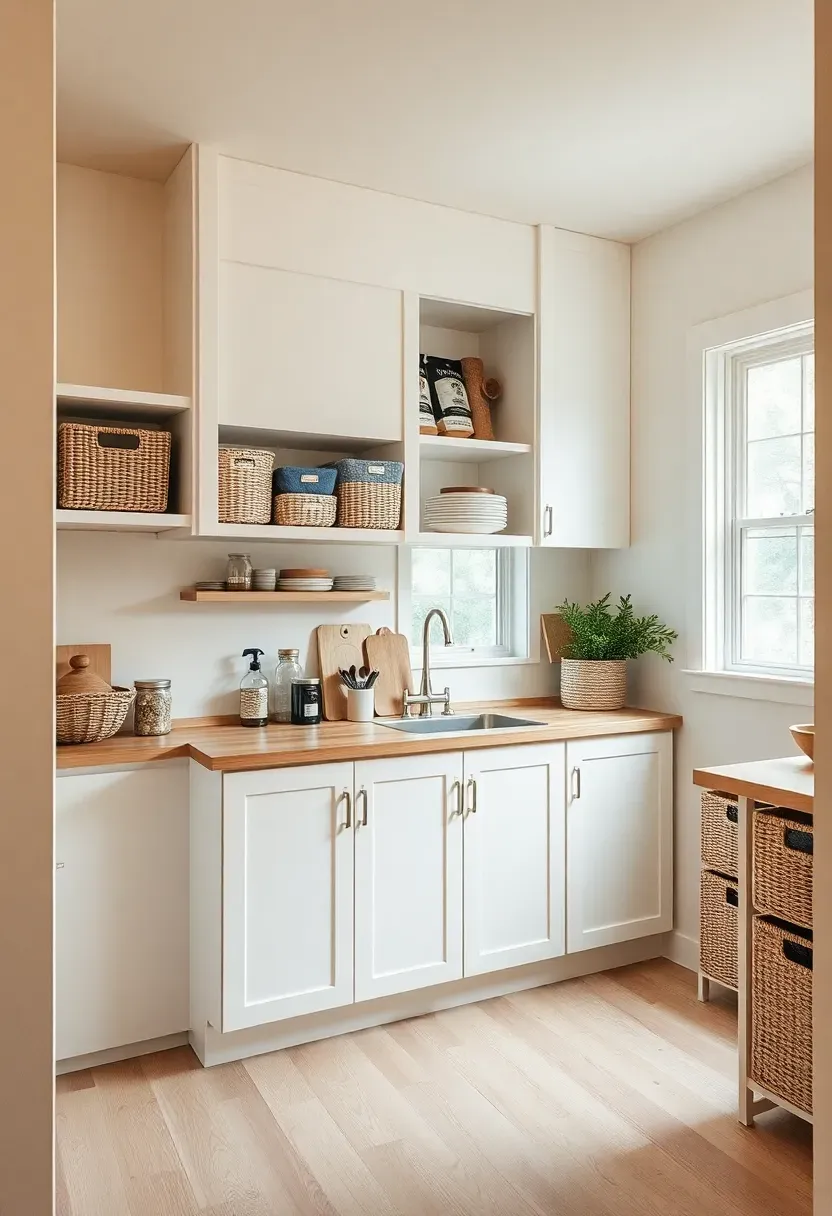
Hyper-realistic 3/4 view of a tiny house kitchen with storage built above cabinets, labeled bins, seasonal items stored. Materials: white oak floor, matte white cabinets, woven storage bins, matte white walls. Warm diffused window light, creamy neutrals with textured bins. Mood: efficient, organized, compact. Shallow depth of field, sharp details, balanced composition, soft shadows, visible room context. No text, no logos, no watermarks.</p>
Tiny house living thrives when every square inch serves multiple purposes through smart design that makes small spaces feel generous.. Hyper-realistic 3/4 view of a tiny house kitchen with storage built above cabinets, labeled bins, seasonal items stored. Materials: white oak floor, matte white cabinets, woven storage bins, matte white walls. Warm diffused window light, creamy neutrals with textured bins. Mood: efficient, organized, compact. Shallow depth of field, sharp details, balanced compos
Prompt: Nature documentary captured on Hasselblad X2D 100C with XCD 90V lens at f/4. Hyper-realistic 3/4 view of a tiny house kitchen with storage built above cabinets, labeled bins, seasonal items stored. Materials: white oak floor, matte white cabinets, woven storage bins, matte white walls. Warm diffused window light, creamy neutrals with textured bins. Mood: efficient, organized, compact. Shallow depth of field, sharp details, balanced composition, soft shadows, visible room context. No text, no logos, no watermarks.

Placement note: use a folding step stool stored nearby to access above-cabinet storage.

Keep items in lightweight bins for easy retrieval. The trade-off is that above-cabinet storage can collect dust, so use lidded containers. If the gap is too small for bins, display a few attractive pieces that are rarely used.

Tips

  • Use uniform containers for a cohesive look.
  • Avoid heavy items that are difficult to lift down.

What this gives you: storage for rarely-used items without consuming accessible space.

22. Build a Wet Bath with Curved Walls

Tiny house living bathrooms gain space with wet bath designs where the shower and bathroom share one waterproof envelope. Use curved walls or shower curtains instead of glass doors to preserve floor area. The toilet and sink fit within the same waterproofed space, maximizing every inch.
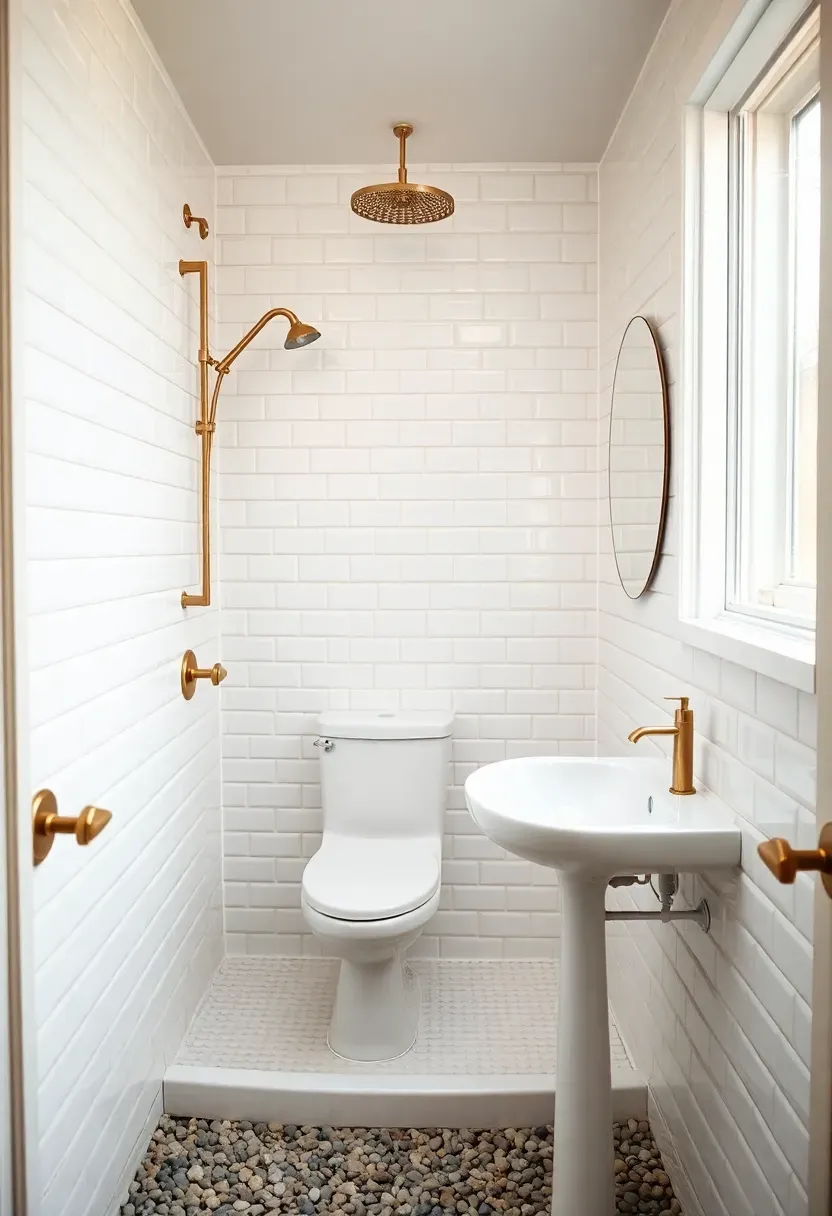
Hyper-realistic 3/4 view of a tiny house wet bath with curved corner shower, toilet and sink in same waterproof space, white subway tile. Materials: white ceramic tile, matte white walls, brushed brass fixtures, pebble floor. Warm diffused window light, creamy whites with brass warmth. Mood: compact, efficient, clean. Shallow depth of field, sharp details, balanced composition, soft shadows, visible room context. No text, no logos, no watermarks.</p>
Tiny house living thrives when every square inch serves multiple purposes through smart design that makes small spaces feel generous.. Hyper-realistic 3/4 view of a tiny house wet bath with curved corner shower, toilet and sink in same waterproof space, white subway tile. Materials: white ceramic tile, matte white walls, brushed brass fixtures, pebble floor. Warm diffused window light, creamy whites with brass warmth. Mood: compact, efficient, clean. Shallow depth of field, sharp details, balanc
Prompt: Nature documentary captured on Hasselblad X2D 100C with XCD 90V lens at f/4. Hyper-realistic 3/4 view of a tiny house wet bath with curved corner shower, toilet and sink in same waterproof space, white subway tile. Materials: white ceramic tile, matte white walls, brushed brass fixtures, pebble floor. Warm diffused window light, creamy whites with brass warmth. Mood: compact, efficient, clean. Shallow depth of field, sharp details, balanced composition, soft shadows, visible room context. No text, no logos, no watermarks.

Why it works: a wet bath eliminates the need for separate shower enclosure, saving precious floor space.

Use a sloped floor toward a central drain for proper drainage. The trade-off is that the entire bathroom gets wet during showers, so waterproofing must be flawless. A curved shower curtain rod adds elbow room without claiming floor space.

Tips

  • Install an exhaust fan to prevent moisture buildup.
  • Use waterproof materials on all surfaces including ceiling.

Best for: tiny houses under 150 square feet where every inch matters.

What this gives you: a full bathroom in minimal square footage.

23. Install Built-Ins from Floor to Ceiling

Tiny house living reaches maximum efficiency with built-in furniture. Build a bed platform with drawers beneath, a desk that folds from the wall, or a banquette with storage inside. Built-ins use every inch of available space and can be customized to exact dimensions.
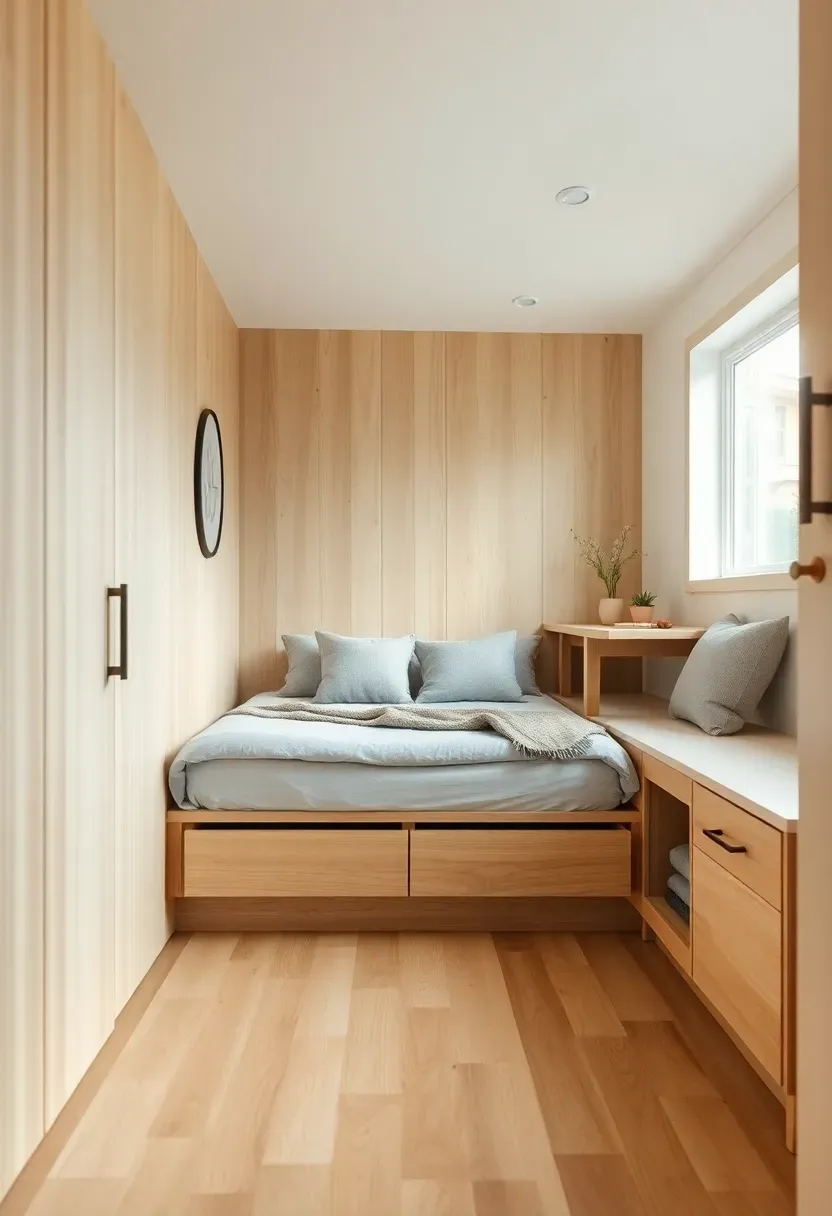
Hyper-realistic 3/4 view of a tiny house with built-in bed platform with drawers, built-in desk, built-in banquette with storage. Materials: white oak built-ins, white oak floor, linena bedding, matte white walls. Warm diffused window light, creamy neutrals with wood warmth. Mood: custom, efficient, organized. Shallow depth of field, sharp details, balanced composition, soft shadows, visible room context. No text, no logos, no watermarks.</p>
Tiny house living thrives when every square inch serves multiple purposes through smart design that makes small spaces feel generous.. Hyper-realistic 3/4 view of a tiny house with built-in bed platform with drawers, built-in desk, built-in banquette with storage. Materials: white oak built-ins, white oak floor, linena bedding, matte white walls. Warm diffused window light, creamy neutrals with wood warmth. Mood: custom, efficient, organized. Shallow depth of field, sharp details, balanced compo
Prompt: Nature documentary captured on Hasselblad X2D 100C with XCD 90V lens at f/4. Hyper-realistic 3/4 view of a tiny house with built-in bed platform with drawers, built-in desk, built-in banquette with storage. Materials: white oak built-ins, white oak floor, linena bedding, matte white walls. Warm diffused window light, creamy neutrals with wood warmth. Mood: custom, efficient, organized. Shallow depth of field, sharp details, balanced composition, soft shadows, visible room context. No text, no logos, no watermarks.

Why it works: built-ins eliminate wasted space around furniture and can incorporate storage.

Plan built-ins around your specific routines and storage needs. The consequence of freestanding furniture in tiny houses is awkward gaps and unused corners. Built-ins fill these spaces completely and can include hidden compartments for valuables.

Tips

  • Include access panels for plumbing and electrical behind built-ins.
  • Use screw-fastening instead of nails for future disassembly.

Budget/Time: built-ins cost more upfront but maximize space efficiency.

What this gives you: custom storage that uses every available inch.

24. Use Lightweight Furniture That Moves Easily

Tiny house living requires flexibility, and lightweight furniture makes reconfiguring easy. Choose pieces that can be moved by one person—nesting tables, stackable stools, or chairs that tuck away. This allows the room to shift from workspace to dining to lounging as needed.
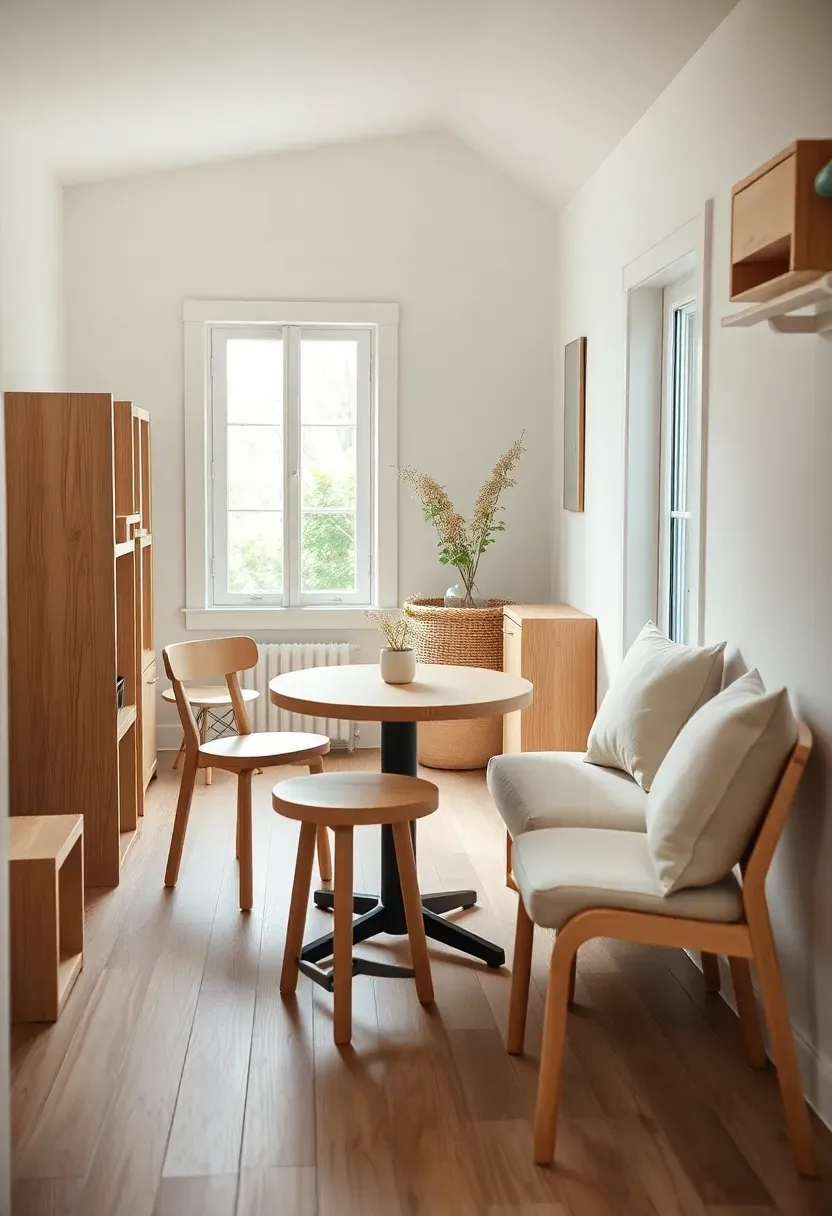
Hyper-realistic 3/4 view of a tiny house with lightweight furniture—nesting tables, stackable stools, chairs that tuck, easy reconfiguration. Materials: white oak floor, light oak furniture, linen cushions, matte white walls. Warm diffused window light, creamy neutrals with airy wood tones. Mood: flexible, light, adaptable. Shallow depth of field, sharp details, balanced composition, soft shadows, visible room context. No text, no logos, no watermarks.</p>
Tiny house living thrives when every square inch serves multiple purposes through smart design that makes small spaces feel generous.. Hyper-realistic 3/4 view of a tiny house with lightweight furniture—nesting tables, stackable stools, chairs that tuck, easy reconfiguration. Materials: white oak floor, light oak furniture, linen cushions, matte white walls. Warm diffused window light, creamy neutrals with airy wood tones. Mood: flexible, light, adaptable. Shallow depth of field, sharp details,
Prompt: Nature documentary captured on Hasselblad X2D 100C with XCD 90V lens at f/4. Hyper-realistic 3/4 view of a tiny house with lightweight furniture—nesting tables, stackable stools, chairs that tuck, easy reconfiguration. Materials: white oak floor, light oak furniture, linen cushions, matte white walls. Warm diffused window light, creamy neutrals with airy wood tones. Mood: flexible, light, adaptable. Shallow depth of field, sharp details, balanced composition, soft shadows, visible room context. No text, no logos, no watermarks.

Common mistake: choosing heavy furniture that becomes permanent once placed.

Avoid solid wood tables or sofas with kiln-dried frames if weight is a concern. The contrast move is to choose acrylic, metal, or plywood furniture that weighs half as much. Lightweight pieces make cleaning underneath easier and allow complete room reconfiguration in minutes.

Tips

  • Test weight before buying—lift one corner of the piece.
  • Add felt pads to make sliding furniture easier on floors.

What this gives you: a space that adapts to different uses throughout the day.

25. Create a Closet Nook Behind the Bed

When a closet is not possible, use the space behind the bed for storage. Build a shallow cabinet or hanging rod behind the bed headboard, or use a wardrobe that doubles as a room divider. This placement is less obtrusive and uses space that would otherwise be wasted.
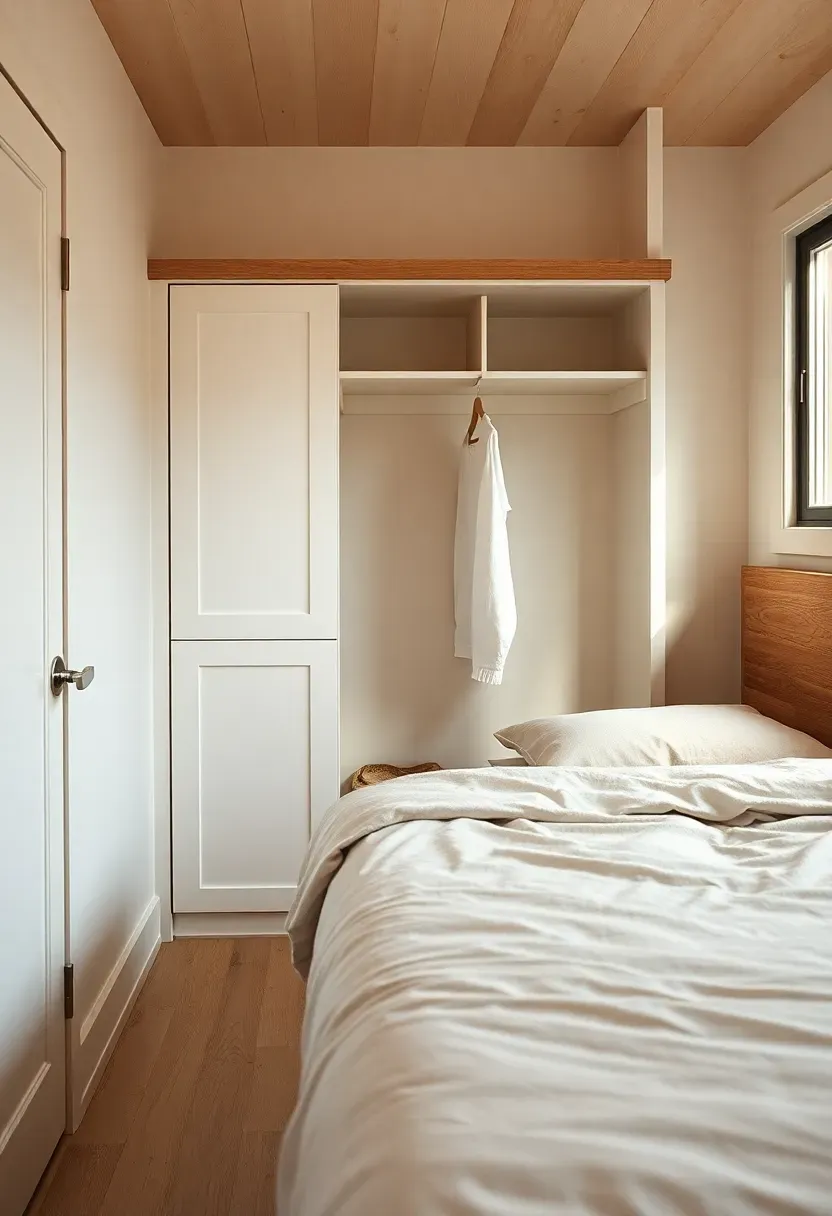
Hyper-realistic 3/4 view of a tiny house bedroom with shallow closet cabinet behind bed headboard, hanging rod, built-in storage. Materials: white oak floor, matte white closet cabinet, linen bedding, oak headboard. Warm diffused window light, creamy neutrals with wood tones. Mood: clever, organized, compact. Shallow depth of field, sharp details, balanced composition, soft shadows, visible room context. No text, no logos, no watermarks.</p>
Tiny house living thrives when every square inch serves multiple purposes through smart design that makes small spaces feel generous.. Hyper-realistic 3/4 view of a tiny house bedroom with shallow closet cabinet behind bed headboard, hanging rod, built-in storage. Materials: white oak floor, matte white closet cabinet, linen bedding, oak headboard. Warm diffused window light, creamy neutrals with wood tones. Mood: clever, organized, compact. Shallow depth of field, sharp details, balanced compos
Prompt: Nature documentary captured on Hasselblad X2D 100C with XCD 90V lens at f/4. Hyper-realistic 3/4 view of a tiny house bedroom with shallow closet cabinet behind bed headboard, hanging rod, built-in storage. Materials: white oak floor, matte white closet cabinet, linen bedding, oak headboard. Warm diffused window light, creamy neutrals with wood tones. Mood: clever, organized, compact. Shallow depth of field, sharp details, balanced composition, soft shadows, visible room context. No text, no logos, no watermarks.

Placement note: allow 24-30 inches of clearance between bed and closet for access.

If depth is limited, use hanging storage that pulls out rather than fixed rods. The trade-off is that accessing this storage requires moving the bed or sliding it aside. A better solution for permanent beds is a platform with drawers underneath.

Tips

  • Use sliding doors instead of swinging to save access space.
  • Install LED strips inside for visibility.

What this gives you: closet storage without claiming additional floor space.

26. Build a Deck That Expands Living Space

Tiny house living effectively gains a room with an attached deck. Even a 6x8 foot deck creates outdoor dining, lounging, or work space. Use folding glass doors to blur the boundary between inside and out, and choose decking materials that complement interior flooring for visual continuity.
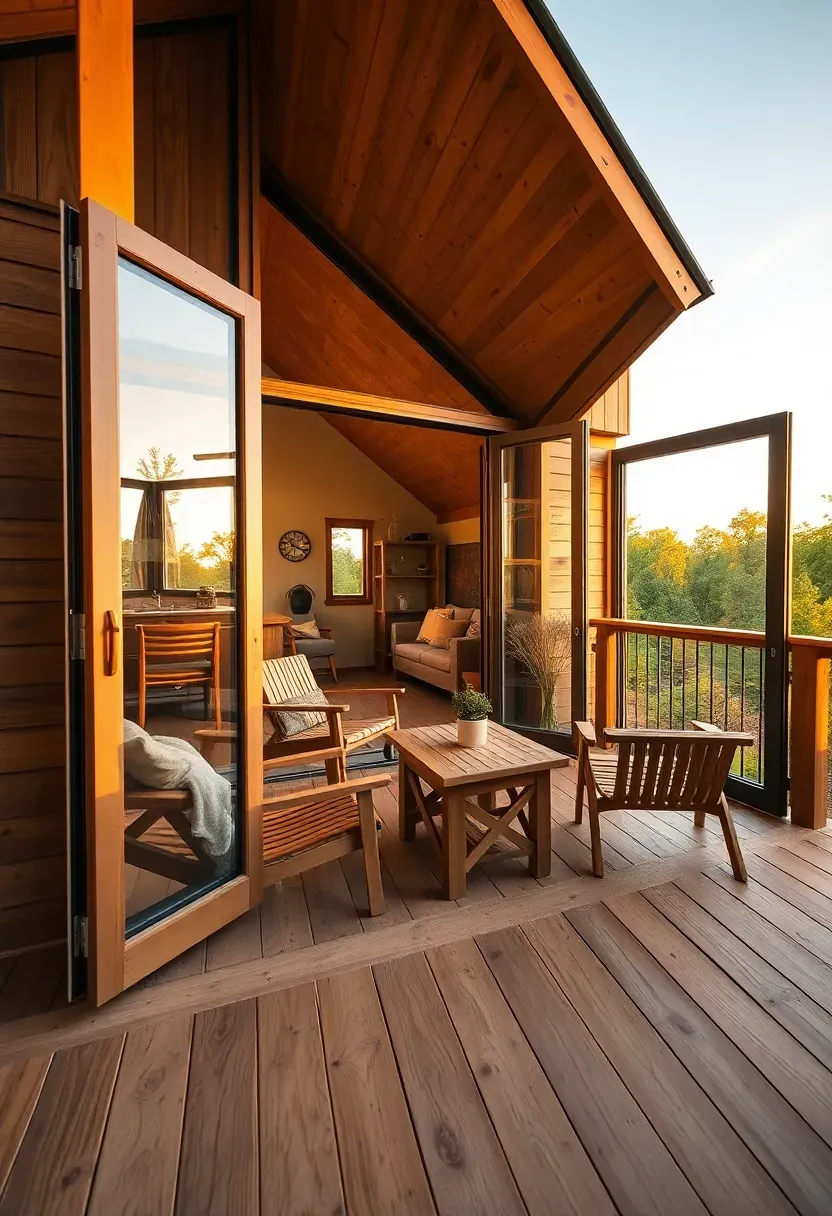
Hyper-realistic 3/4 view of a tiny house with attached deck, folding doors open to exterior, outdoor furniture matching interior style. Materials: cedar decking, white oak interior floor, large glass doors, teak outdoor furniture. Warm diffused golden hour light, natural wood tones throughout. Mood: expanded, seamless, connected. Shallow depth of field, sharp details, balanced composition, soft shadows, visible room context. No text, no logos, no watermarks.</p>
Tiny house living thrives when every square inch serves multiple purposes through smart design that makes small spaces feel generous.. Hyper-realistic 3/4 view of a tiny house with attached deck, folding doors open to exterior, outdoor furniture matching interior style. Materials: cedar decking, white oak interior floor, large glass doors, teak outdoor furniture. Warm diffused golden hour light, natural wood tones throughout. Mood: expanded, seamless, connected. Shallow depth of field, sharp det
Prompt: Nature documentary captured on Hasselblad X2D 100C with XCD 90V lens at f/4. Hyper-realistic 3/4 view of a tiny house with attached deck, folding doors open to exterior, outdoor furniture matching interior style. Materials: cedar decking, white oak interior floor, large glass doors, teak outdoor furniture. Warm diffused golden hour light, natural wood tones throughout. Mood: expanded, seamless, connected. Shallow depth of field, sharp details, balanced composition, soft shadows, visible room context. No text, no logos, no watermarks.

Why it works: a deck effectively extends living space for a fraction of the cost of interior construction.

If a full deck is not possible, a Juliet balcony or large picture window sill can provide a taste of outdoor connection. The trade-off is that decks require maintenance and are weather-dependent. In cold climates, consider a three-season porch instead.

Tips

  • Install a roof overhang or awning for weather protection.
  • Use the same flooring material indoors and out to visually expand space.

Budget/Time: $50-100 per square foot for a basic deck with railing.

What this gives you: additional living space that feels like an extension of the interior.

27. Design One Reset Ritual for Daily Calm

Tiny house living stays sustainable with a simple daily reset. Return items to storage, clear surfaces, and fold away convertible furniture before bed. A ten-minute routine keeps the space calm and prevents clutter from accumulating in tight quarters.
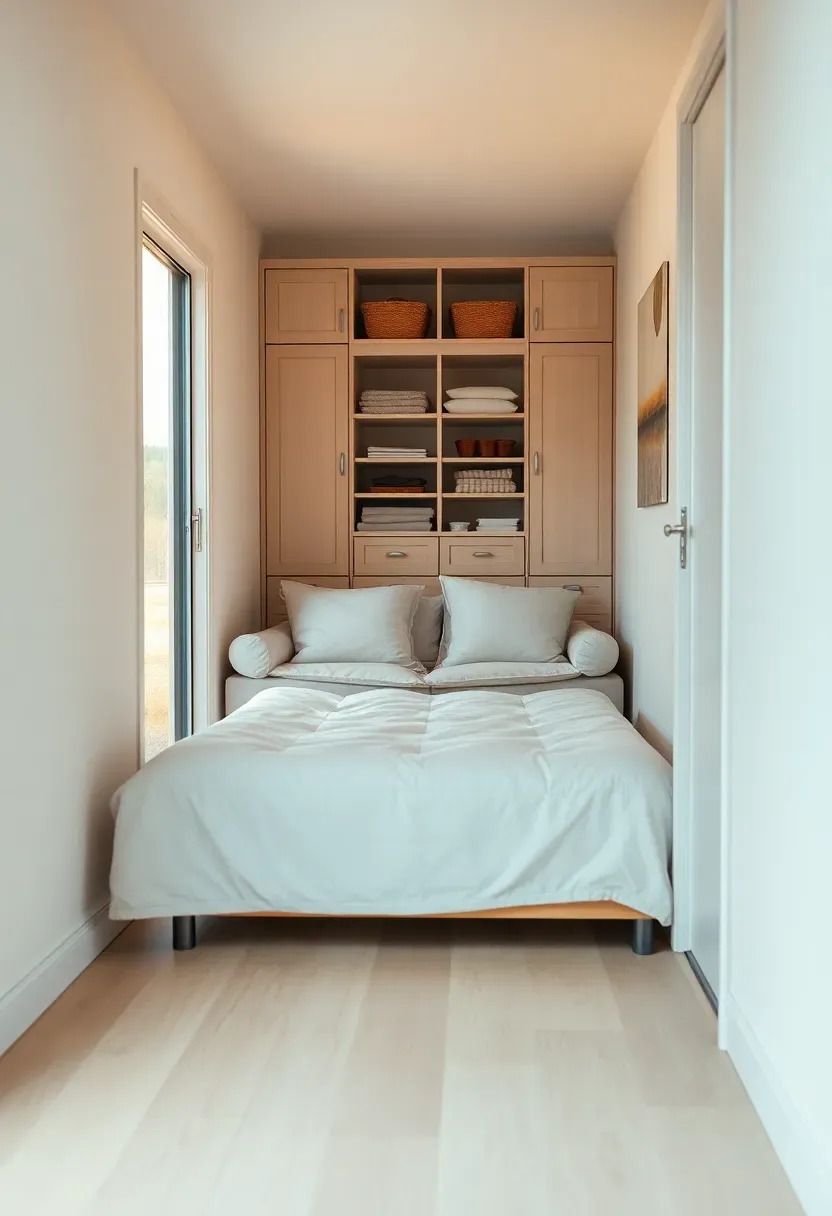
Hyper-realistic 3/4 view of a tiny house that looks freshly reset and tidy, cleared surfaces, folded bed or table, everything in place. Materials: white oak floor, matte white walls, linen sofa, organized closed storage. Warm diffused evening light, creamy neutrals with peaceful calm. Mood: reset, calm, intentional. Shallow depth of field, sharp details, balanced composition, soft shadows, visible room context. No text, no logos, no watermarks.</p>
Tiny house living thrives when every square inch serves multiple purposes through smart design that makes small spaces feel generous.. Hyper-realistic 3/4 view of a tiny house that looks freshly reset and tidy, cleared surfaces, folded bed or table, everything in place. Materials: white oak floor, matte white walls, linen sofa, organized closed storage. Warm diffused evening light, creamy neutrals with peaceful calm. Mood: reset, calm, intentional. Shallow depth of field, sharp details, balanced
Prompt: Nature documentary captured on Hasselblad X2D 100C with XCD 90V lens at f/4. Hyper-realistic 3/4 view of a tiny house that looks freshly reset and tidy, cleared surfaces, folded bed or table, everything in place. Materials: white oak floor, matte white walls, linen sofa, organized closed storage. Warm diffused evening light, creamy neutrals with peaceful calm. Mood: reset, calm, intentional. Shallow depth of field, sharp details, balanced composition, soft shadows, visible room context. No text, no logos, no watermarks.

Why it works: a daily reset prevents clutter from overwhelming small spaces.

Build habits around transitions—reset the kitchen after meals, the living area after work, the bedroom before sleep. The consequence in tiny houses is that clutter is immediately noticeable because there is nowhere to hide. A consistent reset makes the space feel larger.

Tips

  • Pro: a reset routine prevents decision fatigue about where things go.
  • Con: rigid routines can feel constraining on busy days.
  • Fix: keep one basket for temporary overflow during chaotic weeks.

Budget/Time: 10 minutes daily maintains order indefinitely.

What this gives you: a tiny house that stays calm without constant organizing.

Tiny house living transforms from restrictive to intentional when design choices maximize every square inch. By building storage vertically, using multi-purpose furniture, creating zones without walls, and embracing convertible spaces, small homes feel generous rather than cramped. Light colors, continuous materials, and strategic mirror placement further expand the perceived space. When every element serves multiple purposes and daily reset rituals maintain order, tiny house living becomes not just manageable but genuinely enjoyable.
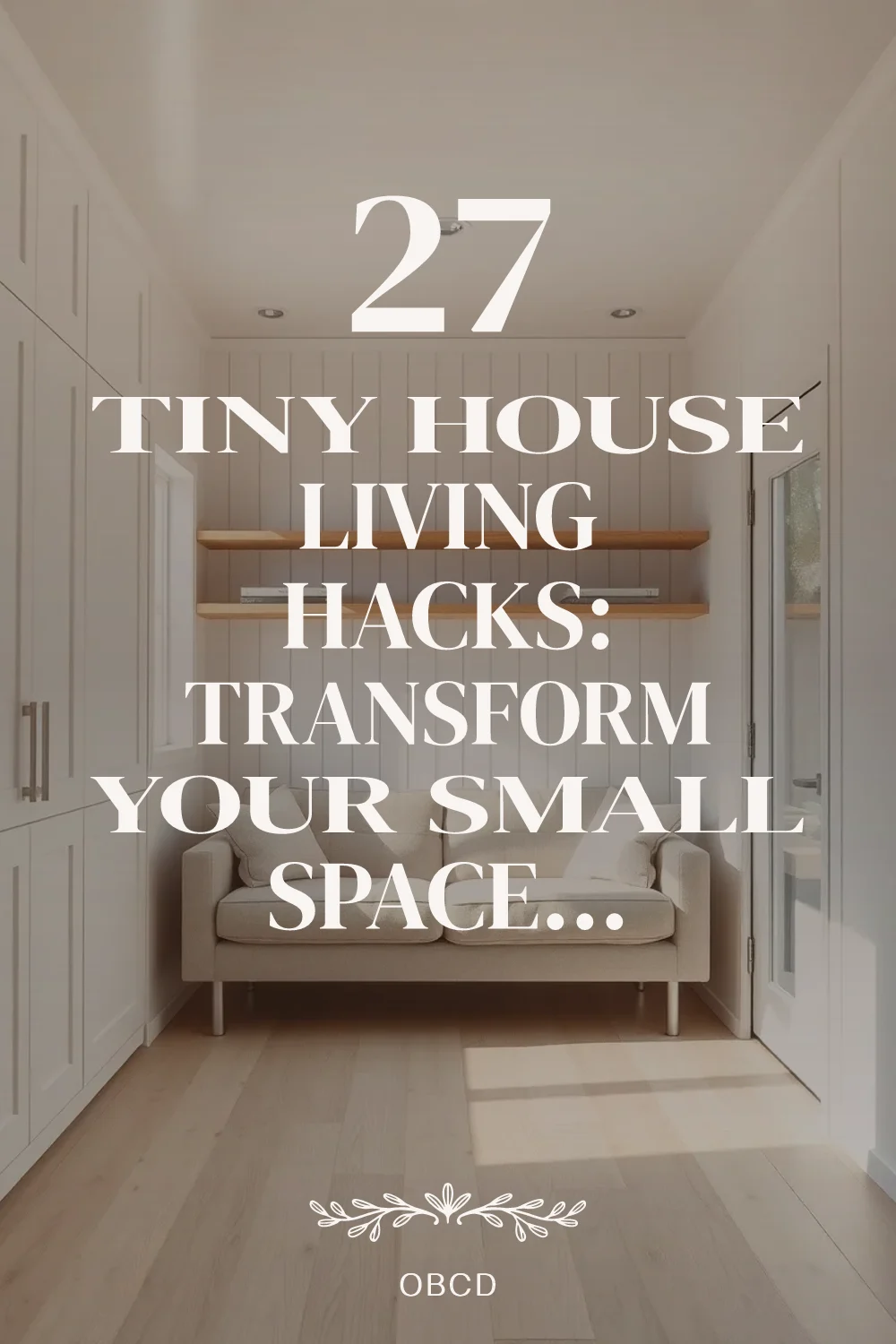
Pinterest cover for 27 Tiny House Living Hacks: Transform Your Small Space for a More Thoughtful Home