inspiration

Eco-Friendly Practices for Tiny House Living: Tips & Ideas Home Decor Ideas

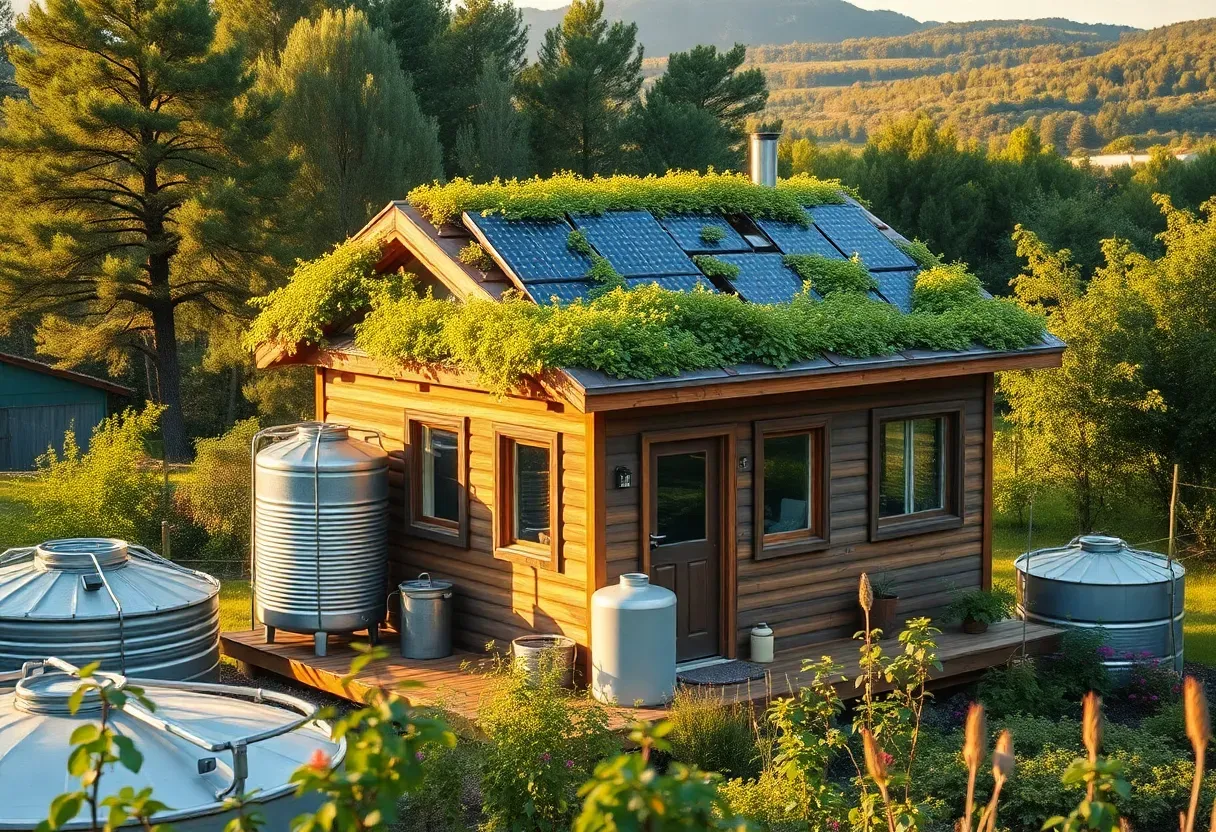
Eco-Friendly Tiny House with Solar Panels and Green Roof

Eco-friendly tiny house living combines minimalist philosophy with sustainable design principles, creating homes that tread lightly on the planet while maximizing comfort and functionality. By integrating renewable energy systems, natural materials, and conscious consumption habits, tiny dwellers can significantly reduce their environmental footprint without sacrificing quality of life.

The transition to sustainable tiny living involves thoughtful consideration of energy sources, water conservation, waste management, and material choices. These eco-friendly practices not only benefit the environment but often lead to long-term cost savings and healthier indoor living spaces.

From passive solar design to composting systems, each sustainable choice contributes to a more holistic approach to tiny house living that respects both people and planet.

Quick FAQ

How do tiny houses reduce environmental impact compared to traditional homes?

Tiny houses require fewer materials to build, less energy to heat and cool, and encourage conscious consumption. The reduced square footage naturally limits resource use while promoting sustainable lifestyle habits.

What renewable energy options work best for tiny houses?

Solar panels are the most popular choice due to falling costs and scalability. Wind turbines and micro-hydro systems work well in specific locations. Many tiny homes use hybrid systems combining multiple renewable sources with battery storage.

Can eco-friendly tiny houses be off-grid?

Yes, completely off-grid eco-friendly tiny houses are possible with proper planning. Systems include solar power, rainwater collection, composting toilets, and propane appliances. The key is designing for self-sufficiency while maintaining comfort.

What sustainable building materials are suitable for tiny houses?

Reclaimed wood, bamboo, cork, recycled steel, and natural insulation like sheep's wool or hemp work well. Low-VOC finishes and non-toxic sealants maintain healthy indoor air quality in the compact space.

How do you handle water sustainably in a tiny house?

Rainwater harvesting systems collect water for non-potable uses, while low-flow fixtures reduce consumption. Greywater recycling systems reuse water from sinks and showers for irrigation. Composting toilets eliminate water use for waste management.

Table of Contents

  1. 1. Solar Power Integration
  2. 2. Rainwater Harvesting System
  3. 3. Composting Toilet Solutions
  4. 4. Natural Insulation Materials
  5. 5. Passive Solar Design
  6. 6. LED Lighting Throughout
  7. 7. Low-VOC Interior Finishes
  8. 8. Reclaimed Wood Elements
  9. 9. Living Roof Installation
  10. 10. Greywater Recycling System
  11. 11. Energy-Efficient Appliances
  12. 12. Thermal Mass Flooring
  13. 13. Natural Ventilation Strategy
  14. 14. Recycled Material Construction
  15. 15. Double-Glazed Windows
  16. 16. Permaculture Landscaping
  17. 17. Biomass Heating Options
  18. 18. Solar Water Heating
  19. 19. Non-Toxic Wood Finishes
  20. 20. Upcycled Furniture Solutions
  21. 21. Smart Energy Management
  22. 22. Natural Daylighting Design
  23. 23. Rain Garden Implementation
  24. 24. Low-Flow Water Fixtures
  25. 25. Sustainable Flooring Choices

1. Solar Power Integration

Installing solar panels on your tiny house roof provides clean, renewable energy that can power your entire home. A typical tiny house needs 2-4 kilowatts of solar capacity, depending on location and energy consumption. Panels connect to a battery bank storing energy for nighttime and cloudy days, while an inverter converts DC power to AC for household appliances. South-facing roof orientation maximizes exposure in northern hemisphere locations. Monitor your energy production through a charge controller to ensure system efficiency.
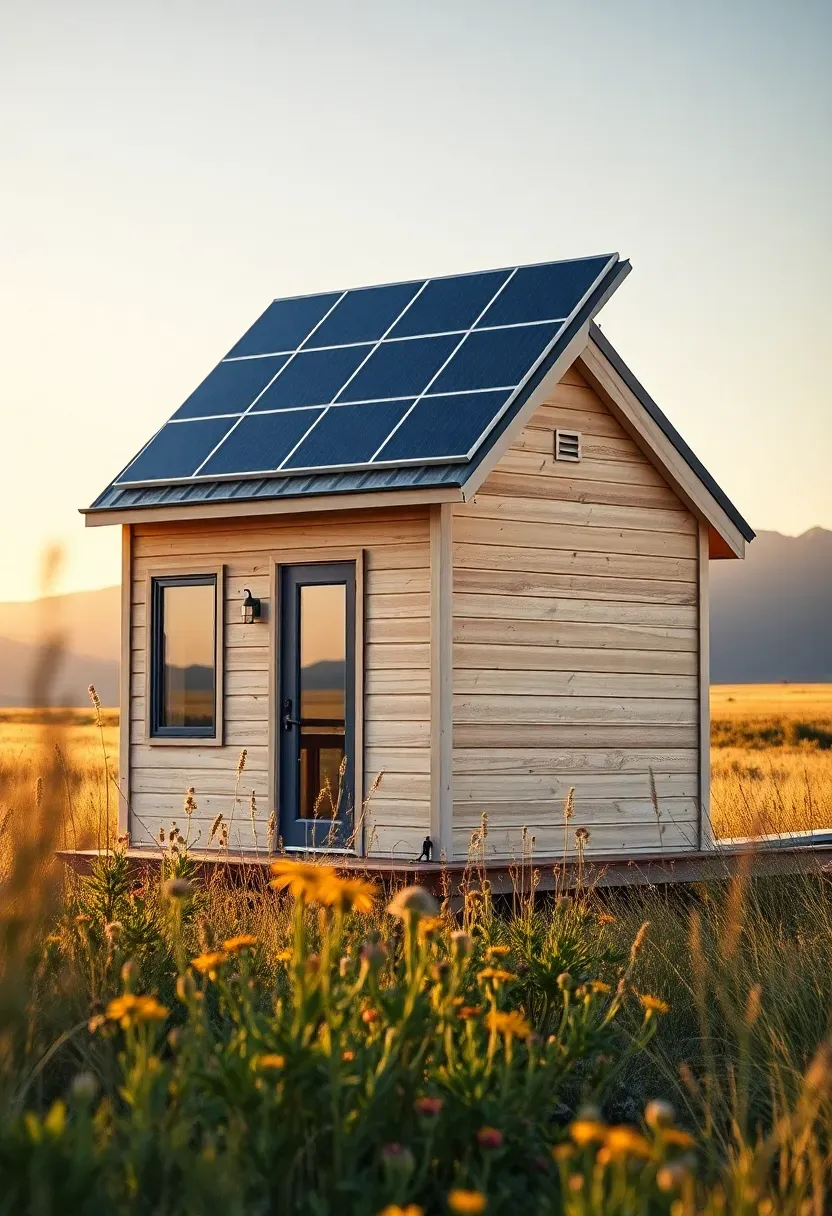
Hyper-realistic 3/4 view of a modern tiny house with sleek solar panels on the roof, surrounded by wildflowers. Materials: dark solar panels, light wood siding, metal roof. Warm golden hour sunlight, soft shadows. Clean minimalist design, sustainable architecture, natural landscape. Shallow depth of field, sharp details, visible mountains in background. No text, no logos.</p>
Eco-friendly tiny house living combines minimalist philosophy with sustainable design principles, creating homes that tread lightly on the planet while maximizing comfort and functionality. By integrating renewable energy systems, natural materials, and conscious consumption habits, tiny dwellers can significantly reduce their environmental footprint without sacrificing quality of life.. Hyper-realistic 3/4 view of a modern tiny house with sleek solar panels on the roof, surrounded by wildflower
Prompt: Nature documentary captured on Hasselblad X2D 100C with XCD 90V lens at f/4. Hyper-realistic 3/4 view of a modern tiny house with sleek solar panels on the roof, surrounded by wildflowers. Materials: dark solar panels, light wood siding, metal roof. Warm golden hour sunlight, soft shadows. Clean minimalist design, sustainable architecture, natural landscape. Shallow depth of field, sharp details, visible mountains in background. No text, no logos.

Tips

  • Do: Calculate your daily energy needs before sizing your system
  • Don't: Underestimate battery storage capacity for cloudy periods
  • Consider: Flexible solar panels if your roof has irregular dimensions
  • Install: A monitoring system to track energy production and consumption

Best for: Tiny houses in sunny climates with 4+ peak sun hours daily

What this gives you: Energy independence and elimination of monthly electric bills while reducing carbon footprint

2. Rainwater Harvesting System

Capturing rainwater from your tiny house roof provides free water for irrigation, cleaning, and with proper filtration, drinking. A 200-square-foot roof can collect over 12,000 gallons annually in areas with 30 inches of rainfall. Systems include gutters, downspouts, first-flush diverters that discard initial contaminated water, and storage tanks. UV filtration and ceramic filters make collected water potable. Multiple tanks connected in series increase capacity without requiring large single containers. Proper tank positioning uses gravity for water pressure, eliminating the need for pumps.
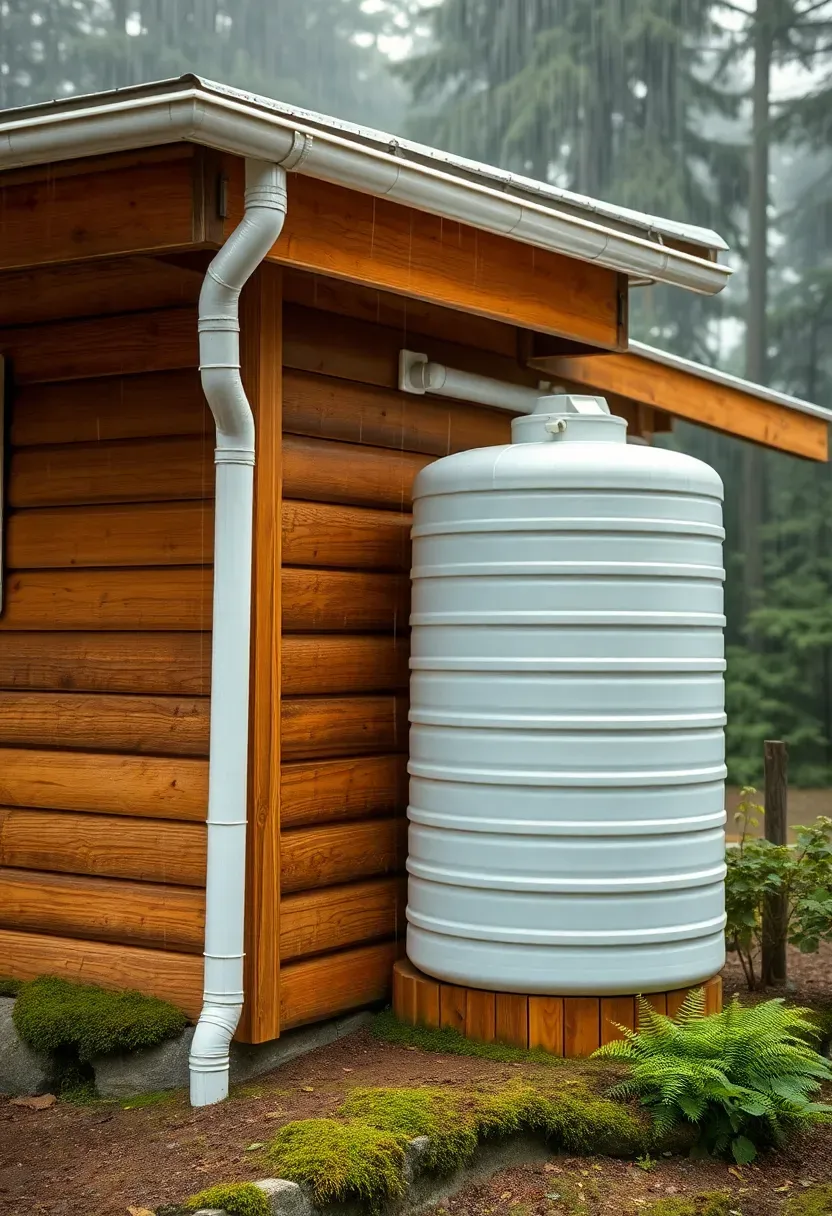
Hyper-realistic 3/4 view of a tiny house with rainwater collection system, showing gutters and cylindrical water tanks beside the structure. Materials: corrugated metal roof, white vinyl gutters, translucent plastic tanks, cedar siding. Soft diffused daylight, gentle rain falling. Peaceful sustainable setting, moss and ferns around tank base. Shallow depth of field, visible forest background. No text, no logos.</p>
Eco-friendly tiny house living combines minimalist philosophy with sustainable design principles, creating homes that tread lightly on the planet while maximizing comfort and functionality. By integrating renewable energy systems, natural materials, and conscious consumption habits, tiny dwellers can significantly reduce their environmental footprint without sacrificing quality of life.. Hyper-realistic 3/4 view of a tiny house with rainwater collection system, showing gutters and cylindrical wa
Prompt: Nature documentary captured on Hasselblad X2D 100C with XCD 90V lens at f/4. Hyper-realistic 3/4 view of a tiny house with rainwater collection system, showing gutters and cylindrical water tanks beside the structure. Materials: corrugated metal roof, white vinyl gutters, translucent plastic tanks, cedar siding. Soft diffused daylight, gentle rain falling. Peaceful sustainable setting, moss and ferns around tank base. Shallow depth of field, visible forest background. No text, no logos.

Tips

  • Do: Install first-flush diverters to remove roof contaminants
  • Don't: Use opaque tanks without inspection ports—algae growth becomes problematic
  • Pro tip: Elevate tanks 2-3 feet for gravity-fed water pressure
  • Maintenance: Clean gutters quarterly and inspect seals annually

Budget/Time: $1,500-$4,000; 2-3 weekends for DIY installation

What this gives you: Water self-sufficiency and reduced municipal water dependence

3. Composting Toilet Solutions

Composting toilets transform human waste into nutrient-rich compost without water usage or sewer connections. They're ideal for off-grid tiny houses, reducing water consumption by 6,000 gallons annually per person. Systems separate liquids from solids, with solids mixing with carbonaceous material like coconut coir or sawdust to facilitate decomposition. Properly managed composting toilets produce no odor and require emptying only every 2-3 months for two people. Modern designs feature fans for ventilation, agitators for mixing, and clean, sanitary aesthetics indistinguishable from conventional toilets.
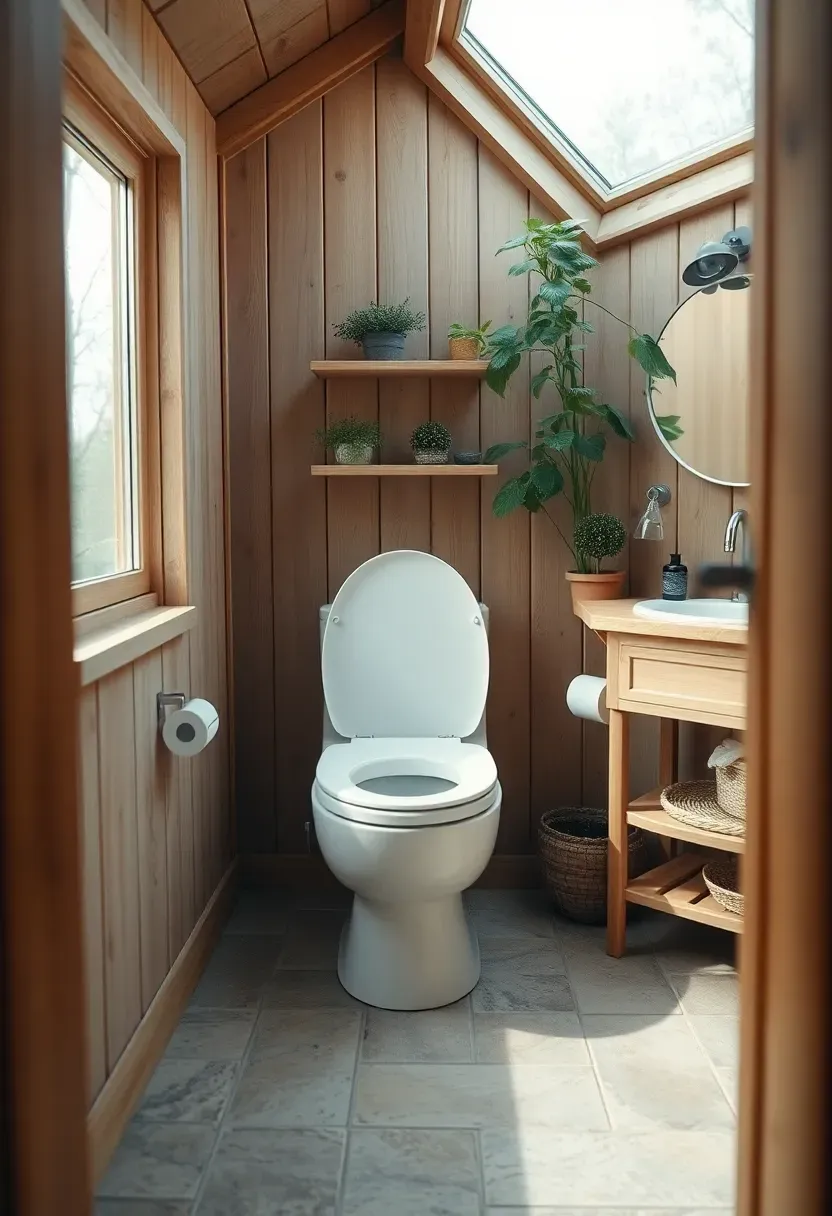
Hyper-realistic 3/4 view of a tiny house bathroom interior featuring a modern composting toilet, light wood vanity, round mirror, and plants. Materials: white composting toilet fixture, bamboo vanity, natural stone floor tiles. Bright natural window light, airy atmosphere. Sustainable design, minimal eco-conscious bathroom. Shallow depth of field, soft blurred background. No text, no logos.</p>
Eco-friendly tiny house living combines minimalist philosophy with sustainable design principles, creating homes that tread lightly on the planet while maximizing comfort and functionality. By integrating renewable energy systems, natural materials, and conscious consumption habits, tiny dwellers can significantly reduce their environmental footprint without sacrificing quality of life.. Hyper-realistic 3/4 view of a tiny house bathroom interior featuring a modern composting toilet, light wood v
Prompt: Nature documentary captured on Hasselblad X2D 100C with XCD 90V lens at f/4. Hyper-realistic 3/4 view of a tiny house bathroom interior featuring a modern composting toilet, light wood vanity, round mirror, and plants. Materials: white composting toilet fixture, bamboo vanity, natural stone floor tiles. Bright natural window light, airy atmosphere. Sustainable design, minimal eco-conscious bathroom. Shallow depth of field, soft blurred background. No text, no logos.

Tips

  • If: Using urine-diverting models, empty liquid chamber weekly
  • Then: Solids chamber only needs attention every 2-3 months
  • Essential: Maintain proper carbon-to-nitrogen ratio with coconut coir
  • Ventilation: Install exhaust fan to prevent moisture buildup

Rental note: Portable composting toilets work even in leased tiny homes

What this gives you: Complete independence from sewer systems and dramatic water conservation

4. Natural Insulation Materials

Choosing natural insulation materials like sheep's wool, hemp, cellulose, or cork eliminates synthetic chemicals while providing excellent thermal performance. These materials breathe, regulating humidity and preventing condensation issues common in tiny houses. Sheep's wool insulation absorbs moisture when humid and releases it when dry, maintaining comfortable indoor air quality. Hemp insulation is naturally mold-resistant and pest-repellent. Cellulose made from recycled paper offers R-3.5 per inch performance. These materials are safer to install without protective equipment and can be composted at end-of-life.
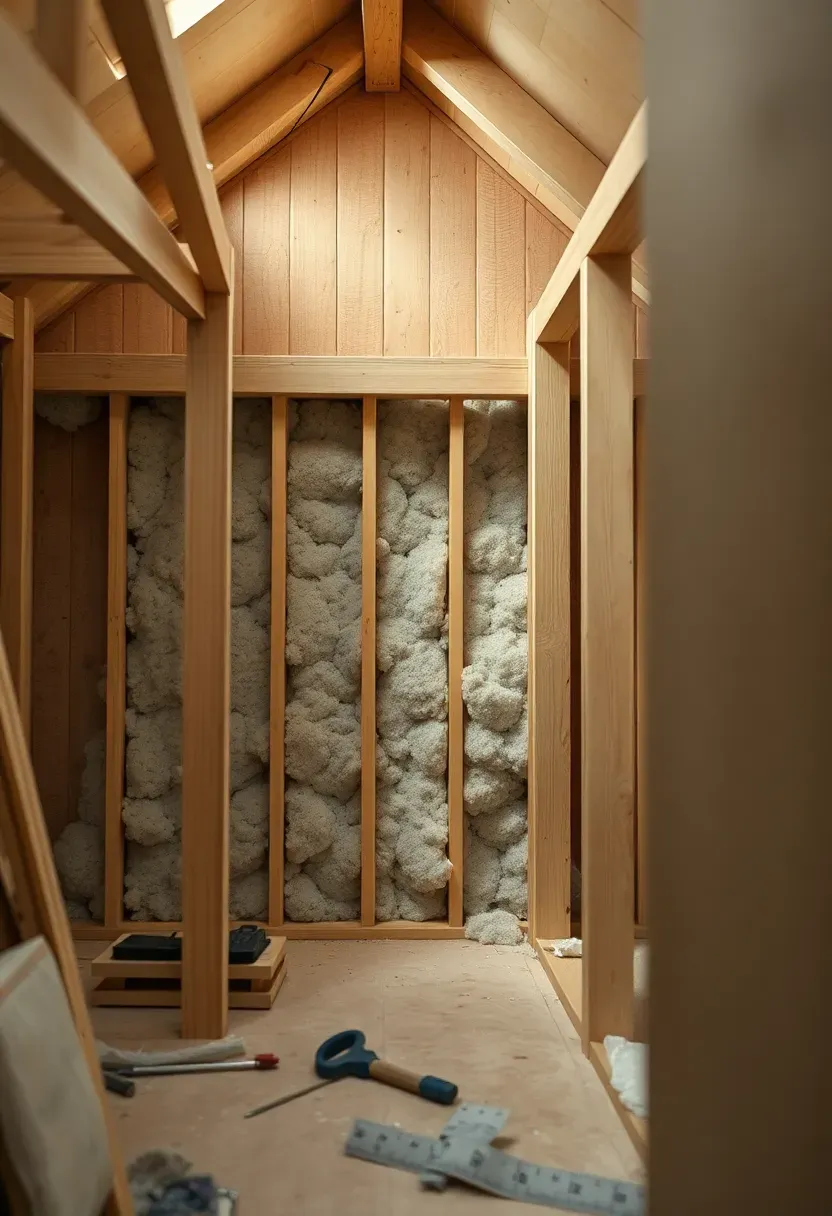
Hyper-realistic 3/4 view of a tiny house construction phase showing natural wool insulation between exposed studs. Materials: raw sheep's wool insulation batts, pine framing, partial plywood sheathing. Warm workshop lighting, textured natural materials. Sustainable building process, craftsman aesthetic. Shallow depth of field, visible tools and materials. No text, no logos.</p>
Eco-friendly tiny house living combines minimalist philosophy with sustainable design principles, creating homes that tread lightly on the planet while maximizing comfort and functionality. By integrating renewable energy systems, natural materials, and conscious consumption habits, tiny dwellers can significantly reduce their environmental footprint without sacrificing quality of life.. Hyper-realistic 3/4 view of a tiny house construction phase showing natural wool insulation between exposed s
Prompt: Nature documentary captured on Hasselblad X2D 100C with XCD 90V lens at f/4. Hyper-realistic 3/4 view of a tiny house construction phase showing natural wool insulation between exposed studs. Materials: raw sheep's wool insulation batts, pine framing, partial plywood sheathing. Warm workshop lighting, textured natural materials. Sustainable building process, craftsman aesthetic. Shallow depth of field, visible tools and materials. No text, no logos.

Tips

  • Pro/Con: Sheep's wool costs 2-3x more but lasts 50+ years
  • Fix: Cellulose is most affordable but requires professional blowing equipment
  • Placement note: Install vapor barrier on warm side of wall assembly
  • Consider: Cork panels for both insulation and sound dampening

Best for: Chemically sensitive individuals and cold climate tiny houses

What this gives you: Healthy indoor air quality and superior moisture regulation without petrochemicals

5. Passive Solar Design

Designing your tiny house to harness the sun's natural energy reduces heating and cooling demands significantly. South-facing windows in northern latitudes capture winter sun while overhangs block high summer sun. Thermal mass materials like concrete floors or stone walls absorb heat during day and release it at night, stabilizing indoor temperatures. Proper window placement creates natural convection currents for cooling. Deciduous trees planted on south sides provide summer shade and allow winter sun penetration. This free, passive system works 24/7 without mechanical equipment or energy input.
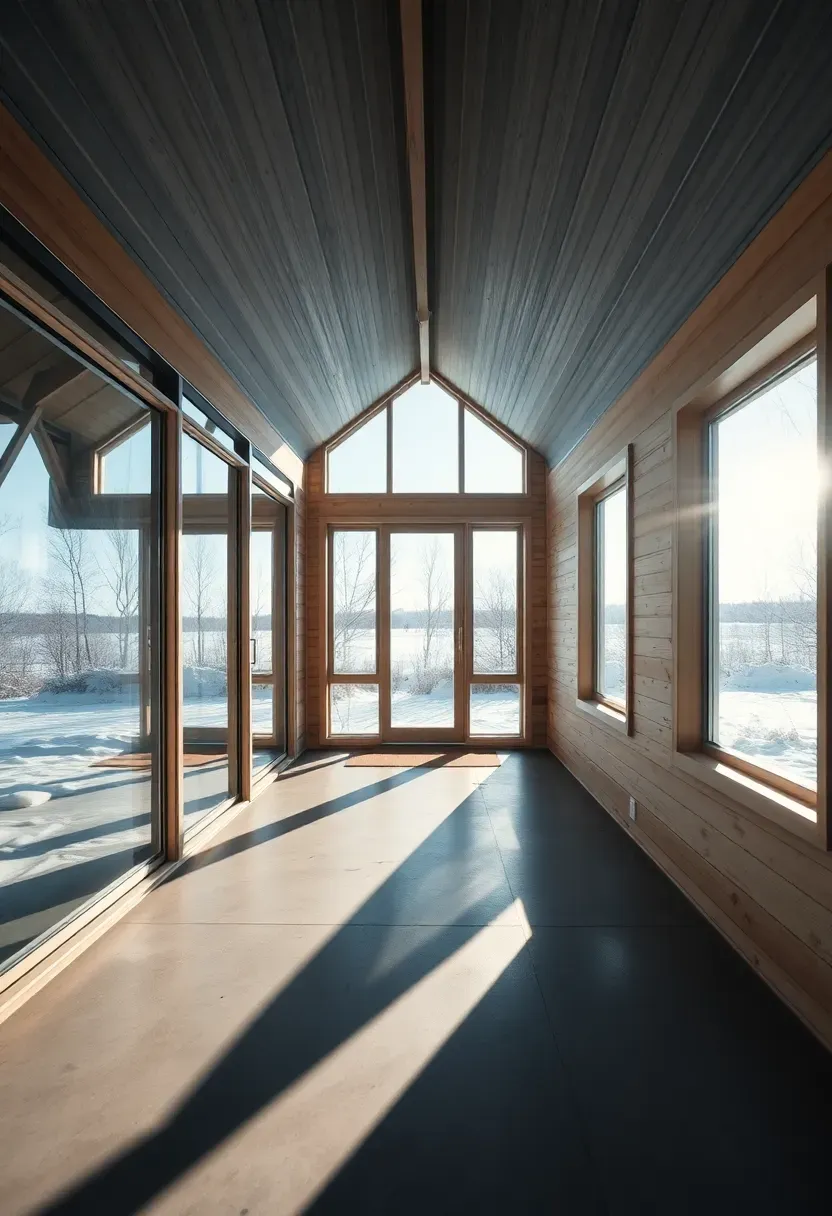
Hyper-realistic 3/4 view of a passive solar tiny house with large south-facing windows, concrete floor, and overhangs. Materials: expansive glass, polished concrete floor, light wood siding, metal roof. Bright winter sunlight streaming through windows, long shadows. Sustainable architecture, sun-drenched interior. Shallow depth of field, snowy landscape visible. No text, no logos.</p>
Eco-friendly tiny house living combines minimalist philosophy with sustainable design principles, creating homes that tread lightly on the planet while maximizing comfort and functionality. By integrating renewable energy systems, natural materials, and conscious consumption habits, tiny dwellers can significantly reduce their environmental footprint without sacrificing quality of life.. Hyper-realistic 3/4 view of a passive solar tiny house with large south-facing windows, concrete floor, and o
Prompt: Nature documentary captured on Hasselblad X2D 100C with XCD 90V lens at f/4. Hyper-realistic 3/4 view of a passive solar tiny house with large south-facing windows, concrete floor, and overhangs. Materials: expansive glass, polished concrete floor, light wood siding, metal roof. Bright winter sunlight streaming through windows, long shadows. Sustainable architecture, sun-drenched interior. Shallow depth of field, snowy landscape visible. No text, no logos.

Tips

  • Do: Orient longest wall of house within 15 degrees of true south
  • Don't: Place too many windows on north sides—heat loss outweighs gain
  • Calculate: Overhang depth based on latitude and desired seasonal shading
  • Material: Polished concrete or tile floors provide effective thermal mass

Placement note: Site selection critical—avoid shade from trees or buildings to south

What this gives you: Free heating and cooling through intelligent design orientation

6. LED Lighting Throughout

LED bulbs consume 75% less energy than incandescent lighting while lasting 25 times longer, making them essential for energy-efficient tiny houses. A typical tiny house can be fully illuminated with under 100 watts of LED lighting compared to 400+ watts with traditional bulbs. LED technology produces minimal heat, reducing cooling loads in summer. Dimmable LEDs allow precise control over ambiance and energy use. Choose warm color temperatures (2700-3000K) for living areas and cooler (4000K) for task lighting. Quality LEDs maintain color consistency and avoid the harsh blue spectrum that disrupts circadian rhythms.
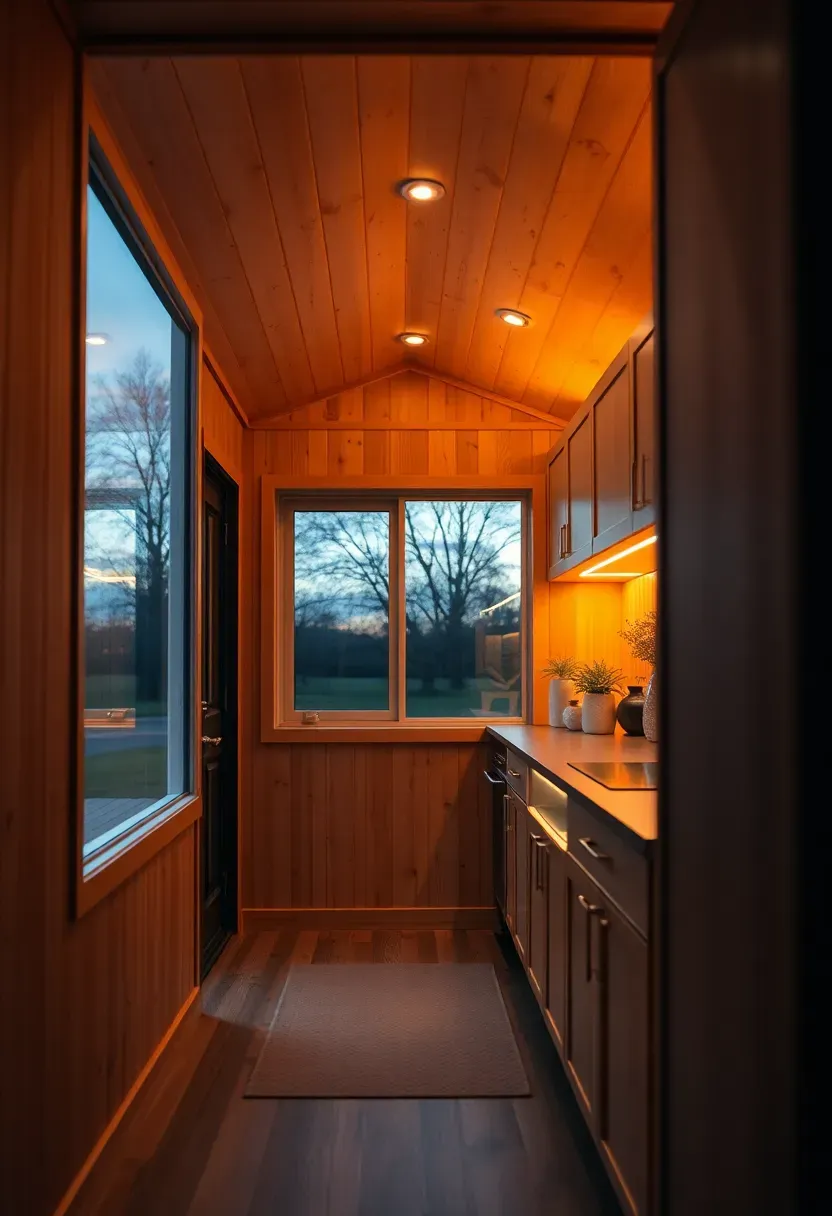
Hyper-realistic 3/4 view of a tiny house interior at dusk showing warm LED lighting creating cozy ambiance. Materials: light wood walls, recessed LED ceiling lights, LED strip lighting under cabinets, warm glow. Soft evening atmosphere, comfortable interior space. Energy-efficient lighting design, modern sustainable living. Shallow depth of field, window showing twilight outside. No text, no logos.</p>
Eco-friendly tiny house living combines minimalist philosophy with sustainable design principles, creating homes that tread lightly on the planet while maximizing comfort and functionality. By integrating renewable energy systems, natural materials, and conscious consumption habits, tiny dwellers can significantly reduce their environmental footprint without sacrificing quality of life.. Hyper-realistic 3/4 view of a tiny house interior at dusk showing warm LED lighting creating cozy ambiance. M
Prompt: Nature documentary captured on Hasselblad X2D 100C with XCD 90V lens at f/4. Hyper-realistic 3/4 view of a tiny house interior at dusk showing warm LED lighting creating cozy ambiance. Materials: light wood walls, recessed LED ceiling lights, LED strip lighting under cabinets, warm glow. Soft evening atmosphere, comfortable interior space. Energy-efficient lighting design, modern sustainable living. Shallow depth of field, window showing twilight outside. No text, no logos.

Tips

  • Do: Choose CRI 90+ LEDs for accurate color rendering
  • Don't: Buy cheapest LEDs—poor quality flickers and fails prematurely
  • Investment: Higher upfront cost pays back in 2-3 years via energy savings
  • Design: Layer ambient, task, and accent lighting for flexibility

Best for: Off-grid tiny houses where every watt of energy consumption matters

What this gives you: Dramatically reduced electricity consumption and minimal heat generation

7. Low-VOC Interior Finishes

Volatile organic compounds (VOCs) in conventional paints, sealants, and finishes off-gas harmful chemicals for years after application. In tiny houses with limited air volume, these toxins concentrate more heavily. Low-VOC and zero-VOC paints, natural oil finishes, and water-based sealants maintain healthy indoor air quality. Look for GreenGuard or Cradle to Cradle certifications. Plant-based oils like linseed and tung provide durable wood protection without toxic fumes. Milk paint and clay plaster offer beautiful, breathable wall finishes that actually improve air quality by regulating humidity.
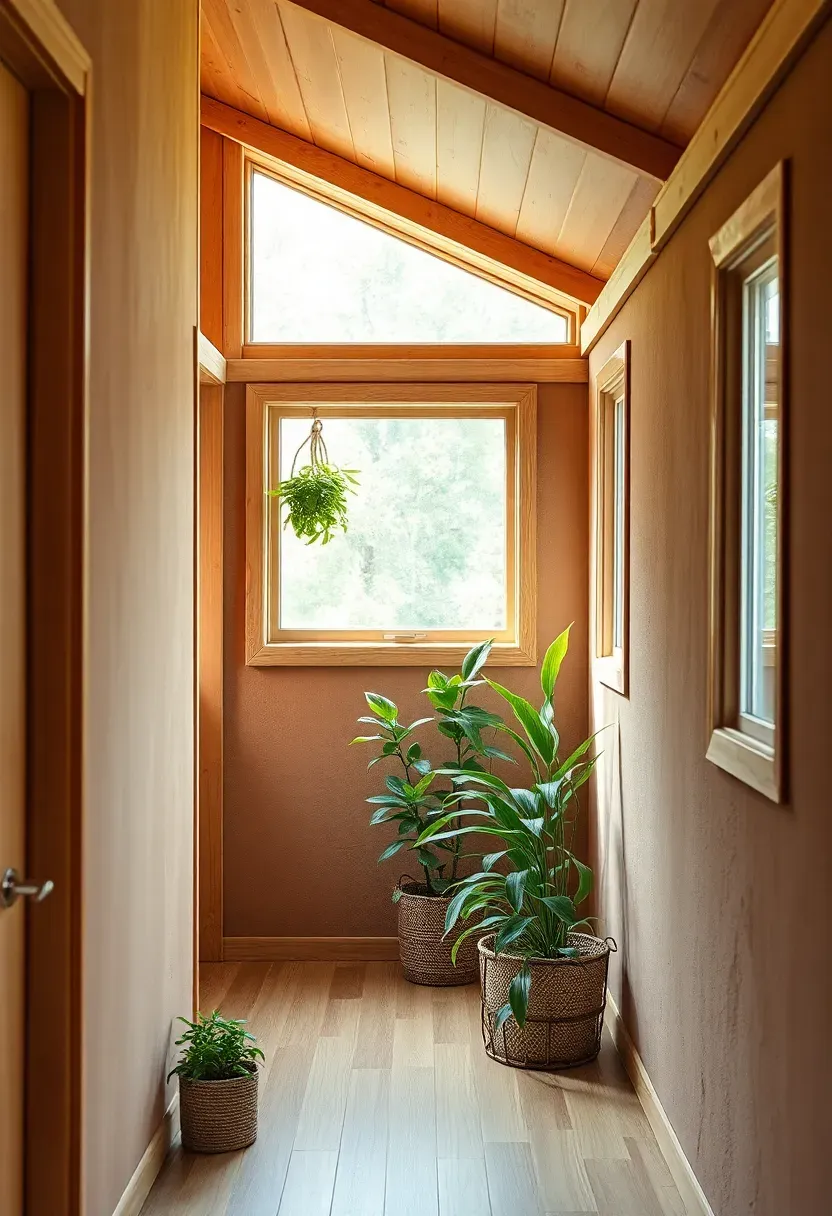
Hyper-realistic 3/4 view of a tiny house interior showing natural clay plaster walls in warm earth tones, light wood trim, and healthy green plants. Materials: natural clay plaster, cedar trim, bamboo flooring, indoor plants. Soft natural daylight, clean air atmosphere. Non-toxic interior, healthy sustainable living space. Shallow depth of field, serene minimalist aesthetic. No text, no logos.</p>
Eco-friendly tiny house living combines minimalist philosophy with sustainable design principles, creating homes that tread lightly on the planet while maximizing comfort and functionality. By integrating renewable energy systems, natural materials, and conscious consumption habits, tiny dwellers can significantly reduce their environmental footprint without sacrificing quality of life.. Hyper-realistic 3/4 view of a tiny house interior showing natural clay plaster walls in warm earth tones, lig
Prompt: Nature documentary captured on Hasselblad X2D 100C with XCD 90V lens at f/4. Hyper-realistic 3/4 view of a tiny house interior showing natural clay plaster walls in warm earth tones, light wood trim, and healthy green plants. Materials: natural clay plaster, cedar trim, bamboo flooring, indoor plants. Soft natural daylight, clean air atmosphere. Non-toxic interior, healthy sustainable living space. Shallow depth of field, serene minimalist aesthetic. No text, no logos.

Tips

  • Do: Test small areas first—natural finishes vary by batch
  • Don't: Assume "natural" means non-toxic—always check VOC content
  • Avoid: Products with antimicrobial additives (triclosan, quaternary ammonium)
  • Ventilation: Increase airflow significantly during and after application

Health benefit: Reduced headaches, allergies, and long-term health risks

What this gives you: Clean indoor air quality free from harmful chemical off-gassing

8. Reclaimed Wood Elements

Incorporating reclaimed wood into your tiny house construction prevents valuable lumber from entering landfills while adding character and history. Old barn wood, factory beams, and gym flooring offer superior dimensional stability compared to new lumber due to decades of natural curing. Each piece tells a story through nail holes, weathering, and patina. Reclaimed wood typically costs 20-50% more than new lumber but provides environmental benefits and aesthetic value impossible to replicate. Use for flooring, siding, countertops, or accent walls. Source locally to reduce transportation emissions.
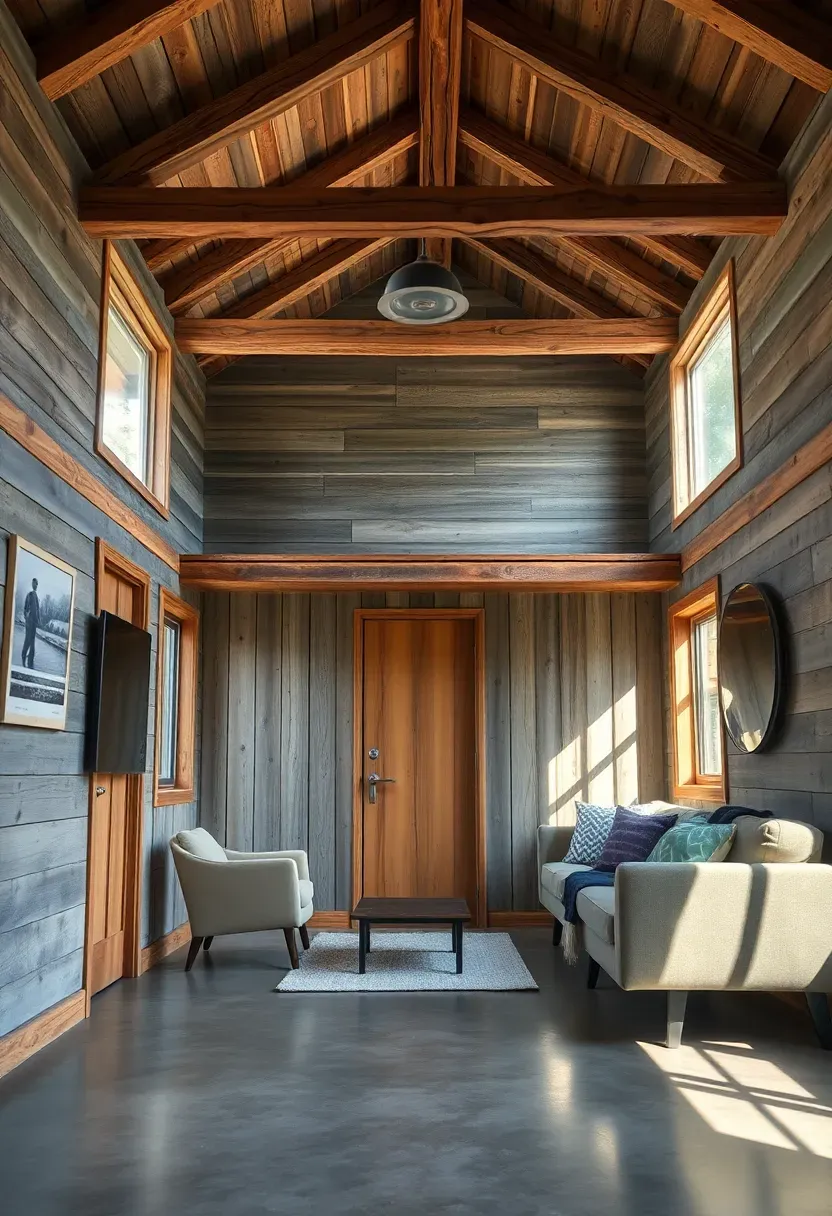
Hyper-realistic 3/4 view of a tiny house interior featuring reclaimed barn wood siding, rustic ceiling beams, and modern furniture. Materials: weathered gray barn wood, rough-sawn beams, polished concrete floor, contemporary sofa. Warm directional lighting highlighting texture and grain patterns. Sustainable design, historic materials repurposed. Shallow depth of field, mixture of rustic and modern elements. No text, no logos.</p>
Eco-friendly tiny house living combines minimalist philosophy with sustainable design principles, creating homes that tread lightly on the planet while maximizing comfort and functionality. By integrating renewable energy systems, natural materials, and conscious consumption habits, tiny dwellers can significantly reduce their environmental footprint without sacrificing quality of life.. Hyper-realistic 3/4 view of a tiny house interior featuring reclaimed barn wood siding, rustic ceiling beams,
Prompt: Nature documentary captured on Hasselblad X2D 100C with XCD 90V lens at f/4. Hyper-realistic 3/4 view of a tiny house interior featuring reclaimed barn wood siding, rustic ceiling beams, and modern furniture. Materials: weathered gray barn wood, rough-sawn beams, polished concrete floor, contemporary sofa. Warm directional lighting highlighting texture and grain patterns. Sustainable design, historic materials repurposed. Shallow depth of field, mixture of rustic and modern elements. No text, no logos.

Tips

  • Pro/Con: Check carefully for hidden nails and lead paint
  • Fix: Professional metal detection saves broken saw blades and safety hazards
  • Alternative: New wood with reclaimed appearance costs less and guarantees safety
  • Source: Local demolition sites often sell directly at significant savings

Placement note: Use as feature wall or ceiling rather than entire interior to balance cost

What this gives you: Unique character and environmental benefit of diverting materials from waste stream

9. Living Roof Installation

A living roof covered with sedum, moss, or native plants transforms your tiny house roof into a functioning ecosystem. Benefits include superior insulation (reducing heating and cooling costs by 25%), extended roof membrane lifespan (2-3 times longer), rainwater absorption (reducing runoff by 50-70%), and habitat creation for pollinators. Modern systems use lightweight engineered soil mixes and drought-resistant plant varieties that require minimal maintenance. The thermal mass of soil and plants buffers temperature fluctuations, keeping interiors cooler in summer and warmer in winter. Structural reinforcement is typically required—expect 20-35 pounds per square foot additional weight when saturated.
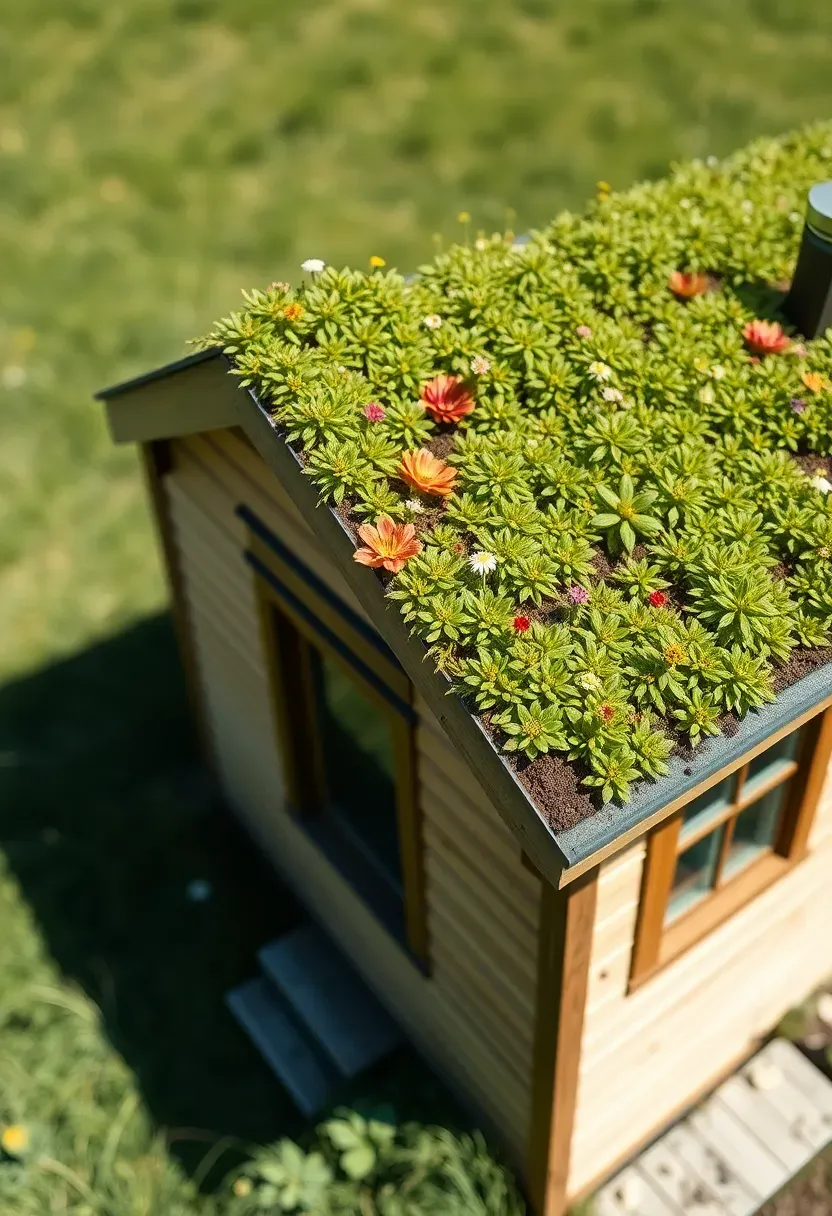
Hyper-realistic 3/4 view aerial perspective of a tiny house with a lush green living roof featuring sedum plants and wildflowers. Materials: green roof vegetation, engineered soil layer, waterproof membrane, light wood siding below. Bright natural daylight, vibrant plant colors. Sustainable architecture, biodiversity habitat, stormwater management. Shallow depth of field, surrounding meadow visible. No text, no logos.</p>
Eco-friendly tiny house living combines minimalist philosophy with sustainable design principles, creating homes that tread lightly on the planet while maximizing comfort and functionality. By integrating renewable energy systems, natural materials, and conscious consumption habits, tiny dwellers can significantly reduce their environmental footprint without sacrificing quality of life.. Hyper-realistic 3/4 view aerial perspective of a tiny house with a lush green living roof featuring sedum pla
Prompt: Nature documentary captured on Hasselblad X2D 100C with XCD 90V lens at f/4. Hyper-realistic 3/4 view aerial perspective of a tiny house with a lush green living roof featuring sedum plants and wildflowers. Materials: green roof vegetation, engineered soil layer, waterproof membrane, light wood siding below. Bright natural daylight, vibrant plant colors. Sustainable architecture, biodiversity habitat, stormwater management. Shallow depth of field, surrounding meadow visible. No text, no logos.

Tips

  • Do: Consult structural engineer before installing—weight is significant
  • Don't: Expect instant transformation—plants need 2-3 years to fully establish
  • Maintenance: Weed quarterly and inspect irrigation during drought periods
  • Plant selection: Choose native species adapted to your climate zone

Budget note: $15-30 per square foot installed; pays back via extended roof life and energy savings

What this gives you: Natural insulation, stormwater management, and expanded habitat for pollinators

10. Greywater Recycling System

Greywater systems capture water from sinks and showers for reuse in irrigation, effectively using water twice. A typical tiny house produces 15-30 gallons of greywater daily, enough to water a substantial garden. Systems range from simple gravity-fed diverters to complex multi-stage filtration setups. The simplest approach directs greywater directly to mulch basins around plants. More advanced systems filter and pump water for storage and timed irrigation. Use biodegradable soaps and avoid harsh chemicals to protect soil biology. Greywater cannot be stored for more than 24 hours without treatment due to bacterial growth.
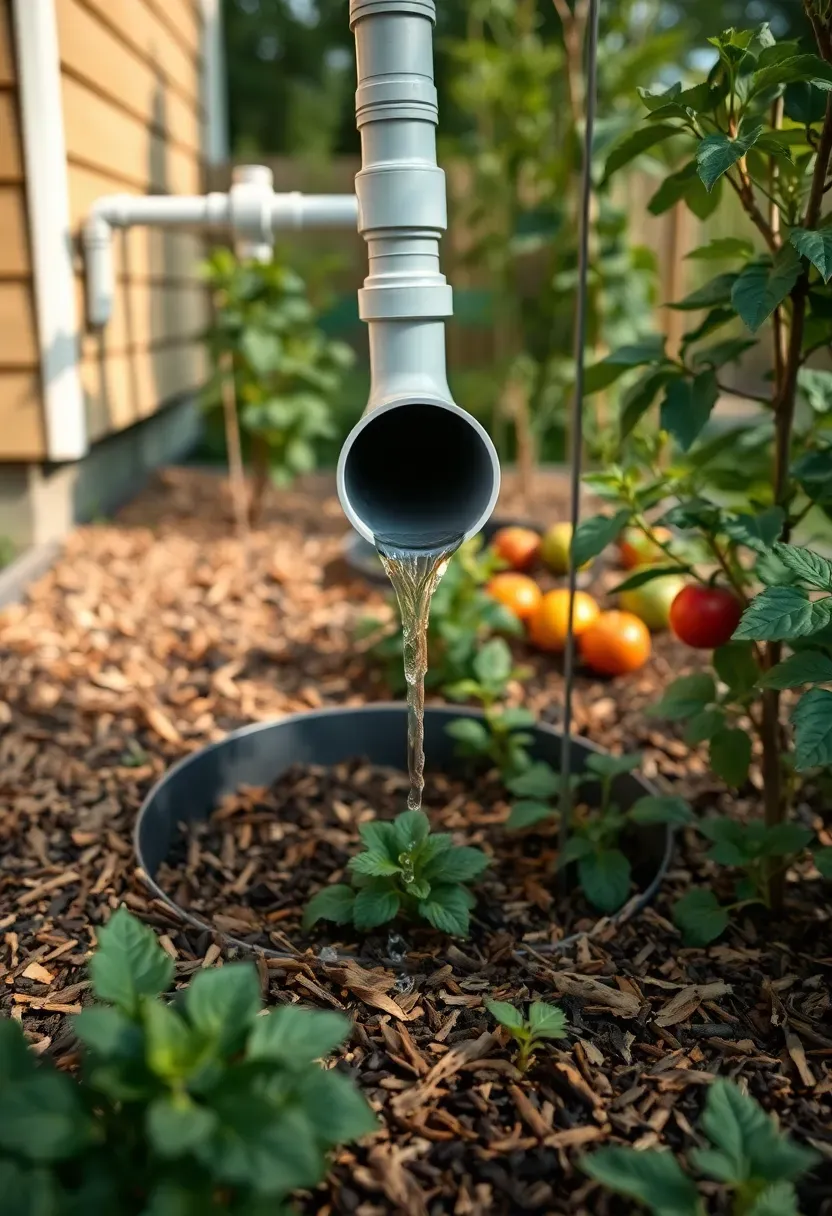
Hyper-realistic 3/4 view of a tiny house greywater system showing outlet pipe from house distributing water to mulch basin around fruit trees and vegetables. Materials: PVC pipe, wood chip mulch, established garden beds, thriving plants. Soft morning sunlight, productive garden. Water recycling system, permaculture landscaping, sustainable resource use. Shallow depth of field, lush vegetation. No text, no logos.</p>
Eco-friendly tiny house living combines minimalist philosophy with sustainable design principles, creating homes that tread lightly on the planet while maximizing comfort and functionality. By integrating renewable energy systems, natural materials, and conscious consumption habits, tiny dwellers can significantly reduce their environmental footprint without sacrificing quality of life.. Hyper-realistic 3/4 view of a tiny house greywater system showing outlet pipe from house distributing water t
Prompt: Nature documentary captured on Hasselblad X2D 100C with XCD 90V lens at f/4. Hyper-realistic 3/4 view of a tiny house greywater system showing outlet pipe from house distributing water to mulch basin around fruit trees and vegetables. Materials: PVC pipe, wood chip mulch, established garden beds, thriving plants. Soft morning sunlight, productive garden. Water recycling system, permaculture landscaping, sustainable resource use. Shallow depth of field, lush vegetation. No text, no logos.

Tips

  • If: Using greywater for edible crops, apply only to soil (not plant surfaces)
  • Then: Root crops and low-growing fruits receive subsurface irrigation
  • Essential: Switch to plant-based, biodegradable soaps and shampoos
  • Design: Larger mulch basins (2-3 feet diameter) handle more water

Best for: Tiny houses with yard space for gardens that can utilize the water

What this gives you: Dramatic water reduction through dual-use conservation strategy

11. Energy-Efficient Appliances

Choosing Energy Star certified appliances designed for small spaces maximizes efficiency in your tiny house. Look for European-sized refrigerators (24-36 inches wide) that use under 200 kWh annually compared to 400+ kWh for full-sized models. Induction cooktops transfer 90% of energy to cookware versus 65% for electric, reducing cooking energy waste. Condensing clothes dryers recycle heat, using half the energy of conventional models. Washer-dryer combos save space while maintaining reasonable efficiency. Every watt saved reduces required solar capacity and battery storage size.
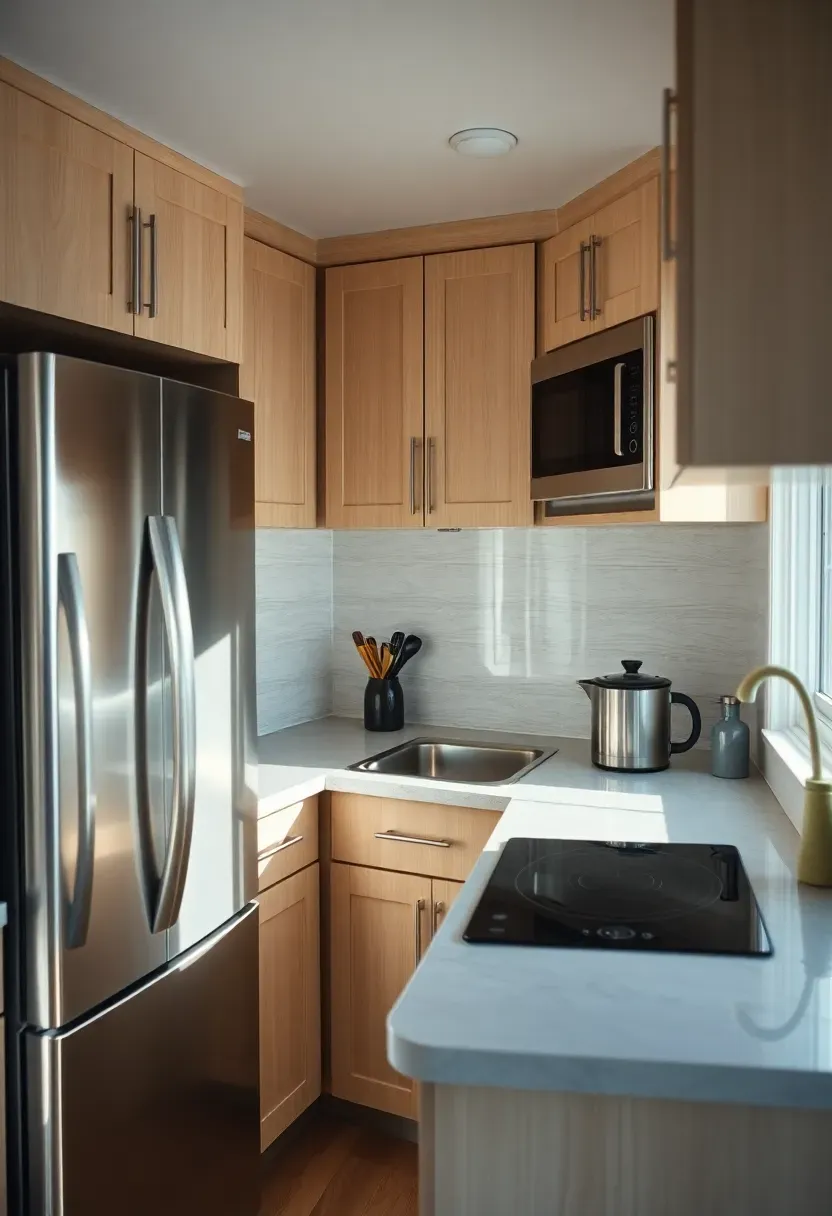
Hyper-realistic 3/4 view of a tiny house kitchen with compact energy-efficient appliances including 24-inch refrigerator, induction cooktop, and convection microwave. Materials: stainless steel appliances, light wood cabinets, quartz countertop. Bright clean lighting, modern sustainable kitchen. Energy-efficient design, compact living technology. Shallow depth of field, minimalist organized space. No text, no logos.</p>
Eco-friendly tiny house living combines minimalist philosophy with sustainable design principles, creating homes that tread lightly on the planet while maximizing comfort and functionality. By integrating renewable energy systems, natural materials, and conscious consumption habits, tiny dwellers can significantly reduce their environmental footprint without sacrificing quality of life.. Hyper-realistic 3/4 view of a tiny house kitchen with compact energy-efficient appliances including 24-inch r
Prompt: Nature documentary captured on Hasselblad X2D 100C with XCD 90V lens at f/4. Hyper-realistic 3/4 view of a tiny house kitchen with compact energy-efficient appliances including 24-inch refrigerator, induction cooktop, and convection microwave. Materials: stainless steel appliances, light wood cabinets, quartz countertop. Bright clean lighting, modern sustainable kitchen. Energy-efficient design, compact living technology. Shallow depth of field, minimalist organized space. No text, no logos.

Tips

  • Do: Calculate total energy draw before designing solar system
  • Don't: Assume smaller means more efficient—check EnergyGuide labels
  • Pro tip: European appliances often outperform US equivalents in efficiency
  • Investment: Higher efficiency appliances reduce renewable energy system costs

Replacement cycle: Plan 15-20 year lifespan for quality energy-efficient appliances

What this gives you: Reduced energy system size requirements and lower operating costs

12. Thermal Mass Flooring

Incorporating thermal mass through concrete, stone, or tile floors helps regulate indoor temperature naturally. These materials absorb heat during sunny periods and release it slowly as temperatures drop, reducing heating and cooling demands. Polished concrete stained with natural pigments provides durable, low-maintenance flooring while serving as a thermal battery. Stone tile from local sources offers similar benefits with less environmental impact from cement production. In passive solar designs, thermal mass flooring directly captures sunlight through south-facing windows. Carpeting or rugs can be added without significantly affecting thermal performance.
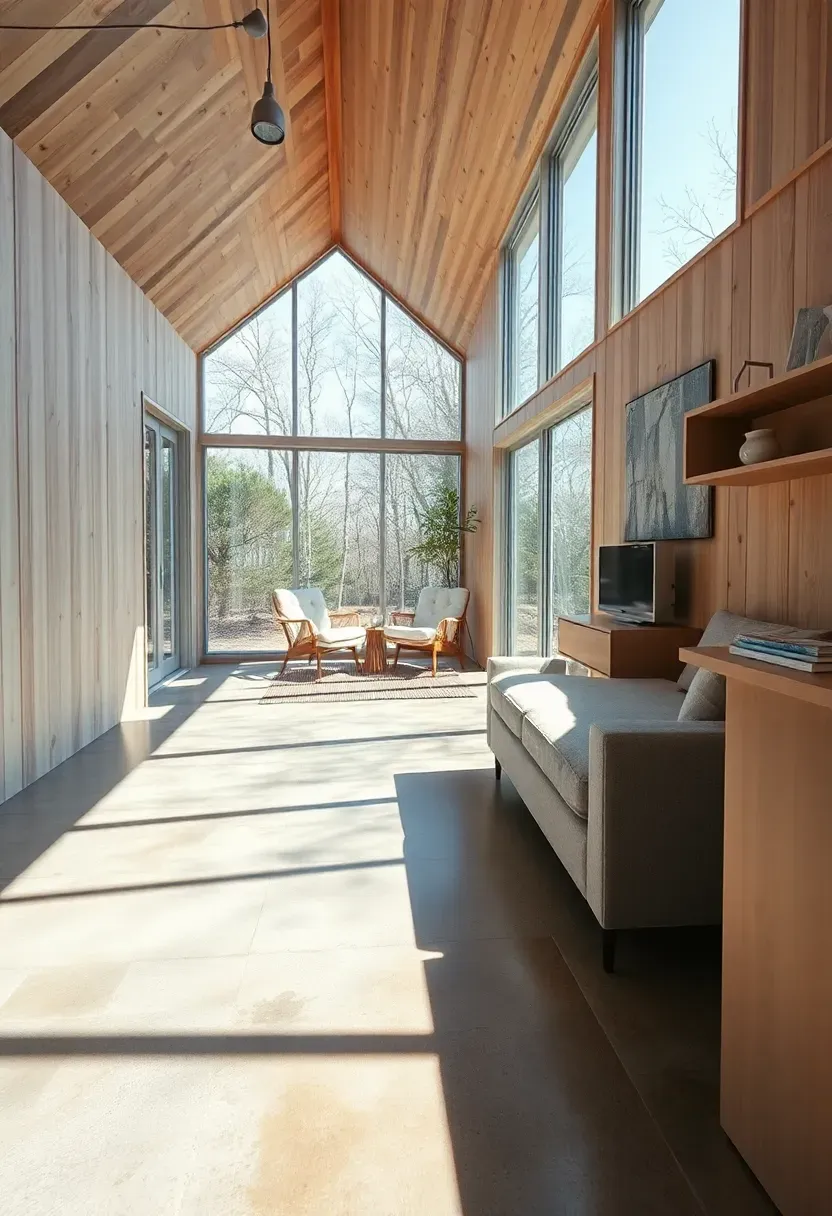
Hyper-realistic 3/4 view of a tiny house interior showing polished concrete floor with natural staining, large windows admitting sunlight, and minimal furniture. Materials: warm gray polished concrete, light wood walls, large glass windows, simple modern furniture. Dappled sunlight pattern on floor, thermal mass design. Sustainable passive solar architecture, clean modern aesthetic. Shallow depth of field, soft interior shadows. No text, no logos.</p>
Eco-friendly tiny house living combines minimalist philosophy with sustainable design principles, creating homes that tread lightly on the planet while maximizing comfort and functionality. By integrating renewable energy systems, natural materials, and conscious consumption habits, tiny dwellers can significantly reduce their environmental footprint without sacrificing quality of life.. Hyper-realistic 3/4 view of a tiny house interior showing polished concrete floor with natural staining, larg
Prompt: Nature documentary captured on Hasselblad X2D 100C with XCD 90V lens at f/4. Hyper-realistic 3/4 view of a tiny house interior showing polished concrete floor with natural staining, large windows admitting sunlight, and minimal furniture. Materials: warm gray polished concrete, light wood walls, large glass windows, simple modern furniture. Dappled sunlight pattern on floor, thermal mass design. Sustainable passive solar architecture, clean modern aesthetic. Shallow depth of field, soft interior shadows. No text, no logos.

Tips

  • Pro/Con: Concrete requires 3-4 inch minimum thickness for effective thermal mass
  • Fix: Add area rugs in winter months—thermal mass still functions beneath
  • Alternative: Natural stone tile offers similar performance with lower weight
  • Design: Expose floors to direct sunlight for maximum heat absorption

Climate note: Most effective in climates with large daily temperature swings

What this gives you: Free temperature regulation through passive thermal storage

13. Natural Ventilation Strategy

Designing for cross-ventilation and stack effect cooling eliminates or reduces the need for air conditioning. Operable windows on opposite walls create airflow that flushes out hot air and brings in cooler air. High windows or vents near the roofline allow hot air to escape through stack effect—hot air rises naturally. Clerestory windows serve this function effectively while providing daylight. Night flushing involves opening windows when outdoor air cools, then closing them during the day to retain coolth. Window orientation captures prevailing breezes. Awnings and overhangs allow windows open during rain.
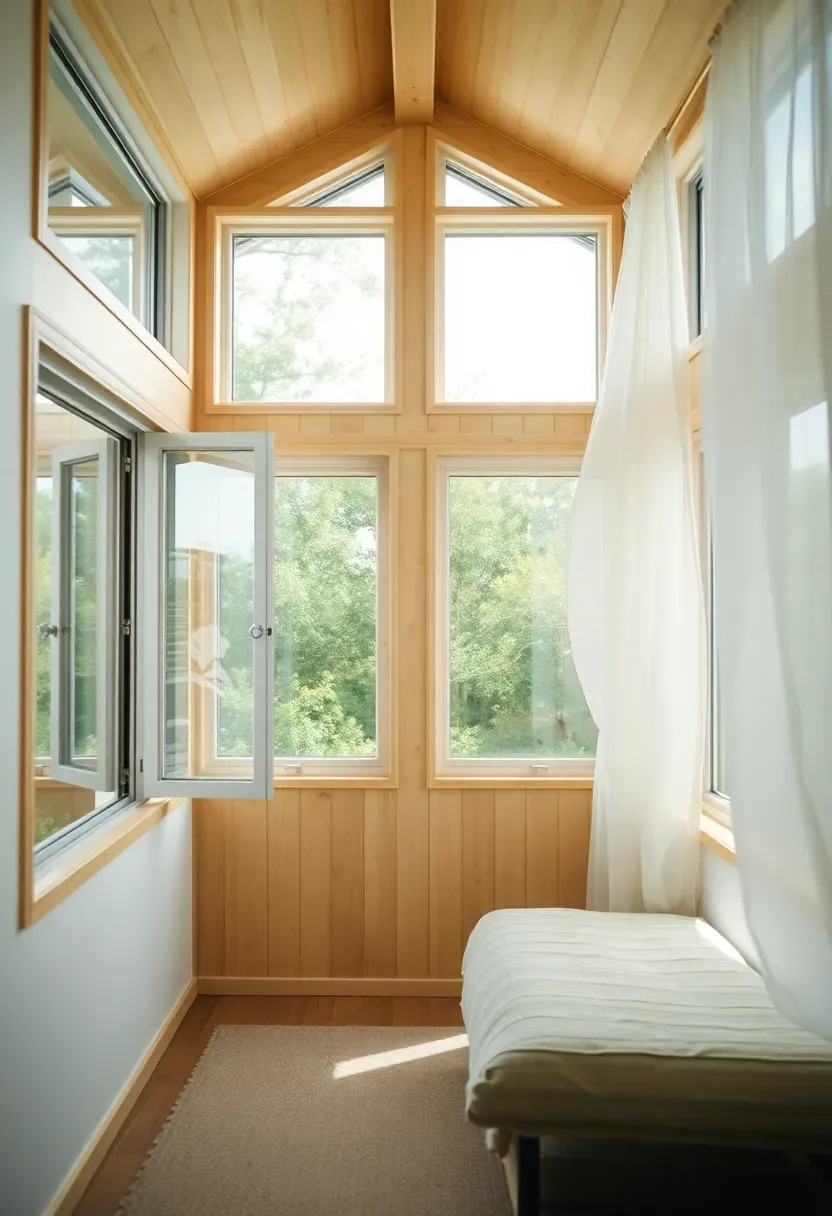
Hyper-realistic 3/4 view of a tiny house interior showing cross-ventilation with windows open on opposite walls, sheer curtains gently moving in breeze. Materials: light wood interior, white walls, large operable windows, light fabric curtains. Fresh airy atmosphere, natural ventilation design. Passive cooling strategy, sustainable comfort. Shallow depth of field, outdoor greenery visible through windows. No text, no logos.</p>
Eco-friendly tiny house living combines minimalist philosophy with sustainable design principles, creating homes that tread lightly on the planet while maximizing comfort and functionality. By integrating renewable energy systems, natural materials, and conscious consumption habits, tiny dwellers can significantly reduce their environmental footprint without sacrificing quality of life.. Hyper-realistic 3/4 view of a tiny house interior showing cross-ventilation with windows open on opposite wal
Prompt: Nature documentary captured on Hasselblad X2D 100C with XCD 90V lens at f/4. Hyper-realistic 3/4 view of a tiny house interior showing cross-ventilation with windows open on opposite walls, sheer curtains gently moving in breeze. Materials: light wood interior, white walls, large operable windows, light fabric curtains. Fresh airy atmosphere, natural ventilation design. Passive cooling strategy, sustainable comfort. Shallow depth of field, outdoor greenery visible through windows. No text, no logos.

Tips

  • Do: Research prevailing wind directions for your specific location
  • Don't: Rely solely on mechanical cooling—natural ventilation is free
  • Pro tip: Inlet windows should be slightly smaller than outlet windows
  • Design: High ceiling or loft areas enhance stack effect ventilation

Placement note: Orient windows to capture summer breezes while blocking winter winds

What this gives you: Free cooling through intelligent airflow design and zero energy consumption

14. Recycled Material Construction

Building with recycled materials diverts waste from landfills while reducing demand for virgin resources. Shipping containers, steel beams, glass from demolished buildings, and even tires can be repurposed for tiny house construction. Container houses provide instant structural steel framework—just add insulation, windows, and interior finishes. Reclaimed windows from deconstruction projects cost 50-75% less than new while offering character and superior materials (old-growth wood, thicker glass). Recycled steel and aluminum require 60-95% less energy to process than virgin materials. Structural insulated panels (SIPs) often contain recycled content.
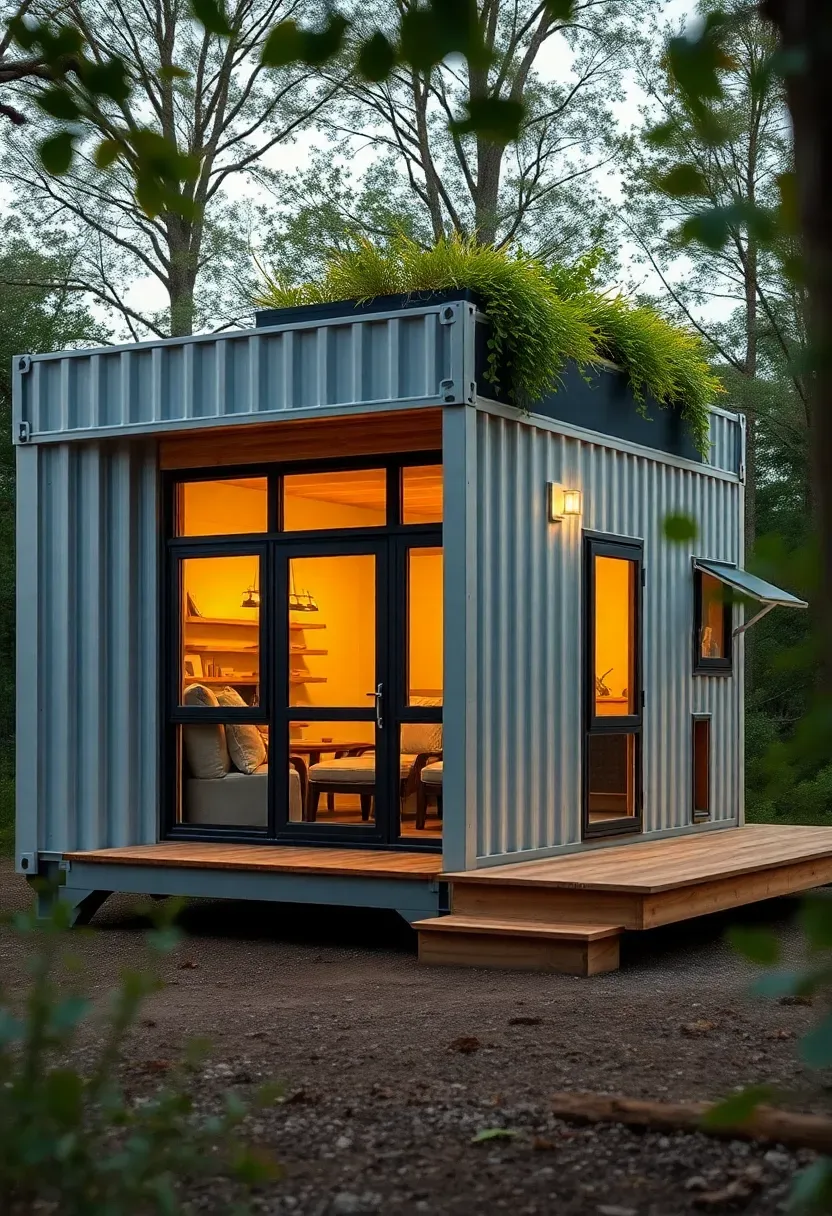
Hyper-realistic 3/4 view of a modern tiny house constructed from a repurposed shipping container with added windows, deck, and green roof. Materials: corrugated metal container, large glass windows, wood deck, green roof vegetation. Industrial chic aesthetic, sustainable adaptive reuse. Warm evening lighting, eco-conscious architecture. Shallow depth of field, surrounding trees visible. No text, no logos.</p>
Eco-friendly tiny house living combines minimalist philosophy with sustainable design principles, creating homes that tread lightly on the planet while maximizing comfort and functionality. By integrating renewable energy systems, natural materials, and conscious consumption habits, tiny dwellers can significantly reduce their environmental footprint without sacrificing quality of life.. Hyper-realistic 3/4 view of a modern tiny house constructed from a repurposed shipping container with added w
Prompt: Nature documentary captured on Hasselblad X2D 100C with XCD 90V lens at f/4. Hyper-realistic 3/4 view of a modern tiny house constructed from a repurposed shipping container with added windows, deck, and green roof. Materials: corrugated metal container, large glass windows, wood deck, green roof vegetation. Industrial chic aesthetic, sustainable adaptive reuse. Warm evening lighting, eco-conscious architecture. Shallow depth of field, surrounding trees visible. No text, no logos.

Tips

  • Pro/Con: Shipping containers require substantial insulation modification
  • Fix: Apply rigid foam insulation to exterior then finish with siding
  • Alternative: reclaimed dimensional wood offers similar benefits with less labor
  • Sourcing: Building material salvage yards specialize in recycled components

Inspection note: Recycled materials must meet local building codes for structural safety

What this gives you: Environmental benefit of waste diversion and unique aesthetic character

15. Double-Glazed Windows

Double-glazed windows with low-E coatings provide insulation value equivalent to R-3 to R-5, dramatically reducing heat loss through glazing. In tiny houses with extensive glass, window quality becomes critical for energy performance. Gas-filled units (argon or krypton) between panes improve efficiency by 10-15%. Triple-glazing offers even better performance but at significantly higher cost with diminishing returns in mild climates. Proper installation with air sealing prevents condensation and ensures rated performance. Energy Star qualified windows are rated for specific climate zones—choose appropriately for your location.
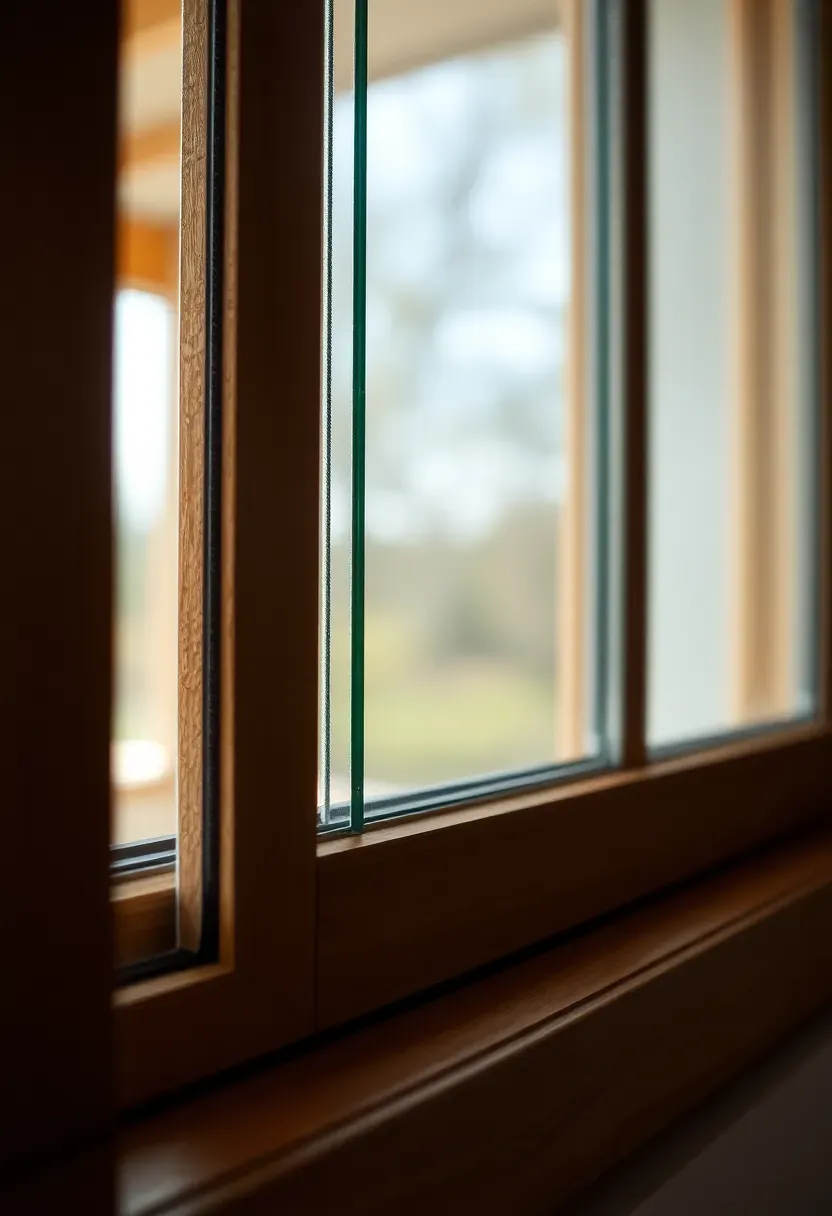
Hyper-realistic detail view of double-glazed window section showing two glass panes with spacer, low-E coating reflection visible, and wood frame. Materials: insulated glass unit, wood window frame, weatherstripping. Soft backlighting showing glass quality, thermal break visible. High-performance window technology, energy efficiency. Shallow depth of field, blurred interior background. No text, no logos.</p>
Eco-friendly tiny house living combines minimalist philosophy with sustainable design principles, creating homes that tread lightly on the planet while maximizing comfort and functionality. By integrating renewable energy systems, natural materials, and conscious consumption habits, tiny dwellers can significantly reduce their environmental footprint without sacrificing quality of life.. Hyper-realistic detail view of double-glazed window section showing two glass panes with spacer, low-E coatin
Prompt: Nature documentary captured on Hasselblad X2D 100C with XCD 90V lens at f/4. Hyper-realistic detail view of double-glazed window section showing two glass panes with spacer, low-E coating reflection visible, and wood frame. Materials: insulated glass unit, wood window frame, weatherstripping. Soft backlighting showing glass quality, thermal break visible. High-performance window technology, energy efficiency. Shallow depth of field, blurred interior background. No text, no logos.

Tips

  • Do: Choose U-factor under 0.30 and SHGC appropriate for your climate
  • Don't: Upgrade to triple glazing in mild climates—cost exceeds benefit
  • Investment: Quality windows pay back via reduced heating/cooling costs
  • Installation: Professional installation ensures rated performance

Climate specific: High SHGC recommended for cold climates, low SHGC for hot climates

What this gives you: Reduced energy loss through improved thermal performance at glazing

16. Permaculture Landscaping

Permaculture landscaping around your tiny house creates a self-sustaining ecosystem that produces food, builds soil, and requires minimal maintenance once established. Fruit trees, berry bushes, and perennial vegetables provide annual harvests. Nitrogen-fixing plants fertilize the soil naturally. Swales and berms capture rainwater, allowing it to slowly infiltrate rather than running off. Companion planting reduces pest pressure without chemicals. Composting areas transform kitchen scraps into fertile soil. The system becomes more productive and stable over time, unlike conventional landscaping that requires constant inputs.
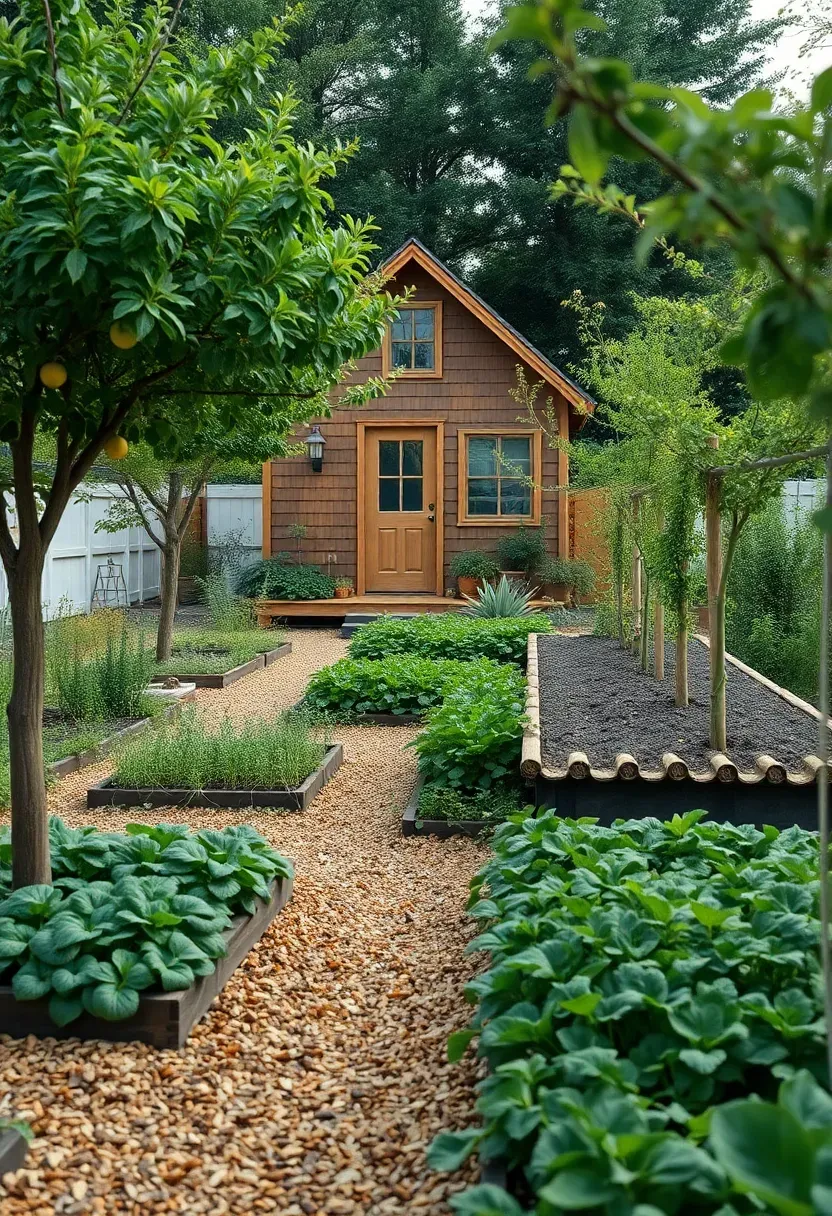
Hyper-realistic 3/4 view of a tiny house surrounded by permaculture garden featuring fruit trees, vegetable beds, swales, and diverse plantings. Materials: wood chip paths, thriving garden beds, young fruit trees, healthy vegetables. Rich biodiversity, productive landscape. Sustainable food production, ecological design. Shallow depth of field, layered plantings visible. No text, no logos.</p>
Eco-friendly tiny house living combines minimalist philosophy with sustainable design principles, creating homes that tread lightly on the planet while maximizing comfort and functionality. By integrating renewable energy systems, natural materials, and conscious consumption habits, tiny dwellers can significantly reduce their environmental footprint without sacrificing quality of life.. Hyper-realistic 3/4 view of a tiny house surrounded by permaculture garden featuring fruit trees, vegetable b
Prompt: Nature documentary captured on Hasselblad X2D 100C with XCD 90V lens at f/4. Hyper-realistic 3/4 view of a tiny house surrounded by permaculture garden featuring fruit trees, vegetable beds, swales, and diverse plantings. Materials: wood chip paths, thriving garden beds, young fruit trees, healthy vegetables. Rich biodiversity, productive landscape. Sustainable food production, ecological design. Shallow depth of field, layered plantings visible. No text, no logos.

Tips

  • Do: Start small—expand permaculture system gradually as you learn
  • Don't: Till established beds—soil structure and microbiome are destroyed
  • Design: Zone 1 plants (herbs, greens) nearest door for convenient access
  • Time: Expect 3-5 years for permaculture system to fully mature

Yield timeline: Perennial crops establish in 2-3 years, then produce for decades

What this gives you: Food production and ecosystem services through designed sustainable landscape

17. Biomass Heating Options

Modern biomass stoves burn wood pellets, corn, or wood chips with 75-90% efficiency, providing carbon-neutral heating (carbon released during combustion equals carbon absorbed during plant growth). Pellet stoves offer automated operation with hoppers holding 40-60 pounds of fuel for 24-48 hours of runtime. Mini masonry heaters store heat in thermal mass for 12-24 hours of release after a single hot fire. Biomass is often available locally, reducing transportation emissions. EPA-certified stoves produce minimal particulate pollution. Fuel costs are significantly lower than propane or electric heating in most areas.
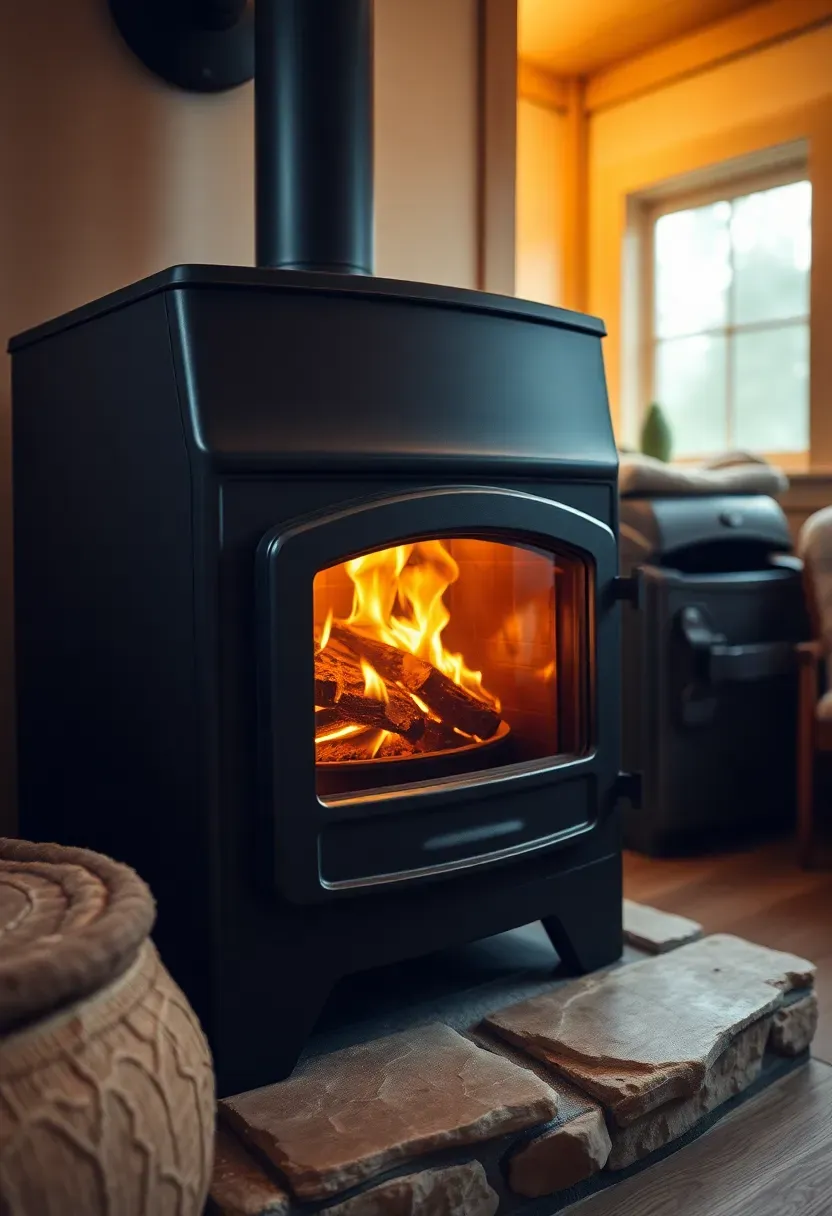
Hyper-realistic 3/4 view of a tiny house interior showing modern pellet stove with glass door viewing flames, hopper visible, stone hearth. Materials: black steel pellet stove, natural stone hearth, light wood walls, warm ambient glow. Cozy heating appliance, renewable energy. Clean burning technology, sustainable comfort. Shallow depth of field, comfortable interior. No text, no logos.</p>
Eco-friendly tiny house living combines minimalist philosophy with sustainable design principles, creating homes that tread lightly on the planet while maximizing comfort and functionality. By integrating renewable energy systems, natural materials, and conscious consumption habits, tiny dwellers can significantly reduce their environmental footprint without sacrificing quality of life.. Hyper-realistic 3/4 view of a tiny house interior showing modern pellet stove with glass door viewing flames,
Prompt: Nature documentary captured on Hasselblad X2D 100C with XCD 90V lens at f/4. Hyper-realistic 3/4 view of a tiny house interior showing modern pellet stove with glass door viewing flames, hopper visible, stone hearth. Materials: black steel pellet stove, natural stone hearth, light wood walls, warm ambient glow. Cozy heating appliance, renewable energy. Clean burning technology, sustainable comfort. Shallow depth of field, comfortable interior. No text, no logos.

Tips

  • Pro/Con: Pellet stoves require electricity for auger and fan motors
  • Fix: Battery backup system ensures operation during power outages
  • Alternative: Masonry heaters store heat without any electrical components
  • Placement: Install away from combustible materials per manufacturer specs

Fuel source: Wood pellets cost $200-300 per ton; 1 ton heats ~1,300 sq ft for winter

What this gives you: Carbon-neutral heating with local fuel sourcing and lower operating costs

18. Solar Water Heating

Solar thermal systems provide hot water using free solar energy, costing 60-80% less than conventional water heating. Flat plate collectors or evacuated tubes mount on the roof, circulating fluid to transfer heat to a storage tank. A typical system provides 70-90% of annual hot water needs, with backup heating for cloudy periods. Drainback designs avoid freezing issues without toxic antifreeze fluids. Systems are simple, reliable, and typically last 20-30 years with minimal maintenance. Solar thermal is 3-5 times more efficient than photovoltaic panels for heating water—dedicated PV with electric heater cannot compete.
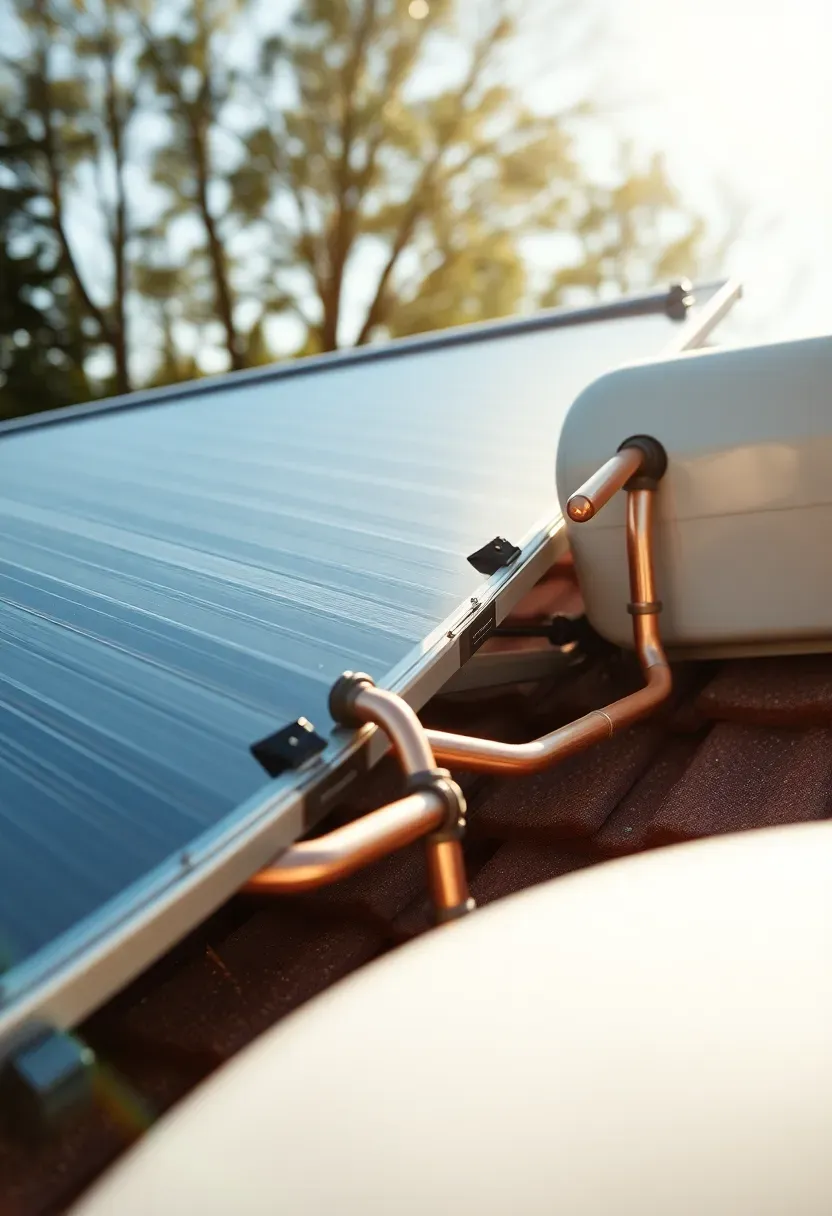
Hyper-realistic 3/4 view of a tiny house roof showing solar thermal collectors with evacuated tubes, connecting pipes running to tank. Materials: copper evacuated tube collectors, insulated copper piping, solar storage tank. Bright sunlight, renewable energy technology. Efficient water heating, sustainable design. Shallow depth of field, roof pitch visible. No text, no logos.</p>
Eco-friendly tiny house living combines minimalist philosophy with sustainable design principles, creating homes that tread lightly on the planet while maximizing comfort and functionality. By integrating renewable energy systems, natural materials, and conscious consumption habits, tiny dwellers can significantly reduce their environmental footprint without sacrificing quality of life.. Hyper-realistic 3/4 view of a tiny house roof showing solar thermal collectors with evacuated tubes, connecti
Prompt: Nature documentary captured on Hasselblad X2D 100C with XCD 90V lens at f/4. Hyper-realistic 3/4 view of a tiny house roof showing solar thermal collectors with evacuated tubes, connecting pipes running to tank. Materials: copper evacuated tube collectors, insulated copper piping, solar storage tank. Bright sunlight, renewable energy technology. Efficient water heating, sustainable design. Shallow depth of field, roof pitch visible. No text, no logos.

Tips

  • Do: Size system for 70-90% of hot water needs—backup covers remainder
  • Don't: Use potable water directly in collectors—glycol loop prevents corrosion
  • Pro tip: Drainback systems eliminate freeze risk without toxic antifreeze
  • ROI: Solar thermal pays back in 5-10 years versus electric water heating

Location note: Solar thermal works even in cloudy climates, though at reduced efficiency

What this gives you: Free hot water production through efficient solar thermal technology

19. Non-Toxic Wood Finishes

Natural wood finishes like tung oil, linseed oil, and beeswax provide beautiful protection without toxic VOCs. These finishes penetrate wood fibers rather than forming surface films, allowing the wood to breathe and preventing moisture trapping. Damaged areas are easily spot-repaired without sanding entire surfaces. Tung oil offers water resistance and durability similar to polyurethane. Raw linseed oil requires weeks to cure but produces an exceptionally durable finish. Beeswax mixed with oil adds water resistance and warmth. These finishes are food-safe and appropriate for cutting boards and countertops.
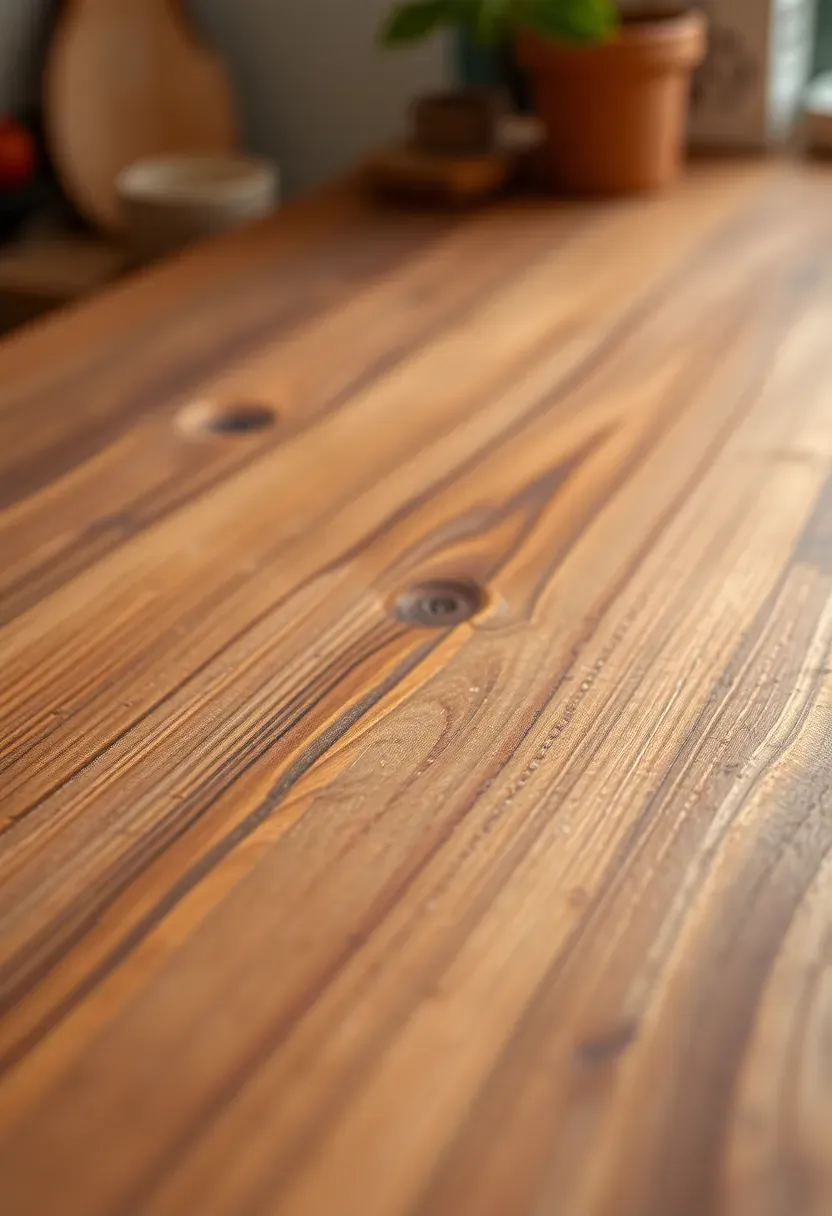
Hyper-realistic detail view of wood countertop finished with natural tung oil showing rich grain patterns and subtle sheen. Materials: walnut wood with natural oil finish, wood grain visible, warm natural color. Soft directional lighting highlighting grain. Non-toxic finish, sustainable woodworking. Shallow depth of field, blurred background elements. No text, no logos.</p>
Eco-friendly tiny house living combines minimalist philosophy with sustainable design principles, creating homes that tread lightly on the planet while maximizing comfort and functionality. By integrating renewable energy systems, natural materials, and conscious consumption habits, tiny dwellers can significantly reduce their environmental footprint without sacrificing quality of life.. Hyper-realistic detail view of wood countertop finished with natural tung oil showing rich grain patterns and
Prompt: Nature documentary captured on Hasselblad X2D 100C with XCD 90V lens at f/4. Hyper-realistic detail view of wood countertop finished with natural tung oil showing rich grain patterns and subtle sheen. Materials: walnut wood with natural oil finish, wood grain visible, warm natural color. Soft directional lighting highlighting grain. Non-toxic finish, sustainable woodworking. Shallow depth of field, blurred background elements. No text, no logos.

Tips

  • Do: Apply thin coats—excess oil remains tacky for weeks
  • Don't: Use boiled linseed oil on food surfaces—contains metal driers
  • Pro tip: Add citrus solvent for easier application and faster drying
  • Maintenance: Reapply annually to high-traffic surfaces

Safety benefit: No toxic fumes during application or throughout lifespan

What this gives you: Beautiful wood protection without exposure to toxic chemicals

20. Upcycled Furniture Solutions

Creating furniture from reclaimed materials eliminates the environmental impact of new furniture production while adding unique character. Pallet wood transforms into tables, benches, and bed frames. Old doors become desktops or tabletops. Industrial spools find new life as coffee tables. The creativity required to adapt materials to new uses results in one-of-a-kind pieces impossible to replicate. Upcycling typically costs 50-80% less than buying new while preventing items from entering landfills. Basic woodworking skills and tools suffice for most upcycling projects.
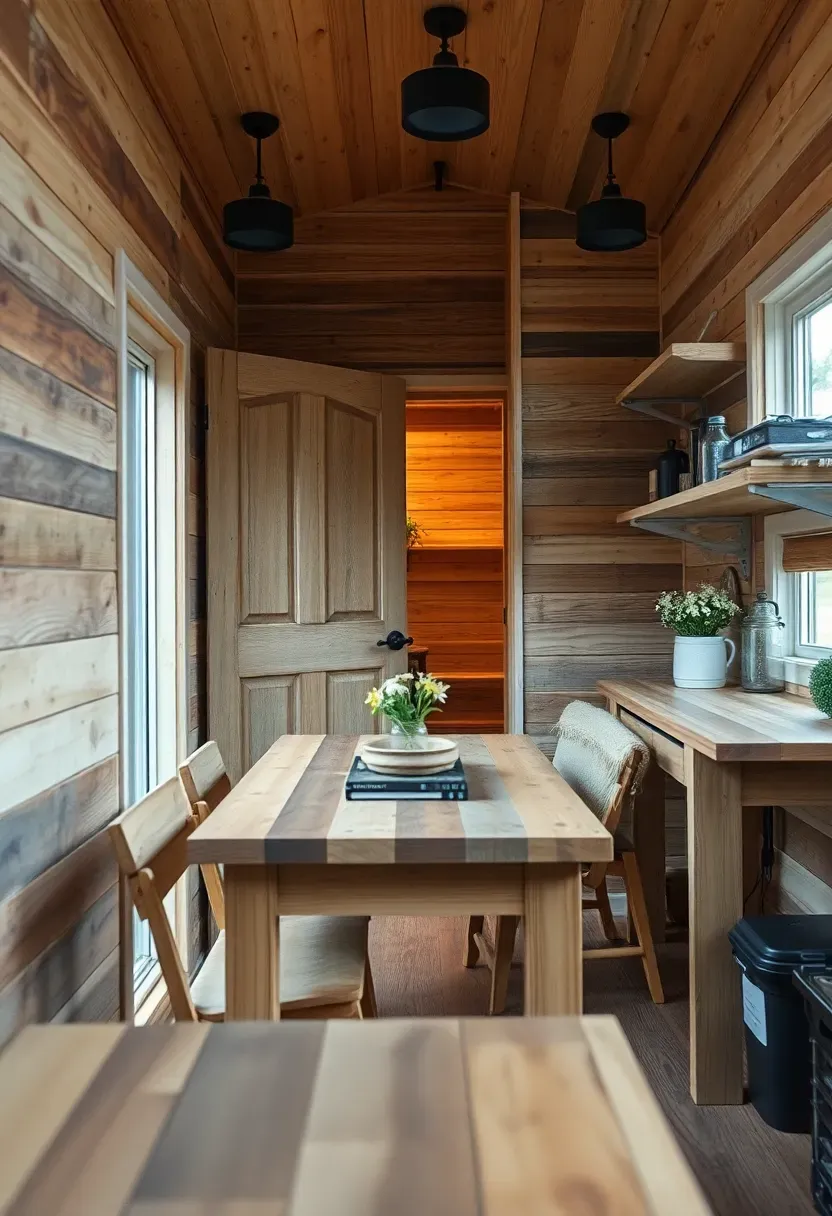
Hyper-realistic 3/4 view of a tiny house interior featuring upcycled furniture including pallet wood dining table, door-desk, and repurposed shelving. Materials: reclaimed pallet wood, vintage door with hardware, industrial metal pipe shelving. Warm lighting, creative reuse aesthetic. Sustainable furniture, zero-waste living. Shallow depth of field, lived-in comfortable space. No text, no logos.</p>
Eco-friendly tiny house living combines minimalist philosophy with sustainable design principles, creating homes that tread lightly on the planet while maximizing comfort and functionality. By integrating renewable energy systems, natural materials, and conscious consumption habits, tiny dwellers can significantly reduce their environmental footprint without sacrificing quality of life.. Hyper-realistic 3/4 view of a tiny house interior featuring upcycled furniture including pallet wood dining t
Prompt: Nature documentary captured on Hasselblad X2D 100C with XCD 90V lens at f/4. Hyper-realistic 3/4 view of a tiny house interior featuring upcycled furniture including pallet wood dining table, door-desk, and repurposed shelving. Materials: reclaimed pallet wood, vintage door with hardware, industrial metal pipe shelving. Warm lighting, creative reuse aesthetic. Sustainable furniture, zero-waste living. Shallow depth of field, lived-in comfortable space. No text, no logos.

Tips

  • Pro/Con: Pallet wood varies wildly in quality—inspect carefully for rot
  • Fix: Heat-treat or seal pallet wood to eliminate potential pests
  • Alternative: Architectural salvage yards offer higher-quality reclaimed materials
  • Tools: Basic circular saw, drill, and sander handle most upcycling projects

Creative freedom: Each piece becomes unique expression of personal style

What this gives you: Unique furniture with environmental benefit and substantial cost savings

21. Smart Energy Management

Energy monitoring systems provide real-time visibility into electricity consumption, identifying waste and optimizing usage patterns. Smart plugs track individual device consumption. Whole-home monitors measure total production from solar and consumption by category. Automated systems shift non-critical loads to times of surplus solar production. Battery management systems optimize charging and discharging cycles for maximum lifespan. The data reveals surprising energy hogs—often phantom loads from devices in "standby" mode. Knowing exactly how much energy each activity uses enables conscious consumption choices.
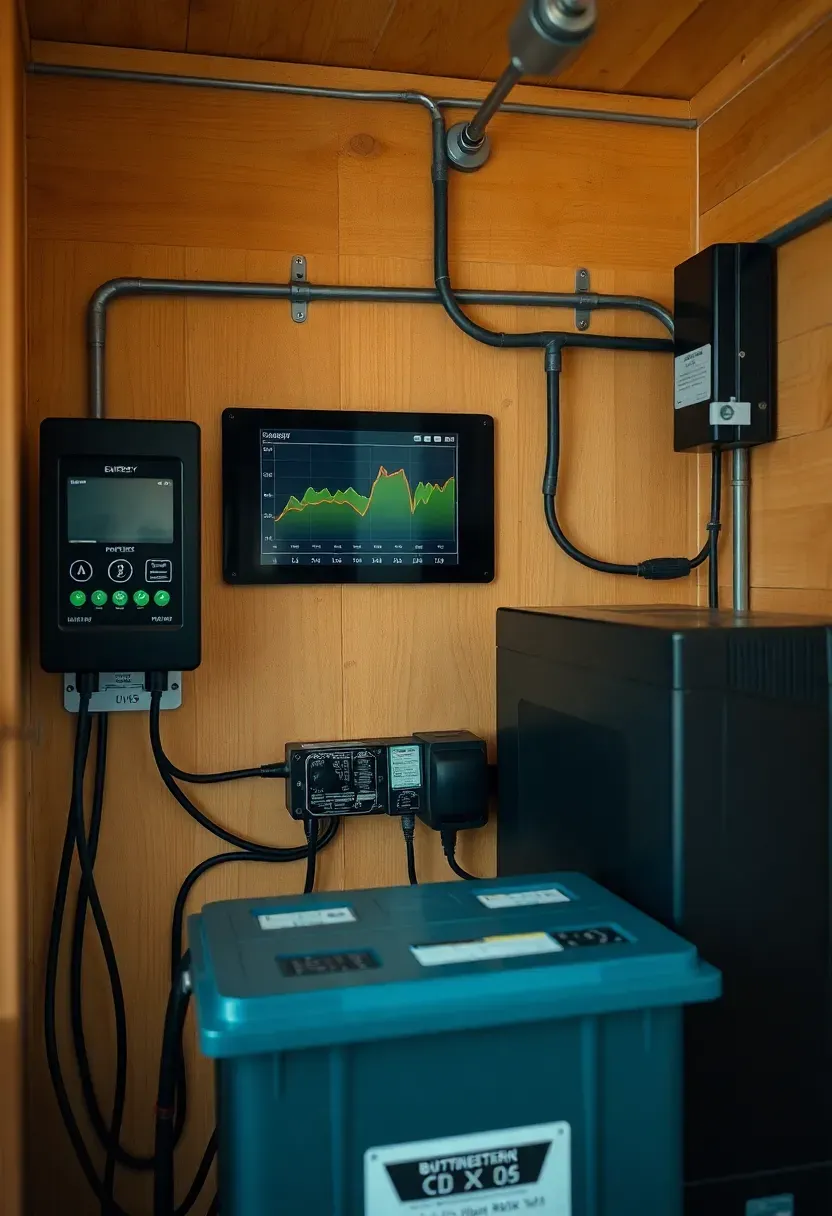
Hyper-realistic 3/4 view of a tiny house utility space showing energy monitoring display panel with colorful graphs, battery bank, and inverter. Materials: digital display with real-time data, lithium batteries, black inverter, conduit and wiring. LED indicator lights, technical monitoring equipment. Smart energy management, off-grid technology. Shallow depth of field, cables and components visible. No text, no logos.</p>
Eco-friendly tiny house living combines minimalist philosophy with sustainable design principles, creating homes that tread lightly on the planet while maximizing comfort and functionality. By integrating renewable energy systems, natural materials, and conscious consumption habits, tiny dwellers can significantly reduce their environmental footprint without sacrificing quality of life.. Hyper-realistic 3/4 view of a tiny house utility space showing energy monitoring display panel with colorful
Prompt: Nature documentary captured on Hasselblad X2D 100C with XCD 90V lens at f/4. Hyper-realistic 3/4 view of a tiny house utility space showing energy monitoring display panel with colorful graphs, battery bank, and inverter. Materials: digital display with real-time data, lithium batteries, black inverter, conduit and wiring. LED indicator lights, technical monitoring equipment. Smart energy management, off-grid technology. Shallow depth of field, cables and components visible. No text, no logos.

Tips

  • Do: Install monitor before completing system—baseline data is valuable
  • Don't: Ignore phantom loads—these can consume 10-15% of total energy
  • Pro tip: Smart plugs can automatically cut power to vampire devices
  • Investment: Monitoring system pays for itself in reduced energy waste

Data value: Understanding consumption patterns enables 15-25% reduction through behavioral changes

What this gives you: Energy optimization through data-driven consumption decisions and automation

22. Natural Daylighting Design

Maximizing natural daylight reduces or eliminates artificial lighting needs during daytime hours. South-facing windows provide consistent, glare-free illumination in northern hemisphere. Skylights and solar tubes bring light into interior spaces without exterior walls. Light shelves bounce daylight deep into rooms while controlling glare. Light-colored surfaces reflect daylight more effectively, reducing lighting needs. Clerestory windows provide high light that penetrates deeply without direct sun exposure. Proper daylighting design can provide adequate lighting for 80-90% of daylight hours without electricity.
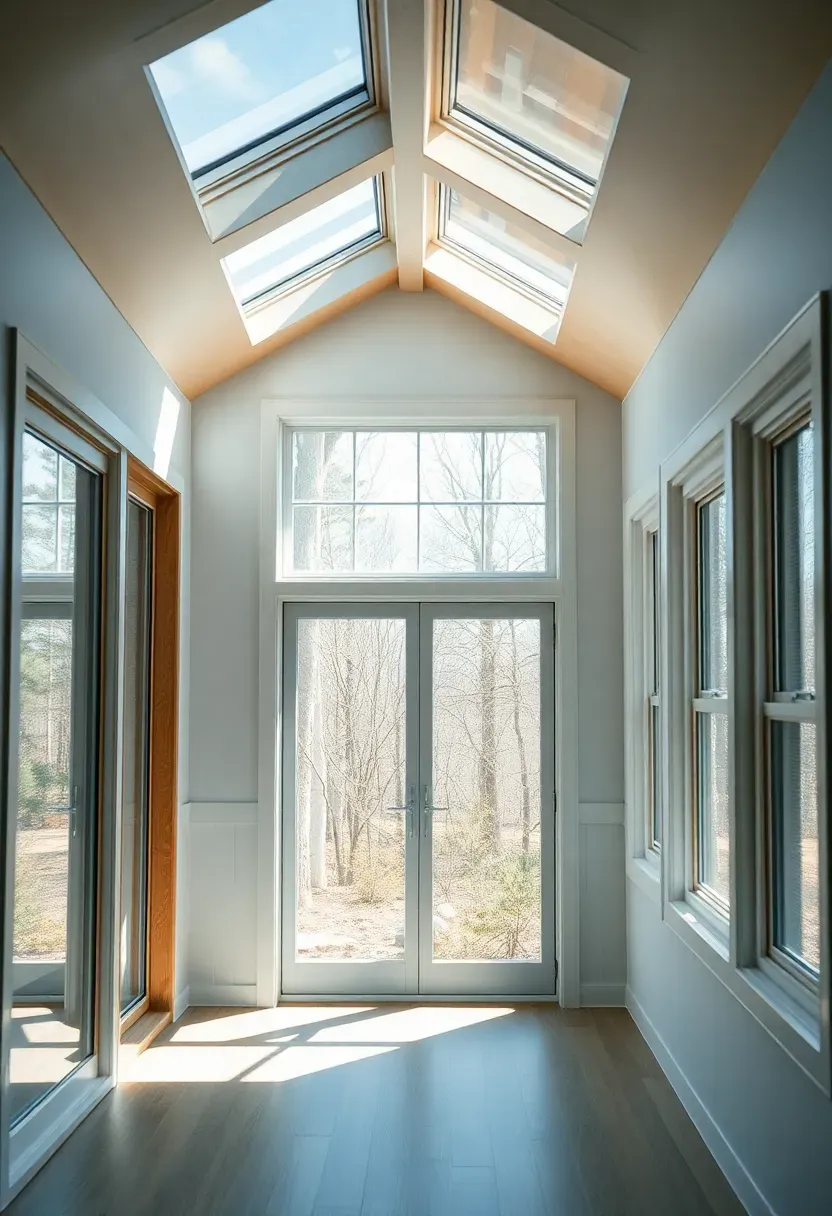
Hyper-realistic 3/4 view interior of a tiny house with abundant natural daylighting from multiple windows including south-facing glass and clerestory windows above. Materials: light-colored interior walls reflecting daylight, large windows, minimal window treatments. Bright naturally illuminated space, sun-drenched atmosphere. Passive daylighting design, energy efficiency. Shallow depth of field, outdoor shadows visible. No text, no logos.</p>
Eco-friendly tiny house living combines minimalist philosophy with sustainable design principles, creating homes that tread lightly on the planet while maximizing comfort and functionality. By integrating renewable energy systems, natural materials, and conscious consumption habits, tiny dwellers can significantly reduce their environmental footprint without sacrificing quality of life.. Hyper-realistic 3/4 view interior of a tiny house with abundant natural daylighting from multiple windows inc
Prompt: Nature documentary captured on Hasselblad X2D 100C with XCD 90V lens at f/4. Hyper-realistic 3/4 view interior of a tiny house with abundant natural daylighting from multiple windows including south-facing glass and clerestory windows above. Materials: light-colored interior walls reflecting daylight, large windows, minimal window treatments. Bright naturally illuminated space, sun-drenched atmosphere. Passive daylighting design, energy efficiency. Shallow depth of field, outdoor shadows visible. No text, no logos.

Tips

  • Do: Provide exterior shading to control summer heat gain through large windows
  • Don't: Create glare—diffused light is more useful than direct sunbeams
  • Pro tip: Solar tubes transmit daylight through roof without heat gain or loss
  • Design: Window area should equal 15-25% of floor area for adequate daylight

Placement note: South-facing windows provide best daylight-to-heat-gain ratio

What this gives you: Free high-quality lighting through intelligent window placement and design

23. Rain Garden Implementation

Rain gardens capture and infiltrate stormwater runoff from your tiny house roof and hardscape, filtering pollutants and recharging groundwater. These shallow depressions planted with native wildflowers, grasses, and shrabs absorb runoff 30-40% faster than regular lawn. Located 10+ feet from building foundations, rain gardens prevent water damage while creating habitat for pollinators and birds. The depression is typically 6-12 inches deep with amended soil for rapid infiltration. Native plants adapted to wet-dry cycles require no irrigation once established. Rain gardens transform drainage problem into landscape feature.
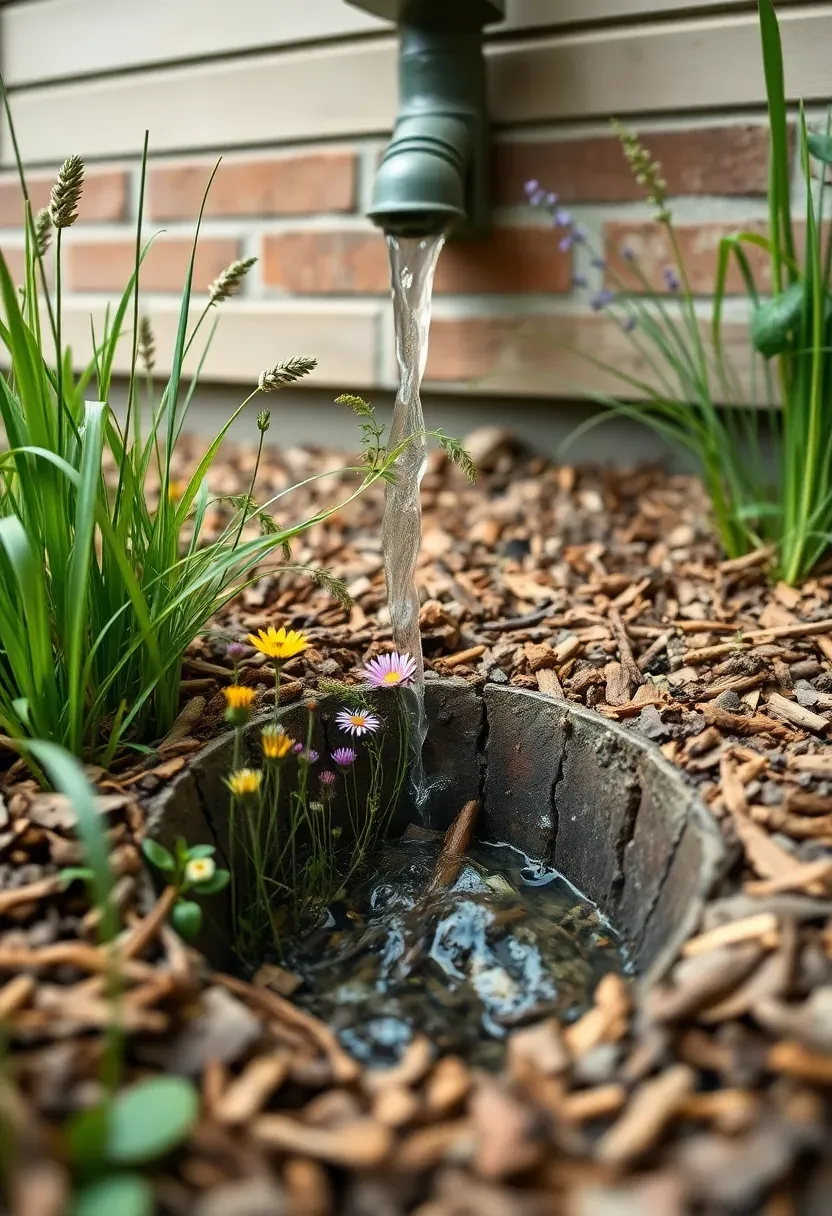
Hyper-realistic 3/4 view of a tiny house rain garden showing shallow depression with native wildflowers, grasses, and downspout directing water into it. Materials: wood chip mulch, thriving native plants, healthy soil, rainwater flow. Biodiverse planting, stormwater management. Ecological landscape design, sustainable drainage. Shallow depth of field, lush vegetation. No text, no logos.</p>
Eco-friendly tiny house living combines minimalist philosophy with sustainable design principles, creating homes that tread lightly on the planet while maximizing comfort and functionality. By integrating renewable energy systems, natural materials, and conscious consumption habits, tiny dwellers can significantly reduce their environmental footprint without sacrificing quality of life.. Hyper-realistic 3/4 view of a tiny house rain garden showing shallow depression with native wildflowers, gras
Prompt: Nature documentary captured on Hasselblad X2D 100C with XCD 90V lens at f/4. Hyper-realistic 3/4 view of a tiny house rain garden showing shallow depression with native wildflowers, grasses, and downspout directing water into it. Materials: wood chip mulch, thriving native plants, healthy soil, rainwater flow. Biodiverse planting, stormwater management. Ecological landscape design, sustainable drainage. Shallow depth of field, lush vegetation. No text, no logos.

Tips

  • Do: Test soil infiltration rate before designing—clay may require amendment
  • Don't: Locate within 10 feet of foundation—water infiltration causes damage
  • Design: Size rain garden for 20-30% of roof drainage area
  • Planting: Use native species adapted to both wet and dry periods

Ecosystem benefit: Creates pollinator habitat while managing stormwater responsibly

What this gives you: Stormwater management transformed into beautiful ecological landscape feature

24. Low-Flow Water Fixtures

Low-flow fixtures reduce water consumption by 30-50% without noticeable sacrifice in comfort. Modern low-flow showerheads deliver satisfying spray patterns using 1.5-1.75 gallons per minute versus 2.5+ gpm for standard heads. Faucet aerators mix air with water, maintaining perceived pressure while reducing actual flow to 0.5-1.0 gpm. High-efficiency toilets use 1.28 gallons per flush versus 3.5+ gpm for older models. In a tiny house, these savings multiply as every gallon impacts tank size or pumping frequency. The accumulated savings allow smaller water storage and treatment systems, reducing overall system cost.

Hyper-realistic detail view of low-flow showerhead in modern tiny house bathroom showing water spray pattern. Materials: chrome low-flow showerhead, white tile background, water droplets frozen in motion. Bright clean lighting, water conservation technology. Efficient fixture design, sustainable living. Shallow depth of field, bathroom elements blurred. No text, no logos.</p>
Eco-friendly tiny house living combines minimalist philosophy with sustainable design principles, creating homes that tread lightly on the planet while maximizing comfort and functionality. By integrating renewable energy systems, natural materials, and conscious consumption habits, tiny dwellers can significantly reduce their environmental footprint without sacrificing quality of life.. Hyper-realistic detail view of low-flow showerhead in modern tiny house bathroom showing water spray pattern.
Prompt: Nature documentary captured on Hasselblad X2D 100C with XCD 90V lens at f/4. Hyper-realistic detail view of low-flow showerhead in modern tiny house bathroom showing water spray pattern. Materials: chrome low-flow showerhead, white tile background, water droplets frozen in motion. Bright clean lighting, water conservation technology. Efficient fixture design, sustainable living. Shallow depth of field, bathroom elements blurred. No text, no logos.

Tips

  • Do: Look for WaterSense label—third-party certification of efficiency
  • Don't: Assume lowest flow equals best—test spray pattern before buying
  • Pro tip: Aerators are $5-15 and install in minutes—start here for quick wins
  • ROI: Low-flow fixtures pay back in 1-2 years via reduced water heating costs

Water savings: Typical household saves 10,000+ gallons annually with comprehensive low-flow fixtures

What this gives you: Reduced water consumption and smaller water system requirements

25. Sustainable Flooring Choices

Choosing sustainable flooring materials reduces environmental impact while providing durable, beautiful surfaces. Bamboo flooring grows to maturity in 5-6 years versus 50-100 years for hardwood, making it rapidly renewable. Cork flooring harvests from bark without harming trees, regenerating every 9 years. Reclaimed hardwood prevents valuable old-growth timber from entering waste stream. Natural linoleum made from linseed oil, cork dust, and wood flour is biodegradable and toxin-free. Each option offers distinct aesthetic and performance characteristics suited to different areas and preferences.
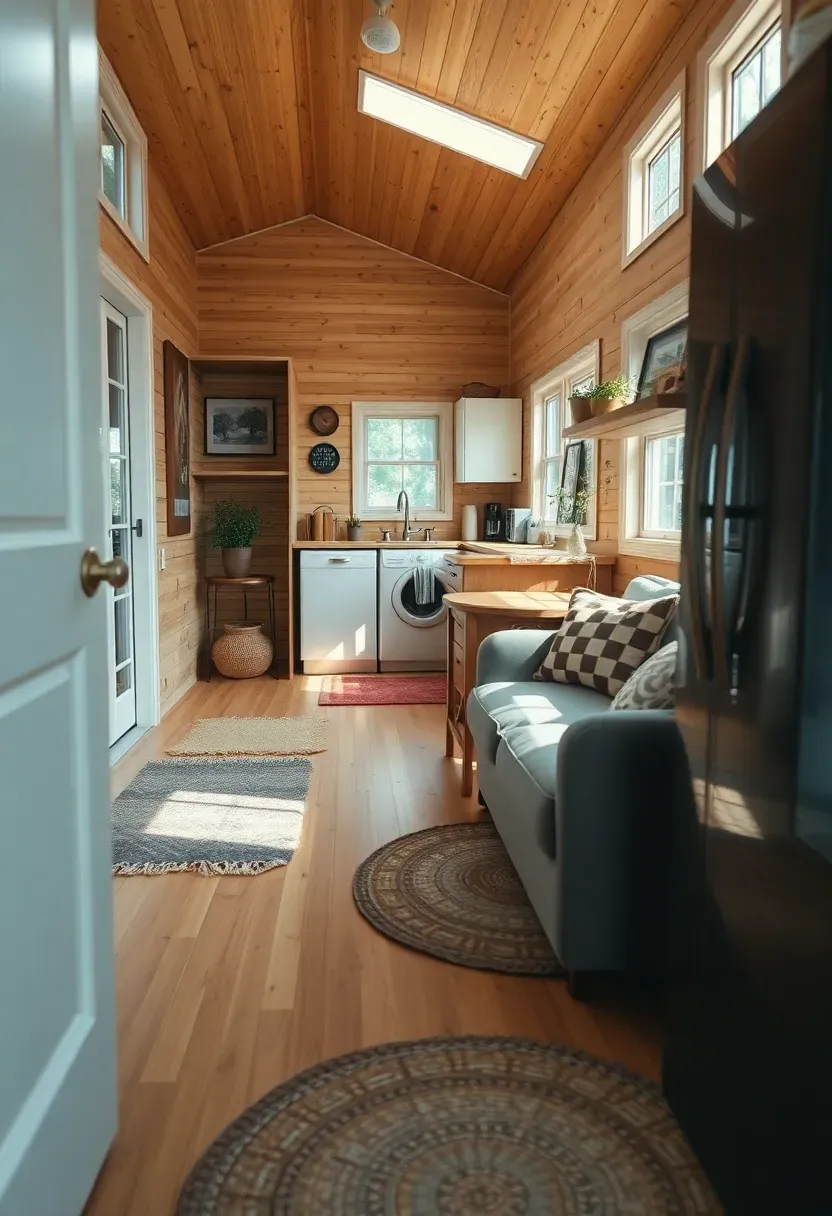
Hyper-realistic 3/4 view of a tiny house interior showing sustainable flooring with bamboo planks, area rugs, and transition to cork flooring in kitchen. Materials: natural bamboo flooring, cork kitchen floor, jute area rugs, light wood walls. Warm natural materials, eco-conscious design. Sustainable interior, healthy living space. Shallow depth of field, furniture visible. No text, no logos.</p>
Eco-friendly tiny house living combines minimalist philosophy with sustainable design principles, creating homes that tread lightly on the planet while maximizing comfort and functionality. By integrating renewable energy systems, natural materials, and conscious consumption habits, tiny dwellers can significantly reduce their environmental footprint without sacrificing quality of life.. Hyper-realistic 3/4 view of a tiny house interior showing sustainable flooring with bamboo planks, area rugs,
Prompt: Nature documentary captured on Hasselblad X2D 100C with XCD 90V lens at f/4. Hyper-realistic 3/4 view of a tiny house interior showing sustainable flooring with bamboo planks, area rugs, and transition to cork flooring in kitchen. Materials: natural bamboo flooring, cork kitchen floor, jute area rugs, light wood walls. Warm natural materials, eco-conscious design. Sustainable interior, healthy living space. Shallow depth of field, furniture visible. No text, no logos.

Tips

  • Pro/Con: Bamboo hardness varies widely—choose strand-woven for durability
  • Fix: Cork requires sealing every 3-5 years in high-traffic areas
  • Alternative: Reclaimed hardwood offers traditional aesthetic with maximum durability
  • Installation: Click-lock floating floors install without adhesives, improving air quality

Lifespan note: Quality sustainable flooring lasts 20-50 years with proper maintenance

What this gives you: Beautiful, durable flooring with minimal environmental impact

Eco-friendly tiny house living represents a holistic approach to sustainable design that integrates renewable energy, natural materials, water conservation, and conscious consumption into every aspect of home design. Each of these 25 practices contributes to reduced environmental impact while often improving comfort, health, and self-sufficiency. The tiny house movement naturally encourages sustainability—less space requires fewer resources to build, power, and maintain. By incorporating these eco-friendly practices from the beginning, tiny house dwellers create homes that tread lightly on the planet while providing comfortable, healthy living spaces. The investment in sustainable design pays dividends through reduced operating costs, increased resilience, and the knowledge that your home reflects your values of environmental stewardship and conscious living. Whether implemented comprehensively or adopted gradually over time, these practices transform tiny house living from mere downsizing into a genuinely sustainable lifestyle that benefits both people and planet.

Pinterest cover for Eco-Friendly Practices for Tiny House Living: Tips & Ideas Home Decor Ideas