17 Tips for Living in a Tiny House: Simplify Your Life for Practical and Stylish Interiors
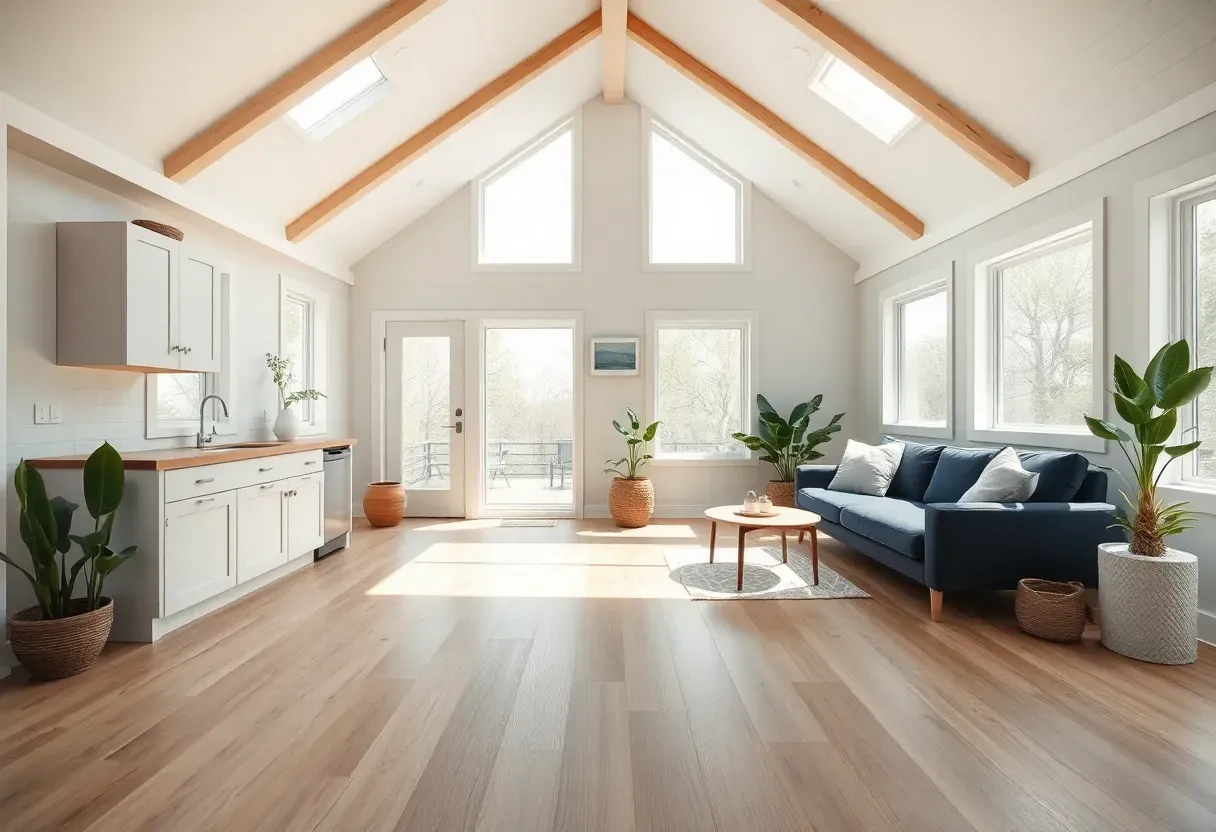
Tiny house living offers a path to financial freedom and simplified lifestyle through intentional design choices that maximize every square inch. Living in under 400 square feet requires thoughtful planning but rewards you with reduced environmental impact and more time for experiences over possessions.
Small space living demands creativity and strategic thinking about what truly matters in your daily life. The key is embracing quality over quantity while finding innovative ways to make your compact home feel spacious and functional.
These 17 practical tips will help you thrive in tiny house living through smart design solutions that prove good things really do come in small packages.
Quick FAQ
How do I start preparing for tiny house living?
Begin by decluttering your current possessions and measuring everything you own to understand what truly fits your lifestyle. Practice living in one room of your current home for a week to test your comfort with minimal space.
What should I consider before downsizing to a tiny house?
Consider your local zoning laws, parking requirements, access to utilities, and whether you need off-grid capabilities. Think about your lifestyle needs including workspace, entertainment, and guest accommodation.
How much does it cost to live in a tiny house?
Tiny house living typically reduces monthly expenses to $500-1000 including utilities, compared to $2000+ for traditional housing. Initial building costs range from $20,000-60,000 depending on size and finishes.
Can I legally park a tiny house anywhere?
Zoning laws vary significantly by location—some areas embrace tiny houses while others prohibit them. Research local regulations, consider tiny house communities, or look for RV parks that allow tiny houses on wheels.
How do I handle mail and address with tiny house living?
Many tiny house dwellers use PO boxes, mail forwarding services, or host family addresses. Some communities provide mailbox services, and digital mail services can forward your physical mail anywhere.
As an Amazon Associate I earn from qualifying purchases.
1. Vertical Storage Systems
When living in a tiny house, thinking vertically transforms limited floor space into abundant storage potential. Floor-to-ceiling shelving utilizes otherwise wasted wall space while drawing the eye upward, creating an illusion of height and spaciousness. Install adjustable shelving at multiple levels to accommodate items of various sizes from bulk kitchen supplies to decorative objects that add personality without clutter.
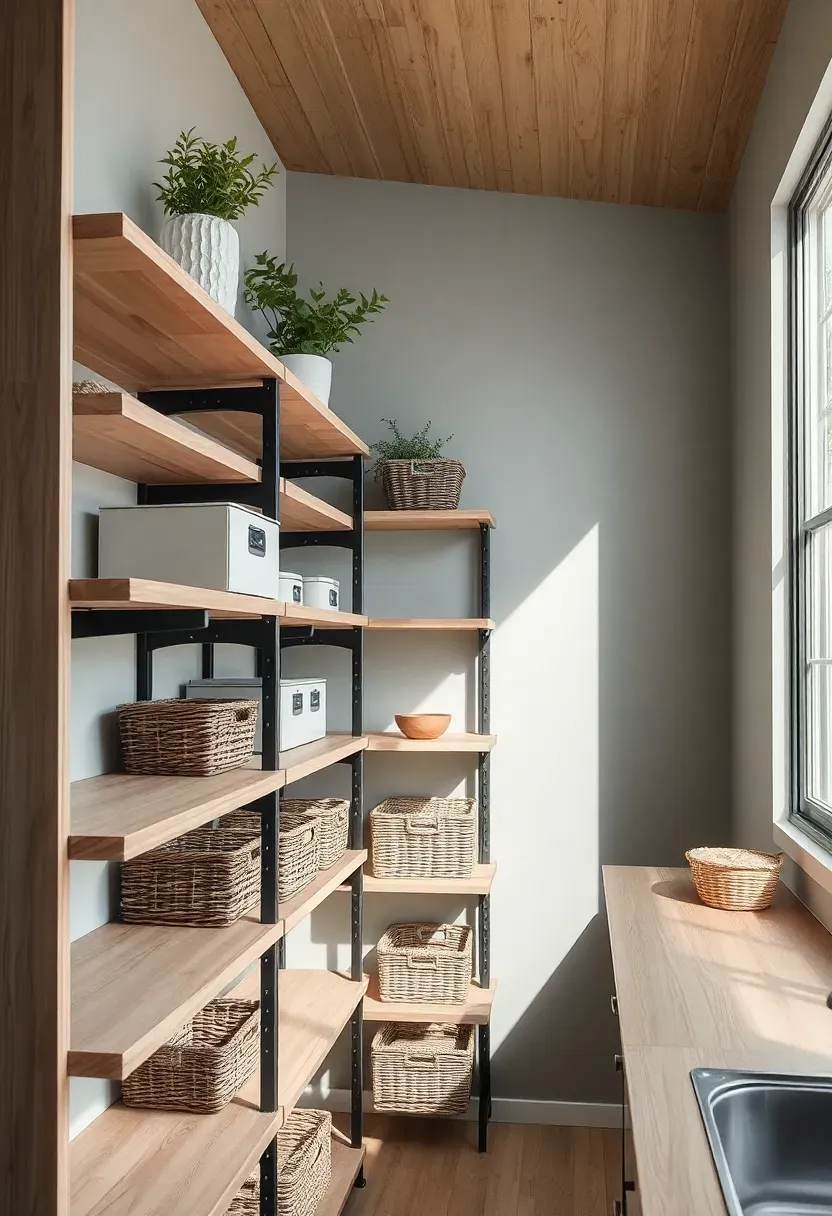
Hyper-realistic 3/4 view of a tiny house interior with floor-to-ceiling white oak shelving against light grey walls. Materials: natural wood grain, matte black metal brackets, woven storage baskets. Soft diffused natural light from large window right casting gentle shadows. Minimalist organization with labeled bins and plants on top shelves. Shallow depth of field, sharp shelf details, visible kitchenette context. No text, no logos, no watermarks.</p>
Tiny house living offers a path to financial freedom and simplified lifestyle through intentional design choices that maximize every square inch. Living in under 400 square feet requires thoughtful planning but rewards you with reduced environmental impact and more time for experiences over possessions.. Hyper-realistic 3/4 view of a tiny house interior with floor-to-ceiling white oak shelving against light grey walls. Materials: natural wood grain, matte black metal brackets, woven storage bask
Recommended
Items for this idea
Tips
- Use vertical dividers to separate categories and prevent stacking overload
- Install hooks on underside of shelves for mugs, utensils, or towels
- Place heavier items on lower shelves for stability and safety
Best for: kitchens and pantries with high ceilings
What this gives you: maximized storage without consuming valuable floor space
2. Multi-Functional Furniture
Every piece of furniture in a tiny house must earn its keep by serving multiple purposes throughout the day. A dining table that converts to a workspace, storage ottomans that provide seating and hidden compartments, or a sofa that transforms into a guest bed—these versatile pieces eliminate the need for specialized furniture while maintaining style and comfort. The key is choosing pieces with clean lines and lightweight materials that don't visually overwhelm small spaces.
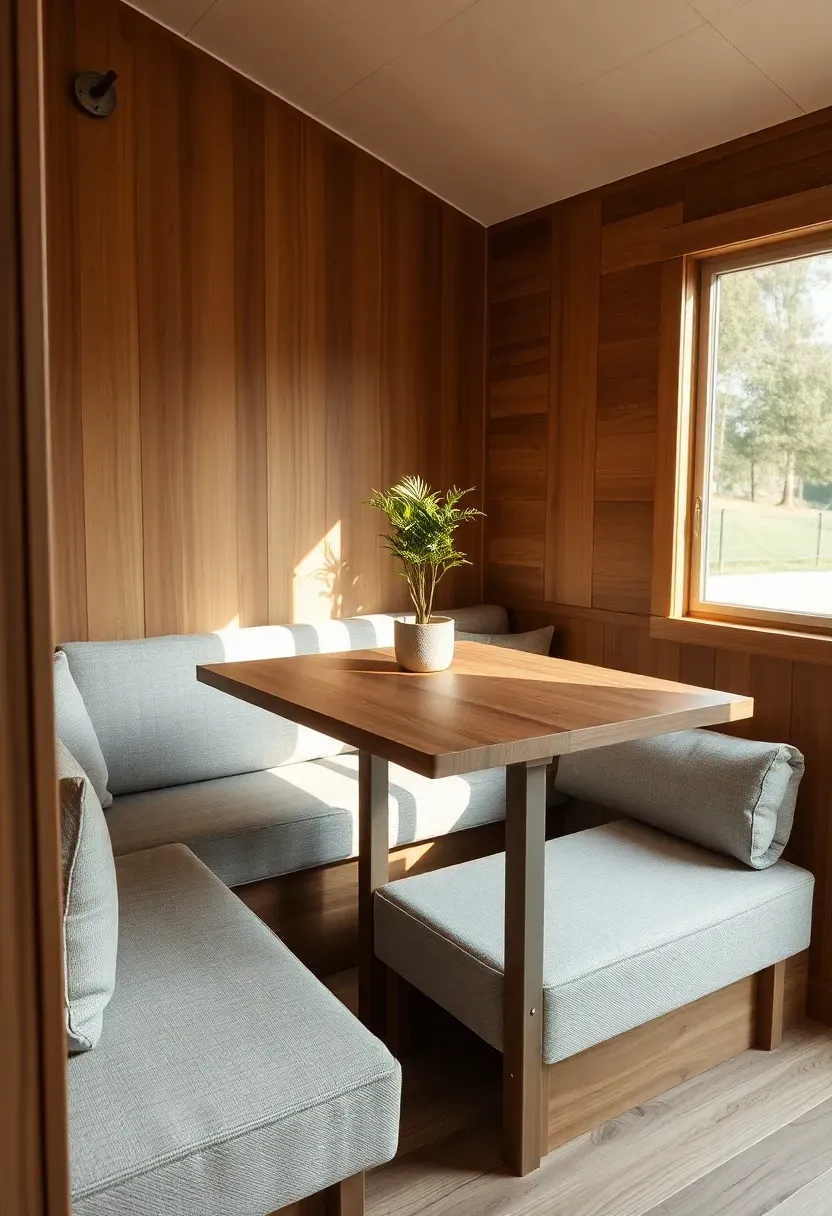
Hyper-realistic 3/4 view of a tiny house living area with walnut convertible desk-to-dining table and light grey upholstered storage benches. Materials: smooth wood finish, durable linen fabric, brushed steel hinges. Warm morning light through large window creating soft highlights on wood grain. Bench seats with hidden storage compartments visible partially open. Clean minimalist aesthetic with potted plant in corner. Shallow depth of field, sharp furniture details. No text, no logos, no watermarks.</p>
Tiny house living offers a path to financial freedom and simplified lifestyle through intentional design choices that maximize every square inch. Living in under 400 square feet requires thoughtful planning but rewards you with reduced environmental impact and more time for experiences over possessions.. Hyper-realistic 3/4 view of a tiny house living area with walnut convertible desk-to-dining table and light grey upholstered storage benches. Materials: smooth wood finish, durable linen fabric,
Recommended
Items for this idea
Tips
- Choose pieces with simple folding mechanisms rather than complex conversions
- Avoid furniture with multiple removable parts that require separate storage
- Test furniture transformations in person before purchasing for tiny house use
Budget/Time: invest more in fewer high-quality convertible pieces
What this gives you: flexible living spaces that adapt to your daily needs
3. Light Color Palette
Painting your tiny house interior in light, neutral colors creates an immediate sense of expansion and airiness. White walls reflect maximum natural light while cream, soft gray, or pale blue tints add warmth without closing in the space. The goal is creating a seamless visual flow where walls visually recede and boundaries blur, making your small home feel significantly larger than its actual square footage.
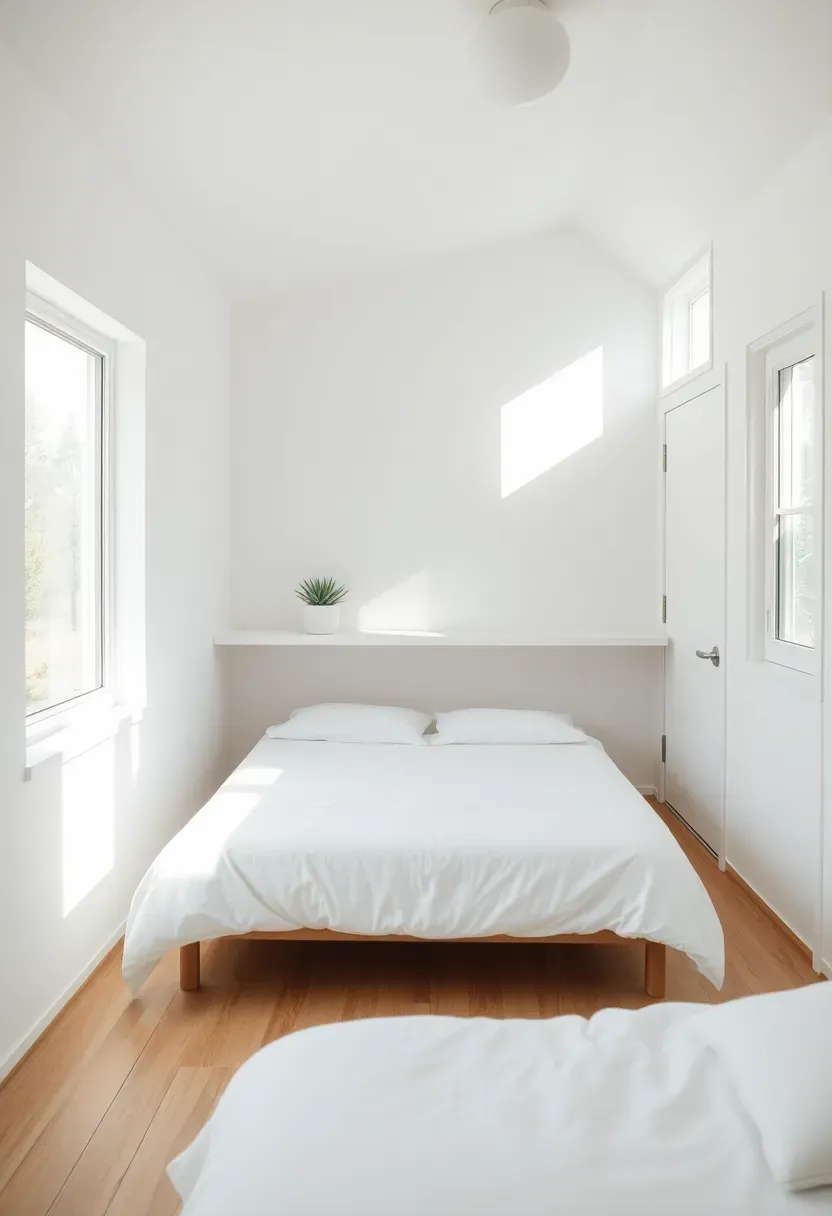
Hyper-realistic 3/4 view of a tiny house bedroom with white walls and light oak flooring. Materials: matte painted walls, natural wood grain, crisp white bedding. Bright natural daylight streaming through multiple windows creating even illumination. Minimal decor with one potted succulent and white floating shelf. Airy spacious feel with soft shadows. Shallow depth of field, sharp texture details on bedding. No text, no logos, no watermarks.</p>
Tiny house living offers a path to financial freedom and simplified lifestyle through intentional design choices that maximize every square inch. Living in under 400 square feet requires thoughtful planning but rewards you with reduced environmental impact and more time for experiences over possessions.. Hyper-realistic 3/4 view of a tiny house bedroom with white walls and light oak flooring. Materials: matte painted walls, natural wood grain, crisp white bedding. Bright natural daylight streami
Recommended
Items for this idea
Tips
- Use the same light color throughout to create continuous visual flow
- Add darker accents in small doses to prevent the space from feeling sterile
- Consider semi-gloss finish for easier cleaning in high-traffic areas
Placement note: paint all surfaces including ceilings in the same light hue
What this gives you: a visually expanded space that feels open and airy
4. Hidden Storage Solutions
The most effective tiny house storage disappears completely when not in use, maintaining clean lines and visual calm. Toe-kick drawers beneath kitchen cabinets, storage compartments under stair treads, hollow benches with lift-up seats, and false front panels that reveal hidden cavities—these secret spaces stash items you use less frequently while keeping everyday areas clutter-free. The art lies in making storage completely invisible until needed.
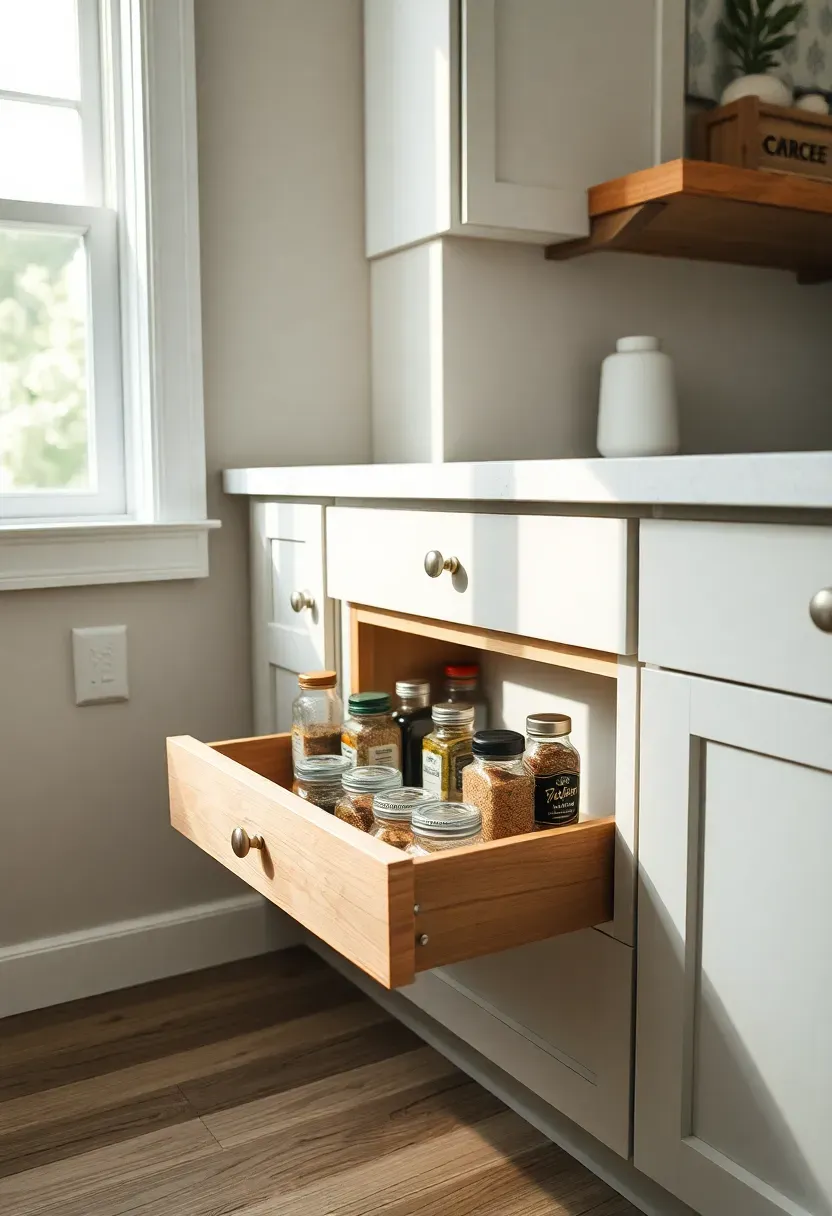
Hyper-realistic 3/4 view of a tiny house kitchen showing under-cabinet toe-kick drawer partially open with organized spice jars. Materials: white shaker cabinets, light butcher block counter, brushed nickel drawer pulls. Soft ambient window light from left casting gentle shadows. Quartz countertop with minimal decor. Drawer reveals neatly arranged glass spice bottles. Shallow depth of field, sharp focus on drawer contents. No text, no logos, no watermarks.</p>
Tiny house living offers a path to financial freedom and simplified lifestyle through intentional design choices that maximize every square inch. Living in under 400 square feet requires thoughtful planning but rewards you with reduced environmental impact and more time for experiences over possessions.. Hyper-realistic 3/4 view of a tiny house kitchen showing under-cabinet toe-kick drawer partially open with organized spice jars. Materials: white shaker cabinets, light butcher block counter, br
Recommended
Items for this idea
Tips
- Use push-latch mechanisms instead of handles for truly seamless appearance
- Avoid overloading hidden storage which makes access frustrating
- Label contents inside cabinet doors for quick identification without opening
Best for: seasonal items, bulk supplies, and rarely used equipment
What this gives you: maximum storage capacity without sacrificing aesthetics
5. Loft Bedroom Design
Elevating your sleeping area to a loft space frees up the entire ground floor for daytime activities while creating a cozy private retreat. The key is ensuring adequate headroom for sitting up in bed, proper ventilation for temperature control, and safe access via space-saving stairs or alternating tread stairs that use minimal floor area. Add a skylight above the bed for stargazing and natural light that makes the loft feel spacious rather than cramped.
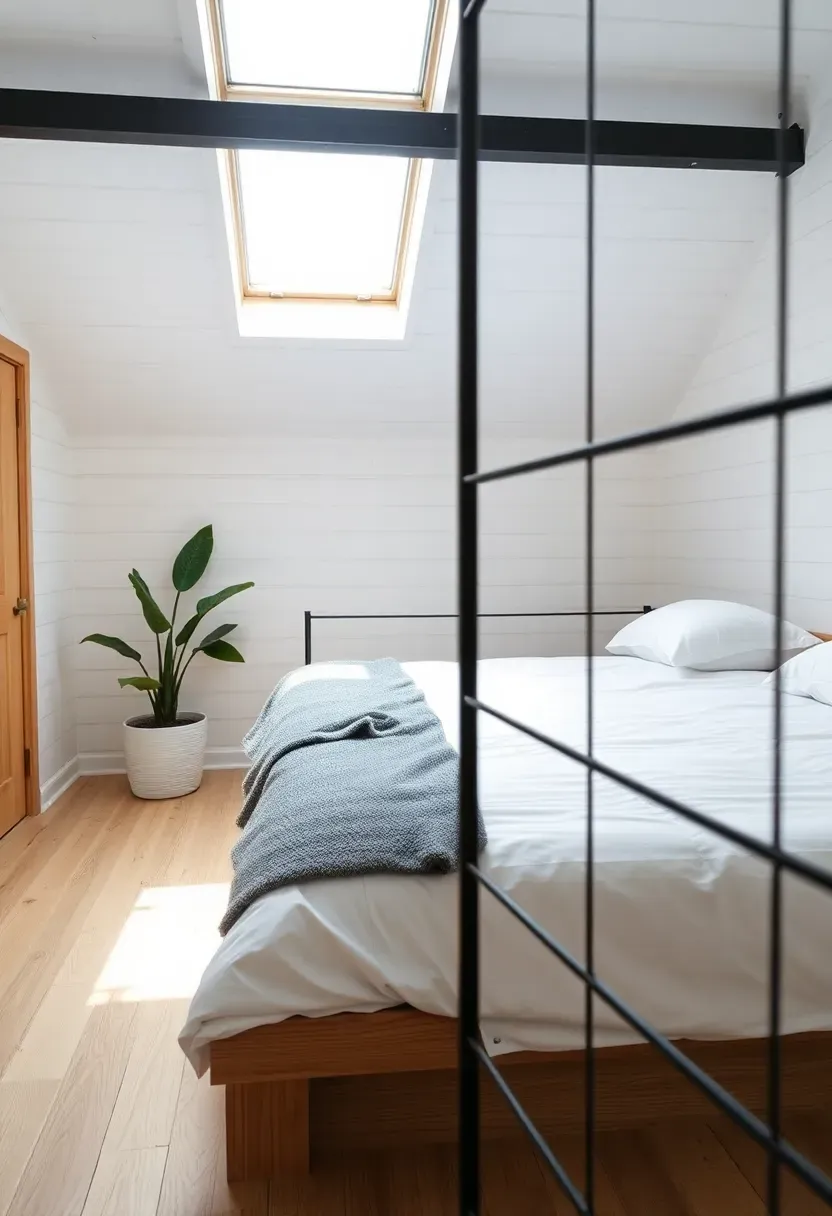
Hyper-realistic wide view of tiny house loft bedroom with queen platform bed built into white oak platform. Materials: light wood flooring, grey wool blanket, white shiplap walls, black metal safety rail. Bright daylight through large skylight above bed illuminating crisp white bedding. Potted snake plant in corner. Rail detail with thin horizontal cables. Shallow depth of field, sharp bedding texture. No text, no logos, no watermarks.</p>
Tiny house living offers a path to financial freedom and simplified lifestyle through intentional design choices that maximize every square inch. Living in under 400 square feet requires thoughtful planning but rewards you with reduced environmental impact and more time for experiences over possessions.. Hyper-realistic wide view of tiny house loft bedroom with queen platform bed built into white oak platform. Materials: light wood flooring, grey wool blanket, white shiplap walls, black metal sa
Recommended
Items for this idea
Tips
- Install a temperature-controlled fan near the skylight for heat management
- Add reading lights on wall-mounted arms to save nightstand surface space
- Choose low-profile mattress to maximize usable headroom
Avoid if: you have mobility issues or plan to age in place
What this gives you: private sleeping sanctuary that preserves ground floor living space
6. Reflective Surfaces
Strategically placed mirrors and glossy surfaces bounce natural light throughout your tiny house, creating depth and multiplying visual space. A large mirror opposite a window essentially doubles the natural light while reflecting views and greenery. Glass cabinet doors, glossy tile backsplashes, and metallic finishes in brass or copper add sparkle without adding visual weight—the key is using reflection as a design tool rather than just a functional one.
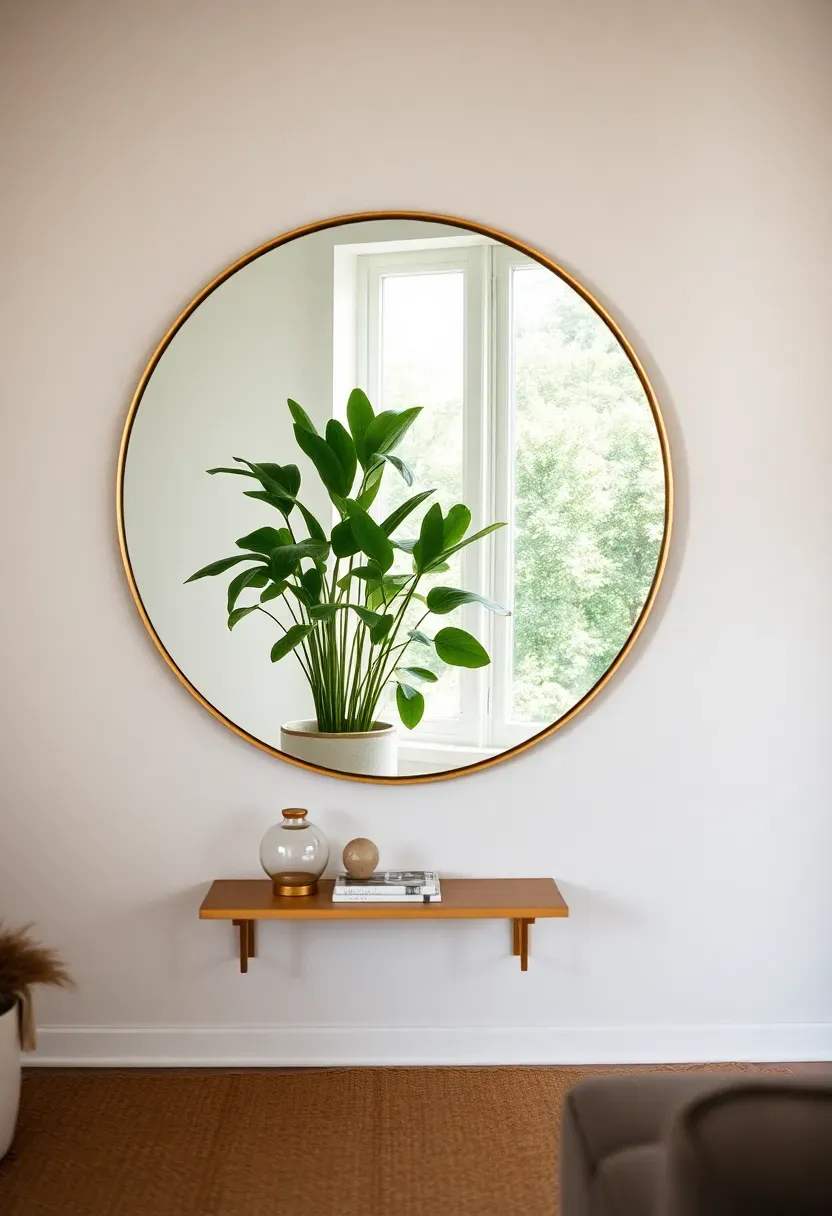
Hyper-realistic 3/4 view of tiny house living room with large round brass-framed mirror opposite window reflecting greenery. Materials: antique brass frame, clear mirror glass, light grey walls, natural jute rug. Soft natural daylight creating mirror reflection of potted plant and window. Minimal floating shelf below mirror with small decor. Warm metallic highlights on brass frame. Shallow depth of field, sharp brass texture detail. No text, no logos, no watermarks.</p>
Tiny house living offers a path to financial freedom and simplified lifestyle through intentional design choices that maximize every square inch. Living in under 400 square feet requires thoughtful planning but rewards you with reduced environmental impact and more time for experiences over possessions.. Hyper-realistic 3/4 view of tiny house living room with large round brass-framed mirror opposite window reflecting greenery. Materials: antique brass frame, clear mirror glass, light grey walls,
Recommended
Items for this idea
Tips
- Position mirrors to reflect the best view, not blank walls or clutter
- Avoid multiple mirrors facing each other which creates disorienting reflections
- Clean mirrors frequently—dulled reflections defeat the purpose
Placement note: hang mirrors at standing eye level, not above furniture
What this gives you: amplified natural light and perceived double the space
7. Sliding Doors
Traditional swinging doors consume significant floor space in tiny houses—sliding barn doors or pocket doors reclaim that square footage for actual living. Installing sliding hardware allows doors to glide along walls or disappear into pockets, leaving the full floor area usable while maintaining privacy and noise reduction between zones. Choose rustic reclaimed wood for barn door charm or sleek flush-mounted doors for modern minimalism.
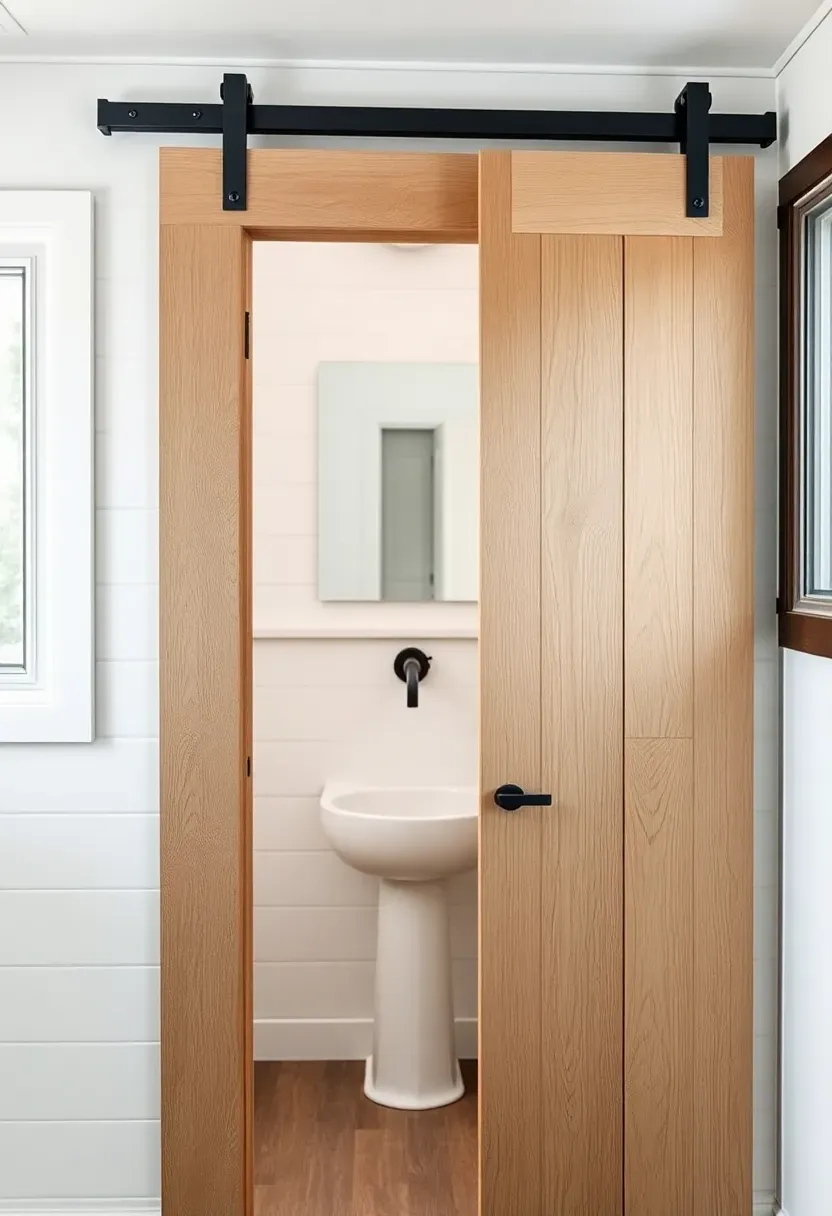
Hyper-realistic 3/4 view of tiny house bathroom with reclaimed white oak sliding barn door on exposed black steel track. Materials: weathered wood planks with visible grain, matte black metal hardware, white shiplap wall. Soft diffused light from nearby window. Door partially open revealing bathroom interior with white vessel sink. Minimal industrial aesthetic with clean lines. Shallow depth of field, sharp wood grain and metal texture. No text, no logos, no watermarks.</p>
Tiny house living offers a path to financial freedom and simplified lifestyle through intentional design choices that maximize every square inch. Living in under 400 square feet requires thoughtful planning but rewards you with reduced environmental impact and more time for experiences over possessions.. Hyper-realistic 3/4 view of tiny house bathroom with reclaimed white oak sliding barn door on exposed black steel track. Materials: weathered wood planks with visible grain, matte black metal ha
Recommended
Items for this idea
Tips
- Install soft-close mechanisms to prevent slamming in small spaces
- Use floor guides rather than bottom tracks to prevent tripping hazards
- Choose hardware rated for the door's weight to ensure smooth operation
Budget/Time: pocket doors require wall framing during construction
What this gives you: full access to floor space without door swing interference
8. Compact Kitchen Design
A well-designed tiny house kitchen prioritizes function over form while maintaining beauty through thoughtful layout and appliance selection. Use a two-burner cooktop instead of four, choose under-counter refrigerators or drawer models, and install a single deep basin sink rather than double bowls. The key is creating efficient work zones where preparation, cooking, and cleaning flow naturally in a compact triangle while incorporating vertical storage for pantry items and cookware.
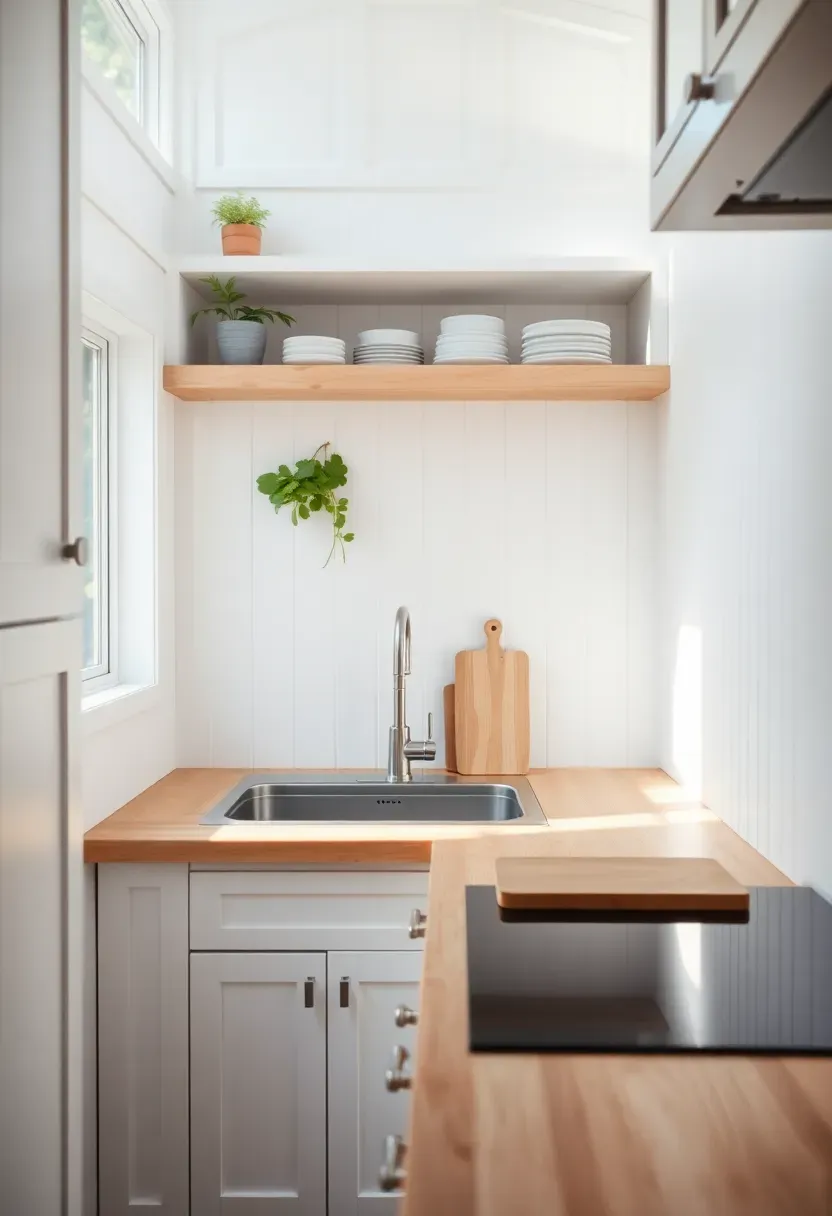
Hyper-realistic 3/4 view of tiny house kitchen with white shaker cabinets, light butcher block countertop, two-burner induction cooktop. Materials: matte white paint, natural wood counter, black granite sink, brushed nickel pulls. Bright natural light from window above sink. Open upper shelving with white dishes and potted herbs. Minimal counter decor with cutting board. Shallow depth of field, sharp focus on cooktop. No text, no logos, no watermarks.</p>
Tiny house living offers a path to financial freedom and simplified lifestyle through intentional design choices that maximize every square inch. Living in under 400 square feet requires thoughtful planning but rewards you with reduced environmental impact and more time for experiences over possessions.. Hyper-realistic 3/4 view of tiny house kitchen with white shaker cabinets, light butcher block countertop, two-burner induction cooktop. Materials: matte white paint, natural wood counter, black
Recommended
Items for this idea
Tips
- Use cutting boards that fit over the sink to extend counter space when needed
- Install magnetic knife strips and utensil racks to free drawer space
- Choose appliances with multiple functions like convection-microwave combos
Best for: cooks who prefer simple meals and value counter space over appliances
What this gives you: efficient cooking zone that doesn't dominate your tiny house
9. Fold-Down Workspaces
A dedicated home office feels like a luxury in tiny houses until you realize a fold-down desk provides full workspace functionality that disappears when not needed. Mount a sturdy folding surface to the wall with supporting chains or folding legs, add a wall-mounted task light, and incorporate nearby magnetic strips or shallow pockets for supplies. When work is done, the entire office folds flat against the wall returning valuable floor space to living areas.
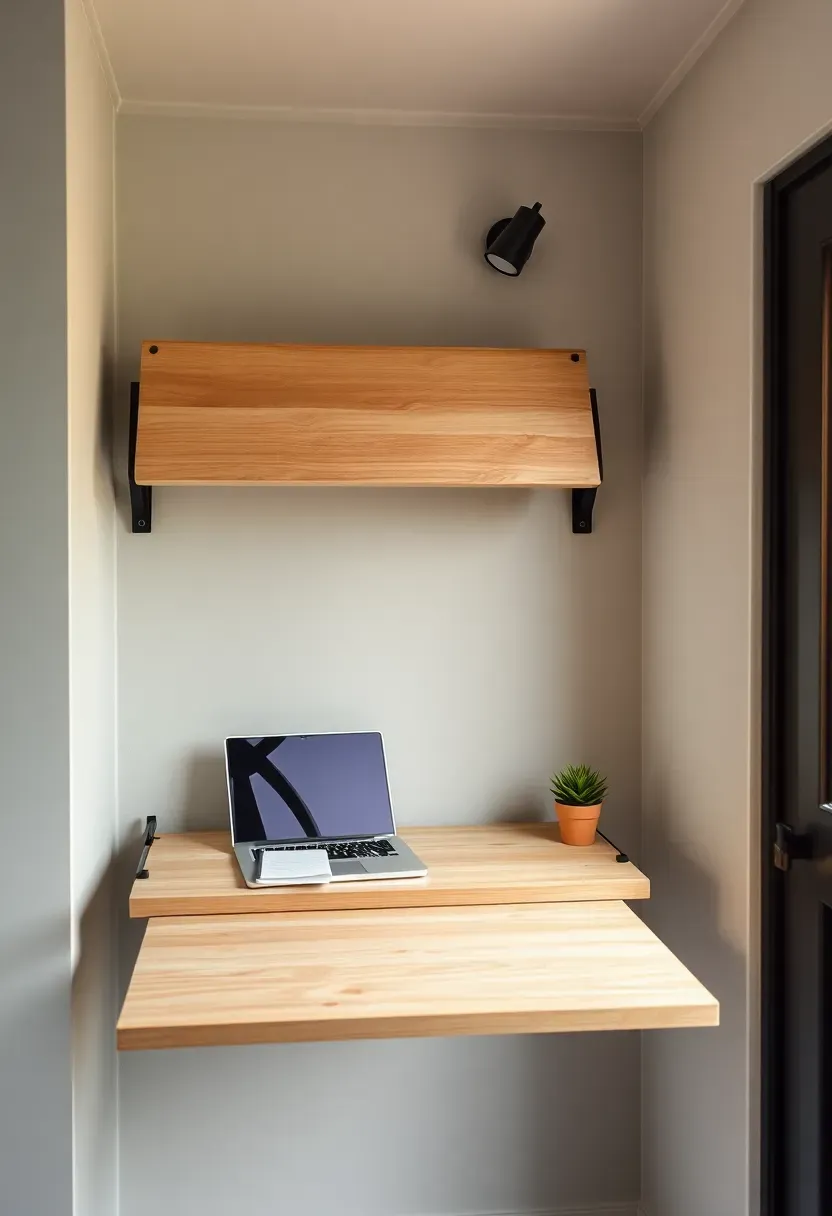
Hyper-realistic 3/4 view of tiny house nook with white oak fold-down desk mounted to light grey wall, currently in open position with laptop and notebook. Materials: smooth wood surface, black metal folding brackets, matte wall finish. Warm ambient window light from right. Small potted succulent on desk, wall-mounted task light above. Clean minimalist aesthetic with visible wall when folded. Shallow depth of field, sharp focus on laptop. No text, no logos, no watermarks.</p>
Tiny house living offers a path to financial freedom and simplified lifestyle through intentional design choices that maximize every square inch. Living in under 400 square feet requires thoughtful planning but rewards you with reduced environmental impact and more time for experiences over possessions.. Hyper-realistic 3/4 view of tiny house nook with white oak fold-down desk mounted to light grey wall, currently in open position with laptop and notebook. Materials: smooth wood surface, black m
Recommended
Items for this idea
Tips
- Use wireless peripherals to eliminate cord clutter when folding
- Add a magnetic strip above desk for holding metal accessories when closed
- Choose comfortable folding chair that hangs on wall when not in use
Placement note: install at proper desk height for your specific needs
What this gives you: dedicated workspace that doesn't permanently sacrifice living space
10. Outdoor Living Extension
Every tiny house should connect seamlessly to outdoor spaces that effectively double your usable square footage during fair weather. Install a folding deck, attach an awning for shade, and create an outdoor kitchen setup with portable grill and prep surface. String lights and comfortable outdoor seating transform a tiny house from a cramped interior to an expansive indoor-outdoor living experience where nature becomes part of your home.
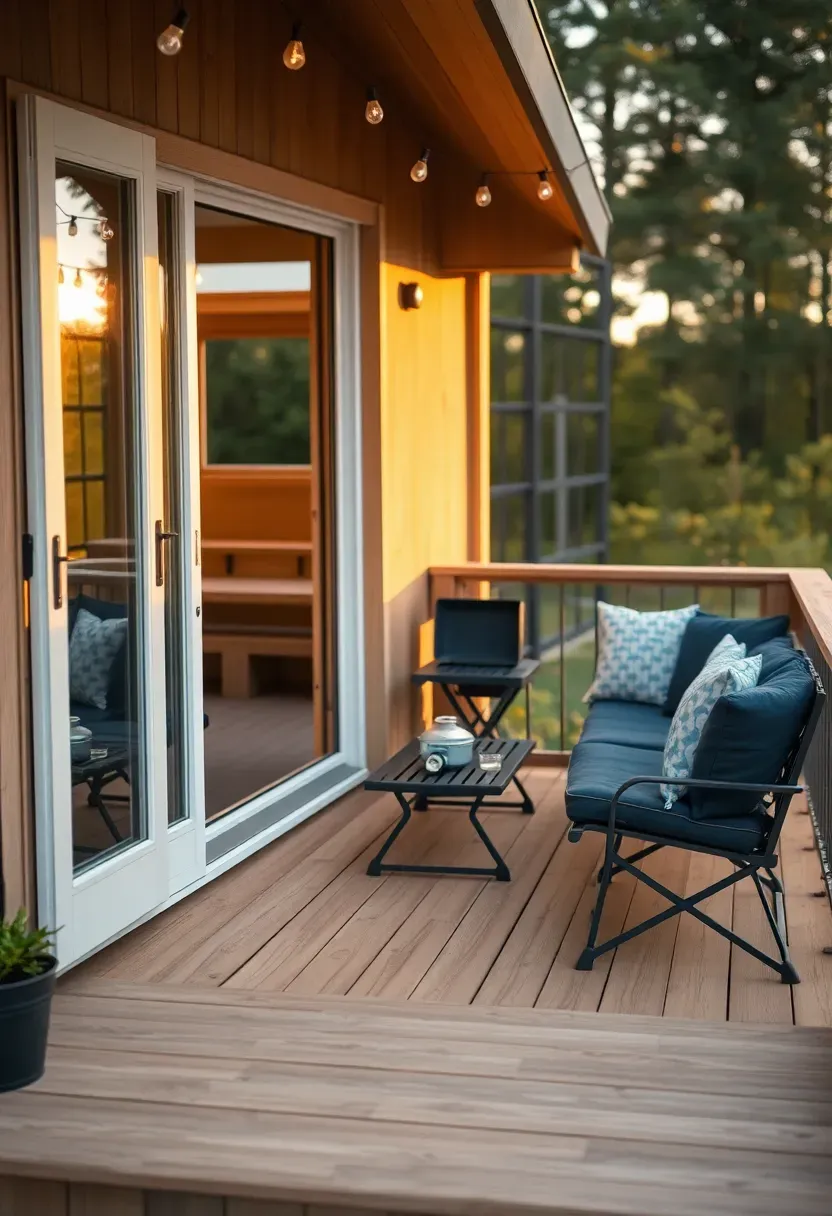
Hyper-realistic 3/4 view of tiny house exterior with light wood folding deck extending from glass sliding door, grey outdoor sectional with navy cushions, portable propane grill on small side table. Materials: cedar decking, powder-coated metal furniture, weather-resistant fabric. Golden hour sunlight casting warm glow. String lights overhead creating soft ambiance. Potted herbs on deck railing. Natural blurred forest background. Shallow depth of field, sharp seating details. No text, no logos, no watermarks.</p>
Tiny house living offers a path to financial freedom and simplified lifestyle through intentional design choices that maximize every square inch. Living in under 400 square feet requires thoughtful planning but rewards you with reduced environmental impact and more time for experiences over possessions.. Hyper-realistic 3/4 view of tiny house exterior with light wood folding deck extending from glass sliding door, grey outdoor sectional with navy cushions, portable propane grill on small side ta
Recommended
Items for this idea
Tips
- Choose weather-resistant materials that require minimal maintenance
- Install outdoor-rated outlets for lighting and small appliances
- Use modular furniture that can be stored inside during severe weather
Budget/Time: start with basic decking and add amenities over time
What this gives you: seasonal living expansion that transforms tiny house living
11. Minimal Window Treatments
Bulky curtains and complex drapery hardware overwhelm tiny house windows and block precious natural light. Choose simple roller shades, flat Roman shades, or plantation shutters that stack compactly when fully raised, allowing maximum light while providing privacy when needed. The goal is window treatments that disappear rather than dominate—opt for materials in the same light palette as walls to create seamless integration.
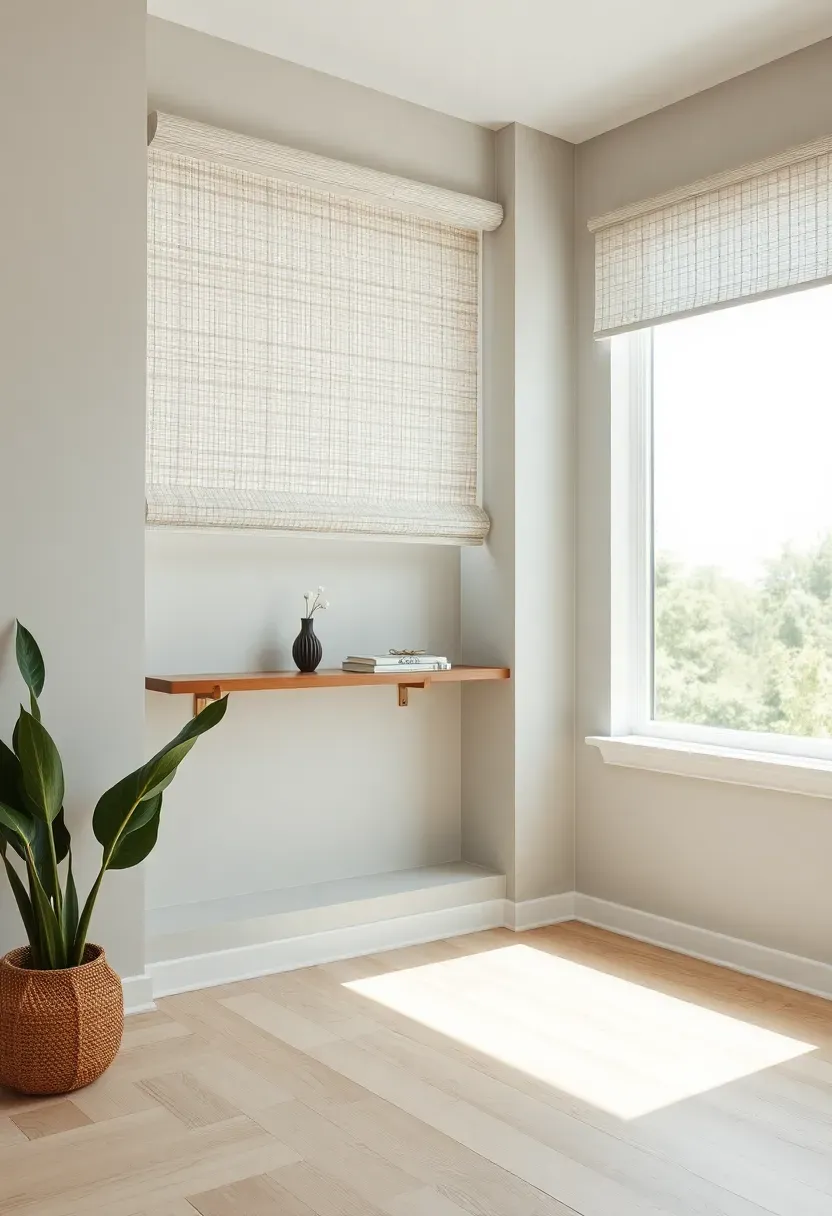
Hyper-realistic 3/4 view of tiny house living area with large window featuring white woven roller shade partially raised, light grey walls, white oak flooring. Materials: natural woven grasscloth shade texture, matte wall paint, wood grain floor. Bright natural daylight streaming through uncovered upper window section. Minimal floating shelf with small decor items. Clean airy aesthetic. Shallow depth of field, sharp focus on shade texture. No text, no logos, no watermarks.</p>
Tiny house living offers a path to financial freedom and simplified lifestyle through intentional design choices that maximize every square inch. Living in under 400 square feet requires thoughtful planning but rewards you with reduced environmental impact and more time for experiences over possessions.. Hyper-realistic 3/4 view of tiny house living area with large window featuring white woven roller shade partially raised, light grey walls, white oak flooring. Materials: natural woven grassclot
Recommended
Items for this idea
Tips
- Choose cordless shades for cleaner appearance and child safety
- Install shades inside window frames for a built-in custom look
- Consider blackout lining for bedroom windows without adding bulk
Best for: maximizing natural light while maintaining privacy options
What this gives you: unobstructed views and maximum daylight in small spaces
12. Built-In Seating
Custom built-in seating eliminates wasted space while providing permanent, comfortable lounging areas tailored to your specific tiny house dimensions. Window benches with hidden storage underneath, L-shaped sectionals that maximize corner spaces, or banquettes that serve dual purposes as dining seating and relaxation spots—built-ins ensure every inch serves a function while creating permanent furniture that feels cohesive and intentional.
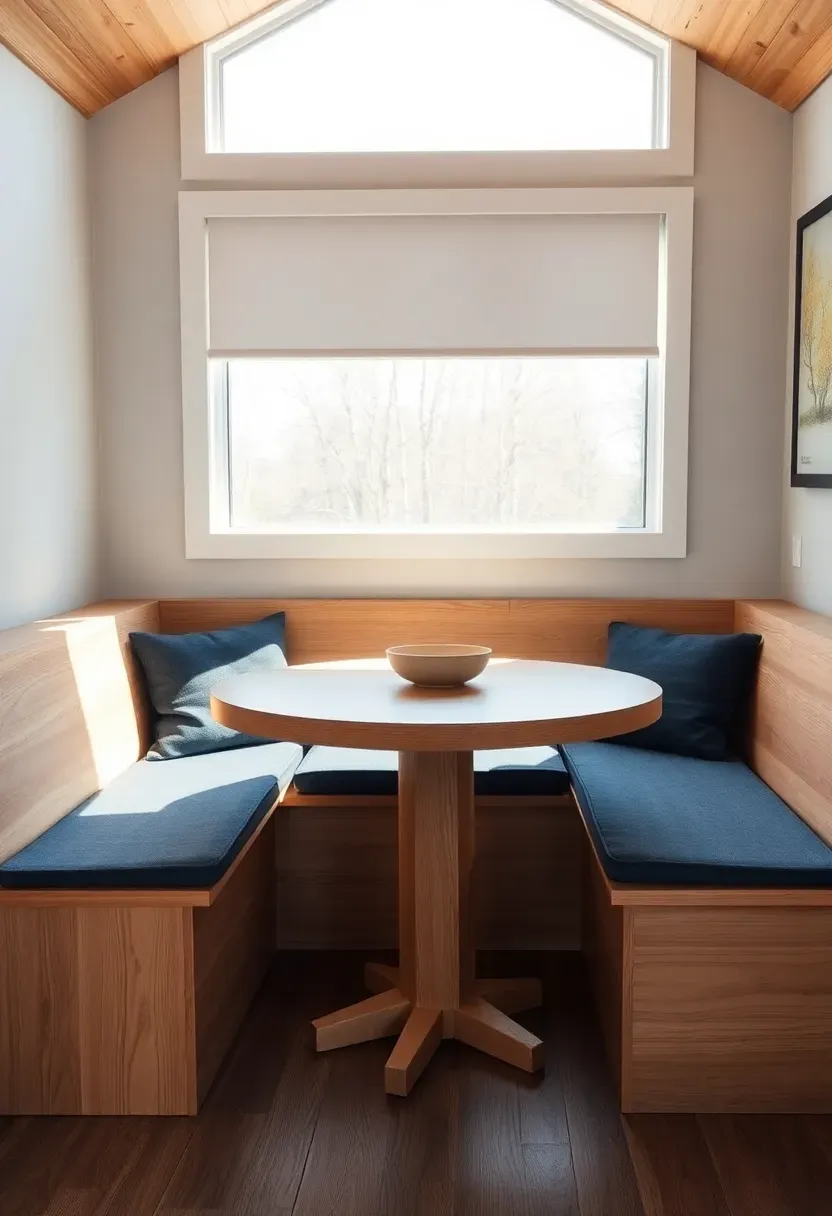
Hyper-realistic 3/4 view of tiny house dining area with L-shaped built-in white oak bench seating around round pedestal table, navy linen cushions. Materials: natural wood grain, durable fabric upholstery, light grey wall behind. Large window above bench with white roller shade. One bench seat lifted revealing hidden storage compartment inside. Warm natural light creating soft shadows. Minimal centerpiece with small bowl. Shallow depth of field, sharp cushion texture. No text, no logos, no watermarks.</p>
Tiny house living offers a path to financial freedom and simplified lifestyle through intentional design choices that maximize every square inch. Living in under 400 square feet requires thoughtful planning but rewards you with reduced environmental impact and more time for experiences over possessions.. Hyper-realistic 3/4 view of tiny house dining area with L-shaped built-in white oak bench seating around round pedestal table, navy linen cushions. Materials: natural wood grain, durable fabric
Recommended
Items for this idea
Tips
- Use removable cushion covers for easy cleaning in high-traffic areas
- Include electrical outlets in built-ins for charging devices while seating
- Add hinged tops rather than drawers for easier access to deep storage
Best for: dining nooks, window seats, and multi-purpose living areas
What this gives you: permanent, comfortable seating that doubles as major storage
13. Strategic Lighting
Layered lighting transforms tiny houses from cramped to cozy by eliminating dark corners and creating distinct zones within open floor plans. Combine ambient overhead lighting with task lighting for reading, cooking, or working, plus accent lighting that highlights architectural features or artwork. The key is using multiple light sources on separate dimmers rather than single bright fixtures—this creates flexibility and visual depth while making spaces feel larger.
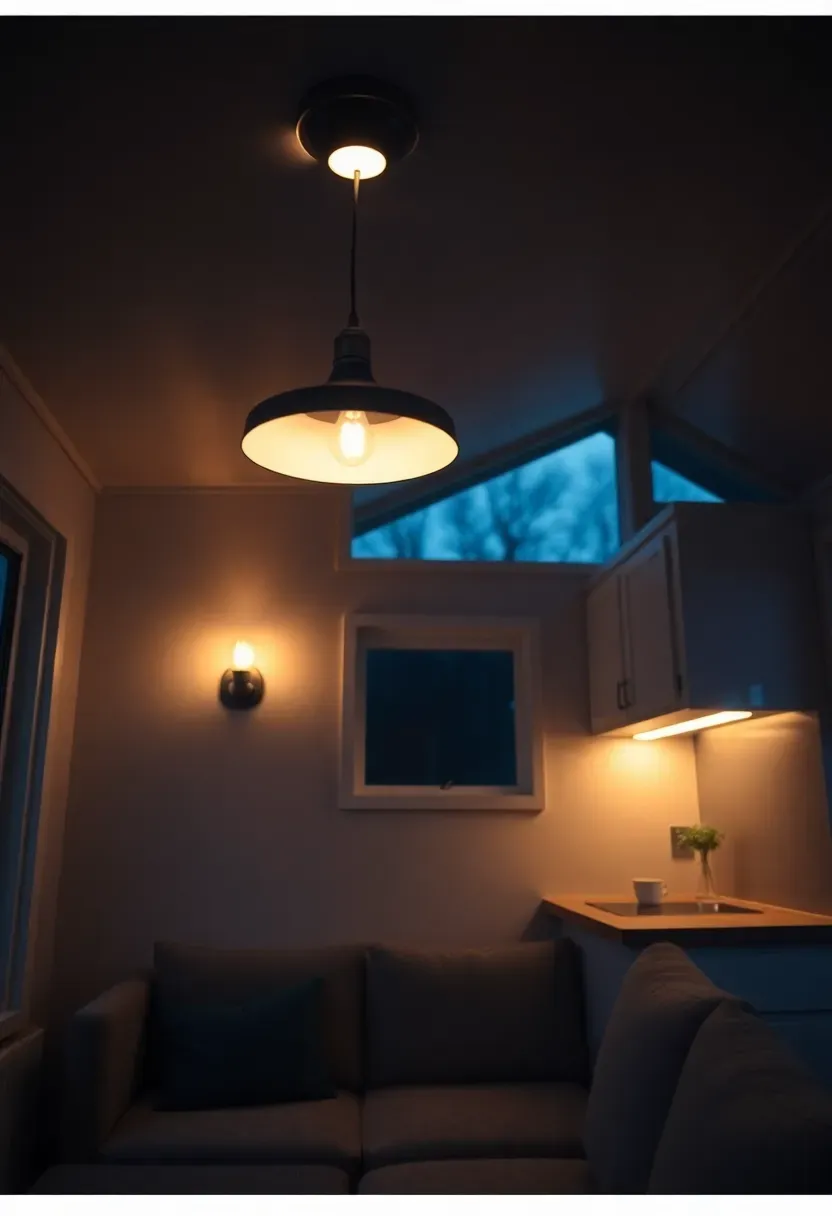
Hyper-realistic 3/4 view of tiny house living area at dusk with layered lighting—warm ceiling flush mount, wall-mounted reading lamp over seating, LED strip lights under upper cabinets. Materials: brushed nickel fixtures, warm white bulbs (2700K), light grey walls. Mix of ambient and task lighting creating cozy layered effect. Minimal furniture arrangement visible. Soft shadows adding depth. Shallow depth of field, sharp focus on wall sconce. No text, no logos, no watermarks.</p>
Tiny house living offers a path to financial freedom and simplified lifestyle through intentional design choices that maximize every square inch. Living in under 400 square feet requires thoughtful planning but rewards you with reduced environmental impact and more time for experiences over possessions.. Hyper-realistic 3/4 view of tiny house living area at dusk with layered lighting—warm ceiling flush mount, wall-mounted reading lamp over seating, LED strip lights under upper cabinets. Material
Recommended
Items for this idea
Tips
- Use warm white bulbs (2700K) for cozy atmosphere, cool for task areas
- Install dimmers on all fixtures to adjust lighting for different activities
- Position task lights to eliminate shadows when reading or preparing food
Budget/Time: LED fixtures cost more upfront but save significantly on electricity
What this gives you: flexible, cozy atmosphere that adapts to every activity
14. One-In-One-Out Rule
The most sustainable tiny house organizational system is simply preventing accumulation before it begins. Adopt the rule that every new item entering your home requires removing one existing item—this forces conscious consumption decisions and maintains equilibrium. Before purchasing anything, consider whether it's truly essential or whether a borrowed, rented, or shared alternative might serve the same temporary need without permanent space commitment.
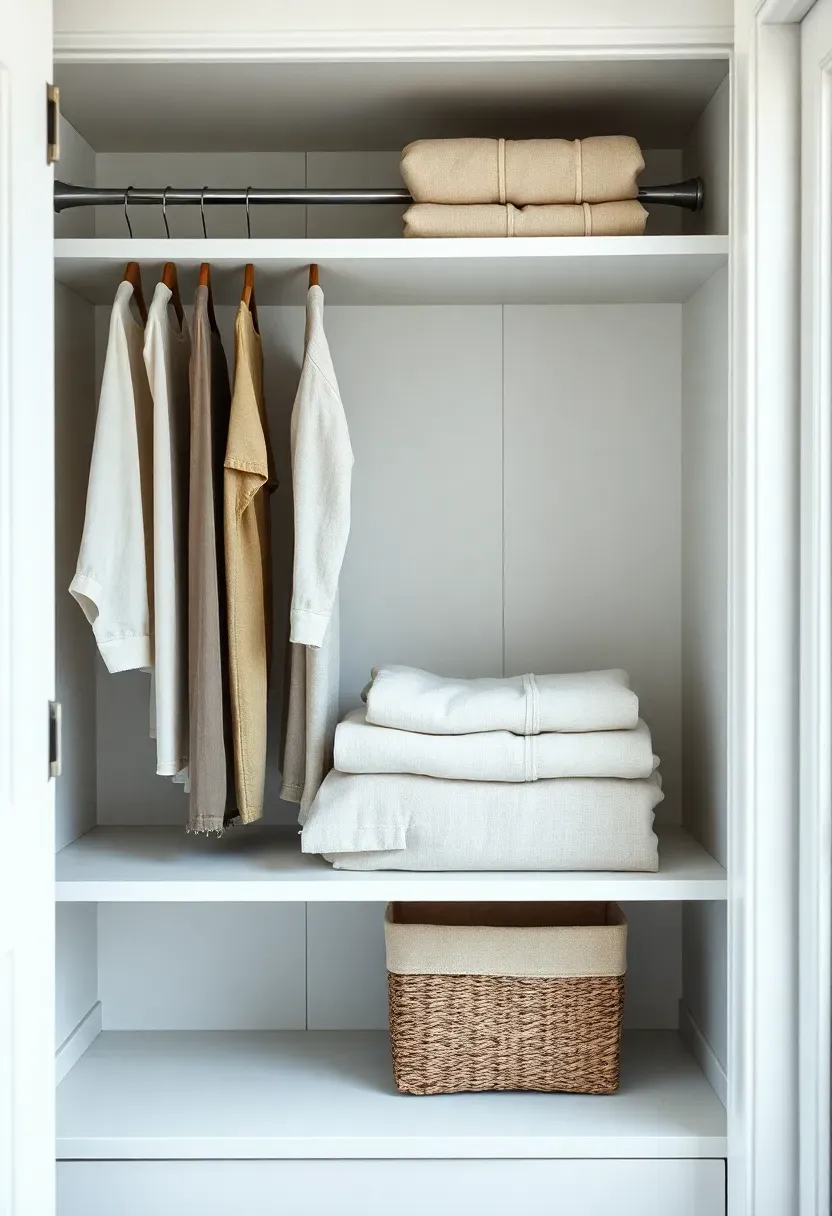
Hyper-realistic 3/4 view of tiny house minimalist closet with built-in shelving showing carefully curated items—few hanging linen garments, organized folded stack on open shelf, one canvas storage bin. Materials: white painted wood, natural linen fabric, woven basket texture. Bright natural daylight from nearby window. Visible empty space between items showing restraint. Clean organized aesthetic with visible breathing room. Shallow depth of field, sharp focus on folded linen stack. No text, no logos, no watermarks.</p>
Tiny house living offers a path to financial freedom and simplified lifestyle through intentional design choices that maximize every square inch. Living in under 400 square feet requires thoughtful planning but rewards you with reduced environmental impact and more time for experiences over possessions.. Hyper-realistic 3/4 view of tiny house minimalist closet with built-in shelving showing carefully curated items—few hanging linen garments, organized folded stack on open shelf, one canvas stora
Recommended
Items for this idea
Tips
- Apply the rule strictly to everything including gifts, free items, and hand-me-downs
- Keep a donation box permanently accessible for immediate removal decisions
- Photograph sentimental items before letting go to preserve the memory
Best for: maintaining long-term clutter-free tiny house living
What this gives you: permanent clutter prevention through mindful consumption habits
15. Digital Organization
Replace physical media and documents with digital alternatives to eliminate entire storage categories in your tiny house. Scan paperwork and store in cloud-based systems, replace books with e-readers or library apps, choose streaming services over physical media collections, and use digital photo frames that display thousands of images in the space required by one printed photo. The cloud becomes your extended storage while your physical space remains minimal and uncluttered.
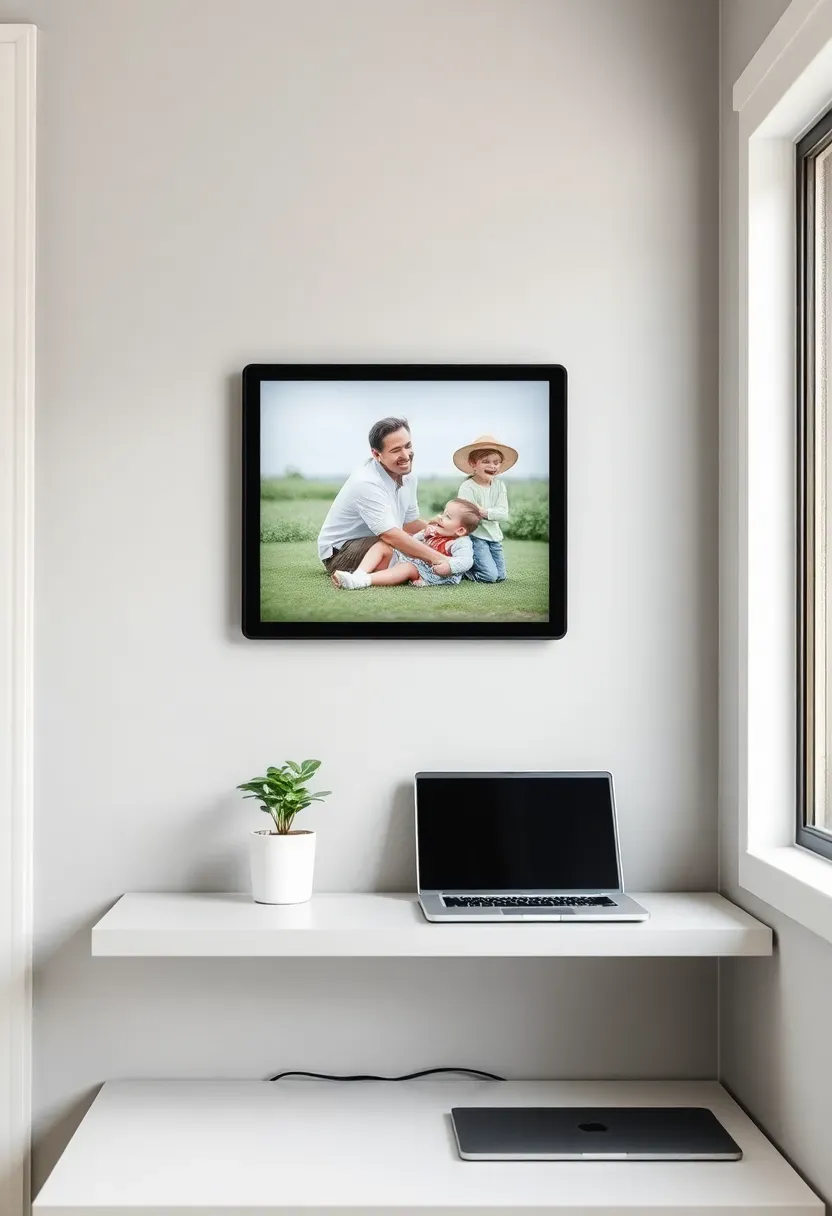
Hyper-realistic 3/4 view of tiny house workspace nook showing wall-mounted digital photo frame displaying family photos, small laptop, tablet, no physical paper files. Materials: black digital frame, brushed aluminum devices, light grey wall. Soft ambient window light. Minimal floating shelf below with small potted plant. Clean wire-free desk surface with only essential tech. Visible absence of paper clutter. Shallow depth of field, sharp focus on digital display. No text, no logos, no watermarks.</p>
Tiny house living offers a path to financial freedom and simplified lifestyle through intentional design choices that maximize every square inch. Living in under 400 square feet requires thoughtful planning but rewards you with reduced environmental impact and more time for experiences over possessions.. Hyper-realistic 3/4 view of tiny house workspace nook showing wall-mounted digital photo frame displaying family photos, small laptop, tablet, no physical paper files. Materials: black digital f
Recommended
Items for this idea
Tips
- Use consistent file naming and folder structures for easy document retrieval
- Back up digital files to multiple locations including local hard drives
- Keep only original documents that cannot be replaced digitally
Budget/Time: initial scanning investment pays off in permanent space savings
What this gives you: access to everything you own without physical storage requirements
16. Vertical Gardens
Living in a tiny house doesn't mean sacrificing fresh herbs and vegetables—vertical garden systems transform exterior walls into productive growing space. Install wall-mounted planters, hanging systems, or trellises that grow upward rather than outward, providing fresh produce, natural privacy, and beautiful greenery without consuming valuable floor or ground space. The key is choosing compact varieties and using lightweight soil mixes suitable for vertical growing.
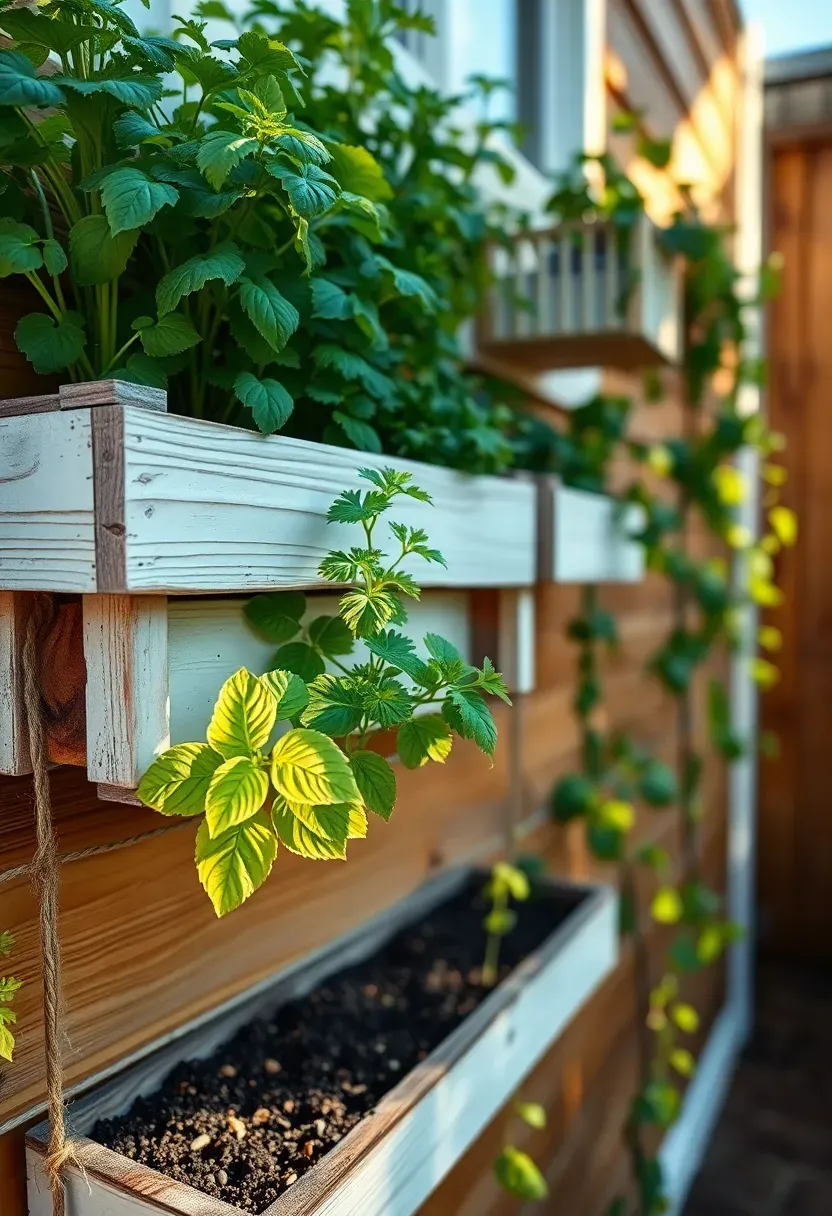
Hyper-realistic 3/4 view of tiny house exterior wall with vertical garden system—white wooden trough planters at multiple heights with thriving herbs (basil, parsley, thyme), climbing pea vines on string trellis. Materials: weathered wood planters, jute twine trellis, rich dark soil, vibrant green plants. Warm afternoon sunlight creating dappled shadows. Water droplets on leaves from recent watering. Tiny house cedar siding visible in background. Shallow depth of field, sharp focus on basil leaves. No text, no logos, no watermarks.</p>
Tiny house living offers a path to financial freedom and simplified lifestyle through intentional design choices that maximize every square inch. Living in under 400 square feet requires thoughtful planning but rewards you with reduced environmental impact and more time for experiences over possessions.. Hyper-realistic 3/4 view of tiny house exterior wall with vertical garden system—white wooden trough planters at multiple heights with thriving herbs (basil, parsley, thyme), climbing pea vines
Recommended
Items for this idea
Tips
- Install drip irrigation on timers to simplify watering routines
- Choose shallow-rooted herbs and greens rather than deep-root vegetables
- Mount on walls receiving appropriate sunlight for specific plant needs
Best for: culinary herbs, leafy greens, and compact flowering plants
What this gives you: fresh homegrown produce without sacrificing limited outdoor space
17. Community Living Benefits
Tiny house living reaches its full potential when embraced as part of a larger community that shares resources and amenities. Join or establish tiny house communities where shared facilities like laundry rooms, guest quarters, workshops, and common spaces eliminate the need for individual tiny houses to include everything. This hybrid approach gives you private, efficient personal space while accessing expanded shared resources—truly the best of both worlds for intentional living.
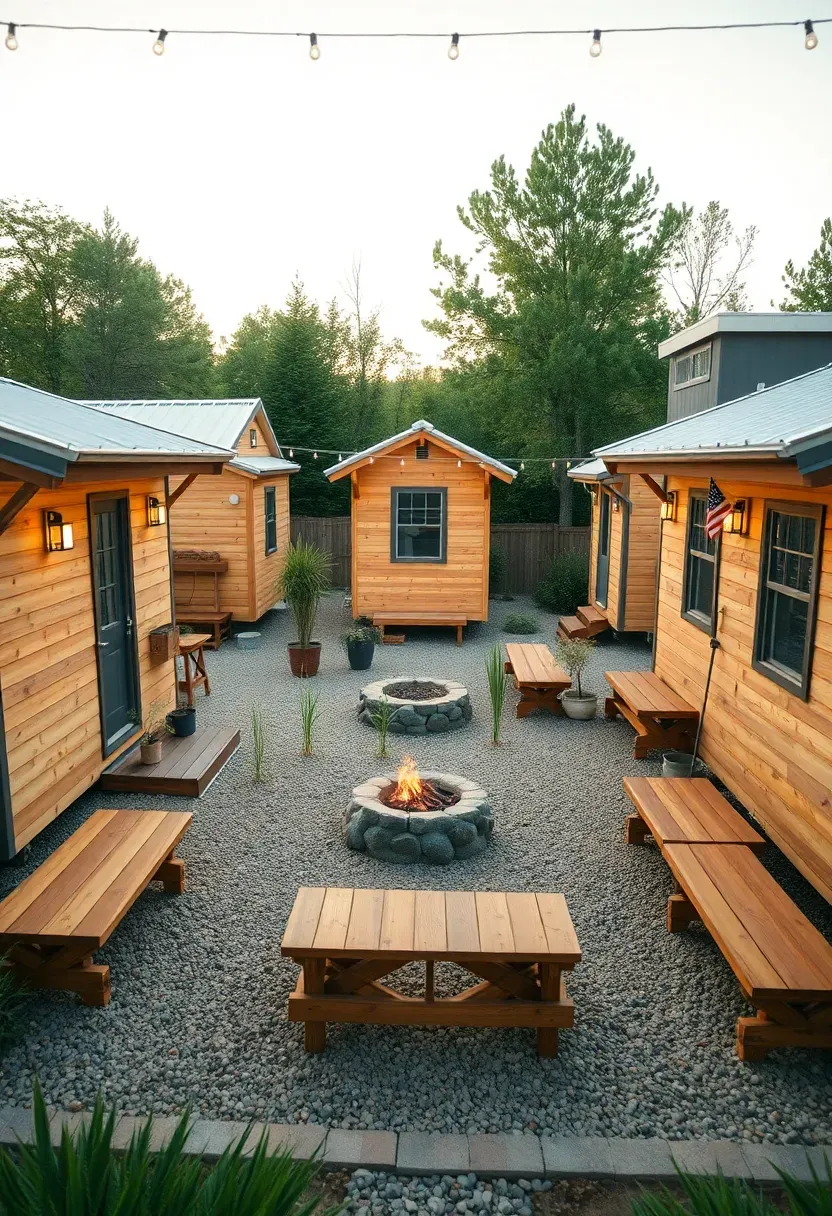
Hyper-realistic elevated 3/4 view of tiny house community showing three modern tiny houses with light wood siding surrounding central shared green space with fire pit, communal wooden seating, string lights overhead. Materials: natural cedar siding, metal roofing, pea gravel ground cover, warm wood benches. Golden hour light creating long soft shadows. Potted plants and small garden beds between structures. Serene community atmosphere. Shallow depth of field, sharp focus on foreground tiny house details. No text, no logos, no watermarks.</p>
Tiny house living offers a path to financial freedom and simplified lifestyle through intentional design choices that maximize every square inch. Living in under 400 square feet requires thoughtful planning but rewards you with reduced environmental impact and more time for experiences over possessions.. Hyper-realistic elevated 3/4 view of tiny house community showing three modern tiny houses with light wood siding surrounding central shared green space with fire pit, communal wooden seating, s
Recommended
Items for this idea
Tips
- Choose communities with shared values around sustainability and minimalism
- Contribute regularly to shared maintenance for community sustainability
- Balance private personal space with community engagement for wellbeing
Budget/Time: shared amenities significantly reduce individual costs
What this gives you: expanded living possibilities through cooperative resource sharing
Embracing tiny house living requires rethinking traditional relationships with space, possessions, and community. These 17 strategies prove that limited square footage doesn't mean limited living—intentional design, smart storage solutions, and mindful consumption create homes that feel spacious despite their compact footprint. Whether you're drawn to tiny living for financial freedom, environmental concerns, or lifestyle simplicity, the principles of vertical thinking, multi-functional design, and community connection transform constraints into opportunities for more meaningful, focused daily life centered on experiences rather than accumulation.