inspiration
27 Reasons to Live in a Tiny House: Big Benefits, Small Space
Tiny house living offers profound benefits that extend far beyond square footage, presenting opportunities for financial liberation, environmental stewardship, and intentional lifestyle design. The growing tiny house movement represents a fundamental shift toward valuing experiences over possessions, with residents reporting increased happiness, reduced stress, and stronger community connections.
Small space living necessitates thoughtful design decisions that maximize every square foot while eliminating excess, resulting in homes that are both functional and beautiful. This guide explores 27 compelling reasons why tiny house living might transform your relationship with your home, your finances, and the world around you.
From dramatically reduced living costs to minimal environmental impact, tiny houses prove that less truly can be more when it comes to creating a fulfilling, purposeful life in a thoughtfully designed compact space.
Quick FAQ
How much money can I save living in a tiny house?
Most tiny house owners save 50-70% on housing costs compared to traditional homes, with average monthly expenses under $1,000 including utilities, allowing for accelerated debt repayment and increased savings.
What is the average size of a tiny house?
Tiny houses typically range from 100 to 400 square feet, with most falling between 200-300 square feet—about the size of a two-car garage yet thoughtfully designed for comfortable daily living.
Are tiny houses eco-friendly?
Absolutely. Tiny houses consume approximately 30% of the energy of average-sized homes, require fewer building materials, and often incorporate sustainable features like solar panels, composting toilets, and rainwater collection systems.
Can a tiny house accommodate a family?
While challenging, many families successfully live in tiny houses using clever loft designs, convertible spaces, and outdoor living areas. Most family tiny houses range from 28-35 feet in length with dedicated sleeping lofts.
What are the biggest challenges of tiny house living?
Primary challenges include zoning regulations, limited storage, finding parking for mobile tiny houses, and adjusting to reduced personal space—though most residents report these challenges are outweighed by the benefits.
How long does it take to build a tiny house?
DIY builds typically take 4-12 months depending on complexity and available time, while professional builds can be completed in 6-12 weeks, with costs ranging from $30,000 to $100,000 depending on size and finishes.
1. Financial Freedom Through Drastically Reduced Living Costs
Tiny house living creates immediate financial liberation through dramatically lower housing expenses, with most tiny house owners spending 50-70% less on housing compared to traditional homeowners. The average traditional mortgage payment of $1,800 monthly contrasts sharply with tiny house payments of $300-600 monthly, freeing thousands of dollars annually for savings, travel, or pursuing passions. This financial breathing room enables emergency fund building, investment opportunities, and reduced work hour requirements, fundamentally changing life priorities from paying bills to living fully.
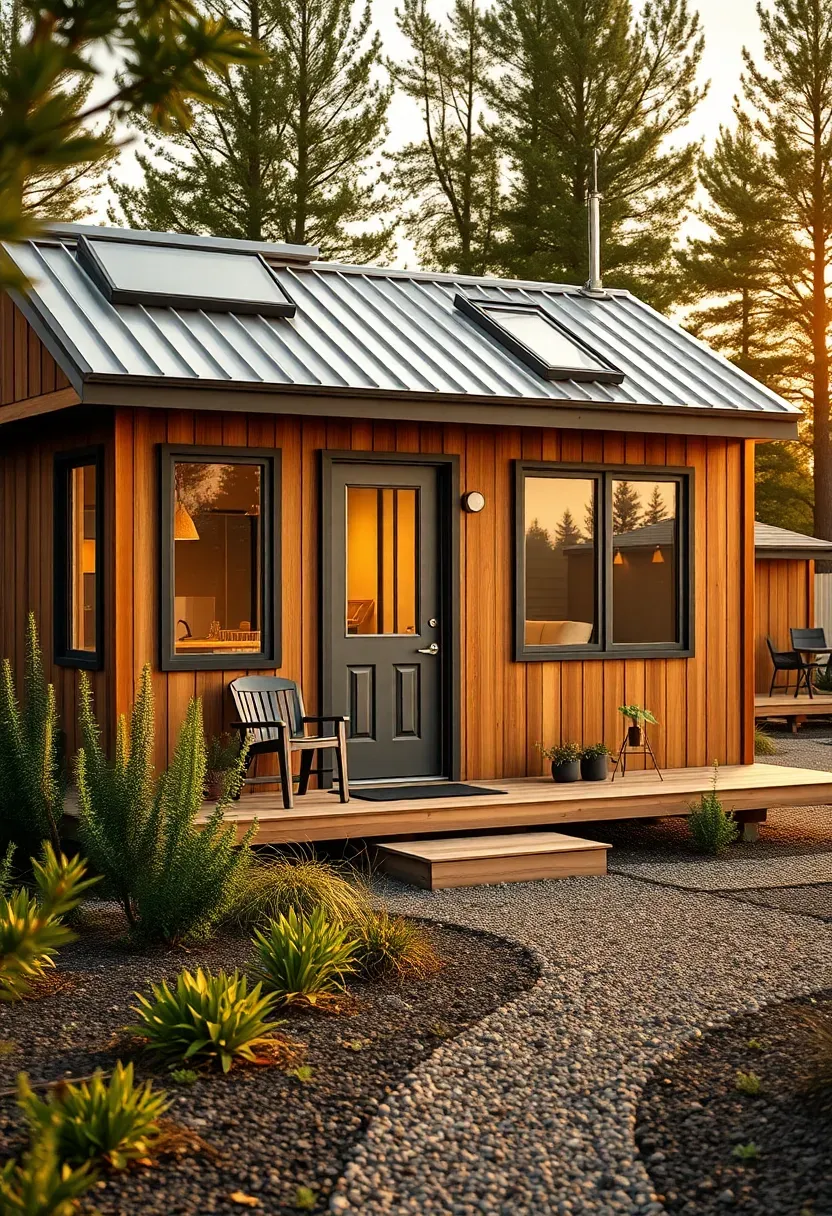
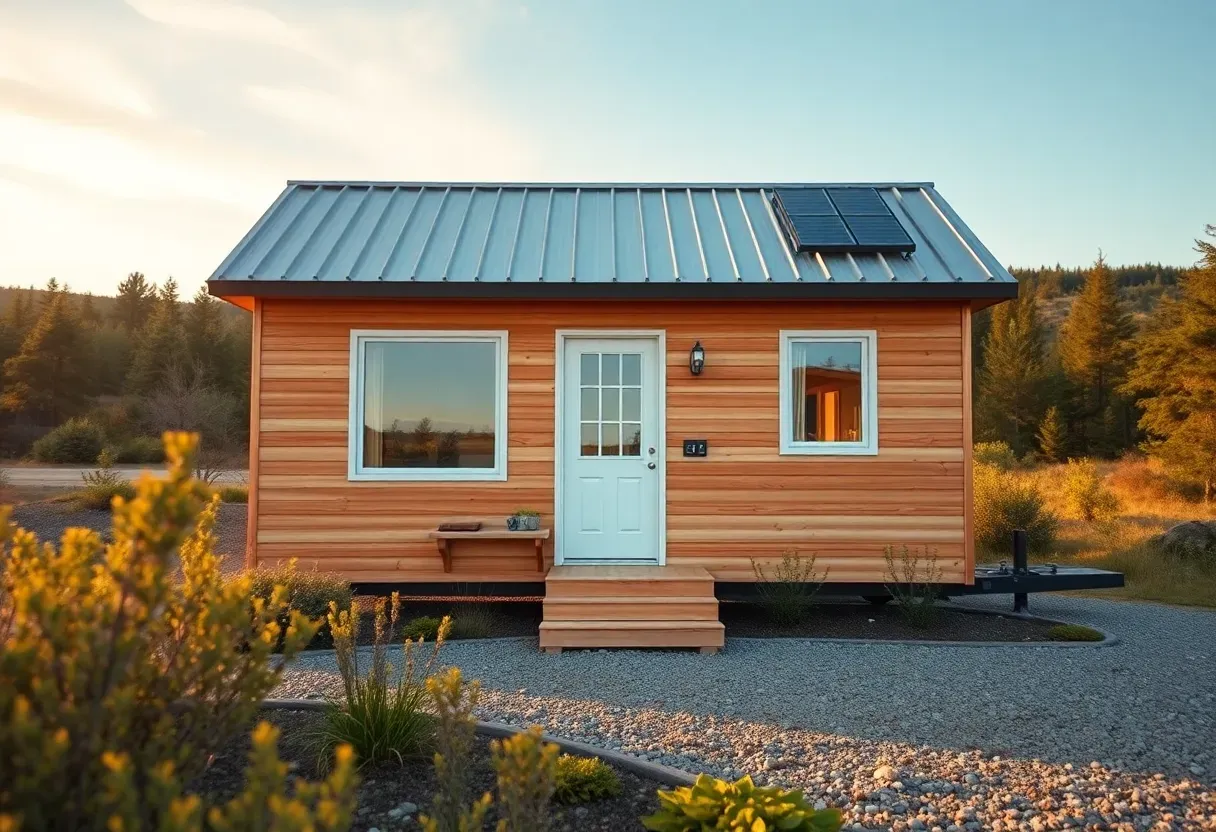
Hyper-realistic 3/4 view of modern tiny house exterior with warm wood siding, large windows, and solar panels on roof, surrounded by natural landscaping with native plants and gravel pathway. Materials: cedar plank siding, metal roofing, dual-pane windows, composite decking. Golden hour lighting with warm amber tones casting soft shadows across exterior, creating inviting atmosphere. Shallow depth of field focusing on entry door with small porch and built-in seating, visible garden beds and outdoor living area in background. Minimalist aesthetic with clean lines and thoughtful architectural details. No text, no logos, no watermarks.</p>
Tiny house living offers profound benefits that extend far beyond square footage, presenting opportunities for financial liberation, environmental stewardship, and intentional lifestyle design. The growing tiny house movement represents a fundamental shift toward valuing experiences over possessions, with residents reporting increased happiness, reduced stress, and stronger community connections.. Hyper-realistic 3/4 view of modern tiny house exterior with warm wood siding, large windows, and so
Prompt: Nature documentary captured on Hasselblad X2D 100C with XCD 90V lens at f/4. Hyper-realistic 3/4 view of modern tiny house exterior with warm wood siding, large windows, and solar panels on roof, surrounded by natural landscaping with native plants and gravel pathway. Materials: cedar plank siding, metal roofing, dual-pane windows, composite decking. Golden hour lighting with warm amber tones casting soft shadows across exterior, creating inviting atmosphere. Shallow depth of field focusing on entry door with small porch and built-in seating, visible garden beds and outdoor living area in background. Minimalist aesthetic with clean lines and thoughtful architectural details. No text, no logos, no watermarks.
Tips
- Calculate your current housing costs and project tiny house savings before committing—this motivates the downsizing process
- Consider financing options like personal loans or RV loans versus traditional mortgages, as tiny houses often don't qualify for conventional financing
- Factor in land costs whether purchasing or renting, as this significantly impacts overall financial freedom calculations
What this gives you: The ability to redirect $1,000-1,500 monthly toward savings, investments, or life experiences that truly matter to you.
2. Minimal Environmental Footprint and Sustainable Living
Tiny houses inherently embody sustainable living principles through their reduced material requirements and energy consumption, using approximately 30% of the resources needed for average-sized homes. Building a tiny house requires far fewer construction materials—typically 2-3 lumber trucks versus 10-12 for traditional homes—dramatically reducing embodied energy and environmental impact from the start. Daily living in a tiny house consumes significantly less energy for heating, cooling, and lighting, with most tiny house owners reporting utility bills under $100 monthly compared to national averages over $200.
Eco-conscious design elements like composting toilets, rainwater collection systems, and solar panel integration further reduce environmental impact while creating self-sufficient living systems. Many tiny house owners report their carbon footprint shrinking by 50-70% after downsizing, contributing meaningfully to environmental conservation while enjoying simpler, more conscious daily lives.
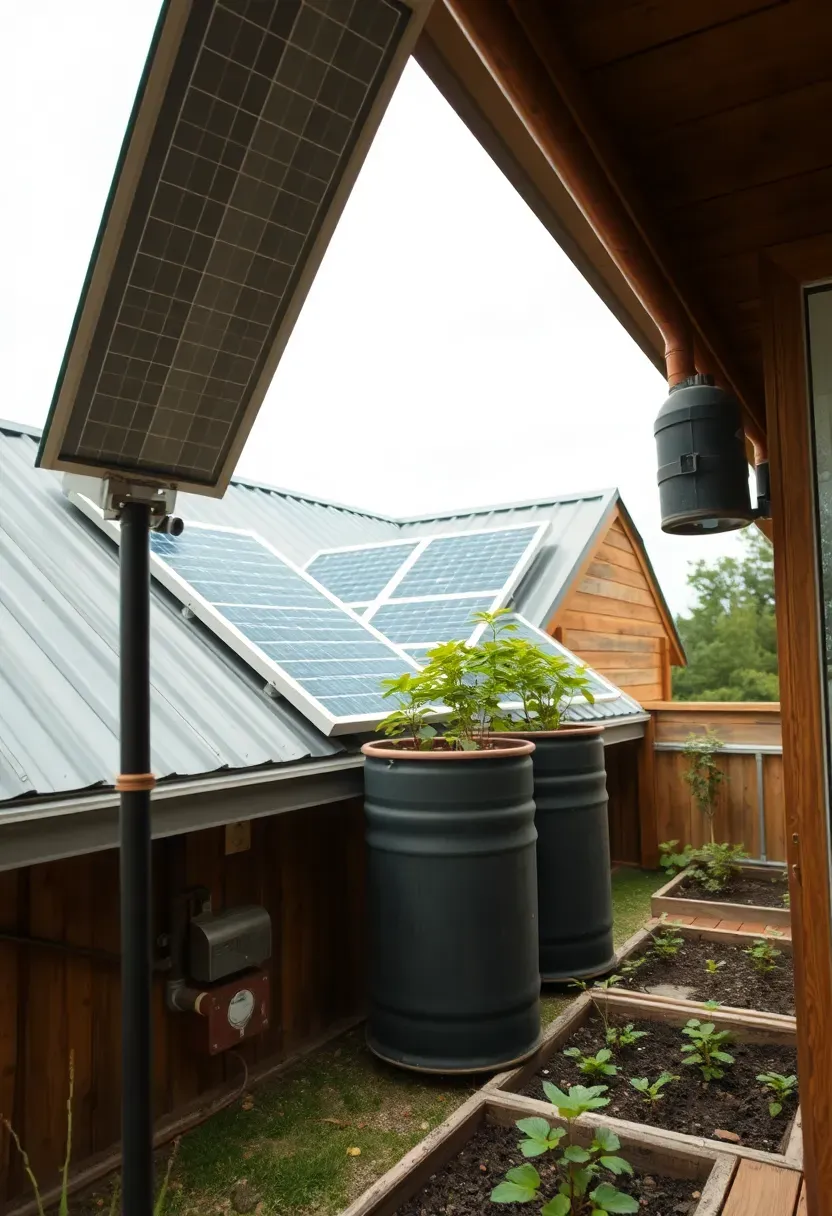
Hyper-realistic 3/4 view of tiny house with visible sustainable features including solar panels on roof, rainwater collection barrels at corner, and rooftop deck with native plants in containers. Materials: recycled metal roofing, reclaimed wood siding, visible copper piping for water collection, solar panel arrays with mounting hardware. Bright natural daylight from overcast sky creating even illumination across all surfaces, showing texture and detail of sustainable materials. Shallow depth of field focusing on solar panels and rain barrels, showing garden space and small vegetable beds in background with young plants. Clean environmental aesthetic with functional sustainability design. No text, no logos, no watermarks.</p>
Tiny house living offers profound benefits that extend far beyond square footage, presenting opportunities for financial liberation, environmental stewardship, and intentional lifestyle design. The growing tiny house movement represents a fundamental shift toward valuing experiences over possessions, with residents reporting increased happiness, reduced stress, and stronger community connections.. Hyper-realistic 3/4 view of tiny house with visible sustainable features including solar panels on
Prompt: Nature documentary captured on Hasselblad X2D 100C with XCD 90V lens at f/4. Hyper-realistic 3/4 view of tiny house with visible sustainable features including solar panels on roof, rainwater collection barrels at corner, and rooftop deck with native plants in containers. Materials: recycled metal roofing, reclaimed wood siding, visible copper piping for water collection, solar panel arrays with mounting hardware. Bright natural daylight from overcast sky creating even illumination across all surfaces, showing texture and detail of sustainable materials. Shallow depth of field focusing on solar panels and rain barrels, showing garden space and small vegetable beds in background with young plants. Clean environmental aesthetic with functional sustainability design. No text, no logos, no watermarks.
Tips
- Start with energy-efficient appliances and LED lighting—tiny spaces require fewer fixtures but quality matters more
- Consider passive solar design with window placement for natural heating and cooling, reducing mechanical system needs
- Research renewable energy options even if grid-tied initially—many tiny house owners add solar gradually as budget allows
Best for: Environmentally conscious individuals seeking to align housing choices with sustainability values while reducing monthly expenses.
What this gives you: Knowledge that your daily living actively contributes to environmental sustainability while saving money on utilities.
3. Simplified Lifestyle with Intentional Possessions
Living tiny forces deliberate curation of possessions, requiring each item to earn its place through beauty, utility, or sentimental value, resulting in a home filled only with things you genuinely love and use. The average American home contains 300,000 items, many unused or forgotten, while tiny house residents typically own fewer than 500 carefully selected possessions, eliminating decision fatigue and visual clutter. This intentional approach extends beyond physical objects to time management, as maintaining and organizing fewer possessions frees hours weekly for meaningful activities, relationships, and personal growth.
The downsizing process itself becomes transformative, forcing examination of true needs versus perceived requirements and revealing how much mental energy is consumed by managing excess belongings. Tiny house owners consistently report feeling lighter, freer, and more focused after shedding unnecessary possessions, discovering that quality truly trumps quantity when space constraints demand thoughtful selection.
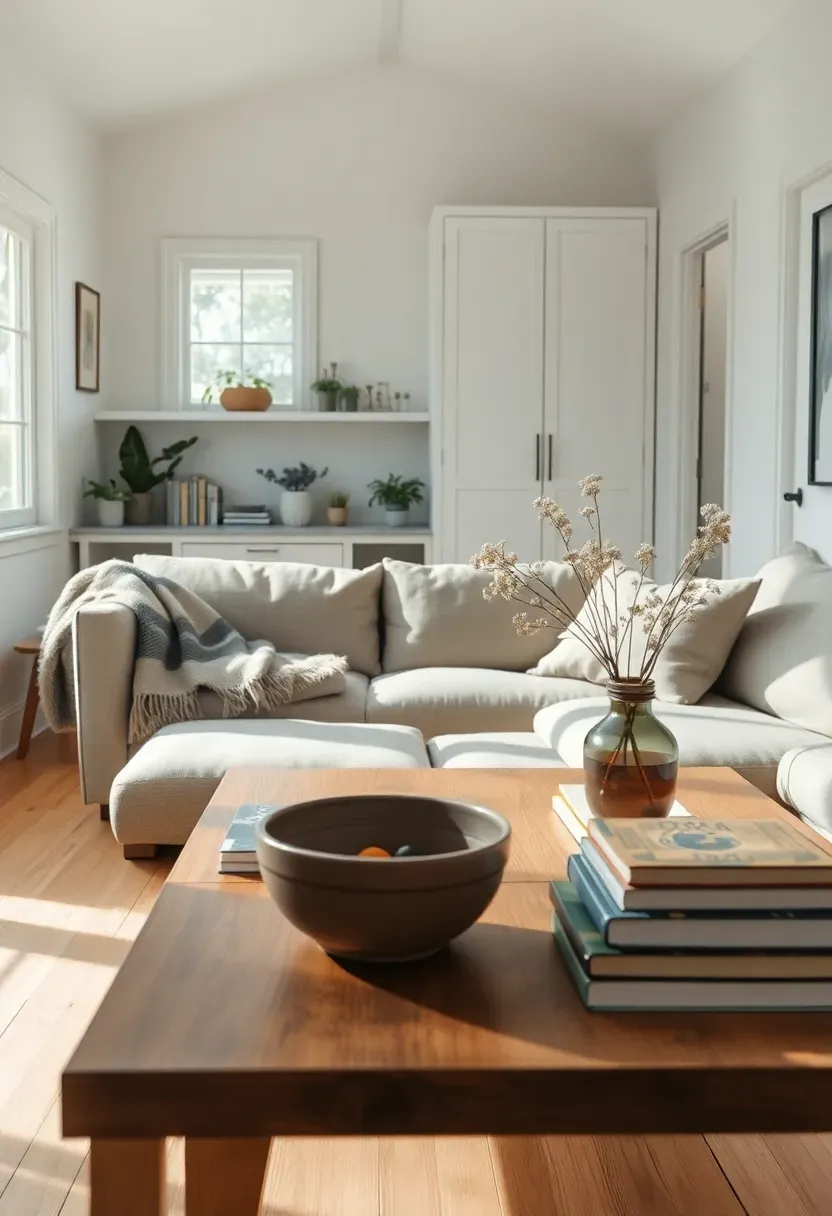
Hyper-realistic interior view of tiny house living area showing minimalist curated possessions with intentional placement. Materials: light wood floors, white walls, built-in shelving with carefully arranged books and plants, linen sofa with wool throw, ceramic bowl with fruit on wooden coffee table. Natural light from large windows creating bright airy atmosphere with soft shadows highlighting intentional object placement. Shallow depth of field focusing on coffee table arrangement with visible thoughtfully selected items including pottery, books, and single vase with wildflowers. Background shows built-in storage with closed cabinet doors maintaining clean visual aesthetic. Serene organized atmosphere. No text, no logos, no watermarks.</p>
Tiny house living offers profound benefits that extend far beyond square footage, presenting opportunities for financial liberation, environmental stewardship, and intentional lifestyle design. The growing tiny house movement represents a fundamental shift toward valuing experiences over possessions, with residents reporting increased happiness, reduced stress, and stronger community connections.. Hyper-realistic interior view of tiny house living area showing minimalist curated possessions with
Prompt: Nature documentary captured on Hasselblad X2D 100C with XCD 90V lens at f/4. Hyper-realistic interior view of tiny house living area showing minimalist curated possessions with intentional placement. Materials: light wood floors, white walls, built-in shelving with carefully arranged books and plants, linen sofa with wool throw, ceramic bowl with fruit on wooden coffee table. Natural light from large windows creating bright airy atmosphere with soft shadows highlighting intentional object placement. Shallow depth of field focusing on coffee table arrangement with visible thoughtfully selected items including pottery, books, and single vase with wildflowers. Background shows built-in storage with closed cabinet doors maintaining clean visual aesthetic. Serene organized atmosphere. No text, no logos, no watermarks.
Tips
- Apply the "one in, one out" rule strictly—each new item requires removing something existing, preventing accumulation
- Choose multi-functional pieces intentionally: storage ottomans, convertible tables, nesting items serve multiple purposes
- Seasonal rotation helps—store off-season items elsewhere if possible, keeping only current season's items accessible
What this gives you: A home environment where everything has purpose and brings joy, eliminating visual noise and decision fatigue from excessive choices.
4. More Free Time from Reduced Maintenance and Cleaning
Tiny houses dramatically reduce time spent on home maintenance and cleaning, with most tiny house owners completing full house cleaning in under one hour compared to 4-6 hours for average-sized homes. The simple math of fewer square feet translates directly to less vacuuming, dusting, and organizing, while simplified systems mean fewer repairs and maintenance tasks overall. This time reclamation amounts to 3-5 hours weekly that can be redirected toward hobbies, relationships, learning, or simply relaxing—activities that truly enrich life rather than maintaining excessive space.
Outdoor maintenance also decreases significantly, with tiny houses typically requiring minimal landscaping and smaller exterior surface areas for painting or repairs. Many tiny house owners report spending weekends hiking, creating art, or visiting friends rather than cleaning gutters, mowing large lawns, or maintaining unused rooms, fundamentally changing their relationship with home from time consumer to life enabler.
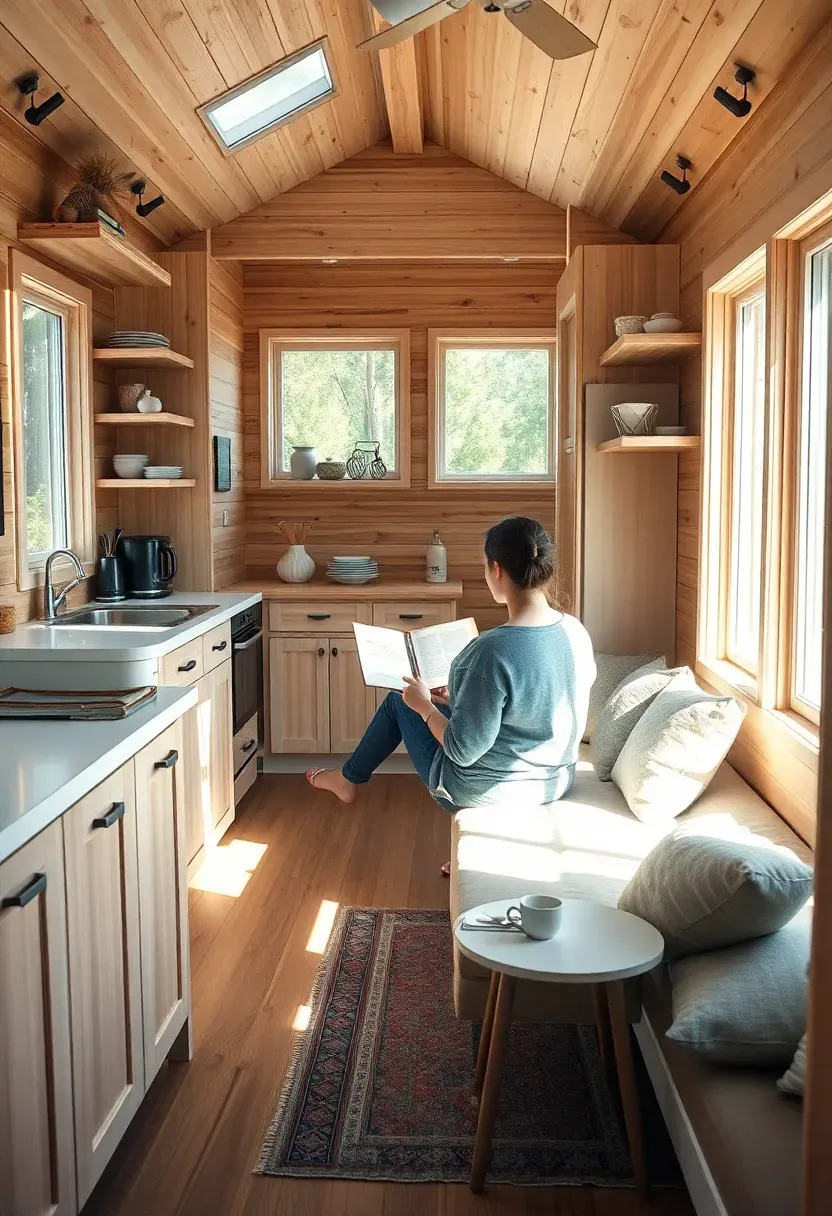
Hyper-realistic interior view of tiny house kitchen and living area showing person relaxing with book on comfortable built-in seating, visible small but functional kitchen space with open shelving and compact appliances. Materials: light wood cabinets, white countertops, wood floor with small colorful rug, linen cushions on built-in bench with throw pillows. Natural morning light streaming through windows creating bright cheerful atmosphere, person visible from back reading book with coffee cup on small table nearby. Shallow depth of field focusing on person and book, kitchen visible in background showing compact but organized space with few dishes visible. Peaceful relaxed living atmosphere. No text, no logos, no watermarks.</p>
Tiny house living offers profound benefits that extend far beyond square footage, presenting opportunities for financial liberation, environmental stewardship, and intentional lifestyle design. The growing tiny house movement represents a fundamental shift toward valuing experiences over possessions, with residents reporting increased happiness, reduced stress, and stronger community connections.. Hyper-realistic interior view of tiny house kitchen and living area showing person relaxing with bo
Prompt: Nature documentary captured on Hasselblad X2D 100C with XCD 90V lens at f/4. Hyper-realistic interior view of tiny house kitchen and living area showing person relaxing with book on comfortable built-in seating, visible small but functional kitchen space with open shelving and compact appliances. Materials: light wood cabinets, white countertops, wood floor with small colorful rug, linen cushions on built-in bench with throw pillows. Natural morning light streaming through windows creating bright cheerful atmosphere, person visible from back reading book with coffee cup on small table nearby. Shallow depth of field focusing on person and book, kitchen visible in background showing compact but organized space with few dishes visible. Peaceful relaxed living atmosphere. No text, no logos, no watermarks.
Tips
- Design systems that prevent mess: shoe storage at entry, dish drying racks near sink, designated places for daily items
- Embrace the "clean as you go" philosophy—tiny spaces make quick cleanup essential, preventing accumulation
- Choose low-maintenance materials: quartz countertops, wood-look tile flooring, mildew-resistant shower curtains reduce cleaning time
Best for: Busy professionals, artists, or anyone valuing experiences over home maintenance tasks.
What this gives you: 3-5 hours weekly reclaimed from cleaning and maintenance, available for activities that truly bring joy and fulfillment.
5. Mobility and Location Independence
Tiny houses on wheels offer unprecedented freedom to relocate without selling property, enabling lifestyle changes through geographic mobility that traditional homeownership cannot match. This mobility allows following career opportunities, escaping harsh winters, pursuing travel dreams, or simply finding the perfect community match without the financial and emotional burden of selling a conventional home. Many tiny house owners report living in multiple states or regions over several years, gaining diverse life experiences while housing costs remain predictable and minimal.
The ability to test different locations—urban, rural, coastal, mountain—without permanent commitment helps clarify genuine preferences for climate, culture, and community. Some tiny house dwellers follow seasonal patterns, spending summers in cooler mountain regions and winters in warmer climates, essentially creating permanent vacation lifestyles while maintaining stable housing costs and familiar personal space.
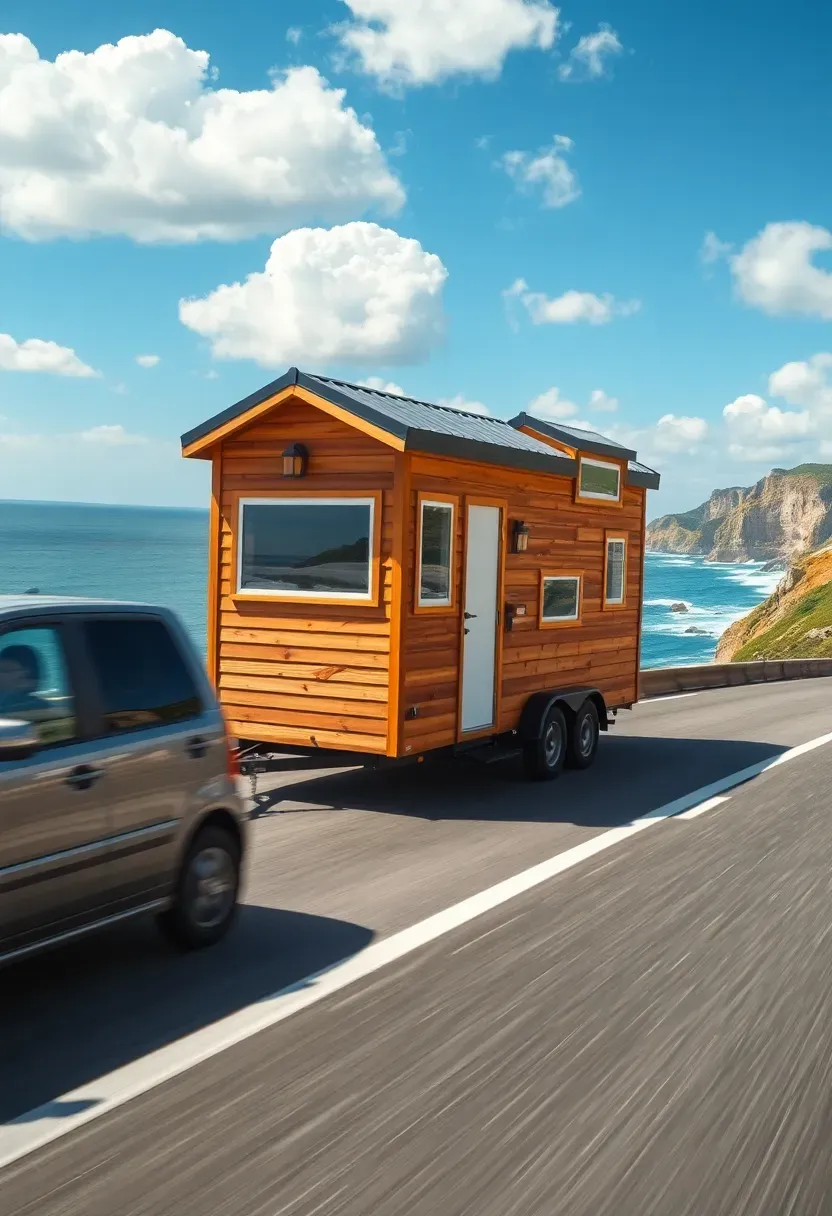
Hyper-realistic 3/4 view of tiny house on wheels being towed by truck on scenic coastal highway, ocean visible in background with cliffs and waves. Materials: modern tiny house with metal roof, wood siding, visible wheels and hitch, compact truck cab visible front, asphalt road with white lane markings. Midday sunlight with blue sky and puffy white clouds creating bright optimistic atmosphere, slight motion blur suggesting movement while maintaining sharp focus on tiny house. Shallow depth of field focusing on tiny house, coastal landscape visible in background with road winding along coastline. Freedom and adventure aesthetic with mobile lifestyle. No text, no logos, no watermarks.</p>
Tiny house living offers profound benefits that extend far beyond square footage, presenting opportunities for financial liberation, environmental stewardship, and intentional lifestyle design. The growing tiny house movement represents a fundamental shift toward valuing experiences over possessions, with residents reporting increased happiness, reduced stress, and stronger community connections.. Hyper-realistic 3/4 view of tiny house on wheels being towed by truck on scenic coastal highway, oc
Prompt: Nature documentary captured on Hasselblad X2D 100C with XCD 90V lens at f/4. Hyper-realistic 3/4 view of tiny house on wheels being towed by truck on scenic coastal highway, ocean visible in background with cliffs and waves. Materials: modern tiny house with metal roof, wood siding, visible wheels and hitch, compact truck cab visible front, asphalt road with white lane markings. Midday sunlight with blue sky and puffy white clouds creating bright optimistic atmosphere, slight motion blur suggesting movement while maintaining sharp focus on tiny house. Shallow depth of field focusing on tiny house, coastal landscape visible in background with road winding along coastline. Freedom and adventure aesthetic with mobile lifestyle. No text, no logos, no watermarks.
Tips
- Research tiny house-friendly locations before building—some areas have progressive codes while others prohibit tiny houses entirely
- Consider joining tiny house communities or networks for location recommendations and parking opportunities
- Build with transport in mind: secure all furniture, reinforce hanging items, design for regular movement without damage
What this gives you: Freedom to change geographic location without housing financial disruption, enabling lifestyle flexibility and exploration opportunities.
6. Stronger Community Connections and Relationships
Tiny house living naturally fosters community connections through necessity and design, as limited private space encourages utilization of shared spaces and engagement with neighbors. Many tiny house communities feature shared amenities like community gardens, workshop spaces, and communal kitchens, creating regular interaction opportunities that combat the isolation common in traditional suburban developments. The smaller scale of tiny house developments—typically 5-30 homes versus hundreds—enables genuine knowledge of neighbors' names, stories, and lives, rebuilding the social fabric often missing in modern housing developments.
Tiny house owners frequently report hosting gatherings in community spaces rather than individual homes, creating spontaneous social opportunities and shared experiences that strengthen community bonds. The shared experience of alternative living choices also creates instant connection among tiny house dwellers, providing mutual support, knowledge exchange, and friendship based on shared values rather than just geographic proximity.
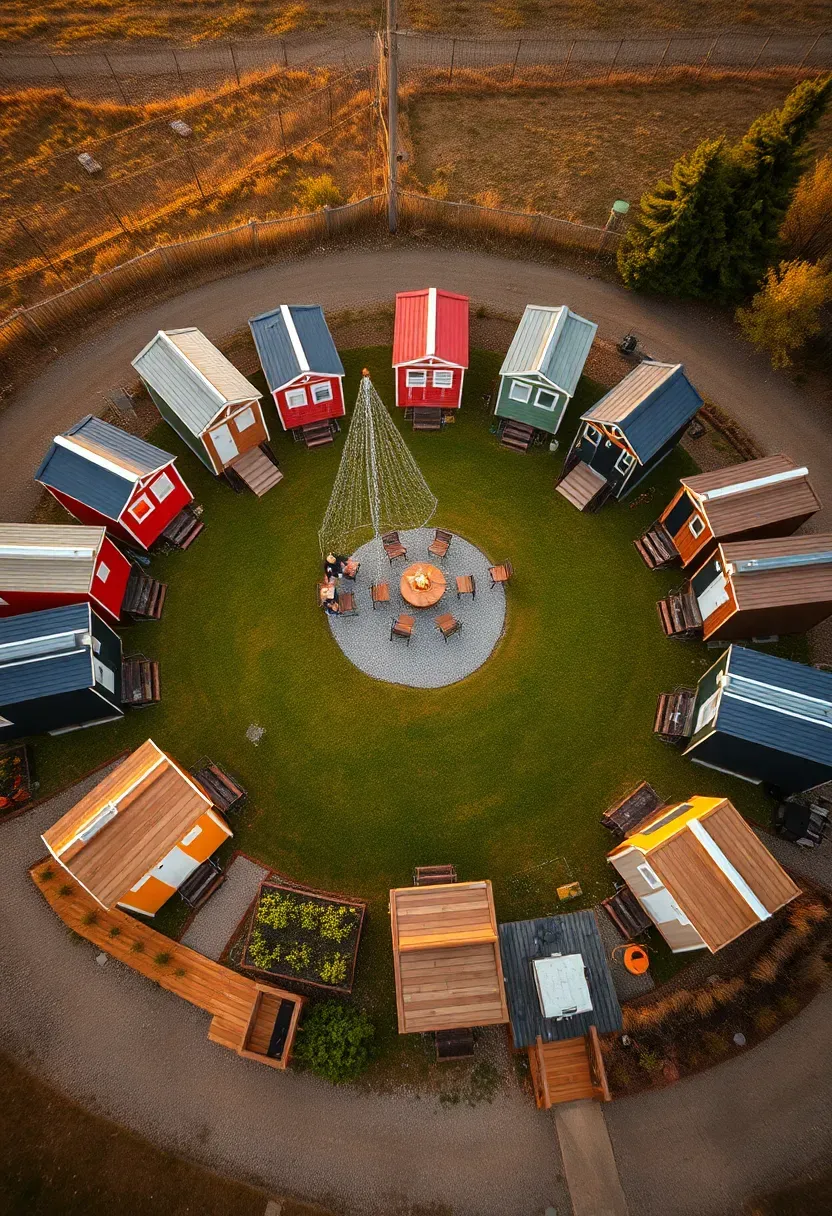
Hyper-realistic aerial view of tiny house community showing 8-10 tiny houses arranged in circle around central community green space with fire pit, picnic tables, and community garden beds. Materials: variety of tiny house designs with different colored siding and roofing, gravel pathways connecting homes, wooden community deck with seating, raised garden beds with young plants. Golden hour lighting with long warm shadows stretching across community space, creating inviting atmosphere for gathering. Shallow depth of field focusing on central community space, individual tiny houses visible in surrounding circle showing variety of designs. Connected community aesthetic with intentional social design. No text, no logos, no watermarks.</p>
Tiny house living offers profound benefits that extend far beyond square footage, presenting opportunities for financial liberation, environmental stewardship, and intentional lifestyle design. The growing tiny house movement represents a fundamental shift toward valuing experiences over possessions, with residents reporting increased happiness, reduced stress, and stronger community connections.. Hyper-realistic aerial view of tiny house community showing 8-10 tiny houses arranged in circle aro
Prompt: Nature documentary captured on Hasselblad X2D 100C with XCD 90V lens at f/4. Hyper-realistic aerial view of tiny house community showing 8-10 tiny houses arranged in circle around central community green space with fire pit, picnic tables, and community garden beds. Materials: variety of tiny house designs with different colored siding and roofing, gravel pathways connecting homes, wooden community deck with seating, raised garden beds with young plants. Golden hour lighting with long warm shadows stretching across community space, creating inviting atmosphere for gathering. Shallow depth of field focusing on central community space, individual tiny houses visible in surrounding circle showing variety of designs. Connected community aesthetic with intentional social design. No text, no logos, no watermarks.
Tips
- If building community, prioritize shared spaces: communal kitchens, workshops, laundry facilities become natural gathering spots
- Organize regular events: potluck dinners, work parties, skill-sharing sessions build community connections intentionally
- Design homes to encourage outdoor living: porches, decks, and outdoor seating create natural neighbor interaction opportunities
Best for: Social individuals seeking genuine community connections rather than isolated suburban living.
What this gives you: Built-in social network and meaningful relationships with neighbors who share alternative housing values and lifestyle choices.
7. Reduced Stress and Mental Clarity
Tiny house living consistently reports dramatic stress reduction through simplified surroundings and reduced financial pressure, creating mental space and clarity that spacious but clutter-filled homes cannot provide. The elimination of visual clutter—piles of unused items, overstuffed closets, rooms requiring constant attention—reduces cognitive load and background anxiety, while lower financial overhead eliminates mortgage stress and utility bill worries. Many tiny house owners report improved sleep, better focus, and reduced anxiety within months of downsizing, attributing these improvements to the calming effect of simplified spaces and reduced financial pressure.
The minimalist mindset cultivated by tiny living extends beyond physical possessions to mental habits, with many residents reporting increased present-moment awareness and appreciation for simple pleasures. The intentional life required by tiny spaces forces regular evaluation of what truly matters, creating ongoing clarity about priorities and values that crowded, expensive homes often obscure.
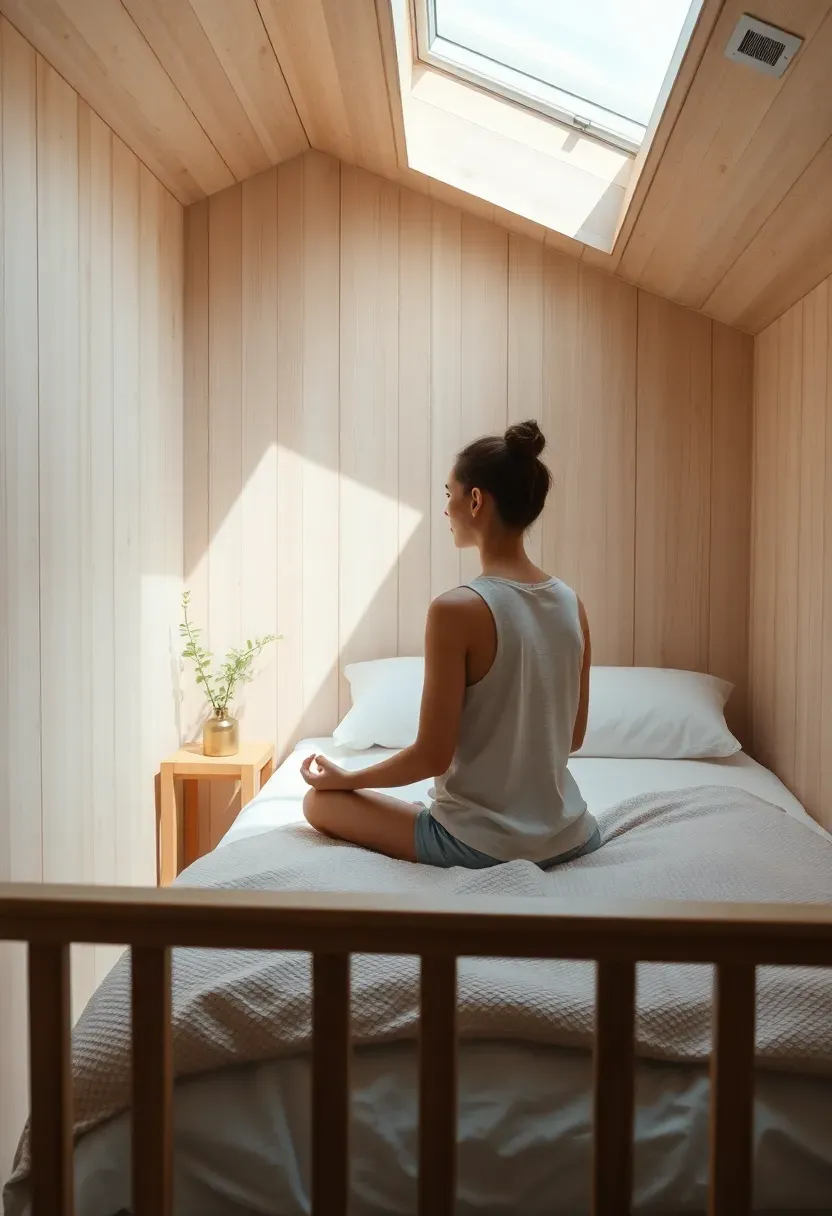
Hyper-realistic interior view of tiny house bedroom loft showing peaceful minimalist sleeping space with person sitting cross-legged on bed in meditation pose. Materials: light wood walls, white linens with textured blanket, small bedside table with single plant and meditation bell, visible skylight above letting in soft natural light. Soft diffused morning light creating serene tranquil atmosphere, person visible from side in relaxed meditative posture. Shallow depth of field focusing on person and bed, loft railing visible at edge showing simple design with wood slats. Peaceful mindful living aesthetic. No text, no logos, no watermarks.</p>
Tiny house living offers profound benefits that extend far beyond square footage, presenting opportunities for financial liberation, environmental stewardship, and intentional lifestyle design. The growing tiny house movement represents a fundamental shift toward valuing experiences over possessions, with residents reporting increased happiness, reduced stress, and stronger community connections.. Hyper-realistic interior view of tiny house bedroom loft showing peaceful minimalist sleeping space
Prompt: Nature documentary captured on Hasselblad X2D 100C with XCD 90V lens at f/4. Hyper-realistic interior view of tiny house bedroom loft showing peaceful minimalist sleeping space with person sitting cross-legged on bed in meditation pose. Materials: light wood walls, white linens with textured blanket, small bedside table with single plant and meditation bell, visible skylight above letting in soft natural light. Soft diffused morning light creating serene tranquil atmosphere, person visible from side in relaxed meditative posture. Shallow depth of field focusing on person and bed, loft railing visible at edge showing simple design with wood slats. Peaceful mindful living aesthetic. No text, no logos, no watermarks.
Tips
- Design calm spaces: neutral colors, natural materials, limited visual stimulation creates peaceful environments
- Create daily rituals: morning coffee, evening reading, weekly organizing maintains mental clarity through routine
- Embrace natural light: large windows and skylights connect living space to outdoors, reducing stress through nature connection
What this gives you: Reduced anxiety and improved mental clarity through simplified surroundings and eliminated financial housing stress.
8. Custom Design That Reflects Your Values
Tiny houses offer unparalleled opportunity for custom design that genuinely reflects personal values and lifestyle priorities, unlike mass-produced housing designed for generic appeal. Every design decision—from loft height to staircase type to window placement—can optimize for what matters most to you: natural light, workspace functionality, social entertaining, or creative pursuits. This level of personalization creates homes that feel like authentic expressions of self rather than generic dwelling spaces, with many tiny house owners reporting stronger connections to their homes than traditional houses they've owned.
The design process itself becomes deeply introspective, forcing examination of daily routines and genuine needs versus assumed requirements based on marketing or social expectations. Questions about how you actually live—cooking frequency, entertaining patterns, work habits, bathing preferences—drive design decisions that create homes supporting authentic lifestyles rather than idealized versions.
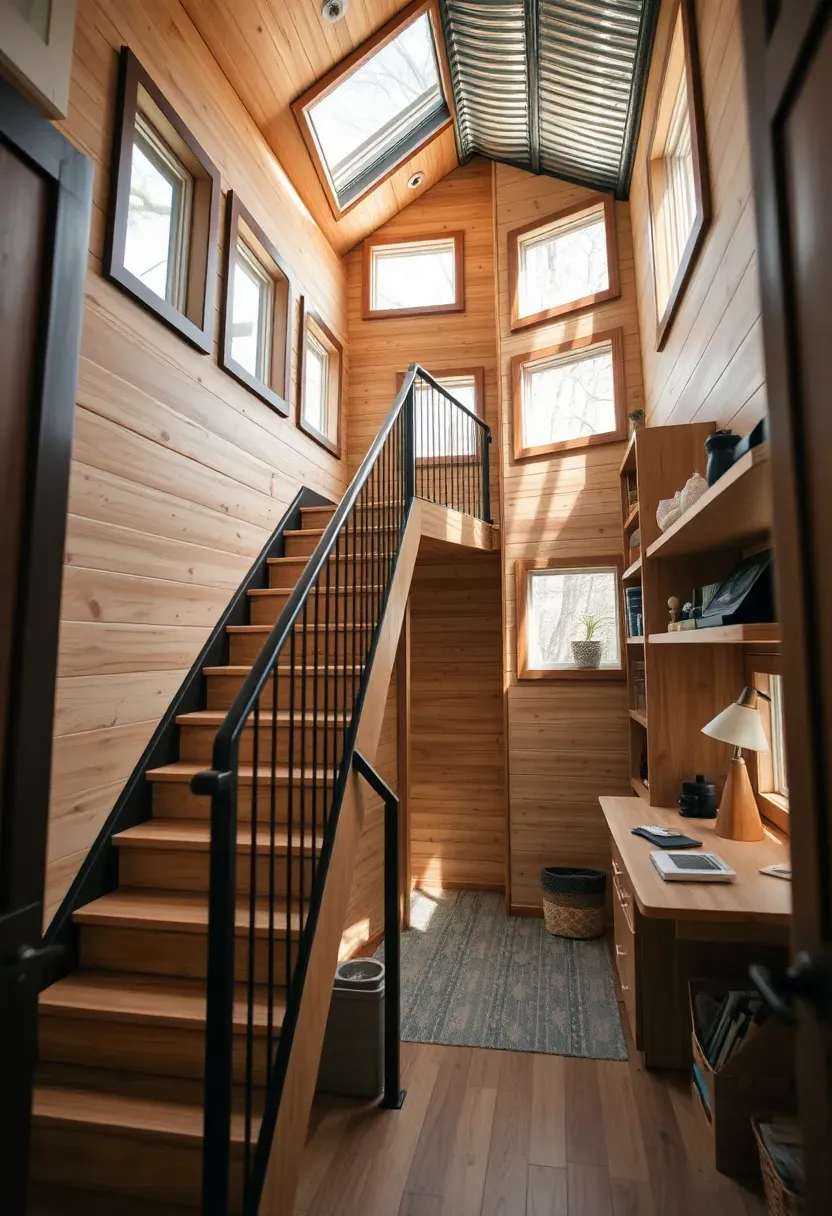
Hyper-realistic interior view of tiny house showing unique custom design features including curved staircase with built-in storage, custom built-in desk with hidden compartments, and artistic window placement creating architectural interest. Materials: light wood with dark trim, custom metalwork on staircase railing, built-in shelving with integrated lighting, corrugated metal ceiling accent. Natural light from multiple windows at different heights creating dynamic lighting patterns, showing architectural design intentionality. Shallow depth of field focusing on custom staircase and storage features, desk area visible in background with computer and artistic supplies. Unique personalized design aesthetic. No text, no logos, no watermarks.</p>
Tiny house living offers profound benefits that extend far beyond square footage, presenting opportunities for financial liberation, environmental stewardship, and intentional lifestyle design. The growing tiny house movement represents a fundamental shift toward valuing experiences over possessions, with residents reporting increased happiness, reduced stress, and stronger community connections.. Hyper-realistic interior view of tiny house showing unique custom design features including curved
Prompt: Nature documentary captured on Hasselblad X2D 100C with XCD 90V lens at f/4. Hyper-realistic interior view of tiny house showing unique custom design features including curved staircase with built-in storage, custom built-in desk with hidden compartments, and artistic window placement creating architectural interest. Materials: light wood with dark trim, custom metalwork on staircase railing, built-in shelving with integrated lighting, corrugated metal ceiling accent. Natural light from multiple windows at different heights creating dynamic lighting patterns, showing architectural design intentionality. Shallow depth of field focusing on custom staircase and storage features, desk area visible in background with computer and artistic supplies. Unique personalized design aesthetic. No text, no logos, no watermarks.
Tips
- Document your actual daily routines for a week before designing—this reveals genuine needs versus aspirational habits
- Prioritize 3-5 non-negotiable features and compromise elsewhere—perfect tiny houses require trade-offs
- Build in flexibility for life changes: convertible spaces, modular furniture, adaptable systems accommodate future needs
Best for: Creative individuals seeking homes that genuinely reflect unique lifestyles and values rather than generic housing templates.
What this gives you: A home designed specifically for how you actually live, creating perfect alignment between space and daily life.
9. Lower Utility Bills and Energy Efficiency
Tiny houses dramatically reduce monthly utility costs through simple physics—less space requires less energy to heat, cool, and illuminate, resulting in utility bills typically under $100 monthly compared to national averages exceeding $200. The reduced volume means faster heating/cooling response times, allowing targeted temperature control only where needed rather than maintaining even temperatures throughout unused rooms. Many tiny house owners report heating entire homes with single space heaters or mini-split systems costing $30-50 monthly in winter, while summer cooling costs often stay under $40 due to minimal square footage and natural ventilation strategies.
Energy efficiency extends beyond temperature control to water usage, with tiny house bathrooms typically featuring low-flow fixtures and showerheads that reduce water consumption by 40-60% compared to traditional fixtures. The compact size also enablesLED lighting throughout without overwhelming illumination needs, further reducing electrical consumption while providing excellent lighting quality through strategic fixture placement.
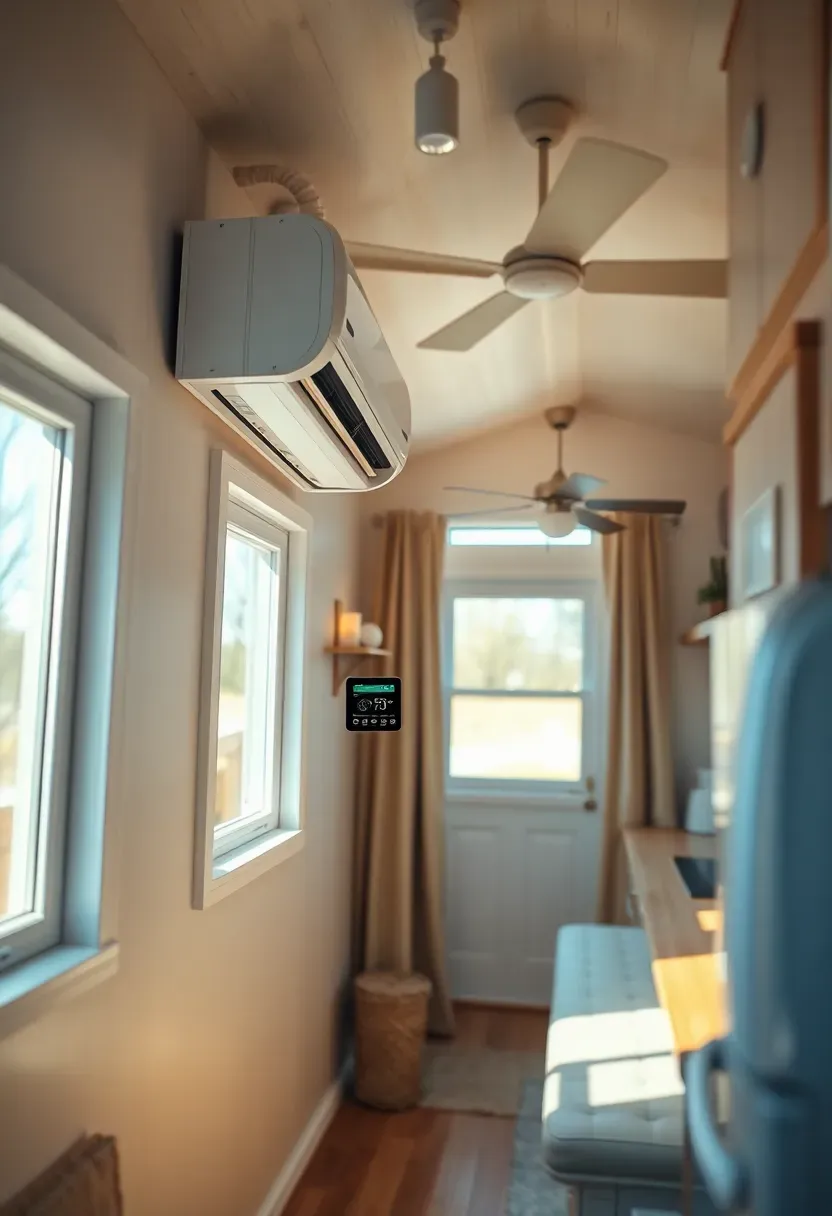
Hyper-realistic interior view of tiny house showing energy-efficient features including mini-split heating/cooling unit on wall, LED track lighting, and visible energy monitor display showing low consumption. Materials: light walls with good insulation visible, double-pane windows with thermal curtains, modern energy-efficient appliances, small ceiling fan. Natural light from windows supplemented by LED lighting creating bright energy-efficient atmosphere. Shallow depth of field focusing on energy monitor and thermostat, mini-split unit and efficient lighting visible in background showing energy-conscious design. Sustainable technology aesthetic. No text, no logos, no watermarks.</p>
Tiny house living offers profound benefits that extend far beyond square footage, presenting opportunities for financial liberation, environmental stewardship, and intentional lifestyle design. The growing tiny house movement represents a fundamental shift toward valuing experiences over possessions, with residents reporting increased happiness, reduced stress, and stronger community connections.. Hyper-realistic interior view of tiny house showing energy-efficient features including mini-split
Prompt: Nature documentary captured on Hasselblad X2D 100C with XCD 90V lens at f/4. Hyper-realistic interior view of tiny house showing energy-efficient features including mini-split heating/cooling unit on wall, LED track lighting, and visible energy monitor display showing low consumption. Materials: light walls with good insulation visible, double-pane windows with thermal curtains, modern energy-efficient appliances, small ceiling fan. Natural light from windows supplemented by LED lighting creating bright energy-efficient atmosphere. Shallow depth of field focusing on energy monitor and thermostat, mini-split unit and efficient lighting visible in background showing energy-conscious design. Sustainable technology aesthetic. No text, no logos, no watermarks.
Tips
- Invest in superior insulation—R-value matters more in tiny spaces where every thermal bridge impacts overall efficiency
- Choose Energy Star-rated appliances even if more expensive initially—payback period is much faster in tiny houses
- Install programmable thermostats and smart plugs for energy monitoring and automation, identifying usage patterns
What this gives you: Monthly utility savings of $100-150 compared to average homes, reducing ongoing living costs while minimizing environmental impact.
10. Opportunity for Debt-Free Living
Tiny houses offer realistic pathways to debt-free homeownership that traditional housing cannot match, with many tiny house owners paying off their entire home cost within 3-7 years rather than 30-year mortgage terms. The average traditional home costs $350,000 requiring $70,000 down and $280,000 mortgage debt, while quality tiny houses cost $30,000-80,000 total, often allowing purchase with cash or short-term personal loans. This dramatic difference enables debt-free homeownership at younger ages or with lower incomes, fundamentally changing financial trajectories and life possibilities.
The psychological impact of debt-free living cannot be overstated—without mortgage payments hanging over heads for decades, career choices become more flexible, emergency savings accumulate faster, and overall financial anxiety decreases substantially. Many tiny house owners report starting businesses, pursuing education, or changing careers entirely because debt-free living created freedom from mandatory high income requirements.
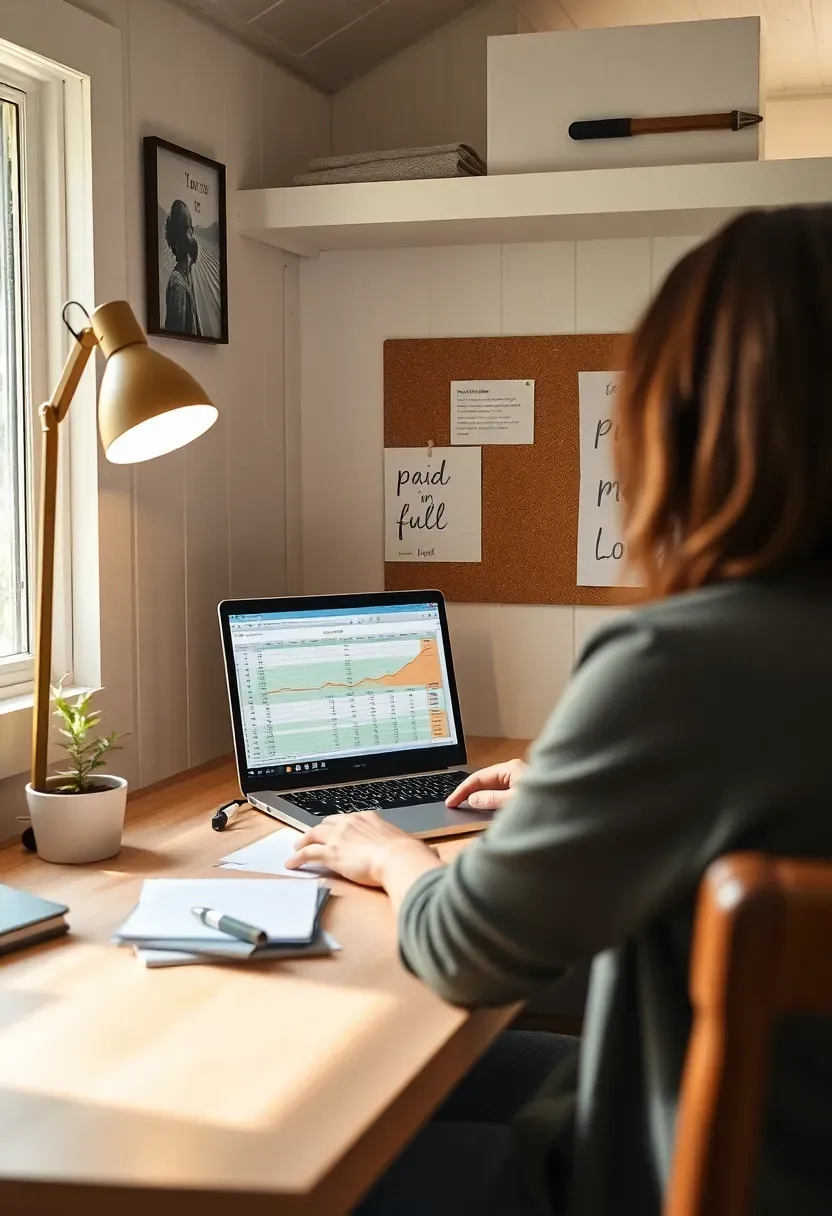
Hyper-realistic interior view of tiny house showing person at built-in desk with laptop open to spreadsheet showing financial progress, visible
Tiny house living offers profound benefits that extend far beyond square footage, presenting opportunities for financial liberation, environmental stewardship, and intentional lifestyle design. The growing tiny house movement represents a fundamental shift toward valuing experiences over possessions, with residents reporting increased happiness, reduced stress, and stronger community connections.. Hyper-realistic interior view of tiny house showing person at built-in desk with laptop open to spr
Prompt: Nature documentary captured on Hasselblad X2D 100C with XCD 90V lens at f/4. Hyper-realistic interior view of tiny house showing person at built-in desk with laptop open to spreadsheet showing financial progress, visible "paid in full" certificate on wall, small plant and inspirational quote nearby. Materials: light wood desk surface, white walls with cork board for planning, comfortable chair, LED desk lamp with warm light, visible built-in storage above desk. Natural light from window creating bright productive workspace atmosphere. Shallow depth of field focusing on laptop screen and certificate, desk surface showing organized paperwork and planner. Financial freedom and accomplishment aesthetic. No text, no logos, no watermarks.
Tips
- Start with smaller builds or DIY to keep costs manageable—debt-free living requires keeping total costs truly affordable
- Consider phased construction: build shell first, finish interior gradually as cash allows, avoiding loans entirely
- Research alternative financing: personal loans, RV loans, or builder financing may offer better terms than traditional mortgages
Best for: Anyone seeking freedom from mortgage debt and the life flexibility that comes with debt-free homeownership.
What this gives you: Freedom from 30-year mortgage commitments, enabling career flexibility, reduced stress, and accelerated wealth building through debt-free living.
11. Enhanced Creativity in Small Space Solutions
Tiny house living demands creative problem-solving that transforms ordinary homeowners into innovative space designers, fostering creativity that spills over into other life areas. The challenge of fitting complete life functionality into minimal square feet inspires ingenious solutions: convertible furniture, hidden storage, multi-purpose spaces, and vertical organization systems that rival professional space-saving designs. This creative engagement with living space creates deeper connection to home and satisfaction through personal innovation, rather than passively accepting standard housing solutions.
The creativity developed through tiny living often extends to other life areas—cooking with limited pantry space, entertaining in small quarters, working from compact home offices—creating resourcefulness and adaptability as core life skills. Many tiny house owners report becoming more creative problem-solvers overall, applying lessons learned from space constraints to work challenges, relationship dynamics, and personal projects.
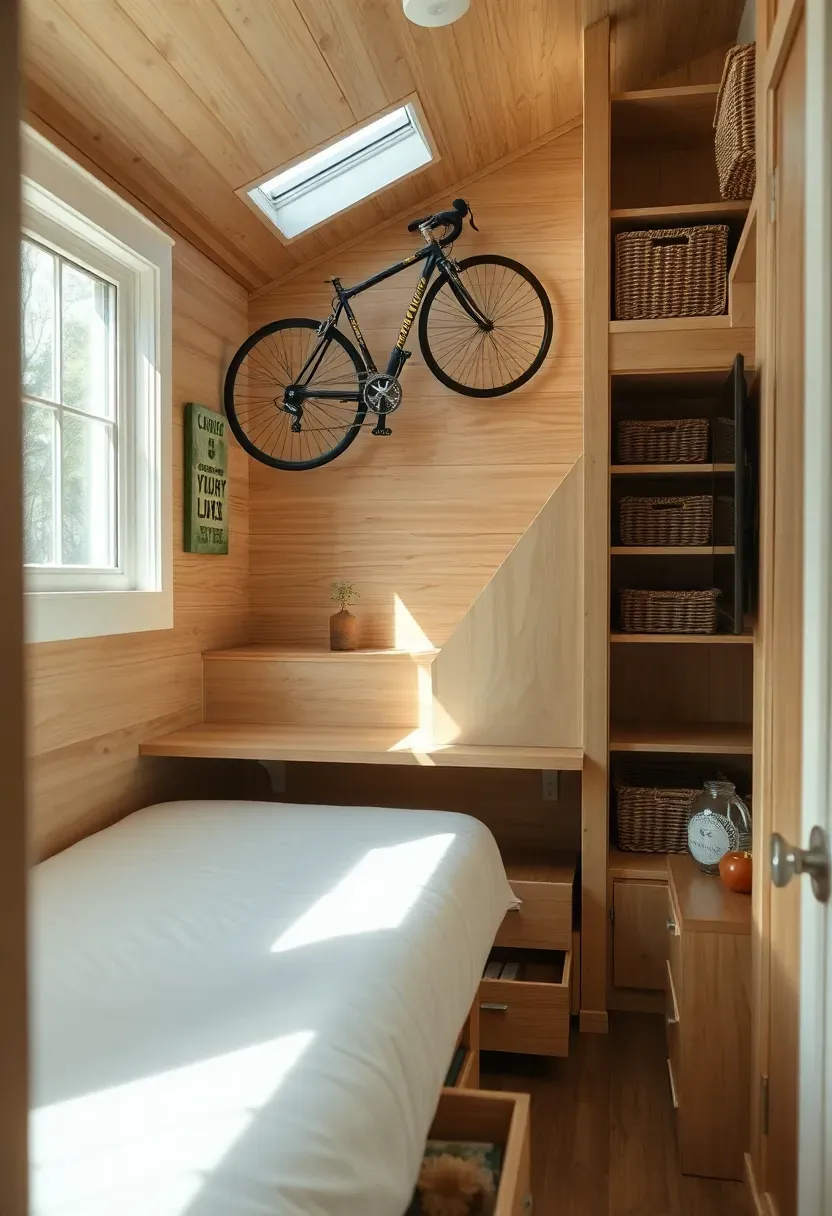
Hyper-realistic interior view of tiny house showing creative space solutions including murphy bed that folds into desk when closed, hidden storage under stairs with pull-out drawers, and vertical wall-mounted bicycle storage. Materials: light wood with white trim, murphy bed mechanism visible when folded, bicycle mounted on wall as art piece, built-in shelving with baskets for storage. Natural daylight creating bright atmosphere showing innovative design solutions. Shallow depth of field focusing on murphy bed/desk conversion mechanism, bicycle storage and stair storage visible in background showing creative multi-use design. Innovative space-saving aesthetic. No text, no logos, no watermarks.</p>
Tiny house living offers profound benefits that extend far beyond square footage, presenting opportunities for financial liberation, environmental stewardship, and intentional lifestyle design. The growing tiny house movement represents a fundamental shift toward valuing experiences over possessions, with residents reporting increased happiness, reduced stress, and stronger community connections.. Hyper-realistic interior view of tiny house showing creative space solutions including murphy bed t
Prompt: Nature documentary captured on Hasselblad X2D 100C with XCD 90V lens at f/4. Hyper-realistic interior view of tiny house showing creative space solutions including murphy bed that folds into desk when closed, hidden storage under stairs with pull-out drawers, and vertical wall-mounted bicycle storage. Materials: light wood with white trim, murphy bed mechanism visible when folded, bicycle mounted on wall as art piece, built-in shelving with baskets for storage. Natural daylight creating bright atmosphere showing innovative design solutions. Shallow depth of field focusing on murphy bed/desk conversion mechanism, bicycle storage and stair storage visible in background showing creative multi-use design. Innovative space-saving aesthetic. No text, no logos, no watermarks.
Tips
- Study RV and boat design for space-saving inspiration—these industries have perfected compact living systems
- Think vertically: walls offer storage potential from floor to ceiling, not just horizontal surface area
- Embrace convertible furniture: beds become desks, tables expand for dining, stairs store items—multi-function maximizes utility
What this gives you: Enhanced creative problem-solving skills and the satisfaction of designing personalized solutions that make small spaces function beautifully.
12. Greater Appreciation for Outdoor Living
Tiny houses naturally extend living space outdoors through necessity, creating deeper connection to nature and seasonal rhythms that indoor-focused housing obscures. When indoor space is limited, outdoor areas become essential rooms for relaxation, entertaining, dining, and working, blurring boundaries between inside and outside while increasing time spent in fresh air and natural light. This expanded living zone effectively doubles usable space during favorable weather while creating stronger awareness of seasonal changes, weather patterns, and natural cycles.
Many tiny house owners report spending 50-70% more time outdoors than in traditional housing, with decks, patios, and garden spaces becoming primary living areas rather than occasional amenities. This outdoor connection improves mental health, increases physical activity, and creates more dynamic living patterns that adapt to weather and seasons rather than climate-controlled isolation from natural environment.
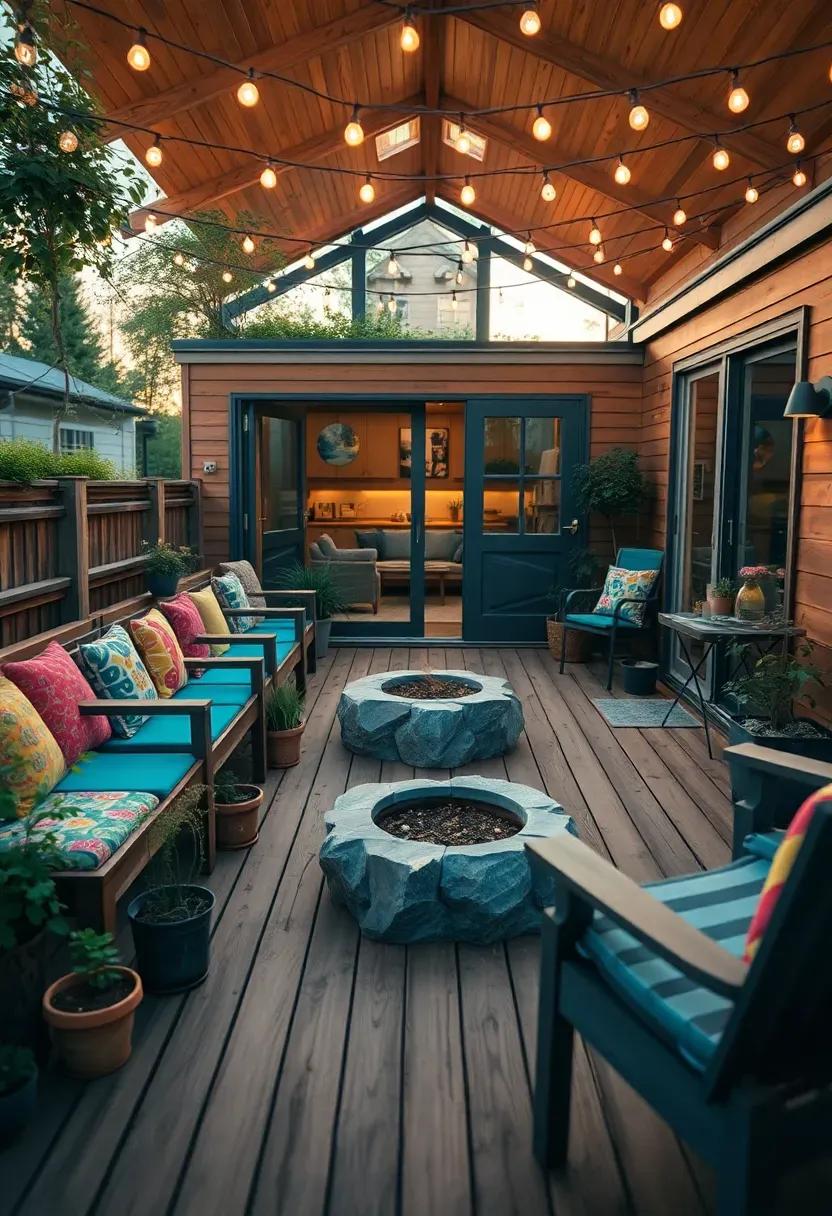
Hyper-realistic 3/4 view of tiny house with extensive outdoor living space including large deck with outdoor furniture, string lights overhead, container garden with vegetables and herbs, and fire pit area with seating. Materials: wood decking with built-in benches, colorful outdoor cushions, potted plants at various heights, small fire pit with stone surround, tiny house with large glass doors opening onto deck. Golden hour lighting with warm sunset colors creating magical outdoor living atmosphere, tiny house interior visible through glass doors. Shallow depth of field focusing on deck seating and fire pit area, tiny house and garden visible in background. Outdoor living sanctuary aesthetic. No text, no logos, no watermarks.</p>
Tiny house living offers profound benefits that extend far beyond square footage, presenting opportunities for financial liberation, environmental stewardship, and intentional lifestyle design. The growing tiny house movement represents a fundamental shift toward valuing experiences over possessions, with residents reporting increased happiness, reduced stress, and stronger community connections.. Hyper-realistic 3/4 view of tiny house with extensive outdoor living space including large deck wit
Prompt: Nature documentary captured on Hasselblad X2D 100C with XCD 90V lens at f/4. Hyper-realistic 3/4 view of tiny house with extensive outdoor living space including large deck with outdoor furniture, string lights overhead, container garden with vegetables and herbs, and fire pit area with seating. Materials: wood decking with built-in benches, colorful outdoor cushions, potted plants at various heights, small fire pit with stone surround, tiny house with large glass doors opening onto deck. Golden hour lighting with warm sunset colors creating magical outdoor living atmosphere, tiny house interior visible through glass doors. Shallow depth of field focusing on deck seating and fire pit area, tiny house and garden visible in background. Outdoor living sanctuary aesthetic. No text, no logos, no watermarks.
Tips
- Design indoor-outdoor transitions: large glass doors, covered decks, and outdoor seating areas make outdoor spaces feel like rooms
- Invest in quality outdoor furniture and weather protection—comfortable outdoor spaces become primary living areas, not just occasional use
- Create climate flexibility: shade structures for summer, heat sources for winter, weather-resistant materials extend outdoor season
Best for: Nature lovers who want their home to facilitate outdoor living rather than separate them from natural environment.
What this gives you: Effectively doubled living space during favorable weather and deeper connection to natural cycles through daily outdoor living.
13. Reduced Consumption and Mindful Spending
Tiny house living naturally enforces mindful consumption through limited storage capacity, making each purchase decision deliberate and considered rather than impulse-driven. When new acquisitions require removing existing items due to space constraints, purchasing becomes intentional rather than habitual, leading to 50-70% reduction in unnecessary spending according to surveys of tiny house owners. This space-forced mindfulness extends beyond possessions to experiences, entertainment, and activities, with tiny house owners consistently reporting increased satisfaction from fewer but higher-quality choices.
The financial impact extends beyond reduced spending to increased spending quality—when each purchase must justify its space consumption, tiny house owners naturally gravitate toward durable, beautiful, multi-functional items rather than disposable or single-purpose goods. This shift from quantity to quality creates homes filled with belongings that truly work, look beautiful, and bring joy rather than clutter and frustration from poor purchasing decisions.
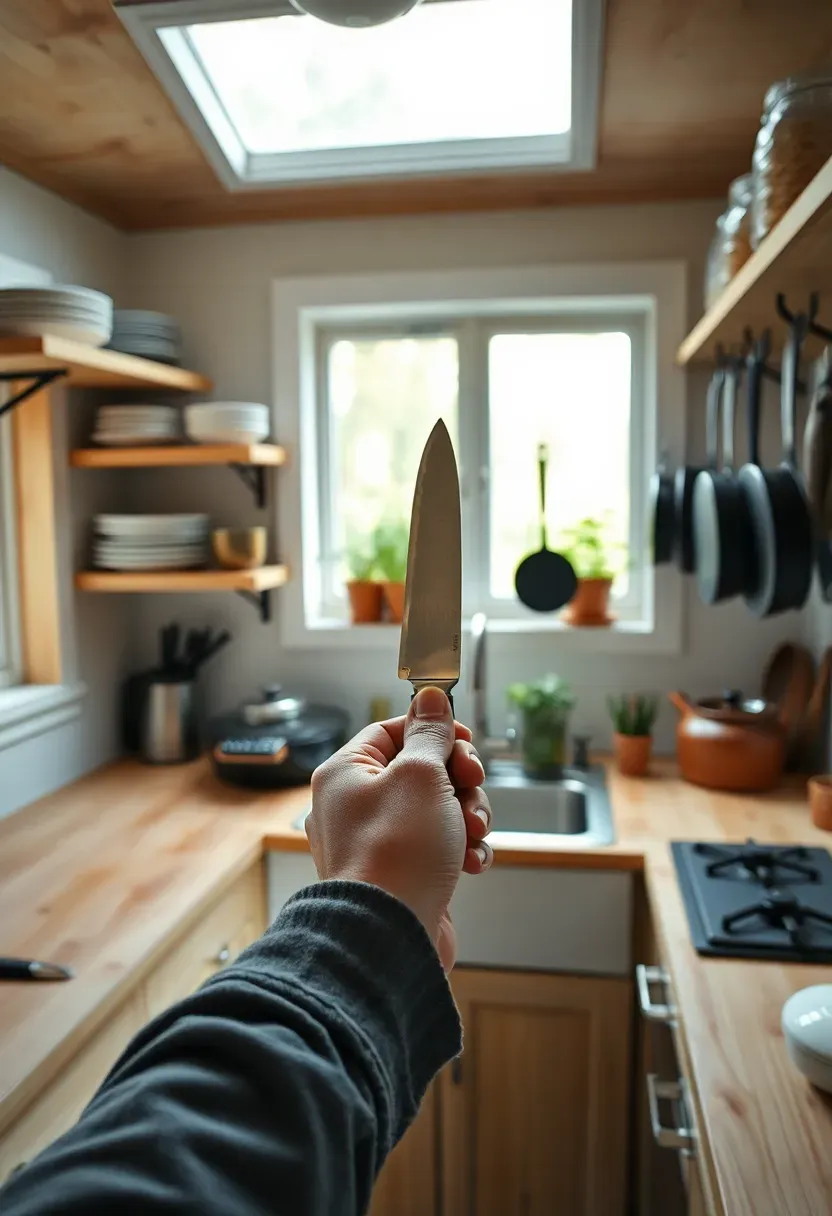
Hyper-realistic interior view of tiny house kitchen showing person thoughtfully considering single high-quality cooking knife versus drawer full of unused knives, visible high-quality cast iron cookware, and minimal but excellent kitchen tools. Materials: light wood countertops, open shelving with carefully selected dishes and cookware, knife rack with 3-4 quality knives, cast iron pans hanging on wall, small potted herb garden. Natural light from window over sink creating bright cooking atmosphere. Shallow depth of field focusing on hand holding single knife and cast iron pan, quality cookware collection visible in background showing intentional minimalist kitchen philosophy. Mindful consumption aesthetic. No text, no logos, no watermarks.</p>
Tiny house living offers profound benefits that extend far beyond square footage, presenting opportunities for financial liberation, environmental stewardship, and intentional lifestyle design. The growing tiny house movement represents a fundamental shift toward valuing experiences over possessions, with residents reporting increased happiness, reduced stress, and stronger community connections.. Hyper-realistic interior view of tiny house kitchen showing person thoughtfully considering single
Prompt: Nature documentary captured on Hasselblad X2D 100C with XCD 90V lens at f/4. Hyper-realistic interior view of tiny house kitchen showing person thoughtfully considering single high-quality cooking knife versus drawer full of unused knives, visible high-quality cast iron cookware, and minimal but excellent kitchen tools. Materials: light wood countertops, open shelving with carefully selected dishes and cookware, knife rack with 3-4 quality knives, cast iron pans hanging on wall, small potted herb garden. Natural light from window over sink creating bright cooking atmosphere. Shallow depth of field focusing on hand holding single knife and cast iron pan, quality cookware collection visible in background showing intentional minimalist kitchen philosophy. Mindful consumption aesthetic. No text, no logos, no watermarks.
Tips
- Apply the 72-hour rule: wait three days before non-essential purchases to distinguish impulse from genuine need
- Choose quality over quantity: one excellent item replaces multiple mediocre versions while requiring less storage space
- Calculate cost per square foot of storage: if something's value doesn't justify its space consumption, reconsider the purchase
What this gives you: 30-50% reduction in unnecessary spending while surrounding yourself only with items that genuinely serve your life and bring joy.
14. Faster Building Timeline and Move-In Ready
Tiny houses can be built significantly faster than traditional homes, with professional builders completing quality tiny houses in 6-12 weeks versus 6-12 months for conventional construction, while dedicated DIY builders typically finish in 4-10 months depending on complexity and available time. This compressed timeline means housing needs are met quickly without years of mortgage payments during construction, and changes in life circumstances can be accommodated through rapid building rather than long waiting periods.
The faster building timeline also reduces interim housing costs during construction, with many tiny house owners living in rentals or with family for months rather than years while their homes are built. This speed also enables adaptation to life changes—career moves, family additions, relationship changes—through building new appropriate housing relatively quickly rather than being trapped in unsuitable conventional homes for years due to construction timelines.
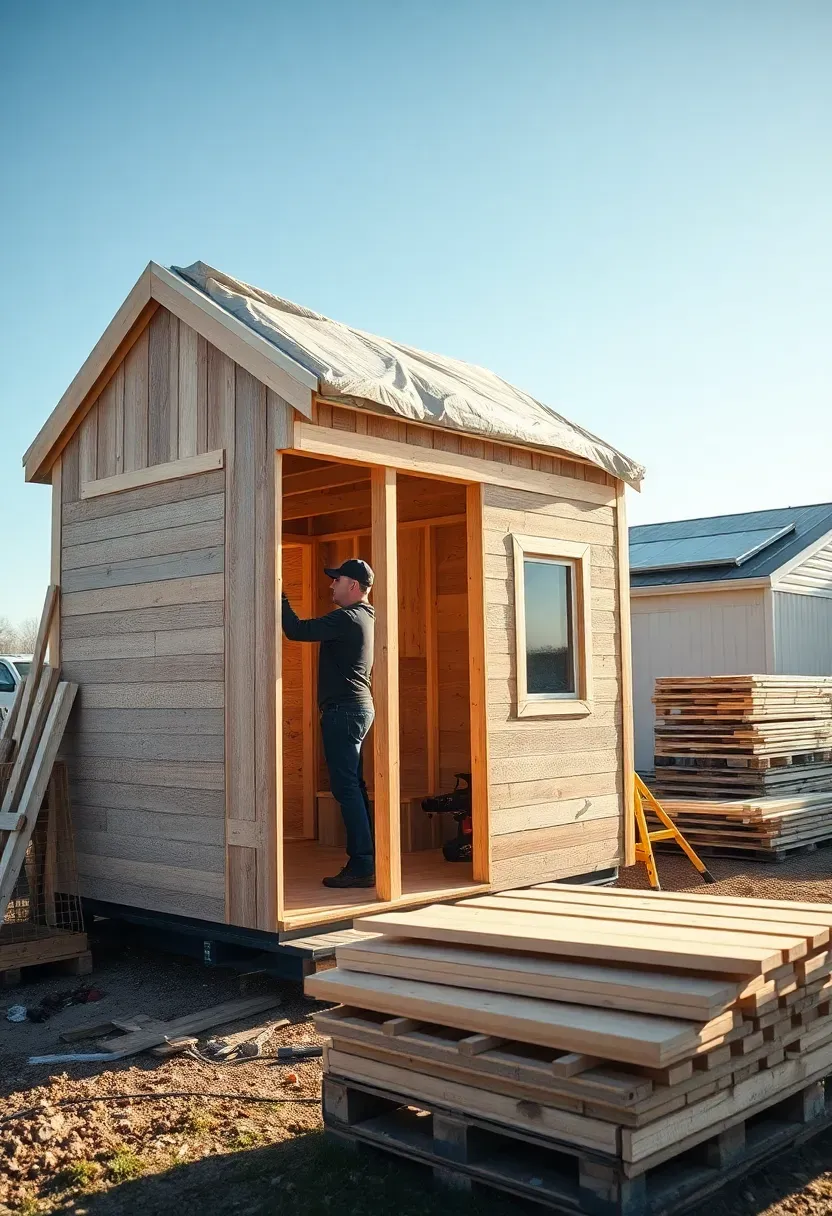
Hyper-realistic 3/4 view of tiny house construction site showing builder installing interior finishing while house shell is complete, visible tools and materials organized on pallets nearby, protective tarps on roof. Materials: partially finished tiny house with sheathing visible, some interior paneling installed, framing visible through unfinished sections, lumber stacked neatly, tool organizers with power tools. Natural daylight showing construction progress, morning light creating optimistic building atmosphere. Shallow depth of field focusing on builder installing interior paneling, construction materials and tools visible in background. Building progress and craftsmanship aesthetic. No text, no logos, no watermarks.</p>
Tiny house living offers profound benefits that extend far beyond square footage, presenting opportunities for financial liberation, environmental stewardship, and intentional lifestyle design. The growing tiny house movement represents a fundamental shift toward valuing experiences over possessions, with residents reporting increased happiness, reduced stress, and stronger community connections.. Hyper-realistic 3/4 view of tiny house construction site showing builder installing interior finish
Prompt: Nature documentary captured on Hasselblad X2D 100C with XCD 90V lens at f/4. Hyper-realistic 3/4 view of tiny house construction site showing builder installing interior finishing while house shell is complete, visible tools and materials organized on pallets nearby, protective tarps on roof. Materials: partially finished tiny house with sheathing visible, some interior paneling installed, framing visible through unfinished sections, lumber stacked neatly, tool organizers with power tools. Natural daylight showing construction progress, morning light creating optimistic building atmosphere. Shallow depth of field focusing on builder installing interior paneling, construction materials and tools visible in background. Building progress and craftsmanship aesthetic. No text, no logos, no watermarks.
Tips
- Start with complete plans before building—changes during construction dramatically extend timelines even in tiny houses
- Consider professional builds for shells only, then finish interior yourself for customization while maintaining speed
- Weatherproof the shell immediately once built, then finish interior at your pace without weather pressure
Best for: Anyone needing housing quickly due to life changes or wanting to avoid years of construction timelines and mortgage payments during building.
What this gives you: Move-in ready housing within months rather than years, enabling quicker adaptation to life changes and reduced interim housing costs.
15. Unique Personalized Design Expression
Tiny houses become powerful expressions of personal identity through custom design choices that mass-market housing cannot accommodate, enabling aesthetic and functional decisions that reflect genuine personality rather than market trends. From exterior materials and color schemes to interior layouts and decorative details, every element can express individual taste and priorities, creating homes that feel like authentic extensions of self rather than generic dwelling units. This personal expression creates deeper connection to home and satisfaction with living space, with many tiny house owners reporting their homes feel like "themselves" in spatial form.
The scale of tiny houses makes unique architectural and design features affordable and feasible—custom staircases, reclaimed materials, artistic windows, and built-in details that would be prohibitively expensive in larger homes become reasonable investments in tiny spaces. This enables artistic expression and craftsmanship in housing that creates daily joy and satisfaction, turning homes into functional art pieces that inspire creativity and delight.
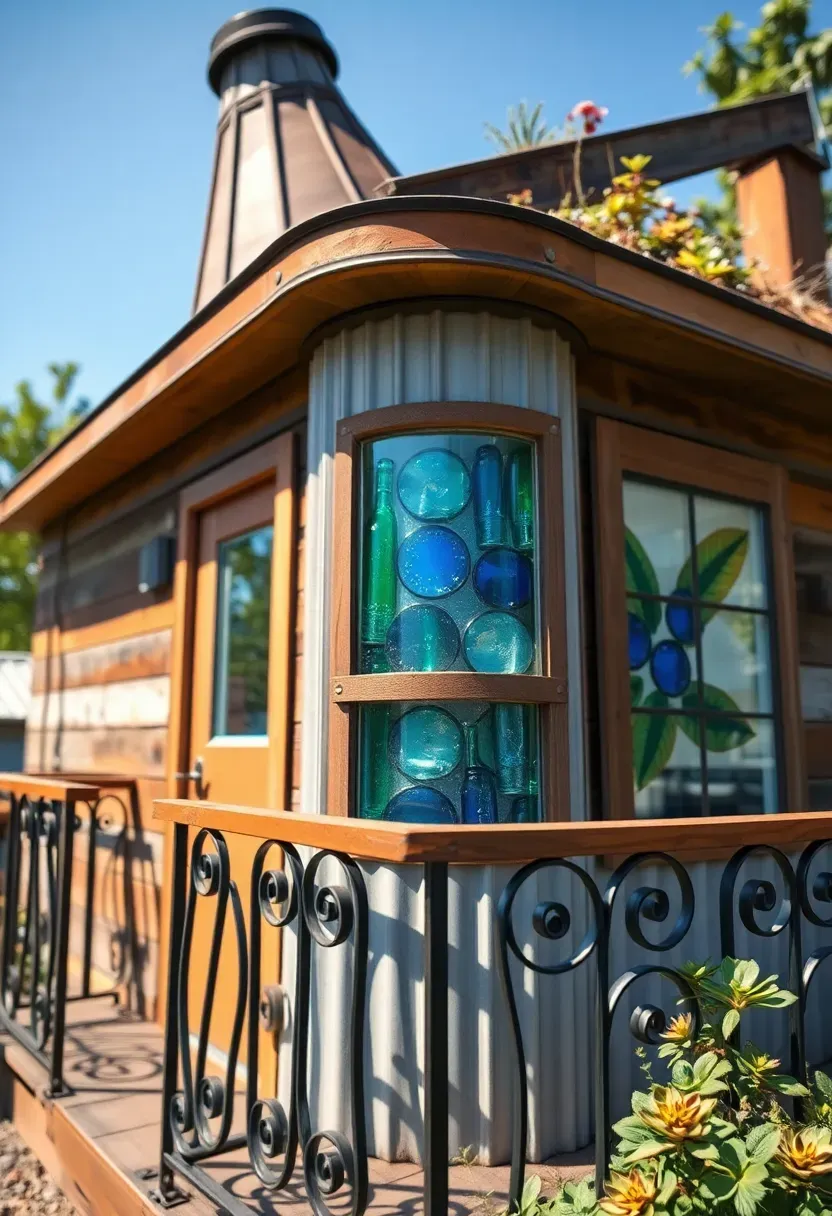
Hyper-realistic exterior view of artistically designed tiny house featuring unique architectural elements including rounded corner tower with conical roof, decorative recycled bottle windows creating colored light patterns, and custom metalwork railings with artistic scrollwork. Materials: mixture of reclaimed wood and corrugated metal, artistic bottle windows with blue and green glass creating decorative patterns, custom metalwork with scroll designs, living roof with succulents and wildflowers. Bright natural daylight showing artistic design details clearly, soft shadows highlighting unique architectural features. Shallow depth of field focusing on bottle window detail and rounded tower, overall house design visible in background showing artistic personality. Artistic personalized home aesthetic. No text, no logos, no watermarks.</p>
Tiny house living offers profound benefits that extend far beyond square footage, presenting opportunities for financial liberation, environmental stewardship, and intentional lifestyle design. The growing tiny house movement represents a fundamental shift toward valuing experiences over possessions, with residents reporting increased happiness, reduced stress, and stronger community connections.. Hyper-realistic exterior view of artistically designed tiny house featuring unique architectural el
Prompt: Nature documentary captured on Hasselblad X2D 100C with XCD 90V lens at f/4. Hyper-realistic exterior view of artistically designed tiny house featuring unique architectural elements including rounded corner tower with conical roof, decorative recycled bottle windows creating colored light patterns, and custom metalwork railings with artistic scrollwork. Materials: mixture of reclaimed wood and corrugated metal, artistic bottle windows with blue and green glass creating decorative patterns, custom metalwork with scroll designs, living roof with succulents and wildflowers. Bright natural daylight showing artistic design details clearly, soft shadows highlighting unique architectural features. Shallow depth of field focusing on bottle window detail and rounded tower, overall house design visible in background showing artistic personality. Artistic personalized home aesthetic. No text, no logos, no watermarks.
Tips
- Choose one or two statement features to invest in rather than trying to make everything unique—budget impact accumulates quickly
- Incorporate personal elements: reclaimed materials from meaningful locations, DIY artwork, inherited items become design features
- Consider exterior personality as well as interior—unique tiny house exteriors create joy before entering and reflect personal style publicly
What this gives you: A home that genuinely expresses your personality and values through design choices, creating daily satisfaction and deeper connection to living space.
16. Easier to Clean and Maintain
Tiny houses dramatically reduce cleaning and maintenance burden through simple mathematics—fewer square feet mean less surface area to clean, fewer systems to maintain, and reduced accumulation of dirt and clutter. Most tiny house owners complete thorough cleaning in 30-60 minutes compared to 3-6 hours for traditional homes, while maintenance tasks like painting, repairs, and system upkeep require minimal time and materials due to smaller scale. This time savings amounts to 2-4 hours weekly reclaimed from cleaning and maintenance, available for activities that actually bring joy and fulfillment.
The reduced cleaning burden also enables more frequent and thorough cleaning, resulting in healthier indoor environments with less dust, allergens, and clutter accumulation. Many tiny house owners report their homes feel consistently cleaner and more organized simply because cleaning takes so little time that it happens regularly rather than being postponed until overwhelming as often occurs in larger homes.
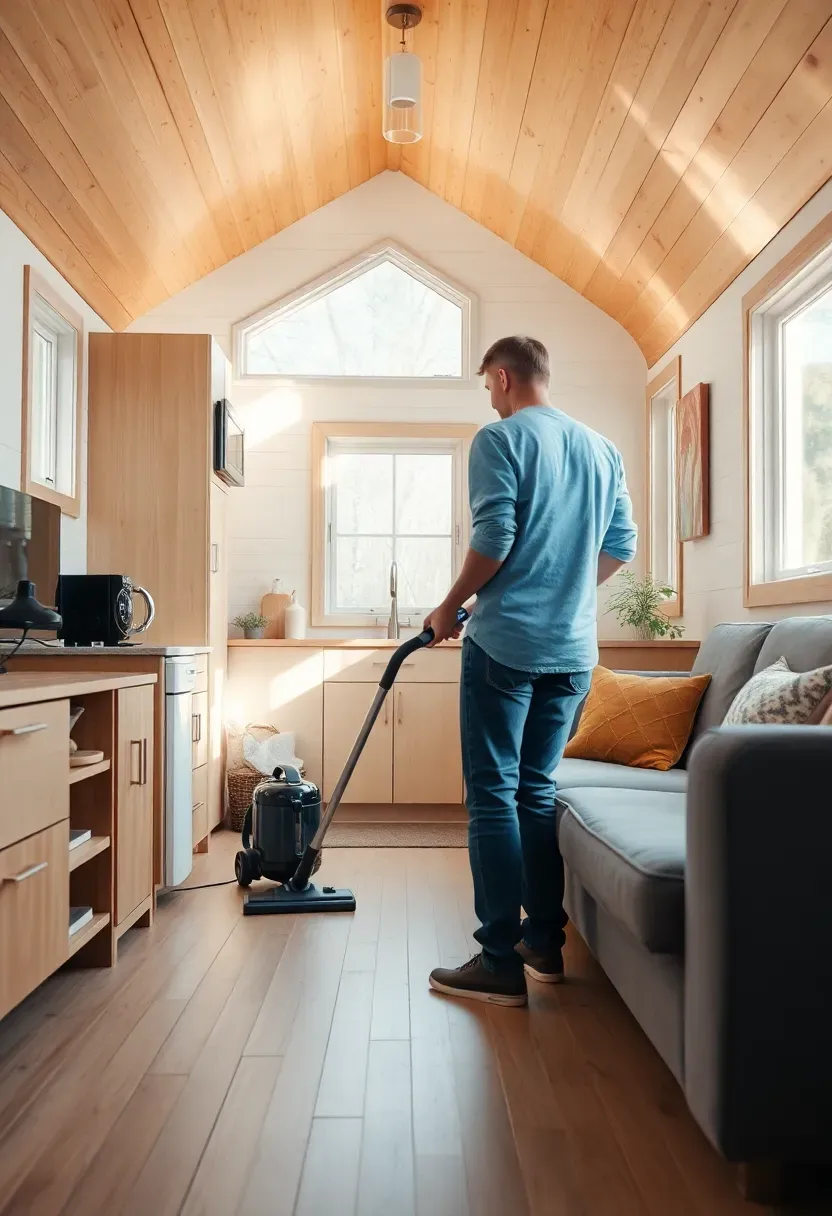
Hyper-realistic interior view of tiny house showing person easily cleaning entire visible space with small vacuum and microfiber cloth, visible compact kitchen and living area both cleaned in minutes. Materials: light wood floors easily cleaned, smooth surfaces on walls and ceilings, minimal furniture with easy-clean fabrics, compact appliances accessible for cleaning. Bright natural daylight creating clean cheerful atmosphere. Shallow depth of field focusing on person vacuuming small area, entire living space visible showing how quickly tiny houses clean. Effortless maintenance aesthetic. No text, no logos, no watermarks.</p>
Tiny house living offers profound benefits that extend far beyond square footage, presenting opportunities for financial liberation, environmental stewardship, and intentional lifestyle design. The growing tiny house movement represents a fundamental shift toward valuing experiences over possessions, with residents reporting increased happiness, reduced stress, and stronger community connections.. Hyper-realistic interior view of tiny house showing person easily cleaning entire visible space wit
Prompt: Nature documentary captured on Hasselblad X2D 100C with XCD 90V lens at f/4. Hyper-realistic interior view of tiny house showing person easily cleaning entire visible space with small vacuum and microfiber cloth, visible compact kitchen and living area both cleaned in minutes. Materials: light wood floors easily cleaned, smooth surfaces on walls and ceilings, minimal furniture with easy-clean fabrics, compact appliances accessible for cleaning. Bright natural daylight creating clean cheerful atmosphere. Shallow depth of field focusing on person vacuuming small area, entire living space visible showing how quickly tiny houses clean. Effortless maintenance aesthetic. No text, no logos, no watermarks.
Tips
- Choose hard surfaces: wood-look tile, quartz countertops, and smooth walls clean faster and stay cleaner than porous materials
- Design for cleaning: avoid tight corners and inaccessible spaces where dirt accumulates—everything should be reachable
- Establish daily cleaning habits: tiny spaces make 5-minute daily cleaning effective, preventing weekend marathon sessions
Best for: Anyone who resents spending weekends cleaning rather than enjoying life activities.
What this gives you: 2-4 hours weekly reclaimed from cleaning and maintenance, available for meaningful activities while maintaining consistently clean, healthy living environment.
17. Greater Flexibility for Life Changes
Tiny houses offer remarkable adaptability to life changes compared to traditional housing, enabling easier transitions through career changes, relationship status changes, relocations, and family structure changes. The lower financial commitment means selling or relocating tiny houses doesn't require waiting for optimal market conditions, while the mobility of wheeled versions enables following opportunities without selling property. This flexibility provides freedom to take risks, pursue opportunities, and adapt to changing circumstances without being anchored by expensive, immovable property.
The smaller scale also means easier modifications when life circumstances change—adding office space for remote work, creating nursery space for new baby, or accommodating aging parents requires far less construction and cost than adapting traditional houses. Many tiny house owners report their homes evolving through multiple life phases without requiring complete relocations or renovations.
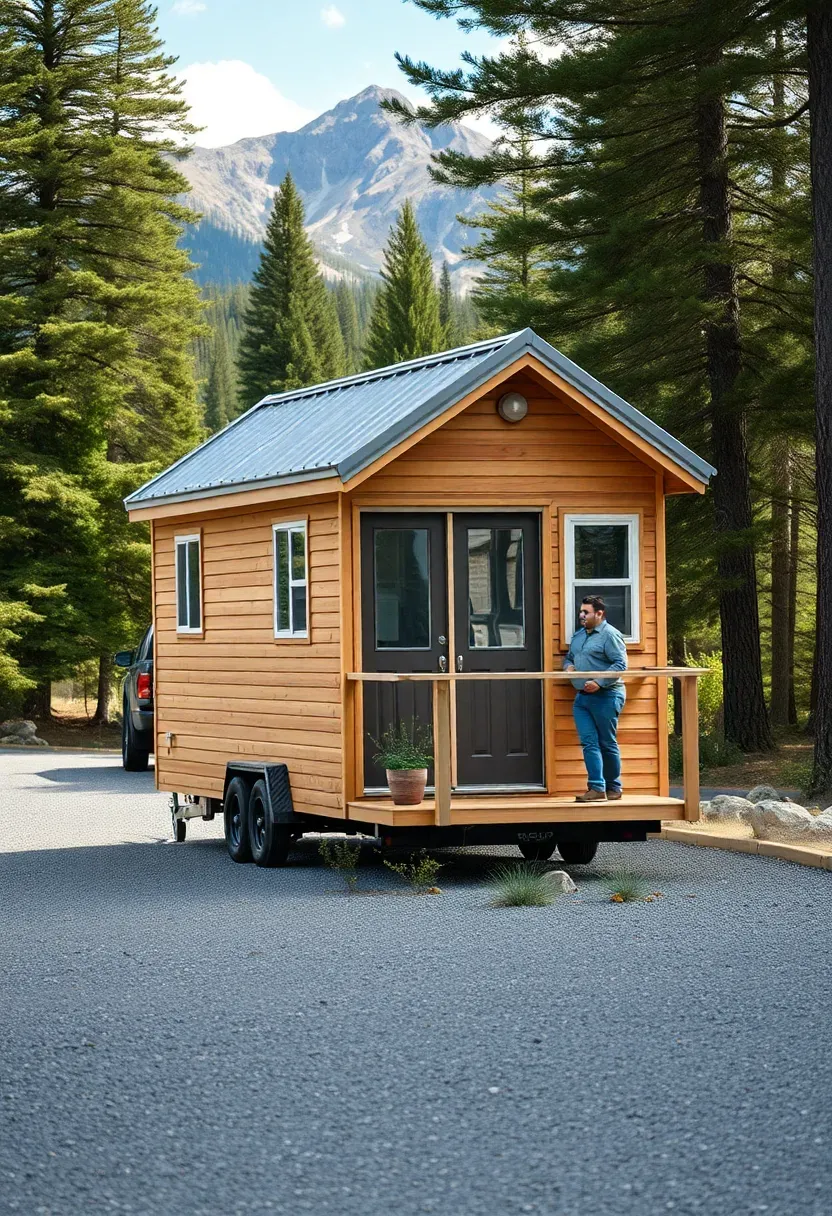
Hyper-realistic 3/4 view of tiny house being relocated to new scenic mountain location, visible moving truck and person directing placement, tiny house settled among trees with mountain backdrop. Materials: tiny house on trailer with wheels visible, natural wood siding, metal roof, front porch with portable railing, gravel driveway with native plants. Mountain scenic background with evergreen trees and rocky peaks, bright natural daylight showing new location clearly. Shallow depth of field focusing on tiny house placement, mountain landscape visible in background showing new location possibilities. Life transition and flexibility aesthetic. No text, no logos, no watermarks.</p>
Tiny house living offers profound benefits that extend far beyond square footage, presenting opportunities for financial liberation, environmental stewardship, and intentional lifestyle design. The growing tiny house movement represents a fundamental shift toward valuing experiences over possessions, with residents reporting increased happiness, reduced stress, and stronger community connections.. Hyper-realistic 3/4 view of tiny house being relocated to new scenic mountain location, visible mov
Prompt: Nature documentary captured on Hasselblad X2D 100C with XCD 90V lens at f/4. Hyper-realistic 3/4 view of tiny house being relocated to new scenic mountain location, visible moving truck and person directing placement, tiny house settled among trees with mountain backdrop. Materials: tiny house on trailer with wheels visible, natural wood siding, metal roof, front porch with portable railing, gravel driveway with native plants. Mountain scenic background with evergreen trees and rocky peaks, bright natural daylight showing new location clearly. Shallow depth of field focusing on tiny house placement, mountain landscape visible in background showing new location possibilities. Life transition and flexibility aesthetic. No text, no logos, no watermarks.
Tips
- Design for flexibility: convertible spaces and modular furniture enable adaptation without construction
- Build with transportability in mind even if planning permanent placement initially—life changes unexpectedly
- Keep some budget reserved for modifications: tiny house renovations cost much less than traditional homes but still require investment
What this gives you: Freedom to adapt to life changes through career moves, relocations, or family structure changes without being anchored by expensive property.
18. Connection to Nature and Natural Light
Tiny houses typically feature abundant windows and skylights to maximize perceived space, creating stronger daily connection to natural light cycles and outdoor environment than traditional housing provides. This constant visual access to nature and natural light regulates circadian rhythms, improves mood, and increases awareness of seasonal changes, while the smaller scale makes outdoor views visible from multiple vantage points within the home. Many tiny house owners report sleeping better, feeling more energized, and experiencing reduced seasonal depression due to increased natural light exposure.
The nature connection extends beyond visual to functional aspects—opening windows for cross-ventilation, hearing rain on metal roofs, watching birds feed from visible feeders—creating sensory experiences that climate-controlled traditional houses often eliminate. This reconnection to natural rhythms and weather patterns grounds inhabitants in environmental awareness while providing daily moments of beauty and wonder.
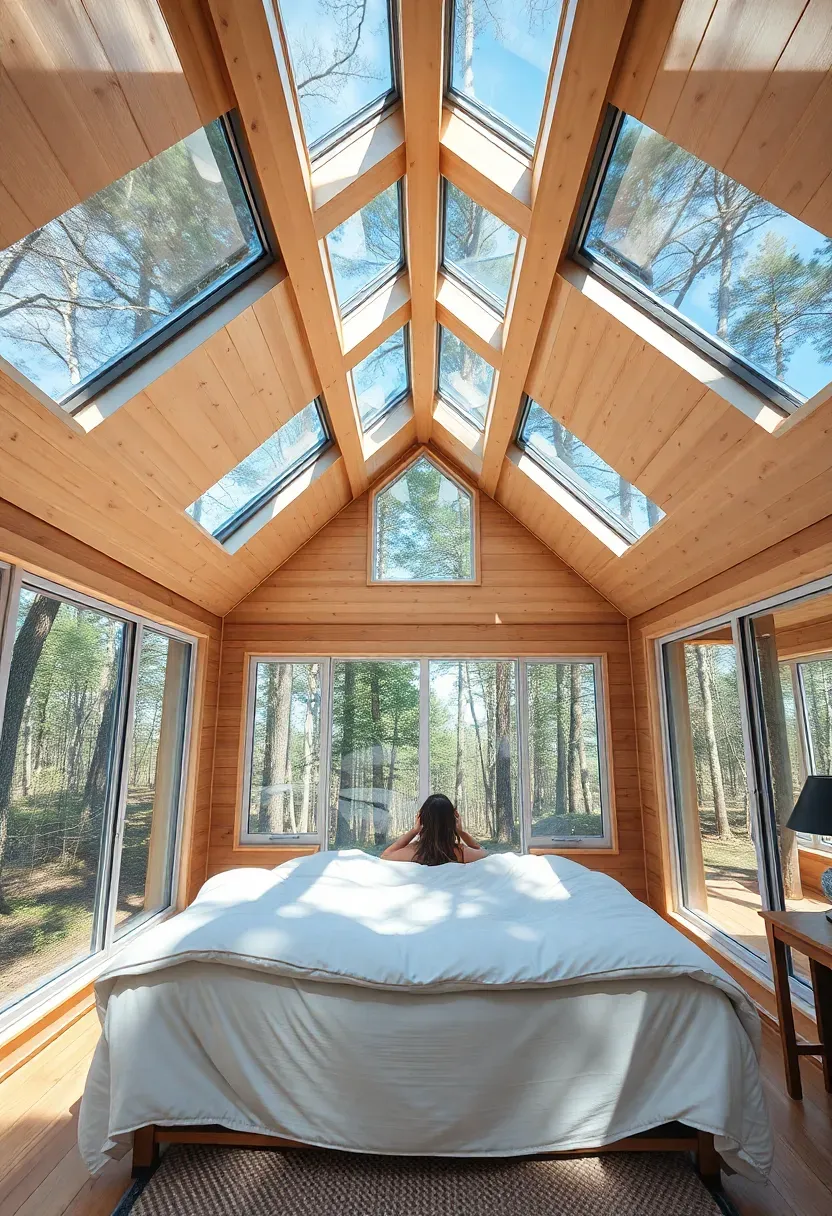
Hyper-realistic interior view of tiny house bedroom loft showing multiple skylights above bed and large windows with forest view, person lying in bed looking up at skylights showing tree canopy and blue sky. Materials: light wood vaulted ceiling with multiple skylights, large windows with forest views visible, white linens, wood floor with small rug. Bright natural daylight streaming through skylights creating dappled light patterns on bed, forest visible through windows showing trees and natural landscape. Shallow depth of field focusing on person in bed with skylights above, forest view visible through windows. Nature connection and natural light aesthetic. No text, no logos, no watermarks.</p>
Tiny house living offers profound benefits that extend far beyond square footage, presenting opportunities for financial liberation, environmental stewardship, and intentional lifestyle design. The growing tiny house movement represents a fundamental shift toward valuing experiences over possessions, with residents reporting increased happiness, reduced stress, and stronger community connections.. Hyper-realistic interior view of tiny house bedroom loft showing multiple skylights above bed and l
Prompt: Nature documentary captured on Hasselblad X2D 100C with XCD 90V lens at f/4. Hyper-realistic interior view of tiny house bedroom loft showing multiple skylights above bed and large windows with forest view, person lying in bed looking up at skylights showing tree canopy and blue sky. Materials: light wood vaulted ceiling with multiple skylights, large windows with forest views visible, white linens, wood floor with small rug. Bright natural daylight streaming through skylights creating dappled light patterns on bed, forest visible through windows showing trees and natural landscape. Shallow depth of field focusing on person in bed with skylights above, forest view visible through windows. Nature connection and natural light aesthetic. No text, no logos, no watermarks.
Tips
- Prioritize windows over wall space: glass feels like added square footage while connecting to outdoors
- Install skylights in vaulted ceilings: they bring light without sacrificing privacy and create star-gazing opportunities
- Consider window placement for both light and views: morning light in kitchen, forest views from bed, garden views from living space
What this gives you: Improved sleep, mood, and energy through daily exposure to abundant natural light and constant visual connection to natural environment.
19. Reduced Clutter and Organized Living
Tiny houses enforce organization through simple necessity—everything must have its place or the space becomes unlivable, creating habits of organization and tidiness that carry through all life areas. The visible storage systems inherent to tiny living—open shelving, hook systems, visible baskets—make organization visually apparent and satisfying rather than hidden away in closets where clutter accumulates unseen. This constant visibility of belongings naturally encourages returning items to their designated places, reducing time spent searching for things and maintaining orderly environments with minimal effort.
The organization habits developed through tiny living often spill over into work spaces, digital environments, and time management, creating overall life organization that reduces stress and increases productivity. Many tiny house owners report becoming more organized in their careers, schedules, and personal systems as the organizational mindset cultivated at home influences all aspects of life.
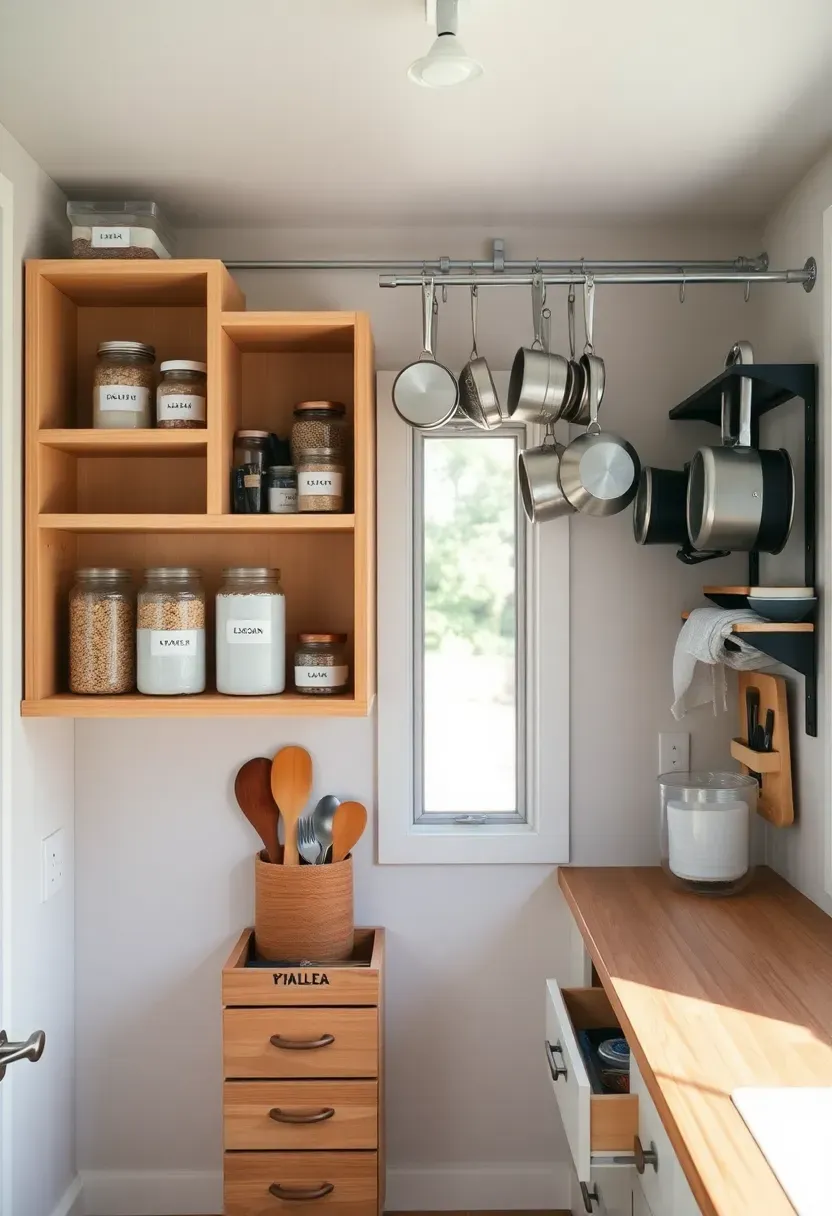
Hyper-realistic interior view of tiny house kitchen showing highly organized storage systems including labeled jars for dry goods, hanging pot rack with neatly arranged cookware, drawer organizers visible, and designated spots for every kitchen tool. Materials: light wood open shelving with glass jars and labeled containers, wall-mounted rail system for pots and utensils, drawer organizers visible when partially open, wood countertop with minimal items maintained neatly. Natural daylight showing organized systems clearly. Shallow depth of field focusing on open shelving with labeled jars and hanging pot system, drawer organization visible in background. Organized minimalist kitchen aesthetic. No text, no logos, no watermarks.</p>
Tiny house living offers profound benefits that extend far beyond square footage, presenting opportunities for financial liberation, environmental stewardship, and intentional lifestyle design. The growing tiny house movement represents a fundamental shift toward valuing experiences over possessions, with residents reporting increased happiness, reduced stress, and stronger community connections.. Hyper-realistic interior view of tiny house kitchen showing highly organized storage systems includ
Prompt: Nature documentary captured on Hasselblad X2D 100C with XCD 90V lens at f/4. Hyper-realistic interior view of tiny house kitchen showing highly organized storage systems including labeled jars for dry goods, hanging pot rack with neatly arranged cookware, drawer organizers visible, and designated spots for every kitchen tool. Materials: light wood open shelving with glass jars and labeled containers, wall-mounted rail system for pots and utensils, drawer organizers visible when partially open, wood countertop with minimal items maintained neatly. Natural daylight showing organized systems clearly. Shallow depth of field focusing on open shelving with labeled jars and hanging pot system, drawer organization visible in background. Organized minimalist kitchen aesthetic. No text, no logos, no watermarks.
Tips
- Group similar items: cooking tools together, office supplies together, makes finding things intuitive
- Use clear containers for storage: visible contents prevents purchasing duplicates and makes organization obvious
- Label everything: labels create designated places and make household organization clear to everyone sharing the space
Best for: Chronically disorganized people who want environmental systems that support organization naturally.
What this gives you: Consistently organized living environment without constant effort, reducing stress from clutter and lost items while saving time searching for things.
20. Lower Property Taxes and Insurance Costs
Tiny houses dramatically reduce ongoing ownership costs beyond utilities through significantly lower property taxes and insurance premiums compared to traditional homes. Property taxes based on assessed value mean tiny houses typically cost $200-800 annually versus $2,000-5,000 for average traditional homes, while insurance premiums run $30-60 monthly compared to $100-200 for conventional houses. These ongoing savings of $150-350 monthly accumulate to substantial annual amounts that can be redirected toward savings, experiences, or other financial goals rather than disappearing into housing overhead.
The lower costs also make tiny houses more affordable to maintain during financial setbacks or retirement, reducing the financial stress of property ownership that many traditional homeowners experience. This predictability of ongoing costs enables better long-term financial planning and reduces anxiety about maintaining property ownership during income fluctuations or economic uncertainty.
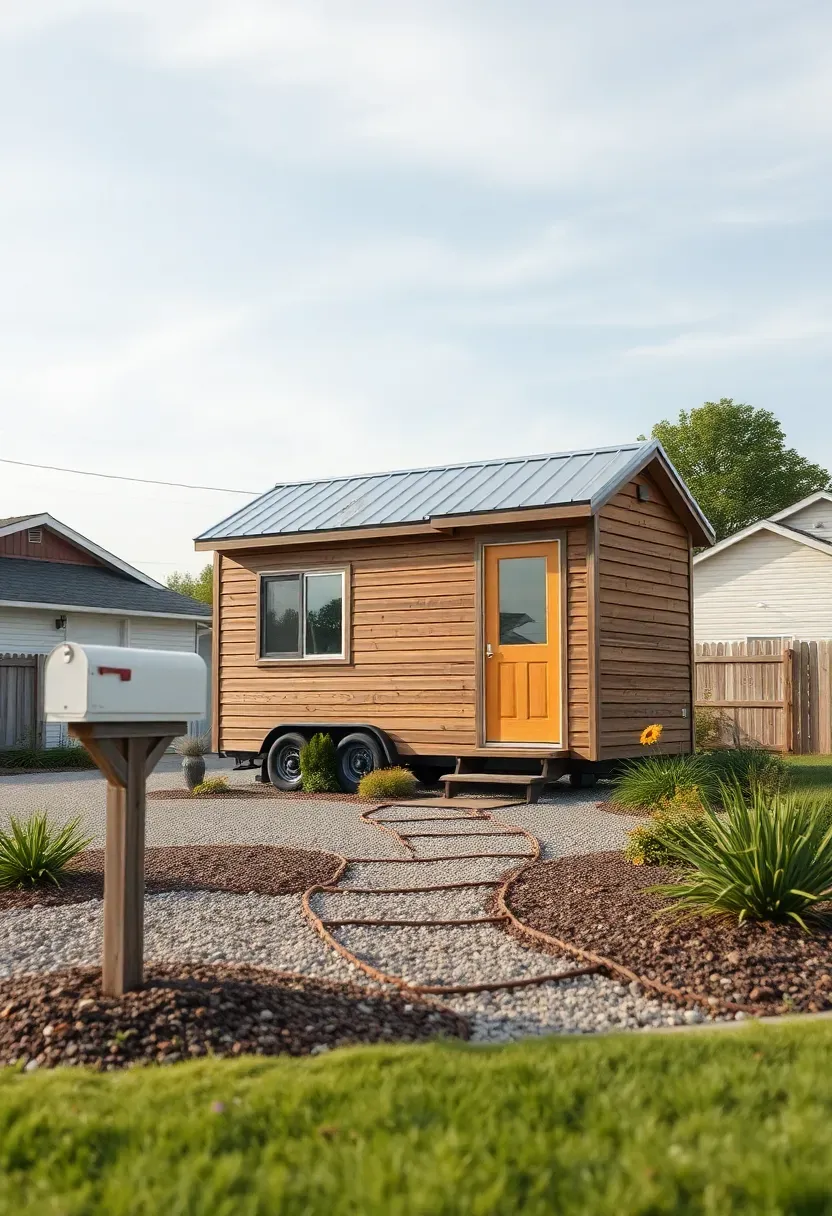
Hyper-realistic exterior view of tiny house on small landscaped lot with visible mailbox and property marker, showing modest but well-maintained property that would have low tax assessment. Materials: tiny house with wood siding and metal roof, small gravel driveway with minimal landscaping, native plants requiring little maintenance, simple pathway to door, visible house number on small post. Soft natural daylight showing property clearly. Shallow depth of field focusing on tiny house and modest lot size, showing how tiny houses minimize taxable property value. Affordable ownership aesthetic. No text, no logos, no watermarks.</p>
Tiny house living offers profound benefits that extend far beyond square footage, presenting opportunities for financial liberation, environmental stewardship, and intentional lifestyle design. The growing tiny house movement represents a fundamental shift toward valuing experiences over possessions, with residents reporting increased happiness, reduced stress, and stronger community connections.. Hyper-realistic exterior view of tiny house on small landscaped lot with visible mailbox and proper
Prompt: Nature documentary captured on Hasselblad X2D 100C with XCD 90V lens at f/4. Hyper-realistic exterior view of tiny house on small landscaped lot with visible mailbox and property marker, showing modest but well-maintained property that would have low tax assessment. Materials: tiny house with wood siding and metal roof, small gravel driveway with minimal landscaping, native plants requiring little maintenance, simple pathway to door, visible house number on small post. Soft natural daylight showing property clearly. Shallow depth of field focusing on tiny house and modest lot size, showing how tiny houses minimize taxable property value. Affordable ownership aesthetic. No text, no logos, no watermarks.
Tips
- Research property tax rates before choosing location—some areas assess tiny houses more favorably than others
- Consider insurance through companies specializing in tiny houses or RV insurance for better rates and appropriate coverage
- Maintain excellent documentation of construction value and upgrades to ensure fair assessment without overvaluation
What this gives you: Ongoing savings of $150-350 monthly on property taxes and insurance, reducing housing overhead and financial stress.
21. Opportunity for Off-Grid Living
Tiny houses are ideally suited for off-grid living due to minimal energy requirements and manageable system sizes for solar power, rainwater collection, and composting waste systems. The small scale makes renewable energy systems affordable—complete solar setups for tiny houses cost $5,000-15,000 versus $25,000-50,000 for traditional homes—while reduced water consumption makes rainwater collection and storage feasible. This off-grid capability enables placement on remote land without utility connections, reducing land costs dramatically while increasing self-sufficiency and resilience.
Living off-grid in a tiny house creates profound connection to energy and water consumption through immediate feedback—sunny days mean power abundance while cloudy days require conservation, making resource use tangible rather than abstract. This awareness cultivates mindful consumption habits and appreciation for resources that grid-connected living obscures, while providing security during utility outages or economic disruptions.
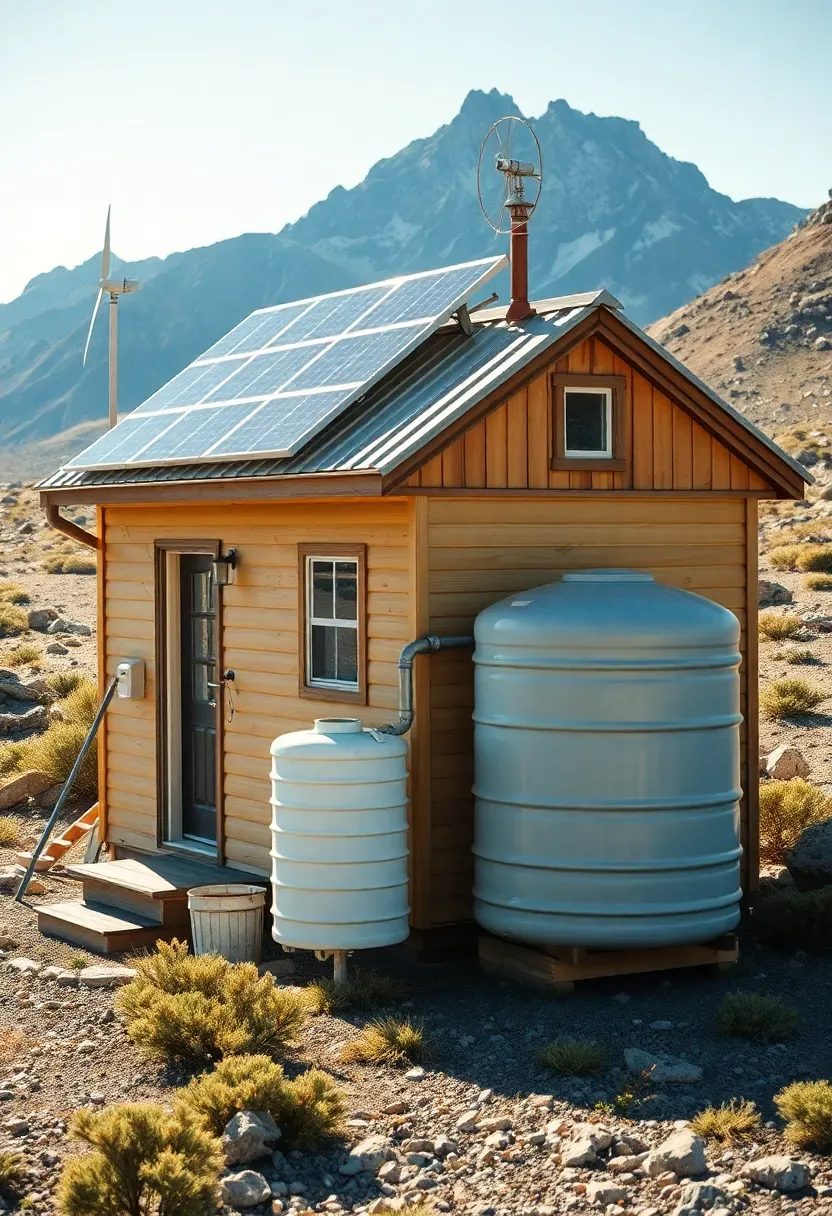
Hyper-realistic 3/4 view of tiny house in remote location showing off-grid systems including solar panel array on south-facing roof, water storage tanks on side of house, and small wind turbine nearby. Materials: tiny house with metal roof and solar panel mounting systems, visible water tanks and plumbing, small wind turbine on pole, rocky natural landscape with minimal vegetation, mountain backdrop. Bright natural daylight showing off-grid systems clearly. Shallow depth of field focusing on solar panels and water tanks, wind turbine and tiny house visible in background showing off-grid self-sufficiency. Off-grid independence aesthetic. No text, no logos, no watermarks.</p>
Tiny house living offers profound benefits that extend far beyond square footage, presenting opportunities for financial liberation, environmental stewardship, and intentional lifestyle design. The growing tiny house movement represents a fundamental shift toward valuing experiences over possessions, with residents reporting increased happiness, reduced stress, and stronger community connections.. Hyper-realistic 3/4 view of tiny house in remote location showing off-grid systems including solar
Prompt: Nature documentary captured on Hasselblad X2D 100C with XCD 90V lens at f/4. Hyper-realistic 3/4 view of tiny house in remote location showing off-grid systems including solar panel array on south-facing roof, water storage tanks on side of house, and small wind turbine nearby. Materials: tiny house with metal roof and solar panel mounting systems, visible water tanks and plumbing, small wind turbine on pole, rocky natural landscape with minimal vegetation, mountain backdrop. Bright natural daylight showing off-grid systems clearly. Shallow depth of field focusing on solar panels and water tanks, wind turbine and tiny house visible in background showing off-grid self-sufficiency. Off-grid independence aesthetic. No text, no logos, no watermarks.
Tips
- Size systems for realistic usage: calculate actual needs rather than aspirational—tiny houses require less than you think
- Start grid-tied if uncertain: transition to off-grid gradually as you learn actual consumption patterns
- Design for passive systems first: passive solar heating and cooling reduce mechanical system requirements regardless of off-grid status
Best for: Those seeking true self-sufficiency and independence from utility companies while minimizing ongoing housing costs.
What this gives you: Complete independence from utility companies, ability to live remotely on affordable land, and security during infrastructure disruptions.
22. Stronger Family Bonds and Communication
Tiny house living naturally strengthens family relationships through increased proximity and shared experience, forcing regular communication and conflict resolution that larger homes allow families to avoid through physical separation. Families living tiny report stronger bonds, better communication skills, and more quality time together simply because physical space doesn't allow endless isolation in separate rooms and activities. The shared challenges and rewards of tiny living create common purpose and mutual dependence that builds family resilience and connection.
Children raised in tiny houses often develop closer relationships with siblings and parents, increased responsibility for shared spaces, and appreciation for experiences over possessions. Many tiny house families report their children become more adaptable, less materialistic, and more skilled at conflict resolution and communication through the necessity of living closely together while respecting each other's needs and boundaries.
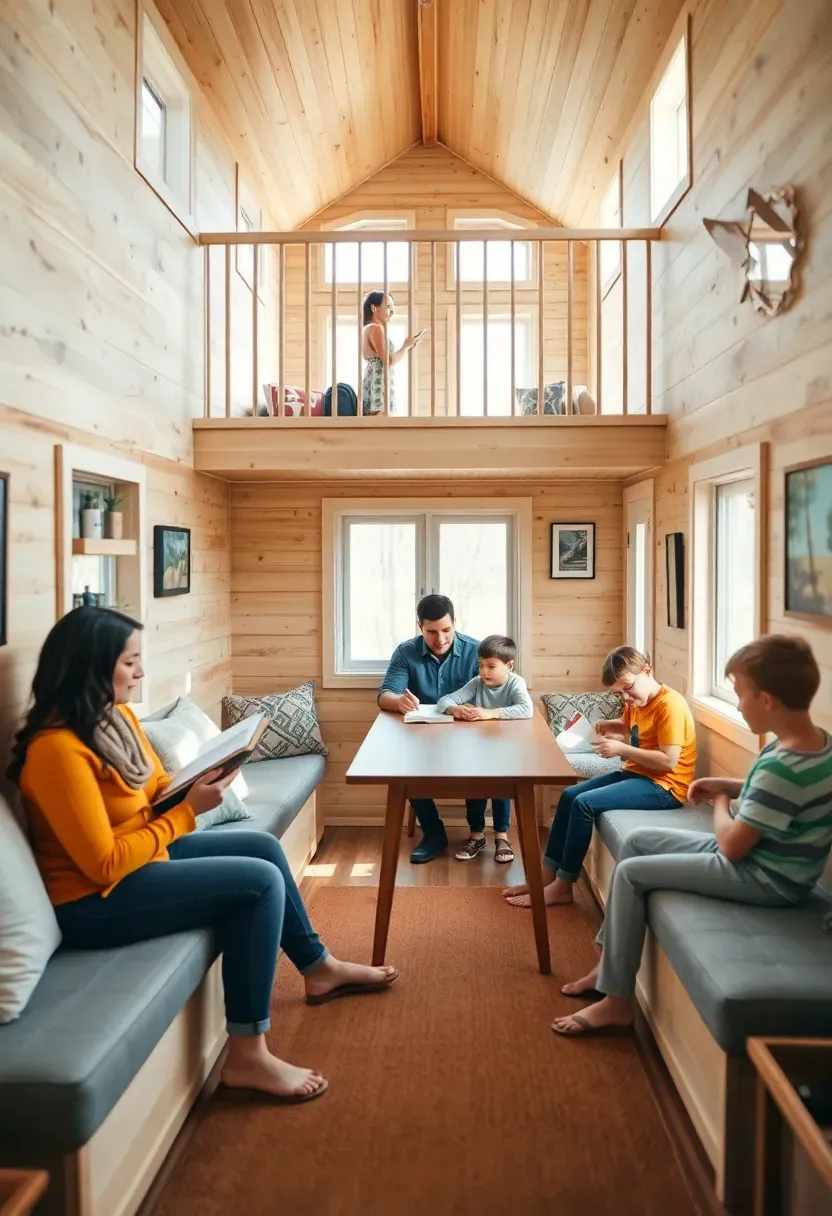
Hyper-realistic interior view of tiny house living area showing family of four engaged in different activities in shared space: parents reading on built-in seating, children doing homework at convertible table, visible family communication and interaction. Materials: light wood interior, built-in seating with cushions, table that serves multiple purposes, loft railings visible above, warm area rug defining living space. Warm natural light from windows creating family-friendly atmosphere. Shallow depth of field focusing on family members engaged in separate but shared activities, showing how tiny houses facilitate family togetherness. Family connection and communication aesthetic. No text, no logos, no watermarks.</p>
Tiny house living offers profound benefits that extend far beyond square footage, presenting opportunities for financial liberation, environmental stewardship, and intentional lifestyle design. The growing tiny house movement represents a fundamental shift toward valuing experiences over possessions, with residents reporting increased happiness, reduced stress, and stronger community connections.. Hyper-realistic interior view of tiny house living area showing family of four engaged in different
Prompt: Nature documentary captured on Hasselblad X2D 100C with XCD 90V lens at f/4. Hyper-realistic interior view of tiny house living area showing family of four engaged in different activities in shared space: parents reading on built-in seating, children doing homework at convertible table, visible family communication and interaction. Materials: light wood interior, built-in seating with cushions, table that serves multiple purposes, loft railings visible above, warm area rug defining living space. Warm natural light from windows creating family-friendly atmosphere. Shallow depth of field focusing on family members engaged in separate but shared activities, showing how tiny houses facilitate family togetherness. Family connection and communication aesthetic. No text, no logos, no watermarks.
Tips
- Create private spaces: even tiny houses need small nooks or areas where family members can retreat briefly when needed
- Establish quiet hours and shared activity times that balance togetherness with individual space needs
- Design for separate functions: reading nooks, homework stations, conversation areas prevent constant conflict over space use
What this gives you: Stronger family relationships through increased quality time together and improved communication skills developed through close-quarters living.
23. Increased Home Ownership Accessibility
Tiny houses make homeownership accessible to populations priced out of traditional housing markets through dramatically lower total costs and alternative financing options. With complete tiny house costs ranging from $30,000-80,000 versus median home prices exceeding $350,000, home ownership becomes possible for younger people, lower-income households, and those without traditional employment who cannot qualify for conventional mortgages. This accessibility enables wealth building through equity rather than perpetual renting, creating financial stability and security for populations traditionally excluded from homeownership benefits.
The lower costs also enable faster payoff timelines, meaning true ownership (debt-free) occurs years or decades earlier than traditional mortgages, while the portability of wheeled tiny houses provides housing stability without land ownership requirements. This flexibility makes homeownership possible for those whose careers or life circumstances require frequent relocations.
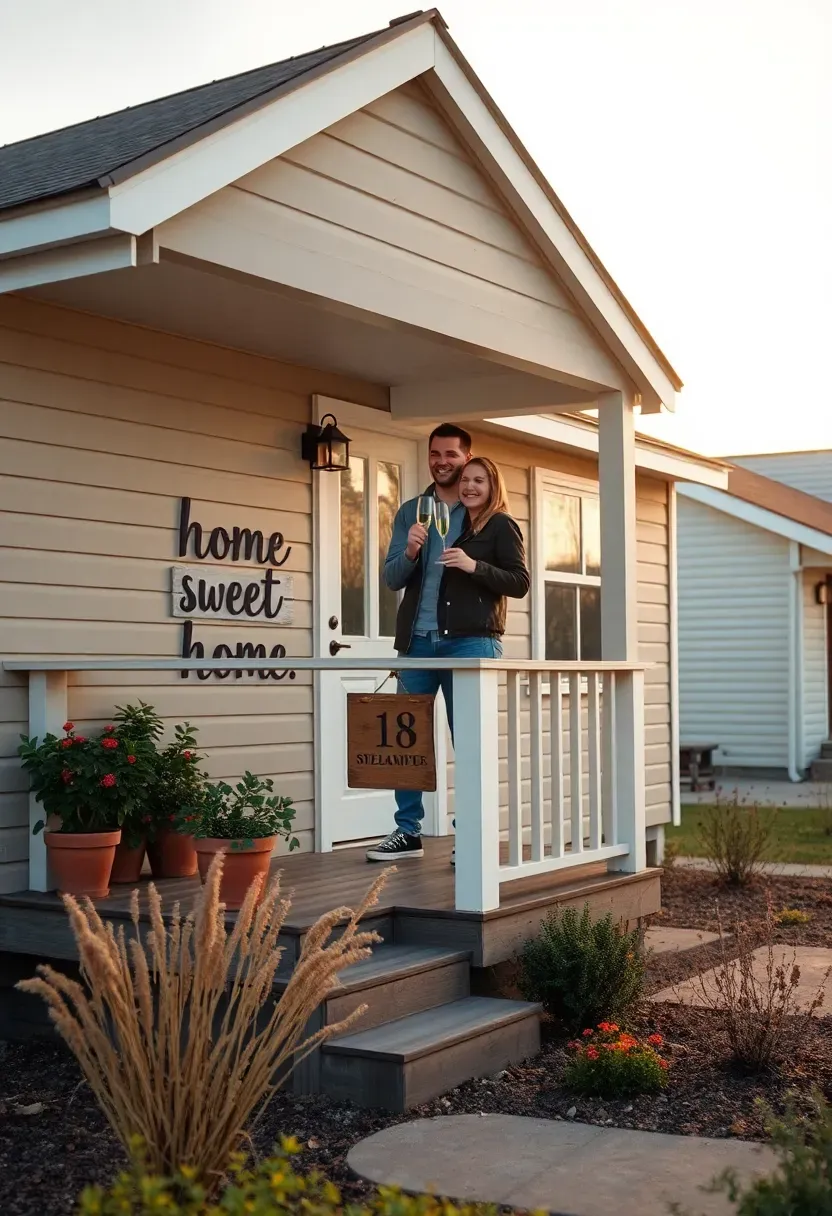
Hyper-realistic exterior view of tiny house in modest community setting showing young couple standing on porch celebrating with champagne glasses, visible
Tiny house living offers profound benefits that extend far beyond square footage, presenting opportunities for financial liberation, environmental stewardship, and intentional lifestyle design. The growing tiny house movement represents a fundamental shift toward valuing experiences over possessions, with residents reporting increased happiness, reduced stress, and stronger community connections.. Hyper-realistic exterior view of tiny house in modest community setting showing young couple standi
Prompt: Nature documentary captured on Hasselblad X2D 100C with XCD 90V lens at f/4. Hyper-realistic exterior view of tiny house in modest community setting showing young couple standing on porch celebrating with champagne glasses, visible "home sweet home" sign, showing pride of ownership. Materials: tiny house with painted siding and trim, small porch with railings, landscaping showing personal touches like potted plants and small garden, visible house numbers and personal decorative elements. Warm late afternoon light creating celebratory atmosphere. Shallow depth of field focusing on couple on porch, tiny house details visible in background showing accessible homeownership. Achievement and pride aesthetic. No text, no logos, no watermarks.
Tips
- Start smaller than you think: tiny houses under 200 square feet cost significantly less while still providing complete living functionality
- Consider DIY builds to reduce costs: even hiring help for difficult tasks while doing simple work yourself dramatically reduces total expense
- Research tiny house communities with land-included models that separate land costs from housing costs for improved accessibility
Best for: Anyone priced out of traditional homeownership seeking alternative path to home ownership and equity building.
What this gives you: Accessible homeownership opportunity with realistic payoff timeline, enabling wealth building and housing stability without traditional mortgage requirements.
24. Enhanced Privacy and Personal Sanctuary
Despite smaller size, tiny houses often provide enhanced privacy compared to apartments or shared housing situations, creating personal sanctuaries where inhabitants have complete control over their environment. Without shared walls, common areas, or landlord access, tiny house residents enjoy true autonomy over their living space, creating environments perfectly suited to their needs and preferences without compromise. This control extends to noise levels, temperature, aesthetics, and daily routines, enabling personalized sanctuaries that support wellbeing and rest.
The ability to position tiny houses privately—whether in backyards, rural property, or designated communities—creates visual and auditory privacy that urban apartments cannot provide, while still enabling proximity to desired locations. Many tiny house owners report their small homes feel more private and secure than larger houses in dense neighborhoods, as tiny houses can be positioned for maximum seclusion even within community settings.
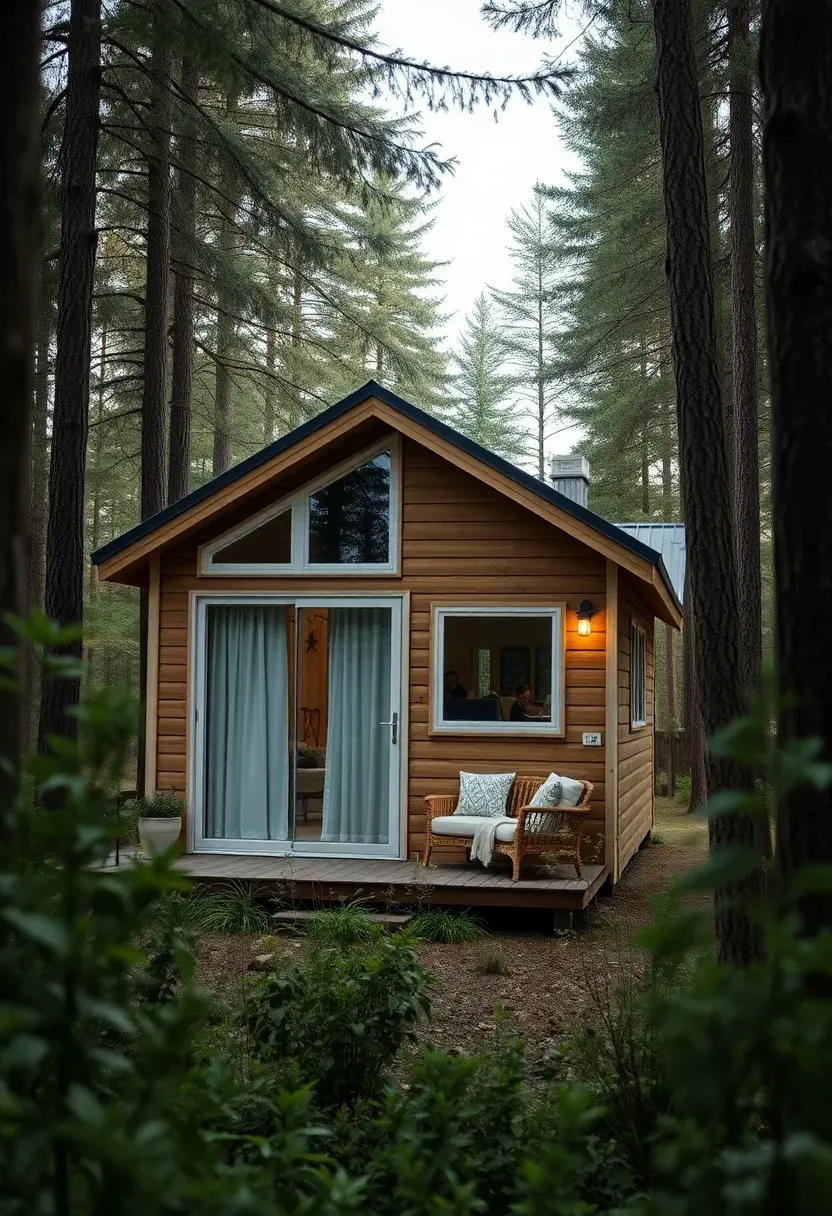
Hyper-realistic exterior view of tiny house positioned privately in wooded setting, visible screening vegetation for privacy, small patio area with seating, showing secluded sanctuary feel. Materials: tiny house with natural wood siding blending with forest, large windows with curtains for privacy control, small deck with comfortable seating positioned for privacy, surrounding trees and vegetation creating natural screen. Soft filtered light through forest canopy creating intimate private atmosphere. Shallow depth of field focusing on tiny house and private deck area, surrounding forest providing privacy visible in background. Private sanctuary aesthetic. No text, no logos, no watermarks.</p>
Tiny house living offers profound benefits that extend far beyond square footage, presenting opportunities for financial liberation, environmental stewardship, and intentional lifestyle design. The growing tiny house movement represents a fundamental shift toward valuing experiences over possessions, with residents reporting increased happiness, reduced stress, and stronger community connections.. Hyper-realistic exterior view of tiny house positioned privately in wooded setting, visible screeni
Prompt: Nature documentary captured on Hasselblad X2D 100C with XCD 90V lens at f/4. Hyper-realistic exterior view of tiny house positioned privately in wooded setting, visible screening vegetation for privacy, small patio area with seating, showing secluded sanctuary feel. Materials: tiny house with natural wood siding blending with forest, large windows with curtains for privacy control, small deck with comfortable seating positioned for privacy, surrounding trees and vegetation creating natural screen. Soft filtered light through forest canopy creating intimate private atmosphere. Shallow depth of field focusing on tiny house and private deck area, surrounding forest providing privacy visible in background. Private sanctuary aesthetic. No text, no logos, no watermarks.
Tips
- Position windows strategically: maximize light and views while maintaining privacy from neighbors and passersby
- Use landscaping for privacy: trees, shrubs, and fencing create visual buffers without making spaces feel enclosed
- Consider window treatments that allow light control while maintaining privacy when needed
What this gives you: Complete control over personal living environment creating true sanctuary space that supports rest, creativity, and authentic self-expression.
25. Support for Minimalist Mindset
Tiny houses provide physical embodiment and reinforcement for minimalist philosophy, creating environmental support for values of simplicity, intentionality, and freedom from excessive possessions. The space constraints naturally enforce minimalist principles, making conscious consumption and regular decluttering essential rather than optional habits. This environmental support makes maintaining minimalist lifestyle dramatically easier than attempting minimalism in larger spaces where excess can be hidden away in closets and spare rooms.
The daily practice of tiny living cultivates minimalist mindset that extends beyond possessions to time management, commitments, and mental clutter, creating holistic simplicity that permeates all life areas. Many tiny house owners report their small homes function as spiritual practice spaces, constantly reminding them of what truly matters and supporting ongoing growth toward simpler, more intentional lives aligned with their deepest values.
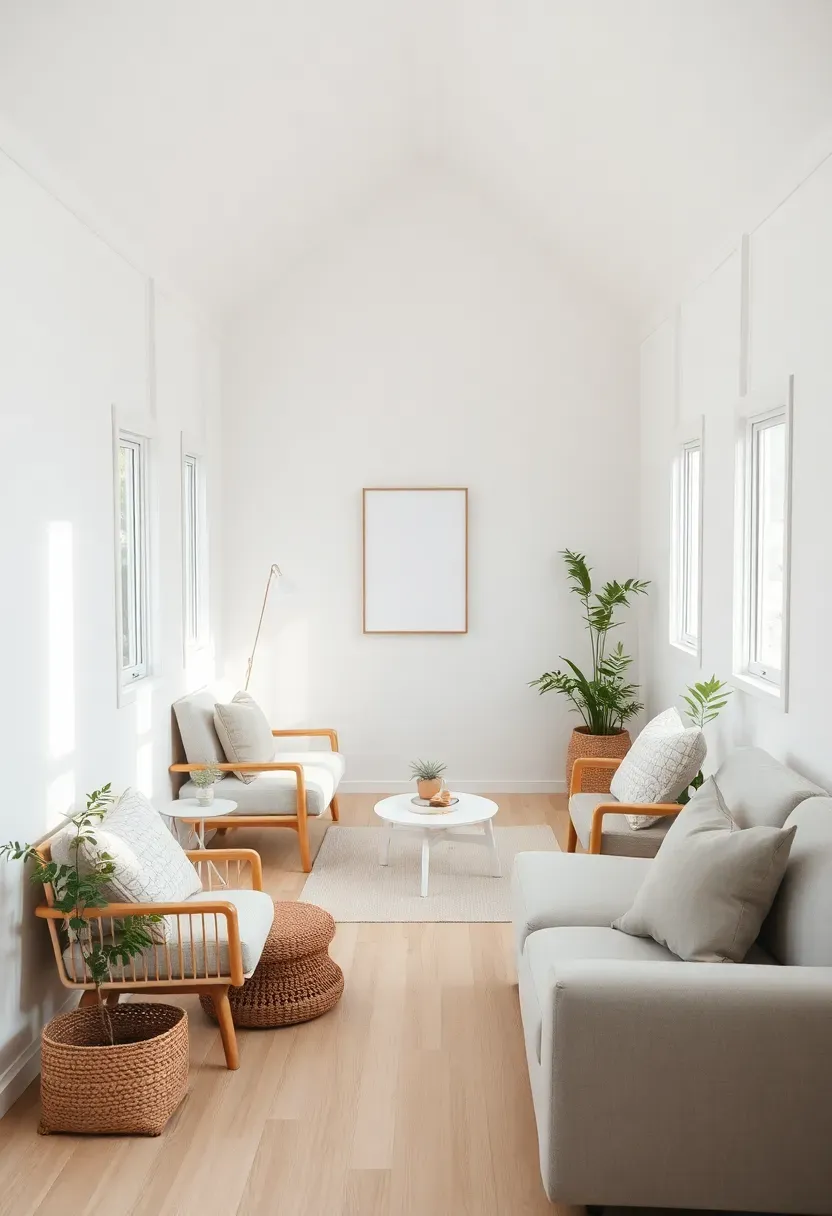
Hyper-realistic interior view of tiny house living area showing minimalist aesthetic with carefully selected possessions, neutral color palette, and intentional empty space creating calm serene environment. Materials: light wood floor, white walls, single piece of artwork, carefully chosen furniture with clean lines, plants adding life without clutter, visible negative space intentional and calming. Soft natural light creating peaceful minimalist atmosphere. Shallow depth of field focusing on carefully arranged living space with intentional empty space, showing how tiny houses support minimalist philosophy. Minimalist serenity aesthetic. No text, no logos, no watermarks.</p>
Tiny house living offers profound benefits that extend far beyond square footage, presenting opportunities for financial liberation, environmental stewardship, and intentional lifestyle design. The growing tiny house movement represents a fundamental shift toward valuing experiences over possessions, with residents reporting increased happiness, reduced stress, and stronger community connections.. Hyper-realistic interior view of tiny house living area showing minimalist aesthetic with carefully
Prompt: Nature documentary captured on Hasselblad X2D 100C with XCD 90V lens at f/4. Hyper-realistic interior view of tiny house living area showing minimalist aesthetic with carefully selected possessions, neutral color palette, and intentional empty space creating calm serene environment. Materials: light wood floor, white walls, single piece of artwork, carefully chosen furniture with clean lines, plants adding life without clutter, visible negative space intentional and calming. Soft natural light creating peaceful minimalist atmosphere. Shallow depth of field focusing on carefully arranged living space with intentional empty space, showing how tiny houses support minimalist philosophy. Minimalist serenity aesthetic. No text, no logos, no watermarks.
Tips
- Embrace empty space: resist filling every surface—negative space creates calm and makes small spaces feel larger
- Choose quality over quantity: one excellent item provides more satisfaction and utility than multiple mediocre versions
- Regularly reassess possessions: seasonal evaluation ensures everything still serves your life and values
Best for: Those aspiring to minimalism struggling to maintain minimalist habits in environments designed for accumulation.
What this gives you: Physical environment that actively supports and reinforces minimalist values, making simplicity natural rather than requiring constant willpower.
26. Preparation for Emergency Resilience
Tiny houses cultivate resilience and self-sufficiency that proves valuable during emergencies, natural disasters, or economic disruptions through reduced overhead and simpler systems. The lower operating costs make tiny houses easier to maintain during income loss or financial hardship, while off-grid capabilities provide security during utility outages. Many tiny house owners weathered COVID-19 economic disruption more easily than traditional homeowners due to dramatically lower monthly expenses and the ability to relocate quickly if needed.
The skills developed through tiny living—basic construction, repair, system maintenance, resource conservation—create self-reliance that serves during emergencies when professional services may be unavailable. Additionally, the smaller scale makes emergency preparedness manageable: storing food, water, and supplies for extended periods is feasible in tiny houses, while mobile versions enable quick evacuation if circumstances require relocation.
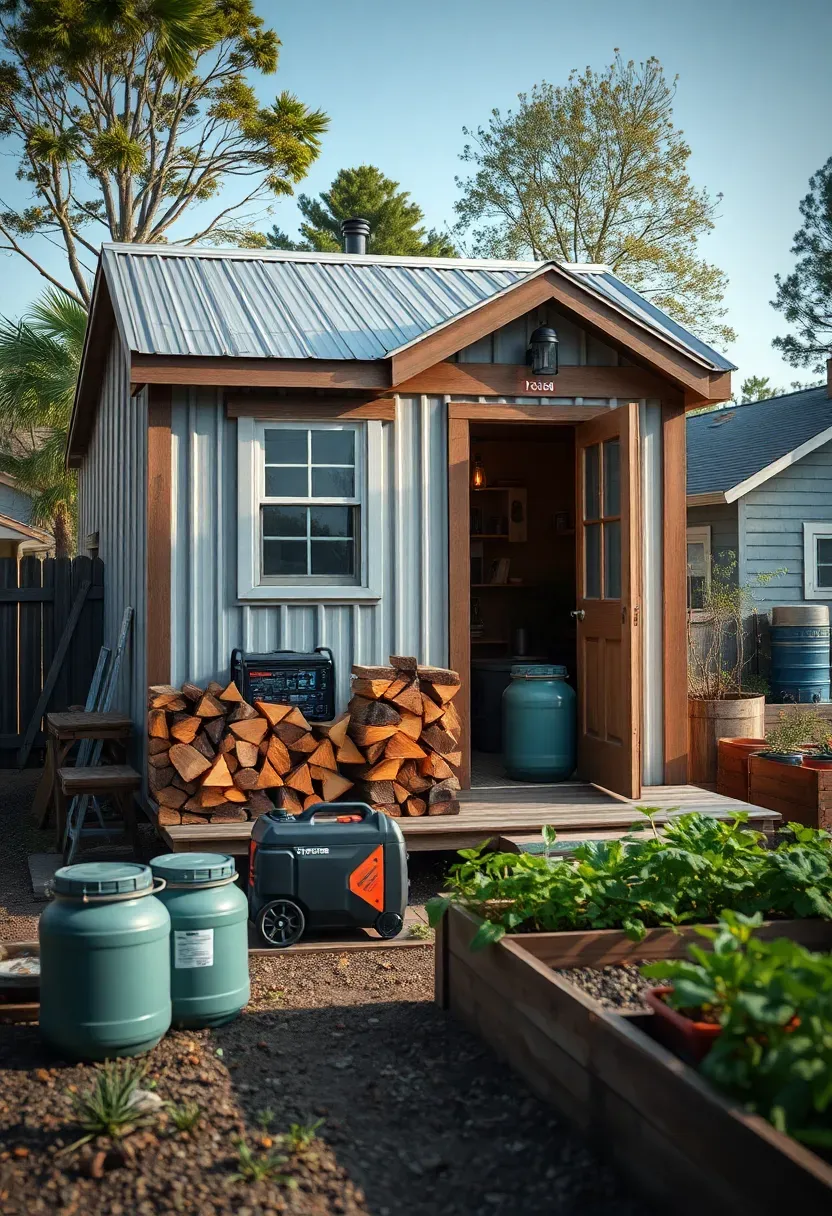
Hyper-realistic exterior view of tiny house prepared for emergency showing visible preparedness elements including small generator, stacked firewood, water storage containers, and small garden bed with food plants. Materials: tiny house with metal roof suitable for rainwater collection, visible solar panels for off-grid capability, compact generator near entrance, neatly stacked firewood, water storage barrels, raised garden bed with vegetables. Natural daylight showing preparedness clearly. Shallow depth of field focusing on preparedness elements around tiny house, overall house and systems visible in background showing resilience preparation. Emergency preparedness aesthetic. No text, no logos, no watermarks.</p>
Tiny house living offers profound benefits that extend far beyond square footage, presenting opportunities for financial liberation, environmental stewardship, and intentional lifestyle design. The growing tiny house movement represents a fundamental shift toward valuing experiences over possessions, with residents reporting increased happiness, reduced stress, and stronger community connections.. Hyper-realistic exterior view of tiny house prepared for emergency showing visible preparedness ele
Prompt: Nature documentary captured on Hasselblad X2D 100C with XCD 90V lens at f/4. Hyper-realistic exterior view of tiny house prepared for emergency showing visible preparedness elements including small generator, stacked firewood, water storage containers, and small garden bed with food plants. Materials: tiny house with metal roof suitable for rainwater collection, visible solar panels for off-grid capability, compact generator near entrance, neatly stacked firewood, water storage barrels, raised garden bed with vegetables. Natural daylight showing preparedness clearly. Shallow depth of field focusing on preparedness elements around tiny house, overall house and systems visible in background showing resilience preparation. Emergency preparedness aesthetic. No text, no logos, no watermarks.
Tips
- Maintain emergency fund equal to 6-12 months of tiny house expenses—dramatically more achievable than traditional housing costs
- Develop basic repair skills: plumbing, electrical, and carpentry skills increase self-sufficiency during emergencies
- Design multiple systems: backup heating, cooking, and power options create resilience when primary systems fail
What this gives you: Enhanced resilience during emergencies and economic disruptions through lower overhead, self-sufficiency skills, and manageable emergency preparedness.
27. Alignment with Sustainable Future Values
Tiny houses embody principles of sustainable living that align with future environmental needs, demonstrating housing solutions that reduce resource consumption while maintaining quality of life. As climate change and resource scarcity intensify, tiny houses represent scalable models for dramatically reduced environmental impact without sacrificing comfort or beauty. Living tiny becomes personal contribution to environmental solution rather than part of the problem, creating alignment between daily life and values of environmental stewardship and conscious consumption.
The tiny house movement pioneers sustainable housing solutions that may become necessary as environmental constraints intensify globally: minimal energy consumption, small physical footprints, use of reclaimed and sustainable materials, and integration with natural systems rather than domination over them. Tiny house owners become early adopters of sustainable lifestyle patterns that may become mainstream as environmental awareness increases and resource limitations require reduced consumption patterns globally.
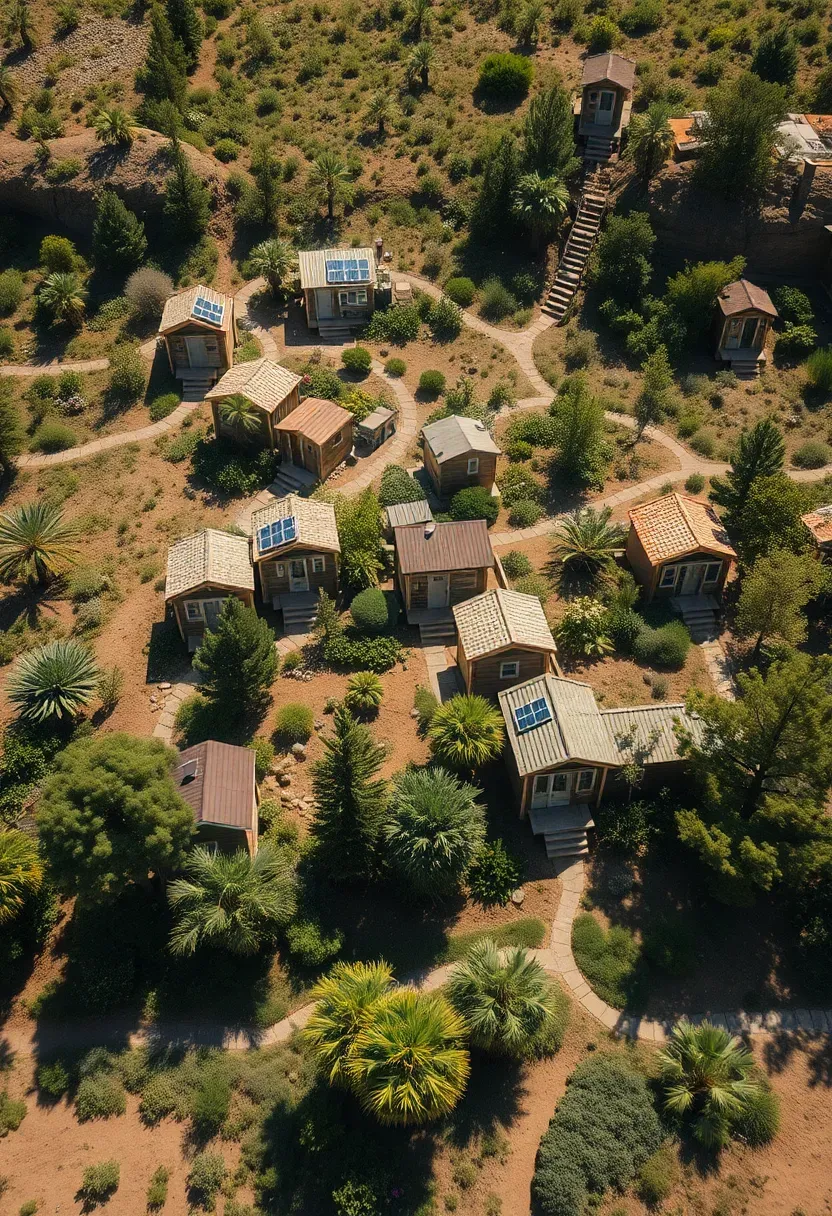
Hyper-realistic aerial view showing multiple tiny houses integrated into natural landscape with minimal environmental disruption, visible solar arrays, community gardens, and preserved natural areas between homes. Materials: tiny houses using sustainable materials like reclaimed wood and recycled metal, solar panels on roofs, permaculture landscaping with food plants, preserved trees and natural vegetation between homes, walking paths rather than roads. Bright natural daylight showing harmonious integration with nature. Shallow depth of field focusing on tiny house community integrated into landscape, showing how tiny houses model sustainable development. Sustainable future vision aesthetic. No text, no logos, no watermarks.</p>
Tiny house living offers profound benefits that extend far beyond square footage, presenting opportunities for financial liberation, environmental stewardship, and intentional lifestyle design. The growing tiny house movement represents a fundamental shift toward valuing experiences over possessions, with residents reporting increased happiness, reduced stress, and stronger community connections.. Hyper-realistic aerial view showing multiple tiny houses integrated into natural landscape with min
Prompt: Nature documentary captured on Hasselblad X2D 100C with XCD 90V lens at f/4. Hyper-realistic aerial view showing multiple tiny houses integrated into natural landscape with minimal environmental disruption, visible solar arrays, community gardens, and preserved natural areas between homes. Materials: tiny houses using sustainable materials like reclaimed wood and recycled metal, solar panels on roofs, permaculture landscaping with food plants, preserved trees and natural vegetation between homes, walking paths rather than roads. Bright natural daylight showing harmonious integration with nature. Shallow depth of field focusing on tiny house community integrated into landscape, showing how tiny houses model sustainable development. Sustainable future vision aesthetic. No text, no logos, no watermarks.
Tips
- Choose sustainable materials: reclaimed wood, recycled metal, and rapidly renewable materials like bamboo reduce environmental impact
- Design for disassembly: building methods that allow future material reuse minimize waste over building lifecycle
- Integrate with natural systems: passive solar, natural ventilation, and permaculture landscaping work with rather than against environment
Best for: Environmentally conscious individuals wanting housing choices that align with sustainable values and contribute to environmental solutions.
What this gives you: Alignment between daily living and environmental values, knowing your housing choices contribute to sustainable future rather than environmental problems.
Living in a tiny house offers transformative benefits that extend far beyond reduced square footage, creating opportunities for financial freedom, environmental stewardship, simplified lifestyles, and stronger relationships. The 27 reasons explored here demonstrate how small-space living can dramatically reduce expenses while increasing life satisfaction through intentional design, community connection, and alignment with personal values. From debt-free homeownership to enhanced creativity and resilience, tiny houses provide practical solutions to modern challenges of housing affordability, environmental impact, and meaningful living.
Whether motivated by financial goals, environmental concerns, desire for simplicity, or aspiration for community, tiny house living offers tangible benefits that improve quality of life while reducing ecological footprint. The movement toward smaller, more intentional homes represents not just housing choice but fundamental reimagining of what makes life good—focusing on experiences over possessions, relationships over square footage, and purposeful living over automatic consumption. As these 27 reasons illustrate, tiny houses prove that sometimes the biggest benefits come in the smallest packages.
Pinterest cover for 27 Reasons to Live in a Tiny House: Big Benefits, Small Space