Tiny House Winter Living: 21 Ways to Stay Warm on a Budget
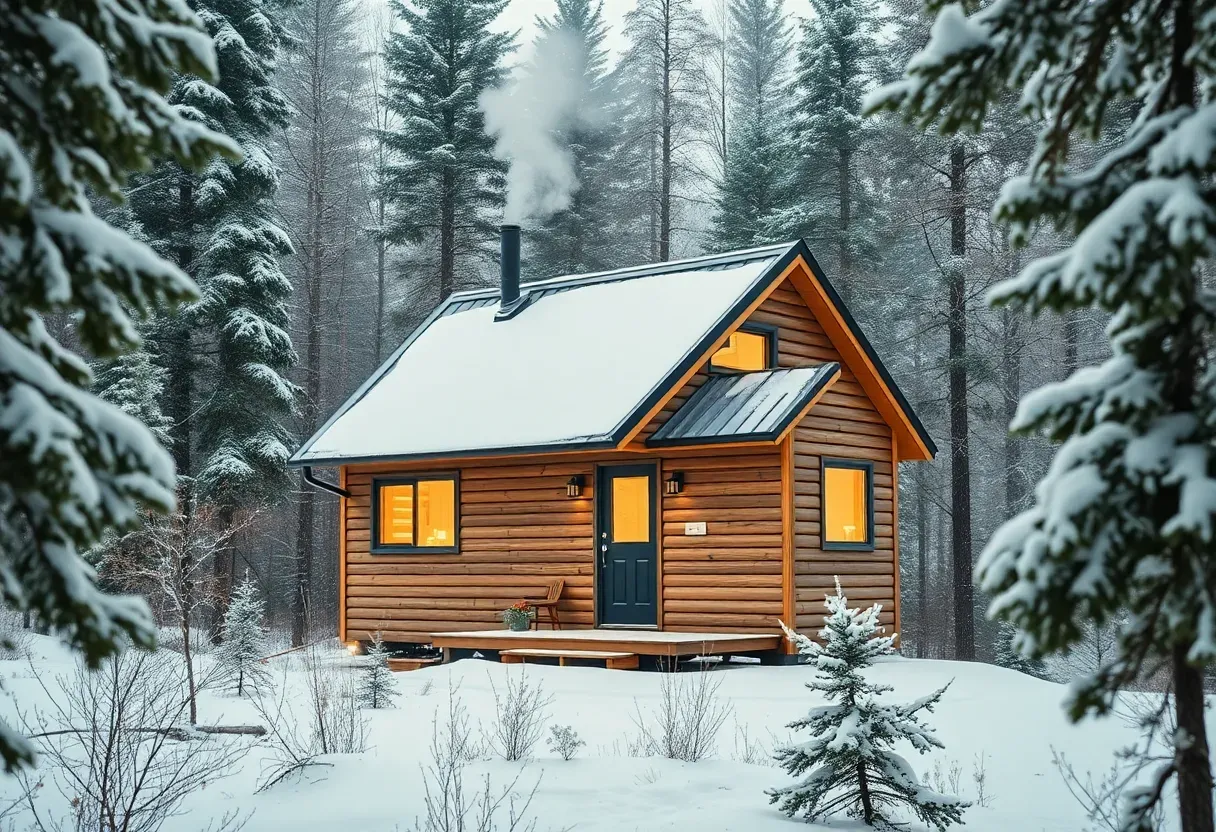
Tiny house winter living transforms compact spaces into warm, inviting retreats when you prepare properly. Small home dwellers discover that intentional design choices make winter months surprisingly comfortable and energy-efficient.
Winter in a tiny house requires strategic planning for insulation, heating, and moisture control. The payoff is significant: lower utility bills, minimal maintenance, and the satisfaction of sustainable living through the coldest season.
With the right approach, your tiny home becomes a cozy sanctuary that proves good things come in small packages—even when temperatures drop below freezing.
Quick FAQ
How do tiny houses stay warm in winter?
Proper insulation, quality windows, and efficient heating systems like mini-splits or propane heaters keep tiny houses warm even in extreme cold.
Is tiny house living realistic in cold climates?
Yes, tiny houses thrive in cold climates when built with four-season insulation, skirted foundations, and proper ventilation systems designed for winter use.
What heating option works best for tiny homes?
Mini-split heat pumps offer the most efficiency, but propane heaters, wood stoves, and radiant floor heating also work well depending on your climate and budget.
How do you prevent condensation in a tiny house during winter?
Install a ventilation system, use moisture-absorbing materials, avoid drying clothes indoors, and maintain consistent indoor temperatures to reduce condensation buildup.
What R-value insulation should a tiny house have?
Aim for R-20 to R-30 in walls and R-40 to R-60 in the ceiling for cold climate tiny houses, exceeding standard building codes for maximum efficiency.
How much does it cost to heat a tiny house in winter?
Most tiny house owners spend $50-150 per month on heating in winter, significantly less than traditional homes due to smaller square footage and better insulation.
As an Amazon Associate I earn from qualifying purchases.
1. Upgrade Wall Insulation Beyond Building Code
Tiny house winter living starts with exceptional insulation that exceeds standard requirements. Your walls should contain R-20 to R-30 insulation, using high-performance materials like spray foam or rigid foam boards that eliminate thermal bridging. This investment pays dividends in comfort and energy savings throughout the coldest months.
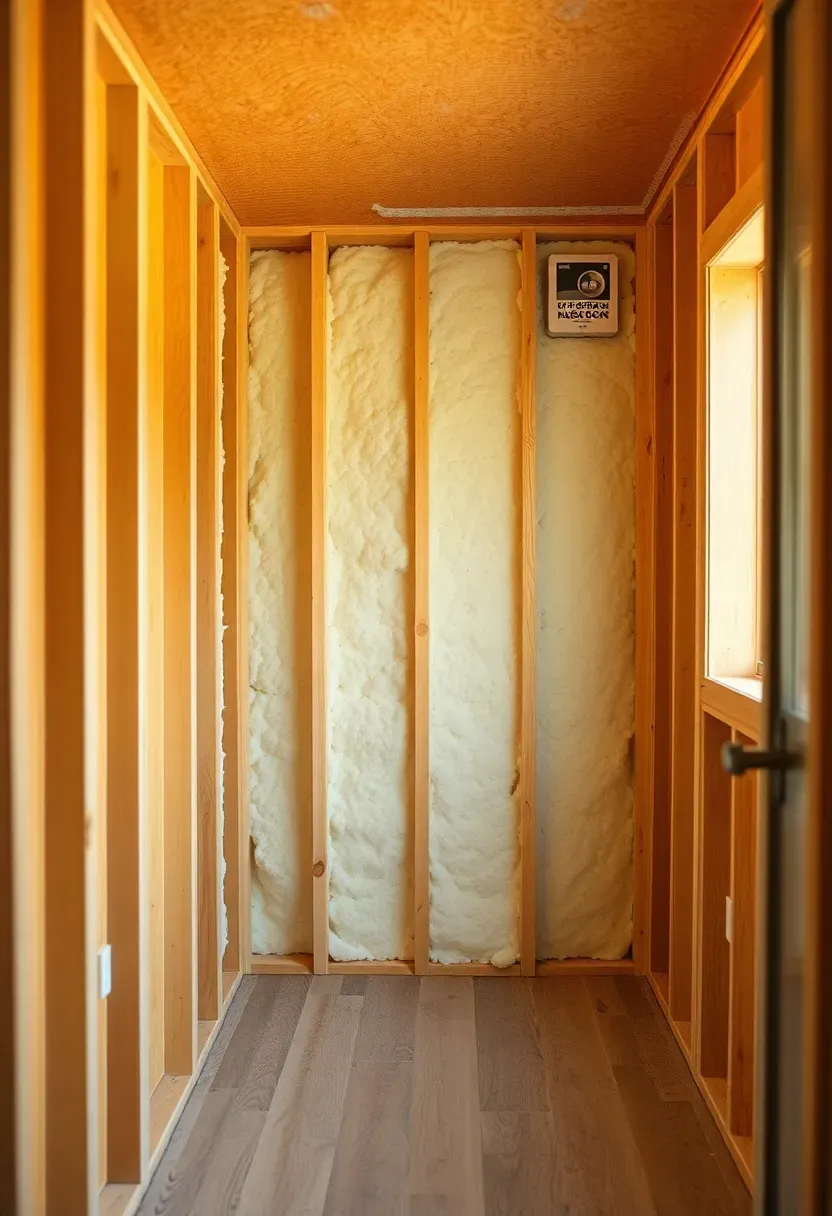
Hyper-realistic 3/4 view of a tiny house interior construction showing exposed wall insulation layers with spray foam and rigid foam boards. Materials: closed-cell spray foam, foil-faced rigid insulation, wood framing studs. Warm diffused daylight from window, creamy neutral walls with amber wood tones, minimalist construction zone mood. Shallow depth of field, sharp details on insulation textures, visible wall framing structure, partially installed pine paneling. No text, no logos, no watermarks.</p>
Tiny house winter living transforms compact spaces into warm, inviting retreats when you prepare properly. Small home dwellers discover that intentional design choices make winter months surprisingly comfortable and energy-efficient.. Hyper-realistic 3/4 view of a tiny house interior construction showing exposed wall insulation layers with spray foam and rigid foam boards. Materials: closed-cell spray foam, foil-faced rigid insulation, wood framing studs. Warm diffused daylight from window, crea
Recommended
Items for this idea
Tips
- Use spray foam for complete air sealing in hard-to-reach areas
- Add rigid foam board exterior for continuous thermal barrier
- Consider mineral wool for eco-friendly moisture-resistant option
Budget note: Premium insulation costs $2-5 per square foot but reduces heating bills by 30-50%
What this gives you: Consistent indoor temperatures without cold spots or drafts
2. Install Double-Pane Low-E Windows
Quality windows transform your tiny house from drafty to dreamy during winter months. Double-pane windows with low-E coatings reflect interior heat back inside while allowing natural light to warm your space. Choose windows with gas fills between panes for maximum thermal performance in cold climates.
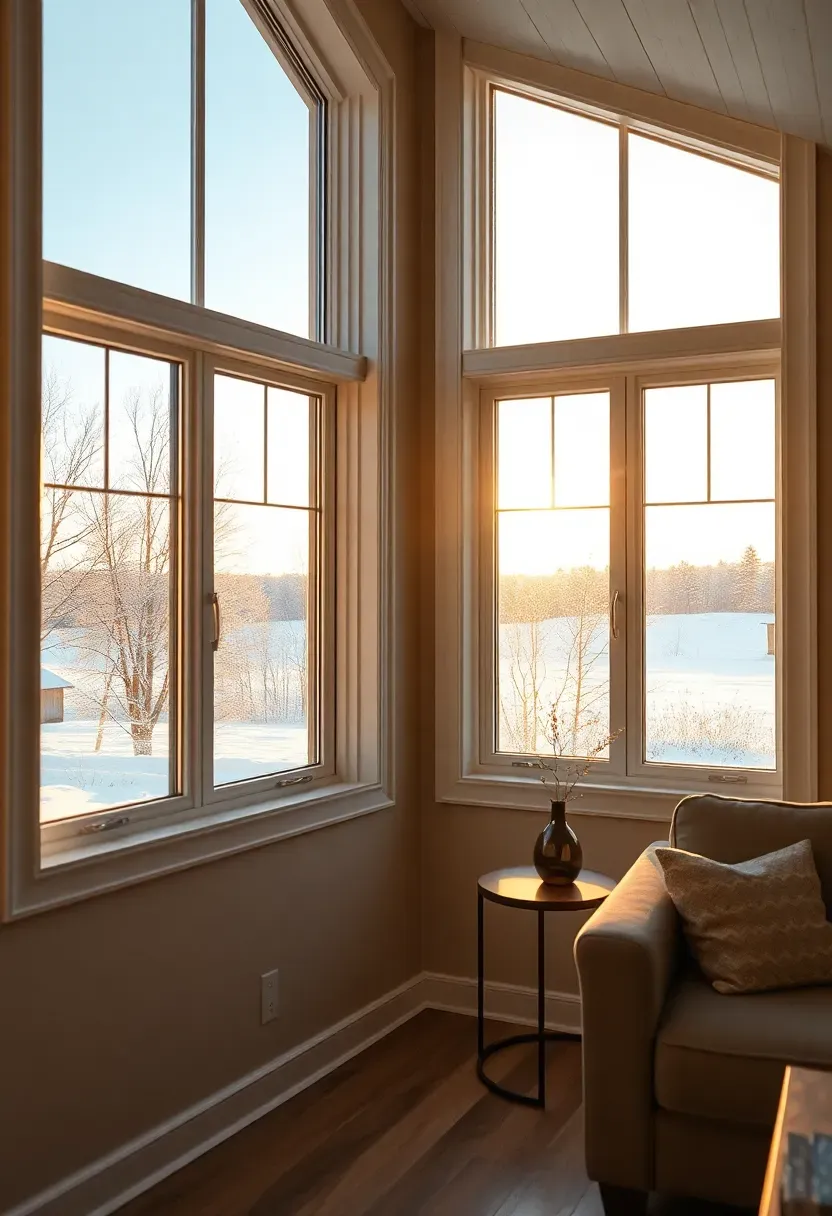
Hyper-realistic 3/4 view of a tiny house living room with large double-pane windows showing winter landscape outside. Materials: vinyl-clad wood windows with low-E coating, white trim, light wool curtains. Soft golden hour winter sunlight streaming through windows, pale blue winter sky visible through glass, warm neutral interior with beige walls and light wood floor. Cozy minimalist mood with warm light and cold outdoor contrast. Shallow depth of field, sharp details on window hardware and glass, visible tiny house room context with small sofa and occasional table. No text, no logos, no watermarks.</p>
Tiny house winter living transforms compact spaces into warm, inviting retreats when you prepare properly. Small home dwellers discover that intentional design choices make winter months surprisingly comfortable and energy-efficient.. Hyper-realistic 3/4 view of a tiny house living room with large double-pane windows showing winter landscape outside. Materials: vinyl-clad wood windows with low-E coating, white trim, light wool curtains. Soft golden hour winter sunlight streaming through windows,
Recommended
Items for this idea
Tips
- Look for U-factor below 0.30 for cold climate performance
- South-facing windows maximize solar heat gain during winter days
- Add exterior storm windows for triple-pane equivalent performance
Placement note: Prioritize windows on south side for passive solar heating
What this gives you: Solar heat gain during day and heat retention at night
3. Seal Air Leaks Around Doors and Windows
Tiny houses lose surprising heat through small gaps around openings. Apply quality weatherstripping to all door frames and window sashes, then seal larger gaps with spray foam or acoustic caulk. This simple step dramatically improves comfort while reducing your heating workload throughout winter.
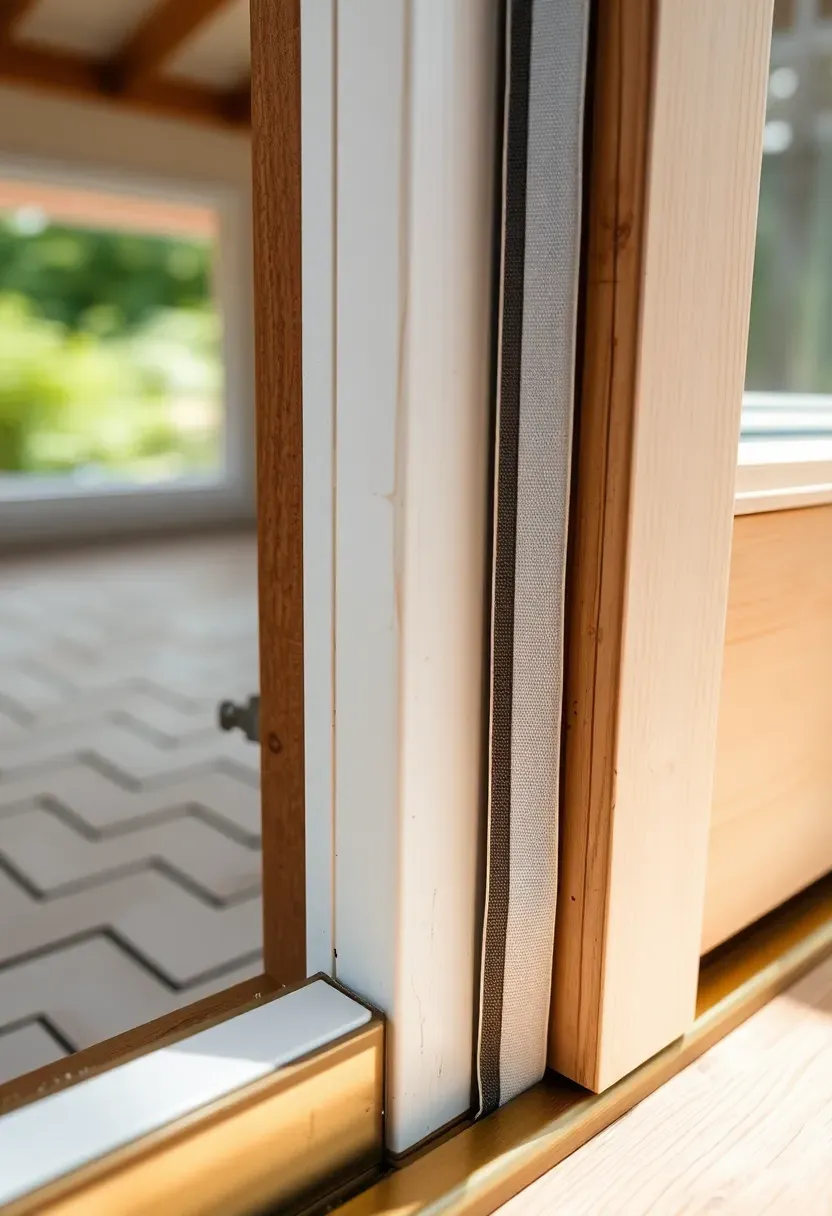
Hyper-realistic close-up view of tiny house door frame showing weatherstripping installation and caulking details. Materials: foam tape weatherstripping, acoustic caulk, wood door frame with white painted finish, bronze threshold. Bright natural light from adjacent window, sharp focus on sealing materials with slight blur to surrounding wall. Professional installation mood with clean lines and precise application. Shallow depth of field, hyper-sharp details on weatherstripping texture and caulk bead, visible door hardware and hinges. No text, no logos, no watermarks.</p>
Tiny house winter living transforms compact spaces into warm, inviting retreats when you prepare properly. Small home dwellers discover that intentional design choices make winter months surprisingly comfortable and energy-efficient.. Hyper-realistic close-up view of tiny house door frame showing weatherstripping installation and caulking details. Materials: foam tape weatherstripping, acoustic caulk, wood door frame with white painted finish, bronze threshold. Bright natural light from adjacent
Recommended
Items for this idea
Tips
- Use incense stick on cold days to detect drafty areas
- Replace worn weatherstripping annually for best seal
- Don't forget to seal around utility penetrations and vents
Time investment: 2-4 hours to thoroughly seal entire tiny house
What this gives you: Elimination of cold drafts and reduced heating costs by 15-20%
4. Add Thermal Curtains for Extra Insulation
Thermal curtains create an insulating air layer over your windows that significantly reduces heat loss. Choose thick, floor-length panels with blackout lining and install them close to the window frame for maximum effectiveness. These functional treatments also add warmth and texture to your tiny house interior design.
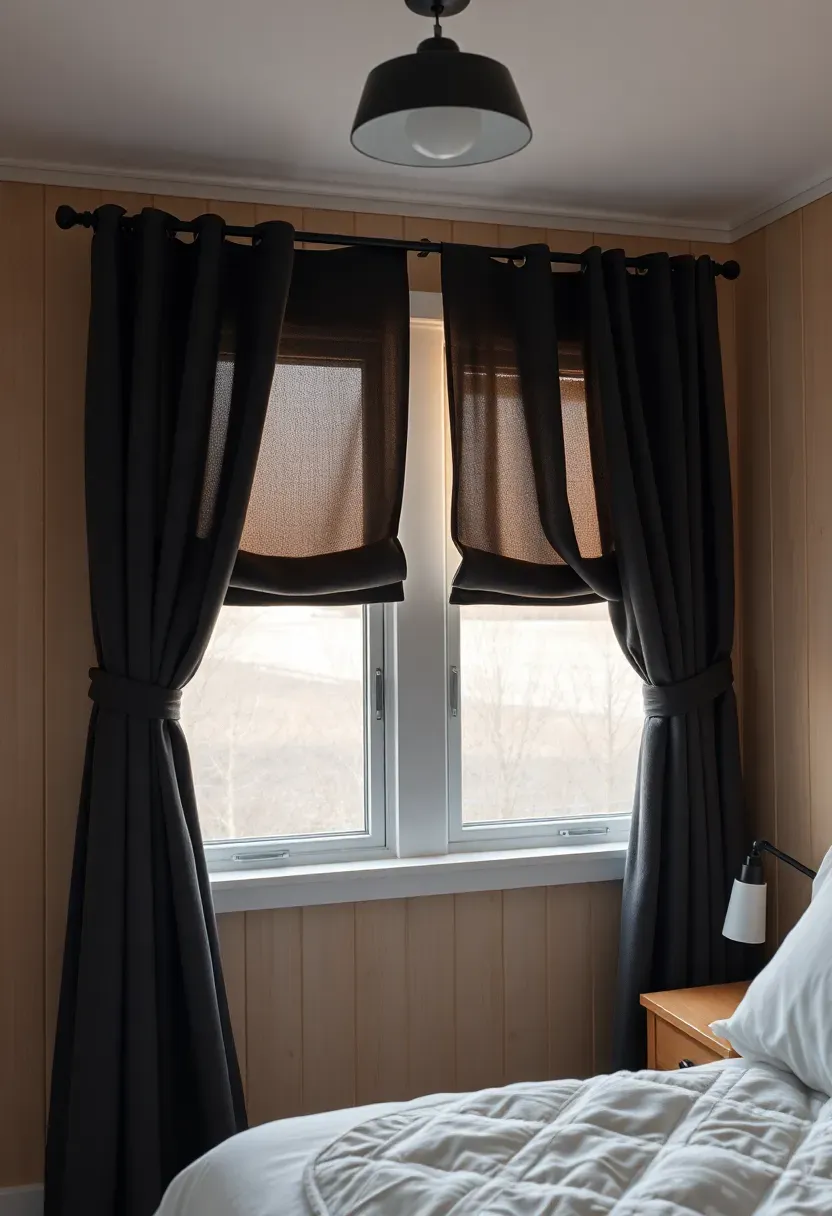
Hyper-realistic 3/4 view of tiny house bedroom with thermal curtains drawn over windows. Materials: heavy velvet thermal curtains in warm charcoal with blackout lining, wrought iron curtain rod, white window trim. Soft warm ambient light from overhead fixture, cozy minimalist bedroom with light wood walls, white linens, small bedside table. Peaceful winter evening mood with fabric texture focus. Shallow depth of field, sharp details on curtain fabric folds and window frame, visible bedroom context with quilt textures. No text, no logos, no watermarks.</p>
Tiny house winter living transforms compact spaces into warm, inviting retreats when you prepare properly. Small home dwellers discover that intentional design choices make winter months surprisingly comfortable and energy-efficient.. Hyper-realistic 3/4 view of tiny house bedroom with thermal curtains drawn over windows. Materials: heavy velvet thermal curtains in warm charcoal with blackout lining, wrought iron curtain rod, white window trim. Soft warm ambient light from overhead fixture, cozy
Recommended
Items for this idea
Tips
- Choose curtains with high thermal resistance ratings (R-value)
- Install curtain rods close to ceiling to trap more air
- Open curtains during sunny days, close immediately at dusk
Best for: North-facing windows and bedrooms where you want maximum insulation
What this gives you: Additional R-3 to R-5 insulation value per window
5. Install a Skirt Around Your Trailer Foundation
Foundation skirts block winter winds from freezing the space beneath your tiny house, protecting pipes and floors from cold. Create a skirt using rigid foam insulation board, wood lattice, or even straw bales covered with weather-resistant fabric. This simple addition makes a dramatic difference in comfort.
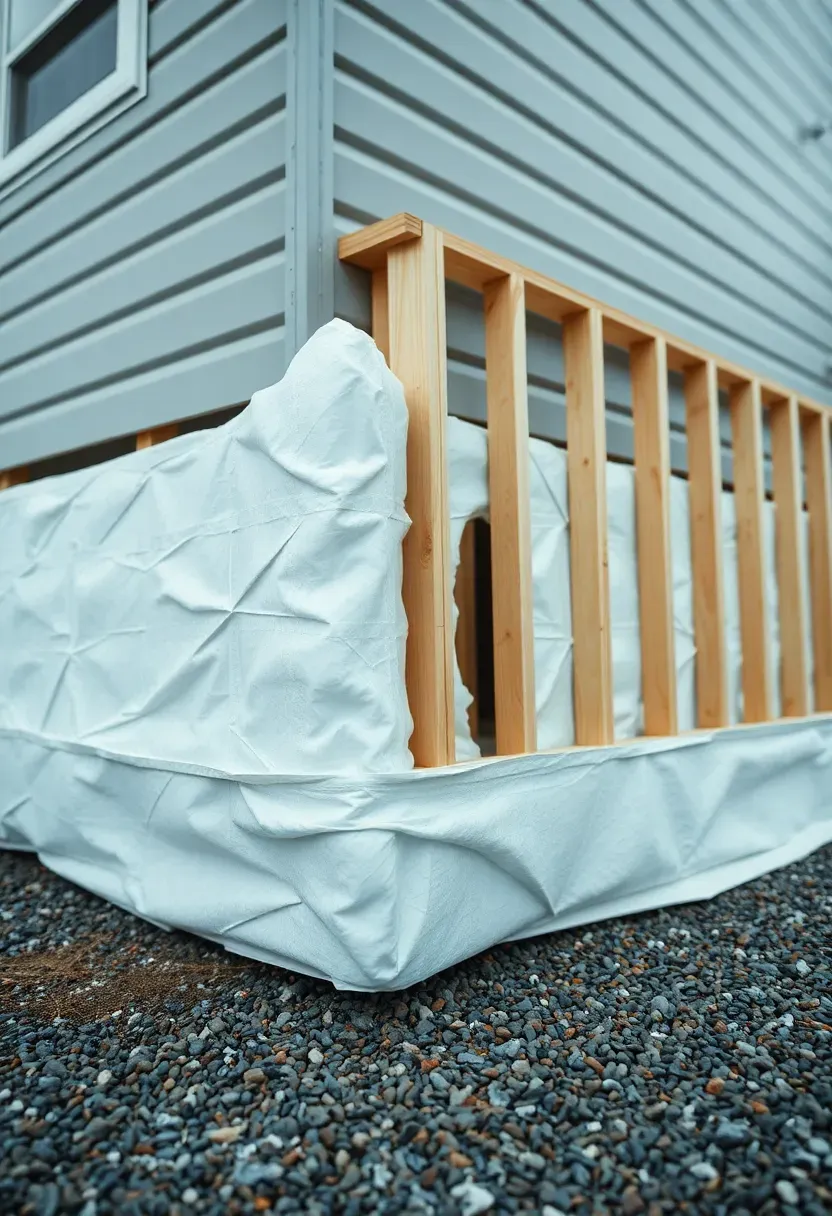
Hyper-realistic 3/4 view showing tiny house trailer foundation with white rigid foam insulation skirt installed. Materials: foil-faced rigid foam panels, pressure-treated wood framing, tiny house trailer frame, gravel ground. Overcast winter daylight with subtle blue tones, clean construction site aesthetic, protective winter preparation mood. Shallow depth of field, sharp details on foam insulation joints and wood framing, visible tiny house exterior siding above skirt line. No text, no logos, no watermarks.</p>
Tiny house winter living transforms compact spaces into warm, inviting retreats when you prepare properly. Small home dwellers discover that intentional design choices make winter months surprisingly comfortable and energy-efficient.. Hyper-realistic 3/4 view showing tiny house trailer foundation with white rigid foam insulation skirt installed. Materials: foil-faced rigid foam panels, pressure-treated wood framing, tiny house trailer frame, gravel ground. Overcast winter daylight with subtle bl
Recommended
Items for this idea
Tips
- Leave small vents near the top to prevent moisture buildup
- Insulate rim joists above the skirt for complete protection
- Remove skirt in spring to prevent mold and pest issues
Budget note: DIY foam board skirt costs $200-500 depending on trailer size
What this gives you: Floor temperatures 5-10 degrees warmer with protected pipes
6. Choose the Right Heating System
Your heating system makes or breaks tiny house winter living comfort. Mini-split heat pumps offer the best efficiency for moderate cold, while propane heaters provide reliable backup in extreme temperatures. Consider your climate, electrical capacity, and budget when selecting the perfect heating solution.
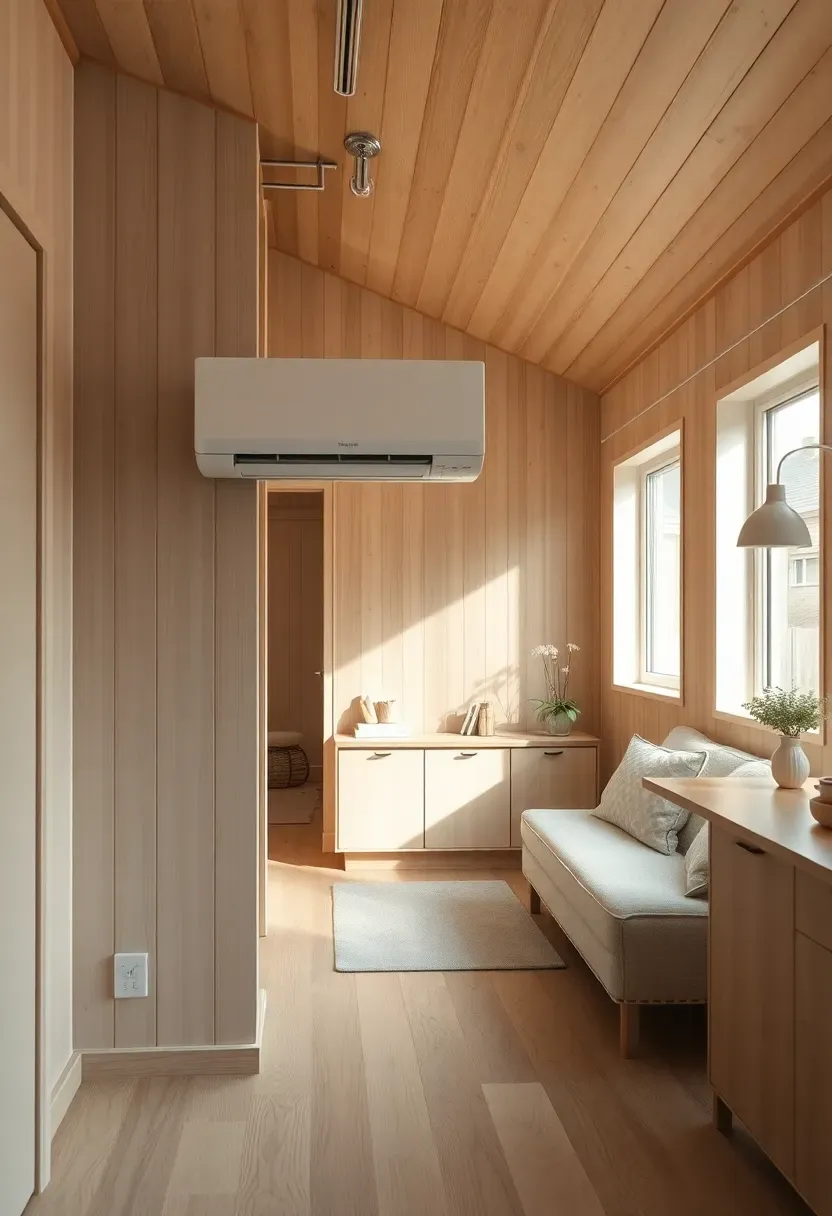
Hyper-realistic 3/4 view of tiny house interior showing wall-mounted mini-split heat pump unit. Materials: white matte plastic indoor unit, light wood wall paneling, light oak floor, modern minimalist furnishings. Soft warm ambient light, clean contemporary Scandinavian-inspired tiny house design with neutral beige and cream tones. Efficient modern heating mood with focus on technology. Shallow depth of field, sharp details on heat pump unit and digital display, visible tiny house living space context with sofa and small dining area. No text, no logos, no watermarks.</p>
Tiny house winter living transforms compact spaces into warm, inviting retreats when you prepare properly. Small home dwellers discover that intentional design choices make winter months surprisingly comfortable and energy-efficient.. Hyper-realistic 3/4 view of tiny house interior showing wall-mounted mini-split heat pump unit. Materials: white matte plastic indoor unit, light wood wall paneling, light oak floor, modern minimalist furnishings. Soft warm ambient light, clean contemporary Scandin
Recommended
Items for this idea
Tips
- Mini-splits heat and cool, providing year-round climate control
- Propane heaters work during power outages with battery ignition
- Size your heater properly—oversized units cycle inefficiently
Placement note: Install mini-split high on wall for optimal airflow distribution
What this gives you: Consistent warmth with humidity control and low operating costs
7. Create a Loft Sleeping Pod
Heat rises naturally in tiny houses, making lofts the warmest sleeping areas during winter. Embrace this physics by designing your loft as an insulated sleeping pod with reduced ceiling height for maximum coziness. Add a thermal curtain at the loft opening to trap warmth where you sleep.
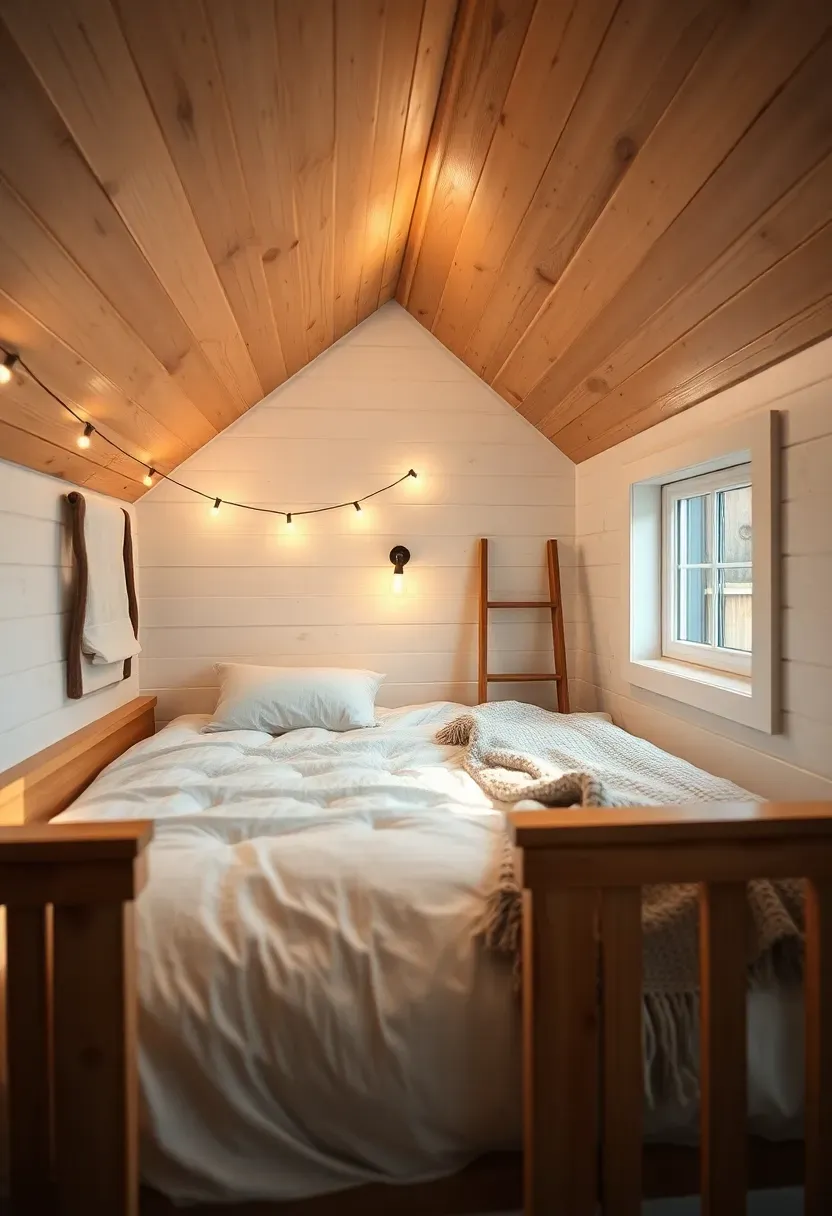
Hyper-realistic 3/4 view looking into tiny house loft sleeping area with warm ambient lighting. Materials: light wood ceiling with tongue-and-groove paneling, white painted walls, plush white bedding, wool throw blanket, pine railings. Soft warm glow from string lights and reading lamp, cozy sanctuary mood with textures of wood and fabric. Comfortable sleeping pod aesthetic with low ceiling height for warmth. Shallow depth of field, sharp details on bedding textures and wood grain, visible loft ladder and railing details. No text, no logos, no watermarks.</p>
Tiny house winter living transforms compact spaces into warm, inviting retreats when you prepare properly. Small home dwellers discover that intentional design choices make winter months surprisingly comfortable and energy-efficient.. Hyper-realistic 3/4 view looking into tiny house loft sleeping area with warm ambient lighting. Materials: light wood ceiling with tongue-and-groove paneling, white painted walls, plush white bedding, wool throw blanket, pine railings. Soft warm glow from string li
Recommended
Items for this idea
Tips
- Keep loft ceiling height under 4 feet for maximum heat retention
- Add an extra layer of insulation between loft and main living space
- Install a small temperature monitor to track loft versus main floor
Best for: Cold climate tiny houses where you want to minimize heating needs
What this gives you: Sleeping area 5-10 degrees warmer than main floor
8. Use Rugs to Insulate Floors
Bare floors conduct away precious heat in tiny houses, especially when built over trailer frames. Add plush wool or synthetic rugs throughout your space to create thermal breaks that make floors comfortable to walk on. Layer multiple rugs for maximum insulation and visual warmth in your winter sanctuary.
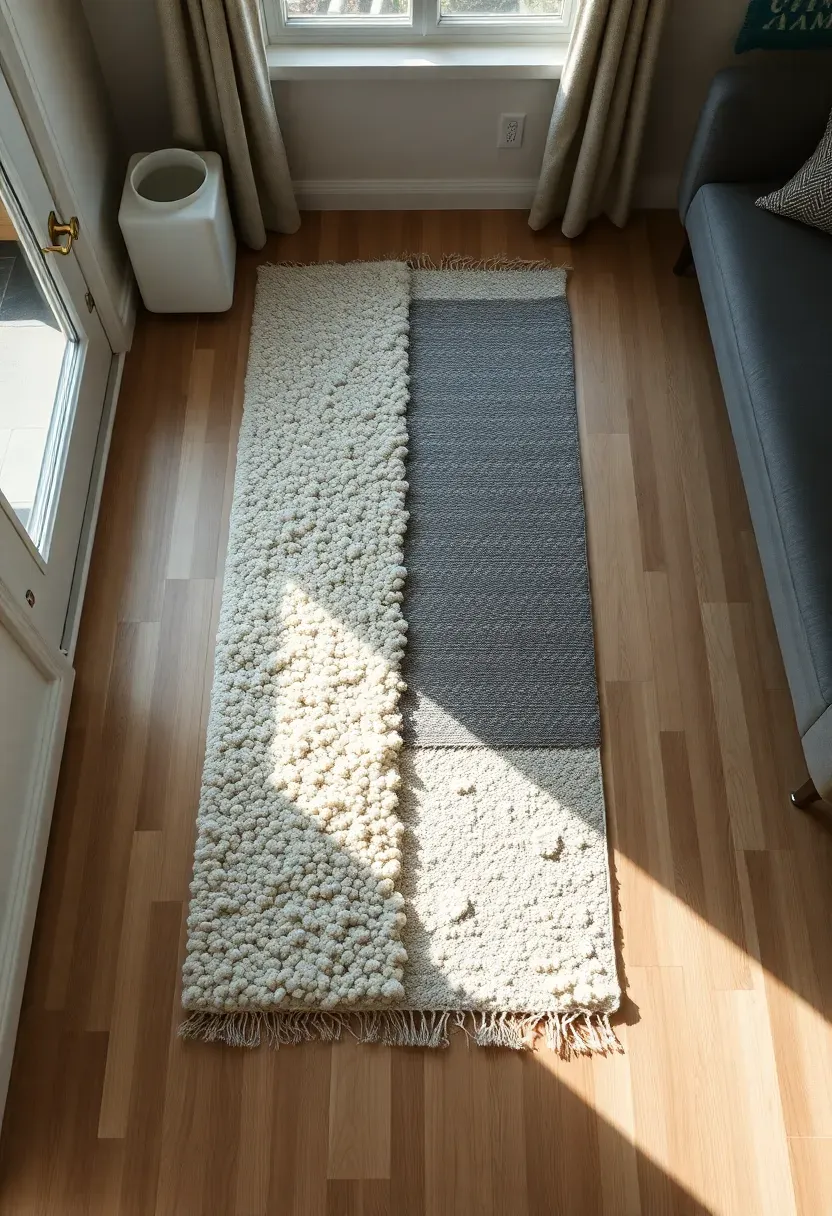
Hyper-realistic overhead view of tiny house living room showing layered rugs on light wood floor. Materials: chunky wool runner rug in cream, smaller geometric pattern rug in warm gray, light oak wide-plank flooring, simple modern furniture legs visible at edges. Soft natural light from window, cozy hygge-inspired minimalist aesthetic with neutral warm tones. Textural focus on rug fibers and wood grain. Shallow depth of field, sharp details on rug textures and floor patterns, visible tiny house scale with furniture placement. No text, no logos, no watermarks.</p>
Tiny house winter living transforms compact spaces into warm, inviting retreats when you prepare properly. Small home dwellers discover that intentional design choices make winter months surprisingly comfortable and energy-efficient.. Hyper-realistic overhead view of tiny house living room showing layered rugs on light wood floor. Materials: chunky wool runner rug in cream, smaller geometric pattern rug in warm gray, light oak wide-plank flooring, simple modern furniture legs visible at edges. S
Recommended
Items for this idea
Tips
- Choose natural wool for best insulation and moisture regulation
- Add rug pads underneath for extra cushion and thermal barrier
- Use larger rugs that extend under furniture for complete coverage
Placement note: Prioritize rugs in high-traffic areas and where you sit or stand frequently
What this gives you: Noticeably warmer floors and reduced heat loss through subflooring
9. Maximize Passive Solar Gain
Your tiny house orientation and window placement determine how much free solar heat you capture during winter. Position your home with maximum south-facing glass, then keep windows clean and unobstructed during daylight hours. This passive solar strategy provides significant heating without increasing energy bills.
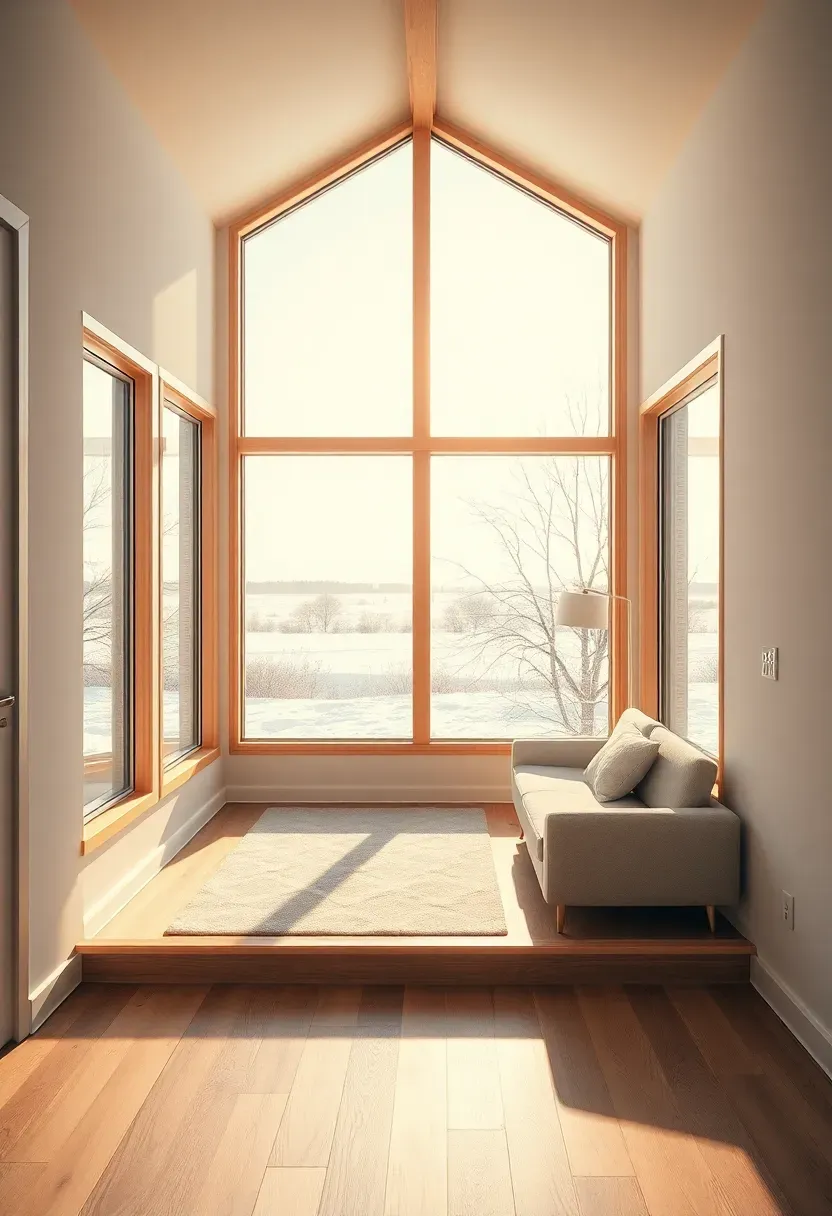
Hyper-realistic 3/4 wide view from inside tiny house looking through large south-facing windows at bright winter landscape. Materials: large picture window, light wood interior, white walls, simple minimal furnishings including small sofa and floor lamp. Brilliant winter sunlight streaming through windows creating warm pools of light on light oak floor, pale blue sky with bare tree branches visible outside. Hopeful winter brightness mood with strong indoor-outdoor connection. Shallow depth of field, sharp details on window frame and interior textures, solar light patterns on floor. No text, no logos, no watermarks.</p>
Tiny house winter living transforms compact spaces into warm, inviting retreats when you prepare properly. Small home dwellers discover that intentional design choices make winter months surprisingly comfortable and energy-efficient.. Hyper-realistic 3/4 wide view from inside tiny house looking through large south-facing windows at bright winter landscape. Materials: large picture window, light wood interior, white walls, simple minimal furnishings including small sofa and floor lamp. Brilliant
Recommended
Items for this idea
Tips
- Aim for 40-60% of total glass area on south-facing walls
- Avoid east/west glass that loses more heat than it gains
- Use thermal mass materials like stone or concrete to store solar heat
Placement note: Critical for stationary tiny houses—less effective for frequently moved homes
What this gives you: Free heating that can provide 20-40% of winter warmth needs
10. Install a Heat Recovery Ventilator
Tiny houses need fresh air even during freezing winters, but opening windows wastes precious heat. A heat recovery ventilator (HRV) exchanges stale air for fresh while capturing 80-90% of the heat from outgoing air. This small investment dramatically improves indoor air quality without sacrificing comfort.
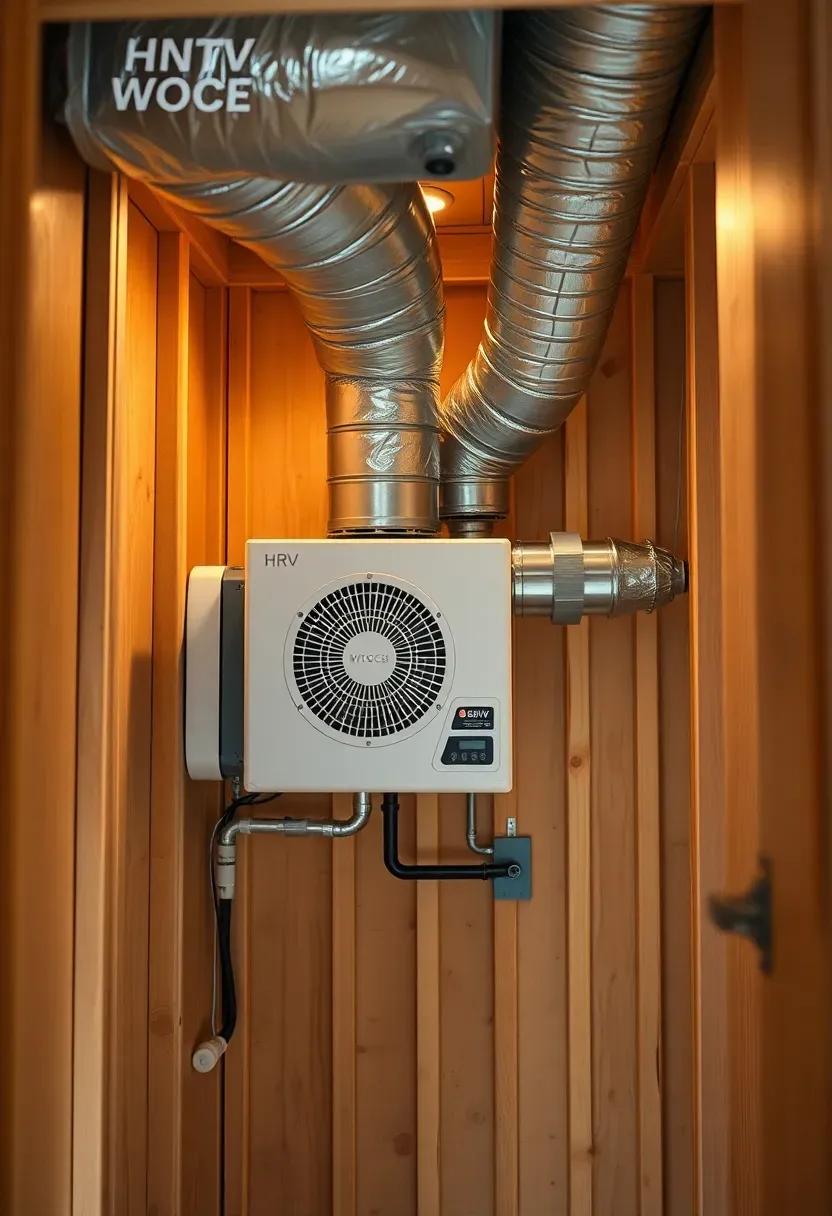
Hyper-realistic 3/4 view of tiny house utility closet showing heat recovery ventilator unit installed. Materials: white HRV unit with silver insulated ductwork, pine closet framing, exterior wall penetration with proper sealing. Warm LED utility light, clean mechanical installation with proper airflow, functional tiny house systems mood. Shallow depth of field, sharp details on HRV unit and duct connections, visible tiny house construction quality with neat wiring and plumbing. No text, no logos, no watermarks.</p>
Tiny house winter living transforms compact spaces into warm, inviting retreats when you prepare properly. Small home dwellers discover that intentional design choices make winter months surprisingly comfortable and energy-efficient.. Hyper-realistic 3/4 view of tiny house utility closet showing heat recovery ventilator unit installed. Materials: white HRV unit with silver insulated ductwork, pine closet framing, exterior wall penetration with proper sealing. Warm LED utility light, clean mechan
Recommended
Items for this idea
Tips
- Size HRV for tiny house square footage—compact units work perfectly
- Install intake away from exhaust to prevent fresh air contamination
- Run continuously on low setting for consistent air exchange
Budget note: Quality HRV units cost $800-1500 plus installation
What this gives you: Fresh air without heat loss and reduced condensation problems
11. Use Warm Lighting Throughout
Lighting color temperature affects how warm and cozy your tiny house feels during dark winter days. Replace cool white bulbs with warm 2700K LED bulbs throughout your space, then add accent lighting like string lights or lamps with warm amber glows that make evenings feel cozy and inviting regardless of outdoor temperatures.
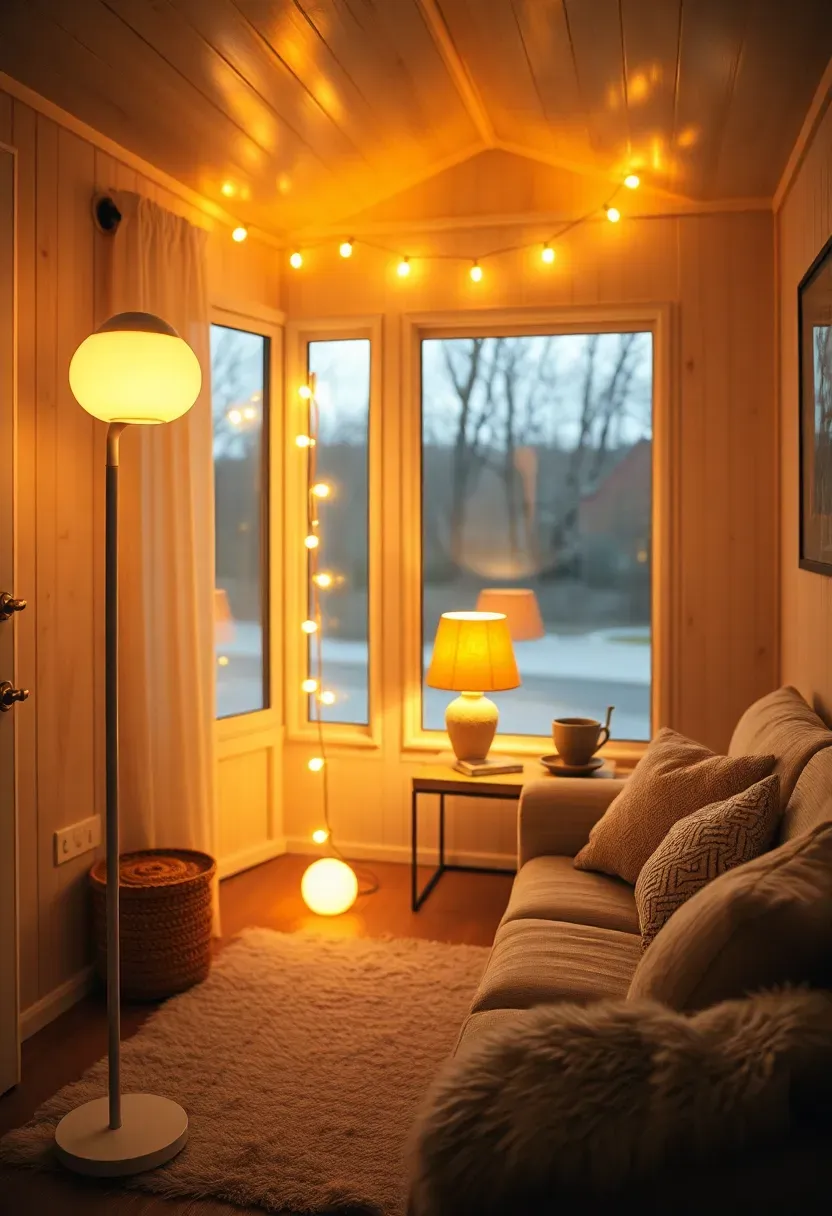
Hyper-realistic 3/4 view of tiny house living room in evening with warm layered lighting creating cozy ambiance. Materials: warm white LED floor lamp, string lights with warm glow, table lamp with amber shade, light wood walls, plush furnishings. Soft multiple light sources creating inviting warmth, beige and cream color palette with golden light pools, hygge winter evening mood. Shallow depth of field, sharp details on lamp fixtures and warm light quality, visible tiny house scale with intimate seating area. No text, no logos, no watermarks.</p>
Tiny house winter living transforms compact spaces into warm, inviting retreats when you prepare properly. Small home dwellers discover that intentional design choices make winter months surprisingly comfortable and energy-efficient.. Hyper-realistic 3/4 view of tiny house living room in evening with warm layered lighting creating cozy ambiance. Materials: warm white LED floor lamp, string lights with warm glow, table lamp with amber shade, light wood walls, plush furnishings. Soft multiple ligh
Recommended
Items for this idea
Tips
- Layer lighting at different heights for maximum warmth and dimension
- Use dimmers to adjust brightness from functional to ambient
- Avoid cool white bulbs above 3000K—they make spaces feel colder
Best for: Creating psychological warmth during long dark winter evenings
What this gives you: Inviting atmosphere that combats seasonal affective disorder
12. Add a Wood Stove as Backup Heat
There's nothing quite like the radiant warmth of a wood stove in a tiny house during winter. Compact EPA-certified wood stoves provide reliable backup heat during power outages while creating a cozy focal point in your living space. Choose a model specifically designed for tiny homes with proper clearances.
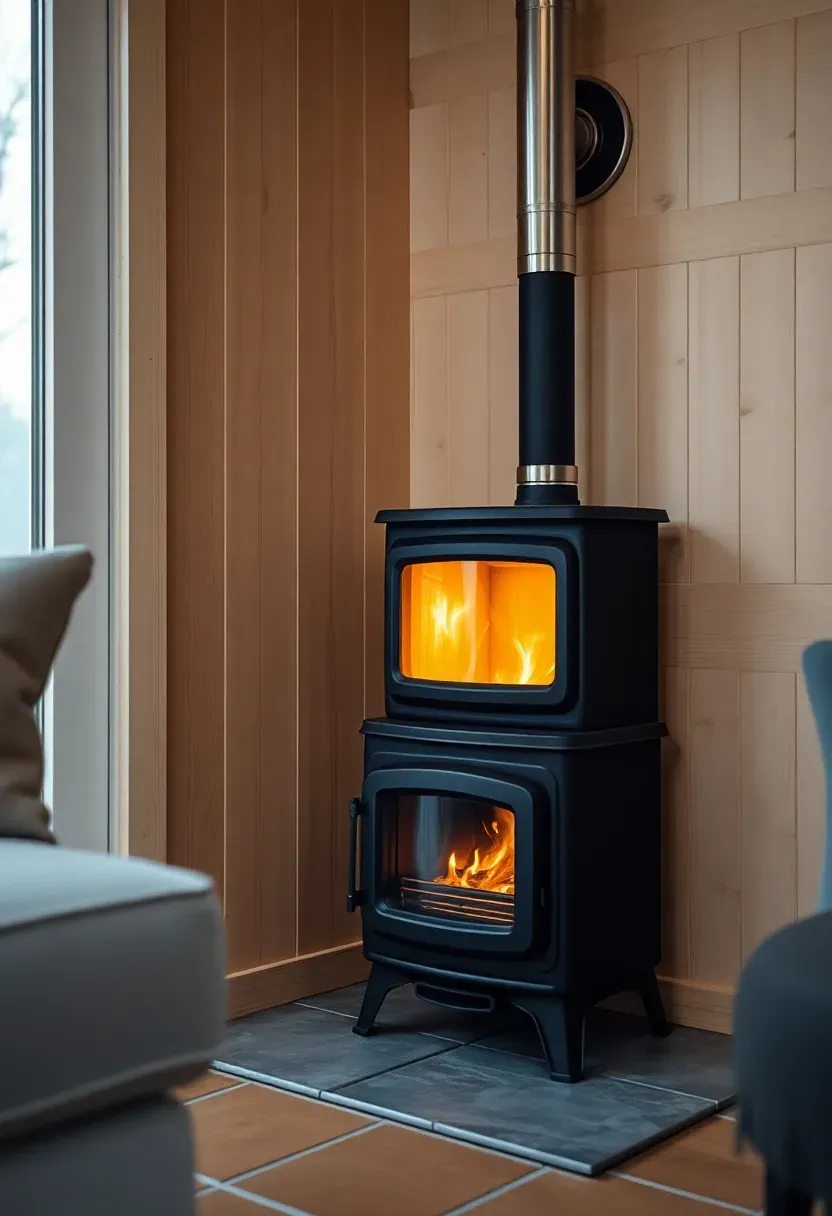
Hyper-realistic 3/4 view of tiny house living corner with compact cast iron wood stove installed. Materials: matte black cast iron wood stove, brushed nickel chimney pipe, light wood wall with proper heat shield, stone tile hearth. Warm glow from fire visible through glass door, cozy winter evening ambiance with firelight reflecting on nearby surfaces, minimalist rustic-modern aesthetic. Shallow depth of field, sharp details on wood stove casting and chimney installation, visible tiny house scale with appropriately sized stove. No text, no logos, no watermarks.</p>
Tiny house winter living transforms compact spaces into warm, inviting retreats when you prepare properly. Small home dwellers discover that intentional design choices make winter months surprisingly comfortable and energy-efficient.. Hyper-realistic 3/4 view of tiny house living corner with compact cast iron wood stove installed. Materials: matte black cast iron wood stove, brushed nickel chimney pipe, light wood wall with proper heat shield, stone tile hearth. Warm glow from fire visible throu
Recommended
Items for this idea
Tips
- Install hearth pad extending 18 inches beyond all stove sides
- Use dry seasoned wood for efficient, clean burning
- Consider a pellet stove for easier fuel handling and automatic operation
Budget note: Tiny house wood stoves cost $800-2000 plus installation materials
What this gives you: Emergency heating plus incomparable cozy atmosphere
13. Create a Warm Entryway Mudroom
Your entryway determines how much cold air and moisture enter your tiny house. Design a small mudroom zone with boot storage, coat hooks, and a bench for removing wet layers. Add a heavy thermal curtain between entry and living space to create an airlock that protects your main living area.
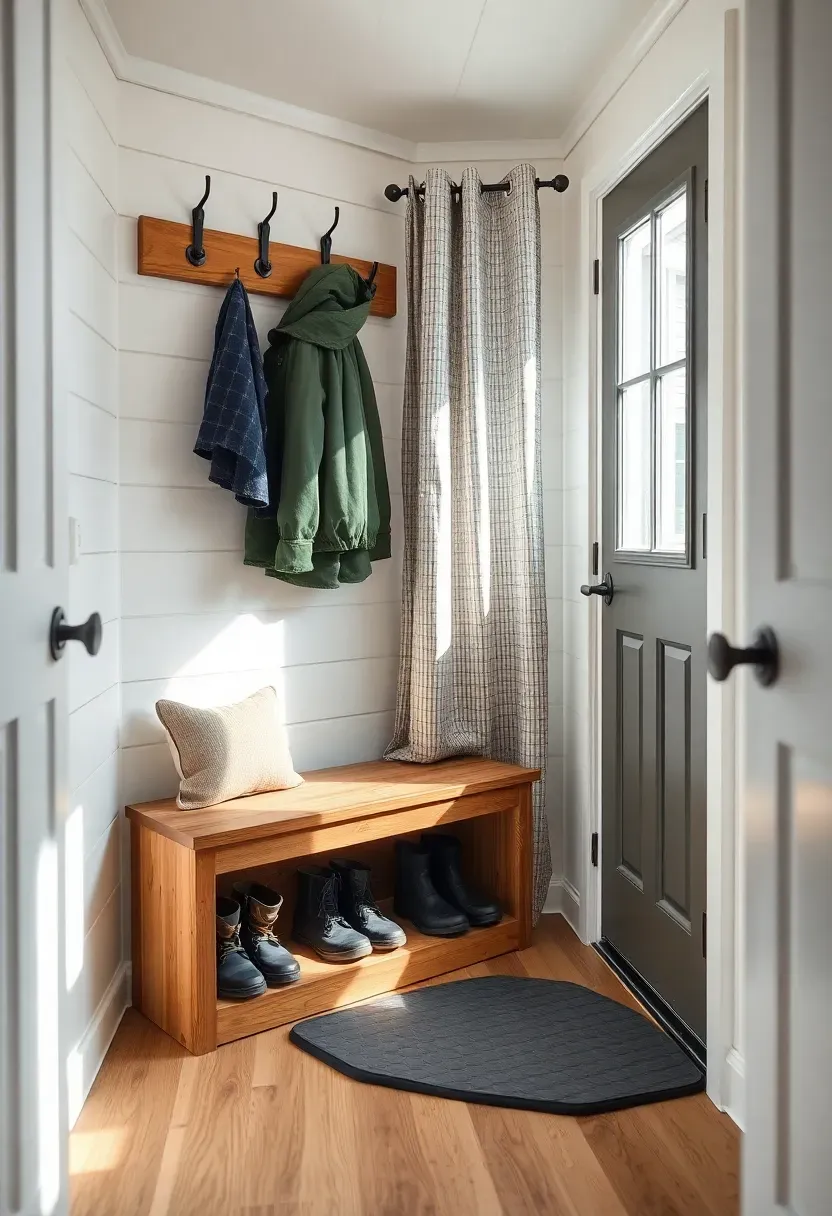
Hyper-realistic 3/4 view of tiny house entryway mudroom with organized winter gear storage. Materials: white shiplap walls, reclaimed wood bench with shoe storage underneath, wrought iron hooks for coats, rubber boot tray, thermal curtain separating spaces. Natural light from exterior door, organized functional design with warm wood tones against white, welcoming entry mood. Shallow depth of field, sharp details on hook hardware and boot tray texture, visible tiny house scale with compact but efficient layout. No text, no logos, no watermarks.</p>
Tiny house winter living transforms compact spaces into warm, inviting retreats when you prepare properly. Small home dwellers discover that intentional design choices make winter months surprisingly comfortable and energy-efficient.. Hyper-realistic 3/4 view of tiny house entryway mudroom with organized winter gear storage. Materials: white shiplap walls, reclaimed wood bench with shoe storage underneath, wrought iron hooks for coats, rubber boot tray, thermal curtain separating spaces. Natural
Recommended
Items for this idea
Tips
- Use waterproof flooring like vinyl or tile in the mudroom area
- Install a boot tray with raised edges to contain melting snow
- Keep wet outer layers separate from main living space fabrics
Placement note: Critical for tiny houses in snowy climates to protect main living areas
What this gives you: Cleaner main space and reduced moisture infiltration
14. Insulate Pipes Thoroughly
Frozen pipes spell disaster in tiny houses, making pipe insulation non-negotiable for winter living. Wrap all water lines with foam pipe insulation sleeves, then apply heat tape to vulnerable sections near exterior walls. Pay special attention to drain pipes and connections that might escape notice until problems arise.
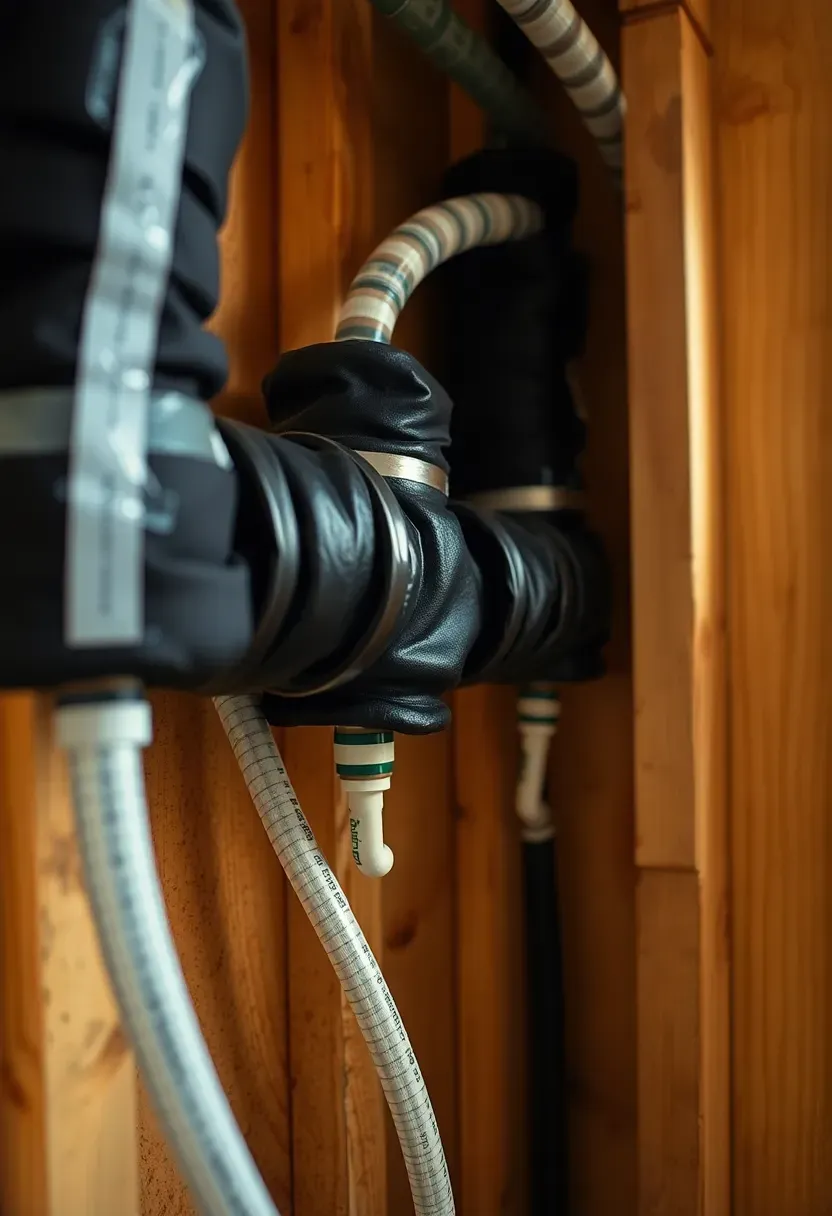
Hyper-realistic close-up view of tiny house utility area showing insulated water pipes with heat tape installation. Materials: black foam pipe insulation sleeves, electric heat tape wrapped around pipes, copper and PEX piping, pressure-treated wood framing. Warm LED utility light, professional installation quality with neat organized runs, prepared winter utility mood. Shallow depth of field, sharp details on insulation seams and heat tape application, visible tiny house construction with proper utility access. No text, no logos, no watermarks.</p>
Tiny house winter living transforms compact spaces into warm, inviting retreats when you prepare properly. Small home dwellers discover that intentional design choices make winter months surprisingly comfortable and energy-efficient.. Hyper-realistic close-up view of tiny house utility area showing insulated water pipes with heat tape installation. Materials: black foam pipe insulation sleeves, electric heat tape wrapped around pipes, copper and PEX piping, pressure-treated wood framing. Warm LE
Recommended
Items for this idea
Tips
- Use foam insulation with the highest R-value available for pipes
- Pay special attention to pipes running along exterior walls
- Consider keeping a trickle of water running during extreme cold snaps
Time investment: 2-3 hours to completely insulate all exposed pipes
What this gives you: Peace of mind and protection against costly freeze damage
15. Use Thermal Mass for Temperature Regulation
Thermal mass materials like stone, concrete, and tile absorb solar heat during winter days and release it slowly at night. Incorporate these materials in flooring, accent walls, or feature elements to create natural temperature regulation that reduces your heating workload while adding beautiful texture to your tiny house.
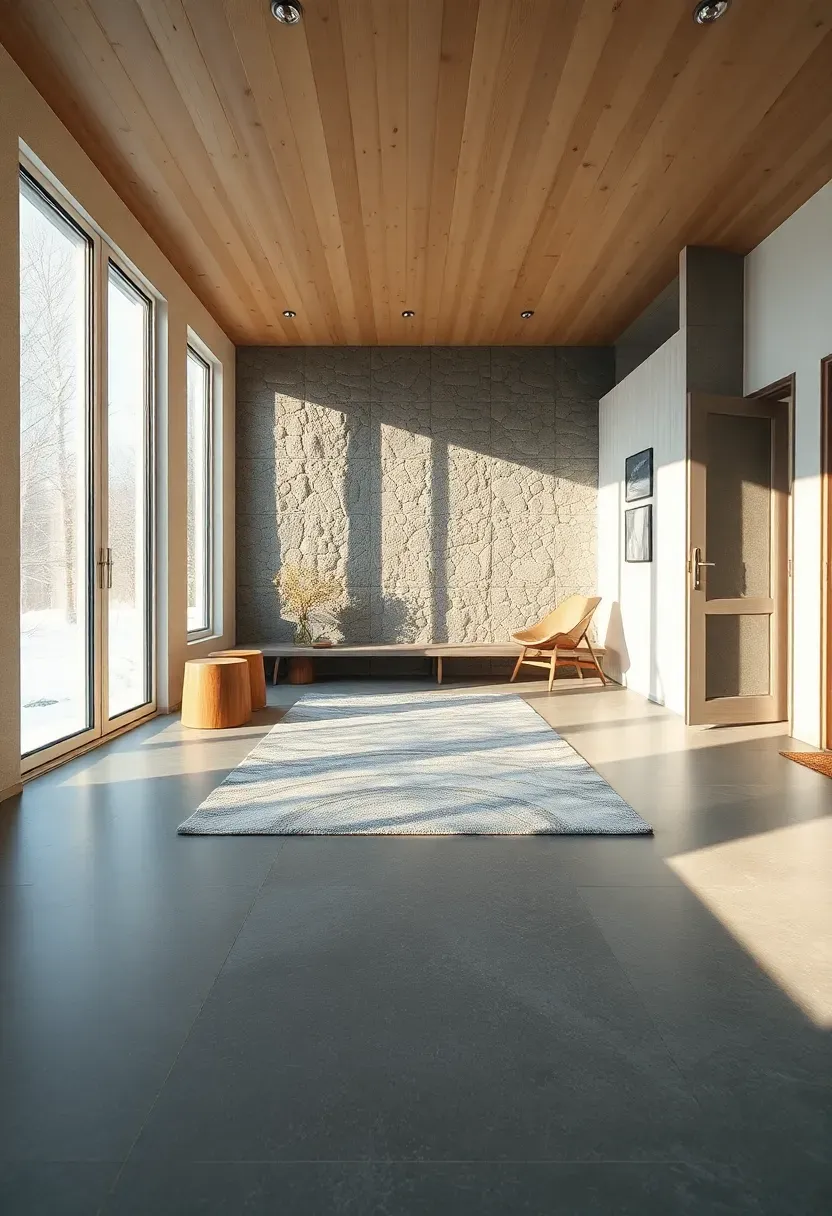
Hyper-realistic 3/4 view of tiny house interior showing polished concrete floor with large area rugs and stone accent wall. Materials: gray polished concrete flooring with visible aggregate, slate tile feature wall from floor to ceiling, light wood ceiling, minimalist modern furnishings. Bright winter sunlight streaming through windows creating warm highlights on stone surfaces, contemporary spa-like aesthetic with organic materials. Shallow depth of field, sharp details on stone textures and concrete polish, visible tiny house scale with thoughtfully placed furniture. No text, no logos, no watermarks.</p>
Tiny house winter living transforms compact spaces into warm, inviting retreats when you prepare properly. Small home dwellers discover that intentional design choices make winter months surprisingly comfortable and energy-efficient.. Hyper-realistic 3/4 view of tiny house interior showing polished concrete floor with large area rugs and stone accent wall. Materials: gray polished concrete flooring with visible aggregate, slate tile feature wall from floor to ceiling, light wood ceiling, minimal
Recommended
Items for this idea
Tips
- Place thermal mass where direct sunlight hits for maximum heat absorption
- Polished concrete works better than covered thermal mass
- Stone veneer on interior walls provides both beauty and function
Placement note: Most effective when combined with passive solar design
What this gives you: Natural temperature swings that reduce heating needs
16. Install Radiant Floor Heating
Radiant floor heating delivers warmth from the ground up, creating comfortable temperatures without forced air drafts. Electric radiant systems work well in tiny houses, providing consistent heat that makes barefoot winter living genuinely luxurious. Install under tile or engineered wood for maximum efficiency.
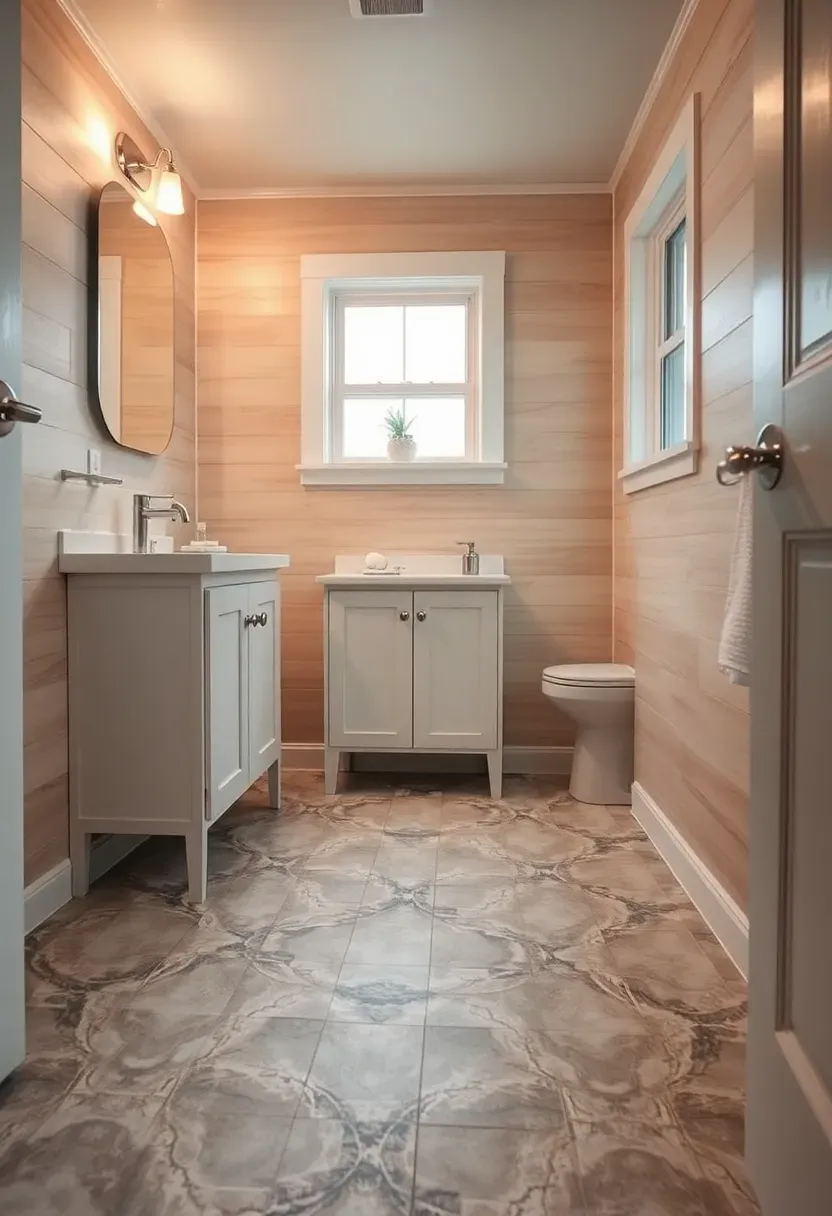
Hyper-realistic 3/4 view of tiny house bathroom showing radiant floor heating installation under tile flooring. Materials: light gray porcelain tile flooring with visible heating mat layers underneath, white vanity, light wood wall paneling, chrome fixtures. Warm ambient lighting, spa-like bathroom aesthetic with clean lines and neutral tones, luxurious winter comfort mood. Shallow depth of field, sharp details on tile texture and flooring installation quality, visible tiny house bathroom scale with appropriately sized fixtures. No text, no logos, no watermarks.</p>
Tiny house winter living transforms compact spaces into warm, inviting retreats when you prepare properly. Small home dwellers discover that intentional design choices make winter months surprisingly comfortable and energy-efficient.. Hyper-realistic 3/4 view of tiny house bathroom showing radiant floor heating installation under tile flooring. Materials: light gray porcelain tile flooring with visible heating mat layers underneath, white vanity, light wood wall paneling, chrome fixtures. Warm a
Recommended
Items for this idea
Tips
- Install programmable thermostat to heat floors only when needed
- Use insulation boards beneath heating elements to direct heat upward
- Consider hydronic radiant if you already have boiler heating
Budget note: Electric radiant floor heating costs $10-15 per square foot
What this gives you: Silent, even heating that feels luxurious throughout winter
17. Create Cozy Reading Nooks
Winter days in tiny houses call for special spaces that embrace hygge and make cold weather feel magical. Carve out a window seat reading nook with plush cushions, warm throws, and good lighting. These intentional micro-spaces transform short winter days into opportunities for rest and reflection rather than cabin fever.
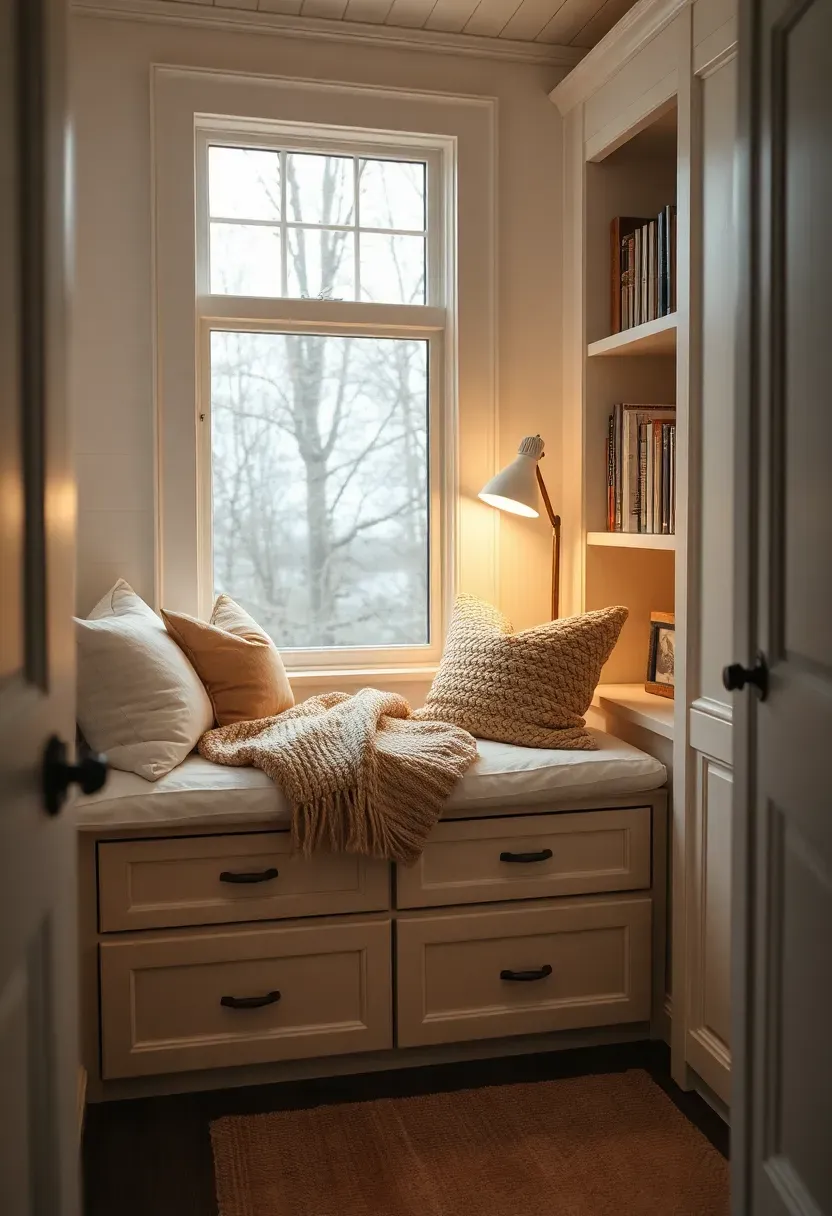
Hyper-realistic 3/4 view of tiny house window seat reading nock with plush cushions and warm lighting. Materials: built-in window seat with storage drawers, cream linen cushions with chunky knit throw blanket, warm throw pillows, small floor lamp, built-in bookshelves with white wood trim. Soft warm natural light from window plus ambient lamp glow, inviting hygge-inspired reading sanctuary with beige and cream tones. Shallow depth of field, sharp details on cushion textures and wood trim, visible tiny house scale with clever built-in design. No text, no logos, no watermarks.</p>
Tiny house winter living transforms compact spaces into warm, inviting retreats when you prepare properly. Small home dwellers discover that intentional design choices make winter months surprisingly comfortable and energy-efficient.. Hyper-realistic 3/4 view of tiny house window seat reading nock with plush cushions and warm lighting. Materials: built-in window seat with storage drawers, cream linen cushions with chunky knit throw blanket, warm throw pillows, small floor lamp, built-in bookshel
Recommended
Items for this idea
Tips
- Build window seats with storage for blankets and winter essentials
- Position reading nooks to maximize natural light during short days
- Add battery-powered reading lights for power outage functionality
Best for: Combatting cabin fever with intentional cozy spaces
What this gives you: Psychological comfort that makes winter enjoyable rather than endured
18. Use Warm Color Palette
Color psychology affects how warm your tiny house feels regardless of thermostat setting. Incorporate warm neutrals like cream, beige, warm gray, and soft terra cotta throughout your space rather than cool whites and blues. These hues create visual warmth that makes winter living feel cozy and inviting.
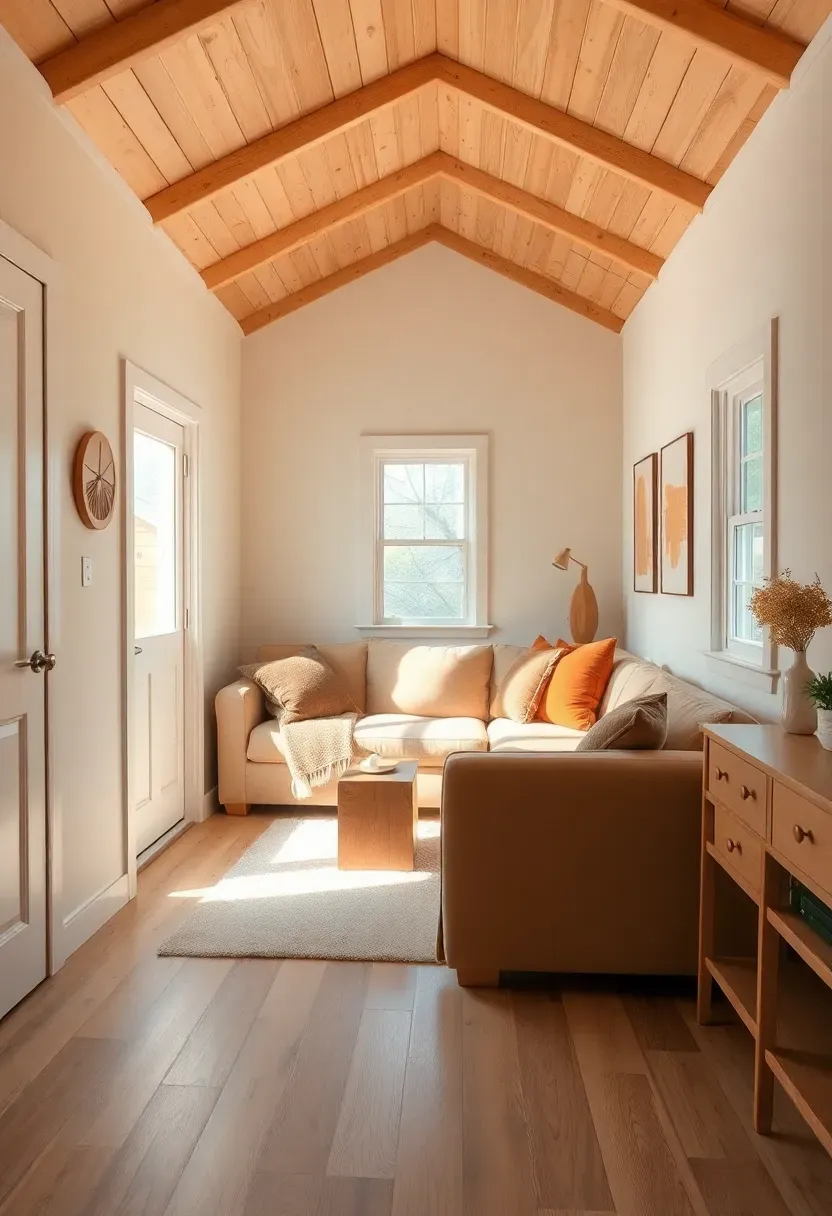
Hyper-realistic 3/4 view of tiny house interior showing warm color palette with cream walls, beige furnishings, and wood accents. Materials: cream painted walls, light oak wide-plank flooring, warm beige sofa, terra cotta accent pillows, light wood ceiling with exposed beams. Soft natural daylight enhancing warm tones, inviting cozy minimalist aesthetic with neutral warm palette throughout. Shallow depth of field, sharp details on wood textures and fabric colors, visible tiny house scale with thoughtfully coordinated warm colors. No text, no logos, no watermarks.</p>
Tiny house winter living transforms compact spaces into warm, inviting retreats when you prepare properly. Small home dwellers discover that intentional design choices make winter months surprisingly comfortable and energy-efficient.. Hyper-realistic 3/4 view of tiny house interior showing warm color palette with cream walls, beige furnishings, and wood accents. Materials: cream painted walls, light oak wide-plank flooring, warm beige sofa, terra cotta accent pillows, light wood ceiling with exp
Recommended
Items for this idea
Tips
- Test paint colors in your space before committing—lighting changes everything
- Add warmth through textiles if you can't change wall colors
- Use warm metal accents like brass or copper instead of chrome
Placement note: Especially important for tiny houses with limited natural light
What this gives you: Visual warmth that makes spaces feel 2-3 degrees warmer
19. Install a Programmable Thermostat
Smart temperature control prevents energy waste while ensuring your tiny house stays comfortable around the clock. Install a programmable thermostat that automatically lowers heat while you sleep and warms your space before you wake. This simple device reduces heating costs by 10-15% without sacrificing comfort.
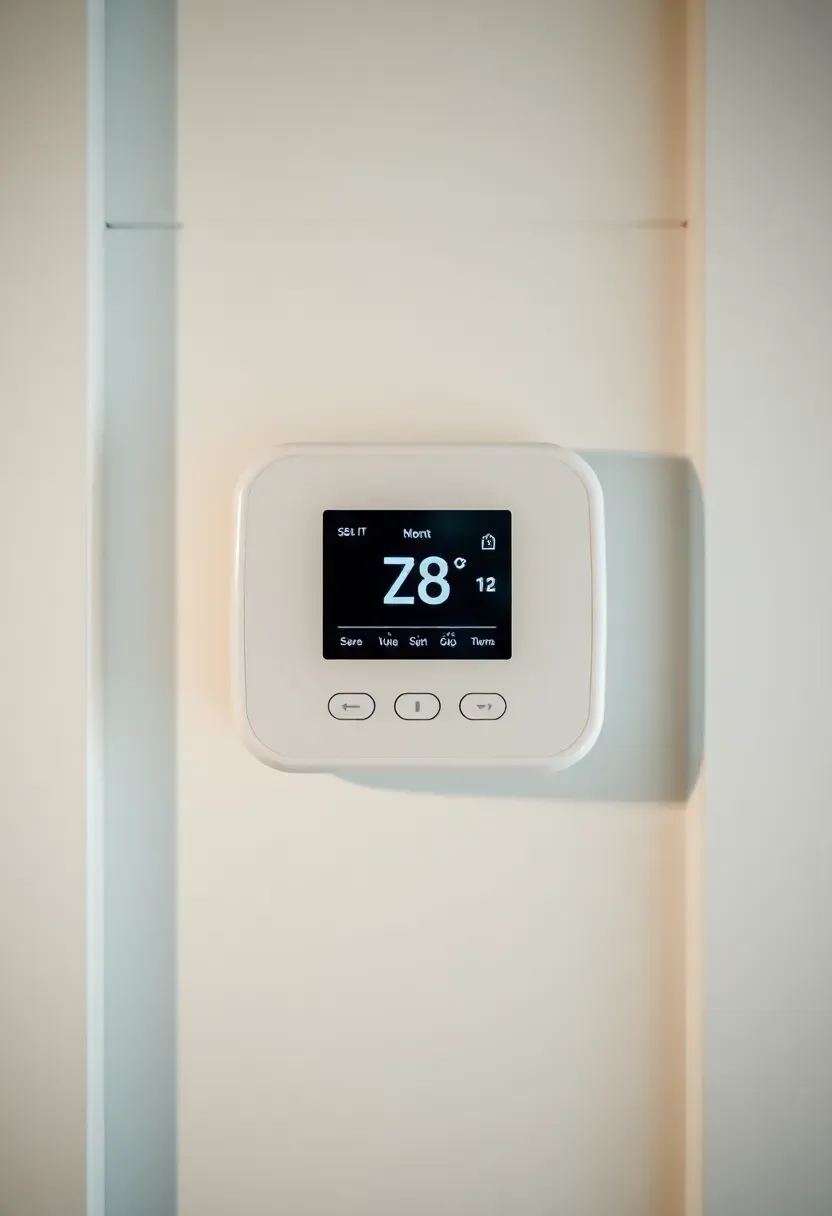
Hyper-realistic close-up view of modern programmable thermostat mounted on tiny house wall. Materials: white minimalist digital thermostat with touch display, light wood shiplap wall background, painted white trim. Soft ambient light reflecting on thermostat screen showing temperature, clean contemporary technology integration mood. Shallow depth of field, sharp details on thermostat interface and wall texture, visible tiny house context with properly wired installation. No text, no logos, no watermarks.</p>
Tiny house winter living transforms compact spaces into warm, inviting retreats when you prepare properly. Small home dwellers discover that intentional design choices make winter months surprisingly comfortable and energy-efficient.. Hyper-realistic close-up view of modern programmable thermostat mounted on tiny house wall. Materials: white minimalist digital thermostat with touch display, light wood shiplap wall background, painted white trim. Soft ambient light reflecting on thermostat screen
Recommended
Items for this idea
Tips
- Program temperature setbacks for 8-10 hours for maximum savings
- Consider smart thermostats that learn your schedule over time
- Avoid setbacks larger than 10 degrees to prevent reheating waste
Budget note: Quality programmable thermostats cost $50-150
What this gives you: Automatic comfort optimization with measurable energy savings
20. Prepare for Power Outages
Winter storms frequently bring power outages that threaten tiny house comfort and safety. Prepare backup heating options, emergency lighting, and alternative cooking methods before winter arrives. A small generator, battery backup system, or simply quality flashlights and propane heaters make weathering storms manageable.
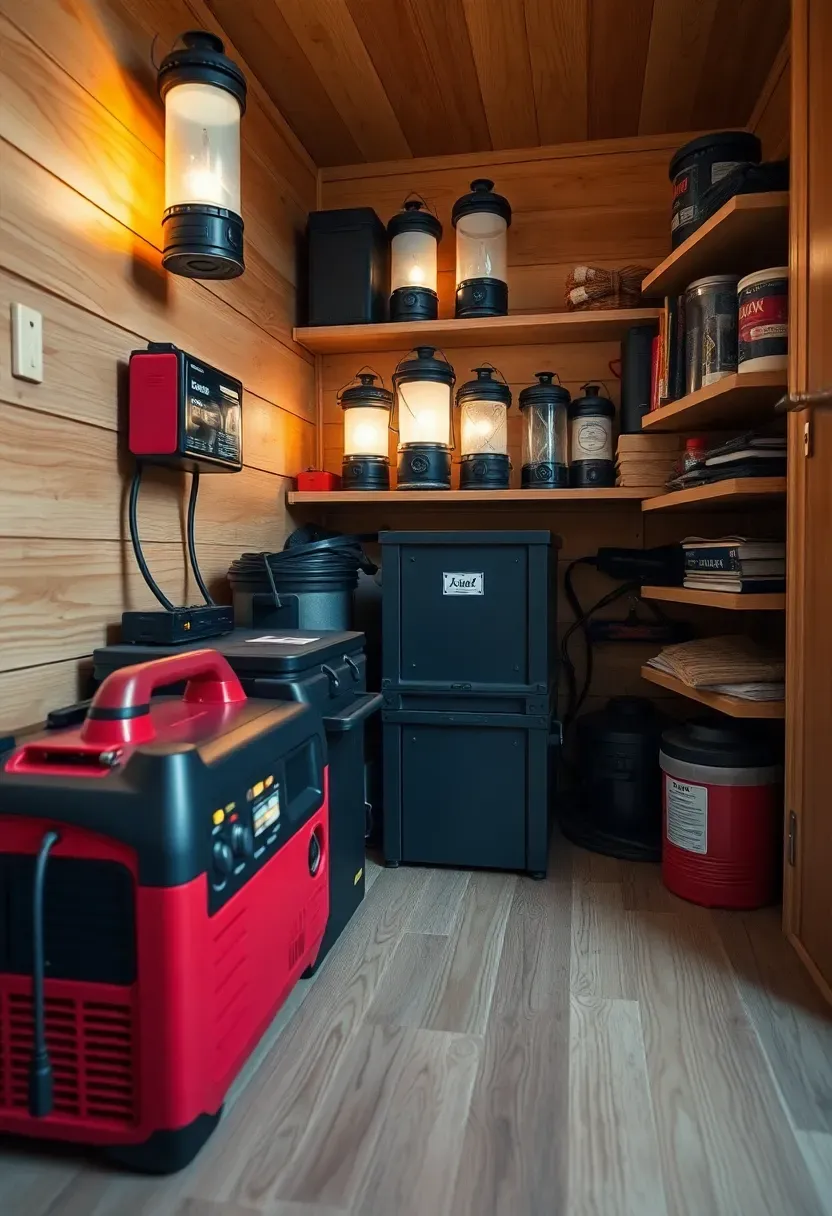
Hyper-realistic 3/4 view of tiny house utility corner showing emergency backup supplies including portable generator, battery bank, and LED lanterns. Materials: red portable generator, black battery backup power station, multiple LED lanterns, storage shelves with emergency supplies, light wood walls. Warm emergency lighting from lanterns creating glow, prepared survivalist aesthetic with organized emergency supplies, calm preparation mood. Shallow depth of field, sharp details on equipment and storage organization, visible tiny house scale with compact utility storage. No text, no logos, no watermarks.</p>
Tiny house winter living transforms compact spaces into warm, inviting retreats when you prepare properly. Small home dwellers discover that intentional design choices make winter months surprisingly comfortable and energy-efficient.. Hyper-realistic 3/4 view of tiny house utility corner showing emergency backup supplies including portable generator, battery bank, and LED lanterns. Materials: red portable generator, black battery backup power station, multiple LED lanterns, storage shelves with
Recommended
Items for this idea
Tips
- Keep generator fuel fresh and stabilized for reliable starting
- Test backup systems monthly instead of waiting for emergencies
- Store emergency supplies where they're accessible during outages
Best for: Tiny houses in rural areas with frequent winter storm outages
What this gives you: Safety and comfort regardless of grid reliability
21. Embrace Hygge Design Principles
The Danish concept of hygge—cozy contentment—transforms tiny house winter living from challenge to joy. Design your space to embrace the season with candles, soft textures, warm beverages, and intimate gathering spaces. This mindset shift makes winter something to anticipate rather than endure.
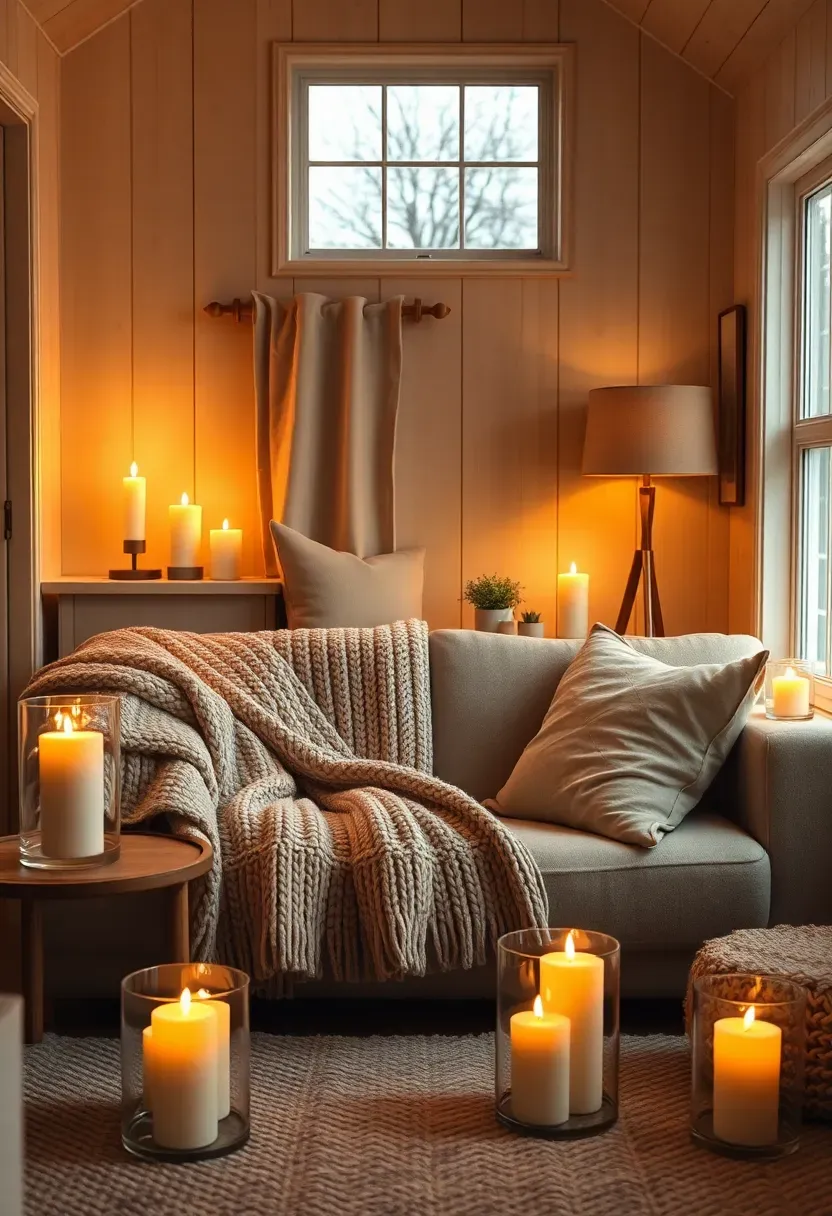
Hyper-realistic 3/4 view of tiny house living room epitomizing hygge with candles, textiles, and cozy atmosphere. Materials: multiple pillar candles in glass holders, chunky knit throw blanket, plush sofa with velvet pillows, wool rug, warm lighting from lamps and candles, light wood walls. Soft warm glow from multiple light sources creating inviting sanctuary, beige and cream color palette with golden candlelight, quintessential Danish hygge winter evening mood. Shallow depth of field, sharp details on candle flames and fabric textures, visible tiny house scale with intimate seating arrangement. No text, no logos, no watermarks.</p>
Tiny house winter living transforms compact spaces into warm, inviting retreats when you prepare properly. Small home dwellers discover that intentional design choices make winter months surprisingly comfortable and energy-efficient.. Hyper-realistic 3/4 view of tiny house living room epitomizing hygge with candles, textiles, and cozy atmosphere. Materials: multiple pillar candles in glass holders, chunky knit throw blanket, plush sofa with velvet pillows, wool rug, warm lighting from lamps and
Recommended
Items for this idea
Tips
- Keep battery-operated candles for safe flame-free ambiance
- Design intimate seating for two rather than large entertaining areas
- Curate winter-specific elements you look forward to using annually
Best for: Anyone wanting to love winter rather than just survive it
What this gives you: Psychological transformation that makes winter your favorite season
Tiny house winter living combines practical preparation with intentional design to create homes that embrace the coldest season with confidence and comfort. These 21 strategies transform potential challenges into opportunities for cozy, sustainable living that proves small spaces shine brightest when winter arrives.