How Big Is a Tiny House? 21 Sizes From 80 to 400 Sq Ft
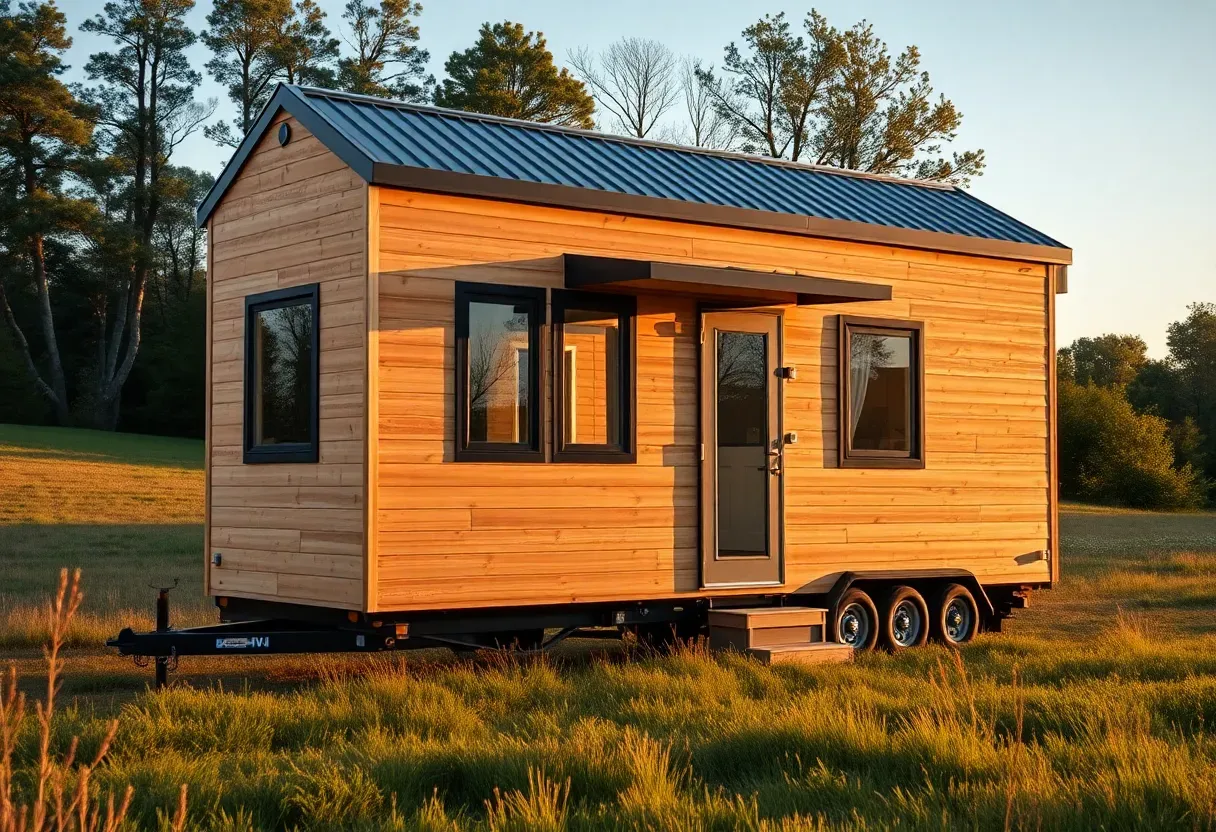
How big is a tiny house, exactly? Most tiny homes range from 80 to 400 square feet, with each size category offering unique advantages for compact living. Understanding tiny house square footage is the first step toward choosing the right layout for your lifestyle, needs, and budget.
Tiny house sizes vary dramatically depending on whether you choose a mobile home on wheels or a permanent foundation build. A micro cabin under 100 square feet suits solo retreats, while an average tiny house around 200 square feet comfortably supports full-time living for one or two people.
This complete tiny house size guide covers 21 categories with practical layout strategies, real dimensions, and design ideas for creating comfortable small spaces that feel surprisingly spacious.
Quick FAQ
What is the standard tiny house size?
The standard tiny house size ranges from 100 to 400 square feet. Most builders consider anything under 400 square feet as a tiny home, with the most common size being around 200 square feet for comfortable full-time living.
How big is too big for a tiny house?
Anything over 400 square feet typically moves into small house territory rather than tiny house classification. The tiny house movement emphasizes spaces under 400 square feet to maintain the minimalist lifestyle benefits.
What is the smallest tiny house size?
The smallest functional tiny houses are around 80-100 square feet, though some micro designs push below 60 square feet. These ultra-compact spaces work best as solo retreats or minimalist cabins rather than full-time residences.
Can a family live in a tiny house?
Families can live in tiny houses, but most choose larger models between 250-400 square feet. Many families opt for tiny house communities or add separate sleeping structures to create more private space within the small footprint.
What are common tiny house dimensions?
Most tiny houses on wheels are 8.5 feet wide (maximum road width) and 13.5 to 28 feet long. This creates footprints of 115 to 238 square feet on the main floor, with lofts adding additional living space.
How do I choose the right tiny house size?
Consider your lifestyle essentials, storage needs, and climate. If you work from home or entertain frequently, aim for 250+ square feet. For minimalist solo living, 150-200 square feet often suffices with smart design.
As an Amazon Associate I earn from qualifying purchases.
1. Micro Tiny Houses (Under 100 Sq Ft)
Micro tiny houses represent the extreme end of small living, typically measuring between 60 and 100 square feet. These ultra-compact spaces work best as backyard offices, artist retreats, or minimalist guest cabins rather than full-time residences. The tiny house size under 100 square feet demands extreme minimalism and clever space-saving design.
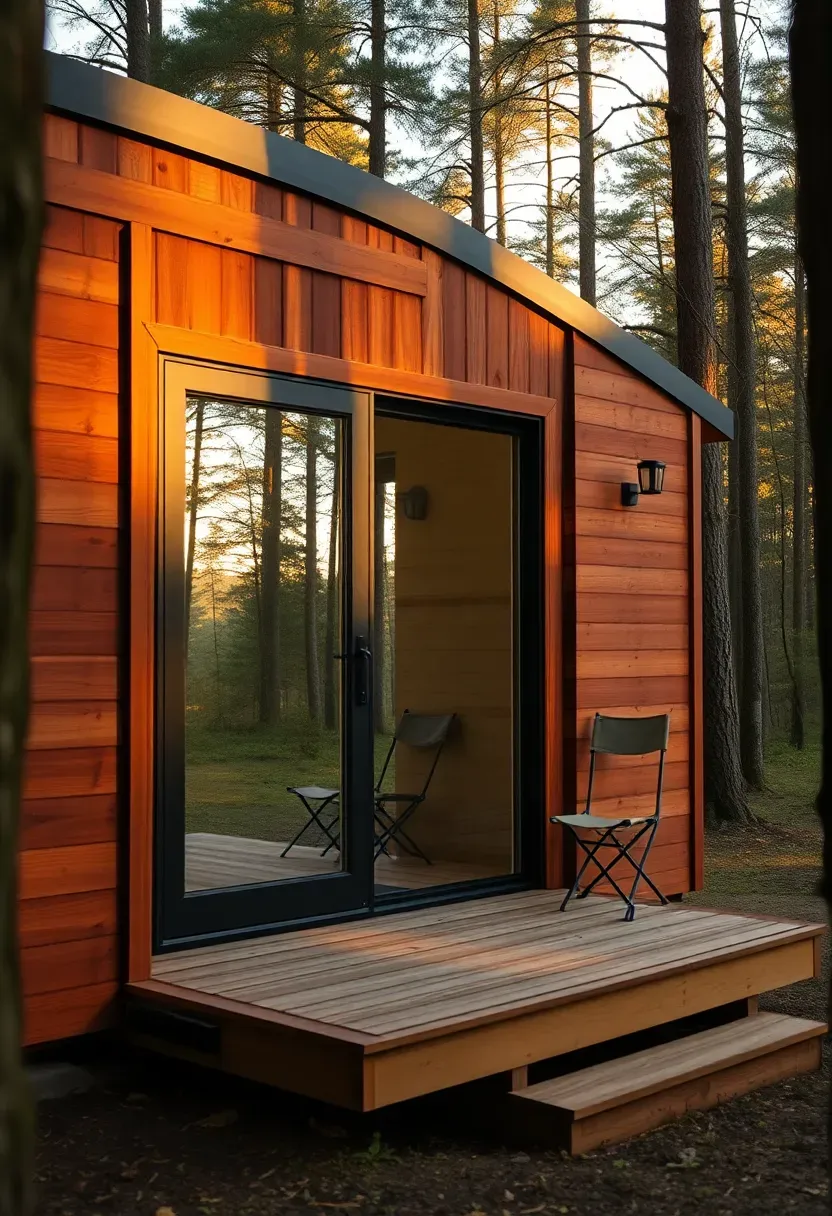
Micro tiny house cabin exterior of about 80 square feet with cedar siding, large glass doors, and a small folding-chair deck nestled in a forest setting
How big is a tiny house, exactly? Most tiny homes range from 80 to 400 square feet, with each size category offering unique advantages for compact living. Understanding tiny house square footage is the first step toward choosing the right layout for your lifestyle, needs, and budget.. Micro tiny house cabin exterior of about 80 square feet with cedar siding, large glass doors, and a small folding-chair deck nestled in a forest setting
Recommended
Items for this idea
Tips
- Do use every vertical surface for storage with floor-to-ceiling shelving
- Don't waste space on full appliances—choose compact or combination units
- Consider Murphy beds or convertible furniture that serves multiple functions
Best for: solo retreats, home offices, or transitional living spaces
What this gives you: extreme affordability and mobility with minimal environmental impact
2. Compact Tiny Houses (100-150 Sq Ft)
The 100-150 square foot range represents the entry-level tiny house size for comfortable living. This tiny house size accommodates essential living areas with a sleeping loft, small kitchen, and bathroom. Smart layout design makes these compact spaces feel surprisingly spacious through vertical storage and multi-functional furniture.
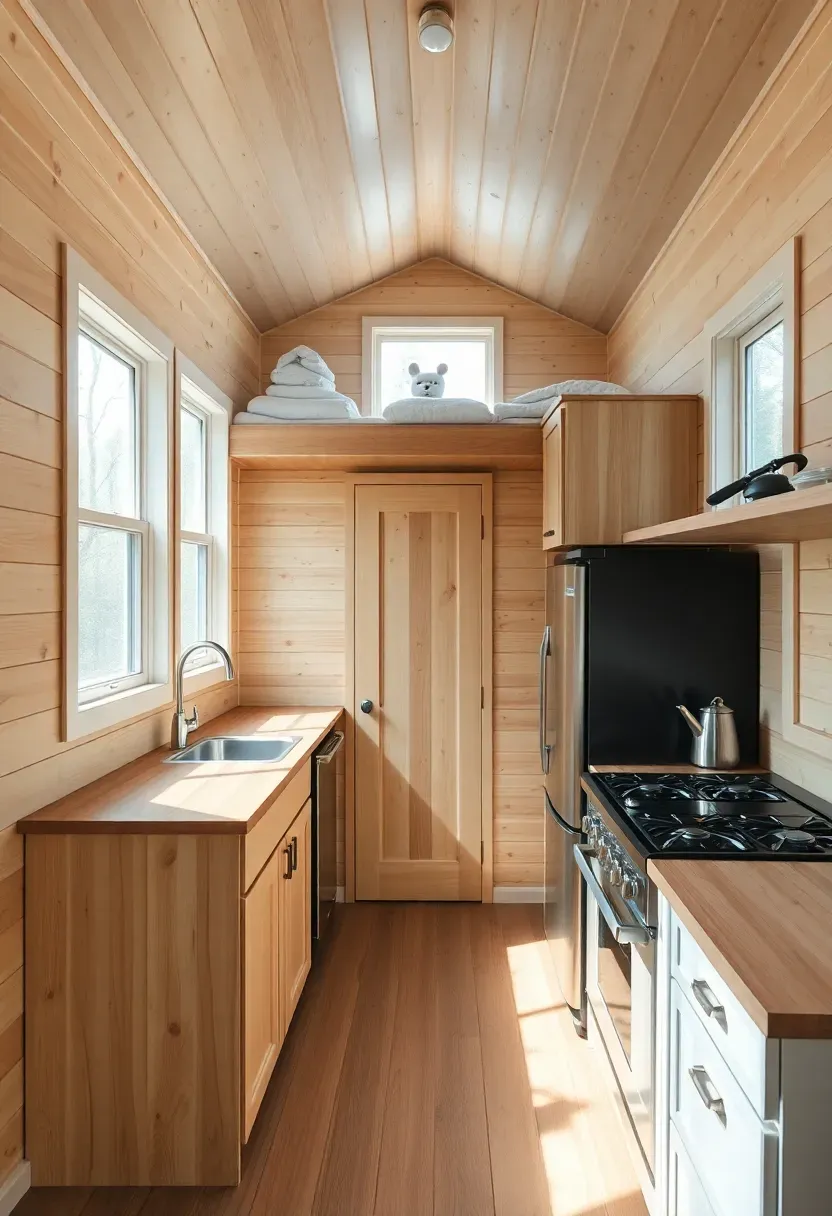
Compact 120 square foot tiny house interior with loft sleeping area, butcher block kitchen counter, and light pine shiplap walls
How big is a tiny house, exactly? Most tiny homes range from 80 to 400 square feet, with each size category offering unique advantages for compact living. Understanding tiny house square footage is the first step toward choosing the right layout for your lifestyle, needs, and budget.. Compact 120 square foot tiny house interior with loft sleeping area, butcher block kitchen counter, and light pine shiplap walls
Recommended
Items for this idea
Tips
- If you cook frequently, prioritize counter space over storage in the kitchen
- Then optimize the bathroom with a wet bath design combining shower and toilet area
- Use the loft space for a queen bed with 3+ feet of headroom for sitting
Budget note: This size range typically costs $30,000-60,000 for a professionally built tiny house
What this gives you: genuine full-time living potential with lower costs and easier mobility
3. Small Tiny Houses (150-200 Sq Ft)
Small tiny houses in the 150-200 square foot range offer enough room for separate living and sleeping areas on the main floor, with loft space for guests or storage. This popular tiny house size provides enough breathing room for comfortable daily living while maintaining the benefits of minimalism. Most layouts include a full bathroom, functional kitchen, and distinct sleeping quarters.
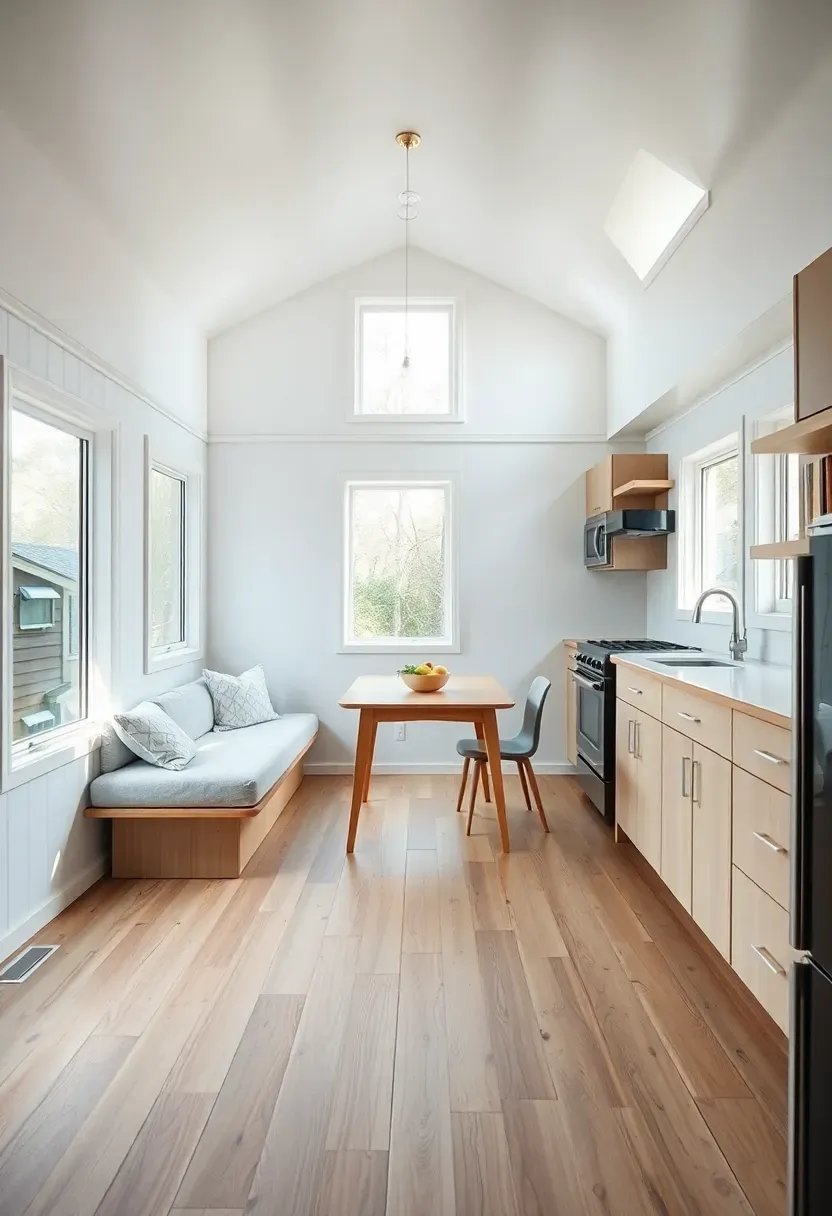
Small 180 square foot tiny house living area with convertible sofa, dining table for two, and full-size kitchen appliances along light oak flooring
How big is a tiny house, exactly? Most tiny homes range from 80 to 400 square feet, with each size category offering unique advantages for compact living. Understanding tiny house square footage is the first step toward choosing the right layout for your lifestyle, needs, and budget.. Small 180 square foot tiny house living area with convertible sofa, dining table for two, and full-size kitchen appliances along light oak flooring
Recommended
Items for this idea
Tips
- Pro/Con: More storage space but harder to tow—consider your travel frequency
- Create separate zones for day and night living to make the space feel larger
- Invest in custom cabinets that utilize every inch of available wall space
Best for: singles or couples seeking full-time tiny living with some comfort amenities
What this gives you: enough space for normal-sized appliances and comfortable daily routines
4. Standard Tiny Houses (200-250 Sq Ft)
The 200-250 square foot category represents the sweet spot for many tiny house enthusiasts. This standard tiny house size accommodates a main-floor bedroom option, full kitchen with standard appliances, and a properly sized bathroom. The extra square footage allows for more generous living areas and better circulation throughout the space.
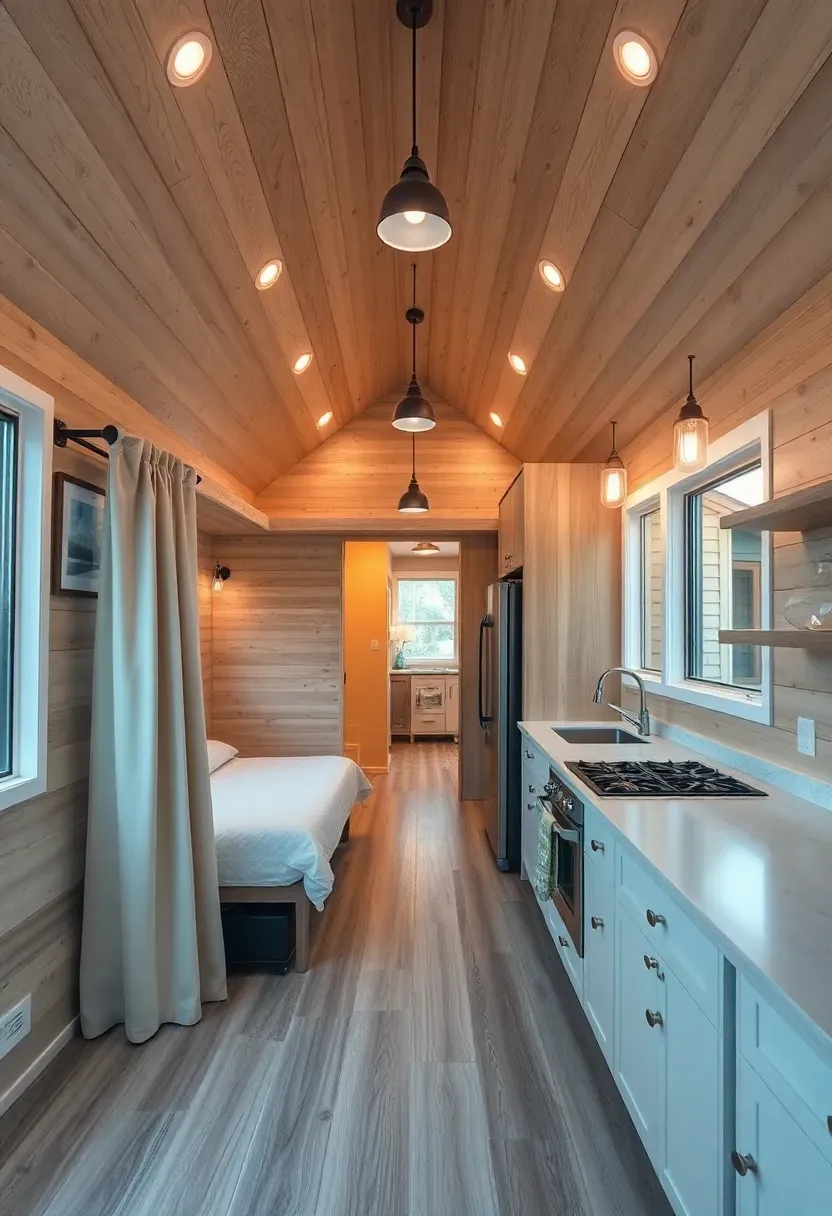
Standard 220 square foot tiny house with main-floor bedroom nook, queen bed, full kitchen with quartz countertops, and vaulted ceiling
How big is a tiny house, exactly? Most tiny homes range from 80 to 400 square feet, with each size category offering unique advantages for compact living. Understanding tiny house square footage is the first step toward choosing the right layout for your lifestyle, needs, and budget.. Standard 220 square foot tiny house with main-floor bedroom nook, queen bed, full kitchen with quartz countertops, and vaulted ceiling
Recommended
Items for this idea
Tips
- Do consider main-floor sleeping if you plan to age in place or have mobility concerns
- Don't fill the extra space with more stuff—keep the minimalist philosophy
- Design at least 28-30 inches of walking clearance through traffic paths
Placement note: This size often requires a 24+ foot trailer and may limit parking options
What this gives you: mainstream comfort in a tiny package with room to entertain guests occasionally
5. Spacious Tiny Houses (250-300 Sq Ft)
Spacious tiny houses from 250-300 square feet blur the line between tiny and small homes while maintaining the tiny house philosophy. This generous tiny house size accommodates two separate lofts, larger appliances, and even a washer-dryer combo. The additional space allows for a more open floor plan with better separation between living areas.
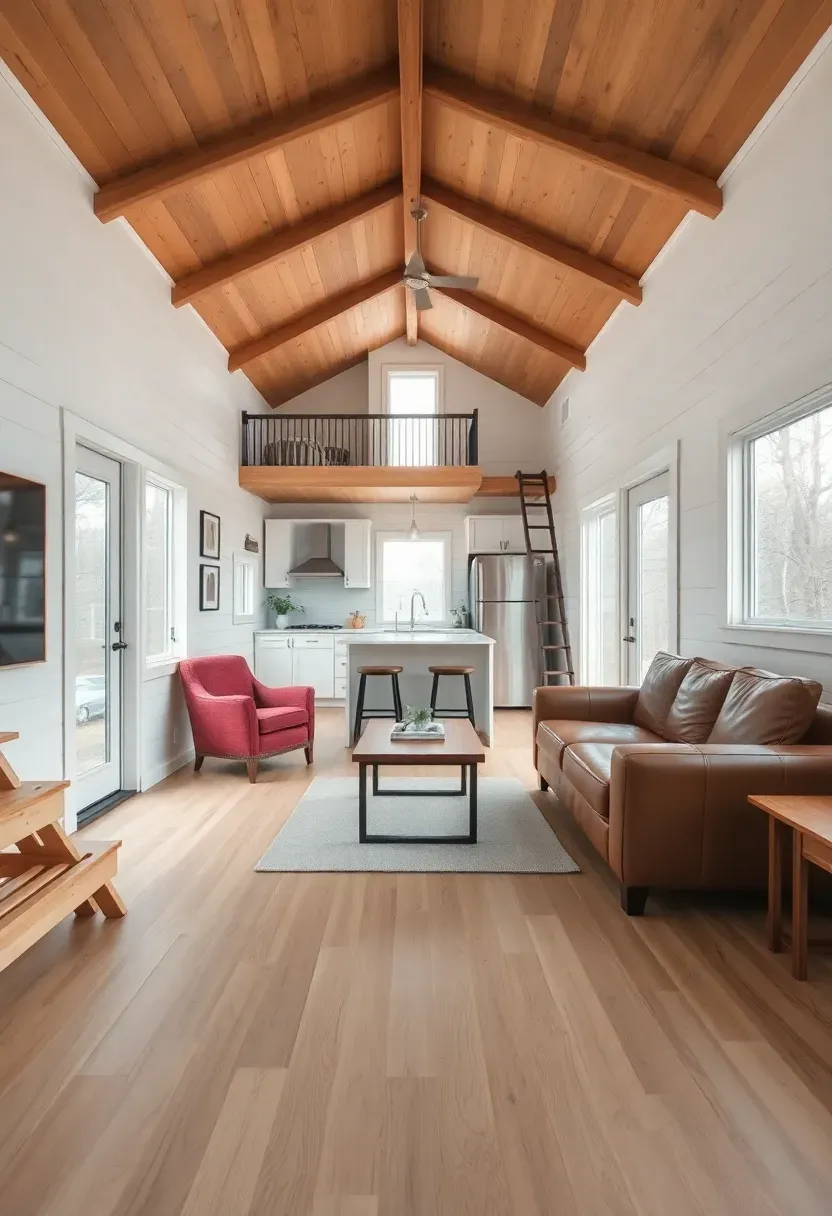
Spacious 280 square foot tiny house with open-concept living room, kitchen island with stools, and staircase to loft with white shiplap walls
How big is a tiny house, exactly? Most tiny homes range from 80 to 400 square feet, with each size category offering unique advantages for compact living. Understanding tiny house square footage is the first step toward choosing the right layout for your lifestyle, needs, and budget.. Spacious 280 square foot tiny house with open-concept living room, kitchen island with stools, and staircase to loft with white shiplap walls
Recommended
Items for this idea
Tips
- If/Then: If you work from home, dedicate a corner for a desk and office storage
- Then add a staircase with storage underneath instead of a ladder for loft access
- Consider a slide-out or folding deck to extend living space when parked
Best for: couples who need more personal space or those who work from home
What this gives you: near-normal living amenities within the tiny house lifestyle framework
6. Large Tiny Houses (300-350 Sq Ft)
Large tiny houses in the 300-350 square foot range offer maximum living space while still technically qualifying as tiny homes. This expansive tiny house size allows for multiple rooms, proper closet space, and even room for a dedicated workspace. Many designs in this category feature two bedrooms or a master suite with an en-suite bathroom.
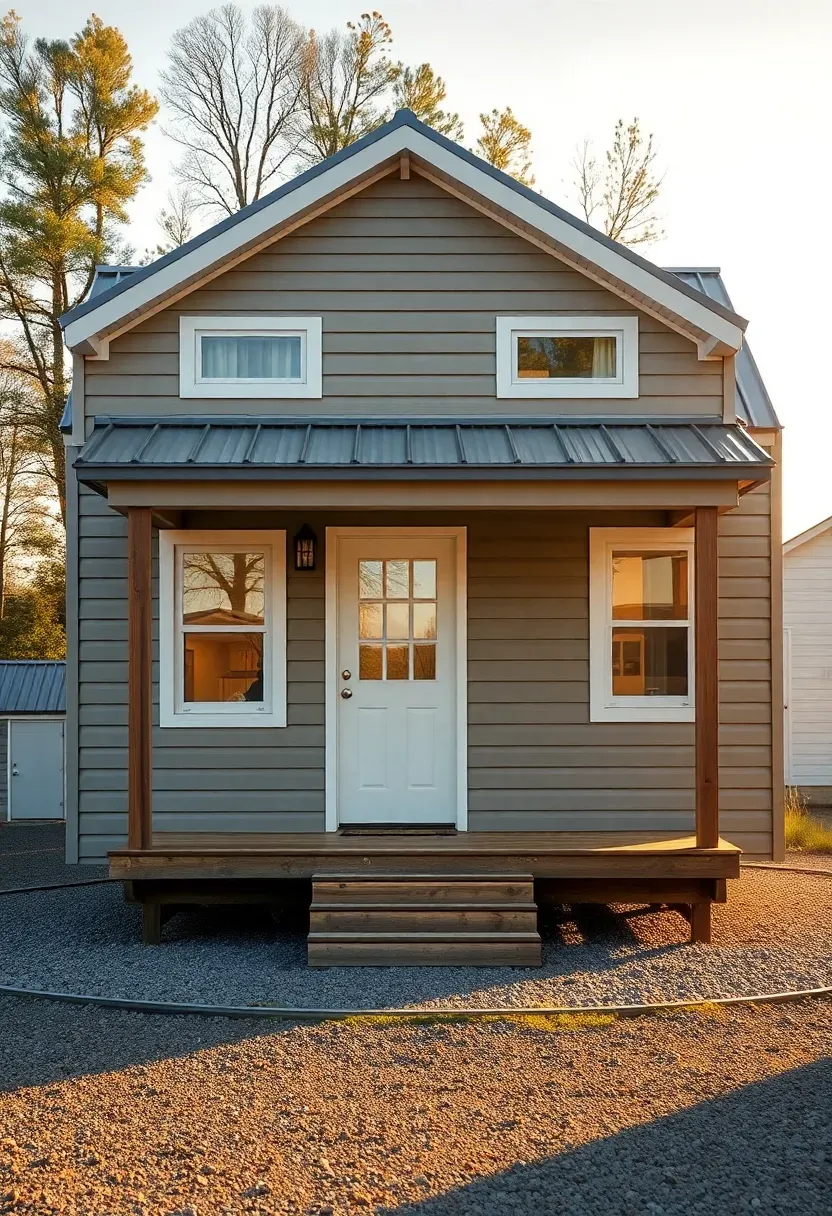
Large 330 square foot tiny house exterior with warm gray siding, covered front porch, metal roof, and two distinct roof sections
How big is a tiny house, exactly? Most tiny homes range from 80 to 400 square feet, with each size category offering unique advantages for compact living. Understanding tiny house square footage is the first step toward choosing the right layout for your lifestyle, needs, and budget.. Large 330 square foot tiny house exterior with warm gray siding, covered front porch, metal roof, and two distinct roof sections
Recommended
Items for this idea
Tips
- Avoid if you want maximum mobility—larger sizes require special towing permits
- Create distinct rooms rather than open plan for better functionality and sound control
- Plan for utility access and hookups based on your intended parking situation
Time estimate: Building this size typically takes 4-6 months for a DIY build or 2-3 months professionally
What this gives you: the ability to host long-term guests or accommodate a growing family
7. Maximum Tiny Houses (350-400 Sq Ft)
Maximum tiny houses at 350-400 square feet represent the largest size that still maintains tiny house classification. This upper limit of tiny house size offers nearly all the amenities of a conventional home in a compact footprint. Many designs include full appliances, separate sleeping areas, and even space for a home office or creative studio. For sleek aesthetics in this size range, explore our modern tiny house ideas.
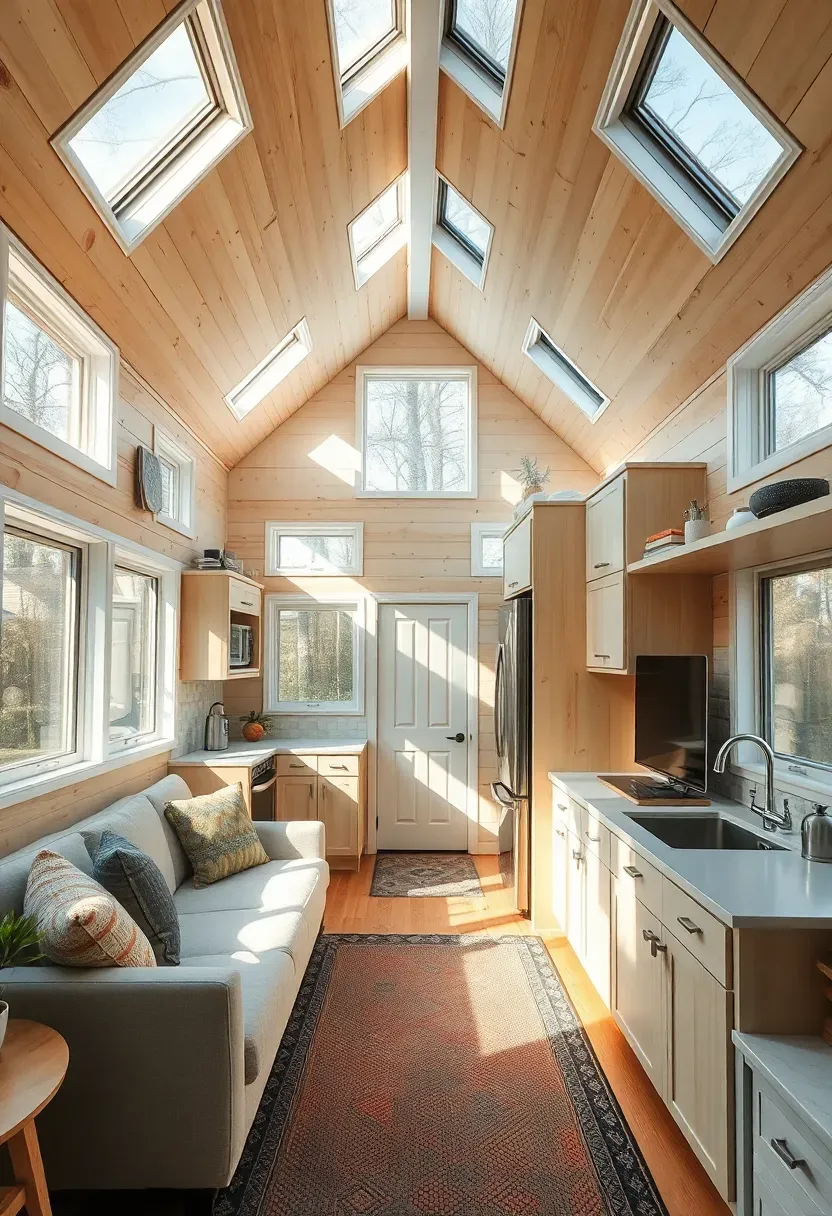
Maximum 380 square foot tiny house interior with split-level layout, sunken living area, full kitchen, and separate bedroom behind pocket door
How big is a tiny house, exactly? Most tiny homes range from 80 to 400 square feet, with each size category offering unique advantages for compact living. Understanding tiny house square footage is the first step toward choosing the right layout for your lifestyle, needs, and budget.. Maximum 380 square foot tiny house interior with split-level layout, sunken living area, full kitchen, and separate bedroom behind pocket door
Recommended
Items for this idea
Tips
- Why it works: Separate rooms create better functionality for multiple occupants
- Invest in quality insulation and windows—heating and cooling costs increase with size
- Consider built-in furniture to maximize usable space without cluttering rooms
Best for: those transitioning to tiny living who can't downsize further or families with children
What this gives you: tiny house benefits with conventional home comfort and functionality
8. Tiny House Width Options
Tiny house width determines roadworthiness and interior space. Most tiny houses on wheels are built on trailers 8 to 8.5 feet wide, the maximum legal width without special permits. Standard tiny house width of 8.5 feet allows for about 8 feet of interior width after wall construction, influencing furniture choices and layout possibilities.
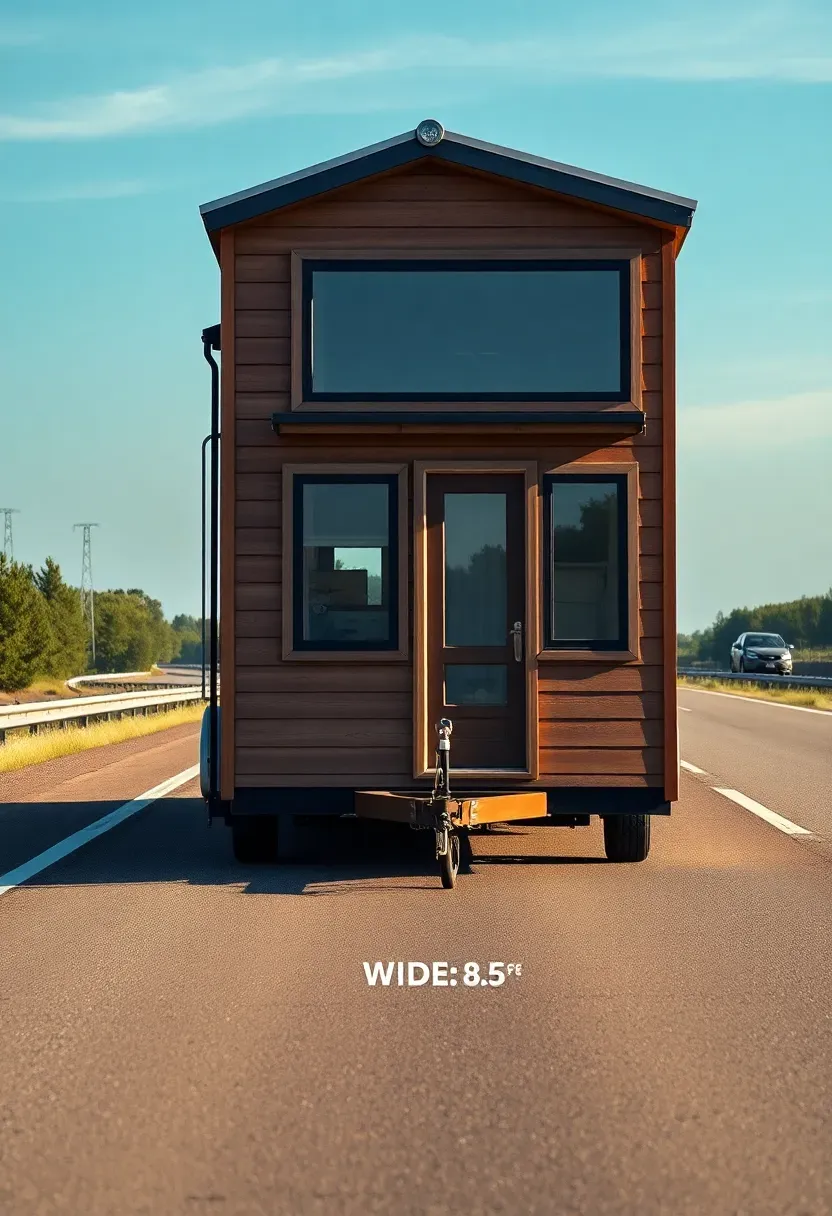
Tiny house on wheels being towed on highway showing standard 8.5 foot width with modern wood siding and metal roof
How big is a tiny house, exactly? Most tiny homes range from 80 to 400 square feet, with each size category offering unique advantages for compact living. Understanding tiny house square footage is the first step toward choosing the right layout for your lifestyle, needs, and budget.. Tiny house on wheels being towed on highway showing standard 8.5 foot width with modern wood siding and metal roof
Recommended
Items for this idea
Tips
- Do measure door widths and hallway clearance before purchasing furniture
- Don't exceed 8.5 feet exterior width if you plan to move the house frequently
- Consider slide-out sections that expand width when parked for extra space
Placement note: Wider designs over 8.5 feet require oversize load permits for towing
What this gives you: understanding width constraints helps plan furniture and interior layout effectively
9. Tiny House Length Considerations
Tiny house length varies from 12 to 30+ feet, with most falling between 20 and 24 feet for optimal balance of space and mobility. Length affects towing difficulty, parking options, and overall living space. Longer tiny houses provide more square footage but require larger vehicles to tow and may limit parking locations.
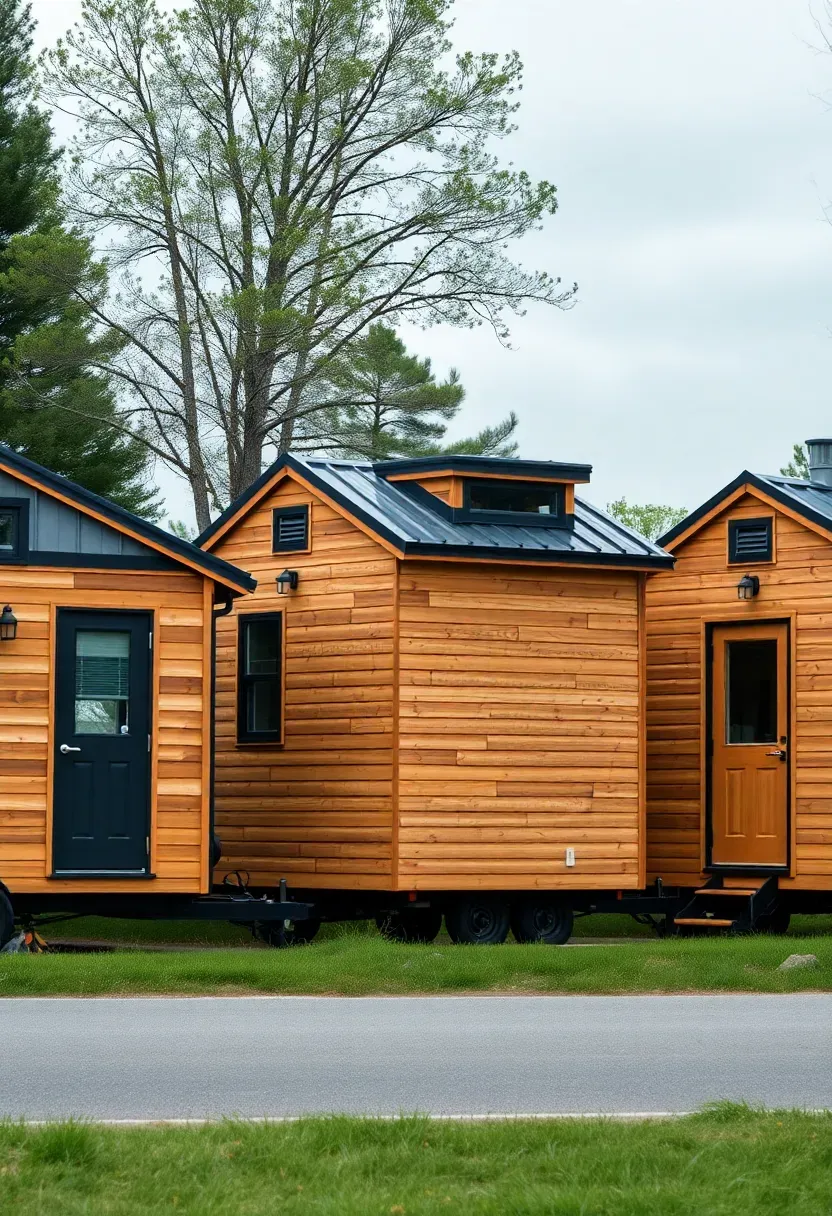
Three tiny houses of different lengths parked side by side comparing 16 foot, 24 foot, and 28 foot models with matching wood siding
How big is a tiny house, exactly? Most tiny homes range from 80 to 400 square feet, with each size category offering unique advantages for compact living. Understanding tiny house square footage is the first step toward choosing the right layout for your lifestyle, needs, and budget.. Three tiny houses of different lengths parked side by side comparing 16 foot, 24 foot, and 28 foot models with matching wood siding
Recommended
Items for this idea
Tips
- Common mistake: Choosing maximum length without considering turning radius and parking
- Research parking options in your area before committing to a longer design
- Remember that longer houses are more difficult to maneuver and back up
Time note: Towing a 28+ foot tiny house requires significant travel planning and route consideration
What this gives you: length awareness helps match your tiny house to your lifestyle mobility needs
10. Loft Space Impact on Total Size
Loft spaces effectively double the usable area in tiny houses without increasing the footprint. Most lofts provide 60-100 square feet of additional space for sleeping or storage, making them crucial for maximizing tiny house size utility. Proper loft design requires careful consideration of headroom, access, and ventilation.
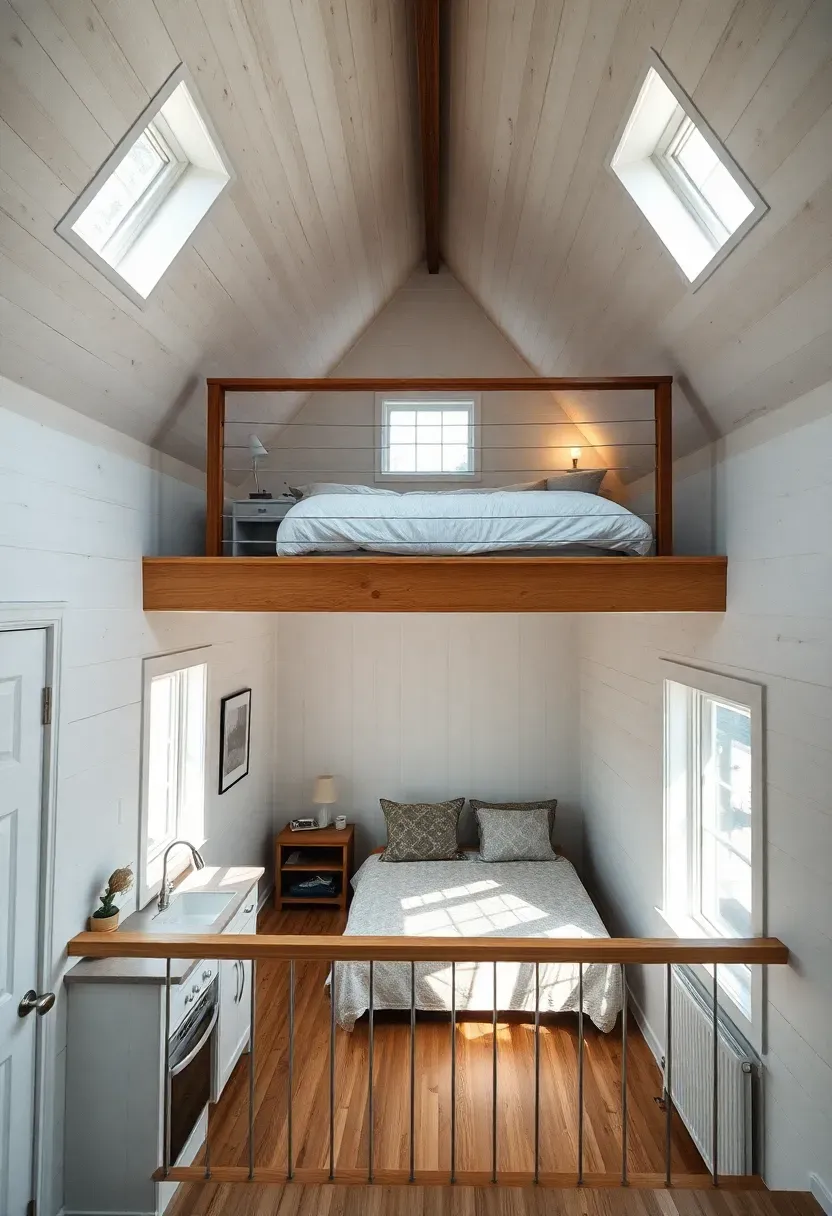
Tiny house sleeping loft with queen bed and cable railing viewed from main floor, dormer window providing natural light
How big is a tiny house, exactly? Most tiny homes range from 80 to 400 square feet, with each size category offering unique advantages for compact living. Understanding tiny house square footage is the first step toward choosing the right layout for your lifestyle, needs, and budget.. Tiny house sleeping loft with queen bed and cable railing viewed from main floor, dormer window providing natural light
Recommended
Items for this idea
Tips
- Do aim for at least 3 feet of sitting headroom in sleeping lofts for comfort
- Don't place beds directly under skylights without proper shading for summer heat
- Consider two smaller lofts instead of one large one for better airflow and flexibility
Best for: maximizing sleeping space without sacrificing main floor living area
What this gives you: effectively 50-100% more usable space within the same footprint
11. Trailer Size Classification
Tiny house trailer size directly determines your maximum building dimensions. Standard trailer sizes include 16, 18, 20, 24, and 28 feet, with custom options available up to 30+ feet. The trailer choice represents the foundation decision in tiny house size planning, affecting everything from layout to legal transportation requirements.
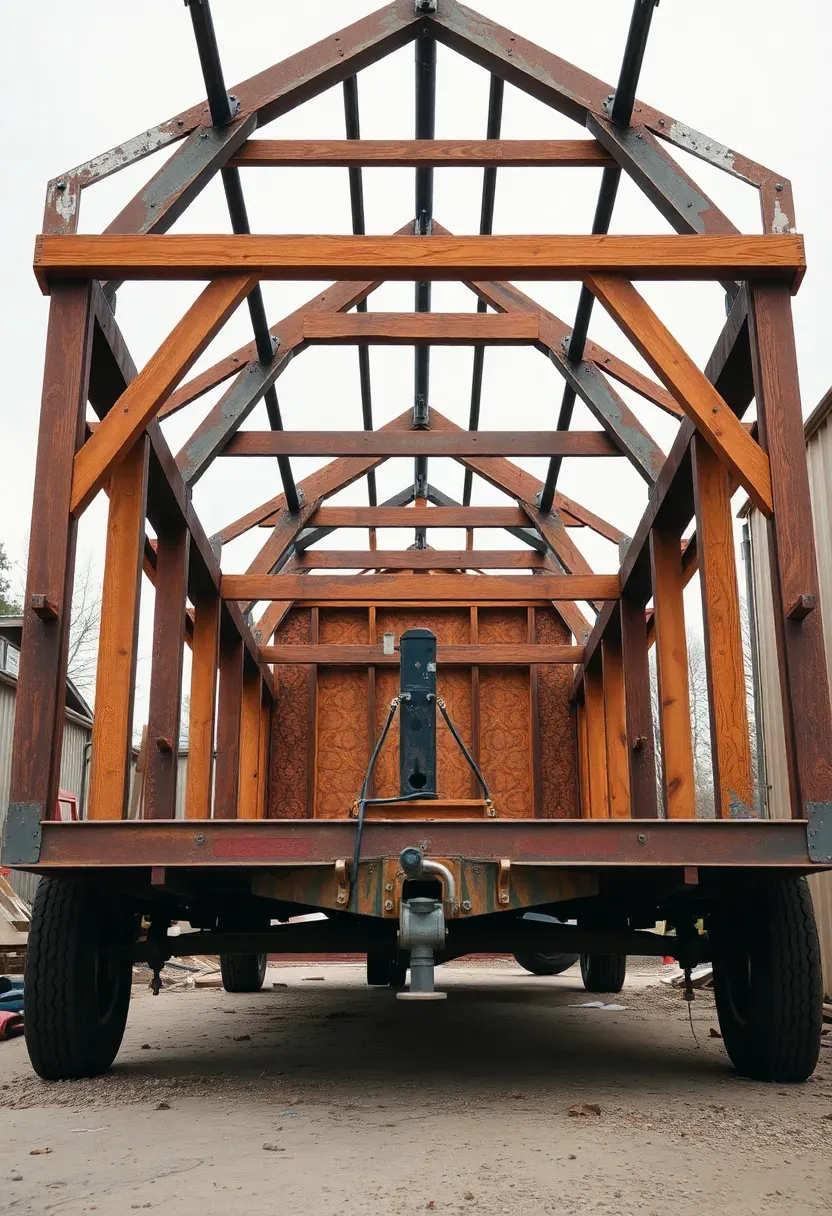
Tiny house trailer frame under construction showing steel I-beam structure, wheel wells, and hitch assembly
How big is a tiny house, exactly? Most tiny homes range from 80 to 400 square feet, with each size category offering unique advantages for compact living. Understanding tiny house square footage is the first step toward choosing the right layout for your lifestyle, needs, and budget.. Tiny house trailer frame under construction showing steel I-beam structure, wheel wells, and hitch assembly
Recommended
Items for this idea
Tips
- Choose trailer length based on your needs plus 10% buffer for unexpected growth
- Verify trailer weight rating exceeds your planned build weight by at least 20%
- Consider gooseneck or fifth-wheel trailers for sizes over 24 feet for better weight distribution
Budget note: Trailers cost $4,000-12,000 depending on length and weight capacity
What this gives you: proper trailer selection ensures safety, legal compliance, and design flexibility
12. Single-Level vs Multi-Level Designs
Single-level tiny houses maximize accessibility at the cost of floor space, while multi-level designs with lofts double usable area within the same footprint. This decision significantly impacts how tiny house size translates to livable space. Multi-level designs work best for those comfortable with stairs or ladders, while single-level layouts suit accessibility needs.
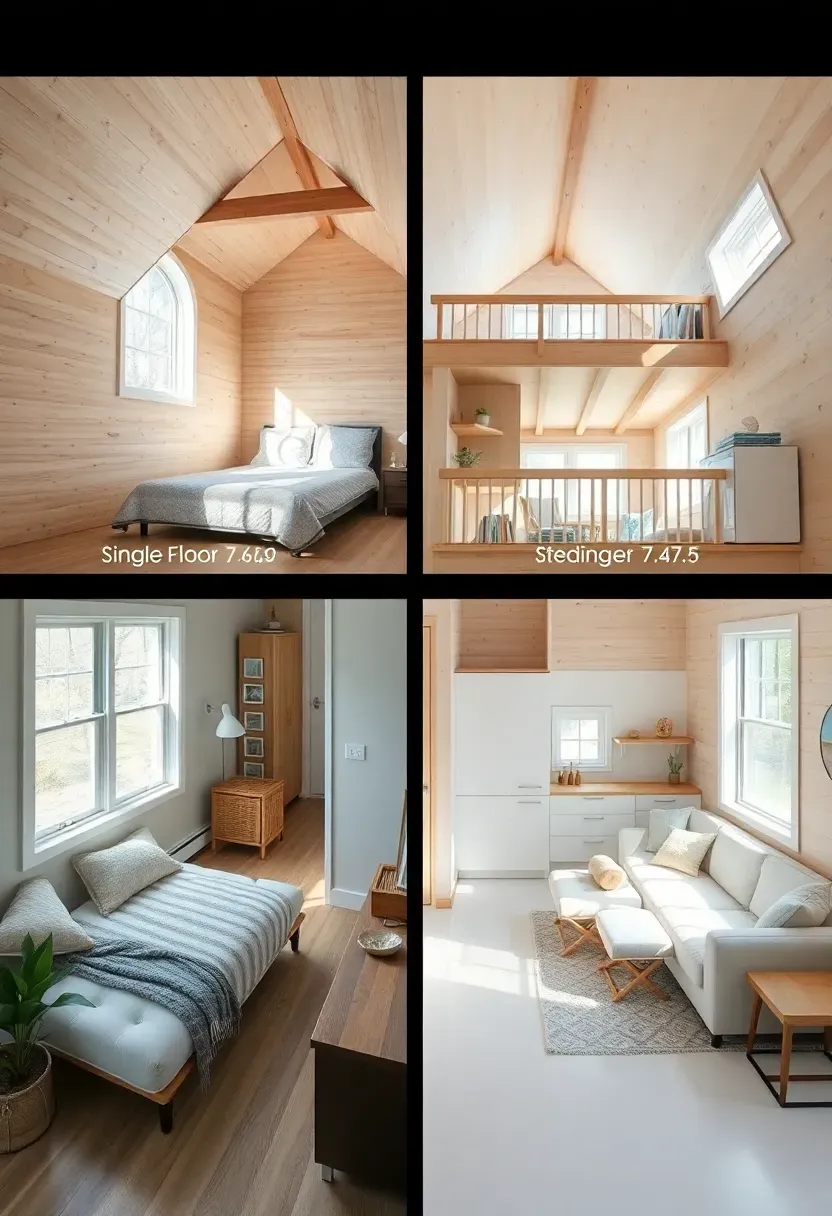
Split comparison of single-level tiny house layout versus multi-level design with sleeping loft, both in minimalist light wood interiors
How big is a tiny house, exactly? Most tiny homes range from 80 to 400 square feet, with each size category offering unique advantages for compact living. Understanding tiny house square footage is the first step toward choosing the right layout for your lifestyle, needs, and budget.. Split comparison of single-level tiny house layout versus multi-level design with sleeping loft, both in minimalist light wood interiors
Recommended
Items for this idea
Tips
- Trade-off: Single-level reduces usable space but eliminates ladder/stair climbing
- Consider stairs with storage rather than ladders if you choose multi-level design
- Plan for aging in place by making main-floor sleeping possible if you choose lofts
Best for: matching your physical abilities and lifestyle preferences to long-term livability
What this gives you: informed choice between space efficiency and accessibility based on your needs
13. Tiny House Height Variations
Tiny house height ranges from standard 13.5 feet to over 16 feet for designs with tall lofts or cathedral ceilings. Height impacts towing requirements and bridge clearance, but significantly affects spatial perception and loft comfort. Proper height planning ensures comfortable lofts and an open, airy feel throughout the space.
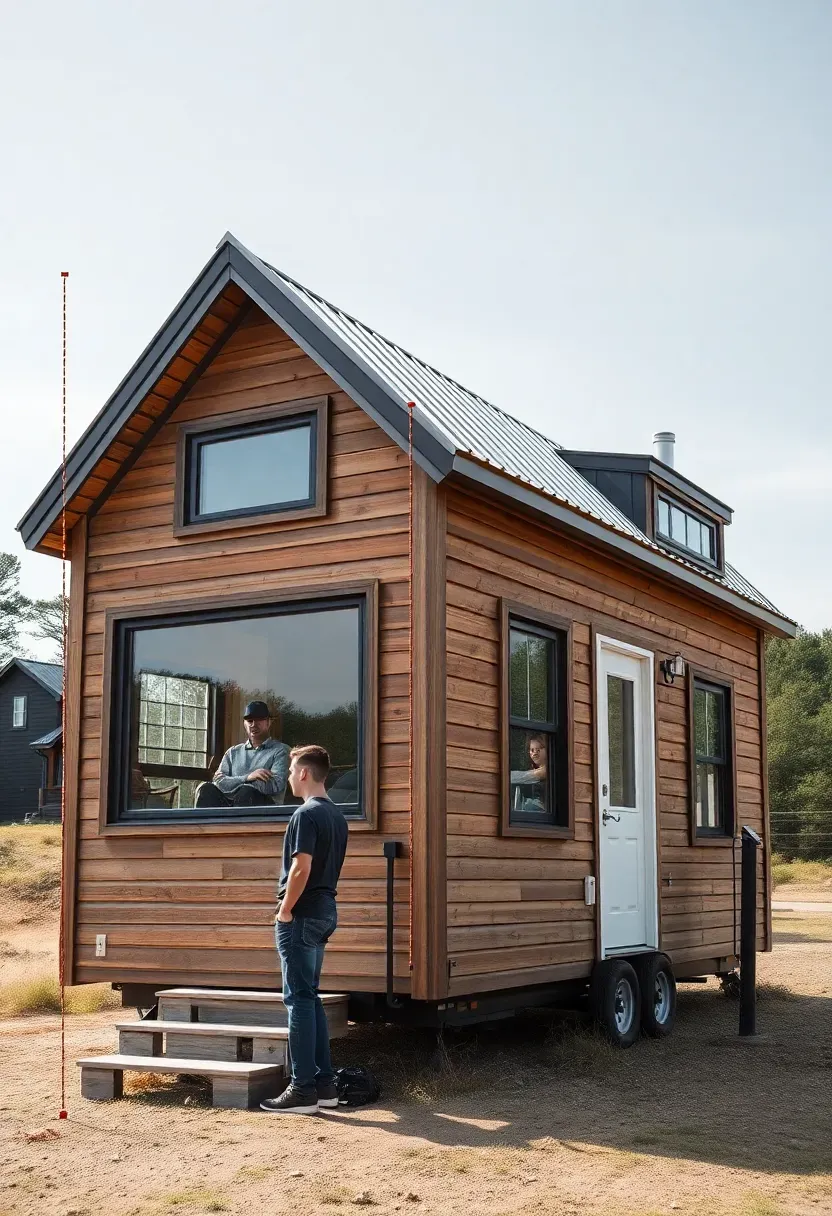
Side elevation of a tiny house showing 14-foot height with shed roof, large windows, and person standing for scale
How big is a tiny house, exactly? Most tiny homes range from 80 to 400 square feet, with each size category offering unique advantages for compact living. Understanding tiny house square footage is the first step toward choosing the right layout for your lifestyle, needs, and budget.. Side elevation of a tiny house showing 14-foot height with shed roof, large windows, and person standing for scale
Recommended
Items for this idea
Tips
- Do research bridge clearances on your regular routes before building over 13.5 feet
- Don't forget that height includes roof-mounted features like solar panels or AC units
- Consider hitch height when calculating total height—some designs add significant height here
Placement note: Heights over 13.5 feet may require special permits and limit route options when moving
What this gives you: proper height planning ensures legal towing and comfortable loft spaces
14. Expandable Tiny House Options
Expandable tiny houses feature slide-out sections, fold-down decks, or transformer walls that increase living space when parked. These innovative designs effectively provide two tiny house sizes in one—compact for travel and spacious when stationary. Expandable elements can add 30-100+ square feet of additional living space.
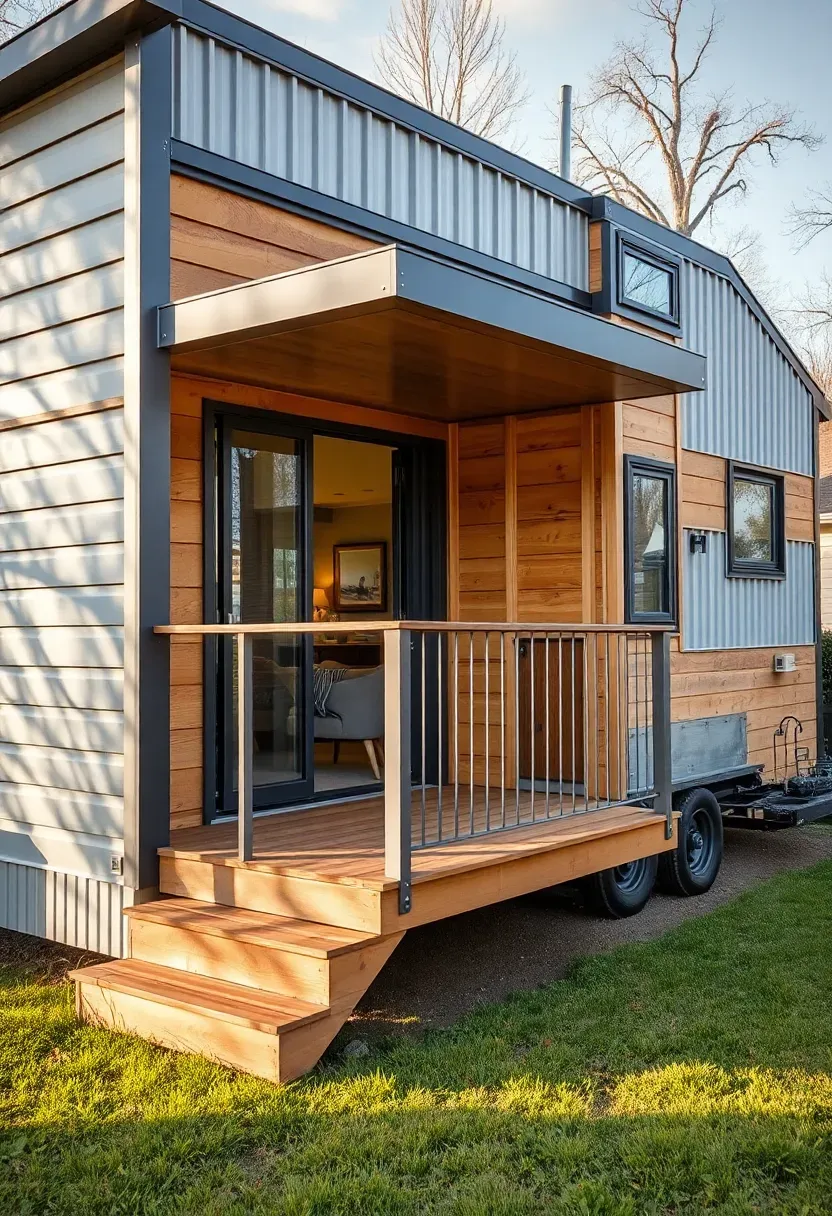
Expandable tiny house with slide-out section extended, adding living space with folding deck railing and mixed wood-metal siding
How big is a tiny house, exactly? Most tiny homes range from 80 to 400 square feet, with each size category offering unique advantages for compact living. Understanding tiny house square footage is the first step toward choosing the right layout for your lifestyle, needs, and budget.. Expandable tiny house with slide-out section extended, adding living space with folding deck railing and mixed wood-metal siding
Recommended
Items for this idea
Tips
- Upgrade from fixed walls: Expandable sections double usable space when parked
- Ensure proper weather sealing on expandable sections to prevent leaks and drafts
- Test mechanisms regularly and lubricate moving parts to prevent rust and binding
Best for: those who want maximum space when stationary but reasonable mobility when needed
What this gives you: flexibility to have both tiny house size and apartment-style space as needed
15. Park Model vs Tiny House Size
Park model RVs typically range from 300-400 square feet and offer a semi-permanent housing option that blurs the tiny house size boundary. Unlike tiny houses on wheels, park models are designed for long-term parking and often feature slide-outs for additional space. Understanding the differences helps choose between true portability and semi-permanent placement.
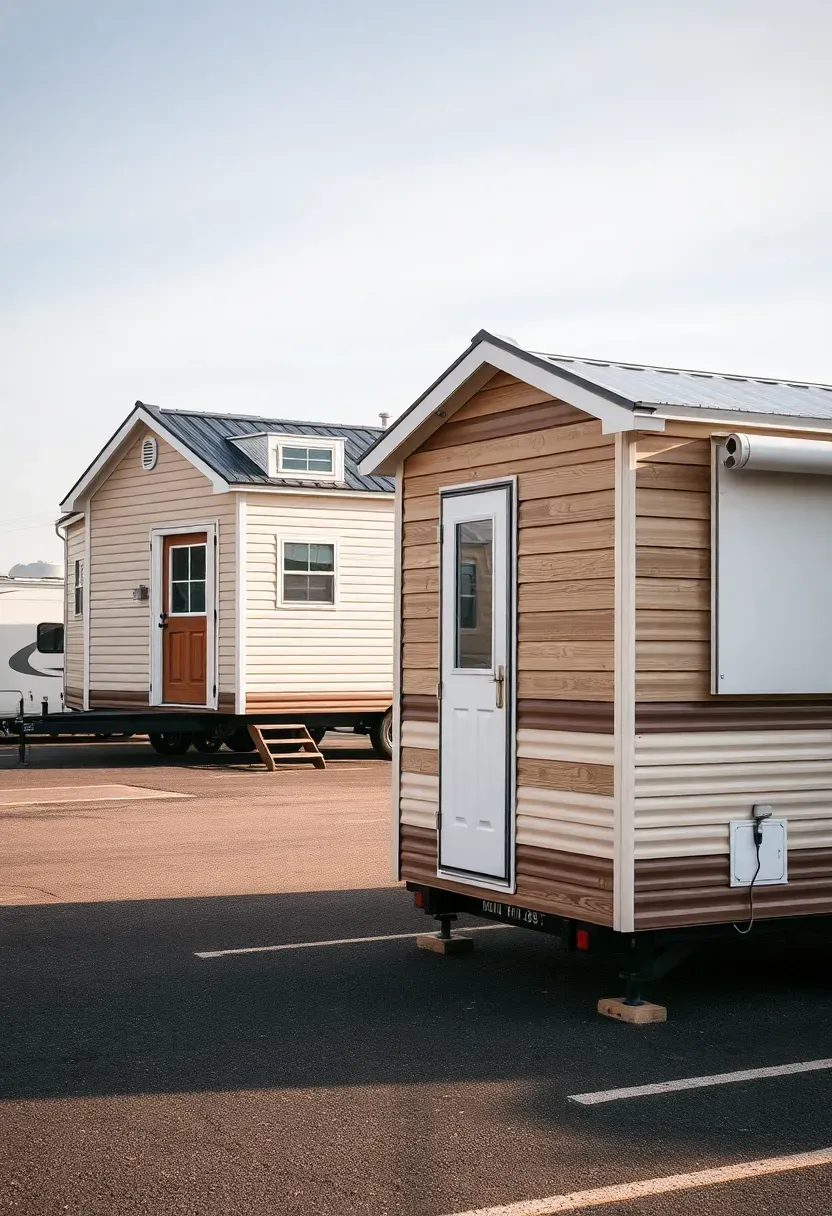
Side-by-side comparison of a tiny house on wheels and a park model RV, both around 350 square feet in an RV park
How big is a tiny house, exactly? Most tiny homes range from 80 to 400 square feet, with each size category offering unique advantages for compact living. Understanding tiny house square footage is the first step toward choosing the right layout for your lifestyle, needs, and budget.. Side-by-side comparison of a tiny house on wheels and a park model RV, both around 350 square feet in an RV park
Recommended
Items for this idea
Tips
- Choose park models if you don't plan to move frequently and want more residential amenities
- Opt for tiny houses on wheels if maximum mobility and build customization are priorities
- Research RV park regulations for park models versus tiny house parking options in your area
Budget note: Park models generally cost 10-20% less per square foot than custom tiny houses
What this gives you: understanding the trade-offs between mobility and space efficiency
16. Container Home Size Standards
Shipping container homes offer standardized tiny house sizes based on container dimensions: 20-foot containers provide about 160 square feet, while 40-foot containers offer 320 square feet. Container homes can be combined or modified to create various size configurations. The modular nature of containers allows for predictable tiny house size planning.
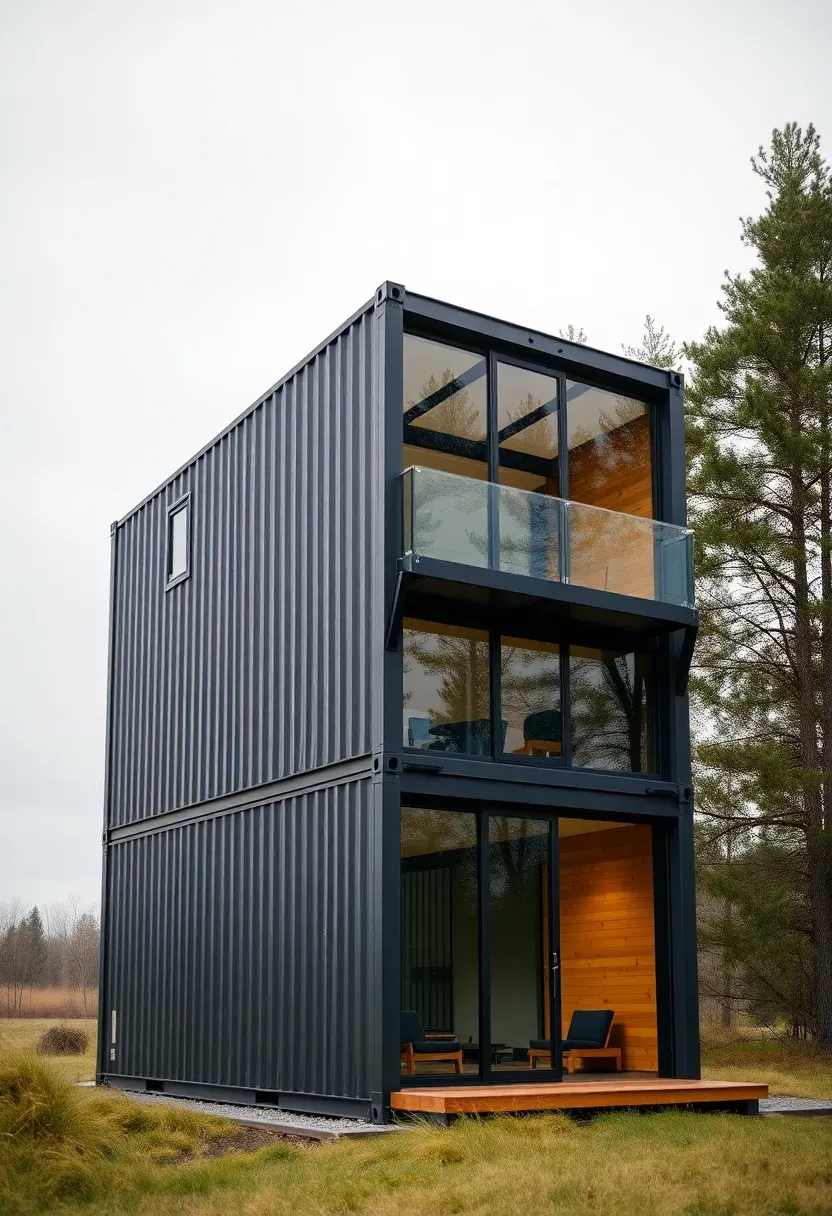
Modern shipping container home with two stacked 40-foot containers, offset balcony, large windows, and dark gray corrugated exterior
How big is a tiny house, exactly? Most tiny homes range from 80 to 400 square feet, with each size category offering unique advantages for compact living. Understanding tiny house square footage is the first step toward choosing the right layout for your lifestyle, needs, and budget.. Modern shipping container home with two stacked 40-foot containers, offset balcony, large windows, and dark gray corrugated exterior
Recommended
Items for this idea
Tips
- Do budget for reinforcement cutting if you modify container sides significantly
- Don't forget that container interiors are only about 7 feet wide—narrower than standard tiny houses
- Consider professional help for structural modifications to ensure safety and integrity
Best for: those who prefer industrial aesthetics and predictable modular dimensions
What this gives you: standardized building modules that simplify design and construction planning
17. ADU Size Considerations
Accessory Dwelling Units (ADUs) share tiny house size principles but aren't bound by transportation limits. ADUs typically range from 200 to 800 square feet and offer permanent foundation housing solutions. Local zoning heavily influences permitted ADU sizes, making research essential before planning your project.
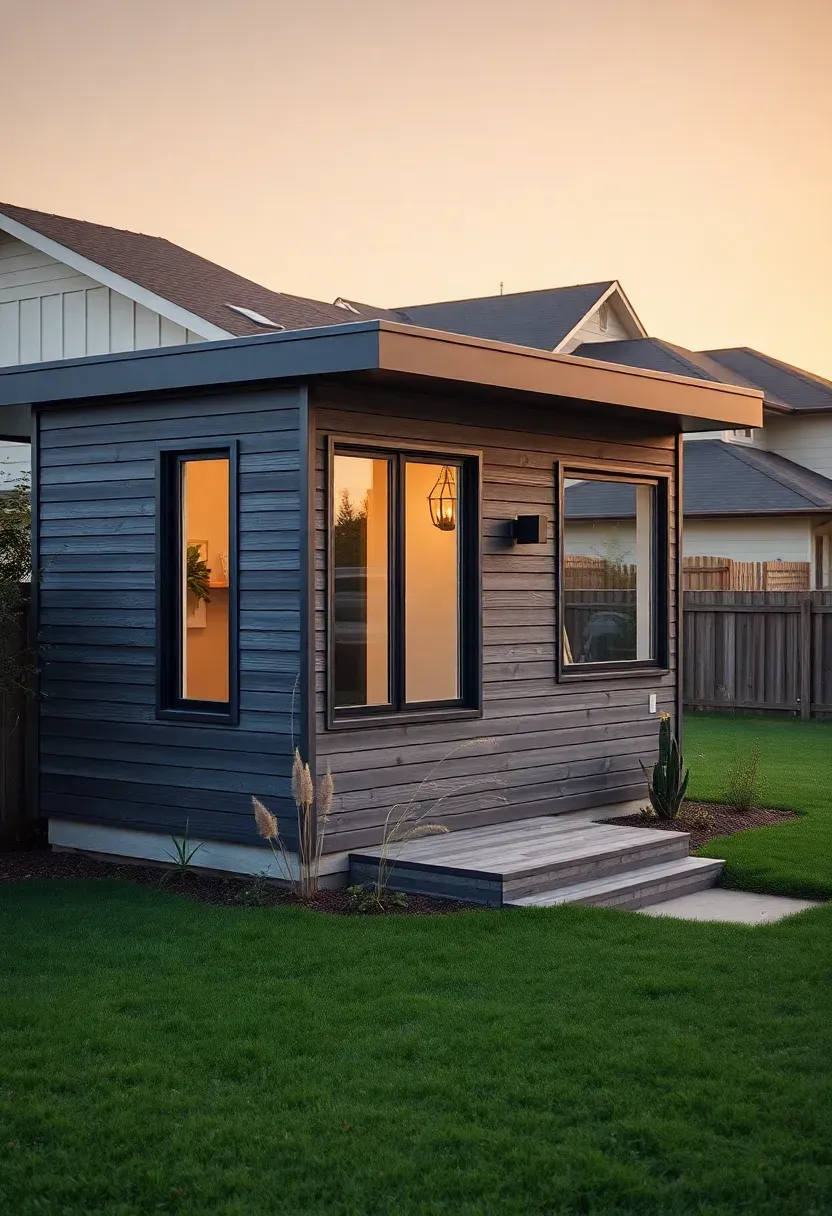
Modern backyard ADU of about 400 square feet with flat roof, large windows, and wood siding separate from main house
How big is a tiny house, exactly? Most tiny homes range from 80 to 400 square feet, with each size category offering unique advantages for compact living. Understanding tiny house square footage is the first step toward choosing the right layout for your lifestyle, needs, and budget.. Modern backyard ADU of about 400 square feet with flat roof, large windows, and wood siding separate from main house
Recommended
Items for this idea
Tips
- Why it works: ADUs provide tiny house living with full residential amenities and permanence
- Check local zoning for minimum lot size requirements and maximum ADU square footage
- Consider utility connections—ADUs need full water, sewer, and electrical like any home
Placement note: ADUs require permanent foundation and permits similar to full home construction
What this gives you: tiny house lifestyle with conventional home stability and property value benefits
18. Tiny House Village Layouts
Tiny house villages cluster multiple small homes together, creating community while maintaining individual tiny house sizes. Common spaces like community kitchens, bathhouses, or gathering areas compensate for smaller individual footprints. Village living allows for individual units as small as 80-150 square feet with shared amenities.
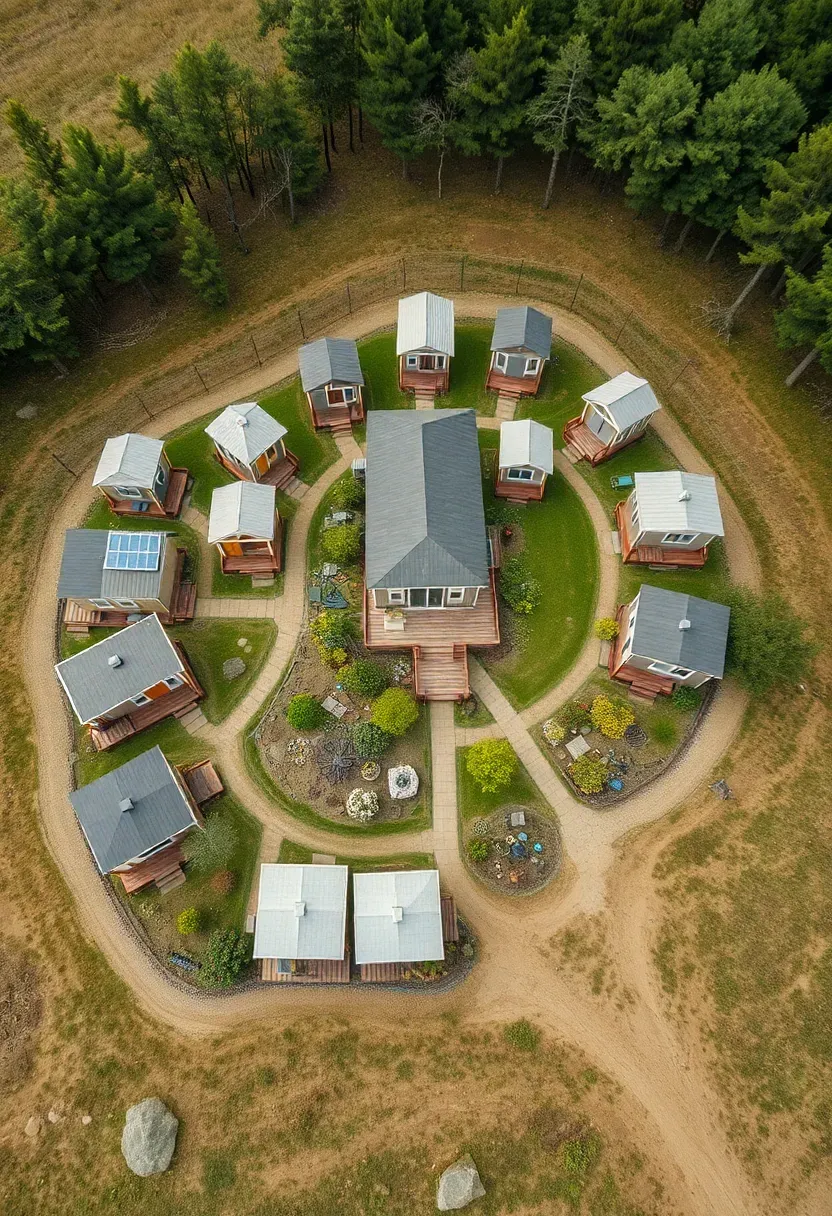
Aerial view of a tiny house village with 8-10 small homes clustered around a community building with gardens and walking paths
How big is a tiny house, exactly? Most tiny homes range from 80 to 400 square feet, with each size category offering unique advantages for compact living. Understanding tiny house square footage is the first step toward choosing the right layout for your lifestyle, needs, and budget.. Aerial view of a tiny house village with 8-10 small homes clustered around a community building with gardens and walking paths
Recommended
Items for this idea
Tips
- Avoid isolation: Village living provides community while maintaining individual privacy
- Research village management structure and rules before committing to membership
- Consider whether shared amenities align with your lifestyle and schedule preferences
Best for: those seeking community and willing to trade some private space for shared amenities
What this gives you: tiny living benefits with expanded social space and community support
19. Size vs Storage Solutions
Smart storage solutions effectively increase usable space regardless of tiny house size. Built-in cabinets, under-bed storage, vertical organizers, and multi-functional furniture dramatically increase storage capacity without increasing square footage. The key is planning storage during design rather than adding it as an afterthought. For more ways to maximize your footprint, see our guide on how to make a tiny house feel bigger.
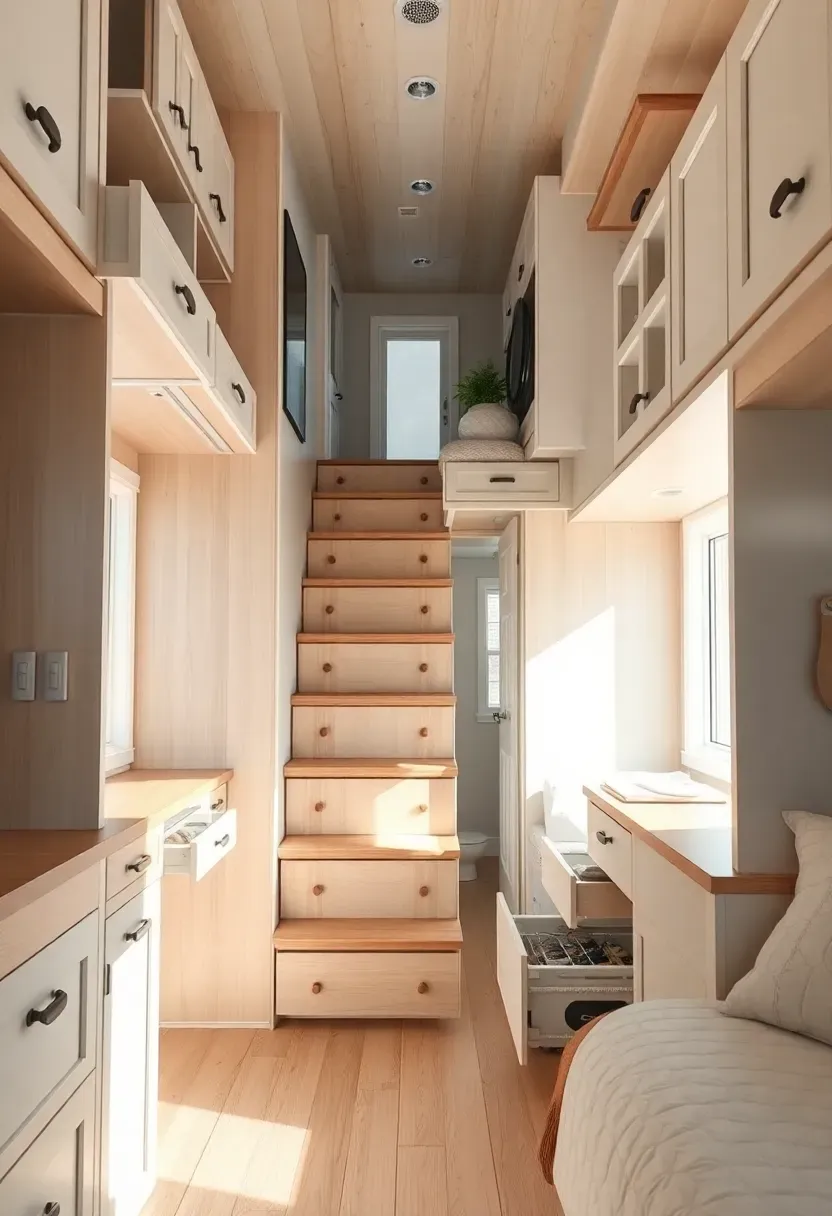
Tiny house interior showcasing built-in storage solutions including under-stair drawers, floor-to-ceiling pantry, and hidden floor compartments
How big is a tiny house, exactly? Most tiny homes range from 80 to 400 square feet, with each size category offering unique advantages for compact living. Understanding tiny house square footage is the first step toward choosing the right layout for your lifestyle, needs, and budget.. Tiny house interior showcasing built-in storage solutions including under-stair drawers, floor-to-ceiling pantry, and hidden floor compartments
Recommended
Items for this idea
Tips
- Do measure everything you own before finalizing storage design
- Don't forget hidden spaces like toe kicks, wall cavities, and vertical voids
- Invest in quality hardware—slides, hinges, and organizers make or break storage functionality
Budget note: Quality storage hardware represents 5-10% of total build cost but adds immense value
What this gives you: ability to live comfortably in smaller spaces through intelligent storage design
20. Zoning and Size Regulations
Local zoning laws and building codes heavily influence allowable tiny house sizes and placement options. Some jurisdictions define tiny houses by square footage limits, while others regulate minimum sizes or ban tiny houses on wheels entirely. Researching regulations before designing prevents costly redesigns or legal issues.
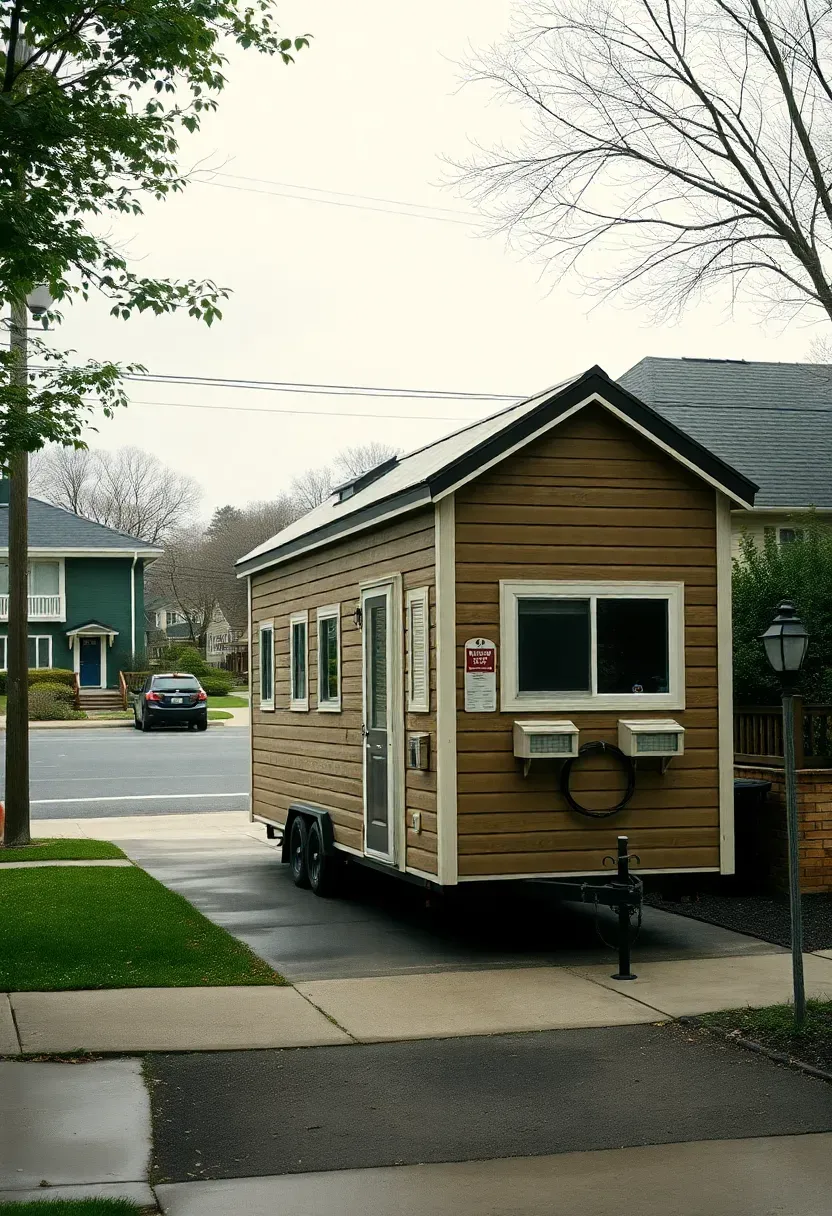
Tiny house parked in a residential driveway with neighboring houses visible, illustrating zoning and placement considerations
How big is a tiny house, exactly? Most tiny homes range from 80 to 400 square feet, with each size category offering unique advantages for compact living. Understanding tiny house square footage is the first step toward choosing the right layout for your lifestyle, needs, and budget.. Tiny house parked in a residential driveway with neighboring houses visible, illustrating zoning and placement considerations
Recommended
Items for this idea
Tips
- Common mistake: Building before researching zoning leads to expensive legal problems
- Contact local planning department directly rather than relying on online information
- Consider jurisdictions that specifically address tiny houses in their codes
Placement note: Some areas have minimum square footage requirements that exclude tiny houses
What this gives you: legal compliance and peace of mind about your tiny house placement
21. Choosing Your Ideal Tiny House Size
Choosing the right tiny house size requires balancing lifestyle needs, budget, mobility goals, and comfort requirements. Solo minimalists may thrive in 100-150 square feet, while couples often prefer 200-300 square feet for relationship harmony. Families need even more space or creative multi-unit solutions. The ideal size accommodates your essentials while encouraging mindful consumption.
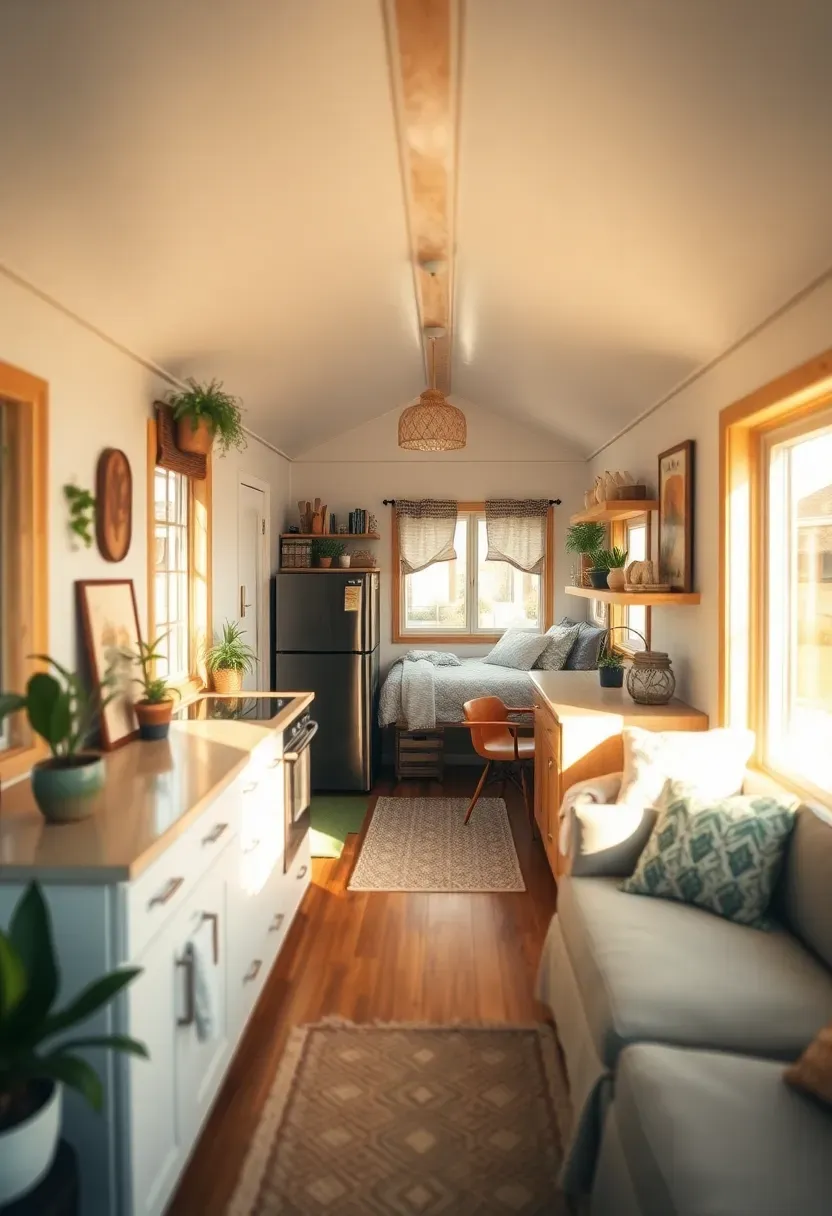
Thoughtfully designed 200 square foot tiny house balancing living space, kitchen, sleeping area, and workspace with warm wood tones
How big is a tiny house, exactly? Most tiny homes range from 80 to 400 square feet, with each size category offering unique advantages for compact living. Understanding tiny house square footage is the first step toward choosing the right layout for your lifestyle, needs, and budget.. Thoughtfully designed 200 square foot tiny house balancing living space, kitchen, sleeping area, and workspace with warm wood tones
Recommended
Items for this idea
Tips
- If/Then: If you're unsure, try renting a tiny house for a weekend before committing
- Then make a list of non-negotiable essentials and design around those first
- Consider visiting tiny house communities or open houses to experience different sizes in person
Best for: ensuring your tiny house size matches your actual needs rather than idealized notions
What this gives you: long-term satisfaction with tiny living by choosing appropriately sized space for your lifestyle
Understanding tiny house size categories and options helps you make informed decisions about small living. Whether you choose a micro retreat under 100 square feet or a spacious tiny house approaching 400 square feet, thoughtful design maximizes comfort and functionality. The right tiny house dimensions balance your needs, budget, and lifestyle goals for sustainable minimalist living. Ready to take the next step? Our ultimate guide to tiny house living covers everything from planning to move-in day.