What Is Scandinavian Minimalism? Hygge, Lagom, and Calm Spaces
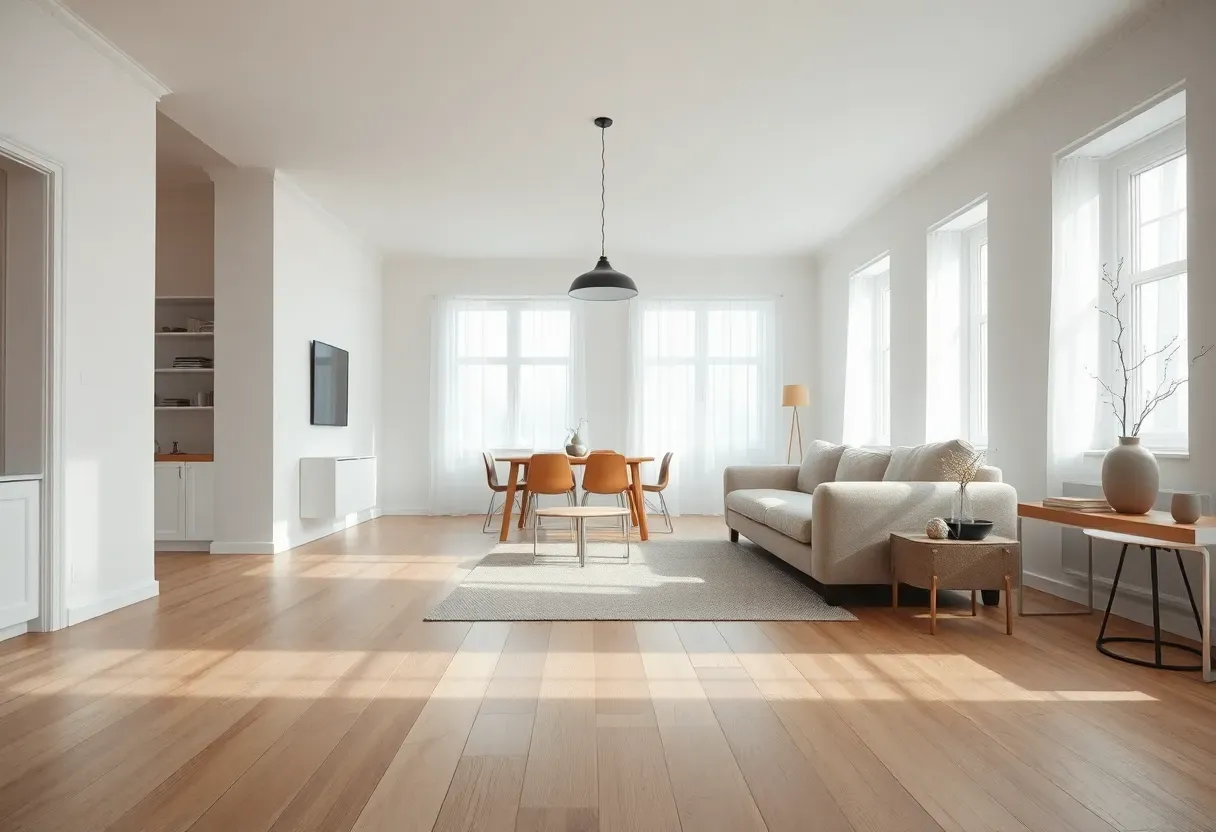
Scandinavian minimalism is a design philosophy from Nordic countries that combines clean lines with functional beauty and cozy warmth -- and in our experience it is one of the most renter-friendly styles you can adopt. Unlike stark minimalism, this approach embraces comfort, natural materials, and intentional living while eliminating unnecessary clutter. The result is homes that feel both serene and genuinely welcoming, even in a small apartment you do not own.
At its core, Scandinavian minimalism reflects a cultural mindset rooted in "lagom" (not too much, not too little) and "hygge" (cozy contentment). These principles guide everything from furniture selection to spatial arrangement, emphasizing quality over quantity and purposeful possession over accumulation. We found that even adopting one or two of these ideas -- layered lighting, a single wool throw, a decluttered shelf -- can shift how a rental space feels.
This design philosophy has gained global recognition for its ability to make small spaces feel expansive, dark interiors feel bright, and busy lives feel calmer. It is not about owning less -- it is about making room for what truly matters by removing distractions and celebrating essential beauty in everyday objects.
Quick FAQ
What makes Scandinavian minimalism different from other minimalism styles?
Scandinavian minimalism emphasizes warmth, texture, and comfort alongside simplicity. Unlike ultra-modern minimalism that can feel cold or clinical, Nordic design incorporates natural materials like wood and wool, layered lighting, and cozy textiles to create inviting, livable spaces rather than stark environments.
How do I start applying Scandinavian minimalist principles to my home?
Begin with decluttering one room at a time, keeping only items that serve a purpose or bring genuine joy. Introduce light-neutral walls, add layered lighting (ambient, task, accent), incorporate natural wood furniture, and include cozy textiles like wool throws and sheepskin rugs. Focus on quality pieces that will last rather than trend-driven fast furniture.
What colors work best in Scandinavian minimalist interiors?
The foundation is always white or very pale neutrals like cream, soft gray, or barely-there beige. These are accented with natural wood tones (oak, birch, ash), black for contrast and definition, and occasionally muted colors like sage green, dusty blue, or warm terracotta. The palette stays deliberately restrained to maintain visual calm.
Is Scandinavian minimalism expensive to achieve?
Not necessarily. While iconic pieces from Danish designers can be investment purchases, the philosophy itself emphasizes thoughtful curation over accumulation. Many achieve the look through secondhand vintage finds, IKEA basics elevated with better textiles, DIY projects, and simply owning fewer but better things. The focus is on how pieces work together, not their price tags.
Can Scandinavian minimalism work in small spaces?
It's exceptionally well-suited to small spaces because the emphasis on light colors, reflective surfaces, and lack of clutter makes rooms feel larger and airier. Multi-functional furniture, smart storage solutions, and vertical space utilization are all key aspects of Nordic design that translate perfectly to compact homes and apartments.
How does hygge fit into minimalist design?
Hygge (pronounced "hoo-gah") is the Danish concept of cozy contentment that's essential to Scandinavian minimalism. It's achieved through soft lighting (candles, warm lamps), tactile textiles (wool, linen, sheepskin), and intimate gathering spaces. Rather than contradicting minimalism, hygge ensures that minimalist spaces feel nurturing and inviting rather than sparse or cold.
As an Amazon Associate I earn from qualifying purchases.
1. The Historical Roots of Nordic Design Philosophy
Scandinavian minimalism emerged in the early 20th century as a response to ornate, excessive Victorian aesthetics, rooted in Nordic cultural values of democracy, equality, and practicality. The movement gained momentum during the 1930s-1950s as designers like Alvar Aalto, Arne Jacobsen, and Hans Wegner created furniture that was beautiful, functional, and accessible to everyday people rather than just the wealthy elite. This democratic approach to design—quality goods for all—remains central to the philosophy today.
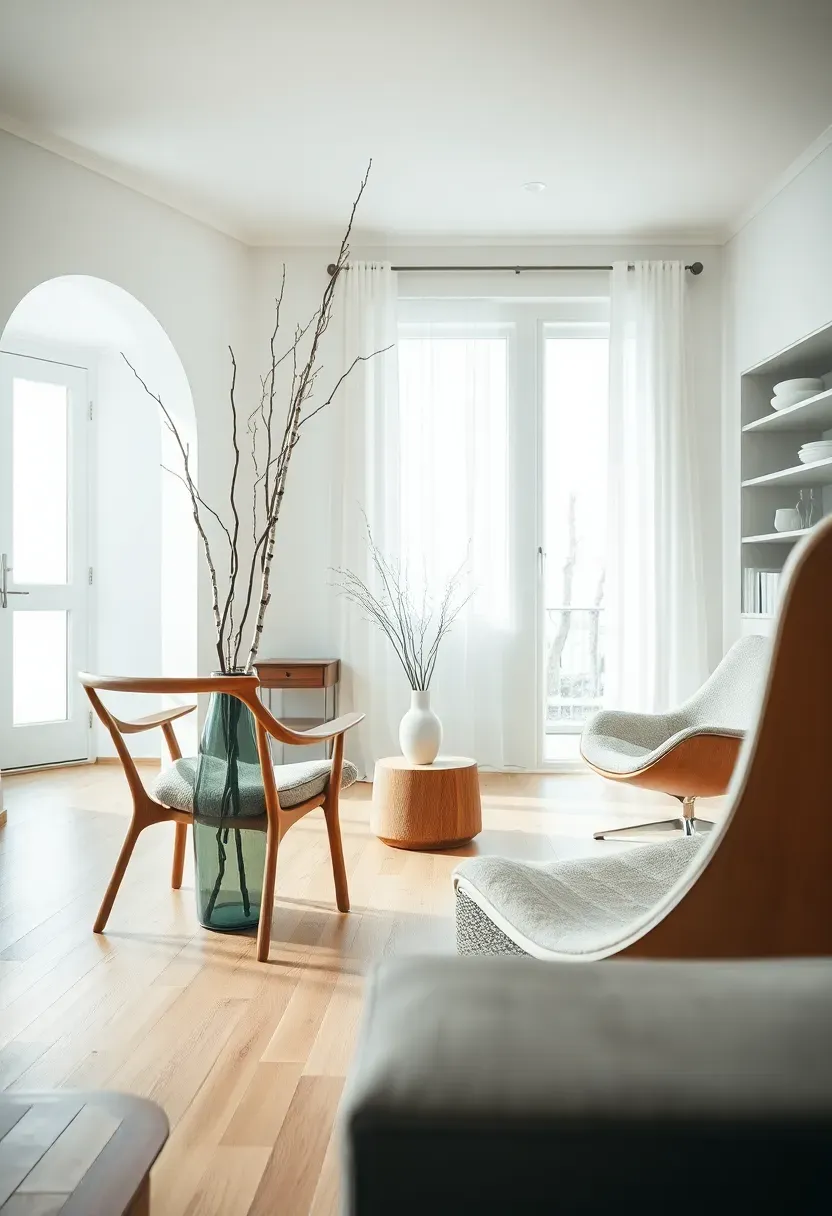
Hyper-realistic wide shot of a mid-century modern Scandinavian living room interior with iconic furniture pieces including Wegner wishbone chairs, Aalto vase with birch branches, and Jacobsen egg chair. Light oak wood floor, white plaster walls, large windows with sheer curtains. Materials: bentwood, wool fabric, ceramic vase, glass. Natural diffused daylight streaming from windows, soft shadows, minimalist composition with intentional negative space. Visible room context—arched doorway, built-in shelving with sparse curated objects. Cozy understated mood like Danish design magazine, shallow depth of field with sharp furniture details foreground, rule-of-thirds composition.</p>
Scandinavian minimalism is a design philosophy from Nordic countries that combines clean lines with functional beauty and cozy warmth -- and in our experience it is one of the most renter-friendly styles you can adopt. Unlike stark minimalism, this approach embraces comfort, natural materials, and intentional living while eliminating unnecessary clutter. The result is homes that feel both serene and genuinely welcoming, even in a small apartment you do not own.. Hyper-realistic wide shot of a mi
Recommended
Items for this idea
Tips
- Study the work of Nordic masters like Jacobsen, Wegner, and Aalto to understand the foundation of the movement
- Visit design museums or vintage shops to see original pieces—quality reproductions are preferable to cheap imitations
- Remember that Scandinavian design was revolutionary for making good design accessible, not exclusive
Best for: understanding the cultural and historical context that shaped this enduring design philosophy
What this gives you: appreciation that Scandinavian minimalism isn't just a trend but a thoughtful response to how people actually live, rooted in values of equality, functionality, and beauty in everyday life.
2. Core Principles: Function Meets Beauty
The foundation of Scandinavian minimalism rests on three interconnected principles: functionalism (every object must serve a purpose), democratic design (beauty should be accessible, not exclusive), and craftsmanship (quality materials and construction matter). These principles work together to create spaces that are both practical and pleasurable to inhabit. Unlike pure minimalism that can prioritize aesthetics above all, Nordic design insists that beauty must never compromise function—and function should never be ugly.
Hyper-realistic 3/4 view of a functional yet beautiful Scandinavian dining area. Light oak dining table with clean lines, four Wegner-style wishbone chairs, simple pendant light above. White plaster walls, light wood floor, minimal decoration with single ceramic bowl as centerpiece. Materials: pale oak wood, black metal light fixture, white ceramic. Soft natural daylight from side window, creating gentle shadows. Visible room context—open to living area, built-in sideboard with clean doors. Functional democratic mood like everyday Nordic home, sharp focus on furniture construction details, balanced composition showing practical beauty.</p>
Scandinavian minimalism is a design philosophy from Nordic countries that combines clean lines with functional beauty and cozy warmth -- and in our experience it is one of the most renter-friendly styles you can adopt. Unlike stark minimalism, this approach embraces comfort, natural materials, and intentional living while eliminating unnecessary clutter. The result is homes that feel both serene and genuinely welcoming, even in a small apartment you do not own.. Hyper-realistic 3/4 view of a fun
Recommended
Items for this idea
Tips
- Before purchasing anything, ask: "What specific function does this serve?" and "Is it beautiful to me?"
- Test furniture for comfort and usability—Scandinavian design excels at making functional pieces visually appealing
- Invest in well-made basics (sofa, bed, dining table) rather than filling space with cheaper decorative items
Best for: making purchasing decisions that align with Scandinavian values of quality, functionality, and accessibility
What this gives you: a home filled only with objects that genuinely earn their keep through both practical use and aesthetic pleasure, eliminating buyer's remorse and clutter accumulation.
3. Understanding Lagom: The Art of "Just Right"
Lagom (pronounced "lah-gom") is the Swedish concept of "not too much, not too little"—the Goldilocks principle applied to life and design. In interior contexts, lagom translates to spaces that feel complete without being stuffed, balanced without being boring, and personal without being cluttered. It's the sweet spot between stark emptiness and chaotic accumulation, where every object has breathing room and the eye can rest without finding nothing of interest.
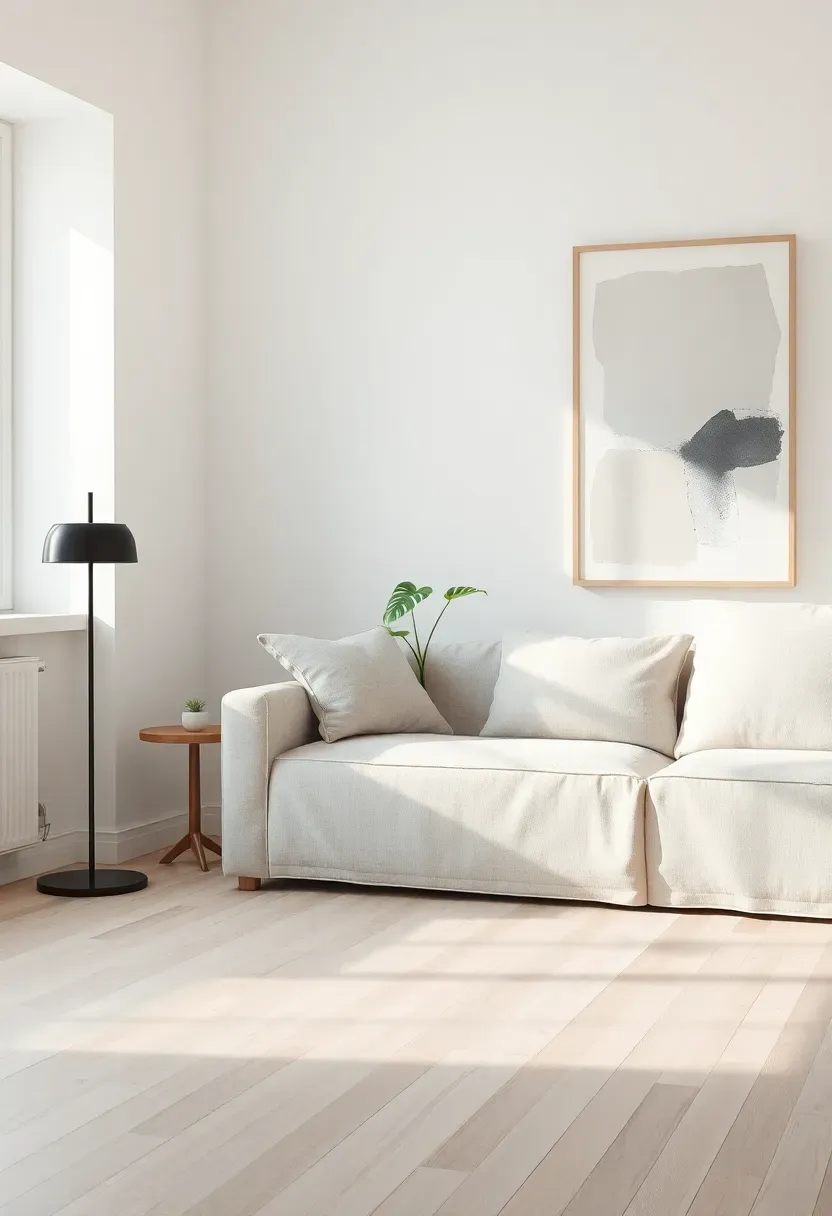
Hyper-realistic straight-on view of a perfectly balanced Scandinavian living room corner. Light oatmeal linen sofa, one black floor lamp, small wooden side table with single plant, large abstract art piece on white wall. Generous negative space around each object. Light wood floor flowing through, white walls with subtle texture. Materials: linen fabric, black metal, oak wood, ceramic pot, green monstera leaves. Soft diffused natural light from large window off-frame, gentle shadows. Lagom mood of
Scandinavian minimalism is a design philosophy from Nordic countries that combines clean lines with functional beauty and cozy warmth -- and in our experience it is one of the most renter-friendly styles you can adopt. Unlike stark minimalism, this approach embraces comfort, natural materials, and intentional living while eliminating unnecessary clutter. The result is homes that feel both serene and genuinely welcoming, even in a small apartment you do not own.. Hyper-realistic straight-on view
Recommended
Items for this idea
Tips
- Practice the "one in, one out" rule: for every new item introduced, remove something existing
- Edit surfaces deliberately—aim for 60% empty space rather than filling available flat areas
- If you're unsure whether a room needs something, try living without it for two weeks
Budget/Time: lagom costs nothing to practice and actually saves money by preventing over-purchasing
What this gives you: homes that feel balanced, breathing, and harmonious—spaces that support mental clarity rather than contributing to visual noise and decision fatigue.
4. Hygge: The Heart of Cozy Minimalism
Hygge (pronounced "hoo-gah") is the Danish concept that prevents Scandinavian minimalism from feeling cold or sterile—think cozy contentment, convivial warmth, and the pleasure of simple comforts. In design terms, hygge translates to soft lighting (candles, warm-toned lamps), tactile textiles (wool throws, sheepskin rugs, linen cushions), and intimate seating arrangements that encourage conversation and relaxation. It's the difference between a museum-like minimalist space and one you actually want to curl up in with a book and blanket.
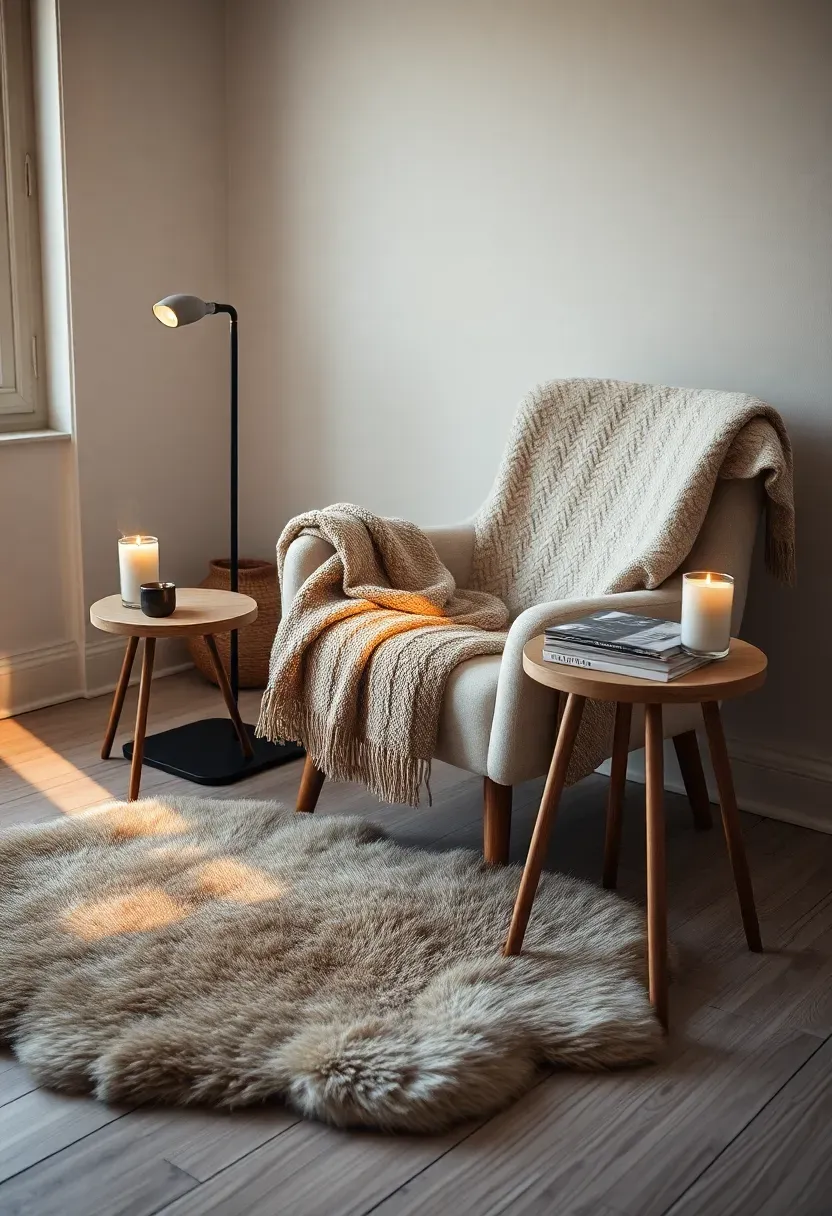
Hyper-realistic intimate view of a hygge Scandinavian reading corner. Cream wool armchair with oatmeal throw blanket draped casually, sheepskin rug on floor, small round wooden side table with steaming coffee cup and flickering candle, stacked books. White walls, light wood floor, warm ambient lighting from floor lamp and candle. Materials: wool knit, sheepskin, oak wood, ceramic, linen book covers. Warm golden hour light streaming through window, soft cozy shadows. Hygge mood of intimate warmth and contentment, shallow depth of field with warm textures in focus.</p>
Scandinavian minimalism is a design philosophy from Nordic countries that combines clean lines with functional beauty and cozy warmth -- and in our experience it is one of the most renter-friendly styles you can adopt. Unlike stark minimalism, this approach embraces comfort, natural materials, and intentional living while eliminating unnecessary clutter. The result is homes that feel both serene and genuinely welcoming, even in a small apartment you do not own.. Hyper-realistic intimate view of
Recommended
Items for this idea
Tips
- Use multiple light sources in each room—overhead, task, and accent lighting at 2700K-3000K color temperature
- Keep throws and blankets accessible in open baskets or draped casually over furniture arms
- Design seating to facilitate face-to-face interaction rather than all facing a screen
Best for: preventing minimalist spaces from feeling clinical or unwelcoming, especially during darker winter months
What this gives you: interiors that feel simultaneously calming and cozy, achieving the seemingly contradictory balance of serene minimalism with genuine warmth and comfort.
5. Light as a Fundamental Design Element
Light is perhaps the most critical element in Scandinavian design, born from Nordic countries' extreme seasonal light variation—summers with endless days, winters with precious few daylight hours. This reality shaped design philosophy around maximizing natural light through large windows, reflective surfaces, and minimal window treatments, while creating layered artificial lighting that compensates for dark winters. The approach treats light as a building material, not an afterthought, with entire room layouts planned around light movement throughout the day.
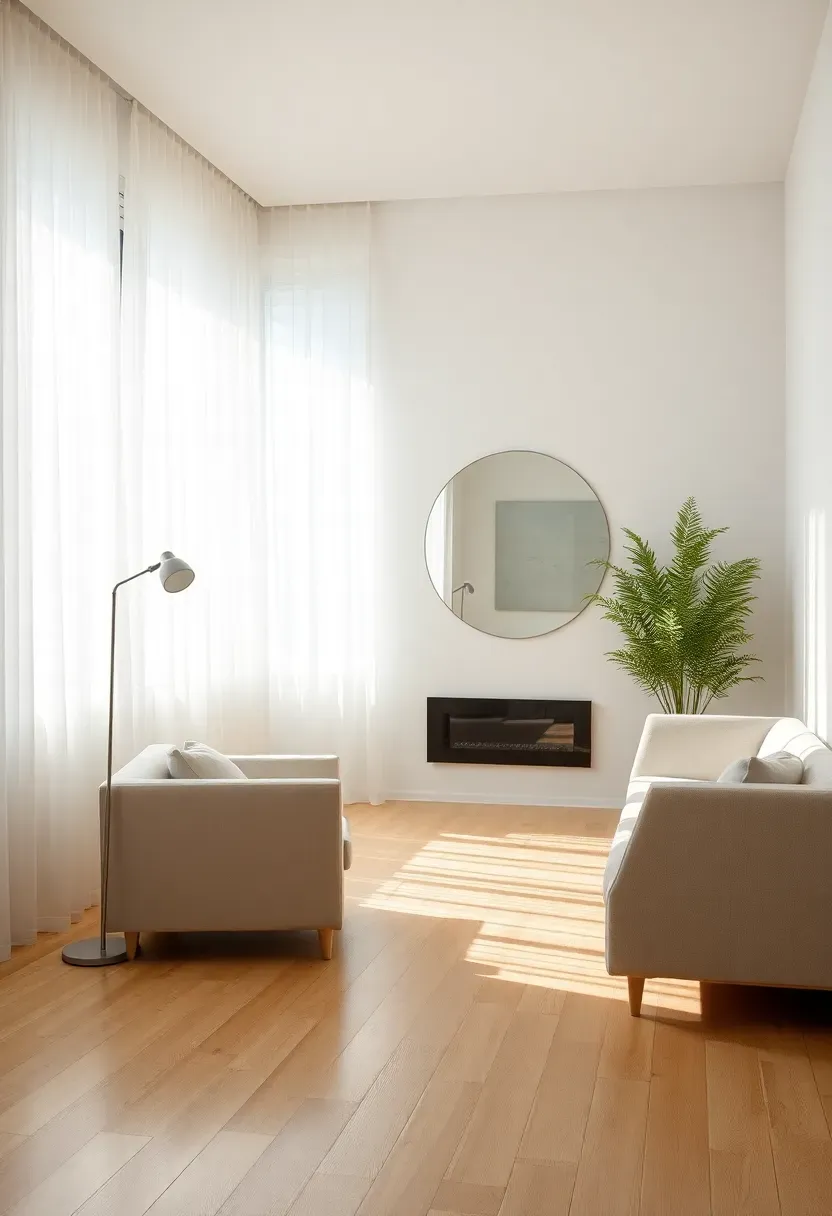
Hyper-realistic wide view of a light-filled Scandinavian room maximizing natural daylight. Floor-to-ceiling windows with sheer white curtains, large round mirror opposite window reflecting and doubling light, glossy light oak wood floor reflecting sunlight, white walls bouncing brightness. Minimal furniture—simple sofa, one chair. Pale materials throughout. Bright diffuse daylight flooding entire space, minimal shadows. Light-focused mood showing natural light as primary design element, fresh airy feeling, high-key brightness with subtle shadow depth.</p>
Scandinavian minimalism is a design philosophy from Nordic countries that combines clean lines with functional beauty and cozy warmth -- and in our experience it is one of the most renter-friendly styles you can adopt. Unlike stark minimalism, this approach embraces comfort, natural materials, and intentional living while eliminating unnecessary clutter. The result is homes that feel both serene and genuinely welcoming, even in a small apartment you do not own.. Hyper-realistic wide view of a li
Recommended
Items for this idea
In bathrooms or rooms without exterior windows, the philosophy adapts through strategic mirror placement, reflective surfaces like glossy tiles, and thoughtful layered artificial lighting that mimics natural light's warmth and variation.
Tips
- Keep window treatments minimal or eliminated—sheer curtains that filter light without blocking are ideal
- Place mirrors opposite windows to double natural light penetration and create brightness
- Use bulbs with warm color temperature (2700K-3000K) and high CRI (90+) for natural color rendering
What this gives you: spaces that feel uplifting and energizing regardless of season or weather, supporting natural circadian rhythms while preventing the gloom that plagues poorly lit interiors.
6. Natural Materials: Wood, Wool, and Stone
Natural materials are the non-negotiable foundation of Scandinavian design, connecting interiors to the Nordic landscape despite urban locations. Light woods like oak, birch, ash, and pine feature prominently in flooring, furniture, and architectural details, bringing warmth without heaviness. Wool appears in rugs, throws, and textiles, providing insulation and texture. Stone and ceramic appear in raw, unpolished forms that celebrate natural variation rather than perfection. These materials age gracefully, developing patina that tells stories of use and time.
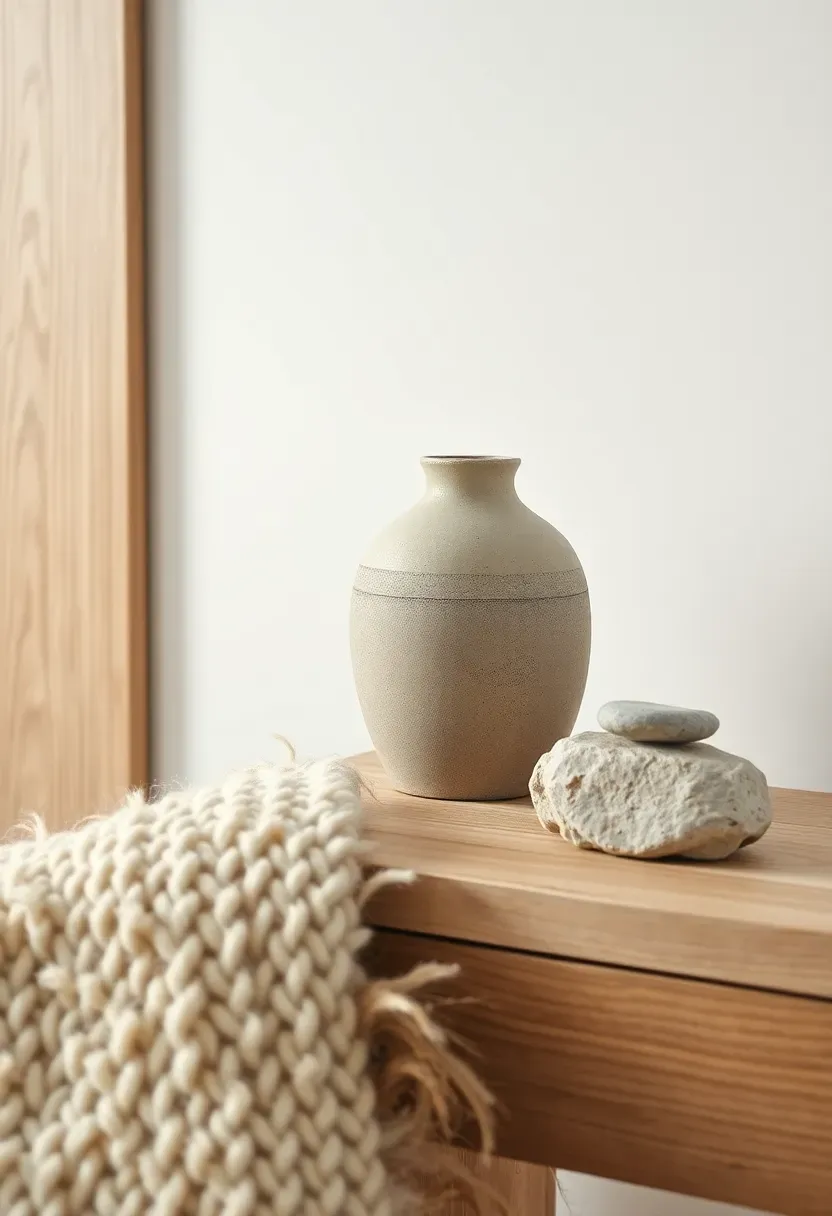
Hyper-realistic detail shot showcasing natural materials in Scandinavian interior. Close-up of light oak wood furniture grain visible, wool rug texture with natural fibers, raw ceramic vase on wooden surface, small stone decorative object. White wall background providing contrast. Materials: pale oak with visible grain pattern, cream wool with natural texture, matte ceramic with subtle variations, smooth river stone. Soft directional lighting highlighting texture and material quality, shallow depth of focus on materials. Natural material philosophy mood showing authentic textures and honest construction.</p>
Scandinavian minimalism is a design philosophy from Nordic countries that combines clean lines with functional beauty and cozy warmth -- and in our experience it is one of the most renter-friendly styles you can adopt. Unlike stark minimalism, this approach embraces comfort, natural materials, and intentional living while eliminating unnecessary clutter. The result is homes that feel both serene and genuinely welcoming, even in a small apartment you do not own.. Hyper-realistic detail shot showc
Recommended
Items for this idea
Tips
- Choose light wood floors (oak, ash, birch) rather than dark stains to maximize light reflection
- Invest in wool rugs and textiles—they're more durable, naturally flame-resistant, and regulate temperature better than synthetics
- Embrace natural variations in wood grain, stone veining, and ceramic imperfections as features, not flaws
Best for: creating spaces that feel authentic, grounded, and connected to nature—even in high-rise apartments or urban homes
What this gives you: interiors that feel honest and substantial rather than disposable or artificial, with materials that reward long-term ownership through developing character and improving with age.
7. The Neutral Palette Strategy
Scandinavian interiors famously employ neutral palettes dominated by white walls, light wood floors, and restrained accents—but this restraint creates flexibility rather than boredom. The pale foundation acts as a canvas that maximizes natural light, makes spaces feel larger, and allows furniture and objects to take precedence rather than compete with colorful surroundings. Accents typically come through natural materials (wood tones, green plants) and carefully chosen black or charcoal elements that provide definition and contrast without overwhelming the calm.
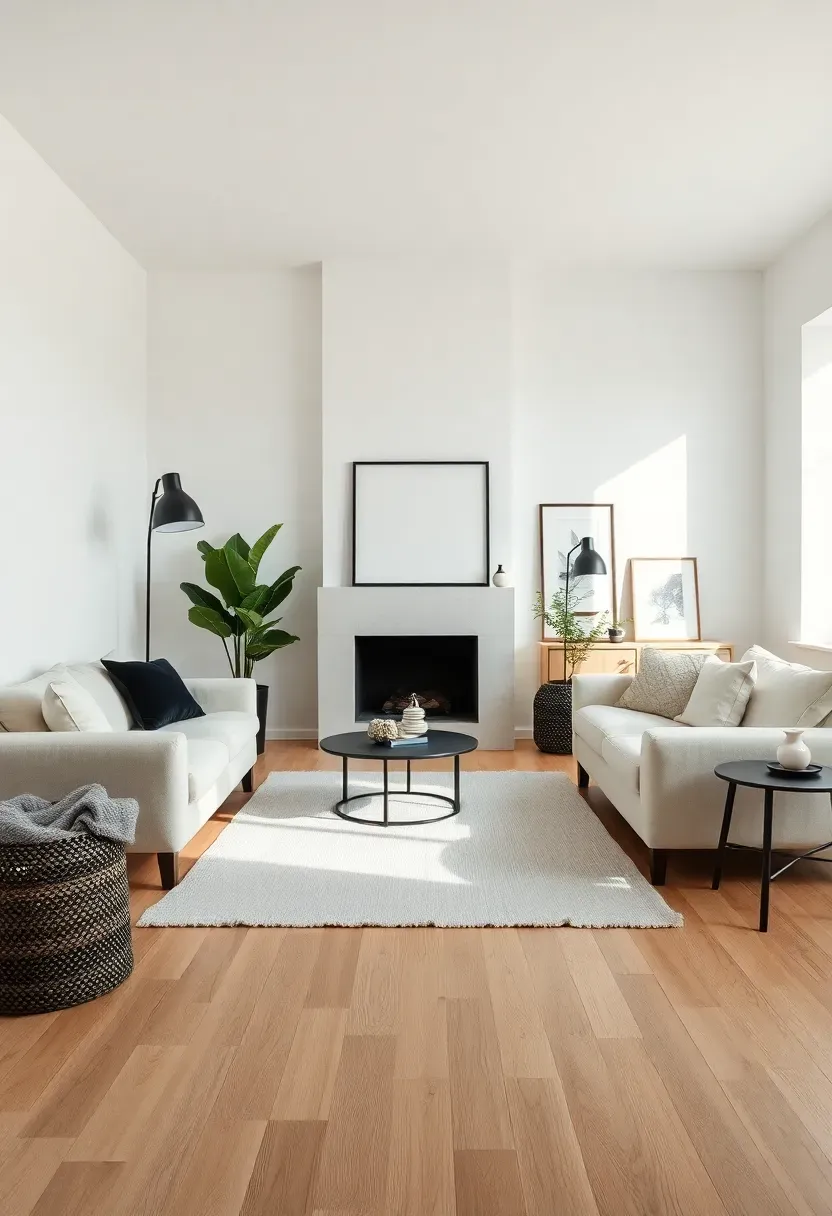
Hyper-realistic wide shot of neutral palette Scandinavian living room. White walls with subtle warmth variation, light oak wood floor, cream linen sofa, pale gray wool rug, black floor lamp and picture frames providing contrast, green fiddle leaf fig plant. All colors muted and restrained—cream, white, pale oak, soft gray, black accents, greenery only color pop. Bright natural light enhancing neutral scheme. Neutral palette mood showing calm timeless foundation, versatility evident in how objects stand out against restrained backdrop.</p>
Scandinavian minimalism is a design philosophy from Nordic countries that combines clean lines with functional beauty and cozy warmth -- and in our experience it is one of the most renter-friendly styles you can adopt. Unlike stark minimalism, this approach embraces comfort, natural materials, and intentional living while eliminating unnecessary clutter. The result is homes that feel both serene and genuinely welcoming, even in a small apartment you do not own.. Hyper-realistic wide shot of neut
Recommended
Items for this idea
Tips
- Use varying shades of white and cream rather than stark white to create depth and warmth
- Add black through intentional elements (lighting, frames, furniture legs) for definition and contrast
- Introduce color sparingly through objects (art, textiles, ceramics) that can be easily changed
Rental note: if you can't paint, use large light-colored textile wall hangings, tall plants, and pale furniture to achieve the brightening effect of white walls
What this gives you: spaces that feel timeless and adaptable rather than tied to specific color trends, with visual calm that supports mental clarity and makes rooms feel significantly larger and brighter.
8. Quality Over Quantity in Furniture Selection
The Scandinavian approach to furniture prioritizes investment in fewer, better pieces rather than filling spaces with numerous cheaper items. This philosophy stems from both practical considerations (harsh northern climates demand indoor durability) and cultural values (cherishing what you own rather than constantly replacing). A typical Nordic living room might contain just a sofa, two armchairs, a coffee table, and a lamp—each piece thoughtfully chosen, well-constructed, and intended for years or decades of use rather than temporary until the next trend.
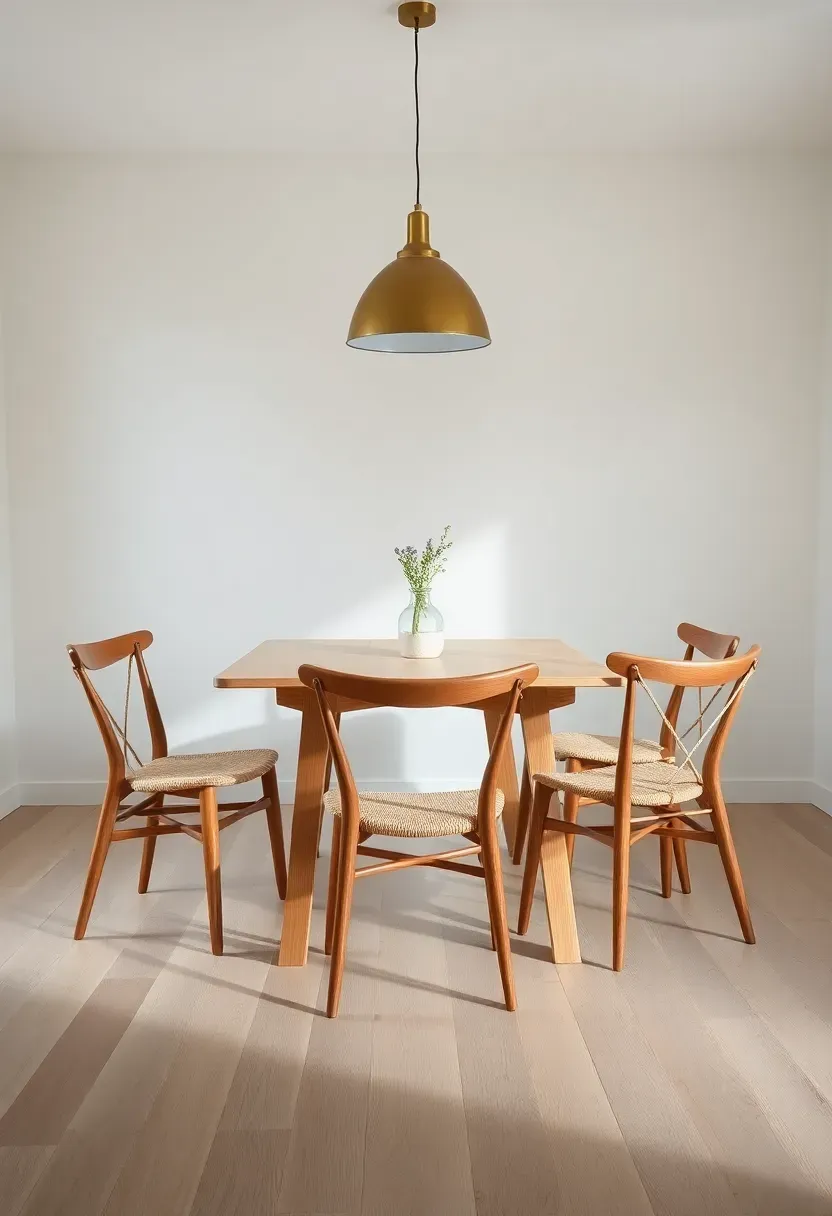
Hyper-realistic view of quality Scandinavian furniture selection showing fewer better pieces. Single beautifully crafted light oak dining table with visible joinery detail, four Wegner Y chairs surrounding it, one statement pendant light above. Empty space around furniture visible. White walls, light wood floor. No clutter, no unnecessary items. Materials: premium pale oak with honest construction, paper cord on chairs, brass pendant fixture. Soft directional light highlighting furniture craftsmanship and quality construction. Quality over quantity mood showing intentional curation and investment pieces.</p>
Scandinavian minimalism is a design philosophy from Nordic countries that combines clean lines with functional beauty and cozy warmth -- and in our experience it is one of the most renter-friendly styles you can adopt. Unlike stark minimalism, this approach embraces comfort, natural materials, and intentional living while eliminating unnecessary clutter. The result is homes that feel both serene and genuinely welcoming, even in a small apartment you do not own.. Hyper-realistic view of quality S
Recommended
Items for this idea
Tips
- Start with five essential pieces per room: primary seating, secondary seating, surface, storage, lighting
- Research construction quality—joinery, materials, suspension—rather than just appearance
- Consider vintage or secondhand for investment pieces—mid-century modern pieces often outlast new furniture
Budget/Time: save gradually for quality pieces rather than filling spaces immediately with compromises
What this gives you: homes filled with objects you genuinely love and that will serve you for years, eliminating the cycle of buy-replace-repeat that creates both waste and perpetual dissatisfaction.
9. Decluttering with Intention, Not Deprivation
Scandinavian decluttering differs from extreme minimalism in its emphasis on intention rather than elimination. The goal isn't the fewest possible objects, but rather the most meaningful objects—surrounded only by what you use, love, or find genuinely beautiful. This approach makes decluttering feel like curation rather than deprivation, like editing a collection to show each piece to best advantage rather than stripping life of personality or comfort.
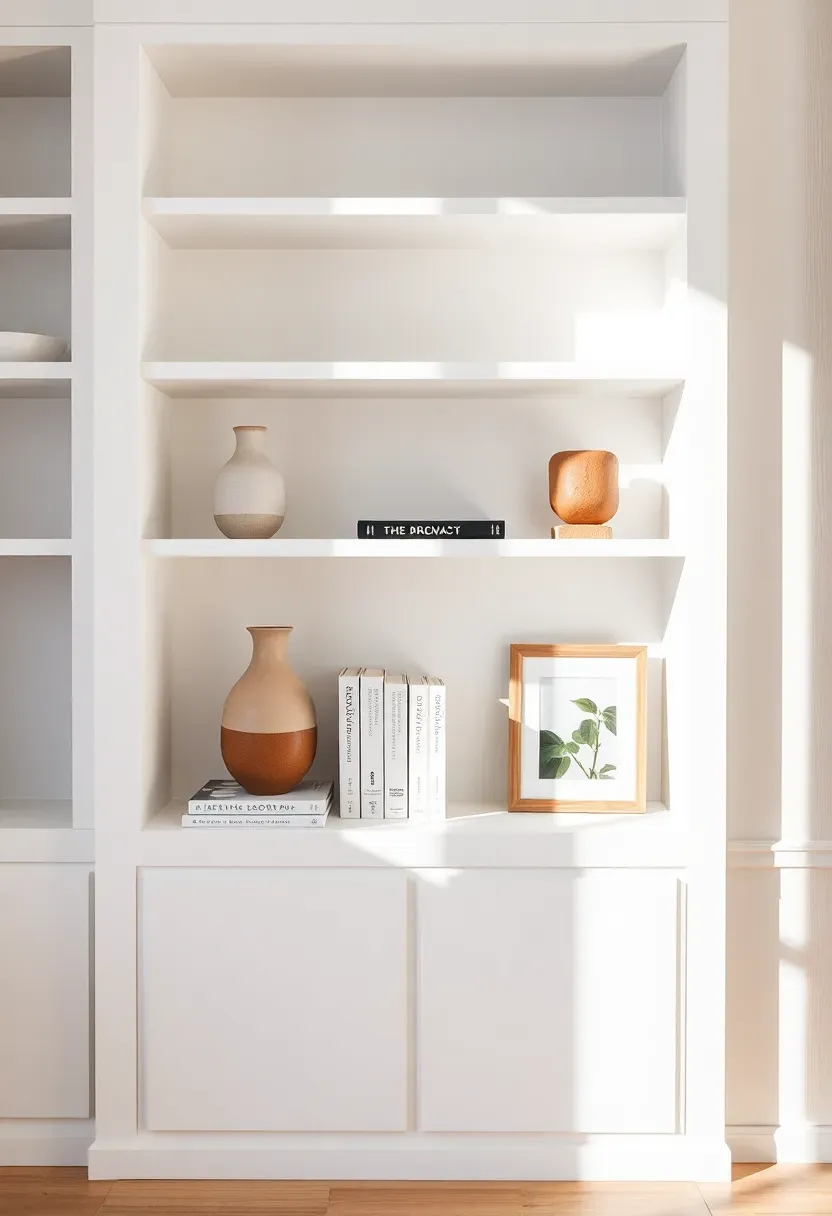
Hyper-realistic view of intentionally decluttered Scandinavian shelf arrangement. White built-in bookshelf with carefully curated objects—few meaningful items each given space. Single ceramic vase, two carefully chosen books, small wooden sculpture, one framed photograph. Generous negative space around each object. White shelf background, light wood room context. Intentional curation mood showing meaningful objects rather than empty shelves, each item has breathing room and significance. Soft natural light from side, gentle shadows.</p>
Scandinavian minimalism is a design philosophy from Nordic countries that combines clean lines with functional beauty and cozy warmth -- and in our experience it is one of the most renter-friendly styles you can adopt. Unlike stark minimalism, this approach embraces comfort, natural materials, and intentional living while eliminating unnecessary clutter. The result is homes that feel both serene and genuinely welcoming, even in a small apartment you do not own.. Hyper-realistic view of intention
Recommended
Items for this idea
Tips
- Start with one drawer or shelf, not entire rooms—small wins build momentum without overwhelm
- Create "maybe" boxes for items you're unsure about—store for 6 months and remove if unused
- Focus on keeping the best rather than getting rid of the rest—mindset shift from loss to curation
What this gives you: spaces that feel personally curated and meaningful rather than generically minimal, with every object either serving a function or bringing joy—often both.
10. Smart Storage Solutions That Hide Clutter
Scandinavian design achieves its uncluttered appearance not through lack of possessions but through brilliant storage that keeps daily necessities accessible yet out of sight. Built-in cabinets, furniture with hidden storage, and thoughtful organization systems maintain visual calm while accommodating real-life needs. The philosophy isn't about owning less but rather storing smarter—everything has its place, and that place is typically behind closed doors or within attractive containers that maintain the aesthetic.
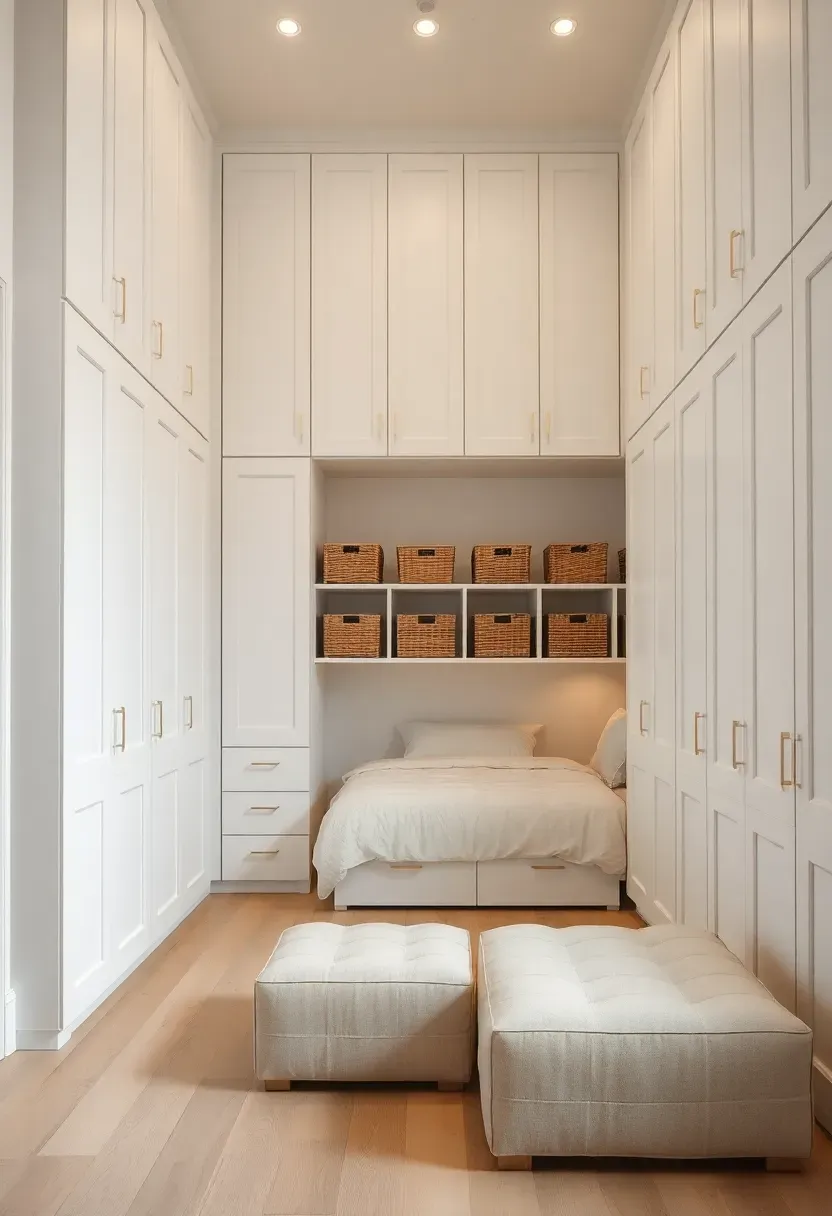
Hyper-realistic view of smart Scandinavian storage solutions. Floor-to-ceiling white built-in cabinets with clean minimalist doors reaching ceiling, bed with storage drawers beneath visible, storage ottoman at foot of bed. Light wood floor, white walls, room feels uncluttered despite hidden storage capacity. Some cabinet doors slightly open showing organized interior. Materials: white matte cabinet fronts, light oak wood floor, woven storage baskets visible on open shelf. Smart storage mood showing how clutter disappears behind beautiful intentional storage solutions.</p>
Scandinavian minimalism is a design philosophy from Nordic countries that combines clean lines with functional beauty and cozy warmth -- and in our experience it is one of the most renter-friendly styles you can adopt. Unlike stark minimalism, this approach embraces comfort, natural materials, and intentional living while eliminating unnecessary clutter. The result is homes that feel both serene and genuinely welcoming, even in a small apartment you do not own.. Hyper-realistic view of smart Sca
Recommended
Items for this idea
Tips
- Invest in storage furniture first—beds with drawers, storage ottomans, console cabinets with hidden compartments
- Use uniform containers for open storage—matching baskets or boxes create calm even when contents are visible
- Design storage based on usage frequency—daily items at waist/eye level, seasonal items higher or lower
Best for: maintaining visual calm in active households with kids, pets, or hobbies that generate "stuff"—real life accommodated without visual chaos
What this gives you: homes that stay orderly without constant maintenance, where tidying takes minutes because everything has designated storage, maintaining the calm minimalist aesthetic even in busy, active households.
11. Creating Flow Through Negative Space
Negative space—the intentional empty areas around and between objects—is as important as the objects themselves in Scandinavian design. This breathing room prevents visual claustrophobia, allows the eye to rest, and creates the sense of calm that characterizes Nordic interiors. Unlike rooms where furniture fills every available wall and surfaces are covered with objects, Scandinavian spaces deliberately leave areas empty: walls with art clustered rather than scattered, floors with clearance around furniture, surfaces with partial clearance rather than complete coverage.
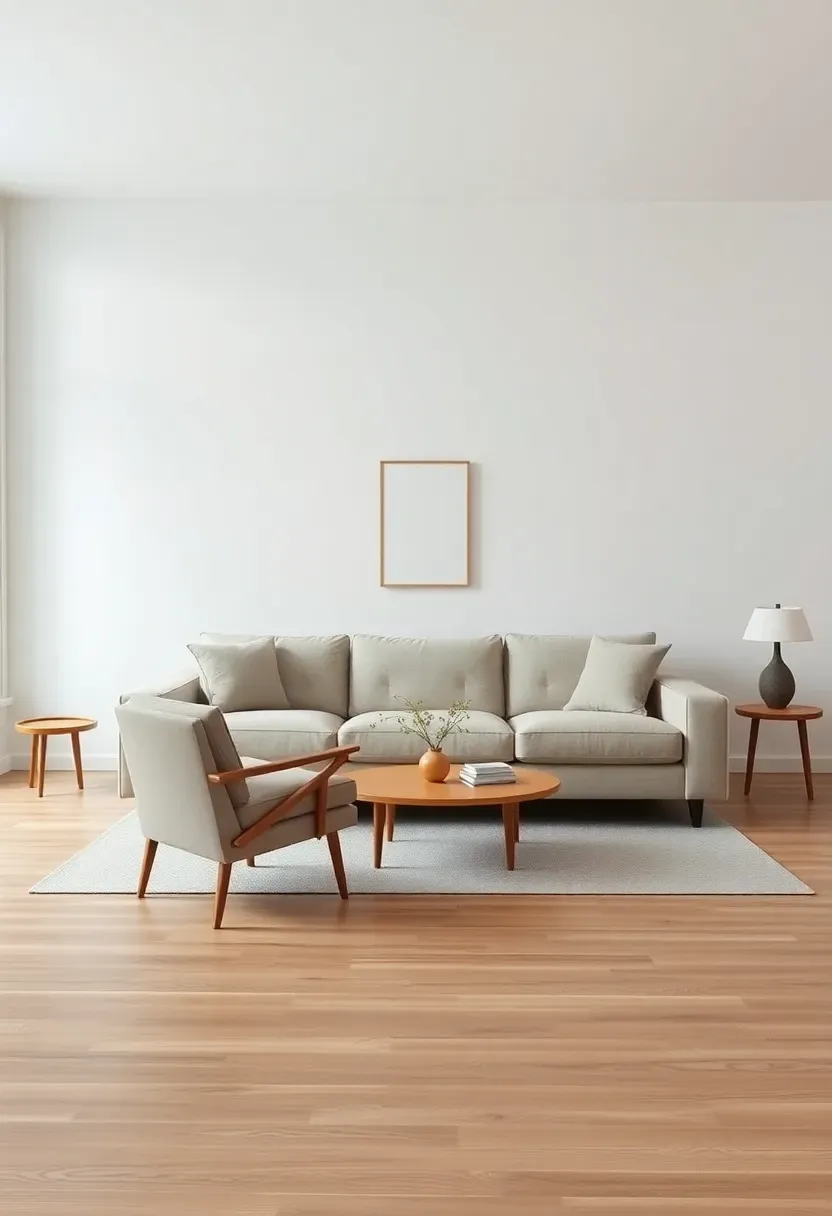
Hyper-realistic wide shot demonstrating negative space in Scandinavian living room. Light oatmeal linen sofa floating in center with generous empty space around all sides, single chair positioned with breathing room, large empty wall area with one small art piece rather than gallery wall, coffee table with only single object. Light oak wood floor expansive and visible. White walls with intentional emptiness. Negative space philosophy mood showing how emptiness around objects creates calm and makes room feel larger.</p>
Scandinavian minimalism is a design philosophy from Nordic countries that combines clean lines with functional beauty and cozy warmth -- and in our experience it is one of the most renter-friendly styles you can adopt. Unlike stark minimalism, this approach embraces comfort, natural materials, and intentional living while eliminating unnecessary clutter. The result is homes that feel both serene and genuinely welcoming, even in a small apartment you do not own.. Hyper-realistic wide shot demonst
Recommended
Items for this idea
Tips
- Leave 18-24 inches of clearance around major furniture pieces for visual breathing room
- Group art together rather than scattering—leave some walls completely empty
- Keep 30-40% of horizontal surfaces clear rather than filling every available flat area
Best for: small apartments and rooms where maximizing perceived space is as important as actual square footage
What this gives you: rooms that feel significantly larger and more serene than their actual dimensions, with visual flow that feels effortless rather than cramped or chaotic.
12. Layered Lighting for Atmosphere and Function
Scandinavian lighting design works in layers: ambient overhead for general illumination, task lighting for specific activities (reading, cooking, working), and accent lighting for highlights and atmosphere. This three-layer approach creates flexible lighting that can shift from bright and energetic to soft and cozy depending on need and mood. Unlike single-source overhead lighting that flattens everything, layered lighting adds depth, dimension, and warmth while ensuring every activity has appropriate illumination.
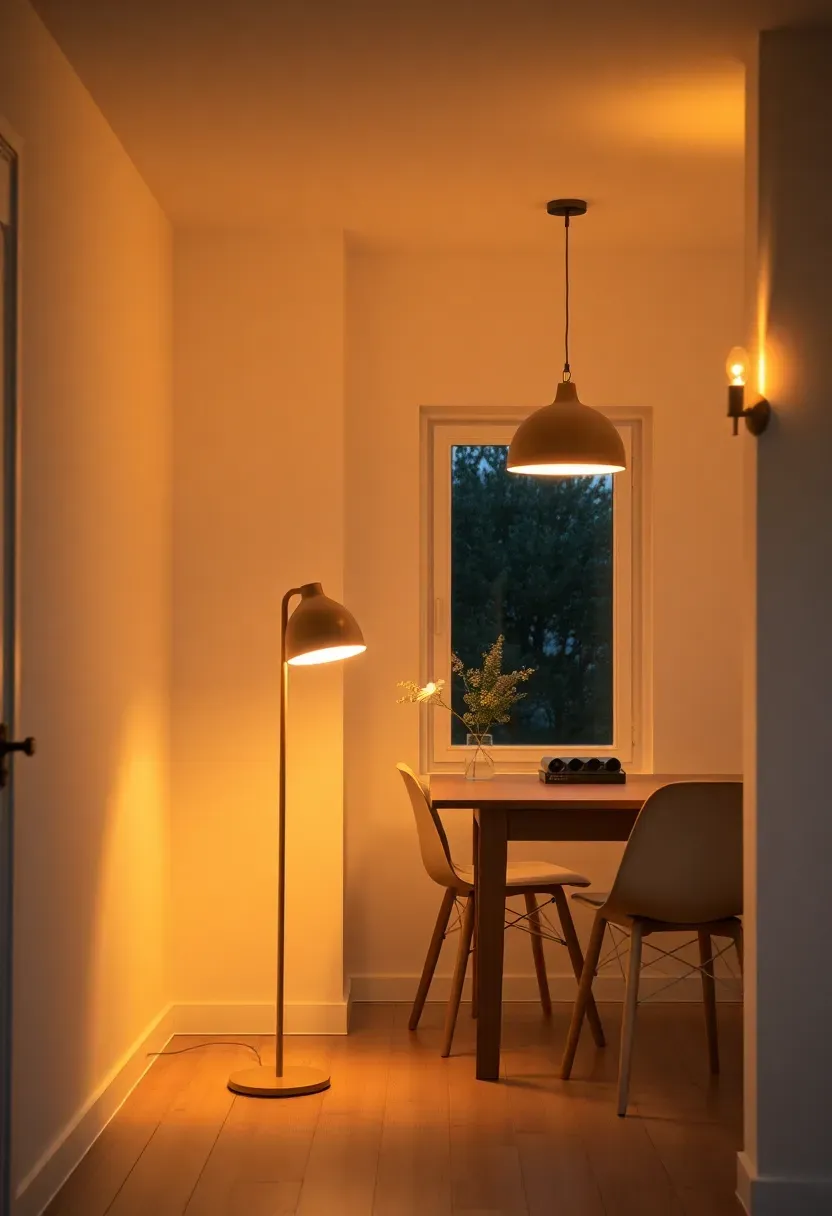
Hyper-realistic view showing layered Scandinavian lighting at dusk. Room with multiple light sources visible: floor lamp in corner providing ambient glow, table lamp on side table for task lighting, pendant light above dining area, wall sconce providing accent. Warm pools of light creating different zones. White walls, light wood floor. Evening ambiance with interior lighting dominant. Layered lighting mood showing depth and dimension from multiple sources at different heights, warm golden tones from each fixture.</p>
Scandinavian minimalism is a design philosophy from Nordic countries that combines clean lines with functional beauty and cozy warmth -- and in our experience it is one of the most renter-friendly styles you can adopt. Unlike stark minimalism, this approach embraces comfort, natural materials, and intentional living while eliminating unnecessary clutter. The result is homes that feel both serene and genuinely welcoming, even in a small apartment you do not own.. Hyper-realistic view showing laye
Recommended
Items for this idea
Tips
- Aim for 3-5 light sources per room, not counting overhead fixtures
- Use dimmers on as many fixtures as possible for maximum flexibility
- Position light at different heights—floor, table, ceiling—to create depth and interest
Best for: creating rooms that transition smoothly from energetic daytime activities to cozy evening relaxation, supporting natural daily rhythms
What this gives you: spaces that feel welcoming and functional at any time of day, with lighting that supports everything from focused work to intimate conversation to relaxation.
13. Textiles as Temperature and Texture Controllers
Textiles serve multiple functions in Scandinavian interiors: adding warmth without adding clutter, introducing texture for visual interest, and providing the tactile comfort that makes minimalist spaces feel welcoming rather than stark. The typical Nordic home uses wool, linen, cotton, and sheepskin in layers—rugs on floors, throws over furniture, cushions on seating, curtains at windows. These textiles soften hard surfaces, absorb sound (making rooms feel acoustically comfortable), and provide seasonal flexibility (layers added in winter, removed in summer).
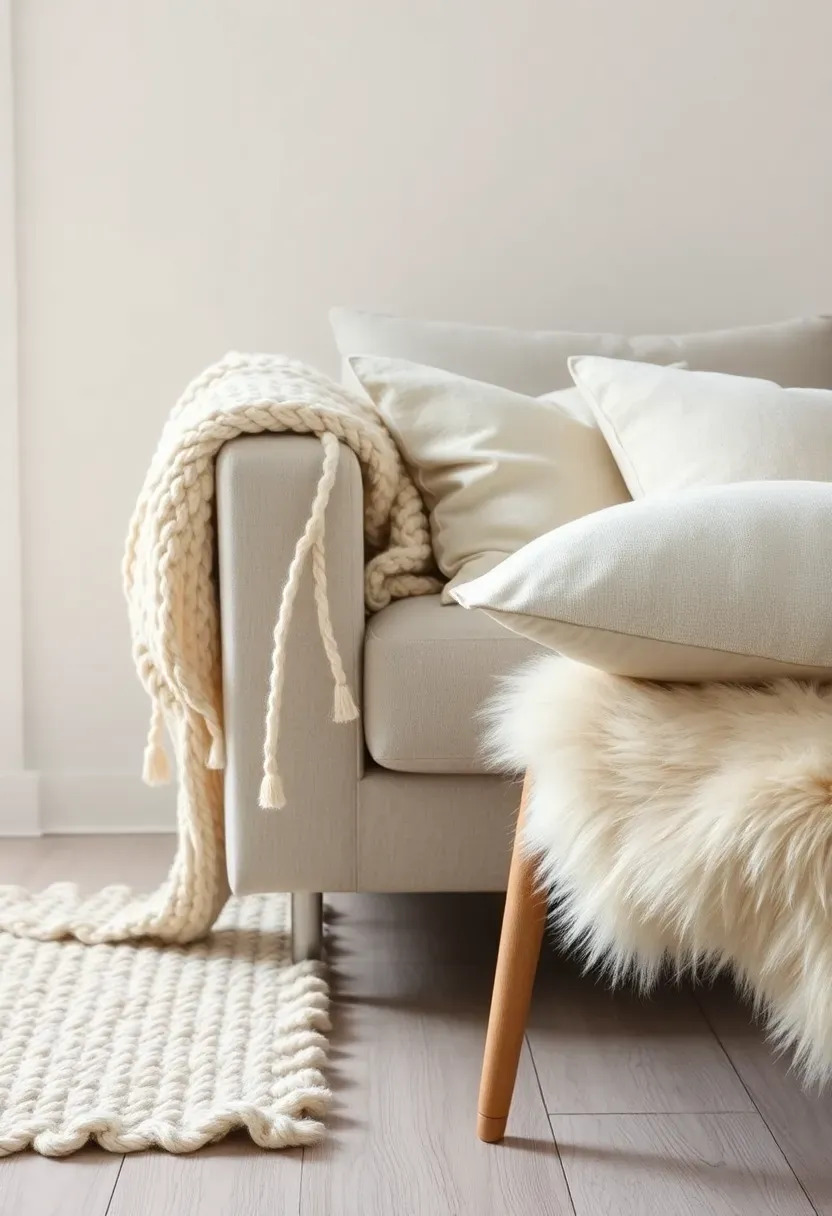
Hyper-realistic detail view of Scandinavian textile layering. Cream wool rug with visible texture, chunky knit throw draped over sofa arm, linen cushions with subtle texture, sheepskin rug on chair seat. White walls and light wood floor as neutral backdrop. Multiple textile layers visible adding warmth without clutter. Materials: wool with natural fiber texture, linen with crisp weave, sheepskin with soft wool pile. Soft natural light enhancing textile textures. Textile philosophy mood showing how natural fibers add warmth and tactile comfort to minimalist spaces.</p>
Scandinavian minimalism is a design philosophy from Nordic countries that combines clean lines with functional beauty and cozy warmth -- and in our experience it is one of the most renter-friendly styles you can adopt. Unlike stark minimalism, this approach embraces comfort, natural materials, and intentional living while eliminating unnecessary clutter. The result is homes that feel both serene and genuinely welcoming, even in a small apartment you do not own.. Hyper-realistic detail view of Sc
Recommended
Items for this idea
Tips
- Invest in one high-quality wool rug per room rather than multiple cheaper synthetic options
- Keep throws accessible in open baskets or draped casually over furniture arms
- Choose neutral textiles that work across seasons—add color through easily changed accessories
Budget/Time: build textile collections gradually, starting with rugs for high-traffic areas and adding throws and cushions as budget allows
What this gives you: rooms that feel warm and welcoming regardless of temperature, with sound absorption that makes spaces feel intimate and comfortable rather than echoey or harsh.
14. Bringing Nature Indoors: Plants and Natural Elements
Plants and natural elements bridge the gap between indoor living and the Nordic love of nature, adding life, color, and organic beauty to minimalist spaces. The typical Scandinavian interior includes greenery—sometimes abundant, sometimes minimal but always present. Large potted plants anchor corners, smaller plants sit on shelves and windowsills, fresh cut flowers appear in vases seasonally. These living elements connect inhabitants to natural cycles (growth, seasons, change) while improving air quality and providing the mental health benefits proven to come from biophilic design.
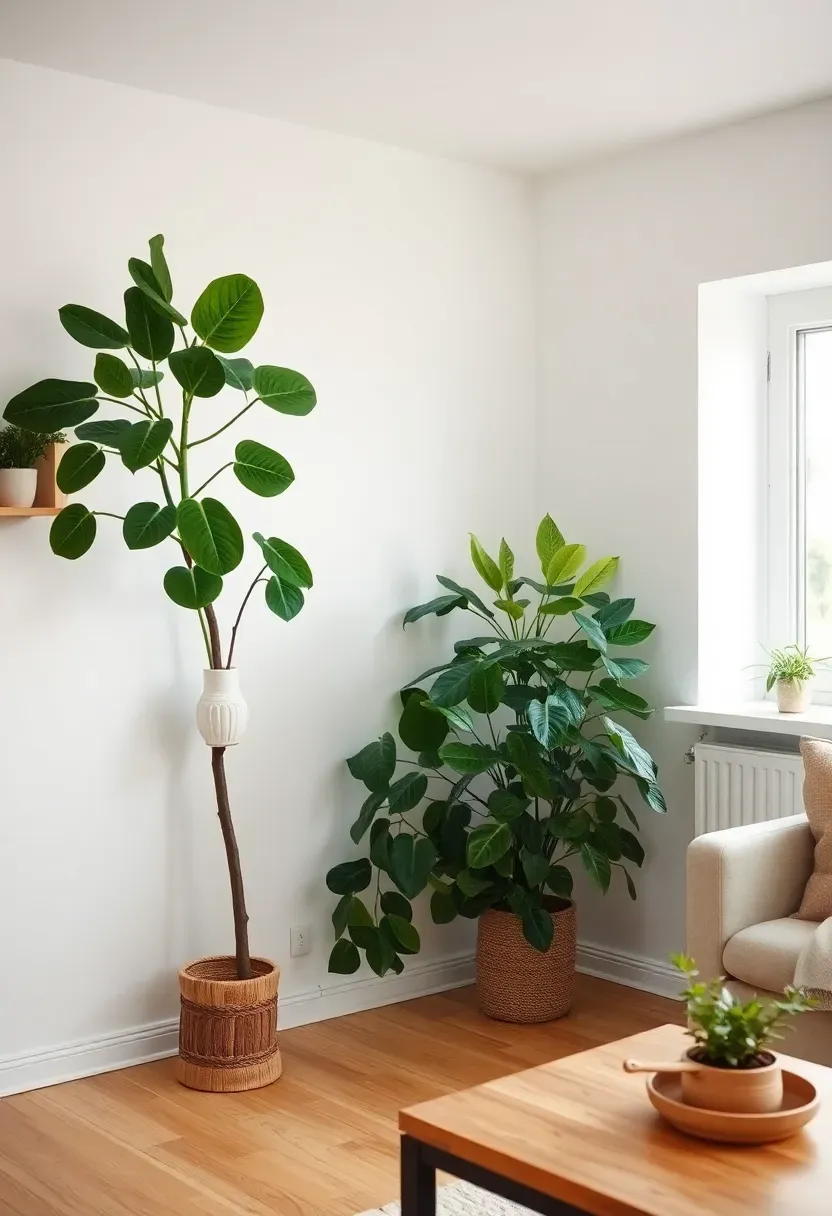
Hyper-realistic view of Scandinavian room with indoor plants. Large fiddle leaf fig tree in corner reaching toward ceiling, small snake plant on shelf, white ceramic vase with single branch, potted succulent on coffee table. White walls, light oak floor, minimal furniture allowing plants to stand out. Greenery providing organic contrast to clean lines. Natural light from window encouraging plant growth. Biophilic design mood showing how plants bring life and organic beauty to minimalist spaces without overwhelming calm aesthetic.</p>
Scandinavian minimalism is a design philosophy from Nordic countries that combines clean lines with functional beauty and cozy warmth -- and in our experience it is one of the most renter-friendly styles you can adopt. Unlike stark minimalism, this approach embraces comfort, natural materials, and intentional living while eliminating unnecessary clutter. The result is homes that feel both serene and genuinely welcoming, even in a small apartment you do not own.. Hyper-realistic view of Scandinav
Recommended
Items for this idea
Tips
- Start with low-maintenance plants if you're new to indoor gardening—snake plants, pothos, ZZ plants
- Use plants as architectural elements—large plants can define zones or hide awkward corners
- Group plants in odd numbers (1, 3, 5) for more natural arrangements
Avoid if: you travel frequently or lack natural light—consider realistic artificial plants or dried botanical arrangements instead
What this gives you: interiors that feel alive and connected to natural rhythms, with documented benefits for mood, air quality, and mental wellbeing.
15. The Iconic Furniture Pieces That Define the Style
Scandinavian design produced some of the most recognizable furniture pieces of the 20th century—designs so successful they've remained continuously in production for decades rather than becoming dated trends. The Egg Chair by Arne Jacobsen, the Wishbone Chair by Hans Wegner, the PH5 lamp by Poulsen Henningsen, the Savoy Vase by Alvar Aalto—these pieces exemplify the marriage of function, beauty, and craftsmanship that defines Nordic design. Their ongoing popularity speaks to their timeless design and exceptional comfort.
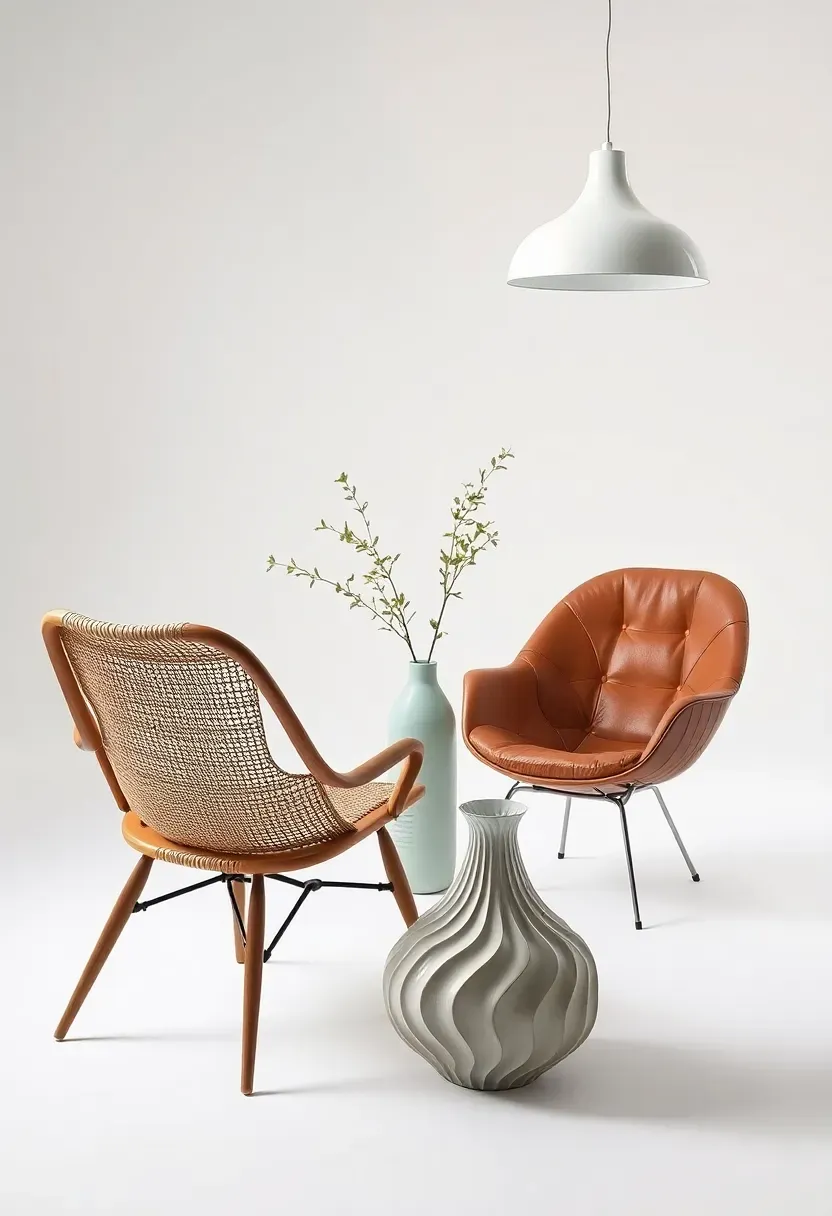
Hyper-realistic still life composition of iconic Scandinavian furniture pieces. Wegner Wishbone chair with visible paper cord weave, Jacobsen Egg chair showing curved shell form, Aalto Savoy vase with organic waves, PH5 pendant lamp hanging above. White background studio setting allowing each piece to shine. Materials: pale oak wood, paper cord, leather upholstery, glass, metal. Soft even lighting highlighting form and craftsmanship. Iconic design mood showing timeless pieces that define Scandinavian furniture excellence, each item photographed with space to appreciate its design.</p>
Scandinavian minimalism is a design philosophy from Nordic countries that combines clean lines with functional beauty and cozy warmth -- and in our experience it is one of the most renter-friendly styles you can adopt. Unlike stark minimalism, this approach embraces comfort, natural materials, and intentional living while eliminating unnecessary clutter. The result is homes that feel both serene and genuinely welcoming, even in a small apartment you do not own.. Hyper-realistic still life compos
Recommended
Items for this idea
Tips
- Start with one statement piece per room rather than trying to furnish entirely with icons
- Consider quality reproductions if original pieces are beyond budget—some licensees produce excellent versions
- Mix iconic pieces with simple contemporary basics to prevent rooms from feeling like design museums
Budget/Time: save gradually for investment pieces rather than filling rooms immediately with cheaper alternatives
What this gives you: furniture that will serve you for decades rather than years, with design that feels fresh rather than dated and comfort that improves with familiarity.
16. Open Floor Plans and Spatial Connectivity
Open floor plans became popular in Nordic design long before they trended globally, driven by both practical and philosophical considerations. Practically, open layouts maximize natural light penetration and make small spaces feel larger. Philosophically, they reflect Scandinavian values of equality and community—no one gets stuck in a separate kitchen while others socialize, and families can occupy shared spaces while pursuing different activities. The result is homes that feel connected, social, and adaptable to modern living patterns.
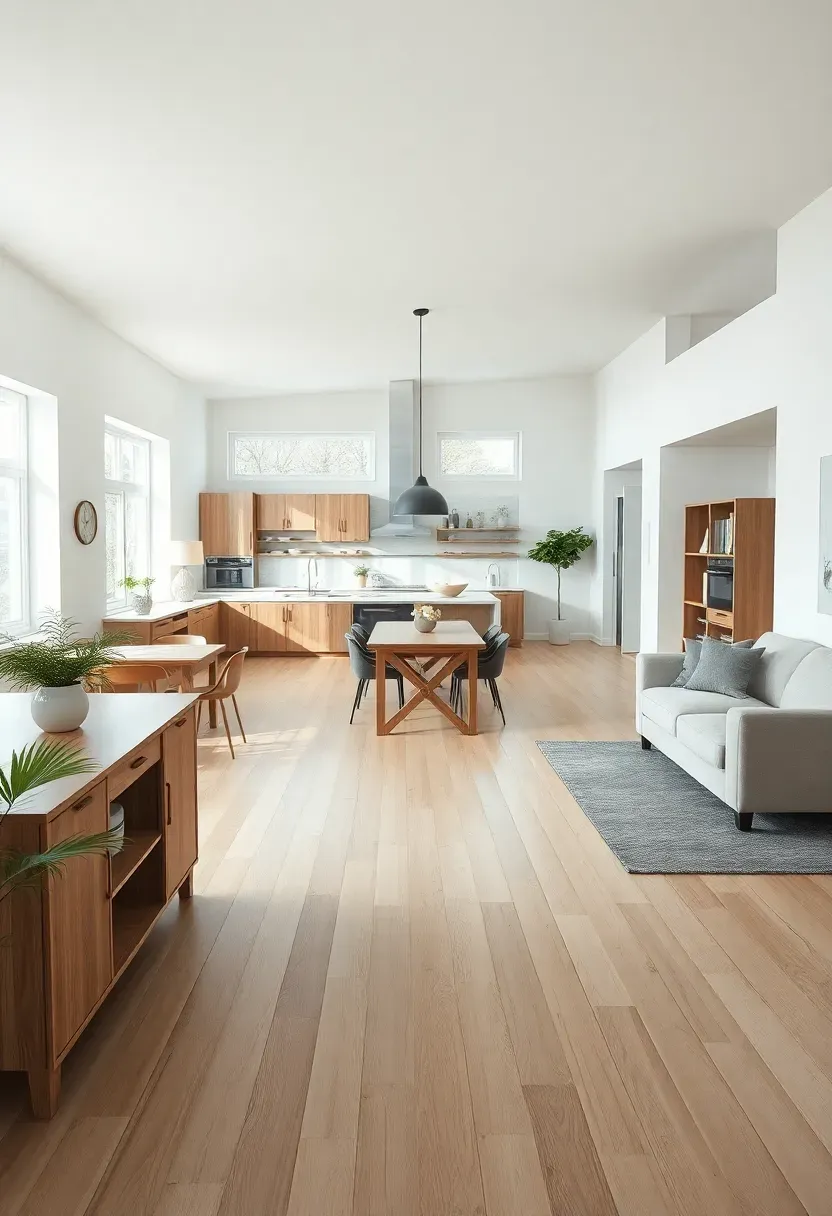
Hyper-realistic wide shot of Scandinavian open floor plan living space. Kitchen, dining, and living areas visible in one continuous flow. Light wood floor running throughout all zones, white walls creating continuity. Kitchen island delineating cooking zone, dining table with chairs, sofa area with rug definition. Natural light flowing from windows across entire open space. Open connectivity mood showing how distinct activities coexist harmoniously without walls, visual flow uninterrupted while subtle zoning created through furniture placement.</p>
Scandinavian minimalism is a design philosophy from Nordic countries that combines clean lines with functional beauty and cozy warmth -- and in our experience it is one of the most renter-friendly styles you can adopt. Unlike stark minimalism, this approach embraces comfort, natural materials, and intentional living while eliminating unnecessary clutter. The result is homes that feel both serene and genuinely welcoming, even in a small apartment you do not own.. Hyper-realistic wide shot of Scan
Recommended
Items for this idea
Successful open Scandinavian spaces maintain definition without walls through strategic furniture placement, lighting zones, and subtle floor changes. Kitchen islands might delineate cooking from dining areas. Sofa placement might create conversation zones separate from work areas. Rugs might define reading nooks within larger living rooms. The approach preserves flow while creating subtle boundaries that support multiple activities happening simultaneously without visual or functional conflict.
Placement note: use furniture backs to create invisible walls rather than blocking pathways—this defines zones while maintaining traffic flow and light access
Tips
- Use area rugs to define zones within open spaces without walls
- Create separation with furniture placement rather than room dividers that block light
- Ensure each zone has its own lighting for flexibility and atmosphere
What this gives you: homes that feel spacious and connected, supporting modern family life where cooking, working, relaxing, and socializing happen in shared rather than separated spaces.
17. Sustainable and Ethical Design Choices
Scandinavian design's emphasis on quality, durability, and timelessness inherently aligns with sustainability—buying better and buying less is the most environmentally friendly approach to furnishing. Nordic design culture has long valued materials that age gracefully, construction that lasts decades, and styles that transcend trends. This isn't just environmental consciousness—it's practical economics and cultural preference for enduring quality over disposable novelty. The result is homes that accumulate less waste and generate less need for replacement.
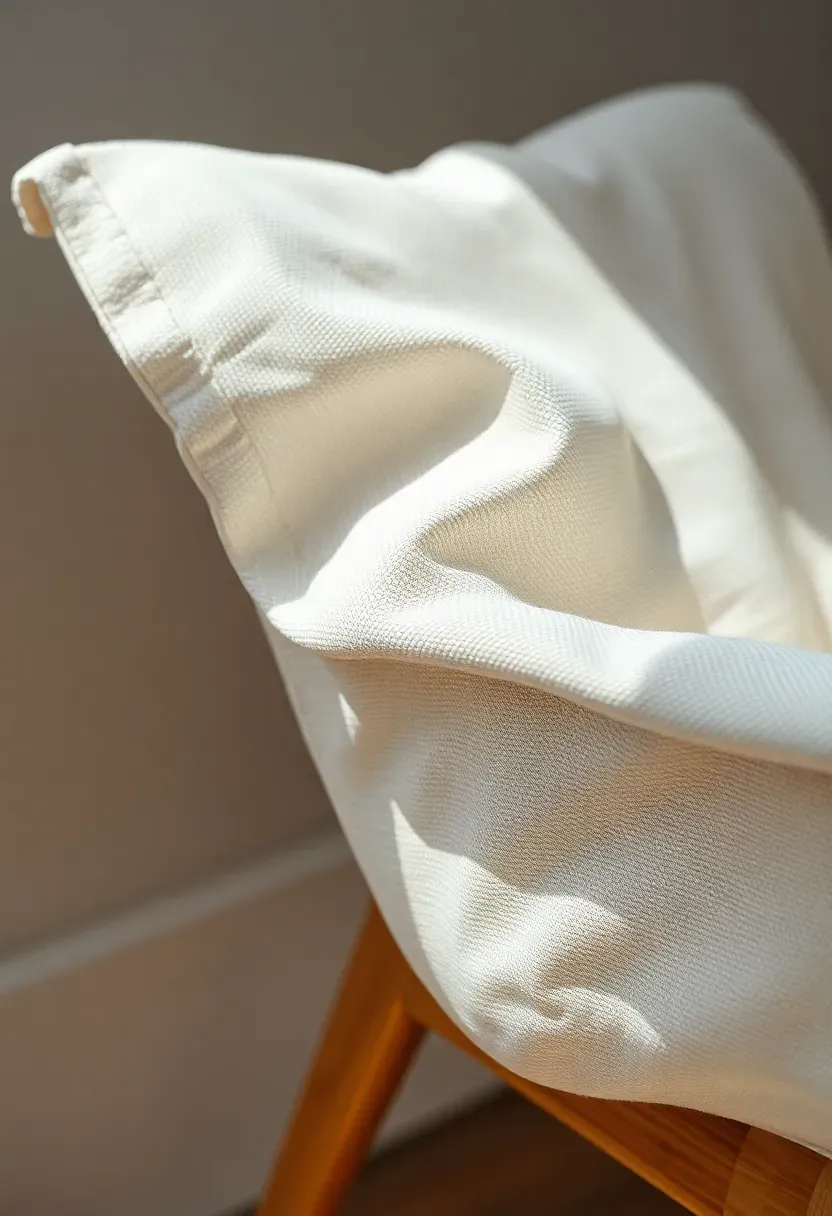
Hyper-realistic detail shot showing sustainable Scandinavian materials and construction. Close-up of FSC-certified oak wood furniture with visible honest joinery, organic linen textile with natural texture, low-VOC white painted surface, vintage mid-century modern chair showing patina of age. Materials demonstrating ethical and sustainable choices—natural fibers, responsibly sourced wood, non-toxic finishes, vintage durability. Soft natural light highlighting material quality and craftsmanship authenticity. Sustainability mood showing how ethical design choices create beautiful enduring interiors.</p>
Scandinavian minimalism is a design philosophy from Nordic countries that combines clean lines with functional beauty and cozy warmth -- and in our experience it is one of the most renter-friendly styles you can adopt. Unlike stark minimalism, this approach embraces comfort, natural materials, and intentional living while eliminating unnecessary clutter. The result is homes that feel both serene and genuinely welcoming, even in a small apartment you do not own.. Hyper-realistic detail shot showi
Recommended
Items for this idea
Contemporary Scandinavian design has evolved to explicitly embrace sustainability through responsibly sourced wood, low-VOC finishes, ethical manufacturing, and design for disassembly (products that can be repaired rather than discarded). Vintage and secondhand furniture have always been acceptable—often preferred—for both environmental and aesthetic reasons. The philosophy supports circular economy principles: keep items in use as long as possible, choose materials that biodegrade or can be recycled, and avoid trends that make spaces feel dated quickly.
Tips
- Check for FSC certification on wood products and certifications like OEKO-TEX on textiles
- Consider vintage first—mid-century modern pieces often outlast new furniture at similar prices
- Research brands' environmental policies and manufacturing practices before purchasing
Best for: environmentally conscious consumers who want interiors that align with values without sacrificing aesthetics or quality
What this gives you: homes that feel good ethically as well as aesthetically, with furniture and materials chosen for longevity and responsible production rather than short-term trends.
18. Balancing Modern and Vintage Elements
Authentic Scandinavian interiors rarely feel uniformly new or old—they balance contemporary pieces with vintage finds, creating spaces that feel collected rather than showroom-perfect. This mix prevents rooms from feeling sterile or staged, adding character and storytelling through objects with history. A mid-century chair might sit beside a contemporary sofa. A vintage rug might anchor a room with modern lighting. An inherited artwork might hang above a new console table. This tension between old and new creates depth and interest.
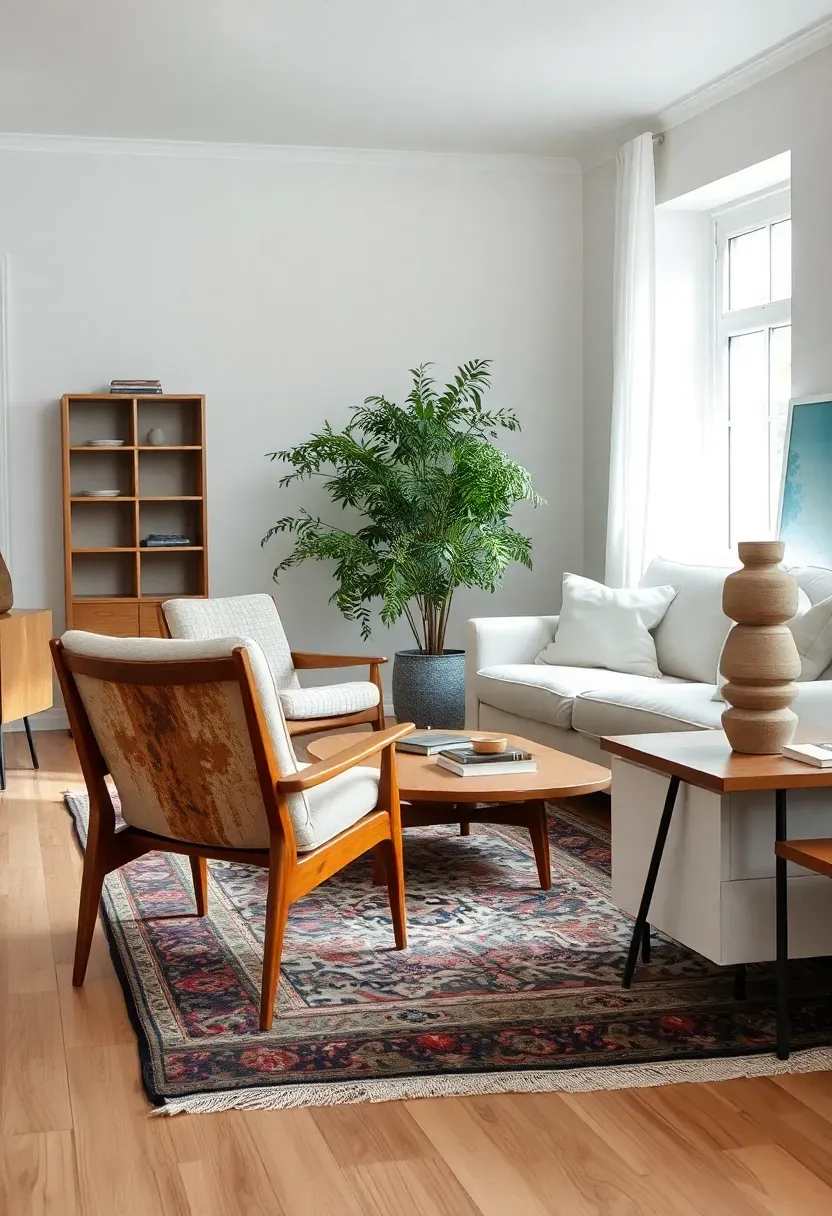
Hyper-realistic view of Scandinavian room mixing vintage and modern elements. 1950s Danish teak chair with patina alongside contemporary white linen sofa, vintage Persian rug with muted colors under modern coffee table, mid-century ceramic lamp on new side table. White walls, light oak floor. Cohesion through consistent light wood tones and neutral palette. Mix of eras visible but harmonious. Soft natural light showing how old and new pieces complement each other. Vintage-modern balance mood showing authentic collected feel rather than showroom perfection.</p>
Scandinavian minimalism is a design philosophy from Nordic countries that combines clean lines with functional beauty and cozy warmth -- and in our experience it is one of the most renter-friendly styles you can adopt. Unlike stark minimalism, this approach embraces comfort, natural materials, and intentional living while eliminating unnecessary clutter. The result is homes that feel both serene and genuinely welcoming, even in a small apartment you do not own.. Hyper-realistic view of Scandinav
Recommended
Items for this idea
The key is finding unifying elements that let diverse pieces cohere—similar wood tones, consistent color palettes, shared design philosophies. A 1950s Danish chair and 2020s Swedish sofa might look perfectly at home together if they share light oak frames, neutral upholstery, and clean lines. The mix creates rooms that feel personal and layered rather than decorated to match, with pieces that reflect different periods of your life and different aspects of your taste.
Tips
- Unify mixed pieces through consistent materials (wood tones, metals) or colors (neutrals with similar undertones)
- Don't worry about matching periods—Scandinavian design from different decades shares DNA that makes pieces work together
- Use vintage as statement pieces and contemporary for larger furniture—it's often more budget-friendly
Budget/Time: vintage hunting takes time but yields unique character at often better prices than new furniture
What this gives you: rooms that feel personal and layered rather than generic or showroom-perfect, with pieces that tell stories and reflect your unique taste and history.
19. Adapting Scandinavian Design to Different Climates
While Scandinavian design emerged from specific geographic conditions, its principles translate remarkably well to different climates and contexts. The core elements—light colors, natural materials, functional furniture, clutter-free spaces—work universally because they address fundamental human needs for calm, clarity, and comfort. Adaptation happens in material choices (heavier woods for colder climates, lighter materials for warmer ones), layering (more textiles in cold regions, fewer in hot), and light management (maximizing natural light everywhere, but controlling heat gain in sunny climates).
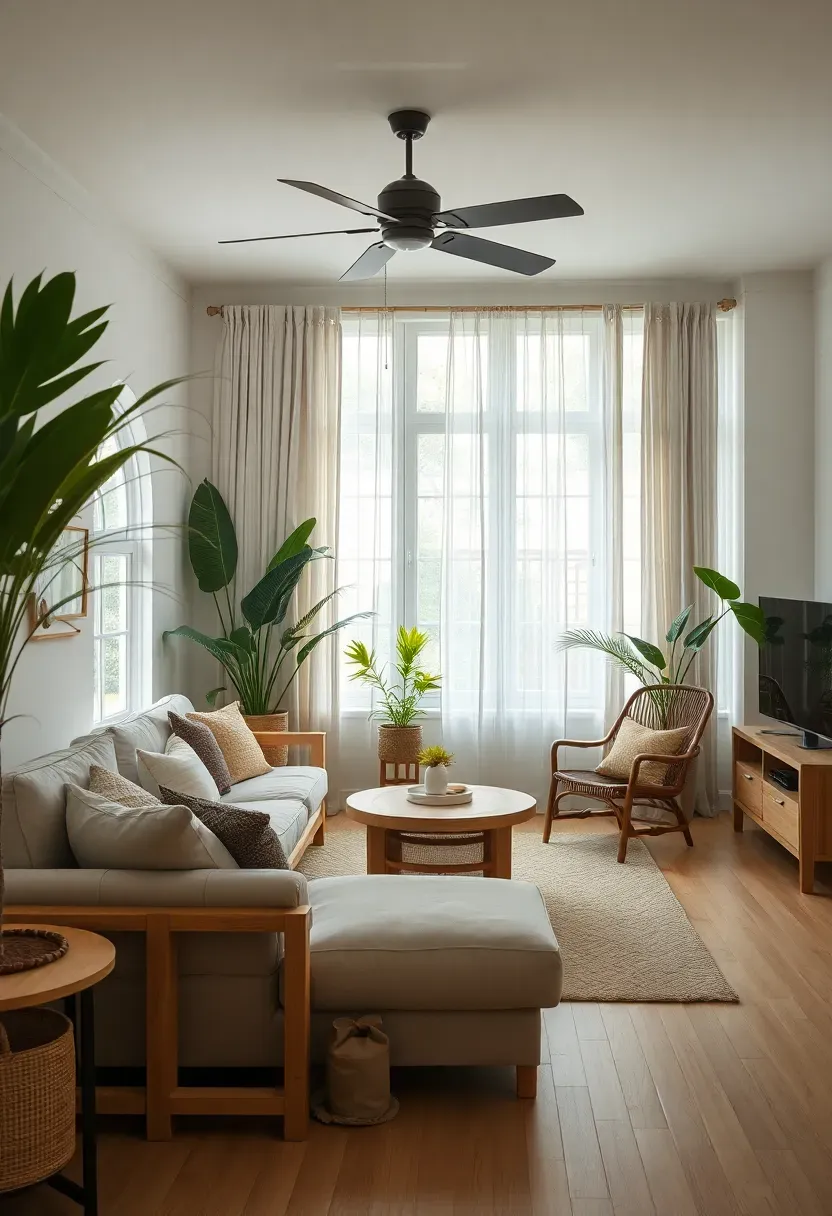
Hyper-realistic view of warm-climate Scandinavian adaptation. Light oak furniture, linen and cotton textiles instead of heavy wool, bamboo accents alongside wood, large windows with linen sheer curtains for airflow and shade, ceiling fan visible. White walls, light wood floor, tropical plant elements. Bright natural light controlled but welcomed. Warm climate adaptation mood showing how Scandinavian principles translate—light colors, natural materials, minimal clutter maintained while materials chosen for climate appropriateness.</p>
Scandinavian minimalism is a design philosophy from Nordic countries that combines clean lines with functional beauty and cozy warmth -- and in our experience it is one of the most renter-friendly styles you can adopt. Unlike stark minimalism, this approach embraces comfort, natural materials, and intentional living while eliminating unnecessary clutter. The result is homes that feel both serene and genuinely welcoming, even in a small apartment you do not own.. Hyper-realistic view of warm-clim
Recommended
Items for this idea
In hot climates, the approach might emphasize lighter materials (bamboo, rattan alongside oak), lighter textiles (linen, cotton instead of heavy wool), and strategies for cross-ventilation and shade. In cold climates, layering increases (more rugs, heavier curtains, additional textiles). What doesn't change is the underlying philosophy: quality materials, functional beauty, intentional clutter-free living, and spaces that support rather than stress. The aesthetic travels well because it's based on universal human responses to light, space, and material.
Tips
- In warm climates, prioritize linen and cotton textiles, lighter wood tones, and maximize airflow
- In cold climates, add layering through wool textiles, heavier curtains, and area rugs on hard floors
- Keep the core elements—light colors, natural materials, functional furniture—regardless of climate
Best for: applying Scandinavian principles in global locations where direct replication of Nordic interiors might feel climatically inappropriate
What this gives you: Scandinavian-inspired interiors that feel appropriate to your location while maintaining the core elements of calm, functionality, and beauty.
20. Common Misconceptions About Nordic Minimalism
Scandinavian minimalism suffers from several misconceptions that prevent people from embracing its benefits. The first: that it requires white walls—while white is common, soft grays, warm creams, and pale naturals work equally well. The second: that it means owning almost nothing—the philosophy isn't about least possible possessions but most meaningful possessions. The third: that it's cold or sterile—properly executed, Nordic interiors are exceptionally warm and cozy through textiles, lighting, and materials. The fourth: that it's expensive—while investment pieces cost more, the buy-less-buy-better approach often costs less long-term than constant replacement.
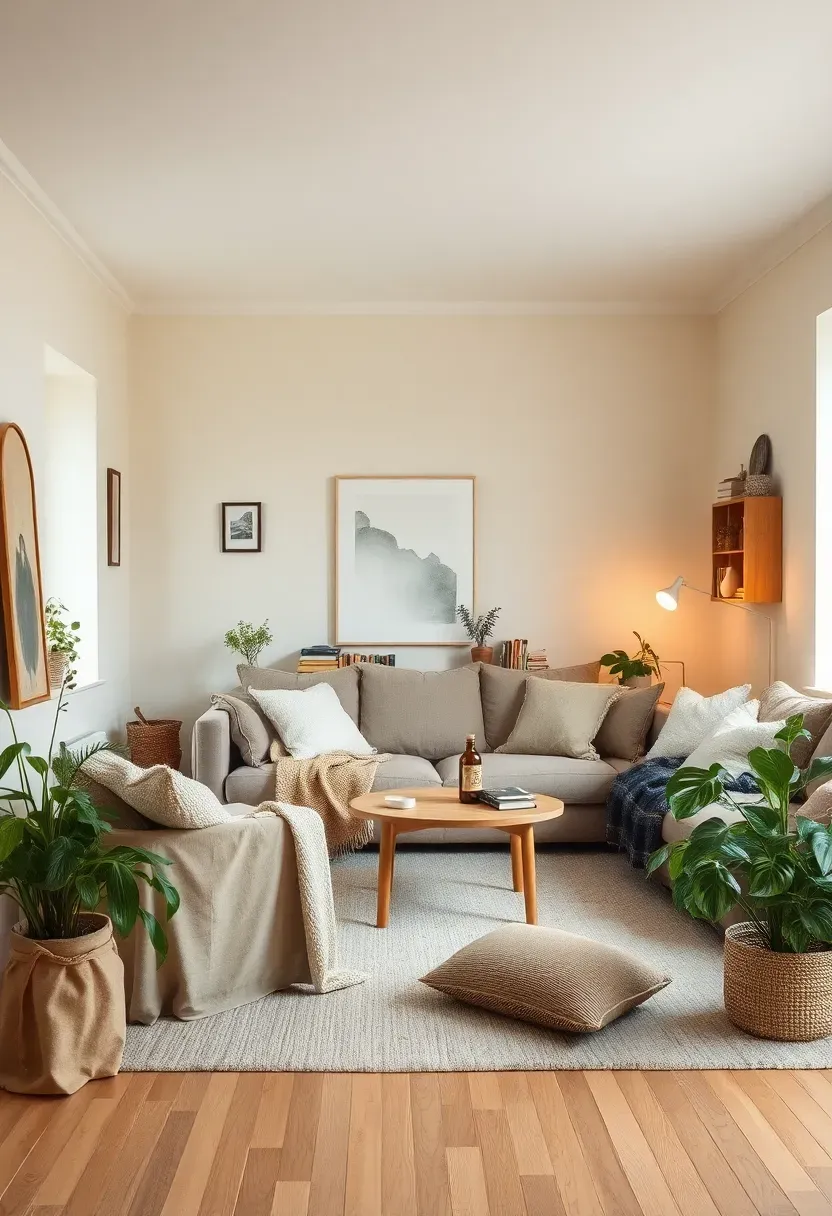
Hyper-realistic view debunking Scandinavian minimalism misconceptions. Room showing warmth and personal touches: warm cream walls instead of stark white, personal objects and books visible, cozy textiles creating comfort, mix of investment and affordable pieces. Space feels lived-in and welcoming, not sterile. Light oak floor, warm ambient lighting, plants adding life. Misconception-busting mood showing authentic Scandinavian home that's warm, personal, and accessible rather than cold or elitist.</p>
Scandinavian minimalism is a design philosophy from Nordic countries that combines clean lines with functional beauty and cozy warmth -- and in our experience it is one of the most renter-friendly styles you can adopt. Unlike stark minimalism, this approach embraces comfort, natural materials, and intentional living while eliminating unnecessary clutter. The result is homes that feel both serene and genuinely welcoming, even in a small apartment you do not own.. Hyper-realistic view debunking Sc
Recommended
Items for this idea
Another misconception is that Scandinavian minimalism is all-or-nothing. In reality, the philosophy is highly flexible and can be applied selectively. You might embrace the light colors and natural materials while keeping more decorative objects. You might prioritize quality furniture while maintaining eclectic collections. The core principles—quality over quantity, functional beauty, intentional living—can be adopted in degrees without requiring complete aesthetic conversion. The goal isn't stylistic purity but rather homes that work better for how you actually live.
Tips
- Start with elements that resonate—light colors, better furniture, decluttering—and add more principles gradually
- Don't feel pressure to match Instagram-perfect Scandinavian interiors—real Nordic homes are personal and varied
- Focus on how spaces feel and function rather than whether they look authentically Scandinavian
Avoid if: you genuinely love maximalist, highly decorative aesthetics—Scandinavian minimalism can be personalized but has limits for those who thrive on visual abundance
What this gives you: permission to adapt the philosophy to your life rather than rigidly conforming to stereotypes, making the approach accessible regardless of budget, location, or personal taste.
21. Starting Your Scandinavian Minimalist Journey
Beginning a Scandinavian minimalist journey doesn't require overnight transformation or complete redecoration. The most sustainable approach is gradual integration: start with one room, or even one aspect of a room (decluttering, lighting, textiles), and expand from there as you discover what works for your space and lifestyle. The goal isn't achieving a specific look but rather creating homes that function better, feel calmer, and support how you actually want to live. Small changes compound into significant transformation.
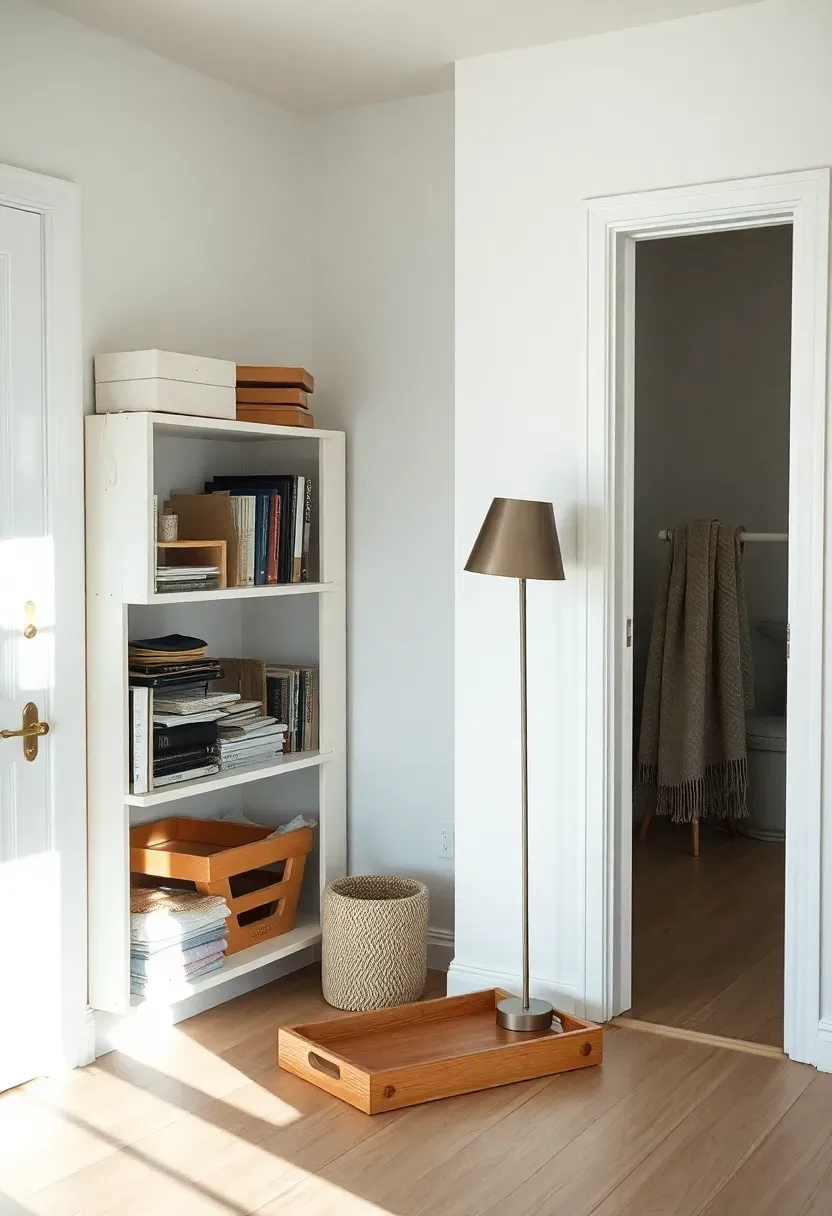
Hyper-realistic view of beginning Scandinavian minimalist journey showing gradual transformation. Room partially transformed: one decluttered shelf visible with intentional curation, one area with improved lighting showing new floor lamp, corner with added wool throw and wood tray introducing natural materials. Other areas still in progress showing this is journey not destination. White walls, light oak floor. Natural light streaming in. Journey-starting mood showing realistic beginning phase—imperfect but progressing, demonstrating sustainable gradual approach rather than overnight complete makeover.</p>
Scandinavian minimalism is a design philosophy from Nordic countries that combines clean lines with functional beauty and cozy warmth -- and in our experience it is one of the most renter-friendly styles you can adopt. Unlike stark minimalism, this approach embraces comfort, natural materials, and intentional living while eliminating unnecessary clutter. The result is homes that feel both serene and genuinely welcoming, even in a small apartment you do not own.. Hyper-realistic view of beginning
Recommended
Items for this idea
Practical starting points include: editing one room (removing anything that doesn't serve a purpose or bring joy), improving lighting (adding warm lamps, using dimmers, switching to warm bulbs), introducing natural materials (wool throw, wood tray, ceramic vase), or creating one perfectly organized space (a shelf, a drawer, a corner) that demonstrates the principle of intentional surroundings. Each small success builds momentum and clarity about what to tackle next. The journey is personal—there's no single correct destination.
Tips
- Start with the room where you spend the most time—typically living room or bedroom
- Focus on one change at a time—declutter first, then improve lighting, then add textiles, then upgrade furniture
- Document progress with photos—seeing transformation helps maintain motivation and perspective
Budget/Time: this approach works with any budget—focus on decluttering and arrangement (free), then save for gradual upgrades as budget allows
What this gives you: a sustainable path to calmer, more functional home that feels personally yours rather than copied, with changes that compound into meaningful transformation.
Scandinavian minimalism offers more than just an aesthetic—it's a thoughtful approach to creating homes that support wellbeing, functionality, and beauty simultaneously. By embracing core principles like lagom (not too much, not too little), hygge (cozy contentment), and intentional living, anyone can create spaces that feel calmer, work better, and age gracefully regardless of location or budget. The philosophy isn't about rigid rules or achieving Instagram-perfect interiors—it's about making room for what matters by eliminating what doesn't, surrounding yourself with quality rather than quantity, and designing homes that nurture rather than stress. Whether you're drawn to the clean lines, natural materials, or simply the promise of more serene surroundings, Scandinavian minimalism provides a flexible framework for creating interiors that feel both timeless and deeply personal.