Tiny House Living: 25 Essential Tips & Design Ideas
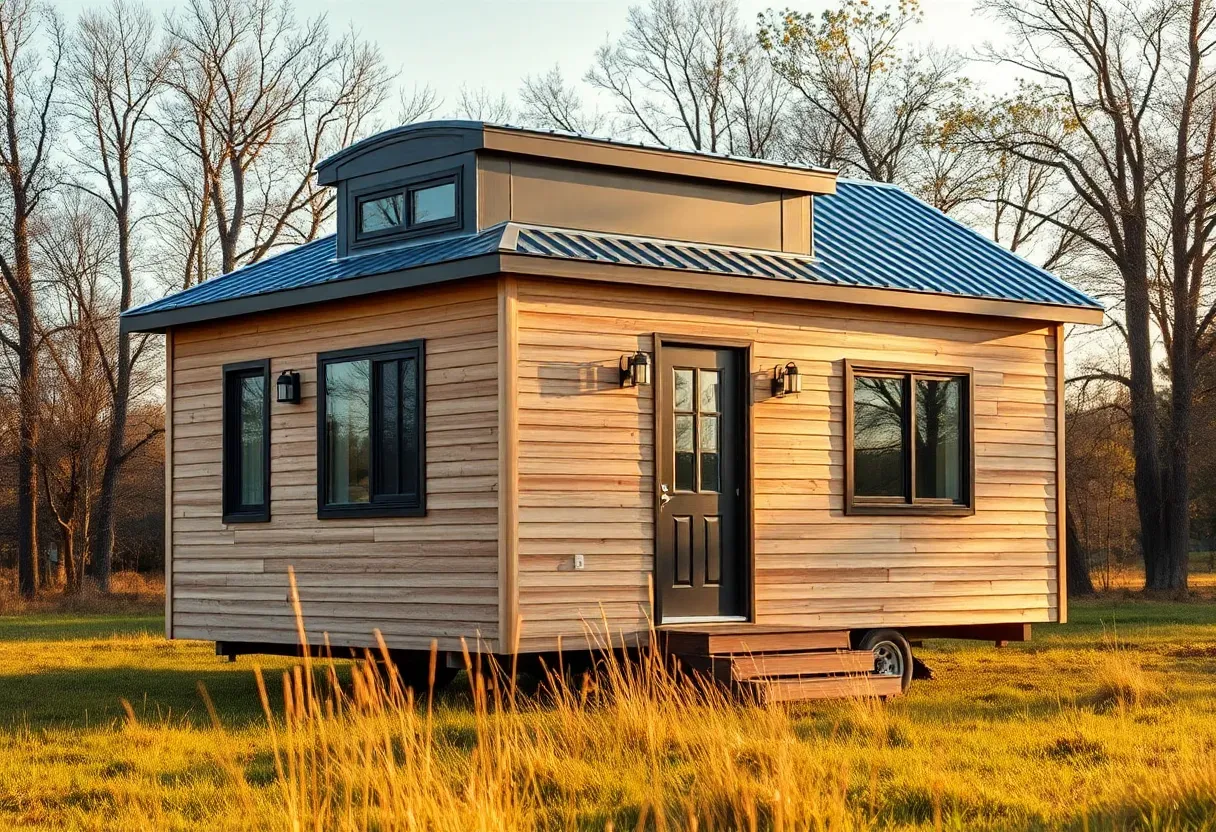
Tiny house living tips come down to one core idea: every square foot must earn its place. Whether you're downsizing from a traditional home, renting a compact space, or building your first tiny house, the 25 principles in this guide will help you create a layout that feels spacious, functional, and genuinely comfortable — not cramped.
Small space living requires thoughtful planning, multifunctional furniture, and clever storage solutions that serve daily needs without sacrificing comfort or style. The key lies in vertical thinking, dual-purpose design, and eliminating anything that doesn't add genuine value to your everyday experience.
From open floor plans and loft bedrooms to hidden laundry and fold-down desks, these tiny house design ideas cover every room and lifestyle need — with practical tips you can apply whether you're building from scratch or adapting a rental.
Quick FAQ
What is the average size of a tiny house?
Most tiny houses range from 100 to 400 square feet, with the typical sweet spot around 200 square feet for comfortable full-time living. Trailers often max at 8.5 feet wide by 30 feet long to remain road-legal without special permits.
How much does it cost to build or buy a tiny house?
DIY builds typically cost $20,000-$60,000 depending on materials and finishes, while professional builds range from $50,000-$120,000. Land costs, utilities, and permits add additional expenses that vary significantly by location.
Can you legally live in a tiny house anywhere?
Zoning laws vary widely—some areas embrace tiny houses, others prohibit them under minimum square footage requirements. RV parks, tiny house communities, and rural property with flexible zoning are common options. Always check local regulations before committing.
How do tiny houses handle water, electricity, and waste?
Options include full grid connections (like traditional homes), off-grid systems (solar panels, composting toilets, water tanks), or hybrid setups. Most tiny houses on wheels use RV-style hookups for flexibility, while stationary homes often connect to standard utilities.
What should I look for in tiny house layout and design?
Prioritize vertical storage, multi-functional furniture, natural light, and a floor plan that fits your specific daily routines. Lofts work for some but stairs are safer long-term. Consider seasonal comfort with proper insulation and ventilation regardless of climate.
Is tiny house living actually cheaper than traditional housing?
Yes, dramatically—lower utility bills ($20-80/month vs $150-400), minimal maintenance, reduced consumption, and often no mortgage. However, land costs, parking fees, and potential legal hurdles can offset some savings. The real financial benefit comes from lifestyle changes requiring less income overall.
As an Amazon Associate I earn from qualifying purchases.
Table of Contents
- 1. Open Floor Plan with Multi-Zone Living
- 2. Loft Bedroom with Proper Ventilation
- 3. Staircase Storage Solutions
- 4. Murphy Bed with Integrated Sofa
- 5. Kitchen Peninsula with Eating Bar
- 6. Compact Bathroom with Wet Shower
- 7. Vertical Wall Storage Systems
- 8. Fold-Down Work Surface
- 9. Hidden Laundry Solutions
- 10. Dual-Purpose Dining Table
- 11. Natural Light Maximization
- 12. Outdoor Living Extension
- 13. Built-In Seating with Storage
- 14. Closet Organized for Capsule Wardrobe
- 15. Kitchen Efficiency Triangle
- 16. Sliding Doors to Save Space
- 17. Heating and Cooling Essentials
- 18. Electronics and Charging Station
- 19. Pet-Friendly Design Features
- 20. Privacy Solutions in Open Spaces
- 21. Future-Proofing Your Design
- 22. Essential Safety Features
- 23. Mental Health Considerations
- 24. Community Integration
- 25. Transition Tips for Downsizing
1. Open Floor Plan: The Foundation of Tiny House Living
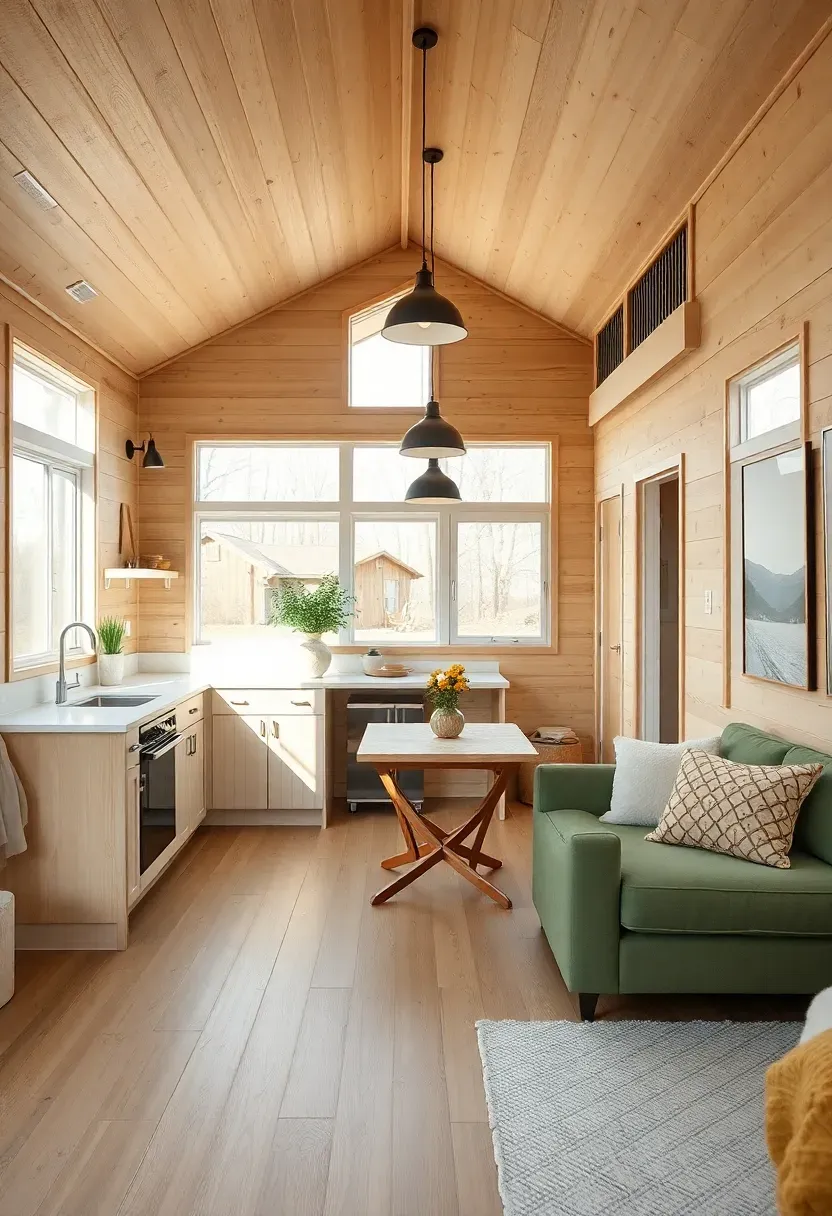
Tiny house living thrives on open floor plans that eliminate wasted circulation space while creating distinct zones through furniture placement and subtle visual cues rather than walls. The kitchen, living, and dining areas flow together but maintain separate functions through strategic positioning—a sofa back creates a boundary, a rug defines the living space, pendant lights mark the dining area. This approach maximizes usable square footage while preventing the cramped feeling that enclosed rooms create in small homes.
Tips
- Use furniture backs and rugs to create invisible boundaries between zones
- Position frequently-used items at the perimeter to keep central circulation clear
- Avoid placing tall furniture that blocks sightlines or light flow between zones
Best for: tiny houses under 200 square feet where every inch must serve multiple purposes throughout the day
What this gives you: eliminates hallways and wasted space while maintaining functional separation between daily activities
2. Loft Bedroom with Proper Ventilation
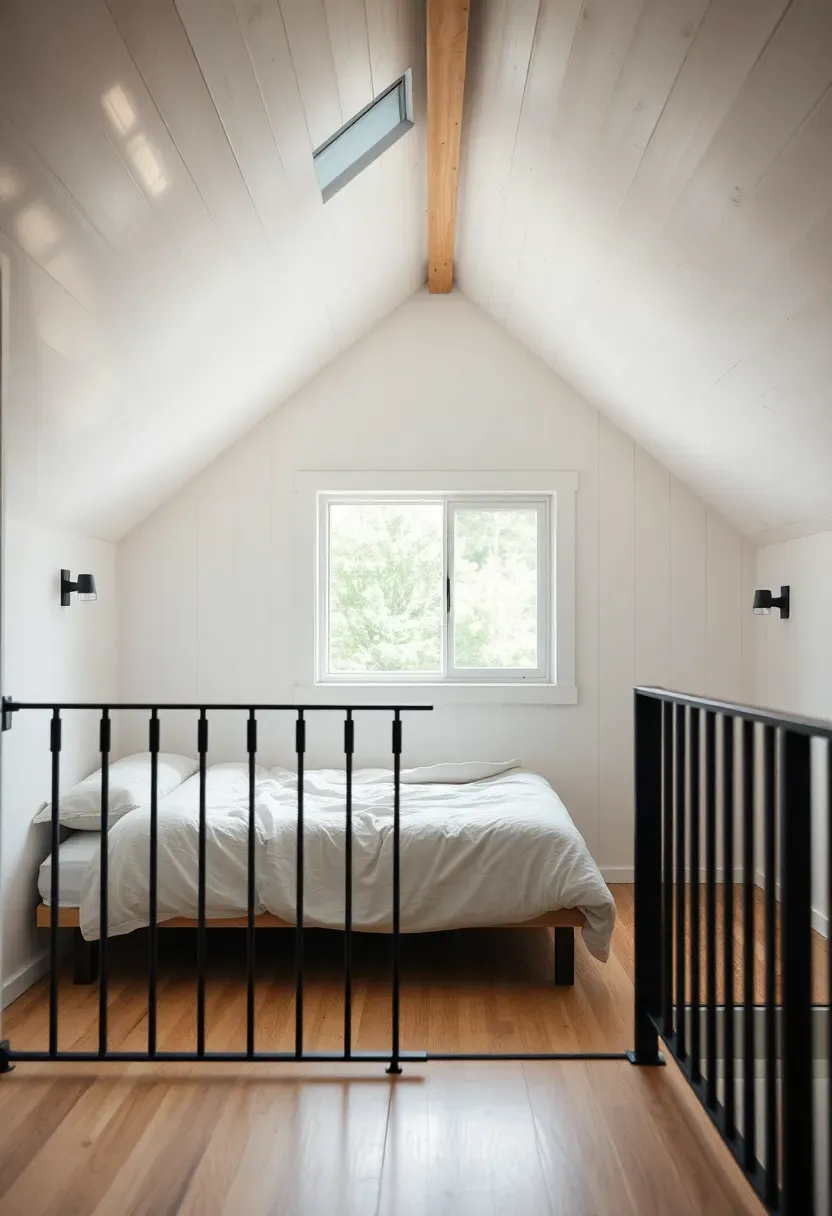
Loft spaces capture otherwise unused vertical volume in tiny houses, creating dedicated sleeping quarters that preserve main-floor living space during daytime hours. However, successful loft design requires careful attention to headroom, access safety, temperature control, and ventilation. The loft should feel like a peaceful retreat rather than an afterthought—adequate windows for both light and airflow, proper insulation to prevent heat buildup or loss, and guard rails that provide safety without sacrificing openness. Many tiny house dwellers find they prefer main-floor sleeping long-term, so consider convertible options if possible.
Recommended
Items for this idea
Tips
- Ensure at least 3 feet of sitting headroom at the highest point for comfortable dressing
- Install operable windows or skylights on opposite walls for cross-ventilation
- Consider stairs over ladders if you plan to use the loft long-term
Avoid if: you have mobility issues, plan to age in place, or experience claustrophobia in confined elevated spaces
What this gives you: frees up valuable main-floor space for daytime living while creating a cozy sleeping nook
3. Staircase Storage Solutions
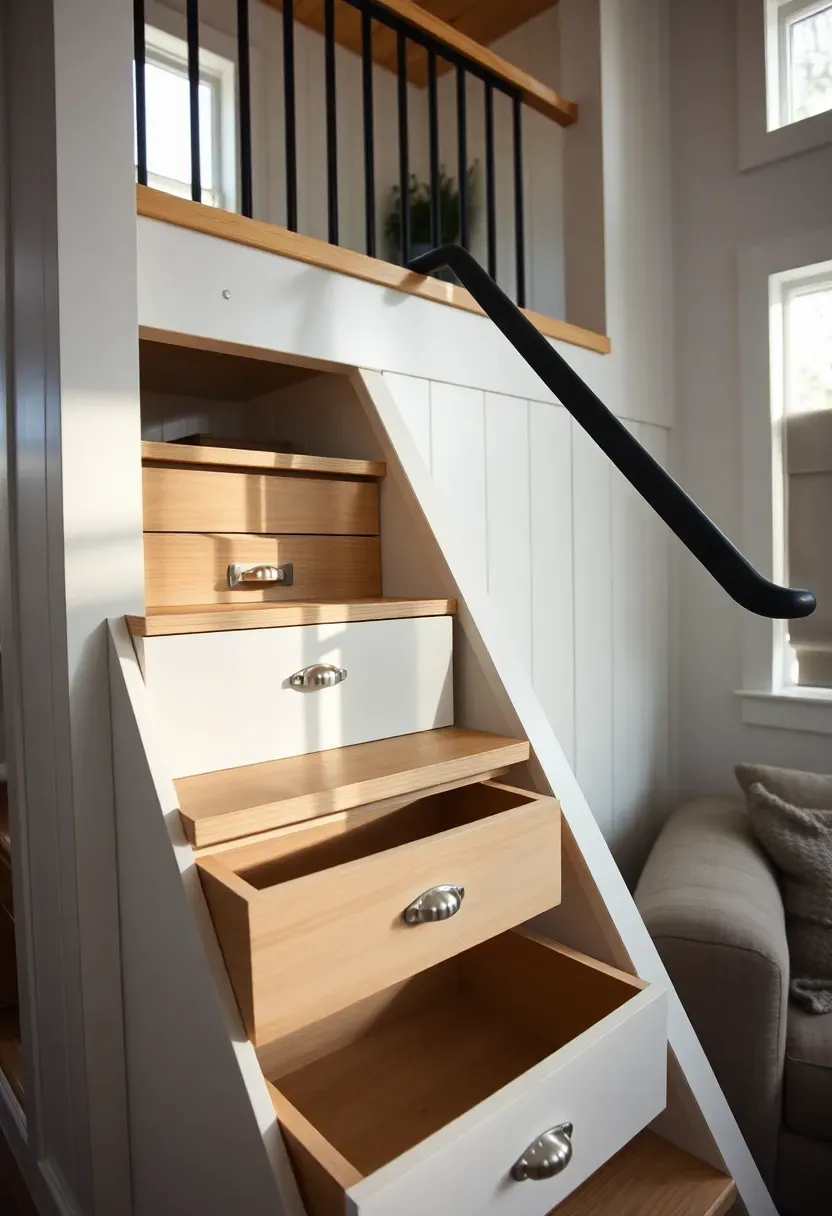
In tiny houses where stairs replace ladders for loft access, each step becomes an opportunity for substantial storage that dramatically increases overall home capacity. Stair storage can take many forms—drawers that pull out from the step, hinged tread that lifts to reveal compartments, or cabinets built into the stair stringer. This approach turns circulation space into functional storage for clothing, kitchen items, or seasonal gear without consuming additional square footage. The key is designing access that doesn't require moving anything to open a step and ensuring the structural integrity of the stairs isn't compromised by storage modifications.
Tips
- Use soft-close slides on heavy drawers to prevent damage from frequent use
- Label stair contents or assign each step a category for intuitive organization
- Include at least one deep storage compartment for bulky items like bedding or luggage
Budget/Time: adds $800-2,500 and 1-2 weeks to build compared to basic ladder access, but gains 20-40 cubic feet of storage
What this gives you: transforms vertical circulation space into one of the largest storage zones in your tiny house
4. Murphy Bed with Integrated Sofa
Murphy beds have evolved dramatically from vintage wall-mounted designs—modern versions integrate seamlessly with cabinetry and often include sofas, desks, or tables that fold independently of the bed mechanism. For tiny house living, this creates true day-night versatility: a comfortable living room by day transforms into a private bedroom by night without sacrificing either function. Quality hardware ensures smooth operation while preventing sagging or alignment issues over time. The key is designing surrounding cabinetry to serve the room whether the bed is open or closed—lighting, electrical outlets, and circulation must work in both configurations.
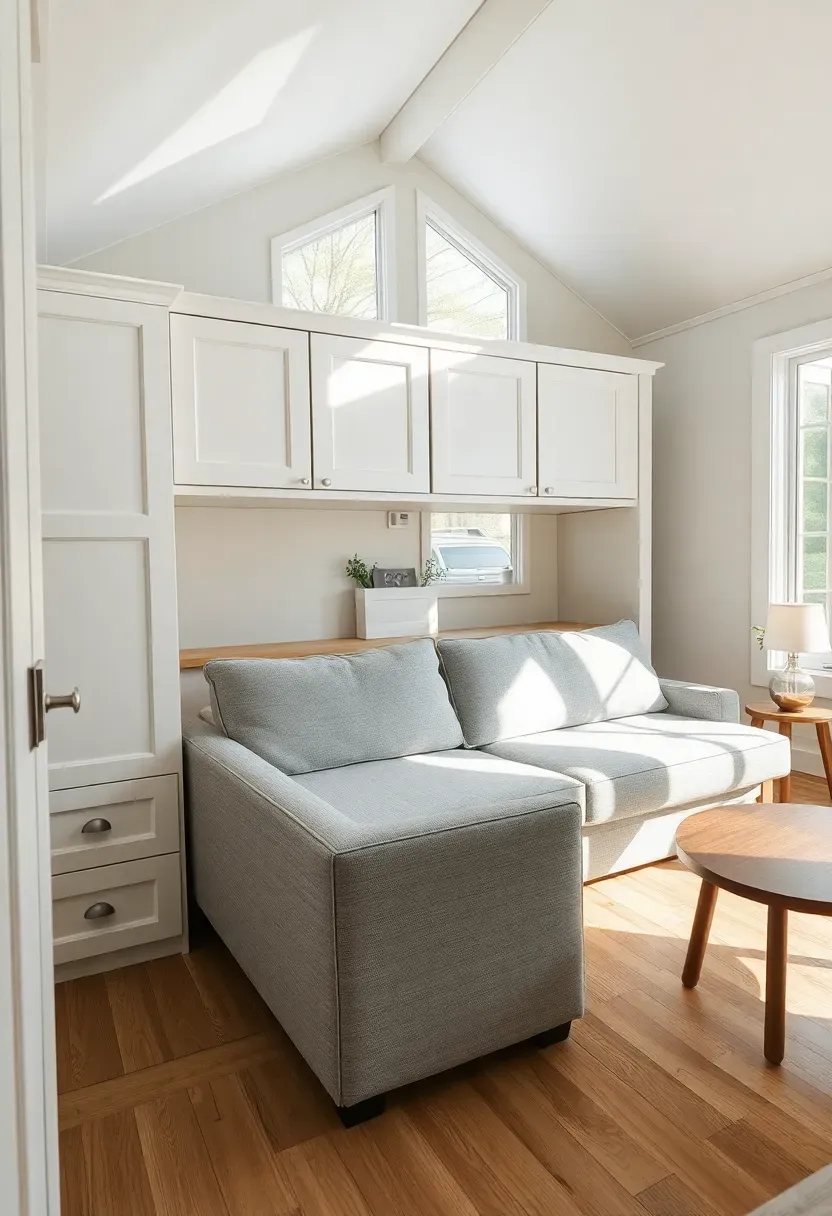
Recommended
Items for this idea
Tips
- Invest in commercial-grade murphy bed hardware rated for daily use rather than occasional guest beds
- Include shallow side cabinets that stay accessible whether bed is open or closed
- Test the fold-down mechanism with your mattress choice—some combinations require more clearance
Best for: single-bedroom tiny houses where the same space must function as living room and bedroom, or guest sleeping in multi-purpose rooms
What this gives you: reclaim 30-40 square feet of living space during daytime hours while maintaining a real bed for nightly comfort
5. Kitchen Peninsula with Eating Bar
Kitchen design in tiny houses prioritizes efficiency over expansive counters—a peninsula that extends from the main wall creates additional prep surface, appliance storage, and casual dining without requiring a separate table. The eating bar serves double duty as additional workspace during meal prep and dining surface for everyday meals, eliminating the need for a traditional dining table that would consume significant floor space. Storage inside the peninsula accommodates frequently-used items, while the overhang can accommodate 2-3 stools for dining. The key is maintaining adequate circulation around the peninsula while ensuring the kitchen work triangle (sink, refrigerator, cooktop) remains functional.
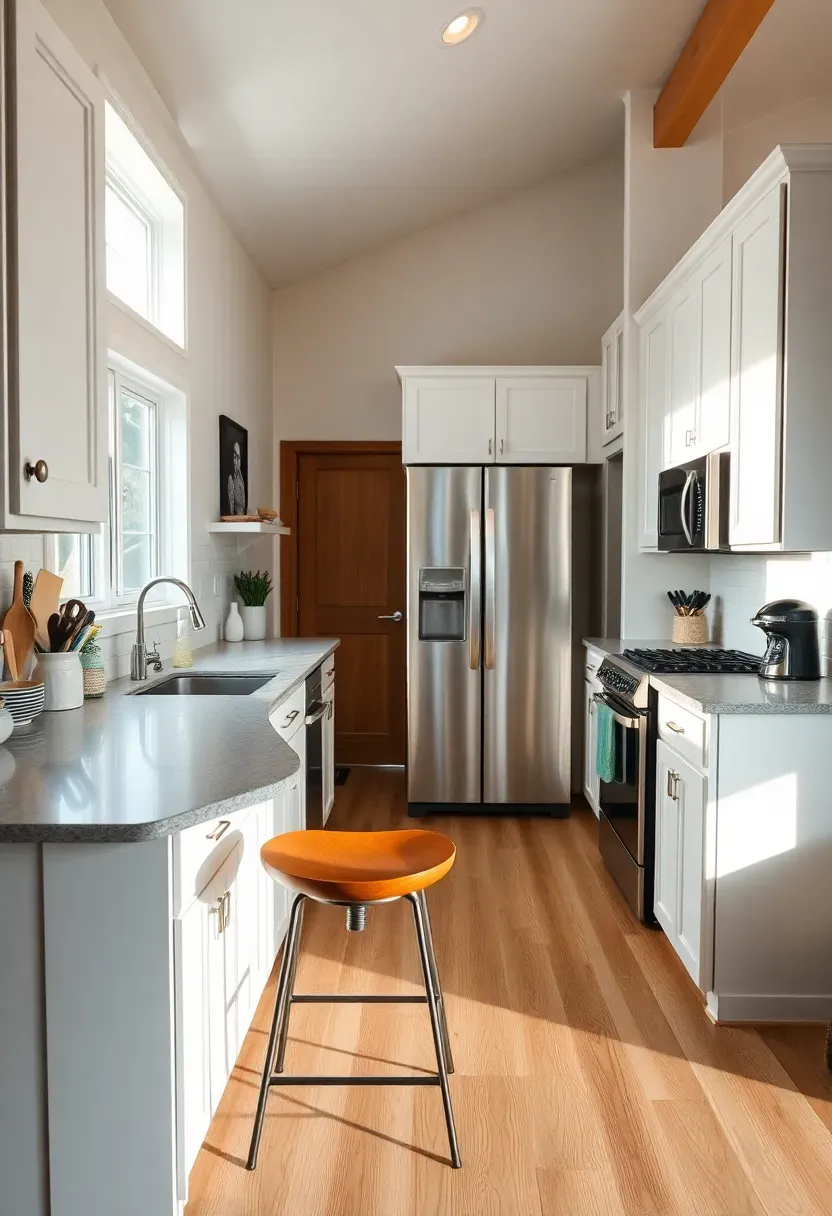
Tips
- Include at least 12 inches of overhang for comfortable seating at the bar
- Install outlets on the peninsula backsplash for small appliance use
- Choose stools that tuck completely under the overhang when not in use
Placement note: position the peninsula to create a natural traffic flow that doesn't cross through the main cooking zone
What this gives you: eliminates the need for a separate dining table while adding prep workspace and storage in a compact footprint
6. Compact Bathroom with Wet Shower
Tiny house bathrooms often embrace wet room design where the shower isn't fully enclosed—water drains directly from the waterproofed floor area, eliminating the space consumed by shower walls and doors. This approach requires meticulous waterproofing and sloped floor installation but maximizes every inch of bathroom space. The toilet and vanity sit outside the direct spray zone but remain within the waterproofed area, allowing flexible placement without additional partitions. A simple curtain or partial glass wall contains water during showering while keeping the space open when dry. The key is choosing fixtures designed specifically for compact spaces and ensuring proper ventilation to prevent moisture issues.
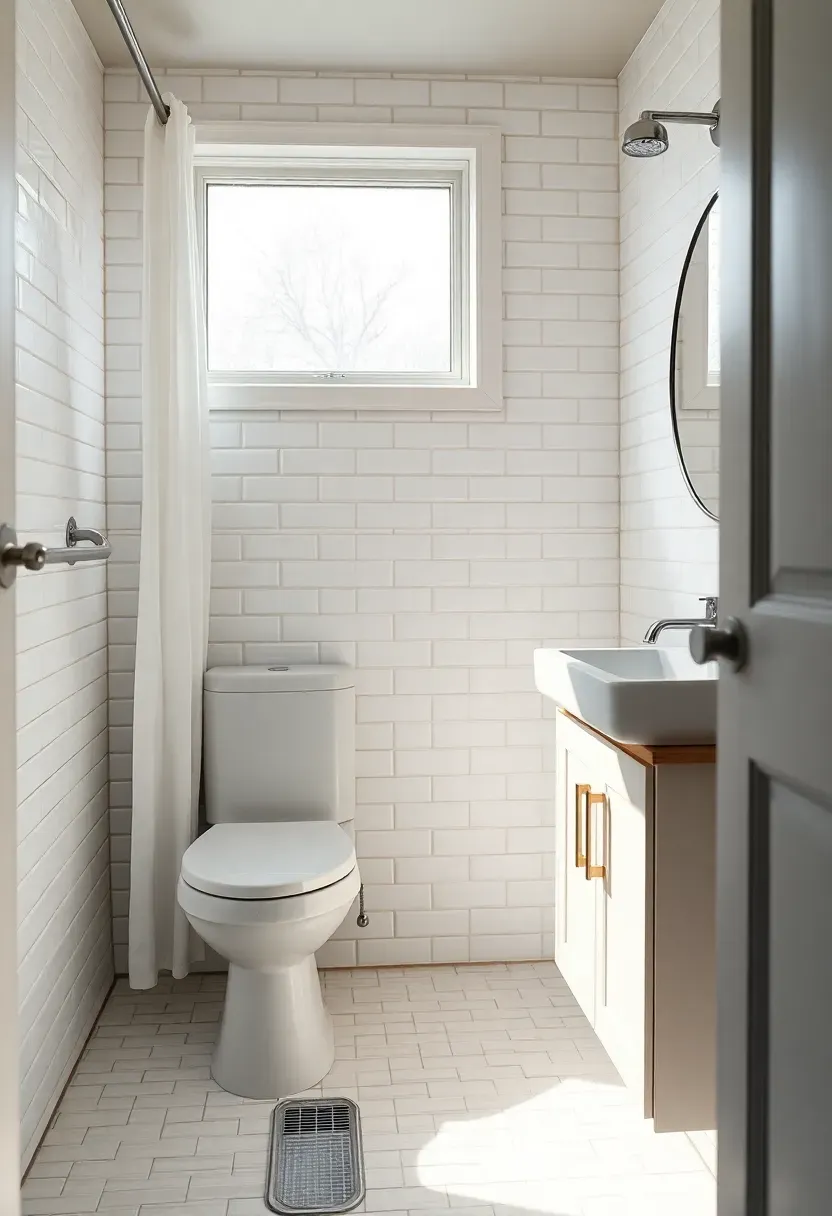
Recommended
Items for this idea
Tips
- Invest in professional waterproofing—this isn't the place for DIY shortcuts
- Choose a vanity with at least 18 inches of clearance for comfortable sink use
- Install an exhaust fan rated for continuous operation to prevent moisture buildup
Best for: bathrooms under 30 square feet where every inch counts and proper waterproofing is feasible within budget
What this gives you: gains 4-8 square feet compared to enclosed showers while maintaining full bathroom functionality
7. Vertical Wall Storage: Space-Saving Tips for Small Homes
Tiny houses must think vertically—walls become the primary storage real estate through floor-to-ceiling systems that keep items accessible yet contained. Vertical storage includes closed upper cabinets, open shelving, pegboard systems, and magnetic knife strips or tool holders that keep essentials visible but organized. The principle is simple: store frequently-used items between waist and eye height for easy access, reserve higher and lower spaces for less-used items. Upper cabinets should reach the ceiling to maximize capacity while eliminating dust-trapping gaps. Custom-built systems often work better than modular furniture since they can exploit every inch of available wall space without wasted dimensions.
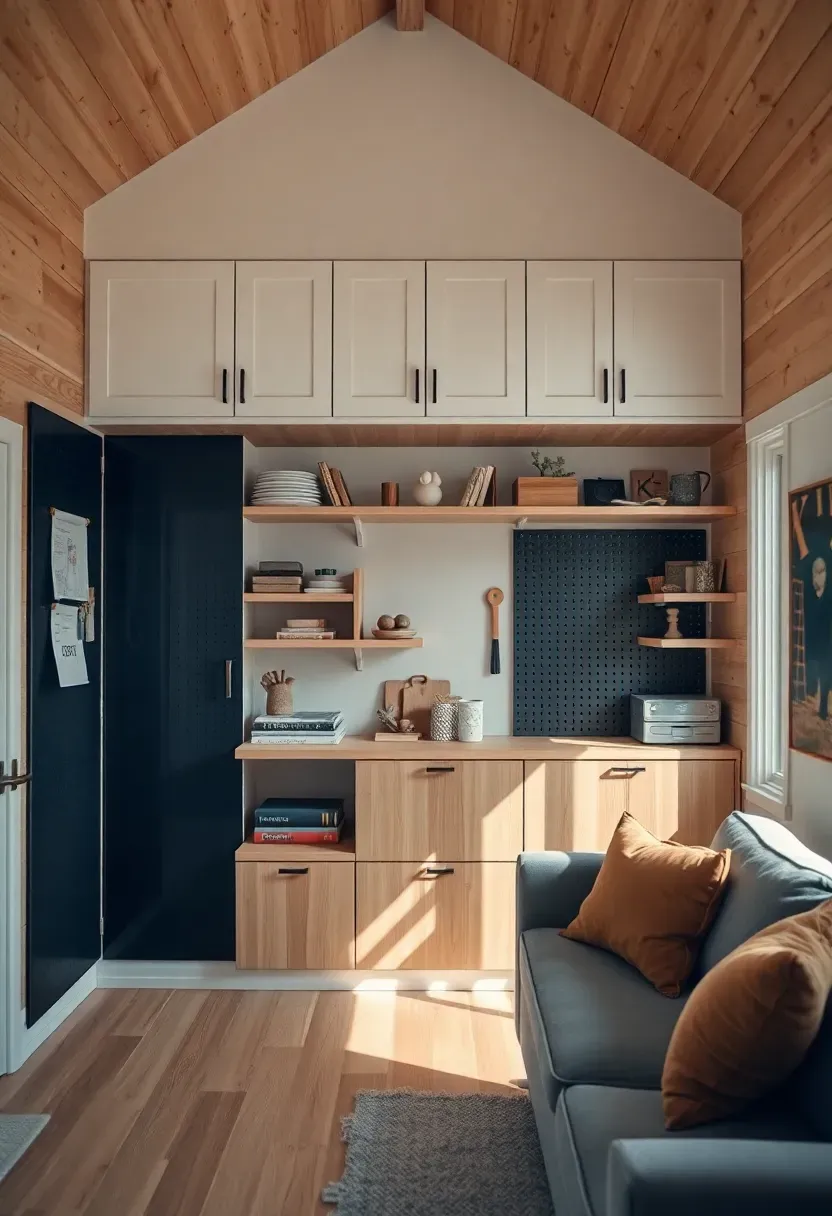
Tips
- Mix closed storage (80%) with open display (20%) to avoid visual overwhelm while keeping everyday items accessible
- Use shelf risers and drawer dividers to maximize usable space within each cabinet
- Include at least one full-height cabinet for brooms, cleaning supplies, or tall items
Placement note: prioritize vertical storage on walls that don't interfere with window placement or door swing to avoid awkward circulation
What this gives you: doubles or triples storage capacity without consuming additional floor space while keeping essentials organized and accessible
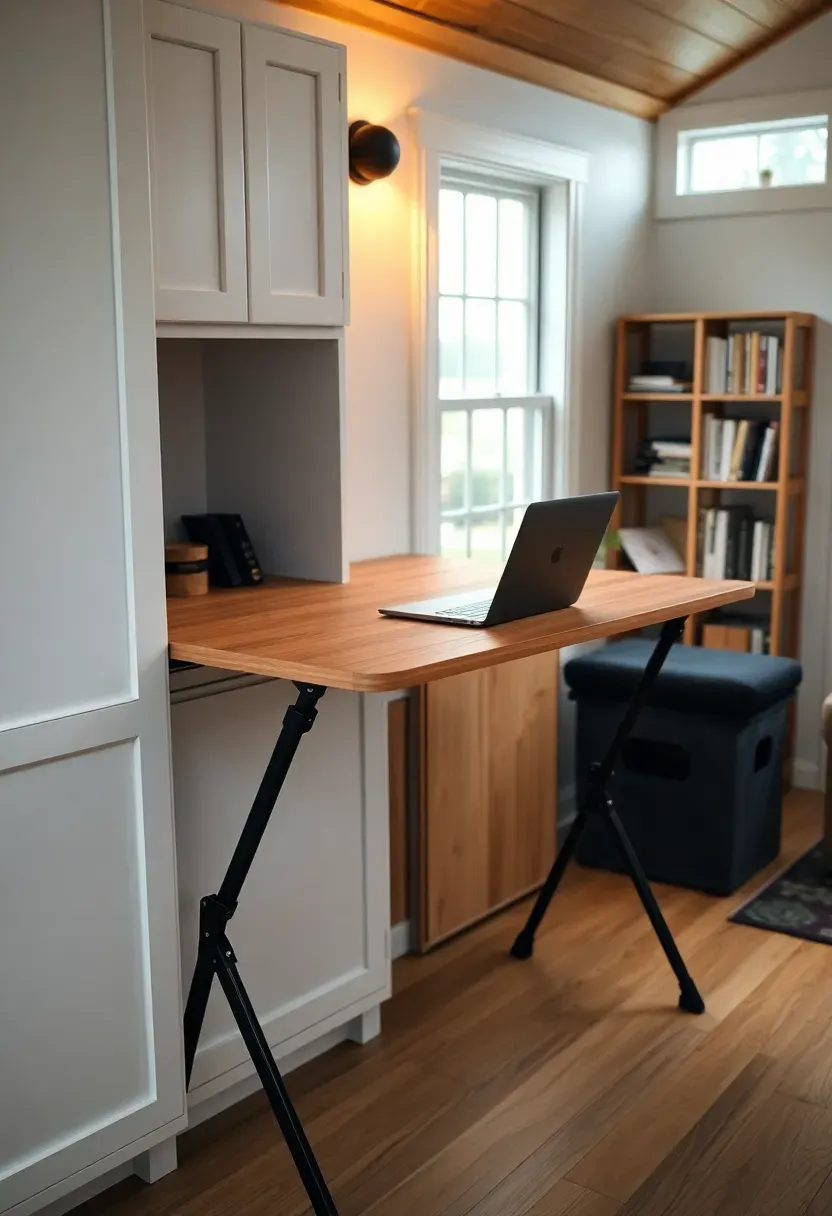
8. Fold-Down Work Surface
Work-from-home needs or creative hobbies require dedicated surface area that tiny houses can't permanently dedicate—fold-down desks create functional workspace when needed and disappear when not. The surface should be large enough for actual work (at least 30 inches wide) with adequate support to prevent wobbling during use. When folded, it becomes wall art or a shallow cabinet front, maintaining the room's aesthetics. Surrounding storage for work supplies eliminates the need to set up and tear down daily—simply fold down the desk and everything is ready. The key is choosing sturdy hardware that won't sag over time and ensuring adequate lighting for both work and folded configurations.
Recommended
Items for this idea
Tips
- Use heavy-duty folding hinges rated for at least twice the expected weight load
- Include a magnetic catch or latch to prevent the desk from bouncing open during travel
- Plan electrical outlets above the desk height so cords don't interfere with folding
Best for: remote work, creative hobbies, or administrative tasks that require dedicated surface space but don't need to remain set up 24/7
What this gives you: gains 6-10 square feet of functional workspace that disappears completely when not in use
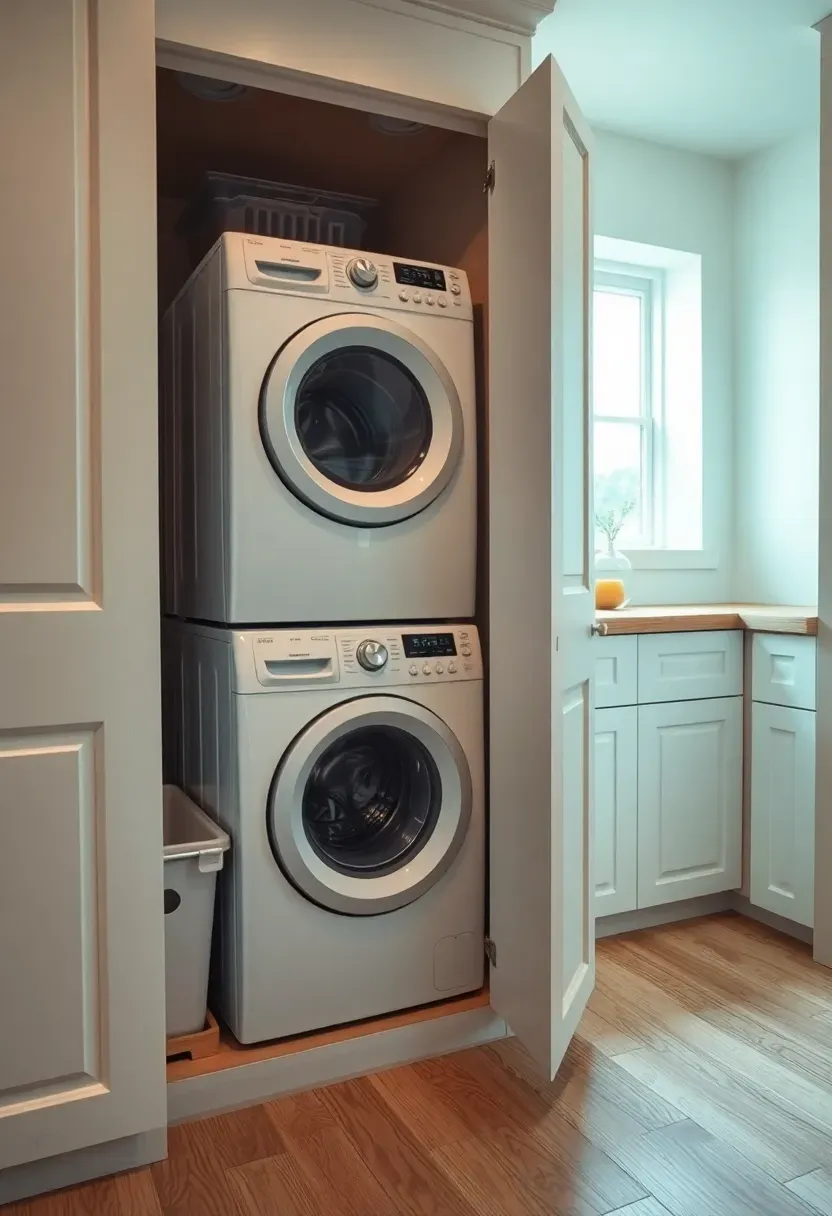
9. Hidden Laundry Solutions
Laundry facilities consume significant space that tiny houses can't spare—hidden solutions integrate washer-dryer units into cabinetry or under-counter spaces while maintaining full functionality. Stackable units tuck into closet-like spaces, combination washer-dryer machines handle full cycles in a single footprint, or clever concealment in kitchen cabinets or bathroom vanities keeps appliances accessible but visually integrated. The key is choosing appliances designed for compact spaces rather than retrofitting standard units, and ensuring adequate ventilation and drainage access. Location matters—laundry should be accessible without crossing through the entire house but distant enough from sleeping areas for noise consideration.
Tips
- Choose ventless dryer options or plan exterior venting during construction rather than retrofitting later
- Include a pull-out hamper or sorting bins within the laundry cabinet to consolidate functions
- Leave at least 3 inches behind appliances for hookup access and ventilation
Best for: tiny houses on foundations where venting is easier, though ventless combo units work for on-wheels construction
What this gives you: eliminates laundromat trips while consuming only 8-12 square feet of floor space when properly integrated
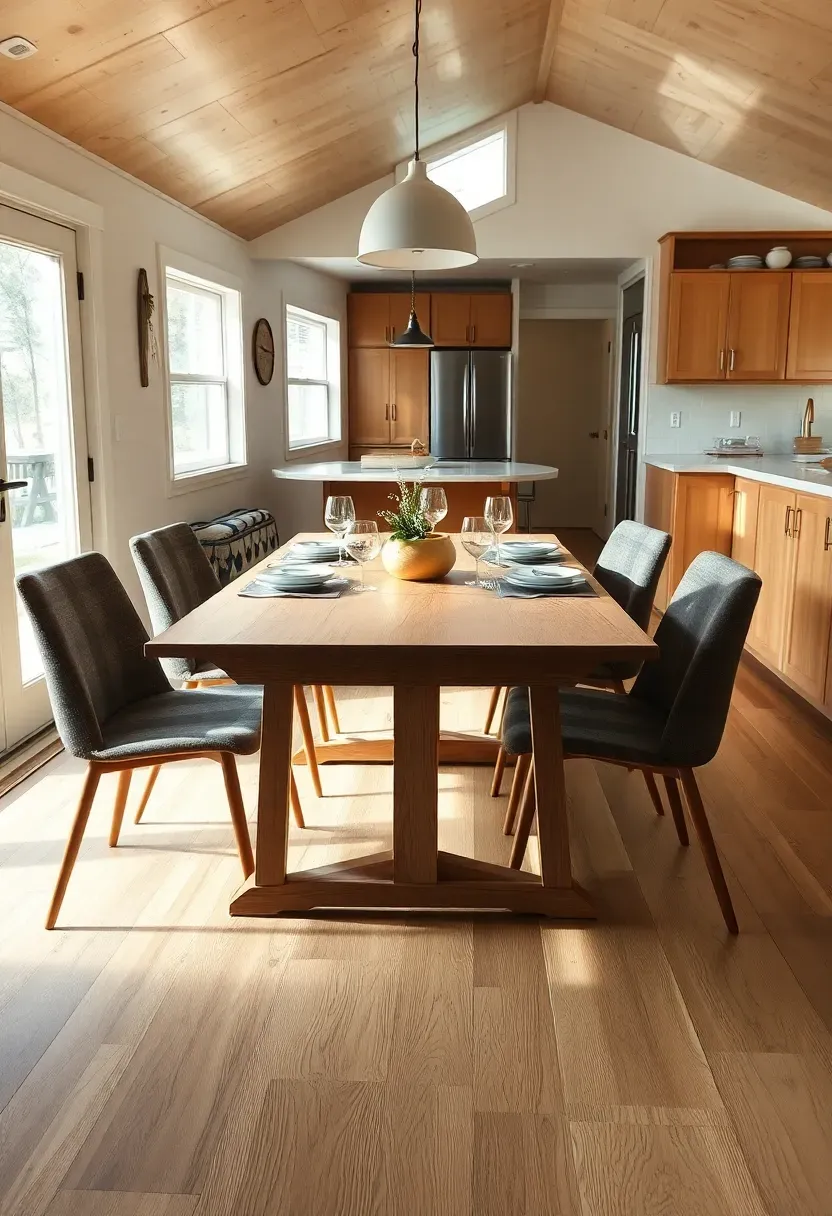
10. Dual-Purpose Dining Table
Dining tables in tiny houses must earn their keep through multiple functions—workspace by day, dining surface by evening, occasional guest sleeping surface when needed. Drop-leaf designs expand to seat 4-6 people but collapse to a narrow console against the wall when not in use. Height-adjustable tables transition from dining height to desk height to coffee table in seconds. Some designs incorporate storage within the table base for dining essentials or office supplies. The key is choosing a primary function and designing around it rather than trying to optimize equally for all uses—a table that's perfect for everything usually excels at nothing.
Recommended
Items for this idea
Tips
- Choose drop-leaf tables with sturdy supports that won't wobble when extended with guests
- Consider wall-mounted folding tables if floor space is extremely limited
- Store expandable leaves vertically rather than horizontally to save space when collapsed
Avoid if: you regularly host dinner parties for 6+ people—external dining or outdoor entertaining spaces may serve better
What this gives you: maintains dining capability while reclaiming floor space when not actively eating
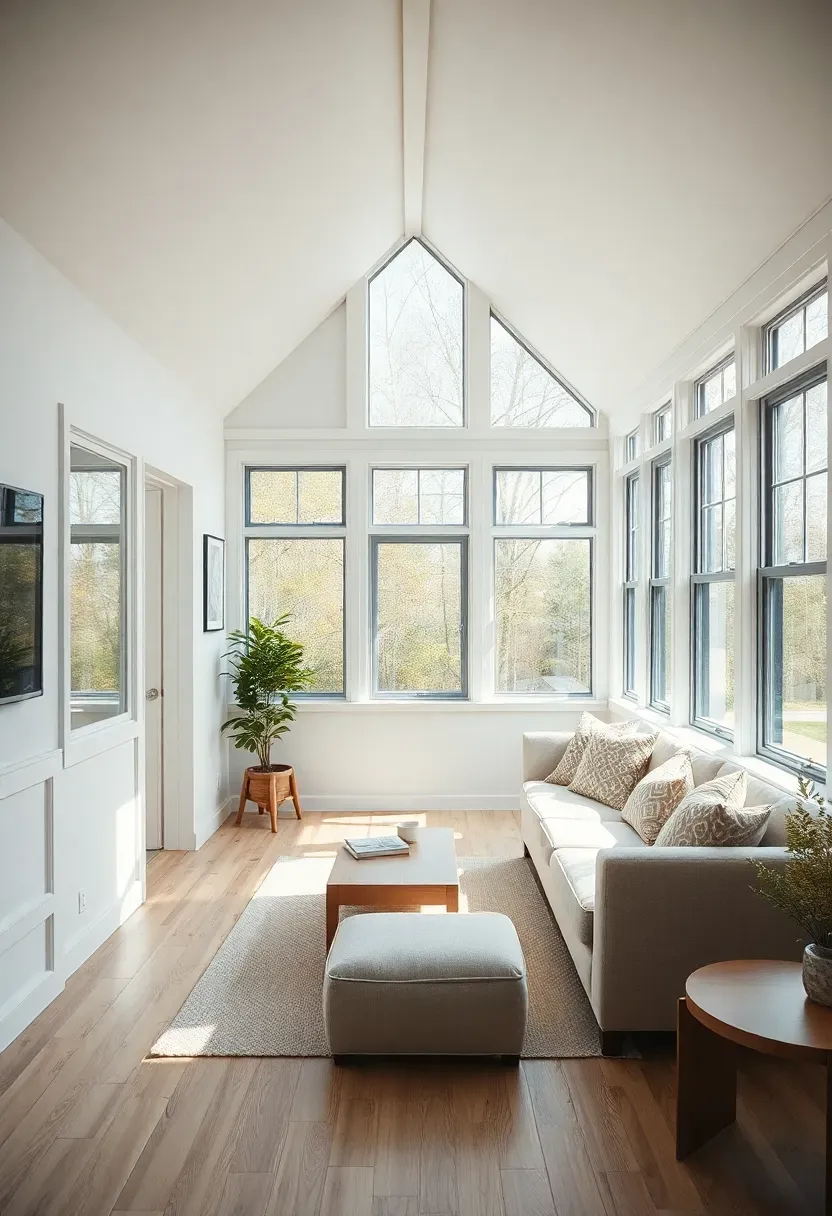
11. Natural Light Maximization
Windows are the single most important element in making tiny houses feel spacious—abundant natural light erases boundaries between indoors and out while preventing the claustrophobic feeling that poorly lit small spaces create. Strategic window placement captures light throughout the day: east-facing morning light in the bedroom, south-facing midday light in living areas, west-facing evening light in the kitchen. Larger windows make spaces feel bigger despite consuming wall space because they connect interior to exterior visually. Skylights in lofts bring additional light without sacrificing privacy or wall space. The key is balancing glazing for light with wall space for storage and insulation—every window requires thoughtful trade-offs.
Tips
- Prioritize windows over upper cabinets when possible—light makes spaces feel larger than storage makes them functional
- Choose operable windows on multiple walls for cross-ventilation during mild weather
- Consider transom windows above doors or cabinets for additional light without sacrificing wall space
Placement note: position larger windows to capture the best views while minimizing privacy concerns—facing nature rather than neighbors when possible
What this gives you: dramatically increases perceived spaciousness while reducing daytime lighting needs and connecting interior to exterior environment
12. Outdoor Living Extension
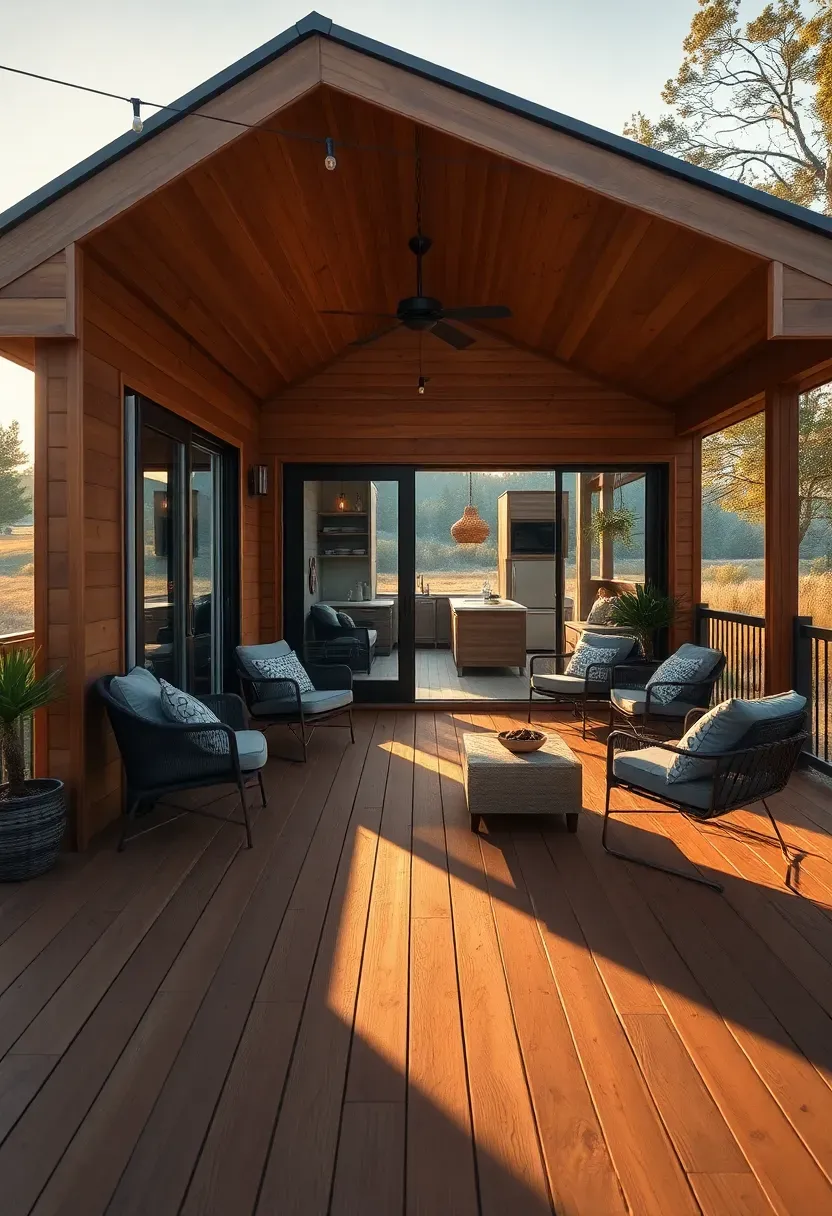
The most effective tiny house designs treat outdoor space as an extension of interior living—decks, patios, or pergolas effectively double usable space during fair weather without increasing conditioned square footage. A simple deck with comfortable seating creates an outdoor living room, a covered area serves as al fresco dining, or a defined outdoor kitchen handles food preparation that would strain indoor space. Folding or glass walls connect interior to exterior during pleasant weather while separating completely when needed. The key is designing the outdoor space as intentionally as indoor spaces—level surfaces, defined furniture placement, and weather-resistant materials create usable outdoor rooms rather than afterthoughts.
Recommended
Items for this idea
Tips
- Install level thresholds between indoor and outdoor spaces to prevent tripping and create seamless transitions
- Include an overhang or pergola to make outdoor spaces usable during light rain or intense sun
- Choose outdoor furniture that can be folded or stacked during winter to protect it from weather
Best for: tiny houses in climates with mild seasons where outdoor living is feasible for 6+ months per year
What this gives you: effectively doubles your usable living space during fair weather without increasing conditioned square footage or construction costs
13. Built-In Seating with Storage
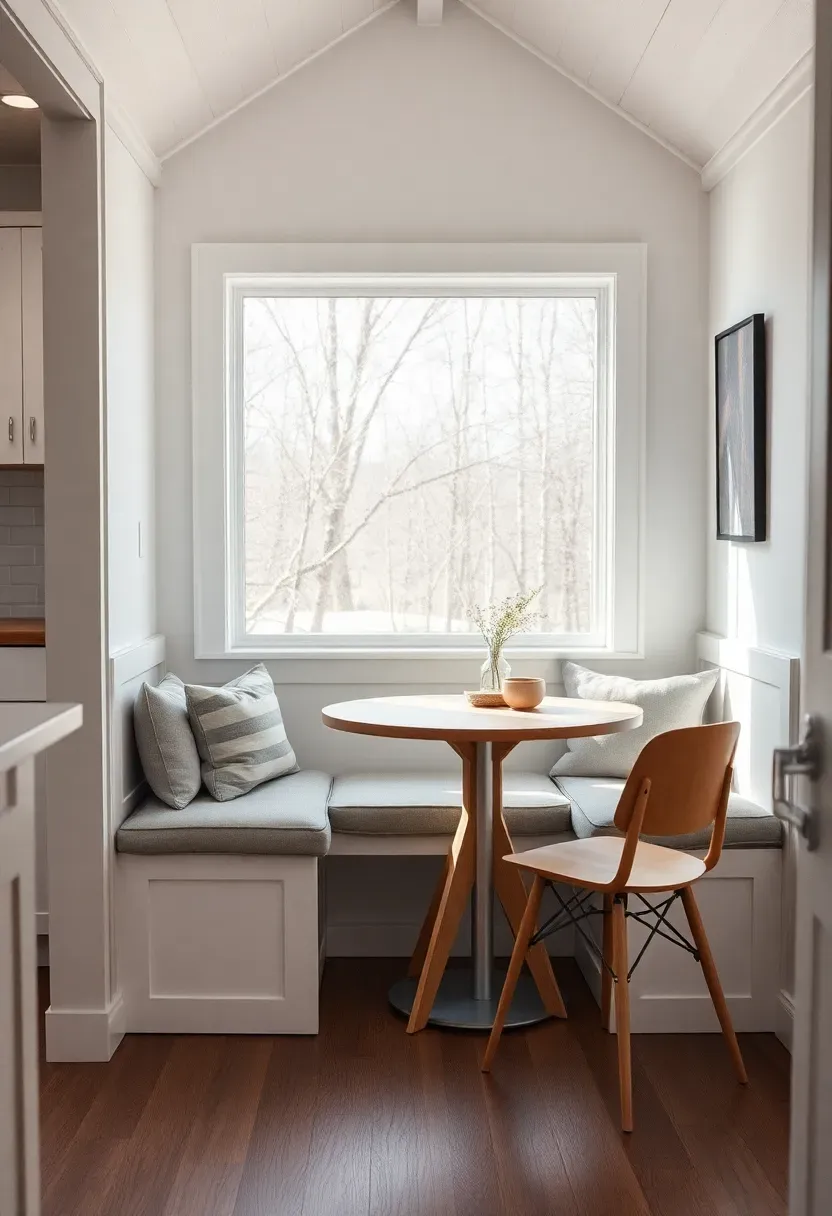
Built-in banquettes and window seats serve triple duty in tiny houses: dining seating, lounge space, and substantial hidden storage within the bench base. Unlike freestanding chairs or sofas, built-ins can be customized to exact dimensions, incorporate storage within otherwise dead space, and create a sense of architectural permanence that makes small homes feel finished rather than makeshift. The storage beneath can be accessed through lift-top hinges, drawers, or cabinets depending on what's stored. Upholstery adds comfort and softness while tie-downs keep cushions in place during travel for mobile tiny houses. The key is designing for actual use—ensure adequate back support and comfortable height rather than sacrificing function for storage capacity.
Tips
- Use gas struts instead of piano hinges for lift-top seats to prevent dangerous slamming
- Include at least 18 inches of seat depth and proper back support for comfort during meals
- Add electrical outlets within the bench for charging devices without visible cords
Best for: dining areas, breakfast nooks, or reading corners where comfort and storage capacity are equally valuable
What this gives you: provides comfortable seating while gaining 10-20 cubic feet of hidden storage without consuming additional floor space
14. Closet Organized for Capsule Wardrobe
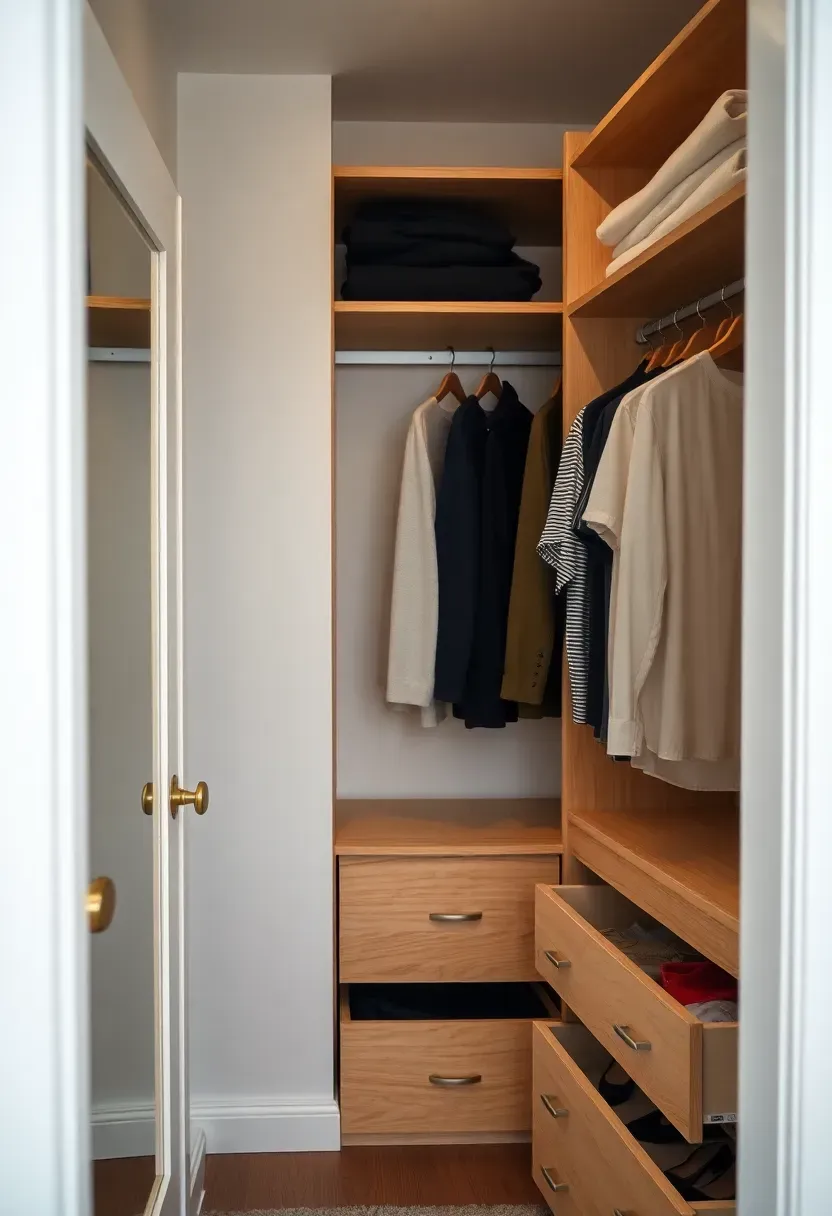
Tiny house living naturally requires wardrobe downsizing—closet design should support capsule wardrobe principles through thoughtful organization rather than attempting to store a traditional wardrobe in reduced space. Vertical hanging maximizes capacity for clothes that wrinkle, while shelves and drawers fold items that don't. The most effective tiny house closets mix hanging (30%), shelves (40%), and drawers (30%) to accommodate different clothing types efficiently. Incorporating a full-length mirror on the closet door saves wall space while serving dressing needs. Pull-out valet rods provide temporary hanging space during outfit selection or packing. The key is designing for your actual wardrobe rather than aspirational storage—edit ruthlessly before designing.
Recommended
Items for this idea
Tips
- Install double hanging rods (one high, one low) to maximize hanging capacity for shorter garments
- Use matching hangers to maximize density and prevent visual clutter inside the closet
- Include at least one shallow drawer for accessories like jewelry, belts, or small items that tangle easily
Avoid if: your profession requires extensive wardrobe variety or you live in climates with dramatic seasonal temperature swings that demand seasonal clothing storage
What this gives you: accommodates a curated capsule wardrobe (30-50 items) efficiently while eliminating decision fatigue from excessive choices
15. Kitchen Efficiency Triangle
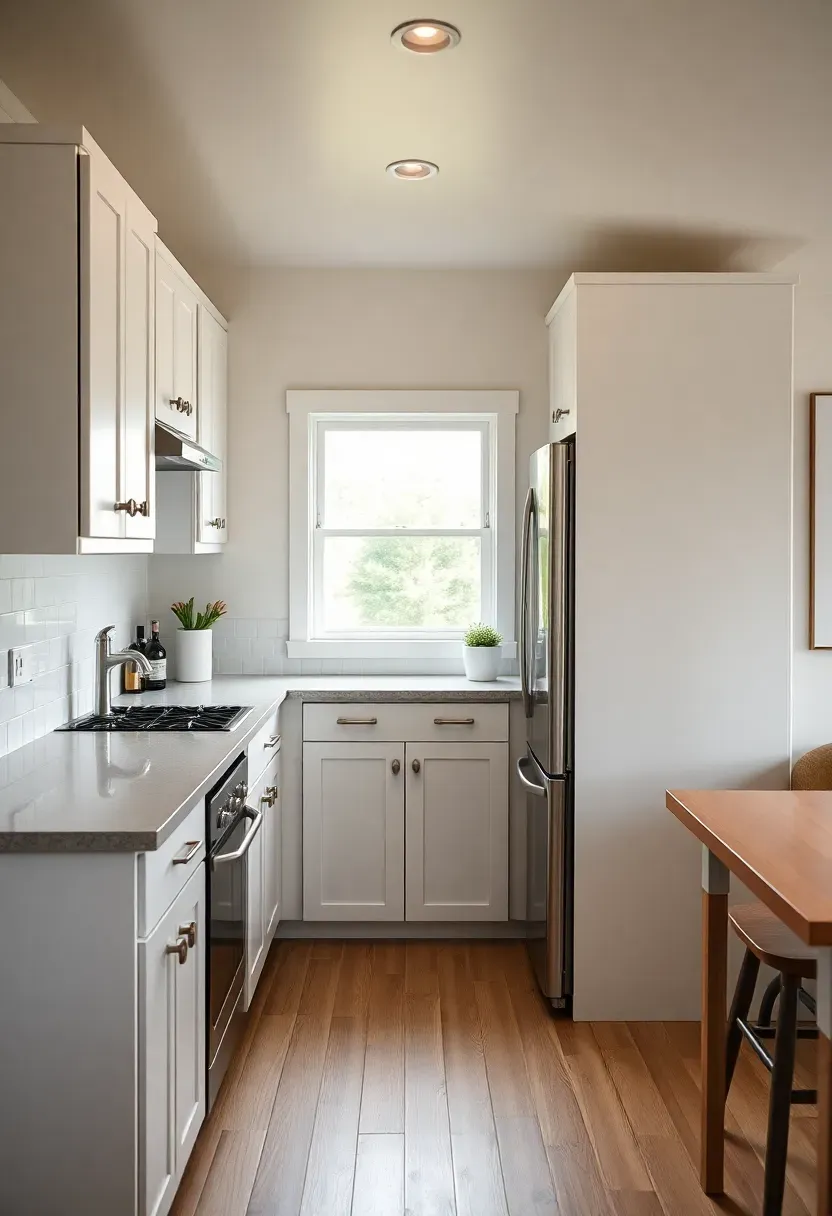
The classic kitchen work triangle—sink, refrigerator, and cooktop arranged for efficient movement—becomes even more critical in tiny house kitchens where every step matters. However, tiny houses often modify the traditional triangle: the sink and cooktop sit on the same wall with counter space between, while the refrigerator terminates the run. This linear arrangement works within narrow footprint while maintaining workflow efficiency. The key is maintaining adequate counter space on both sides of the sink and at least one side of the cooktop for prep and landing space. Appliance selection matters significantly—under-counter refrigerators, two-burner cooktops, and combination microwave-convection ovens maintain full cooking capacity while consuming minimal space.
Tips
- Maintain at least 36 inches of continuous counter between sink and cooktop for prep space
- Choose under-counter refrigerators (24-30 inches wide) rather than full-sized models
- Consider induction cooktops for safety and efficiency in tiny house environments
Placement note: position the refrigerator at the end of the cabinet run to minimize traffic through the cooking zone while keeping it accessible from dining areas
What this gives you: maintains full cooking functionality in a compact 6-10 foot run while minimizing steps during meal preparation
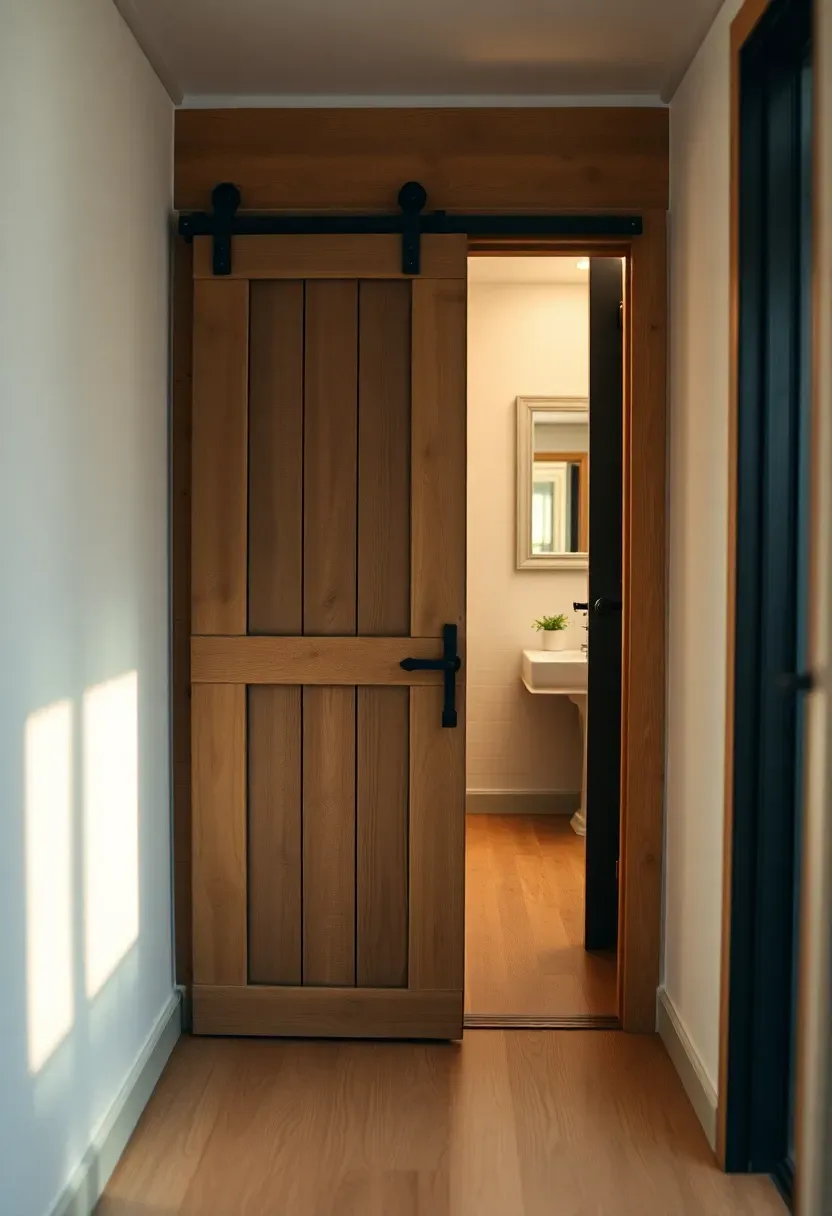
16. Sliding Doors to Save Space
Traditional swinging doors consume significant floor space that tiny houses can't spare—sliding barn doors, pocket doors, or bypass doors eliminate the swing arc while providing privacy and separation when needed. Barn doors add architectural character while remaining fully accessible, pocket doors disappear completely into walls for seamless transitions, and bypass doors slide past each other for wider openings. The key is planning hardware during framing—pocket doors require specific wall construction, barn doors need adequate wall space for the door to slide when open, and all sliding systems need quality hardware that prevents jumping off tracks. Space-saving door solutions are particularly valuable for bathrooms, closets, and loft access where swing space would conflict with other functions.
Recommended
Items for this idea
Tips
- Install soft-close bumpers on barn doors to prevent them from slamming and damaging adjacent walls
- Choose quality hardware with proper weight ratings for heavy solid doors
- Plan electrical switches and outlets so they're accessible regardless of door position
Best for: bathrooms, closets, and room dividers where swinging doors would consume valuable floor space or create awkward circulation paths
What this gives you: reclaims 6-10 square feet per door that would otherwise be dedicated to swing arc while maintaining full privacy and separation
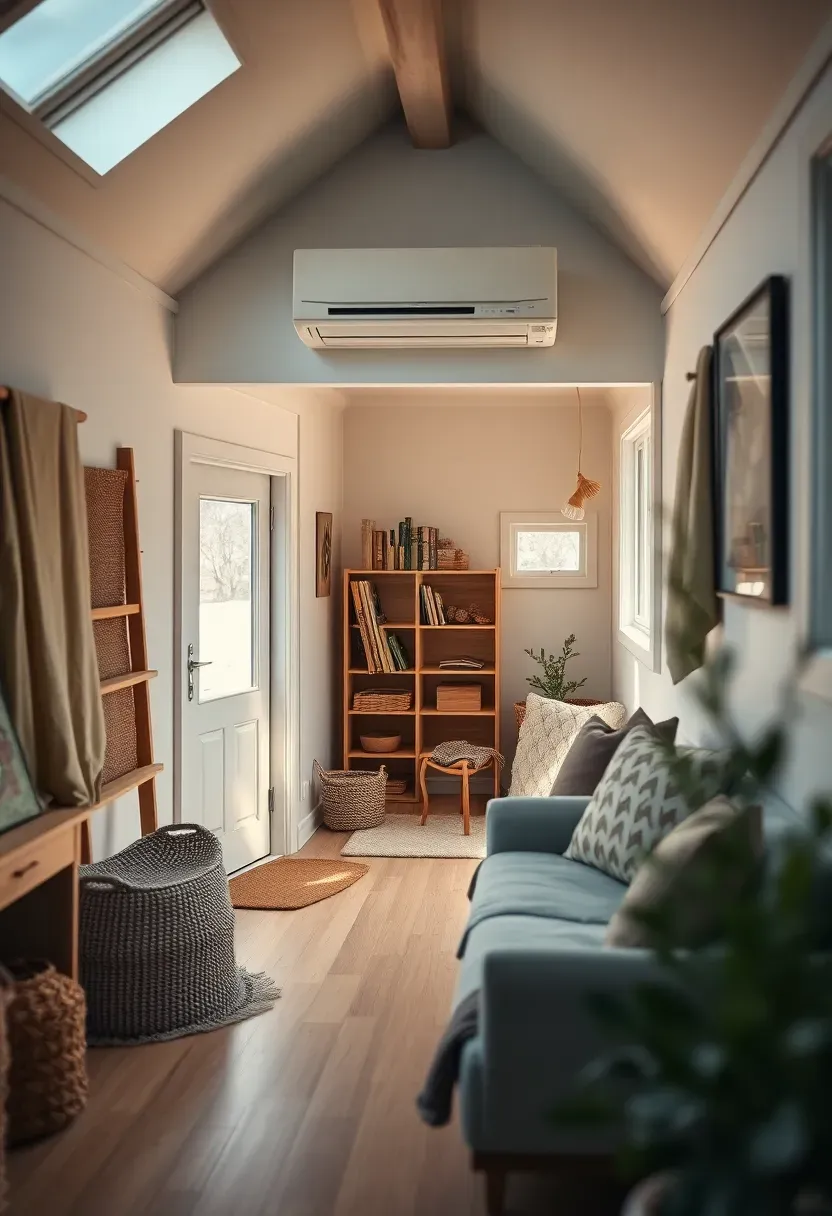
17. Heating and Cooling Essentials
Climate control in tiny houses requires specialized approaches—small volume heats and cools quickly but also loses temperature rapidly without proper design. Mini-split systems provide efficient heating and cooling in a single unit, though they require exterior mounting and professional installation. For off-grid setups, propane heaters with proper ventilation offer reliable heat without electrical demand, while fans and passive cooling strategies manage summer temperatures. The key is insulating beyond code requirements—tiny houses gain more from premium insulation than traditional homes due to surface-area-to-volume ratio. Windows with double or triple glazing, thermal curtains, and careful air sealing prevent energy loss that would overwhelm compact systems.
Tips
- Invest in mini-split systems with high SEER ratings (18+) for maximum efficiency in small spaces
- Include thermal mass like tile flooring or concrete countertops to stabilize temperature fluctuations
- Install ceiling fans to improve air distribution regardless of heating or cooling source
Best for: climates with temperature extremes where passive strategies alone won't maintain comfort; essential for four-season tiny house living
What this gives you: maintains year-round comfort in extreme climates with minimal energy consumption despite compact construction
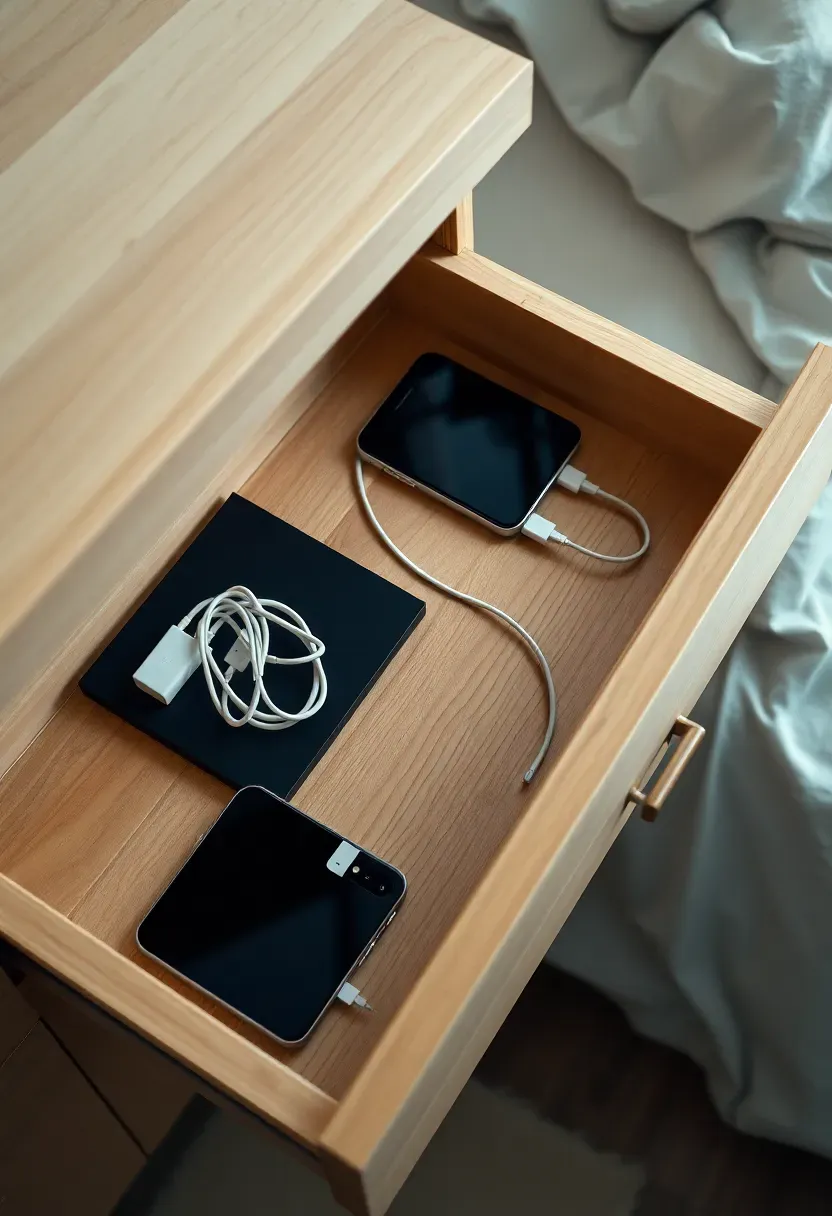
18. Electronics and Charging Station
Modern life requires numerous devices and charging needs—tiny houses benefit from consolidated charging stations rather than scattered outlets throughout the space. A dedicated charging drawer or cabinet with built-in power strip keeps devices organized while charging, eliminates visible cord clutter, and centralizes technology in one location. Consider charging needs for phones, tablets, laptops, cameras, and any rechargeable tools or appliances. The charging station should be accessible but not in primary circulation paths—kitchen desks, bedroom nightstands, or entryway cabinets work well. Include USB-C and standard outlets to accommodate current and future device needs without requiring adapters.
Recommended
Items for this idea
Tips
- Install a switched power strip to cut phantom power draw when devices aren't actively charging
- Include cable management channels or ties to keep cords organized within the charging station
- Consider wireless charging pads for devices that support them to reduce cable clutter further
Best for: households with 3+ devices that need daily charging, or remote workers who need reliable laptop power without visible cord clutter
What this gives you: centralizes device charging in a clean, organized system that eliminates cord clutter across multiple rooms
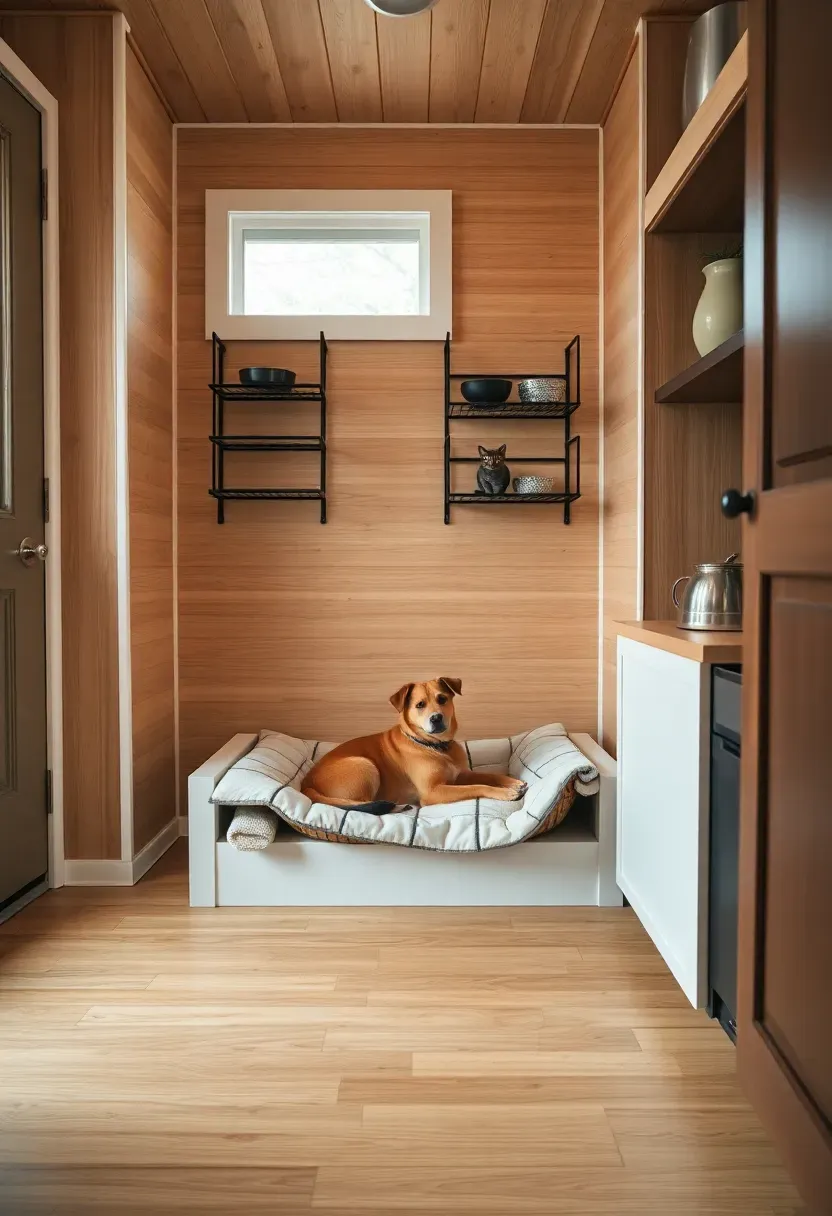
19. Pet-Friendly Design Features
Tiny house living with pets requires thoughtful integration of their needs into limited space without sacrificing human comfort or functionality. Dedicated feeding stations with built-in bowls prevent spills and keep pet areas organized. Scratch-resistant flooring withstands pet activity while remaining easy to clean. Built-in pet beds or crates integrate seamlessly into cabinetry rather than occupying floor space as separate furniture. Cat-friendly vertical spaces like shelves or climbing structures use wall space without claiming floor area. Dog doors to outdoor runs provide pet access without requiring human mediation. The key is designing pet features as integrated architectural elements rather than afterthoughts that disrupt human use patterns.
Tips
- Choose vinyl plank or luxury vinyl tile flooring rather than hardwood for scratch resistance
- Include a pet bathing station in the shower or bathroom for easy washing without full-size tubs
- Design feeding stations with waterproof surfaces and raised edges to contain spills
Best for: tiny house dwellers with 1-2 pets who want to share their small space without sacrificing comfort or cleanliness
What this gives you: accommodates pets comfortably within limited space while maintaining clean, organized human living areas
20. Privacy Solutions in Open Spaces
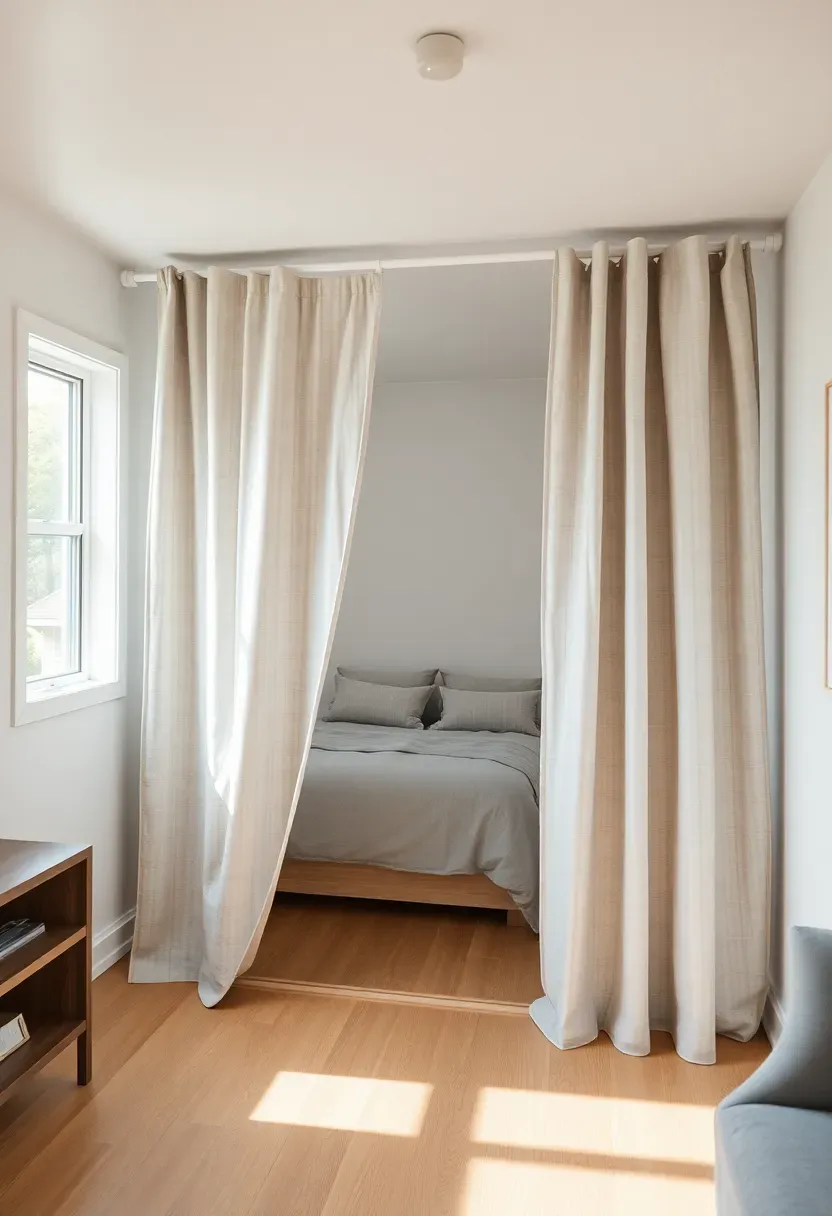
Open floor plans create connection but sometimes require separation—privacy solutions in tiny houses must be temporary and flexible rather than permanent walls. Curtains on ceiling tracks provide full room separation when needed and disappear completely when openness is desired. Folding screens offer partial privacy for changing areas or workspace focus. Bookcases or shelving units create visual separation while maintaining airflow and light transmission. Privacy film on windows maintains natural light while blocking sightlines from outside. The key is designing multiple privacy options that can be layered or combined depending on the situation—curtain plus screen, bookcase plus film—for varying degrees of separation.
Recommended
Items for this idea
Tips
- Use ceiling-mounted curtain tracks rather than rods for smoother operation and better support
- Choose blackout lining for bedroom privacy curtains to serve double duty for light control
- Install curtain tracks that allow multiple stacking panels for versatile privacy configurations
Best for: studio-style tiny houses where bedroom isn't fully enclosed, or homes where multiple people share limited space and need occasional separation
What this gives you: provides on-demand privacy without permanent walls, maintaining open spacious feel when separation isn't needed
21. Future-Proofing Your Design
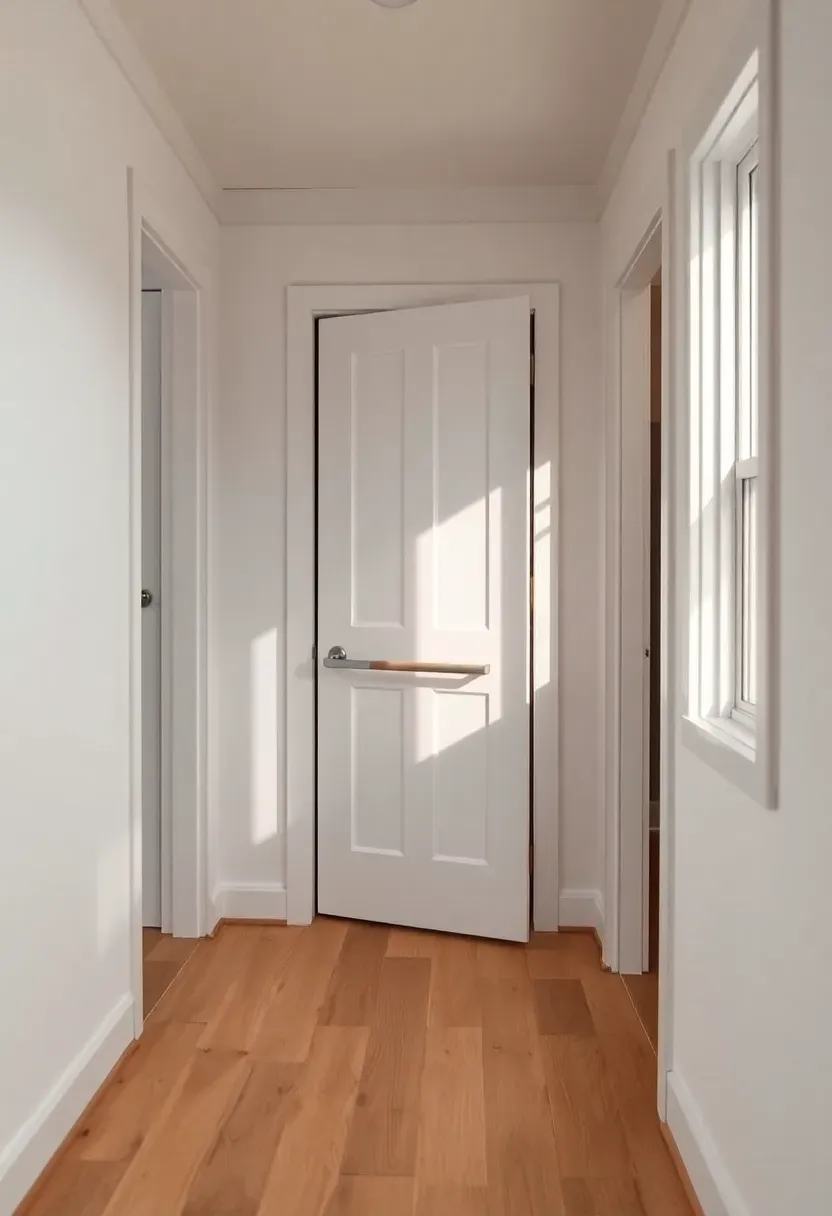
Tiny houses should accommodate changing needs over time rather than working perfectly for current circumstances but becoming unlivable as life evolves. Consider accessibility now or later: wider doorways (32+ inches), blocking for future grab bars, and at least one no-step entry accommodate mobility changes or aging in place. Structural reinforcement allows adding lofts, roof decks, or expansions later. Electrical and plumbing rough-ins for future additions cost little during initial construction but become prohibitively expensive later. Modular furniture and flexible storage systems adapt to lifestyle changes without requiring renovation. The key is building in options without overbuilding—every future-proof feature costs money and space that might not serve immediate needs.
Tips
- Install reinforced backing in bathroom walls during construction even if grab bars aren't needed immediately
- Choose standard door heights and widths that accommodate wheelchair access even if not currently needed
- Design utility systems with easy access for repairs and modifications rather than burying them behind finished surfaces
Best for: tiny house owners planning to age in place, accommodate potential mobility changes, or maximize long-term resale value
What this gives you: allows your tiny house to adapt to changing physical needs and lifestyle circumstances without requiring major renovations
22. Essential Safety Features
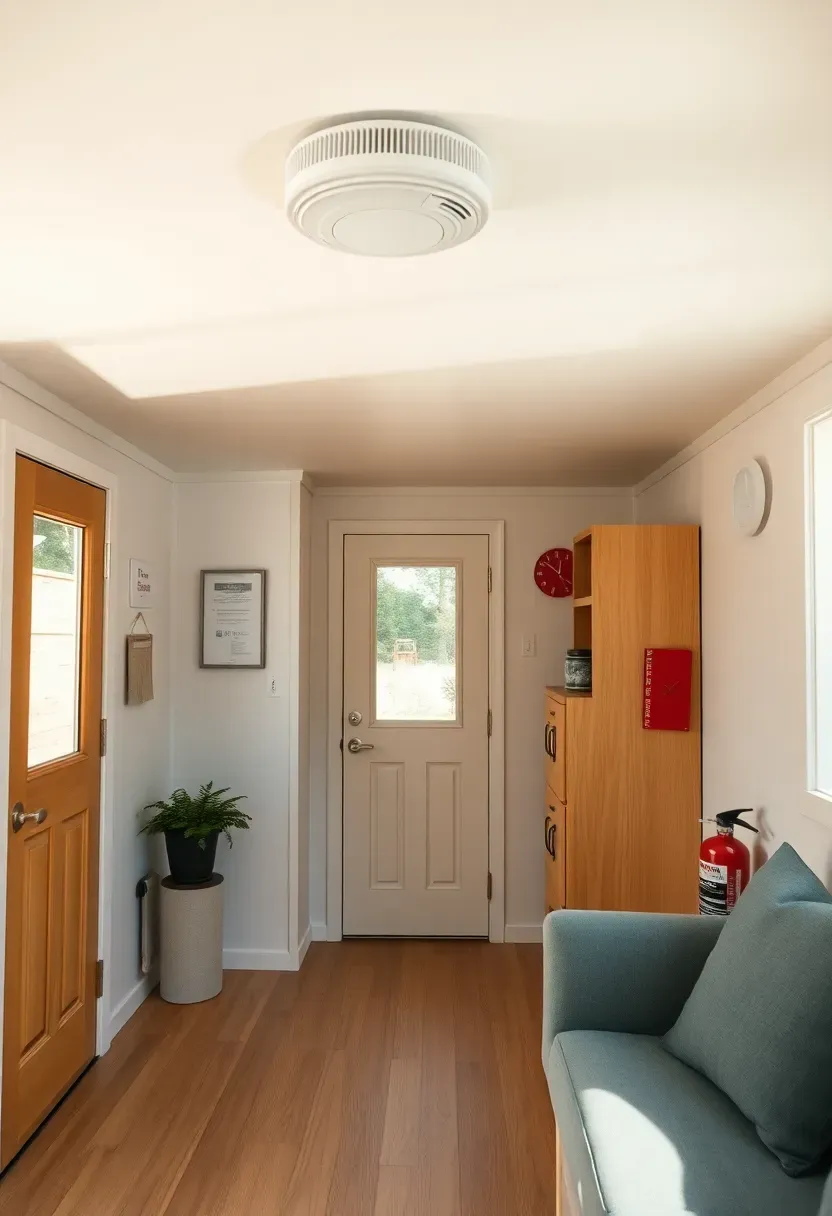
Tiny houses require specific safety considerations beyond traditional construction due to compact volume, unique materials, and specialized systems. Multiple smoke and carbon monoxide detectors are non-negotiable—tiny houses concentrate potential hazards in small spaces. Fire extinguishers should be accessible from kitchen and sleeping areas. Adequate egress from lofts requires escape windows or alternative exits that meet building codes. Propane and electrical systems need proper ventilation and shut-off switches accessible from inside and outside. Non-toxic building materials prevent off-gassing that becomes concentrated in small volumes. The key is treating safety as integral to design rather than an afterthought—every material choice and system configuration should prioritize occupant safety.
Recommended
Items for this idea
Tips
- Install photoelectric smoke detectors rather than ionization models to reduce nuisance alarms from cooking
- Mount fire extinguishers where they're accessible from both kitchen and sleeping areas without crossing fire danger zones
- Choose low-VOC or zero-VOC paints, sealants, and building materials to prevent indoor air quality issues
Best for: all tiny houses—safety features are non-negotiable regardless of climate, usage, or construction method
What this gives you: protects against catastrophic fire, air quality, and safety hazards that are amplified by compact construction
23. Mental Health Considerations
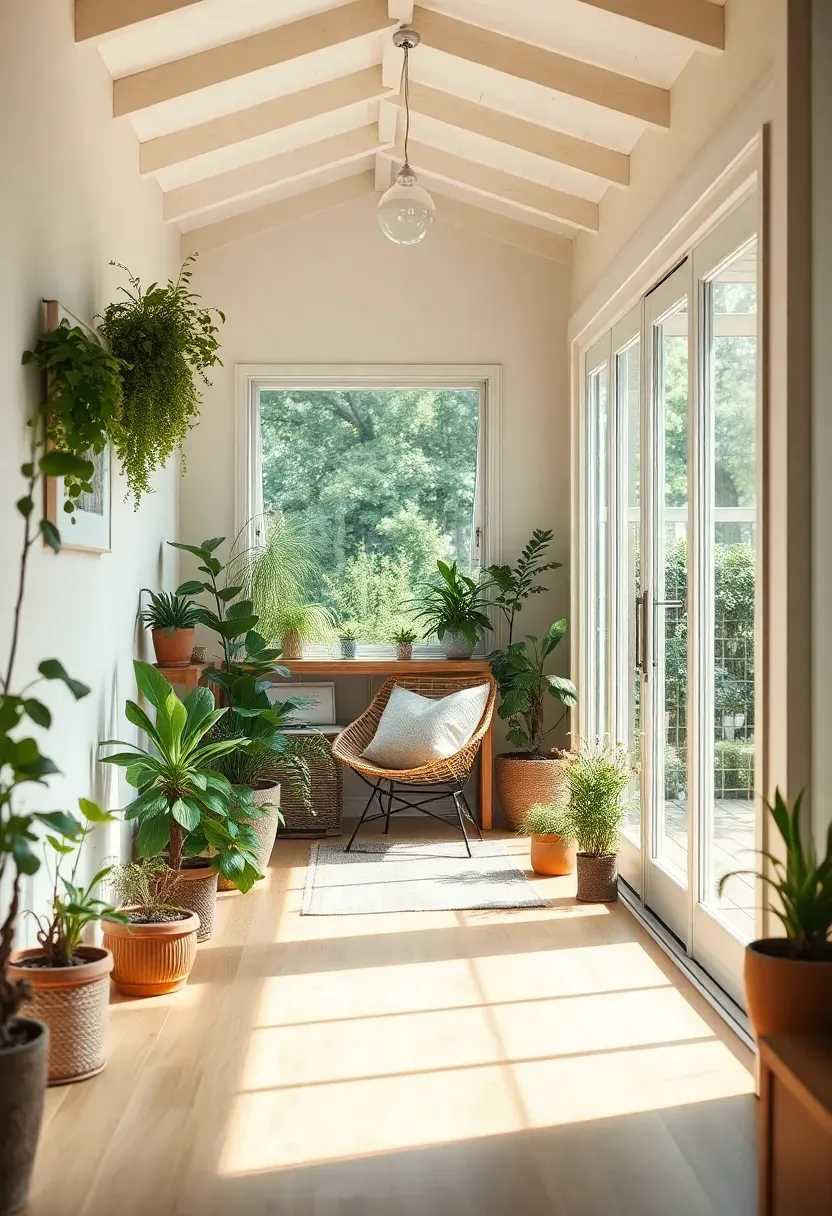
Tiny house living affects mental wellbeing through both benefits and challenges—intentional design maximizes positive impacts while mitigating potential stressors. Connection to nature through abundant windows and outdoor access reduces confinement feelings. Designated personal spaces, even tiny, prevent constant togetherness for couples or families. Sound privacy through acoustic dampening and zoning separates activities acoustically if not visually. Circadian-friendly lighting and dark sleeping spaces support healthy sleep cycles. Transition zones between indoors and outdoors psychologically separate shelter from nature. The key is recognizing that tiny houses test relationships and mental resilience—design should support wellbeing rather than just physical needs.
Tips
- Create designated personal spaces—even a single chair or corner provides psychological territory within shared space
- Incorporate biophilic design through plants, natural materials, and nature views to reduce stress
- Design transition zones like entryways or mudrooms to psychologically separate outside world from sanctuary
Avoid if: you struggle with claustrophobia, require substantial alone time, or value privacy over connection—tiny houses test these preferences intensely
What this gives you: supports mental wellbeing through intentional design that addresses the psychological challenges of reduced space
24. Community Integration
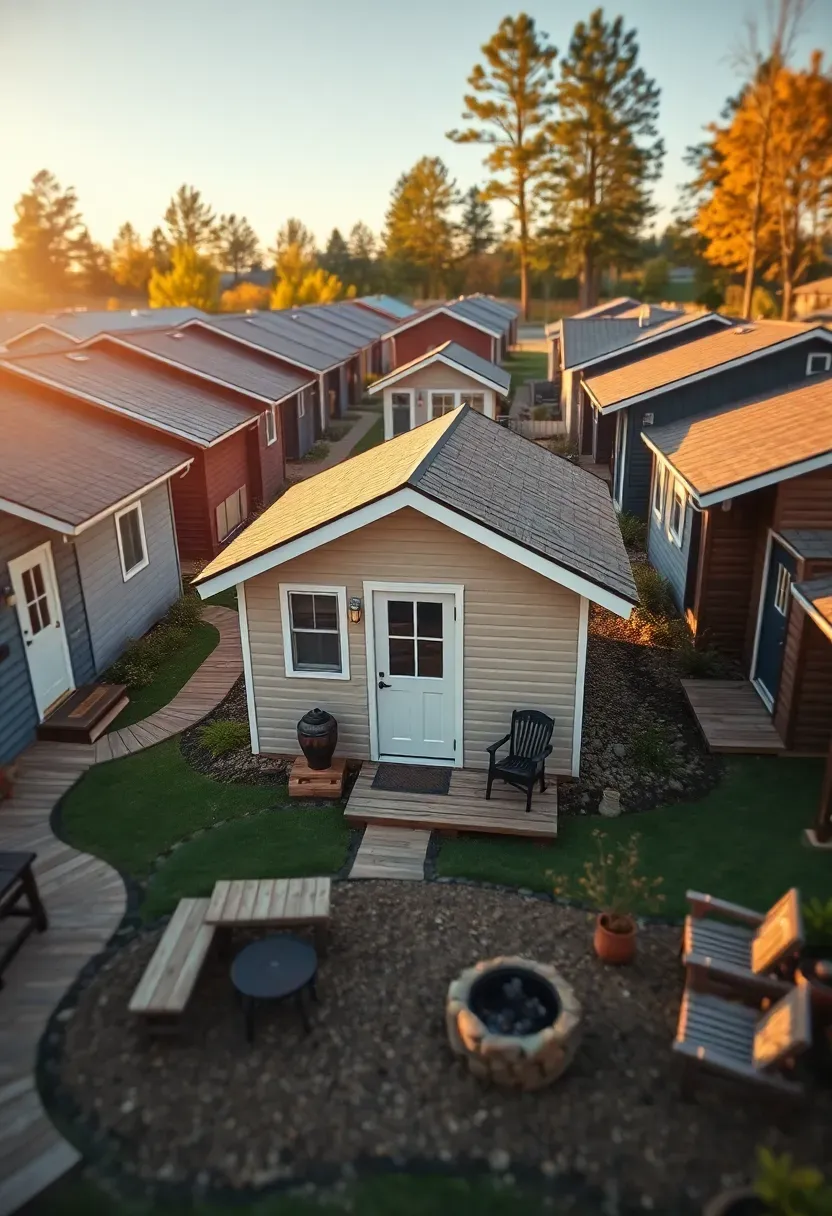
Tiny houses often exist within communities that share resources and social spaces—design your home to function independently while benefiting from shared amenities. If your tiny house community includes communal kitchens, bathrooms, or laundry facilities, you can reduce those systems within your individual home and gain living space. Outdoor communal areas become extensions of private living space. Conversely, if your tiny house stands alone, plan for self-sufficiency in all systems. The key is understanding community context before finalizing design—shared resources dramatically reduce individual space needs but require different priorities than standalone tiny houses. Consider how your home interfaces physically and socially with surrounding community.
Recommended
Items for this idea
Tips
- Research community amenities and rules before design—shared resources may eliminate entire systems from your home
- Design outdoor spaces that can function privately or socially depending on community dynamics
- Include flexible systems that can operate independently or connect to shared infrastructure as needed
Best for: tiny house dwellers interested in intentional communities, co-housing, or developments that share amenities and social spaces
What this gives you: allows downsizing individual systems while gaining access to expanded shared resources and social connection
25. Downsizing Tips: How to Transition to Tiny House Living
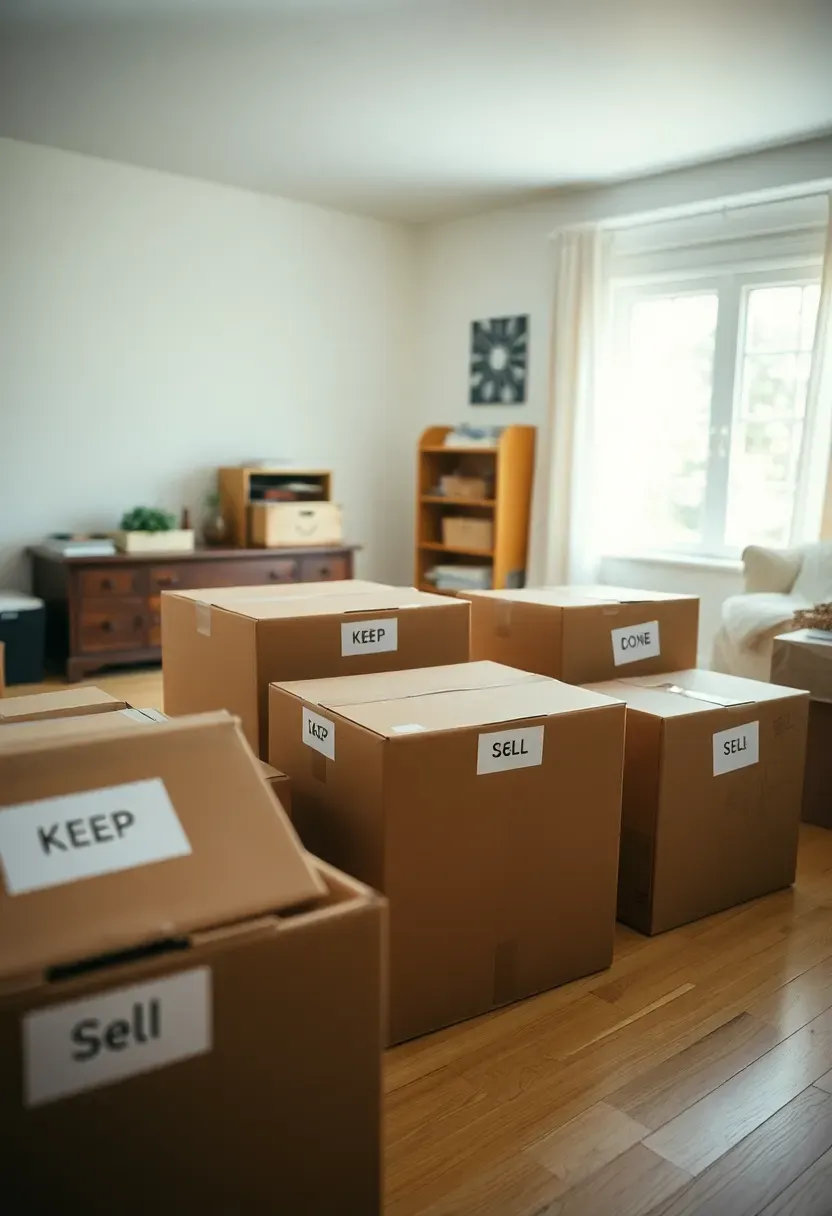
Moving to a tiny house requires ruthless editing—most possessions won't fit and must be sold, donated, or stored elsewhere. Begin downsizing months before moving: categorize possessions into keep, sell, donate, and store, then reduce the keep pile repeatedly until only essentials remain. Measure furniture and verify it fits through doors and within planned spaces before moving day. Digitalize documents, photos, and media to eliminate physical storage needs. Plan for seasonal items—off-site storage or clever under-bed solutions accommodate rotation. The psychological transition matters as much as physical: practice living with less before committing permanently, test tiny house life through rentals or trial stays, and prepare emotionally for the identity shift from accumulation to intentionality.
Tips
- Practice the one-year rule: if you haven't used it in the past year, you won't need it in your tiny house
- Measure everything twice—including door widths, stair angles, and ceiling clearances—before moving day
- Plan sentimental item storage separately from daily-use items—photos and mementos deserve intentional handling
Best for: anyone transitioning from traditional housing to tiny house living, regardless of current home size or lifestyle
What this gives you: prevents overwhelm during transition while ensuring only items that genuinely serve your new life make the move
Tiny house living offers a radical reimagining of how much space we truly need to live well—these 25 essential design principles demonstrate that comfort isn't measured in square feet but in intentionality, efficiency, and thoughtful adaptation to actual needs rather than imagined ones. The most successful tiny houses balance practical constraints with aesthetic quality, proving that small spaces can feel expansive when every element earns its place through daily usefulness or genuine joy. Whether you're building, buying, or simply dreaming of downsizing, remember that the goal isn't deprivation but liberation—less space to maintain, less overhead to worry about, and more freedom for what truly matters in your life.
About the author
OBCD
CGI visualization and interior design content. We create detailed 3D renders and curate practical design ideas for every room in your home.