19 Charming Winter Porch Ideas for a Cozy Outdoor Welcome
These winter porch ideas prove that your entryway can be the most charming part of your home during the coldest months, blending seasonal warmth with practical functionality. Whether you rent or own, thoughtful winter porch design creates a welcoming transition between outdoors and in — using durable materials that withstand weather while maintaining visual appeal throughout the season.
Decorating a front porch for winter requires careful consideration of snow, ice, and temperature fluctuations, while preserving aesthetic warmth. The most successful winter porch ideas balance protection from the elements with decorative touches that celebrate the season — from evergreen arrangements to layered lighting that extends a cozy welcome into darker evenings. Best of all, most of these approaches are renter-friendly and require no drilling or permanent changes.
Quick FAQ
How do I decorate a winter porch without snow?
Focus on winter-greenery like pine, cedar, and holly that maintain color in cold climates. Add texture through wool blankets, wooden crates, and lanterns that evoke winter coziness regardless of snowfall.
What materials work best for winter porch decor?
Choose weather-resistant materials like powder-coated metal, treated wood, ceramic pots, and outdoor-rated fabrics. Natural elements like birch logs, pinecones, and dried botanicals add texture without degrading in cold temperatures.
How can I add lighting to a winter porch safely?
Use outdoor-rated LED string lights, battery-operated pillar candles inside glass hurricanes, and solar-powered path lights. Position electrical connections under covered areas and use weather-proof covers for all outlets.
Should winter porch decor match my home's exterior?
Coordinate rather than match exactly—complement your home's architectural style and color palette while introducing seasonal contrasts like deep greens, warm wood tones, and metallic accents that stand out against winter neutrals.
How often should I refresh winter porch decorations?
A well-designed winter porch can last 2-3 months with minimal maintenance. Refresh dried greens monthly, replace any weathered textiles, and sweep snow regularly to maintain the arrangement's appearance.
What's the simplest way to add winter curb appeal?
Start with a layered foundation: a durable doormat, a large planter with evergreen boughs, and wall-mounted lanterns flanking the door. These three elements create immediate impact with minimal maintenance.
As an Amazon Associate I earn from qualifying purchases.
Table of Contents
- 1. Layered Evergreen Planter Display
- 2. Warm Welcome Lantern Arrangement
- 3. Natural Birch Log Container Garden
- 4. Cozy Textile Layered Entry
- 5. Modern Minimalist Winter Greenery
- 6. Rustic Wooden Crate Seating
- 7. Oversized Wreath Collection Display
- 8. Illuminated Pathway with Lanterns
- 9. Seasonal Dried Floral Arrangement
- 10. Cozy Bench with Textile Accents
- 11. Architectural Evergreen Framing
- 12. Winter-Safe Potted Tree Display
- 13. Layered Doormat and Runner System
- 14. Glass Hurricane Candle Collection
- 15. Mixed Material Planter Grouping
- 16. Vertical Wall-Mounted Greenery
- 17. Seasonal Porch Swing Styling
- 18. Decorative Firewood Storage Display
- 19. Festive But Sophisticated Entry
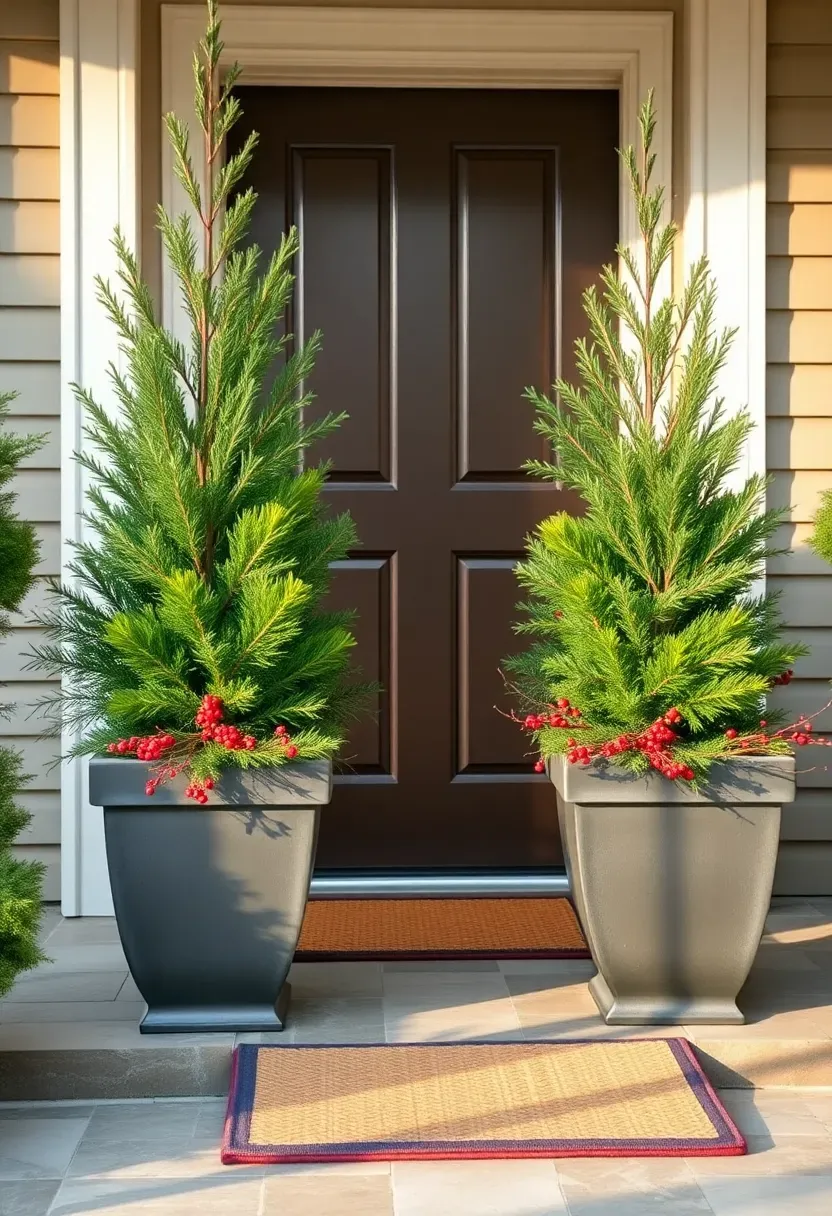
1. Layered Evergreen Planter Display
A tiered planter arrangement creates depth and visual interest while establishing immediate winter curb appeal. The key to successful layering involves varying heights—from tall cedar branches mid-container to low-growing juniper spilling over edges—while maintaining consistent color tones through different shades of green. This approach works particularly well in rectangular planters flanking the front door, where symmetry reinforces a sense of order and welcome. Unlike single-varietal plantings, layered arrangements provide texture contrast: stiff pine needles alongside soft cedar foliage, glossy holly leaves mixing with matte boxwood.
Tips
- Start with a base of floral foam or crumpled chicken wire to secure branches at varied angles
- Place the tallest elements toward the back center, then fill outward with progressively shorter pieces
- Water evergreen arrangements lightly every 2-3 weeks to extend freshness through the season
Best for: Covered porches with space for substantial planters on either side of the entry
What this gives you: Instant sophistication with natural materials that maintain appearance throughout winter months
We picked a few things that go well with this idea: NEEDOMO Set of 2 Bronze Metal Porch Lanterns (★4.4), ROCEEI 14-Inch Vintage Hanging Lantern LED Candle (★4.8) and Black Metal Outdoor Porch Lanterns 2-Piece Set (★4.6). As an Amazon Associate we earn from qualifying purchases.
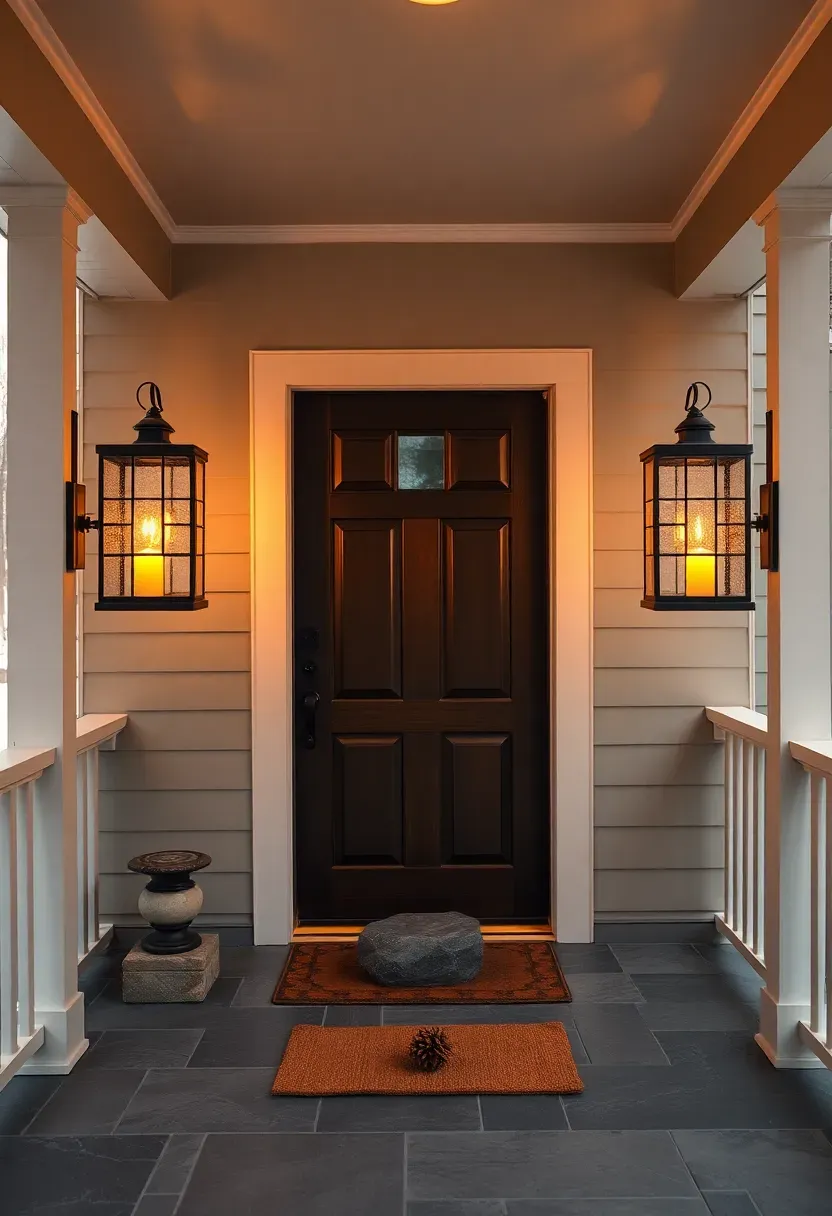
2. Warm Welcome Lantern Arrangement
Wall-mounted lanterns frame your entrance while providing practical illumination during winter's early darkness. The most effective installations position lanterns at eye level roughly 6-8 feet apart, creating a balanced composition that draws attention to the door without overwhelming the space. Black metal fixtures with seeded glass panels diffuse light softly, while aged bronze or brass finishes add warmth against cooler winter color palettes. Consider battery-operated LED pillars inside the lanterns for safety and convenience—no electrical wiring required, and timers can automate illumination at dusk. The combination of upward light casting gentle shadows on siding and downward glow illuminating the step creates depth and dimension that flat overhead lighting cannot achieve.
Tips
- Position lanterns so light illuminates both the door and the step for safety and visibility
- Set battery-operated candles on 6-hour timers to automate daily illumination
- Choose seeded or hammered glass to scatter light softly rather than creating harsh glare
Placement note: Mount lanterns 66-72 inches from the floor for optimal eye-level illumination
What this gives you: Functional lighting that doubles as decorative architecture, enhancing both safety and aesthetics
We picked a few things that go well with this idea: Artificial Cedar Topiary Trees 3FT 2-Pack (★4.4), UV Resistant Faux Cedar Topiary Trees Ground Spike (★4.4) and Artificial Cedar Topiary Ball Trees 22-Inch 2-Pack (★4.3). As an Amazon Associate we earn from qualifying purchases.
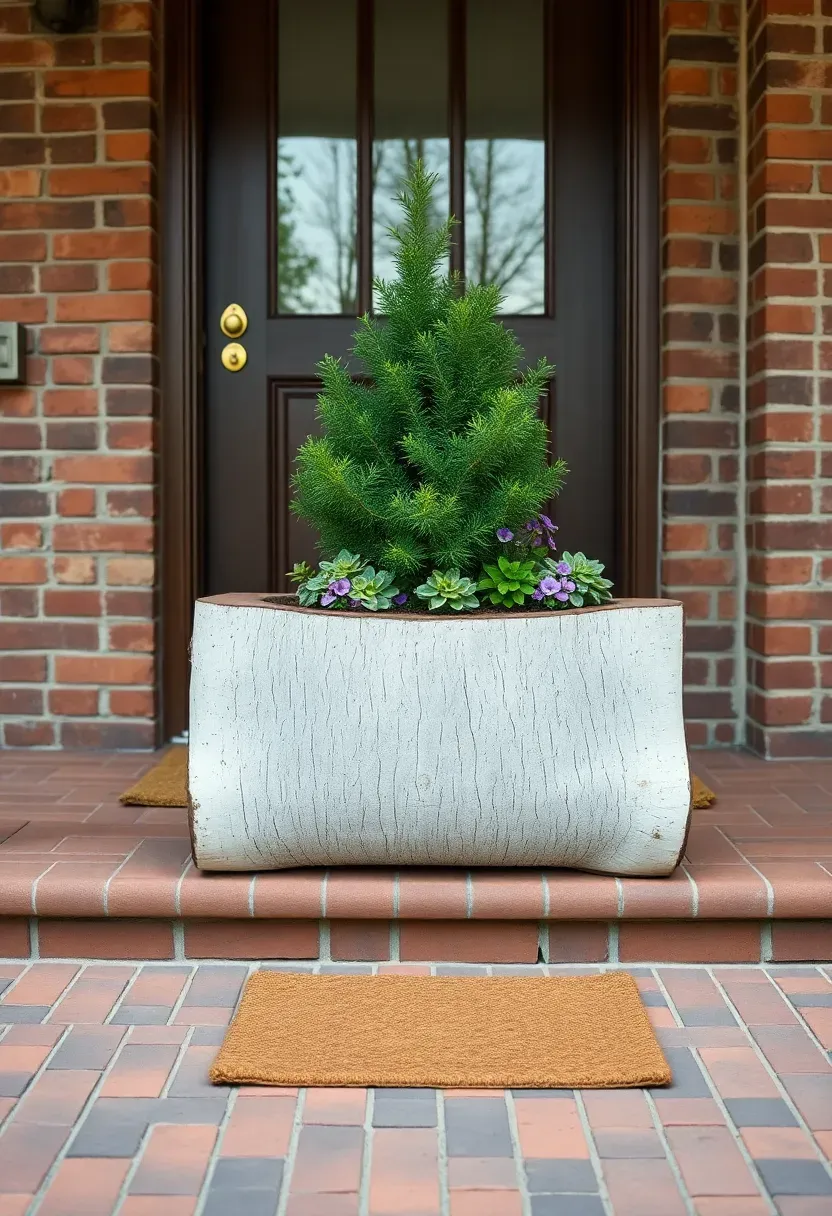
3. Natural Birch Log Container Garden
Birch log planters offer a rustic alternative to traditional ceramic containers while providing excellent drainage and natural insulation for plant roots. The distinctive white bark with black markings creates immediate visual interest even before plants are added, and the cylindrical form accommodates substantial evergreen arrangements without overwhelming smaller porches. To construct, drill drainage holes through the birch log bottom, line with landscape fabric, and fill with potting soil mixed with sand for improved drainage. Plant with dwarf spruce, trailing ivy, and winter-hardy pansies for color that persists through mild winters. The natural wood weathers gradually over seasons, developing a silver-gray patina that complements stone and brick exteriors alike.
Tips
- Seal birch log ends with wood preservative to slow decomposition and extend container life to 3-5 seasons
- Elevate the log on small wooden blocks or stone pieces to prevent direct contact with porch surfaces
- If using live plants, choose varieties hardy two zones colder than your climate for winter survival
Budget/Time: Moderate—birch logs cost $40-80 from garden centers; DIY construction takes 1-2 hours
What this gives you: Unique rustic container art that functions as a planter while providing year-round structural interest
We picked a few things that go well with this idea: Faux-Coir Winter Snowflake Welcome Doormat 17x30 (★4.4), FGSS Coir Non-Slip Winter Snow Welcome Doormat (★4.3) and Faux-Coir Winter Pine Tree Welcome Door Mat 17x29 (★4.3). As an Amazon Associate we earn from qualifying purchases.
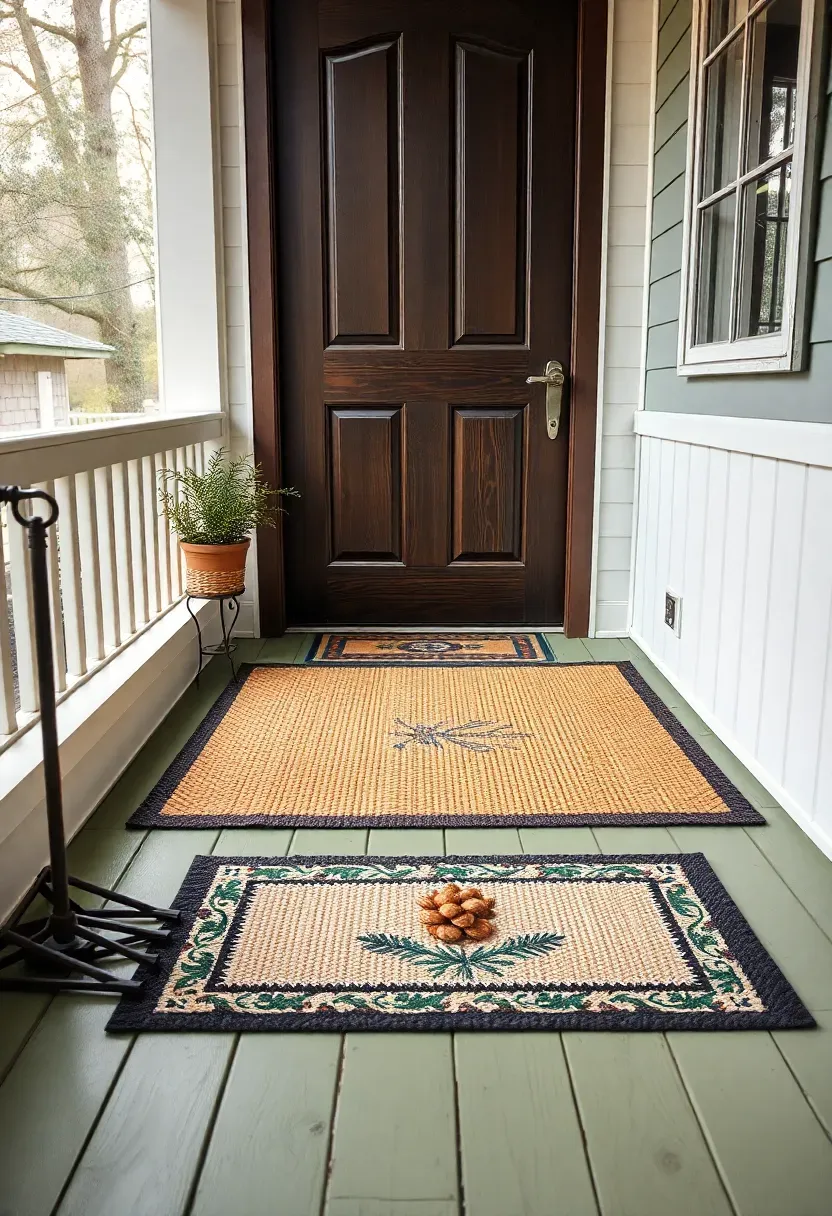
4. Cozy Textile Layered Entry
Layering textiles transforms a utilitarian entry into a welcoming space while protecting interior floors from tracked snow and moisture. The foundation begins with a durable boot scraper or coarse-bristled mat outside, followed by a heavy coir or rubber-backed mat directly in front of the door for wiping footwear. A woven runner extending from door to stairs adds softness underfoot and creates visual引导 toward the entrance. Top with a smaller decorative seasonal mat featuring winter motifs—evergreen patterns, sled designs, or simple geometric shapes—that can be swapped as seasons change. The key is layering textures: coarse coira against smooth jute, patterned wool against solid sisal, creating depth that feels deliberately designed rather than merely functional.
Recommended
Items for this idea
Tips
- Choose rubber-backed mats for outdoor placement to prevent slipping on wet or icy surfaces
- Shake out and vacuum layered textiles weekly to prevent dirt accumulation between layers
- Rotate the decorative top mat monthly to ensure even wear and extend its lifespan
Rental note: Textile layers are completely removable and landlord-friendly, making them ideal for rented properties
What this gives you: Practical moisture management that doubles as decor, protecting floors while establishing seasonal personality
5. Modern Minimalist Winter Greenery
A restrained approach to winter porch decor proves that less can indeed be more, particularly with modern or contemporary architecture. Instead of abundant arrangements, select two or three perfectly formed elements: a single cylindrical planter with a clipped boxwood topiary, a slender birch branch in a minimalist ceramic vessel, or a simple wreath with unfussy geometric lines. The palette stays monochromatic—various greens against whites and grays—with metallic accents limited to brushed brass or matte black. Space around each object becomes part of the composition, allowing the architectural features of the porch itself to serve as backdrop. This approach particularly suits smaller porches where abundant decor would feel crowded, and it maintains its sophisticated appeal throughout the winter without needing frequent refreshing.
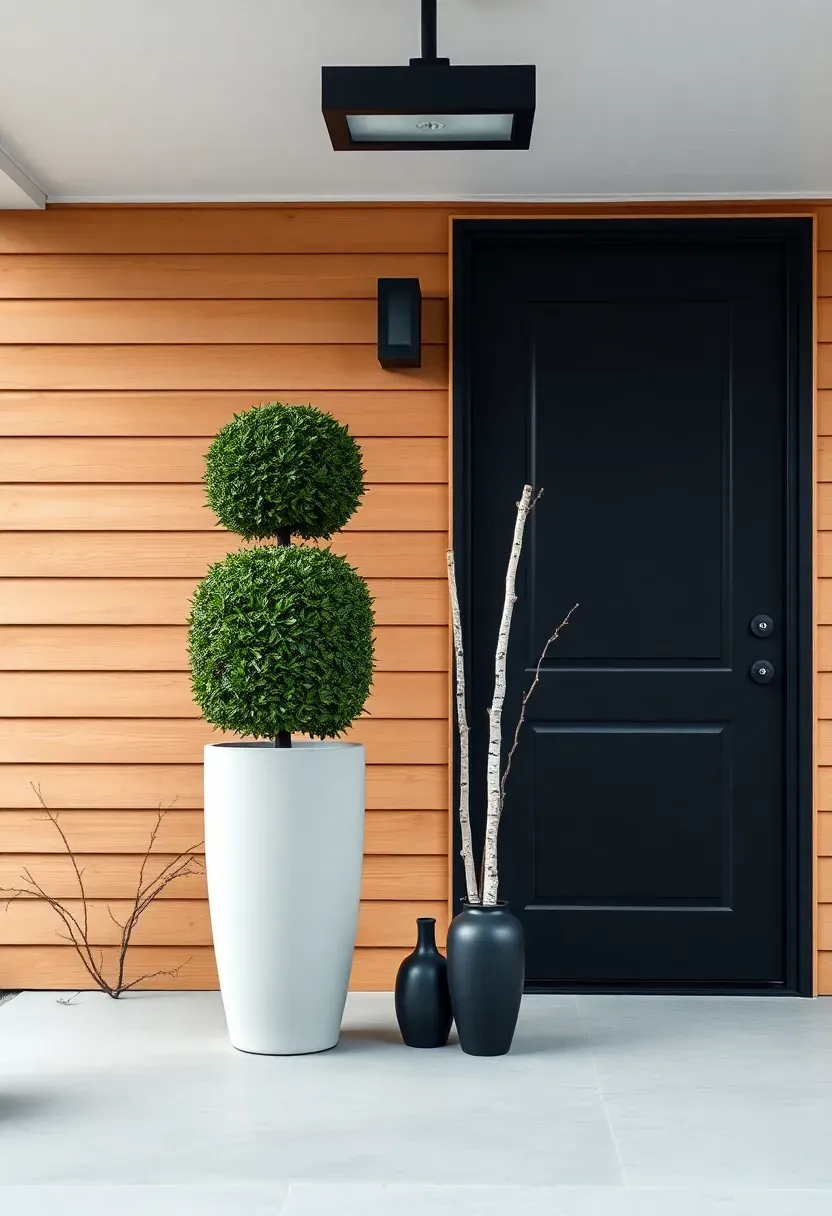
Tips
- Invest in one high-quality artificial evergreen if fresh topiaries aren't available in your area
- Group objects in odd numbers (typically three) for visual balance that feels intentional rather than accidental
- Maintain generous negative space around each element—at least 12-18 inches of clearance
Avoid if: Your design aesthetic leans traditional or maximalist, where this restraint might read as sparse rather than sophisticated
What this gives you: Year-round contemporary appeal that transcends seasonal trends while acknowledging winter through subtle botanical elements
6. Rustic Wooden Crate Seating
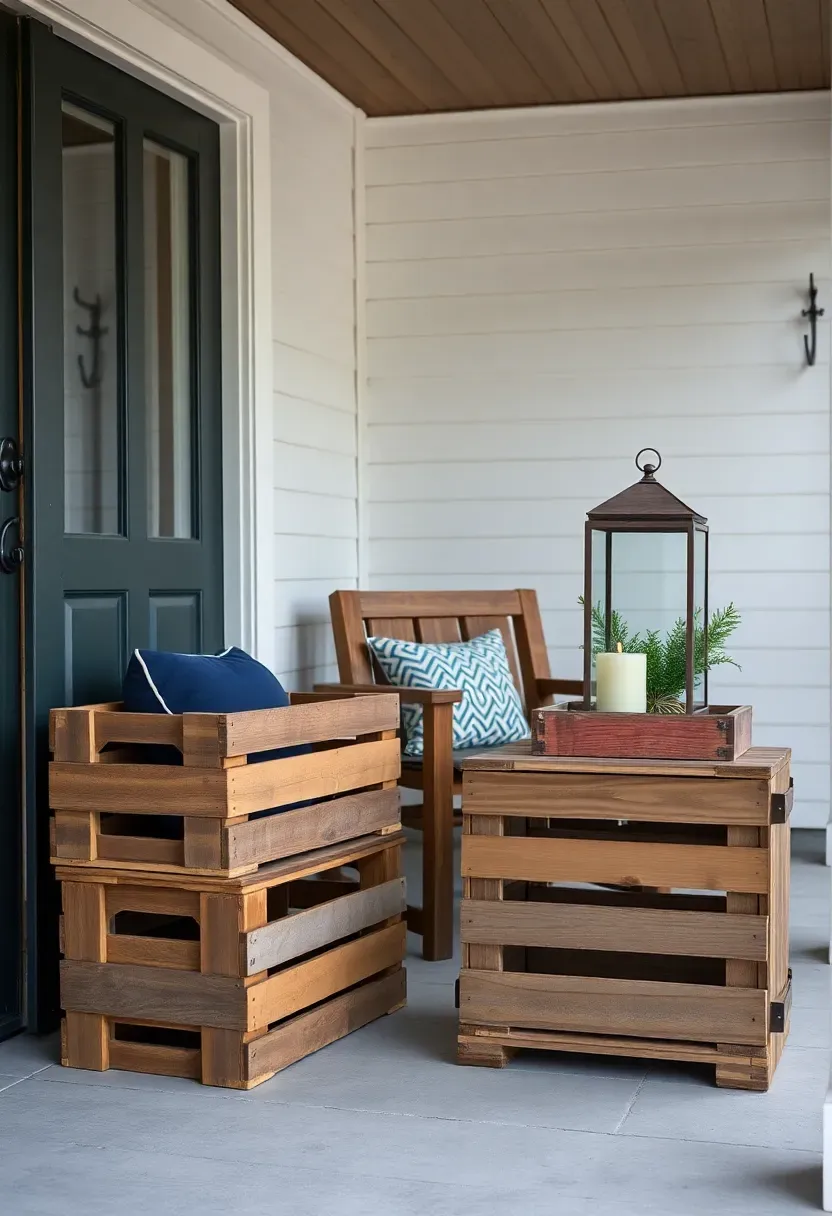
Wooden crates positioned as seating or side tables add functional utility alongside decorative appeal, particularly on larger porches where lingering is encouraged. Stack two crates to create impromptu seating for removing boots or setting down packages, while a single crate at seat height serves as a surface for displaying lanterns or arrangements. The weathered wood texture complements natural evergreens and pinecones, creating a cohesive forest-inspired aesthetic that feels gathered rather than manufactured. For comfort, add a weather-resistant cushion in durable outdoor fabric—navy, forest green, or burgundy coordinate with the winter palette while providing actual usability. This approach works especially well on porches with covered areas where cushions can remain protected from direct precipitation.
Recommended
Items for this idea
Tips
- Secure stacked crates together with L-brackets from the inside to prevent shifting during use
- Apply a penetrating sealer to new crates and allow them to weather naturally for authentic rustic appearance
- Store cushions in a waterproof deck box or bring inside during heavy snow or rain to extend lifespan
Best for: Covered porches with sufficient square footage to accommodate furniture without obstructing the primary path to the door
What this gives you: Functional seating and display surfaces that reinforce rustic aesthetic while providing actual utility for daily use
7. Oversized Wreath Collection Display
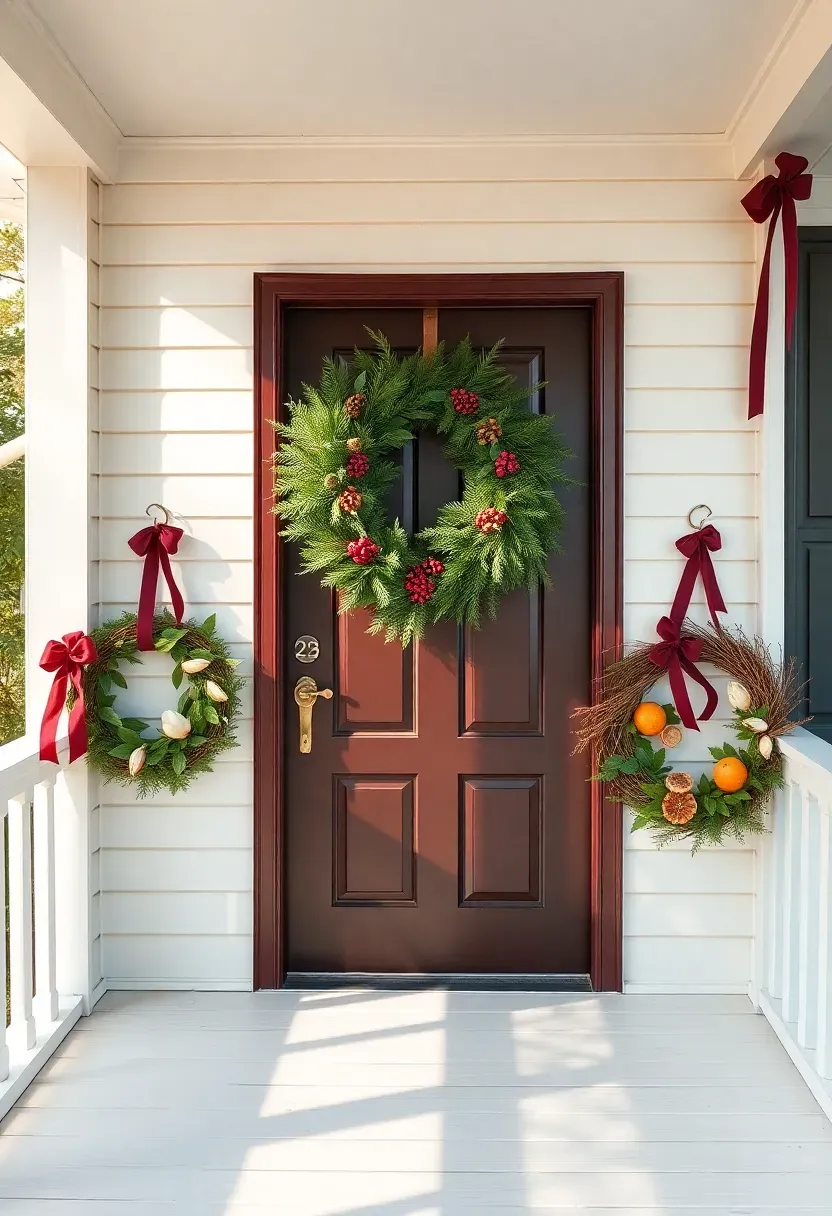
Instead of the traditional single wreath centered on the door, create visual impact through an assortment of wreaths in varied sizes and materials. Hang the largest wreath on the door itself—typically 24-30 inches in diameter for standard doors—then flank with smaller wreaths on adjacent windows or wall sections. Vary the materials: fresh mixed evergreen, dried grapevine with berries, magnolia leaves, or even contemporary metal options for mixed-media interest. The repetition of circular forms creates cohesion despite material differences, while varied scales prevent the arrangement from feeling formulaic. Position wreaths at consistent heights to establish a visual line that draws the eye across the entrance, creating a composed gallery effect that elevates the entire porch facade.
Tips
- Hang wreaths with removable adhesive hooks rather than nails to protect your siding and allow easy seasonal changes
- Mist fresh evergreen wreaths weekly to prolong freshness and prevent needle drop in dry indoor-outdoor transition zones
- Choose ribbon colors that coordinate with your existing exterior palette rather than introducing new seasonal colors
Placement note: Center wreaths at approximately 66 inches from the floor for optimal eye-level viewing from the walkway
What this gives you: Amplified seasonal impact through repetition and scale variation, creating a curated gallery effect that feels generously festive
8. Illuminated Pathway with Lanterns
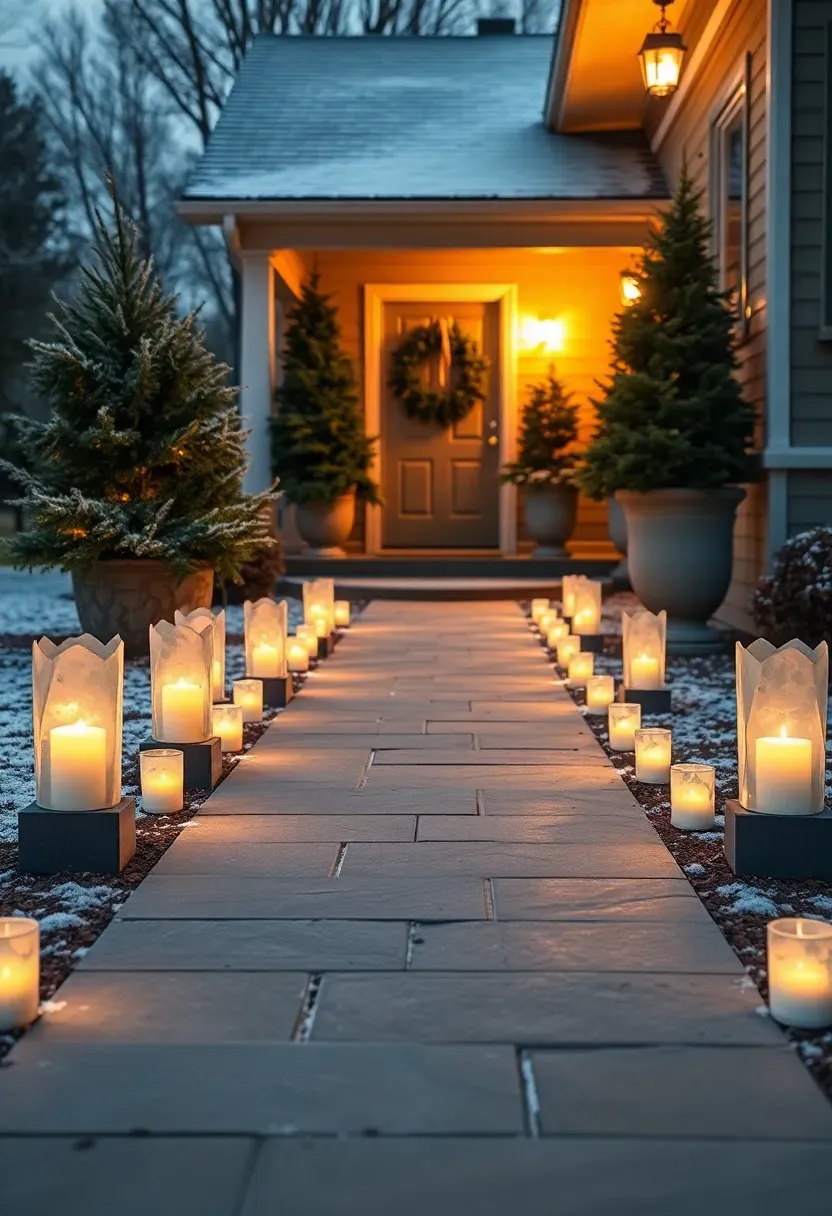
Lighting extends your porch decor beyond the structure itself, guiding visitors to your entrance while creating ambiance visible from the street. Luminarias or weighted lanterns lined along the walkway provide practical illumination and establish a sense of ceremony and welcome. For safety, choose battery-operated LED pillars rather than flame candles, and weight bags or sand-filled bases prevent tipping in winter winds. The repetition of identical luminaries creates rhythm and formality—particularly effective leading up to symmetrical colonial or traditional homes. Alternatively, mix lantern styles and heights for a more eclectic approach that suits cottage or farmhouse aesthetics. Position lights roughly 6-8 feet apart along both sides of the path for balanced illumination without overwhelming the space.
Recommended
Items for this idea
Tips
- Set luminaria candles on 4-hour timers positioned to turn on at dusk for automated daily operation
- Use flameless LED pillars specifically designed for outdoor use to prevent battery failure in cold temperatures
- Bring luminarias inside during heavy snowfall or high winds to prevent damage, then replace once conditions improve
Avoid if: Your region experiences frequent heavy snowfall that would quickly bury or damage pathway luminarias
What this gives you: Practical path illumination that creates dramatic curb appeal visible from the street while ensuring safe approach to your entry
9. Seasonal Dried Floral Arrangement
Dried botanical arrangements offer longevity that fresh evergreens cannot match, maintaining their appearance throughout the entire winter season without replacement. Look for dried elements with structural integrity: globe thistles, teasel heads, bunny tails, lotus pods, and Chinese lantern stems provide both height and textural interest. Combine with preserved eucalyptus for greenery and dried berries for color accents, arranging in a weather-resistant vessel like ceramic, galvanized metal, or even a hollowed birch log. The neutral palette of dried botanicals—cream, tan, rust, brown—complements virtually any exterior color scheme, and the sculptural quality of stems and seed heads reads as contemporary rather than rustic when artfully arranged. Position prominently on a porch table or beside the door where the intricate details can be appreciated up close.
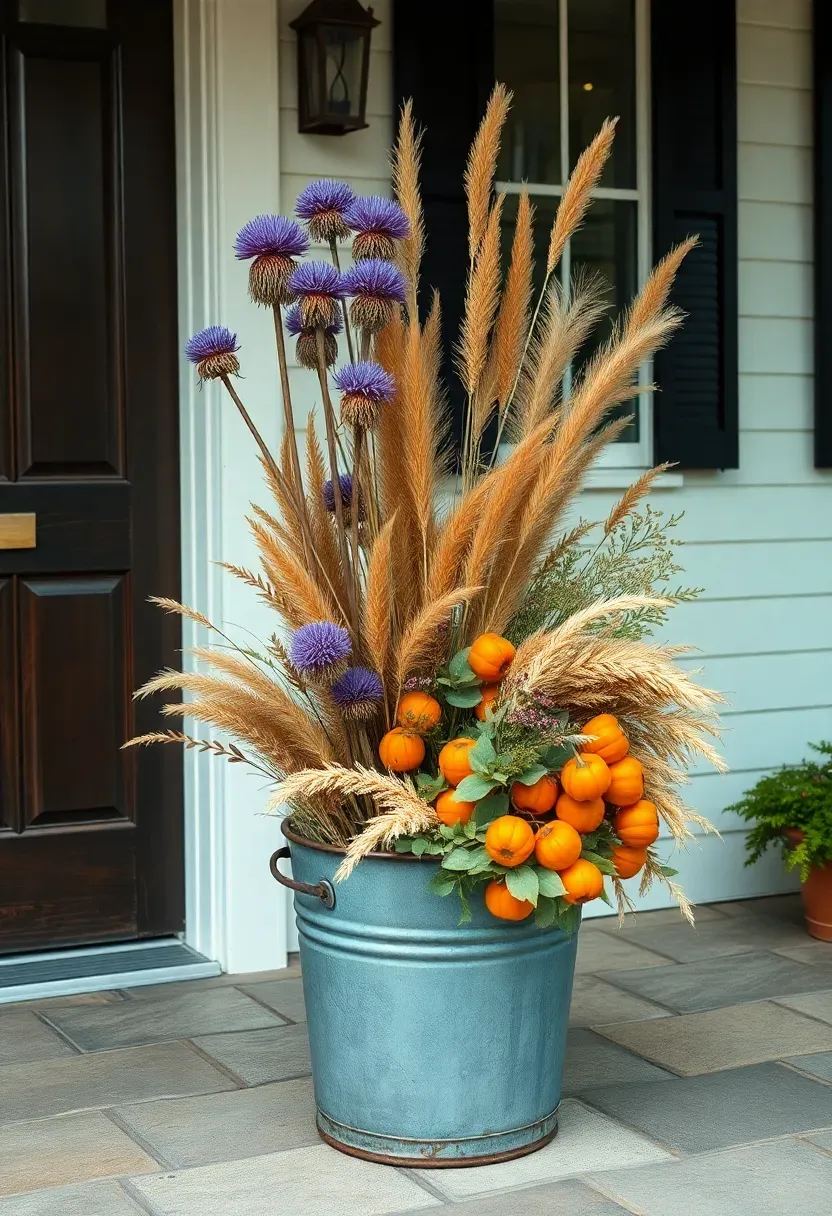
Tips
- Spray dried arrangements with a UV-resistant sealant to prevent fading from bright winter sun exposure
- Start with the tallest stems at the back center, then layer forward with progressively shorter elements for depth
- Choose vessels heavy enough to remain stable in winter winds, or add weight to the bottom with stones or sand
Best for: Covered porches where arrangements are protected from direct precipitation that could damage preserved elements
What this gives you: Long-lasting decorative impact that remains attractive from November through March without maintenance or replacement
10. Cozy Bench with Textile Accents
A well-placed bench transforms a porch from transitional space to destination, offering a spot to pause while removing boots or simply enjoy winter scenery. The bench itself sets the tone: a spindle-back wooden bench suits traditional homes, while a sleek metal silhouette complements contemporary architecture. Layer textiles for both comfort and visual interest—a thick wool blanket in plaid or solid winter hue draped across the seat, with coordinating pillows in weather-resistant outdoor fabric. The color palette should complement your exterior: navy and cream for neutral schemes, burgundy and forest green for red brick, charcoal and oatmeal for modern grays. A small side table or crate beside the bench provides surface space for a mug of cocoa or reading material, completing the inviting vignette.
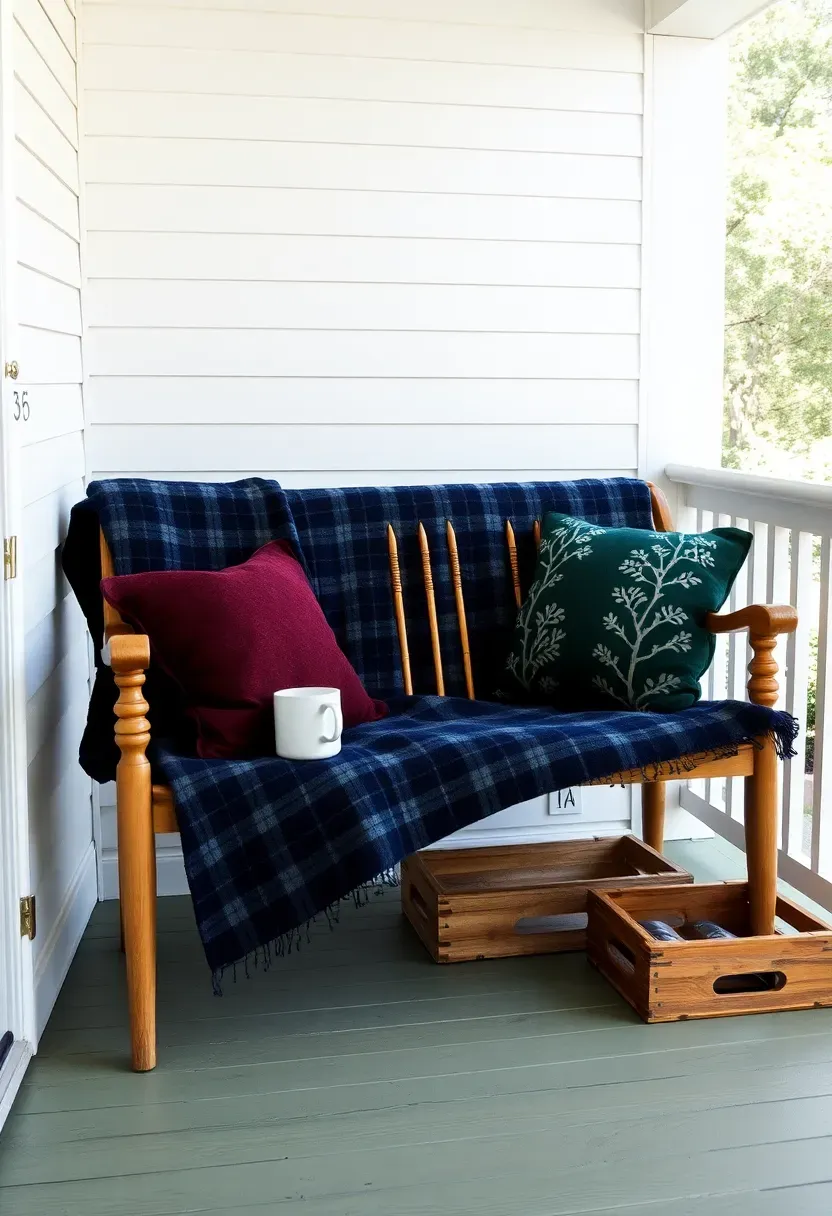
Recommended
Items for this idea
Tips
- Choose textiles specifically labeled for outdoor use with UV-resistant fabrics that resist fading from winter sun
- Store blankets and pillows in a waterproof deck box during heavy precipitation to prevent moisture damage
- Position the bench under cover or against a protected wall to minimize direct exposure to snow and rain
Placement note: Allow at least 3 feet of clearance in front of the bench for comfortable seating and easy passage
What this gives you: Functional seating that creates an inviting pause point, making your porch feel like an extension of living space rather than just an entry
11. Architectural Evergreen Framing
Garlands draped along architectural elements—railings, columns, rooflines—frame your entrance with seasonal greenery while highlighting your home's structural features. The key to professional-looking results lies in substantial materials: fresh thick cedar or pine garlands rather than sparsely wired artificial options. Secure garlands with floral wire or removable hooks at regular intervals to maintain a drape that appears natural rather than artificially positioned. For columns and posts, wrap garland in a gentle spiral, allowing some space between wraps for the architecture to show through. Along railings, swag garland slightly between posts for a draped effect that looks settled rather than rigid. Intersperse elements like pinecones, berry clusters, or magnolia leaves for additional texture, but maintain restraint—over-embellished garlands compete with rather than complement the architecture.
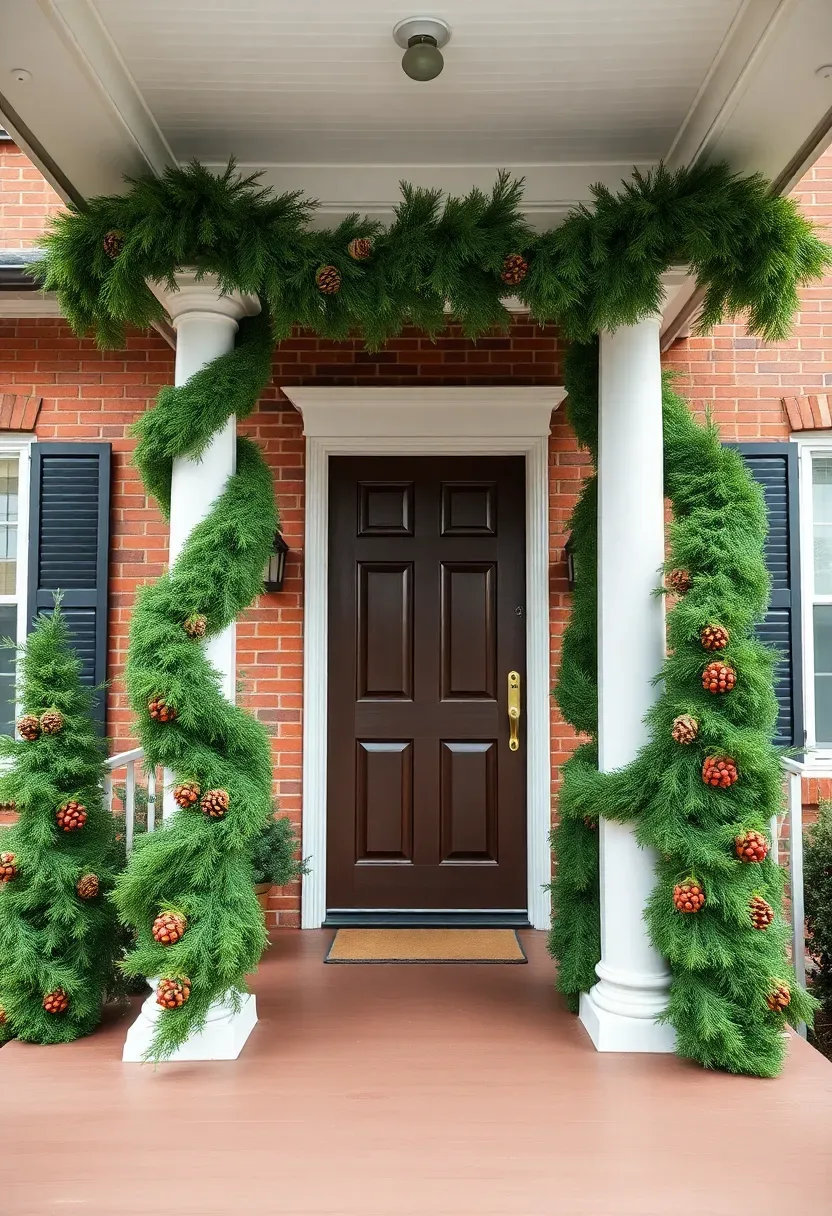
Tips
- Fluff garland sections before hanging to maximize fullness and minimize visible wire or stems
- Mist fresh garlands lightly every 3-4 days to extend freshness and prevent premature browning
- Choose garland thickness proportionate to your space—substantial 10-12 inch diameter garlands for standard porches
Budget/Time: Higher investment—fresh garlands cost $80-150 per 9-foot strand; installation takes 2-3 hours for complete porch
What this gives you: Professional custom appearance that integrates seasonal decor with your home's architecture for a cohesive designer look
12. Winter-Safe Potted Tree Display
Small potted evergreens flanking the entrance create living architecture that scales appropriately to porch proportions while providing year-round structure beyond the winter season. Dwarf Alberta spruce, compact junipers, or topiary arborvitae in substantial planters frame the door without obscuring it, and their symmetrical forms reinforce traditional architecture. Choose containers sized appropriately to the trees—planters should be roughly one-third the height of the tree for visual balance—and use high-quality potting soil mixed with compost for nutrition. Wrapping pots in burlap or heavy fabric adds winter insulation for roots while introducing textural contrast against the planter material. In regions with sustained below-freezing temperatures, consider moving trees against the house foundation for warmth or wrapping the foliage itself in burlap during extreme cold snaps.
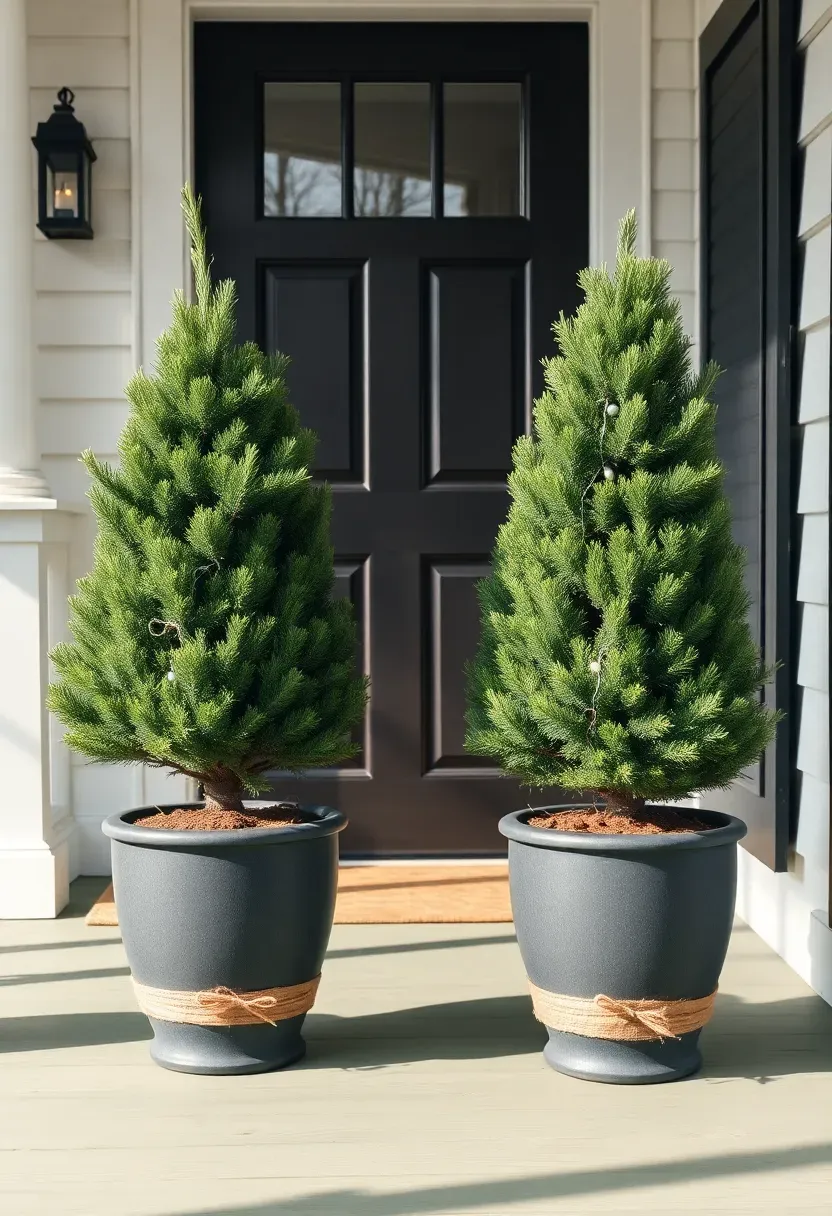
Recommended
Items for this idea
Tips
- Water potted evergreens whenever temperatures rise above freezing for 24+ hours—dry winter winds dehydrate soil quickly
- Choose planters with drainage holes and saucers to protect porch surfaces from water damage
- Apply anti-desiccant spray to foliage in late fall to reduce moisture loss through needles and leaves
Placement note: Position potted trees at least 12-18 inches from the house wall to allow air circulation and prevent moisture damage to siding
What this gives you: Living architecture that provides year-round structure and privacy while framing your entrance with natural symmetry
13. Layered Doormat and Runner System
A strategic layering of floor textiles manages moisture and debris while establishing visual rhythm that draws visitors toward your entrance. Begin with a heavy-duty boot scraper or coarse brush mat positioned at the porch edge or bottom step—this initial barrier removes large debris and loose snow before it reaches your primary surfaces. Follow with a substantial coir or rubber-backed mat directly in front of the door for wiping footwear, choosing a size large enough to accommodate both feet simultaneously—typically 30x48 inches or larger. A coordinated runner extending from door to stairs creates continuous引导 and softens hard surfaces underfoot. The color progression should flow logically: darkest at the entry point where dirt is most visible, progressing to lighter tones toward the interior for visual lightening.
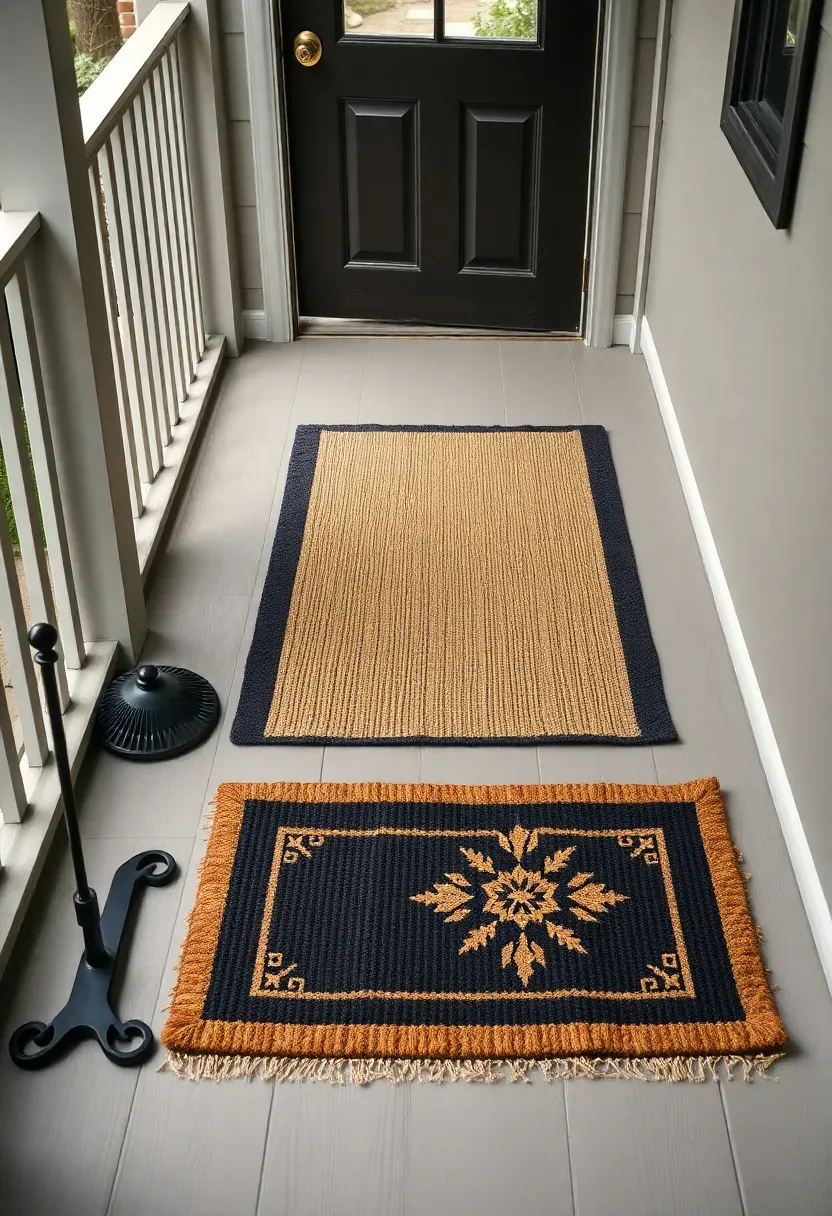
Tips
- Choose mats with rubber or textured backing to prevent slipping on wet or icy porch surfaces
- Shake out coir mats weekly and vacuum runners to prevent dirt accumulation that can damage fibers
- Replace boot scraper mats annually as bristles degrade with exposure to de-icing salts and moisture
Rental note: All textile layers are fully removable and non-damaging, making this system ideal for renters seeking seasonal impact
What this gives you: Practical moisture and debris management disguised as decor, protecting interior floors while establishing welcoming visual flow
14. Glass Hurricane Candle Collection
Grouped hurricanes create ambient illumination while adding vertical interest and reflective surfaces that brighten dark winter porches. The key lies in thoughtful grouping: three hurricanes of varied heights—perhaps 12, 16, and 20 inches—clustered on a porch table, crate, or directly on the floor beside the door. Vessel shapes can mix: traditional bell hurricanes, contemporary cylinders, or rustic mason jars in glass, all unified by the warm candlelight within. Pillar candles in cream or ivory coordinate with any exterior palette, while battery-operated LEDs eliminate safety concerns and allow timed operation. For added texture, surround the hurricanes with natural elements—pinecones, birch rounds, or magnolia leaves—that catch the candlelight and create shadow play on surrounding surfaces.
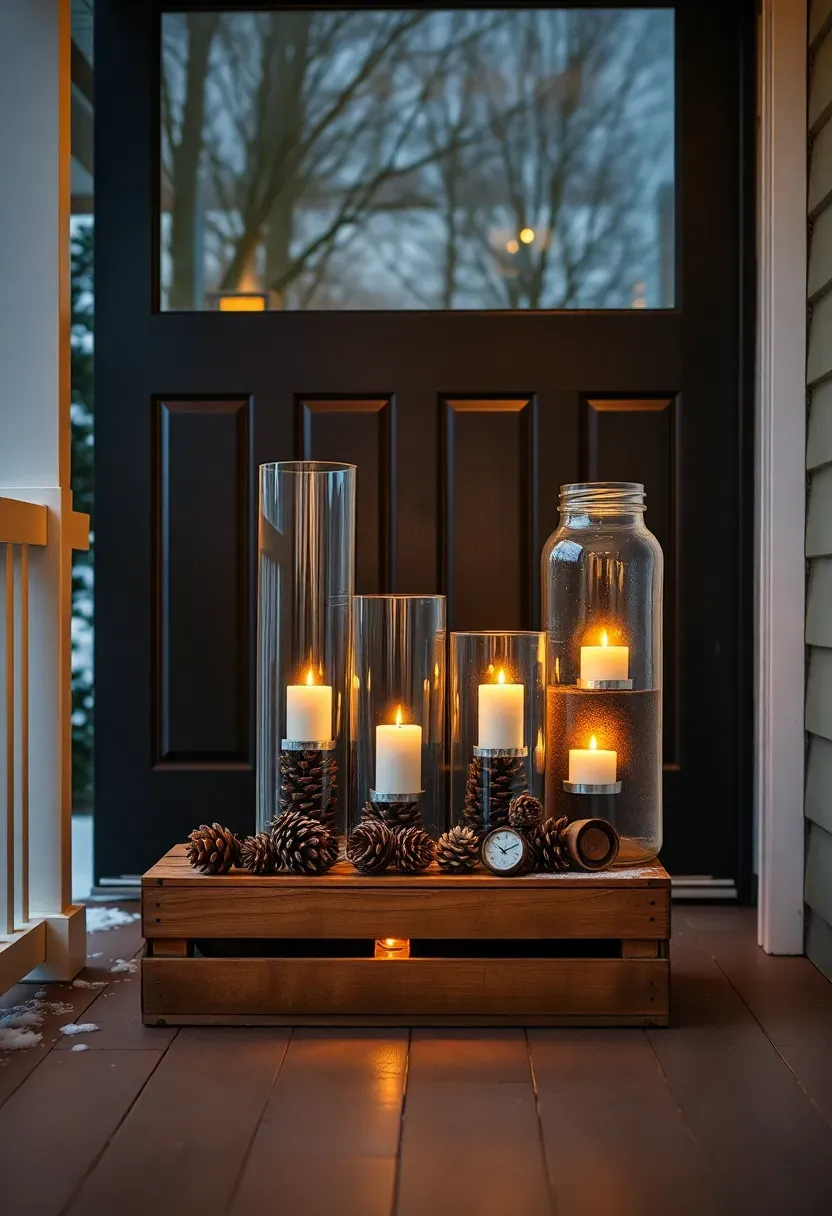
Recommended
Items for this idea
Tips
- Choose battery-operated LED pillars specifically rated for outdoor use to prevent battery failure in cold temperatures
- Set candles on 4-6 hour timers positioned to activate at dusk for automated daily illumination
- Group hurricanes in odd numbers (typically three or five) for visual balance that appears intentional
Placement note: Position hurricanes where they won't be knocked over by foot traffic—ideally on a stable surface away from the primary path
What this gives you: Atmospheric lighting that creates warmth and welcome during dark winter evenings while adding sculptural vertical interest
15. Mixed Material Planter Grouping
Planters in varied materials and sizes create dynamic visual interest while allowing flexibility in arrangement and replanting across seasons. Instead of matching planters, choose complementary vessels: a large ceramic urn in charcoal gray, a medium galvanized metal bucket, a small woven basket lined with plastic, and perhaps a low concrete bowl. This mix of textures—smooth ceramic, weathered metal, woven organic, rough concrete—adds depth even before plants are added. For winter, fill each with compatible evergreen arrangements or dried botanicals, maintaining consistency in plant material despite vessel variety. Position the tallest planter toward the back of the grouping with progressively smaller vessels forward, creating a tiered composition that guides the eye and feels artfully composed rather than randomly assembled.
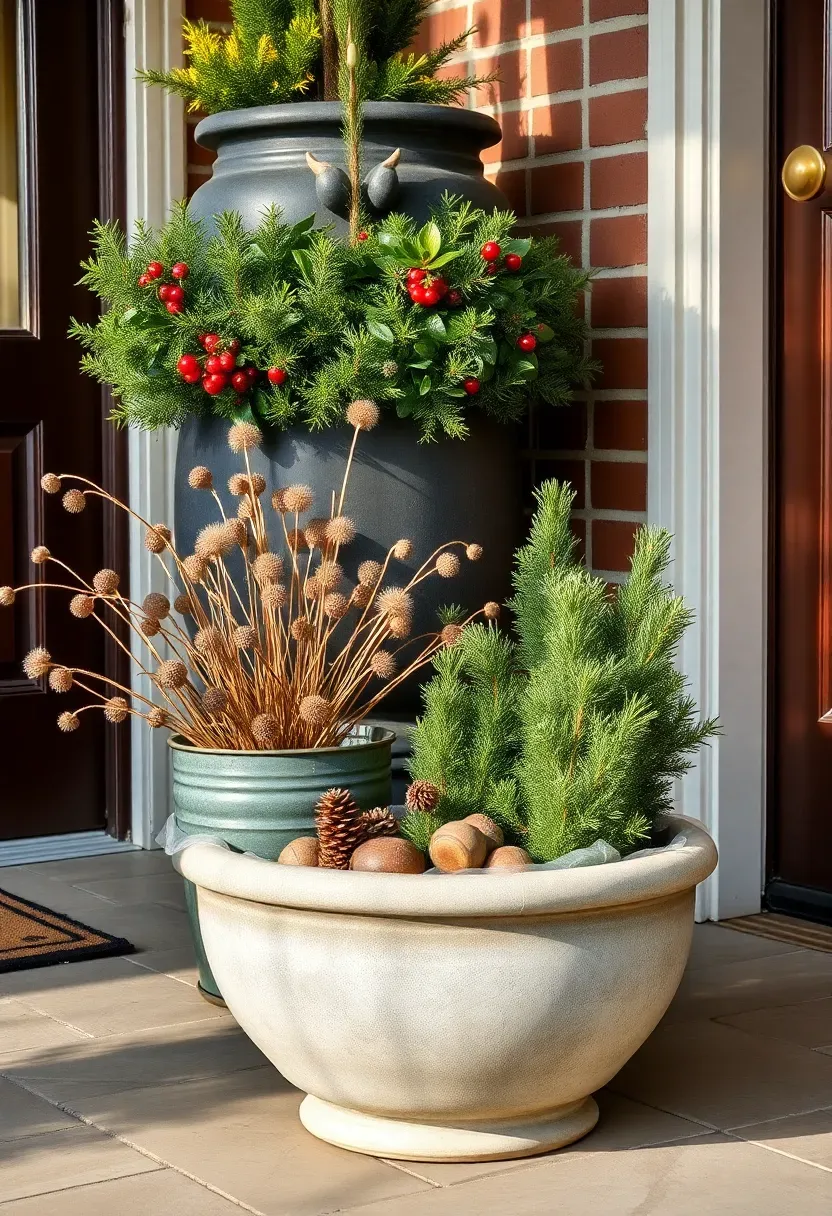
Tips
- Choose planters with drainage holes and use saucers to protect porch surfaces from water damage
- Unify varied vessels with consistent plant material—similar evergreens or coordinated botanicals throughout
- Allow at least 4-6 inches between planters for air circulation and to prevent the arrangement from feeling crowded
Budget/Time: Moderate flexibility—start with one high-quality planter and add vessels over time as budget allows
What this gives you: Collected-over-time appearance that feels personalized and dynamic, with vessels that can be repurposed across seasons
16. Vertical Wall-Mounted Greenery
Utilizing vertical wall space adds greenery without consuming valuable floor area on smaller porches where every square foot counts. Wall-mounted trough planters, window boxes, or even repurposed architectural salvage create planting pockets at eye level, drawing attention upward and making the space feel larger. Mount planters at varying heights for informal appeal, or align symmetrically on either side of the door for formal balance. Fill with trailing elements like ivy or creeping juniper that cascade downward, creating vertical movement and softening hard architectural lines. For additional interest, mix in upright elements like small spruce tops or birch branches for height and structure. The elevated position also protects plantings from some snow accumulation while placing them at eye level for detailed appreciation.
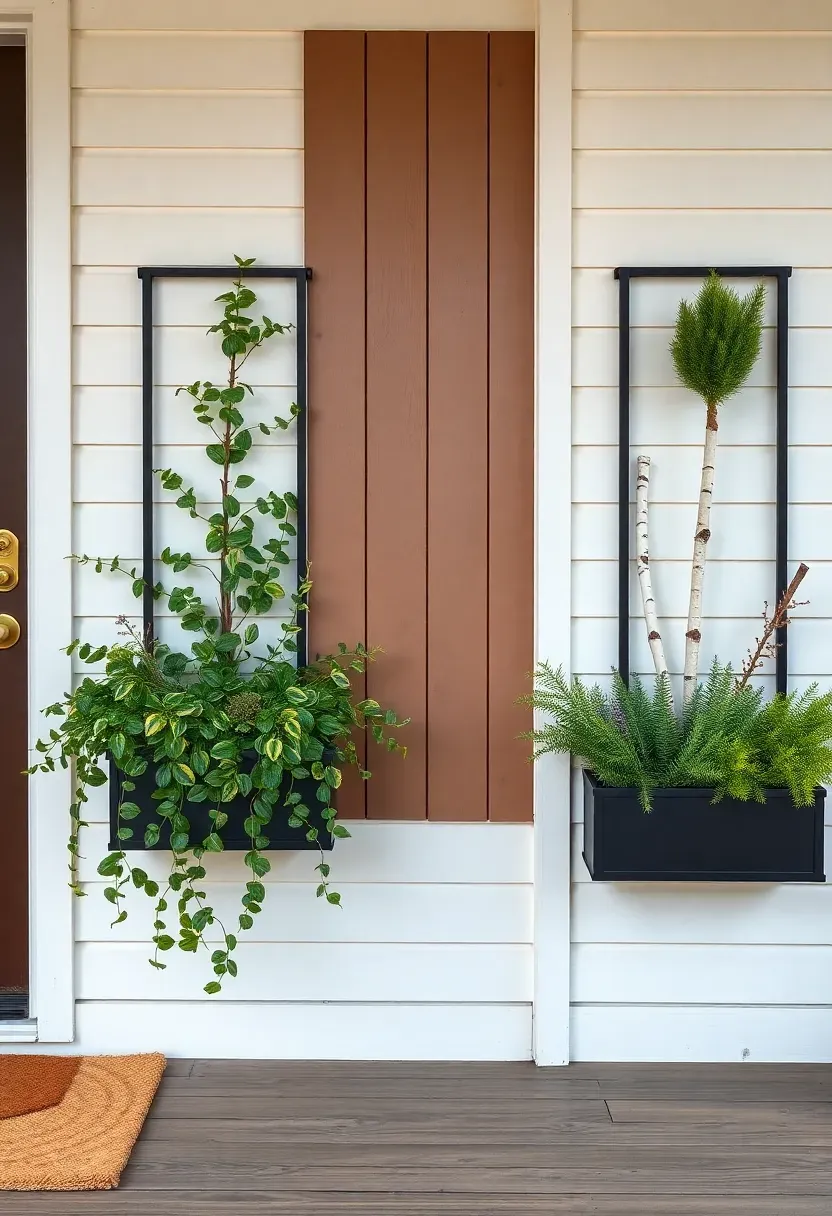
Recommended
Items for this idea
Tips
- Use mounting hardware appropriate for your siding material—masonry anchors for brick, specific screws for stucco or wood
- Line planters with coconut coir liners or heavy-duty plastic to contain soil and protect siding from moisture damage
- Position wall planters where they're easily accessible for watering—mid-chest height is ideal for maintenance comfort
Best for: Smaller porches or townhouse entries where floor space is limited but wall space is available for vertical display
What this gives you: Greenery and seasonal impact without sacrificing floor space, making even modest porches feel lush and welcoming
17. Seasonal Porch Swing Styling
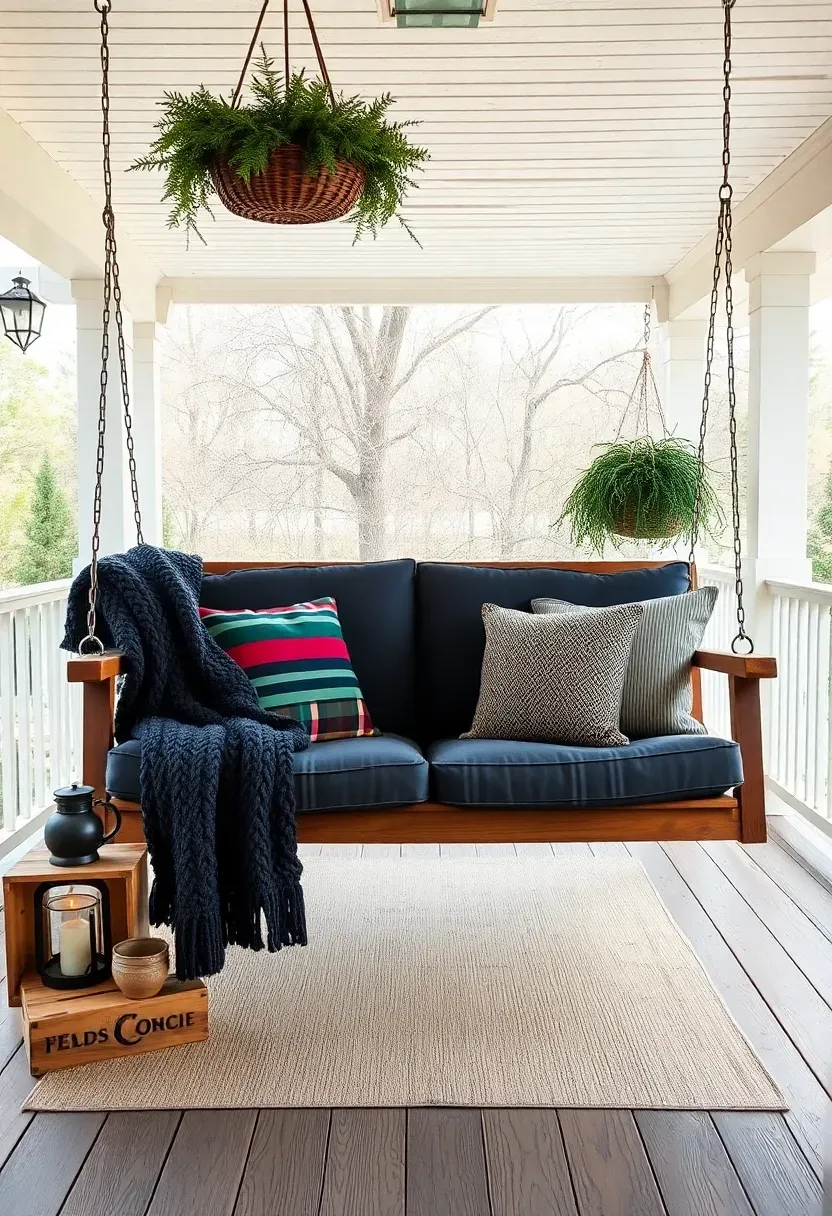
A porch swing transformed with seasonal textiles and accessories becomes a focal point that invites lingering while establishing cozy winter appeal. Start with substantial weather-resistant cushions in deep winter hues—navy, forest green, burgundy, or charcoal—and layer with coordinating pillows for both comfort and visual interest. A thick wool blanket or throw draped across one corner suggests cozy seating even in cold weather. For safety and comfort, add nonslip rugs or mats beneath the swing area to prevent slipping when mounting or dismounting in snowy conditions. Surround the swing with winter-appropriate accessories: a side table or crate for a warm drink, a lantern for ambient evening light, and perhaps a small evergreen arrangement in a hanging basket above to create a complete vignette.
Tips
- Choose outdoor cushions specifically designed to withstand temperature extremes without cracking or degrading
- Store textiles in a waterproof deck box during heavy precipitation to extend their lifespan significantly
- Check swing chains and hardware annually for rust or wear, lubricating moving parts as needed
Placement note: Allow at least 4 feet of clearance in front of and behind the swing for safe use without obstruction
What this gives you: Inviting seating destination that makes your porch feel like an extension of living space, creating welcome even when weather prevents actual use
18. Decorative Firewood Storage Display
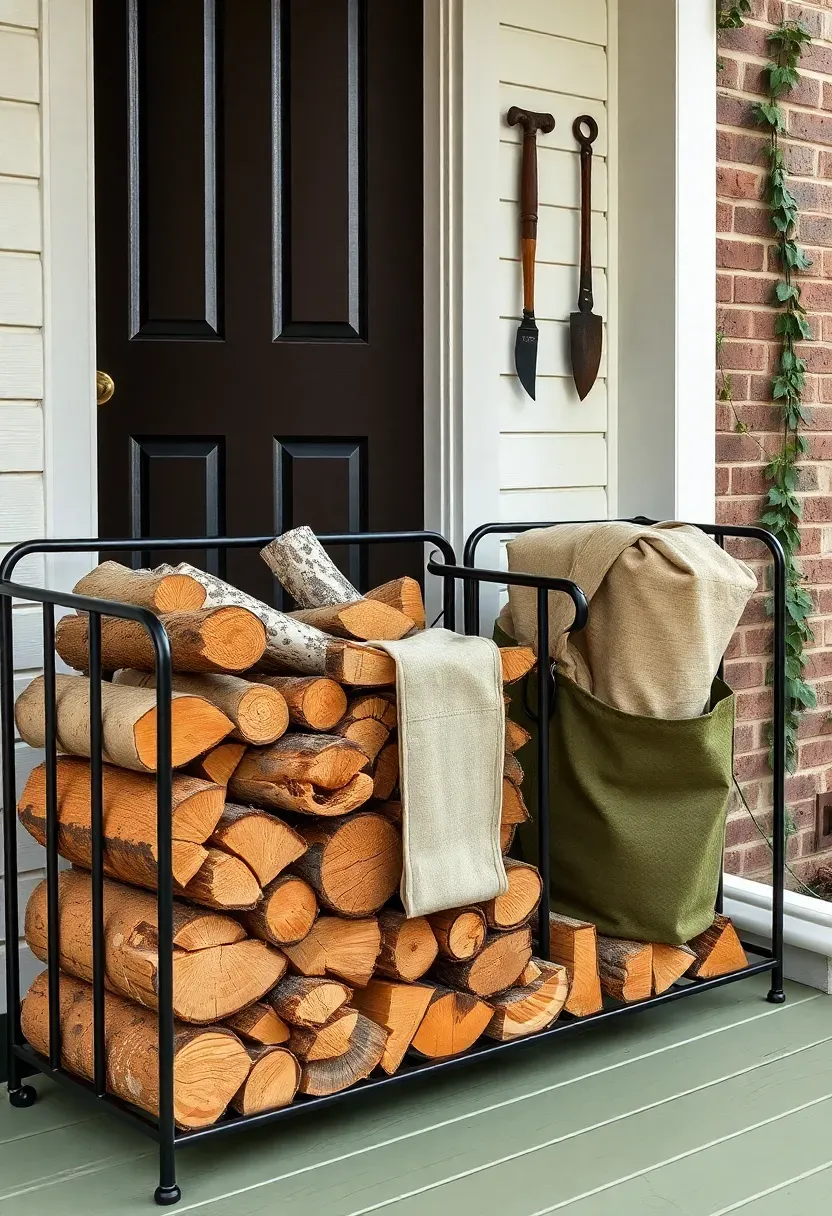
Firewood stored decoratively serves a practical purpose while adding rustic texture and winter symbolism to your porch display. A metal log rack, wooden crate, or even a repurposed wine rack positioned beside the door holds split firewood in neat stacks, suggesting warmth within. The key lies in thoughtful presentation: choose wood with appealing bark—birch with distinctive white markings, oak with deep furrows, or fruit woods with reddish tones—and stack uniformly rather than haphazardly. A canvas log carrier or leather strap arranged nearby adds authenticity and suggests use, while a small hatchet or fireplace tool set displayed on a nearby wall reinforces the functional aesthetic. Even if your home doesn't have a working fireplace, the stacked firewood evokes coziness and winter preparation that resonates universally.
Recommended
Items for this idea
Tips
- Position firewood away from the house foundation to prevent pest issues and allow for air circulation around the stack
- Choose only fully seasoned wood that has dried for 6-12 months to prevent mold growth and insect infestation
- Keep the stack elevated off the porch floor using the rack or wooden runners to prevent moisture damage from below
Avoid if: Your porch is fully enclosed without ventilation, where stored firewood could introduce pests or moisture issues
What this gives you: Functional storage that doubles as decor, creating rustic winter appeal while keeping firewood accessible and neatly organized
19. Festive But Sophisticated Entry
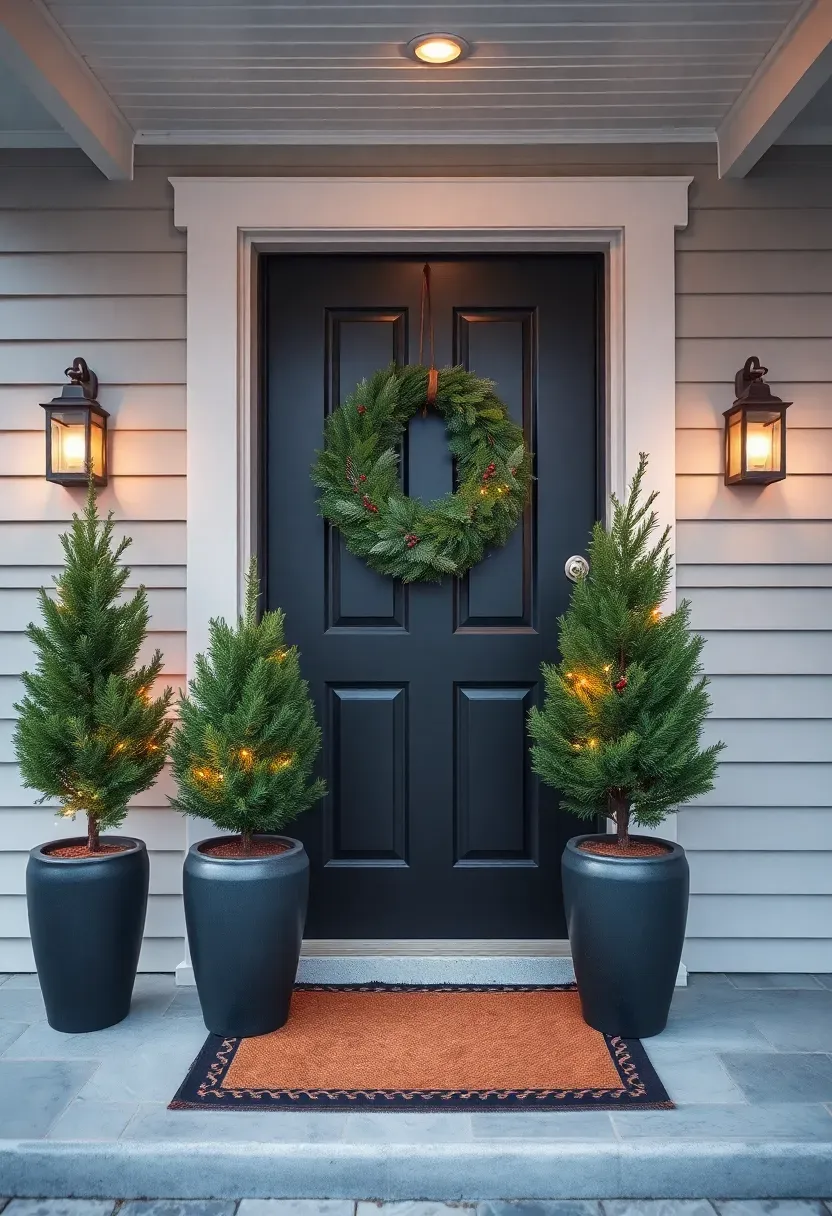
A balanced approach to seasonal decorating incorporates festive elements while maintaining year-round sophistication, avoiding the clichéd or overly thematic. This refined approach relies on quality materials and restrained composition rather than abundant decoration: a substantial wreath in fresh evergreen with minimal berry accents, a pair of elegant planters with simple topiary or layered greens, and perhaps subtle lighting through lanterns or spot lighting. The color palette stays primarily neutral with greens, whites, and natural wood tones, allowing red or metallic accents to serve as punctuation rather than dominating the composition. Quality materials—fresh greens, substantial ceramic or metal vessels, real birch or pinecones—elevate the display beyond mass-produced decoration. The result acknowledges the season without feeling temporary or themed, maintaining appeal throughout winter and transitioning seamlessly to spring.
Tips
- Invest in one or two high-quality pieces—a substantial wreath or ceramic planters—rather than multiple smaller decorations
- Choose artificial evergreens only if they're premium quality; fresh materials always appear more sophisticated
- Maintain restraint with color—limit red or metallic accents to 10-15% of the overall composition for elegance
Best for: Homes with modern or traditional architecture where seasonal decor should complement rather than compete with the design
What this gives you: Refined seasonal acknowledgment that feels appropriate through January and February without feeling dated or overly Christmas-specific
These winter porch ideas show that transforming your home's entrance into a seasonal destination is well within reach — whether you rent or own, and regardless of budget. The most successful winter porch designs combine durable, weather-resistant materials with thoughtful layering of textures, lighting, and natural elements that create warmth during the coldest months. From substantial evergreen planters and layered textiles that manage moisture, to strategic lighting that extends a cozy welcome into dark winter evenings, each of these ideas is adaptable to your porch's size and style. Choose the approaches that complement your architecture and climate, arrange them with attention to scale and balance, and maintain the display throughout the season for consistent curb appeal that welcomes visitors home all winter long.

About the author
OBCD
CGI visualization and interior design content. We create detailed 3D renders and curate practical design ideas for every room in your home.