3 Masculine Bathroom Decor Ideas That Actually Look Refined
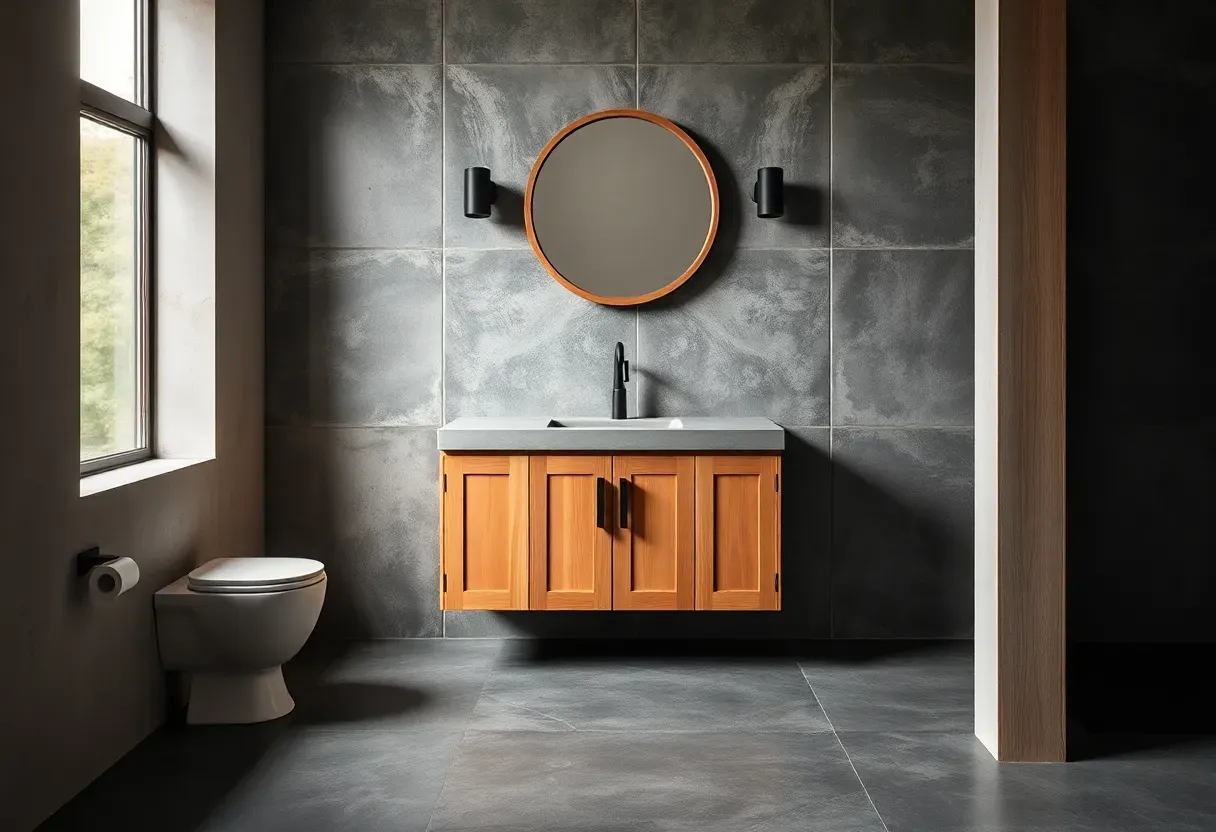
Looking for masculine bathroom decor ideas that feel refined rather than rough? Designing a modern masculine bathroom doesn't mean sacrificing style for rugged simplicity -- it's about thoughtful choices that balance clean lines with functionality. Whether you rent a compact apartment or own a spacious master bath, the right men's bathroom design creates a grooming space that feels both sophisticated and comfortably low-maintenance.
The key to successful bathroom decor ideas for men lies in material restraint and fixtures that double as design elements. Think concrete finishes, matte black hardware, stone surfaces, and wood accents that warm up industrial edges. The goal is a space that supports your daily routine while making a statement about personal style -- without requiring constant upkeep or elaborate accessorizing.
These three masculine bathroom decor ideas work across different layouts and budgets, from bachelor apartments to contemporary lofts. Each concept prioritizes easy maintenance, streamlined storage, and materials that age gracefully, proving that masculine design can be both practical and polished.
Quick FAQ
What colors work best for bathroom decor for men?
Neutral foundations like charcoal, slate gray, navy, and black create masculine depth. Warm them with wood tones, tan accessories, or brass accents to prevent the space from feeling sterile. Limit bright colors to small functional items like towels or containers.
How can I make a small bathroom look masculine without clutter?
Focus on built-in storage, floating vanities, and recessed shelving to maximize floor space. Choose one statement material—like concrete or charcoal tile—and keep everything else streamlined. Minimal decor with functional pieces (like a sleek stool or wall-mounted hooks) maintains openness while adding personality.
What materials are best for men's bathroom design?
Concrete, natural stone, quartz, and wood hold up well in humid environments while adding masculine texture. Matte black or brushed nickel fixtures resist water spots and fingerprints. Large-format tiles reduce grout lines, making maintenance easier—ideal for low-fuss masculine spaces.
Should I choose a shower or bathtub for a masculine bathroom?
Frameless glass showers with rainfall showerheads and linear drains align with modern masculine aesthetics. If you prefer baths, a freestanding soaking tub in stone or matte finish makes a bold statement. Consider your routine: if you shower daily, invest that budget in a high-quality shower setup rather than a rarely used tub.
How do I add warmth to a dark masculine bathroom?
Incorporate wood elements through a vanity, shelving, or stool to balance dark surfaces. Warm lighting (2700K-3000K) with dimmers creates atmosphere. Textured towels, a rug in natural fibers, or live greenery (like a snake plant or fern) softens the hardness while maintaining masculine appeal.
What lighting works best for masculine bathrooms?
Layered lighting is key: recessed cans for overall brightness, wall sconces flanking the mirror for task lighting, and LED strips under vanities or shelves for ambient glow. Choose fixtures with clean lines—matte black, brushed nickel, or brass in geometric shapes. Avoid overly ornate or crystal designs.
As an Amazon Associate I earn from qualifying purchases.
Table of Contents
1. Industrial Concrete Bathroom with Warm Wood Accents
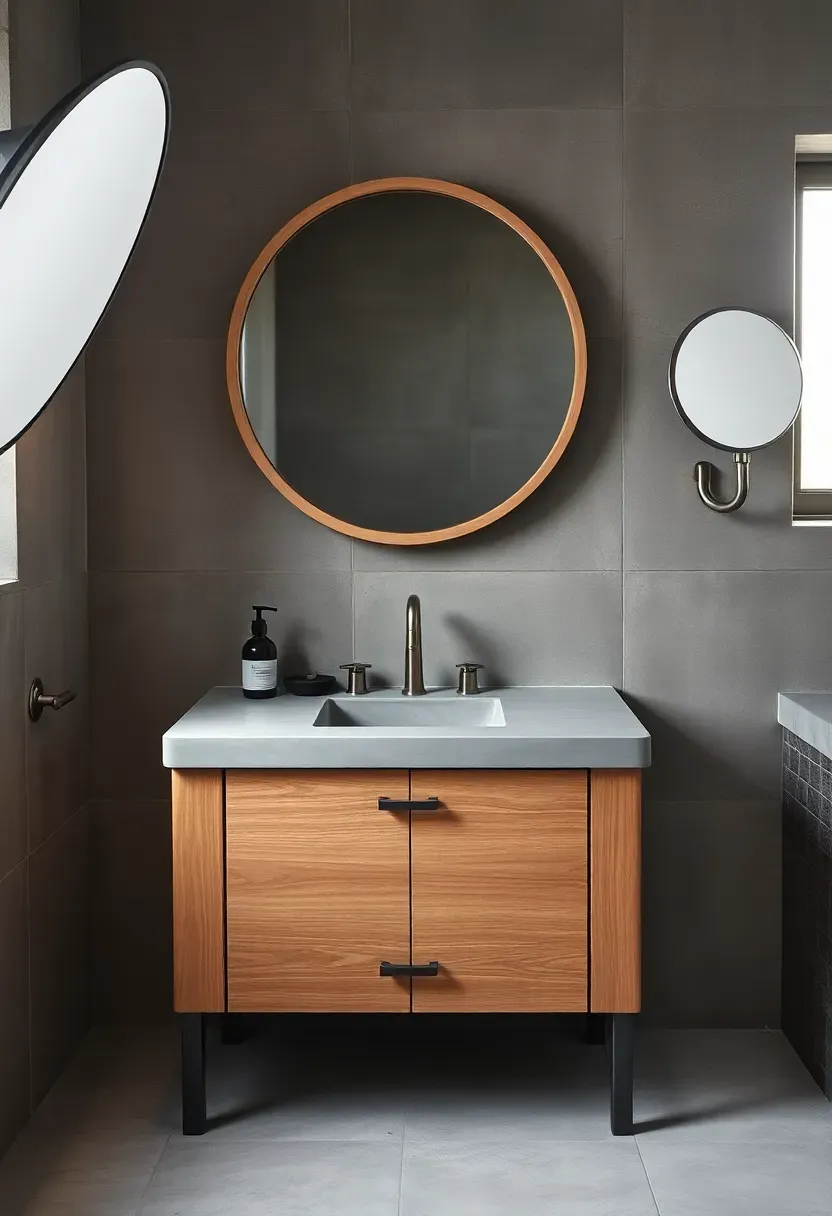
Raw concrete surfaces bring immediate masculine edge to a bathroom, creating a foundation that feels both modern and timeless. Pair cool gray concrete countertops or flooring with warm walnut or oak wood elements—vanity, shelving, or mirror frame—to introduce organic balance. This contrast between industrial hardness and natural warmth defines masculine design at its most refined. The key is keeping concrete sealed properly (penetrating sealer every 1-2 years) to prevent staining while maintaining its characteristic matte finish. Instead of covering every surface, let concrete serve as a statement backdrop: one feature wall, the vanity top, or flooring in wet areas, then build around it with restrained materials that complement rather than compete.
Lighting plays a crucial role in softening concrete's inherent coolness. Warm LED fixtures (3000K) with brass or copper accents reflect beautifully against gray surfaces, while layered illumination prevents shadows from making the space feel bunker-like. Add texture through a rough-hewn wood stool, a jute rug, or live-edge floating shelves—these elements break up expanses of concrete while reinforcing the industrial-meets-organic narrative. Storage should be streamlined: recessed medicine cabinets, drawer organizers, and wall hooks keep clutter minimal, allowing the material combination to take center stage without distraction.
Tips
- Do seal concrete surfaces immediately after installation and reapply sealer annually—unsealed concrete absorbs water, soap, and oils, leading to permanent staining and efflorescence.
- Don't pair concrete with cold-toned metals like chrome or stainless steel; stick to brass, copper, or oil-rubbed bronze to introduce necessary warmth.
- If you rent and can't pour real concrete, use concrete-look porcelain tiles—they offer the same aesthetic without installation restrictions, and grout lines can be minimized with large-format planks.
- Then add a single live plant (snake plant or ZZ plant) in a concrete or terracotta pot to introduce living contrast against the hard surfaces.
Best for: Lofts, modern apartments, renters who want an industrial look without permanent changes, and homeowners who appreciate low-maintenance materials that develop patina over time.
What this gives you: A rugged yet refined masculine bathroom that balances industrial edge with organic warmth, requiring minimal decor while making maximum visual impact.
2. Charcoal Minimal Bathroom with Matte Black Fixtures
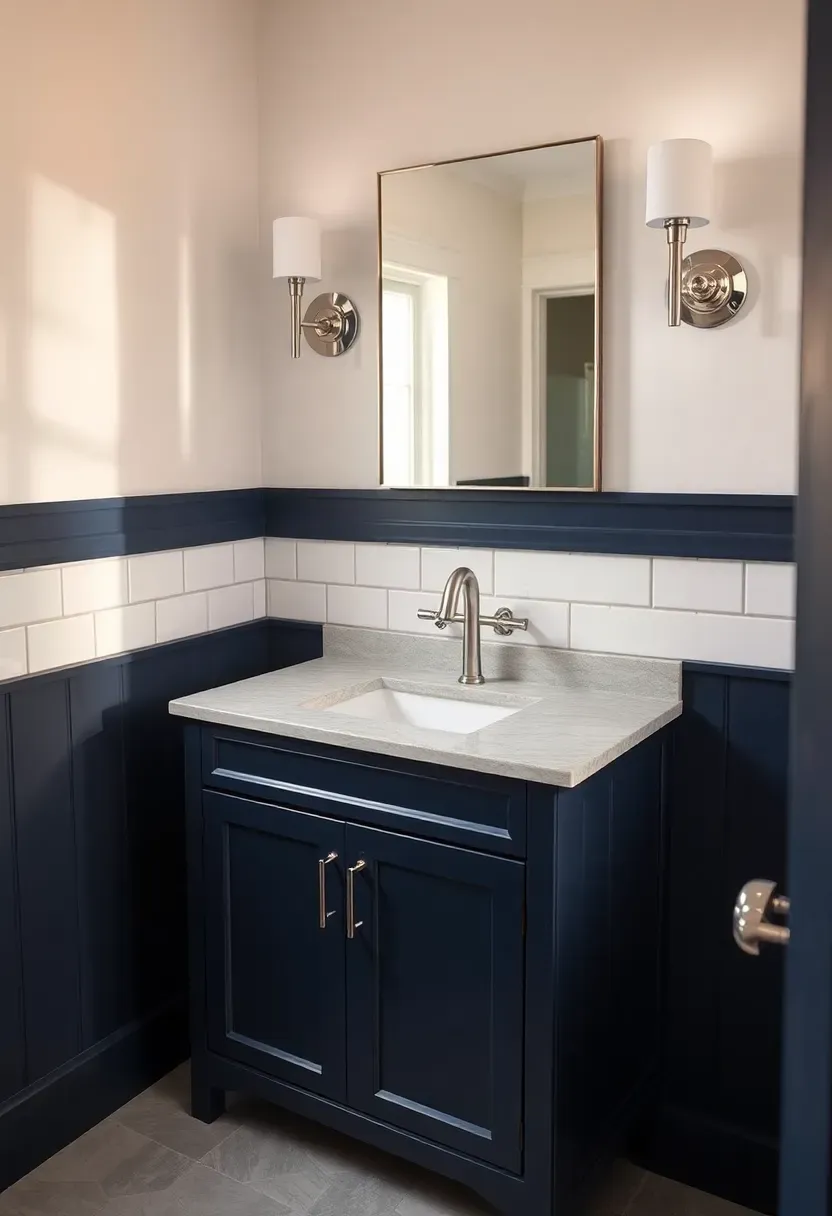
A monochromatic charcoal palette creates drama without feeling dark when layered properly—think varying shades from deep slate to lighter gray, keeping everything within one tonal family for sophistication. Matte black fixtures (faucets, showerhead, towel bars, hardware) disappear against dark backgrounds while adding subtle contrast through texture. The mistake beginners make? Going all-black without variation—this flattens the room. Instead, use large-format charcoal tiles (12x24 or larger) on walls and floors, then introduce a slightly lighter gray vanity or countertop to create breathing room. Matte black hardware should read as intentional punctuation, not overwhelming presence. This approach works particularly well in smaller bathrooms where dark colors actually expand perceived depth when lit correctly.
Placement note: Position matte black fixtures where they catch light—angled faucets, wall-mounted faucets, or showerheads with directional spray create reflections that break up dark surfaces. Avoid placing black hardware entirely in shadow, or it will disappear rather than accentuate.
Lighting becomes your primary tool here. Recessed cans with 3000K bulbs should be spaced 3-4 feet apart for even coverage without hot spots. Add wall sconces on either side of the mirror (rather than a single overhead fixture) to eliminate shadows during grooming. Consider LED strips under the vanity or behind a floating mirror—this ambient glow outlines architectural features and adds depth that pure shadow lacks. A single statement mirror (frameless or with thin black frame) reflects light and makes the space feel twice its size. Keep decor minimal: one or two charcoal-toned accessories (soap dispenser, toothbrush holder) and rolled towels in a darker gray maintain the monochromatic story without clutter. The beauty of this scheme is its resistance to showing water spots, soap residue, and daily wear—practical masculinity at its finest.
Recommended
Items for this idea
Tips
- Pro tip: Choose glossy finish for tiles in wet areas (shower, around vanity) to reflect light and make cleaning easier; use matte finish on walls and floors to prevent slippery surfaces.
- Common pitfall: Installing insufficient lighting, which makes charcoal bathrooms feel cave-like. Calculate lumens based on square footage—aim for 75-100 lumens per square foot, then add task lighting at the mirror.
- Fix: If your charcoal bathroom feels too dark after installation, plug in warm-toned LED strips (3000K) under vanity edges or along toe kicks—this inexpensive addition transforms the atmosphere instantly.
What this gives you: A sleek, low-maintenance masculine bathroom that hides wear and tear while making a bold design statement through tonal depth rather than decor.
3. Navy and Stone Classic Masculine Bathroom
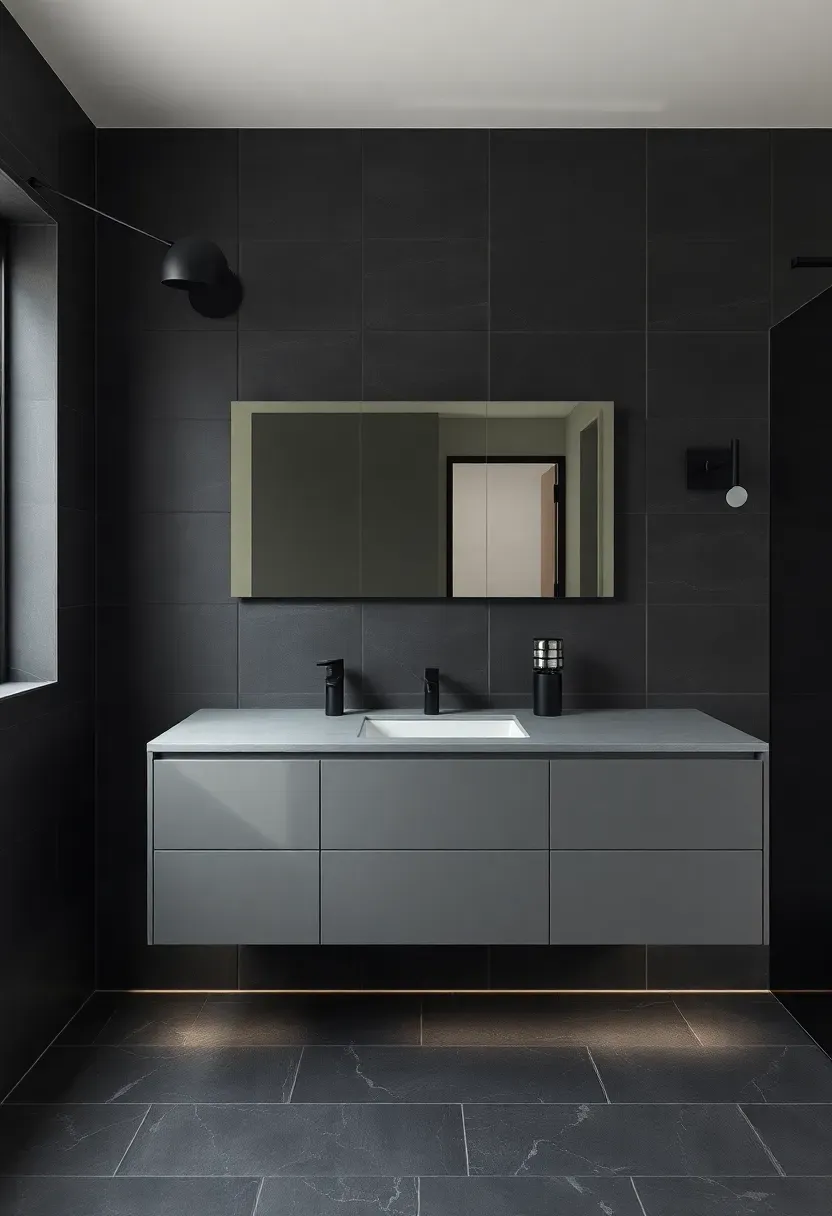
Navy and stone create a classic masculine pairing rooted in traditional men's club aesthetics but updated for modern sensibilities. Slate or quartzite surfaces bring natural variation that prevents the navy from feeling flat, while the dark blue depth adds sophistication that pure gray lacks. Start with navy wainscoting or a navy vanity as your primary color block, then build around it with stone countertops (soapstone, slate, or honed granite in gray-blue tones). The key is proportion: navy should cover 20-30% of the room (lower walls, vanity, or shower curtain), with the remainder in lighter neutrals (cream walls, white fixtures, light stone floor) to maintain balance. This scheme works beautifully in both traditional and contemporary settings—the secret lies in fixture choice. Brushed nickel or polished chrome feels traditional; unlacquered brass or matte black leans modern. Pick one metal finish and carry it through all hardware for consistency.
Texture variation prevents this combination from reading as flat color-on-color. Honed stone (rather than polished) offers subtle light play without glare. Woven baskets for storage, a natural fiber rug, or linen towels introduce tactile contrast against smooth surfaces. Consider a freestanding bathtub in white or light gray as an anchor—it breaks up navy expanses while creating a focal point. For smaller bathrooms, apply navy as an accent: a painted vanity, navy lower tiles, or even navy grout with white subway tiles makes the statement without overwhelming limited square footage. Stone should appear in at least two applications—countertop plus flooring, or shower threshold plus windowsill—to create visual cohesion that feels intentional rather than scattered.
Tips
- If/Then: If you're concerned about navy feeling too dark, choose a slate-navy with blue-gray undertones rather than pure navy—this reads softer in varied lighting and pairs more easily with stone.
- Pro/Con/Fix: Stone countertops are durable and hide water spots well (pro), but require annual sealing to prevent staining (con). If sealing feels like too much maintenance, choose quartz in a stone-look pattern—it offers the same aesthetic with zero upkeep (fix).
- Micro-hack: Paint the inside of your vanity cabinet navy (even if the exterior is another color)—hidden color feels like a secret luxury every time you open a drawer.
- Avoid: mixing too many stone types. Stick to one stone family (all slate, all quartzite) across surfaces to maintain coherence—mixed stones compete and create visual noise.
Budget/Time: Navy paint is the most cost-effective way to introduce this look—expect 2-3 hours to paint a vanity or lower wall section. Stone veneer panels offer a budget-friendly alternative to solid stone countertops.
What this gives you: A timeless masculine bathroom rooted in classic design principles, with navy depth and stone texture creating a sophisticated space that ages gracefully rather than trending out.
These three masculine bathroom decor ideas prove that men's bathroom design balances function, durability, and refined aesthetics without requiring constant maintenance or elaborate accessorizing. Whether you gravitate toward industrial concrete's raw edge, charcoal minimal's sleek drama, or navy-and-stone's classic sophistication, the key is material quality, proper lighting, and restraint in decor choices. A well-designed masculine bathroom supports your daily routine while reflecting personal style -- transforming a purely functional space into one that feels intentionally yours. Start with one material or color as your foundation, build around it with complementary elements, and remember that the most successful bachelor bathrooms feel both effortless and considered.

About the author
OBCD
CGI visualization and interior design content. We create detailed 3D renders and curate practical design ideas for every room in your home.