21 Earthy Kitchen Ideas for a Natural Look You'll Love
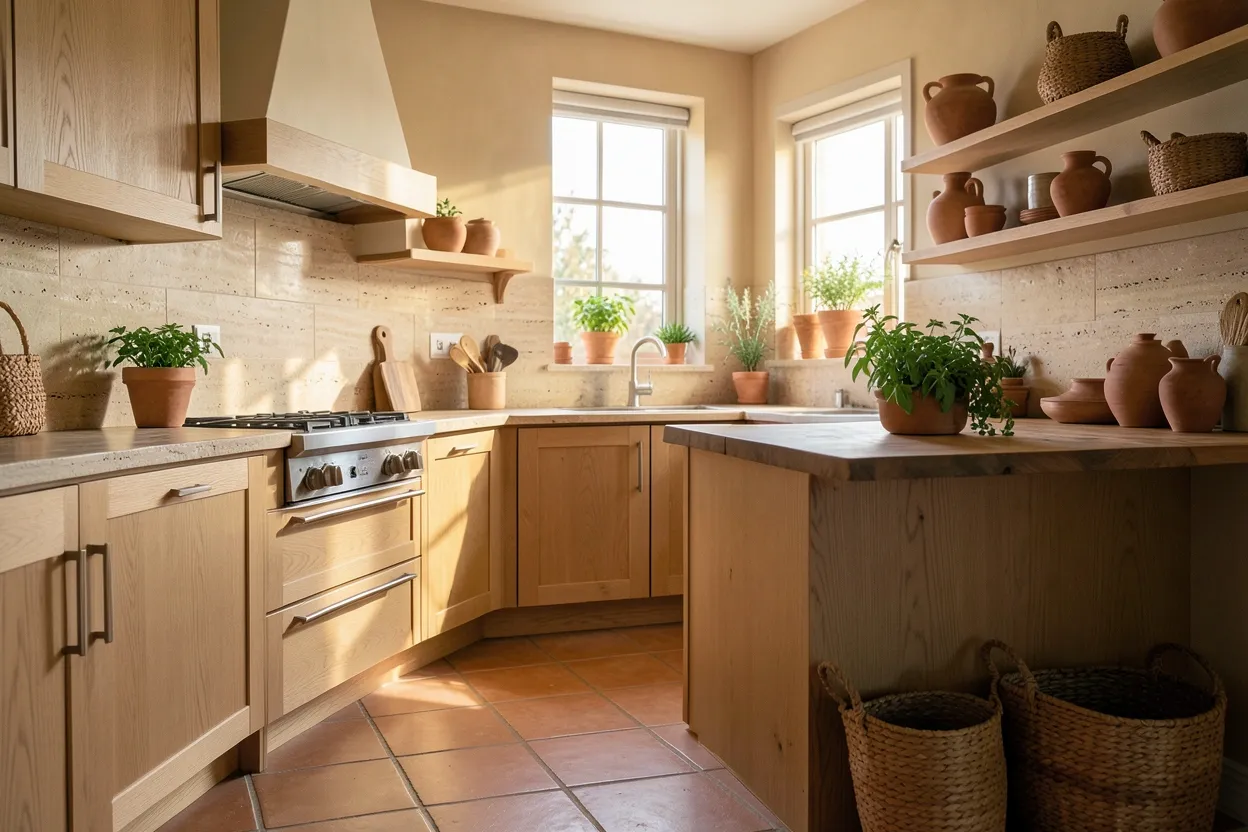
Earthy kitchen ideas create a warm, grounded atmosphere that transforms your cooking space into a natural sanctuary — and many of these ideas work beautifully in rental apartments without any permanent changes.
Organic materials like wood, stone, and terracotta bring the outdoors in, while warm neutral color palettes evoke a sense of calm and comfort that makes cooking feel more enjoyable and restorative.
Whether you're working with a small apartment kitchen on a budget or refreshing a larger space, these natural kitchen design ideas layer texture, warmth, and organic beauty in ways that feel both timeless and effortlessly stylish.
From renter-friendly woven baskets and natural fiber rugs to earthy tile patterns and butcher block countertops, we've rounded up 21 ideas that bring a natural look to any kitchen without drilling or major renovations.
Quick FAQ
What are earthy kitchen ideas?
Earthy kitchen ideas focus on natural materials, warm color palettes, and organic textures inspired by nature.
How can I add earthy tones to my kitchen?
Use warm neutrals like beige, terracotta, sage green, and wood tones in cabinets, backsplashes, and accessories.
What materials work best for an earthy kitchen?
Natural wood, stone, terracotta, bamboo, and natural fiber textiles work beautifully for earthy kitchen designs.
Are earthy kitchens expensive to create?
Not necessarily. You can achieve earthy vibes with budget-friendly materials like butcher block countertops and DIY wood accents.
Do earthy kitchens work in small spaces?
Yes, earthy elements can make small kitchens feel cozy and warm rather than cramped, especially with light neutrals and natural light.
How do I maintain earthy kitchen materials?
Natural materials like wood and stone require regular sealing and gentle cleaning to maintain their beauty and durability.
As an Amazon Associate I earn from qualifying purchases.
Table of Contents
- 1. Natural Wood Cabinets
- 2. Stone Backsplash
- 3. Terracotta Floor Tiles
- 4. Open Shelving with Wood
- 5. Greenery and Plants
- 6. Neutral Color Palette
- 7. Butcher Block Countertops
- 8. Woven Baskets
- 9. Stone Sink
- 10. Warm Lighting
- 11. Natural Fiber Rugs
- 12. Exposed Wood Beams
- 13. Clay Pottery
- 14. Sage Green Accents
- 15. Reclaimed Wood Island
- 16. Stone Accent Wall
- 17. Natural Linen Curtains
- 18. Copper Fixtures
- 19. Raw Edge Shelves
- 20. Earthy Tile Patterns
- 21. Natural Wood Stools
1. Natural Wood Cabinets for an Earthy Kitchen Look
Natural wood cabinets bring warmth and character to your kitchen while creating a seamless connection to the outdoors. The natural grain patterns and warm tones of wood create an inviting atmosphere that makes cooking feel more grounding and enjoyable.
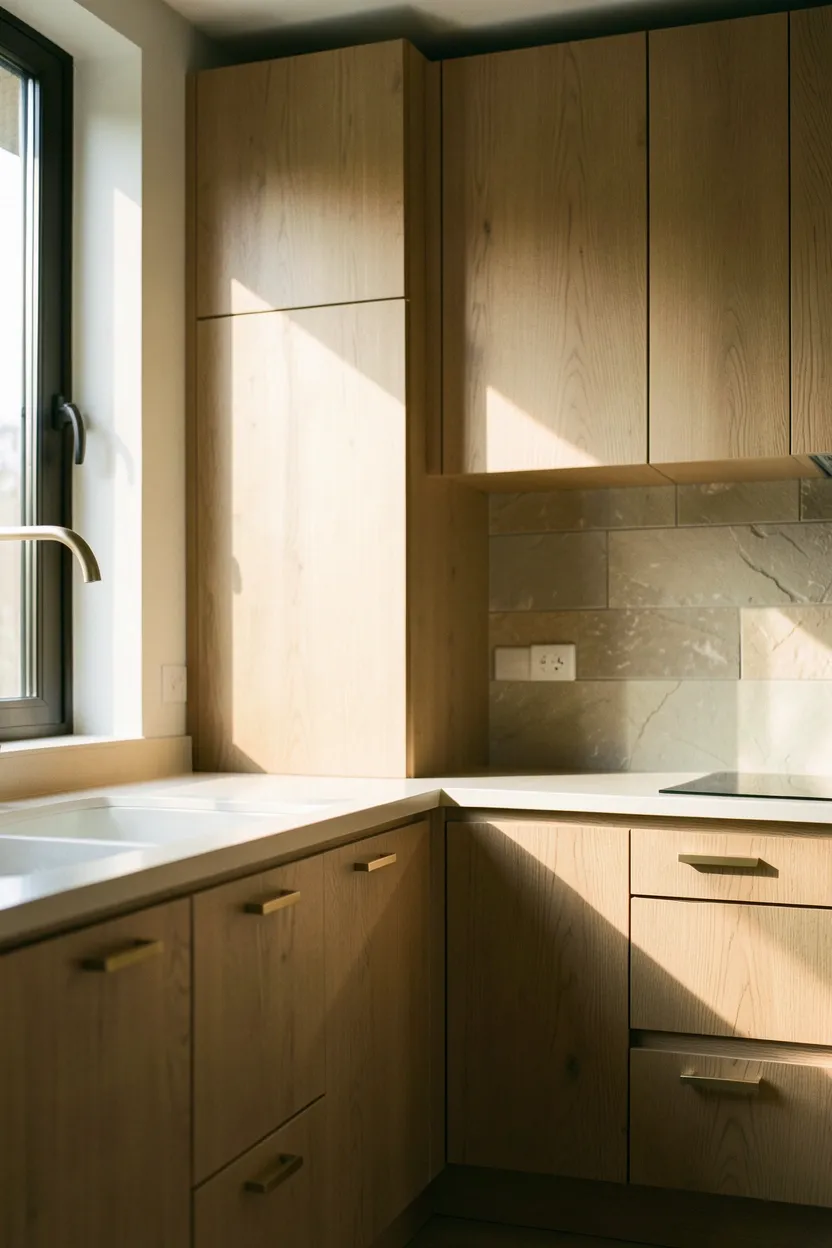
The tactile experience of opening solid wood cabinet doors with their smooth yet grainy surface adds a sensory dimension that engineered materials simply cannot match. Light oak varieties with their subtle honey undertones reflect natural light beautifully, making smaller kitchens feel more spacious while maintaining that grounded, organic aesthetic. The warmth of wood naturally complements other natural materials like stone and ceramic, creating a harmonious palette that feels effortlessly cohesive rather than deliberately designed.
This natural warmth works exceptionally well with warm neutral kitchen ideas that emphasize beige and cream tones throughout the space. The combination creates a layered, sophisticated look that feels both contemporary and timeless, perfect for those seeking a kitchen that evolves gracefully with changing design trends while maintaining its essential character.
Wood cabinets also offer remarkable versatility in terms of styling and maintenance. Unlike painted surfaces that may show every scratch or chip, wood develops a beautiful patina over time that tells the story of your kitchen's use. Regular oiling or polishing not only maintains the wood's natural luster but also becomes a mindful ritual of caring for your space, deepening your connection to the materials that surround you daily.
Tips
- Choose oak or maple for lighter, brighter spaces
- Opt for walnut or cherry for deeper, richer warmth
- Mix wood tones for a collected-over-time look
Best for: creating a warm, inviting cooking space
What this gives you: Natural warmth and timeless beauty
We picked a few things that go well with this idea: Expandable Bamboo Kitchen Drawer Organizer Cutlery (★4.6), Bamboo Wooden Dish Racks Plate Stand (2-Pack) (★4.3) and HTB 4-Section Snack Organizer Removable Dividers (2-Pack) (★4.7). As an Amazon Associate we earn from qualifying purchases.
2. Stone Backsplash
A stone backsplash adds texture and organic beauty that transforms your kitchen into a natural retreat. The irregular patterns and earthy colors of slate, travertine, or limestone create visual interest while maintaining a serene, grounded feel.
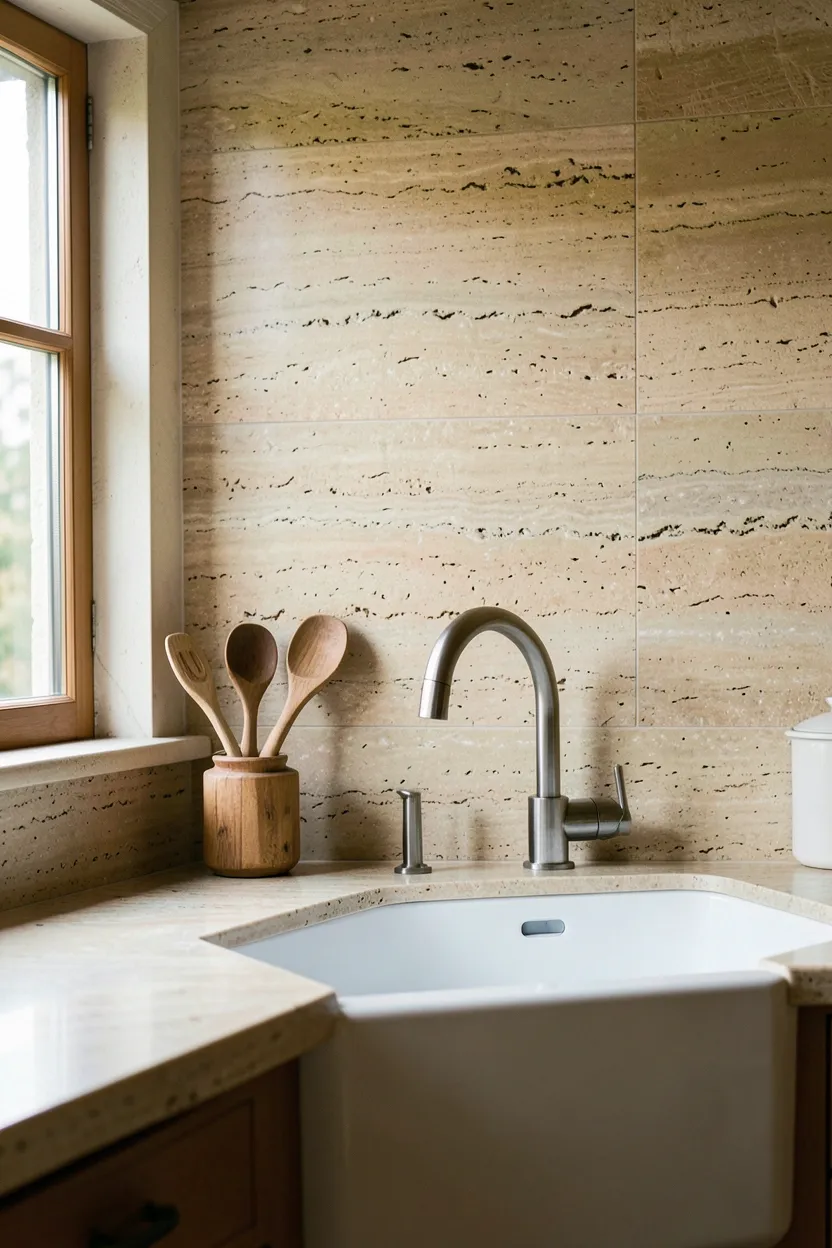
The tactile experience of running your fingers across a natural stone surface reveals subtle variations in temperature and texture that create a deeper connection to the natural world. Each tile tells its own geological story with unique mineral deposits, fossils, and color variations that ensure no two stone backsplashes are ever truly identical. This inherent variation means your backsplash becomes a living art piece that continues to reveal new details and patterns as you work in your kitchen day after day.
The organic texture of stone beautifully complements warm neutral kitchen palettes, adding depth and character without overwhelming the space with busy patterns. When light hits the stone at different angles throughout the day, the veining and mineral deposits create subtle shifts in color and sheen that bring dynamic energy to what might otherwise be a static surface.
Stone backsplashes also offer remarkable practicality that goes beyond their aesthetic appeal. Naturally heat-resistant and easy to clean, a stone backsplash protects your walls while requiring minimal maintenance compared to grouted tile alternatives. The natural coolness of stone can actually help moderate kitchen temperatures slightly during hot cooking sessions, making your cooking experience more comfortable while the material's durability ensures it will withstand years of splatters, splashes, and daily wear without losing its natural beauty.
Tips
- Use slate for darker, dramatic earthy tones
- Choose travertine for warm, neutral elegance
- Seal stone annually to maintain appearance
Budget/Time: Medium investment, requires professional installation
What this gives you: Unique organic texture and natural variation
We picked a few things that go well with this idea: FairyHaus Wicker Baskets Organizing 3Pack, Large (3Pack) (★4.7), Honey-Can-Do Banana Leaf Storage Baskets –Water (★4.7) and Posprica Woven Storage Baskets Organizing Pack, (6-Pack) (★4.8). As an Amazon Associate we earn from qualifying purchases.
3. Terracotta Floor Tiles for Warm, Earthy Kitchen Design
Terracotta floor tiles infuse your kitchen with the warmth of Mediterranean earth, creating a cozy and inviting foundation. These handcrafted tiles feature subtle color variations and rustic charm that add character and soul to your cooking space.
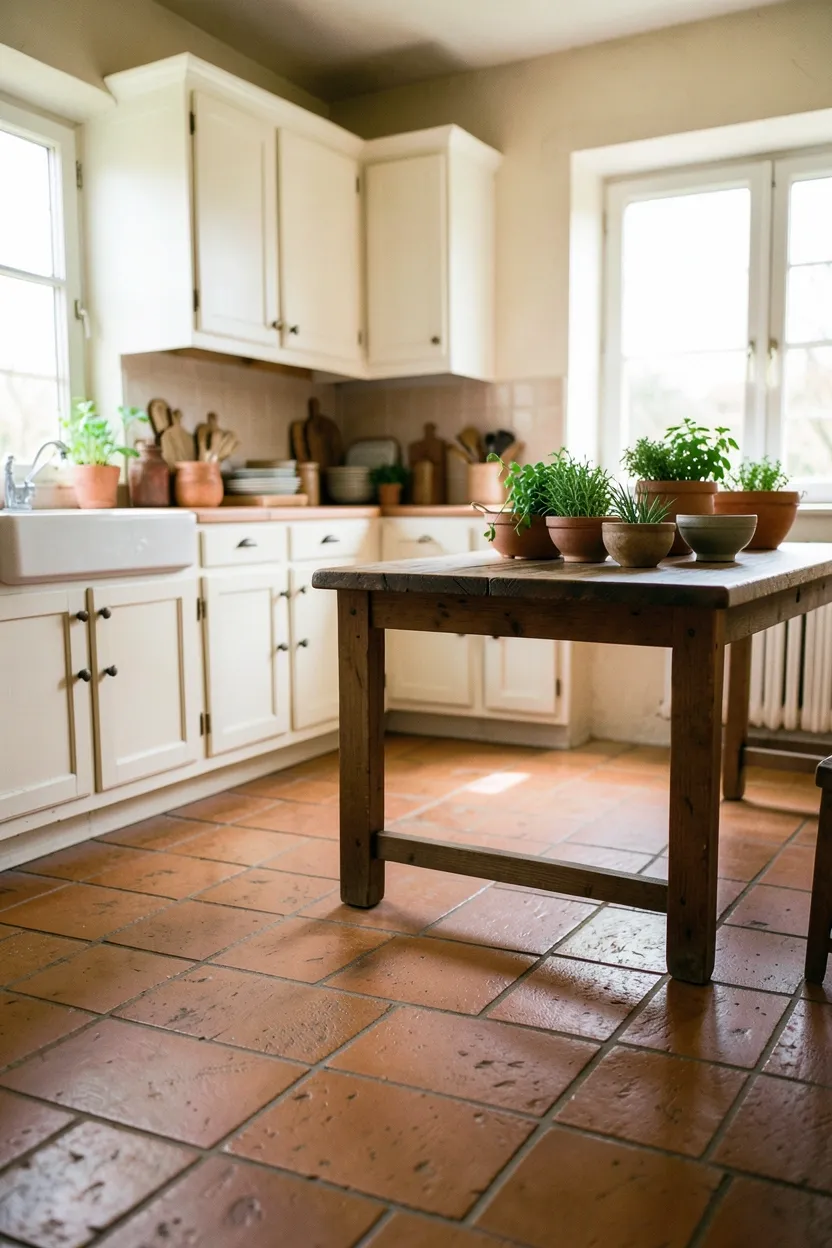
Walking on terracotta tiles connects you physically to the earth beneath your feet, with each step offering a slight give and warmth that manufactured tiles simply cannot replicate. The natural porosity of terracotta means the tiles breathe and adjust to humidity, creating a more comfortable environment that feels alive rather than static and sealed. Color variations ranging from deep ochre to soft salmon create visual movement across your floor that guides the eye naturally through the space while maintaining that cohesive, grounded aesthetic.
The warm tones of terracotta perfectly complement warm neutral kitchen schemes, providing a rich foundation that ties together beige walls, white cabinets, and wooden accents. Unlike cold ceramic or stone floors, terracotta maintains ambient temperature and feels pleasantly warm underfoot even in cooler weather, making your kitchen more comfortable for long cooking sessions or casual dining gatherings.
Terracotta's natural durability and resilience make it an excellent choice for high-traffic kitchen areas. The clay material naturally resists scratches and wear while developing a beautiful patina over years of use that adds to its character rather than diminishing its appearance. Spills and stains are less visible on the naturally varied surface, and simple cleaning methods using mild soap and water keep the tiles looking beautiful without harsh chemicals or special treatments.
Tips
- Apply matte sealer to protect from stains
- Add area rugs for warmth and comfort
- Mix tile sizes for visual interest
Rental note: Use peel-and-stick terracotta-look tiles for temporary installations
What this gives you: Warmth, character, and rustic charm
We picked a few things that go well with this idea: Rustic Vintage Lights (★4.0), Vintage Farmhouse Lights (2-Pack) (★4.4) and Westinghouse 6362100 Stella Mira One-Light Indoor (★4.5). As an Amazon Associate we earn from qualifying purchases.
4. Open Shelving with Wood
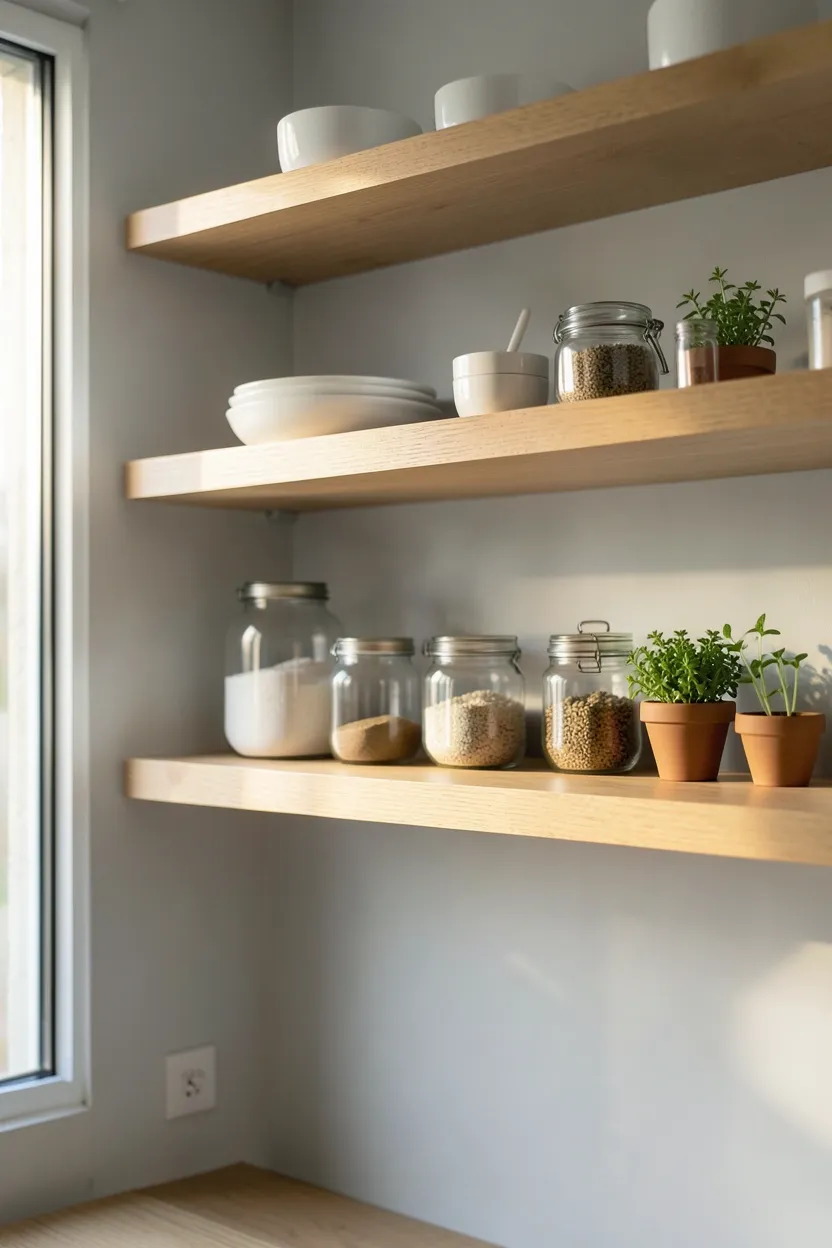
Wooden open shelving creates an earthy display for your favorite dishes and ingredients while adding warmth to your kitchen walls. The natural grain of wood shelves contrasts beautifully with white or neutral dinnerware, creating visual interest and making your kitchen feel more inviting.
Recommended
Items for this idea
The visible grain patterns and natural variations in wood shelves create a beautiful backdrop that transforms everyday items into curated displays. Unlike closed upper cabinets that can make a kitchen feel compartmentalized and disconnected, open shelving with natural wood brings warmth and accessibility to your storage while creating visual continuity throughout the space. The tactile experience of reaching for a mug or bowl and feeling the natural warmth and texture of the shelf beneath adds small moments of sensory pleasure throughout your daily routine.
Open wooden shelving works harmoniously with cottage kitchen aesthetics, where rustic charm meets practical functionality. The combination creates a welcoming, lived-in feel that encourages both cooking and gathering, while the open design keeps your kitchen feeling airy and spacious rather than closed off by heavy cabinetry. White or cream dishes against natural wood create a timeless, classic contrast that never goes out of style.
Open shelving also offers practical benefits that go beyond its aesthetic appeal. Having your most-used items visible and accessible streamlines your cooking process, eliminating the frustration of searching through cabinets for frequently used dishes or ingredients. The open design encourages organization and mindful curation of your kitchen items, helping you focus on pieces that truly serve your needs while displaying beautiful items that bring joy to your daily routine.
Tips
- Style with neutral-colored dishes for cohesion
- Include natural elements like wood cutting boards
- Keep shelves organized for a clean, curated look
Avoid if: you have a lot of clutter to store
What this gives you: Easy access and decorative display
5. Greenery and Plants
Bringing plants into your kitchen creates an instant connection to nature and purifies the air while you cook. Fresh herbs on the windowsill, hanging plants near the sink, or a large statement plant in the corner all add life and organic beauty to your space.
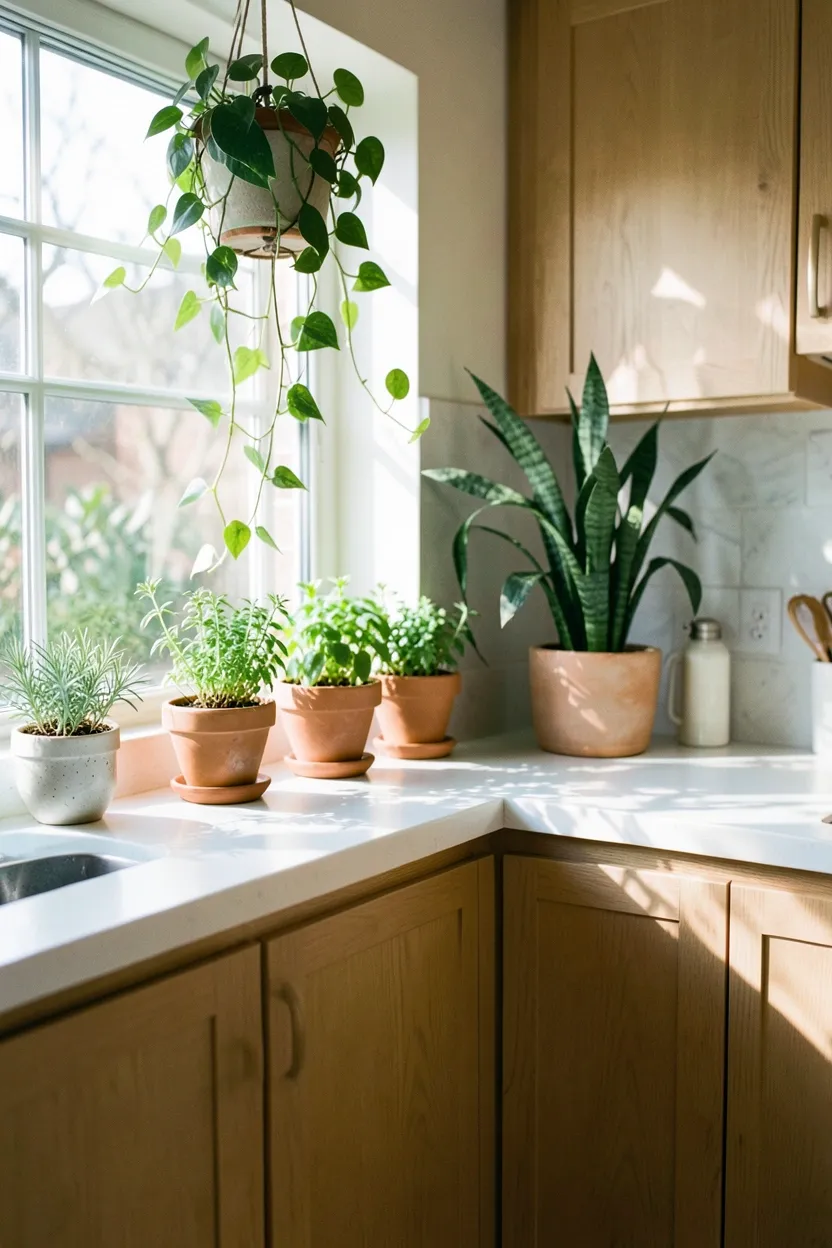
Living plants transform the static environment of a kitchen into a dynamic, breathing space that responds to light, water, and care throughout the seasons. The gentle movement of leaves in air currents, the fresh scent of growing herbs, and the visual delight of new growth create a multisensory experience that makes cooking more enjoyable and meditative. Plants naturally humidify the air, counteracting the drying effects of cooking and heating systems while filtering impurities and creating healthier indoor air quality for your family.
The fresh energy of plants complements warm neutral kitchen designs by injecting natural color and life without overwhelming the calm, earthy palette. Even a single well-placed plant can transform the entire feel of a kitchen, making the space feel more alive, welcoming, and connected to the natural world outside your windows. Growing herbs like basil, thyme, or rosemary right in your kitchen not only adds beauty but also provides fresh, aromatic ingredients at your fingertips while you cook.
Beyond their aesthetic and air-purifying benefits, plants in the kitchen create opportunities for mindfulness and connection to natural cycles. The daily ritual of watering, pruning, and caring for your plants becomes a grounding practice that connects you to growth and change. Watching a new leaf unfurl or a herb plant thrive under your care adds a sense of accomplishment and joy to your daily routine, turning routine kitchen activities into moments of wonder and appreciation for the natural world.
Tips
- Choose low-maintenance plants like snake plants or pothos
- Grow herbs near windows for easy cooking access
- Use plants of varying heights for visual interest
Best for: adding life and natural beauty
What this gives you: Improved air quality and natural ambiance
6. Neutral Color Palette
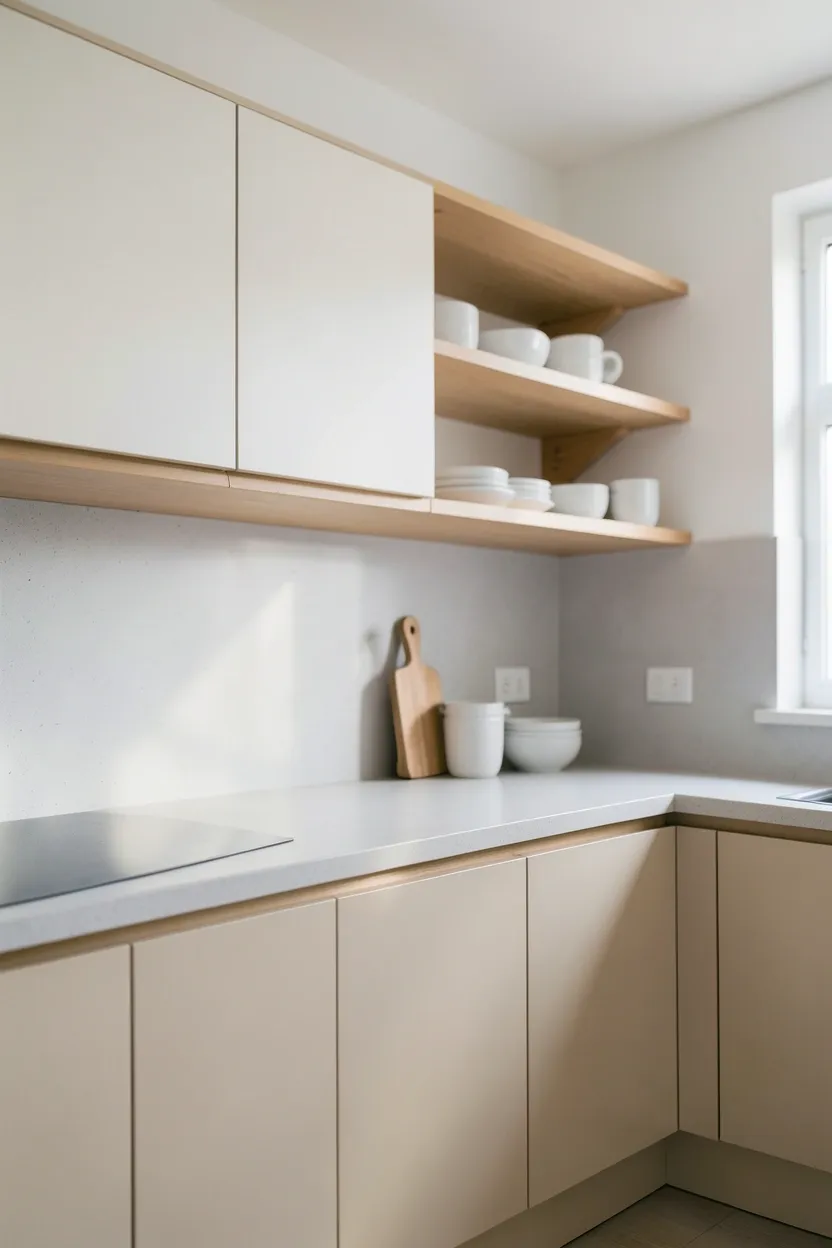
A neutral color palette forms the perfect canvas for earthy kitchen ideas, allowing natural materials and textures to take center stage. Warm whites, soft beiges, and gentle greys create a serene backdrop that enhances wood grain, stone patterns, and organic accents.
Recommended
Items for this idea
Neutral colors create a calming, restful environment that allows the natural beauty of materials to shine without competition from bold hues. The subtle variations within neutral tones—from the creamy warmth of off-white to the sophisticated depth of taupe—add richness and dimension to your kitchen while maintaining a cohesive, peaceful atmosphere. Light neutral colors also maximize natural light, reflecting sunlight throughout the space and making even smaller kitchens feel more open, airy, and connected to the outdoors.
This serene foundation pairs beautifully with warm neutral kitchen elements, creating a layered look that feels sophisticated yet comfortable and welcoming. The neutrality of the palette ensures that any accent pieces you choose—whether a colorful bowl, a vintage find, or seasonal flowers—become deliberate focal points that add personality without disrupting the overall harmony of the space.
Perhaps the greatest strength of a neutral kitchen palette is its incredible versatility and timelessness. Unlike trendy colors that may feel dated within a few years, neutral tones remain effortlessly current while providing a flexible backdrop that can evolve with your changing tastes and needs. Whether you choose to add bold accents in the future or maintain the serene simplicity of neutrals, your kitchen will remain a beautiful, welcoming space that never goes out of style.
Tips
- Warm whites feel more inviting than cool whites
- Add depth with different shades of beige
- Use texture rather than color for visual interest
Best for: creating a timeless, versatile foundation
What this gives you: A calming, cohesive aesthetic
7. Butcher Block Countertops: Natural Warmth on a Budget
Butcher block countertops bring natural warmth and functionality to your kitchen, offering a beautiful work surface that improves with age. The rich wood tones and visible grain create an organic feel while providing a practical cutting surface that's perfect for meal preparation.
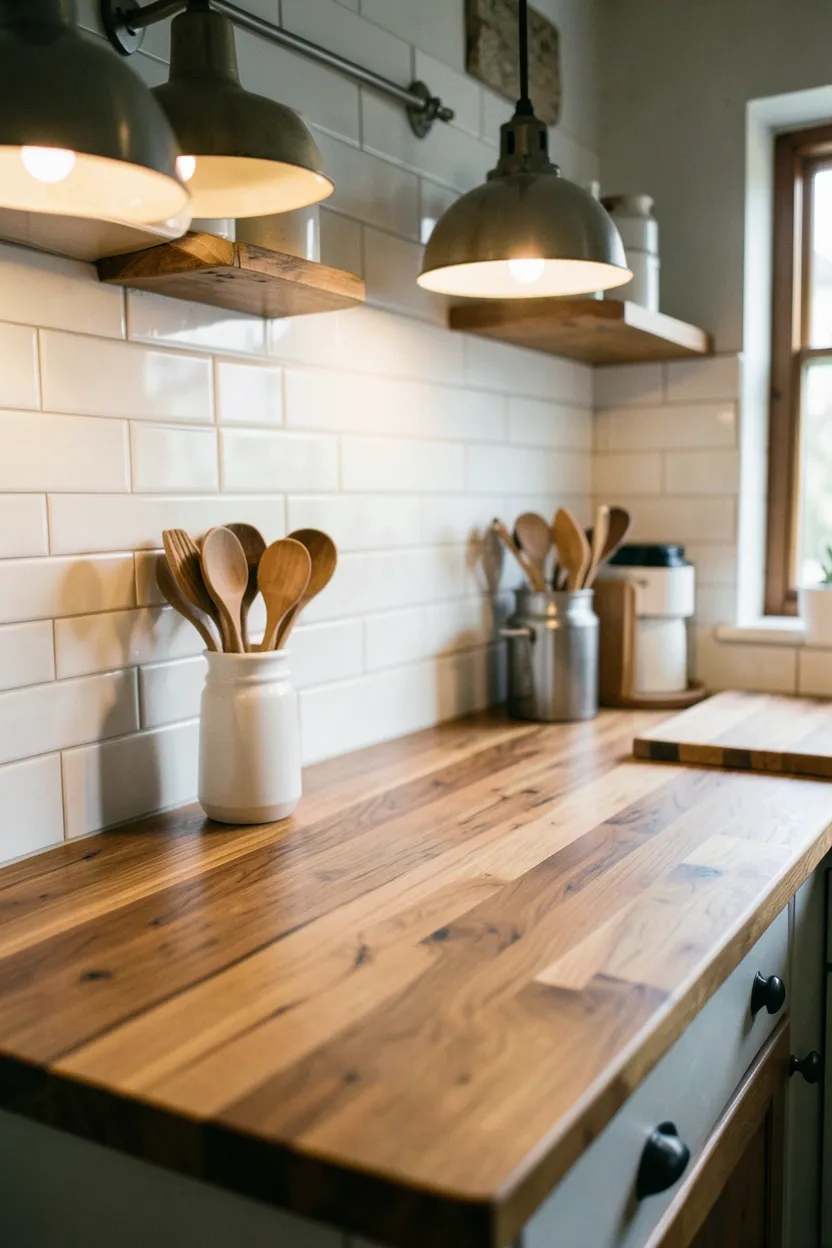
The tactile experience of working on butcher block is incomparable to other countertop materials, offering a satisfying combination of warmth, slight give, and natural texture that makes chopping and food preparation genuinely enjoyable. The wood naturally absorbs some impact from knives, reducing dulling of blades while providing a forgiving surface that's gentler on your wrists and hands during prolonged prep work. Rich walnut or maple tones add sophisticated warmth that elevates the entire kitchen, creating a focal point that draws the eye and invites touch.
Butcher block complements wood kitchen designs perfectly, creating a cohesive natural aesthetic that celebrates the beauty of timber throughout your space. The continuous wood grain from floor to cabinets to countertops creates visual continuity and harmony, making the kitchen feel thoughtfully designed rather than assembled from disparate elements. This natural warmth also contrasts beautifully with white subway tiles or stainless appliances, adding organic balance to more modern elements.
Functionally, butcher block offers remarkable versatility that goes beyond its cutting surface capabilities. The natural antibacterial properties of wood, when properly maintained, make it a safe choice for food preparation, while the material's ability to be sanded and refinished means your countertops can look new again even after years of heavy use. Unlike stone or quartz that may show permanent damage, butcher block develops character and patina that tells the story of your kitchen's life, making it more beautiful with time rather than worn.
Tips
- Oil regularly to maintain moisture and prevent cracking
- Use food-safe mineral oil for food prep areas
- Sand and refinish if scratches become noticeable
Budget/Time: Medium budget, monthly oiling required
What this gives you: Warmth, functionality, and natural beauty
8. Woven Baskets: Renter-Friendly Organic Kitchen Storage
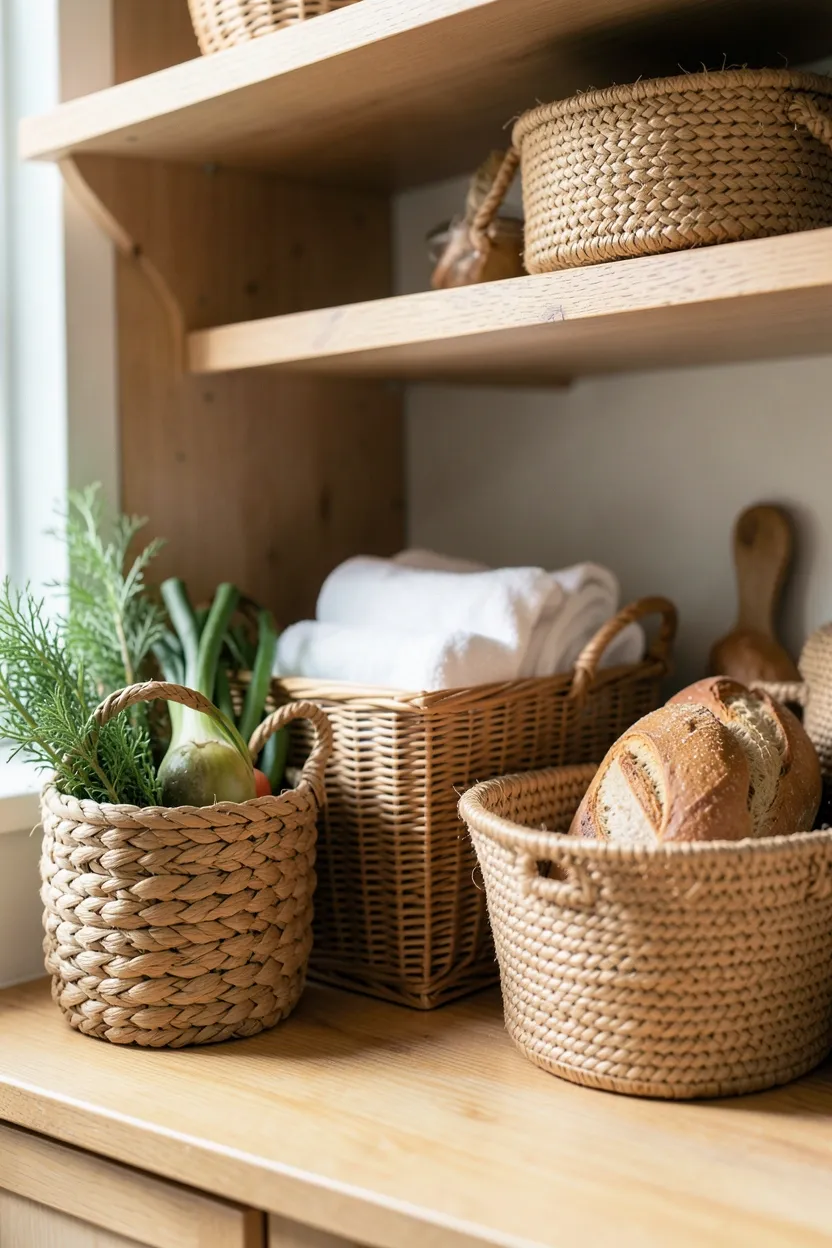
Woven baskets add texture and organic charm while providing practical storage solutions for your kitchen. Natural materials like seagrass, rattan, or jute create visual interest and warmth, whether used for storing produce, holding kitchen linens, or organizing pantry items.
Recommended
Items for this idea
The tactile experience of woven baskets brings a natural, handmade quality to your kitchen that mass-produced storage solutions simply cannot replicate. The slight variations in weave pattern, natural color gradations, and subtle irregularities in shape create visual interest while celebrating the craftsmanship of artisans who created each piece. These textural elements break up smooth surfaces of cabinets and countertops, adding warmth and dimension that makes the kitchen feel more layered and thoughtfully curated rather than sterile and uniform.
Woven baskets work beautifully within cottage kitchen aesthetics, where rustic charm meets practical organization needs. The natural materials and handmade quality echo the warmth and character of other earthy elements like wood and stone, creating a cohesive aesthetic that feels gathered over time rather than purchased all at once. Whether you choose matching sets for uniform storage or mix different materials and weaves for a collected look, baskets add organic texture that makes organizing feel like an opportunity for styling rather than a chore.
Beyond their aesthetic appeal, woven baskets offer remarkable versatility and practicality for kitchen organization. Their breathable design makes them perfect for storing produce, allowing air circulation that keeps vegetables and fruits fresh longer than sealed plastic containers. The natural materials are lightweight yet durable, easy to clean, and can be moved around your kitchen as needs change, making them ideal for flexible storage solutions that adapt to your evolving lifestyle and cooking habits.
Tips
- Vary basket sizes for visual interest
- Use liners for storing food items
- Group baskets by function or material type
Rental note: Perfect for renters - easy to move and replace
What this gives you: Stylish storage with natural texture
9. Stone Sink
A stone sink becomes a stunning focal point in your earthy kitchen, combining functionality with sculptural beauty. Whether carved from a single piece of stone or assembled from slate or granite tiles, a stone sink adds organic warmth and creates a natural gathering point in your cooking space.
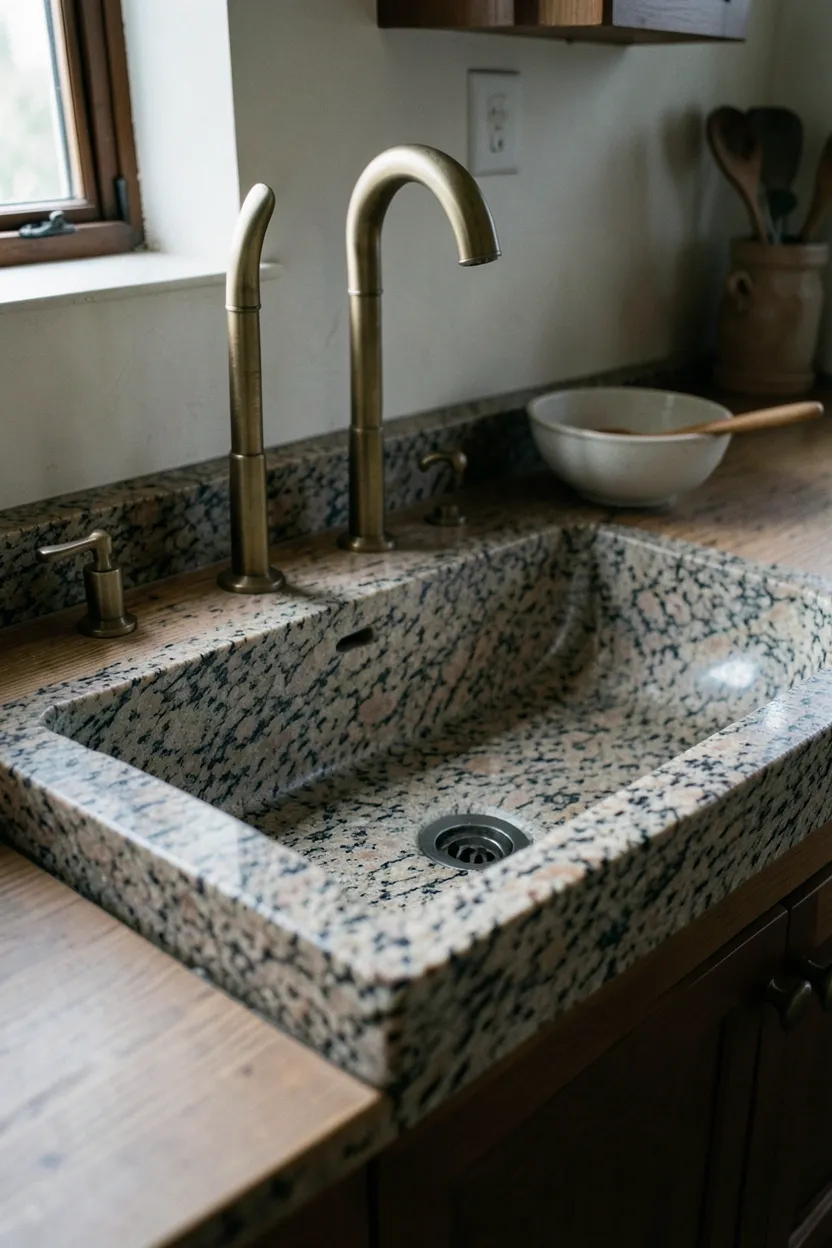
The natural coolness and substantial weight of a stone sink create a grounding, elemental presence in your kitchen that connects you to the earth every time you wash dishes or prepare food. The visible veining, mineral deposits, and natural color variations make each stone sink a unique work of art, with patterns and formations that tell geological stories spanning millions of years. This permanence and connection to ancient natural materials brings a sense of timelessness and stability to your kitchen that modern manufactured materials simply cannot match.
The organic beauty of stone sinks enhances warm neutral kitchen designs by adding sophisticated texture and natural variation without introducing bold colors that might overwhelm the serene palette. The natural grey, brown, or beige tones of stone complement wood cabinets, neutral walls, and metallic fixtures, creating a harmonious composition where each element supports and enhances the others rather than competing for attention.
Functionally, stone sinks offer remarkable durability and practical benefits that go beyond their visual appeal. The dense, non-porous nature of properly sealed stone resists staining, scratching, and damage from hot pots or pans better than many other sink materials. The natural sound-dampening qualities of stone make washing dishes quieter and more pleasant, while the material's ability to maintain temperature means hot water stays hot longer during cleanup, making daily kitchen tasks more efficient and comfortable.
Tips
- Seal stone regularly to prevent staining
- Use pH-neutral cleaners to maintain appearance
- Consider deeper basins for practical use
Budget/Time: High investment, professional installation required
What this gives you: A stunning, unique focal point
10. Warm Lighting
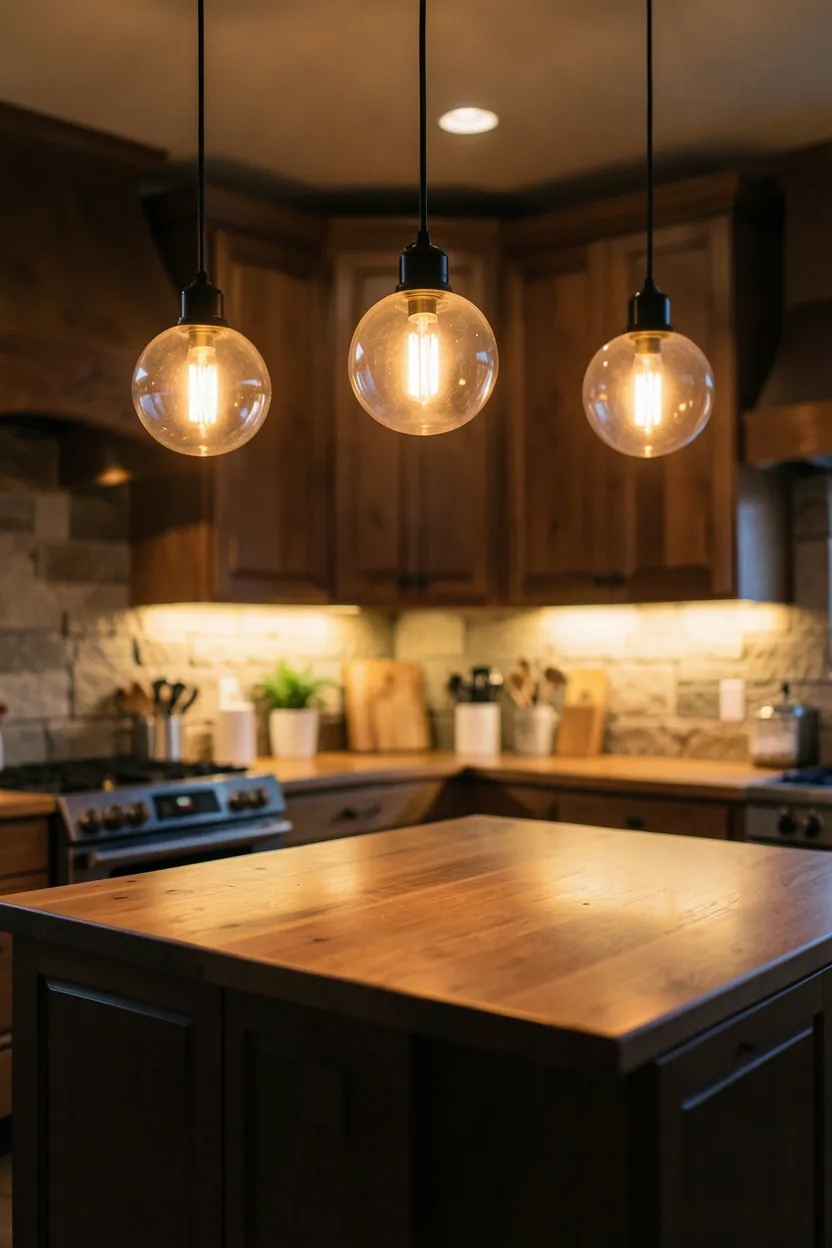
Warm lighting enhances the earthy atmosphere of your kitchen, creating a cozy glow that highlights natural materials and textures. Soft amber bulbs in pendant lights, warm under-cabinet lighting, and natural light maximization all contribute to a welcoming, grounded feel.
Recommended
Items for this idea
The quality of light in your kitchen dramatically affects how natural materials appear and how the space feels to be in. Warm light in the 2700-3000K range brings out the rich honey tones in wood, enhances the natural veining in stone, and creates a cozy, inviting atmosphere that makes spending time in the kitchen genuinely pleasurable. Layered lighting that includes ambient illumination, task lighting for work areas, and accent lighting for architectural features creates depth and dimension that transforms the kitchen from a functional workspace into a welcoming sanctuary.
Warm lighting beautifully complements earth-toned kitchen designs, enhancing the natural warmth of wood and stone while maintaining a serene, comfortable ambiance. The soft amber glow of carefully chosen bulbs flatters all natural materials, making grain patterns, textures, and subtle color variations more visible and appreciated. Unlike harsh cool-white lighting that can make natural materials feel cold and clinical, warm light celebrates their organic beauty and makes the kitchen feel like a place where people naturally want to gather.
The psychological impact of warm, layered lighting in a kitchen cannot be overstated. Properly designed lighting schemes adapt to different needs and moods throughout the day, from bright task lighting for meal preparation to soft ambient light for casual dining or evening relaxation. This flexibility means your kitchen serves multiple functions seamlessly, remaining comfortable and inviting whether you're cooking a family dinner, enjoying morning coffee, or hosting friends for evening conversation in a space that feels naturally welcoming and effortlessly stylish.
Tips
- Use 2700-3000K bulbs for warm, inviting light
- Layer lighting with multiple sources
- Install dimmers for adjustable ambiance
Best for: creating a cozy evening atmosphere
What this gives you: Warmth and inviting ambiance
11. Natural Fiber Rugs for Small Apartment Kitchens
Natural fiber rugs add softness and warmth underfoot while reinforcing the earthy aesthetic of your kitchen. Jute, sisal, or seagrass rugs provide texture and durability, creating defined zones within your space while adding organic visual interest.
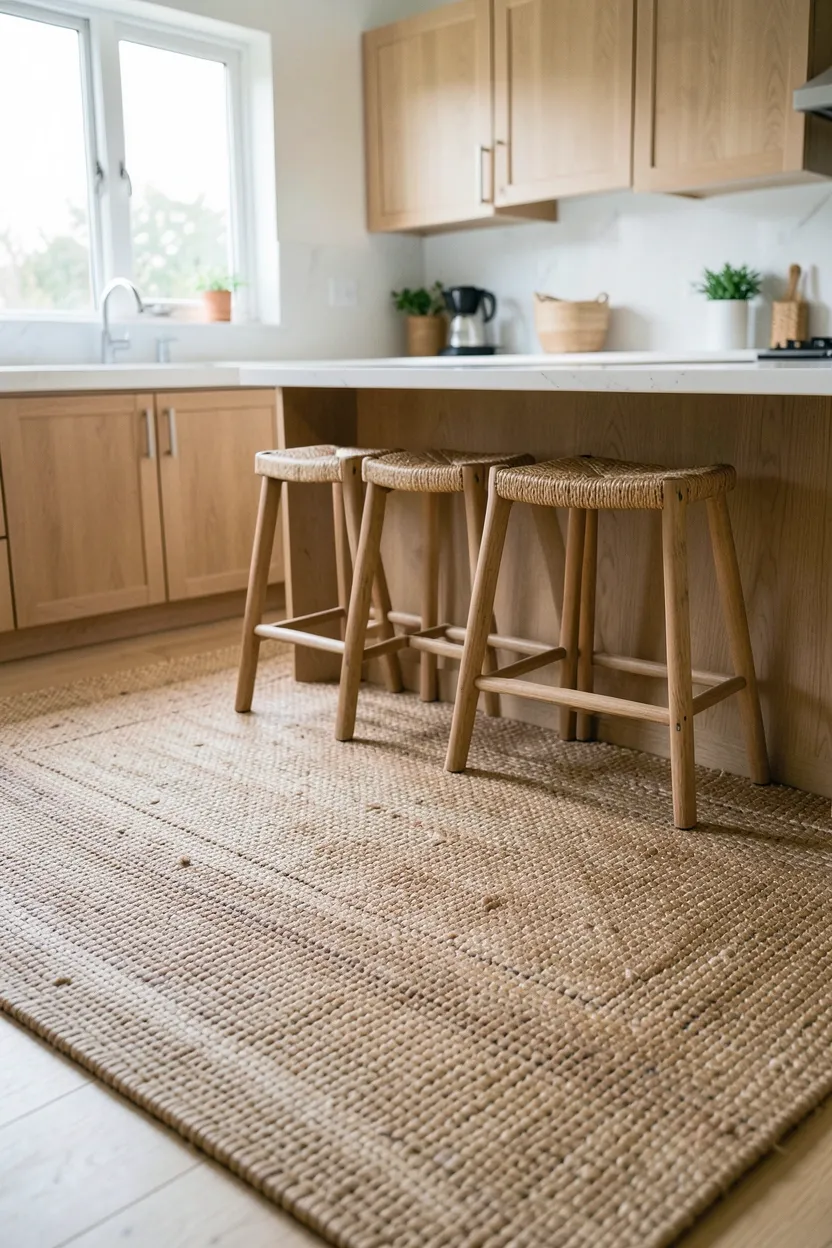
The tactile experience of stepping onto a natural fiber rug connects you to organic materials even as you move through your kitchen, providing softness and comfort underfoot that hard floors cannot match. The natural variations in color, slight irregularities in weave, and inherent texture of fibers like jute or sisal create visual warmth and interest that breaks up smooth surfaces while celebrating the imperfect, handmade quality of natural materials. This textural layer adds depth and dimension to your kitchen, making the space feel more curated and thoughtfully designed rather than flat and monolithic.
Natural fiber rugs enhance warm neutral kitchen schemes by adding sophisticated texture without introducing bold colors or patterns that might disrupt the serene, earthy palette. The natural beige, tan, or grey tones of these rugs complement wood floors, stone countertops, and neutral walls, creating visual continuity that flows throughout the space. Whether you choose a large area rug that defines the main cooking zone or smaller runners that add comfort along work aisles, natural fibers bring organic warmth that makes the kitchen feel more inviting and lived-in.
Practically, natural fiber rugs offer remarkable durability and easy maintenance that makes them ideal for high-traffic kitchen areas. The strong, resilient fibers resist wear and maintain their appearance even under daily use, while natural stain resistance means accidental spills are less likely to cause permanent damage. The flat weave and natural materials also make these rugs easy to clean—simple vacuuming and occasional spot cleaning keep them looking beautiful, and their natural origin means they won't release synthetic chemicals or volatile organic compounds into your kitchen air.
Tips
- Choose jute for durability and natural texture
- Use rug pads for safety and comfort
- Spot clean spills promptly to prevent staining
Rental note: Easy to take with you when you move
What this gives you: Softness and defined zones
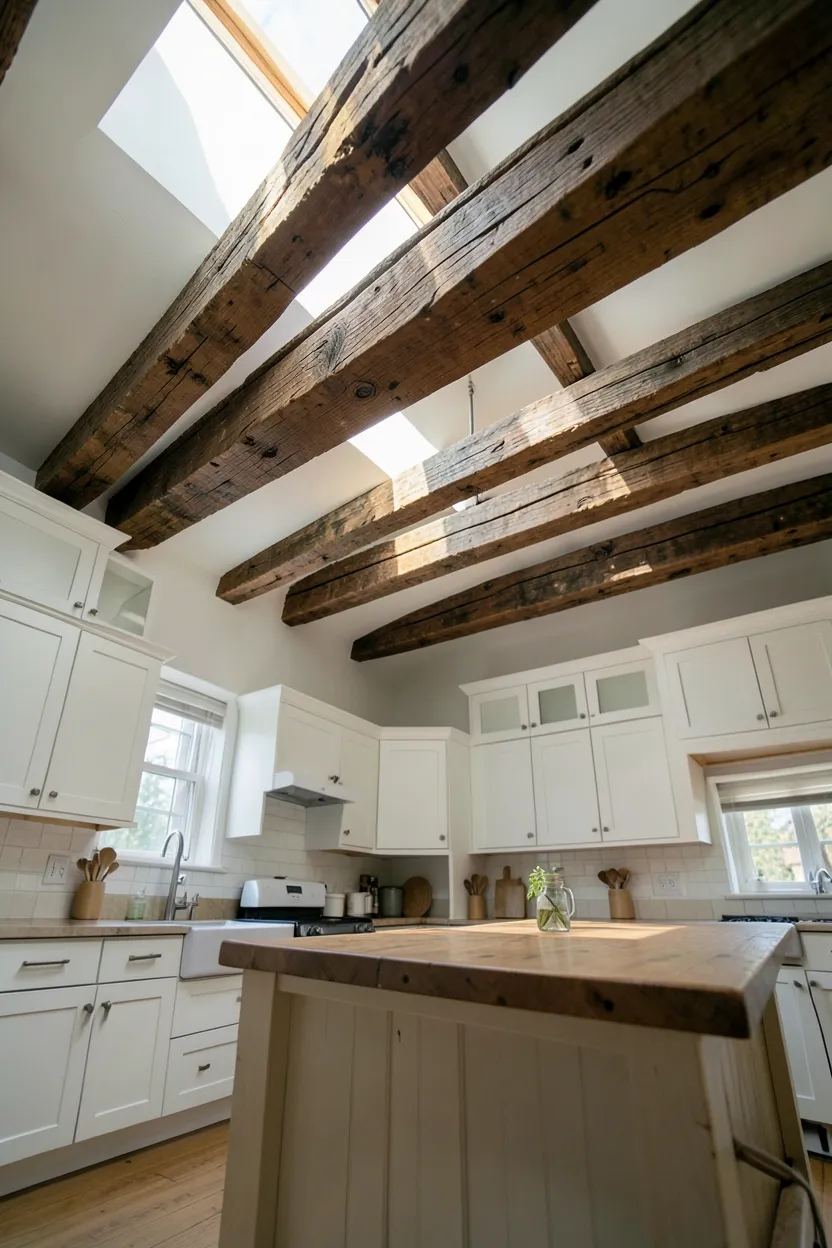
12. Exposed Wood Beams
Exposed wood beams add architectural interest and rustic warmth to your kitchen, drawing the eye upward and creating a sense of character. Whether original to the space or added as design elements, wood beams create a natural focal point that enhances the earthy aesthetic.
Recommended
Items for this idea
Exposed wood beams transform the ceiling from forgotten overhead space into a dramatic design element that adds vertical interest and architectural character to your kitchen. The natural grain patterns, saw marks, and weathered patina of reclaimed beams create visual texture that draws the eye upward, making the space feel taller and more expansive. The shadows cast by beam textures change throughout the day as light moves across the ceiling, creating dynamic visual interest that makes the kitchen feel alive and connected to the natural cycle of light.
The rustic warmth of exposed beams beautifully complements cottage kitchen aesthetics, adding authentic character that feels gathered over time rather than manufactured. Whether you choose to maintain the beams' natural finish for maximum warmth or paint them white for a brighter, airier feel, the architectural presence adds sophistication and visual weight that grounds the space while creating a natural framework for other design elements like lighting fixtures and upper cabinetry.
Beyond their visual impact, exposed wood beams offer practical benefits that enhance both the aesthetic and functionality of your kitchen. The beams provide natural anchor points for hanging pendant lights, pot racks, or even dried herbs and garlic, creating vertical storage that keeps your countertops free while adding decorative interest. The solid presence of timber also provides excellent acoustical dampening, reducing echo and creating a more comfortable sound environment for conversation and cooking activities.
Tips
- Use reclaimed beams for authentic character
- Paint beams white for lighter, brighter spaces
- Maintain original finish for maximum warmth
Avoid if: your ceilings are already low
What this gives you: Architectural interest and rustic charm
13. Clay Pottery
Clay pottery pieces add handcrafted warmth and organic beauty to your kitchen, whether displayed on open shelves or used for serving and storage. The natural imperfections and warm tones of terracotta, stoneware, or hand-thrown ceramics create visual interest and connect your space to traditional craftsmanship.
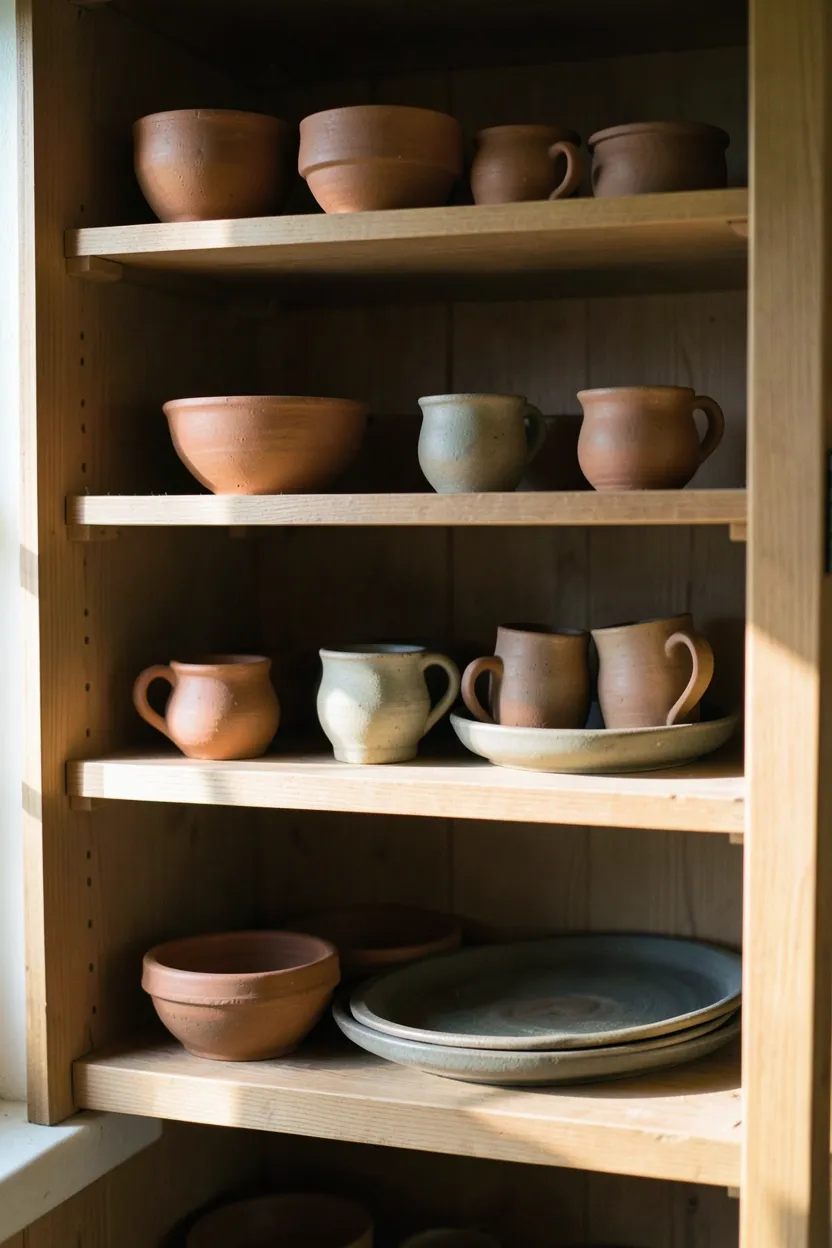
The tactile experience of hand-thrown pottery connects you to the human tradition of ceramics, with each piece bearing subtle variations in shape, thickness, and surface texture that tell the story of its creation. The natural warmth of terracotta and the sophisticated depth of stoneware glazes create visual interest that celebrates the beauty of imperfection, making your kitchen feel collected and personal rather than generic and mass-produced. Using these pieces for everyday cooking and serving transforms routine activities into opportunities for connection to craftsmanship and natural materials.
Clay pottery enhances rustic kitchen aesthetics by adding authentic, handcrafted warmth that feels genuine and lived-in. The earthy reds, warm browns, and muted greens of natural clay complement wood tones, stone surfaces, and neutral walls, creating a harmonious palette that celebrates natural materials throughout your space. Whether displayed as decorative objects or used daily for cooking and serving, pottery pieces add character and soul that makes your kitchen feel like a home rather than a showroom.
Functionally, clay pottery offers remarkable versatility and practical benefits for kitchen use. The natural thermal properties of clay make it ideal for slow cooking, keeping food warm for extended periods while allowing gentle heat distribution that enhances flavors. Unglazed terracotta allows for natural breathability that's perfect for storing garlic, onions, or dry goods, while the weight and substance of quality pottery pieces make them feel substantial and satisfying to handle during meal preparation and serving.
Tips
- Mix pottery sizes and shapes for visual interest
- Group by color for a cohesive look
- Choose food-safe pieces for serving and storage
Best for: adding handcrafted warmth and character
What this gives you: Artisanal charm and organic beauty
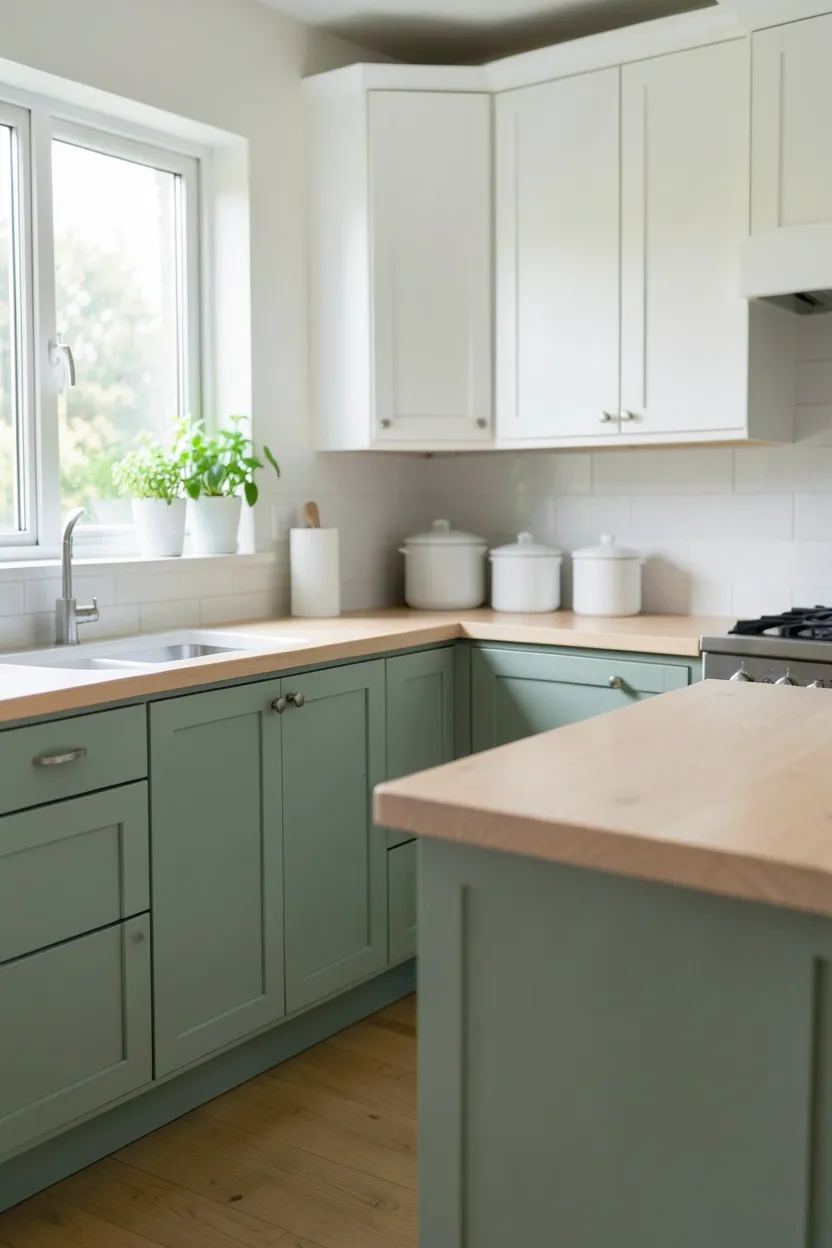
14. Sage Green Accents
Sage green accents bring a natural, calming element to your earthy kitchen, evoking the serenity of forest leaves and moss. This soft, muted green works beautifully as cabinet color, backsplash tiles, or through accessories like dish towels and decor pieces.
Recommended
Items for this idea
The gentle, muted tones of sage green create a sophisticated color story that feels connected to nature without overwhelming the space with bold or saturated hues. This soft green bridges the gap between neutral tones and stronger colors, adding visual interest while maintaining the serene, calming atmosphere that defines earthy kitchen design. Sage green's natural connection to foliage and plant life brings a subtle, organic energy to the kitchen that feels refreshing and revitalizing rather than stark or clinical.
Sage green beautifully complements warm neutral kitchen palettes, adding sophisticated color depth that enhances rather than competes with wood tones, stone surfaces, and natural textures. The subtle green-gray undertones of sage harmonize with beige walls, oak cabinets, and cream countertops, creating a cohesive color scheme where each element supports and elevates the others. Whether used on lower cabinets for a grounded feel or as accent tiles for subtle pops of color, sage green brings nature-inspired sophistication that feels both timeless and thoroughly contemporary.
The psychological impact of sage green in a kitchen cannot be overstated. This soft, muted green has been shown to promote relaxation and reduce stress, making it an ideal choice for spaces where you spend time preparing food and gathering with family. The calming nature of sage green creates a peaceful environment that encourages mindful cooking and leisurely meals, transforming routine kitchen activities into opportunities for restoration and connection to natural tranquility.
Tips
- Pair sage green with warm neutrals for balance
- Use on lower cabinets for grounded feel
- Add fresh greenery to enhance the natural vibe
Best for: creating a calming, nature-inspired space
What this gives you: Serene, calming color accents
15. Reclaimed Wood Island
A reclaimed wood island serves as the heart of your earthy kitchen, providing a stunning focal point with character and history. The weathered patina, visible nail holes, and natural imperfections tell a story while offering a durable, functional workspace that becomes more beautiful with use.
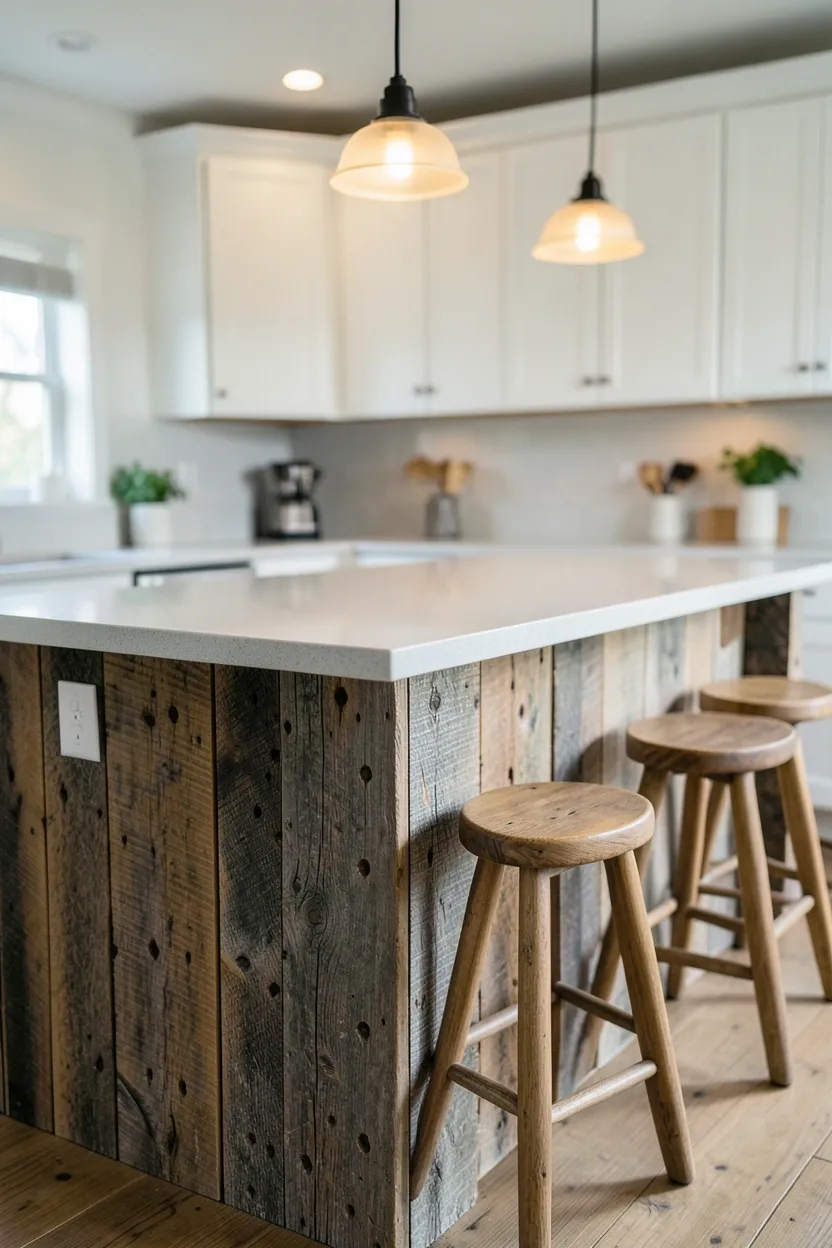
The weathered beauty of reclaimed wood creates an instant sense of history and authenticity that new materials simply cannot replicate. Each scratch, dent, and natural imperfection tells a story of the wood's previous life, whether from a century-old barn, a retired factory floor, or an old warehouse. This visible history creates a connection to the past that adds depth and meaning to your kitchen, making the space feel grounded and substantial rather than fleeting and disposable. The rich, layered patina that develops over decades of natural aging brings warmth and character that would take generations to achieve in new wood.
Reclaimed wood islands enhance wood kitchen designs by introducing authentic character and historical significance that elevates the entire space. The mix of reclaimed and newer wood elements creates a curated, collected aesthetic that feels assembled over time rather than purchased all at once. This approach results in a kitchen with soul and personality, where the island becomes a conversation piece that anchors the design and provides a natural focal point that draws the eye and invites touch.
Beyond their aesthetic and historical appeal, reclaimed wood islands offer exceptional environmental benefits and practical durability. Using reclaimed materials prevents valuable timber from entering landfills and reduces demand for harvesting new trees, making your kitchen more sustainable. The decades-old wood has already stabilized through years of natural curing, meaning it's less prone to warping, shrinking, or expanding than new wood. This inherent stability, combined with the material's proven durability, ensures your island will provide generations of beautiful, functional service while telling its ongoing story in your home.
Tips
- Choose durable hardwood for longevity
- Seal properly to prevent moisture damage
- Embrace imperfections as part of the character
Budget/Time: Medium to high investment, custom work
What this gives you: A stunning, character-rich centerpiece
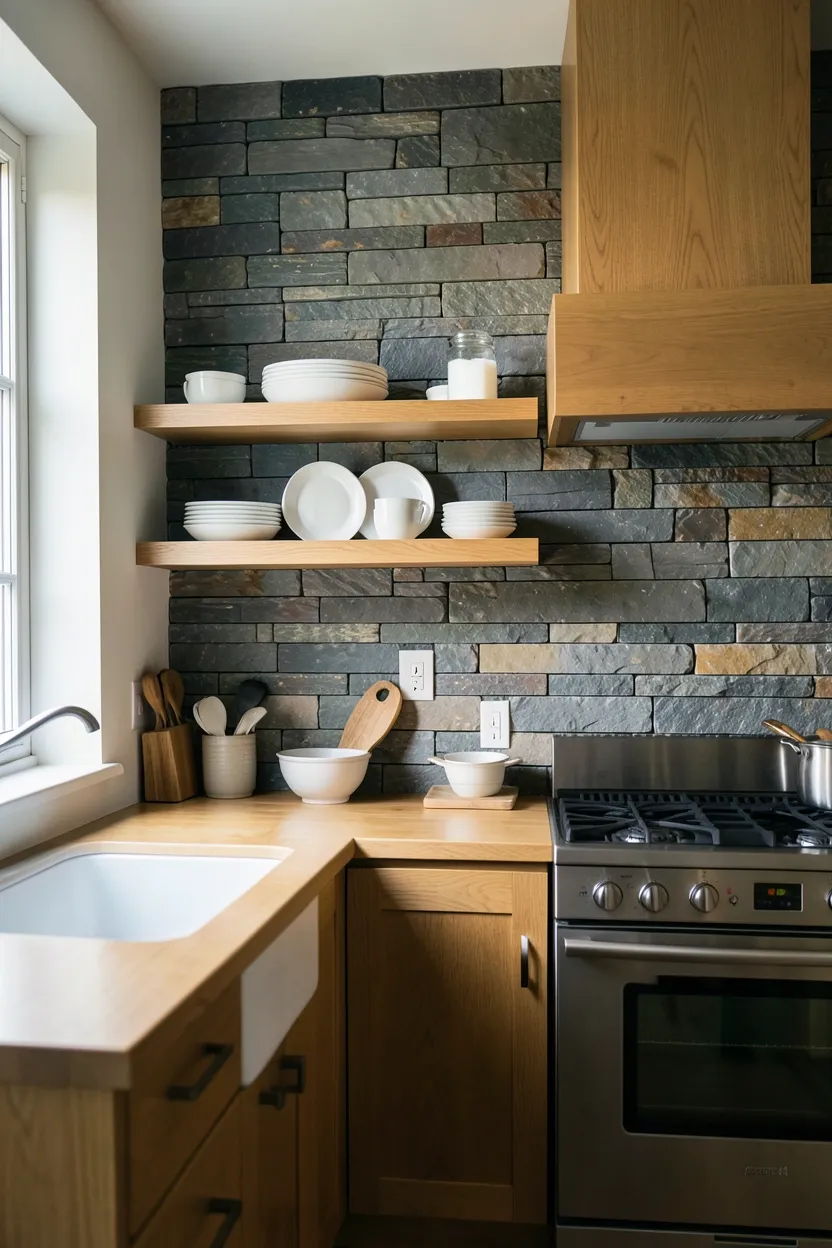
16. Stone Accent Wall
A stone accent wall adds dramatic texture and organic beauty to your kitchen, creating a stunning backdrop that anchors the space. Whether full wall or partial application, natural stone in stacked ledger panels or irregular flagstone creates visual interest and connects your kitchen to the earth.
Recommended
Items for this idea
The dramatic textural impact of a stone accent wall transforms your kitchen from a functional workspace into a space with architectural presence and visual sophistication. The natural variations in color, the depth of shadow created by stone's irregular surface, and the inherent strength of the material create a powerful focal point that anchors the entire room design. Light interacts beautifully with stone surfaces throughout the day, creating shifting patterns of highlight and shadow that bring dynamic energy to the kitchen while maintaining a serene, grounded atmosphere.
Stone accent walls complement earth-toned kitchen designs by adding sophisticated texture and natural variation without introducing bold colors that might overwhelm the serene palette. The natural grey, brown, or beige tones of stone harmonize with wood cabinets, neutral walls, and metallic fixtures, creating visual balance where the stone's texture provides contrast while its color remains cohesive with the overall earthy scheme.
Practically, stone accent walls offer remarkable durability and sound-dampening qualities that enhance both the beauty and functionality of your kitchen. The natural density of stone provides excellent insulation and acoustical absorption, reducing echo and creating a more comfortable environment for conversation and cooking. Stone surfaces are also incredibly heat and stain resistant, making them ideal for installation behind ranges or sinks where they provide beautiful, low-maintenance protection for your walls while serving as a stunning design feature.
Tips
- Use lighter stone to prevent the space from feeling dark
- Apply to one wall for focal point impact
- Seal regularly for easy maintenance
Avoid if: your kitchen is already small
What this gives you: Dramatic texture and organic beauty
17. Natural Linen Curtains: Renter-Friendly Kitchen Window Treatment
Natural linen curtains soften your kitchen windows while adding subtle texture and organic warmth. The light, airy fabric allows natural light to filter through while providing privacy, and its natural grain and slight variations create a relaxed, lived-in aesthetic.
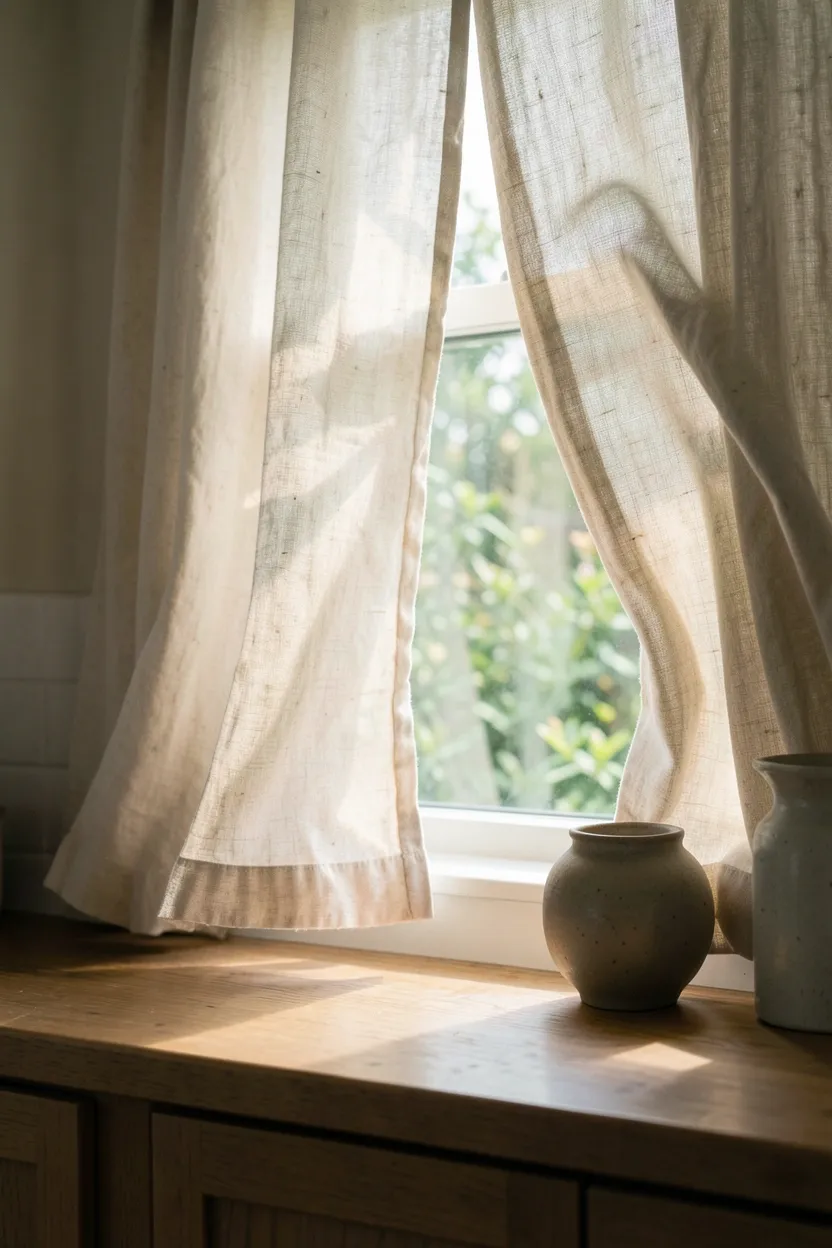
The natural texture and subtle movement of linen curtains bring a gentle, organic quality to your kitchen that softens hard surfaces and adds visual warmth. The inherent variations in linen's weave create visual interest that catches and diffuses light beautifully, transforming harsh direct sunlight into soft, flattering illumination throughout your space. This natural light filtration creates a constantly changing play of highlight and shadow across your kitchen surfaces, making the room feel dynamic and alive rather than static and sealed.
Natural linen enhances warm neutral kitchen aesthetics by adding sophisticated texture while maintaining the serene, calming palette. The natural cream, oatmeal, or soft grey tones of unbleached linen complement wood cabinets, stone countertops, and neutral walls, creating visual continuity that flows from windows through the entire kitchen. Whether you prefer full-length panels for dramatic impact or casual cafe-style curtains for functional privacy, linen brings an effortless, relaxed elegance that never feels fussy or overdone.
The practical benefits of natural linen curtains extend far beyond their beautiful appearance. Linen's natural temperature-regulating properties mean it helps keep your kitchen comfortable in both hot and cold weather, providing insulation while remaining breathable. The fabric's natural resistance to dust mites and mold makes it a healthy choice for kitchens, while its durability ensures it will maintain its beauty even in humid cooking environments. Unlike synthetic alternatives, linen improves with age, developing a softer hand and more beautiful drape that makes it more lovely with each passing year.
Tips
- Choose unbleached linen for natural warmth
- Hang high to make windows feel larger
- Let puddle slightly on floor for relaxed look
Rental note: Easy to install and remove with tension rods
What this gives you: Soft texture and filtered light
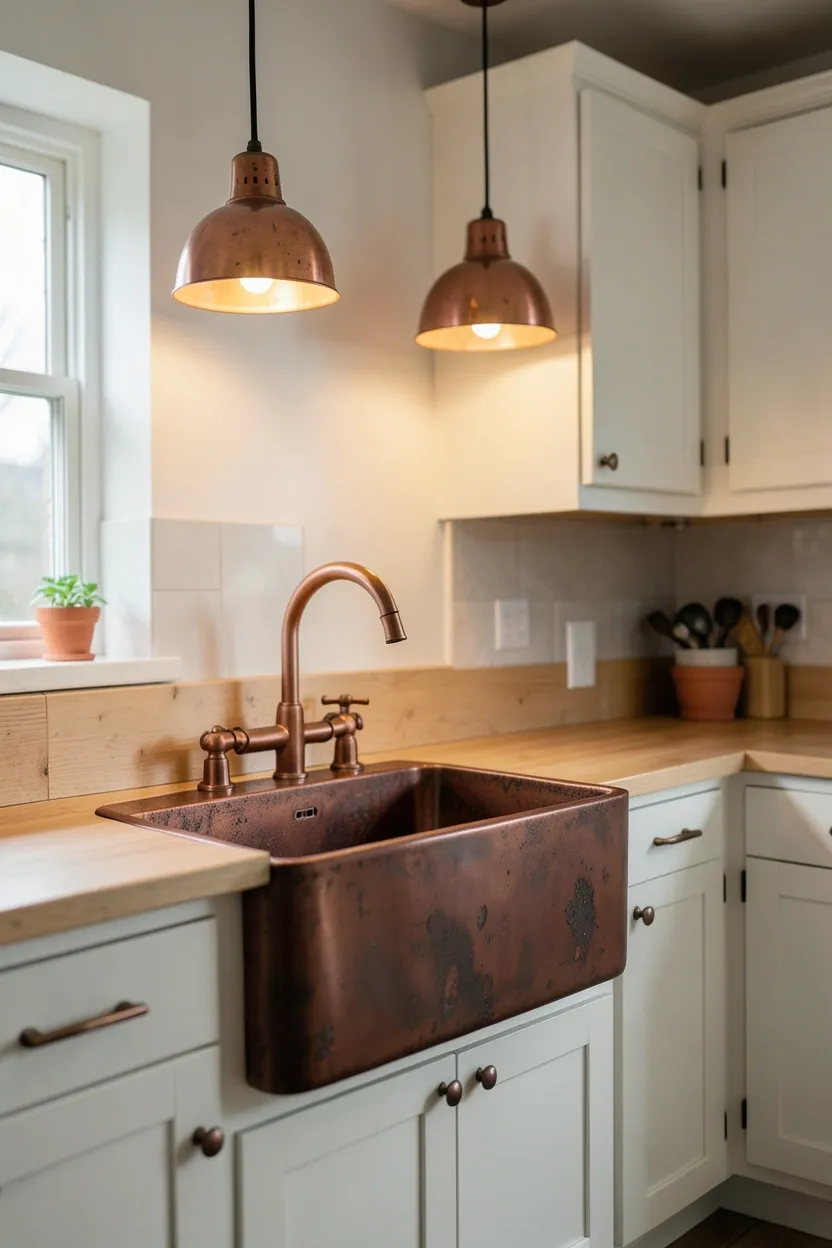
18. Copper Fixtures
Copper fixtures add warmth and natural patina to your kitchen while providing functional beauty that ages gracefully. The warm metallic tones complement earthy materials like wood and stone, and the natural oxidation process creates a unique, evolving finish that tells a story.
Recommended
Items for this idea
The warm, living quality of copper creates a dynamic visual element that evolves and changes over time, making your kitchen feel organic and alive rather than static and manufactured. The natural oxidation process transforms bright, shiny copper into a rich spectrum of browns, russets, and verdigris greens that tell the story of your kitchen's life and use. This evolving patina ensures that your copper fixtures develop a unique character that cannot be replicated, creating a personal connection to the materials that surround you daily.
Copper's warm metallic tones beautifully complement earth-toned kitchen designs, adding sophisticated metallic warmth that harmonizes with wood grain, stone textures, and neutral walls. The rich, reddish-brown undertones of copper provide natural color contrast while remaining within the warm, organic palette, making fixtures feel like integral design elements rather than afterthought additions. Whether you choose bright polished copper for maximum warmth or embrace the developing patina for aged character, copper adds visual interest and sophistication.
Beyond their aesthetic appeal, copper fixtures offer remarkable antimicrobial properties and durability that make them particularly well-suited for kitchen use. Copper's natural ability to kill bacteria and viruses on contact makes it an exceptionally hygienic choice for sinks, faucets, and frequently touched surfaces. The material's superior conductivity also means copper sinks and pans heat and cool quickly, making them efficient for cooking and food preparation tasks while the metal's natural strength and resistance to corrosion ensure decades of beautiful, functional service.
Tips
- Allow copper to age naturally for patina
- Choose unlacquered finish for authentic aging
- Mix with warm metals like brass for harmony
Budget/Time: Medium to high investment
What this gives you: Warmth and evolving natural beauty
19. Raw Edge Shelves
Raw edge shelves celebrate the natural beauty of wood, showcasing the organic lines and textures of the tree's original edge. These shelves add sculptural interest and warmth to your kitchen walls while providing functional storage for dishes, cookbooks, and decorative items.
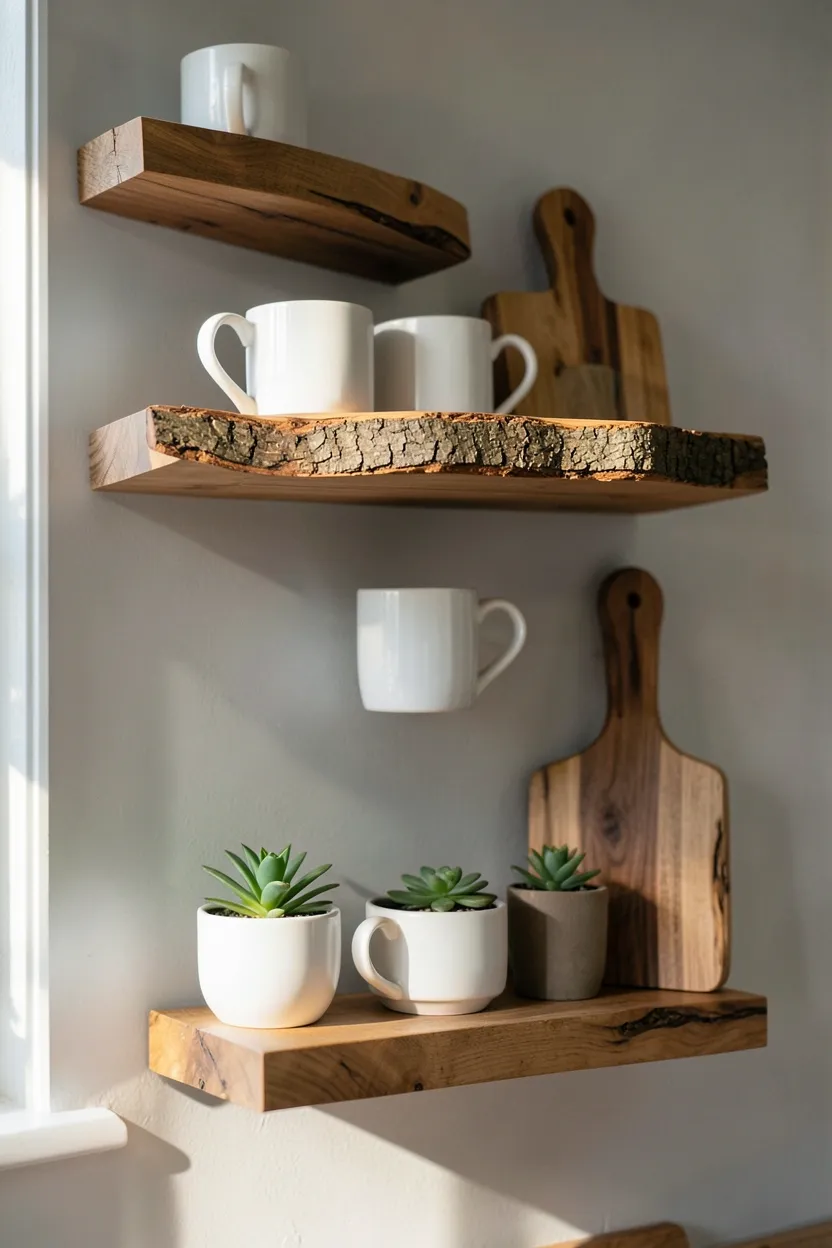
The sculptural quality of raw edge shelves transforms functional storage into art that celebrates wood in its most natural, unrefined state. The undulating line of the bark edge, the visible rings and grain patterns, and the subtle color variations from heartwood to sapline create visual interest that makes each shelf a unique piece of natural sculpture. This celebration of organic forms brings a sense of authenticity and connection to nature that manufactured, perfectly straight-edged alternatives simply cannot match.
Raw edge shelves enhance wood kitchen aesthetics by introducing sophisticated natural elements that feel simultaneously primitive and refined. The combination of smooth, finished surfaces with raw, untouched edges creates beautiful visual contrast that adds depth and character to your kitchen walls. Whether made from walnut, oak, or maple, these shelves become conversation pieces that draw the eye and invite touch while providing practical storage that celebrates the beauty of natural materials.
Functionally, raw edge shelves offer remarkable versatility for displaying and storing kitchen items. The unique profile of each shelf provides natural compartments and edges that help keep items organized and in place, while the substantial presence of solid wood creates confidence for displaying heavier cookware or collections of dishes. The natural variations in shelf depth and profile mean you can create customized arrangements that work perfectly for your specific needs, making organization feel like an opportunity for creative expression rather than a constraint.
Tips
- Choose hardwoods like walnut or oak for durability
- Apply food-safe oil if storing food items
- Mount securely to support weight
Best for: adding sculptural, organic interest
What this gives you: Unique, one-of-a-kind storage
20. Earthy Tile Patterns
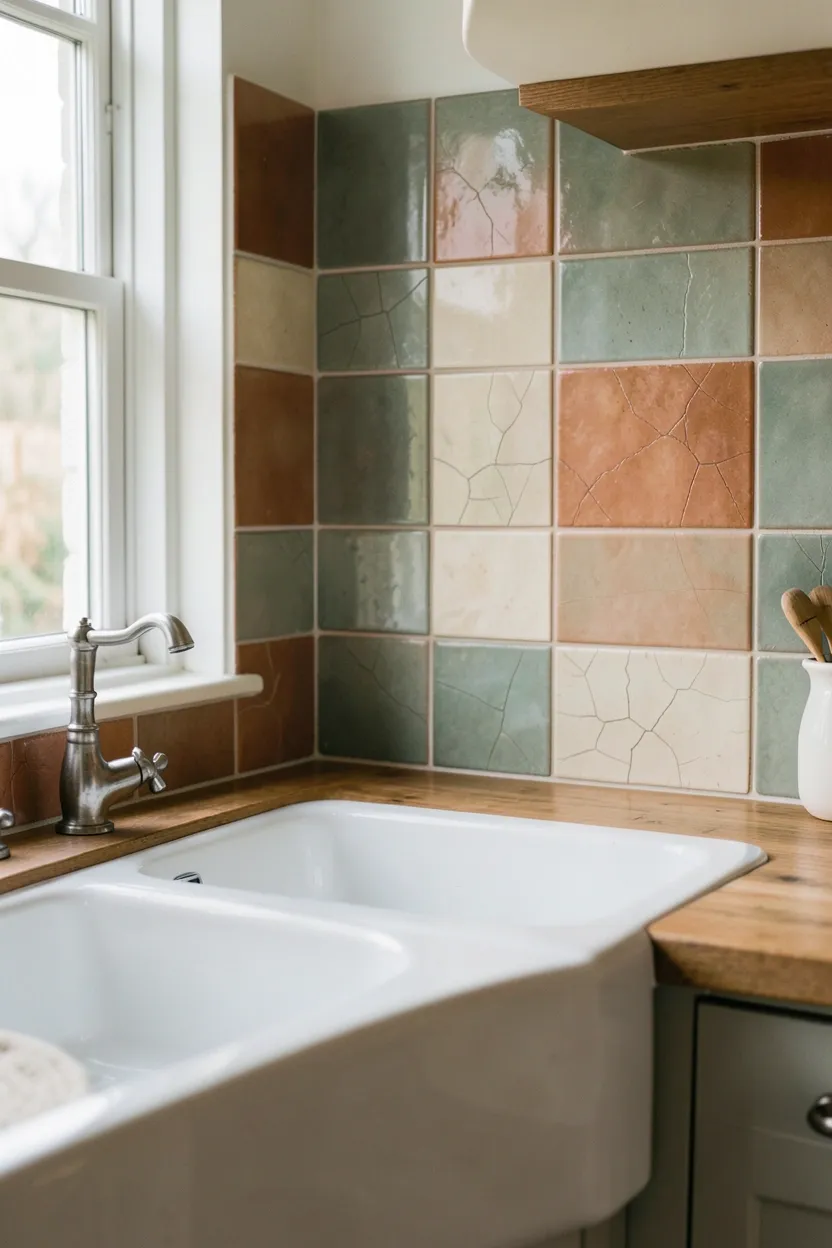
Earthy tile patterns in your backsplash or flooring create visual interest through natural colors and organic shapes. Terracotta hexagons, stone mosaics, or handmade ceramic tiles in earth tones add texture and warmth while reflecting the beauty of natural materials.
Recommended
Items for this idea
The visual sophistication of earthy tile patterns creates depth and character through thoughtful combinations of color, shape, and texture that elevates the entire kitchen design. Handmade tiles with their subtle variations in glaze and slight irregularities in shape bring artisanal quality that makes your backsplash or floor feel like a work of art rather than merely functional surface. The interplay of different tile shapes—hexagons creating geometric patterns, penny rounds creating movement, or subway tiles in running bond—adds sophisticated visual interest that draws the eye and rewards close inspection.
Earthy tile patterns complement warm neutral kitchen designs by adding rich textural detail while maintaining the serene, cohesive color palette. The natural terracotta, sage green, cream, and soft brown tones of earthy tiles harmonize with wood cabinets, stone countertops, and neutral walls, creating visual continuity that flows throughout the space. Whether you choose dramatic statement walls or subtle accent areas, these tiles bring organic warmth and sophistication that makes your kitchen feel thoughtfully designed and beautifully executed.
The practical benefits of earthy tile patterns extend far beyond their beautiful appearance. Natural ceramic and stone tiles offer exceptional durability and resistance to heat, stains, and wear, making them ideal for the demanding environment of a kitchen backsplash or floor. The easy-to-clean surfaces require minimal maintenance, while the visual complexity of patterned tiles helps hide minor imperfections or wear, keeping your kitchen looking beautiful even after years of daily use. Unlike smooth painted walls, tile surfaces protect against moisture and splashes while adding lasting value and sophistication to your home.
Tips
- Mix tile sizes for visual interest
- Use natural stone for organic variation
- Consider grout color for overall impact
Budget/Time: Medium to high, professional installation
What this gives you: Unique patterns and organic texture
21. Natural Wood Stools
Natural wood stools at your island or counter add warmth and organic beauty while providing comfortable seating for casual dining and socializing. The visible grain patterns and warm tones of wood create visual interest and soften the hard surfaces typical of kitchen design.
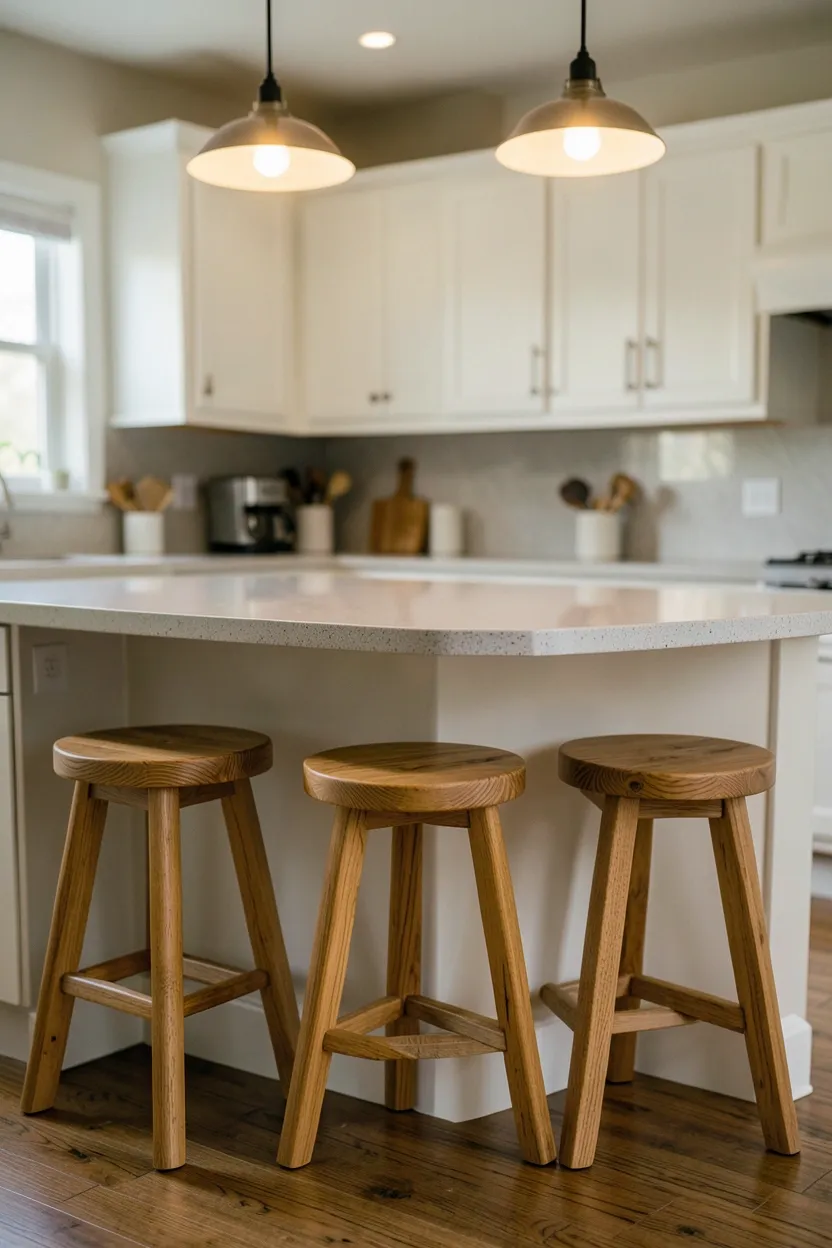
The tactile warmth and natural beauty of wood stools create an inviting seating area that encourages lingering, conversation, and connection in your kitchen. The visible grain patterns, natural color variations, and smooth finished surfaces bring organic beauty that makes sitting at your island a genuinely pleasurable experience. Wood naturally feels warmer to the touch than metal or plastic alternatives, making these stools comfortable even on cool mornings, while the material's natural acoustic properties create a quieter, more intimate environment for conversation and dining.
Natural wood stools enhance wood kitchen aesthetics by introducing seating that feels like an integral, thoughtful part of the design rather than an afterthought addition. The continuity of wood material from floor to cabinets to island to stools creates visual harmony that makes the entire space feel cohesive and considered. Whether you choose matching stools for uniform appearance or mix different wood tones for a collected, eclectic look, natural wood seating adds warmth and sophistication that elevates the entire kitchen design.
Functionally, well-designed wood stools offer remarkable comfort and durability for daily kitchen use. The natural give of wood combined with thoughtful ergonomics provides comfortable seating for extended periods, whether you're enjoying morning coffee, helping with meal preparation, or gathering with friends. Wood's natural strength and resilience ensure stools will maintain their beauty and structural integrity through years of use, developing a beautiful patina that tells the story of countless meals, conversations, and moments shared around your kitchen island.
Tips
- Choose stools with comfortable foot rests
- Mix wood tones for collected look
- Consider cushioned seats for added comfort
Best for: adding warmth and functional seating
What this gives you: Comfortable, stylish seating
These 21 earthy kitchen ideas show how natural materials, warm tones, and organic textures can transform any cooking space — including small rental apartments — into a grounded, inviting sanctuary. Whether you go all-in with terracotta tiles and reclaimed wood or start simply with woven baskets and linen curtains, each earthy element brings you closer to a natural look that feels both timeless and truly your own. Start with one idea that fits your budget and your lease, and let the warmth build naturally from there.
About the author
OBCD
CGI visualization and interior design content. We create detailed 3D renders and curate practical design ideas for every room in your home.