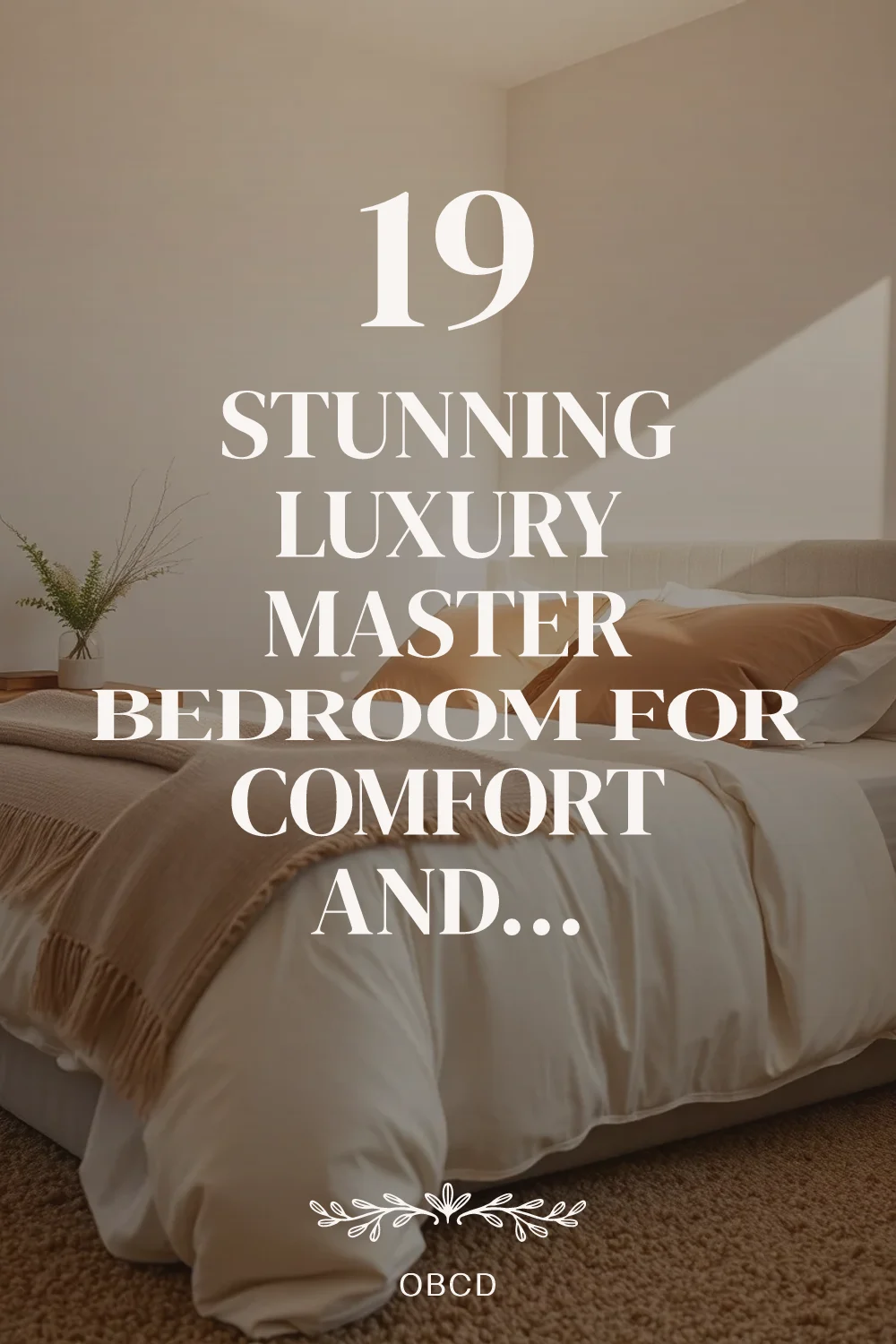
19 Luxury Master Bedroom Ideas for Comfort and Style
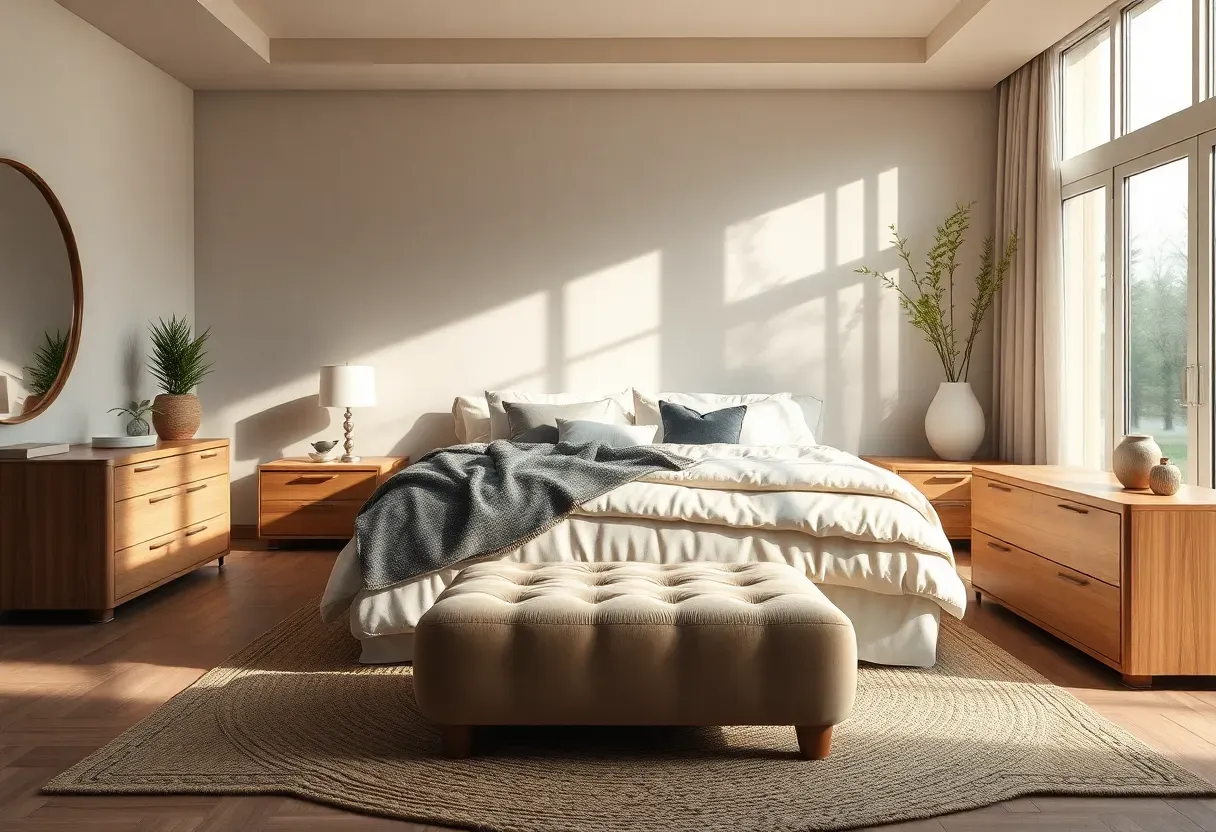
These 19 luxury master bedroom ideas will help you build a sanctuary where elegance meets genuine relaxation. Whether you own your home or rent, the right combination of color, texture, and proportion can achieve both comfort and visual balance without requiring major renovations. The most stunning rooms layer sophisticated design elements with livable warmth.
The key to a successful luxury bedroom lies in thoughtful layering rather than excessive ornamentation. Every piece should serve a purpose while contributing to the overall harmony of the space. From a statement headboard to subtle metallic accents, each element works together to create an environment that feels both grand and inviting.
Whether you're working with a spacious suite or a compact master bedroom, these ideas focus on creating visual balance through strategic furniture placement, intentional material choices, and layered lighting design. Many of the upgrades here are renter-friendly — no permanent drilling or structural changes required.
Quick FAQ
What makes a master bedroom feel luxurious?
Luxury comes from quality materials, thoughtful lighting, and a cohesive color palette. Focus on comfort pieces like high-thread-count linens, layered window treatments, and statement furniture rather than excessive decoration.
How do I achieve visual balance in my bedroom?
Start with symmetrical furniture placement around your bed. Use pairs of nightstands, lamps, or artwork to create equilibrium. Vary texture rather than color to maintain harmony while adding interest.
What colors work best for a luxury master bedroom?
Neutral palettes with rich undertones like cream, taupe, charcoal, or navy blue create sophistication. Add depth through layered textures rather than bold colors. This approach ensures timeless elegance.
Can I create luxury in a small master bedroom?
Absolutely. Focus on fewer but higher-quality pieces. Use scale-appropriate furniture, maximize vertical space with tall headboards or floor-to-ceiling curtains, and incorporate mirrors to create the illusion of space.
As an Amazon Associate I earn from qualifying purchases.
Table of Contents
- 1. Neutral Color Palette with Rich Textures
- 2. Statement Headboard as Focal Point
- 3. Layered Lighting Design
- 4. Soft Furnishings and Plush Textiles
- 5. Symmetrical Layout for Balance
- 6. Natural Wood Accents
- 7. Velvet Upholstery Elements
- 8. Floor-to-Ceiling Curtains
- 9. Minimalist Luxury with Subtle Details
- 10. Metallic Finishes and Accents
- 11. Built-in Storage Solutions
- 12. Seating Area or Reading Nook
- 13. Large Statement Mirror
- 14. Rug Layering Technique
- 15. Art Gallery Wall
- 16. Monochromatic Scheme with Depth
- 17. Canopy or Four-Poster Bed
- 18. Window Treatments and Natural Light
- 19. Spa-like Bathroom Connection
1. Neutral Color Palette with Rich Textures
A luxury master bedroom built on neutral foundations achieves timeless sophistication through carefully layered textures rather than bold colors. This approach creates a serene environment that feels both expensive and restful, perfect for the master suite where calm and comfort are paramount.
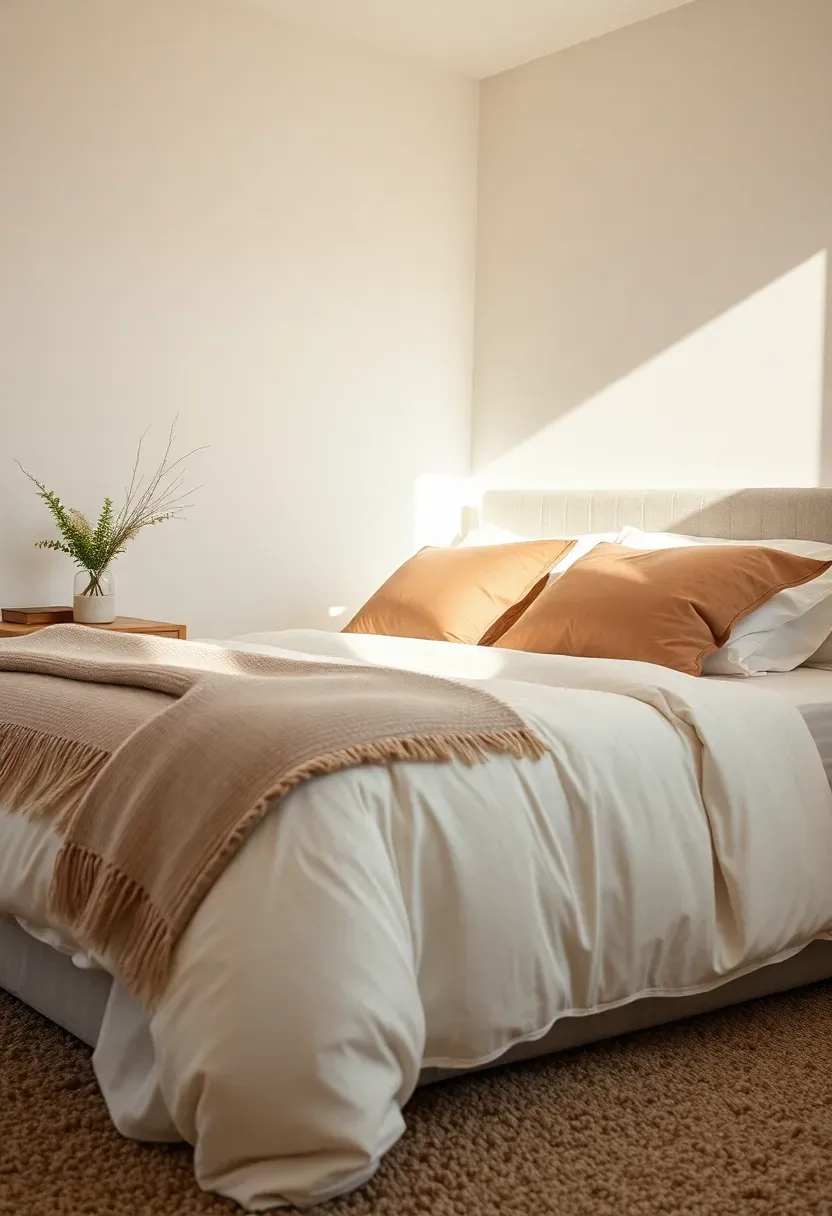
Start with a base of warm whites, soft creams, or light taupes on walls and large surfaces. Then introduce depth through varied materials: linen bedding, wool throws, silk accent pillows, and velvet ottomans. The luxury master bedroom feels richer because each texture catches light differently, creating visual interest without disrupting the color harmony.
Layering textures prevents the space from feeling flat or monotonous. A jute rug underfoot, smooth nightstands, and a nubby throw blanket create tactile variety that elevates the neutral palette. Consider mixing matte and glossy finishes for added dimension.
Do combine at least three different textures in the same neutral tone for depth.
Don't rely solely on color for interest—texture provides sophisticated luxury.
What this gives you: A serene, sophisticated bedroom that feels luxurious without feeling overwhelming or dated.
2. Statement Headboard as Focal Point
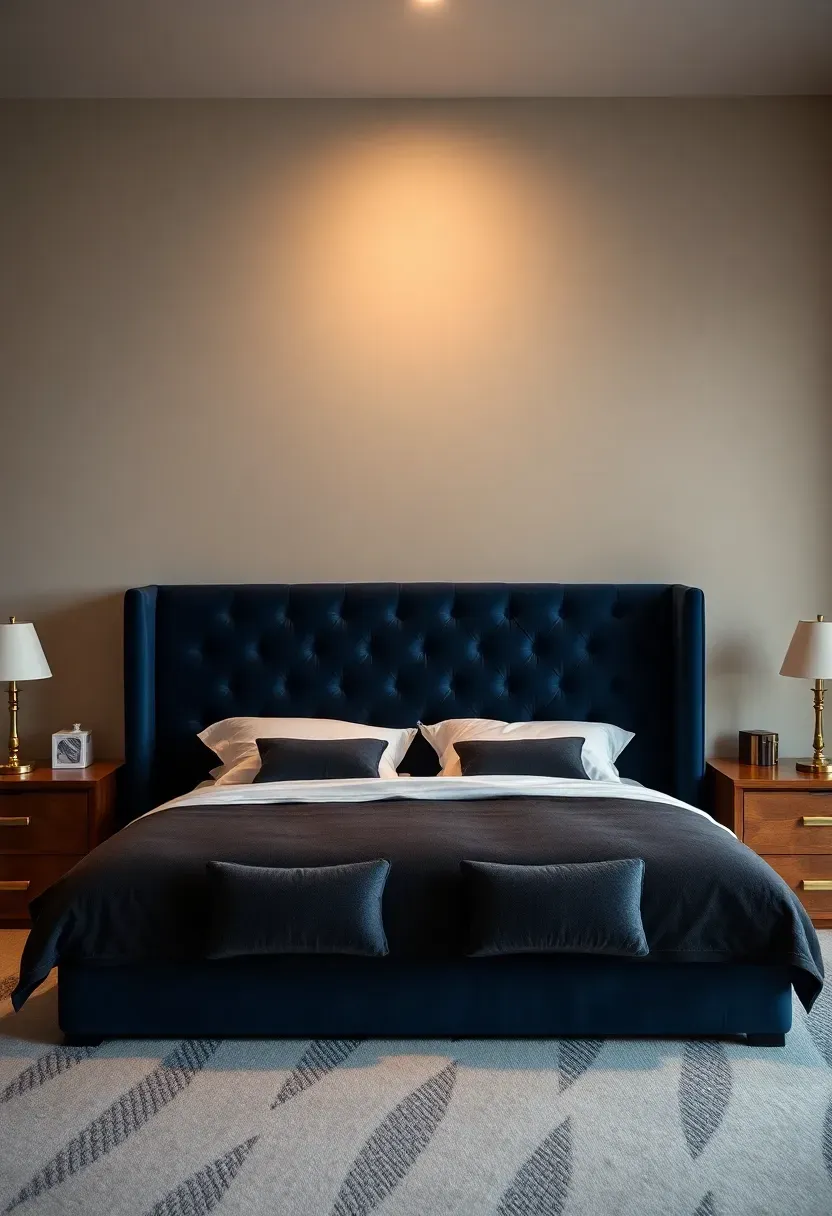
A grand headboard anchors the luxury master bedroom and establishes immediate visual impact. This single piece sets the tone for the entire space, drawing the eye and creating a sense of importance while providing essential back support for reading or watching television.
Recommended
Items for this idea
Placement note: Center the headboard on the primary wall with equal spacing on each side. This ensures proper visual balance and makes the bed feel commanding rather than lost in the room.
Choose a headboard that extends at least 60 inches above the mattress for proper scale. Tufted velvet, upholstered linen, or carved wood options all convey luxury. Consider built-in shelving on either side for integrated functionality that maintains the focal point effect.
If you have high ceilings, extend the headboard upward to fill vertical space proportionally.
Then add complementary artwork or sconces to create a cohesive wall composition.
What this gives you: A dramatic focal point that defines the room's character and provides immediate visual hierarchy.
3. Layered Lighting Design
Sophisticated lighting transforms a luxury master bedroom from merely functional to genuinely atmospheric. Multiple light sources working together create depth, mood, and functionality while highlighting architectural features and textural elements throughout the space.
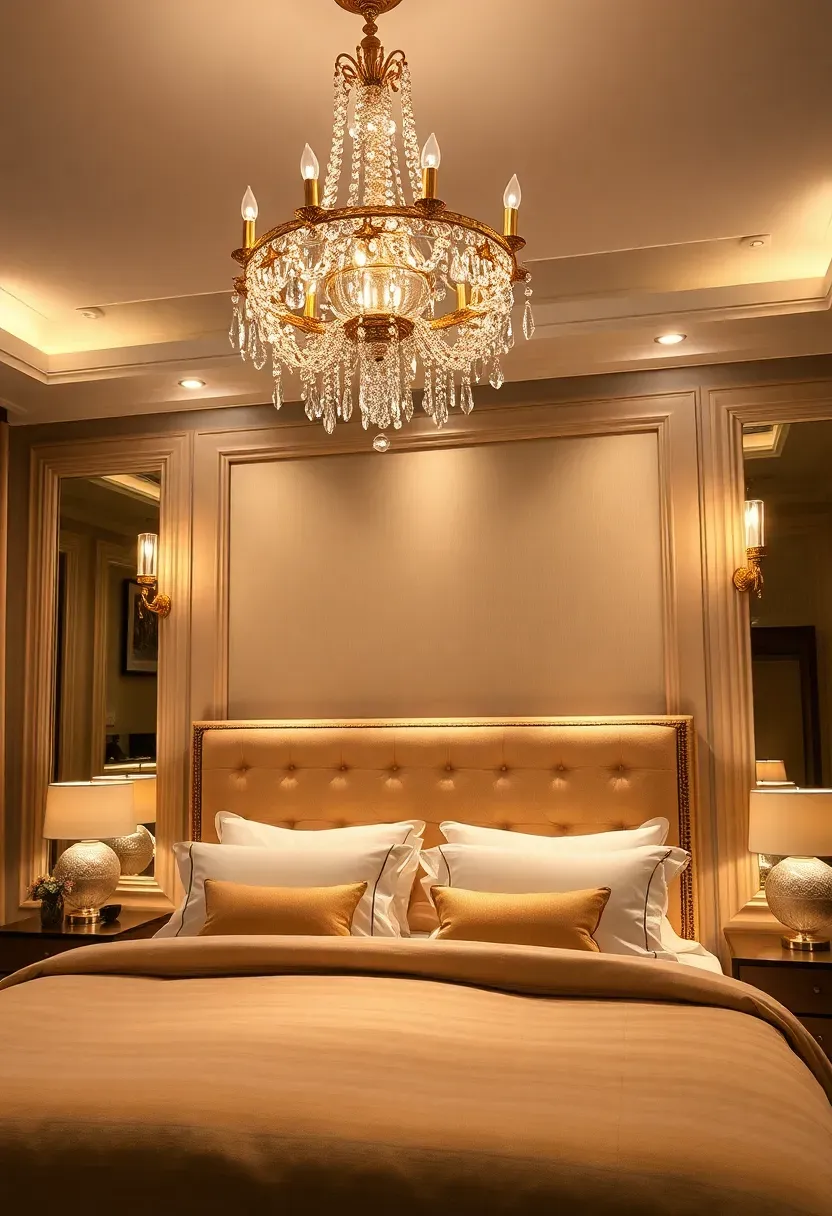
Why it works: Layered lighting mimics natural light variation and allows you to adjust the atmosphere throughout the day. Bright task lighting for dressing gives way to soft ambient lighting for relaxation, with accent lights highlighting artwork or architectural details.
Install dimmers on all switches for maximum control. Combine a central chandelier or pendant for general illumination with bedside sconces or table lamps for reading. Add LED strips behind the headboard or under the bed for subtle drama. Recessed cans with trims that direct light toward artwork or textiles complete the layered effect.
Do use warm white bulbs (2700K-3000K) for cozy, flattering light that complements most bedroom interiors.
Don't rely on a single ceiling fixture—this creates harsh shadows and limits functionality.
Best for: Bedrooms with high ceilings or architectural features that benefit from strategic highlighting.
What this gives you: Versatile lighting that transitions seamlessly from bright morning energy to relaxing evening ambiance.
4. Soft Furnishings and Plush Textiles
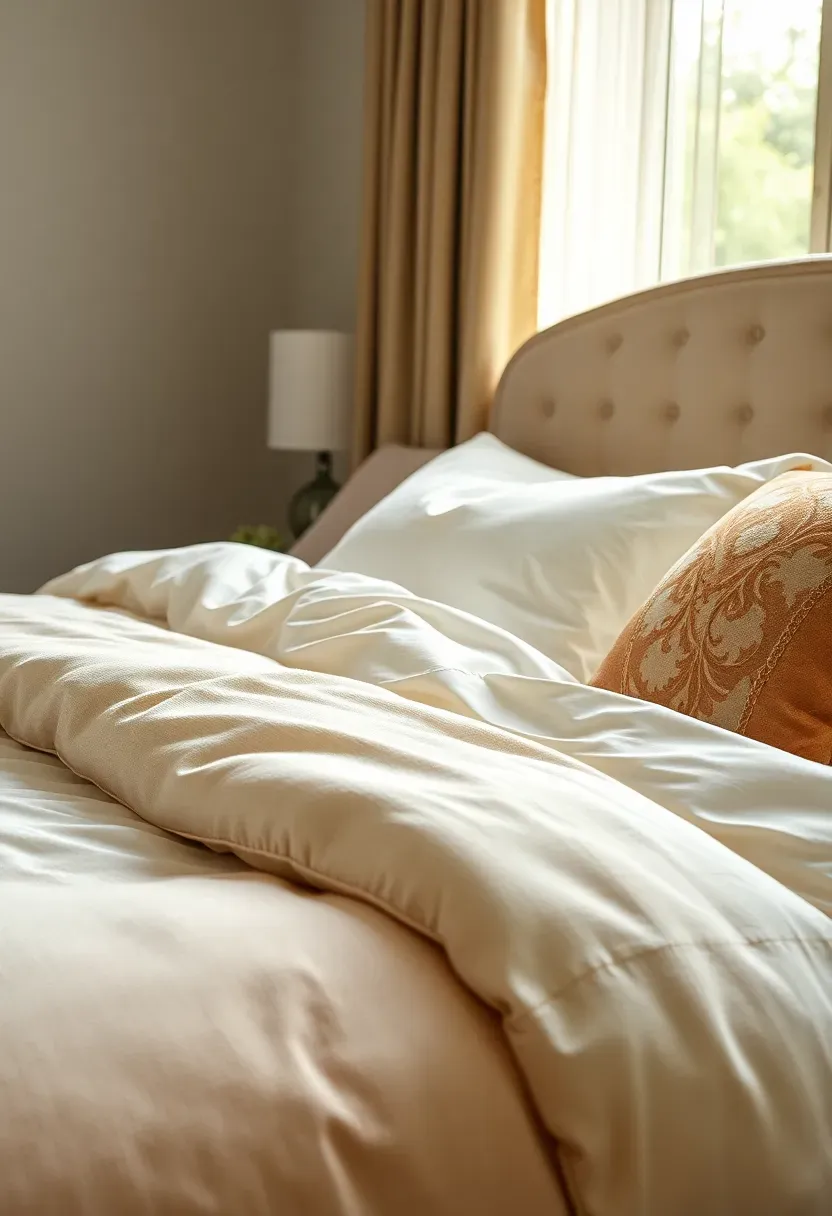
Plush textiles and soft furnishings create immediate tactile luxury in the master bedroom while contributing significantly to comfort. These elements invite touch and relaxation, making the space feel genuinely inviting rather than merely decorated.
Recommended
Items for this idea
Common mistake: Choosing textiles solely for appearance without considering how they feel against the skin. The most luxurious bedrooms prioritize softness and comfort in every fabric choice, from bedding to window treatments.
Invest in high-thread-count cotton or linen sheets with a 600-800 thread count for optimal softness. Layer a down-filled duvet with a silk or velvet cover, then add cashmere or merino wool throws at the foot of the bed. Pillow shams in contrasting textures add visual interest while maintaining softness. Floor-length velvet curtains or silk draperies complete the plush atmosphere while providing light control and sound dampening.
Pro: Plush textiles absorb sound and create a quieter, more peaceful sleeping environment.
Con: High-quality fabrics require careful maintenance and professional cleaning to preserve their appearance.
Fix: Choose machine-washable options for frequently used pieces like bedding and throws while reserving delicate fabrics for decorative elements.
What this gives you: A bedroom that feels genuinely luxurious to the touch while providing superior comfort and sound control.
5. Symmetrical Layout for Balance
Symmetrical arrangement creates inherent visual balance and harmony in the luxury master bedroom, contributing to a sense of calm and order. This classical design principle immediately conveys sophistication while ensuring functional ease of movement throughout the space.
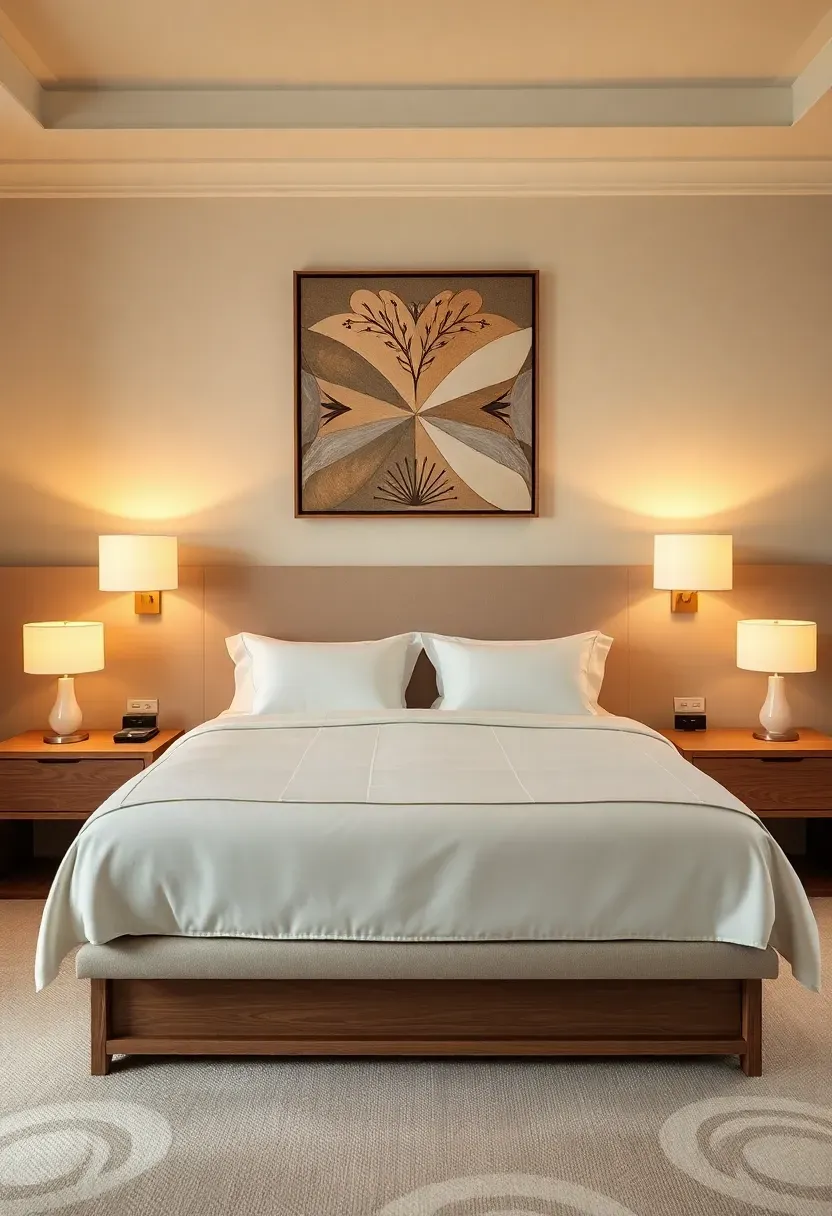
Center the bed on the primary wall with matching nightstands on either side. Place identical table lamps or wall sconces above each nightstand. This creates a strong focal point with balanced visual weight. Extend symmetry to artwork, window treatments, and seating arrangements where possible to reinforce the sense of order.
For a more relaxed approach, see Cozy Moody Bedroom Ideas which demonstrate how intentional asymmetry can create equally compelling spaces.
Balance doesn't mean identical—proportional similarity works too. If one nightstand is larger than the other, offset with a larger lamp or artwork. The key is equal visual weight on each side of the bed rather than identical elements. This maintains harmony while allowing for personal expression.
Use matching pairs for major elements like nightstands, lamps, and chairs.
Vary smaller elements like accessories and artwork to prevent monotony.
Maintain equal spacing on each side of the bed for proper visual equilibrium.
What this gives you: A calming, organized bedroom that feels professionally designed and inherently restful.
6. Natural Wood Accents
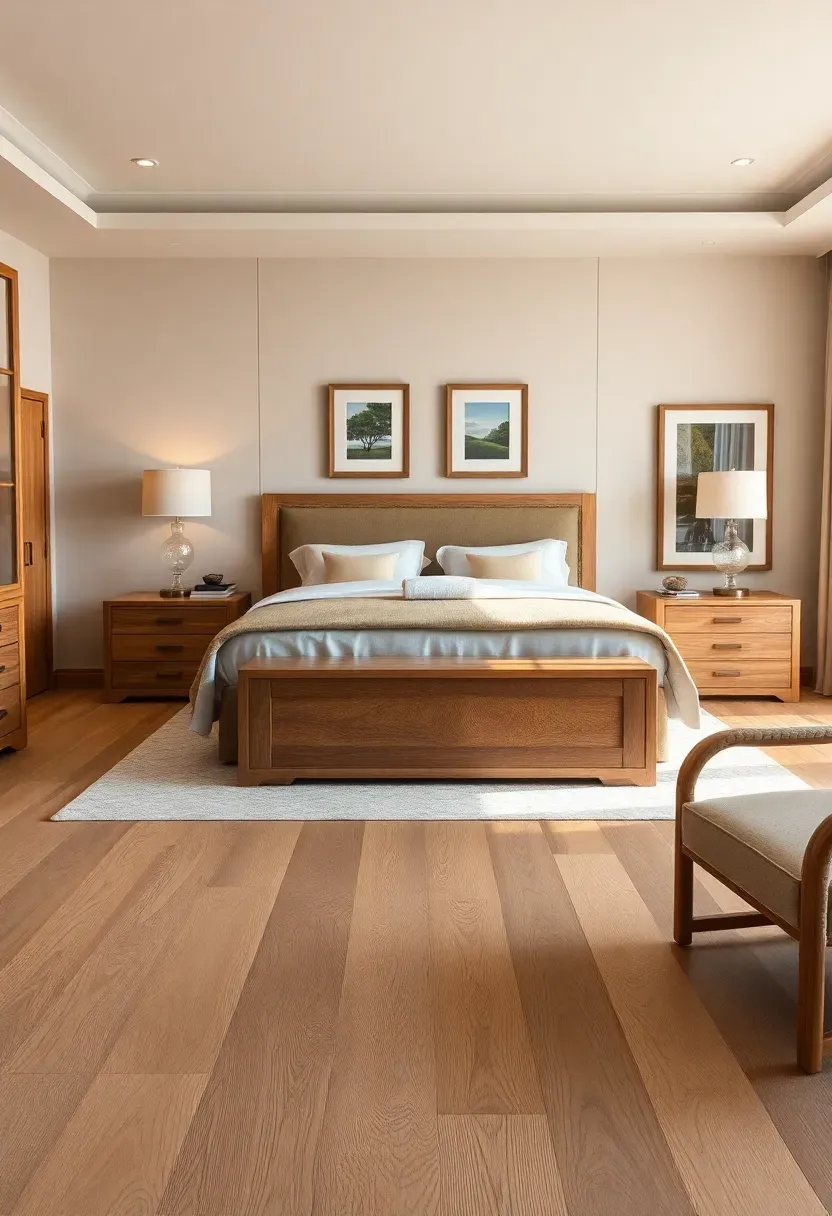
Natural wood elements bring warmth and organic beauty to the luxury master bedroom, balancing cool neutrals and creating a more inviting atmosphere. These accents connect the space to nature while adding sophisticated character through grain patterns and natural variation.
Recommended
Items for this idea
Incorporate wood through furniture pieces like nightstands, dressers, or a storage bench at the foot of the bed. Choose a consistent wood tone throughout the room for cohesion, or mix complementary species for visual interest. Wide-plank hardwood flooring or engineered wood adds significant warmth underfoot while providing durability.
Wooden beams on the ceiling add architectural interest in rooms with sufficient height. A wooden headboard or wooden-framed mirror creates focal points that feel substantial and grounded. Even smaller accents like wooden picture frames, trays, or decorative objects contribute organic warmth.
Do choose wood tones that complement your wall color—light woods work well with cool neutrals while darker woods pair beautifully with warm whites.
Don't mix too many different wood species, which can create visual chaos.
Budget-friendly option: Use wood stain or wood-look wallpaper on existing furniture to achieve the warmth of natural wood without the expense of solid wood pieces.
What this gives you: A grounded, sophisticated bedroom that feels connected to nature and inherently more comfortable.
7. Velvet Upholstery Elements
Velvet furniture and accessories instantly elevate the luxury factor in a master bedroom through rich texture and light-catching properties. This sumptuous fabric adds depth and sophistication while creating a tactile experience that feels indulgent and special.
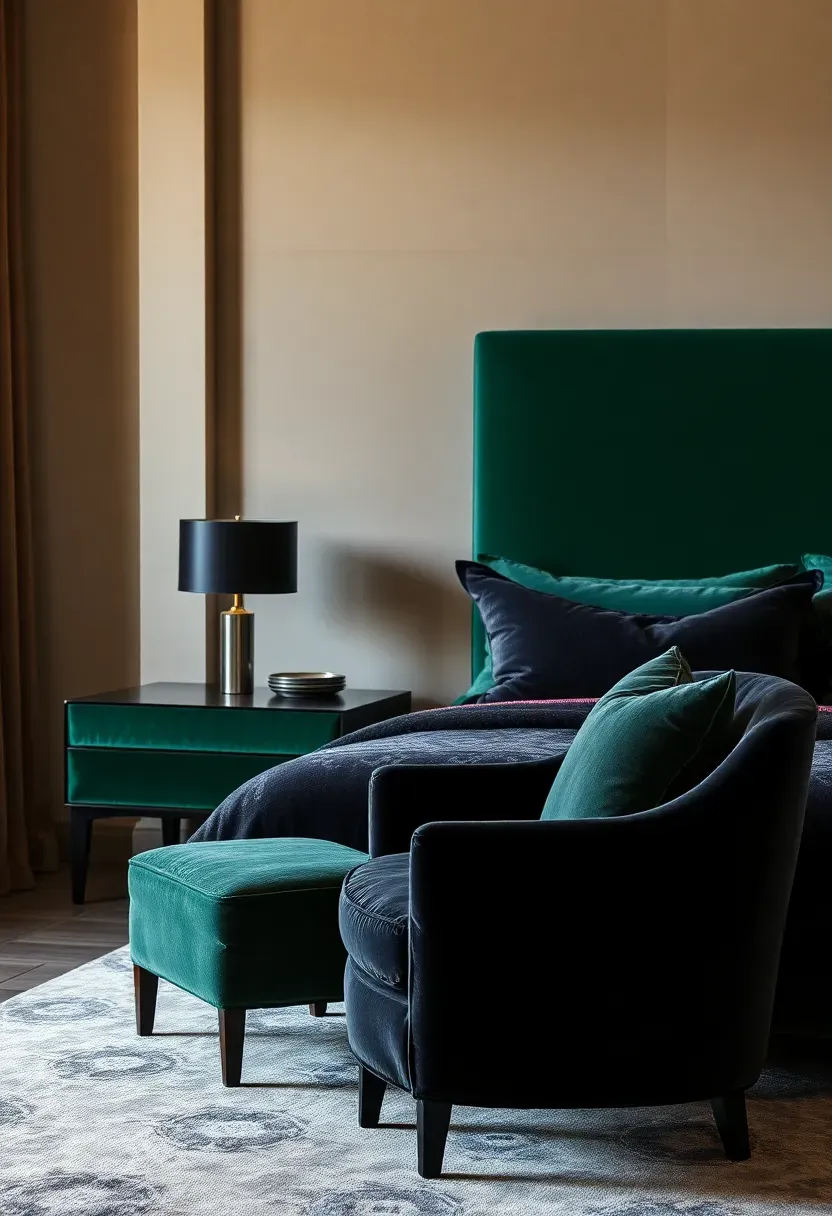
Placement note: Use velvet on key pieces that invite touch and create focal points, such as an upholstered headboard, accent chair, or bench. Avoid overuse, which can make the space feel heavy or claustrophobic.
A velvet headboard in jewel tones like navy, emerald, or charcoal creates dramatic impact against neutral walls. An accent chair or ottoman in a complementary velvet color adds sophistication and provides comfortable seating. Even smaller elements like velvet pillows or a velvet throw contribute luxurious texture without overwhelming the space.
Velvet's ability to reflect light creates visual interest throughout the day. The fabric appears different in morning light versus evening lamplight, adding dimension and dynamism to the room. Choose crushed velvet for more texture or smooth velvet for a sleeker, more refined appearance.
If you have pets or children, consider synthetic velvet blends for easier maintenance.
Then still prioritize softness and rich color—synthetic options can be equally luxurious when chosen carefully.
What this gives you: Rich texture and visual depth that immediately conveys sophistication and indulgent comfort.
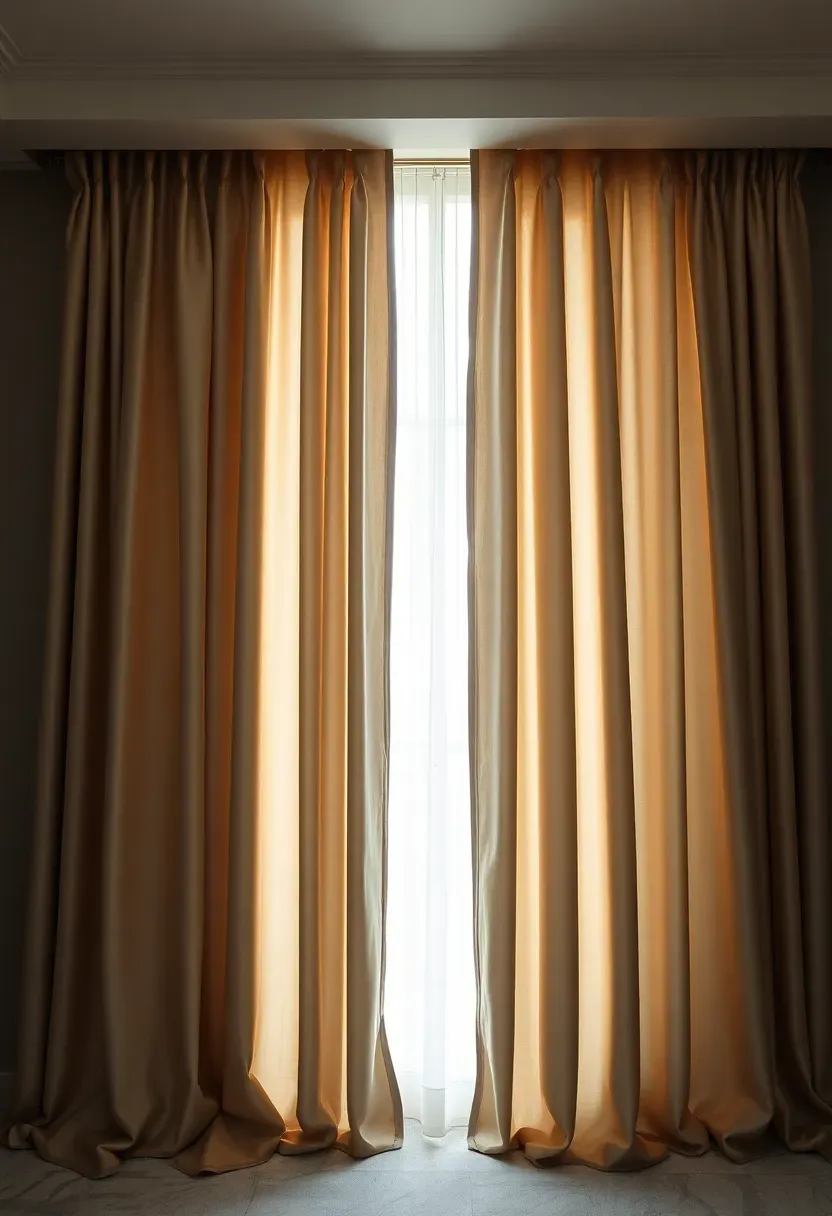
8. Floor-to-Ceiling Curtains
Floor-to-ceiling window treatments create architectural grandeur in the luxury master bedroom while providing essential light control and privacy. This dramatic vertical extension makes ceilings feel higher and adds substantial visual weight to the space.
Recommended
Items for this idea
Mount curtain rods as high as possible—at least 6 inches above the window frame or directly below the ceiling crown molding. Extend rods 3-6 inches beyond the window frame on each side to allow curtains to stack completely off the glass when open. This maximizes natural light while maintaining the dramatic floor-to-ceiling effect.
Choose luxurious fabrics like silk, velvet, or heavy linen with blackout lining for optimal light control and privacy. The weight of these fabrics contributes to the luxurious feel and improves drape quality. Consider interlining—adding a layer of flannel between face fabric and lining—for even richer appearance and better insulation.
Do hang curtains as high as possible and ensure they just graze the floor for optimal elegance.
Don't use curtains that stop short of the floor or pool excessively on the ground.
Rental-friendly option: Use tension rods or Command hooks if you can't install permanent hardware. Choose lightweight velvet or linen panels that drape beautifully without heavy hardware.
What this gives you: Architectural drama, enhanced ceiling height, and superior light control in one sophisticated element.
9. Minimalist Luxury with Subtle Details
Minimalist luxury achieves sophistication through restraint, focusing on exceptional quality and thoughtful details rather than excessive ornamentation. This approach creates a serene master bedroom that feels spacious, modern, and inherently luxurious through purity of design.
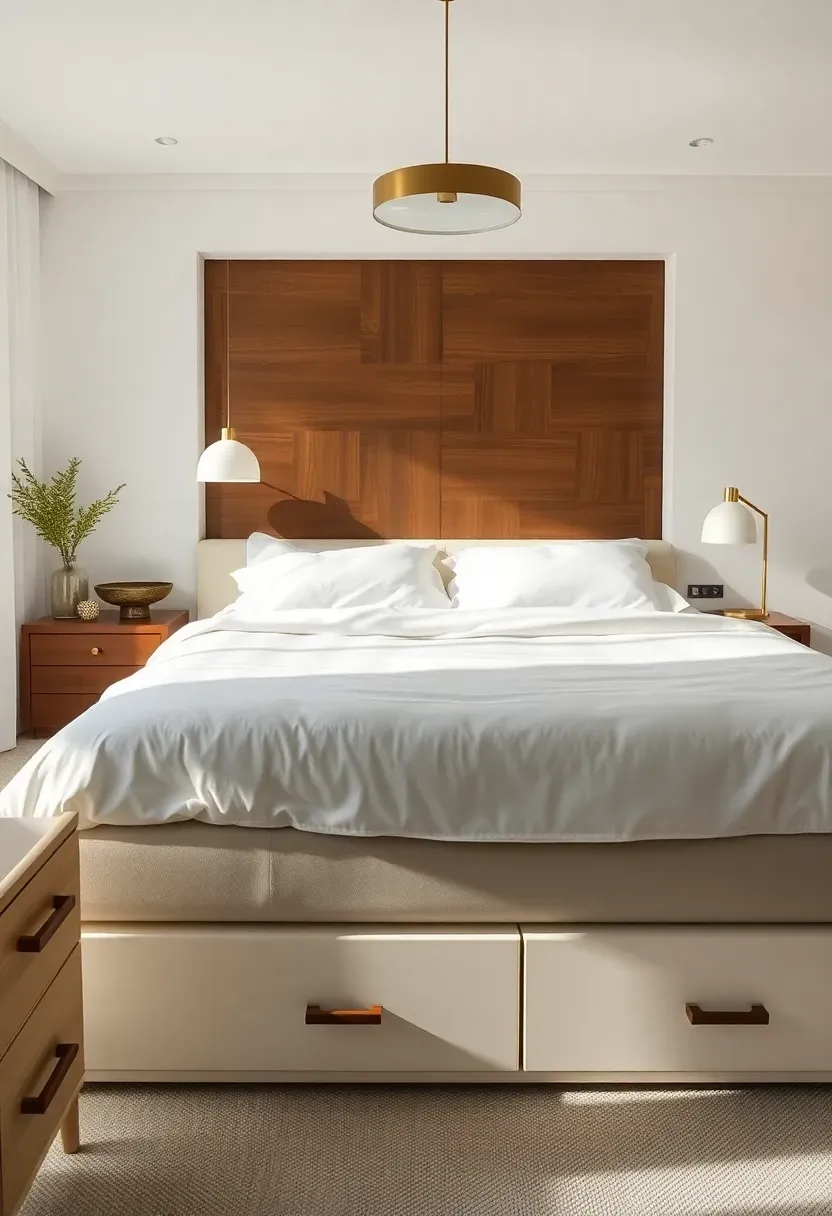
Start with exceptional basics: a simple bed frame with clean lines, high-quality linens in crisp white or subtle neutrals, and carefully selected lighting with refined fixtures. Each piece should earn its place through superior materials and craftsmanship rather than decorative excess.
Subtle details elevate the minimalist aesthetic. Leather pulls on drawer fronts, hand-stitched details on upholstered pieces, or brushed brass hardware on nightstands provide quiet luxury that reveals itself upon closer inspection. These elements reward attention without demanding it.
Pro: Minimalist luxury creates a calm, spacious environment that promotes rest and relaxation.
Con: Requires exceptional quality in every piece to avoid looking sparse or unfinished.
Fix: Invest more in fewer key pieces and prioritize materials and craftsmanship over quantity or ornamentation.
What this gives you: A serene, sophisticated bedroom that feels modern and spacious without sacrificing luxury or comfort.
10. Metallic Finishes and Accents
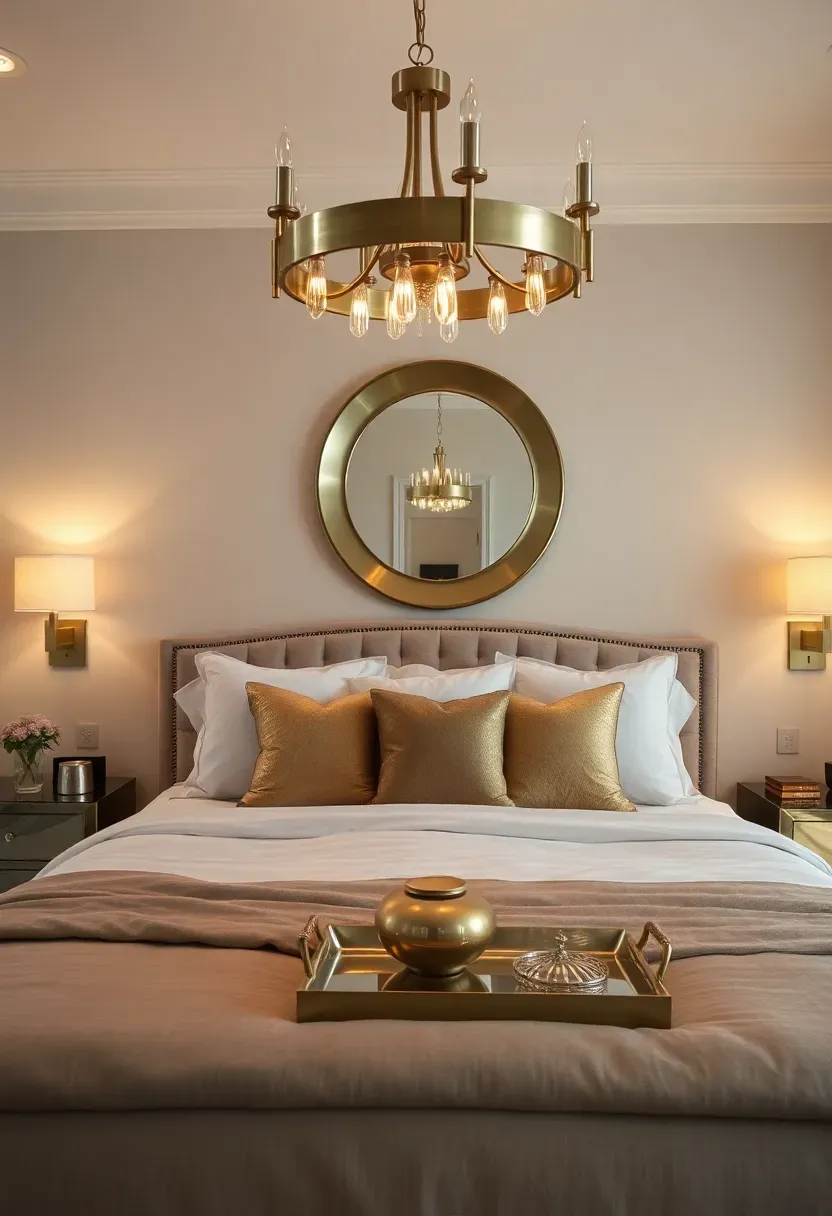
Metallic finishes add sparkle, sophistication, and visual interest to the luxury master bedroom without overwhelming the space. These luminous elements catch and reflect light, creating dynamic energy while serving as jewelry for the room.
Recommended
Items for this idea
Choose one or two complementary metallic tones—brass and nickel, or gold and silver—to maintain visual harmony. Brushed or matte finishes provide sophisticated luxury without feeling flashy, while polished finishes create more dramatic impact. Use metals strategically on lighting fixtures, hardware, mirrors, and decorative objects.
Class="post-link">For warmer metallic tones that create cozy elegance, see Inspiring Organic Modern Bedroom which demonstrates how warm metals enhance natural materials.
A brass chandelier provides a warm focal point above the bed. Nickel or chrome sconces add modern sophistication on either side. A metallic-framed mirror creates visual interest while reflecting light. Even small accents like brass picture frames, silver trays, or gold-threaded throw pillows contribute luminous luxury.
Use metallics as accents rather than dominant elements.
Limit to two metal tones for sophisticated harmony.
Choose finish based on the overall mood—brushed for subtle elegance, polished for drama.
What this gives you: Sophisticated sparkle and visual interest that elevates the space without feeling ostentatious.
11. Built-in Storage Solutions
Built-in cabinetry and storage create seamless luxury in the master bedroom while maintaining clutter-free surfaces. These integrated elements appear purposeful and sophisticated, enhancing the room's architecture while providing essential functionality.
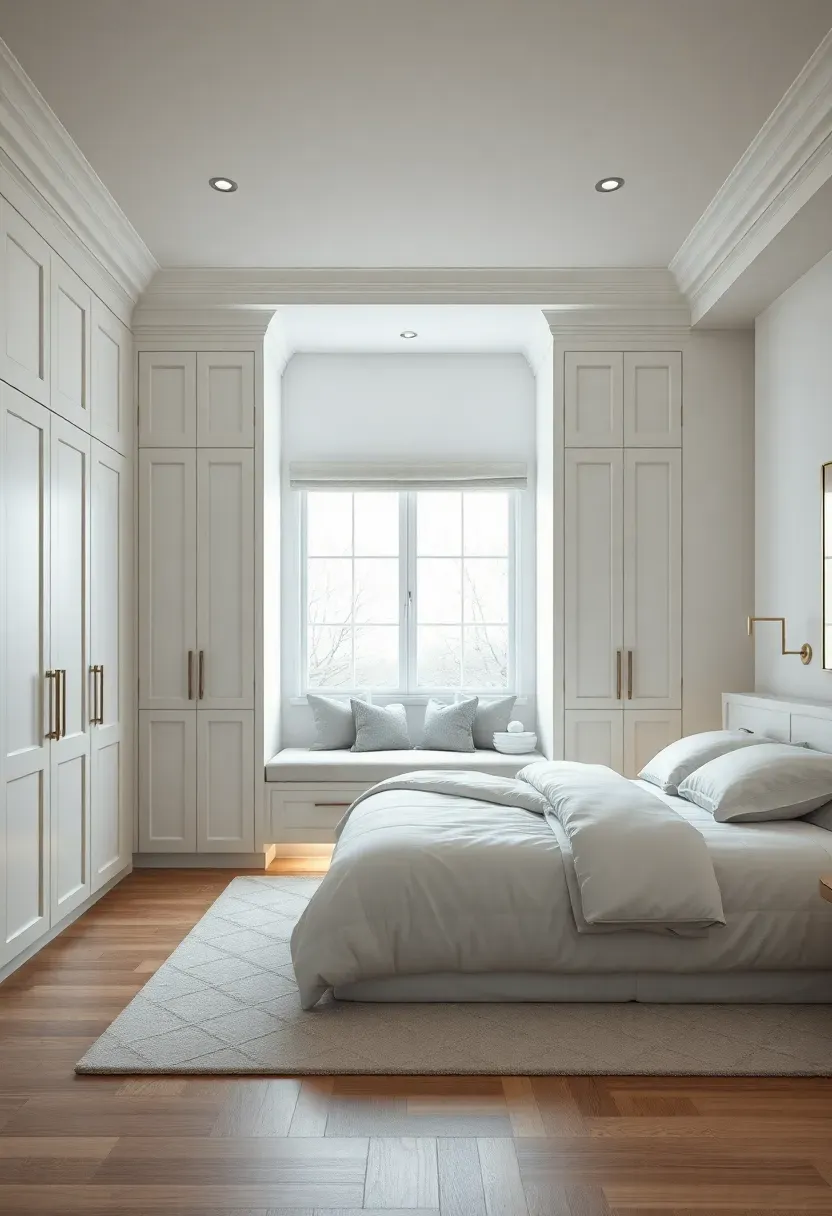
Design built-ins that feel architectural rather than furniture-like. Floor-to-ceiling wardrobes with integrated lighting, window seat storage benches, or wall-mounted floating nightstands create custom character. Choose materials that complement existing finishes—painted wood that matches trim, or custom millwork that coordinates with the bed frame.
Consider built-in features that enhance daily luxury: a jewelry drawer with specialized compartments, a hidden hamper system, or integrated charging stations in nightstands. Thoughtful details like soft-close drawers, LED strip lighting inside closets, or pull-down hanging rods transform mundane storage into luxurious convenience.
Do design built-ins that reach to the ceiling for maximum storage and architectural presence.
Don't use visible handles or hardware—push-to-open mechanisms maintain seamless luxury.
What this gives you: Seamless, clutter-free luxury with abundant storage that feels purposeful and architectural.
12. Seating Area or Reading Nook
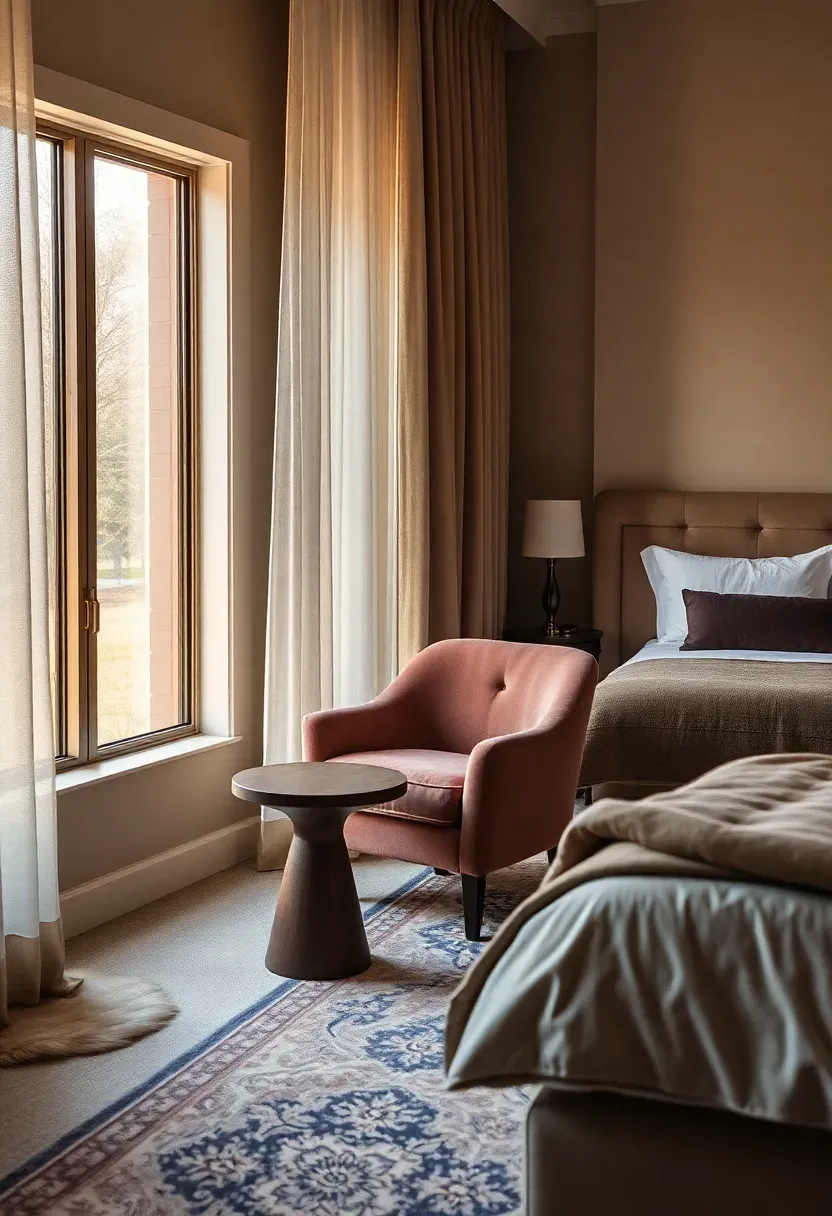
A dedicated seating area transforms the master bedroom from a purely functional space into a true retreat, creating a secondary zone for relaxation or intimate conversation. This element expands the room's functionality while adding sophisticated layering and visual interest.
Recommended
Items for this idea
Position a comfortable armchair or loveseat near a window or in a corner with good lighting. Add a small side table for books, beverages, or morning coffee. This creates a quiet space for reading, working on a laptop, or simply enjoying morning light before starting the day.
Placement note: Ensure at least 30 inches of clearance around the seating area for comfortable movement. Avoid blocking traffic paths to closets or the bathroom entrance.
Choose seating that complements the bed's style while providing contrast. A velvet armchair adds softness against a sleek wooden bed, or a leather chair brings masculine refinement to a feminine bedroom. A patterned rug underfoot defines the seating area and adds another layer of sophistication.
If space is limited, consider a window seat with built-in storage underneath.
Then add throw pillows and a throw blanket for comfort and visual softening.
What this gives you: A versatile secondary zone that transforms the bedroom into a true multi-functional retreat.
13. Large Statement Mirror
A strategically placed oversized mirror serves multiple functions in the luxury master bedroom: reflecting light to brighten the space, creating the illusion of greater size, and adding dramatic visual impact as a standalone decorative element.
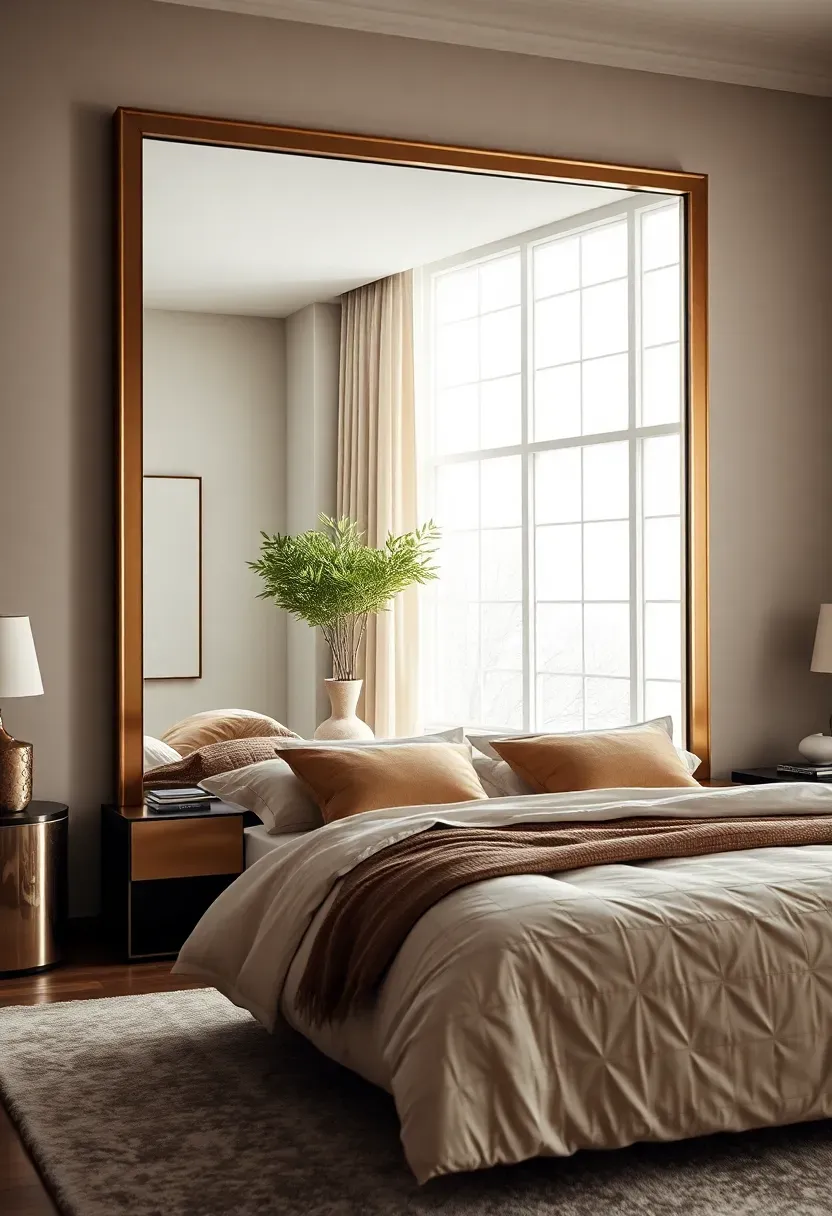
Position the mirror to maximize light reflection—opposite a window or adjacent to the bed for functional dressing purposes. Choose an oversized scale that feels substantial relative to the wall space. A mirror that extends at least two-thirds of the wall's height creates proper visual weight and sophistication.
Consider mirror style carefully. A gilded or brass-framed mirror adds traditional luxury and warmth. A minimalist frameless mirror feels modern and seamless. An antique or mercury-glass mirror introduces vintage character and unique patina. The frame should complement other metallic finishes in the room while providing deliberate contrast.
Do tilt the mirror slightly away from the bed to avoid reflecting yourself while sleeping.
Don't place the mirror directly opposite the bed if this creates distraction or feels uncomfortable.
Budget-friendly option: Create the illusion of a large mirror by grouping several smaller mirrors or using a single floor-length mirror with an inexpensive frame upgraded with paint or metallic leaf.
What this gives you: Enhanced brightness, perceived spaciousness, and dramatic visual impact through a single functional element.
14. Rug Layering Technique
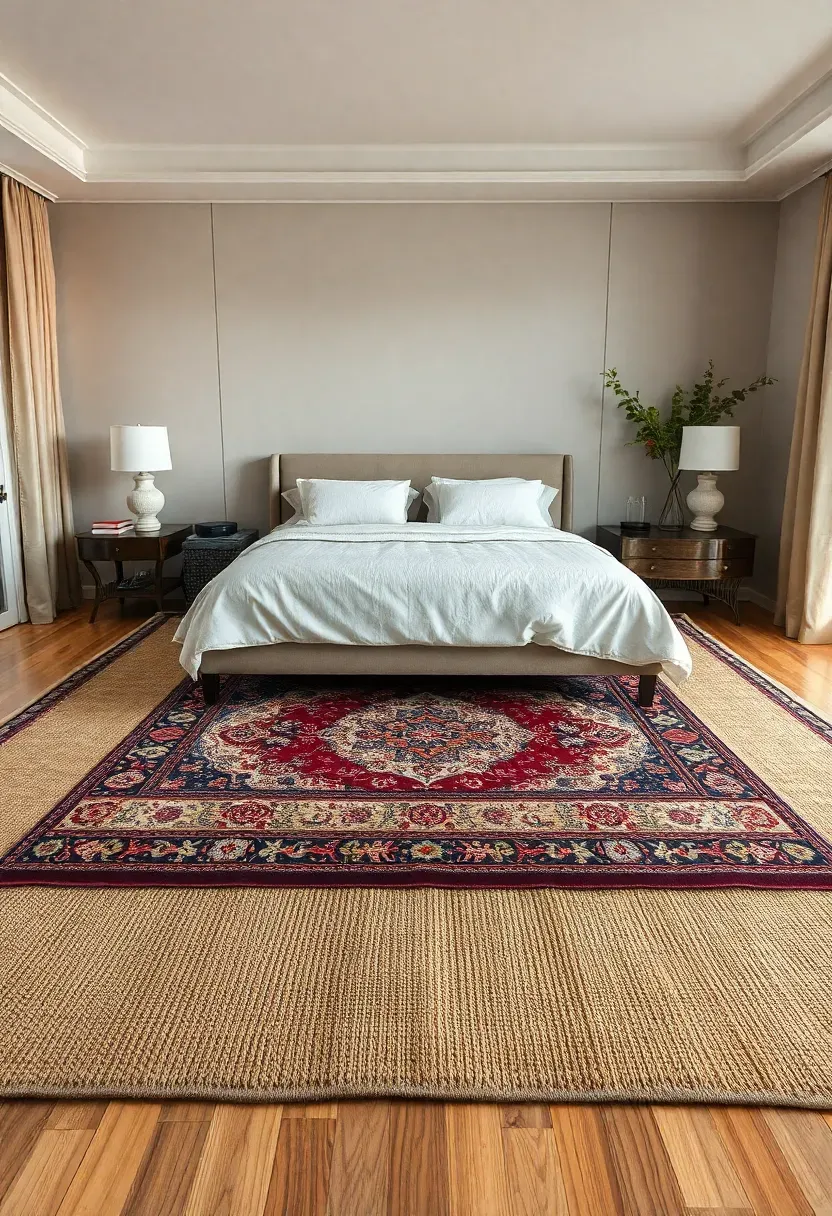
Layering rugs creates sophisticated depth and visual interest in the master bedroom while defining distinct zones within the space. This technique adds luxurious softness underfoot and creates a curated, collected appearance that feels intentional and thoughtful.
Recommended
Items for this idea
Start with a large, neutral base rug that extends 24-30 inches beyond each side of the bed. Choose natural fibers like jute, sisal, or wool for texture and durability. Then layer a smaller, more decorative rug on top—centered under the bed or positioned to define the seating area.
Why it works: Layering creates visual complexity through contrast in texture and scale. The base rug provides foundation and warmth, while the top rug adds pattern, color, or metallic accents. This technique allows you to incorporate multiple styles or color palettes while maintaining sophisticated harmony.
The top rug should be significantly smaller than the base rug—generally 60-80% of the base rug's width. Persian or Oriental rugs add traditional luxury, while geometric or abstract patterns create modern sophistication. Metallic-threaded or silk rugs introduce light-catching luxury in smaller doses.
Do secure layered rugs with rug pads to prevent slipping and ensure safety.
Don't layer rugs of similar size or pattern, which creates visual confusion rather than sophisticated contrast.
What this gives you: Sophisticated visual depth and luxurious comfort underfoot through deliberate layering.
15. Art Gallery Wall
A curated gallery wall transforms a blank bedroom wall into a sophisticated focal point that reflects personal style and artistic sensibility. This display approach adds visual interest, creates movement, and introduces color or pattern without overwhelming the space.
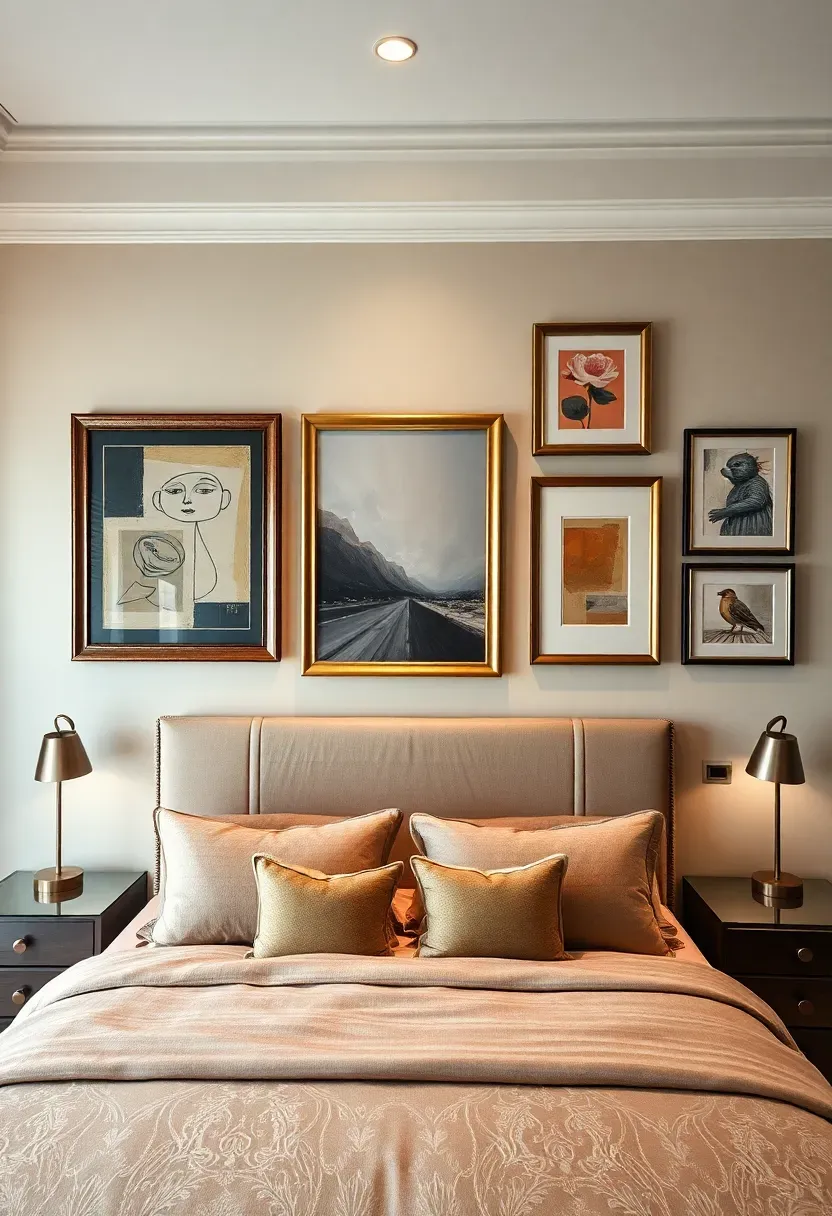
Choose an odd number of pieces for visual balance—typically 5, 7, or 9 works well. Mix frame styles but maintain a unifying element: similar metallic finish, consistent mat color, or cohesive subject matter. Vary the scale and orientation of pieces to create dynamic movement while maintaining deliberate composition.
Position the gallery wall thoughtfully. Above the bed creates a strong focal point but ensure sufficient clearance for sitting up. On a side wall near the seating area creates intimate interest. Center the arrangement approximately 60 inches from the floor for optimal viewing height.
Pro: Gallery walls allow personal expression and can evolve over time as new pieces are acquired.
Con: Poorly arranged galleries feel cluttered rather than curated and sophisticated.
Fix: Lay out all pieces on the floor first to experiment with arrangement before hanging anything.
What this gives you: Personalized sophistication and dynamic visual interest that transforms blank walls into curated art.
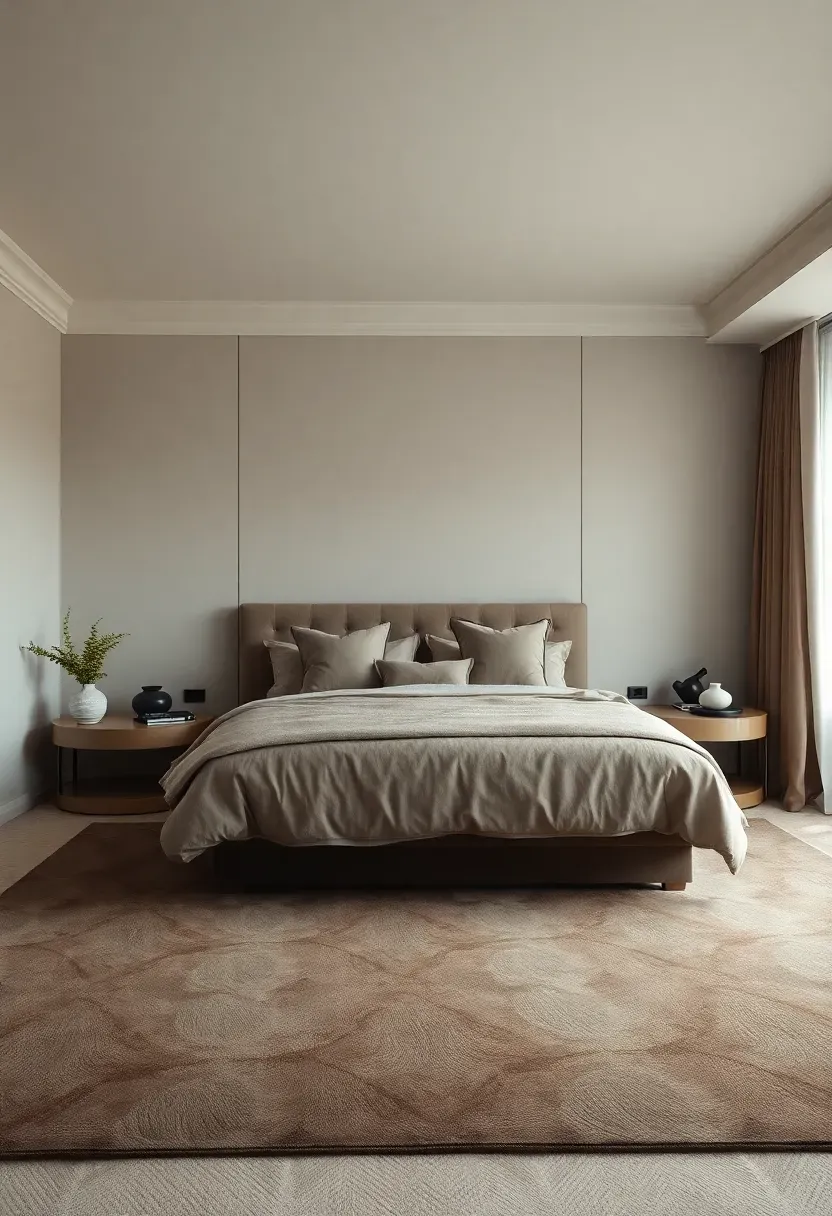
16. Monochromatic Scheme with Depth
A monochromatic color palette achieves sophisticated luxury through variation in tone, texture, and finish rather than multiple colors. This approach creates visual harmony and calm while preventing the space from feeling flat or monotonous through thoughtful layering.
Recommended
Items for this idea
Choose a base color—cream, taupe, charcoal, or navy—and build the entire palette from variations of this hue. Include lighter shades for ceilings and upper walls, mid-tones for furniture and textiles, and darker accents for grounding elements like floors or woodwork.
Monochromatic luxury relies entirely on texture for visual interest. Combine matte and glossy finishes, rough and smooth surfaces, solid and patterned elements. A velvet pillow, linen sheets, silk draperies, and a wool rug all in the same color family create sophisticated depth through textural contrast alone.
Do introduce metallic accents in a complementary finish to add sparkle without breaking the monochromatic scheme.
Don't use identical tones throughout—variation creates necessary depth and prevents the space from feeling flat.
What this gives you: Sophisticated calm and visual harmony that feels restful and refined.
17. Canopy or Four-Poster Bed
A canopy or four-poster bed creates architectural drama and grandeur in the master bedroom, establishing the bed as the room's centerpiece and focal point. This dramatic element adds substantial visual weight and sophistication while providing opportunities for luxurious fabric treatments.
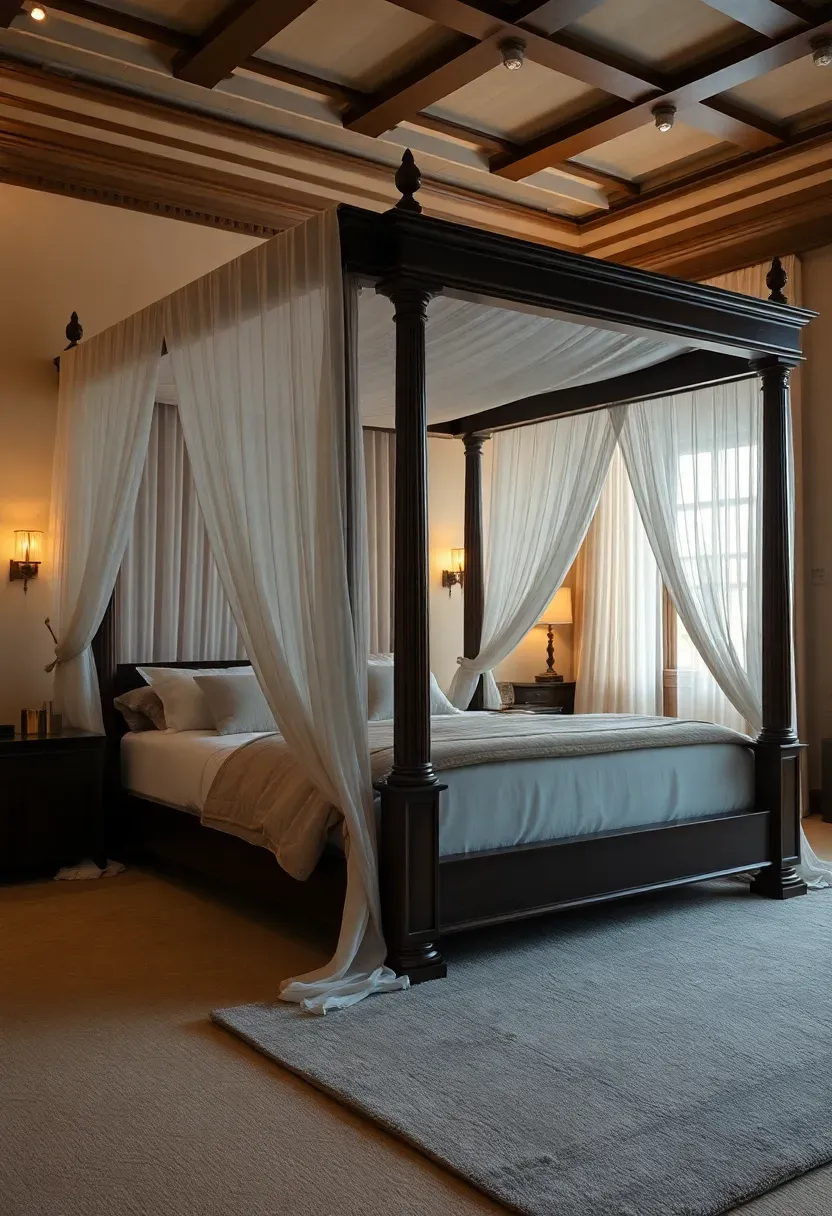
Choose a scale appropriate to the room size—oversized four-posters can overwhelm smaller spaces, while delicate canopies may feel undersized in spacious suites. The bed's vertical elements should fill approximately two-thirds of the wall height for proper proportion and visual impact.
Fabric treatments transform a structural frame into luxurious softness. Sheer draperies create romantic ethereal effect, while heavier velvets or silks add drama and warmth. Consider tie-backs that reveal the frame's architectural details, or let fabrics puddle slightly on the floor for casual elegance.
Do coordinate fabric color and texture with other soft furnishings in the room for cohesive luxury.
Don't place a canopy bed directly below a ceiling fan or light fixture that disrupts the canopy's visual line.
Avoid if: Your bedroom has low ceilings or limited vertical space—canopy beds require sufficient height to maintain proper proportion.
What this gives you: Architectural drama and grandeur that establishes the bed as an extraordinary focal point.
18. Window Treatments and Natural Light
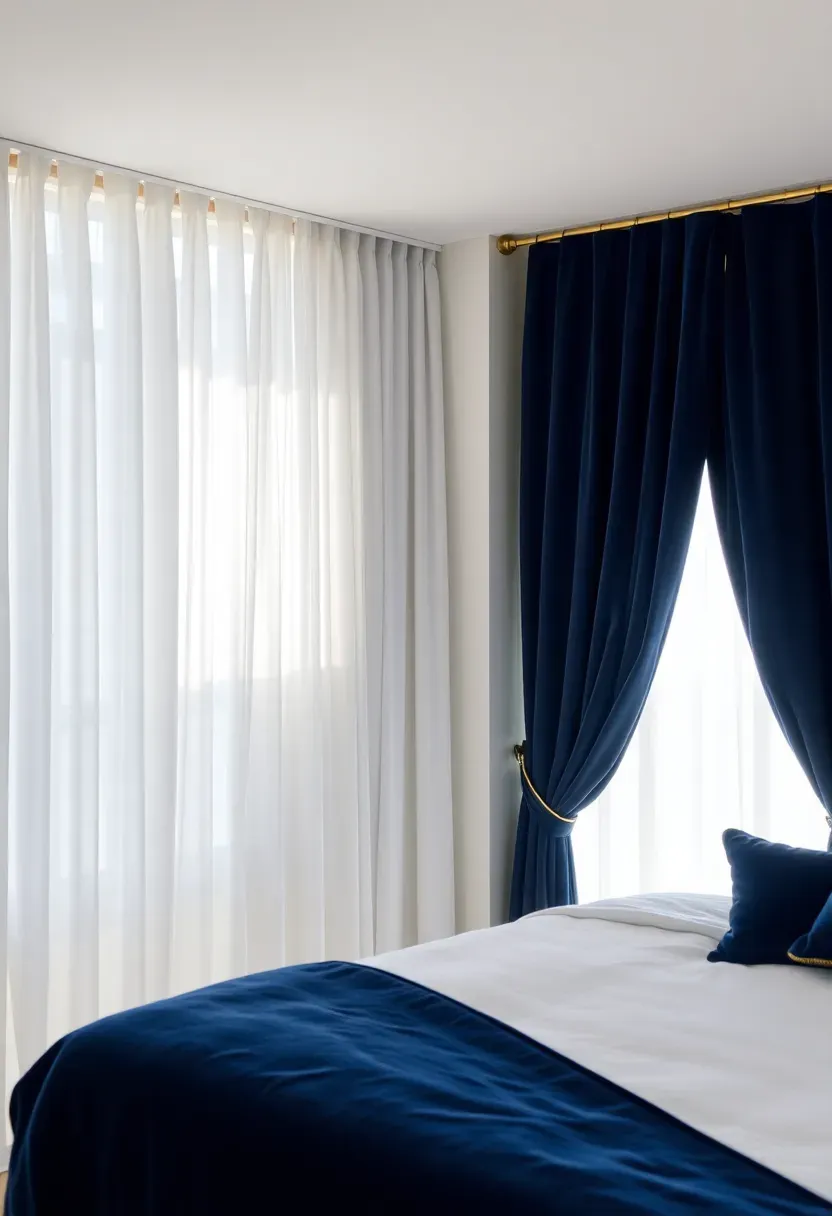
Sophisticated window treatments maximize natural light while providing essential privacy and light control, creating a bright, airy master bedroom that feels expansive and connected to the outdoors. This element balances functional needs with luxurious aesthetics.
Recommended
Items for this idea
Choose treatments that allow maximum light when desired while providing complete blackout capability for sleeping. Layer sheers and heavier panels for versatility—sheers filter harsh daylight while maintaining privacy, while blackout draperies create complete darkness for optimal rest.
Consider motorized options for ultimate luxury—programmable shades that open automatically with sunrise, or remote-controlled draperies for convenience from bed. This technological upgrade combines practical functionality with sophisticated convenience that truly elevates the master bedroom experience.
Pro: Proper light regulation supports healthy sleep cycles and circadian rhythms.
Con: High-quality window treatments represent a significant investment, especially with custom sizing or motorization.
Fix: Prioritize blackout capability for the primary window and use less expensive options for secondary windows.
What this gives you: Balanced natural light, superior sleep quality, and sophisticated convenience through thoughtful window design.
19. Spa-like Bathroom Connection
Creating a spa-like environment through master en-suite bathroom connection transforms the entire sleeping suite into a luxurious retreat. This holistic approach extends bedroom design principles into the bathroom for a cohesive, sanctuary-like experience.
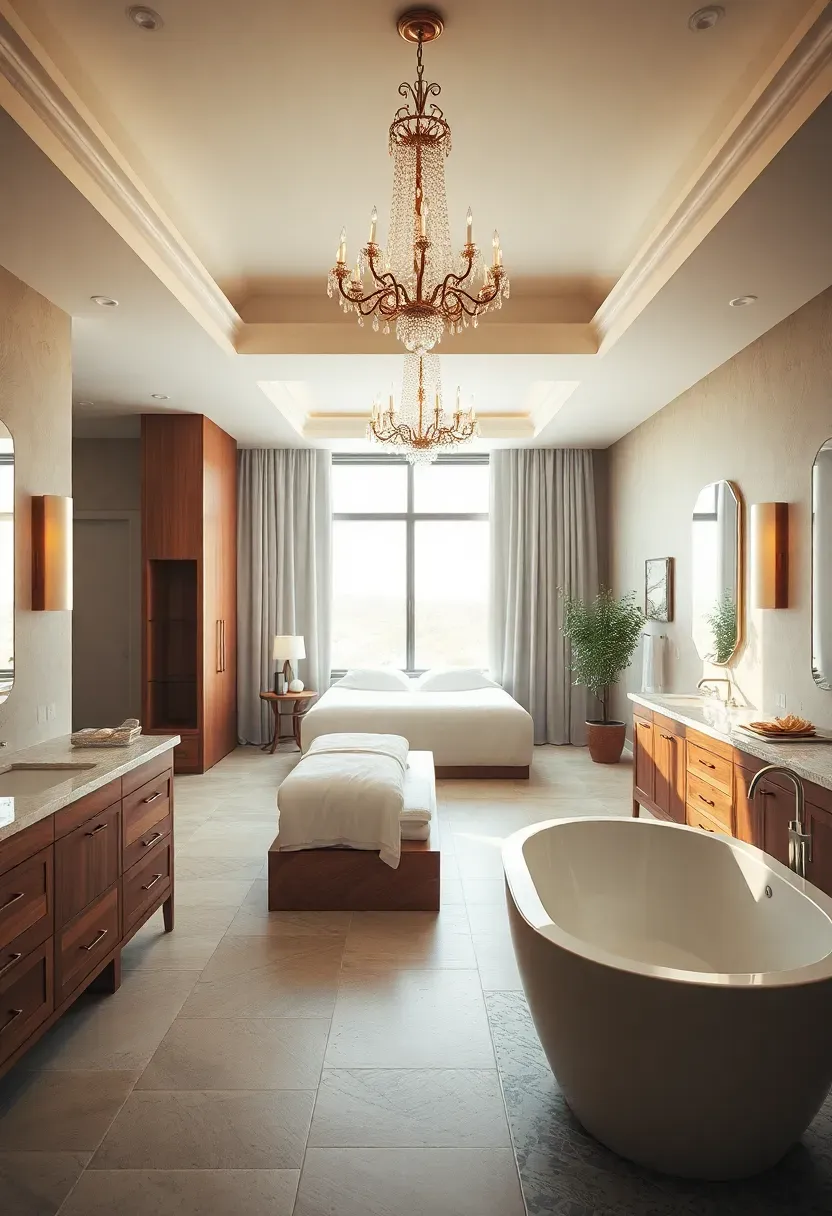
Continue bedroom materials and colors into the bathroom for visual continuity. If the bedroom features warm wood tones and soft neutrals, incorporate similar finishes in bathroom vanities, flooring, or shelving. This creates seamless flow and reinforces the sanctuary feeling throughout the entire suite.
Add spa-like elements that bridge bedroom and bathroom: a soaking tub positioned to enjoy bedroom views, a chandelier or pendant light that coordinates with bedroom fixtures, or heated floors that extend from bath into dressing area. These thoughtful connections create a genuinely luxurious master suite experience.
Do create visual connection through open archways or glass partitions rather than solid doors.
Don't ignore acoustics—soundproof walls between bedroom and bathroom maintain peaceful sleep environment.
What this gives you: A cohesive, sanctuary-like master suite that feels genuinely luxurious and restful.
Creating a luxury master bedroom that balances comfort with visual sophistication requires thoughtful layering of materials, strategic lighting, and intentional design choices. Whether you incorporate all nineteen ideas or select those that resonate most with your personal style, the principles of quality over quantity, texture over excess, and intentional placement over randomness will guide you toward a space that feels genuinely luxurious and restful. The most successful bedrooms combine architectural elements with soft furnishings, natural light with layered illumination, and personal touches with timeless design principles to create a sanctuary that feels both extraordinary and genuinely comfortable. By prioritizing these elements, your master bedroom becomes more than a sleeping space—it transforms into a personal retreat that restores and rejuvenates every single day.
About the author
OBCD
CGI visualization and interior design content. We create detailed 3D renders and curate practical design ideas for every room in your home.