23 Stunning Modern Patio Ideas for a Practical Outdoor Space
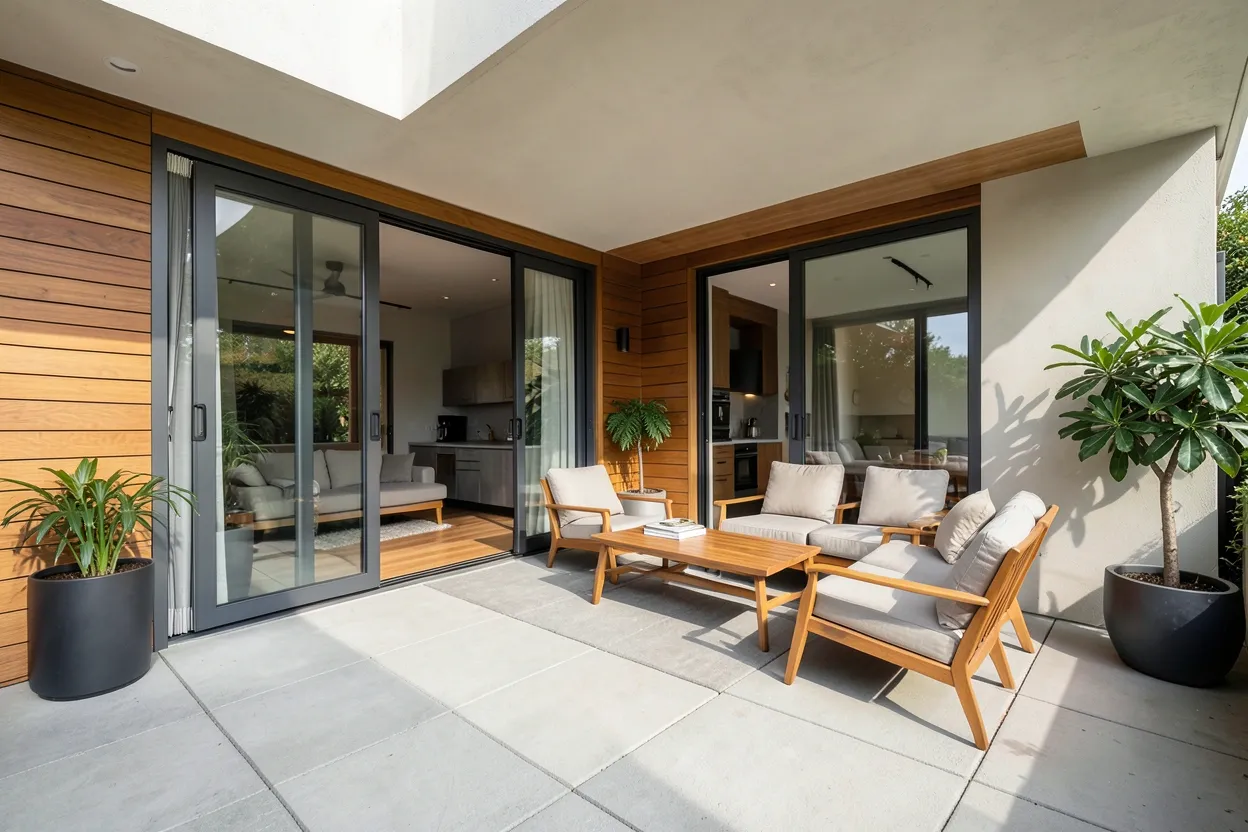
The right modern patio ideas can turn any outdoor space into a seamless extension of your home — combining clean lines with practical functionality that actually holds up to daily use. These contemporary designs prioritize comfort and style, creating areas for relaxation, dining, and entertaining that feel as refined as your indoor living rooms.
Whether you're working with a compact rental balcony or a spacious backyard, modern patio design scales beautifully. Think sleek furniture, strategic lighting, and natural materials like concrete and teak that complement your home's architecture without requiring permanent alterations. Many of these 23 ideas are fully renter-friendly: movable, reversible, and easy to take with you when you move.
From concrete pavers and warm wood accents to integrated seating and fire features, modern outdoor patio decor balances form and function. These designs work across climates and budgets, proving that outdoor spaces can be both beautiful and highly usable year-round with the right planning and materials.
Quick FAQ
What makes a patio modern?
A modern patio features clean lines, minimal ornamentation, and a focus on natural materials like concrete, wood, and stone. The design emphasizes simplicity, functionality, and seamless integration with the home's architecture, often with neutral color palettes and strategic lighting.
What materials work best for modern patios?
Popular materials include concrete pavers, large-format tiles, natural stone, and sustainable woods like teak or cedar. These materials offer durability, low maintenance, and a contemporary aesthetic that aligns with modern design principles.
How can I make my patio feel like an extension of my home?
Use flooring materials that transition smoothly from indoors to outdoors, maintain consistent design language with your home's style, and incorporate comfortable furniture and lighting that matches the quality of your indoor spaces. Large sliding or folding doors also help blur the boundary.
What lighting works best for modern patios?
LED strips, recessed deck lighting, minimal wall sconces, and statement pendant lights work well for modern patios. Layered lighting creates ambiance while architectural fixtures complement the clean lines of contemporary design without overwhelming the space.
As an Amazon Associate I earn from qualifying purchases.
Table of Contents
- 1. Concrete Paver Patio with Warm Wood Accents
- 2. Minimalist Built-in Seating Wall
- 3. Outdoor Living Room with Neutral Palette
- 4. Fire Pit Lounge with Contemporary Furniture
- 5. Gravel Patio with Modern Furniture Grouping
- 6. Pergola-Defined Dining Space
- 7. Multi-Level Patio with Transitional Steps
- 8. Glass Railing Deck with City Views
- 9. Integrated Planter Beds as Room Dividers
- 10. String Light Canopy for Evening Ambiance
- 11. Water Feature Wall as Focal Point
- 12. Concrete Kitchen Countertop Outdoor Bar
- 13. Sunken Conversation Pit
- 14. Vertical Garden Wall for Urban Patios
- 15. Large Format Tile Patio with Minimal Grout Lines
- 16. Cantilevered Shade Structure
- 17. Modular Outdoor Kitchen Island
- 18. Polished Concrete with Embedded Lighting
- 19. Daybed Lounge with Retractable Awning
- 20. Privacy Screen with Geometric Pattern
- 21. Small Balcony Transformation
- 22. Rooftop Terrace with Modular Seating
- 23. All-Season Patio with Heating Solutions
1. Concrete Paver Patio with Warm Wood Accents
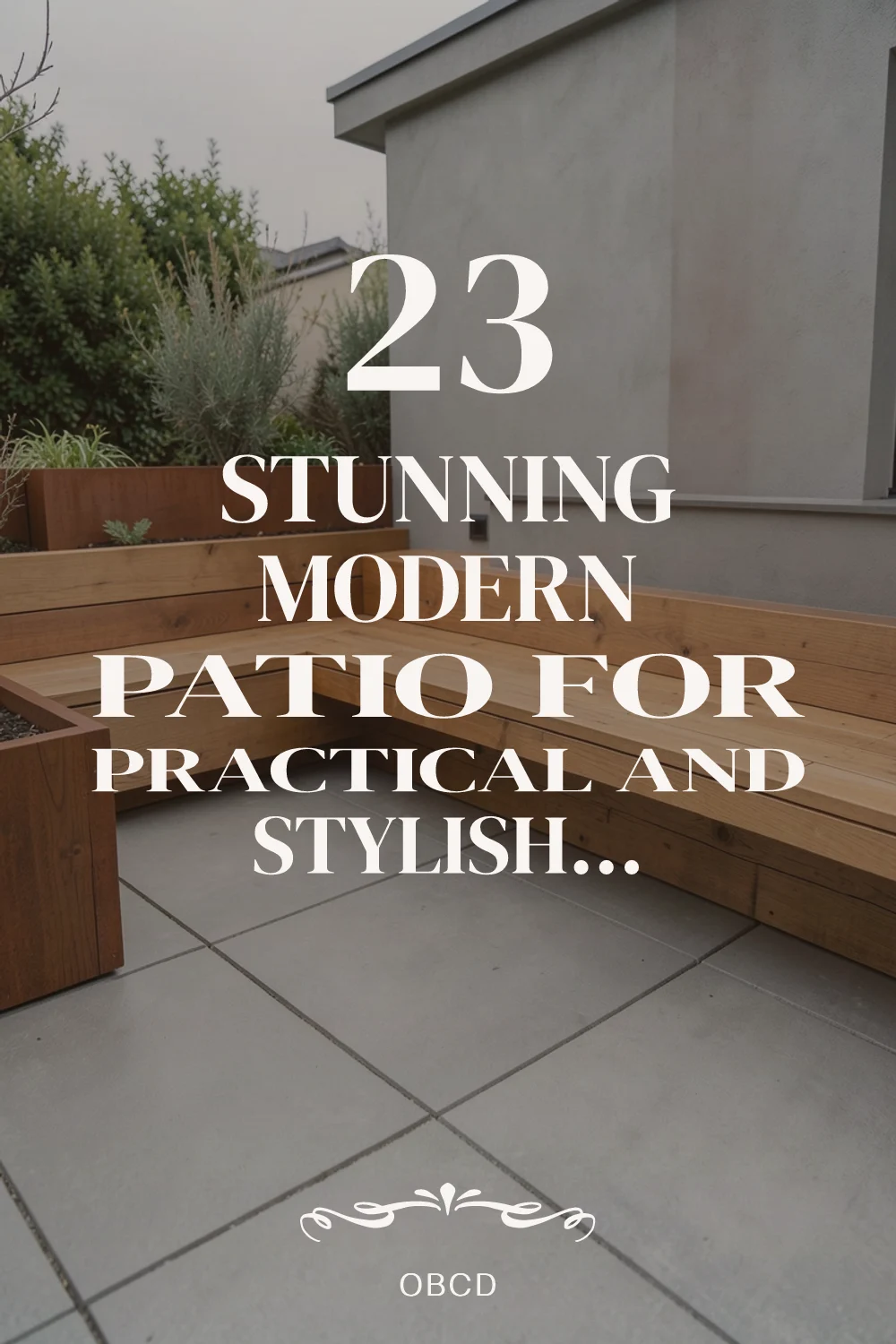
Concrete pavers provide a durable, cost-effective foundation for a modern patio that works in virtually any climate. The clean, geometric lines of large-format pavers create visual interest without overwhelming the space, while warm wood accents introduce natural contrast that softens the industrial edge of concrete.
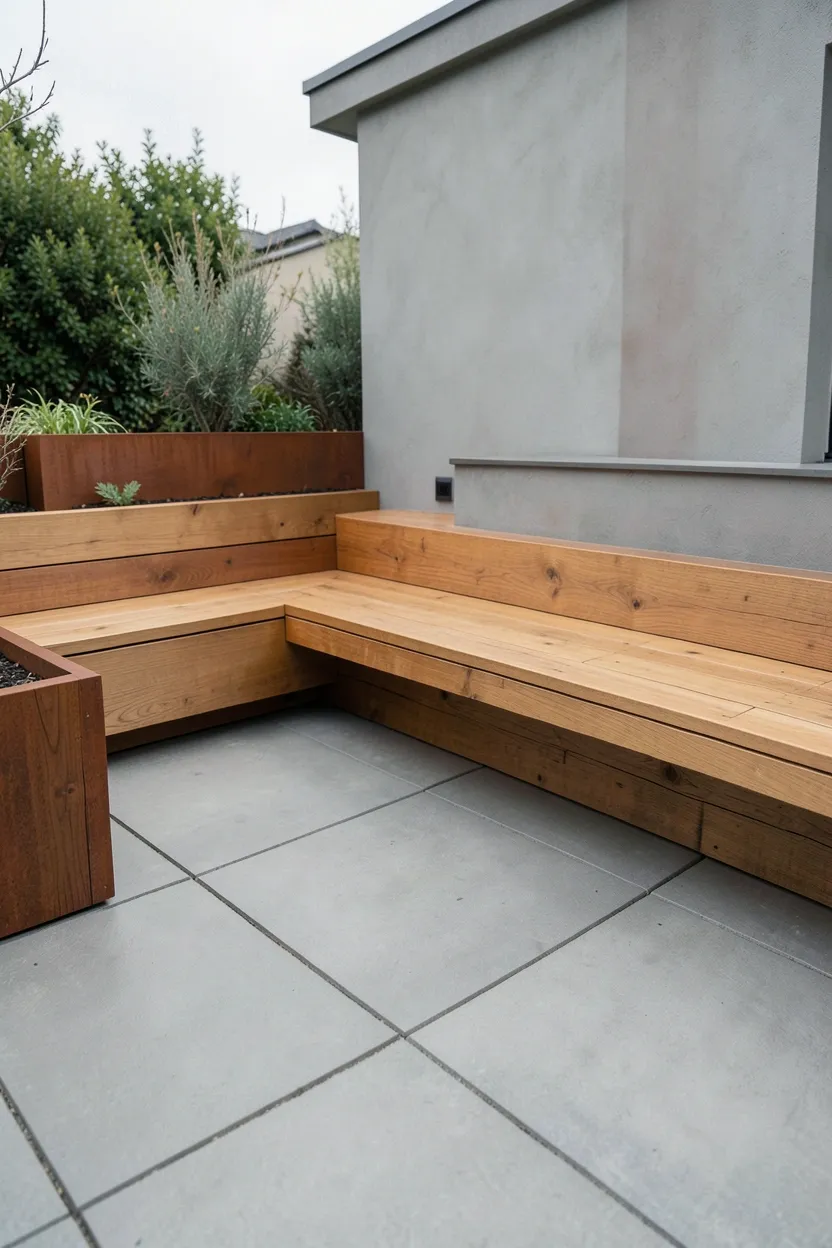
The cool gray tones of concrete pair beautifully with warm natural wood, creating a balanced aesthetic that feels sophisticated yet approachable. Consider integrating wood elements through built-in benches, planter boxes, or decorative screening – this material combination offers excellent weather resistance when properly sealed and maintained. Avoid stark white pavers which show stains easily, and opt instead for subtle gray or warm earth tones that blend seamlessly with outdoor environments.
Concrete pavers cost $5–$15 per square foot installed, depending on quality and pattern complexity. Regular sweeping and occasional power washing keep them looking fresh, while applying a sealer every 2–3 years protects against moisture penetration and staining. The wood accents will benefit from annual oiling or staining to maintain their rich color and prevent weathering.
Do choose large-format pavers (at least 24×24 inches) to minimize grout lines and create a sleek, modern look
Don't place wood elements directly on the ground without proper drainage and air circulation
What this gives you: A low-maintenance patio with timeless appeal that withstands weather while offering the warmth of natural materials
We picked a few things that go well with this idea: Brightown 50FT G40 LED Globe String Lights (★4.7), Govee 144FT Smart Dimmable Outdoor String Lights (★4.4) and 100FT ST38 Waterproof Dimmable Patio String Lights (★4.3). As an Amazon Associate we earn from qualifying purchases.
2. Minimalist Built-in Seating Wall
Built-in seating walls maximize functionality while maintaining clean lines, a hallmark of modern patio design that eliminates the need for multiple freestanding chairs. These permanent features create defined gathering spaces and can double as retaining walls or planters, making them especially valuable for smaller patios where every square foot counts.
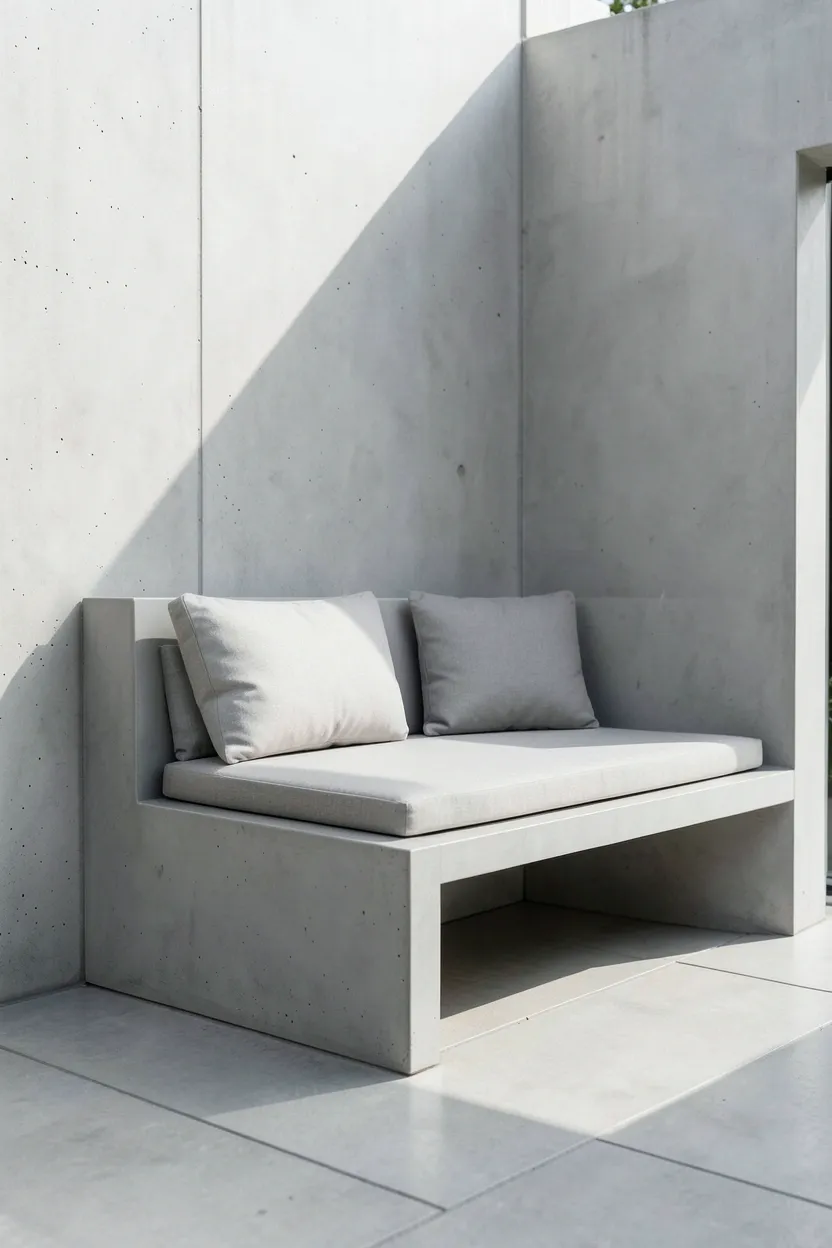
A well-designed seating wall typically stands 16–18 inches high – the perfect height for comfortable sitting without requiring additional cushions. The wall should be at least 18 inches deep to accommodate most adults comfortably, and consider adding a 2-inch overhang at the top for an elegant finish. Common mistake: making the wall too narrow or too high, which creates uncomfortable seating and defeats the purpose of a functional gathering space.
Placement note: Position your seating wall to take advantage of the best views or create a cozy conversation circle around a fire feature. Build it from the same material as your patio flooring for continuity, or choose complementary materials like stacked stone or board-formed concrete to introduce subtle variation.
For added comfort, consider adding weather-resistant cushions or incorporating built-in lighting along the wall's edge for evening ambiance. The cost typically ranges from $50–$100 per linear foot depending on materials and complexity, making it a relatively affordable way to add permanent seating and architectural interest to your modern patio.
If you live in a cold climate, then choose concrete or stone rather than wood for your seating wall to avoid weather damage
If you want softer seating, then add weather-resistant outdoor cushions that can be stored indoors during harsh weather
What this gives you: Permanent, comfortable seating that doubles as architectural feature and saves space otherwise occupied by movable furniture
We picked a few things that go well with this idea: Hykolity 31" 2-in-1 Wood Burning Fire Pit Grill (★4.7), Pure Garden 32" Wood Burning Fire Pit Set (★4.4) and OutVue 36" 3-in-1 Fire Pit BBQ Metal Table (★4.4). As an Amazon Associate we earn from qualifying purchases.
3. Outdoor Living Room with a Neutral Color Palette
Transforming your patio into an outdoor living room creates a seamless extension of your indoor space, blurring the boundary between interior and exterior living. A neutral color palette – think whites, grays, beiges, and soft earth tones – maintains the modern aesthetic while creating a calm, sophisticated atmosphere that feels cohesive with your home's interior design.
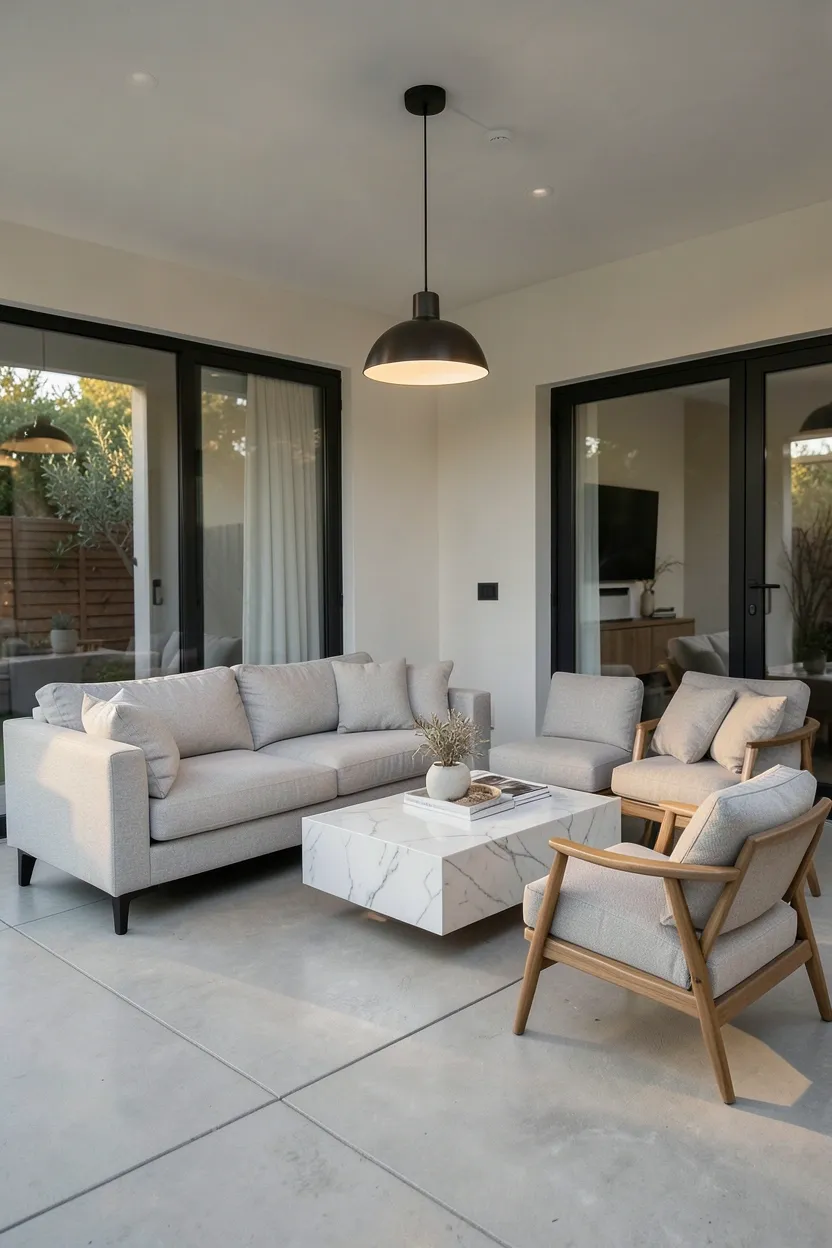
Why it works: Neutral tones provide a timeless backdrop that allows textures and architectural details to shine, rather than competing with bold colors. This approach also makes it easier to refresh your outdoor decor seasonally by swapping out pillows and accessories without needing to replace major furniture pieces. For a cohesive look, anchor the space with a low-profile sofa or sectional in weather-resistant fabric, complemented by a coffee table or two accent chairs.
Avoid the common mistake of choosing cheap outdoor furniture that looks plastic or artificial – invest in high-quality pieces with frames made from teak, powder-coated aluminum, or weather-resistant wicker. These materials withstand outdoor elements while maintaining a refined, modern appearance that doesn't feel temporary or disposable. Expect to pay $1,000–$3,000 for a quality outdoor sofa and $300–$800 for a good coffee table, but these pieces will last years longer than budget alternatives.
Pro: Neutral palettes hide dirt and wear better than light colors, requiring less frequent cleaning
Con: Pure white fabrics show stains easily – choose light gray or beige instead
Fix: Add washable outdoor pillow covers in slightly darker tones for the seating areas
Budget tip: Start with a neutral base and add color through inexpensive throw pillows and accessories that can be swapped out seasonally
What this gives you: A versatile outdoor living space that feels intentional and sophisticated, seamlessly transitioning from day to evening and season to season
We picked a few things that go well with this idea: AUNLPB 52" Wood Propeller Damp Rated Patio Fan (★4.4), 72" Damp Rated Wood Propeller Outdoor Ceiling Fan (★4.7) and 60" Damp Rated Wood Propeller Patio Fan No Light (★4.4). As an Amazon Associate we earn from qualifying purchases.
4. Fire Pit Lounge with Contemporary Furniture
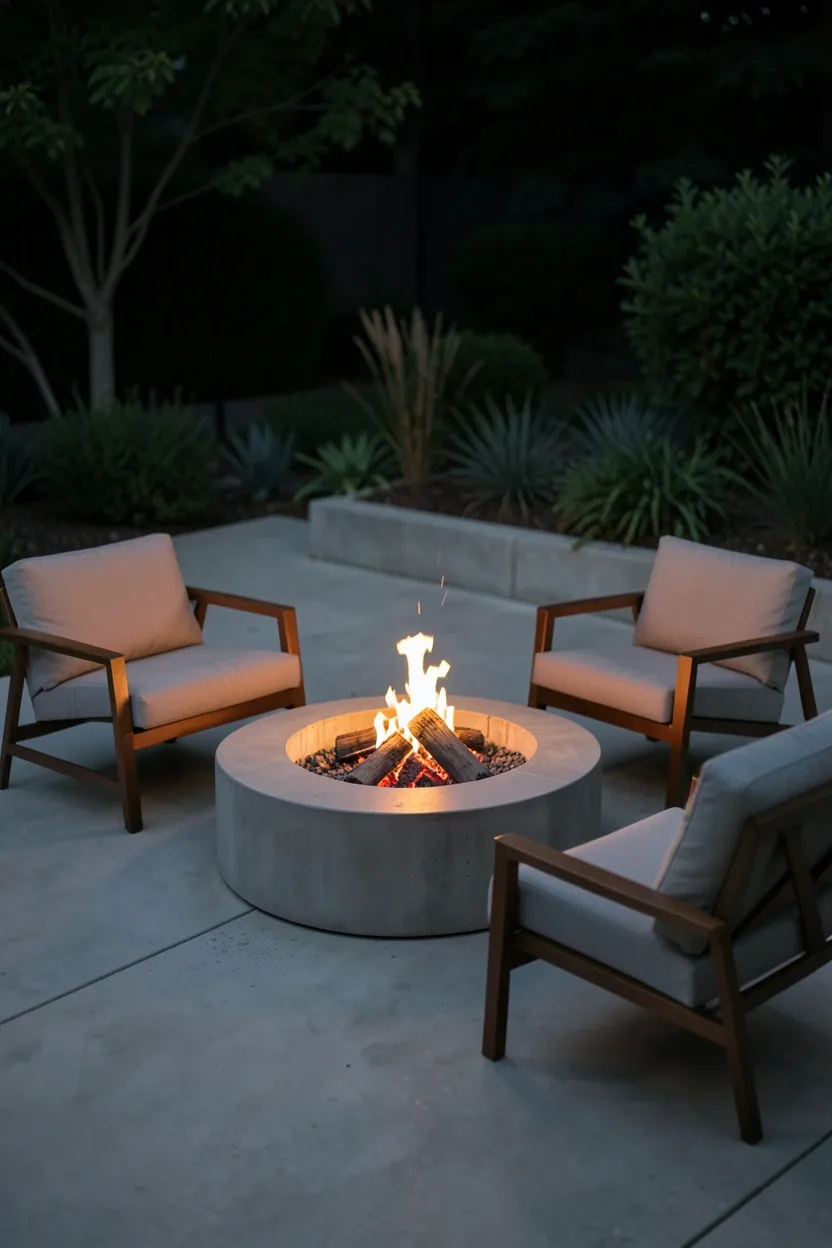
A fire pit creates an instant focal point and gathering space, extending the usability of your modern patio well into cooler months and evening hours. The warmth and ambiance of fire make outdoor spaces feel intimate and inviting, while contemporary fire pit designs maintain the clean, minimal aesthetic that defines modern outdoor living.
Recommended
Items for this idea
Modern fire pits come in several forms: built-in concrete bowls, sleek metal designs, or gas-burning options that offer convenience and clean operation. Arrange comfortable seating around the fire pit in a circular or semi-circular configuration to promote conversation – 4–6 chairs typically create an ideal intimate gathering space without overcrowding the area. For colder climates, consider a covered gas fire pit that provides consistent heat output without the smoke and maintenance of wood-burning options.
Alternative: For a minimalist approach, consider a linear fire table that doubles as a coffee table when not in use – this multifunctional element maximizes space while providing the warmth and visual appeal of a fire feature. Choose weather-resistant materials like powder-coated aluminum, stainless steel, or concrete that can withstand outdoor exposure without rusting or deteriorating.
Install weather-resistant outdoor cushions on seating positioned around the fire pit – they make the space significantly more comfortable and inviting
Add string lights or lanterns above the fire pit area to create layered lighting for evening ambiance
Keep a fire-resistant mat or designated area for storing firewood or gas tank accessories out of sight when not in use
Best for: Homes in climates with cool evenings, patios with clear sightlines, and homeowners who enjoy entertaining outdoors
What this gives you: A year-round gathering spot that creates warmth, ambiance, and a natural focal point for conversation and relaxation
5. Gravel Patio with Modern Furniture Grouping
Gravel patios offer an affordable, low-maintenance alternative to hardscape materials while still achieving a clean, modern aesthetic when properly designed. The natural texture of gravel adds visual interest and creates a softer underfoot experience than concrete or stone, making it an excellent choice for homeowners seeking a more organic feel without sacrificing contemporary style.
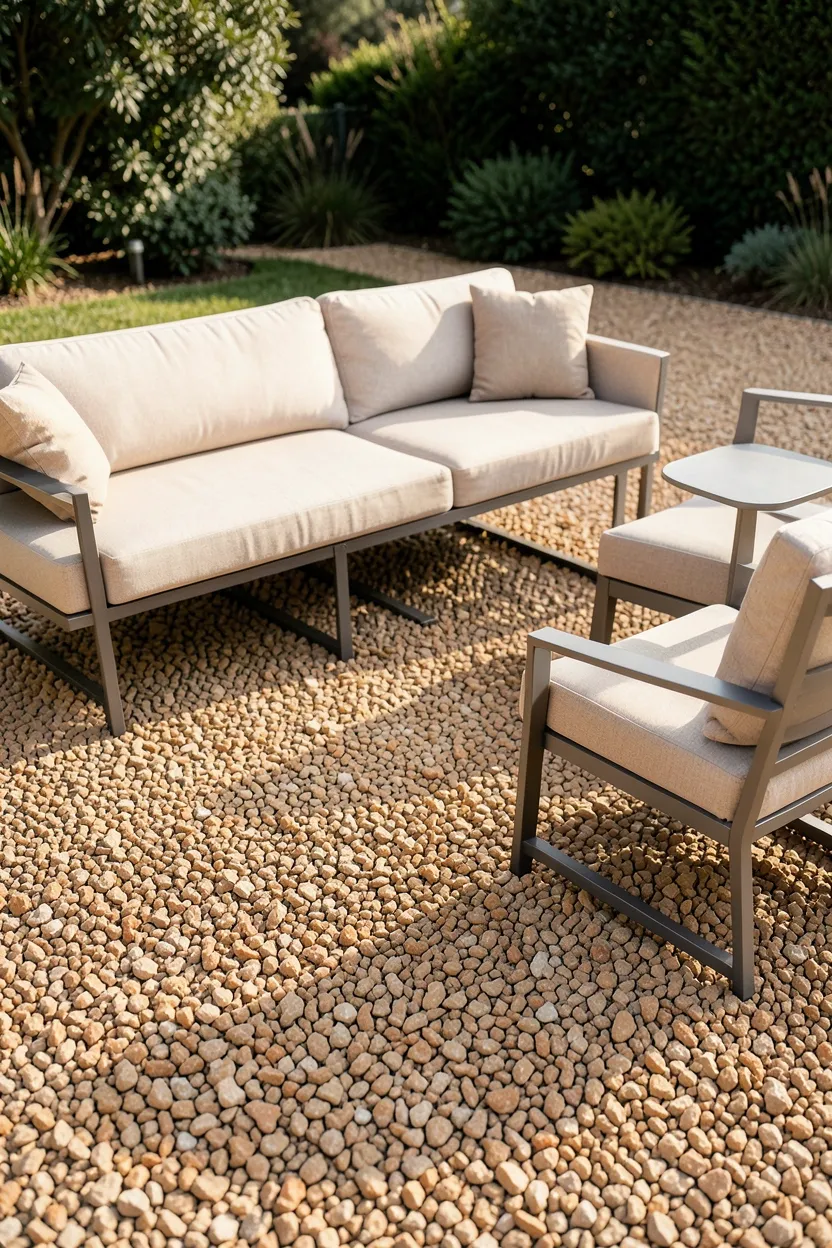
Choose angular crushed stone rather than rounded pebbles – angular stones lock together better underfoot and stay in place more effectively, creating a stable surface for furniture. Opt for crushed limestone, granite, or pea gravel in neutral tones like gray, tan, or buff to maintain the modern color palette. A properly installed gravel patio requires a compacted base layer (typically 4–6 inches of crushed stone) topped with 2–3 inches of decorative gravel, preventing sinking and uneven settling.
Common mistake: using loose pea gravel that's difficult to walk on or move furniture across – opt for compacted decomposed granite or angular crushed stone for better stability. Budget approximately $3–$6 per square foot for materials and installation, significantly less than concrete or stone pavers. For a more permanent feel, consider incorporating flagstone steppers or concrete pavers as a walkway through the gravel area.
Do install a weed barrier fabric beneath the gravel base to minimize weed growth and maintenance
Don't place heavy furniture directly on loose gravel – use concrete pavers or flagstone pads underneath furniture legs to distribute weight and prevent sinking
What this gives you: An affordable, permeable surface that provides excellent drainage while offering a natural, modern aesthetic that's easy to maintain
6. Pergola-Defined Dining Space
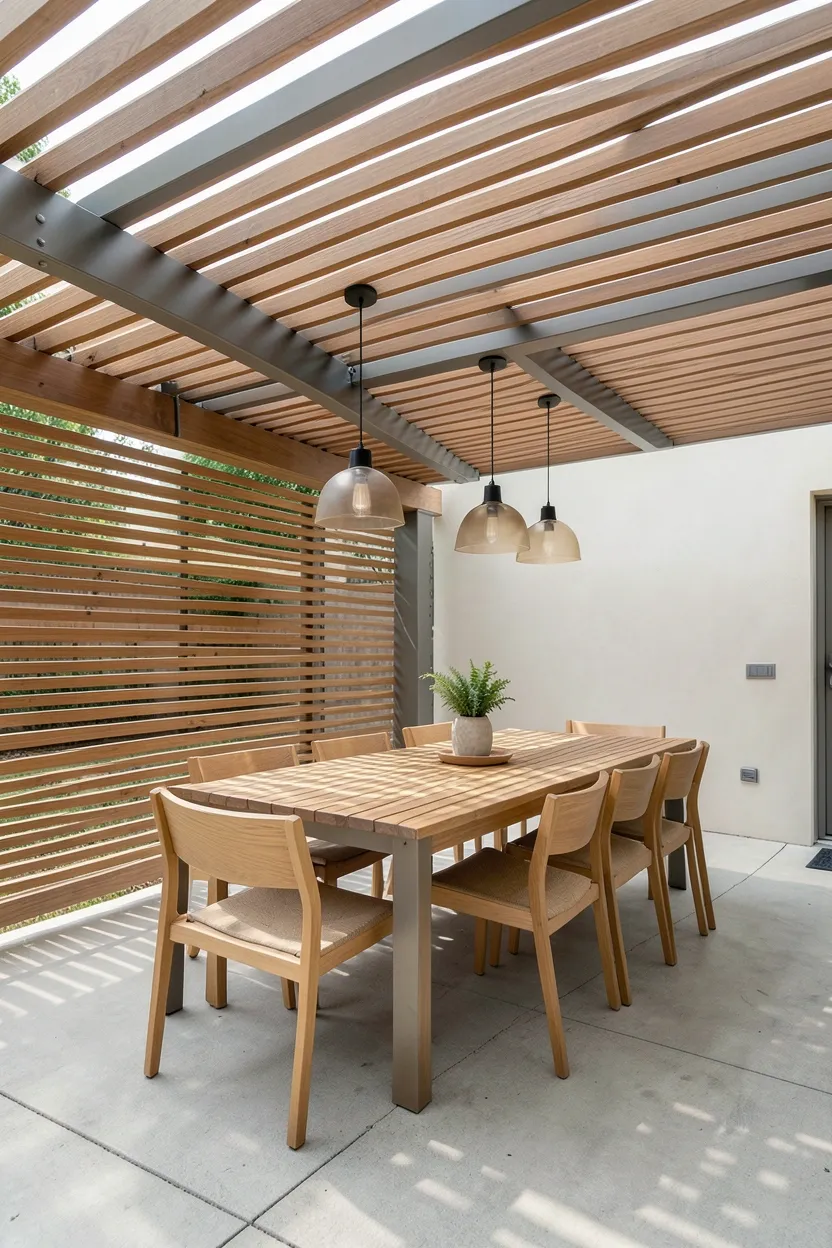
A pergola creates architectural definition for an outdoor dining area, providing structure and shade while maintaining an open, airy feel that's characteristic of modern design. The clean lines of a well-designed pergola establish visual boundaries without fully enclosing the space, allowing you to enjoy outdoor dining with some protection from sun and light rain.
Recommended
Items for this idea
Modern pergolas typically feature horizontal slats or louvers that can be angled to control light and privacy, or open to admit sunlight when desired. For a cohesive look, choose materials that complement your home's architecture – powder-coated aluminum offers durability and low maintenance, while natural wood provides warmth but requires regular staining or sealing. A dining pergola should be at least 10×12 feet to accommodate a standard dining table comfortably, with 3–4 feet of clearance around the table for chairs and movement.
Why it works: The overhead structure creates a sense of intimacy and enclosure while still feeling connected to the surrounding landscape, making it ideal for dining spaces where you want both shelter and openness. Add string lights or a modern pendant light suspended from the pergola's rafters to create ambient lighting for evening meals. Budget $3,000–$8,000 for a custom-built pergola, or $1,500–$3,500 for a prefabricated kit, depending on materials and size.
Do consider a retractable canopy or shade cloth for additional sun protection during peak summer months
Don't position the pergola under overhanging trees – falling leaves and debris create constant maintenance challenges
Avoid if: You live in an area with heavy snow loads – additional structural reinforcement and wider rafters may be necessary
What this gives you: A defined outdoor dining space that balances shelter with openness, creating a comfortable environment for meals and gatherings
7. Multi-Level Patio with Transitional Steps
Multi-level patios add architectural interest and define different functional zones – dining, lounging, and cooking – while creating visual depth and dimension. The changes in elevation naturally separate areas for different activities, making a small space feel larger and more dynamic than a single, flat surface ever could.
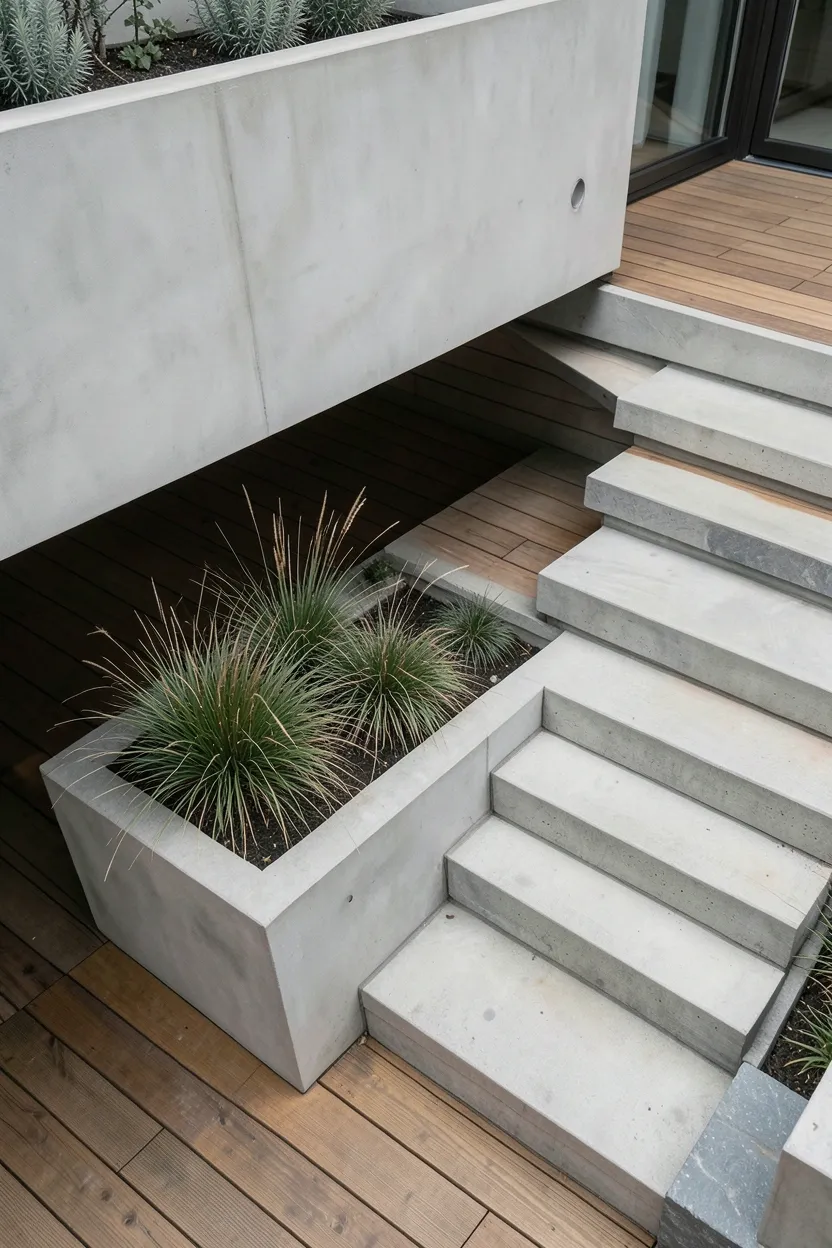
Placement note: Position the highest level nearest your home's entrance for easy access, with each step down creating a natural progression toward focal points like gardens, water features, or views. A typical elevation change of 6–12 inches between levels provides enough separation to feel distinct without creating awkward transitions. The steps themselves should be at least 4 feet wide for comfortable movement, with consistent riser heights for safety and visual harmony.
Contrast with single-level patios: While flat patios offer simplicity and accessibility, multi-level designs provide more opportunities for creative zoning and visual interest. Consider using different flooring materials on each level to reinforce the separation of functions – concrete for the dining area, wood decking for the lounge space, or natural stone for a fire pit area. This approach creates a curated, intentional feel that feels sophisticated rather than disjointed.
For a cohesive look, repeat one material or color across all levels while varying the textures – this maintains visual continuity while allowing each zone to have its own character. Budget considerations increase with multiple levels due to additional structural support and retaining walls, typically adding 30–50% to the cost of a single-level patio of the same total square footage.
Pro: Multiple levels create natural drainage patterns that prevent water pooling on any single surface
Con: Additional stairs can be challenging for those with mobility issues
Fix: Incorporate gentle ramps or wide, shallow steps with sturdy handrails where needed
What this gives you: A visually dynamic outdoor space that naturally separates functional zones while creating architectural interest and depth
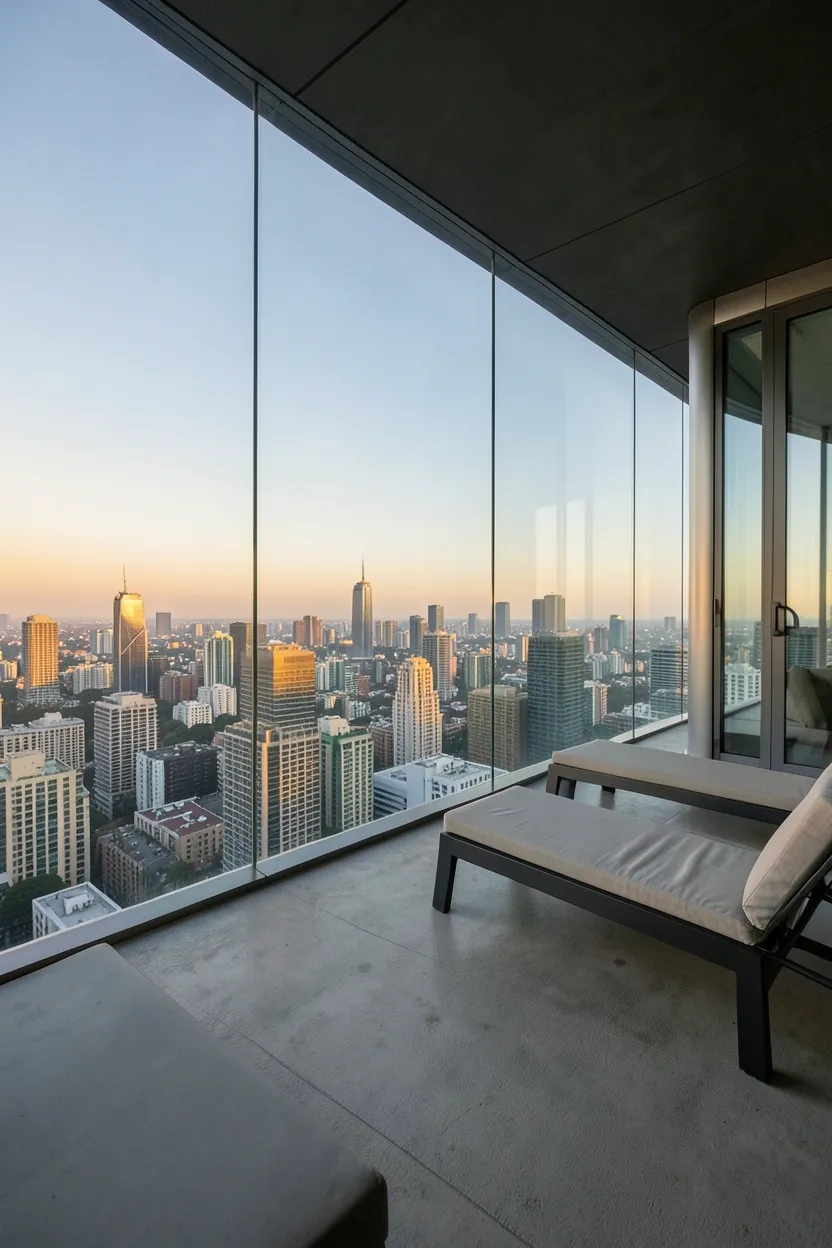
8. Glass Railing Deck with City Views
For urban patios or elevated decks with views, glass railings provide unobstructed sightlines while maintaining a sleek, modern aesthetic that doesn't compromise safety. The transparent nature of glass maximizes views and natural light, making smaller outdoor spaces feel significantly larger and more connected to the surrounding environment.
Recommended
Items for this idea
Tempered glass panels (typically 10mm or 12mm thick) offer durability and strength while providing a virtually invisible barrier from certain angles. Choose frameless glass systems for the most minimal appearance – glass panels are secured through spigot-mounted posts or edge-mounted channels, eliminating bulky support structures that would block views. For elevated decks, ensure compliance with local building codes regarding railing height (typically 36–42 inches) and structural requirements.
Upgrade alternative: For a variation on the glass railing concept, consider horizontal cable railings – they provide a similar unobstructed view while offering a more industrial aesthetic that pairs well with modern urban designs. However, glass railings generally offer better wind protection and maintain cleaner lines without the visual interruption of multiple cables.
Install glass panels with a slight angle (15–30 degrees) to reduce water spotting and minimize glare from direct sunlight
Choose low-iron glass for clearer color transmission – standard green-tinted glass can distort views and introduce unwanted color casts
Plan for easy cleaning access – consider the angle of installation and whether you can reach both sides of the glass for maintenance
Budget tip: Glass railings cost significantly more than traditional materials ($150–$250 per linear foot) – consider using glass only on the primary view-facing side with more affordable materials on other sides
What this gives you: Unobstructed views and a sleek, modern aesthetic that maximizes the feeling of space and connection to your surroundings
9. Integrated Planter Beds as Room Dividers
Using built-in planter beds as room dividers allows you to create separate functional zones on your modern patio without installing walls or other permanent barriers. These green-filled structures add natural beauty, improve air quality, and provide privacy while maintaining an open, connected feel that's essential to contemporary outdoor design.
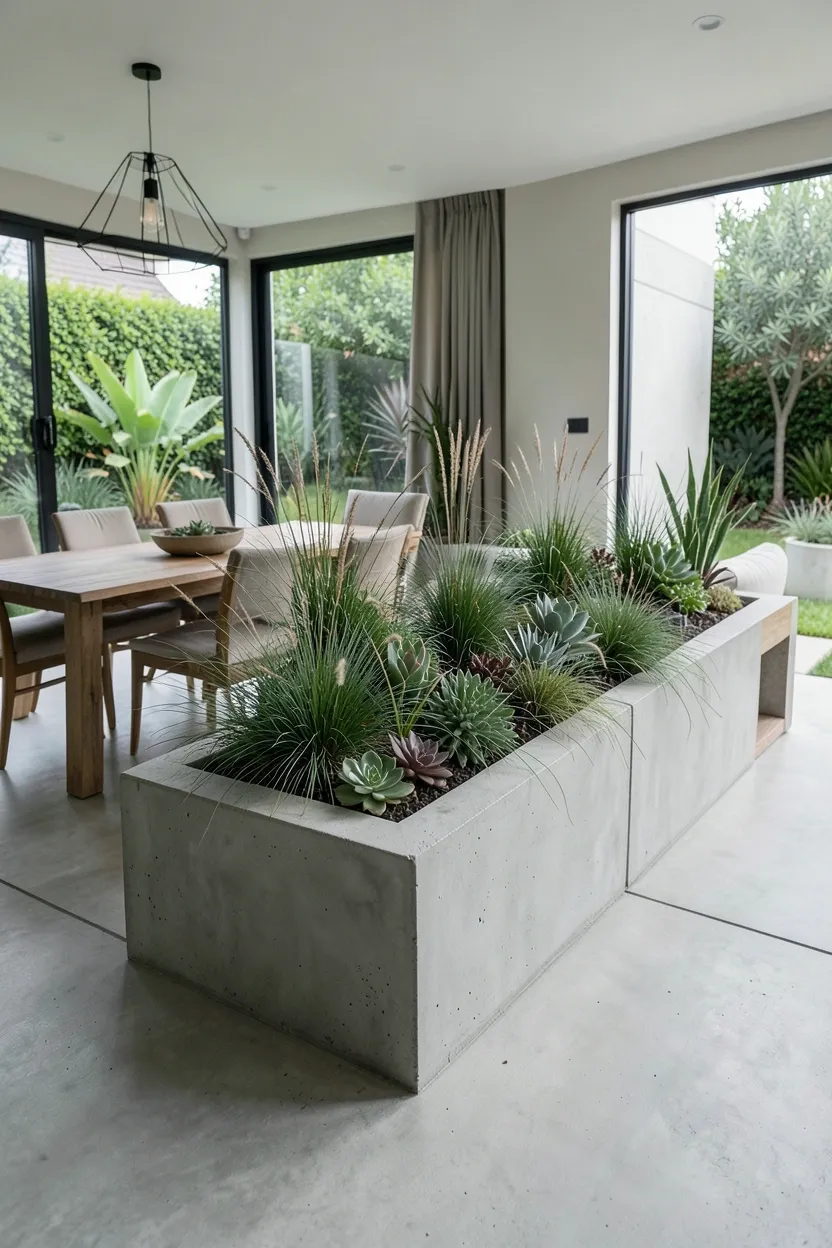
Common mistake: Making planters too narrow or shallow – aim for at least 18–24 inches of width and depth to support healthy root growth and provide adequate soil volume. This depth allows for a variety of plant options from ornamental grasses to small shrubs and perennials. Consider the mature size of your chosen plants and ensure planters provide adequate drainage – incorporate weep holes or drainage layers to prevent waterlogging.
Why it works: Living room dividers soften the harsh lines of hardscape materials and introduce organic elements that create visual interest through changing seasons. Unlike solid walls, planters allow light and air to pass through, maintaining an open atmosphere while still providing visual separation between dining and lounging areas. For a cohesive look, match the planter material to your patio flooring or choose complementary materials like weathered steel corten or concrete with embedded aggregate.
Install built-in irrigation systems or self-watering reservoirs to simplify maintenance, especially for larger planter beds. Budget approximately $50–$100 per linear foot for built-in planters, including materials and basic irrigation setup – this cost increases with more elaborate materials and specialized irrigation systems.
Do choose plants with varying heights and textures to create visual interest and effective screening
Don't position tall planters where they'll block desirable views – keep planters low or use plants with open, airy growth habits in sightline areas
Rental-friendly alternative: Use large, lightweight planters on casters to create movable room dividers that can be reconfigured as needed
What this gives you: Natural, flexible room division that adds greenery and visual interest while maintaining openness and flexibility in your patio design
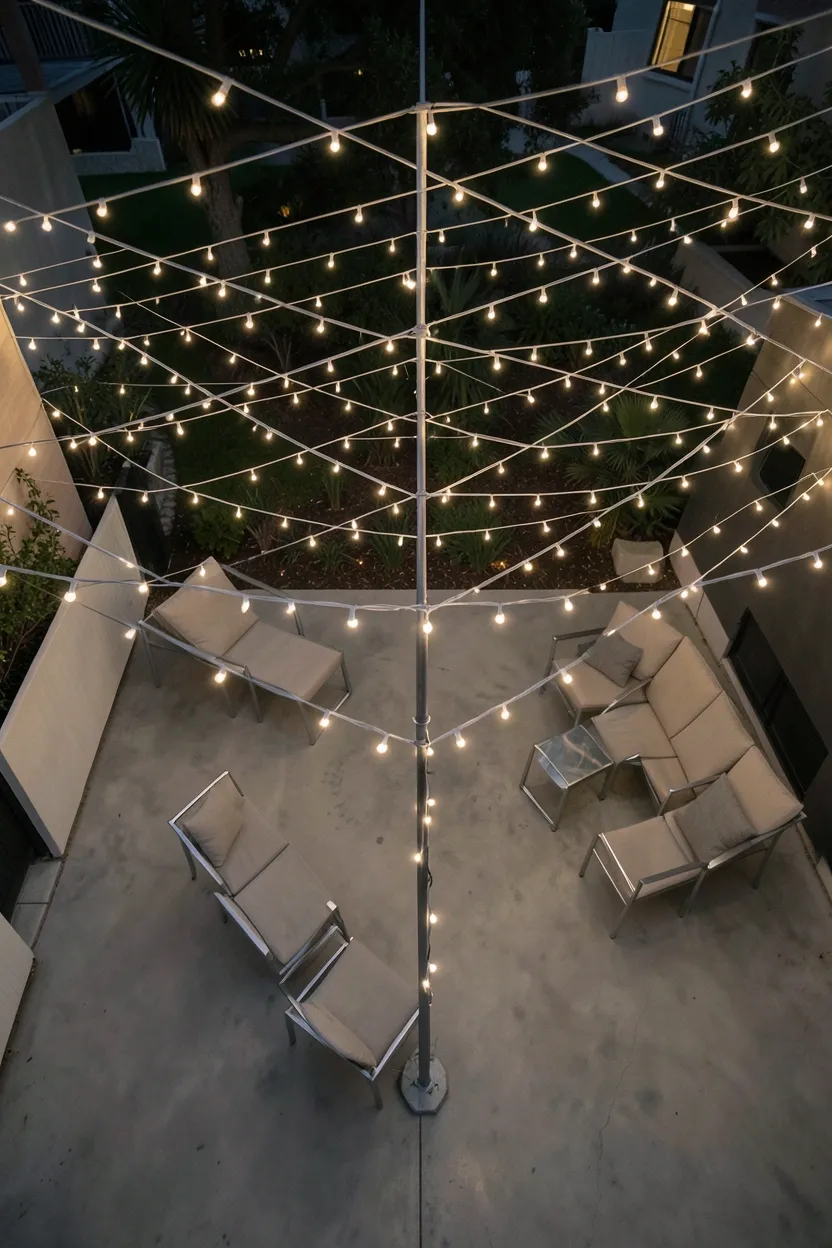
10. String Light Canopy for Evening Ambiance
A canopy of string lights transforms your modern patio into an enchanting evening space, creating ambient lighting that feels warm and inviting while adding vertical dimension to your outdoor area. This lighting approach is both functional and decorative, providing soft illumination for navigation while establishing a magical atmosphere that encourages lingering outdoors after dark.
Recommended
Items for this idea
For a modern aesthetic, choose white LED string lights rather than warm yellow incandescent bulbs – LED versions provide consistent color temperature, significantly lower energy consumption, and last years longer. Install lights in a crisscross pattern 8–10 feet above the ground, creating a canopy that illuminates the entire patio without feeling cluttered or overwhelming. Use cable support systems rather than simple hooks for a cleaner, more professional appearance that won't sag over time.
Upgrade consideration: For a more sophisticated look, consider commercial-grade festoon lights with larger, higher-quality bulbs spaced farther apart – these provide more focused illumination and a more substantial visual presence that complements modern architecture. Alternatively, install recessed deck lighting or LED strips along edges and pathways for subtle, architectural lighting that disappears during the day.
Install a dimmer switch or smart lighting controller to adjust brightness according to the occasion – bright for dining, dim for relaxation
Choose waterproof, outdoor-rated lights with IP65 or higher ratings for durability in all weather conditions
Plan access to power sources and consider installing weatherproof outlets at key points to eliminate unsightly extension cords
Best for: Patios without overhead structures, homeowners who enjoy entertaining in the evening, and spaces that transition from day to night use
What this gives you: Atmospheric, flexible lighting that creates instant ambiance and extends the usability of your patio well into the evening hours
11. Water Feature Wall as Focal Point
A vertical water feature wall creates a stunning focal point on your modern patio while introducing the soothing sound of running water that masks urban noise and creates a sense of tranquility. The architectural presence of a water wall adds height and visual interest, making even smaller patios feel more substantial and thoughtfully designed.
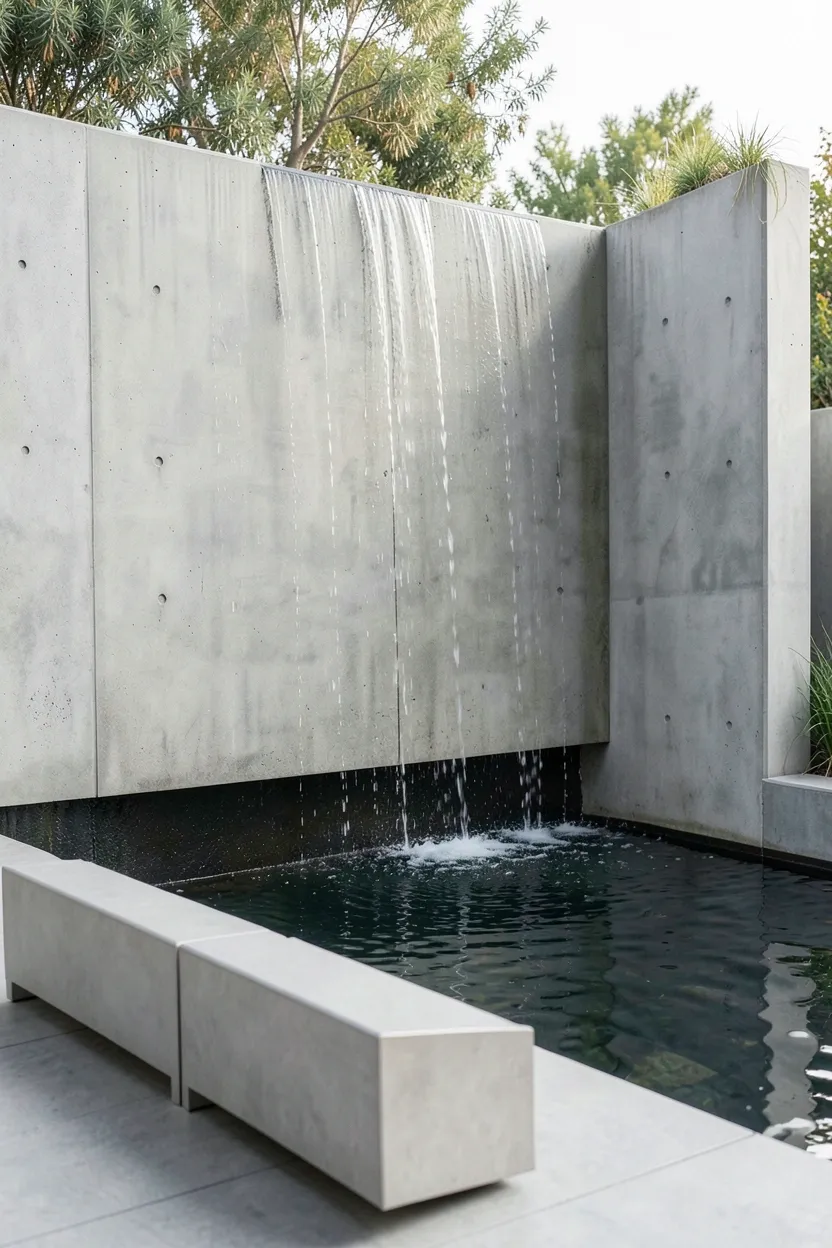
Modern water walls typically feature a smooth surface – concrete, slate, or weathered steel – with water flowing evenly across the face and collecting in a concealed basin below. For a minimalist look, choose a monolithic design with clean edges and minimal ornamentation – the focus remains on the movement and sound of water rather than decorative elements. Position the water wall as a backdrop for a seating area or as a visual divider between functional zones.
Common mistake: undersizing the pump – a properly sized pump ensures consistent water flow without splashing or excessive noise. Budget $2,000–$5,000 for a custom-built water wall depending on size and materials, or $800–$1,500 for prefabricated models. Maintain water quality with regular cleaning and appropriate additives to prevent algae growth and mineral buildup.
Do integrate LED lighting into the water feature for dramatic nighttime illumination – uplighting from the basin creates stunning reflections on the water surface
Don't position water walls directly under overhanging trees – falling debris creates constant maintenance and clogs the system
What this gives you: A captivating focal point that provides visual interest, ambient sound, and a sophisticated architectural element that elevates your patio design
12. Concrete Kitchen Countertop Outdoor Bar
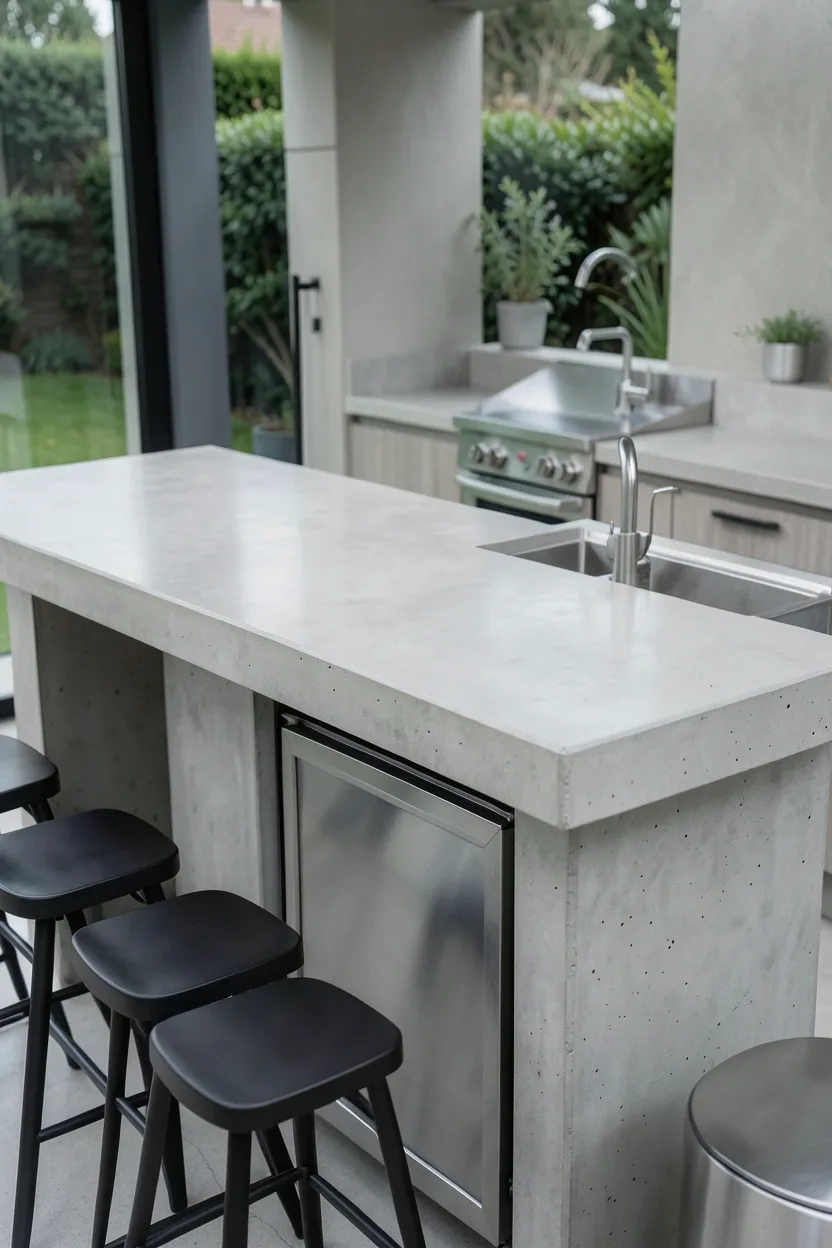
An outdoor bar with a concrete countertop transforms your patio into an entertainment destination, providing a dedicated space for drink preparation and socializing that feels sophisticated and purpose-built. The durability and modern aesthetic of concrete make it an ideal material for outdoor surfaces that need to withstand weather while maintaining a refined appearance.
Recommended
Items for this idea
A well-designed outdoor bar features a 30–36 inch tall countertop for comfortable standing interaction, with storage beneath for glassware, beverages, and bar tools. Consider incorporating a built-in cooler or under-counter refrigerator for convenience, along with a small prep sink if water access is available. Concrete countertops should be at least 2 inches thick for durability, with reinforced steel or fiberglass mesh to prevent cracking.
Placement note: Position the bar near seating areas for easy interaction, but allow adequate clearance – at least 3 feet of circulation space on the patron side and 2–3 feet behind the bar for service access. For smaller patios, consider a mobile bar cart that can be moved or stored when not needed – this provides flexibility without the permanent commitment of a built-in installation.
For a complete outdoor kitchen setup, explore ideas from Stunning Outdoor Kitchen to expand your cooking and entertaining capabilities beyond just the bar area.
Do seal concrete countertops with a high-quality penetrating sealer specifically formulated for outdoor use – reapply annually to maintain water and stain resistance
Don't place concrete directly on the ground without proper structural support and drainage planning
Budget tip: Build a simple concrete bar using precast concrete pavers or DIY-friendly concrete mix to reduce costs to $300–$600 for materials
What this gives you: A dedicated entertainment hub that elevates hosting capabilities and creates a natural gathering point for social interaction
13. Sunken Conversation Pit
A sunken conversation pit creates an intimate gathering space that feels sheltered and cozy, separated from the main patio level while still maintaining visual connection to the surrounding area. This architectural feature adds depth and sophistication to your outdoor space, creating a dedicated zone for relaxation and conversation that feels intentionally designed rather than incidental.
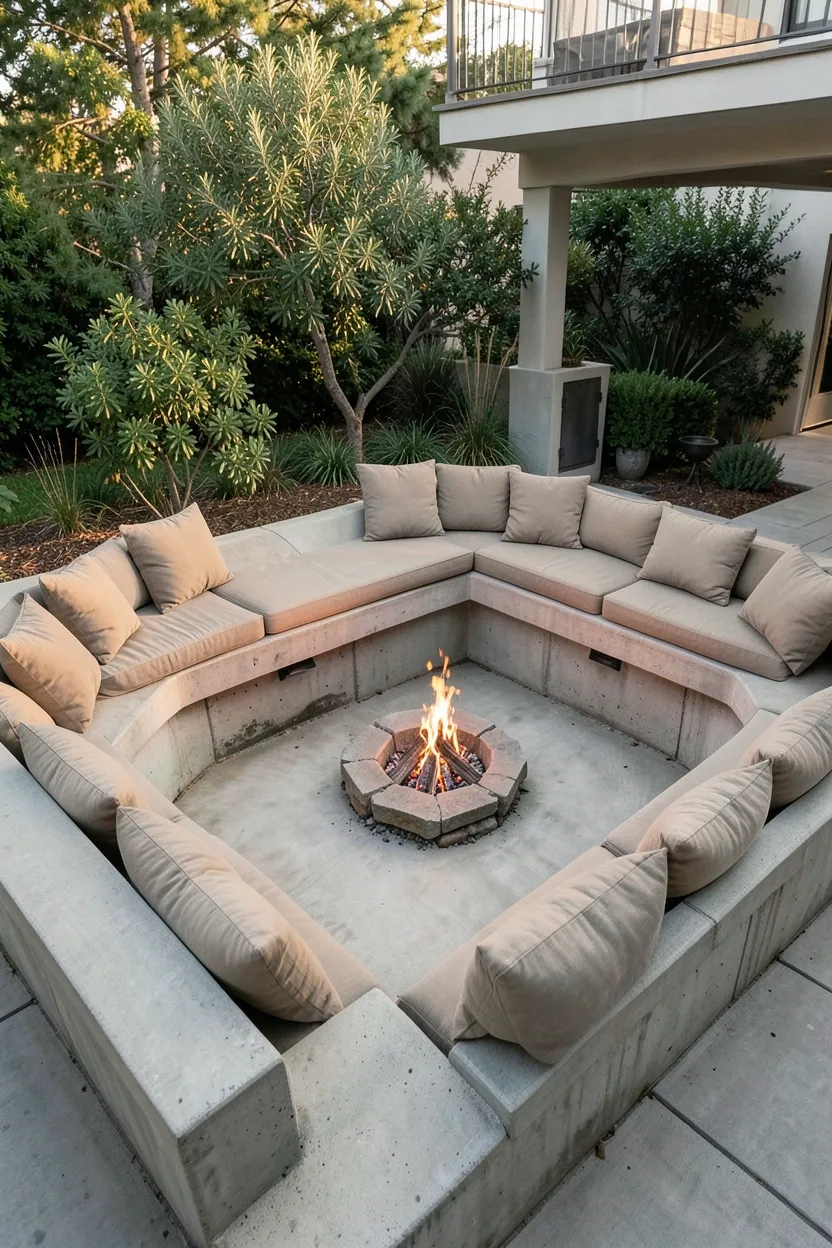
Why it works: The lowered elevation creates a natural sense of enclosure and intimacy, perfect for evening conversations or small group gatherings. Aim for a depth of 18–24 inches – this provides enough of a feeling of being in a separate space without making ingress and egress awkward. Construct the pit from the same material as your main patio flooring for cohesion, or use contrasting materials like wood decking to create visual separation.
Avoid the common mistake of making the pit too small – aim for at least 8×8 feet to comfortably accommodate 4–6 people without feeling cramped. Incorporate built-in bench seating around the perimeter to maximize seating and maintain clean lines, leaving the center open for a fire pit, coffee table, or cushions for flexible floor seating. For safety, ensure the transition from the main patio level to the pit is clearly marked and consider adding handrails or subtle lighting along the edge.
Install drainage beneath the sunken area to prevent water accumulation during rain – this is particularly important for fully paved conversation pits. Budget considerations increase significantly for sunken features due to excavation and structural requirements, typically adding $5,000–$15,000 to a patio project depending on size and materials.
Pro: The lowered elevation provides natural wind protection, making the space more comfortable in breezy conditions
Con: Additional excavation and structural support significantly increase cost compared to grade-level seating
Fix: Consider a semi-sunken design with raised platforms around the edges to achieve some of the benefits with less extensive excavation
What this gives you: A uniquely intimate gathering space that adds architectural interest and creates a distinct zone for conversation and relaxation
14. Vertical Garden Wall for Small Urban Patios
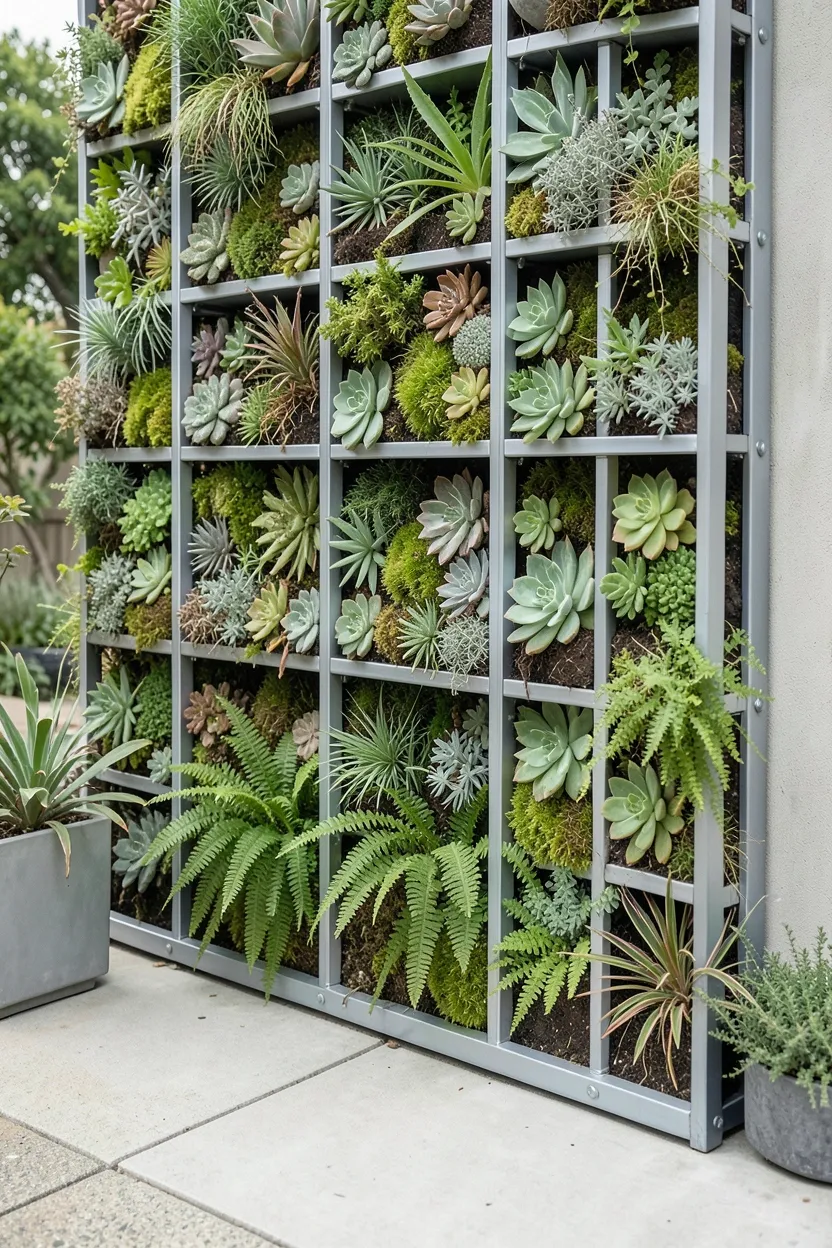
Vertical garden walls transform blank walls or fences into lush, living focal points that introduce greenery and visual interest without consuming valuable floor space. These modern green walls are particularly valuable for urban patios and small outdoor areas where horizontal space is at a premium, allowing you to incorporate plants and natural elements in unexpected, space-efficient ways.
Recommended
Items for this idea
Modern vertical garden systems feature modular panels with built-in planting cells, irrigation channels, and water reservoirs that make installation and maintenance straightforward. Choose low-maintenance plants suited to your climate and sun exposure – succulents, ferns, ornamental grasses, and trailing ivy create varied textures while requiring minimal care. For the most modern aesthetic, consider a metal frame system with clean geometric lines rather than rustic wooden structures.
Upgrade alternative: For a lower-maintenance option, consider preserved moss walls – these require no watering or sunlight and maintain their appearance indefinitely while still providing the lush, natural look of living greenery. While more expensive upfront ($80–$150 per square foot compared to $40–$80 for living systems), they eliminate the ongoing maintenance requirements and potential failures of living walls.
Install an automated irrigation system with a timer to ensure consistent watering without daily manual intervention
Choose plants with similar water and light requirements to simplify maintenance and ensure all sections of the wall thrive equally
Plan for seasonal plant replacements or consider mixing evergreen plants with seasonal varieties to maintain year-round visual interest
Rental-friendly alternative: Use freestanding vertical garden trellises or modular planter systems that can be removed without permanent installation
What this gives you: A stunning green focal point that maximizes space efficiency while introducing natural elements and improving air quality in your outdoor area
15. Large Format Tile Patio with Minimal Grout Lines
Large format tiles create a sleek, contemporary patio surface that feels sophisticated and cohesive while minimizing the visual interruption of grout lines. The expansive tile faces provide a clean, uninterrupted surface that reflects modern design principles while offering excellent durability and relatively low maintenance for outdoor applications.
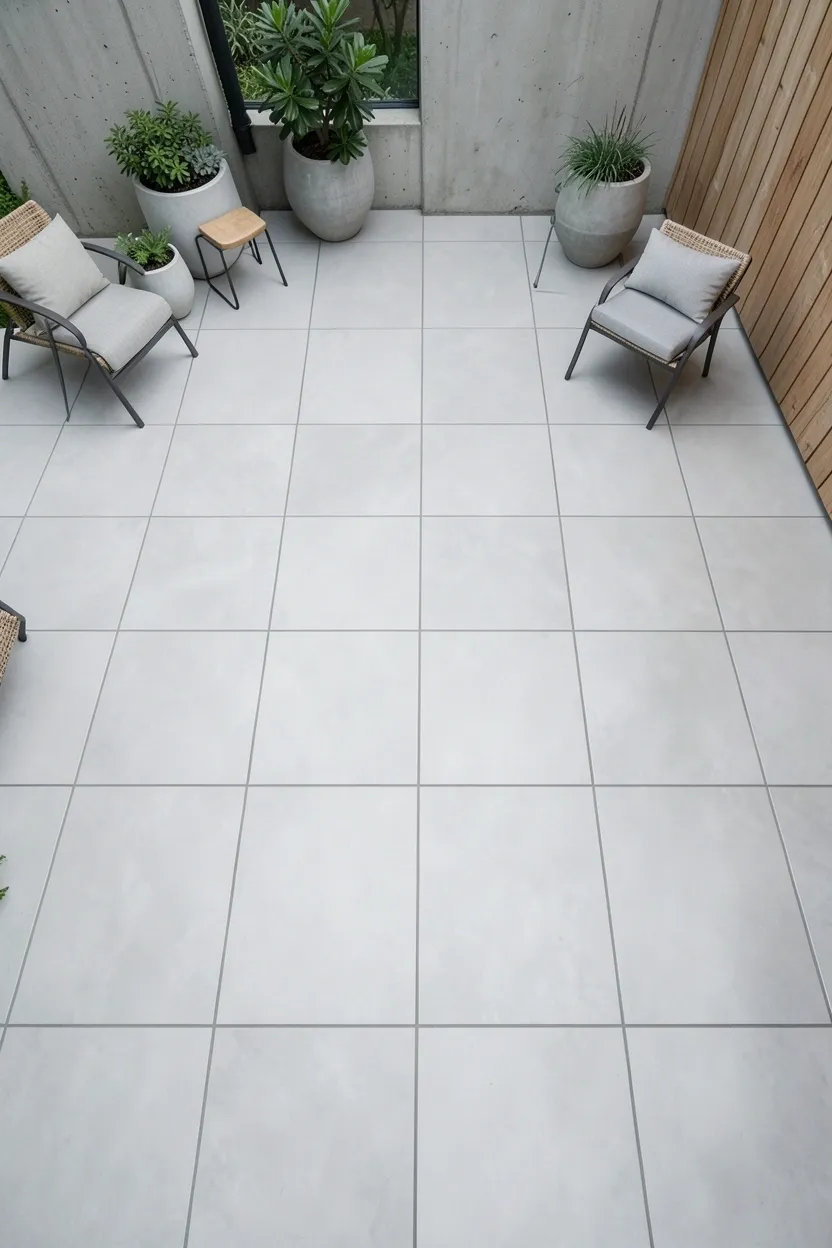
Modern outdoor tiles come in sizes from 24×24 inches up to 48×48 inches or larger, creating substantial surface areas that reduce the number of visible grout lines. Choose porcelain or natural stone tiles specifically rated for outdoor use – these materials withstand freeze-thaw cycles, resist staining, and maintain their appearance through seasonal changes. Opt for matte or honed finishes rather than polished surfaces, which become dangerously slippery when wet.
Common mistake: selecting tiles that are too smooth or using indoor-rated materials outdoors – always verify frost resistance ratings and slip resistance coefficients before purchasing. Budget $8–$20 per square foot for quality outdoor tiles, plus installation costs of $5–$12 per square foot depending on complexity and site conditions. Use narrow grout lines (1/8 inch or less) with epoxy-based grout to maintain the seamless appearance and minimize maintenance.
Do choose tiles with slight texture or patterns to provide traction when wet – smooth tiles become hazardous in outdoor environments
Don't install large format tiles over an uneven substrate without proper preparation – tiles will crack and the surface will appear uneven
Budget tip: Consider concrete pavers in large format sizes (24×24 or larger) as a more affordable alternative to porcelain tiles while maintaining similar visual impact
What this gives you: A sophisticated, seamless patio surface that provides excellent durability and low maintenance while maintaining a clean, modern aesthetic
16. Cantilevered Shade Structure
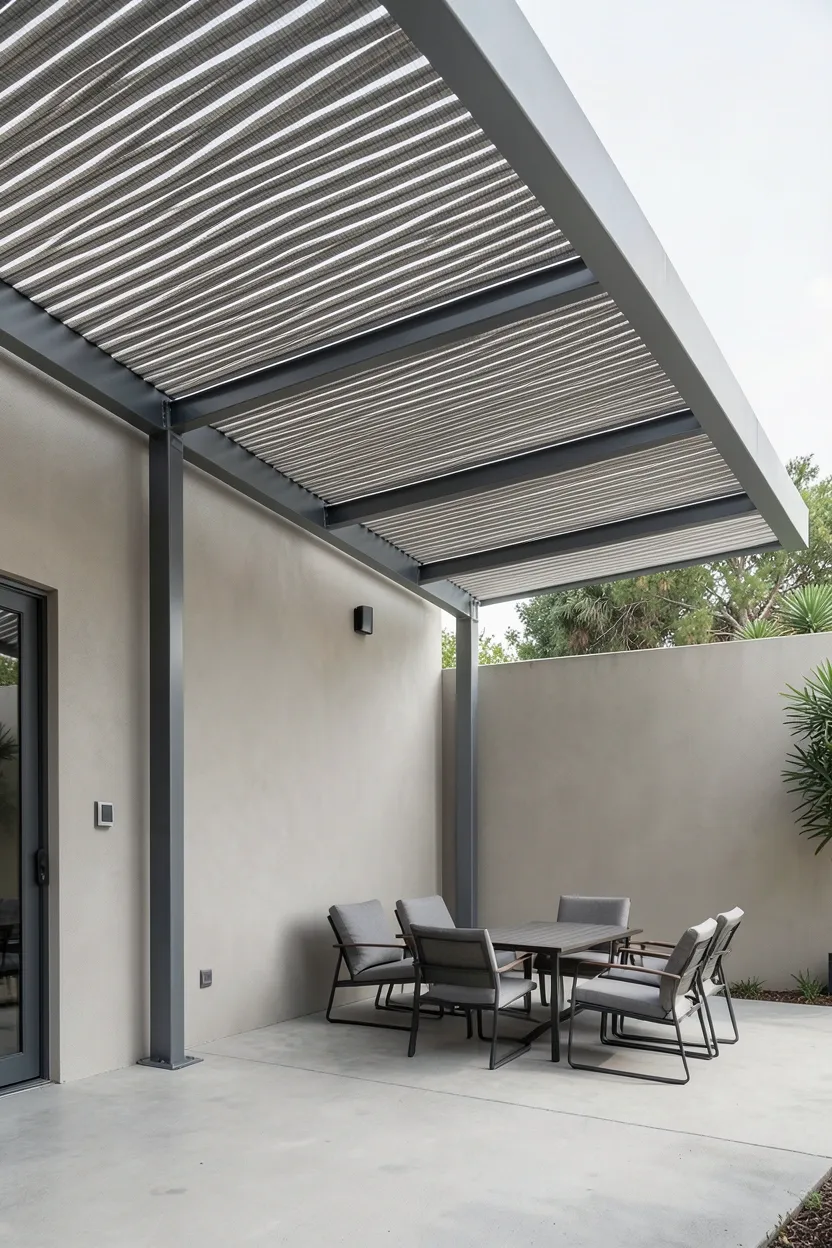
A cantilevered shade structure provides architectural drama and sophisticated sun protection without requiring support columns that would obstruct views or interfere with traffic flow. This modern design solution creates overhead shelter while maintaining an open, airy feel below, making it ideal for patios where maximizing usable space and maintaining sightlines are priorities.
Recommended
Items for this idea
Modern cantilevered structures typically extend 8–16 feet from their mounting point, supported by a substantial steel or aluminum beam anchored to a wall or freestanding support. The canopy itself might consist of adjustable louvers, tensioned fabric, or perforated metal panels that provide varying degrees of shade while still allowing filtered light to pass through. For a minimalist appearance, choose powder-coated aluminum or powder-coated steel finishes in neutral tones that complement your home's exterior.
Placement note: Mount cantilevered structures to structurally sound walls or install substantial footings for freestanding support systems. The overhang should extend at least 2–3 feet beyond the area you intend to shade to account for the changing angle of the sun throughout the day. For optimal functionality, consider motorized louvers or retractable canopies that allow you to adjust shade levels based on weather conditions and time of day.
Alternative approach: For a less permanent solution, consider tensioned fabric shade sails – these provide similar shade benefits with easier installation and lower cost ($1,500–$4,000 compared to $5,000–$15,000 for cantilevered structures). However, shade sails typically require more frequent replacement and don't offer the same architectural integration or adjustability as built-in cantilevered systems.
Pro: Cantilevered structures create dramatic architectural interest and can become a design statement in their own right
Con: Complex engineering requirements and structural considerations significantly increase cost and installation complexity
Fix: Work with a structural engineer from the design phase to ensure the mounting point can support the cantilever's load and moment forces
What this gives you: Sophisticated shade and architectural drama without obstructing views or usable space beneath the structure
17. Modular Outdoor Kitchen Island
A modular outdoor kitchen island creates a dedicated cooking and preparation space that elevates patio entertaining while maintaining the clean, uncluttered aesthetic of modern design. Unlike sprawling, fully-built outdoor kitchens, modular islands provide functionality without permanently committing to a fixed layout, allowing you to reconfigure or expand the setup as needs change.
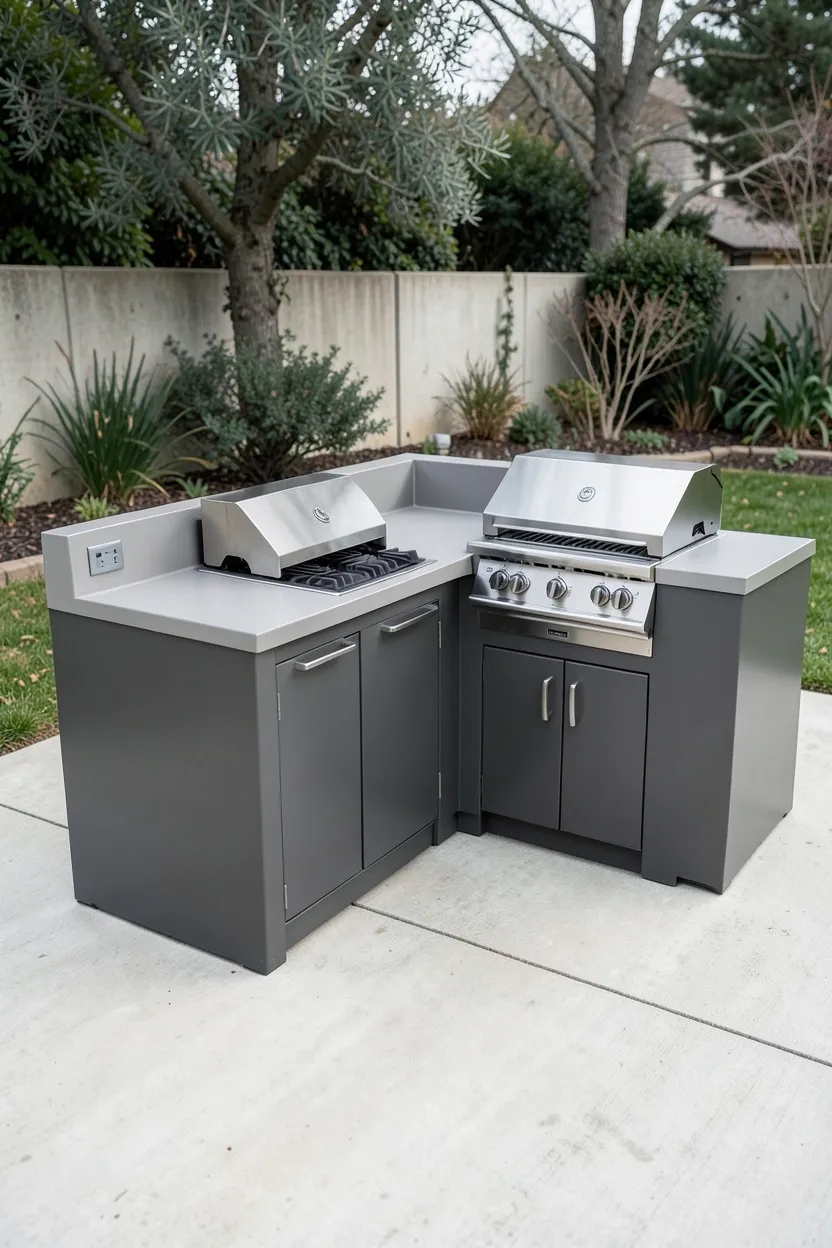
Modern modular islands typically feature a main cooking unit with grill or cooktop, surrounded by prep surfaces, storage modules, and optionally refrigeration or sinks. Choose weather-resistant materials like marine-grade polymer, concrete, or stainless steel for durability and easy maintenance. For a cohesive look, select units from a single manufacturer or system to ensure consistent heights, dimensions, and design language across modules.
Position the island to facilitate easy movement between cooking, prep, and dining areas – allow at least 3 feet of clearance around all sides of the island for comfortable circulation. For compact patios, consider an L-shaped configuration that maximizes counter space while minimizing the footprint. Budget $3,000–$8,000 for a basic modular setup including grill island and one or two additional modules, or up to $15,000+ for fully-featured configurations with multiple appliances.
To explore comprehensive outdoor kitchen designs beyond just modular islands, visit Elegant Modern Kitchen for inspiration on creating complete outdoor cooking environments.
Do include adequate lighting for food preparation and cooking safety – install task lighting under overhead shelves or modules
Don't position cooking surfaces too close to dining areas or furniture – maintain adequate distance to manage smoke, heat, and cooking odors
Rental-friendly alternative: Use freestanding outdoor kitchen carts and portable grills that can be moved or stored as needed without permanent installation
What this gives you: Flexible outdoor cooking capabilities that enhance entertaining while maintaining the ability to reconfigure or expand your setup over time
18. Polished Concrete with Embedded Lighting
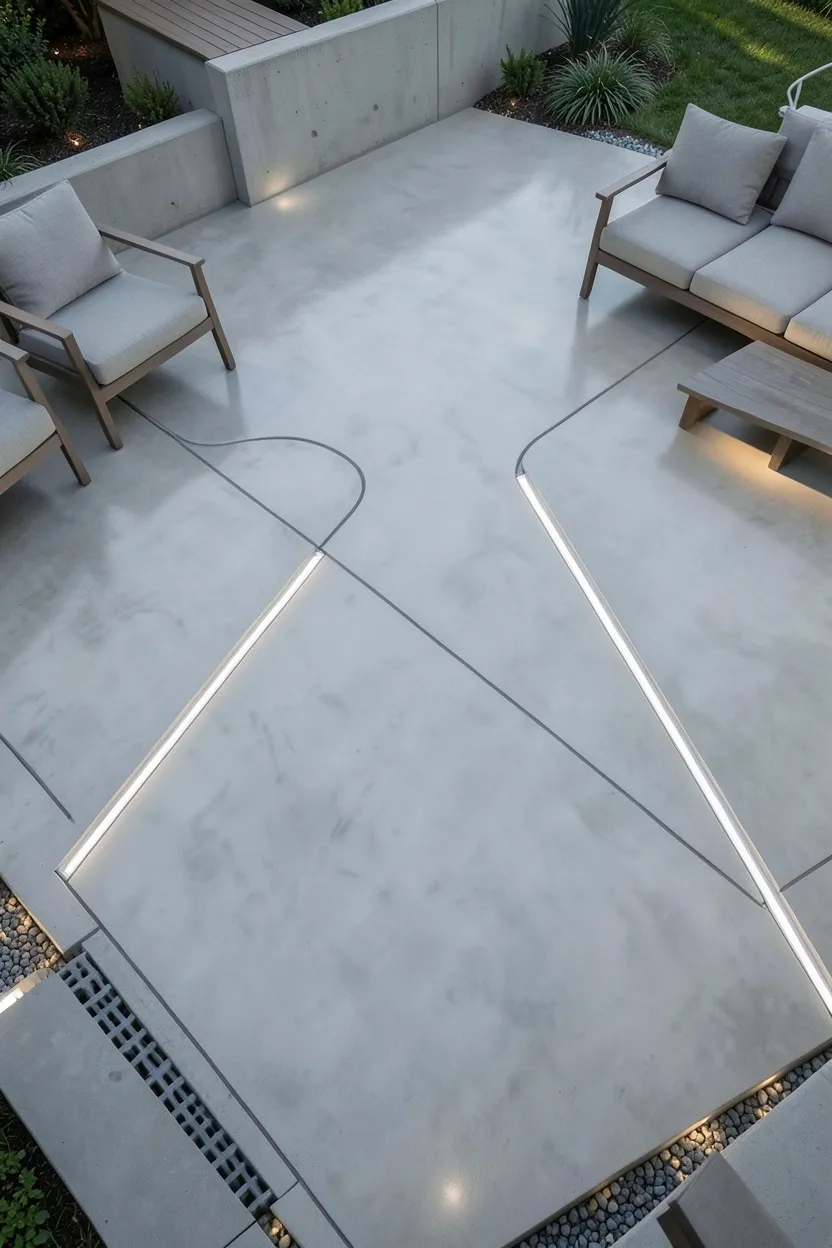
Polished concrete provides a sleek, seamless patio surface that reflects modern design principles while offering exceptional durability and low maintenance. Embedded lighting transforms this practical material into something special, creating subtle illumination that highlights the concrete's texture and provides safe navigation after dark without visible fixtures.
Recommended
Items for this idea
The polishing process removes surface imperfections and creates a smooth, slightly reflective finish that feels sophisticated and intentional. Modern embedded lighting options include LED strips installed in sawn grooves, recessed floor lights, or fiber optic strands that create dramatic linear patterns in the concrete surface. Choose warm white LEDs (2700–3000K) for a welcoming atmosphere, or cool white (4000–5000K) for a more contemporary, architectural feel.
Why it works: The combination of polished concrete and embedded lighting creates a minimalist aesthetic that disappears during the day and transforms dramatically at night. The flush-mounted lights eliminate tripping hazards and provide uniform illumination without visible fixtures cluttering the space. For the most sophisticated appearance, install lighting along pathways, step edges, or perimeter boundaries rather than randomly scattered across the surface.
Common mistake: over-illuminating the space with too many lights – subtle, strategic placement creates a more elegant atmosphere than floodlighting the entire area. Budget $6–$12 per square foot for polished concrete installation, plus $15–$30 per linear foot for embedded LED strip lighting including installation and electrical work.
Pro: Polished concrete requires minimal maintenance – occasional sweeping and periodic resealing keep it looking fresh for years
Con: Polished concrete becomes slippery when wet, especially with higher-gloss finishes
Fix: Add texture through aggregate exposure or choose a matte finish in high-traffic wet areas to improve traction
Best for: Homeowners seeking low-maintenance surfaces, those who value minimalist design, and patios that transition into evening entertainment spaces
What this gives you: A sleek, modern patio surface that seamlessly integrates lighting for dramatic nighttime transformation and excellent durability
19. Daybed Lounge with Retractable Awning
A daybed lounge creates a dedicated relaxation zone on your modern patio, providing a comfortable space for reading, napping, or simply enjoying the outdoors in ultimate comfort. Paired with a retractable awning, this setup offers flexibility to enjoy full sun or complete shade depending on conditions, making it usable throughout the day and across seasons.
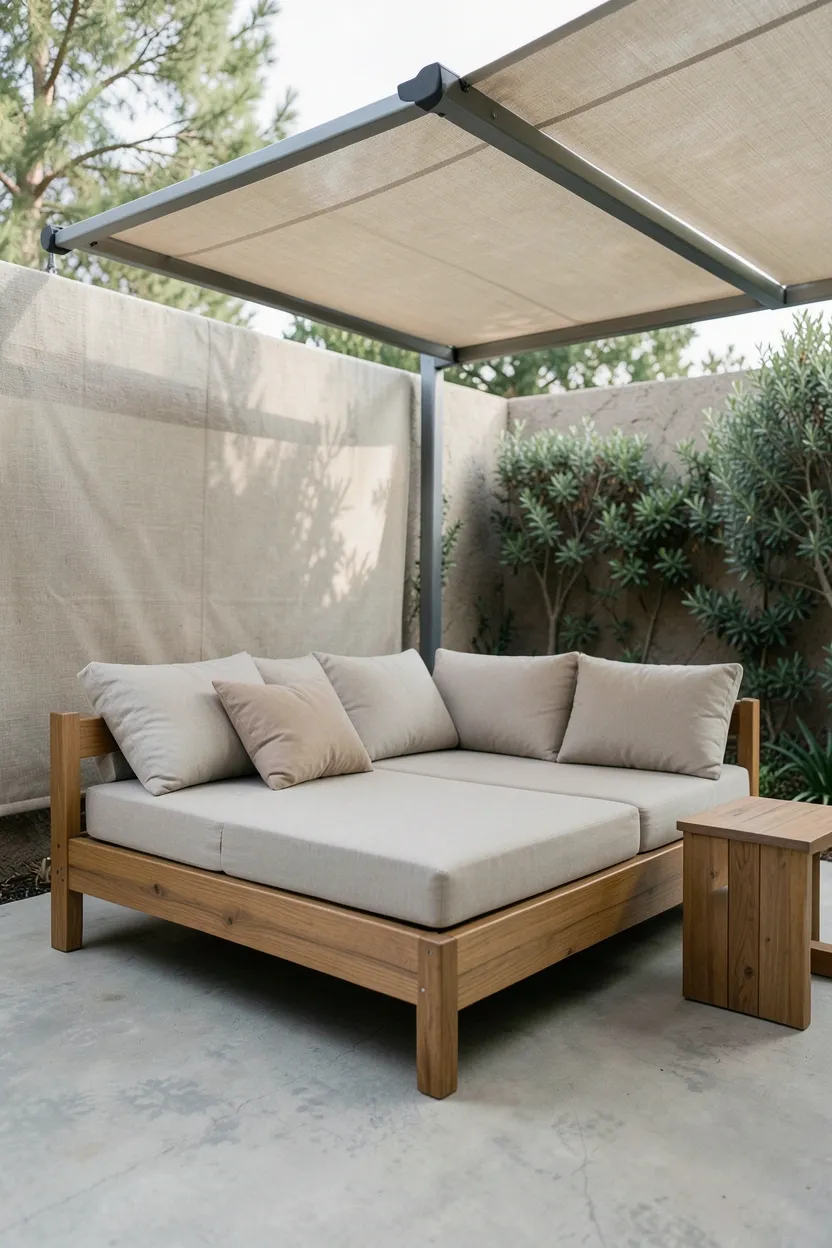
Modern outdoor daybeds feature weather-resistant cushions and frames made from materials like teak, aluminum, or synthetic wicker that withstand outdoor exposure while maintaining a refined appearance. Choose a daybed with cushions covered in solution-dyed acrylic or polyester fabrics that resist fading, mold, and mildew – these materials cost more upfront but last years longer than budget alternatives. Position the daybed to take advantage of views, breezes, or the best natural light while maintaining privacy.
Upgrade alternative: Instead of a retractable awning, consider a permanent cantilevered pergola with adjustable louvers – this provides more architectural integration and offers better protection from light rain while still allowing adjustment for sun control. However, pergolas are significantly more expensive ($5,000–$15,000) compared to motorized retractable awnings ($2,000–$5,000).
Invest in weather-resistant cushions with removable, washable covers – this extends the life of your daybed significantly
Add side tables or a small coffee table within arm's reach of the daybed for drinks, books, or personal items
Consider adding outdoor lighting nearby – string lights or a floor lamp create a cozy atmosphere for evening lounging
Budget tip: Create a DIY daybed using a sturdy wooden platform or pallet construction topped with weather-resistant foam and cushions for a fraction of the cost ($300–$600 vs $800–$1,500 for manufactured daybeds)
What this gives you: A dedicated relaxation zone that provides comfortable outdoor lounging with flexible sun protection and year-round usability
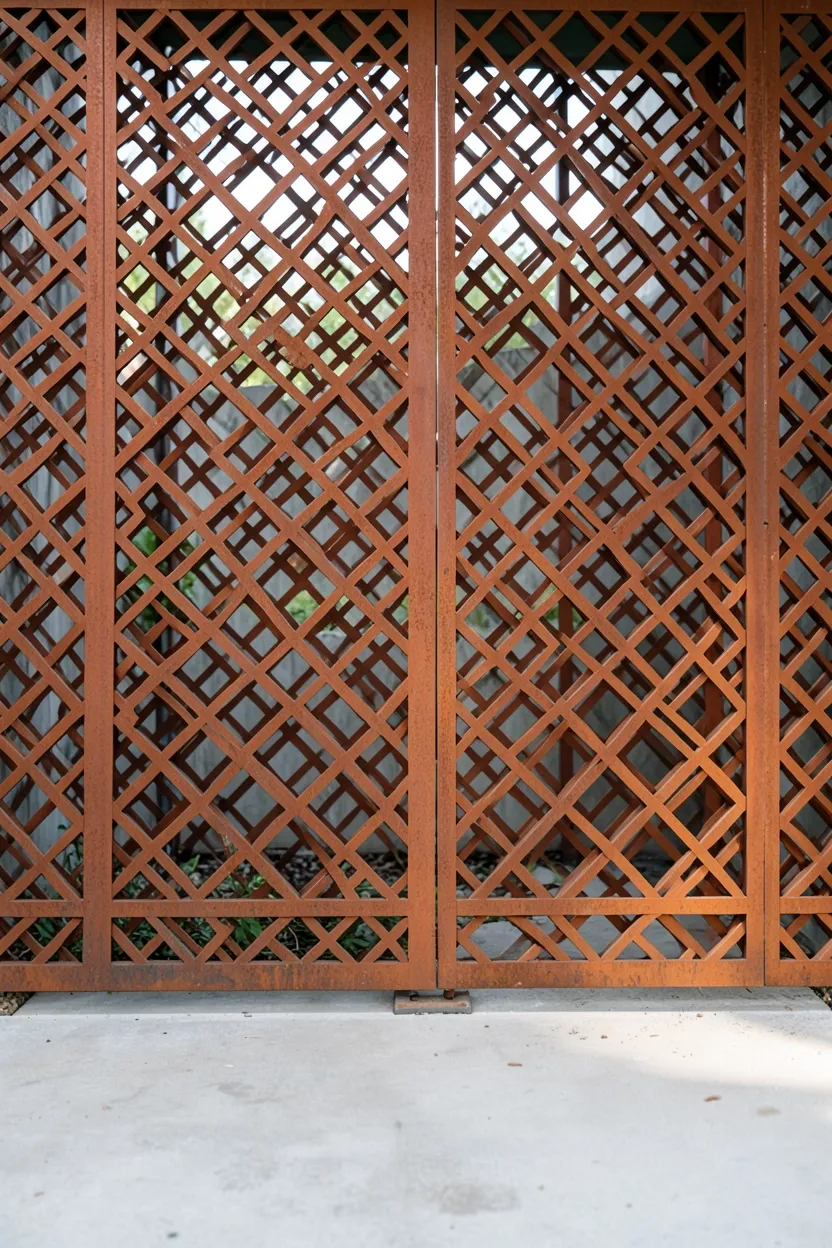
20. Privacy Screen with Geometric Pattern
A privacy screen with an intentional geometric pattern provides necessary seclusion without creating a solid, fortress-like barrier that feels unwelcoming or oppressive. These modern screens function as architectural art pieces that define boundaries, block unwanted views, and introduce visual interest through pattern and material variation while maintaining an open, connected feel.
Recommended
Items for this idea
Modern geometric screens might feature laser-cut metal panels, perforated weathering steel, CNC-routed wood, or even concrete with molded patterns. Choose materials that complement your patio's other elements – weathered steel (corten) provides a warm, industrial aesthetic, while powder-coated aluminum offers durability in a wide range of colors. The pattern density should balance privacy needs with maintaining some visual connection and light penetration.
Common mistake: choosing patterns that are too complex or busy – simpler geometric patterns with clean lines typically work better in modern contexts and age more gracefully than elaborate, ornate designs. Budget $80–$200 per square foot for custom-fabricated screens depending on material and complexity, or $30–$60 per square foot for pre-fabricated modular panel systems.
Install screens with sufficient structural support and anchoring – freestanding panels require proper footings to resist wind loads, while attached screens need appropriate reinforcement of the mounting surface. Consider incorporating planters or climbing structures at the base of privacy screens to soften the transition from hardscape to landscape.
Do consider installing LED lighting behind or within the screen panels – backlighting creates dramatic nighttime effects and highlights the geometric patterns
Don't position solid privacy screens where they'll block desirable views or create tunnel-like corridors – maintain sightlines to focal points or openings to other areas
What this gives you: Artistic privacy solutions that create seclusion without sacrificing aesthetics, openness, or natural light
21. Small Balcony Transformation for Renters
Transforming a small balcony into a modern patio requires strategic planning and space-efficient solutions that maximize functionality without feeling cramped or cluttered. The key lies in choosing appropriately scaled furniture, utilizing vertical space, and selecting materials and colors that create the illusion of more space while maintaining a sophisticated aesthetic.
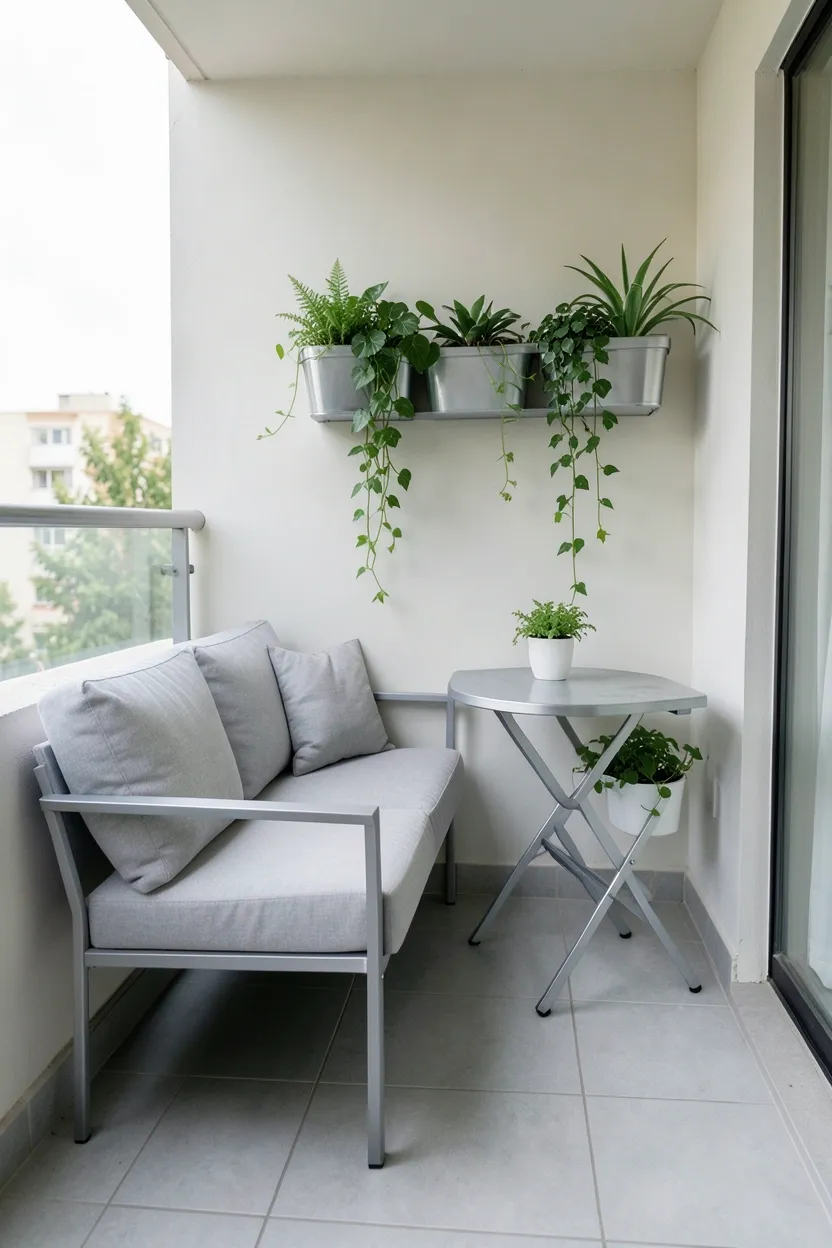
Why it works: Small spaces benefit from fewer, larger pieces rather than many small items that create visual clutter. Choose one substantial piece – a compact loveseat, a small dining set, or a single comfortable chair with side table – and build the design around that anchor element. Use light-reflecting materials like glass, mirrors, or light-colored surfaces to bounce light and make the space feel larger and more open.
Avoid the common mistake of overcrowding the balcony – leave adequate circulation space (at least 24–30 inches) to move comfortably between furniture and railing. Utilize vertical space with wall-mounted planters, folding tables, or storage solutions that keep the floor area clear and open. Consider furniture that serves multiple functions – a storage ottoman that doubles as seating, or a bistro table with built-in planters – to maximize utility without sacrificing style.
For additional inspiration specifically tailored to balconies, explore Cozy Balcony Ideas for more small-space solutions and design approaches that work in compact outdoor environments.
Do use folding or stackable furniture that can be stored or reconfigured as needed – this provides flexibility in how the space is used
Don't install large, overhanging awnings or structures that reduce already-limited headroom or make the space feel claustrophobic
Rental-friendly advantage: Small balconies are ideal for renters – most improvements are reversible, and the limited scale means smaller investments for maximum impact
What this gives you: A fully-functional outdoor retreat that maximizes limited square footage while providing a sophisticated, welcoming space for relaxation
22. Rooftop Terrace with Modular Seating
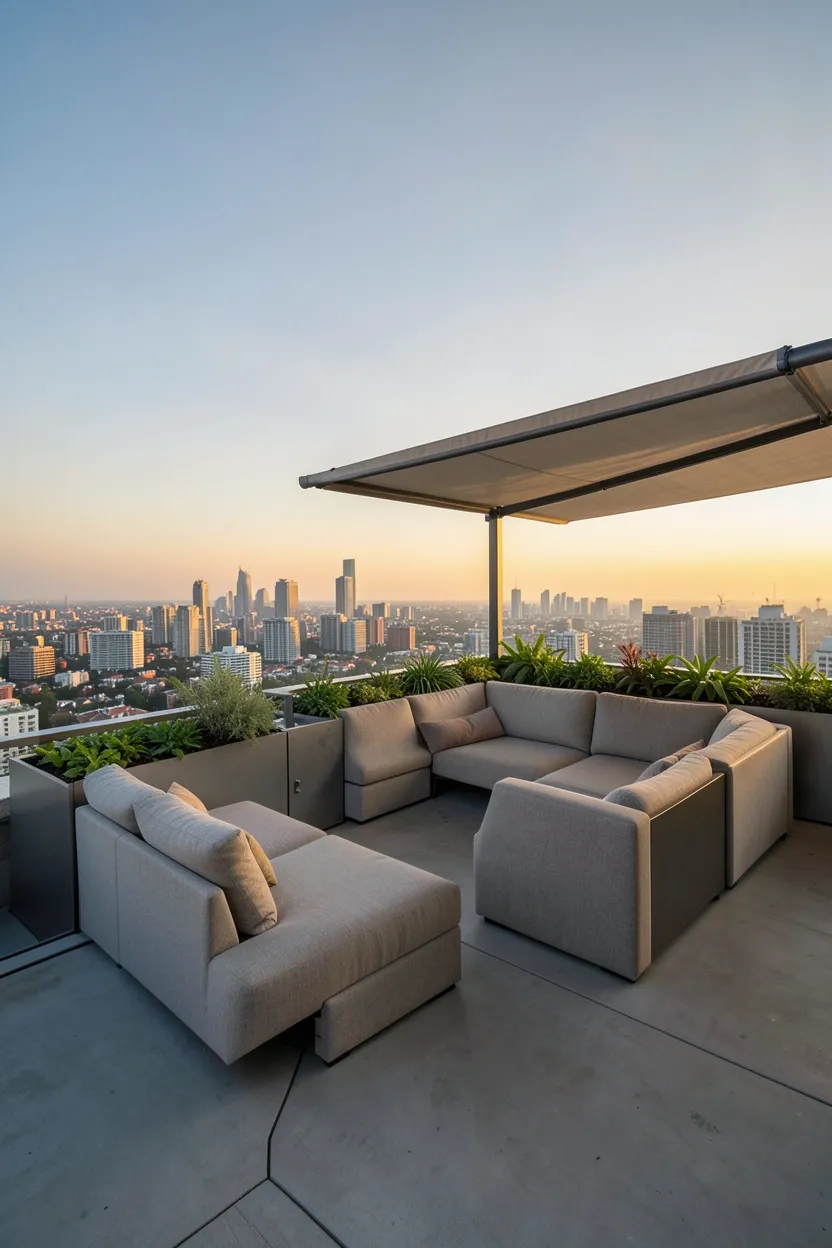
A rooftop terrace offers spectacular views and a unique perspective on outdoor living, requiring design solutions that account for exposure to wind and sun while maximizing the architectural drama of elevated spaces. Modular seating provides flexibility to reconfigure the space for different occasions while maintaining a clean, modern aesthetic that complements the dramatic rooftop setting.
Recommended
Items for this idea
Modern rooftop design must consider wind protection, sun exposure, and privacy from neighboring buildings. Modular seating systems – sectional pieces that can be rearranged or separated – allow you to create intimate conversation areas or expand for larger gatherings as needed. Choose weather-resistant materials like powder-coated aluminum, teak, or high-density polyethylene that withstand harsher rooftop conditions than those at ground level.
Placement note: Position modular seating to take advantage of best views while creating natural windbreaks with taller backrests or incorporated planters. For sun protection, incorporate cantilevered shade structures, retractable awnings, or strategically placed pergolas that don't obstruct views. Privacy screens or tall planters can create separation from neighboring buildings without blocking desirable vistas.
Install wind sensors and automatic retractable awnings or blinds if budget allows – these systems automatically deploy protection when wind speeds exceed safe thresholds, protecting both occupants and furniture from unexpected weather events. For rooftop terraces, expect higher costs due to structural reinforcement, specialized access requirements, and more demanding installation logistics.
Pro: Rooftop terraces provide unparalleled views and natural privacy from street-level activities
Con: Increased wind exposure and sun intensity require additional protection measures and more durable materials
Fix: Incorporate multiple layers of wind protection – railings, planters, and retractable screens – to create a comfortable environment across varying weather conditions
Best for: Urban apartments and homes with existing rooftop access, those who value dramatic views, and homeowners seeking unique outdoor entertaining spaces
What this gives you: A spectacular outdoor entertaining space with panoramic views and flexible layout that adapts to different occasions and weather conditions
23. All-Season Patio with Practical Heating Solutions
Transforming your patio into an all-season space requires strategic heating solutions that extend usability beyond warm summer months while maintaining the clean aesthetic of modern design. The right combination of heating methods, wind protection, and shelter allows you to enjoy outdoor living year-round regardless of climate or weather conditions.
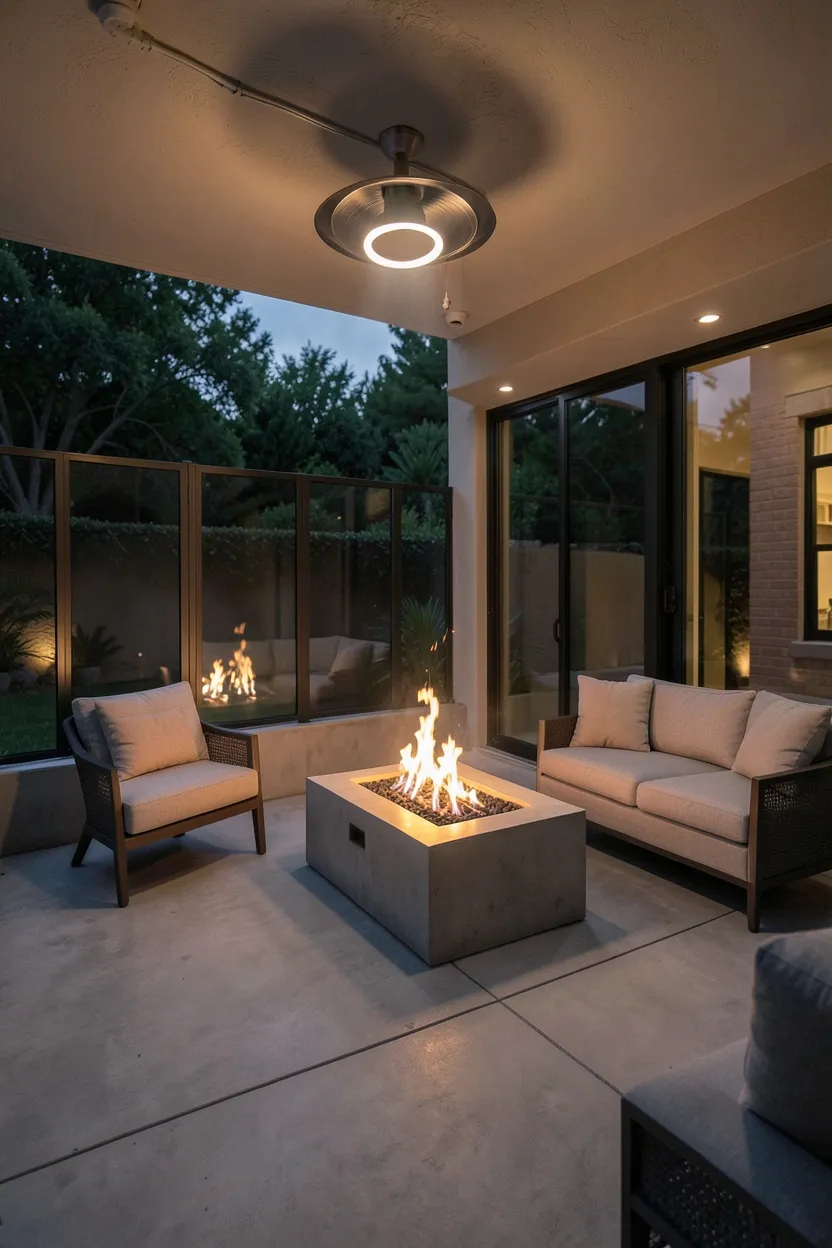
Modern heating options include overhead infrared heaters, in-floor radiant heating systems, sleek gas fire features, or portable electric heaters designed for outdoor use. Infrared heaters provide targeted heat that warms people and objects rather than wasting energy heating the air – this makes them particularly efficient for patios with significant airflow or wind exposure. Install heaters 8–10 feet above the primary seating areas for optimal heat distribution without creating hot spots.
Alternative: For a more atmospheric approach, combine multiple fire pits or fire bowls throughout the space – these provide radiant heat while creating intimate gathering points and dramatic visual interest. However, fire-based heating requires more maintenance and isn't suitable for all-weather use during windy or rainy conditions, making electric or gas infrared systems more reliable for year-round functionality.
Install windbreaks – glass panels, privacy screens, or strategically placed planters – to reduce heat loss and increase the effectiveness of your heating system
Use smart controls or timers to operate heating systems only when the space is occupied, reducing energy waste and operating costs
Consider zone heating by installing multiple heaters rather than one large unit – this allows you to heat only the areas currently in use rather than the entire patio
Budget tip: Start with portable electric heaters or fire pit before investing in permanent installation – this allows you to test effectiveness and identify the best placement before committing to fixed infrastructure
What this gives you: A patio that remains comfortable and usable year-round, maximizing return on your outdoor investment regardless of seasonal temperature changes
Creating a stunning modern patio that balances practical functionality with sophisticated style requires thoughtful planning, material selection, and attention to how you'll actually use the space. These 23 ideas demonstrate that contemporary outdoor design doesn't require sacrificing comfort or usability – instead, it enhances both through intentional choices about layout, materials, and furnishings. Whether you're working with a spacious backyard, a compact balcony, or an urban rooftop terrace, there's a modern patio solution that fits your space, lifestyle, and aesthetic preferences while creating an outdoor environment you'll enjoy year-round.
About the author
OBCD
CGI visualization and interior design content. We create detailed 3D renders and curate practical design ideas for every room in your home.