21 Concrete Patio Ideas for Stylish Outdoor Living
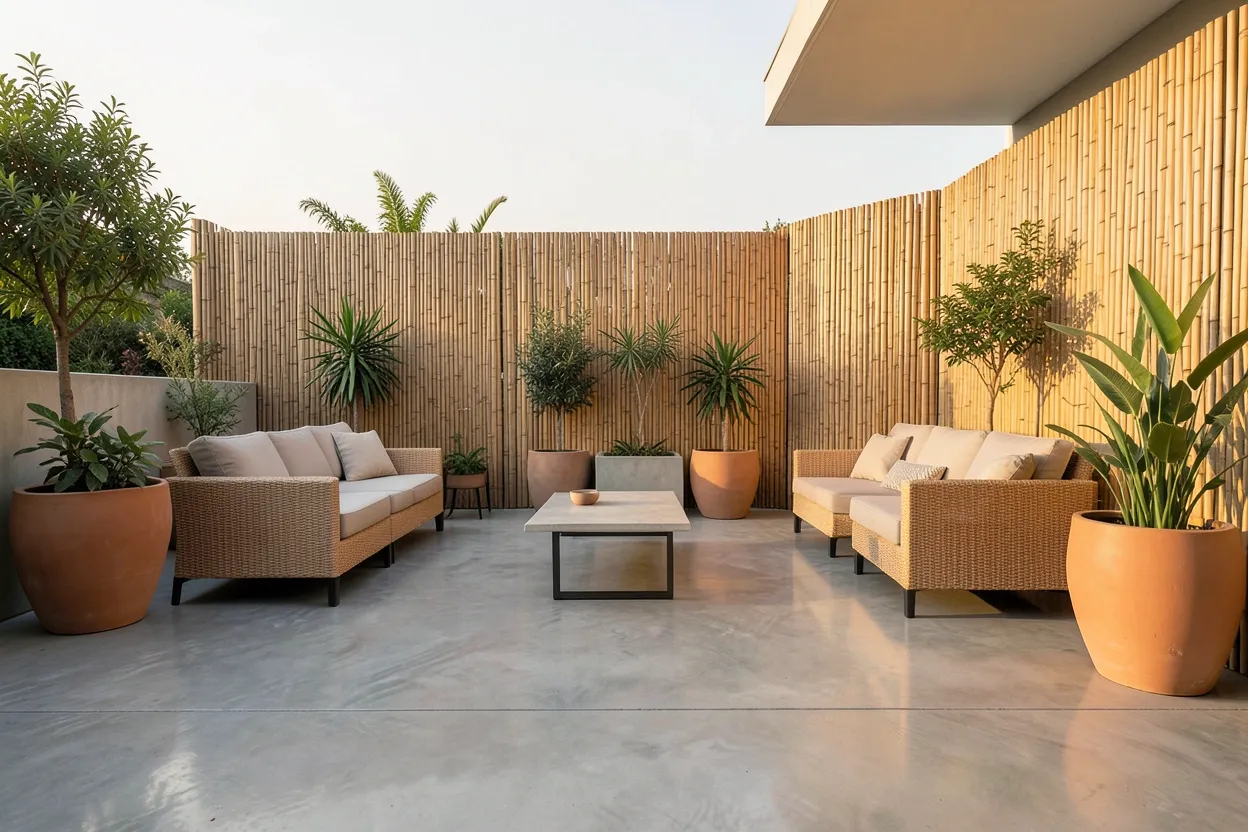
Concrete patio ideas have evolved far beyond the plain gray slabs of the past. Whether you rent or own, a thoughtfully designed concrete patio can transform your outdoor space into a stylish retreat — without draining your budget or requiring permanent changes you can't undo.
In our experience helping renters and homeowners style their outdoor areas, concrete stands out as one of the most versatile, durable, and design-forward materials available. From polished surfaces that reflect natural light to stamped concrete patio ideas that mimic the look of natural stone, the finish options are nearly endless.
These 21 concrete patio designs span a range of styles, budgets, and space sizes — so whether you have a small balcony-adjacent slab or a sprawling backyard canvas, you'll find ideas here that work for your lifestyle. Let's dig in.
Quick FAQ
Is concrete patio slippery when wet?
Polished concrete can be slippery, but adding a textured finish, broom finish, or anti-slip sealer makes it safe even after rain while maintaining a sleek appearance.
How long does a concrete patio last?
With proper installation and regular sealing, a concrete patio can last 30-50 years, making it one of the most durable and cost-effective outdoor flooring options available.
Can you install a concrete patio over existing surfaces?
Yes, concrete overlays can transform existing patios without demolition, though proper surface preparation and structural assessment are essential for long-term results.
What's the best concrete finish for hot climates?
Light-colored concrete with a light texture reflects heat, while integral coloring avoids surface peeling in extreme sun exposure compared to painted or stained finishes.
As an Amazon Associate I earn from qualifying purchases.
Table of Contents
- 1. Polished Concrete Patio with Minimalist Seating
- 2. Stamped Concrete Patio with Stone Pattern
- 3. Colored Concrete Patio in Warm Terracotta
- 4. Concrete Patio with Integrated Fire Pit
- 5. Concrete Patio with Wooden Deck Overlay
- 6. Concrete Patio with Pea Gravel Border
- 7. Concrete Patio with Geometric Tile Inlay
- 8. Concrete Patio with Built-in Planters
- 9. Concrete Patio with Modern Outdoor Kitchen
- 10. Concrete Patio with Water Feature
- 11. Concrete Patio with Pergola and String Lights
- 12. Concrete Patio with Bistro-Style Corner
- 13. Concrete Patio with Sunken Seating Area
- 14. Concrete Patio with Concrete Bench Seating
- 15. Concrete Patio with Concrete Block Divider
- 16. Concrete Patio with Acid-Stained Finish
- 17. Concrete Patio with Gravel Infill Pattern
- 18. Concrete Patio with Bamboo Privacy Screen
- 19. Concrete Patio with Recessed Lighting
- 20. Concrete Patio with Modular Furniture Layout
- 21. Concrete Patio with Concrete Paver Accent
1. Polished Concrete Patio with Minimalist Seating
A polished concrete patio creates an elegant, contemporary foundation that pairs seamlessly with sleek outdoor furniture, transforming any backyard into a sophisticated living space. The smooth surface reflects natural light, making smaller patios appear more expansive while providing a neutral backdrop that highlights decorative elements.
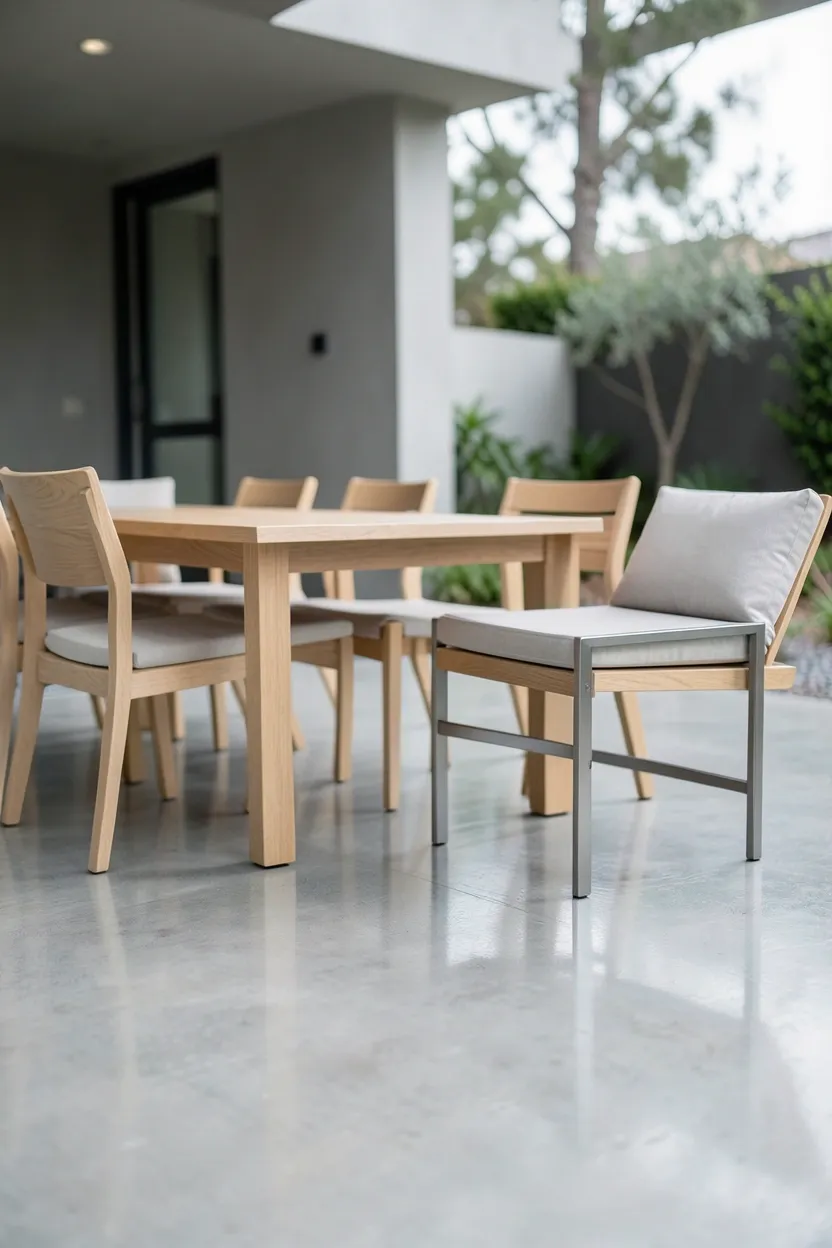
The glossy finish brings visual depth without the maintenance of tile or natural stone, offering a cool surface underfoot during hot summer days. Unlike traditional concrete finishes that can feel rough or industrial, polished surfaces deliver a refined aesthetic that feels surprisingly warm when paired with wooden accents and textiles.
Avoid adding too many decorative elements that compete with the clean lines—let the simplicity of the polished surface shine through with carefully chosen pieces that enhance rather than clutter the space.
Tips
- Do: Apply a penetrating sealer annually to maintain the polish
- Don't: Use harsh acidic cleaners that can dull the finish
- Choose outdoor rugs in natural tones to soften the sleek surface
Best for: Modern homes with clean architectural lines and minimalist design sensibilities.
What this gives you: A sophisticated, low-maintenance outdoor surface that elevates your patio design instantly.
We picked a few things that go well with this idea: Devoko 3-Piece PE Rattan Wicker Patio Set (★4.4), SAILARY Wicker High-Back Outdoor Dining Chairs 2-Pack (★4.3) and Flamaker 3-Piece Rattan Patio Conversation Set (★4.4). As an Amazon Associate we earn from qualifying purchases.
2. Stamped Concrete Patio with Stone Pattern
Stamped concrete patios replicate the look of natural stone, brick, or slate with remarkable realism while offering the durability and cost-effectiveness of concrete. This technique allows you to achieve high-end aesthetics without the premium price tag or extensive maintenance requirements of authentic materials.
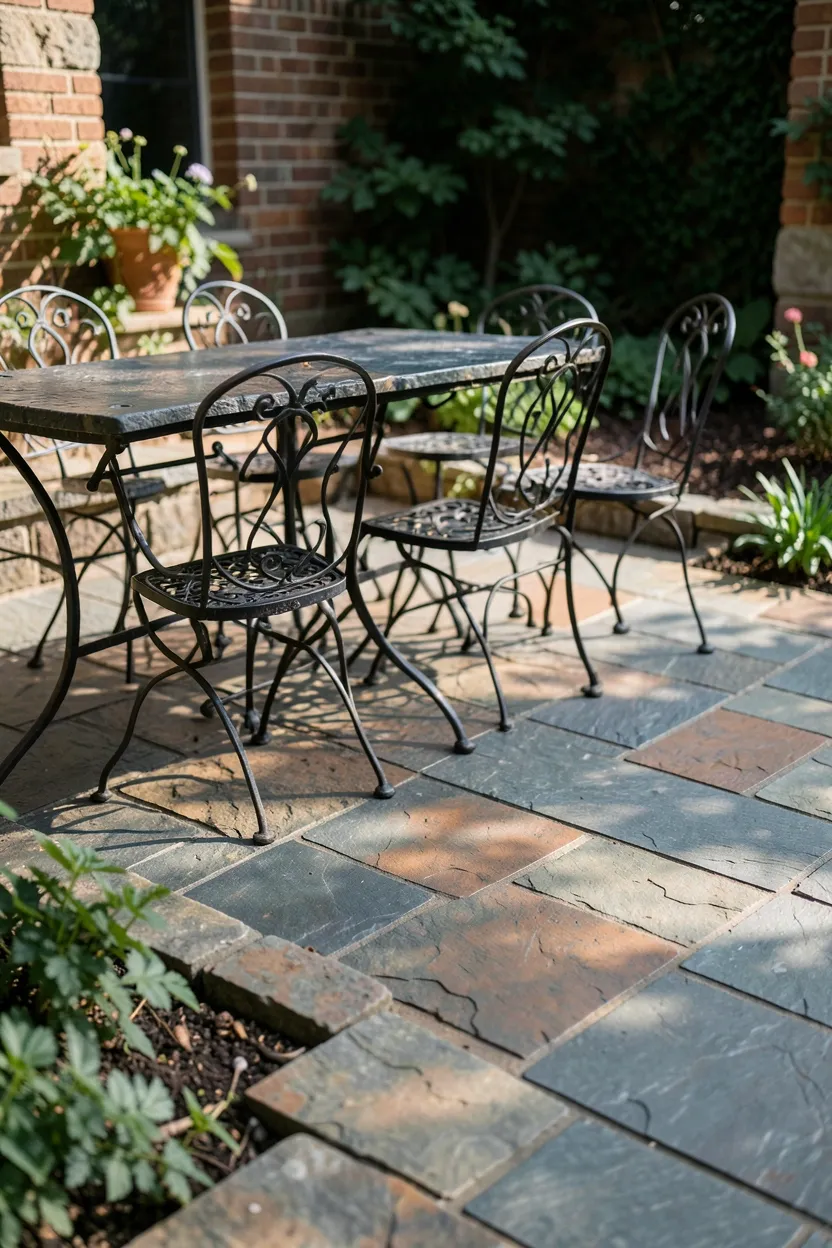
The textured surface provides excellent traction and hides minor imperfections that would be visible on plain concrete, making it ideal for families with children or pets. Each pattern—from slate ashlar to running bond brick—adds architectural interest that enhances your home's exterior while remaining cool enough for barefoot traffic.
Placement note: Position the pattern to complement rather than compete with your home's existing materials—match the stone shape and color tones to your walkways or foundation for cohesive curb appeal.
Upgrade the look further by integrating contrasting border patterns or accent colors that define specific zones, creating visual interest without sacrificing the uniform appearance of stamped surfaces.
Tips
- If using multiple patterns, stick to the same color family for cohesion
- Then: Apply a fresh coat of acrylic sealer every 2-3 years to protect the pattern
- Consider integral coloring rather than surface stains for longer-lasting color
What this gives you: The timeless appeal of natural stone with the strength and affordability of concrete.
We picked a few things that go well with this idea: Addlon 100FT Dimmable LED Outdoor String Lights (★4.6), Brightever 100FT Vintage Edison Outdoor String Lights (★4.6) and 100FT Waterproof Dimmable LED Patio String Lights (★4.3). As an Amazon Associate we earn from qualifying purchases.
3. Colored Concrete Patio in Warm Terracotta
A terracotta-toned concrete patio infuses warmth and Mediterranean charm into outdoor spaces, creating an inviting atmosphere that feels connected to nature without the fragility of traditional terracotta tiles. The rich earth tones provide excellent contrast against green landscaping while maintaining excellent heat resistance.
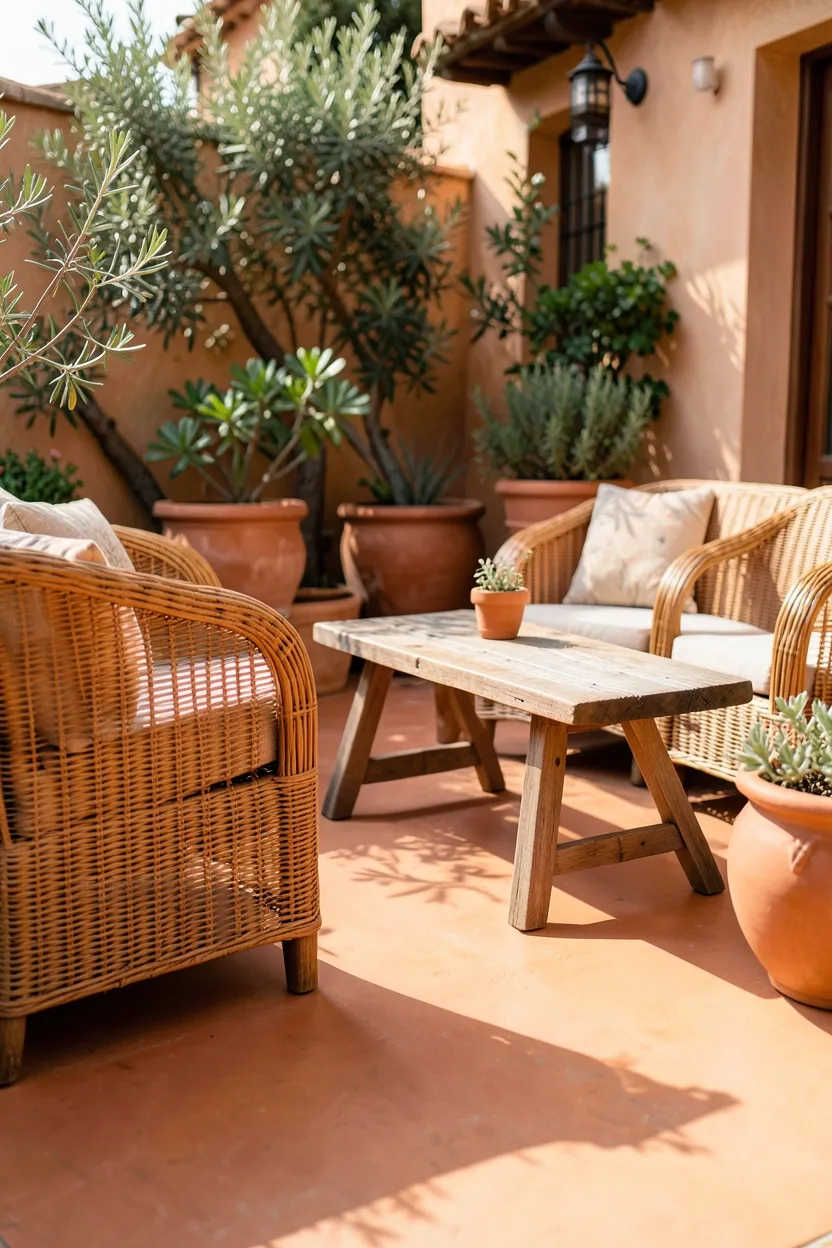
Integral coloring ensures the hue runs throughout the entire slab, so scratches or surface wear won't expose gray concrete beneath. The color is achieved through iron oxide pigments that are UV-resistant and won't fade significantly over time, unlike painted surfaces that chip and peel.
Why it works: Warm tones in flooring create a sense of welcome that cooler grays lack, making your patio feel like an extension of your living room rather than a separate outdoor zone.
Pair this warm base with natural materials like rattan furniture, terracotta planters, and wood accents to enhance the Mediterranean aesthetic while maintaining a cohesive color palette that feels intentional rather than thrown together.
Tips
- Pro: Integral color lasts longer than surface stains or paint
- Con: Color correction is nearly impossible once cured
- Fix: Test pigment samples on a small area before full installation
Best for: Homes seeking a warm, inviting outdoor aesthetic inspired by Mediterranean or Spanish colonial design.
What this gives you: A richly colored surface that adds warmth and character while remaining incredibly durable.
We picked a few things that go well with this idea: Hykolity 31-Inch 2-in-1 Wood Burning Fire Pit Grill (★4.7), Pure Garden 32-Inch Wood Burning Outdoor Fire Pit (★4.4) and OutVue 36-Inch 3-in-1 Wood Burning Fire Pit (★4.4). As an Amazon Associate we earn from qualifying purchases.
4. Concrete Patio with Integrated Fire Pit
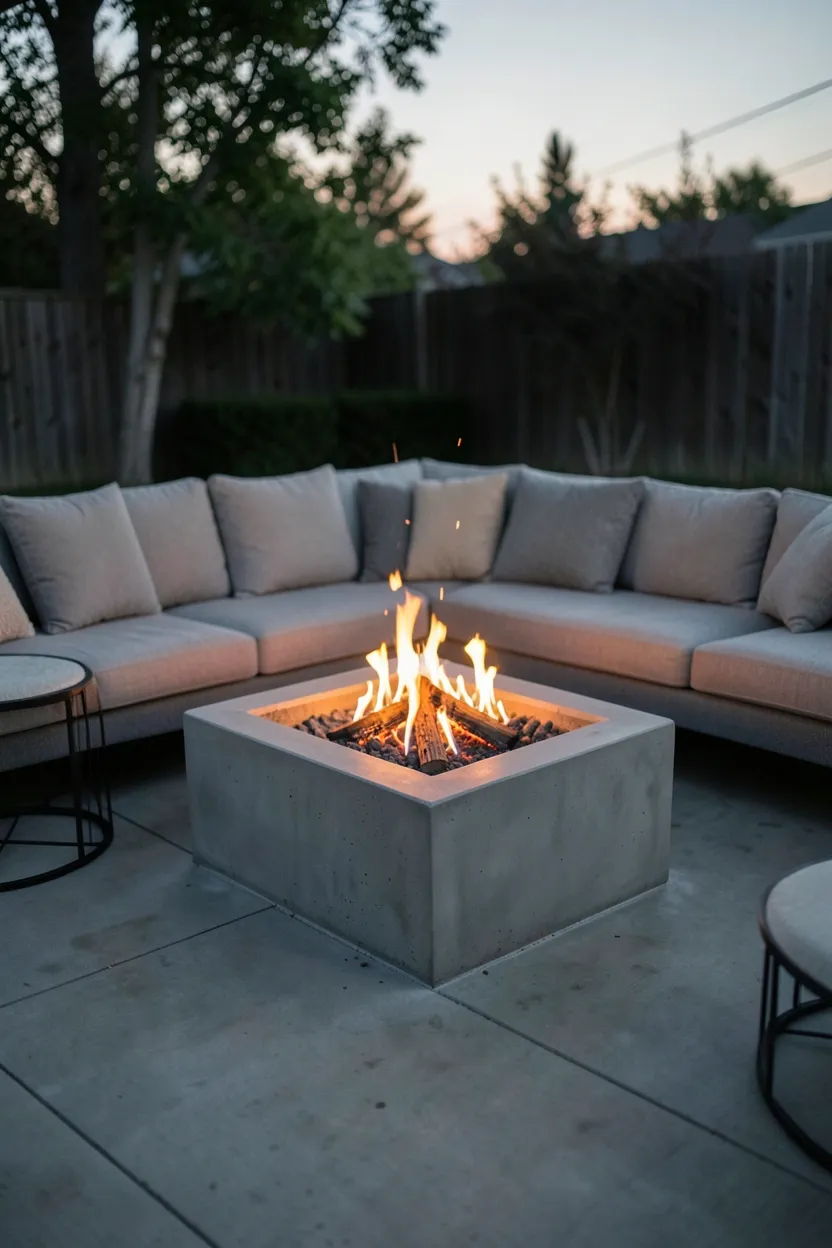
An integrated concrete fire pit becomes the natural focal point of your patio, creating a gathering spot that extends your outdoor living season well into cooler months. The concrete construction allows for custom sizing and shapes that perfectly fit your space while providing heat-resistant materials that withstand extreme temperatures.
Recommended
Items for this idea
The fire pit can be built as part of the original pour or added later as a decorative element, with options for gas, wood-burning, or gel fuel systems depending on your preferences and local regulations. Concrete's thermal mass helps radiate warmth even after the fire dies down, creating a cozy ambiance.
Common mistake: Building a fire pit too large for the patio size, which makes the space feel cramped and limits seating options around it.
Arrange seating in a semi-circle around the fire pit with appropriate clearance for safety, and consider incorporating built-in concrete bench seating that matches the fire pit construction for a unified, architectural appearance that doesn't require additional furniture.
Tips
- Check local fire codes and HOA restrictions before installation
- Use fire-resistant concrete mix rated for high-heat applications
- Incorporate a gas line during construction if avoiding wood smoke is preferred
What this gives you: A stunning architectural feature that provides warmth, ambiance, and a natural gathering point.
5. Concrete Patio with Wooden Deck Overlay
Combining concrete's durability with wood's natural warmth creates a visually striking patio that offers the best of both materials—strength underfoot and organic texture at eye level. The concrete foundation provides a stable, level base while the wooden overlay delivers the aesthetic appeal of a deck without the structural requirements or maintenance concerns.
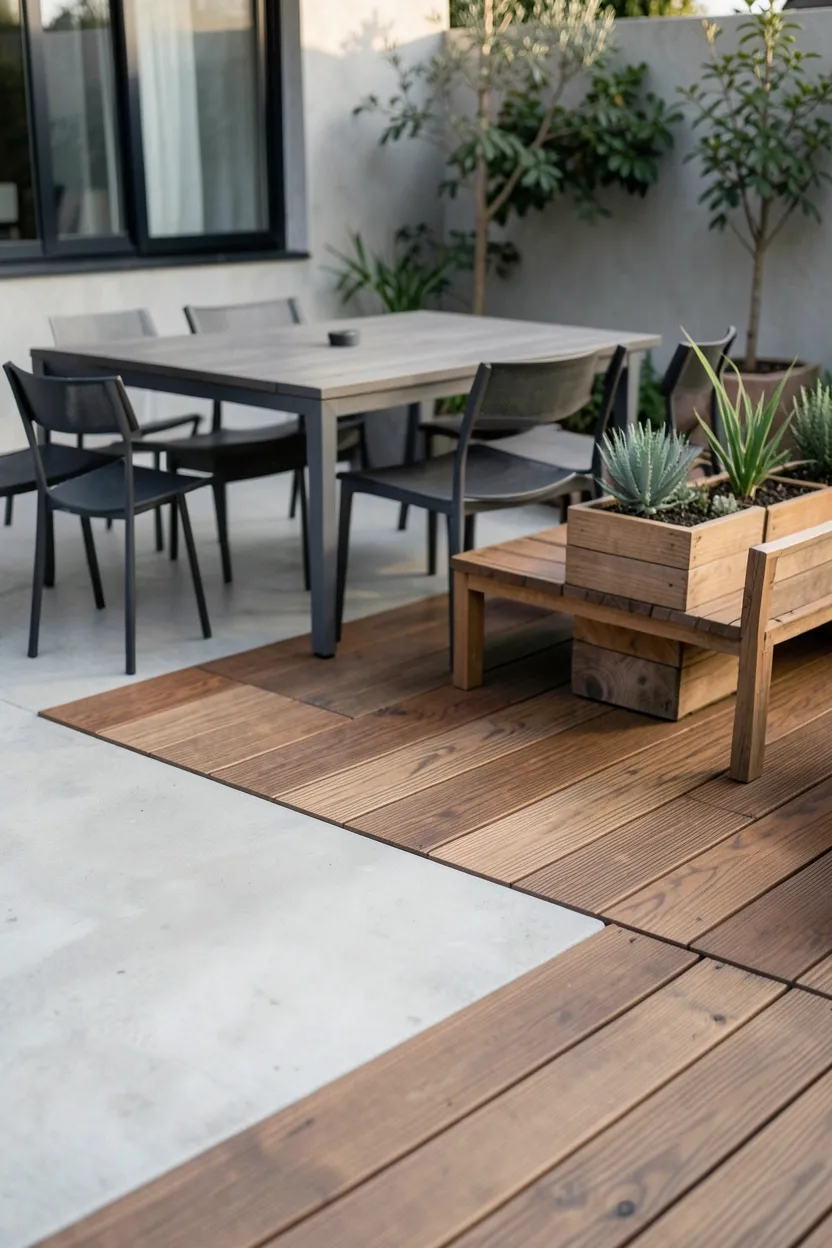
Use composite or hardwood decking materials that resist rot, insects, and weathering, mounted on sleepers over the concrete with proper drainage gaps. This approach allows for creative patterns like herringbone or diagonal layouts while keeping the concrete surface protected and ensuring proper water runoff.
For more natural material combinations, see Timeless Wood Kitchen Ideas and borrow the approach to integrating organic textures into hard surfaces.
Transition between the two materials with contrasting borders or accent strips that define zones—perhaps a concrete cooking area surrounded by wooden dining and lounging sections, creating visual hierarchy while maintaining flow.
Tips
- Ensure proper slope for drainage before installing sleepers
- Leave expansion gaps between decking sections for thermal movement
- Use galvanized or stainless steel fasteners to prevent rust staining
Budget note: More expensive than concrete alone but significantly cheaper than a full structural deck.
What this gives you: The warmth and character of wood with concrete's practical foundation and weather resistance.
6. Concrete Patio with Pea Gravel Border
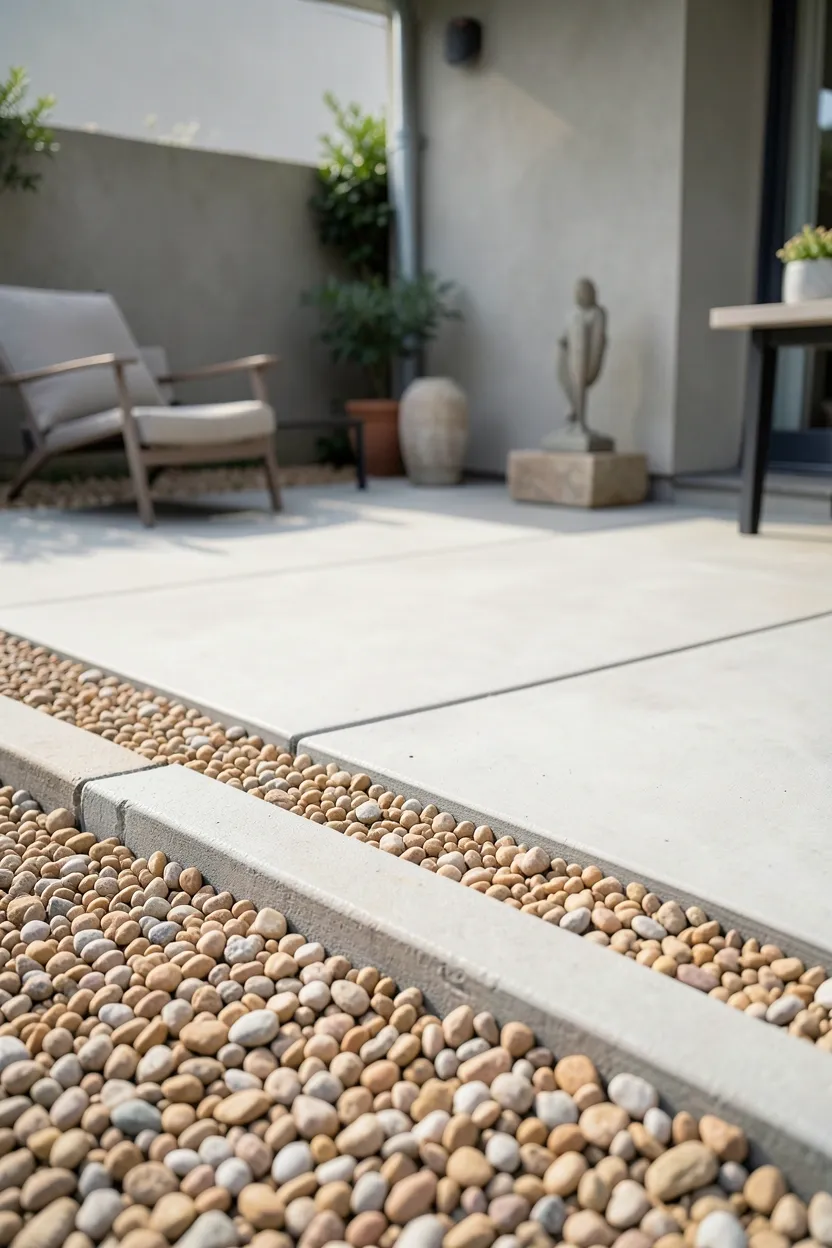
A pea gravel border around a concrete patio creates soft visual transition between hardscape and landscaping while adding textural contrast that makes the design feel intentional rather than abrupt. The small, rounded stones drain water efficiently and provide a natural-looking buffer zone that defines the patio perimeter without rigid edging.
Recommended
Items for this idea
Install the gravel in a trench slightly lower than the patio surface to contain the stones and prevent them from spilling onto walkways or lawn areas. Choose pea gravel colors that complement your concrete tone—warm tan with gray concrete, or cool gray with warmer concrete finishes.
The gravel section offers a practical zone for planting drought-tolerant ground covers or small ornamental grasses that soften the hard edges and create a more organic feel. Unlike solid concrete borders, this approach allows water to permeate freely, reducing runoff and benefiting surrounding plants.
Tips
- Do: Install metal or plastic edging to keep gravel contained
- Don't: Fill the border too high, which makes mowing difficult
- Top up gravel annually to maintain depth and appearance
Rental note: Easy to install without permanent modifications and can be removed or relocated if needed.
What this gives you: A visually pleasing transition zone that adds texture while managing water runoff naturally.
7. Concrete Patio with Geometric Tile Inlay
Geometric tile inlays embedded into concrete patios create striking focal points that elevate a simple surface into artistic expression without sacrificing durability or requiring full tile installation. The inset tiles add pattern, color, and texture while maintaining the practical benefits of a mostly concrete surface.
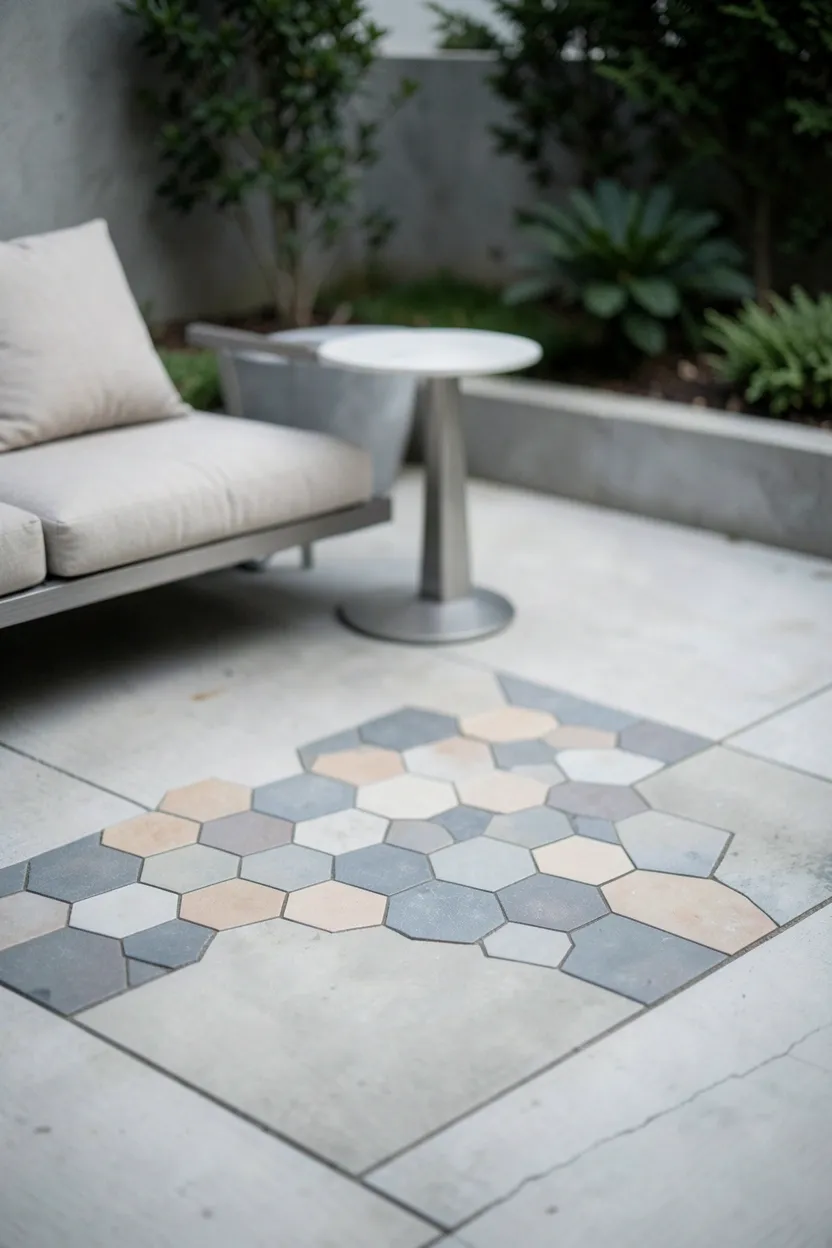
Install tile inlays during the original concrete pour or cut into existing slabs using wet saws, then embed ceramic or porcelain tiles flush with the concrete surface using mortar. Popular patterns include hexagonal mosaics, diamond shapes, or stripes that define specific zones like dining areas or pathways.
Placement note: Position tile inlays where they'll be visible from your main viewing point—perhaps as a runner from the back door or as decorative accents around the perimeter rather than under heavy furniture.
Use contrasting grout colors to emphasize the geometric pattern, and choose frost-rated tiles rated for outdoor use to prevent cracking during freeze-thaw cycles in colder climates.
Tips
- If you live in cold climates, choose porcelain over ceramic for freeze resistance
- Then: Seal the grout lines annually to prevent staining and deterioration
- Keep patterns simple and large-scale for easier cleaning and less visual clutter
Avoid if: You prefer completely low-maintenance surfaces, as tile inlays require occasional grout cleaning and sealing.
What this gives you: Artistic flair and pattern interest that transforms plain concrete into a unique design statement.
8. Concrete Patio with Built-in Planters
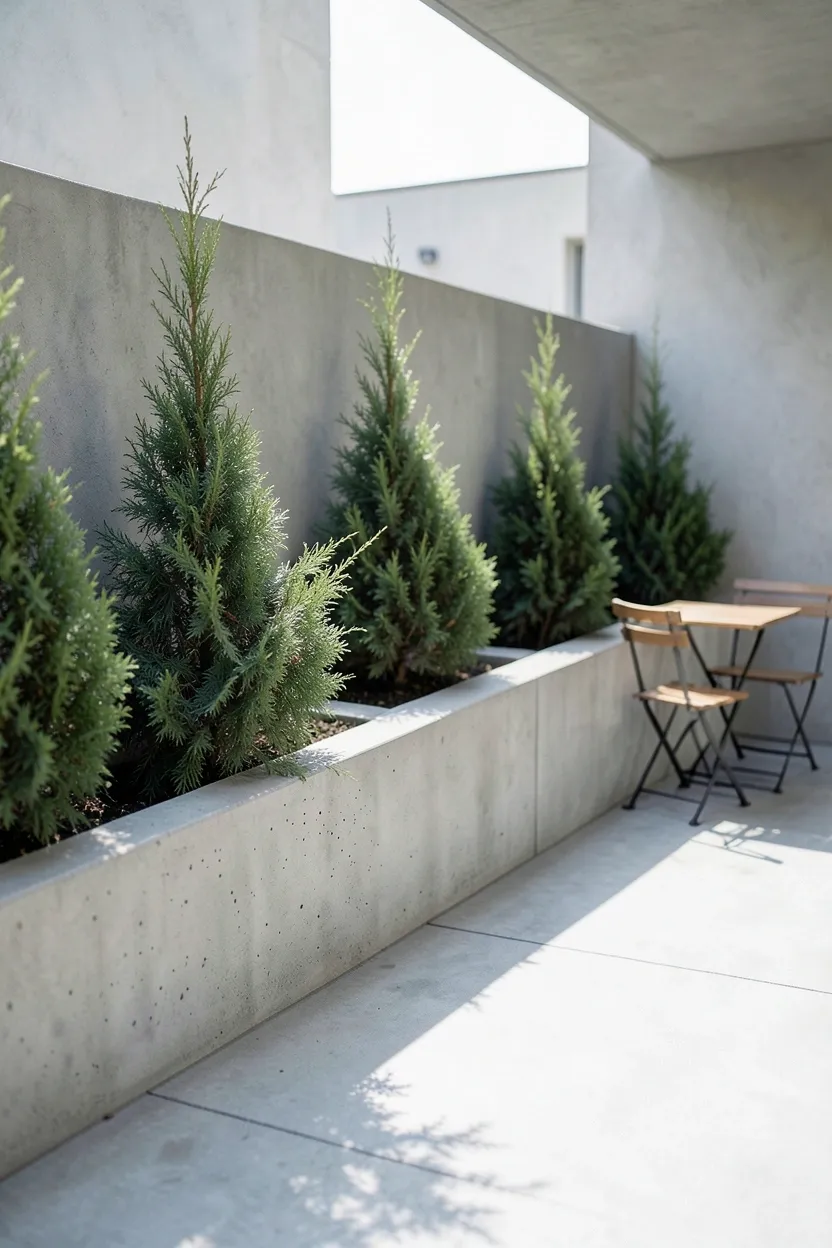
Built-in concrete planters seamlessly blend hardscaping with landscaping, creating living architecture that greenifies your patio while providing structural elements that define space and offer privacy. The planters become permanent features that can be poured in various shapes and sizes to suit your design vision.
Recommended
Items for this idea
Construct planters with drainage holes and proper waterproofing to protect both the concrete and the plants, then fill with a mix of potting soil and perlite for excellent drainage. Consider incorporating built-in irrigation systems for low-maintenance watering, especially for larger or hard-to-reach planter installations.
Why it works: Concrete planters provide substantial mass that helps anchor the patio design while offering thermal mass that moderates soil temperature, protecting plant roots from extreme heat or cold fluctuations.
Use tall planters as privacy screens along property lines or as dividers between functional zones, and fill them with evergreen shrubs or tall grasses for year-round greenery that requires minimal seasonal maintenance.
Tips
- Do: Apply a waterproof sealer to the interior of planters before filling
- Don't: Make planters too wide—accessing plants becomes difficult from the edges
- Include overflow drainage channels to prevent water damage during heavy rains
Best for: Patios where you want to incorporate greenery without using additional floor space for pots.
What this gives you: Integrated greenery that creates privacy, defines zones, and adds living elements to your patio.
9. Concrete Patio with Modern Outdoor Kitchen
A concrete patio with an integrated outdoor kitchen transforms your backyard into an entertainment hub where cooking, dining, and socializing happen seamlessly in one beautiful space. The concrete foundation provides the perfect durable surface for countertops, built-in grills, and food preparation areas that withstand weather and frequent use.
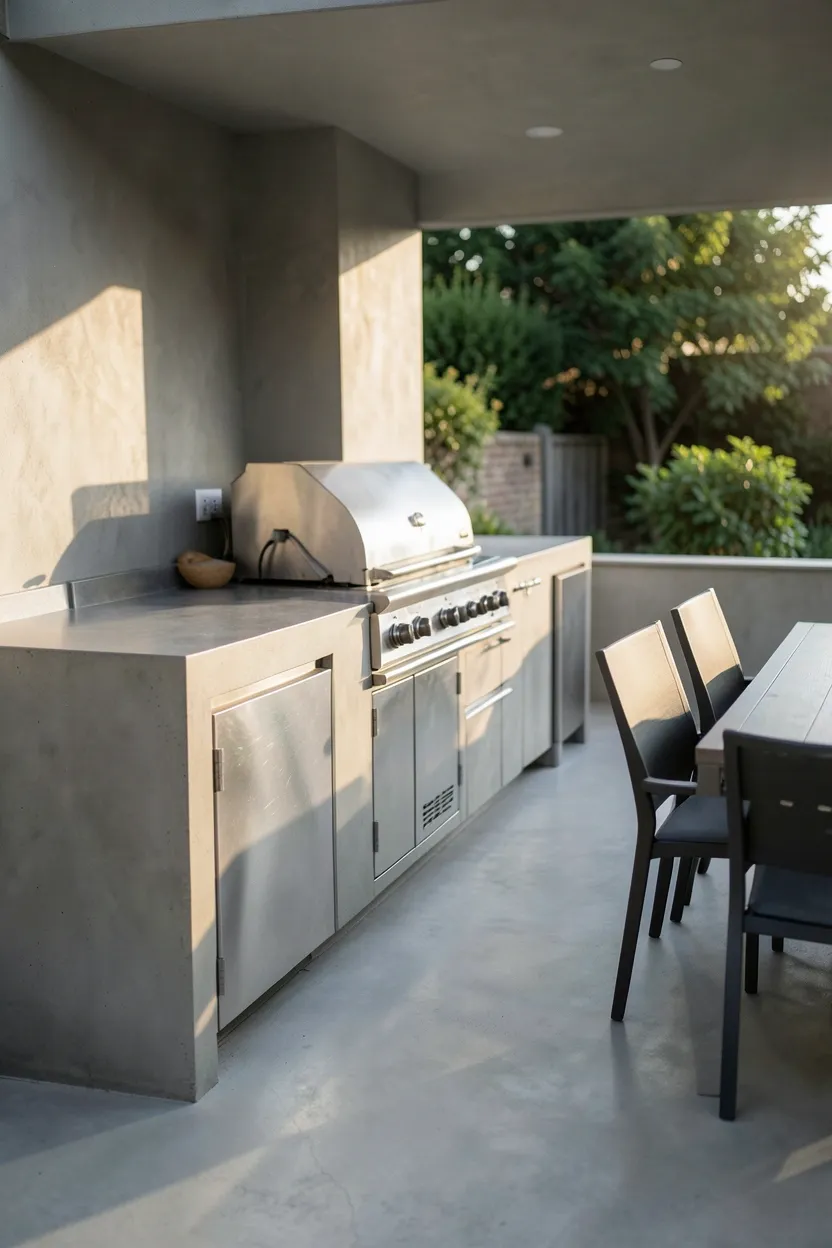
Design the kitchen layout with work triangles in mind—grill, prep area, and sink positioned for efficient movement—and include adequate counter space for plating and serving. Concrete countertops can be cast in custom shapes with integrated sinks, beverage coolers, and storage spaces, creating a cohesive look.
Common mistake: Underestimating the importance of shade and shelter for the cooking area, which makes outdoor cooking uncomfortable during hot sunny days or light rain.
Incorporate overhead coverings like pergolas or awnings over the cooking zone, and consider adding string lighting for evening ambiance that makes the kitchen functional after sunset while creating a warm, inviting atmosphere.
Tips
- Install a dedicated GFCI outlet for all electrical appliances
- Choose stainless steel appliances rated for outdoor use
- Position the kitchen to take advantage of prevailing winds for smoke dispersal
What this gives you: A fully functional outdoor cooking and entertaining space that extends your home's living area.
10. Concrete Patio with Water Feature
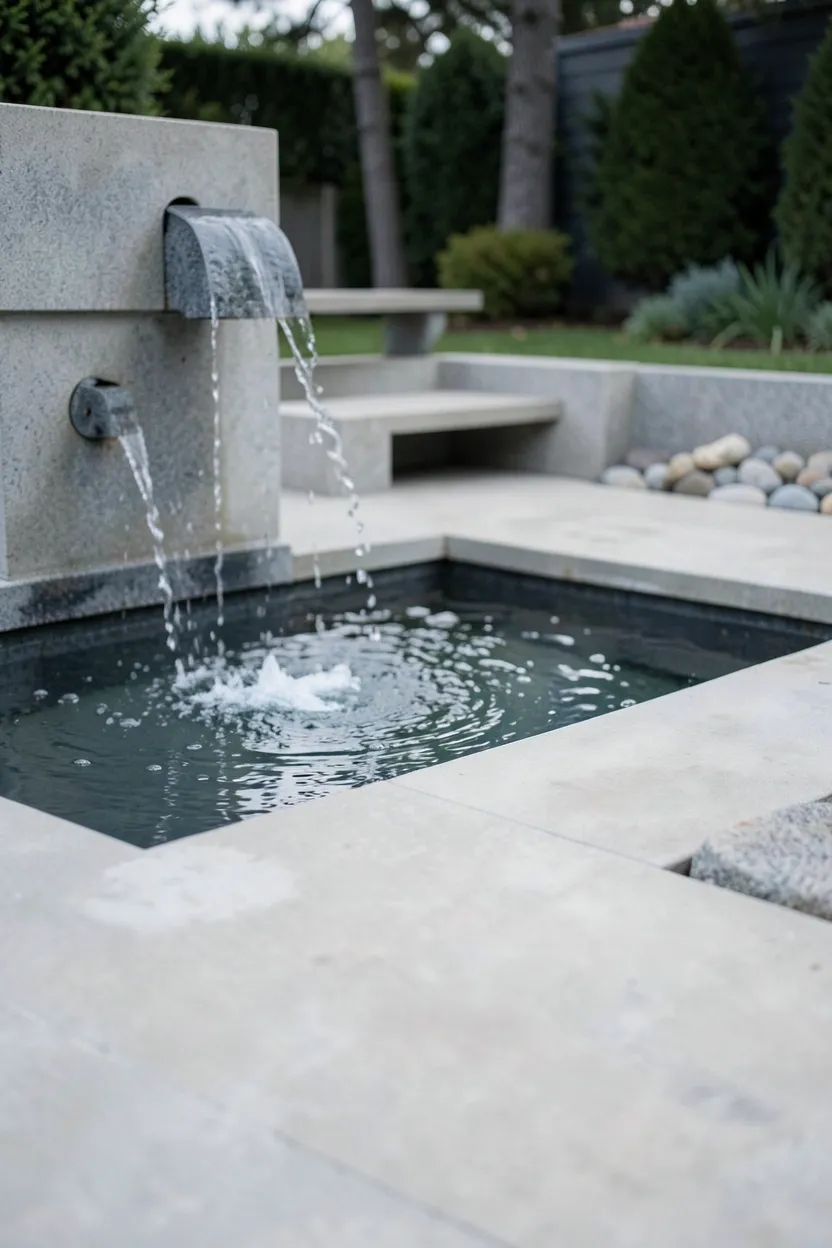
A water feature incorporated into your concrete patio creates a multisensory experience with soothing sounds and visual interest that turns an ordinary outdoor space into a tranquil retreat. The concrete construction allows for custom designs—from fountains to reflection pools—that integrate seamlessly with the patio surface.
Recommended
Items for this idea
Choose from self-contained recirculating fountains that require minimal plumbing or larger installations that connect to your home's water supply. The sound of moving water masks neighborhood noise, creating privacy through acoustic benefits while adding cooling humidity during hot summer days.
For more outdoor water inspiration, see Serene Zen Bathroom for principles of water integration that can translate to outdoor spaces.
Position water features where they'll be visible from your main seating areas and audible throughout the patio, and consider LED lighting within the water feature to create stunning nighttime focal points that extend usability after sunset.
Tips
- Install a filtration system to minimize algae and maintenance
- Use a recirculating pump with variable speed control for sound adjustment
- Check local water restrictions before installing large features
Best for: Creating a peaceful atmosphere that promotes relaxation and masks unwanted noise from neighbors or traffic.
What this gives you: A calming, visually stunning element that enhances relaxation while adding character to your patio.
11. Concrete Patio with Pergola and String Lights
A concrete patio enhanced with a pergola and string lights creates an enchanting outdoor room that provides shade during the day and magical ambiance after sunset. The pergola structure defines the space while overhead string lights transform the patio into a welcoming extension of your home's interior.
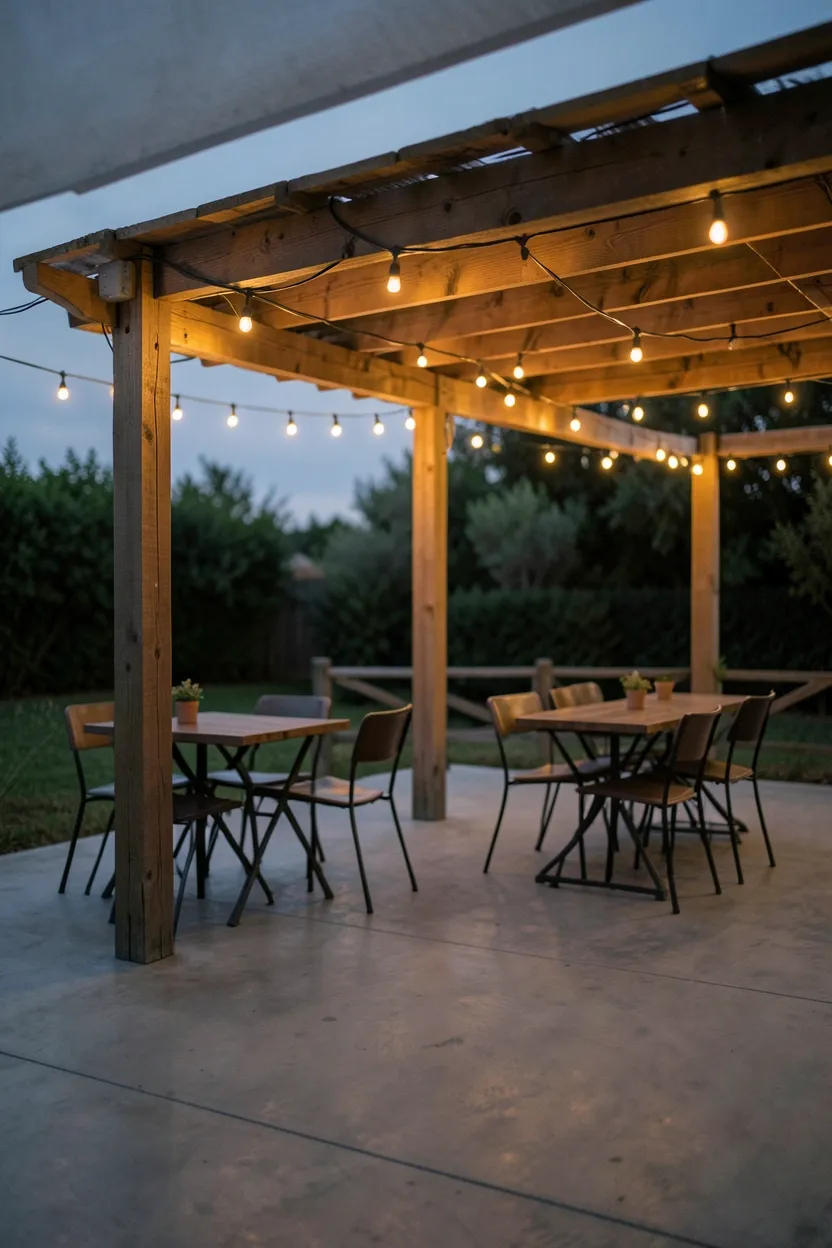
Build the pergola from weather-resistant materials like cedar, pressure-treated pine, or powder-coated aluminum that matches your home's architectural style. The overhead structure can support climbing plants like wisteria or grapevines, creating natural shade and fragrance while filtering dappled light onto the concrete surface below.
Install string lights in patterns that complement the pergola's design—zigzag between rafters for casual ambiance or follow clean lines for a more modern appearance. Warm white LED bulbs provide the most flattering light for outdoor entertaining while being energy-efficient and long-lasting.
Tips
- Use outdoor-rated string lights with proper weather protection
- Install a dimmer switch for adjustable lighting throughout the evening
- Anchor pergola posts properly in concrete footings for stability
Budget note: Pergolas range from DIY kits to custom builds, but the impact on patio usability justifies the investment.
What this gives you: A defined outdoor living space with shade, structure, and atmospheric lighting that extends usability.
12. Concrete Patio with Bistro-Style Corner
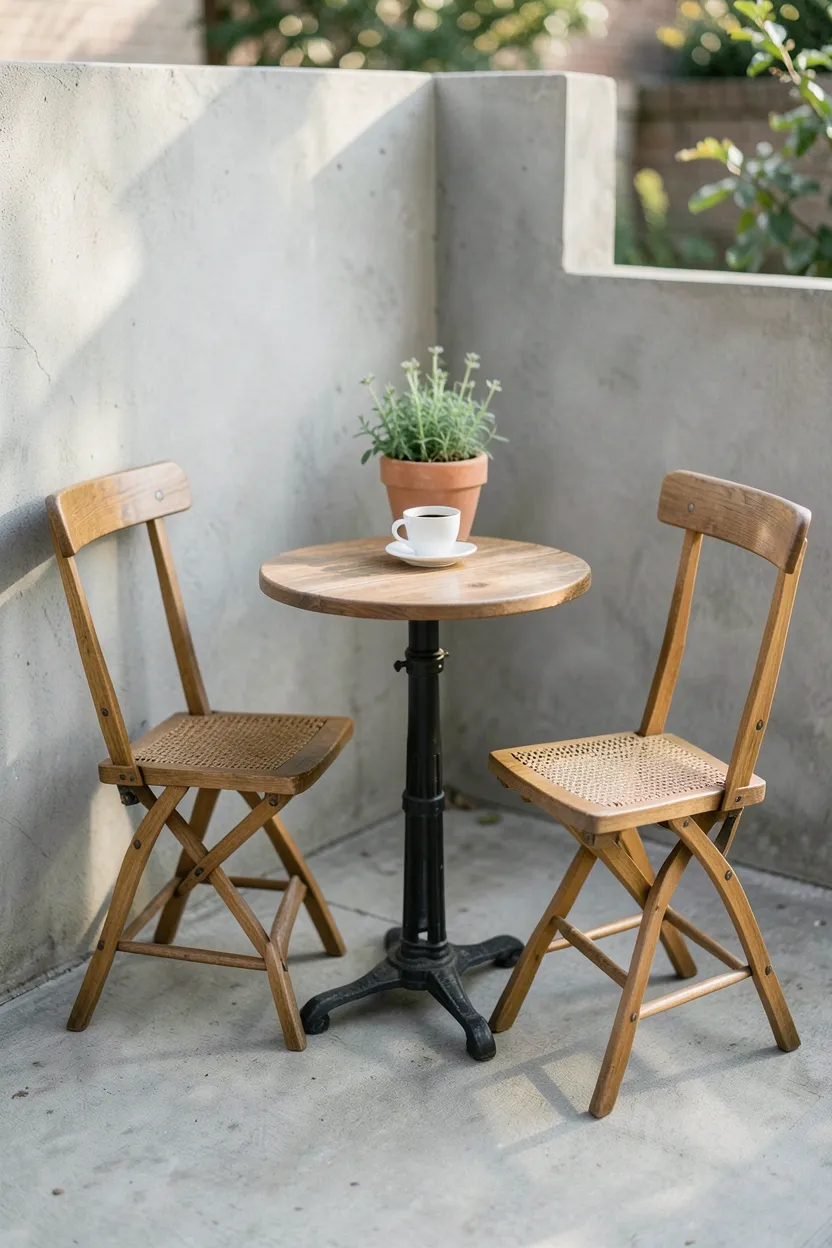
A bistro-style corner carved out of your concrete patio creates an intimate breakfast nook or evening wine spot that maximizes even small patio spaces with charm and efficiency. This compact arrangement focuses functionality into a smaller footprint while leaving the rest of the patio open for larger gatherings or activities.
Recommended
Items for this idea
Position the bistro set in a sheltered corner near the house for easy access to the kitchen and protection from strong winds, or place it in a sun-exposed spot to create a warm morning coffee destination. The small scale makes this area feel cozy and purposeful rather than like leftover space.
Why it works: Bistro corners transform underutilized patio areas into functional destinations without requiring large furniture purchases or extensive redesign—just two chairs and a small table create an instant outdoor room.
Add a portable umbrella for shade during peak sun hours, and incorporate a small side table or shelf for books, coffee, or wine service that keeps the main table clear while providing additional functionality.
Tips
- Choose foldable furniture if the space needs to accommodate larger gatherings
- Add weather-resistant cushions for comfort during extended use
- Incorporate a small herb planter nearby for fresh ingredients with your meals
Best for: Small patios or creating intimate zones within larger outdoor spaces that serve specific daily rituals.
What this gives you: A charming, functional corner for daily enjoyment that makes your patio feel like a destination.
13. Concrete Patio with Sunken Seating Area
A sunken seating area carved into your concrete patio creates a dramatic architectural feature that defines an intimate gathering zone while adding visual interest and character to your outdoor space. The depression provides natural wind protection and creates a cozy, room-like atmosphere that feels separated from the surrounding patio.
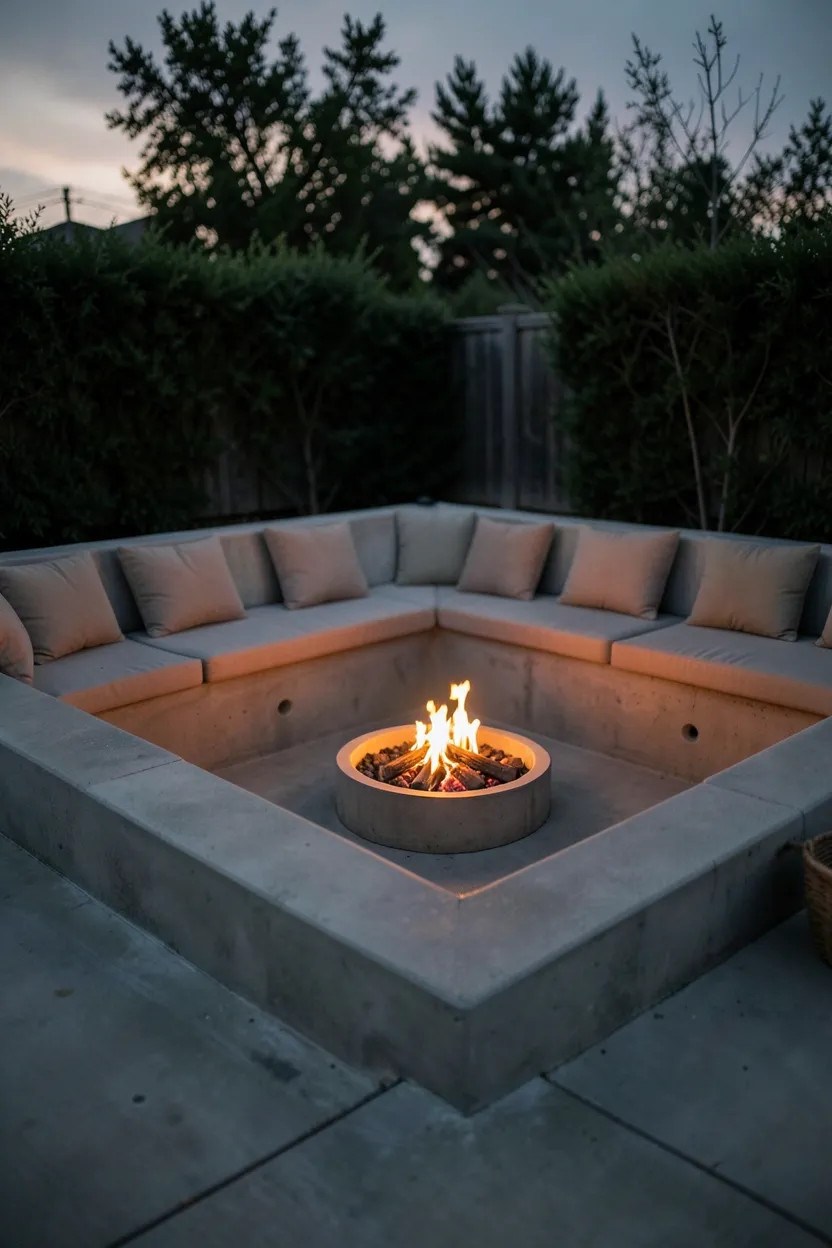
Design the sunken area 12-18 inches below the main patio level, with built-in concrete bench seating around the perimeter or space for outdoor furniture. The raised edges can serve as additional seating or display surfaces for drinks and decor while defining the space's boundaries.
For more dramatic elevation changes, see Unique Covered Patio Ideas for inspiration on creating architectural interest through level changes.
Install drainage channels around the sunken area to prevent water accumulation during rain, and consider adding a small fire pit at the center of the sunken space for ultimate coziness during cooler evenings.
Tips
- Install proper drainage before pouring concrete to prevent water pooling
- Include step access points that comply with local building codes
- Consider adding lighting under the overhang for evening ambiance
Avoid if: You have mobility concerns, as step access into and out of sunken areas can be challenging for some users.
What this gives you: A dramatic architectural feature that creates a protected, intimate gathering zone.
14. Concrete Patio with Concrete Bench Seating
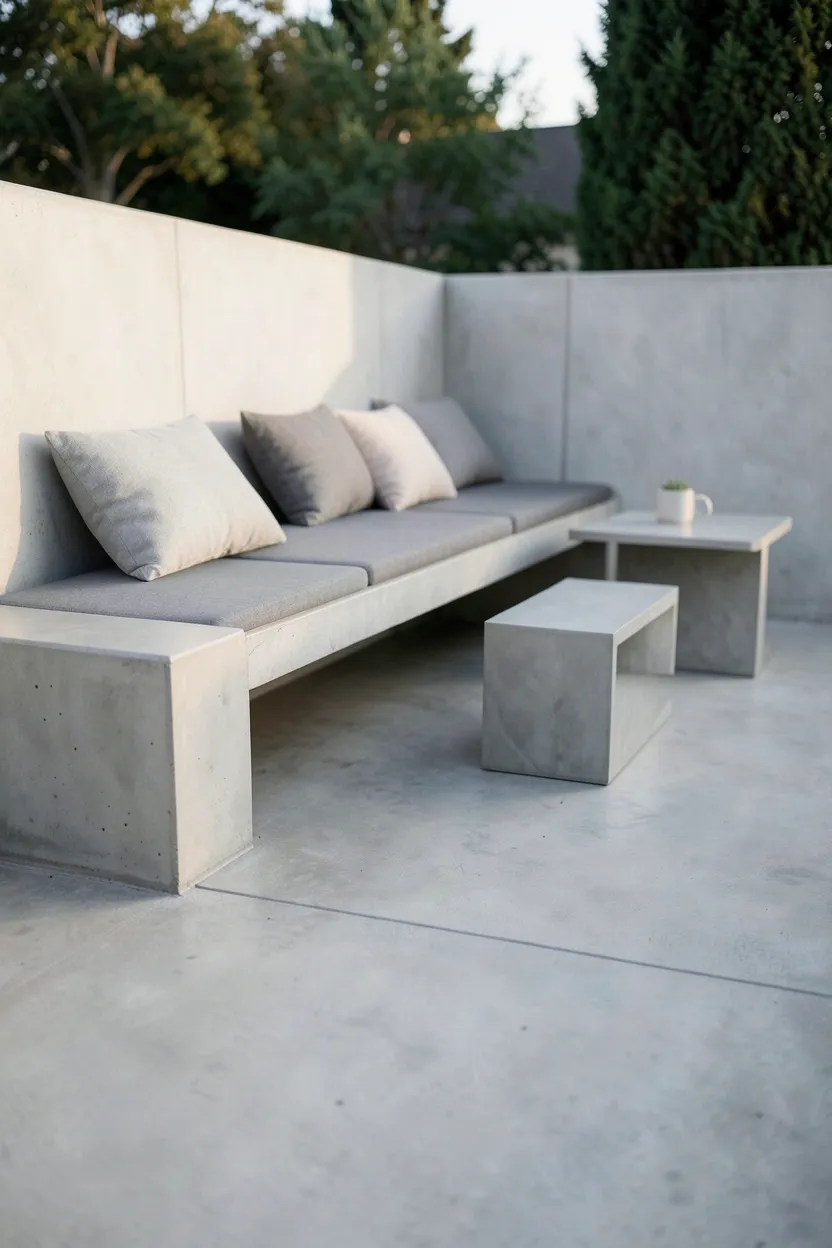
Built-in concrete bench seating provides permanent, durable outdoor seating that integrates seamlessly with your patio design while requiring virtually no maintenance over time. The benches can be cast during the original pour or added later as standalone elements that complement the existing patio surface.
Recommended
Items for this idea
Design benches with comfortable angles and consider adding weather-resistant cushions for extended sitting sessions. The concrete construction allows for creative shapes—L-shaped corner benches, curved seating around fire pits, or linear benches that define walkways and pathways.
Placement note: Position benches along the patio perimeter to maximize open floor space, or create clusters around focal points like fire pits or water features where seating naturally congregates.
Incorporate storage compartments beneath bench seating for outdoor cushions, firewood, or patio accessories, transforming simple seating into functional storage that keeps your patio organized and clutter-free.
Tips
- If you live in cold climates, include control joints to prevent cracking
- Then: Add a slight backward tilt for comfortable back support
- Smooth edges thoroughly to prevent sharp surfaces that could snag clothing
What this gives you: Permanent, low-maintenance seating that never needs replacing and provides consistent functionality.
15. Concrete Patio with Concrete Block Divider
A concrete block divider creates visual separation and privacy between different zones of your patio while serving as an architectural element that adds texture and depth to the design. The divider can be solid for complete privacy or include openings for light and airflow, depending on your needs.
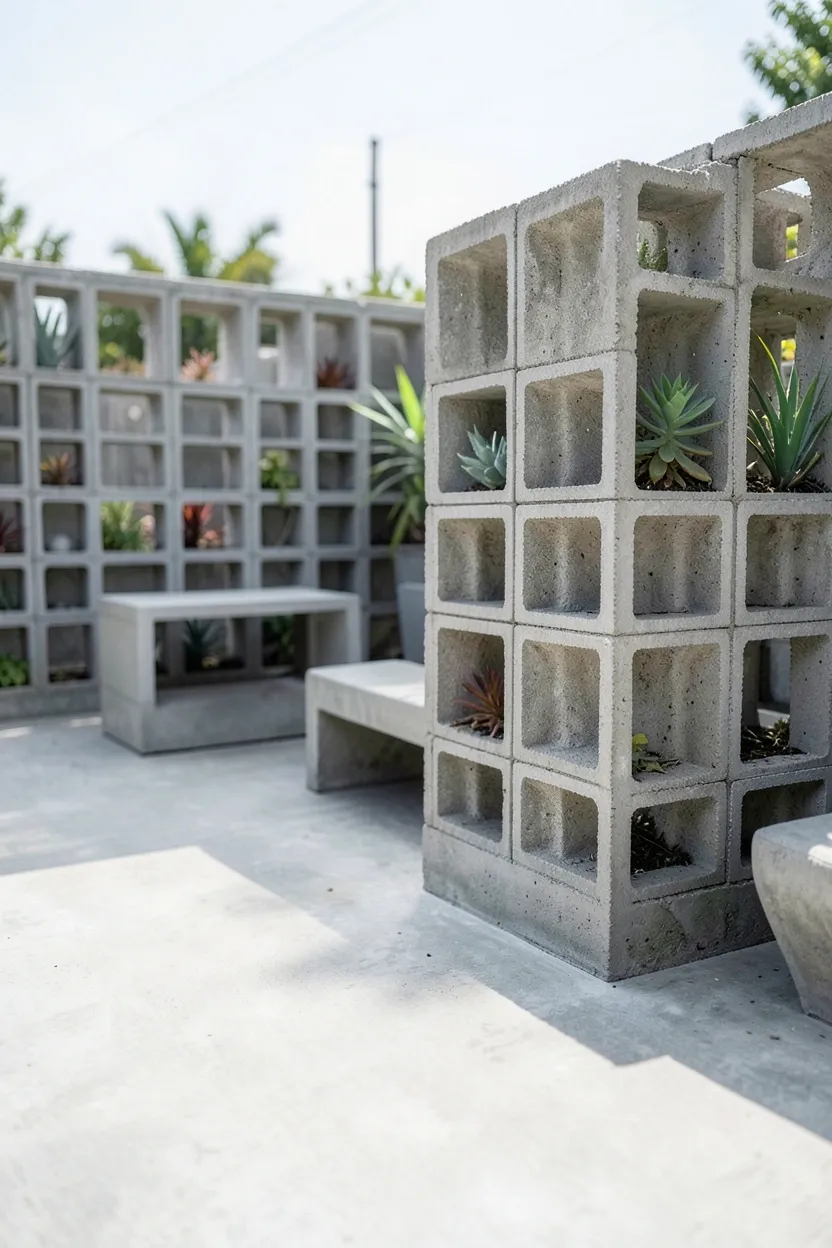
Use decorative concrete blocks with patterns, textures, or cutouts that allow light and air to pass through while providing partial screening. The blocks can be stacked in solid walls, spaced individually as freestanding screens, or arranged in patterns that create artistic privacy elements.
Common mistake: Making the divider too tall, which blocks views and makes the space feel smaller rather than just defining zones.
Position dividers between cooking and dining areas, or create screening between your patio and neighbors' yards. Consider growing vines or climbing plants on the divider for additional privacy and a softer, more natural appearance.
Tips
- Anchor dividers properly into footings for stability in windy conditions
- Choose block colors that complement your home's exterior rather than matching exactly
- Consider adding built-in planters within the divider for greenery integration
Best for: Creating separate functional zones on larger patios or providing privacy from neighbors without solid walls.
What this gives you: Architectural separation that defines zones while adding visual interest and optional privacy.
16. Concrete Patio with Acid-Stained Finish
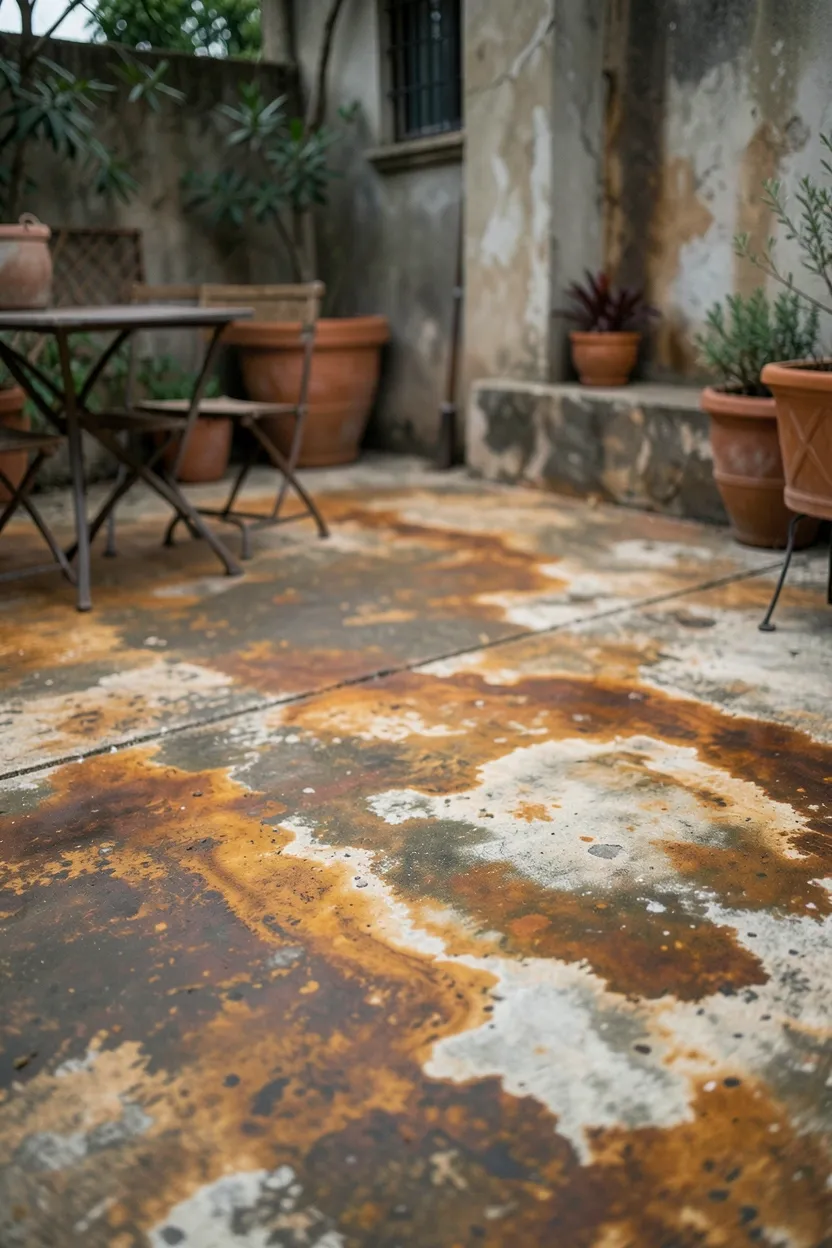
An acid-stained concrete patio delivers the mottled, variegated appearance of natural stone with unique patterns that make each installation one-of-a-kind. The chemical reaction creates depth and character that transforms plain gray concrete into a sophisticated surface with remarkable visual interest.
Recommended
Items for this idea
The staining process uses acid-based solutions that react with minerals in the concrete, creating permanent color penetration that won't peel or flake like surface-applied paints or dyes. Choose from earth tones like tan, brown, and green, or bolder colors like blue, black, and burgundy for dramatic statements.
Why it works: Acid staining adds significant visual impact with relatively low cost compared to premium materials, while the concrete substrate remains durable and low-maintenance beneath the decorative finish.
Apply multiple stain colors in layers or patterns to create custom designs, and finish with a high-quality sealer that protects the stain while enhancing color depth and creating a subtle sheen that elevates the overall appearance.
Tips
- Test stain colors on a small, hidden area before full application
- Wear protective equipment when working with acid-based products
- Reapply sealer every 2-3 years to maintain appearance and protection
Budget note: Acid staining costs a fraction of premium materials while delivering comparable visual impact.
What this gives you: A uniquely beautiful, multi-colored surface with the depth and character of natural stone.
17. Concrete Patio with Gravel Infill Pattern
A concrete patio with gravel infill patterns combines the durability of concrete with the soft texture of gravel, creating a visually striking surface with excellent drainage and natural textural contrast. The pattern involves leaving intentional gaps between concrete sections that are filled with decorative gravel.
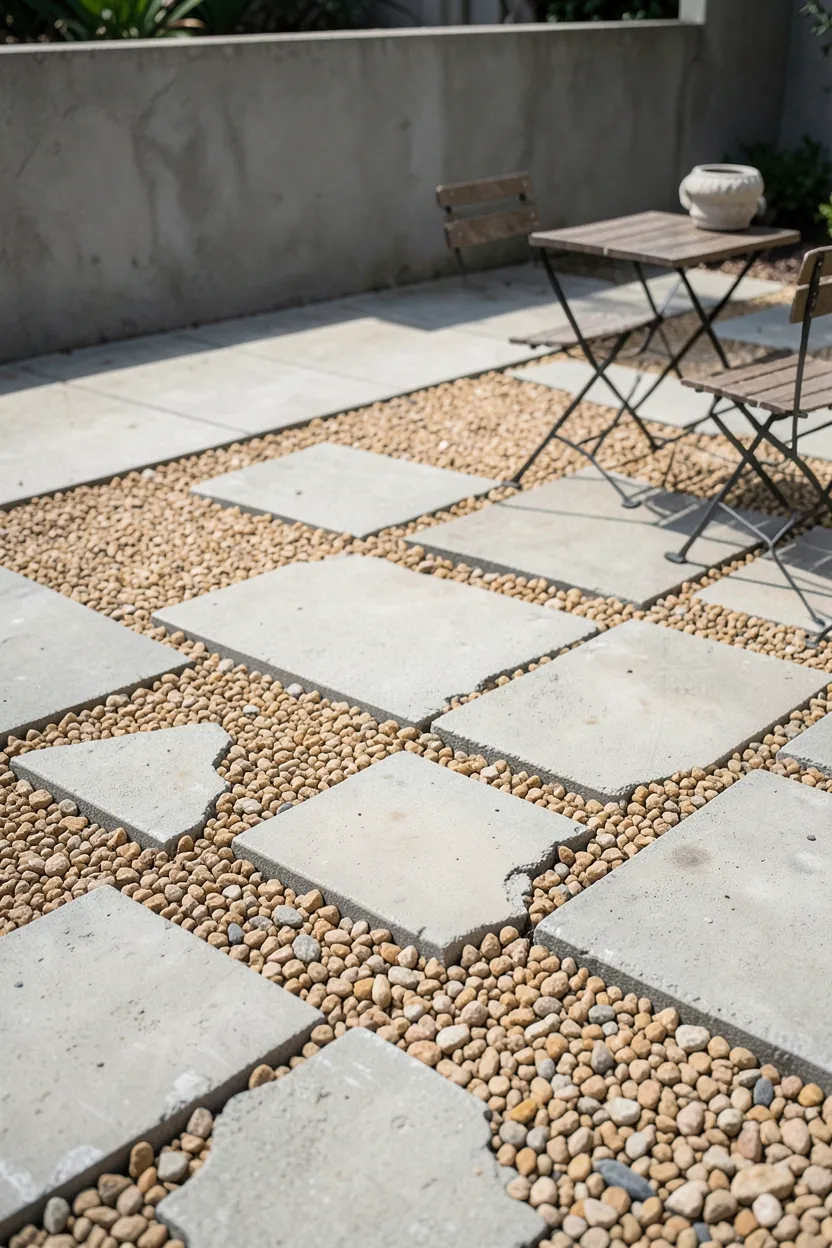
Design patterns range from simple borders to elaborate geometric shapes, with gravel colors that complement or contrast the concrete for dramatic effect. The gaps between concrete sections provide channels for water drainage, making this an excellent choice for areas prone to heavy rainfall or poor drainage.
Placement note: Keep gravel-filled gaps narrow enough for comfortable walking while wide enough to create visible pattern contrast—typically 1-2 inches works best for most residential applications.
Use larger gravel sizes for more dramatic texture or smaller, smoother stones for a refined appearance, and consider alternating gravel colors in different pattern zones for additional visual complexity.
Tips
- Install edging to keep gravel contained within the pattern areas
- If you use contrasting gravel colors, secure them with resin to prevent mixing
- Top up gravel periodically to maintain depth and pattern definition
Rental note: Can be installed as a thin overlay over existing patios without major demolition or permanent changes.
What this gives you: A unique surface with pattern interest, texture contrast, and excellent drainage capabilities.
18. Concrete Patio with Bamboo Privacy Screen
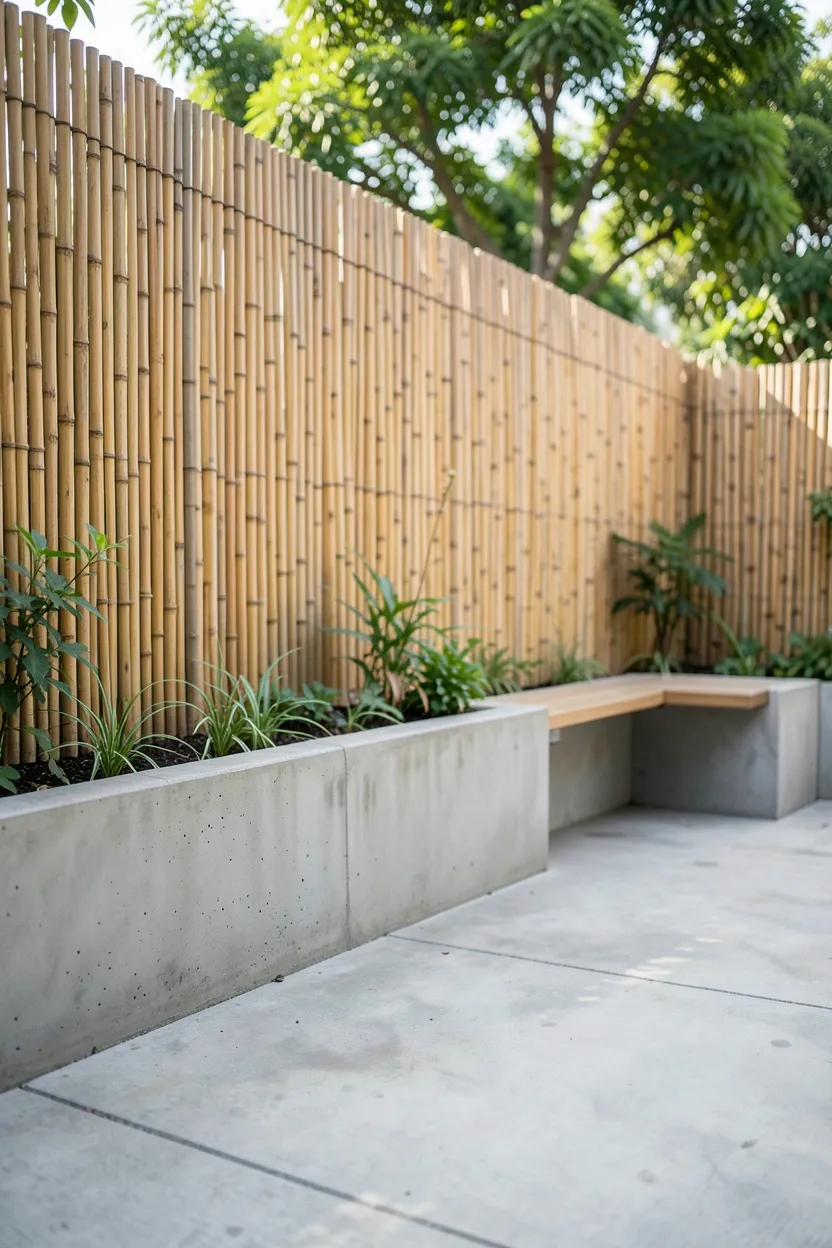
A concrete patio paired with a bamboo privacy screen creates natural screening that softens hardscape edges while providing effective privacy from neighbors without the imposing feel of solid walls. The bamboo's natural texture and movement in the breeze add dynamic visual interest to the patio design.
Recommended
Items for this idea
Install bamboo screening in planter boxes anchored to the concrete surface, or mount screens directly to posts set in concrete footings for permanent installation. Choose between rolled bamboo fencing for uniform appearance or live bamboo plants in built-in planters for living privacy barriers.
For more natural screening ideas, see Stunning House Balcony for natural privacy solutions that can translate to patio applications.
Position bamboo screens to block views while allowing airflow and filtered light, and consider integrating climbing plants that grow up and through the screening for additional density and seasonal interest.
Tips
- Use pressure-treated wood or metal posts for screen support to prevent rot
- Apply bamboo preservative annually to maintain color and prevent weathering
- Ensure screens are secured against wind to prevent damage during storms
Best for: Creating privacy in urban or suburban settings without the permanence or expense of solid walls.
What this gives you: Natural, effective screening that softens the patio while providing privacy and wind protection.
19. Concrete Patio with Recessed Lighting
Recessed lighting embedded into your concrete patio creates a sophisticated nighttime ambiance while improving safety and extending usability well after sunset. The flush-mounted lights provide subtle illumination that defines pathways, highlights architectural features, and creates magical evening atmosphere.
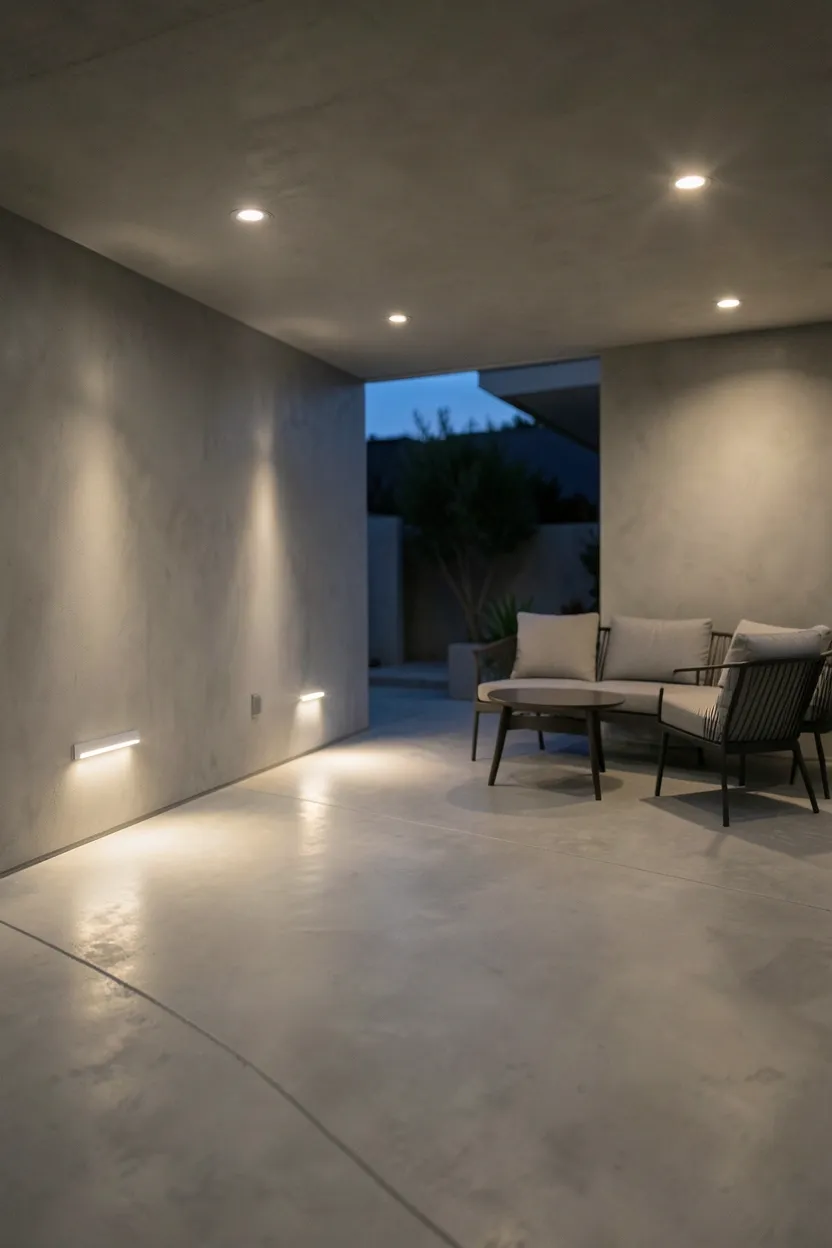
Install LED fixtures during the original concrete pour or retrofit by cutting into existing slabs, placing lights along walkway edges, around perimeter borders, or in decorative patterns that enhance your patio's design. Use warm white LEDs for flattering illumination that creates inviting atmosphere.
Why it works: Recessed lighting provides safety and ambiance without the visual clutter of surface-mounted fixtures, maintaining clean patio lines while dramatically improving nighttime usability.
Connect lights to timers or motion sensors for automatic operation, and consider adding a dimmer switch for adjustable brightness that suits different occasions from intimate dinners to larger gatherings.
Tips
- Use waterproof, UL-listed fixtures rated for outdoor wet locations
- Install a dedicated GFCI circuit for all outdoor lighting
- Space lights evenly to create consistent illumination without harsh shadows
Budget note: LED fixtures have higher upfront costs but consume minimal electricity and last for years.
What this gives you: Sophisticated nighttime illumination that enhances safety and creates magical ambiance.
20. Concrete Patio with Modular Furniture Layout
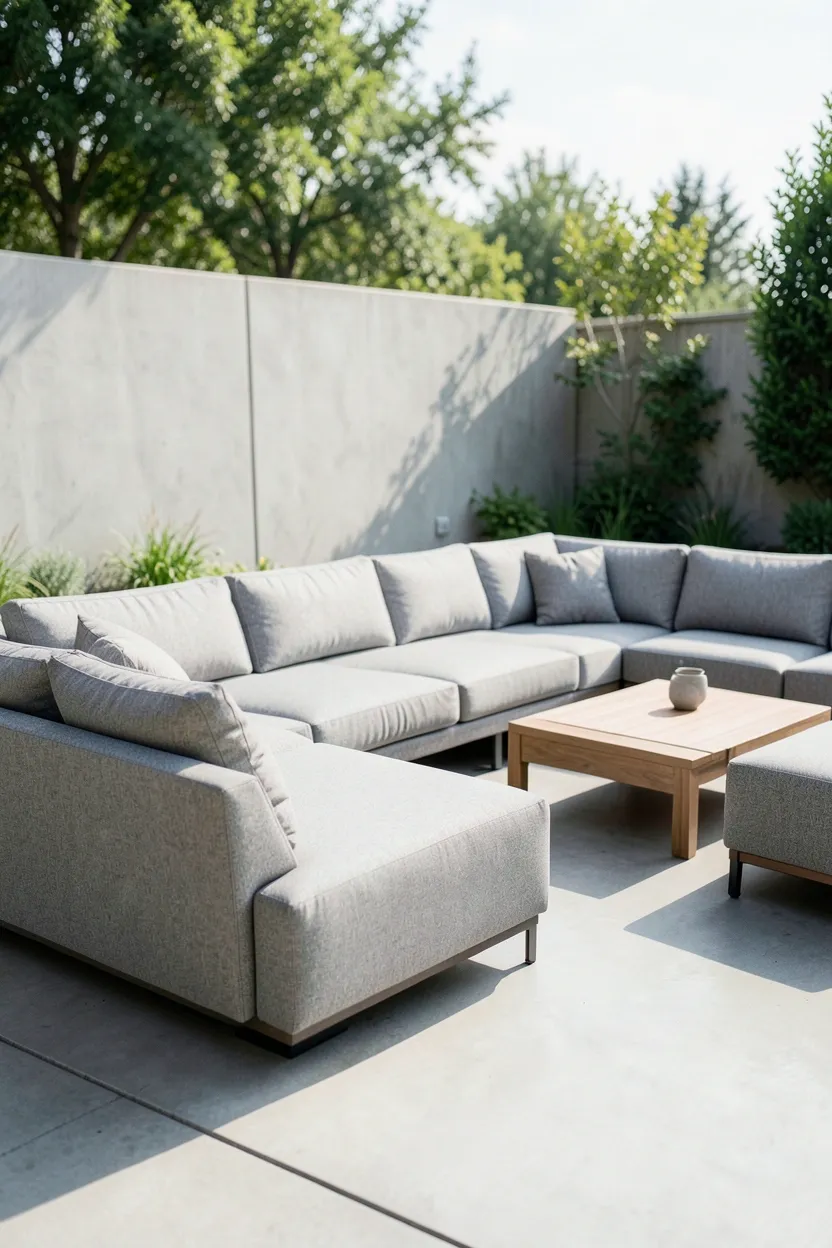
A concrete patio designed for modular furniture creates a versatile outdoor living space that adapts to different occasions—from intimate family dinners to larger social gatherings—by reconfiguring pieces rather than requiring multiple fixed furniture arrangements. The flexibility maximizes your patio's functionality across various uses.
Recommended
Items for this idea
Choose lightweight, weather-resistant furniture pieces that can be easily moved and rearranged, such as sectional sofas, modular chairs, and occasional tables that work independently or combine into larger configurations. The concrete surface provides a stable, level base that makes rearranging simple.
For modular layout inspiration, see Unique Covered Patio Ideas for flexible furniture arrangements that adapt to different occasions.
Create furniture groupings that can expand or contract based on guest count, and incorporate storage ottomans or benches that serve dual purposes as both seating and storage for cushions, throws, and outdoor accessories.
Tips
- Invest in pieces with removable covers for easy cleaning and maintenance
- Keep modular pieces within the same color family for cohesive mixing and matching
- Use lightweight materials like aluminum or resin for easy reconfiguration
Best for: Households that host various-sized gatherings and need flexibility in their outdoor space.
What this gives you: Maximum flexibility that adapts your patio to any occasion without requiring multiple furniture purchases.
21. Concrete Patio with Concrete Paver Accent
Concrete pavers incorporated as accents within a larger concrete patio create visual interest and definition without overwhelming the design with too many competing materials. The pavers can define pathways, highlight focal points, or create decorative borders that add sophistication and structure.
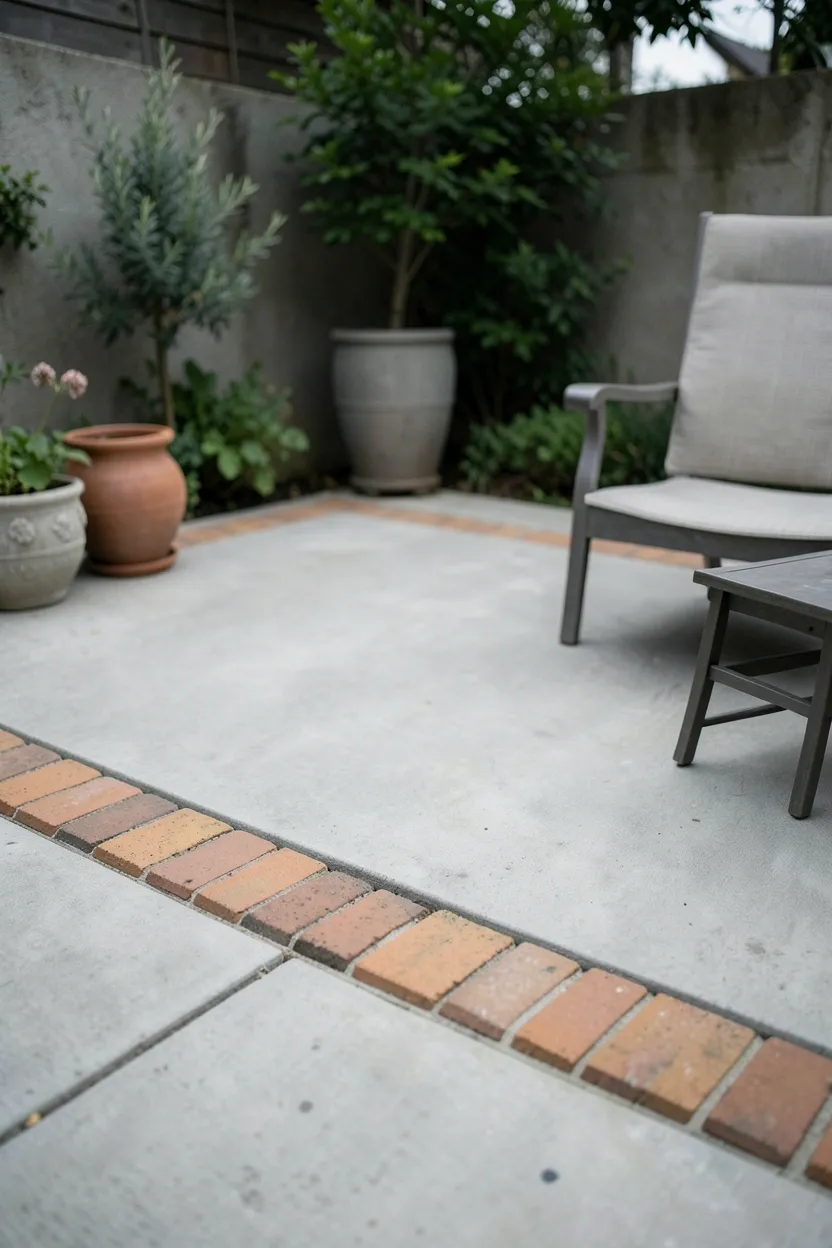
Use contrasting paver colors, textures, or shapes to create patterns that stand out against the main patio surface. Popular applications include brick-like borders around the perimeter, herringbone pathways leading to focal points, or inlaid medallions at the patio's center.
Placement note: Keep paver accents proportional to the patio size—large patios can handle substantial paver areas while smaller spaces benefit from narrower accent strips that don't overwhelm.
Install pavers on a sand bed over the concrete base for easy replacement if damaged, and consider using different-sized pavers to create random patterns that appear more natural and less engineered.
Tips
- Seal both the main patio and pavers to prevent differential weathering
- If you use porous pavers, apply a penetrating sealer to prevent staining
- Level paver surfaces with the main patio to avoid tripping hazards
Budget note: Paver accents cost less than covering the entire patio while providing significant visual impact.
What this gives you: Defined zones and visual interest through pattern and texture without overwhelming the design.
These 21 concrete patio ideas prove that concrete is one of the most versatile, stylish, and budget-conscious materials you can choose for outdoor living. Whether you gravitate toward polished modern surfaces, stamped patterns that convincingly mimic natural stone, or integrated features like fire pits, pergolas, and water elements, there's a concrete patio design here that fits your space and lifestyle. We've found that the best outdoor spaces feel like a natural extension of the home — thoughtfully designed, built to last, and personal enough to make you actually want to spend time outside. Pick the idea that resonates most, start with one feature, and build from there.
About the author
OBCD
CGI visualization and interior design content. We create detailed 3D renders and curate practical design ideas for every room in your home.