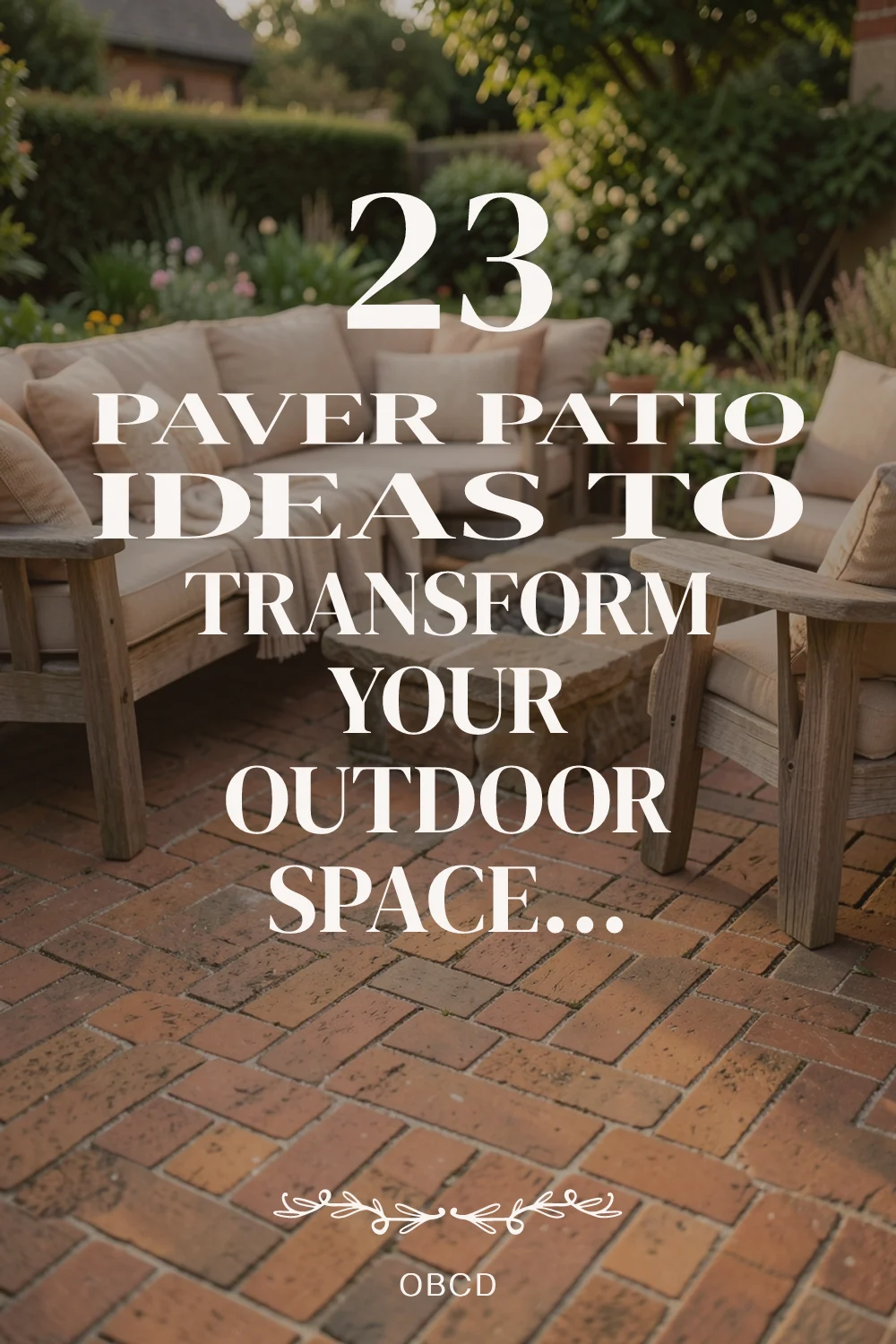
23 Paver Patio Ideas to Transform Your Outdoor Space
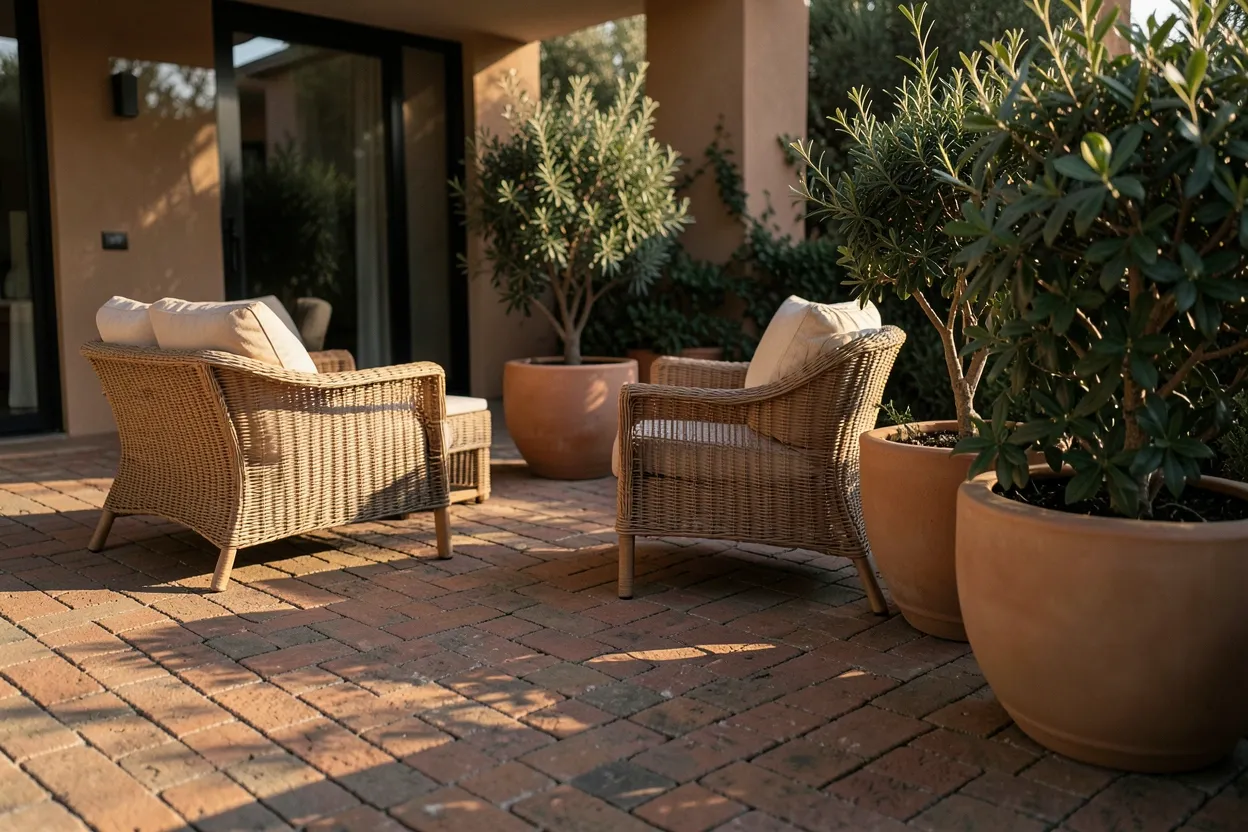
Paver patio ideas offer endless possibilities to transform your outdoor space into a practical and stylish living area that extends your home's functionality. Whether you rent or own, these durable patio designs provide beautiful surfaces for entertaining, relaxing, and enjoying fresh air without requiring permanent structural changes.
Whether you're working with a compact backyard or a sprawling garden, paver patios can be customized to fit any space, budget, and lifestyle preference. From classic brick herringbone patterns to contemporary large-format concrete slabs, the right paver patio creates a seamless transition between indoor and outdoor living. Many options here are also renter-friendly — modular systems you can take with you when you move.
This guide explores 23 innovative paver patio ideas that balance practicality with visual appeal, helping you create an outdoor sanctuary that reflects your personal style while maximizing usable space for family gatherings, quiet evenings, or weekend entertaining. You'll find backyard patio design ideas for every budget, from DIY stepping stone pathways to professional multi-level installations.
Quick FAQ
What is the most durable paver material for patios?
Concrete and natural stone pavers offer the highest durability, with concrete being more affordable and stone providing a premium, timeless appearance that lasts decades with minimal maintenance.
How much does a paver patio installation cost?
Installation costs typically range from $10 to $30 per square foot, depending on materials, complexity of the pattern, and whether you choose DIY installation or professional installation.
Can paver patios be installed in cold climates?
Yes, paver patios perform excellently in cold climates because they flex with temperature changes, unlike concrete slabs that crack, and they can withstand freeze-thaw cycles with proper installation.
How long does a paver patio last?
With proper installation and maintenance, a paver patio can last 25-50 years, making it a long-term investment that adds significant value to your property.
As an Amazon Associate I earn from qualifying purchases.
Table of Contents
- 1. Classic Brick Paver Pattern
- 2. Contemporary Concrete Slab Design
- 3. Natural Stone Patio with Gravel Border
- 4. Permeable Paver System for Drainage
- 5. Circular Paver Patio with Fire Pit
- 6. Herringbone Pattern Paver Patio
- 7. Multi-Level Paver Patio Design
- 8. Mediterranean-Inspired Paver Terrace
- 9. Stepping Stone Paver Walkway
- 10. Modern Geometric Paver Layout
- 11. Rustic Flagstone Paver Patio
- 12. Border-Frame Paver Design
- 13. Integrated Paver Seating Area
- 14. Mixed Material Paver Concept
- 15. Large Format Paver Slab Patio
- 16. Paver Patio with Built-In Planters
- 17. Cobblestone-Style Paver Driveway Extension
- 18. Paver Patio with Outdoor Kitchen
- 19. Zen Garden Paver Design
- 20. Poolside Paver Deck
- 21. Paver Pathway Connecting Garden Zones
- 22. Paver Patio with Pergola Overhead
- 23. Minimalist Solid Color Paver Space
1. Classic Brick Paver Pattern
Classic brick paver patterns bring timeless charm to your outdoor space with their warm tones and traditional aesthetic. This paver patio design creates a sophisticated foundation that complements both historic homes and modern architecture, offering versatility that spans decades of design trends.
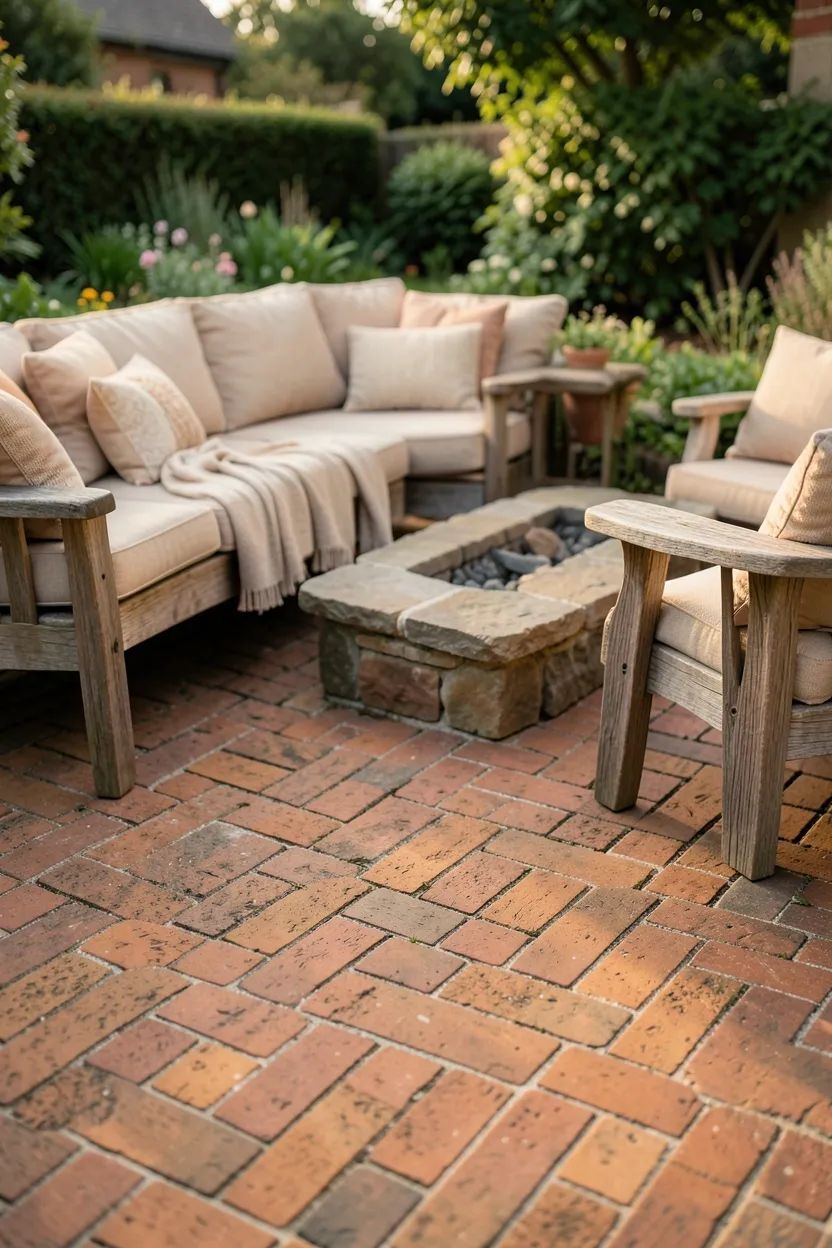
The earthy texture and warm rust colors of brick pavers provide natural visual interest without requiring additional decorative elements. Consider a running bond pattern for clean, linear lines, or a basket weave design for added texture that draws the eye across the patio space. Avoid uniform solid-color concrete if you want to capture the authentic character and depth that only genuine brick can deliver.
Tips
- Do seal brick pavers every 2-3 years to protect against moisture penetration and staining.
- Don't use deicing salts in winter, as they can damage the brick surface over time.
- If choosing reclaimed brick, clean thoroughly before installation to remove old mortar residue.
Best for: Traditional homes, cottage-style gardens, and homeowners seeking low-maintenance vintage charm.
What this gives you: Authentic character with exceptional durability that improves with age.
We picked a few things that go well with this idea: Pure Garden 32-Inch Wood Burning Firepit (★4.4), Hykolity 31-Inch Fire Pit with Swivel Grill (★4.7) and OLIXIS 36-Inch Round Wood Burning Fire Pit (★4.8). As an Amazon Associate we earn from qualifying purchases.
2. Contemporary Concrete Slab Design
Contemporary concrete slab paver patios offer clean lines and minimalist appeal perfect for modern homes seeking sleek outdoor living spaces. Large-format concrete pavers create a seamless surface that feels expansive while providing a neutral backdrop for contemporary furniture and landscaping.
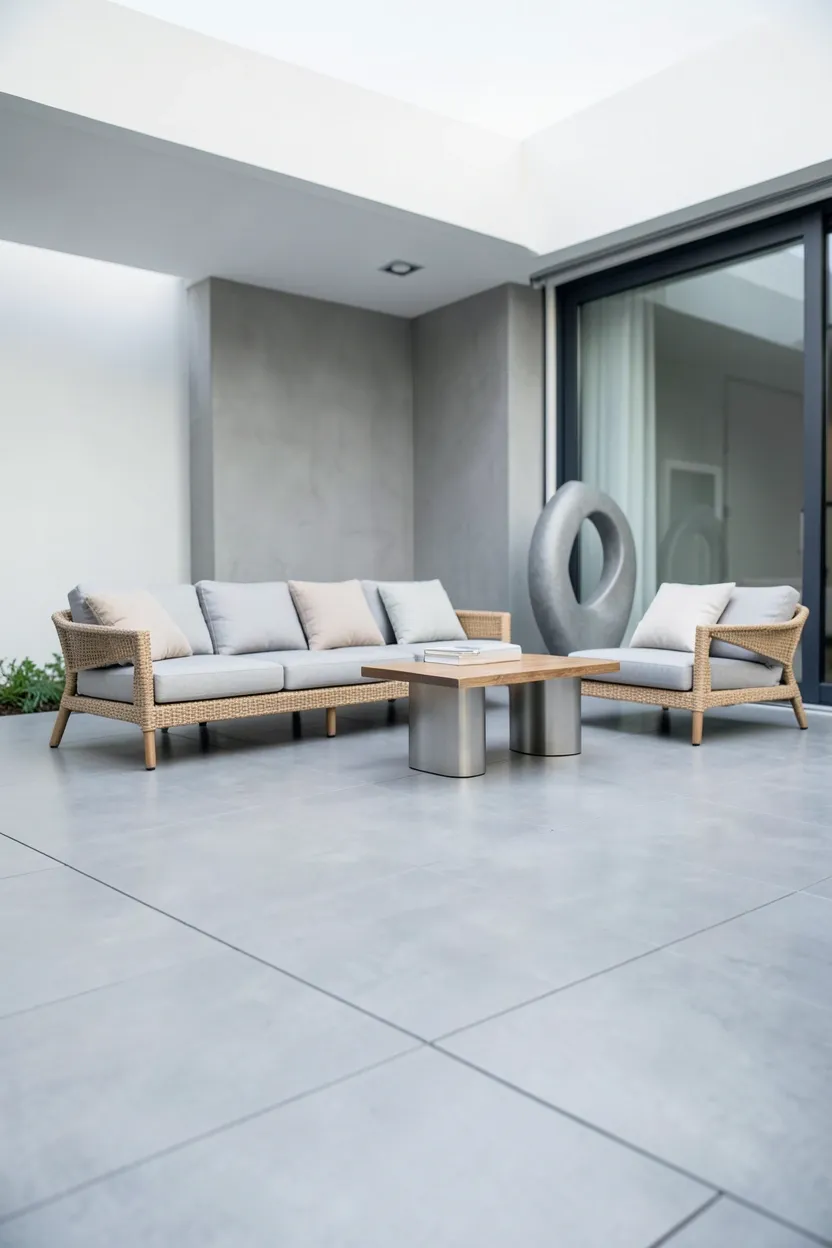
The smooth finish and uniform color of concrete slabs provide a sophisticated foundation that complements bold architectural elements. Choose between poured concrete with scored patterns for visual interest or precast concrete pavers in square or rectangular formats. Avoid busy patterns with contrasting joints if you prefer the clean, uninterrupted aesthetic that defines contemporary design. Upgrade basic gray concrete with integral color or decorative aggregates for a premium look.
Tips
- Do apply a penetrating sealer to prevent moisture absorption and surface damage.
- Don't skip expansion joints, which allow for natural movement and prevent cracking.
- If using colored concrete, test samples in natural light before full installation.
What this gives you: Modern sophistication with easy maintenance and design flexibility.
We picked a few things that go well with this idea: Devoko 3-Piece PE Rattan Wicker Patio Set (★4.4), SAILARY Wicker Patio Dining Chair Set 2 (★4.3) and Flamaker 3-Piece Rattan Conversation Set Black (★4.4). As an Amazon Associate we earn from qualifying purchases.
3. Natural Stone Patio with Gravel Border
Natural stone patios with gravel borders create an organic, relaxed atmosphere that feels connected to the surrounding landscape. This paver patio design combines the timeless beauty of irregular flagstone with the casual elegance of loose gravel, perfect for creating a seamless transition from indoor to outdoor living.
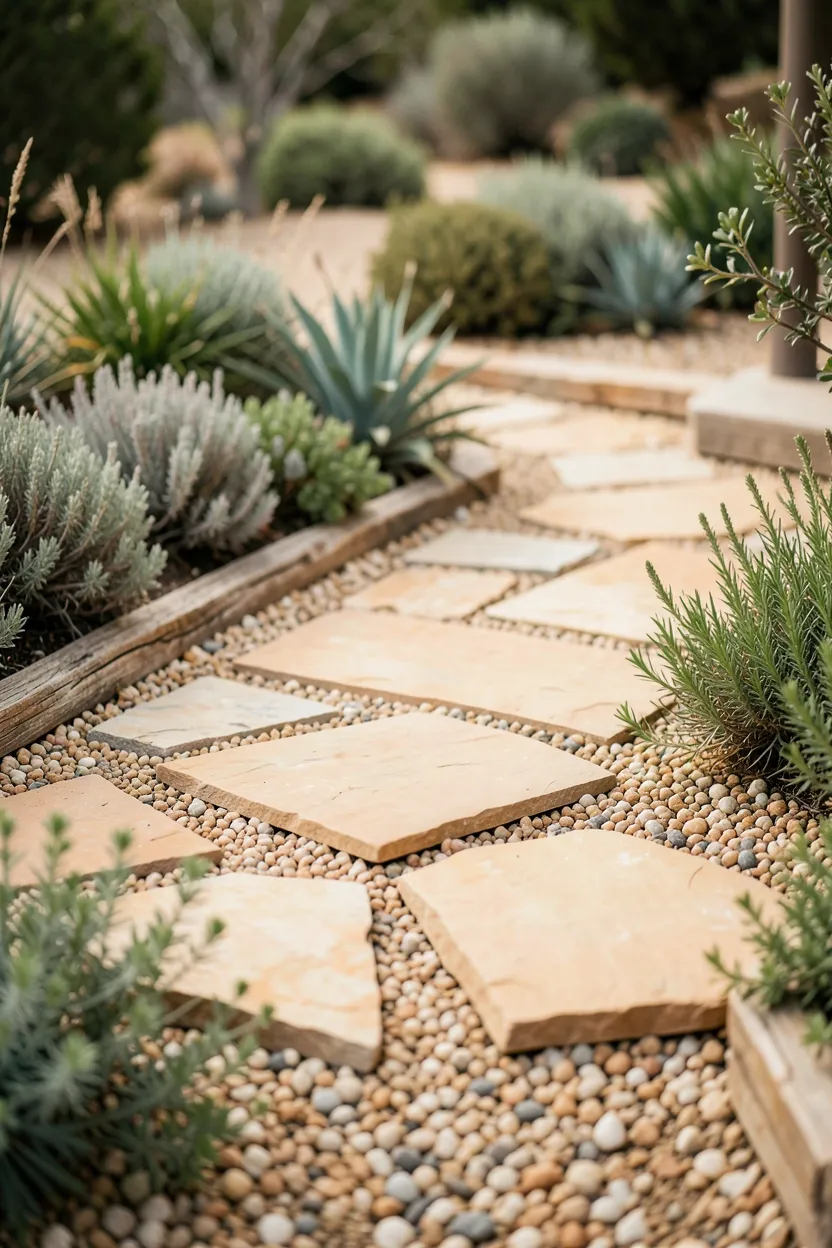
The variations in color, texture, and thickness of natural stone pavers add authentic character that manufactured materials cannot replicate. Gravel borders provide drainage and define the patio edges while softening the overall aesthetic. Avoid uniform, precision-cut stone if you prefer the rugged, naturalistic charm that defines this style. Consider using drought-tolerant plants between stone pieces for additional visual interest and groundcover benefits.
Tips
- Do select stones with similar thickness to ensure a level installation surface.
- Don't skip weed barrier fabric under the gravel border to prevent unwanted growth.
- Then add polymeric sand between joints to lock stones in place and resist weed growth.
Rental note: Modular stone systems are removable for temporary installations.
What this gives you: Organic beauty with natural drainage and low environmental impact.
We picked a few things that go well with this idea: JONATHAN Y Boho Moroccan Outdoor Area Rug Beige (★4.6), JONATHAN Y Moroccan Geometric Outdoor Rug 8x10 (★4.7) and JONATHAN Y Moroccan Geometric Outdoor Rug 5x8 (★4.7). As an Amazon Associate we earn from qualifying purchases.
4. Permeable Paver System for Drainage
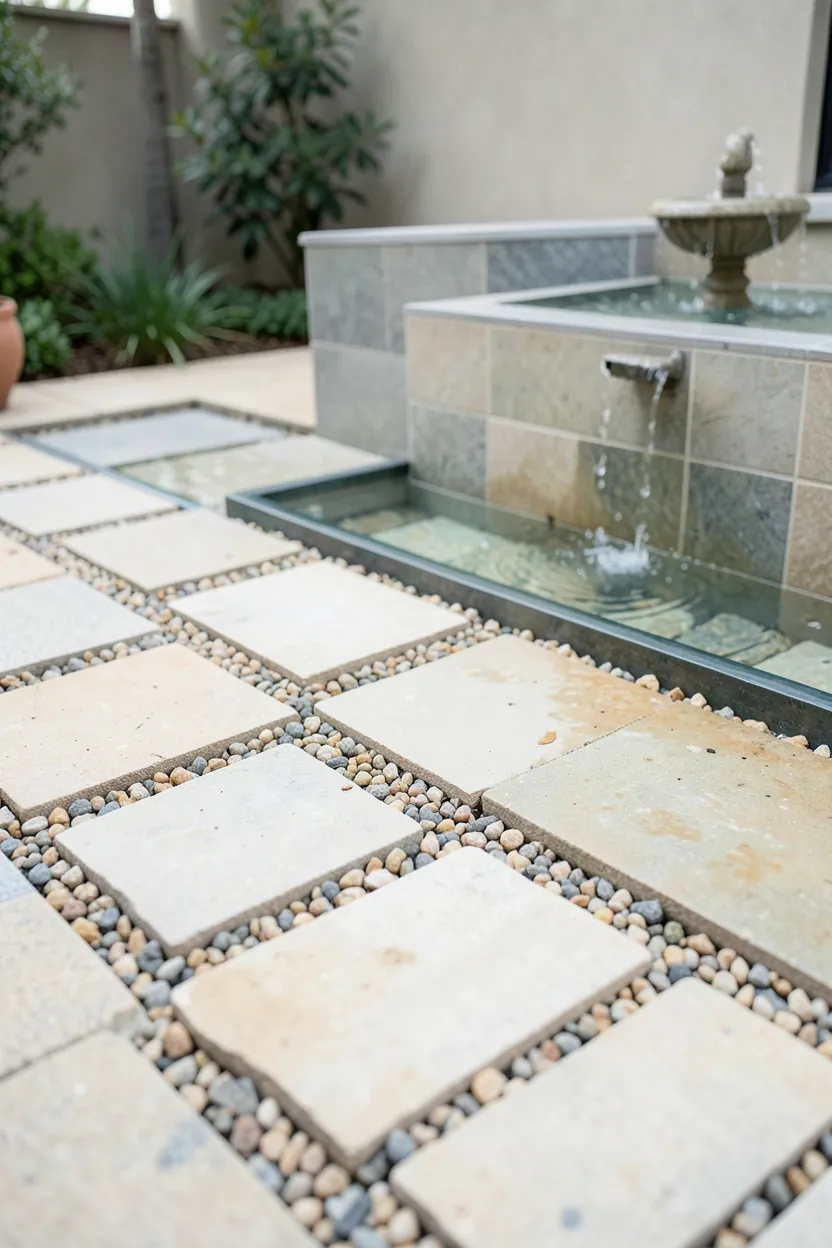
Permeable paver systems offer an eco-friendly solution for managing stormwater while providing a beautiful patio surface. This innovative design allows rainwater to filter through the paver joints and into the ground below, reducing runoff and recharging natural aquifers.
Recommended
Items for this idea
The gap between pavers is filled with crushed stone or special aggregate that facilitates water infiltration while maintaining structural stability. Choose from various paver styles and colors to match your aesthetic preferences while contributing to sustainable landscape design. Avoid traditional solid paver installations that create water runoff and contribute to local drainage issues. This system is particularly valuable in areas with strict stormwater regulations or properties prone to drainage problems.
Tips
- Do maintain proper slope (1-2%) to ensure water moves away from structures.
- Don't install over compacted clay soils without proper base preparation.
- If possible, connect to existing French drains or dry wells for enhanced drainage capacity.
Budget & time: Higher upfront cost but long-term savings on drainage solutions and potential tax credits.
What this gives you: Environmental responsibility combined with functional stormwater management.
5. Circular Paver Patio with Fire Pit
Circular paver patios with integrated fire pits create cozy gathering spaces perfect for extending outdoor living into cooler months. This symmetrical design naturally encourages conversation and provides a natural focal point for evening entertainment.
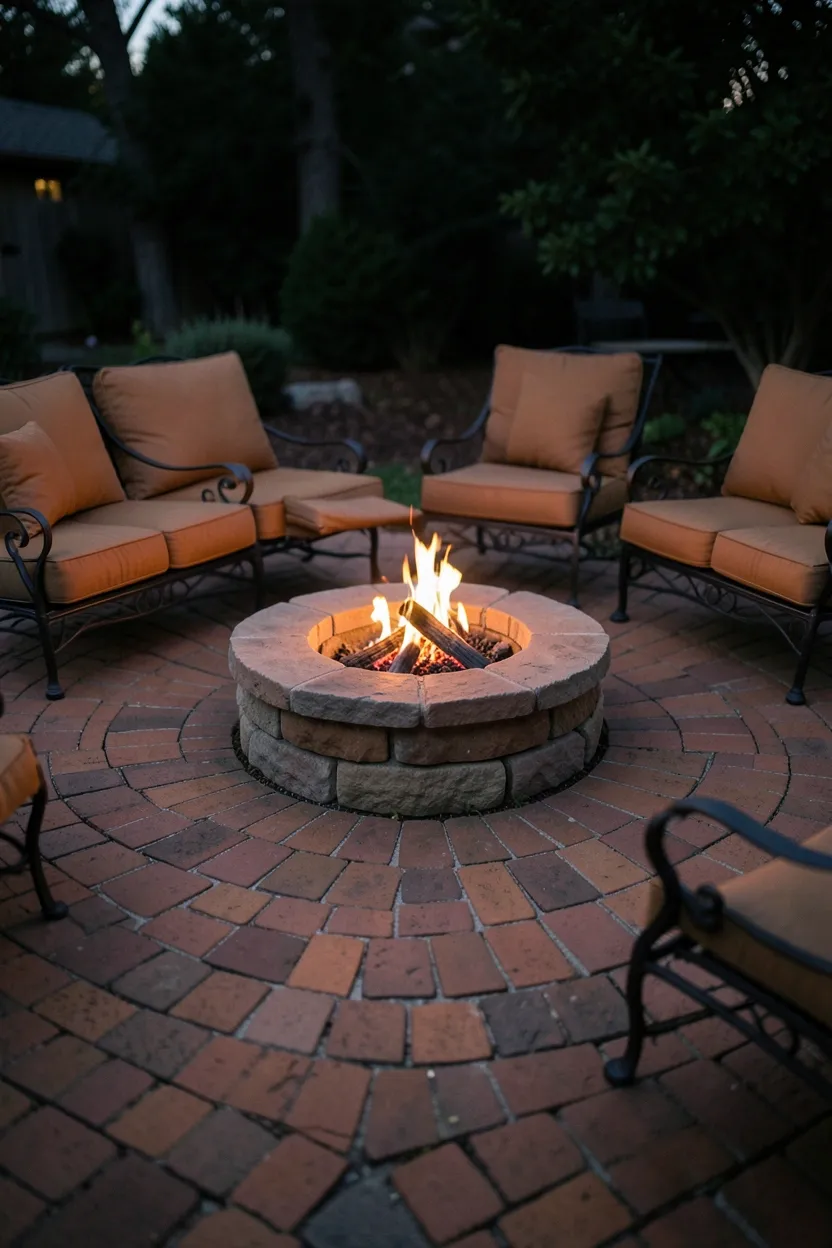
The curved perimeter of a circular patio softens angular architecture while creating an intimate, contained atmosphere. Center the fire pit and radiate paver patterns outward for visual harmony, or use contrasting ring patterns to define seating areas. Avoid rectangular fire pit designs that disrupt the natural flow and intimacy of circular spaces. Consider built-in seating along the perimeter to maximize functionality without overcrowding the space with furniture.
For additional outdoor entertaining ideas, see Gorgeous Pergola Patio Ideas to complement your fire pit setup with shade structures.
Tips
- Do maintain at least 10 feet clearance between fire pit and combustible materials.
- Don't forget to check local building codes regarding fire pit installation requirements.
- Pro/Con/Fix: Gas fire pits offer convenience but lose the crackle and aroma of wood fires.
What this gives you: Year-round outdoor entertainment with natural conversation focus.
6. Herringbone Pattern Paver Patio
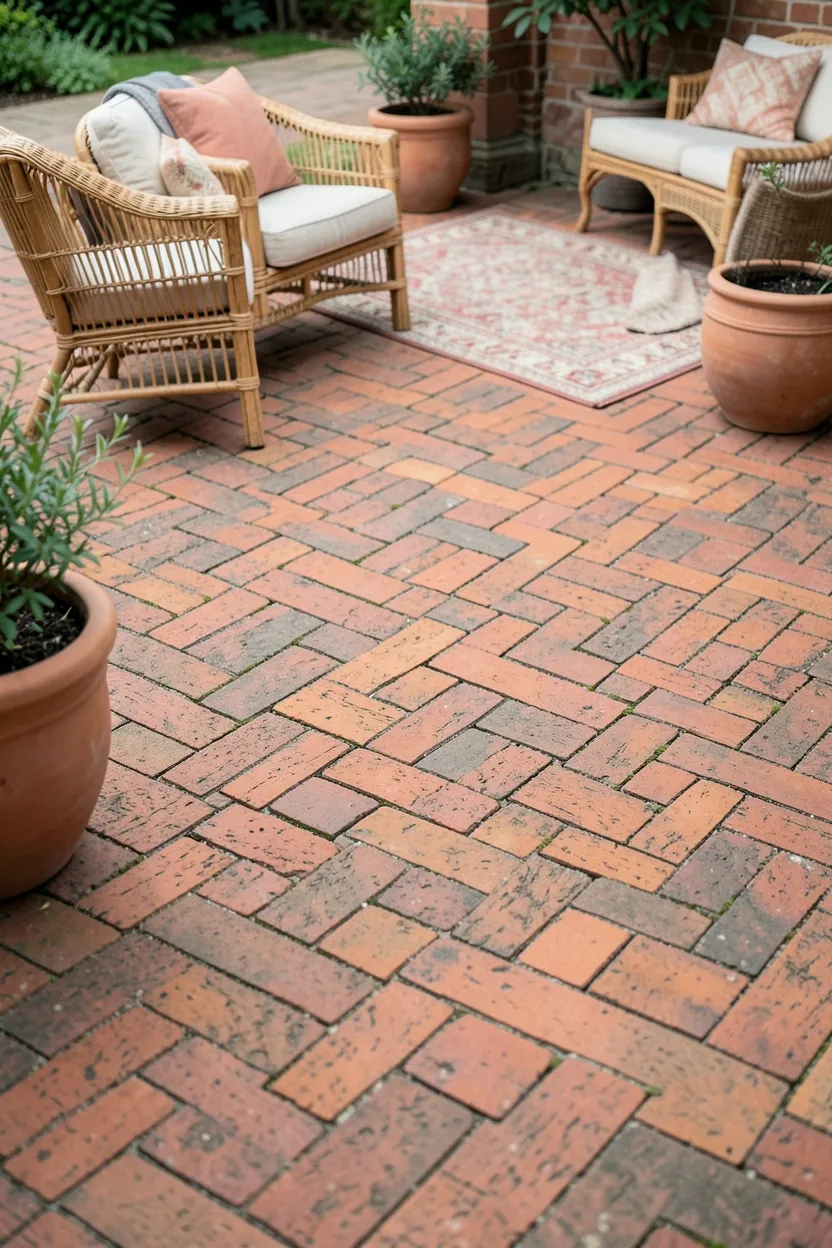
Herringbone pattern paver patios create dynamic visual interest through their distinctive zigzag arrangement that draws the eye across the entire surface. This classic pattern provides structural stability while adding sophisticated texture to outdoor spaces.
Recommended
Items for this idea
The interlocking design of herringbone patterns creates exceptional strength that resists shifting and settling over time. This pattern works beautifully with brick, concrete, or stone pavers and adds character to both traditional and contemporary settings. Avoid running bond patterns if you seek visual complexity and enhanced structural integrity for your patio. The dynamic pattern direction can also make spaces feel larger when oriented diagonally across the area.
Tips
- Do start installation from the center and work outward for balanced pattern placement.
- Don't attempt herringbone patterns with irregular stones, which require precise alignment.
- Then seal joints after installation to prevent weed growth and maintain pattern integrity.
What this gives you: Visual sophistication combined with exceptional structural stability.
7. Multi-Level Paver Patio Design
Multi-level paver patios create dynamic outdoor spaces by introducing elevation changes that naturally separate different functional zones. This design approach maximizes usable space while adding architectural interest to sloping or challenging terrain.
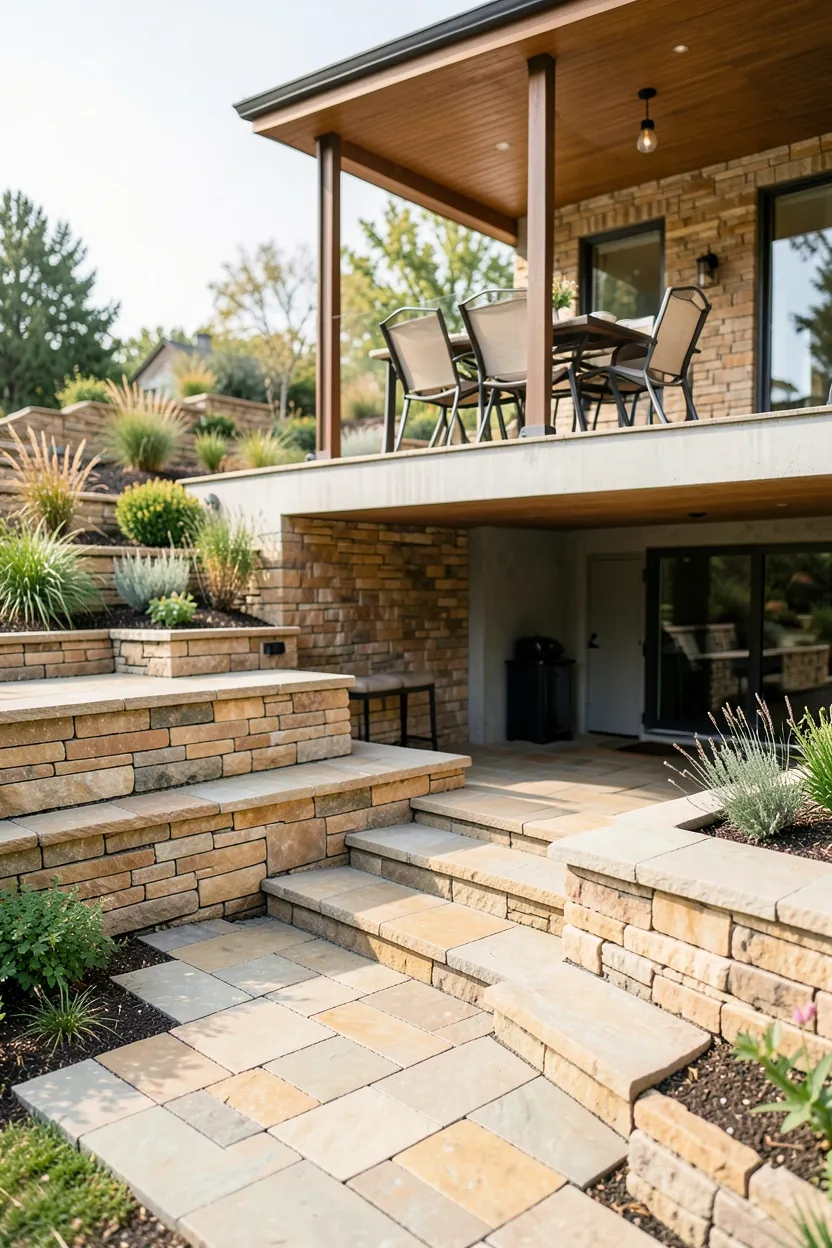
Elevated platforms define dining areas while lower levels create intimate conversation spaces or pathways to garden zones. Use matching or complementary paver materials to maintain visual cohesion between levels while creating clear functional separation. Avoid single-level designs on sloped terrain that require extensive and expensive retaining wall solutions. Consider incorporating built-in seating or planters at level changes for added functionality and visual interest.
For more terraced design inspiration, see Gorgeous Backyard Patio Designs to explore additional elevation concepts.
Tips
- Do ensure each level has proper drainage to prevent water accumulation and structural damage.
- Don't forget to install handrails where elevation changes exceed local code requirements.
- Pro/Con/Fix: Multi-level designs maximize space but increase installation complexity and cost.
Budget & time: Higher initial investment but solves grading challenges while adding value.
What this gives you: Functional zone separation with enhanced architectural interest.
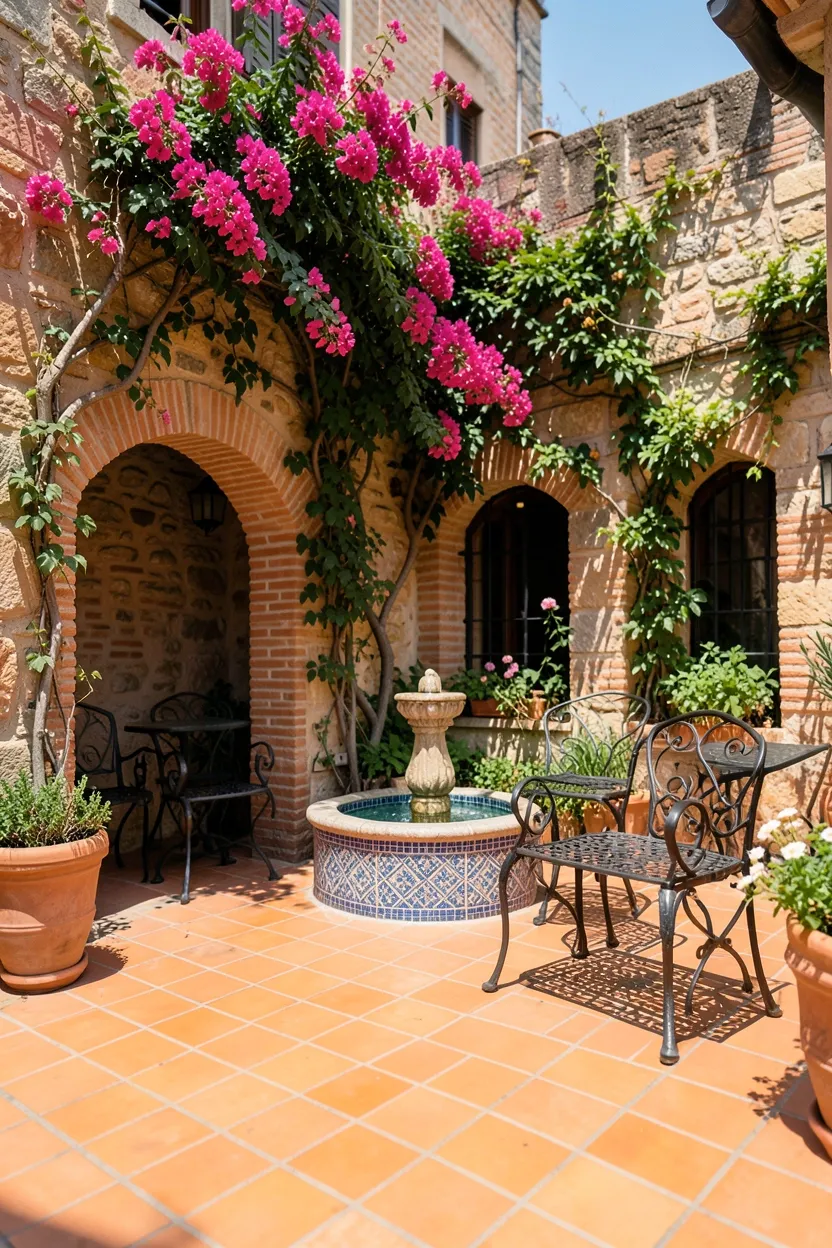
8. Mediterranean-Inspired Paver Terrace
Mediterranean-inspired paver terraces evoke the relaxed elegance of European courtyards with warm earth tones, terracotta accents, and organic patterns. This timeless design style creates outdoor spaces that feel both sophisticated and inviting.
Recommended
Items for this idea
The combination of terracotta pavers, natural stone accents, and flowing patterns creates an authentic Mediterranean aesthetic that thrives in sunny climates. Consider incorporating arches, water features, or climbing plants to enhance the Old World charm. Avoid sleek, modern materials that clash with the rustic warmth and organic textures that define this style. The natural material palette also reflects heat, keeping outdoor spaces comfortable during warm summer months.
Tips
- Do incorporate drought-tolerant Mediterranean plants like lavender, rosemary, and olive trees.
- Don't use dark-colored pavers that absorb heat and make surfaces uncomfortably hot.
- Then add shaded areas with pergolas or umbrellas for relief during peak sun hours.
What this gives you: Timeless European elegance with climate-appropriate design.
9. Stepping Stone Paver Walkway
Stepping stone paver walkways create charming pathways that guide visitors through garden spaces while maintaining permeable surfaces for healthy soil. This design approach combines functionality with naturalistic beauty perfect for connecting outdoor zones.
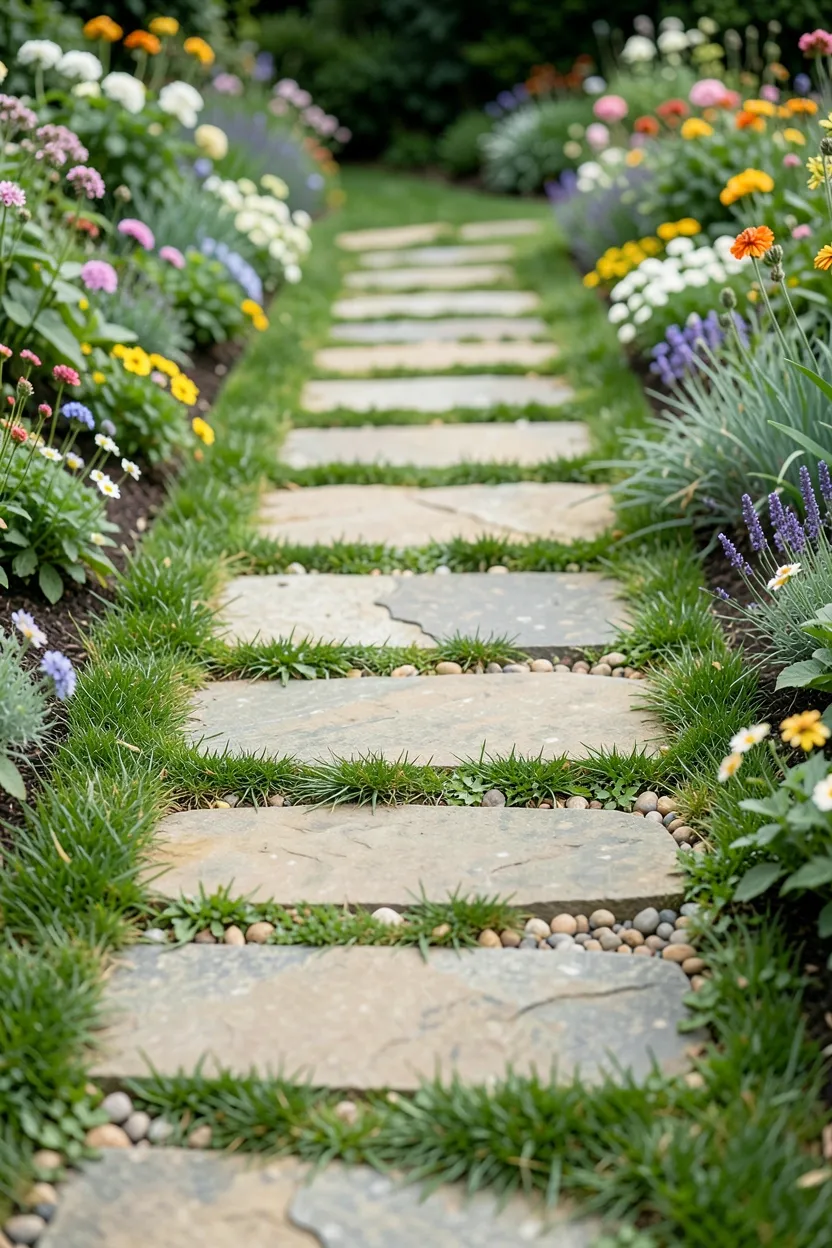
Irregular spacing between stones allows groundcover plants or grass to grow between pavers, creating a living pathway that feels integrated with the landscape. Choose natural stone with varying shapes for organic appeal, or uniform pavers for more structured designs. Avoid continuous paved walkways that disrupt drainage and create impervious surfaces that contribute to runoff issues. Consider incorporating lighting along the pathway for safe evening navigation and enhanced ambiance.
Tips
- Do space stones based on natural stride length for comfortable walking pace.
- Don't install stepping stones on steep slopes without proper anchoring for safety.
- If choosing irregular stones, select pieces with similar thickness for level installation.
Rental note: Stone placement is reversible and can be removed when relocating.
What this gives you: Functional pathways with natural drainage and landscape integration.
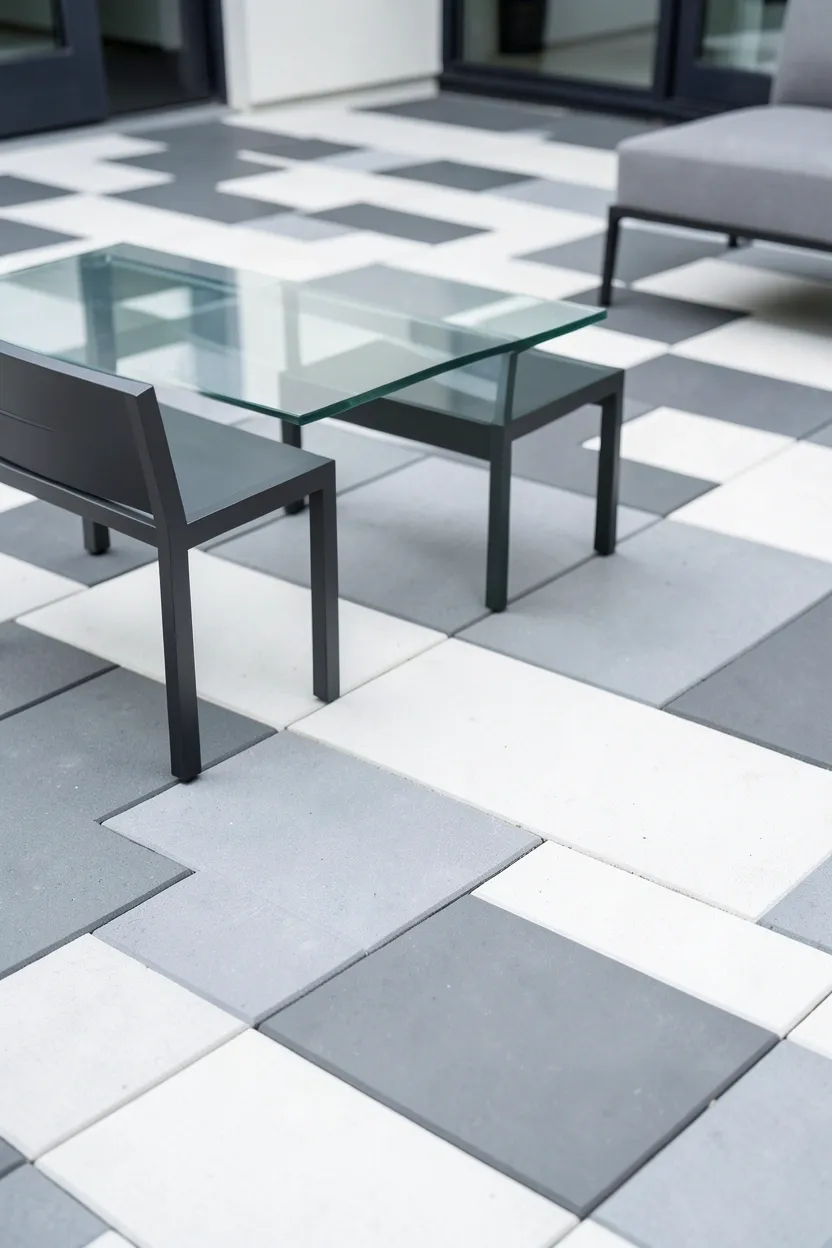
10. Modern Geometric Paver Layout
Modern geometric paver layouts create striking outdoor spaces through precise patterns, clean lines, and mathematical arrangements that complement contemporary architecture. This design approach turns the patio surface itself into a work of art.
Recommended
Items for this idea
Precisely arranged pavers in squares, rectangles, or custom shapes create visually striking patterns that serve as focal points. Use contrasting paver colors or materials to emphasize pattern boundaries and create depth within the design. Avoid random or organic patterns that lack the intentional precision required for modern geometric aesthetics. Consider extending patterns onto adjacent walls or surfaces for a cohesive architectural statement.
Tips
- Do use professional installation for precise alignment that defines geometric patterns.
- Don't mix too many colors or materials, which can overwhelm clean geometric designs.
- Then maintain consistent joint widths throughout the pattern for professional appearance.
What this gives you: Artistic surface design that doubles as architectural feature.
11. Rustic Flagstone Paver Patio
Rustic flagstone paver patios celebrate natural stone imperfections and irregular shapes to create outdoor spaces that feel organically connected to the landscape. This timeless design approach brings authentic character and warmth to any outdoor setting.
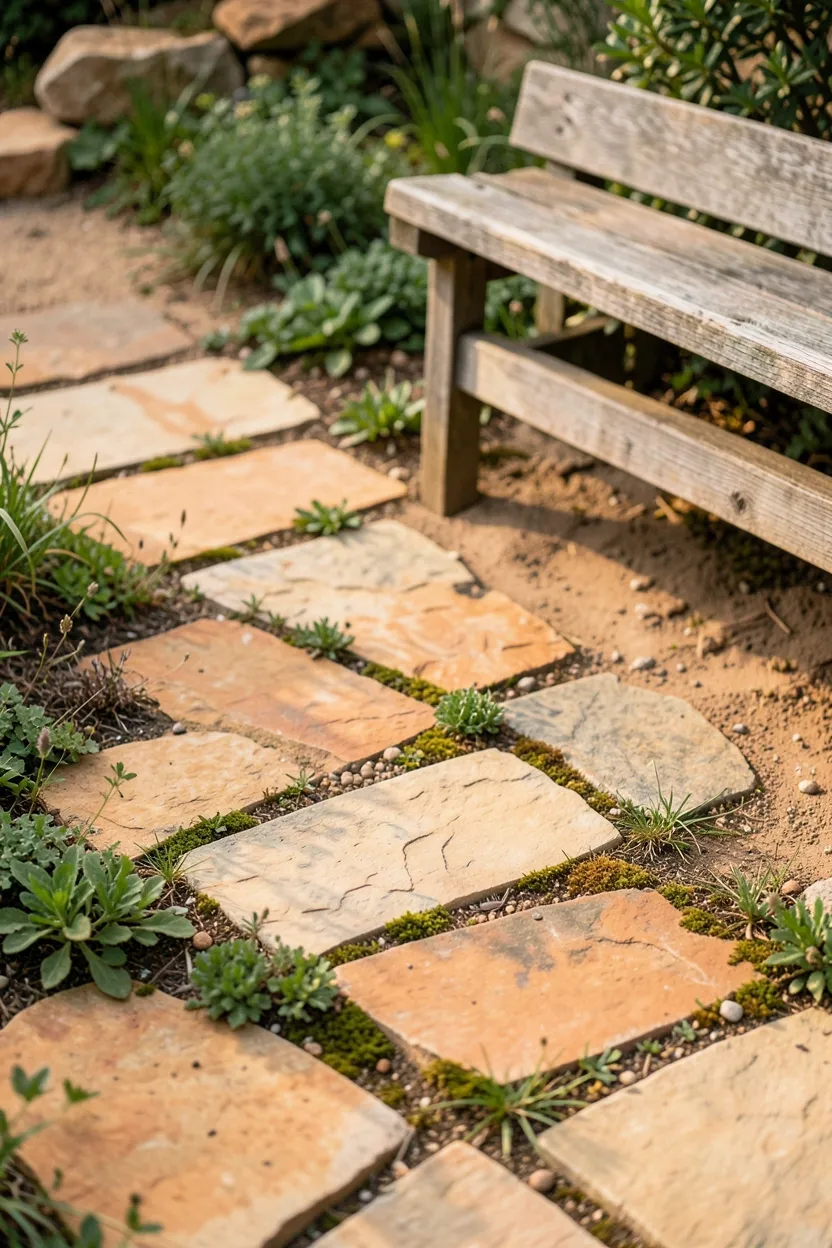
The varying thickness and natural edges of flagstone create unique installation patterns that cannot be replicated with manufactured materials. Choose from sandstone, limestone, or slate varieties to achieve different color palettes and textures that complement your landscape. Avoid uniform, precision-cut stones that lack the authentic character and organic appeal of natural flagstone. Consider using smaller stone pieces to fill gaps between larger stones for a fully cohesive surface.
Tips
- Do select stones from the same quarry or source for consistent color and texture.
- Don't skip proper base preparation, which prevents settling and uneven surfaces.
- Then apply a natural stone sealer to protect against staining while maintaining porosity.
Budget & time: Material costs vary widely based on stone type and availability.
What this gives you: Authentic natural beauty with unique, one-of-a-kind character.
12. Border-Frame Paver Design
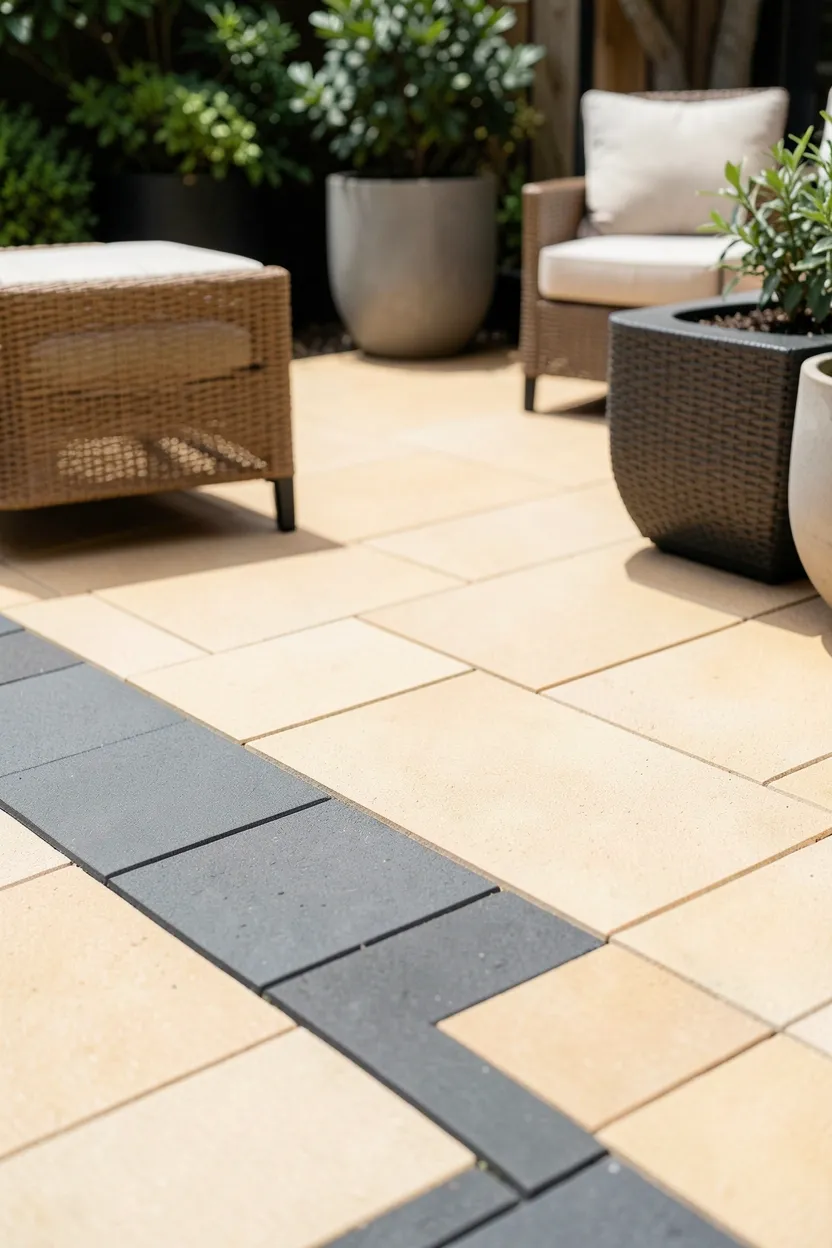
Border-frame paver designs create visual interest by contrasting a primary paver field with a contrasting border material that defines and frames the patio perimeter. This elegant approach adds architectural detail while clearly defining outdoor spaces.
Recommended
Items for this idea
The contrasting border creates a clean, finished edge that integrates seamlessly with surrounding landscaping or architectural elements. Consider using darker pavers for a sophisticated border effect, or natural stone to create organic texture against concrete field pavers. Avoid abrupt color transitions that clash rather than complement the primary paver material. Double borders with narrow accent strips between materials add extra sophistication and visual interest.
Tips
- Do install border materials first for straight, clean edges that define the patio shape.
- Don't make borders too narrow, which can feel fussy and difficult to maintain.
- Then use contrasting joint sand colors between field and border pavers for enhanced definition.
What this gives you: Polished, finished appearance with enhanced architectural definition.
13. Integrated Paver Seating Area
Integrated paver seating areas combine durable seating surfaces with patio flooring for a cohesive, space-efficient design that eliminates the need for additional outdoor furniture. This practical approach maximizes functionality while maintaining clean, integrated aesthetics.
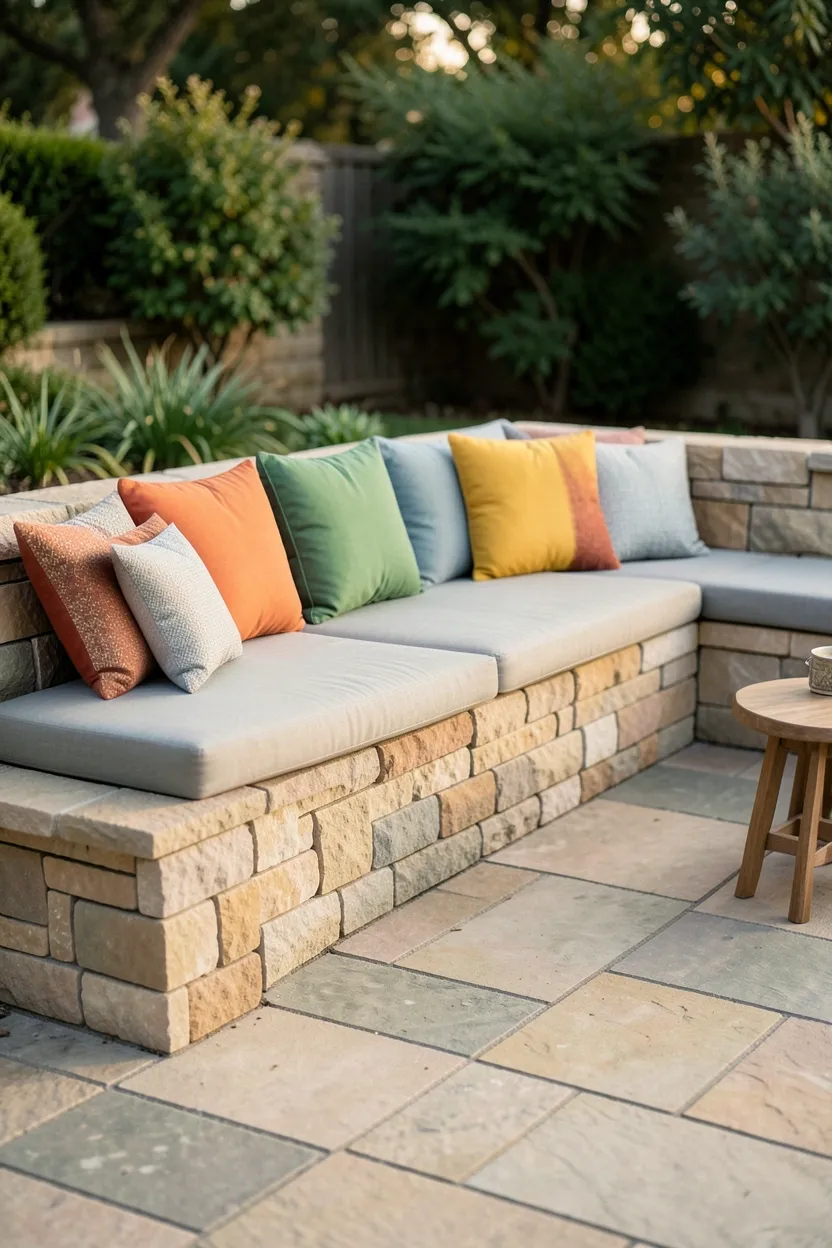
Built-in seating constructed from matching paver materials creates seamless transitions from patio floor to seating surfaces, making spaces feel larger and more unified. Consider L-shaped or curved seating arrangements that encourage conversation and make efficient use of available space. Avoid narrow or uncomfortable seating dimensions that fail to provide practical, usable seating options. Add weather-resistant cushions for comfort without sacrificing the integrated aesthetic.
Tips
- Do maintain 18-20 inch seating height for comfortable sitting position.
- Don't forget drainage behind retaining walls that support elevated seating structures.
- If installing backsrests, ensure proper slope for comfortable reclining positions.
What this gives you: Space-efficient seating that integrates seamlessly with patio design.
14. Mixed Material Paver Concept
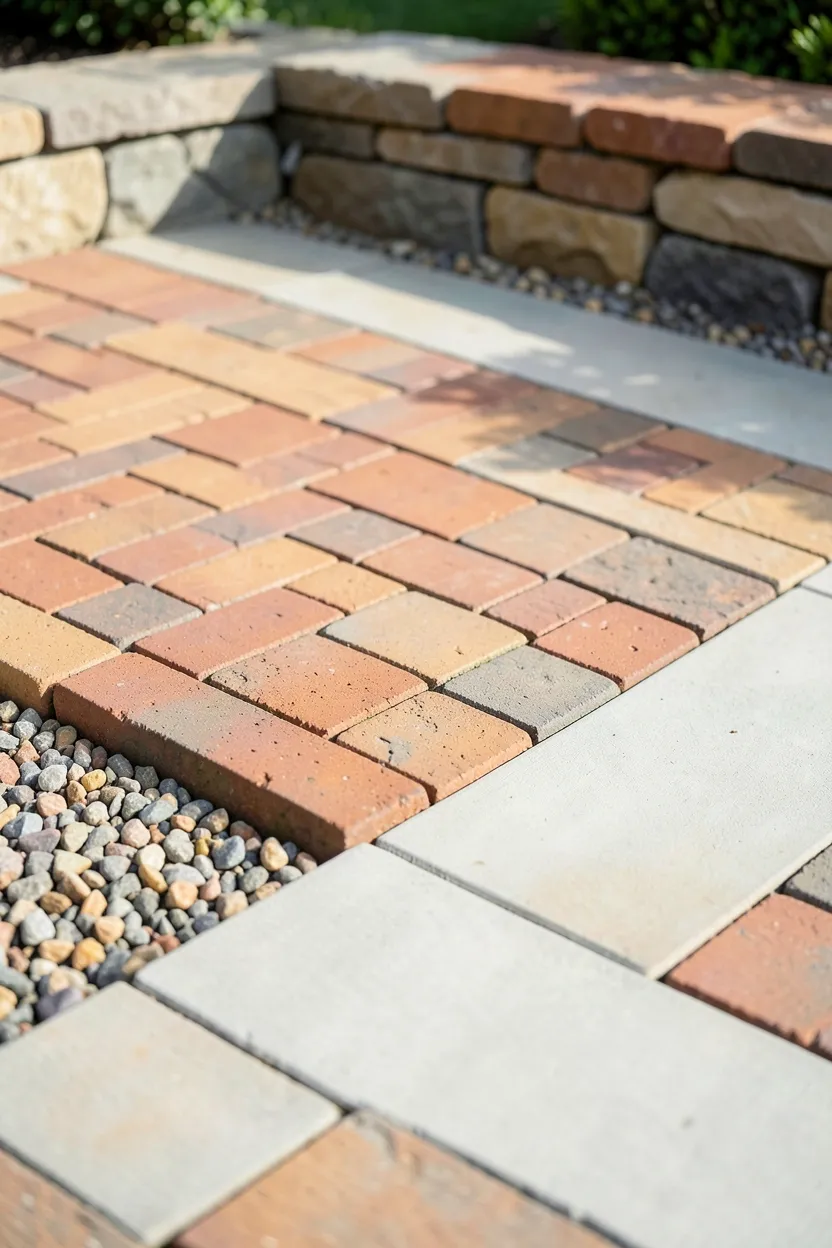
Mixed material paver concepts combine different paver types, sizes, or materials to create visually rich outdoor spaces with layered textures and sophisticated contrast. This design approach adds depth and complexity that single-material patios cannot achieve.
Recommended
Items for this idea
Combining materials like brick with concrete, or smooth pavers with textured stone, creates visual hierarchy and zones within the patio space. Use larger format pavers for main traffic areas and smaller, textured materials for accent zones or borders. Avoid mixing more than 2-3 materials, which can create chaotic, unfocused designs that lack cohesion. Consider transitioning between materials at natural boundaries like furniture zones or pathway intersections.
Tips
- Do select materials with complementary color palettes for harmonious mixed-material design.
- Don't mix materials with vastly different thicknesses without proper base preparation.
- Then use consistent joint widths and colors to unify different material selections visually.
What this gives you: Visual sophistication through layered textures and material contrast.
15. Large Format Paver Slab Patio
Large format paver slab patios create expansive, uninterrupted surfaces that make outdoor spaces feel larger and more luxurious. This contemporary design approach minimizes joint lines for clean, modern aesthetics perfect for sophisticated outdoor living.
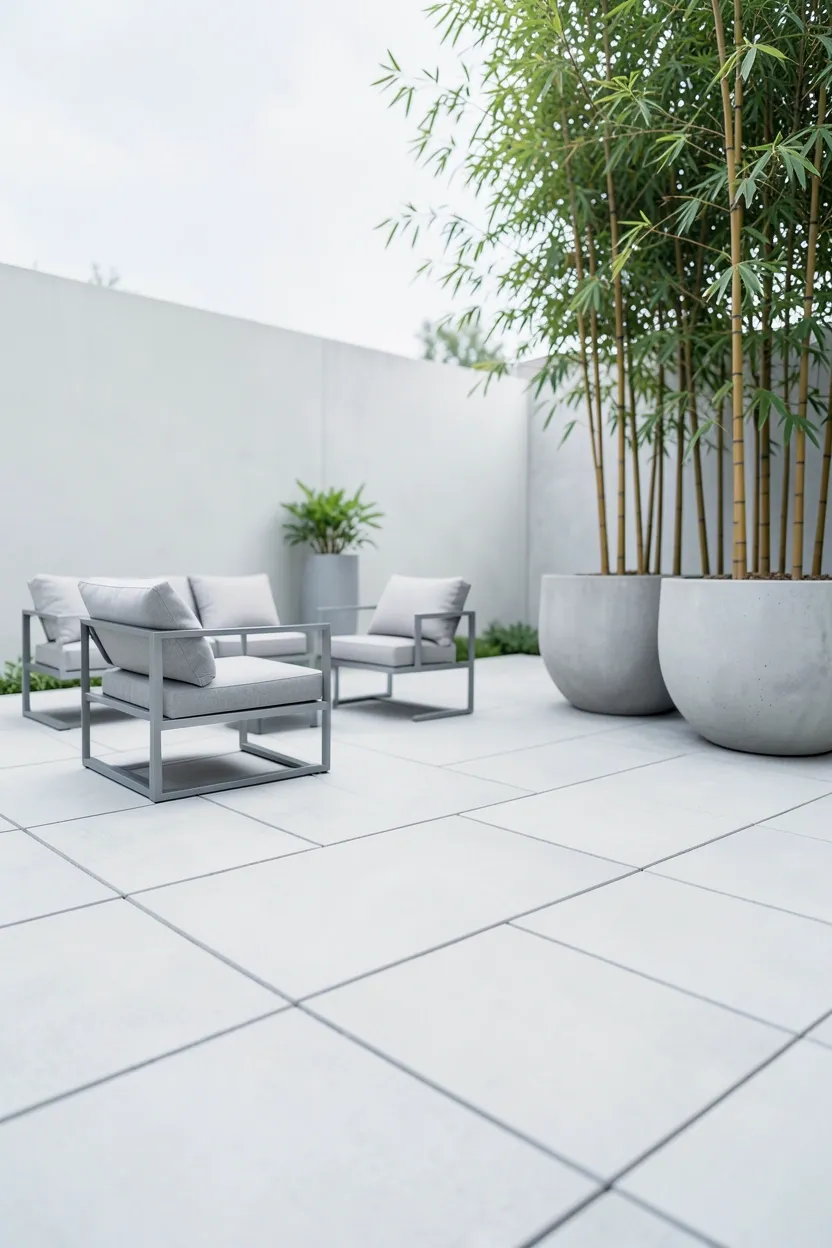
The minimal joint lines of large format pavers create seamless surfaces that feel expansive and sophisticated, particularly when paired with contemporary architecture. Available in sizes up to 24x36 inches or larger, these pavers make bold visual statements while providing durable, low-maintenance surfaces. Avoid small format pavers with numerous joints that create busy visual patterns and require more maintenance. Consider using contrasting border pavers to define edges while maintaining the expansive field of large format stones.
Tips
- Do ensure perfectly level base preparation for proper large-format paver installation.
- Don't attempt DIY installation without specialized equipment due to heavy stone weight.
- Then use narrow joint spacers for consistent, minimal joint lines throughout installation.
Budget & time: Higher material costs but reduced installation labor and long-term maintenance.
What this gives you: Expansive, luxurious surfaces with minimal visual interruption.
16. Paver Patio with Built-In Planters
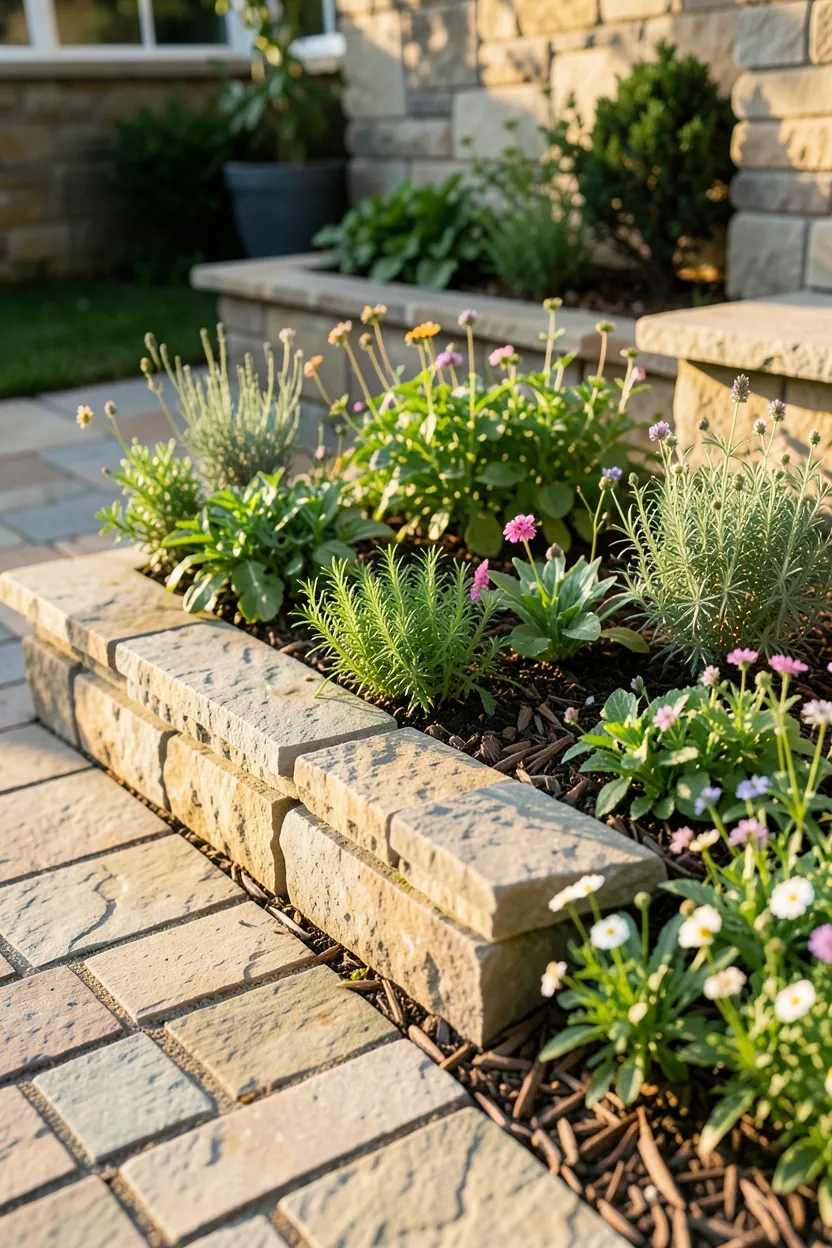
Paver patios with built-in planters seamlessly integrate garden elements into outdoor living spaces, creating cohesive environments where architecture meets landscape. This integrated approach maximizes planting opportunities while defining zones within patio area.
Recommended
Items for this idea
Constructed from matching or complementary paver materials, built-in planters create visual continuity while providing homes for plants that soften hardscape surfaces. Consider low-profile planters as seating dividers or raised beds for herbs and vegetables. Avoid planters without proper drainage, which can cause water damage to paver surfaces and create structural issues. Choose plants with similar water and sunlight requirements for simplified maintenance.
Tips
- Do install drainage layers and holes to prevent water accumulation and root rot.
- Don't forget waterproof membranes inside planter boxes to protect surrounding structures.
- Then line planters with landscape fabric to prevent soil from washing through joints.
What this gives you: Integrated garden spaces that enhance outdoor living aesthetics.
17. Cobblestone-Style Paver Driveway Extension
Cobblestone-style paver driveway extensions create charming transition zones from driveway to patio while maintaining permeable surfaces and historic character. This design approach adds European charm while connecting multiple outdoor functional areas.
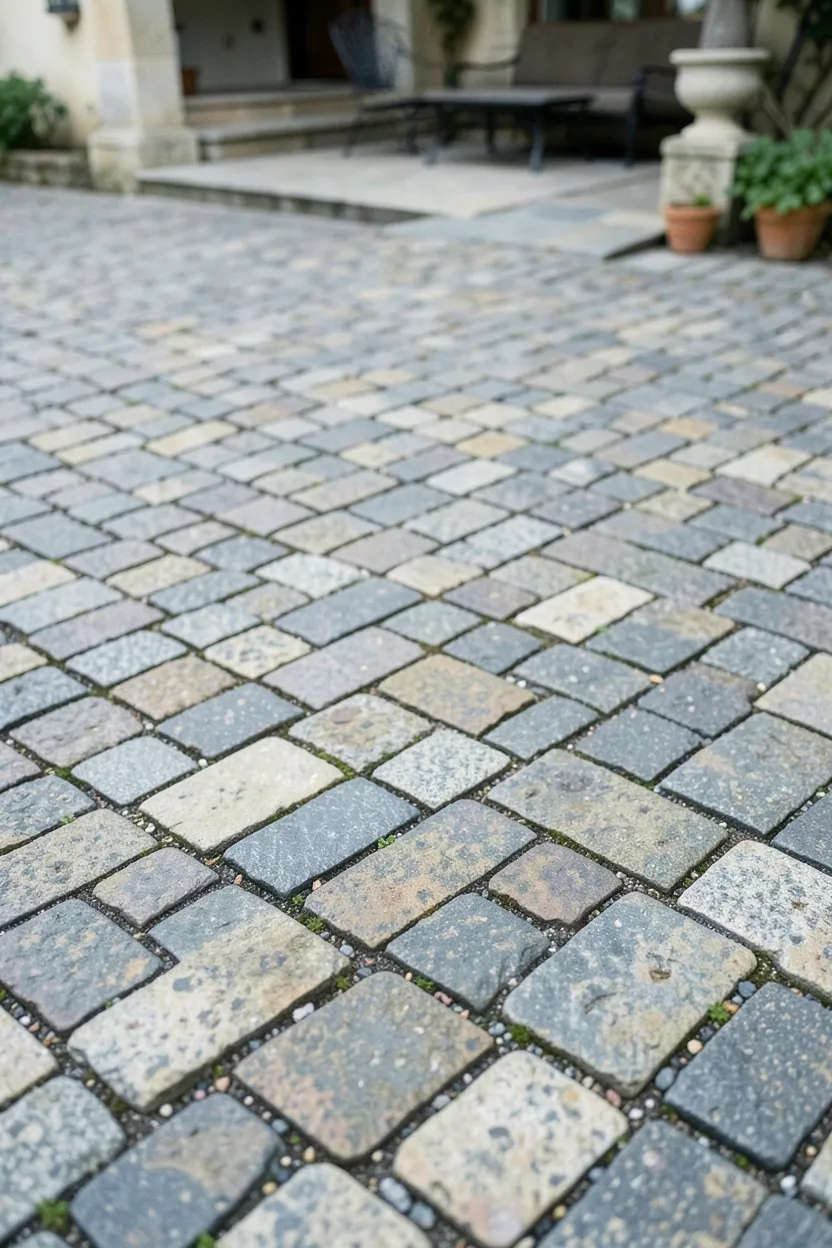
The irregular shapes and varied sizes of cobblestone-style pavers create authentic character that complements traditional architecture. Use smaller format pavers with natural variations in color and texture to capture genuine cobblestone aesthetic. Avoid uniform, modern paver styles that lack the historic charm and organic feel of traditional cobblestone. Consider using darker grout colors to emphasize individual stones and enhance texture.
Tips
- Do select pavers rated for vehicular loads for driveway and extension applications.
- Don't skip proper compaction, which prevents settling under vehicle weight.
- Then use polymer-modified sand joints for enhanced stability and weed resistance.
Rental note: Modular paver systems can be removed when relocating from property.
What this gives you: Historic charm combined with modern durability and permeability.
18. Paver Patio with Outdoor Kitchen
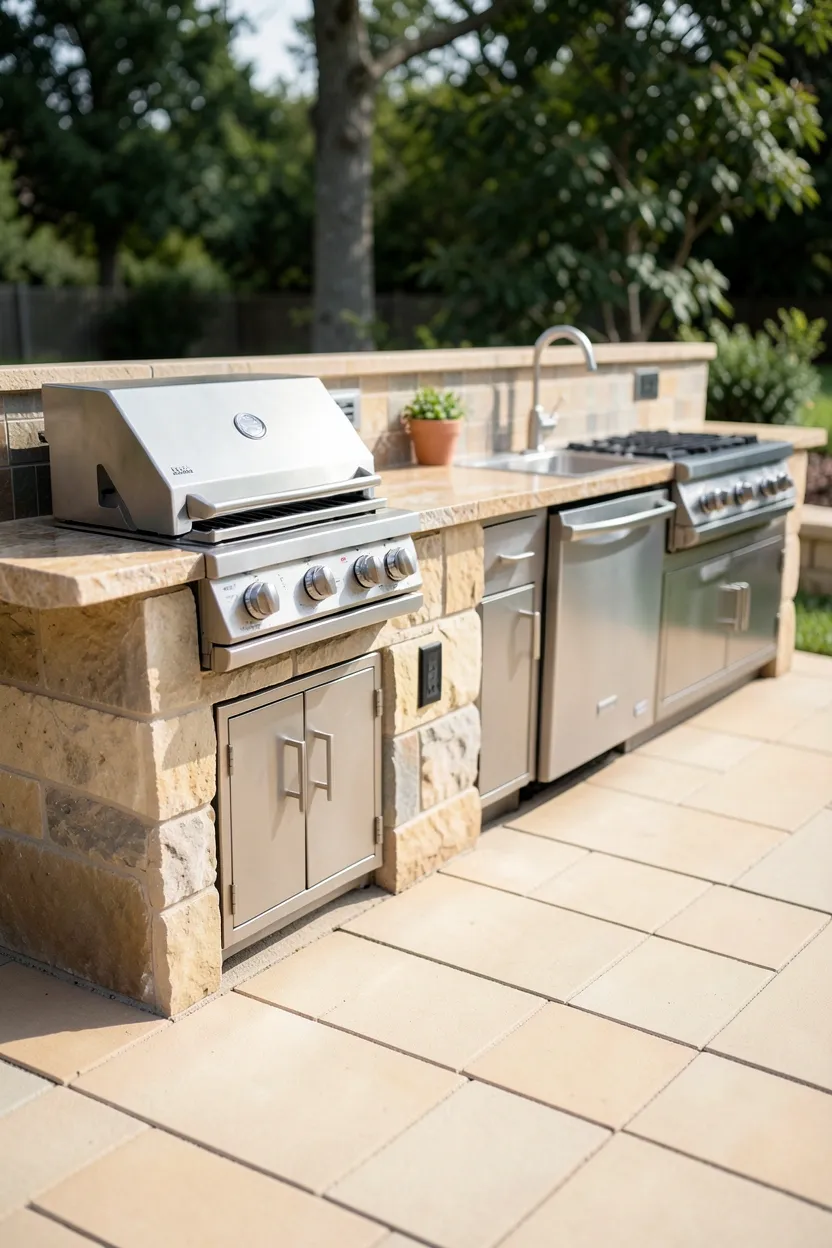
Paver patios with integrated outdoor kitchens create functional entertaining spaces where cooking, dining, and socializing happen seamlessly in one cohesive environment. This practical approach transforms outdoor areas into full-service entertaining zones.
Recommended
Items for this idea
Durable paver surfaces withstand heavy foot traffic, cooking spills, and equipment movement while maintaining beautiful appearance. Use heat-resistant pavers around grills and cooking stations, and consider incorporating drainage for sink and prep areas. Avoid porous materials that absorb stains from food preparation and cooking activities. Design cooking zones with proper clearance to surrounding furniture for safe, comfortable entertaining.
For more kitchen design inspiration, explore Elegant Modern Kitchen concepts that can inform outdoor kitchen planning.
Tips
- Do install utility connections before paver installation for seamless integration.
- Don't place cooking areas too close to flammable structures or overhanging vegetation.
- If including appliances, ensure proper ventilation and electrical protection for outdoor use.
Budget & time: Significant investment but adds substantial property value and entertaining capacity.
What this gives you: Complete outdoor entertaining space with integrated cooking facilities.
19. Zen Garden Paver Design
Zen garden paver designs create tranquil outdoor spaces inspired by Japanese aesthetics that emphasize simplicity, natural materials, and peaceful atmospheres. This meditative approach transforms patios into serene retreats for relaxation and contemplation.
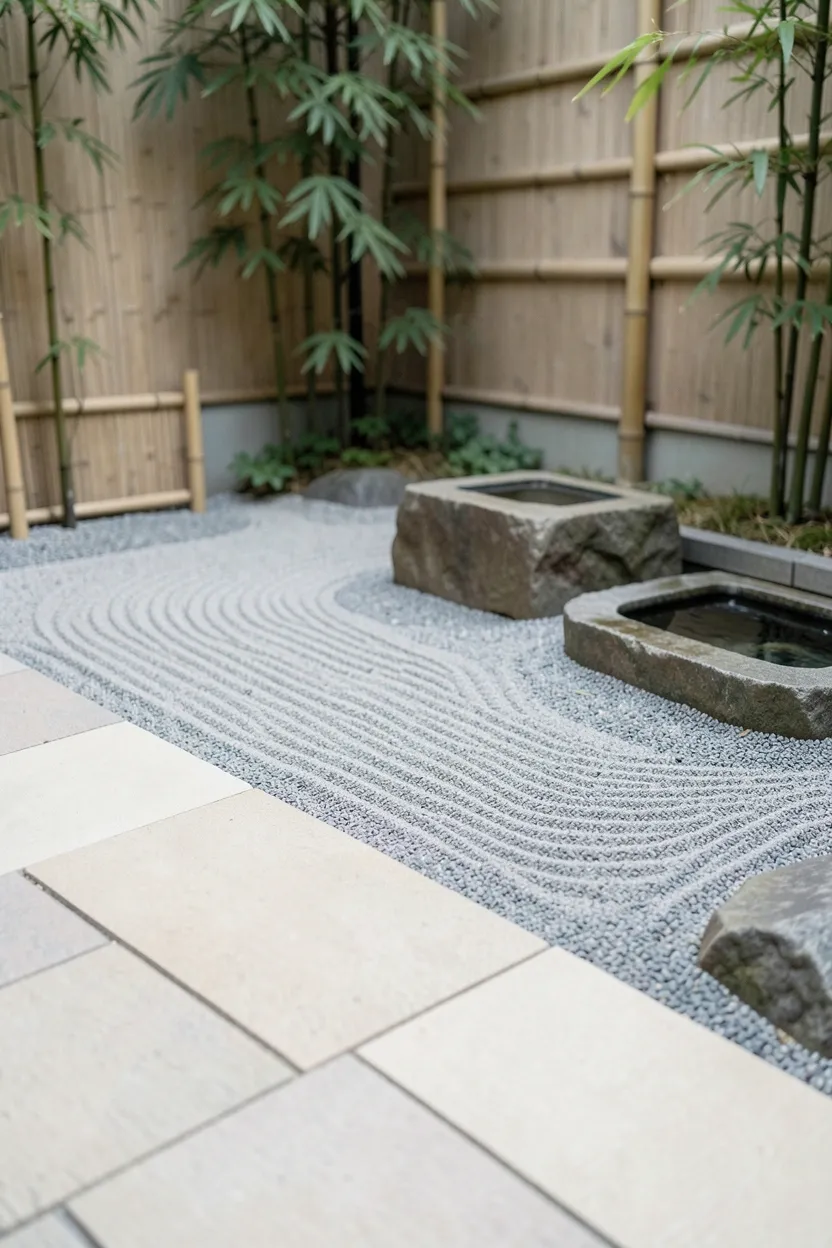
The clean lines and natural materials of zen-inspired patios create calming environments that encourage mindfulness and connection to nature. Consider incorporating irregular natural stone, bamboo accents, or raked gravel areas to enhance Japanese aesthetic. Avoid busy patterns or excessive ornamentation that disrupt the serene simplicity essential to zen design. Integrate water features or meditation platforms for complete tranquil atmosphere.
Tips
- Do incorporate asymmetric balance rather than perfect symmetry for authentic zen aesthetic.
- Don't overlook proper site preparation to ensure perfectly level surfaces for meditation areas.
- Then select natural materials with subtle color variations for harmonious, calming palette.
What this gives you: Tranquil outdoor retreat inspired by Japanese design philosophy.
20. Poolside Paver Deck
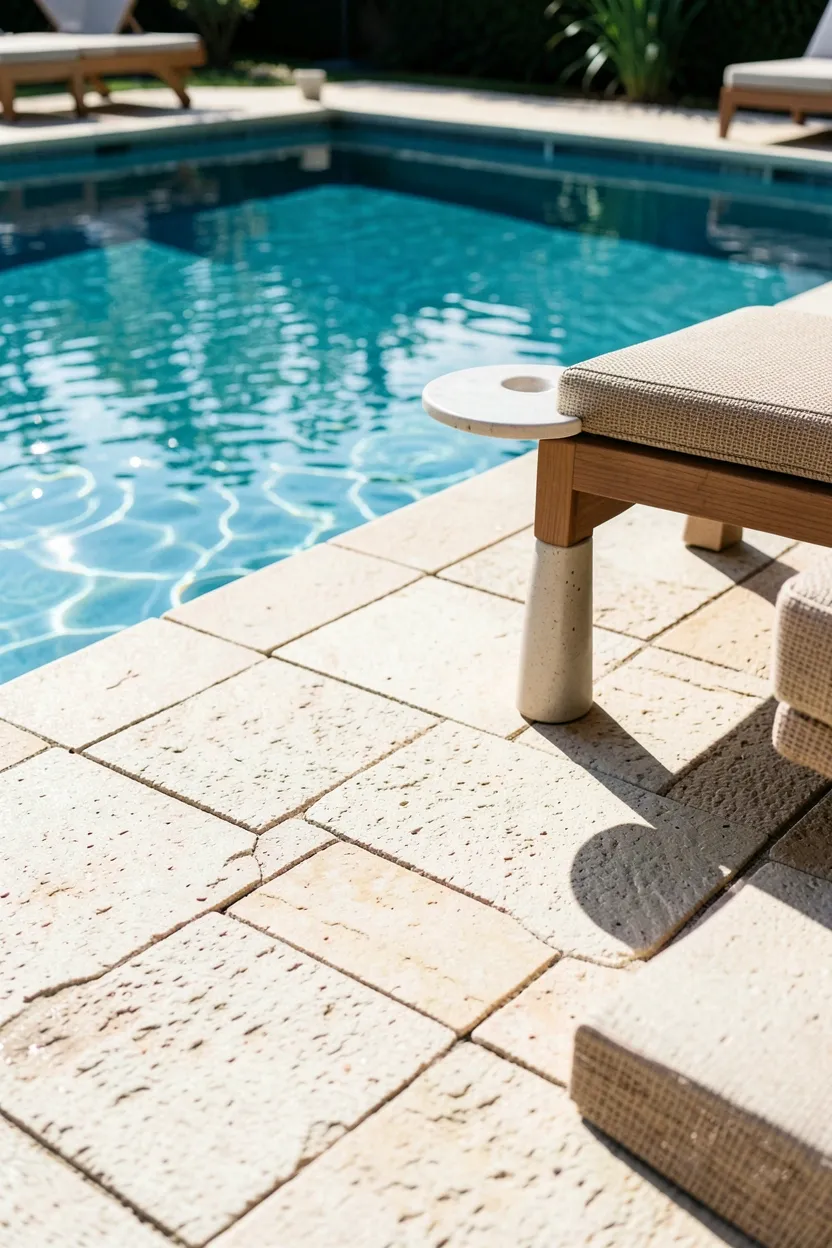
Poolside paver decks provide durable, safe, and attractive surfaces that complement aquatic environments while creating seamless transitions from pool to patio areas. This specialized design approach prioritizes safety, drainage, and aesthetic harmony with water features.
Recommended
Items for this idea
Non-slip paver surfaces with textured finishes ensure safe footing around water while providing beautiful, low-maintenance decking that withstands pool chemicals and constant exposure. Choose lighter colors that reflect heat and create visual contrast with pool water, or seamless neutral tones that blend seamlessly with aquatic environment. Avoid smooth or polished surfaces that become dangerously slippery when wet. Consider incorporating drainage channels to manage pool splash and rainwater.
Tips
- Do select pavers specifically rated for pool deck applications and chemical resistance.
- Don't forget expansion joints, which accommodate temperature changes and prevent cracking.
- Then install proper slope away from pool to direct drainage and prevent water accumulation.
Best for: Pool owners seeking safe, durable, and attractive deck surfaces.
What this gives you: Safe, durable pool deck that enhances aquatic environment aesthetics.
21. Paver Pathway Connecting Garden Zones
Paver pathways connecting garden zones create cohesive circulation that guides visitors through landscape while defining distinct planting areas. This functional design approach enhances navigation while creating visual continuity throughout outdoor spaces.
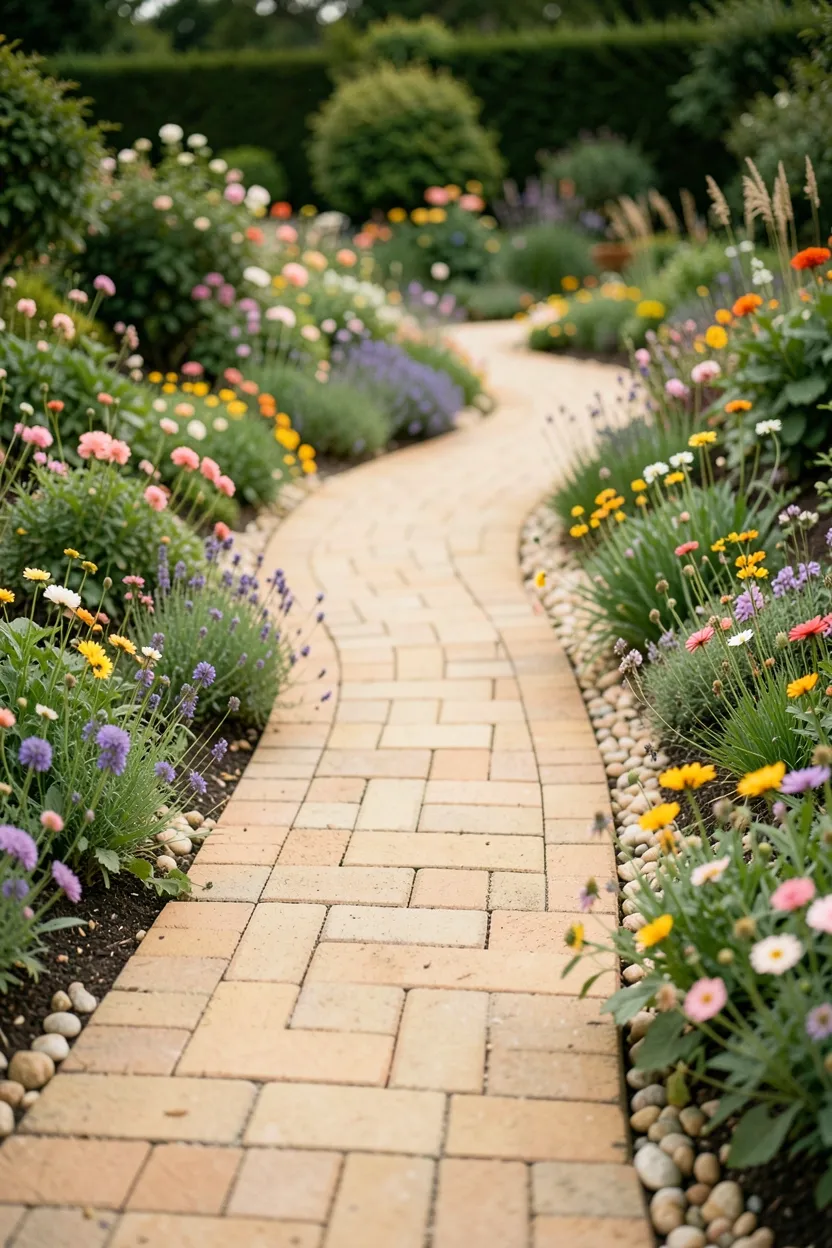
Consistent paver materials and patterns unify different garden zones, creating cohesive design language throughout entire outdoor environment. Consider incorporating curve pathways that encourage leisurely exploration and reveal garden features gradually. Avoid straight, utilitarian pathways that lack of character and fail to enhance garden experience. Use border plantings to soften pathway edges and integrate walkways into surrounding landscape.
Tips
- Do maintain minimum 36-inch width for comfortable two-person walking paths.
- Don't install pathways that lead nowhere—always connect logical destinations.
- Then add lighting along pathways for safe evening navigation and enhanced ambiance.
Rental note: Modular paver pathways can be relocated if moving to new property.
What this gives you: Functional circulation with enhanced landscape connectivity.
22. Paver Patio with Pergola Overhead
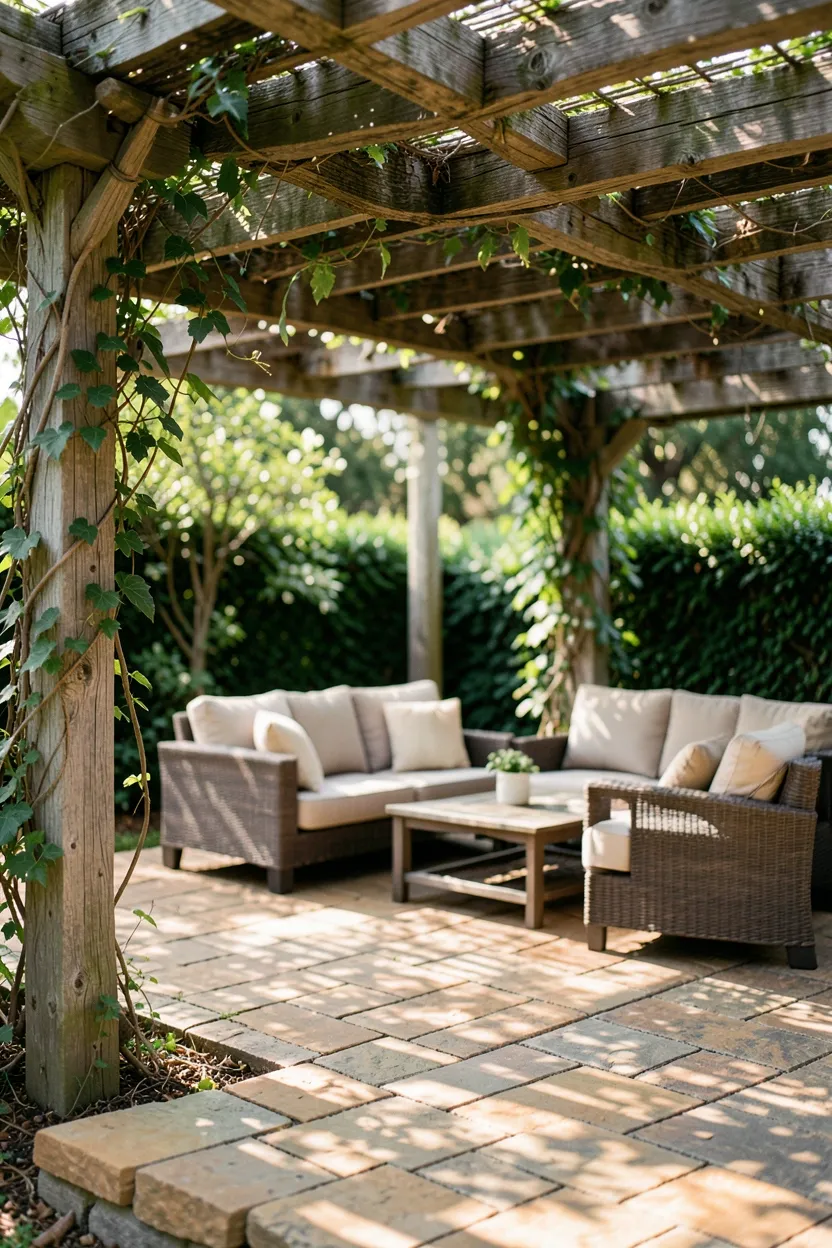
Paver patios with pergola overheads create versatile outdoor living spaces that provide comfortable shade while maintaining open-air connection to surroundings. This architectural combination balances shelter with openness for year-round outdoor enjoyment.
Recommended
Items for this idea
The sturdy paver surface provides ideal foundation for pergola posts while creating durable flooring for shaded outdoor living areas. Choose pergola materials that complement paver aesthetics—wood for natural warmth, metal for contemporary sleekness, or vinyl for low-maintenance options. Avoid lightweight pergola constructions that cannot support climbing plants or withstand weather extremes. Consider incorporating retractable canopies or shade cloth for adjustable protection.
Tips
- Do install proper footings for pergola posts to prevent settling and structural issues.
- Don't forget to check local building codes and permit requirements for pergola installation.
- Then select climbing plants appropriate for local climate and pergola orientation.
What this gives you: Shaded outdoor living space with architectural definition.
23. Minimalist Solid Color Paver Space
Minimalist solid color paver spaces create serene, uncluttered outdoor environments that emphasize clean surfaces and seamless transitions. This refined approach prioritizes simplicity while delivering sophisticated, low-maintenance outdoor living areas.
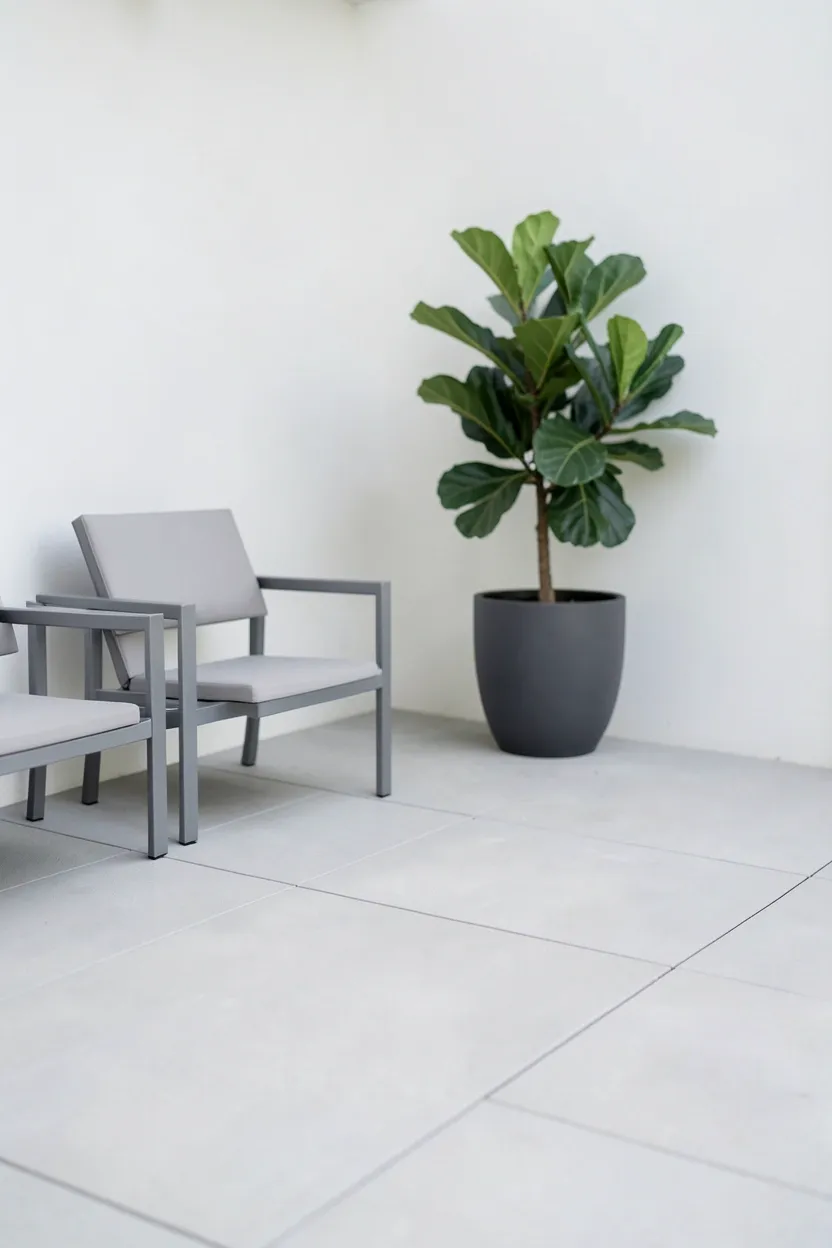
Unified color palettes and simple patterns create calming environments that let furniture, plantings, and architecture take center stage. Choose neutral tones like warm grays, soft beiges, or subtle earth tones that provide timeless backdrops for changing decor. Avoid busy patterns or contrasting borders that introduce unnecessary visual complexity. Consider integrating subtle texture variations rather than color contrasts to add visual interest without disrupting minimalist aesthetic.
Tips
- Do select high-quality pavers with consistent color throughout individual pieces.
- Don't underestimate the impact of high-quality lighting in minimalist spaces.
- Then maintain clean, consistent joint lines to preserve minimalist design intent.
Budget & time: Simplified design reduces material complexity and installation labor.
What this gives you: Serene, sophisticated outdoor space with timeless simplicity.
These 23 paver patio ideas demonstrate how thoughtful material selection and creative design can transform outdoor spaces into functional, beautiful extensions of your home. Whether you prefer the timeless charm of brick, the contemporary appeal of concrete, or the organic beauty of natural stone, there is a paver patio design that perfectly matches your style, budget, and practical needs. Renters can start small with stepping stone pathways or modular systems, while homeowners can invest in multi-level or outdoor kitchen setups that add lasting property value. By choosing the right materials and installation approach, you create durable outdoor living spaces that provide enjoyment for decades.
About the author
OBCD
CGI visualization and interior design content. We create detailed 3D renders and curate practical design ideas for every room in your home.