29 Japandi Living Room Ideas for a Comfortable Space
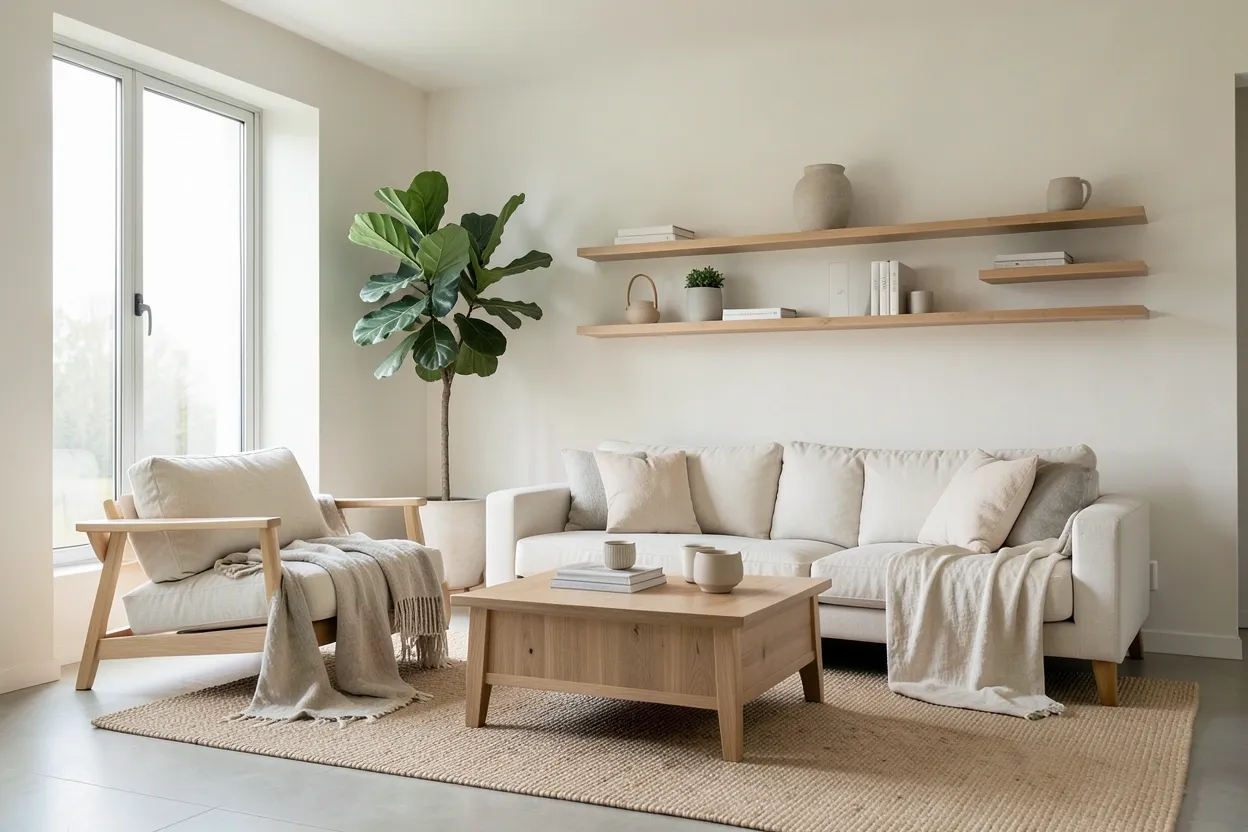
Japandi living room ideas blend the serene simplicity of Japanese minimalism with the cozy warmth of Scandinavian hygge, creating spaces that feel both calm and inviting. This fusion design style prioritizes intentional living through quality pieces, natural materials, and thoughtful curation over accumulation and clutter. Whether you’re working with a compact rental apartment or a spacious family room, Japandi principles transform any living space into a sanctuary that promotes relaxation and mindfulness.
The beauty of Japandi design lies in its restraint — every piece earns its place through function, beauty, or emotional connection. By focusing on light neutrals, natural textures, organic shapes, and deliberate negative space, you create a comfortable living room that feels larger, brighter, and more peaceful. These ideas are especially practical for renters: most require no drilling, no permanent changes, and work beautifully in small apartments.
This guide offers 29 practical Japandi living room ideas, from foundational color choices to finishing decorative touches. They work together as a cohesive whole but can also be implemented individually based on your space, budget, and timeline. Start with foundational elements like color palette and furniture choices, then layer in textures, lighting, and accessories gradually — building a living room that reflects both the calm of Japanese Zen and the warmth of Scandinavian hygge comfort.
Quick FAQ
What makes Japandi design different from purely minimalist or Scandinavian styles?
Japandi combines Japanese minimalist principles with Scandinavian hygge warmth, creating a style that feels both serene and inviting. While pure minimalism can feel cold and Scandinavian design sometimes leans too casual, Japandi strikes a balance between intentional restraint and cozy comfort through quality materials, subtle textures, and deliberate negative space.
How can I create a Japandi living room on a budget?
Start with foundational elements like paint color and decluttering, which are low-cost but high-impact. Invest in one or two quality pieces—a natural fiber rug, a simple coffee table, or good lighting—rather than filling space with many cheaper items. Use natural textures and neutral colors through affordable accents like throws, baskets, and plants, and edit regularly to maintain intentionality.
What colors work best in a Japandi living room?
Japandi color palettes prioritize light neutrals—warm whites, creams, soft beiges, pale grays—creating a calm, cohesive foundation. Accents come through natural materials (light woods, stone, ceramics) and subtle contrasts (matte black, deeper neutrals). The key is restraint, choosing one or two accent colors rather than introducing multiple competing shades.
How do I maintain a Japandi living room with kids or pets?
Japandi design actually works well with families because its emphasis on quality pieces and natural materials creates durable, easy-to-maintain spaces. Choose washable fabrics like linen and cotton, durable natural fiber rugs, and furniture that withstands daily use. Use storage solutions—baskets, cabinets, ottomans—to keep toys and pet accessories out of sight while maintaining the uncluttered aesthetic.
As an Amazon Associate I earn from qualifying purchases.
Table of Contents
- 1. Light Neutral Color Palette
- 2. Low-Profile Furniture
- 3. Natural Wood Accents
- 4. Layered Textures
- 5. Organic Shapes
- 6. Minimalist Plant Decor
- 7. Soft Ambient Lighting
- 8. Uncluttered Surfaces
- 9. Quality Over Quantity
- 10. Sliding Doors or Room Dividers
- 11. Woven Baskets and Storage
- 12. Neutral Artwork with Negative Space
- 13. Matte Black Accents
- 14. Natural Fiber Rugs
- 15. Built-In Shelving with Open Display
- 16. Statement Floor Mirror
- 17. Ceramic or Stoneware Vases
- 18. Monochromatic Color Scheme
- 19. Multi-Functional Furniture
- 20. Window Treatments That Let Light In
- 21. Rounded Sofa or Armchair
- 22. Stone or Concrete Accents
- 23. Minimalist Coffee Table
- 24. Floating Shelves
- 25. Textured Throws and Blankets
- 26. Minimalist Console Table
- 27. Lantern-Style Lighting
- 28. Dried Botanicals
- 29. Intentional Negative Space
1. Light Neutral Color Palette
A Japandi living room starts with a foundation of soft neutrals—warm whites, cream, pale beige, and light grays that create instant calm. This Japanese-Scandinavian fusion avoids harsh contrasts, instead embracing subtle tonal shifts that make the space feel open and airy. The trick is choosing undertones carefully: warm whites for hygge coziness, cool grays for Zen-like serenity, or a balanced cream that works in both directions. Avoid pure stark white, which can feel clinical, and steer clear of muddy browns that lose the fresh minimal aesthetic.
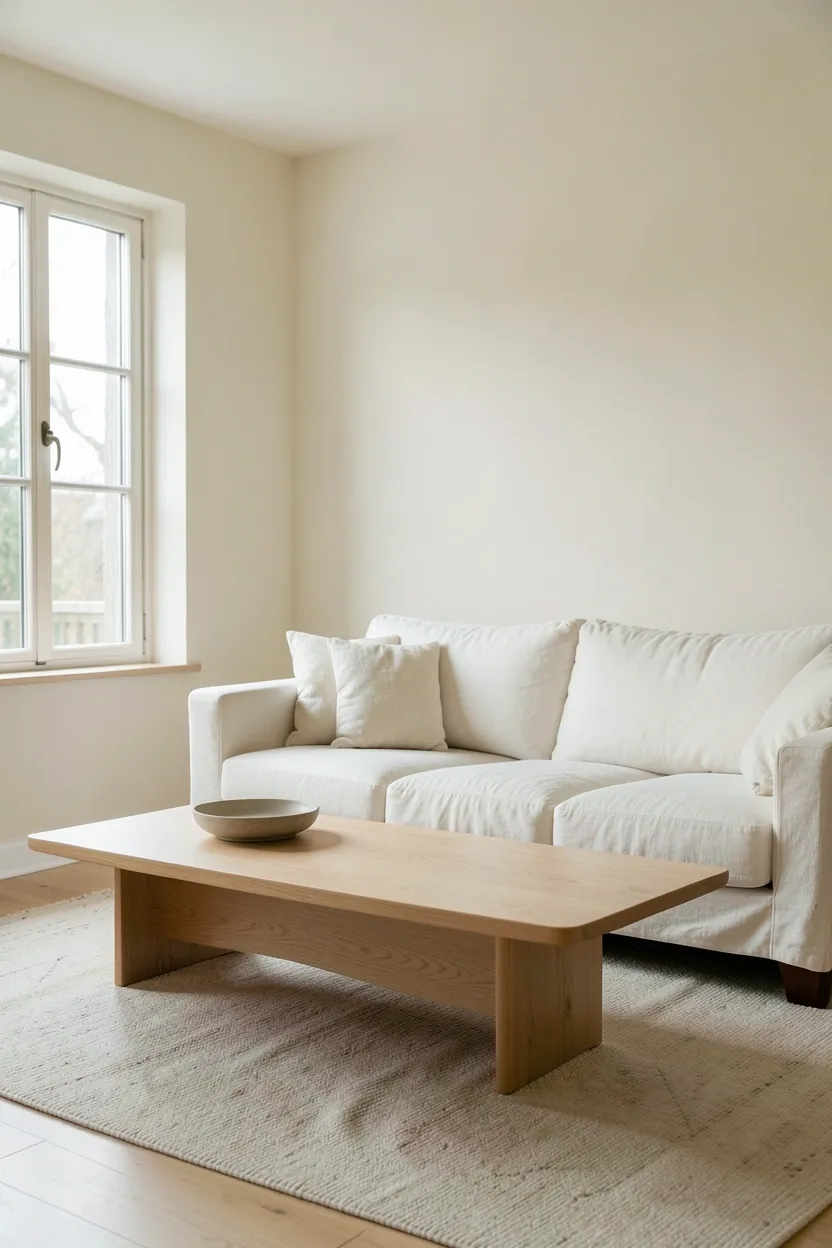
Layer different neutral tones through walls, upholstery, and rugs, keeping within a 2-3 shade range for visual cohesion. Matte paint finishes absorb light softly, while natural fabrics like linen and cotton add tactile warmth. Consider a light wood floor or pale oak furniture to ground the space without introducing dark, heavy elements.
Tips
- Do test paint samples in different lighting before committing
- Don’t mix too many neutral undertones—stick to warm OR cool
- Layer with white, cream, and one accent neutral for depth
What this gives you: A serene, adaptable backdrop that makes your living room feel larger and more peaceful.
2. Low-Profile Furniture
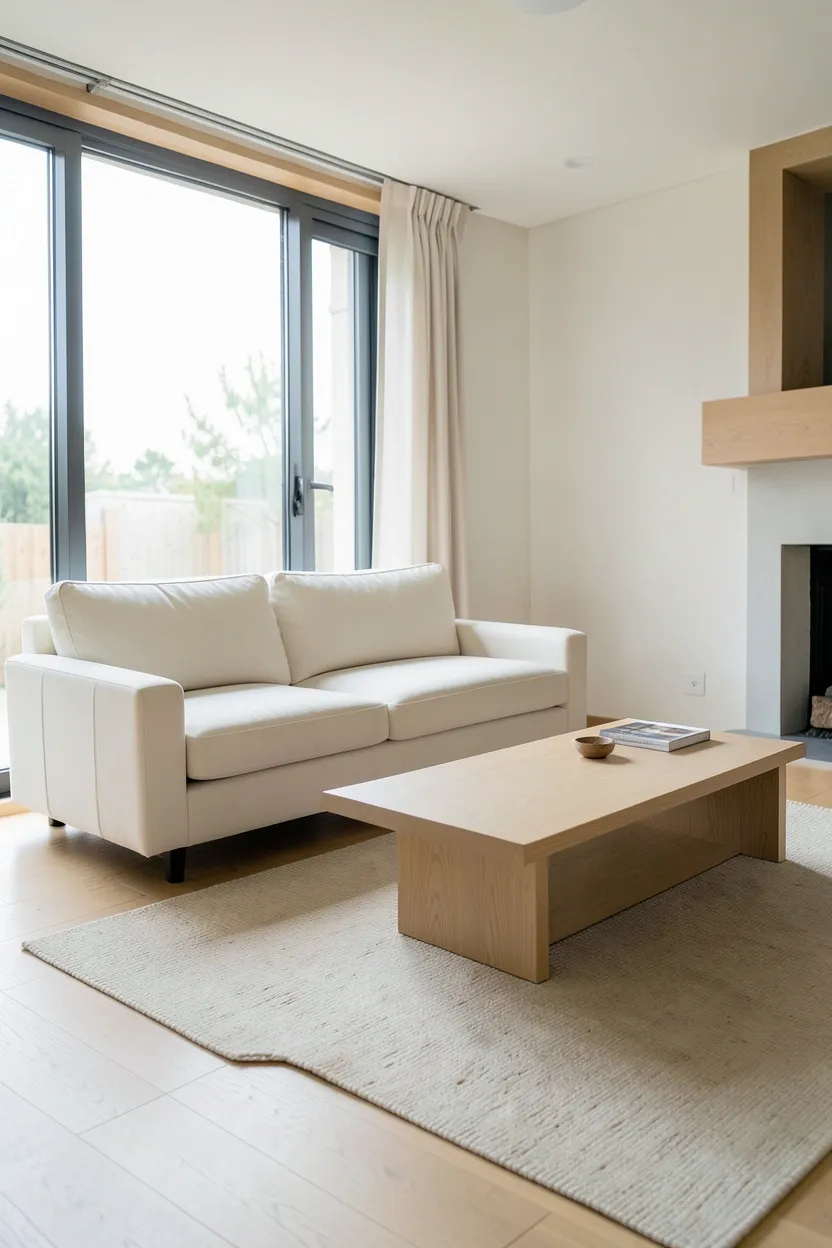
Low-profile furniture is essential in Japandi design, creating visual lightness and maintaining an unobstructed flow through the living space. Sofas, armchairs, and coffee tables should sit close to the ground, following the Japanese principle of being close to the earth while embodying Scandinavian simplicity. This approach makes ceilings feel higher and rooms more spacious, perfect for both compact apartments and larger living areas. Avoid bulky, towering furniture that dominates the space, and skip ornate legs or excessive ornamentation that breaks the clean lines.
Recommended
Items for this idea
Placement note: Position low furniture to create sightlines through the room, allowing natural light to pass unobstructed. Keep 18-24 inches of clearance between furniture pieces for easy movement.
Choose pieces with slim silhouettes and exposed tapered legs in light wood or matte black. A low-slung sofa with welt-free upholstery and squared cushions works perfectly, paired with a rectangular coffee table at 12-16 inches height. The goal is furniture that feels present without commanding attention. For a deeper look at this style, see our guide to Japandi living room ideas with 23 additional concepts.
Tips
- Do prioritize comfort over extreme lowness—aim for 15-18 inches seat height
- If you have high ceilings, add one slightly taller piece for balance
- Then use floor cushions for additional seating at ground level
What this gives you: A spacious, uncluttered feel that maximizes your living room’s perceived volume and natural light.
3. Natural Wood Accents
Natural wood brings warmth and authenticity to a Japandi living room, bridging Japanese reverence for natural materials and Scandinavian love for functional wood craftsmanship. Light woods like oak, ash, birch, and maple dominate this aesthetic, offering visual warmth without overwhelming the neutral palette. The grain should be visible but not the star—natural, not heavily stained or painted. Avoid dark walnut or mahogany that feels too heavy, and skip distressed or heavily weathered wood that clashes with the clean minimalist vibe.
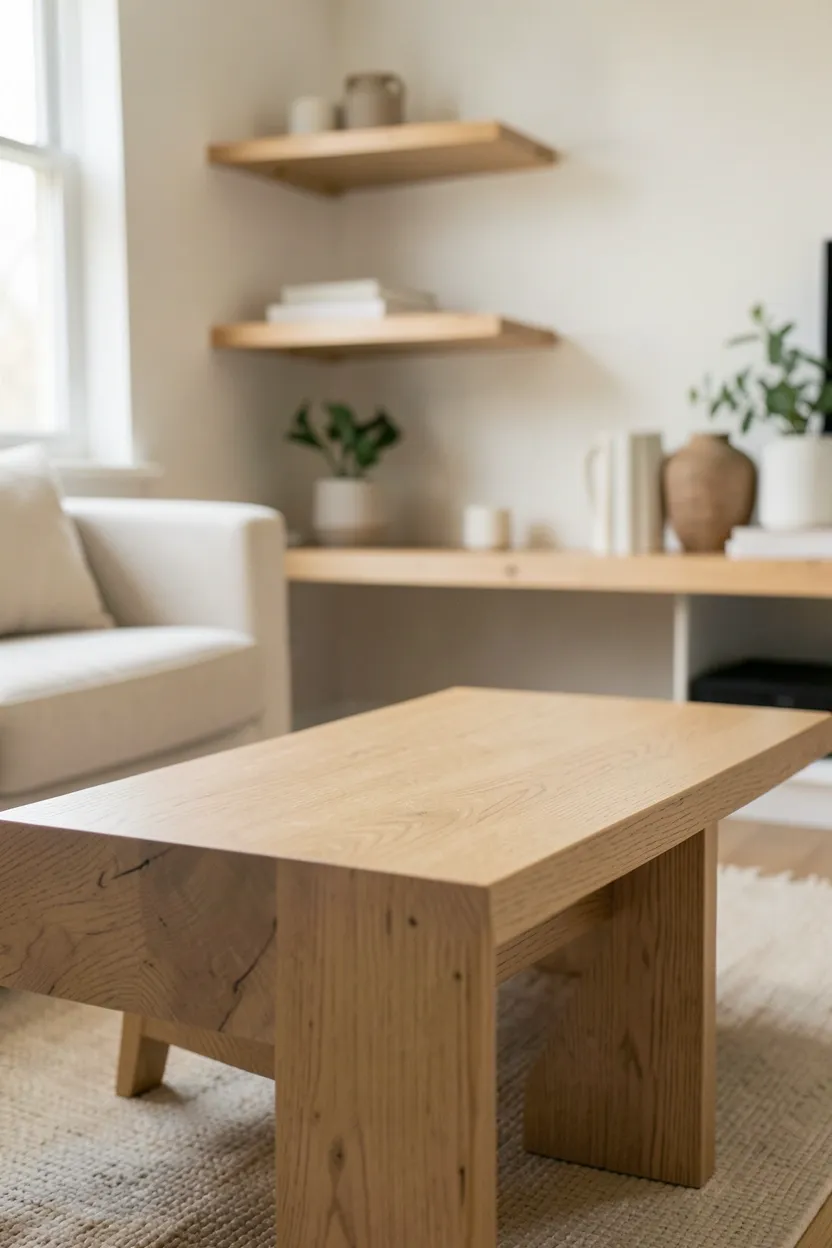
Why it works: Wood adds organic texture and connects your interior to nature, a core principle of both Japanese and Scandinavian design philosophies. It ages beautifully and creates a sense of permanence and grounding.
Incorporate wood through a coffee table with live-edge details, floating shelves with visible grain, or a media console in light oak. A wooden frame on a mirror or artwork, wood chair legs, or even simple wooden bowls on shelves add subtle warmth. Keep wood finishes consistent—either all natural or all lightly whitewashed—to maintain visual harmony.
Tips
- Pro: Choose wood with knots and variations for character
- Con: Too many different wood species can look chaotic
- Fix: Stick to one primary wood type, use others sparingly as accents
What this gives you: Natural warmth and character that makes your living room feel grounded, authentic, and connected to the outdoors.
4. Layered Textures
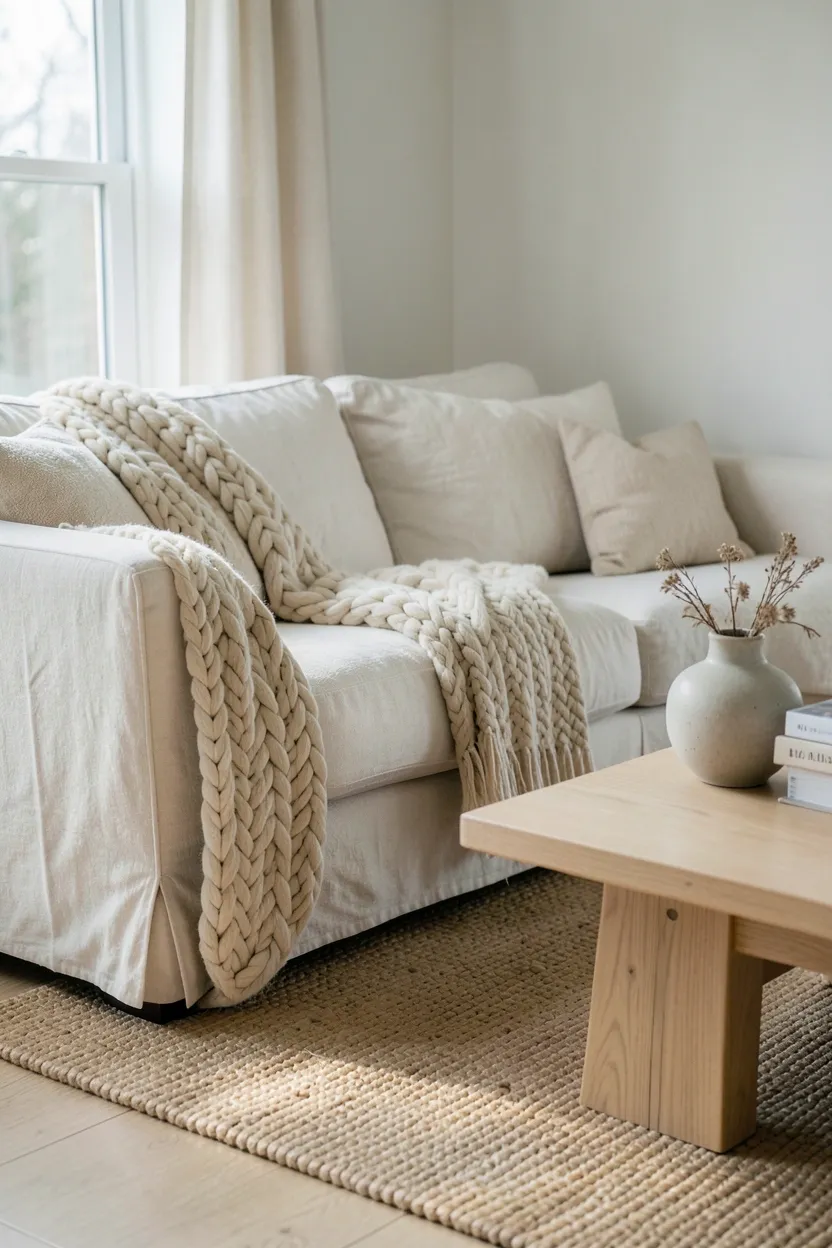
Japandi design proves you don’t need bold colors to create visual interest—layered textures provide depth and richness through tactile variety. Combine smooth linen upholstery with a chunky knit throw, pair a sleek wooden coffee table with a jute rug, or mix matte ceramic vases with rough-textured baskets. The key is balancing smooth with textured, hard with soft, and light with heavy. Avoid too many smooth surfaces that feel cold or overly rough textures that make the space feel unfinished and uncomfortable.
Recommended
Items for this idea
Start with your largest textures first—rug, sofa, curtains—then layer smaller accessories. A wool or jute rug anchors the room, while linen curtains soften windows. Add woven throws, ceramic vases, and perhaps a leather cushion for contrast. Textures should complement each other in color while offering different tactile experiences.
Tips
- Stick to 3-4 texture types per room for cohesion
- Use larger smooth surfaces, smaller textured accents
- Test texture combinations by placing samples together
Best for: Living rooms in neutral tones that need personality without introducing color.
What this gives you: A rich, multi-sensory living space that feels sophisticated and inviting through thoughtful material combinations.
5. Organic Shapes
Organic shapes soften the strict lines of Japandi minimalism, bringing natural flow and movement to your living room. Curved sofas, round coffee tables, circular rugs, and arched mirrors introduce gentle curves that contrast with straight-edged furniture, creating visual balance. This approach draws from Japanese appreciation for natural forms and Scandinavian functional design that prioritizes human comfort. Avoid overly geometric or rigid shapes that feel cold and impersonal, and skip excessively ornate or elaborate curves that compromise the minimalist aesthetic.
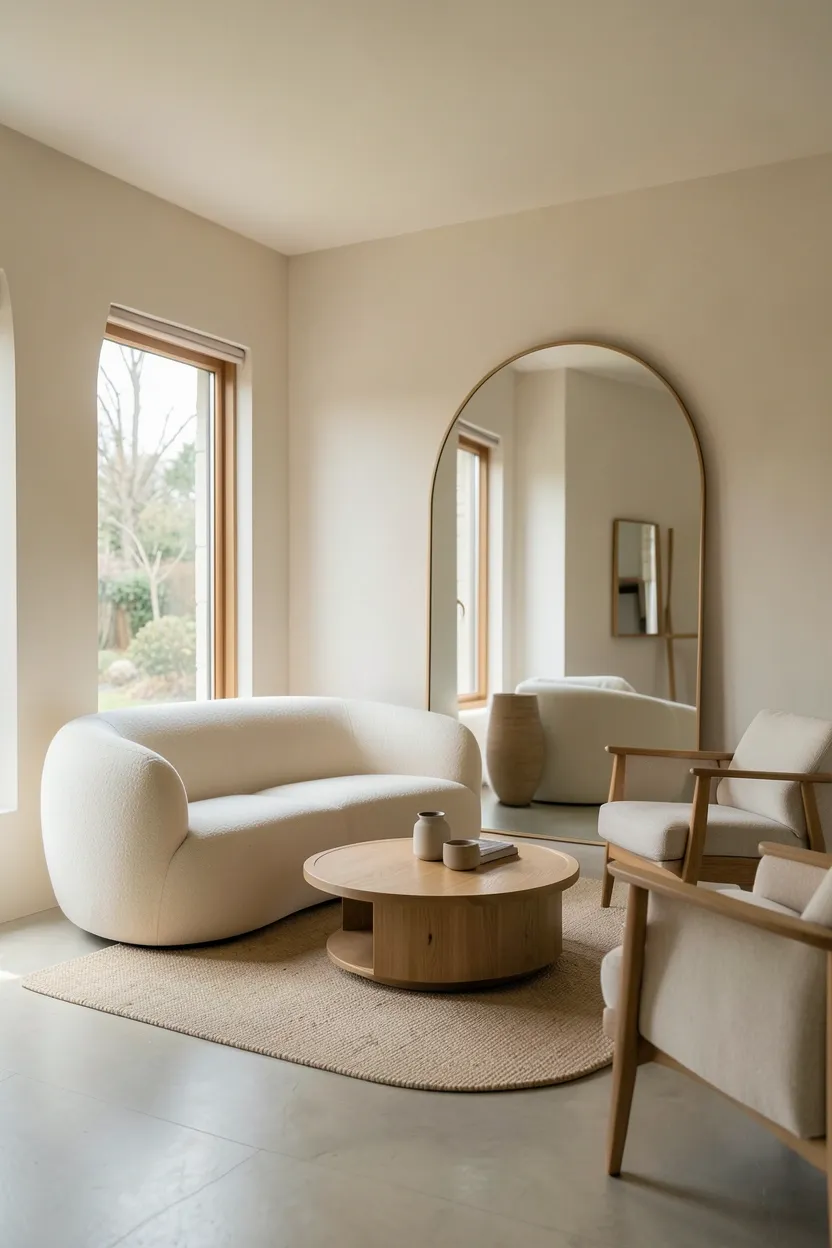
Common mistake: Overusing curves so the space feels chaotic or unfocused. The key is balance—mix one or two strong organic pieces with linear elements. A rounded sofa paired with a rectangular rug, or a circular coffee table with straight-lined armchairs, creates perfect harmony.
Choose organic shapes that serve multiple functions: a round ottoman that doubles as seating, a curved sofa that wraps around a conversation area, or an arched floor mirror that expands the space visually. Rounded pendant lights or cylindrical side tables add subtle softness without overwhelming the design.
Tips
- Start with one main organic piece—a sofa or coffee table
- Keep other curves secondary through smaller accessories
- Ensure organic shapes have clean, simple lines
What this gives you: A living space that feels welcoming and human-centered, with natural flow that makes the room feel alive and dynamic.
6. Minimalist Plant Decor
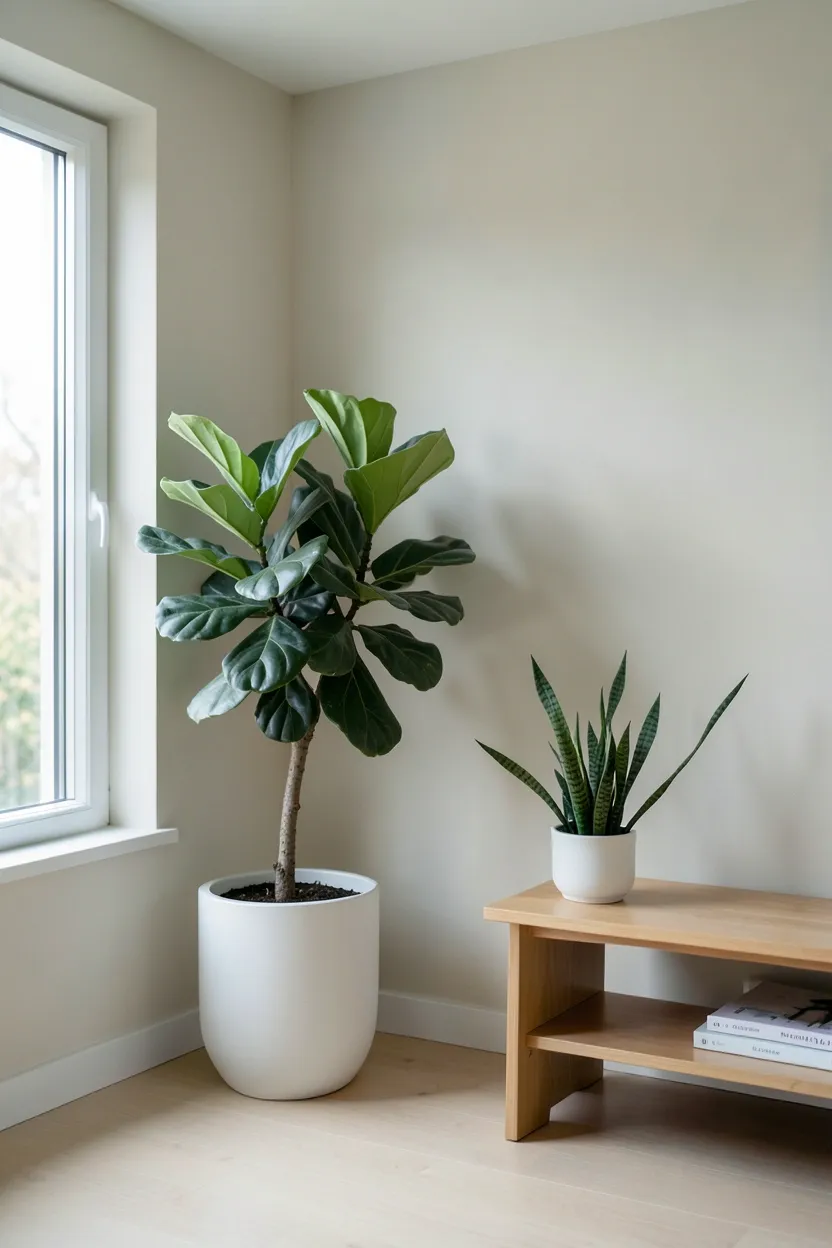
Plants breathe life into a Japandi living room, bringing the natural world indoors with quiet restraint that honors both Japanese appreciation for nature and Scandinavian biophilic design. Choose a few statement plants in simple pots—fiddle leaf figs, snake plants, or peace lilies—rather than creating an indoor jungle. The emphasis is on quality over quantity, with each plant chosen for its form, foliage texture, and ability to thrive indoors. Avoid cluttering every surface with small plants, and skip overly ornate or brightly colored pots that distract from the minimalist aesthetic.
Recommended
Items for this idea
Place one large plant in a corner to anchor the space, or group two smaller plants at different heights for visual interest. Choose simple ceramic or terracotta pots in white, cream, or natural clay tones. A single hanging plant near a window or a statement tree-like plant beside the sofa creates maximum impact with minimal pieces.
Tips
- If you have low light, choose snake plants or ZZ plants
- Then add trailing plants like pothos on high shelves
- Maintain plants regularly—yellowing leaves break the calm
What this gives you: A living connection to nature that purifies the air and brings organic vitality to your Japandi living space.
7. Soft Ambient Lighting
Lighting in a Japandi living room should feel warm, diffused, and layered, creating a cozy atmosphere that invites relaxation and contemplation. Rely on multiple light sources at different heights—floor lamps, table lamps, and ceiling fixtures—with warm white bulbs around 2700-3000K. The goal is soft, shadow-free illumination that feels natural and soothing, not harsh or clinical. Avoid bright overhead lights as the sole source, and skip cool-toned or daylight bulbs that feel stark and uninviting.
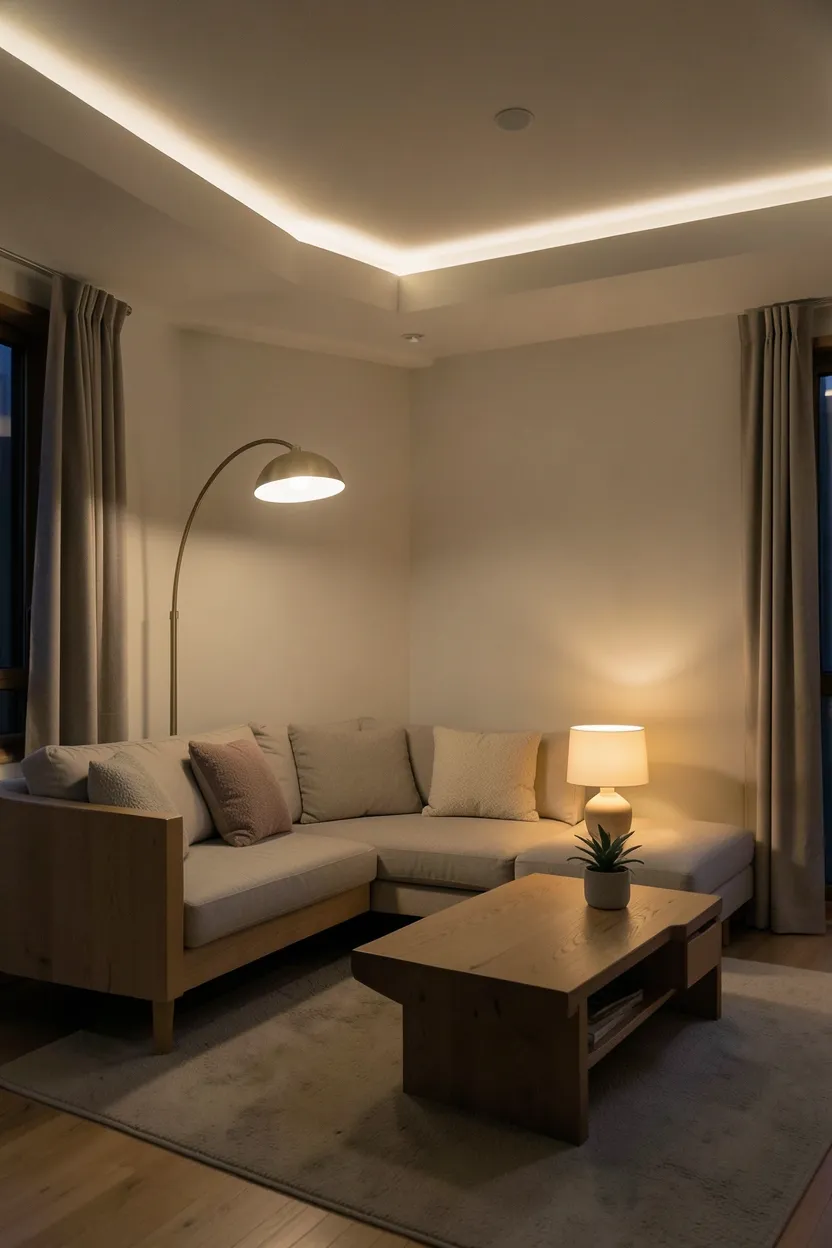
Placement note: Layer lighting by placing a floor lamp behind the sofa, table lamps on side tables, and a pendant over a coffee table or reading nook. This creates pockets of light rather than uniformly bright space.
Choose fixtures with simple, clean lines—matte metal finishes in black or brass, or natural materials like wood and ceramic. Dimmers are essential for adjusting brightness throughout the day. Consider a statement floor lamp with an arched design or a series of pendants at different heights for visual interest.
Tips
- Do use warm white LEDs at 2700K-3000K for hygge warmth
- Don’t rely solely on ceiling lighting
- Install dimmers on all overhead lights for flexibility
What this gives you: A living space that transitions effortlessly from bright and functional during the day to warm and intimate at night.
8. Uncluttered Surfaces
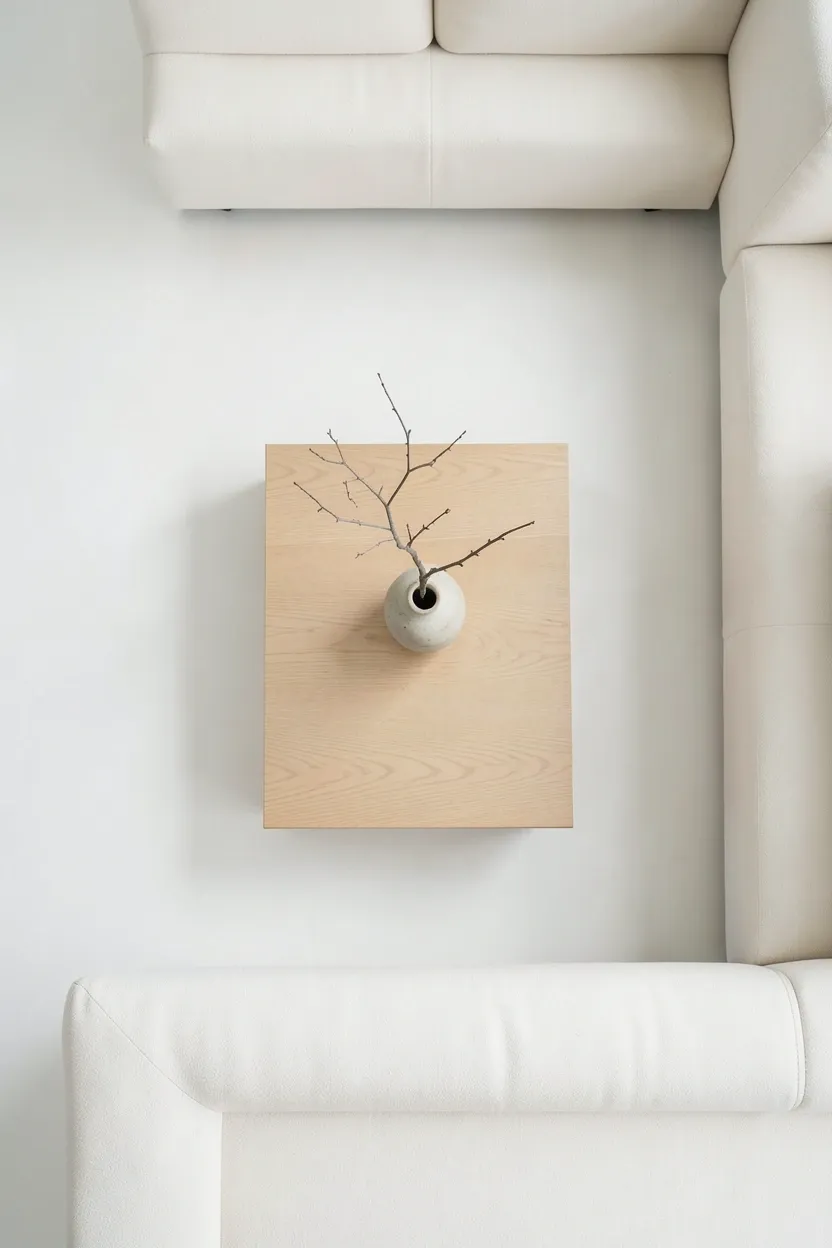
Uncluttered surfaces are the hallmark of Japandi design, creating visual calm and mental space that aligns with both Japanese minimalism and Scandinavian practicality. Coffee tables, side tables, and shelves should hold only intentional items—perhaps a carefully curated vase, one or two books, or a single decorative object—leaving plenty of negative space. This approach emphasizes each chosen piece and prevents visual overwhelm. Avoid piling knick-knacks, stacks of magazines, or unrelated objects that create visual noise, and skip leaving everyday items like remote controls or charging cables in plain sight.
Recommended
Items for this idea
Why it works: Empty space is as important as filled space in Japandi design. It allows the eye to rest, creates breathing room, and highlights the beauty of each thoughtfully chosen item.
Use storage solutions to keep everyday items out of sight—decorative baskets, cabinets with doors, or storage ottomans. Edit your surfaces regularly, removing anything that doesn’t serve a purpose or bring joy. A single sculptural vase with one branch or a stack of two artfully chosen books creates more impact than a crowded collection.
Tips
- Pro: Follow the rule of three—three items max per surface
- Con: Empty surfaces can feel unfinished or cold
- Fix: Choose one statement piece and two supporting items
Rental note: Use freestanding storage units instead of built-ins to maintain uncluttered surfaces without permanent changes.
What this gives you: A serene, organized living space that feels spacious and calming, making it easier to relax and focus.
9. Quality Over Quantity
Japandi living rooms embrace the philosophy of quality over quantity, investing in fewer but better pieces that will last and bring lasting joy. Rather than filling the space with furniture and accessories, choose a handful of well-designed, well-made items that serve their purpose beautifully. This approach reflects Scandinavian craftsmanship traditions and Japanese appreciation for enduring beauty. Avoid fast furniture or trendy accessories that will quickly look dated, and skip buying multiple cheaper versions of items when one quality piece would serve better.
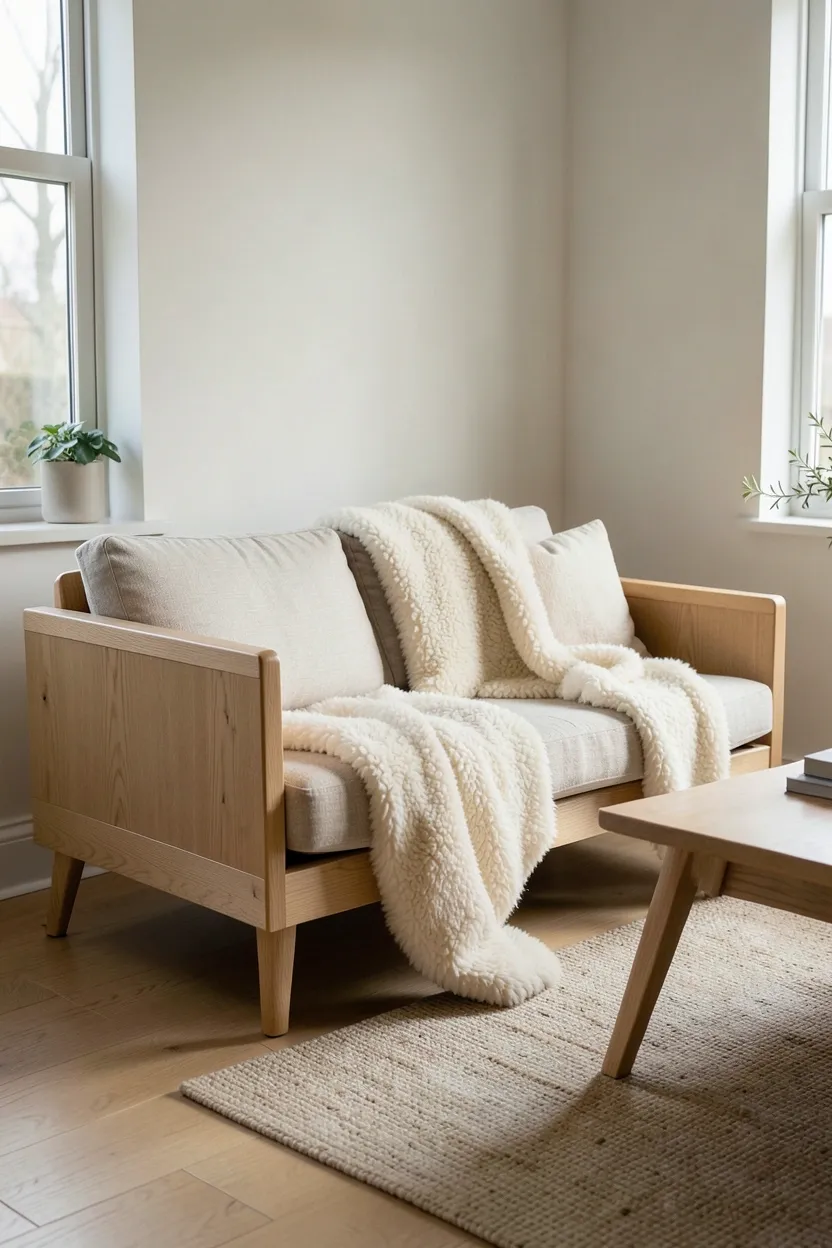
Start with the essentials—a quality sofa, a good coffee table, comfortable seating—and build thoughtfully from there. Each new addition should earn its place through function, beauty, or emotional connection. Consider natural materials, solid construction, and timeless design that will age gracefully.
Tips
- Prioritize one quality piece over several mediocre ones
- Choose materials that improve with age—leather, wood, wool
- Invest in comfort for pieces you use daily
What this gives you: A living space filled with meaningful, durable pieces that tell your story and stand the test of time.
10. Sliding Doors or Room Dividers
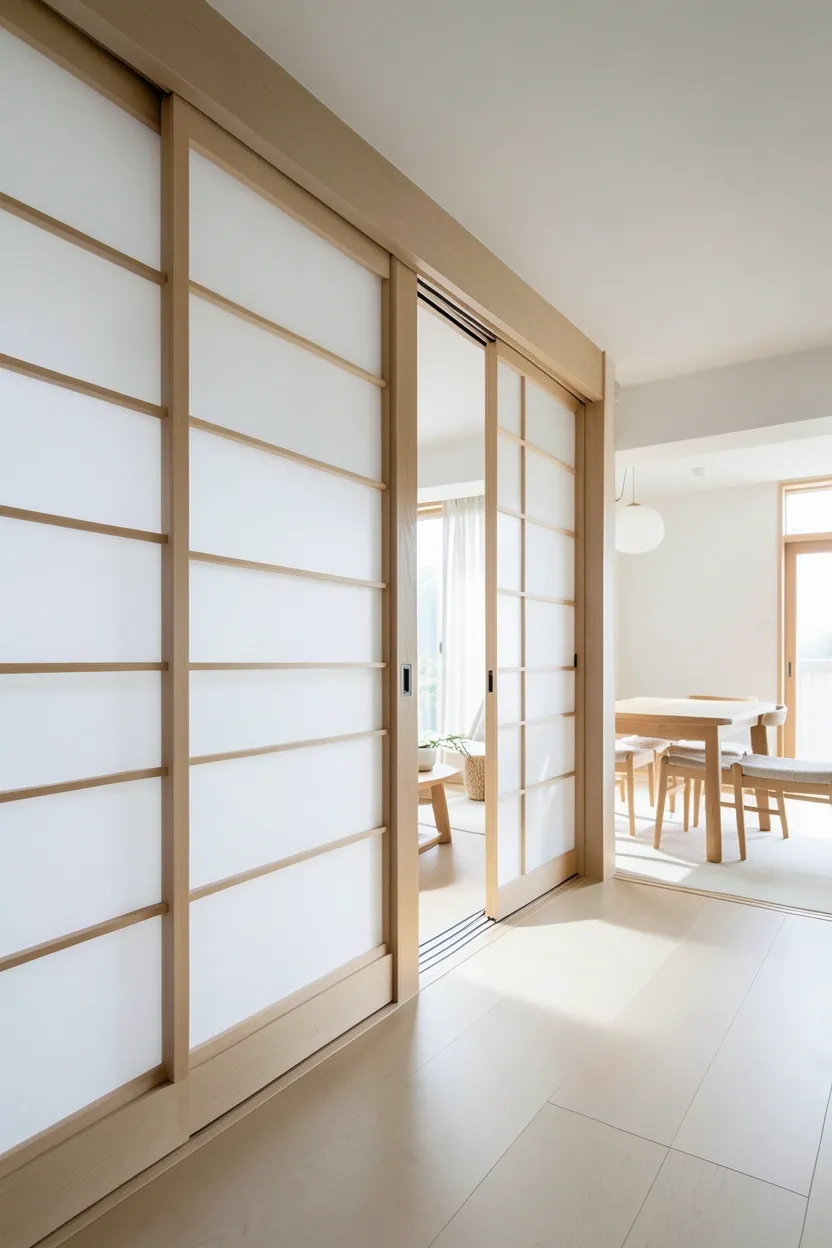
Sliding doors or room dividers bring Japanese-inspired functionality to your living space, offering flexible space division while maintaining an open, airy feel. Whether traditional shoji-style screens with translucent paper or modern frosted glass panels, these elements create subtle boundaries without blocking light or creating visual separation. This approach works beautifully in open-plan homes where you want to define zones—living from dining, or a reading nook from the main seating area. Avoid heavy curtains or solid partitions that make rooms feel small and closed off, and skip dividers with busy patterns that clash with the minimalist aesthetic.
Recommended
Items for this idea
Common mistake: Installing room dividers that are too tall or wide for the space, making it feel cramped. The key is proportion—dividers should be substantial enough to create separation but not so large they overwhelm the room.
Choose sliding doors in natural wood frames with white or frosted glass panels for a contemporary Japandi look. Room dividers with clean, simple lines and light-allowing materials work best. Position dividers where they can create distinct zones without blocking natural light or traffic flow.
Tips
- Install sliding doors between living and dining areas
- Use portable dividers you can move as needed
- Choose materials that complement your existing furniture
Budget & time: Install-ready shoji screen dividers take under an hour to set up and cost significantly less than custom built-ins.
What this gives you: Flexible space definition that maintains openness while creating distinct functional zones within your living room.
11. Woven Baskets and Storage
Woven baskets bring natural texture and hidden storage to a Japandi living room, combining practicality with organic beauty that fits the aesthetic perfectly. Use baskets in natural materials—seagrass, jute, rattan, or water hyacinth—to corral blankets, magazines, toys, or everyday items while adding tactile warmth. This approach aligns with Scandinavian functionality and Japanese appreciation for natural materials. Avoid plastic or synthetic baskets that feel cheap, and skip overly ornate or heavily patterned woven pieces that clash with minimalist vibe.
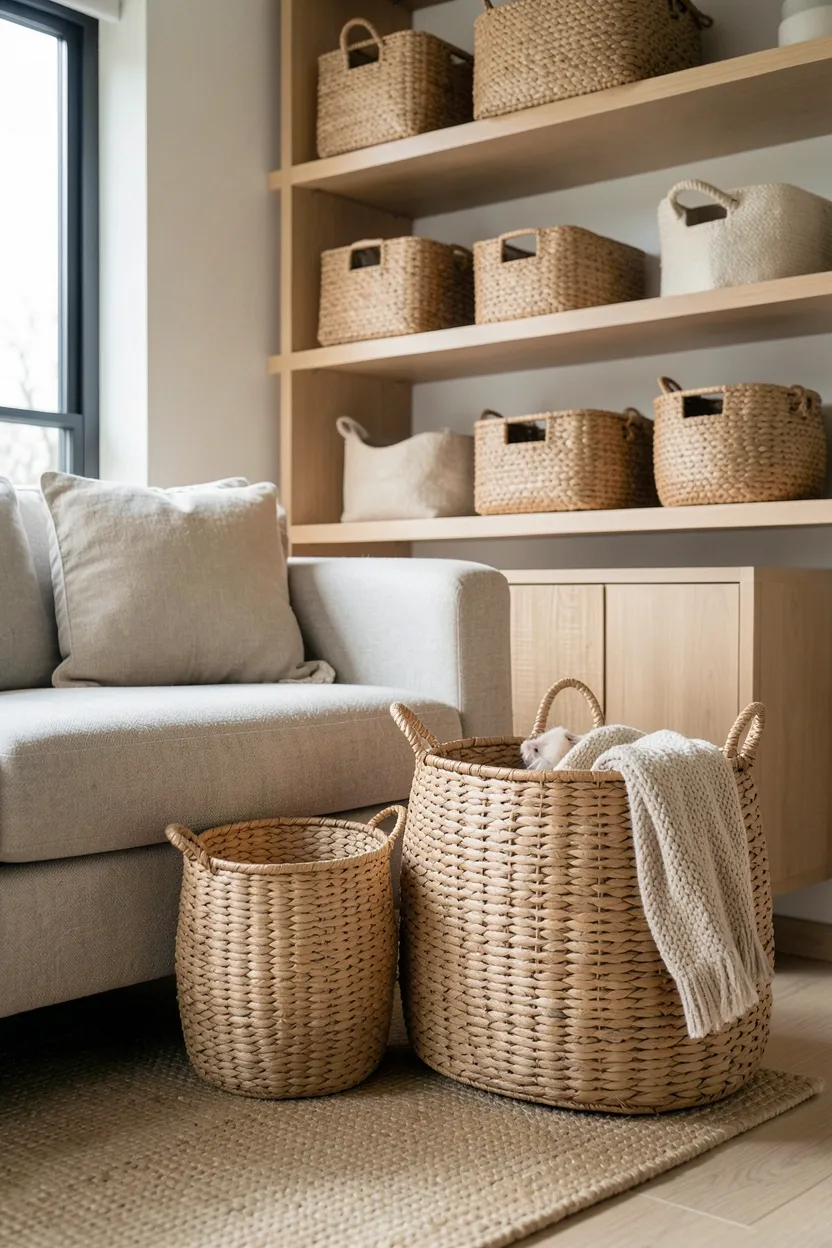
Choose one or two statement baskets rather than many small ones—a large basket next to sofa for throws, or a set of matching baskets on shelving. Natural fibers in neutral tones blend seamlessly with Japandi palette. Tucked under a coffee table or beside an armchair, baskets provide hidden storage without disrupting visual calm.
Tips
- Do choose baskets with tight, even weaves for durability
- Don’t overstuff baskets until they lose their shape
- Use baskets with lids for items you want to hide completely
What this gives you: Practical storage solutions that add natural texture and warmth while keeping your living space organized and clutter-free.
12. Neutral Artwork with Negative Space
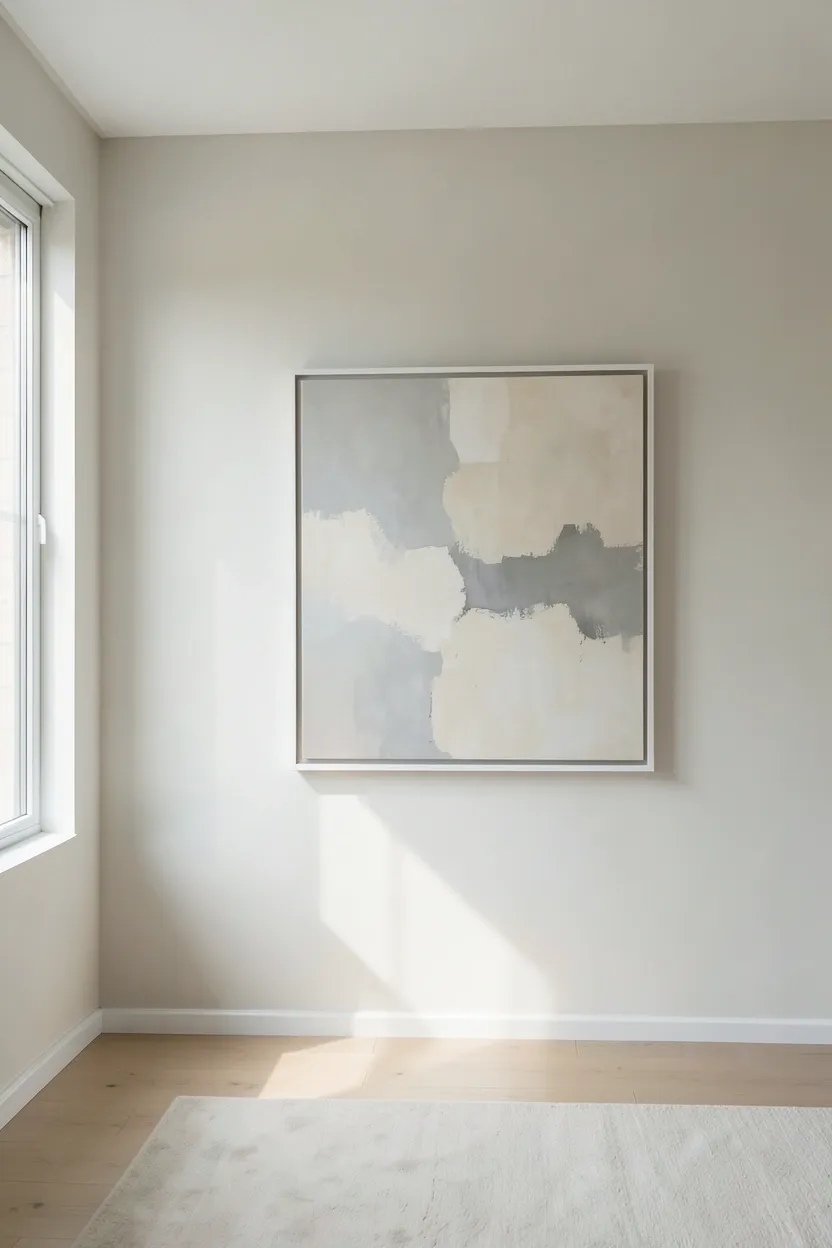
Artwork in a Japandi living room should be minimal, thoughtful, and balanced with ample negative space around each piece. Choose abstract or nature-inspired art in neutral tones—whites, grays, soft earth colors—that complements the room’s palette without demanding attention. The emphasis is on quiet beauty and visual breathing room, reflecting Japanese aesthetic of ma (space between elements) and Scandinavian understatement. Avoid bright, bold art that clashes with neutral scheme, and skip gallery walls that feel cluttered and overwhelming.
Recommended
Items for this idea
Placement note: Hang artwork at eye level (approximately 57-60 inches from floor to center) and leave at least 4-6 inches of wall space around each piece. This creates a gallery-like feel with intentional emptiness.
Choose one or two statement pieces rather than many small ones. A large abstract canvas in soft grays, a photograph of natural textures, or a minimalist line drawing work beautifully. Simple frames in white, natural wood, or black matte finishes complete the look.
Tips
- If you have high ceilings, choose larger vertical pieces
- Then lean artwork against walls on shelves or mantels
- Consider art with natural subjects—landscapes, botanicals, textures
What this gives you: A refined, curated feel that adds personality without overwhelming your living space’s calm atmosphere.
13. Matte Black Accents
Matte black accents add striking contrast and modern edge to a Japandi living room, providing visual anchor points against light neutrals while maintaining minimalist restraint. Black should be used sparingly—lamp bases, picture frames, chair legs, or a coffee table base—creating intentional focal points rather than overwhelming the space. This approach draws from Scandinavian modern design and Japanese aesthetic of controlled contrast. Avoid glossy black finishes that feel flashy or cheap, and skip too many black elements that make the room feel heavy and dark.
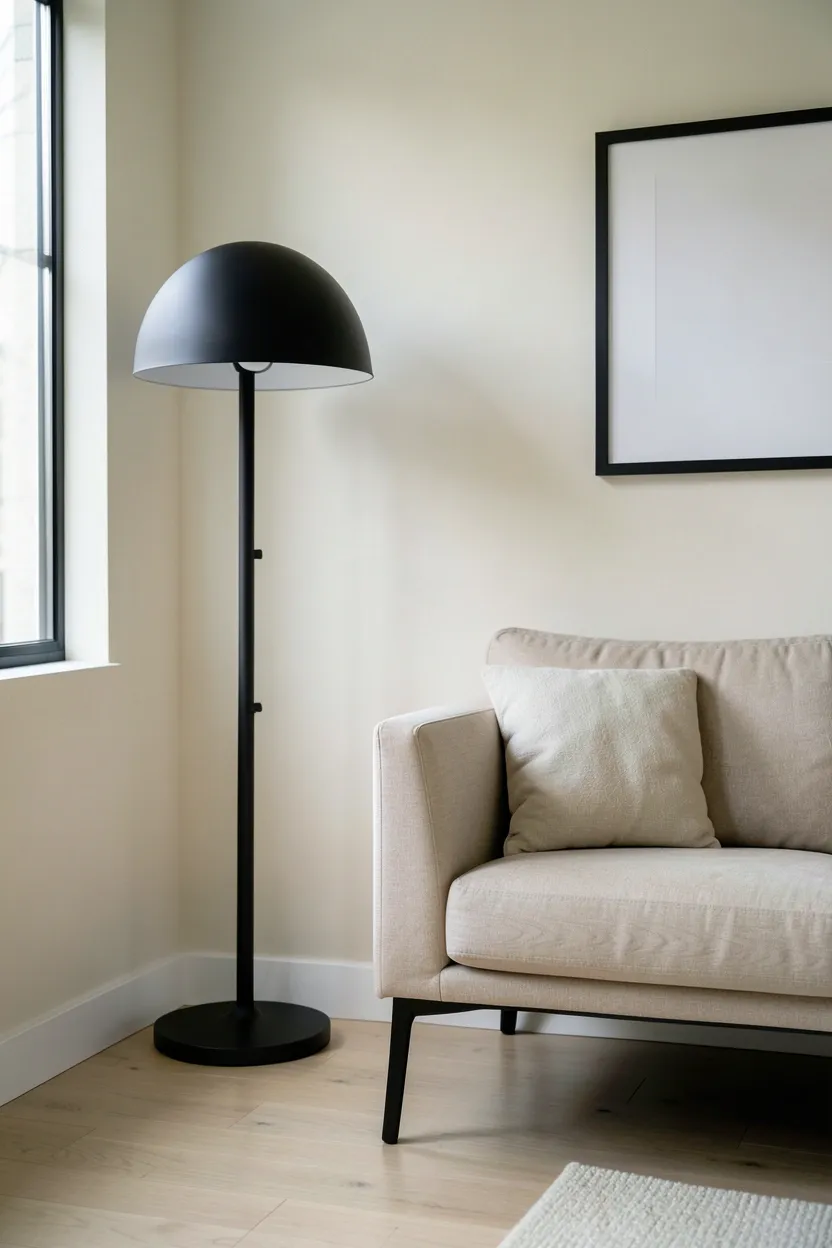
Why it works: Matte black adds sophistication and definition without the harshness of gloss, and its darkness creates visual weight that grounds light, airy spaces. It’s particularly effective when paired with natural wood and soft neutrals. If you’re new to this aesthetic, our overview of what is Japandi interior design explains the style’s origins and core principles.
Incorporate black through lighting fixtures, metal furniture legs, or picture frames. A matte black floor lamp beside a light wood sofa creates dramatic contrast, while black drawer pulls on a white cabinet add subtle modern edge. Keep black elements proportionate to the room—smaller pieces in compact spaces, larger statements in spacious rooms.
Tips
- Pro: Use matte black to ground light neutrals
- Con: Too much black can make space feel small
- Fix: Follow the 60-30-10 rule—60% neutral, 30% wood, 10% black
Best for: Living rooms with predominantly light color schemes that need definition and visual interest.
What this gives you: Modern sophistication and visual definition that elevates your Japandi living space without disrupting its calm.
14. Natural Fiber Rugs
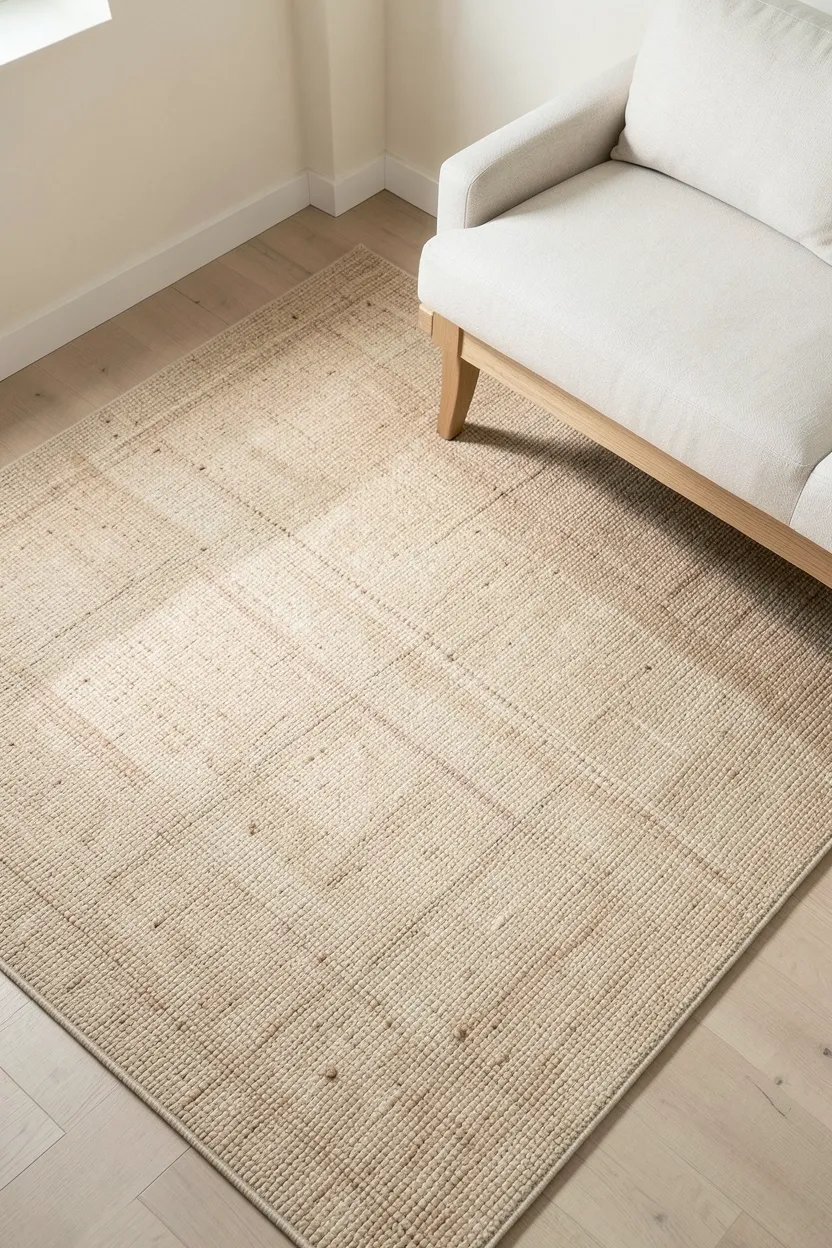
Natural fiber rugs ground a Japandi living room with organic texture and sustainable materials that connect to both Japanese reverence for nature and Scandinavian biophilic principles. Jute, sisal, seagrass, and wool rugs provide understated warmth and tactile interest without introducing bold patterns or colors. Choose natural fibers in neutral tones—cream, beige, light gray, or tan—that complement your room’s palette. Avoid synthetic rugs that feel slick or artificial, and skip heavily patterned or brightly colored rugs that clash with minimalist aesthetic.
Recommended
Items for this idea
A large natural fiber rug anchors your seating area, defining the space while adding soft underfoot comfort. Layering works well in Japandi design—a jute or sisal base rug with a smaller wool rug on top creates texture depth. Keep rug edges clean and borders simple; avoid fringed or elaborate edging that feels fussy.
Tips
- Choose a rug that extends at least 6-8 inches beyond furniture
- Test durability for high-traffic areas—jute is more resilient than sisal
- Use rug pads for cushioning and to prevent slipping
What this gives you: An organic foundation that adds warmth, texture, and sustainability to your living space while maintaining minimalist purity.
15. Built-In Shelving with Open Display
Built-in shelving with open display combines Japanese appreciation for thoughtful curation with Scandinavian love of practical storage solutions. Floor-to-ceiling or mid-height built-ins provide ample storage while allowing you to display carefully chosen items—books, ceramics, plants—creating visual interest without clutter. The key is intentional styling with plenty of negative space between items. Avoid cramming shelves full of unrelated objects, and skip closed cabinets that hide everything behind doors, losing the display aspect.
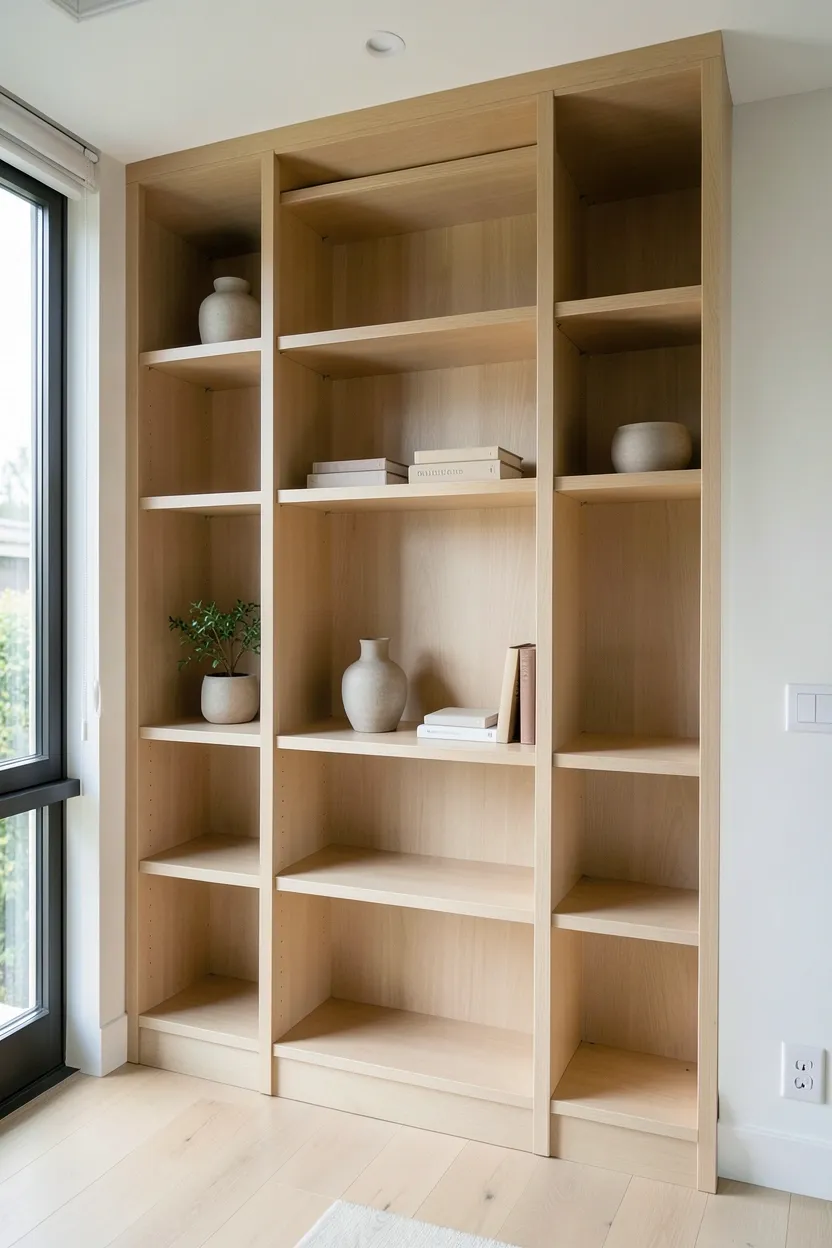
Common mistake: Treating built-in shelving as catch-all storage rather than curated display space. The result is visual chaos that contradicts Japandi principles of intentionality and restraint.
Design built-ins with simple, clean lines and minimal trim—flat-panel doors or no doors at all. Choose light wood or white finishes that blend with walls. Style shelves by placing a few statement items and leaving empty space around each; group books by color or size for visual calm.
Tips
- Leave 30-40% of each shelf empty for negative space
- Group items in odd numbers—1, 3, or 5—rather than pairs
- Use built-ins with lower cabinets to hide less attractive items
What this gives you: Functional storage and curated display that balances practicality with the Japandi principle of intentional beauty.
16. Statement Floor Mirror
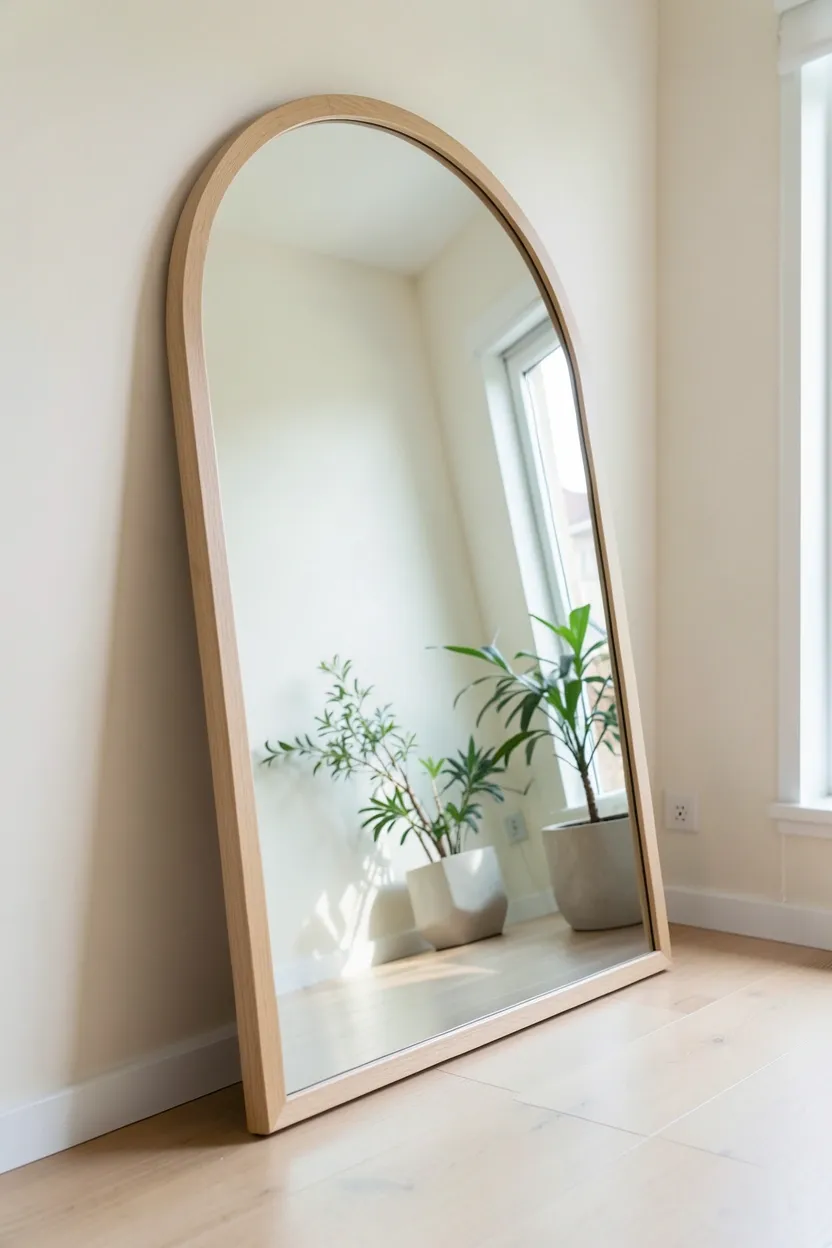
A large floor mirror creates visual spaciousness and reflects natural light in a Japandi living room, serving both functional and decorative purposes. Choose a simple, minimalist frame—light wood, black metal, or frameless—with clean lines that aligns with Japandi aesthetic. Positioning is key: near a window to maximize light reflection, or opposite an architectural feature to double the visual impact. Avoid ornate or heavily decorated frames that clash with minimalist vibe, and skip small mirrors that get lost without making an impact.
Recommended
Items for this idea
Arched mirrors add organic softness to linear spaces, while rectangular options suit more structured rooms. A full-length mirror leaned against the wall creates casual, modern feel, while one hung at eye level offers more permanence. Consider mirror placement carefully—it should reflect something beautiful: plants, artwork, or architectural details.
Tips
- Do position mirrors to reflect natural light
- Don’t place mirrors opposite cluttered areas
- Choose arched shapes for softness, rectangular for structure
Budget & time: Large frameless mirrors offer maximum impact at minimum cost and can be leaned against walls for instant installation.
What this gives you: Enhanced spaciousness and light that makes your living room feel larger, brighter, and more open.
17. Ceramic or Stoneware Vases
Ceramic and stoneware vases add sculptural interest and organic texture to a Japandi living room, functioning as art pieces in their own right. Choose vases in simple, understated forms—cylinders, bottles, or organic shapes—with matte glazes in white, cream, beige, or earth tones. The emphasis is on form and texture rather than pattern or color. Avoid glossy, brightly colored vases that feel out of place, and skip overly elaborate or ornate shapes that contradict minimalist principles.
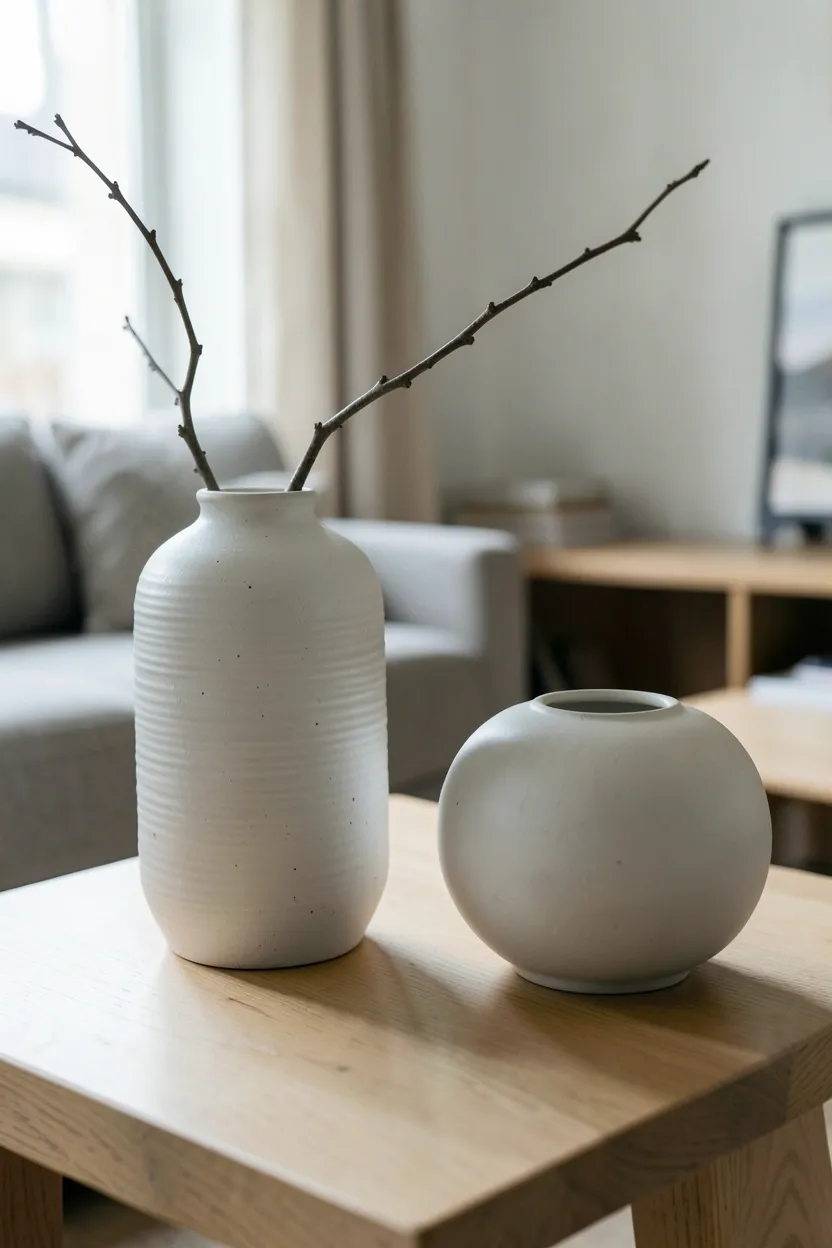
Placement note: Group two or three vases of varying heights together on a shelf or side table, or place a single statement vase on a coffee table. Leave negative space around each piece to let it breathe.
Choose vases with visible texture—subtle ridges, imperfect forms, or natural clay variations. A tall cylindrical vase with a single branch, a squat round vase with dried grasses, or a bottle-shaped vessel with nothing inside all make elegant statements. The vase itself is the art.
Tips
- If you prefer warmth, choose vases with warm undertones
- Then add cool-toned pieces for subtle contrast
- Leave some vases empty—the form is the statement
What this gives you: Sculptural, tactile decor that adds visual interest without introducing color or clutter to your living space.
18. Monochromatic Color Scheme
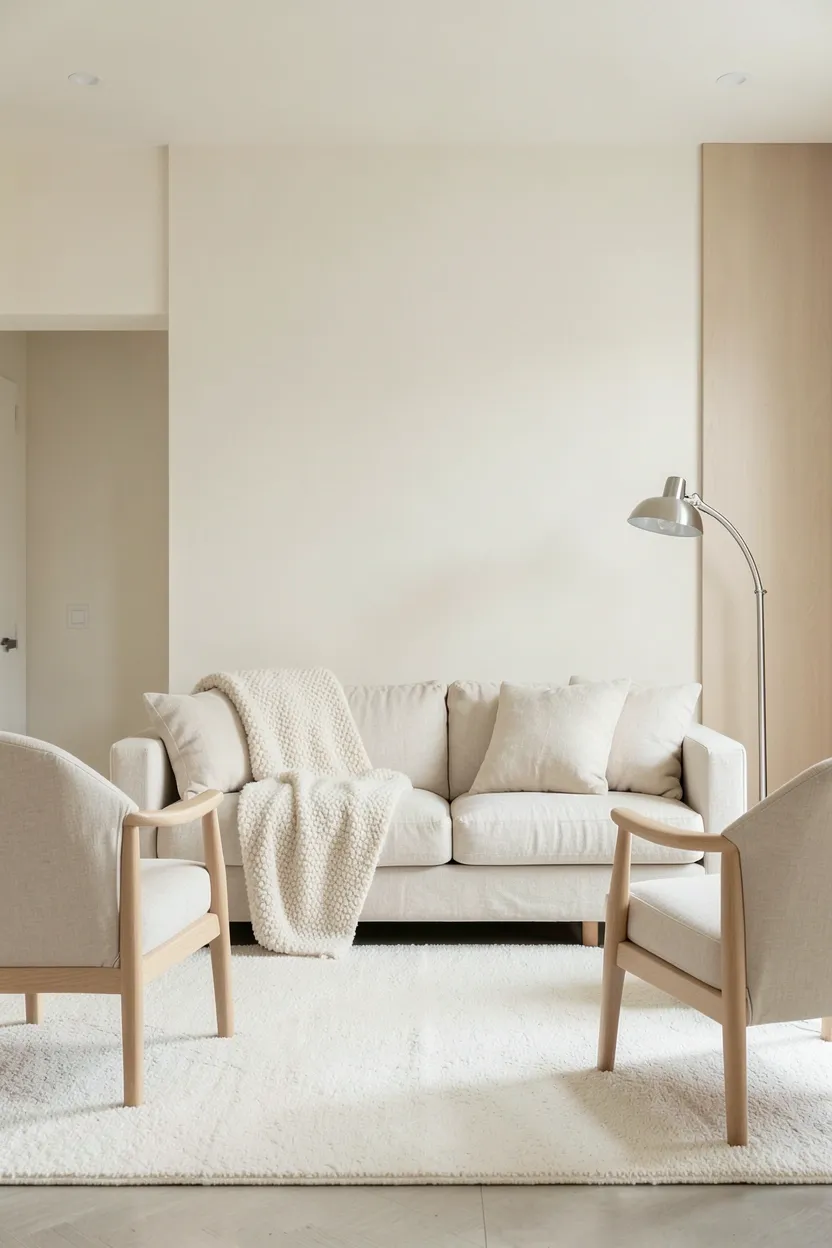
A monochromatic color scheme creates serene cohesion in a Japandi living room, using variations of a single color family to add depth without introducing contrast. Choose one neutral base—white, cream, beige, or gray—and layer it through walls, furniture, textiles, and accessories in different tones and textures. This approach reflects Japanese aesthetic of harmony and Scandinavian love of understated sophistication. Avoid stark contrasts or bold accent colors that disrupt the calm, and skip too many variations that muddy the palette.
Recommended
Items for this idea
Why it works: Monochromatic schemes create visual continuity and make spaces feel larger, calmer, and more cohesive. The lack of contrast allows texture and form to take center stage.
Start with your wall color as the base, then choose furniture, textiles, and accessories in 2-3 shades lighter or darker. A cream room might include white rugs, beige upholstery, and light wood accents. Texture becomes the differentiator—smooth walls, nubby wool throws, sleek metal lamps, rough pottery—all in the same color family.
Tips
- Pro: Monochromatic schemes are easy to style and maintain
- Con: Can feel flat without texture variation
- Fix: Layer at least 3 different textures in the same color family
What this gives you: A living space that feels harmonious, sophisticated, and effortlessly calm through unified color and intentional texture.
19. Multi-Functional Furniture
Multi-functional furniture maximizes space efficiency in a Japandi living room, combining practicality with clean design that serves more than one purpose. This approach draws from Scandinavian ingenuity and Japanese space-saving traditions, ideal for smaller rooms or minimalist living. Consider ottomans with storage, sofa beds for guests, or coffee tables that convert to desks. Avoid clunky or overly complex furniture that loses its clean lines, and skip pieces that sacrifice comfort or aesthetics for functionality alone.
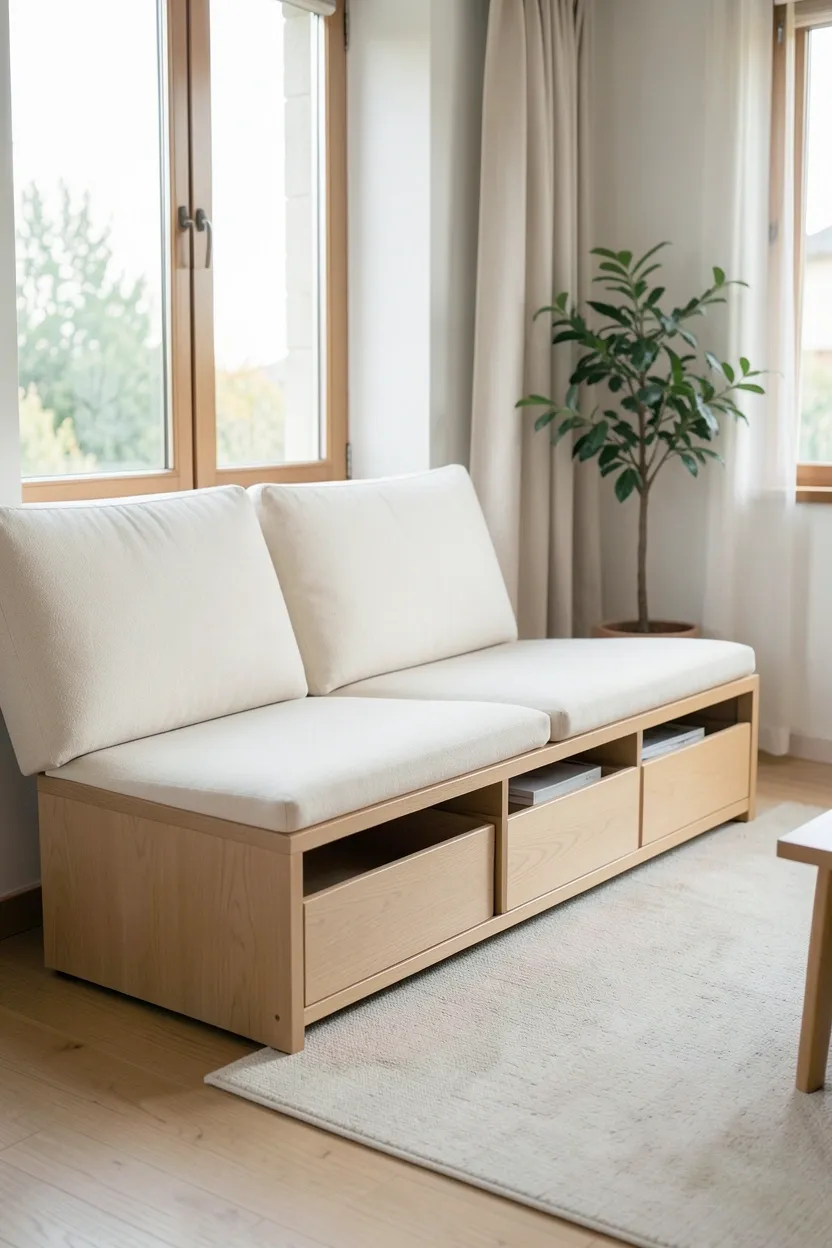
Choose furniture that maintains minimalist aesthetic while offering hidden benefits. A sleek bench with storage underneath, a console table that folds down to a desk, or a coffee table with lift-top storage all work beautifully. The key is functionality that’s invisible—pieces don’t announce their multiple purposes; they simply deliver them.
Tips
- Prioritize functions you actually use daily
- Choose pieces that maintain clean, simple lines
- Test mechanisms before buying—smooth operation is essential
Best for: Small apartments, urban living rooms, or anyone seeking maximum functionality from minimal furniture pieces.
What this gives you: Maximum utility from minimal pieces, creating a living space that adapts to your needs without feeling cluttered.
20. Window Treatments That Let Light In
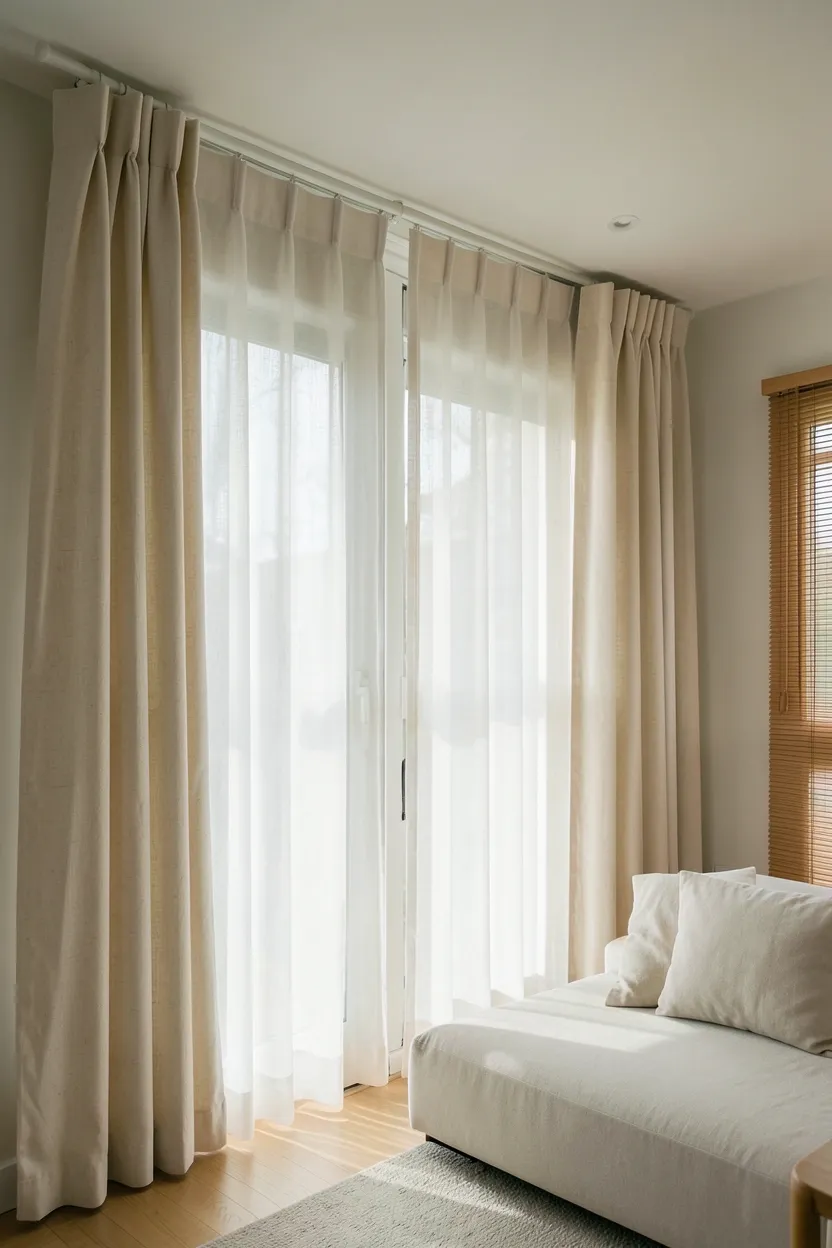
Window treatments in a Japandi living room should prioritize natural light while offering privacy and subtle texture, aligning with both Japanese appreciation for natural elements and Scandinavian love of daylight. Choose light, airy options—sheer linen curtains, bamboo blinds, or simple roller shades—in neutral tones that don’t compete with the room’s palette. Avoid heavy drapes or dark colors that block light and make spaces feel small, and skip overly ornate valances or treatments that add visual clutter.
Recommended
Items for this idea
Common mistake: Installing window treatments that are too short or don’t extend wide enough to frame the window properly. The result looks makeshift and undermines the room’s calm, intentional aesthetic.
Install curtains high—just below the ceiling—to make windows appear taller and rooms more spacious. Choose sheer linen panels in white or cream that filter light beautifully while providing softness. Bamboo or woven wood blinds add natural texture and can be adjusted for light control throughout the day.
Tips
- Install curtain rods 4-6 inches above window frames
- Choose curtain width 2-3 times window width for fullness
- Layer blinds with sheers for flexibility
What this gives you: Soft, diffused natural light that fills your living room while maintaining privacy and adding subtle texture.
21. Rounded Sofa or Armchair
A rounded sofa or armchair introduces gentle curves to a Japandi living room, softening the overall composition while maintaining clean lines and minimalist restraint. Choose pieces with smooth, flowing silhouettes—curved backs, rounded arms, or circular ottomans—in neutral fabrics that blend with your palette. This organic approach creates visual interest without clutter, reflecting both Japanese appreciation for natural forms and Scandinavian functional comfort. Avoid overly puffy or ornate curved furniture that loses its refined edge, and skip sharp, boxy shapes that feel cold and unwelcoming.
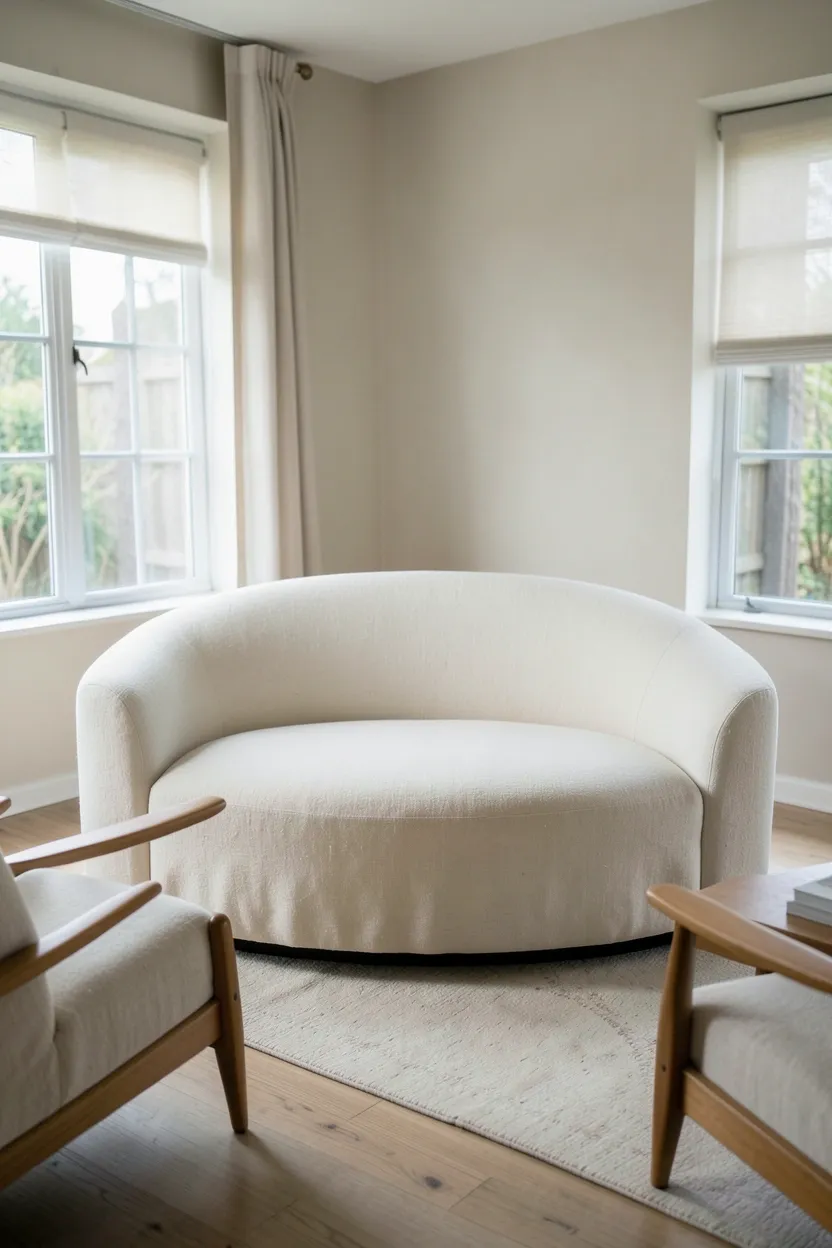
A curved sofa placed centrally anchors the room while inviting conversation. A rounded armchair in a corner adds softness without taking over. The key is balance—one curved piece balanced by linear elements creates perfect Japandi harmony. Choose fabrics like linen or wool in cream, beige, or light gray for ultimate hygge comfort.
Tips
- Do prioritize comfort and support when choosing curves
- Don’t choose curves that sacrifice usable space
- Pair rounded pieces with linear elements for balance
What this gives you: A living space that feels welcoming and human-centered, with organic softness that invites relaxation.
22. Stone or Concrete Accents
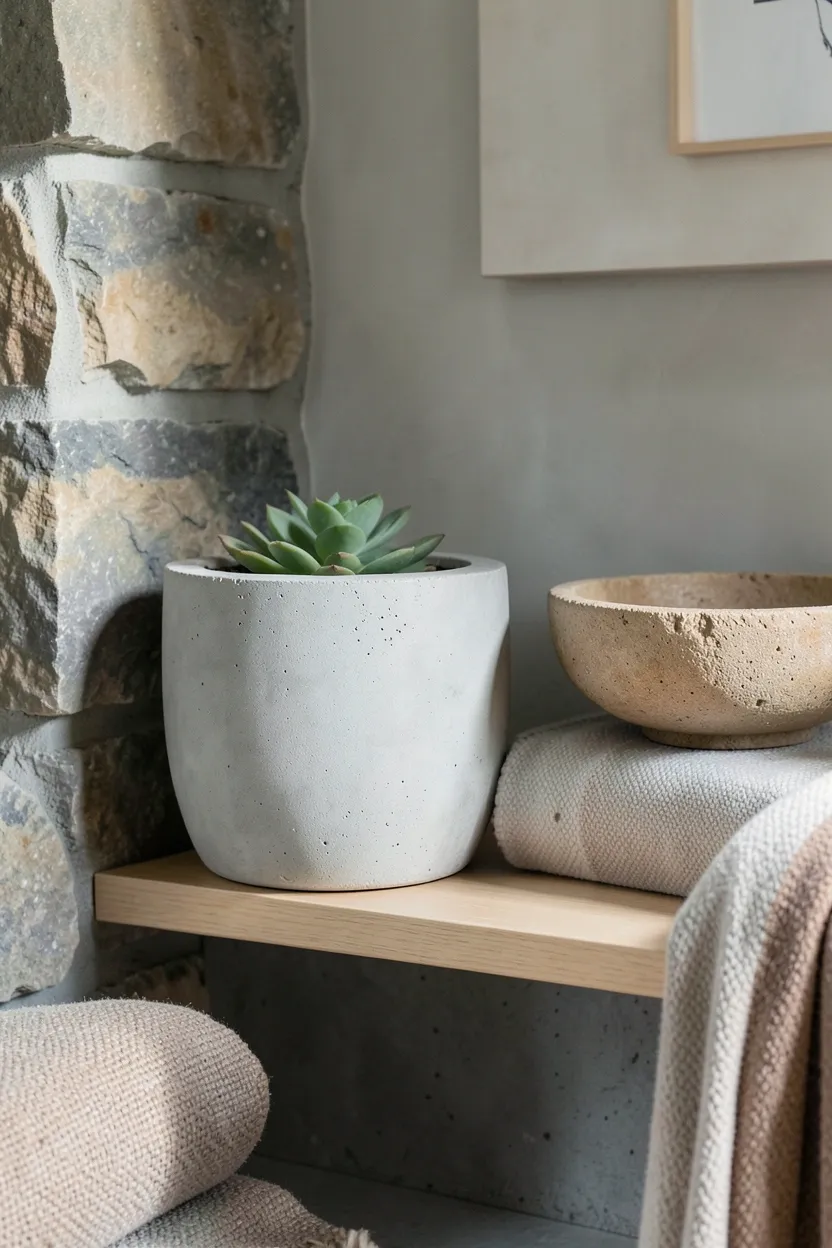
Stone or concrete accents bring elemental, grounded texture to a Japandi living room, connecting your interior to natural materials in their purest forms. Use these materials sparingly—a concrete planter, a stone bowl, a concrete coffee table—for maximum impact. The cool, solid surfaces contrast beautifully with soft textiles and warm wood, creating tactile interest. Avoid too much stone or concrete, which makes rooms feel heavy and cold, and skip polished or highly finished surfaces that feel artificial.
Recommended
Items for this idea
Placement note: Position stone or concrete pieces where they catch natural light—near windows or under lamps—to highlight their texture and bring out subtle color variations.
Choose simple, unadorned forms—plain cylindrical planters, geometric concrete bowls, or a raw stone sculpture. The material itself is the statement. A concrete planter with a single succulent, a stone bowl with nothing inside, or a small concrete sculpture on a shelf all make deliberate, impactful additions.
Tips
- If you love warmth, choose limestone or sandstone
- Then add darker stone or concrete for contrast
- Keep stone/concrete pieces proportionate to your room
What this gives you: Elemental texture that grounds your living space while adding sophisticated, natural contrast to softer elements.
23. Minimalist Coffee Table
A minimalist coffee table serves as the central anchor of a Japandi living room, chosen for clean lines, understated form, and practical function without ornamentation. The perfect Japandi coffee table is low, simple, and often incorporates natural materials—light wood, stone, or matte metal—with a shape that complements your sofa and room layout. Avoid large, bulky tables that dominate space, and skip ornate details, excessive storage compartments, or busy designs that disrupt visual calm.
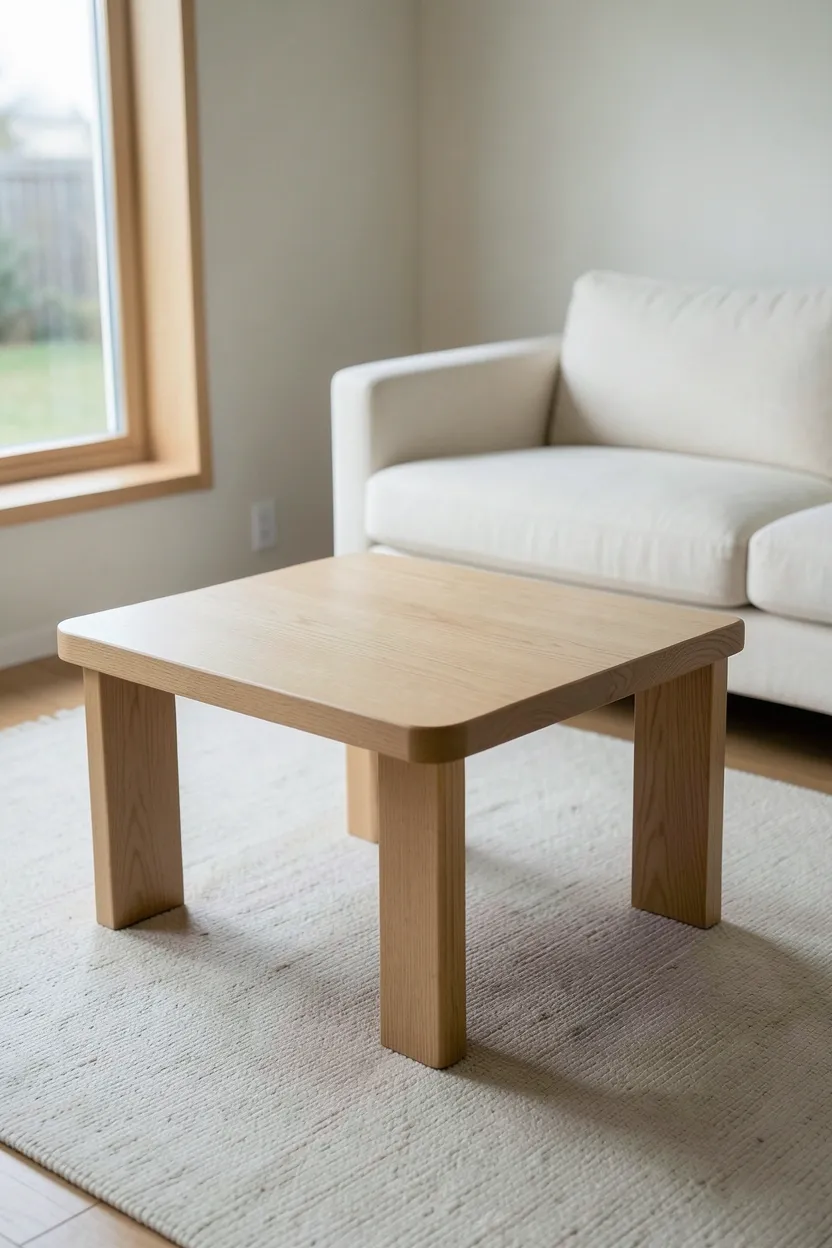
Why it works: The coffee table is both functional and symbolic—its simplicity sets the tone for the entire room. A well-chosen piece feels present without demanding attention, embodying Japandi restraint.
Choose a table that’s low enough to sit comfortably with your sofa (12-16 inches height) and proportionate to your space. A simple rectangular oak table with slightly rounded edges, a circular stone table with thin base, or a matte black metal table with glass top all work beautifully. Ensure there’s adequate clearance around it for movement.
Tips
- Pro: Choose a table 2/3 the length of your sofa
- Con: Too small and it feels lost; too big and it overwhelms
- Fix: Measure your space before buying and visualize placement
What this gives you: A central piece that grounds your living space with purposeful simplicity while maintaining room’s airy feel.
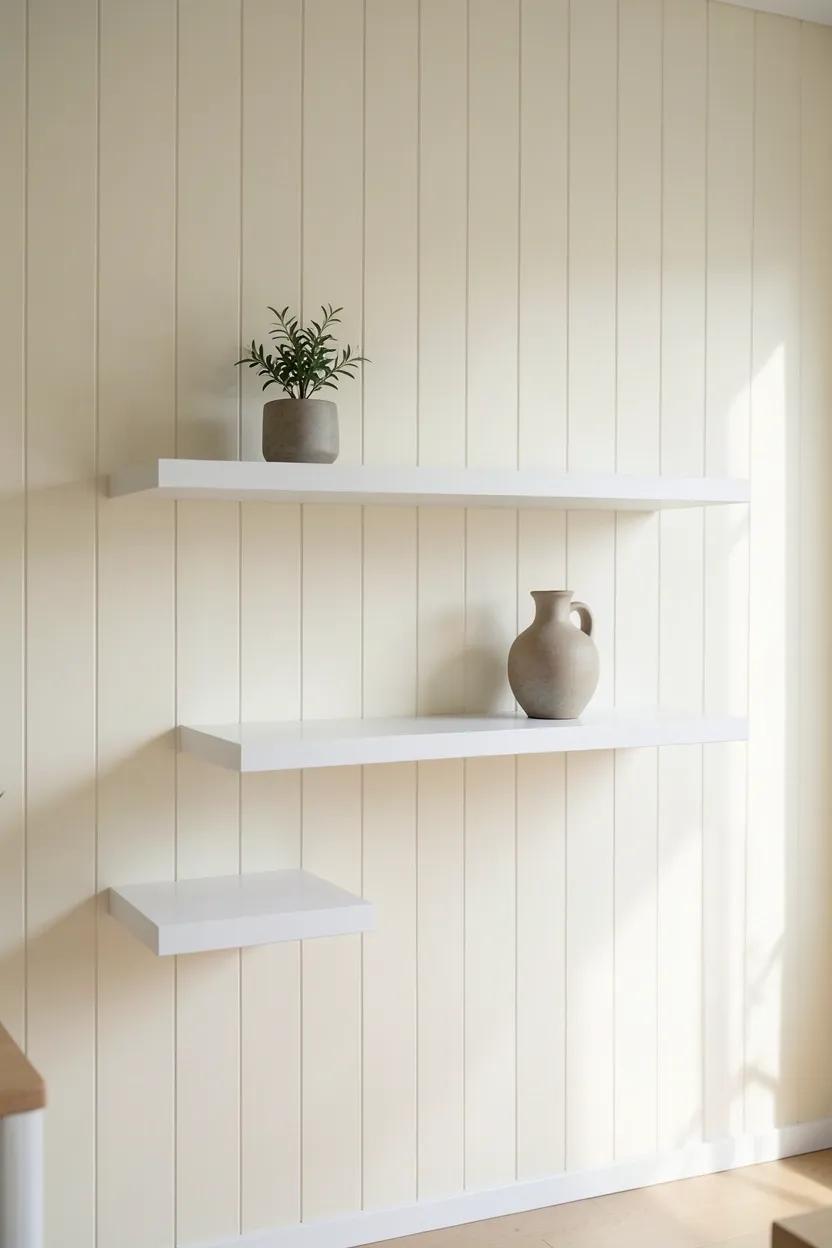
24. Floating Shelves
Floating shelves provide practical display space in a Japandi living room while maintaining visual lightness and unobstructed floor space. Install shelves at varying heights to create visual interest, but keep styling minimal with intentional spacing between items. This approach reflects Japanese appreciation for intentional display and Scandinavian functional design. Avoid overcrowding shelves with too many objects, and skip shelves that are too small or too numerous, creating visual chaos.
Recommended
Items for this idea
Install shelves in simple, clean lines—thin wood planks in white or natural finish, or sleek metal brackets with matte surfaces. Style each shelf with 2-3 items maximum, leaving plenty of empty space around each piece. A small plant, a ceramic vase, or a single book—each breathing room.
Tips
- Use floating shelves to display art without taking floor space
- Group items asymmetrically rather than symmetrical rows
- Choose shelf depth appropriate for items you want to display
Rental note: Use command strips or removable shelf brackets for floating shelves that don’t damage walls.
What this gives you: Functional display space that adds interest without visual weight, keeping your living room feeling light and airy.
25. Textured Throws and Blankets
Textured throws and blankets bring cozy warmth and tactile variety to a Japandi living room, embodying Scandinavian hygge through soft fabrics and Japanese appreciation for subtle texture. Choose throws in natural materials—linen, wool, cotton—in neutral tones with visible texture. Drape them casually over sofas, armchairs, or the foot of beds, adding instant warmth and inviting softness. Avoid synthetic or overly fuzzy throws that feel cheap, and skip bold patterns or bright colors that clash with minimalist aesthetic.
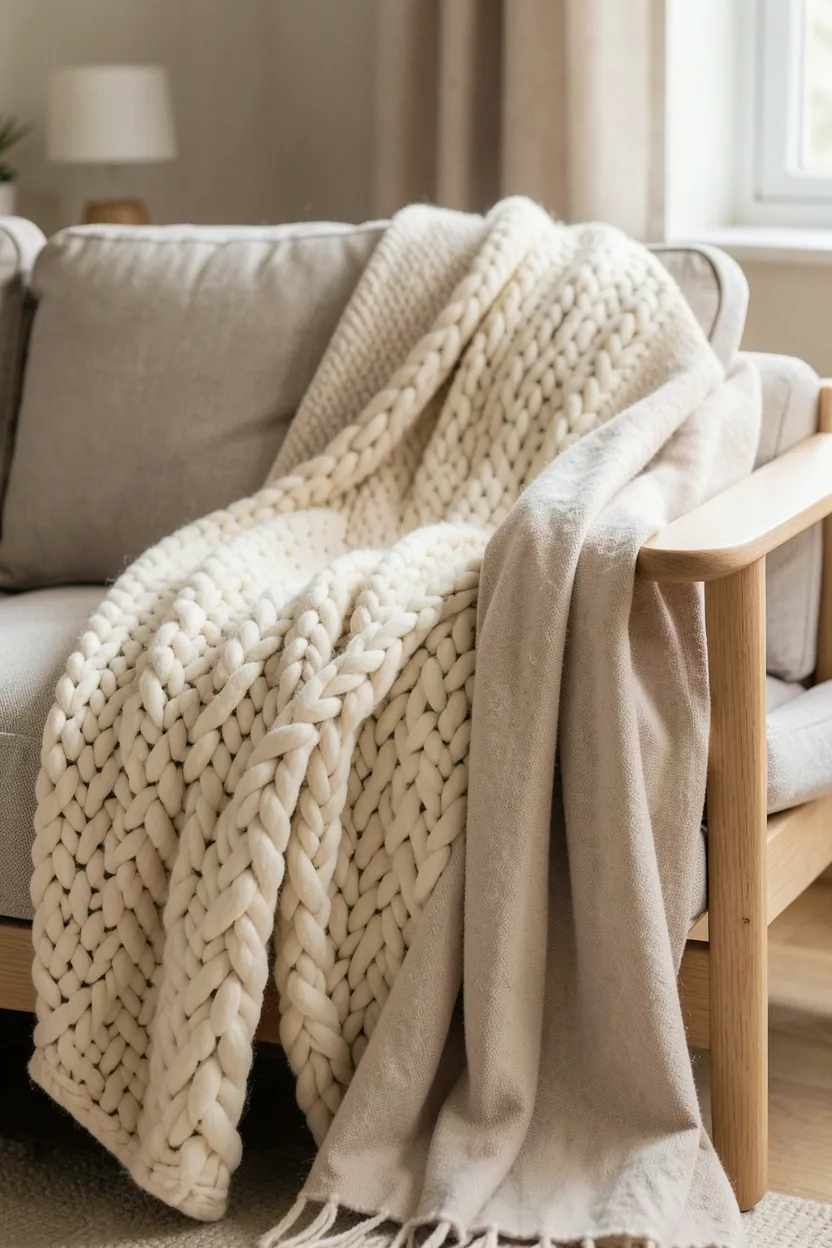
Common mistake: Folding throws too perfectly or tucking them away completely, losing the casual, inviting feel that defines hygge. The beauty of throws is in their natural, draped appearance.
Choose textures that complement your room’s existing fabrics—chunky wool knits with smooth linen sofas, or soft cotton throws alongside nubby wool rugs. A single throw folded casually at the end of a sofa, or draped loosely over an armchair, adds perfect finishing touch. Keep 2-3 throws in rotation for variety and seasons.
Tips
- Choose washable materials for easy care
- Drape throws naturally—avoid perfect folds or tidy rolls
- Layer different textures for depth and interest
What this gives you: Instant cozy warmth and tactile richness that makes your living space feel inviting and lived-in without clutter.
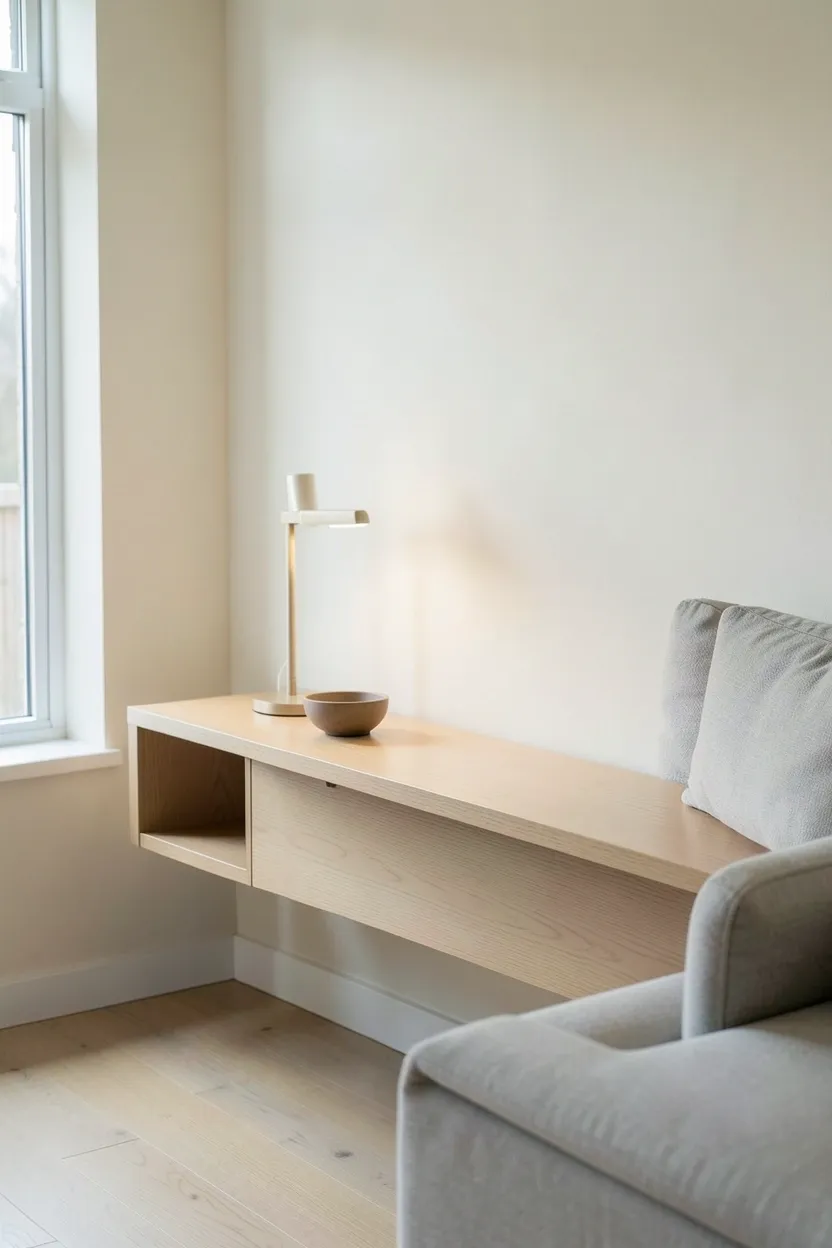
26. Minimalist Console Table
A minimalist console table provides functional surface space behind sofas, against walls, or in entryways while maintaining clean lines and visual lightness. Choose a console with simple, slim profile—thin wood planks, floating shelves, or sleek metal designs—in neutral finishes that blend with your room. This piece anchors spaces without dominating them, reflecting Japandi principles of intentionality and restraint. Avoid bulky consoles with excessive storage or ornate details, and skip tables that are too deep for your space, creating obstruction.
Recommended
Items for this idea
Position a console behind your sofa to create a floating furniture look, against a bare wall for display and storage, or in an entryway as a landing spot. Style minimally with 1-2 items—a lamp, a small plant, or a decorative bowl. The table itself should feel present yet unobtrusive.
Tips
- Do choose depth 12-16 inches for most applications
- Don’t overload surface with too many items
- Consider floating shelves underneath for hidden storage
What this gives you: Versatile surface space that adds function without visual weight, maintaining your living room’s airy feel.
27. Lantern-Style Lighting
Lantern-style lighting brings subtle, diffused illumination to a Japandi living room, combining Japanese appreciation for ambient light with Scandinavian modern aesthetics. Choose lanterns with simple geometric forms—glass panels, wood frames, or metal structures—in sizes that complement your space without overwhelming it. The diffused light creates soft shadows and warm atmosphere perfect for relaxation. Avoid overly ornate or elaborate lantern designs that feel fussy, and skip too many lanterns that make room feel cluttered.
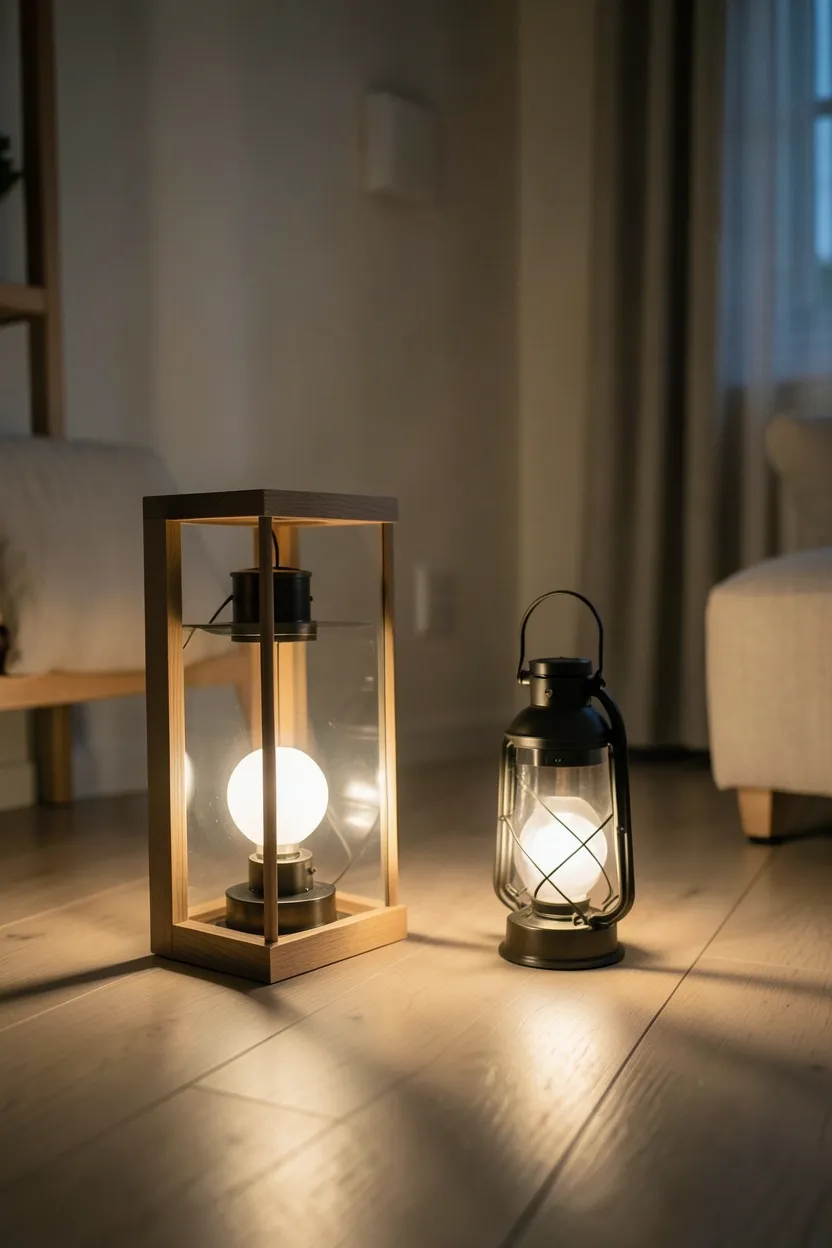
Placement note: Position lanterns where they cast interesting shadows—near walls, beside plants, or on shelves at different heights to create layered lighting effects.
Use lanterns as floor lamps, table lamps, or hanging fixtures. A large floor lantern beside a sofa creates ambient glow, while smaller table lanterns add intimate pools of light. Choose warm white bulbs at 2700K-3000K for ultimate hygge warmth. Glass lanterns allow bulb visibility, creating beautiful patterns of light and shadow.
Tips
- If you have high ceilings, choose taller floor lanterns
- Then add smaller lanterns at eye level for depth
- Use lanterns with dimmable bulbs for flexibility
What this gives you: Soft, ambient lighting that creates cozy atmosphere and visual interest through subtle shadows and warm glow.
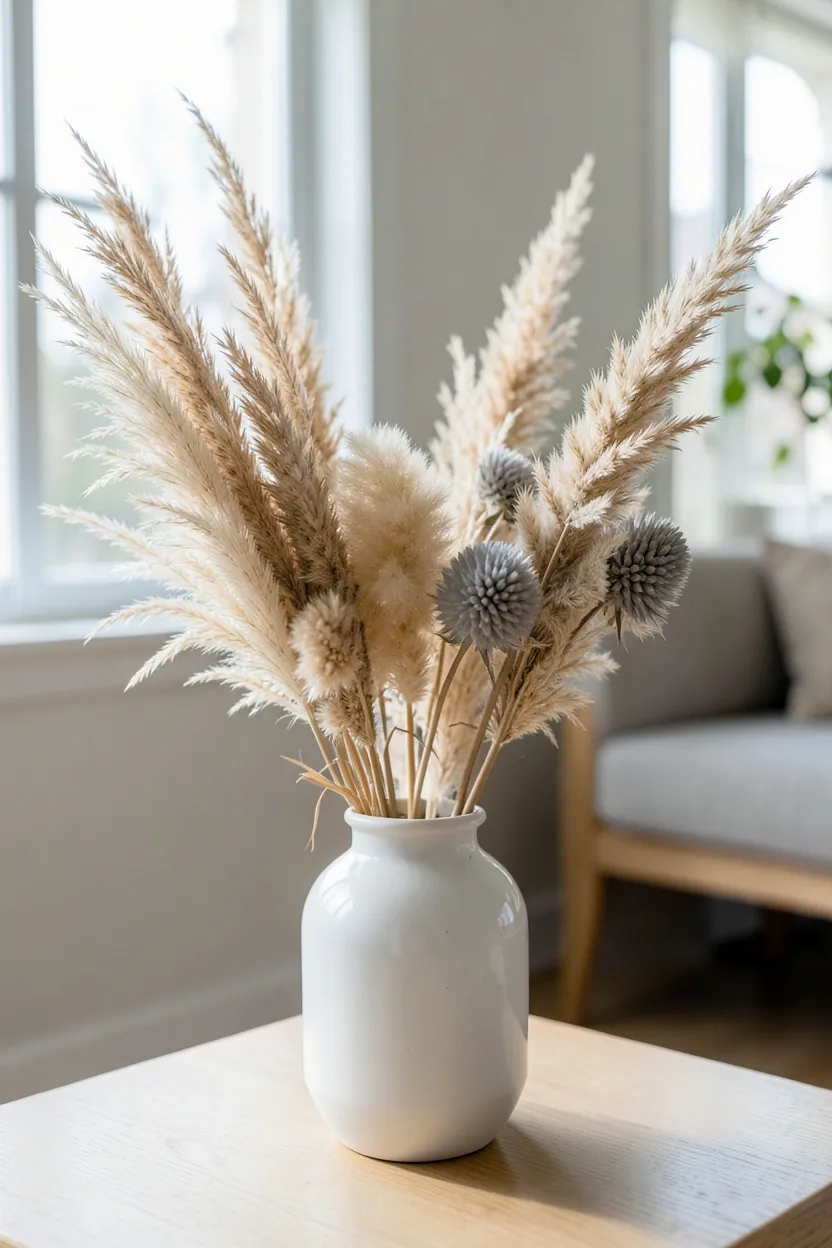
28. Dried Botanicals
Dried botanicals add natural beauty and subtle color to a Japandi living room without requiring care or maintenance. Choose dried flowers, grasses, branches, or seed heads in natural tones—cream, tan, brown, or soft grays—that complement your neutral palette. This approach aligns with Japanese appreciation for ephemeral beauty and Scandinavian love for low-maintenance natural elements. Avoid artificially colored or preserved botanicals that feel fake, and skip too many dried arrangements that make space feel cluttered.
Recommended
Items for this idea
Why it works: Dried botanicals bring nature indoors in their most minimal form, providing visual interest without the demands of live plants. Their muted colors and delicate textures suit Japandi aesthetics perfectly.
Place dried botanicals in simple vases or display them on their own. A single dried branch in a tall cylindrical vase, a small bouquet of dried grasses on a shelf, or dried seed pods in a ceramic bowl all make elegant statements. Grouping 2-3 different types creates more impact while maintaining restraint.
Tips
- Pro: Dried botanicals last indefinitely with no care needed
- Con: Can accumulate dust over time
- Fix: Dust gently with compressed air or soft brush monthly
What this gives you: Natural beauty and subtle texture that requires no maintenance, adding quiet elegance to your living space.
29. Intentional Negative Space
Intentional negative space is perhaps the most important principle of Japandi design—the deliberate inclusion of empty space around furniture, artwork, and objects. This approach, known as “ma” in Japanese design and embraced in Scandinavian minimalism, creates breathing room for both eyes and mind. Instead of filling every surface and corner, leave areas deliberately empty. Avoid fear of empty spaces that leads to clutter, and skip filling voids with unnecessary furniture or accessories just to avoid “bare” walls.
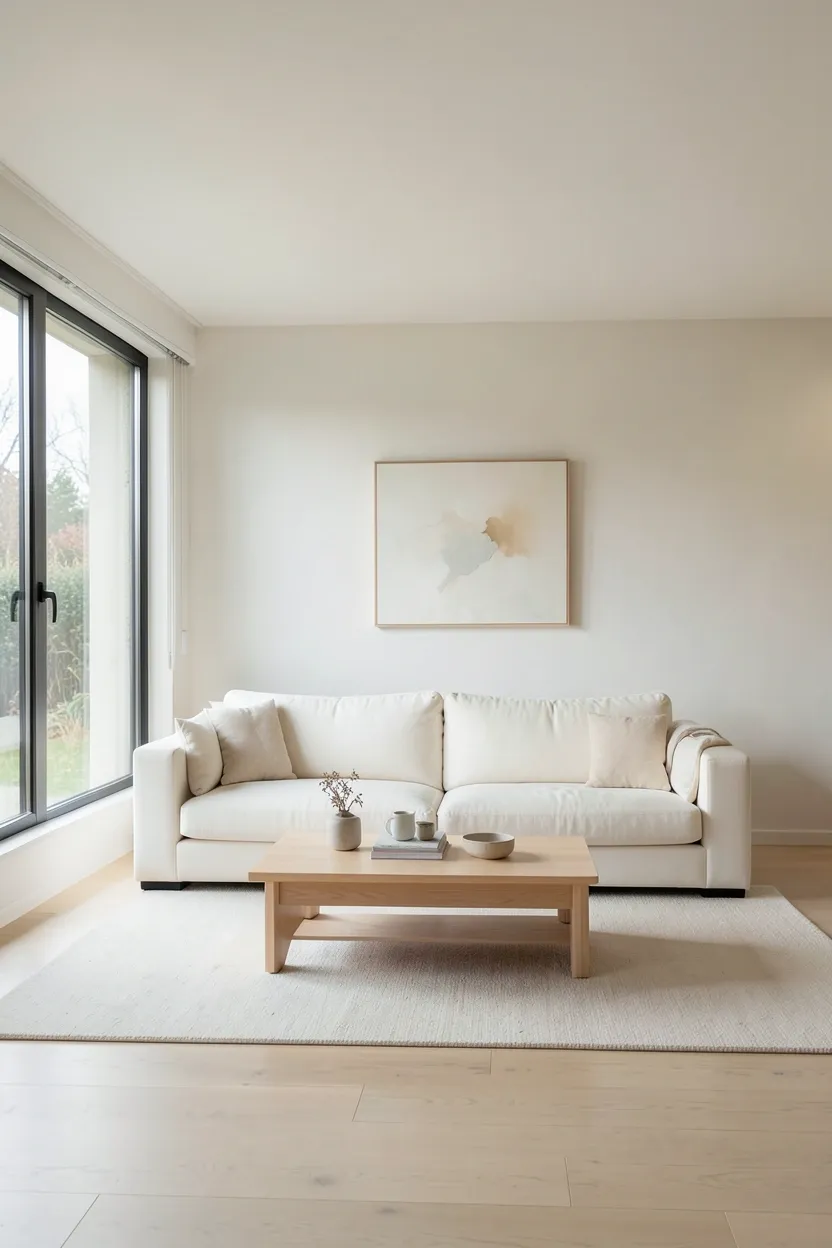
Common mistake: Treating empty space as wasted space to be filled. In Japandi design, empty space is an active design element that allows your carefully chosen pieces to shine and your room to breathe.
Create negative space by leaving areas around furniture clear, walls sparsely decorated, and surfaces only partially filled. A sofa with empty space around it feels more inviting than one crowded with tables and lamps. A wall with one carefully placed artwork has more impact than one covered in multiple pieces. The goal is balance—filled and empty spaces in thoughtful proportion.
Tips
- Leave at least 18 inches around major furniture pieces
- Keep 30-40% of surfaces empty
- Step back and assess: does the room feel calm or cluttered?
What this gives you: A living space that feels spacious, calm, and harmonious through deliberate use of empty space as a design element.
These 29 Japandi living room ideas give you a complete roadmap for building a comfortable space that nurtures both calm and warmth. By focusing on light neutral palettes, natural materials, quality over quantity, and deliberate negative space, you transform even a small rental living room into a sanctuary that promotes relaxation and mindfulness. Most of these ideas require no permanent changes — making them ideal for renters who want a thoughtful, cozy home without the commitment. Start with foundational elements and layer thoughtfully, creating a Japandi living space that feels authentically yours while embodying the harmonious balance of Japanese minimalism and Scandinavian hygge.
About the author
OBCD
CGI visualization and interior design content. We create detailed 3D renders and curate practical design ideas for every room in your home.