25 Japandi Bathroom Ideas to Refresh Your Design
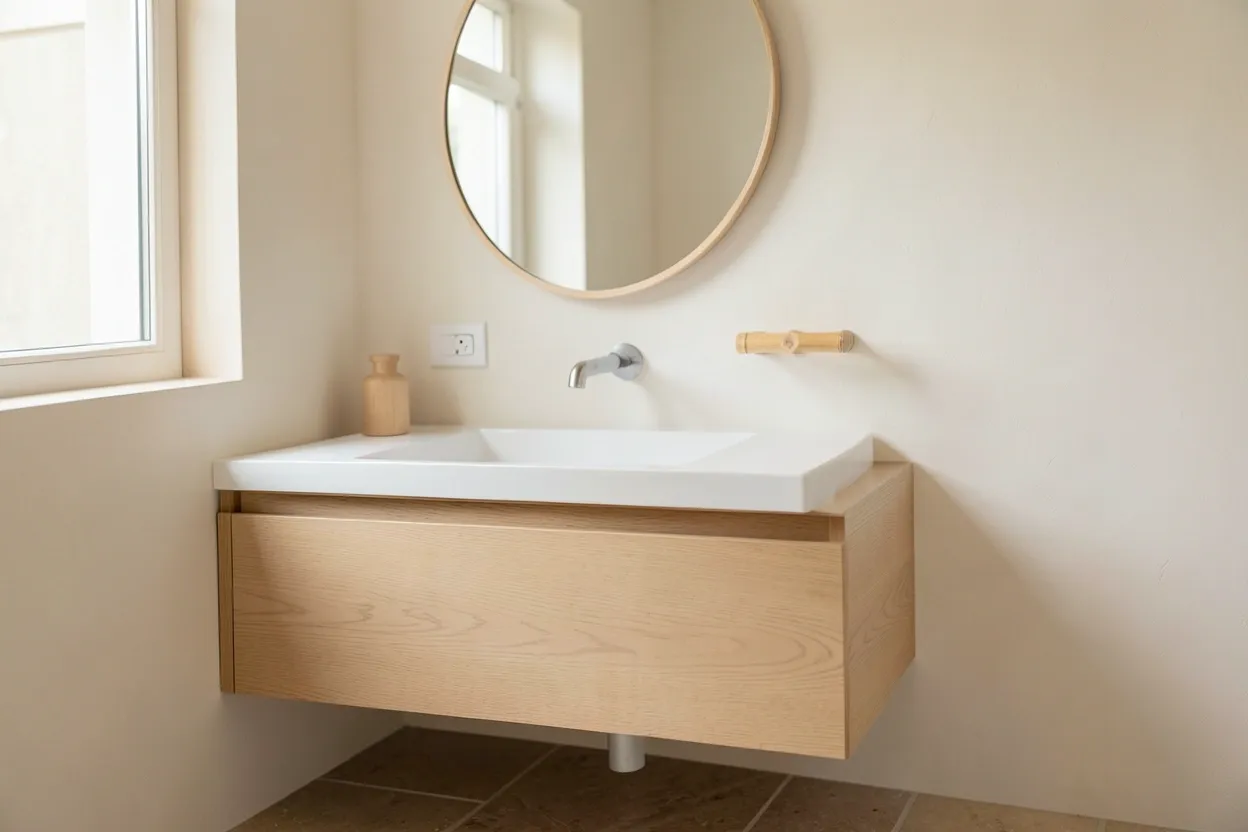
These japandi bathroom ideas merge Japanese minimalism with Scandinavian functionality, creating serene spaces that feel balanced, intentional, and effortlessly beautiful. The philosophy centers on quality natural materials, diffused light, and thoughtful restraint—every element serves a purpose while contributing to an atmosphere of calm contemplation.
What makes japandi bathroom design distinctive is the harmonious blend of warm wood tones with clean minimalist lines, creating spaces that feel both cozy and spacious. This approach works beautifully across bathroom sizes—from compact rental ensuites to spacious master baths—by emphasizing natural materials and eliminating unnecessary ornamentation. Many of these ideas require no permanent changes, making them ideal for renters.
This collection explores 25 japandi bathroom ideas, from full renovations to subtle, renter-friendly styling shifts that transform the daily routine into a moment of peaceful ritual.
Quick FAQ
What defines Japandi bathroom design?
Japandi combines Japanese wabi-sabi appreciation for imperfection with Scandinavian minimalist functionality, emphasizing natural materials, neutral palettes, and intentional simplicity.
Why use wood in a bathroom environment?
Properly sealed wood adds essential warmth and natural texture that balances cool stone and tile, creating the organic atmosphere central to Japandi design.
What colors work best in Japandi bathrooms?
Neutral palettes dominate—warm whites, soft greys, natural wood tones—with occasional muted accents like sage green or soft terracotta for gentle contrast.
How do I create Japandi style on a budget?
Focus on editing clutter, adding natural textures through baskets and textiles, and choosing quality over quantity for key fixtures rather than full renovations.
Can Japandi work in small bathrooms?
The style excels in compact spaces because its emphasis on light, minimal clutter, and natural materials makes small bathrooms feel intentional rather than cramped.
What makes Japandi different from pure Scandinavian design?
While Scandinavian design prioritizes brightness and lightness, Japandi incorporates Japanese warmth, texture, and celebration of natural imperfections like wood grain variations.
As an Amazon Associate I earn from qualifying purchases.
Table of Contents
- 1. Light Wood Floating Vanity
- 2. Stone Basin with Wooden Counter
- 3. Bamboo Towel Rack
- 4. Minimalist Round Mirror
- 5. Natural Stone Floor Tiles
- 6. Freestanding Oval Tub
- 7. Wooden Slat Wall Paneling
- 8. Japanese-style Deep Soaking Tub
- 9. Bamboo Storage Baskets
- 10. Floating Shelves with Natural Wood
- 11. Minimalist LED Lighting
- 12. Stone Vessel Sink
- 13. Natural Linen Shower Curtain
- 14. Wooden Window Shutters
- 15. Pebble Floor Mosaic
- 16. Minimalist Wall-mounted Toilet
- 17. Concrete Basin with Wood Accents
- 18. Zen Garden-inspired Corner
- 19. Bamboo Flooring
- 20. Wooden Bath Stool
- 21. Natural Stone Shower Walls
- 22. Minimalist Brass Hardware
- 23. Wooden Storage Cabinet
- 24. Natural Fiber Rugs
- 25. Skylight for Natural Light
1. Light Wood Floating Vanity
A light oak floating vanity brings essential warmth to a Japandi bathroom while maintaining the minimalist aesthetic essential to Japanese-Scandinavian design. The wall-mounted construction creates visual lightness by keeping the floor visible, making compact spaces feel more generous while honoring the Japanese principle of eliminating unnecessary ground contact. Natural wood grain patterns add subtle texture without introducing visual noise.
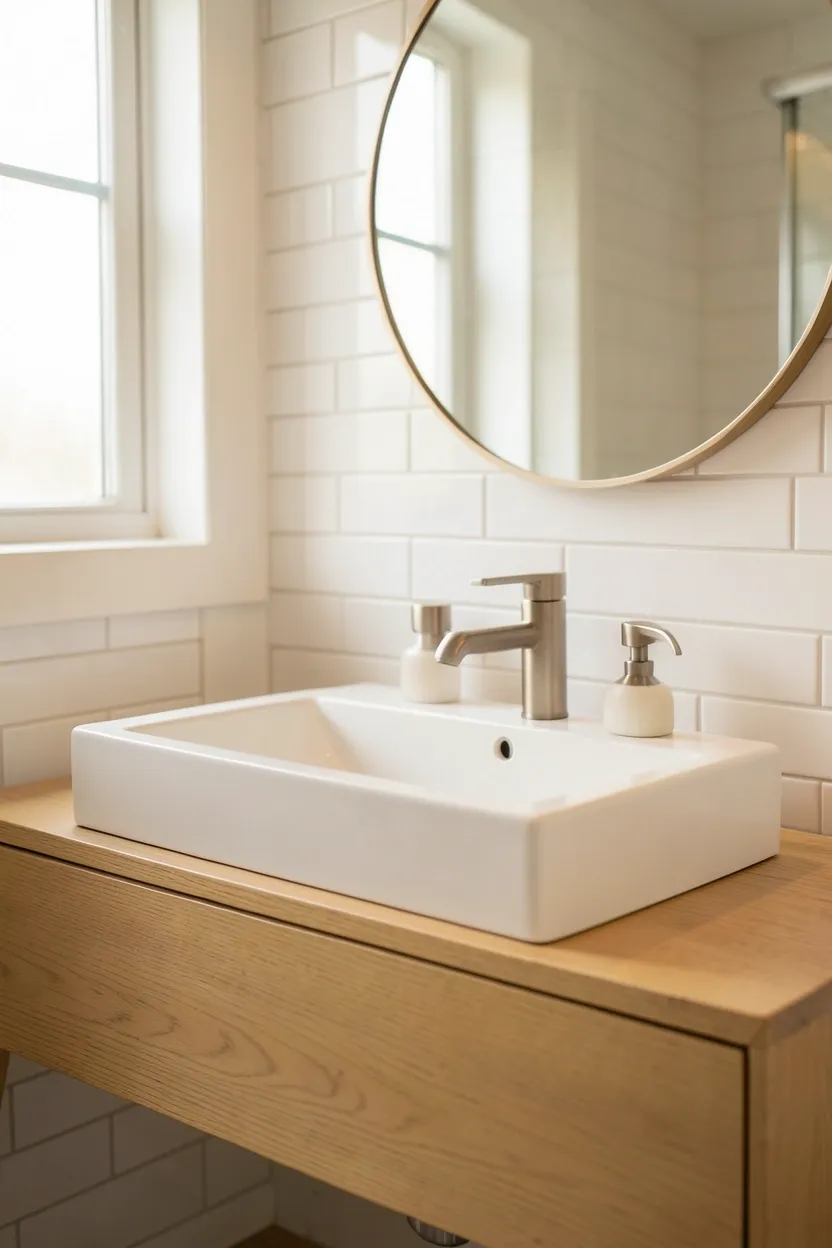
Choose a 40-48 inch vanity with integrated drawer storage to maintain clean lines while hiding daily essentials. The natural warmth of pale oak balances cool stone tiles and white fixtures, creating the harmonious contrast central to Japandi design. Matte finishes rather than high-gloss feel more authentic and aligned with wabi-sabi appreciation for honest materials.
Tips
- Seal oak with water-resistant polyurethane for bathroom durability
- Leave 8-inch clearance below for cleaning and visual lightness
- Choose drawer organizers to maintain internal order without visible clutter
What this gives you: functional storage that adds natural warmth without darkening the room.
2. Stone Basin with Wooden Counter
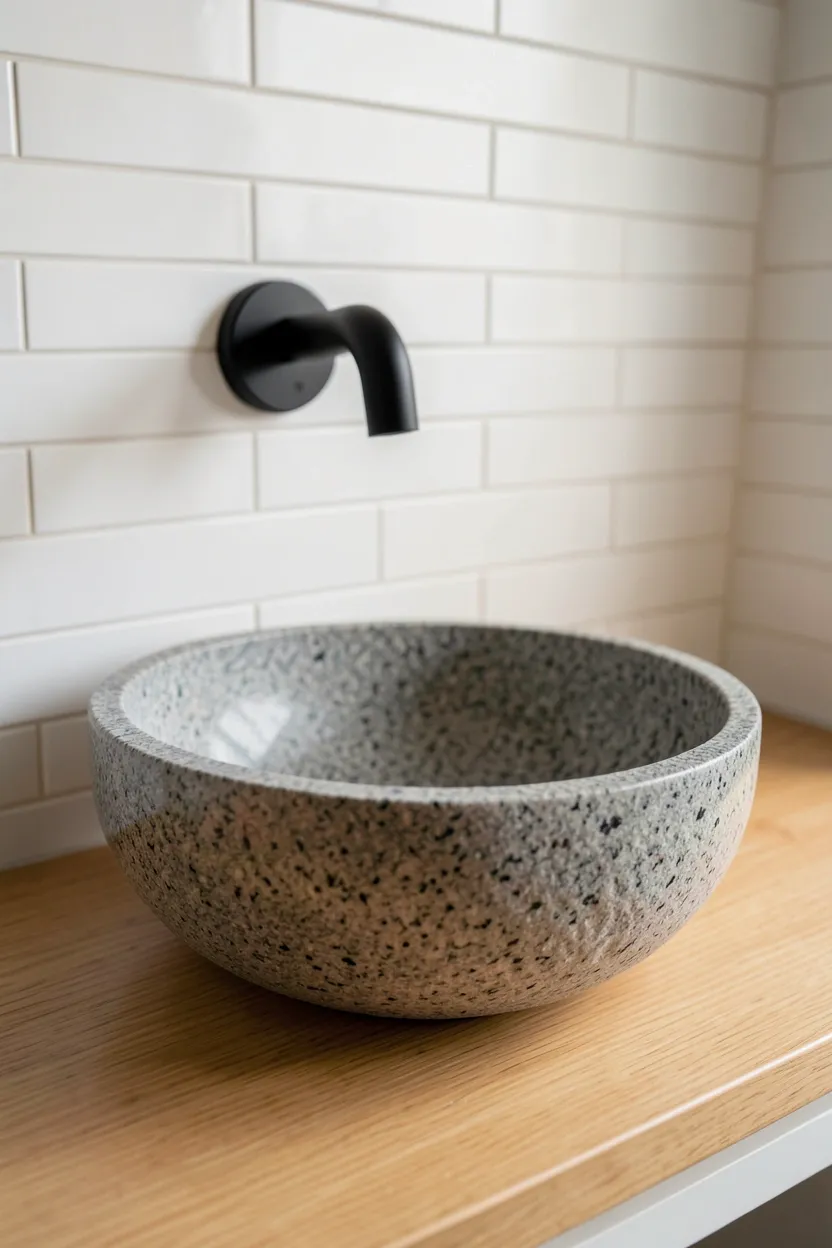
A stone vessel sink paired with a natural wood countertop creates striking textural contrast that embodies Japandi design's celebration of honest materials. The raw earthiness of stone—whether honed granite, slate, or sandstone—finds warmth in oak or ash, balancing the Japanese appreciation for natural imperfection with Scandinavian functional clarity. This combination moves beyond safe white porcelain into more expressive territory.
Recommended
Items for this idea
Stone requires proper sealing for bathroom use—choose a high-quality penetrating sealer and reapply annually. The vessel style sits above the counter, creating architectural dimension. The wood counter should be finished with marine-grade polyurethane for water resistance. This combination works best as a single vanity in a powder room or guest bath rather than repeating throughout a master bathroom.
Tips
- Pro: stone brings authentic earthiness and thermal mass for temperature regulation
- Con: requires regular sealing and can show water spots more than ceramic
- Fix: use cutting boards or trivets to protect the counter from impacts and standing water
What this gives you: bold textural contrast that expresses authentic Japandi materiality.
3. Bamboo Towel Rack
A bamboo towel rack introduces sustainable natural material while adding subtle Asian influence that connects Japandi design to Japanese roots. Bamboo's rapid growth and natural resilience make it an environmentally conscious choice that aligns with both Scandinavian and Japanese values of mindful consumption. The warm golden tone provides gentle contrast against neutral walls without overwhelming the minimalist palette.
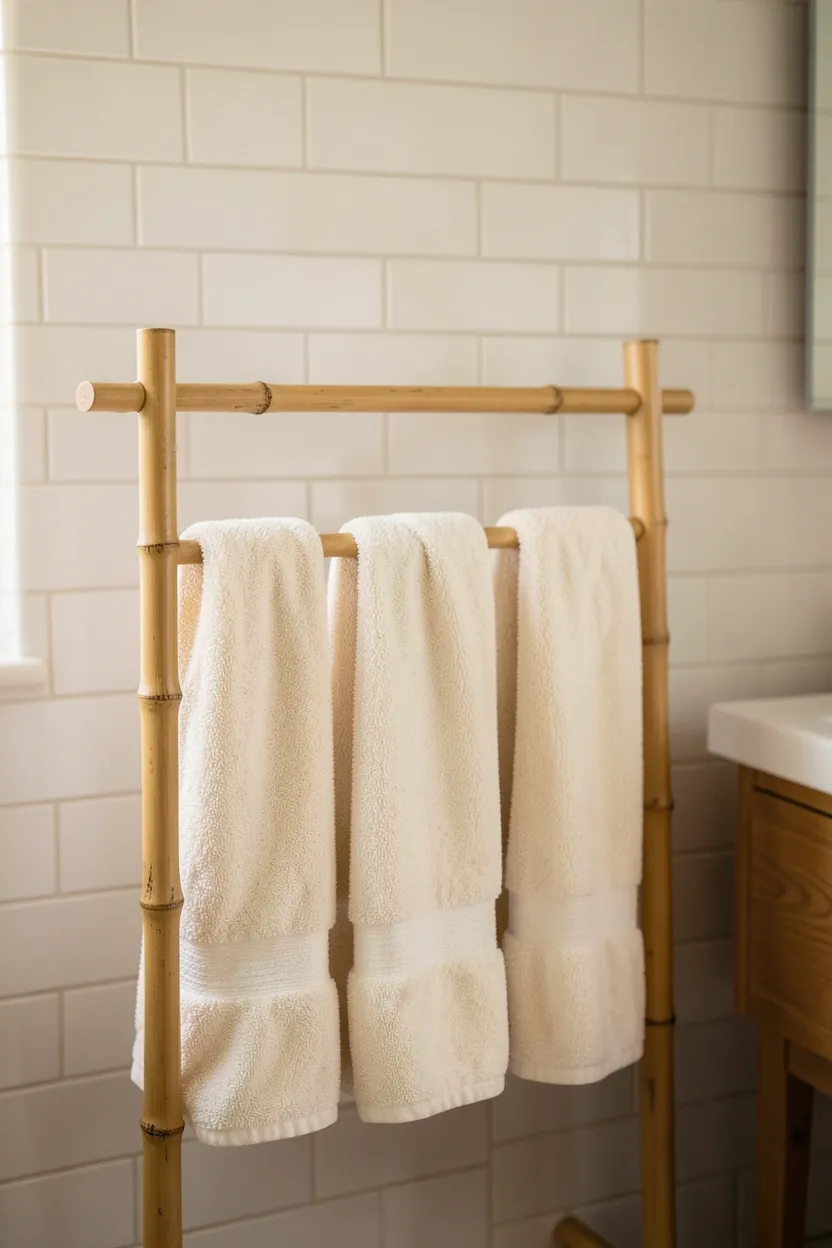
Position the towel rack where towels receive adequate airflow to prevent dampness—a consideration particularly important in humid bathrooms. Choose a design with simple horizontal bars rather than ornate scrollwork to maintain Japandi restraint. Bamboo naturally resists moisture but benefits from occasional oiling to maintain appearance and prevent cracking in dry conditions.
Tips
- Do: wipe bamboo with damp cloth monthly and apply bamboo oil quarterly
- Don't: expose bamboo racks to direct hot sunlight which can cause cracking
- Do: space bars at least 12 inches apart for adequate towel drying
What this gives you: sustainable warmth with authentic Japanese material connection.
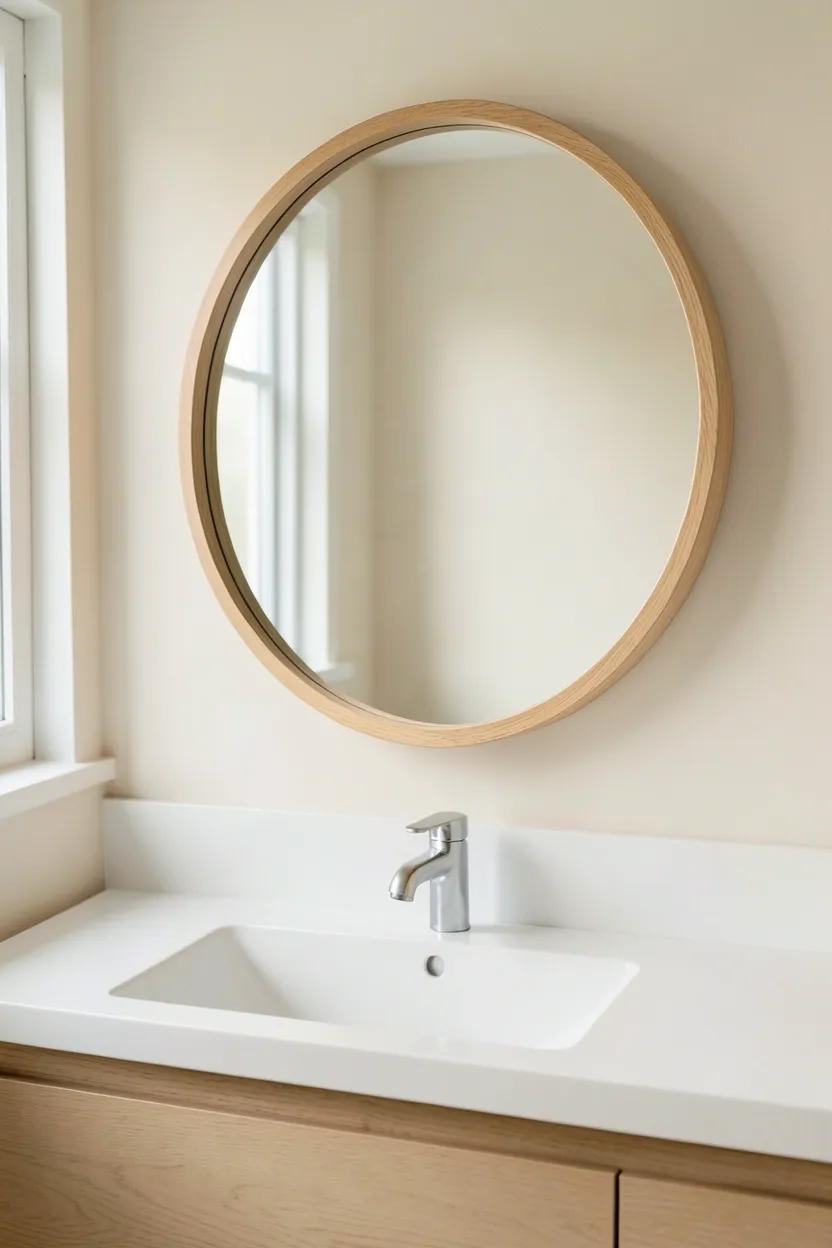
4. Minimalist Round Mirror
A round mirror softens the angular geometry typical of Scandinavian bathrooms while introducing organic form central to Japanese aesthetics. The circular shape references traditional Japanese aesthetics without literal cultural appropriation, instead creating gentle visual contrast that feels sophisticated rather than thematic. Choose a frameless design or subtle wooden rim to maintain Japandi minimalism.
Recommended
Items for this idea
Placement note: center the mirror 30-36 inches from floor for universal accessibility while creating intentional negative space above.
A 24-30 inch diameter works well above vanities, while larger mirrors (36-40 inches) make dramatic statements in spacious master baths. The round shape reflects light differently than rectangular mirrors, creating softer illumination that enhances the calm atmosphere essential to Japandi design. Frameless designs maintain contemporary sleekness, while thin wooden rims add warmth.
Tips
- If space is limited, then choose 20-24 inch diameter for proportion
- If you prefer warmth, then select a thin natural wood rim in oak or ash
- If modern minimalism is priority, then go frameless with discreet wall mounting
What this gives you: organic softness that contrasts angular bathroom geometry.
5. Natural Stone Floor Tiles
Natural stone flooring—whether honed limestone, slate, or travertine—grounds a Japandi bathroom with authentic earthiness that celebrates Japanese wabi-sabi appreciation for natural variation. Unlike uniform ceramic tile, stone floors develop character over time, showing subtle differences in color and veining that tell a story of natural origin. This authenticity aligns perfectly with Japandi values.
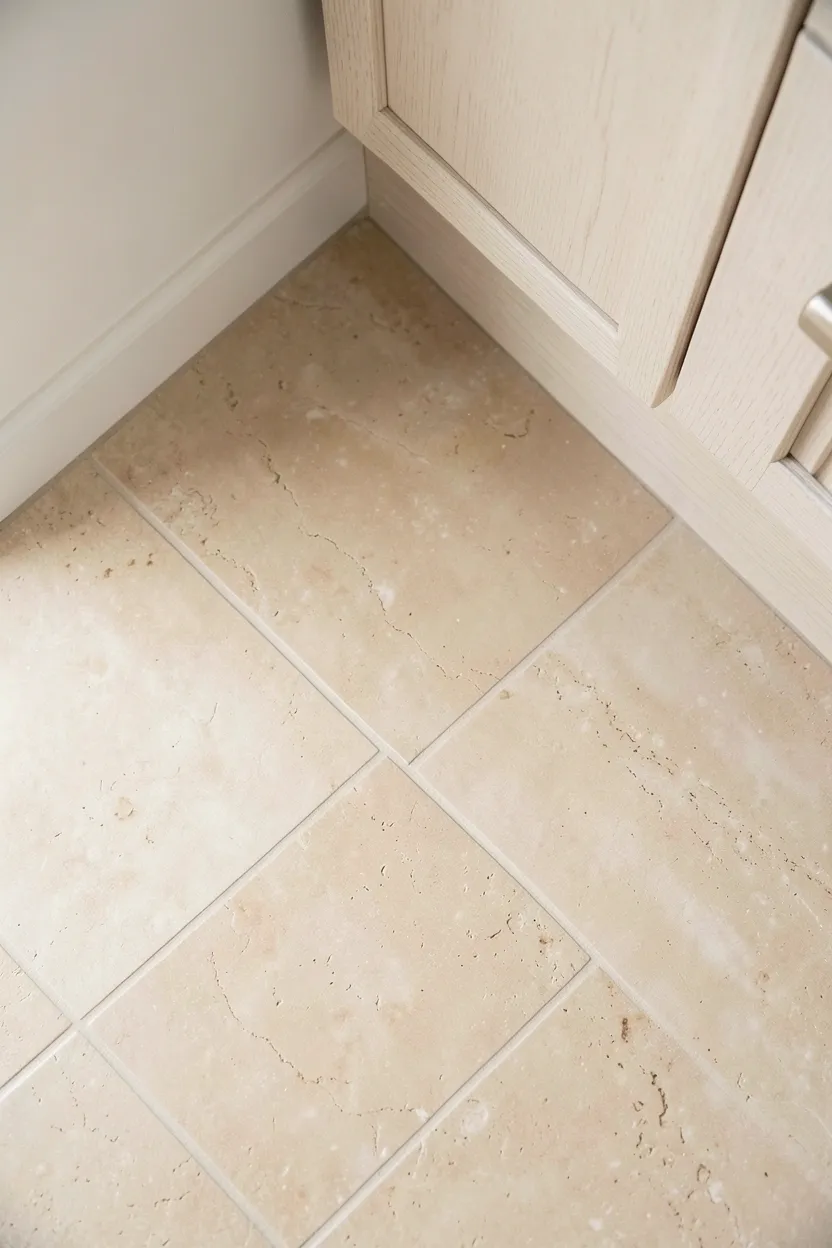
Choose honed rather than polished finishes for better slip resistance and softer matte appearance that feels more aligned with Japanese restraint. Larger formats (12x24 inches or larger) minimize grout lines, creating continuous visual planes that make spaces feel calmer and more expansive. The natural thermal mass of stone also helps regulate temperature, keeping floors cooler in summer.
Tips
- Pro: authentic natural beauty and thermal regulation properties
- Con: requires professional sealing and occasional resealing for stain resistance
- Fix: use stone-safe pH neutral cleaners rather than acidic products that can etch surfaces
What this gives you: authentic earthiness that celebrates natural variation and time.
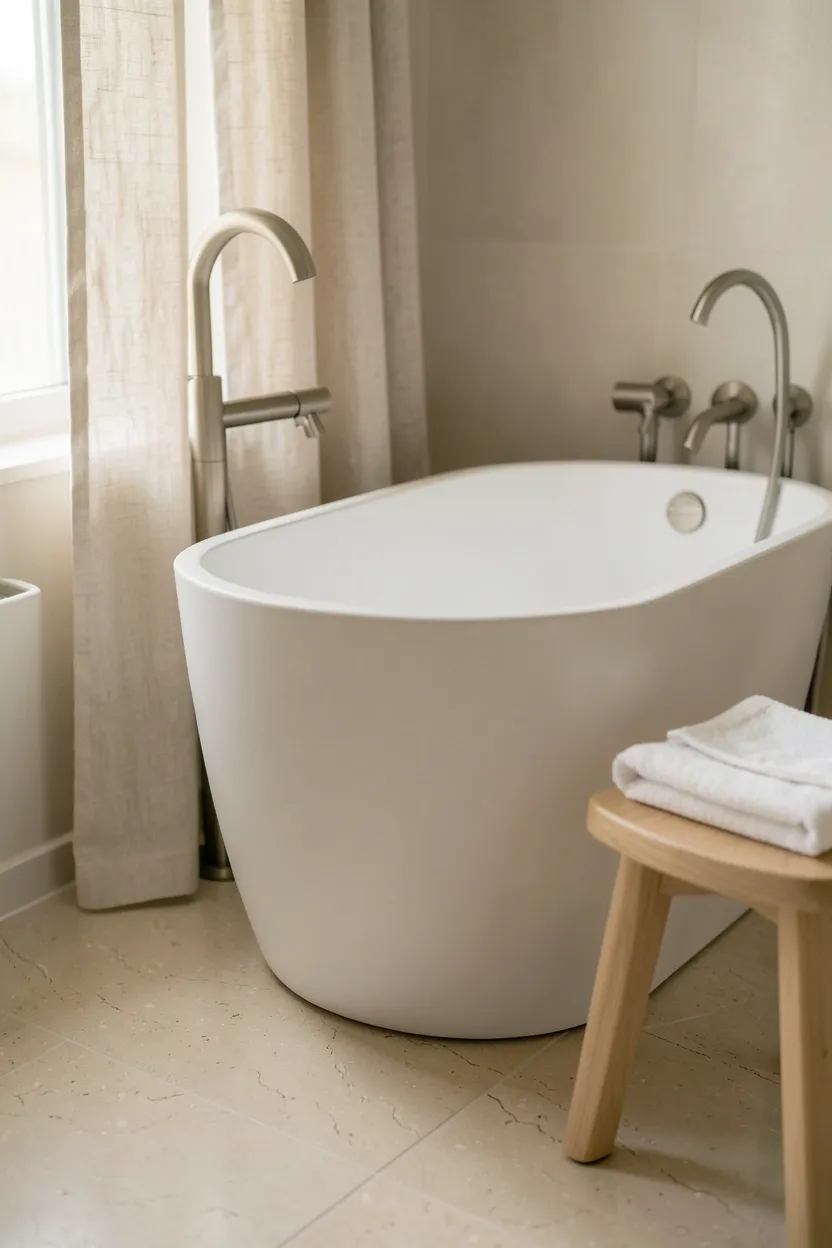
6. Freestanding Oval Tub
A freestanding oval tub serves as a sculptural centerpiece that embodies the Japandi celebration of bathing as ritual rather than mere function. The smooth organic shape references Japanese ofuro soaking tubs while maintaining Scandinavian minimalist restraint. Choose white matte finish for contemporary understatement or natural stone for authentic material connection.
Recommended
Items for this idea
Position the tub to take advantage of any view, even if just a glimpse of sky through a high window. Floor-mounted faucets eliminate visual clutter on the tub deck, reinforcing minimalist principles. Allow adequate circulation space—at least 30 inches on all sides—to maintain the sense of openness that Japandi design values. A small wooden stool or woven basket nearby provides practical storage.
Tips
- If you choose freestanding, then ensure floor structure can support weight when filled
- If space is compact, then consider 55-60 inch length for proportion without overwhelming
- If warmth matters, then look for models with built-in insulation or heated floors beneath
What this gives you: a sculptural focal point that celebrates the bathing ritual.
7. Wooden Slat Wall Paneling
Vertical timber slats transform a plain bathroom wall into an architectural feature that brings essential warmth and texture to Japandi design. Typically installed as partial-height cladding behind a vanity or bathtub, the slats create rhythm and dimension while maintaining the minimalist palette through natural wood tones. The vertical orientation draws the eye upward, making ceilings feel higher.
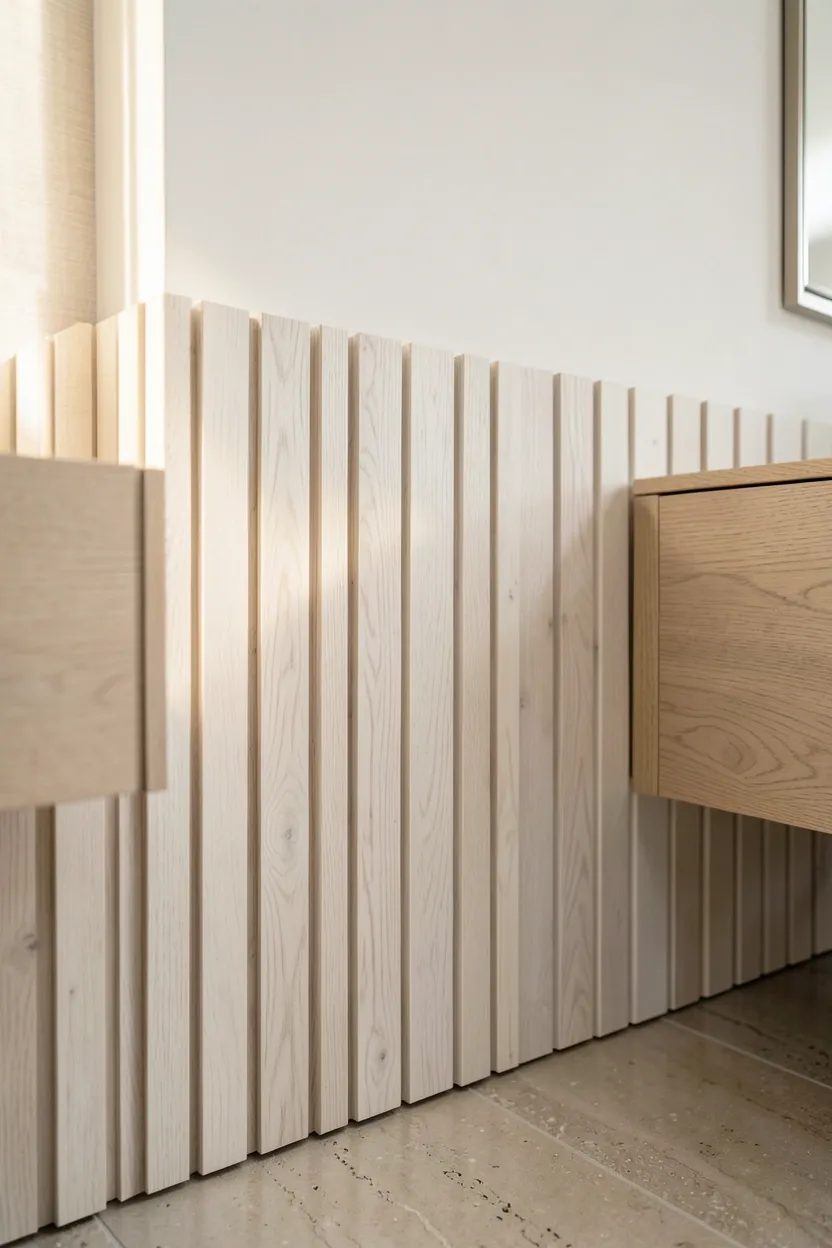
Placement note: extend slats 48-60 inches up the wall, stopping before window sills and mirror height for intentional visual breaks.
The slats can be installed as a direct-fixed feature wall or as removable paneling for rental applications. Choose tongue-and-groove profile for tight joints or shiplap for shadow line emphasis. The natural oak can be left raw and oiled or bleached to an even paler tone. This treatment works particularly well behind a freestanding tub.
Tips
- If you select timber slats, then ensure proper ventilation behind for humidity management
- If maintenance is a concern, then opt for engineered wood with bathroom-rated finish
- If you rent, then consider peel-and-stick wood-look panels for temporary application
What this gives you: architectural warmth and texture without compromising the neutral palette.
8. Japanese-style Deep Soaking Tub
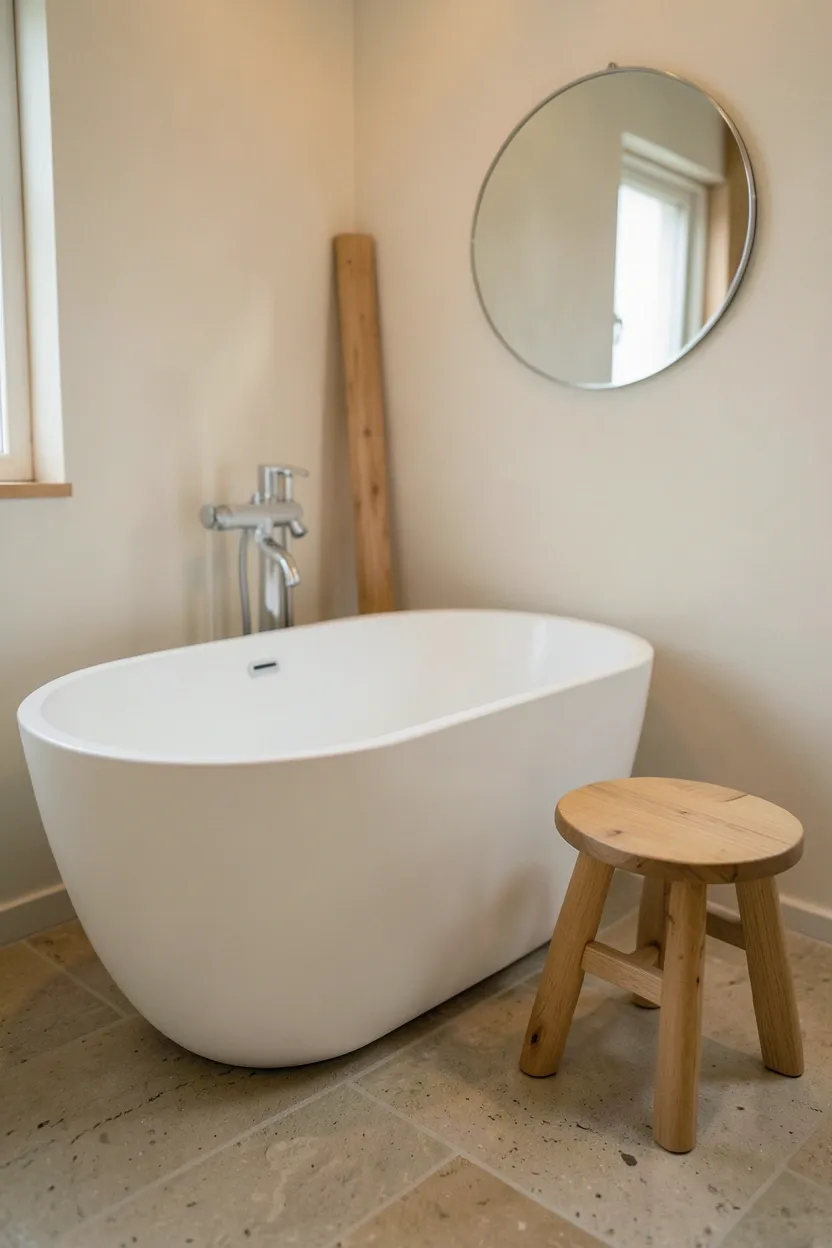
A Japanese ofuro-style soaking tub brings authentic Asian influence while maintaining Japandi minimalist principles. These deep, compact tubs are designed for seated immersion rather than reclining, creating a contemplative bathing experience that honors Japanese bathing culture. The smaller footprint works beautifully in Japandi bathrooms where intentional spatial planning is key.
Recommended
Items for this idea
Traditional ofuro are made from hinoki wood, but modern versions in white acrylic or natural stone better suit low-maintenance Japandi bathrooms while honoring the form. The deep design requires less water to fill than standard tubs while providing full-body immersion. Position near a window if possible, allowing views that enhance the meditative bathing ritual.
For a more minimalist approach, see Scandinavian Bathroom and borrow the functional clarity while incorporating Japanese soaking depth.
Tips
- Pro: deep soaking provides authentic meditative bathing experience with less water
- Con: requires step-in design which may not suit all mobility needs
- Fix: add wooden steps or built-in bench for safer entry and exit
What this gives you: authentic Japanese bathing ritual adapted for Japandi aesthetics.
9. Bamboo Storage Baskets
Bamboo woven baskets provide accessible storage while maintaining the natural material palette and sustainable values central to Japandi design. Rather than hiding everything behind closed doors, this approach embraces visible storage as an opportunity to introduce texture through handwoven elements. The bamboo warmth complements wood fixtures while adding Asian-inspired detail.
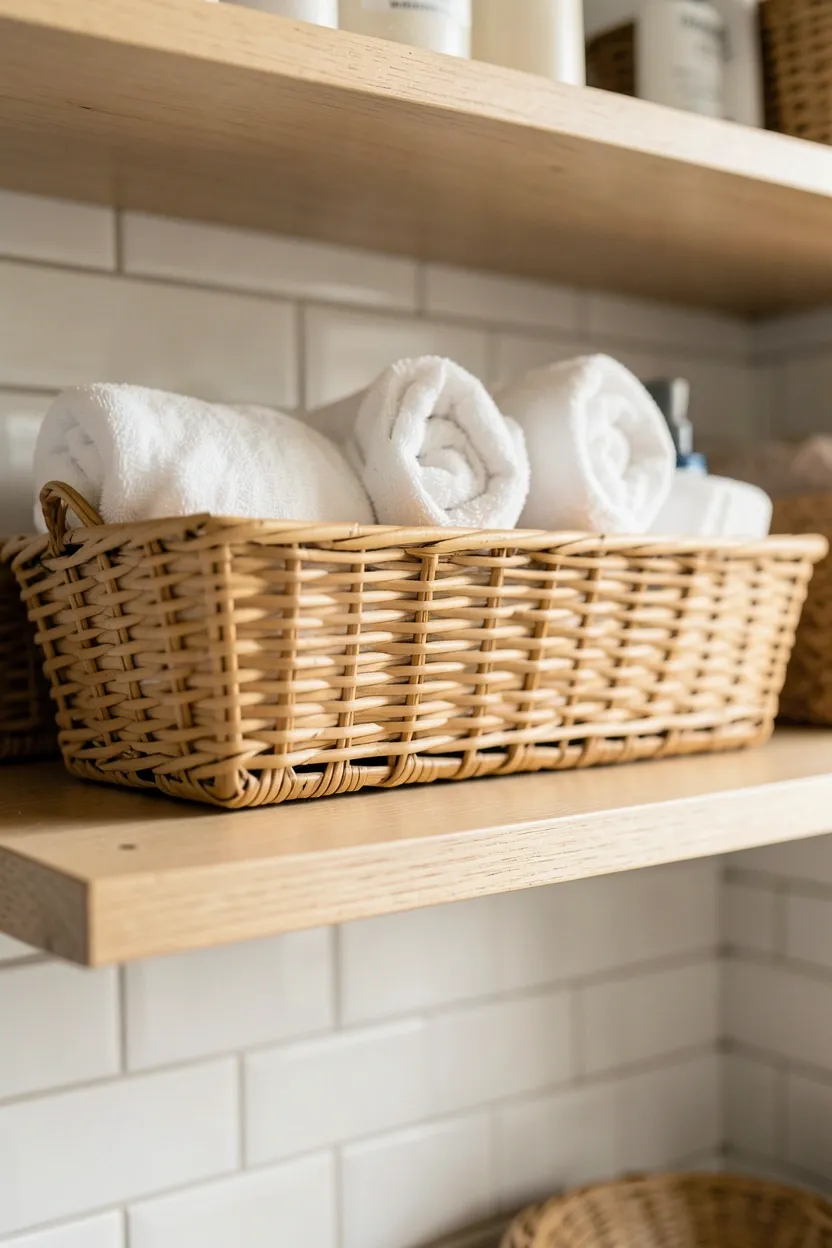
Use baskets on open shelves or beneath floating vanities to corral towels, toiletries, and toilet paper. The woven construction allows airflow that helps prevent dampness in stored textiles. Choose lidded baskets for items that should remain hidden, preserving the minimalist visual calm that Japandi design prioritizes. Vary basket sizes to create visual rhythm.
Tips
- Do: allow baskets to fully dry between uses to prevent mildew in humid bathrooms
- Don't: overload baskets which strains the weave and compromises structure
- Do: choose baskets with tight weaves for smaller items and looser weaves for towels
What this gives you: accessible storage with authentic Japanese material and texture.
10. Floating Shelves with Natural Wood
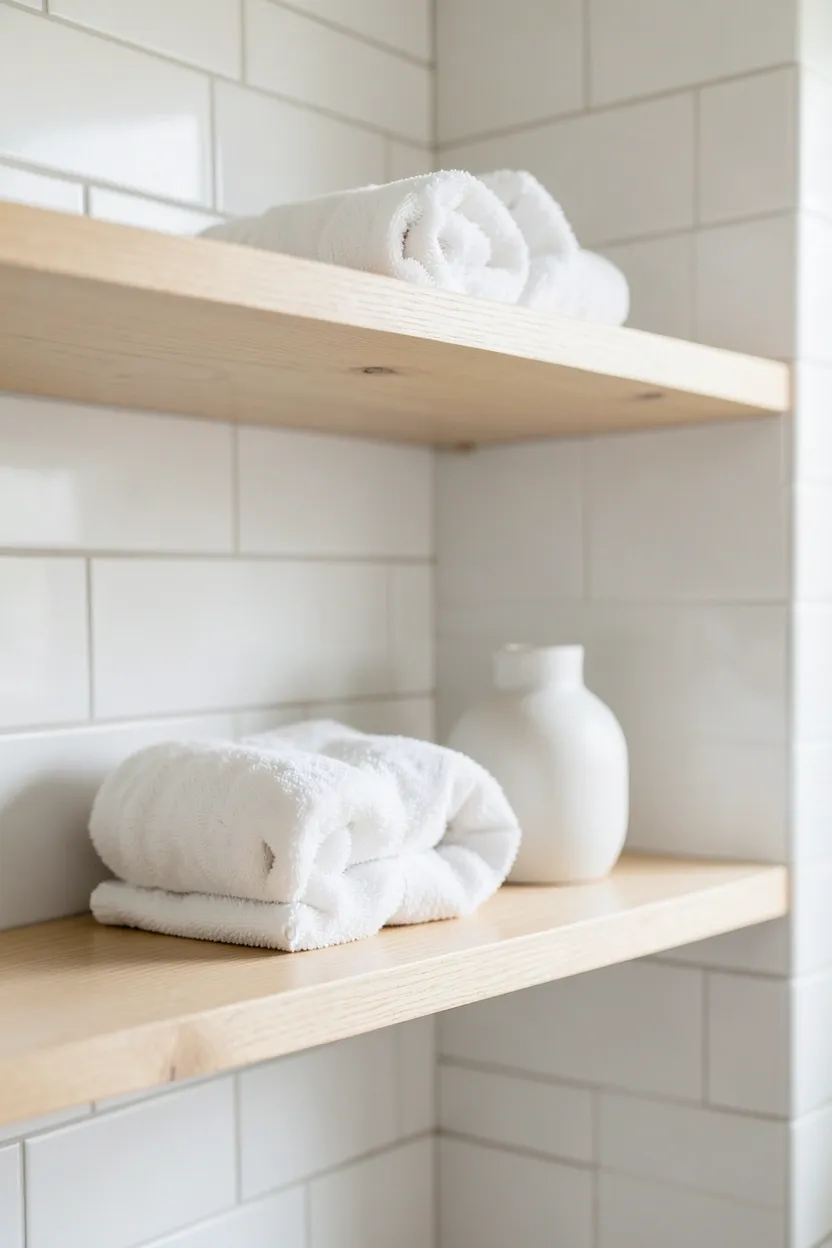
Floating shelves in natural wood provide display and storage while maintaining the clean lines essential to Japandi design. The wall-mounted design creates visual lightness by eliminating visible brackets, keeping the minimalist aesthetic intact. Natural wood adds warmth that balances cool stone and tile, creating the harmonious contrast central to Japandi philosophy.
Recommended
Items for this idea
Keep shelves shallow—8-10 inches deep—so they feel like architectural details rather than storage units. Limit each shelf to 2-3 items maximum to maintain visual calm. Display one curated plant, rolled towels, or a simple ceramic vessel rather than cluttering with multiple small objects. The disciplined editing reinforces Japandi principles of intentional living.
Tips
- If humidity is high, then ensure wood shelves are properly sealed with marine-grade finish
- If shelves feel bare, then add one small plant or single ceramic object for intentional styling
- If visual clutter develops, then commit to regular editing sessions and remove non-essentials
What this gives you: minimal storage that adds natural warmth without visual weight.
11. Minimalist LED Lighting
Minimalist LED lighting provides flattering illumination while eliminating visual clutter of decorative fixtures—a solution perfectly aligned with Japandi efficiency and restraint. Integrated strips behind mirrors or floating shelves create soft, shadow-free light ideal for grooming while maintaining clean minimalist lines. Choose warm color temperature (2700K-3000K) for cozy atmosphere.
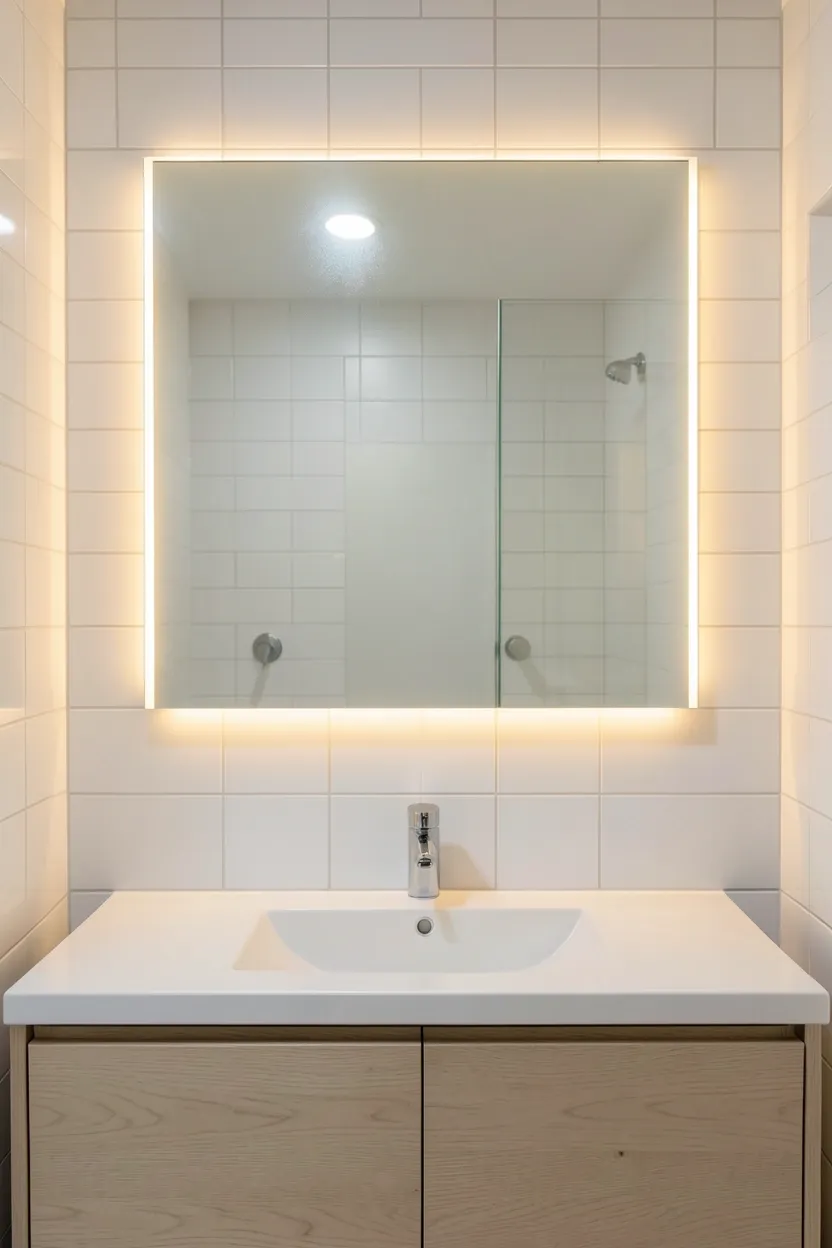
Consider dimmable LEDs to shift from bright morning light to soft evening glow for bathing rituals. The integrated design means no separate sconces are required, reducing wall clutter and installation complexity. Hidden light sources align with Japanese appreciation for indirect illumination that creates atmosphere rather than calling attention to itself.
Tips
- Pro: LED efficiency and long lifespan align with Japandi sustainable values
- Con: requires professional installation for hardwired integrated designs
- Fix: choose plug-in LED strips for renters or temporary solutions
What this gives you: streamlined lighting that enhances both function and aesthetic calm.
12. Stone Vessel Sink
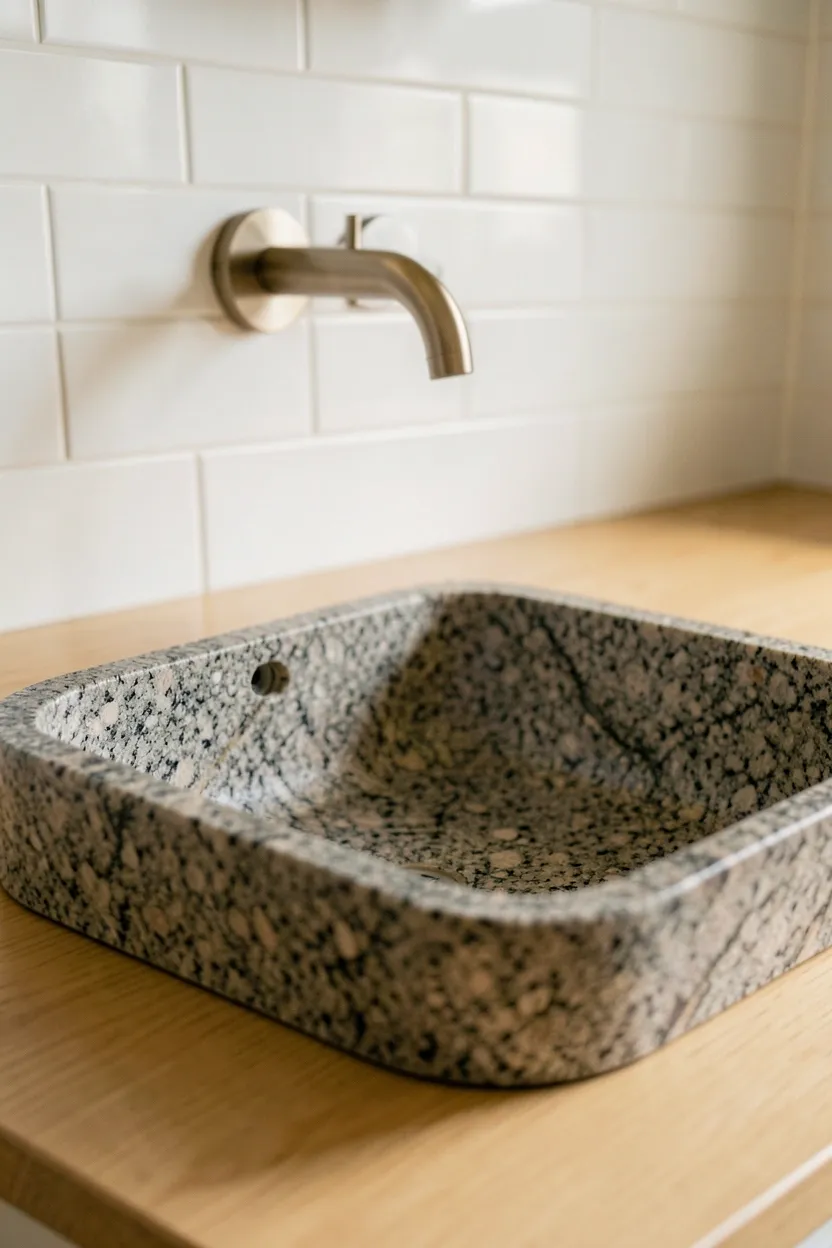
A stone vessel sink in honed granite, sandstone, or slate brings authentic earthiness that celebrates Japanese wabi-sabi appreciation for natural materials. The vessel style sits above the counter, creating architectural dimension and showcasing the stone's natural variations—veining, subtle color shifts, and texture that tell a story of geological origin.
Recommended
Items for this idea
Placement note: mount vessel 32-36 inches from finished floor for comfortable use while creating visual prominence.
Stone requires proper sealing—apply high-quality penetrating sealer before installation and reapply annually. Pair with a natural wood countertop in oak or ash for warm contrast that creates the material harmony central to Japandi design. Choose a minimalist wall-mounted faucet to maintain clean lines without cluttering counter space.
Tips
- Do: use cutting boards or trivets to protect stone from impacts and stains
- Don't: allow standing water which can penetrate stone over time
- Do: wax stone periodically to maintain water resistance and enhance natural patina
What this gives you: authentic earthiness that celebrates natural variation.
13. Natural Linen Shower Curtain
A natural linen shower curtain introduces soft texture and sustainable material while maintaining Japandi minimalist aesthetics. Unlike synthetic alternatives, linen drapes with natural elegance, creating gentle folds that add visual softness to the bathroom. The natural material feels warm to the touch and develops character over time.
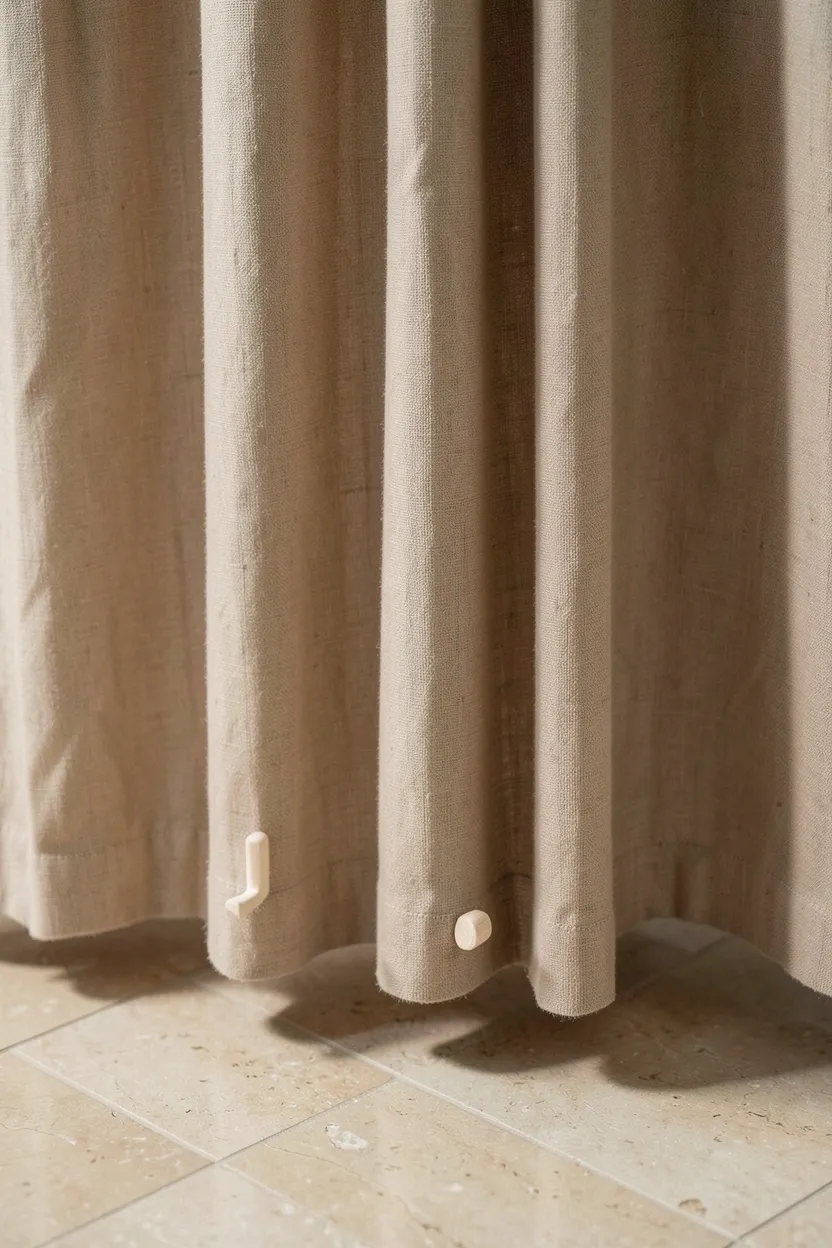
Choose unbleached linen in natural oatmeal, warm white, or soft grey tones that align with Japandi neutral palette. The fabric's natural breathability helps prevent mildew more effectively than synthetics when properly dried between uses. Linen requires minimal care—machine wash in cool water and air dry to maintain natural texture and avoid shrinkage.
Tips
- If mildew is a concern, then ensure full drying and air circulation between uses
- If you prefer simplicity, then choose unlined linen for light filtration and ease of washing
- If privacy matters, then select lined linen or pair with opaque window film
What this gives you: natural texture and sustainable material in minimalist form.
14. Wooden Window Shutters
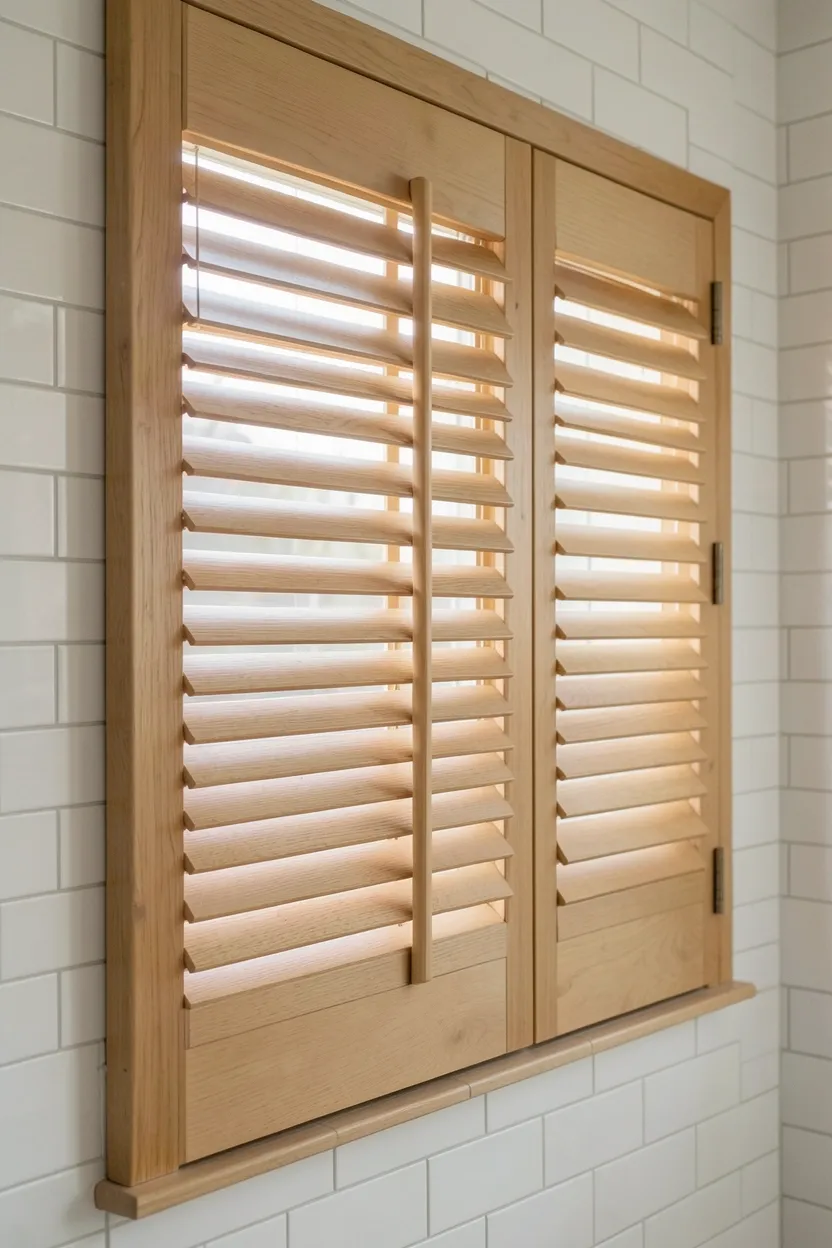
Wooden window shutters provide privacy and light control while adding warm material presence that connects Japandi design to Japanese shoji screen aesthetics. The adjustable louvers allow precise light filtering, creating soft, diffused illumination that enhances the calm atmosphere essential to Japandi bathrooms. Natural wood finish adds warmth that balances cool stone and tile.
Recommended
Items for this idea
Choose plantation shutters in natural oak or ash for warm tones that complement other wood elements. The clean lines of shutter slats align with Scandinavian minimalist geometry, while the material authenticity honors Japanese craft traditions. Interior-mounted shutters maintain clean exterior appearance and provide easy cleaning access.
Tips
- If humidity is high, then select moisture-resistant wood species or composite shutters
- If cleaning is a priority, then choose shutters with hidden tilt rods for unobstructed surface
- If light control matters, then select 2.5 to 3.5 inch louver width for adjustable privacy
What this gives you: precise light control with natural warmth and clean geometry.
15. Pebble Floor Mosaic
A pebble floor mosaic in natural river stones brings authentic Japanese garden influence while creating gentle texture underfoot that enhances the sensory bathroom experience. The smooth, rounded stones massage bare feet during daily routines, connecting the bathroom to nature's tactile qualities—a principle central to both Japanese and Nordic design philosophies.
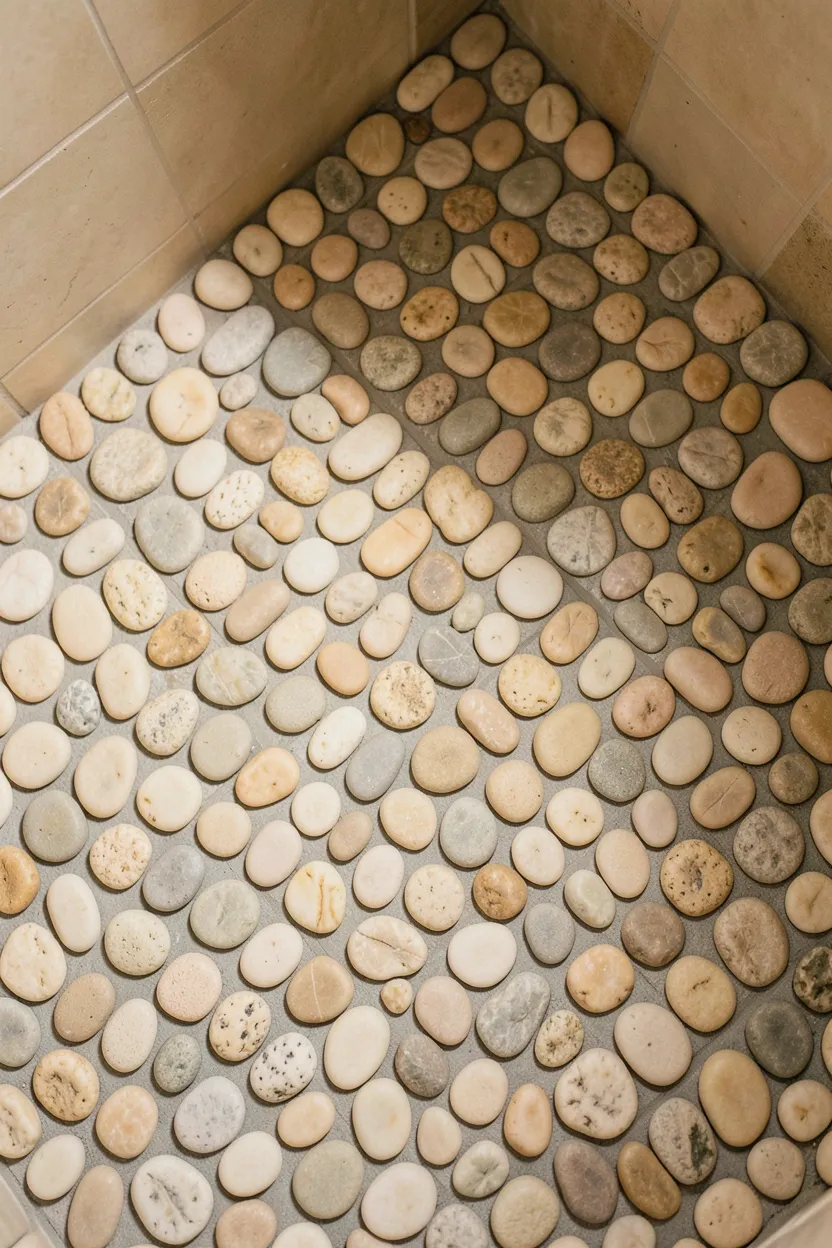
Choose neutral-toned pebbles in creams, soft greys, and warm beiges to maintain Japandi neutral palette. The mosaic format requires careful grouting between individual stones—use warm grey grout that blends with stone tones rather than creating harsh contrast. Consider pebble flooring primarily for shower floors or small accent areas rather than entire bathroom.
Tips
- Pro: authentic texture connects bathroom to nature and provides gentle foot massage
- Con: grouting between small stones requires professional installation for durability
- Fix: use epoxy grout for better water resistance and easier maintenance in wet zones
What this gives you: authentic Japanese garden texture with sensory experience.
16. Minimalist Wall-mounted Toilet
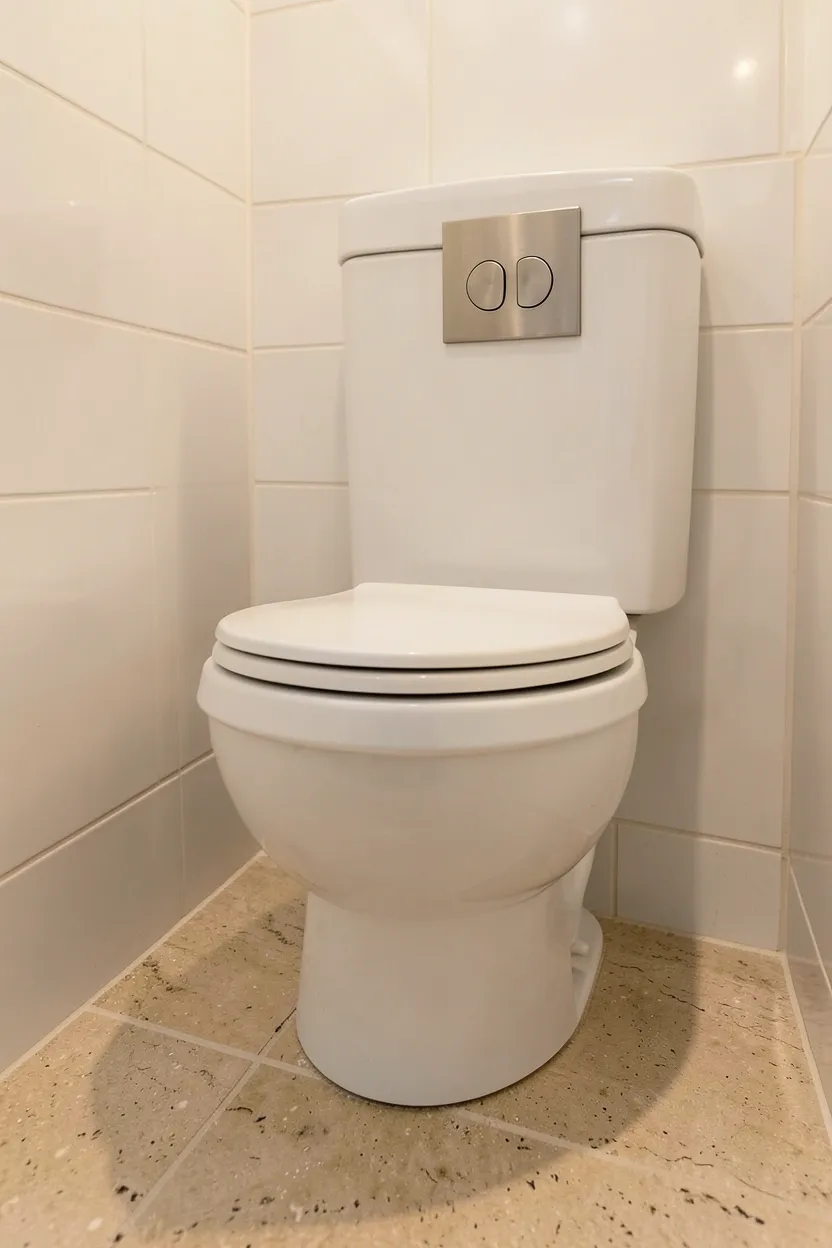
A wall-mounted toilet creates essential floor space in a Japandi bathroom while maintaining clean, continuous aesthetic fundamental to minimalist design. By concealing the tank within the wall, the toilet appears as a simple porcelain bowl floating above the floor, eliminating visual clutter and making cleaning beneath effortless. The reduced footprint aligns with Japandi spatial efficiency.
Recommended
Items for this idea
The wall-mounted design requires a carrier frame installed during rough-in, making it best-suited for renovations or new construction. Choose a toilet with concealed tank that provides efficient dual-flush functionality. The wall actuator plate should coordinate with other hardware—matte black, brushed nickel, or unlacquered brass.
Tips
- If you choose wall-mount, then ensure access panel for future tank maintenance
- If you're renovating, then verify wall structure can support carrier frame
- If cleaning is a concern, then the open floor beneath is easily maintained
What this gives you: valuable floor space and streamlined contemporary aesthetic.
17. Concrete Basin with Wood Accents
A concrete basin paired with light wood accents creates striking textural contrast that exemplifies contemporary Japandi material honesty. The raw industrial quality of concrete finds warmth in oak or ash, embodying the Japandi talent for balancing opposites—rough against smooth, cool against warm, industrial against natural.
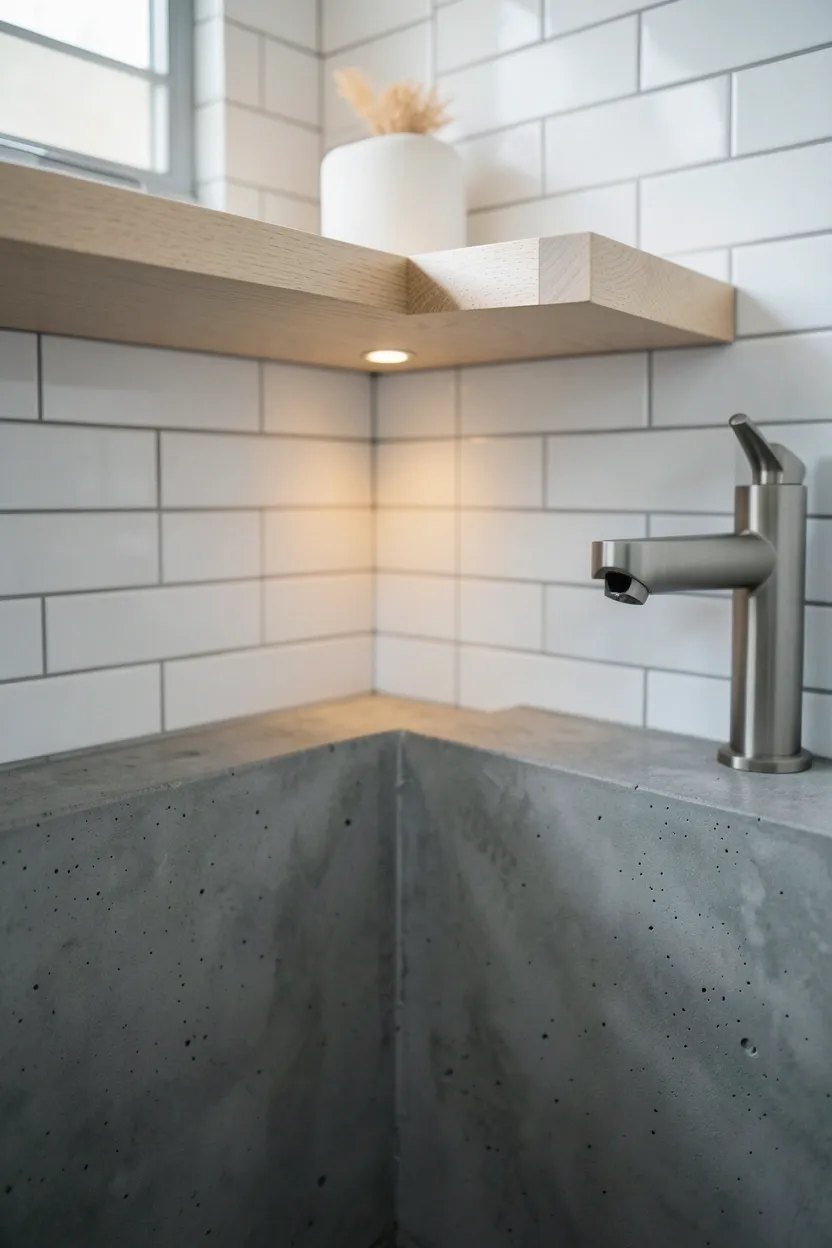
Concrete requires proper sealing for bathroom use—choose a high-quality penetrating sealer and reapply annually. The integrated basin design creates a seamless monolithic appearance. Wood accents—whether a floating counter edge, wooden shelf, or warm trim—soften the industrial concrete and create the material harmony central to Japandi design.
Tips
- Do: use cutting boards or trivets to protect concrete from impacts
- Don't: allow standing water which can penetrate concrete over time
- Do: wax concrete periodically to maintain water resistance and develop patina
Avoid if: you prefer low-maintenance surfaces or dislike materials that develop patina.
What this gives you: bold textural contrast that expresses contemporary Japandi materiality.
18. Zen Garden-inspired Corner
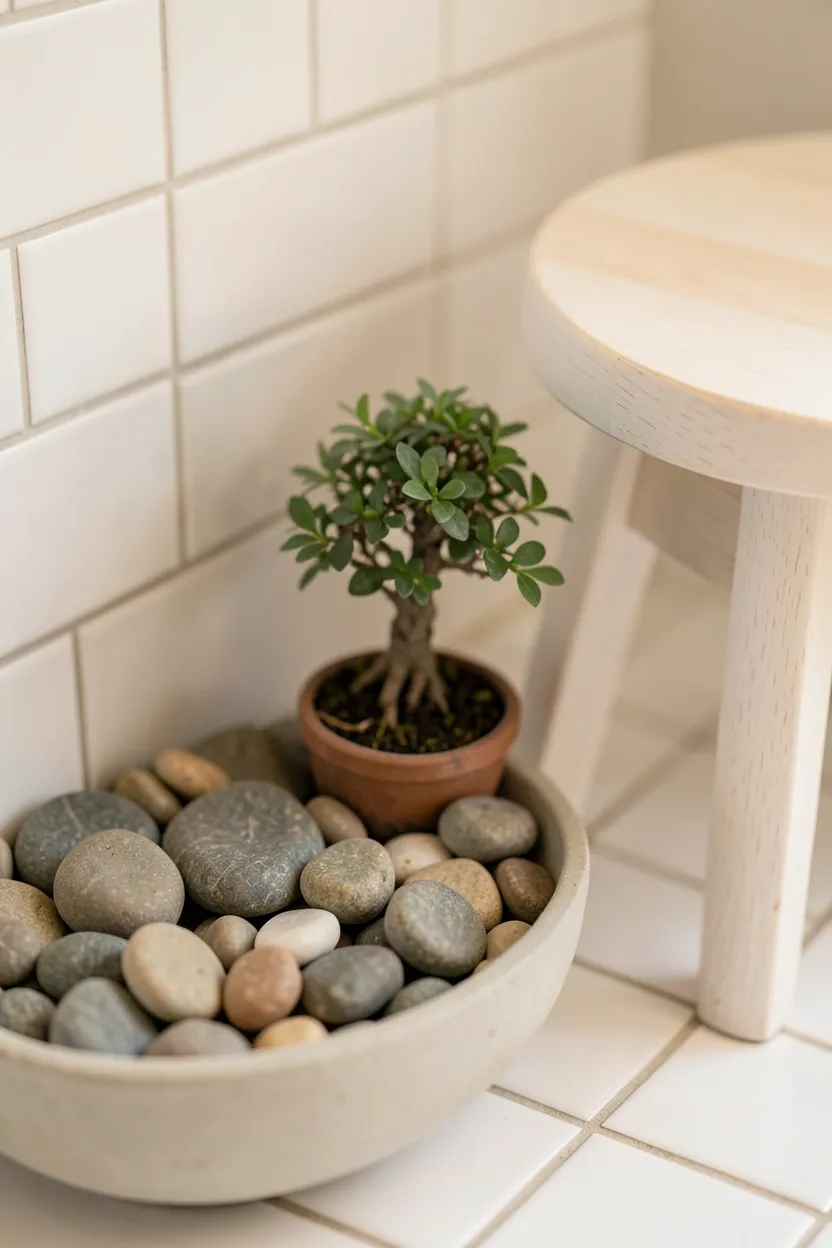
A small zen garden-inspired corner creates a meditative focal point that brings authentic Japanese influence to the Japandi bathroom. Whether incorporating smooth river stones, a miniature bamboo arrangement, or a simple raked sand element, this design connects the bathroom to Japanese contemplative traditions while maintaining Scandinavian minimalism.
Recommended
Items for this idea
Keep the zen garden element restrained—a small shallow bowl or tray containing carefully arranged stones, perhaps with a single bonsai or minimalist plant. The design should feel intentional rather than decorative, with careful attention to negative space. Position the element where it can be viewed from the tub or vanity for contemplative moments.
Tips
- Do: select stones with complementary tones to bathroom palette
- Don't: overcrowd the arrangement—zen values spaciousness and simplicity
- Do: maintain the element regularly, raking sand or adjusting stones as meditative practice
What this gives you: authentic meditative focal point honoring Japanese tradition.
19. Bamboo Flooring
Bamboo flooring offers sustainable alternative to hardwood while introducing authentic Japanese material presence to Japandi bathroom design. The rapid growth of bamboo aligns with both Japanese and Nordic values of environmental consciousness, while the material's natural warmth creates gentle contrast against cool tile and stone surfaces.
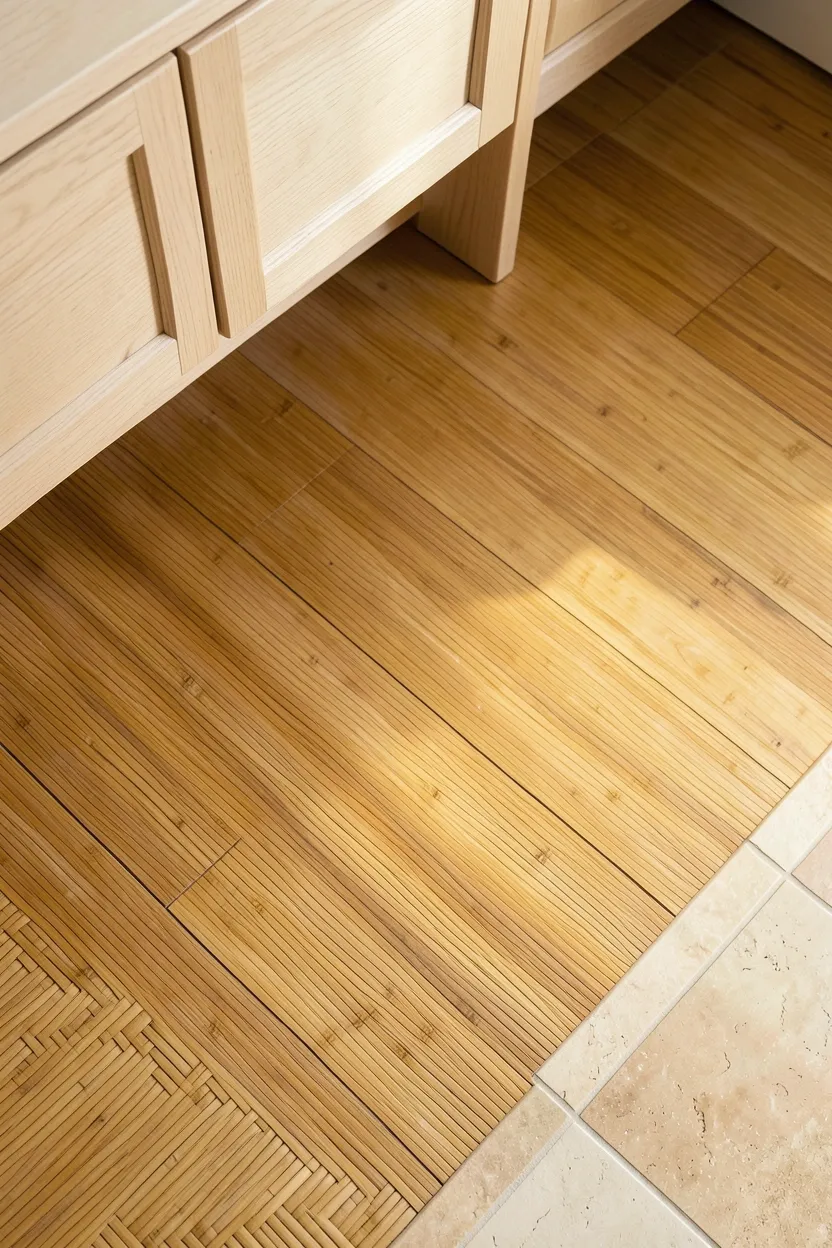
Choose strand-woven bamboo for superior hardness and water resistance compared to traditional bamboo planks. Select horizontal grain orientation for more visible bamboo nodes that celebrate material authenticity, or vertical grain for cleaner, more Scandinavian minimalism. The natural golden tones complement light wood fixtures while maintaining Japandi warm-neutral palette.
Tips
- Pro: bamboo is rapidly renewable and harder than many hardwoods
- Con: requires proper sealing and prompt cleanup of standing water
- Fix: use bamboo-specific sealers and mats in wet zones for protection
What this gives you: sustainable warmth with authentic Japanese material connection.
20. Wooden Bath Stool
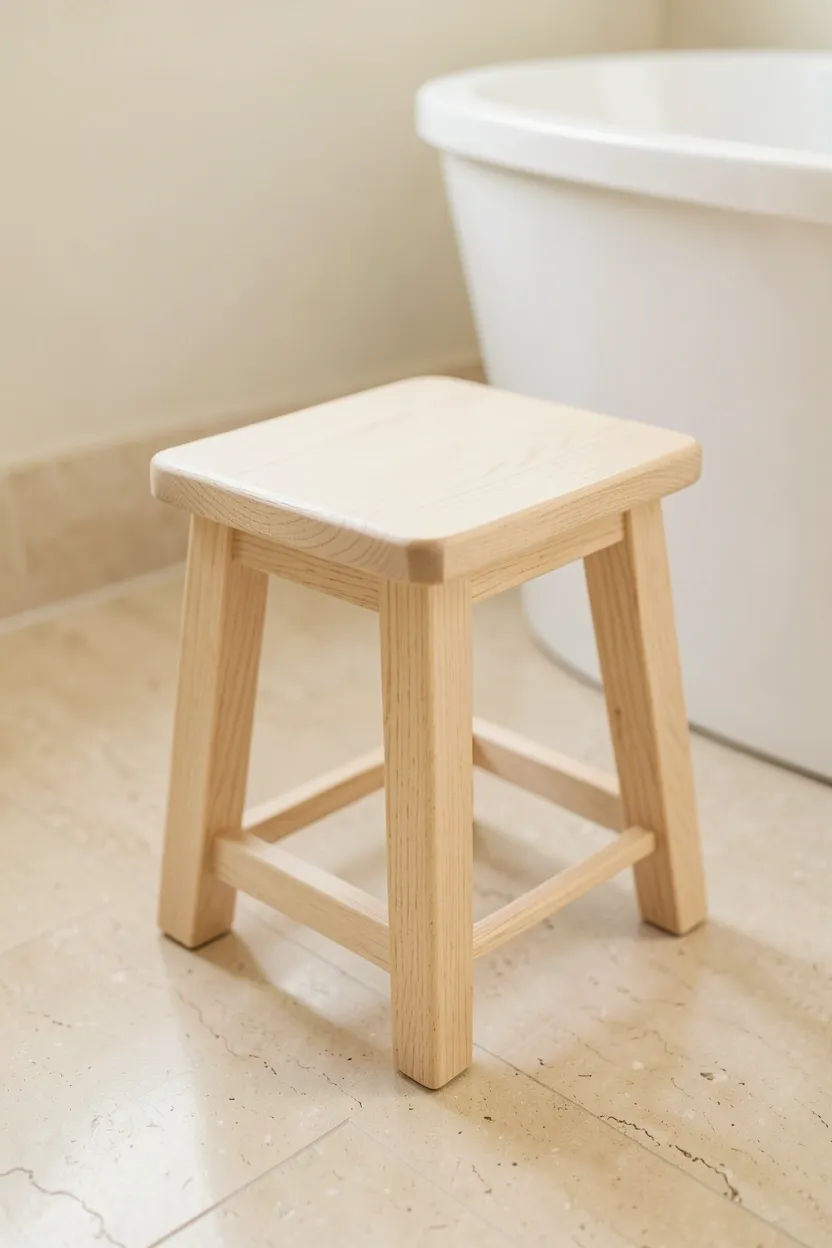
A simple wooden bath stool provides practical functionality while introducing Japanese bathing ritual elements to the Japandi bathroom. In Japanese bathing culture, the stool allows seated washing before soaking in the ofuro—a practice that brings contemplative mindfulness to daily routines. The stool also serves as functional surface for towels or toiletries.
Recommended
Items for this idea
Choose a design in light oak or ash with clean lines that align with Scandinavian minimalist aesthetics. The stool should feel substantial enough for seating but visually lightweight enough to not clutter the space. Natural wood grain adds warmth that balances cool fixtures, creating the material harmony central to Japandi design.
For more Japandi bathroom ideas, see Serene Zen Bathroom and explore how minimalism and tranquility coexist.
Tips
- Do: seal wood with water-resistant finish for bathroom durability
- Don't: place stool directly under shower spray where water accumulates
- Do: allow stool to dry completely between uses to prevent mold
What this gives you: authentic Japanese ritual element with functional versatility.
21. Natural Stone Shower Walls
Natural stone shower walls—whether honed slate, limestone, or sandstone—bring authentic earthiness that celebrates Japanese wabi-sabi appreciation for natural variation in a key bathroom zone. Unlike uniform ceramic tile, stone walls develop character over time, showing subtle differences in color and veining that create visual interest without pattern repetition.
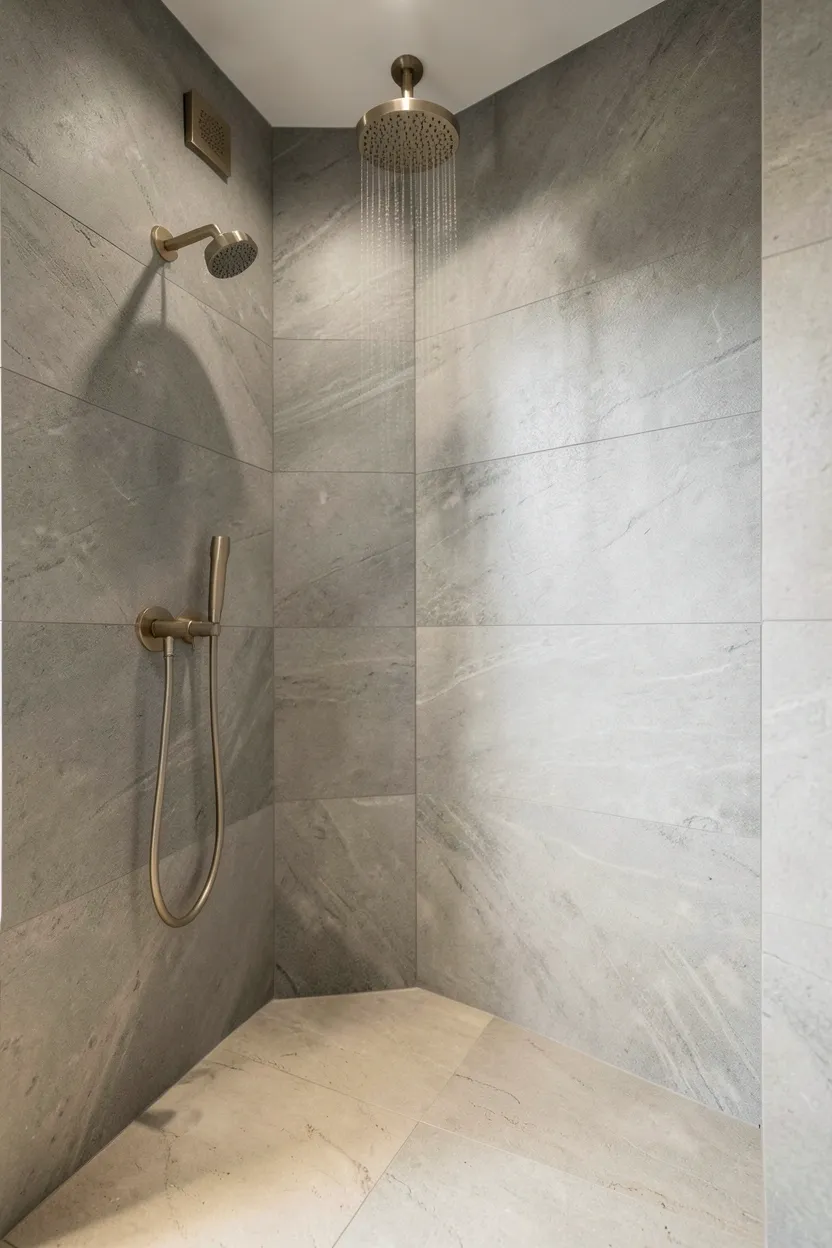
Choose honed rather than polished finishes for better slip resistance and softer matte appearance that aligns with Japanese restraint. Large-format slabs minimize grout lines, creating continuous visual planes that enhance spacious calm essential to Japandi design. The natural thermal mass of stone helps maintain comfortable shower temperature.
Tips
- Pro: authentic natural beauty creates unique one-of-a-kind shower experience
- Con: requires professional installation, sealing, and occasional maintenance
- Fix: apply penetrating sealer before grouting and reapply annually for stain resistance
What this gives you: authentic earthiness that celebrates natural variation.
22. Minimalist Brass Hardware
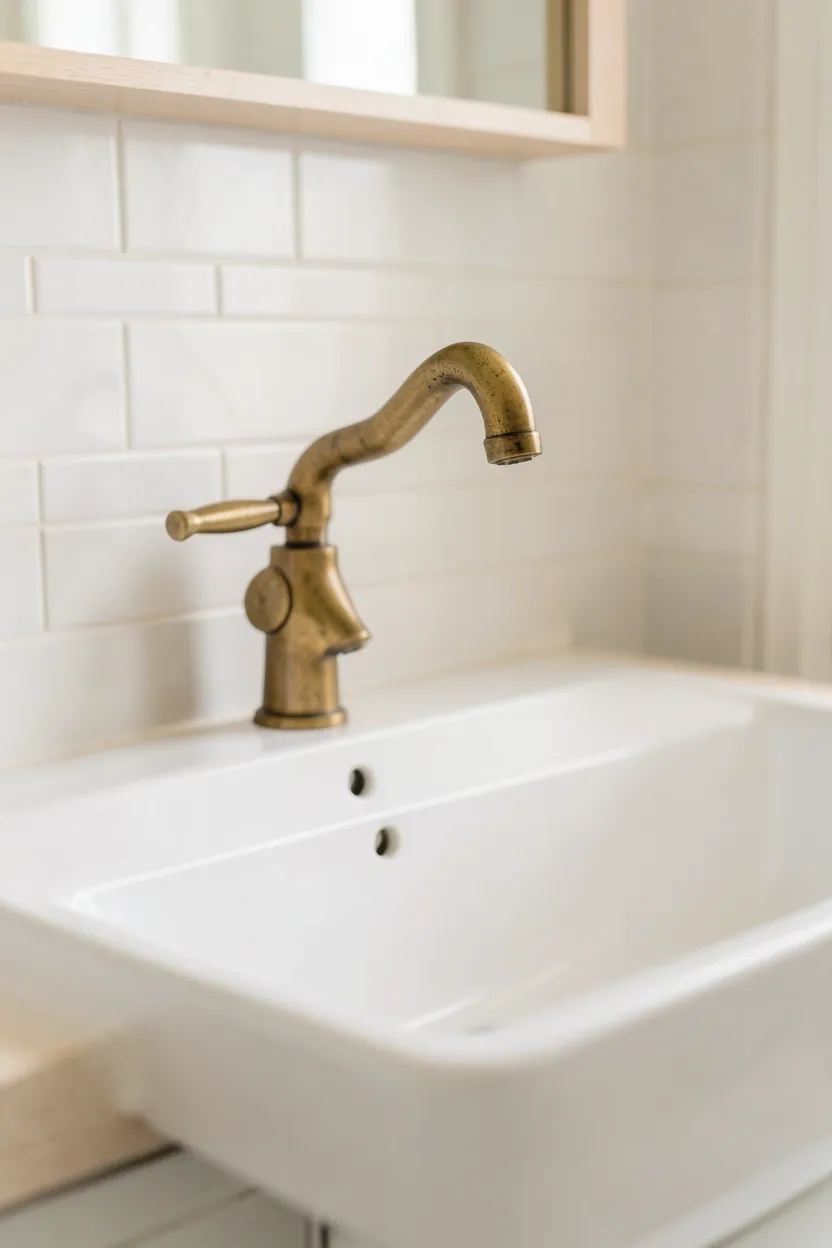
Minimalist brass hardware provides warm metallic contrast that adds contemporary edge while maintaining Japandi restraint. The warm golden tone creates focal points at key interaction points—faucet, shower controls, towel rails—while complementing natural wood and stone elements. Brass develops natural patina over time, celebrating wabi-sabi appreciation.
Recommended
Items for this idea
Choose unlacquered brass that develops authentic patina rather than lacquered finishes that maintain artificial appearance. The minimalist hardware—clean lines, hidden aerators, integrated designs—aligns with Scandinavian functional simplicity while brass warmth adds Japanese material richness.
Tips
- Do: commit to brass consistently across all fixtures for intentional cohesion
- Don't: mix multiple metal finishes which creates visual chaos
- Do: maintain natural patina with soft cloth rather than abrasive cleaning
What this gives you: warm metallic contrast that develops authentic character.
23. Wooden Storage Cabinet
A floor-standing wooden storage cabinet in light oak or ash provides concealed storage while adding warm material presence that enhances Japandi bathroom warmth. The cabinet design should maintain clean minimalist lines—perhaps a simple geometric form with discreet hardware—so it feels architectural rather than furniture-like.
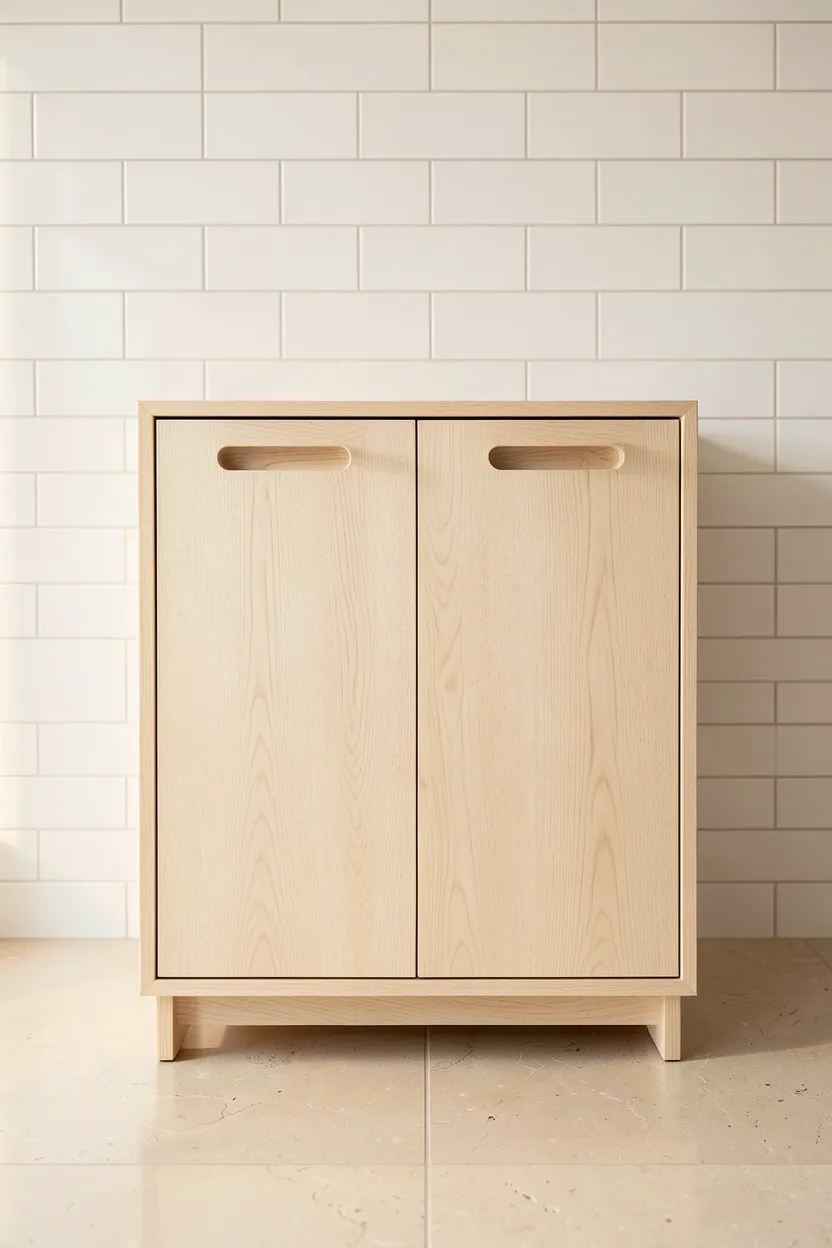
Choose a design with recessed pulls or integrated handles for clean surfaces that align with Japandi minimalism. The cabinet should provide ample storage for toilet paper, cleaning supplies, and toiletries while maintaining visual lightness through floating design or tapered legs. Natural wood grain adds subtle texture without overwhelming neutral palette.
Tips
- If humidity is a concern, then ensure proper sealing and ventilation around cabinet
- If space is compact, then choose narrow width cabinet to avoid crowding
- If minimalism is priority, then opt for push-to-open doors without visible hardware
What this gives you: concealed storage with warm material presence and clean lines.
24. Natural Fiber Rugs
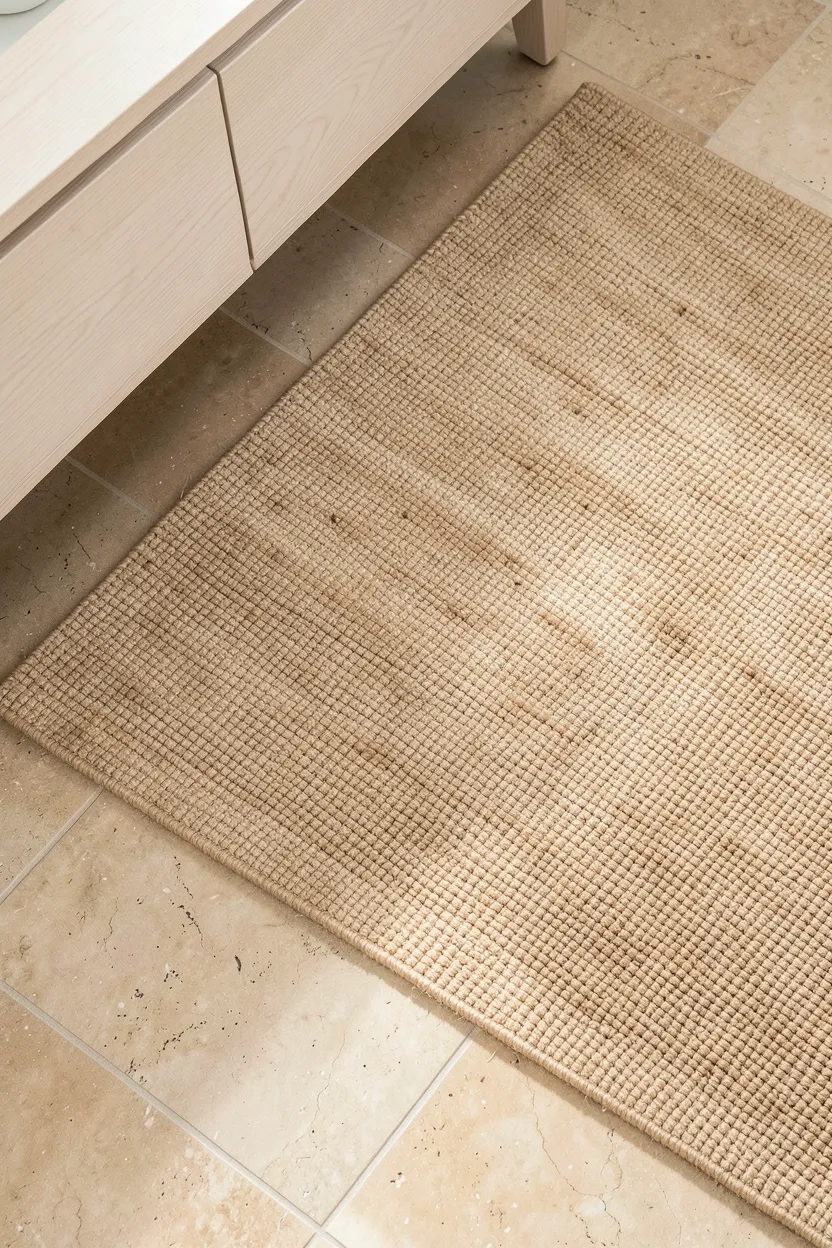
Natural fiber rugs in jute, sisal, or seagrass introduce earthy texture while maintaining Japandi sustainable values and neutral palette. These materials connect bathroom to natural origins, providing gentle textural contrast against hard stone or tile surfaces while creating soft landing spots for bare feet.
Recommended
Items for this idea
Choose neutral tones—warm beige, soft grey, natural oatmeal—that align with Japandi color scheme. The natural fibers add organic texture and subtle variation without introducing color or pattern that would disrupt calm atmosphere. Consider smaller accent rugs rather than wall-to-wall coverage for intentional placement.
Tips
- Pro: sustainable materials with natural texture and visual warmth
- Con: natural fibers absorb moisture and require regular ventilation
- Fix: choose latex-backed options or use rug pads to protect flooring
What this gives you: organic texture that connects bathroom to natural materials.
25. Skylight for Natural Light
A skylight brings precious natural light into a Japandi bathroom, transforming potentially dark internal space into luminous retreat that celebrates both Japanese and Scandinavian reverence for daylight. Natural light is fundamental to both design philosophies—Nordic winters maximize every photon, Japanese aesthetics treasure changing light qualities throughout day.
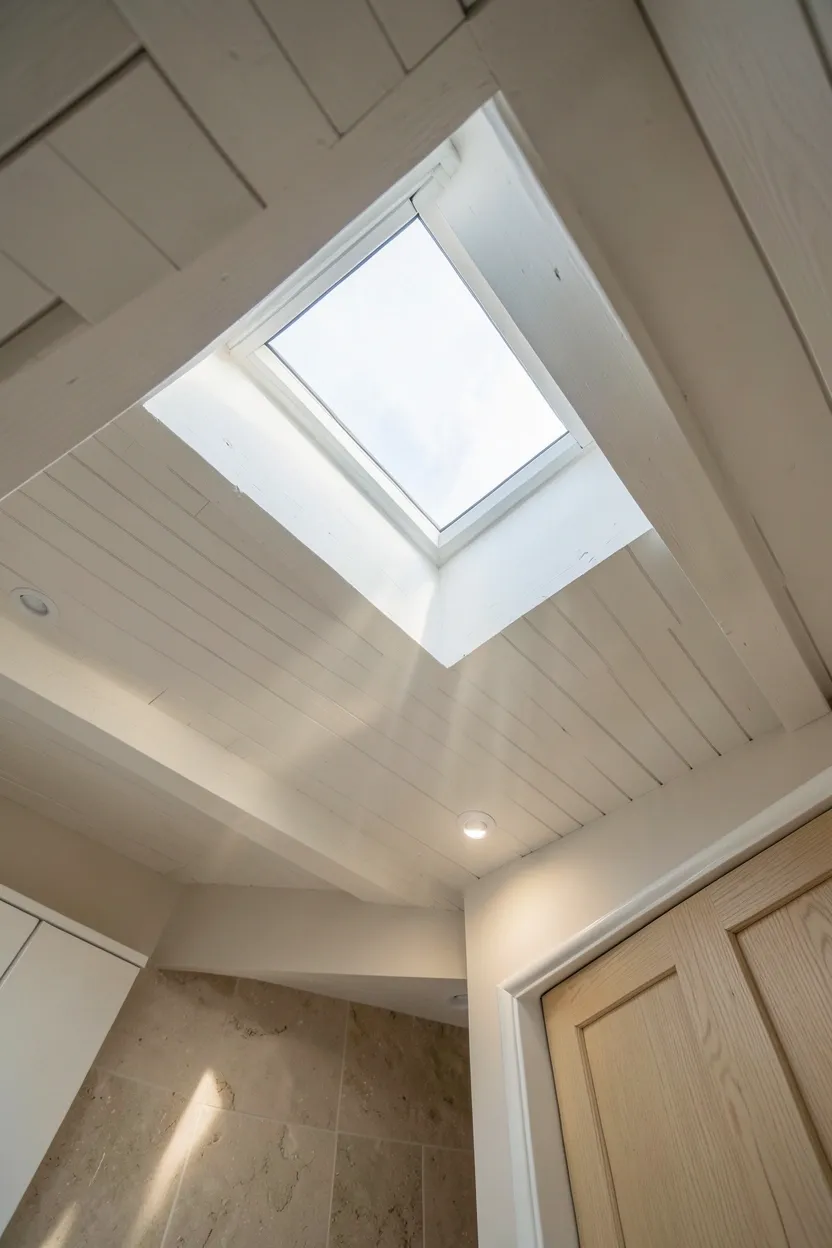
The vertical light source creates gentle illumination that connects bathroom to rhythm of outside weather and time. If structural constraints prevent skylight, consider solar tubes or sun tunnels for internal bathrooms. Frame skylight with painted timber beams for subtle architectural detail that references Nordic cabin simplicity.
Tips
- If you install a skylight, then choose double-glazed units for insulation
- If privacy is a concern, then select frosted or obscure glazing
- If ventilation is needed, then opt for venting skylights that release humidity
What this gives you: abundant natural light that fundamentally transforms bathroom experience.
These 25 japandi bathroom ideas demonstrate how Japanese minimalism and Scandinavian functionality can create spaces that feel both serene and effortlessly beautiful. The philosophy centers on quality natural materials, diffused light, and thoughtful restraint—every element serves a purpose while contributing to an atmosphere of calm contemplation. Whether you're a renter looking for renter-friendly updates like bamboo accessories and linen curtains, or planning a full renovation with stone tiles and a floating vanity, the japandi bathroom design approach transforms daily routine into a moment of peaceful ritual that honors authentic materials and intentional living.
About the author
OBCD
CGI visualization and interior design content. We create detailed 3D renders and curate practical design ideas for every room in your home.