What Is Bohemian Style Interior Design? A Boho Guide
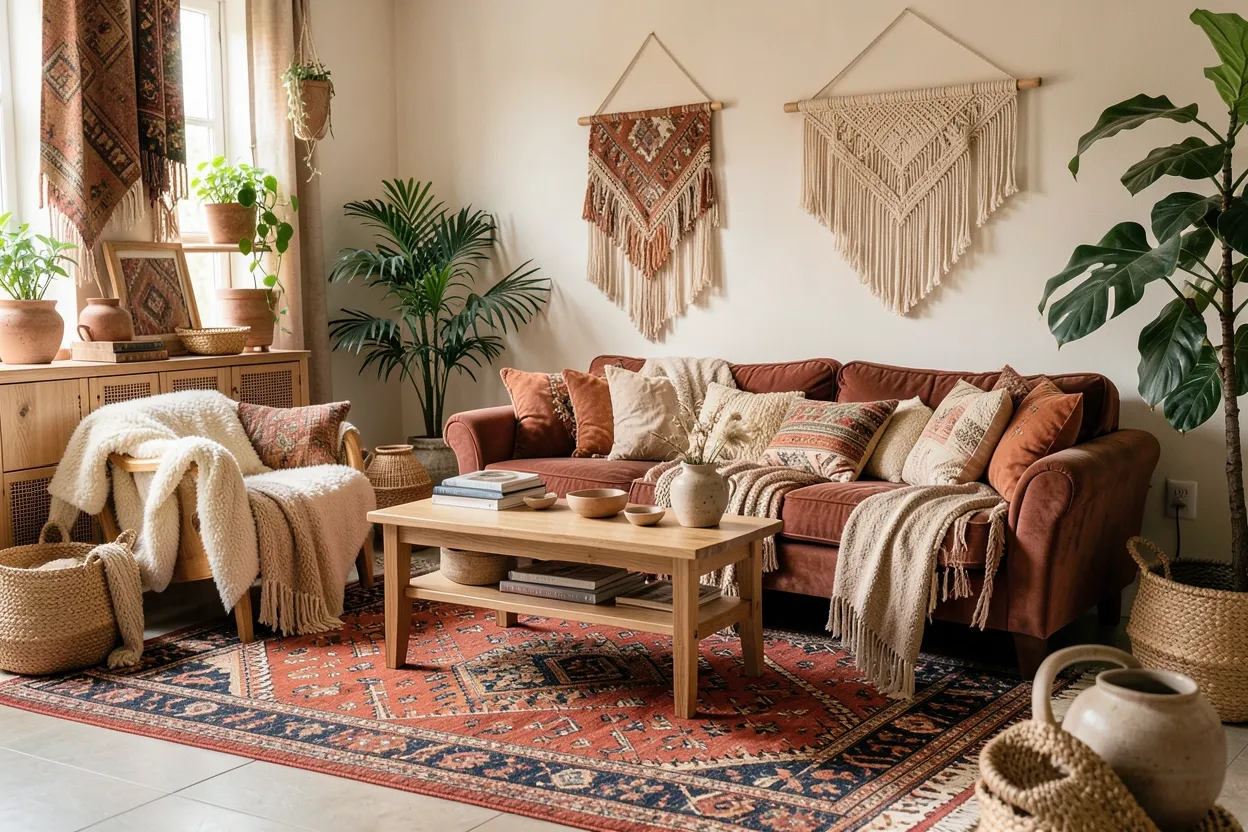
Bohemian style interior design—often called "boho"—is a free-spirited approach to home decoration that embraces eclecticism, natural materials, and artistic self-expression over conventional design rules. The style emerged from Romani counter-culture and artistic communities of the 19th and early 20th centuries, evolving into a design philosophy that values creativity, comfort, and personal storytelling through collected objects. Unlike minimalist trends, boho interiors celebrate abundance, layering, and the beauty found in imperfection.
What makes bohemian style distinctive is its intentional rejection of uniformity in favor of curated collections that reflect the dweller's personality, travels, and creative interests. The aesthetic layers textures, patterns, and colors with abandon, creating spaces that feel lived-in, warm, and deeply personal. From rattan furniture to Persian rugs, macramé wall hangings to vintage textiles, every object tells a story. Best of all, most boho elements are renter-friendly: they require no drilling, no permanent changes, and move with you when your lease ends.
This guide explores bohemian style interior design fundamentals, from understanding the philosophy and key elements to practical tips renters can use to incorporate boho style into their apartments. Whether you're drawn to the aesthetic's free-spirited energy or its celebration of cultural influences, you'll discover how to create spaces that feel authentically yours—without violating your lease.
Quick FAQ
What defines bohemian interior design?
Bohemian design is an eclectic, free-spirited interior style that embraces unconventional combinations, natural materials, and artistic self-expression. The aesthetic layers textures, patterns, and colors abundantly, creating warm, personality-filled spaces that reflect the dweller's travels, creativity, and collections rather than following conventional design rules.
What are the key elements of boho style?
Essential boho elements include natural materials (wood, rattan, wicker, jute), layered textiles (rugs, throws, cushions, curtains), global patterns (Moroccan, Turkish, Indian), vintage and handmade objects, plants, and artistic decor like macramé. The combination creates rich, textured, and visually interesting spaces that feel collected over time rather than decorated.
Is bohemian style suitable for small spaces?
Boho can work beautifully in small spaces because the aesthetic values layering and vertical space over filling rooms with furniture. Using wall-hung decor, layered rugs, and vertical storage maximizes visual impact without crowding. The eclectic nature means you can mix sizes and styles intentionally, making small rooms feel curated and personality-filled rather than cramped.
What colors work best in bohemian interiors?
Bohemian palettes embrace earthy tones (terracotta, rust, ochre), warm neutrals (cream, beige), and rich accent colors (deep red, mustard, turquoise, emerald). The key is layering colors through textiles and accessories rather than painting walls. This creates warmth and depth while maintaining the boho emphasis on natural, organic hues and occasional bold pops.
Can bohemian design work on a budget?
Boho is inherently budget-friendly because the aesthetic values vintage, thrifted, and handmade items over expensive new pieces. The style's emphasis on collections and stories means you can build your look gradually through finds, DIY projects, and inherited pieces. Rattan furniture and natural textiles often cost less than mass-produced alternatives while offering more character.
How is bohemian different from eclectic style?
While both styles embrace mixing, bohemian has a specific free-spirited philosophy rooted in counter-culture and artistic expression. Eclectic design can be any mix of styles, while boho consistently prioritizes natural materials, global cultural influences, handmade objects, and a warm, layered aesthetic that feels collected and lived-in rather than curated.
As an Amazon Associate I earn from qualifying purchases.
Table of Contents
- 1. Understanding Bohemian Philosophy: Freedom Through Design
- 2. Natural Materials: The Foundation of Boho Style
- 3. Layered Textiles: Rugs, Throws, and Cushions
- 4. Global Patterns: Moroccan, Turkish, and Indian Influences
- 5. Vintage and Handmade Objects: Storytelling Through Decor
- 6. Plants and Natural Elements: Bringing Life Indoors
- 7. Furniture: Low-Key and Unconventional Pieces
- 8. Macramé and Handmade Wall Decor: Artistic Expression
- 9. Lighting: Warmth and Atmosphere Over Brightness
- 10. Starting Your Bohemian Journey
1. Understanding Bohemian Philosophy: Freedom Through Design
Bohemian design philosophy centers on freedom—freedom from conventional rules, freedom to express creativity, and freedom from the pressure to keep up with trends. This approach emerged from 19th-century Romani counter-culture and artistic communities who rejected mainstream values in favor of alternative lifestyles. The interior reflects this spirit through collected objects, unconventional arrangements, and celebration of personal journey rather than aspirational perfection.
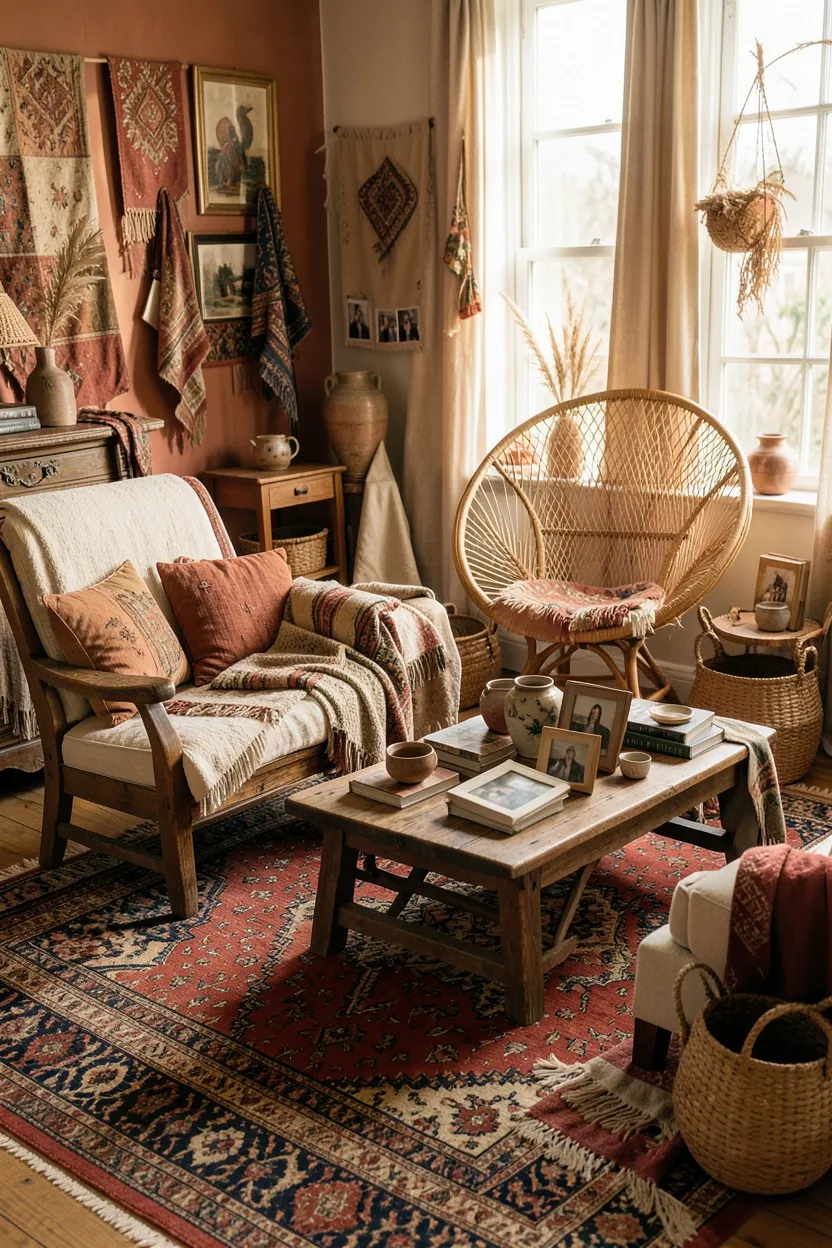
The philosophy embraces what some might call "clutter" as intentional abundance—collections that tell stories, objects gathered through travels, and creative projects displayed proudly. Unlike minimalist approaches that seek to edit down, boho spaces celebrate more rather than less, finding beauty in the unexpected combinations and layered richness. Every object should have meaning or bring joy, regardless of whether it fits conventional design principles.
Tips
- Display items that tell your story—travel souvenirs, handmade pieces, gifts from loved ones
- Embrace asymmetrical arrangements rather than seeking perfect balance
- Include personal artwork and photography as meaningful decor rather than generic pieces
What this gives you: a home that authentically reflects your personality, experiences, and creative spirit through intentional, rule-breaking design.
2. Natural Materials: The Foundation of Boho Style
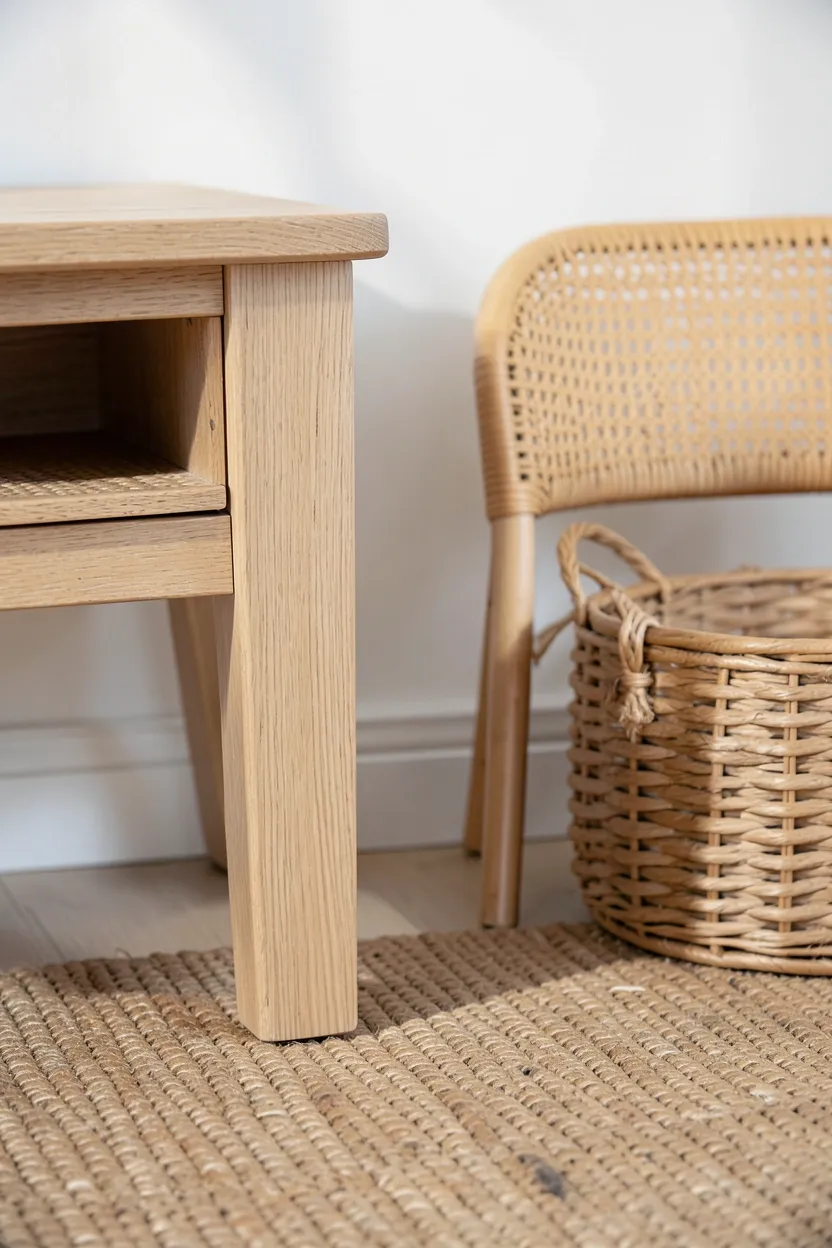
Natural materials form the essential foundation of bohemian design, connecting interiors to earth, craftsmanship, and authenticity. Wood—particularly light-colored oak, pine, and mango—appears in furniture and architectural details, bringing warmth and organic presence. Rattan, wicker, bamboo, and jute provide textural contrast and celebrate traditional crafting techniques from cultures around the world.
Recommended
Items for this idea
The emphasis on natural materials aligns with bohemian values of sustainability, connection to traditional crafts, and appreciation for authentic beauty. Unlike mass-produced synthetic alternatives, these materials develop character over time—wood gains patina, natural fibers soften with use, rattan shows evidence of hand-weaving. This celebration of material truth creates spaces that feel grounded and connected to global traditions.
Tips
- Look for vintage rattan and wicker pieces at thrift stores and flea markets
- Choose natural fiber rugs—jute, sisal, hemp—for authenticity and easy maintenance
- Embrace visible wood grain and natural material variations as features, not flaws
What this gives you: interiors that feel authentic, sustainable, and richly textured through materials that tell stories of craftsmanship and cultural tradition.
3. Layered Textiles: Rugs, Throws, and Cushions
Layered textiles are perhaps the most recognizable element of bohemian design, creating warmth, comfort, and visual abundance through rugs, throws, pillows, and curtains. The approach treats textiles as the primary design element rather than accessories—layering patterned rugs in different sizes, draping throws casually over furniture, and scattering cushions abundantly. This creates cozy, inviting spaces that feel rich and textured without overwhelming visual balance.
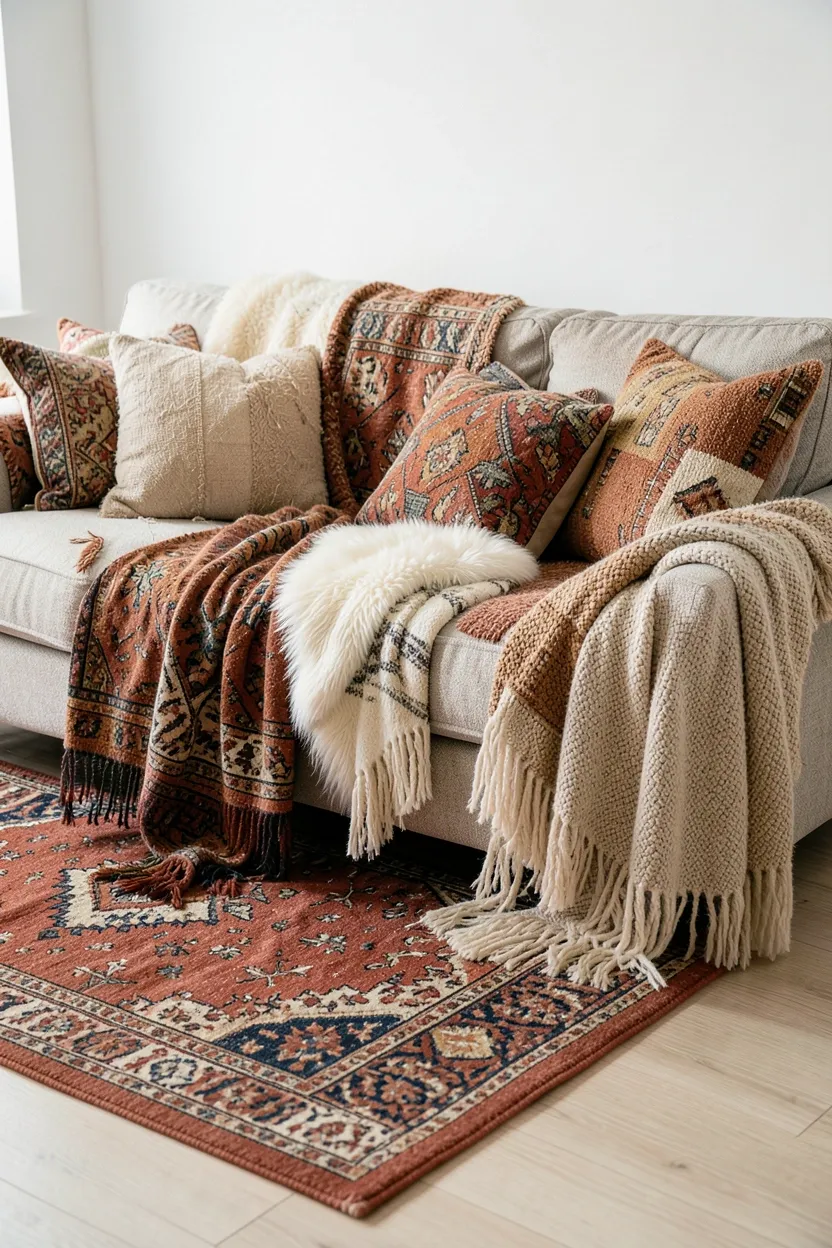
The textile palette typically features earthy foundations—terracotta, rust, ochre, cream—accented with occasional bold patterns in deep red, indigo, or mustard. Unlike conventional interiors that might use a single statement rug and matching throw, boho design celebrates mixing patterns, colors, and textures freely. The result feels collected over time rather than coordinated in one shopping trip.
Tips
- Start with one large rug as foundation, then layer smaller rugs for visual interest
- Choose textiles in varying textures—wool, cotton, linen, jute—for tactile variety
- Don't worry about perfect matching—boho celebrates mismatched patterns and colors
What this gives you: spaces that feel warm, cozy, and visually rich through textile layering that makes rooms feel lived-in and welcoming.
4. Global Patterns: Moroccan, Turkish, and Indian Influences
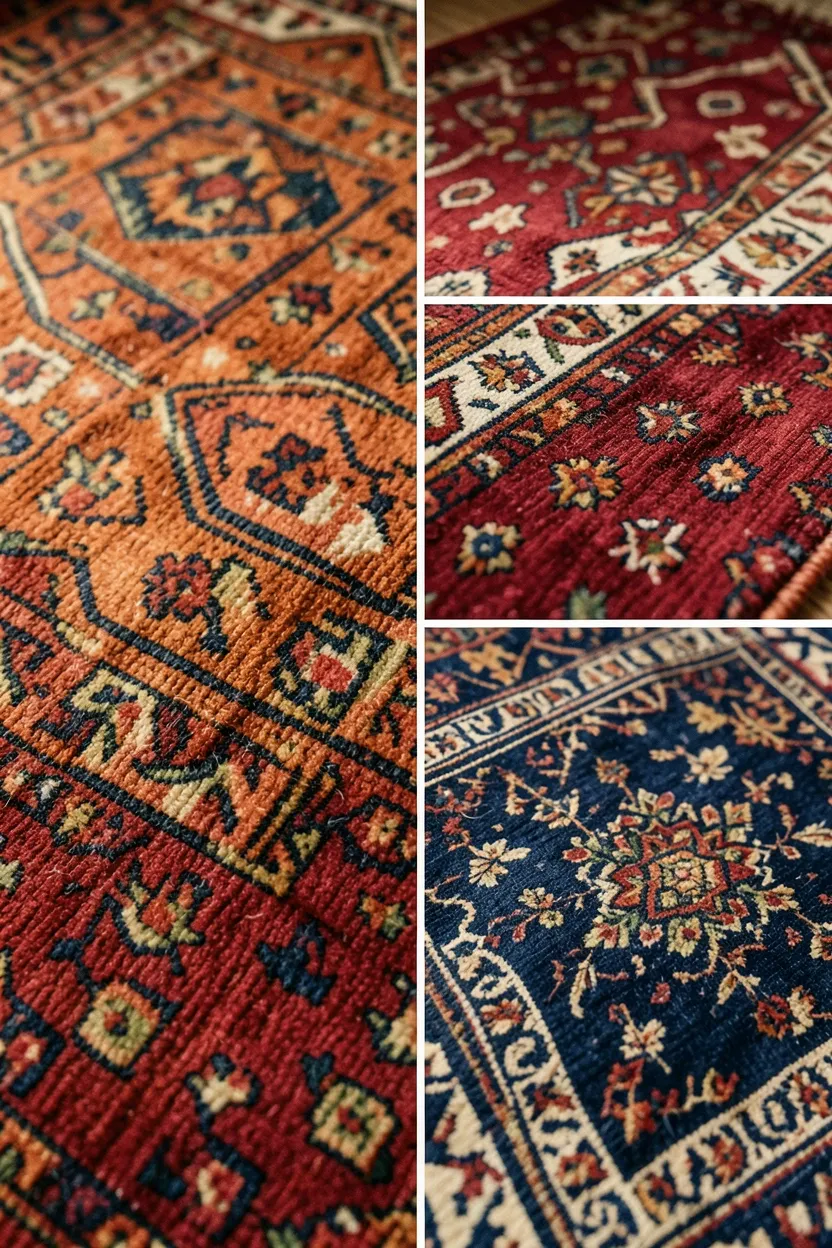
Global patterns are a signature element of bohemian design, celebrating cultural influences from North Africa, the Middle East, and Asia. Moroccan rugs with their intricate geometric designs, Turkish kilims with bold colors and medallion patterns, and Indian textiles with paisley prints and block printing appear throughout boho interiors, connecting the space to broader world traditions and craftsmanship. These patterns add visual excitement and storytelling to rooms.
Recommended
Items for this idea
The integration of global patterns reflects bohemian values of wanderlust, cultural appreciation, and celebration of diverse artistic traditions. Unlike neutral minimalist palettes that might shy away from bold patterns, boho design embraces them enthusiastically—mixing Persian rugs with Turkish textiles, layering Indian block prints, and incorporating African mud cloth accents. The result feels worldly, curious, and richly patterned.
Tips
- Research the cultural meanings behind patterns—many have symbolic significance
- Start with one statement patterned piece and build around it
- Don't worry about patterns clashing—boho celebrates unexpected combinations
What this gives you: interiors that feel globally connected, culturally rich, and visually exciting through patterns that celebrate diverse artistic traditions from around the world.
5. Vintage and Handmade Objects: Storytelling Through Decor
Vintage and handmade objects serve as storytellers in bohemian interiors, each piece carrying history, craftsmanship, or personal meaning. Unlike mass-produced decor that feels anonymous, these objects have character—scratches on a vintage wooden chair, visible tool marks on a handmade ceramic bowl, natural variations in a woven basket. The boho philosophy treasures this authenticity, displaying pieces that reveal the hand of the maker or the journey of previous owners.
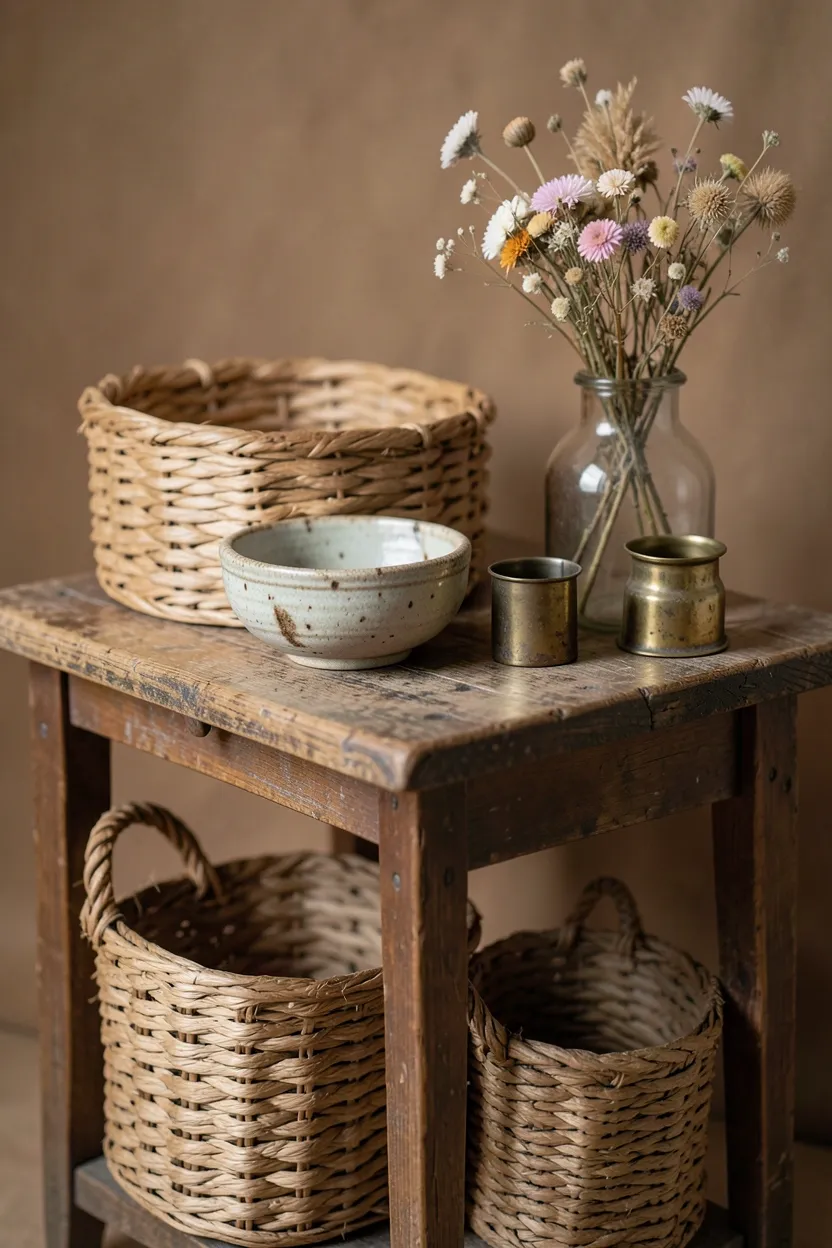
The celebration of vintage and handmade objects reflects bohemian values of sustainability, supporting craftspeople, and finding beauty in imperfection. Thrift stores, flea markets, and artisan fairs become treasure hunts where each find contributes to the room's evolving story. Unlike new furniture that might feel temporary or impersonal, vintage pieces bring a sense of history and connection to previous lives.
Tips
- Look for objects with visible makers' marks—tool marks, throwing rings, weaving signatures
- Don't hesitate to display pieces that show wear—patina tells stories of use and love
- Support local artisans and craftspeople when adding new handmade pieces
What this gives you: spaces that feel richly personal, historically connected, and authentically lived-in through objects that celebrate craftsmanship, imperfection, and human creativity.
6. Plants and Natural Elements: Bringing Life Indoors
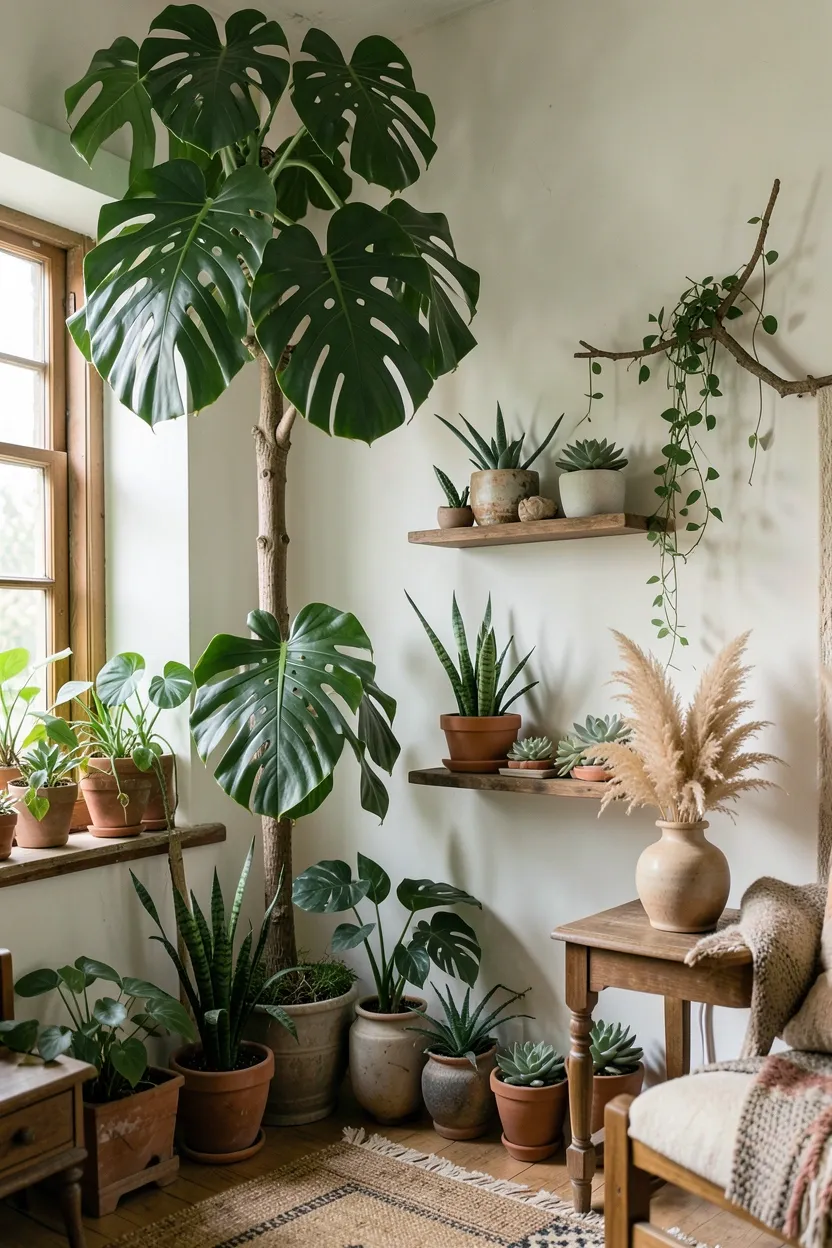
Plants and natural elements are essential to bohemian design, bringing life, movement, and organic beauty to spaces that might otherwise feel static. From large statement plants in woven baskets to small succulents on windowsills, from dried botanical arrangements to driftwood and stones, natural elements connect boho interiors to the outdoors and create biophilic benefits. Plants soften hard surfaces, improve air quality, and add living energy.
Recommended
Items for this idea
Plant selection in boho interiors embraces variety rather than botanical consistency. You might find a fiddle leaf fig alongside a cactus, trailing pothos near succulents, and fresh cut flowers in handmade vases. The combination creates lush, jungly atmosphere that feels intentionally abundant rather than carefully curated. Dried botanicals—pampas, eucalyptus, lavender—add texture and nostalgia while requiring minimal maintenance.
Tips
- Start with low-maintenance plants if you're new to indoor gardening—snake plants, pothos, ZZ plants
- Use plants at different heights for visual interest and variety
- Group plants in odd numbers (1, 3, 5) for more natural, less arranged appearance
What this gives you: interiors that feel alive, connected to nature, and energized through greenery that brings documented benefits for mood, air quality, and mental wellbeing.
7. Furniture: Low-Key and Unconventional Pieces
Bohemian furniture typically breaks from conventional design rules—pieces might be mismatched, vintage, low to the ground, or reimagined from unexpected objects. The aesthetic celebrates creativity and personal expression over coordinated sets, encouraging mixing styles, eras, and materials freely. A low rattan peacock chair might sit beside a vintage velvet sofa, which pairs with a handmade wooden coffee table. The result feels collected over time rather than purchased all at once.
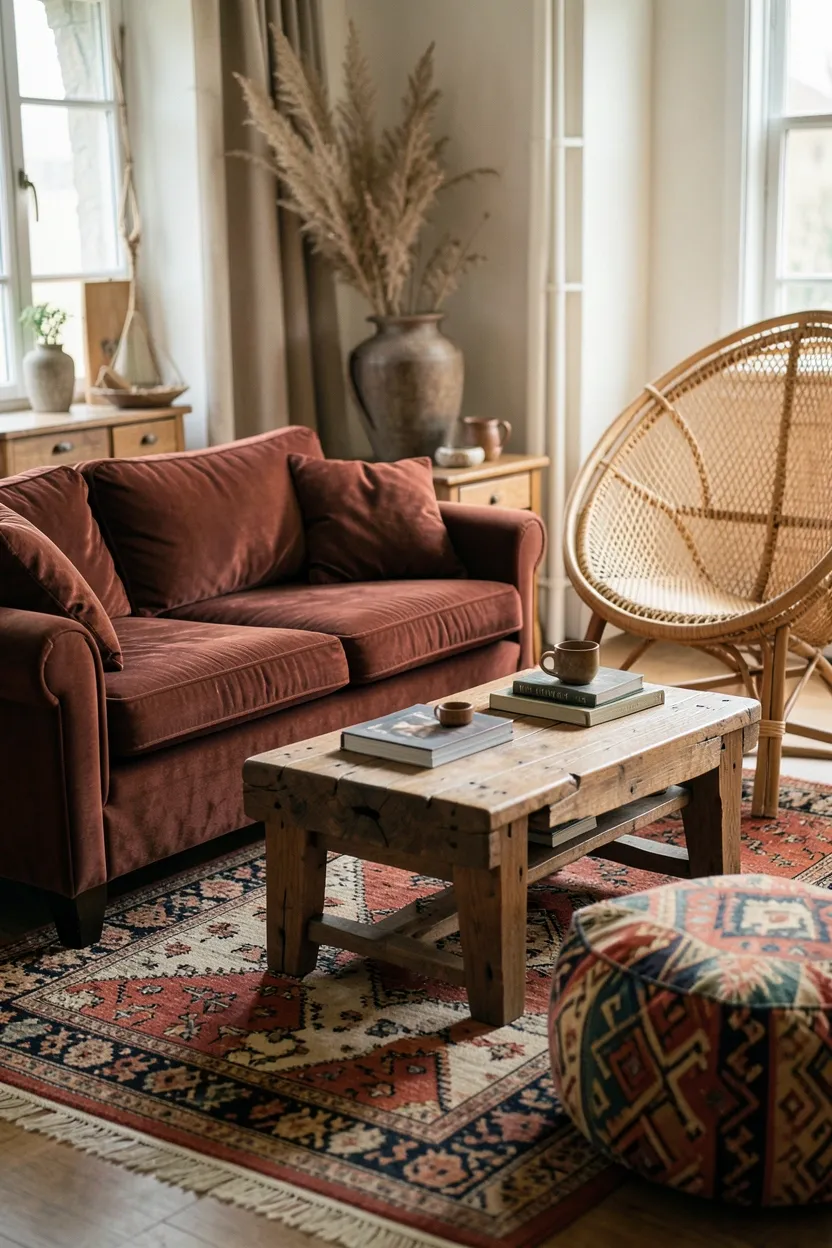
The furniture philosophy prioritizes comfort and character over perfection. Low-profile pieces like floor cushions, poufs, and low tables create intimate seating arrangements while maintaining openness. Vintage pieces—whether a Victorian armchair, mid-century credenza, or hand-carved wooden chest—bring history and craftsmanship detail that new furniture lacks. The unconventional combinations celebrate individual taste rather than following trends.
Tips
- Start with one statement piece and build around it rather than trying to coordinate everything
- Embrace low seating options—floor cushions, poufs, ottomans—for flexible arrangements
- Consider repurposing unconventional objects as furniture—crates, trunks, vintage trunks as tables
What this gives you: spaces that feel personally curated, comfortably unconventional, and richly charactered through furniture that celebrates creativity, comfort, and collected storytelling.
8. Macramé and Handmade Wall Decor: Artistic Expression
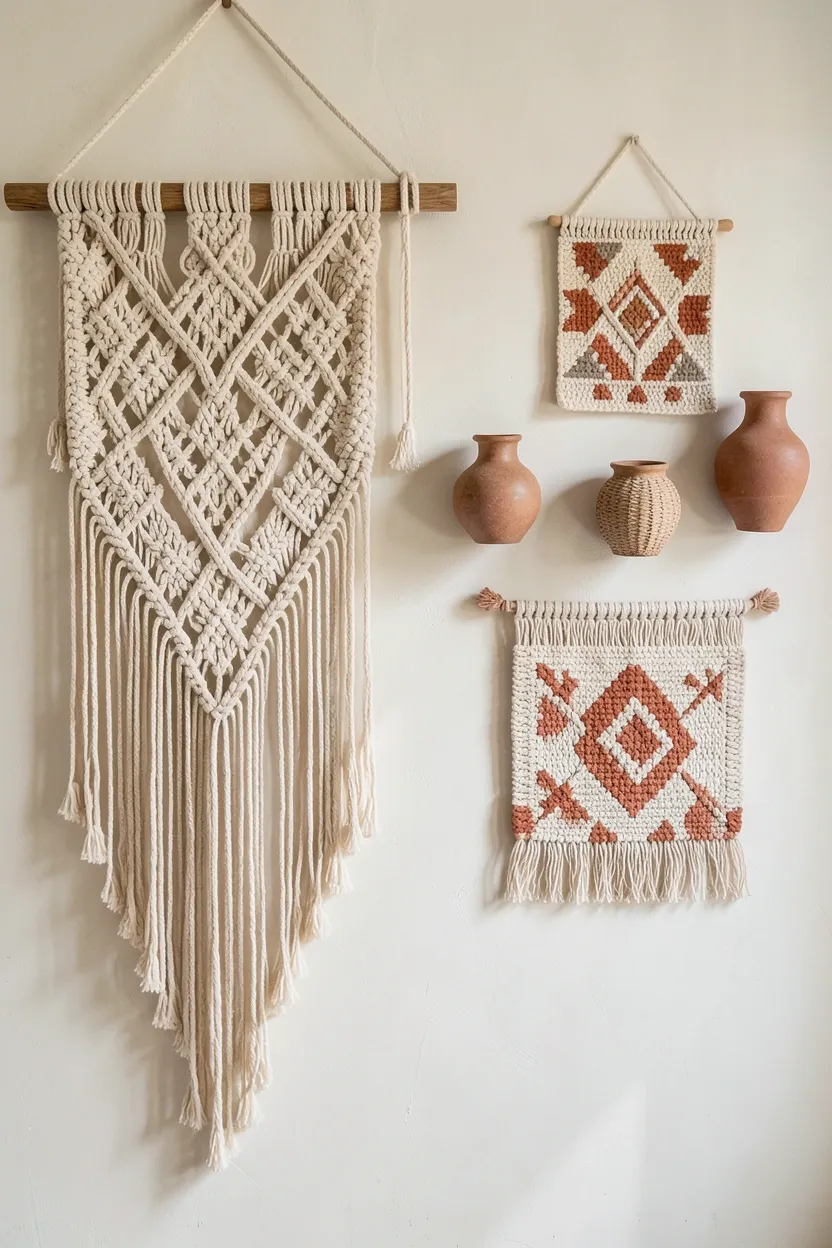
Macramé and handmade wall decor are signature elements of bohemian style, transforming blank walls into galleries of artistic expression. Intricate macramé hangings with their knotted patterns, woven wall tapestries, handmade ceramics, and found object displays celebrate creativity and craftsmanship. These pieces add vertical interest and texture while reflecting the free-spirited philosophy of boho design through their handmade, imperfect nature.
Recommended
Items for this idea
Macramé, in particular, represents bohemian commitment to slow crafts—each knot tied by hand, creating textured art pieces that celebrate natural fibers and traditional techniques. The result isn't factory-perfect but rich with human touch. Wall displays might mix macramé with collected objects—dried flowers in handmade vases, framed textiles, small shelves showing curated collections—creating gallery-like arrangements that feel personal and intentional.
Tips
- Learn basic macramé knots to create your own simple wall hangings
- Support fiber artists and craftspeople when purchasing handmade wall decor
- Display wall decor at varying heights and with different spacing for visual rhythm
What this gives you: walls that feel personally expressive, richly textured, and artistically alive through handmade pieces that celebrate creativity, craftsmanship, and the beauty of human imperfection.
9. Lighting: Warmth and Atmosphere Over Brightness
Lighting in bohemian interiors prioritizes creating atmosphere and warmth over clinical brightness. The approach favors soft, ambient light sources—table lamps with fabric shades, string lights, candles, and warm-toned bulbs—that cast gentle illumination and create cozy, intimate moods. Unlike harsh overhead lighting that flattens spaces, boho lighting layers multiple sources at different heights, creating pools of warm light that highlight textures and create visual depth.
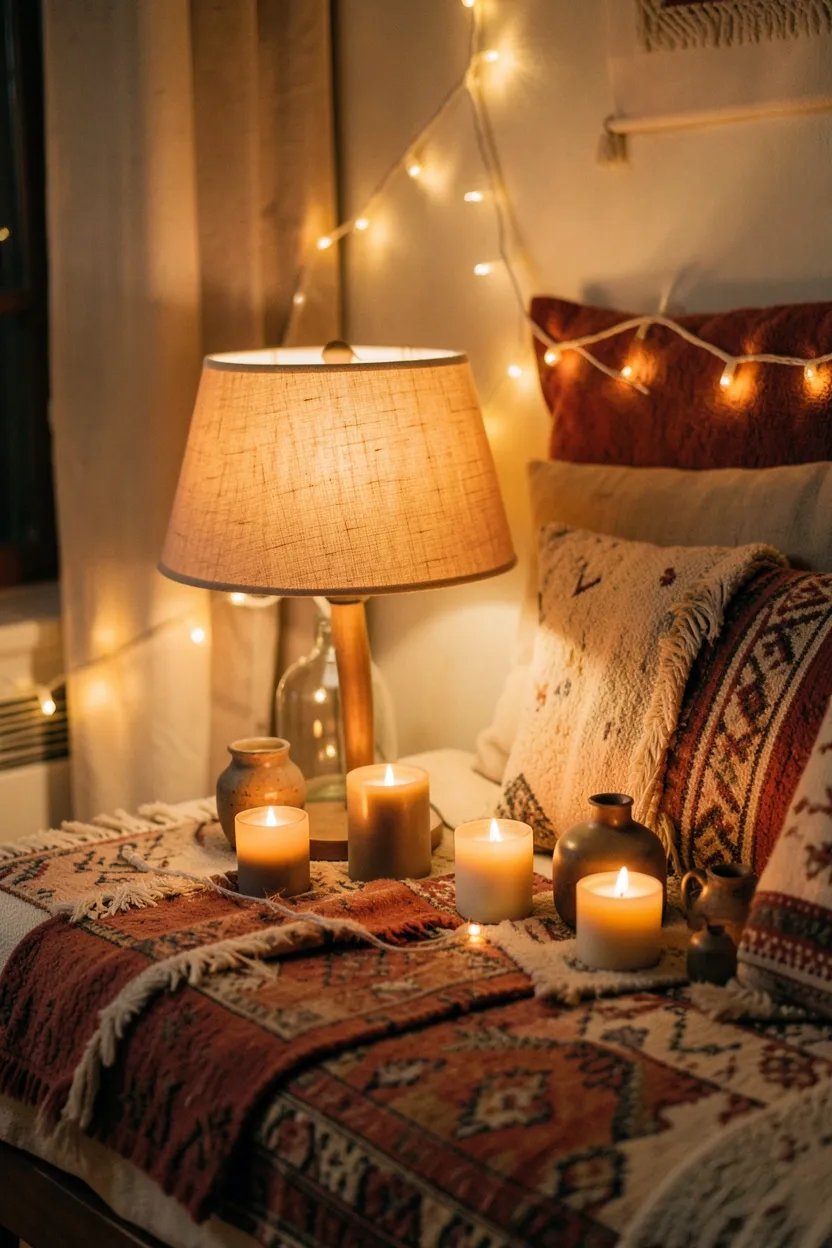
The lighting philosophy embraces flexibility—lamps that can move, candles for mood changes, string lights for casual ambiance. The fabric shades and warm bulb temperatures (2700K-3000K) create golden, flattering illumination that enhances the warmth of natural materials and textiles. Layering multiple light sources prevents harsh shadows while creating inviting pools of light that make spaces feel lived-in and welcoming regardless of time of day.
Tips
- Use dimmable warm-toned bulbs for flexibility in ambiance
- Incorporate candlelight for intimate, romantic atmosphere
- Layer string lights with table lamps for depth and coziness
What this gives you: spaces that feel cozy, intimate, and atmospherically rich through layered lighting that creates warm, inviting moods while enhancing the beauty of textures and materials.
10. Starting Your Bohemian Journey
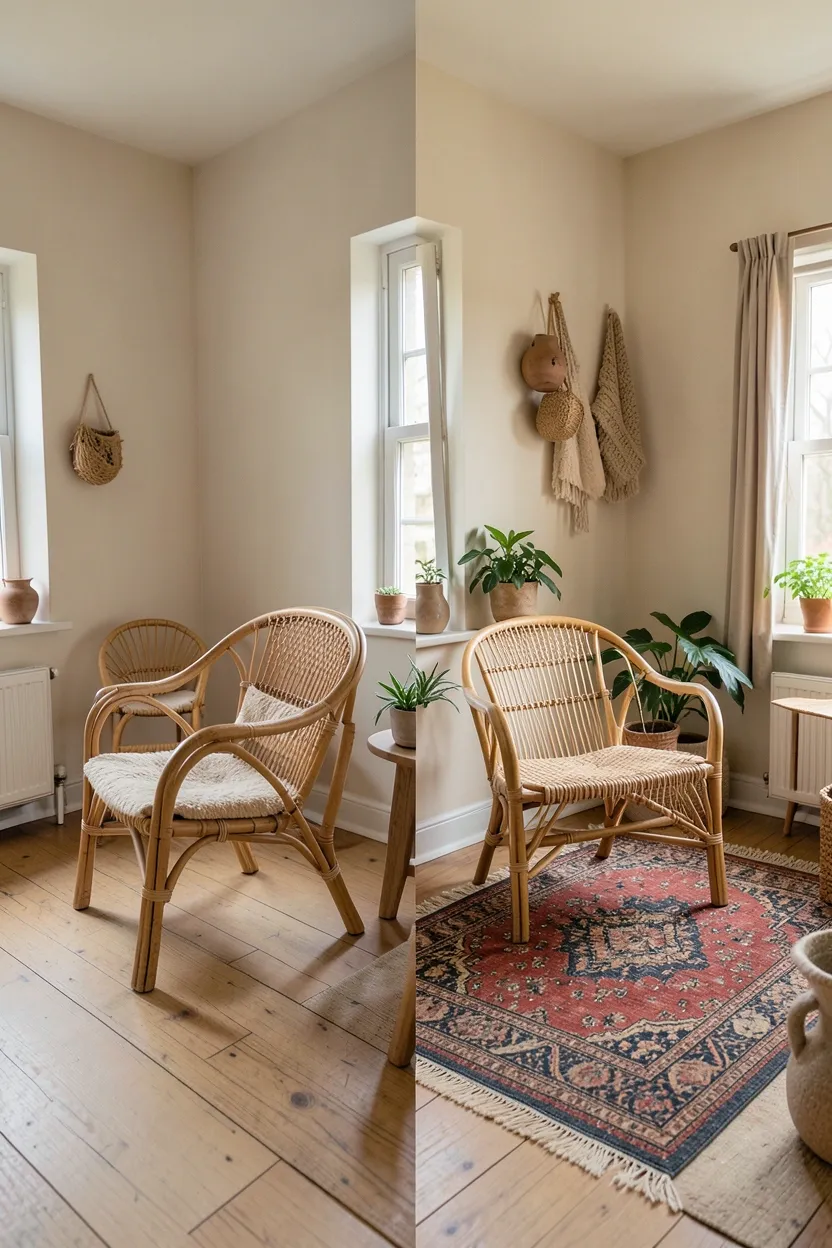
Embracing bohemian design doesn't require complete overhaul or expensive investment—it can begin with small, intentional changes that gradually transform your space. Start by adding one statement piece—a vintage chair, patterned rug, or macramé hanging—and build your aesthetic around it. Incorporate plants gradually, layer textiles as you collect them, and display personal objects that tell your story. The boho philosophy encourages evolution over transformation, letting your space develop organically.
Recommended
Items for this idea
Remember that bohemian is a lifestyle philosophy, not a rigid aesthetic. Adapt the principles to your space, budget, and personality. If you love minimal comfort, incorporate boho elements through a single patterned rug and warm textiles. If you're drawn to abundant plants, create a dedicated plant corner. The goal isn't achieving a perfect boho room but creating a home that feels free-spirited, personally meaningful, and richly layered with stories and textures.
Tips
- Start small—one new element at a time—to avoid feeling overwhelmed
- Follow bohemian accounts on social media for daily inspiration and community connection
- Focus on pieces that bring you joy rather than fitting a specific aesthetic perfectly
What this gives you: a personalized approach to bohemian style that reflects your journey, creativity, and love for collected, free-spirited living—creating spaces that feel authentically yours rather than following trends or rules.
Bohemian interior design offers a liberating approach to home decoration that celebrates creativity, individuality, and the beauty found in collected abundance and handmade imperfection. By embracing natural materials, global patterns, layered textiles, and vintage storytelling objects, boho spaces feel warm, welcoming, and deeply personal. Whether transforming an entire room or adding small intentional touches, the bohemian philosophy encourages you to create homes that reflect your free spirit, your travels, your artistic interests, and your unique story—all while prioritizing comfort, sustainability, and the joy of surrounding yourself with objects that genuinely mean something.
About the author
OBCD
CGI visualization and interior design content. We create detailed 3D renders and curate practical design ideas for every room in your home.