Wabi-Sabi Interior Design: Complete Guide to This Style
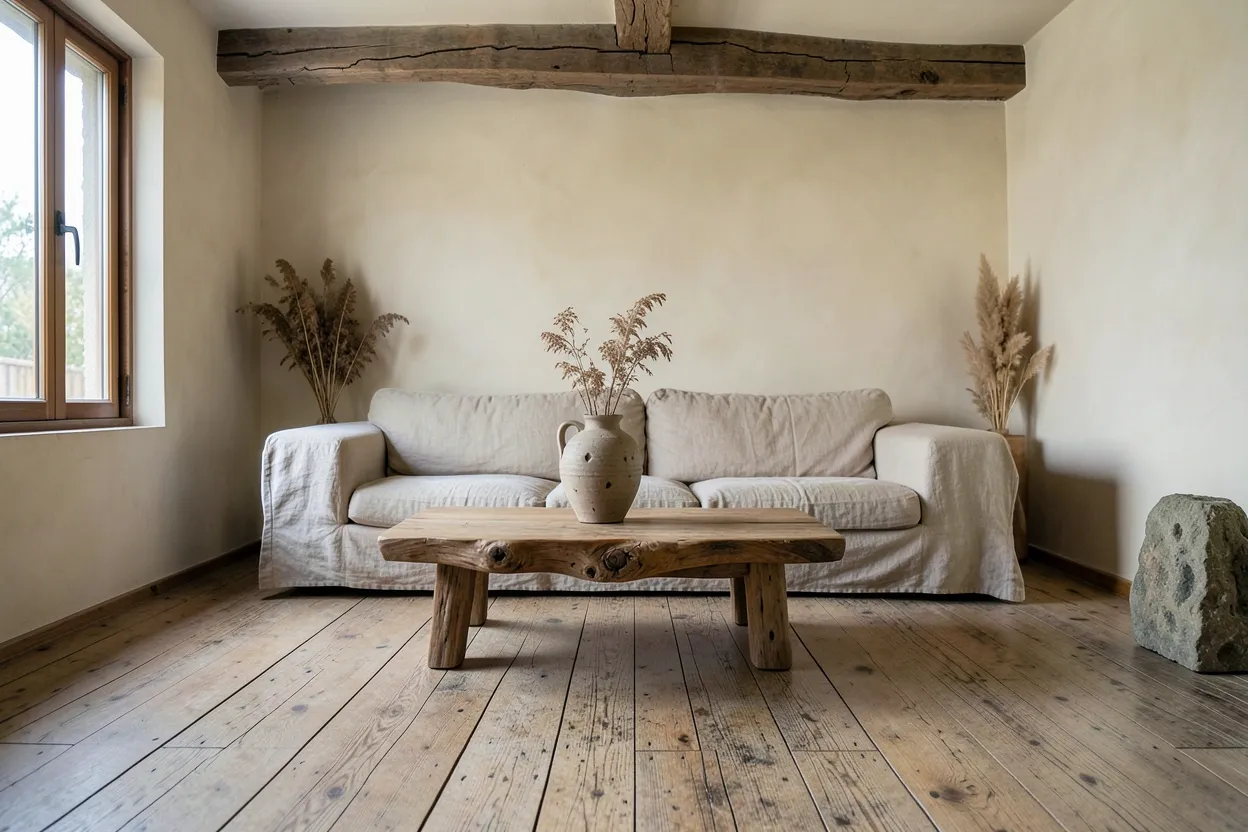
Wabi-sabi interior design is a Japanese aesthetic philosophy that finds profound beauty in imperfection, transience, and the natural aging process of materials and objects. Rooted in ancient Buddhist teachings and refined over centuries, wabi-sabi embraces the authentic, weathered, and handmade qualities that make each space unique and deeply personal. For renters especially, wabi-sabi offers a liberating approach: instead of fighting your apartment's quirks or waiting until you own a home to invest in decor, you celebrate character, work with natural materials that move with you, and build a space that grows more beautiful over time.
The philosophy of wabi-sabi extends beyond mere decoration to become a complete approach to living, encouraging mindfulness, gratitude for the present moment, and appreciation for the imperfect beauty inherent in the natural world. Wabi refers to the spiritual qualities of simplicity, humility, and intimacy with nature, while sabi represents the aesthetic appreciation of age, wear, and the passage of time. Together, these principles create spaces that support mental clarity, reduce stress through their calming presence, and foster a deeper connection to the cycles of nature and the authenticity of handcrafted objects.
What makes wabi-sabi particularly relevant today is its resistance to throwaway culture and trend-driven design. In an era of fast furniture and Instagram-perfect interiors, wabi-sabi interior design offers an alternative: investing in quality natural-material pieces that improve with age, embracing repair rather than replacement, and creating a home that tells your story through visible history. This approach aligns perfectly with sustainable, budget-conscious living—and it never looks dated.
Quick FAQ
What exactly is wabi-sabi interior design?
Wabi-sabi is a Japanese aesthetic philosophy that celebrates imperfection, natural materials, and the beauty of aging. It embraces worn textures, handmade objects, visible repairs, and organic variations, creating spaces that feel authentic, calm, and connected to nature's cycles.
How is wabi-sabi different from minimalism?
While both embrace simplicity, wabi-sabi differs from Western minimalism by celebrating imperfection and age rather than pristine perfection. Where minimalism might eliminate everything non-essential, wabi-sabi curates objects with character, patina, and visible history—finding beauty in what's worn, weathered, and handmade rather than new and perfect.
What colors work in wabi-sabi interiors?
Wabi-sabi palettes are earthy and muted—natural wood tones, stone grays, warm beiges, soft whites derived from clay or paper, and muted greens from nature. The emphasis is on colors that occur naturally in materials rather than applied pigments, creating cohesive, calming environments that feel connected to the earth.
Is wabi-sabi style expensive to achieve?
Wabi-sabi can work across budgets because it values authenticity over expense. Thrift store finds with patina, handmade pottery from local artisans, family heirlooms, and natural materials often create more authentic wabi-sabi spaces than expensive new pieces. The philosophy embraces age and history, making older, worn items ideal rather than imperfect.
What materials are essential for wabi-sabi design?
Natural materials that show age and wear are fundamental: wood with visible grain and knots, stone with natural veining, unglazed ceramics, raw linen and hemp textiles, handmade paper, and bamboo. These materials celebrate their authentic characteristics—knots, cracks, variations, and wear—rather than hiding them behind uniform finishes or synthetic alternatives.
Can wabi-sabi work in modern homes?
Wabi-sabi adapts beautifully to modern architecture by introducing warmth, texture, and authenticity to clean lines. The philosophy works in any space by emphasizing natural materials, handmade objects, and celebrating the imperfections that make each home unique. Modern minimalism becomes warmer and more personal when infused with wabi-sabi principles.
As an Amazon Associate I earn from qualifying purchases.
Table of Contents
- 1. Understanding Wabi-Sabi: Finding Beauty in Imperfection
- 2. Core Principles: Simplicity, Nature, and Acceptance
- 3. The Earthy Color Palette: Natural and Muted
- 4. Natural Materials: Wood, Stone, and Raw Textures
- 5. Embracing Aged and Worn Surfaces
- 6. Handmade and Artisan Objects
- 7. Visible Repairs: Kintsugi and Honored History
- 8. Plants and Natural Elements: Living Connections
- 9. Lighting: Soft and Natural Illumination
- 10. Starting Your Wabi-Sabi Journey
1. Understanding Wabi-Sabi: Finding Beauty in Imperfection
Wabi-sabi emerged from Japanese Buddhist philosophy, particularly Zen teachings, as a counterpoint to the pursuit of perfection and permanence. The concept developed during periods of aesthetic refinement where artists and philosophers recognized that true beauty exists not in flawless symmetry or pristine condition, but in the authentic qualities developed through time, use, and natural processes. Wabi represents the spiritual values of simplicity, humility, and intimacy with nature, while sabi embodies the aesthetic appreciation of age, wear, and the melancholic beauty of transience.
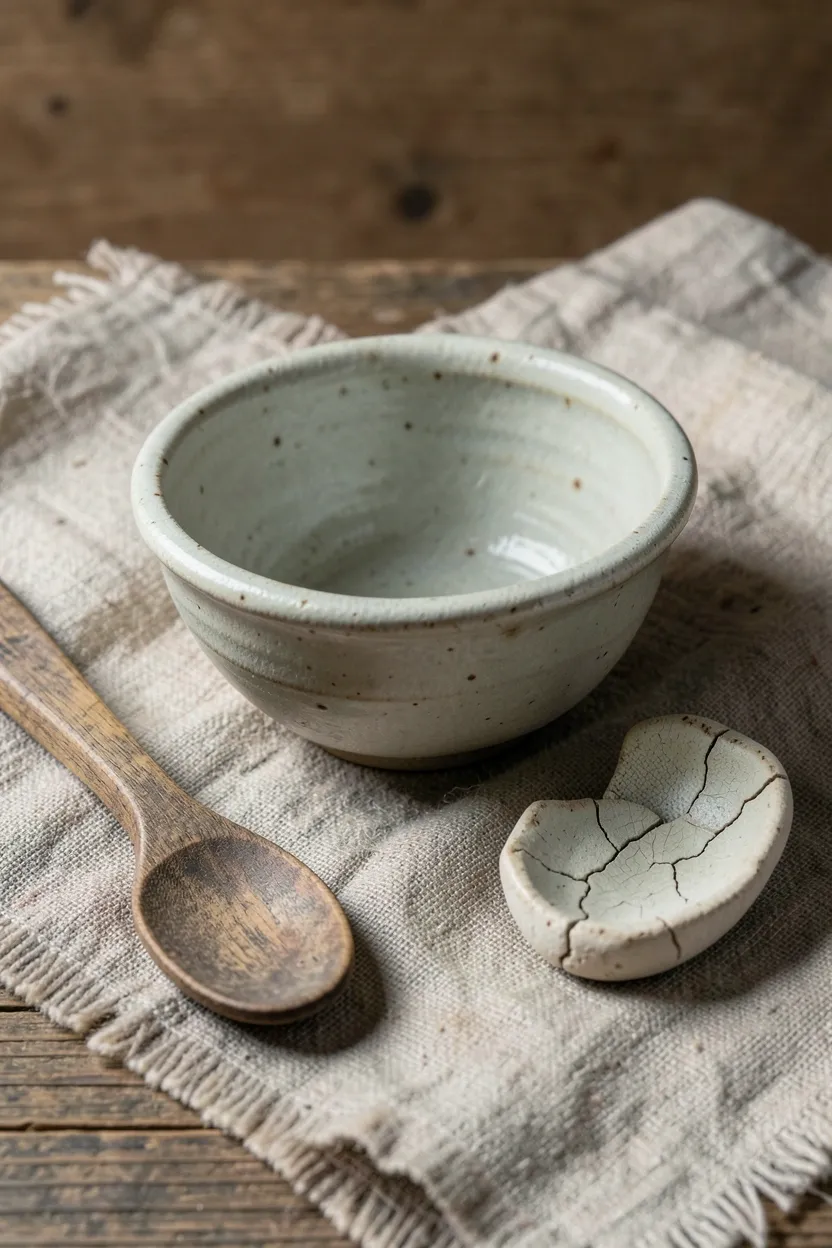
This aesthetic philosophy challenges modern obsessions with perfection and permanence by embracing the authentic beauty that emerges through time, use, and natural processes. Where contemporary design might hide cracks, smooth rough surfaces, or replace worn items, wabi-sabi celebrates these qualities as evidence of life and history. The approach creates spaces that feel genuinely alive, where the passage of time adds rather than subtracts beauty, and where imperfections become sources of character and meaning rather than flaws to be corrected.
Tips
- Practice noticing beauty in weathered surfaces, cracked ceramics, and worn wood throughout your daily life
- Research traditional Japanese aesthetics, tea ceremonies, and Zen gardens to understand wabi-sabi's cultural context
- Start a gratitude practice for small imperfections and the stories they tell about time and use
What this gives you: a completely different relationship with your home's evolution, where age and wear become sources of beauty rather than reasons for replacement.
2. Core Principles: Simplicity, Nature, and Acceptance
The foundation of wabi-sabi design rests on interconnected principles that guide both material choices and philosophical approach: acceptance of imperfection (celebrating cracks, wear, and irregularities), connection to nature (materials and spaces reflect natural processes), simplicity (removing the unnecessary while honoring what remains), authenticity (preferring handmade and aged over manufactured and new), and mindfulness (cultivating awareness and gratitude for the present moment). These principles work together to create environments that feel grounded, calm, and deeply meaningful.
Recommended
Items for this idea
Unlike minimalism that might prioritize empty space or ascetic removal, wabi-sabi simplicity focuses on meaningful presence—keeping what has authentic character and purpose while eliminating the superfluous. The principle of acceptance extends to both materials and life circumstances, encouraging flexibility and gratitude rather than resistance to change or imperfection. This philosophical foundation makes wabi-sabi not just an aesthetic style but a complete approach to living that supports mental wellbeing and environmental consciousness.
Tips
- Apply the "one in, one out" rule to maintain simplicity without creating empty spaces
- Choose materials and objects that have a clear connection to nature or show evidence of human hands
- Practice acceptance by learning to appreciate rather than fix minor imperfections in your home
What this gives you: a home environment that actively supports mental clarity, stress reduction, and a deeper connection to both natural rhythms and your own authentic values.
3. The Earthy Color Palette: Natural and Muted
Wabi-sabi color palettes draw directly from nature, avoiding bright colors or synthetic hues in favor of earthy, muted tones that reflect natural materials and landscapes. The foundation consists of colors found in wood (amber, brown, warm grays), stone (slate, sand, clay), textiles (natural linen, hemp, undyed cotton), and vegetation (sage green, moss, faded olive). These colors create visual harmony while supporting the overall sense of calm and connection to the natural world. The palette tends toward warm, desaturated tones rather than vibrant or cool colors.
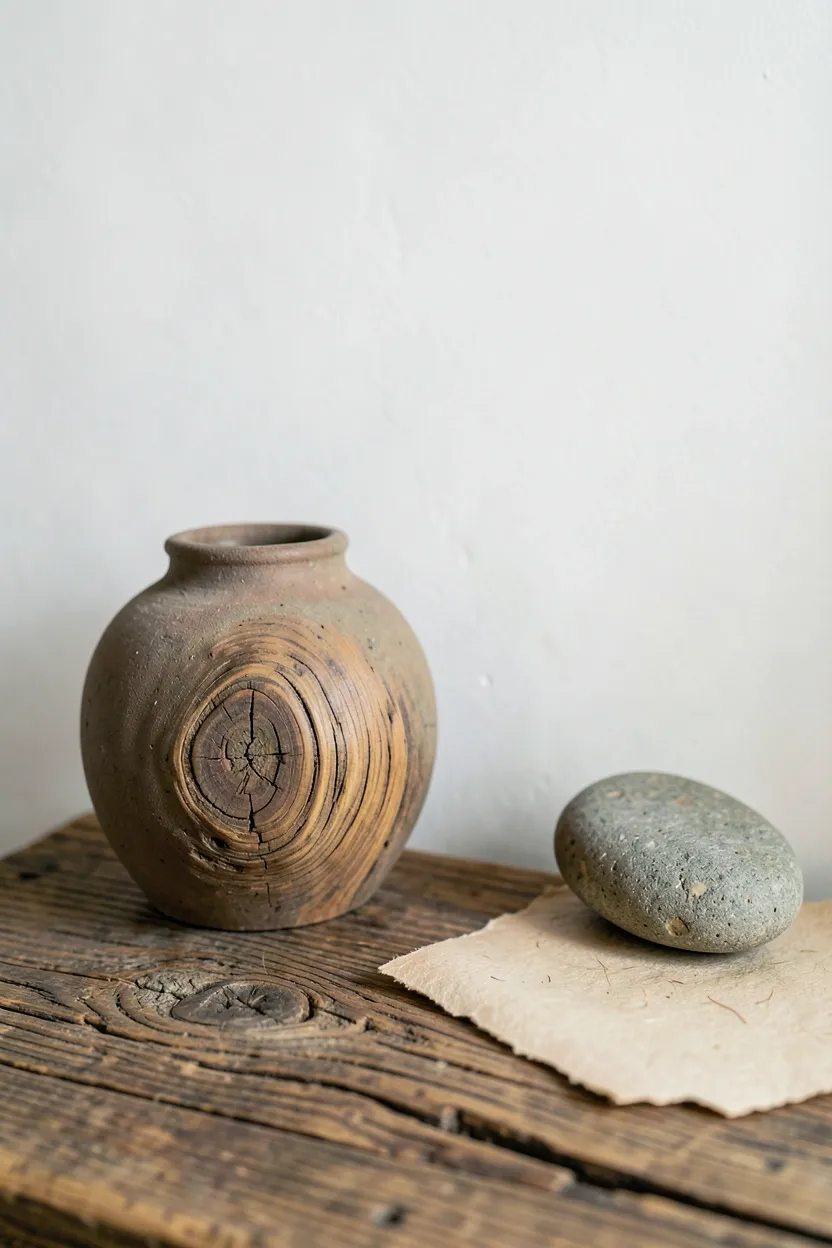
The color strategy serves multiple functions beyond aesthetics: natural colors found in materials themselves (unpainted wood, unglazed ceramics, undyed textiles) reinforce the philosophy's celebration of authenticity, while muted tones create visual calm that supports mindfulness and reduces visual overstimulation. Unlike color-forward designs that feel tied to specific trends or eras, wabi-sabi's natural palette remains timeless while allowing personality to emerge through material quality, texture variation, and the specific character of chosen objects rather than color alone.
Tips
- Use natural materials in their unfinished state whenever possible—unpainted wood, unglazed ceramics, undyed textiles
- Introduce color through natural sources like plants, minerals, and clay rather than synthetic paints or dyes
- Create cohesion by choosing materials from the same color family (warm woods, warm stones, warm neutrals)
Rental note: if you can't change wall colors, use natural textiles, plants, and wooden furniture to introduce earthy tones without permanent changes
What this gives you: spaces that feel timeless and calming rather than tied to color trends, with visual harmony that supports mental clarity and makes rooms feel connected to the natural world.
4. Natural Materials: Wood, Stone, and Raw Textures
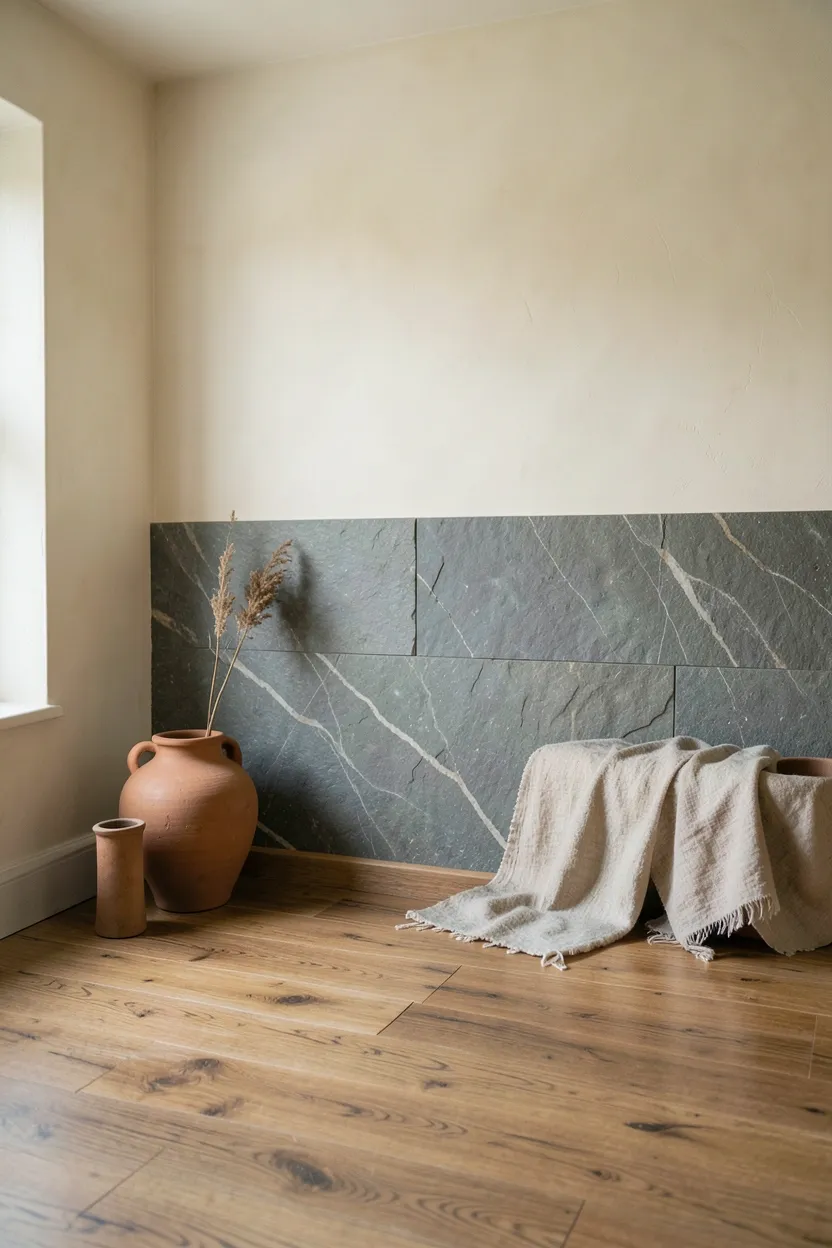
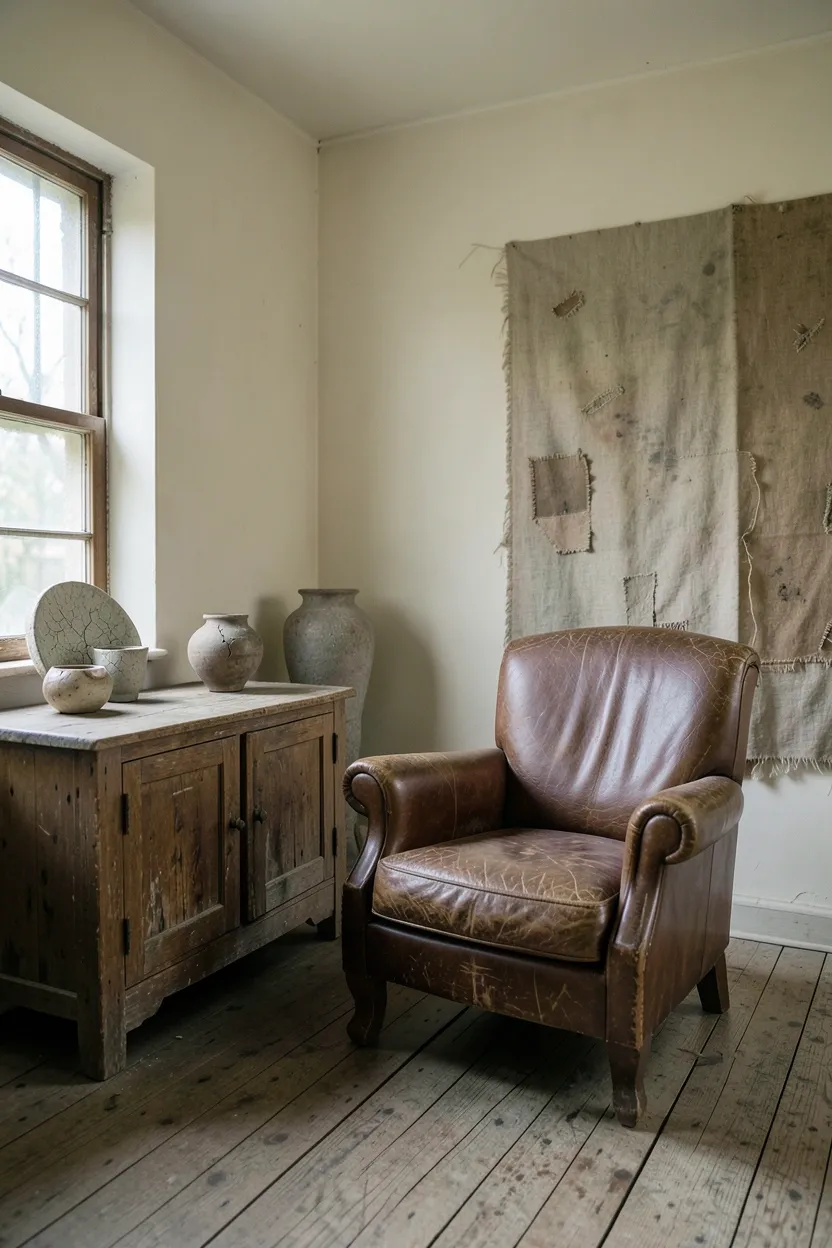
Natural materials form the essential foundation of wabi-sabi interiors, chosen for their authenticity, ability to age gracefully, and visible connection to their origins. Wood with visible grain patterns, knots, and natural variations appears in flooring, furniture, and architectural details. Stone with natural veining, cracks, and surface irregularities provides grounding and earth connection. Raw ceramics, handmade paper, natural fibers (linen, hemp, wool, cotton), and bamboo appear throughout the space, each material celebrated for its inherent qualities rather than hidden behind uniform finishes or synthetic alternatives.
Recommended
Items for this idea
The emphasis on natural materials reflects both practical and philosophical considerations. Practically, natural materials improve indoor air quality, regulate humidity better than synthetics, and often prove more durable and easier to repair. Philosophically, materials that show evidence of their origin—wood grain, stone veining, ceramic imperfections, textile fiber variations—connect inhabitants to nature and embody wabi-sabi appreciation for authentic beauty rather than manufactured perfection. These materials reward long-term ownership through developing character and improving with age rather than deteriorating or becoming outdated.
Tips
- Choose materials in their natural, unprocessed state whenever possible—unpainted wood, unglazed ceramics, unbleached textiles
- Research the specific characteristics of different woods, stones, and textiles to understand their natural aging processes
- Invest in fewer, higher-quality natural material pieces rather than filling spaces with numerous synthetic alternatives
What this gives you: interiors that feel honest and substantial rather than disposable or artificial, with materials that develop character and beauty over time rather than deteriorating.
5. Embracing Aged and Worn Surfaces
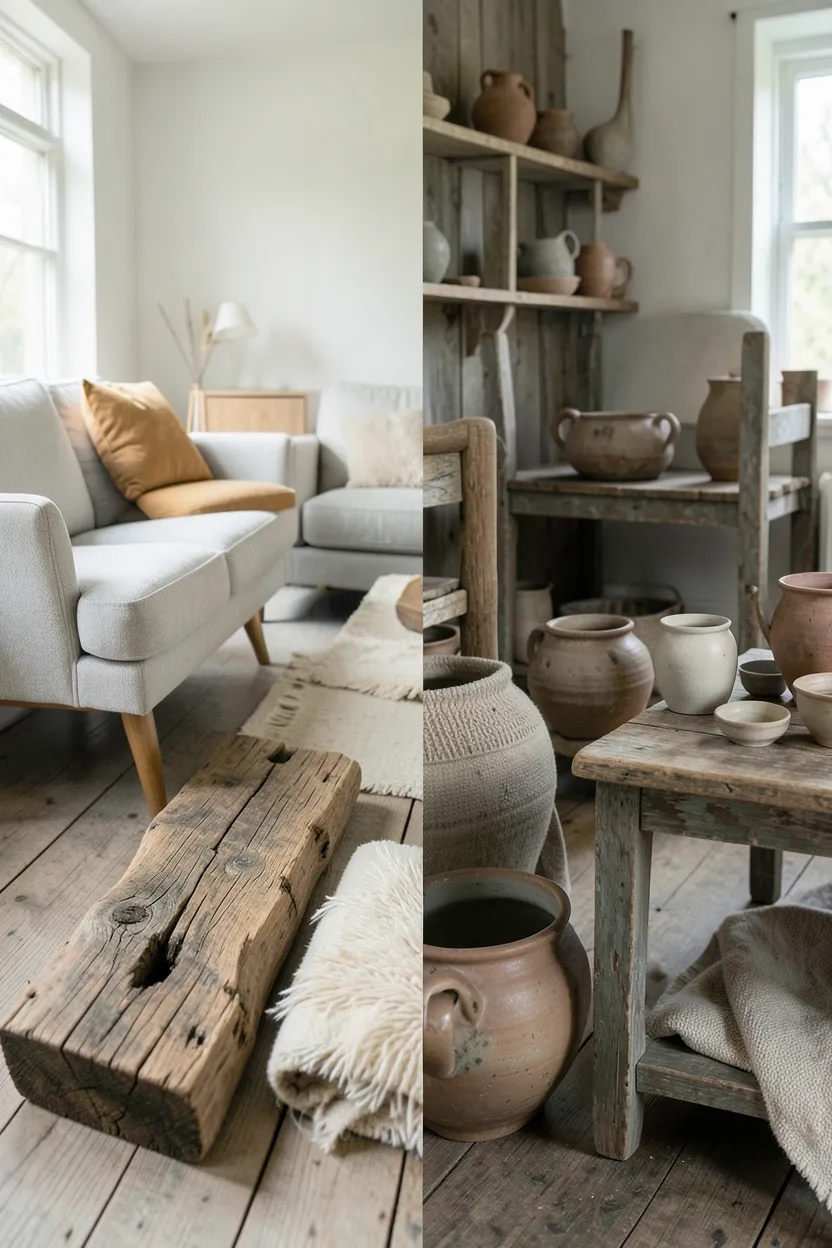
Wabi-sabi embraces the aesthetic value of age, wear, and the patina that develops through time and use. Unlike design philosophies that prioritize pristine newness, wabi-sabi values the history embedded in worn surfaces, faded colors, softened edges, and the visible evidence of an object's journey. This includes naturally aged wood with developed character, worn stone with accumulated stories, vintage textiles with faded patterns and visible mending, and furniture showing honest use. These aged elements create spaces that feel lived-in, authentic, and deeply connected to the passage of time.
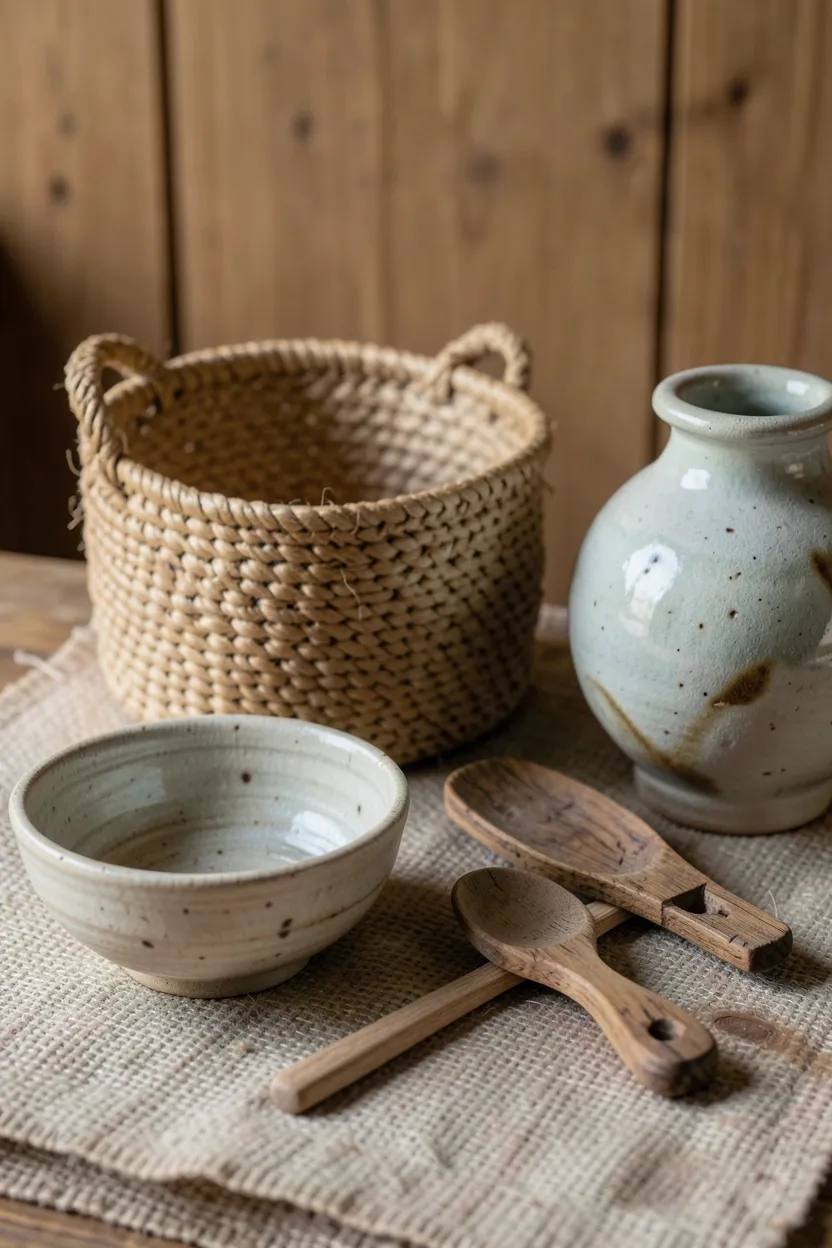
Incorporating aged elements doesn't mean accumulating clutter or neglecting maintenance—rather, it's about curating objects that have developed authentic character through time and use. A worn leather armchair, a hand-me-down wooden table with scratches and stains, vintage ceramics with crazing and crackle glaze, or driftwood collected from beach walks all bring the wabi-sabi aesthetic to life. These aged pieces create spaces that feel genuinely lived-in and tell the story of their journey, making visitors feel welcomed by authenticity rather than intimidated by perfection.
Tips
- Search thrift stores, antique shops, and family heirlooms for pieces with authentic patina rather than buying new
- Consider the story behind each aged piece—where did it come from, what has it witnessed?
- Clean and maintain aged pieces without stripping their character—preserving the history rather than "restoring" to new condition
Budget/Time: building a collection of aged objects takes time and patience, but thrift stores, garage sales, and family hand-me-downs offer affordable starting points — and for renters, second-hand pieces add genuine character without the cost of new furniture
What this gives you: a home filled with objects that have genuine history and character, creating spaces that feel authentic and tell stories rather than looking like showrooms.
6. Handmade and Artisan Objects
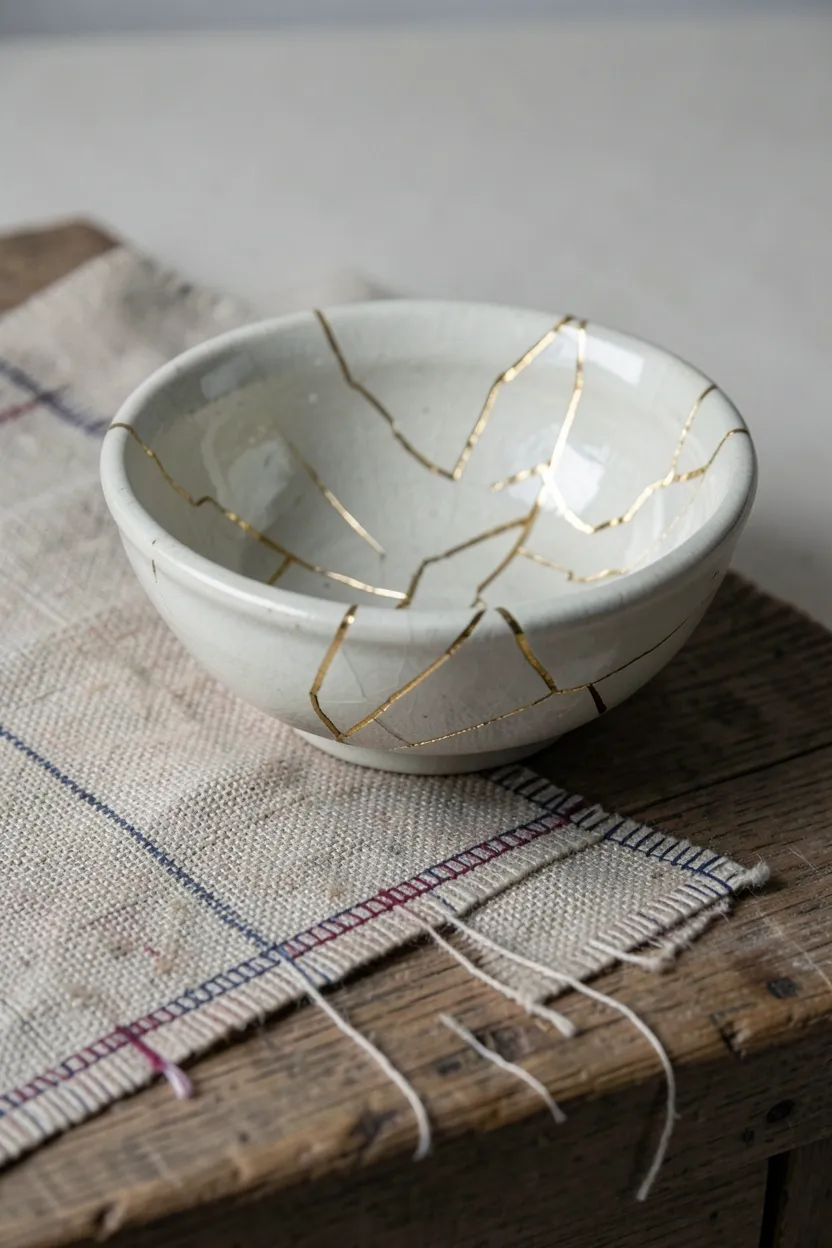
Handmade objects occupy a central place in wabi-sabi interiors because they inherently embody the philosophy's celebration of imperfection and authenticity. Pottery with visible throwing marks, hand-woven textiles with subtle irregularities, hand-carved wood showing tool marks, and other artisan-crafted pieces bring the maker's presence into the space. Unlike mass-produced items that strive for uniform perfection, handmade objects celebrate variation, the human touch, and the subtle differences that make each piece unique. These objects tell stories of creation and become meaningful through their authentic character.
Recommended
Items for this idea
The practice of supporting artisans and choosing handmade items aligns with wabi-sabi's emphasis on authenticity and connection to human creativity. When you display handmade pottery, woven baskets, carved wooden bowls, or handcrafted textiles, you're not just decorating—you're supporting traditional crafts and bringing the energy of human creativity into your home. These objects often improve with age and use, developing their own character while maintaining the marks of their creation process.
Tips
- Visit local craft fairs, pottery studios, and artisan markets to find handmade objects with authentic character
- Start a conversation with artisans about their process—understanding creation deepens appreciation
- Learn about traditional crafts in different cultures to understand the universal human value of handmade objects
What this gives you: spaces filled with objects that carry the energy and story of human creativity, creating deeper connection between you, your home, and the makers whose work you display.
7. Visible Repairs: Kintsugi and Honored History
The Japanese practice of kintsugi—repairing broken pottery with lacquer mixed with powdered gold or silver—exemplifies wabi-sabi's approach to damage and repair. Instead of hiding breaks or discarding broken items, kintsugi highlights repairs as part of the object's history and beauty. This principle extends beyond ceramics to all objects in wabi-sabi interiors: visible mending in textiles, patched wood surfaces, reinforced metalwork, and other repairs become celebrated features rather than flaws. Each repair tells a story of care and resourcefulness, creating spaces where history is honored rather than erased.
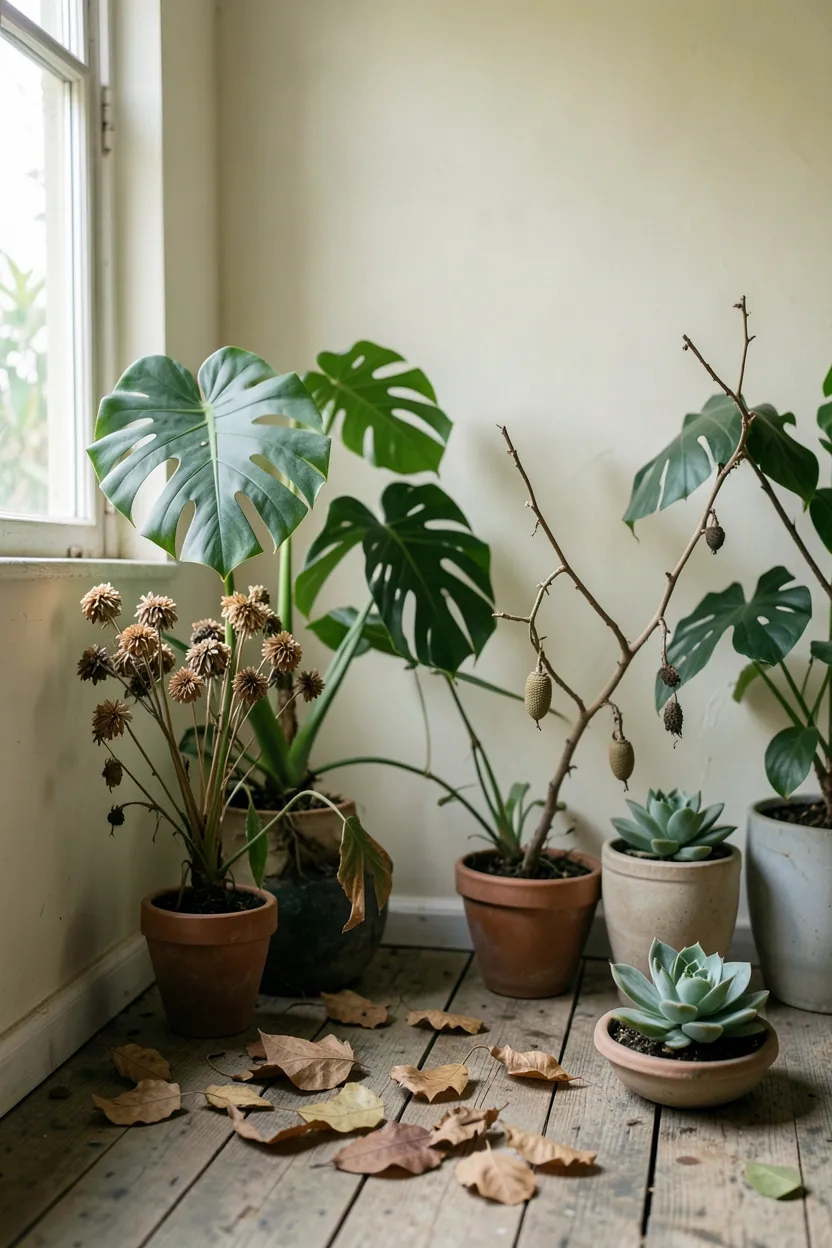
Applying visible repair principles transforms how we approach broken or worn items in our homes. A cracked ceramic bowl becomes more beautiful after being repaired, a torn textile gains character through visible mending, a worn wooden table develops richer history through reinforcement. This approach encourages repairing rather than replacing, supporting sustainability while creating spaces filled with objects that have genuine stories. Each visible repair becomes a badge of honor, evidence of care and the decision to preserve rather than discard.
Tips
- Learn visible mending techniques like sashiko for textiles or kintsugi-inspired methods for ceramics
- Document repairs you make—photos and stories add meaning to the mended object's history
- Accept that some repairs will be imperfect—this imperfection is part of the wabi-sabi aesthetic
Best for: reducing household waste, saving money on replacements, and creating spaces that feel genuinely lived-in and cared for rather than pristine and untouchable
What this gives you: a completely different relationship with broken and worn objects—seeing them as opportunities for creative repair and adding history rather than failures to be discarded.
8. Plants and Natural Elements: Living Connections
Plants and natural elements connect wabi-sabi interiors to the living world, providing organic beauty, seasonal change, and the ephemeral qualities central to the philosophy. Rather than perfectly manicured arrangements, wabi-sabi embraces plants in their natural state—sometimes slightly unruly, showing natural growth patterns, and displaying the changes that come with seasons. Dried flowers, branches, seed pods, fallen leaves, and other botanical elements appear as intentional accents that celebrate the cycle of growth, decay, and renewal. These living elements remind inhabitants of nature's impermanence while bringing life and movement into the space.
Recommended
Items for this idea
The presence of plants and natural elements in wabi-sabi interiors serves multiple purposes beyond decoration. They provide daily reminders of natural cycles—the growth, blooming, fading, and dormancy that mirror the impermanence celebrated in wabi-sabi philosophy. Dried botanical elements celebrate the beauty found in decay and aging, while living plants bring vitality and movement. This biophilic connection improves air quality, supports mental health, and creates spaces that feel genuinely alive rather than static and artificial.
Tips
- Choose plants suited to your light conditions and lifestyle rather than forcing plants into unsuitable environments
- Display dried flowers, fallen leaves, seed pods, and branches as intentional seasonal decorations
- Learn about Japanese ikebana principles to understand the art of natural plant arrangement
Avoid if: you lack natural light or travel frequently—consider realistic artificial plants or focus on dried botanical arrangements instead
What this gives you: spaces that feel connected to natural rhythms and seasonal changes, with documented benefits for mood, air quality, and mental wellbeing.
9. Lighting: Soft and Natural Illumination
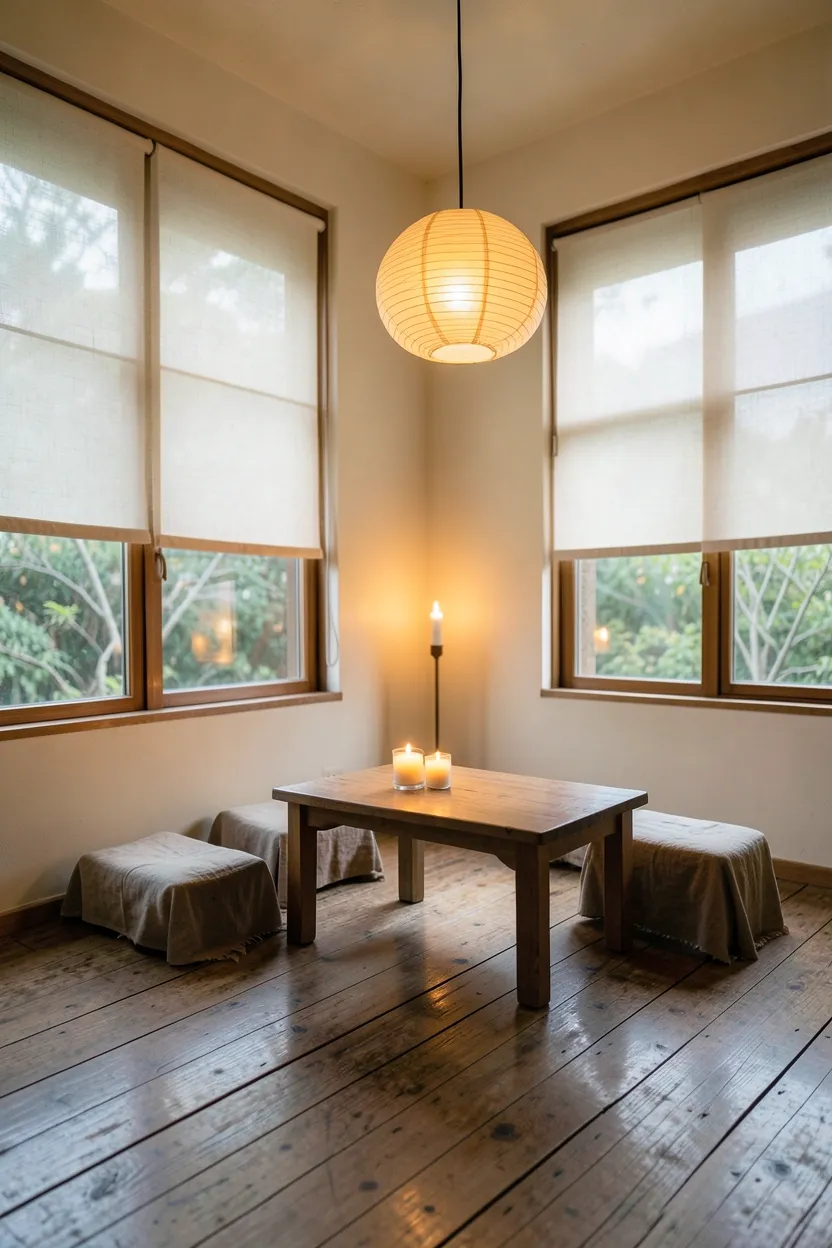
Light in wabi-sabi interiors tends to be soft, natural, and atmospheric rather than bright or harsh. The emphasis is on maximizing natural daylight through large windows and minimal obstructions, while artificial lighting complements rather than competes with daylight. Traditional Japanese paper lanterns, candles, and fixtures with warm-toned bulbs create gentle pools of light that enhance the sense of calm and intimacy. The quality of light itself becomes part of the aesthetic—flickering candlelight, filtered sunlight through paper shades, the golden hour's warm glow—all celebrated as ephemeral beauty that changes throughout the day.
The layering of light in wabi-sabi interiors follows a thoughtful approach that considers both functional needs and atmospheric qualities. Ambient lighting provides gentle overall illumination without harsh brightness, task lighting supports specific activities while maintaining warmth, and accent lighting creates atmospheric highlights through candles or small focused fixtures. Traditional Japanese lighting elements like paper lanterns (chochin), paper screens (shoji), and candles provide soft, warm illumination that complements rather than overwhelms space. The overall effect creates environments that feel calm and conducive to mindfulness practice.
Tips
- Maximize natural daylight while minimizing harsh direct sun—sheer curtains, light shelves, and strategic placement
- Use warm-toned bulbs (2700K-3000K) rather than cool or daylight bulbs to maintain warm atmosphere
- Incorporate candles regularly, particularly during evening hours, to introduce flickering natural light
What this gives you: spaces that feel calming and restorative, with lighting that supports natural daily rhythms and creates atmosphere for mindfulness and relaxation.
10. Starting Your Wabi-Sabi Journey
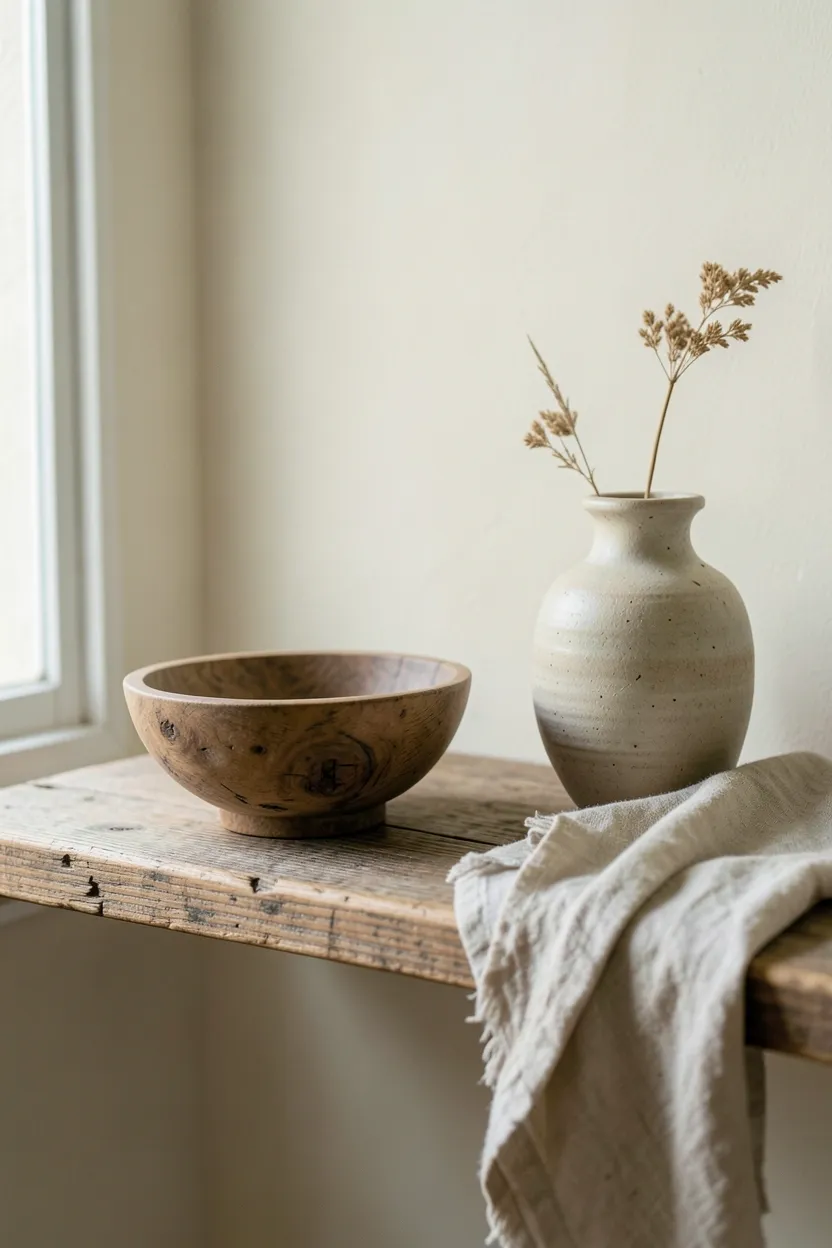
Embracing wabi-sabi design begins with a shift in perspective—learning to see beauty in imperfection rather than flaw, character in wear rather than damage, and authenticity in age rather than obsolescence. Start small by observing natural materials and processes: grain patterns in wood, the veining in stone, the way handmade pottery varies from piece to piece. Introduce one or two meaningful objects with visible history or handmade character into your space. Practice accepting the natural aging of existing materials rather than fighting to keep everything pristine and new.
Recommended
Items for this idea
Remember that wabi-sabi is a philosophy and practice, not a rigid set of design rules or aesthetic checkboxes. Your journey will be personal and unique, reflecting your specific environment, lifestyle, and cultural background. The goal isn't achieving the "perfect wabi-sabi room" but cultivating a different relationship with your home—learning to appreciate authenticity, honor age and wear, and find beauty in the natural processes of change and imperfection. This practice extends beyond interior design to influence how you approach all aspects of life.
Tips
- Start with observation practice—spend time noticing beauty in weathered surfaces and natural processes
- Choose one room or even one corner to begin with rather than attempting to transform your entire home
- Document your journey with photos to see how your perspective and space evolve over time
Best for: anyone seeking to create a more authentic, calming, and meaningful home environment regardless of budget, space constraints, or design experience
What this gives you: a deeply personal approach to home design that supports mental wellbeing, reduces stress, and creates spaces that feel genuinely authentic and connected to natural beauty.
Wabi-sabi interior design offers a profound alternative to modern perfectionism, creating homes that feel authentic, calm, and deeply connected to the natural world. By celebrating imperfection, embracing natural materials, honoring age and wear, and cultivating mindfulness, wabi-sabi transforms living spaces into environments that support mental clarity, reduce stress, and foster appreciation for the present moment. Whether through small intentional changes or a complete design approach, incorporating wabi-sabi principles leads to interiors that feel uniquely personal, timeless in their authenticity, and rich with the quiet beauty that emerges when we embrace rather than resist the natural cycles of age, change, and imperfection.
About the author
OBCD
CGI visualization and interior design content. We create detailed 3D renders and curate practical design ideas for every room in your home.