17 Tropical Japandi Bedroom Ideas for Calm and Balance
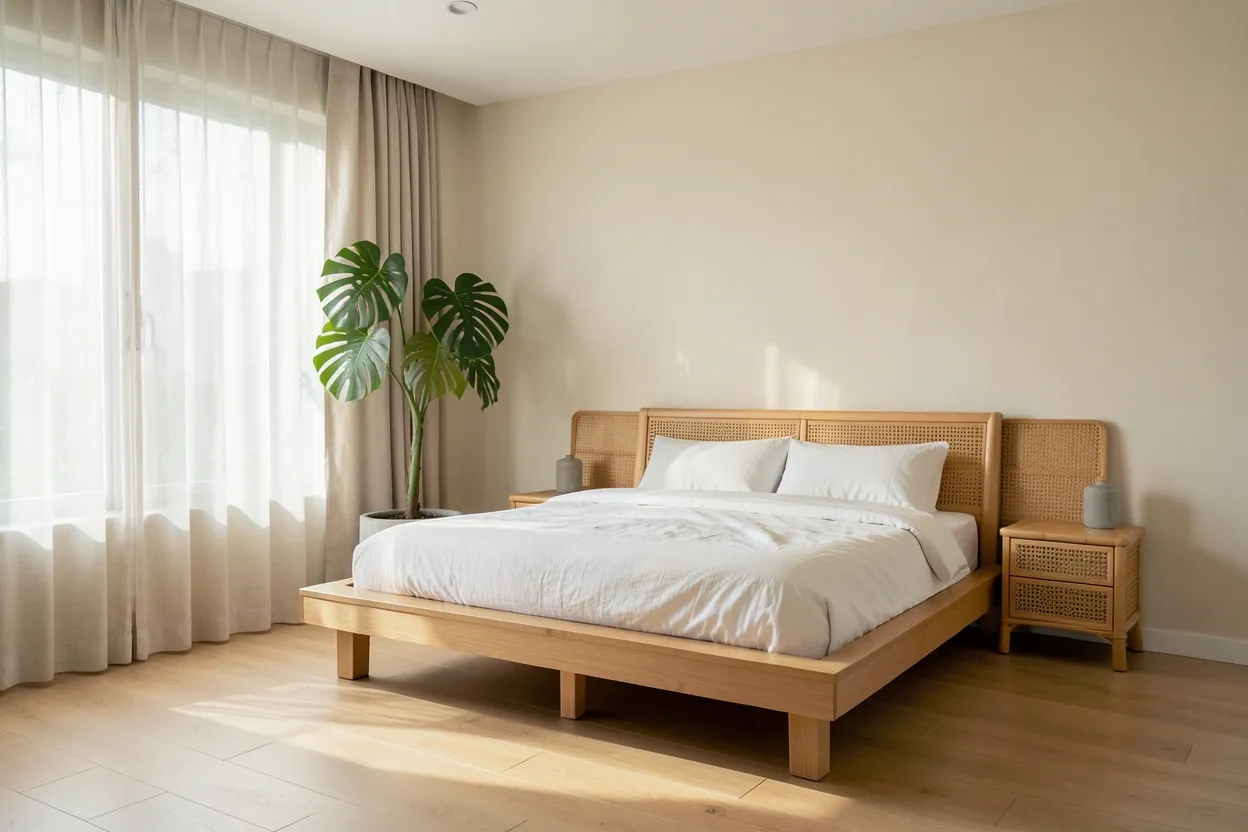
These tropical Japandi bedroom ideas blend the serene simplicity of Japanese minimalism with the cozy warmth of Scandinavian hygge, adding subtle tropical elements through bamboo, rattan, and light natural woods. The result is a bedroom that feels both calm and inviting—without the visual noise of a full tropical theme. Whether you're working with a compact rental apartment or a spacious master suite, tropical Japandi principles transform any sleeping space into a sanctuary that promotes relaxation and mindfulness.
The beauty of tropical Japandi bedroom design lies in its restraint—every piece earns its place through function, beauty, or emotional connection while maintaining a neutral palette with subtle tropical warmth. By focusing on light neutrals, natural tropical materials, organic textures, and deliberate negative space, you create a bedroom that feels larger, brighter, and more peaceful. These 17 practical ideas cover everything from foundational color choices to finishing decorative touches, and most are fully renter-friendly with no drilling or permanent changes required.
These ideas work together as a cohesive whole but can also be implemented individually based on your space, budget, and timeline. Start with foundational elements like color palette and bed frame, then layer in textures, lighting, and accessories gradually. The goal is a bedroom that reflects both the calm of Japanese Zen and the warmth of Scandinavian hygge with subtle tropical character.
Quick FAQ
What makes Tropical Japandi design different from regular tropical or Japandi styles?
Tropical Japandi combines Japanese minimalist principles with Scandinavian hygge warmth, then adds subtle tropical elements through natural materials like bamboo, rattan, and light tropical woods rather than bright tropical colors or patterns. While pure tropical design can feel themed and Japandi can sometimes feel too neutral, Tropical Japandi strikes a balance between intentional restraint, cozy comfort, and organic tropical warmth through natural materials.
How can I create a Tropical Japandi bedroom on a budget?
Start with foundational elements like paint color and decluttering, which are low-cost but high-impact. Invest in one or two quality natural pieces—a bamboo or rattan item, a simple bed frame, or good lighting—rather than filling space with many cheaper tropical-themed items. Use natural textures and neutral colors through affordable accents like throws, baskets, and plants, and edit regularly to maintain intentionality.
What tropical plants work best in a Tropical Japandi bedroom?
Choose tropical plants with simple, elegant forms and moderate care needs—fiddle leaf figs, monstera, snake plants, or peace lilies. The emphasis is on quality over quantity, with 1-3 statement plants rather than creating an indoor jungle. Select simple pots in white, cream, or natural clay tones that complement the neutral Tropical Japandi palette.
How do I maintain a Tropical Japandi bedroom without it feeling themed?
The key is restraint—use tropical elements through natural materials like bamboo, rattan, and light tropical woods rather than tropical patterns, bright colors, or literal botanical prints. Keep the palette neutral with subtle warm undertones, and use tropical plants and natural materials as character accents rather than dominating features. Edit regularly to ensure every piece serves a purpose or brings joy, maintaining Japandi minimalism.
As an Amazon Associate I earn from qualifying purchases.
Table of Contents
- 1. Light Tropical Neutral Palette
- 2. Low-Profile Platform Bed
- 3. Natural Tropical Wood Accents
- 4. Botanical Prints and Artwork
- 5. Layered Natural Textures
- 6. Minimalist Tropical Plants
- 7. Natural Fiber Window Treatments
- 8. Woven Rattan Lighting
- 9. Stone and Ceramic Accents
- 10. Minimalist Tropical Rugs
- 11. Woven Storage Baskets
- 12. Minimalist Nightstands
- 13. Soft Ambient Lighting
- 14. Uncluttered Nightstands
- 15. Natural Wood Wall Accents
- 16. Tropical Woven Throw Pillows
- 17. Intentional Negative Space
1. Light Tropical Neutral Palette
A tropical Japandi bedroom foundation starts with soft neutrals—warm whites, cream, pale sand, and light grays that create instant calm while incorporating subtle tropical warmth through undertones like soft peach, warm beige, or muted sage. This Japanese-Scandinavian fusion avoids harsh tropical colors in favor of restrained natural tones that reference tropical environments without overwhelming the space. Choose warm neutrals for hygge coziness or cool grays for Zen-like serenity, avoiding bright oranges or hot pinks that clash with minimalist Japandi aesthetic.
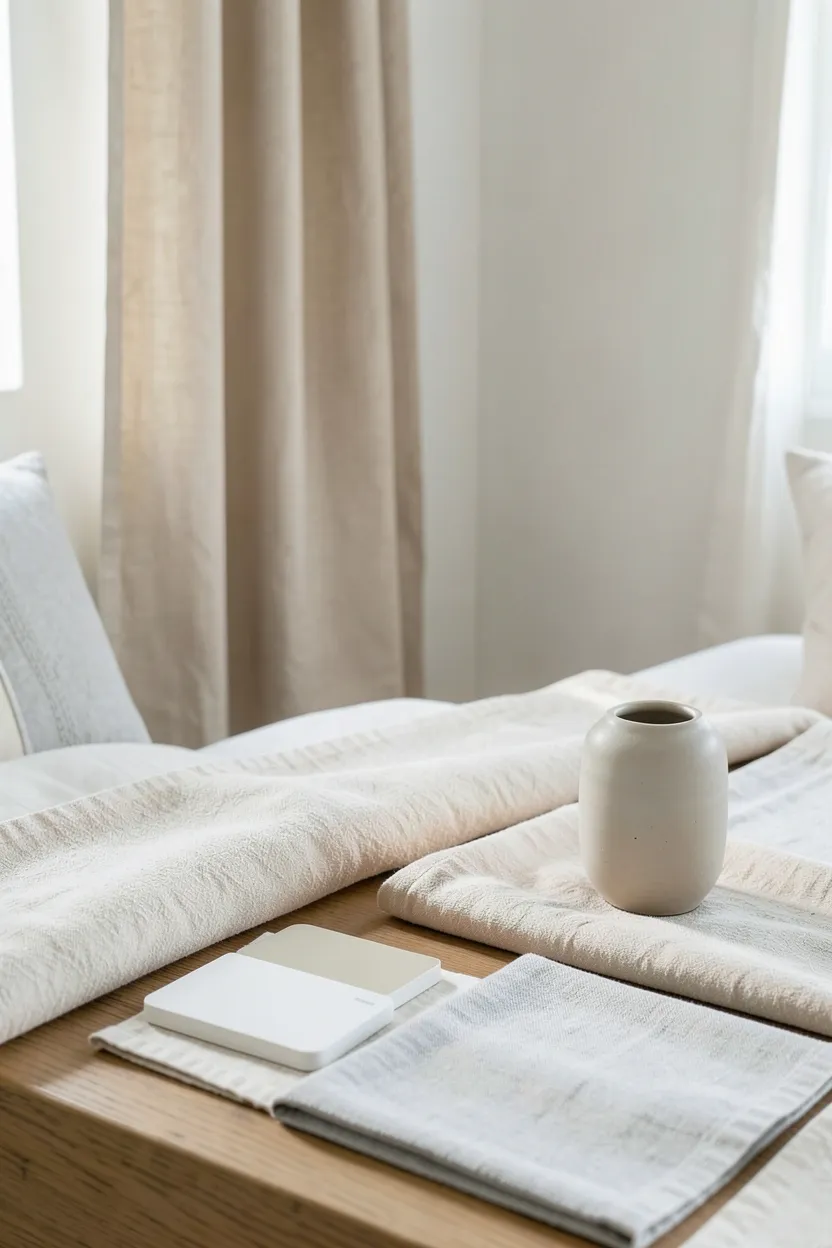
Layer different neutral tones through walls, bedding, and window treatments, keeping within a 2-3 shade range for visual cohesion while introducing tropical warmth through natural materials like rattan, bamboo, or light wood tones. Matte paint finishes absorb light softly while natural fabrics like linen and cotton add tropical-inspired tactile warmth.
Tips
- Do test paint samples in different lighting before committing
- Don't mix too many tropical accent colors—stick to one subtle tone
- Layer with white, cream, and one tropical neutral for depth
What this gives you: A serene, adaptable backdrop that makes your bedroom feel larger while incorporating tropical warmth without overwhelming minimalism.
2. Low-Profile Platform Bed
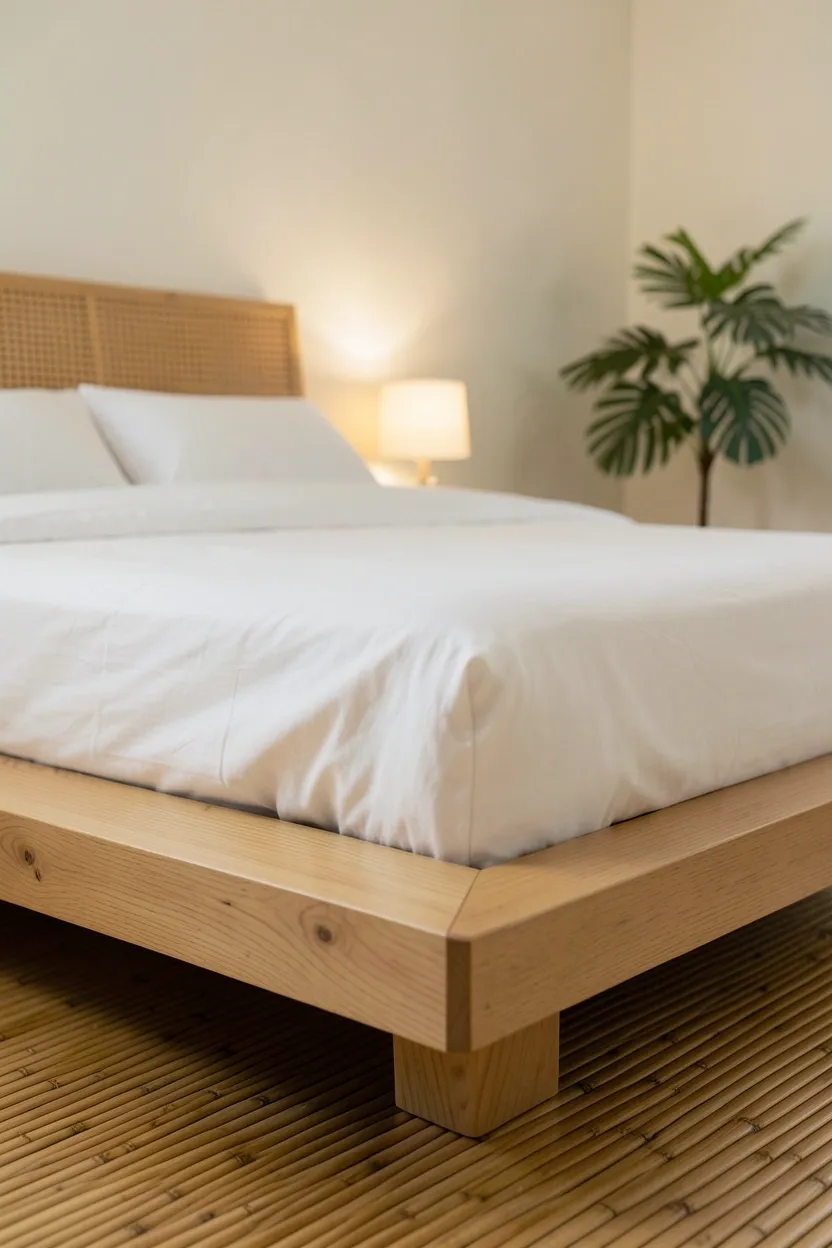
Low-profile platform beds are essential in tropical Japandi bedrooms, creating visual lightness and maintaining unobstructed flow while following Japanese principle of proximity to ground. Choose light woods like bamboo, teak, or light oak with clean, simple lines that embody Scandinavian simplicity. The platform design feels modern yet grounded, with headboard options ranging from woven rattan to solid wood slats. Avoid bulky bed frames with excessive storage compartments or ornate decorative details that disrupt the clean Japandi aesthetic.
Recommended
Items for this idea
Placement note: Position bed against a solid wall with adequate space on both sides for easy movement and to create natural focal point. Keep 24-30 inches clearance between bed and other furniture pieces for comfortable traffic flow.
The bed serves as the room's centerpiece, anchoring the space while allowing other tropical Japandi elements—rattan nightstands, linen bedding, botanical prints—to shine. Choose platform height of 12-16 inches for authentic Japandi proportion that feels grounded yet maintains easy access. Light wood tones blend beautifully with tropical neutral palette while adding warmth without darkening the space. For a broader look at how minimalist Japandi beds work across different color palettes, see minimalist Japandi bedroom ideas.
Tips
- Do prioritize comfort over extreme lowness—aim for 14-16 inches from floor
- Don't choose overly ornate headboards that break Japandi minimalism
- Consider storage drawers underneath if space allows for decluttered surfaces
What this gives you: A serene focal point that grounds the room while maintaining Japandi principles of calm, simplicity, and visual lightness.
3. Natural Tropical Wood Accents
Natural tropical wood brings warmth and authenticity to a Japandi bedroom, bridging Japanese reverence for natural materials with Scandinavian love for functional craftsmanship. Light tropical woods like bamboo, rattan, light teak, and mango wood dominate this aesthetic, offering visual warmth without overwhelming the neutral palette. The grain should be visible but not dominant—natural, not heavily stained or painted. Avoid dark exotic woods like mahogany or walnut that feel too heavy, and skip distressed or heavily weathered wood that clashes with the clean Japandi vibe.
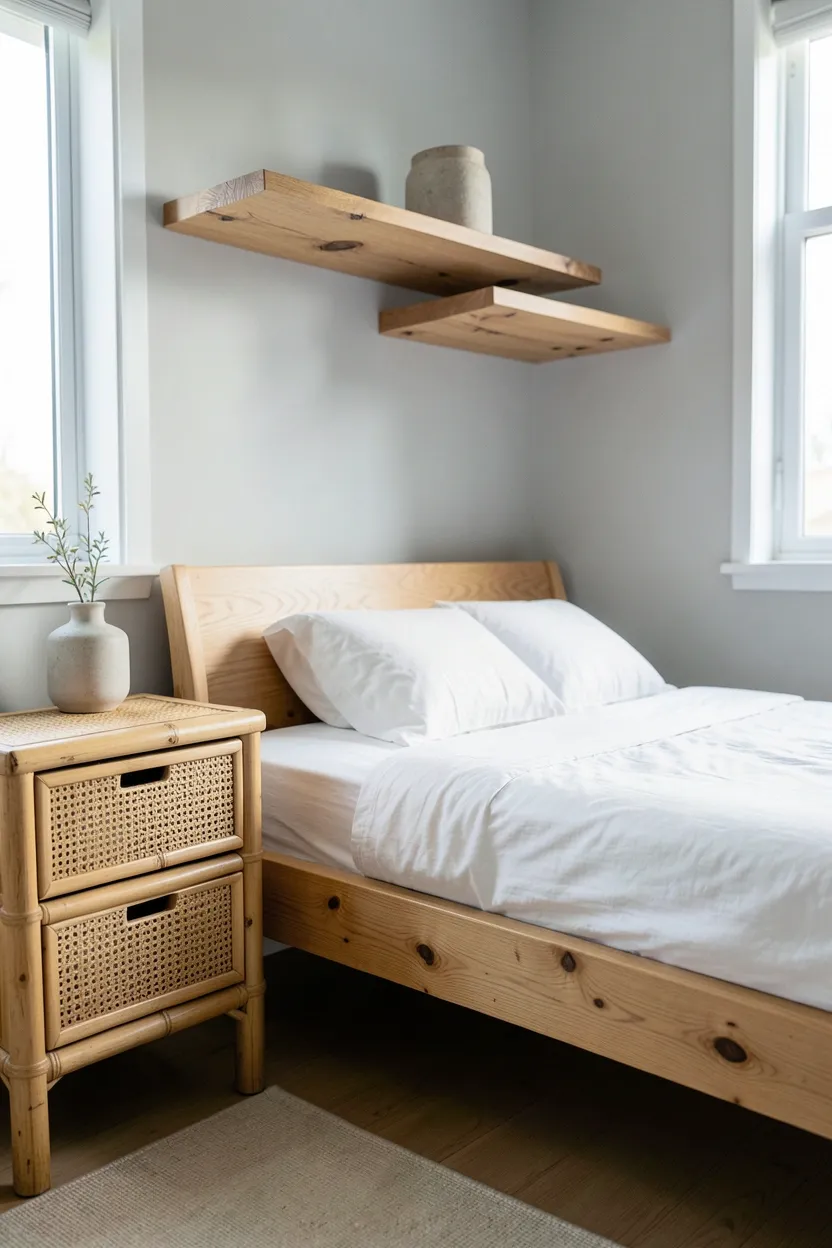
Why it works: Tropical wood adds organic texture and connects your interior to nature, a core principle of both Japanese and Scandinavian design philosophies. The light tones create visual harmony with the neutral palette while introducing subtle tropical warmth that feels authentic rather than themed.
Incorporate tropical wood through nightstands with woven details, floating shelves with visible grain, a light teak bed frame, or decorative pieces like wooden bowls or trays. A bamboo screen or room divider adds both function and tropical character while maintaining Japandi simplicity. Keep wood finishes consistent—either all natural or all lightly whitewashed—to maintain visual harmony throughout the space.
Tips
- Pro: Choose tropical woods with knots and variations for character
- Con: Too many different wood species can look chaotic
- Fix: Stick to one primary wood type, use others sparingly as accents
What this gives you: Natural warmth and authentic tropical character that makes your bedroom feel grounded while maintaining Japandi minimalism.
4. Botanical Prints and Artwork
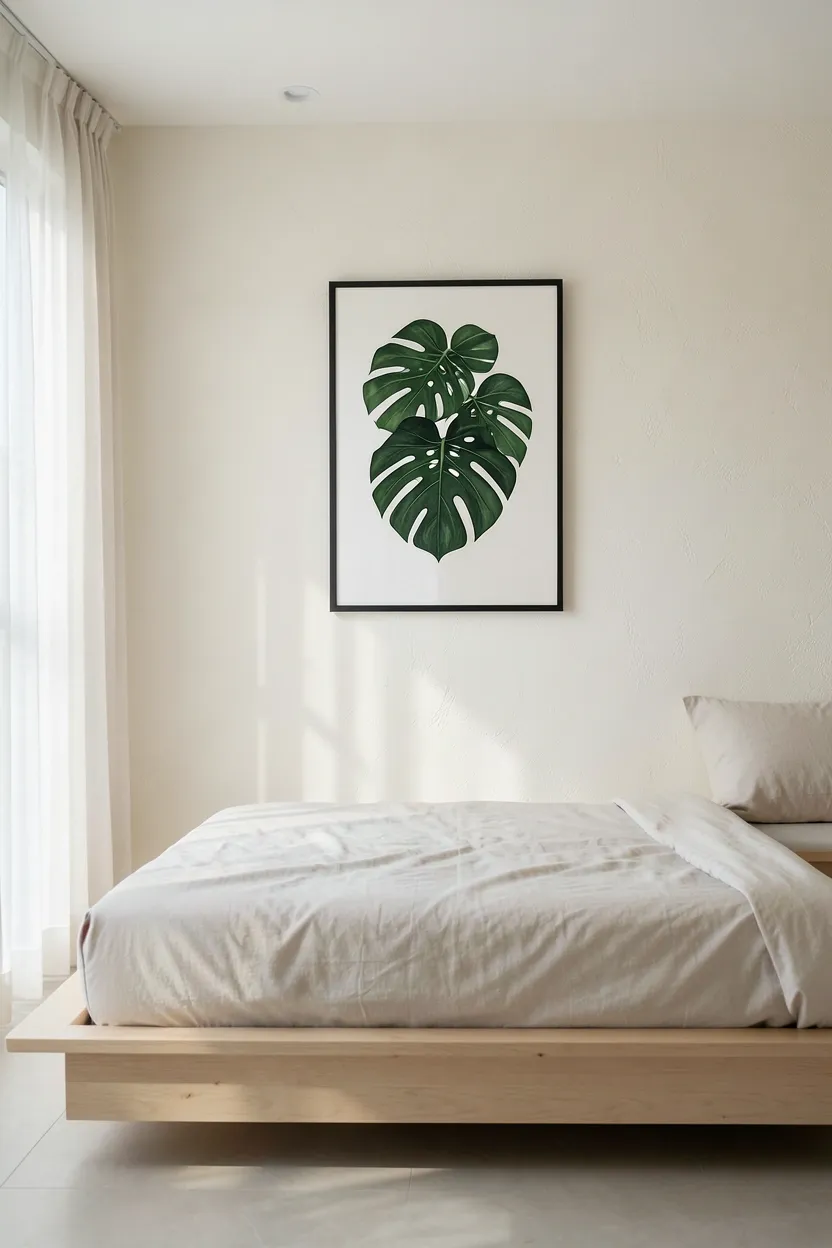
Botanical prints add subtle tropical character to a Japandi bedroom without overwhelming minimalism—choose abstract leaf patterns, monstera illustrations, or tropical botanical studies in neutral tones. The artwork should feel intentional and curated rather than creating a jungle theme. Select pieces with white backgrounds, muted greens, or soft earth tones that complement your room's tropical neutral palette. Avoid bright, saturated tropical prints with bold colors that clash with Japandi calm, and skip overly literal or cartoonish botanical designs that feel themed rather than refined.
Recommended
Items for this idea
Choose one or two statement botanical pieces rather than creating gallery walls that feel cluttered. A large abstract monstera print above the bed, a minimalist tropical leaf study, or a series of three small botanical prints arranged horizontally all work beautifully. Simple frames in white, natural wood, or thin black matte finishes complete the look without drawing attention away from the artwork itself.
Tips
- Hang artwork at eye level (57-60 inches from floor to center)
- Leave at least 4-6 inches of wall space around each piece
- Group smaller botanical prints together for impact rather than spreading
Best for: Bedrooms with neutral tropical palette that need subtle personality without overwhelming minimalism.
What this gives you: A refined, curated feel that adds tropical character without overwhelming your bedroom's calm Japandi atmosphere.
5. Layered Natural Textures
Japandi design proves you don't need bold colors or tropical patterns to create visual interest—layered textures provide depth and richness through tactile variety with natural materials. Combine smooth linen bedding with chunky wool throws, pair sleek bamboo furniture with woven rattan accents, or mix matte ceramic vases with rough-textured jute rugs. The key is balancing smooth with textured, hard with soft, and light with heavy while keeping within neutral tropical palette. Avoid too many smooth surfaces that feel cold or overly rough textures that make the space feel unfinished.
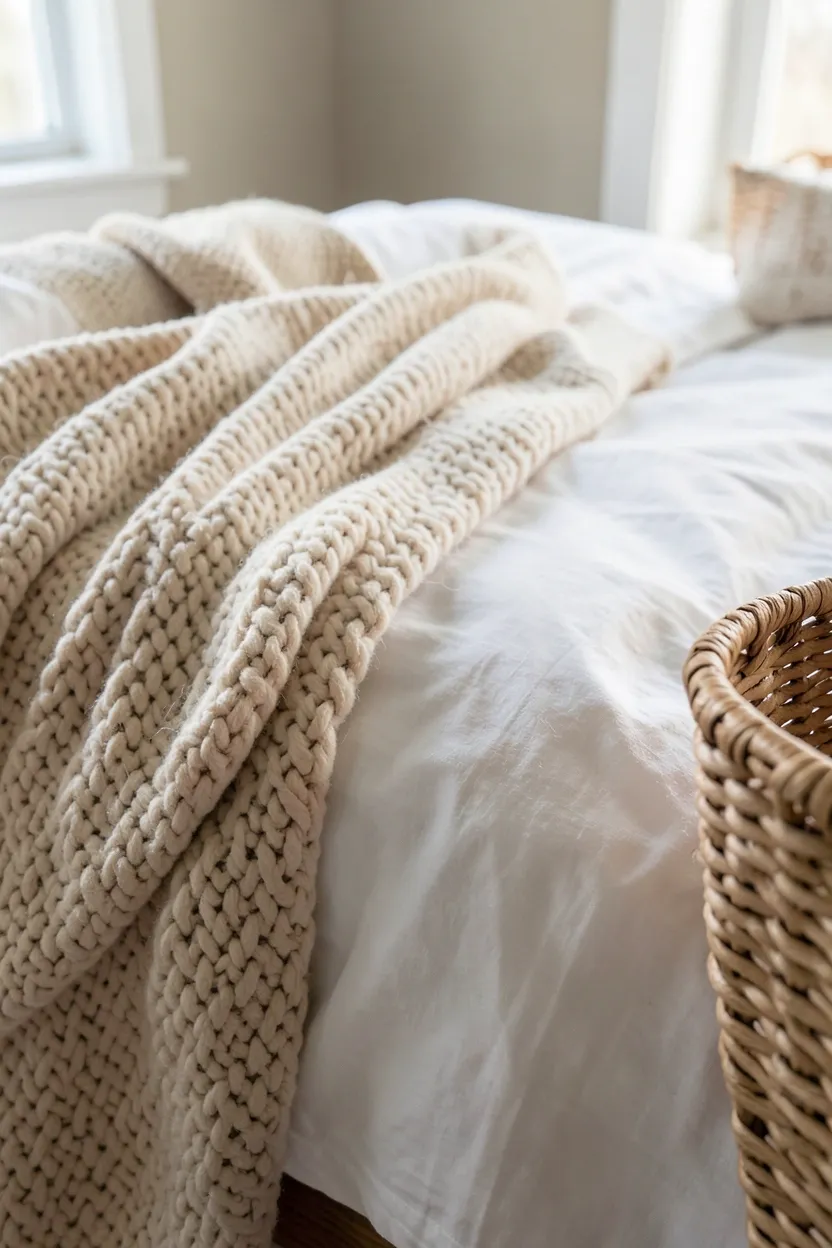
Common mistake: Overusing similar textures so the space feels monotonous or lacks visual interest. The key is balance—mix one or two strong textures (woven rattan, chunky wool) with neutral smooth elements (smooth linen, matte ceramic) to create perfect Japandi harmony without overwhelming minimalism.
Start with your largest textures first—bedding, rug, curtains—then layer smaller accessories. A wool or jute rug anchors the room while linen bedding softens the space. Add woven throws, ceramic vases, and perhaps a leather cushion for contrast. Textures should complement each other in neutral tones while offering different tactile experiences that reference tropical natural materials.
Tips
- Stick to 3-4 texture types per room for cohesion
- Use larger smooth surfaces, smaller textured accents
- Test texture combinations by placing samples together
What this gives you: A rich, multi-sensory tropical bedroom that feels sophisticated and inviting through thoughtful natural material combinations.
6. Minimalist Tropical Plants
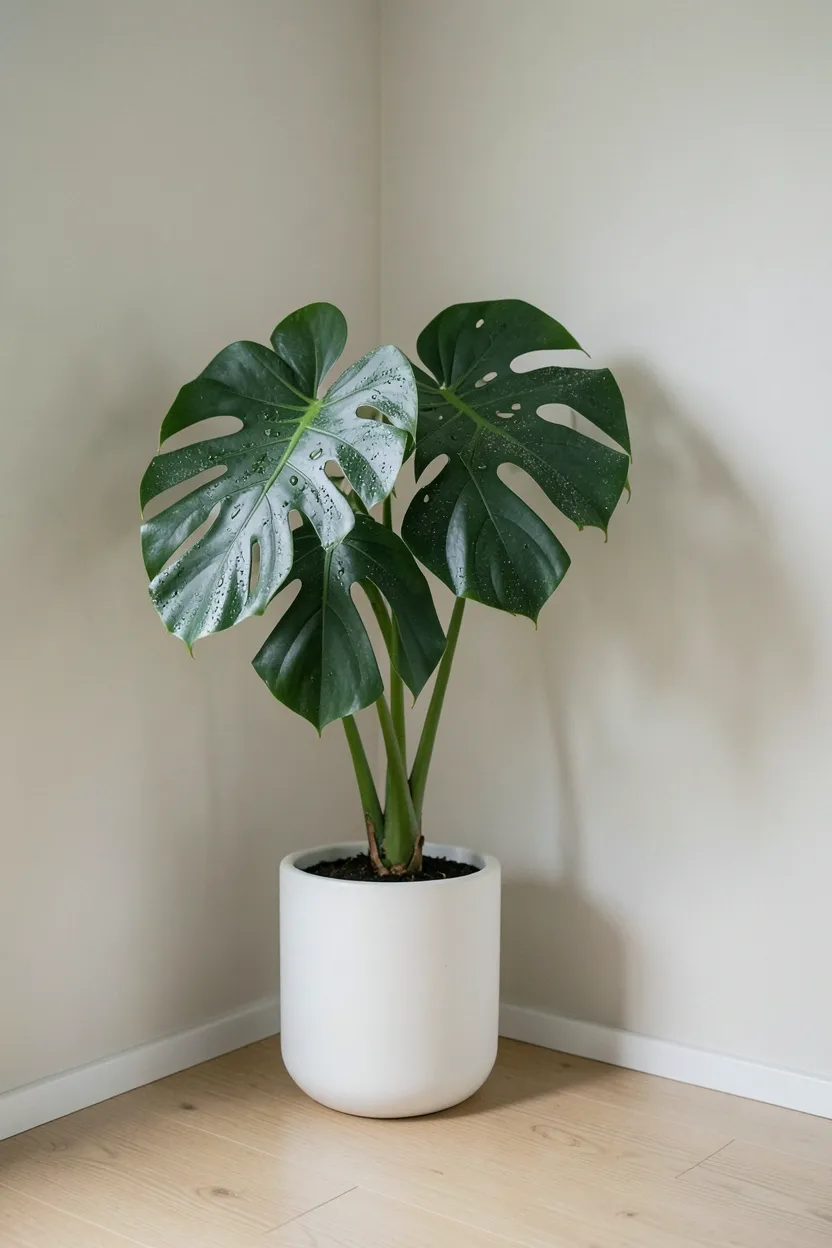
Tropical plants breathe life into a Japandi bedroom, bringing the natural world indoors with quiet restraint that honors both Japanese appreciation for nature and Scandinavian biophilic design. Choose a few statement tropical plants in simple pots—fiddle leaf figs, monstera, snake plants, or peace lilies—rather than creating an indoor jungle. The emphasis is on quality over quantity, with each plant chosen for its form, foliage texture, and ability to thrive indoors while referencing tropical environments. Avoid cluttering every surface with small plants, and skip overly ornate or brightly colored pots that distract from the Japandi minimalist aesthetic.
Recommended
Items for this idea
Place one large tropical plant in a corner to anchor the space, or group two smaller plants at different heights for visual interest without overwhelming the room. Choose simple ceramic or terracotta pots in white, cream, or natural clay tones that complement the tropical neutral palette. A single hanging plant near a window or a statement tree-like plant beside the bed creates maximum impact with minimal pieces while adding tropical character. For more ideas on layering plants into a Japandi space, see Japandi bedroom with indoor plants for specific plant selections and placement guidance.
Tips
- Do choose tropical plants based on lighting and care requirements
- Don't overwater plants which causes root rot and yellowing leaves
- Group plants with similar light needs together for simplified care
Best for: Bedrooms with adequate natural light seeking tropical character without overwhelming Japandi minimalism.
What this gives you: A living connection to tropical nature that purifies the air and brings organic vitality to your Japandi bedroom.
7. Natural Fiber Window Treatments
Natural fiber window treatments prioritize natural light while offering privacy and subtle tropical texture, aligning with both Japanese appreciation for natural elements and Scandinavian love of daylight. Choose light, airy options in tropical materials—sheer linen curtains, bamboo blinds, or simple woven grass shades—in neutral tones that don't compete with your room's tropical neutral palette. Avoid heavy drapes or dark colors that block light and make spaces feel small, and skip overly ornate valances or treatments that add visual clutter rather than enhancing Japandi calm.
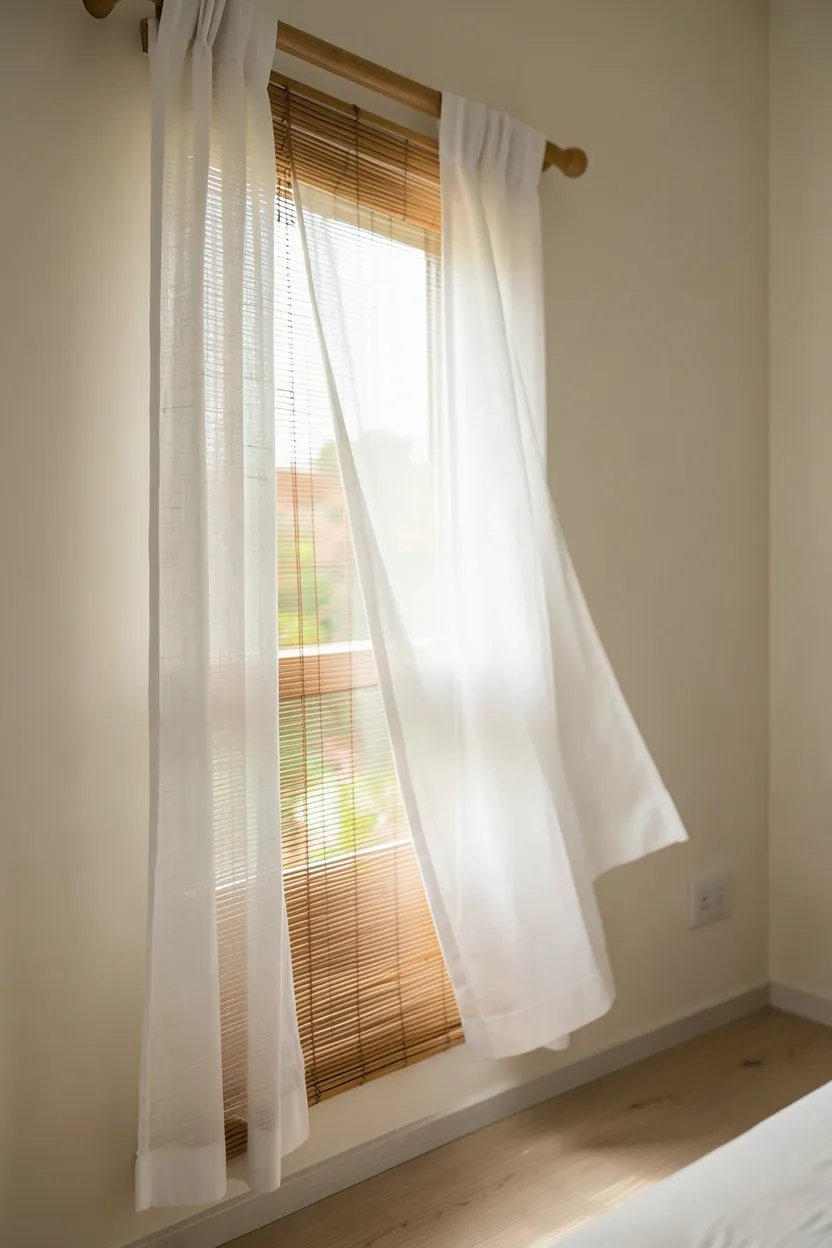
Placement note: Install window treatments high—just below the ceiling—to make windows appear taller and rooms more spacious while allowing maximum natural light. Choose treatments that filter rather than block sunlight for soft, diffused tropical ambiance.
Sheer linen panels in white or cream filter light beautifully while providing softness and subtle tropical texture. Bamboo or woven grass blinds add natural material that references tropical environments while allowing light control throughout the day. Layering blinds with sheers offers flexibility for both privacy and natural light, essential to Japandi design's appreciation for daylight and connection to outdoors.
Tips
- Install curtain rods 4-6 inches above window frames
- Choose curtain width 2-3 times window width for fullness
- Layer blinds with sheers for flexibility in light control
What this gives you: Soft, diffused natural light with tropical natural texture that enhances your bedroom while maintaining Japandi minimalism.
8. Woven Rattan Lighting
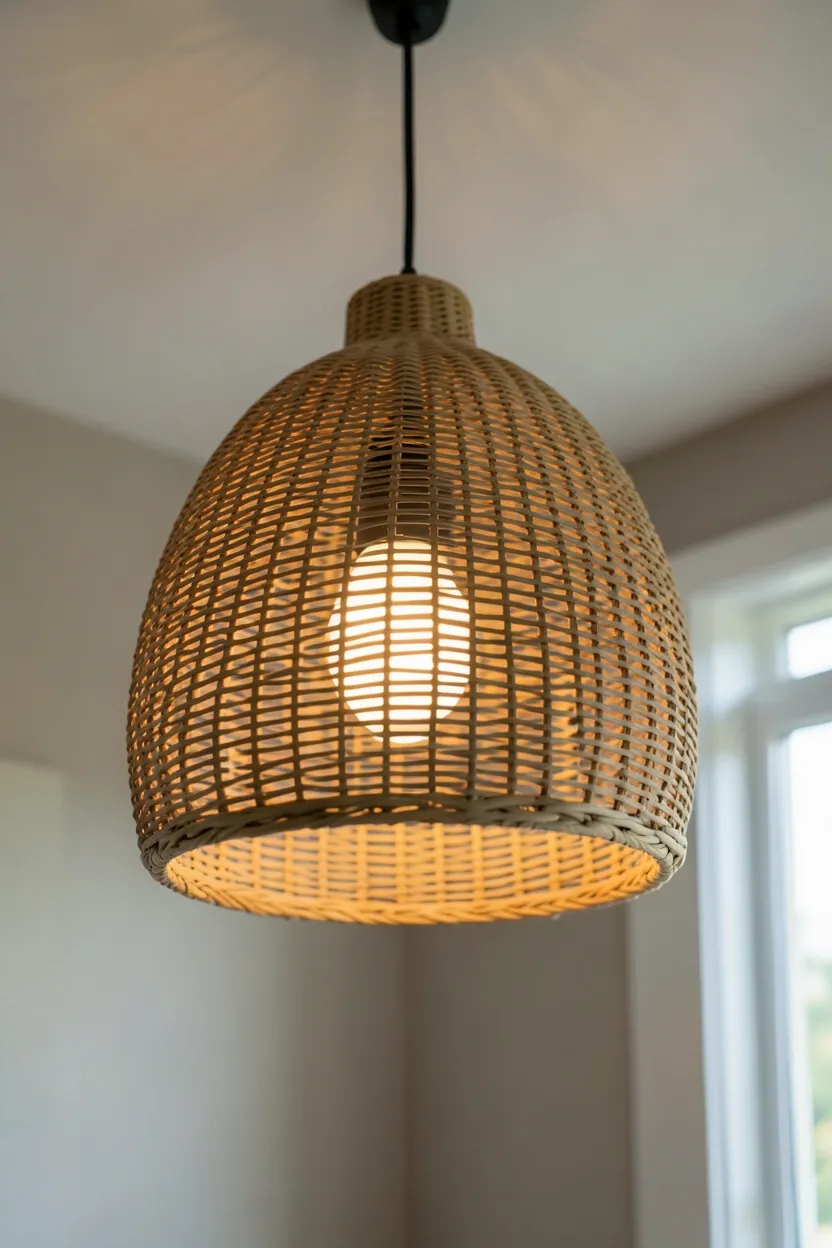
Woven rattan lighting brings tropical character and warmth to a Japandi bedroom, combining natural materials with clean design that serves both function and aesthetics. Choose fixtures with simple, understated forms—cylindrical pendants, dome-shaped table lamps, or woven drum shades—in natural rattan or bamboo materials that reference tropical environments without feeling themed. Avoid overly ornate or excessively woven patterns that clash with Japandi minimalism, and skip bright colors or glossy finishes that feel artificial rather than natural.
Recommended
Items for this idea
Why it works: Rattan lighting adds natural texture and tropical warmth while providing soft, diffused illumination that enhances Japandi calm. The woven patterns create visual interest without introducing color or pattern that disrupts the neutral palette.
Position lighting at different heights for layered illumination—a woven rattan pendant centered over the bed, table lamps on nightstands in simple woven forms, or a floor lamp with natural woven shade in a corner. Choose warm white LEDs at 2700K-3000K for hygge warmth that complements tropical materials while maintaining Japandi serenity. Dimmers are essential for adjusting brightness throughout the day and creating cozy evening ambiance.
Tips
- Pro: Woven rattan adds natural texture and tropical warmth
- Con: Too many woven fixtures can feel repetitive
- Fix: Mix one or two rattan pieces with simpler metal or ceramic
Budget note: Natural rattan fixtures offer quality and authenticity at moderate prices compared to designer pieces.
What this gives you: Natural tropical texture and warm illumination that enhances your Japandi bedroom without overwhelming minimalism.
9. Stone and Ceramic Accents
Stone and ceramic accents bring elemental, grounded texture to a tropical Japandi bedroom, connecting your interior to natural materials in their purest forms while maintaining neutral tropical palette. Use these materials sparingly—a concrete planter, a stone bowl, ceramic vases—for maximum impact without overwhelming the space. The cool, solid surfaces contrast beautifully with soft textiles and warm tropical woods, creating tactile interest that feels sophisticated and intentional rather than themed. Avoid too much stone or concrete, which makes rooms feel heavy and cold, and skip polished or highly finished surfaces that feel artificial.
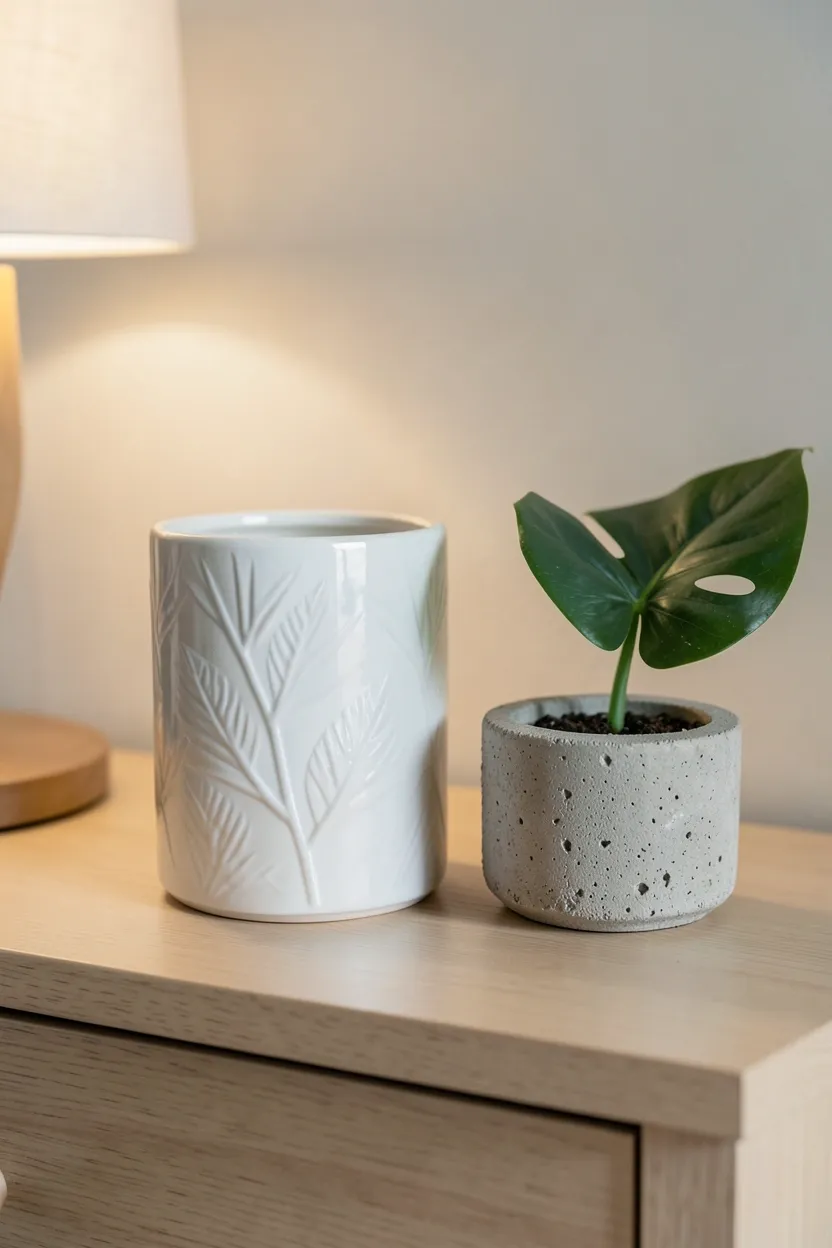
Placement note: Position stone or ceramic pieces where they catch natural light—near windows or under lamps—to highlight their texture and bring out subtle color variations while adding tropical elemental character.
Choose simple, unadorned forms—plain cylindrical planters, geometric concrete bowls, or ceramic vases with subtle glazes in white, cream, or earth tones. The material itself is the statement rather than pattern or ornamentation. A ceramic vase with tropical botanical print, a stone bowl with nothing inside, or a concrete planter with a single tropical plant all make deliberate, impactful additions that enhance Japandi minimalism with tropical texture.
Tips
- If you love warmth, choose limestone or sandstone ceramics
- Then add darker stone or concrete for subtle contrast
- Keep stone/ceramic pieces proportionate to your room size
What this gives you: Elemental texture that grounds your tropical bedroom with sophisticated, natural contrast to softer organic elements.
10. Minimalist Tropical Rugs
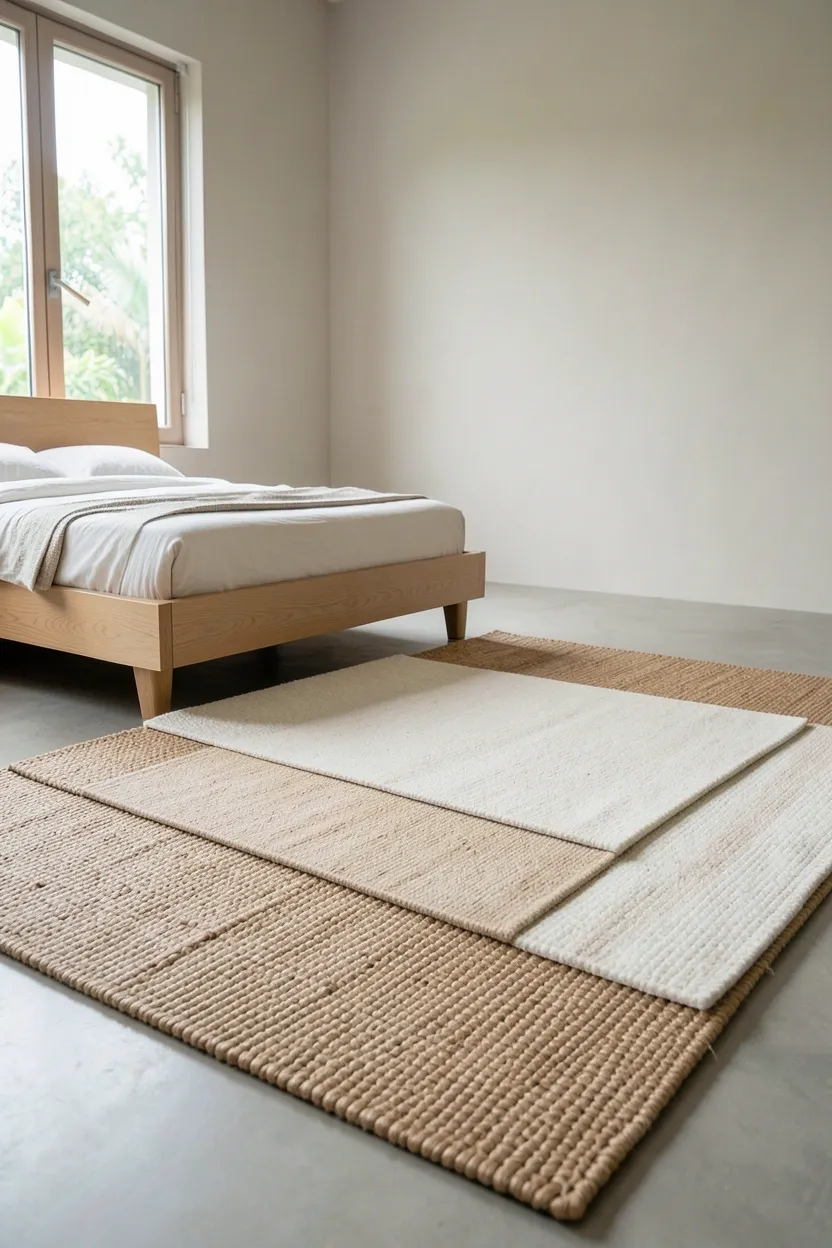
Minimalist tropical rugs ground a Japandi bedroom with organic texture and sustainable materials that connect to both Japanese reverence for nature and Scandinavian biophilic principles. Natural fibers like jute, sisal, seagrass, and light wool provide understated warmth and tactile interest without introducing bold tropical patterns or colors. Choose natural fibers in neutral tones—cream, beige, light gray, or warm sand—that complement your room's tropical neutral palette. Avoid synthetic rugs that feel slick or artificial, and skip heavily patterned or brightly colored tropical rugs that clash with Japandi minimalist aesthetic.
Recommended
Items for this idea
A large natural fiber rug anchors your bed area, defining space while adding soft underfoot comfort. Layering works well in Japandi design—a jute or sisal base rug with a smaller light wool rug on top creates texture depth while maintaining tropical character through natural materials. Keep rug edges clean and borders simple; avoid fringed or elaborate edging that feels fussy rather than minimal.
Tips
- Choose a rug that extends at least 6-8 inches beyond bed on all sides
- Test durability for high-traffic areas—jute is more resilient than sisal
- Use rug pads for cushioning and to prevent slipping
What this gives you: An organic tropical foundation with natural warmth, texture, and sustainability that maintains Japandi minimalist purity.
11. Woven Storage Baskets
Woven baskets bring natural tropical texture and hidden storage to a Japandi bedroom, combining practicality with organic beauty that fits the aesthetic perfectly. Use baskets in natural tropical materials—rattan, bamboo, seagrass, or water hyacinth—to corral blankets, magazines, or everyday items while adding tactile warmth. This approach aligns with Scandinavian functionality and Japanese appreciation for natural materials. Avoid plastic or synthetic baskets that feel cheap, and skip overly ornate or heavily patterned woven pieces that clash with Japandi minimalist vibe.
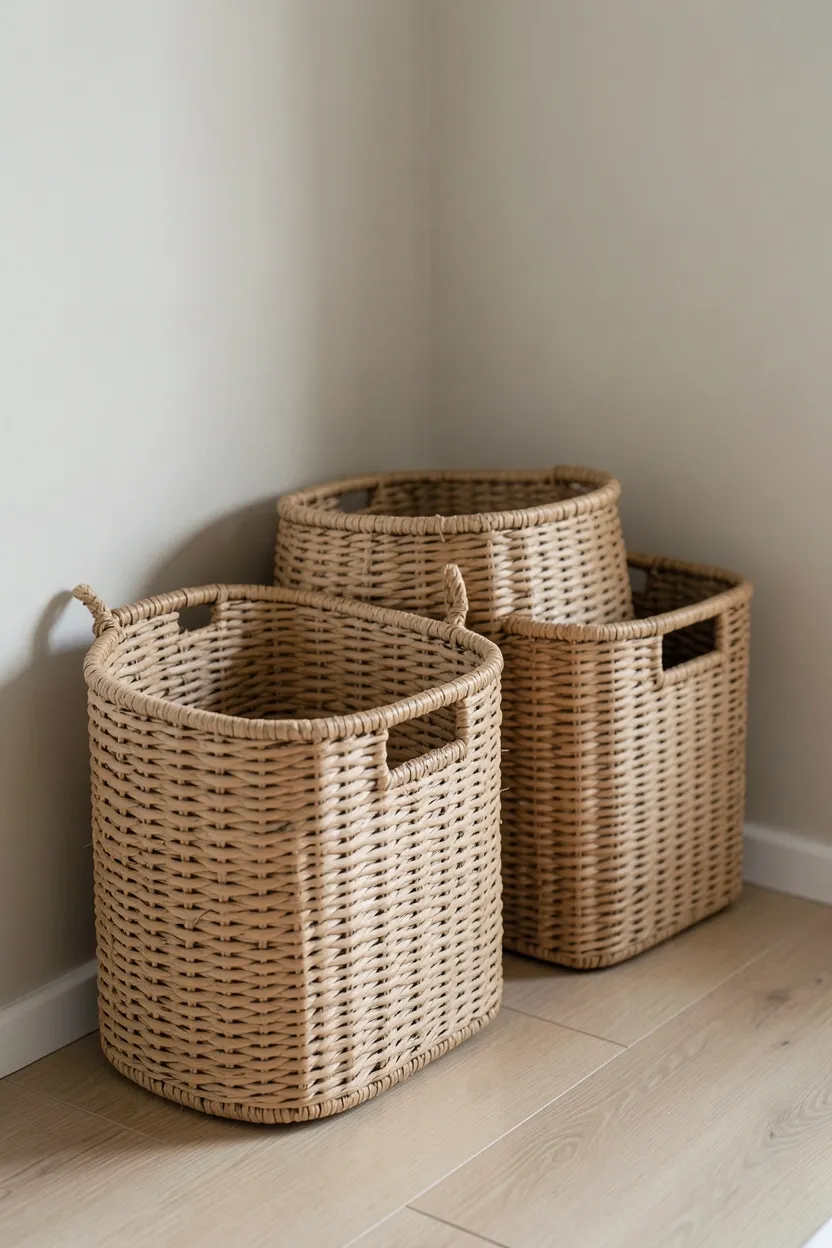
Choose one or two statement baskets rather than many small ones—a large basket next to bed for throws, or a set of matching baskets on shelves. Natural tropical fibers in neutral tones blend seamlessly with Japandi palette. Tucked under a nightstand or beside the bed, woven baskets provide hidden storage without disrupting visual calm while adding tropical character through natural materials.
Tips
- Do choose baskets with tight, even weaves for durability
- Don't overstuff baskets until they lose their shape
- Use baskets with lids for items you want to hide completely
What this gives you: Practical storage with natural tropical texture and warmth while keeping your bedroom organized and clutter-free.
12. Minimalist Nightstands
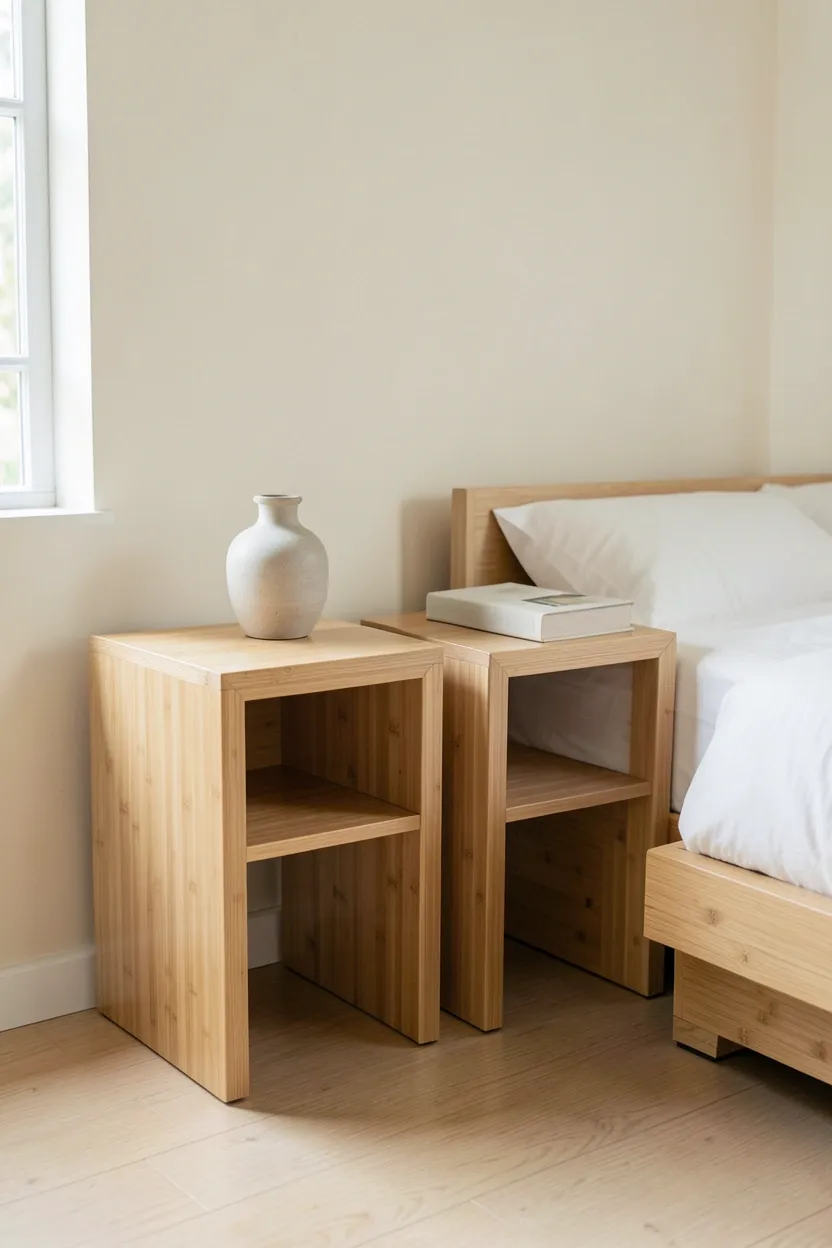
Minimalist nightstands provide essential surface area and storage without visual weight, embodying Japandi principles of functional minimalism and intentional design. Choose nightstands in light tropical woods—bamboo, light teak, or light oak—with clean, simple lines and minimal ornamentation. The form should be present without commanding attention, maintaining the calm, uncluttered foundation essential to Japandi aesthetics. Avoid bulky, ornate nightstands with excessive storage compartments or decorative details that disrupt clean lines, and skip materials that feel too heavy or dark for light tropical Japandi spaces.
Recommended
Items for this idea
Placement note: Position nightstands at bed height with 18-24 inches between bed and each nightstand for comfortable movement. Keep surfaces uncluttered with just one or two intentional items per surface to maintain Japandi calm.
Choose nightstands with concealed storage rather than open shelves to maintain uncluttered visual calm. A simple rectangular or cylindrical form in light tropical wood works beautifully, perhaps with subtle woven rattan details or simple drawer pulls. The nightstands should feel like intentional design elements rather than mere functional pieces, grounding the bed while maintaining visual lightness.
Tips
- Do prioritize storage with drawers or doors to maintain visual calm
- Don't choose nightstands that are too large for your space
- Keep surfaces to 3 items maximum per nightstand for intentionality
What this gives you: Essential bedside storage and surface area that maintains Japandi visual calm through intentional design.
13. Soft Ambient Lighting
Lighting in a tropical Japandi bedroom should feel warm, diffused, and layered, creating a cozy atmosphere that invites relaxation and contemplation while highlighting natural tropical materials. Rely on multiple light sources at different heights—floor lamps, table lamps, and ceiling fixtures—with warm white bulbs around 2700-3000K. The goal is soft, shadow-free illumination that feels natural and soothing, not harsh or clinical. Avoid bright overhead lights as sole source, and skip cool-toned or daylight bulbs that feel stark and uninviting to warm Japandi spaces.
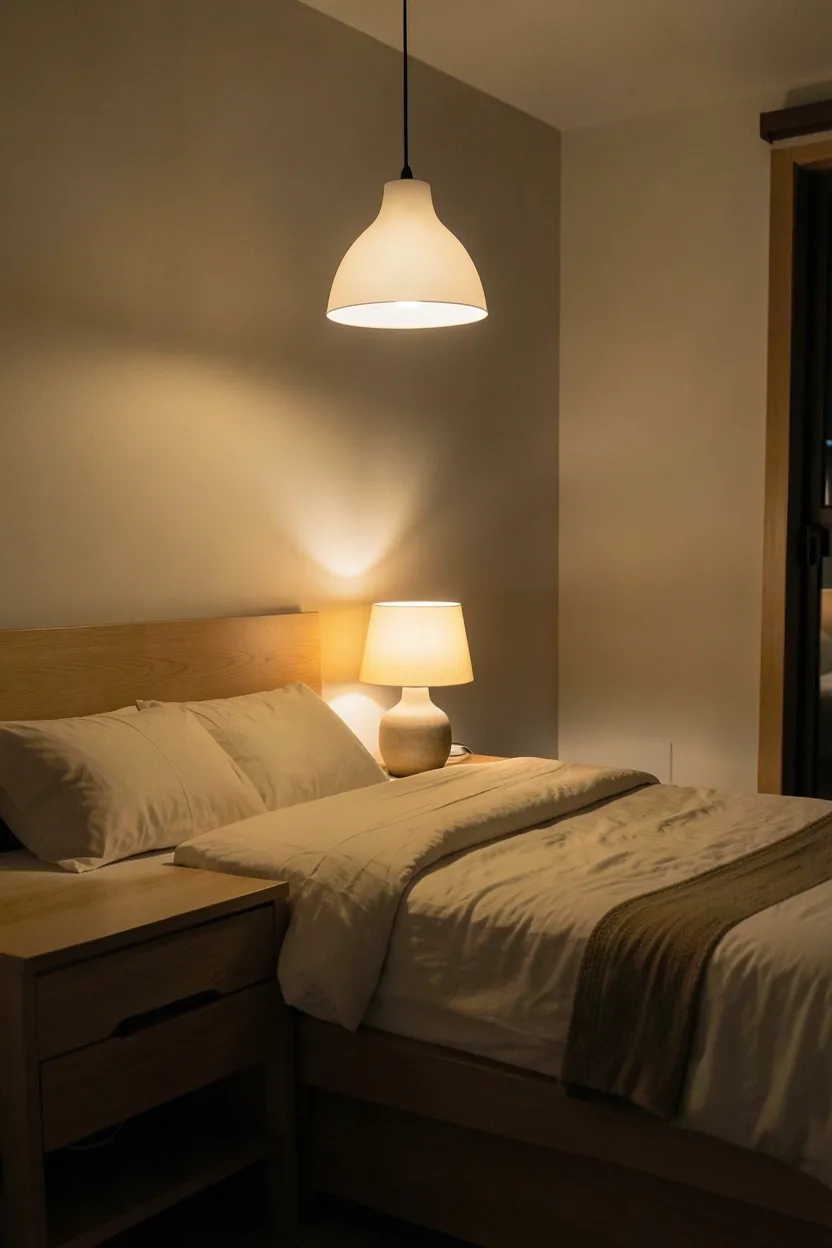
Placement note: Layer lighting by placing a floor lamp behind bed, table lamps on nightstands, and a pendant over a reading nook. This creates pockets of light rather than uniformly bright space, enhancing Japandi calm with natural materials.
Choose fixtures with simple, clean lines in materials that complement tropical Japandi aesthetic—matte metal finishes in black or brass, natural materials like wood and woven rattan, or ceramic in neutral tones. Dimmers are essential for adjusting brightness throughout the day, creating cozy evening ambiance that enhances tropical warmth while maintaining Japandi serenity.
Tips
- Do use warm white LEDs at 2700K-3000K for hygge warmth
- Don't rely solely on ceiling lighting
- Install dimmers on all overhead lights for flexibility
What this gives you: A bedroom that transitions effortlessly from bright and functional during day to warm and intimate at night with tropical natural materials.
14. Uncluttered Nightstands
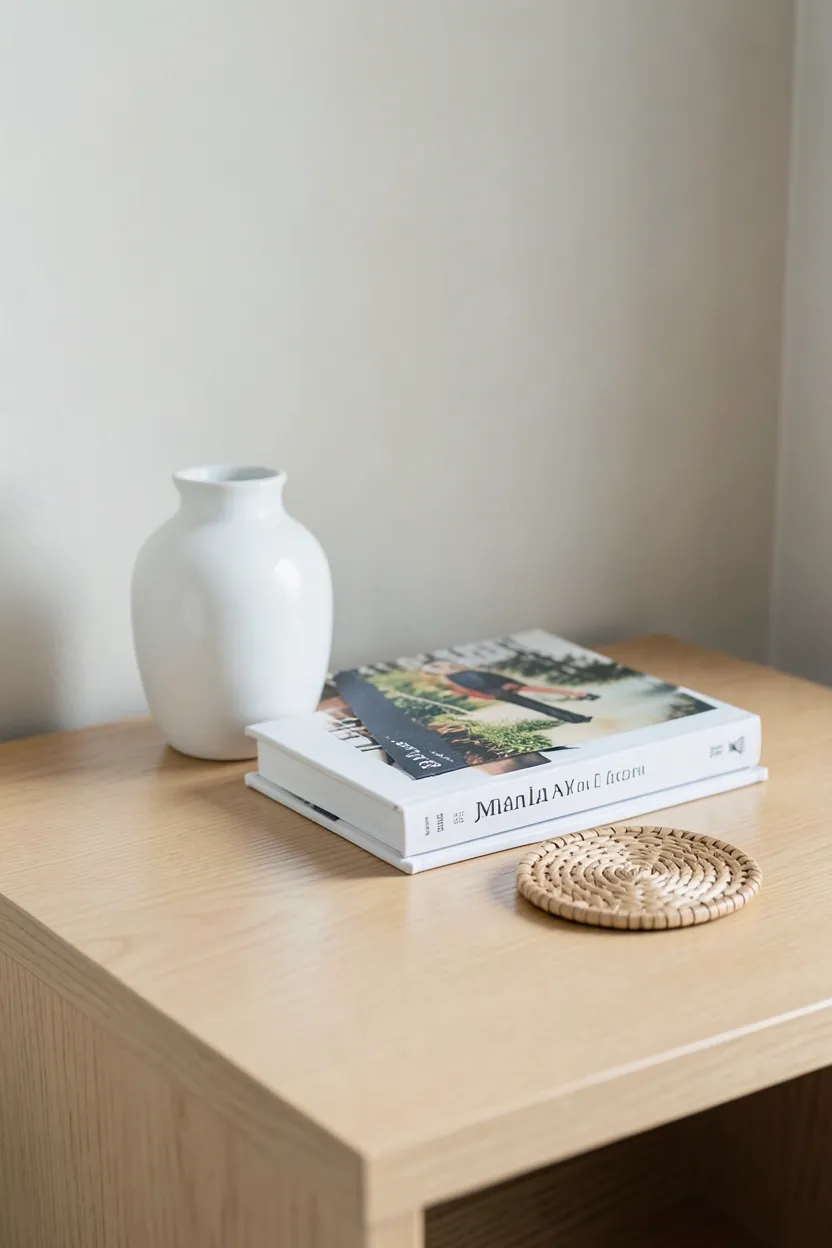
Uncluttered nightstands are a hallmark of Japandi design, creating visual calm and mental space that aligns with both Japanese minimalism and Scandinavian practicality. Nightstands should hold only intentional items—perhaps a carefully curated vase, one or two books, or a single decorative object—leaving plenty of negative space. This approach emphasizes each chosen piece and prevents visual overwhelm. Avoid piling knick-knacks, stacks of magazines, or unrelated objects that create visual noise, and skip leaving everyday items like remote controls or charging cables in plain sight.
Recommended
Items for this idea
Why it works: Empty space is as important as filled space in Japandi design. It allows the eye to rest, creates breathing room, and highlights the beauty of each thoughtfully chosen item while enhancing the tropical Japandi aesthetic through restraint.
Use storage solutions to keep everyday items out of sight—decorative baskets, nightstands with drawers, or storage ottomans. Edit your nightstand surfaces regularly, removing anything that doesn't serve a purpose or bring joy. A single sculptural ceramic vase with tropical botanical print, a stack of two artfully chosen books, or one simple woven piece creates more impact than a crowded collection.
Tips
- Pro: Follow the rule of three—three items max per nightstand
- Con: Empty surfaces can feel unfinished or cold
- Fix: Choose one statement piece and two supporting items
Rental note: Use freestanding storage units instead of built-ins to maintain uncluttered surfaces without permanent changes.
What this gives you: A serene, organized bedroom that feels spacious and calming, making it easier to relax and maintain Japandi aesthetic.
15. Natural Wood Wall Accents
Natural wood wall accents bring warmth and organic character to a tropical Japandi bedroom, connecting your interior to nature through architectural elements that feel intentional rather than decorative. Choose light tropical woods like bamboo, light teak, or light oak in simple, clean forms that maintain Japandi minimalism while adding natural warmth. Avoid heavy or dark wood accents that make the space feel small, and skip ornate or overly carved wood pieces that clash with Japandi restraint.
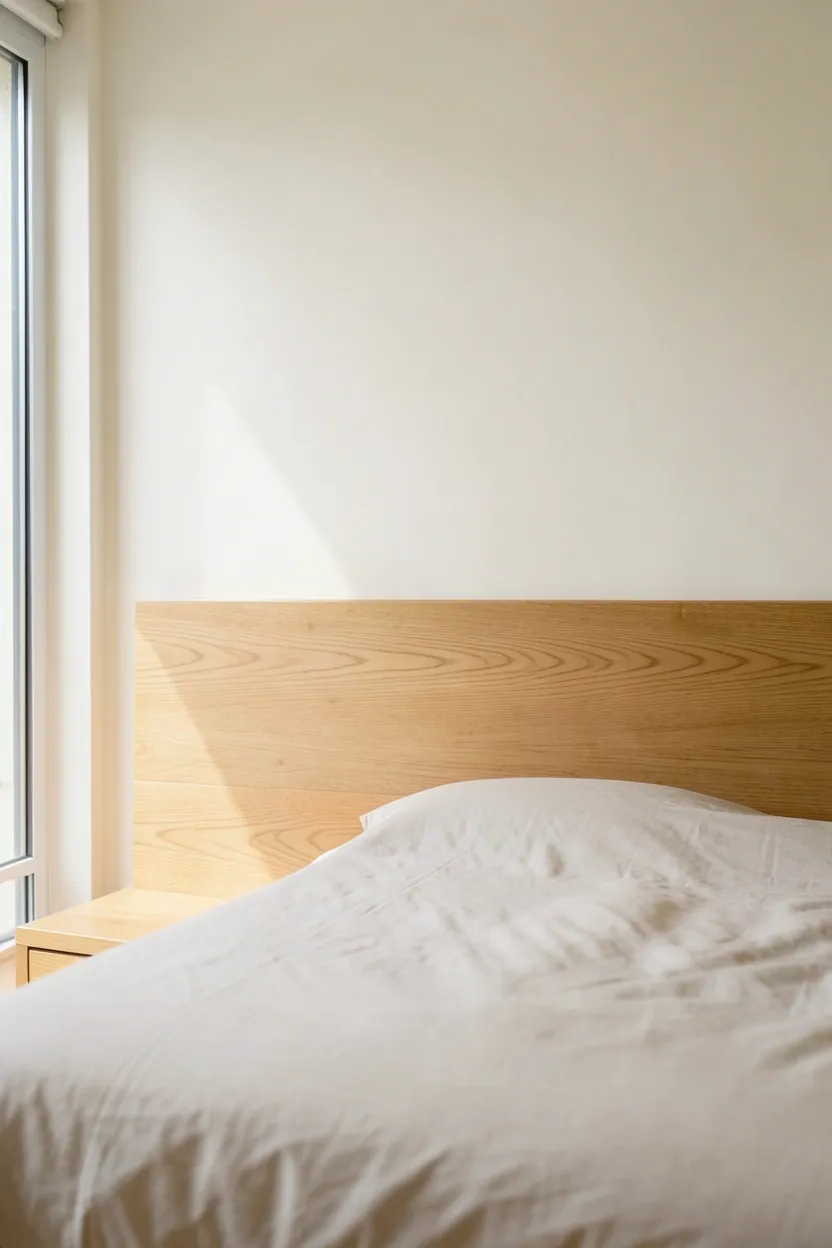
Consider a single wooden statement wall or scattered accent pieces rather than overwhelming the space. A light teak headboard with visible grain, bamboo paneling behind the bed, or floating light wood shelves add warmth without darkening the room. Choose wood pieces with simple forms and visible grain that celebrate natural materials while maintaining Japandi clean lines.
For bedroom wall inspiration that balances warmth and minimalism, see Japandi Blue Bedroom Ideas and adapt the wall treatment approach for tropical warmth.
Tips
- Do choose one wall accent rather than multiple features
- Don't use dark or heavily stained wood in small bedrooms
- Consider light tropical woods for warmth without darkness
What this gives you: Natural architectural warmth and character that enhances tropical Japandi aesthetic through organic materials.
16. Tropical Woven Throw Pillows
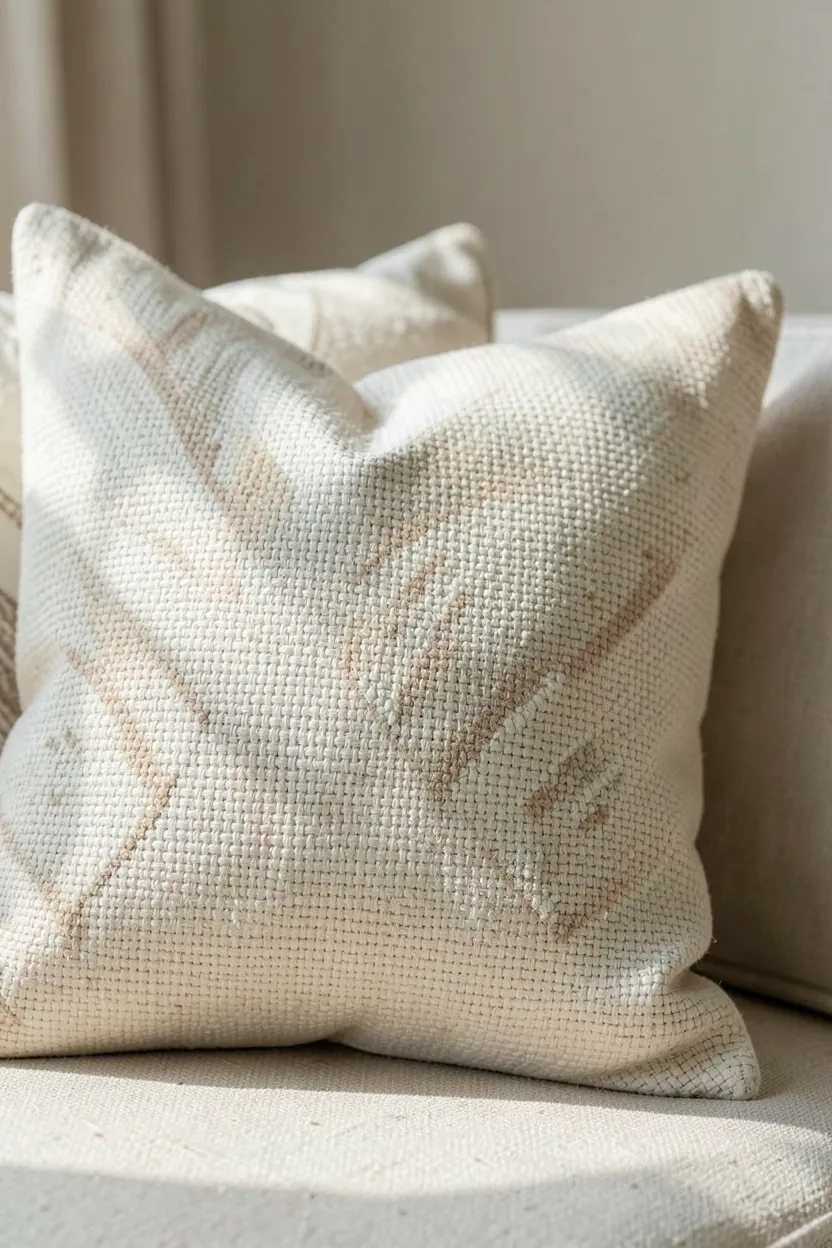
Tropical woven throw pillows bring subtle botanical character and tactile warmth to a Japandi bedroom, embodying Scandinavian hygge through soft fabrics with natural tropical materials that reference nature without overwhelming minimalism. Choose throws in natural materials—linen, cotton, or light wool—with subtle woven textures or patterns that hint at tropical elements through texture rather than bold prints. Drape them casually over bed or chair, adding instant warmth and inviting softness. Avoid synthetic or overly fuzzy throws that feel cheap, and skip bold tropical patterns or bright colors that clash with Japandi minimalist aesthetic.
Recommended
Items for this idea
Choose textures that complement your room's existing fabrics—smooth linen bedding with woven cotton throws, or soft wool pillows alongside light tropical wood furniture. A single throw pillow folded at the end of the bed, or draped loosely over a reading chair, adds perfect tropical finishing touch without overwhelming Japandi calm. Keep 2-3 throws in rotation for variety and seasons while maintaining neutral palette.
Tips
- Choose washable natural materials for easy care
- Drape throws naturally—avoid perfect folds or tidy rolls
- Layer different woven textures for depth and tropical character
What this gives you: Instant cozy warmth with tropical natural texture that makes your bedroom feel inviting and lived-in without clutter.
17. Intentional Negative Space
Intentional negative space is essential in Japandi design, creating visual calm and mental space that aligns with both Japanese minimalism and Scandinavian practicality. The empty space between furniture, around objects, and on walls is as important as the filled elements. This approach emphasizes each chosen piece and prevents visual overwhelm while allowing the tropical natural materials and subtle colors to shine. Avoid filling every surface or corner, and skip the urge to add more items simply because space exists—emptiness is intentional and beautiful in Japandi design.
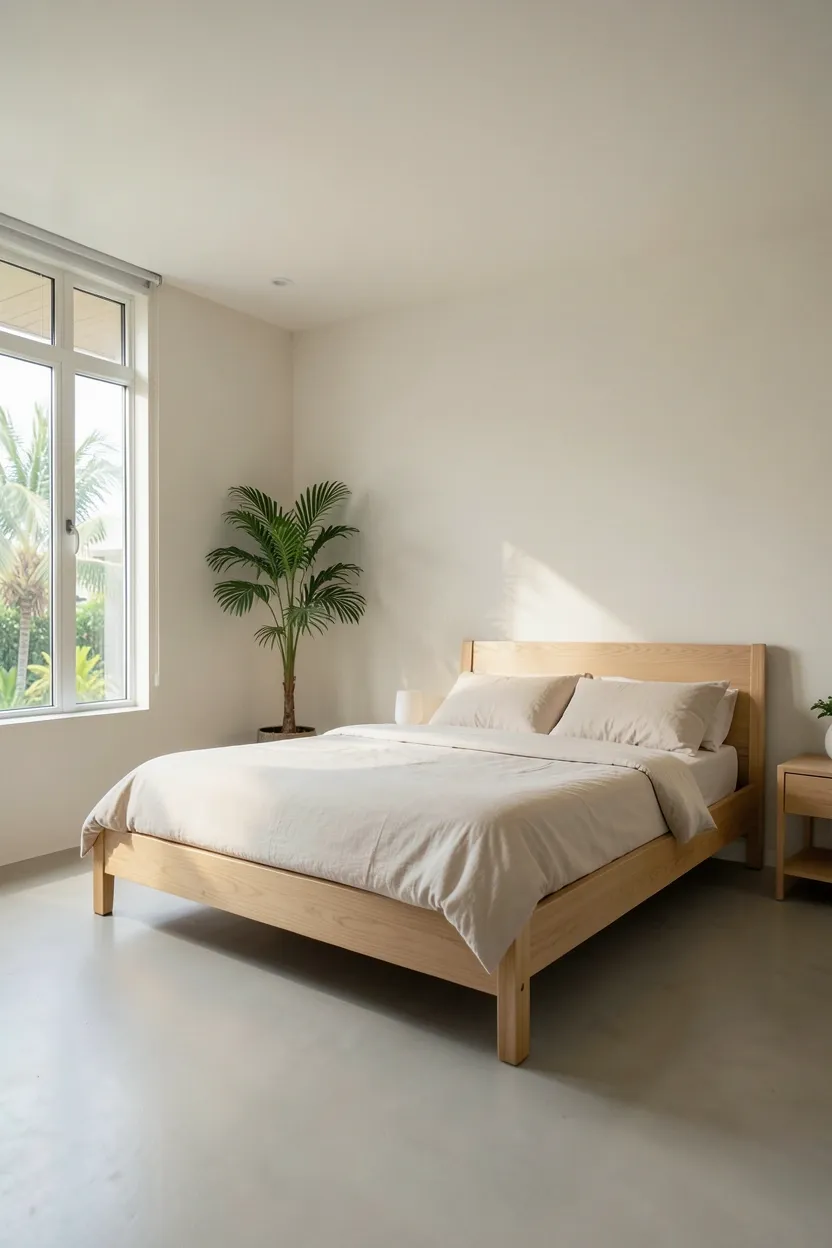
Leave breathing room around furniture—24-30 inches between pieces—and maintain empty wall space rather than filling with artwork. The negative space allows your eye to rest, creates visual rhythm, and highlights the beauty of each thoughtfully chosen tropical Japandi element. Empty surfaces feel calm rather than unfinished, and open space makes the bedroom feel larger and more serene.
Tips
- Do prioritize negative space as actively as you select furniture and decor
- Don't view empty space as needing to be filled
- Edit regularly, removing items that don't serve a purpose
Best for: All bedrooms seeking Japandi calm and serenity through intentional minimalism.
What this gives you: A serene, uncluttered bedroom that feels larger, calmer, and more peaceful through intentional emptiness.
These 17 Tropical Japandi bedroom ideas demonstrate how Japanese minimalism, Scandinavian hygge, and subtle tropical elements can beautifully coexist, creating spaces that feel both serene and warmly inviting. Whether you're incorporating a single natural tropical element or embracing full Tropical Japandi transformation, the key is selecting pieces that resonate with your personal style while meeting practical sleeping needs and maintaining restraint. From light tropical neutral palettes and low-profile platform beds to natural tropical wood accents and intentional negative space, each element adds character and warmth that transforms ordinary bedrooms into inviting, soulful tropical Japandi sanctuaries. Start with one or two elements that inspire you, then gradually layer additional Tropical Japandi details to create a bedroom that truly feels like home.

About the author
OBCD
CGI visualization and interior design content. We create detailed 3D renders and curate practical design ideas for every room in your home.