29 Japandi Kitchen Ideas for a Calm, Functional Space
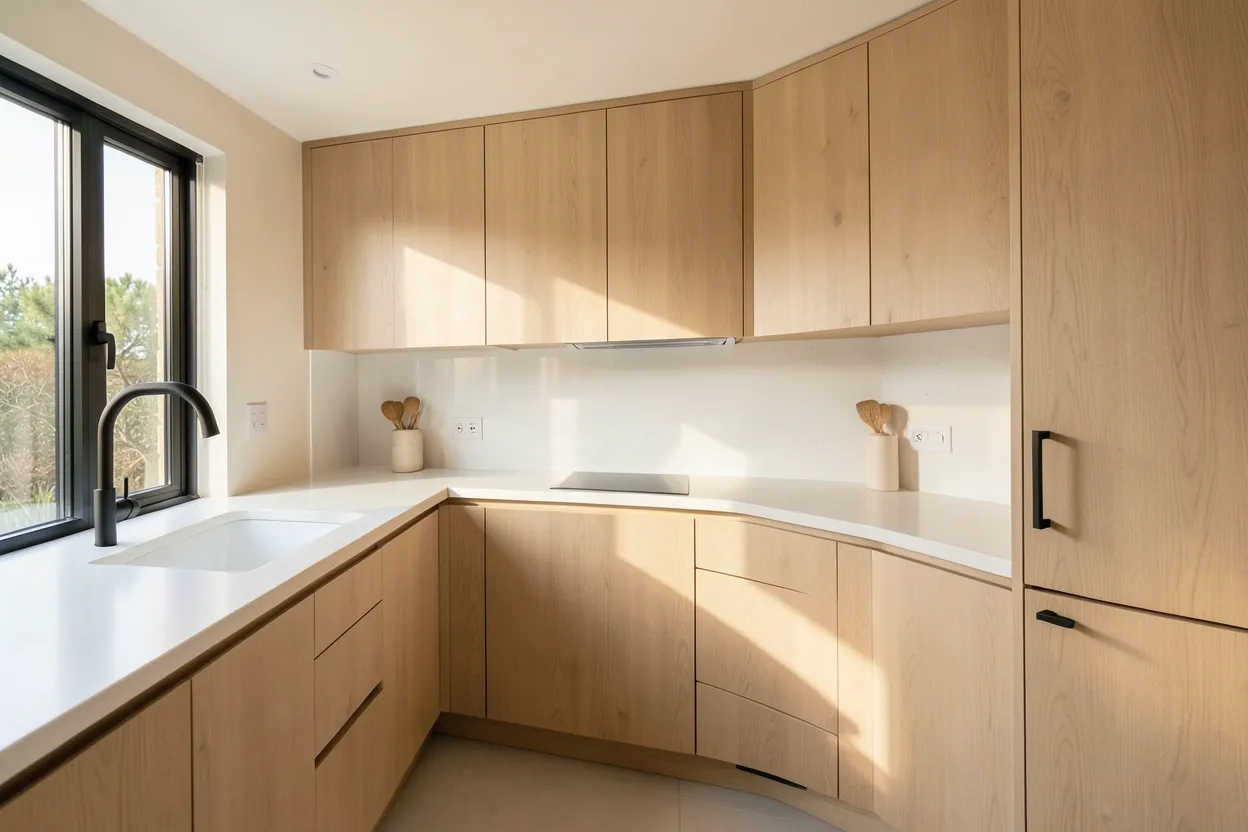
Japandi kitchen ideas blend Japanese minimalism with Scandinavian hygge, creating functional yet serene cooking spaces that feel calm and welcoming from the moment you walk in. These japandi kitchen designs combine clean lines, natural materials, and warm textures to achieve balance between simplicity and comfort — a philosophy that works beautifully in both small apartments and larger homes.
This fusion of two design traditions focuses on intentional living through muted color palettes, organic textures, and thoughtful storage solutions that make everyday cooking a pleasure rather than a chore. Whether you're a renter looking for reversible updates or a homeowner planning a full renovation, the japandi kitchen aesthetic scales to your situation and budget.
These 29 japandi kitchen ideas range from simple, renter-friendly swaps — open shelving, statement plants, matte hardware — to full design approaches with integrated appliances and natural stone countertops. Each idea balances beauty with practicality for a space that feels as good as it looks.
Quick FAQ
What makes a Japandi kitchen different from other styles?
A Japandi kitchen combines Japanese minimalist principles with Scandinavian warmth and coziness. It focuses on natural materials, neutral colors, clean lines, and functional design elements that create a balanced, serene cooking space.
What colors work best in a Japandi kitchen?
Neutral tones like white, cream, soft beige, light gray, and muted earthy shades are ideal. Natural wood tones in light oak, ash, or birch add warmth, while subtle touches of black or charcoal provide contrast without overwhelming the space.
What materials are essential for a Japandi kitchen?
Light wood (oak, birch, ash) for cabinetry and furniture, natural stone or quartz for countertops, matte finishes for hardware, and textured materials like linen or jute for soft accents. These materials create the organic, understated look that defines Japandi design.
How can I make my small kitchen feel Japandi-style?
Focus on decluttering, use smart storage solutions to hide everyday items, choose light colors to reflect natural light, and incorporate a few high-quality pieces with natural textures. Keep surfaces clear and use only essential, beautiful items on display.
As an Amazon Associate I earn from qualifying purchases.
Table of Contents
- 1. Clean Lines and Light Wood: The Foundation of Japandi Kitchen Design
- 2. Minimalist Japandi Island with Integrated Storage
- 3. Natural Light-Infused Japandi Kitchen
- 4. Matte Black Hardware Japandi Kitchen
- 5. Open Shelving Japandi Kitchen Ideas for Renters
- 6. Stone Countertops Japandi Kitchen
- 7. Seamless Japandi Kitchen with Hidden Appliances
- 8. Warm Neutral Japandi Kitchen Palette
- 9. Japandi Kitchen with Breakfast Nook
- 10. Slab Door Cabinetry Japandi Kitchen
- 11. Japandi Kitchen with Indoor Plants
- 12. Contrasting Dark Lower Cabinets Japandi Kitchen
- 13. Japandi Kitchen with Butcher Block Island
- 14. Minimalist Japandi Kitchen with Peninsula
- 15. Japandi Kitchen with Textured Backsplash
- 16. Japandi Kitchen with Statement Light Fixture
- 17. Japandi Kitchen with Dining Table Extension
- 18. Japandi Kitchen with Tile Flooring
- 19. Japandi Kitchen with Floating Shelves
- 20. Japandi Kitchen with Glass Cabinet Doors
- 21. Japandi Kitchen with Range Hood Design
- 22. Japandi Kitchen with Integrated Sink
- 23. Japandi Kitchen with Wooden Ceiling
- 24. Japandi Kitchen with Corner Storage Solution
- 25. Japandi Kitchen with Pantry Door
- 26. Japandi Kitchen Ideas for Small Apartments and Kitchenettes
- 27. Japandi Kitchen with Statement Wall
- 28. Japandi Kitchen with Hidden Trash Cabinet
- 29. Japandi Kitchen with Cozy Window Seat
1. Clean Lines and Light Wood: The Foundation of Japandi Kitchen Design
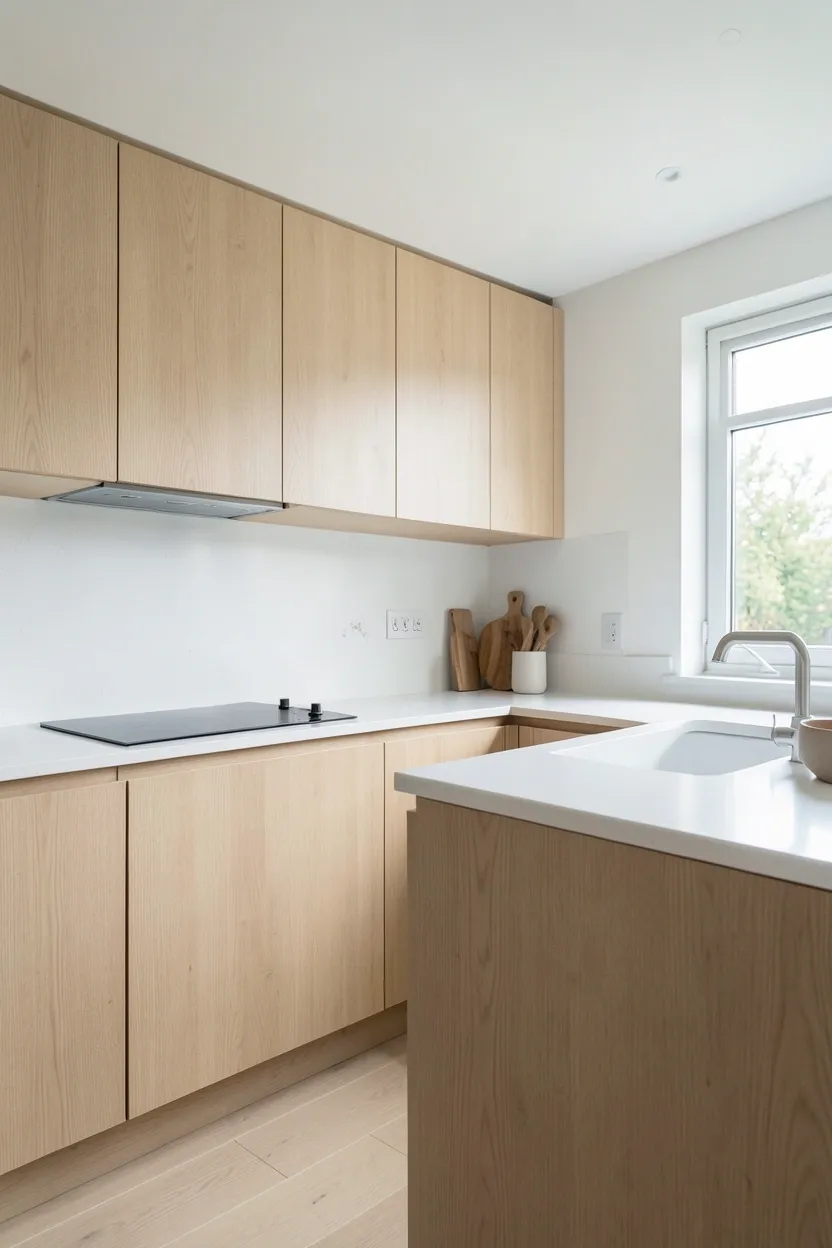
A Japandi kitchen with clean lines and light wood creates a serene cooking environment that balances Japanese minimalism with Scandinavian warmth. The absence of decorative trim, handleless cabinet doors, and the natural grain of pale oak or ash cabinets establish visual harmony while maintaining functional efficiency.
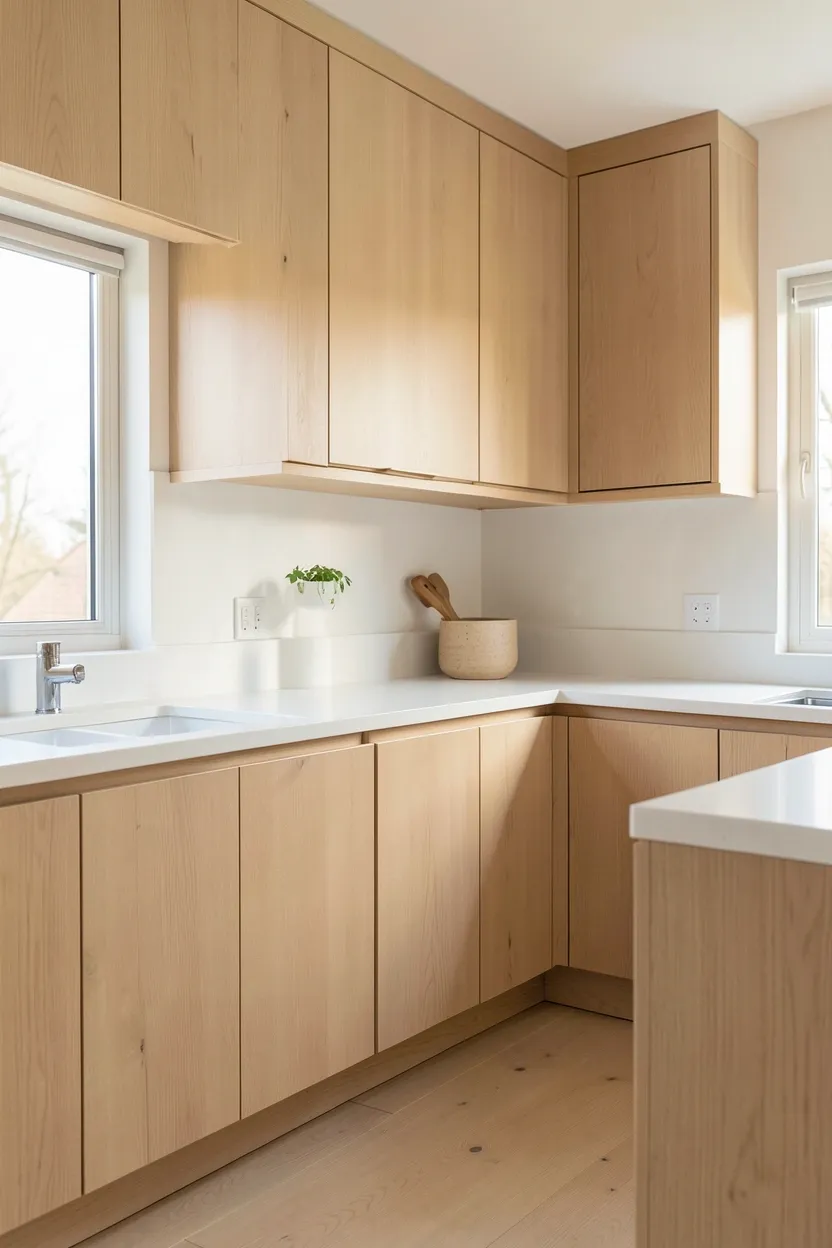
Light wood cabinetry reflects natural light, making the kitchen feel spacious and airy. The smooth, slab-style doors eliminate visual clutter, while integrated pulls create a seamless look across all cabinets. Pair light oak uppers with white lower cabinets to add depth without breaking the monochromatic palette.
Avoid ornate molding or intricate hardware that disrupts the minimalist aesthetic. Instead, choose recessed finger pulls or push-to-open mechanisms that maintain the clean silhouette. Light wood floors in the same tone as the cabinets create continuity, while a white quartz countertop provides subtle contrast.
Do: Choose light wood species like ash, birch, or white oak for cabinets and furniture. These tones naturally brighten the space while adding warmth.
Don't: Mix multiple wood tones or add decorative molding that breaks the clean line aesthetic.
What this gives you: A calm, organized kitchen that feels larger and more peaceful due to the absence of visual noise.
2. Minimalist Japandi Island with Integrated Storage
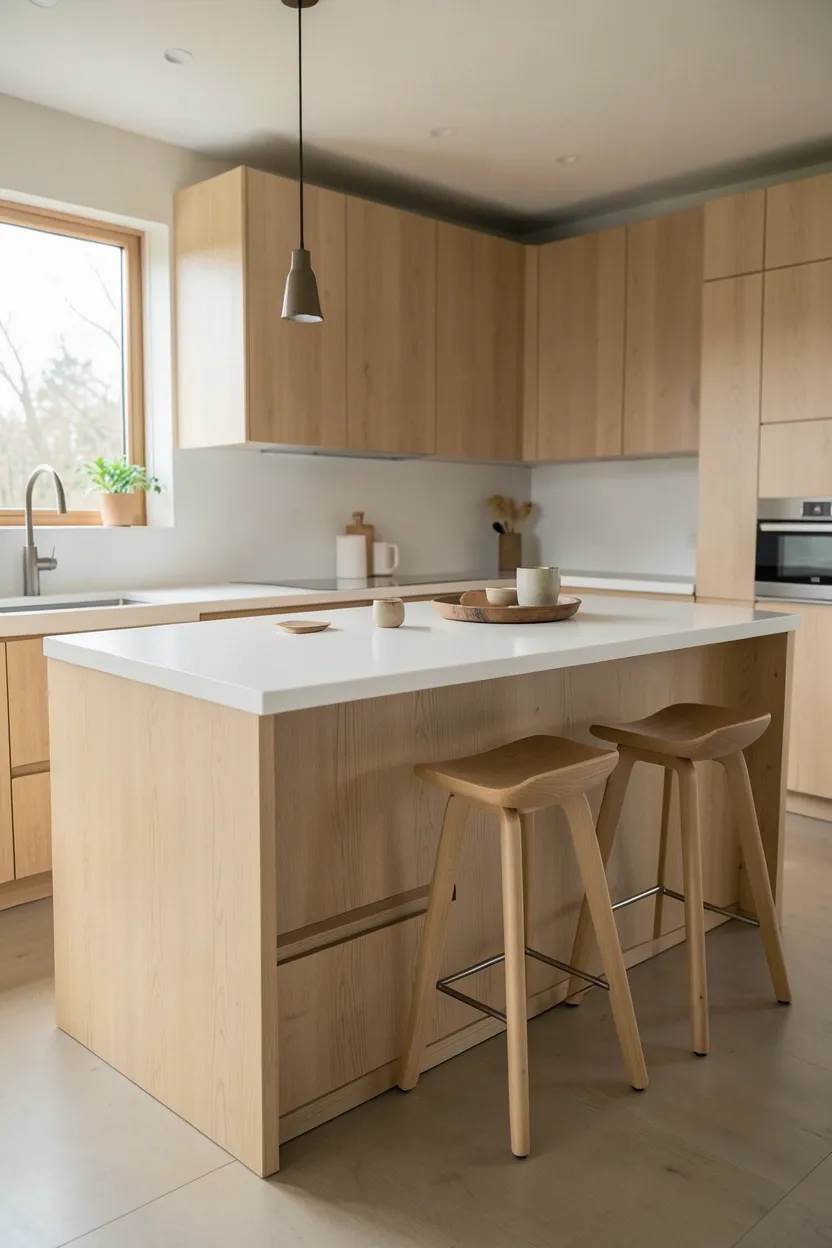
A Japandi kitchen island serves as both a functional workspace and a gathering spot, with integrated storage that maintains the clean aesthetic. Choose a simple rectangular island with slab-style base cabinets in light wood, topped with a quartz or stone countertop that extends slightly to create an overhang for casual seating.
Recommended
Items for this idea
Integrated drawers and cabinets keep everyday items hidden, preserving the minimalist look. Soft-close hinges ensure smooth operation while reducing noise. For a cohesive appearance, match the island cabinet material to your main cabinets or use a slightly darker tone for subtle contrast.
Placement note: Position the island to allow at least 36-42 inches of clearance on all sides for easy movement. If your kitchen is smaller, consider a portable island on wheels that can be moved as needed.
Avoid oversized islands with elaborate built-in appliances that dominate the space. Instead, focus on smart storage solutions like deep drawers for pots and pans, pull-out racks for spices, and a designated area for trash and recycling.
If you need seating, then choose low-profile stools in natural materials like wood or leather that tuck completely under the overhang when not in use.
If your space is limited, then opt for a narrow island (24-30 inches wide) that provides workspace without sacrificing flow.
What this gives you: A multifunctional kitchen center that combines food prep, storage, and casual dining in one streamlined piece.
3. Natural Light-Infused Japandi Kitchen
Maximizing natural light is essential in a Japandi kitchen, as it enhances the calm, airy atmosphere and highlights natural materials' textures. Large windows, skylights, or glass doors connect the cooking space to the outdoors while flooding the room with daylight that shifts beautifully throughout the day.
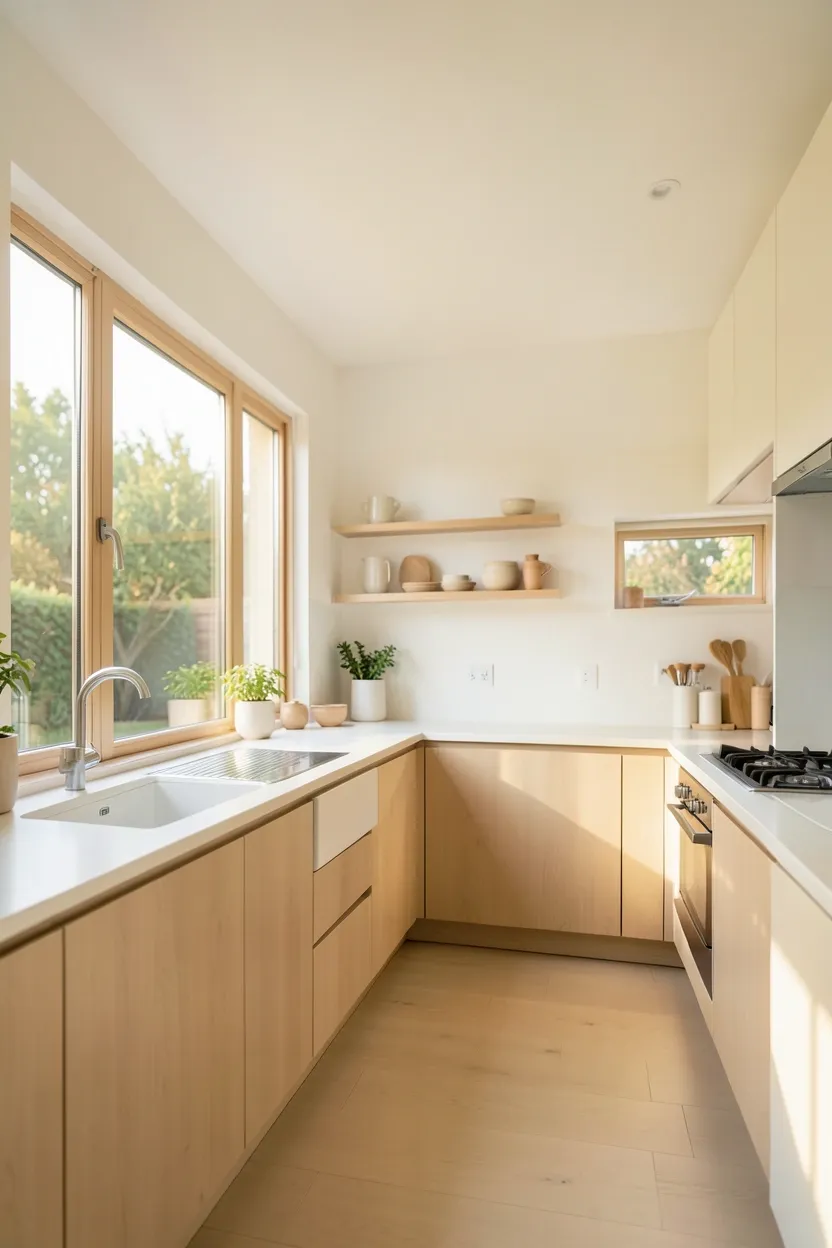
Window treatments should be minimal—sheer linen curtains or simple bamboo blinds that filter light without blocking it. Position work surfaces and the sink near windows to take advantage of natural illumination during meal preparation. Light-colored cabinets and reflective surfaces like polished stone amplify the brightness.
Why it works: Natural light makes small spaces feel larger and creates a sense of openness that's central to Japandi design. The changing quality of light throughout the day adds subtle visual interest without introducing clutter.
Avoid heavy drapes or dark window treatments that absorb light. If privacy is a concern, consider frosted glass for windows near the sink or strategically placed plants that provide screening while still letting light through.
Pro: Large windows or glass doors create an open, airy feel and connect to nature.
Con: Can cause glare on screens or countertops during peak sun hours.
Fix: Install adjustable window films or light-filtering shades that can be positioned to control glare while maintaining brightness.
What this gives you: A bright, uplifting cooking space that feels connected to the natural world and changes gracefully with the seasons.
4. Matte Black Hardware Japandi Kitchen
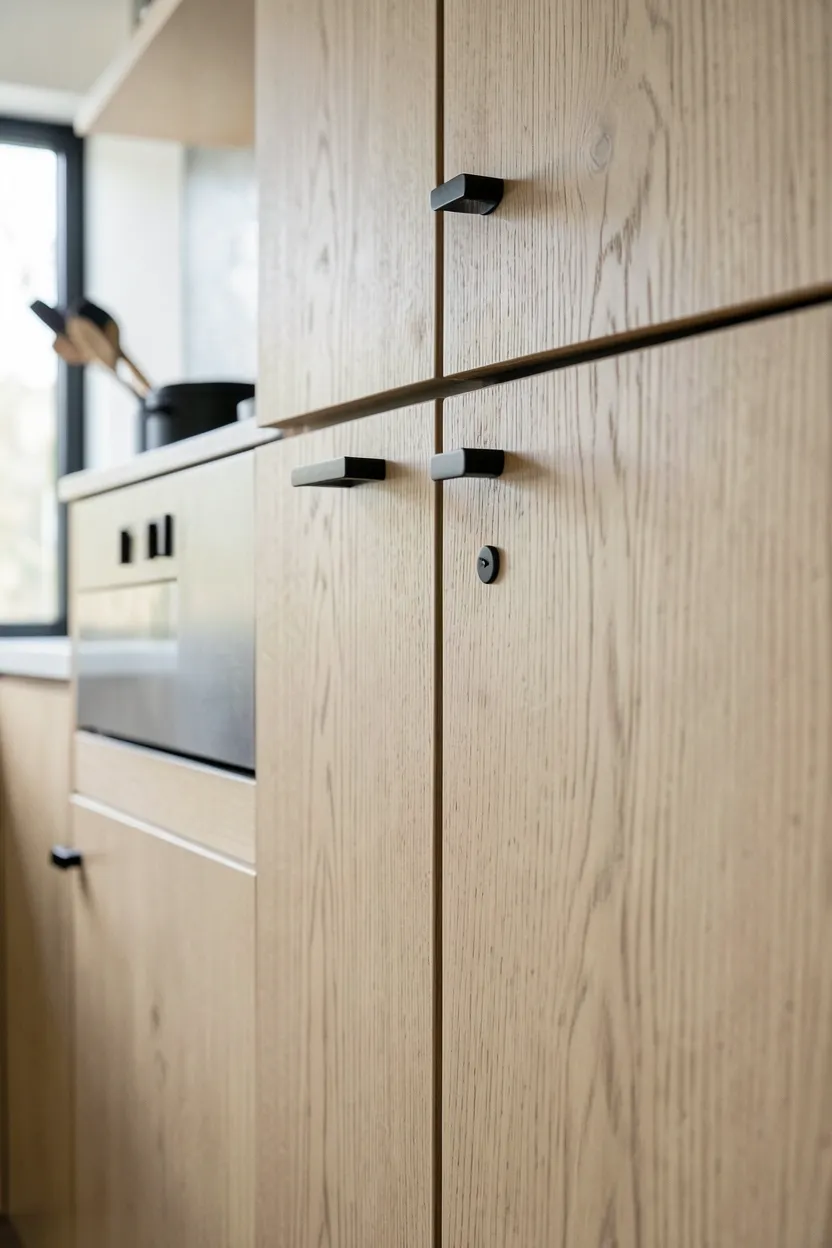
Matte black hardware provides subtle contrast in a Japandi kitchen without disrupting the serene aesthetic. The flat, non-reflective finish creates visual anchor points that draw the eye to cabinet doors, drawers, and appliances while maintaining the overall minimalist feel.
Recommended
Items for this idea
Choose integrated pulls that recess into cabinet doors, or select slim, bar-style handles in matte black. The dark hardware against light wood or white cabinets creates sophisticated contrast. Keep the scale of hardware proportional to cabinet size—oversized pulls can feel heavy, while tiny handles may get lost.
Common mistake: Using polished brass or chrome hardware that creates a jarring contrast with the matte, organic Japandi aesthetic. The reflective quality breaks the calm, unified feel.
Extend matte black to other elements like faucet, light fixtures, and appliance pulls for consistency. A matte black range hood or refrigerator can serve as a statement piece that ties the room together without overwhelming the space.
Keep hardware minimal—integrated pulls or slim bars rather than ornate handles.
Match the matte finish across all hardware for a cohesive look.
Limit black to hardware and occasional accent pieces—avoid painting entire cabinets or walls in dark colors.
Avoid if: You prefer an entirely monochromatic light palette and want to minimize contrast.
What this gives you: Sophisticated contrast that adds visual interest while preserving the calm, balanced Japandi aesthetic.
5. Open Shelving Japandi Kitchen Ideas for Renters
Open shelving in a Japandi kitchen displays carefully curated items while maintaining the minimalist aesthetic. Replace some upper cabinets with floating shelves in light wood that showcase beautiful ceramics, glassware, and everyday essentials in a way that feels intentional rather than cluttered.
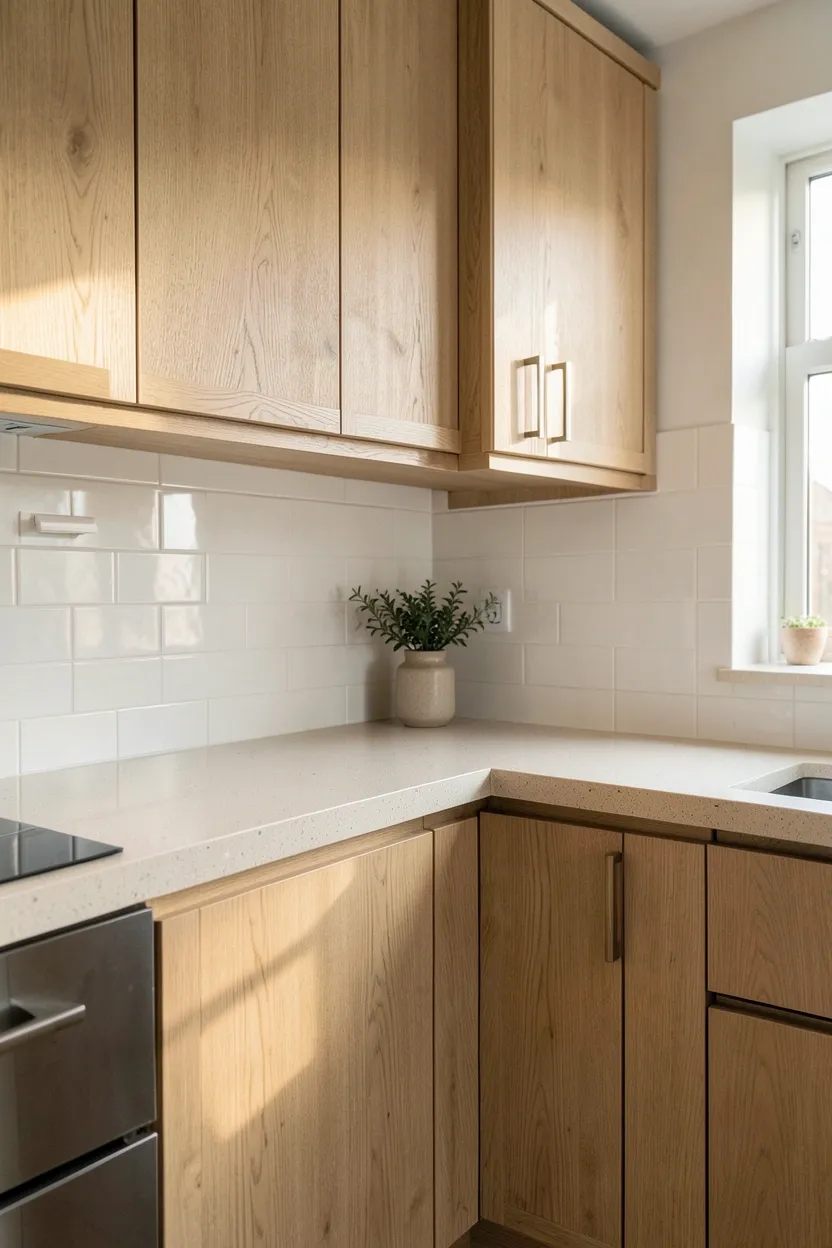
The key to successful open shelving is editing—display only items you use regularly and that complement the overall color palette. Group similar items together, leave negative space between objects, and rotate displays seasonally to keep the look fresh. Light wood shelves match the warmth of cabinetry while providing contrast with white walls.
For more inspiration on minimalist storage, see Japandi Living Room and adapt the same principles of intentional display to your kitchen space.
Avoid overcrowding shelves with mismatched items or displaying purely decorative pieces that don't serve a purpose. The Japandi philosophy values functional beauty—each item should be both useful and visually appealing.
Do: Use matching or coordinating ceramics in neutral tones to create visual harmony.
Do: Leave gaps between groups of items to maintain the airy, uncluttered feel.
Don't: Mix too many colors or patterns, or display items you rarely use.
Budget tip: Start with one shelf above the sink or stove—swap a single upper cabinet for open shelving and live with it before committing to more.
What this gives you: Functional storage that doubles as display, making everyday items part of the kitchen's aesthetic while keeping essential tools within reach.
6. Stone Countertops Japandi Kitchen
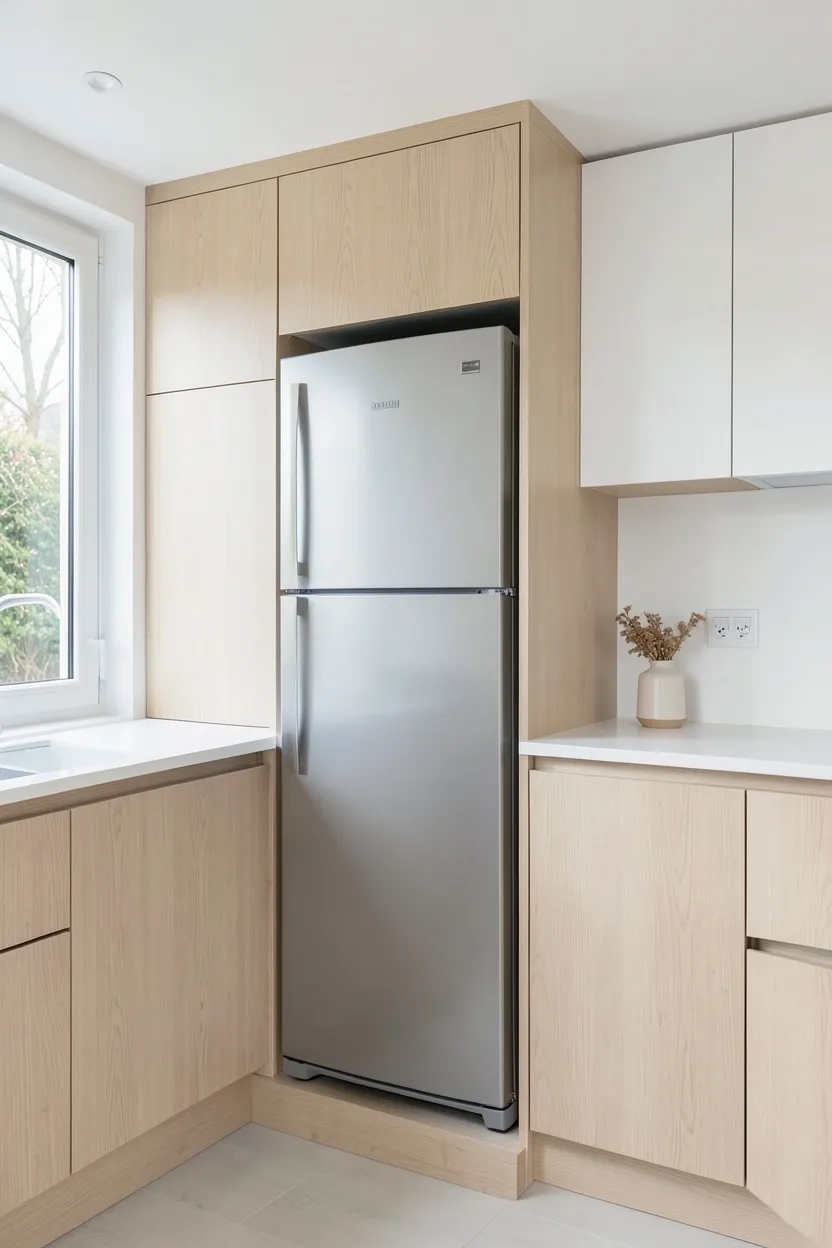
Natural stone countertops bring tactile texture and subtle variation to a Japandi kitchen, creating visual interest while maintaining the calm, neutral palette. Choose materials like honed quartz, limestone, or soapstone in light, uniform tones that complement rather than dominate the space.
Recommended
Items for this idea
Honed or matte finishes work best with Japandi aesthetics—polished surfaces can feel too flashy and reflective. The subtle texture of natural stone adds depth without introducing pattern. Pair stone countertops with light wood cabinets and white subway tile backsplash for a balanced look that feels both organic and refined.
For bathroom applications of the same material principles, explore Japandi Bathroom designs that feature similar stone elements for continuity throughout your home.
Avoid heavily patterned granite or marble with dramatic veining that creates visual noise. The goal is subtle, consistent texture that enhances the overall calm rather than drawing attention to itself.
If you prioritize durability, then choose quartz for stain resistance and low maintenance.
If you want the most natural look, then opt for soapstone or honed limestone that develops a patina over time.
Budget note: Quartz is more affordable than natural stone but provides similar aesthetics; consider it if natural stone exceeds your budget.
What this gives you: Durable, beautiful work surfaces that add organic texture and subtle variation while maintaining the serene Japandi aesthetic.
7. Seamless Japandi Kitchen with Hidden Appliances
Hidden appliances create a seamless Japandi kitchen by integrating refrigerators, dishwashers, and microwaves into cabinetry with matching panel fronts. This approach maintains the clean, unbroken lines that define the style while ensuring full functionality for modern cooking needs.
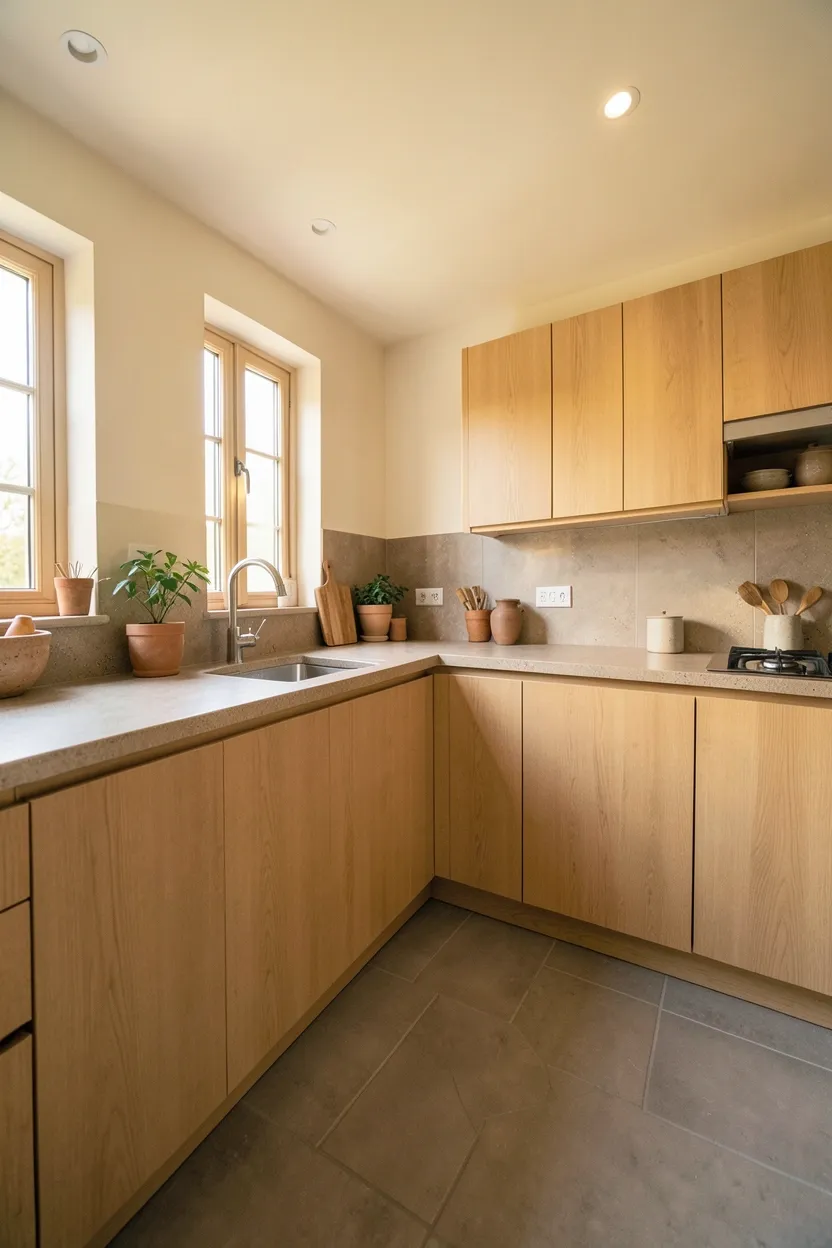
Panel-ready refrigerators and dishwashers clad in the same material as your cabinets (light wood or matte white) disappear into the wall, while built-in microwaves can be installed in upper cabinets or below the countertop. The range hood can be finished with the same cabinetry material for complete integration.
Placement note: When planning hidden appliances, ensure adequate ventilation for the refrigerator and accessible plumbing connections for dishwashers. Work with a designer experienced in integrated installations to avoid spacing issues.
Avoid mixing visible stainless steel appliances with cabinet panels, as the contrast breaks the seamless aesthetic. If budget constraints prevent full integration, choose appliances in matte finishes that coordinate with your color palette rather than stand out.
Do: Choose appliances with flat fronts that accept panel kits for seamless integration.
Don't: Use visible hinges or handles on integrated appliance panels—recessed pulls or push-to-open mechanisms maintain the look.
Budget tip: Start with the refrigerator as the focal point for integration, then add dishwashers and microwaves as budget allows.
What this gives you: A visually cohesive kitchen where appliances blend seamlessly with cabinetry, maintaining the Japandi principle of visual calm.
8. Warm Neutral Japandi Kitchen Palette
A warm neutral palette forms the foundation of a Japandi kitchen, using colors like cream, soft beige, warm gray, and taupe to create a cohesive, calming environment. These tones provide warmth without overwhelming the space, allowing natural materials and textures to take center stage.
Recommended
Items for this idea
Paint walls in warm white or cream to reflect light while adding subtle warmth. Choose cabinets in light wood tones with warm undertones—avoid cool or grayish woods. Countertops in warm beige or taupe stone complement both wood and painted surfaces. Accents in soft terracotta or muted olive green add life without breaking the neutral harmony.
Why it works: Warm neutrals create an inviting, cozy atmosphere that's essential to the Scandinavian hygge influence in Japandi design. Unlike cool grays or stark white, warm tones make the kitchen feel lived-in and welcoming.
Avoid mixing too many neutral tones or introducing contrasting colors that disrupt the palette. Stick to a carefully edited range of 3-4 complementary neutral shades for walls, cabinets, and countertops.
Pro: Warm neutrals feel inviting and cozy, especially in winter months.
Con: Can show dirt or spills more readily than darker tones.
Fix: Choose matte finishes that hide minor imperfections and clean easily with mild soap and water.
What this gives you: A serene, inviting kitchen that feels warm and comfortable year-round while maintaining the minimalist Japandi aesthetic.
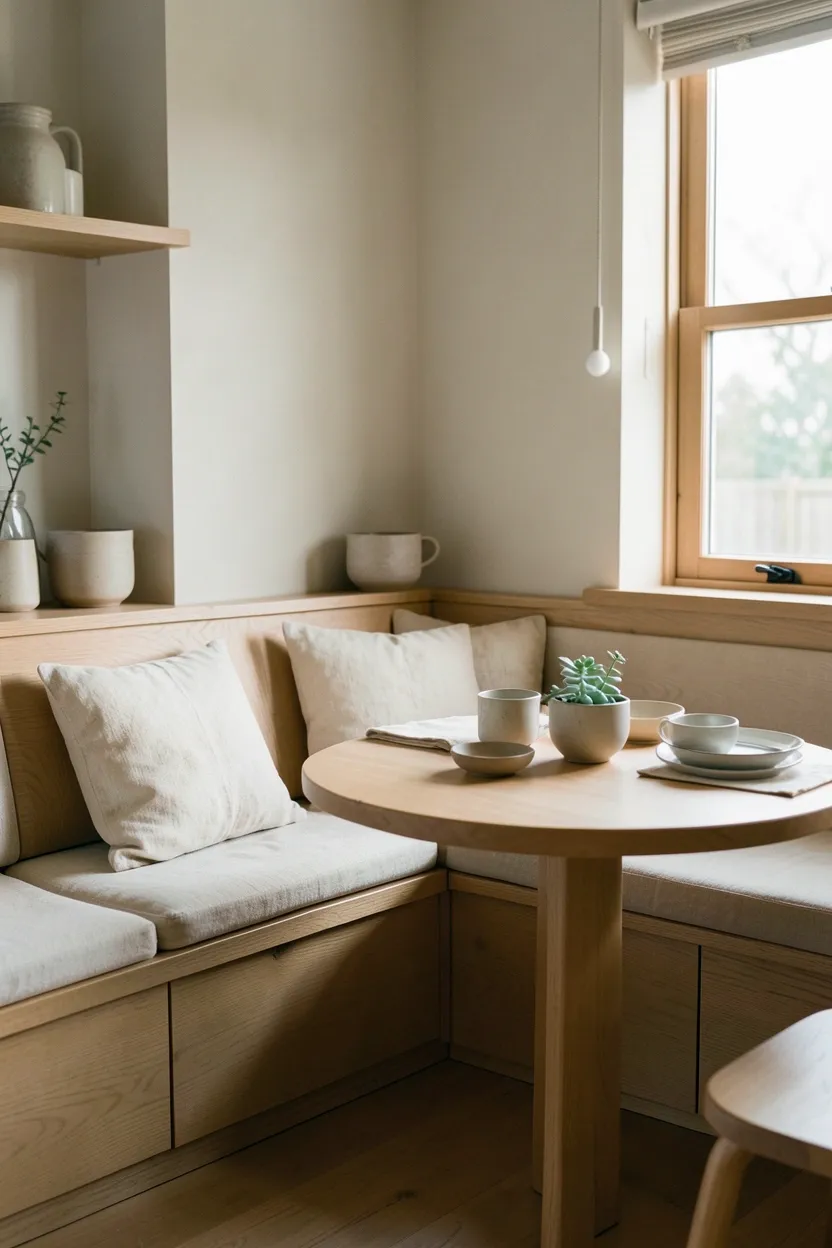
9. Japandi Kitchen with Breakfast Nook
A breakfast nook creates a cozy dining area within the Japandi kitchen, blending the functional workspace with a comfortable space for casual meals. Built-in banquettes along a wall or in a corner provide seating while maximizing space efficiency and maintaining the streamlined aesthetic.
Build the banquette base with storage compartments for linens or small kitchen items, then add a light wood bench top with comfortable cushions in neutral linen or wool. Pair with a simple round or rectangular table in light oak, and complete the seating with one or two streamlined chairs that match the bench height.
Placement note: Position the breakfast nook near a window if possible to maximize natural light. Ensure at least 30-36 inches of clearance between the table edge and any walls or obstacles for comfortable movement.
Avoid overstuffing the space with too much furniture or decorative elements. The Japandi approach values negative space—keep the area open and uncluttered with just enough seating for your family's typical breakfast needs.
Use built-in storage beneath bench seats to maintain clean lines and hide items.
Choose cushions in neutral tones that can be removed and washed easily.
Keep the table simple—light wood with clean edges and no ornate detailing.
Best for: Small to medium kitchens where a separate dining room isn't practical, or for creating an intimate morning gathering spot within a larger kitchen.
What this gives you: A functional, space-efficient dining area that blends seamlessly with your kitchen design while providing a cozy spot for casual meals.
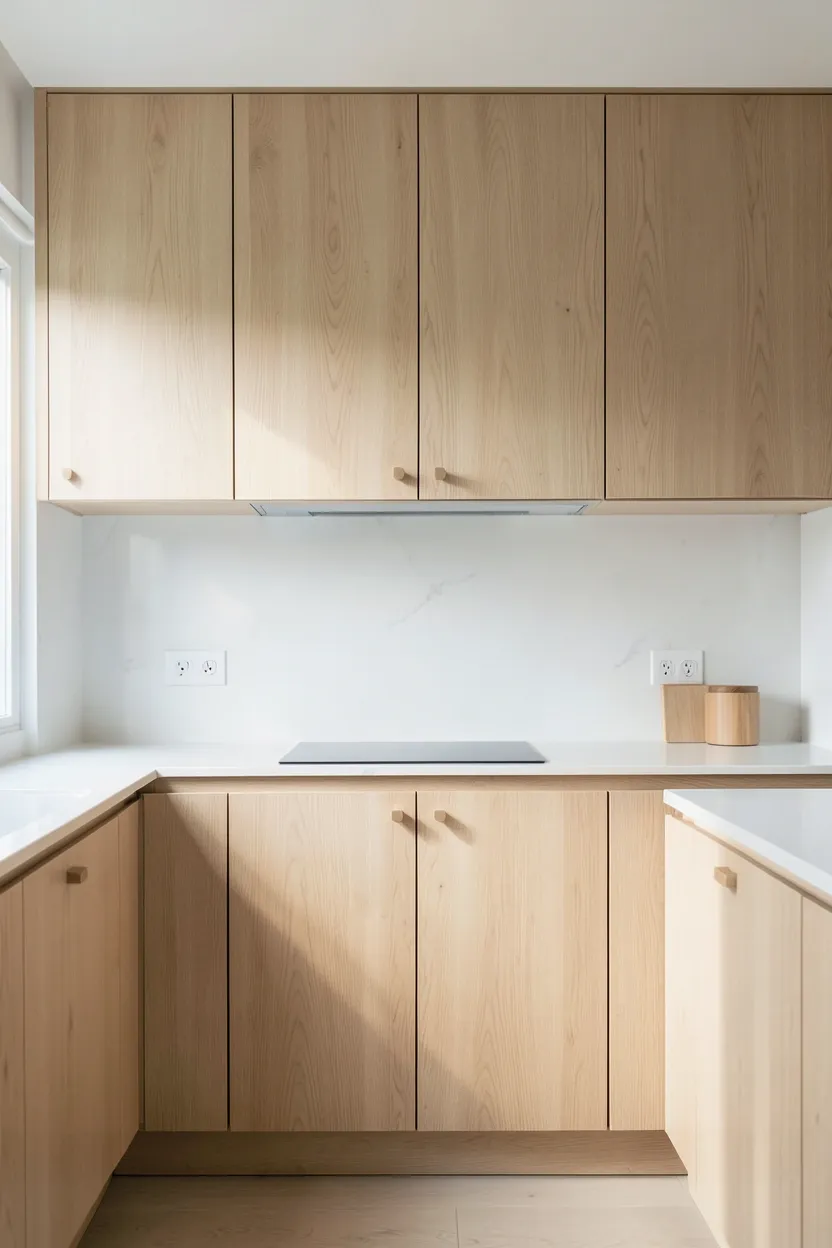
10. Slab Door Cabinetry Japandi Kitchen
Slab door cabinetry is quintessential to Japandi kitchen design, featuring flat, unadorned cabinet doors without decorative molding, raised panels, or edge detailing. The simple, rectangular forms create visual calm while maximizing storage efficiency through full access to cabinet interiors.
Recommended
Items for this idea
Choose slab doors in light wood with visible grain or in matte white painted finish. The absence of decorative trim allows the natural beauty of materials to shine while creating a unified, cohesive look. Integrate pulls recess into the door surface, or choose ultra-slim bar handles that maintain the streamlined silhouette.
Common mistake: Adding decorative molding, beadboard, or paneled doors that introduce unnecessary ornamentation and break the clean Japandi aesthetic. The beauty of slab doors lies in their simplicity and the quality of the materials themselves.
Premium hardware like soft-close hinges and drawer slides ensures that cabinets operate smoothly and quietly, enhancing the overall quality of the experience while maintaining the minimalist aesthetic through hidden mechanisms.
Do: Choose slab doors with integrated pulls or recessed handles for the cleanest look.
Don't: Add decorative trim, molding, or edge detailing that contradicts the minimalist aesthetic.
What this gives you: Visually seamless cabinetry that maximizes storage while embodying the Japandi principles of simplicity, functionality, and material honesty.
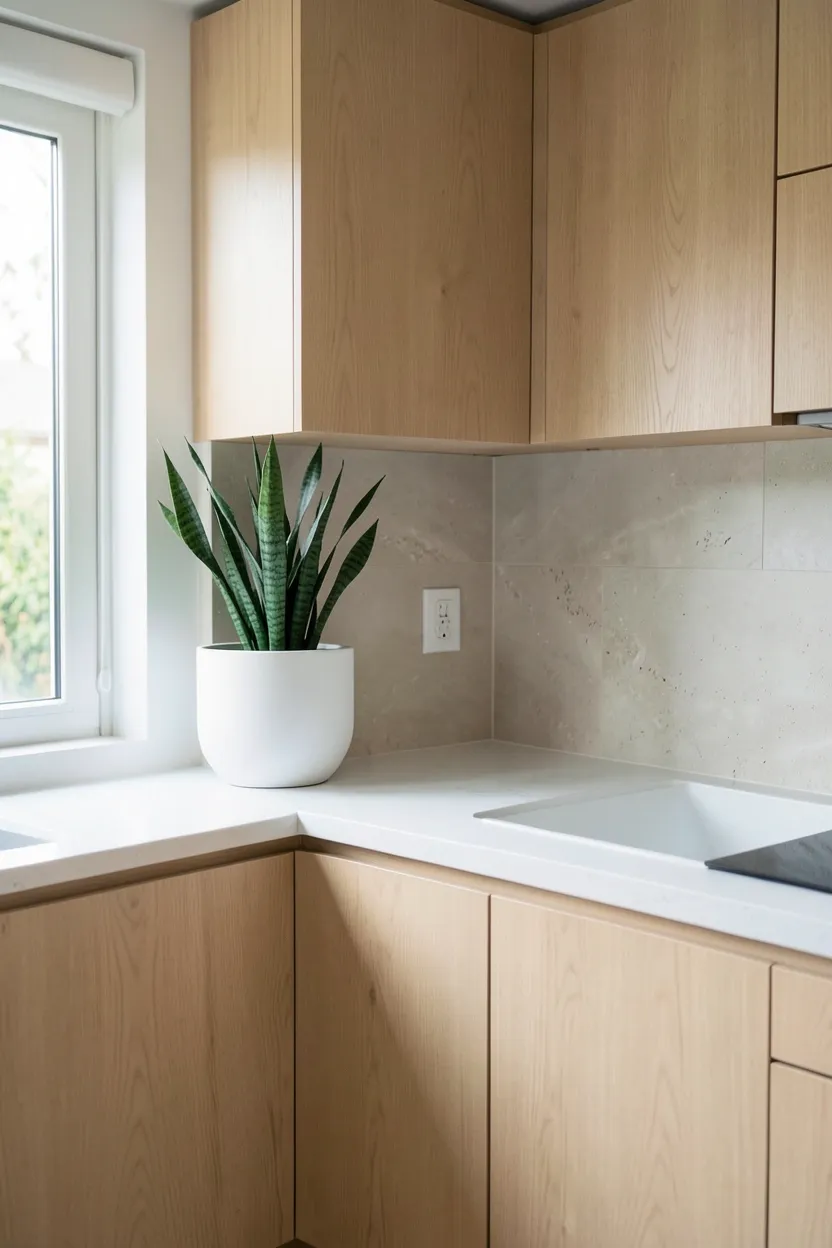
11. Japandi Kitchen with Indoor Plants
Indoor plants breathe life into a Japandi kitchen, connecting the space to nature and adding organic shapes that soften the clean lines of cabinetry and appliances. Choose low-maintenance plants that thrive in kitchen conditions—near windows, away from direct heat sources—and that complement the neutral palette.
Position plants in ceramic pots with simple, matte finishes in white, cream, or soft gray. Consider hanging planters from the ceiling or placing trailing varieties on open shelves to add vertical interest without consuming counter space. A large statement plant near a window or in an empty corner creates a focal point that feels natural rather than forced.
For more indoor plant inspiration, see Japandi Bedroom with Indoor Plants and adapt similar plant selections to your kitchen environment.
Avoid overloading the space with too many plants or placing them in ornate, patterned pots that clash with the minimalist aesthetic. The goal is subtle presence—each plant should feel purposeful and positioned thoughtfully.
Do: Choose plants with simple, architectural forms like snake plants, ZZ plants, or pothos.
Do: Use uniform pot styles in neutral tones to maintain visual cohesion.
Don't: Place plants directly on countertops near food prep areas where they might get in the way.
Rental-friendly: Use freestanding plants in simple pots that can move with you, avoiding built-in planters or complex installations.
What this gives you: A living, breathing kitchen space that feels connected to nature while adding subtle organic texture and visual interest.
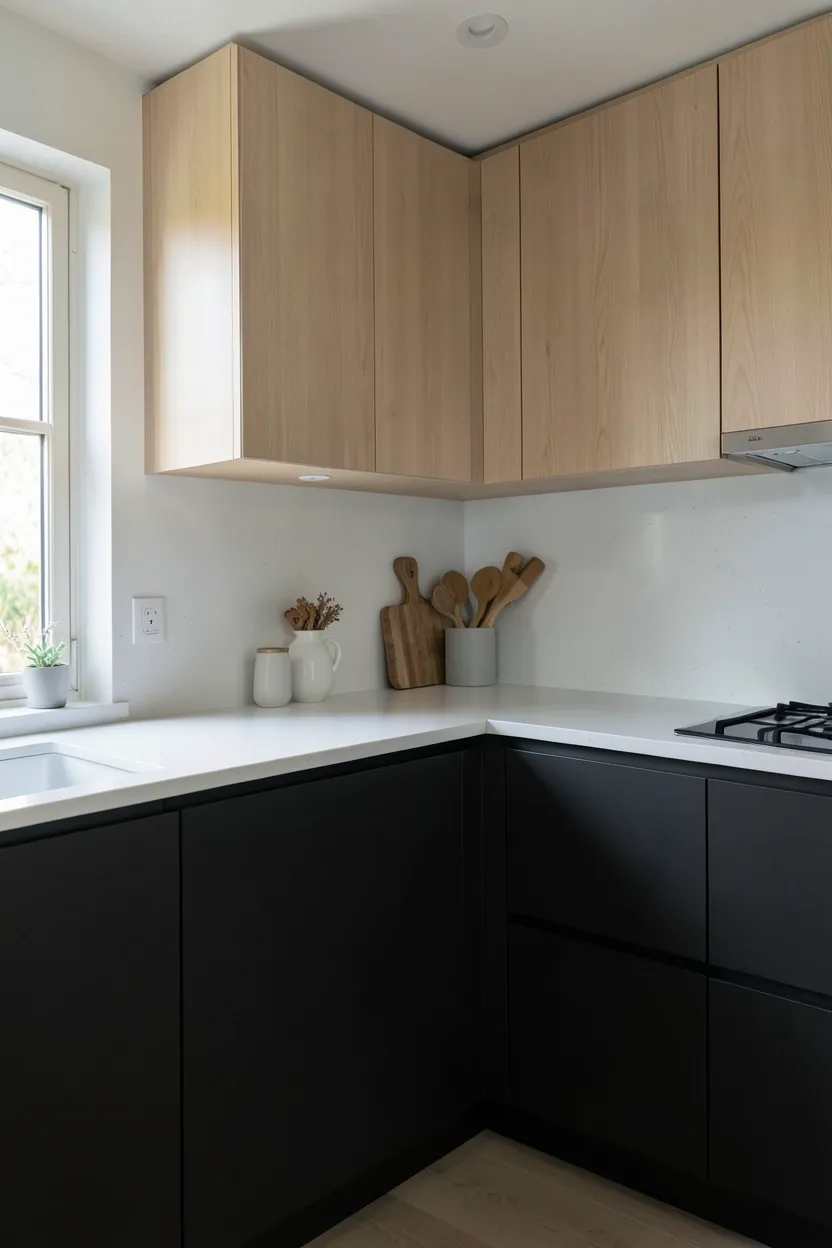
12. Contrasting Dark Lower Cabinets Japandi Kitchen
Dark lower cabinets paired with light upper cabinets create sophisticated contrast in a Japandi kitchen while maintaining the overall calm aesthetic. The dark lower half grounds the space, while the light upper half keeps the room feeling open and airy—a balanced approach that adds depth without visual clutter.
Recommended
Items for this idea
Choose a dark, matte finish like charcoal, deep slate blue, or warm espresso for lower cabinets. Keep the upper cabinets in light wood or white to create the desired contrast. A light quartz or stone countertop provides a transitional element between the dark and light zones, tying the two halves together visually.
Why it works: The contrasting cabinets create visual interest without adding clutter or pattern. The dark lower cabinets feel substantial and grounded, while light uppers maintain openness—a perfect balance of Japandi principles.
Avoid making lower cabinets too dark or using high-gloss finishes that feel overly dramatic. Matte finishes in muted, sophisticated tones work best with the Japandi aesthetic—avoid pure black or finishes that feel harsh.
Do: Choose matte dark finishes like charcoal, slate, or warm espresso that feel sophisticated rather than harsh.
Don't: Use high-gloss dark finishes or pure black that feels too bold for the calm Japandi aesthetic.
What this gives you: Visual depth and sophistication through contrasting colors, while maintaining the overall calm and balanced Japandi aesthetic.
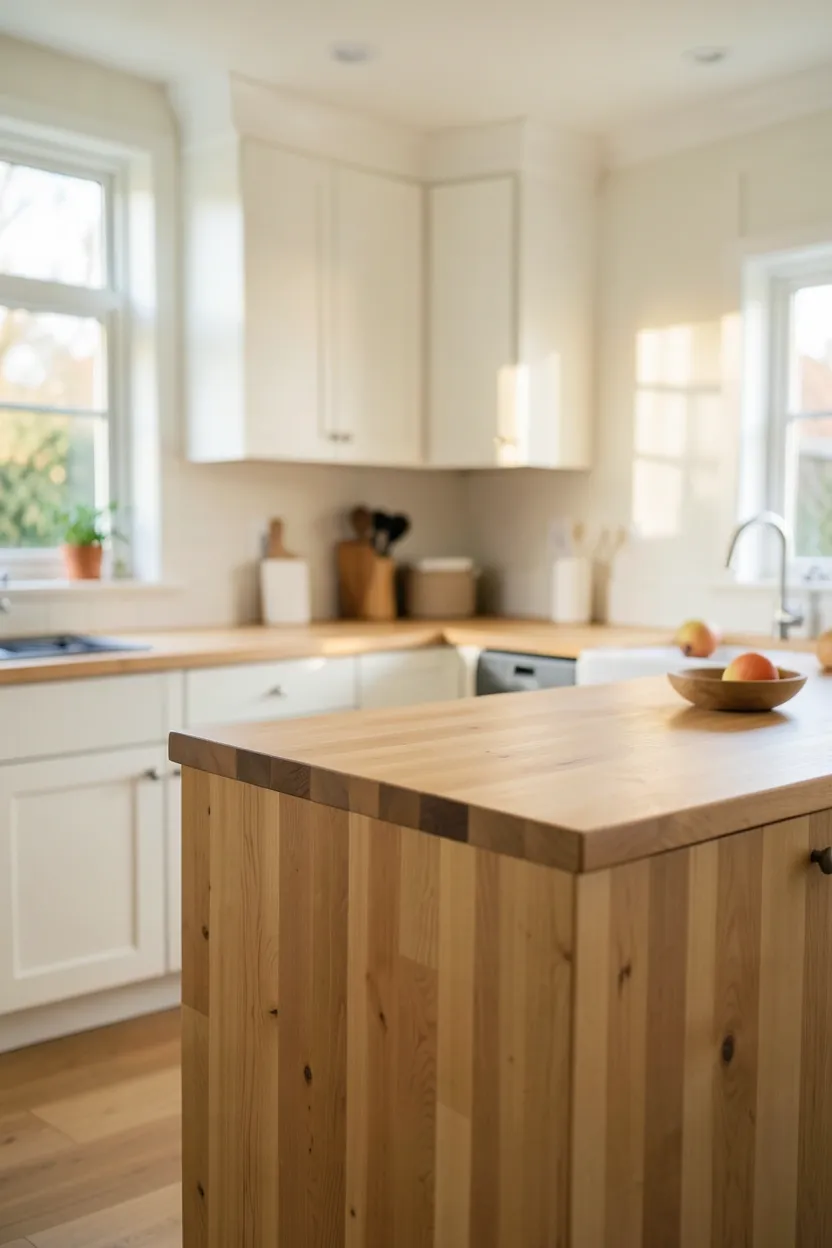
13. Japandi Kitchen with Butcher Block Island
A butcher block island introduces warmth and texture to a Japandi kitchen, providing a functional work surface that feels natural and inviting. The light wood tone of the butcher block complements neutral cabinetry while adding a tactile element that enhances the organic, handmade quality central to Japandi design.
Choose a hardwood like maple, walnut, or light oak for the butcher block surface. The grain pattern adds visual interest without introducing pattern. Pair the wood island with white or light wood cabinets for cohesive styling. Ensure the butcher block is properly sealed with food-safe finish for durability and easy maintenance.
Placement note: Position the butcher block island where it serves as both food prep surface and casual dining spot. Ensure at least 36-42 inches of clearance on all sides for comfortable movement during food preparation.
Avoid mixing different wood tones—if the butcher block is walnut, keep cabinetry and flooring in light tones to prevent the space from feeling too dark. The contrast should be deliberate and balanced, not accidental or overwhelming.
If you want a cohesive look, then match the butcher block tone to your wood cabinet species.
If you prefer contrast, then pair light butcher block with dark lower cabinets or vice versa.
Maintenance note: Butcher block requires regular oiling and resealing—consider this when choosing if you want a low-maintenance surface.
What this gives you: A warm, functional island that doubles as food prep surface and casual dining area while adding natural texture to your Japandi kitchen.
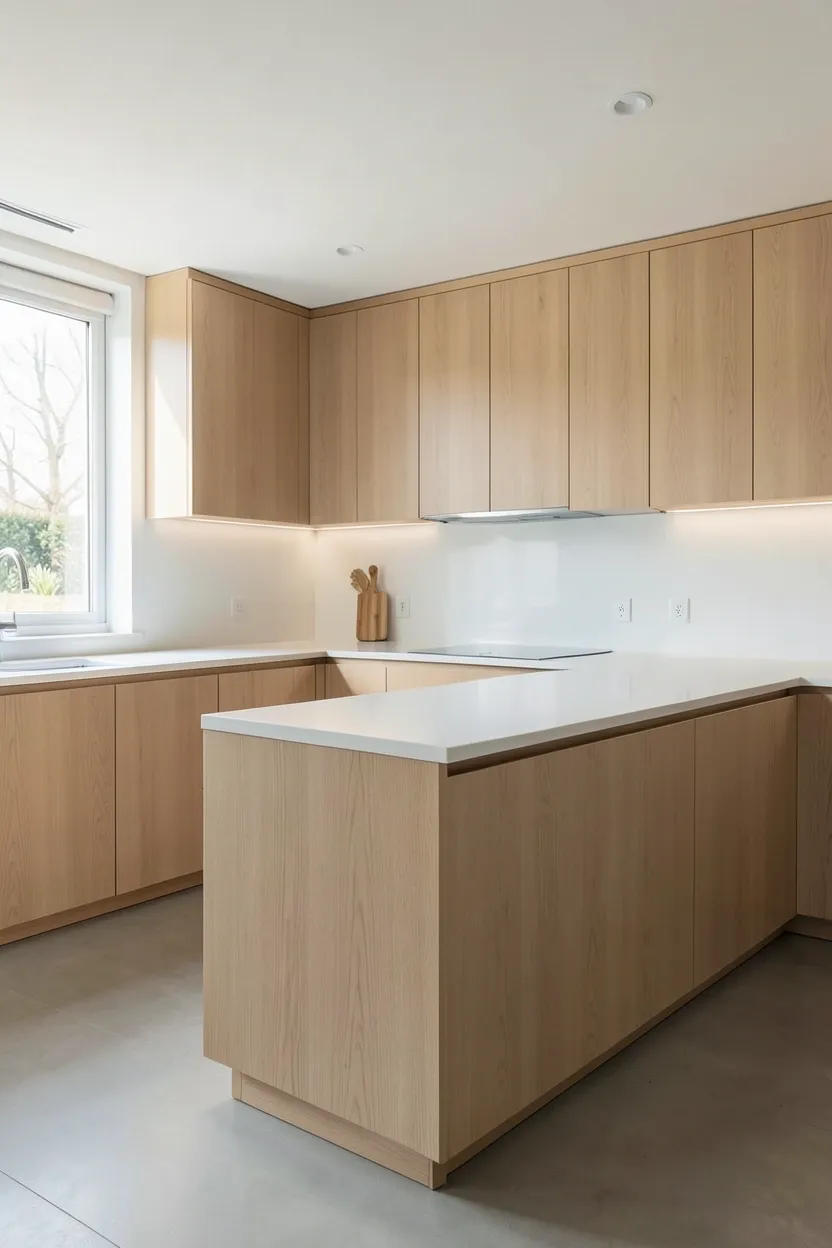
14. Minimalist Japandi Kitchen with Peninsula
A peninsula creates additional counter space and defines zones within a Japandi kitchen without the footprint of a full island. This layout works well in smaller kitchens where an island would compromise flow, while still providing a surface for food prep, serving, or casual dining.
Recommended
Items for this idea
Design the peninsula with the same cabinetry as your main kitchen—slab doors in light wood or white—to maintain visual continuity. Extend the countertop slightly on one side to create an overhang for casual seating. Add storage beneath with drawers or cabinet doors to maximize functionality while keeping items hidden and out of sight.
Common mistake: Making the peninsula too wide or positioning it in a way that blocks traffic flow. The goal is additional workspace, not an obstacle—ensure there's adequate clearance on both sides for comfortable movement.
For more small kitchen layout inspiration, explore Small Farmhouse Kitchen Ideas and adapt the space-efficient principles to your Japandi aesthetic.
Pro: Provides additional counter and storage space without requiring a large footprint.
Pro: Creates a natural separation between cooking and dining zones.
Con: Can feel confining if not properly proportioned or positioned.
Fix: Keep the peninsula depth to 24-30 inches and maintain at least 36 inches of clearance on the cooking side.
What this gives you: Space-efficient additional workspace that defines kitchen zones while maintaining the streamlined Japandi aesthetic.
15. Japandi Kitchen with Textured Backsplash
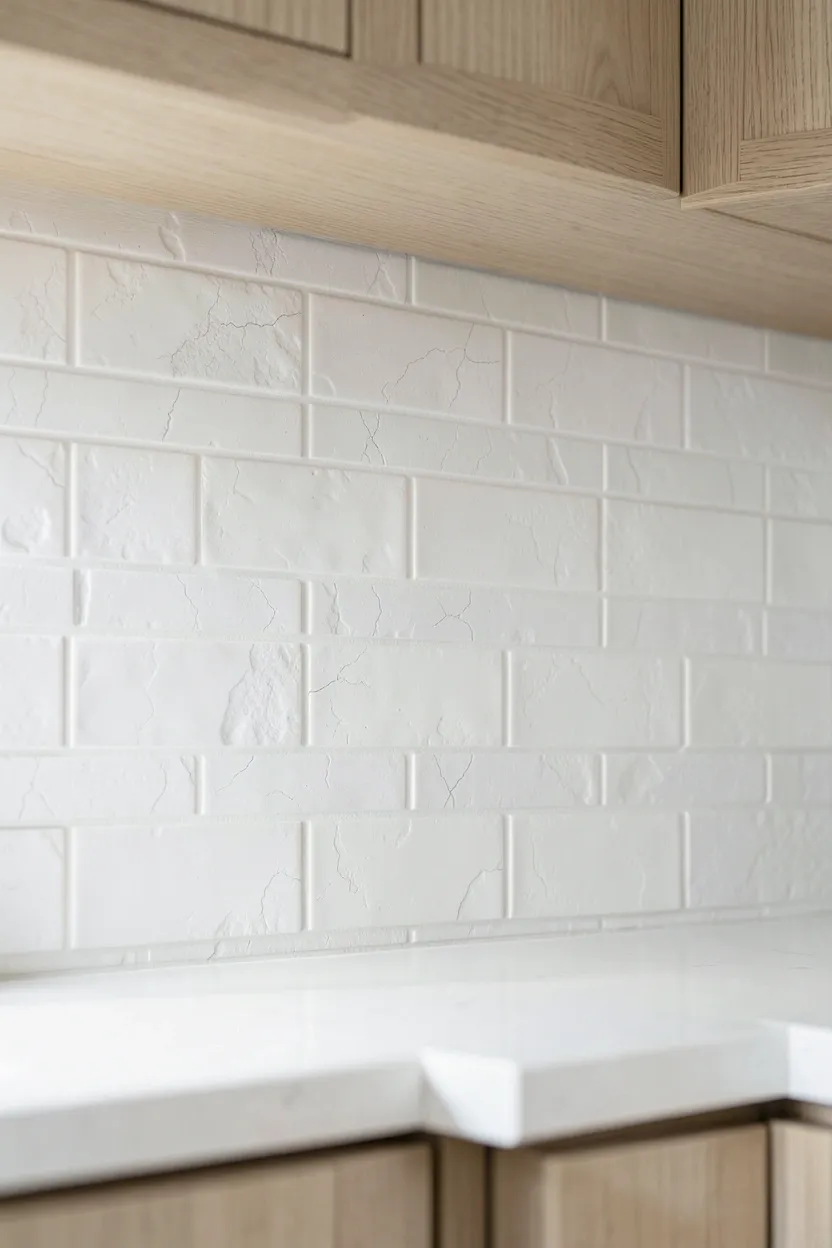
A textured backsplash adds subtle visual interest to a Japandi kitchen without introducing pattern or overwhelming the neutral palette. Choose materials like hand-molded subway tiles, small hexagonal tiles, or natural stone slabs that provide tactile texture while maintaining the calm, unified aesthetic.
Subway tiles with a slight crackle glaze or handmade variation add character without pattern. Extend the backsplash to the ceiling behind the range to create a focal point, or keep it at standard height (4-6 inches) behind the sink for a more understated approach. Choose tiles in white, cream, or soft gray that blend with your overall palette.
Why it works: Texture provides depth and visual interest that elevates the space without adding clutter. The subtle variation in tile surface catches light beautifully and adds warmth to the kitchen.
Avoid highly patterned tiles, mosaics with multiple colors, or glossy finishes that feel too busy for Japandi aesthetic. The goal is subtle texture that enhances rather than dominates.
Do: Choose tiles with subtle texture variations like hand-molded subway or matte finish.
Don't: Use highly patterned tiles, mosaics with multiple colors, or glossy finishes.
What this gives you: Subtle visual interest and depth through texture, enhancing the Japandi aesthetic without introducing pattern or clutter.
16. Japandi Kitchen with Statement Light Fixture
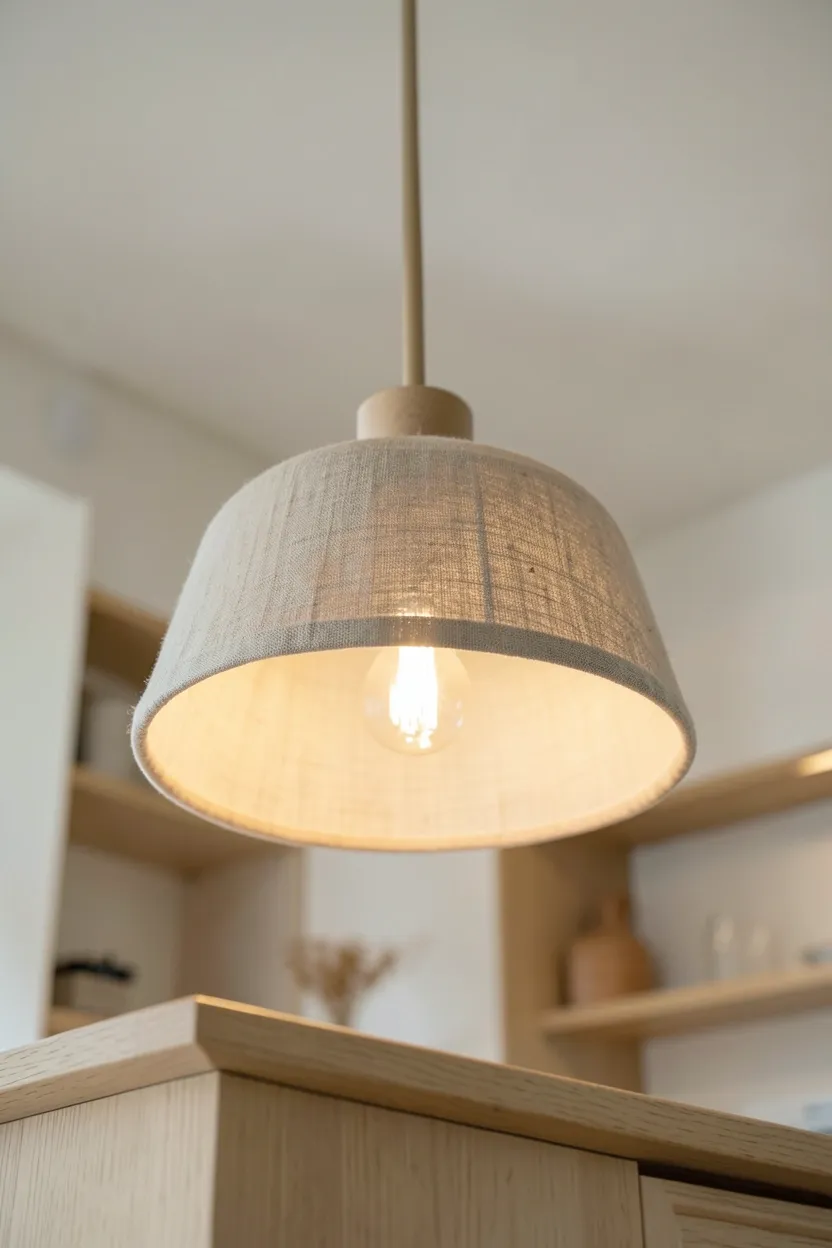
A statement light fixture serves as a focal point in a Japandi kitchen, adding a touch of personality without disrupting the overall minimalist aesthetic. Choose a simple, sculptural fixture in natural materials or matte finishes that complements rather than overwhelms the space.
Recommended
Items for this idea
Consider a large pendant light with a linen shade, a matte black metal fixture with clean lines, or a natural wood or ceramic element that feels organic. Position it over the island or dining area to define the zone and create a central visual element. The fixture should be substantial enough to draw the eye but refined enough not to feel out of place.
Placement note: Position statement light 30-36 inches above the island or dining table surface. Ensure it's centered and provides adequate illumination without being too bright or casting harsh shadows.
Avoid ornate chandeliers, crystal fixtures, or overly elaborate designs that contradict the Japandi principle of simplicity. The goal is sculptural beauty through form and material, not decorative excess.
Do: Choose fixtures in matte finishes, natural materials, or simple geometric forms.
Don't: Use ornate chandeliers, crystal fixtures, or highly decorative elements.
Budget tip: Start with one well-chosen statement fixture above the island; you can add accent lighting later as budget allows.
What this gives you: A focal point that adds personality and visual interest while maintaining the calm, balanced Japandi aesthetic.
17. Japandi Kitchen with Dining Table Extension
A dining table that extends from the island or peninsula creates a seamless transition between cooking and dining spaces in a Japandi kitchen. This integrated approach maximizes efficiency while maintaining visual continuity, perfect for open-plan layouts where kitchen and dining areas flow into each other.
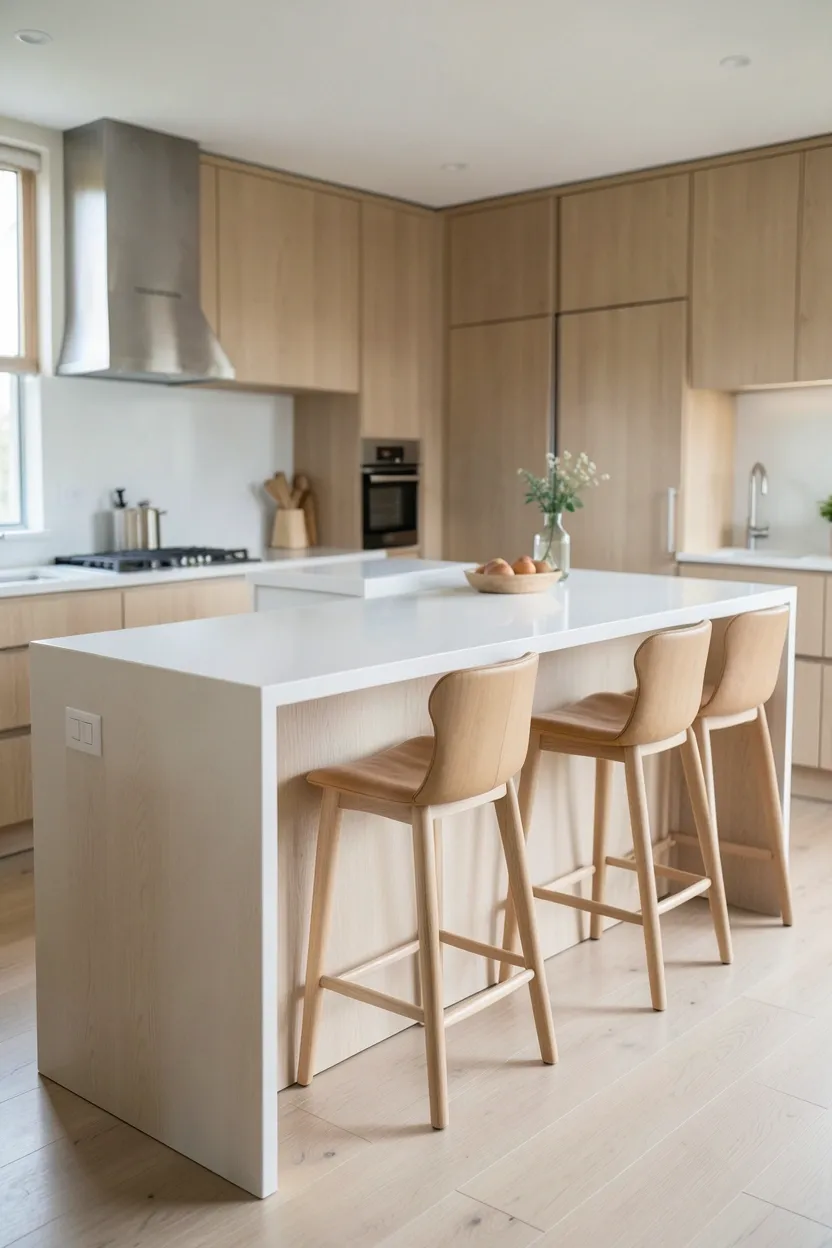
Extend the island countertop to create an overhang that can accommodate bar stools, or design a peninsula with one side extended as a dining surface. Use the same material for the extended portion as the island—a seamless quartz or stone surface creates the most cohesive look. Choose stools in natural materials like wood or leather that complement the overall palette.
Avoid mixing different countertop materials or creating a jarring transition between the island and dining surface. The goal is a continuous, unified feel that makes the kitchen and dining feel like one integrated space rather than separate zones.
Do: Keep the same countertop material for both island and dining extension for visual continuity.
Don't: Use different materials or create a sudden change in height that disrupts flow.
What this gives you: Seamless integration of cooking and dining spaces with maximum efficiency and visual continuity.
18. Japandi Kitchen with Tile Flooring
Tile flooring provides durability and visual grounding in a Japandi kitchen while offering opportunities to introduce subtle pattern or texture. Choose large-format tiles in neutral tones that complement your overall palette, creating a surface that's practical for cooking yet beautiful in its simplicity.
Recommended
Items for this idea
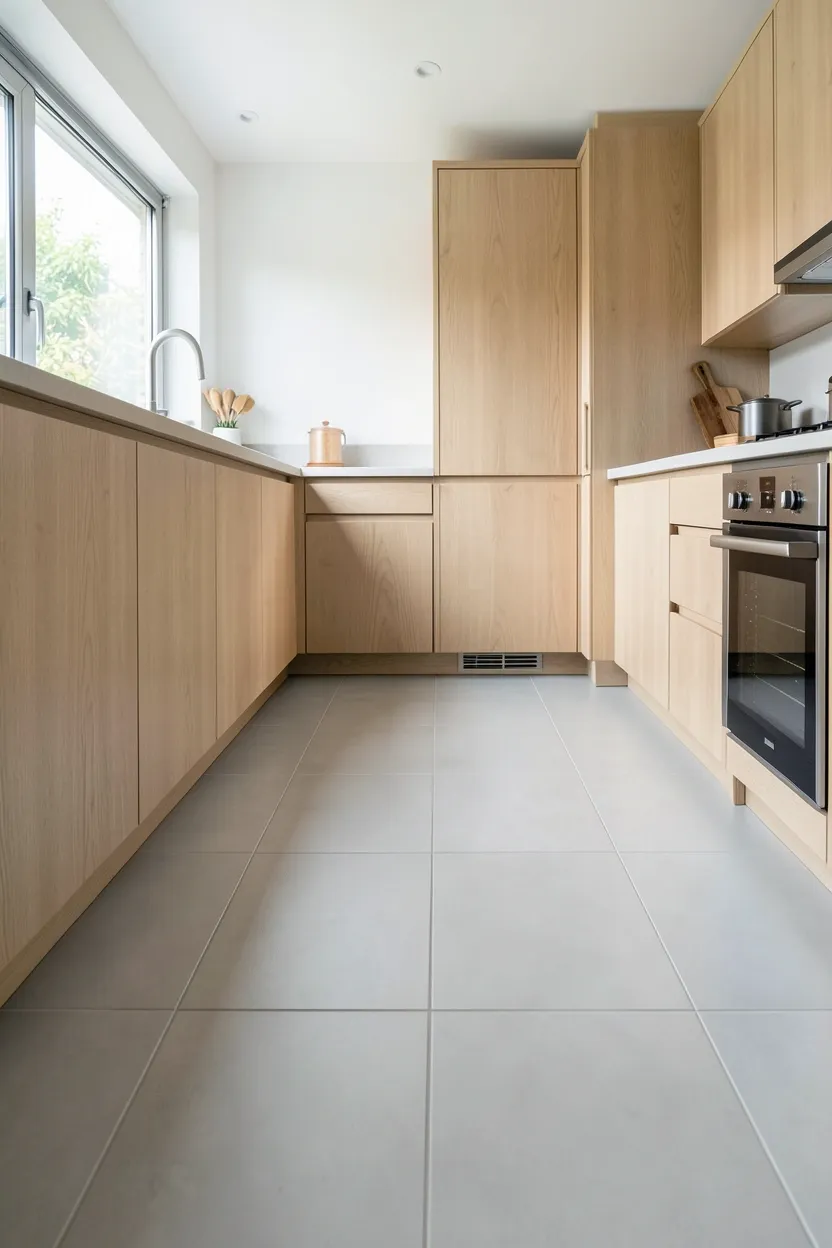
Large-format tiles (12x24 inches or larger) minimize grout lines for a cleaner, more expansive look. Choose tiles in light gray, cream, or soft beige with subtle variation. A matte finish is preferable to high-gloss, which can feel too flashy and show imperfections more readily. Consider cement tiles with subtle geometric patterns for a touch of visual interest without overwhelming the neutral palette.
Why it works: Tile is durable, water-resistant, and easy to clean—ideal for kitchen environments. Large-format tiles create a more expansive feel with fewer grout lines, while the neutral color palette maintains Japandi calm.
Avoid small mosaic tiles, bold patterns, or highly polished finishes that feel too busy or formal. The goal is a surface that feels practical yet serene, not one that draws attention to itself.
Do: Choose large-format tiles in neutral tones with matte or low-gloss finish.
Don't: Use small mosaic tiles, bold patterns, or highly polished finishes.
Budget note: Porcelain tiles are more affordable than natural stone but provide similar aesthetics—consider them if budget is a concern.
What this gives you: A durable, practical flooring solution that maintains visual calm while providing subtle texture and grounding for the space.
19. Japandi Kitchen with Floating Shelves
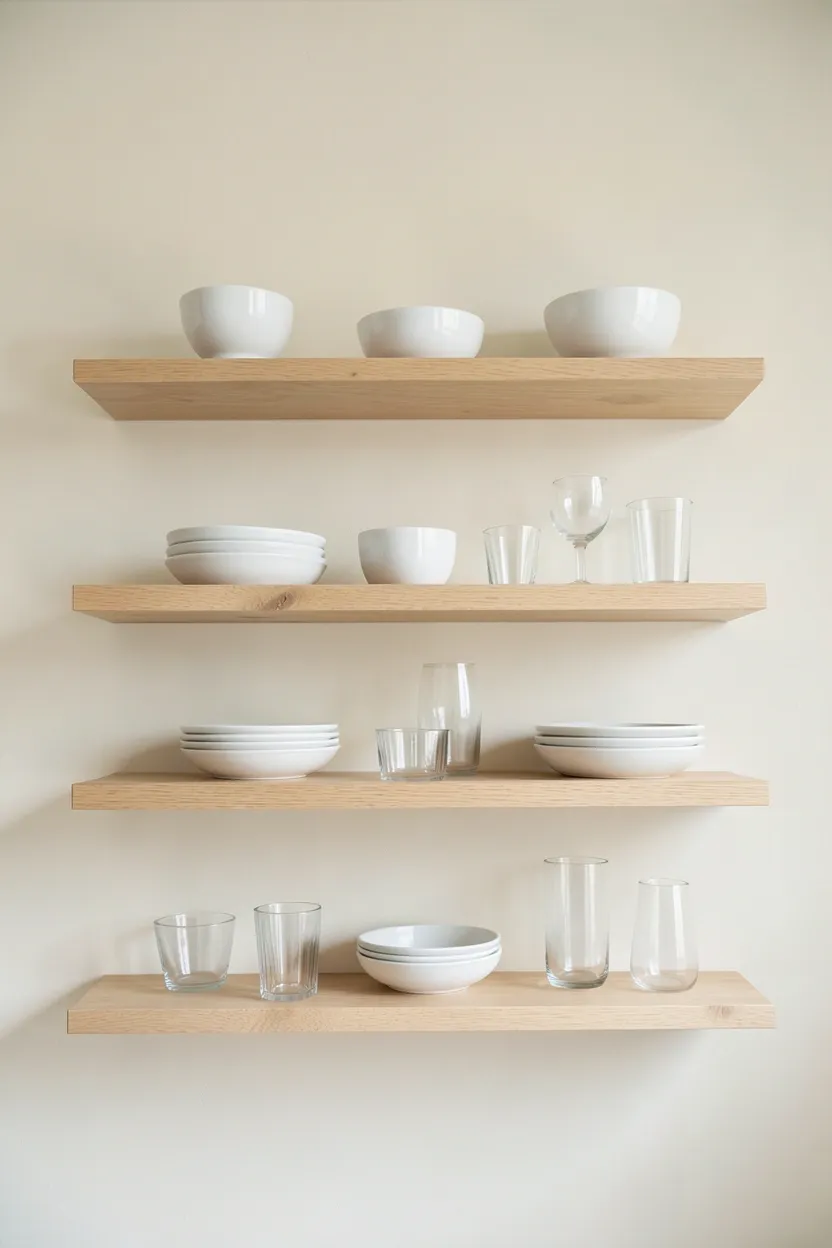
Floating shelves create a minimalist display solution in a Japandi kitchen, providing storage for everyday items while maintaining the clean, uncluttered aesthetic. The absence of visible brackets contributes to the streamlined look, while the shelves themselves become a curated display of beautiful, functional objects.
Install floating shelves in light wood that matches your cabinetry, or choose white painted shelves that blend with walls. Keep the styling intentional—display ceramics, glassware, or cookbooks in coordinated neutral tones. Leave negative space between items to maintain the airy, uncluttered feel that defines Japandi design.
Common mistake: Overloading shelves with too many items or mixing too many colors and patterns. The Japandi approach values editing—display only what you use regularly and love, and group items thoughtfully rather than cluttering surfaces.
For more minimalist shelving inspiration, see Minimalist Living Room Ideas and adapt the intentional display principles to your kitchen shelving.
Pro: Creates additional storage without taking up floor space or adding visual clutter.
Pro: Allows beautiful items to become part of the kitchen's decor.
Con: Requires regular editing to maintain the minimalist look.
Fix: Adopt a one-in, one-out rule for displayed items—add something new only when you're willing to remove something else.
What this gives you: Functional storage that doubles as intentional display, maintaining the streamlined Japandi aesthetic while keeping everyday items accessible.
20. Japandi Kitchen with Glass Cabinet Doors
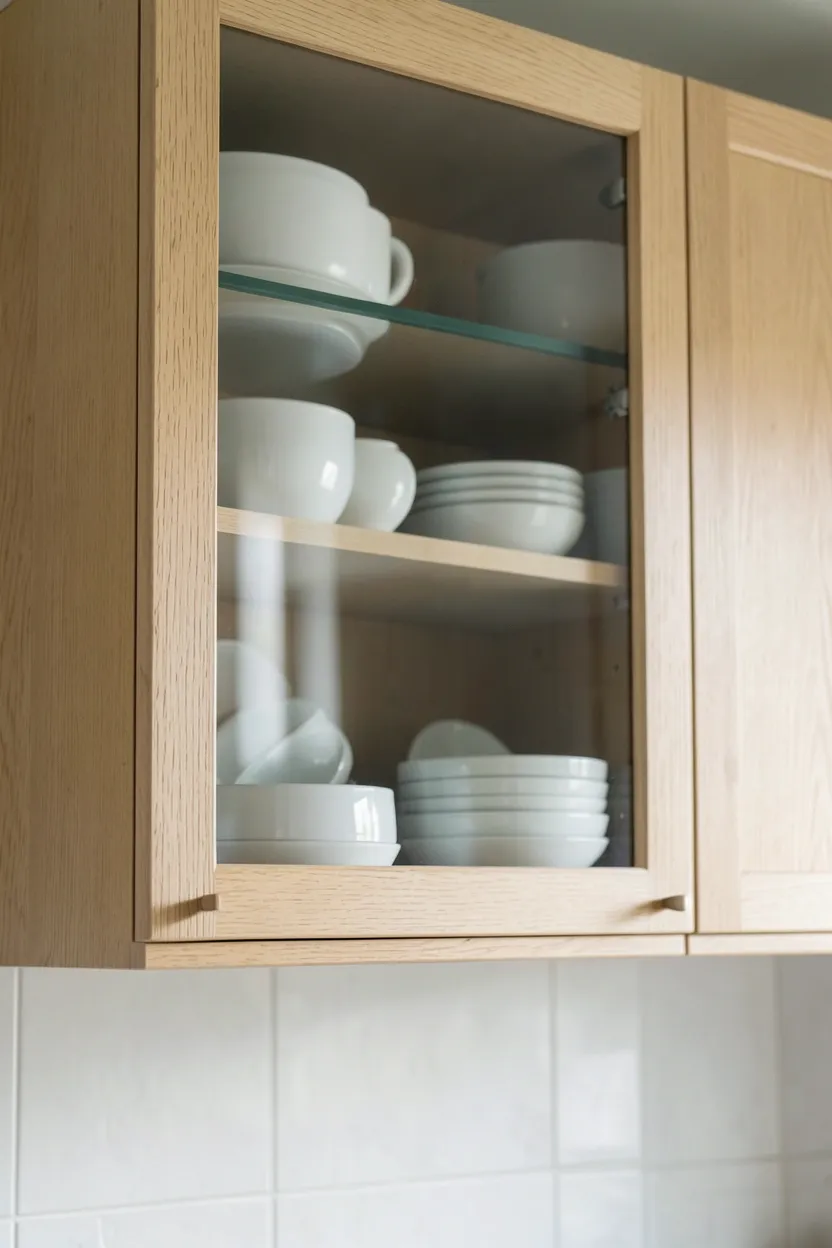
Glass cabinet doors add a touch of sophistication and visual lightness to a Japandi kitchen, creating a display surface that feels intentional rather than cluttered. Choose simple, frameless doors with clear or lightly frosted glass that showcases beautiful items while maintaining overall clean aesthetic.
Recommended
Items for this idea
Position glass cabinet doors strategically—above the sink, flanking the range, or as part of an upper cabinet grouping. Display coordinated ceramics, glassware, or cookbooks in neutral tones that complement your palette. Keep the contents organized and edited to maintain the minimalist feel.
Why it works: Glass doors create visual depth and allow beautiful items to be displayed while keeping them protected from dust. The transparency adds lightness to the space, breaking up solid cabinet banks without adding clutter.
Avoid using too many glass cabinet doors or overfilling them with mismatched items. The goal is intentional display—a few carefully selected items that look beautiful together—rather than a jumbled collection.
Do: Use glass doors sparingly for maximum impact—focus on one or two cabinet sections.
Don't: Overfill glass cabinets or mix too many colors and patterns.
Rental-friendly: Use stick-on or over-the-door glass cabinet inserts that can be removed without damaging existing cabinets.
What this gives you: A sophisticated display element that adds visual depth while maintaining the clean, minimalist Japandi aesthetic.
21. Japandi Kitchen with Range Hood Design
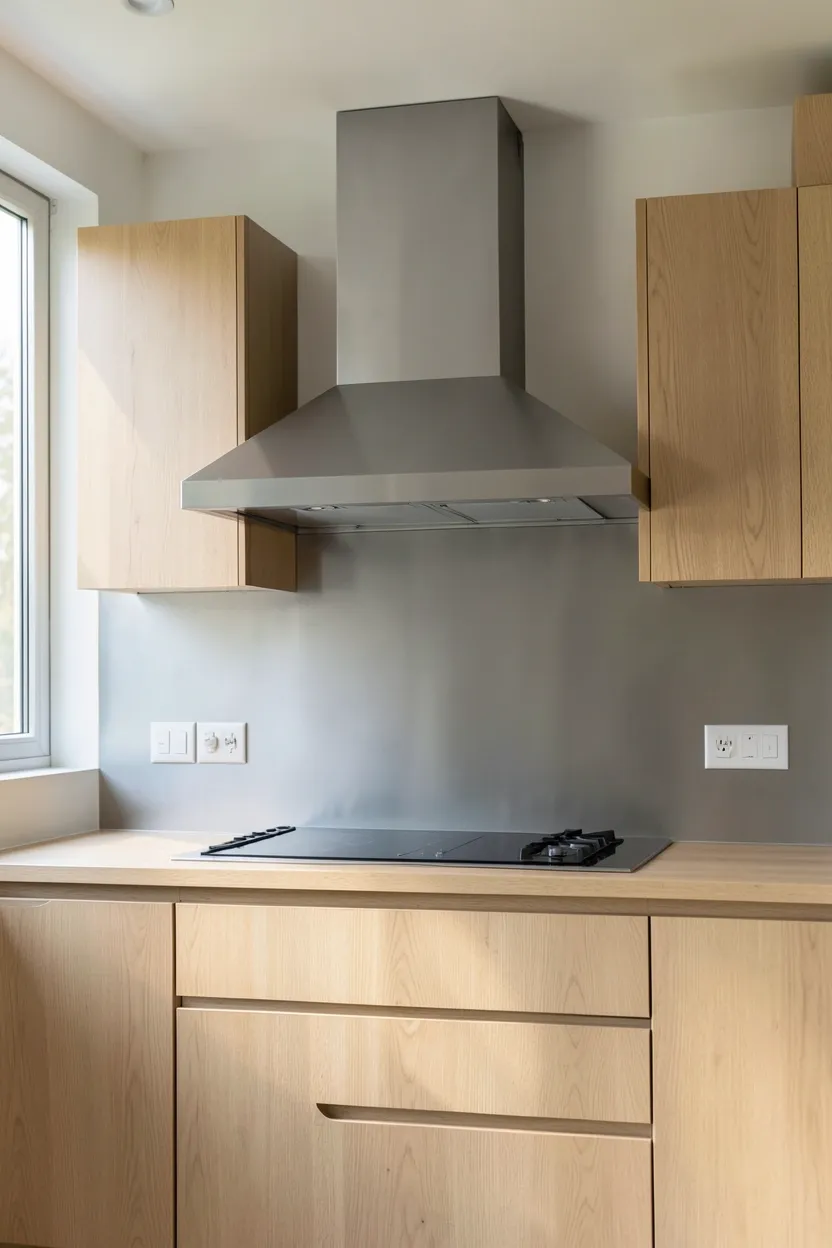
A range hood in a Japandi kitchen can either disappear seamlessly into cabinetry or serve as a subtle sculptural element, depending on your design preference. Both approaches maintain the clean aesthetic while providing essential ventilation for cooking.
For a seamless look, choose a hidden hood that's concealed behind cabinetry with matching panel front. The hood blends completely with upper cabinets, maintaining the continuous, unbroken lines. Alternatively, select a matte stainless steel or copper hood with simple, geometric lines that serves as a quiet focal point without feeling ornate.
Placement note: Install the hood at the manufacturer's recommended height above the cooktop (usually 24-30 inches). Ensure adequate ventilation capacity for your cooking needs and budget for quiet operation.
Avoid range hoods with decorative trim, elaborate detailing, or polished chrome finishes that contradict the Japandi minimalist aesthetic. The goal is functional beauty through simple form, not decorative excess.
If you prioritize seamless integration, then choose a hidden hood concealed behind cabinetry panels.
If you want a subtle focal point, then select a matte metal hood with clean, geometric lines.
Budget note: Hidden hoods are typically more expensive than exposed models—consider this when making your selection.
What this gives you: Essential cooking ventilation that either seamlessly integrates with cabinetry or serves as a subtle sculptural element.
22. Japandi Kitchen with Integrated Sink
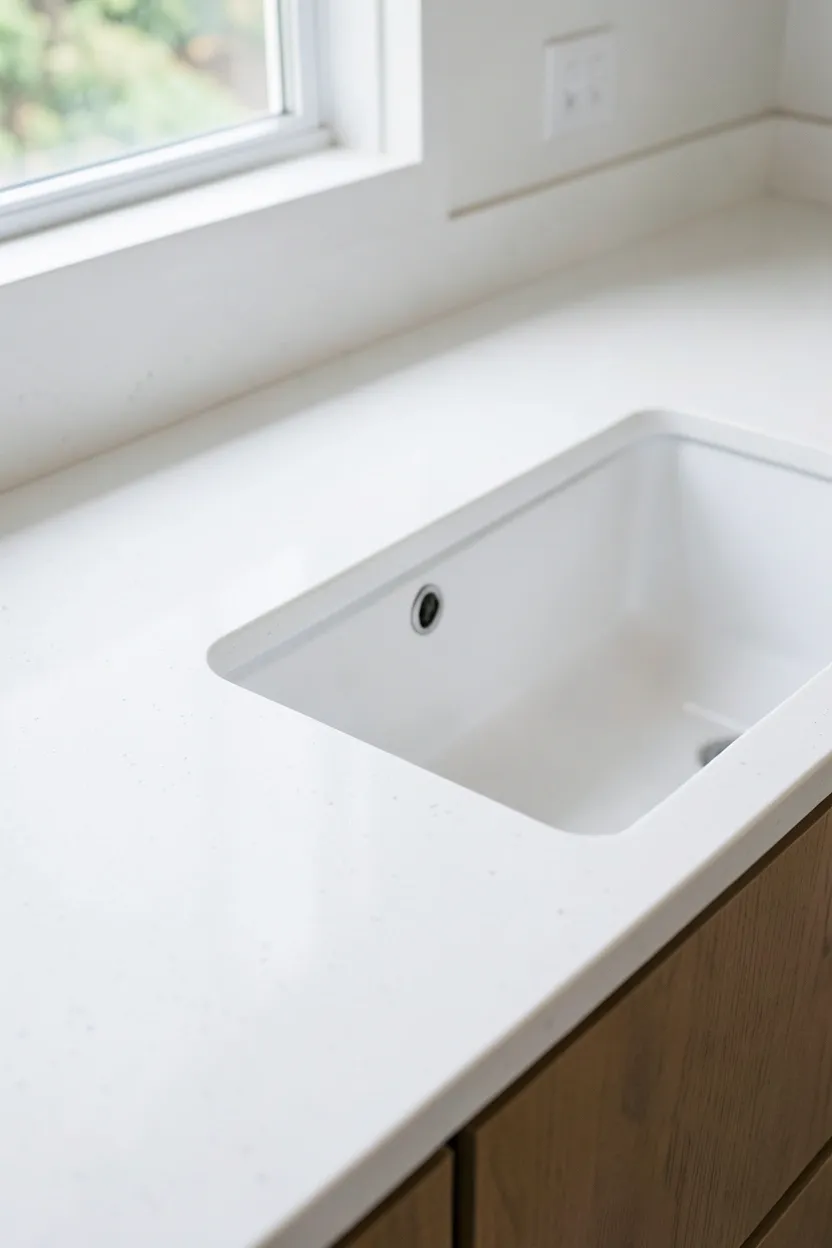
An integrated sink creates a seamless, streamlined look in a Japandi kitchen, eliminating visual breaks between countertop and basin. Choose a sink that's flush-mounted or under-mounted from below, creating a continuous surface that's both beautiful and practical.
Recommended
Items for this idea
Under-mount sinks installed beneath the countertop create a clean, unbroken line while being easy to clean. Choose a white or light gray sink that blends with your countertop material, or select a matte stainless steel option for subtle contrast. A single-bowl, deep sink provides maximum functionality while maintaining minimalist proportions.
Why it works: Integrated sinks eliminate the visual disruption of a separate basin sitting on top of the counter. The continuous surface creates a more expansive, cohesive feel that's central to Japandi aesthetic.
Avoid drop-in sinks that create a visible rim or top-mount installations that feel clunky. The goal is a seamless transition from countertop to sink that enhances the overall streamlined look.
Do: Choose under-mount sinks that create a seamless transition with your countertop.
Don't: Use drop-in sinks with visible rims or top-mount installations.
What this gives you: A seamless, easy-to-clean workspace that maintains the continuous, unbroken lines central to Japandi design.
23. Japandi Kitchen with Wooden Ceiling
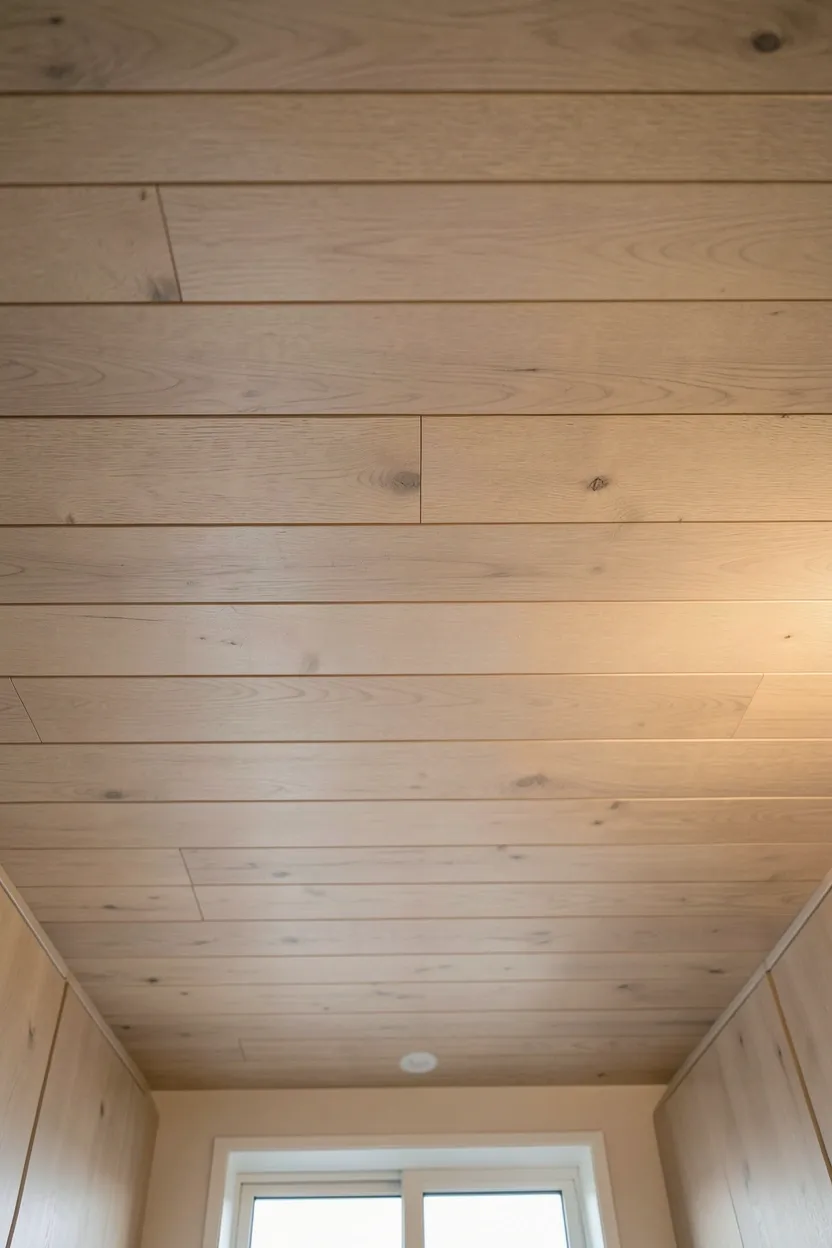
A wooden ceiling adds warmth and architectural interest to a Japandi kitchen, introducing natural materials at a high point in the room that enhances the overall sense of calm and connection to nature. The wood grain provides subtle texture without pattern, maintaining the minimalist aesthetic.
Choose light wood like ash, birch, or white oak for the ceiling to maintain the bright, airy feel. Install wood planks in a simple horizontal or vertical pattern—avoid herringbone or complex arrangements that feel too busy. A matte finish is preferable to high-gloss, which can feel too reflective and formal.
Placement note: Consider the room's proportions—wood ceilings work best in kitchens with good natural light and higher ceilings. In smaller, darker spaces, the wood can feel oppressive rather than cozy.
Avoid using dark wood tones or adding decorative moldings to the ceiling that introduce unnecessary ornamentation. The goal is subtle warmth and texture, not a dramatic statement that feels out of place in a Japandi kitchen.
Do: Choose light wood species in simple patterns for maximum impact without overwhelming.
Don't: Use dark wood tones, complex patterns, or decorative moldings that contradict minimalist aesthetic.
Budget note: Wood ceilings are a significant investment—consider them carefully and potentially limit to a portion of the kitchen if budget is a concern.
What this gives you: Warmth and architectural interest through natural materials at a high point in the room, enhancing the overall Japandi aesthetic.
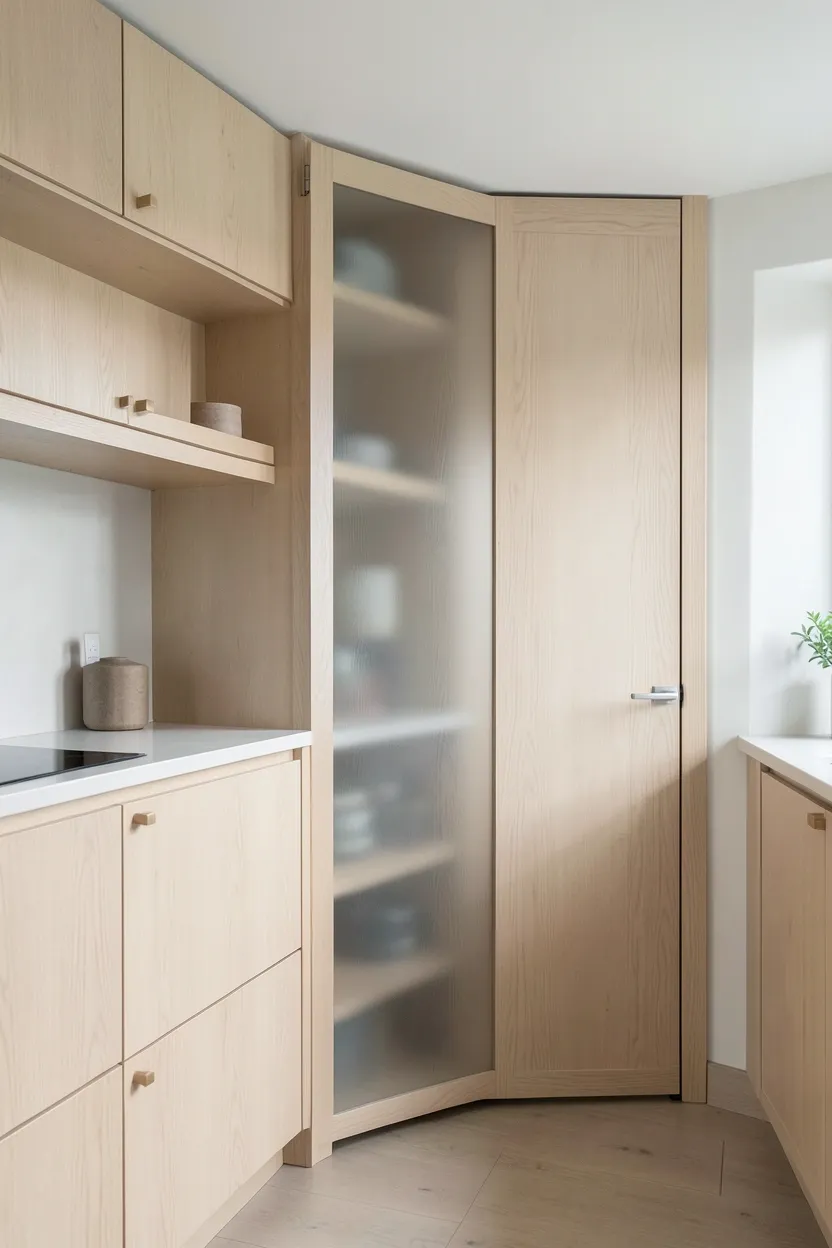
24. Japandi Kitchen with Corner Storage Solution
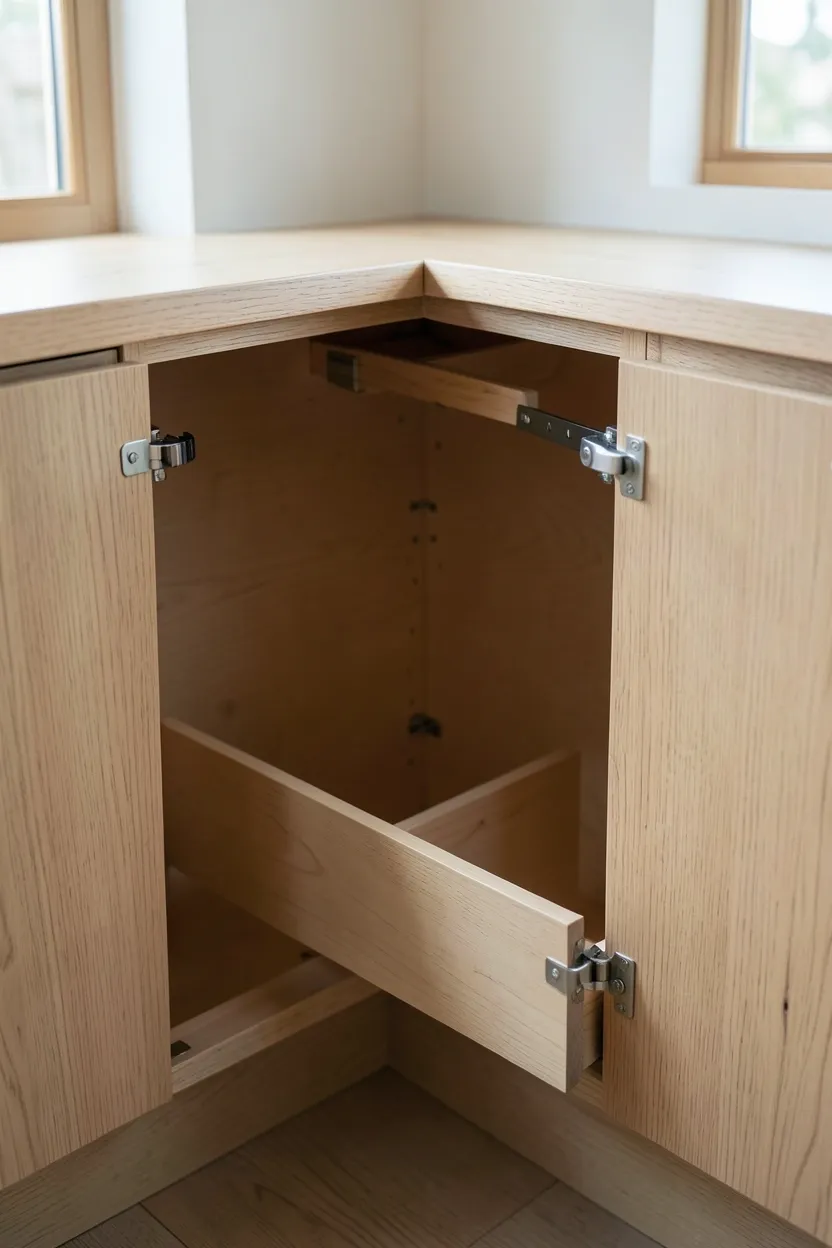
A corner storage solution maximizes efficiency in a Japandi kitchen while maintaining the clean, uncluttered aesthetic. Corner spaces are often underutilized, but with thoughtful design they can provide valuable storage without disrupting the overall visual calm.
Recommended
Items for this idea
Choose a corner cabinet with a blind pull-out mechanism or lazy Susan that brings items to you without requiring reaching into dark corners. Alternatively, install diagonal corner drawers that provide full access to the space. Match the cabinet exterior to your main cabinetry—slab doors in light wood or white—for seamless integration.
Placement note: Plan corner storage during the design phase, as it requires specialized cabinetry and hardware. Work with a designer experienced in efficient kitchen layouts to maximize the potential of these challenging spaces.
Avoid standard corner cabinets with shelves that are difficult to access or that create dead space. The Japandi approach values functionality—every inch of storage should be easily accessible and genuinely useful.
Pro: Maximizes storage in challenging corner spaces that would otherwise be wasted.
Pro: Keeps items accessible and organized without disrupting the minimalist aesthetic.
Con: Specialized hardware and cabinetry can be more expensive than standard options.
Fix: Focus corner solutions on one or two key areas rather than outfitting every corner, prioritizing the most accessible spaces.
What this gives you: Maximally efficient storage that utilizes challenging corner spaces while maintaining the clean, uncluttered Japandi aesthetic.
25. Japandi Kitchen with Pantry Door
A pantry door in a Japandi kitchen serves as both a functional element and a design opportunity, providing concealed storage while maintaining the clean, minimalist aesthetic. Choose a door style that complements your cabinetry and integrates seamlessly with the overall design.
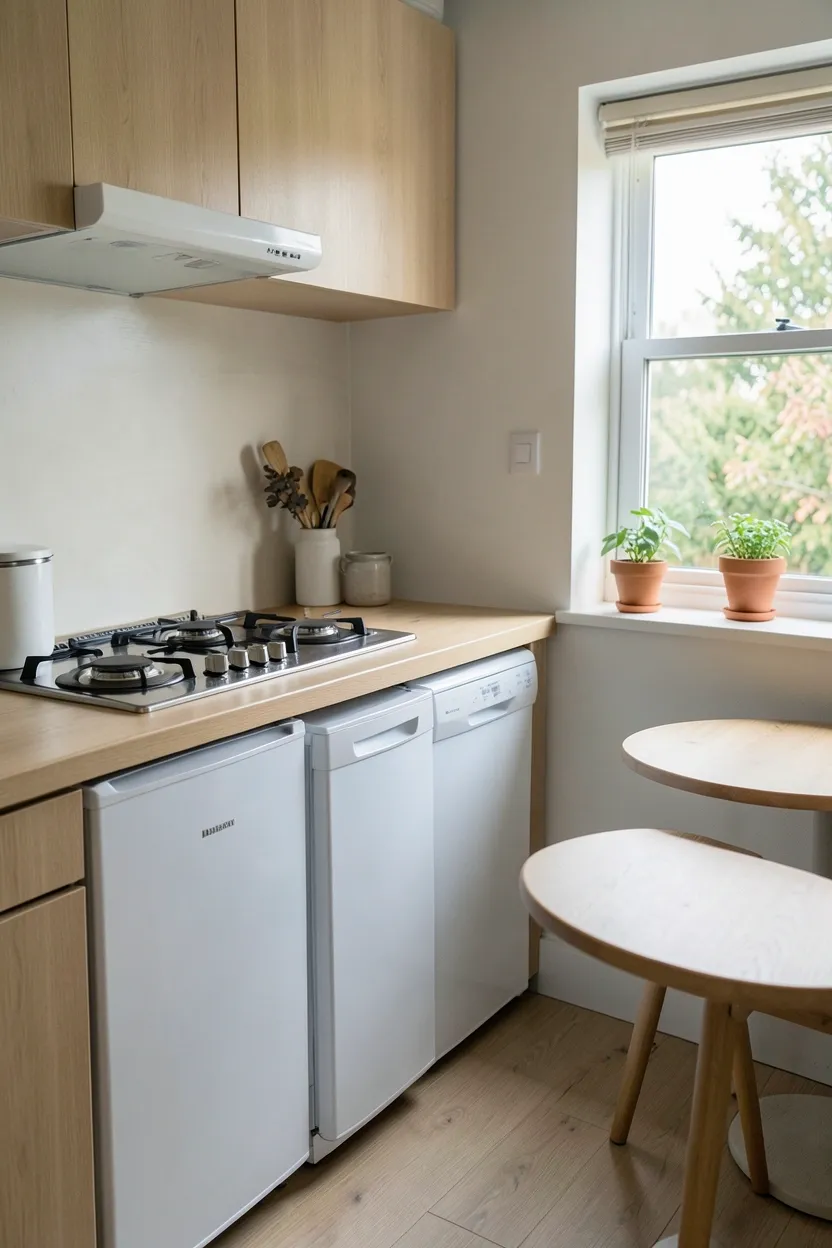
A slab door in light wood or white painted finish creates the most cohesive look with Japandi cabinets. Integrate pulls recess into the door surface for the cleanest appearance, or choose ultra-slim bar handles that maintain the streamlined silhouette. If you want to add subtle visual interest, consider a frosted glass panel that hints at the storage within while maintaining the minimalist feel.
Why it works: A well-designed pantry door conceals storage completely, maintaining the uncluttered Japandi aesthetic. When the door matches the cabinetry, the pantry becomes a seamless extension of the kitchen rather than a separate element.
Avoid using decorative doors with molding, glass inserts in multiple colors, or mismatched hardware that creates visual noise. The goal is a door that blends seamlessly while providing functional access to storage.
Do: Choose a slab door style that matches your main cabinetry for seamless integration.
Don't: Use decorative doors with molding or glass inserts that disrupt the minimalist aesthetic.
Rental-friendly: Use a tension rod and curtain panel to create a pantry area if you can't modify doors—choose neutral linen for the Japandi look.
What this gives you: Concealed storage that maintains the clean, uncluttered Japandi aesthetic while providing easy access to pantry items.
26. Japandi Kitchen Ideas for Small Apartments and Kitchenettes
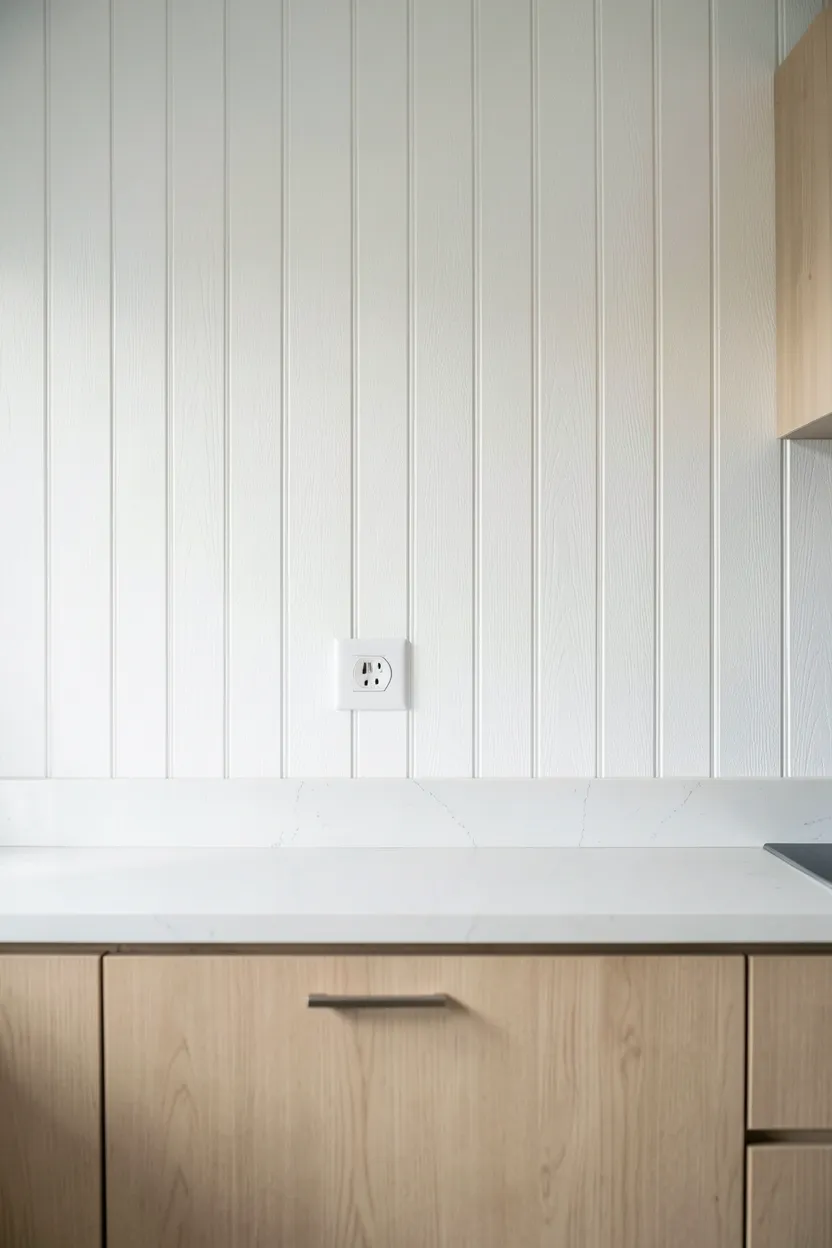
A kitchenette feel within a Japandi kitchen creates an intimate, cozy atmosphere perfect for small spaces or secondary kitchens. This approach focuses on essential elements arranged thoughtfully, creating a functional cooking area that feels comfortable rather than cramped.
Recommended
Items for this idea
Design the space with a narrow counter running along one wall, a compact under-counter refrigerator, and a two-burner cooktop. Use light wood cabinets that extend to the ceiling for maximum storage while maintaining visual calm. Add a small round table or built-in banquette for casual dining that doesn't consume excessive space.
Placement note: Ensure at least 36 inches of clearance between counter edges and walls or obstacles. Position the cooktop near a window if possible for ventilation and natural light.
Avoid trying to fit too many appliances or features into a small kitchenette. The Japandi approach values intentional simplicity—focus on the essentials you truly need rather than attempting to replicate a full-sized kitchen in limited space.
Pro: Creates an intimate, cozy cooking space that feels manageable rather than overwhelming.
Pro: Maximizes functionality in small footprints through thoughtful, intentional design.
Con: Limited counter and storage space requires regular decluttering and organization.
Fix: Adopt a one-in, one-out rule for items and regularly purge unused tools and ingredients.
What this gives you: An intimate, functional cooking space that maximizes efficiency while maintaining the cozy, minimal Japandi aesthetic.
27. Japandi Kitchen with Statement Wall
A statement wall in a Japandi kitchen provides a subtle focal point without introducing pattern or overwhelming the neutral palette. Choose a wall treatment with texture rather than bold color, creating visual interest through material rather than decorative elements.
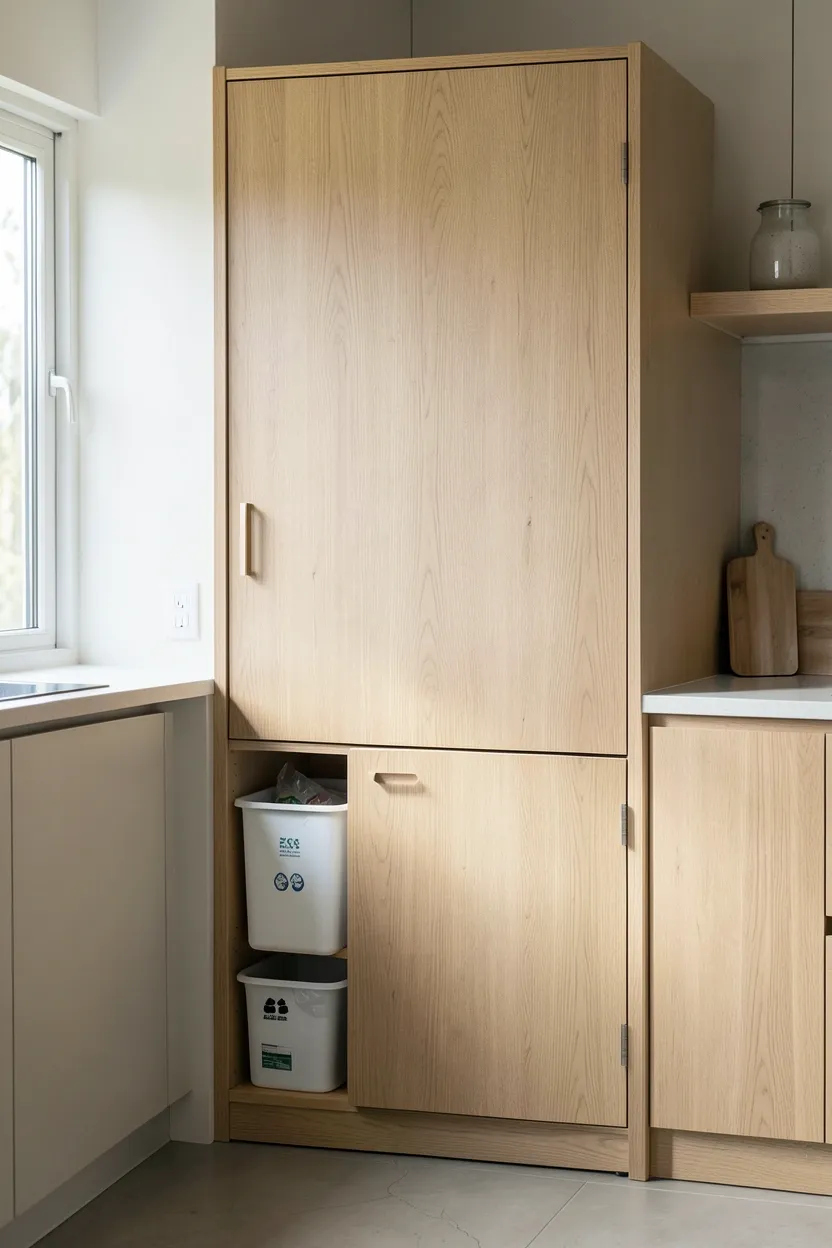
Consider a shiplap or board-and-batten wall in white or light gray that adds subtle architectural interest. Alternatively, choose a natural stone slab or textured plaster finish that catches light beautifully. Position the statement wall behind the range or sink to create a focal point that draws the eye without feeling jarring.
Why it works: A textured statement wall adds depth and visual interest that elevates the space without introducing pattern or bold colors. The subtle texture enhances the overall Japandi aesthetic by adding tactile richness to an otherwise clean environment.
Avoid highly patterned wallpaper, bold paint colors, or materials with strong textures that contradict the minimalist Japandi aesthetic. The goal is subtle interest through material, not a dramatic statement that feels out of place.
Do: Choose wall treatments with subtle texture like shiplap, natural stone, or plaster in neutral tones.
Don't: Use bold wallpaper, strong colors, or materials with overwhelming textures.
Rental-friendly: Use peel-and-stick shiplap panels or removable wallpaper with subtle textures that can be removed without damage.
What this gives you: A subtle focal point that adds depth and visual interest while maintaining the calm, neutral Japandi aesthetic.
28. Japandi Kitchen with Hidden Trash Cabinet
A hidden trash cabinet integrates waste management seamlessly into a Japandi kitchen, eliminating visible trash cans that disrupt the clean, minimalist aesthetic. Concealing recycling and trash bins within cabinetry maintains visual calm while keeping functional needs accessible.
Recommended
Items for this idea
Design a tall cabinet with divided compartments for trash, recycling, and compost. Install soft-close hinges and full-extension slides for smooth, quiet operation. Position the cabinet conveniently near the sink or island for easy access during food preparation. Match the cabinet exterior to your main cabinetry for seamless integration.
Placement note: Position the trash cabinet near the sink or food prep area for easy access, but away from cooking surfaces where heat could affect bin liners.
Avoid using visible trash cans, recycling bins, or compost containers that clutter the space and contradict the minimalist Japandi aesthetic. The goal is to hide functional elements that don't contribute to the visual harmony of the kitchen.
Pro: Eliminates visual clutter from trash and recycling containers.
Pro: Keeps kitchen looking clean and minimalist at all times.
Con: Requires dedicated cabinet space that could be used for storage.
Fix: Choose the most accessible location for trash and recycling, then build around it with other storage solutions.
What this gives you: Concealed waste management that maintains the clean, uncluttered Japandi aesthetic while keeping functional needs accessible.
29. Japandi Kitchen with Cozy Window Seat
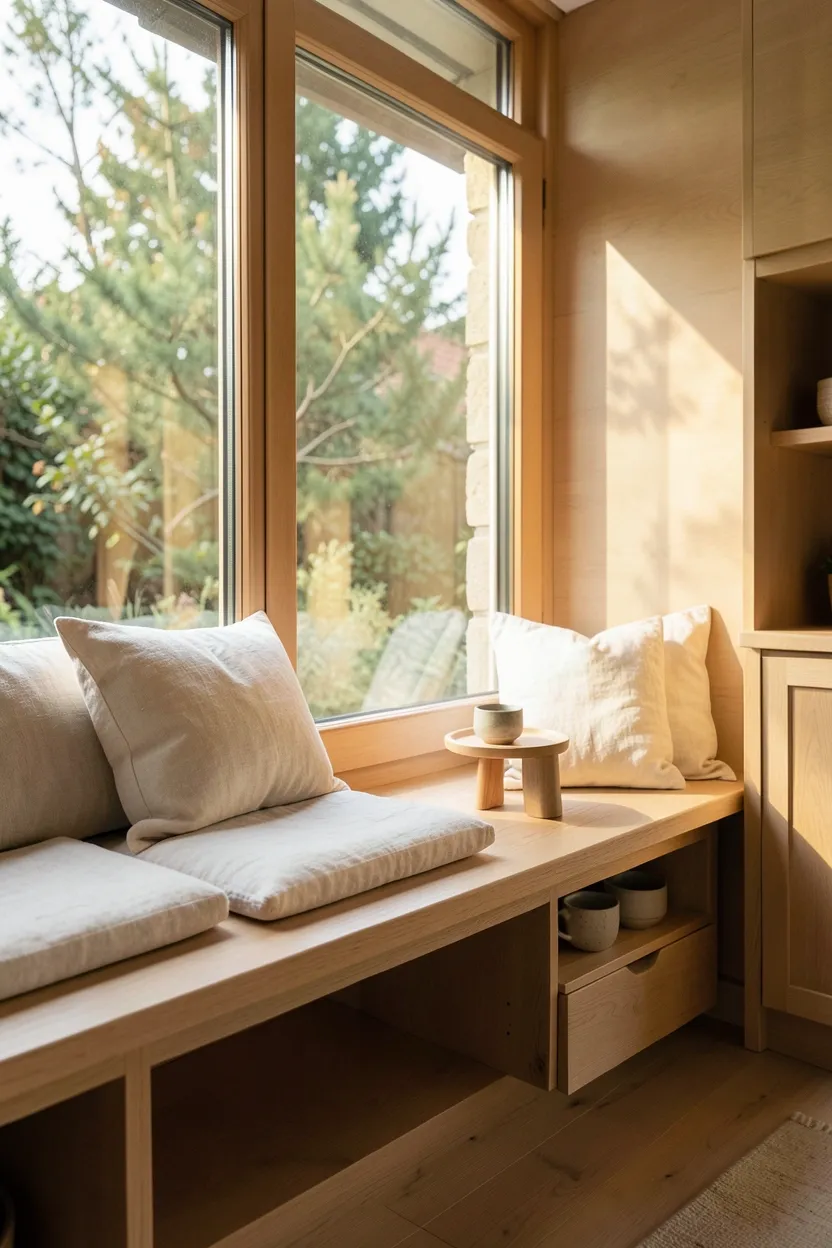
A window seat in a Japandi kitchen creates a cozy nook for relaxation and quiet moments, blending functional workspace with a comfortable area that embodies the hygge influence of Scandinavian design. This built-in element maximizes space while providing a welcoming retreat within the kitchen.
Build a window seat with storage compartments beneath for linens or kitchen items, then add a light wood bench top with comfortable cushions in neutral linen or wool. Position the seat below a large window for natural light and views. Add a small side table or floating shelf for books and a cup of tea.
Why it works: A window seat creates a destination within the kitchen—a place to pause, read, or enjoy morning coffee. This aligns perfectly with Japandi's emphasis on intentional, mindful living rather than purely functional design.
Avoid overstuffing the window seat with too many cushions or decorative elements that create visual clutter. The Japandi approach values negative space—keep the area open, simple, and inviting rather than crowded.
Do: Build storage beneath the seat to maintain clean lines and hide items.
Don't: Overload with too many cushions or decorative pillows.
Best for: Kitchens with large windows or breakfast nook areas that can accommodate a built-in without disrupting flow.
What this gives you: A cozy, functional nook that provides a place for relaxation while maximizing space and maintaining Japandi minimalist aesthetic.
These japandi kitchen ideas prove that the fusion of Japanese minimalism and Scandinavian hygge creates cooking spaces that are both deeply functional and beautifully serene. Whether you're a renter starting with open shelves and a few plants, or planning a full renovation with integrated appliances and natural stone, the japandi kitchen approach scales to your budget and lifestyle. By focusing on natural materials, neutral palettes, and intentional design, you can create a kitchen that feels calm, purposeful, and genuinely livable every single day.
About the author
OBCD
CGI visualization and interior design content. We create detailed 3D renders and curate practical design ideas for every room in your home.