29 Wabi-Sabi Bathroom Ideas for a Calm, Natural Space
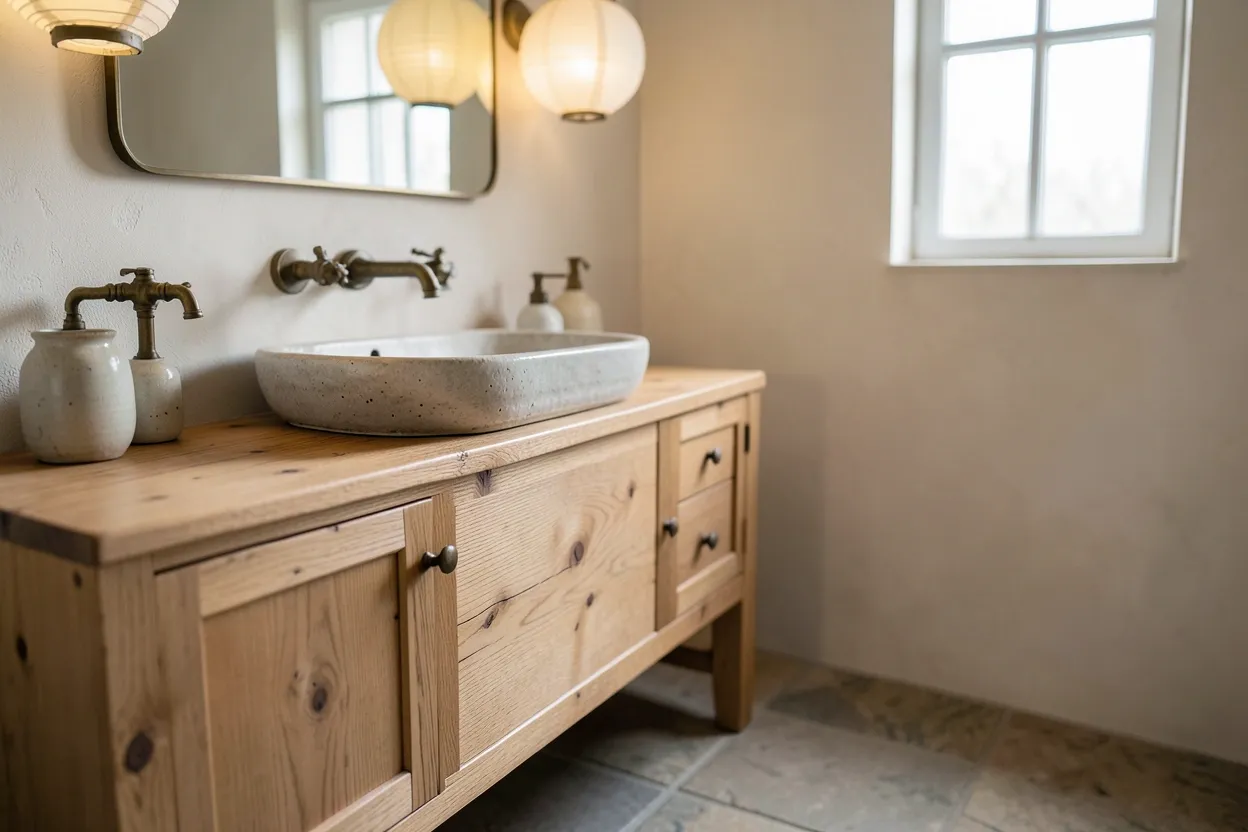
These wabi-sabi bathroom ideas embrace the beauty of imperfection, natural materials, and simplicity to create a calm, modern sanctuary that promotes relaxation and mindfulness — no expensive renovations required.
This Japanese aesthetic celebrates worn textures, organic shapes, and muted tones that transform ordinary bathrooms into peaceful retreats. Whether you rent or own, wabi-sabi bathroom decor focuses on what you bring in — handmade ceramics, reclaimed wood, natural stone — rather than what you build in.
Whether you're working with a small rental bathroom or a spacious master bath, these 29 wabi-sabi ideas help you design a space that feels authentic, lived-in, and effortlessly elegant using affordable, renter-friendly natural materials.
Quick FAQ
What is wabi-sabi in bathroom design?
Wabi-sabi is a Japanese philosophy that finds beauty in imperfection, transience, and natural simplicity. In bathrooms, it means using organic materials, worn textures, and asymmetrical designs.
How can I make my bathroom look wabi-sabi?
Focus on natural materials like wood and stone, choose earthy colors, embrace visible textures, add living plants, and keep decor minimal and meaningful rather than perfect.
What colors work best for a wabi-sabi bathroom?
Earthy neutrals like beige, cream, soft gray, warm taupe, muted greens, and natural wood tones create the perfect wabi-sabi palette that feels calm and organic.
Is wabi-sabi style expensive to achieve?
Not necessarily. Wabi-sabi celebrates imperfection, so you can use reclaimed materials, secondhand finds, and simple natural elements without needing expensive, perfect finishes.
As an Amazon Associate I earn from qualifying purchases.
Table of Contents
- 1. Natural Wood Vanity with Visible Grain
- 2. Handmade Ceramic Sink Basin
- 3. Stone Flooring with Natural Variations
- 4. Weathered Wood Mirror Frame
- 5. Minimalist Bamboo Accessories
- 6. Raw Stone Shower Niche
- 7. Linen Shower Curtain with Natural Texture
- 8. Aged Brass Fixtures with Patina
- 9. Pebble Flooring in Shower Area
- 10. Woven Bamboo Stool or Bench
- 11. Hand-Thrown Ceramic Soap Dispenser
- 12. Reclaimed Wood Shelving
- 13. Living Green Plant in Terracotta Pot
- 14. Unpolished Marble Countertop
- 15. Woven Grass Storage Baskets
- 16. Exposed Stone Accent Wall
- 17. Hand-Forged Metal Towel Rack
- 18. Natural Light with Paper Lantern
- 19. Driftwood or Branch Towel Holder
- 20. Textured Neutral Wall Finish
- 21. Wooden Bath Tray with Imperfections
- 22. Stone Sink with Rough Edges
- 23. Bamboo Toothbrush Holder
- 24. Woven Seagrass Mat
- 25. Antique Mirror with Spotted Glass
- 26. Natural Clay Tile Accents
- 27. Wooden Step Stool
- 28. Handmade Pottery Collection
- 29. Stone Bath Mat
1. Natural Wood Vanity with Visible Grain for Wabi-Sabi Warmth
A natural wood vanity with visible grain patterns serves as the perfect centerpiece for a wabi-sabi bathroom, embracing the beauty of natural materials and organic imperfections that make each piece unique. The warmth of wood creates immediate visual comfort while its visible grain tells the story of the tree's growth, adding depth and character to your bathroom space. Unlike perfectly finished cabinetry that can feel sterile, a natural wood vanity brings life and authenticity to the room.
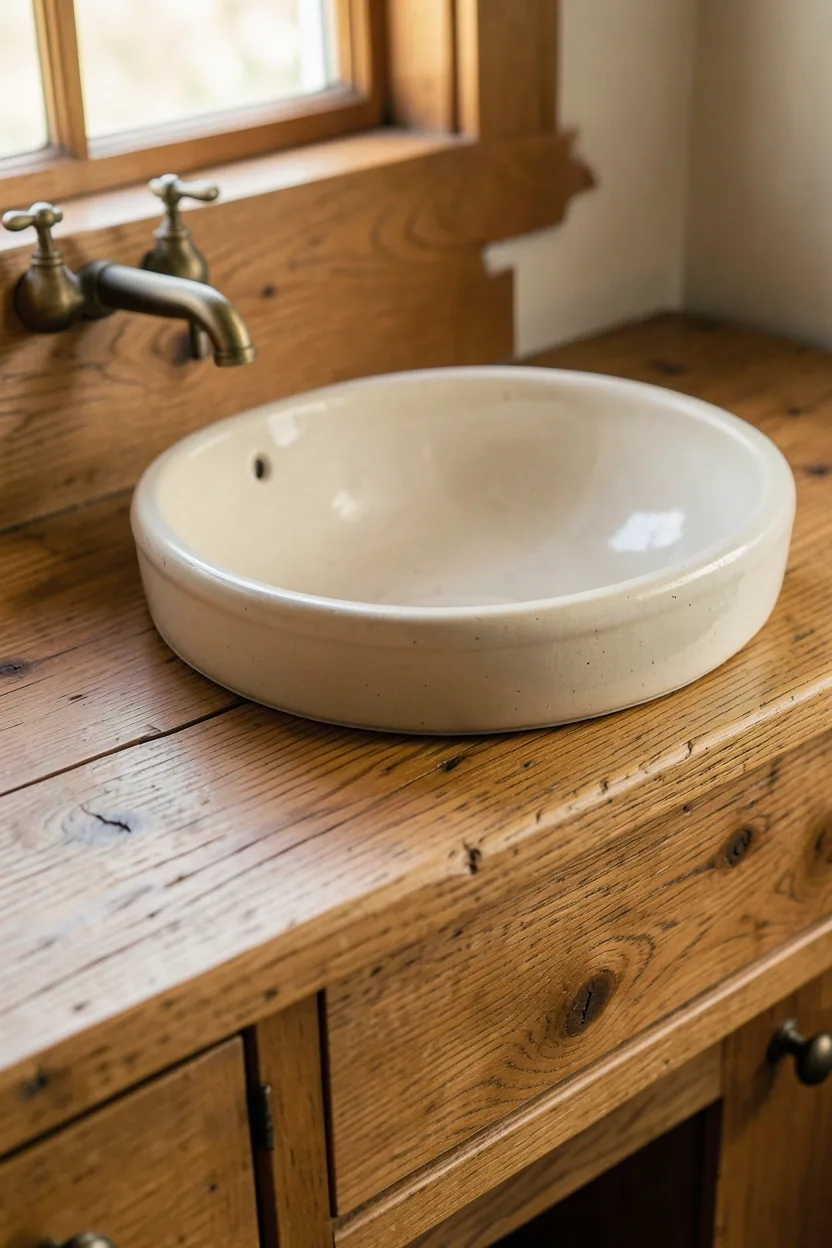
Choose light oak or walnut with visible knots, grain variations, and slightly uneven textures that celebrate the material's natural state. The vanity should feel substantial yet simple, with clean lines that don't compete with the wood's inherent beauty. A natural finish or light oil protects the wood while maintaining its tactile quality, allowing you to feel the grain when you touch the surface.
Tips
- Do select wood with visible knots and grain variations for authentic character
- Don't choose heavily stained or painted surfaces that hide natural textures
- If moisture is a concern, apply a clear waterproof sealant that maintains visible grain
What this gives you: A grounding, natural focal point that feels authentic and lived-in rather than manufactured.
2. Handmade Ceramic Sink Basin
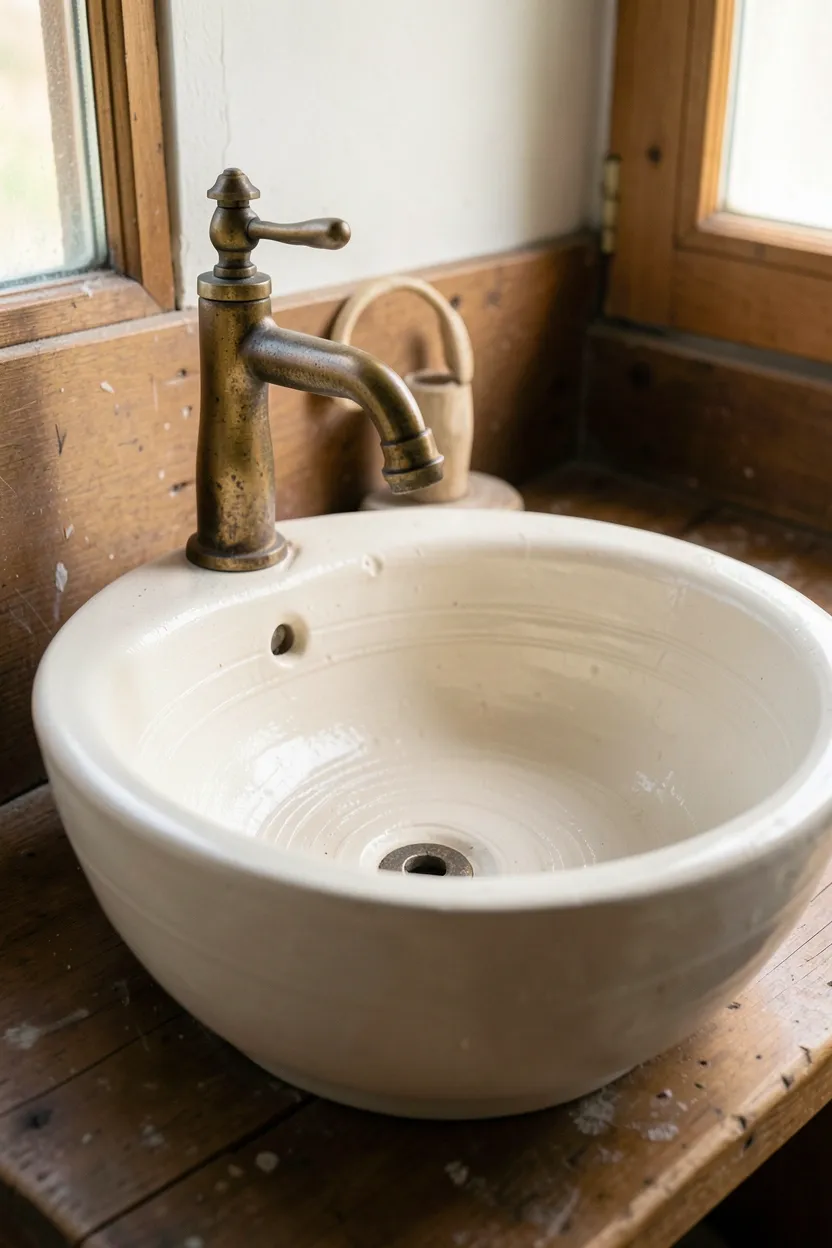
A handmade ceramic sink basin brings the wabi-sabi principle of artisanal craftsmanship to your bathroom, where slight imperfections and asymmetrical shapes become the design's most beautiful features. Unlike mass-produced sinks with perfect symmetry, a handmade basin carries the maker's touch visible in subtle variations in form, glaze, and surface texture. These variations tell a story of human hands shaping clay, creating a connection between the user and the artisan.
Recommended
Items for this idea
Look for sinks with slightly uneven rims, visible throwing lines on the interior, and glaze variations that create depth and visual interest. The color palette should remain muted and natural—think creamy white, soft beige, or pale gray with subtle speckling rather than bold or artificial colors. A handmade ceramic sink pairs beautifully with natural wood countertops and aged metal fixtures for a cohesive wabi-sabi aesthetic.
Tips
- Choose a local potter or artisan for truly unique pieces with personal character
- Then select a glaze that enhances rather than hides the clay's natural qualities
- If budget is limited, consider just one handmade statement piece alongside simpler elements
Avoid if: You prefer perfectly symmetrical, flawlessly finished surfaces and consistent manufacturing.
What this gives you: A functional art piece that elevates everyday rituals through tactile beauty and human craftsmanship.
3. Stone Flooring with Natural Variations
Stone flooring with natural variations creates a grounded, earthy foundation for your wabi-sabi bathroom, celebrating the inherent beauty found in natural materials over time. Each stone tile carries unique patterns, colors, and textures that reflect geological processes spanning millions of years, connecting your bathroom space to the natural world in a profound way. The variations in tone and surface create visual interest without feeling busy or overwhelming.
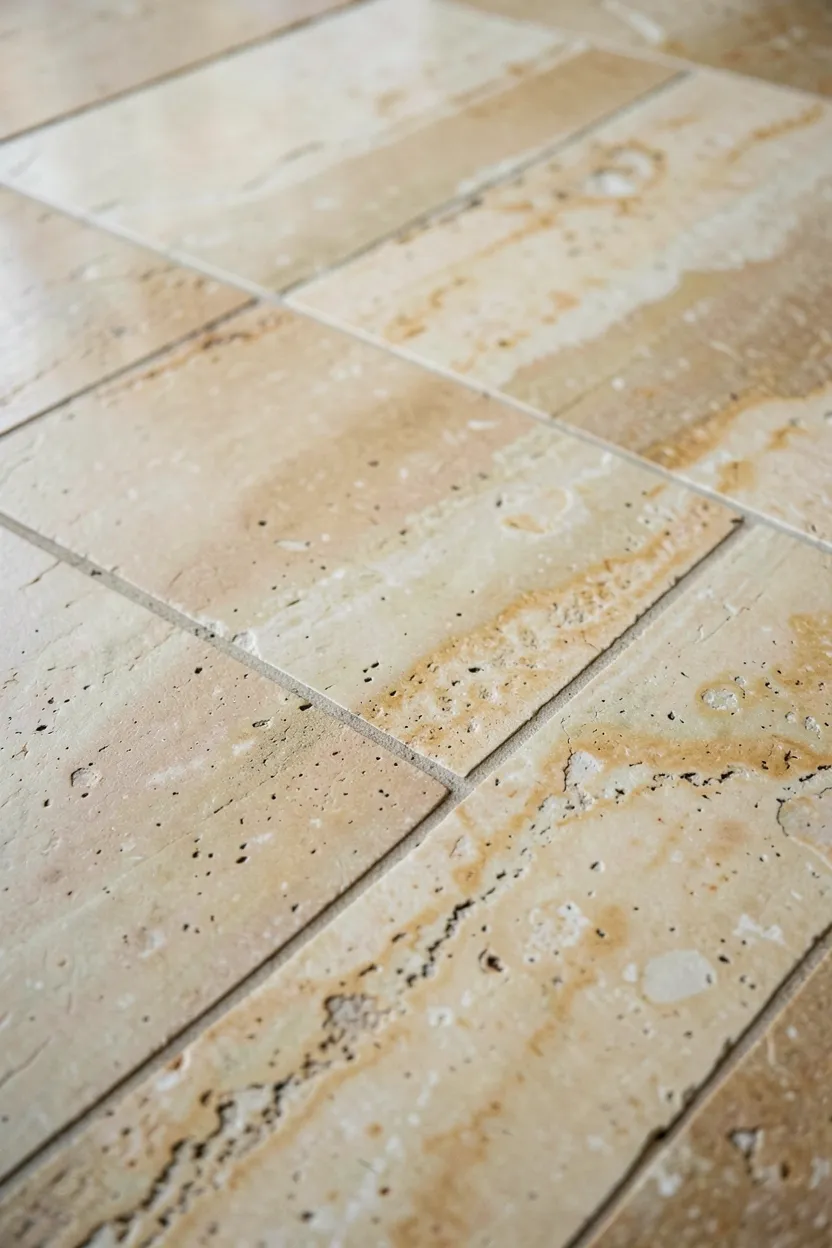
Why it works: Natural stone ages gracefully, developing character through use while maintaining its structural integrity, perfectly embodying wabi-sabi's appreciation for the beauty of aging. Consider limestone, travertine, or slate with visible fossils, mineral deposits, and slight color variations that create a sense of depth and history. Honed or tumbled finishes provide traction while maintaining a softer, more natural appearance than highly polished surfaces.
Tips
- Pro: Natural stone increases in beauty as it develops patina over years of use
- Con: Requires regular sealing and more maintenance than porcelain or ceramic
- Fix: Choose honed finishes and seal annually to minimize maintenance concerns
What this gives you: A durable, timeless foundation that connects your bathroom to nature while aging gracefully.
4. Weathered Wood Mirror Frame
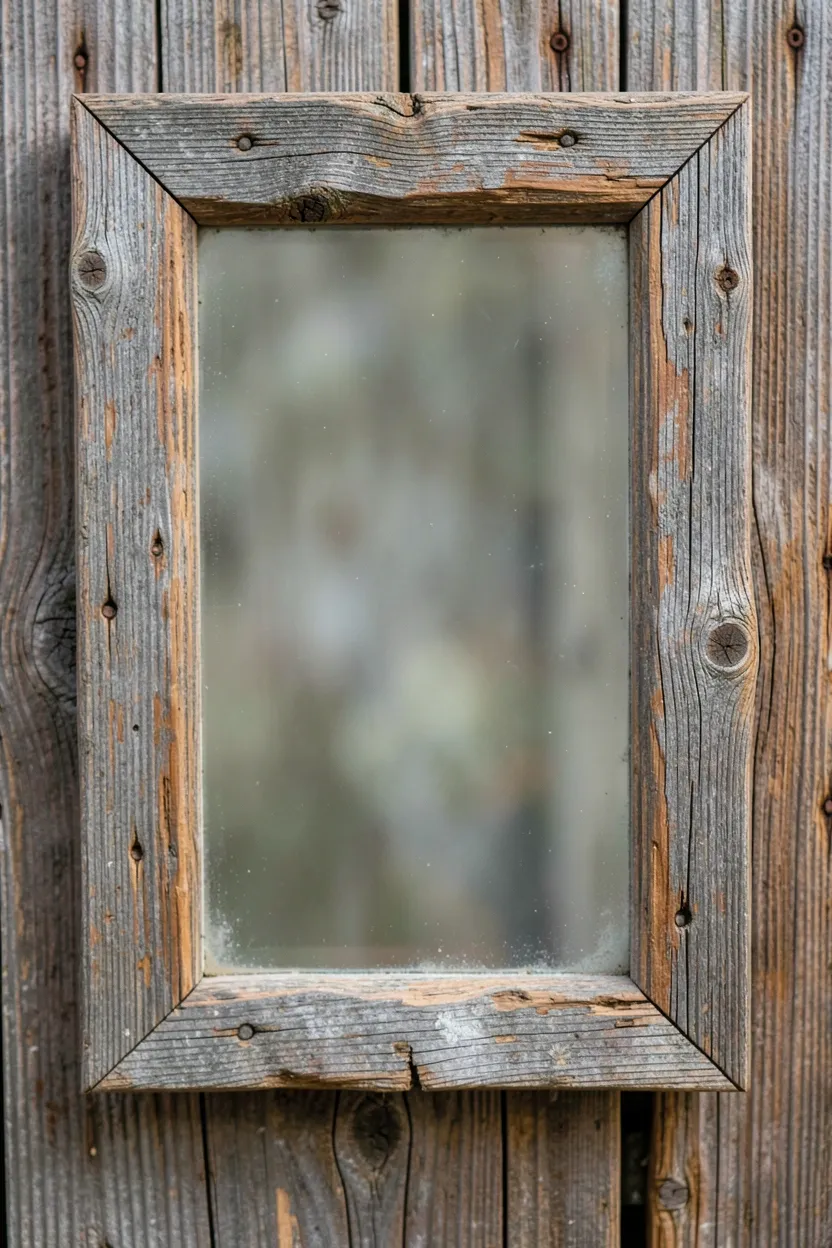
A weathered wood mirror frame captures the essence of wabi-sabi by showcasing the natural aging process of wood, turning what might be considered "worn" into a celebration of beauty found in imperfection and time's passage. The frame should display visible grain patterns, slight color variations, surface texture from weathering, and perhaps small cracks or knots that tell the story of the wood's journey. Rather than looking old or neglected, a weathered frame appears thoughtfully aged and rich with character.
Recommended
Items for this idea
Common mistake: Selecting artificially distressed wood that looks manufactured rather than genuinely aged. Instead, choose reclaimed wood or naturally weathered pieces where the patina has developed authentically over time. The color should range from warm browns and grays to silvery tones, never uniform or freshly stained. A simple rectangular or slightly arched shape maintains elegance without distraction, allowing the wood's natural beauty to take center stage.
Tips
- Hack: Visit architectural salvage yards for authentic weathered wood with genuine character
- Hack: Light sanding removes splinters while preserving weathered patina
- Hack: Apply a clear matte finish to protect the wood without altering its natural appearance
What this gives you: A reflective surface framed by natural warmth and history, adding depth and storytelling to your bathroom.
5. Minimalist Bamboo Accessories
Minimalist bamboo accessories bring the gentle strength and natural simplicity of bamboo to your wabi-sabi bathroom, offering functional pieces that embody sustainability, craftsmanship, and Asian design traditions. Bamboo's rapid growth and renewable nature align perfectly with wabi-sabi's respect for natural materials, while its warm tones and visible grain create visual harmony with other natural elements. Each piece should feel handmade and slightly imperfect rather than mass-produced.
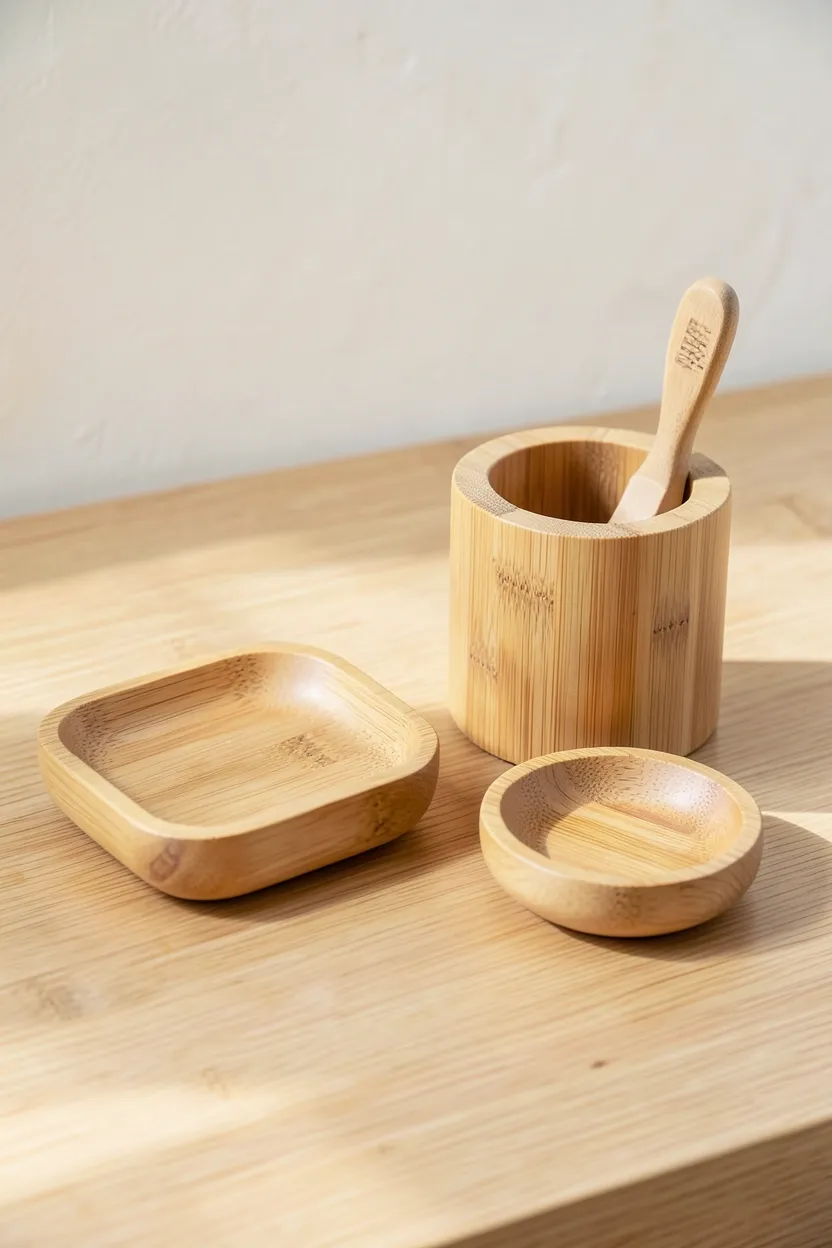
Consider a bamboo soap dish, toothbrush holder, tissue box cover, and small storage trays that maintain consistent design language while serving distinct purposes. The accessories should feature natural bamboo coloration ranging from pale honey to warm amber, with visible nodes and grain that celebrate the material's organic origins. Simple, unadorned shapes let the material speak for itself—avoid carved decorations or excessive ornamentation that contradicts minimalist principles.
Tips
- If using multiple bamboo pieces, ensure consistent color tones for visual harmony
- Then group related items together on a tray or shelf to create intentional composition
- If moisture is excessive, bamboo may develop mold—choose pieces with proper drainage
What this gives you: Thoughtful, sustainable accessories that bring warmth, function, and natural beauty to daily rituals.
6. Raw Stone Shower Niche
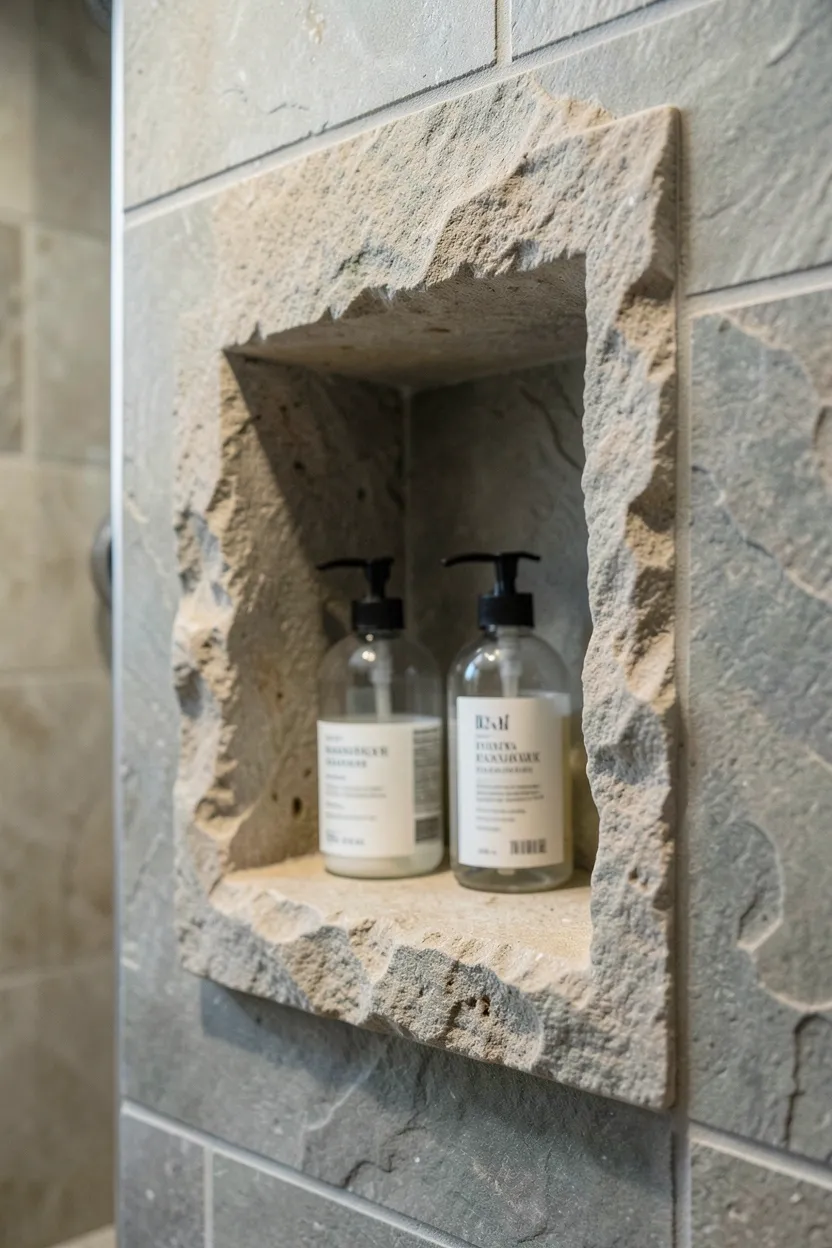
A raw stone shower niche transforms a functional storage space into a sculptural element that celebrates natural materials and wabi-sabi's appreciation for the beauty found in imperfect, organic forms. Unlike tiled niches with perfect grout lines and uniform surfaces, a stone carved directly from natural material carries variations in color, texture, and shape that make each installation unique. The rough-hewn edges and visible mineral deposits create visual interest that feels intentional rather than haphazard.
Recommended
Items for this idea
The stone should be substantial enough to provide a sturdy ledge for toiletries while maintaining visible natural characteristics on all visible surfaces. Slate, limestone, or sandstone work beautifully, each offering distinct color ranges from cool grays to warm earth tones. The interior should be either honed for a smooth but matte surface or left in its natural state with minor imperfections that enhance the organic aesthetic.
Tips
- Choose a single piece of stone rather than assembled tiles for authentic raw appearance
- Then apply penetrating sealer to protect against water damage while maintaining natural look
- If concerned about rough surfaces, consider a honed finish that smooths texture slightly
What this gives you: A functional feature that doubles as art, bringing natural beauty into your daily shower routine.
7. Linen Shower Curtain — Renter-Friendly Wabi-Sabi Upgrade
A linen shower curtain with natural texture introduces soft, organic fabric elements to your bathroom, creating visual and tactile warmth that balances harder surfaces like stone and tile. Linen's visible weave, subtle variations in thread thickness, and natural drape embody wabi-sabi principles by celebrating material authenticity and slight imperfections rather than manufactured uniformity. The fabric moves gently with air circulation, adding a living, breathing quality to the space.
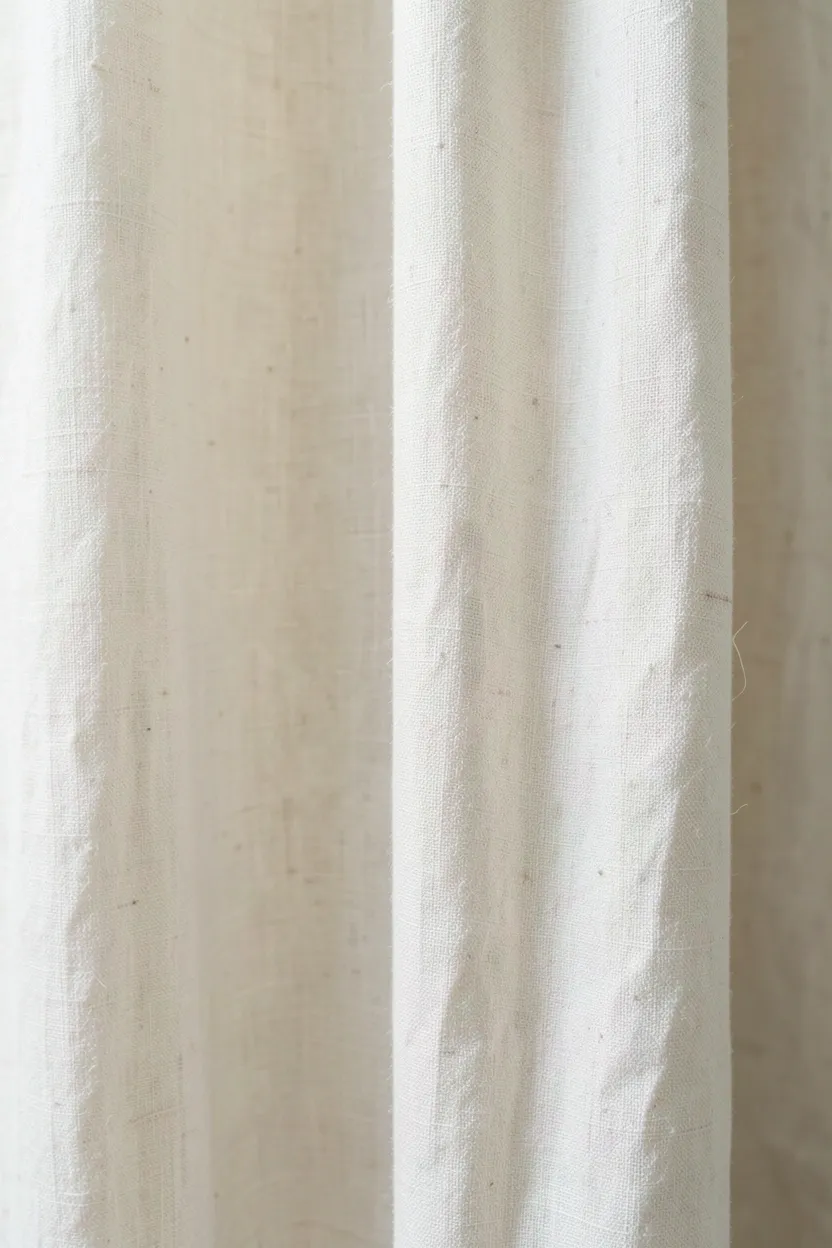
Select unbleached or naturally dyed linen in neutral tones ranging from ivory and cream to warm beige or soft gray. The fabric should have visible slubs and slight irregularities that showcase its handmade quality, avoiding perfectly uniform synthetic alternatives. A simple top hem with rust-resistant metal grommets maintains functionality while allowing the linen's natural beauty to remain the focus. Weighted bottom hem helps the curtain hang properly while adding substance without feeling heavy.
Tips
- Do choose heavyweight linen (at least 7 oz) for better drape and water resistance
- Don't select polyester or synthetic blends that lack natural texture and breathability
- If budget allows, consider a liner to protect the linen while maintaining its visible quality
What this gives you: Soft, natural texture that adds warmth and movement while functioning beautifully in a moist environment.
8. Aged Brass Fixtures with Patina
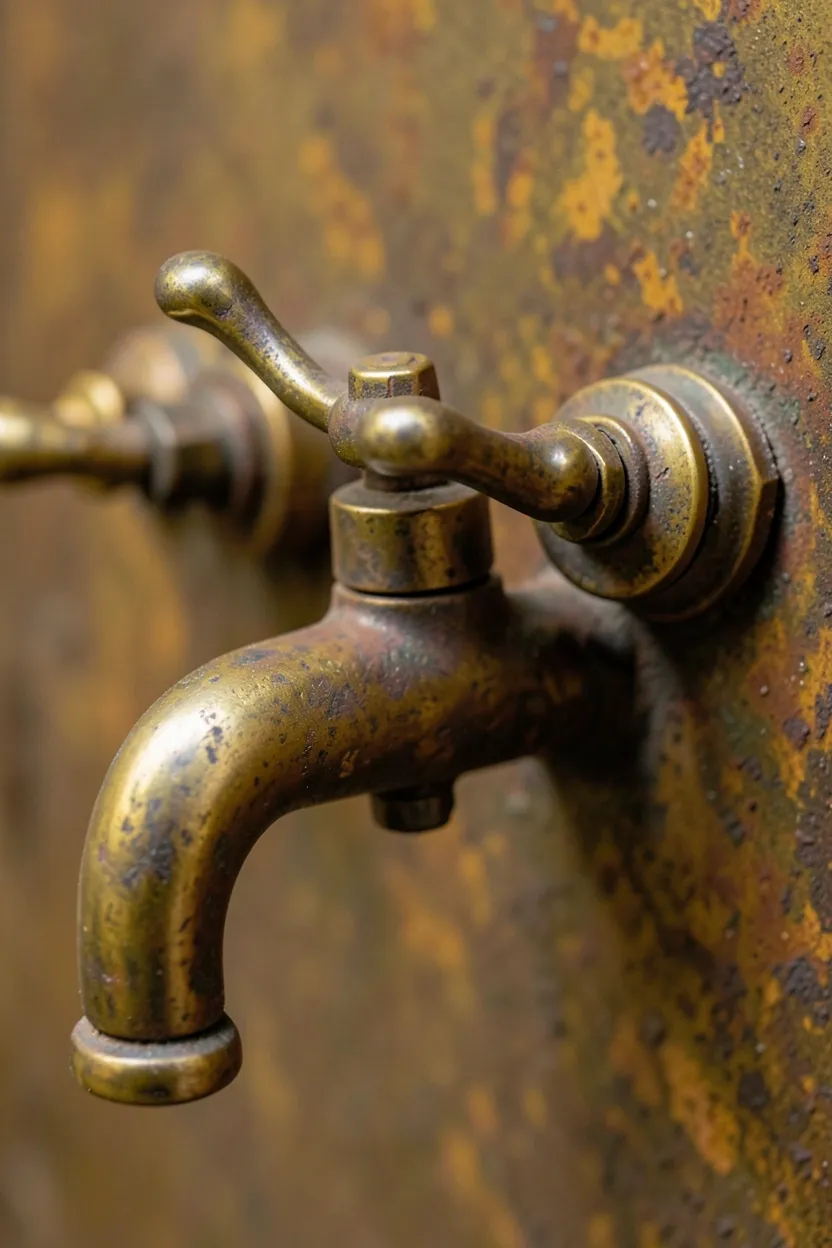
Aged brass fixtures with patina bring the beauty of natural oxidation to your bathroom, where the mottled, time-worn surface tells the story of metal's response to air, moisture, and use over years or even centuries. Unlike shiny brass that looks freshly manufactured, aged brass develops a warm, complex surface with variations in color from golden amber to deep brown, creating depth and visual interest that complements wabi-sabi's celebration of aging and imperfection.
Recommended
Items for this idea
The fixtures should include faucet handles, shower controls, towel bars, and possibly a toilet paper holder, all maintaining consistent patina while serving distinct functional purposes. Living finishes—those that continue to age naturally over time—are ideal, as they develop character unique to your bathroom's conditions and usage patterns. The coloration should feel intentional and rich, never looking neglected or uniformly dull.
Tips
- Purchase fixtures described as "living finish" or "antique brass" for authentic aging
- Then group related fixtures together on walls or vanities to create visual harmony
- If concerned about inconsistent aging, pre-aged fixtures offer controlled patina
What this gives you: Warm, character-rich fixtures that age beautifully alongside other natural materials in your bathroom.
9. Pebble Flooring in Shower Area
Pebble flooring in your shower area creates a spa-like connection to nature underfoot, where smooth river stones massaging your feet embody wabi-sabi's celebration of natural materials and the beauty found in simple, organic forms. Each pebble varies slightly in size, shape, and color, creating a mosaic-like surface that feels both ancient and contemporary. The rounded stones provide natural drainage and slip resistance while offering an unparalleled sensory experience.
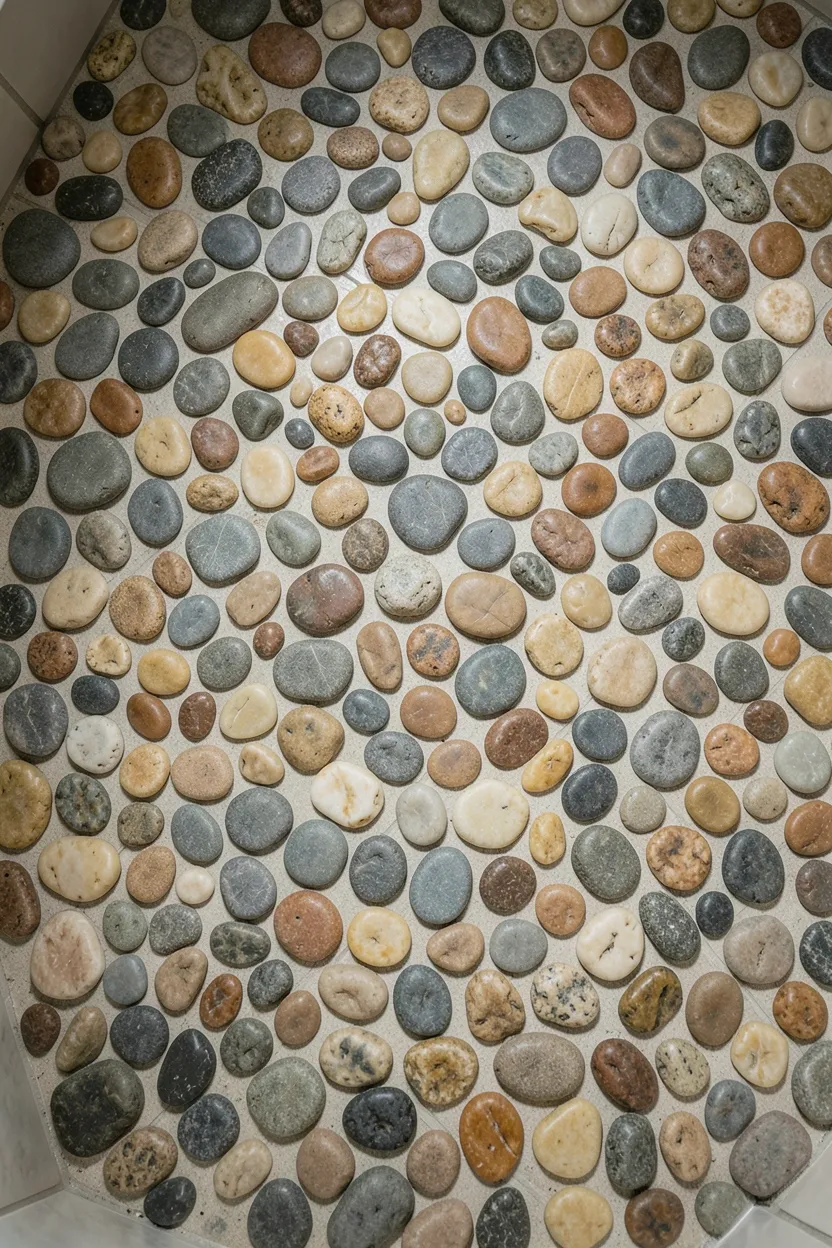
Why it works: The pebble surface encourages slower, more mindful movement through the shower, transforming a daily routine into a grounding ritual connected to natural elements. Choose river rocks in neutral tones ranging from gray and beige to warm brown, avoiding bright or artificial colors. The stones should be uniform enough to provide a stable surface while maintaining visible variation that celebrates natural diversity.
Tips
- Pro: Natural massage effect and drainage make pebbles ideal for primary shower areas
- Con: Requires thorough grouting and regular cleaning to maintain hygiene
- Fix: Select epoxy grout in neutral tones to minimize visible dirt and simplify maintenance
What this gives you: A daily sensory experience that connects you to nature while providing functional, beautiful flooring.
10. Woven Bamboo Stool or Bench
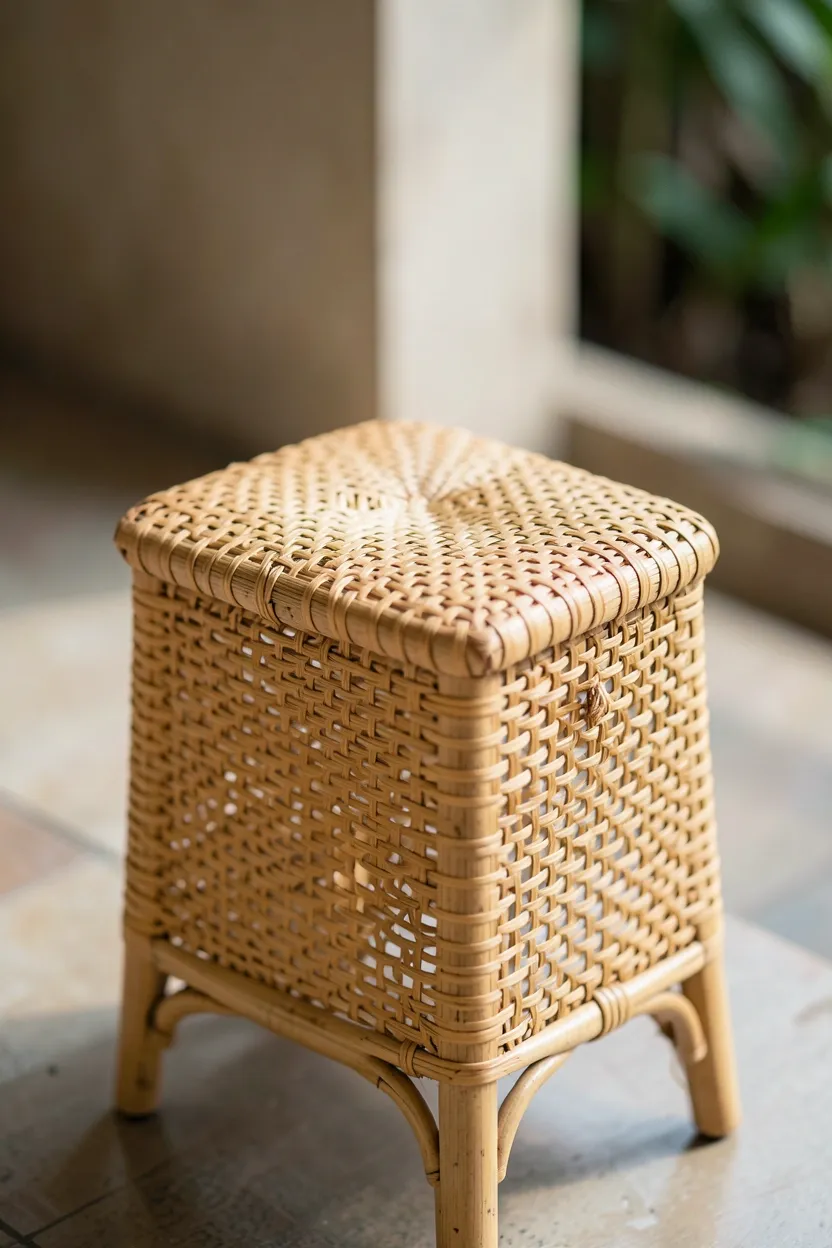
A woven bamboo stool or bench serves as both functional seating and decorative art in your wabi-sabi bathroom, showcasing the strength, flexibility, and natural beauty of bamboo through intricate handwoven patterns. The stool provides a place to sit while drying off after a bath or to display rolled towels and bath accessories, while its woven construction celebrates traditional craftsmanship and the organic qualities of natural materials. Each piece should feel slightly unique, reflecting the weaver's hand.
Recommended
Items for this idea
The weaving pattern should be visible and celebrate the bamboo's natural characteristics, with slight variations in tension and knot placement that indicate handmade construction rather than machine perfection. Choose stools in natural bamboo tones that complement other wood and natural elements in your bathroom, or opt for a gentle white or gray wash that maintains visible grain while softening the color palette.
Tips
- Do place the stool near the tub or shower for convenient seating and towel storage
- Don't select stools with painted or highly stained finishes that hide bamboo's natural beauty
- If concerned about moisture, choose bamboo with protective finish while maintaining visible weave
What this gives you: Functional seating that doubles as sculptural art, bringing warmth and craftsmanship to your bathroom.
11. Hand-Thrown Ceramic Soap Dispenser
A hand-thrown ceramic soap dispenser elevates a humble bathroom essential into a functional art piece, where the potter's touch remains visible in slight variations in form, glaze, and surface texture. Unlike mass-produced plastic dispensers, a handmade ceramic piece brings warmth, weight, and visual interest to your vanity, celebrating wabi-sabi's appreciation for craftsmanship and imperfection. The dispenser should feel substantial in your hand, with a pleasing tactile quality that makes each use feel intentional.
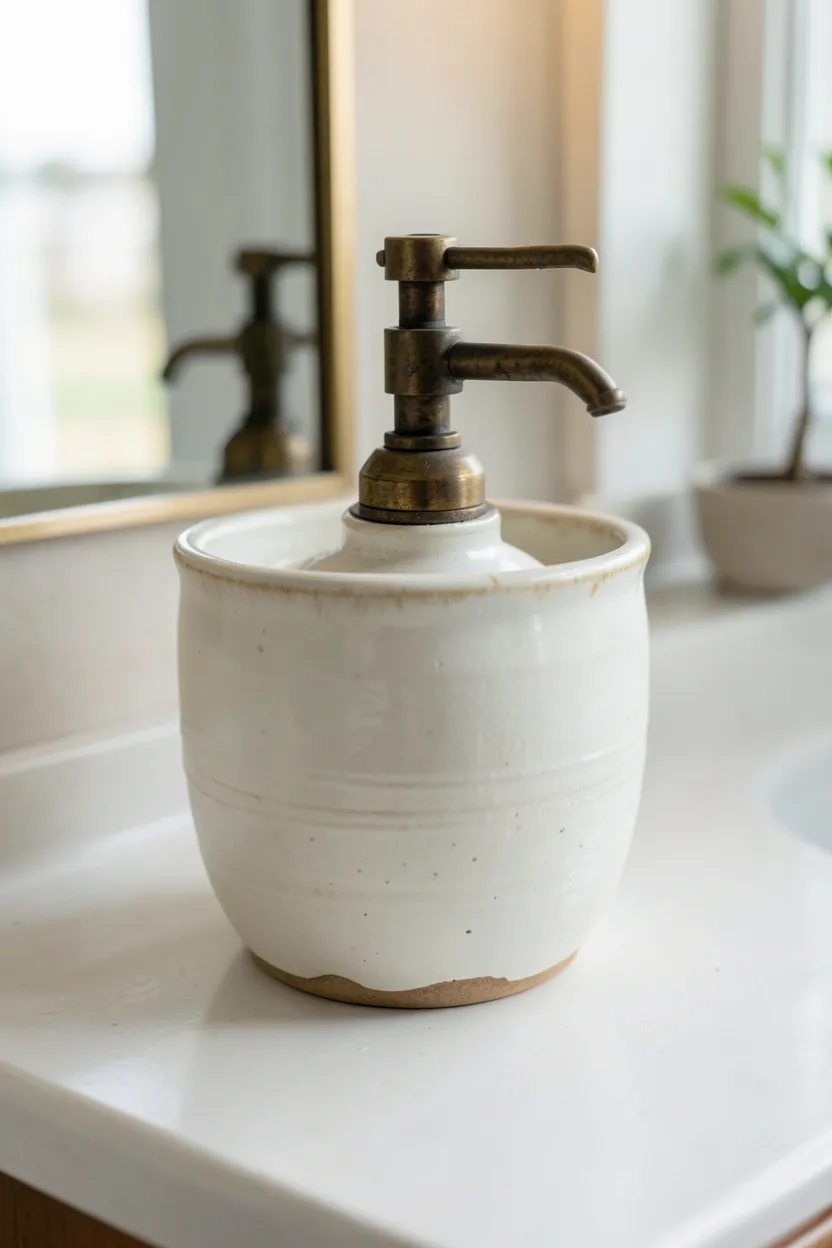
Choose a dispenser with visible throwing lines on its exterior, a slightly irregular rim, and glaze variations that create subtle color depth. The pump mechanism should be simple and functional—preferably brass or aged metal that complements other fixtures while maintaining focus on ceramic body. Consider a lidless design that showcases the dispenser's form, or a simple cork stopper for a more traditional aesthetic.
Tips
- Support local potters by purchasing directly from studios or craft markets
- Then select a glaze that enhances ceramic's natural qualities without overwhelming them
- If budget is tight, replace just one plastic item with ceramic and build from there
What this gives you: A daily-use object that brings artistry and warmth to routine handwashing.
12. Reclaimed Wood Shelving — Natural Storage for Small Bathrooms
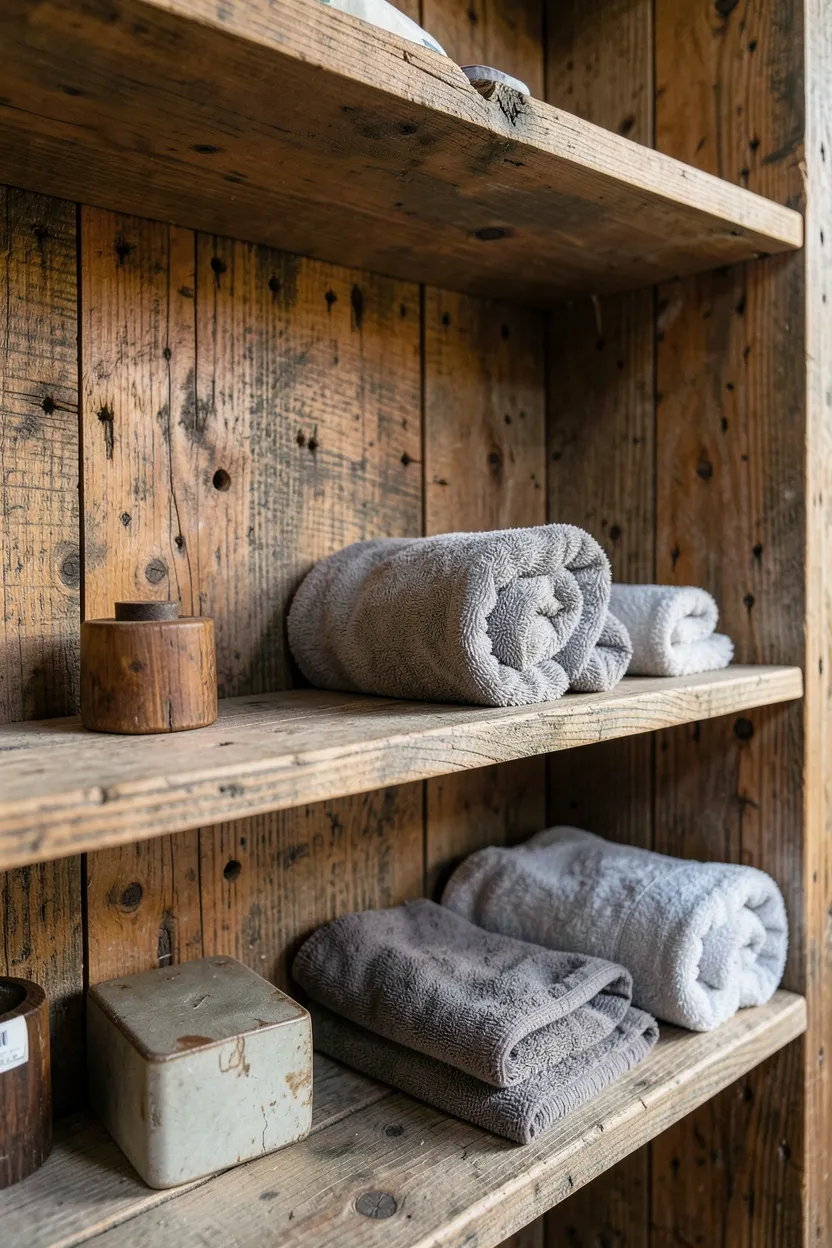
Reclaimed wood shelving brings history, character, and environmental consciousness to your wabi-sabi bathroom, where each board carries visible evidence of its previous life in the form of nail holes, weathered surfaces, and distinct grain patterns. The shelving provides functional storage while serving as a decorative element that tells a story through its imperfections and age marks. Unlike new wood that can feel sterile, reclaimed boards have a patina developed over decades of use and exposure.
Recommended
Items for this idea
The shelves should feature natural wood tones ranging from warm honey brown to weathered gray, with visible knots, cracks, and surface variations that celebrate the material's journey. Simple brackets in aged metal or blackened iron provide support without drawing attention away from the wood's beauty. Use shelves to display rolled towels, small plants, and curated objects that maintain wabi-sabi's emphasis on meaningful, purposeful items.
Tips
- Do source wood from local salvage yards or architectural suppliers for authenticity
- Don't sand reclaimed wood too smooth—maintain some of its weathered character
- If concerned about moisture, apply a clear sealer that doesn't alter natural appearance
What this gives you: Functional storage with historical character that brings depth and storytelling to your bathroom.
13. Living Green Plant in Terracotta Pot
A living green plant in terracotta pot brings the vital energy of nature into your bathroom, embodying wabi-sabi's connection to natural cycles and the beauty found in living things that change and grow over time. The terracotta pot itself celebrates natural materials with its visible clay texture and warm, earthy tones that complement other organic elements in the space. Together, the plant and pot create a living sculpture that breathes, grows, and responds to its environment.
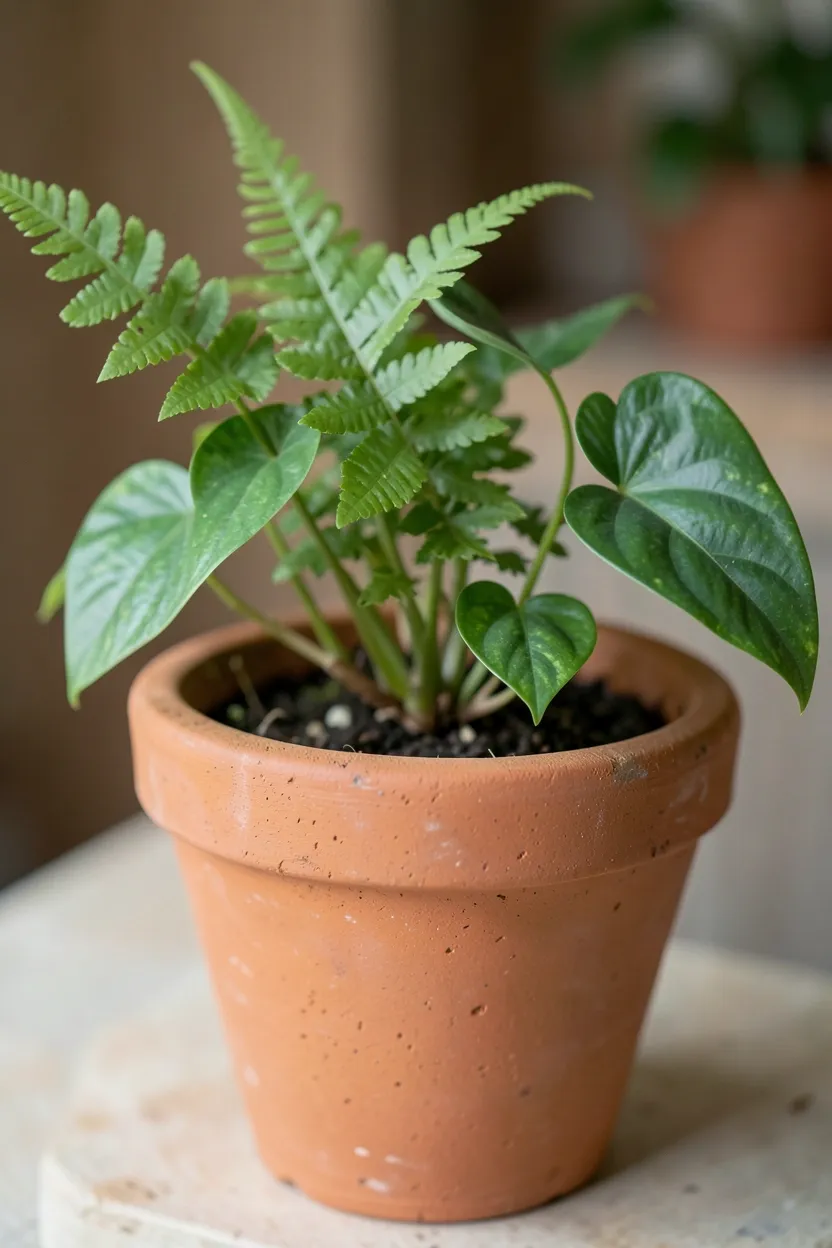
Choose plants that thrive in bathroom humidity and lower light conditions, such as ferns, pothos, or snake plants, selecting varieties with natural, slightly imperfect growth patterns rather than perfectly uniform specimens. The terracotta pot should be unglazed to showcase the clay's natural coloration and texture, with visible throwing lines and minor surface variations that indicate handmade construction.
Tips
- Place plant where it receives appropriate light without competing with other focal points
- Then rotate plant regularly for even growth while celebrating its natural form
- If plants struggle with humidity, consider air plants or dried botanical arrangements
What this gives you: Living beauty that purifies air, adds organic texture, and connects your bathroom to natural world.
14. Unpolished Marble Countertop
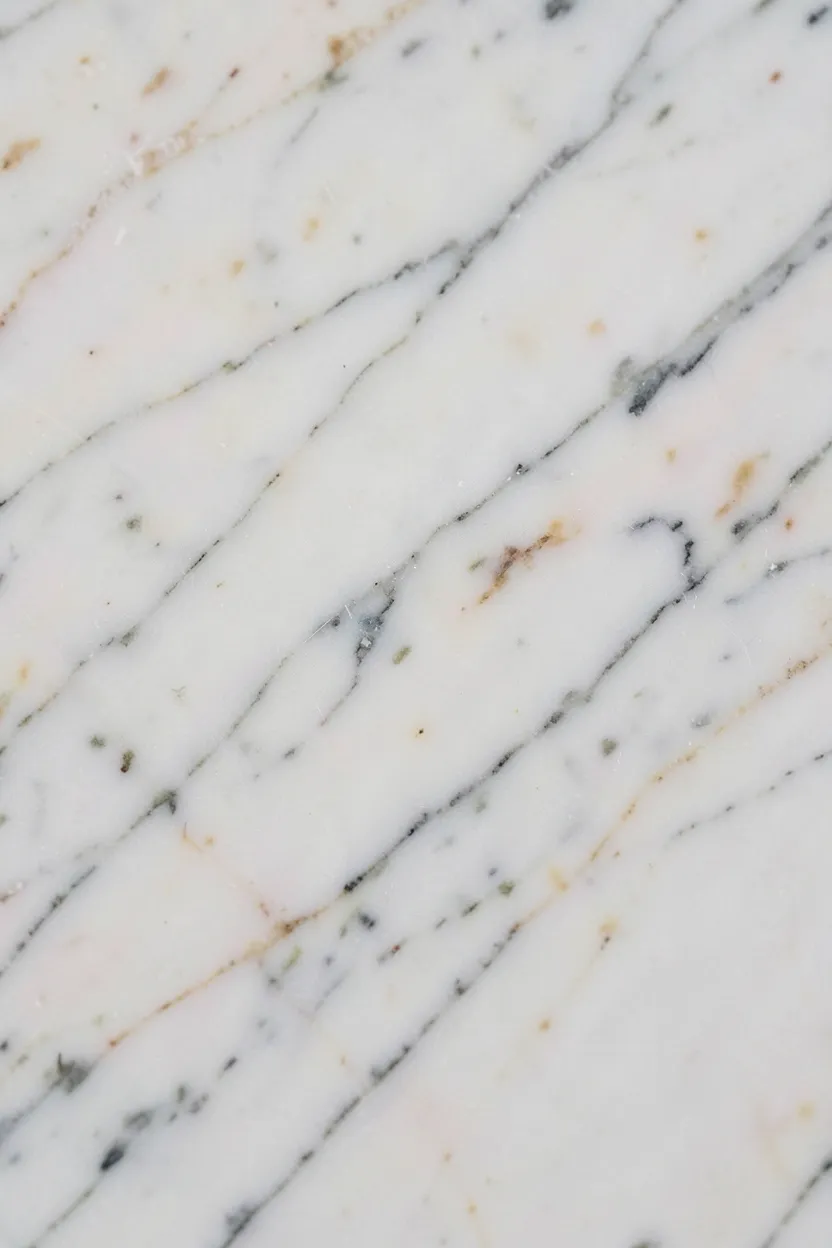
An unpolished marble countertop brings luxury material to your wabi-sabi bathroom while celebrating natural variations and the beauty found in surfaces that show their origins rather than manufactured perfection. The honed or leathered finish maintains marble's visible grain patterns, subtle color variations, and natural veining while providing a more tactile, less slippery surface than highly polished alternatives. Unlike synthetic materials that can feel artificial, marble tells a geological story spanning millions of years.
Recommended
Items for this idea
Choose marble with visible veining and slight color variations—Carrara with its gray veining on white background, or warmer Calacatta with golden and rust tones. The unpolished finish should feel smooth to the touch while maintaining visible surface texture that catches light subtly rather than reflecting it brightly. A honed finish works well for most bathrooms, while a leathered finish adds even more tactile interest.
Tips
- Pro: Unpolished marble develops patina over time that enhances its natural beauty
- Con: More susceptible to staining and etching than polished or synthetic alternatives
- Fix: Seal regularly and clean with pH-neutral products to minimize damage
What this gives you: A luxurious, natural surface that ages gracefully and tells a geological story in your daily space.
15. Woven Grass Storage Baskets — Budget Wabi-Sabi Bathroom Decor
Woven grass storage baskets introduce natural texture and artisanal craftsmanship to your bathroom while providing functional organization for towels, toiletries, and other essentials. The visible weaving patterns celebrate handmade construction, where slight variations in tension and knot placement indicate human hands rather than machine production. Unlike plastic storage solutions that can feel utilitarian, grass baskets bring warmth, character, and a connection to traditional crafting traditions.
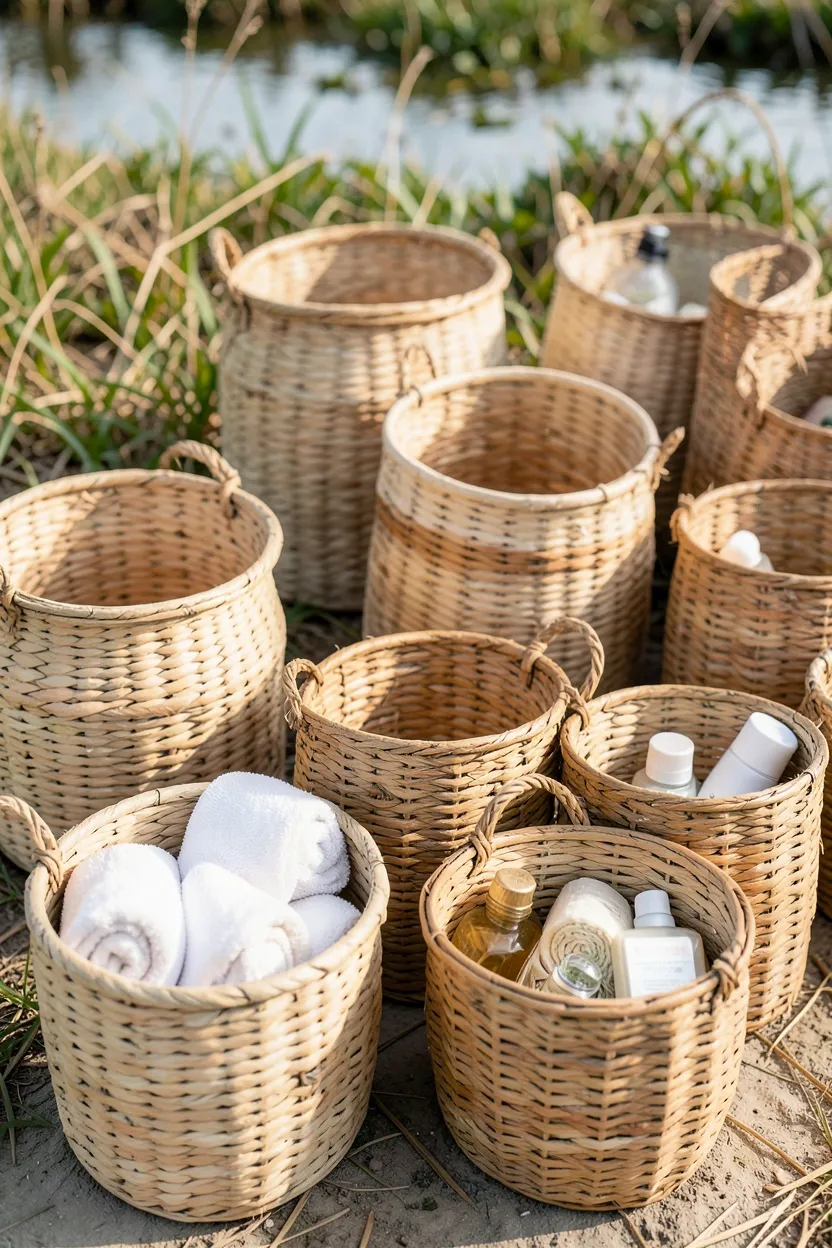
Select baskets made from seagrass, water hyacinth, or other natural materials in neutral tones ranging from pale tan to warm brown. The weaving pattern should be visible and celebrate the material's natural characteristics, with some slight color variations that enhance authenticity. Use baskets of varying sizes to organize different items while maintaining visual harmony through consistent material and color palette.
Tips
- Group baskets together on shelving or floors for intentional, curated appearance
- Then line baskets with natural fabric if moisture is a concern for stored items
- If shopping online, read reviews to ensure baskets are genuinely handwoven
What this gives you: Functional storage with natural beauty and craftsmanship that elevates everyday organization.
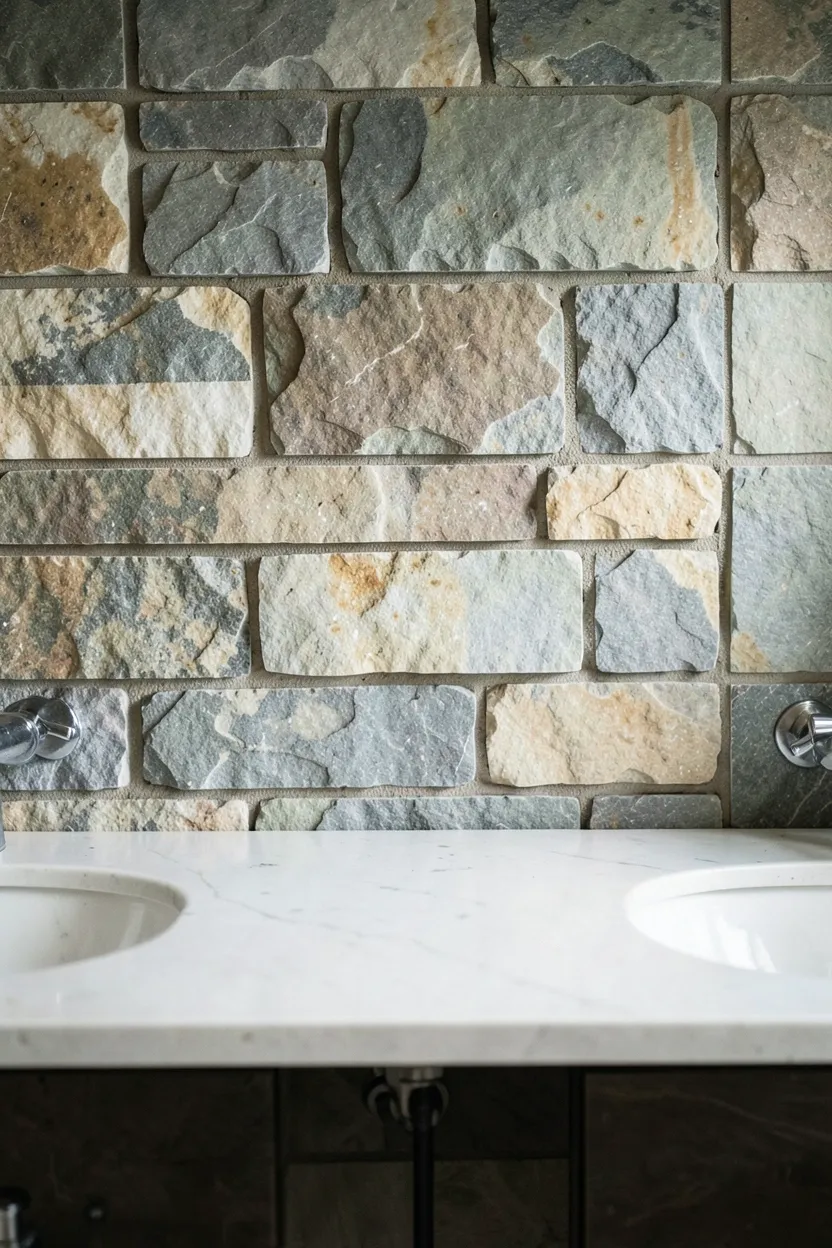
16. Exposed Stone Accent Wall
An exposed stone accent wall creates a dramatic, textural focal point in your wabi-sabi bathroom, celebrating the raw beauty and natural variation found in geological materials. The wall should feature visible stone shapes, slight color variations, and surface textures that reflect natural formation processes rather than manufactured uniformity. Unlike painted or tiled surfaces that can feel flat and artificial, exposed stone adds depth, character, and a connection to the earth.
Recommended
Items for this idea
Choose stone that complements other materials in your bathroom—slate for cool gray tones, limestone for warm beige, or sandstone for golden brown hues. The installation should leave visible mortar joints in natural earth tones, creating visible pattern while celebrating imperfection rather than attempting perfect alignment. Consider applying the stone to one wall behind the vanity or tub to create intentional focal point.
Tips
- Placement note: Stone behind the tub or vanity creates visual anchor for the room
- Then use complementary lighting to highlight stone's natural texture and variations
- If concerned about moisture, choose slate or other non-porous stone options
What this gives you: A stunning natural feature that brings depth, character, and geological beauty to your bathroom.
17. Hand-Forged Metal Towel Rack
A hand-forged metal towel rack celebrates the beauty of traditional craftsmanship and natural metal characteristics, where slight variations in form and surface texture tell the story of metal being shaped by fire and hammer. Unlike mass-produced racks with machine-perfect surfaces, hand-forged pieces carry visible hammer marks, subtle variations in thickness, and a surface that feels intentionally worked by human hands. The aged patina that develops over time adds further character.
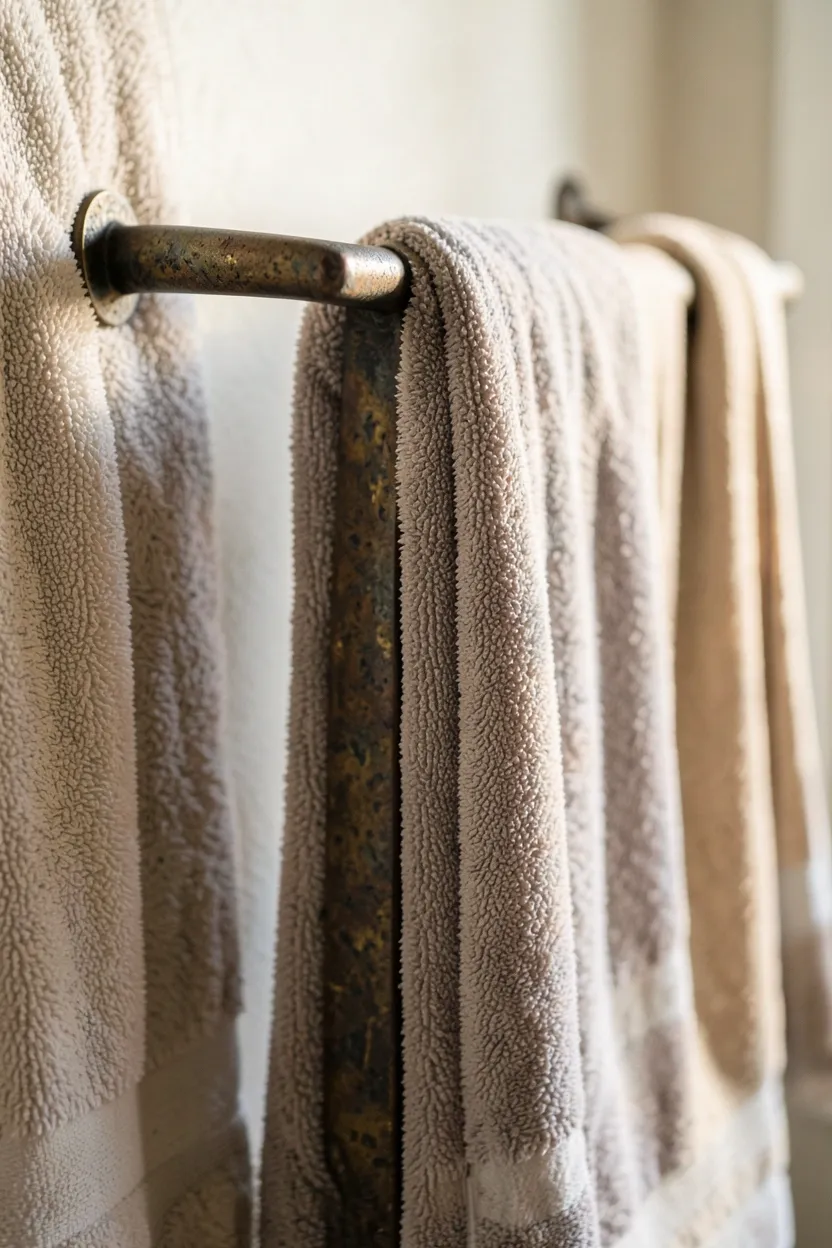
Choose forged iron or aged brass for authentic patina, avoiding shiny or plated finishes that hide metal's natural qualities. The design should be simple and functional—clean lines with perhaps a gentle curve or scroll that doesn't compete with other elements. Visible welds or joinery should be intentional and clean, celebrating the construction method rather than attempting to hide it.
Tips
- Do search for blacksmiths or metal artists for truly unique, handcrafted pieces
- Don't select machine-made pieces with artificial distressing that looks inauthentic
- If budget allows, commission a custom piece sized specifically for your space
What this gives you: A functional towel storage solution that doubles as sculptural art celebrating metal craftsmanship.
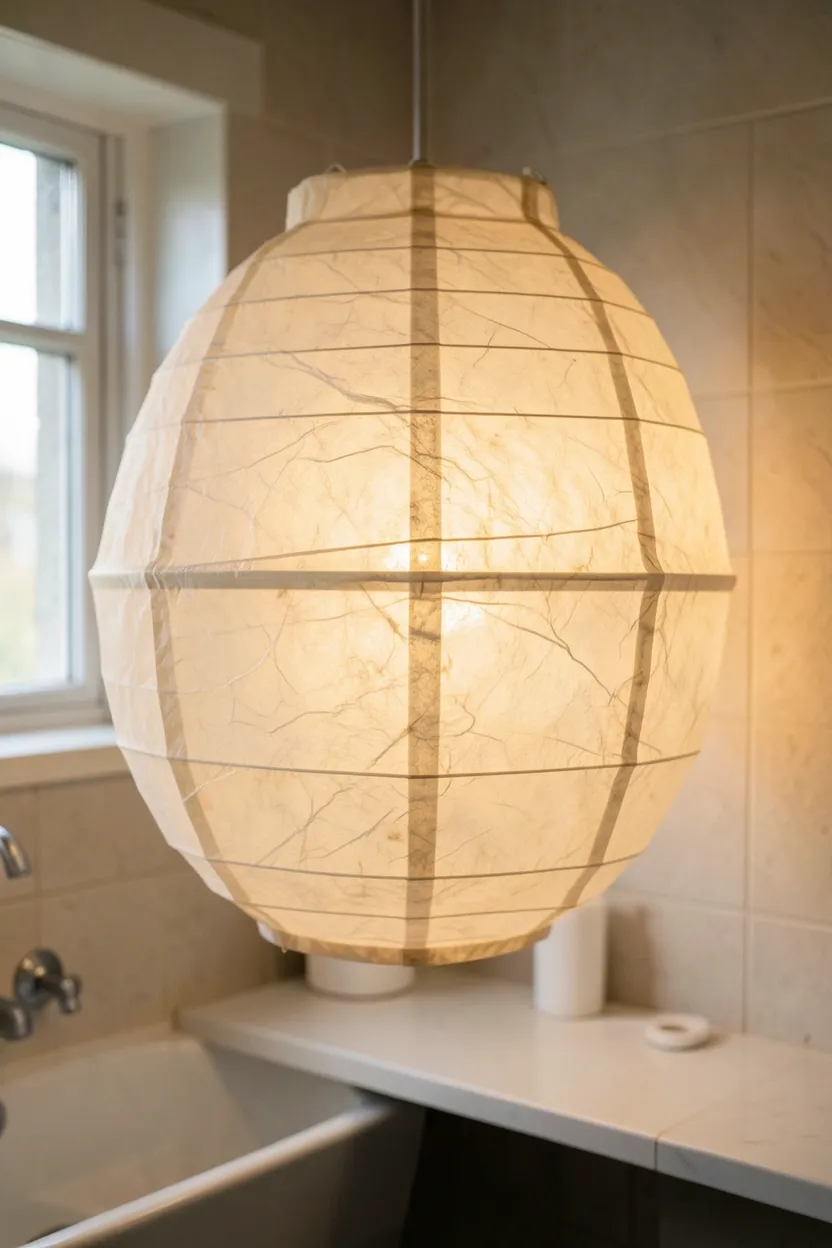
18. Natural Light with Paper Lantern
Natural light filtered through a paper lantern creates soft, diffuse illumination that enhances wabi-sabi's mood of tranquility and connection to natural materials. The paper lantern celebrates traditional craftsmanship and natural materials while diffusing harsh direct light into a gentle glow that bathes your bathroom in calm warmth. Unlike bright, harsh lighting that can feel clinical, paper-filtered light creates an atmosphere of peace and contemplation.
Recommended
Items for this idea
The lantern should feature natural paper or rice paper with visible texture and slight variations that celebrate handmade construction. Simple geometric shapes—circles, squares, or gentle ovals—work best, avoiding overly elaborate forms that distract from the light quality. Position the lantern where it receives natural light during day and provides ambient illumination at night, perhaps near a window or above the tub.
Tips
- Choose LED bulbs in warm color temperature (2700K-3000K) for gentle illumination
- Then position lantern where it doesn't interfere with task lighting at vanity
- If concerned about moisture, select water-resistant paper or apply protective coating
What this gives you: Soft, natural illumination that creates an atmosphere of calm and contemplation in your bathroom.
19. Driftwood or Branch Towel Holder
A driftwood or branch towel holder brings the natural, weathered beauty of wood shaped by water and time into your bathroom, where each piece carries unique characteristics formed by nature rather than human manufacturing. Unlike metal or wooden racks with perfect symmetry, driftwood pieces have irregular shapes, visible grain patterns, and surface textures that celebrate their journey through rivers or oceans. The piece should feel like found art that happens to serve a function.
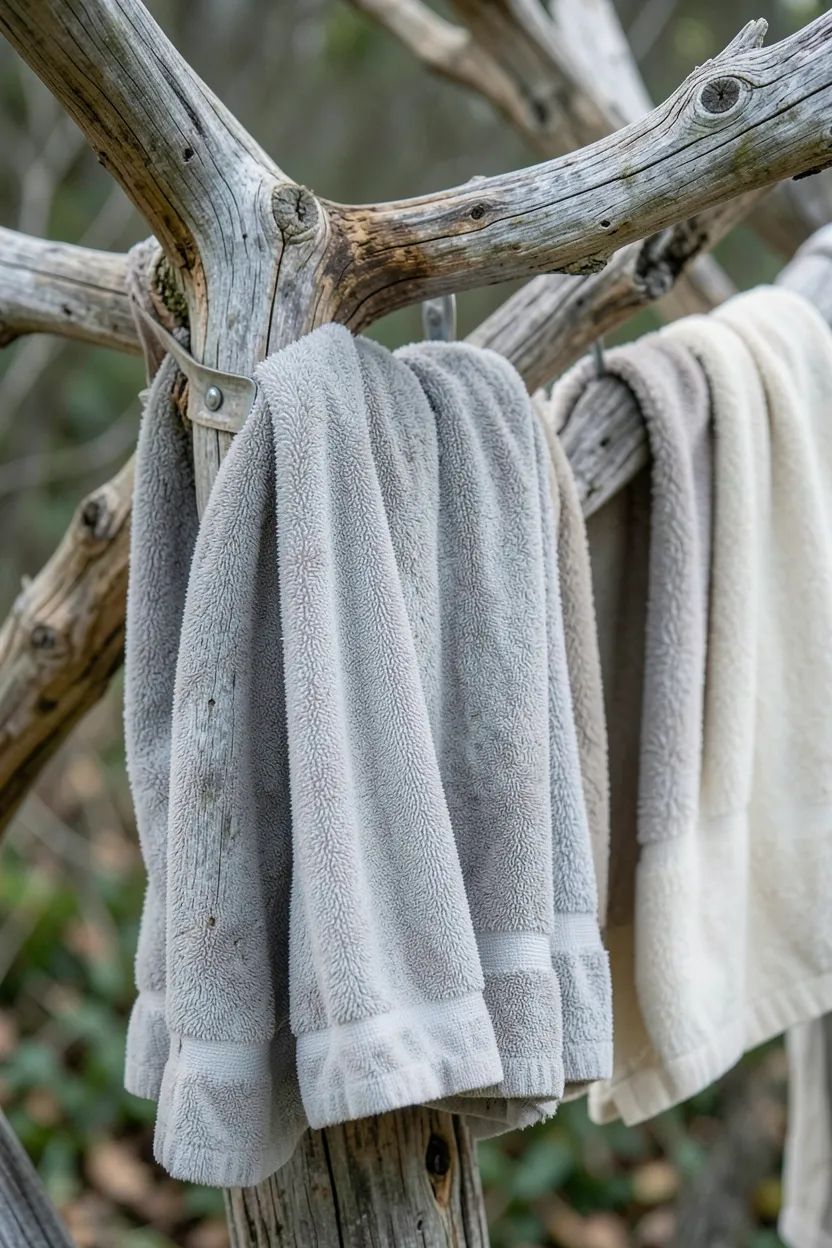
Select driftwood with interesting natural shapes—perhaps a curved branch that creates natural hooks, or a piece with multiple protruding branches that can hold towels. The wood should display visible weathering, color variations from gray-brown to silver, and perhaps minor cracks or knot holes that enhance its character. Minimal metal mounts in aged brass or blackened iron provide support without drawing attention.
Tips
- Source driftwood from beaches or rivers, ensuring it's fully dried before use
- Then apply clear matte sealer to protect against bathroom moisture
- If finding driftwood is difficult, consider aged branch pieces from tree services
What this gives you: A unique, natural towel storage solution that brings the beauty of weathered wood to your bathroom.
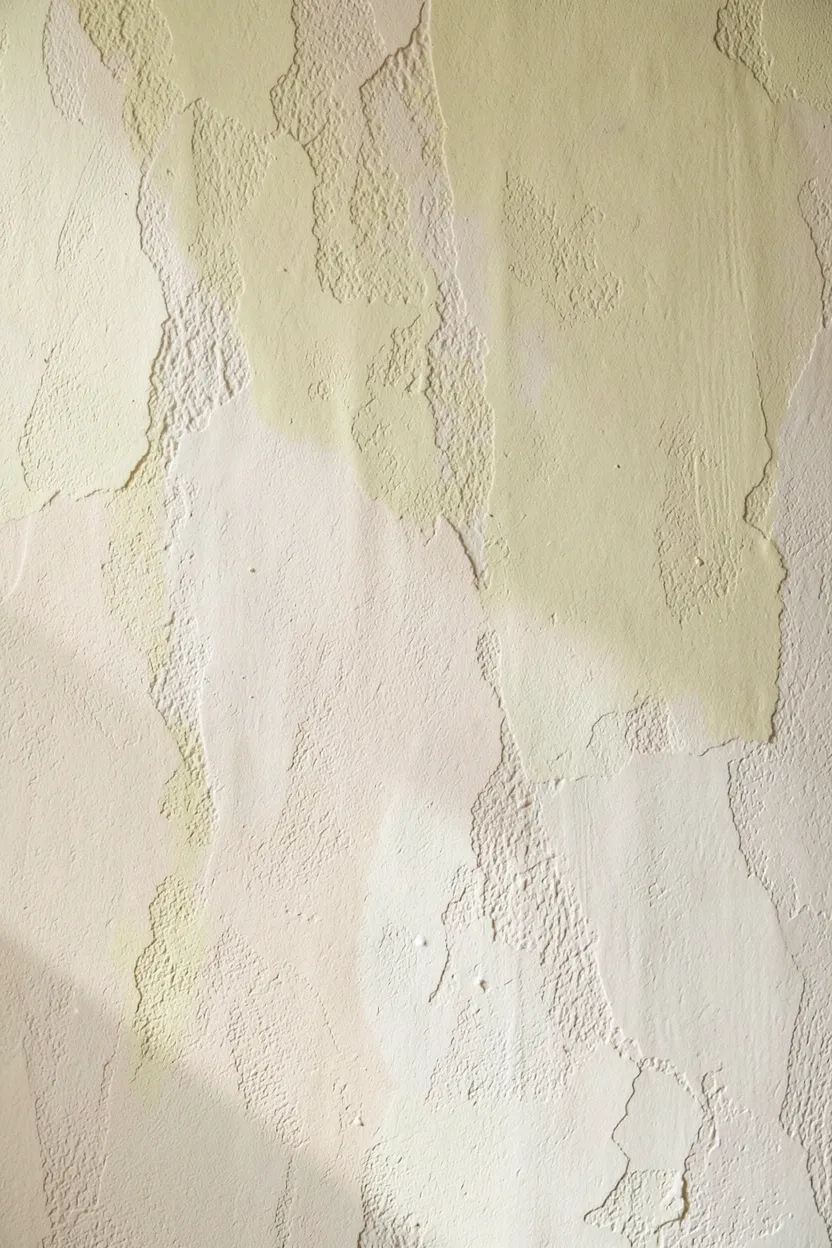
20. Textured Neutral Wall Finish
A textured neutral wall finish creates subtle visual interest without overwhelming your wabi-sabi bathroom, celebrating natural materials and the beauty found in surfaces that have visible character rather than manufactured flatness. The texture catches light in varying ways throughout the day, adding depth and dimension to walls while maintaining the calm, monochromatic palette essential to wabi-sabi aesthetic. Unlike smooth painted walls that can feel sterile, textured surfaces bring warmth and tactility.
Recommended
Items for this idea
Consider techniques like lime wash, Venetian plaster, or skim coating that create visible texture without adding applied materials. The color should remain neutral—warm white, soft beige, or gentle gray—that serves as backdrop for other natural elements rather than competing for attention. The texture should be visible upon close inspection while subtle enough to maintain overall calm from a distance.
Tips
- Test sample patches in different lighting conditions before committing to technique
- Then hire professional applicators for consistent, intentional texture
- If DIY, practice technique first and accept minor variations as part of wabi-sabi aesthetic
What this gives you: Walls with subtle depth and character that enhance overall calm while providing visual interest.
21. Wooden Bath Tray with Imperfections
A wooden bath tray with visible imperfections celebrates the natural characteristics of wood while serving as a functional platform for bath rituals, embodying wabi-sabi's appreciation for beauty found in authentic materials rather than manufactured perfection. The tray should display visible grain patterns, knots, slight color variations, and perhaps minor cracks or surface irregularities that tell the story of the wood's origins. Unlike perfectly finished trays that can feel sterile, a tray with character adds warmth and authenticity.
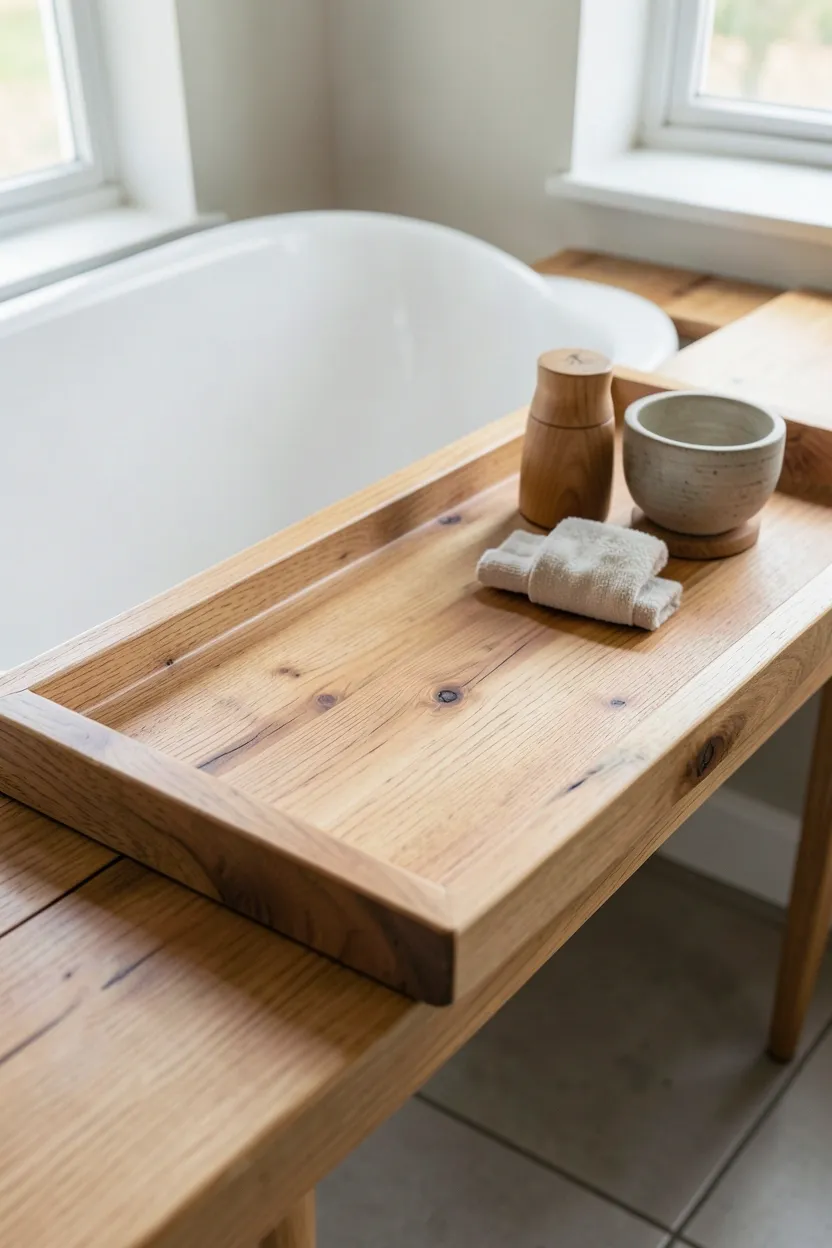
Choose wood with visible natural characteristics—perhaps reclaimed oak with nail holes, cedar with visible grain, or teak with warm, rich tones. The tray should be sized to span your tub comfortably, with raised edges to keep items secure while maintaining a simple, unadorned form that lets the wood's beauty shine through.
Tips
- Apply food-safe mineral oil to protect wood while maintaining visible grain
- Then use tray to hold candles, books, or bath products for ritualistic bath experience
- If concerned about water damage, select naturally water-resistant woods like teak
What this gives you: A functional bath accessory that elevates daily rituals through natural warmth and character.
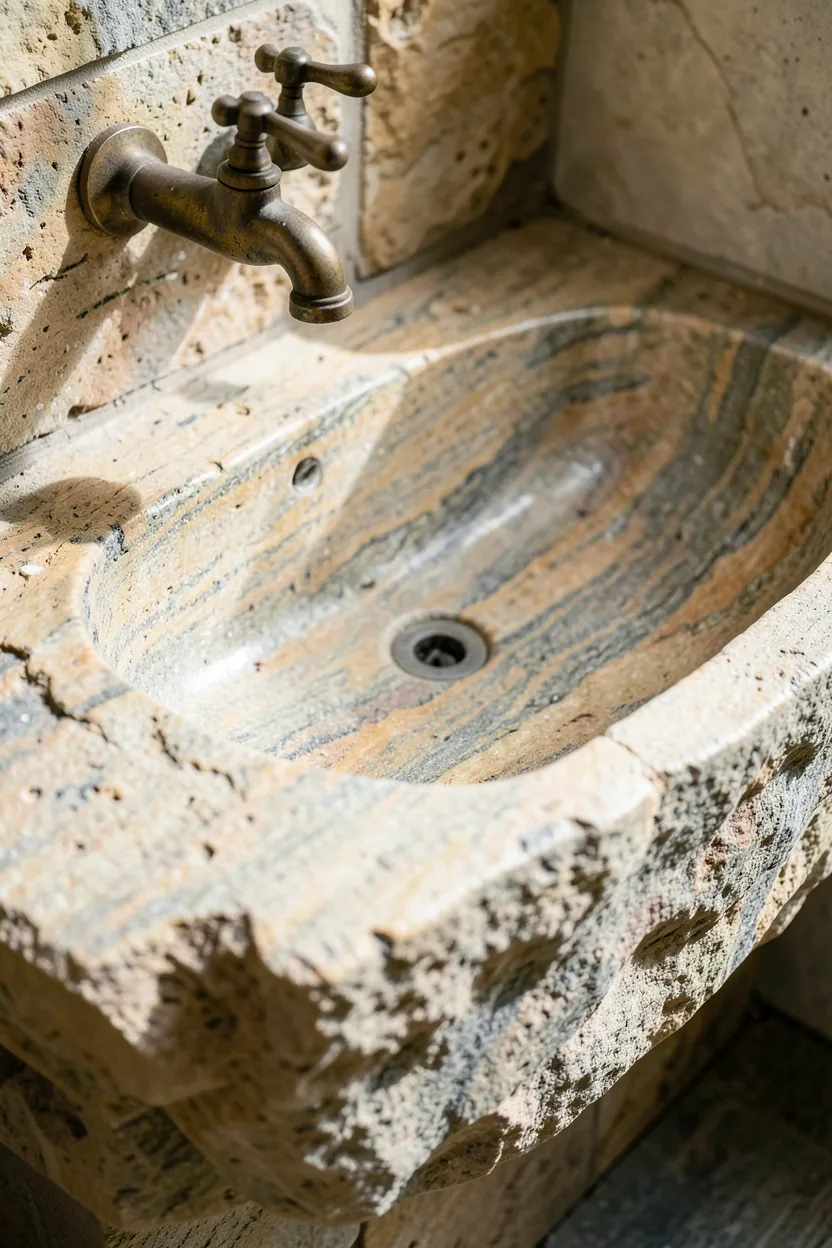
22. Stone Sink with Rough Edges
A stone sink with rough edges and visible natural characteristics creates a dramatic focal point that celebrates geological beauty and wabi-sabi's appreciation for organic forms over manufactured perfection. The sink should feature visible stone patterns, slight color variations, and intentionally rough edges that celebrate material's natural origins rather than machine-perfect contours. Unlike porcelain or ceramic sinks that can feel uniform, each stone sink is unique.
Recommended
Items for this idea
Select stone that complements your overall bathroom aesthetic—travertine for warm beige tones with visible holes, slate for cool gray with natural cleft texture, or sandstone for golden brown coloration. The sink shape should be simple and functional—perhaps a rectangular or oval basin—letting the stone's natural characteristics provide visual interest rather than elaborate forms.
Tips
- Do seal stone regularly to protect against water damage while maintaining visible texture
- Don't select sinks with excessive artificial distressing that looks manufactured
- If concerned about rough edges, choose sinks with slightly smoothed natural finish
What this gives you: A stunning, unique sink that brings geological beauty and natural character to your vanity.
23. Bamboo Toothbrush Holder
A bamboo toothbrush holder brings natural materials and sustainable design to a mundane bathroom essential, celebrating wabi-sabi's emphasis on using natural materials thoughtfully rather than relying on plastic alternatives. The bamboo should display visible grain patterns, natural color variations from pale honey to warm amber, and perhaps slight irregularities in shape or finish that indicate handmade construction. Unlike mass-produced plastic holders, bamboo brings warmth and character to vanity.
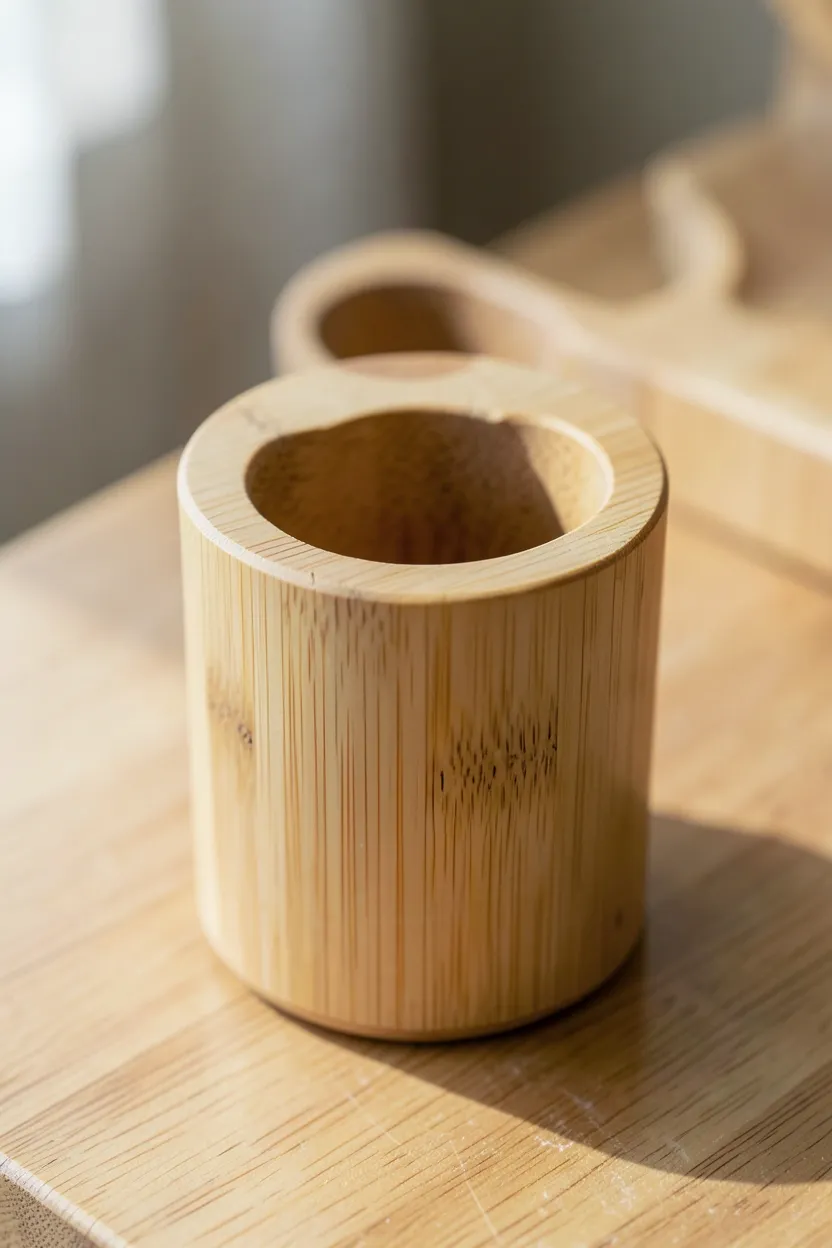
The holder should be simple in design—perhaps a cylindrical container with individual slots or a small tray for toothbrushes—allowing the bamboo's natural beauty to provide visual interest without competing with other elements. Choose natural bamboo finishes rather than painted or stained options that hide the material's characteristics.
Tips
- Place holder where it's accessible but doesn't clutter vanity surface
- Then ensure holder has drainage to prevent moisture buildup in bottom
- If concerned about moisture, select bamboo with waterproof coating
What this gives you: A sustainable, natural accessory that brings warmth and character to daily hygiene routine.
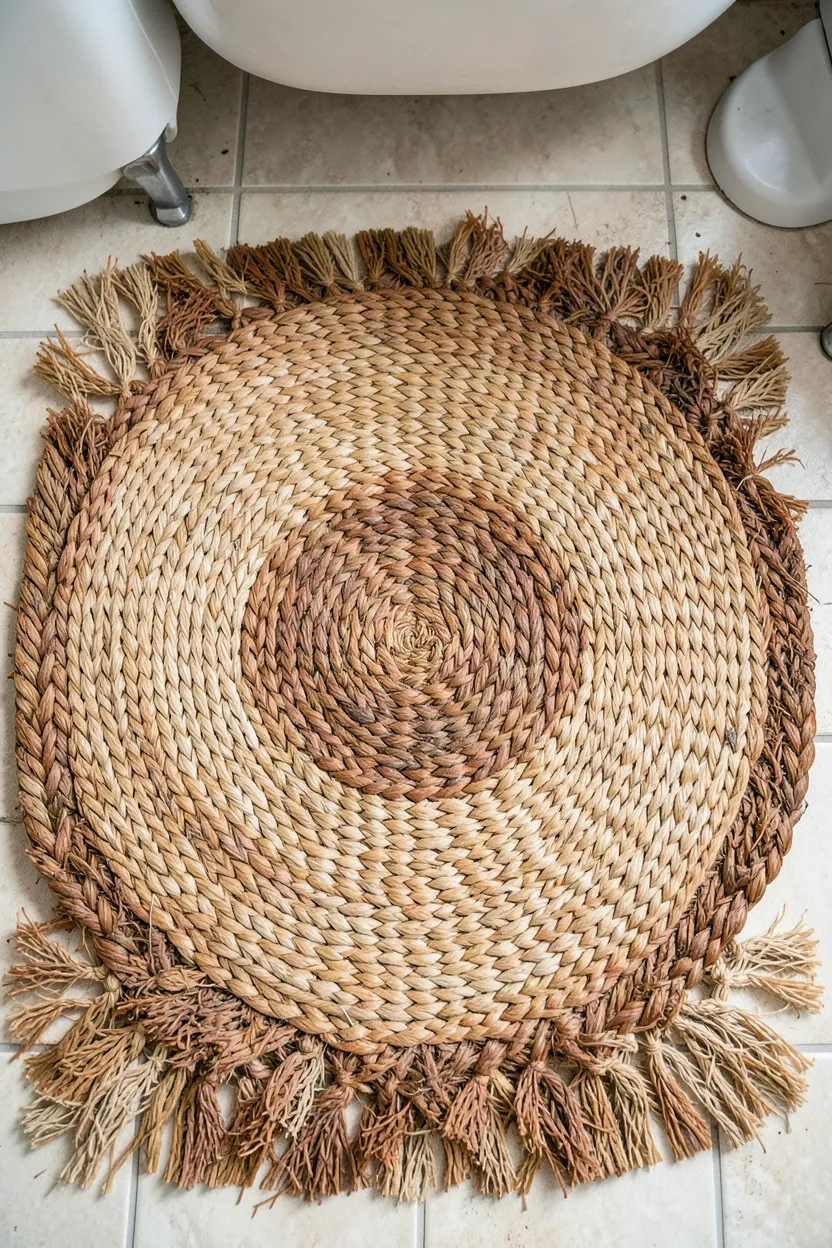
24. Woven Seagrass Mat
A woven seagrass mat introduces natural texture and earthy warmth to your bathroom floor, celebrating handmade craftsmanship and the beauty found in natural materials rather than synthetic alternatives. The mat should feature visible weaving patterns, slight color variations from tan to warm brown, and textural variations that celebrate seagrass's natural characteristics. Unlike synthetic bath mats that can feel artificial, seagrass brings organic warmth and connection to natural materials.
Recommended
Items for this idea
Choose a mat sized for your bathroom layout—perhaps a runner for main floor area or a smaller mat near tub or shower—that provides coverage while complementing other natural elements. The weaving should be tight enough to provide comfortable, even surface while maintaining visible texture that catches light beautifully.
Tips
- Do place mat on non-slip pad to prevent sliding on smooth surfaces
- Don't use seagrass in areas prone to constant standing water
- If concerned about maintenance, consider seagrass with water-resistant backing
What this gives you: A natural, textural floor covering that brings warmth and organic beauty to your bathroom.
25. Antique Mirror with Spotted Glass
An antique mirror with spotted or distressed glass celebrates the beauty of age and patina, embodying wabi-sabi's appreciation for the passage of time and the character that develops through use rather than manufactured perfection. The mirror should display visible spotting, slight oxidation, and perhaps minor cracks that tell the story of its decades of existence. Unlike new mirrors with pristine surfaces, an antique piece brings history and storytelling to your bathroom.
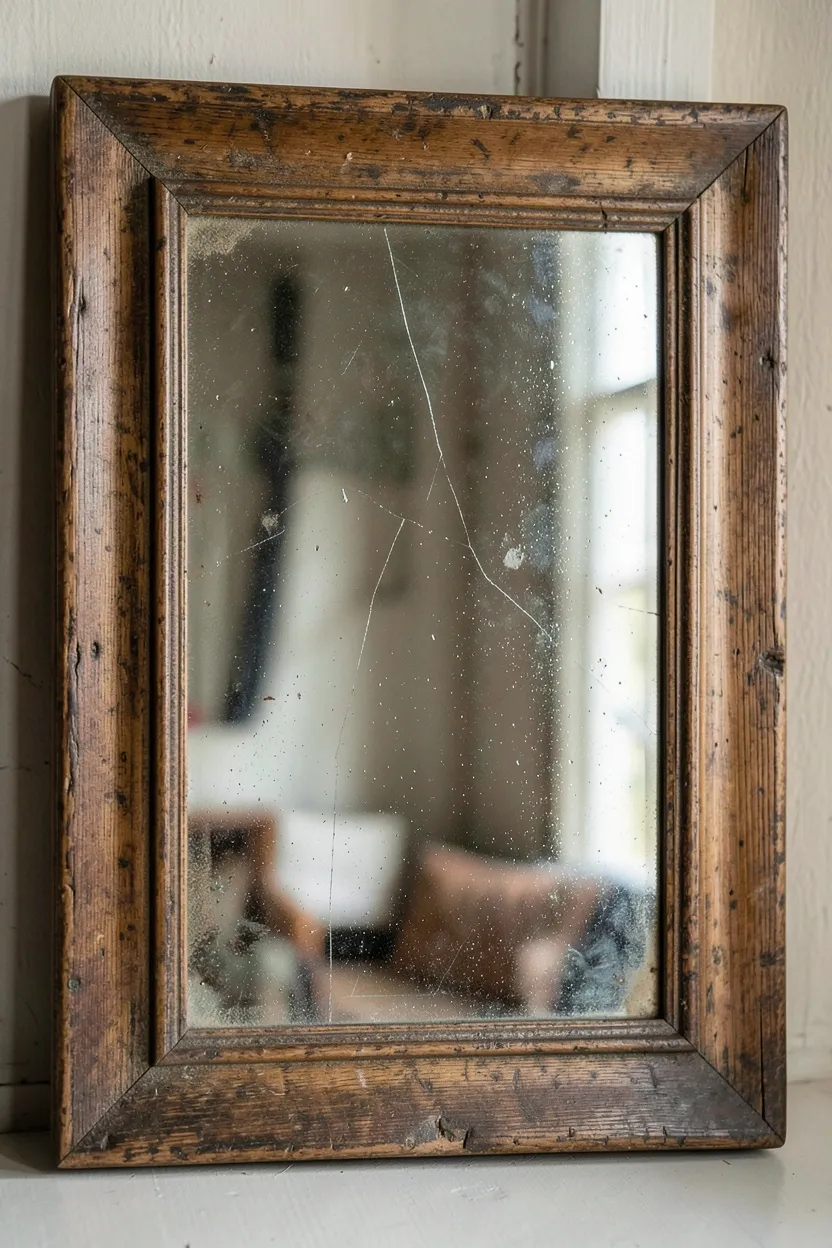
The frame should also show signs of age—perhaps weathered wood with visible grain patterns, aged metal with patina, or chipped paint that reveals layers of previous finishes. Choose a size appropriate for your vanity wall while allowing the mirror's character to be visible without overwhelming the space.
Tips
- Source from reputable antique dealers who can verify mirror's age and authenticity
- Then ensure mirror is properly mounted to support its weight securely
- If concerned about mirror's condition, consider resilvering while preserving frame
What this gives you: A reflective surface with historical character that brings depth and storytelling to your bathroom.
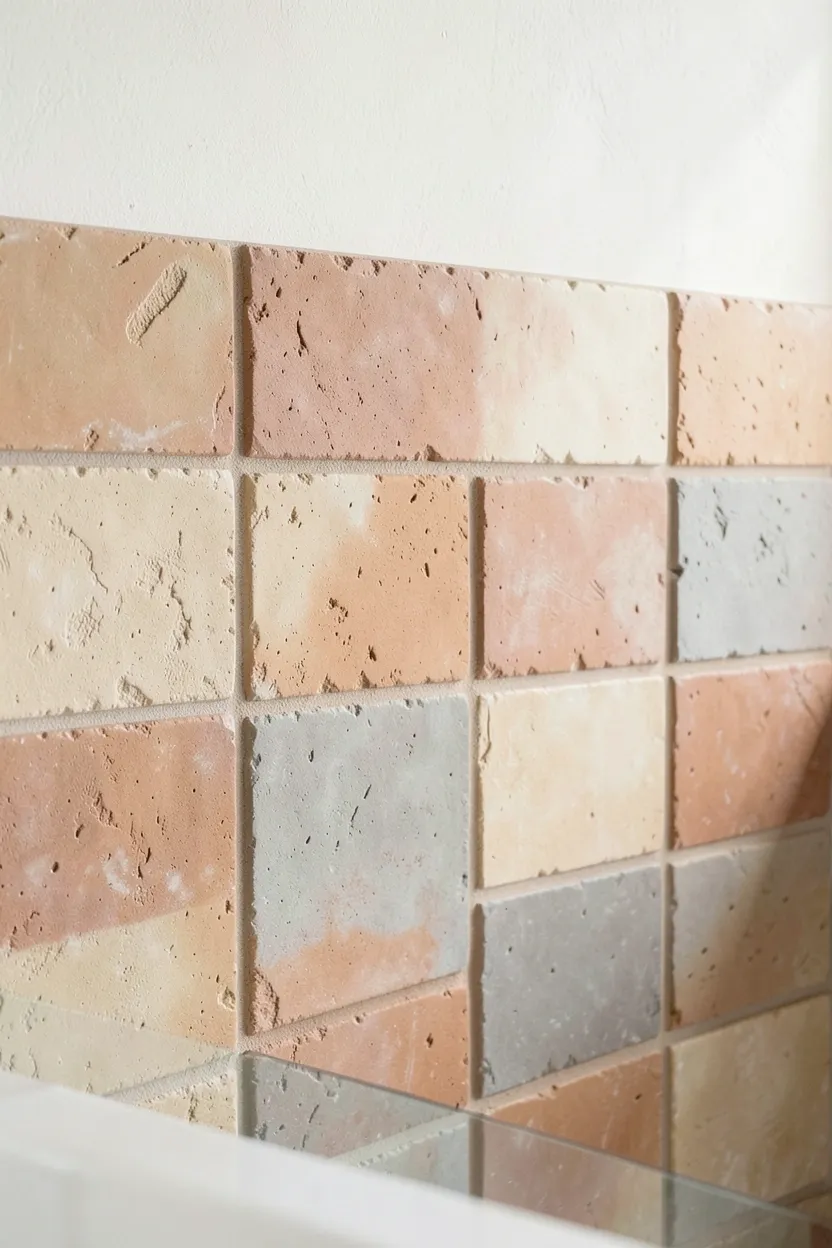
26. Natural Clay Tile Accents
Natural clay tile accents introduce handmade warmth and earthy texture to your wabi-sabi bathroom, celebrating beauty found in materials shaped by human hands and fired with natural processes. The tiles should display visible variations in color, size, and surface texture that indicate handcrafting rather than machine production. Unlike uniform manufactured tiles, clay tiles carry character and slight imperfections that make each installation unique.
Recommended
Items for this idea
Use clay tiles as accents rather than full coverage—perhaps as a backsplash behind vanity, framing around mirror, or as a decorative border that complements larger surfaces. Choose neutral tones ranging from warm beige and terracotta to soft gray, celebrating clay's natural coloration without artificial pigments.
Tips
- Do source from local potters or artisan suppliers for authentic handmade tiles
- Don't mass-produce tiles from large manufacturers with uniform appearance
- If budget is limited, use tiles as decorative accents rather than full installations
What this gives you: Handmade warmth and character that brings earthy, organic texture to your bathroom surfaces.
27. Wooden Step Stool
A wooden step stool with visible grain and natural characteristics provides functional height assistance while celebrating simplicity and warmth of natural materials in your wabi-sabi bathroom. The stool should display visible wood grain, knots, and perhaps slight variations in form or joinery that celebrate handmade construction. Unlike metal or plastic step stools that can feel utilitarian, a wooden piece brings warmth and character to functional objects.
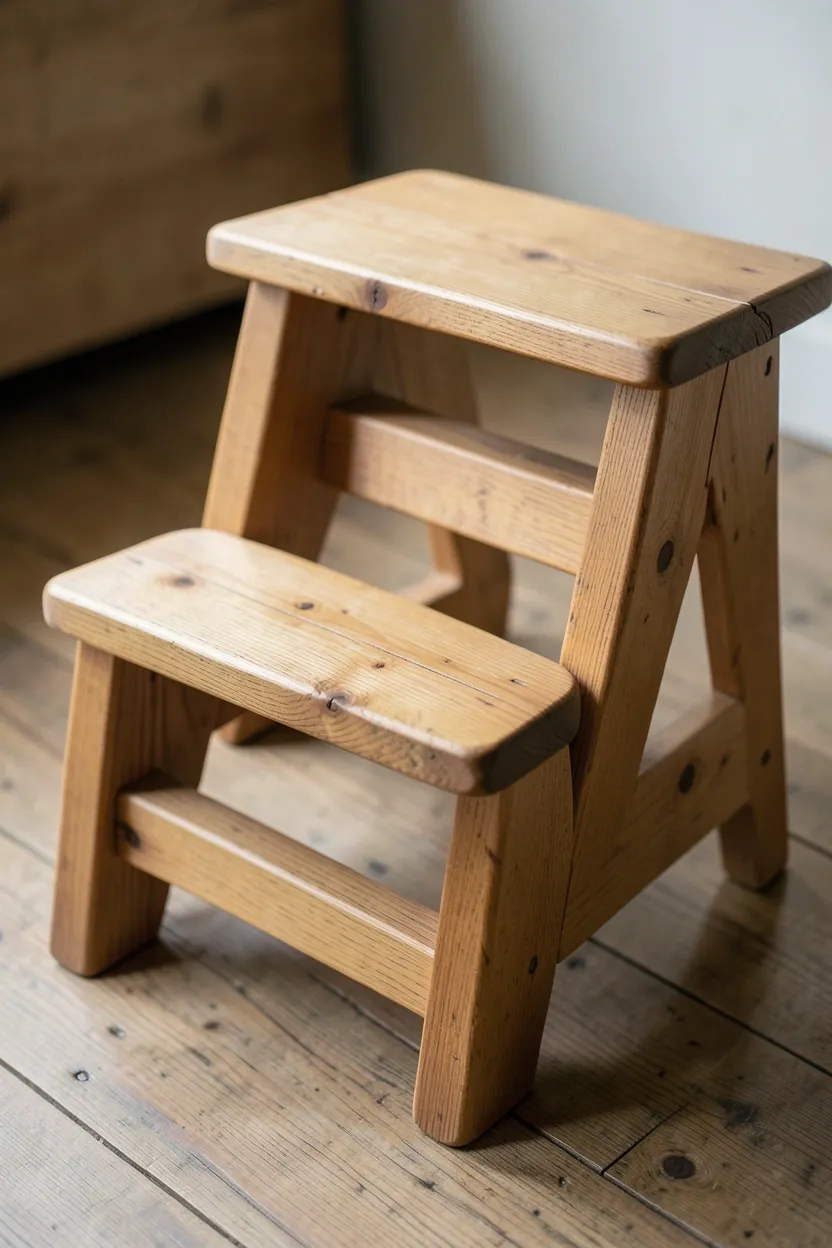
Choose wood with visible natural characteristics—perhaps oak with visible grain, pine with warm tones, or reclaimed wood with visible nail holes and weathering. The design should be simple and sturdy—perhaps a one- or two-step design with clean lines that don't compete with other elements while maintaining stability.
Tips
- Place stool near tub or shower for convenient access to hard-to-reach areas
- Then ensure stool has non-slip feet for safety on smooth bathroom floors
- If concerned about moisture, apply clear sealer while maintaining visible grain
What this gives you: Functional assistance that brings natural warmth and character to practical bathroom needs.
28. Handmade Pottery Collection
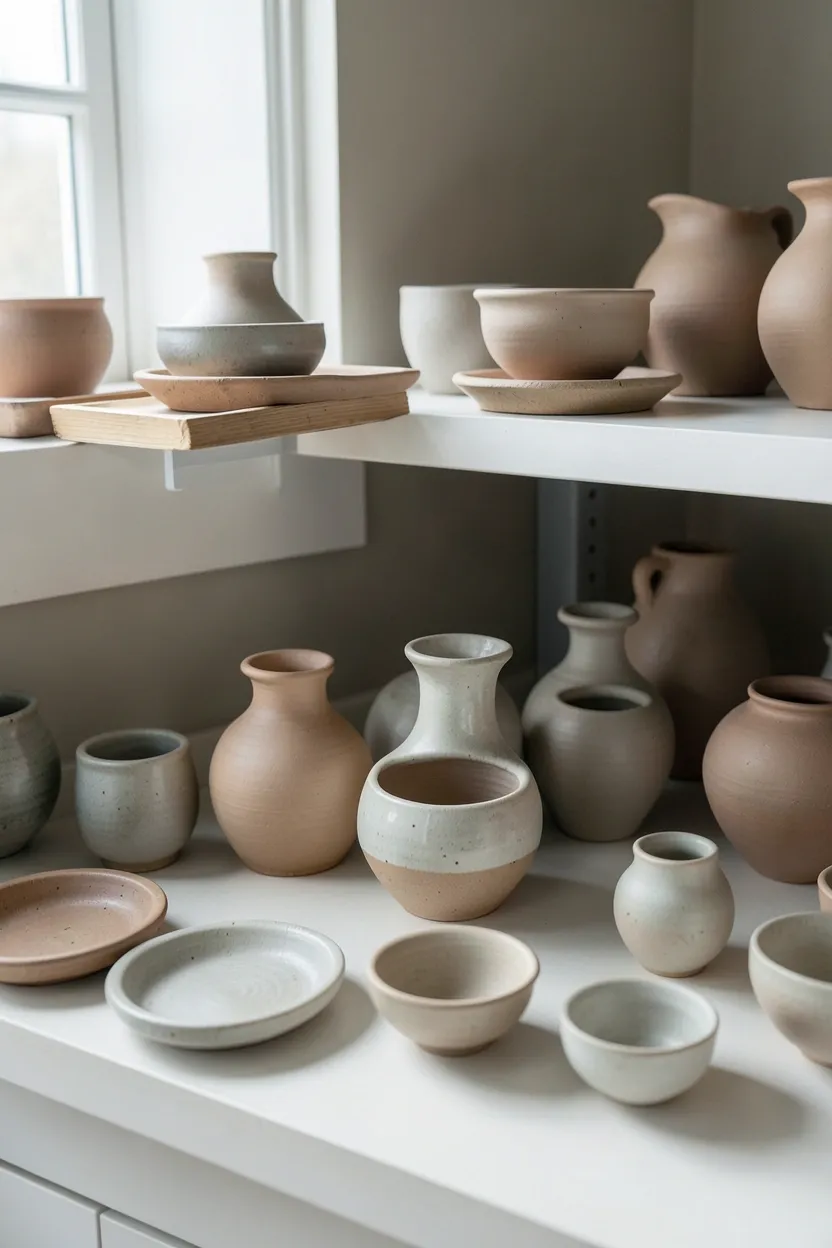
A collection of handmade pottery pieces displayed together creates visual cohesion while celebrating wabi-sabi's appreciation for handmade craftsmanship and variation within unity. The pieces should share a complementary color palette and aesthetic while displaying visible differences in form, glaze, and surface texture that indicate individual creation by human hands. Unlike manufactured collections with uniformity, handmade pottery tells stories.
Recommended
Items for this idea
Curate pieces for specific functions—perhaps soap dishes, small bowls, vases, or decorative vessels—displayed together on shelving, vanity surface, or in niches. Choose pottery in neutral tones that complement your bathroom palette, allowing slight color variations to create visual harmony rather than competing contrasts.
Tips
- Support local potters by purchasing pieces directly from studios or craft markets
- Then group pieces by color or function for intentional, curated appearance
- If budget is tight, start with one or two meaningful pieces and build collection slowly
What this gives you: A curated collection that brings warmth, craftsmanship, and storytelling to your bathroom.
29. Stone Bath Mat
A stone bath mat provides natural, durable flooring that celebrates geological beauty while connecting your wabi-sabi bathroom to earth's materials and processes. The mat should feature visible stone textures, slight color variations, and natural shapes that celebrate material's origins rather than manufactured uniformity. Unlike synthetic or textile mats, stone provides substantial, grounding surface that feels connected to natural world.
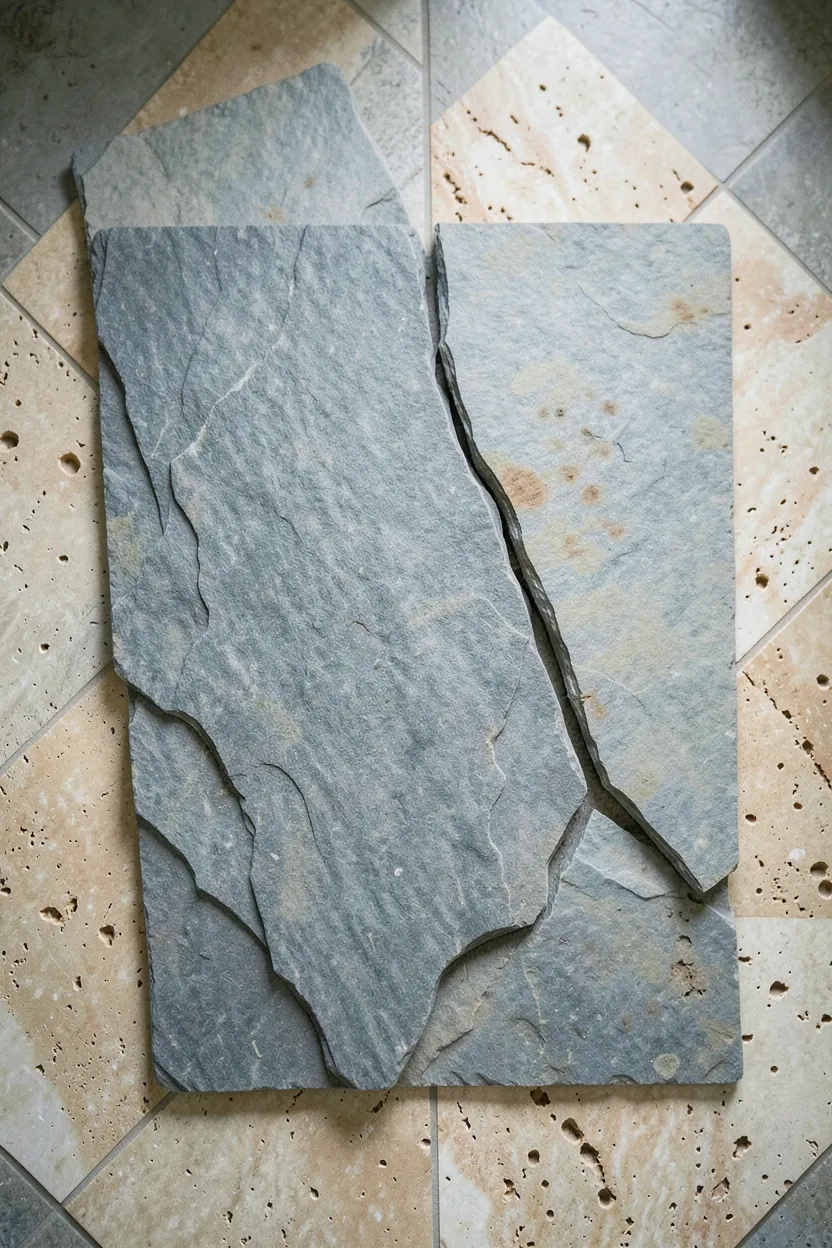
Choose stone that works with your bathroom climate and aesthetic—slate for cool tones and natural cleft texture, travertine for warm beige with natural holes, or river stones assembled into a mat form. The surface should be smooth enough for comfort while maintaining visible stone texture and character.
Tips
- Do place mat where water drains away to prevent pooling and moisture damage
- Don't select stone that's too rough for comfortable barefoot use
- If concerned about coldness, consider placing mat over rug for comfort
What this gives you: A durable, natural floor covering that brings geological beauty and grounding to your bathroom.
These wabi-sabi bathroom ideas invite you to slow down and appreciate beauty in imperfection, natural materials, and the passage of time. By embracing wood with visible grain, stone with natural variations, and handmade pieces that celebrate craftsmanship, you create a wabi-sabi bathroom that feels authentic, calm, and deeply connected to the natural world. The best part: most of these ideas are fully renter-friendly — no permanent changes, no landlord approval needed. Whether you start with a single handmade ceramic piece or layer in natural textures gradually, wabi-sabi bathroom decor guides you toward a space that nourishes rather than distracts, creating a sanctuary for mindful rituals and everyday moments of peace.
About the author
OBCD
CGI visualization and interior design content. We create detailed 3D renders and curate practical design ideas for every room in your home.