21 Small Gym Room Ideas That Make Tight Spaces Feel Bigger
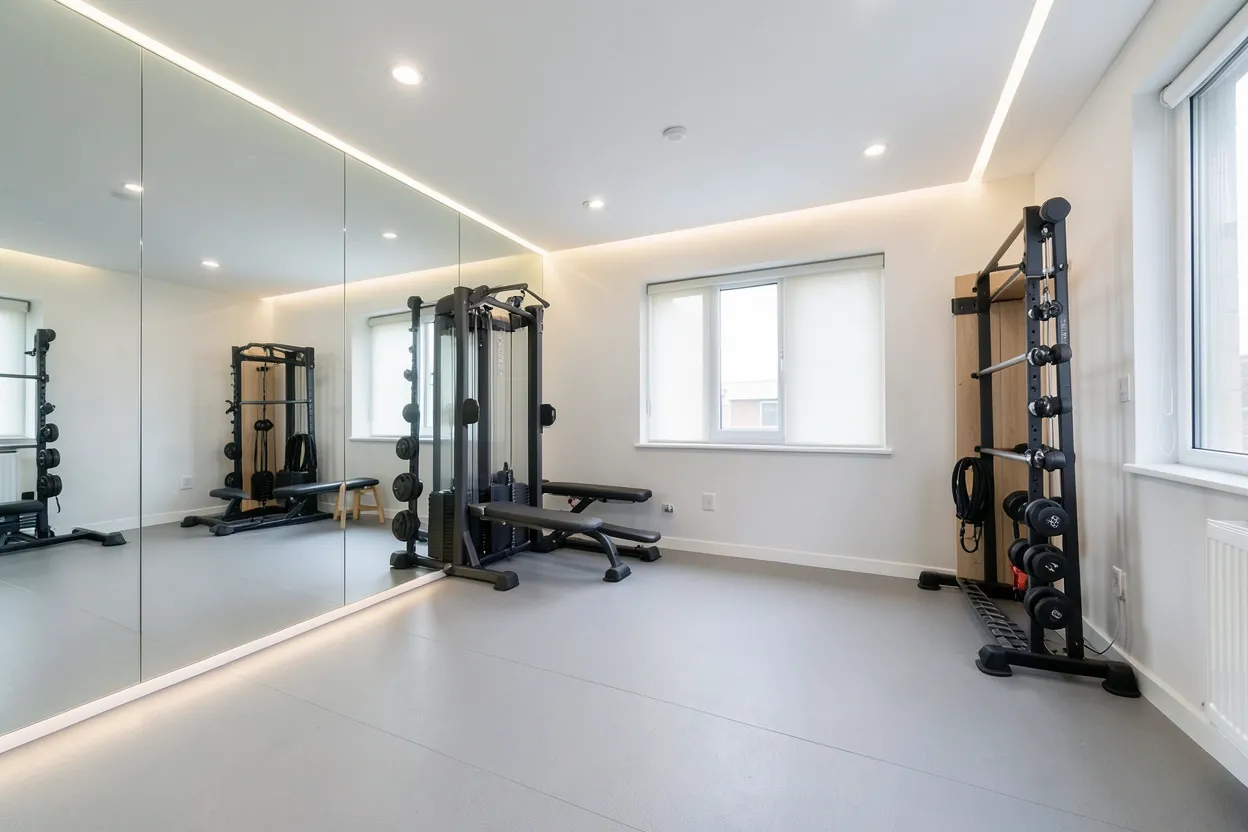
Creating a small gym room that feels spacious and inspiring requires smart design choices that maximize every square foot while maintaining functionality. Whether you're working with a spare bedroom, a corner of your living room, or a cramped apartment space, the right small gym room ideas can transform even the tightest areas into effective workout zones that don't feel cramped or claustrophobic — no large dedicated room required.
These 21 small gym room ideas focus on visual expansion, space-saving equipment, and clever storage solutions that make tight spaces feel bigger while providing everything you need for a complete workout. From mirror walls that double the perceived space to wall-mounted systems that keep floors clear, from foldable equipment to vertical storage strategies, these approaches prove that you don't need a massive room to create a motivating home gym for small spaces.
The key to a successful small workout room lies in choosing equipment that serves multiple purposes, using vertical space efficiently, and employing design tricks that create visual openness. Many of these ideas are renter-friendly — no permanent drilling required — making them ideal for apartment dwellers and renters who want a compact home gym setup without risking their security deposit. Light colors, reflective surfaces, smart lighting, and strategic placement can transform a tiny corner into a professional-feeling workout space.
Quick FAQ
How much space do I really need for a home gym?
You can create an effective workout space in as little as 4x4 feet for bodyweight exercises, yoga, and light equipment. For more complete setups with cardio and strength training, aim for 8x10 to 10x12 feet. The key is choosing compact equipment and using vertical storage to keep the floor area clear for movement, not trying to fit too much into a small space.
How can I make a small gym room feel bigger?
Use mirrors strategically to reflect light and create the illusion of space, choose light and neutral color palettes, maximize natural light, install bright overhead lighting, use vertical storage to keep floors clear, and select slim-profile equipment. These visual tricks combined with smart organization can make even the smallest workout area feel open and inviting.
What equipment works best in a small gym room?
Focus on versatile, space-saving equipment like adjustable dumbbells, resistance bands, suspension trainers, foldable cardio equipment, and wall-mounted systems. A yoga mat, kettlebell set, and compact resistance training station can provide a complete workout without consuming valuable floor space. Avoid bulky machines that serve only one purpose.
Can I hide a gym room when not in use?
Absolutely. Use folding screens, room dividers, sliding barn doors, or convert furniture like Murphy cabinets to conceal your gym space. Wall-mounted equipment can be folded against walls, and portable mats can be rolled up and stored. These approaches let you reclaim the space for other activities when you're not working out.
As an Amazon Associate I earn from qualifying purchases.
Table of Contents
- 1. Mirror Wall for Visual Expansion
- 2. Wall-Mounted Foldable Equipment
- 3. Vertical Storage System
- 4. Light Color Palette with Reflective Surfaces
- 5. Under-Stairs Workout Nook
- 6. Compact Corner Gym Setup
- 7. Multipurpose Murphy Gym Cabinet
- 8. Ceiling-Mounted Storage
- 9. Slim Profile Equipment Selection
- 10. Open Space Layout
- 11. Hidden Gym Behind Sliding Doors
- 12. Bright Lighting Strategy
- 13. Foldable Cardio Equipment
- 14. Wall-Mounted Resistance Training System
- 15. Minimal Equipment Selection
- 16. Dual-Purpose Gym Office
- 17. Compact Free Weights Station
- 18. Mirror Accent Wall
- 19. Hidden Storage Bench
- 20. Strip Lighting for Depth
- 21. Decluttered Zone Design
1. Mirror Wall for Visual Expansion
A small gym room transforms instantly when you install floor-to-ceiling mirrors along one entire wall. This small gym room idea doubles the visual space of your workout area by reflecting the room back at you, creating the illusion of a much larger space while serving the practical purpose of letting you check your form during exercises. The mirrors bounce natural and artificial light around the room, making the entire area feel brighter, airier, and more open.
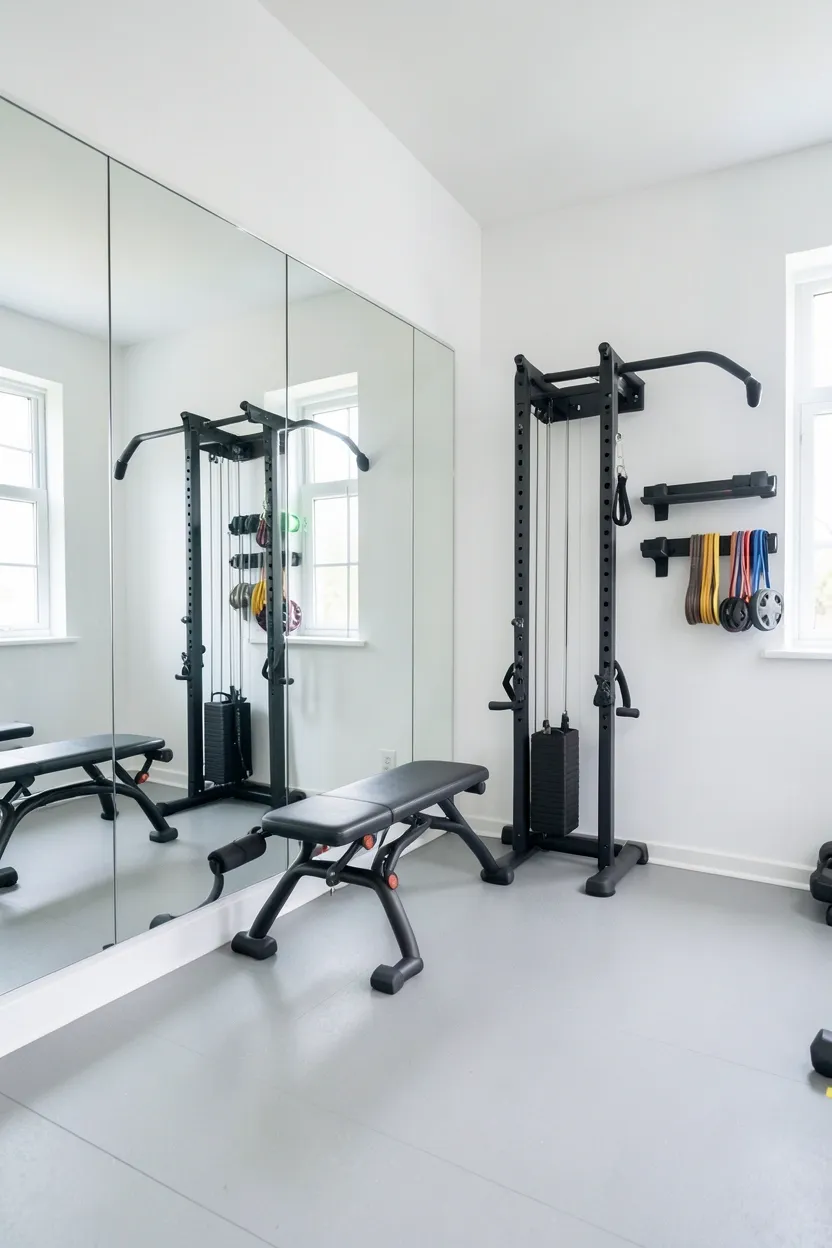
The 8-foot tall mirrors should be safety-tempered glass mounted with professional-grade brackets to ensure stability. Position them opposite any windows to maximize light reflection, or place them facing your main workout zone so you can monitor your posture during resistance training, yoga, and bodyweight exercises. The reflective surface creates depth that makes even a cramped 6x8-foot space feel like a spacious studio.
Pair the mirror wall with light wall colors and minimal equipment to enhance the sense of openness. Keep the area in front of mirrors clear of clutter so nothing disrupts the visual expansion. A ceiling fan keeps air circulating without breaking the mirror illusion. If full-wall mirrors feel too overwhelming, create a dramatic effect with a large statement mirror centered on one wall instead.
Do: Install mirrors at least 4 feet from the floor to capture full-body movements and create the most expansive visual effect.
Don't: Place mirrors directly behind equipment that will block the reflection and defeat the space-expanding purpose.
What this gives you: An immediate sense of doubled space that makes your small gym room feel professional and spacious, plus practical form-check benefits for better workouts.
2. Wall-Mounted Foldable Equipment
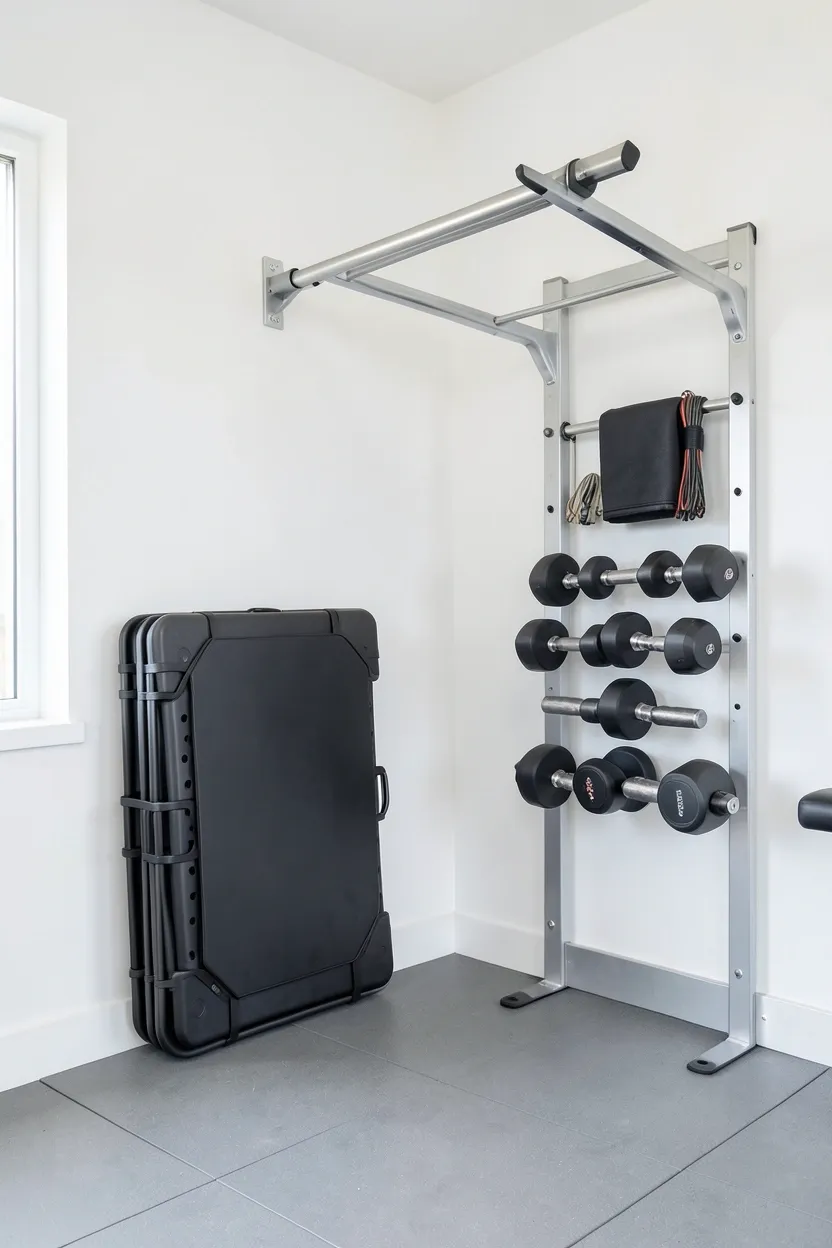
Transform your small gym room with equipment that mounts directly to walls and folds flat when not in use. This space-saving approach includes folding benches, wall-mounted pull-up bars that collapse against the wall, and foldable racks that keep your floor space completely clear for other activities. When you're ready to workout, everything unfolds in seconds—when you're done, fold it back and reclaim the entire room.
Recommended
Items for this idea
Why it works: Wall-mounted systems use vertical space that would otherwise go unused, leaving your precious floor area completely free. A folding bench mounted on sturdy brackets can support significant weight yet tucks away to just 4 inches of depth when folded. Wall-mounted pull-up bars with folding arms create zero obstruction when closed but provide full functionality during workouts.
Placement note: Install folding equipment on walls that don't interfere with doorways or natural light paths, and ensure you have adequate ceiling height for unfolded positions.
Use magnetic wall-mounted racks for weights and resistance bands that can be removed when the room serves other purposes. This small gym room idea creates maximum flexibility for multipurpose spaces while still providing serious workout capability. The clean, uncluttered floor makes the entire room feel larger and more inviting.
If: You live in a rental where permanent wall mounting isn't possible, use tension-mounted equipment or freestanding foldable units that can be moved.
Then: You can still achieve the space-saving benefits without damaging walls or losing your security deposit.
What this gives you: A fully functional gym that disappears when not in use, making your small room feel spacious and multipurpose rather than permanently dedicated to fitness equipment.
3. Vertical Storage System
A comprehensive vertical storage system transforms a cramped small gym room into an organized, spacious-feeling space by taking advantage of wall height rather than precious floor area. Install floor-to-ceiling shelving units, pegboards, and wall-mounted racks that keep dumbbells, kettlebells, resistance bands, yoga mats, and accessories organized and off the floor, creating maximum open space for movement and workouts.
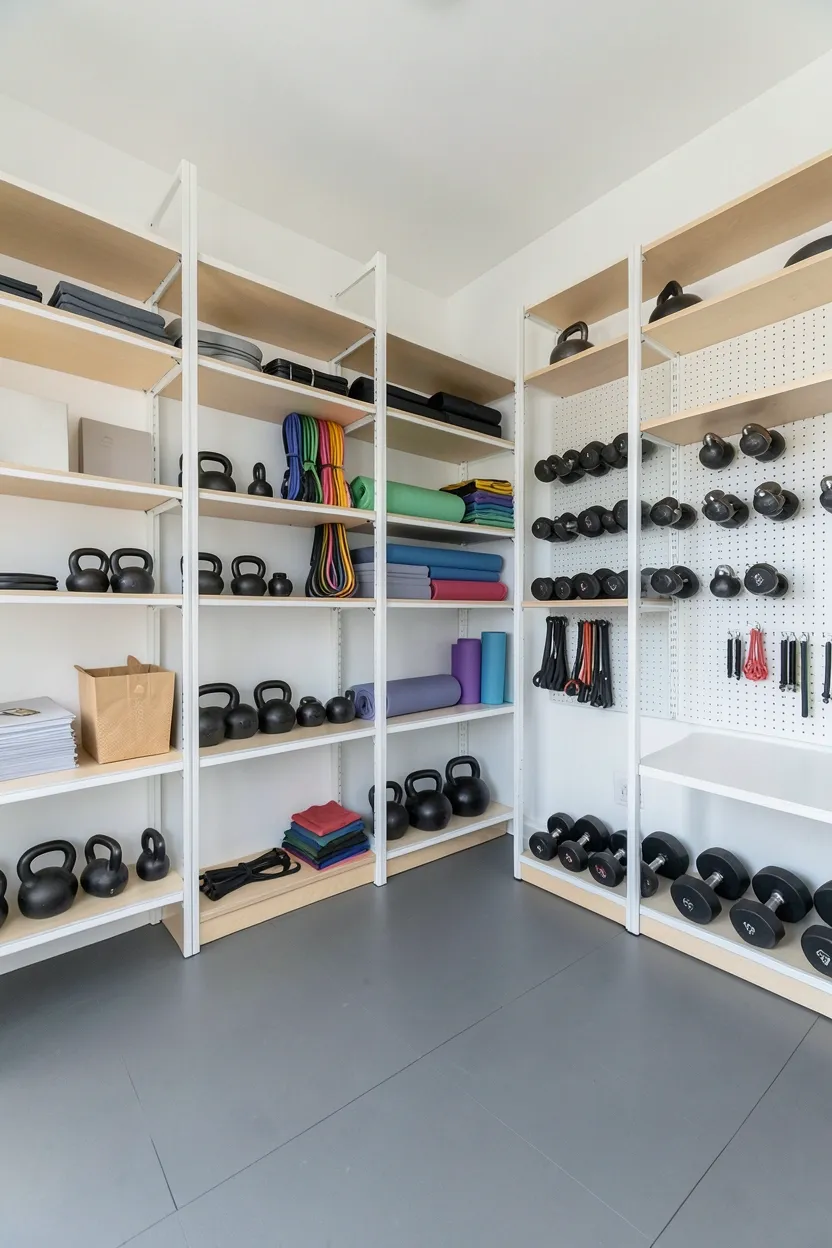
The system includes adjustable shelving for weight sets, hooks for resistance bands and jump ropes, magnetic strips for small metal accessories, and designated cubbies for yoga blocks and foam rollers. By grouping related items by height—with frequently used equipment at eye level and seasonal or occasional items on higher shelves—you create visual order that makes the space feel larger and more manageable.
Choose light-colored storage units that blend with walls to maintain visual openness. The clean, uncluttered floor immediately makes the room feel twice as large. Label storage zones for quick access during workouts. A pegboard on one wall allows customizable arrangements that can change as your fitness needs evolve, while keeping everything visible and accessible.
Do: Keep heavier items like weight plates and dumbbells on lower shelves for safety and easier access during intense workouts.
Don't: Overload upper shelves with heavy equipment that could fall during vigorous movement or create safety hazards.
Group cardio equipment on one wall, strength training gear on another, and accessories like resistance bands and mats on a third. This zoning creates visual order and makes finding what you need during workouts intuitive.
What this gives you: Maximum floor space for movement and exercises, plus a visually organized environment that feels larger, cleaner, and more motivating to use.
4. Light Color Palette with Reflective Surfaces
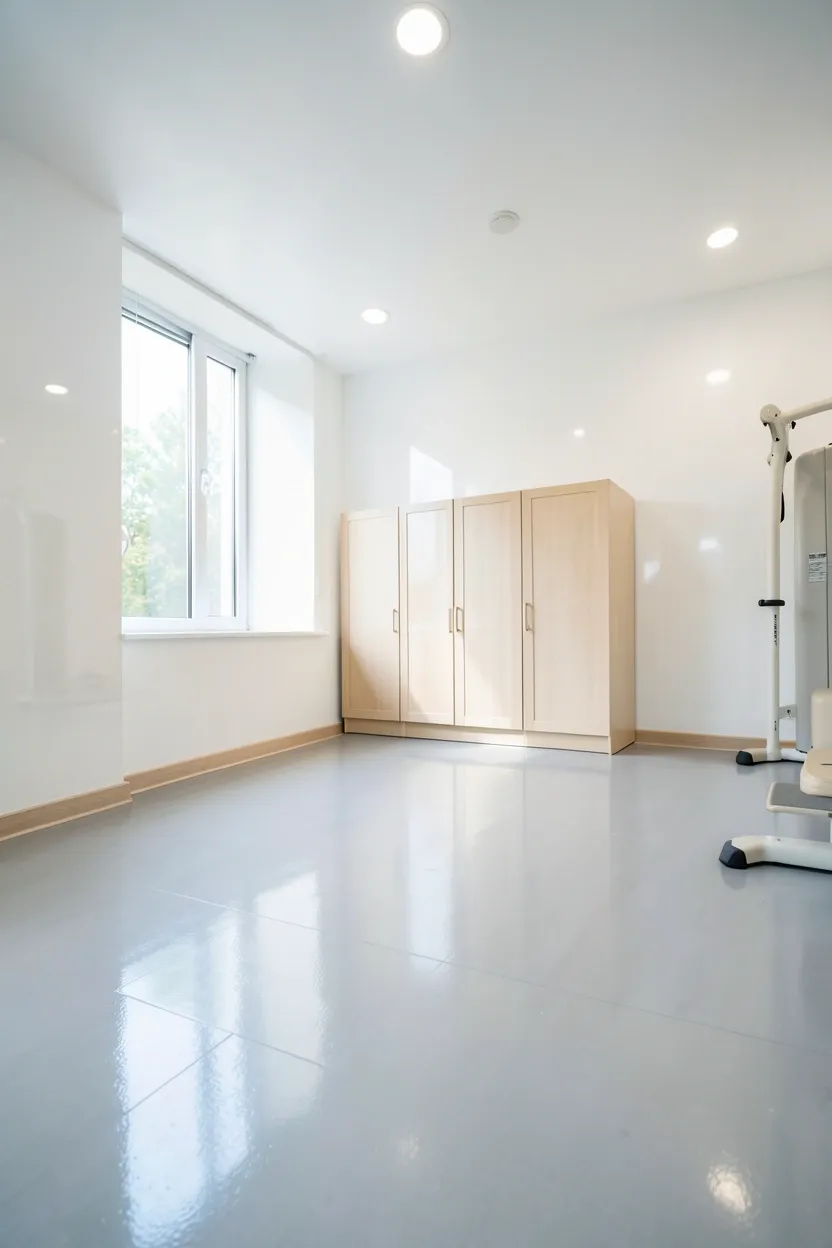
A small gym room feels dramatically larger when you embrace a light color palette and incorporate reflective surfaces throughout the space. White walls, light gray flooring, and glossy finishes bounce light around the room, creating brightness and depth that visually expands the area. This small gym room idea combines painted surfaces with metallic accents, glass elements, and light-colored equipment to maximize the sense of openness.
Recommended
Items for this idea
Common mistake: Using dark colors or matte finishes in small rooms, which absorbs light and creates a cramped, cave-like feeling that can demotivate workouts. Instead, choose high-gloss paint for accent walls, light wood or white laminate for storage units, and metallic finishes on equipment racks and accessories.
Light gray rubber flooring tiles provide durability while maintaining visual lightness. White or light wood equipment—like a yoga mat, resistance bands, and storage bins—blends with the color scheme rather than standing out as clutter. A large window with light-filtering sheers maximizes natural light, while strategically placed mirrors reflect both natural and artificial light throughout the space.
Do: Use high-gloss or semi-gloss paint on at least one wall to create light reflection that makes the room feel larger.
Don't: Cover windows with heavy, dark curtains that block natural light and make the space feel smaller and more confined.
What this gives you: A bright, airy workout environment that visually expands your small gym room and creates an energizing atmosphere that motivates consistent exercise.
5. Under-Stairs Workout Nook
Transform the often-wasted space under your stairs into a compact small gym room that feels surprisingly functional and spacious. This creative approach uses the triangular footprint beneath a staircase, installing a wall-mounted pull-up bar, resistance training system, foldable bench, and smart storage solutions that maximize every inch while creating a dedicated workout zone that doesn't encroach on other living areas.
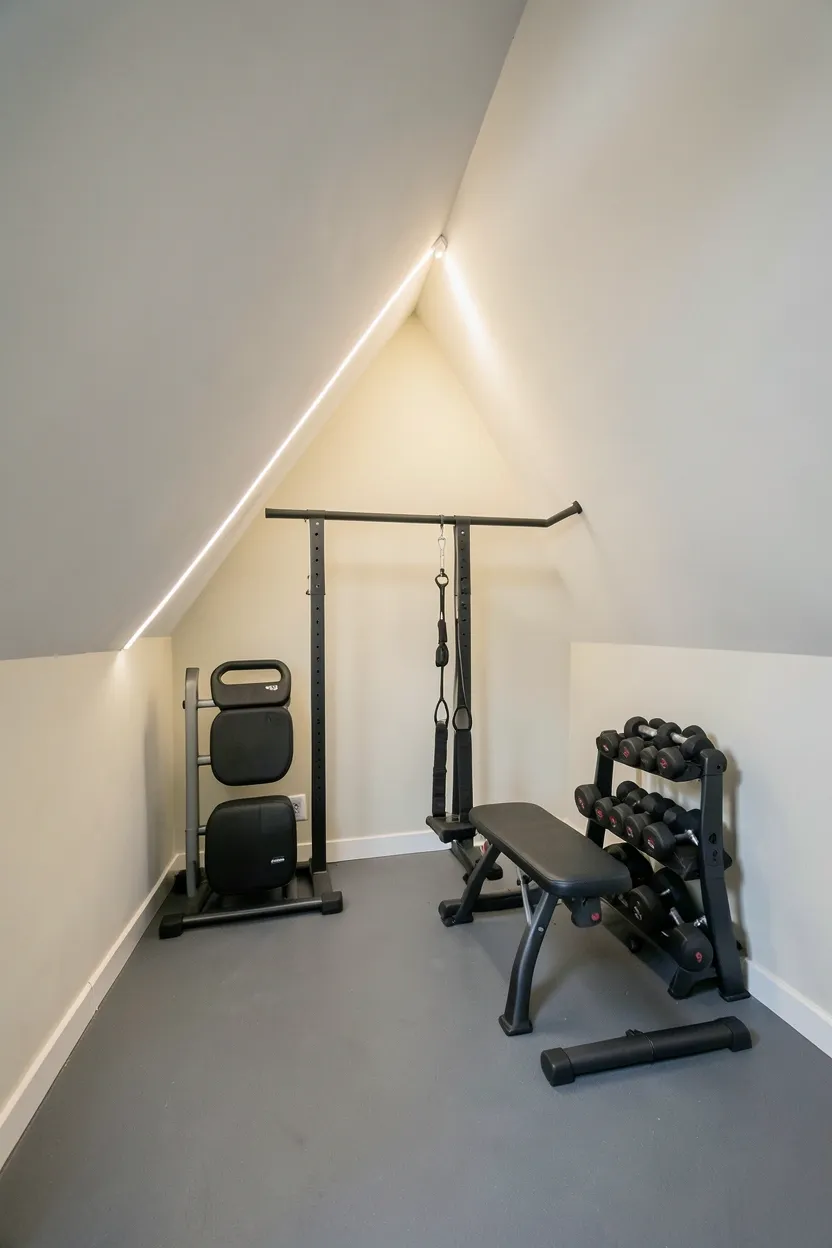
The angled walls of under-stair spaces naturally create a cozy, focused environment perfect for concentrated workouts. Install a wall-mounted suspension trainer that folds completely flat against the back wall, a compact dumbbell rack tucked into the shallow end, and a foldable bench that can be stored vertically when not in use. LED strip lighting installed along the ceiling edges provides bright illumination without taking up headroom.
Placement note: Measure the available height at different points under the stairs—taller areas accommodate pull-up bars and standing exercises, while shallower zones work best for floor work and storage.
This small gym room idea creates a surprising sense of spaciousness through clever organization and vertical usage. The confined space actually encourages focused, efficient workouts without distraction. A small mirror on the back wall provides form checking without overwhelming the intimate space, while wall-mounted speakers deliver motivating music without floor clutter.
Use every inch of vertical space with hooks, shelves, and magnetic strips. The more organized the space, the larger and more functional it feels.
What this gives you: A fully functional workout space carved from dead space in your home, creating a small gym room that feels private, focused, and surprisingly spacious despite its compact footprint.
6. Compact Corner Gym Setup
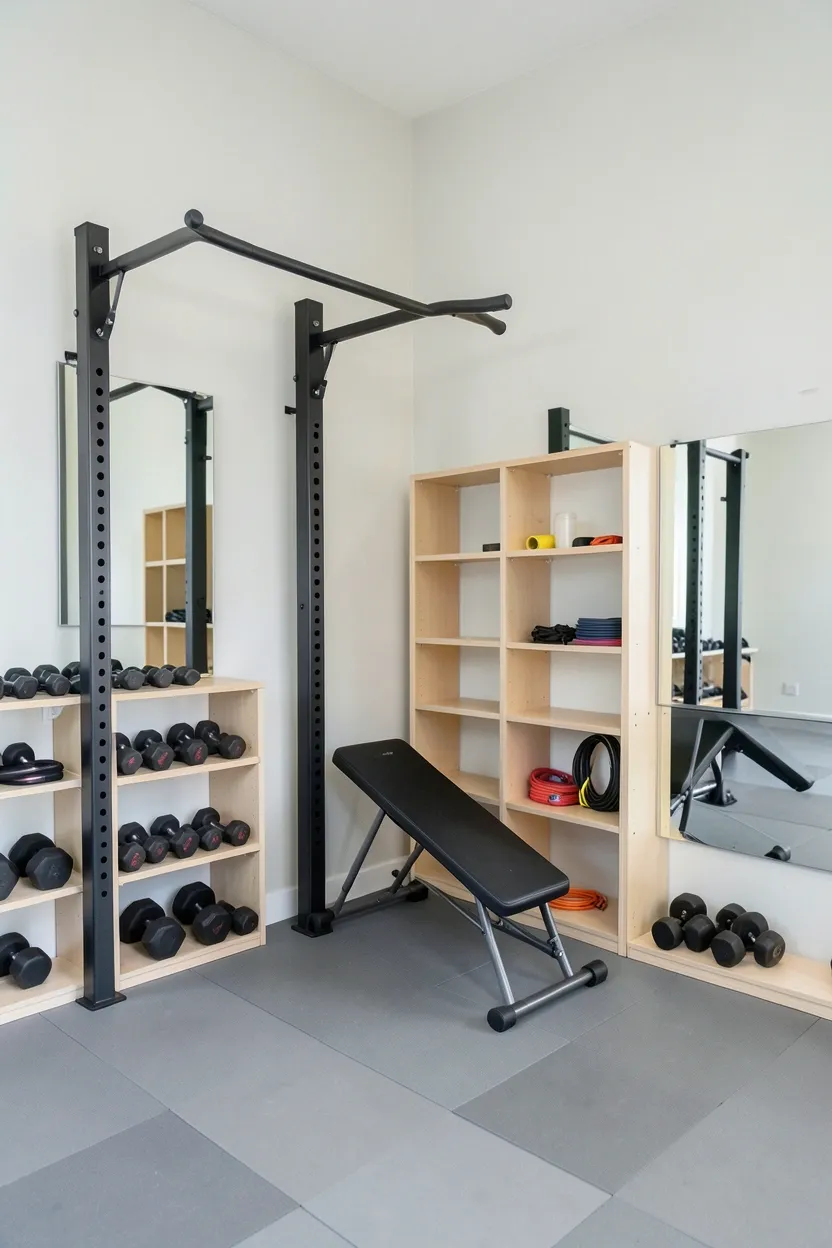
Turn an unused corner of any room into a highly functional small gym room by focusing on corner-specific equipment and space-efficient layouts. This approach uses triangular folding benches, corner-mounted shelving units, and equipment designed specifically for corner placement to create a workout zone that maximizes the often-overlooked corner space while keeping the rest of the room open and unobstructed.
Recommended
Items for this idea
A corner-mounted pull-up bar creates no obstruction outside its designated zone, while a triangular folding bench nests perfectly into the corner when not in use. Corner shelving units store dumbbells, resistance bands, and accessories without protruding into the main space. The compact footprint leaves the rest of the room available for other uses or open floor space for exercises.
Place a large mirror on one adjacent wall to reflect the corner and create visual expansion. This small gym room idea works particularly well in bedrooms, living rooms, or home offices where you want fitness capability without dedicating an entire room. The corner placement naturally creates a defined workout zone without needing walls or dividers.
Pro: Corner setups maximize underutilized space while leaving room centers open for movement and other activities.
Con: Limited floor space may restrict certain exercises like lunges or full-body movements that require more linear space.
Fix: Keep the area immediately in front of the corner clear and use portable equipment that can be moved into the open room center as needed.
What this gives you: A dedicated workout zone that doesn't sacrifice valuable room space, making small gym rooms possible in homes without spare rooms or dedicated fitness areas.
7. Multipurpose Murphy Gym Cabinet
Install a Murphy-style cabinet that houses a complete small gym room setup when closed and reveals functional workout equipment when opened. This innovative approach conceals a foldable bench, resistance bands, dumbbells, suspension trainer, and yoga mat behind cabinet doors that blend seamlessly with your home décor, creating a hidden gym that transforms a spare room or large closet into a fully functional workout space on demand.
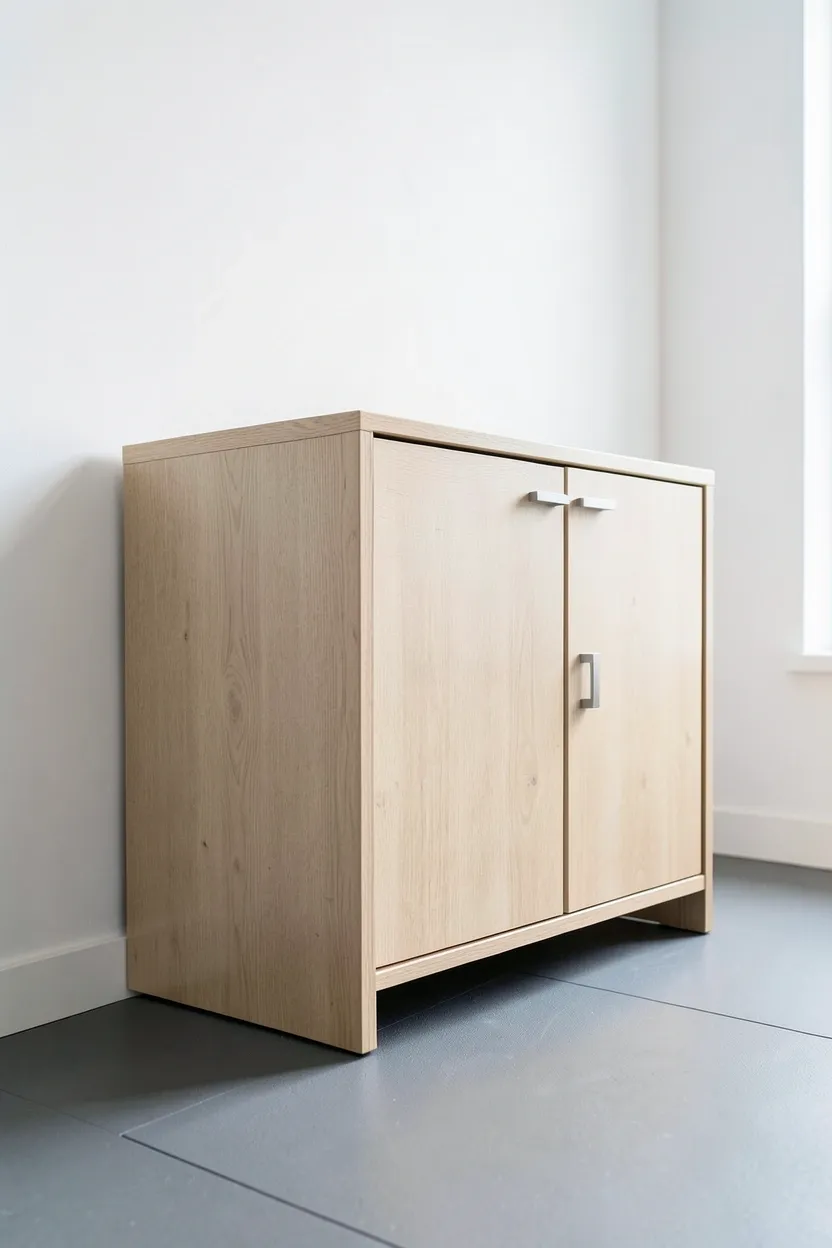
The cabinet features a fold-down bench that mounts to the cabinet back panel, internal shelving for weight storage, and hooks for resistance bands and accessories. When closed, it appears as a stylish storage unit or wardrobe. When opened, it reveals a complete workout station that accommodates strength training, cardio, and flexibility exercises within a remarkably small footprint.
This small gym room idea creates maximum flexibility for multipurpose spaces. A spare bedroom becomes a gym when needed, a home office transforms into a workout zone during breaks, or a walk-in closet doubles as private fitness sanctuary. The hidden nature keeps your living space looking clean and uncluttered when not in use.
Do: Ensure proper wall reinforcement and professional installation for Murphy cabinets, as the weight of equipment and your body during workouts requires secure mounting.
Don't: Overcrowd the cabinet with too much equipment—focus on versatile, essential items rather than trying to cram an entire gym into one cabinet.
What this gives you: A completely hidden gym that appears as furniture when not in use, making it possible to have a small gym room without sacrificing living space or aesthetics.
8. Ceiling-Mounted Storage
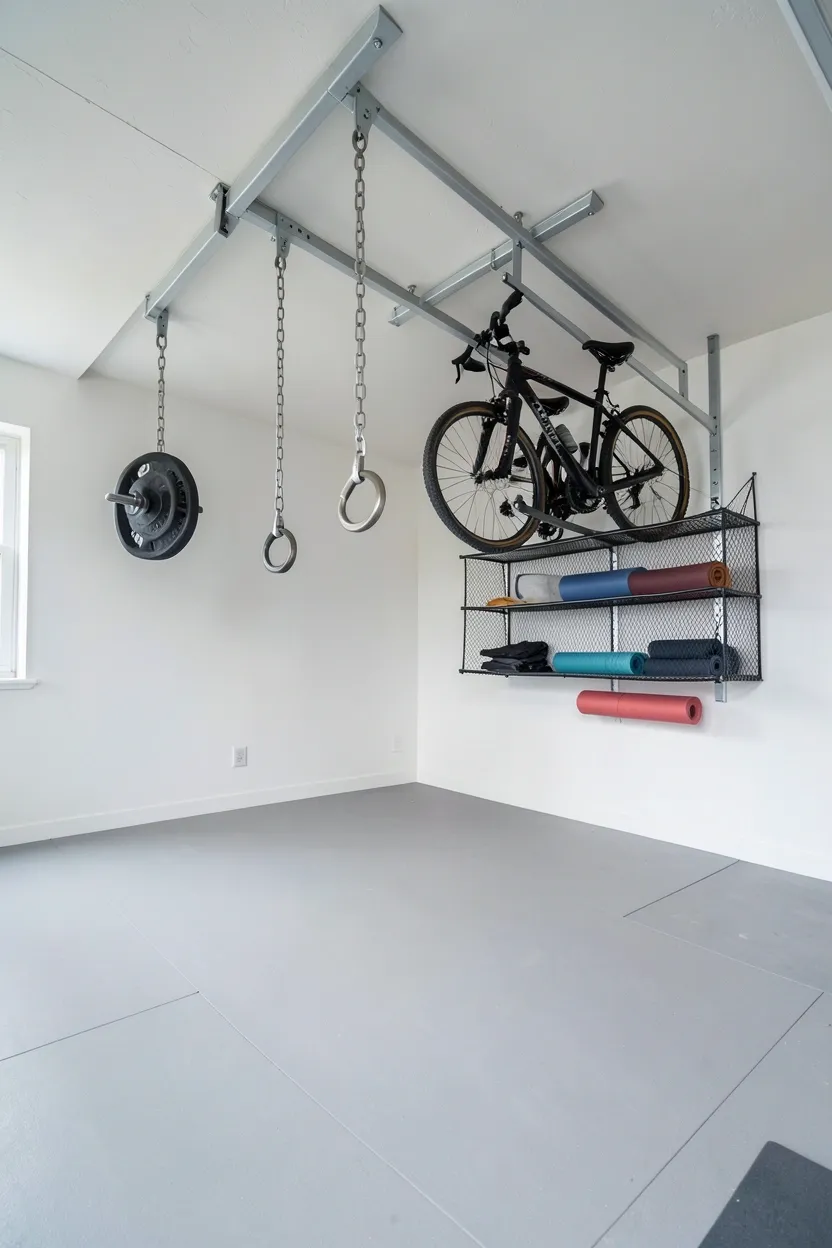
Maximize your small gym room by utilizing ceiling-mounted storage systems that keep equipment suspended overhead and completely off the floor. This space-saving approach includes pulley systems for heavy weights, ceiling-mounted bike racks, hanging shelving for yoga mats and foam rollers, and suspended storage for resistance bands and accessories, creating maximum floor space for movement and exercises.
Recommended
Items for this idea
Heavy-duty pulley systems installed directly into ceiling joists allow you to hoist weight plates, kettlebells, and even foldable cardio equipment up and out of the way when not in use. A ceiling-mounted bike rack stores bicycles overhead without consuming valuable floor space. Suspended mesh shelves keep yoga mats, foam rollers, and bands accessible yet completely off the ground.
This small gym room idea creates an immediate sense of spaciousness by clearing every inch of floor area. The vertical storage creates visual interest while making the room feel larger and more open. Use lightweight, easy-to-lower equipment for daily use and reserve heavier ceiling storage for items used less frequently.
If: You're concerned about the appearance of overhead storage, choose sleek systems with clean lines and light-colored finishes that blend with ceilings.
Then: The storage becomes virtually invisible while still providing maximum space-saving benefits.
Budget option: Heavy-duty ceiling hooks and simple pulley systems cost significantly less than elaborate custom installations while still providing excellent floor-clearing benefits.
What this gives you: Maximum floor space for movement and workouts, plus the visual expansion that comes from a completely clear, uncluttered floor area in your small gym room.
9. Slim Profile Equipment Selection
Transform your small gym room by carefully selecting equipment with slim profiles and compact footprints that provide full workout capability without dominating the space. This approach focuses on adjustable dumbbells instead of multiple fixed weights, suspension trainers rather than bulky machines, resistance bands over large cable systems, and compact cardio options that deliver serious fitness results while leaving the room feeling open and spacious.
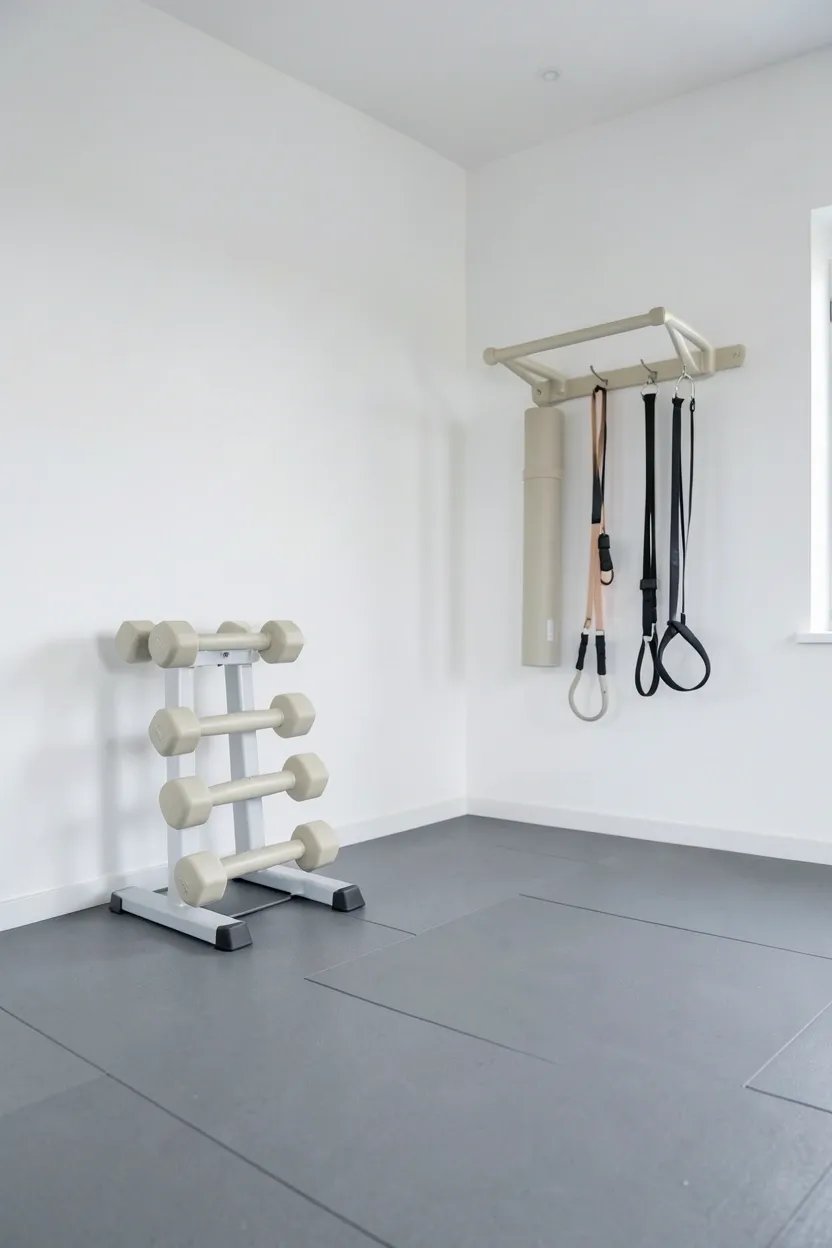
Adjustable dumbbells that replace 15 pairs of fixed weights in a single compact unit, a suspension trainer that mounts to a door frame or wall anchor yet provides full-body strength training, and foldable cardio equipment that stores vertically when not in use—these slim choices create maximum workout capability within minimum space. The clean, uncluttered appearance immediately makes the room feel larger.
Why it works: Slim-profile equipment eliminates the visual dominance of bulky machines, creating open sightlines throughout the space. The compact footprint leaves floor area free for bodyweight exercises, stretching, and movement. Choose equipment in light colors that blends with walls rather than standing out as visual clutter.
Do: Prioritize versatility over quantity—a few well-chosen compact items provide more workout variety than many bulky single-purpose machines.
Don't: Accumulate equipment without considering storage—every new item should have a designated storage location that keeps floors clear.
Rental-friendly: Slim profile equipment is ideal for renters who need portable options that can move with them and don't require permanent installation.
What this gives you: Full workout capability in a compact package that keeps your small gym room feeling spacious and uncluttered rather than dominated by equipment.
10. Open Space Layout
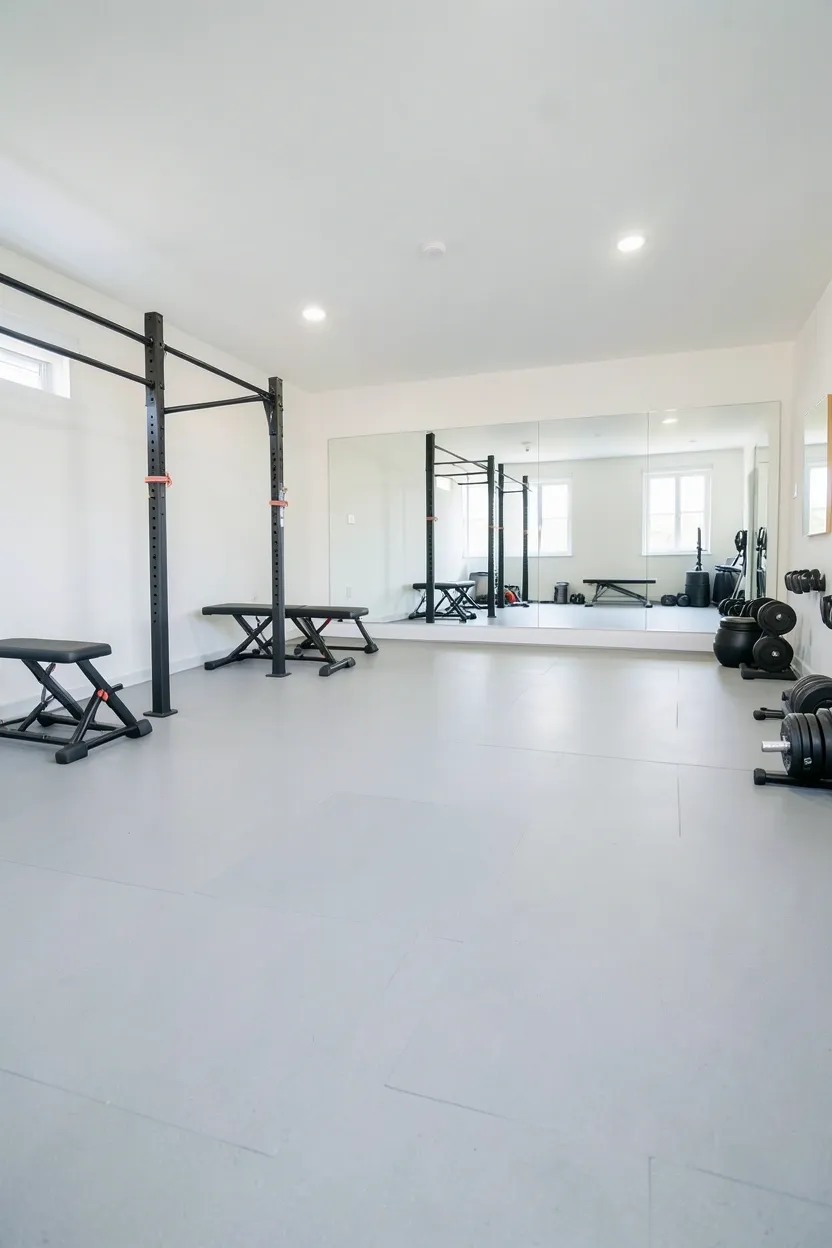
Design your small gym room with an intentional open space layout that prioritizes clear floor area over equipment density. This approach arranges equipment along walls or in corners, leaving the center of the room completely free for bodyweight exercises, stretching, yoga, and movement. The open floor plan creates visual expansion and makes even a tiny room feel spacious and breathable during workouts.
Recommended
Items for this idea
Mount a pull-up bar on one wall, position a foldable bench against another, and place lightweight portable equipment like resistance bands and yoga mats along the perimeter. The center of the room remains completely open, creating a sense of spaciousness that makes the entire area feel larger than its actual dimensions. This layout works particularly well for bodyweight training, HIIT workouts, and yoga-focused routines.
Placement note: Keep at least 6 feet of clear floor space in the center of the room for comfortable movement and exercise variety, even if that means limiting equipment quantity.
This small gym room idea creates flexibility—you can push lightweight equipment aside for circuit training, pull it into the center for strength work, or clear the entire floor for stretching and yoga. The open sightlines make the space feel larger while the freedom of movement creates an energizing, motivating workout environment.
Do: Use lightweight, portable equipment that can be easily moved to accommodate different workout styles within the open floor plan.
Don't: Place large, immovable equipment in the center of the room—this breaks the open layout and makes the space feel cramped and limited.
What this gives you: Maximum flexibility for various workout types within a small footprint, plus the visual spaciousness that comes from open sightlines and free movement areas.
11. Hidden Gym Behind Sliding Doors
Conceal your small gym room completely behind stylish sliding doors that transform a closet, alcove, or built-in niche into a hidden workout sanctuary. When closed, the doors blend seamlessly with your interior design—when opened, they reveal a compact but fully functional gym space with wall-mounted equipment, smart storage, and everything needed for effective workouts within a surprisingly small footprint.
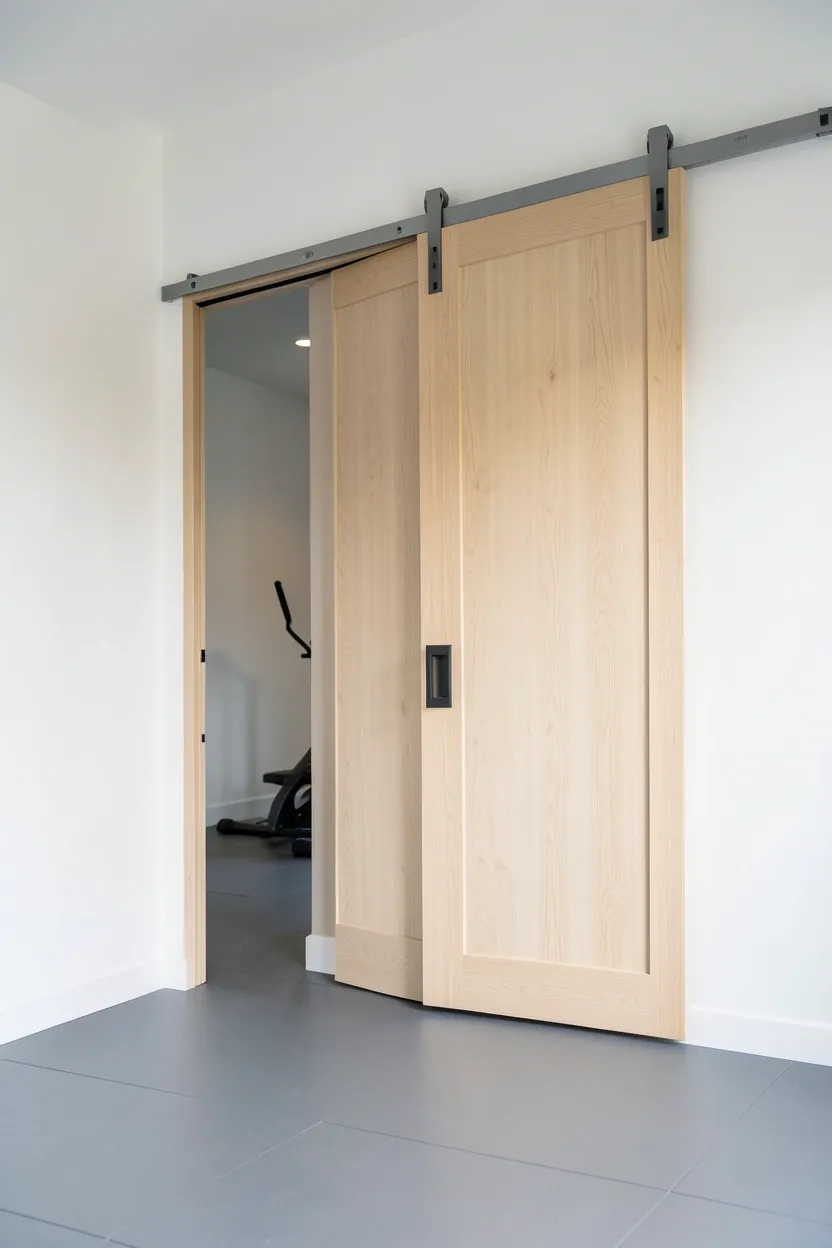
Install floor-to-ceiling sliding doors on a track system that creates smooth, space-saving access without requiring swing room. Behind the doors, mount a pull-up bar, suspension trainer, foldable bench, and wall-mounted storage for weights and accessories. The sliding door mechanism itself can feature hooks and racks for additional storage, maximizing every inch of available space.
This small gym room idea creates maximum visual impact because the gym completely disappears when not in use, leaving your living space looking clean and spacious. When it's time to workout, simply slide open the doors to reveal your dedicated fitness zone. The transformation creates a sense of discovery and makes the gym feel like a special, private space.
Do: Choose sliding doors that match your home's aesthetic—barn doors, frosted glass panels, or wood panels that complement your interior design.
Don't: Forget to account for the door depth when planning equipment placement—you need clearance both behind and in front of the doors.
What this gives you: A completely hidden gym that maintains your home's aesthetic when not in use, creating a special, private workout space that feels like a sanctuary.
12. Bright Lighting Strategy
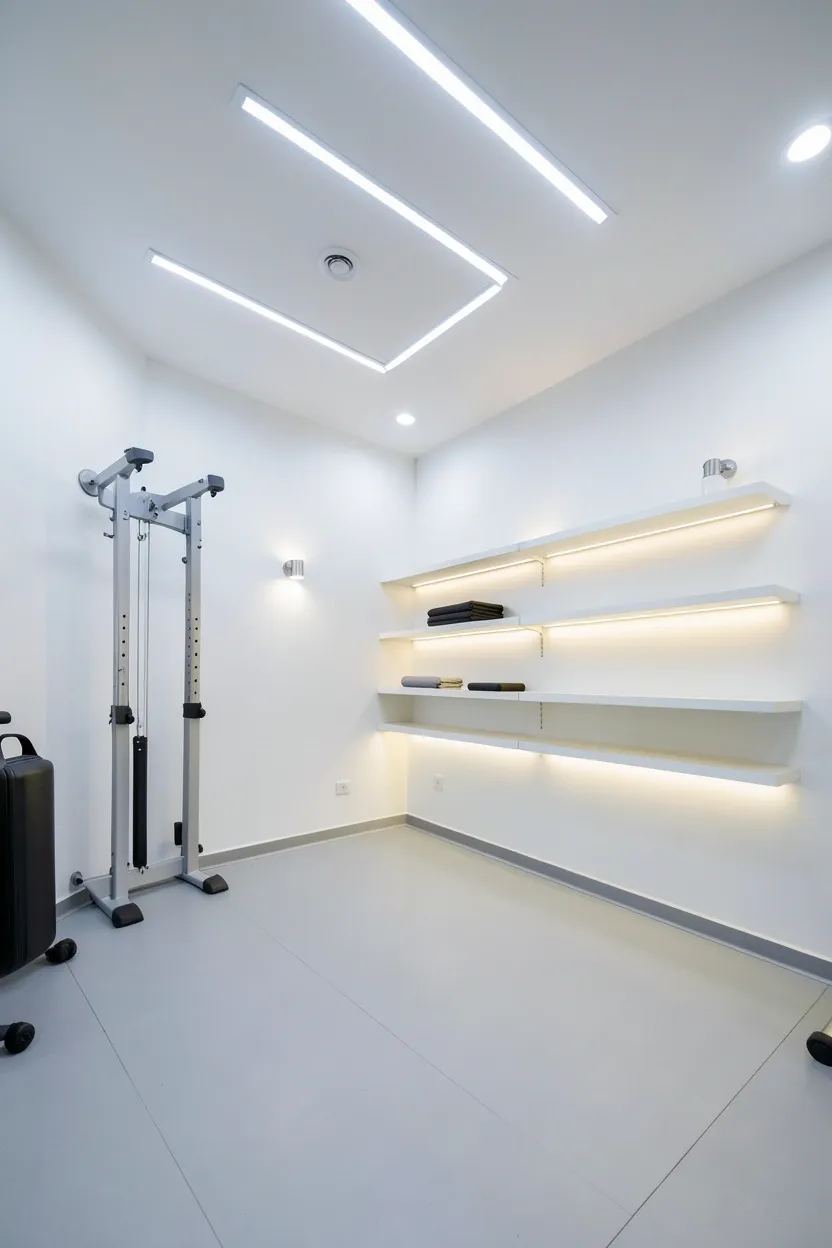
Transform your small gym room with a strategic lighting plan that combines multiple light sources to create brightness, depth, and the illusion of spaciousness. This approach uses ceiling-mounted LED panels for overall illumination, wall sconces to add dimension, strip lighting along shelves and equipment for ambient glow, and dimmable options that let you switch between energizing bright light for workouts and soft light for cool-downs and stretching.
Recommended
Items for this idea
Why it works: Bright, well-distributed light eliminates dark corners and shadows that can make small spaces feel cramped and cave-like. Layered lighting creates visual interest and depth that makes the space feel larger. Cool white light during energizing workouts creates focus, while warmer tones during stretching and yoga sessions promote relaxation.
Install daylight-balanced LED panels with 4000-5000K color temperature for crisp, energizing illumination that mimics natural light. Wall-mounted sconces add ambient glow and create visual interest that breaks up flat walls. LED strip lighting under shelving units and along equipment edges creates sophisticated accent lighting that enhances the sense of space.
Do: Use multiple switches or smart bulbs to control different lighting zones independently, allowing you to customize lighting for different workout intensities.
Don't: Rely on a single overhead light source—this creates harsh shadows and fails to make small spaces feel larger or more inviting.
Aim for at least 50-75 lumens per square foot in workout areas. The brighter the space, the larger and more open it feels.
What this gives you: A bright, energizing environment that visually expands your small gym room and creates optimal lighting for all types of workouts.
13. Foldable Cardio Equipment
Elevate your small gym room with foldable cardio equipment that provides serious workout capability while leaving floor space completely open when not in use. This approach includes foldable treadmills, compact elliptical machines, and rowing machines that collapse or store vertically, allowing you to maintain comprehensive cardio training options without permanently sacrificing valuable floor area.
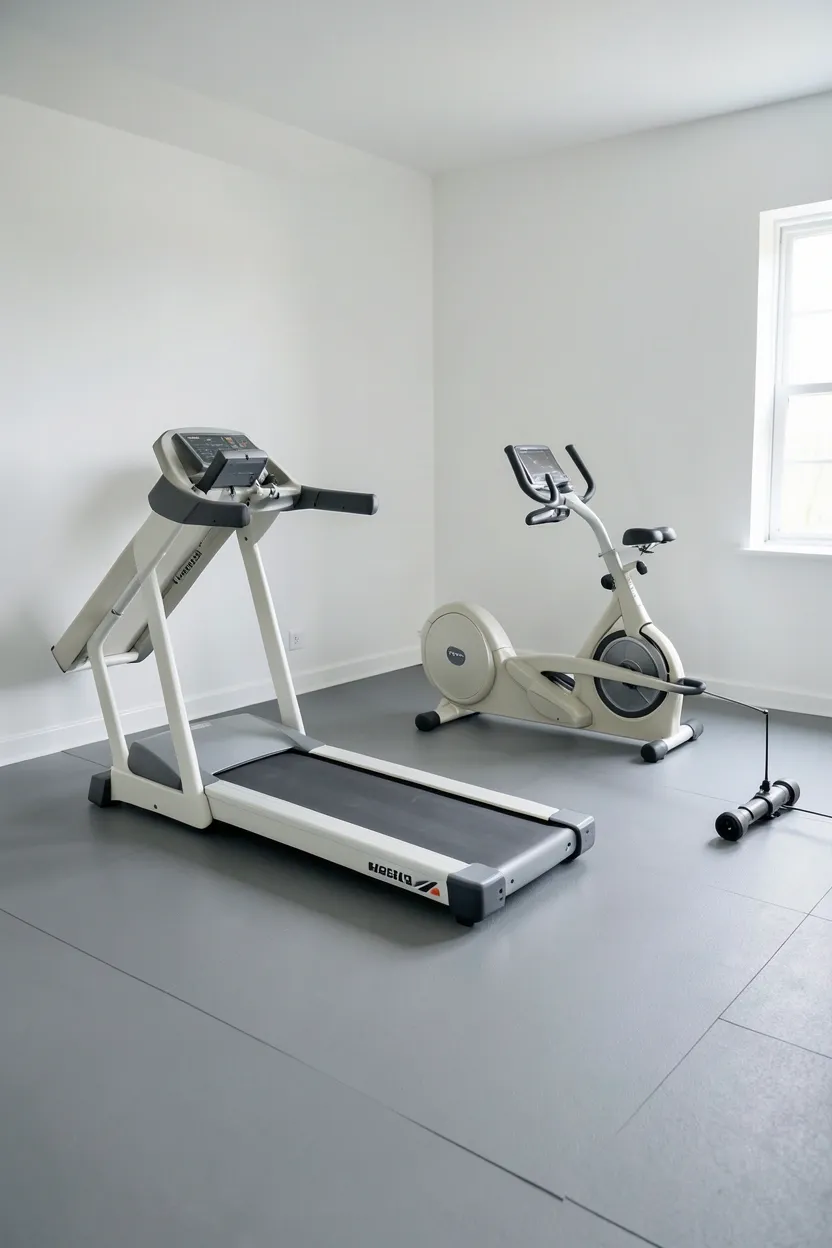
Modern foldable treadmills with hydraulic lift mechanisms fold up to create storage space underneath, while some models can be stored vertically against a wall. Compact elliptical machines with moving arms but small footprints fit into corners and can be rolled aside when needed. Rowing machines that separate into two pieces for storage provide excellent full-body cardio with minimal permanent footprint.
The ability to clear cardio equipment after workouts creates immediate visual expansion—your small gym room feels spacious and open rather than permanently dominated by bulky machines. Choose equipment in light colors or with sleek designs that don't visually dominate the space even when in use.
Do: Test fold and unfold mechanisms before purchasing—smooth, easy operation ensures you'll actually use the space-saving features consistently.
Don't: Choose equipment that requires too much effort or time to set up—you'll skip workouts if getting equipment ready feels like a chore.
Avoid if: You live in a home with low ceilings—foldable treadmills require adequate vertical clearance for storage.
What this gives you: Full cardio training capability in a compact package that keeps your small gym room feeling spacious and flexible rather than permanently occupied by equipment.
14. Wall-Mounted Resistance Training System
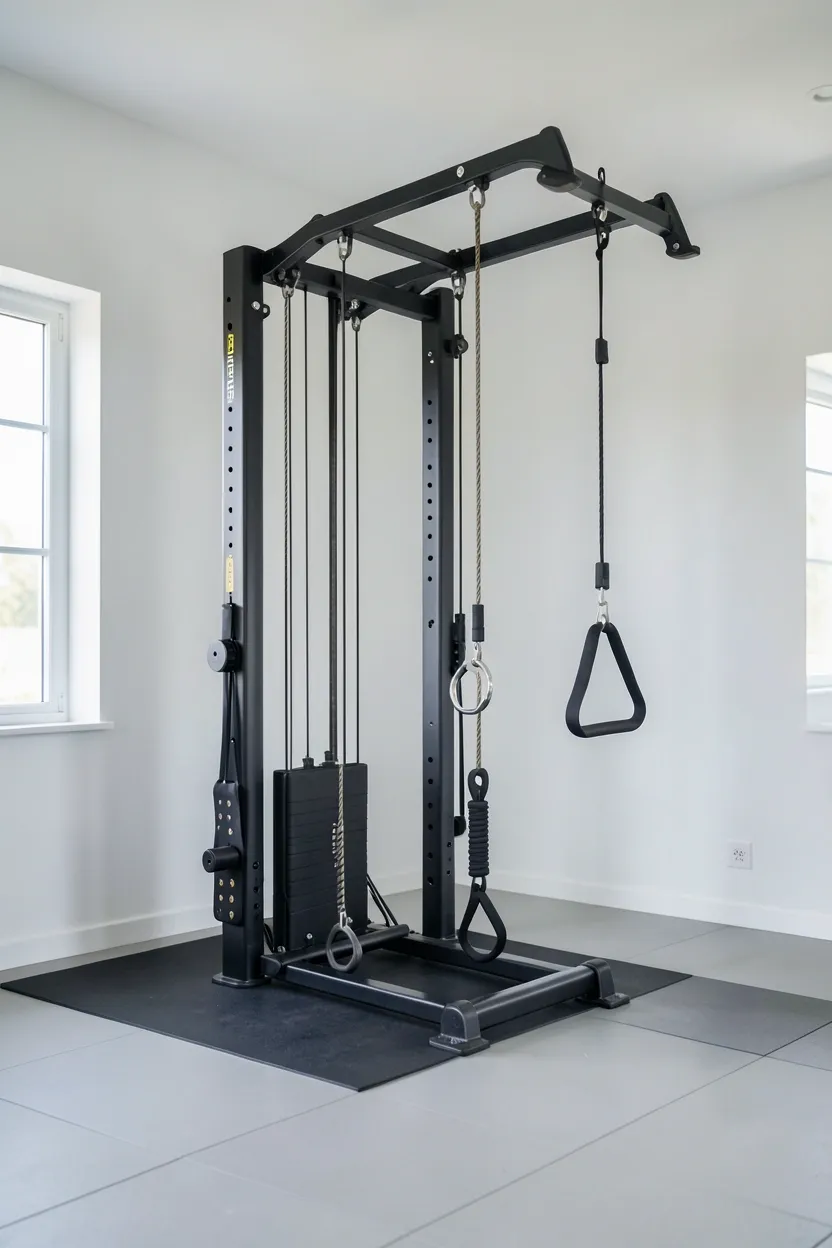
Install a wall-mounted resistance training system that provides comprehensive strength training options while keeping your small gym room floor completely clear. This space-saving solution includes wall-mounted cable stations, resistance band anchor points, and functional training systems that mount directly to walls, creating a complete gym experience without consuming any floor area for equipment.
Recommended
Items for this idea
Wall-mounted cable systems feature dual pulleys that adjust to multiple heights, allowing you to perform hundreds of exercises from the same compact wall installation. Resistance band anchor points mounted at various heights create versatile training options using simple, lightweight bands. The entire system leaves the floor open for movement, stretching, and bodyweight exercises.
Placement note: Install resistance systems on walls with adequate clearance for movement patterns, and ensure proper wall reinforcement—these systems require sturdy mounting into studs.
This small gym room idea creates maximum visual impact because the wall-mounted equipment appears streamlined and intentional rather than cluttered. The open floor space makes the room feel significantly larger, while the wall-mounted system provides serious training capability. Pair with a foldable bench that stores vertically for complete strength training functionality.
If: You're concerned about the appearance of wall-mounted equipment, choose systems with clean, modern designs in colors that blend with your walls.
Then: The equipment becomes almost invisible during workouts, creating a sleek, professional appearance that feels spacious.
What this gives you: Complete resistance training capability with zero floor footprint, maximizing the sense of spaciousness in your small gym room.
15. Minimal Equipment Selection
Embrace a minimalist approach to your small gym room by carefully selecting just a few pieces of versatile equipment that provide comprehensive workout coverage. This philosophy focuses on quality over quantity, choosing adjustable dumbbells, a yoga mat, resistance bands, and a suspension trainer as the core equipment that can deliver full-body strength, cardio, and flexibility training without creating visual or physical clutter.
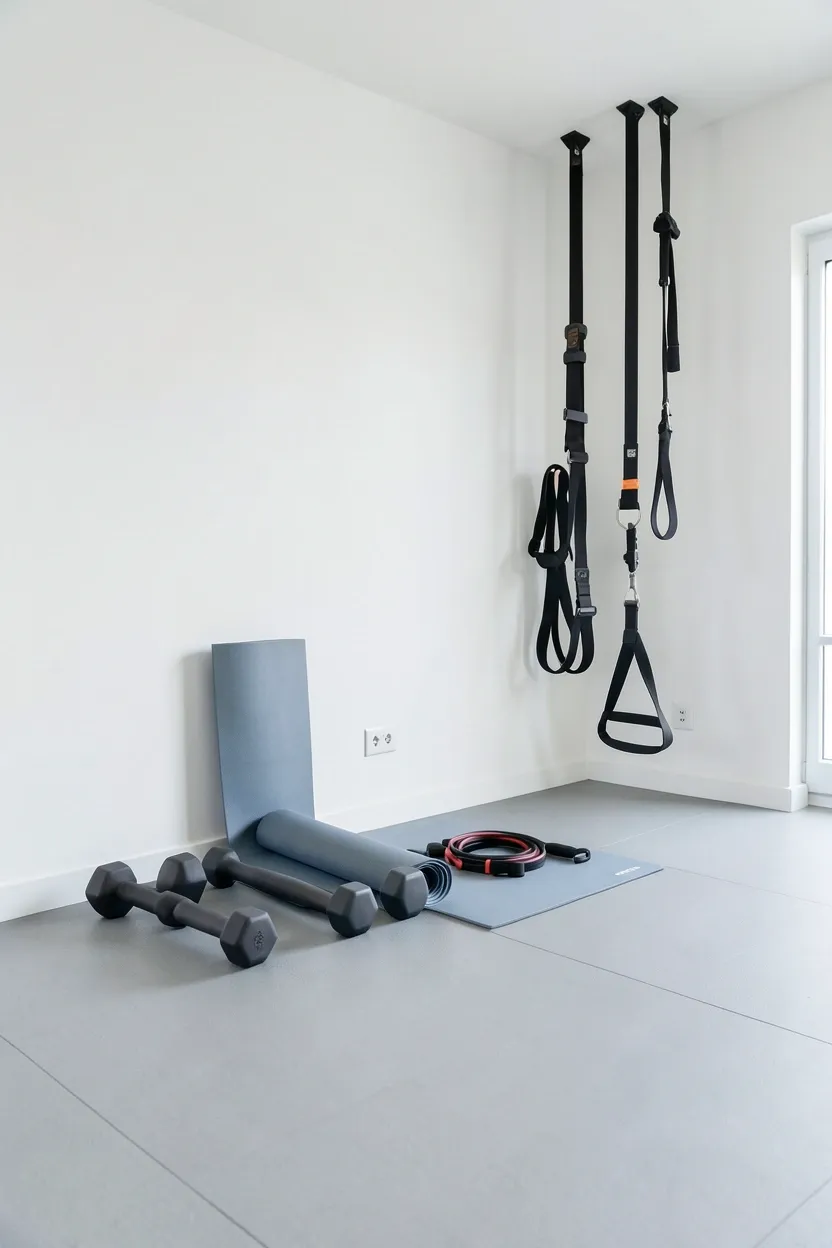
The minimalist setup creates an immediate sense of spaciousness because there's simply less visual and physical clutter in the room. Adjustable dumbbells replace 15 pairs of fixed weights, resistance bands provide variable resistance for countless exercises, suspension trainers deliver full-body functional training, and a quality yoga mat supports bodyweight exercises, stretching, and yoga sessions.
Less equipment means more open floor space, easier maintenance, and faster transitions between exercises. The clean, uncluttered appearance makes even tiny rooms feel like dedicated studios. Store everything on a simple wall-mounted rack or in a small cabinet when not in use, leaving floors completely clear for movement.
Do: Choose equipment that serves multiple purposes—like resistance bands that can replace both weights and machines for many exercises.
Don't: Accumulate equipment thinking more is better—every additional item reduces floor space and visual clarity in your small gym room.
Best for: People focused on functional training, bodyweight exercises, and those who value simplicity and efficiency over equipment variety.
What this gives you: Maximum workout capability with minimum equipment, creating a spacious, uncluttered environment that feels like a professional studio despite its small footprint.
16. Dual-Purpose Gym Office
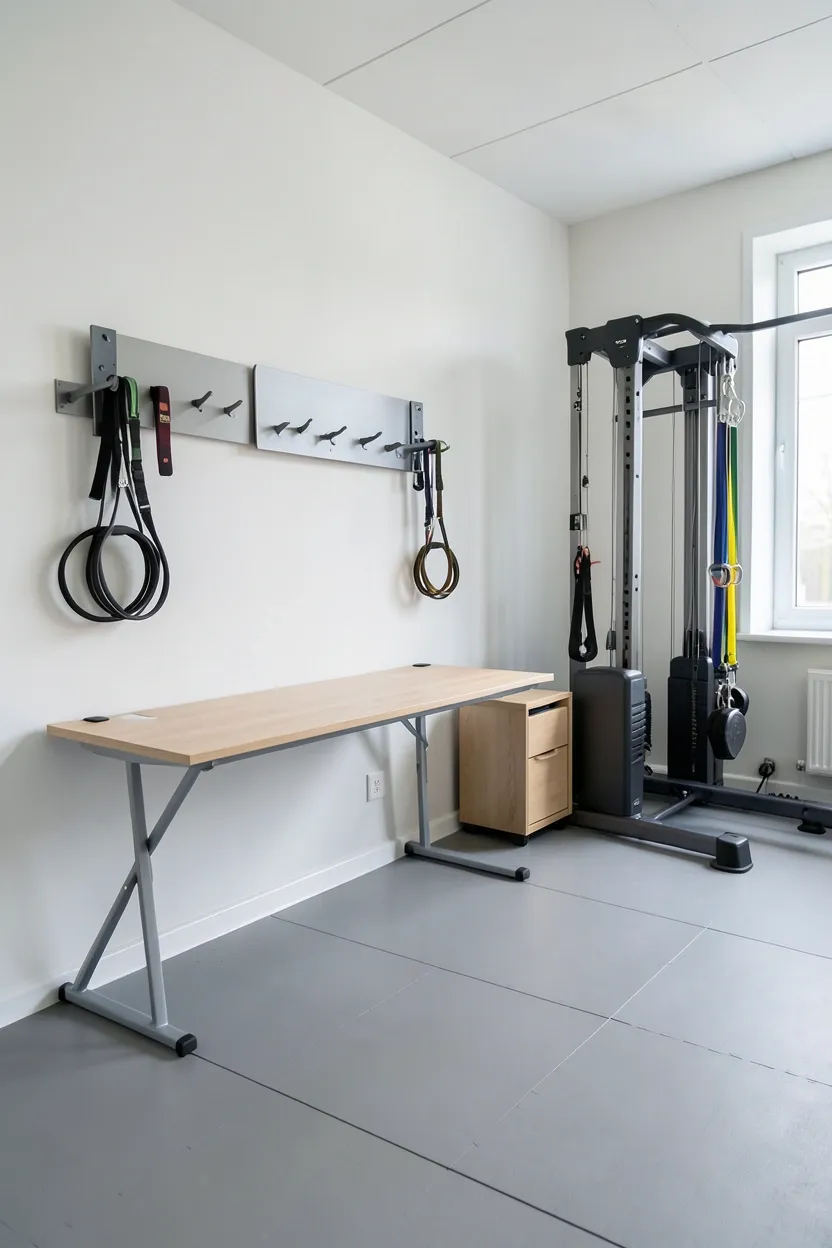
Transform a single room into both a functional home office and a small gym room by designing the space to seamlessly transition between work and workout modes. This innovative approach uses foldable desks, wall-mounted work surfaces, and equipment that stores completely away, allowing you to work productively during the day and exercise effectively in the evening without sacrificing functionality or visual spaciousness in either mode.
Recommended
Items for this idea
A wall-mounted folding desk creates a complete workstation that tucks completely flat against the wall when not in use. Under-desk storage holds office supplies during workouts. Gym equipment—suspension trainer, resistance bands, yoga mat—stores neatly in wall-mounted racks or a compact cabinet when you're working. When it's time to exercise, simply fold up the desk, pull out your equipment, and transform the space in seconds.
This small gym room idea maximizes utility of limited square footage by making a single room serve dual purposes. The clean transitions create a sense of spaciousness in both modes because clutter from one purpose doesn't interfere with the other. Use light colors and cohesive design elements so the space feels unified regardless of its current function.
For more dual-purpose space inspiration, explore smart design approaches that make small spaces feel larger through multifunctional design.
Do: Ensure adequate lighting for both work and workout modes—bright, cool light for focus during work, adjustable lighting for exercise sessions.
Don't: Let office clutter spill into workout space—maintain clear separation between work and fitness zones to keep the space feeling spacious.
What this gives you: Maximum utility from limited square footage, creating a dedicated space for both productivity and fitness without sacrificing spaciousness or functionality.
17. Compact Free Weights Station
Create a dedicated free weights area within your small gym room using space-efficient storage and equipment choices that provide serious strength training capability without overwhelming the space. This approach focuses on adjustable dumbbells, compact weight sets, and smart vertical storage that keeps weights organized and accessible while leaving maximum floor space open for movement and exercises.
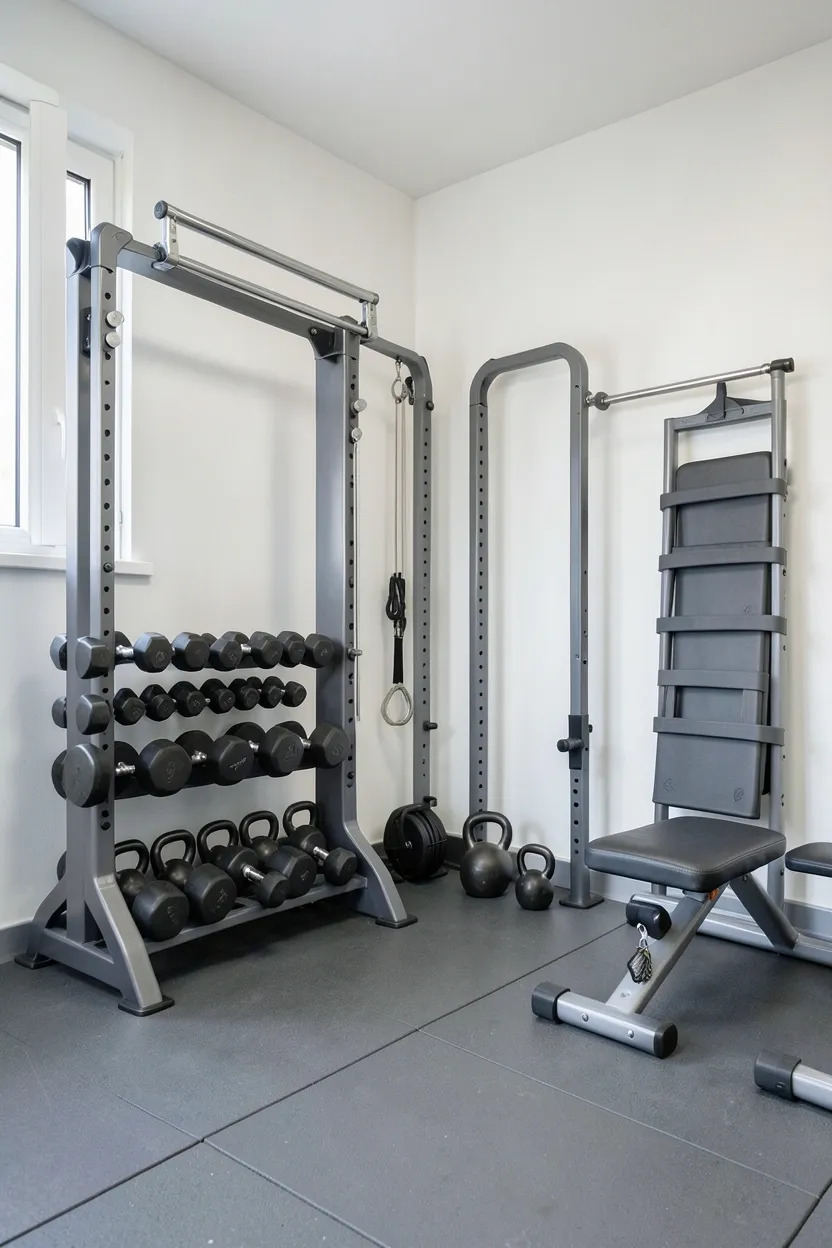
Adjustable dumbbells that replace 15 pairs of weights in a single compact unit form the core of the station. A small set of kettlebells in varying weights provides versatile training options. Wall-mounted vertical racks store the equipment securely without consuming floor space. A compact foldable bench completes the setup, storing vertically against the wall when not in use.
Common mistake: Creating a cluttered, unsafe environment with weights scattered across the floor. Instead, keep every weight in its designated storage location, maintaining visual order that makes the space feel larger and more organized. The clean, uncluttered appearance creates a professional gym atmosphere despite the room's small size.
Pro: Free weights provide the most versatile and effective strength training available within a small footprint.
Con: Improperly stored weights create safety hazards and visual clutter that makes small spaces feel cramped.
Fix: Invest in quality wall-mounted storage and develop the habit of returning every weight to its place immediately after use.
What this gives you: Complete free weights training capability in a compact, organized setup that keeps your small gym room feeling spacious and professional.
18. Mirror Accent Wall
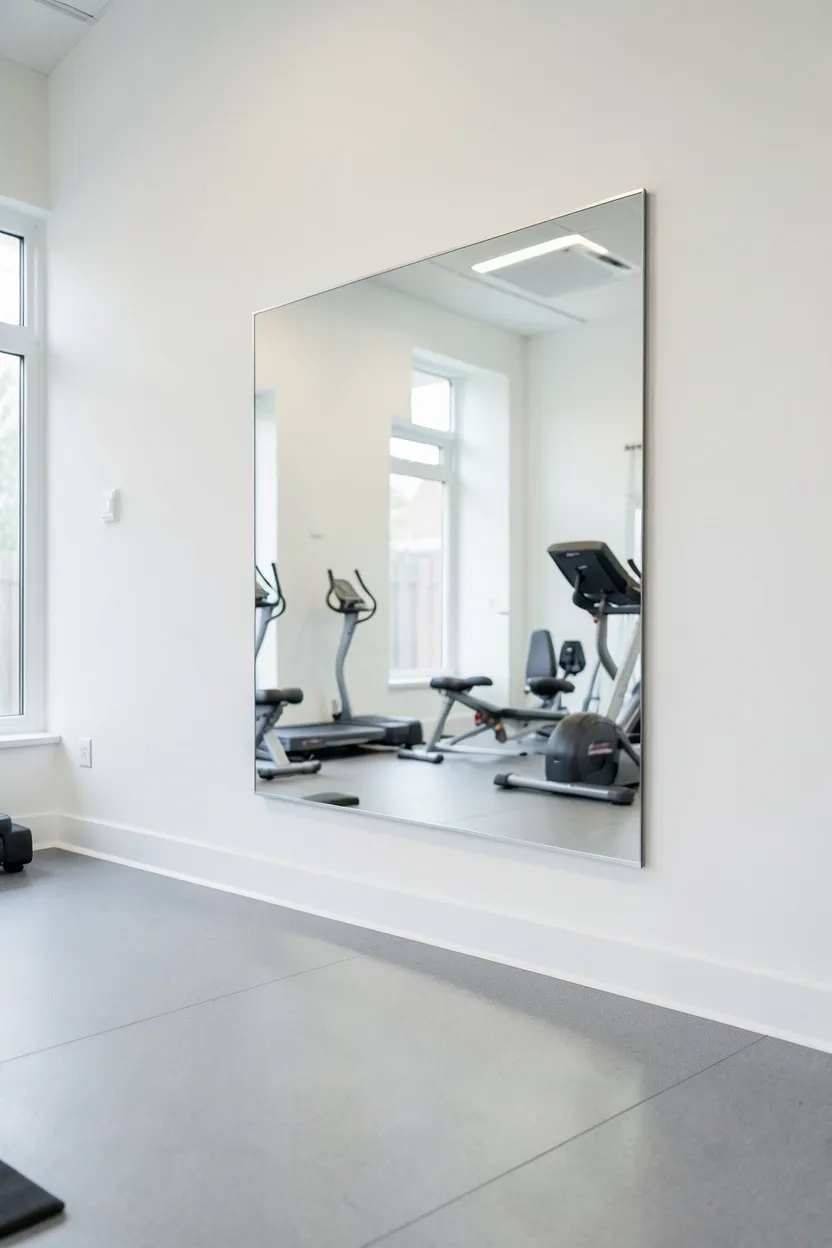
Add visual expansion and style to your small gym room with a strategically placed mirror accent wall rather than covering an entire wall. This approach creates the sense of doubled space while adding design interest—position a large statement mirror or cluster of smaller mirrors on one wall to reflect light and create depth, making your workout area feel significantly larger and more sophisticated without overwhelming the space.
Recommended
Items for this idea
A single large mirror—perhaps 4x6 feet or 5x7 feet—centered on one wall creates dramatic impact while leaving surrounding wall space for equipment or artwork. Alternatively, a grid of smaller mirrors in various shapes creates visual interest and reflects light from multiple angles. Both approaches expand the sense of space while maintaining design flexibility in your small gym room.
Position mirrors to reflect windows, artwork, or your best equipment arrangements. The reflection creates depth and makes the room feel twice as large. Unlike full-wall mirrors that can feel clinical, an accent wall with selective mirror placement adds personality and style while still providing the space-expanding benefits you need.
Do: Place mirrors opposite windows or light sources to maximize light reflection and create the brightest, most expansive effect.
Don't: Install mirrors where they'll reflect clutter or unattractive views—focus on reflecting light, art, or well-organized equipment zones.
What this gives you: Visual expansion that makes your small gym room feel larger while adding style and personality to the space.
19. Hidden Storage Bench
Incorporate a storage bench into your small gym room that provides seating, storage, and style while keeping equipment organized and off the floor. This multifunctional piece features a hinged lid that opens to reveal ample storage for yoga mats, resistance bands, foam rollers, and accessories, while the bench surface itself serves as a workout platform for exercises like step-ups, dips, or Bulgarian split squats.
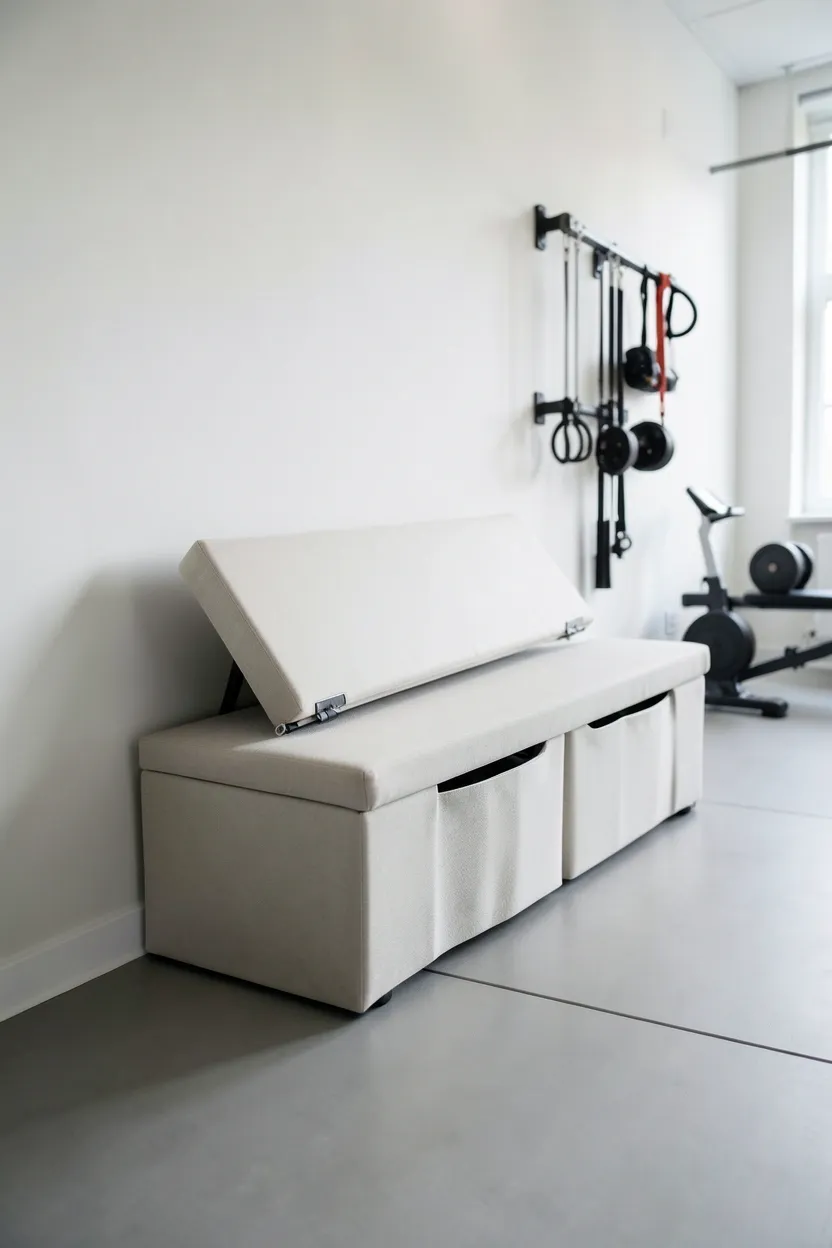
The storage bench keeps frequently used items accessible yet completely concealed, maintaining visual clarity that makes the space feel larger. Store bulky or unsightly items inside while keeping the surface clear and inviting. Choose a bench in light colors that blends with walls, or opt for a sleek modern design that serves as a style element rather than visual clutter.
Position the bench against a wall or in a corner to maximize open floor space. The bench itself provides exercise variety—you can use it for strength training, stretching, or even as a step during cardio workouts. When not exercising, the bench provides seating for cooldowns or serves as a surface for water bottles and towels.
Do: Choose a bench with cushioning that supports both exercise movements and comfortable seating, maximizing its multifunctional value.
Don't: Overstuff the storage compartment—keep it organized so items are easy to find and the bench remains functional.
Best for: Small gym rooms where every piece must serve multiple purposes to justify its footprint.
What this gives you: Multifunctional storage that keeps equipment organized while providing exercise variety and seating, all while maintaining visual spaciousness.
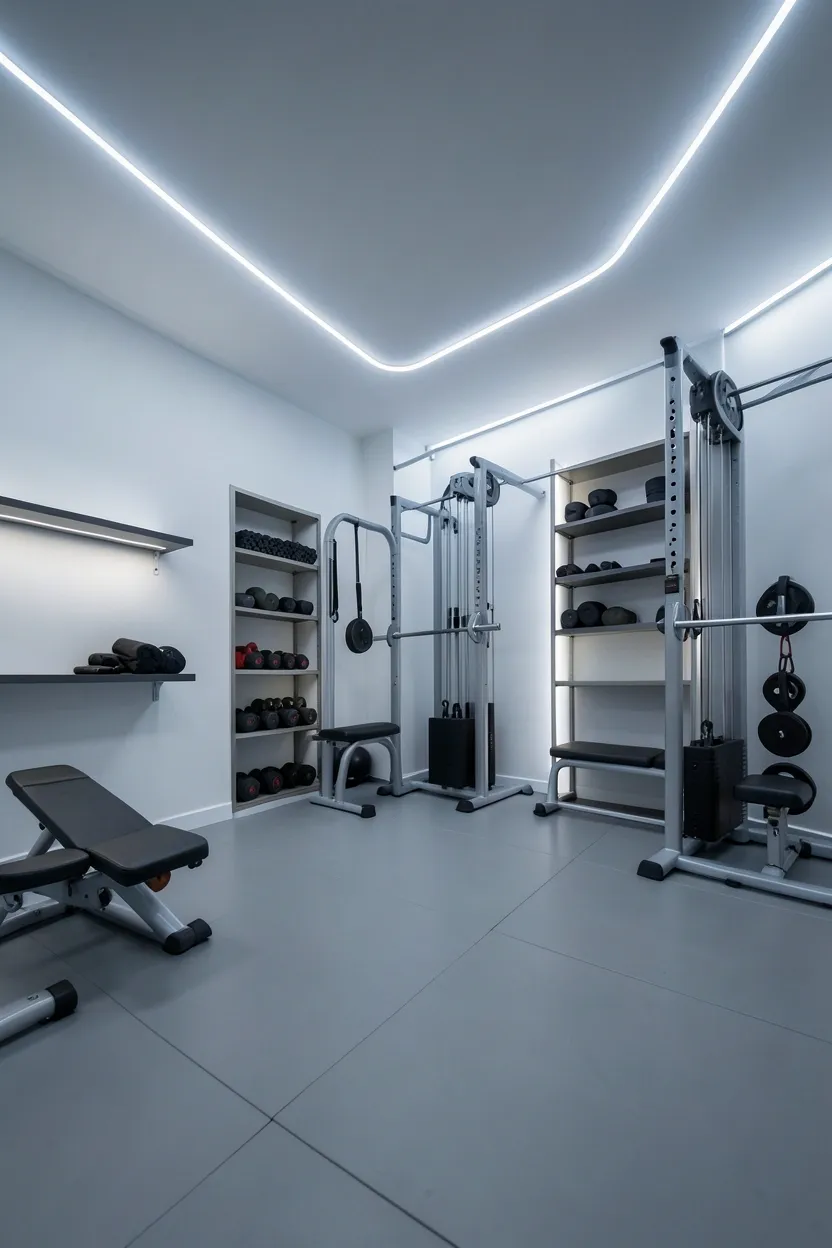
20. Strip Lighting for Depth
Add strategic LED strip lighting to your small gym room to create visual depth and dimension that makes space feel larger and more sophisticated. Install strip lights along baseboards, ceiling edges, under shelving units, or behind equipment to create ambient glow that adds layers of light and visual interest, breaking up flat surfaces and creating perception of greater space.
Recommended
Items for this idea
Why it works: Layered lighting creates depth that makes walls recede and space feel larger than its actual dimensions. Strip lighting along floor-to-ceiling edges draws the eye upward, making ceilings feel higher. Under-shelf lighting adds dimension to walls while highlighting equipment in an attractive, gallery-like display. The ambient glow eliminates harsh shadows that can make small spaces feel cramped.
Choose LED strips in cool white or daylight temperatures (4000-5000K) for energizing illumination that brightens the entire space. Install dimmable strips to adjust intensity between high-energy workout mode and softer cool-down lighting. The modern, sophisticated appearance adds professional polish to even the smallest gym room.
If: You want a dramatic effect, install strip lighting behind mirrors to create backlit glow that makes the mirror wall feel like an infinity mirror.
Then: You'll create stunning visual depth that doubles the space-expanding effect of mirrors.
What this gives you: Sophisticated layered lighting that creates visual depth and makes your small gym room feel significantly larger and more professional.
21. Decluttered Zone Design
Design your small gym room as a strictly decluttered zone where every item has a designated storage place and visual clarity is maintained at all times. This minimalist approach to organization creates immediate spaciousness because clear, organized spaces naturally feel larger than cluttered ones. The rule is simple: nothing stays on the floor when not in use, and every piece of equipment returns to its designated storage location after each workout.
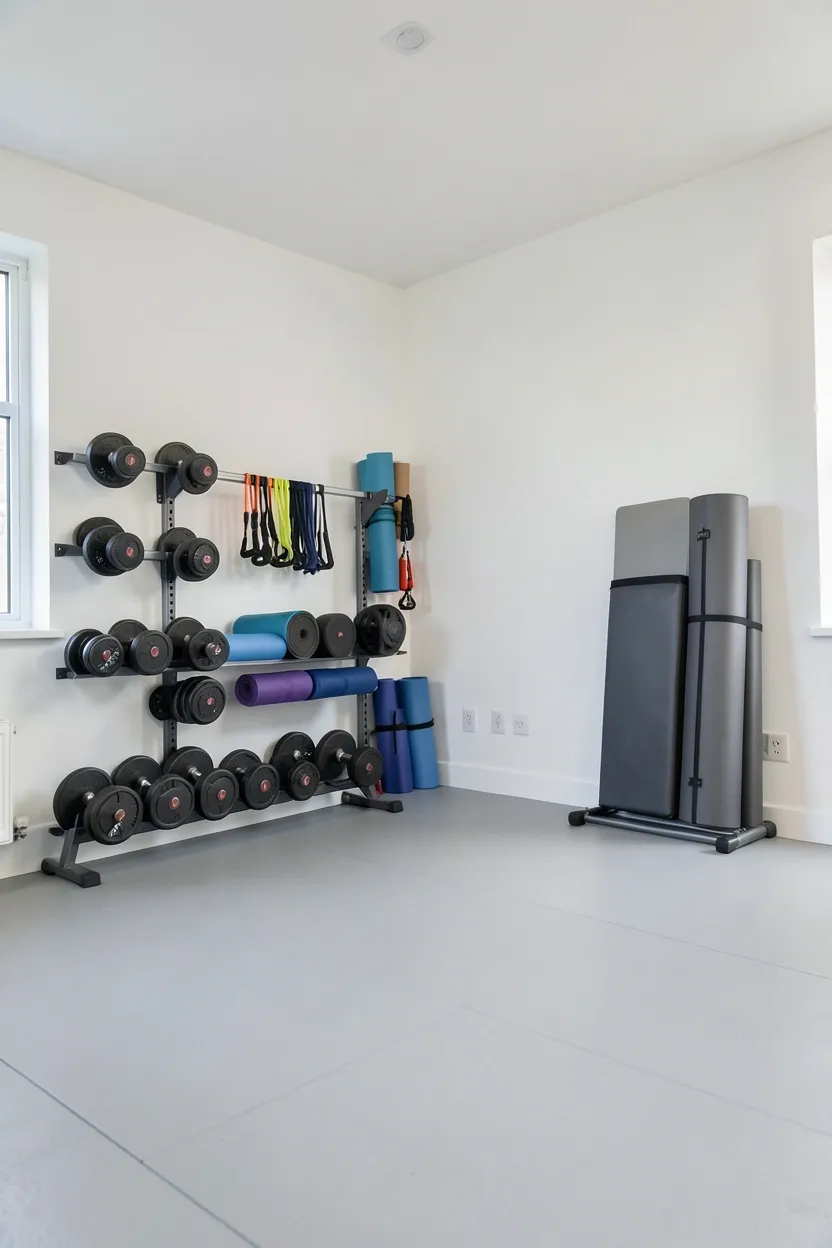
Establish permanent storage for every item: wall-mounted racks for weights and resistance bands, shelving for accessories, hooks for jump ropes and bands, and designated zones for larger equipment. Create visual zones by grouping related items together—cardio in one area, strength equipment in another, accessories in a third. This organization creates both visual order and functional efficiency.
The decluttered zone philosophy transforms your small gym room into a sanctuary where visual clarity equals spaciousness. The open, uncluttered floor makes every inch feel usable and expansive. This approach works particularly well in homes where the gym shares space with other functions—clear visual boundaries create psychological separation that makes the zone feel dedicated and spacious.
Do: Establish a "put it back immediately" rule for every piece of equipment—consistency is key to maintaining the decluttered zone.
Don't: Allow temporary clutter to accumulate—every item left out reduces perceived spaciousness and undermines the entire design principle.
Budget tip: Decluttered zone design costs nothing to implement and provides immediate visual impact—organization is the most space-efficient design strategy available.
What this gives you: Maximum perceived spaciousness through organization, creating a visually expansive environment that motivates consistent workouts.
Creating a small gym room that feels spacious and inspiring is entirely possible with the right combination of smart design choices, strategic equipment selection, and intentional organization. These 21 ideas prove that tight spaces can transform into motivating workout environments through visual expansion techniques, vertical storage solutions, space-saving equipment, and thoughtful layouts that maximize every square foot while maintaining openness and functionality. Whether you're working with a tiny apartment corner, a spare bedroom, or a compact closet, the key lies in choosing design elements that create visual spaciousness, selecting equipment that serves multiple purposes, and maintaining absolute organization that keeps your workout zone feeling open and inviting. Start with the ideas that resonate most with your space and workout style, then combine approaches to create a personalized small gym room that feels spacious, motivating, and perfectly suited to your fitness goals.
About the author
OBCD
CGI visualization and interior design content. We create detailed 3D renders and curate practical design ideas for every room in your home.