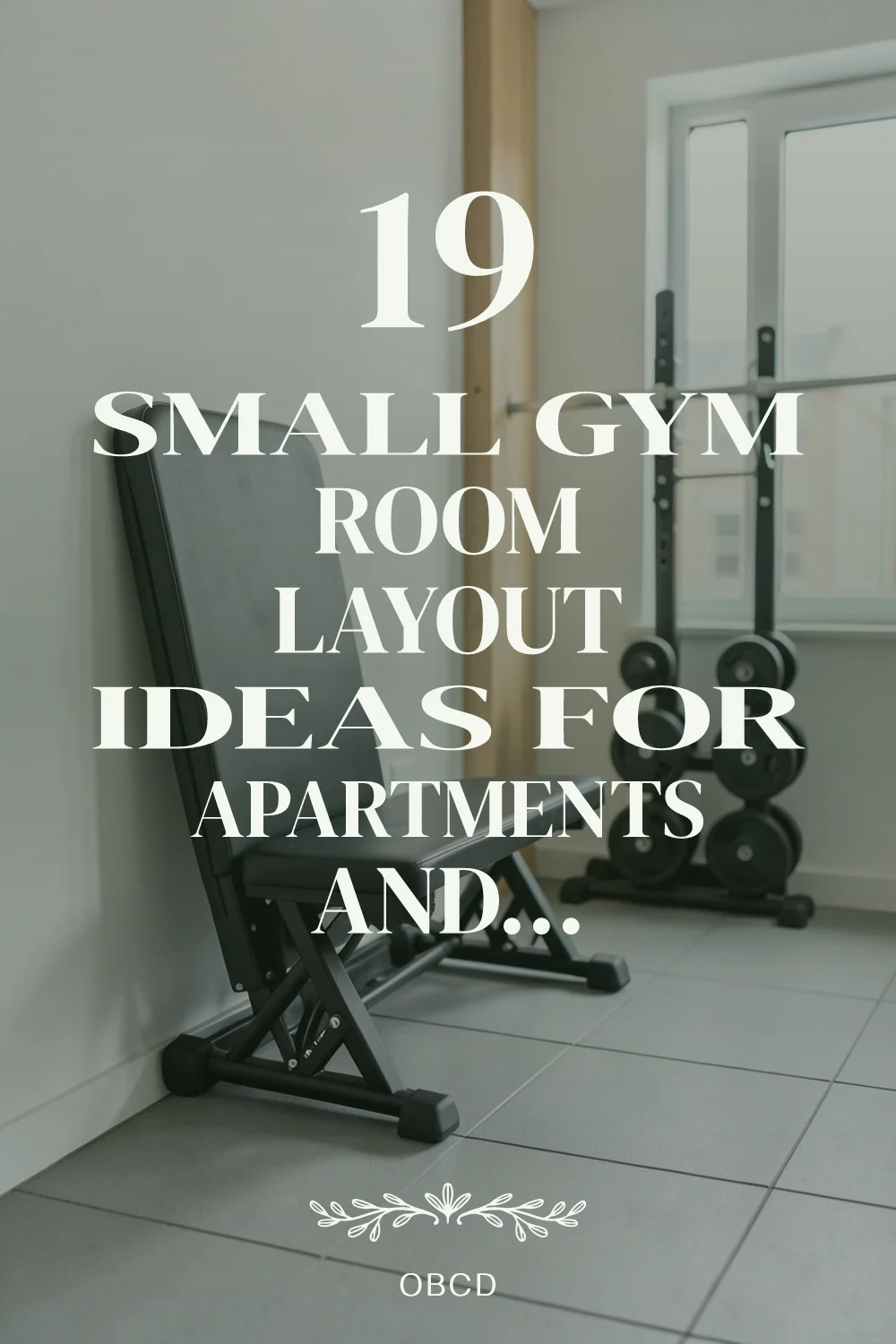
19 Small Gym Room Layout Ideas for Apartments and Renters
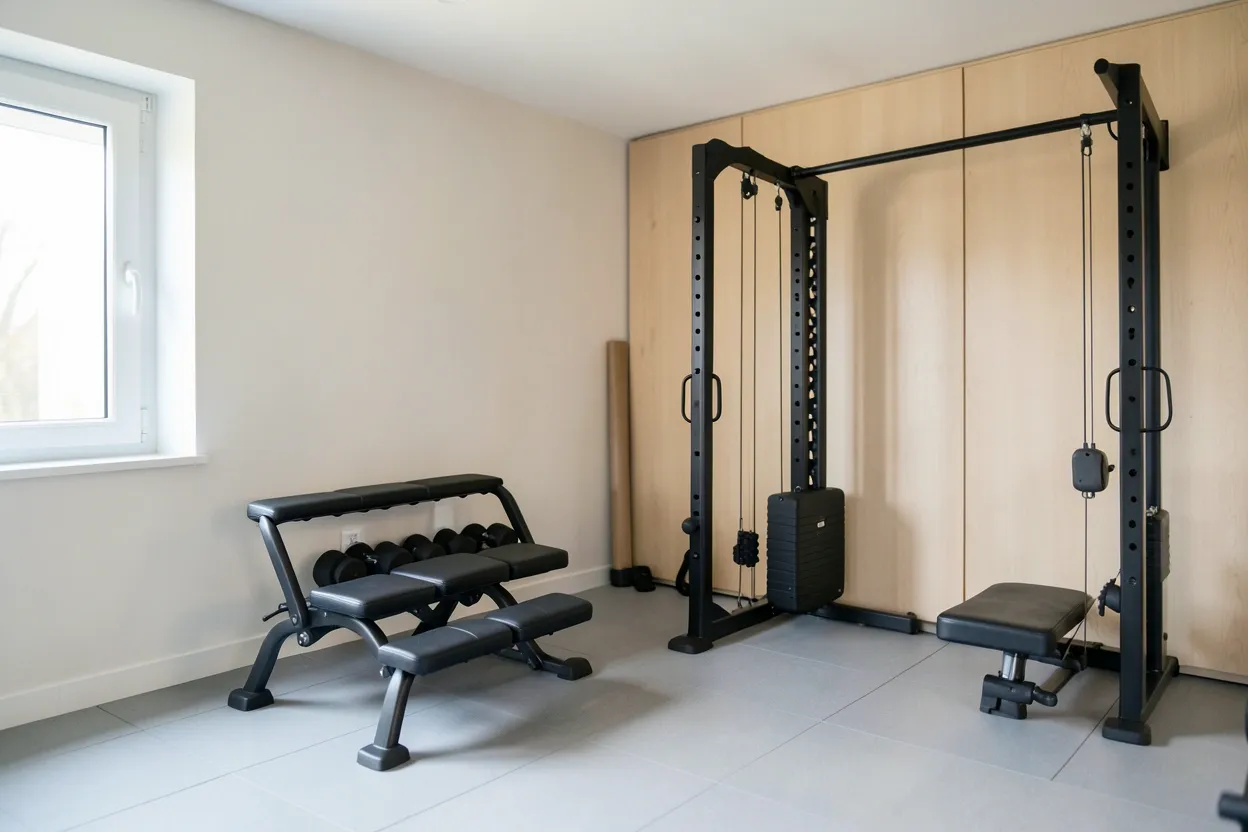
Finding the right small gym room layout ideas for an apartment or spare room is one of the smartest investments you can make in your home fitness routine. With the right approach, even a compact rental space can become a fully functional workout area that fits your lifestyle without requiring permanent changes or a landlord's approval.
The key to successful small gym room layout ideas lies in choosing equipment that serves multiple purposes and utilizing vertical space for storage. Mirrors, smart lighting, and thoughtful organization can transform a tiny corner into a motivating fitness environment — whether you have a full spare bedroom or just an unused nook in your studio apartment.
Whether you're setting up a home gym layout for a small apartment, converting a spare room, or carving out a corner of your living space, these 19 renter-friendly layout ideas prove that size doesn't have to limit your fitness ambitions. From no-drill wall-mounted solutions to foldable multi-functional zones, discover how to optimize any compact space for effective, consistent home workouts.
Quick FAQ
What is the minimum size for a home gym?
A functional home gym can work in as little as 50-75 square feet, though 100+ square feet provides more flexibility. The key is choosing compact, space-efficient equipment and planning your layout carefully around available movement patterns.
How do I soundproof a small apartment gym?
Use rubber floor tiles, dense yoga mats, and acoustic panels on walls to absorb impact noise. Place heavy equipment away from shared walls and consider workout timing to minimize disturbance for neighbors below.
What flooring is best for small home gyms?
Interlocking rubber tiles offer excellent shock absorption and durability for small spaces. They're easy to install, protect your floor, and provide a professional gym feel. Foam mats work well for yoga and bodyweight workouts but lack durability for heavy equipment.
Can I combine a home gym with another room?
Yes, dual-purpose rooms work well with smart storage solutions. Foldable equipment, wall-mounted racks, and mobile storage allow you to transform a home office or guest bedroom into a gym when needed while maintaining the room's primary function.
As an Amazon Associate I earn from qualifying purchases.
Table of Contents
- 1. Wall-Mounted Folding Bench Setup
- 2. Corner Suspension Training Zone
- 3. Vertical Storage with Wall-Mounted Rack (No Floor Space Needed)
- 4. Compact All-in-One Machine Layout
- 5. Mirror-Enhanced Yoga and Pilates Corner for Small Apartments
- 6. Under-Bed Storage with Roll-Out Mats
- 7. Window-Positioned Cardio Station
- 8. Ceiling-Hung Boxing and HIIT Area
- 9. Sliding Door Hidden Gym Solution
- 10. Loft Bed with Integrated Gym Below
- 11. Ladder-Style Weight Storage Wall
- 12. Portable Equipment on Rolling Cart (Renter-Friendly Gym Setup)
- 13. Niche Transformation into Functional Space
- 14. Magnetic Wall Tool Organization
- 15. Multi-Zone Circuit Training Layout
- 16. Alcove with Built-In Shelving Setup
- 17. Partitioned Dual-Purpose Room Design
- 18. Lighting-Focused Motivational Space
- 19. Minimalist Equipment Selection for Small Areas
1. Wall-Mounted Folding Bench Setup
A wall-mounted folding bench is one of the most space-efficient solutions for small gym room layouts, allowing you to reclaim floor space when not exercising. This clever design attaches securely to the wall and folds flat against it, creating a seamless surface that becomes virtually invisible in your daily living space.
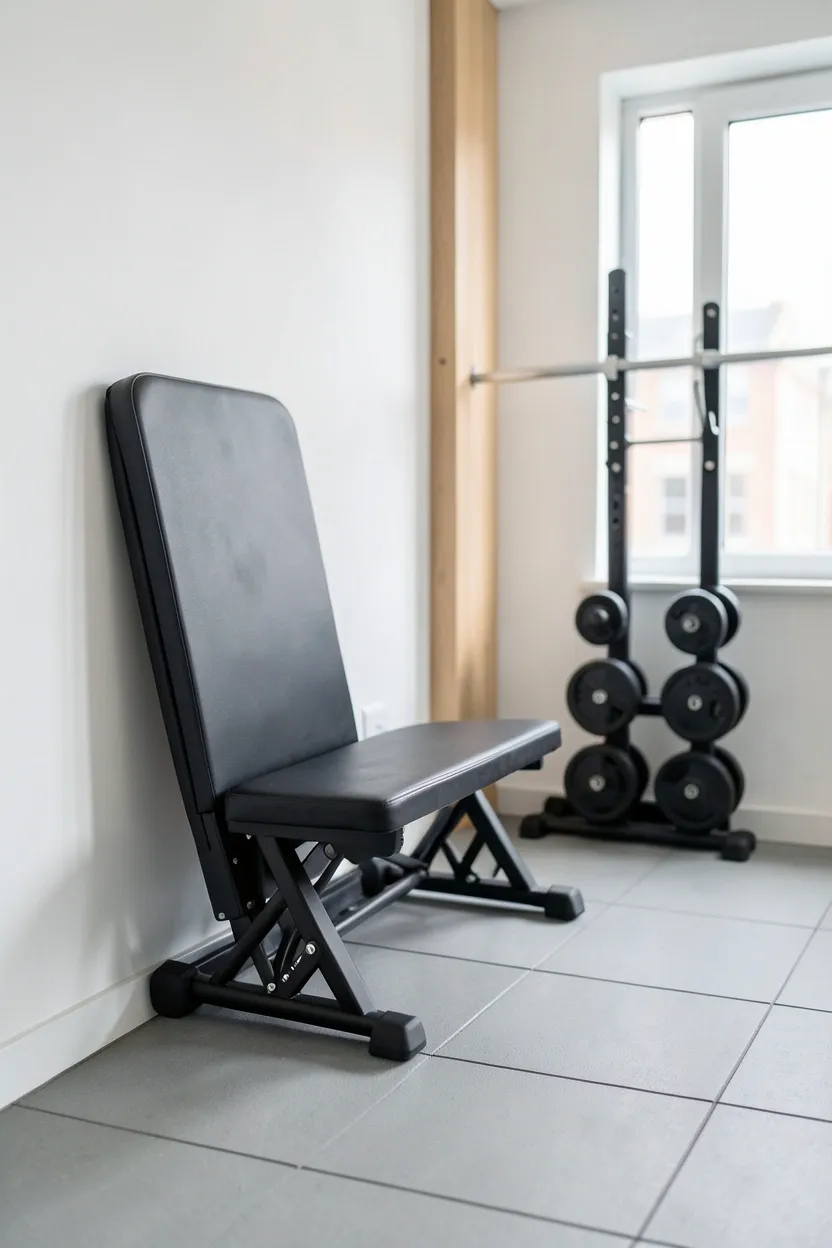
The bench typically unfolds in seconds to provide a stable platform for weight training, core exercises, or bodyweight movements. Quality options support up to 400 pounds while maintaining a slim profile when folded. Consider positioning it near a window for natural light during your workout sessions, which can boost energy and mood.
Placement note: Install the folding bench on a structural wall for maximum stability, and ensure at least 6 feet of clearance in front when unfolded for safe movement during exercises like bench presses or dumbbell rows.
For a complete setup, pair the folding bench with wall-mounted dumbbell racks positioned nearby. This creates an efficient workout zone where everything stays organized and accessible. Unlike a permanent bench, this design adapts to your lifestyle—fold it away when guests arrive or when you need extra floor space for other activities.
Do: Choose a bench with gas-assisted lifting for easy folding and unfolding motion.
Don't: Install on drywall without proper mounting hardware or stud support.
What this gives you: A professional weight training setup that disappears when not in use, making your small space feel larger and more versatile.
2. Corner Suspension Training Zone
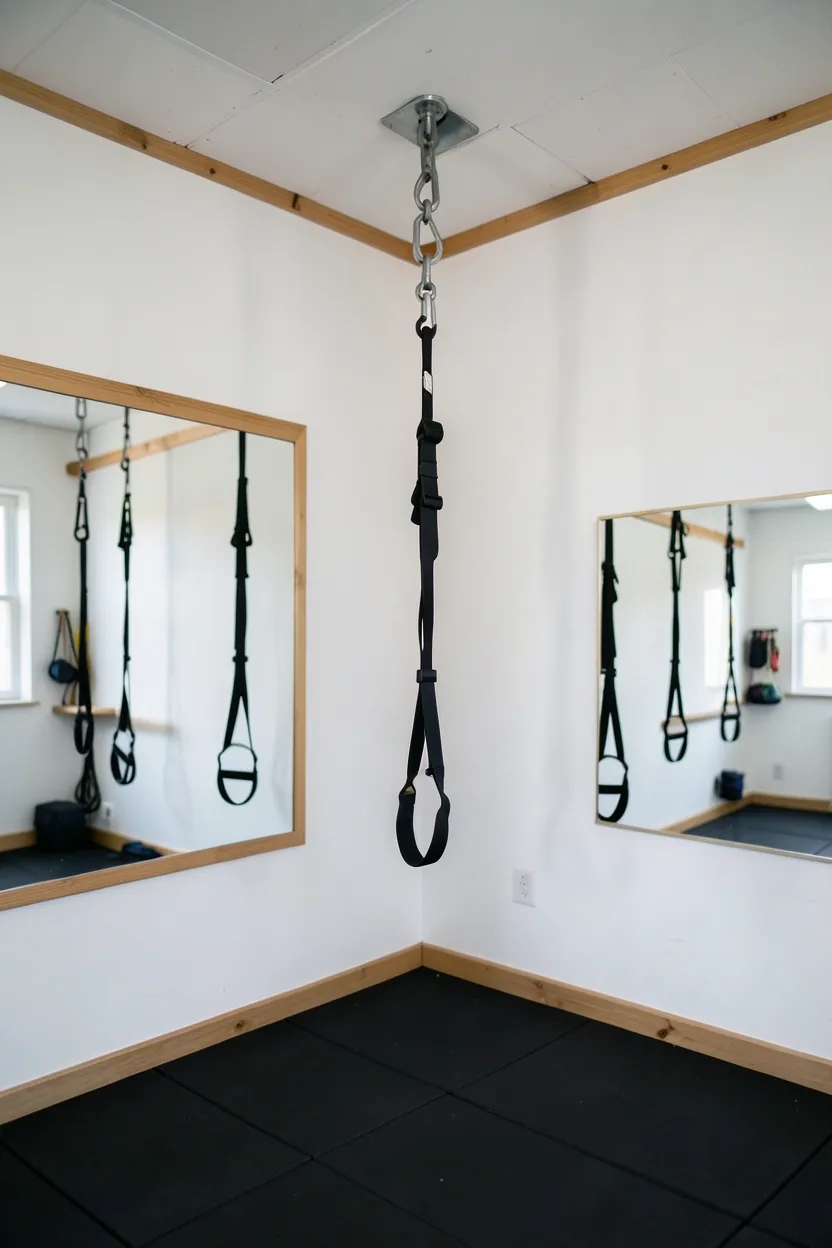
Transform an unused corner into a high-performance workout area using suspension trainers like TRX or similar systems. This small gym room layout maximizes vertical space while requiring minimal floor area, making it perfect for apartments where every square foot counts. The corner placement naturally creates a defined workout zone without encroaching on your living space.
Recommended
Items for this idea
Install a ceiling-mounted anchor point or use a high-quality door anchor rated for suspension training. The corner positioning allows you to perform hundreds of exercises targeting every muscle group—from rows and chest presses to lunges and planks—all within a compact footprint. Consider adding a full-length mirror on one wall to check form and visually expand the space.
Why it works: Suspension training provides resistance using your body weight, eliminating the need for bulky free weights or machines. The corner layout creates a natural boundary for your workout zone while keeping equipment out of pathways.
Enhance the space with rubber floor tiles in a contrasting color to define the workout area visually and provide cushioning. Add small shelves nearby for storing resistance bands, yoga blocks, or foam rollers. This setup excels in full-body workouts and is especially effective for functional training that improves real-world strength and mobility.
Tip 1: Use a chalkboard wall or magnetic board to track workout progress without clutter.
Tip 2: Install dimmable overhead lighting for atmosphere during evening workouts.
Tip 3: Keep a compact foam mat rolled in the corner for floor-based exercises.
Budget-friendly alternative: Start with a door anchor system that requires no installation and costs under $30, then upgrade to ceiling mounting when space allows.
What this gives you: A full-body training system in a corner footprint, delivering maximum workout variety with zero floor space consumption when not in use.
3. Vertical Storage with Wall-Mounted Rack (No Floor Space Needed)
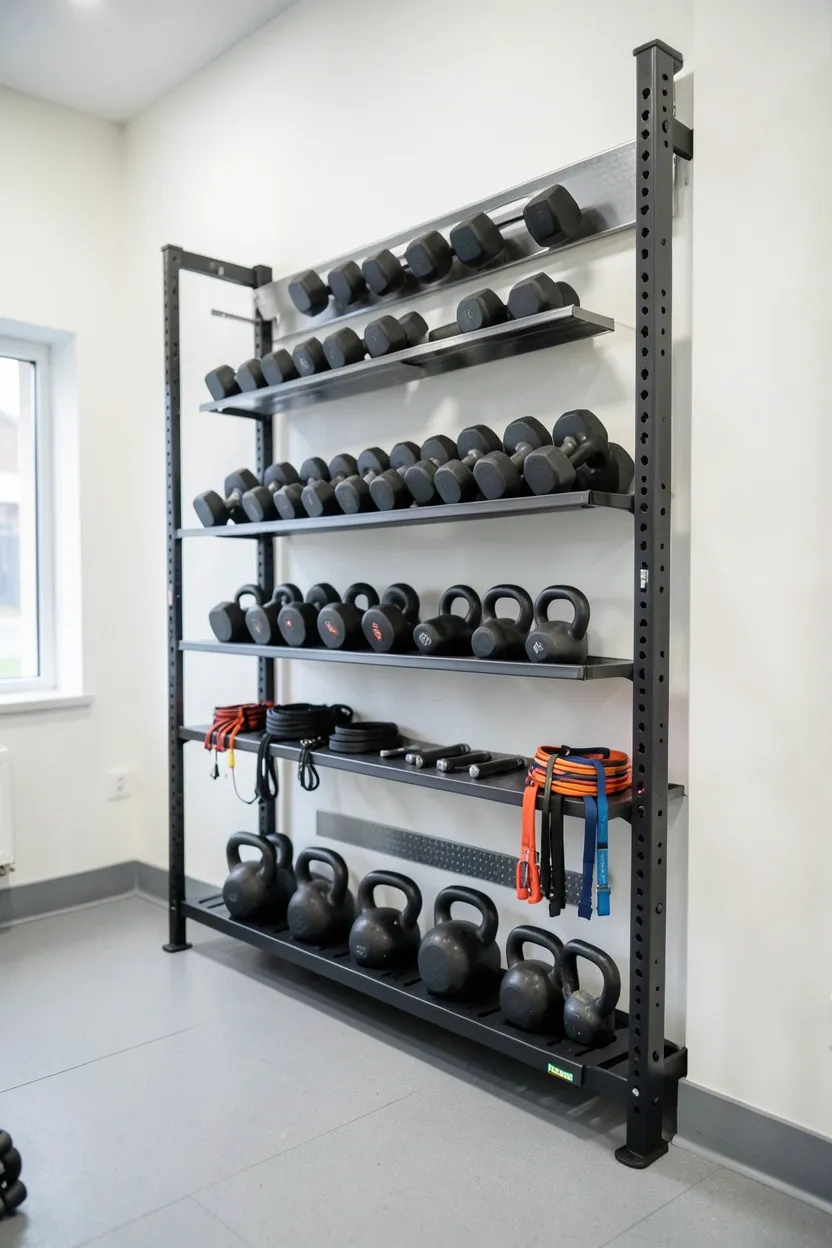
Wall-mounted storage systems are game-changers for small gym room layouts, allowing you to utilize vertical space that would otherwise go unused. A well-designed wall rack organizes dumbbells, kettlebells, resistance bands, and accessories while keeping your floor clear for movement and exercises. This approach transforms cluttered corners into streamlined fitness zones.
Common mistake: Installing wall storage too high or without considering accessibility during workouts. Position frequently used items at chest height, reserving higher and lower shelves for seasonal or less-used equipment. Ensure the rack is anchored to wall studs with appropriate hardware for the weight capacity you'll need.
A comprehensive wall rack might include horizontal bars for hanging resistance bands and jump ropes, tiered shelving for kettlebells and medicine balls, and specialized holders for dumbbells. Consider modular systems that you can expand as your equipment collection grows. The aesthetic appeal of organized equipment also creates a motivating environment that makes you want to work out.
For even more efficiency, combine wall storage with magnetic tool strips for small items like clips, resistance loops, or attachment hardware. This keeps everything visible and within arm's reach during workouts. The floor space saved allows you to incorporate a yoga mat, foam roller, or even a small cardio machine without feeling cramped.
If you rent and can't drill into walls, use freestanding vertical racks or over-the-door organizers.
Then secure freestanding units to the wall with anti-tip brackets for safety during vigorous movements.
What this gives you: Maximum storage capacity with zero floor footprint, creating an organized and inspiring workout space that feels larger than it is.
4. Compact All-in-One Machine Layout
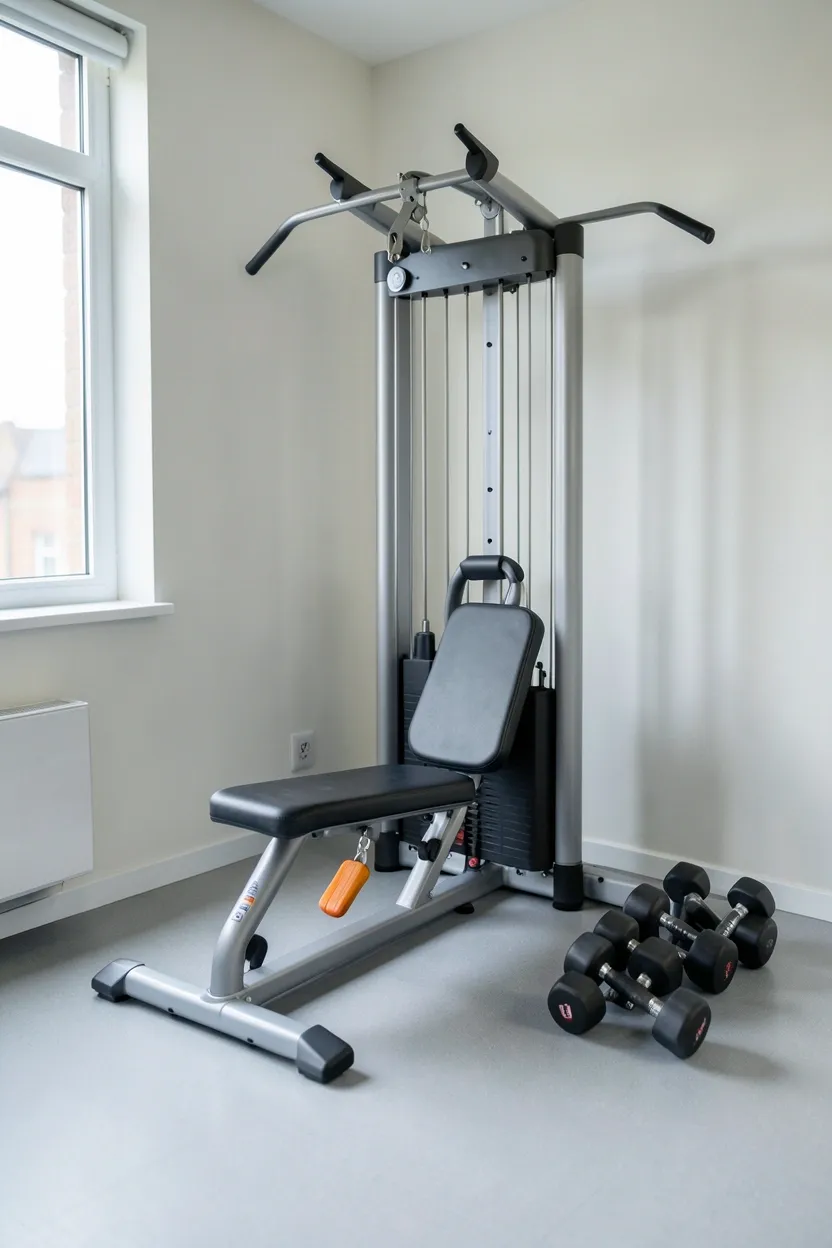
An all-in-one gym machine consolidates multiple workout stations into a single compact unit, making it ideal for small gym room layouts where space is at a premium. These versatile machines typically combine a bench, pulley system, leg developer, and various attachment points into one footprint that's often less than 4 feet by 6 feet.
Recommended
Items for this idea
The beauty of this layout lies in its efficiency—you can perform strength training for every major muscle group without needing multiple pieces of equipment scattered around the room. Position the machine against a wall to maximize open floor space, and ensure at least 3-4 feet of clearance on all sides for safe movement and range of motion.
Placement note: Position the machine so that moving parts don't block windows, doors, or pathways. Consider the machine's footprint when fully extended for exercises like leg curls or cable crossovers.
Complement the machine with a small set of dumbbells stored nearby for exercises that require free weights. This hybrid approach gives you the versatility of machine training with the freedom of free weights when needed. Some machines even include built-in storage for attachments, keeping everything tidy and organized.
For those who prefer a minimalist approach with essential equipment only, home gym inspiration for small spaces showcases setups that focus on the absolute essentials for effective training in minimal square footage.
Pro: Eliminates equipment switching time between exercises for efficient workouts.
Con: Larger initial investment compared to buying individual equipment pieces.
Fix: Look for used machines in good condition to reduce costs while maintaining quality.
What this gives you: A complete strength training solution in a compact footprint, enabling comprehensive full-body workouts without dedicating excessive floor space to multiple machines.
5. Mirror-Enhanced Yoga and Pilates Corner for Small Apartments
A designated yoga and Pilates corner with full-length mirrors creates an inviting space for mindful movement while visually expanding the room. Mirrors serve a dual purpose: they help you check your form during exercises and reflect light to make the space feel larger and brighter. This small gym room layout works exceptionally well in apartments or spare rooms where a peaceful workout environment is desired.
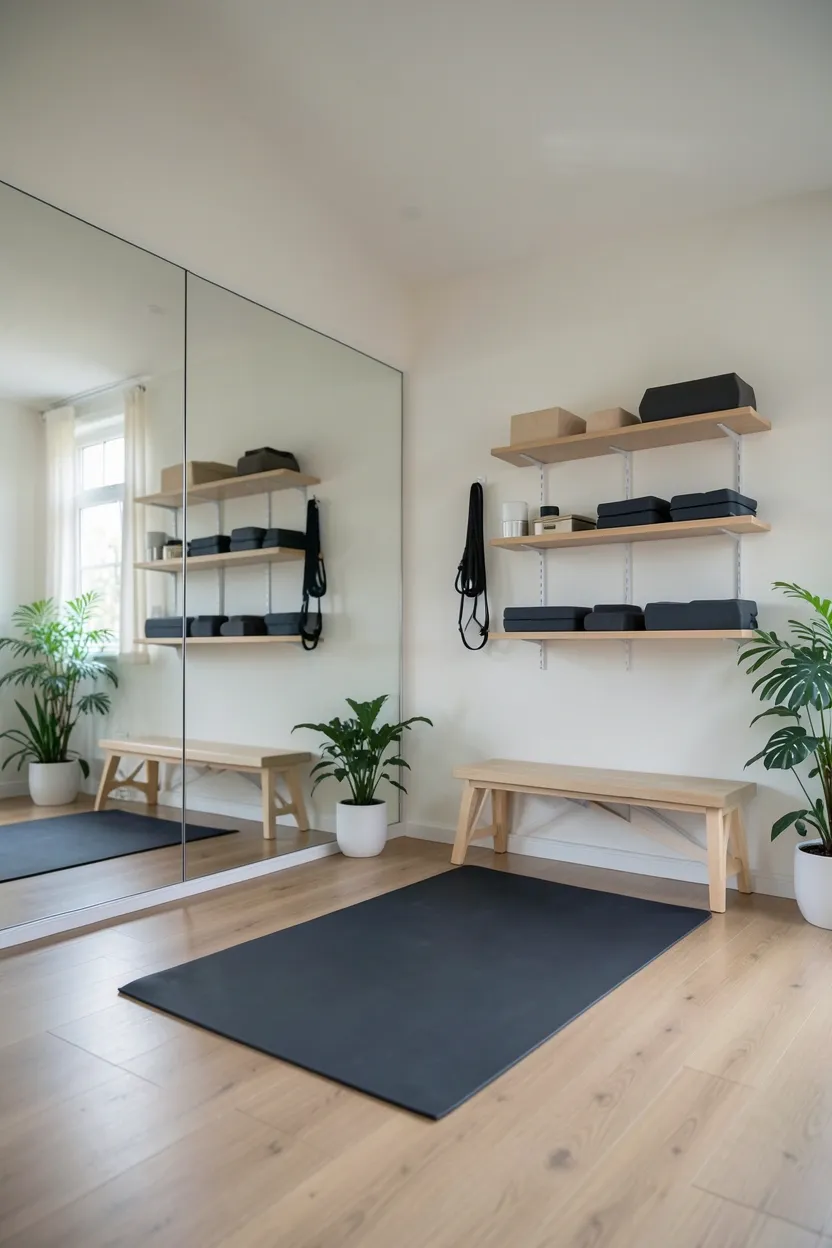
Install a floor-to-ceiling mirror on one wall, ideally the longest wall in your designated workout corner. Position your yoga mat centrally with about 2-3 feet of clearance on all sides for movement. Add wall-mounted shelves at various heights for yoga blocks, straps, bolsters, and foam rollers, keeping the floor clear for stretching and core work.
The mirror placement should allow you to see your entire body from head to toe when standing on your mat. This is particularly valuable for yoga poses, Pilates exercises, and checking alignment during bodyweight movements. Consider adding soft, adjustable lighting that can be dimmed for evening sessions or brightened for more energetic workouts.
For a complete setup, include a small bench or stool for meditation breaks, and perhaps a plant to bring natural elements into the space. The calming atmosphere of a yoga-focused corner contrasts beautifully with the functional intensity of strength training areas elsewhere in your home gym setup.
Do: Use safety-backed mirrors or secure them properly to prevent accidents.
Don't: Place the mirror directly opposite a window that causes harsh glare during certain times of day.
Rental-friendly option: Use a large freestanding mirror instead of wall-mounted options to avoid permanent installation while still enjoying the benefits.
What this gives you: A serene, visually expanded space for mindful movement that doubles as a calming retreat from daily stress.
6. Under-Bed Storage with Roll-Out Mats
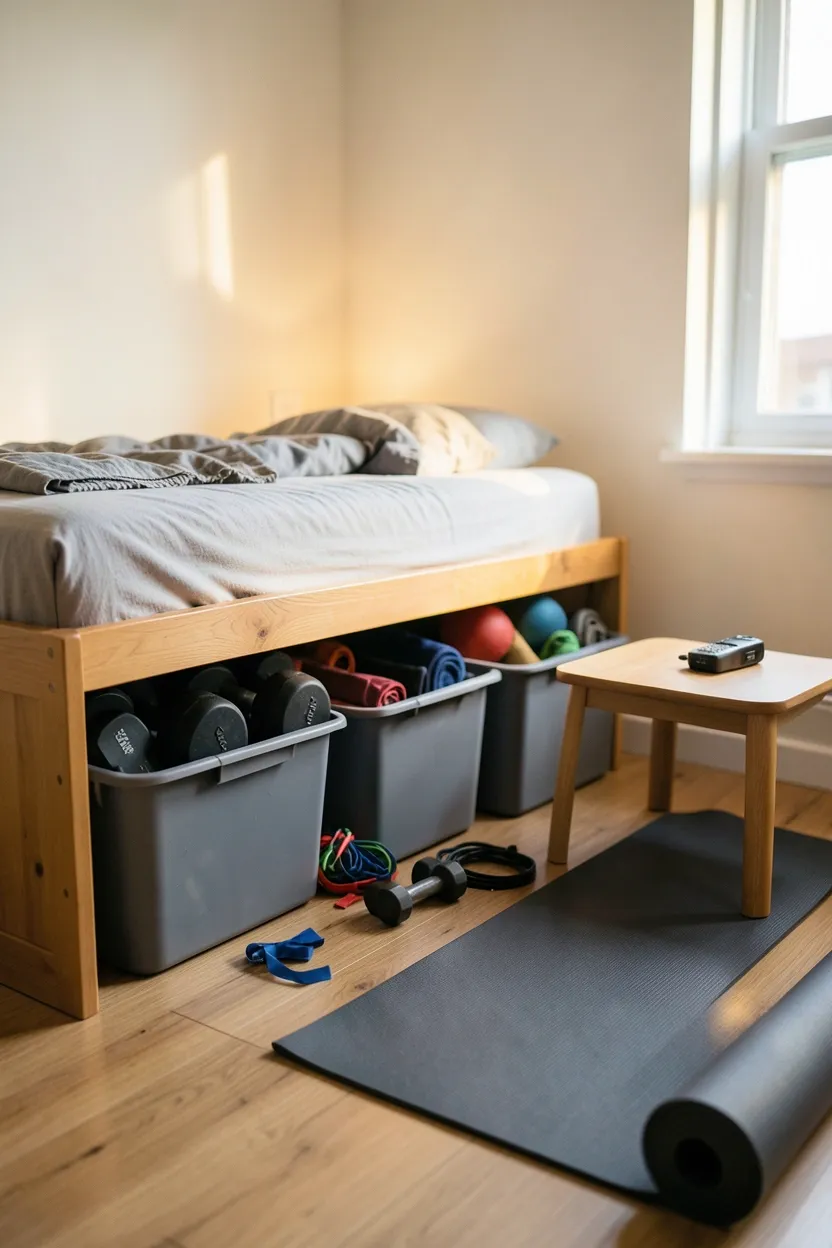
Transform a spare bedroom into a dual-purpose space by utilizing under-bed storage for gym equipment and creating a roll-out mat system. This innovative small gym room layout makes the room function as a bedroom or office by day and a full workout space by night, perfect for maximizing utility in smaller apartments or homes.
Recommended
Items for this idea
Invest in low-profile storage containers that slide easily under the bed, filled with dumbbells, resistance bands, kettlebells, yoga blocks, and other compact equipment. The key is choosing items that are flat or can be nested efficiently to maximize storage capacity. Label containers clearly so you can quickly grab what you need during workouts.
The roll-out mat system involves using interlocking foam tiles or a large yoga mat that can be unrolled or assembled on the floor when you're ready to exercise. When the workout is complete, the mats can be rolled up and stored vertically behind furniture or in a closet, instantly restoring the room to its primary function.
Why it works: This approach eliminates the visual clutter of gym equipment while making your workout space feel like a dedicated area when in use. The psychological benefit of "transforming" the room for exercise can enhance motivation and help you mentally separate work and workout modes.
Consider adding a small folding table or wall-mounted desk that can serve as a surface for tracking workouts, playing music, or streaming workout videos during sessions. When combined with proper lighting, this creates a fully functional gym experience without permanent space commitment.
Tip 1: Use containers with wheels for easy access without having to move the bed.
Tip 2: Choose equipment that stacks or nests to optimize under-bed space.
Tip 3: Keep a small vacuum or broom nearby for quick cleanup before reassembling the bedroom setup.
What this gives you: Maximum versatility in a single room, allowing you to maintain a separate gym and living space without sacrificing square footage.
7. Window-Positioned Cardio Station
Positioning cardio equipment near a window transforms mundane exercise sessions into engaging experiences while bringing natural light into your workout routine. This small gym room layout takes advantage of outdoor views and natural ventilation, making cardio workouts feel less like drudgery and more like an energizing activity that connects you with the outside world.
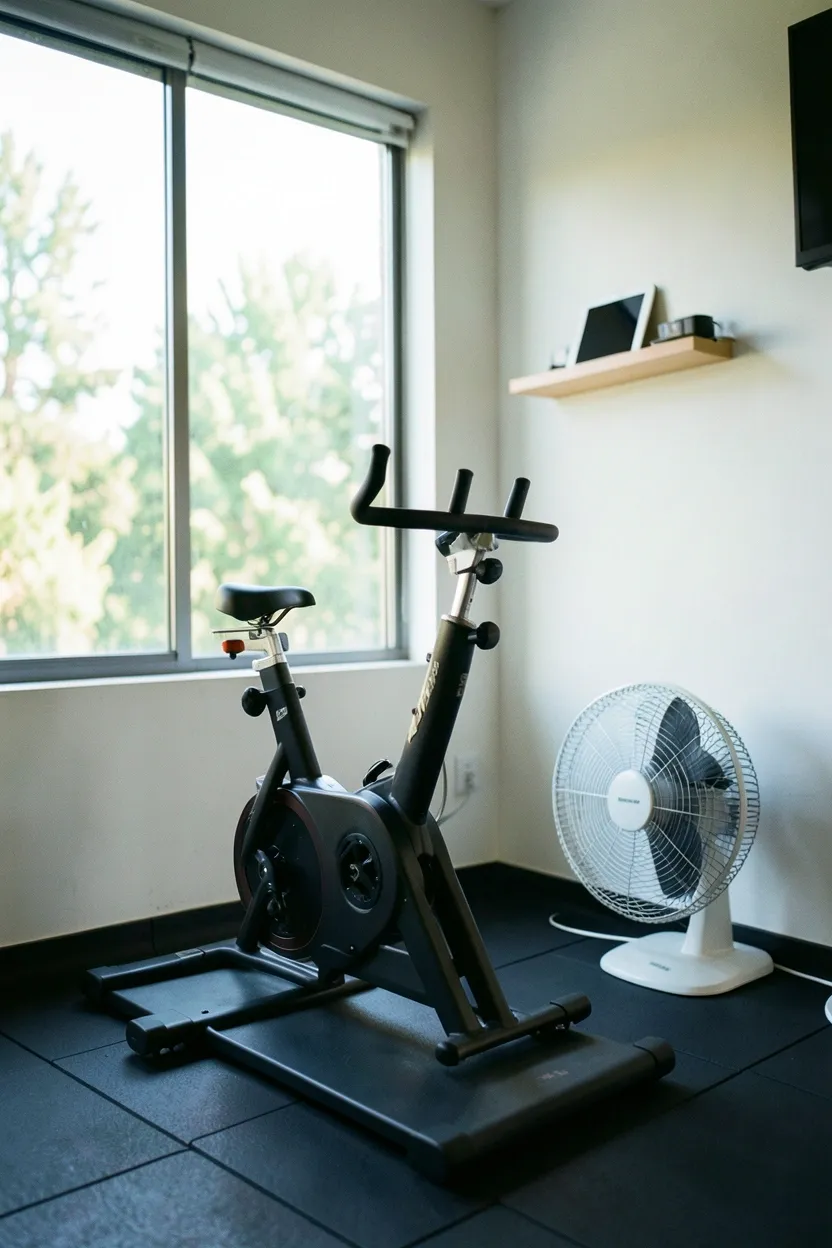
A compact treadmill, elliptical machine, or spin bike fits perfectly in front of a window, especially if you have a stationary bike with a small footprint. The window provides natural light, which boosts mood and energy during workouts, while the view can distract from the physical effort of cardio exercises. Consider adjustable window treatments that allow you to control glare while maintaining the connection to outdoors.
Placement should account for the equipment's dimensions when in use, not just its footprint when stationary. Elliptical machines and treadmills need additional clearance for the user's full range of motion, especially when running or exercising vigorously. Allow at least 2 feet of clearance on all sides of the equipment.
For those interested in creating a motivating exercise environment, home gym inspiration ideas to create a motivating routine offers additional strategies for keeping workouts engaging and effective in any space.
Enhance the cardio station with a small wall-mounted shelf or tablet holder for entertainment or workout guidance. Add a floor fan nearby to complement natural ventilation during intense sessions. The combination of natural light, outdoor views, and thoughtful accessories creates a cardio zone that you'll actually look forward to using.
If you don't have a suitable window, position cardio equipment facing a wall with an inspiring poster or a TV.
Then: Add full-spectrum lighting to mimic natural daylight and maintain the mood-boosting benefits.
What this gives you: A cardio experience that's mentally engaging and physically energizing, making it easier to stick to your exercise routine consistently.
8. Ceiling-Hung Boxing and HIIT Area
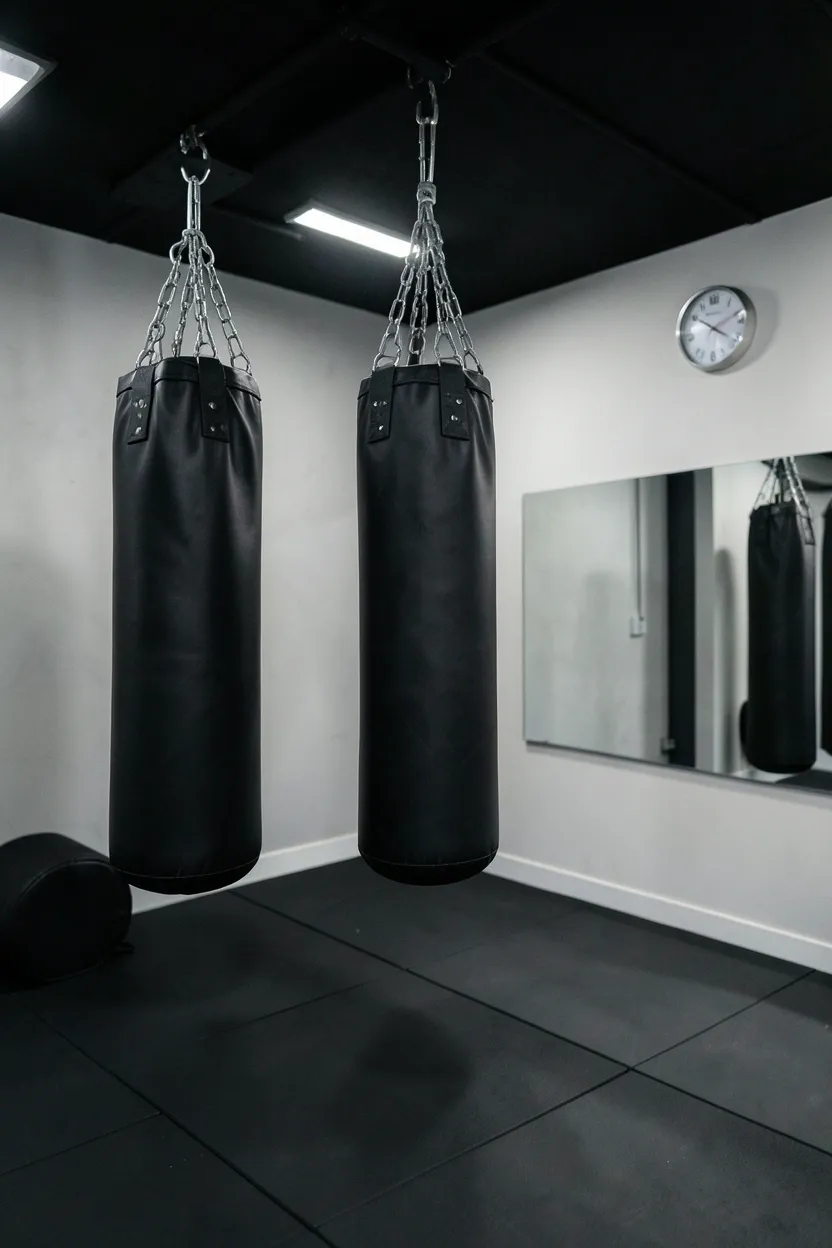
A ceiling-mounted heavy bag or speed bag creates an impressive boxing and high-intensity interval training zone that doesn't consume valuable floor space. This vertical workout solution is perfect for apartments and small rooms where horizontal space is limited but you want an intense, full-body workout option that builds strength, coordination, and cardiovascular endurance.
Recommended
Items for this idea
Installation requires a ceiling joist or structural beam capable of supporting the weight and dynamic force of boxing workouts. Professional installation is recommended to ensure safety, especially in apartments where you must consider the impact on residents below. The ceiling-mounted bag leaves the floor completely free for other exercises like jump rope, bodyweight movements, or agility drills.
Why it works: This layout combines cardio and strength training in one compact space. Boxing sessions provide an intense full-body workout that engages your arms, shoulders, core, and legs while building coordination and relieving stress. The space efficiency means you can incorporate other HIIT exercises in the same area without moving equipment around.
Enhance the boxing zone with a small mirror for form checking and a timer or interval clock for structured HIIT workouts. Add rubber floor tiles to absorb impact and protect your flooring. Consider a compact jump rope storage solution nearby, as jump rope intervals pair perfectly with boxing rounds for varied cardio workouts.
For noise reduction, consider a ceiling-mounted isolation mount that absorbs some of the impact vibration. This is particularly important in multi-story buildings where noise transmission affects neighbors below. The result is a high-energy workout space that packs maximum fitness potential into minimal square footage.
Do: Use a bag with adjustable height to accommodate different users or exercise variations.
Don't: Install in a room with low ceilings that restrict your range of motion during punches and combinations.
Budget alternative: Use a freestanding heavy bag stand instead of ceiling mounting, though this does consume some floor space.
What this gives you: An intense, full-body training zone that builds strength, endurance, and coordination while consuming virtually no floor space.
9. Sliding Door Hidden Gym Solution
A sliding door or barn door system can conceal a fully functional home gym behind a seamless wall panel, making this small gym room layout ideal for living rooms, offices, or any space where you want your workout area to disappear completely when not in use. The hidden gym concept transforms a designated workout zone into a clever architectural feature that maintains your home's aesthetic integrity.
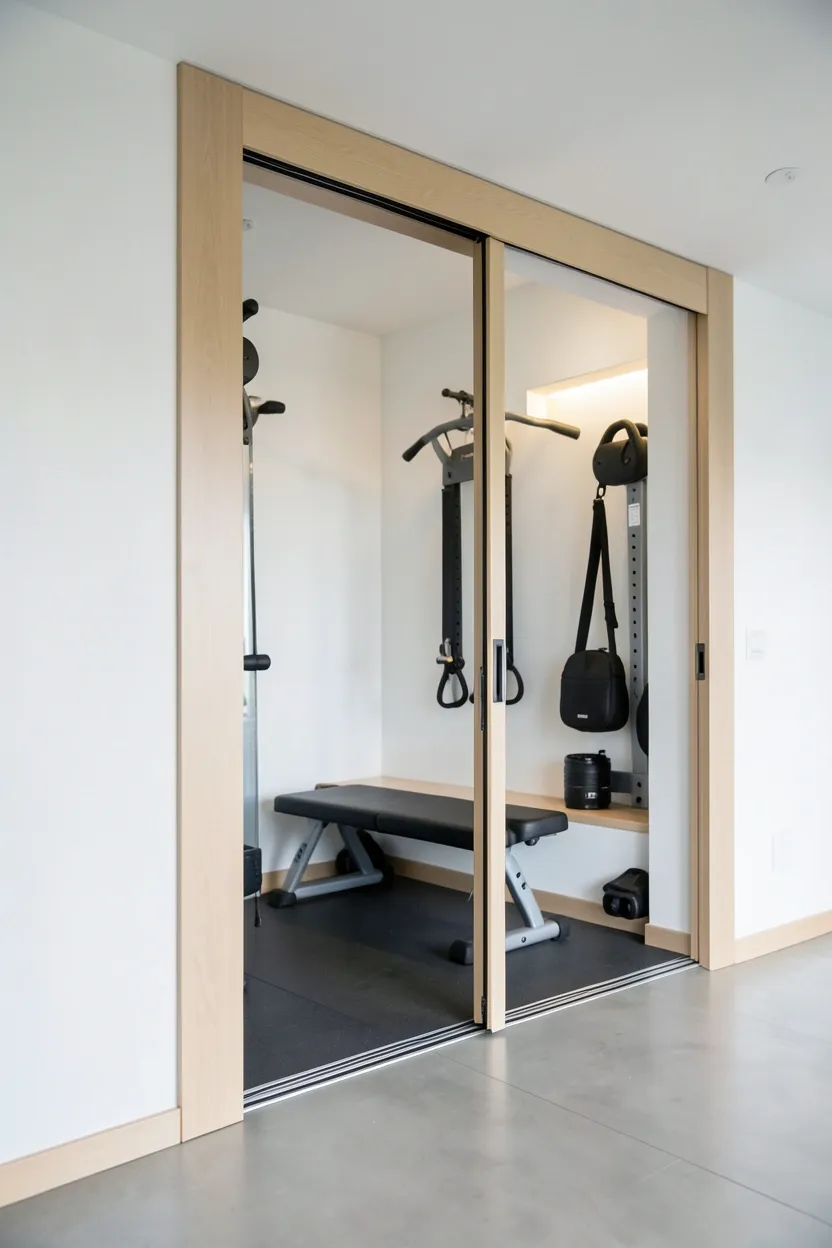
The concept involves building out a shallow alcove or utilizing an existing closet depth, then installing a sliding door system that slides open to reveal your gym equipment and slides closed to hide everything from view. Behind the door, install wall-mounted racks, a fold-away bench, or compact equipment that fits within the space depth.
Common mistake: Designing the space too shallow to accommodate equipment properly. Measure all equipment dimensions, including any necessary clearance for use, before finalizing the build-out depth. Standard closets often work well for this purpose, as they're already designed with appropriate depth.
Inside the hidden space, organize equipment by frequency of use with most-accessible items positioned at eye level and front. This thoughtful organization means you can quickly grab what you need for impromptu workouts. The door slides smoothly on a track system and locks securely closed, keeping curious hands away from equipment and maintaining a clean, uncluttered appearance.
For added functionality, incorporate interior lighting that activates when the door opens, creating an instant workout ambiance. Some homeowners even add a mirror on the inside of the door for form checking during exercises, maximizing the utility of every surface.
Pro: Completely eliminates gym equipment from view when not in use.
Con: Requires significant planning and potentially professional installation.
Fix: Start with an existing closet or alcove to simplify the project and reduce construction requirements.
What this gives you: A fully functional gym that remains invisible until needed, preserving your home's design aesthetic while providing dedicated workout space.
10. Loft Bed with Integrated Gym Below
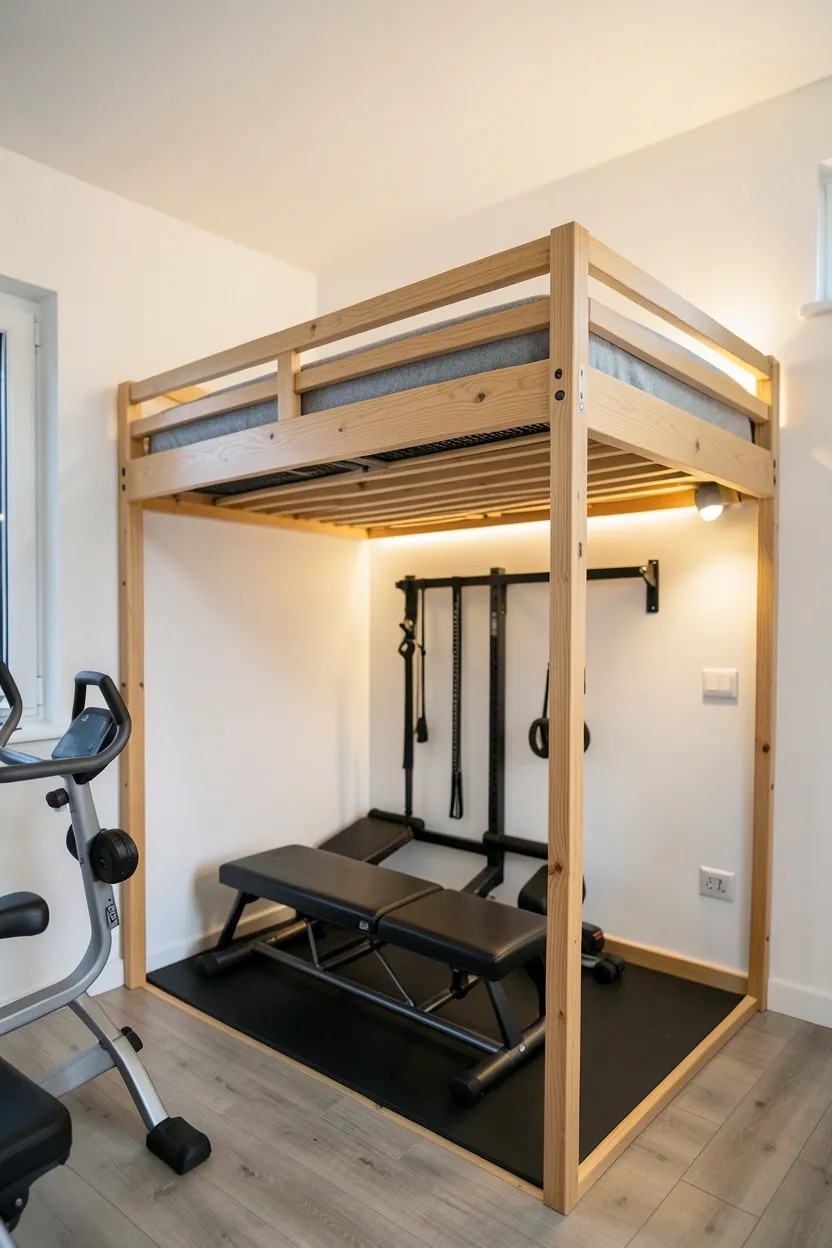
A loft bed with integrated workout space underneath creates an innovative two-level solution for small apartments or studios, making this small gym room layout particularly effective in studio apartments or rooms with high ceilings. The elevated sleeping area frees up valuable floor space below for a complete home gym setup, doubling the functionality of a single room.
Recommended
Items for this idea
The loft bed structure typically provides 6-7 feet of clearance underneath, sufficient for most workout activities including standing exercises, yoga, and even compact cardio equipment. Position the bed against one wall to maximize open floor space beneath, and install wall-mounted equipment on the opposite wall for easy access during workouts.
Placement note: Ensure adequate headroom beneath the bed for your height and the exercises you'll perform. Consider a higher ceiling or lower bed profile if headroom feels constricted.
Install a fold-away bench, wall-mounted dumbbell racks, and even a compact treadmill or exercise bike in the space below. The loft bed's vertical supports can double as mounting points for resistance bands, suspension trainers, or other equipment. Add lighting specifically designed for the workout area to create an inviting atmosphere that separates gym time from rest time.
For safety and comfort, ensure proper ventilation in the workout area, especially if you're exercising intensively beneath the bed. A small fan or air purifier can help maintain air quality. The result is a surprisingly spacious-feeling gym zone that doesn't encroach on your living or sleeping areas.
Those seeking space optimization for tiny homes might also find inspiration from small gym room ideas that make tight spaces feel bigger, which explores additional vertical space strategies for compact fitness areas.
If: You're building a loft bed from scratch, integrate equipment mounts directly into the frame design.
Then: Work with a carpenter who understands the structural requirements for both sleeping safety and equipment mounting.
What this gives you: Maximum room efficiency by stacking functions vertically, creating distinct zones for sleep and exercise within the same footprint.
11. Ladder-Style Weight Storage Wall
A ladder-style storage system creates a visually striking and highly functional way to organize weights and small equipment along a wall, making this small gym room layout both practical and aesthetically pleasing. The vertical ladder design maximizes storage capacity while adding an architectural element that enhances rather than detracts from your room's decor.
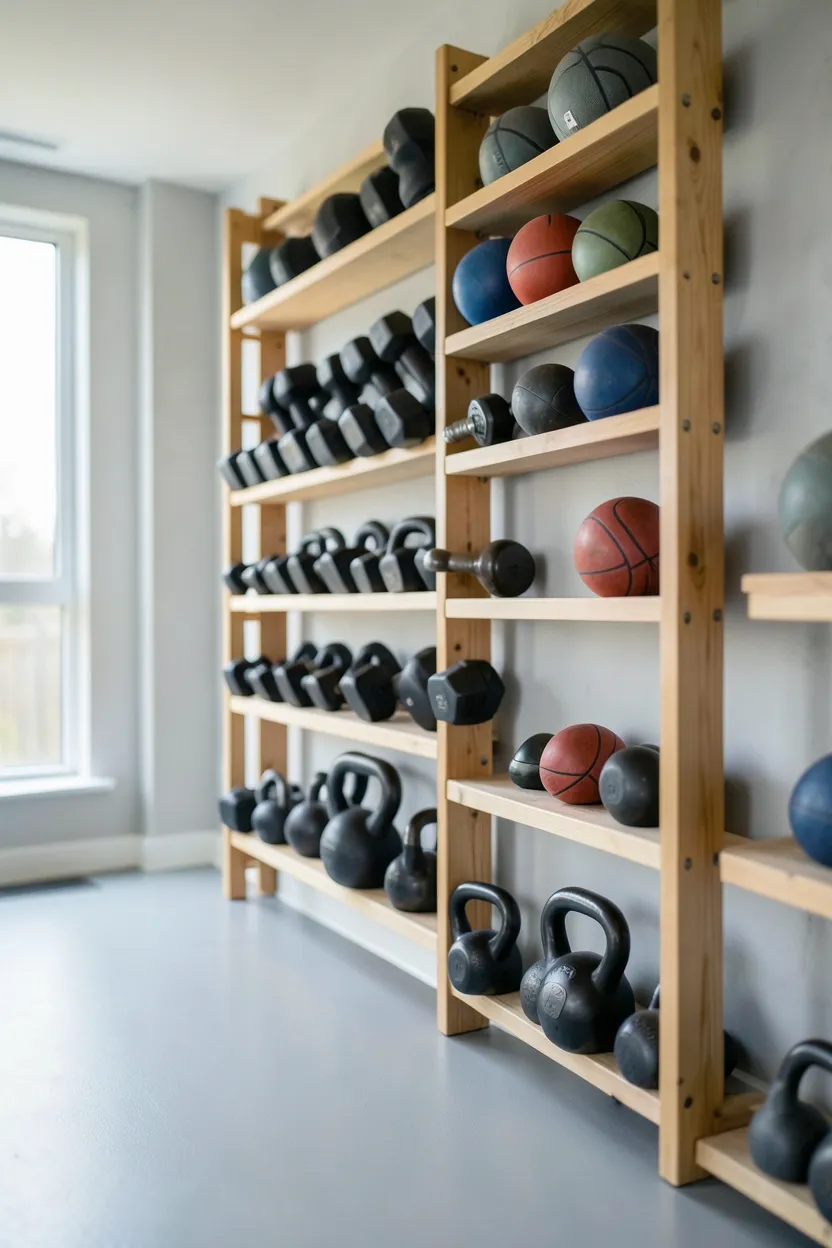
Install one or multiple ladder-style racks along a wall, using the rungs as horizontal storage bars for dumbbells, kettlebells, medicine balls, and other compact equipment. The ladder design naturally creates tiers of storage at different heights, making items easily accessible while keeping the floor completely clear for movement and exercise.
Why it works: Ladder storage provides excellent organization while adding visual interest to your workout space. The open design allows you to see all equipment at a glance, making it easier to grab what you need during workouts. The vertical orientation maximizes storage in minimal floor space, perfect for apartments and small rooms.
Enhance the ladder system with hooks on the sides for hanging resistance bands, jump ropes, or workout towels. Add small shelves between rungs for storing yoga blocks, foam rollers, or other accessories. Consider painting the ladder in a contrasting color to make it a design feature rather than just storage.
For heavier equipment like dumbbells or kettlebells, ensure the ladder is constructed from sturdy materials and anchored securely to wall studs. The weight capacity should exceed your heaviest item by a significant margin for safety. Some systems incorporate weight-specific rungs designed for particular types of equipment.
Tip 1: Position the ladder near where you'll actually use the weights to minimize walking between equipment.
Tip 2: Use anti-slip pads on ladder feet to protect floors and prevent sliding during vigorous workouts.
Tip 3: Consider a wider ladder (up to 3 feet) to accommodate larger items like medicine balls.
Budget-friendly option: DIY ladder storage using wooden ladders and hardware-store hooks, though ensure proper weight capacity for your equipment.
What this gives you: Maximum storage capacity with zero floor footprint, creating an organized and visually appealing workout environment.
12. Portable Equipment on Rolling Cart (Renter-Friendly Gym Setup)
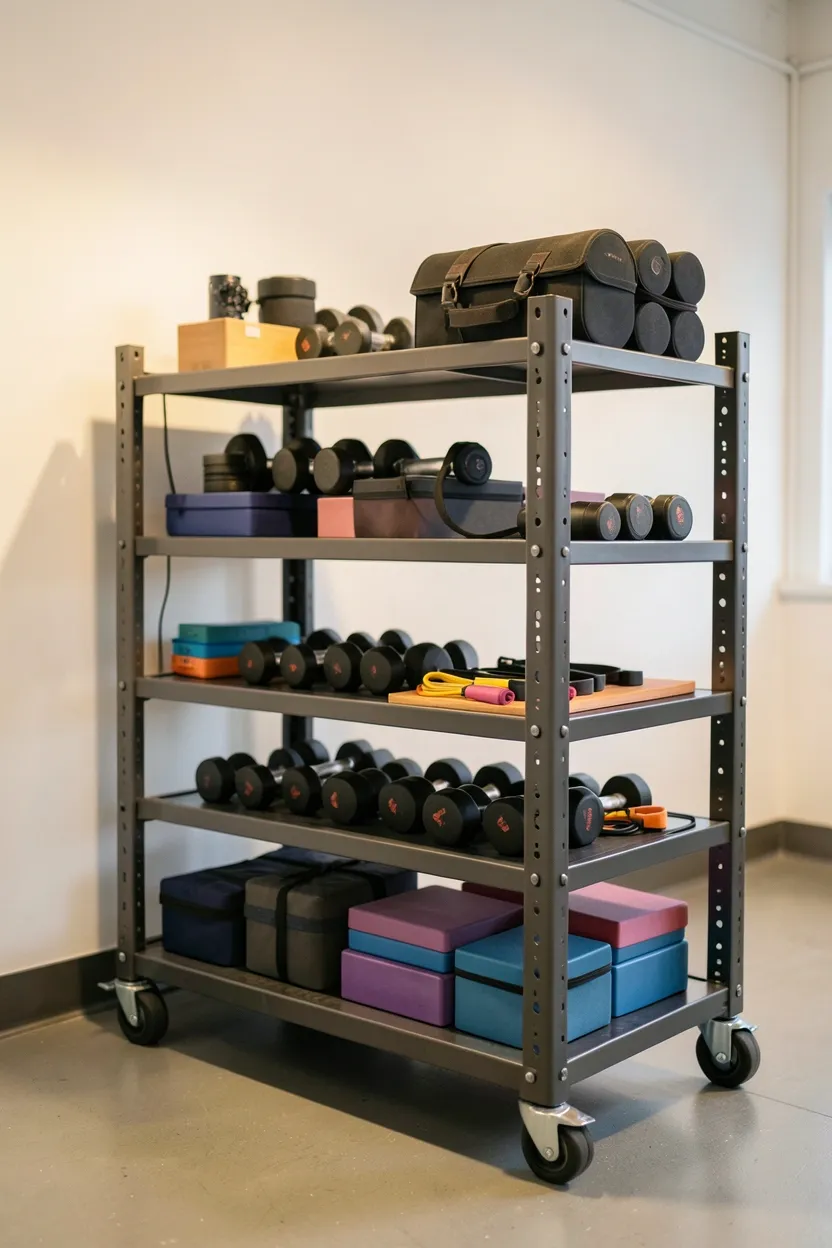
A rolling equipment cart provides ultimate flexibility for small gym room layouts, allowing you to bring your workout tools exactly where you need them and store them out of sight when not in use. This mobile approach is particularly valuable in multi-purpose rooms where your workout space needs to transform into a living area, office, or guest room on demand.
Recommended
Items for this idea
Choose a sturdy cart with multiple shelves or compartments to organize dumbbells, resistance bands, yoga blocks, foam rollers, and other essential equipment. The cart should have locking wheels to prevent movement during workouts but roll smoothly when you need to reposition it. Industrial-style carts or utility carts work particularly well and can blend with various decor styles.
The beauty of this system is its versatility—roll the cart into your workout area when it's time to exercise, then tuck it into a closet or corner when finished. This keeps your living space clutter-free while making workout setup quick and convenient. The cart can even serve as a workout surface for exercises like incline pushups or elevated planks.
Consider organizing equipment by workout type on different cart shelves: cardio accessories on one level, strength training tools on another, and flexibility equipment on a third. This systematic organization makes it easy to find what you need for different workout routines without rummaging through everything.
Enhance the cart with a small whiteboard or chalkboard for tracking workouts, a holder for your phone or tablet, and a water bottle caddy. Some carts even incorporate built-in speakers or Bluetooth connectivity for workout music. The result is a mobile gym command center that brings everything you need into any space.
Do: Choose a cart with weight capacity ratings that exceed your equipment requirements.
Don't: Overload the cart to the point where it becomes unstable or difficult to move.
Rental-friendly option: This approach requires no permanent installation, making it perfect for renters who want a fully functional gym they can take with them when they move.
What this gives you: Complete flexibility to transform any space into a workout area on demand, with zero permanent impact on your living environment.
13. Niche Transformation into Functional Space
Many apartments and homes have awkward niches or alcoves that seem useless but can be transformed into highly functional workout zones. This small gym room layout approach capitalizes on existing architectural features rather than trying to work around them, turning what might be considered wasted space into a dedicated fitness area.
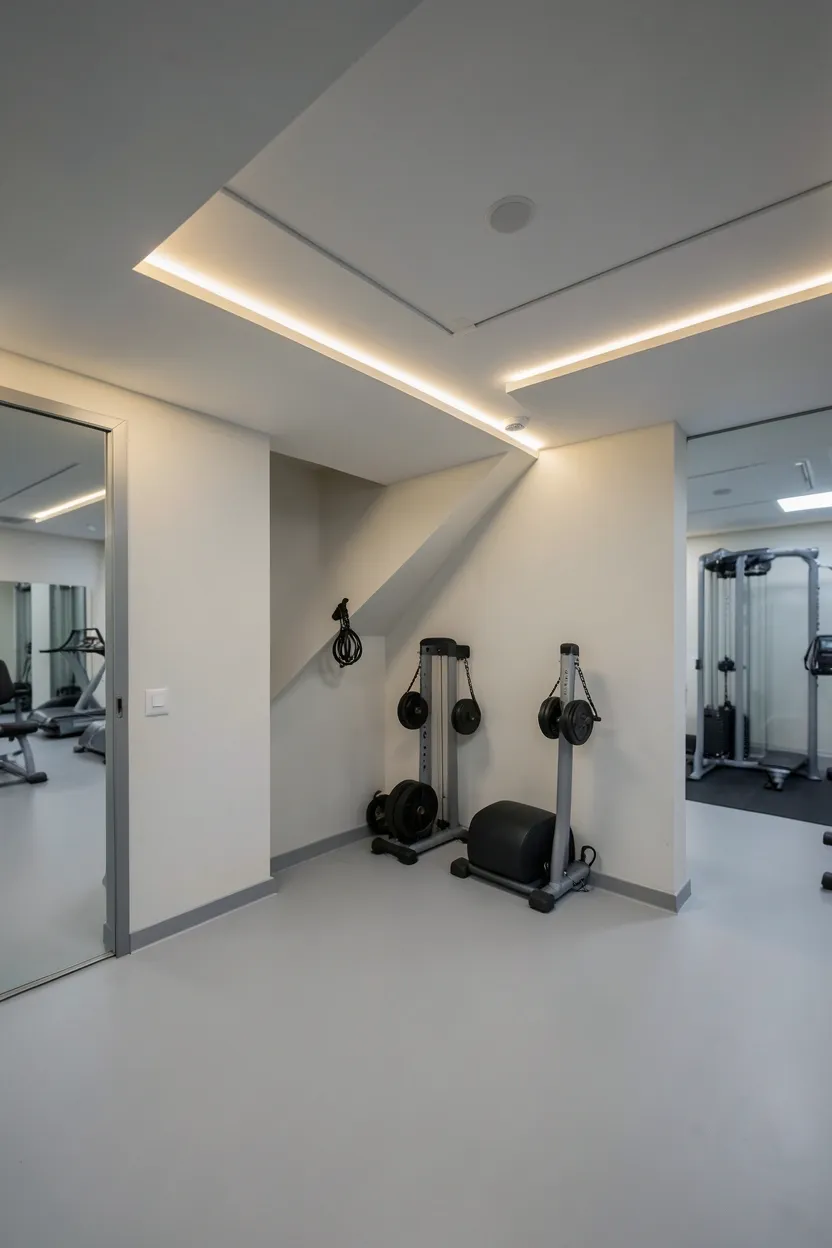
A common example is the space beside a staircase, under a window, or between built-in cabinets. These niches often measure 2-4 feet deep but can run for several feet along a wall, providing the perfect depth for wall-mounted equipment, resistance training, or even compact cardio machines with proper planning.
Placement note: Measure the niche dimensions carefully, including any obstructions like baseboards or electrical outlets, before planning your equipment layout.
Transform the niche with floor-to-ceiling wall-mounted storage racks on one side and a pull-up bar or suspension trainer mount on the opposite wall. The depth is perfect for positioning a yoga mat between the walls for bodyweight exercises or as a transition zone between different equipment stations.
Lighting is particularly important in niches since they often lack natural light. Install adjustable LED strip lighting along the ceiling or walls to create a well-lit workout area that doesn't feel dark or cave-like. Consider adding a small mirror on one wall to visually expand the space and provide form-checking capabilities.
For niches under stairs, the varying ceiling height can work to your advantage—use the highest point for pull-ups or suspension training, the middle section for resistance work, and the lowest area for floor exercises or stretching. This layered approach maximizes functionality within challenging architectural constraints.
Pro: Utilizes space that would otherwise remain unused or underutilized.
Con: May require creative solutions for ventilation and lighting.
Fix: Install a small vent fan and well-placed lighting to overcome natural limitations of the niche space.
What this gives you: A dedicated workout zone carved from existing architecture, maximizing your home's potential without consuming valuable open floor space.
14. Magnetic Wall Tool Organization
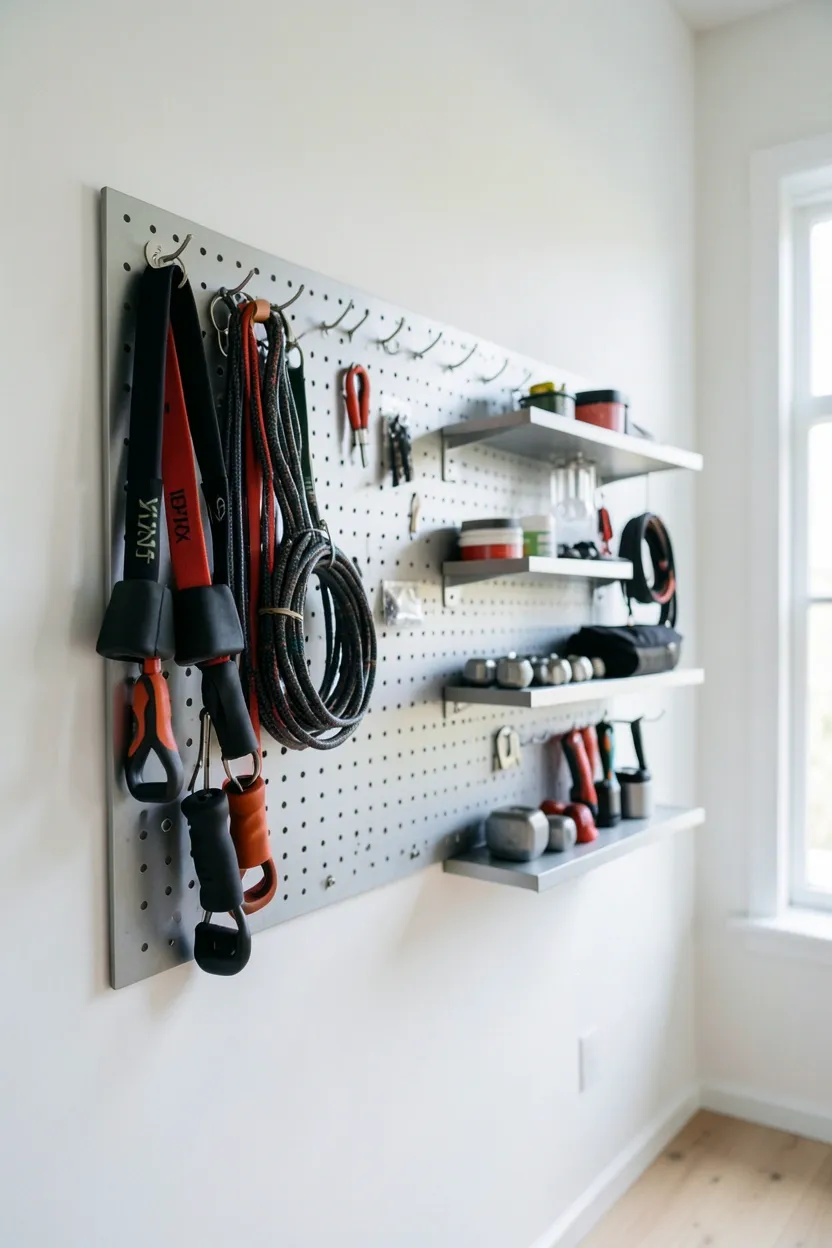
A magnetic wall system provides an incredibly efficient way to store workout tools and accessories, keeping them visible, accessible, and off the floor. This small gym room layout works beautifully in spaces where you want to maintain a minimalist aesthetic while ensuring every piece of equipment has its designated place for quick access during workouts.
Recommended
Items for this idea
Install a large magnetic board or magnetic paint on a wall, then use magnetic hooks, strips, and holders to organize resistance bands, jump rope handles, small weights, kettlebells with metal components, and other workout accessories. The magnetic system allows for flexible arrangement—you can easily reorganize as your equipment collection changes or your workout preferences evolve.
Why it works: This storage approach keeps equipment completely off the floor while making everything immediately visible and accessible during workouts. The magnetic strength holds items securely even during vigorous movement, and the clean aesthetic contributes to an organized, professional-looking gym environment.
For heavier items like dumbbells or kettlebells, use specialized magnetic holders designed for heavier weight capacity. Combine the magnetic system with small shelves or bins for items that aren't magnetic, creating a hybrid storage solution that accommodates all your equipment types.
Consider arranging equipment by workout type on different sections of the magnetic wall: cardio tools in one area, strength training accessories in another, and flexibility equipment in a third. This systematic organization streamlines your workout transitions and makes equipment selection intuitive.
Enhance the setup with a small whiteboard area on the magnetic wall for tracking workouts or writing motivational notes. The result is a sleek, highly organized storage system that maximizes vertical space while maintaining a clutter-free floor for exercise.
Tip 1: Test magnetic strength with your heaviest items before fully committing to the system.
Tip 2: Use magnetic hooks with rubber grips to prevent items from sliding during workouts.
Tip 3: Combine magnetic storage with wall clips for items like resistance bands or workout towels.
Budget-friendly alternative: Start with a smaller magnetic board and expand as needed, rather than committing to an entire wall immediately.
What this gives you: Ultra-organized storage that keeps equipment accessible and visible while maintaining a completely clear floor for exercise.
15. Multi-Zone Circuit Training Layout
A circuit training layout divides your small gym room into distinct workout zones, each dedicated to different exercise types or muscle groups. This small gym room layout approach is perfect for HIIT workouts, personal training sessions, or anyone who likes to move efficiently between different types of exercises without constantly rearranging equipment.
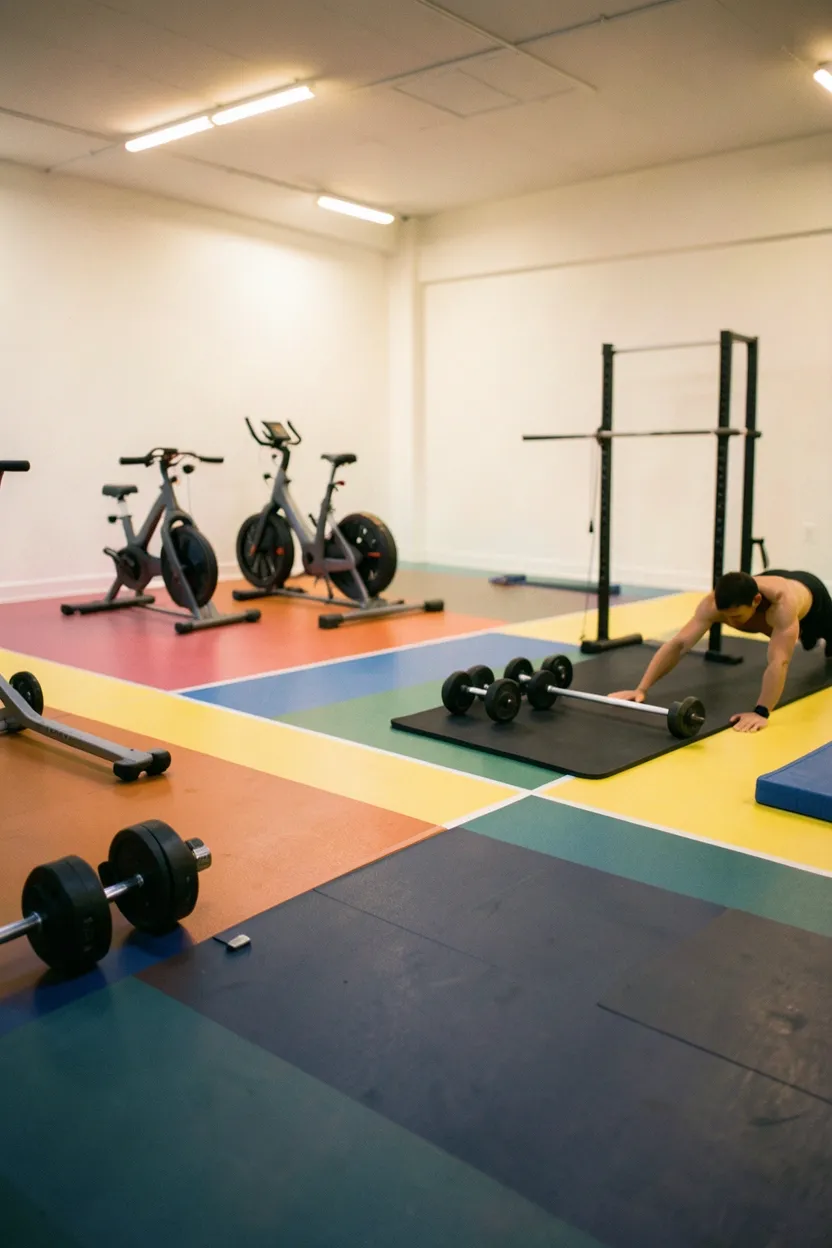
Designate specific areas for different workout zones: a cardio zone with a compact treadmill or bike, a strength zone with dumbbells or kettlebells, a bodyweight zone with a mat or suspension trainer, and perhaps a flexibility zone with space for stretching. Arrange these zones in a logical flow that minimizes walking distance between exercises during circuit training.
The key is creating clear boundaries between zones without using physical partitions that would make the space feel smaller. Use floor markings like colored tape or different rubber tile colors to visually separate zones. This visual separation helps you mentally transition between exercise types and maintains the organizational integrity of your workout space.
For those interested in creating an organized space with clever storage solutions, home gym inspiration ideas with clever storage and organization provides additional strategies for maintaining order in multi-zone workout areas.
Each zone should have its own dedicated storage solution—wall racks near the strength zone, hooks near the cardio area, and a mat storage solution in the flexibility zone. This keeps equipment where it's used rather than requiring you to cross the room to find what you need for each exercise.
For efficiency, position the most frequently used zones in the most accessible areas, and consider the natural flow of movement in your workout routine. Some people prefer cardio first, others strength training—organize your zones to match your typical workout sequence.
If: You have limited space, combine zones into dual-purpose areas that serve multiple workout types.
Then: Use equipment that serves multiple functions, like resistance bands for both strength and flexibility exercises.
What this gives you: Efficient circuit training flow with organized equipment zones that minimize workout transitions and maximize your training effectiveness.
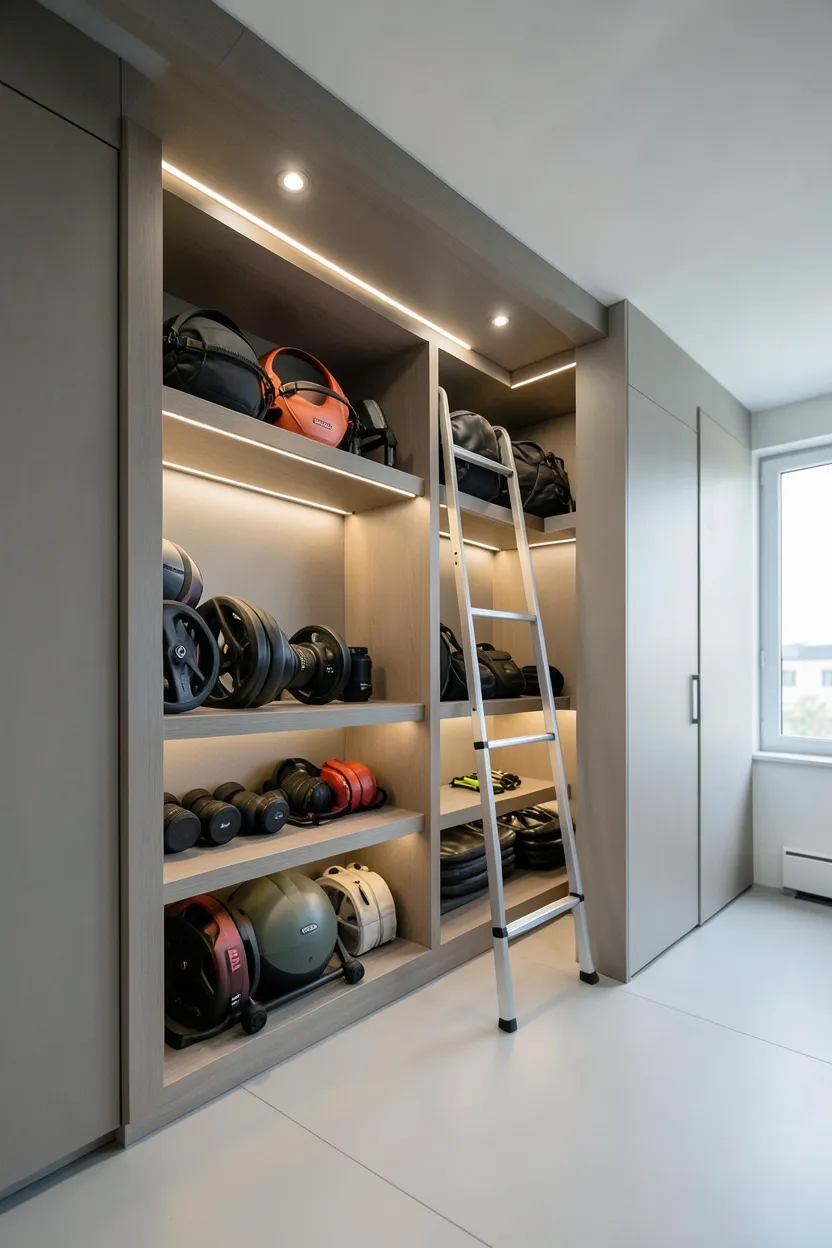
16. Alcove with Built-In Shelving Setup
An existing alcove or built-in cabinet space can be transformed into a highly efficient gym storage zone with custom shelving that maximizes every cubic inch. This small gym room layout works particularly well in older apartments or homes with built-in architectural features that might otherwise go unused or serve as inefficient storage.
Recommended
Items for this idea
The alcove depth provides perfect space for tiered shelving that stores equipment at various heights, from floor-level storage for heavier items to eye-level access for frequently used tools. Customize the shelving configuration to match your specific equipment—some shelves designed specifically for dumbbells, others for kettlebells, and more specialized storage for unique items.
Common mistake: Making shelves too deep where items get lost in the back. Design alcove shelving with optimal depth for your equipment—typically 12-18 inches allows visibility and accessibility while maximizing storage density. Consider incorporating pull-out baskets or drawers for smaller items that might otherwise be difficult to retrieve from deep shelves.
Enhance the alcove with integrated lighting that illuminates all levels, making it easy to see and select equipment. A small ladder or step stool nearby provides access to higher shelves for items used less frequently. The alcove can even incorporate a fold-down work surface for tracking workouts or playing music during exercise.
For equipment that needs ventilation or air circulation, consider wire shelving or leave gaps between solid shelves. This is particularly important for foam items, resistance bands, or equipment that might trap moisture. The result is a highly organized storage system that maximizes efficiency of an existing architectural feature.
Paint or finish the interior of the alcove to create contrast with surrounding walls, making the gym storage area feel like a deliberate design choice rather than an afterthought. Some homeowners even install a small mirror on the back wall to visually expand the space and provide form-checking capabilities.
Do: Install adjustable shelving so you can reconfigure as your equipment needs change.
Don't: Overload upper shelves beyond their weight capacity—store heaviest items near the floor.
Time-saving tip: Measure all equipment before designing shelves to avoid rework or inefficient spacing.
What this gives you: Maximally efficient storage that transforms an existing alcove into a highly organized gym zone with equipment always visible and accessible.
17. Partitioned Dual-Purpose Room Design
A freestanding partition or room divider can effectively split a single room into dedicated workout and living areas, making this small gym room layout ideal for studios, large bedrooms, or any space where you need to maintain separation between gym and daily life. The partition provides visual separation while allowing flexibility to open up space when needed.
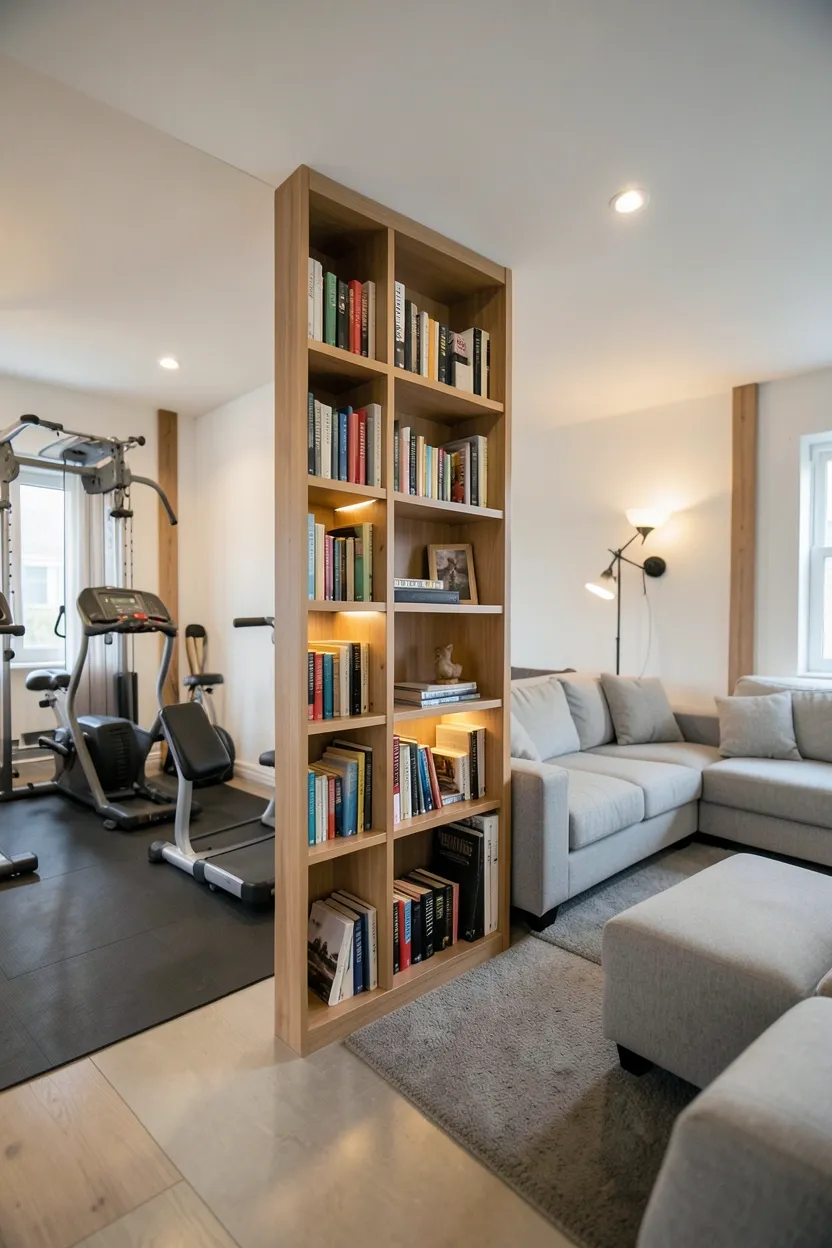
Choose a lightweight, movable partition such as a folding screen, bookshelf divider, or sliding panel system. The partition should be tall enough to provide visual separation but not so heavy that it's difficult to move when you want to expand your workout area or reconfigure the room. Consider options with built-in storage on one side to serve double duty as equipment organization.
The partitioned approach allows you to create a dedicated workout zone on one side with equipment storage, mats, and workout-specific lighting, while maintaining a separate living area on the other side with seating, decor, and ambient lighting appropriate for relaxation. When workout time arrives, simply close the partition to mentally and physically separate the two functions.
Why it works: This layout provides psychological separation between workout and relaxation zones, which can improve exercise focus and enhance recovery periods afterward. The physical partition also contains gym equipment visually, preventing it from dominating your living space or disrupting the room's aesthetic.
For maximum flexibility, use a partition with wheels or hinges that can be repositioned easily. Some options even incorporate mirrors on one side, serving as workout tools when closed and decorative elements when open. Consider adding hooks or clips to partition for hanging resistance bands or other lightweight equipment.
For those interested in dark, moody workout aesthetics, dark home gym design ideas with black walls and warm wood accents explores how color and lighting can dramatically transform workout spaces into inspiring environments.
Tip 1: Choose a partition with sound-absorbing materials to help contain workout noise.
Tip 2: Add casters to heavier partitions for easier repositioning when needed.
Tip 3: Consider a double-sided partition with different aesthetics on each side for gym vs. living area.
What this gives you: Physical and psychological separation between workout and living areas while maintaining flexibility to reconfigure space as needed.
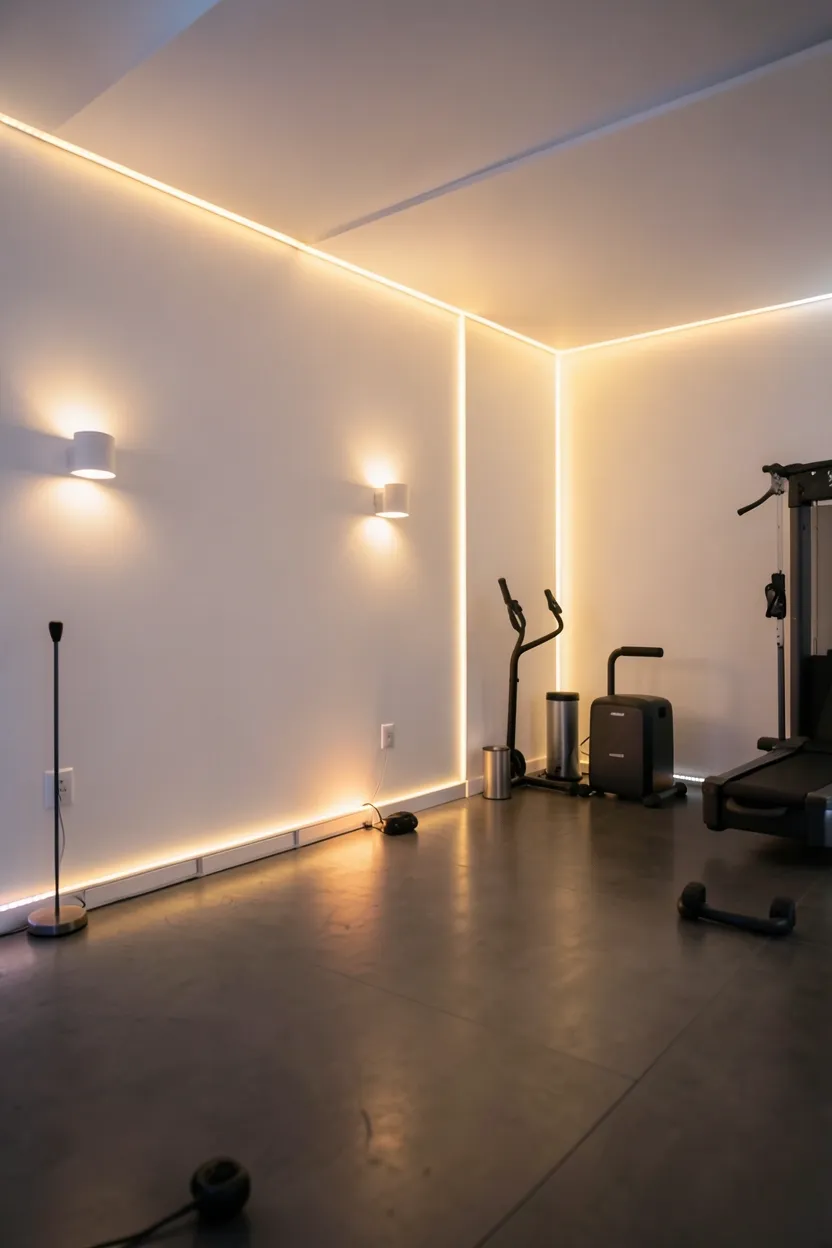
18. Lighting-Focused Motivational Space
Strategic lighting design can transform any small gym room into an energizing, motivating workout environment. This small gym room layout prioritizes lighting as the primary design element, using layered illumination to create atmosphere, enhance focus, and make the space feel larger and more inviting—even in apartments or spare rooms with limited square footage.
Recommended
Items for this idea
Implement a layered lighting scheme with task lighting for workout visibility, ambient lighting for atmosphere, and accent lighting for visual interest. Dimmable LED strip lights along walls or ceiling provide flexibility—you can blast bright light for energizing HIIT sessions or dim for calming yoga practice. Smart lighting systems allow you to save preset "workout modes" for different exercise types.
Common mistake: Using only overhead lighting that creates harsh shadows and makes the space feel smaller. Combine overhead fixtures with wall-mounted sconces, floor lamps, or LED strips to create depth and dimension. This multi-source approach fills shadows and makes the space feel more expansive and professional.
Position bright, cool-toned lighting near workout stations for maximum visibility during complex exercises. Use warmer lighting near relaxation zones like yoga corners or stretching areas to create a calmer atmosphere. Color-changing LED strips can even provide motivational cues—cool blues for focus, energetic reds for high-intensity sessions, or calming greens for cool-down periods.
Consider adding a light therapy lamp, especially if your gym lacks natural light. These specialized lights help regulate circadian rhythms and can improve mood and energy levels during morning or evening workouts. The right lighting design can literally make you look forward to entering your workout space.
For apartments where installing new fixtures isn't possible, rely on portable lighting solutions like floor lamps, clamp lights, or battery-operated LED strips. These provide similar benefits without permanent installation, making them perfect for renters or anyone who wants flexibility in their lighting setup.
Pro: Proper lighting enhances motivation and can transform how you feel about exercising.
Con: Requires thoughtful planning and potentially investment in multiple lighting sources.
Fix: Start with 2-3 portable, dimmable lights and expand your system over time as budget allows.
Rental-friendly option: Use plug-in LED strips, floor lamps, and battery-operated lights to create layered lighting without permanent installation.
What this gives you: A motivating, energizing workout environment that adapts to different exercise types and enhances your overall fitness experience.
19. Minimalist Equipment Selection for Small Areas
The ultimate space-saving strategy is to thoughtfully curate a minimalist equipment collection that delivers maximum workout potential while consuming minimal space. This small gym room layout approach focuses on quality over quantity, selecting versatile equipment that serves multiple purposes rather than filling your room with specialized items that rarely get used.
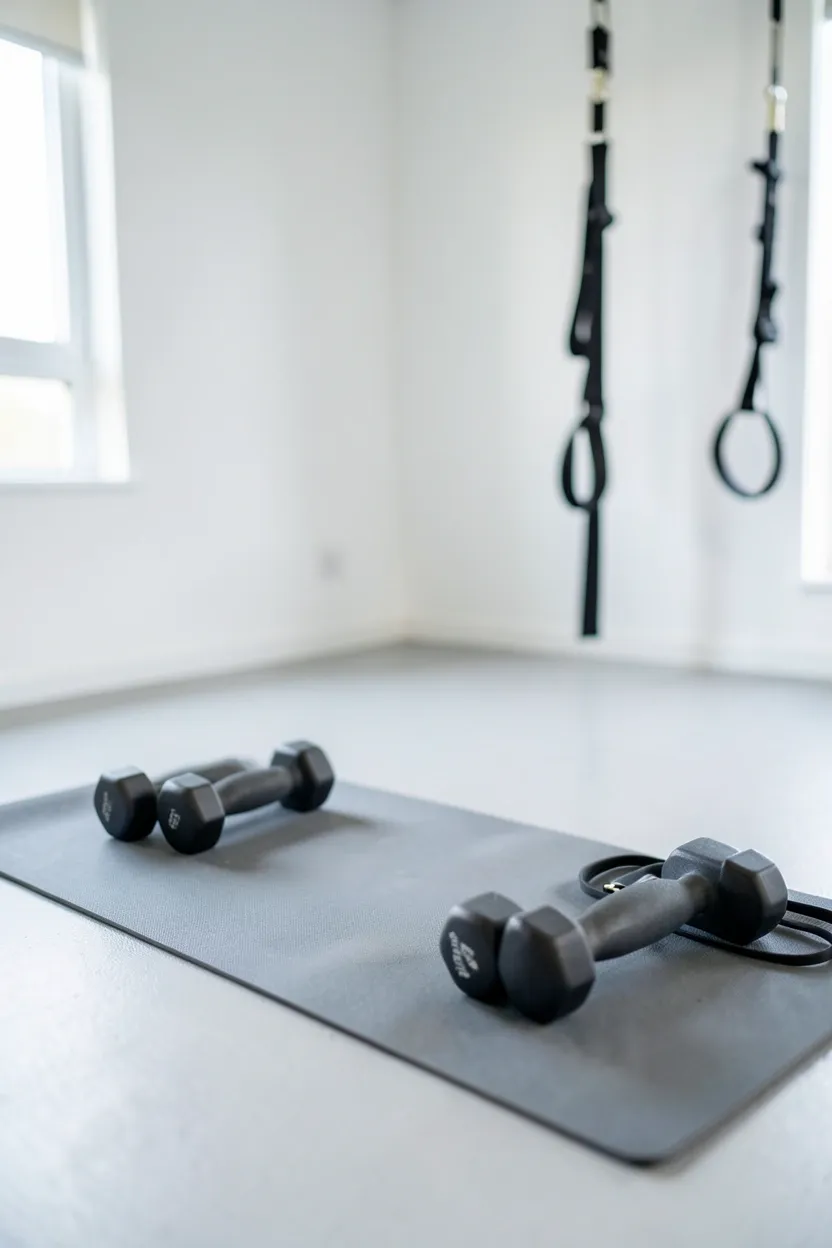
Start with a core collection of 3-5 versatile pieces: a yoga mat for floor exercises, adjustable dumbbells that replace multiple weight sets, resistance bands for strength training, a suspension trainer for bodyweight exercises, and perhaps a compact kettlebell. This minimalist toolkit can facilitate hundreds of different exercises targeting every major muscle group.
Why it works: Fewer pieces of equipment mean less visual clutter, more open floor space for movement, and simplified organization. Each item in your minimalist gym must earn its place through versatility and frequent use. This approach forces you to focus on effective, fundamental exercises rather than accumulating gear that sits unused.
Organize your minimalist collection on a single wall-mounted rack or in a compact storage bin, keeping everything accessible yet contained. The clean, uncluttered aesthetic creates a sense of calm and focus that can enhance your workout experience. Small spaces naturally feel larger without excess equipment crowding the visual field.
As you develop your workout routine and preferences, you might find yourself adding one or two specialized pieces—but do so intentionally, considering whether each new addition truly enhances your fitness regimen or just adds clutter. The minimalist philosophy isn't about deprivation—it's about making every square foot and every piece of equipment work hard for you.
For those who appreciate the calming effect of minimalism in design, this approach creates a gym space that feels like a retreat rather than a workout factory. The psychological impact of a clean, organized environment can actually improve motivation and consistency—two key factors in any successful fitness journey.
Tip 1: Test equipment before buying to ensure it truly fits your workout needs and space.
Tip 2: Consider selling or donating unused equipment annually to maintain your minimalist approach.
Tip 3: Invest in higher-quality versatile pieces rather than multiple cheaper specialized items.
Budget-friendly approach: Start with bodyweight exercises and resistance bands (under $50 total), then gradually add quality equipment as your fitness goals evolve.
What this gives you: A focused, efficient workout space where every piece of equipment serves a clear purpose and contributes to your fitness goals.
Creating a functional small gym room layout in an apartment or spare room is about creativity, strategic thinking, and making every square foot work hard for you. Whether you choose vertical storage solutions, dual-purpose room designs, or minimalist equipment approaches, the key is matching your layout to your specific space constraints and workout preferences. Remember that the most effective home gym isn't necessarily the biggest—it's the one that gets used consistently because it fits seamlessly into your life and inspires you to train regularly. Start with one or two of these layout ideas that resonate with your space and workout style, then evolve your gym as you discover what works best for you. Your perfect small gym is waiting to be created.
About the author
OBCD
CGI visualization and interior design content. We create detailed 3D renders and curate practical design ideas for every room in your home.