21 Mini Home Gym Setup Ideas for Small Apartments
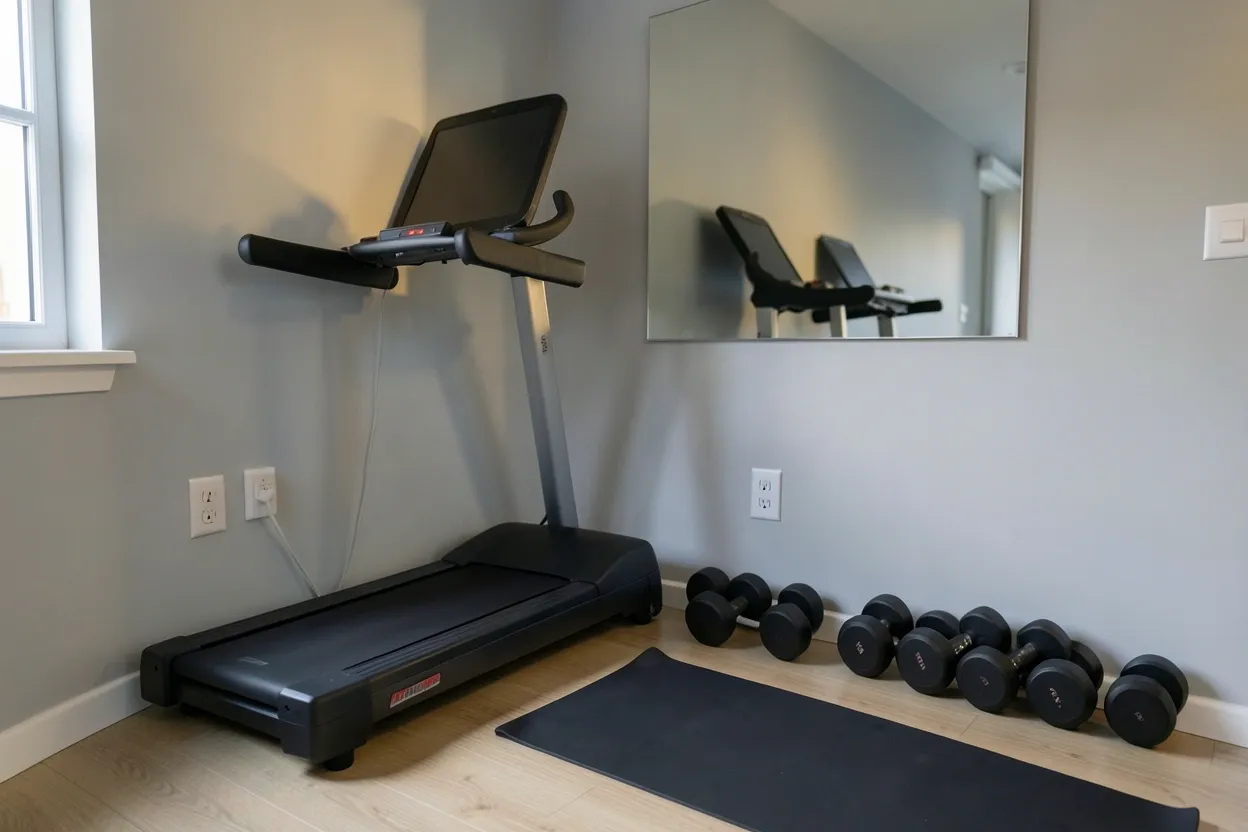
A mini home gym setup transforms limited square footage into a fully functional workout space when you prioritize smart layouts and space-saving equipment. Every foot matters in small apartments or spare rooms, but strategic planning ensures your fitness goals don't compete with your living space.
These mini home gym setup ideas focus on vertical storage, multi-functional equipment, and clever organization systems that keep your workout area streamlined and motivating. From foldable cardio machines to wall-mounted strength training solutions, each idea maximizes utility while minimizing visual clutter. Many options are completely renter-friendly — no drilling required, no permanent alterations, and everything can move out with you when your lease ends.
Whether you are working with a tiny bedroom corner, a narrow hallway, or a small section of your living room, these compact workout room ideas prove that limited square footage does not have to limit your fitness routine. A home gym for renters is entirely achievable with the right equipment choices and layout strategy.
Quick FAQ
How can I maximize a tiny space for a home gym?
Prioritize vertical storage with wall-mounted racks and hooks, choose foldable or multi-functional equipment, and use mirrors to visually expand the space. Every piece in your mini home gym setup should serve multiple purposes or fold away when not in use.
What equipment works best in a small apartment gym setup?
Adjustable dumbbells, resistance bands, foldable benches, compact cardio machines, and suspension trainers deliver the most variety per square foot. Avoid bulky single-purpose machines that permanently occupy floor space in a compact workout room.
Can I create a home gym in a rental apartment without drilling?
Yes — choose freestanding equipment and removable storage solutions instead of wall-mounted or permanent installations. Focus on portable items like yoga mats, resistance bands, and lightweight weights that can move easily. Freestanding frames, rolling carts, and pegboard panels are ideal no-drill home gym options for renters.
How do I keep a small home gym organized?
Use vertical organization systems like pegboards, freestanding racks, and over-door hooks. Group equipment by workout type — strength, cardio, flexibility — and keep frequently used items at eye level for quick access during workouts.
As an Amazon Associate I earn from qualifying purchases.
Table of Contents
- 1. L-Shaped Corner Layout with Foldable Cardio
- 2. Vertical Wall-Mounted Strength Station
- 3. All-in-One Compact Multi-Gym Machine
- 4. Sliding Door Storage Wall System
- 5. Compact Folding Bike Corner Setup
- 6. Under-Bed Hidden Gym Compartment
- 7. Ceiling-Hung Resistance Training Zone
- 8. Alcove Niche with Mirror-Backed Storage
- 9. Rolling Cart Mobile Workout Station
- 10. Floating Shelves Equipment Display
- 11. Compact Treadmill Wall-Slide Configuration
- 12. Multi-Functional Console Table Gym
- 13. Corner Desk-Workout Combo Setup
- 14. Pegboard Ultimate Organization Wall
- 15. Sliding Barn Door Equipment Concealment
- 16. Lofted Platform Storage with Under-Deck Space
- 17. Narrow Hallway Runner Gym Configuration
- 18. Window-Reflective Cardio Zone
- 19. Compact Weight Stack Corner Solution
- 20. Freestanding Frame with Integrated Storage
- 21. Minimalist Wall-Mounted Bench System
1. L-Shaped Corner Layout with Foldable Cardio
Maximize corner efficiency in your mini home gym setup by positioning a foldable treadmill or bike along one wall with strength equipment arranged in an L-shape configuration. This layout uses dead corner space while maintaining clear movement paths for your workouts.
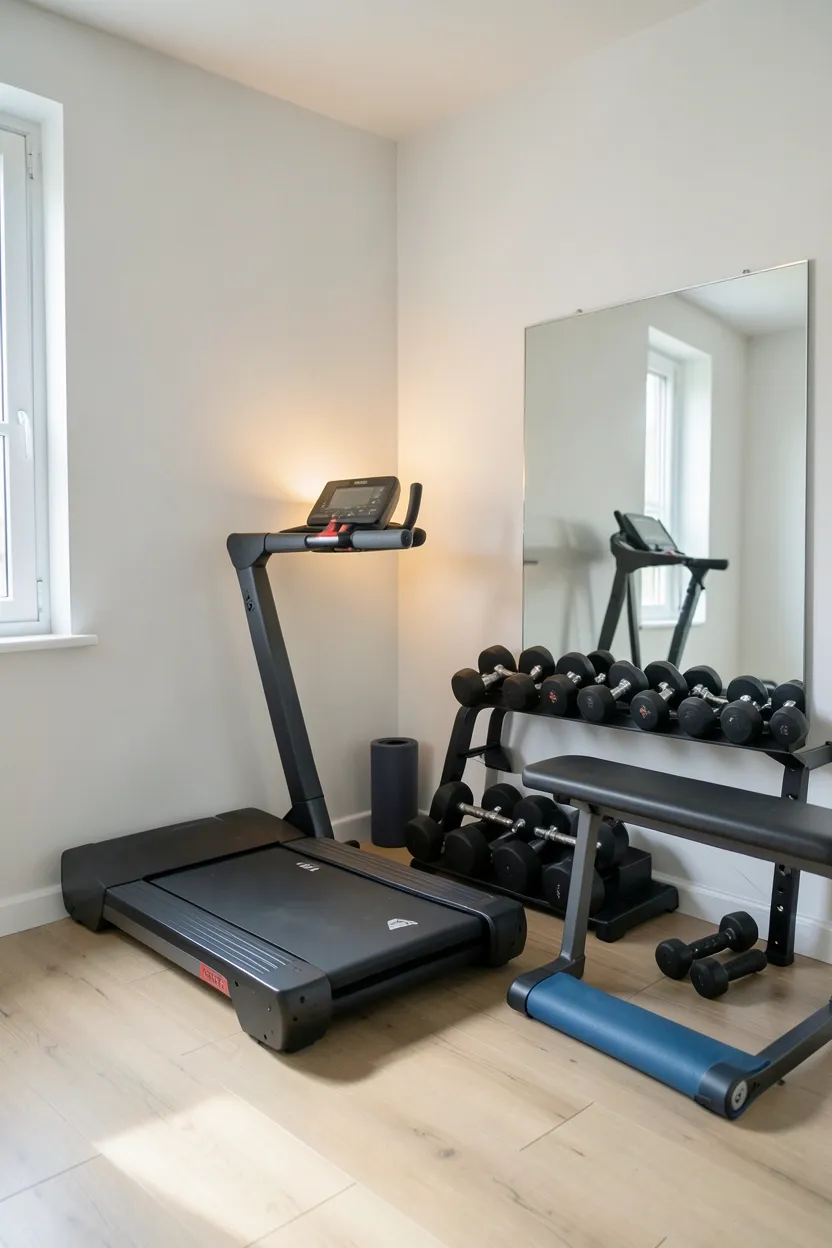
Install the foldable cardio machine against the longest wall, leaving enough clearance for safe mounting and dismounting. Arrange dumbbells, resistance bands, and a workout bench along the adjacent wall to create an L-shape that maximizes vertical wall storage. Use a wall-mounted mirror on the cardio-facing wall to expand visual space and check your form. Common mistake: placing equipment too close together creates tight movement zones and increases injury risk during exercises.
Tips
- Do measure the full range of motion for each exercise before positioning equipment permanently.
- Don't leave foldable equipment deployed when not in use; this wastes valuable floor space unnecessarily.
- If the space is very tight, choose a wall-mounted folding bike instead of a floor-standing treadmill.
What this gives you: Maximum equipment density without sacrificing movement space.
2. Vertical Wall-Mounted Strength Station
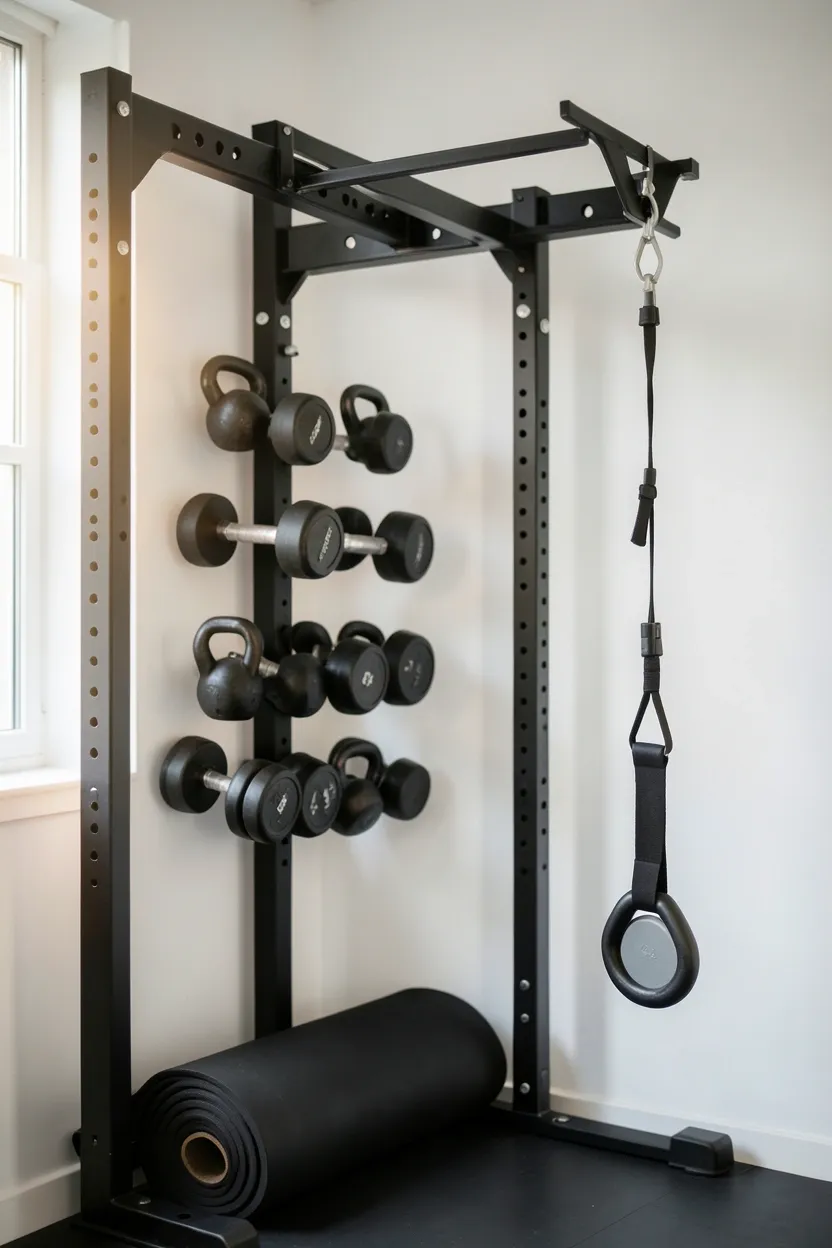
Transform an entire wall into a comprehensive strength training zone with wall-mounted racks, hooks, and suspension systems that keep your floor completely clear for movement and stretching. This vertical approach to mini home gym setup delivers serious capacity in a surprisingly small footprint.
Recommended
Items for this idea
Why it works: Installing a combination of dumbbell racks, kettlebell holders, and a suspension trainer mount uses vertical wall space that would otherwise go wasted. Keep a yoga mat rolled against the wall below, unrolling it only for floor exercises or stretching. Add a wall-mounted shelf above to hold accessories like gloves, straps, and water bottles. Avoid overloading a single section of wall, which creates visual imbalance and potential mounting failures.
Tips
- If you rent, use freestanding racks instead of drilling into walls.
- Use wall anchors rated for at least twice the combined weight of your equipment.
- Space heavier items like kettlebells on lower shelves for stability and safety.
Best for: Strength-focused workouts in rooms with minimal floor space available.
What this gives you: Professional strength training capacity with zero floor obstruction.
3. All-in-One Compact Multi-Gym Machine
Replace multiple pieces of equipment with a single compact multi-gym machine that delivers full-body strength training in a space-efficient footprint. This smart mini home gym setup consolidates your strength training needs while freeing up valuable square footage for other uses.
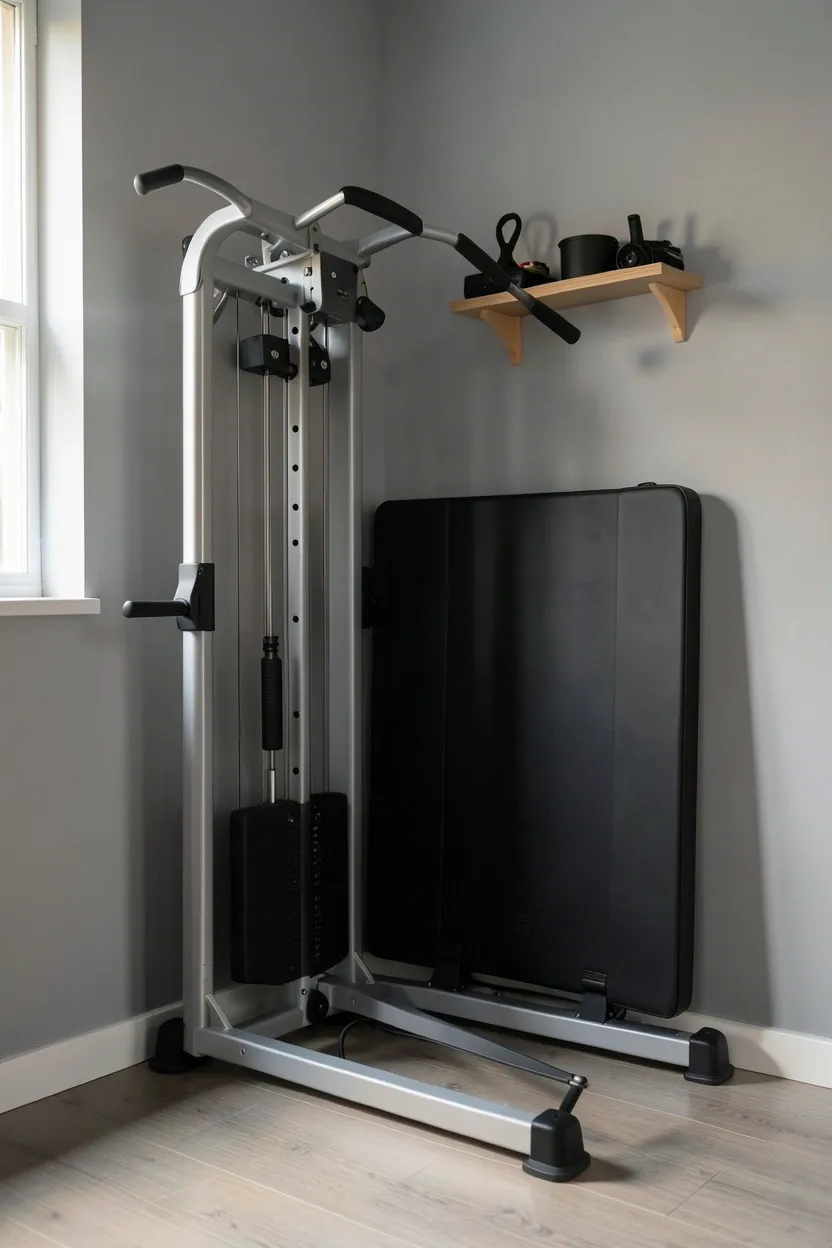
Position the multi-gym in a corner with adequate clearance on all sides for safe exercise execution. Many compact models fold flat against the wall when not in use, creating additional floor space for stretching or yoga. Add a wall mirror and a small shelving unit nearby for accessories like resistance bands and gloves. Common mistake: choosing a machine that is too large for the space, making it difficult to perform exercises comfortably or move around the room.
Tips
- Do select a machine with the specific exercises you actually perform regularly.
- Don't prioritize quantity of exercise options over quality and space efficiency of the machine.
- Test the full range of motion on each station before finalizing placement in your room.
What this gives you: Complete strength training system in a single compact footprint.
4. Sliding Door Storage Wall System
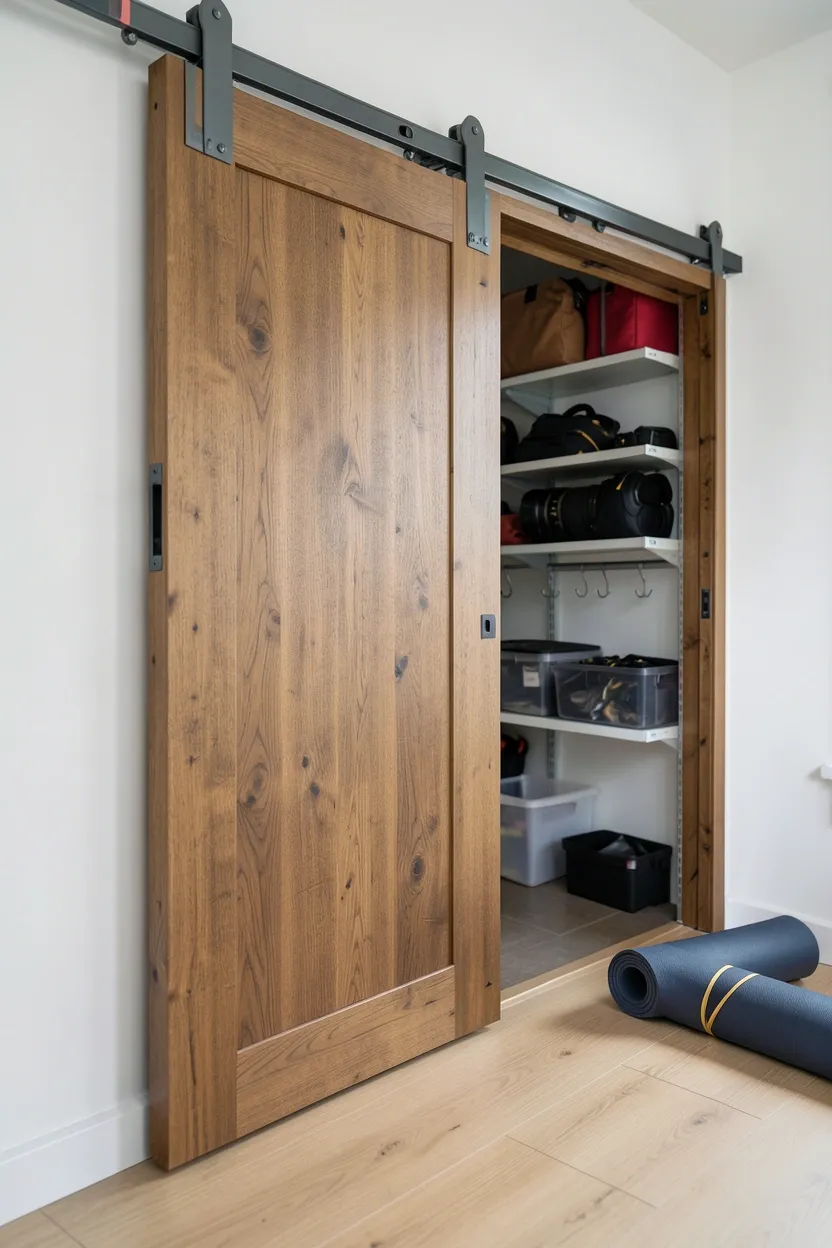
Create a hidden gym storage solution by mounting equipment racks and organizers on a sliding barn door that conceals your workout gear when not in use and reveals it instantly when you are ready to train. This clever mini home gym setup maximizes utility without permanently dedicating floor or wall space to gym equipment.
Recommended
Items for this idea
Install a sliding door with a sturdy rail system that allows smooth operation even with equipment mounted on it. Arrange hooks, shelves, and racks on the door to hold resistance bands, yoga mats, dumbbells, and accessories. When closed, the door looks like a stylish wall panel; when open, it reveals a fully equipped workout zone. Avoid mounting heavy items like full dumbbell sets on the door, which can cause the track to bind or the door to sag over time.
Tips
- If you rent, use a freestanding room divider instead of a permanent sliding door installation.
- Choose hardware rated for the combined weight of all equipment mounted on the door.
- Leave at least 6 inches of clearance between the door and any adjacent furniture.
Rental note: Use a freestanding screen or divider instead of permanent door installation.
What this gives you: A fully equipped gym that disappears when not in use.
5. Compact Folding Bike Corner Setup
Transform a tiny corner into a dedicated cardio zone with a folding exercise bike that stores flat against the wall when not in use. This mini home gym setup delivers consistent cardio capacity without sacrificing precious floor space in small apartments or bedrooms.
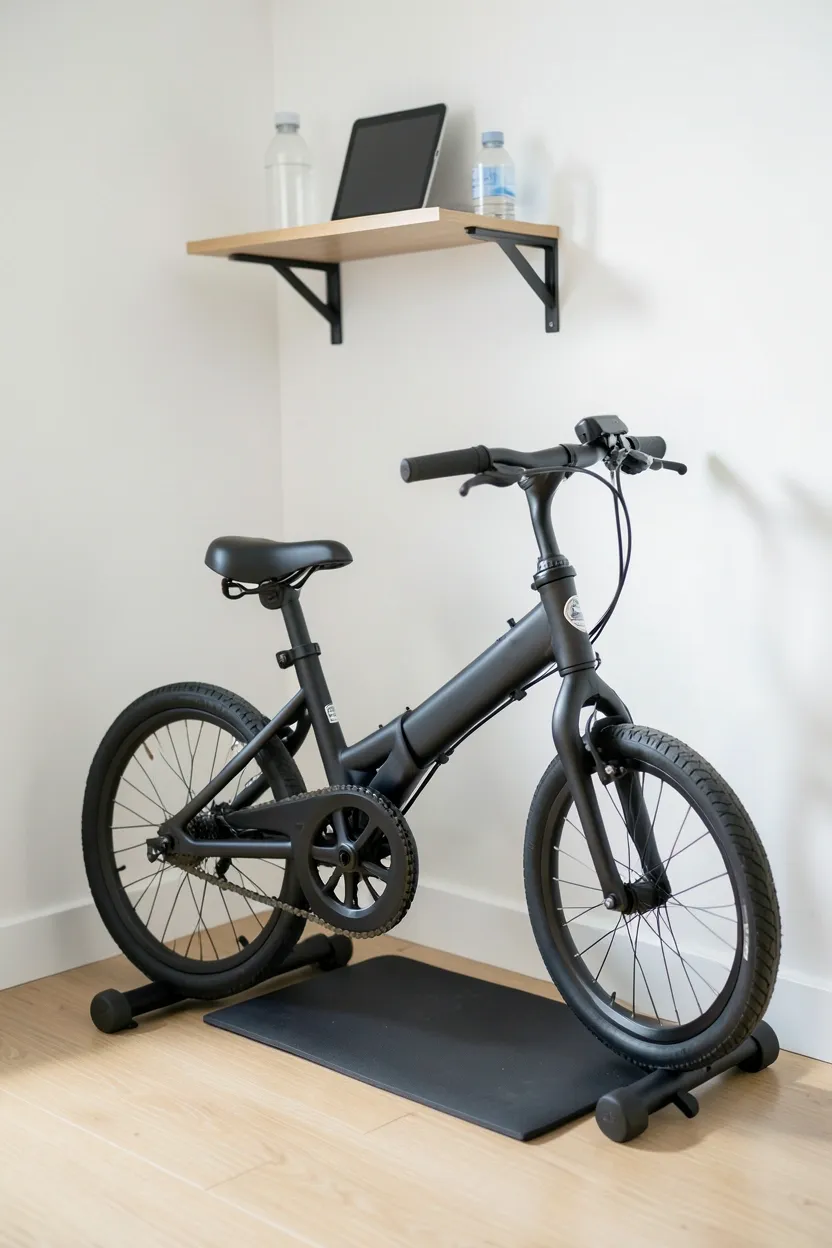
Choose a bike specifically designed for compact spaces with a foldable frame and removable handlebars. Position the bike in a corner where it does not obstruct doorways or main traffic paths. Add a small wall-mounted shelf above to hold a tablet, water bottle, and workout towels for a complete cardio station. Use a yoga mat underneath to protect your flooring and provide a comfortable surface for pre- or post-workout stretching. Common mistake: leaving the bike deployed permanently wastes floor space and creates visual clutter in the room.
Tips
- Do test the folding mechanism several times to ensure smooth operation in your space.
- Don't position the bike where the handlebars could obstruct the door or create a tripping hazard.
- If you have limited ceiling height, choose a bike with a lower profile to avoid feeling cramped.
What this gives you: On-demand cardio capacity that disappears when not needed.
6. Under-Bed Hidden Gym Compartment
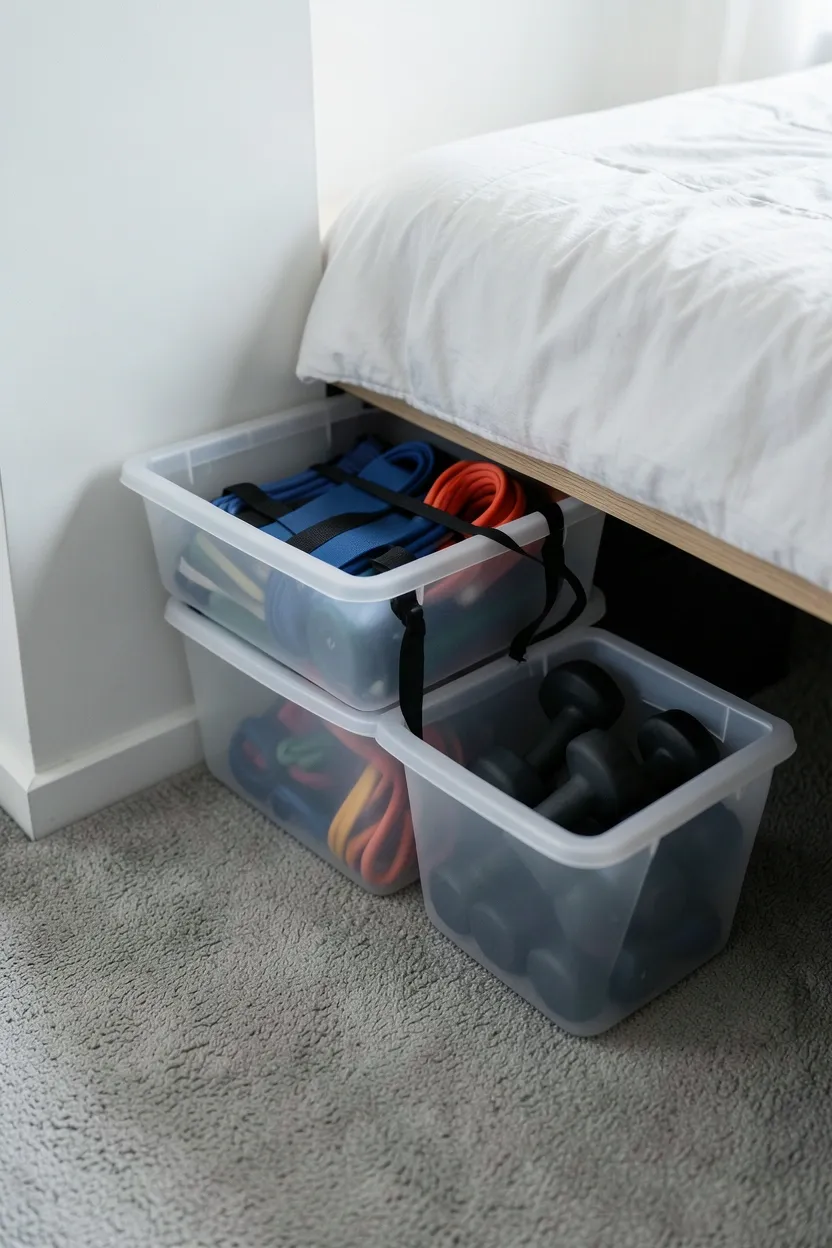
Create a secret mini home gym setup by utilizing the often-wasted space under your bed for equipment storage while keeping a minimal workout mat nearby. This approach works perfectly for bedrooms where dedicated floor space is at a premium but training consistency is essential.
Recommended
Items for this idea
Use rolling bins or shallow drawers that slide smoothly under your bed to store resistance bands, yoga straps, foam rollers, and even lightweight dumbbells. Keep a yoga mat rolled against the wall or under the bed, unrolling it only when you are ready to workout. Position a small wall mirror nearby and use bodyweight exercises or resistance band work to avoid needing extensive equipment setup time. Avoid storing heavy equipment like full dumbbell sets under beds with limited clearance, which makes access difficult and potentially unsafe.
Tips
- If you rent, use freestanding rolling bins instead of modifying the bed frame.
- Label bins clearly and keep frequently used items at the front for easy access.
- Use this setup primarily for flexibility, mobility, and bodyweight training routines.
Best for: Bedroom-based workout routines where permanent equipment is not practical.
What this gives you: Hidden equipment storage that keeps your living space uncluttered.
7. Ceiling-Hung Resistance Training Zone
Install a ceiling-mounted suspension trainer and resistance band system to create a full-body strength training zone that uses zero floor space when not in use. This vertical mini home gym setup is ideal for small rooms where every inch of floor real estate counts.
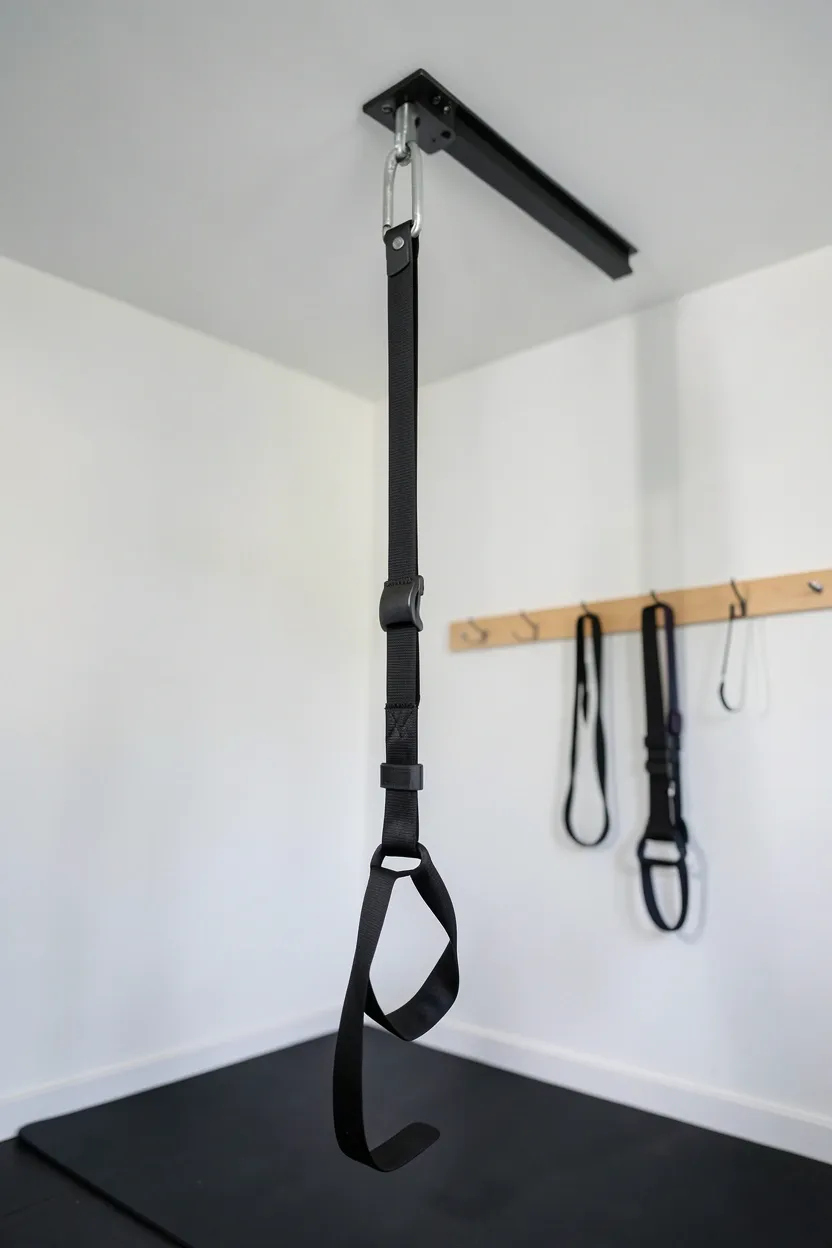
Mount the suspension trainer bracket securely into a ceiling joist, ensuring at least 6 feet of clearance on all sides for safe movement during exercises. Store resistance bands on wall-mounted hooks near the ceiling mount, keeping them organized and accessible for combined workouts. Use a yoga mat underneath during workouts and roll it up against the wall when finished. Why it works: Suspension training delivers hundreds of exercise variations while requiring minimal equipment footprint, making it perfect for space-constrained homes. Common mistake: installing the mount too close to walls or corners restricts exercise variety and range of motion.
Tips
- Do verify ceiling joist locations with a stud finder before drilling any mounting holes.
- Don't use drywall anchors for suspension trainers; the dynamic forces will quickly pull them out.
- If you cannot mount to the ceiling, use a doorway-mounted suspension trainer instead.
What this gives you: Hundreds of exercise variations in a single compact corner.
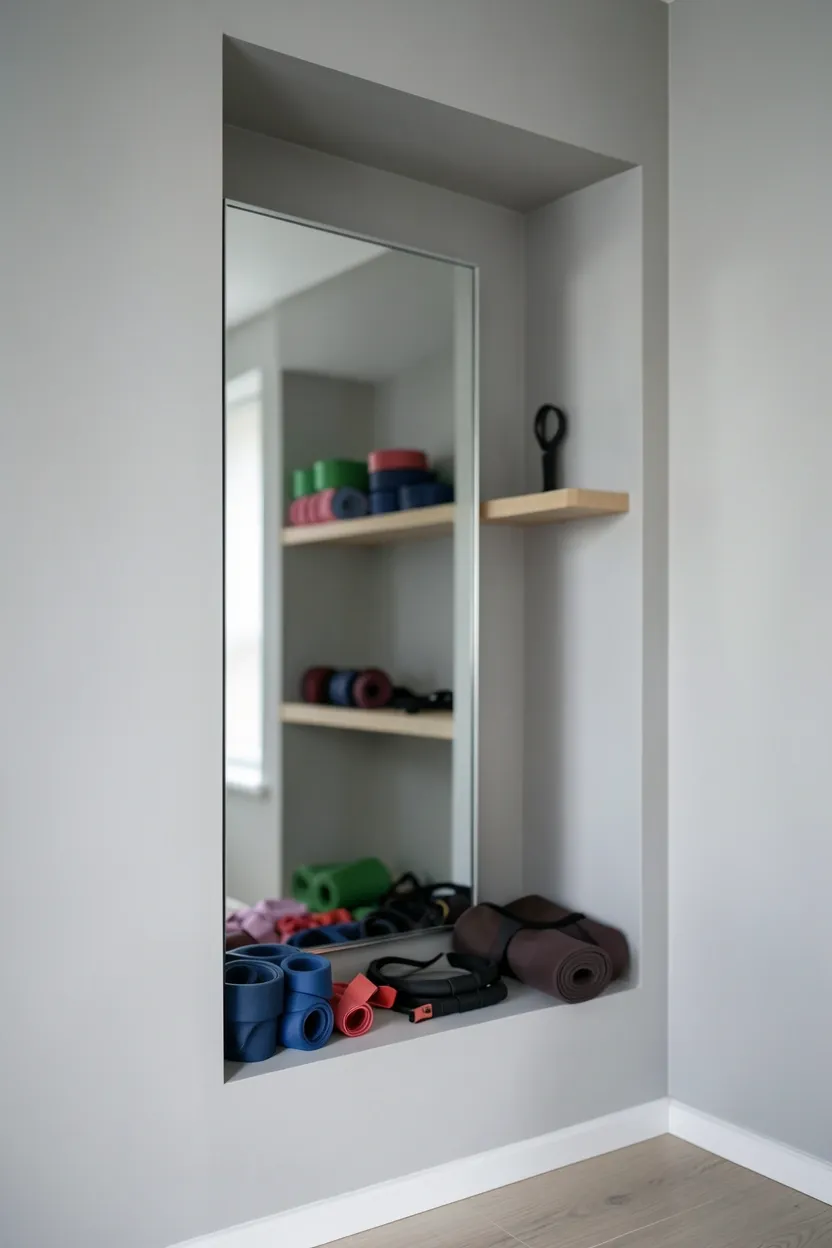
8. Alcove Niche with Mirror-Backed Storage
Turn a small alcove or recessed niche into a high-efficiency workout zone by installing a full-wall mirror with integrated storage niches behind it. This clever mini home gym setup creates a pro-looking training area while using what would otherwise be dead space for equipment concealment.
Recommended
Items for this idea
Install a large frameless mirror covering the entire back wall of the alcove to visually expand the space. Create shallow recessed shelves or cubbies behind the mirror on adjacent walls to store resistance bands, yoga straps, gloves, and small accessories. Position a yoga mat on the floor in front of the mirror for bodyweight exercises and stretching. Avoid placing large equipment like dumbbells directly against the mirror, which creates safety hazards and can damage the reflective surface during accidents.
Placement note: Ensure at least 3 feet of clearance in front of the mirror for comfortable movement and to prevent accidental contact during exercises.
Tips
- Use safety-backed mirror specifically rated for fitness environments to prevent dangerous shards if broken.
- If you cannot recess shelving, use shallow floating shelves alongside the mirror instead.
- Keep niches organized by equipment type to maintain a tidy, pro-level appearance.
What this gives you: A visually expansive workout area with hidden equipment storage.
9. Rolling Cart Mobile Workout Station
Create the ultimate flexible mini home gym setup with a rolling cart that transports your entire workout setup to any room or corner where space is available. This mobile approach gives you maximum flexibility to workout wherever fits your current needs while keeping all equipment organized and contained.
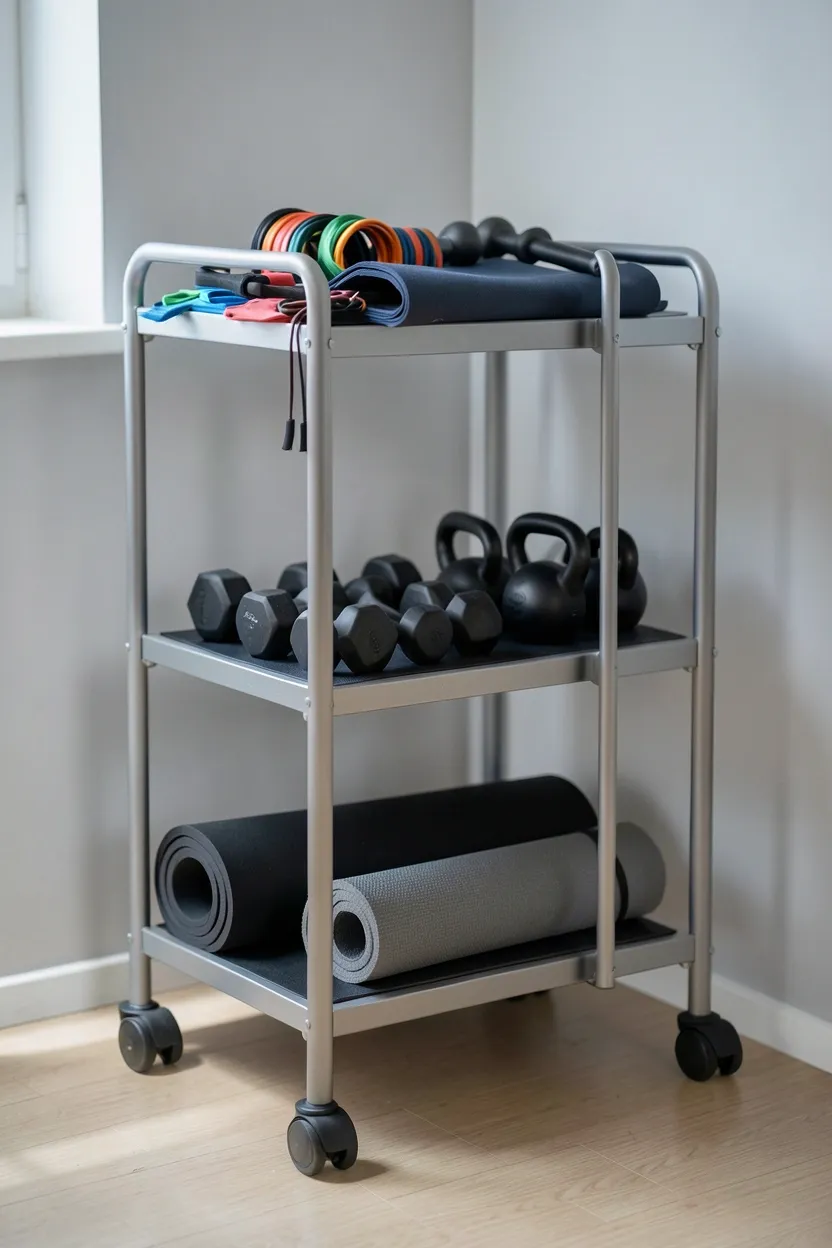
Use a sturdy three-tiered rolling cart with locking casters to keep your station securely in place during workouts. Organize equipment by frequency of use: top shelf for resistance bands and yoga straps, middle shelf for dumbbells and kettlebells, bottom shelf for yoga mats and foam rollers. Add side hooks or a small caddy for accessories like jump ropes and gloves. Lock the wheels during workouts to prevent the cart from rolling mid-exercise. Common mistake: overloading individual shelves makes the cart unstable and difficult to maneuver through doorways.
Tips
- Do measure all doorways and paths to ensure the cart can be moved easily throughout your home.
- Don't store liquids on the same shelf as electronics or paper items to avoid damage from sweat or spills.
- Use dividers or bins on shelves to keep smaller items organized and prevent them from shifting during transport.
Best for: Multi-room households where workout space needs to move between different areas.
What this gives you: A fully equipped gym that relocates to wherever you need to workout.
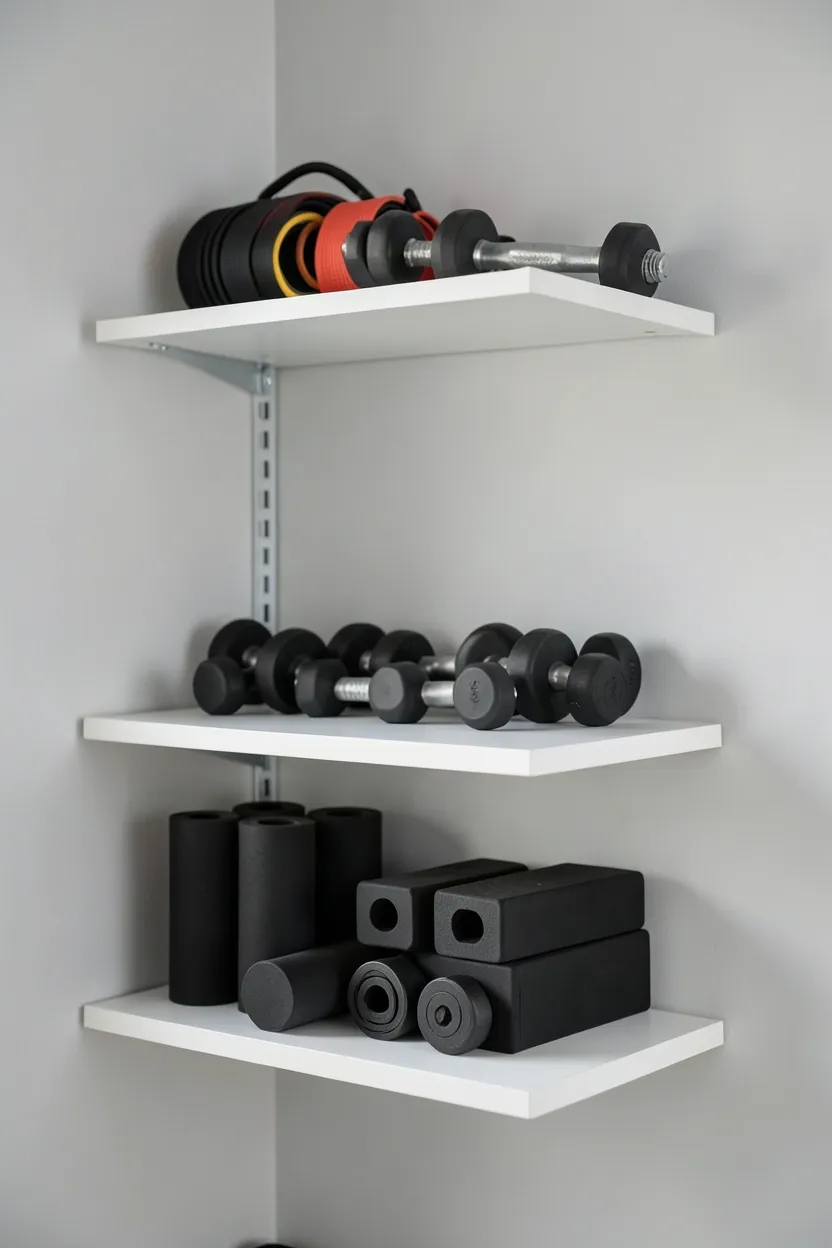
10. Floating Shelves Equipment Display
Transform a blank wall into an attractive and highly accessible equipment display using floating shelves that keep your workout gear organized while adding a stylish design element to your mini home gym setup. This vertical storage solution maximizes visibility and quick access without occupying valuable floor space.
Recommended
Items for this idea
Install floating shelves at varying heights to accommodate different equipment sizes and create visual interest while maintaining practicality. Place lighter items like resistance bands, yoga straps, and accessories on higher shelves where they are visible but out of main workout path. Store heavier items like dumbbells and kettlebells on lower shelves for stability and easy access during workouts. Use small bins or baskets to contain smaller items like bands and straps, keeping them from falling off or creating visual clutter. Avoid overloading shelves with too much weight, which can cause sagging and eventual detachment from the wall.
Placement note: Position shelves so that the bottom shelf is at least 18 inches from the floor to allow unobstructed movement underneath.
Tips
- Use heavy-duty floating shelves with concealed mounting hardware for a clean, modern appearance.
- If you rent, consider a freestanding bookcase or shelving unit instead of wall-mounted shelves.
- Group equipment by workout type—strength, cardio, flexibility—to create an intuitive organizational system.
What this gives you: Visible, accessible storage that doubles as design decor.
11. Compact Treadmill Wall-Slide Configuration
Maximize floor space in your mini home gym setup by installing a compact treadmill on a wall-mounted slide system that stores it vertically against the wall when not in use. This space-saving configuration delivers consistent cardio capacity while freeing up precious square footage for other activities.
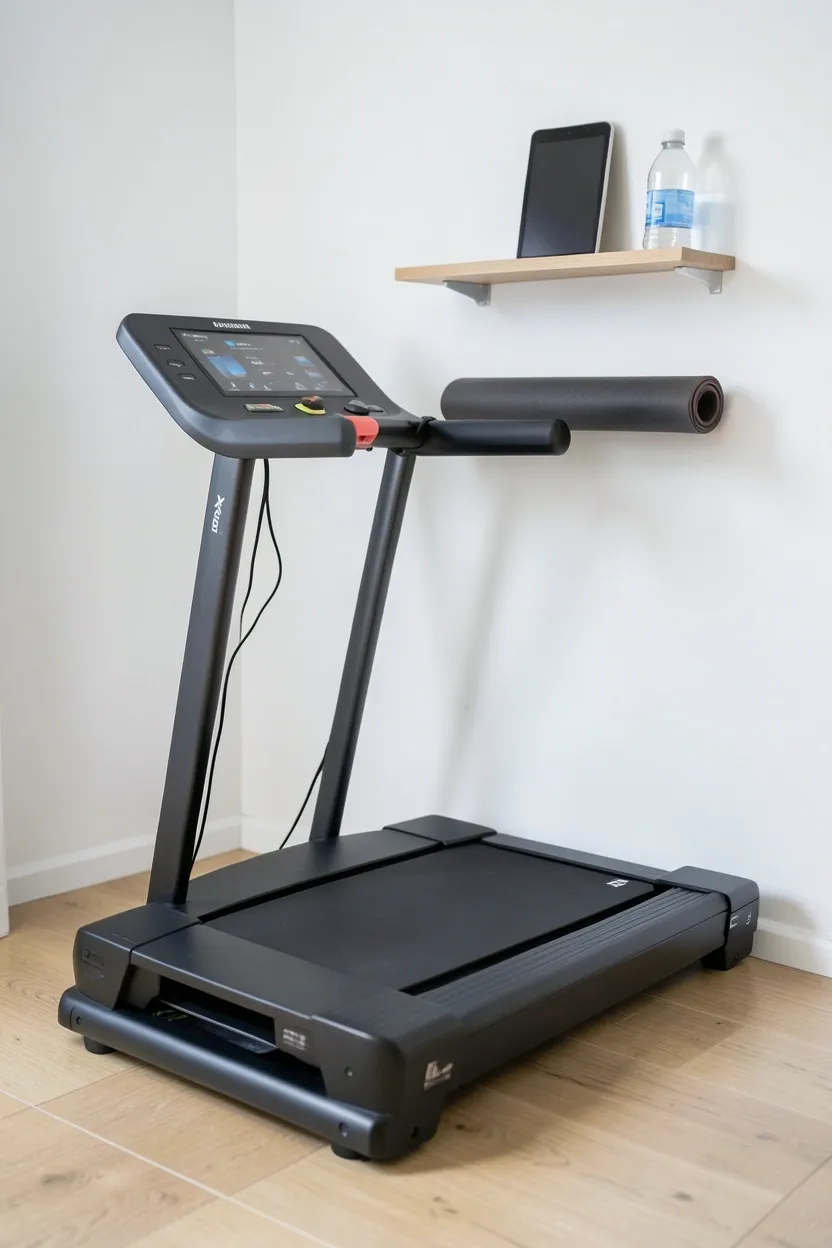
Choose a treadmill specifically designed with a folding frame and wall-mount brackets that allow it to slide smoothly out of the way when not in use. Position the treadmill against a wall where it does not obstruct doorways or create tight traffic paths. Install a wall-mounted shelf above or beside it to hold a tablet, water bottle, and workout accessories for a complete cardio station. Use a yoga mat or small carpet underneath for comfort and to protect your flooring. Common mistake: selecting a treadmill that is too large for the space, which makes folding and storage awkward or impossible.
Tips
- Do test the folding and sliding mechanism multiple times to ensure smooth operation in your space.
- Don't position the treadmill where the motor or controls could be bumped during other room activities.
- If ceiling height is limited, choose a treadmill with a lower deck height to avoid a cramped feeling.
What this gives you: Dedicated cardio that disappears when not in use.
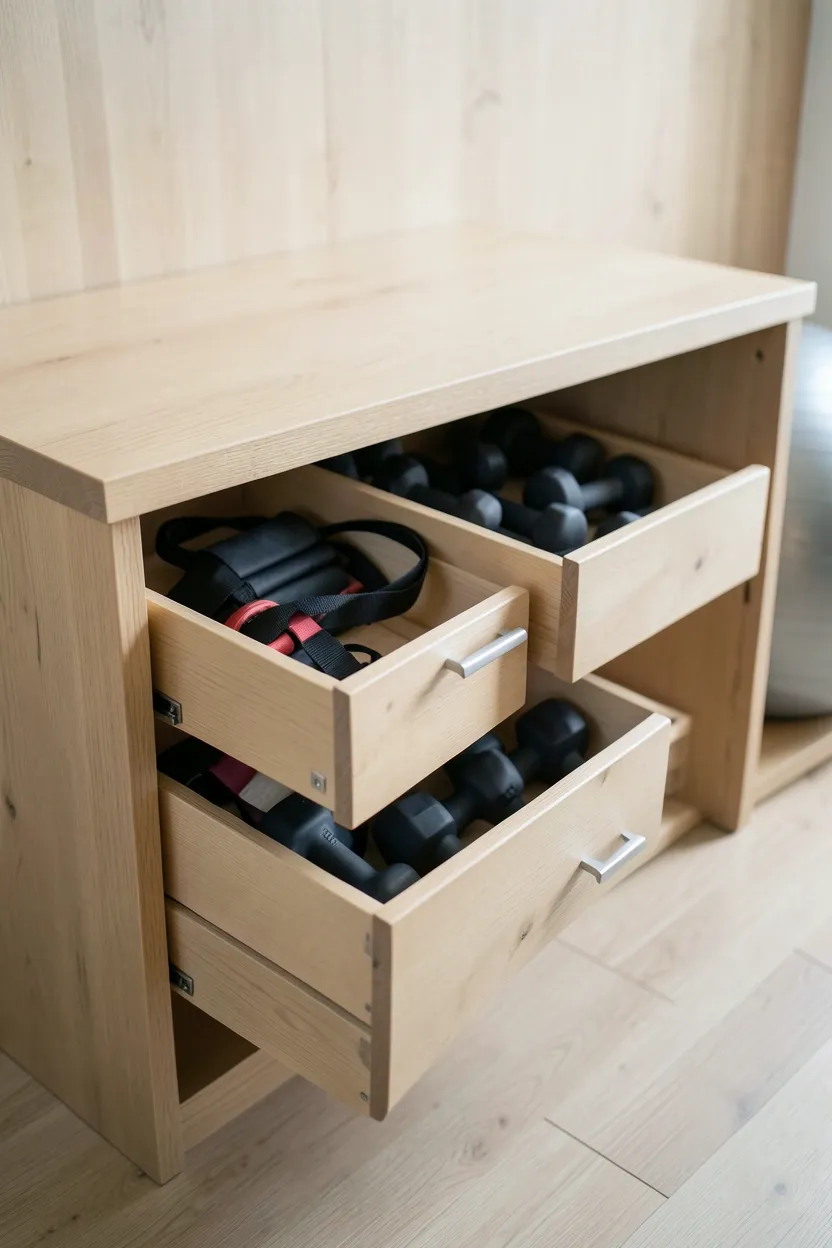
12. Multi-Functional Console Table Gym
Transform a standard console table into a dual-purpose workout and living space piece that houses your gym equipment discreetly while serving as furniture the rest of the time. This clever mini home gym setup works perfectly in living rooms or bedrooms where dedicated gym equipment would disrupt the space's primary function.
Recommended
Items for this idea
Install concealed drawers or compartments within the console table that store resistance bands, yoga straps, lightweight dumbbells, and accessories out of sight. Use the tabletop surface for stretching, yoga flows, or as a base for stability ball exercises when not in use as furniture. Add wall-mounted mirrors or a portable screen nearby to create a temporary workout zone as needed. Ensure the table is sturdy enough to support your weight during bodyweight exercises without wobbling. Common mistake: choosing a console table that is too narrow or unstable, which risks injury during exercises and limits functionality.
Tips
- If you rent, choose a freestanding console table instead of modifying built-in cabinetry.
- Use dividers in drawers to keep equipment organized and prevent items from shifting or tangling.
- Consider a model with cable management if the table also serves as a desk or media console.
Best for: Living rooms or home offices where workout equipment must coexist with primary room use.
What this gives you: A fully functional gym setup that doubles as elegant furniture.
13. Corner Desk-Workout Combo Setup
Create a hybrid corner workstation that transforms seamlessly between an office desk and a workout zone, maximizing utility in small spaces where room serves multiple functions. This innovative mini home gym setup is perfect for apartments or bedrooms where every square foot must earn its keep.
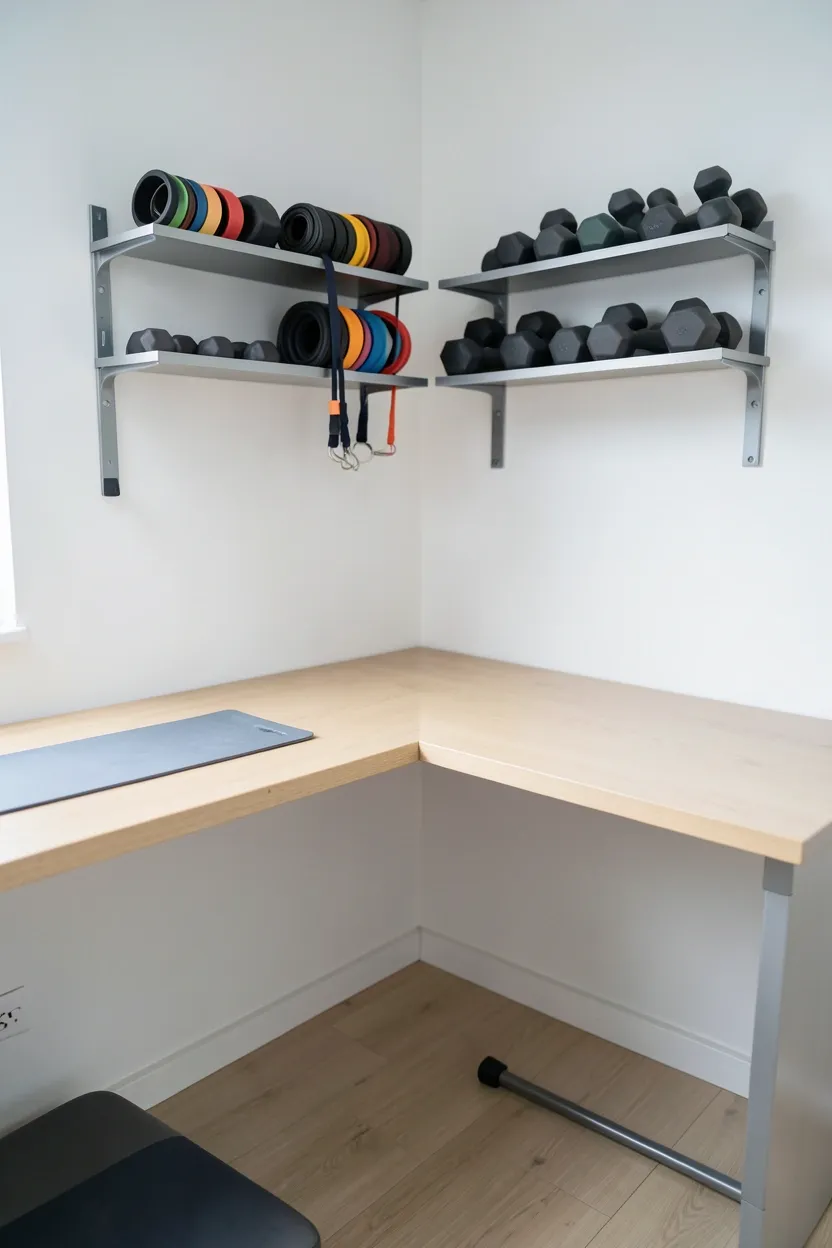
Install an L-shaped or corner desk with enough desk surface for work while still allowing room to position a yoga mat or workout bench nearby. Use wall-mounted shelves above or beside the desk to hold resistance bands, yoga straps, and lightweight dumbbells organized and accessible. Consider a standing desk converter that doubles as a step platform for cardio exercises when not in desk mode. Add a wall mirror to check form during workouts and visually expand the corner. Common mistake: trying to fit too many workout items around the desk, which creates clutter and interferes with both work and exercise functions.
Tips
- Do ensure the desk chair can be easily moved aside to create workout space when needed.
- Don't store heavy equipment on the same level as your computer or work materials to avoid potential damage.
- Use a desk cable management system to keep power cords and workout equipment cords separated and organized.
What this gives you: Seamless transitions between work and workout modes in a compact space.
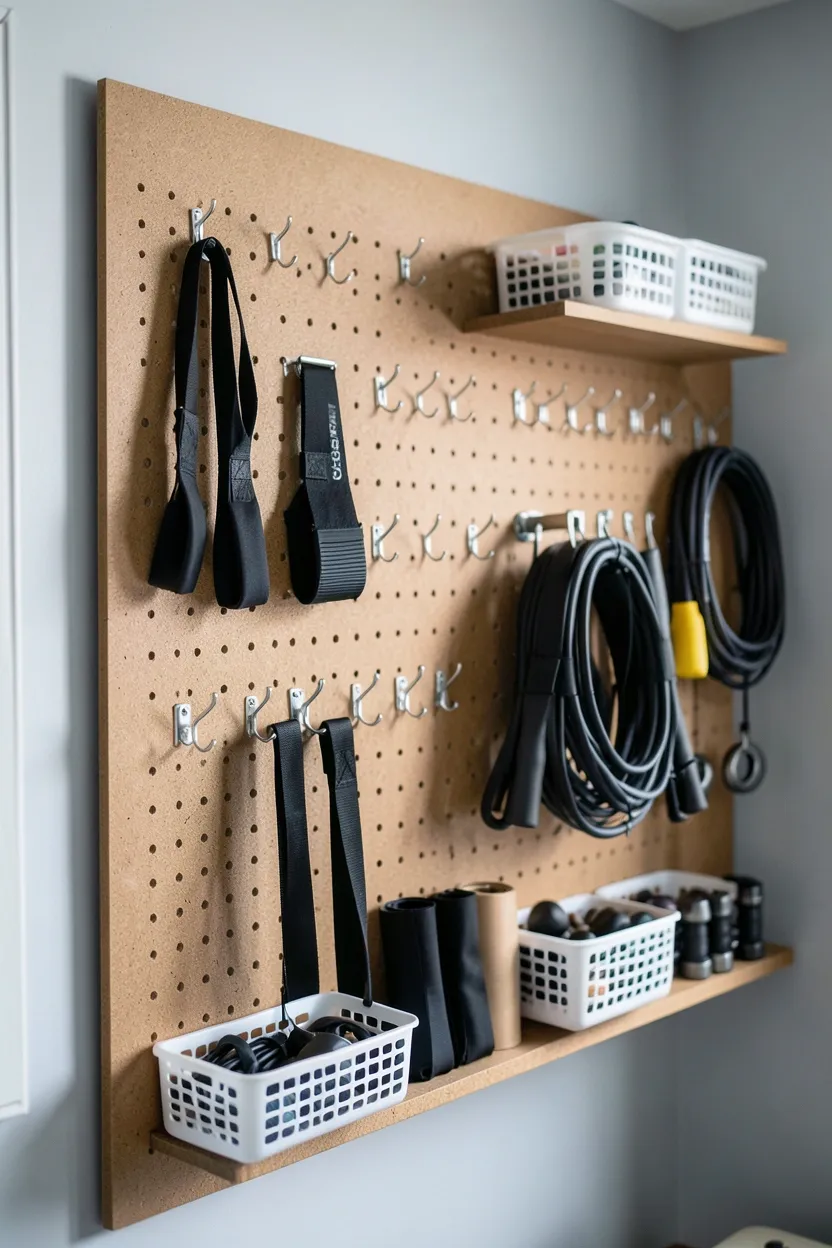
14. Pegboard Ultimate Organization Wall
Install a large pegboard system to create the ultimate customizable storage solution for your mini home gym setup, where every item has a designated place and is instantly accessible during workouts. This highly adaptable approach keeps your equipment organized and your space clutter-free.
Recommended
Items for this idea
Use a variety of pegboard hooks, baskets, and shelves to arrange equipment by type and frequency of use. Hang resistance bands, yoga straps, and jump ropes on hooks at eye level for quick access. Store heavier items like dumbbells on lower shelves or in baskets to maintain balance and prevent the pegboard from becoming overloaded. Add small labels or color-coding to instantly identify resistance levels or equipment types during fast-paced workouts. Why it works: Pegboards allow you to reconfigure your storage as your equipment needs change, making them infinitely adaptable to your evolving fitness routine. Common mistake: overcrowding individual hooks with too many items makes it difficult to grab what you need and risks items falling off.
Tips
- Choose heavy-duty pegboard hooks rated for the weight of equipment you will hang from them.
- Use baskets or bins to contain smaller items like bands and accessories to keep them from tangling.
- If you rent, consider a freestanding pegboard panel that does not require wall mounting.
What this gives you: A completely customizable storage system that evolves with your workout needs.
15. Sliding Barn Door Equipment Concealment
Transform a standard doorway into a hidden gym storage solution by installing a sliding barn door with integrated hooks, racks, and shelves that conceal your workout gear when not in use. This space-saving mini home gym setup delivers full equipment capacity without visually cluttering your room or permanently occupying doorway space.
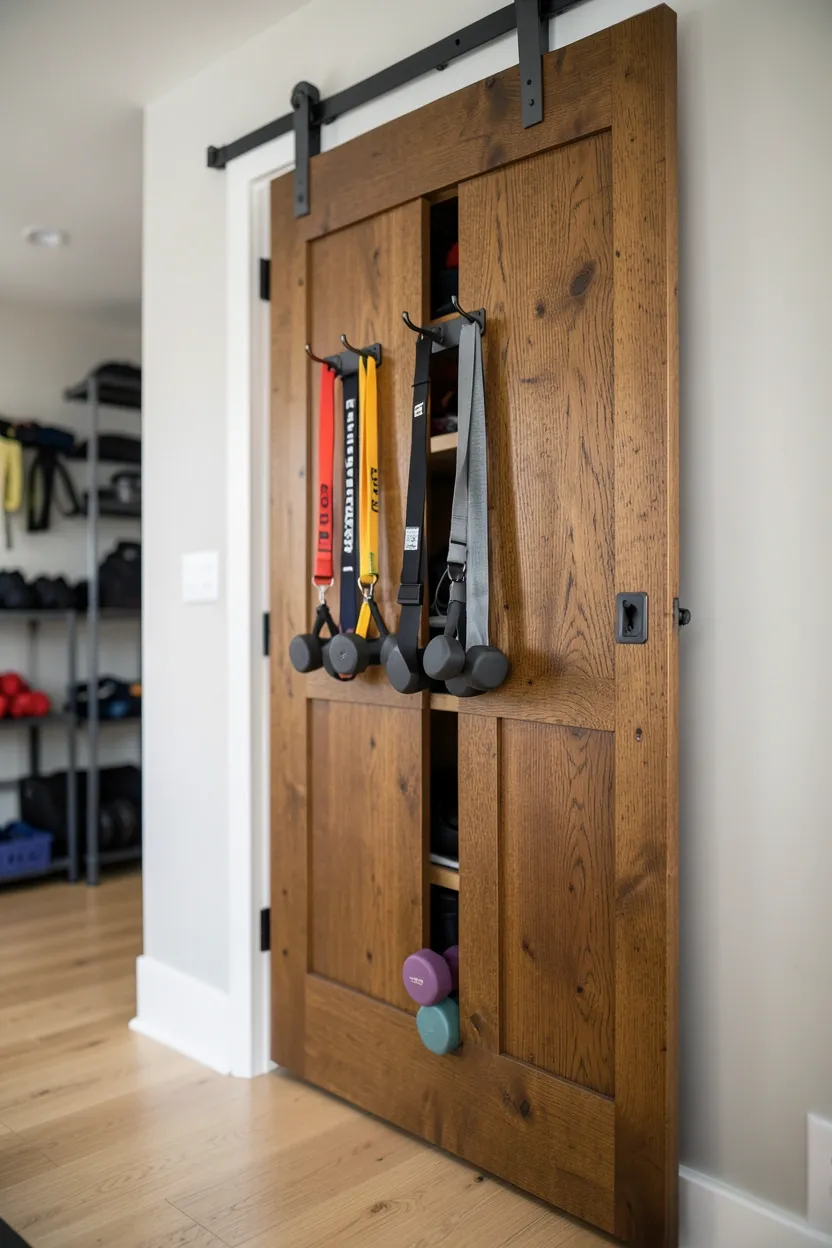
Install a high-quality sliding door system with a sturdy rail that supports the weight of mounted equipment without sagging or binding. Arrange hooks for resistance bands, yoga straps, and lightweight dumbbells on the visible side when open; when closed, create a clean wall panel appearance. Add a small workout mat that can be rolled and stored against an adjacent wall when not in use. Why it works: Sliding doors provide full access to your equipment when training and complete concealment during daily life, making them perfect for living areas where appearance matters. Common mistake: mounting heavy items like full dumbbell sets on the door can cause the track to bind or the door to sag over time.
Tips
- Choose a door system rated for at least twice the combined weight of all equipment you will mount.
- If you rent, use a freestanding screen or room divider instead of a permanent door installation.
- Ensure at least 6 inches of clearance between the door and any adjacent furniture for smooth operation.
Rental note: Use a freestanding screen instead of permanent door installation.
What this gives you: Hidden gym capacity that reveals only when you're ready to train.
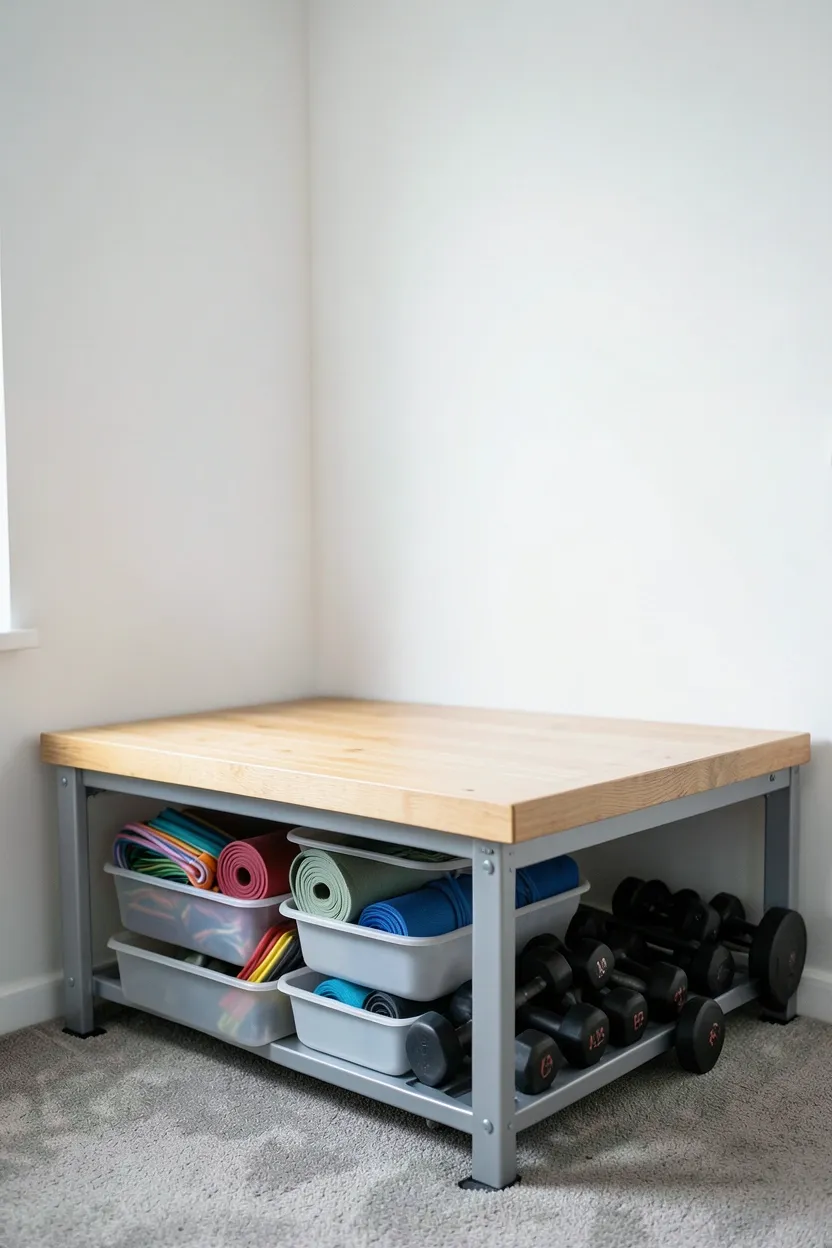
16. Lofted Platform Storage with Under-Deck Space
Maximize vertical space by building a lofted platform that serves as a workout surface with hidden storage underneath for your gym equipment. This innovative mini home gym setup creates a dedicated training zone while concealing all gear beneath, keeping your floor area completely clear for movement and stretching.
Recommended
Items for this idea
Construct a sturdy platform at standing or seating height, using solid wood or engineered materials that support your weight during exercises. Use the space underneath for rolling bins, racks, or shelves to store resistance bands, dumbbells, yoga mats, and accessories completely out of sight. Add a wall mirror and proper lighting above the platform to create a professional training environment. Ensure the platform is securely anchored to the wall and has a sturdy railing or edge for safety during workouts. Common mistake: making the platform too high or too low limits exercise variety and creates safety hazards for mounting or dismounting.
Tips
- Use heavy-duty hardware and ensure the platform can support your weight plus any equipment stored underneath.
- If you cannot modify the space permanently, consider a raised platform on heavy-duty furniture risers instead of construction.
- Add power outlets and cable management above the platform if you will use electronics like fans or tablets.
What this gives you: A dedicated workout surface with all equipment hidden beneath.
17. Narrow Hallway Runner Gym Configuration
Transform a narrow hallway into a functional mini home gym setup by utilizing the long wall space for vertical storage and positioning a yoga mat or workout bench centrally for bodyweight exercises. This unconventional approach maximizes often-overlooked square footage while keeping through-paths clear for daily use.
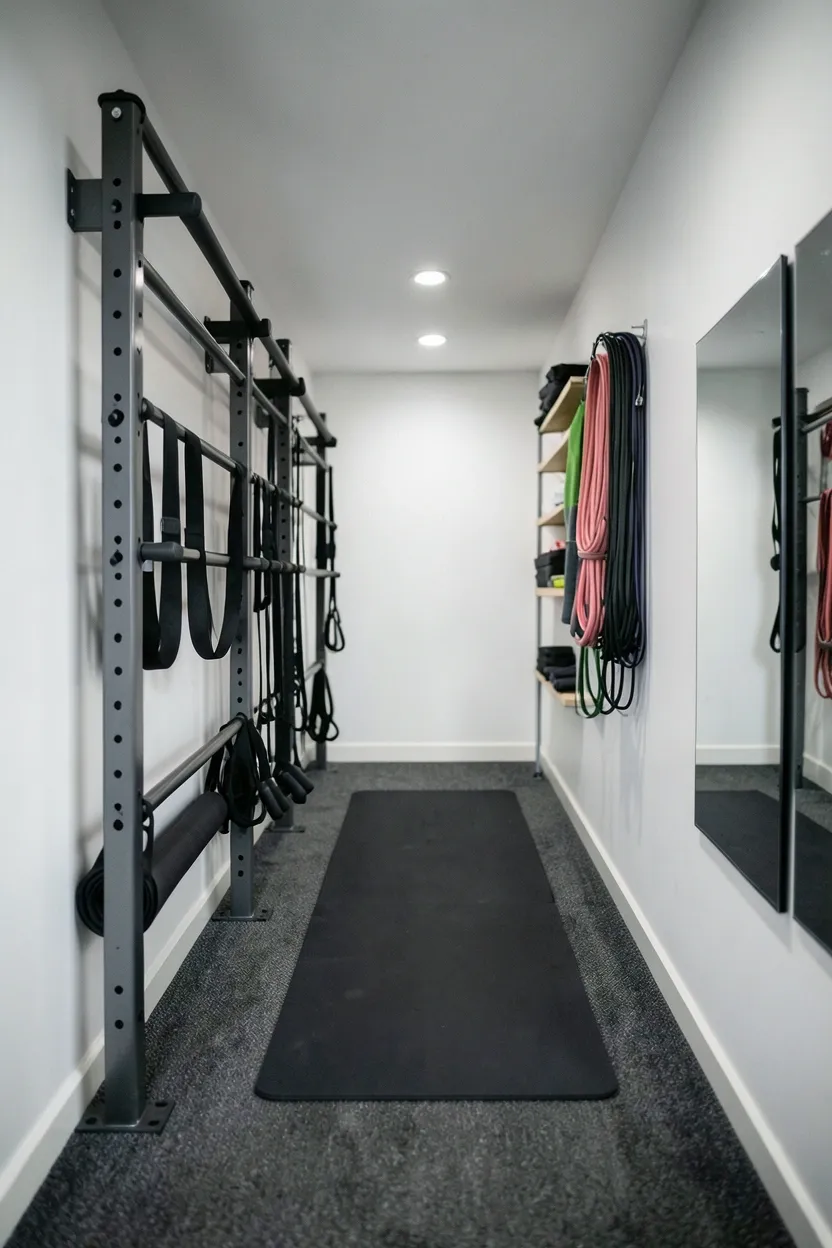
Install wall-mounted racks, hooks, or a vertical shelf system along one long wall to store resistance bands, yoga straps, jump ropes, and lightweight dumbbells. Place a yoga mat or small workout bench in the center of the hallway where it does not block door swing or create tripping hazards. Add a wall mirror at one end to check form and visually expand the narrow space. Ensure adequate lighting so the hallway remains safe and welcoming even when not in use as a gym. Common mistake: positioning equipment too close to door swing zones creates obstructions and increases accident risk during both gym use and regular hallway traffic.
Tips
- Do keep a clear path of at least 3 feet on both sides of the workout area for safe movement.
- Don't store equipment that creates permanent obstacles for wheelchair or stroller access if applicable.
- If you rent, use freestanding racks instead of wall-mounted systems in shared hallways.
Best for: Apartments or homes with long narrow hallways and limited dedicated room space.
What this gives you: Functional workout capacity in underutilized hallway space.
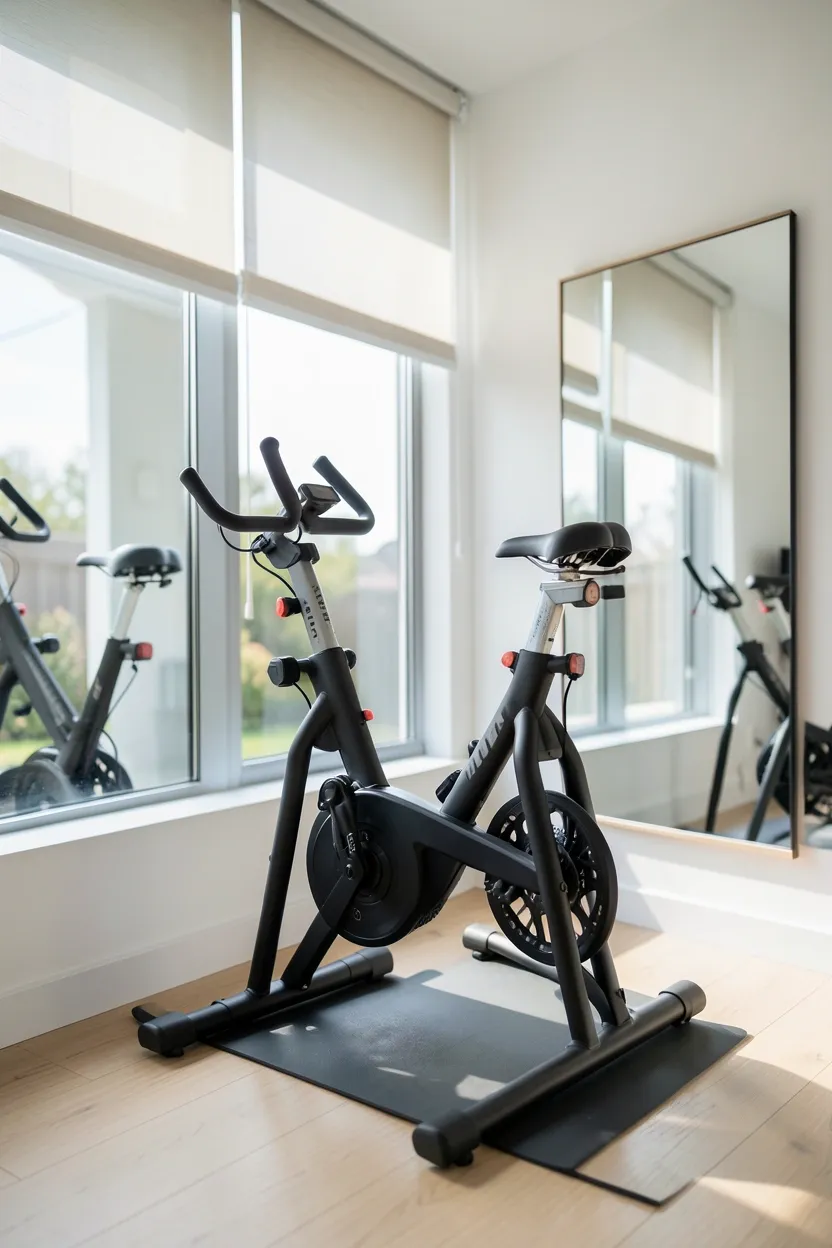
18. Window-Reflective Cardio Zone
Create an uplifting and visually spacious cardio zone by positioning a foldable bike or compact treadmill in front of a large window with a mirror on the adjacent wall. This light-filled mini home gym setup boosts energy and motivation while maximizing perceived space through natural light and reflection.
Recommended
Items for this idea
Position your cardio equipment facing the window to take advantage of natural light and views, which can make longer cardio sessions more enjoyable. Install a full-wall mirror on the adjacent wall to double the visual impact of the window and create a sense of expanded space. Use adjustable blinds or sheer curtains to control glare during daytime workouts while still enjoying the mood-boosting benefits of daylight. Add a small wall-mounted shelf above or beside the equipment to hold a tablet, water bottle, and workout towels. Avoid placing equipment too close to the window where drafts or temperature fluctuations could make workouts uncomfortable or create glare on screens or displays.
Placement note: Ensure at least 4 feet of clearance behind the equipment for safe mounting and dismounting.
Tips
- Use a reflective surface or mirror opposite the window to maximize light distribution throughout the space.
- Don't work out during peak sun hours if glare makes it difficult to see screens or monitor your form.
- If privacy is a concern, use frosted window film or light-filtering shades while still allowing natural light.
What this gives you: An energizing cardio zone with natural light and visual expansion.
19. Compact Weight Stack Corner Solution
Maximize strength training efficiency in a tiny corner by using a compact weight stack system that organizes dumbbells, kettlebells, and weight plates in a vertical configuration. This space-saving mini home gym setup delivers serious strength capacity while occupying minimal floor space and keeping all weights immediately accessible.
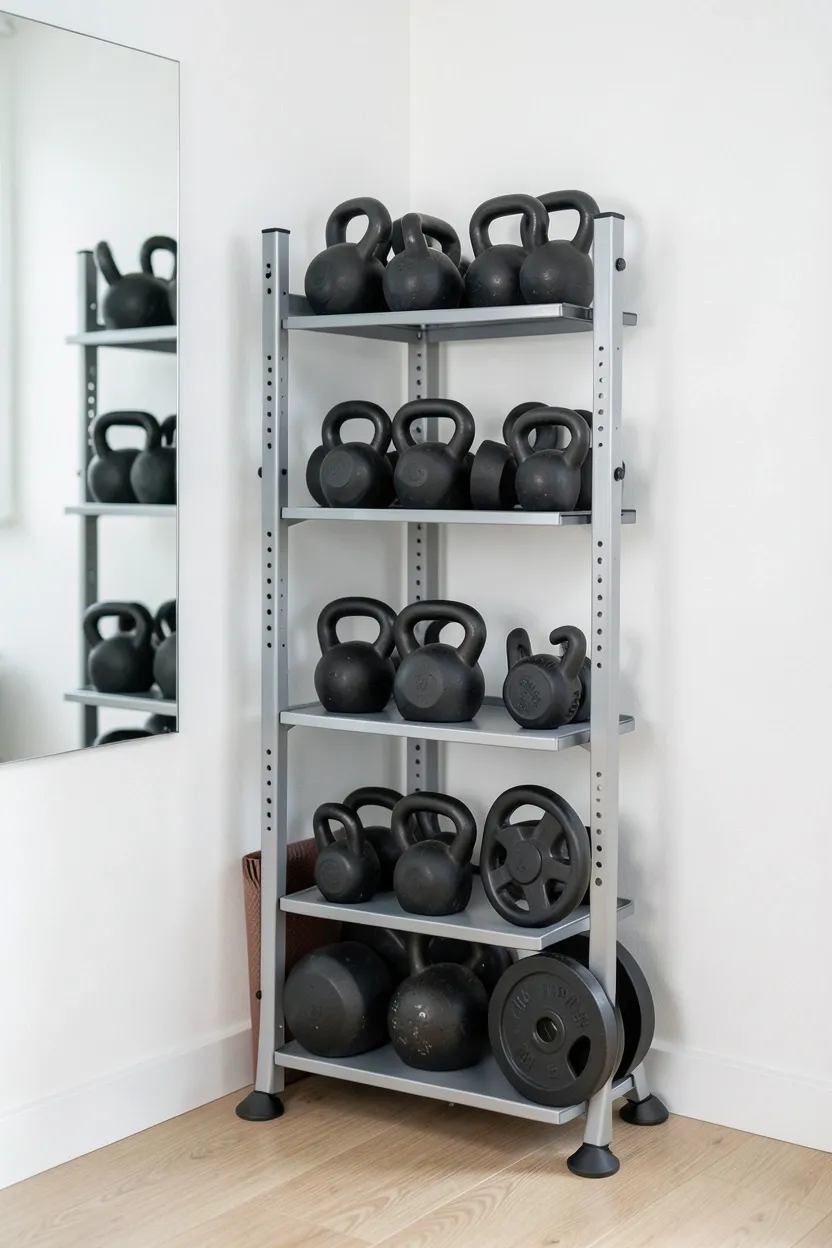
Install a tiered or shelving weight stack specifically designed for compact spaces, with individual holders or slots for each dumbbell or kettlebell pair. Position the stack in a corner where it does not obstruct movement paths or doorways. Use a wall mirror on an adjacent wall to check form and expand visual space. Keep a yoga mat rolled against one wall, unrolling it only for floor exercises or stretching. Why it works: Vertical weight stacks consolidate your strength equipment in one organized system while using wall space that would otherwise go wasted in a small room. Common mistake: overloading individual shelves beyond their weight rating can cause the entire stack to become unstable or fail.
Tips
- Choose a weight stack with rubber-coated or lined holders to protect your equipment and reduce noise when replacing weights.
- Organize weights by resistance level (light, medium, heavy) to make quick adjustments during workouts intuitive.
- If floor space is extremely limited, consider a wall-mounted rack system instead of a freestanding stack.
What this gives you: Organized strength training with immediate access to all weight levels.
20. Freestanding Frame with Integrated Storage
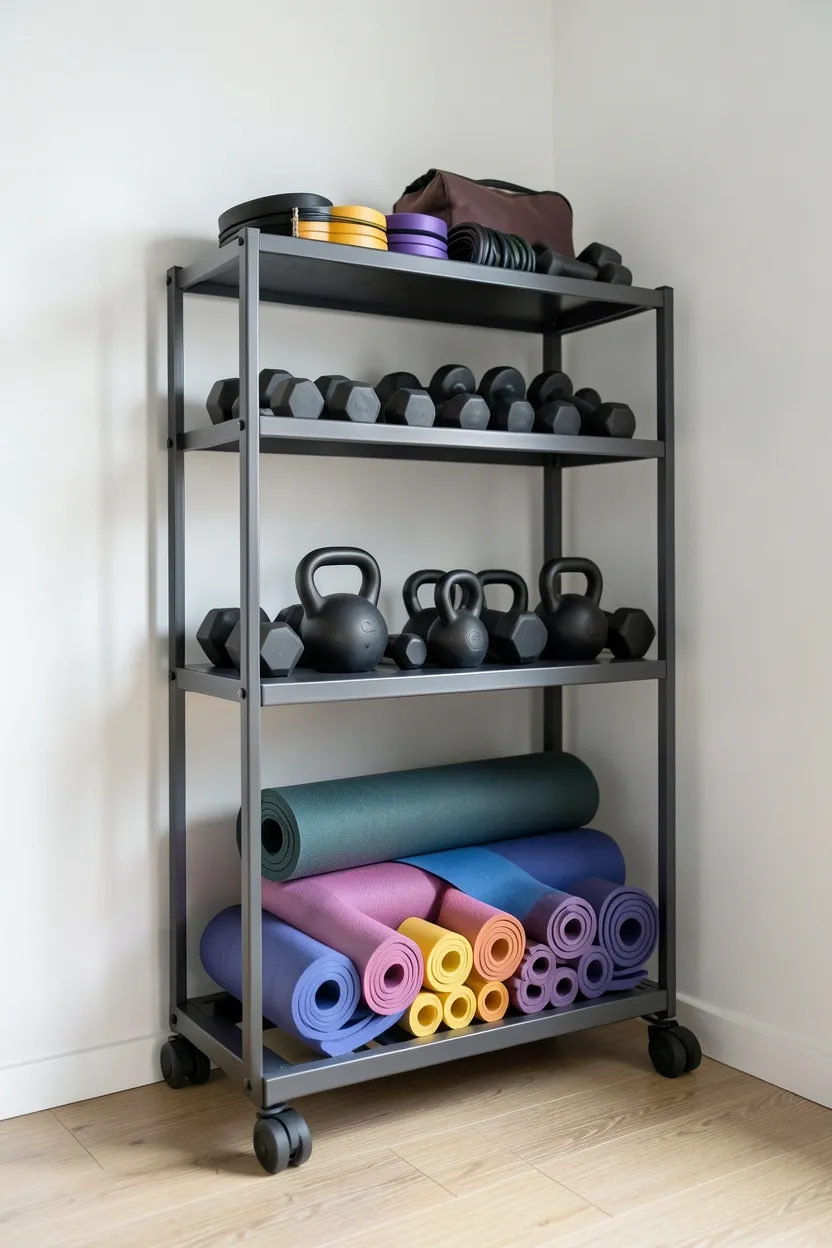
Create a dedicated workout zone in a small room using a freestanding equipment frame with integrated shelving, hooks, and racks that consolidates all your gear into one compact system. This all-in-one mini home gym setup delivers complete workout capacity without requiring wall mounting or permanent installation.
Recommended
Items for this idea
Assemble or purchase a freestanding frame with multiple levels: top shelves for resistance bands and accessories, middle racks for dumbbells or kettlebells, and a bottom shelf or rack for yoga mats and foam rollers. Use the frame as a base for a workout bench or as a support for bodyweight exercises. Add a wall mirror on one side of the frame to check form and visually expand the space. Ensure the frame is sturdy and level, with locking casters if you need to move it occasionally. Common mistake: choosing a frame that is too narrow or unstable, which risks tipping during workouts and limits exercise variety.
Tips
- If you rent, freestanding frames are ideal as they require no permanent installation.
- Use the frame's vertical space to hang accessories like jump ropes, gloves, or suspension trainers.
- Consider models with cable management systems if you will use fans, tablets, or other electronics during workouts.
What this gives you: Complete workout capacity in a portable, no-install system.
21. Minimalist Wall-Mounted Bench System
Install a wall-mounted foldable bench system that provides a sturdy workout surface when needed and collapses flat against the wall to maximize floor space when not in use. This space-efficient mini home gym setup delivers serious strength training capacity while keeping your room completely open for other activities.
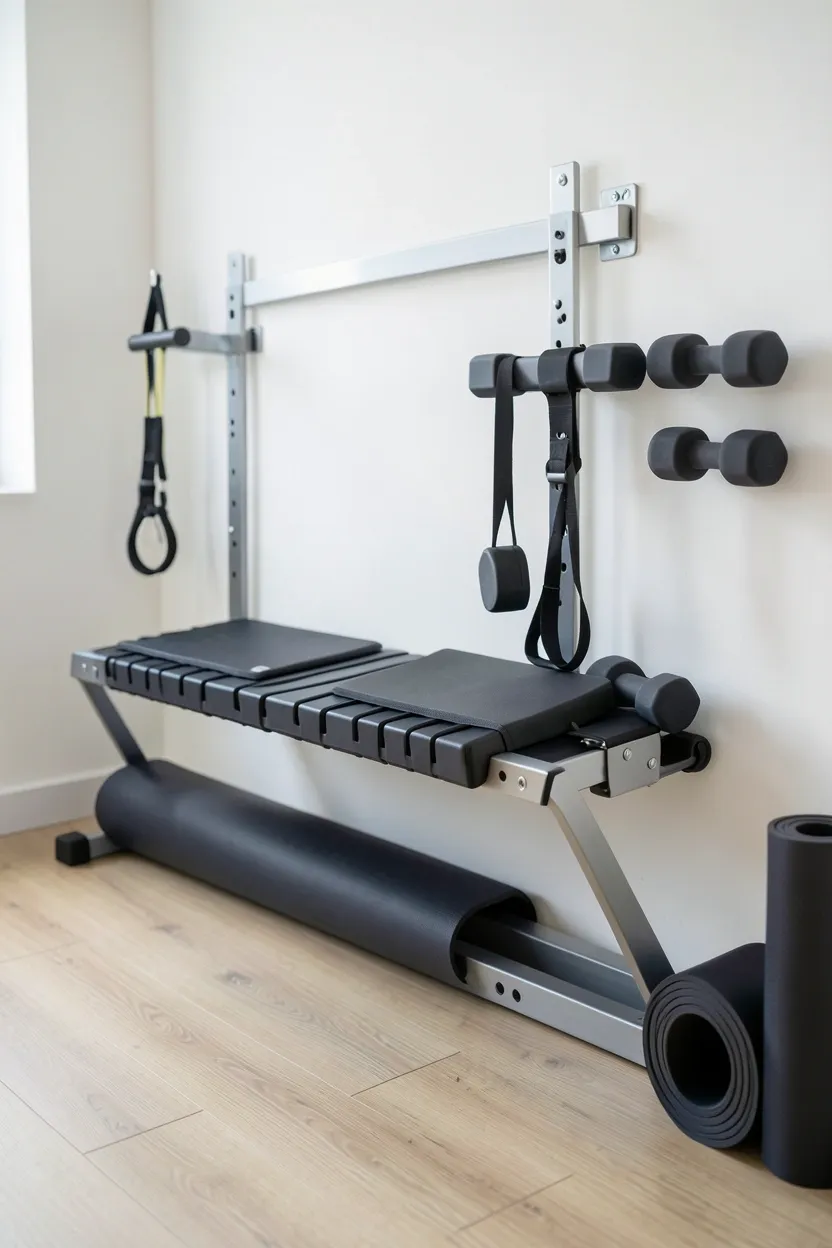
Use a bench with high-quality gas struts or hydraulic pistons for smooth, controlled lowering and raising of the bench surface. Position the bench at a comfortable height for exercises while ensuring adequate clearance on all sides when deployed. Store a yoga mat rolled against the wall below the bench, unrolling it only for floor exercises or stretching. Add wall-mounted racks for dumbbells or resistance bands positioned conveniently alongside the bench for quick transitions between exercises. Why it works: Wall-mounted benches eliminate the need for a freestanding bench that permanently occupies floor space while still providing full functionality when needed. Common mistake: installing the bench at an uncomfortable height or in a location with insufficient clearance creates safety hazards and limits exercise effectiveness.
Tips
- Choose a bench with a weight capacity that exceeds your body weight plus any equipment you will use on it.
- If you cannot mount to walls, use a folding bench with a freestanding base instead of wall brackets.
- Add padding or a mat on the floor below the bench to protect your flooring and joints during exercises.
What this gives you: Full bench functionality that disappears when not in use.
These mini home gym setup ideas prove that limited square footage does not have to limit your fitness potential. By prioritizing vertical storage, choosing multi-functional equipment, and implementing smart organization systems, you can create a highly efficient compact workout room that adapts to your lifestyle. Whether you are a renter working with a tiny apartment corner, a spare bedroom, or just a small hallway, these space-saving home gym solutions help you stay consistent with your fitness goals without drilling holes, signing off on permanent changes, or sacrificing comfort and style in your home.
About the author
OBCD
CGI visualization and interior design content. We create detailed 3D renders and curate practical design ideas for every room in your home.