25 Wabi-Sabi Living Room Ideas for a Cozy, Timeless Space
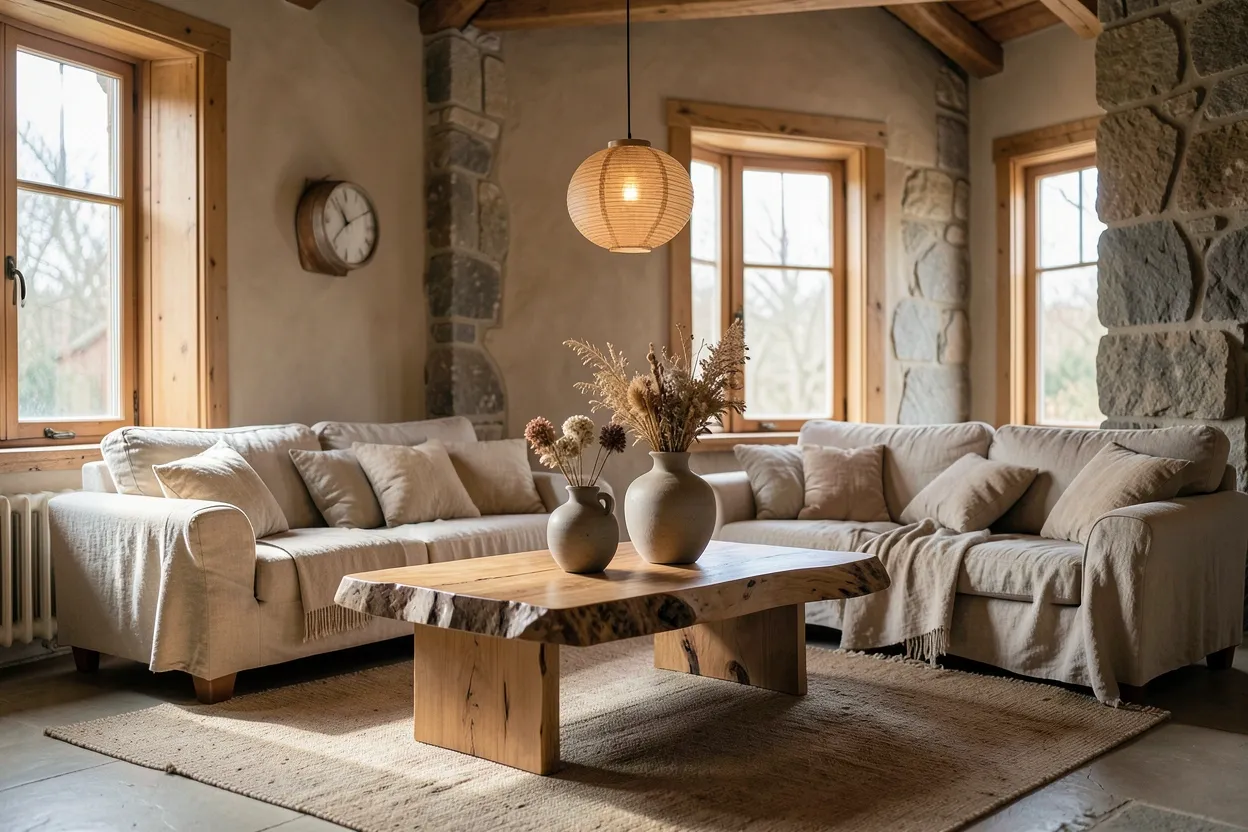
A wabi sabi living room embraces the beauty of imperfection, natural materials, and minimalist calm to create a serene, grounded space. Rooted in Japanese philosophy, this aesthetic celebrates aged wood, handmade ceramics, and organic textures that tell the quiet story of time and use.
Unlike perfectionist minimalism, wabi sabi interior design finds elegance in asymmetry, rough surfaces, and subtle imperfections that make a home feel genuinely lived-in and welcoming. Whether you're decorating a small apartment or a spacious rental living room, these wabi sabi principles layer beautifully without requiring permanent changes or a large budget.
These 25 wabi sabi living room ideas cover everything from renter-friendly furniture choices and low-cost natural textures to lighting, storage, and botanical touches — so you can build a timeless, cozy retreat that feels grounded, sophisticated, and completely your own.
Quick FAQ
What is wabi-sabi interior design?
Wabi-sabi is a Japanese aesthetic philosophy that finds beauty in imperfection, impermanence, and incompleteness. In interior design, it emphasizes natural materials, aged textures, asymmetry, and simple, authentic objects that show the passage of time.
How can I create a wabi-sabi living room on a budget?
Focus on natural materials like wood, stone, and linen in their unrefined states. Choose secondhand or handmade furniture, incorporate plants, and use muted, earthy colors. Avoid matching sets and embrace pieces with visible wear or unique characteristics.
What colors work best in a wabi-sabi living room?
Stick to a neutral palette inspired by nature: warm whites, soft beiges, muted grays, earthy browns, and gentle greens. These natural tones create a calming backdrop that allows textures and materials to take center stage.
Can wabi-sabi work in modern apartments?
Absolutely. Wabi-sabi principles work beautifully in any space because they focus on authenticity rather than specific architectural styles. Even in a modern apartment, you can incorporate natural materials, handmade ceramics, and plants to create a wabi-sabi atmosphere.
As an Amazon Associate I earn from qualifying purchases.
Table of Contents
- 1. Natural Wood Coffee Table with Live Edge
- 2. Handmade Ceramic Vase Collection
- 3. Linen Slipcovered Sofa in Natural Beige
- 4. Stone Accent Wall with Rough Texture
- 5. Bamboo Screen Room Divider
- 6. Vintage Rug with Worn Patina
- 7. Woven Baskets for Storage
- 8. Paper Lantern Pendant Lights
- 9. Exposed Beam Ceiling with Aged Wood
- 10. Low Wooden Floor Cushions
- 11. Terracotta Plant Pots
- 12. Hand-Thrown Pottery Display
- 13. Neutral Wall Art with Abstract Shapes
- 14. Minimalist Floating Wooden Shelves
- 15. Natural Jute Rug Underfoot
- 16. Stone or Slate Flooring
- 17. Wicker Chair with Weathered Finish
- 18. Paper Shoji Screen Windows
- 19. Aged Brass Candle Holders
- 20. Dried Flower Arrangements
- 21. Raw Edge Wooden Console Table
- 22. Cotton Woven Throws
- 23. Minimalist Wooden Media Console
- 24. Clay Wall Sconces
- 25. Small Indoor Zen Garden
1. Natural Wood Coffee Table with Live Edge
A wabi-sabi living room centers around a natural wood coffee table featuring a live edge that celebrates the tree's organic shape. This focal point connects your space to nature while providing a functional surface with authentic character and unique grain patterns.
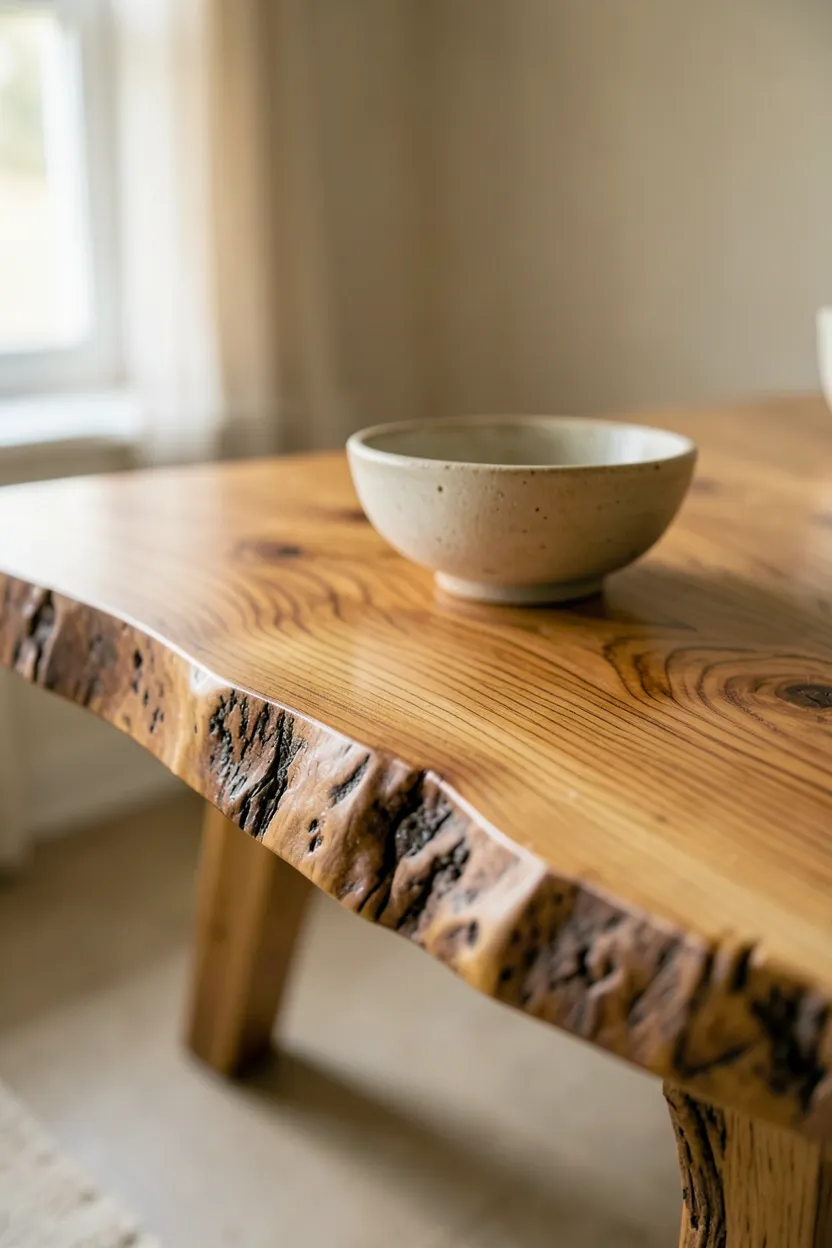
The rough, uneven edges and visible knots create visual interest that mass-produced furniture simply cannot achieve. Pair the table with simple ceramic coasters or a natural linen runner to enhance its earthy appeal without overwhelming the natural beauty.
Tips
- Choose a wood species with visible grain like walnut, oak, or maple
- Keep the finish natural or opt for a matte clear coat to preserve authenticity
- Style with just a few carefully chosen objects rather than clutter
What this gives you: A grounding focal point that brings nature indoors and creates conversation through imperfection.
2. Handmade Ceramic Vase Collection
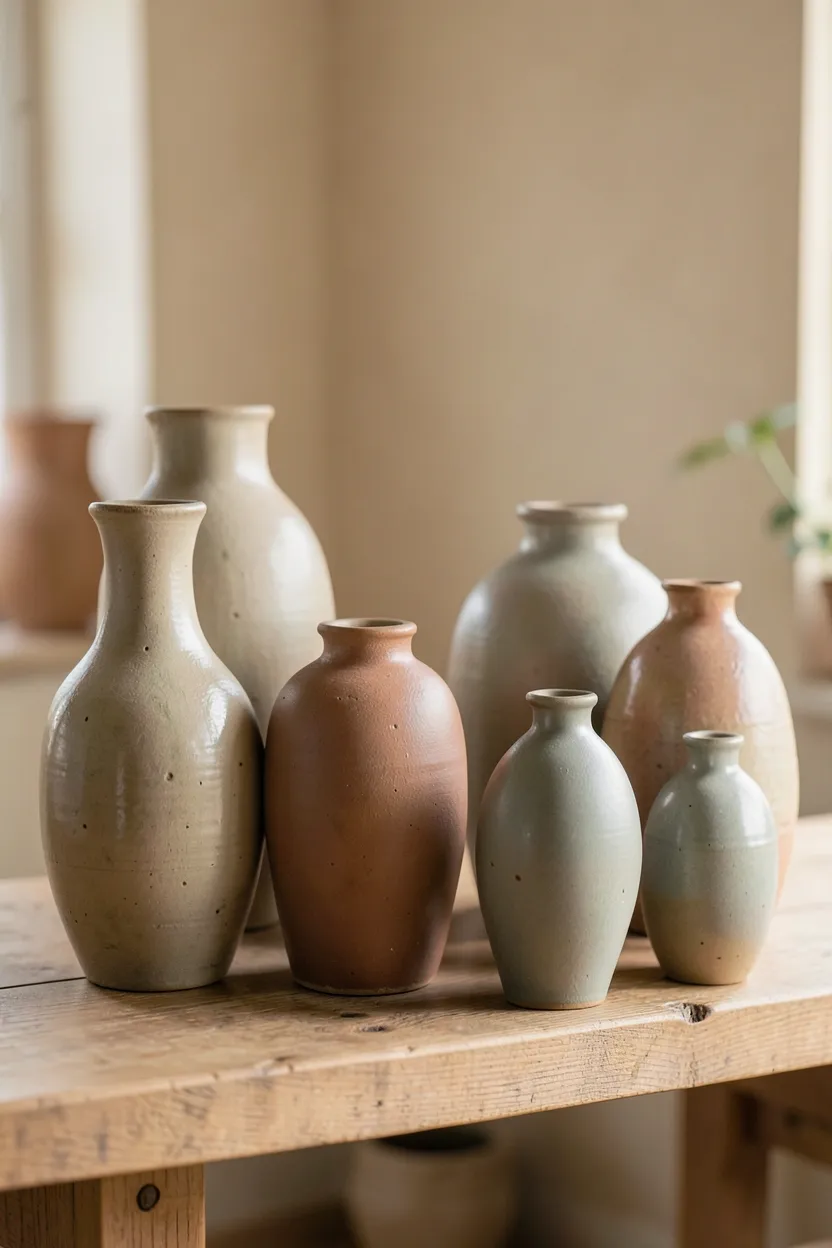
Display a collection of handmade ceramic vases in varying heights and earthy tones to introduce subtle craftsmanship into your wabi-sabi living room. These imperfect vessels celebrate the human touch and traditional techniques that modern mass production cannot replicate.
Recommended
Items for this idea
Arrange them asymmetrically on a wooden shelf or directly on the floor to embrace wabi-sabi's love of organic composition. The slight variations in shape, color, and texture tell stories of the maker's hand and the firing process.
Tips
- Mix matte and slightly glossy finishes for depth
- Choose muted colors inspired by earth, stone, and dried vegetation
- Group 3-5 vases together rather than scattering them
Best for: Adding sculptural interest without introducing bright colors or harsh geometric shapes.
What this gives you: Artful objects that celebrate craftsmanship and bring warmth through their handmade quality.
3. Linen Slipcovered Sofa in Natural Beige
A linen slipcovered sofa in natural beige creates a relaxed, inviting foundation for your wabi-sabi living room that ages beautifully over time. The natural fabric's subtle texture and slight wrinkles embody the wabi-sabi appreciation for authentic, unrefined materials.
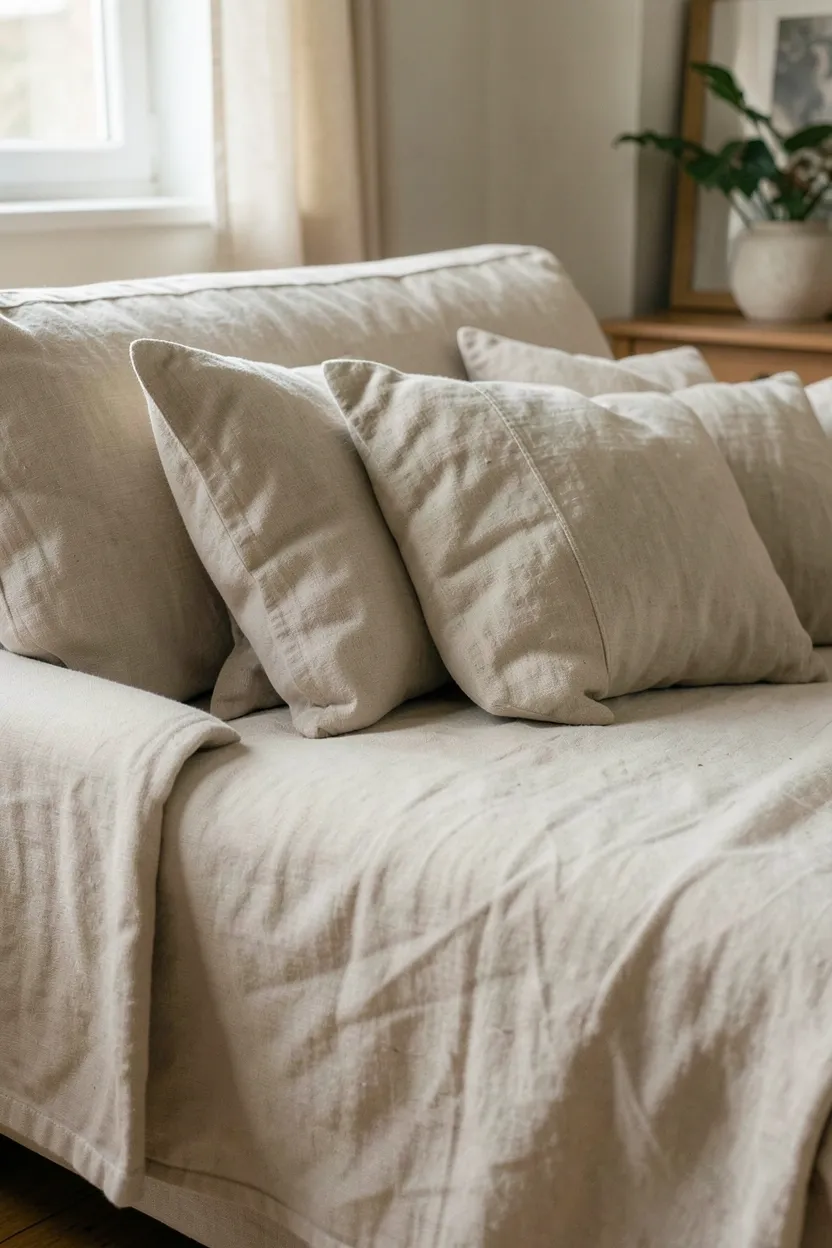
The slipcover is practical too—it's easily removable for washing and develops a soft, lived-in patina that tells the story of daily use. Unlike synthetic fabrics, linen breathes and feels cool to the touch, making it perfect for year-round comfort.
Tips
- Don't iron the slipcover—embrace natural wrinkles as part of the aesthetic
- Layer with linen pillows in slightly darker or lighter shades
- Choose a loose slipcover rather than tailored for a more relaxed look
What this gives you: A comfortable, practical seating option that embodies the wabi-sabi spirit through natural materials and authentic aging.
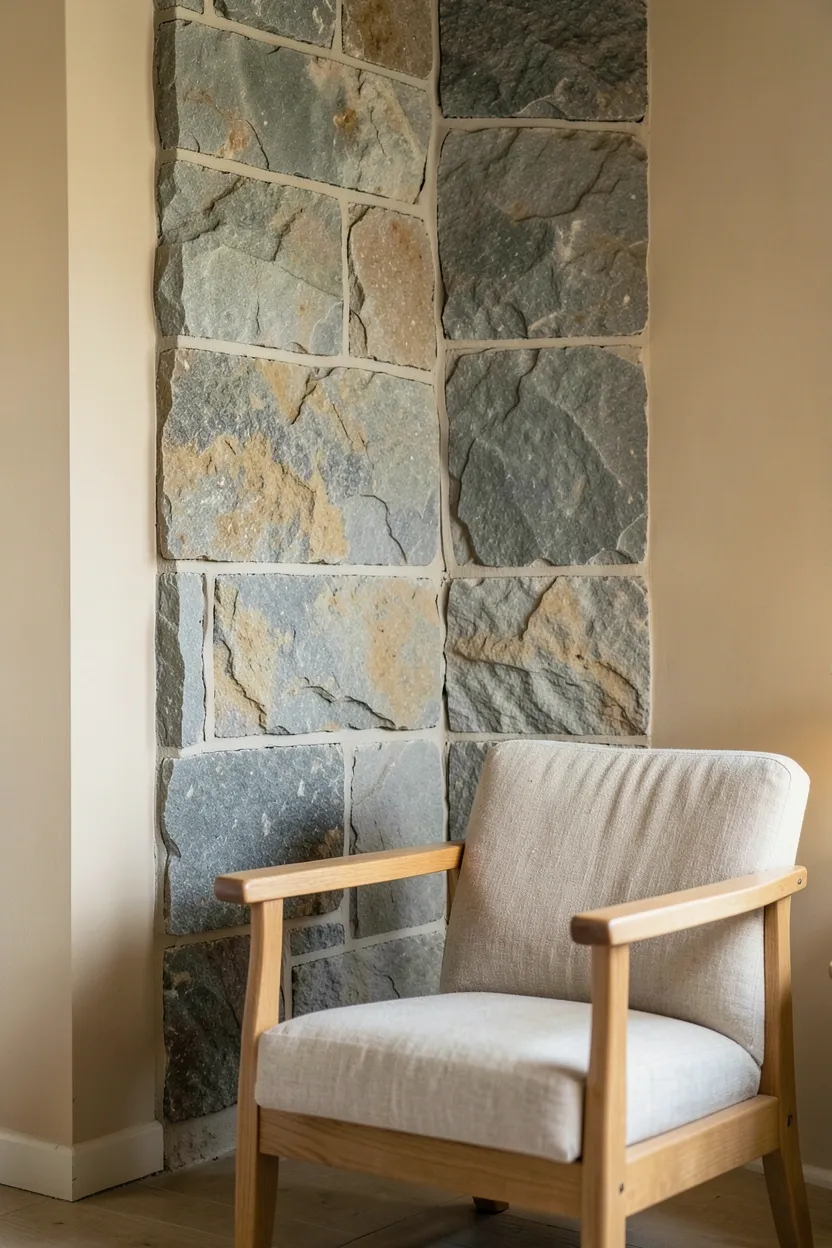
4. Stone Accent Wall with Rough Texture
Create a striking stone accent wall with rough, uneven texture to bring raw natural elements into your wabi-sabi living room. This architectural feature adds depth and visual interest while connecting your interior space to the timeless beauty of stone.
Recommended
Items for this idea
Choose slate, limestone, or river rock with visible variations in color and texture. The wall becomes a living backdrop that changes with the light throughout the day, casting soft shadows and highlighting the stone's natural irregularities.
Tips
- Keep the grout lines visible and slightly uneven for authenticity
- Consider a partial wall rather than covering the entire surface
- Balance with soft textiles to prevent the room from feeling too cold
Avoid if: You prefer sleek, perfectly smooth surfaces or your space already has heavy stonework elsewhere.
What this gives you: A dramatic, grounding feature that celebrates nature's raw beauty and creates visual depth.
5. Bamboo Screen Room Divider
A bamboo screen room divider introduces natural texture and subtle visual separation while maintaining the open, airy feel that wabi-sabi design values. The lightweight material casts beautiful shadows and creates a sense of tranquility through its simple, rhythmic pattern.
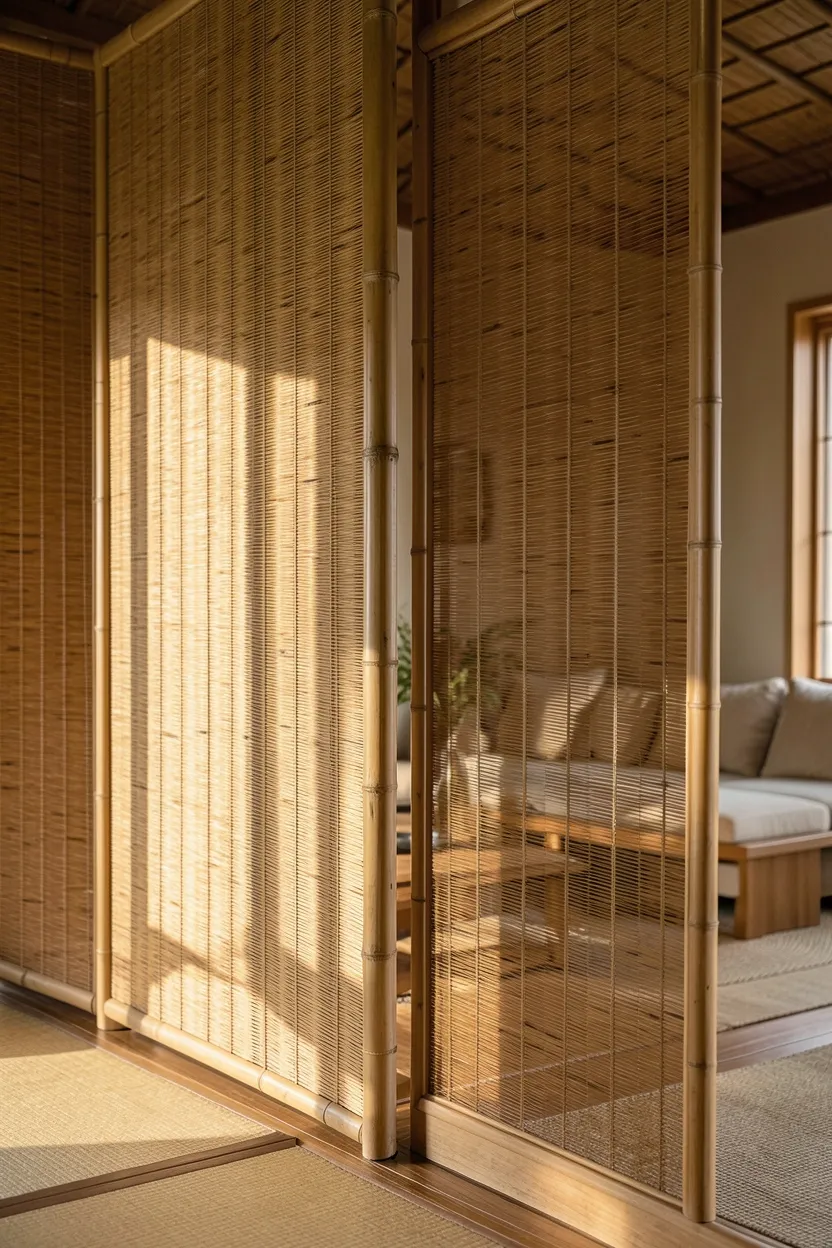
Use the screen to create a cozy reading nook, disguise a workspace, or simply add architectural interest without blocking light completely. The natural bamboo tones warm the space while the woven texture adds visual complexity.
Tips
- Choose a screen with varying bamboo widths for more visual interest
- Place it near natural light to maximize shadow play
- Consider a freestanding screen that can be moved easily for flexibility
What this gives you: Flexible space division that maintains openness while introducing natural materials and soft visual boundaries.
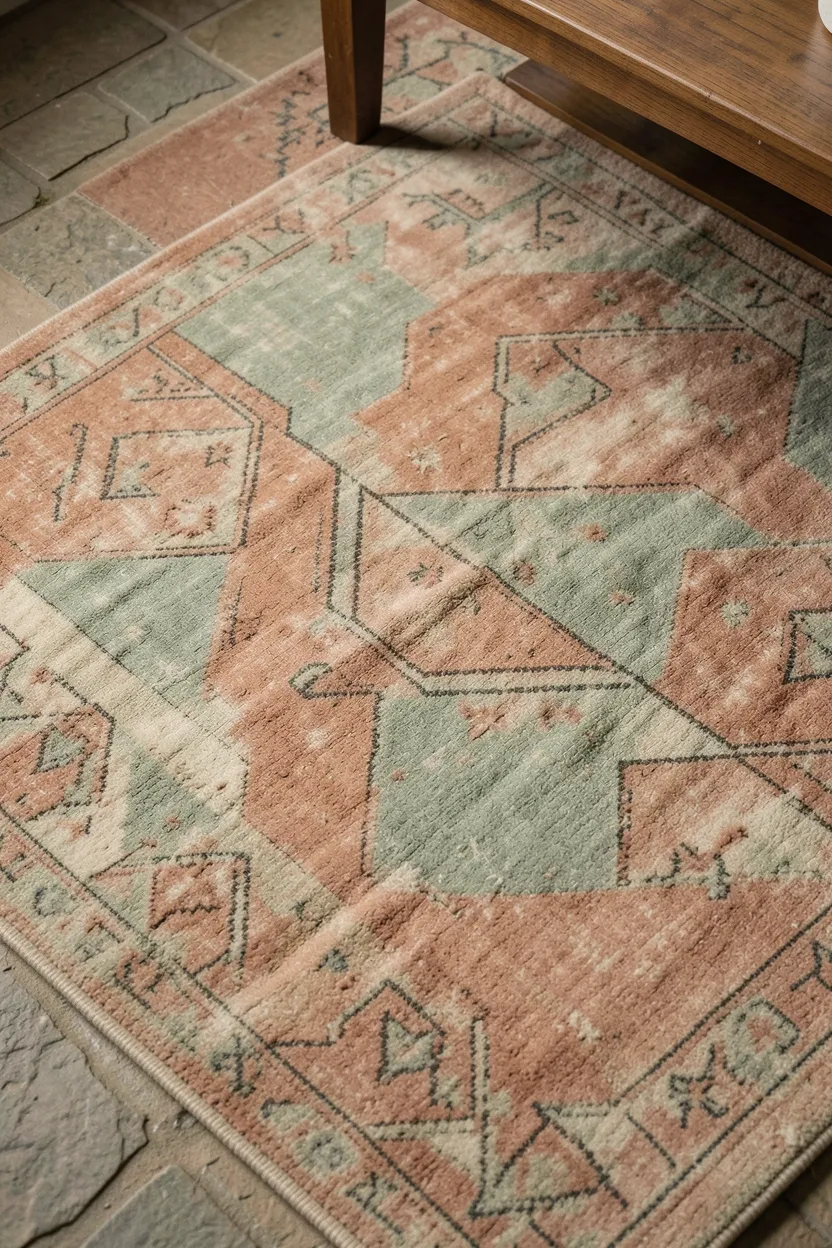
6. Vintage Rug with Worn Patina
A vintage rug with worn patina adds warmth, history, and soft color to your wabi-sabi living room while celebrating the passage of time. The faded patterns, worn areas, and subtle imperfections tell a story of the rug's journey and embody the wabi-sabi appreciation for objects that age gracefully.
Recommended
Items for this idea
Choose a rug with muted earth tones rather than bright primary colors to maintain the serene atmosphere. The worn texture feels soft underfoot and creates visual interest that contrasts beautifully with smooth wood and stone surfaces.
Tips
- Look for natural fiber rugs like wool, cotton, or jute
- Embrace visible repairs or patches as part of the story
- Layer a smaller vintage rug over a larger natural jute rug for depth
Best for: Adding softness and grounding while introducing authentic vintage character to the space.
What this gives you: Historical depth and warmth through an object that celebrates imperfection and the beauty of aging.
7. Woven Baskets for Storage
Incorporate woven baskets for storage to introduce natural texture while maintaining the wabi-sabi principle of functional simplicity. These handcrafted containers hide clutter while celebrating traditional weaving techniques and the beauty of natural materials like seagrass, rattan, or willow.
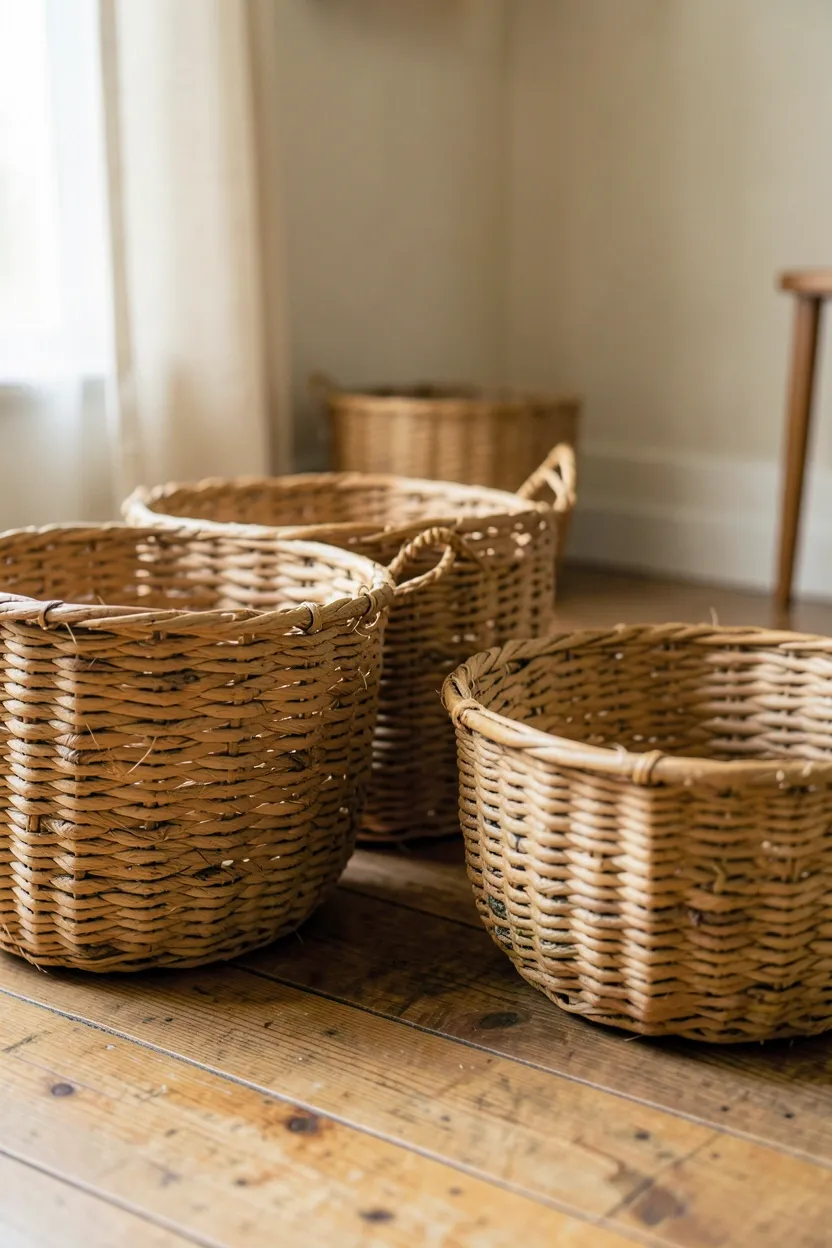
Use baskets to store blankets, magazines, firewood, or children's toys, keeping everyday items accessible yet organized. The irregular weave patterns and slight variations between baskets create visual interest while their neutral tones blend seamlessly with the wabi-sabi palette.
Tips
- Mix different sizes and weaves for collected-over-time appeal
- Choose baskets with lids to completely hide contents when needed
- Group 2-3 baskets together rather than scattering them individually
What this gives you: Practical storage solutions that add warmth and texture while celebrating handcrafted natural materials.
8. Paper Lantern Pendant Lights
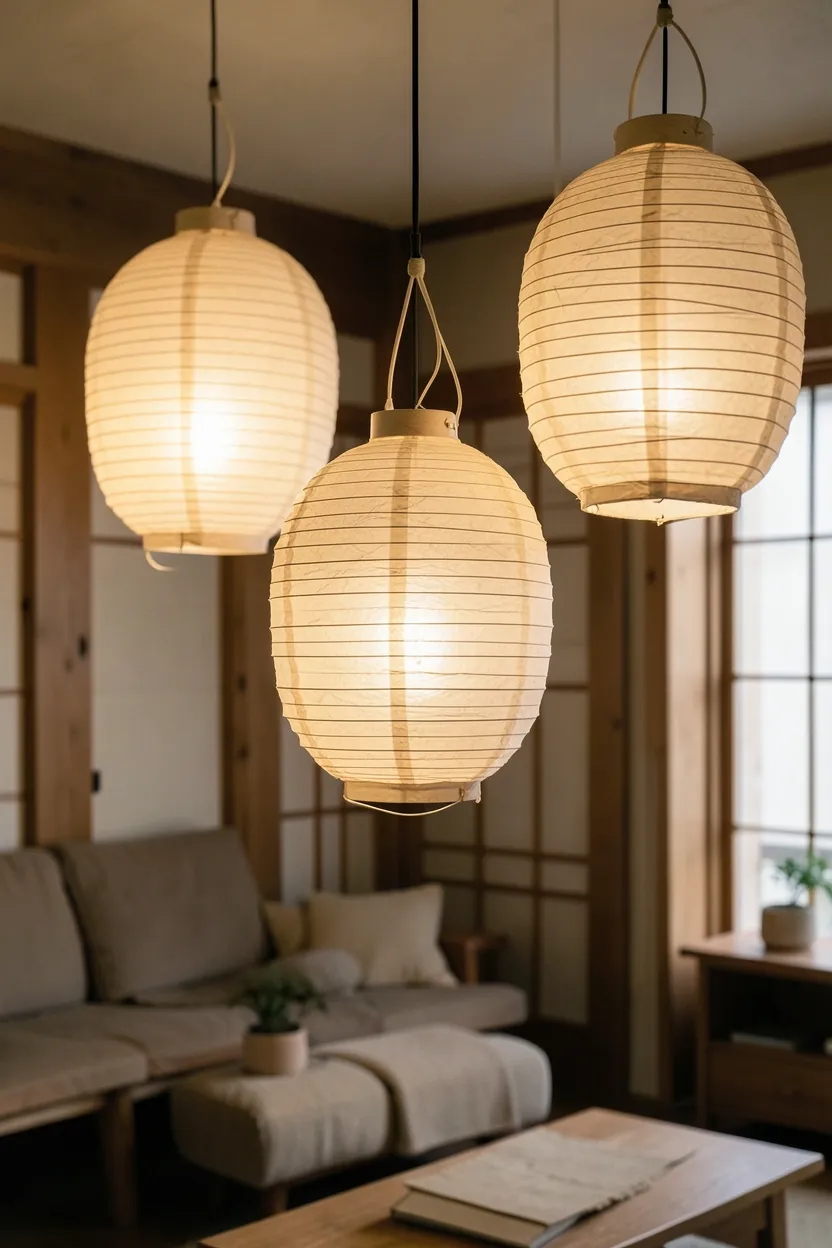
Install paper lantern pendant lights to create soft, diffused illumination that enhances the serene, contemplative atmosphere of your wabi-sabi living room. These gentle light sources cast warm, ambient glow that highlights natural textures while maintaining simplicity and understated elegance.
Recommended
Items for this idea
Hang multiple lanterns at varying heights to create visual interest without overwhelming the space. The delicate paper material filters light beautifully, creating soft shadows and a sense of tranquility that's essential to wabi-sabi environments.
Tips
- Choose natural paper or rice paper with visible texture
- Use warm white LED bulbs rather than cool daylight
- Dimmer switches allow you to adjust the mood throughout the day
Budget note: Paper lanterns are relatively affordable and can be replaced or updated easily as tastes change.
What this gives you: Soft, atmospheric lighting that enhances tranquility while maintaining simplicity and visual lightness.
9. Exposed Beam Ceiling with Aged Wood
An exposed beam ceiling featuring aged wood adds architectural character and brings the warmth of natural materials overhead in your wabi-sabi living room. The visible knots, grain patterns, and weathered patina celebrate the beauty of timber that has aged naturally over time.
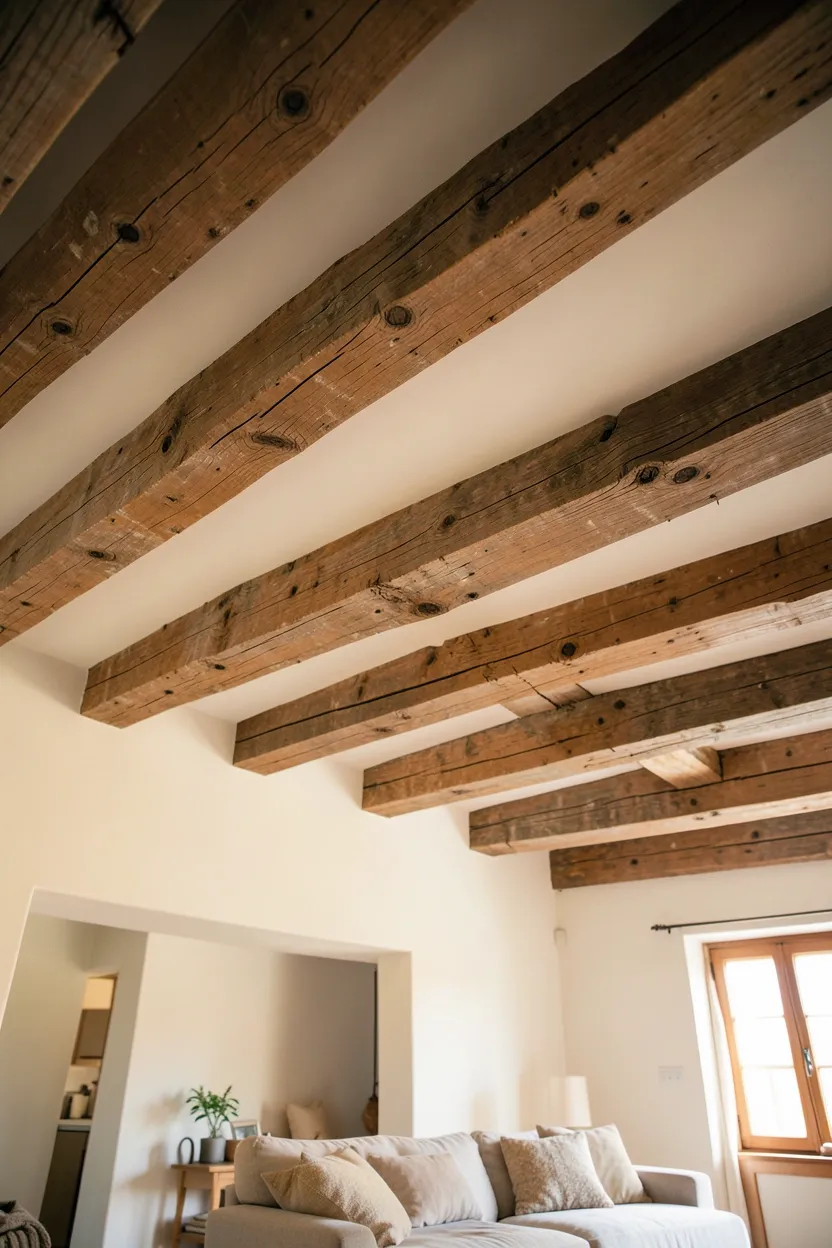
If your home doesn't have original exposed beams, consider adding faux beams made from reclaimed wood. The horizontal lines create visual rhythm while the warm wood tones balance cool stone or concrete surfaces, creating harmony through contrasting materials.
Tips
- Choose reclaimed wood with visible wear and character
- Keep the finish natural or lightly stained to preserve authenticity
- Space beams evenly for visual balance without perfect symmetry
What this gives you: Architectural interest and overhead warmth that celebrates natural materials and the passage of time.
10. Low Wooden Floor Cushions
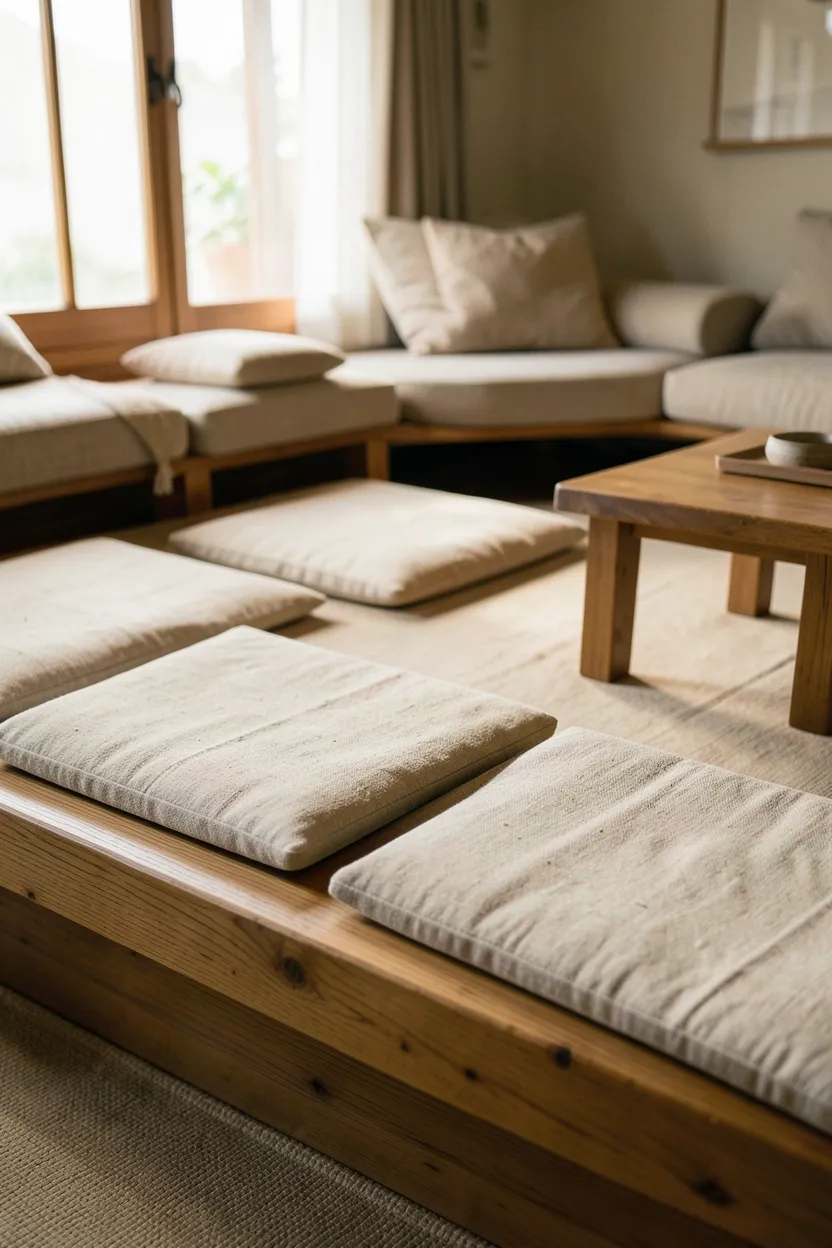
Low wooden floor cushions paired with simple zabuton or futon-style seating create a grounded, contemplative seating arrangement that connects inhabitants to the floor—a fundamental aspect of wabi-sabi design philosophy. This approach encourages relaxation and mindfulness while celebrating traditional Japanese seating customs.
Recommended
Items for this idea
The low seating arrangement also makes the room feel more spacious and intimate simultaneously. Use natural fabrics like cotton, linen, or hemp for cushion covers in neutral tones that complement the wooden floor platform.
Tips
- Keep floor cushions thin enough to sit comfortably but not too low
- Add small back pillows for lumbar support during longer sitting
- Consider a low wooden coffee table that matches the seating platform
Rental note: Floor cushions are perfect for rentals since they don't require permanent installation and can be moved or stored easily.
What this gives you: A grounding, contemplative seating arrangement that encourages mindfulness and celebrates traditional design principles.
11. Terracotta Plant Pots
Display plants in terracotta pots to bring living greenery into your wabi-sabi living room while celebrating the beauty of unglazed, natural clay. The warm orange-brown tones of terracotta complement earthy color palettes and add warmth that balances cool stone and wood elements.
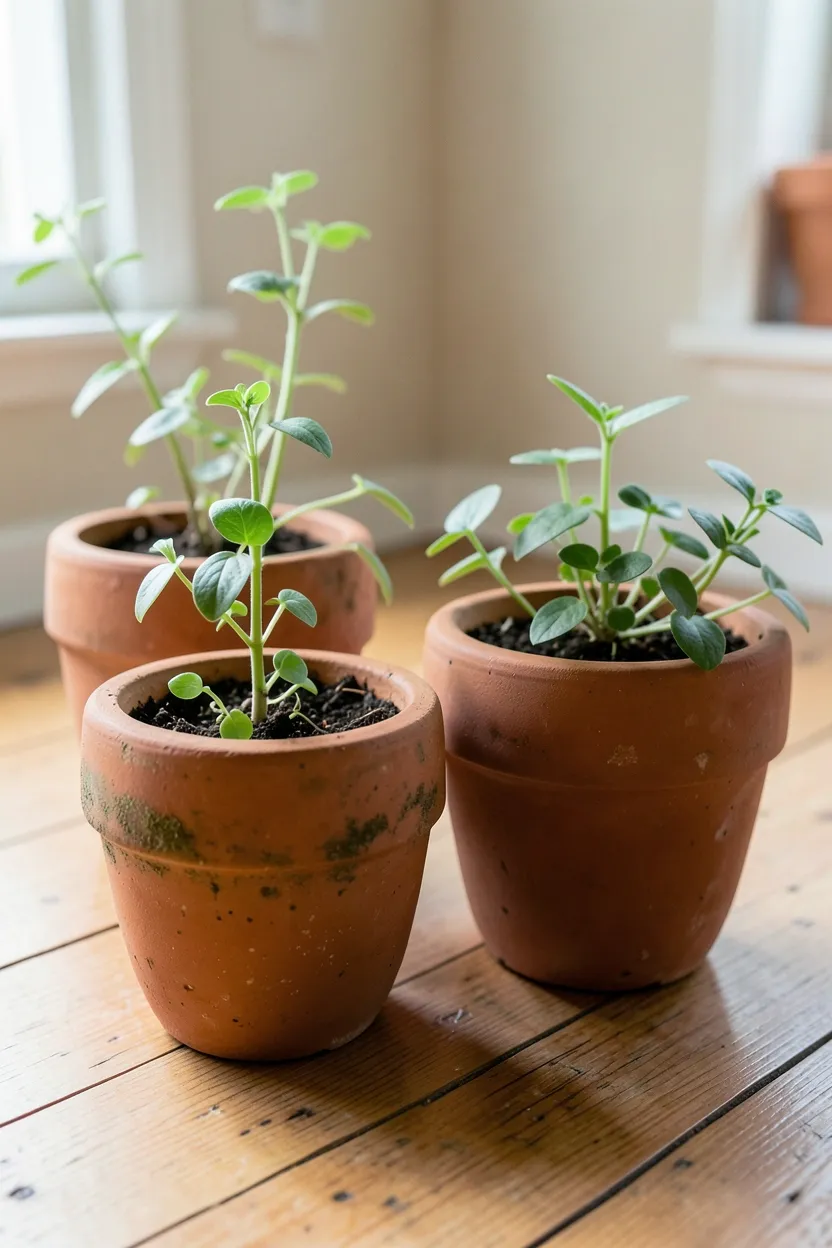
The porous material allows plants to breathe and develop naturally, while the visible variations in color and texture between pots create authentic character. Over time, terracotta develops a beautiful patina that tells the story of its use and age.
Tips
- Choose plants with simple, architectural forms rather than overly showy blooms
- Group 3-5 plants together for visual impact without clutter
- Allow mineral deposits to form on pot surfaces as natural decoration
What this gives you: Living elements that connect your space to nature while celebrating natural materials and authentic aging processes.
12. Hand-Thrown Pottery Display
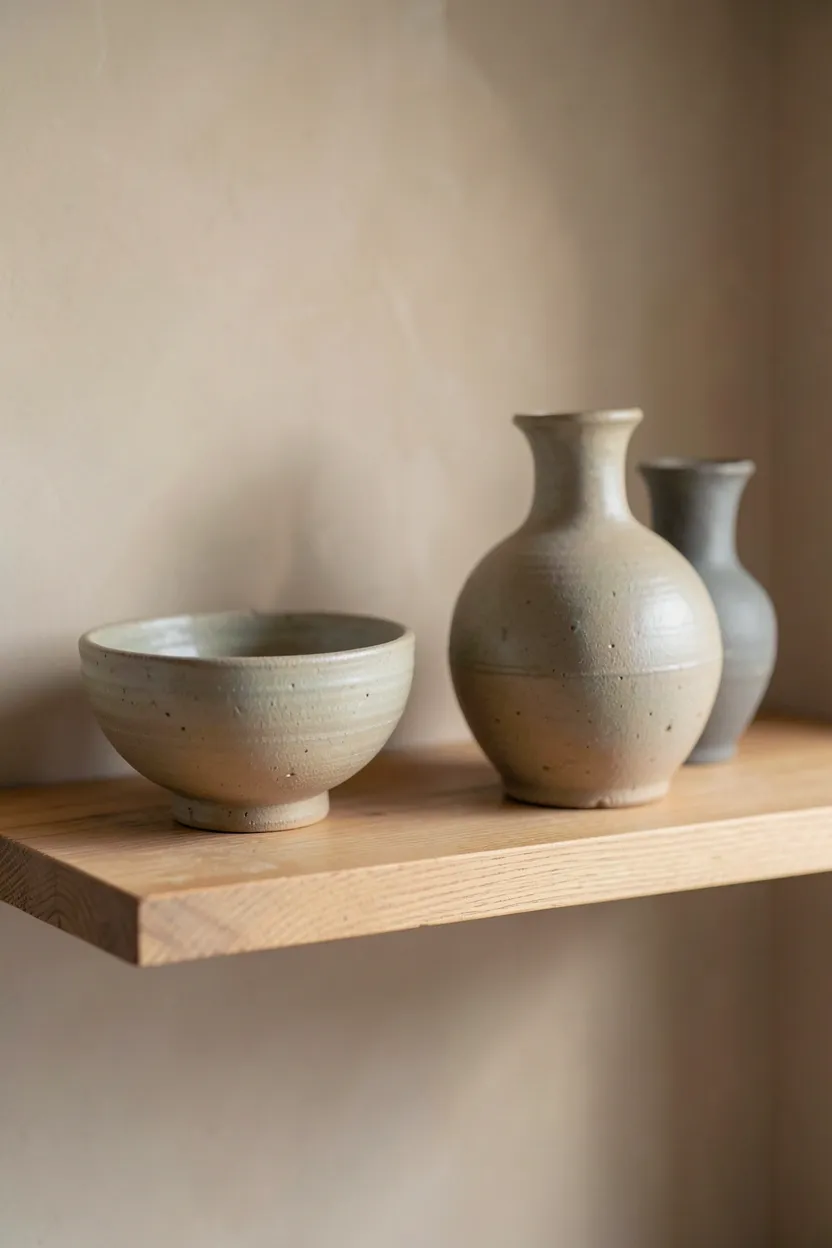
Create a curated display of hand-thrown pottery pieces to celebrate craftsmanship and introduce sculptural interest that embodies the wabi-sabi appreciation for objects made by human hands. The slight irregularities and visible throwing marks tell stories of the maker's process and traditional techniques.
Recommended
Items for this idea
Arrange pieces on floating wooden shelves, a low side table, or directly on the floor to create visual variety in height and perspective. Choose pieces with muted glazes or unglazed surfaces in earthy tones that harmonize with your overall color palette.
Tips
- Focus on quality over quantity—3-5 well-chosen pieces make a stronger statement
- Mix functional pieces like bowls with purely decorative vessels
- Allow negative space between pieces so each can be appreciated individually
Best for: Adding artistic sophistication while celebrating traditional craftsmanship and handmade authenticity.
What this gives you: Artful, sculptural elements that celebrate human touch and traditional making processes.
13. Neutral Wall Art with Abstract Shapes
Hang neutral wall art featuring abstract shapes and earthy tones to add visual interest without disrupting the serene, contemplative atmosphere of your wabi-sabi living room. The subtle, understated artwork complements rather than competes with the natural textures and materials that define the space.
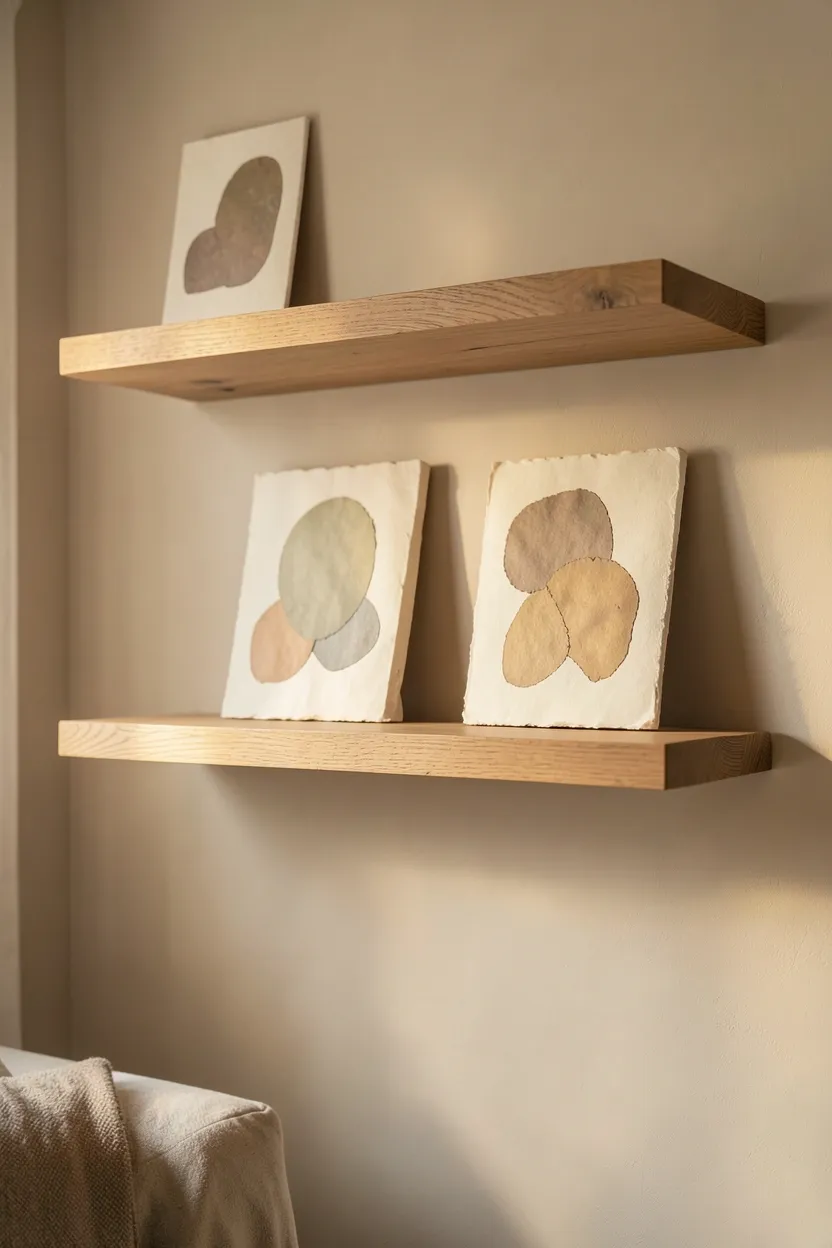
Choose pieces that incorporate natural materials like handmade paper, wood panels, or raw canvas. The abstract forms should feel organic rather than geometric, echoing the asymmetrical, flowing shapes found in nature.
Tips
- Group 2-3 smaller pieces rather than one large artwork for collected appeal
- Consider unframed canvas or paper pieces for a more raw, authentic look
- Position artwork at eye level but allow for slight asymmetry in placement
What this gives you: Visual interest that complements the serene atmosphere while celebrating abstract, organic forms.
14. Minimalist Floating Wooden Shelves
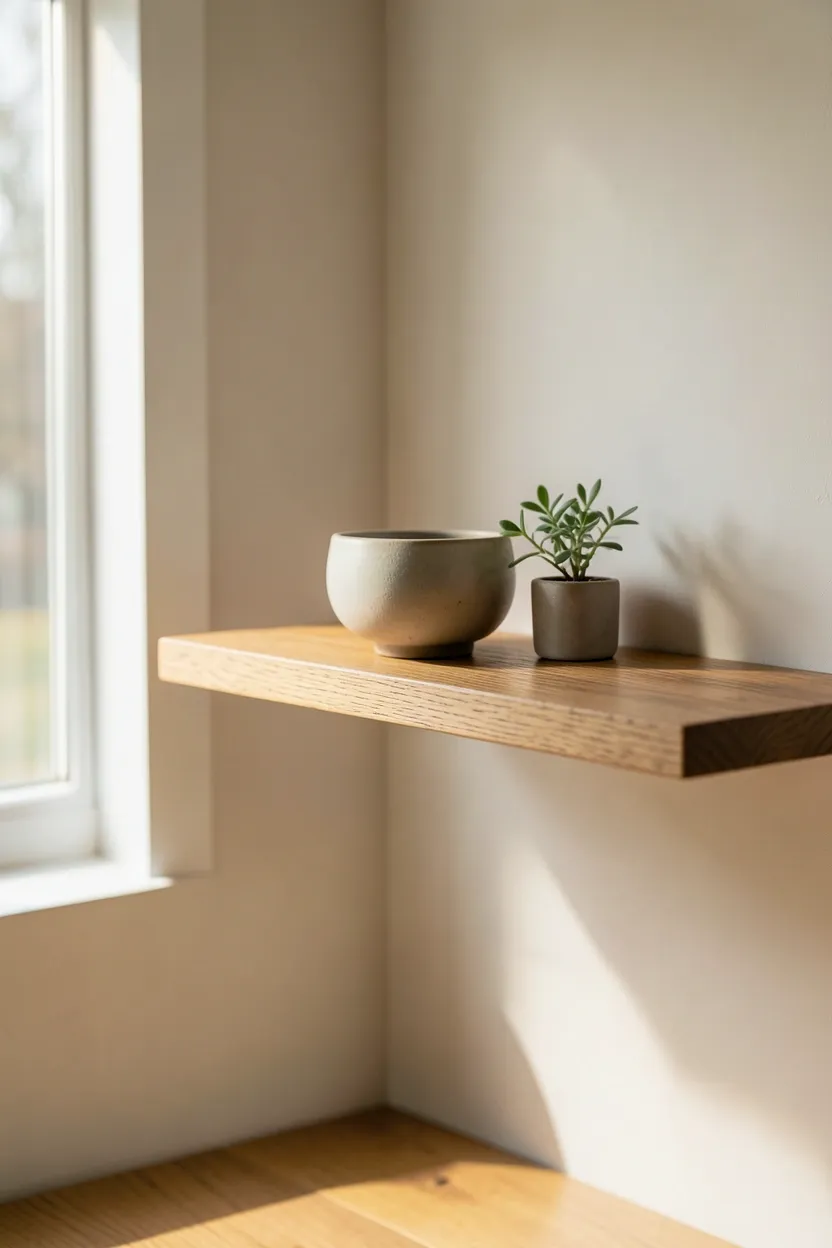
Install minimalist floating wooden shelves to display carefully curated objects while maintaining the clean, uncluttered lines that wabi-sabi design values. The shelves themselves become sculptural elements, while their minimalist profiles ensure they don't overwhelm the space.
Recommended
Items for this idea
Choose shelves made from natural wood with visible grain and simple, clean lines. Display just a few well-chosen objects on each shelf—perhaps a hand-thrown bowl, a small plant, or a single piece of pottery—rather than filling them completely.
Tips
- Stagger shelf heights rather than aligning them perfectly
- Choose shelves that are just wide enough for their intended purpose
- Leave plenty of negative space so displayed objects can breathe
Rental note: Floating shelves are perfect for rentals since they create storage without requiring furniture pieces and can be removed without major damage.
What this gives you: Display space that maintains visual lightness while celebrating natural materials and minimalist design.
15. Natural Jute Rug Underfoot
Layer a natural jute rug underfoot to introduce earthy texture and warmth while maintaining the natural, unrefined aesthetic that defines wabi-sabi living rooms. The rough, coarse texture creates visual interest and tactile appeal that contrasts beautifully with smooth wood and stone surfaces.
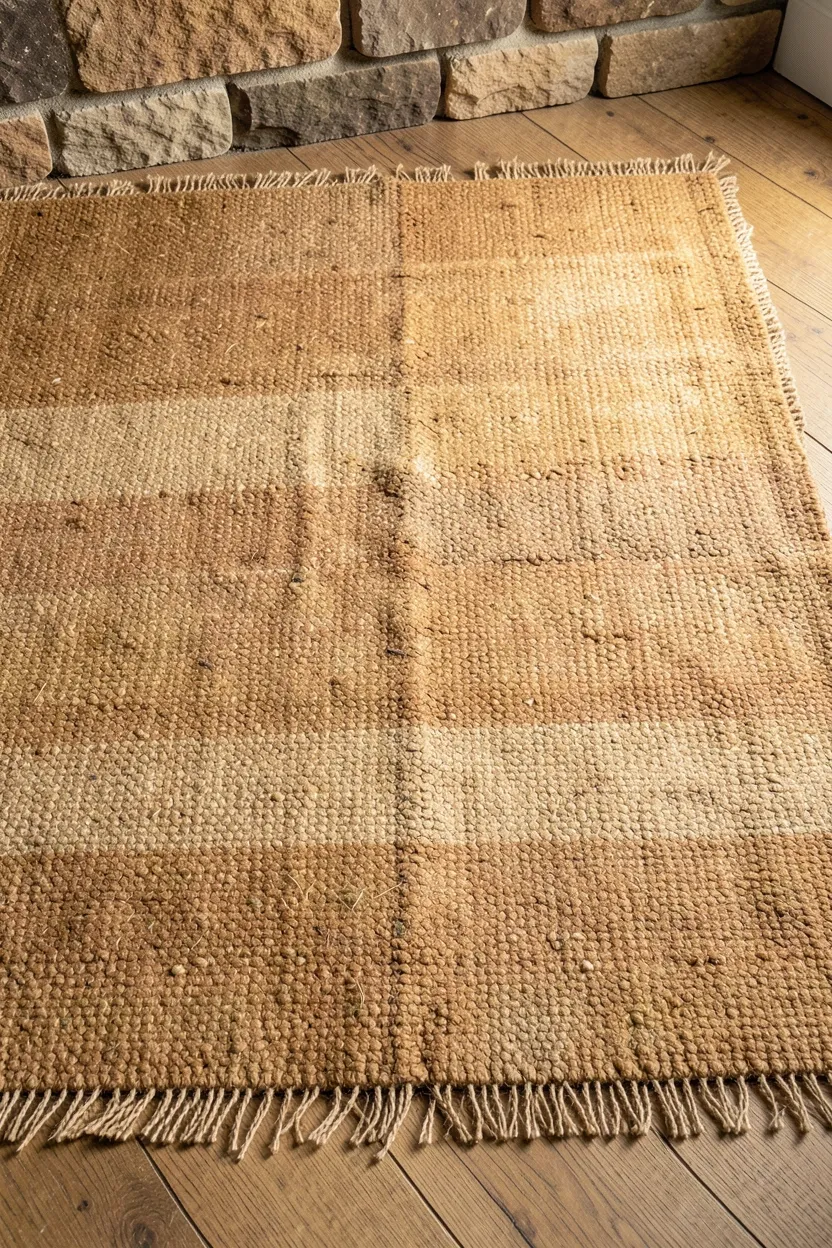
Jute's natural golden-brown tone warms the space while its sustainable origins align with wabi-sabi's appreciation for natural materials and environmental consciousness. The rug's irregular weave pattern and subtle color variations add authentic character.
Tips
- Choose a rug with visible fiber texture rather than a tightly woven flat surface
- Allow the edges to remain unbound or roughly finished for authenticity
- Layer a smaller vintage or patterned rug on top for visual depth
What this gives you: Grounding texture and warmth that celebrates natural materials while adding earthy color.
16. Stone or Slate Flooring
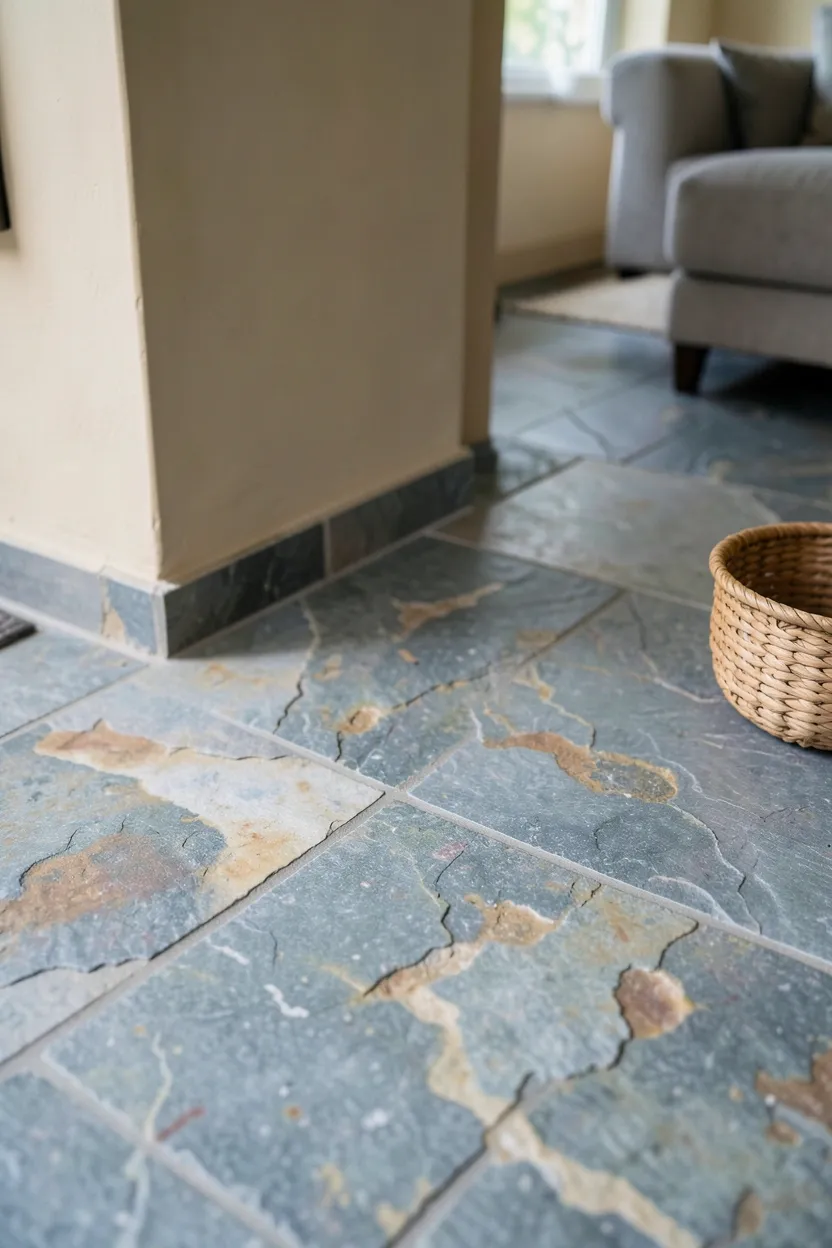
Install stone or slate flooring to create a solid, grounding foundation that celebrates natural materials and introduces cool, earthy tones to your wabi-sabi living room. The natural variations in color and texture between stones create visual interest while maintaining a sense of timeless permanence.
Recommended
Items for this idea
The irregular shapes and slight unevenness of natural stone flooring embody the wabi-sabi appreciation for imperfection and authenticity. Choose slate in grays, blues, or warm earth tones, or opt for limestone with visible fossil patterns for added character.
Tips
- Keep grout lines visible and slightly uneven for natural appearance
- Choose honed rather than polished finishes for more texture
- Layer with rugs to add softness and define seating areas
Budget note: If full stone flooring isn't possible, consider stone-look ceramic tiles or a stone accent area.
What this gives you: A permanent, grounding foundation that celebrates natural materials and creates timeless appeal.
17. Wicker Chair with Weathered Finish
Place a wicker chair with a naturally weathered finish to add seating that celebrates natural materials and the beauty of aging over time. The woven texture creates visual complexity while the weathered patina tells stories of use and exposure to natural elements.
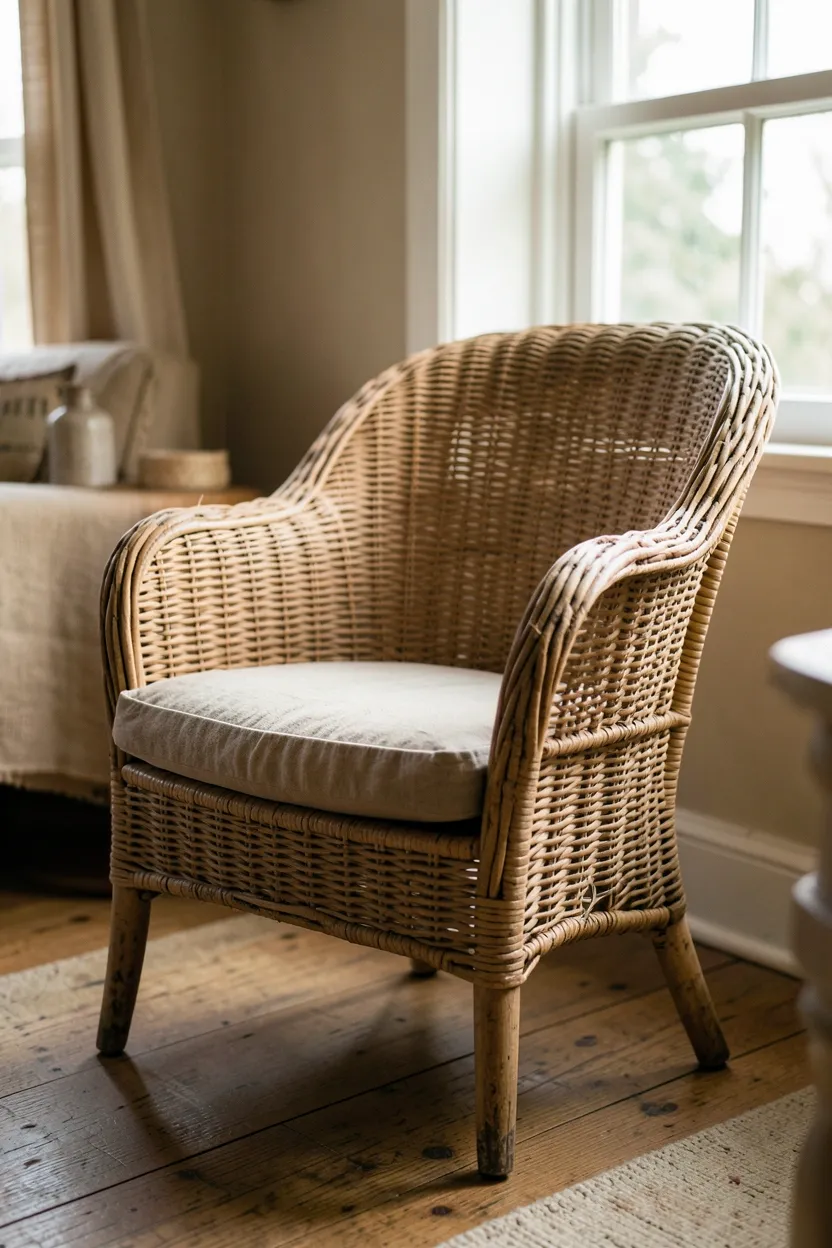
Position the chair near a window or in a cozy corner to create a contemplative reading spot. Add a linen cushion in a neutral tone to soften the texture while maintaining the natural material palette.
Tips
- Look for vintage wicker with visible signs of age and use
- Avoid chairs that look too perfectly crafted or pristine
- Pair with a small wooden side table for functionality
Rental note: Wicker chairs are lightweight and easy to move, making them perfect for rental spaces.
What this gives you: Additional seating that celebrates natural materials, aging processes, and traditional craftsmanship.
18. Paper Shoji Screen Windows
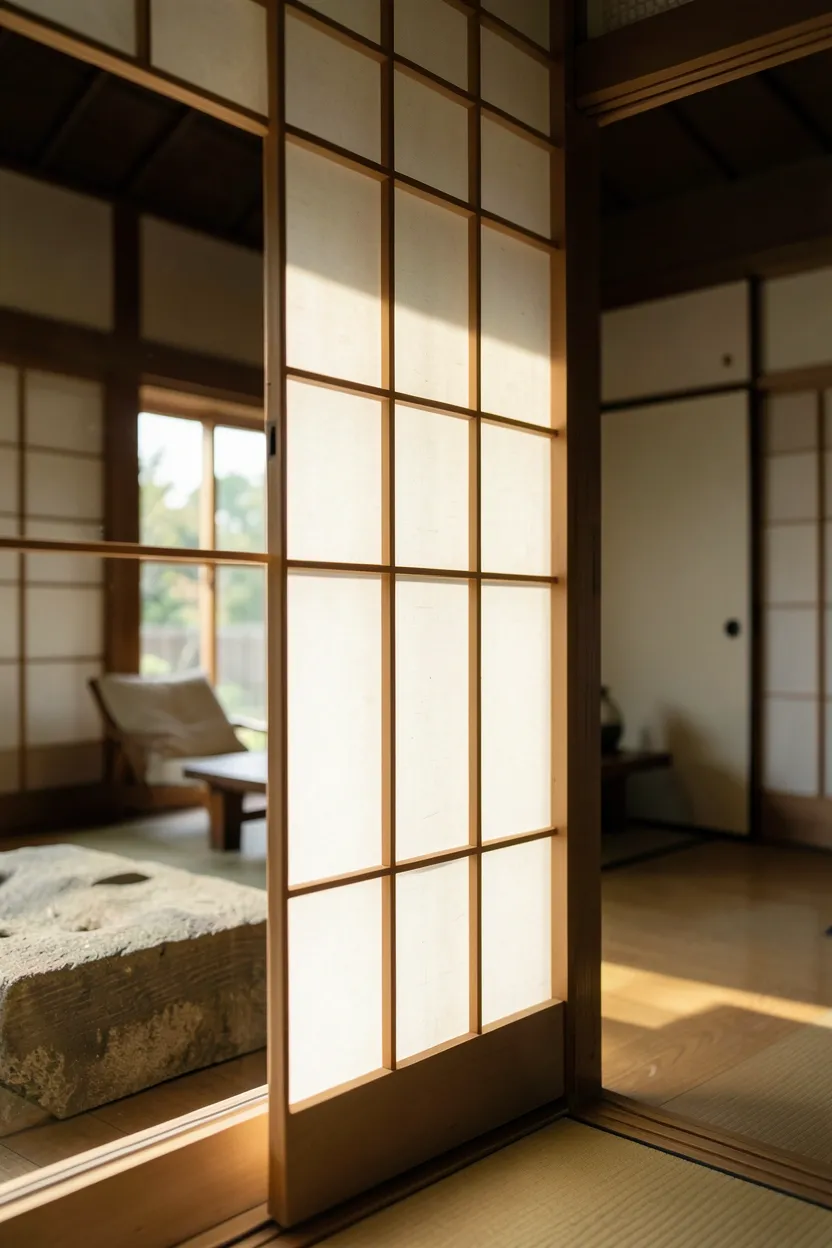
Incorporate paper shoji screen windows or room dividers to filter natural light beautifully while introducing traditional Japanese design elements into your wabi-sabi living room. The translucent paper creates soft, diffuse illumination that enhances tranquility while maintaining privacy and visual lightness.
Recommended
Items for this idea
The grid pattern of the wooden frame adds subtle architectural interest while the paper material celebrates natural materials and traditional craftsmanship. The screens cast beautiful shadows throughout the day, creating visual interest through light and shadow play.
Tips
- Choose natural washi paper or rice paper for authenticity
- Consider freestanding screens if permanent installation isn't possible
- Keep the wooden frames simple and unstained for natural appearance
What this gives you: Beautiful light diffusion and traditional design elements that celebrate Japanese aesthetics and natural materials.
19. Aged Brass Candle Holders
Display aged brass candle holders to introduce metallic warmth while celebrating the natural patina that develops over time. The tarnished finish tells stories of use and age, embodying the wabi-sabi appreciation for objects that evolve and change with time.
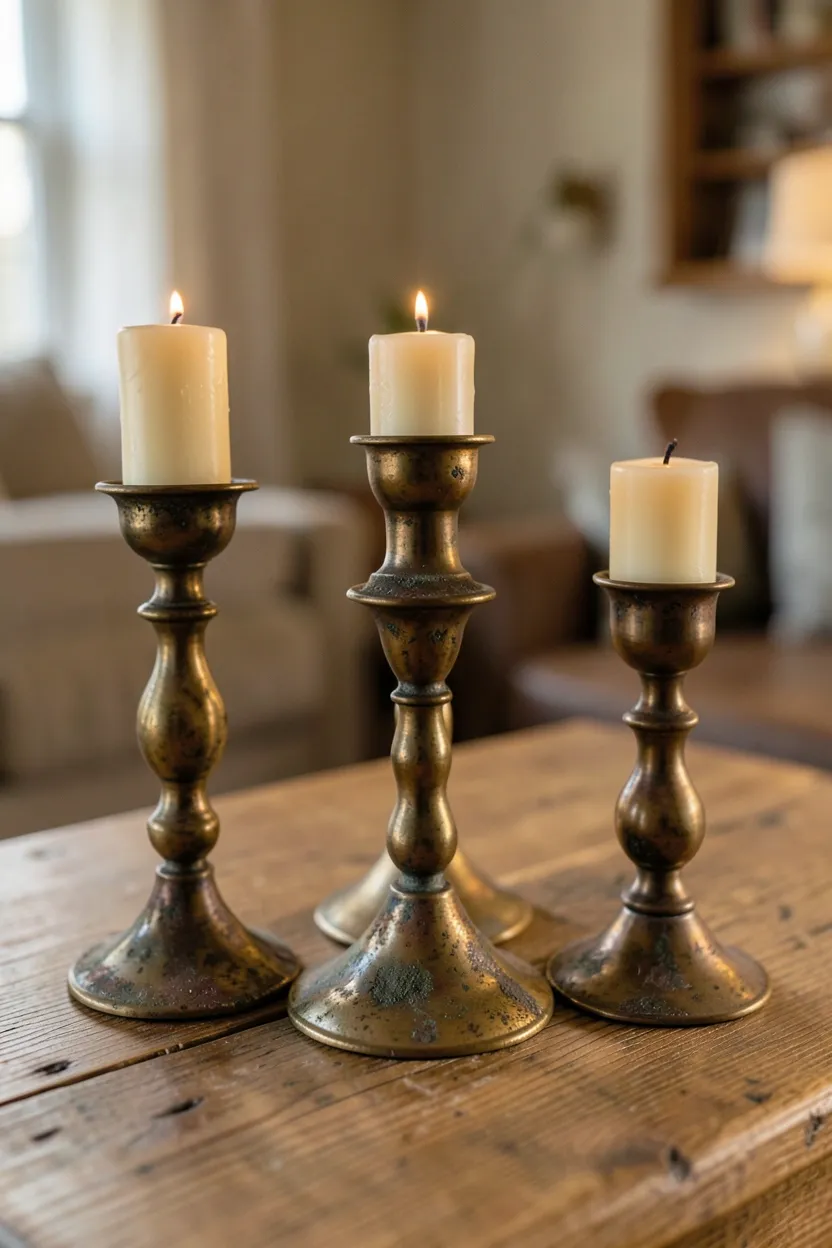
Arrange the candle holders on a wooden mantel, low table, or floating shelves. The warm glow of candlelight creates intimate, contemplative atmosphere while the brass's natural patina adds rich, earthy tones to the space.
Tips
- Choose holders with visible signs of wear and oxidation
- Group 3-5 holders of varying heights for visual interest
- Use natural beeswax candles rather than scented or colored ones
What this gives you: Warmth and intimacy through candlelight while celebrating the beauty of aged materials and natural patina.
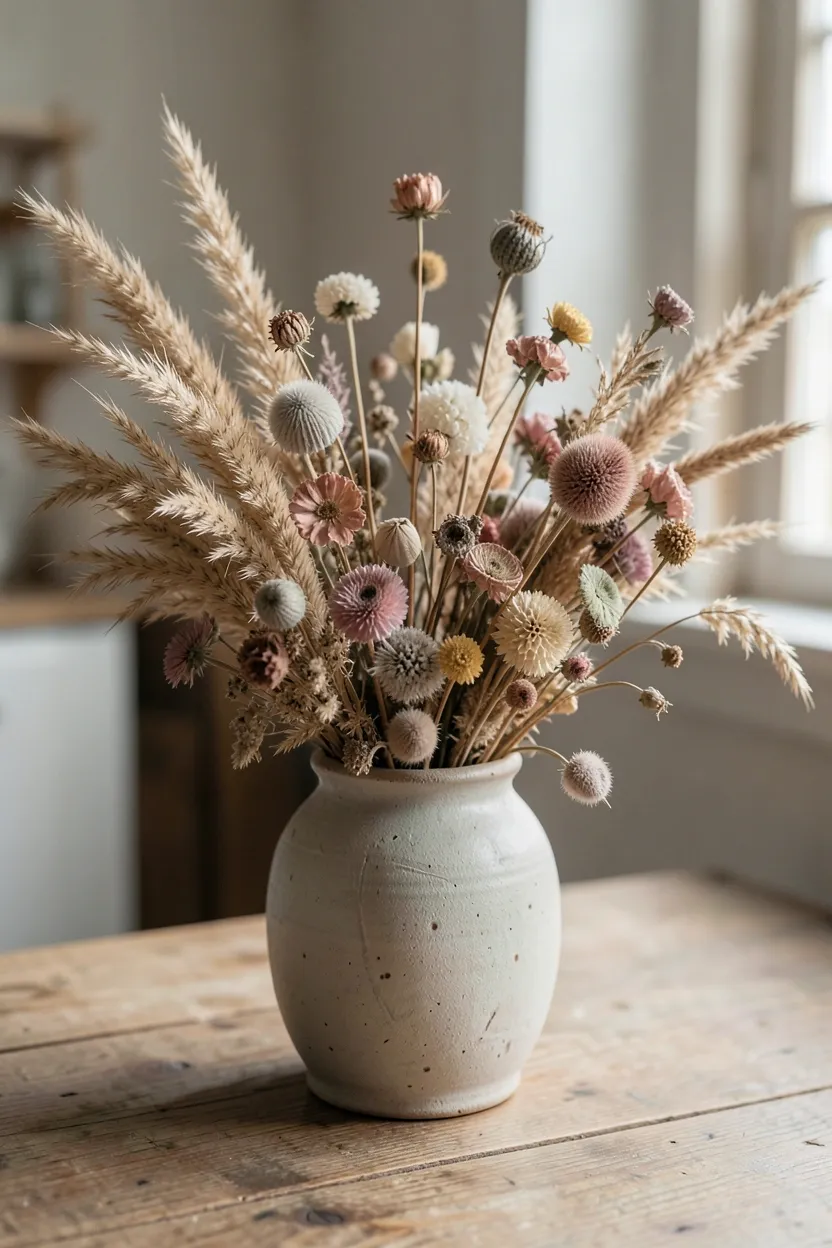
20. Dried Flower Arrangements
Create dried flower arrangements to celebrate the beauty of ephemeral beauty and the natural cycle of life—core concepts in wabi-sabi philosophy. The muted, faded colors and delicate, preserved forms bring quiet elegance while acknowledging the passage of time.
Recommended
Items for this idea
Choose simple arrangements in handmade ceramic vessels or glass vases. The dried flowers require no maintenance and last indefinitely, embodying the wabi-sabi appreciation for objects that evolve slowly and naturally.
Tips
- Choose flowers with natural, slightly faded colors rather than artificially dyed ones
- Keep arrangements simple and asymmetrical rather than perfectly balanced
- Consider dried grasses, seed pods, or branches for added texture
Best for: Adding subtle color and natural elements that celebrate impermanence and natural cycles.
What this gives you: Elegant, low-maintenance botanical elements that celebrate ephemeral beauty and natural cycles.
21. Raw Edge Wooden Console Table
Place a raw edge wooden console table to introduce sculptural furniture that celebrates natural wood in its most authentic, unrefined state. The live edge celebrates the tree's natural form while the simple, minimalist profile maintains the wabi-sabi emphasis on essential, unadorned beauty.
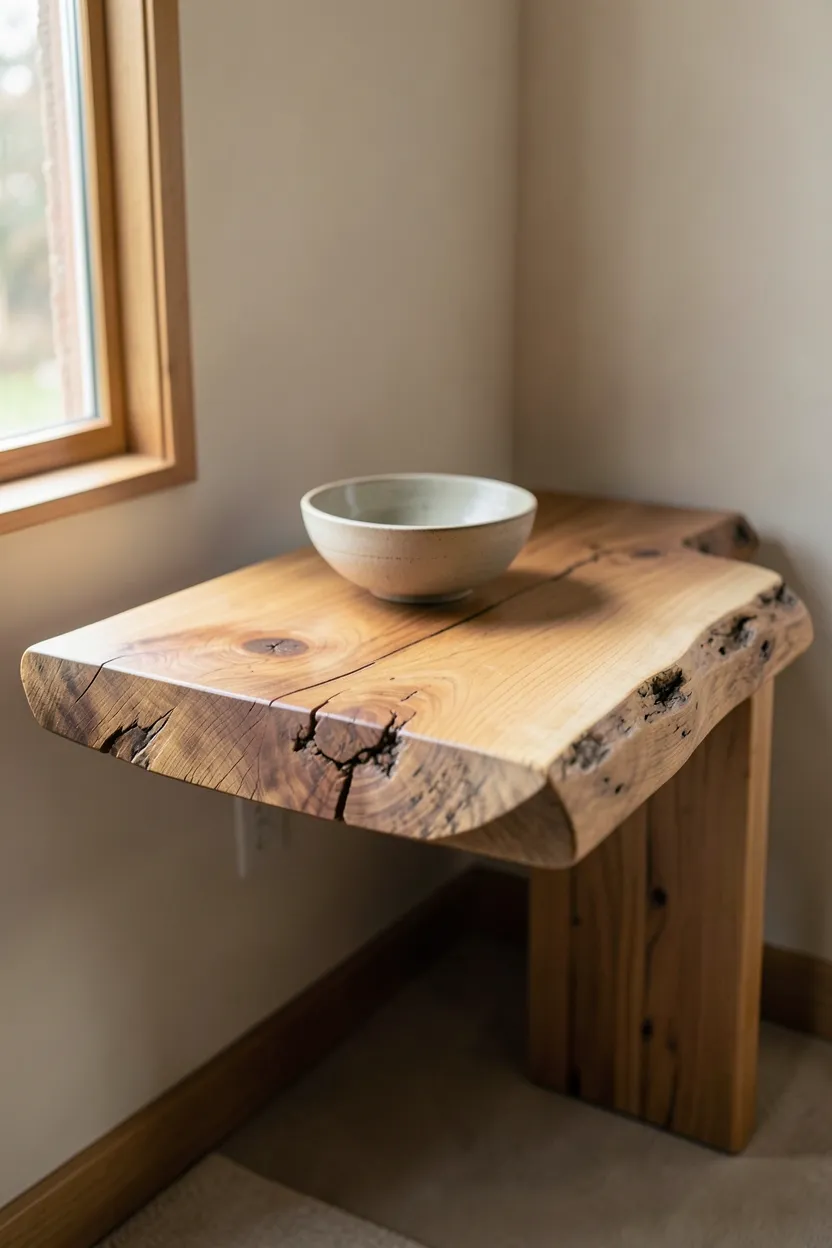
Style the table with just a few carefully chosen objects—a hand-thrown pottery bowl, a small plant, or perhaps a single book. The negative space is as important as the objects themselves, allowing the wood's natural beauty to take center stage.
Tips
- Choose wood with visible knots, grain patterns, and natural color variations
- Keep the finish natural or use a matte clear coat rather than glossy
- Position against a wall or behind a sofa to create a focal point
What this gives you: Sculptural furniture that celebrates natural materials in their most authentic, unrefined state.
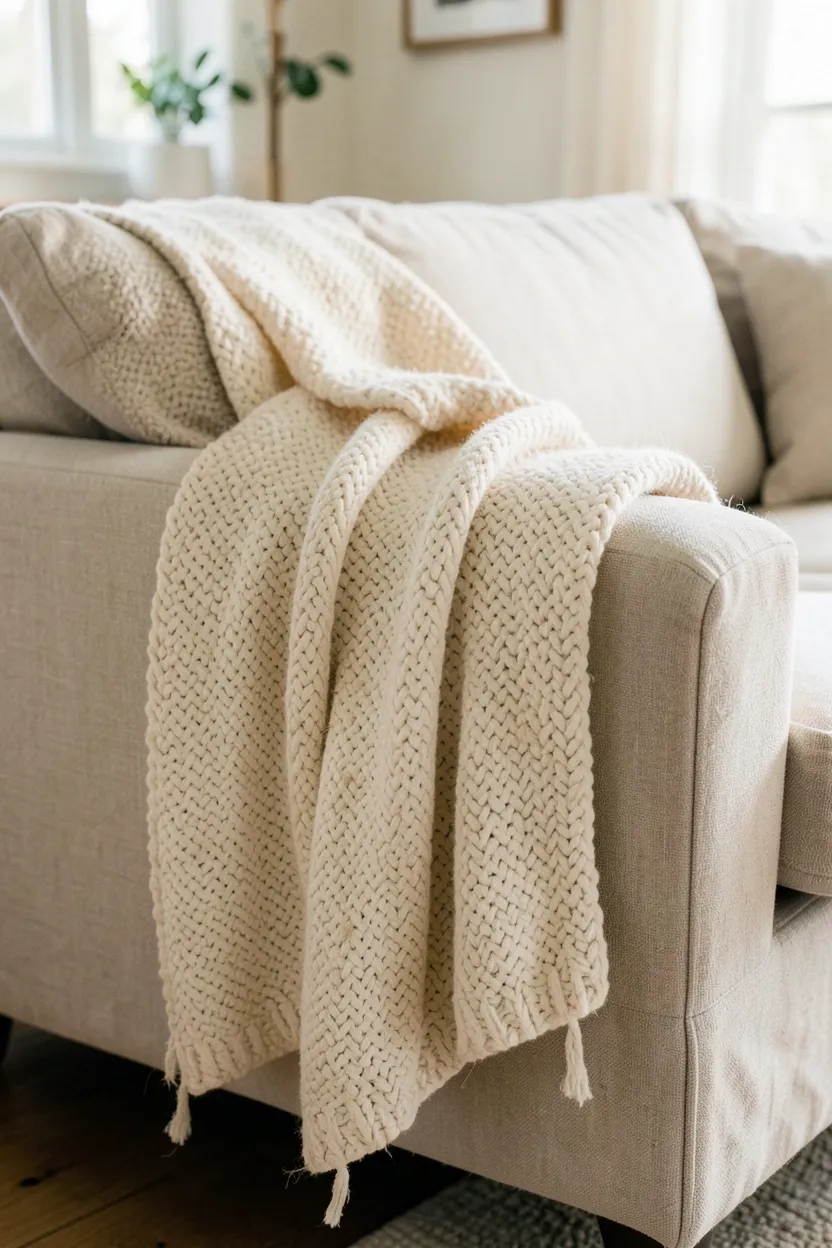
22. Cotton Woven Throws
Drape cotton woven throws over sofas, chairs, or low benches to add soft texture and warmth while celebrating natural fibers and traditional weaving techniques. The slightly rough, woven texture creates tactile appeal that contrasts beautifully with smooth wood and stone surfaces.
Recommended
Items for this idea
Choose throws in neutral earth tones—warm whites, soft beiges, muted grays—that harmonize with your wabi-sabi color palette. The natural cotton will soften and develop character with use and washing, embodying the beauty of aging gracefully.
Tips
- Choose throws with visible weave patterns and natural fiber texture
- Drape casually rather than folding perfectly for relaxed appearance
- Mix slightly different tones for collected-over-time appeal
Best for: Adding softness and warmth while introducing natural fiber texture in practical, functional form.
What this gives you: Soft, tactile comfort that celebrates natural fibers and traditional weaving techniques.
23. Minimalist Wooden Media Console
Choose a minimalist wooden media console that provides essential storage while maintaining clean, uncluttered lines that align with wabi-sabi principles. The natural wood warmth balances technology, while the simple design ensures the piece doesn't overwhelm the serene atmosphere.
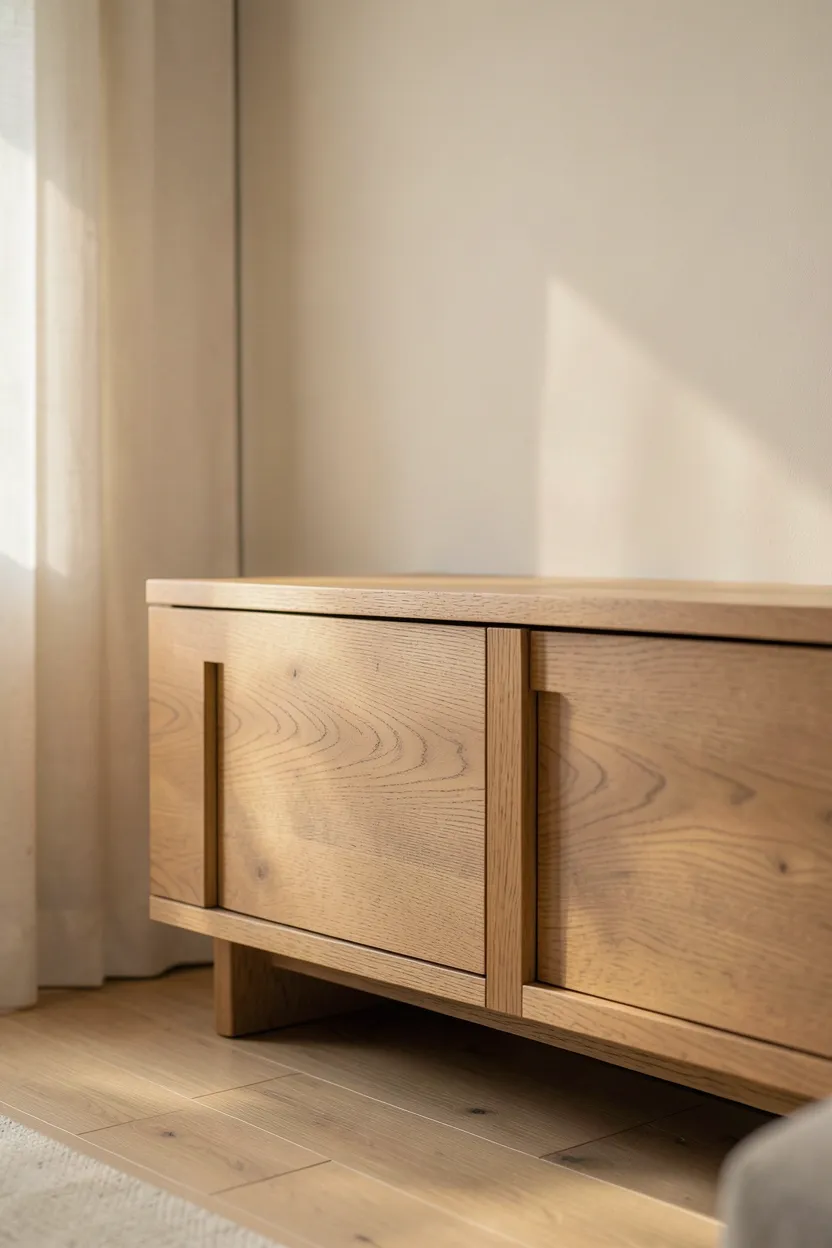
Opt for a console with closed storage to completely hide electronics and clutter, maintaining the visual tranquility that's essential to wabi-sabi spaces. Visible grain patterns and natural wood tones celebrate authentic materials.
Tips
- Choose low-profile designs that don't dominate the space visually
- Consider floating consoles to maintain floor openness
- Keep the styling above the console minimal and balanced
Avoid if: Your living room doesn't have a media setup or you prefer completely technology-free spaces.
What this gives you: Practical storage that maintains visual serenity while celebrating natural wood materials.
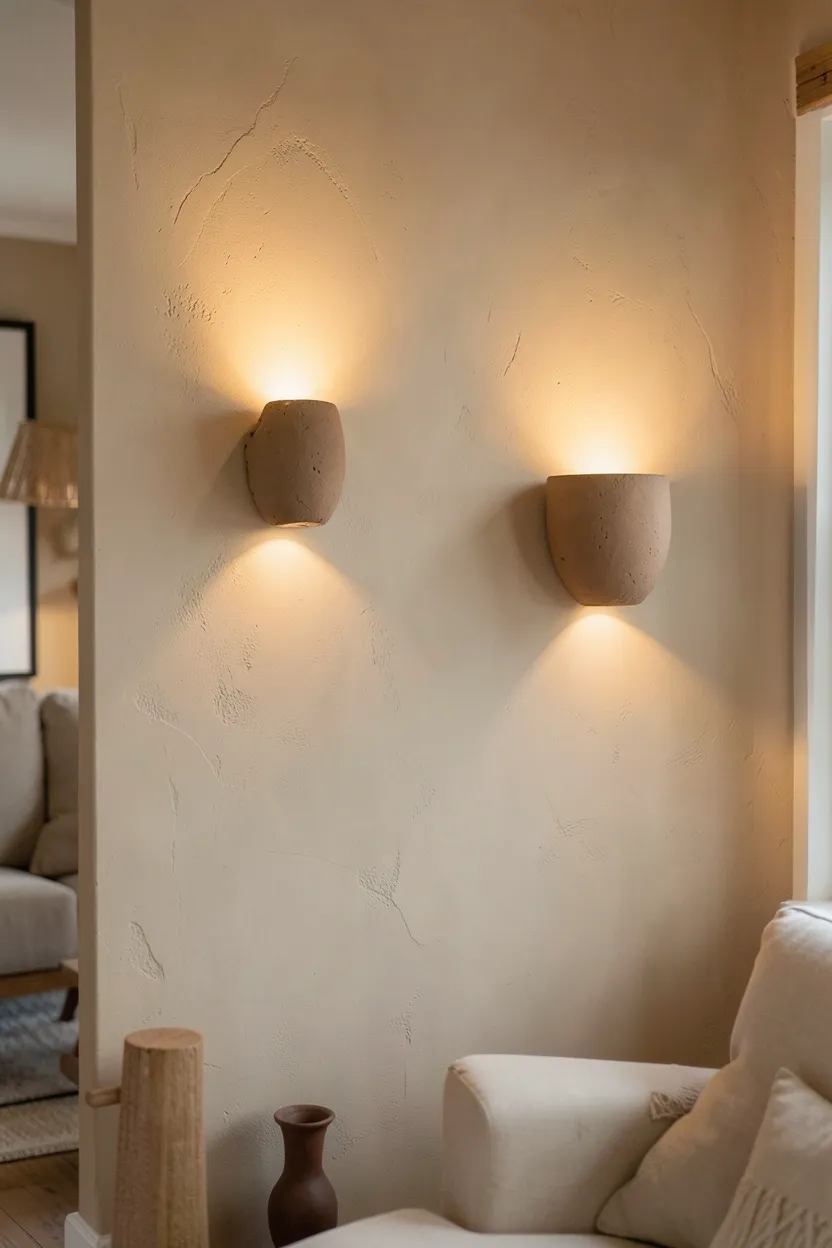
24. Clay Wall Sconces
Install clay wall sconces to introduce warm, atmospheric lighting while celebrating natural materials and handcrafted authenticity. The unglazed clay surfaces create visual texture while the warm, diffused light enhances the contemplative, serene atmosphere of your wabi-sabi living room.
Recommended
Items for this idea
The sconces themselves become sculptural elements that celebrate traditional ceramic craftsmanship. Position them asymmetrically to create visual interest without disrupting the overall sense of balance and harmony.
Tips
- Choose warm white LED bulbs rather than cool daylight tones
- Install dimmers to adjust the mood for different times of day
- Consider handmade or artisanal sconces for authentic character
Rental note: Plug-in sconces work perfectly in rentals since they don't require electrical installation.
What this gives you: Warm, atmospheric lighting that celebrates natural materials and handcrafted authenticity.
25. Small Indoor Zen Garden
Create a small indoor zen garden to introduce a contemplative, meditative element that directly references Japanese design traditions and embodies wabi-sabi's appreciation for simplicity, natural materials, and mindful presence. The garden becomes a living focal point that encourages pause and reflection.
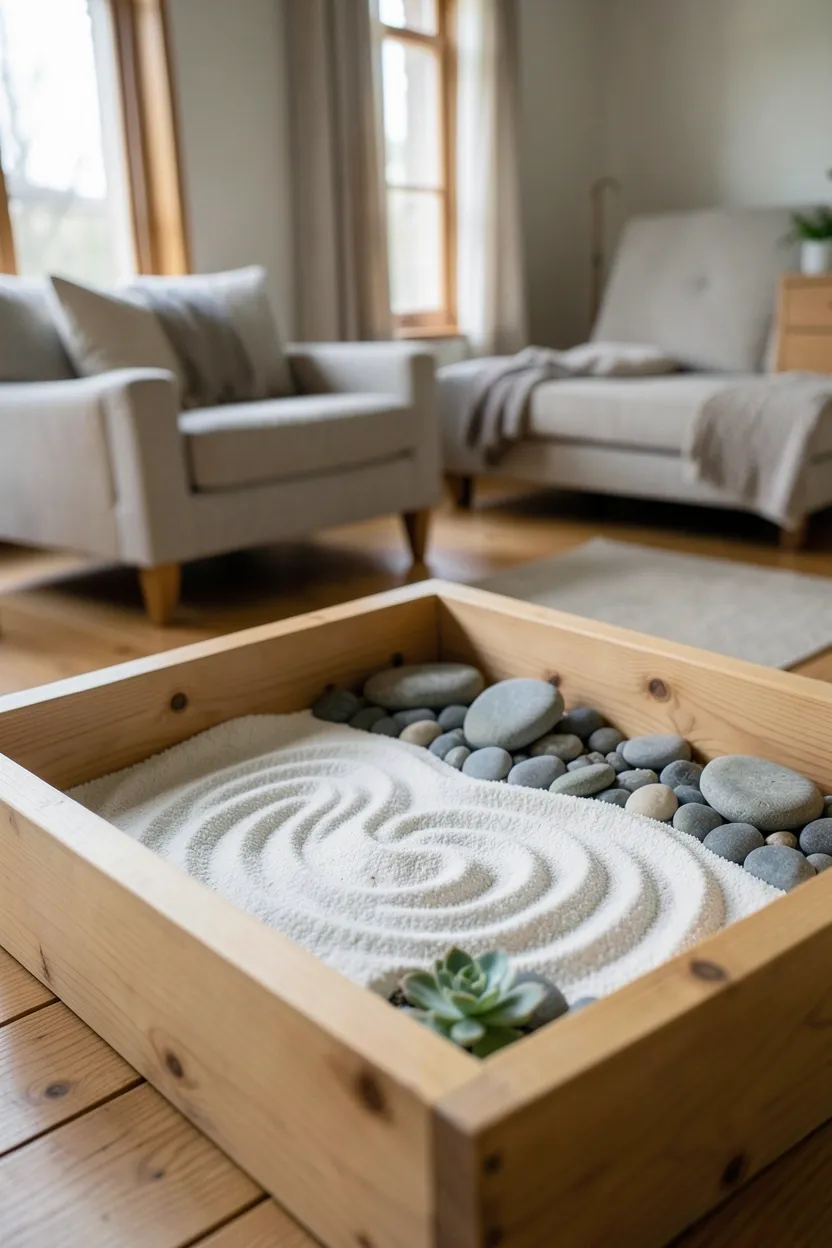
Use natural materials—smooth river stones, fine white sand, perhaps a small bonsai or succulent. The garden's minimalist composition and natural elements celebrate wabi-sabi's love of authentic, unadorned beauty while providing a space for contemplation and mindfulness.
Tips
- Keep the design simple and minimalist rather than overly complex
- Choose a natural wooden or stone container rather than plastic
- Place the garden where it can be seen and appreciated regularly
What this gives you: A meditative focal point that celebrates simplicity, natural materials, and mindful presence.
These 25 wabi-sabi living room ideas demonstrate how embracing imperfection, natural materials, and authentic aging can transform your space into a serene, cozy retreat. By celebrating the beauty in the incomplete, the weathered, and the handmade, you create a living room that feels timeless, grounded, and deeply personal. The key is to choose pieces that tell stories, allow space for emptiness and contemplation, and let natural materials take center stage. Whether you incorporate one element or many, the wabi-sabi approach encourages you to find beauty in authenticity and create a home that feels alive, evolving, and perfectly imperfect.
About the author
OBCD
CGI visualization and interior design content. We create detailed 3D renders and curate practical design ideas for every room in your home.