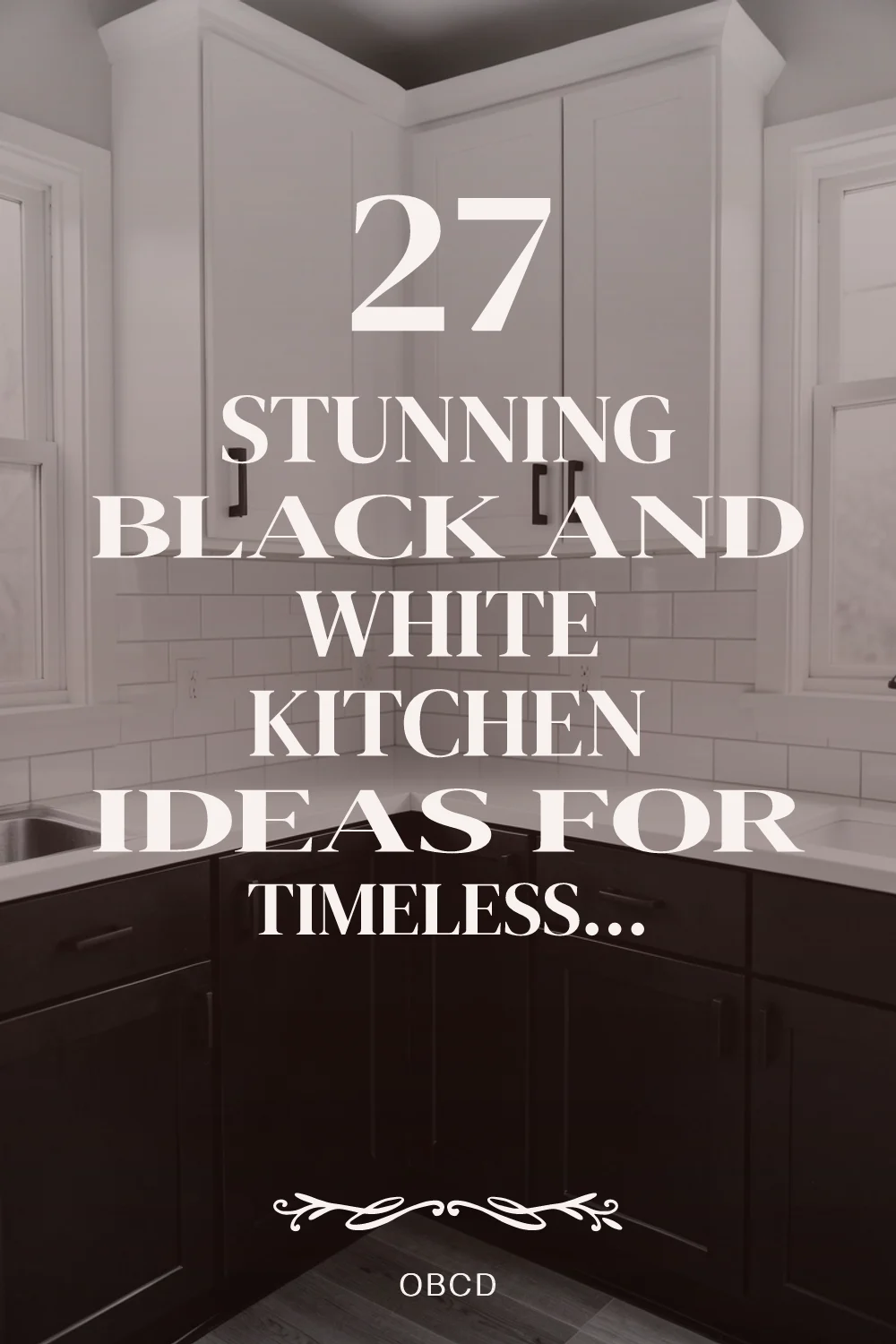
27 Black and White Kitchen Ideas for Timeless Style
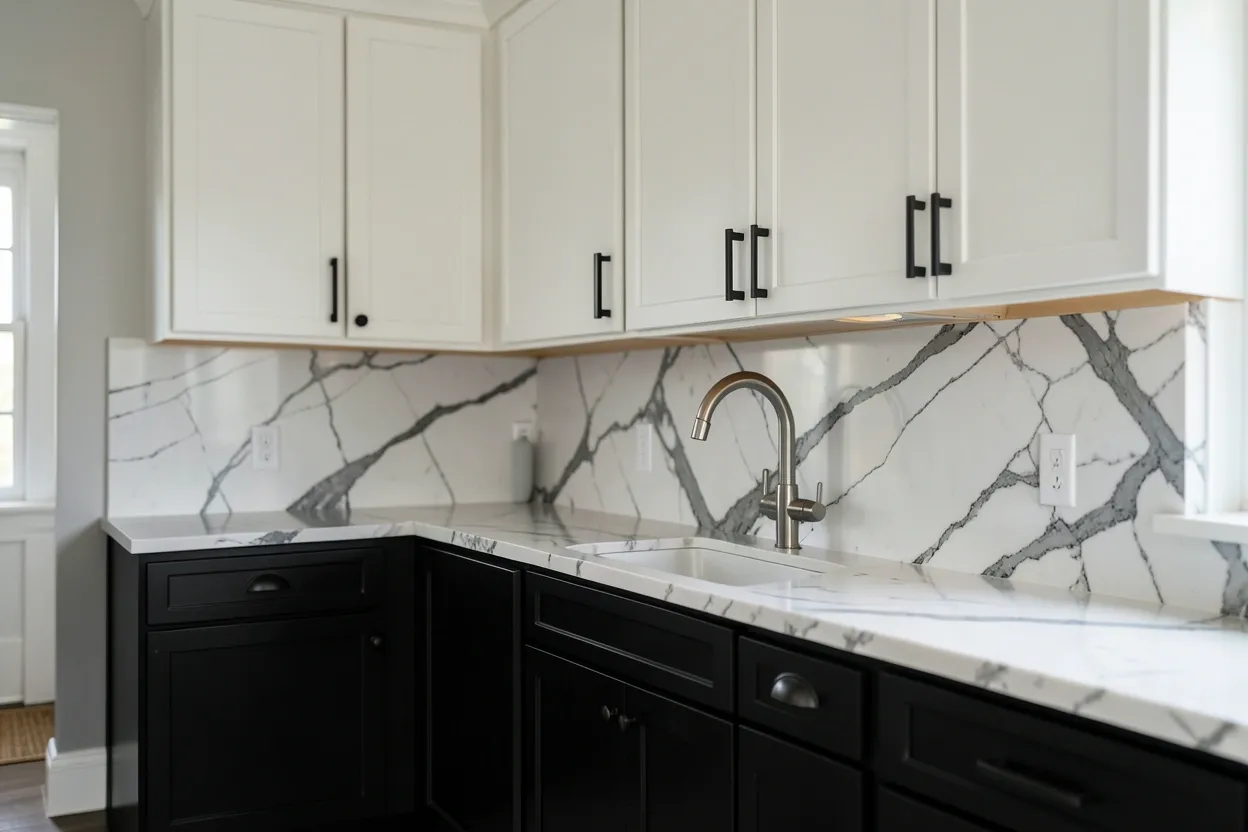
Black and white kitchen ideas offer timeless elegance that transcends trends — creating a sophisticated, high-contrast foundation for any home, whether you rent a small apartment or own your space. The monochrome palette delivers striking contrast while remaining versatile enough to suit modern minimalism, classic farmhouse charm, and everything in between.
The beauty of black and white kitchen design is how much you can achieve without permanent changes. Swapping cabinet hardware to matte black, adding a black and white patterned runner, or renting a place that already has two-tone cabinets — these are all renter-friendly approaches that make a real visual impact. Dark cabinets add depth and drama while white surfaces reflect light and create the sense of a bigger, airier space.
Beyond aesthetics, black and white kitchens are remarkably practical. The high contrast helps define work zones, dark countertops hide everyday mess, and the neutral palette lets colorful ingredients and cookware take center stage. These 27 ideas — from checkerboard floors to matte black hardware — show you how to bring timeless monochrome style into your kitchen at any budget.
Quick FAQ
Are black and white kitchens timeless?
Yes, black and white kitchens are considered timeless because they transcend passing trends. The monochrome palette has been popular for decades and continues to feel fresh and sophisticated, making it a safe investment that ages gracefully.
Do black cabinets make kitchens look smaller?
Not necessarily. While dark cabinets can create visual weight, balancing them with plenty of white surfaces, light flooring, and good lighting prevents the space from feeling closed or cramped. The key is maintaining adequate contrast between light and dark elements.
How do I add warmth to a black and white kitchen?
Introduce natural materials like wood, stone, or brass fixtures. Warm lighting, textiles like runners or rugs, and plants also bring life and warmth to monochrome spaces without disrupting the black and white palette.
Are black kitchens hard to keep clean?
Black surfaces can show dust and smudges more readily than light ones, but the right materials and finishes make maintenance manageable. Matte finishes hide imperfections better than glossy ones, and choosing durable, wipe-clean surfaces reduces upkeep.
As an Amazon Associate I earn from qualifying purchases.
Table of Contents
- 1. Classic Two-Tone Cabinetry
- 2. Modern Matte Black Cabinets
- 3. White Cabinets with Black Countertops
- 4. Black Island with White Perimeter
- 5. Hexagon Black and White Tile Floor
- 6. Marble Countertops with Black Veining
- 7. Black Hardware on White Cabinetry
- 8. White Subway Tile with Black Grout
- 9. Black and White Geometric Wallpaper
- 10. Contrasting Backsplash Pattern
- 11. Glossy White with Matte Black
- 12. Black Range Hood Statement
- 13. Monochrome Industrial Style
- 14. White Shaker with Black Accents
- 15. Black and Brass Fixtures
- 16. Open Shelving in Monochrome
- 17. Black and White Patterned Runner
- 18. Scandinavian Minimalist Black and White
- 19. Checkerboard Floor Design
- 20. Black Cabinets White Marble
- 21. White Cabinets Black Hardware Farmhouse
- 22. Monochrome Mid-Century Modern
- 23. Black and White Gallery Wall
- 24. Contrasting Upper and Lower Cabinets
- 25. Black and White Mosaic Backsplash
- 26. White Cabinets Black Island Traditional
- 27. Sleek Contemporary Monochrome
1. Classic Two-Tone Cabinetry
Two-tone cabinetry creates visual interest while maintaining the classic black and white palette. White upper cabinets paired with black lower cabinets creates the illusion of higher ceilings and adds architectural dimension to the space. This traditional approach feels timeless rather than trendy, making it an excellent choice for kitchens you want to enjoy for decades.
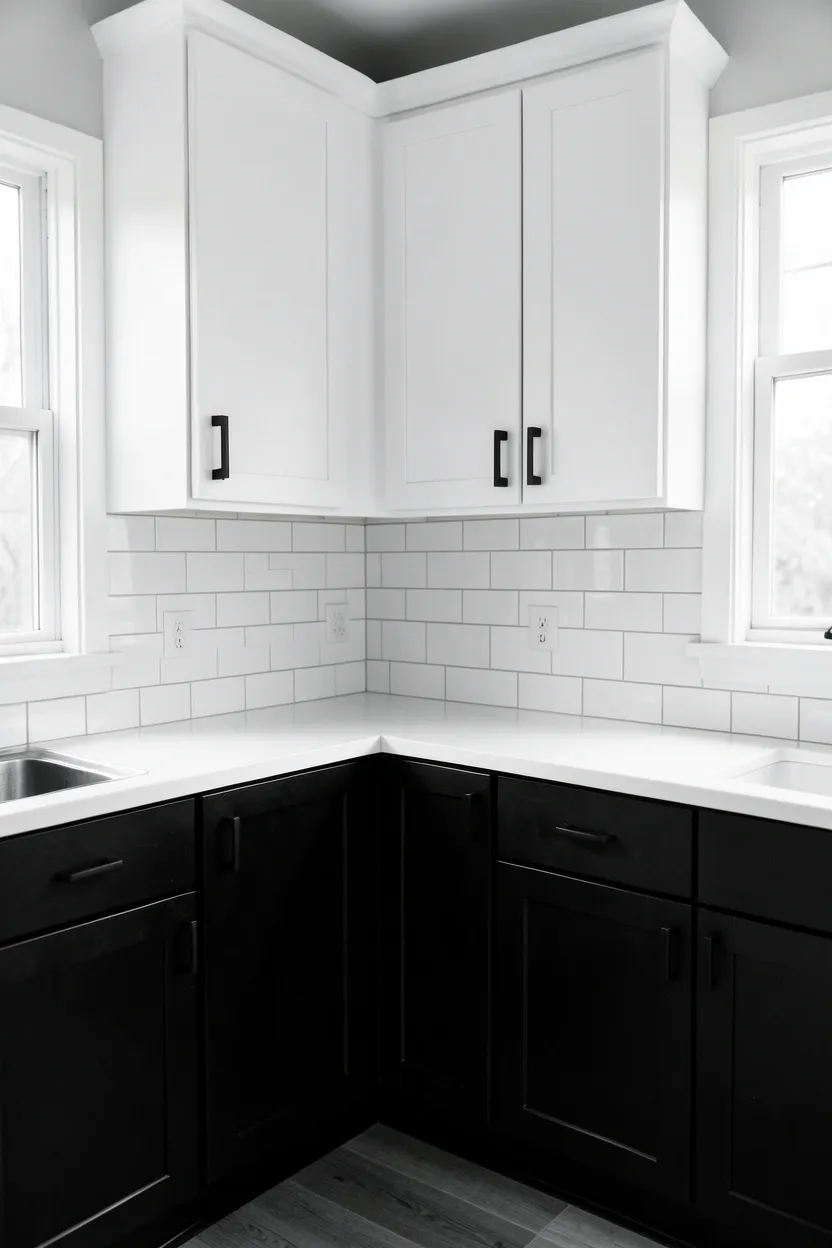
Keep hardware consistent throughout both cabinet colors for cohesion—choose black pulls that complement the dark lower cabinets or opt for brushed nickel that works beautifully with both white and black. Countertops in marble or quartz with subtle veining bridge the two cabinet colors, creating harmony rather than visual disruption.
Do use a 60-40 ratio—typically white uppers with black lowers feels most balanced, but reverse it if you want drama.
Don't choose two different white paints for upper and lower cabinets—use the same white to avoid noticeable color differences.
What this gives you: A sophisticated, balanced kitchen that feels both traditional and modern, with visual interest created through color blocking rather than additional materials.
2. Modern Matte Black Cabinets
Matte black cabinets make a bold, modern statement while feeling surprisingly versatile. The matte finish absorbs light rather than reflecting it, creating a softer, more sophisticated appearance than glossy black. When paired with white walls, light flooring, and bright countertops, matte black cabinets become the dramatic focal point without overwhelming the space.
Recommended
Items for this idea
Placement note: Matte black cabinets work best in kitchens with excellent natural or artificial lighting to prevent the space from feeling cave-like or excessively dark.
Balance dark cabinets with plenty of white surfaces—white backsplash, light countertops, and white walls create the necessary contrast. Under-cabinet lighting is essential, not only for task lighting but also to highlight the cabinet surface and prevent shadows. Gold or brass hardware adds warmth and luxury against the matte black finish.
If your kitchen has limited natural light, then prioritize lighter countertops and backsplashes to maintain brightness.
If you are concerned about showing fingerprints, then choose a textured matte finish rather than smooth matte for better disguise.
What this gives you: A dramatic, contemporary kitchen with high-impact visual presence that feels sophisticated and luxurious when balanced with ample white.
3. White Cabinets with Black Countertops
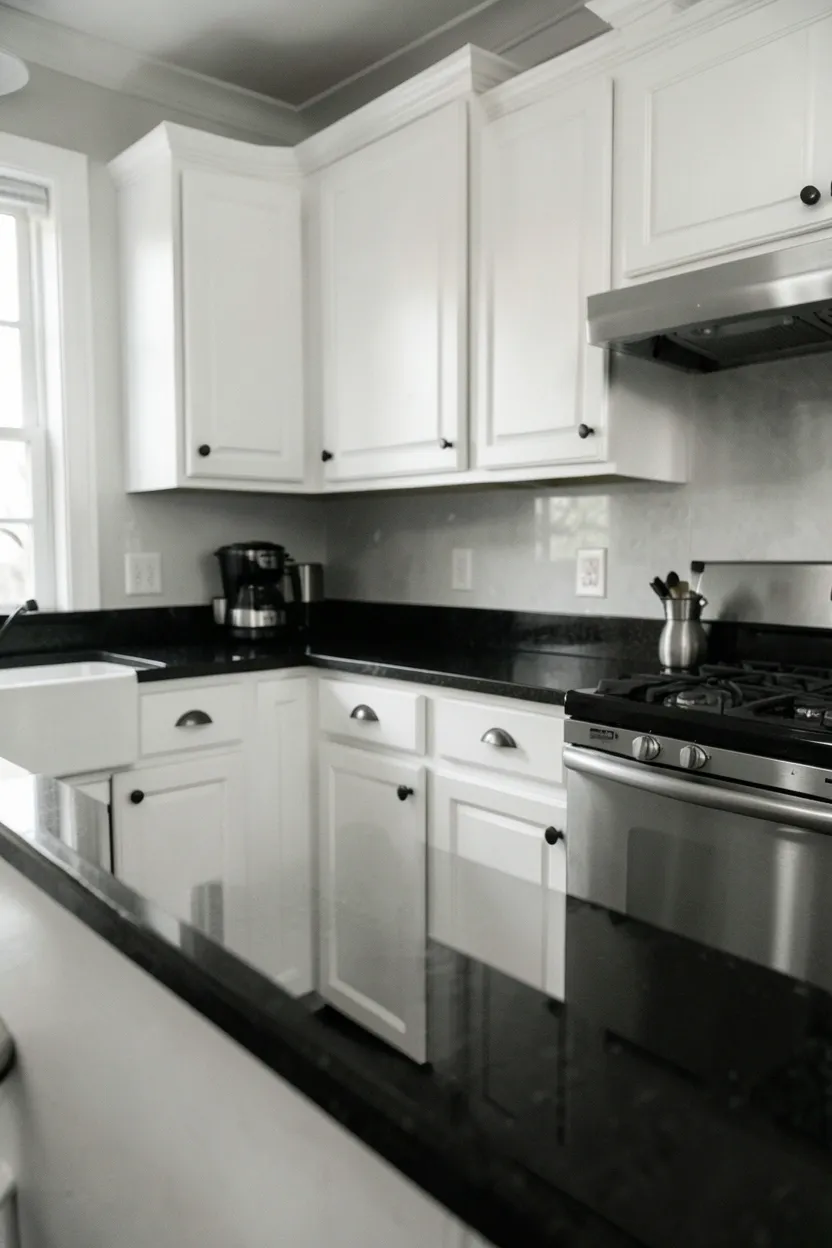
White cabinets with black countertops create striking contrast while maintaining bright, airy kitchens. This classic combination provides the best of both worlds—white cabinets reflect light and create spaciousness, while black countertops add depth, drama, and practicality for food preparation areas. The result is a kitchen that feels both clean and sophisticated.
Why it works: The high contrast between white cabinets and black countertops creates visual energy while white surfaces keep the space feeling open. Black countertops hide stains and scratches better than light alternatives, making them practical for busy kitchens.
Choose countertop materials with subtle variation—marble with white veining, quartz with faint patterns, or solid surfaces with slight texture—to maintain visual interest without introducing additional colors. White subway tile or slab backsplashes create clean transitions between cabinets and countertops.
Pros: Hides kitchen mess well; creates strong visual interest; timeless combination that never feels dated.
Cons: Black countertops can show water spots and dust; requires good lighting to avoid feeling dark.
Fix: Use under-cabinet lighting and choose matte black surfaces rather than glossy to reduce visible water spots.
What this gives you: A practical, high-contrast kitchen that feels bright and spacious while benefiting from the practicality of dark work surfaces.
4. Black Island with White Perimeter
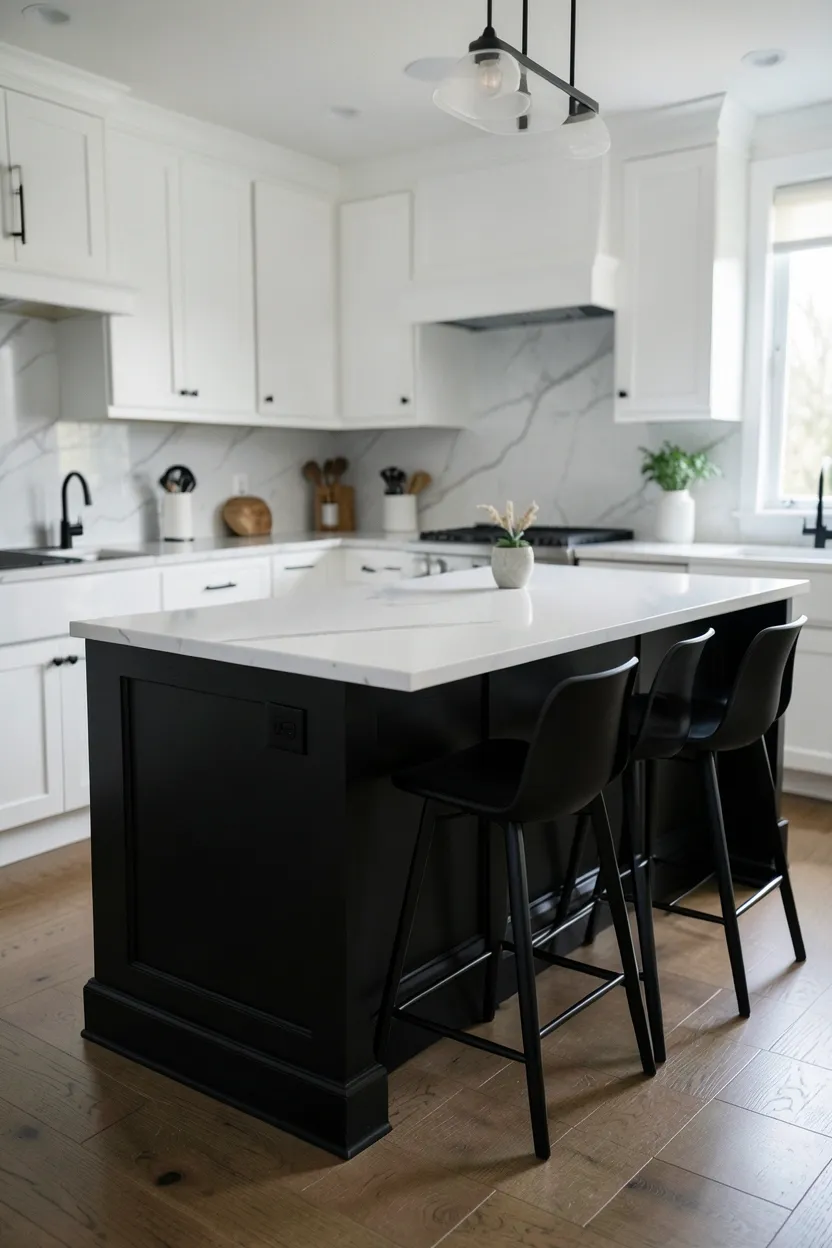
A black kitchen island surrounded by white perimeter cabinetry creates a stunning focal point while maintaining overall brightness. This approach uses color to define the island as the heart of the kitchen without overwhelming the entire space with darkness. The island becomes both functional workspace and dramatic design element.
Recommended
Items for this idea
Common mistake: Making the island too dark or too large for the space, which can make the kitchen feel unbalanced. Proportion is key—ensure the island size relates appropriately to room dimensions and perimeter cabinet layout.
Choose black island finish that complements your overall aesthetic—matte for modern, lacquered for contemporary, or textured for traditional.
Extend black elements beyond the island through matching bar stools, pendant light fixtures, or small appliances for visual continuity.
Consider a waterfall edge on the black island for maximum drama and contemporary appeal.
White perimeter cabinets create a bright backdrop that makes the black island stand out without feeling stark. Countertop material on the island can differ from perimeter surfaces—black marble or quartz creates drama, while white surfaces with black veining maintain monochrome continuity. Pendant lights above the island in black or white reinforce the color blocking.
What this gives you: A kitchen with strong visual hierarchy and focal point, where the island becomes the dramatic centerpiece within an overall bright space.
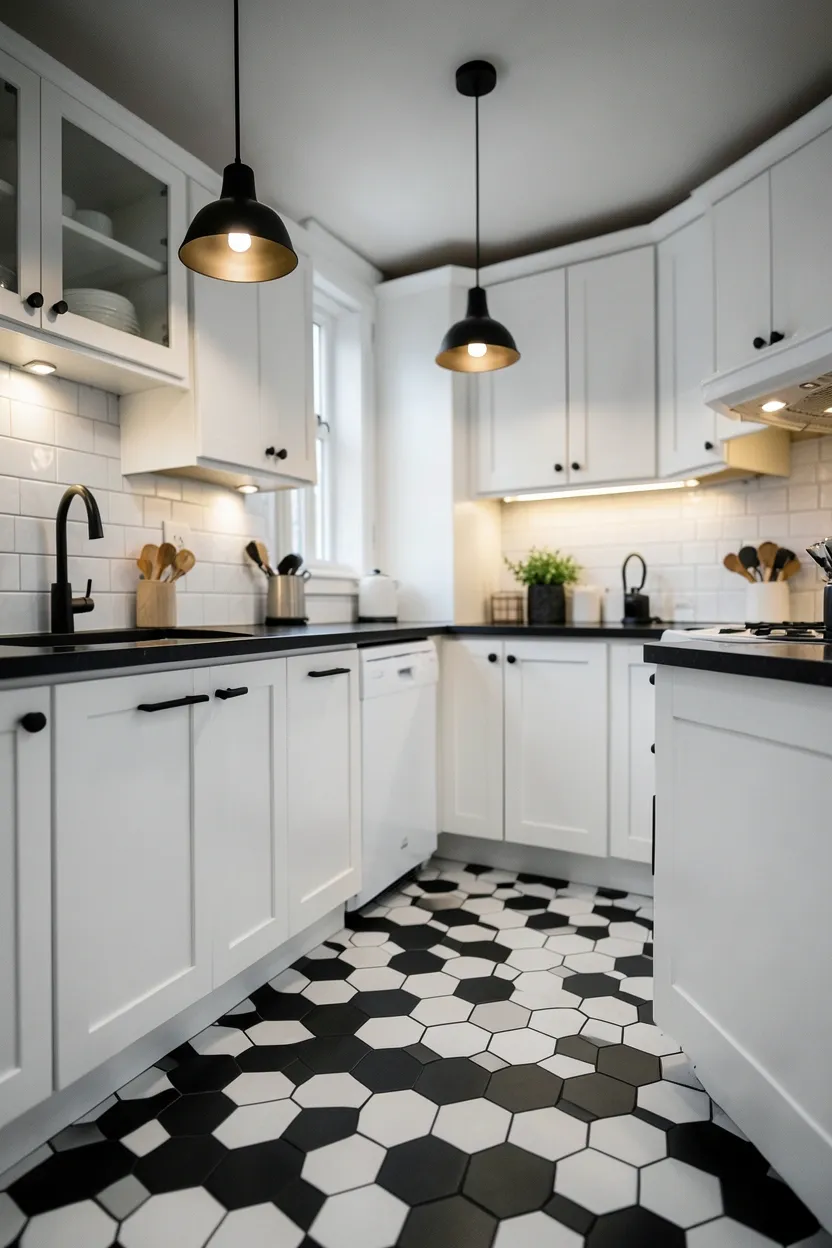
5. Hexagon Black and White Tile Floor
Hexagon tiles in black and white create visual interest and movement while maintaining the monochrome palette. The geometric pattern adds texture and dimension to the floor plane without introducing additional colors. This classic flooring option works beautifully in both traditional and contemporary kitchens, making it a versatile choice for various design styles.
Choose the right scale for your space—small hexagons create more visual texture and feel busier, while larger hexagons appear more contemporary and streamlined. Consider alternating black and white tiles in a checkerboard pattern, or create custom patterns with random placement for a more organic, modern feel. Grout color dramatically affects the overall look—white grout emphasizes the pattern while black grout creates a more monolithic appearance.
For more black and white kitchen inspiration, explore Modern Boho Kitchen Ideas and adapt the monochrome principles to your space.
Do consider how the floor pattern interacts with other patterns in the kitchen—keep backsplash and countertop patterns relatively simple if the floor is busy.
Don't choose tile size without considering room scale—small tiles can make large kitchens feel chopped up, while large tiles might overwhelm small spaces.
What this gives you: A kitchen floor with visual interest and character that adds pattern without introducing additional colors, creating a dynamic foundation for the space.
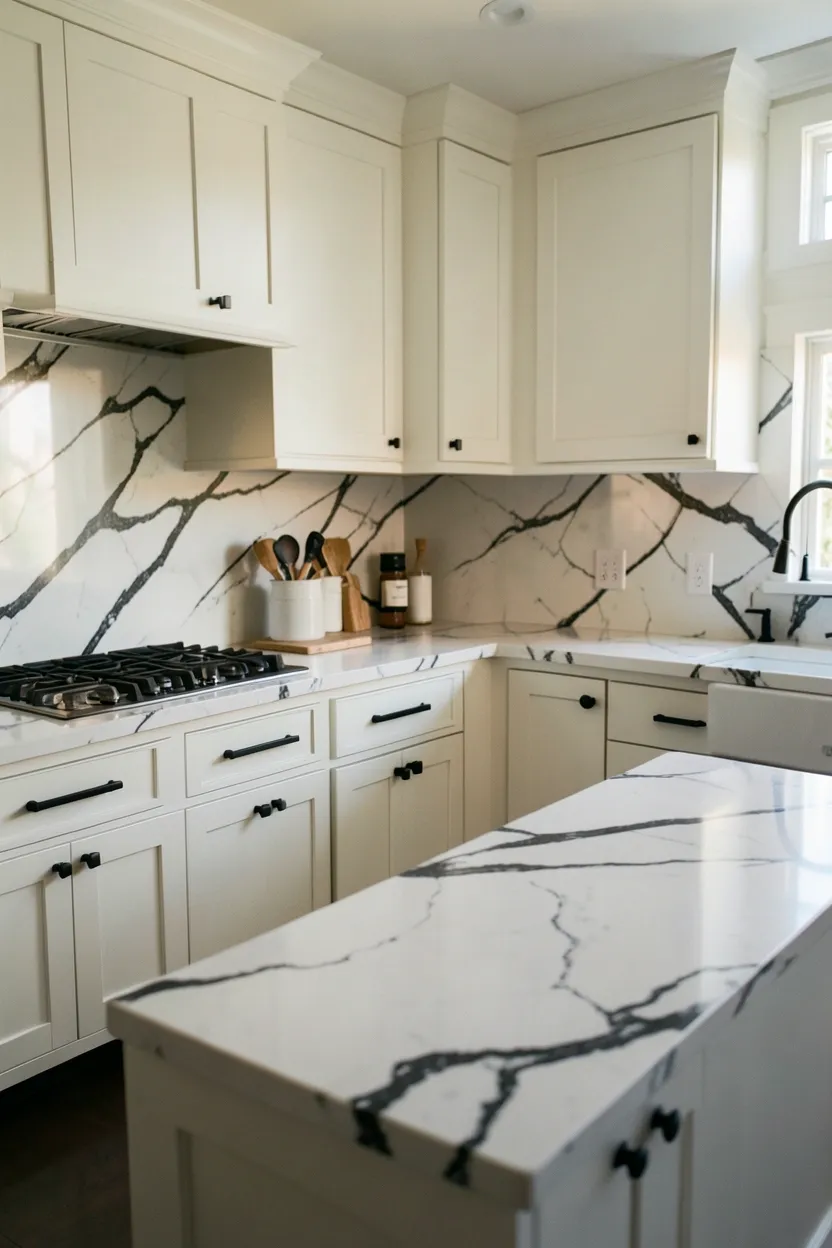
6. Marble Countertops with Black Veining
Marble countertops with black veining bring natural luxury and sophistication to black and white kitchens. The white marble base maintains brightness while black veining adds drama and movement, creating surfaces that feel both elegant and dynamic. Marble's natural variation ensures that each installation is unique and one-of-a-kind.
Recommended
Items for this idea
Select marble with the right balance of white to black for your aesthetic preference. Carrara marble features subtle gray veining for a more understated look, while Nero Marquina offers dramatic black veining on white for maximum contrast. Consider marble slab backsplashes that continue from countertops for seamless luxury and visual continuity.
Pair marble countertops with cabinet colors that highlight the veining—white cabinets make black veining pop, while black cabinets create sophisticated contrast against the white marble base. Keep other design elements relatively simple to let the marble be the star. Under-cabinet lighting enhances the natural veining and creates beautiful shadow patterns.
Do seal marble regularly and use coasters and cutting boards to protect against etching and staining from acidic foods.
Don't choose marble without understanding the maintenance requirements—it requires more care than quartz or granite alternatives.
Budget tip: Quartz or porcelain alternatives mimic marble's appearance with less maintenance and lower cost if natural marble is not feasible.
What this gives you: Luxurious, sophisticated countertops with natural beauty and unique variation that elevate the kitchen's aesthetic dramatically.
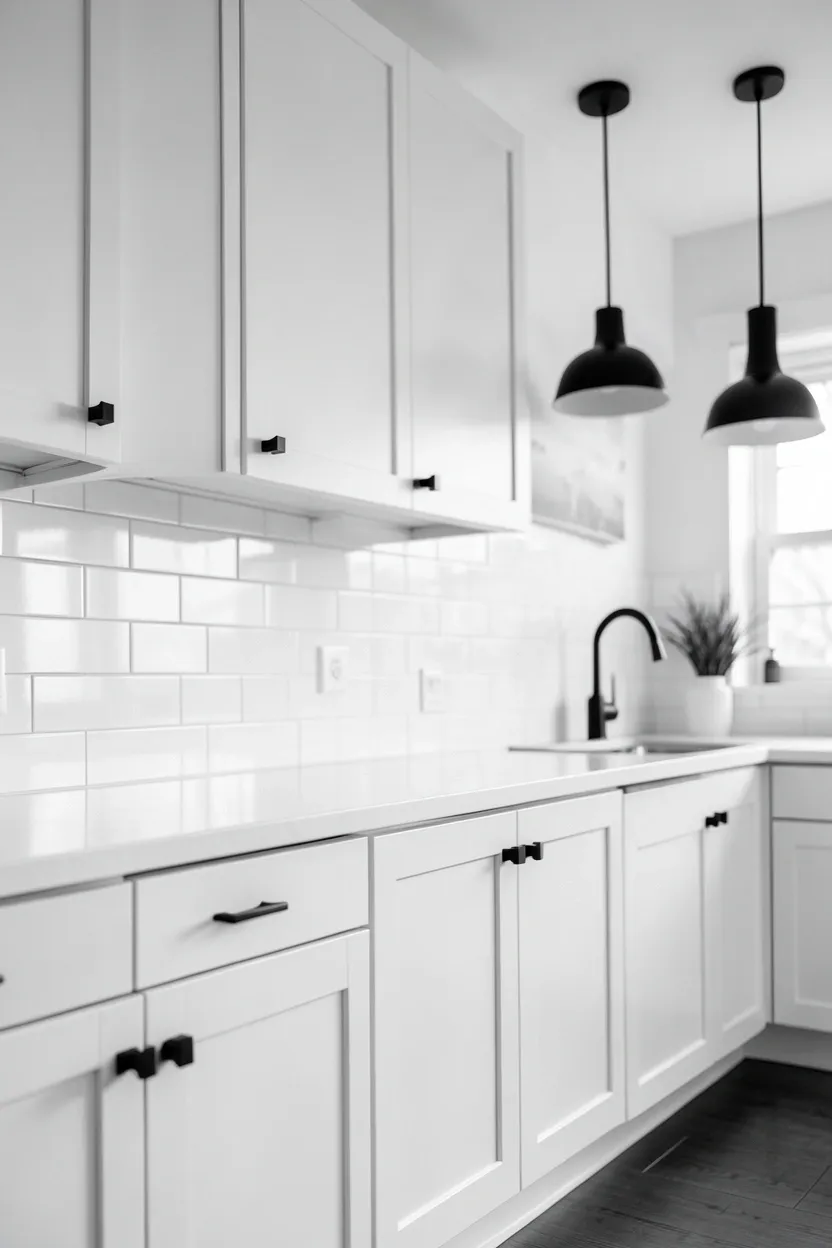
7. Black Hardware on White Cabinetry
Black hardware on white cabinets creates modern contrast and visual interest without requiring major renovations or significant expense. This subtle detail can transform the entire kitchen aesthetic, adding contemporary edge to traditional white shaker cabinets or reinforcing modern minimalist design. The black elements provide punctuation that makes white cabinets feel intentional and considered.
Placement note: Keep hardware consistent throughout the kitchen for cohesion—mixing black and brass or nickel can feel disjointed unless intentionally eclectic.
Choose hardware style that complements your cabinet design—minimalist bar pulls for modern flat-panel cabinets, cup pulls for traditional shaker styles, or mixed knobs and pulls for eclectic character. Scale matters—ensure hardware size relates proportionally to cabinet doors and drawers. Oversized hardware makes bold statements while petite pieces feel refined and understated.
Extend black hardware beyond cabinets to include faucet, light fixtures, and even appliance handles for comprehensive monochrome impact. The repetition of black elements creates visual rhythm and unity throughout the space. Consider matte black for a soft, contemporary look or lacquered black for high-gloss drama.
If you are concerned about resale, then stick with classic hardware shapes in black rather than overly trendy designs.
If your kitchen has multiple door styles, then use consistent hardware across all types for visual cohesion.
What this gives you: A modern, updated kitchen with dramatic contrast achieved through relatively simple and reversible hardware changes.
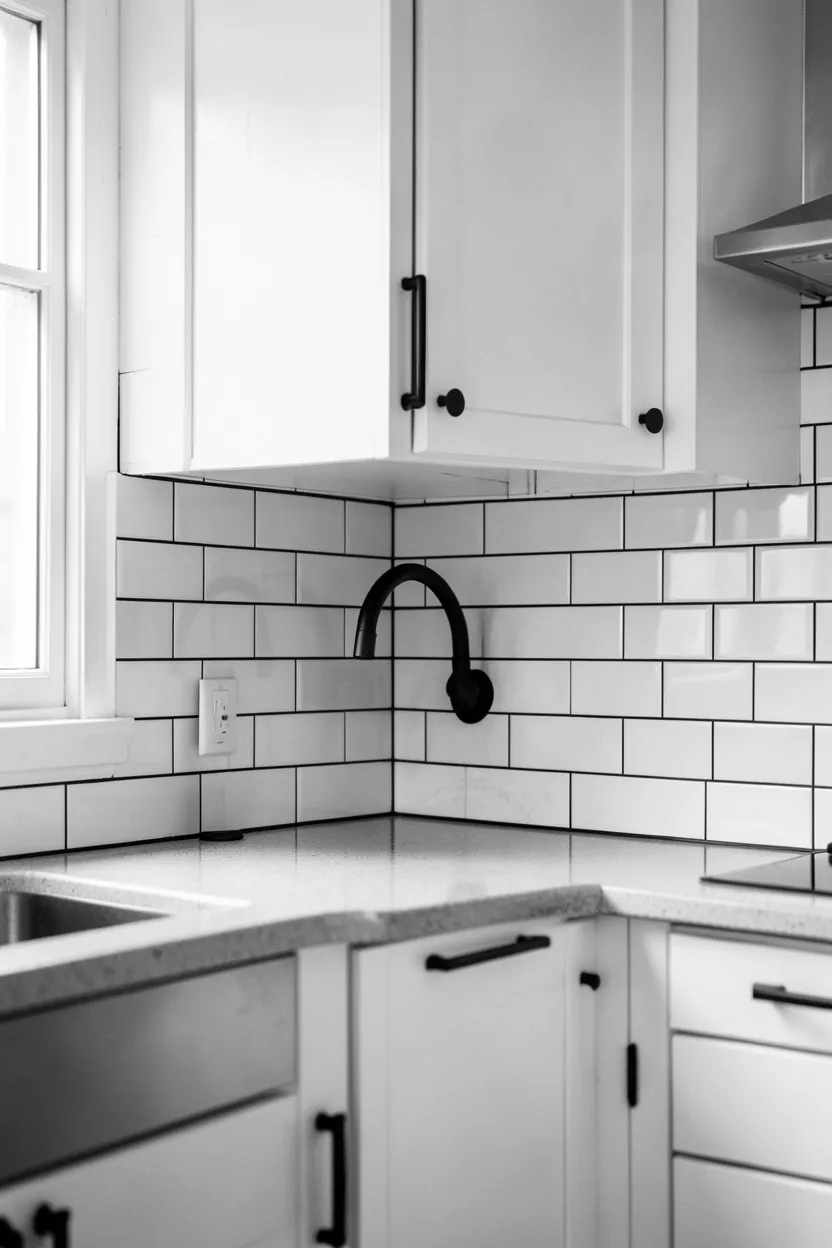
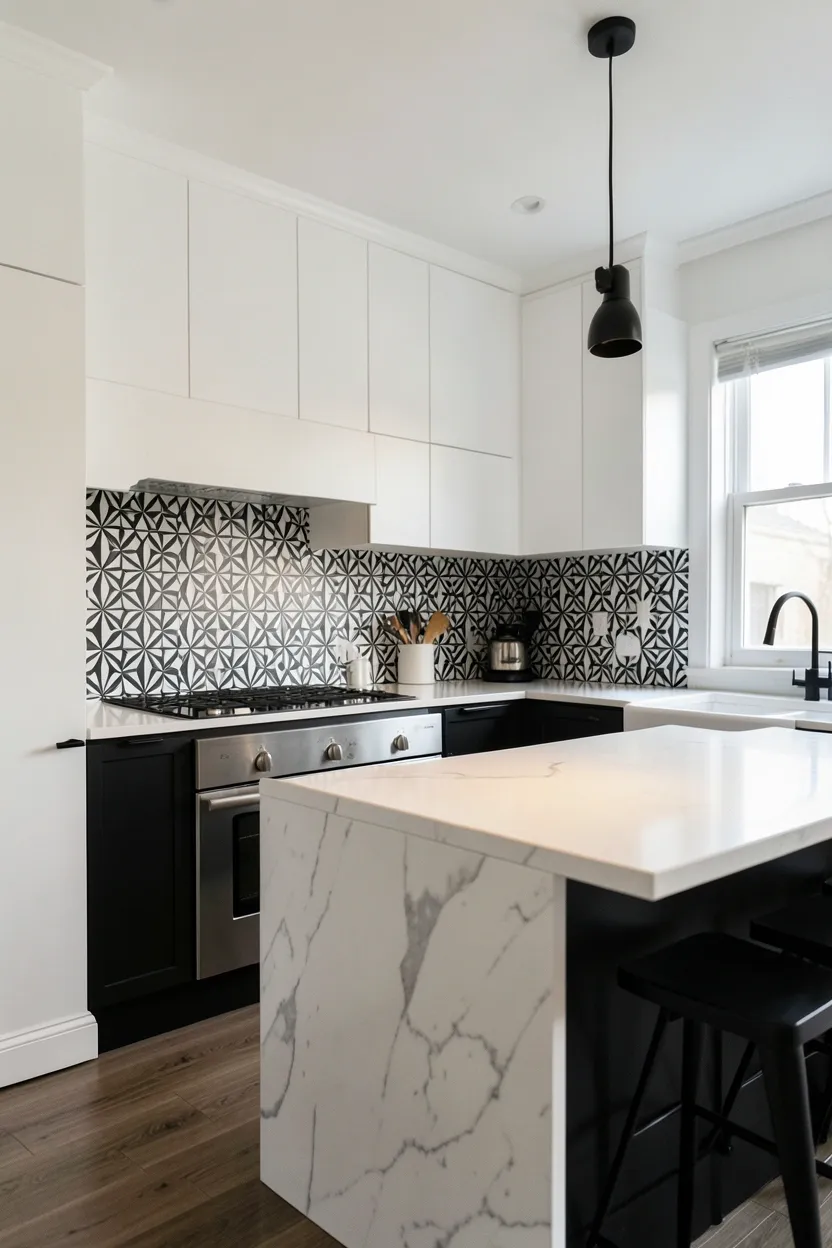
8. White Subway Tile with Black Grout
White subway tile with black grout creates bold, graphic contrast while maintaining classic tile aesthetics. This combination transforms traditional subway tile into a contemporary design statement, adding visual interest through pattern and line rather than color. The high contrast creates clean, architectural lines that define the backsplash area.
Recommended
Items for this idea
Why it works: The combination of white tile and black grout creates the visual impact of a checkerboard pattern without the complexity of installing two different tile colors. It is a simple, effective way to add drama and personality to backsplashes.
Grout width affects the overall appearance—narrow grout lines create a more refined, seamless look while wider grout emphasizes the graphic pattern and architectural quality. Consider running tiles in a traditional brick pattern for classic appeal, or try a herringbone or vertical stack for more contemporary variation.
Pros: Creates strong visual impact; relatively inexpensive backsplash option; easy to find and install; timeless combination.
Cons: Black grout requires more maintenance to keep clean; narrow grout lines show imperfections.
Fix: Use high-quality grout sealer and choose sanded grout for better stain resistance and durability.
What this gives you: A backsplash with dramatic graphic impact and architectural interest that feels both classic and contemporary.
9. Black and White Geometric Wallpaper
Black and white geometric wallpaper adds bold pattern and personality to kitchen accent walls without introducing additional colors. Wallpaper creates visual interest through scale, pattern, and repetition while maintaining the monochrome palette. This approach works particularly well on small sections like range hood backs, island ends, or dining nook walls.
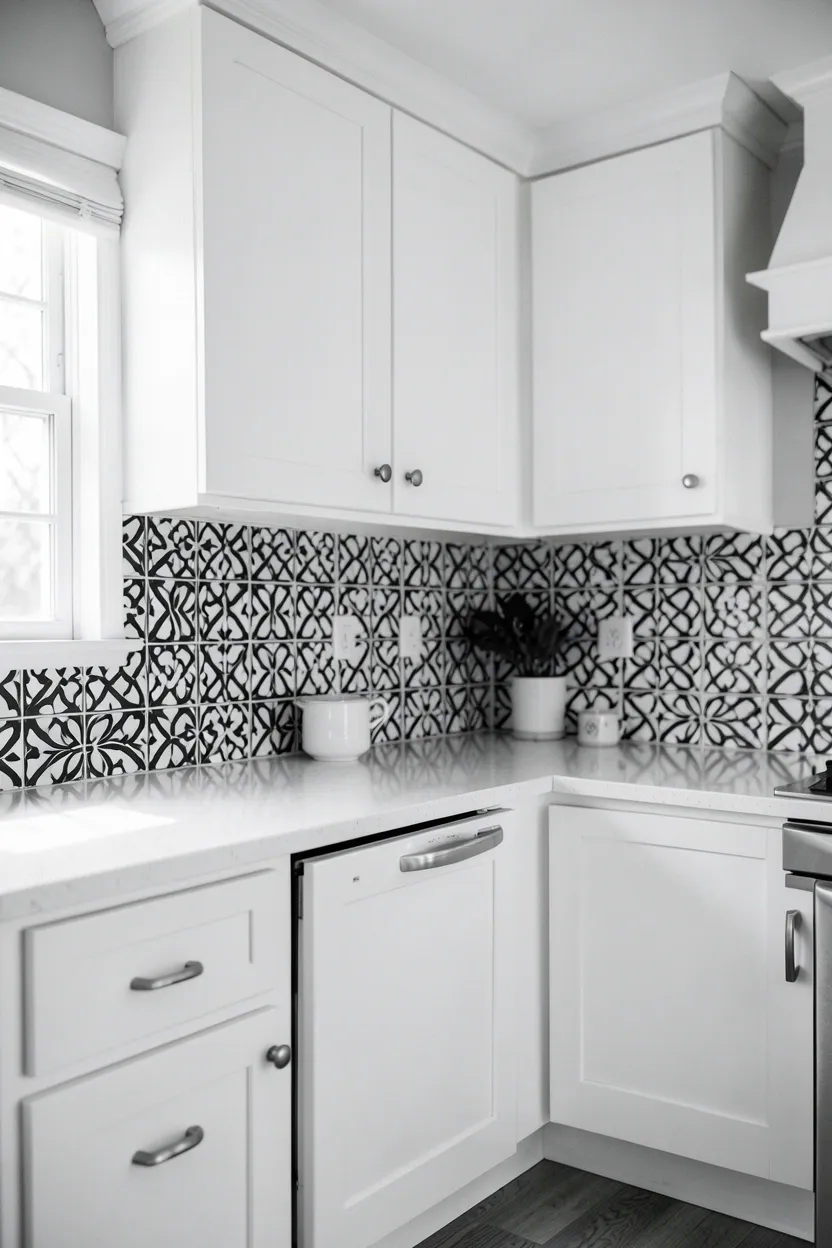
Common mistake: Using busy wallpaper on too many surfaces, which can make the kitchen feel overwhelming and chaotic. Limit wallpaper to one or two areas maximum, and keep other surfaces relatively simple to balance the visual energy.
Choose geometric scale appropriate for the space—large-scale patterns feel contemporary and bold while small-scale patterns feel more traditional and detailed.
Consider peel-and-stick wallpaper for rental-friendly options or easy future changes without major commitment.
Position wallpaper where it will be seen and appreciated—behind open shelving, on a featured wall, or as an island accent.
Scale the pattern to the wall size—large geometric designs on expansive walls create drama while smaller patterns work better on compact surfaces. Keep cabinetry and countertops relatively simple to let the wallpaper be the star. The monochrome palette ensures the pattern reads as sophisticated rather than colorful or juvenile.
What this gives you: A kitchen with bold personality and visual interest achieved through pattern rather than additional colors or materials.
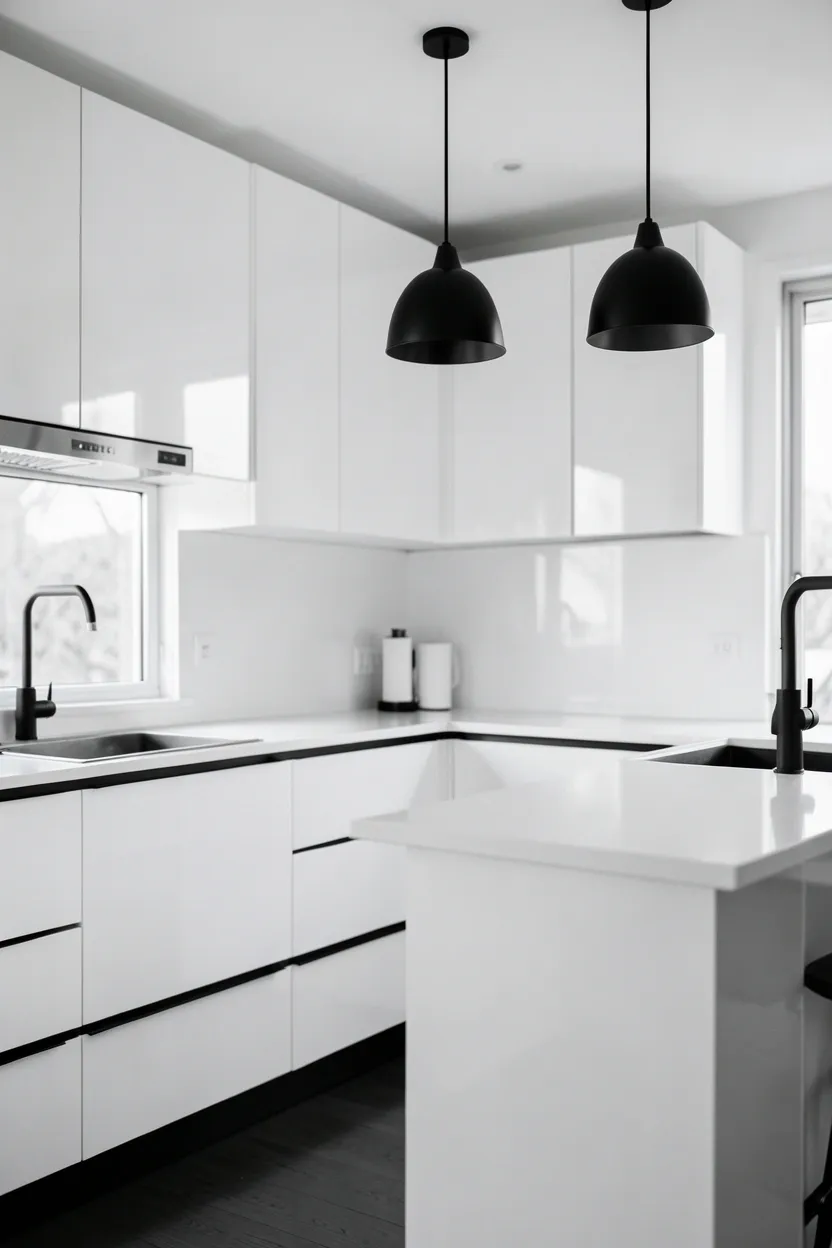
10. Contrasting Backsplash Pattern
A contrasting backsplash pattern creates visual interest and focal points within black and white kitchens. Whether through geometric tiles, bold stripes, or custom designs, patterned backsplashes add energy and personality while staying within the monochrome palette. The backsplash becomes art and functionality combined.
Recommended
Items for this idea
Select pattern scale that relates to your kitchen size—large-scale geometric patterns make dramatic statements in spacious kitchens while smaller, detailed patterns work better in compact spaces. Consider running patterned tile only behind the range or sink as an accent, with solid tile elsewhere, to create visual focal points without overwhelming the entire space.
Keep cabinetry and countertops relatively neutral to let patterned backsplashes shine. The combination of patterned backsplash with solid surfaces creates visual hierarchy and prevents pattern overload. Consider pattern direction—vertical lines make ceilings feel higher while horizontal lines can make rooms feel wider.
Do use a strong focal point pattern behind the range or sink, then transition to simpler patterns or solid tile in other areas.
Don't use multiple competing patterns on backsplash, countertops, and floors simultaneously—choose one patterned element and keep others solid.
What this gives you: A kitchen with dynamic visual interest and personality achieved through strategic pattern within the monochrome palette.
11. Glossy White with Matte Black
Glossy white surfaces paired with matte black elements create sophisticated contrast through finish rather than just color. The interplay of reflective and matte surfaces adds depth and visual interest while maintaining the black and white palette. This approach feels contemporary and luxurious without requiring additional colors or materials.
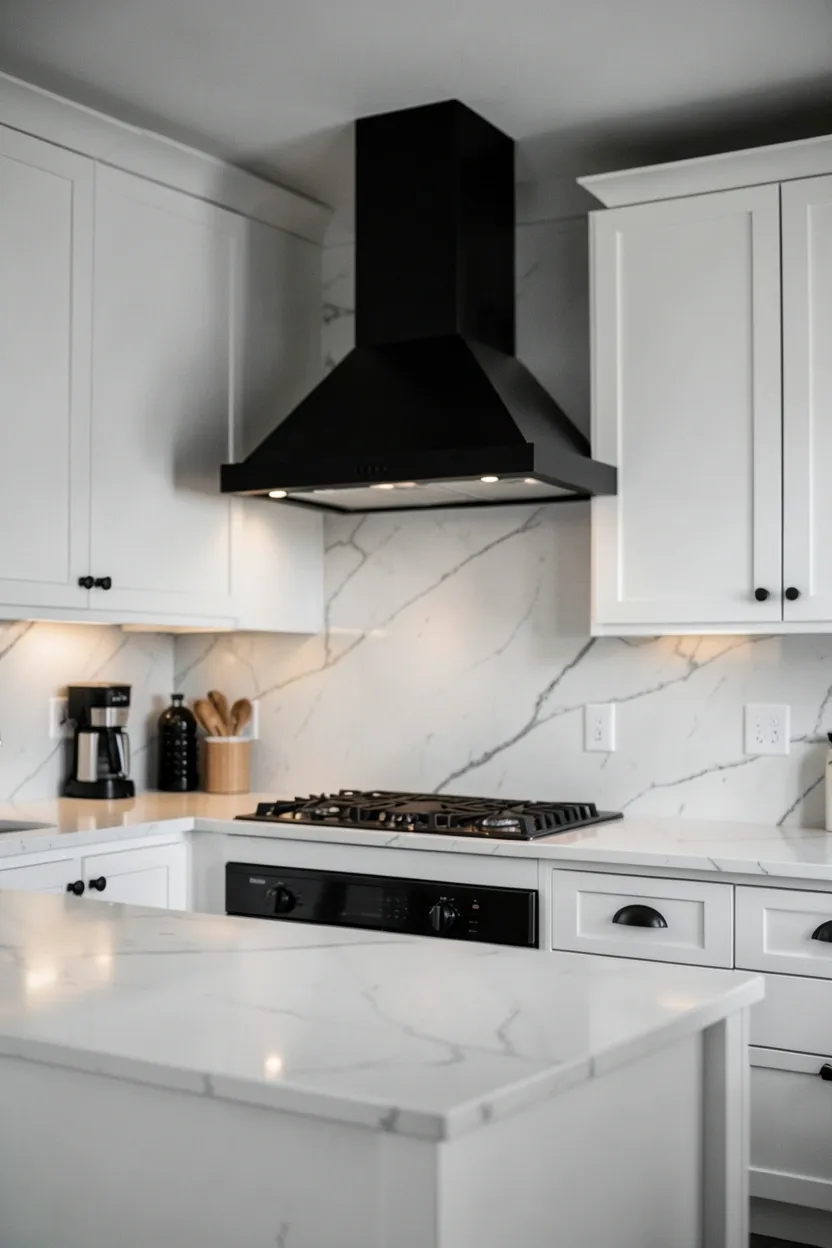
Use glossy white on cabinets, walls, or larger surfaces to maximize light reflection and create brightness. Matte black elements like hardware, lighting, or smaller surfaces provide contrast and sophistication. The different finishes create visual hierarchy—glossy white feels expansive and light while matte black feels grounded and substantial.
Balance is key—too much glossy white can feel cold and sterile while excessive matte black makes spaces feel dark and heavy. Aim for roughly 70% glossy white with 30% matte black for optimal balance and visual interest. Under-cabinet lighting enhances the glossy white surfaces and creates beautiful reflections.
Do keep surfaces relatively simple to let the finish contrast be the star—avoid busy patterns that compete with the finish variety.
Don't mix multiple finishes within the same color family—stick to glossy white and matte black for intentional contrast.
What this gives you: A contemporary, sophisticated kitchen with visual interest achieved through finish contrast rather than additional colors or patterns.
12. Black Range Hood Statement
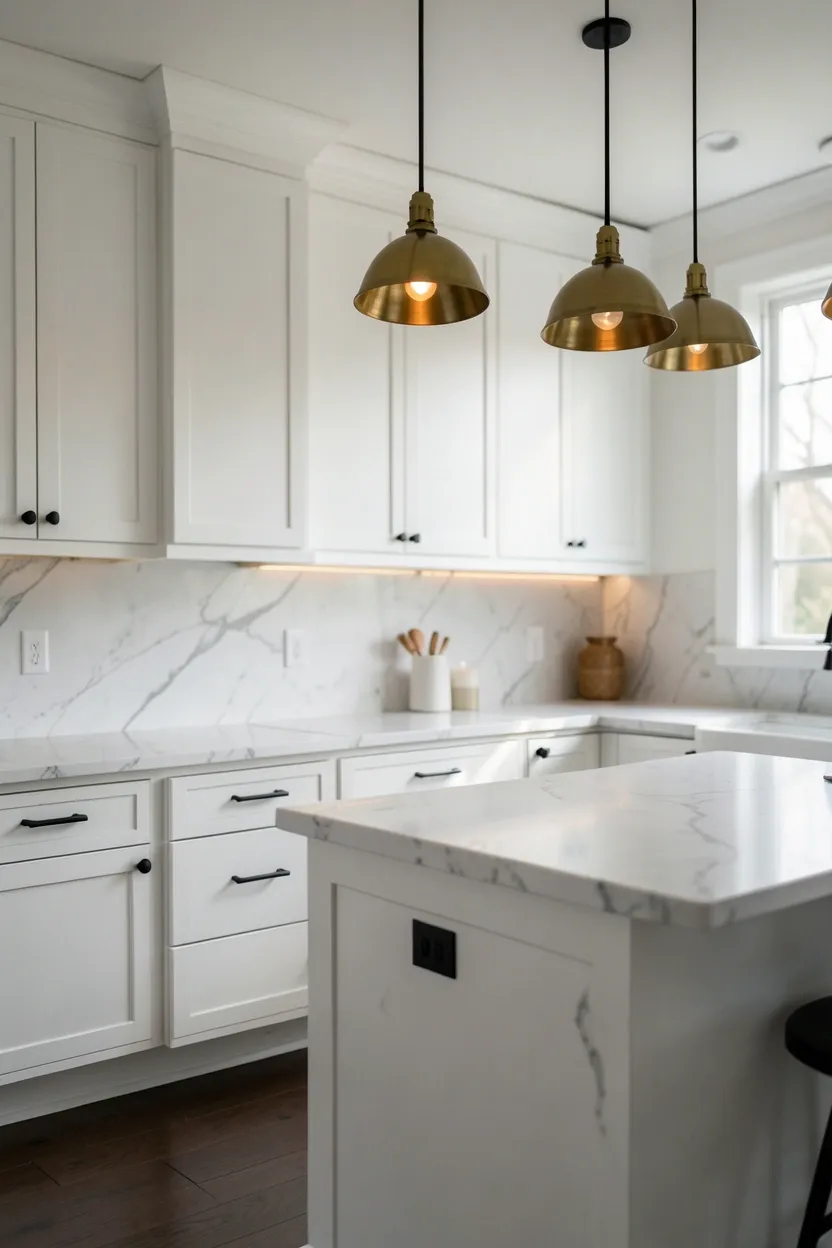
A black range hood becomes a dramatic focal point that anchors the kitchen design. Whether it is a sleek modern statement or a traditional vent hood with architectural interest, the black hood draws the eye and defines the cooking zone. This single black element can transform an all-white kitchen into something sophisticated and intentional.
Recommended
Items for this idea
Placement note: Center the range hood over the cooking surface and ensure it relates proportionally to the range below—too small feels underscaled while too large overwhelms the space.
Choose range hood style that complements your overall aesthetic—seamless integrated hoods for modern minimalist kitchens, chimney hoods with architectural interest for contemporary spaces, or traditional canopy hoods for classic designs. Extend the black element through surrounding details like backsplash tile or wall color for visual continuity.
White cabinets create a bright backdrop that makes the black hood stand out. Countertops in marble with black veining or solid black surfaces reinforce the monochrome theme. Lighting is crucial—ensure the hood area is well-lit to prevent it from feeling like a dark void. Under-cabinet lighting or task lighting at the range enhances functionality.
If your budget is limited, then consider painting an existing white hood black as a cost-effective transformation.
If you prefer minimal visual interruption, then choose a matte black finish rather than glossy for understated drama.
What this gives you: A kitchen with strong visual focal point and defined cooking zone, where the black range hood becomes the dramatic anchor.
13. Monochrome Industrial Style
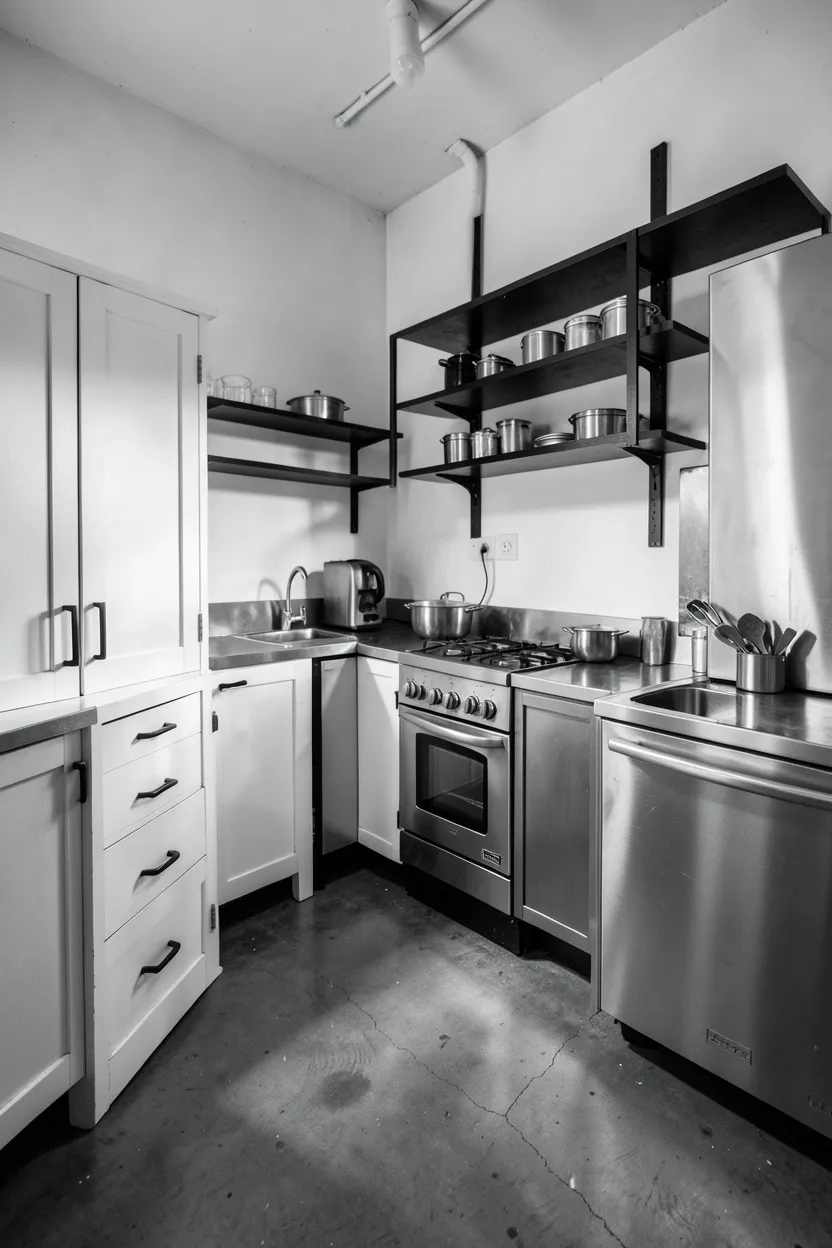
Monochrome industrial style combines raw, utilitarian elements with sophisticated black and white aesthetics. Exposed pipes, concrete surfaces, and metal fixtures create an edgy, contemporary feel while maintaining color restraint. This approach works particularly well in open-concept spaces where the kitchen connects to living areas.
Why it works: Industrial elements inherently feature black and white—concrete, steel, iron, and painted surfaces naturally fit the monochrome palette while adding raw character and texture that feels authentic rather than manufactured.
White walls or light concrete create brightness while black metal elements provide contrast and edge. Open shelving in black metal or wood painted black reinforces the industrial aesthetic while providing practical storage. Concrete flooring in light gray or white maintains the monochrome palette while adding texture and practical durability.
Pros: Creates unique, character-filled spaces; materials are durable and practical; naturally incorporates black and white elements.
Cons: Can feel cold without warm accents; industrial elements may not suit all architectural styles.
Fix: Introduce warmth through wood accents, warm lighting, plants, or textiles to soften the industrial edge.
What this gives you: A contemporary, edgy kitchen with raw character and authentic industrial elements within a refined monochrome palette.
14. White Shaker with Black Accents
White shaker cabinets with black accents create timeless, traditional appeal with modern sophistication. The classic shaker style provides architectural interest while black hardware, lighting, and small details add contemporary edge. This combination feels fresh yet rooted in traditional design principles, making it suitable for various home styles.
Recommended
Items for this idea
Common mistake: Overdoing black accents to the point where the traditional shaker aesthetic is lost. The key is balance—black should complement and highlight the shaker cabinets, not overwhelm or compete with them.
Keep black accents consistent in finish and style for cohesion—matte black hardware with matte black lighting, or lacquered elements throughout.
Extend black accents through faucet, pendant lights, and small appliances for comprehensive monochrome impact.
Consider black crown molding or baseboard for unexpected sophistication that frames the white cabinetry.
White shaker cabinets provide clean, architectural canvas while black elements add punctuation and contrast. Choose black hardware scale appropriate for cabinet size—larger pulls on wide doors, smaller knobs on drawers or smaller doors. Countertops in white marble with black veining or solid white surfaces maintain the light, airy feel while allowing black accents to stand out.
What this gives you: A timeless kitchen with traditional sophistication and modern edge, where white shaker cabinets and black accents create perfect balance.
15. Black and Brass Fixtures
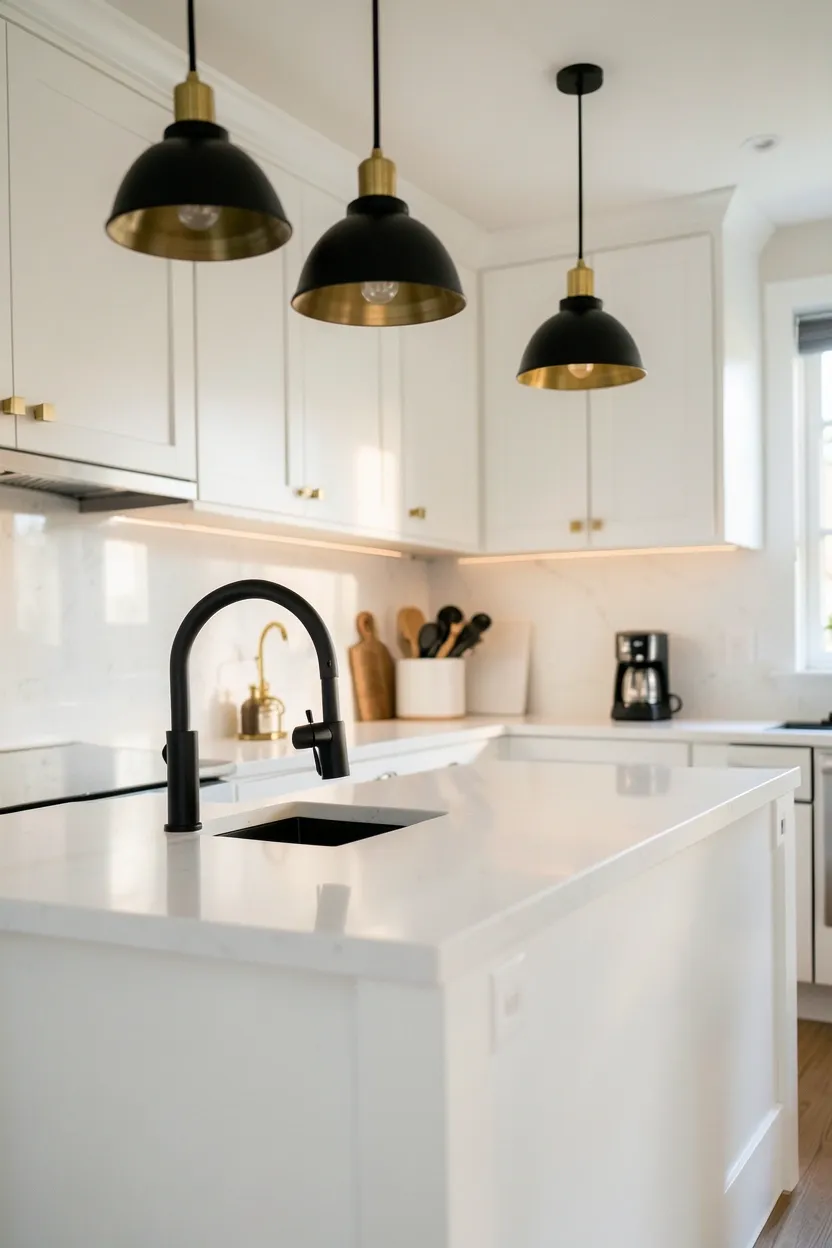
Black fixtures with brass accents create sophisticated, luxurious contrast within black and white kitchens. The combination of black and brass adds warmth and elegance while maintaining the monochrome foundation. This pairing elevates the kitchen from simple to refined, introducing metallic warmth that makes spaces feel expensive and considered.
Choose fixtures that combine both materials—faucets or lighting with black bodies and brass handles or accents create intentional mixing rather than random combination. The brass brings warmth and sophistication while black provides modern edge. Keep brass finish consistent throughout—brushed brass feels more contemporary while polished brass feels more traditional.
Position black and brass fixtures where they will be noticed and appreciated—over the island, at the sink, or as statement pendant lighting. White cabinetry provides clean backdrop that allows the mixed metal finishes to shine without color competition. Countertops in white marble or quartz maintain brightness.
Do keep the ratio of black to brass intentional—usually more black than brass feels more sophisticated and less ostentatious.
Don't introduce additional metals like chrome or nickel, which can make the mix feel haphazard rather than intentional.
What this gives you: A sophisticated, luxurious kitchen with metallic warmth and elegance achieved through intentional black and brass mixing.
16. Open Shelving in Monochrome
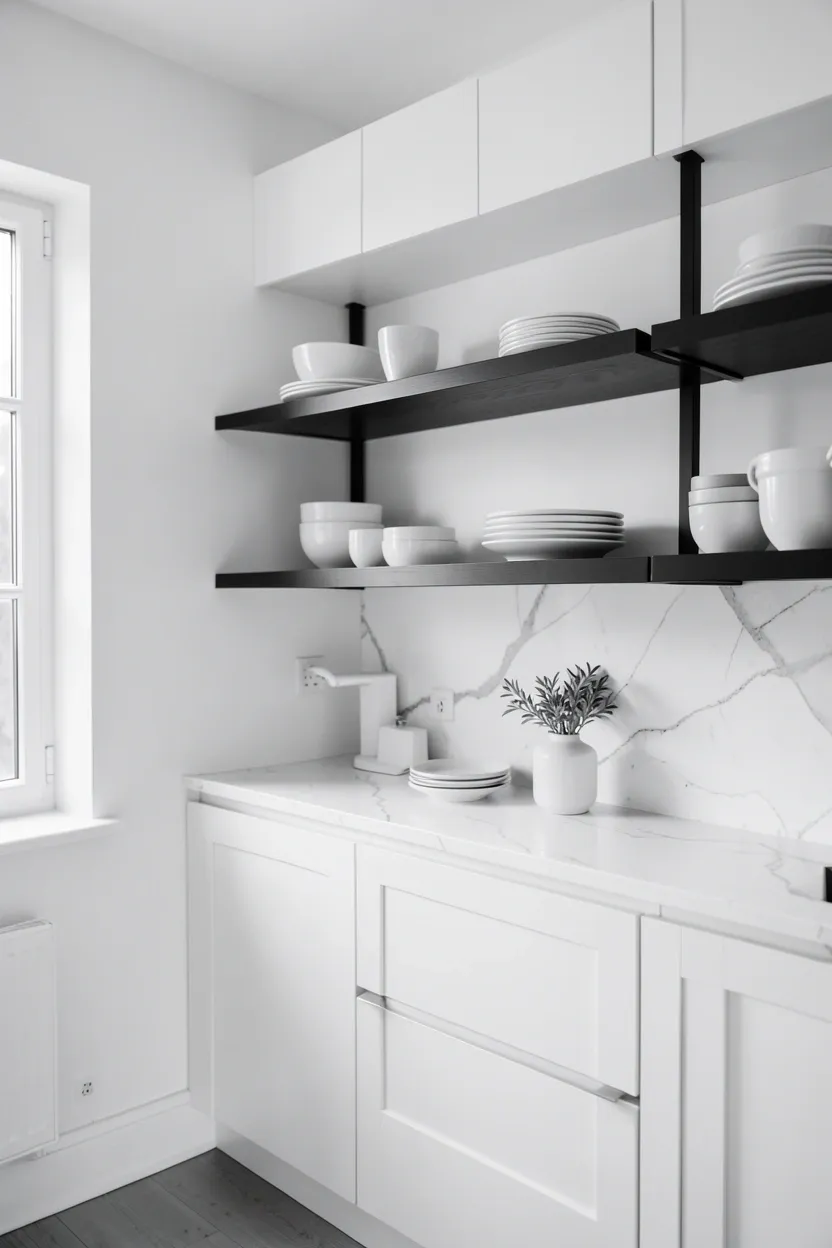
Open shelving in black and white creates visual interest and display opportunities while maintaining the monochrome palette. Whether black shelves on white walls or white shelves on black cabinets, open shelving breaks up cabinetry mass and provides spaces to display curated collections. This approach makes kitchens feel more personal and lived-in rather than purely functional.
Recommended
Items for this idea
Choose shelf material that complements your overall aesthetic—black metal for industrial kitchens, white wood for traditional spaces, or floating wood painted black or white for seamless integration. Scale shelves appropriately to the wall space—too wide feels overwhelming while too narrow looks underscaled. Bracket style affects the overall feel—minimalist floating brackets feel modern while decorative brackets add traditional character.
Style shelves intentionally with curated displays rather than random collections. Group items by color within the black and white palette—white dishes, black cookware, or monochrome ceramics. Incorporate small accents of green through plants or herbs to add life without disrupting the monochrome theme. Keep displays organized and edited to avoid clutter.
Do leave some empty space on shelves rather than filling every inch—negative space makes displays feel curated rather than stuffed.
Don't display items you actually use frequently if they become messy—reserve open shelving for attractive items that stay tidy.
What this gives you: A personalized kitchen with display opportunities and visual interest achieved through open shelving within the monochrome palette.
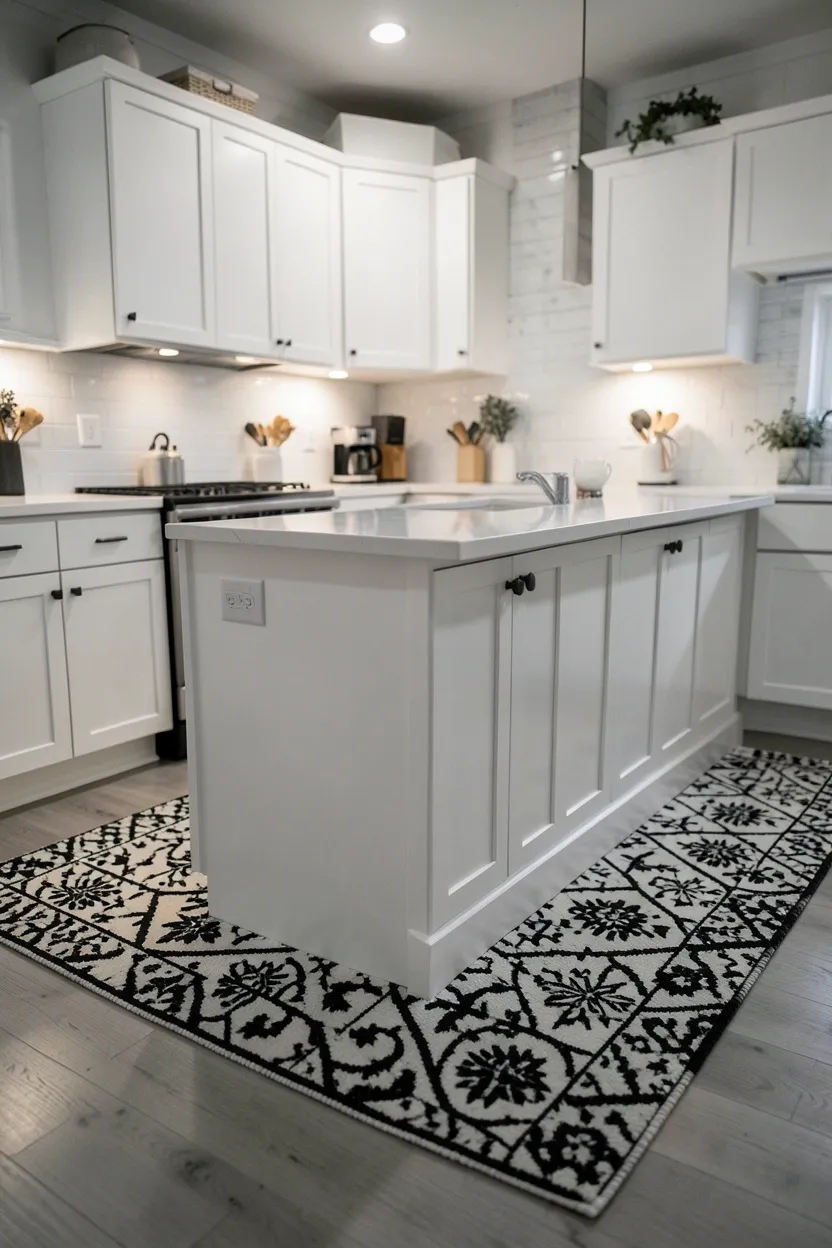
17. Black and White Patterned Runner
A black and white patterned runner adds softness, warmth, and visual interest to kitchen floors. The rug introduces pattern and texture while staying within the monochrome palette, making it a versatile addition that works in various kitchen styles. Runners define pathways and zones within the kitchen while providing underfoot comfort.
Placement note: Position runners in high-traffic areas or to define work zones—between island and perimeter cabinets, in front of the sink, or along the main cooking path.
Choose rug material appropriate for kitchen environments—washable cotton, durable wool, or synthetic options that can handle spills and frequent cleaning. Pattern scale relates to space size—large-scale geometric patterns make bold statements while smaller patterns feel more detailed and traditional. The pattern can complement or contrast other elements in the kitchen.
Consider the rug's relationship to other patterns in the space. If your backsplash or floor is busy, choose a simpler rug pattern. If those elements are solid, a bold patterned runner adds necessary visual interest. The runner should feel like an intentional design element, not a random addition.
If you have young children or pets, then choose washable, stain-resistant materials and dark patterns that hide dirt.
If your kitchen gets lots of natural light, then consider UV-resistant materials to prevent fading.
What this gives you: A kitchen with softness, warmth, and visual interest achieved through a patterned runner that adds texture and defines pathways.
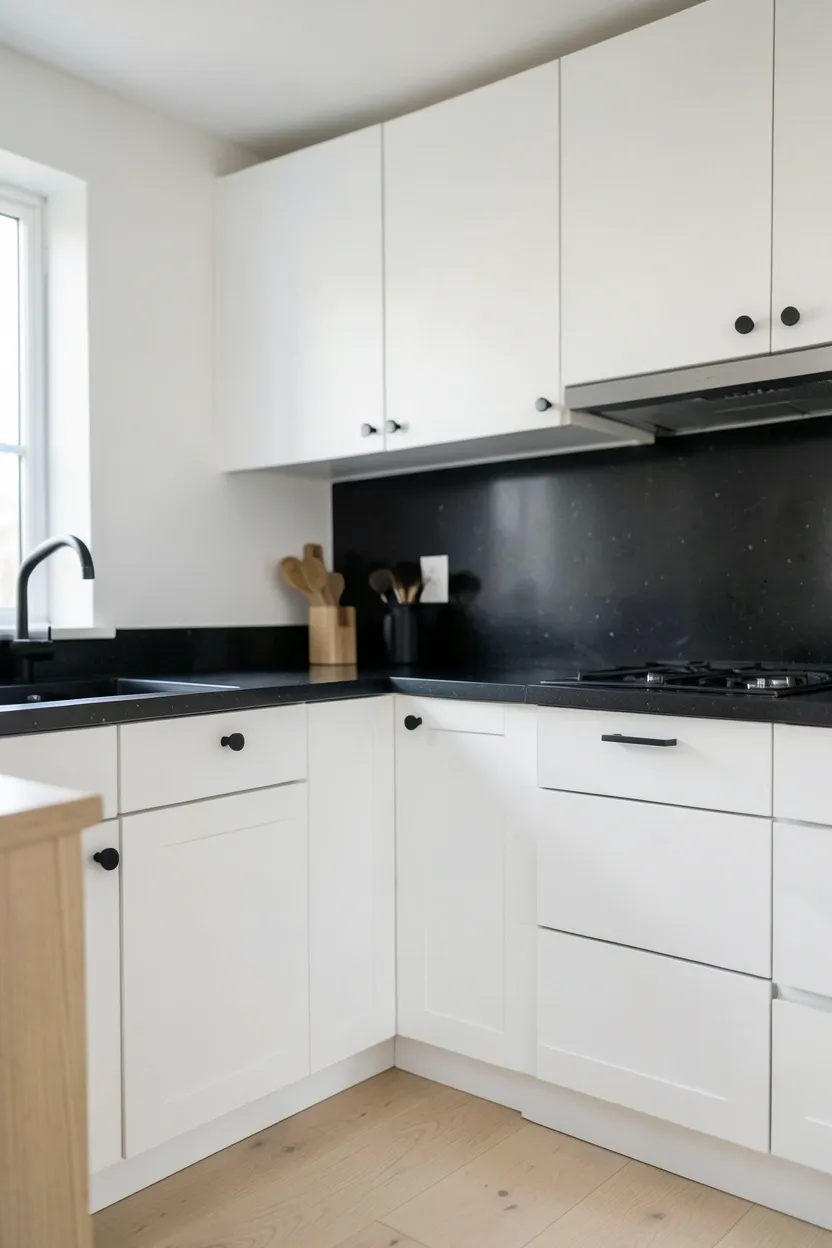
18. Scandinavian Minimalist Black and White
Scandinavian minimalist black and white kitchens embody clean lines, functionality, and sophisticated restraint. This aesthetic prioritizes light, space, and essential elements over decoration, creating kitchens that feel calm, organized, and effortlessly stylish. The monochrome palette reinforces the minimalist philosophy while maintaining warmth and livability.
Recommended
Items for this idea
Why it works: Scandinavian design naturally favors black and white through its emphasis on light, simplicity, and functionality. The monochrome palette creates a calm, uncluttered foundation that feels sophisticated and timeless.
White walls and light wood flooring create brightness while black elements provide contrast and definition. Flat-panel cabinets with minimal hardware reinforce the minimalist aesthetic. Keep surfaces clear and edited—every element should have purpose or beauty, preferably both. Lighting is crucial—warm, diffused lighting creates atmosphere while task lighting ensures functionality.
Pros: Creates calm, organized spaces; timeless aesthetic that never feels dated; maximizes light and space.
Cons: Can feel cold without warm accents; requires disciplined editing to avoid accumulation.
Fix: Introduce warmth through natural wood accents, plants, textiles, or warm lighting to soften the minimalist edge.
What this gives you: A calm, sophisticated kitchen that embodies Scandinavian minimalist principles within a refined monochrome palette.
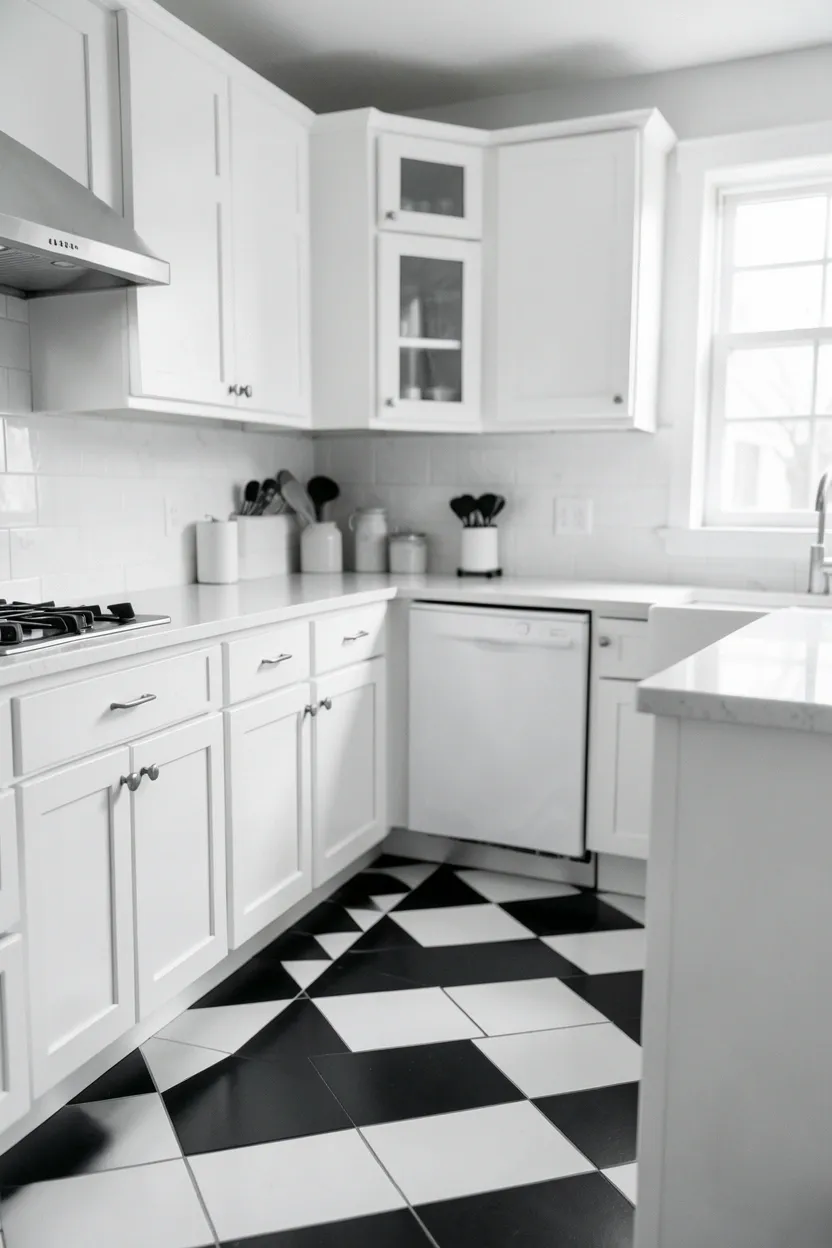
19. Checkerboard Floor Design
Checkerboard flooring in black and white creates bold graphic impact and classic appeal. This timeless pattern adds visual energy and movement while staying within the monochrome palette. Whether large-scale for contemporary drama or small-scale for traditional charm, checkerboard floors create strong foundations that define the entire kitchen aesthetic.
Common mistake: Choosing checkerboard scale inappropriate for the space. Large-scale checkerboards work better in spacious kitchens while small-scale suits more compact areas. Proportion matters—the pattern should relate to room dimensions and cabinet scale.
Consider tile material—ceramic or porcelain for durability and affordability, natural stone for luxury and variation, or luxury vinyl for budget-friendly options.
Grout color dramatically affects appearance—black grout emphasizes the pattern while white grout creates a more seamless, monolithic look.
Keep other design elements relatively simple to let the dramatic floor shine without visual competition.
White cabinets create bright backdrop that balances the dramatic floor, while black cabinets reinforce the monochrome theme and create sophisticated continuity. Countertops in solid white or marble with black veining maintain the palette while providing visual rest from the busy floor. The checkerboard pattern becomes the star, so keep other surfaces relatively simple.
What this gives you: A kitchen with bold graphic impact and classic appeal achieved through dramatic checkerboard flooring within the monochrome palette.
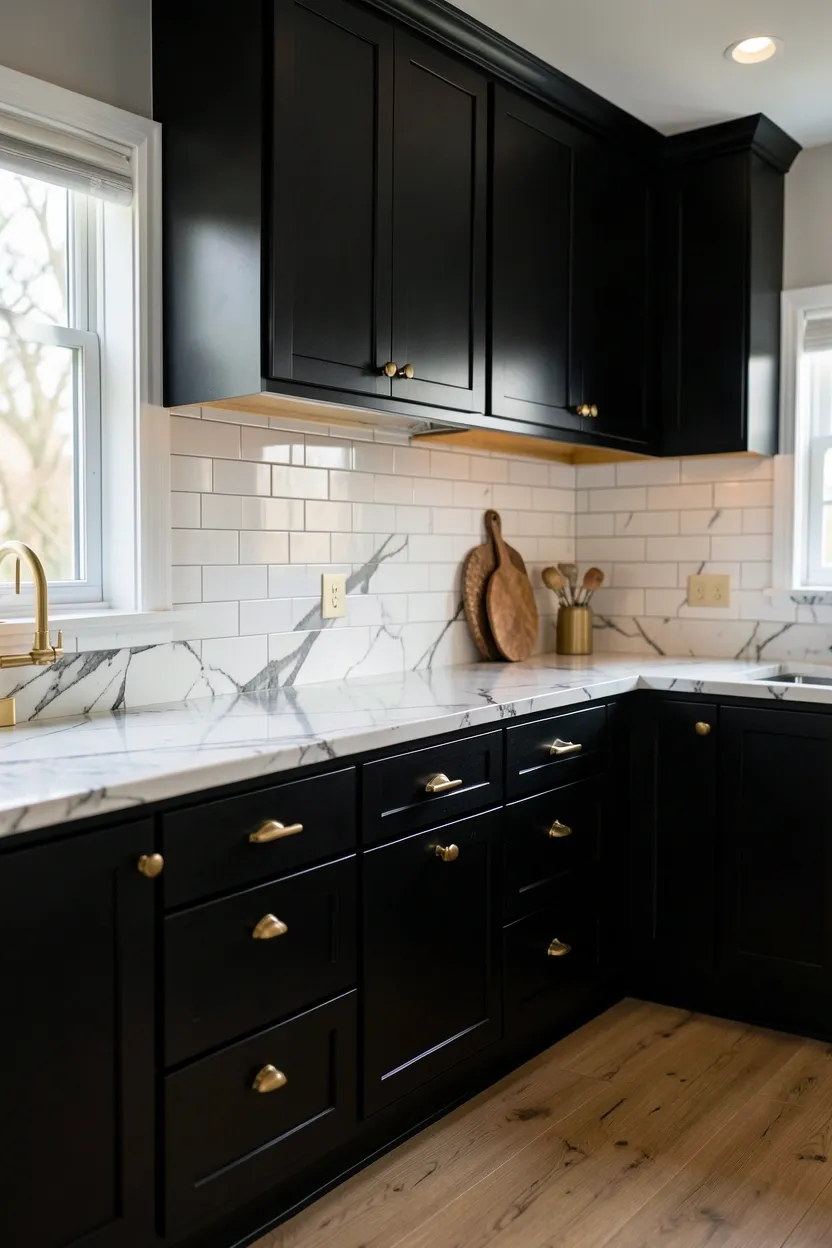
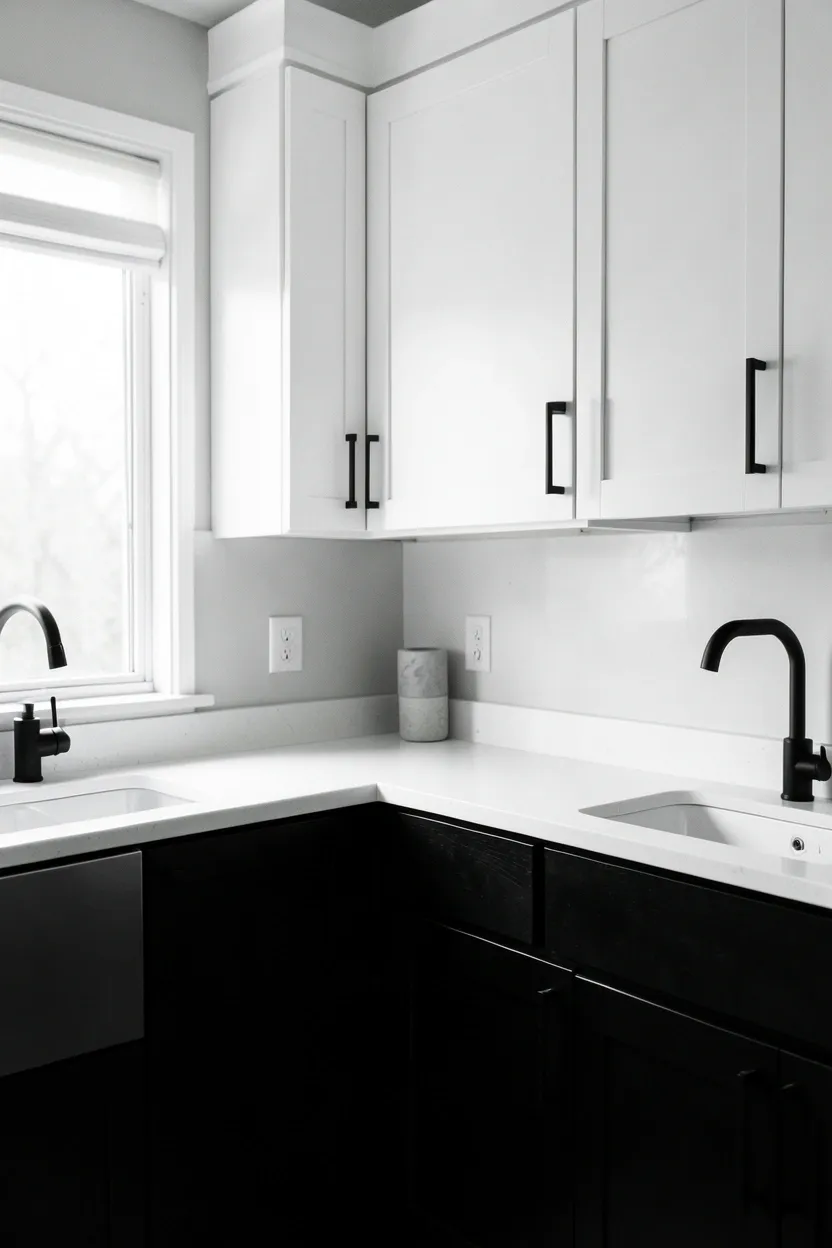
20. Black Cabinets White Marble
Black cabinets paired with white marble countertops create luxurious, high-contrast sophistication. The dark cabinetry provides drama and depth while white marble adds brightness and natural luxury. This combination feels expensive and refined, making it ideal for kitchens that make strong design statements.
Recommended
Items for this idea
Choose marble with the right balance of white to black for your aesthetic. Carrara with subtle gray veining creates understated elegance, while Nero Marquina with dramatic black veining provides maximum contrast. Consider extending marble up the backsplash for seamless luxury and visual continuity.
Balance the darkness of black cabinets with plenty of white surfaces—white walls, light flooring, and white marble create necessary brightness. Under-cabinet lighting is essential to illuminate workspace and highlight the marble's natural beauty. Gold or brass hardware adds warmth and luxury against the black cabinets.
Do choose matte black cabinets rather than glossy for a more sophisticated, less stark appearance.
Don't neglect lighting—black cabinets absorb light, so generous illumination is crucial for functionality and atmosphere.
What this gives you: A luxurious, sophisticated kitchen with high-contrast elegance achieved through black cabinets and white marble.
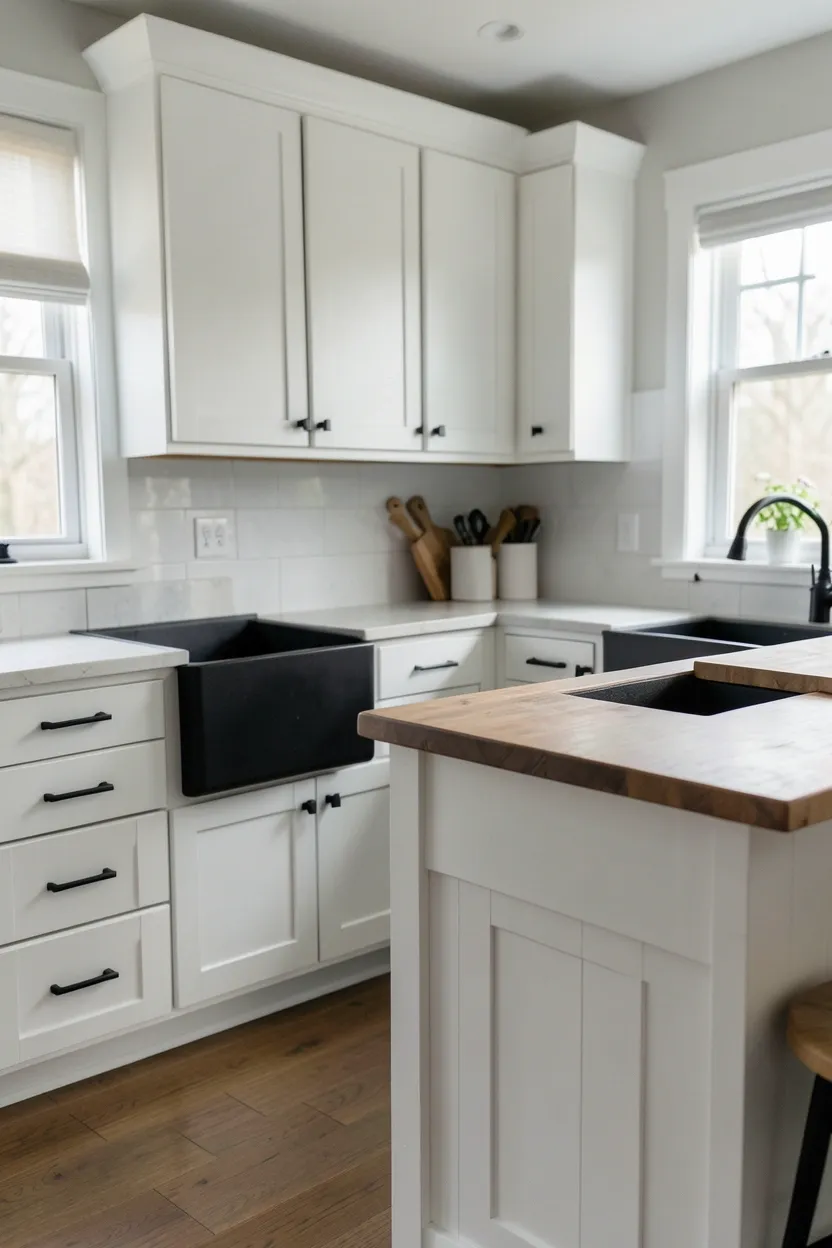
21. White Cabinets Black Hardware Farmhouse
White cabinets with black hardware create charming farmhouse appeal with modern sophistication. The combination of traditional white cabinetry and black accents adds visual interest while maintaining a classic, welcoming aesthetic. This approach works beautifully in traditional or transitional homes where you want character without outdated details.
Choose cabinet style that reinforces farmhouse character—shaker or beaded cabinets with architectural detail provide traditional appeal. Black hardware should be substantial and purposeful—oversized cup pulls or vintage-inspired bar pulls feel authentic to farmhouse style rather than minimalist.
Extend black elements through pendant lighting, faucet, and small appliances for cohesive farmhouse character. Countertops in butcher block or honed marble add warmth and natural materials that complement the farmhouse aesthetic. Farmhouse sink in white or fireclay reinforces the traditional charm while maintaining the monochrome palette.
Do mix in natural materials like wood, stone, or metal to reinforce farmhouse character beyond just the color palette.
Don't choose contemporary cabinet styles or minimalist hardware, which clash with farmhouse aesthetic and feel inauthentic.
What this gives you: A charming farmhouse kitchen with modern sophistication achieved through white cabinets and black hardware.
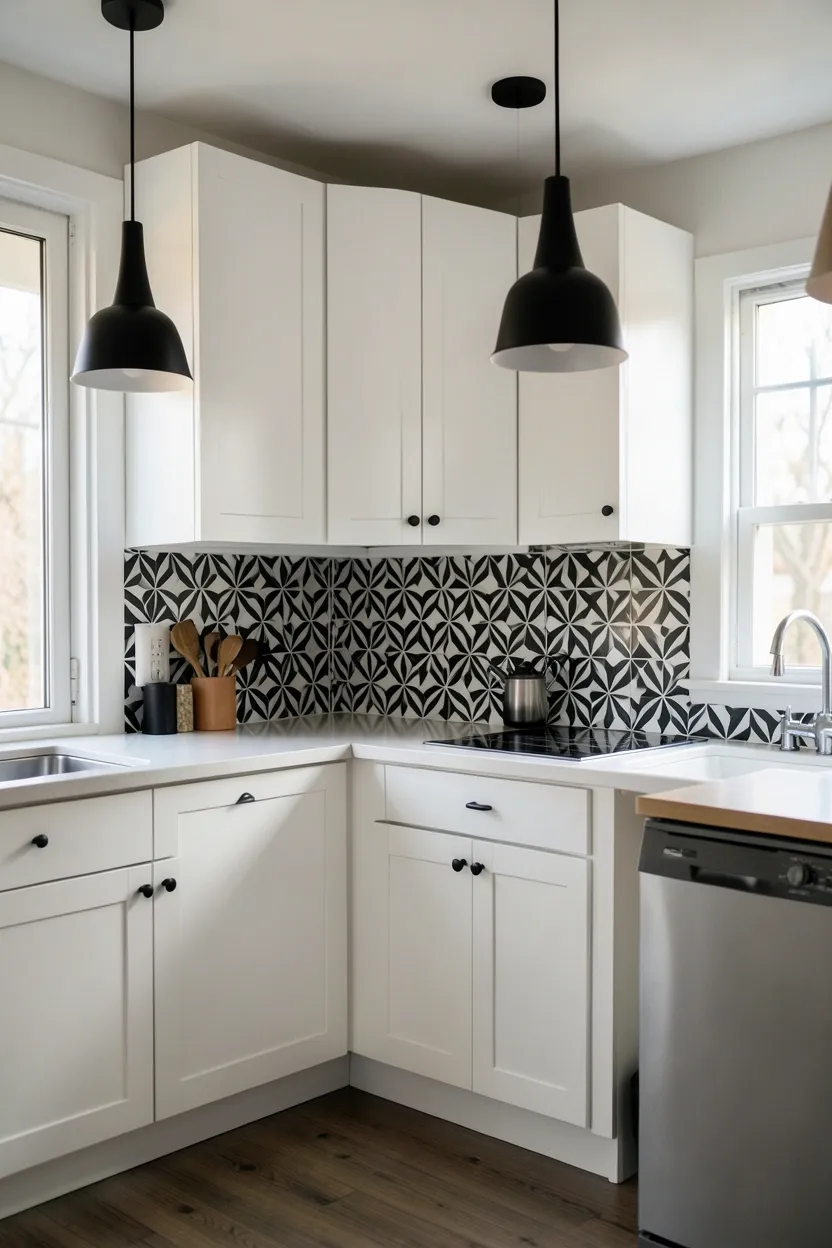
22. Monochrome Mid-Century Modern
Mid-century modern design in black and white creates retro sophistication with contemporary appeal. The clean lines, organic shapes, and emphasis on functionality characteristic of mid-century design translate beautifully to monochrome kitchens. This aesthetic feels vintage yet timeless, making it suitable for homes that appreciate retro character without looking dated.
Recommended
Items for this idea
Why it works: Mid-century modern design naturally incorporates black and white elements through its emphasis on contrast, clean lines, and geometric shapes. The monochrome palette reinforces the sophisticated, graphic quality of this style.
Choose cabinets with flat-panel doors and minimal ornamentation, perhaps with integrated handles for seamless mid-century appeal. Black and white geometric backsplashes or patterned flooring reinforce the retro aesthetic. Lighting fixtures in black or white with sculptural shapes become statement pieces. Countertops in solid white or black maintain the clean, graphic quality.
Pros: Creates sophisticated, retro spaces; timeless aesthetic with contemporary appeal; clean, organized feel.
Cons: Can feel cold without warm accents; requires authentic mid-century elements to avoid feeling themed.
Fix: Introduce warmth through wood accents, warm lighting, or organic shapes to soften the graphic mid-century edge.
What this gives you: A sophisticated, retro-inspired kitchen with mid-century modern character within a refined monochrome palette.
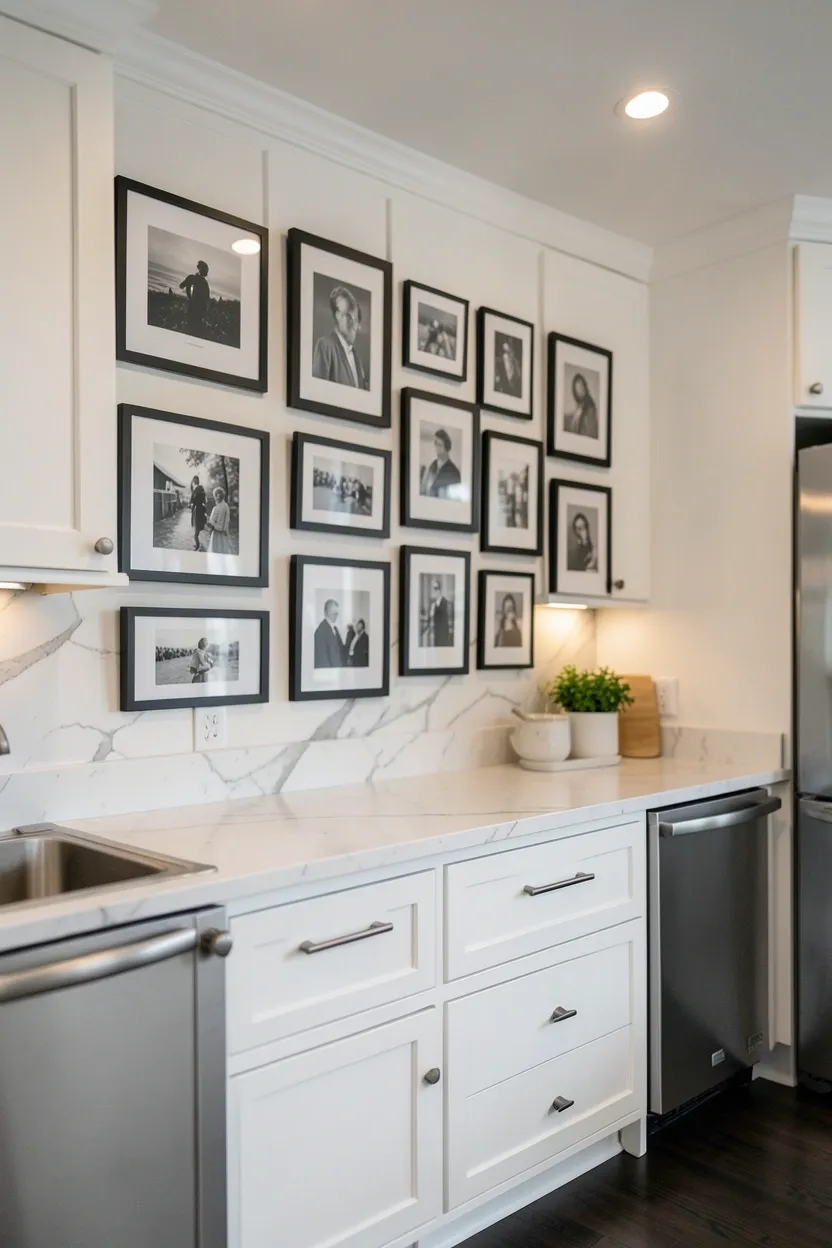
23. Black and White Gallery Wall
A black and white gallery wall adds personality and visual interest to kitchen dining or seating areas. Displaying art, photographs, or objects in monochrome creates curated, personal spaces that feel intentional rather than random. This approach works particularly well in kitchens with open dining or breakfast nooks where walls are visible from cooking areas.
Choose an odd number of pieces for natural visual balance—typically 5, 7, or 9 art pieces feel appropriately curated. Mix frame styles intentionally—unified black frames create graphic impact while mixed black and white frames feel more eclectic. The art itself can be black and white photography, black-and-white abstract art, or colorful pieces framed in monochrome.
Position the gallery wall where it will be seen and appreciated—in a breakfast nook, above a dining table, or on a large wall visible from the kitchen. The monochrome palette ensures the gallery relates to the kitchen aesthetic while adding personal character. Keep other walls relatively simple to let the gallery wall be the star.
Do plan the layout on the floor first, taking photos of different arrangements, then transfer to the wall using paper templates.
Don't hang pieces too high—center the gallery at eye level for comfortable viewing, typically around 57-60 inches from the floor.
What this gives you: A personalized kitchen with visual interest and character achieved through a curated black and white gallery wall.
24. Contrasting Upper and Lower Cabinets
Contrasting upper and lower cabinets in black and white create visual interest and architectural dimension. Whether white uppers with black lowers or the reverse, this color blocking technique adds sophistication without requiring additional colors. The approach works in various kitchen styles from traditional to contemporary.
Recommended
Items for this idea
Placement note: Choose upper and lower cabinet colors based on ceiling height and desired effect—white uppers with black lowers make ceilings feel higher, while black uppers with white lowers add drama.
Keep hardware consistent throughout both cabinet colors for cohesion—black pulls work well with black lower cabinets, while nickel or brass can bridge both colors. Countertop material should relate to both cabinet colors—marble with black veining or quartz with subtle variation creates harmony.
The 60-40 ratio typically works best for balance—white uppers with black lowers is the more common combination as it maintains brightness. However, black uppers with white lowers create dramatic impact and work particularly well in spacious kitchens with excellent lighting. Consider extending one color to the island for additional visual continuity.
If your kitchen has low ceilings, then choose white uppers with black lowers to create the illusion of height.
If your kitchen is large and well-lit, then black uppers with white lowers can create stunning drama.
What this gives you: A sophisticated kitchen with visual interest and architectural dimension achieved through contrasting upper and lower cabinets.
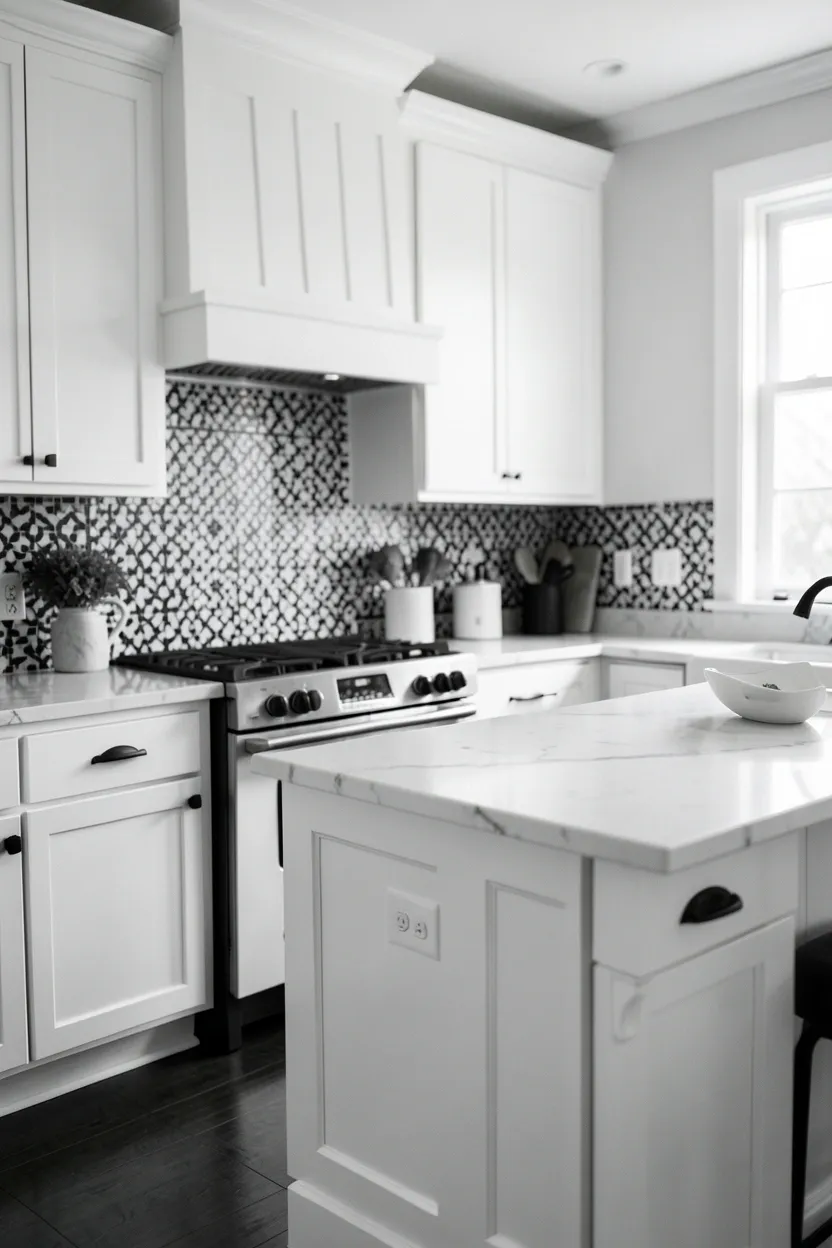
25. Black and White Mosaic Backsplash
Black and white mosaic tiles create intricate patterns and visual texture within kitchen backsplashes. The small scale and detailed patterns of mosaic tiles add sophistication and craftsmanship while staying within the monochrome palette. This approach works particularly well as feature areas behind ranges or sinks where detailed patterns can be appreciated.
Choose mosaic pattern appropriate for your aesthetic—geometric patterns feel contemporary while more random, organic arrangements feel artistic and handmade. Scale the pattern area appropriately to the space—full-wall backsplashes create dramatic impact while smaller feature areas provide sophisticated accents.
Keep cabinetry and countertops relatively simple to let the mosaic backsplash be the star. White cabinets create bright backdrop while black cabinets reinforce the monochrome theme. Lighting is crucial—well-lit backsplashes highlight the mosaic pattern and create beautiful shadow play across the small tiles.
Do use high-quality grout sealer on mosaic backsplashes, as the numerous grout lines require more maintenance than larger tiles.
Don't choose overly busy patterns for full-wall applications, which can make the kitchen feel overwhelming.
What this gives you: A sophisticated kitchen with detailed craftsmanship and visual texture achieved through a black and white mosaic backsplash.
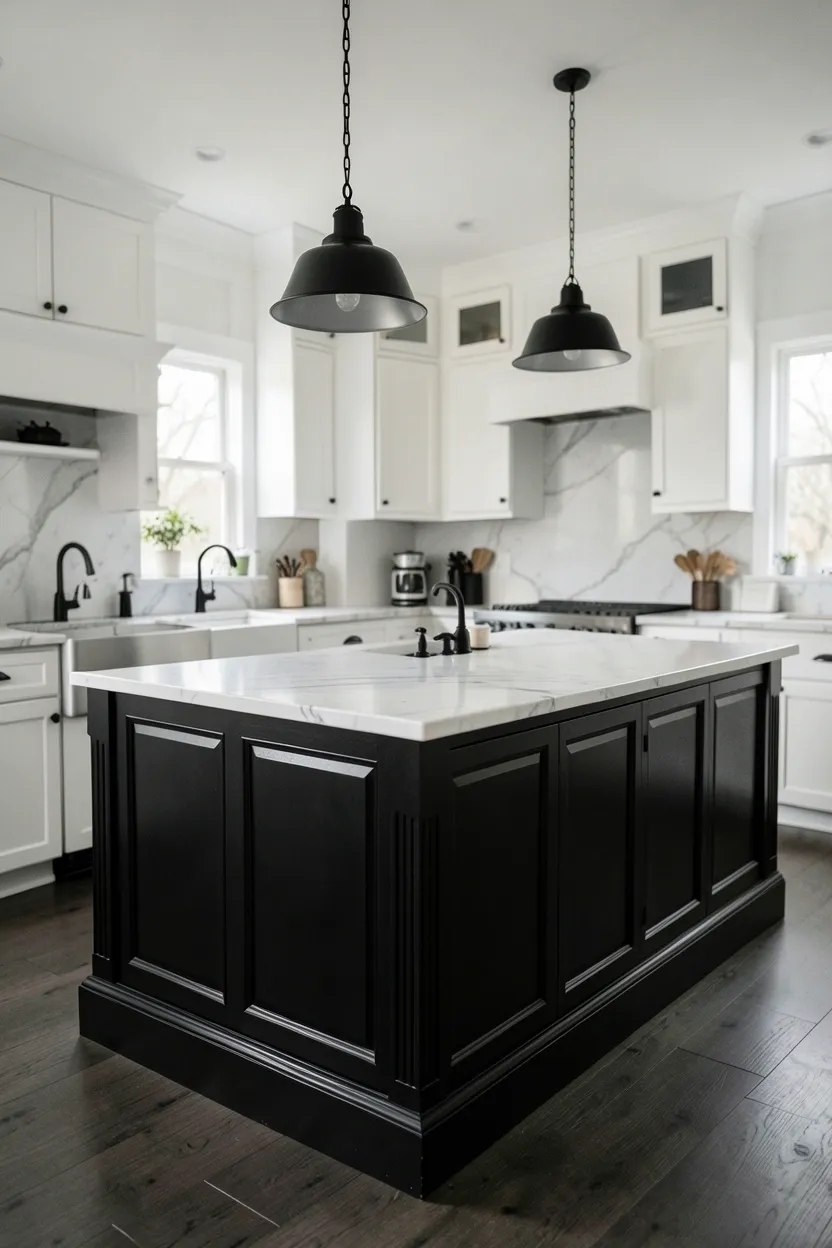
26. White Cabinets Black Island Traditional
White perimeter cabinets with a black island create classic traditional elegance with contemporary sophistication. This combination provides the brightness and spaciousness of white cabinets while the black island adds drama and defines the kitchen's central hub. The approach feels timeless rather than trendy, making it suitable for traditional homes that want updated sophistication.
Recommended
Items for this idea
Choose island style that complements traditional architecture—raised panel cabinets, decorative corbels, or turned legs reinforce traditional character. The black island color should be intentional—choose black that relates to other black elements in the space like hardware, lighting, or appliances.
Extend black elements beyond the island through bar stools, pendant lighting, or small appliances for visual continuity. Countertops can be consistent across island and perimeter for seamless look, or use black marble on the island for maximum drama. Traditional lighting fixtures in black maintain the monochrome theme while reinforcing the traditional aesthetic.
Do ensure the island size relates proportionally to the overall kitchen and perimeter cabinet layout for balanced visual hierarchy.
Don't choose black island finish that feels too stark or contemporary for traditional architecture—black should enhance, not clash with, traditional details.
What this gives you: A traditional kitchen with contemporary sophistication achieved through white perimeter cabinets and a black island.
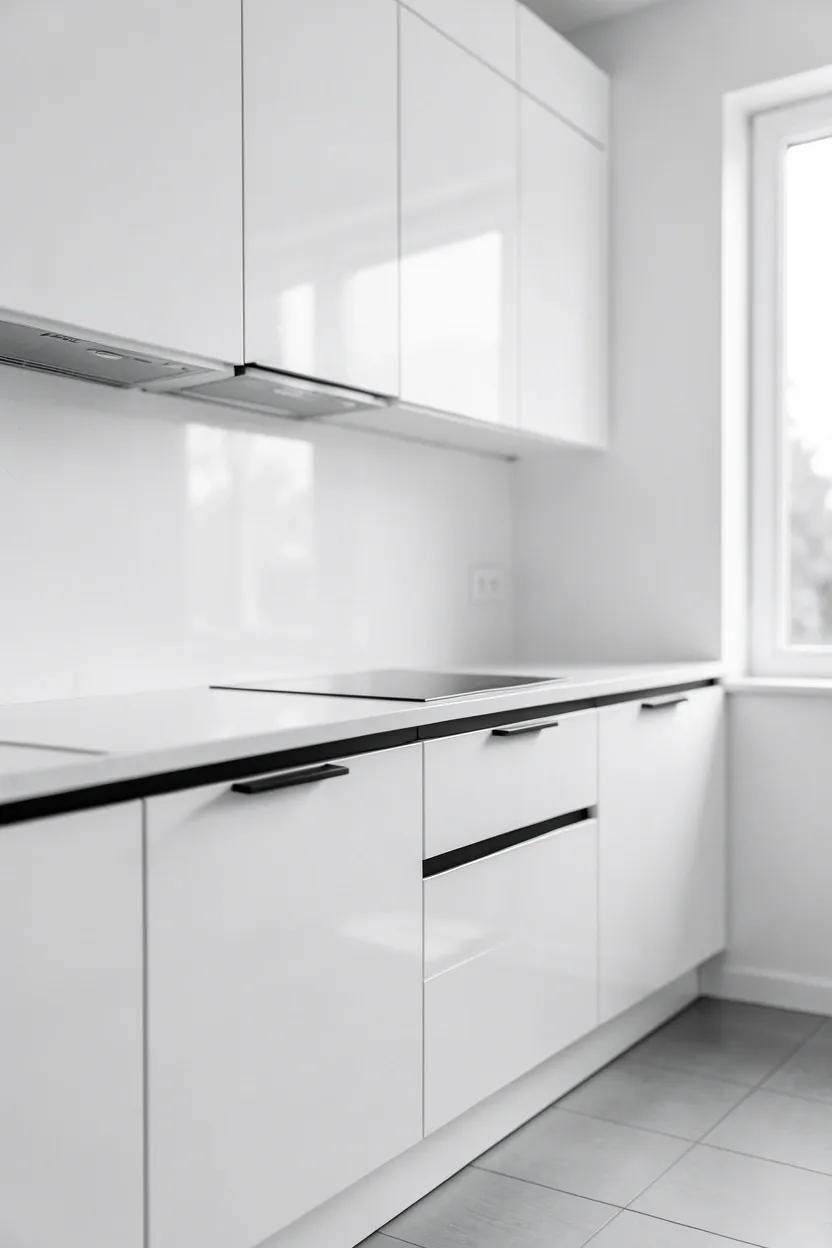
27. Sleek Contemporary Monochrome
Sleek contemporary monochrome kitchens embody modern sophistication through clean lines, seamless surfaces, and high-contrast black and white elements. This aesthetic prioritizes minimalism, functionality, and luxurious refinement, creating kitchens that feel like high-end spaces designed for both beauty and performance.
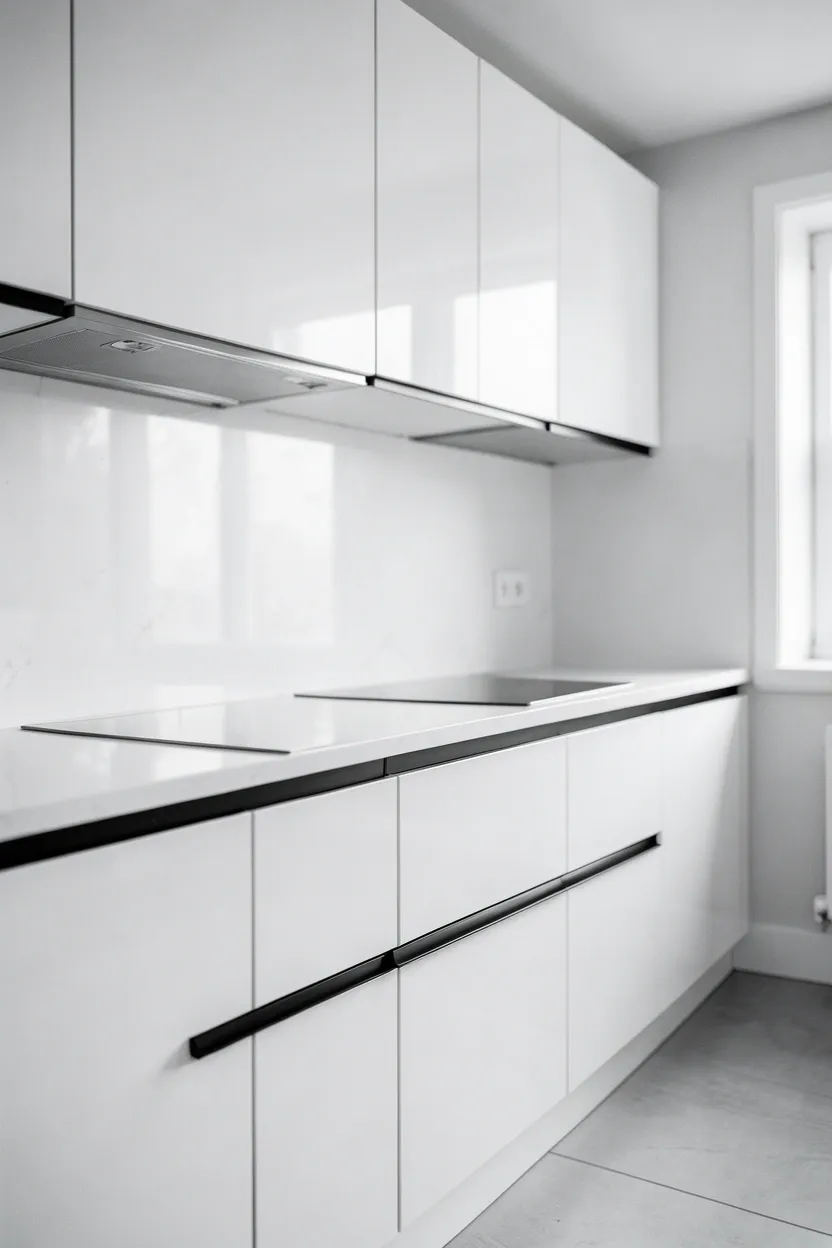
Choose flat-panel cabinets with integrated handles or push-to-open mechanisms for seamless, minimalist appearance. High-gloss white cabinetry reflects light and creates drama while matte black surfaces provide sophisticated contrast. Countertops in solid surfaces like quartz or engineered stone in white or black maintain the clean, contemporary aesthetic.
Backsplashes in full-height slab material create seamless transitions between counters and cabinets. Lighting should be sophisticated and minimal—recessed ceiling lights, under-cabinet strips, and sculptural pendant fixtures rather than decorative or traditional lighting. Keep surfaces clear and edited for the true contemporary minimalist experience.
Do prioritize high-quality materials and precise installation—contemporary kitchens show flaws more readily than traditional styles.
Don't clutter surfaces with unnecessary items or decorations—contemporary minimalism relies on negative space.
What this gives you: A luxurious, contemporary kitchen with sleek sophistication achieved through refined monochrome minimalism.
These 27 black and white kitchen ideas demonstrate the timeless versatility and sophisticated appeal of monochrome design. From classic two-tone cabinetry to sleek contemporary minimalism, there is a black and white approach that suits every architectural style and personal preference. The beauty of this palette lies in its ability to make strong visual statements while remaining remarkably practical and timeless. Whether you are planning a complete kitchen renovation or looking for smaller updates that make significant impact, black and white elements provide elegant solutions that elevate both aesthetics and functionality. Start with the ideas that resonate most strongly with your vision and lifestyle, and let the monochrome foundation support your creative expression in the heart of your home.
About the author
OBCD
CGI visualization and interior design content. We create detailed 3D renders and curate practical design ideas for every room in your home.