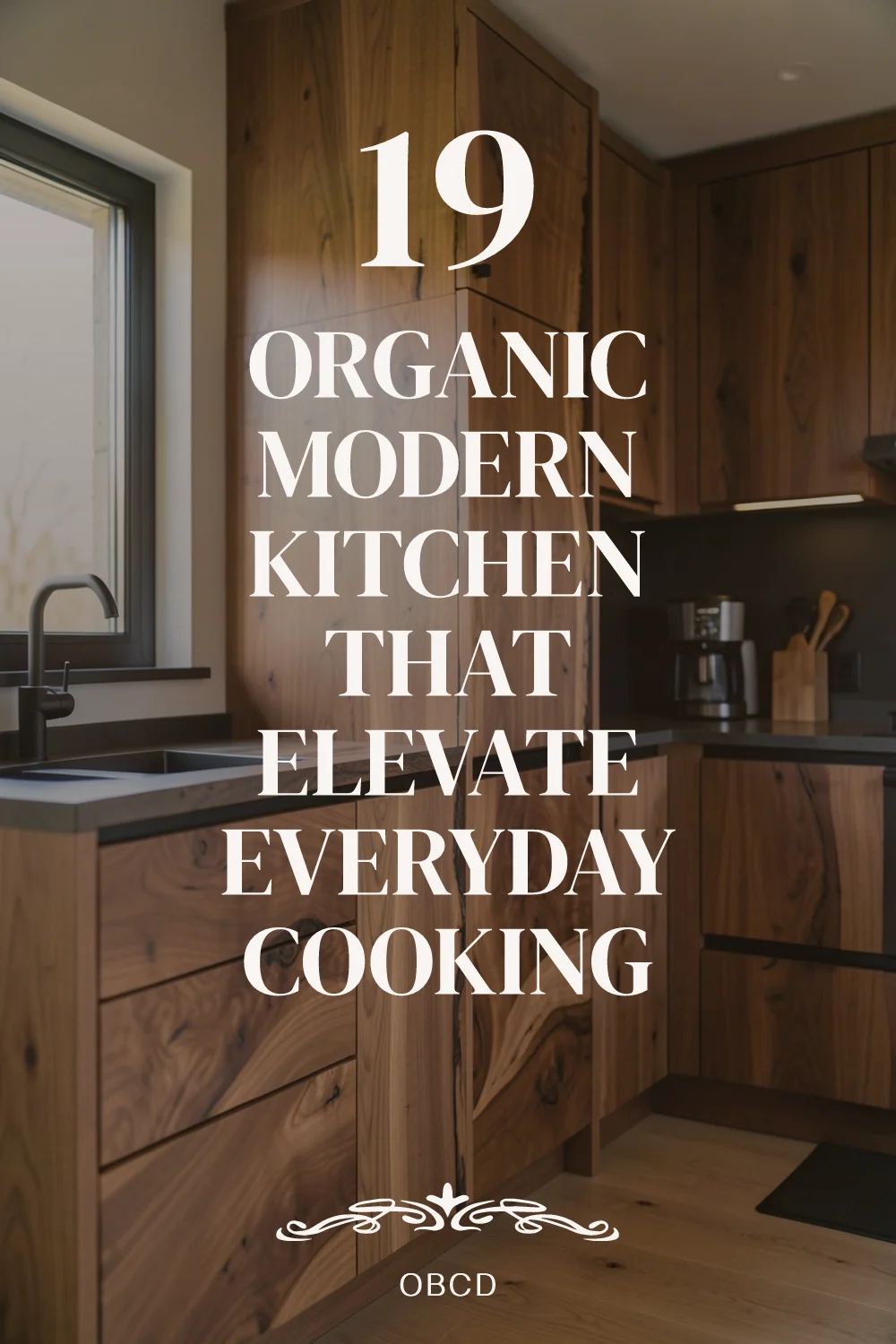
19 Organic Modern Kitchen Ideas to Elevate Everyday Cooking
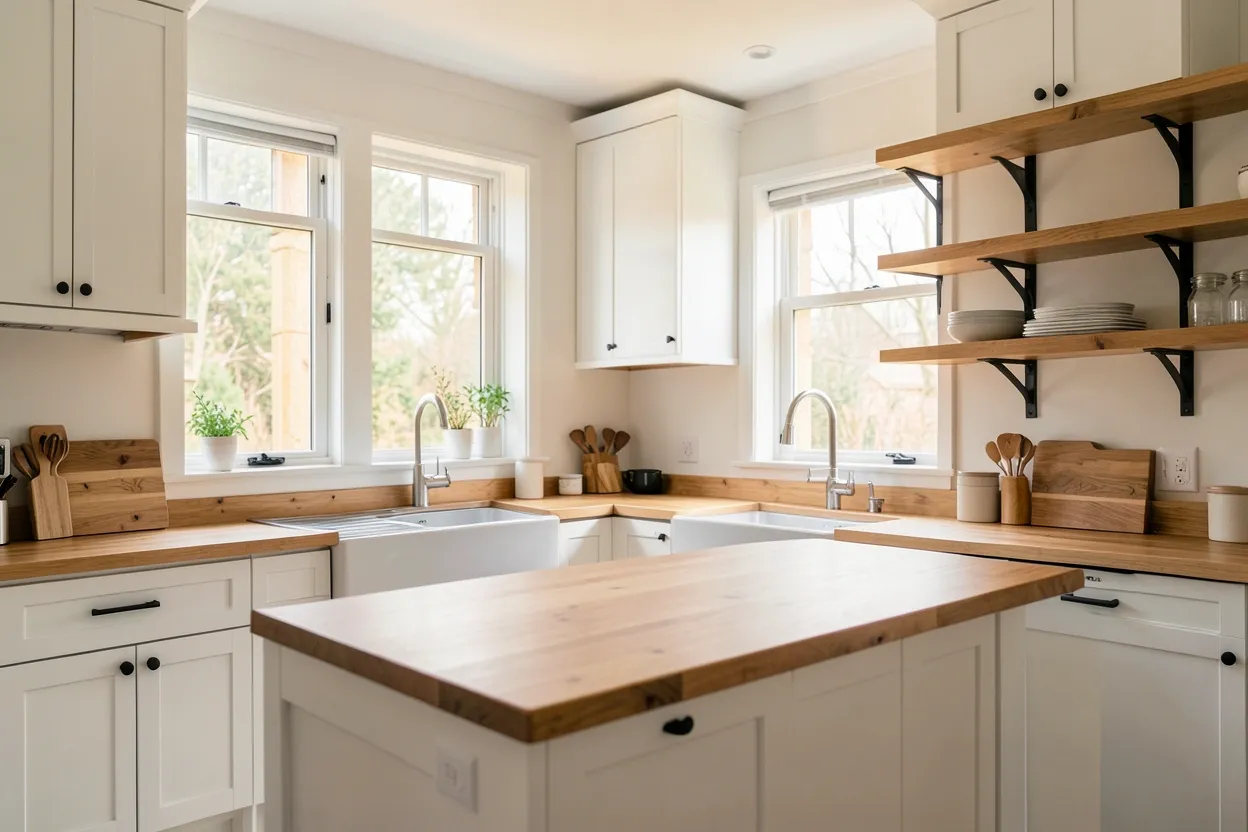
An organic modern kitchen brings the warmth of nature into contemporary design, creating spaces that feel both sophisticated and grounded. This design philosophy celebrates raw materials, sustainable choices, and clean lines that transform everyday cooking into a more mindful experience — and many of these ideas work perfectly in a rental apartment without permanent changes.
By combining natural wood, stone, and earthy textures with modern functionality, organic modern kitchen ideas offer a perfect balance between aesthetics and practicality. Whether you're working with a compact urban rental or an open-concept layout, these natural material combinations can elevate your cooking environment while maintaining a connection to the natural world.
The beauty of this style lies in its versatility — it adapts to different budgets, rental restrictions, and family needs while staying true to its core principles of authenticity and sustainability. From butcher block countertops on a budget to renter-friendly open shelving, these 19 ideas give you a genuine starting point for a kitchen that feels like home.
Quick FAQ
What defines an organic modern kitchen?
An organic modern kitchen combines clean, minimalist lines with natural materials like wood, stone, and raw textures. It emphasizes sustainable choices, warm earth tones, and a connection to nature while maintaining contemporary functionality.
Are organic modern kitchens expensive to create?
Not necessarily. While premium natural materials can be costly, you can achieve the look with budget-friendly alternatives like butcher block countertops, reclaimed wood accents, and ceramic tile backsplashes. Focus on texture and natural tones rather than expensive materials.
Can I incorporate organic modern elements in a rental kitchen?
Absolutely. Use removable peel-and-stick backsplashes, add natural fiber rugs, display wooden cutting boards, and incorporate potted plants. Small changes like swapping cabinet hardware or adding open shelving can transform the space without permanent modifications.
How do I maintain natural materials in a kitchen?
Natural materials require regular maintenance: seal stone countertops, oil butcher blocks monthly, clean wood with appropriate products, and protect surfaces from excessive moisture. Proper care extends the lifespan and beauty of organic elements.
As an Amazon Associate I earn from qualifying purchases.
Table of Contents
- 1. Sustainable Wood Cabinetry with Live Edge Details
- 2. Natural Stone Countertops in Warm Earth Tones
- 3. Open Shelving with Raw Wood Accents
- 4. Matte Black Hardware Mixed with Natural Elements
- 5. Large Format Stone Tiles with Organic Veining
- 6. Seamless Indoor-Outdoor Kitchen Flow
- 7. Biophilic Design with Integrated Plants
- 8. Recycled Glass Backsplash with Depth
- 9. Handmade Ceramic Tiles with Imperfections
- 10. Concrete Countertops with Wood Accents
- 11. Reclaimed Wood Island with Modern Lighting
- 12. Neutral Palette with Natural Texture Layers
- 13. Integrated Appliances with Hidden Handles
- 14. Natural Fiber Rugs Under Kitchen Island
- 15. Statement Lighting with Natural Materials
- 16. Butcher Block Countertops on White Cabinets
- 17. Floating Shelves with Industrial Brackets
- 18. Warm Wood Floors with Modern Lines
- 19. Brass Fixtures on White Cabinets
1. Sustainable Wood Cabinetry with Live Edge Details
Sustainable wood cabinetry featuring live edge details brings an organic modern kitchen to life with its raw, natural beauty. The flowing curves of live edges contrast beautifully with clean cabinet lines, creating visual interest while honoring the wood's natural form. Choose FSC-certified woods like walnut, maple, or oak for environmentally responsible choices that age gracefully over time.
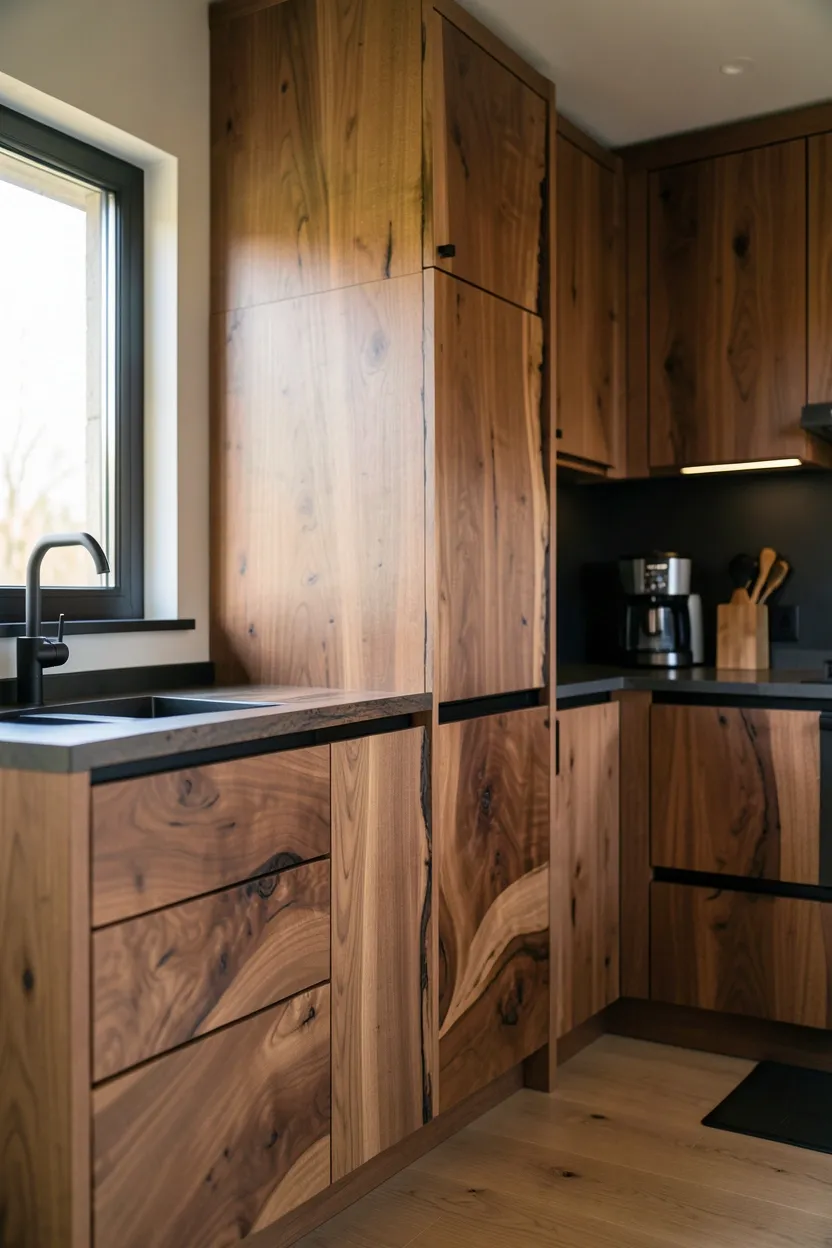
The tactile experience of live edge wood adds warmth to your cooking space, with each cabinet door and drawer front becoming a unique piece of natural art. Unlike completely flat, synthetic surfaces, these organic variations tell a story and create connection points between your kitchen and the natural world. Pair with matte black hardware for contemporary contrast or brass fixtures for warmth.
Why it works: The combination of sustainability and natural imperfection creates authenticity that purely modern kitchens often lack. Live edges break up rigid lines and soften the overall space without compromising functionality.
Tips
- Do: Apply food-safe sealant to live edge surfaces near cooking areas to protect against moisture and stains
- Don't: Use harsh chemical cleaners that can damage the natural finish—stick to mild soap and water
- If: Budget is limited, add live edge details to just the island or upper cabinets for focal impact
Budget note: Reclaimed live edge planks can be 30-50% less expensive than new custom pieces while offering more character.
What this gives you: A unique kitchen that tells a story while supporting sustainable forestry practices.
2. Natural Stone Countertops in Warm Earth Tones
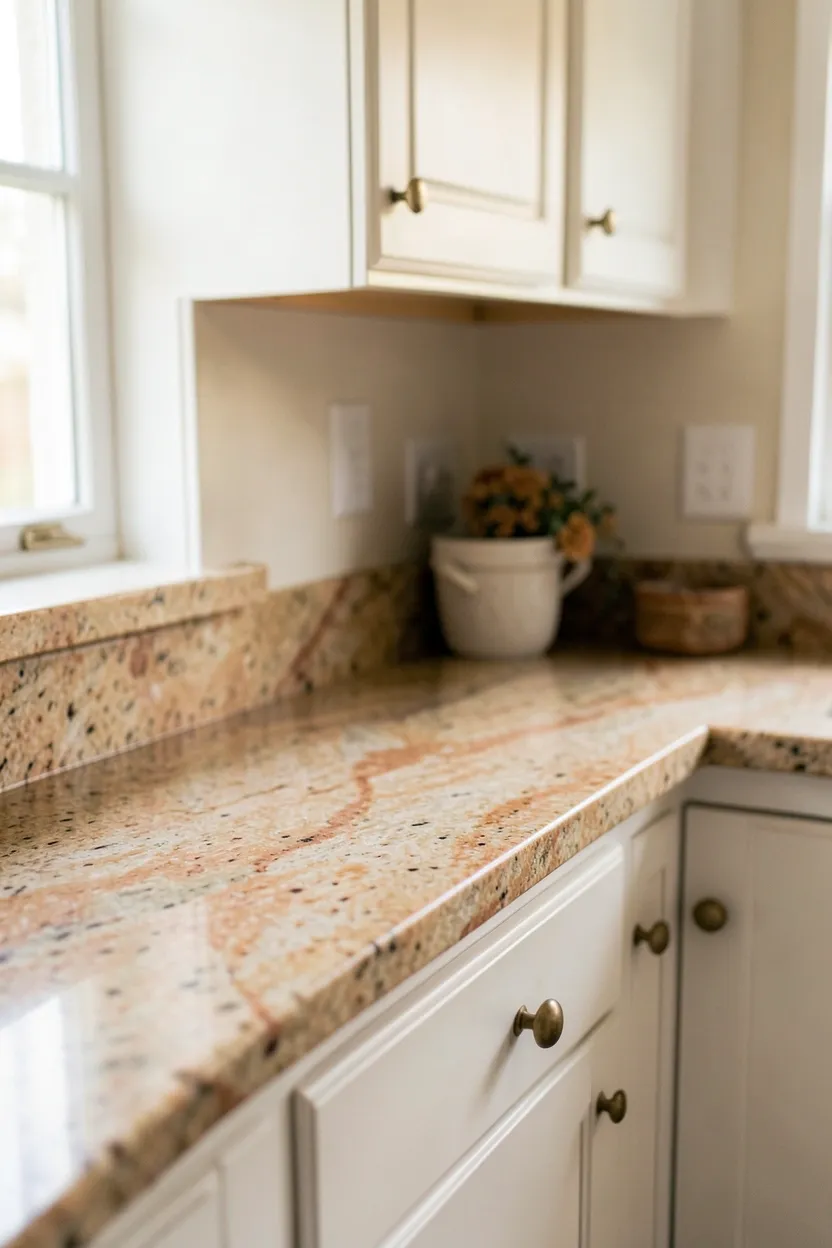
Natural stone countertops in warm earth tones anchor an organic modern kitchen with timeless elegance and unparalleled durability. Materials like honed granite, soapstone, and quartzite in colors ranging from warm beige to deep terra cotta create surfaces that connect your cooking space to the earth. The natural variations in each slab ensure your kitchen remains one-of-a-kind, with subtle patterns and veining that add depth without overwhelming the clean modern aesthetic.
Recommended
Items for this idea
The cool temperature of natural stone makes it ideal for pastry preparation and general cooking tasks, while its natural resistance to heat and scratches means it can handle daily use with minimal maintenance. Unlike synthetic materials that look identical across installations, each stone countertop develops a unique patina over years of use, telling the story of your family's culinary journey. Common mistake: choosing polished finishes that show every scratch and fingerprint—opt for honed or leathered finishes instead.
Placement note: Position your stone countertops to receive natural light, which enhances the natural veining and creates dynamic shadows throughout the day.
Tips
- Do: Seal stone countertops annually to maintain resistance to stains and moisture
- Don't: Place hot pans directly on stone despite its heat resistance—use trivets to prevent thermal shock
- Pro: Stone offers superior scratch and heat resistance compared to many alternatives
- Con: Some stones like marble require more maintenance than engineered materials
- Fix: If scratches occur, professional polishing can restore the surface to near-original condition
What this gives you: Durable, beautiful surfaces that increase your home's value while connecting you to natural materials.
3. Open Shelving with Raw Wood Accents
Open shelving with raw wood accents transforms kitchen storage into an opportunity for display and natural texture connection. Floating shelves crafted from reclaimed or live-edge wood provide warmth and visual interest while making everyday items accessible and beautiful. This approach removes upper cabinet bulk, creating an airy, spacious feel that's particularly valuable in smaller kitchens or open-concept layouts.
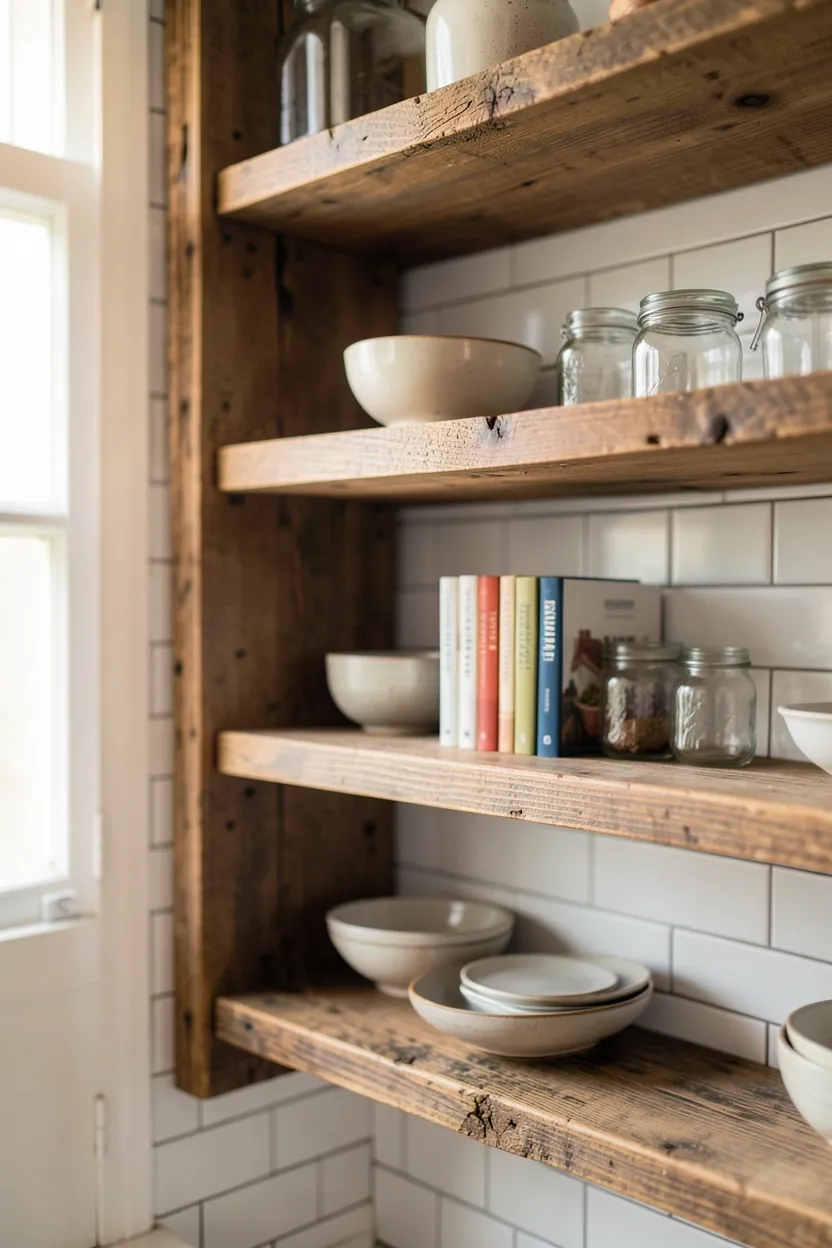
The raw wood grain adds organic warmth that contrasts beautifully with modern subway tile backsplashes or sleek stainless steel appliances. You can display pottery, cookbooks, and frequently used ingredients, turning storage into a curated design element. Unlike closed cabinets that hide everything, open shelving encourages organization and creates visual rhythm with varied heights and textures of displayed items. Position shelves at eye level for maximum impact and easy access to daily essentials.
Tips
- If you struggle with organization, keep 80% of items hidden and display only the most beautiful or frequently used pieces
- Then arrange items in groups of three for visual balance and easy maintenance
- Incorporate a mix of materials: ceramics, wood cutting boards, and glass jars for texture variety
Rental note: Floating shelves are easily removable and can be taken with you when you move, making this perfect for renters.
What this gives you: A lighter, airier kitchen feel with easy access to items and added natural warmth.
4. Matte Black Hardware Mixed with Natural Elements
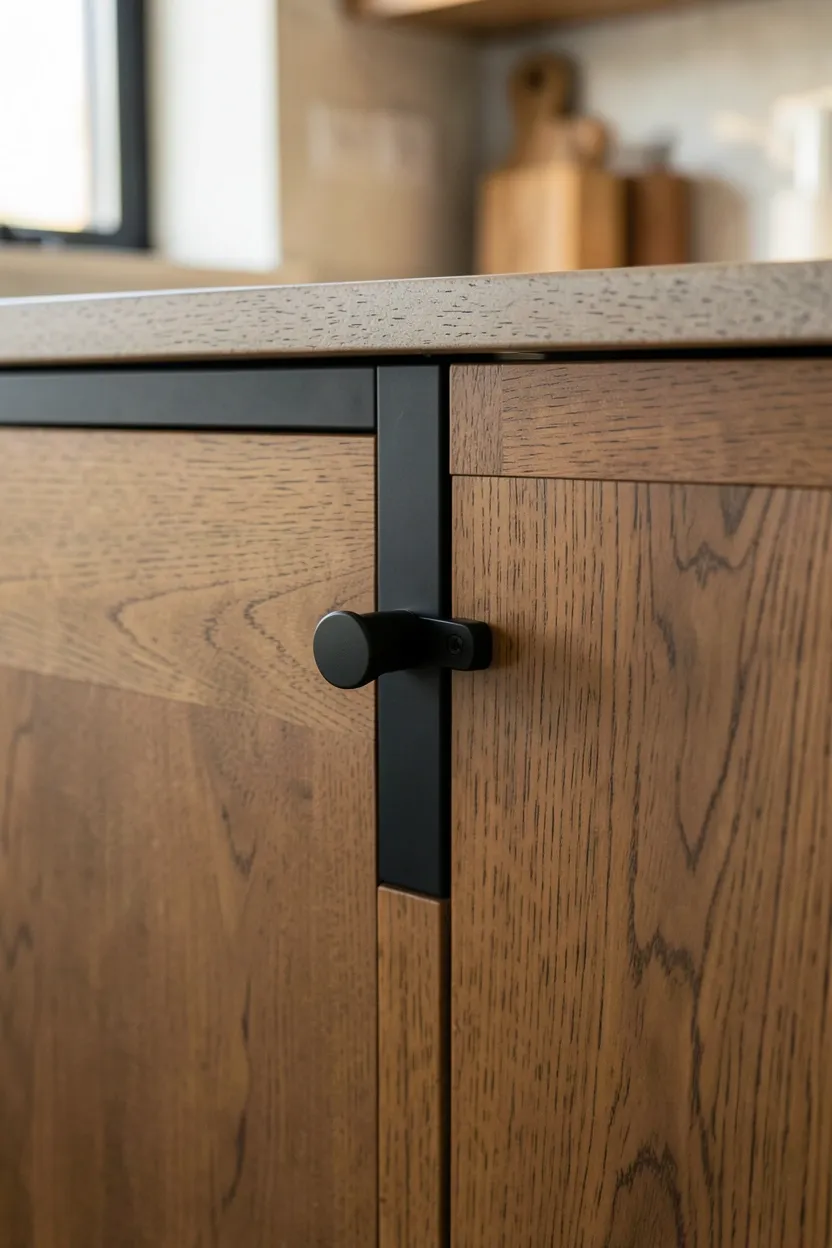
Matte black hardware creates sophisticated contrast against natural wood and stone elements, bringing contemporary edge to an organic modern kitchen without overwhelming the warmth. Cabinet pulls, drawer knobs, faucet fixtures, and lighting components in matte black provide punctuation marks that ground the space and add depth. This neutral finish works seamlessly with warm earth tones and raw materials while offering a modern alternative to traditional brass or chrome options.
Recommended
Items for this idea
The beauty of matte black lies in its ability to recede into the background when needed yet provide sharp definition where it matters most. Unlike glossy finishes that reflect light and draw attention, matte black absorbs light and creates subtle drama. It pairs exceptionally well with live edge wood, natural stone, and organic textures, creating a sophisticated balance between industrial modernity and natural warmth. For smaller kitchens, black hardware creates visual interest without taking up physical space, making the room feel intentionally designed rather than simply functional.
Tips
- Keep black hardware consistent across all elements—faucet, pulls, and lighting—for cohesion
- If budget is tight, start with faucet and cabinet pulls, then add black lighting later
- Test black hardware samples in your actual kitchen lighting before purchasing—matte black reads differently under warm vs cool light
What this gives you: Modern sophistication that highlights natural materials while providing timeless contrast.
5. Large Format Stone Tiles with Organic Veining
Large format stone tiles with organic veining create seamless, expansive surfaces that transform an organic modern kitchen with dramatic natural patterns. Tiles measuring 24x24 inches or larger in materials like marble, quartzite, or travertine minimize grout lines and create the illusion of continuous stone slabs at a fraction of the cost. The organic veining patterns—whether subtle gray streaks or dramatic gold veins—add movement and visual interest while maintaining the clean, uncluttered aesthetic essential to modern design.
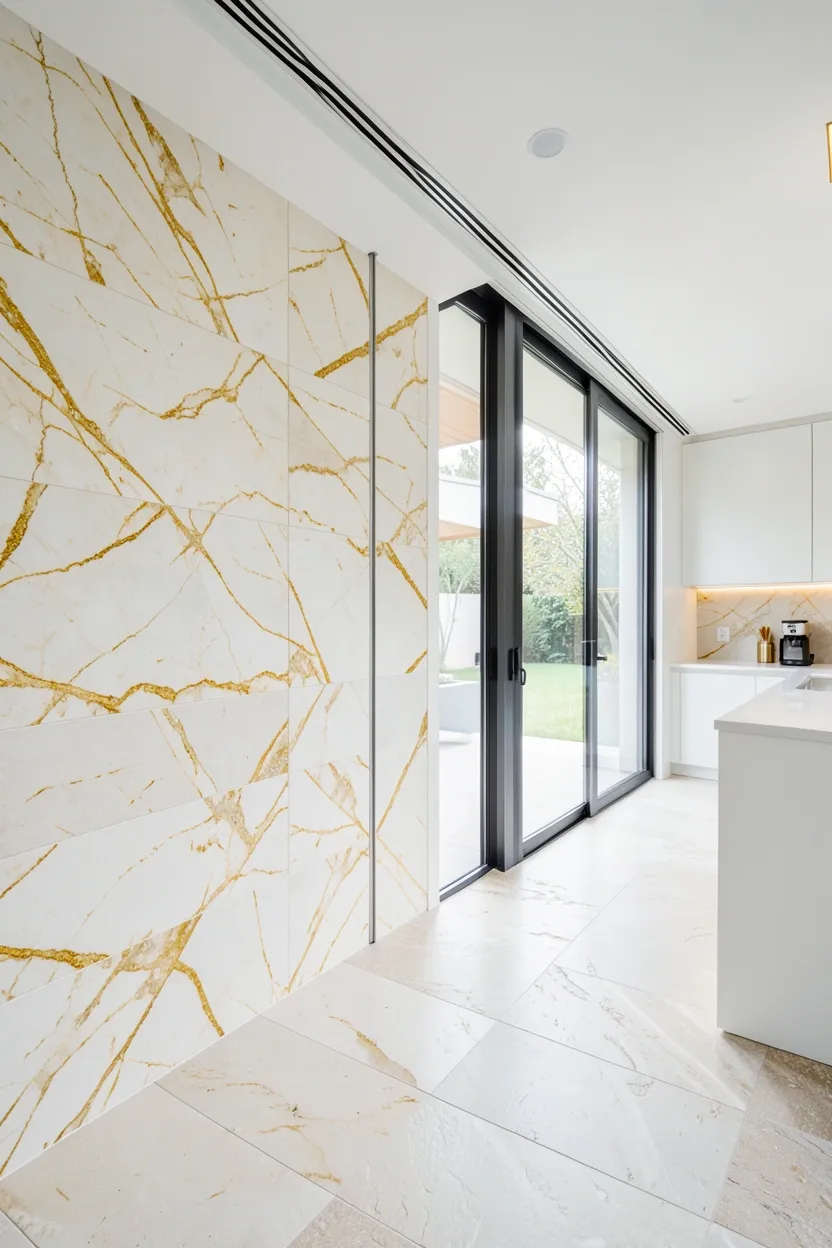
These larger tiles work beautifully as backsplashes, floor surfaces, or even island wrap-around features, creating visual continuity that draws the eye through the space. The natural variation in each tile ensures your kitchen remains unique, with no two installations looking exactly alike. Unlike small-format tiles that create busy patterns, large format tiles provide a calm, sophisticated backdrop that allows other organic elements like wood cabinetry and natural stone countertops to take center stage. Installation considerations include ensuring perfectly level substrates and using appropriate spacers for consistent grout lines.
Tips
- Do: Order 10-15% extra tiles to account for breakage and to select pieces with the most appealing veining patterns
- Don't: Attempt large-format tile installation yourself without experience—imperfections are highly visible
- Consider polished finishes for floors and honed finishes for backsplashes to reduce maintenance demands
Best for: Kitchens with high ceilings and open floor plans where seamless surfaces can be fully appreciated.
What this gives you: Luxurious, continuous surfaces with dramatic natural patterns at a more accessible price point than slab installations.
6. Seamless Indoor-Outdoor Kitchen Flow
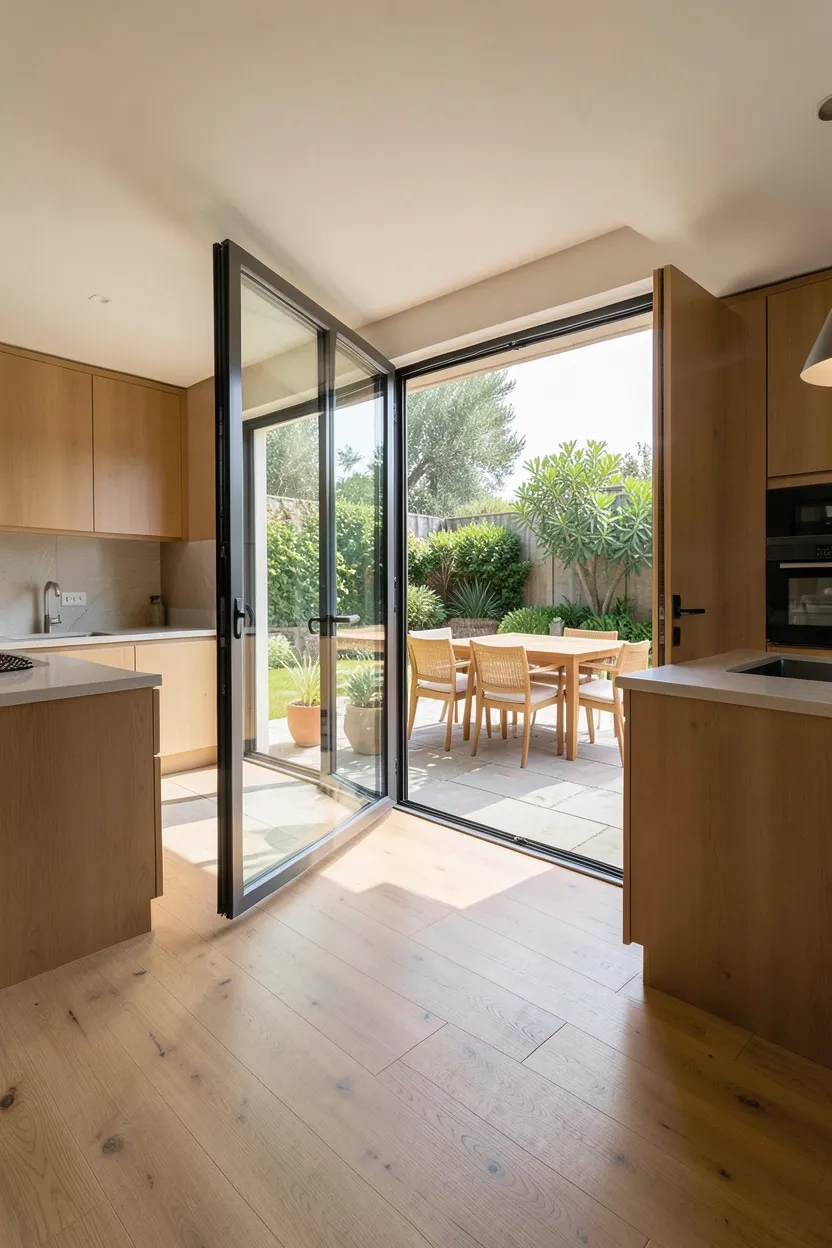
Seamless indoor-outdoor kitchen flow extends organic modern design principles beyond your walls, creating a continuous cooking experience that connects you to nature. This approach uses consistent materials, flooring transitions, and open design elements to blur the boundary between indoor cooking spaces and outdoor entertaining areas. Floor-to-ceiling glass doors, sliding panels, or folding walls allow you to expand your usable kitchen space during warmer months while maintaining the modern aesthetic year-round.
Recommended
Items for this idea
The connection to outdoor spaces brings natural light, fresh air, and views into your daily cooking routine, transforming meal preparation into a more mindful experience. By extending the same flooring materials or complementary natural stone from indoor to outdoor areas, you create visual continuity that makes the entire space feel larger and more cohesive. Common mistake: neglecting outdoor kitchen functionality—ensure proper electrical, plumbing, and weather-resistant materials for a truly functional extension of your indoor space.
Tips
- If you lack outdoor space, create indoor-outdoor flow with large windows and a balcony or patio access point
- Then incorporate potted herbs or small vertical gardens near the transition area to blur boundaries
- Consider installing a pass-through window for easy service between indoor and outdoor entertaining areas
What this gives you: Expanded entertaining potential and daily connection to nature during cooking routines.
7. Biophilic Design with Integrated Plants
Biophilic design with integrated plants brings living nature directly into your organic modern kitchen, creating a space that breathes and evolves. Strategic placement of plants—whether hanging herb gardens, integrated planter boxes, or large potted specimens—improves air quality, reduces stress, and adds dynamic visual interest. This approach recognizes humans' innate connection to nature and brings the outdoors inside through living elements that change with seasons.
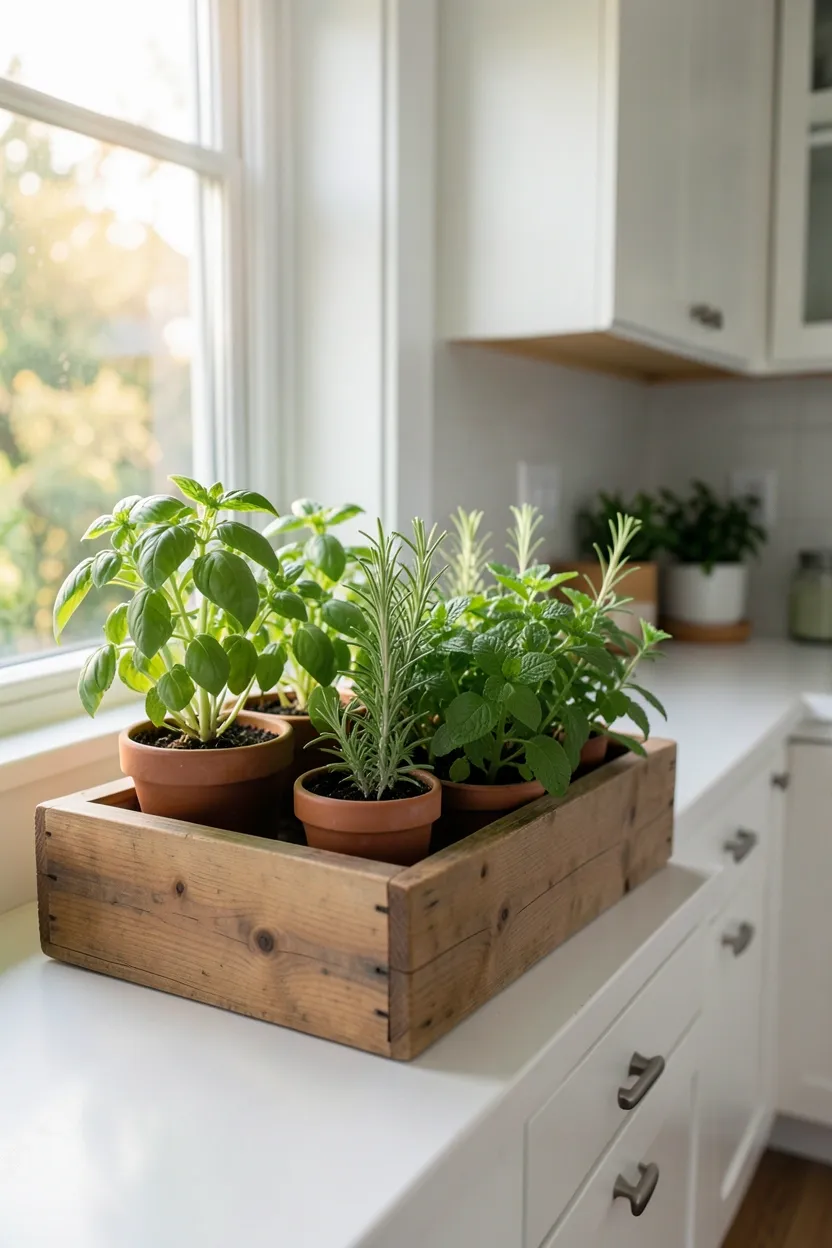
Herb gardens positioned near windows or above sinks provide fresh ingredients within arm's reach while adding lush greenery that softens hard surfaces. Large statement plants in corners create natural room dividers and add vertical interest, while smaller succulents or trailing ivies on open shelves bring life to storage areas. Unlike artificial plants that never change, real plants introduce movement, natural scents, and the satisfaction of nurturing living things alongside your culinary pursuits. Choose low-maintenance varieties like pothos, snake plants, or ZZ plants for beginners, or edible herbs for functional integration.
Tips
- Group plants with similar light and water requirements together for easier maintenance
- Use decorative pots or planters that complement your kitchen's natural material palette
- Incorporate grow lights above herb gardens to ensure adequate light year-round
Rental note: Potted plants are perfect for renters—no installation required, and you can take them with you.
What this gives you: Improved air quality, reduced stress, and fresh herbs at your fingertips while adding living beauty.
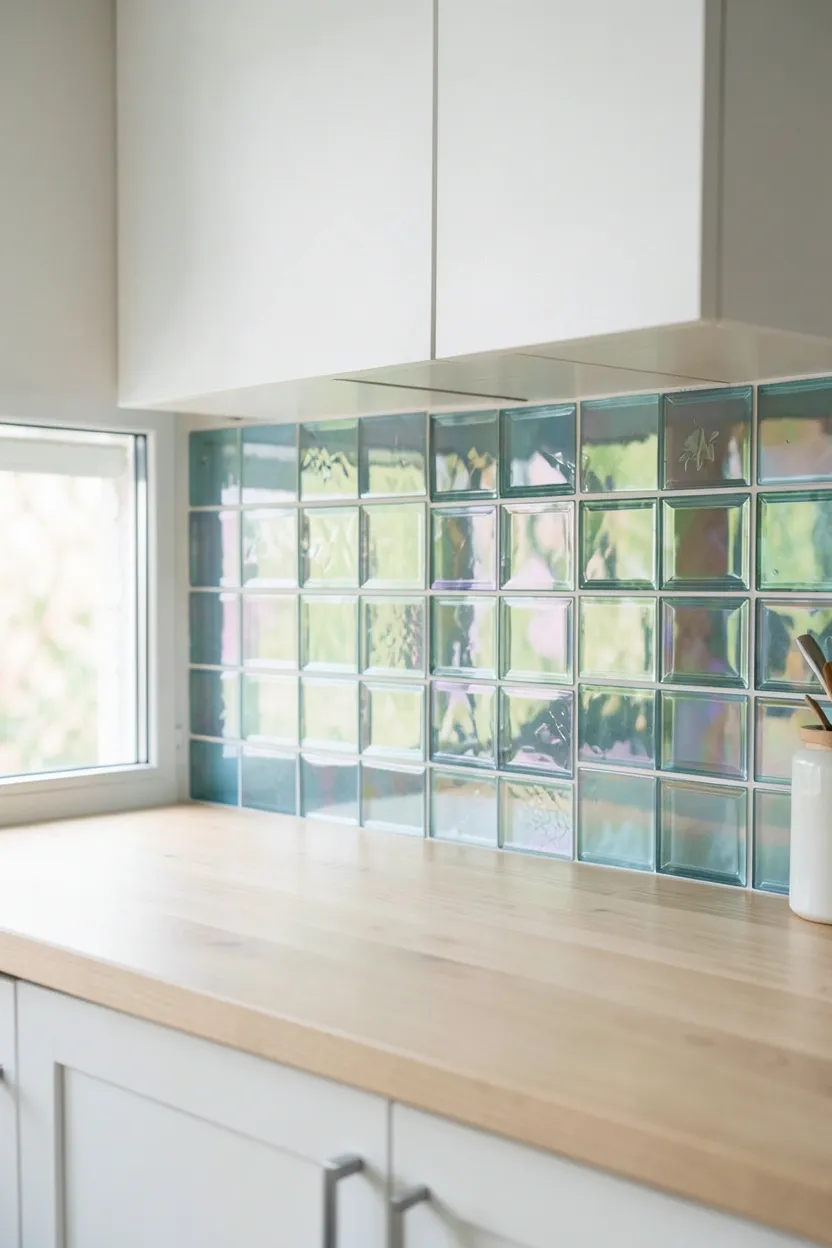
8. Recycled Glass Backsplash with Depth
Recycled glass backsplash tiles with depth and dimension offer an eco-friendly alternative that transforms light and adds mesmerizing visual interest to an organic modern kitchen. These tiles, made from post-consumer glass that would otherwise end up in landfills, come in various finishes including iridescent, frosted, or clear varieties that catch and reflect natural light throughout the day. The sustainable material choice aligns perfectly with organic modern principles while providing a contemporary alternative to traditional ceramic or stone backsplashes.
Recommended
Items for this idea
The translucency of glass creates visual depth that changes with lighting conditions, making your kitchen feel dynamic and alive. Unlike opaque materials, recycled glass tiles maintain a sense of airiness and lightness even in smaller kitchens. Positioning these tiles behind the cooktop creates a stunning focal point, while using them as full-wall backsplashes provides continuous visual interest. The eco-friendly nature of recycled glass supports sustainable living practices without sacrificing style or durability. For maximum impact, choose tiles with varying thicknesses or mosaic patterns that play with light and shadow.
Placement note: Install recycled glass tiles in areas that receive direct natural light to maximize their light-refracting properties.
Tips
- Do: Use epoxy grout with recycled glass for water resistance and to complement the glass's translucency
- Don't: Use harsh abrasive cleaners that can scratch the glass surface
- Pro: Glass is non-porous and resists stains better than many natural materials
- Con: Installation requires careful handling to prevent chipping or breakage
- Fix: Small scratches can often be polished out with glass-specific buffing compounds
What this gives you: Sustainable, light-enhancing surfaces that transform your kitchen with eco-friendly beauty.
9. Handmade Ceramic Tiles with Imperfections
Handmade ceramic tiles with subtle imperfections celebrate the beauty of craftsmanship and organic variation, adding authentic character to an organic modern kitchen. These tiles, created by artisans rather than mass-produced by machines, feature slight variations in color, size, and texture that create visual depth and tell a story of human touch. The intentional imperfections—small irregularities, uneven edges, or natural color shifts—connect your kitchen to traditional craft traditions while maintaining modern lines.
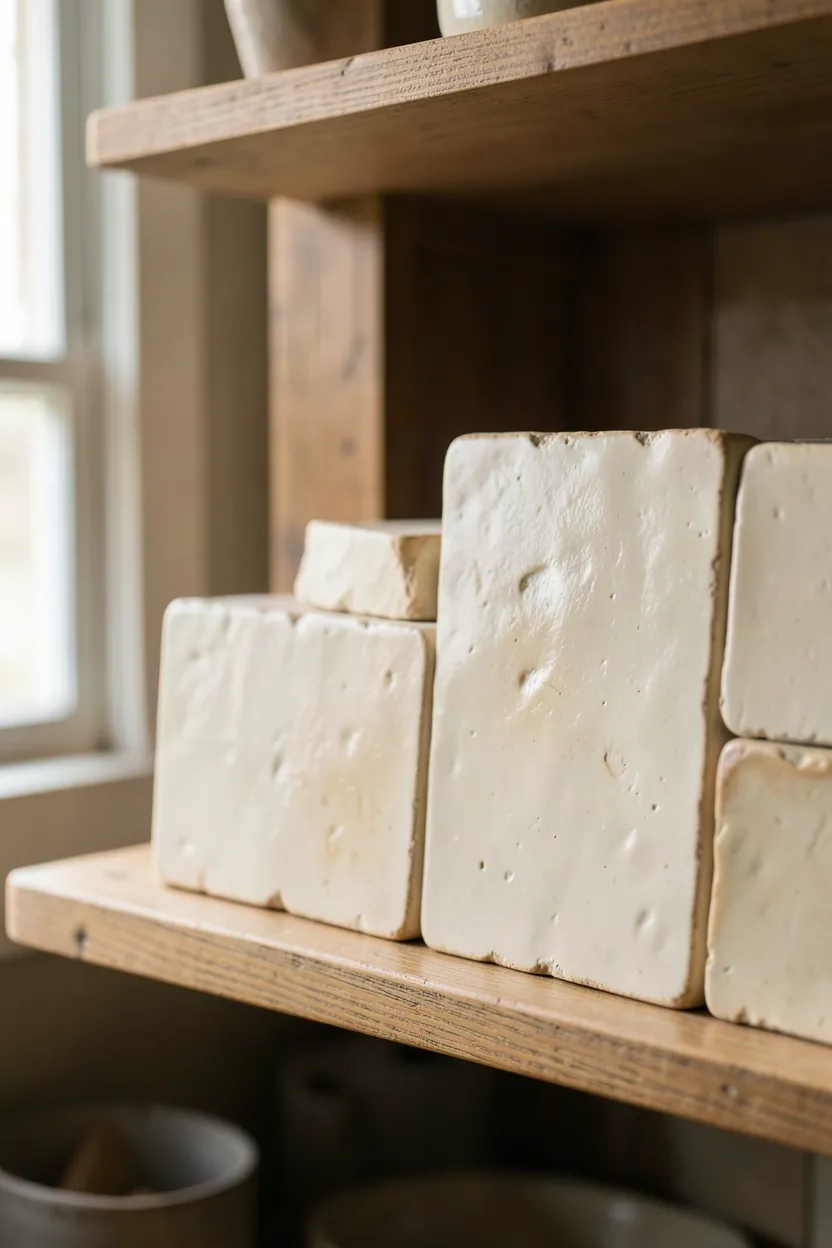
The tactile quality of handmade tiles adds warmth and sensory engagement that machine-produced tiles lack, with each piece offering unique character under your fingertips. These tiles work beautifully as backsplashes, accent walls, or even floor medallions, creating focal points that feel lived-in and authentic. Unlike perfectly uniform tiles that can feel sterile, handmade ceramics bring a sense of history and humanity to modern spaces. The slight variations catch light differently, creating subtle movement and preventing visual monotony. Support local artisans by sourcing from regional ceramicists, or explore internationally sourced tiles for global craft connections.
Tips
- If you want a more uniform look, order extra tiles and select pieces with minimal variation
- For authentic character, embrace the variations and don't try to arrange tiles by shade or size
- Request samples before finalizing your order—handmade tiles vary significantly between batches
Best for: Kitchens seeking warmth, authenticity, and connection to craft traditions rather than clinical perfection.
What this gives you: Unique, character-rich surfaces that celebrate craftsmanship and human touch in modern spaces.
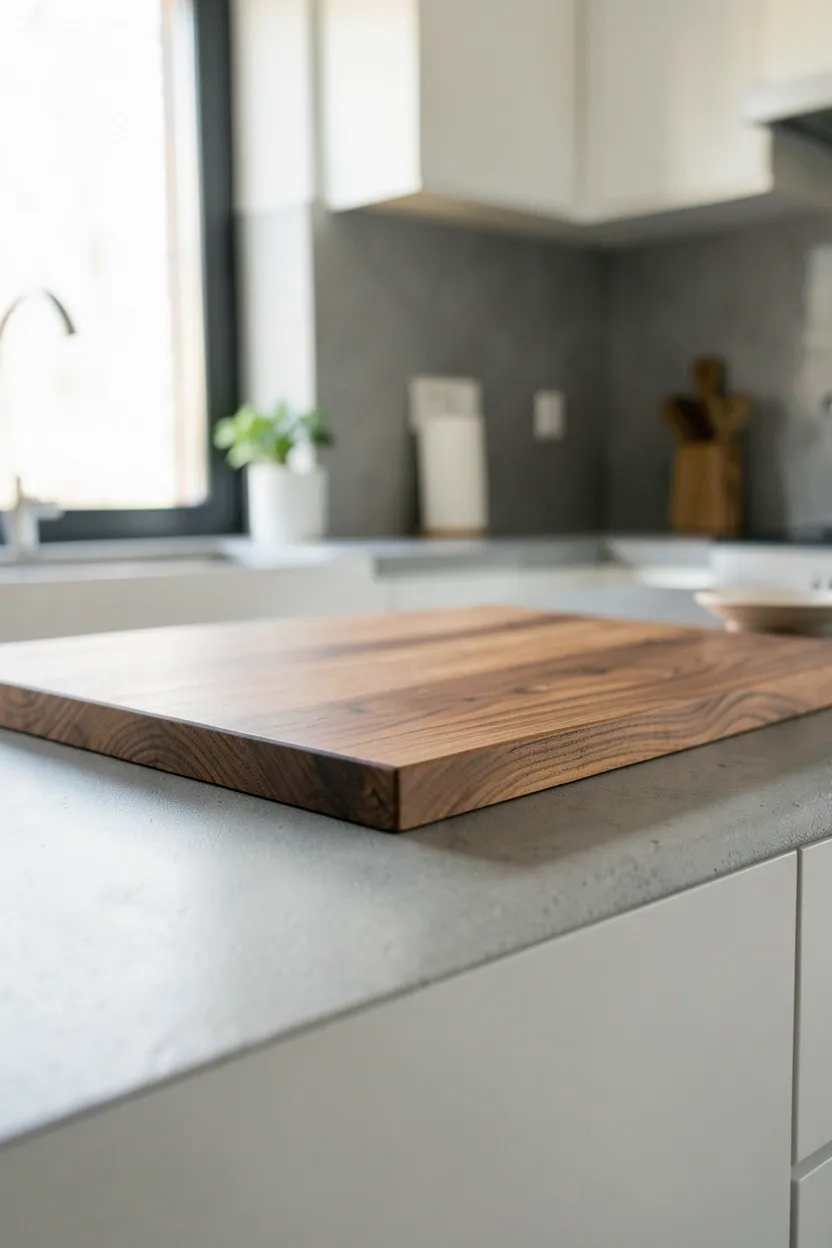
10. Concrete Countertops with Wood Accents
Concrete countertops with integrated wood accents create a striking industrial-meets-organic contrast that defines contemporary organic modern kitchen design. The cool, smooth surface of concrete provides durability and modern sophistication, while wood elements—whether edge details, inlays, or integrated cutting boards—bring natural warmth and softness. This material combination offers exceptional functionality, with concrete resisting heat and scratches while wood provides areas for food preparation that won't dull knife blades.
Recommended
Items for this idea
The versatility of concrete allows for custom shapes, integrated sinks, and seamless transitions that create clean, continuous surfaces throughout your kitchen. Unlike natural stone that's limited by slab dimensions, concrete can be poured to fit any space exactly. Wood accents can be positioned where they make the most functional sense—like a built-in cutting board next to the prep area or a warm edge detail where you frequently lean during cooking. Common mistake: neglecting proper sealing—concrete requires regular sealing to prevent staining and maintain its appearance. The wood elements need food-safe finish and occasional oiling to maintain their beauty and function.
Tips
- Choose concrete colors that complement your wood accents rather than compete—warm grays work beautifully with oak or walnut
- Position wood elements in areas that won't see excessive water exposure to prevent warping or damage
- Consider adding integrated trivets or hot pad areas in the concrete to protect wood accents from heat damage
What this gives you: Durable, custom surfaces that balance industrial modernity with organic warmth and superior functionality.
11. Reclaimed Wood Island with Modern Lighting
A reclaimed wood island serves as the stunning centerpiece of an organic modern kitchen, combining environmental consciousness with sophisticated design. Sourced from old barns, factories, or warehouses, reclaimed wood carries history in its grain patterns, nail holes, and weathered patina that new lumber simply can't replicate. This sustainable choice reduces demand for new timber while creating a conversation piece that anchors your kitchen with authentic character and warmth.
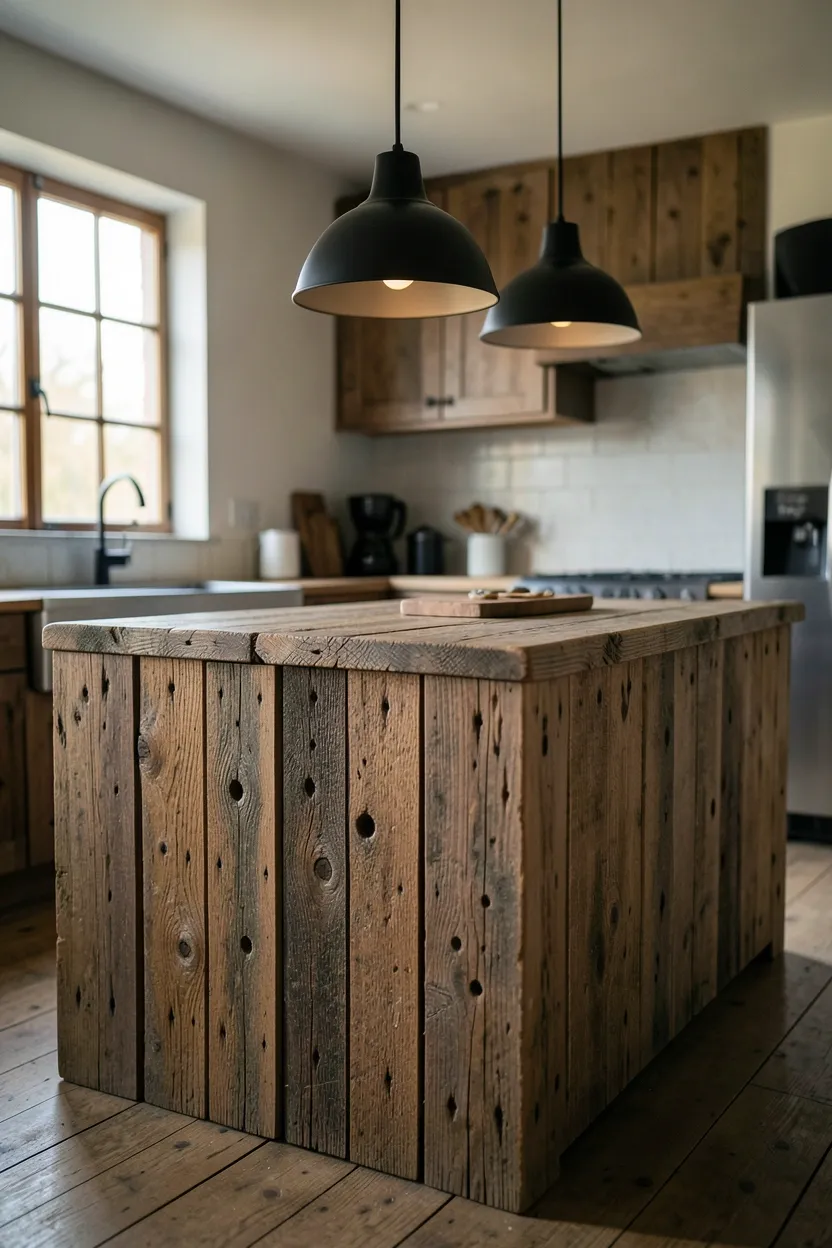
Modern lighting suspended above the island creates perfect contrast—sleek pendant lights or linear fixtures in matte black or brushed brass provide contemporary punctuation against the wood's aged beauty. This juxtaposition embodies the organic modern aesthetic, celebrating both natural material history and current design innovation. The island becomes a multifunctional hub: prep station, dining area, and social gathering point. Unlike brand-new butcher block islands that lack character, reclaimed surfaces develop new stories while honoring their past. Each imperfection tells a story, from saw marks and knots to mineral stains that create unique patterns.
Tips
- If reclaimed wood is rough, consider a live edge on one side for authenticity with smooth surfaces on others for functionality
- Then protect the surface with food-safe finish that maintains the wood's natural appearance while providing durability
- Position island lighting at different heights to create visual interest and ensure adequate task lighting
Rental note: A portable reclaimed wood cart or island on casters can provide similar warmth without permanent installation.
What this gives you: An environmentally responsible focal point with authentic character and multifunctional utility.
12. Neutral Palette with Natural Texture Layers
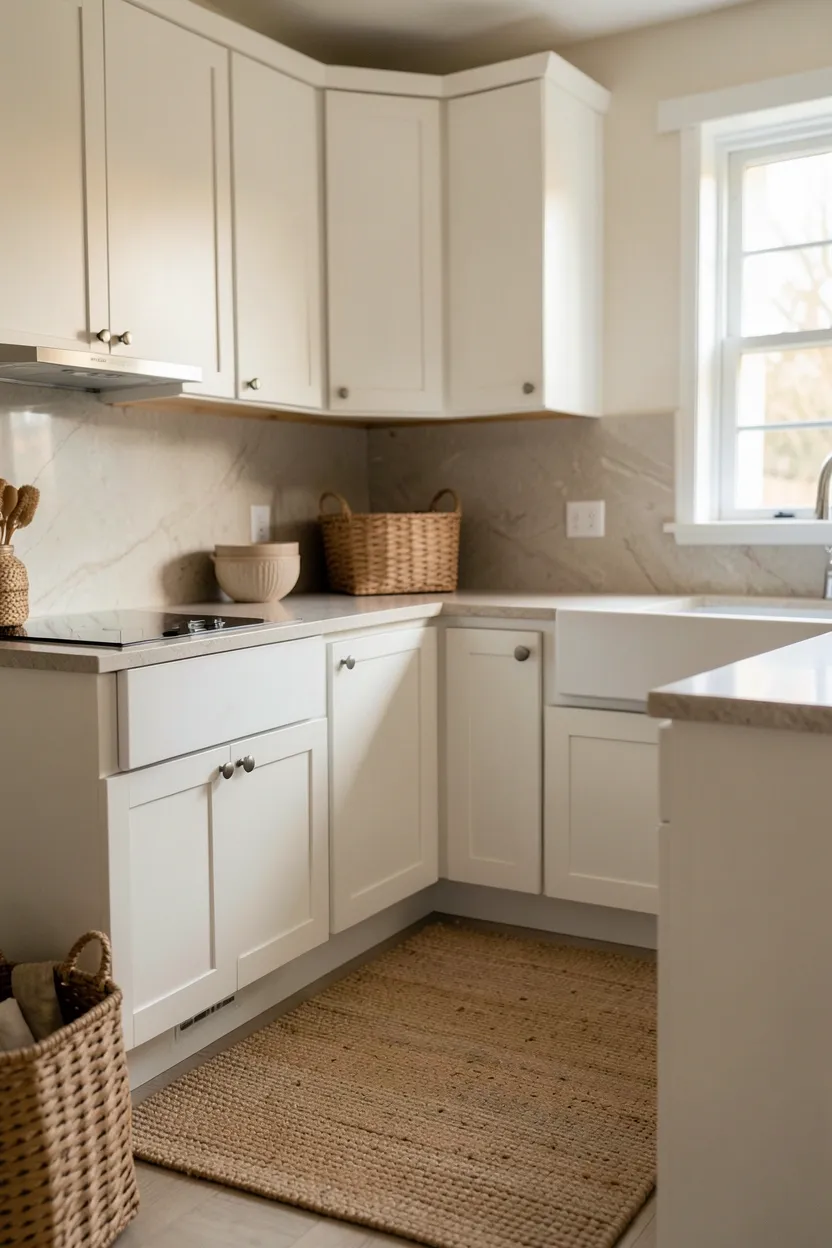
A neutral palette layered with natural textures creates depth and sophistication in an organic modern kitchen without overwhelming the space with color. This approach uses variations of white, cream, beige, gray, and soft browns as your foundation, then builds visual interest through texture rather than hue. The result is a serene, cohesive space that feels simultaneously modern and warm, sophisticated and approachable.
Recommended
Items for this idea
Texture layers include smooth natural stone countertops, matte wood cabinetry, honed tile surfaces, woven baskets, and linen textiles—all in complementary neutral tones. This creates visual complexity that prevents the space from feeling flat or monotonous while maintaining a calm, unified aesthetic. Unlike kitchens that rely on bold colors for impact, texture-based neutrals remain timeless and adaptable to changing design trends. The neutral foundation allows other organic elements like greenery, natural wood grain, and stone veining to take center stage. Light plays beautifully across different textures, creating changing visual interest throughout the day without requiring bright colors.
Placement note: Position the most textured elements near natural light sources to maximize their visual impact.
Tips
- Do: Include at least three different texture types in each zone for visual interest
- Don't: Mix too many different neutral undertones—stick to warm or cool family for cohesion
- Test large texture samples in your actual kitchen before committing—materials look different in your specific lighting
What this gives you: A timeless, sophisticated kitchen that feels calm and cohesive while offering rich visual depth.
13. Integrated Appliances with Hidden Handles
Integrated appliances with hidden handles create seamless, uninterrupted surfaces that embody the clean lines essential to organic modern kitchen design. Refrigerators, dishwashers, and ovens clad in matching cabinetry blend completely into surrounding cabinets, eliminating visual disruption and creating walls of continuous material. This approach allows the beauty of natural wood, stone, or other materials to take center stage without interruption by appliance faces.
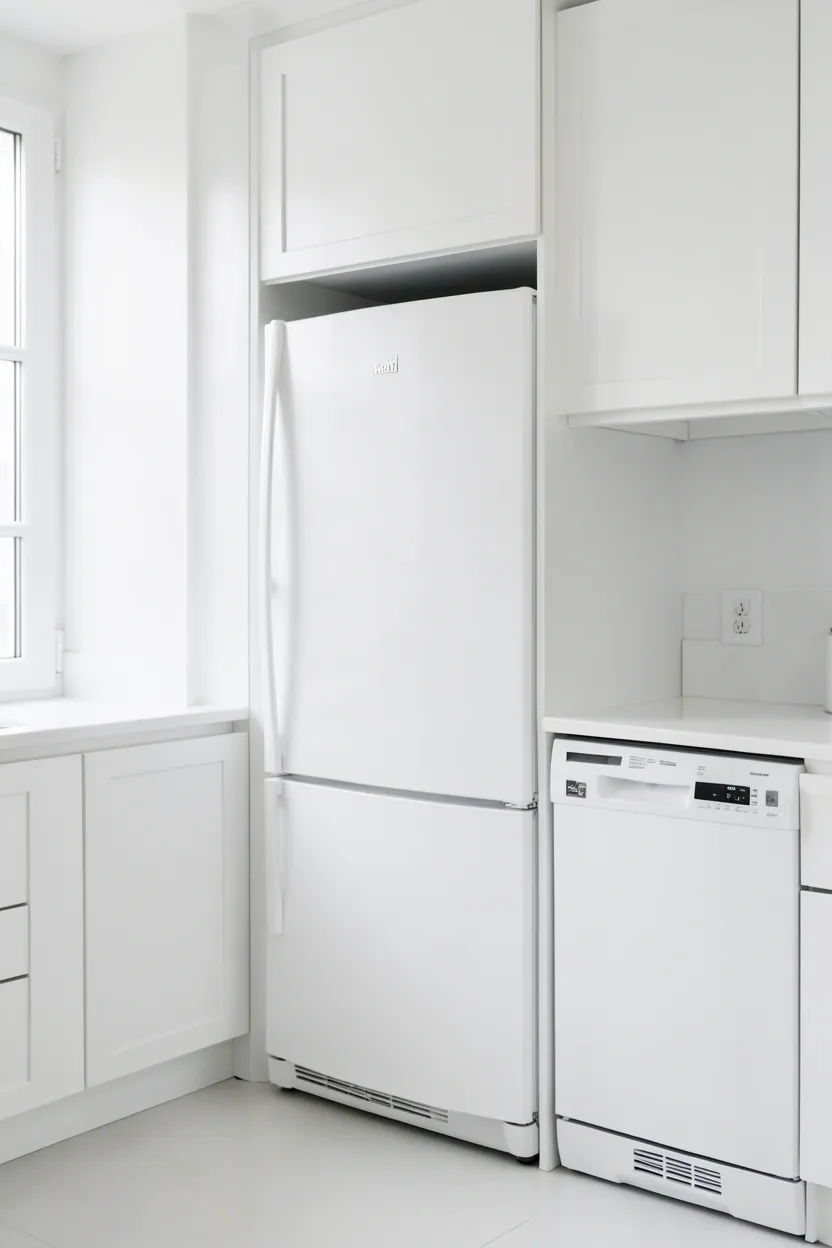
Push-to-open mechanisms or integrated channel pulls provide access without protruding hardware, maintaining the sleek, unbroken aesthetic. Unlike traditional appliances that announce their presence with handles and contrasting materials, integrated models disappear into the design, creating a more sophisticated, high-end appearance. This approach is particularly effective in open-concept kitchens where the kitchen functions as part of a larger living area. The seamless look reduces visual clutter and creates a calmer, more cohesive space. While integrated appliances often come at a premium price point, the investment pays off in both aesthetic impact and home value.
Tips
- If budget limits full integration, start with the refrigerator—it has the largest visual impact
- Then gradually replace other appliances as budget allows, maintaining consistent panel styles
- Choose appliances with similar panel depths to ensure flush, seamless installation
Budget note: Panel-ready appliances cost 20-40% more than standard models, but create significantly higher perceived value.
What this gives you: Seamless, sophisticated surfaces that let natural materials shine without visual interruption.
14. Natural Fiber Rugs Under Kitchen Island
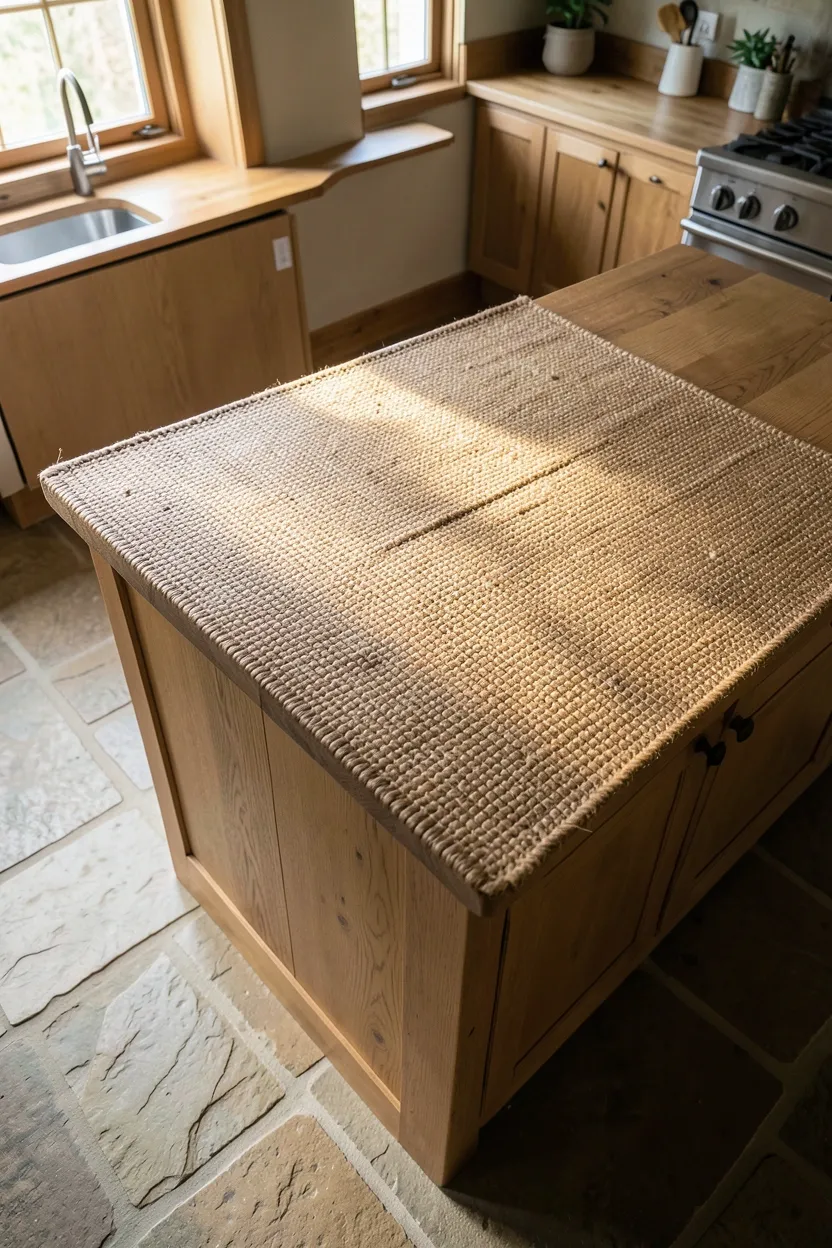
Natural fiber rugs positioned under the kitchen island bring organic warmth and texture to your cooking space while defining the island's zone within the larger kitchen. Materials like jute, sisal, seagrass, or hemp offer durability that withstands kitchen traffic while adding natural, earthy tones that complement wood, stone, and other organic elements. These rugs create visual anchor points and add softness underfoot in spaces dominated by hard surfaces.
Recommended
Items for this idea
The natural variation in fiber color and texture adds visual interest without introducing additional colors, maintaining the neutral, sophisticated palette characteristic of organic modern design. Unlike synthetic rugs that can look cheap or out of place, natural fibers feel authentic and connected to the earth. The rug serves practical purposes too: protecting flooring from chair scuffs, reducing noise, and adding comfort during long cooking sessions. Common mistake: choosing a rug too small for the space—ensure it extends at least 18-24 inches beyond all sides of the island for proper proportion. Consider natural binding options that complement your kitchen's material palette.
Tips
- Choose natural fiber materials based on your lifestyle—sisal is most durable, jute offers softer texture, seagrass resists moisture best
- If spills are a concern, apply a natural fiber protectant or choose a rug pad with moisture barrier
- Rotate rugs every 3-6 months to ensure even wear and prevent traffic patterns from developing
What this gives you: Defined kitchen zones with natural warmth, texture, and practical protection for your flooring.
15. Statement Lighting with Natural Materials
Statement lighting crafted from natural materials creates focal points that bring organic warmth and artisanal character to your modern kitchen. Fixtures featuring rattan, bamboo, driftwood, woven natural fibers, or hand-blown glass in earthy tones serve as functional art pieces that elevate the space while maintaining connection to natural materials. These lighting elements draw the eye upward, adding vertical interest and creating balance with horizontal surfaces like countertops and cabinetry.
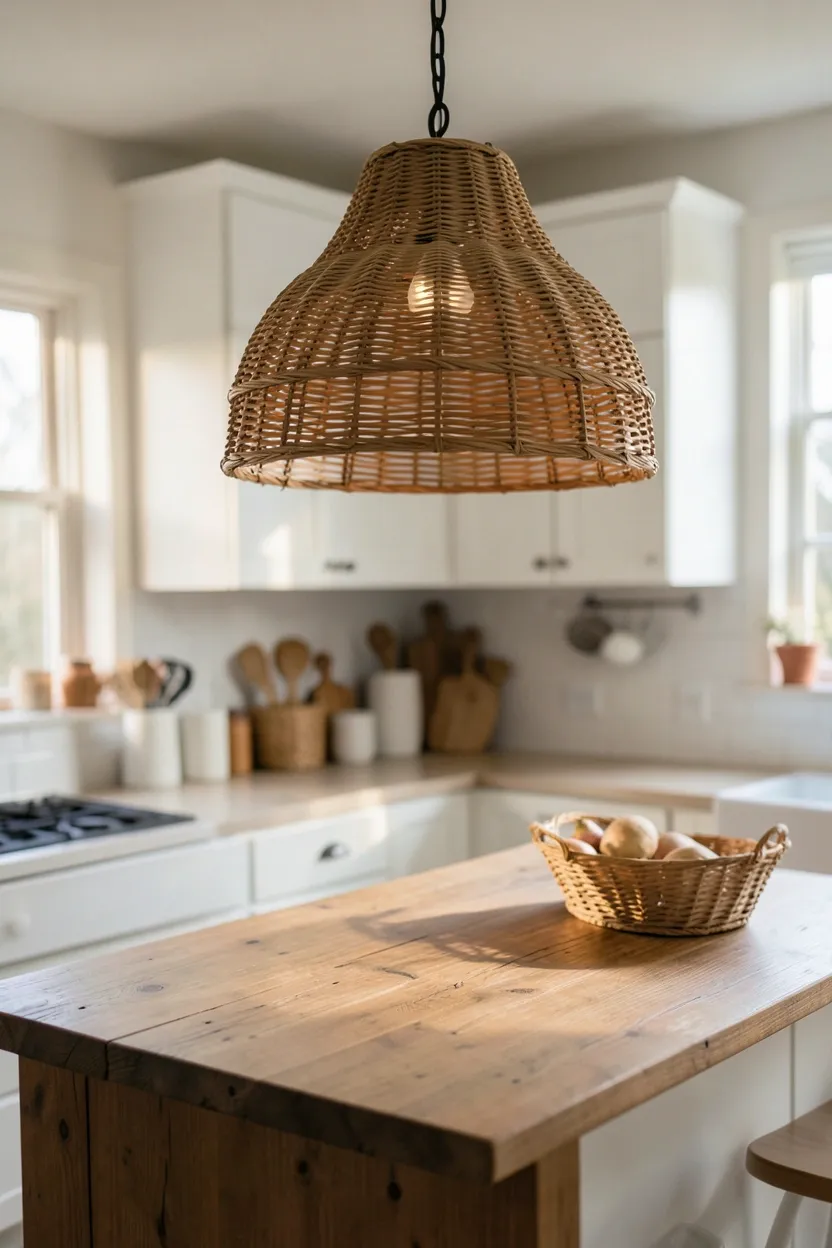
The scale and presence of statement lighting transforms the kitchen from purely functional space to designed environment, with natural materials introducing warmth and organic forms that soften modern lines. Large woven pendant lights over islands create dramatic presence, while smaller fixtures with natural elements above prep areas provide both task lighting and visual interest. Unlike generic metal fixtures that can feel industrial or cold, natural material lighting brings artisanal craftsmanship and tactile beauty. The interplay of light through natural materials creates interesting shadows and adds dynamic quality to the space. Consider fixtures with adjustable height for flexibility or dimming capability for mood control.
Tips
- Scale lighting to your island size—one large fixture or two smaller pendants, ensuring the bottom is 30-36 inches above the counter
- Mix natural materials with other fixtures in the space for cohesive but varied texture
- Consider the material's light transmission—woven rattan creates beautiful shadows, solid wood offers warm ambient glow
Best for: Kitchens with high ceilings or open plans where statement lighting can be fully appreciated from multiple angles.
What this gives you: Stunning focal points that add warmth, character, and artisanal beauty to your kitchen.
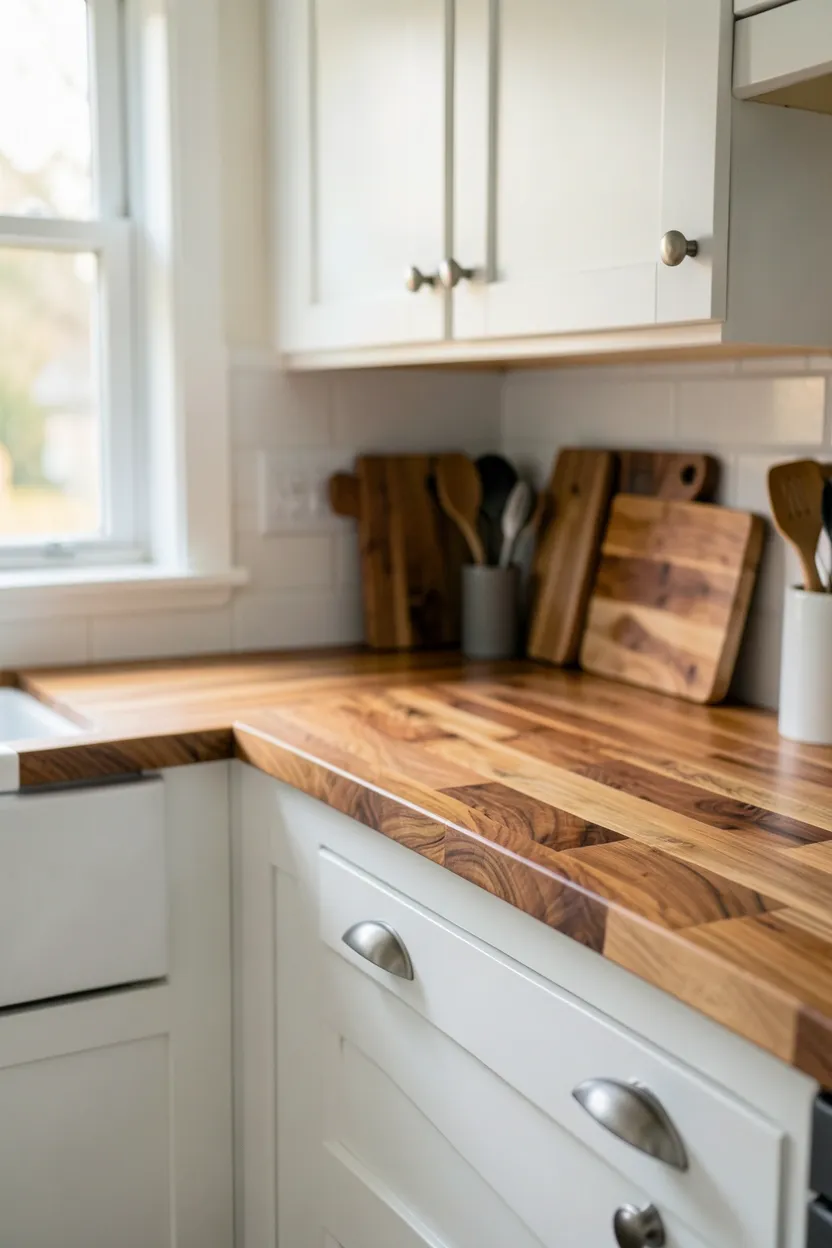
16. Butcher Block Countertops on White Cabinets
Butcher block countertops paired with crisp white cabinetry create a classic organic modern combination that balances warmth and freshness. The natural wood tones of butcher block add organic warmth and character that prevents white cabinets from feeling clinical or sterile. This material combination offers both practical benefits—wood provides forgiving surfaces for food preparation while white cabinetry creates a sense of spaciousness and cleanliness.
Recommended
Items for this idea
The natural grain patterns in butcher block create visual interest and movement, with each countertop being unique based on wood species and cut style. Woods like maple, walnut, cherry, or oak offer different color tones and grain patterns, allowing you to customize the warmth level of your space. Unlike stone countertops that can feel cold and unforgiving, butcher block offers a softer, warmer surface that's gentle on dropped items and comfortable to the touch. The wood develops a rich patina over years of use, telling the story of your kitchen's life. Regular oiling maintains the wood's appearance and water resistance, while occasional sanding removes scratches and restores the surface.
Tips
- Do: Use food-safe mineral oil monthly to maintain the wood's moisture resistance and appearance
- Don't: Place hot pots directly on butcher block—use trivets or hot pads to prevent scorch marks
- Consider edge-grain butcher block for durability and traditional appearance or face-grain for prominent grain patterns
Rental note: Large cutting boards with butcher block appearance can provide similar warmth without permanent installation.
What this gives you: Warm, functional surfaces that develop character over time while providing excellent food preparation space.
17. Floating Shelves with Industrial Brackets
Floating shelves supported by industrial-style brackets create a dynamic visual tension between organic warmth and modern edge that defines contemporary organic design. The shelves themselves—crafted from natural wood with visible grain patterns and natural imperfections—bring warmth and character, while metal brackets in matte black or raw iron provide industrial contrast and structural visual interest. This combination creates architectural detail that draws the eye while providing functional storage.
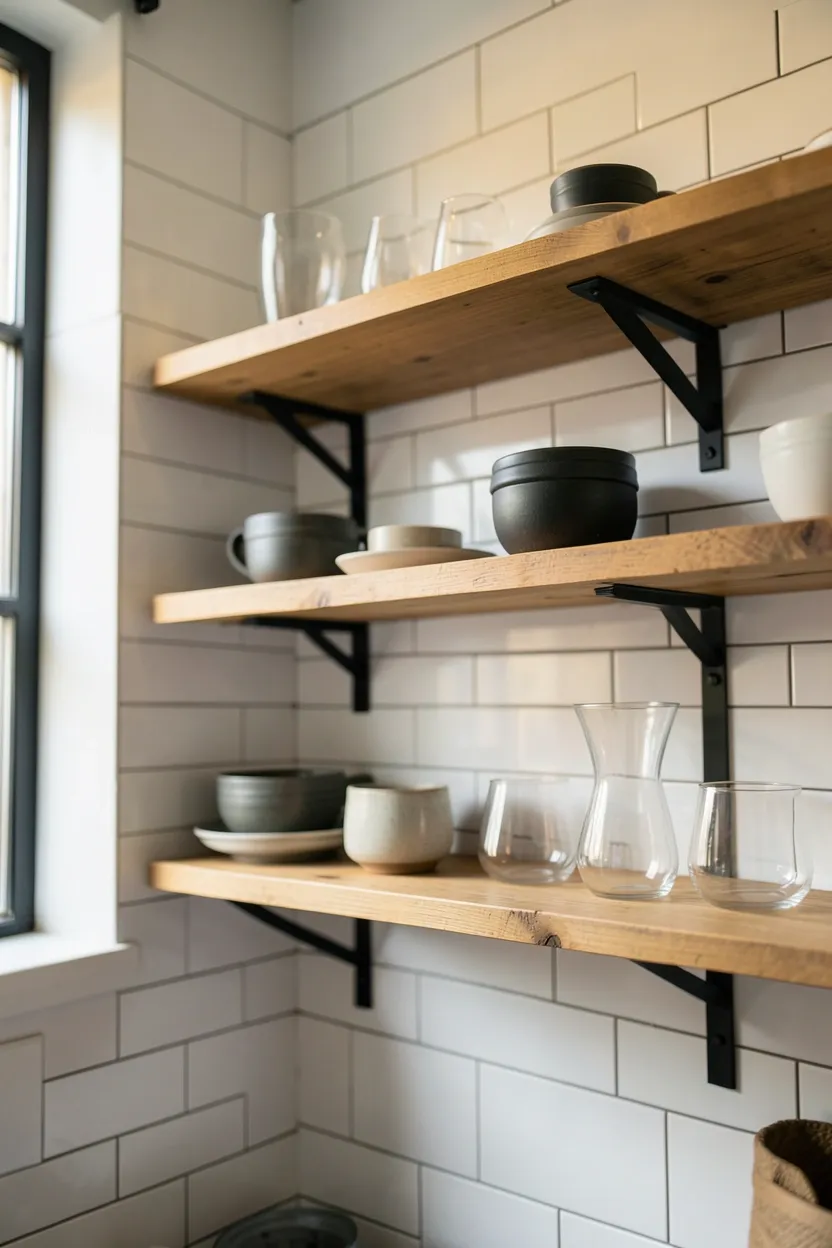
The floating nature of these shelves creates the illusion of lightness and airiness, making walls feel less cluttered than traditional cabinetry. Industrial brackets become design elements themselves, with their raw materials celebrating the beauty of manufacturing processes. Unlike closed cabinets that hide everything, these open shelves encourage curation and display of beautiful items like ceramics, cookbooks, and glassware. The combination works particularly well in kitchens with exposed brick, concrete elements, or other industrial features, creating cohesion while introducing organic warmth through wood materials. Varying shelf heights and bracket styles adds visual interest and breaks up monotony.
Placement note: Install shelves at varying heights to accommodate different item types and create dynamic visual rhythm.
Tips
- Do: Ensure brackets are properly anchored into wall studs for safe load-bearing capacity
- Don't: Overload shelves with heavy items—even properly anchored shelves have weight limits
- Mix bracket styles within the same kitchen for collected-over-time aesthetic rather than matchy-matchy uniformity
What this gives you: Architectural storage solutions that blend industrial edge with organic warmth and visual interest.
18. Warm Wood Floors with Modern Lines
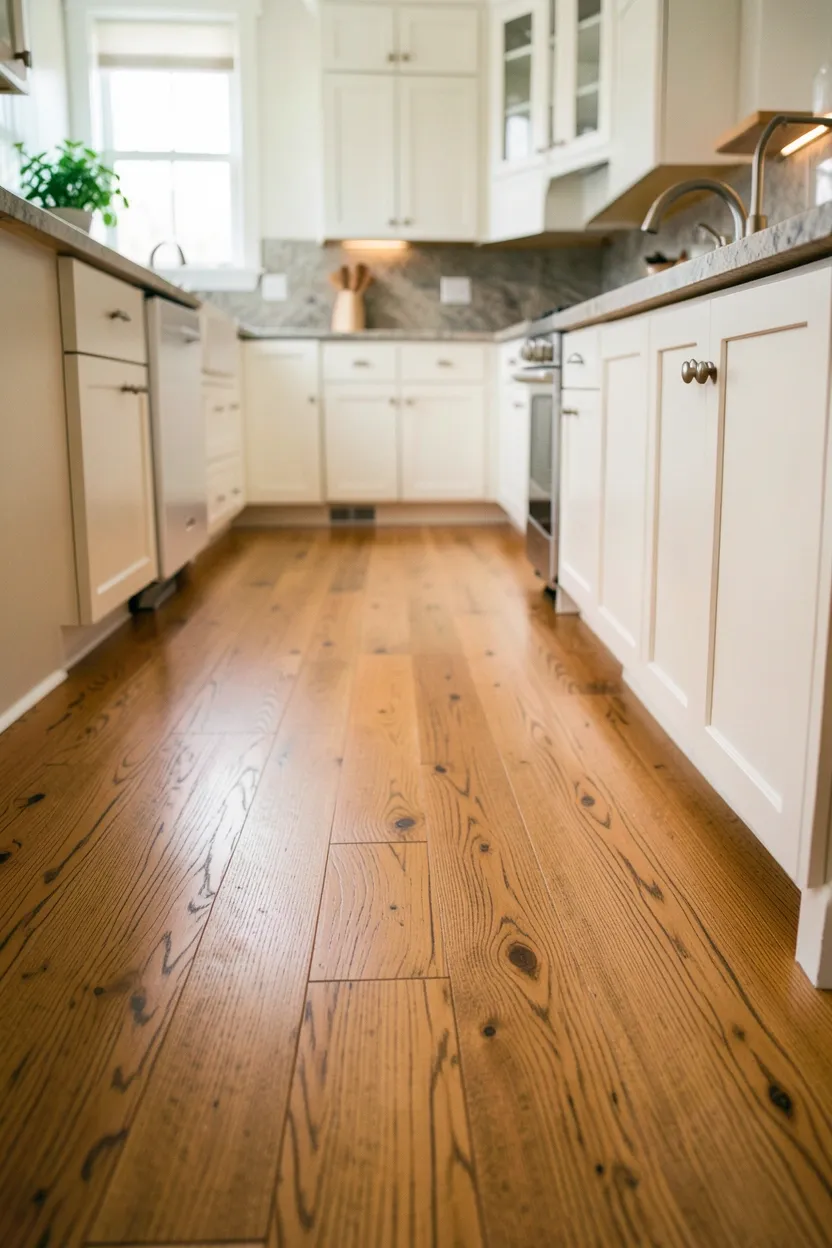
Warm wood flooring with modern, clean lines establishes the foundation for an organic modern kitchen, creating continuous warmth underfoot that connects the space to natural materials. Wide-plank hardwoods in species like oak, walnut, or maple installed with minimal grout lines or tongue-and-groove systems provide expansive surfaces that showcase natural grain patterns while maintaining contemporary sophistication. The flooring serves as both design foundation and functional element, withstanding daily kitchen traffic while adding timeless beauty.
Recommended
Items for this idea
The continuous wood surface creates visual flow throughout the kitchen and adjoining spaces, making the area feel larger and more cohesive. Unlike tile or stone that can feel cold and hard underfoot, wood provides warmth and slight give that's more comfortable during long cooking sessions. Modern installation methods—like wider planks, seamless transitions between rooms, and minimal staining—keep the look contemporary rather than traditional. The natural color variations within each plank add depth and interest without requiring bold colors. Wood's ability to be refinished multiple times ensures lasting beauty and value, making it an investment in both aesthetic and functionality.
Tips
- Choose wider planks (5-7 inches) for modern appearance and fewer seams that can trap dirt
- Select matte or satin finishes rather than high gloss for contemporary aesthetic and better scratch concealment
- Consider engineered wood for kitchens—it offers greater stability against moisture changes while maintaining wood's natural beauty
Best for: Kitchens with open floor plans where flooring continuity creates seamless flow between spaces.
What this gives you: A warm, natural foundation that adds sophistication, comfort, and lasting value to your kitchen.
19. Brass Fixtures on White Cabinets
Brass fixtures on white cabinetry create a sophisticated warmth that elevates organic modern kitchen design with timeless elegance. The warm, golden tones of brushed or unlacquered brass provide beautiful contrast against crisp white cabinets while introducing a material that develops character over time. This combination offers the light, airy feel of white cabinetry while adding warmth and sophistication that prevents the space from feeling sterile or cold.
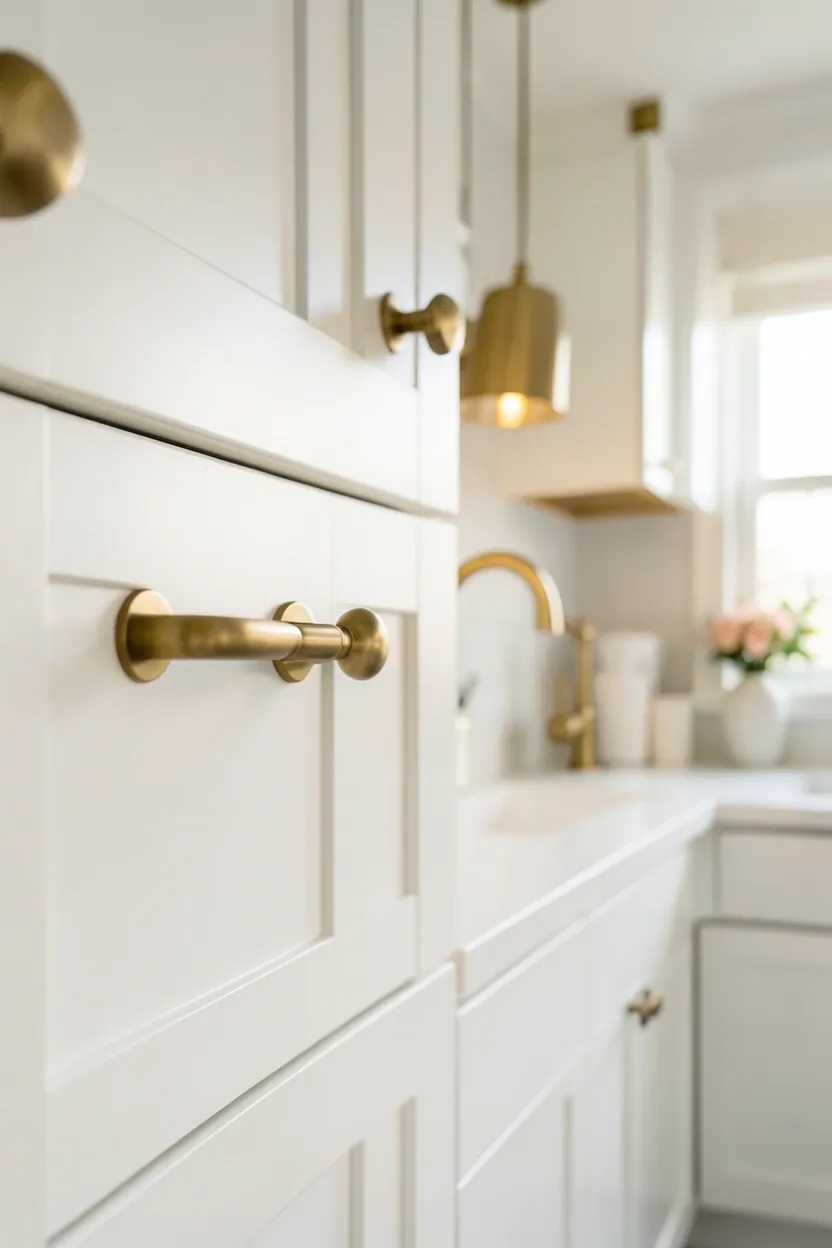
The living finish of unlacquered brass develops a rich patina that tells the story of your kitchen's use, creating unique character that mass-produced materials can't replicate. Brushed brass offers a more contemporary matte finish that maintains sophistication while resisting fingerprints and water spots. Unlike chrome or nickel fixtures that can feel industrial or clinical, brass introduces warmth and a connection to traditional craftsmanship while maintaining modern lines. This material combination works beautifully with other organic elements like wood, stone, and natural fiber accessories. The warm undertones complement natural light and create cozy atmosphere even in predominantly white spaces.
Tips
- If you love the lived-in look, choose unlacquered brass and embrace the natural patina development
- For low-maintenance option, select polished or brushed brass with protective coating that resists tarnishing
- Consistency matters—use brass across faucets, cabinet pulls, and lighting for cohesive appearance
Budget note: Start with brass cabinet pulls (more affordable than faucets) and gradually upgrade other fixtures as budget allows.
What this gives you: Sophisticated warmth and character that elevates white cabinetry while maintaining modern aesthetic.
Creating an organic modern kitchen is about more than following design trends—it's about crafting a space that reflects your values, connects you to nature, and enhances your daily life through thoughtful material choices and deliberate design. By blending natural elements like wood, stone, and fibers with clean modern lines and sustainable practices, you create a kitchen that feels both sophisticated and grounded, timeless and contemporary. Each material choice, from reclaimed wood islands to living plants, tells a story of authenticity and environmental consciousness while providing functional beauty. These 19 ideas offer starting points for your organic modern journey—whether you're transforming an entire space or adding small touches that make a big impact. The beauty of this approach lies in its flexibility and authenticity, allowing you to create a kitchen that truly feels like home while elevating everyday cooking into a more meaningful experience.
About the author
OBCD
CGI visualization and interior design content. We create detailed 3D renders and curate practical design ideas for every room in your home.