17 Black and White Minimalist Living Room Ideas for Renters
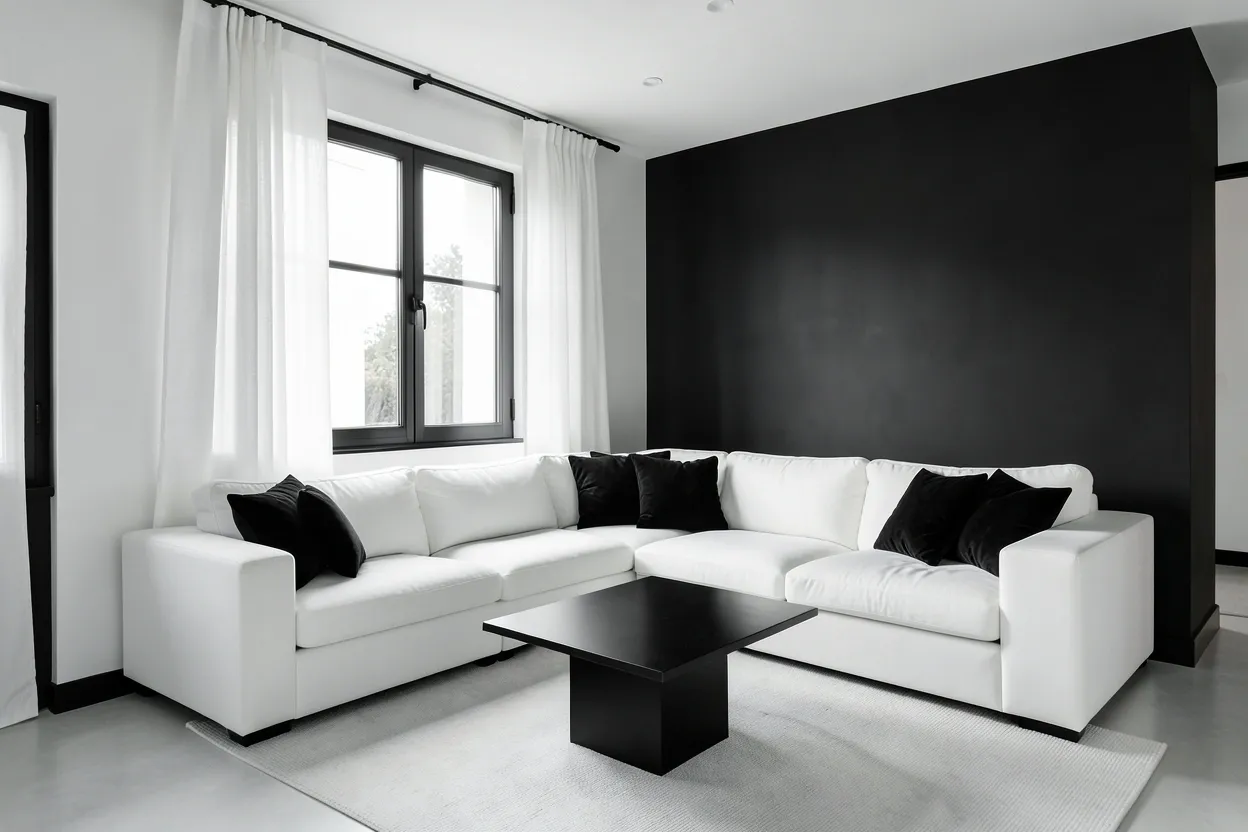
A black and white minimalist living room creates timeless elegance while maintaining a welcoming atmosphere. The monochrome palette transforms your space into a sophisticated retreat without sacrificing warmth or comfort — and best of all, most of these ideas work in rental apartments without permanent changes.
These black and white living room ideas prove that minimalist design can feel inviting and cozy. From texture layering to strategic lighting, you'll discover how to create depth and character using just two colors. Whether you're decorating a rented studio or styling a small apartment living room, monochrome decor adapts to any square footage.
Whether you're working with a compact rental space or an open-concept home, these black and white minimalist living room ideas adapt beautifully to any layout while maintaining their timeless appeal. No drilling, no permanent paint required — just smart styling choices that travel with you when you move.
Quick FAQ
How do I add warmth to a black and white living room?
Layer different textures like wool rugs, velvet cushions, and wood accents. Soft lighting and natural materials create instant warmth in monochrome spaces.
Is black and white design timeless?
Yes, black and white combinations never go out of style. This classic color scheme adapts to changing trends while maintaining its sophisticated appeal.
How do I prevent a black and white room from looking sterile?
Incorporate varied textures, organic shapes, and warm lighting. Avoid overly glossy surfaces and include soft textiles to create visual warmth and depth.
What accent colors work with black and white?
Natural wood tones, brass or gold accents, and green plants pair beautifully with black and white. Keep accents minimal to maintain the minimalist aesthetic.
As an Amazon Associate I earn from qualifying purchases.
Table of Contents
- 1. High-Contrast Feature Wall for Your Black and White Minimalist Living Room
- 2. Soft Grayscale Gradient
- 3. Bold Black Trim with White Walls
- 4. Layered Black and White Textures
- 5. Minimalist Gallery Wall
- 6. Striped Floor to Ceiling
- 7. Monochrome Botanical Accents
- 8. Black Window Frames and White Curtains
- 9. Geometric Black and White Rug
- 10. Floating White Shelves with Black Accents
- 11. Matte Black Lighting Fixtures
- 12. White Sectional with Black Throw Pillows
- 13. Black Coffee Table Anchor
- 14. Textured White Walls with Black Details
- 15. Scandinavian-Inspired Minimalism
- 16. Black Accent Chair in White Room
- 17. Organic Shapes in Monochrome
1. High-Contrast Feature Wall for Your Black and White Minimalist Living Room
Paint one wall in dramatic black while keeping the remaining walls crisp white to create an instant focal point in your black and white minimalist living room. This high-contrast approach adds architectural interest without cluttering the space with extra elements.
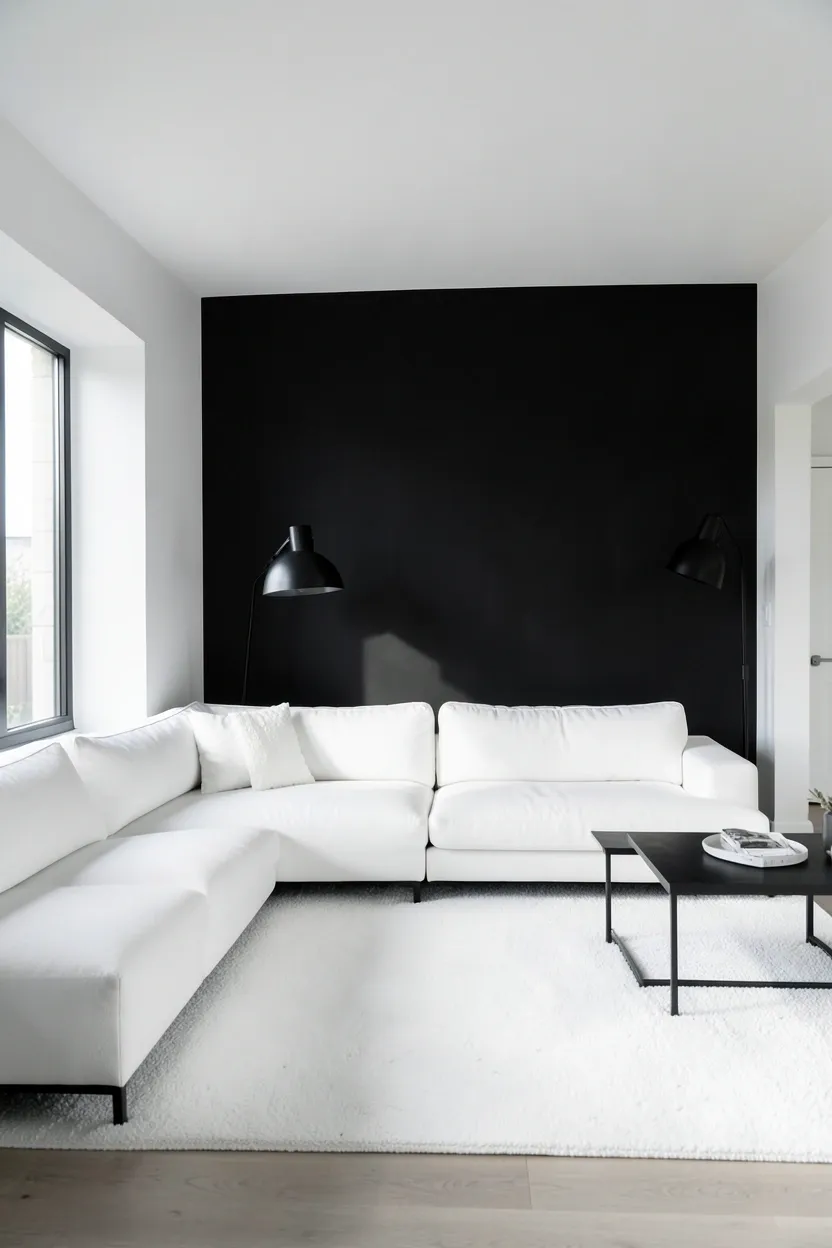
The black feature wall creates dramatic depth while the surrounding white walls keep the space feeling open and airy. Natural light bouncing off the white surfaces enhances the contrast, making the black wall appear richer and more sophisticated. Unlike adding multiple colors, this single bold statement maintains simplicity while delivering maximum visual impact.
Position the black wall strategically behind your main seating area or to highlight a specific zone like the TV console. Matte finish absorbs light beautifully, avoiding harsh reflections while creating a softer, more inviting atmosphere than glossy alternatives.
Tips
- Choose matte black paint to avoid harsh reflections and create a softer, more sophisticated finish
- Position the black wall behind your main furniture piece to create a natural focal point
What this gives you: Instant architectural interest without adding furniture or decor clutter.
2. Soft Grayscale Gradient
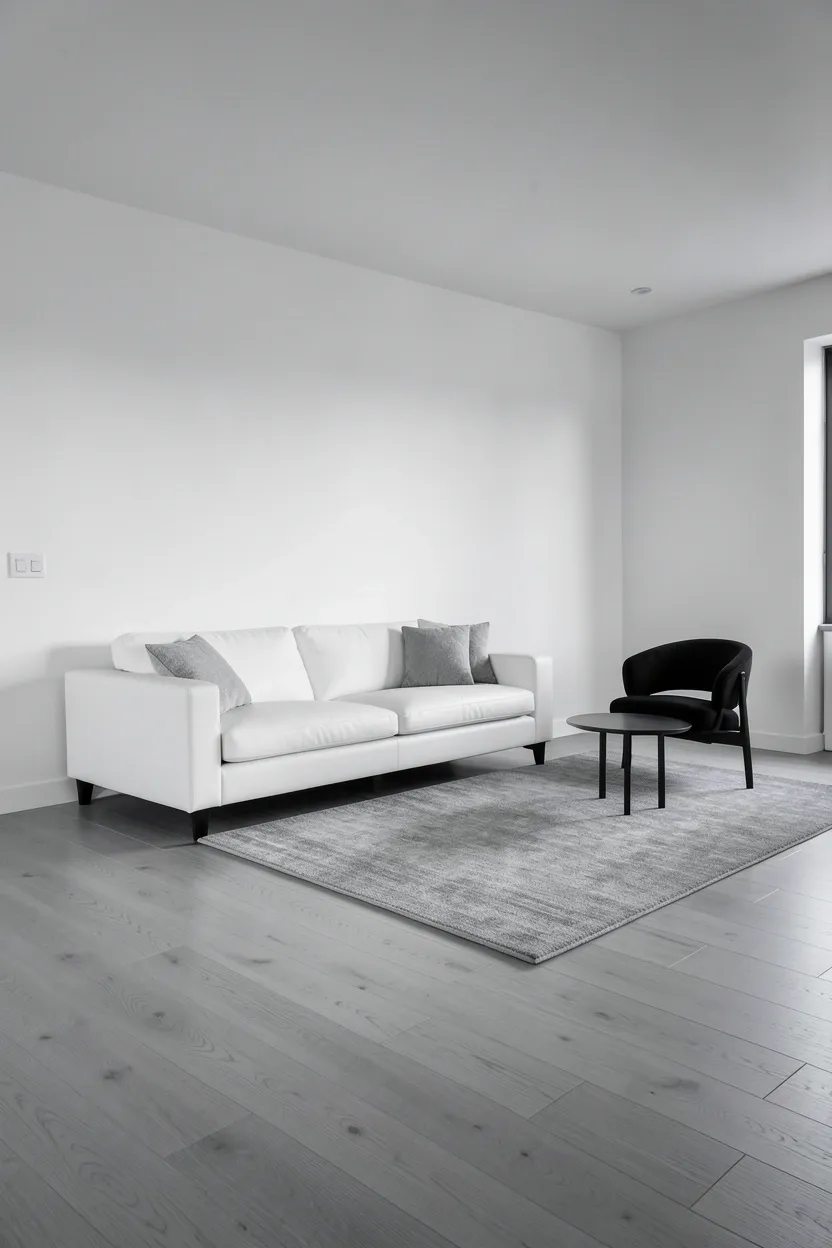
Transition from white walls to light gray flooring using various shades throughout the room for a subtle monochrome effect. This soft gradient creates visual flow while maintaining the minimalist black and white palette with added sophistication.
Recommended
Items for this idea
The gradual shift from white ceiling through light gray walls to darker gray flooring creates gentle visual movement without disrupting the minimalist aesthetic. This approach avoids the jarring effect of stark boundaries while adding subtle dimension that makes the space feel larger and more dynamic.
Placement note: Start with white ceilings, gradually darken walls in light gray, and finish with medium gray flooring for seamless flow.
Keep furniture primarily white with black accents to maintain the gradient effect without breaking the visual continuity. Avoid introducing mid-tone grays in furniture as they might compete with the wall and floor tones, disrupting the subtle gradient you've carefully established.
Tips
- If/Then: If you have light wood flooring, then paint walls in light cool gray to complement the natural warmth
- Keep ceiling pure white to maintain brightness while allowing walls and flooring to carry the gradient effect
What this gives you: Visual sophistication through subtle color transitions that add depth without complexity.
3. Bold Black Trim with White Walls
Paint window frames, door frames, and baseboards in matte black against stark white walls for striking architectural detail. This bold trim choice adds character and definition to your minimalist living room while maintaining clean lines.
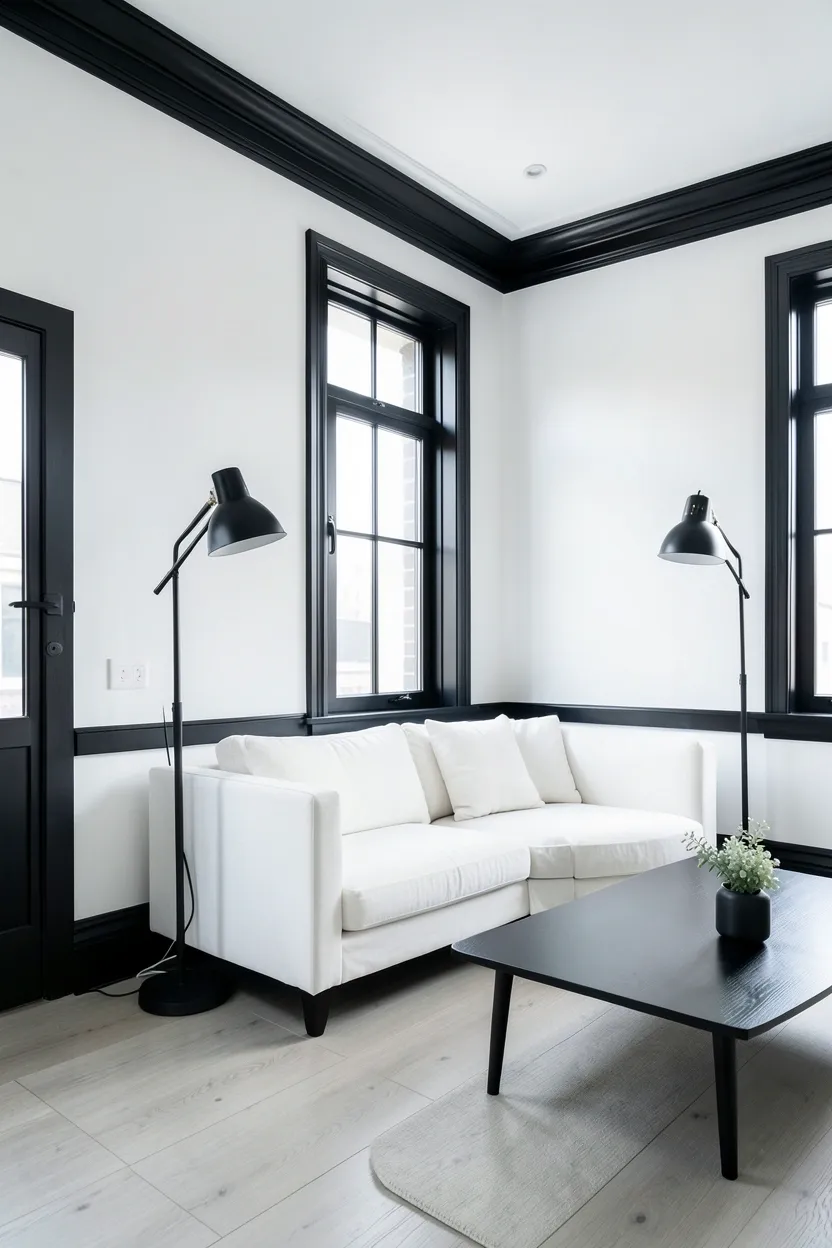
The dark trim creates crisp architectural frames that define each opening and transition in the room. White walls appear brighter by comparison, while the black trim draws attention to the room's structure and design elements rather than competing furniture or decor pieces.
Why it works: The contrast between white surfaces and black trim adds instant character without requiring additional decorative elements or artwork.
This technique works particularly well in rooms with good natural light, as the white walls maximize brightness while black trim adds the necessary contrast to prevent the space from feeling washed out or sterile. Avoid using glossy black trim, as it creates harsh reflections that can feel overwhelming in minimalist spaces.
Tips
- Do: Use matte black paint for trim to create sophisticated contrast without harsh reflections
- Don't: Skip baseboards—black trim extending to the floor creates complete architectural definition
What this gives you: Architectural character through simple paint choices that enhance existing room structure.
4. Layered Black and White Textures
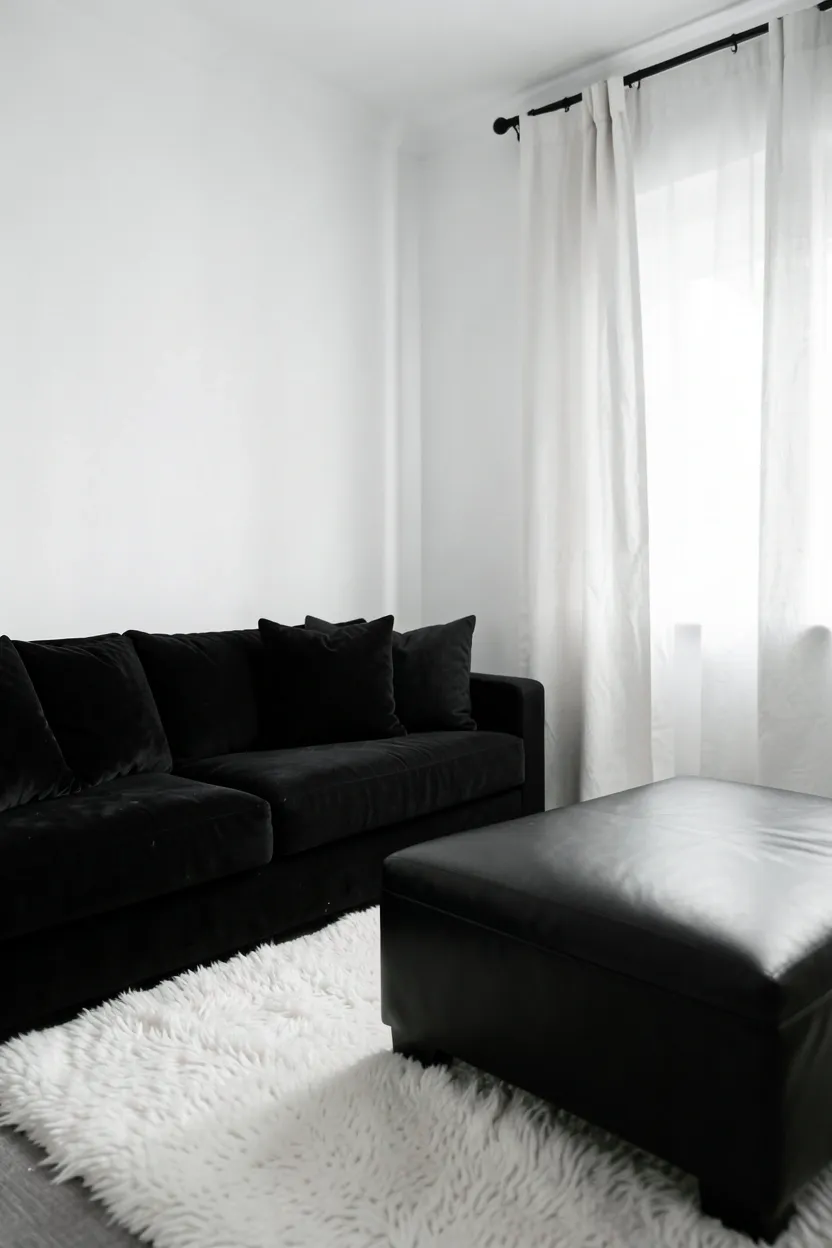
Combine various textures in black and white—think velvet cushions, wool rugs, linen drapes, and smooth leather—to create depth and warmth in your minimalist space. This textural layering prevents the monochrome palette from feeling flat or sterile.
Recommended
Items for this idea
The interplay of different tactile elements adds richness that color alone cannot achieve. Velvet reflects light differently than linen, while wool creates different shadows than smooth leather, creating a sophisticated layered effect that draws the eye and invites touch.
Placement note: Mix textures throughout the room rather than clustering all smooth or all tactile materials in one area.
Common mistake: Using only smooth, hard surfaces which can make the room feel cold and uninviting. Incorporate at least three different texture types to create visual and tactile warmth that makes the minimalist space feel lived-in and welcoming rather than stark.
Tips
- Incorporate natural materials like wool, linen, and leather for authentic texture that ages beautifully
- Mix matte and subtle sheen textures to catch light differently and create visual interest
What this gives you: Visual and tactile warmth through texture variation while maintaining monochrome simplicity.
5. Minimalist Gallery Wall
Curate a cohesive gallery wall using black-and-white photography, abstract art, or minimalist line drawings in matching frames. This wall decor adds personality to your living room while staying true to the monochrome color scheme and minimalist aesthetic.
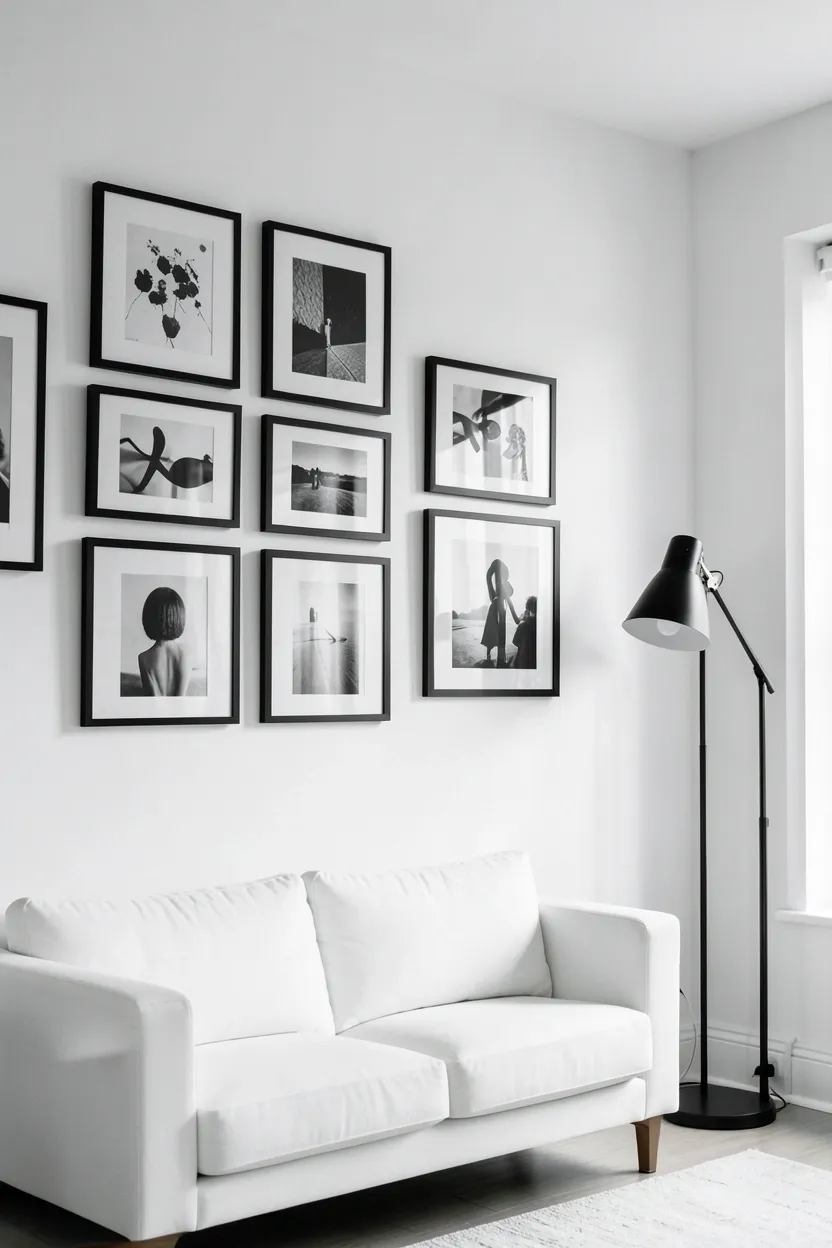
A well-curated gallery wall becomes a focal point that tells a story while maintaining the room's clean, minimalist aesthetic. The consistent black frames create visual cohesion while the artwork variety adds personality without color clutter.
Keep the arrangement balanced with even spacing and consider using grids or symmetrical layouts for maximum impact in minimalist spaces. Avoid overcrowding the wall—leave negative space between pieces to let each artwork breathe and maintain the room's spacious feel.
Tips
- Use matching black frames for consistency, varying only the mat size and artwork content
- Mix photography with abstract pieces and line drawings to create visual variety within the monochrome palette
Best for: Large blank walls that need personality without overwhelming the minimalist aesthetic.
What this gives you: Personal expression through curated art while maintaining sophisticated monochrome harmony.
6. Striped Floor to Ceiling
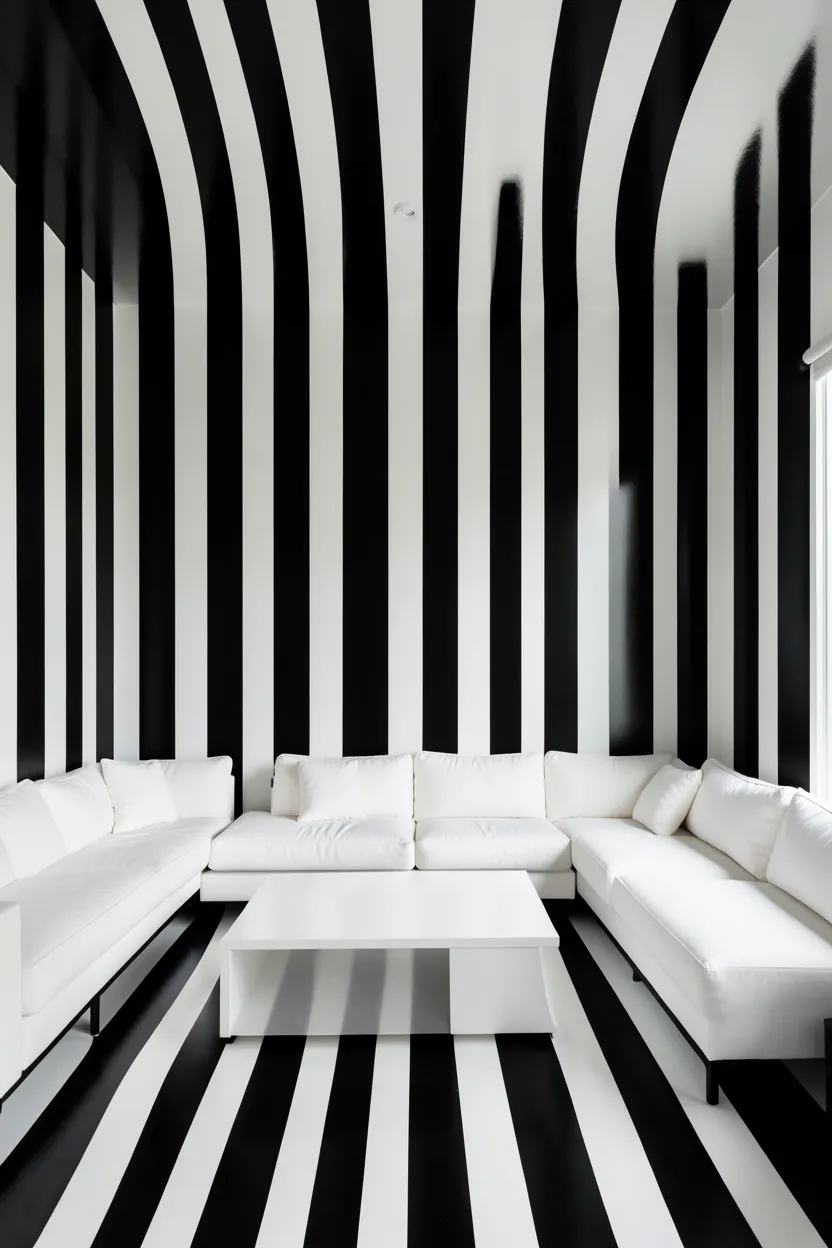
Create vertical or horizontal stripes using alternating black and white paint or wallpaper for a bold geometric statement in your living room. This classic pattern adds visual interest and can make ceilings appear higher or rooms feel wider depending on stripe direction.
Recommended
Items for this idea
Vertical stripes create an illusion of height, making ceilings appear taller and the room feel more spacious. Horizontal stripes can make narrow rooms feel wider. The geometric pattern adds graphic interest without requiring additional decorative elements or furniture pieces.
Placement note: Apply stripes to one accent wall rather than all walls to avoid overwhelming the space and maintain visual balance.
Choose matte finishes for both black and white stripes to prevent harsh glare and maintain the sophisticated minimalist aesthetic. Keep furniture and accessories minimal to let the bold pattern remain the room's focal point without competing for attention.
Tips
- Vertical stripes for rooms with standard ceilings to create height illusion
- Equal width stripes maintain clean, graphic impact—avoid varying stripe widths for minimalist look
What this gives you: Dramatic visual impact through simple paint technique that creates architectural interest.
7. Monochrome Botanical Accents
Incorporate potted plants with black or white ceramic pots, or choose plants with naturally dark foliage to bring organic elements into your black and white living room. These botanical touches soften the starkness while maintaining the monochrome color story.
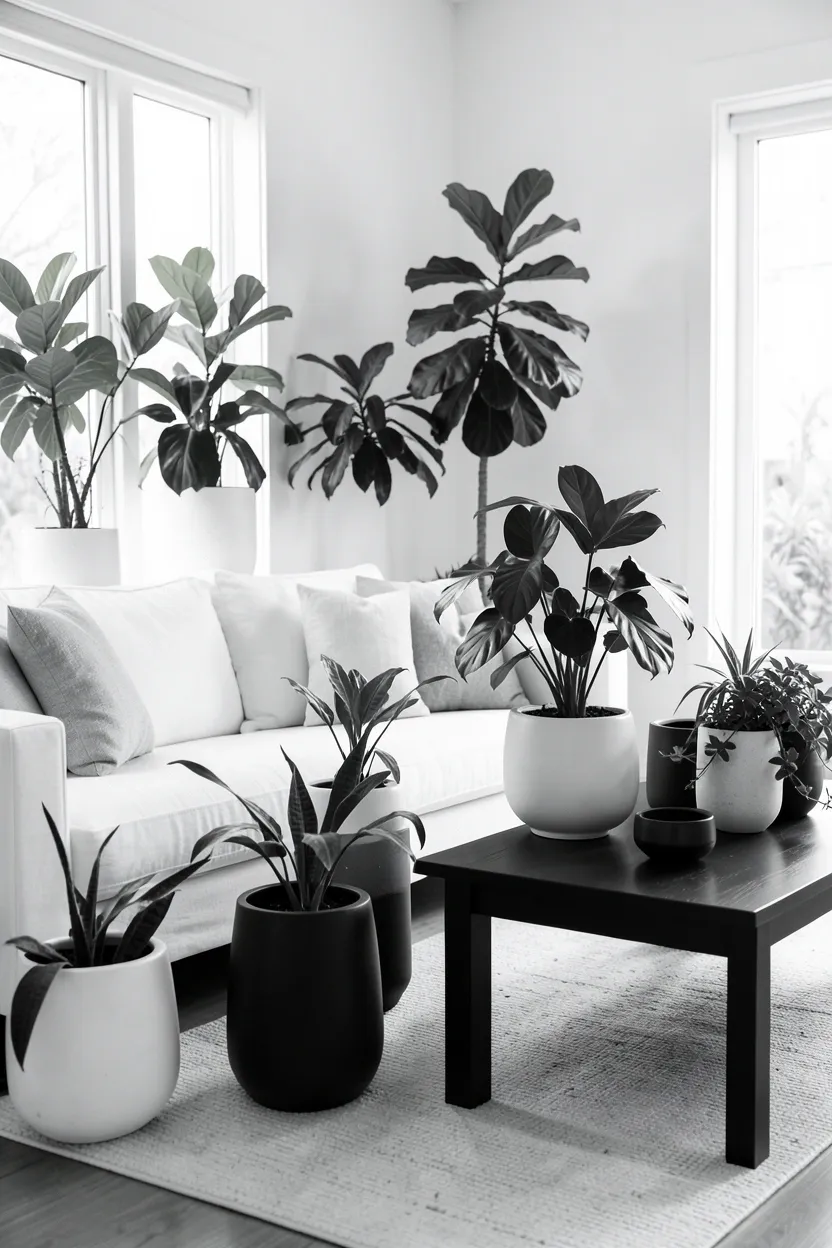
Plants introduce life and movement that balances the clean, geometric lines typical of minimalist design. The natural green of plant foliage provides subtle color warmth without disrupting the monochrome palette when paired with black or white vessels.
Why it works: Organic shapes and living elements create natural contrast against the structured, angular forms of minimalist furniture and architecture.
Group plants of varying heights together for visual impact, and consider mixing matte black ceramic pots with glossy white ones to add textural variety within the monochrome scheme. Avoid using colorful pots or plants with brightly colored variegated leaves that would distract from the cohesive black and white aesthetic.
Tips
- Choose plants with dark foliage like snake plants or zz plants for seamless black-and-white integration
- Mix matte black and glossy white ceramic pots to add subtle textural contrast within monochrome scheme
What this gives you: Organic warmth and life that softens minimalist spaces while maintaining monochrome harmony.
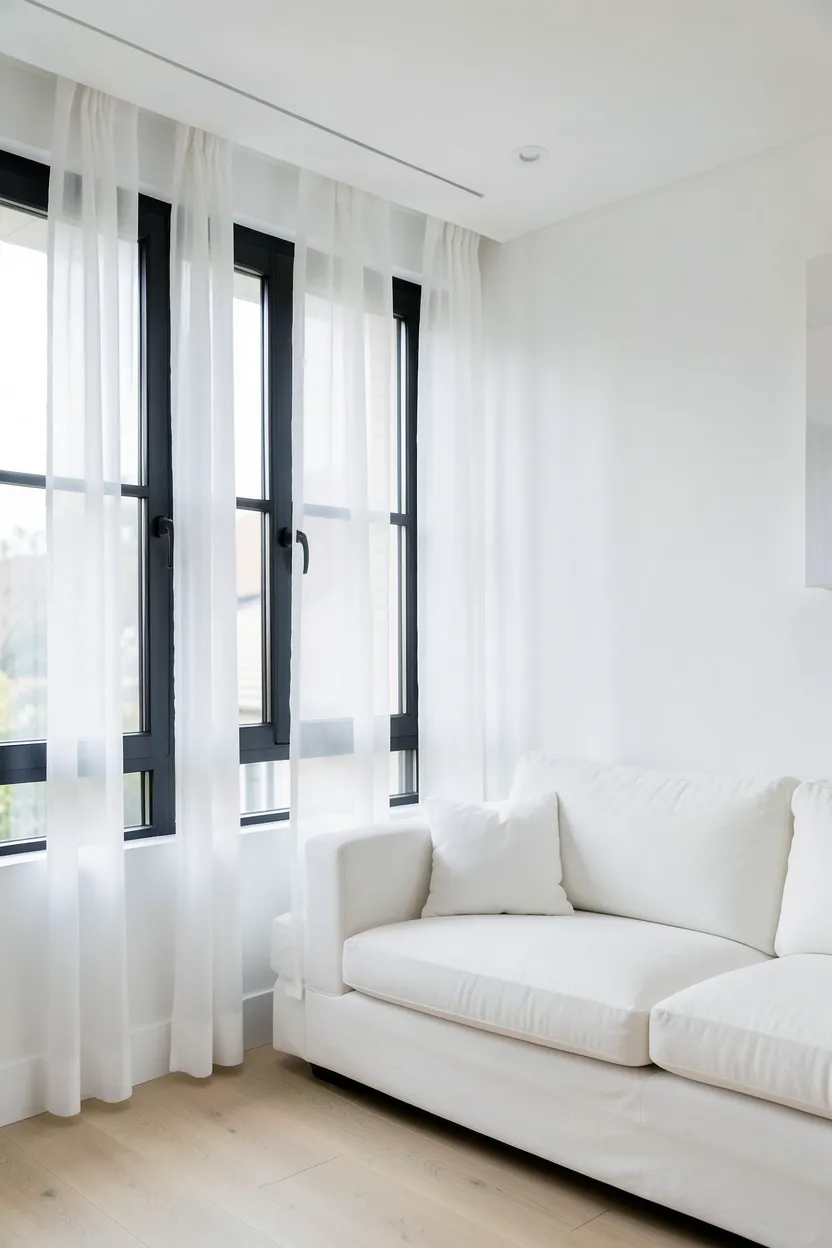
8. Black Window Frames and White Curtains
Install black-framed windows and pair them with floor-to-ceiling white sheer curtains for elegant contrast and privacy. This combination frames your view while allowing natural light to filter through, creating a bright and sophisticated minimalist atmosphere.
Recommended
Items for this idea
The black window frames create crisp architectural outlines that define each opening, while white sheer curtains soften the hard edges and add gentle movement. This pairing provides privacy without blocking natural light, maintaining the room's bright and airy feel.
Common mistake: Using heavy blackout curtains that block light and make the room feel dark and enclosed. Sheer fabrics allow light to filter through while still providing daytime privacy and softening the window frame's stark appearance.
Mount curtains high above the window frame and extend them wide to make windows appear larger and the ceiling feel higher. This treatment works particularly well when you have a beautiful outdoor view, as the black frames elegantly frame the scenery while white curtains create a soft foreground.
Tips
- Choose high-quality sheer fabrics that maintain opacity while allowing light transmission
- Extend curtain rods wider than window frame for maximum natural light and enhanced window appearance
What this gives you: Elegant window treatment that provides privacy while maximizing natural light and architectural definition.
9. Geometric Black and White Rug
Anchor your living room with a geometric patterned rug featuring black and white designs that tie the room together. This statement piece adds visual interest to the floor while providing a soft foundation that complements your minimalist furniture arrangement.
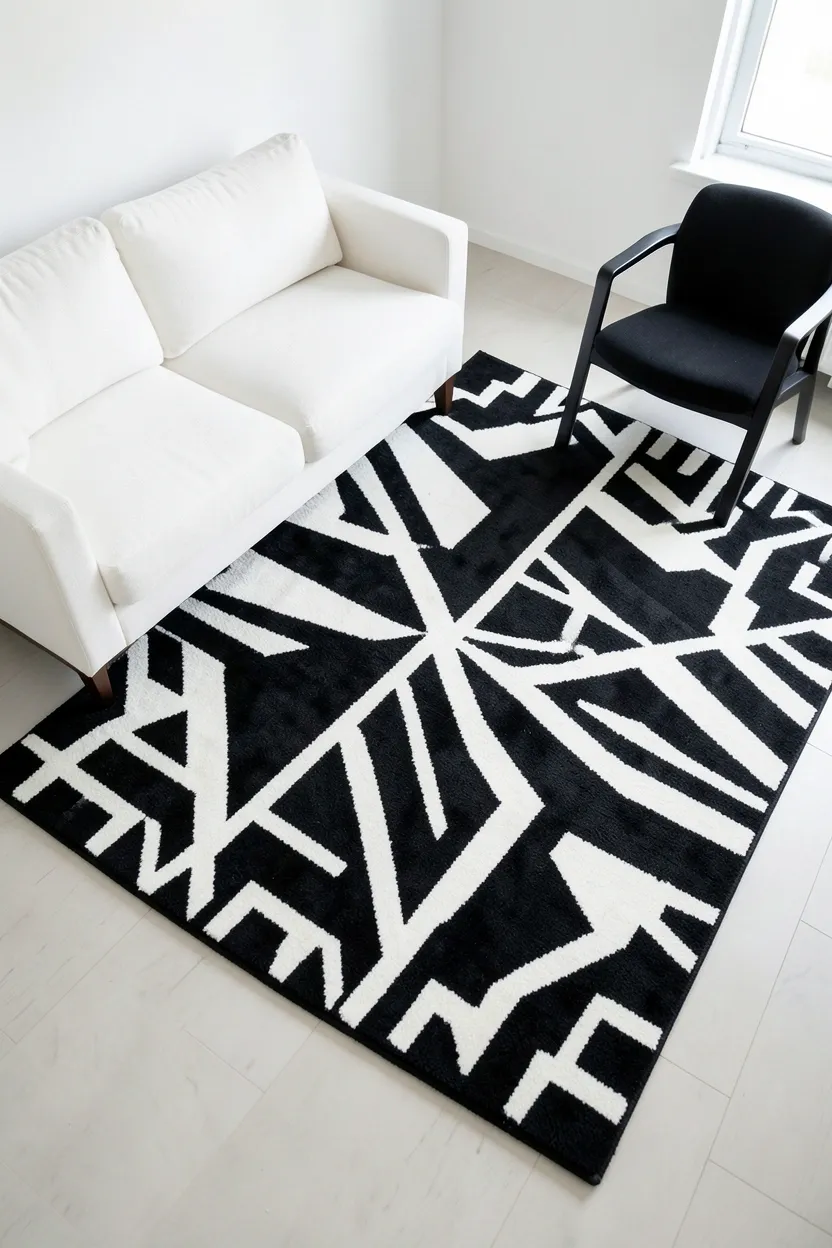
A geometric rug creates a dynamic foundation that ties all furniture together while adding visual interest without introducing color. The pattern adds energy and movement to the floor plane, preventing the minimalist space from feeling too static or sterile.
Keep furniture relatively simple and let the rug be the room's star pattern piece. Avoid patterned pillows or other geometric elements that might compete with or clash with the rug's design, instead opting for solid colors and clean lines in other textiles and accessories.
Tips
- Scale rug appropriately—large enough that front legs of seating furniture rest on the rug for cohesive look
- Choose wool or high-quality synthetic for durability and soft texture underfoot in minimalist space
Best for: Open floor plans where the rug helps define seating areas within larger minimalist spaces.
What this gives you: Visual anchor and pattern interest that ties the room together while maintaining monochrome simplicity.
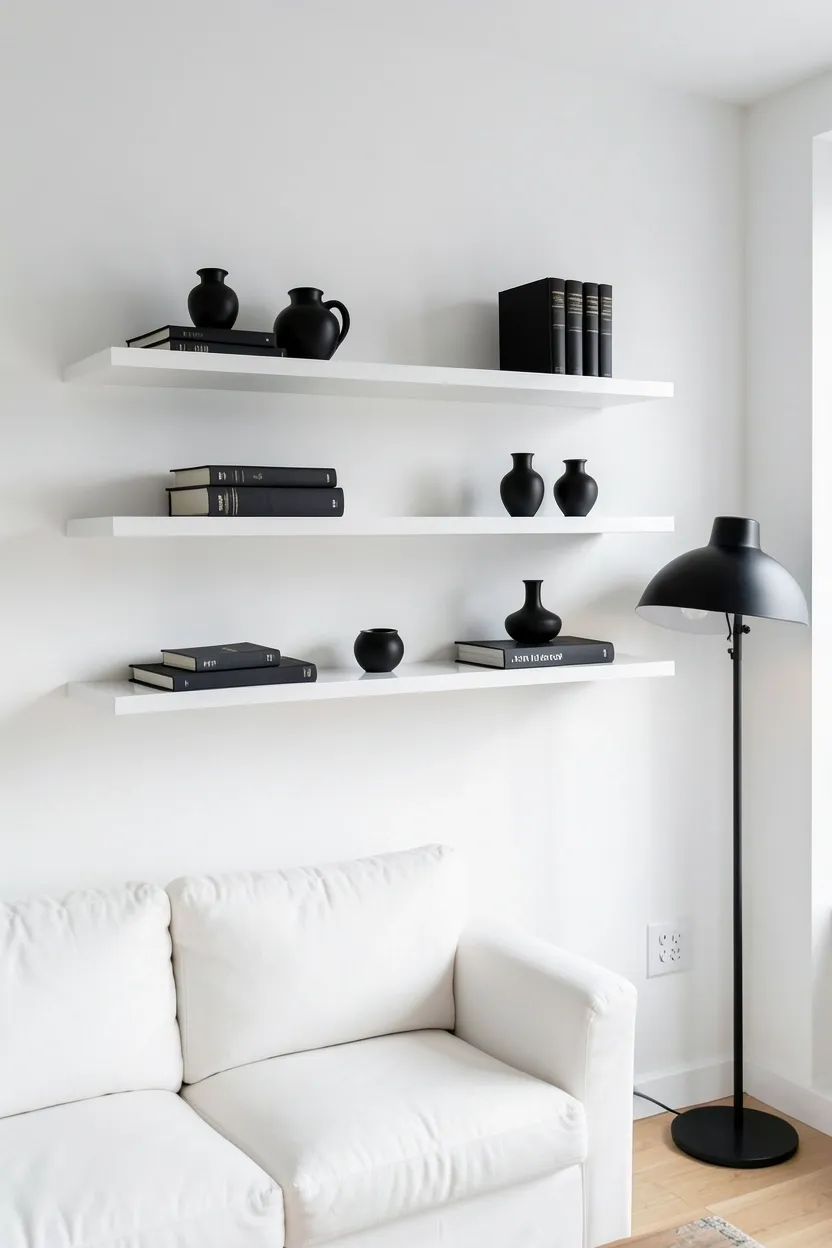
10. Floating White Shelves with Black Accents
Install floating white shelves and style them with black accessories, books, and decorative objects for a minimalist display that adds character without clutter. This shelving approach keeps your walls looking clean while providing functional storage and display space.
Recommended
Items for this idea
The white shelves visually disappear against white walls, creating the illusion that black accessories are floating. This design choice maintains wall clarity while providing display surfaces that showcase curated objects, books, and plants.
Placement note: Install shelves at varying heights to create visual interest, keeping adequate spacing between each level.
Style shelves intentionally rather than cluttering them—group items in odd numbers, vary object heights, and leave some negative space between items. This curated approach adds personality without overwhelming the minimalist aesthetic. Avoid overfilling shelves or mixing too many different materials, which can create visual noise.
Tips
- Mix matte and glossy black objects to create subtle visual variation within the monochrome display
- Use shelf styling rule: group items in threes, vary heights, and leave empty space between groups
What this gives you: Functional display space that adds character through intentional styling while maintaining clean wall surfaces.
11. Matte Black Lighting Fixtures
Choose matte black pendant lights, floor lamps, or sconces to create striking contrast against white walls and ceilings while providing warm ambient lighting. These dark fixtures serve as sculptural elements that enhance your minimalist living room's sophistication.
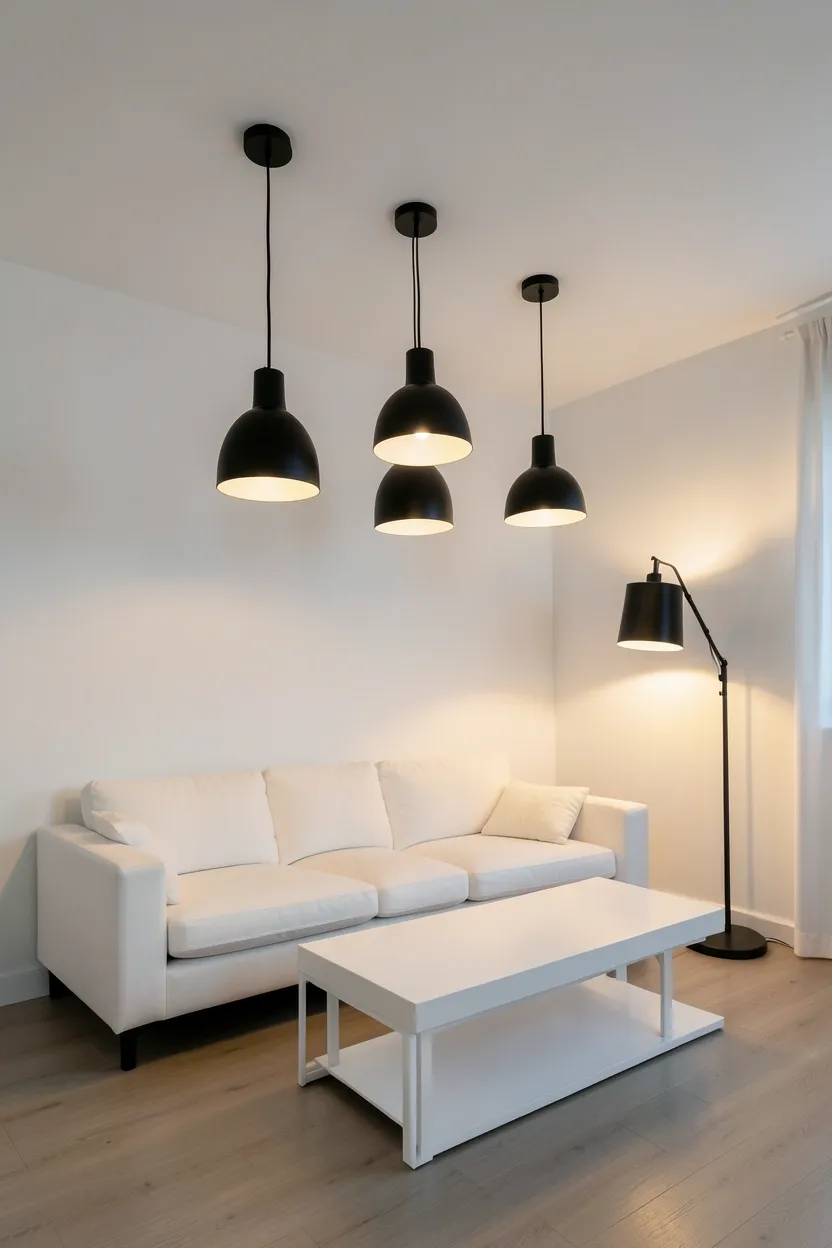
Matte black fixtures absorb light rather than reflecting it, creating a sophisticated contrast that doesn't overwhelm the space. These sculptural elements become focal points that draw the eye upward and add visual interest to otherwise minimalist white surfaces.
Why it works: Dark lighting fixtures create instant contrast while providing essential illumination, serving dual functional and decorative purposes.
Layer different types of lighting—pendants for overall illumination, floor lamps for task lighting, and sconces for ambient glow—to create depth and dimension. Avoid using chrome or brass fixtures, which would introduce additional colors and disrupt the monochrome palette's clean, cohesive aesthetic.
Tips
- Install dimmers on all lighting fixtures to control ambiance and mood in minimalist space
- Mix fixture shapes and sizes while keeping finish consistent for visual variety without color disruption
What this gives you: Functional illumination that also serves as sculptural decor creating sophisticated contrast.
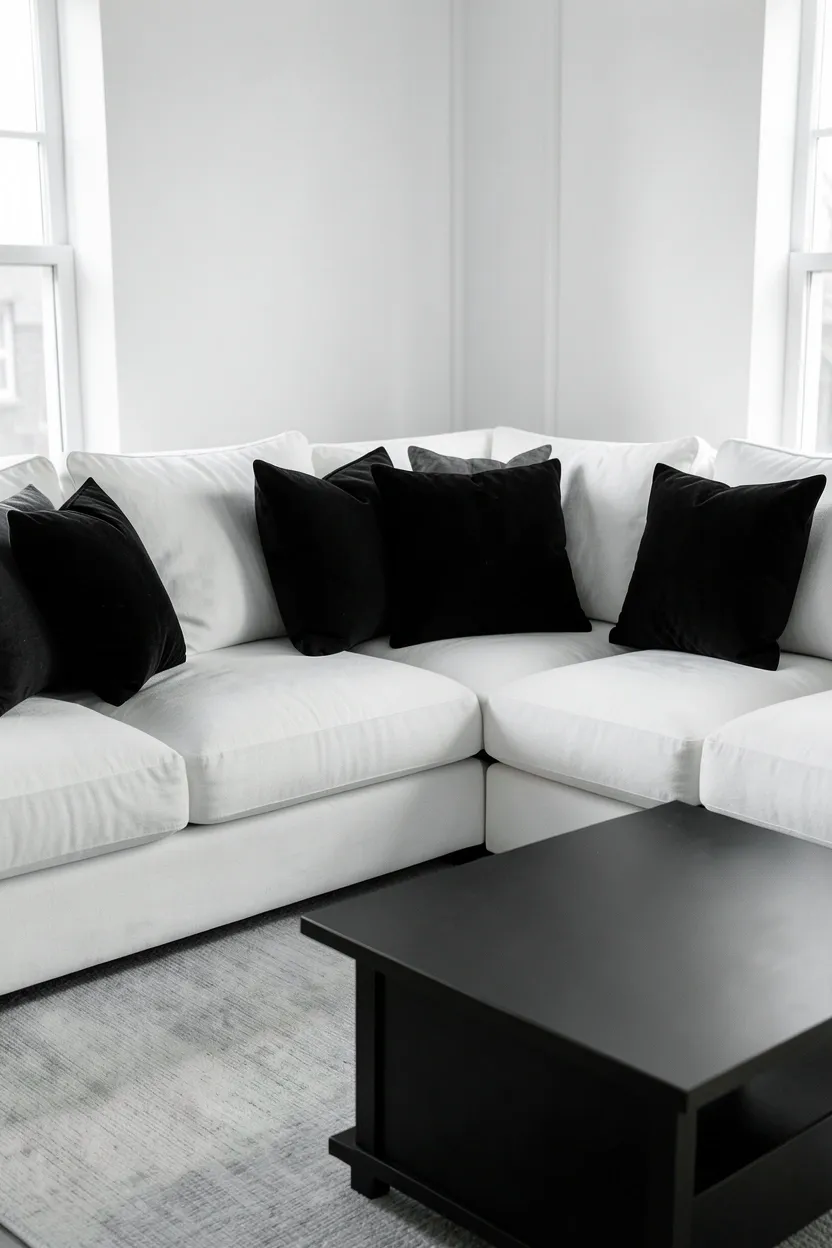
12. White Sectional with Black Throw Pillows
Opt for a clean white sectional sofa and add visual interest with varying textures of black throw pillows in different shapes and sizes. This comfortable seating arrangement maintains the monochrome palette while creating a cozy and inviting focal point for gatherings.
Recommended
Items for this idea
The white sectional creates a clean, bright foundation that makes the room feel spacious, while black throw pillows provide necessary contrast and visual interest. Varying pillow textures—from smooth velvet to nubby wool—add tactile dimension within the monochrome color scheme.
Common mistake: Using only smooth, flat pillows which can make the sofa feel one-dimensional and uninviting. Incorporate at least three different textures in your pillow arrangement to create visual richness that makes the seating area feel cozy and approachable.
Arrange pillows intentionally rather than randomly—place larger square pillows at the back, smaller rectangular or round pillows in front, and consider mixing solid black pillows with black-and-white patterned ones for subtle variety without introducing additional colors.
Tips
- Mix pillow textures: velvet, linen, cotton, and wool for tactile variety within monochrome palette
- Follow pillow arrangement rule: odd numbers, varying sizes, with larger pillows at back layering forward
What this gives you: Cozy, inviting seating area that maintains monochrome palette through textural variety and intentional styling.
13. Black Coffee Table Anchor
Center your minimalist living room with a bold black coffee table that grounds the space and provides striking contrast against lighter flooring. This dark anchor piece draws the eye and creates visual balance, especially when paired with lighter seating options.
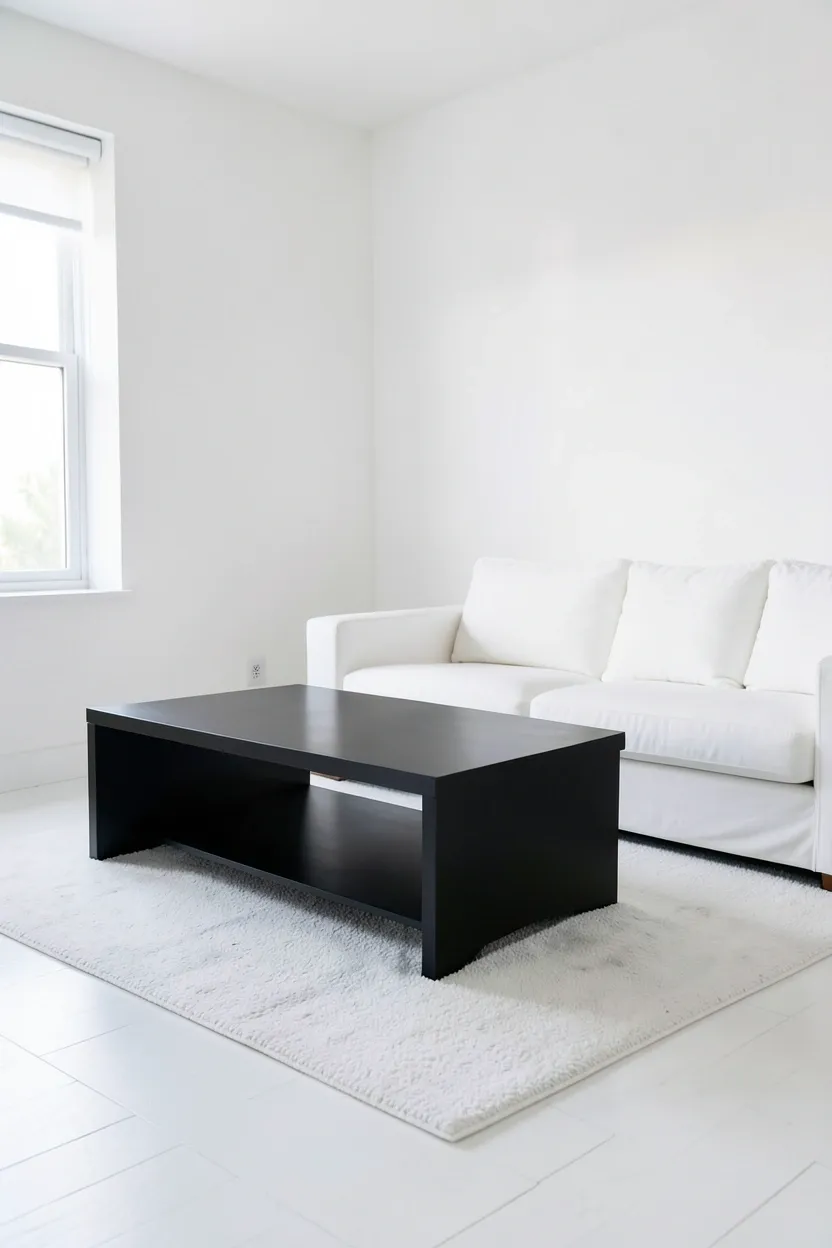
The black coffee table creates a powerful visual center that anchors the seating arrangement and provides necessary contrast against light-colored flooring or rugs. This dark piece draws the eye naturally, creating balance and preventing the predominantly white room from feeling washed out or lacking definition.
Keep the table's silhouette clean and geometric to maintain minimalist principles—avoid ornate details or excessive curves that compete with the room's streamlined aesthetic. Choose a size proportionate to your seating area, ensuring the table is substantial enough to ground the space without overwhelming it.
Tips
- Choose matte black finish to create sophisticated contrast without harsh reflections
- Select coffee table height that works with your seating—typically 16-18 inches for standard sofas
Best for: Rooms with predominantly white or light flooring where the black table creates necessary contrast and visual weight.
What this gives you: Visual anchor that grounds the seating arrangement while creating dramatic contrast within monochrome scheme.
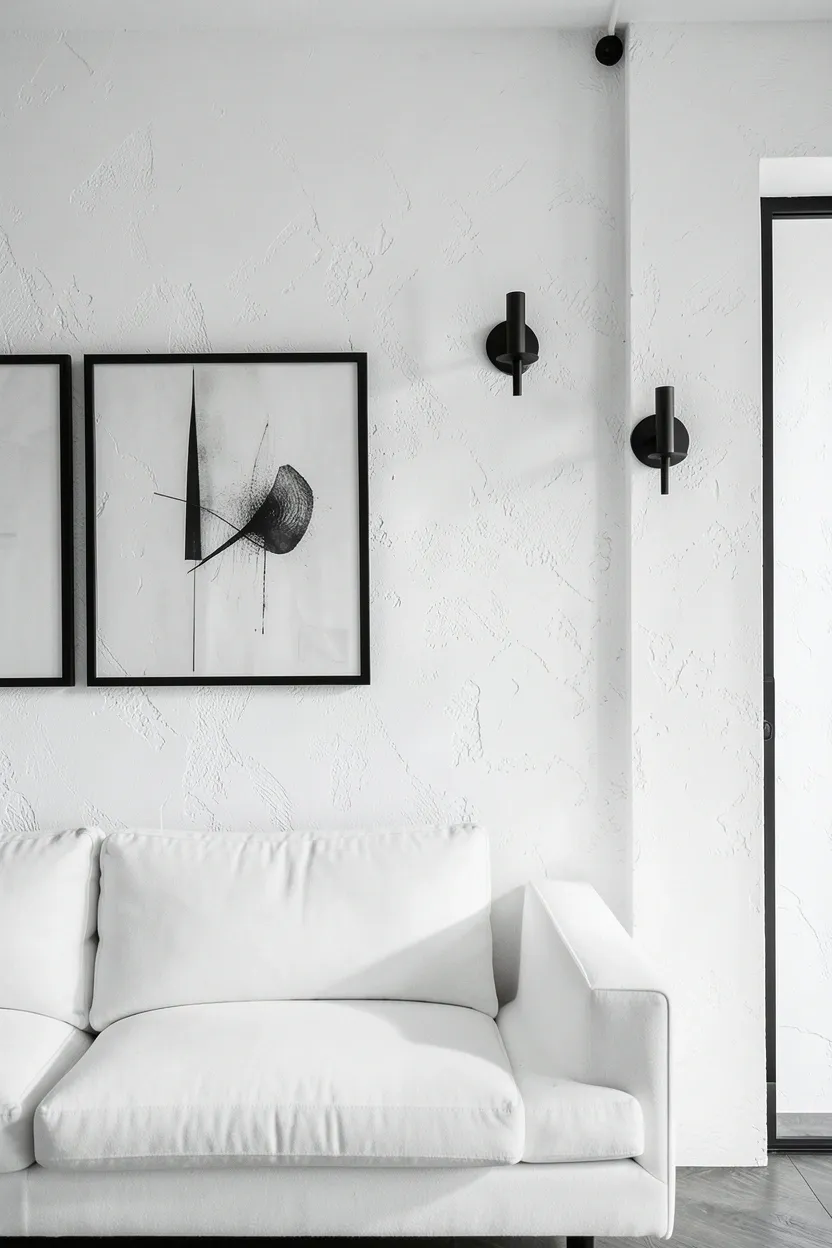
14. Textured White Walls with Black Details
Add subtle texture to white walls using white-on-white techniques like limewash, plaster, or board and batten, then enhance with black hardware, art, and furniture. This textured approach prevents your living room from feeling flat while maintaining the crisp monochrome aesthetic.
Recommended
Items for this idea
Textured white walls catch and reflect light differently than smooth surfaces, creating depth and visual interest without introducing color. The subtle dimensional quality makes walls feel more architectural and intentional, while black details provide necessary contrast and definition.
Placement note: Apply wall texture to one or two accent walls rather than all walls to create visual hierarchy and avoid overwhelming the space.
Pair textured walls with sleek, modern black hardware, artwork, and furniture to create sophisticated contrast between the dimensional white surfaces and sharp black elements. This combination prevents the monochrome palette from feeling flat while maintaining a clean, cohesive aesthetic.
Tips
- Limewash creates subtle, organic texture that catches light beautifully in minimalist spaces
- Board and batten adds architectural dimension while maintaining clean white monochrome appearance
What this gives you: Visual depth and architectural interest through wall texture while maintaining pristine monochrome aesthetic.
15. Scandinavian-Inspired Minimalism
Embrace Scandinavian design principles with plenty of white space, natural light, and simple black accents for a cozy yet minimalist black and white living room. This style emphasizes functionality and comfort while maintaining the timeless monochrome color palette.
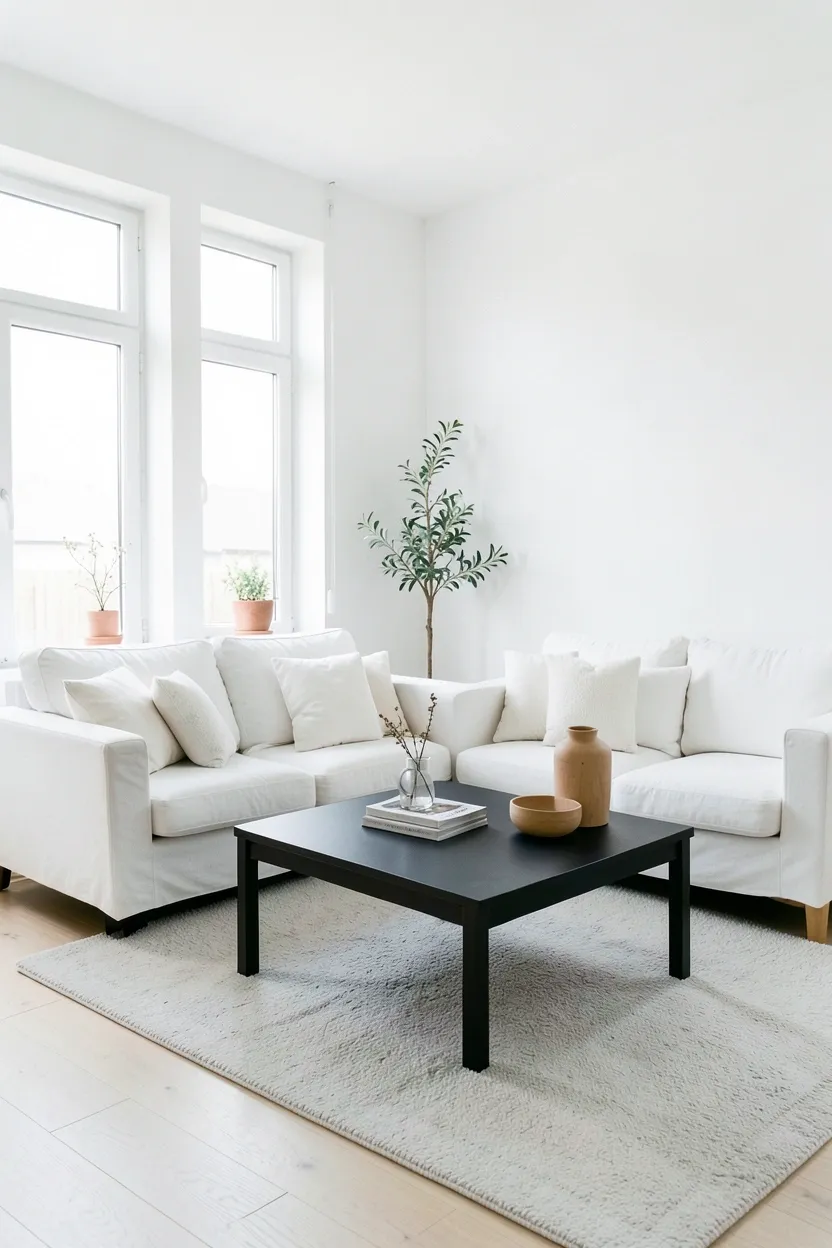
Scandinavian minimalism prioritizes light, airiness, and functional beauty, making it perfectly suited to black and white living room design. The emphasis on white space creates a serene environment, while carefully chosen black accents add necessary contrast and definition without overwhelming the senses.
Why it works: The Scandinavian approach balances stark minimalism with cozy comfort through natural materials, soft lighting, and thoughtful curation rather than ornamentation.
Incorporate light wood accents like oak or birch to add natural warmth that complements the black and white palette. Layer soft textiles in white and natural fibers, and choose furniture with clean, simple lines that prioritize comfort without unnecessary embellishment. This creates a space that feels livable and welcoming rather than stark or cold.
Tips
- Maximize natural light through minimal window treatments to create bright, airy Scandinavian feel
- Incorporate light wood elements to add natural warmth that complements black and white palette
What this gives you: Cozy, functional minimalist space that balances stark monochrome design with warm, livable comfort.
16. Black Accent Chair in White Room
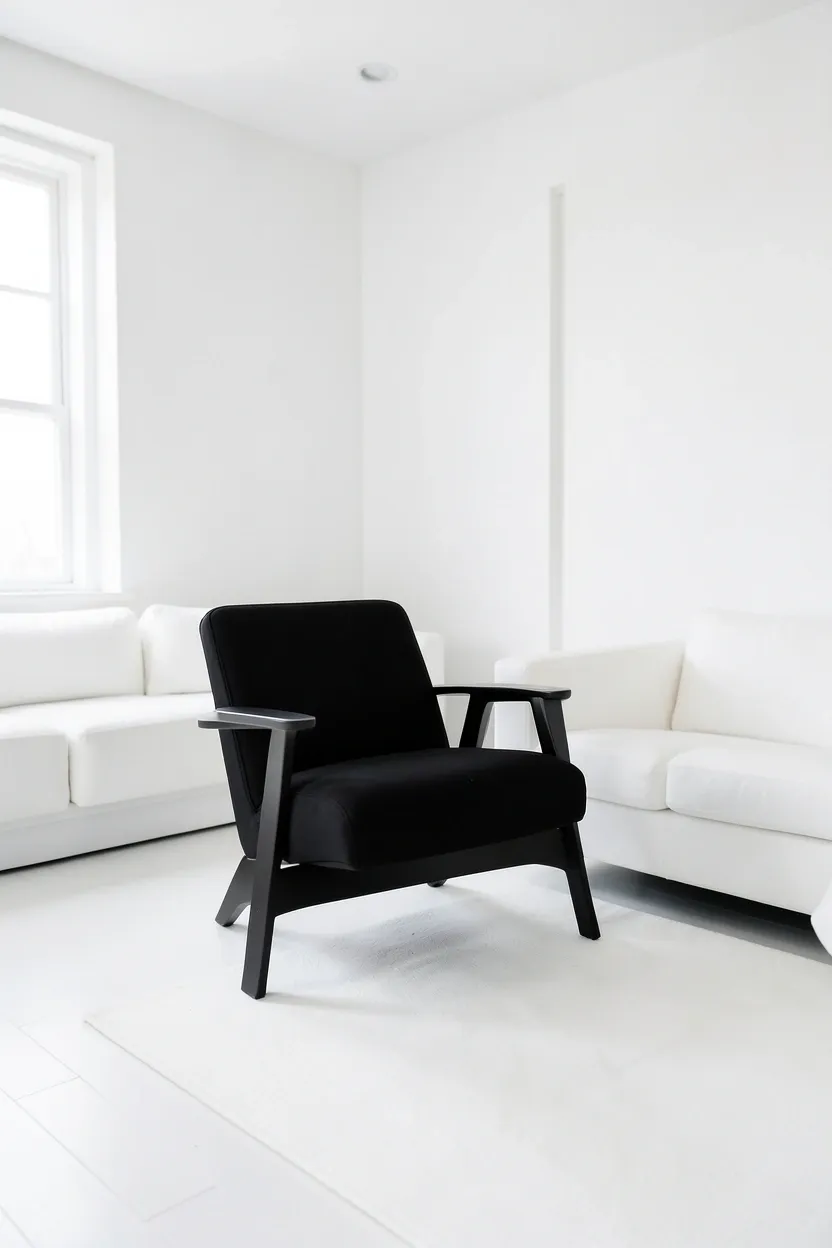
Place a sleek black accent chair in an otherwise all-white living room to create a striking focal point that draws the eye and adds depth. This single dark piece makes a bold statement while keeping the overall space feeling airy and minimalist.
Recommended
Items for this idea
The black accent chair becomes an instant focal point that breaks up sea of white while creating visual drama through simple contrast. Its dark presence draws eye naturally, adding depth and interest without requiring additional decorative elements or color.
Common mistake: Choosing a chair that's too ornate or visually busy, which competes with the minimalist aesthetic. Opt for a sleek, simple design with clean lines that complement rather than clash with the room's streamlined approach.
Position the accent chair strategically—perhaps in a corner, near a window, or as part of a conversation grouping—to maximize its visual impact. Consider adding a small black side table or black lamp nearby to create a cohesive black accent vignette that feels intentional rather than random.
Tips
- Choose chair with clean, simple silhouette that complements minimalist aesthetic
- Consider comfort alongside style—accent chair should be functional seating, not just decoration
What this gives you: Striking focal point that adds drama and depth through simple contrast within monochrome space.
17. Organic Shapes in Monochrome
Soften your black and white minimalist living room with organic shapes through curved furniture, round mirrors, and flowing fabric textures. These natural forms balance the sharp lines typical of minimalist design and create a more welcoming and comfortable atmosphere.
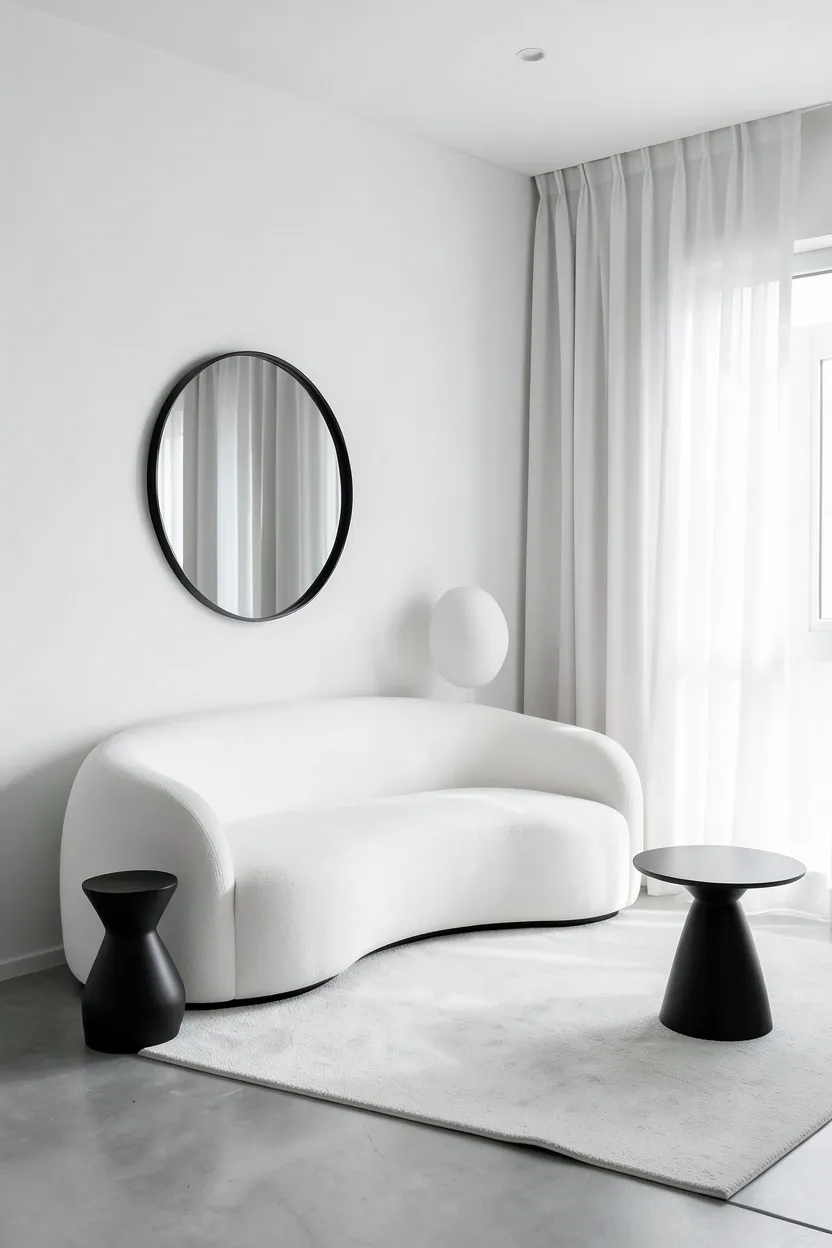
Curved sofas, round coffee tables, and circular mirrors introduce softness that balances the angular, geometric forms typical of minimalist interiors. These organic shapes create visual flow and movement, making the space feel more dynamic and less rigid.
Mix different organic shapes rather than using only curves or only straight lines for the most sophisticated balance. A curved sofa with a rectangular rug and round mirrors creates visual interest through shape variety while maintaining the monochrome palette's cohesive simplicity.
Tips
- Incorporate at least three different organic shapes to create visual variety within minimalist space
- Choose rounded furniture with simple profiles to maintain minimalist aesthetic while adding softness
Best for: Minimalist spaces that feel too rigid or angular and need softening to create more welcoming atmosphere.
What this gives you: Welcoming, comfortable atmosphere through organic shapes that balance minimalist design's characteristic sharp lines.
These 17 timeless black and white minimalist living room ideas demonstrate that monochrome design can be both sophisticated and welcoming — even in a rental apartment. By thoughtfully incorporating textures, lighting, and strategic contrasts, you create a space that feels warm and inviting while maintaining its elegant simplicity. Whether you're working with renter-friendly removable decor or styling furniture you already own, the key lies in balancing visual interest with restraint, allowing each element to contribute to the overall harmony of your black and white living room.
About the author
OBCD
CGI visualization and interior design content. We create detailed 3D renders and curate practical design ideas for every room in your home.