Tiny House Living with a Toddler: 17 Challenges & Solutions
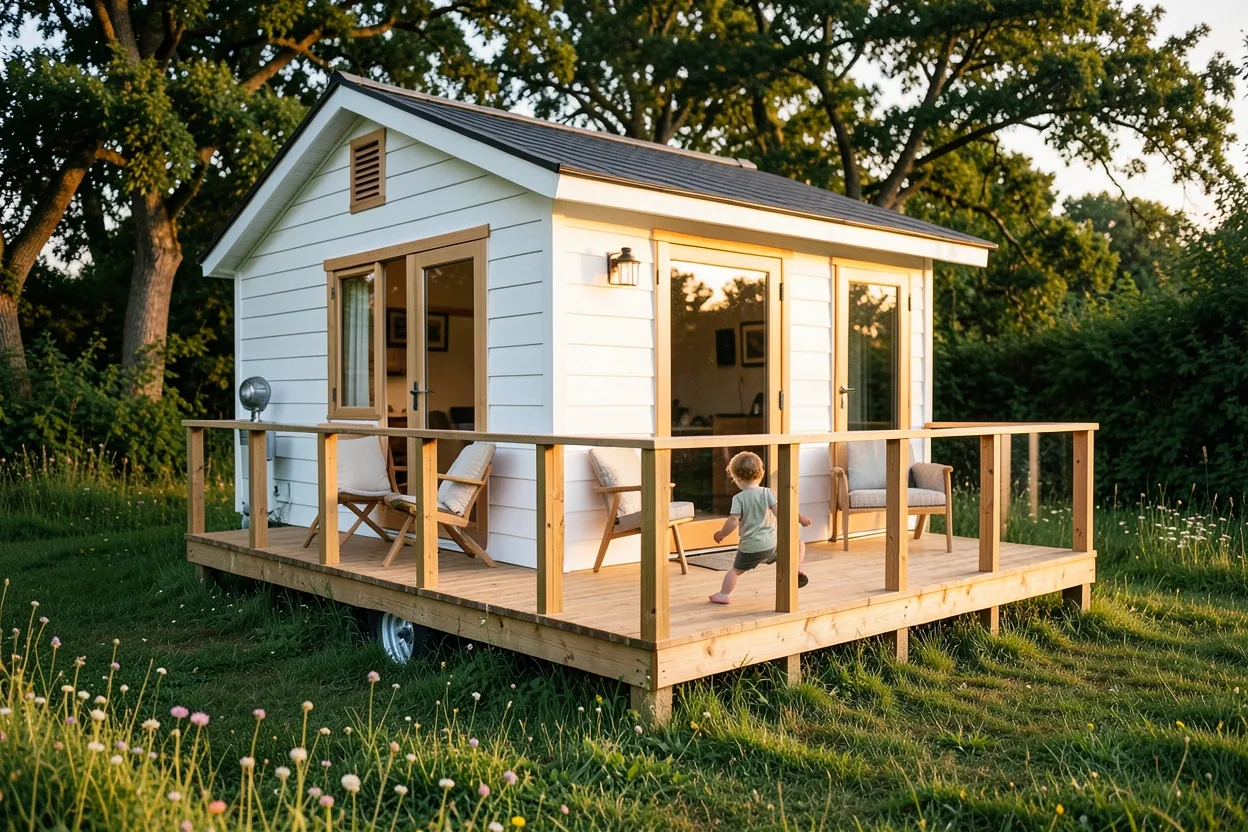
Tiny house living with a toddler transforms the minimalist lifestyle into an adventure in creative problem-solving and intentional parenting. The challenges are real—limited floor space, toddler safety concerns, and the constant need for organized storage—but the rewards of simplified small space family living can be extraordinary when approached with thoughtful design and smart solutions.
Families who thrive in tiny homes with young children often discover that less space actually encourages more connection and less stress, provided you establish systems that work for both adults and little ones. The key lies in maximizing vertical storage, creating safe zones for toddlers, and designing flexible spaces that adapt as your child grows through each development stage.
While the transition from traditional housing to tiny living with a toddler requires careful planning, many families report deeper bonds, reduced household maintenance, and the freedom to focus on experiences rather than possessions. With the right strategies for toy storage, sleeping arrangements, and childproofing, tiny house family life can be both joyful and sustainable. Here are 17 practical ideas that real families use every day.
Quick FAQ
Is tiny house living safe for toddlers?
Yes, when properly childproofed. Tiny houses can be safer than larger homes because everything is within sight, and you can control the environment more completely. Focus on stair gates, soft furniture edges, and secure storage for dangerous items.
How do you handle sleeping arrangements in a tiny house with a toddler?
Many families use loft spaces for adults with a toddler bed on the main floor, or create a shared sleeping loft with safety railings. Montessori-style floor beds work well in tiny houses, allowing independence while maintaining close supervision.
Where do you store toys in a tiny house?
Rotate toys regularly and implement a "one in, one out" system. Use under-bed storage, bench seating with hidden compartments, vertical wall organizers, and multipurpose furniture. Keep only age-appropriate toys accessible, storing others out of sight.
How do you handle mealtime with a toddler in limited space?
Create a dedicated dining nook with a small table that can expand when needed. Use clip-on high chairs that attach to existing tables, foldable seating, and vertical storage for dishes and toddler utensils. Consider outdoor dining options when weather permits.
What about diaper changes and potty training in a tiny house?
Install a wall-mounted changing table that folds down when needed, or use the bed with a waterproof mat. For potty training, choose a compact potty that stores easily and consider training pants to minimize accidents in confined spaces.
How do you manage privacy and personal space with a toddler?
Create designated "zones" even within the tiny footprint—reading nooks, play areas, and quiet spaces. Use curtains, room dividers, or furniture arrangements to create visual separation. Establish quiet times and respect nap schedules for everyone's sanity.
As an Amazon Associate I earn from qualifying purchases.
Table of Contents
- 1. Convertible Montessori Floor Bed: Best Sleeping Arrangement for a Tiny House with a Toddler
- 2. Fold-Down Changing Table Hidden in Wall
- 3. Vertical Toy Storage System: How to Store Toys in a Tiny House
- 4. Child-Safe Loft Access with Stair Drawers
- 5. Multi-Purpose Kitchen Island with High Chair Integration
- 6. Magnetic Wall Activity Center
- 7. Collapsible Bathtub with Safety Features
- 8. Built-in Bench with Hidden Toy Storage
- 9. Sliding Room Divider for Privacy
- 10. Wall-Mounted Folding Table for Art and Play
- 11. Outdoor Play Deck with Safety Railings
- 12. Compact Potty with Built-in Storage
- 13. Under-Stairs Storage Cubby System
- 14. Clip-On High Chair for Dining Flexibility
- 15. Low-Profile Bookshelves with Book Spines Facing Out
- 16. Soft Corner Guards and Foam Protection: Childproofing a Small Space for Toddlers
- 17. Weekly Toy Rotation System with Labeled Bins
1. Convertible Montessori Floor Bed: Best Sleeping Arrangement for a Tiny House with a Toddler
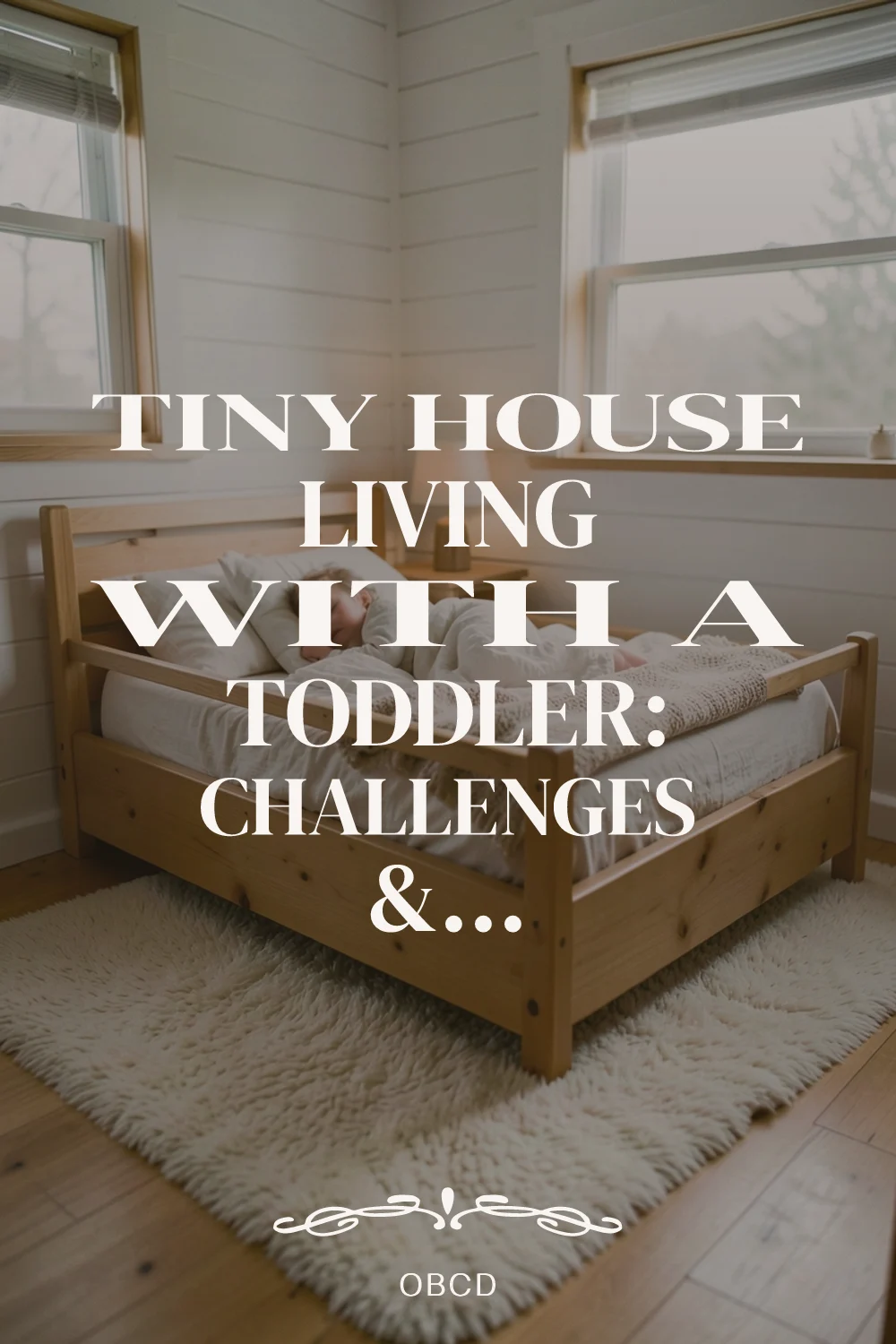
A Montessori-style floor bed empowers toddlers with independence while eliminating fall risks from lofts, making it an ideal sleeping solution for tiny house living with a toddler. The low-profile design allows your child to climb in and out safely, while removable safety rails provide security during sleep without trapping them. As your child grows, the rails can be removed, transitioning the bed from toddler crib to big kid bed seamlessly.
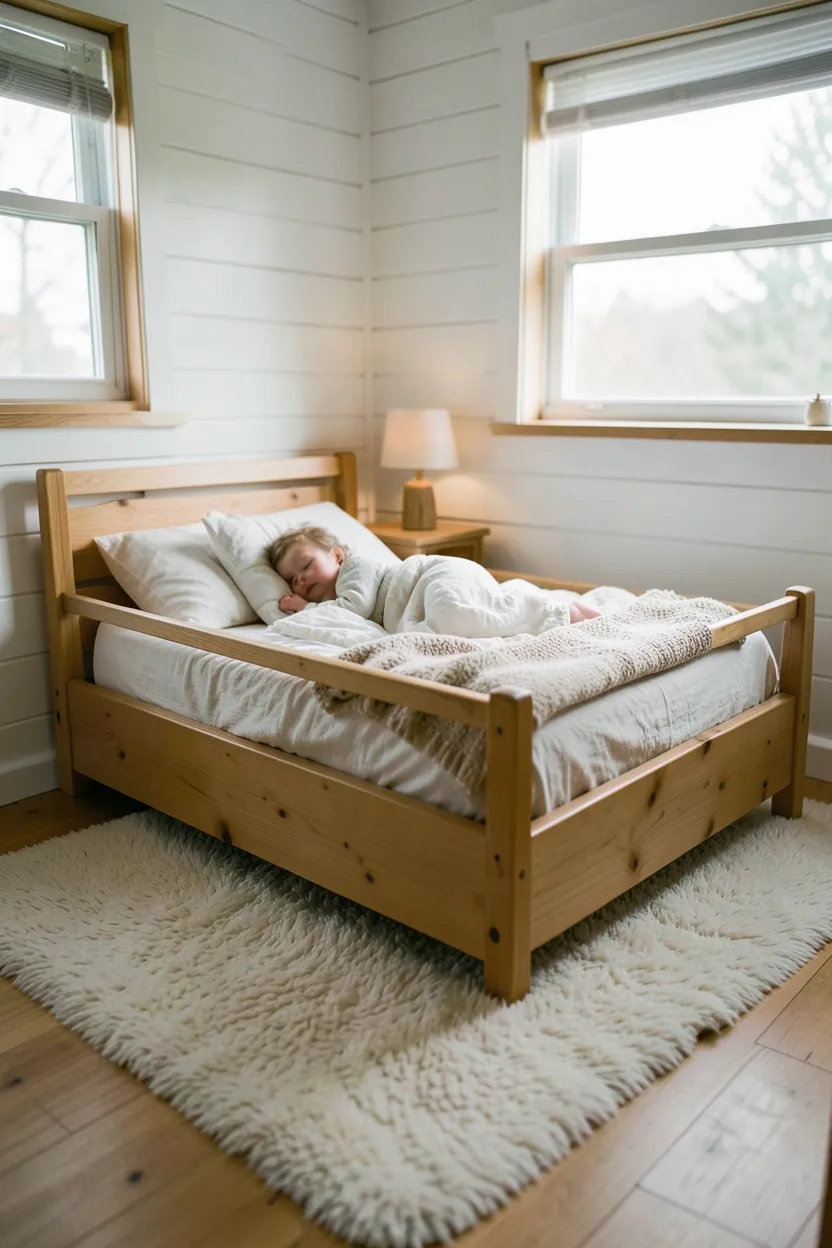
This approach aligns with Montessori principles of fostering autonomy, allowing toddlers to explore their environment safely within the contained space of a tiny house. The floor-level positioning also makes nighttime checks easier for parents and creates a natural boundary that defines the sleeping area without sacrificing precious square footage for a traditional crib.
Tips
- Place a soft rug or play mat around the bed for cushioned landings
- Use a waterproof mattress protector for inevitable accidents
- Position the bed away from windows and direct drafts
Best for: families transitioning from cribs who value independence and safety
What this gives you: safe, empowering sleep solution that grows with your child
2. Fold-Down Changing Table Hidden in Wall
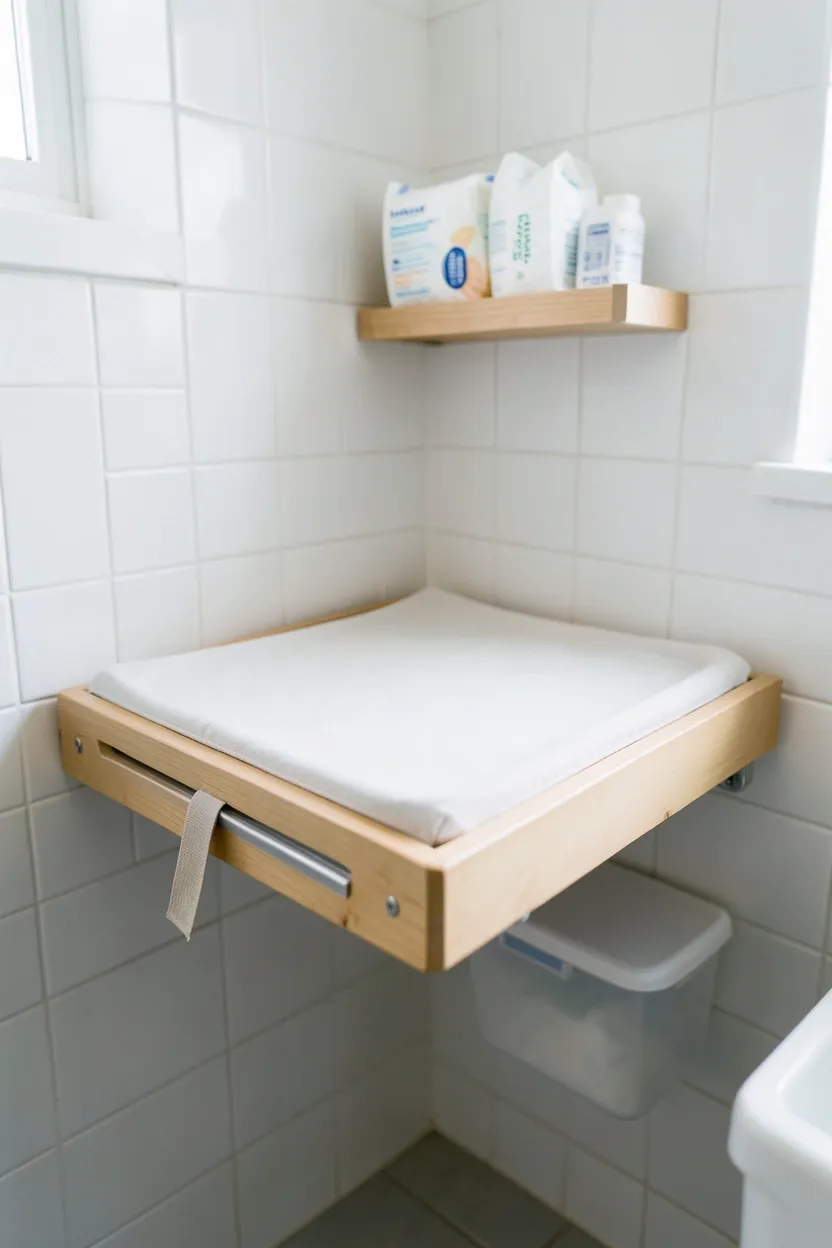
Install a wall-mounted fold-down changing table that disappears when not in use, reclaiming valuable floor space during non-diaper times. This Murphy-style solution provides a dedicated, safe changing surface when needed but folds completely flat against the wall, becoming invisible when closed. Add magnetic latches to keep it securely folded and a wall-mounted shelf for diaper supplies that remains accessible.
Recommended
Items for this idea
The space-saving design eliminates the need for a permanent changing table, which can consume precious square footage in a tiny house. When opened, the table provides a stable, waist-high surface for diaper changes with built-in safety edges to prevent rolling. Include a safety strap and padded changing mat for comfort and security during use.
Tips
- Install at a comfortable height for both parents to use
- Include a small basket or shelf for diaper supplies within arm's reach
- Test the folding mechanism several times before relying on it daily
Best for: tiny houses where floor space is at a premium
What this gives you: dedicated changing area that doesn't permanently occupy space
3. Vertical Toy Storage System: How to Store Toys in a Tiny House
Maximize wall space by installing a vertical organizer with rotating or pull-out bins that keeps toys accessible yet organized without consuming floor area. This system takes advantage of vertical height—a largely underutilized resource in tiny houses—while keeping toys visible and reachable for toddlers. Use different colored or labeled bins for various toy categories, making cleanup intuitive for even young children.
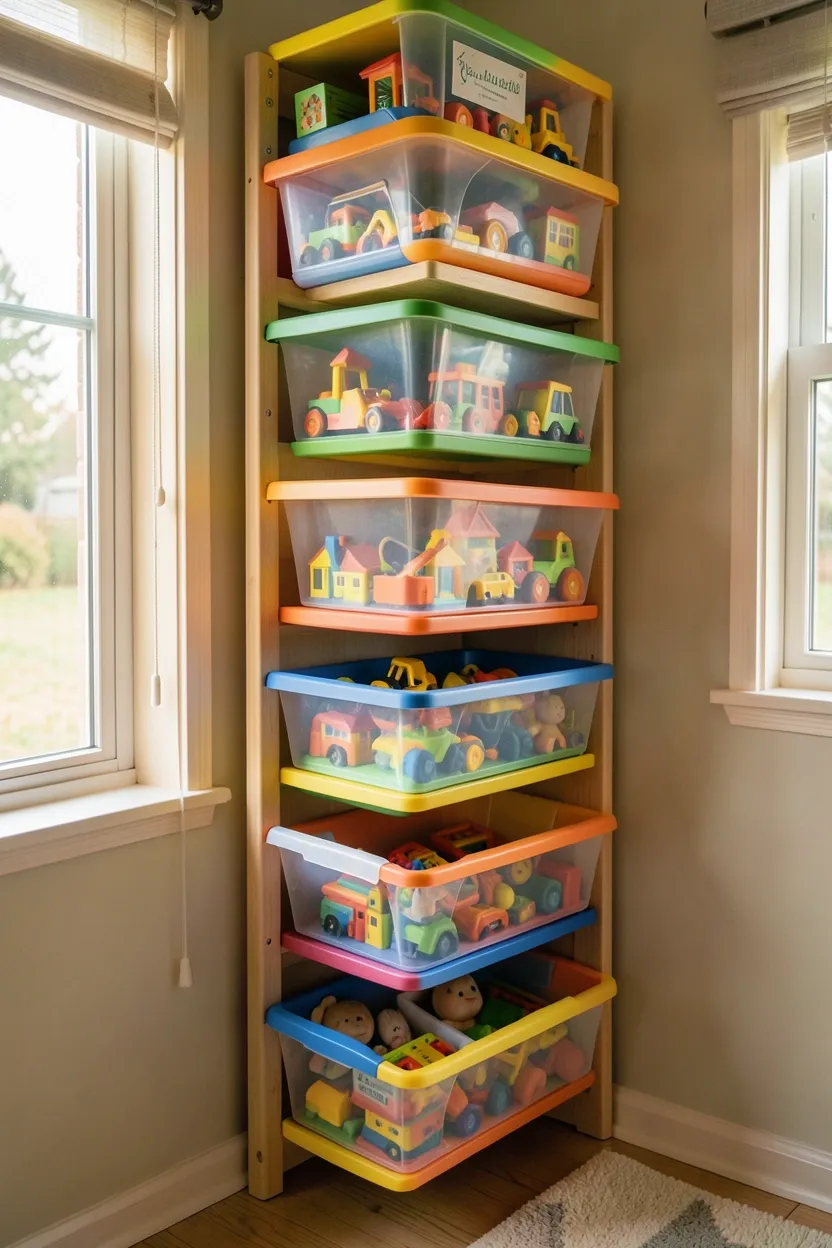
The rotating bin design allows you to access toys from the front while keeping the sides smooth and safe for children. Mount the system at a height where your toddler can reach the lower bins for independent play while placing special or less frequently used toys in higher bins that require adult assistance. This promotes both autonomy and organization from an early age.
Tips
- Use clear bins or add picture labels so toddlers can identify contents
- Implement a "one bin at a time" rule to prevent total toy dumps
- Choose lightweight bins that won't cause injury if pulled down
Best for: homes with high ceilings or unused wall space
What this gives you: organized toy storage that doesn't encroach on living space
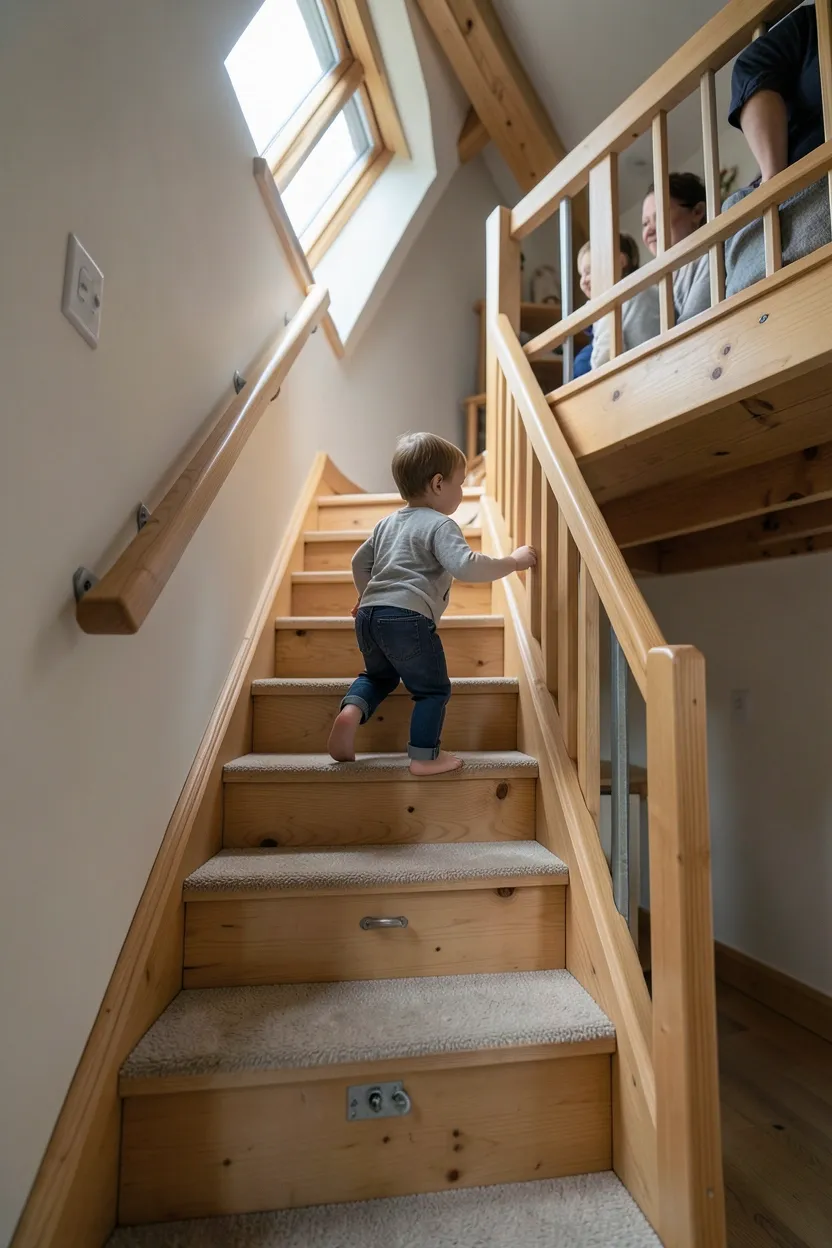
4. Child-Safe Loft Access with Stair Drawers
Replace dangerous ladders with a built-in staircase featuring deep steps that double as storage drawers, creating safe loft access while maximizing utility. Each stair becomes a functional drawer for storing clothing, linens, or toys, turning what would be wasted space under the stairs into valuable storage. The staircase provides secure footing for both parents and adventurous toddlers exploring their vertical home.
Recommended
Items for this idea
The stair design eliminates the fall risk associated with traditional tiny house ladders, making loft spaces accessible to parents carrying children or needing nighttime access. Include handrails on both sides and consider adding a small safety gate at the top for extra peace of mind. The deep drawers should have soft-close mechanisms to prevent pinched fingers and slamming.
Tips
- Install motion-sensor lights on the stairs for safe nighttime navigation
- Add non-slip treads to each step for traction
- Design the staircase width to accommodate adults comfortably
Best for: tiny houses with lofts that need safe access for families
What this gives you: safe loft access plus substantial hidden storage
5. Multi-Purpose Kitchen Island with High Chair Integration
Design a compact kitchen island that incorporates a built-in or clip-on high chair space, creating a dedicated dining area for toddlers without sacrificing prep space. The island can feature a removable insert or specialized section where a high chair can be securely attached, allowing your toddler to eat at counter height while participating in family meal preparation. When not in use, the space converts to additional counter or storage.
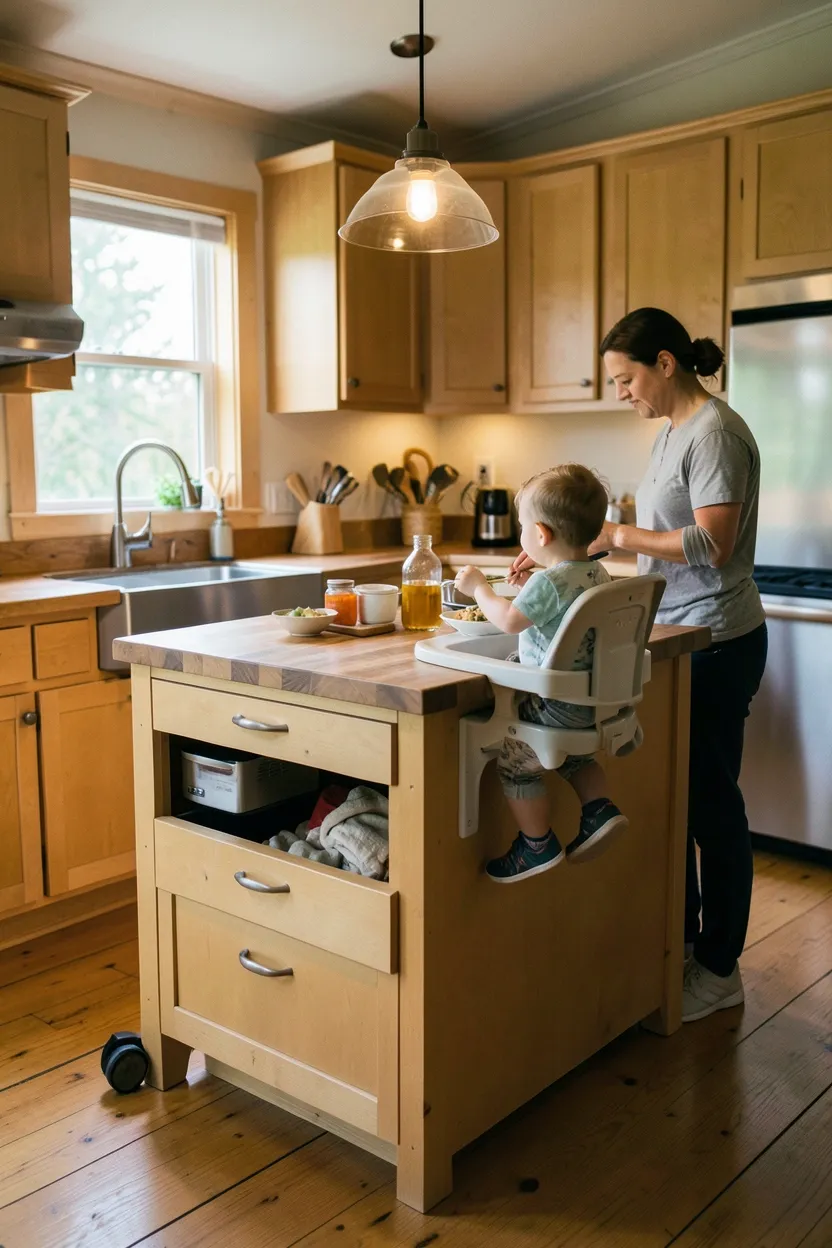
This integration keeps toddlers safely contained during meal times while keeping them involved in kitchen activities—a key benefit in tiny houses where separate dining rooms don't exist. The island can also include lower cubbies for storing toddler dishes, utensils, and snacks within child reach, fostering independence during meal routines.
Tips
- Choose a high chair with a five-point harness for maximum safety
- Include a waterproof, easy-clean surface under the high chair area
- Consider wheels with locks for flexibility in positioning
Best for: families who cook together and value toddler participation
What this gives you: integrated dining solution that saves space and promotes family interaction
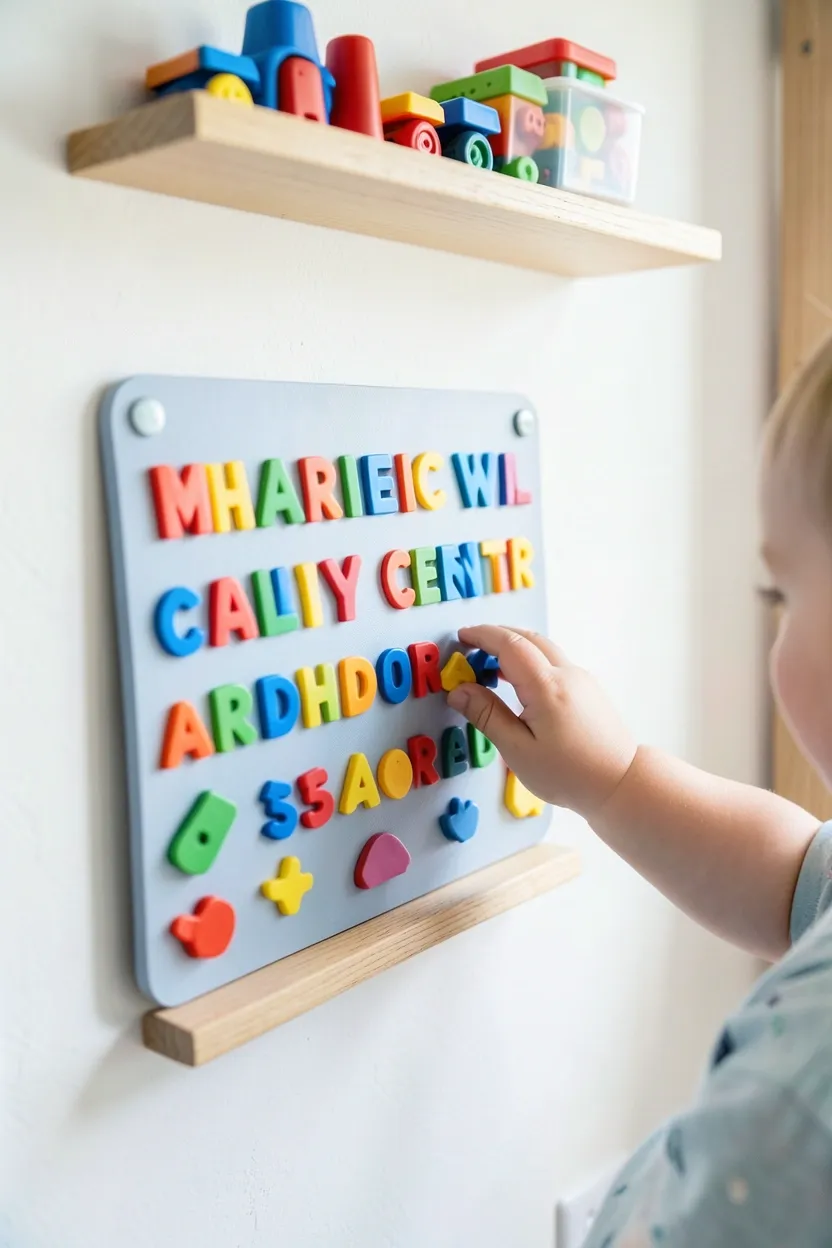
6. Magnetic Wall Activity Center
Transform a section of wall into a magnetic activity board where toddlers can safely play with magnetic letters, shapes, and toys without requiring floor space or table setup. The magnetic surface can be created with magnetic paint or a mounted magnetic board, providing a vertical play zone that keeps toddlers engaged while contained in one area. This solution is particularly valuable during cooking, cleaning, or other activities when parents need children occupied nearby.
Recommended
Items for this idea
The vertical nature of this activity center saves precious floor space while encouraging fine motor skill development and early learning. Rotate magnetic sets regularly to maintain interest—alphabet letters one week, farm animals the next, or shapes and colors for variety. The wall can also include a small shelf for holding magnetic sets when not in use.
Tips
- Install at toddler height (approximately 24-30 inches from floor)
- Use a magnetic primer followed by chalkboard paint for dual functionality
- Choose large, chunky magnetic pieces that pose no choking hazard
Best for: parents who need contained play areas during household tasks
What this gives you: educational play space that doesn't consume floor area
7. Collapsible Bathtub with Safety Features
Install a space-saving collapsible or folding bathtub that provides a full-sized bathing experience for toddlers but folds flat against the wall when not in use. These innovative bathtubs can be mounted to the wall and expanded like an accordion when bath time arrives, then collapsed and secured to free up floor space for other activities. Look for models with non-slip surfaces, supportive backrests, and temperature indicators for safety.
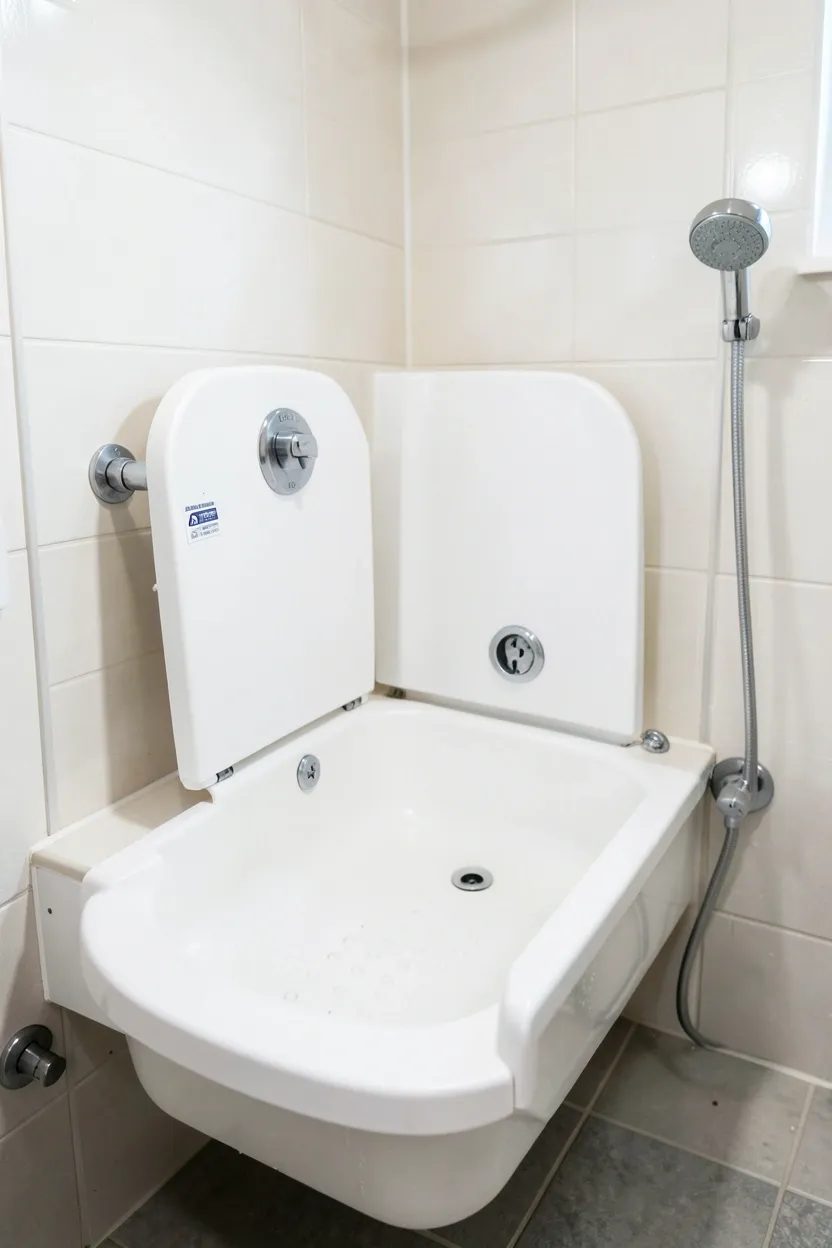
The collapsible design eliminates the need for a permanent bathtub footprint while still providing the comfort and safety of a traditional tub for bathing young children. When collapsed, the unit becomes nearly flush with the wall, creating valuable floor space that can be used for play, storage, or movement. Some models even include a built-in showerhead attachment for rinsing.
Tips
- Test the locking mechanism thoroughly before using with children
- Keep all bath supplies in a wall-mounted caddy nearby
- Consider a portable tub alternative if wall mounting isn't possible
Best for: tiny houses where bathroom space is extremely limited
What this gives you: full bathtub functionality on demand without permanent space commitment
8. Built-in Bench with Hidden Toy Storage
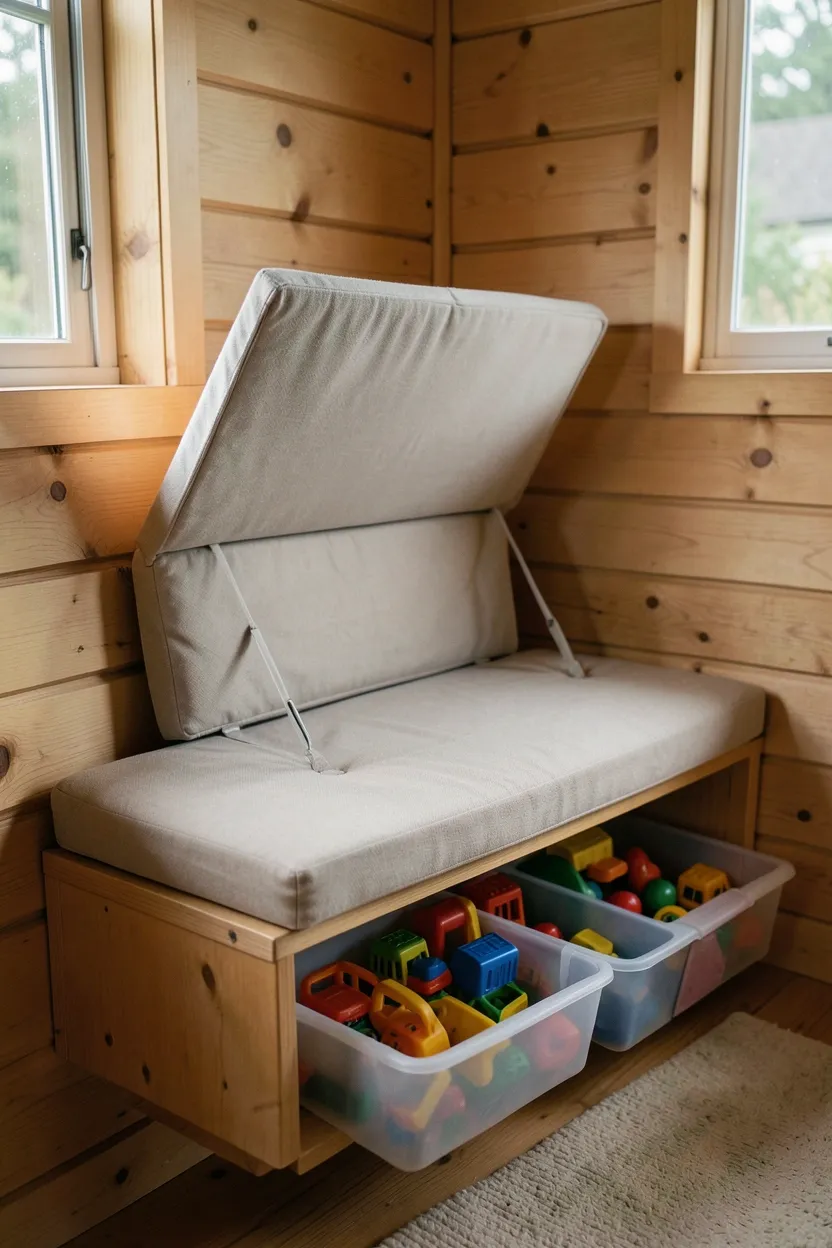
Create a built-in bench seat along one wall that features a hinged or lift-up top revealing substantial toy storage underneath. This dual-purpose furniture provides seating for reading, putting on shoes, or simply taking a break while concealing a treasure trove of toys beneath the cushioned surface. The bench can be customized with comfortable upholstery in wipe-clean fabric to withstand the inevitable spills and messes of toddler life.
Recommended
Items for this idea
The hidden storage compartment keeps toys out of sight when not in use, reducing visual clutter in the tiny house while keeping toys accessible for play. The bench itself becomes a cozy reading nook or waiting area, adding functional seating that doesn't consume additional floor space. Consider adding small compartments or dividers inside to organize different toy categories.
Tips
- Install safety hinges to prevent the lid from slamming on fingers
- Choose a cushion thickness that balances comfort with accessibility
- Add ventilation holes if storing toys that might retain moisture
Best for: long walls that can accommodate a permanent built-in
What this gives you: comfortable seating plus massive hidden toy storage
9. Sliding Room Divider for Privacy
Install a sliding room divider or barn door system that can separate sleeping areas from living spaces, creating privacy for parents or quiet zones for napping toddlers. The sliding mechanism saves space compared to swinging doors, which require clearance arc that can be problematic in tiny houses. When open, the divider tucks neatly against the wall, and when closed, it creates a visual and physical barrier for privacy.
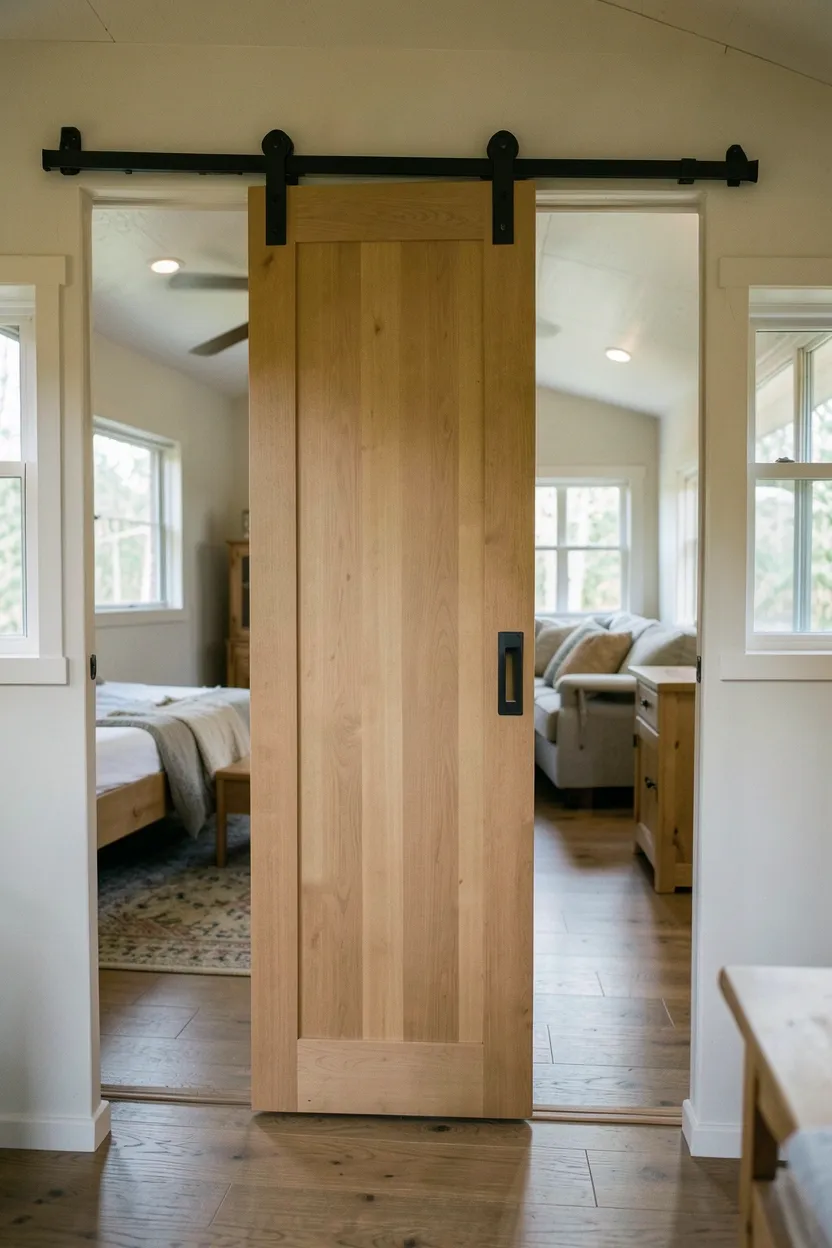
This solution allows you to create temporary "rooms" within the open-plan typical of tiny houses, giving you flexibility to adapt the space throughout the day. During nap time, close off the sleeping area to block light and noise. During evening hours, create a separate parent space for downtime while keeping the living area open. Choose a material that provides sufficient sound dampening for effective privacy.
Tips
- Install soft-close hardware to prevent slamming and protect little fingers
- Use a solid wood or acoustic panel material for better sound insulation
- Consider adding a small frosted glass panel for light transmission while maintaining privacy
Best for: open-plan tiny houses needing flexible zoning
What this gives you: on-demand privacy without sacrificing floor space
10. Wall-Mounted Folding Table for Art and Play
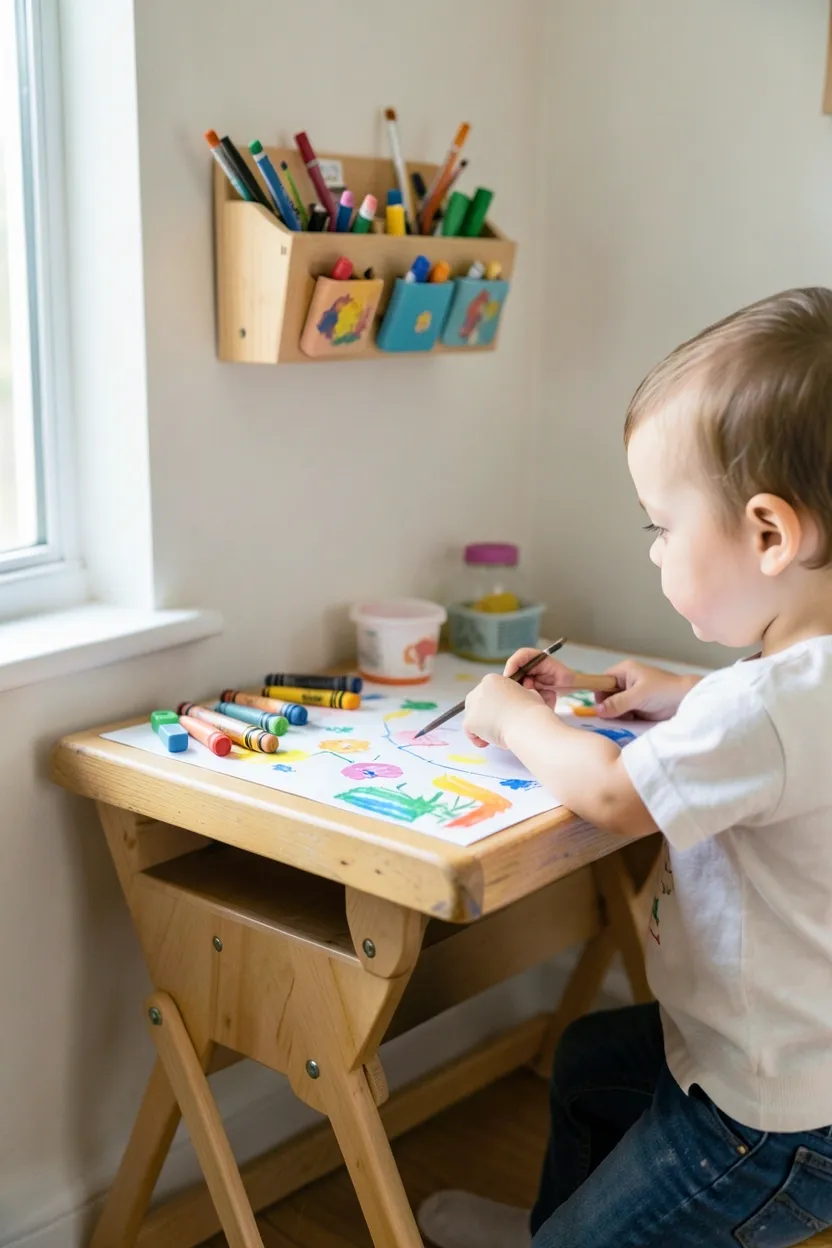
Mount a fold-down table specifically for toddler art projects, puzzle building, or small toy play, providing a dedicated workspace that disappears when not needed. The table should be mounted at toddler height and feature a lip or raised edge to prevent items from falling off. When folded up, it takes up minimal wall space, leaving the floor area free for other activities.
Recommended
Items for this idea
This specialized play surface gives toddlers their own space for creative activities without requiring a permanent table footprint. The raised edge keeps crayons, puzzle pieces, and small toys contained, reducing cleanup and preventing items from ending up on the floor. Add a wall-mounted organizer above the table for art supplies, keeping everything organized and within reach.
Tips
- Line the table surface with contact paper for easy cleanup
- Include a small basket or container for trash or recycling
- Install a small light above the table for better visibility during creative activities
Best for: toddlers who enjoy art, puzzles, or contained play activities
What this gives you: dedicated play surface that doesn't permanently occupy space
11. Outdoor Play Deck with Safety Railings
Extend your tiny house living space by building a safe outdoor deck where toddlers can play, explore, and burn energy without being confined indoors. The deck should feature sturdy safety railings with narrow spacing to prevent falls while allowing views of the surroundings. Include shade options like a retractable awning or pergola, and consider adding soft artificial turf or rubber flooring for cushioned play surfaces.
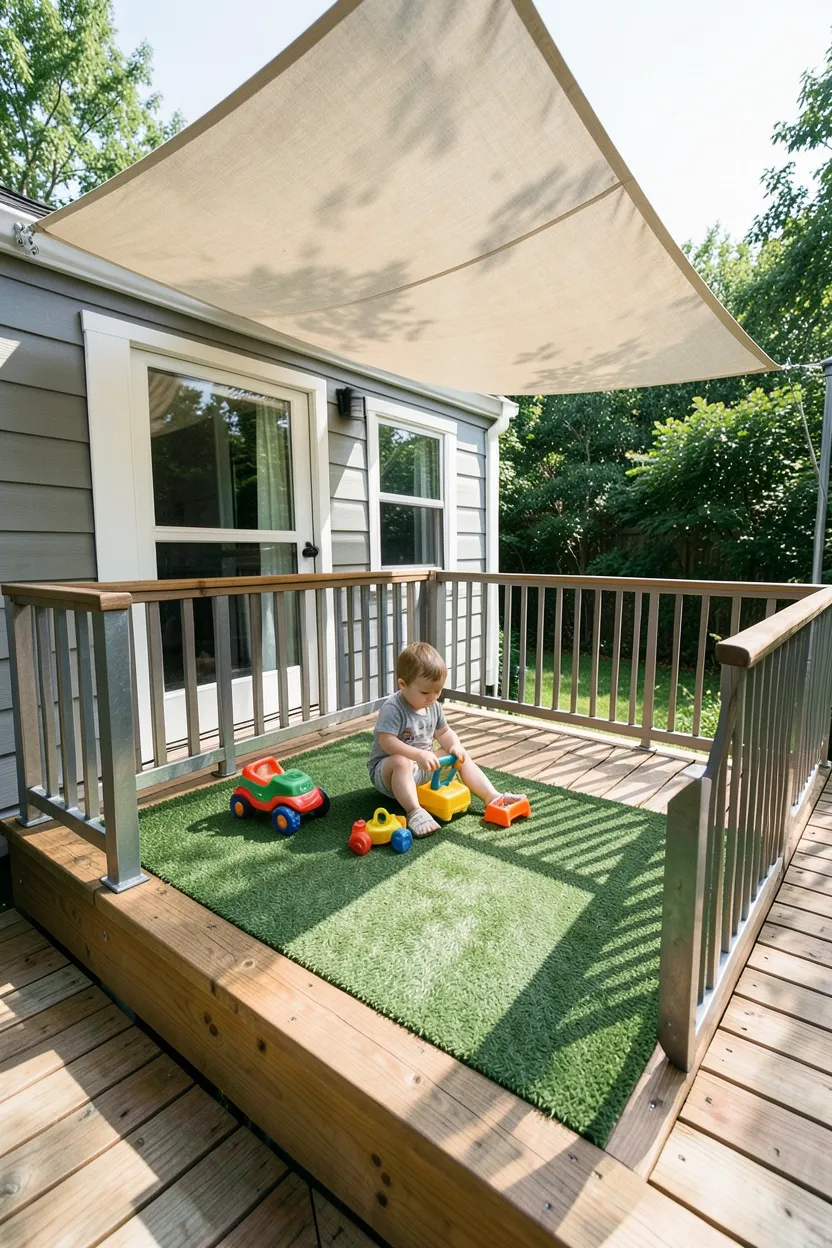
This outdoor expansion effectively increases your usable square footage without building larger indoor spaces, providing a crucial outlet for energetic toddlers in tiny house living. The deck becomes an additional "room" for play, meals, or simply enjoying fresh air—vital for mental health and development. Secure gates and proper railings ensure safety while still allowing freedom of movement.
Tips
- Use vertical railings with spacing no wider than 4 inches
- Install self-closing gates with child-proof latches
- Consider adding shade structures or a sun sail for hot weather protection
Best for: tiny houses on wheels or permanent foundations with outdoor space
What this gives you: valuable outdoor play space that expands your living area
12. Compact Potty with Built-in Storage
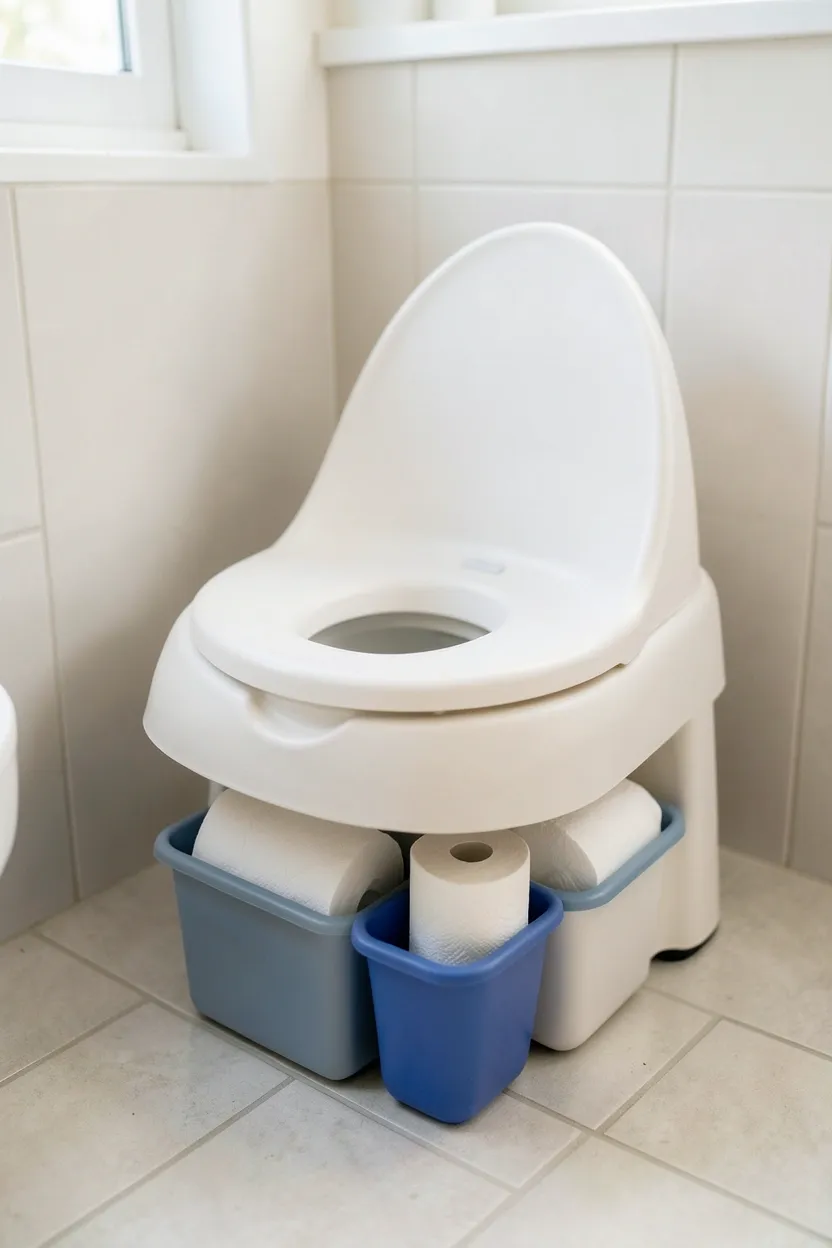
Choose a space-saving potty chair that includes built-in storage for toilet paper, wipes, and training supplies, keeping everything contained and organized. Look for models with removable bins underneath or side compartments that hold potty training essentials while maintaining a compact footprint. The potty should have a comfortable seat, splash guard for boys, and easy-to-clean surfaces for inevitable accidents.
Recommended
Items for this idea
In a tiny house, every item must earn its keep, and a potty with integrated storage eliminates the need for separate storage containers while keeping all supplies readily accessible during training. The compact design allows the potty to be tucked in corners or small spaces when not in use, and the integrated storage keeps clutter contained within the unit itself.
Tips
- Choose a potty with a removable inner basin for easy cleaning
- Keep disinfecting wipes nearby for quick sanitization
- Consider a model that can transition to a step stool later
Best for: families in the potty training stage with limited storage space
What this gives you: complete potty training station with minimal space requirement
13. Under-Stairs Storage Cubby System
If your tiny house features a staircase to the loft, transform the space underneath into a series of cubbies or drawers specifically designed for toddler storage. This often-wasted space can accommodate clothing, shoes, books, or toys in a way that's accessible to children while keeping items organized. Use soft-close drawers to prevent pinched fingers and label each cubby with pictures for easy identification.
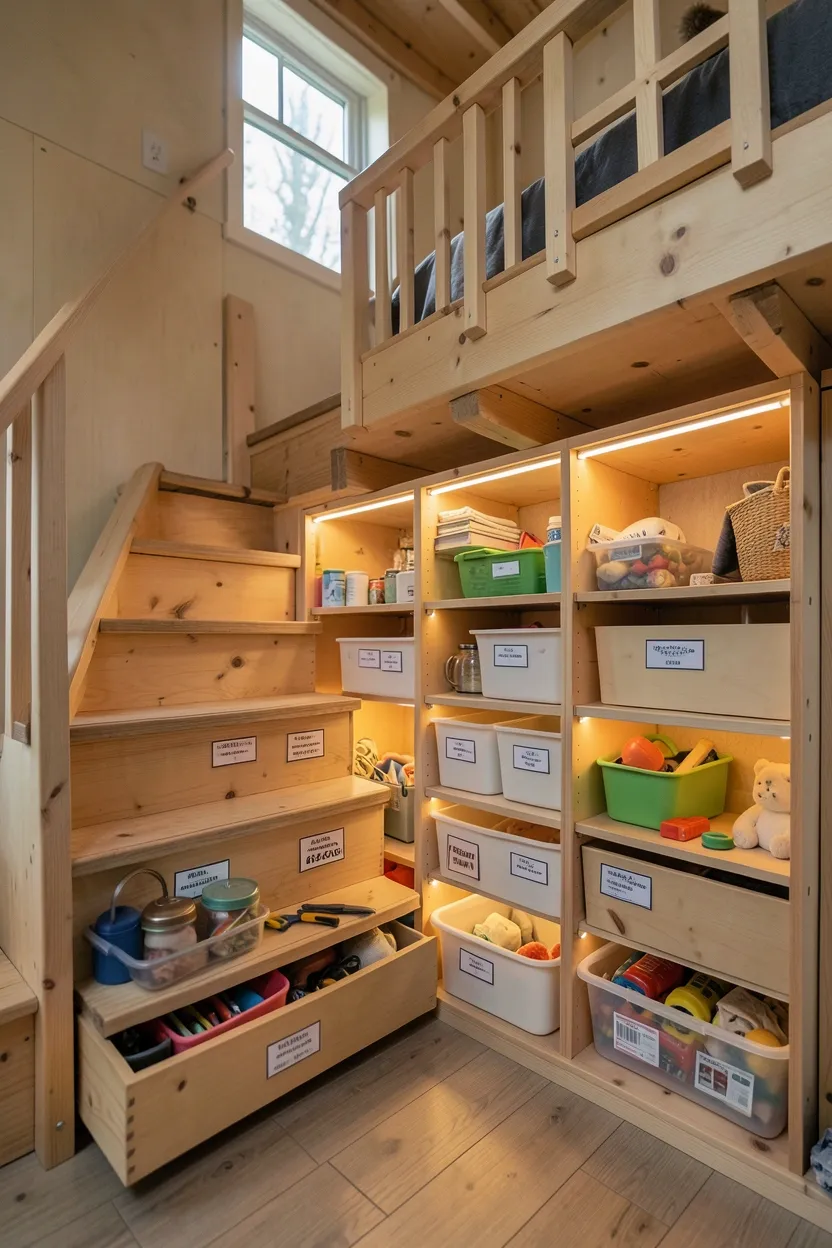
The under-stairs area typically goes unused or becomes a catch-all for miscellaneous items, but with intentional design, it becomes valuable storage for a toddler's belongings. The triangular shape creates naturally sized compartments perfect for organizing different categories of items. Lower cubbies can store frequently used toys while higher ones hold out-of-season clothing or special occasion items.
Tips
- Install LED strip lighting inside for better visibility
- Use magnetic catches instead of traditional latches for child-safe operation
- Consider adding a small curtain to hide contents when desired
Best for: tiny houses with staircases featuring empty space underneath
What this gives you: maximized storage in otherwise dead space
14. Clip-On High Chair for Dining Flexibility
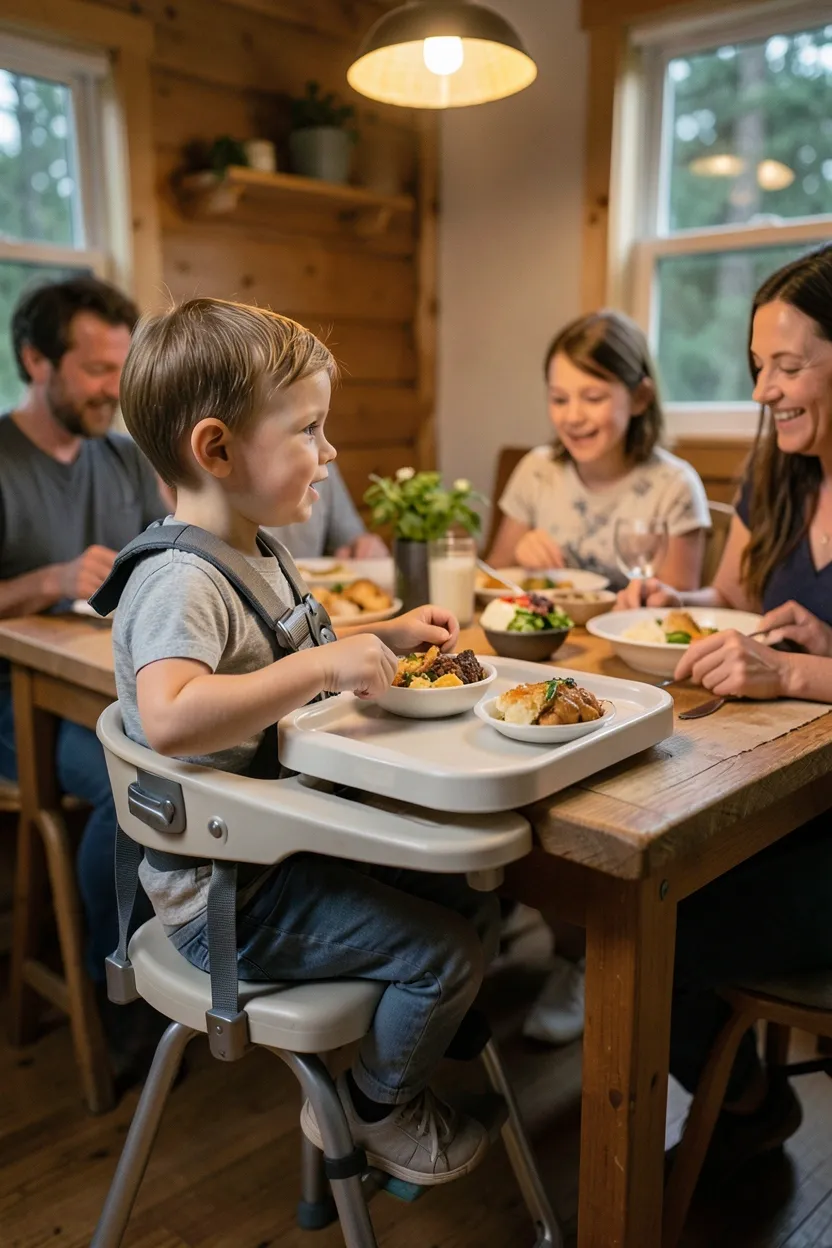
Use a clip-on or attachable high chair that securely fastens to existing tables or counters, eliminating the need for a standalone high chair that consumes floor space. These space-saving alternatives provide all the safety features of traditional high chairs—harness systems, trays, and comfortable seating—while attaching directly to furniture you already own. When mealtime ends, simply remove and store the chair in a closet or on a wall hook.
Recommended
Items for this idea
The clip-on design gives you flexibility to seat your toddler at any appropriate surface in the tiny house—kitchen counter for meal prep participation, dining table for family meals, or even outdoor tables when dining al fresco. This versatility is invaluable in small spaces where dedicated high chair footprint isn't practical. Most models support children up to 37 pounds, providing years of use.
Tips
- Verify the chair is compatible with your table thickness before purchasing
- Check weight limits regularly as your child grows
- Always attach to stable, level surfaces only
Best for: families with limited floor space and flexible dining needs
What this gives you: full high chair functionality without permanent space commitment
15. Low-Profile Bookshelves with Book Spines Facing Out
Install low-profile, wall-mounted bookshelves at toddler height with book spines facing outward, creating an inviting and accessible library for little readers. The forward-facing design allows toddlers to see book covers and choose independently, fostering a love of reading from an early age. Mount the shelves securely and use a lip or rail to prevent books from falling off during enthusiastic browsing.
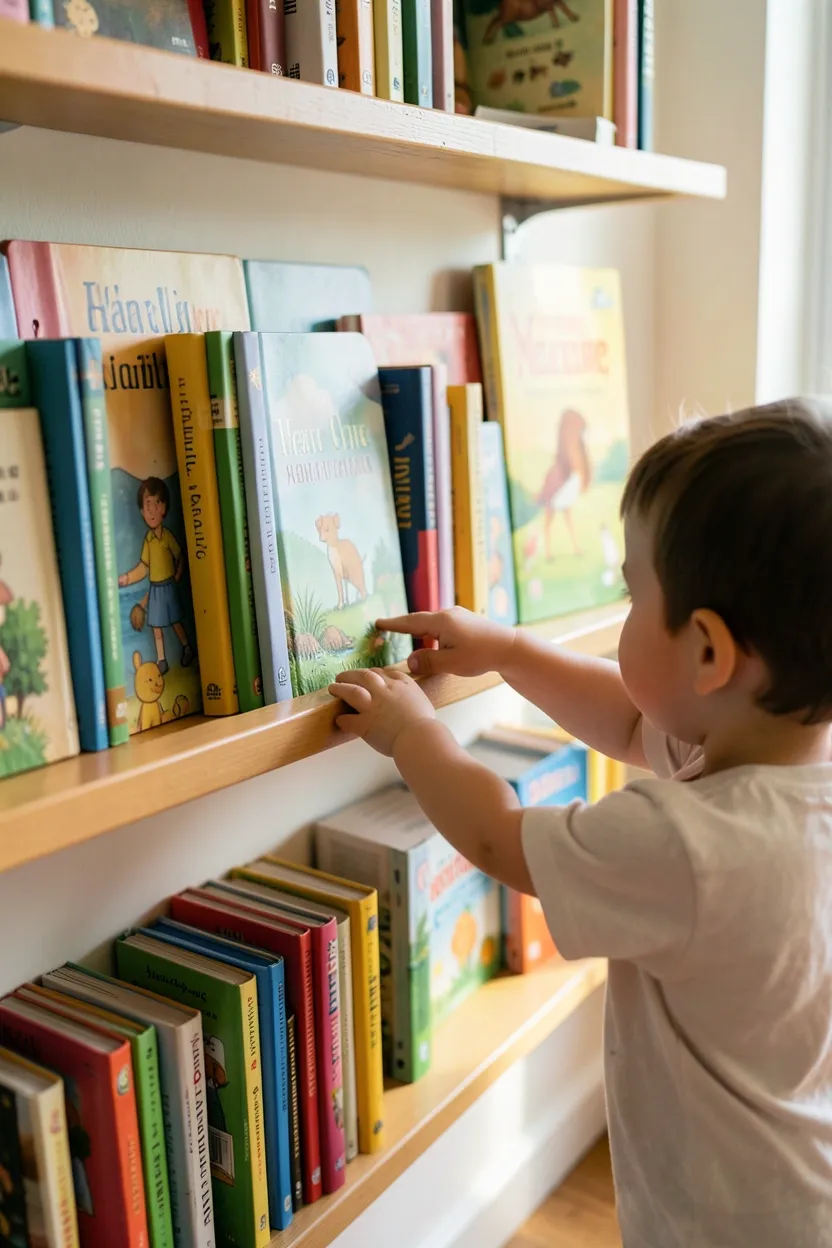
This library setup doubles as decoration and functionality, adding visual interest to walls while providing educational value. The low placement encourages independent reading time without requiring adult assistance to retrieve books. Rotate the selection regularly to maintain interest and introduce new stories, keeping the tiny house library fresh and engaging for your developing reader.
Tips
- Space shelves 6-8 inches apart to accommodate various book sizes
- Use board books on lower shelves and paper books higher up
- Consider adding a small cushion or rug nearby for cozy reading spots
Best for: families who value early literacy and independent learning
What this gives you: accessible, attractive book display that encourages reading
16. Soft Corner Guards and Foam Protection: Childproofing a Small Space for Toddlers
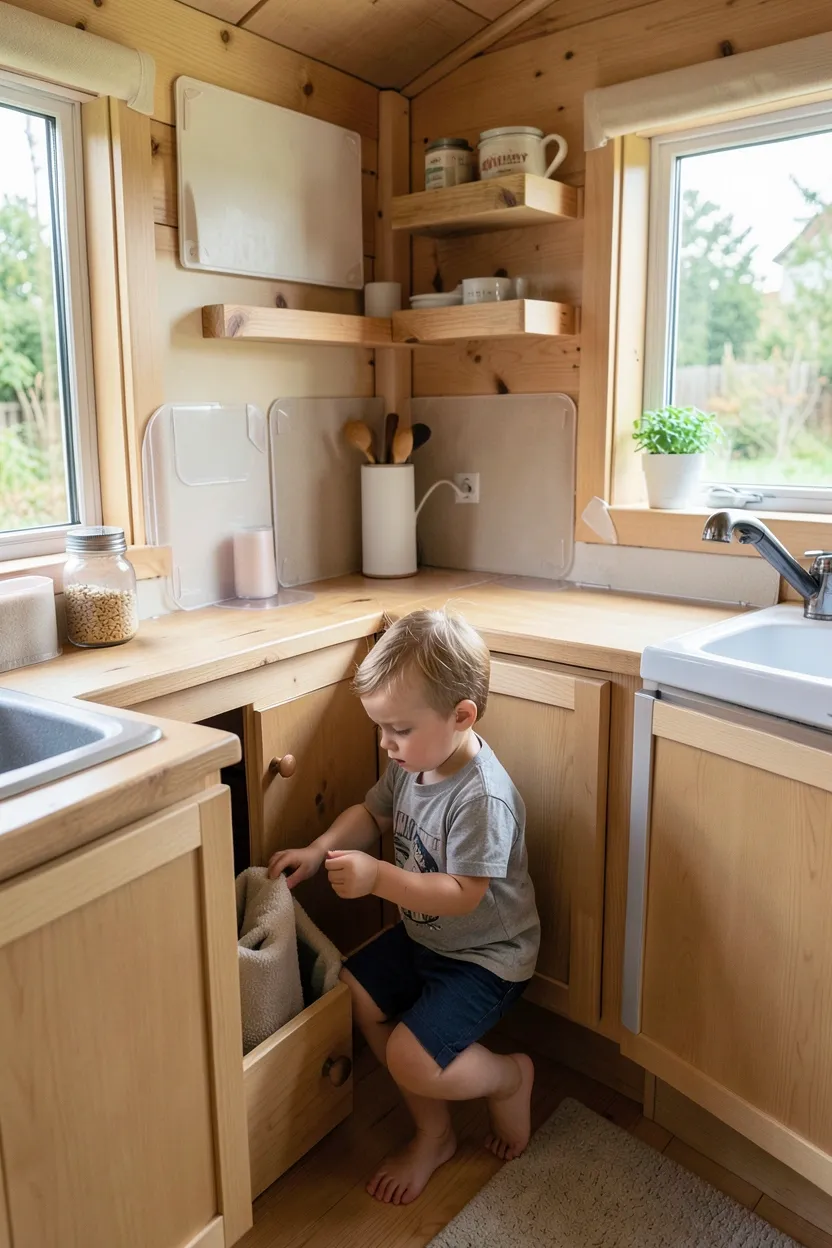
In a tiny house, toddlers are never far from corners, edges, and hard surfaces, making comprehensive childproofing essential for safety in small space family living. Install soft corner guards on all furniture edges, foam padding on exposed corners, and edge protectors on counters and tables. Choose neutral colors or clear protectors that blend with your decor rather than standing out as industrial-looking safety equipment.
Recommended
Items for this idea
The confined nature of tiny house living means toddlers have constant access to all areas, making childproofing more critical than in larger homes where certain rooms can be gated off. Soft padding on sharp corners and edges prevents the inevitable bumps and bruises of toddler exploration while maintaining the aesthetic appeal of your carefully designed space. Focus on high-traffic areas and surfaces at toddler head height.
Tips
- Test adhesive strength regularly, especially in humid environments
- Replace any damaged or worn protection immediately
- Consider removable options if you're renting or plan to sell
Best for: all tiny house families with mobile toddlers
What this gives you: comprehensive safety without sacrificing design aesthetics
17. Weekly Toy Rotation System with Labeled Bins
Implement a systematic toy rotation where only a subset of toys is available at any given time, while the rest are stored in labeled bins and swapped weekly or bi-weekly. This system prevents toy overwhelm, keeps tiny house spaces from becoming cluttered, and maintains novelty and interest in toys. Use clear bins with picture labels so toddlers can help identify which toys are currently available versus stored away.
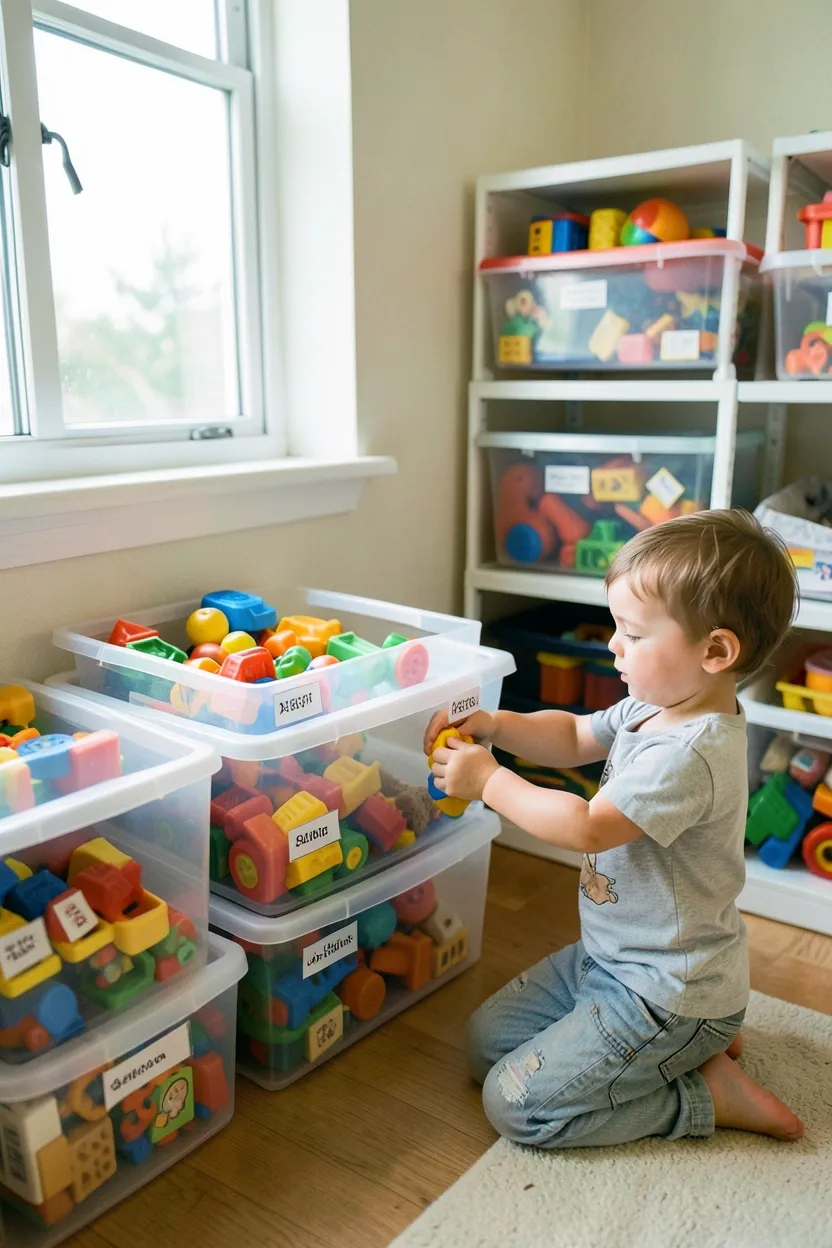
The rotation system addresses a core challenge of tiny house living with toddlers—too much stuff in too little space—while actually enhancing play quality. Children engage more deeply with fewer toys than they do with overwhelming quantities, and the regular rotation keeps playtime fresh and exciting. Store bins in under-bed storage, closet space, or even under the tiny house if accessible.
Tips
- Involve your toddler in the rotation process to teach decision-making skills
- Keep a simple list or chart tracking which toys are out and which are stored
- Consider seasonal rotations—outdoor toys in summer, quiet toys in winter
Best for: families struggling with toy clutter in limited space
What this gives you: manageable toy quantity that maintains engagement without overwhelming your space
Tiny house living with a toddler demands creativity, flexibility, and intentionality, but the rewards of simplified, connected family life make every challenge worth solving. By implementing thoughtful storage solutions, toddler safety measures, and space-saving designs specific to small space family living, you create an environment where both children and parents can thrive despite the limited square footage. The key lies in maximizing every inch with multi-purpose furniture, establishing toy rotation systems, and adapting your tiny home as your child grows. Embrace the journey of intentional family living—you may discover that less space actually means more time together.
About the author
OBCD
CGI visualization and interior design content. We create detailed 3D renders and curate practical design ideas for every room in your home.