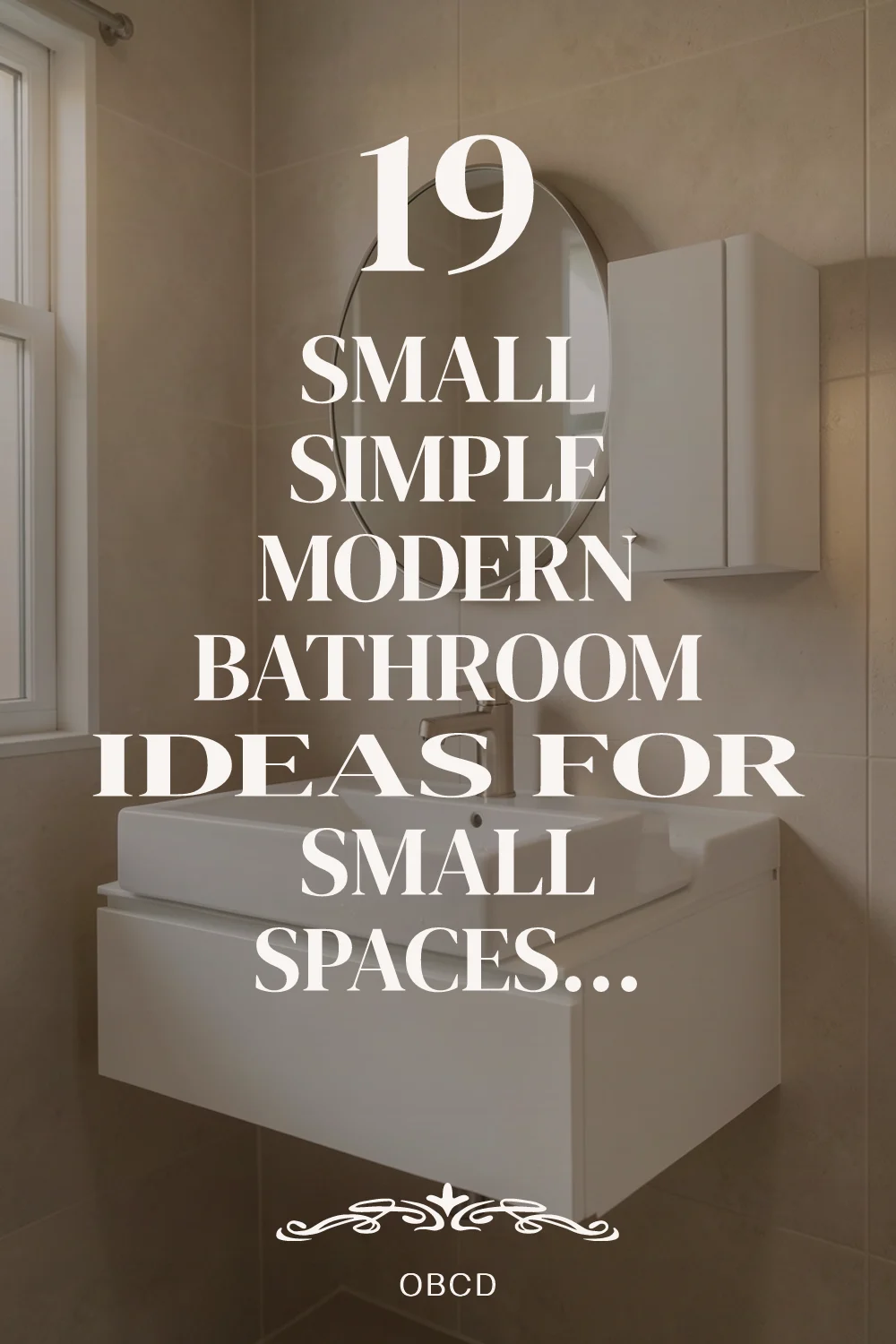
19 Small Simple Modern Bathroom Ideas for Small Spaces
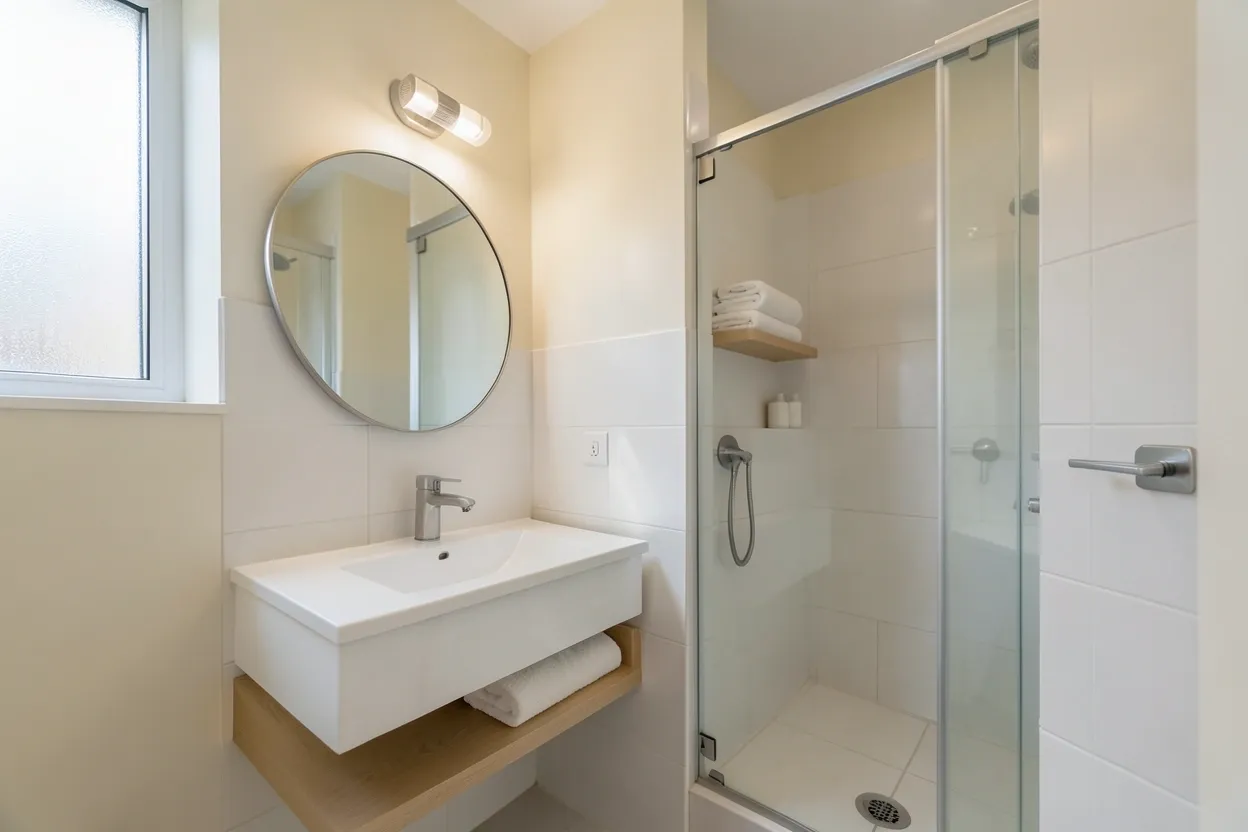
Small bathrooms don't have to feel cramped or compromising. With the right approach to layout, materials, and fixtures, even the most compact powder room can become a serene retreat that maximizes every square inch while maintaining a clean, modern aesthetic. These small simple modern bathroom ideas prove that limited square footage is never an obstacle to great design.
These 19 modern bathroom ideas for small spaces focus on space-saving solutions that prioritize function without sacrificing style. From wall-mounted vanities that create visual breathing room to clever storage tricks that keep clutter at bay, each design choice works together to create a sense of openness and calm. Many of these ideas are fully renter-friendly — no permanent changes, no landlord drama.
Whether you're working with a tiny apartment bathroom or looking to refresh a compact guest bath, these proven small bathroom design strategies will help you transform your space into something that feels both intentional and inviting. The key is knowing which elements to emphasize and which to streamline, then layering in details that make the space feel personal.
Quick FAQ
What colors work best for small bathrooms?
Light, neutral tones like white, cream, soft gray, and pale blue reflect more light and create a sense of spaciousness. Avoid dark colors that can make the space feel enclosed.
How can I make my small bathroom look bigger?
Use wall-mounted fixtures to free up floor space, install large mirrors to reflect light and create depth, choose continuous flooring without visual breaks, and maximize natural light wherever possible.
What type of flooring is best for small bathrooms?
Large-format tiles, penny rounds, or continuous vinyl flooring reduce grout lines and visual clutter. Light-colored materials with subtle textures work best to maintain an open feel.
Should I use a shower curtain or glass door in a small bathroom?
Frameless glass doors are preferable for small spaces because they don't block light or visual flow. If budget is a concern, a clear shower curtain is the next best option.
As an Amazon Associate I earn from qualifying purchases.
Table of Contents
- 1. Wall-Mounted Floating Vanity
- 2. Corner Walk-In Shower with Glass Enclosure
- 3. Large Round Mirror with LED Lighting
- 4. Vertical Floating Wooden Shelves
- 5. Wall-Mounted Toilet with Hidden Tank
- 6. Penny Round Floor Tiles
- 7. Recessed Medicine Cabinet
- 8. Compact Corner Vanity with Vessel Sink
- 9. Small Bathroom with Skylight
- 10. Wall-Mounted Faucet and Vessel Sink
- 11. Vertical Shiplap Walls with Black Accents
- 12. Built-In Shower Niche
- 13. Pocket Door for Space Saving
- 14. Light Wood Vanity with White Drawer Fronts
- 15. Bathroom Ladder Shelf for Towel Storage
- 16. Black Window Frame for Modern Contrast
- 17. Hexagon Floor Tiles for Geometric Interest
- 18. Wet Room Style Bathroom
- 19. Vertical Towel Radiator or Heated Rail
1. Wall-Mounted Floating Vanity
A wall-mounted floating vanity is one of the most effective small simple modern bathroom ideas for creating visual space in compact bathrooms. By lifting the cabinet off the floor, you expose more flooring material, which tricks the eye into perceiving a larger area while making cleaning underneath effortless.
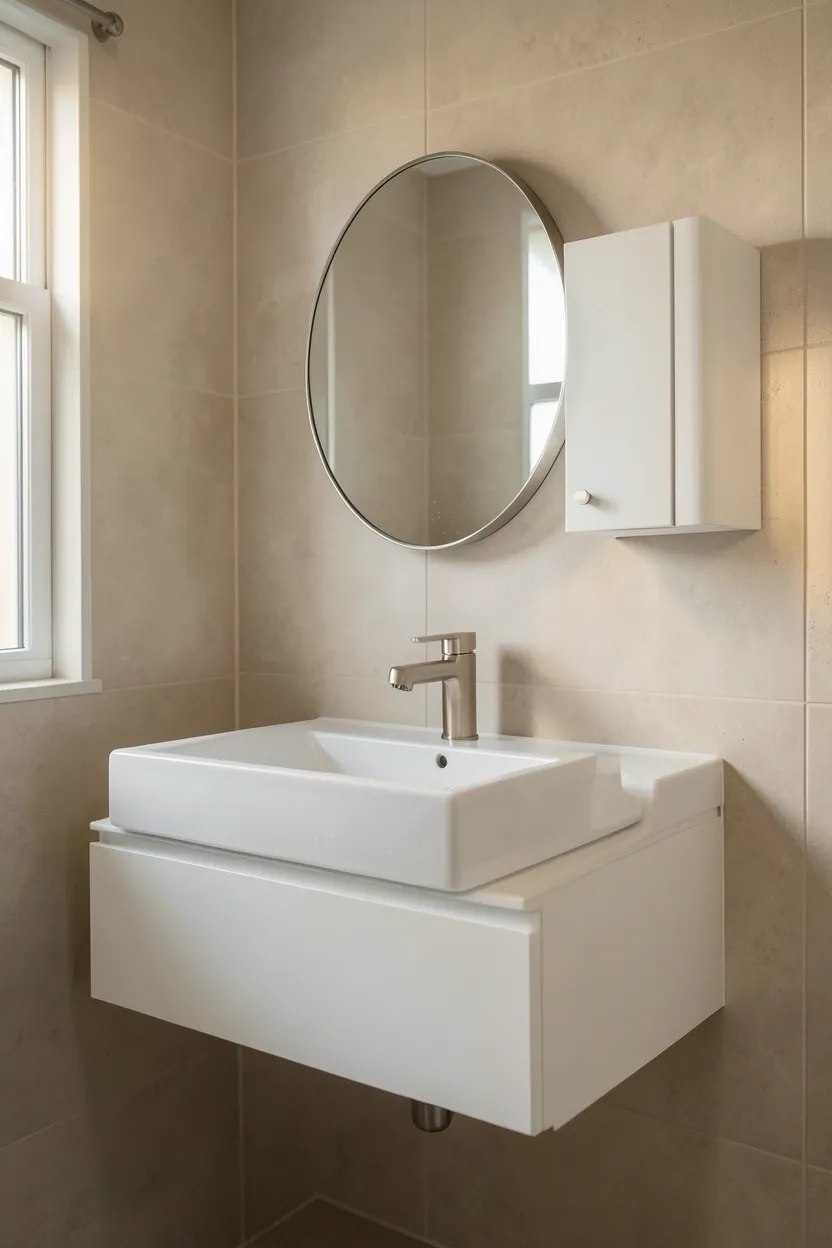
The matte white lacquer finish paired with a rectangular vessel sink in white ceramic creates a seamless, monochromatic look that recedes visually. Brushed nickel fixtures add subtle warmth without introducing competing finishes. This combination works particularly well in bathrooms under 40 square feet where every inch matters.
Consider a vanity depth of 18-21 inches rather than the standard 24 inches to preserve circulation space. Wall-mounted faucets further reduce the visual footprint while simplifying countertop cleaning. The floating design also allows for integrated LED strip lighting underneath, creating ambient illumination that enhances the sense of spaciousness during evening hours.
Unlike floor-standing vanities that can make small spaces feel heavy and enclosed, floating options maintain visual lightness while providing essential storage. The key is choosing a design with closed drawer fronts rather than open shelving, which keeps toiletries hidden and maintains a serene, uncluttered appearance.
Do: Choose a vanity with at least 4-6 inches of clearance from the floor for optimal visual breathing room and easy cleaning access.
What this gives you: 6-8 inches of visible floor space that expands the room visually while simplifying maintenance.
2. Corner Walk-In Shower with Glass Enclosure
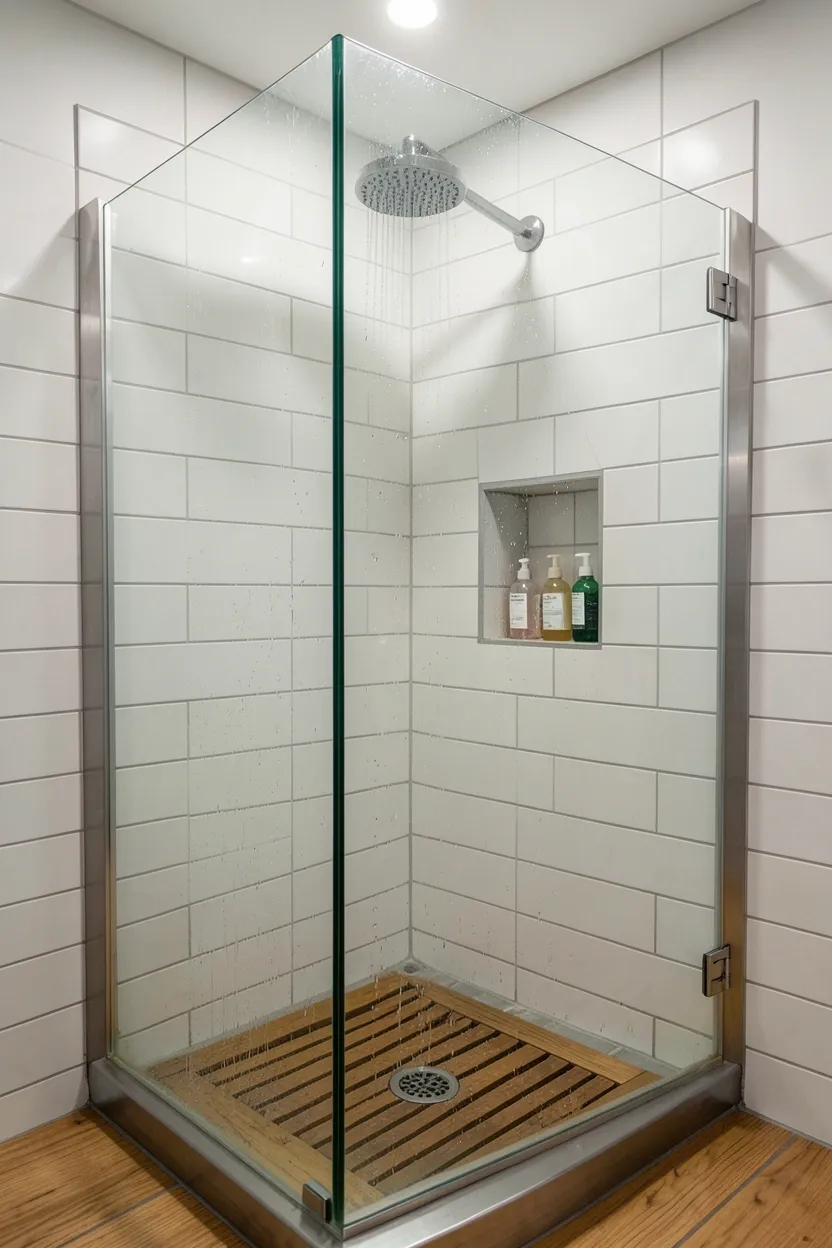
Installing a corner walk-in shower with a frameless glass enclosure transforms awkward corners into functional shower space while maintaining an open, airy feel. The clear glass allows light to pass through uninterrupted, preserving sightlines and preventing the bathroom from feeling segmented or closed off.
Recommended
Items for this idea
White subway tile walls with grey grout create timeless appeal while requiring minimal maintenance. The built-in niche with glass shelves keeps bathing essentials organized and off the floor, contributing to the clutter-free aesthetic that's essential in small bathrooms. A teak floor mat introduces warmth and natural texture while providing practical drainage.
Placement note: Position the showerhead so the spray direction is away from the bathroom entrance—this minimizes water splashing onto floors outside the shower area.
The rainfall showerhead mounted overhead provides a luxurious experience without requiring additional wall space that traditional showerheads and arms would occupy. For bathrooms under 50 square feet, consider a 32x32 inch corner shower footprint as a minimum comfortable size, though 36x36 inches is preferable if space allows.
If you're working with a slanted ceiling or dormer window, then customize the glass enclosure height to work with the architecture rather than forcing a standard full-height door that might look awkward.
What this gives you: A fully functional shower that doesn't visually dominate the room or block natural light flow.
3. Large Round Mirror with LED Lighting
Oversized round mirrors are among the most transformative small simple modern bathroom ideas for creating the illusion of space while providing essential functionality. The circular shape softens the angularity typically found in small bathrooms and creates a focal point that draws the eye upward, expanding the perceived height of the room.
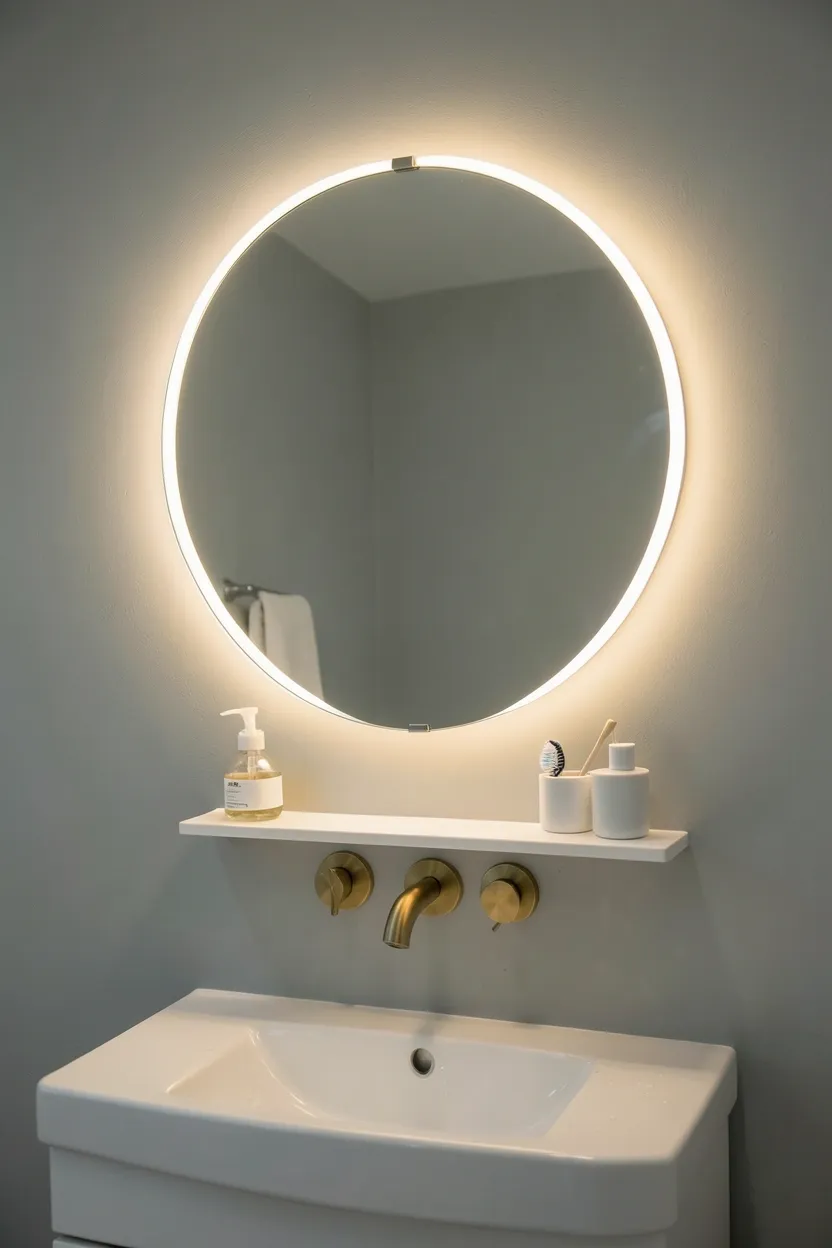
The integrated LED lighting serves dual purposes: it provides shadow-free illumination for grooming tasks while creating ambient glow that makes the space feel larger and more inviting. The light reflects off the mirror surface and bounces around the room, effectively doubling the brightness without requiring multiple light fixtures.
Why it works: A mirror that's at least 28-30 inches in diameter reflects a significant portion of the opposite wall, creating a virtual window effect that visually doubles the space. The frameless design with edge-mounted LEDs maintains a clean, modern profile that doesn't add visual weight.
Position the mirror so its center is approximately 60-66 inches from the floor, placing it at eye level for most users. This height ensures optimal functionality while allowing the mirror to reflect as much of the room as possible. If your bathroom has a window, place the mirror on the adjacent wall to capture and multiply natural light throughout the space.
Pro: LED-integrated mirrors eliminate the need for separate wall sconces, freeing up valuable wall space for storage or artwork.
Con: Hardwired models require professional installation, which adds to the overall project cost.
Fix: Choose a plug-in model with a hidden cord channel if you want to avoid electrical work, though this requires locating an outlet nearby.
What this gives you: Bright, shadow-free task lighting plus a reflective surface that visually doubles your space.
4. Vertical Floating Wooden Shelves
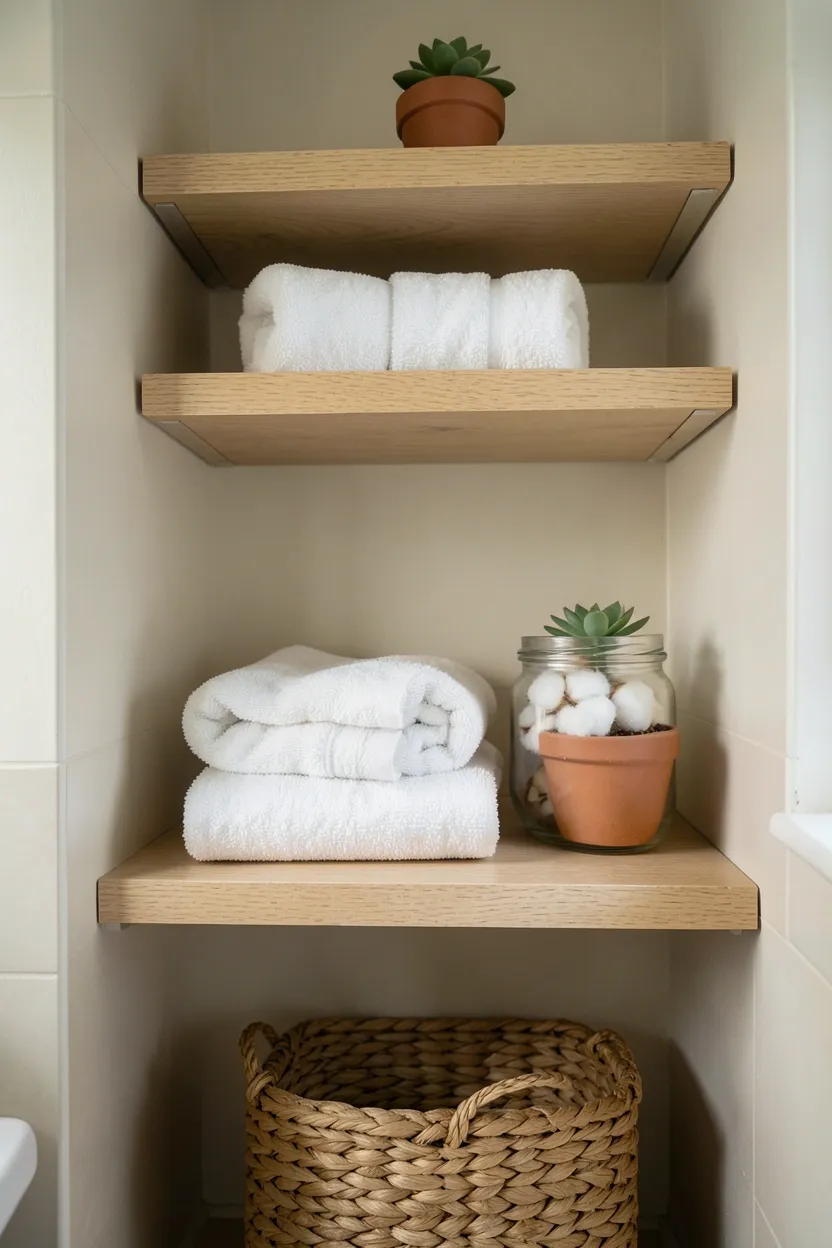
Vertical floating wooden shelves capitalize on unused wall space while adding warmth and natural texture to sterile bathroom environments. Unlike traditional medicine cabinets or closed storage, open shelves maintain a sense of openness while providing accessible storage for daily essentials.
Recommended
Items for this idea
Light oak wood introduces organic warmth that balances the cool tones typically found in bathroom fixtures and tiles. The natural grain patterns add visual interest without introducing busy patterns that could overwhelm a small space. Arranging shelves vertically rather than horizontally draws the eye upward, emphasizing ceiling height rather than limited floor area.
Common mistake: Overloading shelves with too many items in mismatched containers creates visual clutter that makes small bathrooms feel chaotic and cramped. The key is editing down to essentials and coordinating storage vessels for a cohesive look.
Group items in threes or fives rather than twos or fours—odd numbers create more dynamic, natural arrangements. Use clear glass jars for cotton balls and swabs, white ceramic dishes for soap, and neutral-colored baskets for larger items. This color coordination maintains visual calm while keeping frequently used items accessible.
Do: Install shelves at least 12 inches apart vertically to accommodate taller bottles and prevent the space from feeling crowded.
What this gives you: Functional storage that doesn't sacrifice wall space or visual openness while adding natural warmth.
5. Wall-Mounted Toilet with Hidden Tank
A wall-mounted toilet with concealed tank is one of the most space-efficient small simple modern bathroom ideas available, reducing the toilet's footprint by eliminating the bulky porcelain base that extends into the room. This design can save 8-10 inches of floor space while creating a dramatically lighter visual profile.
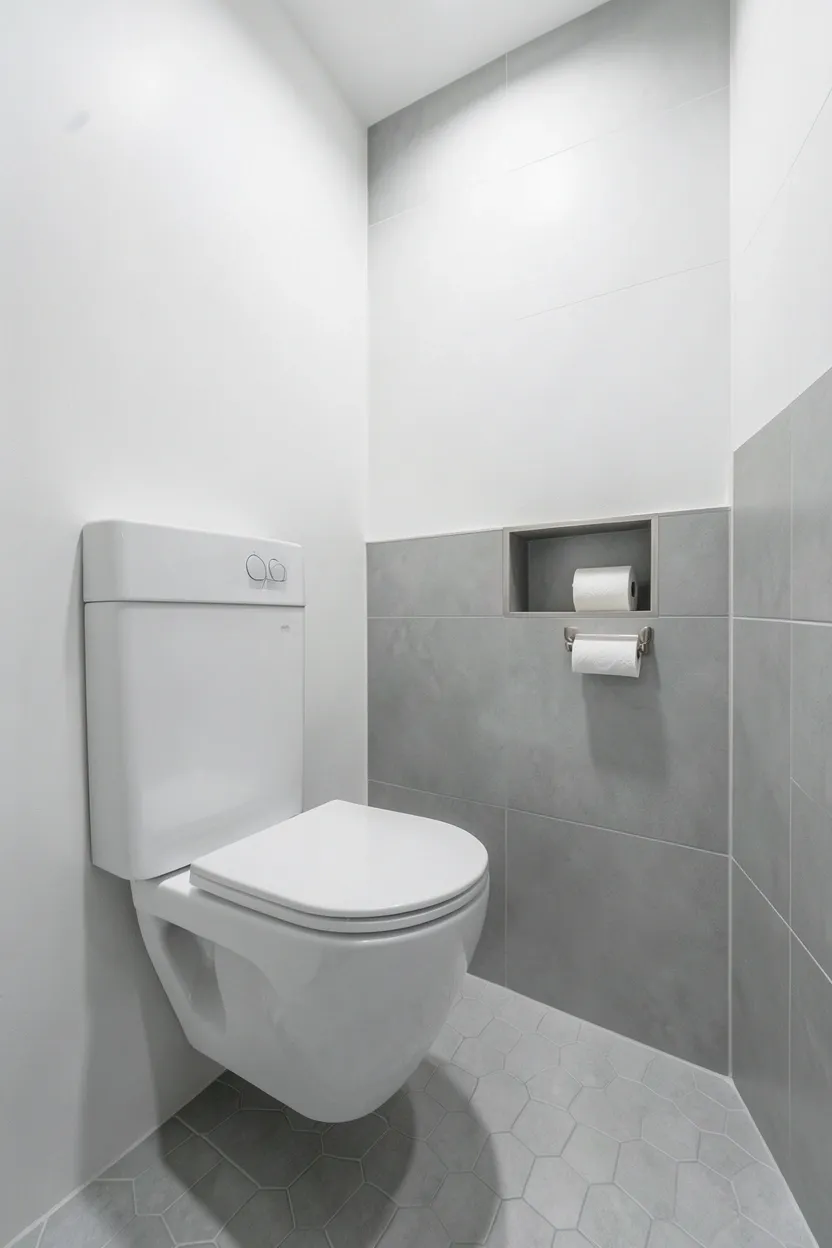
The hidden tank installs inside the wall, freeing up valuable floor space that would otherwise be occupied by a traditional toilet base. This creates unobstructed floor space that makes the bathroom feel larger and simplifies cleaning—no more awkward corners to navigate around with a mop.
Matte white hexagon floor tiles provide subtle geometric interest without overwhelming the space, while the toilet's wall-hung design creates a floating effect that maintains visual lightness. Built-in niches above the toilet paper holder add convenient storage without protruding into the room.
Wall-mounted toilets typically mount at a comfortable height of 16-18 inches from the floor, slightly higher than standard toilets, which makes them more comfortable for taller users and easier to stand up from. The hidden tank design also allows for adjustable height during installation, accommodating users of different mobility levels.
Do: Choose a model with an accessible panel for future maintenance—hidden tanks should still be serviceable without tearing into the wall.
Don't: Install a wall-mounted toilet in a bathroom with exterior walls in cold climates without proper insulation—the tank could be vulnerable to freezing.
What this gives you: Up to 10 inches of recovered floor space plus easier cleaning and a dramatically lighter visual presence.
6. Penny Round Floor Tiles
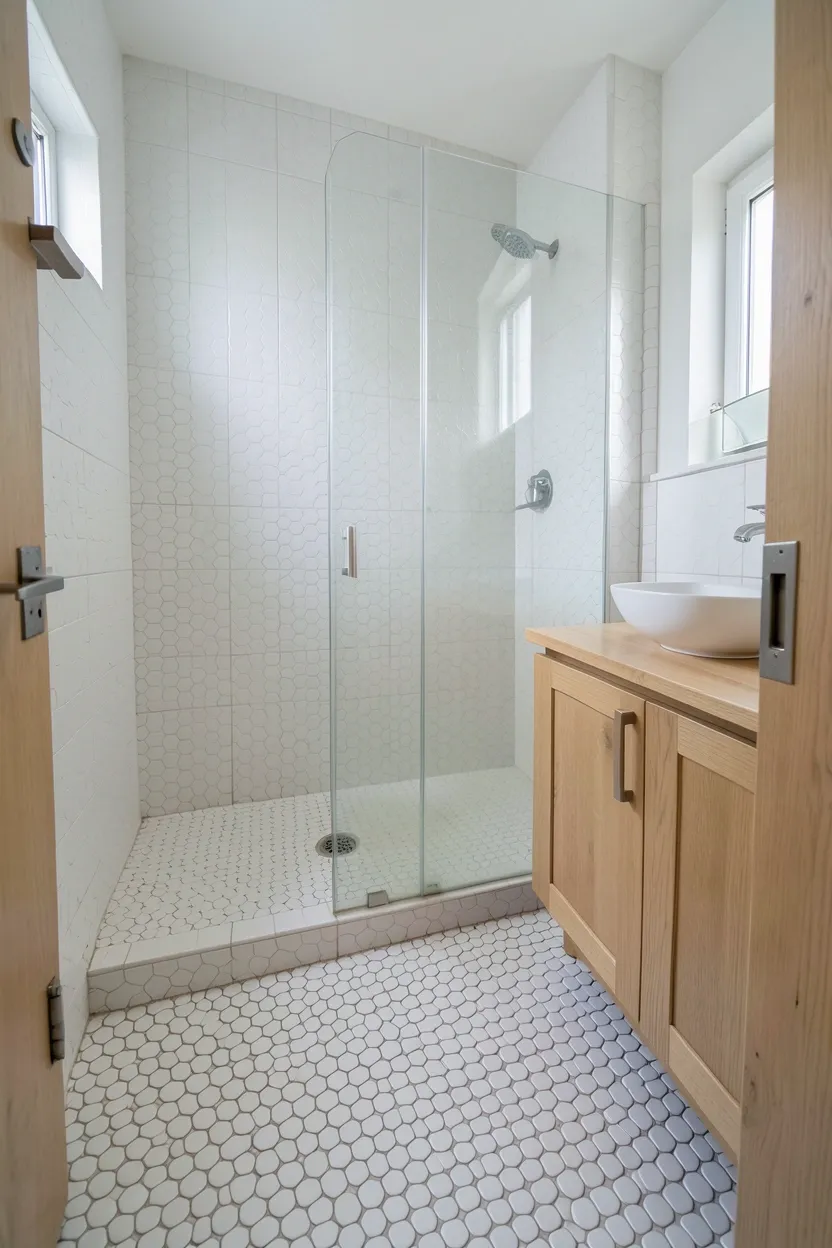
Penny round floor tiles offer one of the most clever small simple modern bathroom ideas for creating visual interest while maintaining a sense of spaciousness. The tiny round tiles create a continuous surface with minimal grout lines, which reduces visual segmentation and makes the floor feel expansive rather than broken up.
Recommended
Items for this idea
Matte white penny tiles reflect light beautifully while providing subtle texture underfoot. Their small scale means they can accommodate curved walls or irregular floor plans without requiring awkward cuts that would disrupt the visual pattern. Paired with white hexagon wall tiles in the shower area, this creates a monochromatic scheme that visually expands the space.
The continuous tile surface from bathroom floor into the shower area eliminates the visual break of a traditional threshold or dam, creating seamless flow that makes the entire space feel larger. This wet-room approach requires proper sloping and waterproofing but delivers a spa-like result that's worth the investment.
Micro-hack: Use contrasting grout color—light grey grout with white penny tiles adds definition while maintaining brightness, making the floor feel more substantial and less sterile.
Micro-budget-time note: Penny tiles require more labor and grout than larger tiles, so budget 20-30% more for installation. The tradeoff is a unique, high-end look that adds character to even the smallest bathrooms.
What this gives you: A seamless, visually expansive floor surface that adds subtle texture without overwhelming the space.
7. Recessed Medicine Cabinet
A recessed medicine cabinet with mirrored door eliminates the need for separate mirrors while providing hidden storage that doesn't protrude into the room. By setting the cabinet into the wall, you gain storage depth without sacrificing floor or wall space—a crucial advantage in compact bathrooms.
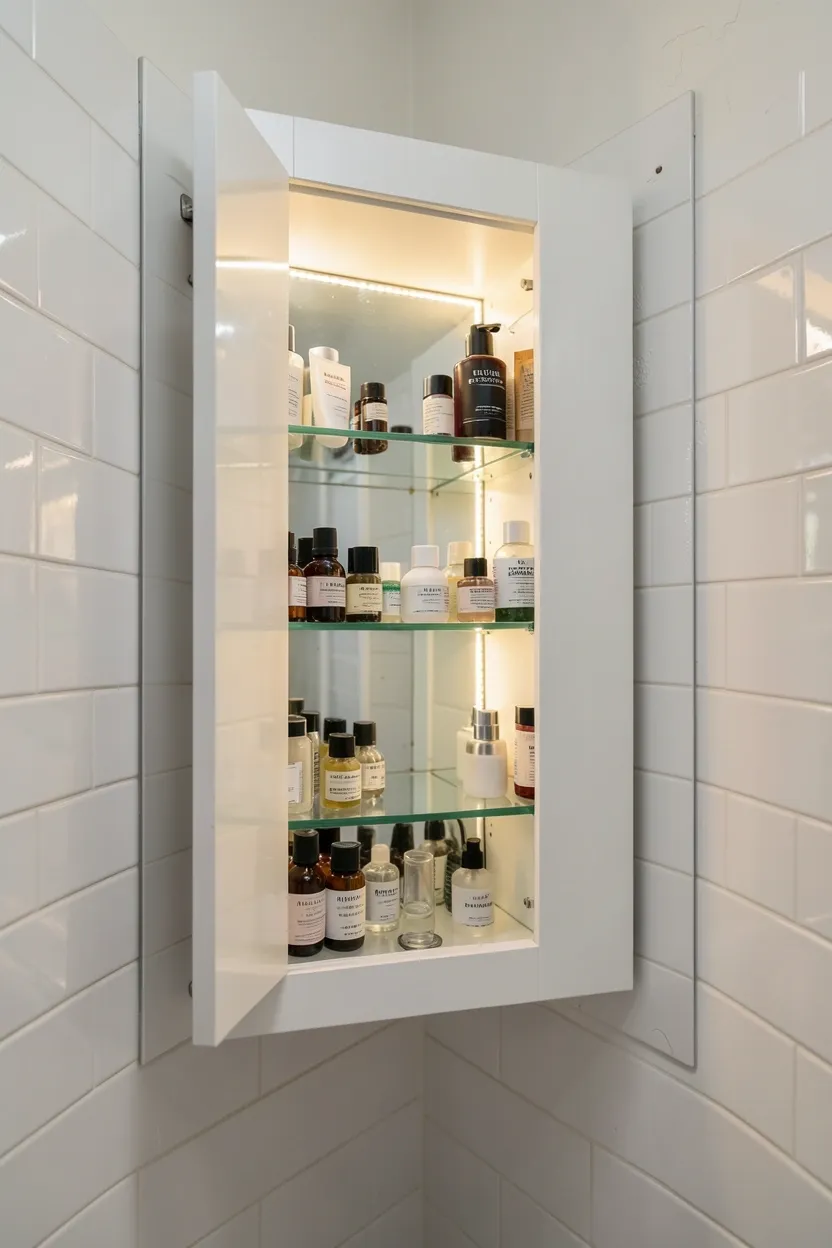
The mirrored door surface reflects the room, effectively doubling the perceived space while providing essential functionality for daily grooming. Interior glass shelves keep items visible and accessible while preventing smaller bottles from getting lost in the back. Integrated LED strip lighting along the cabinet's interior perimeter illuminates contents automatically when the door opens.
Why it works: Traditional surface-mounted medicine cabinets can project 4-6 inches into the room, creating visual and physical obstructions in already tight spaces. Recessed versions sit flush with the wall, maintaining clean lines and maximizing usable space.
Install the cabinet so the mirror's center is approximately 60 inches from the floor, placing it at optimal height for most users while maximizing the reflective surface area. If space allows, consider a wider cabinet (24-30 inches) rather than a taller one—this creates more horizontal storage while keeping the profile streamlined.
If you're working with an exterior wall, then verify sufficient wall cavity depth before installing a recessed cabinet—exterior walls may have insulation or sheathing that limits recessing depth.
What this gives you: Hidden storage plus mirror functionality without protruding into the room or breaking up wall space.
8. Compact Corner Vanity with Vessel Sink
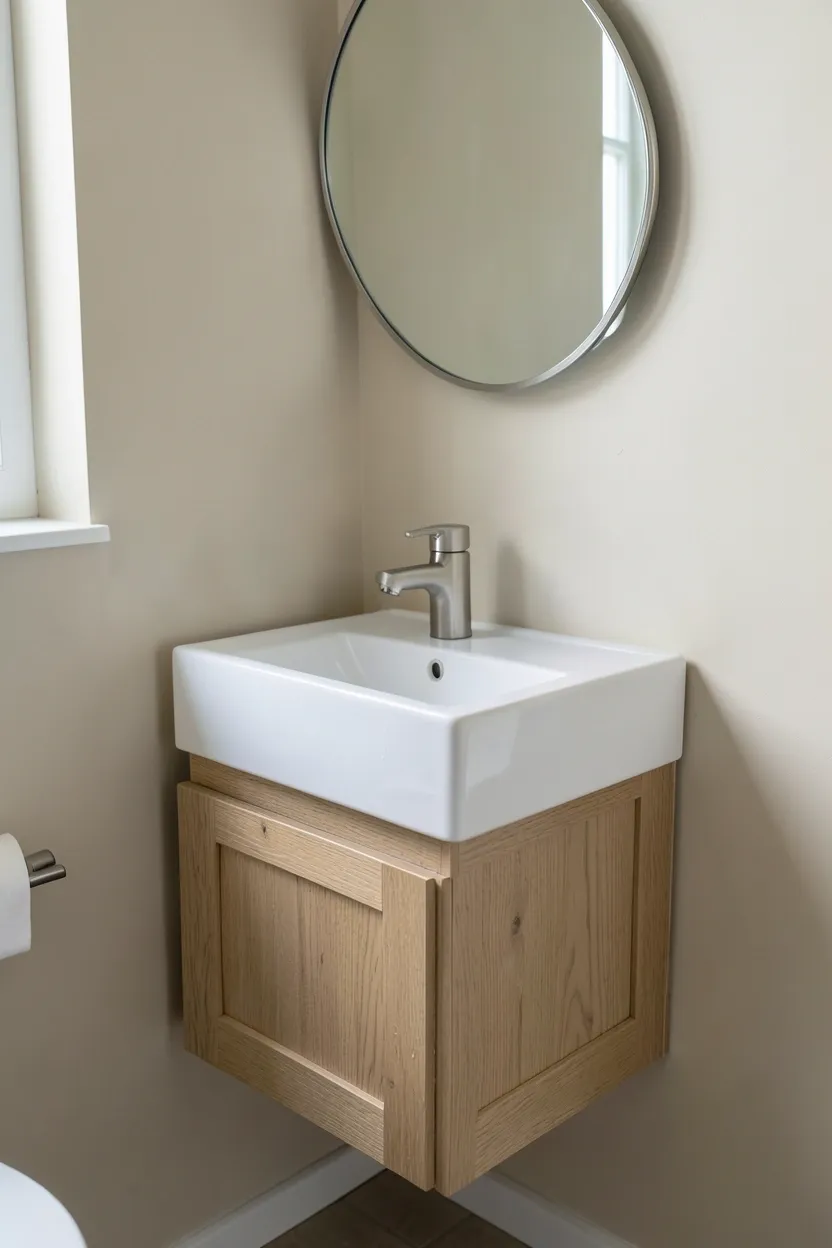
A corner vanity design transforms awkward corner space into functional storage while preserving valuable floor area for circulation. Triangular or rounded corner cabinets maximize every inch of available space while providing essential storage and countertop surface in bathrooms where traditional vanities wouldn't fit.
Recommended
Items for this idea
Light oak wood warmth balances the clean white lines of the rectangular vessel sink, creating a modern Scandinavian aesthetic that feels both current and timeless. The vessel sink sits above the countertop, reducing the cabinet's required depth and allowing for a smaller footprint while maintaining comfortable functionality.
The brushed nickel faucet mounts directly to the wall behind the sink, eliminating the need for deck-mounted faucets that would consume valuable countertop space. This wall-mount approach also simplifies cleaning around the faucet base and creates a more streamlined, minimalist appearance.
Do: Choose a corner vanity with at least 18-21 inches of counter space from front to back—anything smaller will feel cramped and impractical for daily use.
Don't: Place a corner vanity in a space where the door swing interferes with access—measure door swing radius before committing to corner placement.
What this gives you: Functional vanity and storage in previously unusable corner space while preserving open floor area.
9. Small Bathroom with Skylight
A frosted glass skylight introduces abundant natural light without sacrificing privacy, making it one of the most transformative small simple modern bathroom ideas for interior or windowless spaces. The overhead illumination creates an open, airy atmosphere that makes compact bathrooms feel significantly larger and more welcoming.
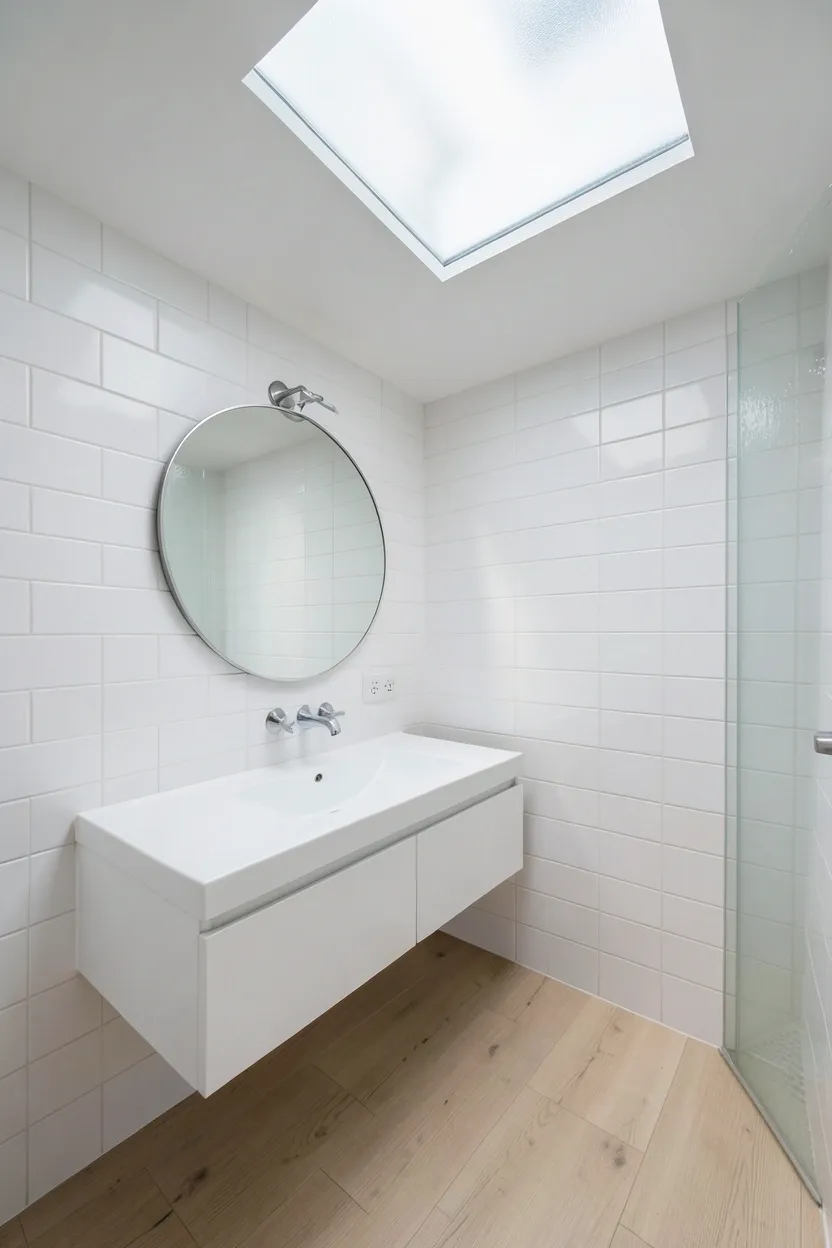
The diffused nature of frosted glass eliminates harsh shadows and glare while providing even, flattering illumination throughout the space. Natural light from above feels more expansive than side windows or artificial lighting, creating a sense of connection to the outdoors that counteracts the enclosed feeling of small bathrooms.
Light wood flooring and white subway tile surfaces reflect the abundant natural light, maximizing brightness and creating a continuous, expansive feel. The floating vanity maintains visual lightness by exposing more floor surface, while the large round mirror captures and multiplies the incoming daylight.
Pro: Skylights provide excellent ventilation when operable, helping to control humidity and prevent mold issues in bathrooms with limited airflow.
Con: Installation requires cutting through roof structure, which can be expensive and may not be feasible in all buildings or climates.
Fix: Solar tube skylights offer a less invasive alternative for spaces where traditional skylights aren't practical—they're smaller, easier to install, and still deliver impressive natural light.
What this gives you: Abundant natural light that transforms a cramped windowless bathroom into an airy, spa-like retreat.
10. Wall-Mounted Faucet and Vessel Sink
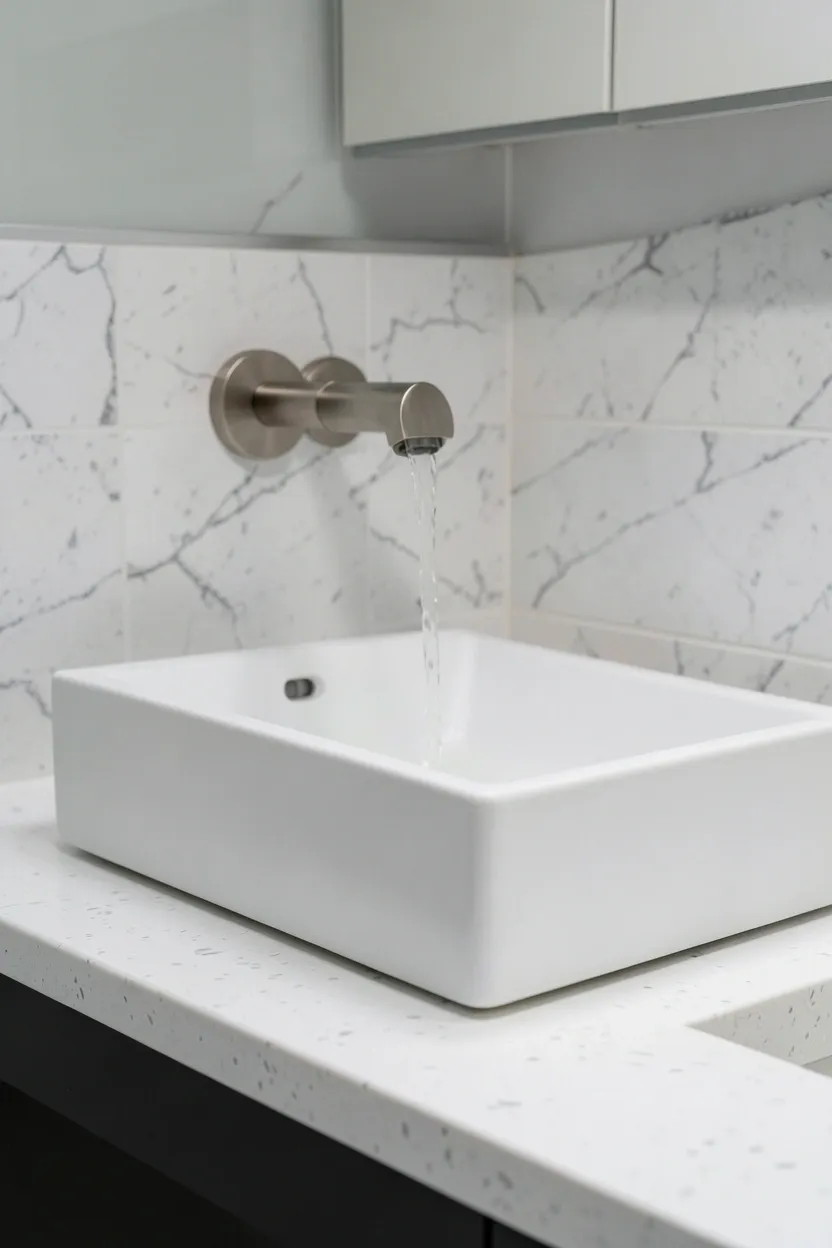
Wall-mounted faucets paired with vessel sinks create a striking modern profile while maximizing valuable counter space in compact bathrooms. By moving the faucet off the countertop, you gain several inches of usable surface area while creating a streamlined, minimalist aesthetic that feels both current and sophisticated.
Recommended
Items for this idea
The white quartz countertop with subtle grey veining provides elegant durability while maintaining a clean, light-reflective surface. Rectangular vessel sinks in matte white ceramic offer generous basin depth while creating architectural interest through their elevated position above the counter.
Placement note: Position the faucet so water falls into the center of the vessel sink—this prevents splashing over the sides and ensures comfortable hand-washing clearance.
Wall-mounted faucets require proper wall preparation and plumbing rough-in, so they're best considered during renovation rather than as a quick update. However, their space-saving benefits and clean aesthetic make them worth the additional planning effort, especially in bathrooms where every inch of counter space matters.
If you're working with an existing bathroom, then verify wall cavity depth before committing to wall-mount faucets—some walls may not accommodate the required valve connections.
What this gives you: Additional counter space plus a streamlined modern profile that eliminates visual clutter around the sink area.
11. Vertical Shiplap Walls with Black Accents
Vertical shiplap wall treatment draws the eye upward, emphasizing ceiling height rather than limited floor area while adding architectural character to otherwise plain walls. The vertical orientation creates rhythm and movement that makes small bathrooms feel more dynamic and intentionally designed.
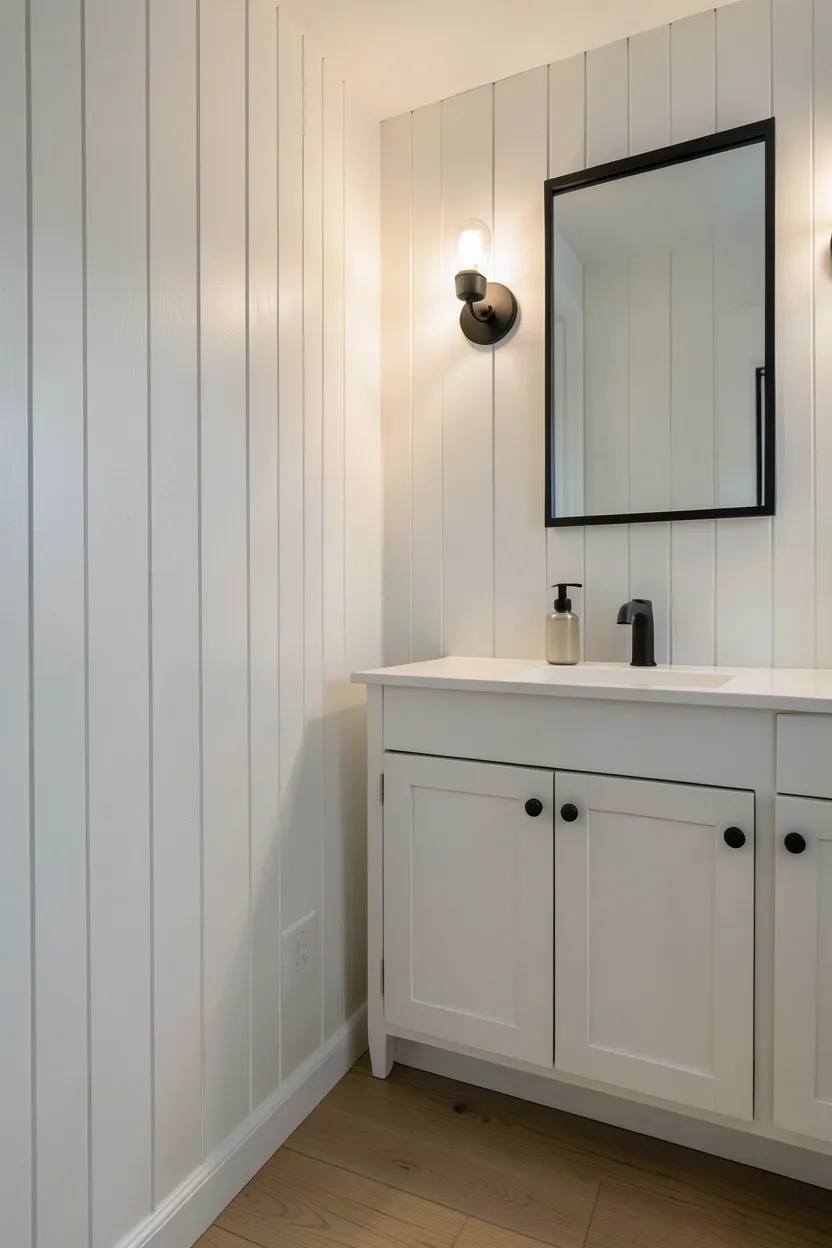
White painted shiplap reflects light beautifully while creating subtle shadow lines in the grooves between boards, adding depth without visual weight. Matte black faucet and mirror frame provide bold contrast that creates a modern farmhouse aesthetic while breaking up the expanse of white.
Unlike horizontal shiplap, which can make ceilings feel lower, vertical installation emphasizes height and creates a more spacious feel. The shadow lines between boards create subtle texture that adds interest without requiring additional artwork or decorative elements that could clutter a small space.
Do: Use narrow-gap shiplap with 1/8 to 1/4 inch spacing between boards—wider gaps collect dust and moisture, which is problematic in humid bathroom environments.
What this gives you: Architectural interest that emphasizes ceiling height while adding warmth and character through subtle texture.
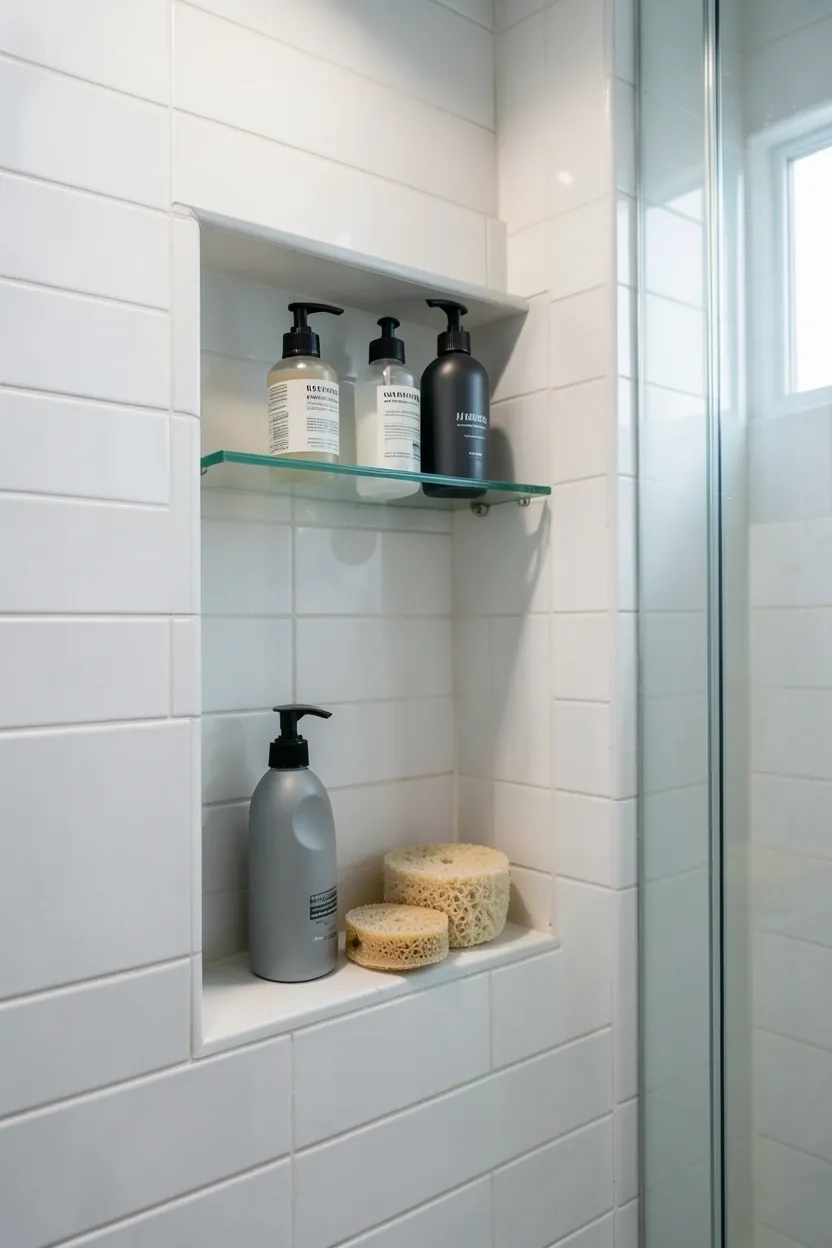
12. Built-In Shower Niche
A built-in shower niche with glass shelves provides streamlined storage for bathing essentials without protruding into the shower footprint or cluttering floor space. Recessed directly into the wall, niches maintain clean lines while keeping frequently used items organized and accessible.
Recommended
Items for this idea
The frameless glass enclosure surrounding the niche maintains visual continuity while protecting stored items from water spray. Clear glass shelves keep bottles visible and prevent smaller items from getting lost in dark corners, making it easy to find what you need while showering.
Position niches at a height that's accessible from outside the shower—typically 48-52 inches from the shower floor—so you can retrieve items without stepping onto wet surfaces. Multiple smaller niches generally work better than one large one, as they allow for better organization and prevent bottles from tipping over.
Pro: Built-in niches waterproofed during tile installation are less prone to leaks and mold than surface-mounted shelves or caddies.
Con: Requires careful planning during tile installation—adding niches later involves significant demolition and re-tiling work.
Fix: If you're working with an existing tiled shower, surface-mounted corner shelves or tension pole caddies provide similar functionality without invasive installation work.
What this gives you: Organized shower storage that doesn't consume floor space or break up visual continuity.
13. Pocket Door for Space Saving
Pocket doors slide into the wall rather than swinging into the room, recovering valuable floor space that traditional doors would occupy. In small bathrooms where every square inch matters, eliminating the door swing can make the difference between a cramped space and one that feels comfortable and functional.
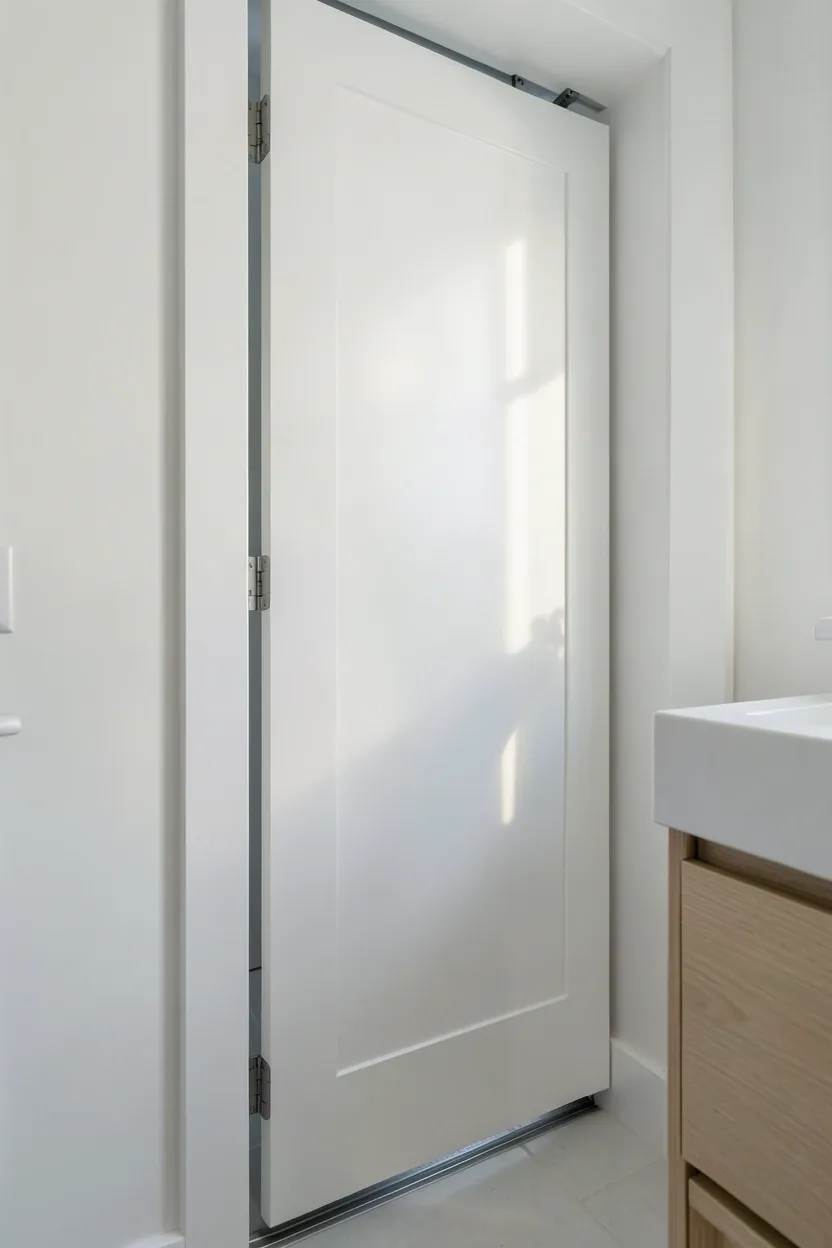
The visible sliding hardware adds an industrial modern element while providing smooth, reliable operation. Unlike hinged doors that require 30-36 inches of swing clearance, pocket doors require only the width of the door itself, typically 24-28 inches for standard bathroom openings.
Placement note: Verify sufficient wall cavity depth on one side of the doorway—standard pocket door hardware requires approximately 4 inches of wall space plus rough framing dimensions.
Pocket doors are particularly valuable in bathrooms where the door swing would interfere with toilet placement, vanity access, or shower entry. By eliminating the swing arc, you gain flexibility in fixture placement and improve traffic flow through the space.
Do: Choose a pocket door with quality hardware—cheaper systems tend to bind and require frequent maintenance, which is frustrating in high-use bathroom applications.
Don't: Install pocket doors on exterior walls in cold climates without proper insulation—the door pocket creates a thermal bridge that can lead to condensation and energy loss.
What this gives you: 8-10 square feet of recovered floor space plus improved traffic flow and fixture placement flexibility.
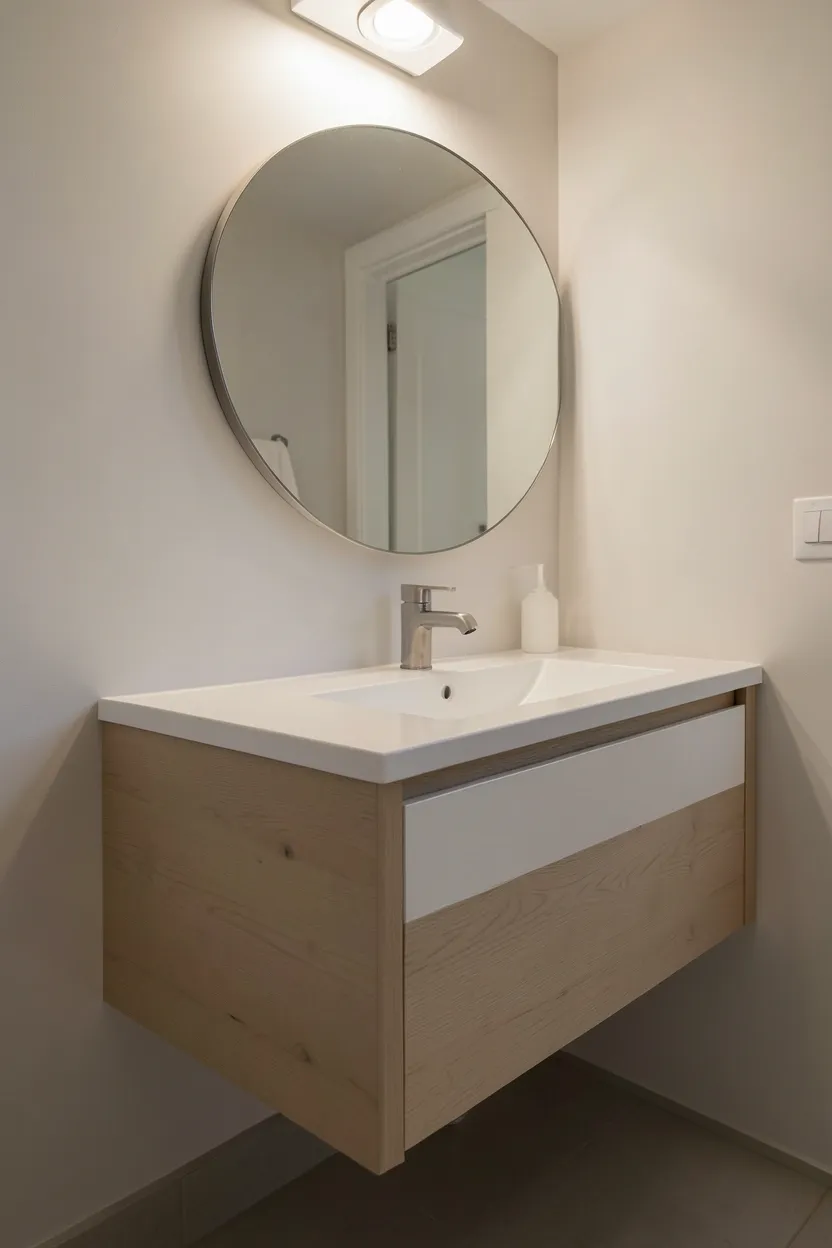
14. Light Wood Vanity with White Drawer Fronts
The combination of light oak wood with white drawer fronts creates a Scandinavian modern aesthetic that's both warm and refreshingly clean. This two-tone approach introduces natural wood grain warmth while maintaining the light-reflective benefits of white surfaces that are essential in small bathrooms.
Recommended
Items for this idea
The floating design maintains visual lightness by exposing flooring beneath the cabinet while making floor cleaning effortless. An undermount sink creates a seamless transition from countertop to basin, eliminating the lip that can collect water and debris around vessel sinks.
Light oak wood tones add warmth without the heaviness of darker woods, making them ideal for small spaces where preserving brightness is crucial. The natural grain patterns provide subtle visual interest that prevents the vanity from feeling sterile while still maintaining a cohesive, contemporary look.
Do: Choose wood vanities with durable, moisture-resistant finishes—bathrooms subject wood to significant humidity fluctuation that can damage unprotected surfaces.
Micro-rental-note: If you're a renter, look for freestanding vanities rather than wall-mounted models—freestanding options are easier to remove and take with you when you move.
What this gives you: Warmth and character from natural wood without sacrificing the space-expanding benefits of light surfaces.
15. Bathroom Ladder Shelf for Towel Storage
A wooden ladder shelf leans against the wall, providing vertical towel storage without requiring permanent installation or consuming valuable floor space. This freestanding design adds warmth and character while keeping towels accessible and adding a decorative element that feels both functional and intentional.
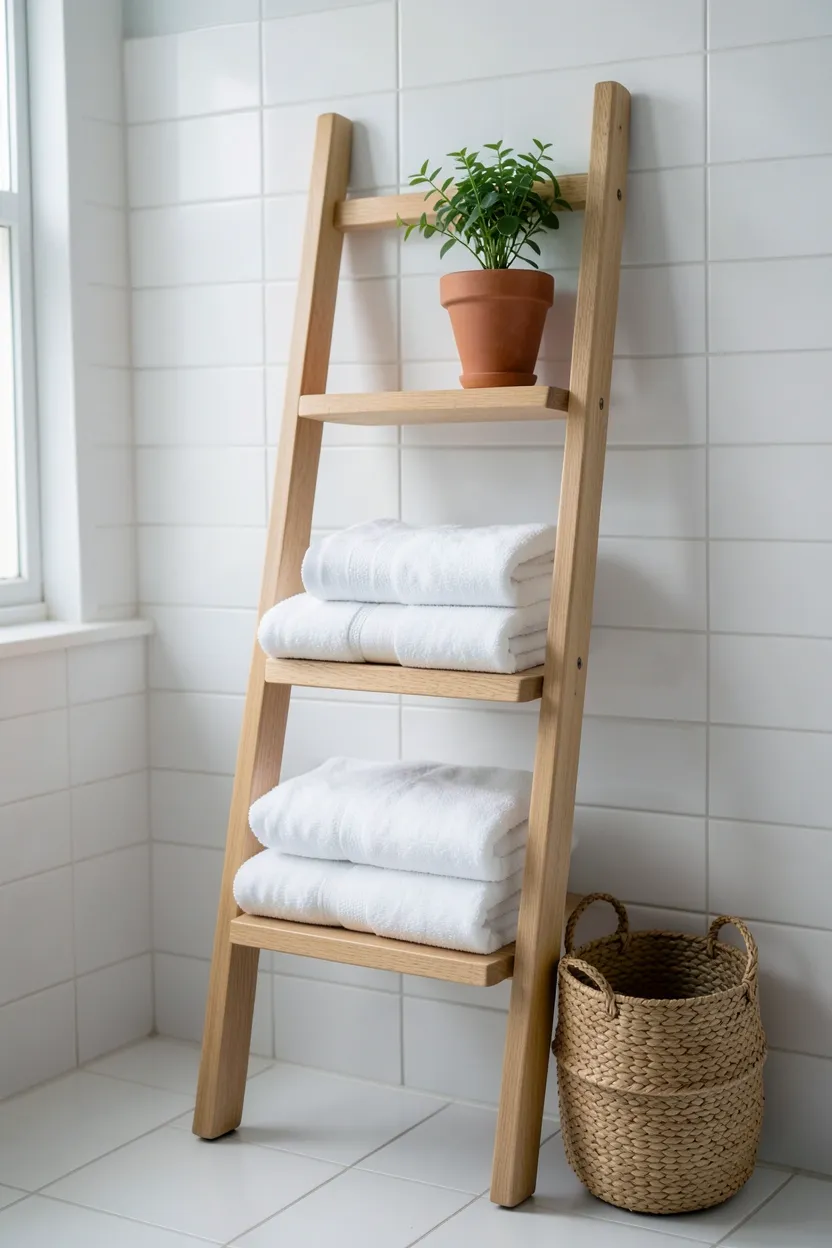
Light oak wood tones complement a variety of bathroom styles while introducing natural warmth that balances hard surfaces like tile and glass. The leaning design requires no mounting hardware, making it an excellent option for renters or anyone who wants flexibility in their bathroom arrangement.
Unlike traditional towel bars that only hold one or two towels, ladder shelves can accommodate multiple bath towels, hand towels, and washcloths simultaneously. The wider rungs provide ample hanging space while the top shelf offers additional surface area for decorative items or frequently used toiletries.
Do: Choose a ladder with rubber or felt feet to protect flooring and prevent slipping—smooth tile floors can be slippery for leaning furniture without proper grip.
Don't: Overload ladder shelves with heavy items—most decorative ladders have weight limits around 20-30 pounds per rung, which is sufficient for towels but not for bottled products.
What this gives you: Vertical towel storage that adds warmth and character without permanent installation or floor space consumption.
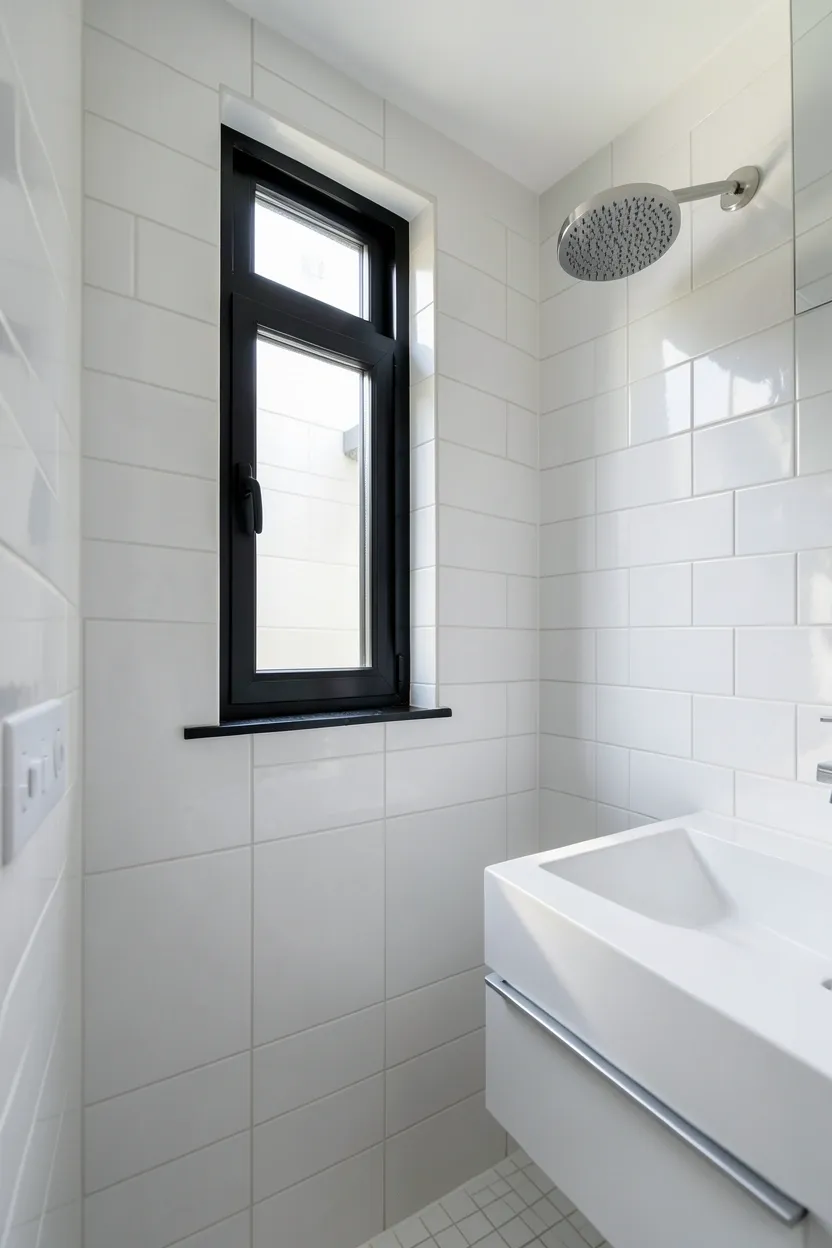
16. Black Window Frame for Modern Contrast
A matte black window frame creates bold architectural contrast against white subway tile walls, adding modern edge and visual interest to otherwise monochromatic small bathrooms. The dark frame acts as a focal point that draws the eye while providing definition that prevents the space from feeling sterile or one-dimensional.
Recommended
Items for this idea
The rectangular window with black powder-coated frame provides a sleek counterpoint to soft white surfaces while framing views of the outdoors or adjacent spaces. Natural light filtering through creates gentle shadows that add depth and dimension without overwhelming the compact space.
Black fixtures and hardware throughout the bathroom create cohesive contrast—matching the window frame with matte black faucet, showerhead, and cabinet hardware ties the design together while adding contemporary sophistication. This limited use of black prevents the space from feeling heavy while providing necessary visual anchors.
If you're concerned about black feeling too dark in your space, then choose softer black finishes like satin or matte rather than high-gloss—these absorb light rather than reflecting it aggressively.
What this gives you: Bold architectural contrast that adds modern edge and prevents the space from feeling sterile or monotonous.
17. Hexagon Floor Tiles for Geometric Interest
Matte black hexagon floor tiles create striking geometric contrast against white wall tiles while adding contemporary pattern that makes small bathrooms feel intentionally designed rather than merely functional. The hexagon shape provides visual interest without the busyness of smaller mosaic tiles.
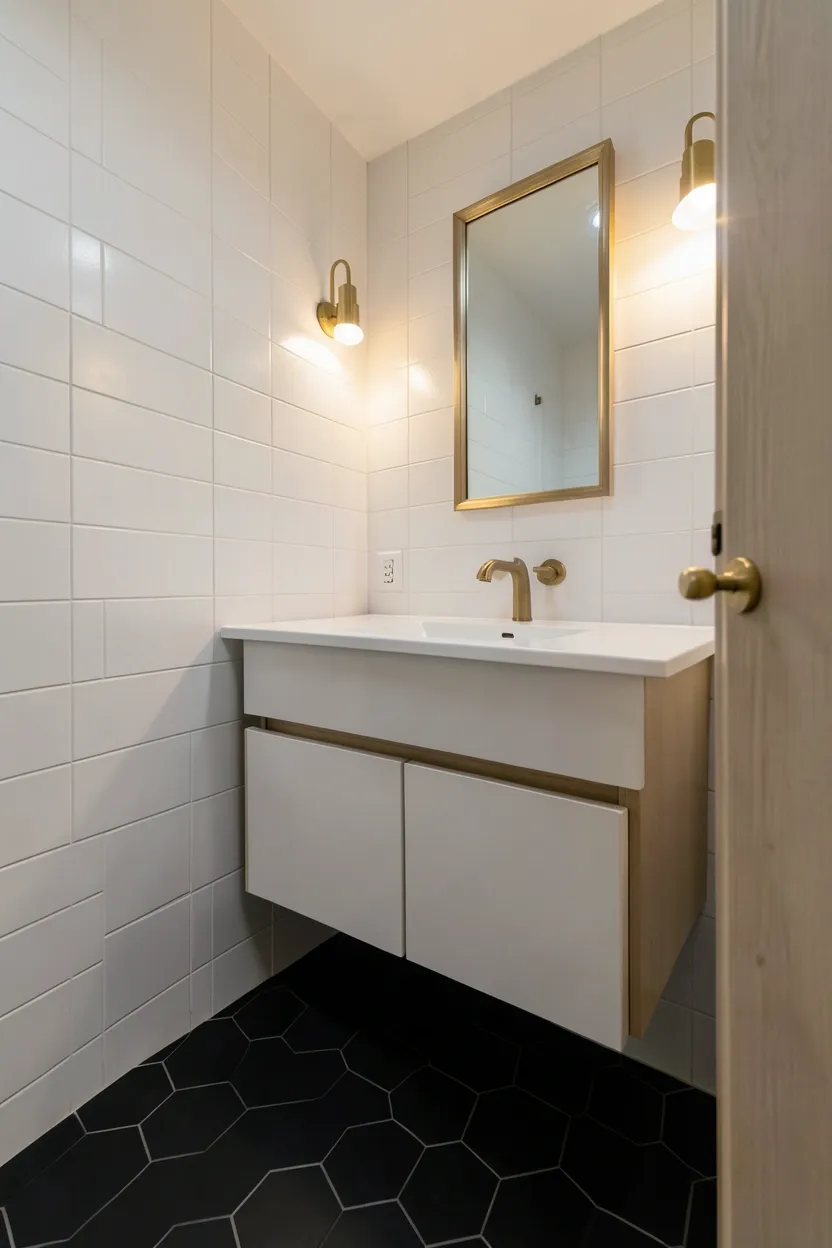
The large-format hexagonal tiles reduce grout lines compared to penny rounds or small mosaics, creating a cleaner, more expansive appearance while still providing distinctive pattern. Matte black flooring grounds the space while reflecting less light than glossy alternatives, creating a sophisticated mood that feels cocooning rather than dark.
Brushed brass fixtures introduce warmth and elegance while complementing the rich black floor tones. The combination of black floors with brass accents and white walls creates a luxurious, high-contrast palette that feels both current and timeless.
Do: Choose large-format hexagon tiles (3-4 inches across) rather than tiny mosaics—larger tiles require fewer grout lines and make small spaces feel more expansive.
What this gives you: Bold geometric pattern and contrast that adds sophistication while making the space feel intentionally designed.
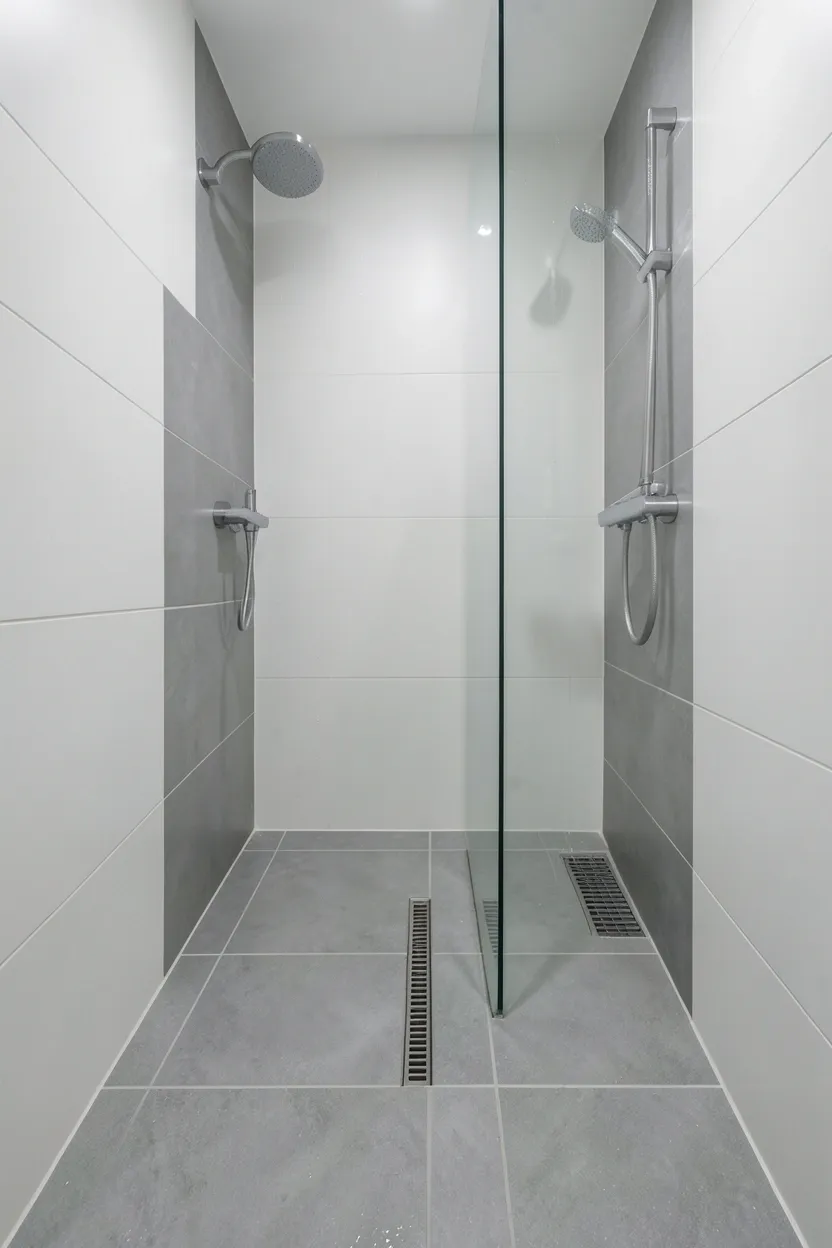
18. Wet Room Style Bathroom
A wet room design eliminates traditional shower enclosures and curbs, creating a seamless, continuous floor surface that makes small bathrooms feel significantly larger and more luxurious. By waterproofing the entire floor area and using a linear drain, you eliminate visual barriers that segment and shrink the space.
Recommended
Items for this idea
Large format grey ceramic floor tiles extend from vanity to shower wall without interruption, creating visual continuity that expands the perceived space. The minimal slope toward the linear drain is nearly imperceptible, maintaining the seamless aesthetic while ensuring proper drainage.
Wet rooms require professional waterproofing and careful slope planning, but deliver a spa-like result that's particularly valuable in small bathrooms where traditional shower footprints would consume disproportionate space. The open design also makes cleaning easier—no glass doors to track water spots or awkward corners to navigate around.
Do: Use large-format tiles (at least 12x24 inches) on shower walls to reduce grout lines and create a more expansive, continuous feel.
Don't: Attempt wet room conversion without professional waterproofing—the cost of proper installation is far less than repairing water damage later.
What this gives you: A seamless, spa-like shower experience that eliminates visual barriers and makes the entire bathroom feel larger.
19. Vertical Towel Radiator or Heated Rail
A vertical heated towel rail serves dual purposes: providing warm, dry towels and adding supplemental heat to the bathroom space. The vertical orientation maximizes drying capacity while consuming minimal wall space, making it an excellent solution for compact bathrooms where traditional horizontal radiators would consume too much room.
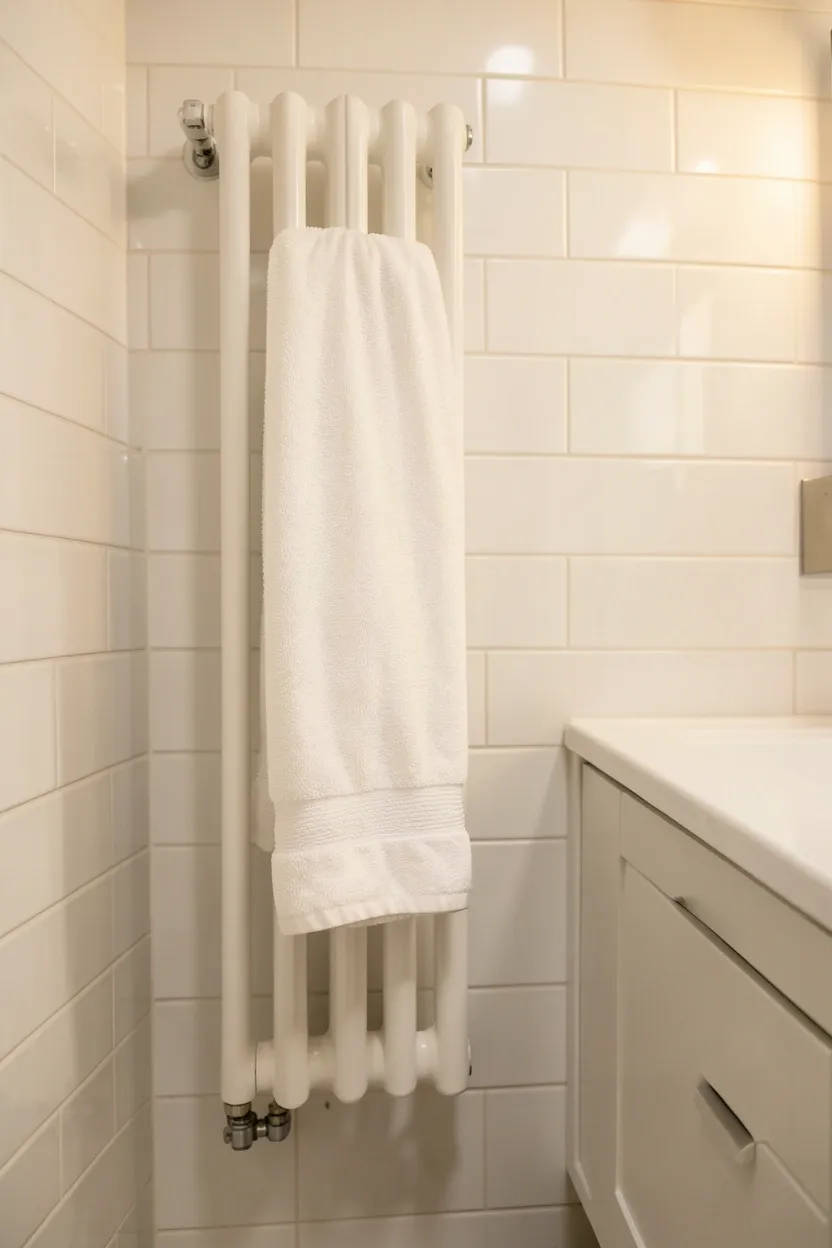
White powder-coated finish blends seamlessly with bathroom fixtures while resisting rust and corrosion in humid environments. Multiple rails provide ample hanging space for bath towels, hand towels, and washcloths while the heated core ensures towels stay dry and mildew-free between uses.
Unlike forced-air heating that can feel drying and uncomfortable, radiant towel warmers provide gentle, consistent heat that makes the bathroom feel cozy on cold mornings without the noise or drafts of traditional heating systems. The vertical design also preserves valuable wall space for artwork, shelving, or mirrors.
Pro: Electric models are easy to install and don't require plumbing connections, making them suitable for DIY installation or rental situations.
Con: Electric towel warmers add to monthly energy costs, whereas hydronic models that tap into existing hot water heating are more efficient to operate.
Fix: Choose a model with programmable timer or thermostat—this allows you to heat towels only when needed (morning and evening) rather than running continuously.
What this gives you: Warm, dry towels plus supplemental heating that adds comfort without consuming excessive wall space.
These small simple modern bathroom ideas demonstrate that limited square footage doesn't mean limited style or functionality. By choosing space-saving fixtures, maintaining light-reflective surfaces, and strategically incorporating storage, you can transform even the most compact bathroom into a serene retreat that feels both intentional and inviting. For more inspiration on maximizing compact spaces, explore our [small bathroom decor ideas that maximize every inch](/bathroom/29-bathroom-decor-ideas-small-spaces-to-maximize-every-inch/) or browse our curated [apartment bathroom ideas for small spaces](/bathroom/21-apartment-bathroom-ideas-for-small-spaces/) for renter-friendly picks that require zero permanent changes.
About the author
OBCD
CGI visualization and interior design content. We create detailed 3D renders and curate practical design ideas for every room in your home.