23 Small Backyard Pool Ideas for Compact Outdoor Spaces
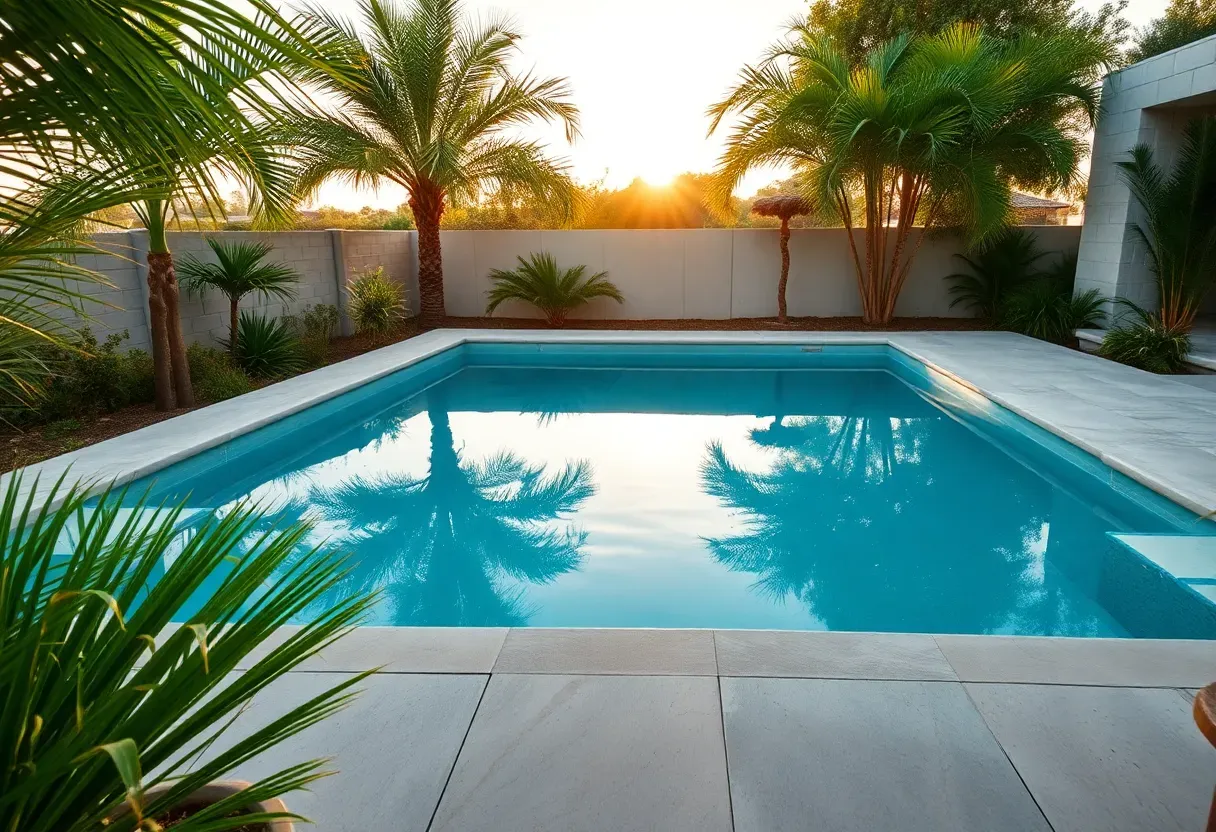
Who says you need acres of land to enjoy a refreshing pool? These small backyard pool ideas prove that limited square footage can actually inspire more creative, intimate, and functional outdoor spaces. In 2026, homeowners across the country are discovering that a compact pool can transform a modest yard into a personal oasis—without overwhelming the landscape or breaking the bank.
The beauty of small backyard pool designs lies in their versatility. Whether you're dreaming of morning laps, afternoon lounging, or evening entertaining, today's innovative options prove that size doesn't limit possibilities. Modern materials, smart engineering, and creative layouts allow you to maximize every inch while maintaining aesthetic appeal. From sleek plunge pools that fit in urban courtyards to naturalistic designs that blend seamlessly with gardens, the options are more exciting than ever.
What makes these compact pool ideas especially appealing is their efficiency. Smaller pools mean lower construction costs, reduced maintenance, less water consumption, and faster heating—all while delivering the same refreshing experience as their larger counterparts. Plus, they leave room for other backyard features like outdoor kitchens, fire pits, or garden beds.
Ready to explore how you can turn your compact backyard into a stunning aquatic retreat? I've gathered 23 small pool ideas that prove compact spaces can make a big splash. Each idea offers unique approaches to layout, style, and functionality, helping you find the perfect fit for your home.
Quick FAQ
What's the minimum size needed for a backyard pool?
You can install a functional pool in spaces as small as 10x10 feet. Plunge pools, cocktail pools, and spool (spa-pool hybrids) designs work beautifully in compact areas. The key is choosing a design that matches your primary use—whether that's cooling off, exercising, or entertaining.
Are small pools more affordable to maintain?
Absolutely. Small pools require less water, fewer chemicals, less energy for heating and filtration, and reduced cleaning time. Most homeowners find maintenance costs are 40-60% lower compared to standard-sized pools, making them ideal for busy lifestyles.
Can I still swim laps in a small backyard pool?
Yes, with swim jet technology. Resistance jets create a current you swim against, allowing effective lap swimming in pools as short as 12-14 feet. Alternatively, narrow lap pools (8-10 feet wide and 20-30 feet long) fit surprisingly well along property lines.
What's the best shape for maximizing small backyard space?
Rectangular and L-shaped pools typically maximize usable swimming area while fitting efficiently into corners or along fences. However, kidney-shaped and circular designs can soften harsh lines and create more organic flow in garden-style landscapes.
Should I choose an in-ground or above-ground pool for a small yard?
In-ground pools generally look more upscale and offer better customization, but quality above-ground options with creative decking can be equally attractive. Your choice depends on budget, soil conditions, local regulations, and whether you want the pool to feel integrated into the landscape or more like a deck feature.
Table of Contents
- The Classic Plunge Pool
- Linear Lap Pool with Jets
- L-Shaped Corner Pool
- Elevated Infinity Edge
- Cocktail Pool with Tanning Ledge
- Natural Swimming Pool
- Container Pool Conversion
- Courtyard Reflecting Pool
- Multi-Level Terrace Pool
- Spool: Spa-Pool Hybrid
- Narrow Side Yard Lap Pool
- Stock Tank Pool
- Geometric Minimalist Pool
- Sunken Conversation Pool
- Endless Pool with Resistance
- Negative Edge Perimeter
- Indoor-Outdoor Glass Wall Pool
- Kidney-Shaped Vintage Pool
- Raised Above-Ground with Deck
- Fire and Water Feature Pool
- Mosaic Tile Jewel Pool
- Rooftop Deck Pool
- Naturalistic Rock Pool
1. The Classic Plunge Pool
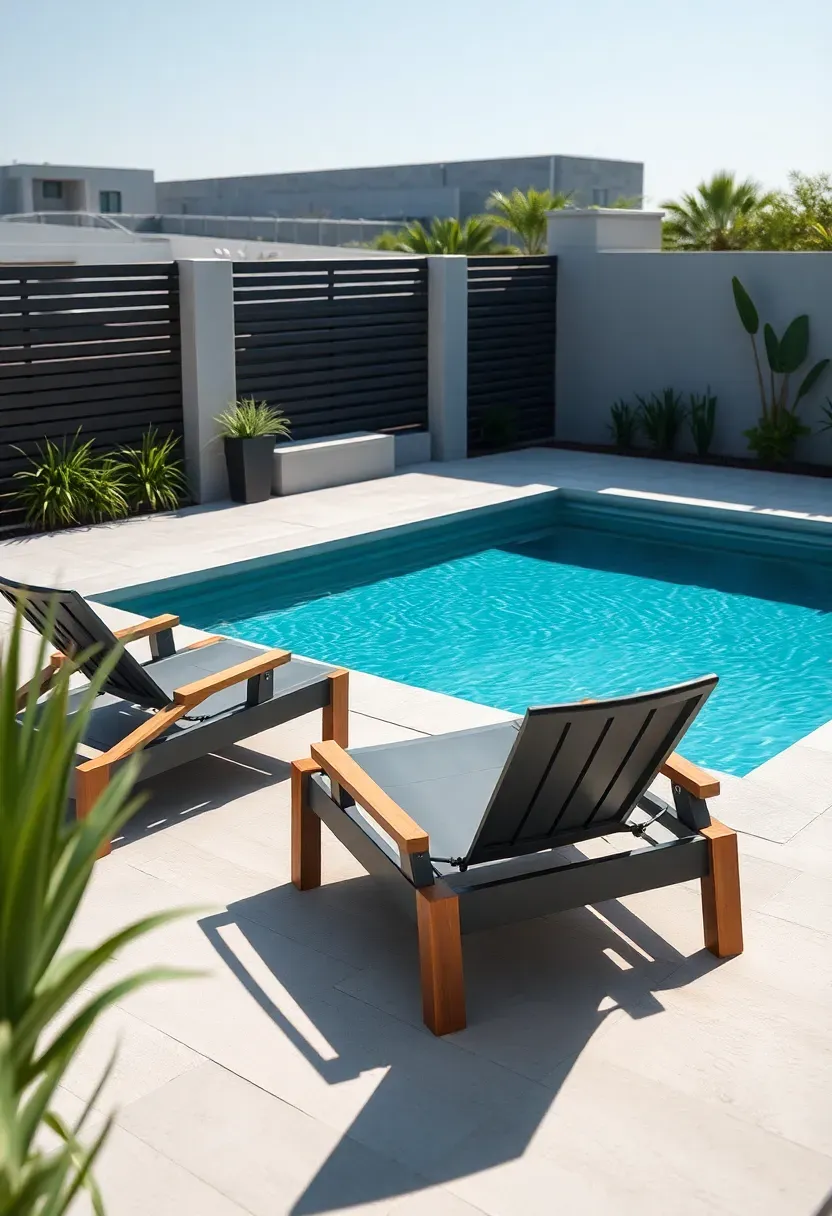
The plunge pool has become the gold standard for small backyard pools, and for good reason. Typically measuring 8-12 feet in both length and width, with depths ranging from 4-7 feet, these pools prioritize cooling off and relaxation over swimming laps. Originating from ancient bathing traditions, modern plunge pools blend minimalist aesthetics with maximum refreshment.
Why It Works for Small Spaces
The compact footprint leaves ample room for lounging areas, landscaping, or outdoor dining. Because they're deeper than typical pools, plunge pools create a sense of immersion despite the limited surface area.
Design Considerations
Materials: Concrete offers custom shapes, fiberglass provides quick installation, and vinyl liners keep costs down.
Placement: Corner installations maximize usable yard space while creating a focal point.
Surrounding Deck: Use the same material as your patio to create visual continuity and make the space feel larger.
Typical Costs and Benefits
Pros: Affordable installation and maintenance, quick temperature control, perfect for hot climates
Cons: Limited swimming capability, may feel cramped for families with multiple children
We picked a few things that go well with this idea: Pool Float (4-in-1) (★4.5), Floating Pool Float (2-Pack) (★4.4) and SWIMLINE Suntan Tub, Classic Inflatable Tanning (★4.3). As an Amazon Associate we earn from qualifying purchases.
2. Linear Lap Pool with Jets
Can you maintain fitness in a small yard? Absolutely. Lap pools with resistance jets allow you to swim continuously against a current, turning a 12-15 foot pool into an effective training facility.
Step 1: Determine Your Dimensions
Measure your longest available space. Pools as narrow as 8 feet and as short as 12 feet can work with powerful jets. Ideal dimensions are 10x25 feet if space allows.
Step 2: Choose Your Jet System
Adjustable flow jets let you control resistance from gentle swim to intense workout. Dual-jet systems provide more uniform current than single-jet options.
Step 3: Plan the Deck Space
Keep one long side deck-free for unobstructed swimming. Place seating and lounging on the opposite side or pool ends.
What to Watch Out For
Jet systems require additional electrical work and plumbing. Factor in $3,000-7,000 for quality resistance equipment. Noise levels vary—test different models before deciding. Ensure proper circulation to avoid creating dead zones in the water.
We picked a few things that go well with this idea: Deluxe Cleaning Kit (★4.2), Cleaning Kit (★4.3) and Deluxe Cleaning Kit (13Ft) (★4.6). As an Amazon Associate we earn from qualifying purchases.
3. L-Shaped Corner Pool
Making the most of corner spaces, L-shaped pools create distinct zones within a single design. One leg can serve as a shallow play area or tanning ledge, while the other provides deeper water for diving or cooling off.
The Core Issue
Rectangular yards often leave corners underutilized, especially when fencing, trees, or property lines create awkward angles. Standard rectangular pools can't adapt to these spaces without wasting valuable square footage.
The Solution
An L-shaped pool wraps around corners, utilizing space that would otherwise remain empty. The bent design naturally divides the pool into sections with different purposes. The shorter leg typically ranges from 8-12 feet, while the longer extends 15-25 feet, creating about 250-400 square feet of swimming area. This shape also provides built-in separation between active swimmers and those who prefer to lounge.
Pros and Cons
Pros: Maximum space utilization, creates natural activity zones, visually interesting shape, works with most architectural styles
Cons: More complex construction means slightly higher costs, requires careful measurement and planning, may limit pool cover options
We picked a few things that go well with this idea: Pool Lights LED Submersible Pool Lights (2-Pack) (★4.2), LED Submersible Pool Lights (4-Pack) (★3.6) and LED Submersible Pool Lights (4-Pack) (★4.1). As an Amazon Associate we earn from qualifying purchases.
4. Elevated Infinity Edge
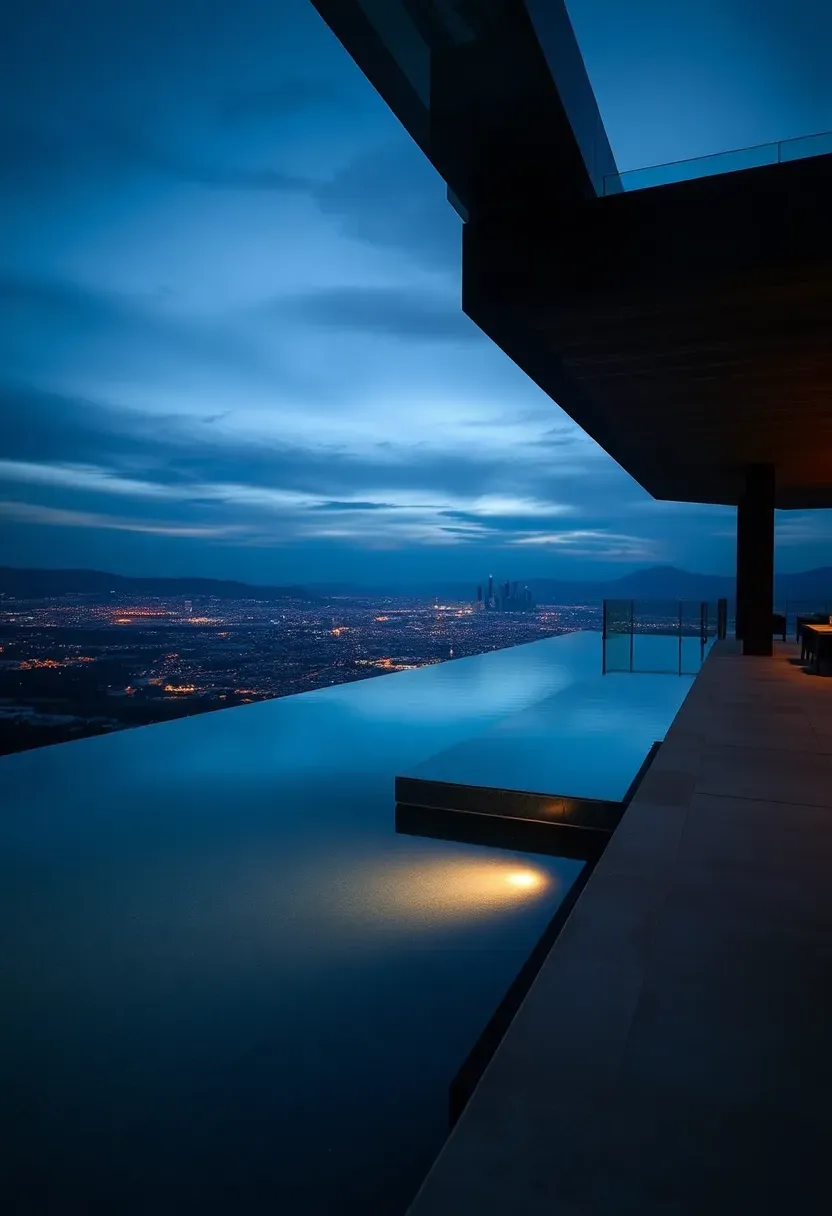
Why settle for a ground-level pool when your yard offers elevation? Elevated pools with infinity edges create dramatic visual effects, especially on sloped properties or hillsides.
Origins and Appeal
Infinity pools originated from luxury resorts, but compact versions now make this feature accessible to homeowners with sloped yards. The vanishing edge creates an optical illusion where water appears to merge with the horizon or landscape beyond.
Modern Interpretation
Today's small infinity pools (as compact as 10x15 feet) use the elevation change to dramatic advantage. Water spills over one or more edges into a catch basin, then recirculates back into the pool. Even a modest slope of 2-3 feet provides enough drop for the effect.
How to Apply at Home
- Work with the natural grade rather than excavating excessively
- Position the infinity edge toward your best view—whether garden, valley, or skyline
- Use matching tile or stone to create seamless visual flow
- Install proper drainage and filtration to handle the recirculation system
- Consider LED lighting in the catch basin for nighttime drama
Recommended
Items for this idea
5. Cocktail Pool with Tanning Ledge
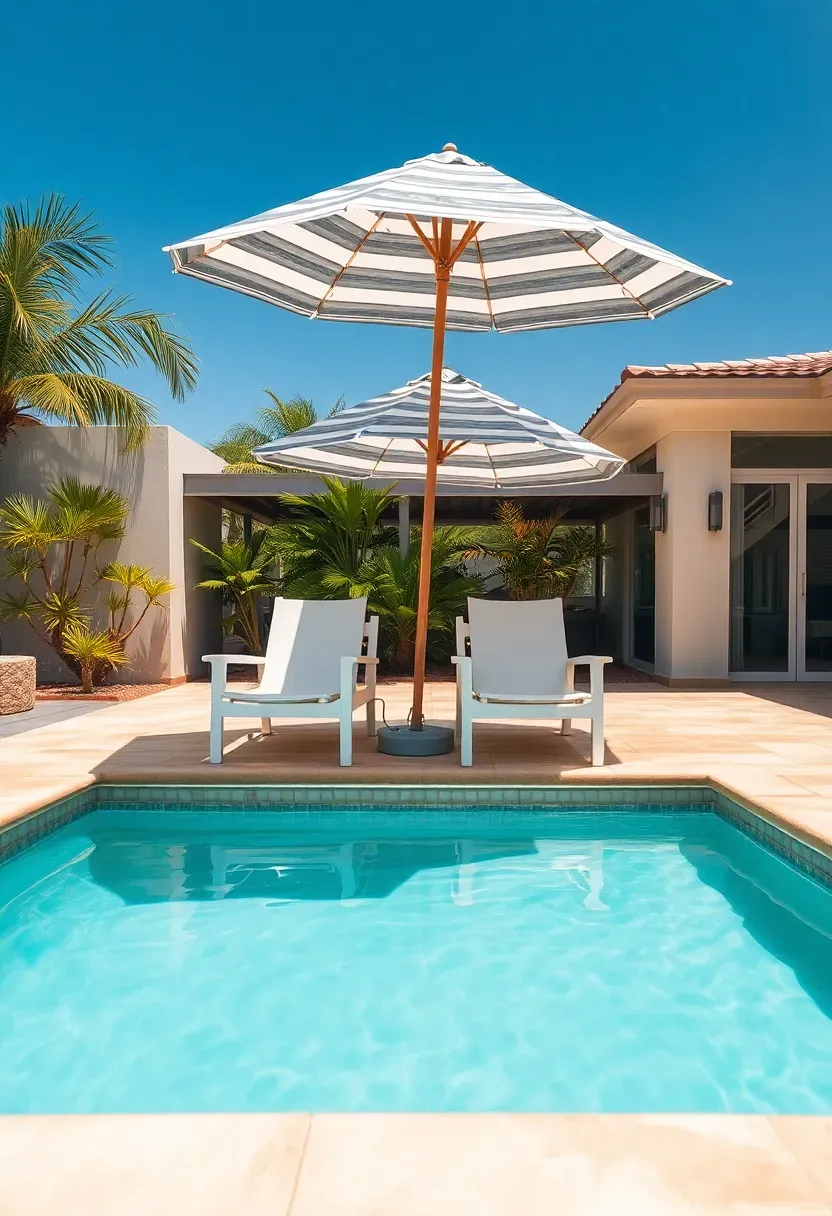
The cocktail pool—also called a "soaking pool"—prioritizes relaxation over exercise. These pools typically measure 10-14 feet across with generous built-in seating and shallow tanning ledges.
What Makes It Special
The tanning ledge (or "baja shelf") is a shallow platform, usually 9-12 inches deep, perfect for lounge chairs, sun bathing, or letting kids splash safely. It occupies roughly one-third of the pool's total area.
Design Elements
The deeper section (4-5 feet) provides room to cool off when the ledge gets too warm. Many designs incorporate built-in benches, cup holders, and even umbrella sleeves directly into the pool structure.
Practical Tips
- Orient the tanning ledge toward the sun for maximum tanning hours
- Choose light-colored finishes to keep ledge water comfortable (dark surfaces absorb too much heat)
- Add water features like bubblers or small fountains to the ledge for ambiance
- Include slip-resistant surface treatments since the ledge stays wet
6. Natural Swimming Pool
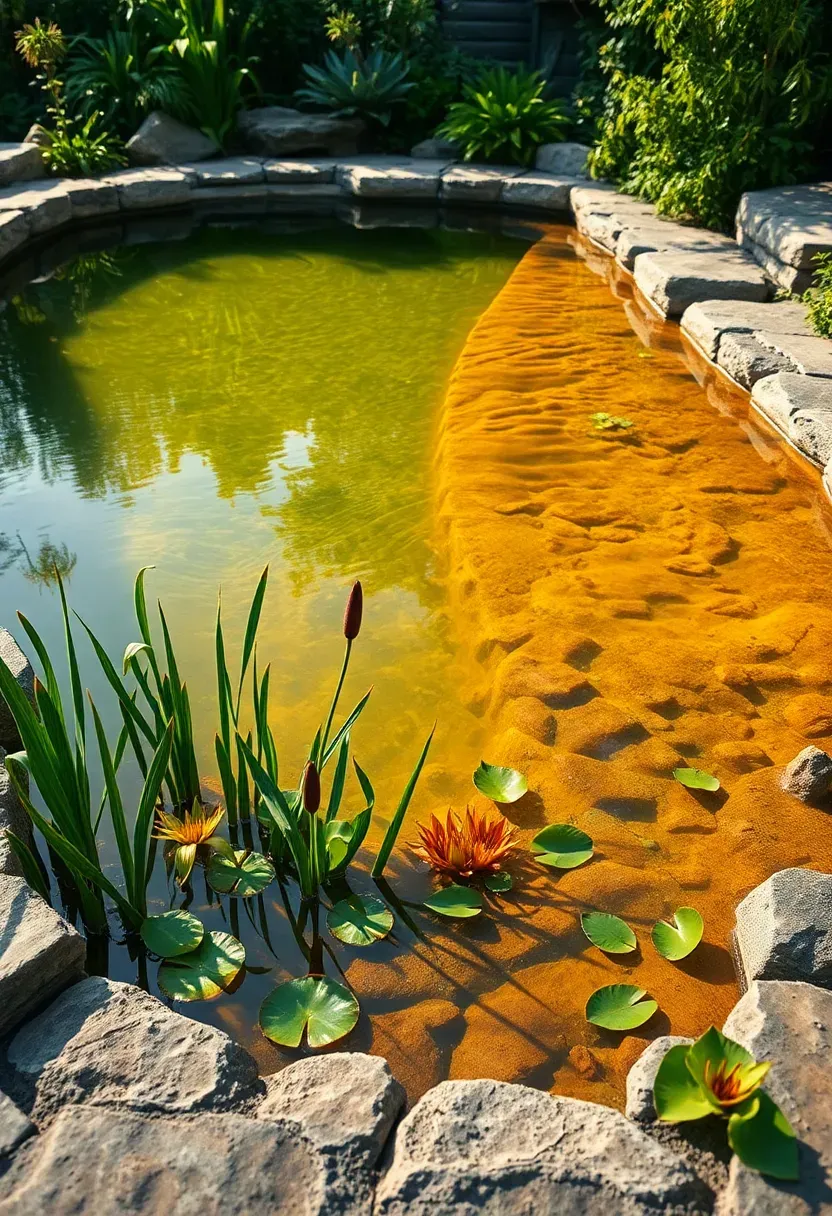
Imagine: crystal-clear water purified by plants instead of chemicals. Natural swimming pools (NSPs) use biological filtration—a regeneration zone filled with aquatic plants that naturally clean the water.
Design Breakdown
NSPs require two zones: the swimming area (typically 60% of total space) and the regeneration zone (40%) where plants filter the water. For a small backyard, this might mean a 12x15 foot swimming area with an 8x15 foot planted zone.
Plant-Based Filtration
Water hyacinth, cattails, rushes, and water lilies absorb nutrients, starving algae while beneficial bacteria break down organic matter. The result? Chlorine-free water that's gentle on skin and eyes.
Considerations
Pros: No chemical smell or skin irritation, supports local ecosystem, visually stunning with plantings
Cons: Requires more space than traditional pools (due to regeneration zone), plants need seasonal maintenance, water may not be crystal-clear like chlorinated pools (slight amber tint is normal), not suitable for cold climates unless plants are replaced annually
Recommended
Items for this idea
7. Container Pool Conversion
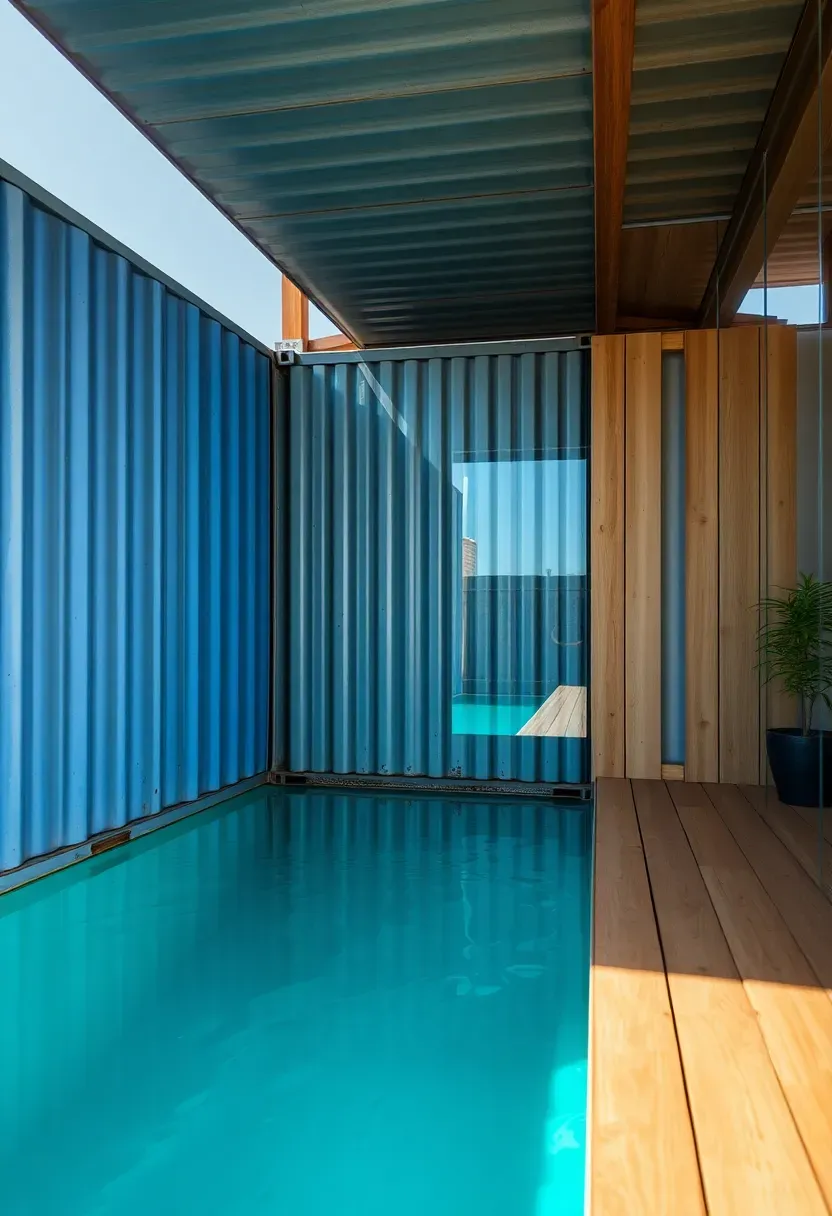
Repurposed shipping containers have revolutionized small pool design. These steel structures arrive pre-fabricated, install in days, and cost significantly less than traditional construction.
Step 1: Select Your Container
Standard 20-foot containers (8x20 feet) are most popular for pools. Choose food-grade containers to avoid chemical residues. Inspect for structural integrity and rust.
Step 2: Prepare the Site
Level the ground or create a reinforced foundation. Containers can be installed in-ground, partially buried, or fully above-ground with surrounding decks.
Step 3: Customize the Interior
Professional conversion includes welding, sandblasting, rust treatment, waterproof coating, plumbing installation, filtration systems, and interior finishing (fiberglass, tiles, or marine-grade paint).
What to Watch Out For
Work with experienced container pool specialists—improper sealing leads to leaks. Factor in insulation for temperature control. Check local building codes; some areas classify these differently than traditional pools. Delivery requires clear access for large trucks and cranes.
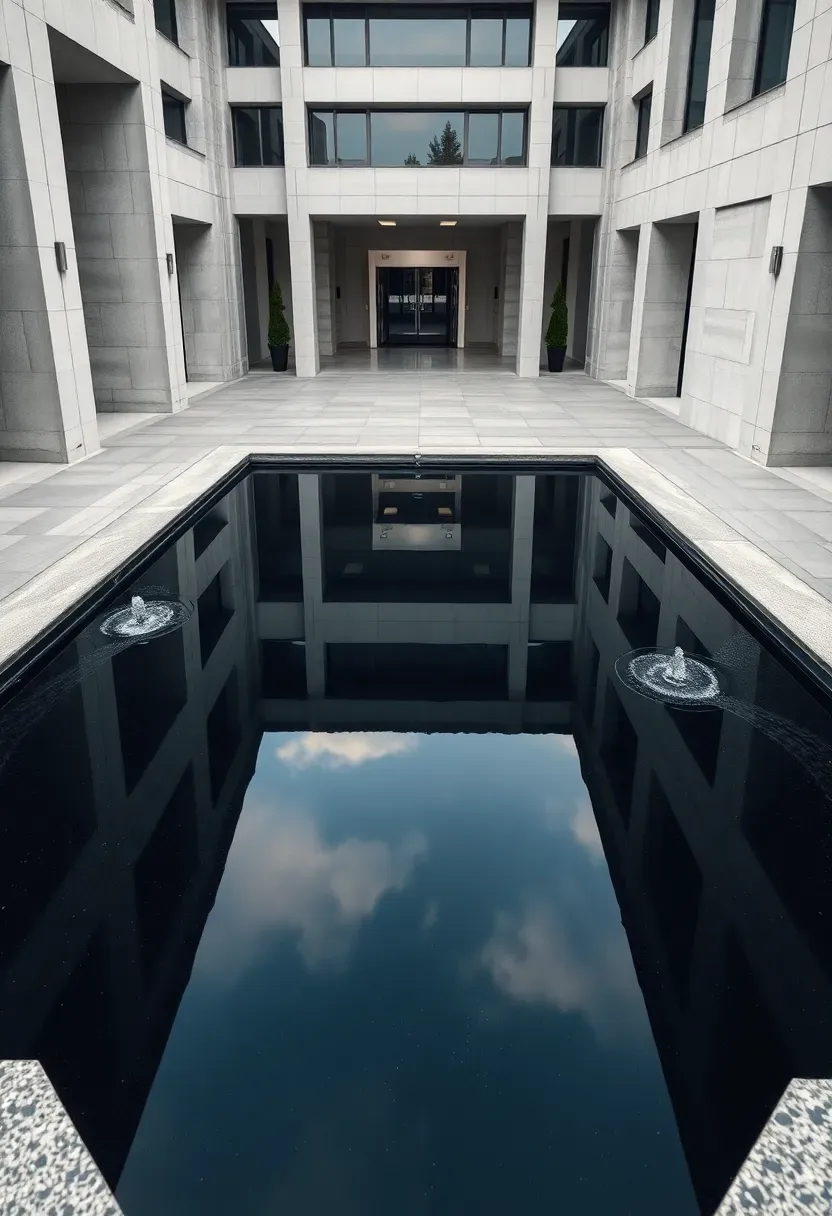
8. Courtyard Reflecting Pool
Should a pool always be for swimming? In compact courtyards or entryways, shallow reflecting pools create tranquil focal points that enhance architecture without requiring deep excavation.
The Aesthetic Approach
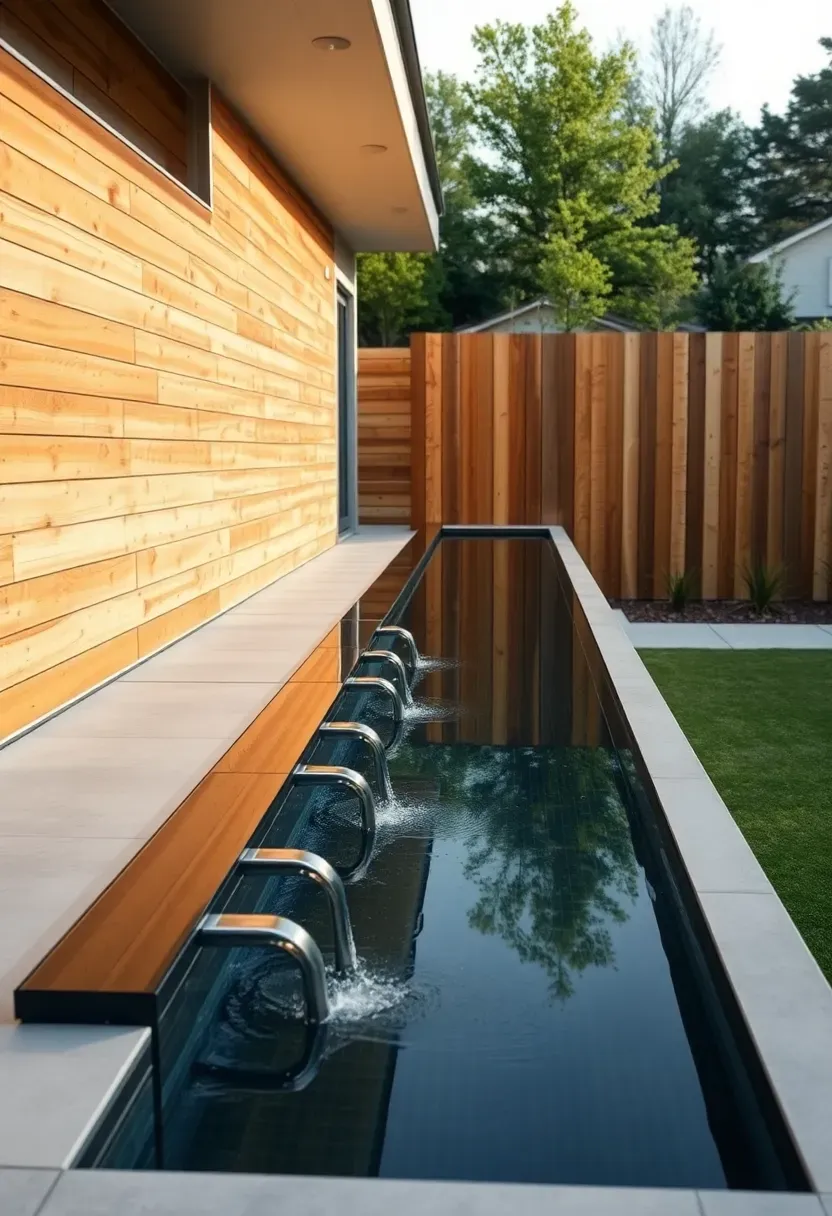
Reflecting pools typically range from 6-18 inches deep—just enough to mirror sky, buildings, or surrounding plantings. Common sizes for residential courtyards are 8x12 to 10x16 feet, though narrow channels work beautifully in tight spaces.
Beyond Decoration
While primarily visual, these pools offer light foot wading on hot days. Add seating walls around the perimeter for gathering space. Incorporate subtle fountains or spillways for soothing water sounds.
Maintenance and Materials
Construction: Use the same materials as traditional pools but with simpler filtration since there's less water volume.
Climate: Excellent for hot, dry climates where water features cool surrounding air through evaporation.
Mosquitoes: Slight circulation from a small pump prevents stagnant water and insect breeding.
Winter: In freezing climates, drain completely or heat minimally to prevent ice damage.
Recommended
Items for this idea
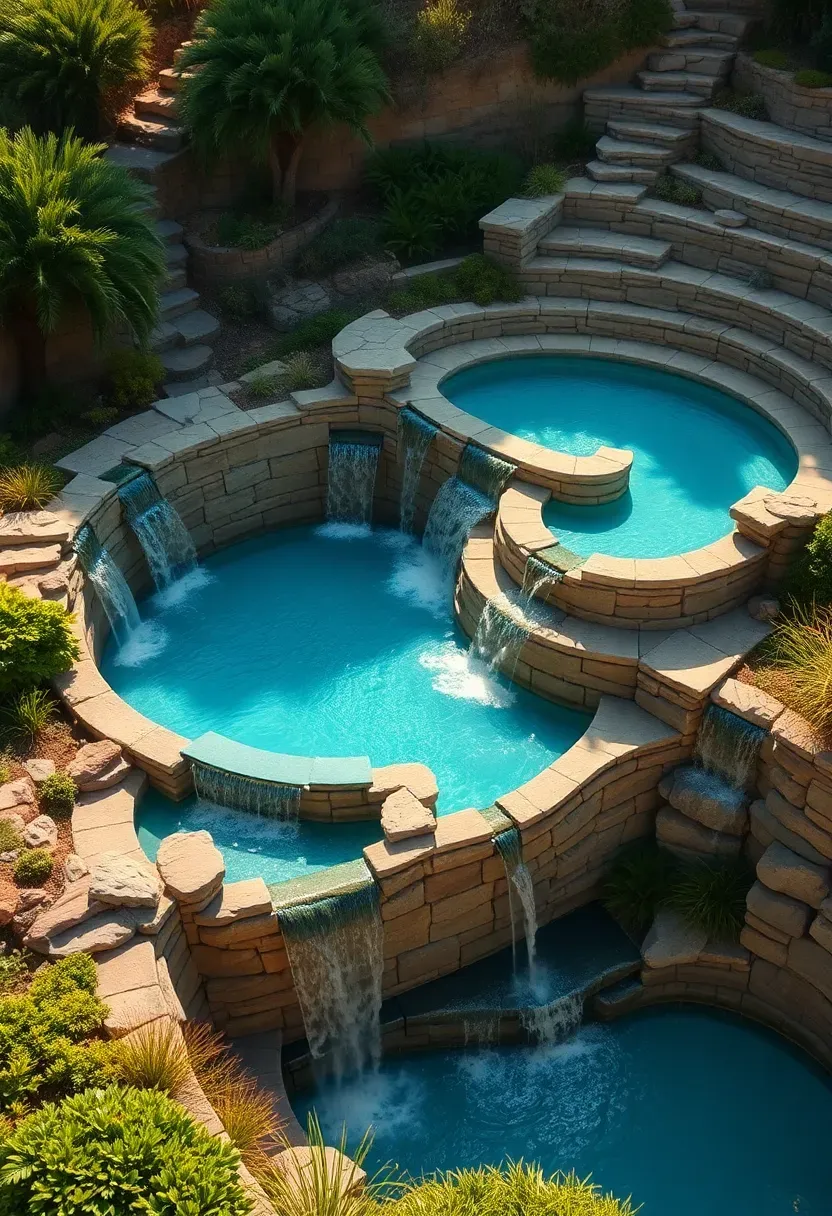
9. Multi-Level Terrace Pool
Sloped yards present challenges, but terraced pool designs turn elevation changes into stunning architectural features. Rather than fighting the grade, these pools embrace it with multiple levels connected by waterfalls or spillways.
Why Terracing Works
Each level serves a different purpose: upper pools for hot tub or spa features, middle tiers for shallow lounging, lower sections for deeper swimming. The cascading water creates natural circulation and soothing sounds.
Engineering Considerations
Retaining walls between levels must be structurally sound and waterproofed. Pumps move water from lower to upper pools. Each tier typically measures 6-10 feet across, with total vertical drop ranging from 3-8 feet across all levels.
Practical Tips
- Integrate seating areas on each terrace for varied vantage points
- Use natural stone or stacked slate for retaining walls to blend with landscapes
- Install underwater lighting to highlight the waterfalls at night
- Plan access stairs or steps into the design from the start
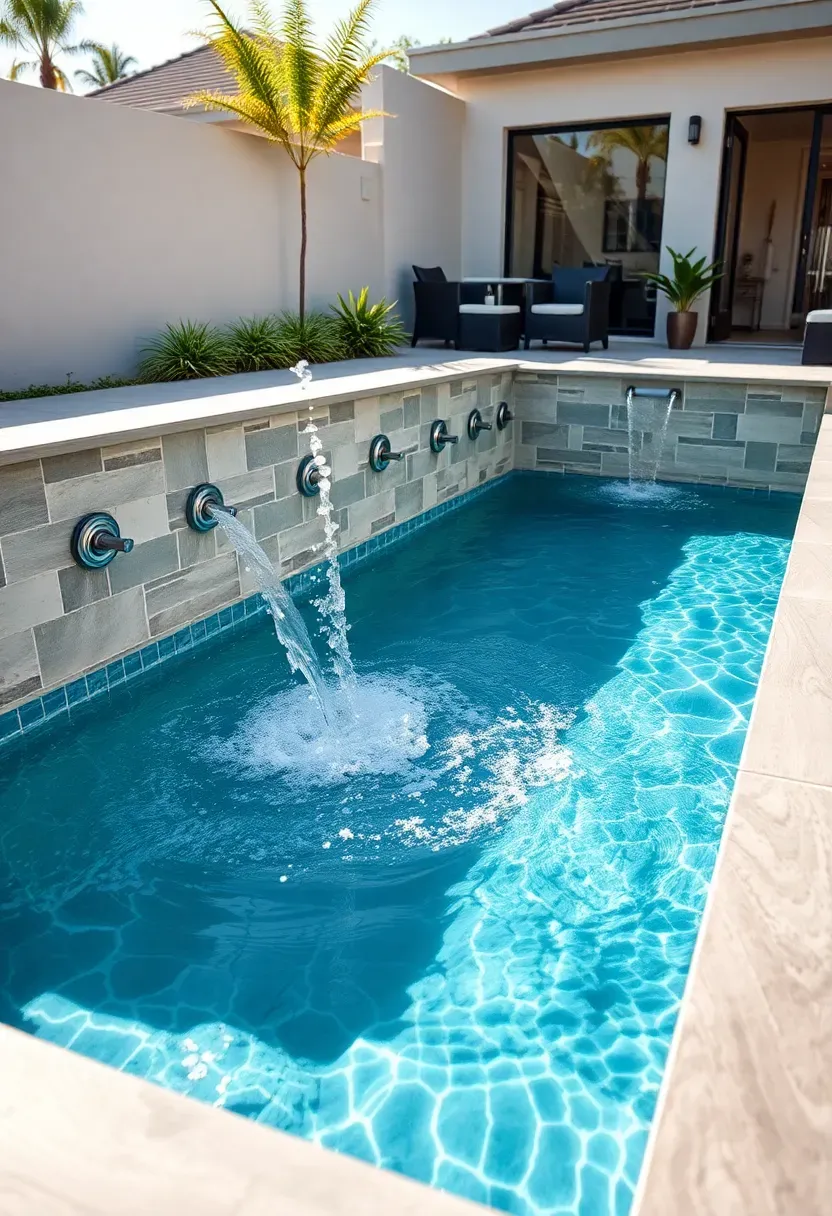
10. Spool: Spa-Pool Hybrid
Comparing: Traditional Hot Tub vs. Spool. Can't decide between a pool and a spa? The "spool" (spa + pool) combines both, typically measuring 10-16 feet long—larger than a hot tub but smaller than a traditional pool.
Option A: Hot Tub
Hot tubs excel at hydrotherapy with powerful jets, compact footprint (6-8 feet), and year-round use in any climate. They heat quickly and seat 4-6 people comfortably.
Option B: Spool
Spools offer more room to move and cool off in summer, include jet systems for massage and resistance swimming, and can be heated like spas in cooler months. Depths range from 4-5.5 feet—enough to stand and submerge shoulders.
What to Choose
Choose a hot tub if: your primary goal is therapeutic soaking, you have limited space (under 100 sq ft), you live in a cold climate and want year-round use, you prefer contained maintenance and lower water volume
Choose a spool if: you want occasional swimming along with spa features, you have 150-250 sq ft available, you live in mild to hot climates and want summer cooling, you're willing to manage slightly higher operating costs for the versatility
Recommendation
For small backyards in temperate zones, spools provide the best balance—cooling relief in summer, warm relaxation in spring and fall, and enough space for kids to splash around safely.
Recommended
Items for this idea
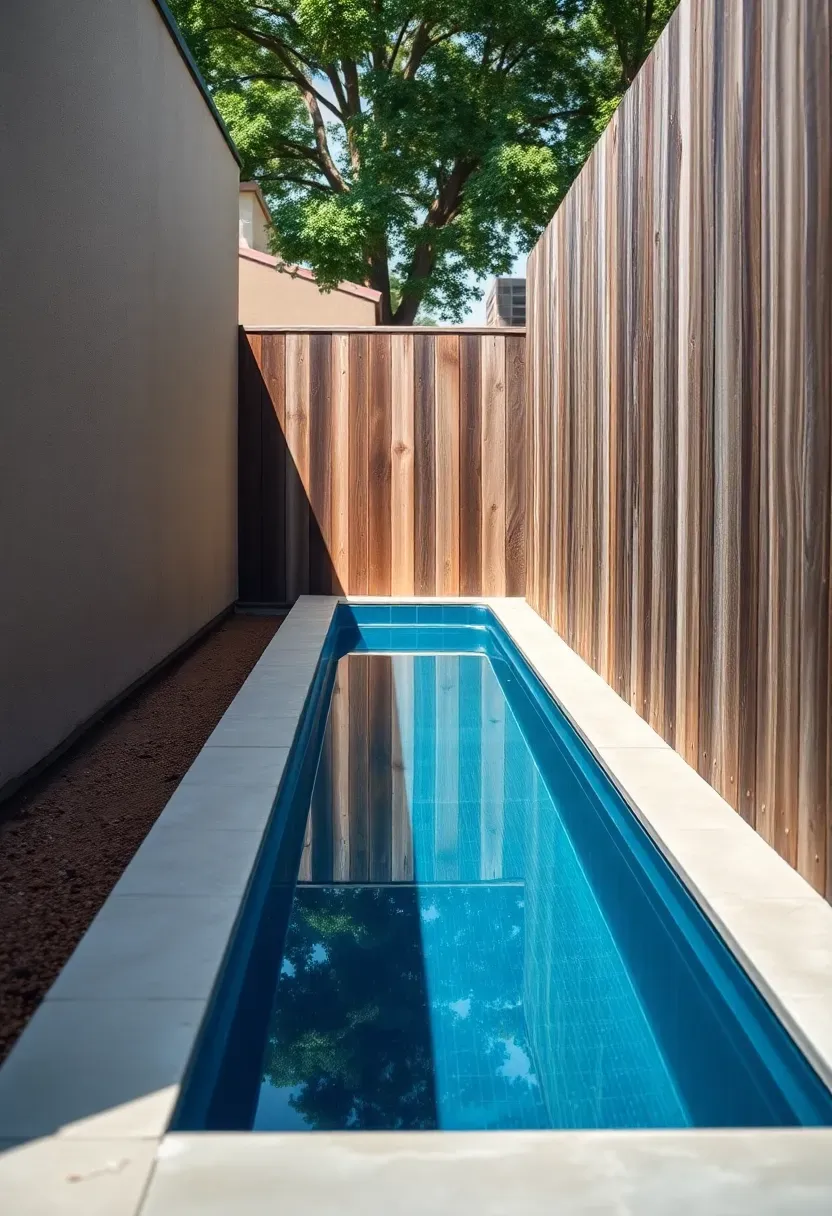
11. Narrow Side Yard Lap Pool
That neglected strip of land between your house and property line? It's perfect for a lap pool. These narrow designs (6-10 feet wide, 25-40 feet long) turn otherwise wasted space into functional fitness features.
Maximizing Narrow Spaces
The key is embracing the linear footprint. A 8x30 foot pool provides 240 square feet of swimming area while requiring minimal width. Orient the pool parallel to the house or fence for easiest access and best use of the corridor.
Benefits Beyond Swimming
The long, narrow water feature visually extends your yard, creating the illusion of more space. Add a shallow end near the entry for steps and a deeper section at the far end for more immersive swimming.
Installation Considerations
Access for construction equipment can be challenging in side yards. Modular fiberglass shells work well since they're delivered in one piece by crane. Ensure proper drainage away from your home's foundation. Consider how you'll maintain the far end—plan a gate or access point in your design.
12. Stock Tank Pool
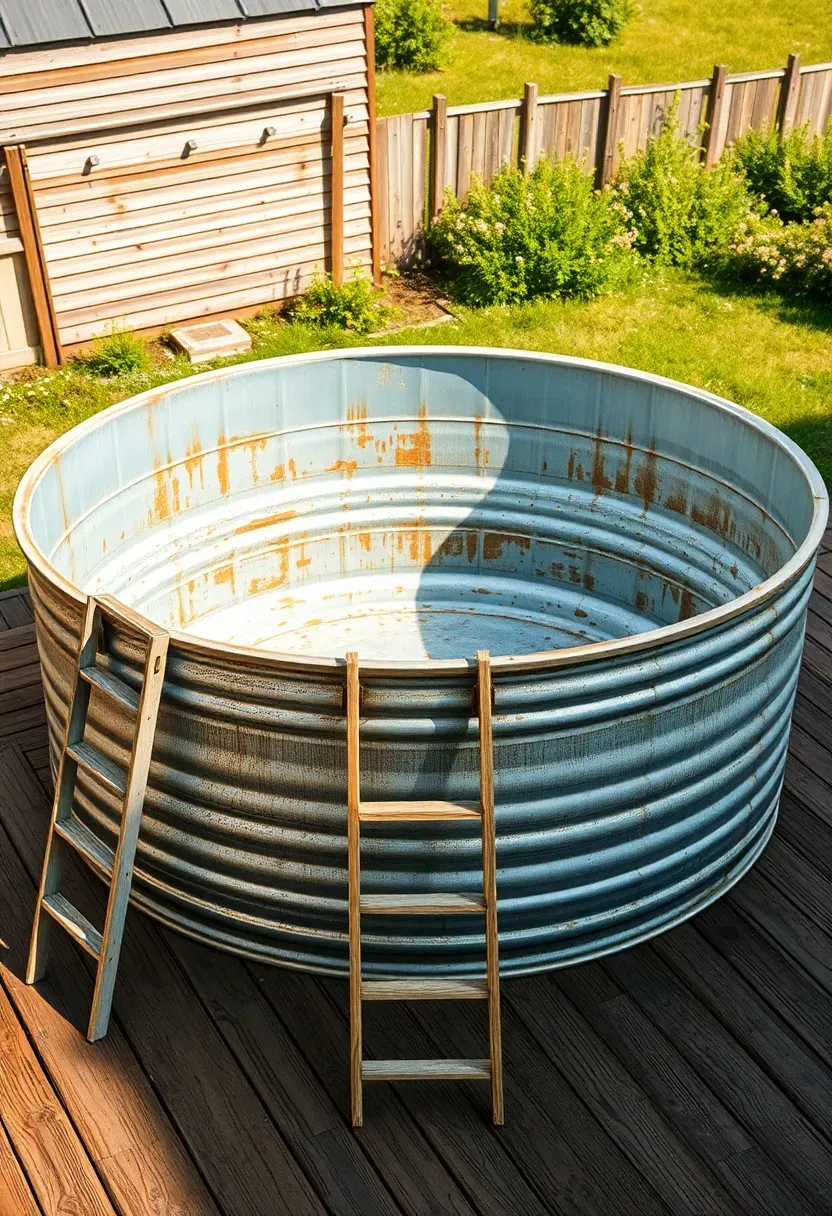
The DIY trend that took social media by storm, stock tank pools offer the most budget-friendly entry into backyard swimming. These galvanized metal water troughs (originally designed for livestock) make surprisingly effective pools.
Size and Setup
Tanks range from 6-10 feet in diameter with 2-foot depths being most common. The largest residential options are 8-foot round tanks (about 700 gallons) or 8x2 foot oval tanks.
Step 1: Choose and Prepare Your Tank
Purchase from farm supply stores (Tractor Supply, Fleet Farm) or online. Clean thoroughly and check for sharp edges. Set on level ground with sand or pavers as a base.
Step 2: Install Filtration
Basic pool pumps and filters (around $150-300) keep water clean. Drill holes for inlet and return fittings, seal properly with waterproof silicon, and connect plumbing.
Step 3: Fill and Treat
Fill with a garden hose and treat with pool chemicals (chlorine or saltwater system). Add a thermometer and cover to monitor and maintain temperature.
What to Watch Out For
Metal conducts heat—tanks get quite hot in direct sun (good in cooler climates, problematic in desert heat). No built-in seating means adding pool floats or loungers. These aren't designed for diving or rough play. Expect 2-3 season lifespan with proper winterization.
Recommended
Items for this idea
13. Geometric Minimalist Pool
In modern architecture, less truly is more. Geometric pools with clean lines, sharp corners, and monochromatic finishes create sophisticated outdoor spaces that complement contemporary homes.
Design Philosophy
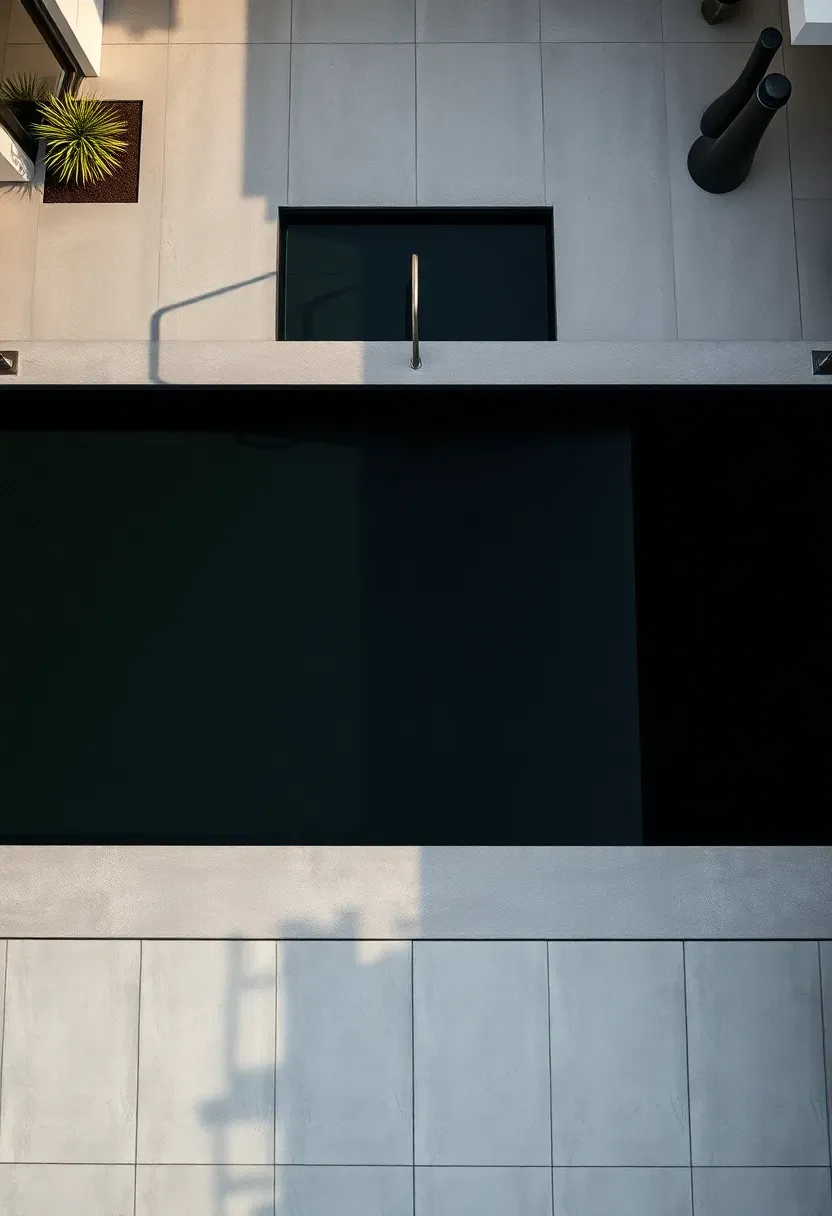
These pools embrace simplicity: rectangular or square shapes (no curves), solid color finishes (often black, deep grey, or white), flush deck integration (water level meets paving), and minimal ornamentation (no waterfalls, rocks, or decorative tile).
Visual Impact
The stark aesthetic makes small pools appear larger and more intentional. Black or dark grey finishes create mirror-like reflections, doubling visual impact. Precise geometry provides strong architectural connection to modern home designs.
Practical Elements
- Flush deck edges (knife-edge or perimeter overflow) require precise engineering but create seamless transitions
- Dark finishes absorb heat—water temperatures run 5-10°F warmer than light-colored pools
- Choose large-format pavers or poured concrete decks to maintain the minimalist aesthetic
- Integrate lighting underneath coping for nighttime drama without visible fixtures
14. Sunken Conversation Pool
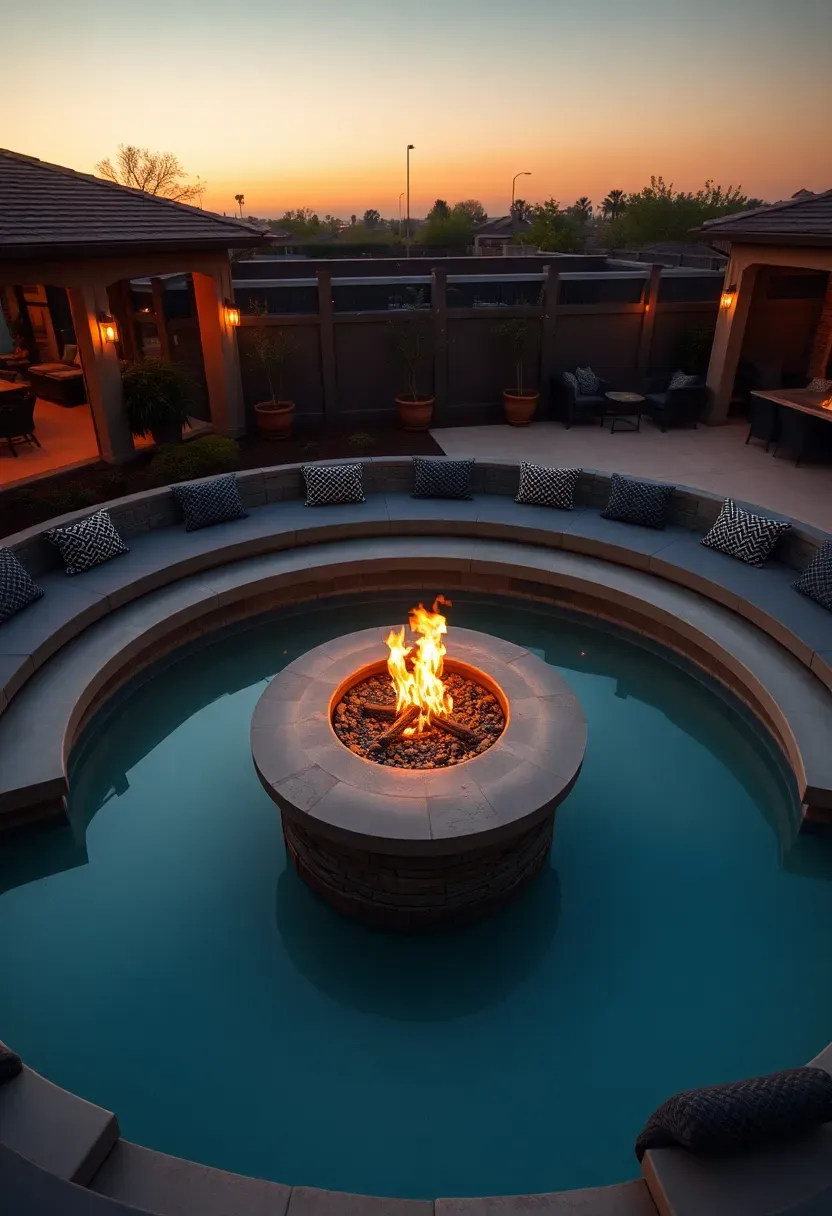
Picture this: a shallow, sunken pool designed not for laps but for lounging and conversation. These "chat pools" typically measure 12-16 feet across with uniform 3-4 foot depths and extensive built-in bench seating.
The Social Design
Rather than conventional pool shapes, conversation pools prioritize seating. Continuous perimeter benches accommodate 8-12 people comfortably. Some designs include a central raised platform or fire feature as a focal point.
Temperature Control
Many conversation pools include heating systems, functioning like oversized hot tubs but without the intensity of spa jets. Water temperatures around 85-90°F (compared to 102-104°F in hot tubs) allow for extended comfortable soaking.
Entertainment Features
Built-in cup holders, LED color-changing lights, Bluetooth speakers, and built-in coolers transform these pools into ultimate entertaining spaces. The shallow depth and extensive seating make them safer and more accessible than traditional pools.
Ideal For
Adults who rarely swim laps but love poolside gatherings, smaller households without young children needing deep water, climates where year-round heated pool use makes sense, and backyards where the pool serves as the primary gathering spot rather than one of many outdoor features.
Recommended
Items for this idea
15. Endless Pool with Resistance
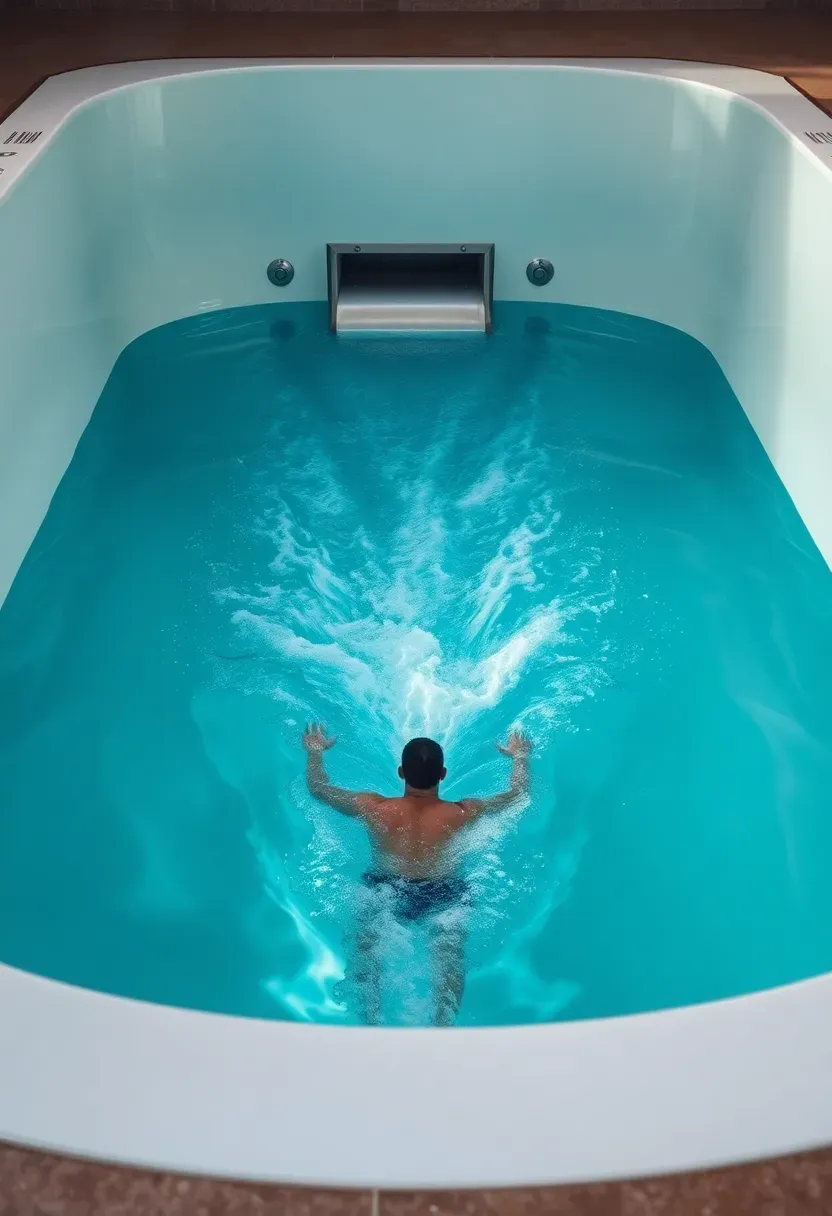
The "Endless Pool" brand pioneered the concept, but many manufacturers now offer pools designed around resistance swimming. These compact units (as small as 8x15 feet) generate powerful adjustable currents for stationary swimming.
How Resistance Swimming Works
Hydraulic or propeller-driven jets create laminar flow current (smooth, consistent water movement) at speeds ranging from casual swim to competitive pace. Swimmers stroke continuously while remaining in place, similar to a treadmill for swimming.
Space and Installation
Self-contained units arrive pre-fabricated and can be installed in-ground, partially buried, or above-ground. Indoor installation is popular since resistance swimming works regardless of weather. Total footprint including equipment is typically 8x12 to 10x16 feet.
Cost vs. Benefit
Investment: $20,000-$40,000 installed (mid-range to premium)
Benefits: Year-round swimming regardless of yard size, lower maintenance than traditional pools, excellent for serious swimmers or rehab exercise, can be installed indoors, precise control over workout intensity
Limitations: Single swimmer at a time, not for families wanting play space, jet noise can be significant, requires dedicated electrical service
16. Negative Edge Perimeter
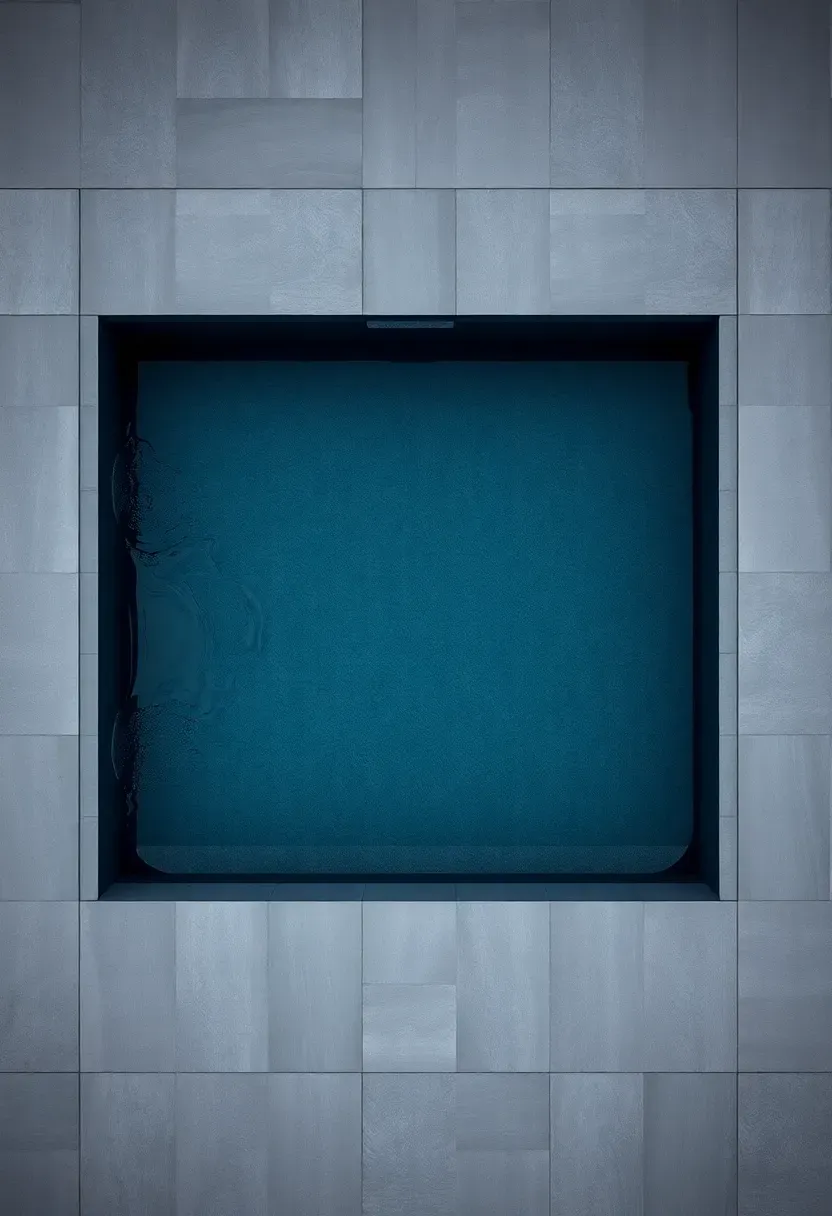
While infinity pools feature one vanishing edge, perimeter overflow pools take the concept further—water flows over all sides into hidden gutters, creating a precise water plane with no visible edges.
The Engineering Marvel
Water continuously overflows into perimeter channels, then returns through filtration. This design requires meticulous leveling (within 1/8 inch) and sophisticated surge tanks to handle water displacement when swimmers enter.
Visual Effect
The result is a perfect mirror surface that appears to float. The lack of visible coping or edges creates seamless integration with surrounding decks and landscapes. This works especially well with geometric pools and modern architecture.
Practical Considerations
- Installation costs run 30-50% higher than standard pools due to engineering complexity
- Requires more powerful pumps and larger filtration systems
- Water level must be maintained precisely for proper overflow
- Deck drainage must direct water away from the gutters
- Not ideal for homes with children or pets who might access overflow channels
Recommended
Items for this idea
17. Indoor-Outdoor Glass Wall Pool
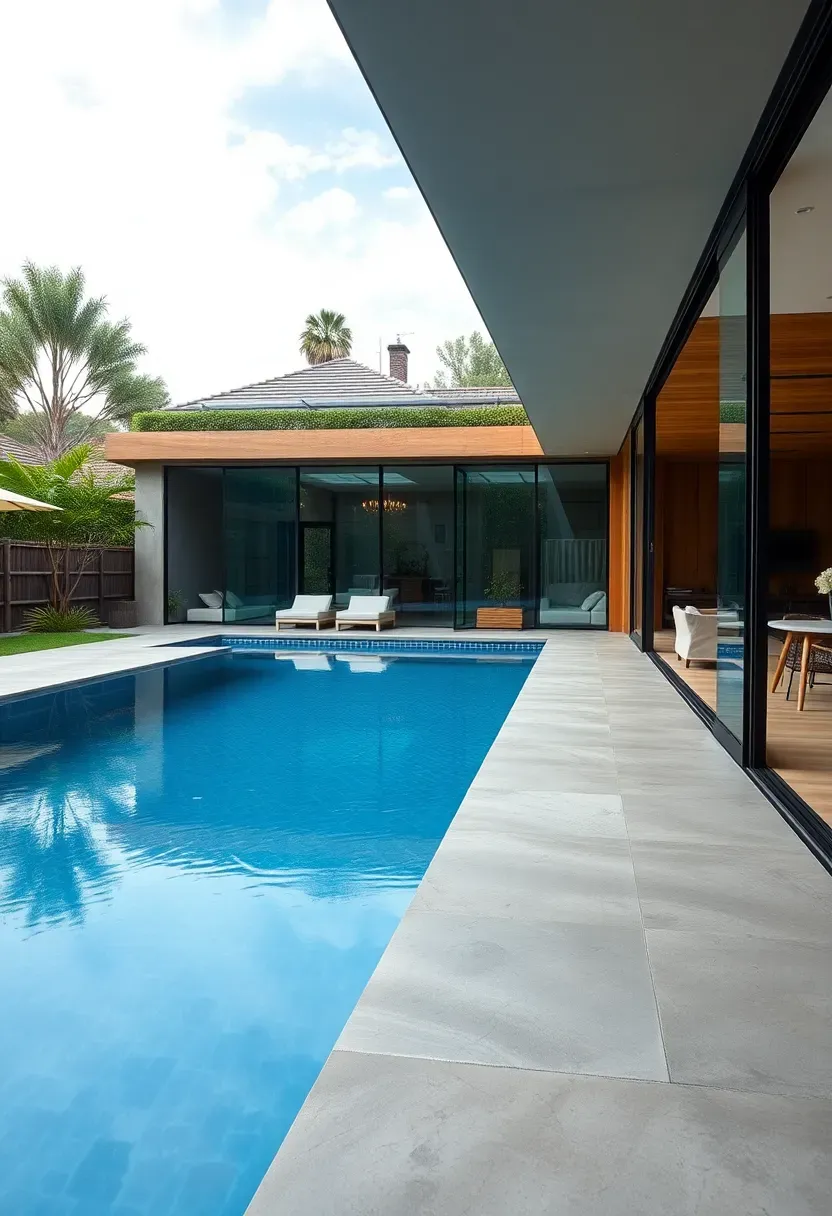
Why choose between indoor and outdoor swimming? Pools that span the threshold with glass walls offer year-round versatility, especially in climates with distinct seasons.
Design Concept
The pool extends under a glass wall, bifurcating interior and exterior space. Retractable or sliding glass panels open in pleasant weather, creating a seamless indoor-outdoor experience. In winter or inclement conditions, the glass closes, maintaining a climate-controlled swimming environment inside.
Temperature Zones
The indoor section stays heated year-round while the outdoor portion can be cooler in summer. Natural convection between zones helps balance temperatures. Some designs include separate temperature controls for each section.
Architectural Integration
This design works best when planned during home construction, but retrofits are possible with proper structural assessment. The glass wall must be structural (not just decorative) and properly sealed. Indoor humidity control through dehumidification systems is essential to protect interior finishes.
Space Requirements
Indoor section needs minimum 8-10 feet to feel functional, outdoor section requires 10-15 feet minimum. Total pool length of 20-30 feet makes this viable for small-to-medium backyards when paired with modest indoor spaces.
18. Kidney-Shaped Vintage Pool
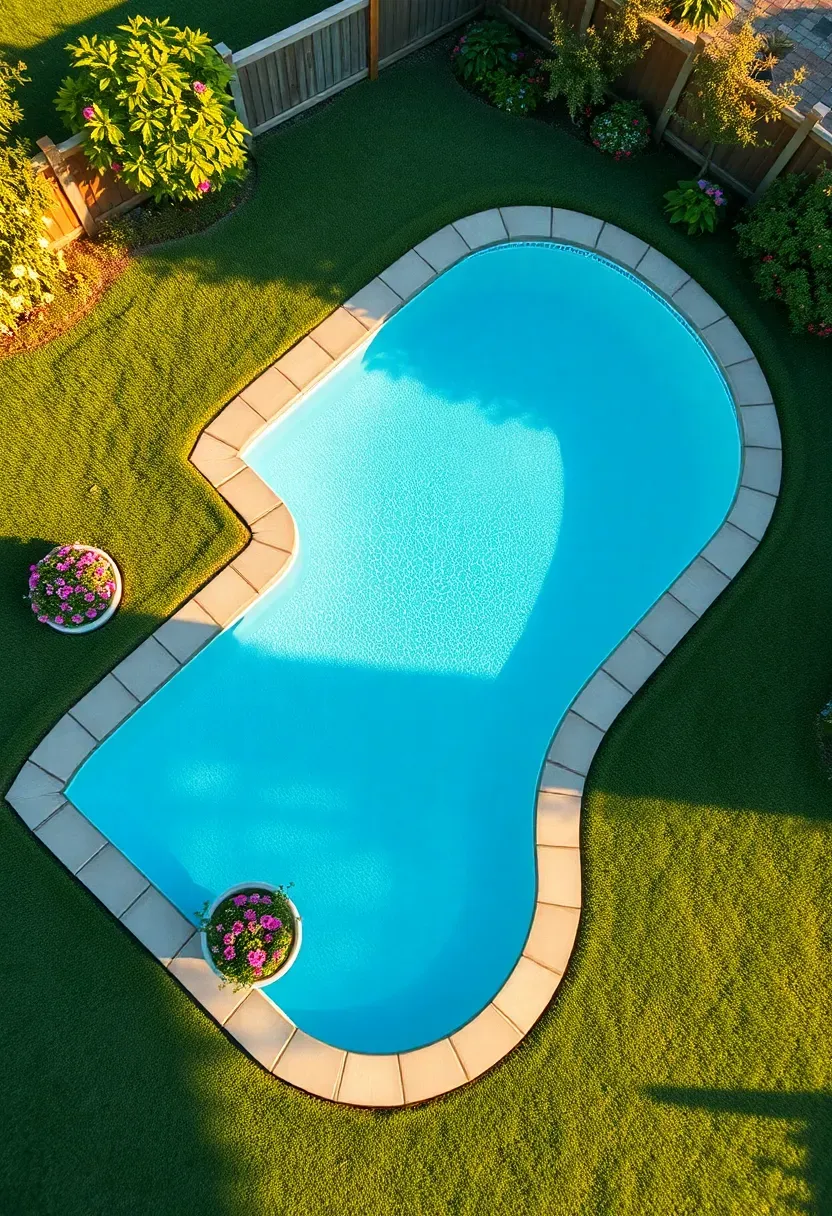
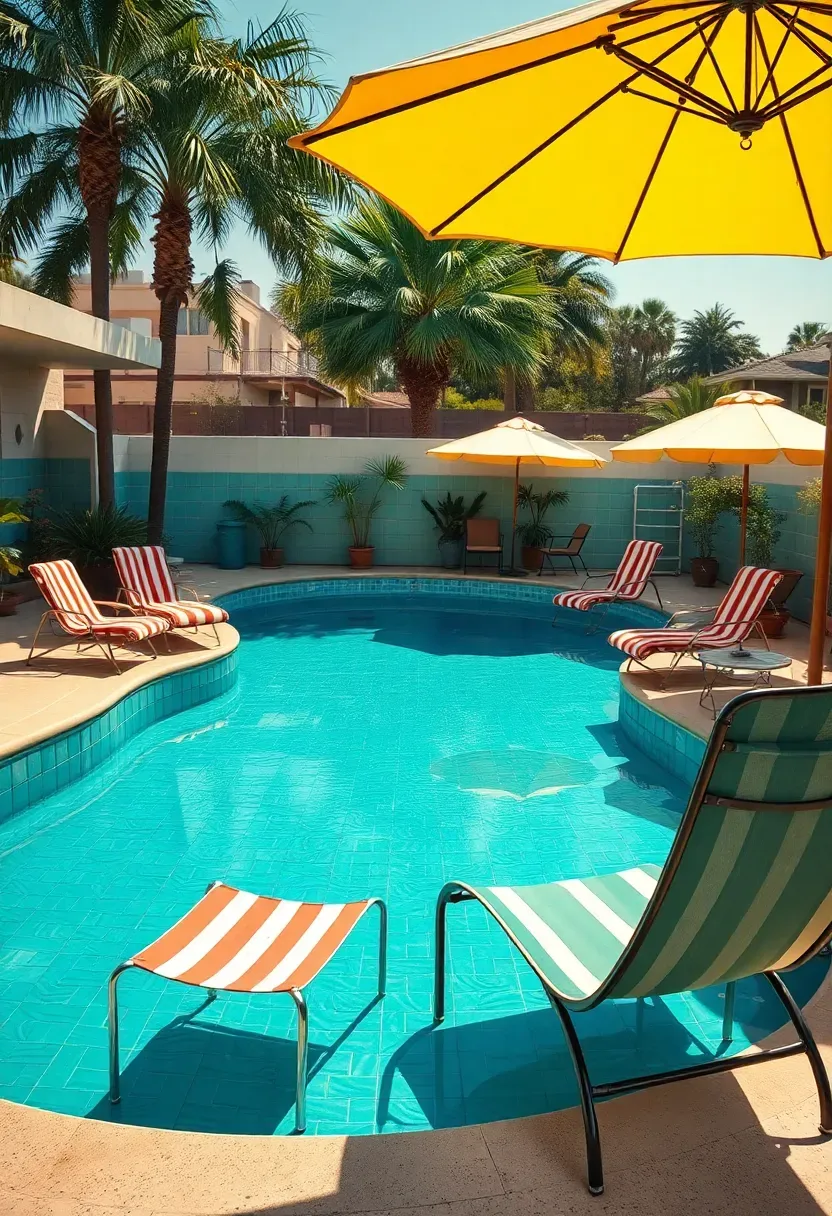
For centuries—well, since the 1950s anyway—kidney-shaped pools have symbolized suburban leisure. This classic organic form has made a stylish comeback, celebrated for its timeless appeal and practical benefits.
Historical Context
Popularized in mid-century modern design, kidney pools were prized for their flowing lines that softened geometric architecture. The curved form allowed natural integration with landscaping while the indented curve provided space for diving boards or slides.
Modern Revival
Today's versions honor the classic shape while incorporating contemporary finishes and technology. Retro turquoise, aqua, and soft blue tiles evoke vintage charm. Pair with period-appropriate furniture, striped umbrellas, and playful accessories for complete nostalgic effect.
Functional Advantages
The curved indentation creates natural separation between shallow and deep ends without harsh transitions. The shape fits efficiently into rectangular yards while feeling more organic than straight-edged alternatives. Landscaping around curves feels more natural than around corners.
Styling Tips
- Choose period lighting like cone pendants or atomic-style fixtures
- Install classic concrete coping in cream or pale grey
- Add vintage-inspired signage ("Pool Rules," depths markers in retro fonts)
- Include a small cabana or changing room structure in matching mid-century style
Recommended
Items for this idea
19. Raised Above-Ground with Deck
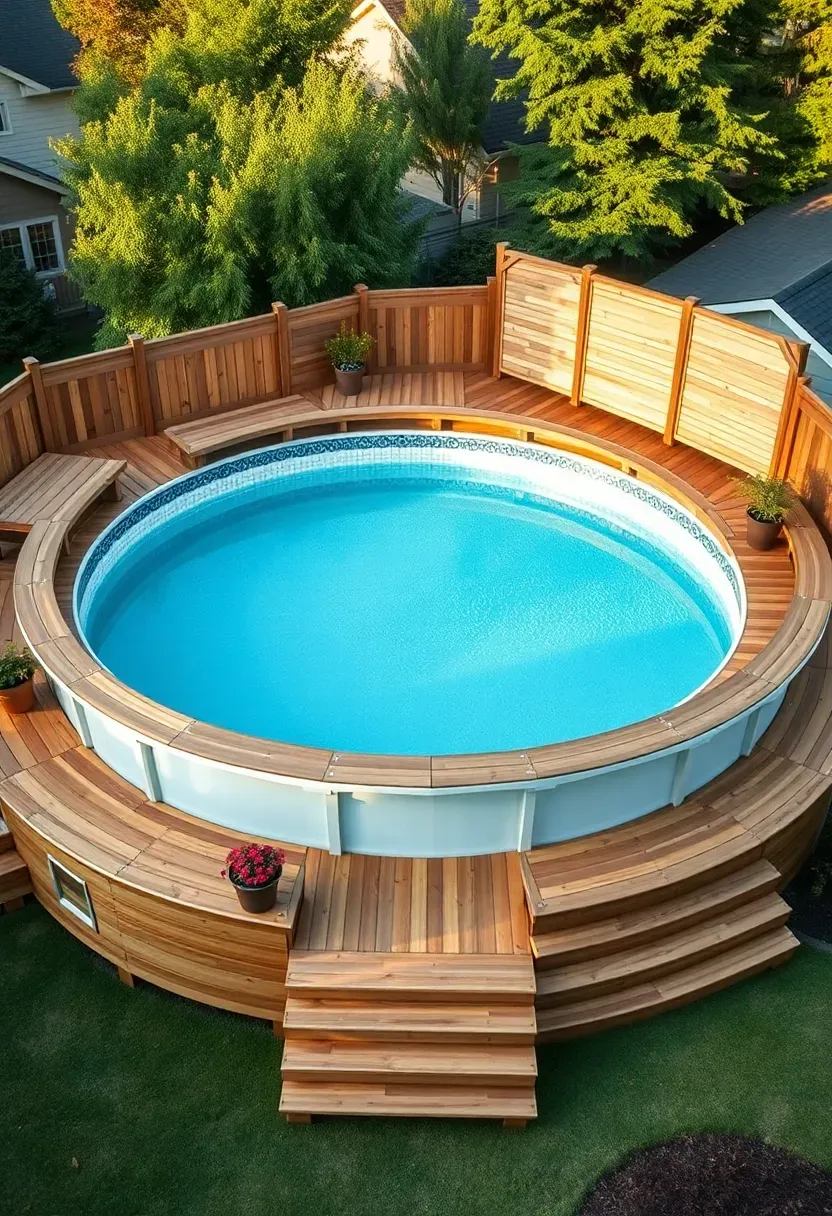
Before dismissing above-ground pools as purely budget options, consider modern designs that rival in-ground aesthetics. When surrounded by well-designed decking, raised pools become dramatic architectural features.
Comparing: In-Ground vs. Above-Ground
Option A: In-Ground Pool Traditional in-ground pools require excavation, ranging from $30,000-$70,000 installed. They add property value, offer unlimited design options, and integrate seamlessly into landscapes. However, they require extensive site work, are permanent installations, and face strict permitting in most areas.
Option B: Elevated Above-Ground Pool Above-ground pools cost $5,000-$15,000 installed (including quality decking), install in days rather than months, can be relocated or removed, and often face fewer permitting restrictions. Modern steel or resin frame pools with wraparound decks look surprisingly upscale.
What to Choose
Choose in-ground if: you plan to stay in your home long-term (10+ years), want to maximize property value, have budget for extensive construction, live in areas where above-ground pools are restricted by HOA or codes
Choose above-ground with deck if: you want to test pool ownership before major investment, need installation flexibility, have budget constraints, want faster project completion, may relocate within 5-10 years
Recommendation
For small backyards, elevated pools with comprehensive decking offer excellent value. The raised platform creates natural seating areas, storage underneath, and architectural interest that can rival in-ground designs at a fraction of the cost.
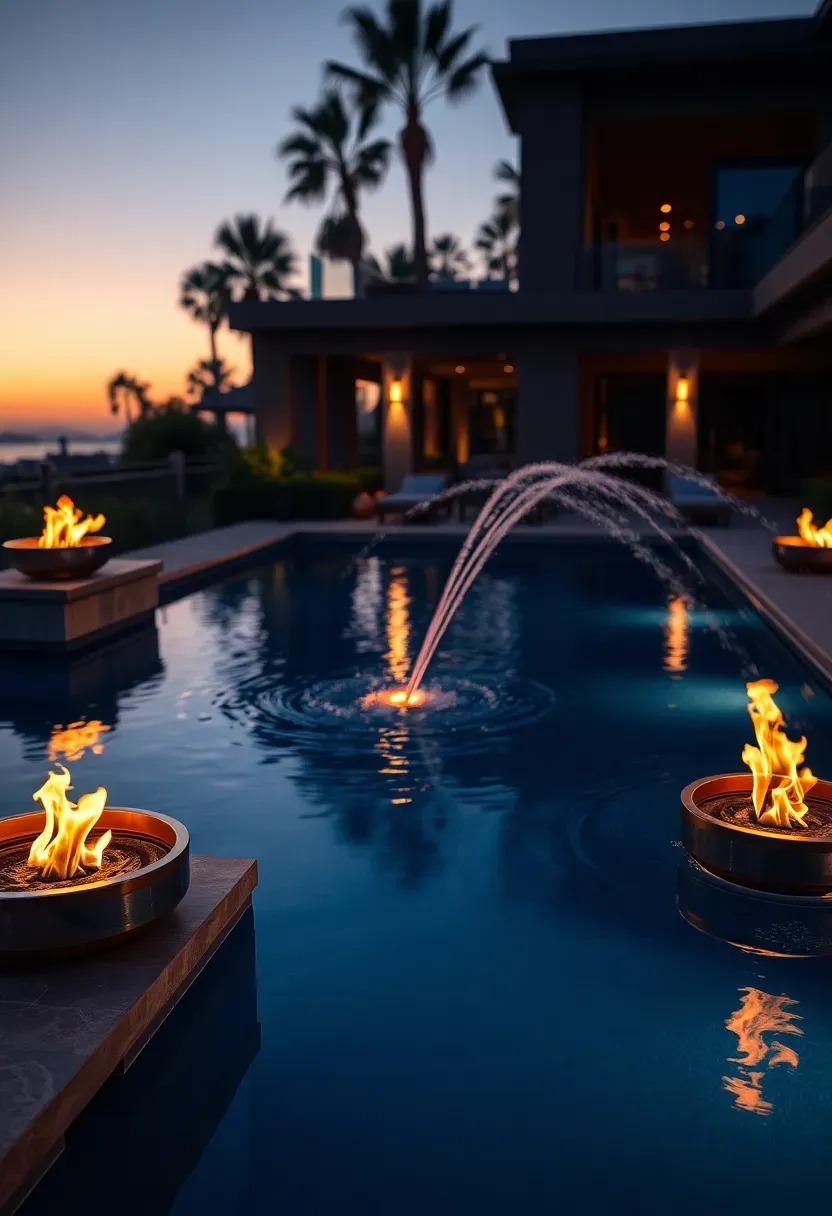
20. Fire and Water Feature Pool
The primal contrast of fire and water creates unforgettable outdoor spaces. Small pools can incorporate fire features—bowls, tables, or integrated walls—that transform ordinary swimming areas into resort-style retreats.
Design Integration
Fire bowls positioned at pool corners or entry points provide dramatic focal points without occupying swimming space. Water features like sconces, fountains, or deck jets add movement and sound. Together, fire and water create multi-sensory experiences.
Popular Combinations
Fire bowls: Copper or stone vessels with natural gas flames, positioned on raised pedestals at water level
Fire and water bowls: Dual-function features where water overflows around a central flame
Fire pit seating: Raised fire pit adjacent to the pool with built-in seating walls
Fire wall: Linear burners integrated into pool walls or spillways with water cascading over or beside flames
Safety and Functionality
Gas lines must be professionally installed and comply with local codes. Maintain proper clearances (typically 3+ feet) between fire features and combustible materials. Use tempered glass guards or protective screens to prevent accidents. Include shutoff valves and controls within easy reach but away from splash zones.
Recommended
Items for this idea
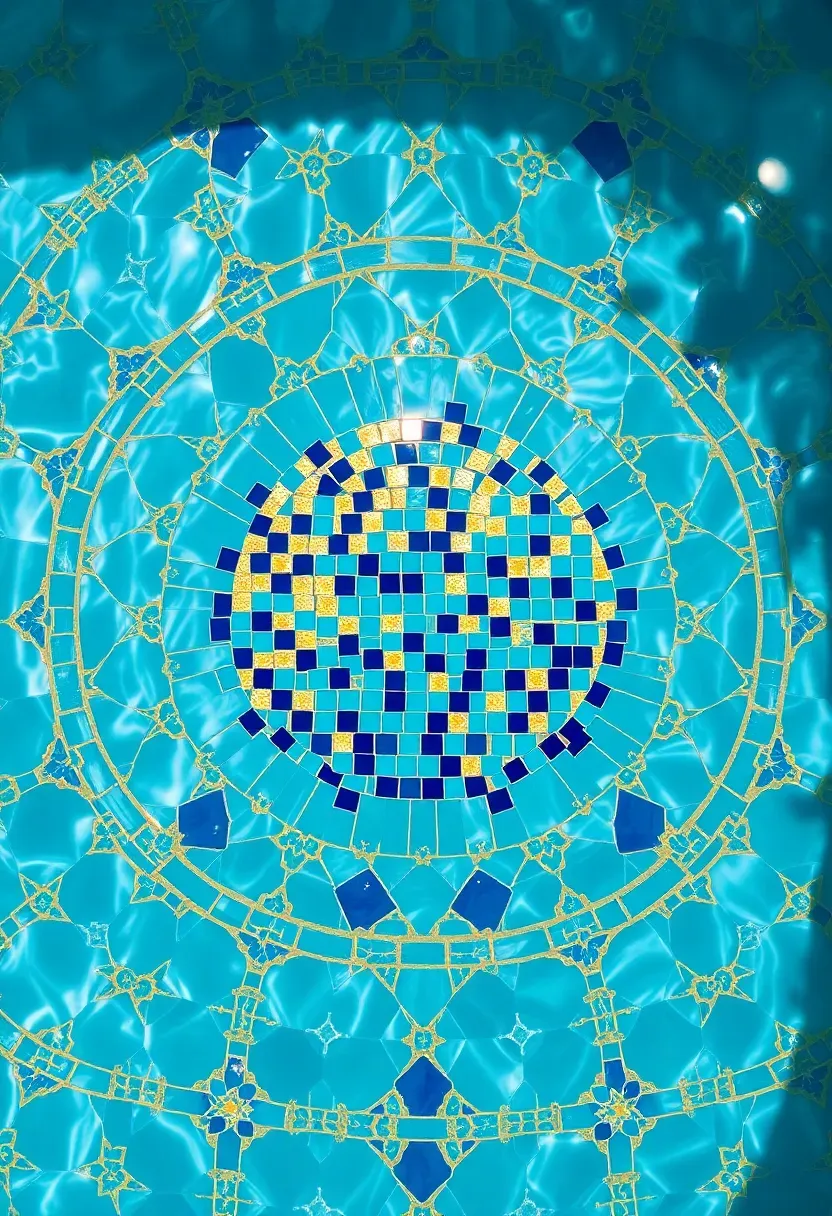
21. Mosaic Tile Jewel Pool
Transforming a small pool into an art piece, mosaic tile installations turn every swim into a visual experience. Hand-laid tiles in intricate patterns, gradients, or murals make compact pools feel like precious gems.
The Art of Tile Work
Small pools are ideal for elaborate tile work since less surface area means manageable costs for premium materials. Glass tiles, ceramic mosaics, and porcelain create effects ranging from subtle sophistication to bold artistic statements.
Pattern Options
Gradient fades: Transition from light turquoise at the waterline to deep sapphire at depth, creating visual dimension
Geometric patterns: Repeating motifs in contrasting colors define zones and add visual interest
Pictorial murals: Marine life, abstract art, or cultural motifs transform pool floors and walls into canvases
Metallic accents: Gold, copper, or silver glass tiles catch light and shimmer underwater
Cost and Installation
Mosaic tile installation requires skilled artisans and ranges from $15-$50 per square foot depending on complexity. A small 10x15 foot pool might have 500-800 square feet of surface area (including walls), putting premium tile work at $7,500-$40,000 just for materials and labor. However, the result is a truly one-of-a-kind pool that justifies the investment in high-end homes.
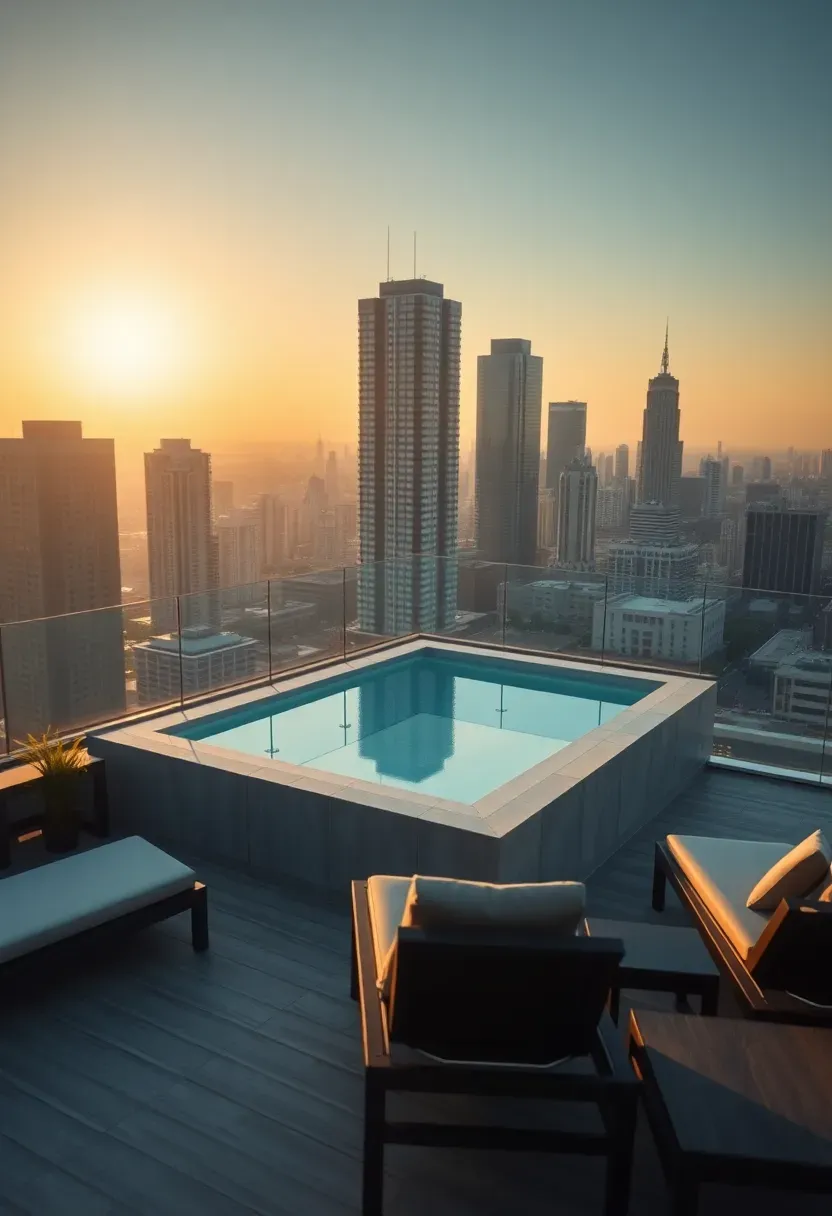
22. Rooftop Deck Pool
Urban living doesn't preclude pool ownership. Rooftop pools—while requiring significant structural engineering—offer private oases above city streets. Small rooftop pools (8x12 to 12x16 feet) are more feasible than you might think.
Structural Requirements
Buildings must be engineered to support enormous weight: water alone weighs 8.34 pounds per gallon. A small 10x15x4 foot pool holds about 4,500 gallons (37,500 pounds of water). Add the pool structure, decking, furniture, and people—you're looking at 50,000+ pounds. Professional structural engineers must evaluate load-bearing capacity before proceeding.
Solutions for Lighter Loads
Fiberglass shells weigh less than concrete. Above-ground pools with minimal excavation distribute weight. Shallow designs (3-4 feet deep) significantly reduce water volume. Positioning over load-bearing walls or columns optimizes weight distribution.
Benefits and Challenges
Benefits: Unmatched privacy and views, efficient use of otherwise unused space, no yard excavation required, dramatic architectural feature
Challenges: Expensive structural assessment and reinforcement, complex permitting and insurance considerations, equipment access for maintenance, winterization in cold climates, potential noise concerns for units below
Ideal Candidates
This works best on reinforced concrete buildings originally designed with rooftop amenity space in mind, commercial buildings converting to residential lofts, or new construction where pools are planned from the architectural phase.
Recommended
Items for this idea
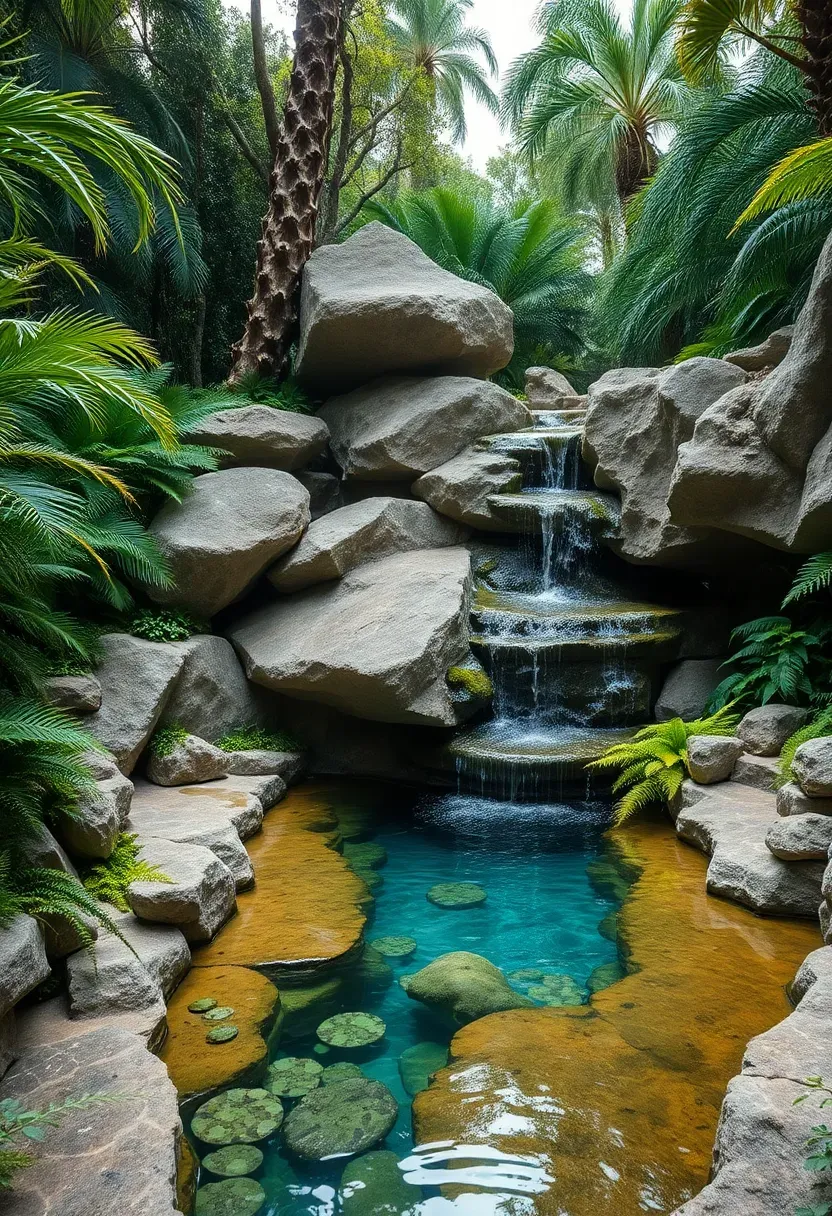
23. Naturalistic Rock Pool
Why make a pool look like a pool? Naturalistic designs using boulders, stone, and organic shapes create swimming holes that resemble natural springs or mountain ponds. These work beautifully in garden settings and wooded lots.
Creating Natural Aesthetics
The key is irregular shapes that follow landscape contours rather than geometric precision. Faux rock (formed concrete) or real stone edges replace tile coping. Incorporate boulders directly into the pool structure, creating swim-through caves or natural waterfalls.
Plant Integration
Unlike natural swimming pools with biological filtration, naturalistic pools use traditional filtration but surround water with heavy landscaping. Ferns, grasses, and moisture-loving plants soften edges and complete the natural illusion.
Water Features
Natural-looking waterfalls, using stacked stone or boulders, provide circulation and sound. Multiple smaller cascades feel more organic than single large spillways. Submerged or camouflaged pumps maintain the natural effect.
Considerations
Pros: Stunning integration with natural landscapes, timeless appeal, feels like vacation resort, wildlife-friendly surroundings
Cons: Higher maintenance as leaves and debris collect more readily, irregular shapes reduce efficient use of space, natural finishes may be rougher on feet than smooth plaster, algae may be more visible on natural-colored surfaces
A small backyard doesn't mean sacrificing your pool dreams—it means getting creative with design. From sleek modern plunge pools to vintage kidney shapes, from rooftop oases to natural rock grottos, these 23 small backyard pool ideas prove that compact spaces can deliver big style and functionality. The key is matching your pool design to your lifestyle priorities: fitness, relaxation, entertaining, or aesthetics. Consider your climate, budget, and how you'll actually use the space. Then take the plunge—quite literally—into transforming your compact backyard into a refreshing retreat you'll enjoy for years to come.
Pinterest cover for 23 Small Backyard Pool Ideas for Compact Outdoor Spaces
About the author
OBCD
CGI visualization and interior design content. We create detailed 3D renders and curate practical design ideas for every room in your home.