29 Side Table Styling Ideas for Every Room in Your Home
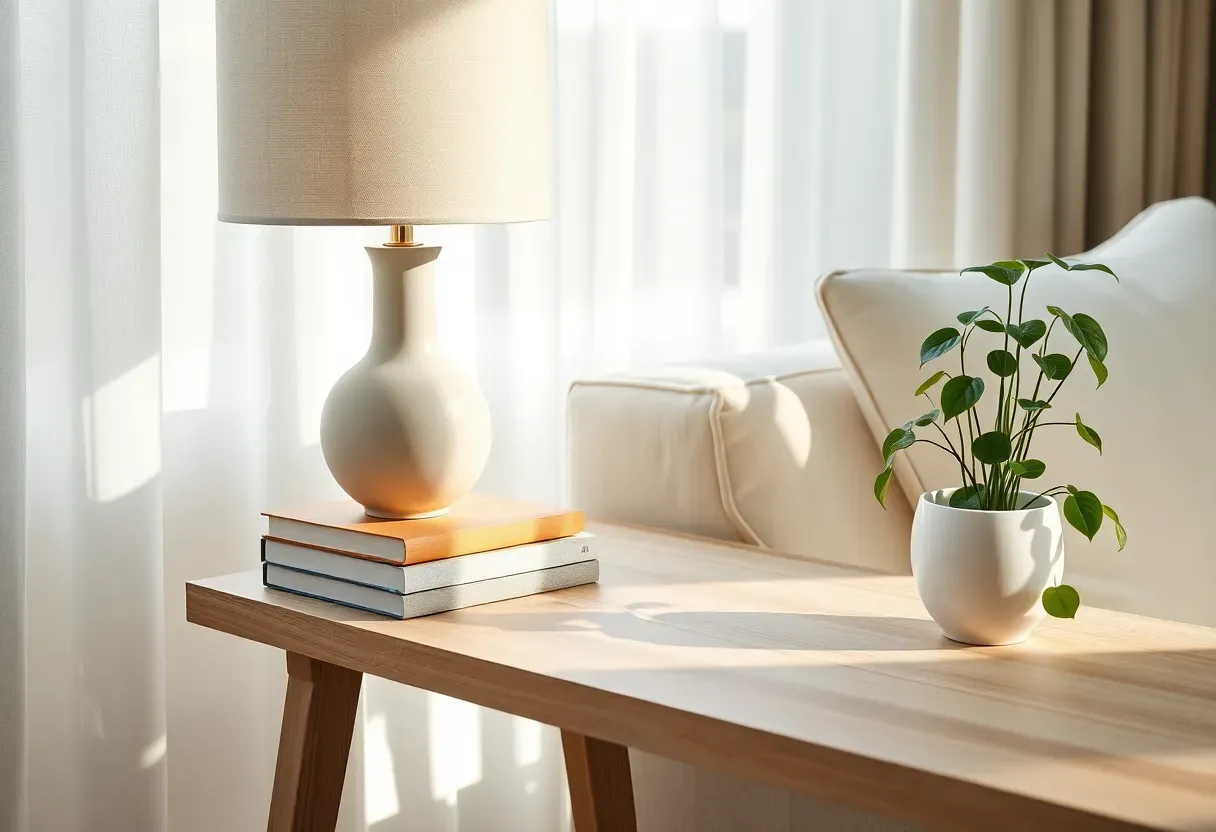
We've all stood in front of a bare side table wondering what belongs there. Too little and the surface looks forgotten. Too much and it reads as clutter. The space between those extremes is surprisingly narrow, but once you understand a few guiding principles, side table styling ideas become second nature. Height variation, material contrast, and a willingness to edit ruthlessly are the three habits that separate a considered arrangement from a pile of stuff.
Side tables sit at eye level when you're on a sofa, which means they occupy prime visual real estate. As renters, we also need approaches that work without permanent modifications — no drilling, no wall damage, no complicated assembly. The 29 side table styling ideas ahead cover everything from minimalist single-object statements to layered multi-texture compositions, all renter-friendly and easy to rearrange whenever the mood strikes. Let's work through them one section at a time.
Table of Contents
- The Rule of Three
- Anchor with a Lamp
- Books as a Pedestal
- Single Statement Object
- Fresh Greenery Approach
- Layered Trays on Side Tables
- Height Variation Principle
- Mix Hard and Soft Textures
- Monochrome Tonal Styling
- Metallic Accent Pairing
- Candle Cluster Arrangement
- Framed Photo Display
- Seasonal Rotation Method
- Sculptural Object Focus
- Stacked Storage Boxes
- Natural Material Grouping
- Asymmetric Balance Technique
- Color Echo Strategy
- Negative Space Discipline
- Functional Bedside Setup
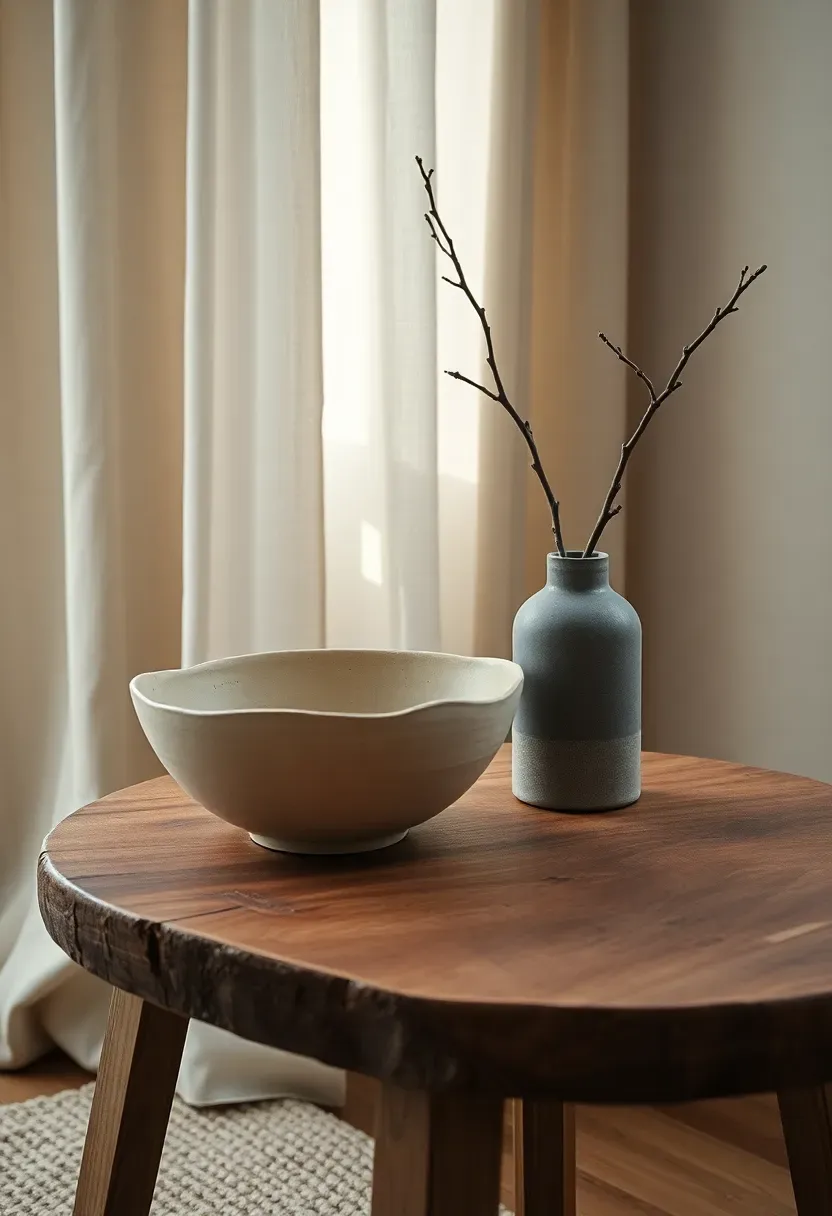
- Entryway Side Table Vignette
- Floating Shelf as Side Table
- Vintage Finds Curation
- Wabi-Sabi Imperfect Styling
- Dual Side Table Symmetry
- Scented Element Integration
- Art Lean and Stack
- Travel Souvenir Cluster
- The Edited Refresh Routine
1. The Rule of Three
The Concept
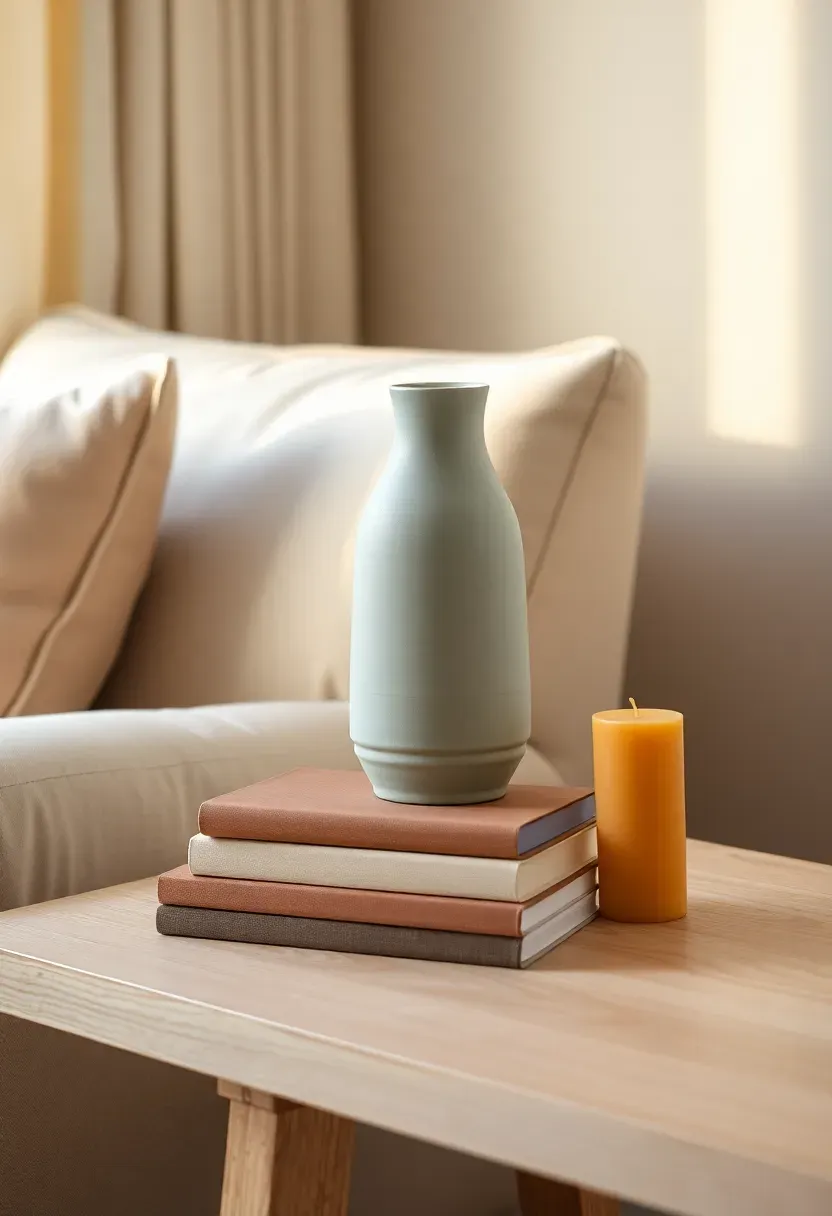
Three objects on a surface create a natural visual triangle. Your eye moves between them without searching for more. Place one tall item, one medium, and one low — a ceramic vase, a stack of two books, and a small candle, for instance. The triangle forms regardless of exact placement, so there is built-in forgiveness in the composition.
Styling Notes
- Vary materials: one ceramic, one paper, one glass or metal
- Keep each object a different shape to avoid monotony
- Group items in a loose cluster, not a straight line
Best for: Coffee side tables and living room end tables where simplicity needs to feel intentional.
We picked a few things that go well with this idea: Nordic Boho Blue White Ceramic Vase (★4.8), Vanselia Rustic Farmhouse Ceramic Vase (★4.7) and Boho Ceramic Vase Set of 3 (★4.6). As an Amazon Associate we earn from qualifying purchases.
2. Anchor with a Lamp
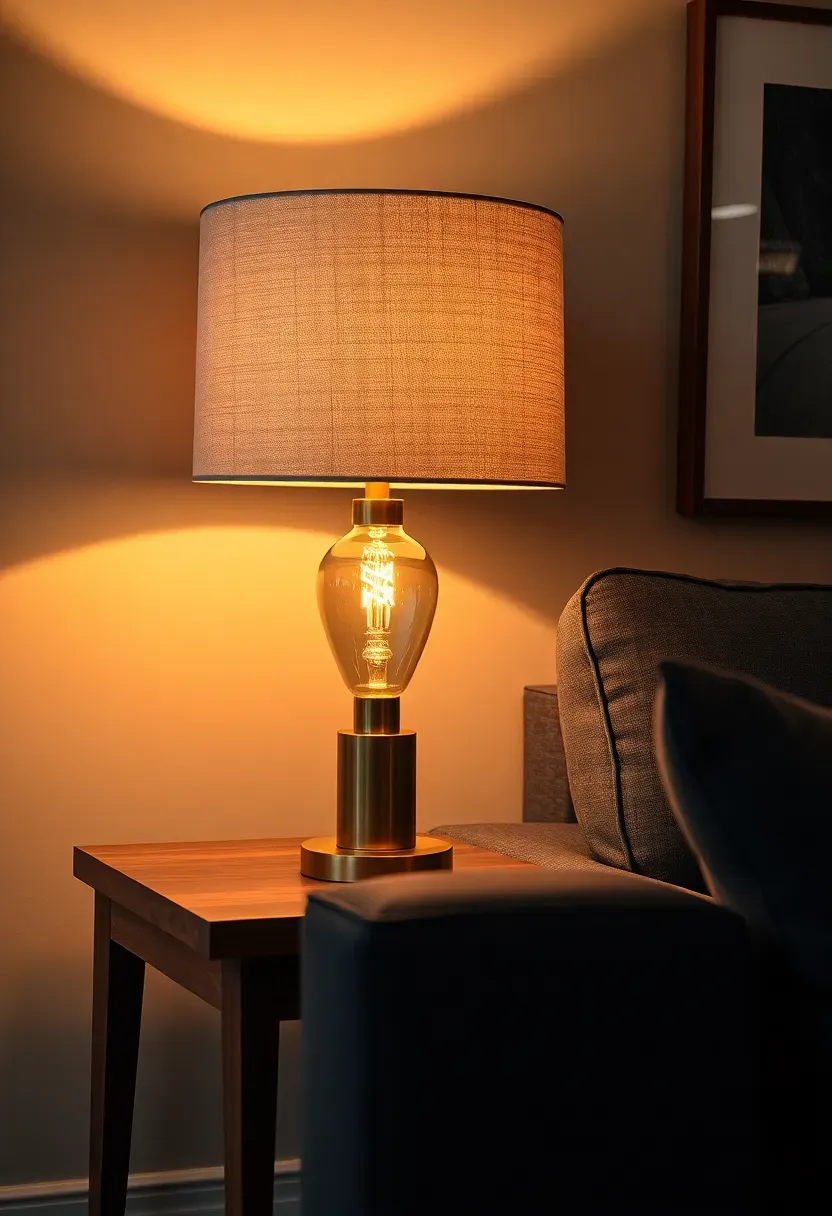
A lamp occupies roughly sixty percent of your side table's visual weight and solves both function and form in one move. Once the lamp is in place, the remaining surface needs only one or two small companions — a coaster, a tiny plant, a single book. The lamp's shade introduces fabric texture overhead while its base adds material interest at table level.
How to Choose the Right Lamp
- Match the lamp base height to the seated shoulder line for proper reading light
- Linen shades soften glare and warm the tone
- A ceramic or brass base echoes materials found elsewhere in the room
We picked a few things that go well with this idea: Round Wood Candle Holder Tray 11.5in (★4.4), HPC Distressed White Farmhouse Round Tray (★4.7) and Cathyeen Concrete Rectangular Decorative Tray (★4.4). As an Amazon Associate we earn from qualifying purchases.
3. Books as a Pedestal
Why It Works
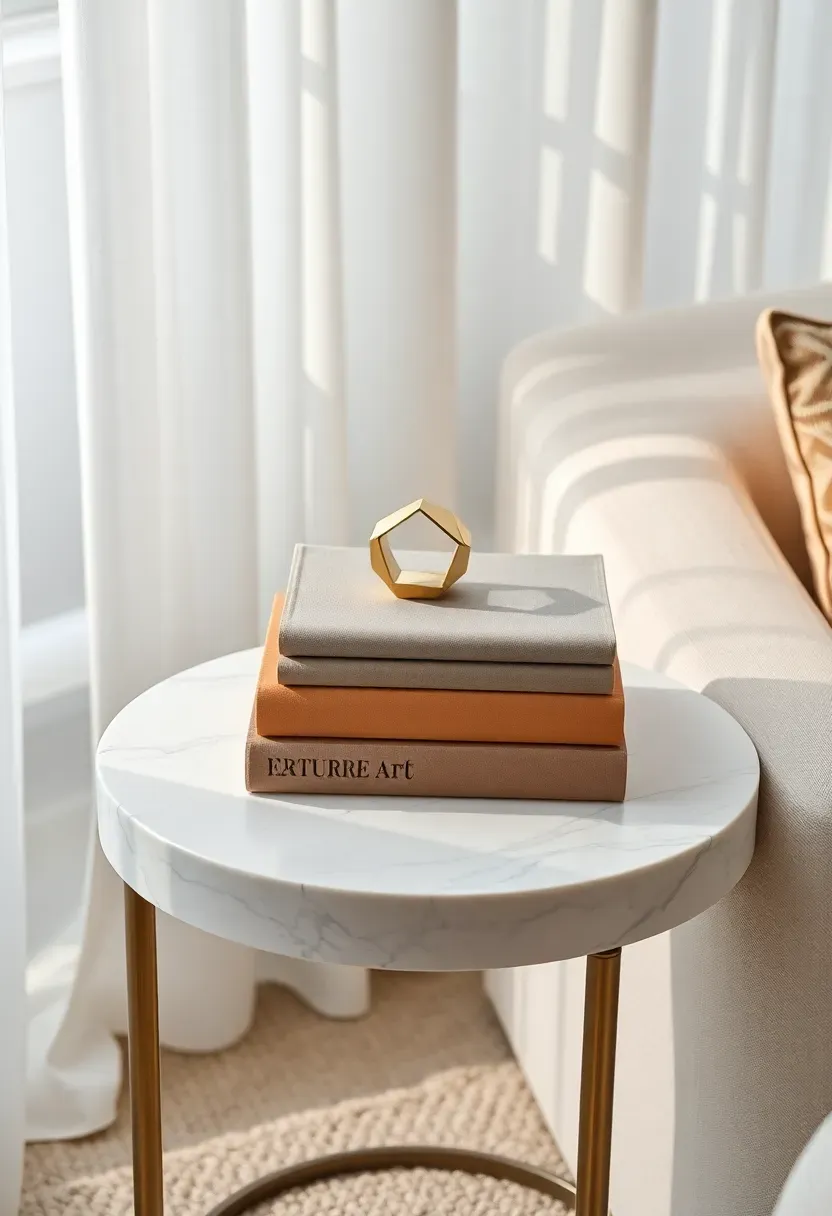
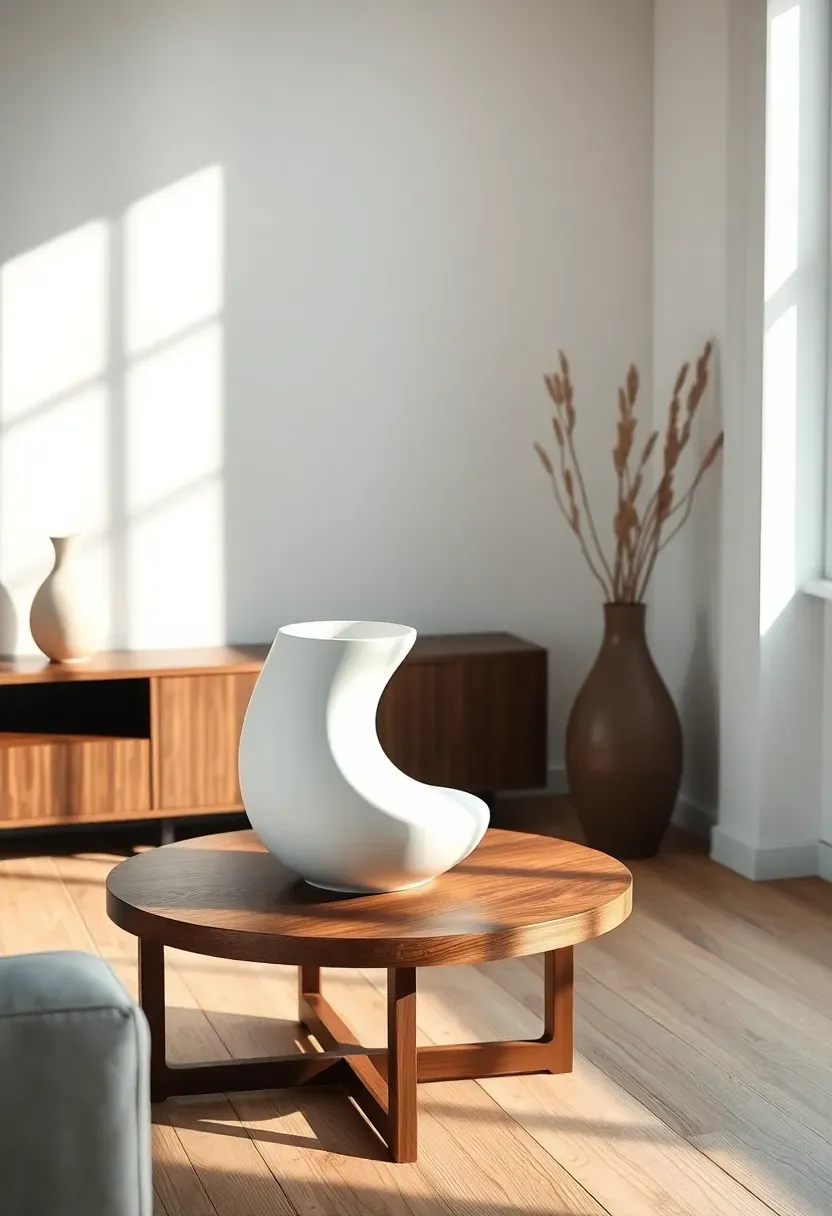
A stack of two or three hardcover books lifts a small object into prominence. The book spines add color bands, the pages add texture, and the top surface becomes a mini stage. Place a small sculpture, a matchbox, or a bud vase on top to complete the visual. Choose books with spine colors that fit your room's palette so they integrate rather than compete.
Pros and Cons
Pros: Zero cost if you already own the books, infinitely rotatable, adds personality Cons: Dust collects between volumes; avoid in humid rooms
We picked a few things that go well with this idea: Ribbed Soy Wax Pillar Candle Set (6-Piece) (★3.5), Immeiscent Vanilla Pillar Candle Set (3-Piece) (★4.6) and Conelist White Ribbed Pillar Candles (3-Piece) (★4.4). As an Amazon Associate we earn from qualifying purchases.
4. Single Statement Object
Strip the arrangement down to one piece. A substantial ceramic vessel, a carved wood sculpture, or a heavy stone sphere centered on the surface commands attention precisely because nothing else dilutes it. This approach demands a confident object — something with enough visual weight and character to hold an entire surface alone.
What to Watch Out For
- Scale matters: the object should fill at least a third of the table's diameter
- Avoid anything too precious or fragile on high-traffic tables
- The surrounding room needs enough visual activity to keep the single-object table from feeling barren
Recommended
Items for this idea
5. Fresh Greenery Approach
Step 1: Pick the Plant
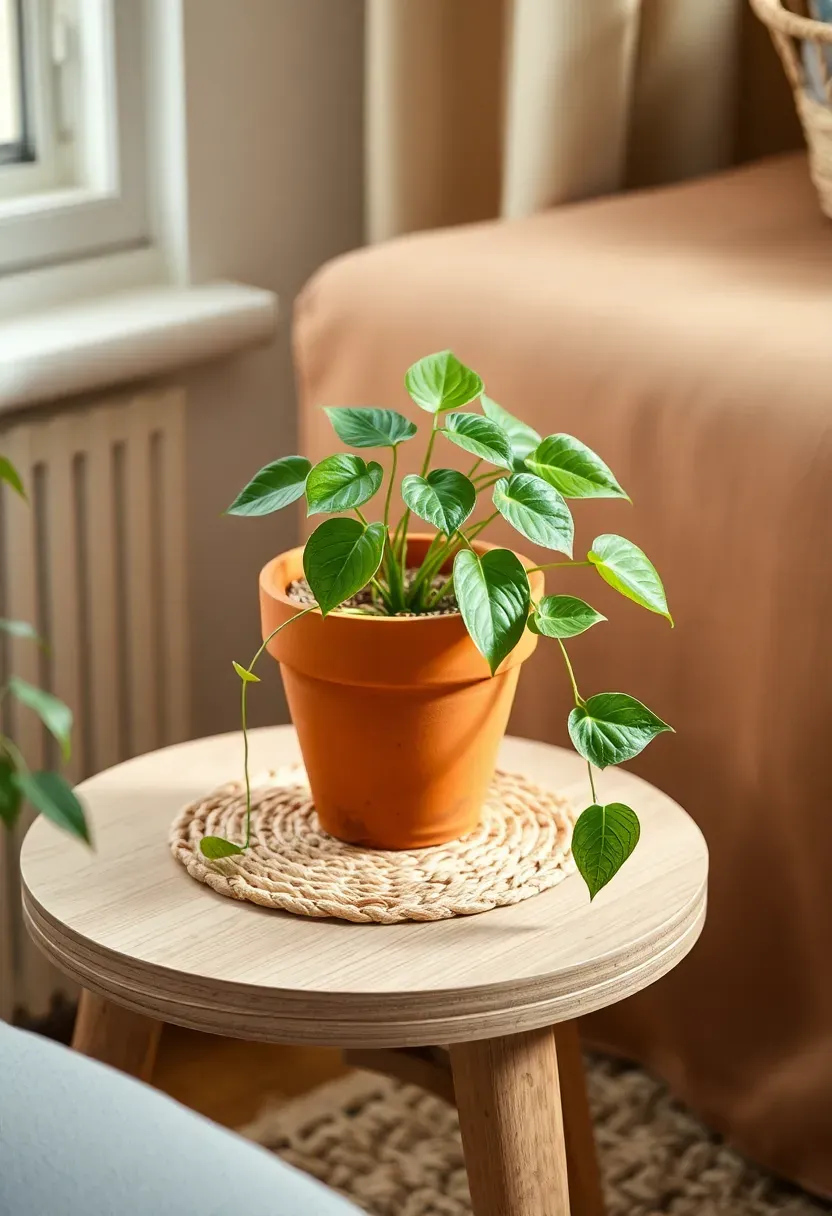
Choose something compact — a trailing pothos cutting in water, a small fern, or a single succulent in a textured pot. The plant should not overhang the table edges by more than a few inches.
Step 2: Ground It
Place the pot on a small coaster, a cork mat, or a ceramic saucer to protect the table surface and add another layer of material.
Step 3: Add One Companion
A matchbox, a small candle, or a folded linen napkin beside the plant keeps the arrangement from looking like a nursery shelf.
What to Watch Out For
- Water drips ruin wood finishes — always use a saucer
- Rotate the plant weekly for even light exposure
- Faux plants work if you choose high-quality silk or plastic
6. Layered Trays on Side Tables
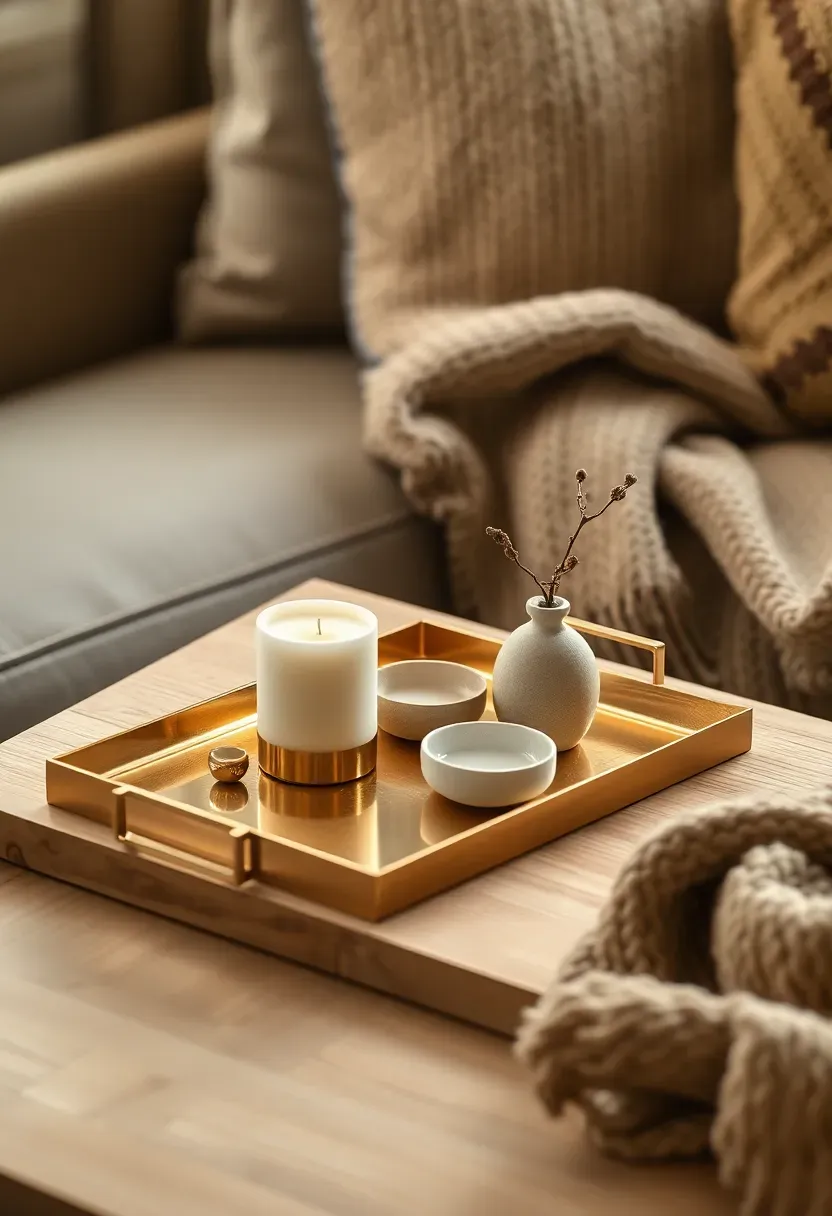
A tray on a side table is a frame within a frame. It corrals loose items — a ring dish, a votive candle, a lip balm — into a defined zone that reads as tidy even when the pieces themselves are casual. Rectangular trays suit square tables; round trays complement round tables. The tray's rim creates visual containment, which lets you add more objects than you would dare on a bare surface.
Styling Notes
- Keep the tray no larger than two-thirds of the table top
- Mix functional items with decorative ones inside the tray
- Metallic or marble trays add contrast against wooden tables
Recommended
Items for this idea
7. Height Variation Principle
The Core Issue
A flat line of same-height objects creates visual boredom. Your eye skims over them without pausing, which defeats the purpose of decorating.
The Solution
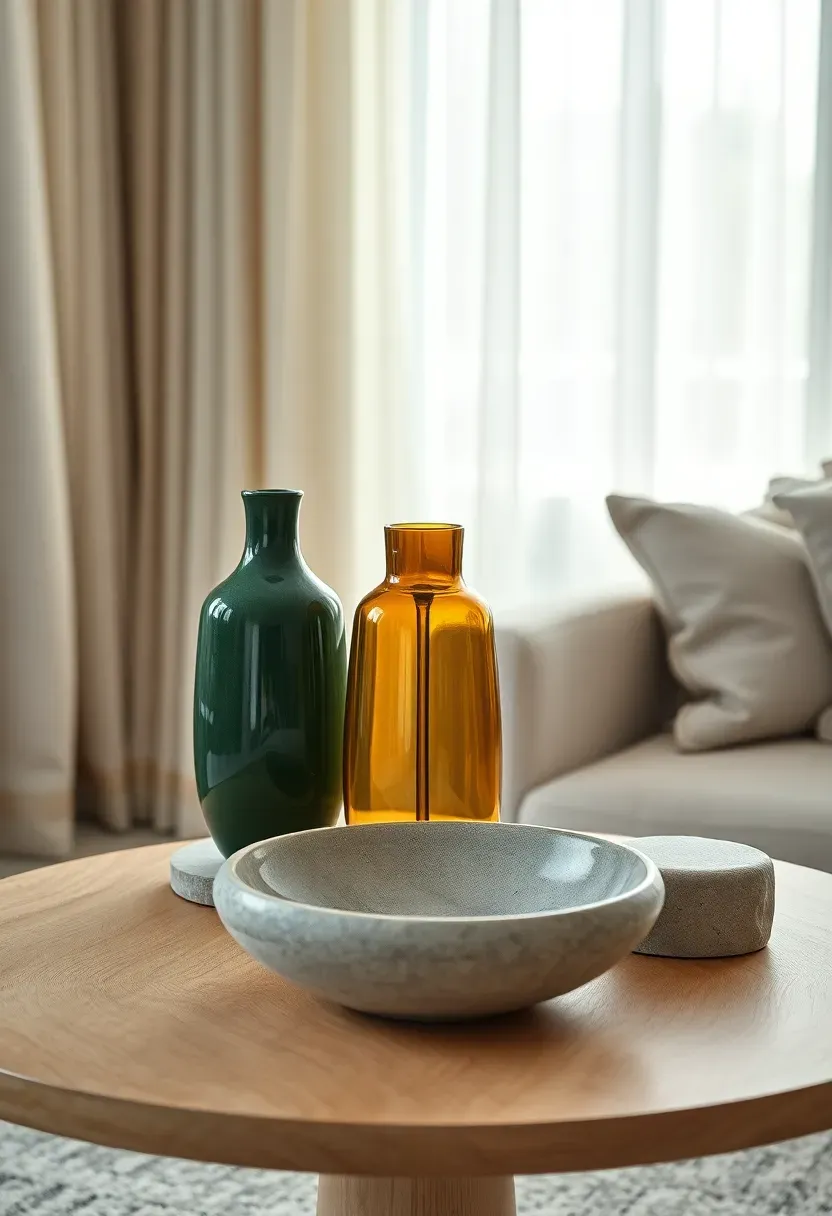
Arrange objects so they form a staggered skyline. A tall slender vase on one side, a medium-height candle in the center rear, and a low ceramic bowl in front. The height difference creates depth and draws the eye upward, then back down. Even two inches of difference between items is enough to break the flatline effect and make a small surface feel dynamic.
Pros and Cons
Pros: Works with any objects you already own, universally effective Cons: Overly tall items can tip on small tables; watch proportions
8. Mix Hard and Soft Textures
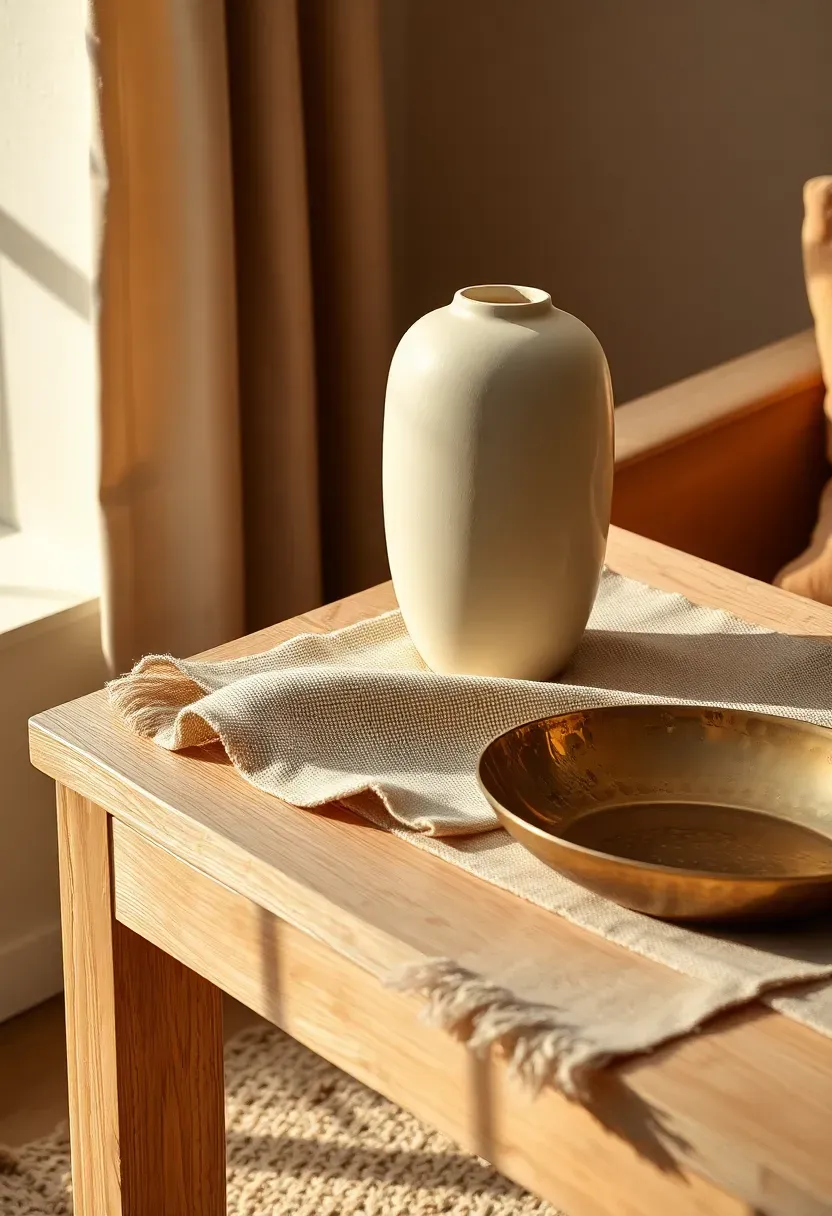
Place a smooth ceramic vase next to a rough linen runner. Set a glossy brass dish beside a matte stoneware pot. The interplay between hard and soft, shiny and matte, rough and smooth keeps the arrangement alive without adding color complexity. This technique works especially well in neutral rooms where texture must do the work that color handles elsewhere.
How to Apply
- Pair one woven or fabric element with one hard ceramic or metal object
- Include something organic — a dried branch, a pine cone, a piece of coral
- Keep the color palette tight so textures remain the star
Recommended
Items for this idea
9. Monochrome Tonal Styling
Origins
Scandinavian and Japanese design traditions both embrace the idea that restraining color amplifies texture. A monochrome side table arrangement borrows from this philosophy.
Modern Interpretation
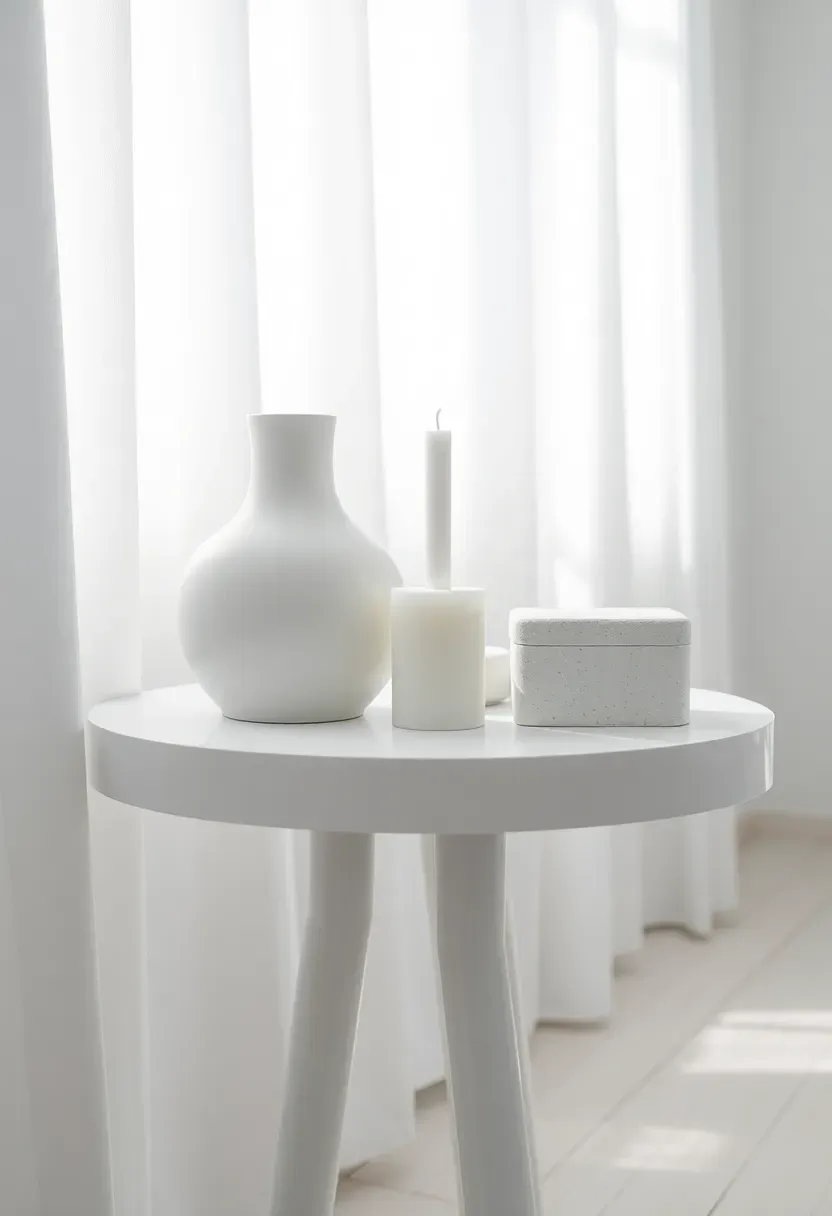
Select three items in the same color family — all white, all black, all sand — but vary their material finish. A matte white ceramic vase, a glossy white candle, and a chalky white concrete dish. The uniformity soothes the eye while the surface differences provide subtle visual interest that rewards a closer look.
How to Apply at Home
- Start with your easiest neutral: white or beige
- Gather candidate objects from different rooms
- Edit until only three to four pieces remain
- Check in varied lighting — some finishes flatten in dim conditions
10. Metallic Accent Pairing
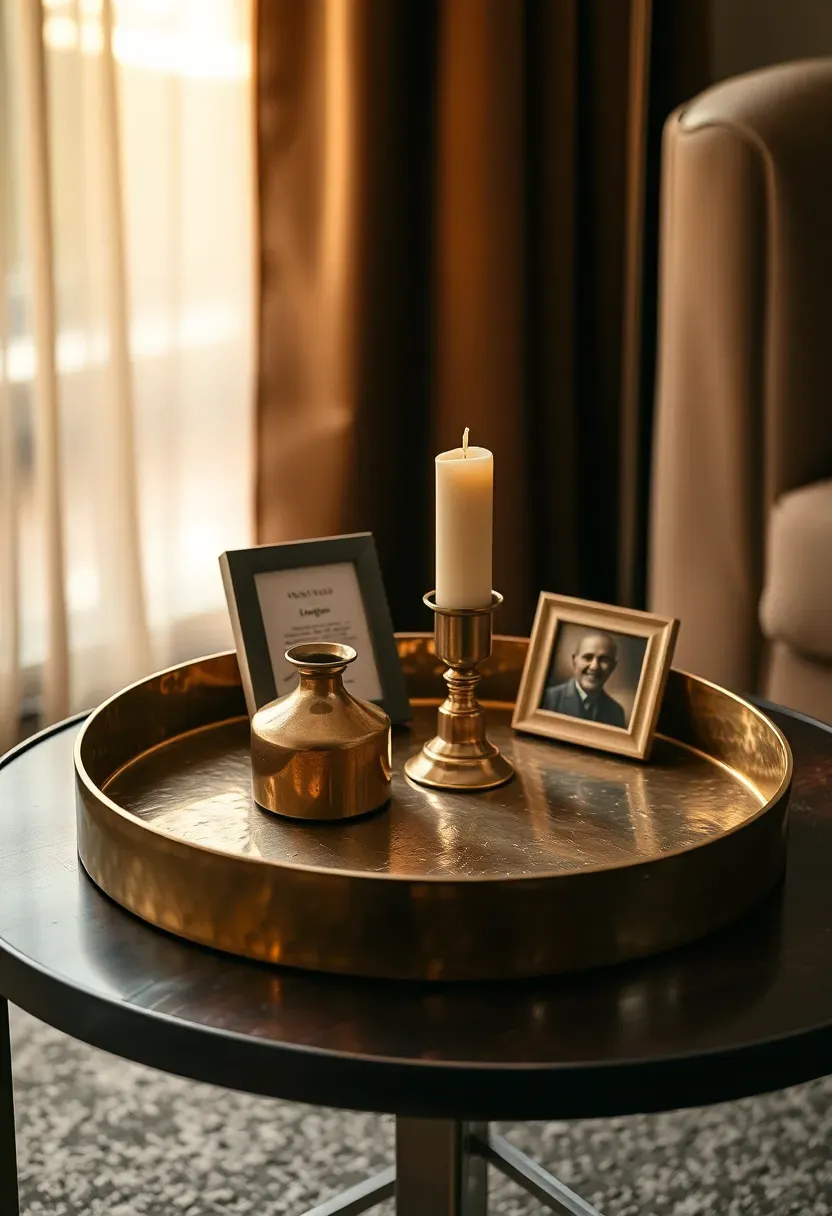
Gold, brass, copper, and bronze behave differently depending on their finish — brushed, polished, hammered, or matte. Grouping two or three metallic objects on a side table creates warmth and a collected feel. The key is sticking to one metal temperature: warm metals together (brass, gold, copper) or cool metals together (chrome, silver, nickel). Mixing temperatures can work but demands a confident eye.
Best for: Formal living rooms, glam bedside styling, entryway consoles.
Recommended
Items for this idea
11. Candle Cluster Arrangement
Step 1: Choose Your Candles
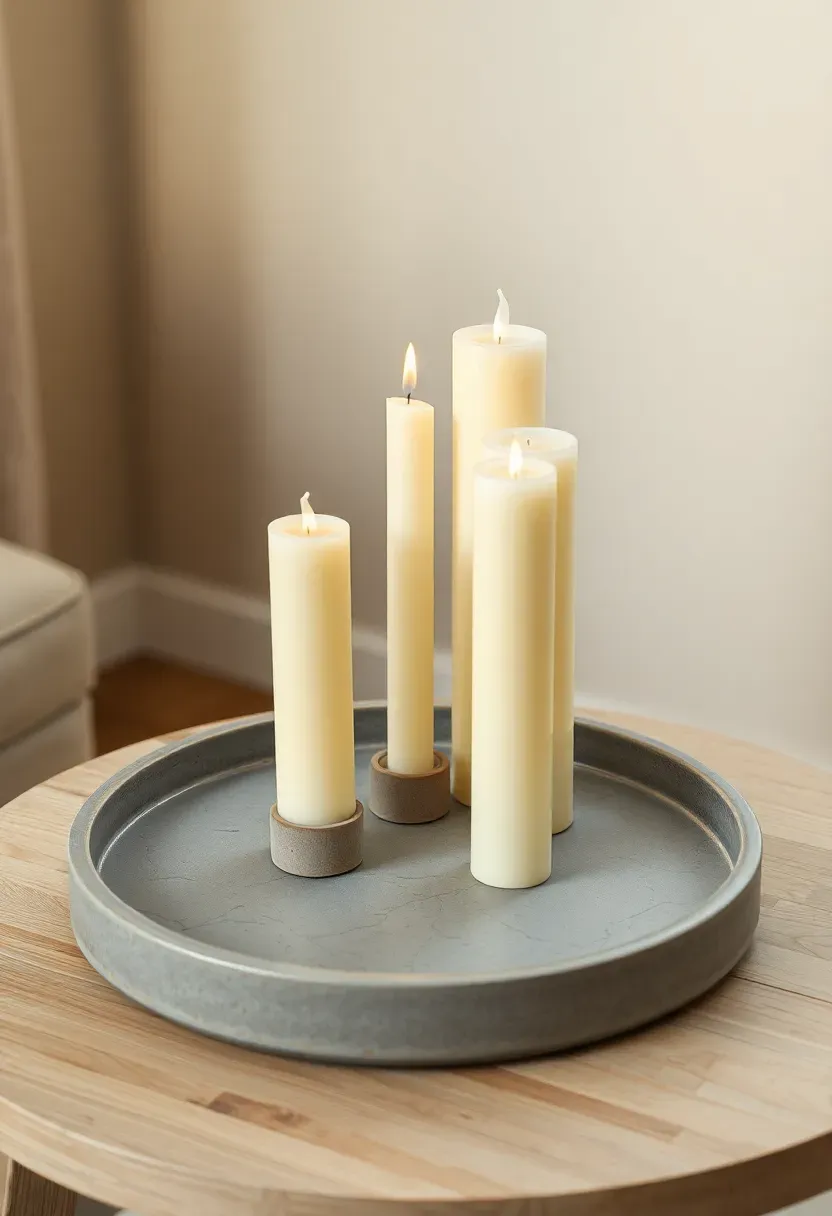
Pick three pillar candles in the same color but different diameters and heights. Cream, ivory, or warm white suit most palettes.
Step 2: Group Tightly
Place them in a loose triangle on one side of the table. The cluster feels intentional when the candles almost touch.
Step 3: Add a Base
Set the grouping on a small plate, tray, or piece of slate to protect the table and visually anchor the candles.
What to Watch Out For
- Never leave burning candles unattended, especially near curtains
- Replace candles before they burn below one inch to prevent heat damage
- Battery-operated pillar candles offer the same look with zero risk
12. Framed Photo Display
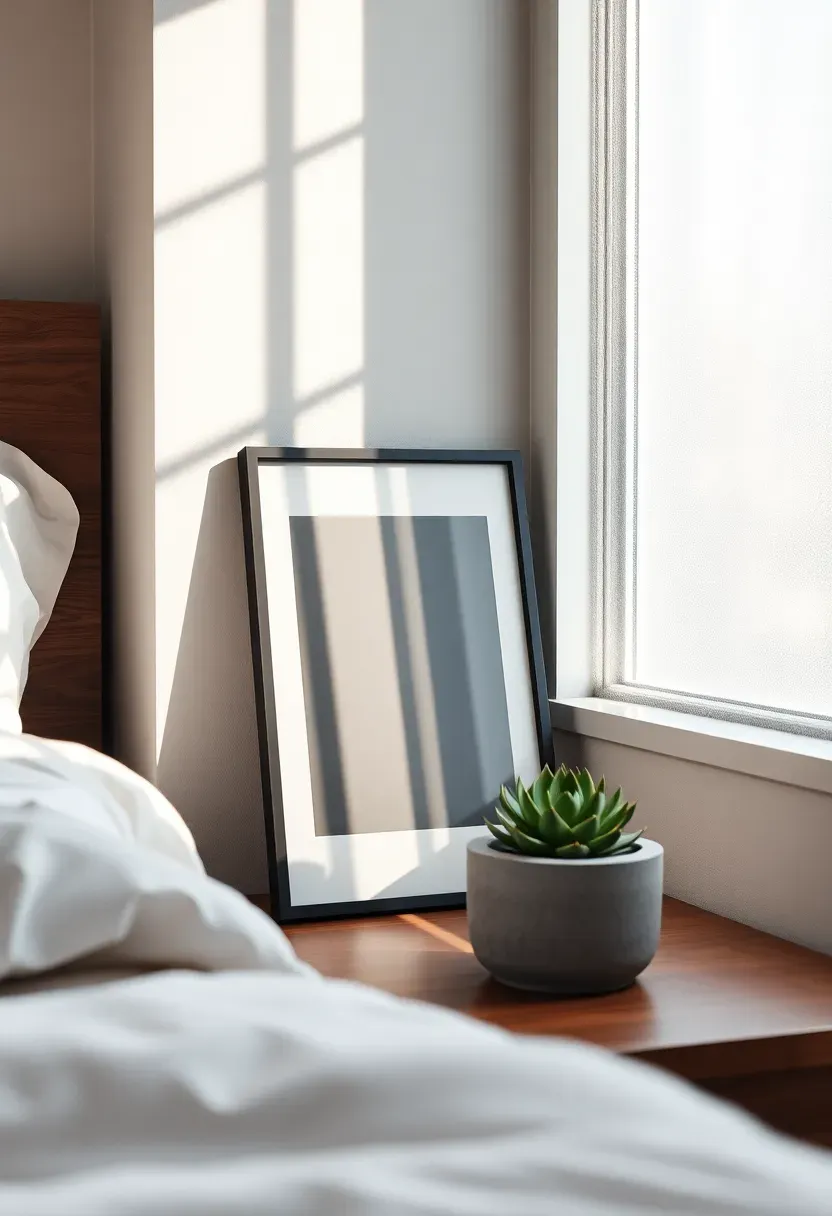
A single framed photo — black and white works beautifully — leaning casually against the wall on a side table personalizes the surface without overwhelming it. Lean rather than hang. The angle catches light differently throughout the day and feels less rigid than a mounted frame. Pair it with a low object in front, like a small succulent or a ceramic dish, to create depth.
Styling Notes
- Choose a thin frame: thick frames dominate small tables
- Black and white photos blend with any color palette
- Rotate photos monthly for a fresh visual
Recommended
Items for this idea
13. Seasonal Rotation Method
Why It Works
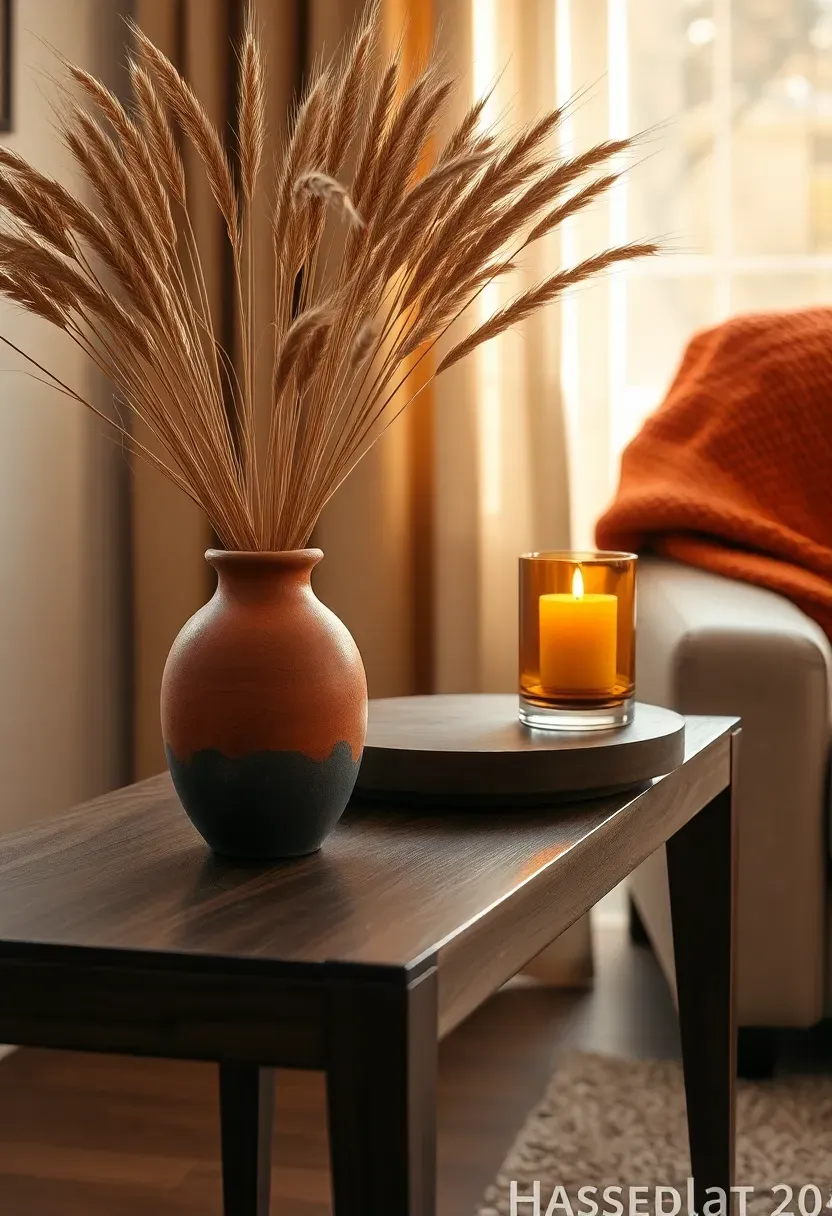
A side table refreshed each season prevents visual fatigue. Spring brings a bud vase with fresh cuttings. Summer swaps in a bowl of shells or a glass cloche with a sand candle. Autumn introduces dried wheat stems and amber glass. Winter layers in velvet, pine, and deeper candlelight. The table stays familiar in its bones but shifts in personality four times a year.
Pros and Cons
Pros: Keeps the room feeling current, builds anticipation for each season Cons: Requires storage for off-season items; budget for occasional new pieces
14. Sculptural Object Focus
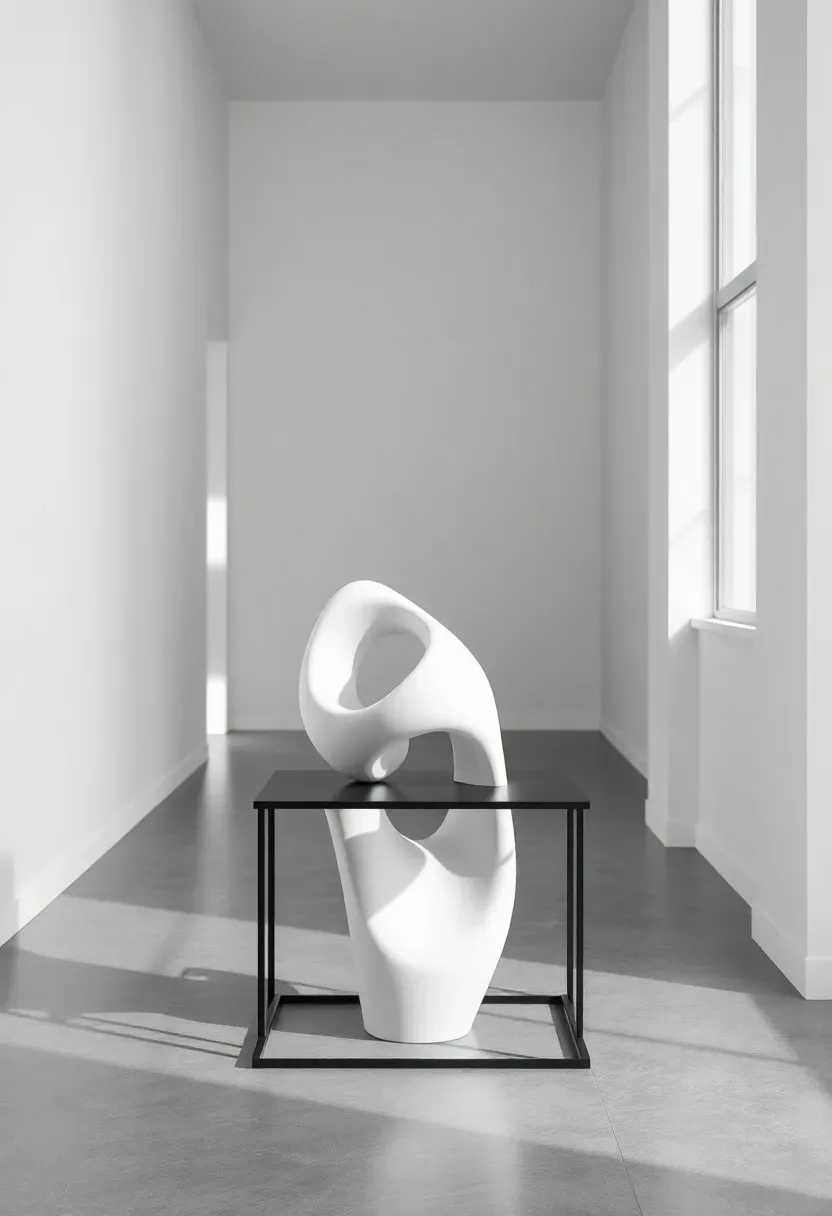
Treat the side table as a gallery pedestal. A single abstract sculpture — ceramic, wood, or stone — centered on the surface transforms a functional piece of furniture into a display platform. Sculptural objects invite touch and conversation. They also scale well: a small sculpture on a small table has the same impact as a large one on a console.
How to Choose
- Look for organic curves that contrast the table's geometry
- Handmade pieces carry more visual texture than mass-produced ones
- Consider weight — heavier pieces feel grounded and permanent
Recommended
Items for this idea
15. Stacked Storage Boxes
The Core Issue
Side tables near sofas accumulate remotes, coasters, pens, and other small items that create visual mess.
The Solution
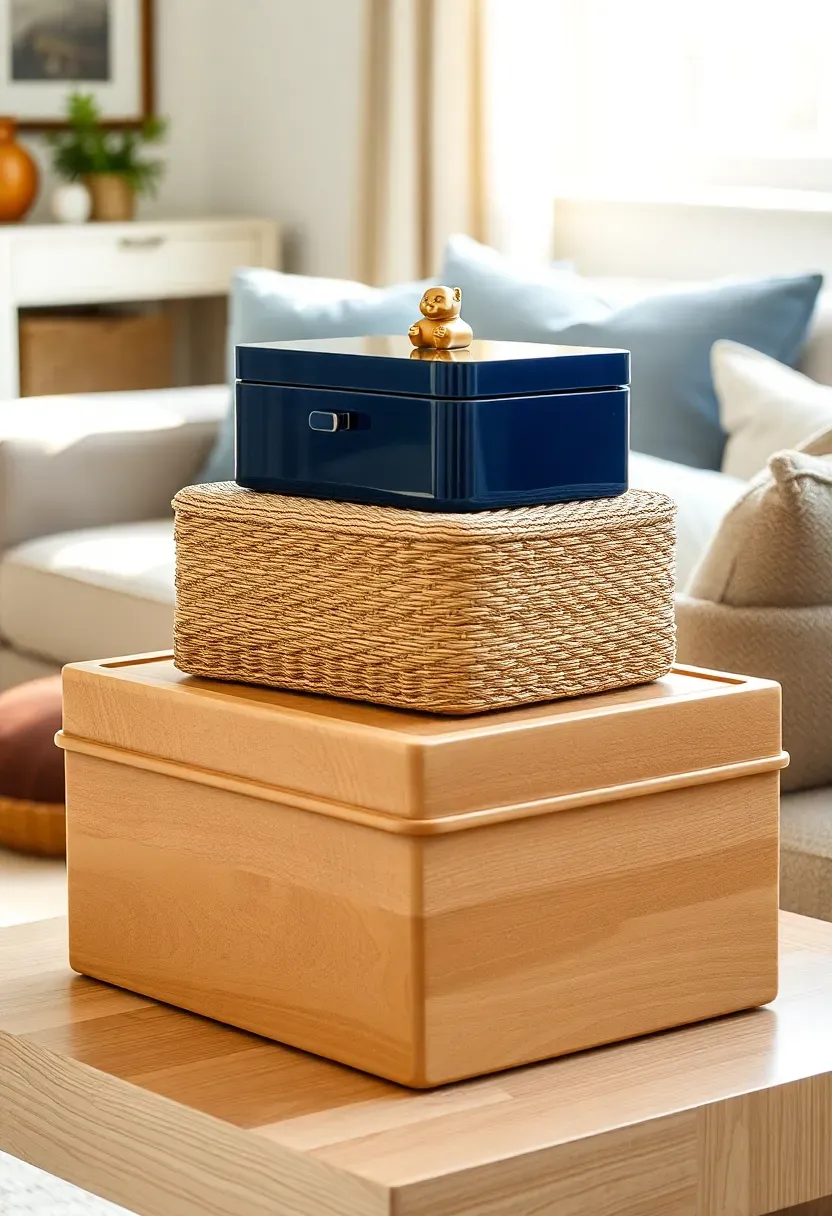
Two nesting or stacked decorative boxes hide the clutter while adding pattern, color, and structure to the surface. Choose boxes with interesting lids — woven, painted, lacquered, or leather-wrapped. Place a tiny brass object or a crystal on top to finish the stack. The boxes serve double duty: storage beneath a decorative surface.
Pros and Cons
Pros: Functional and decorative, easy to reorganize Cons: Can look boxy; offset with one organic shape nearby
16. Natural Material Grouping
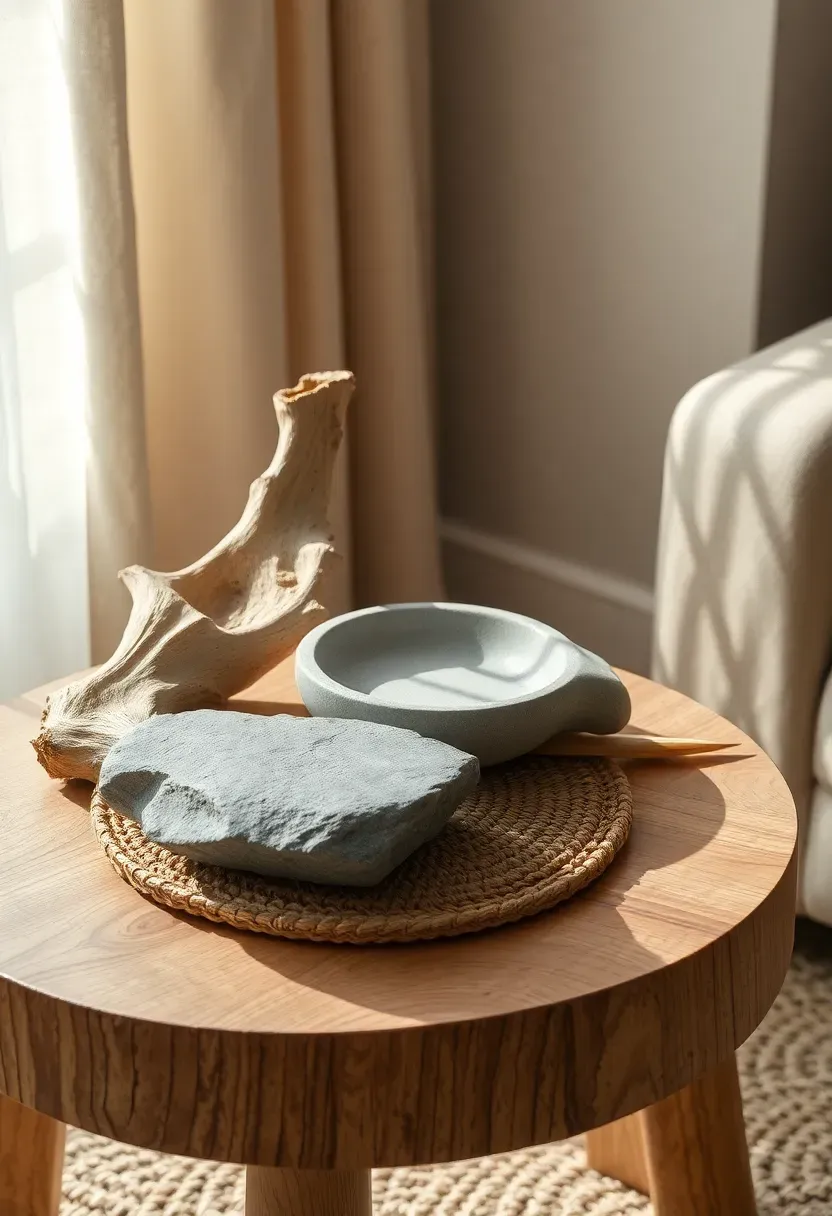
Gather materials that share an origin story: stone, wood, woven grass, unglazed clay. A driftwood piece beside a stone bowl on a woven coaster speaks a cohesive language even if the individual objects have no designed relationship. The natural textures bring warmth to stark modern interiors and feel at home in rustic spaces. This grouping works particularly well on raw-edge or live-edge side tables where the table itself joins the conversation.
Recommended
Items for this idea
17. Asymmetric Balance Technique
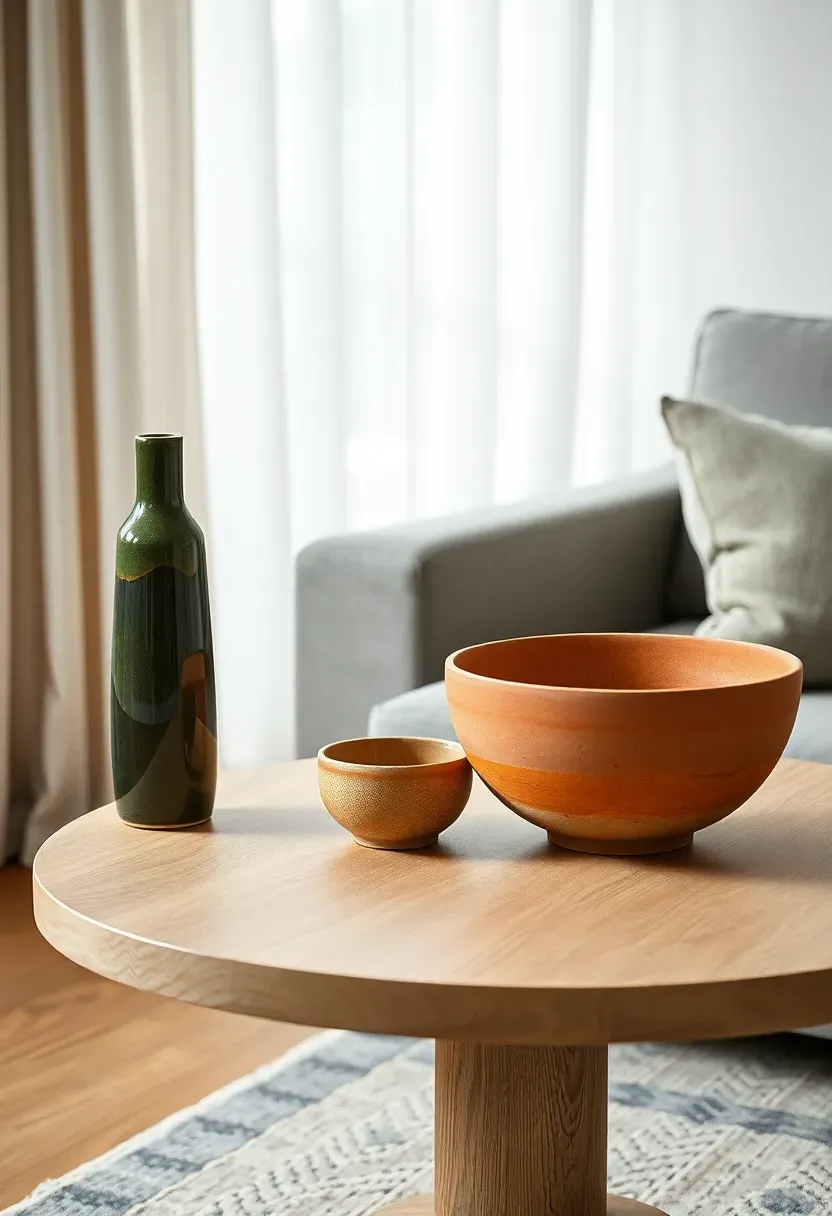
Symmetry feels formal. Asymmetry feels alive. Place a taller object on one side of the table and a lower, wider object on the other. The visual weight evens out even though the shapes differ. Think of it as a seesaw: a tall narrow vase on one end balances a short heavy bowl on the other. The eye reads the arrangement as stable but interesting.
How to Apply
- Imagine a diagonal line across the table — distribute weight along it
- Allow one side to extend slightly beyond the table edge
- Leave the center open; asymmetry needs breathing room
18. Color Echo Strategy
Origins
Interior stylists call this "color bridging" — repeating a hue from a larger piece in a smaller accessory to tie a room together visually. The technique traces to classical interior design principles of repetition and rhythm.
Modern Interpretation
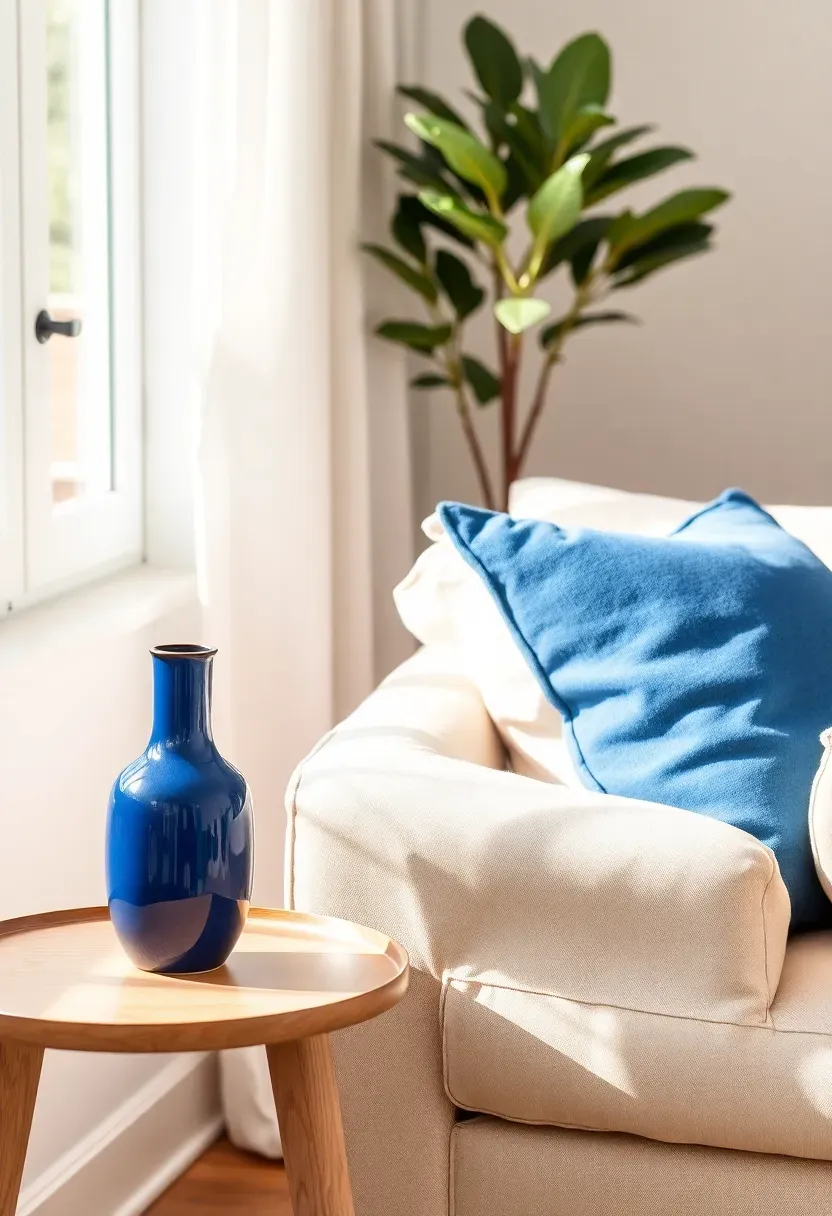
Pick one color from your sofa throw pillow, rug, or artwork, then echo it on the side table through a ceramic vase, a candle, or a book spine. The repetition does not need to be exact — a navy pillow can be echoed by a cobalt vase. The eye connects the dots and the room feels cohesive even if no two pieces match precisely.
How to Apply at Home
- Identify the accent color in your largest textile
- Source one side table object in a close shade
- Limit the echo to one object; more can feel forced
Recommended
Items for this idea
19. Negative Space Discipline
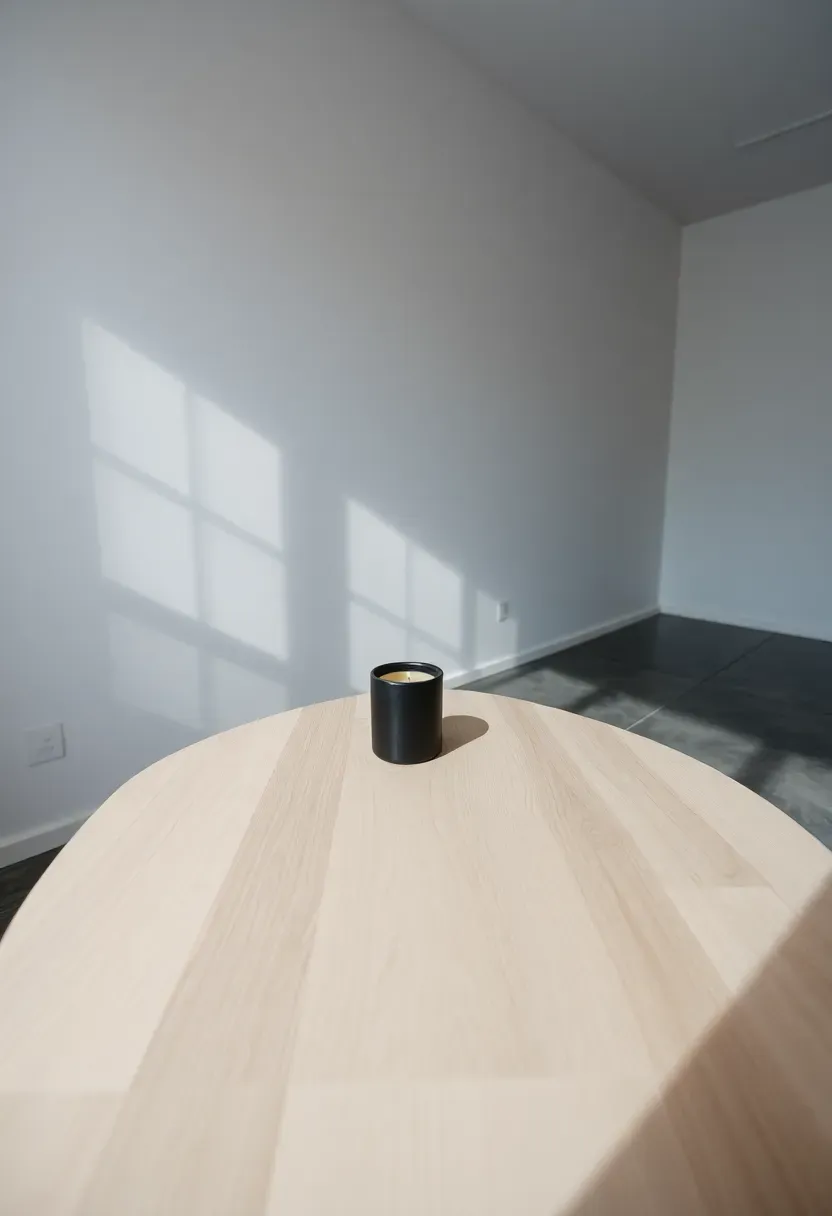
Not every surface needs filling. Deliberately leaving seventy percent of a side table empty makes the remaining thirty percent feel curated. A single candle, a small dish, or a lone ceramic vessel gains presence when surrounded by visible table surface. This approach suits minimalist interiors and rooms where other surfaces carry heavy decoration.
What to Watch Out For
- Negative space reads as intentional only when the few objects present are well-chosen
- Dusty surfaces destroy the illusion of calm — wipe weekly
- Works best on tables with beautiful grain or interesting material worth showing
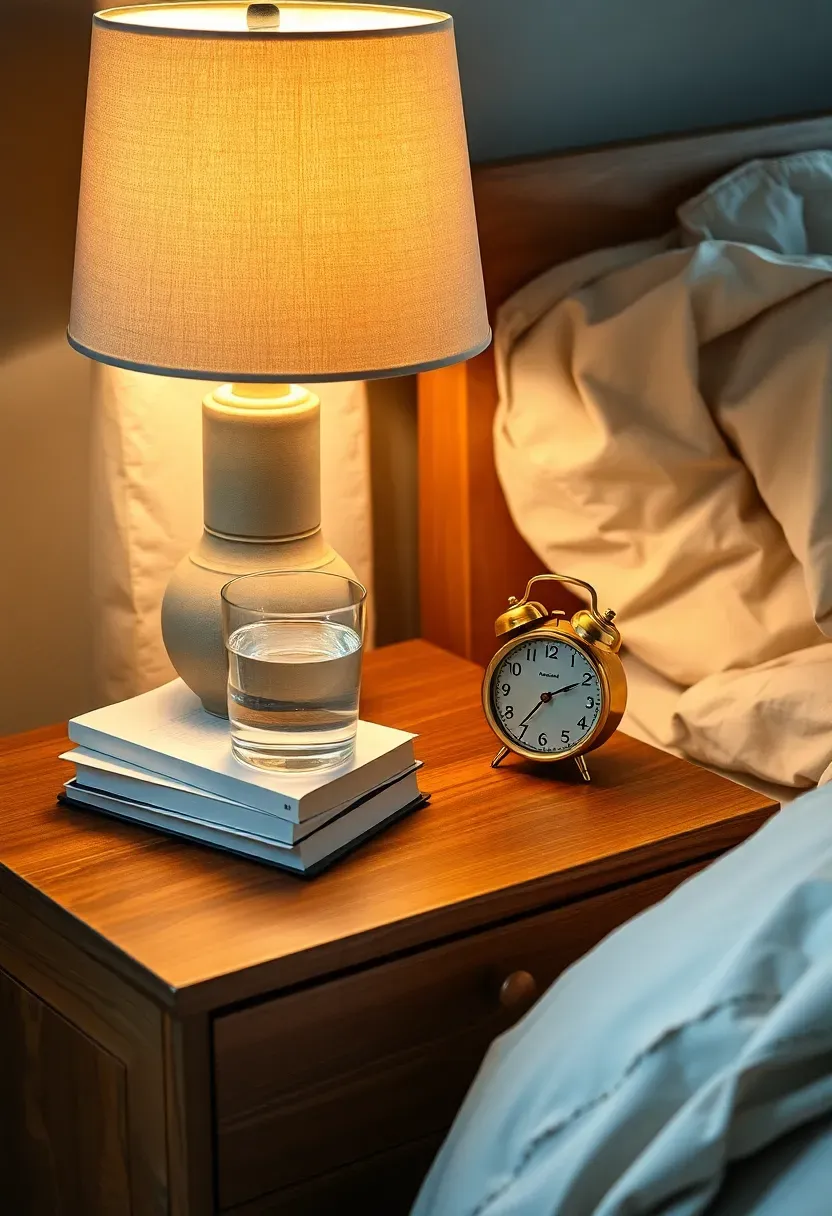
20. Functional Bedside Setup
Nightstand styling ideas for rental bedrooms tend to focus on function first. The side table beside your bed serves nightly rituals — reading, hydrating, waking — so clutter here costs more than anywhere else.
Step 1: Prioritize Essentials
The nightstand serves nightly rituals: reading, hydrating, waking. A lamp, a book or e-reader, a water glass, and an alarm clock cover the basics.
Step 2: Contain Small Items
A small tray or dish holds rings, earplugs, or lip balm so they don't scatter.
Step 3: Limit Decorative Additions
One decorative item — a small candle, a framed photo, a tiny vase — is enough. Bedside tables that prioritize function over decoration sleep better.
What to Watch Out For
- Cord management matters here: tuck lamp and charger cords behind the table
- Avoid heavy objects that could fall during the night
- Keep medications in a drawer, not on display
Recommended
Items for this idea
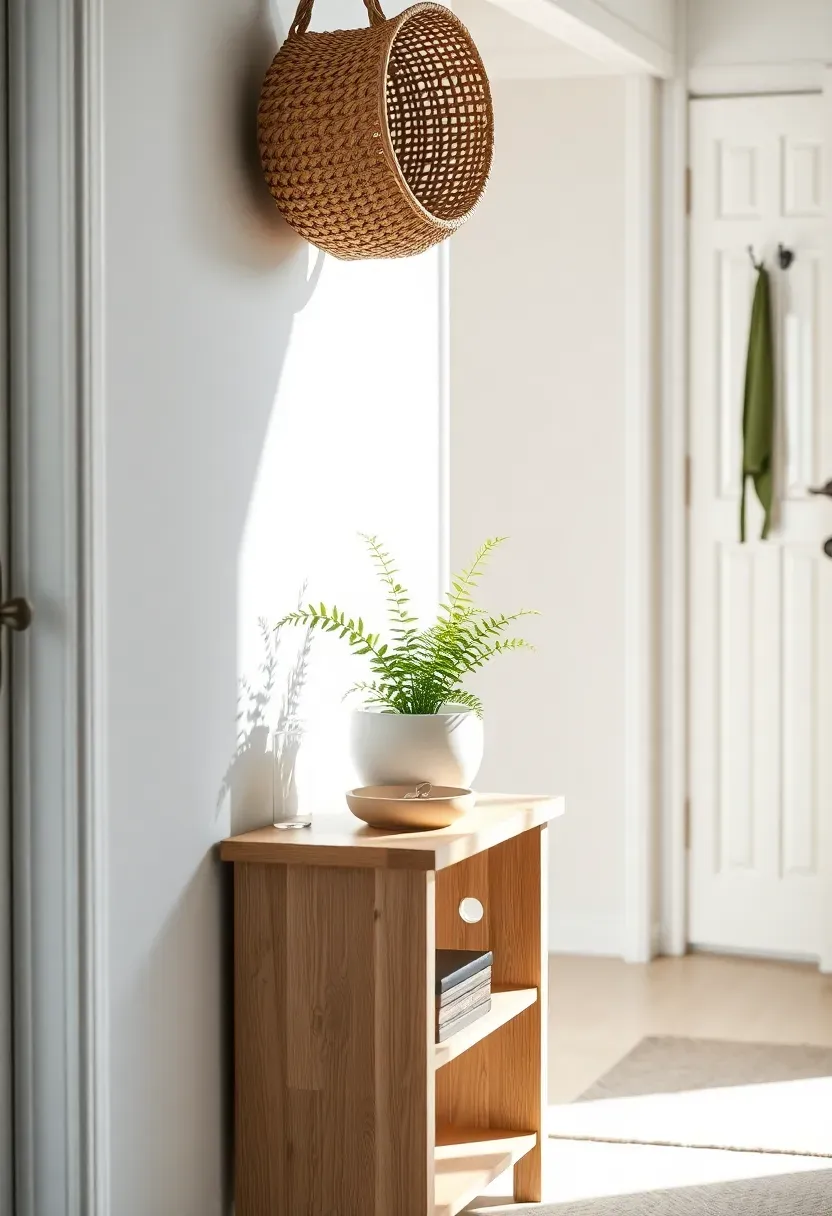
21. Entryway Side Table Vignette
The entryway side table is the first and last thing you see each day. It needs to accommodate keys, sunglasses, and mail while still looking presentable. A ceramic or woven bowl corrals daily carry items. A small plant or a framed print above the table adds life. A wall hook above or beside the table handles bags and leashes. The trick is balancing the drop zone function with enough visual order that the entry feels welcoming rather than chaotic.
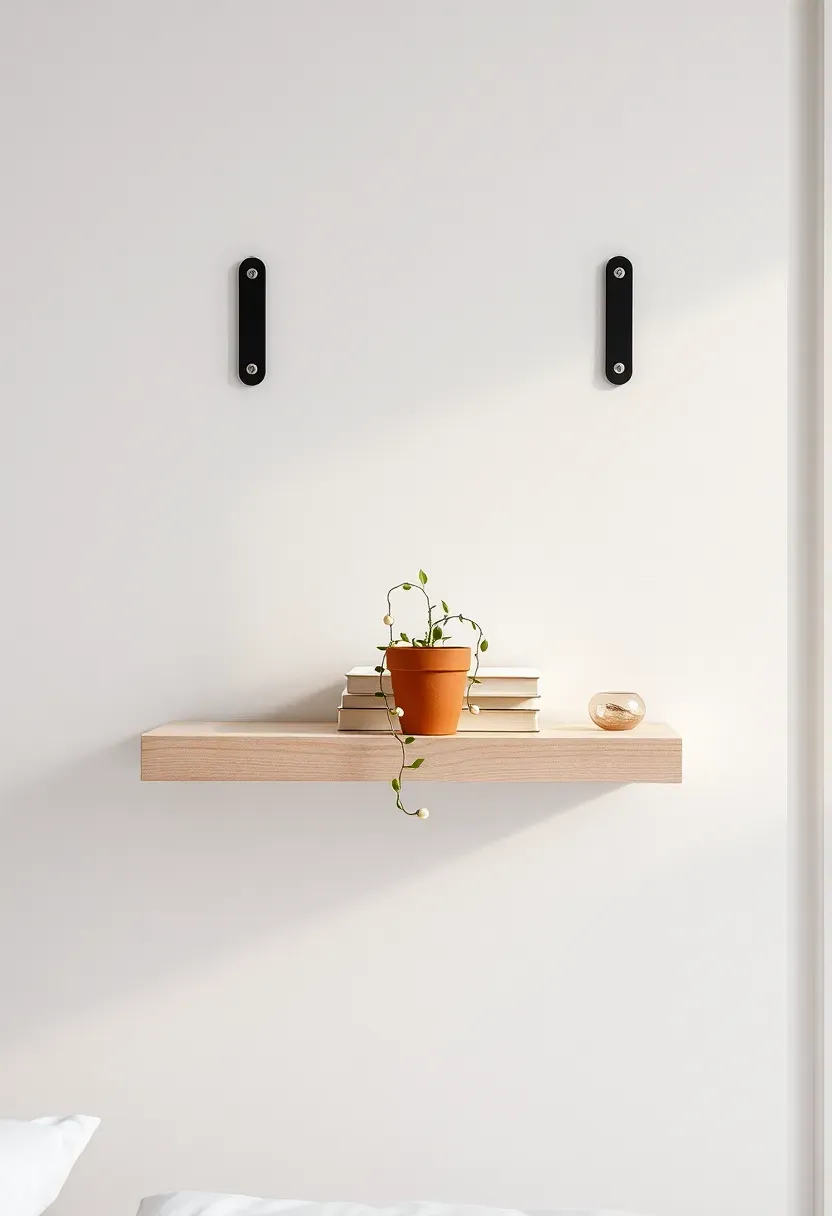
22. Floating Shelf as Side Table
Why It Works
A wall-mounted floating shelf eliminates the table leg footprint, which opens floor space in tight rooms. Styled the same way as a traditional side table — lamp, book, small object — it functions identically while creating an airier feel. This works especially well in bedrooms where floor area is limited and in hallways where a standard table would obstruct passage.
Pros and Cons
Pros: Saves floor space, modern aesthetic, easy to dust underneath Cons: Weight limits apply; heavy lamps may not be suitable
Recommended
Items for this idea
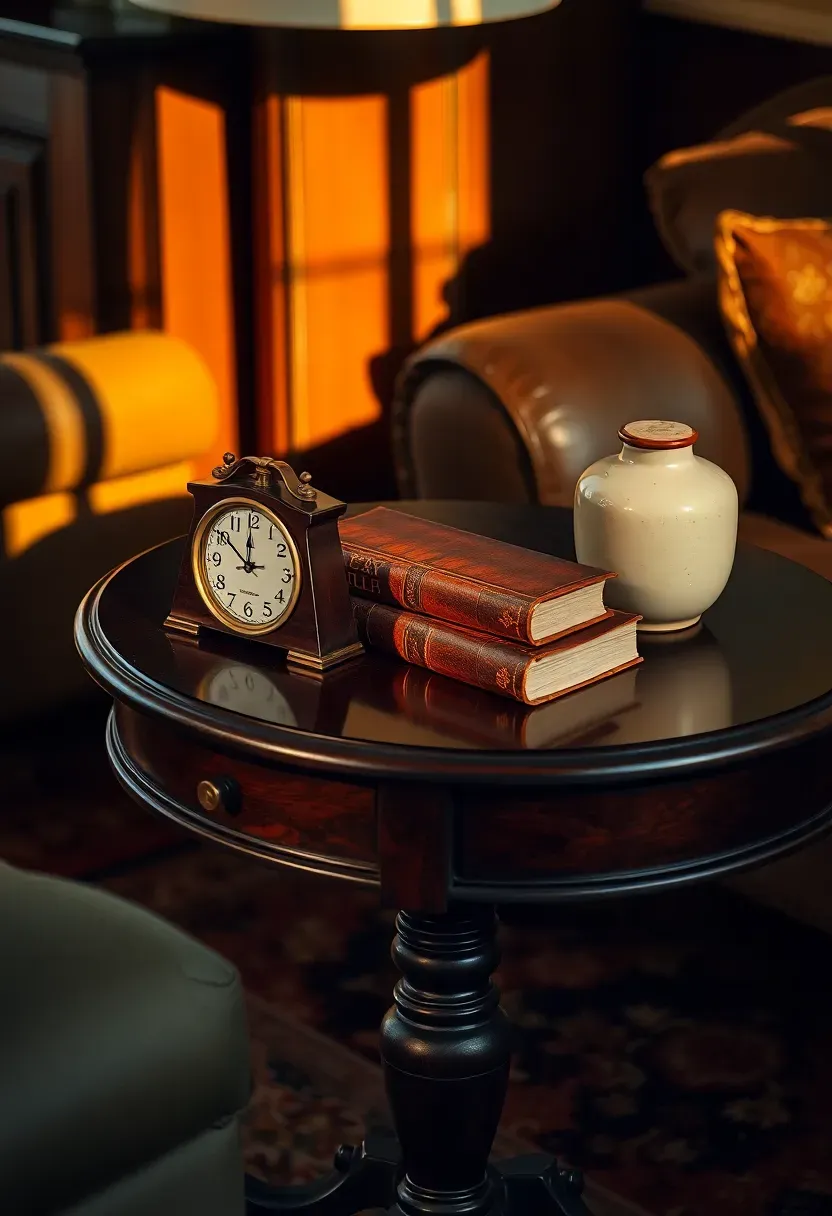
23. Vintage Finds Curation
Gather objects from different eras and let the patina bind them. A mid-century brass clock, a leather-bound book from a flea market, and an antique ceramic jar share a lived-in quality that new objects cannot replicate. The key is restraint — three vintage pieces, not thirteen. Too many old objects tips the table from curated into cluttered. Let each piece breathe and the history speaks for itself.
How to Source
- Estate sales and flea markets yield the best variety
- Check for structural integrity — cracked ceramics shed dust
- Clean gently: aggressive polishing removes the character
24. Wabi-Sabi Imperfect Styling
The Concept
Wabi-sabi celebrates imperfection, transience, and natural aging. Applied to a side table, this means choosing objects that show their making: a hand-thrown bowl with an uneven rim, a branch in a simple vase, a stone with visible grain. Nothing is polished to perfection. Nothing matches. The beauty emerges from the honesty of the materials and the acceptance that wear is not damage.
Styling Notes
- Limit the palette to earth tones: clay, ash, bark, sand
- Include one living or once-living element: a dried flower, a piece of moss
- Avoid symmetry; place objects off-center
Recommended
Items for this idea
25. Dual Side Table Symmetry
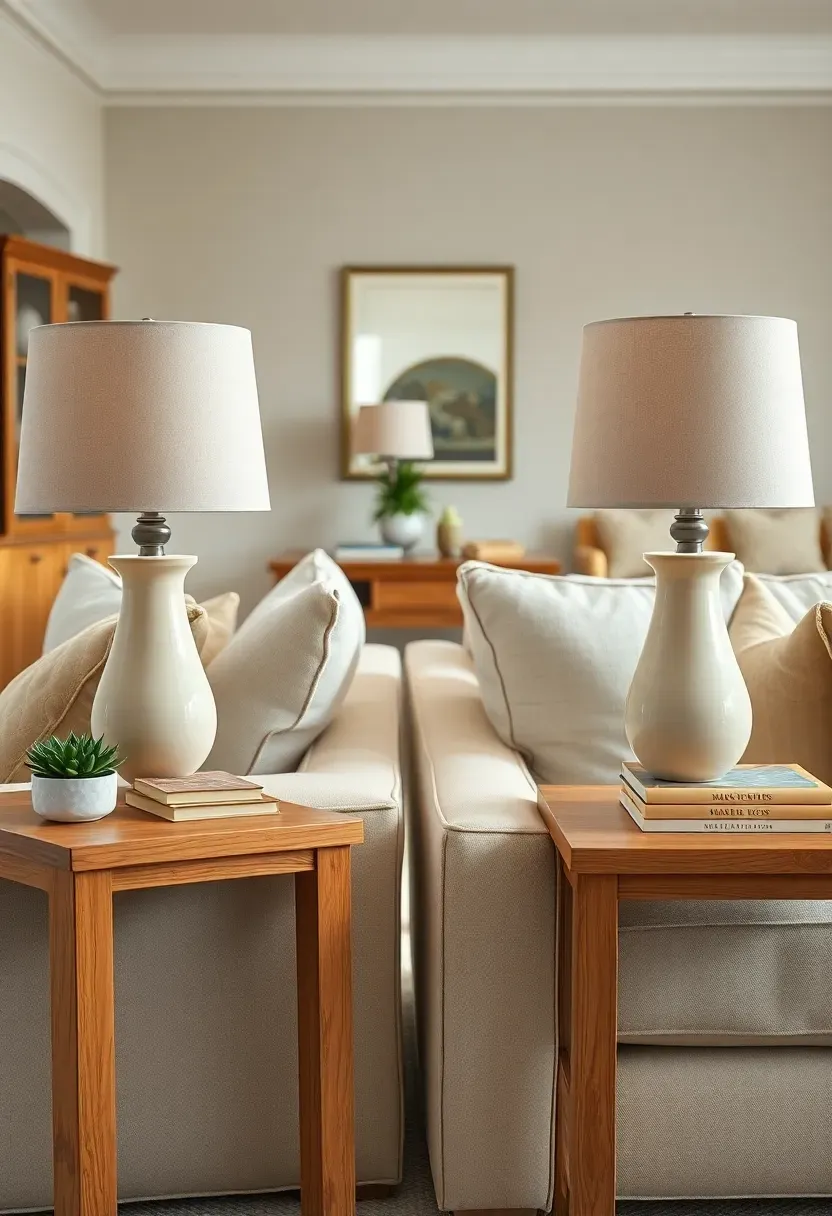
When two side tables flank a sofa, matching them exactly creates formality. A more relaxed approach: mirror the structure but not the specifics. Both tables get a lamp — same model, same height. Then each table carries a different supporting object. One gets a small plant, the other a book stack. The symmetry is felt rather than enforced, which suits both traditional and modern living rooms.
Best for: Formal sitting areas, primary bedrooms with matching nightstands.
26. Scented Element Integration
Step 1: Choose Your Scent Source
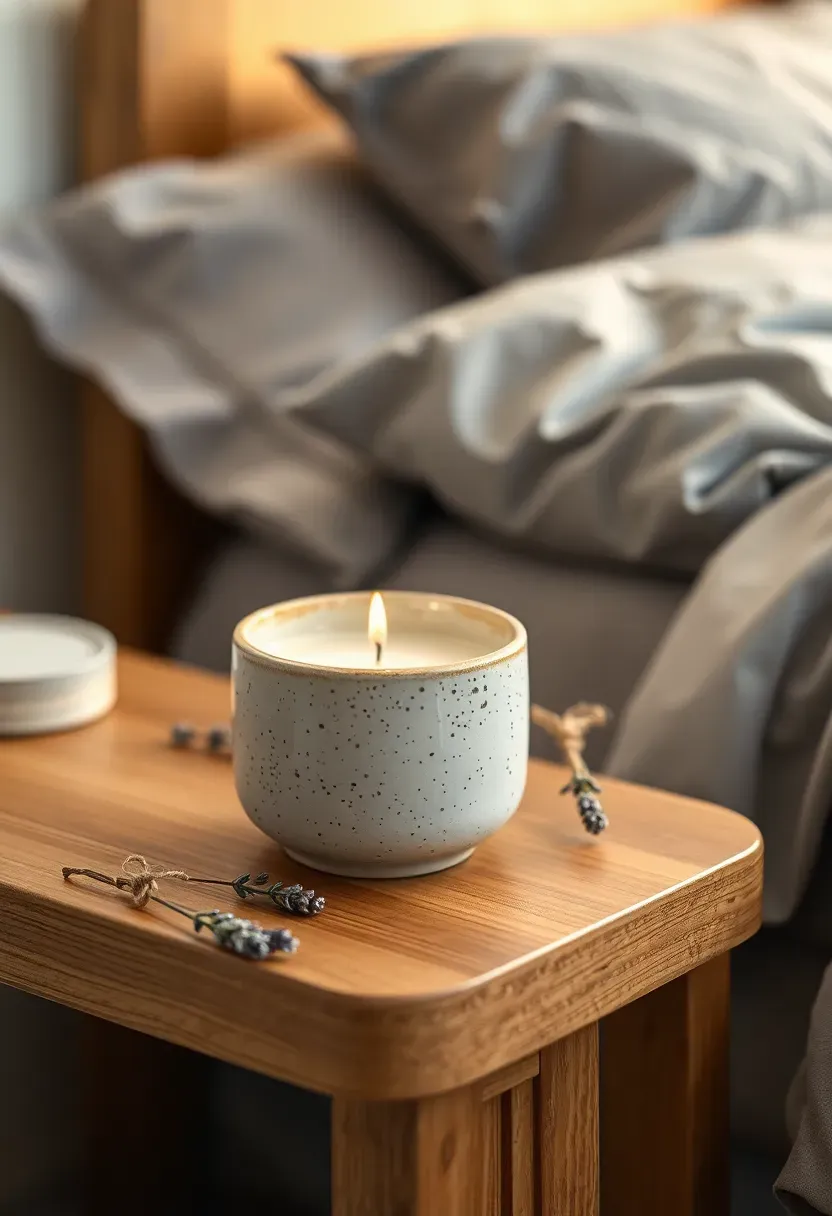
A scented candle, a reed diffuser, or a bundle of dried herbs — pick one that suits the room's function. Lavender for bedrooms, eucalyptus for bathrooms, vanilla or cedar for living areas.
Step 2: Pair Visually
Place the scented object alongside something unscented that complements its vessel. A reed diffuser in an amber glass bottle pairs well with a brass dish. A ceramic candle sits nicely next to a stacked book or a small sculpture.
Step 3: Refresh Regularly
Scent fades. Replace candles when they tunnel. Flip diffuser reeds weekly. Swap dried herbs each season.
Recommended
Items for this idea
27. Art Lean and Stack
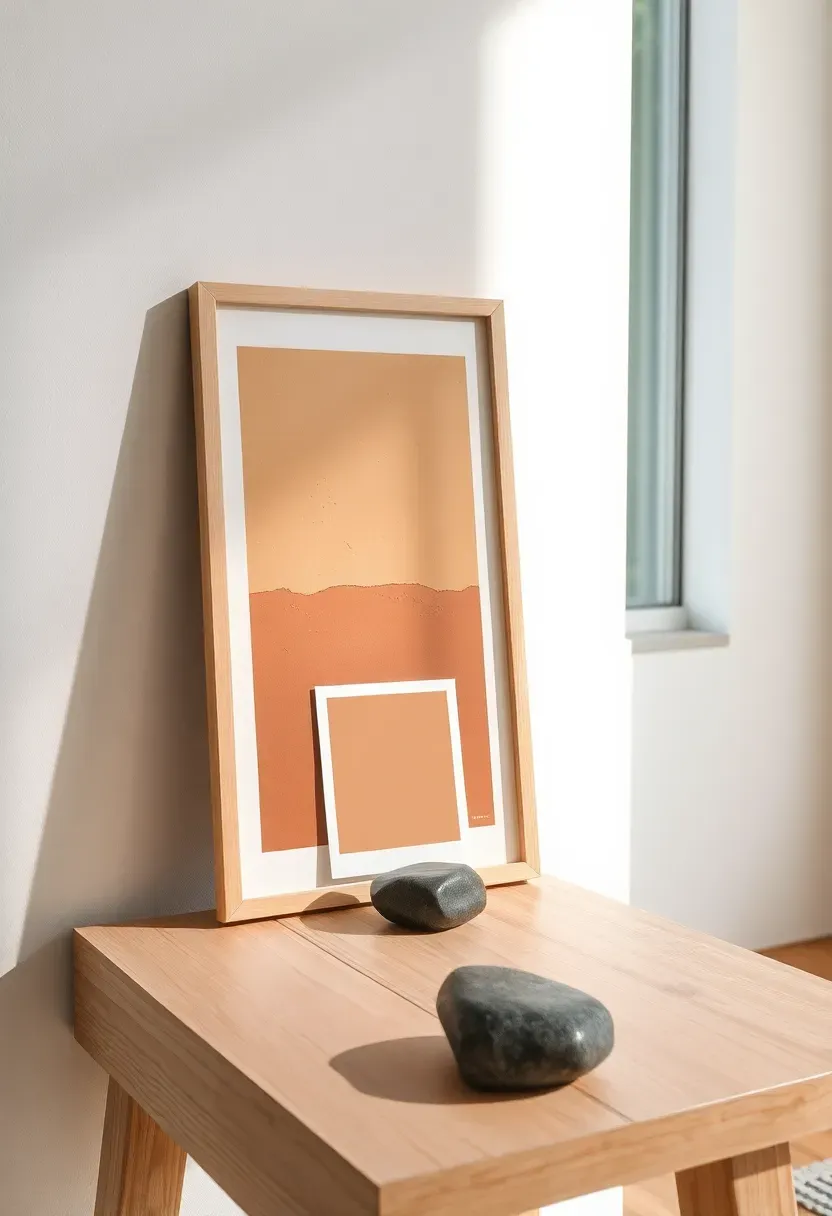
Take a small framed print or postcard-sized art piece and lean it against the wall at the back of your side table. Layer a second, smaller piece in front at a slight angle. Add one low object — a stone, a dish, a tiny figurine — at the base. The layered lean creates depth that a single standing frame cannot achieve. Rotate the art monthly to keep the table feeling fresh without buying new accessories.
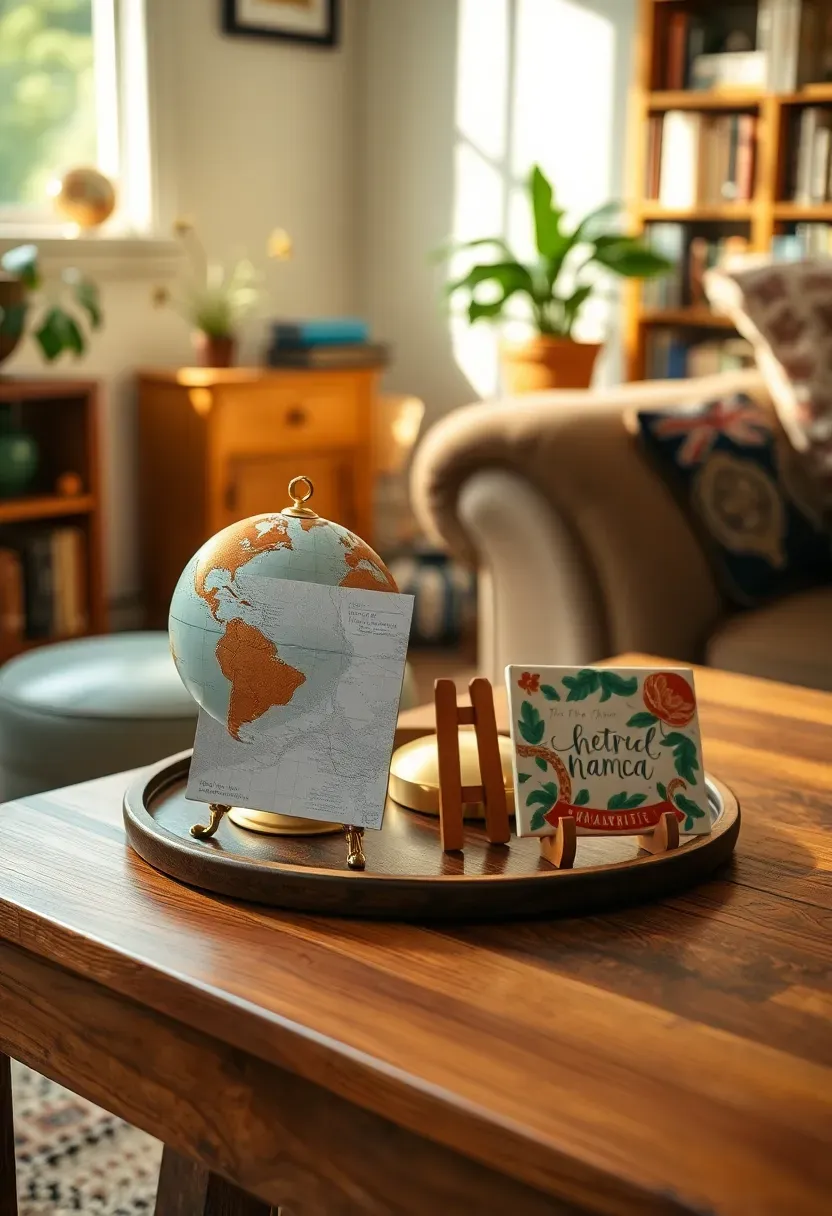
28. Travel Souvenir Cluster
Why It Works
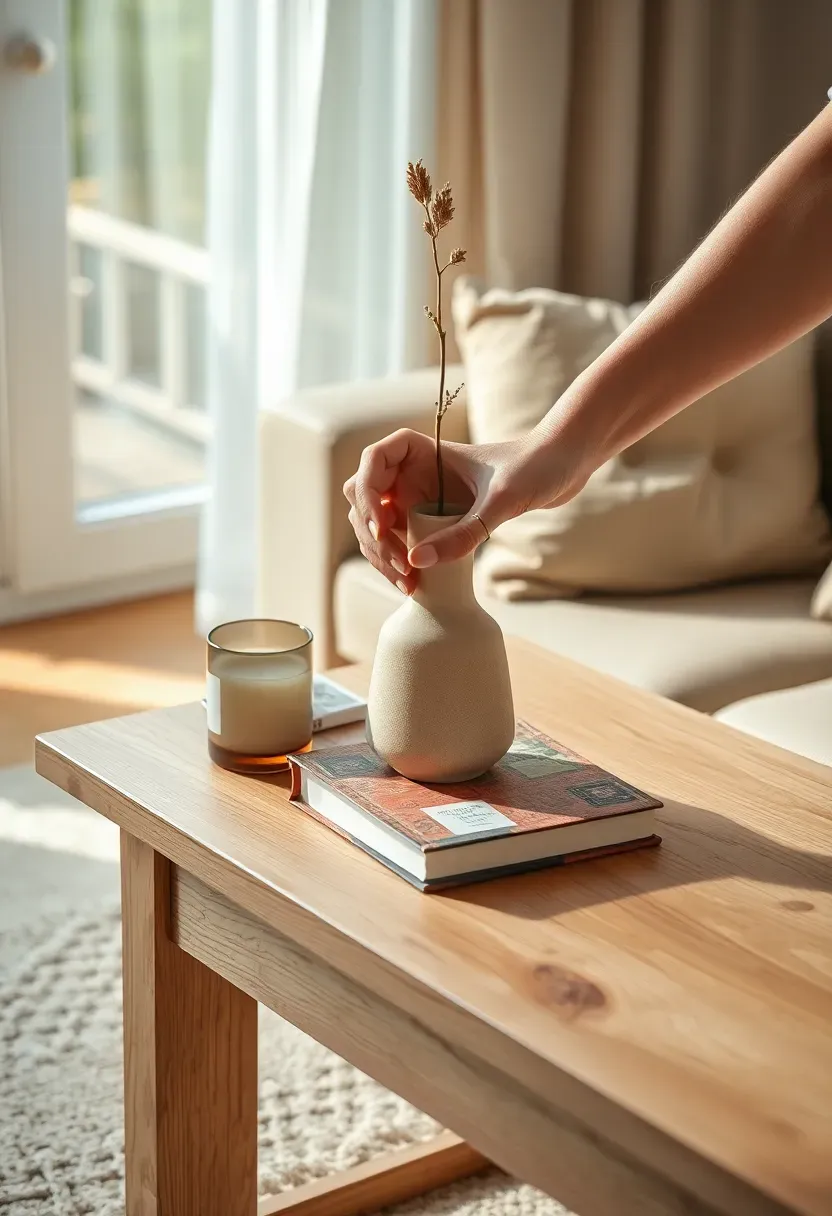
Objects collected from travels carry personal significance that mass-produced decor cannot match. A small ceramic from a Greek island, a woven coaster from Mexico, and a postcard tucked behind a tiny frame create a side table that tells your story. The mismatched origins are the point — they represent different places and memories unified by a single surface.
Pros and Cons
Pros: Deeply personal, great conversation starters, no two people have the same collection Cons: Can feel random without a unifying color or material thread; edit carefully
Recommended
Items for this idea
29. The Edited Refresh Routine
A well-styled side table is never truly finished. Set a monthly reminder to revisit each surface in your home. Remove one object. Replace another. Rotate a candle for a book, swap a winter sprig for a spring stem. The act of editing prevents accumulation and keeps your eye engaged. Professional stylists follow this practice before every photoshoot — the final step is always subtraction, not addition.
Quick Routine
- Monthly: swap one decorative item per table
- Quarterly: replace seasonal elements (dried flowers, candles, textiles)
- Annually: reconsider whether the table itself still suits the space
Side Table Styling FAQs
Should side table decor match on both ends of a sofa?
Not necessarily. Matching lamps work well for structural balance, but the accessories on each table should differ slightly. Identical arrangements feel staged; varied ones feel lived in.
Is it better to use a tray or style objects directly on the surface?
Trays help on tables with high-traffic zones — they contain loose items and protect finishes. On a purely decorative table, direct placement looks cleaner and lets the table material shine through.
What is the ideal number of objects for a small side table?
Three is the sweet spot. A lamp counts as one. On very small tables, two objects may be plenty. The golden rule: you should always see some bare surface.
Can I mix metal finishes on one side table?
Mixing works when the finishes share warmth or coolness. Brass and gold pair naturally. Chrome and silver do the same. Crossing warm and cool metals on a single small surface risks visual tension, though one intentional contrast piece can add edge.
How often should I change my side table styling?
A seasonal refresh four times a year keeps things interesting without becoming a chore. Between seasons, small swaps — a new candle color, a rotated book stack — prevent staleness.
What are the best renter-friendly side table styling ideas?
The easiest renter-friendly approaches are the ones that require zero permanent changes: the Rule of Three, trays, stacked books, potted plants on saucers, and seasonal swaps. All 29 ideas on this page are fully reversible and safe for rental apartments.
Every side table in your home is a chance to tell a small story. Start with the surface closest to where you sit each evening. Remove everything, wipe it clean, and place back only what earns its spot. That single act of editing will teach you more about your preferences than any design rule ever could.
For renters decorating small apartments on a budget, the best part of these side table styling ideas is that none of them require tools, wall anchors, or landlord permission. Every arrangement is fully reversible — you can take it with you when you move, or reset the table entirely by Sunday afternoon.
Pinterest cover for 29 Side Table Styling Ideas for Every Room in Your Home
About the author
OBCD
CGI visualization and interior design content. We create detailed 3D renders and curate practical design ideas for every room in your home.