How to Decorate a Living Room on a Budget: 6 Easy Steps
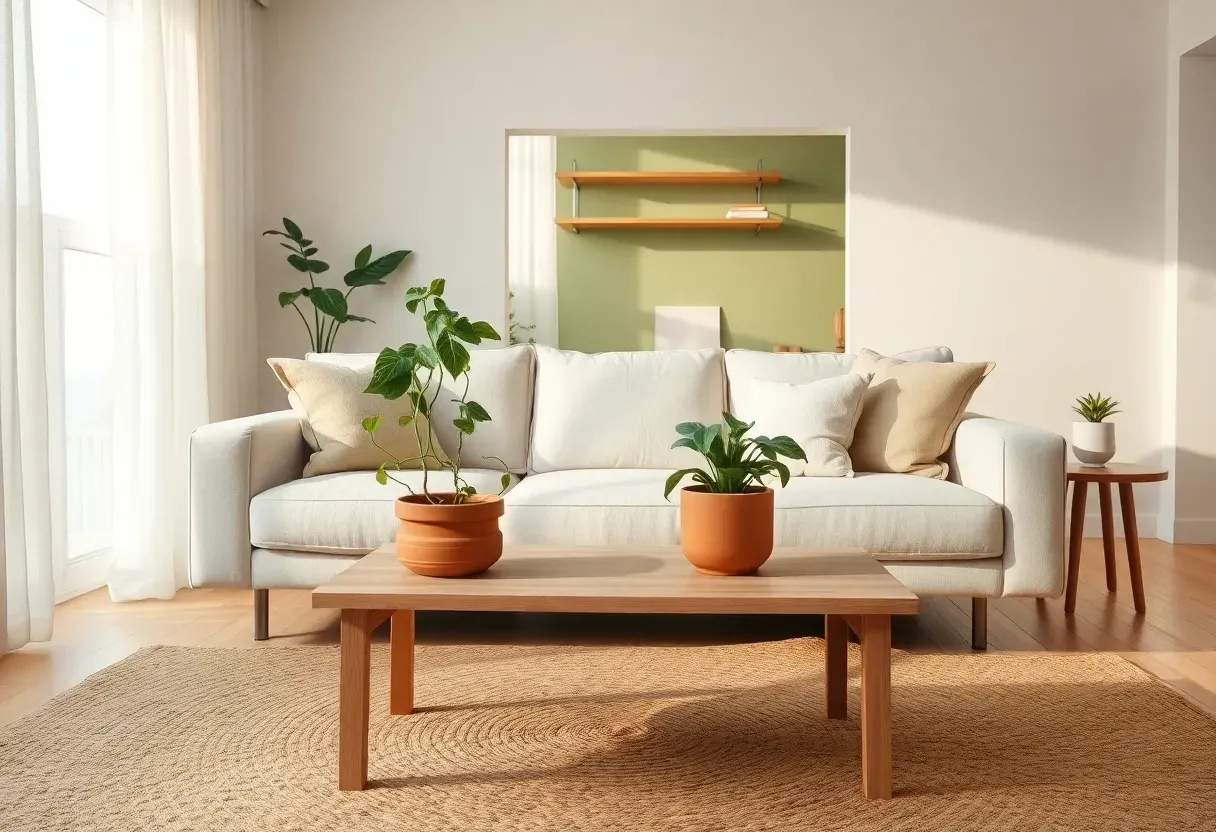
A living room that looks expensive rarely cost that much — it was just decorated with intention. The difference between a room that feels pulled together and one that feels like a random collection of furniture isn't money; it's decisions. Knowing how to decorate a living room on a budget is really about knowing which changes make the biggest visual impact and doing them in the right order.
These six steps are sequenced deliberately. Each one builds on the last, so nothing you spend money on in step four contradicts what you decided in step one. Work through them from start to finish and you'll end up with a living room that looks considered, cohesive, and far more expensive than it actually was.
As an Amazon Associate I earn from qualifying purchases.
Table of Contents
What You'll Need
- A notebook or phone for capturing inspiration images and tracking your spending cap
- Measuring tape for planning furniture positions and rug sizing
- One can of wall paint or peel-and-stick wallpaper panels for an accent wall
- A throw blanket, two to four cushion covers, and an area rug (or rug pad if layering)
- A floor lamp or table lamp with a warm-white bulb rated 2700K–3000K
- One potted plant and two or three curated accessories for the styling pass
Step 1: Set a Realistic Budget and Define Your Style
The most expensive mistake in budget decorating is shopping without a plan. You end up with a lamp that doesn't match the cushions, cushions that clash with the rug, and a rug that makes the sofa look wrong — and suddenly you've spent more money creating problems than solving them. Before buying a single thing, give yourself 30 minutes to set a hard spending limit and choose a clear visual direction for the room.
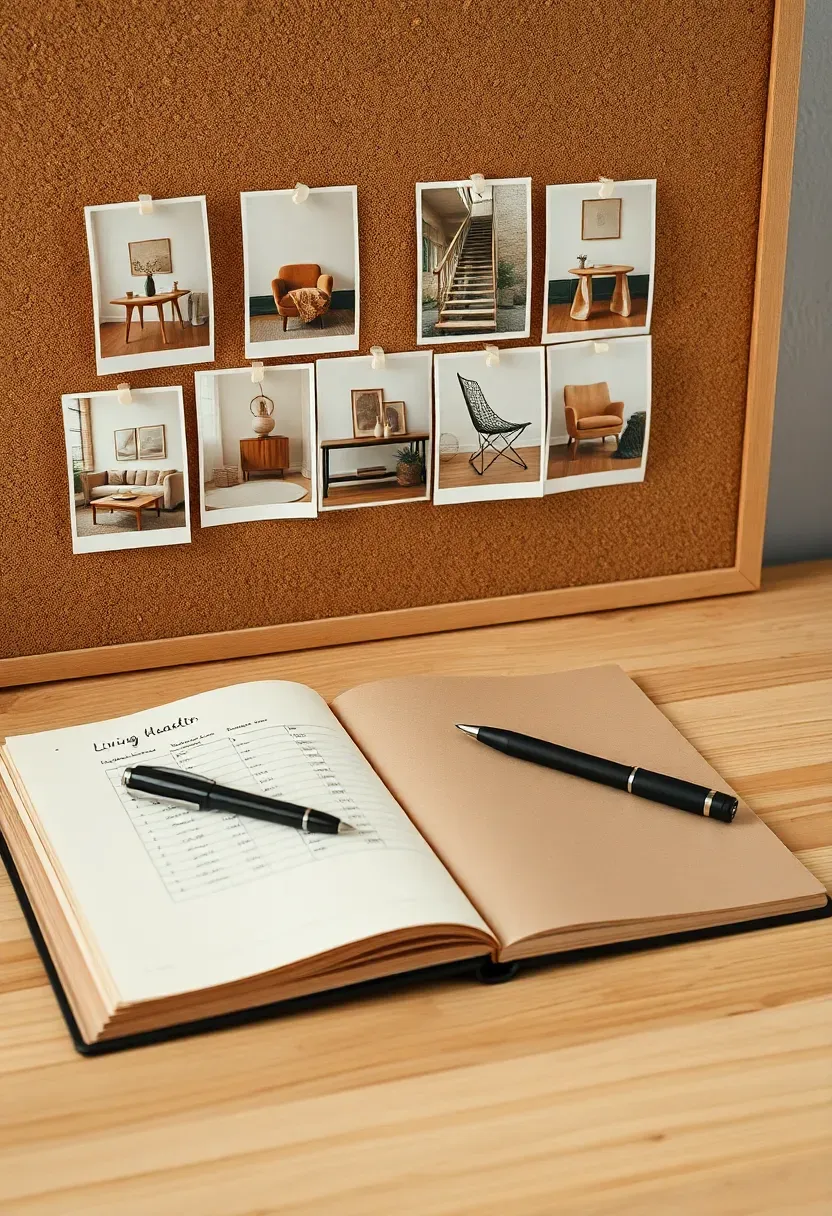
Collect eight to twelve images that excite you — from Pinterest, design blogs, or saved screenshots — and look for the pattern. Are they warm and textural, with linen sofas and terracotta tones? Cool and minimal, with white walls and black metal accents? Cozy and layered, with gallery walls and mismatched vintage finds? Describe your direction in one sentence and write your budget ceiling beside it. Every decision that follows becomes a simple yes-or-no against those two anchors.
- Do: save all inspiration images in one phone album you can pull up while shopping, so impulse purchases get filtered against your actual vision
- Don't: try to blend two very different aesthetics — a room that is half Scandi-minimal and half maximalist boho reads as unfinished, not eclectic
- Pro tip: note the three colors that appear most in your saved images — those are your palette, and every item you buy should contain at least one of them
Step 2: Rearrange and Edit What You Own
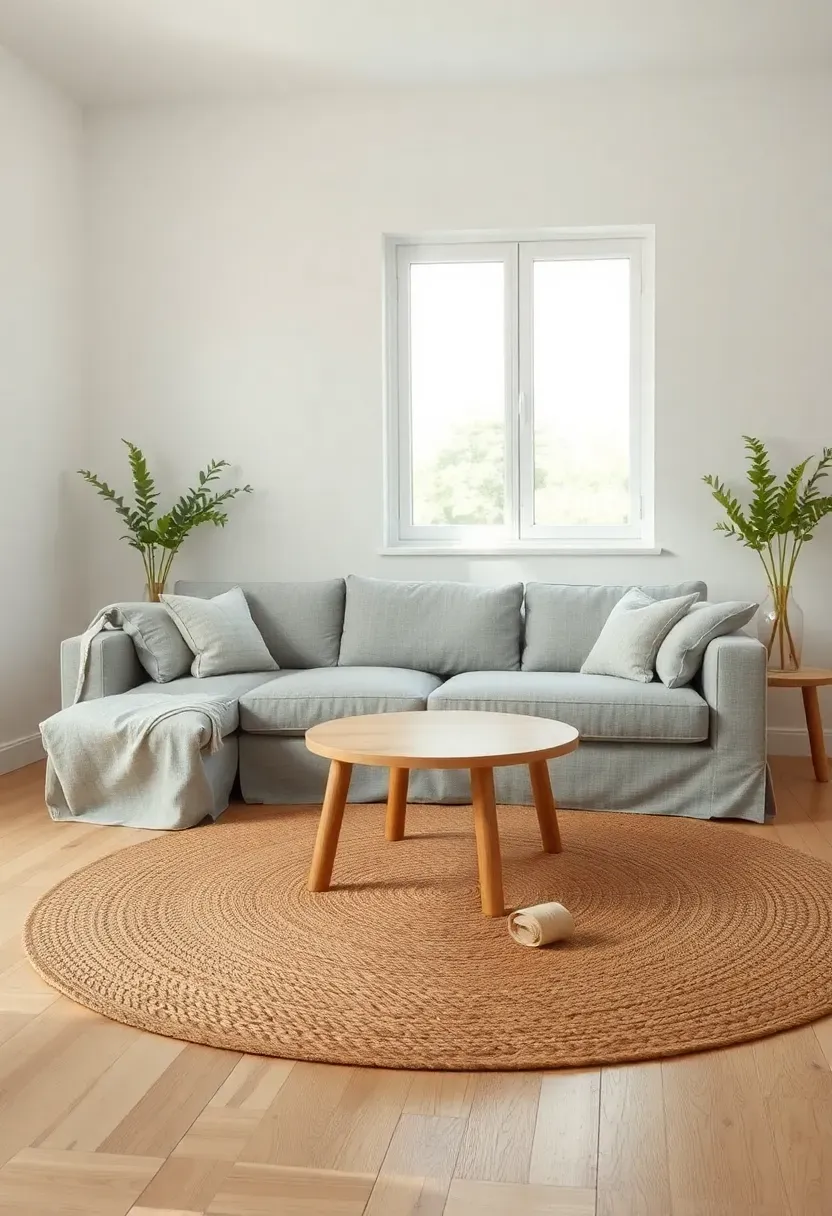
Before spending anything, spend an hour moving furniture. Most living rooms have been arranged the same way since the day they were set up — pushed against walls, sofa facing the TV, nothing intentional about the flow. Pulling the sofa away from the wall by even eight inches immediately makes the room feel more designed. Floating furniture creates a conversation zone, improves proportions, and costs absolutely nothing.
Recommended
Items for this idea
Alongside rearranging, edit ruthlessly. Remove every object that doesn't belong to the style direction you defined in Step 1 — box it up or move it to another room. A living room with thirty objects on display looks cluttered regardless of how nice each individual item is. Reduce to the best ten. Then look at what you already own through fresh eyes: the glass vase from the dining room might be perfect on the coffee table; the framed print stored in a closet might be exactly what the empty wall needs. Repurposing what you have often produces bigger results than anything you could buy.
- Do: photograph the room before you start so you have a true before-and-after reference — it also helps you spot what the eye skips over in person
- Don't: keep items out of guilt or habit; if it doesn't fit your direction or serve a function, it's fighting against you
- Pro tip: a rug that's too small makes a room feel disjointed — if yours doesn't reach under the front legs of the sofa, try centering it differently or layering a second rug on top
Step 3: Refresh Your Walls on the Cheap
Walls are the largest surface in any living room, and they're working on you constantly — even when you're not looking at them. A dull magnolia wall makes everything in front of it look flat. Changing even one wall creates a shift in atmosphere that far outweighs the cost. You don't need to repaint the whole room: a single accent wall behind the sofa or the main seating area is enough to anchor the space and make the furniture feel placed rather than just sitting there.
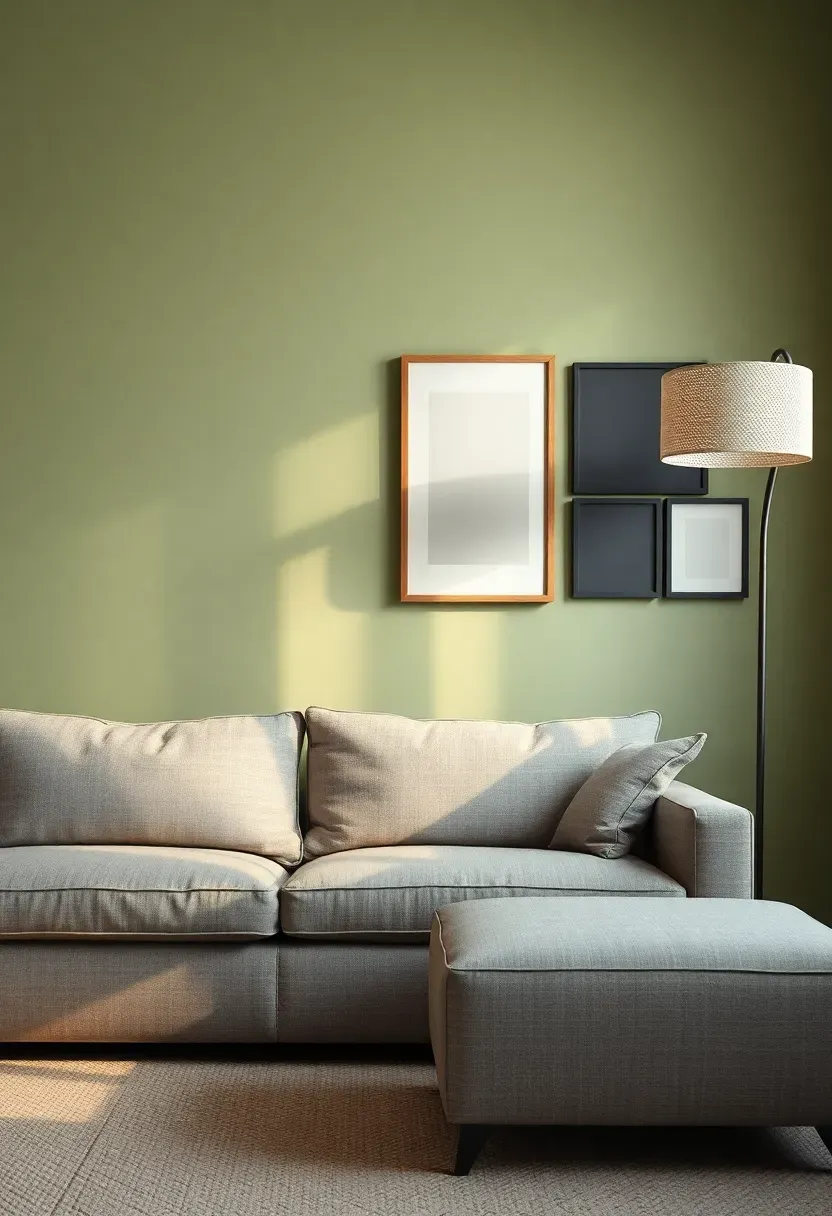
If paint feels like too much commitment — especially in a rental — peel-and-stick wallpaper is a legitimate alternative. Modern versions look convincing, apply in an afternoon, and remove without damaging the wall. For a zero-cost wall update, a gallery arrangement using frames you already own can have just as much impact as a paint job. Lean a large mirror against the wall to double the light and create an illusion of depth. The goal is to give the eye a destination when it enters the room, rather than a flat expanse it slides off of.
- Do: test paint swatches directly on the wall and observe them at different times of day — living room light shifts more than bedroom light, and the color will look different by evening
- Don't: mix more than two wall treatments in one room — an accent wall plus a gallery wall plus a wallpaper panel reads as indecision, not layering
- Pro tip: painting the ceiling of the accent wall the same color as the wall creates a cocooning effect that looks architectural and intentional, with no extra cost
Step 4: Layer Textiles for Instant Warmth
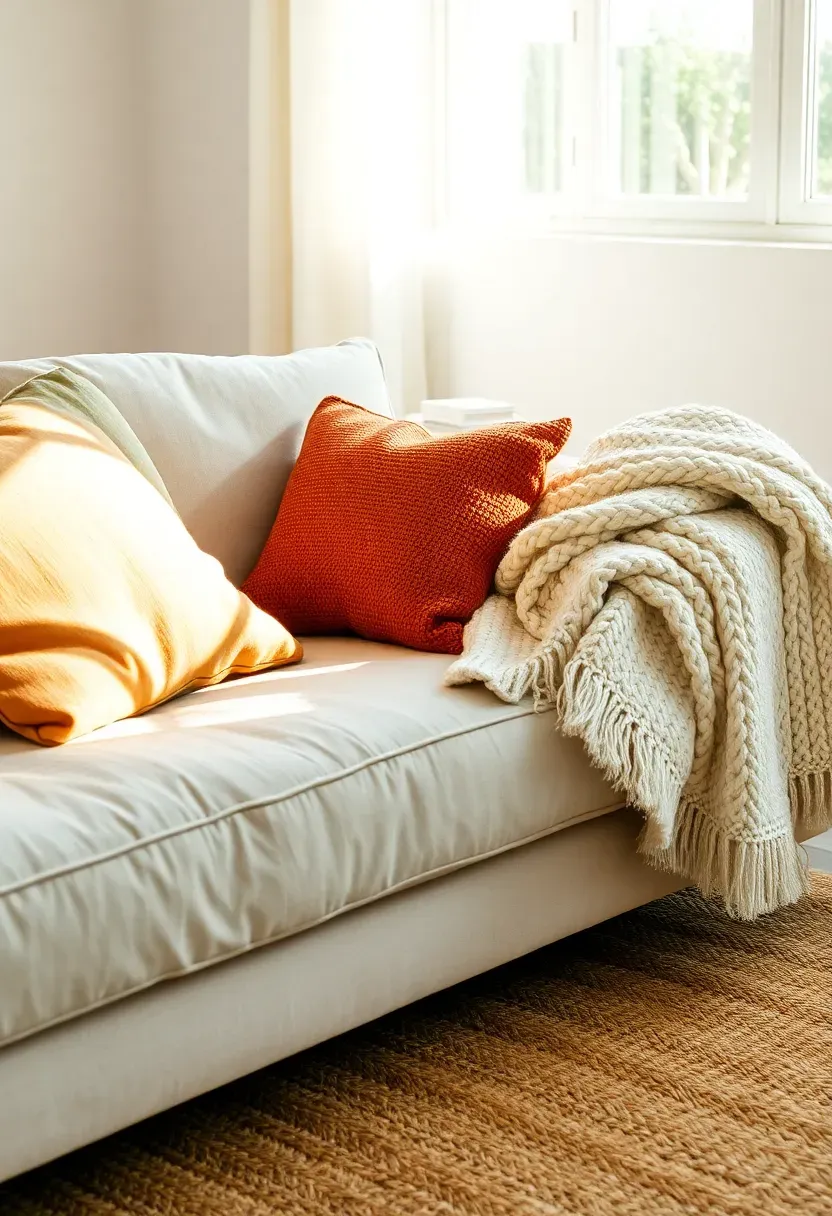
Textiles do more work in a living room than any other decorating element at their price point. A sofa that looked tired can look entirely different under a set of well-chosen cushion covers and a throw. A bare floor feels cold and transient; the same floor with a rug anchoring the furniture feels like a room someone actually lives in. Layering textiles — building from a base of one larger textile up through smaller layers — is the technique that makes budget living rooms look rich.
Recommended
Items for this idea
Start with the rug — it's the foundation that ties all the furniture together. If buying new isn't in the budget, layer a smaller woven or sheepskin rug on top of your existing one to add texture and define the zone. On the sofa, use two to four cushion covers in two coordinating tones from your palette (odd-number groupings photograph and read better than even). Fold a textured throw — chunky knit, waffle-weave, or stonewashed cotton — over one arm or the back. Keep the textile palette tight: two colors maximum, two to three textures maximum. More than that tips from layered into busy.
- Do: invest in one genuinely good cushion cover or throw — one quality piece elevates the whole arrangement, while five cheap ones just look cheap together
- Don't: match cushions to the sofa exactly — a slight contrast in tone makes each element readable and the overall composition more interesting
- Pro tip: varying the size of cushions (one large, two medium, one small) creates a layered, styled look that's far more convincing than four cushions all the same size
Step 5: Upgrade the Lighting Without Rewiring
Overhead lighting is the enemy of a cozy living room. A single central fixture floods the room evenly, flattens all the texture you've just added with your textiles, and signals "waiting room" rather than "place to relax." The fix doesn't require an electrician or a new ceiling fitting — it requires moving the light source down and multiplying it. Two lower lamps doing less work each will always outperform one overhead fixture doing everything.
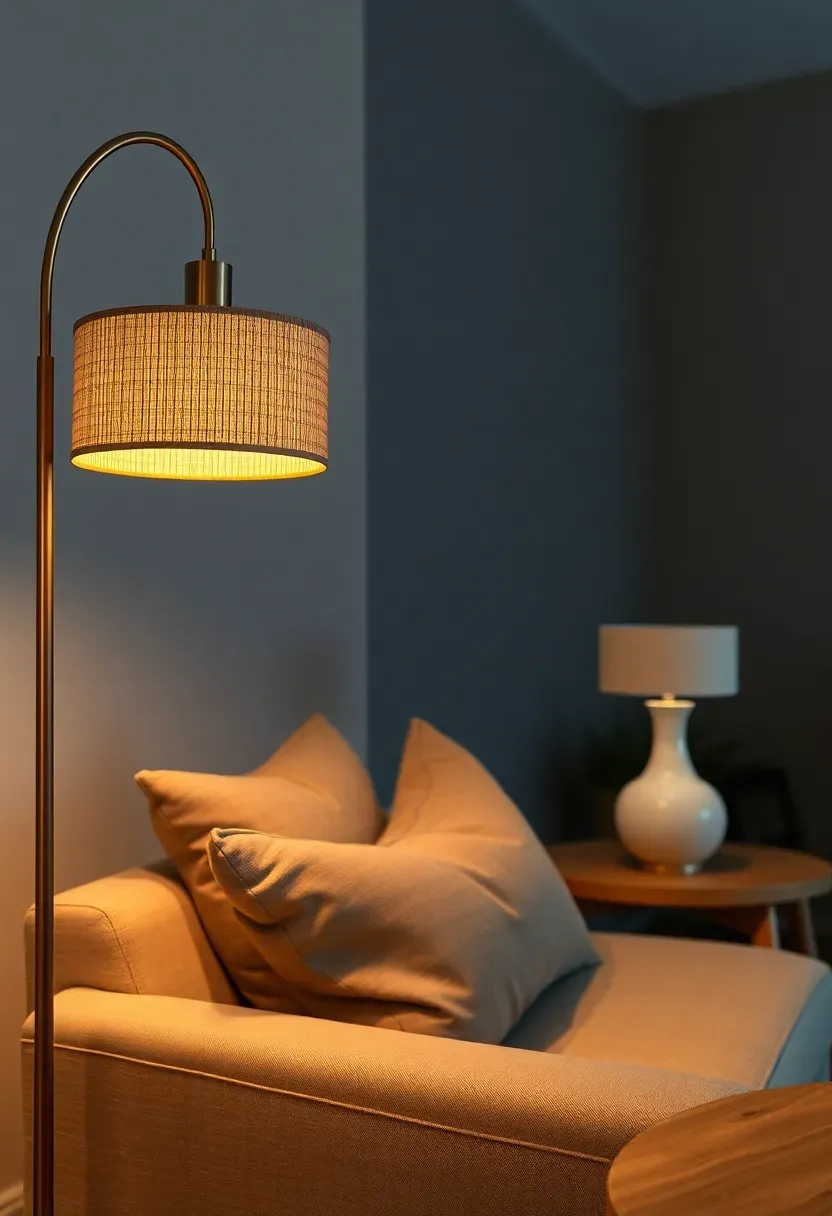
A floor lamp beside the sofa is the most impactful single purchase in this guide. Position it so the shade is at roughly eye level when seated — this puts warm light exactly where you need it and creates a pool of light that makes the seating area feel enclosed and inviting. Add a second source: a table lamp on a console, a plug-in sconce on the wall, or even a cluster of candles on the coffee table. Always use bulbs rated 2700K to 3000K. Above 4000K, the light turns cool and blue-toned, which undermines every warm decision you've made in the previous steps. Switching the overhead off entirely after dark is, by itself, one of the fastest room transformations available to you.
- Do: put your floor lamp on a smart plug or a simple timer so the room is already warm and lit before you arrive in it each evening
- Don't: buy a lamp just because it's cheap — a poorly proportioned shade or a flimsy base will look wrong in every photo of the room from now on
- Pro tip: a plug-in wall sconce mounted with adhesive strips requires no drilling, costs under $35, and reads as a deliberate design decision rather than a budget workaround
Step 6: Style With Plants and Curated Accessories
This is the finishing layer — the details that make a room feel inhabited and personal rather than like a showroom floor. The skill is not adding more; it's choosing carefully and then stopping. A few well-placed objects with negative space around them will always read as more intentional than a surface packed with things. Think of this step as editing as much as decorating.
Recommended
Items for this idea
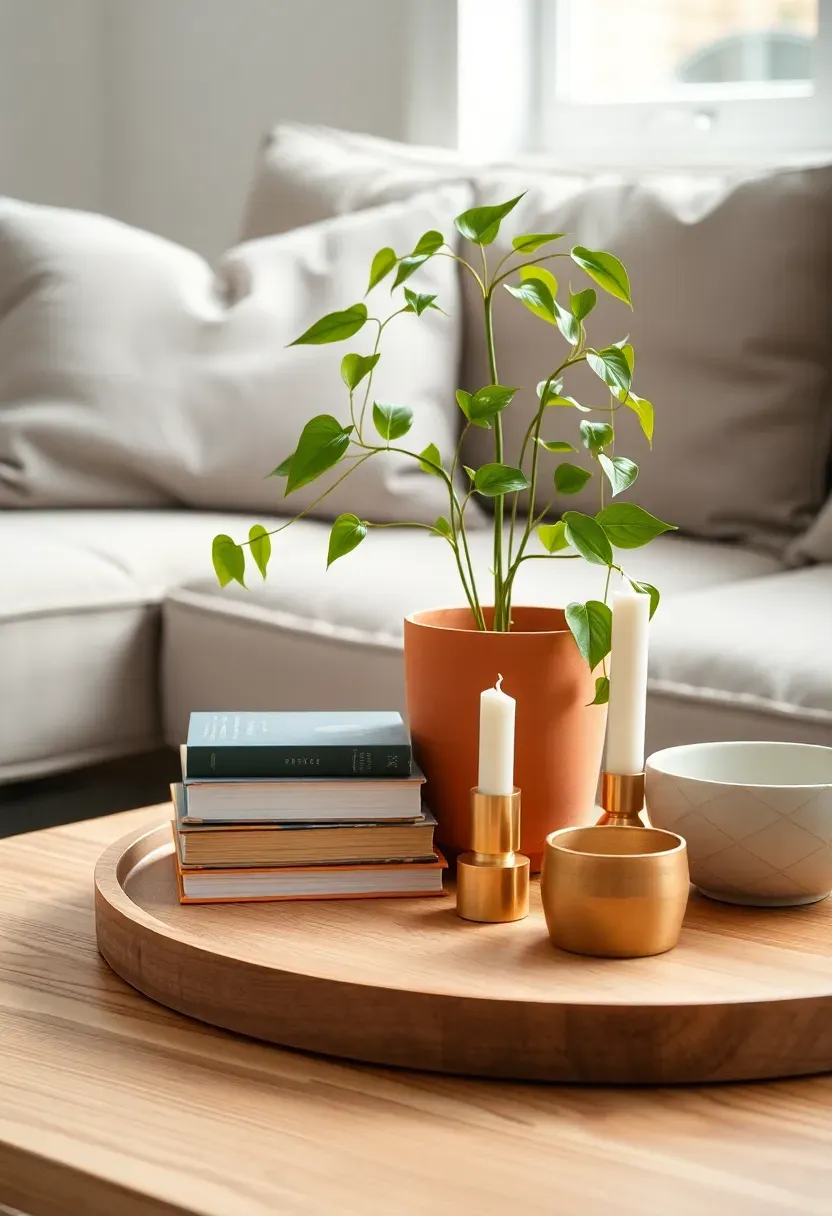
Pick one or two surfaces to style properly — the coffee table and a console or shelf — rather than spreading objects thinly across every available surface. Group items in threes at varying heights: something tall (a plant or a candle), something medium (a small stack of books, a vase), something small (a tray, a ceramic object). A trailing pothos, a rubber plant, or a simple eucalyptus cutting in a narrow vase brings organic softness that no manufactured object can replicate. For accessories, choose only items that genuinely belong to your style direction from Step 1. Everything else goes back in a box. The restraint is the design.
- Do: use a tray on the coffee table to corral smaller objects — it instantly turns a scatter of things into a composed vignette
- Don't: buy decorative objects just to fill space; an empty surface is always better than a surface covered in things that don't belong
- Pro tip: pothos is the best budget living room plant — it tolerates lower light than most, grows quickly, trails attractively over shelves and tables, and costs almost nothing to buy or propagate
Frequently Asked Questions
How much does it realistically cost to redecorate a living room on a budget?
The six steps in this guide can be completed for under $300 — and significantly less if you thrift or repurpose items you already own. The highest-impact changes (rearranging furniture, editing clutter, adjusting the lighting bulb color temperature) cost nothing at all. Reserve spending for one or two anchor items: a floor lamp, a rug, or a can of paint for the accent wall. Those three purchases alone will account for most of the visible transformation.
What is the single biggest difference-maker in a budget living room makeover?
Lighting — specifically replacing overhead-only light with warm lower-level lamps. A $30–$50 floor lamp at 2700K changes the color of every surface in the room, creates depth and shadow that make the textiles and furniture look three-dimensional, and immediately produces the kind of atmosphere most people associate with expensive, well-designed spaces. Do this before you spend money on anything decorative and you'll see why it belongs this high on the list.
Can these steps work in a rental living room where I can't paint or drill?
Yes — every step in this guide is designed to be renter-compatible. Peel-and-stick wallpaper is the paint alternative; it applies and removes without damaging walls. Plug-in sconces and floor lamps need no wiring. Furniture rearrangement and textile layering leave no trace. The only step that touches the walls at all is optional (the accent wall treatment), and peel-and-stick is the straightforward workaround. Everything else — the budget plan, the edit, the textiles, the lighting, the accessories — moves with you when you leave.
About the author
OBCD
CGI visualization and interior design content. We create detailed 3D renders and curate practical design ideas for every room in your home.