How to Decorate a Modern Living Room: 5 Steps to an Elegant Style
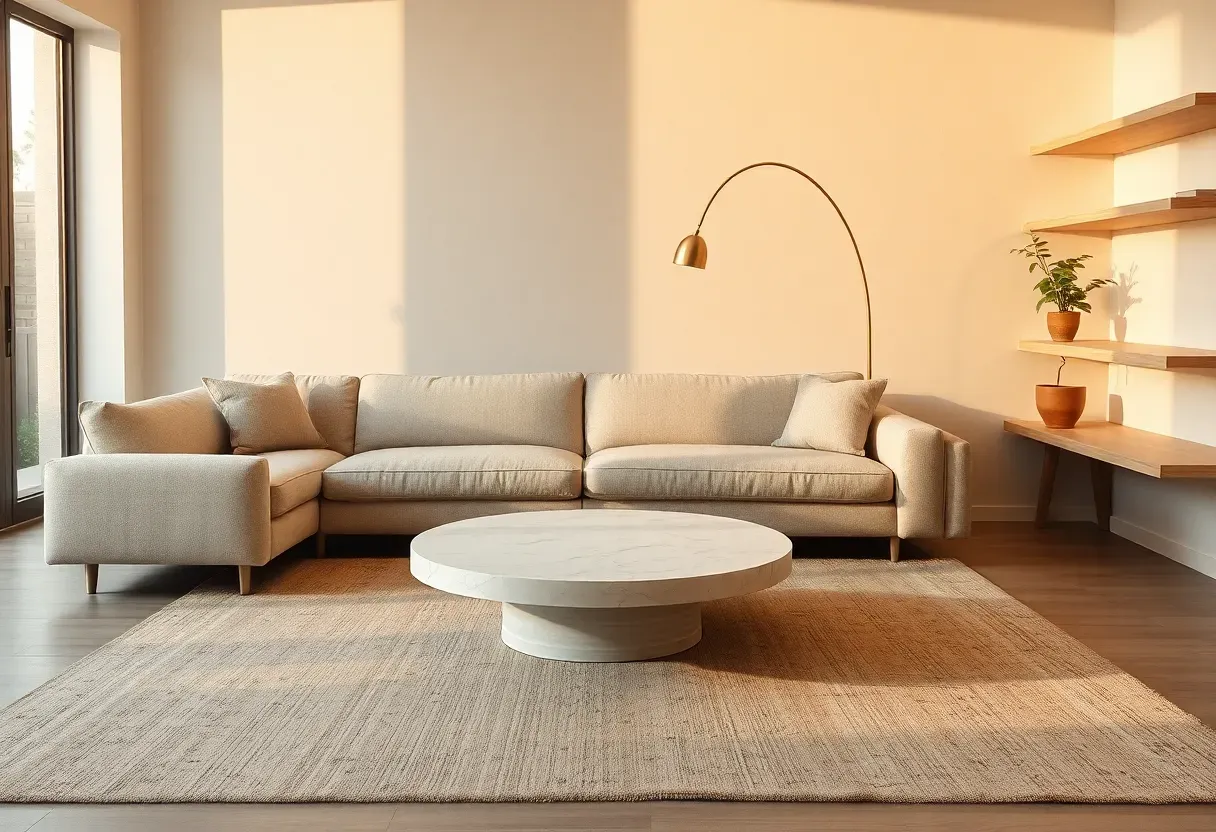
Walk into a well-decorated modern living room and something immediately shifts — the air feels calmer, the proportions feel right, and every object seems to belong exactly where it is. That effect isn't accidental. It's the result of a handful of deliberate decisions made in the right sequence. Whether you're starting from scratch or refining a space that never quite landed, these five steps will take you from uncertain to intentional.
Modern doesn't mean cold. The best contemporary living rooms balance clean structure with warmth — precise lines softened by texture, neutral palettes enlivened by a considered accent, uncluttered surfaces that still feel lived-in. This guide walks you through each layer, starting with the decisions that are hardest to reverse and ending with the finishing touches that bring everything together.
Table of Contents
- What You'll Need
- Step 1: Establish Your Layout Before Buying Anything
- Step 2: Build a Cohesive Color and Material Palette
- Step 3: Choose Furniture with the Right Scale and Profile
- Step 4: Layer Your Lighting for Mood and Function
- Step 5: Style with Restraint — Accessories and Final Touches
What You'll Need
- Measuring tape and graph paper (or a free room-planner app like RoomSketcher)
- Paint sample cards or peel-and-stick swatches in your chosen palette
- A rug sized to anchor your seating — typically 8×10 ft for a standard living room
- At least two light sources beyond the ceiling fixture (floor lamp, table lamp, or sconces)
- Three to five decorative objects for styling: a tray, a plant, a sculptural piece, and one or two books
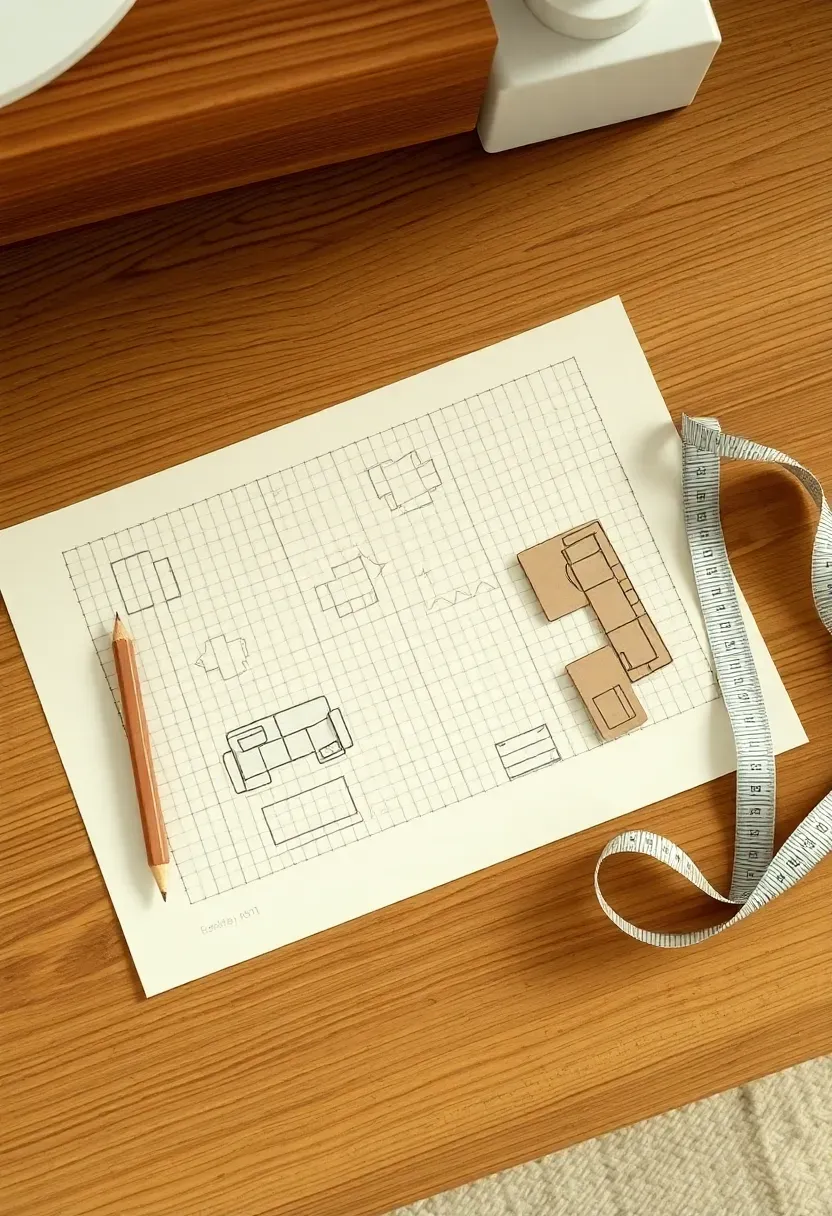
Step 1: Establish Your Layout Before Buying Anything
Most decorating mistakes are made before a single piece of furniture arrives. Layout is the skeleton of the room — get it wrong and everything that follows fights against it.
Start by measuring the room and mapping out the primary conversation zone. In a modern living room, the sofa is typically the anchor: float it away from the wall rather than pushing it back against it. A sofa 12 to 18 inches from the wall creates depth and makes the room feel intentionally designed rather than furniture-stored. Define the zone with a rug — the front legs of all seating pieces should sit on it. This simple rule instantly creates a cohesive grouping. Identify where natural light enters and position seating to benefit from it, not fight it; and map your traffic paths so no one has to step around the coffee table to cross the room.
Do: sketch two or three layout options on paper before moving anything — it takes twenty minutes and saves hours of effort Don't: push all furniture against the walls; it makes the center feel empty and the perimeter feel crowded Pro tip: use painter's tape on the floor to map furniture footprints before committing to a layout
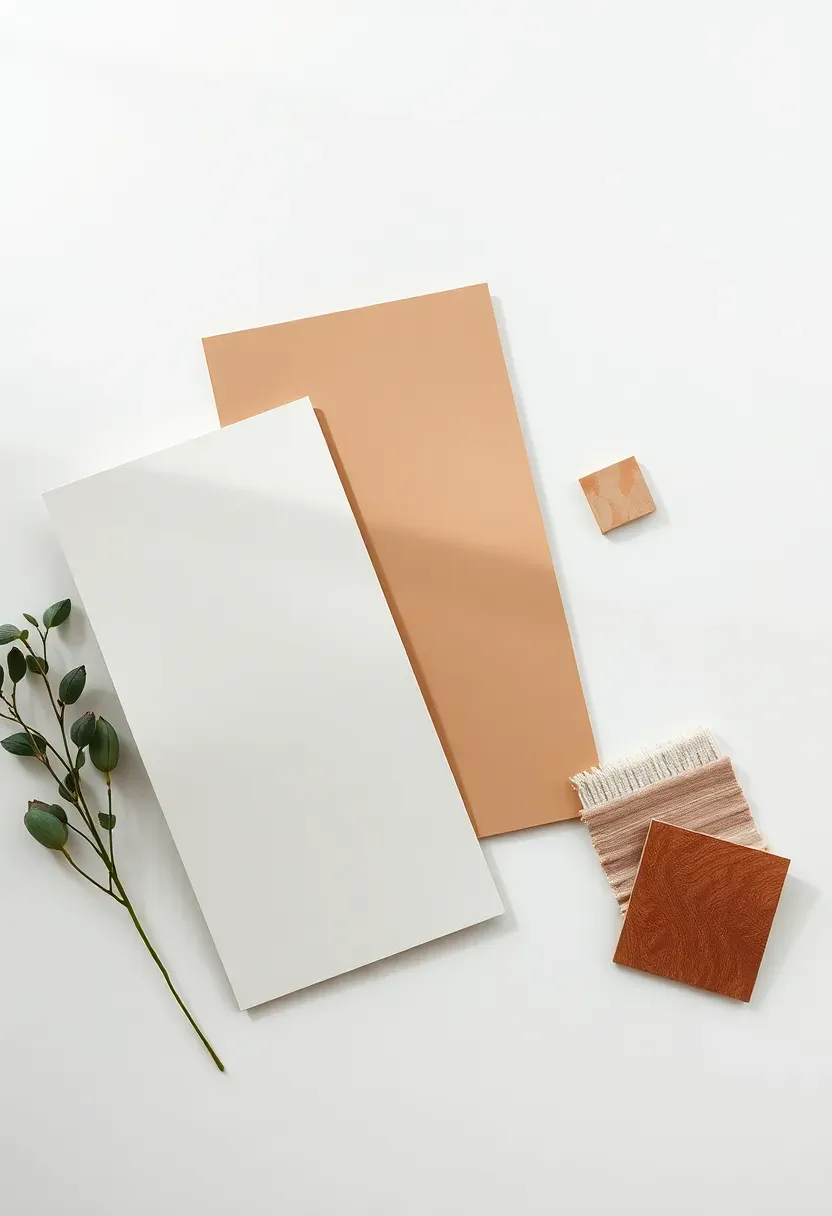
Step 2: Build a Cohesive Color and Material Palette
Color and material decisions are the second-hardest to undo, so they belong early. A modern palette doesn't require grey walls and white everything — it requires coherence.
Choose a base of two to three neutrals: a wall color, a floor or rug tone, and a dominant upholstery tone. In 2026, the most livable modern palettes lean warm — off-whites like linen or parchment, warm taupes, soft greiges, and earthy beiges rather than stark cool whites. Add one accent color in a muted, sophisticated tone: dusty sage, faded terracotta, deep charcoal, or warm rust. That accent should appear in at least two places — a cushion and a throw, or a plant pot and a framed print — so it reads as intentional rather than accidental. For materials, aim for contrast in texture rather than in color: smooth leather against a boucle cushion, polished stone against matte plaster, warm wood against cool metal.
Do: test paint colors on an A4 card taped to the wall and observe them at morning, afternoon, and evening light before committing Don't: introduce more than one accent color — two accents competing for attention read as indecision, not eclecticism Pro tip: repeat your accent in a small way near the entrance to the room; it creates a visual thread that makes the space feel composed
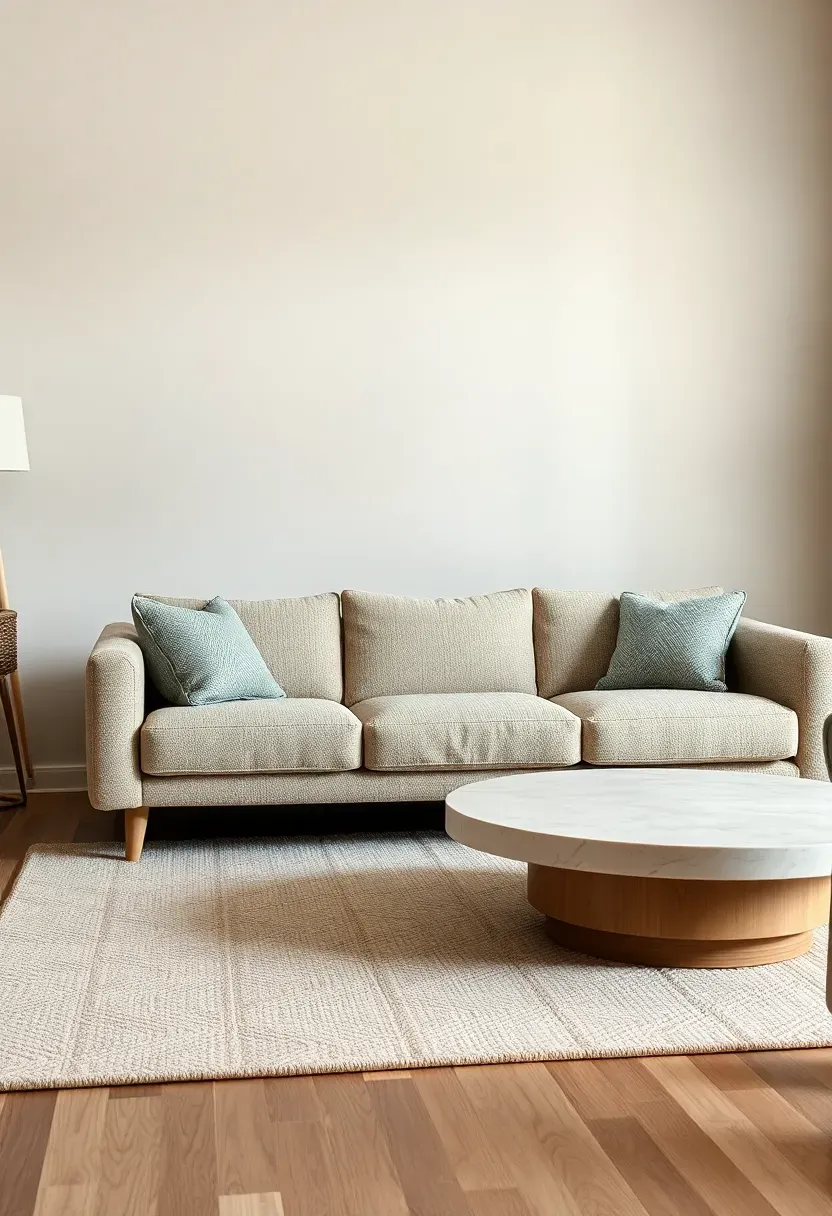
Recommended
Items for this idea
Step 3: Choose Furniture with the Right Scale and Profile
Modern furniture is defined less by a specific style and more by proportion and restraint. The wrong scale is the single most common reason a living room looks off even when the pieces themselves are attractive.
For sofas, look for low to medium seat height (typically 17–19 inches), clean lines without heavy ornamental detailing, and legs that lift the piece off the floor — this creates visual breathing room and makes the room feel larger. A sectional can work beautifully in a modern space if the room is large enough to float it; in smaller rooms, a sofa plus one or two accent chairs in contrasting but complementary forms creates more visual interest. The coffee table should be roughly two-thirds the length of the sofa and sit 14–18 inches from the seating edge. Choose materials with honest surfaces: solid wood, stone, powder-coated metal, or glass rather than laminate or ornate carved finishes. Every piece should justify its presence — if you cannot articulate why it belongs, it probably doesn't.
Do: buy one or two quality anchor pieces rather than a full matching set — varied pieces from the same era feel more considered than suite furniture Don't: choose a coffee table that's too large; it blocks movement and makes the room feel smaller rather than anchored Pro tip: an accent chair in a contrasting silhouette — curved where the sofa is linear, or in a textured fabric where the sofa is smooth — adds personality without disrupting the modern tone
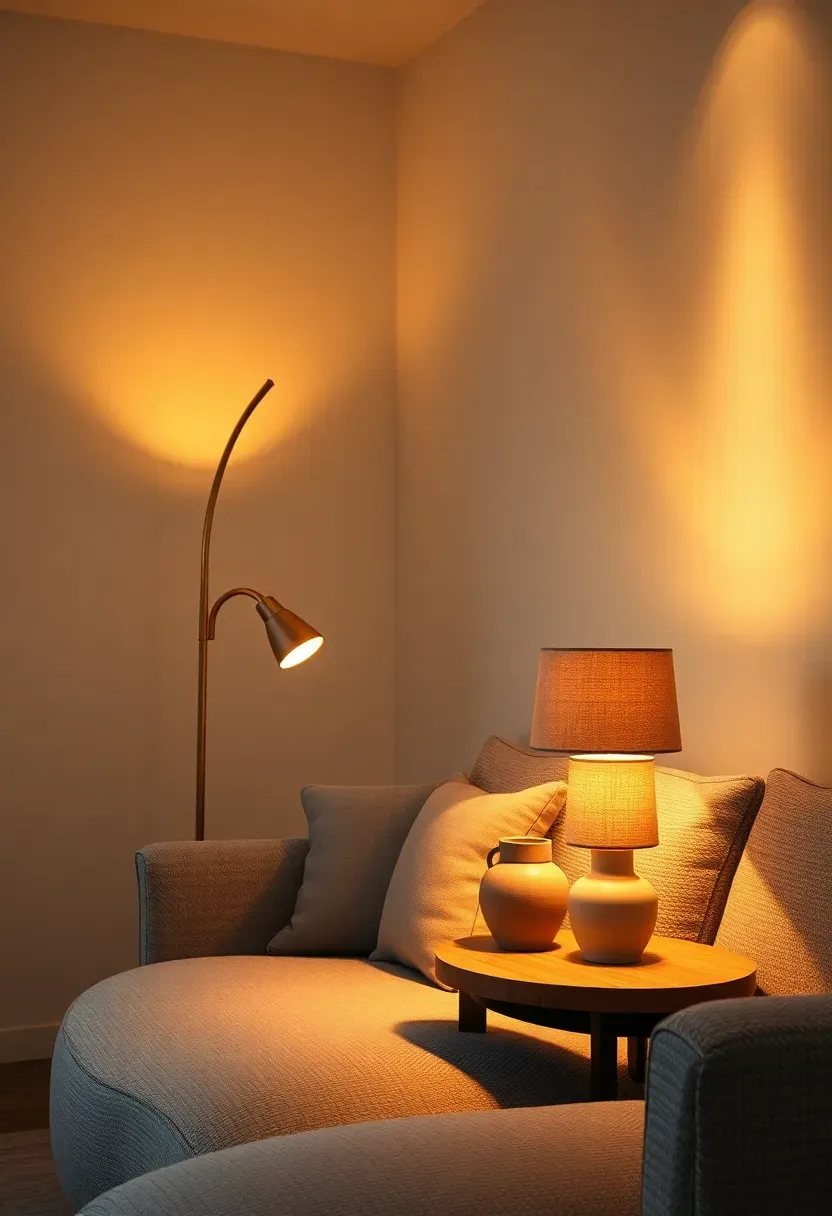
Step 4: Layer Your Lighting for Mood and Function
A single ceiling fixture is the fastest way to make a well-furnished room look flat. Lighting is the layer most homeowners underinvest in, and it shows every evening.
Modern living rooms need at least three light sources at different heights: ambient (the overhead layer), task (reading or work light near seating), and accent (something that creates visual interest — a floor lamp that grazes a wall, a lamp that illuminates artwork). All sources should use warm white bulbs rated 2700–3000K; cool-toned LEDs make even beautiful rooms feel clinical. Dimmers are not optional in a modern space — the ability to shift from bright and social to low and atmospheric with one motion is what separates a room that functions at all hours from one that only works at one. If your ceiling fixture is a basic flush mount, replace or supplement it: a statement pendant, a semi-flush drum shade, or a sculptural ceiling light at this budget level does more for the room's character than almost any furniture upgrade.
Do: install dimmers on all circuits you can — even a basic rotary dimmer costs under $15 and transforms how the room feels after dark Don't: rely solely on overhead lighting for evening ambiance; it flattens everything and creates unflattering shadows Pro tip: a tall arc floor lamp behind the sofa creates a dramatic overhead pool of warm light without requiring any electrical work
Recommended
Items for this idea
Step 5: Style with Restraint — Accessories and Final Touches
This is the layer that separates a decorated room from a designed one. Modern styling is an exercise in editing: every object earns its place, or it doesn't appear.
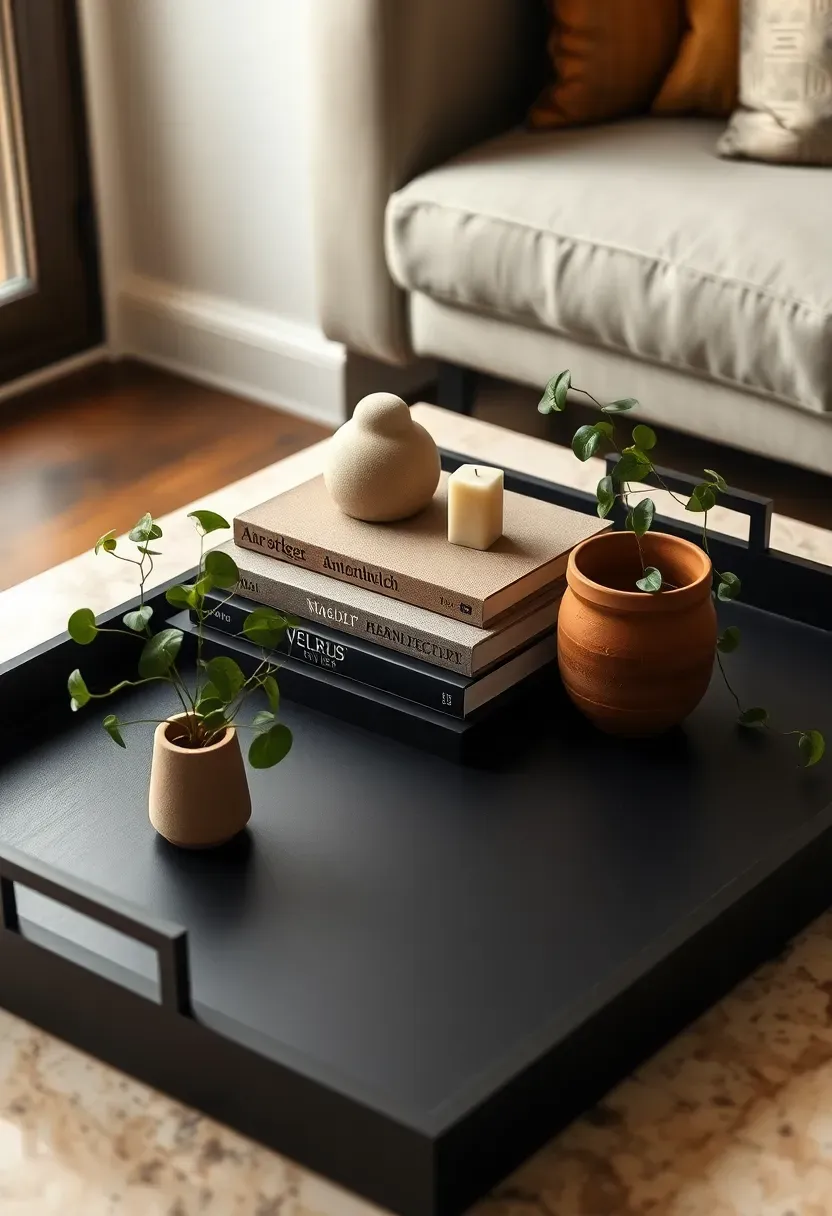
Start with the coffee table — the most visible styling surface in the room. Use a tray to corral objects and create a defined zone; then place three to five items of varying height within it: a stack of two or three architectural books, a small sculptural object, a low candle or vessel, and optionally one trailing plant. On shelving, follow the same principle: group objects in odd numbers, leave generous negative space between groups, and mix one tall vertical element with one horizontal and one organic (a plant or branch). Cushions should number three to five on a standard sofa and use two to three related tones rather than a full gradient. Artwork should be hung at eye level — 57 inches to center is the gallery standard — and grouped intentionally if more than one piece is on the same wall. Then stop. The restraint is the point.
Do: step back and view the room from the doorway before calling it finished — that's the perspective visitors have Don't: fill every surface; deliberate empty space is a modern design element, not a sign that you ran out of ideas Pro tip: replace any objects that feel like filler with a single potted plant — greenery adds life and texture that no decorative object fully replicates
FAQ
Does a modern living room have to feel minimal and cold? Not at all. Modern design is about intentionality, not austerity. Warm neutrals, textured fabrics like boucle or linen, and natural materials like wood and stone all belong in a contemporary space. The key is restraint in quantity, not in warmth — fewer, better-chosen pieces rather than a stripped-back room.
What's the most common mistake people make when decorating a modern living room? Buying furniture before finalizing the layout. When pieces are chosen without a clear floor plan, you often end up with the wrong scale, awkward traffic paths, or a sofa pushed against a wall where it doesn't belong. Always sketch and measure before you purchase.
Should the rug be under all the furniture or just the front legs? In a modern living room, the most common approach is to have the front legs of all seating pieces on the rug, with the back legs off it. This anchors the conversation zone without requiring an enormous rug. If the room is large enough, a rug that fits all legs underneath creates a more luxurious, grounded feel — but front-legs-on is the practical standard.
These five steps work whether you have a weekend or an afternoon. Start with layout even if you change nothing else today — a clear floor plan will make every subsequent decision faster, cheaper, and more confident. From there, each layer builds on the last, and the room compounds into something that feels not just decorated, but genuinely designed.
Pinterest cover for How to Decorate a Modern Living Room: 5 Steps to an Elegant Style
About the author
OBCD
CGI visualization and interior design content. We create detailed 3D renders and curate practical design ideas for every room in your home.