How to Decorate a Small Bedroom: 6 Steps to Make It Feel Bigger
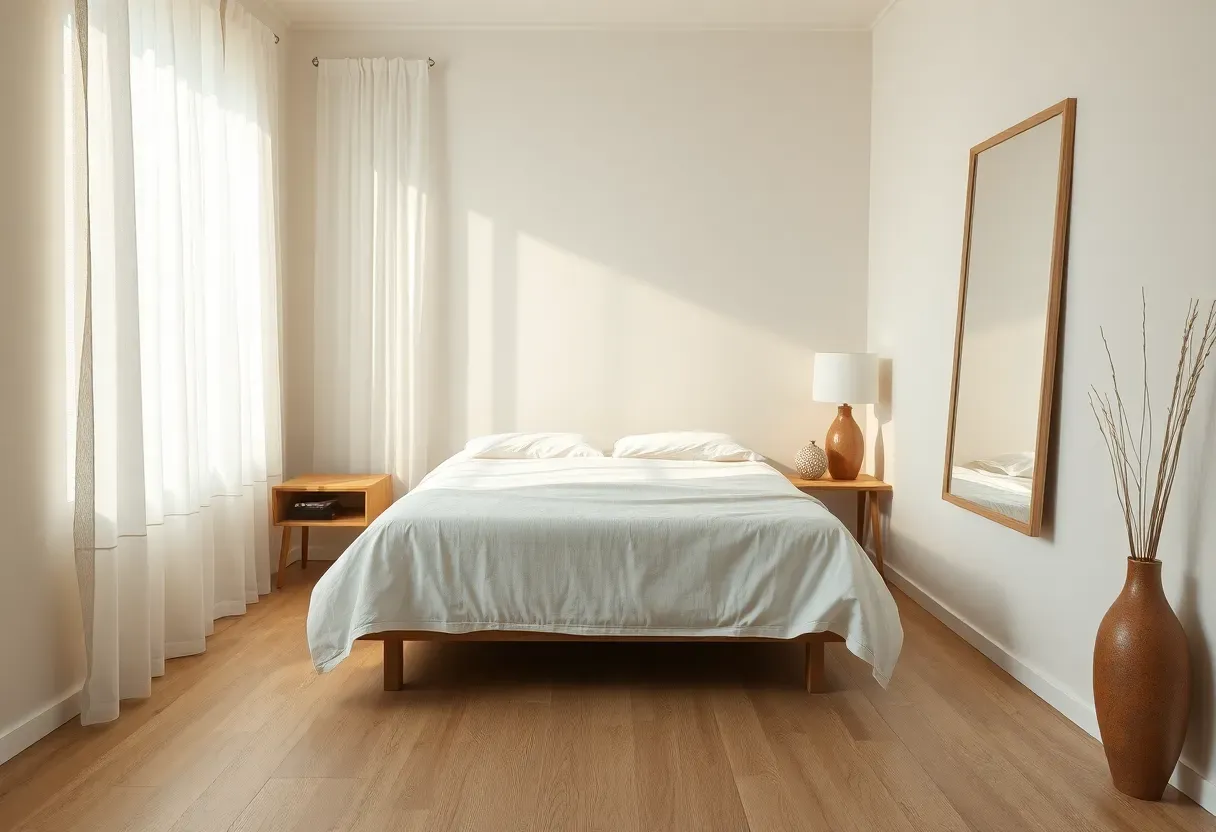
A small bedroom is one of the most common design challenges — and one of the most misunderstood. Most people try to solve it by buying smaller furniture, but that's only one piece of the puzzle. Knowing how to decorate a small bedroom so it genuinely feels bigger requires thinking about color, layout, light, and storage as a coordinated system rather than isolated choices. Each decision either opens the room up or closes it down, and the difference between a cramped box and a snug, considered retreat is almost always in the details.
These six steps work in sequence. Start at the beginning — clearing the space and taking real measurements — because every step that follows depends on knowing exactly what you're designing around. Done in order, these steps will transform a room that feels tight and frustrating into one that feels intentional, calm, and noticeably larger than its square footage suggests.
As an Amazon Associate I earn from qualifying purchases.
Table of Contents
What You'll Need
- Measuring tape and graph paper or a free room-planning app
- Peel-and-stick paint swatches in light, warm-neutral tones
- Under-bed storage boxes or a bed frame with built-in drawers
- A full-length or large wall mirror (at least 24 × 36 inches)
- Floating wall shelves rated for books or small objects
- A warm-white table lamp or plug-in wall sconce (2700K bulb)
- Sheer curtain panels in a tone matching the wall color
Step 1: Clear the Room and Map Your Space
The first thing a small bedroom needs is honesty. Take everything out — or at minimum off every surface — and spend five minutes standing in the empty room. Notice where the natural light enters, which wall your eye travels to first, and where the door and window positions create constraints. Small bedrooms hide their problems under accumulated objects, and you can't solve layout challenges you can't see clearly.
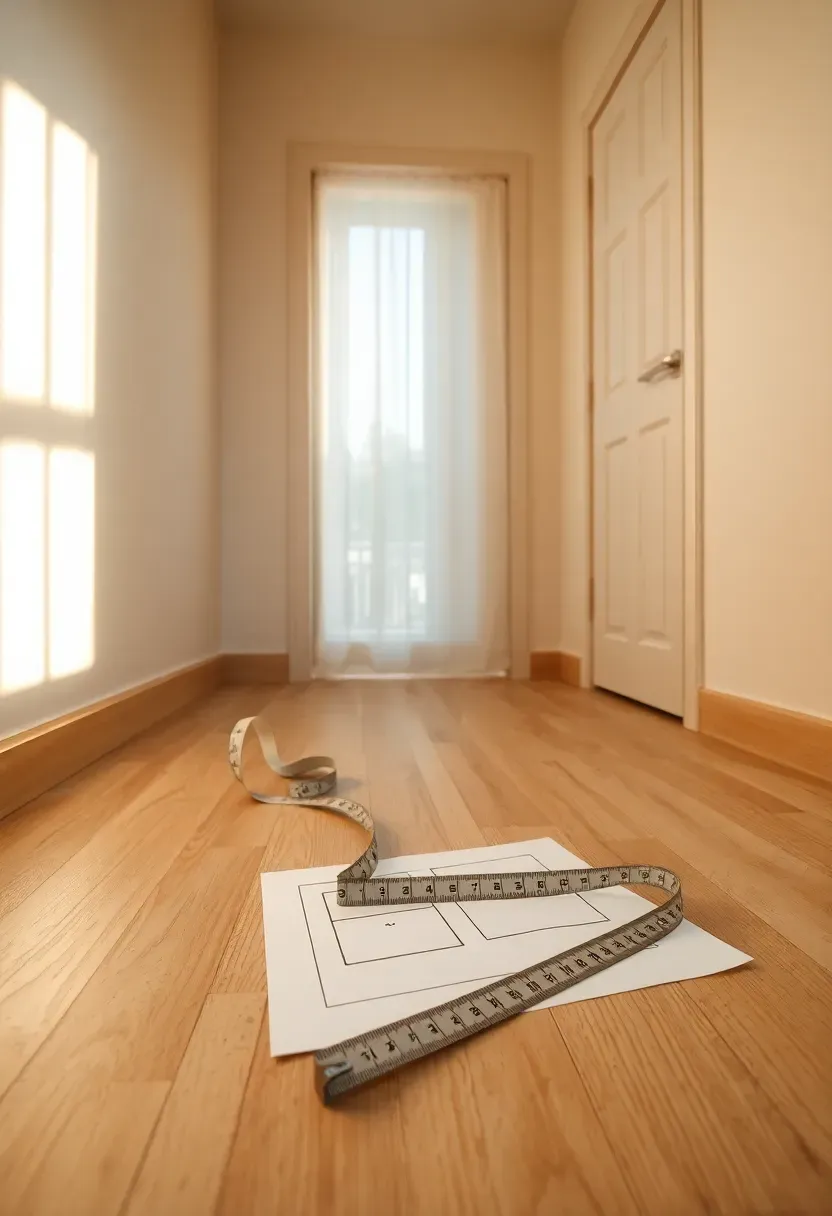
Measure the room in full: length, width, ceiling height, and the exact dimensions and placement of every door, window, and radiator. Sketch it on graph paper or plug the numbers into a free app like RoomSketcher or Planner 5D. This floor plan is your decision-making tool for every step ahead — it tells you whether a piece of furniture you're considering actually fits, and it reveals where walkways and clearances will become problems before you've moved anything heavy. Small rooms have almost no tolerance for layout mistakes, so planning on paper first is not optional.
- Do: mark the door swing on your floor plan — it consumes more floor space than most people account for
- Don't: start buying or moving furniture before the measurements are done — scale errors in small rooms are expensive to undo
- Pro tip: cut scaled paper rectangles representing your furniture and move them around the floor plan before committing to any arrangement
Step 2: Choose a Light, Cohesive Color Palette
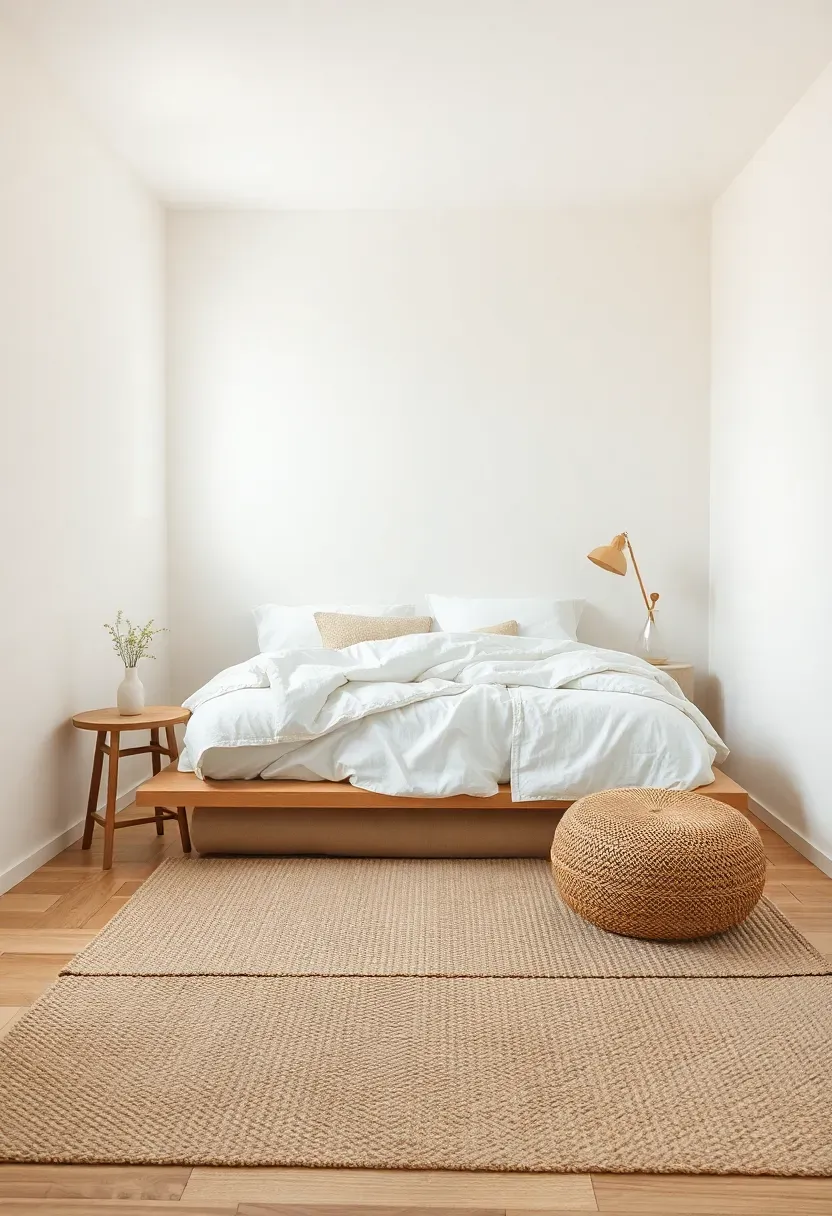
Color is the single most powerful visual tool for changing how large a room feels. Light colors reflect more light and push walls back; dark colors absorb light and draw walls inward. In a small bedroom, this physics-of-light principle is your greatest ally. Choose a palette of two to three tones — all within the same warm or cool family — and apply them consistently across walls, ceiling, and trim. The less visual interruption the eye encounters as it scans the room, the more open the space reads.
Recommended
Items for this idea
The most common mistake is painting walls pale and leaving the ceiling bright white. That contrast makes ceilings feel lower, not higher. Instead, paint the ceiling in a tone that is one or two shades lighter than the walls — the transition reads as a gentle fade rather than a hard boundary, and the room feels taller as a result. Extend the wall color onto the window trim and door frame as well. When everything is the same tone, the eye stops registering individual surfaces and starts reading the room as a unified, open volume.
- Do: use peel-and-stick swatches and live with them through morning and evening light before committing to paint
- Don't: introduce a dark accent wall — it creates a visual hard stop that makes the room feel shorter and narrower
- Pro tip: warm whites and greige tones work better than cool grey in north-facing or low-light rooms, where cool colors read as flat and slightly gloomy
Step 3: Position Furniture for Flow and Openness
In a small bedroom, furniture placement is more important than furniture quality. The wrong layout makes even the best pieces feel cramped. The goal is to maximize uninterrupted floor space — specifically the walkways between the bed, the door, and the window — while keeping the bed positioned so it anchors the room rather than dominating it. Use your floor plan from Step 1 to test arrangements before lifting anything.
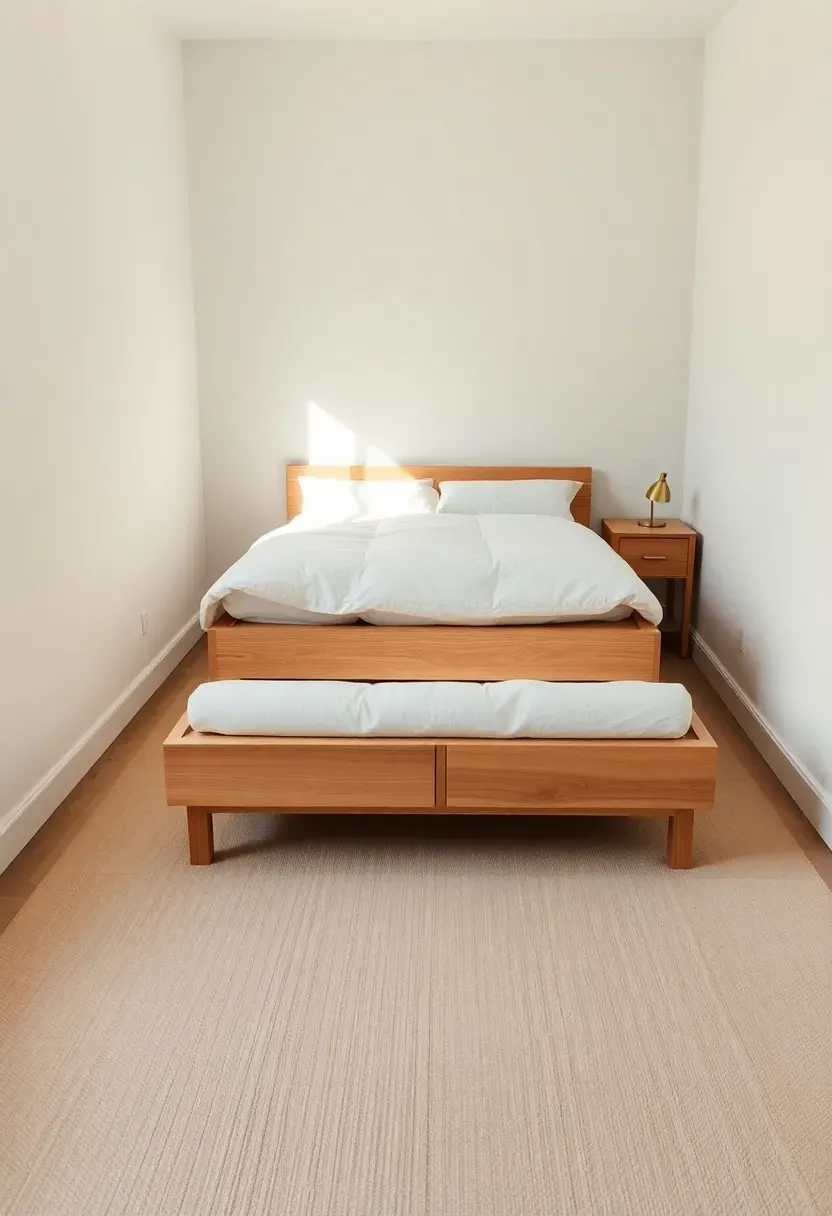
Scale matters as much as placement. Oversized furniture — a king bed in a 10×10 room, or a six-drawer dresser in a room with no clear wall — crowds the floor and raises the visual weight of the space. Choose furniture that is proportional: a queen or full bed with a low-profile platform frame, a floating bedside shelf or a wall-mounted sconce instead of a floor lamp, a slim two-drawer nightstand rather than a wide chest. Every inch of clear floor that is visible from the doorway reads as square footage. Keep it visible.
- Do: leave at least 24 inches of clearance on the sides of the bed you walk along — less than that and the room feels like an obstacle course
- Don't: push furniture flush against every wall; counterintuitively, pulling pieces slightly away from walls can make a room feel larger
- Pro tip: a low bed frame (under 14 inches off the floor) exposes more wall and makes ceilings feel higher — the visual effect is immediate
Step 4: Build In Smart Storage to Eliminate Clutter
Clutter is a small bedroom's most damaging design element. Every object on a surface, every pile on the floor, and every visible cord compresses the perceived size of the room. The solution isn't minimalism for its own sake — it's storage that is genuinely adequate for what you need to keep, so that surfaces can stay clear without constant effort. In a small bedroom, this means going vertical and under-bed rather than adding more furniture to the floor.
Recommended
Items for this idea
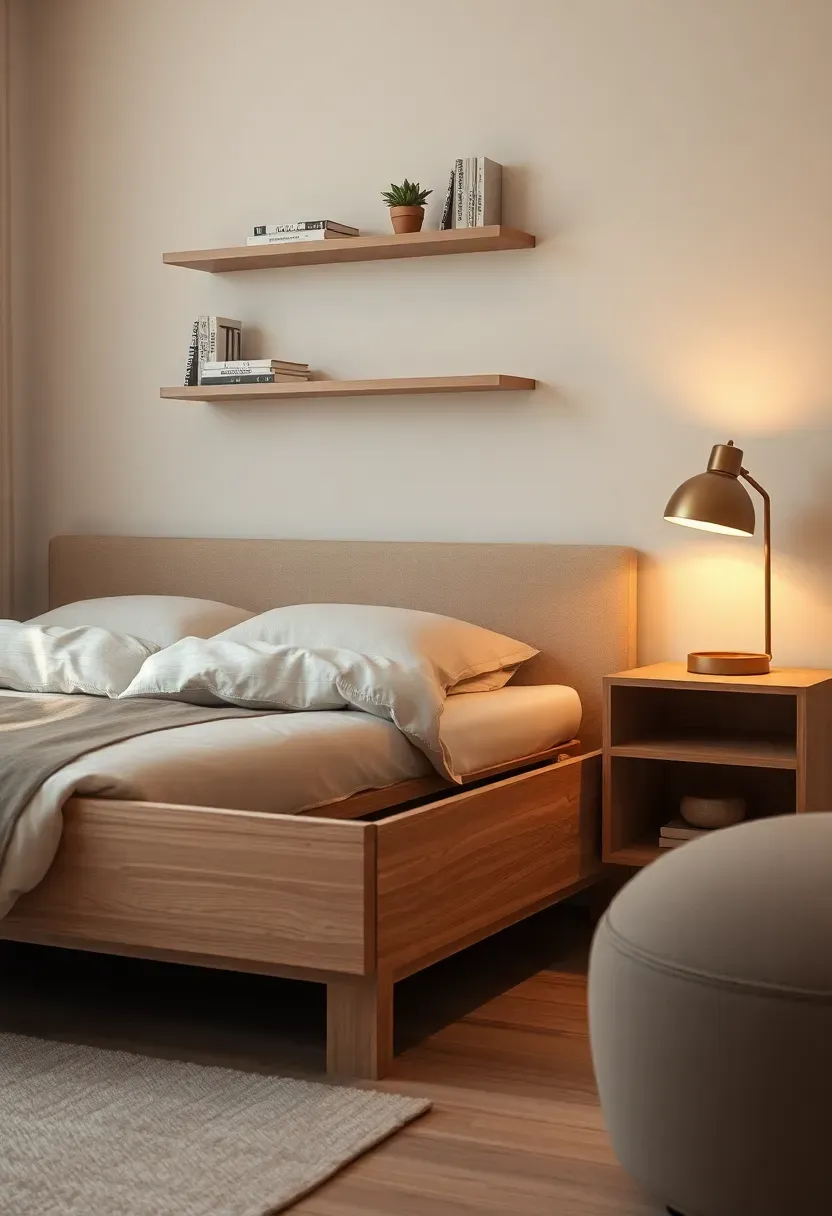
Under-bed storage is the most underused space in most small bedrooms. A bed frame with built-in drawers provides the equivalent of a full dresser without occupying any additional floor space. Floating shelves mounted above the headboard or beside the bed keep books and small objects off the nightstand. A wall-mounted pegboard or a few hooks near the door handles items that otherwise end up draped over chairs. Closed storage — drawers, lidded boxes, and baskets with lids — is more visually effective than open storage because it gives the eye a place to rest rather than inventorying every object.
- Do: measure your under-bed clearance before buying storage boxes — most beds have between 7 and 13 inches, and boxes that don't fit are useless
- Don't: leave visible storage open on multiple walls; one open shelving unit is a feature, three is visual noise
- Pro tip: vacuum-seal bags for seasonal bedding and clothing free up dramatic amounts of under-bed space with zero additional furniture
Step 5: Maximize Light — Natural and Artificial
Light — both natural and artificial — has a measurable effect on how large a room feels. A well-lit small bedroom reads as significantly larger than the same room in dim conditions. Natural light is the priority: keep window treatments light and minimal so daylight can reach as far into the room as possible. Sheer linen or voile panels in a tone that matches the wall color let light through while maintaining privacy, and they visually extend the wall plane rather than interrupting it the way heavy curtains do.
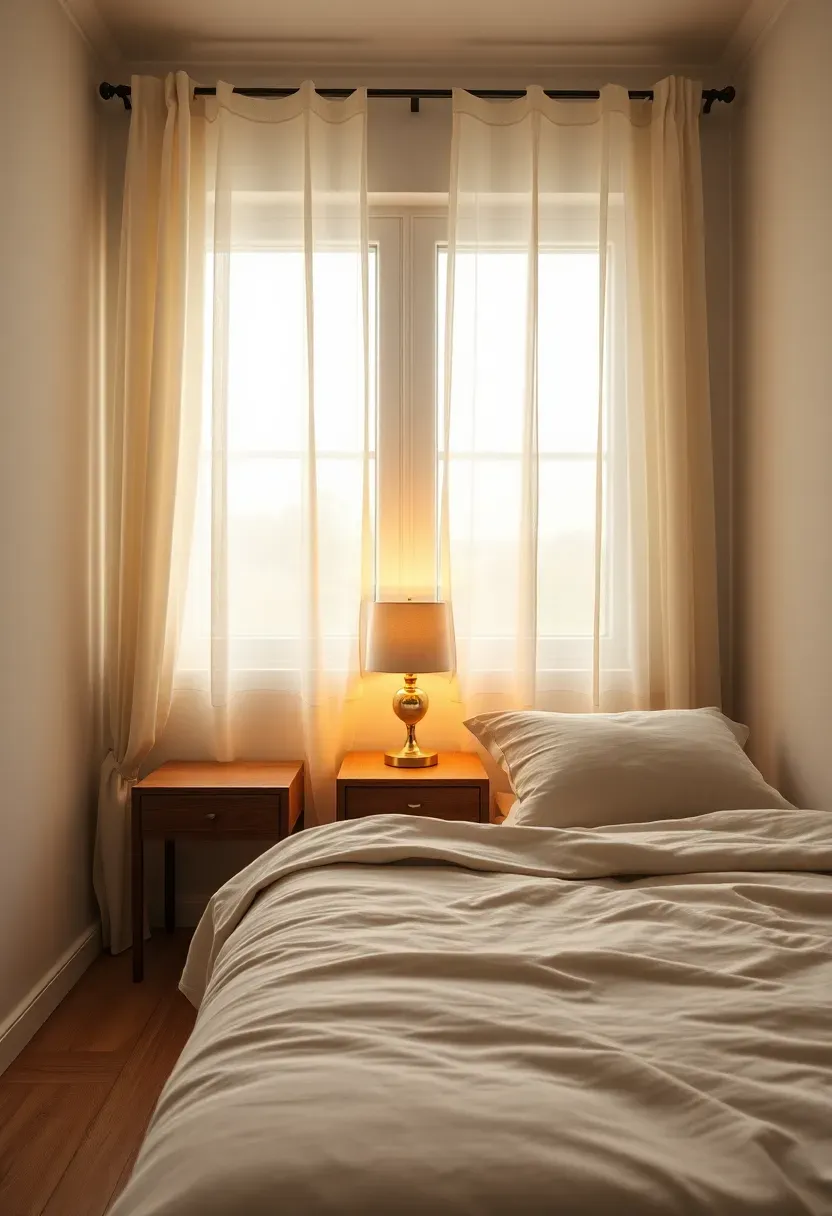
For artificial lighting, the principle is the same as any bedroom: avoid a single overhead fixture as your only source. A harsh overhead light creates shadows that visually shrink the room and eliminates the warmth that makes a space feel comfortable. Instead, add a table lamp or plug-in wall sconce at nightstand height for a warm, lower-level layer. Use bulbs rated 2700K and no more than 500 lumens per bedside fixture. If you keep the overhead light, put it on a dimmer — so you can use it at full brightness for tasks and drop it to 20% for ambiance in the evening.
- Do: hang curtain rods at ceiling height and extend them 8–10 inches past the window frame on each side — this makes windows look substantially larger
- Don't: use blackout curtains in a heavy dark fabric — in a small room, blocking daylight makes the walls close in; use a blackout lining on a lighter fabric instead
- Pro tip: a lamp placed in a corner casts light across two walls simultaneously and fills shadow zones that overhead lights create
Step 6: Add Mirrors, Vertical Lines, and Minimal Decor
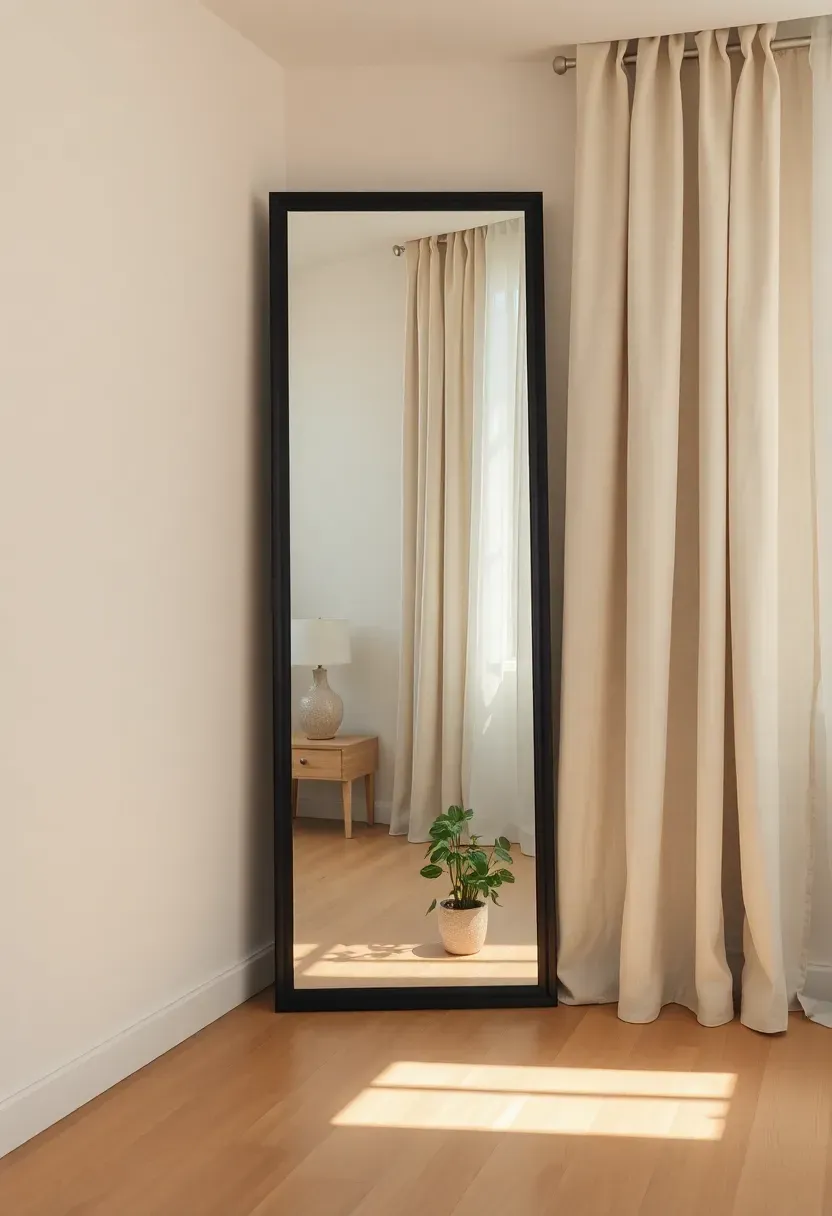
The final step pulls together three finishing techniques that each create the perception of more space. Mirrors double the apparent depth of any room by reflecting both natural and artificial light and repeating the visual field. A single large mirror — full-length, leaned against the wall or mounted opposite a window — does more for a small bedroom's perceived size than almost any other decorating choice. Position it where it reflects a light source or a view of the room, not a wall or the back of a door.
Recommended
Items for this idea
Vertical lines draw the eye upward and make ceilings feel taller. Achieve this with floor-to-ceiling curtains (even if the window is small), tall narrow shelving units, vertically oriented artwork, or a headboard that extends high up the wall. Keep decorative objects to a minimum: one plant, one lamp, one piece of art, and a single small tray on the nightstand. In a small bedroom, every item you add competes for the limited visual field. Each piece you leave out is space you give back — and in a compact room, empty space is the most valuable design element you have.
- Do: choose artwork that is vertically oriented or hang a horizontally proportioned piece higher than you normally would to draw the eye up
- Don't: place a mirror where it reflects a cluttered zone or the inside of a closet — what the mirror shows matters as much as its size
- Pro tip: mirrored closet doors are the highest-impact option in a small room — they serve a practical function while visually doubling the room's depth every time you walk in
Frequently Asked Questions
What is the best color to make a small bedroom look bigger?
Warm whites, soft creams, and light greige tones work best because they reflect natural light without feeling sterile. The key is to keep the ceiling, walls, and trim in the same tonal family so the eye reads the room as a unified space rather than a series of interrupted surfaces. Avoid cool greys in north-facing or low-light rooms — they absorb warmth and make small spaces feel compressed and flat.
Should you use a king bed in a small bedroom?
Generally, no. A king bed in a room under 12 × 12 feet leaves inadequate walking clearance and visually dominates the space. A queen or full-size bed on a low-profile platform frame is almost always the better choice — it leaves more uninterrupted floor visible from the doorway, which is the single biggest lever for making a small room feel larger. If a king is non-negotiable, prioritize a frame with built-in storage and remove every other large piece from the room.
Do mirrors actually make a room look bigger, or is that a myth?
They genuinely work, but placement is everything. A large mirror positioned to reflect a window or a light source creates real depth by duplicating the brightest part of the visual field. A mirror that faces a blank wall or a dark corner simply reflects what's already dull. For maximum effect, lean a full-length mirror against the wall opposite your main window, or hang it at an angle where it captures daylight and the longest sightline in the room.
Is it possible to decorate a small bedroom without spending much money?
Yes — the most impactful steps cost little or nothing. Rearranging furniture, clearing clutter, and hanging curtain rods higher are free. A can of paint for the walls and ceiling runs under $40. A large second-hand mirror can be found at thrift stores for under $20. The steps that cost more — a bed frame with storage, quality lighting — can be prioritized and done gradually. Focus budget on the highest-impact items: light colors on the walls and a large mirror.
About the author
OBCD
CGI visualization and interior design content. We create detailed 3D renders and curate practical design ideas for every room in your home.