How to Decorate a Small Bedroom in 2026: 7 Space-Smart Steps
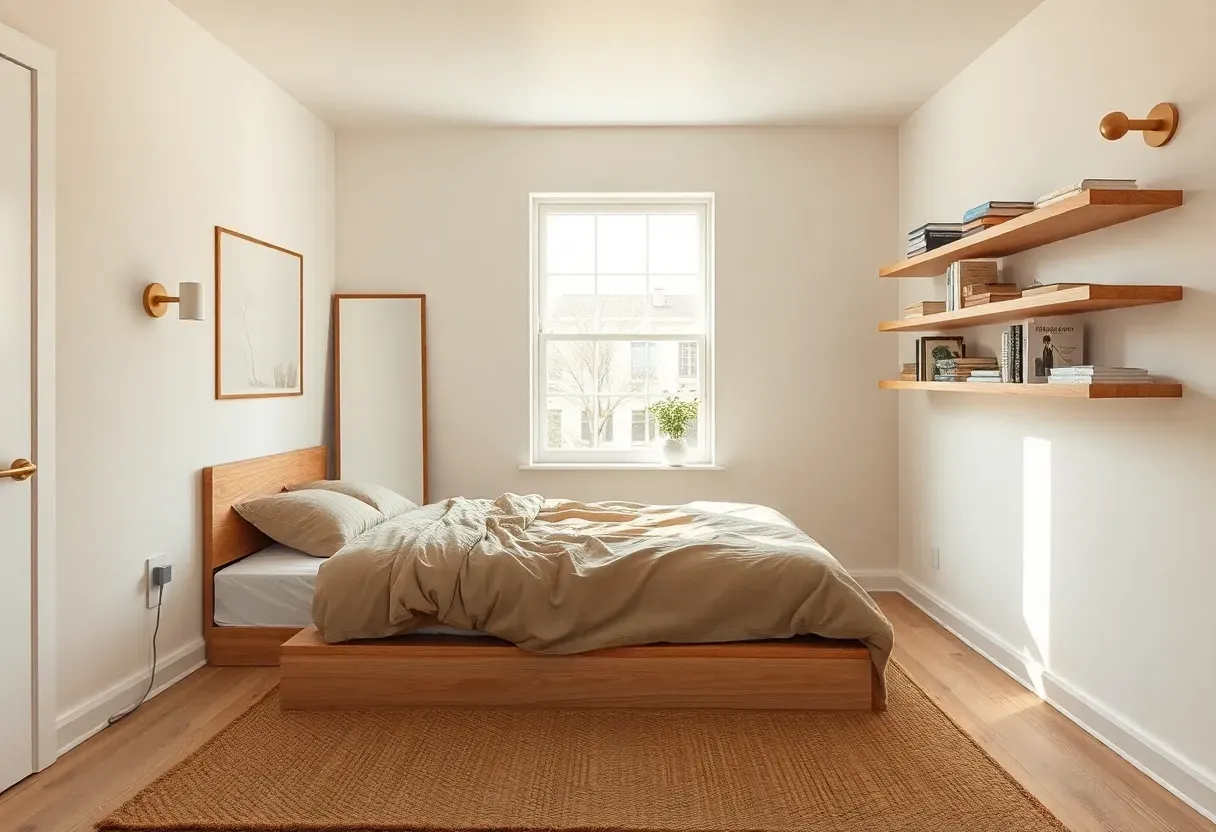
A small bedroom doesn't have to feel like a storage unit with a mattress in it. The difference between a cramped room and a genuinely cozy, functional retreat is rarely about square footage — it's about decisions: where the bed sits, how light moves through the space, what stays and what goes. In 2026, designers are doubling down on low-profile furniture, vertical storage, and warm-but-light palettes that make compact rooms feel deliberately designed rather than reluctantly small.
These seven steps are ordered to build on each other — start with layout before you touch color, handle storage before lighting, and save decor for last. Work through them in sequence and you'll avoid the expensive mistake of decorating around a problem rather than solving it. The goal isn't to make the room look bigger on Instagram; it's to make it feel genuinely good to live in every single day.
As an Amazon Associate I earn from qualifying purchases.
Table of Contents
- Step 1: Audit the Room and Rethink the Layout
- Step 2: Choose a Light, Space-Expanding Color Palette
- Step 3: Invest in a Low-Profile Bed with Built-In Storage
- Step 4: Go Vertical with Shelving and Wall Storage
- Step 5: Layer Smart, Low-Profile Lighting
- Step 6: Use Mirrors and Reflective Surfaces Strategically
- Step 7: Edit Decor to the Essential Few
What You'll Need
- Measuring tape and graph paper (or a free room-planner app) for layout planning
- Paint swatches or peel-and-stick samples in your chosen light palette
- A platform or storage bed frame sized correctly for the room (full or queen)
- Wall-mounted floating shelves and a few sturdy shelf brackets
- Two plug-in or hardwired wall sconces at bedside (no floor lamps needed)
- One large mirror (at least 24 × 36 inches) to place opposite or beside a window
- Under-bed storage boxes or vacuum-compression bags for out-of-season items
Step 1: Audit the Room and Rethink the Layout
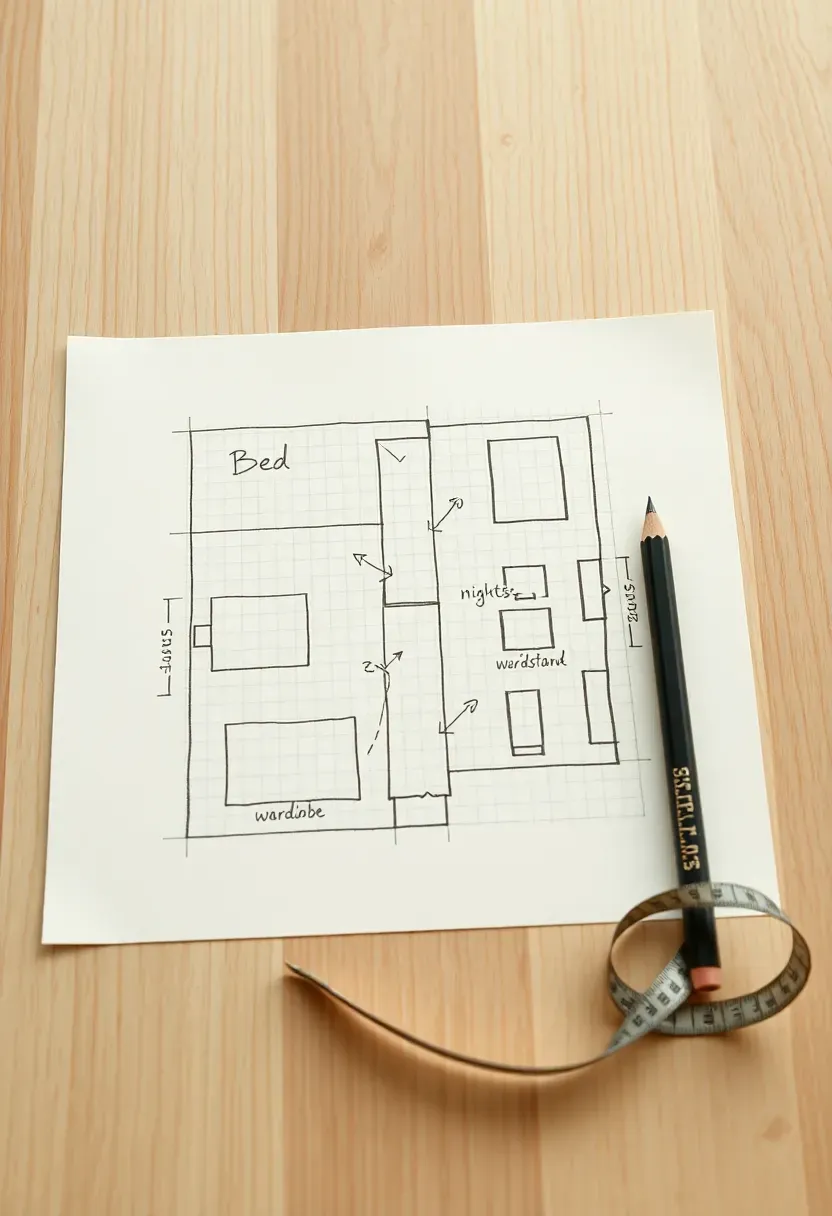
Before you spend a dollar or hang a single shelf, measure the room and map it out to scale. The single most common mistake in small bedroom decorating is arranging furniture the way it arrived and never questioning it again. In a compact room, a bed pushed against the wrong wall can block natural light, crowd the door swing, or leave an awkward corridor of dead space that serves no purpose. Two hours spent remapping the layout will save weeks of frustration later.
Recommended
Items for this idea
The 2026 principle for small bedroom layouts is clearance over storage: prioritize a clear path from the door to the bed and from the bed to the wardrobe. If there isn't room for a full walk-around, position the bed against one side wall rather than the center, freeing the entire opposite side for circulation. Nightstands with a small footprint — or wall-mounted alternatives — prevent the bed from visually expanding beyond its physical edge. Photograph each arrangement before you commit; you'll notice things in a photo that you miss standing in the room.
- Do: use a free app like Planner 5D or RoomSketcher to test layouts before moving any furniture physically
- Don't: default to centering the bed on the longest wall — in a small room, a side-wall placement often creates more usable floor space
- Pro tip: leave at least 24 inches of clearance on the sides and foot of the bed; below 18 inches and the room starts to feel like a corridor
Step 2: Choose a Light, Space-Expanding Color Palette
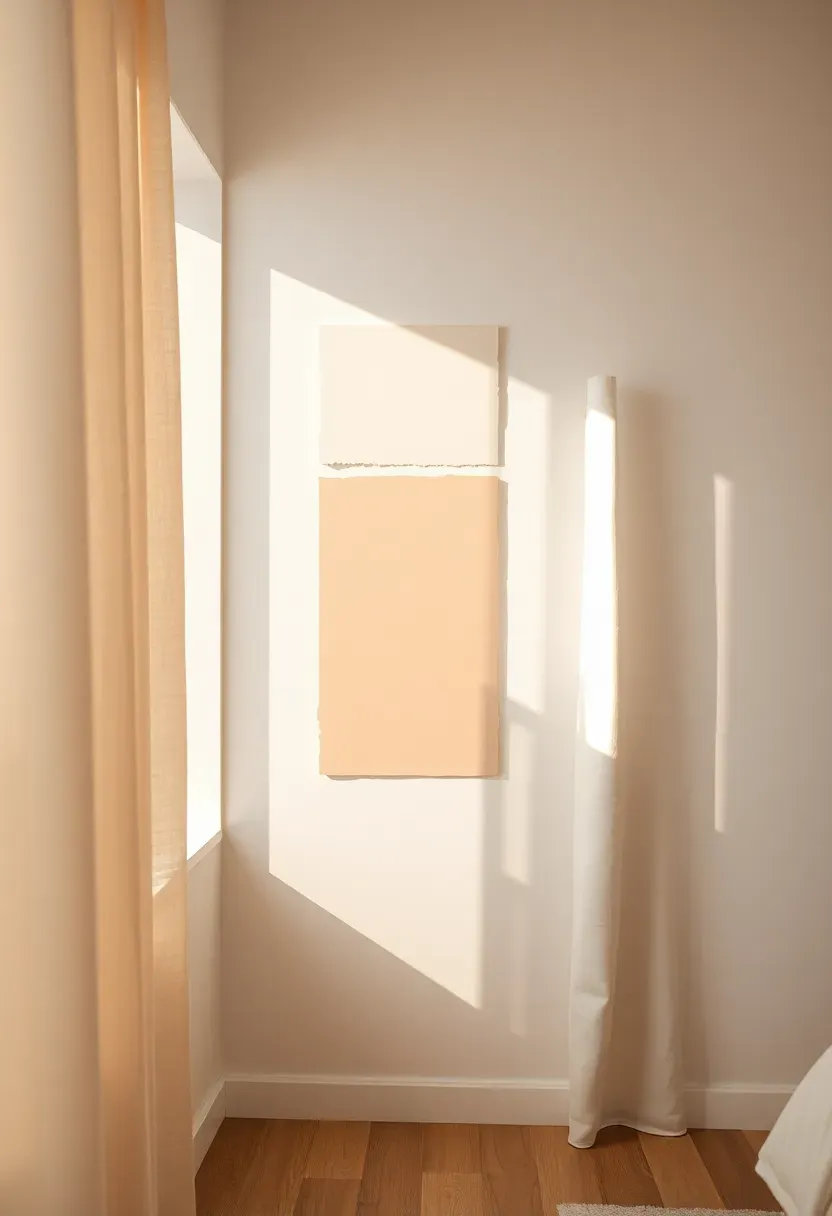
Color is the cheapest and most powerful tool for changing how a small room feels. In 2026, the direction for small bedrooms is warm and light rather than stark white: warm whites with a yellow or pink undertone (not blue-based whites), soft greiges, pale blush, and muted sage all make walls appear to recede without feeling sterile. The key mechanism is value contrast — the less contrast between walls, trim, and ceiling, the less the eye registers the boundaries of the room, making it feel larger than it measures.
Recommended
Items for this idea
Paint the ceiling in the same color as the walls — or just one shade lighter — rather than defaulting to bright white. A contrasting white ceiling draws the eye upward and emphasizes how low or narrow the room is; a matched or near-matched ceiling eliminates that boundary and makes the room feel taller. Do the same for trim: painting skirting boards and window casings in the same wall color rather than bright white reduces the number of visual interruptions the eye has to process, which reads as spaciousness. Test swatches at different times of day before committing, since a color that looks airy at noon can feel dim by evening.
- Do: extend the wall color onto the ceiling and trim for a seamless, enveloping effect
- Don't: choose a cool-based white — in a north-facing or low-light room, cool whites read grey and make small spaces feel chilly
- Pro tip: the 2026 trend is "tone-on-tone" — a single color family across walls, trim, and even bedding for a room that feels intentional rather than claustrophobic
Step 3: Invest in a Low-Profile Bed with Built-In Storage
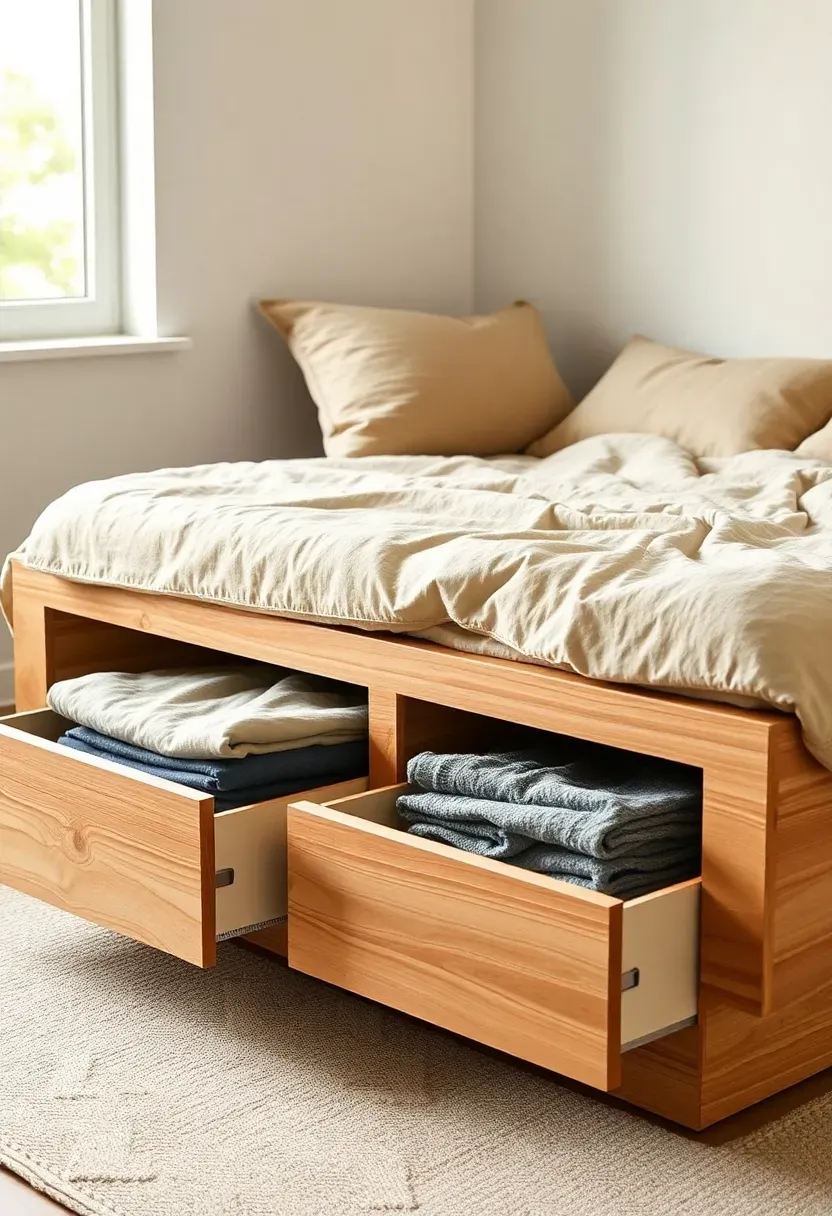
The bed occupies 40–60% of a small bedroom's floor space, so choosing the right one is the most consequential furniture decision you'll make. In 2026, the platform bed remains the dominant choice for compact rooms — its low profile (typically 12–16 inches from floor to mattress top) keeps the visual horizon low, which makes ceilings feel taller by contrast. A tall four-poster or high-headboard bed does the opposite: it consumes vertical space and shrinks the room visually from every angle.
Recommended
Items for this idea
The smarter upgrade in 2026 is a storage platform bed — one with built-in drawers on the sides or a hydraulic lift frame that reveals a full under-bed storage compartment. This single piece of furniture can replace a chest of drawers entirely in a small room, freeing up the floor space that dresser would have occupied. Under-bed storage is the most overlooked real estate in a bedroom: a queen-size bed has roughly 30 cubic feet of space beneath it, enough for an entire season of clothing. Claim it intentionally rather than letting it fill with dust and forgotten bags.
- Do: choose a platform bed with a headboard that mounts flush to the wall — this eliminates wasted space behind the headboard
- Don't: buy a bed with legs taller than 10 inches if you're adding under-bed storage boxes — the gap becomes difficult to reach and tends to fill with visible clutter
- Pro tip: a hydraulic lift bed gives significantly more storage than side-drawer models and keeps the external bedroom profile completely clean and minimal
Step 4: Go Vertical with Shelving and Wall Storage
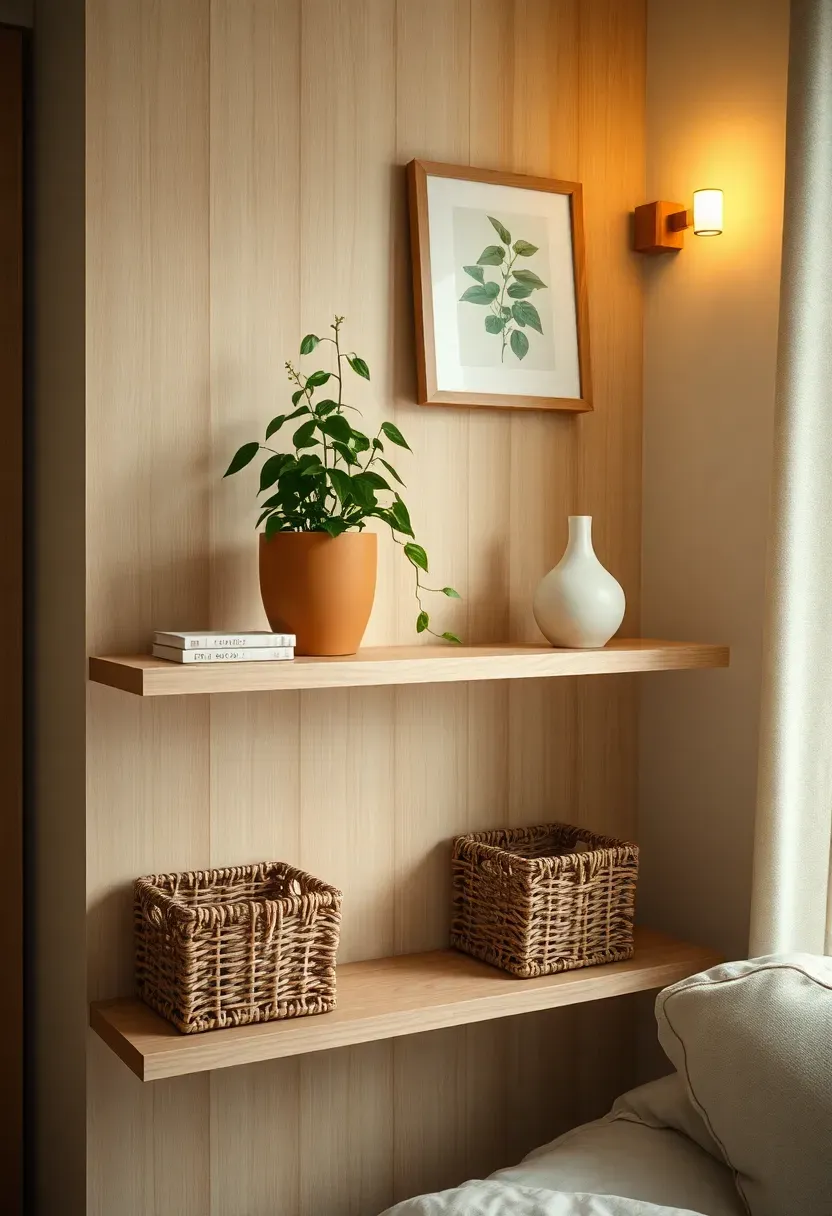
Floor space is the scarcest resource in a small bedroom. The solution is to redirect storage upward — to the vertical plane of the walls — rather than competing for the same precious square footage as your furniture. Wall-mounted floating shelves, pegboards, and hanging organizers reclaim the zones above furniture height (typically above 60 inches) that most small bedrooms leave completely empty. Done well, vertical storage reads as intentional design; done poorly, it looks like chaos stacked on chaos. The difference is structure and restraint.
Recommended
Items for this idea
The 2026 approach is to treat one wall as a full-height storage feature — ideally the wall adjacent to the bed rather than the one opposite it — and use the rest of the walls sparingly. A single run of shelves from countertop height to ceiling height on one wall provides dramatically more storage than a freestanding bookcase while taking up zero floor space. Use the lower shelves for frequently accessed items and baskets that hide the functional clutter; reserve upper shelves for books, plants, and decorative objects. The visual weight stays low, and the storage stays high.
- Do: use matching baskets or boxes on lower shelves to corral items that would otherwise look messy — uniformity reads as organization even if the contents aren't
- Don't: fill every shelf to capacity — leave 20–30% of shelf space empty to give the eye somewhere to rest
- Pro tip: anchoring shelves directly into wall studs (not just drywall anchors) is non-negotiable above the bed — weight-bearing shelves over a sleeping area need to be secure
Step 5: Layer Smart, Low-Profile Lighting
Every lamp that sits on a surface is a surface claim. In a small bedroom where bedside tables are often undersized or absent entirely, a table lamp on each side of the bed competes with everything else that needs to live at arm's reach — a glass of water, a phone, a book. The 2026 approach is to move light sources off horizontal surfaces entirely: wall-mounted plug-in sconces at bedside, an LED strip behind the headboard for ambient glow, and a single pendant or flush-mount on a dimmer for overhead ambient use when needed.
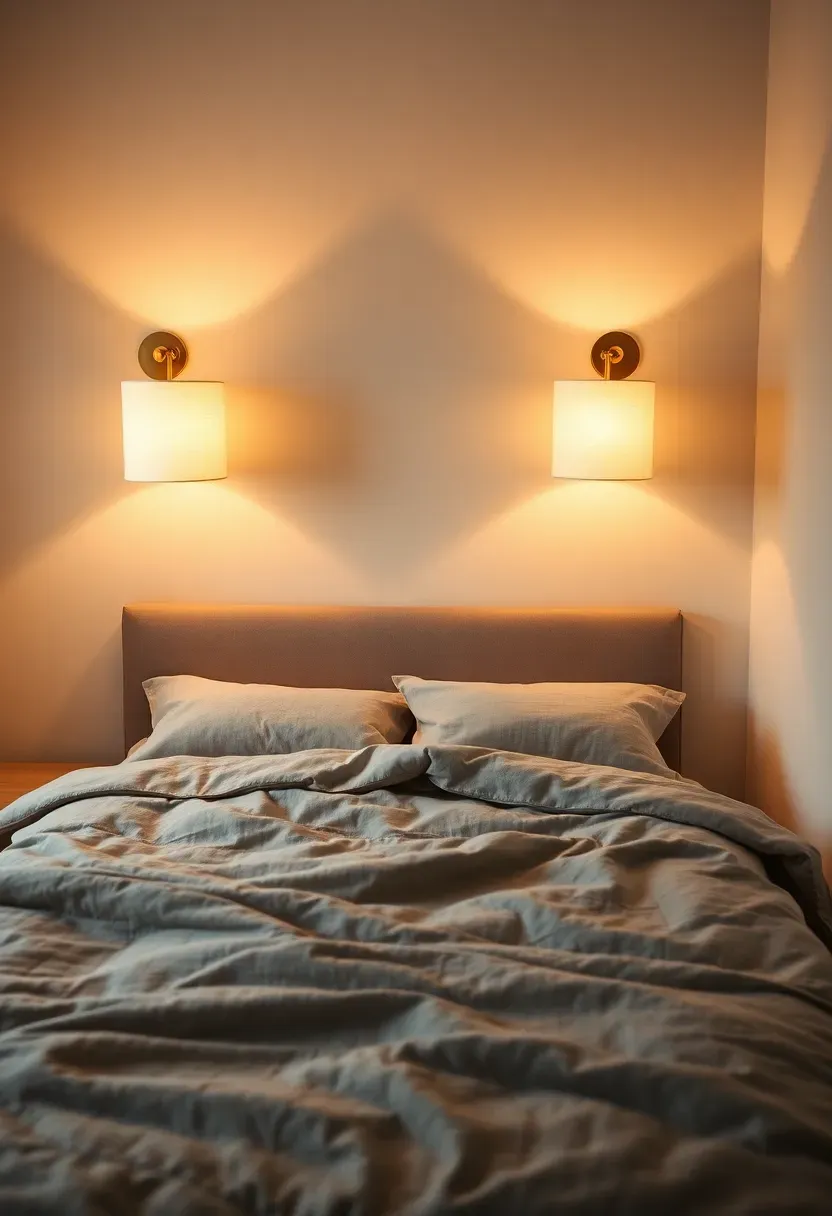
Sconces are the most impactful single upgrade for small bedrooms because they do two things at once: they free up the entire nightstand surface and they provide reading light at the correct height (at eye level when sitting up in bed). Plug-in versions require no electrician and install in 20 minutes. Choose a style with a fabric shade or diffuser rather than a bare bulb — bare bulbs at eye level create glare, and glare in a small room makes the space feel agitated rather than calm. Set sconce bulbs at 2700K and no more than 300 lumens each for evening-appropriate warmth.
- Do: add an LED strip light in a warm white (2700K) behind the headboard or beneath the bed frame for a soft ambient layer that creates depth without taking up any surface
- Don't: use floor lamps in a small bedroom — they compete with foot traffic, tip easily, and take up floor real estate you don't have
- Pro tip: a dimmer switch or smart bulb lets you shift the room from morning-bright to evening-dim without any additional fixtures — it's the cheapest mood upgrade in the room
Step 6: Use Mirrors and Reflective Surfaces Strategically
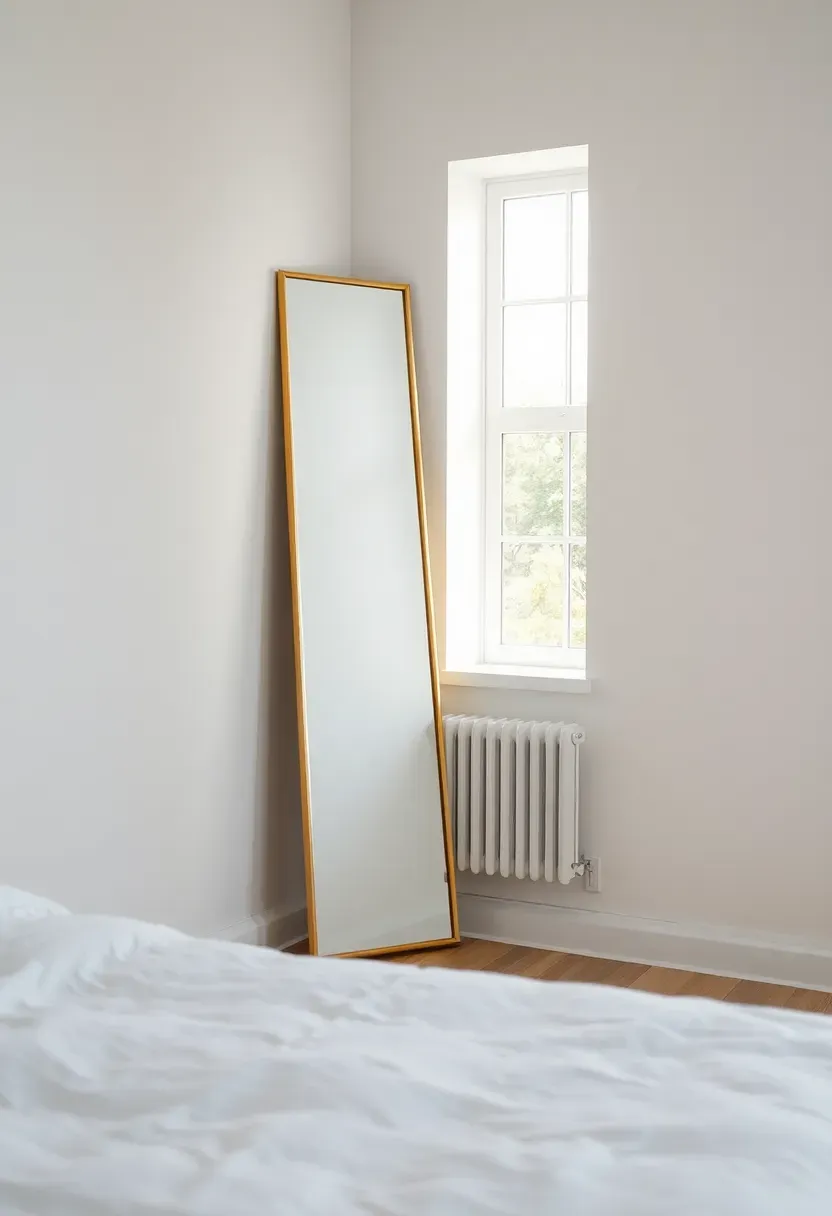
A mirror placed well in a small bedroom is worth more than almost any other decor purchase. The mechanism is straightforward: a mirror reflects the light source opposite it and the view beyond its frame, creating the visual impression of another opening in the wall — another window, another depth. In a room that has only one real window, a well-placed full-length or large-format mirror effectively doubles the light and depth of the space without any structural change.
Recommended
Items for this idea
Position the mirror so it reflects either the window directly or the most open and light-filled part of the room. A mirror that reflects a cluttered closet or a dark corner adds nothing; a mirror that catches window light and bounces it back across the room can transform the room's entire atmosphere. In 2026, the preferred format for small bedrooms is a large leaning mirror (full-length, 60–72 inches tall) rather than a small decorative mirror — the larger the reflective surface, the more significant the depth effect. As a secondary move, consider a mirrored wardrobe or closet door to multiply the effect without adding another object to the room.
- Do: lean or hang the mirror on the wall directly opposite the window — this is the position that doubles perceived light most effectively
- Don't: place the mirror so it reflects the bed directly — some people find this disruptive to sleep, and it also reduces the sense of calm in the room
- Pro tip: a brass or warm-toned mirror frame contributes its own warmth to the palette even when not reflecting anything — avoid chrome or cold silver in warm-palette small rooms
Step 7: Edit Decor to the Essential Few
Small rooms cannot carry the same decor load as large ones. A piece of art that reads as a nice accent in a spacious bedroom becomes a visual interruption in a compact one; a cluster of objects on a nightstand that looks curated in a generous room looks cluttered in a tight one. The final step in decorating a small bedroom is the most demanding: deciding what to remove, not what to add. Every object you don't include is space the eye doesn't have to process — and in a small room, that visual rest translates directly into perceived spaciousness.
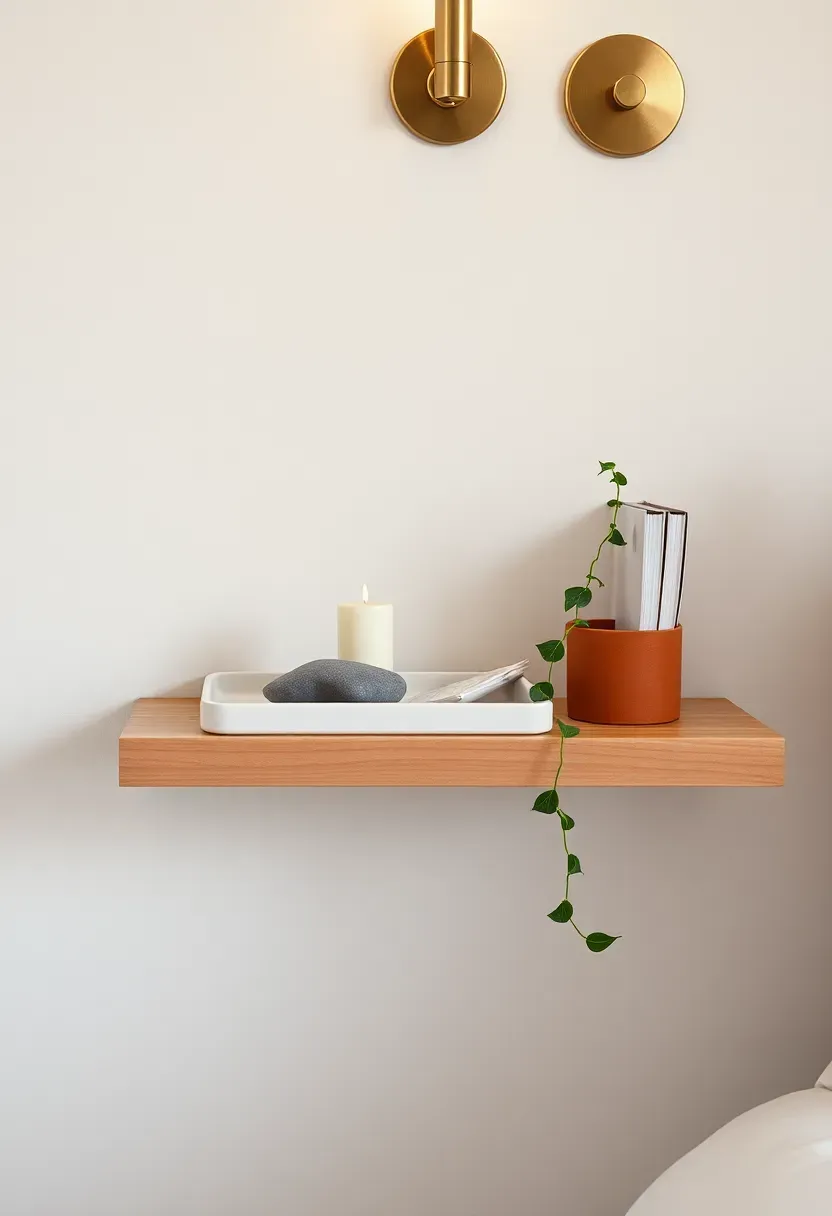
The 2026 editing rule for small bedrooms is one focal point per zone. One piece of art (not a gallery wall) on the main wall. One plant (not a collection) on a shelf or windowsill. One tray on the nightstand corralling two or three items rather than six. A rug that fits the bed zone without crowding the edges of the room. Every decision toward fewer, better-chosen things has a compounding effect: the room reads as more spacious, more intentional, and more restful all at once. Live in the room for a week before adding anything decorative — you'll find that many surfaces feel fine empty, and that makes the places where you do add something feel genuinely special.
- Do: choose one piece of wall art sized appropriately for a small room — a single print at 18×24 inches above the bed is enough; going larger can overwhelm
- Don't: create gallery walls in small bedrooms — multiple frames fragment the wall surface and visually shrink the room
- Pro tip: a rug sized to extend 18 inches on each side and at the foot of the bed defines the sleeping zone without competing for circulation space
Frequently Asked Questions
What is the single most effective change for making a small bedroom feel larger?
Rethinking the layout before doing anything else. Moving the bed to optimize floor clearance and circulation — even without changing a single decor item — often has more impact than any purchase. The second most effective change is painting the ceiling and trim to match the walls, which eliminates visual boundaries and makes the room feel significantly taller and more open.
Should a small bedroom have a rug, or does it make the room feel smaller?
A rug in the right size actually makes a small bedroom feel more intentional and complete — but size matters critically. Choose a rug large enough to anchor the bed zone (extending at least 18 inches on the sides and foot of the bed) in a light or medium tone that complements the wall color. A rug that's too small floats awkwardly in the space and makes the room feel more fragmented, not less.
Is a platform bed always the best choice for a small bedroom?
It's the best choice for visual spaciousness, but only if you pair it with intentional under-bed storage. Without that, a platform bed simply trades one storage problem (a chest of drawers on the floor) for another (unused under-bed space). A hydraulic storage bed gives you the low visual profile of a platform bed plus 30+ cubic feet of hidden storage — that combination is effectively unbeatable in a small room.
Can dark colors work in a small bedroom, or should I always use light tones?
Dark colors can absolutely work in a small bedroom — but the approach is different. Instead of using dark tones to expand the space, you use them to create depth and a cocooning atmosphere that makes the smallness feel intentional rather than limiting. The key is going all-in: painting walls, ceiling, and trim in the same deep tone so there are no visual boundaries at all. Half-measures with one dark accent wall in a small room tend to visually shrink rather than enrich the space.
About the author
OBCD
CGI visualization and interior design content. We create detailed 3D renders and curate practical design ideas for every room in your home.