How to Decorate a Small Bedroom on a Budget: 5 Easy Steps
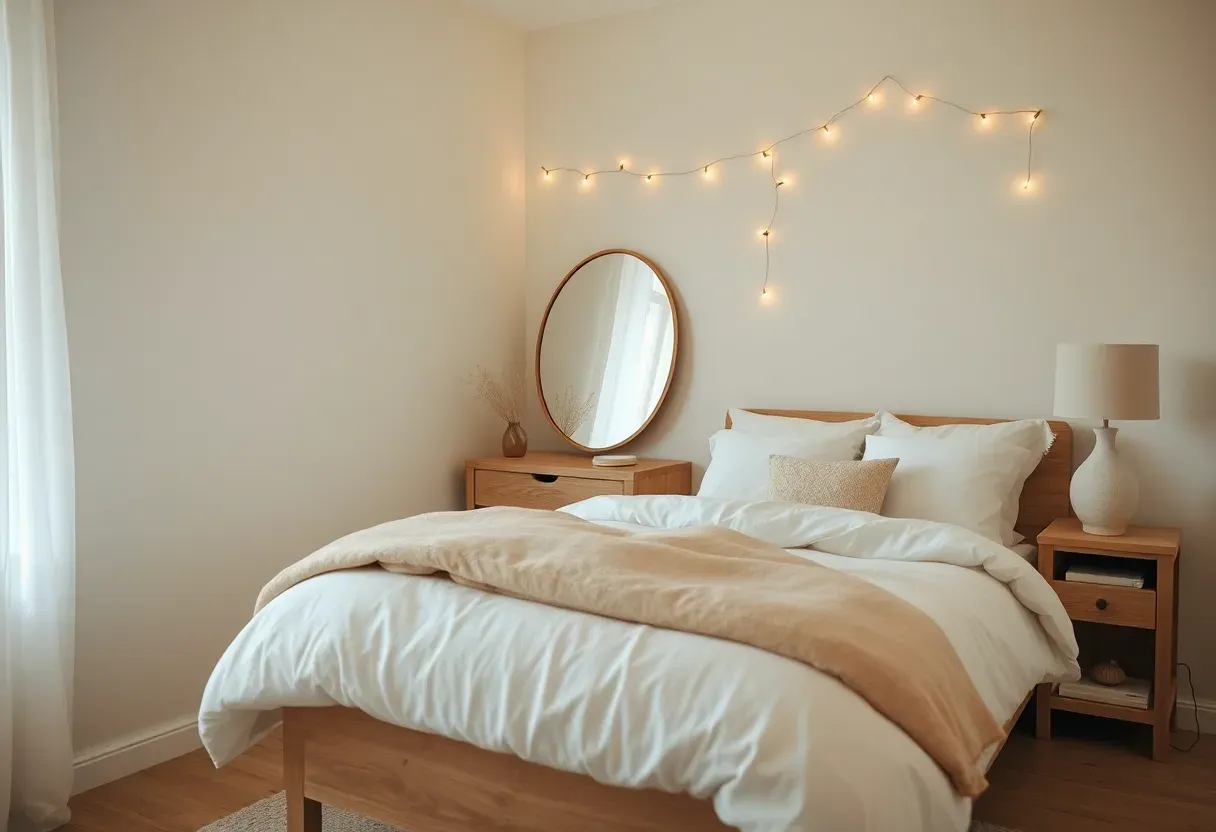
A small bedroom doesn't have to feel cramped, bare, or like an afterthought. With the right sequence of decisions — color first, furniture second, textiles third — you can transform even the tightest room into a space that feels considered, calm, and genuinely comfortable. The good news: knowing how to decorate a small bedroom on a budget is mostly a matter of prioritizing correctly, not spending more.
These five steps take you from a blank or cluttered small room to a cohesive, inviting retreat without crossing the $150 mark. Work through them in order — each step builds the foundation for the next — and you'll spend less time second-guessing purchases and more time enjoying the result.
As an Amazon Associate I earn from qualifying purchases.
Table of Contents
What You'll Need
- Paint samples or large peel-and-stick swatches in 2–3 light, warm-neutral tones
- A fitted sheet, duvet cover, and at least one textured throw in a cohesive color palette
- One large mirror (round or rectangular leaner) and a simple plug-in lamp or wall sconce
- A small tray, one ceramic or glass vase, and 2–3 budget accessories that match your color story
- Optional: peel-and-stick hooks, floating shelf brackets, and command strips for wall storage without drilling
Step 1: Choose a Light, Space-Expanding Color Palette
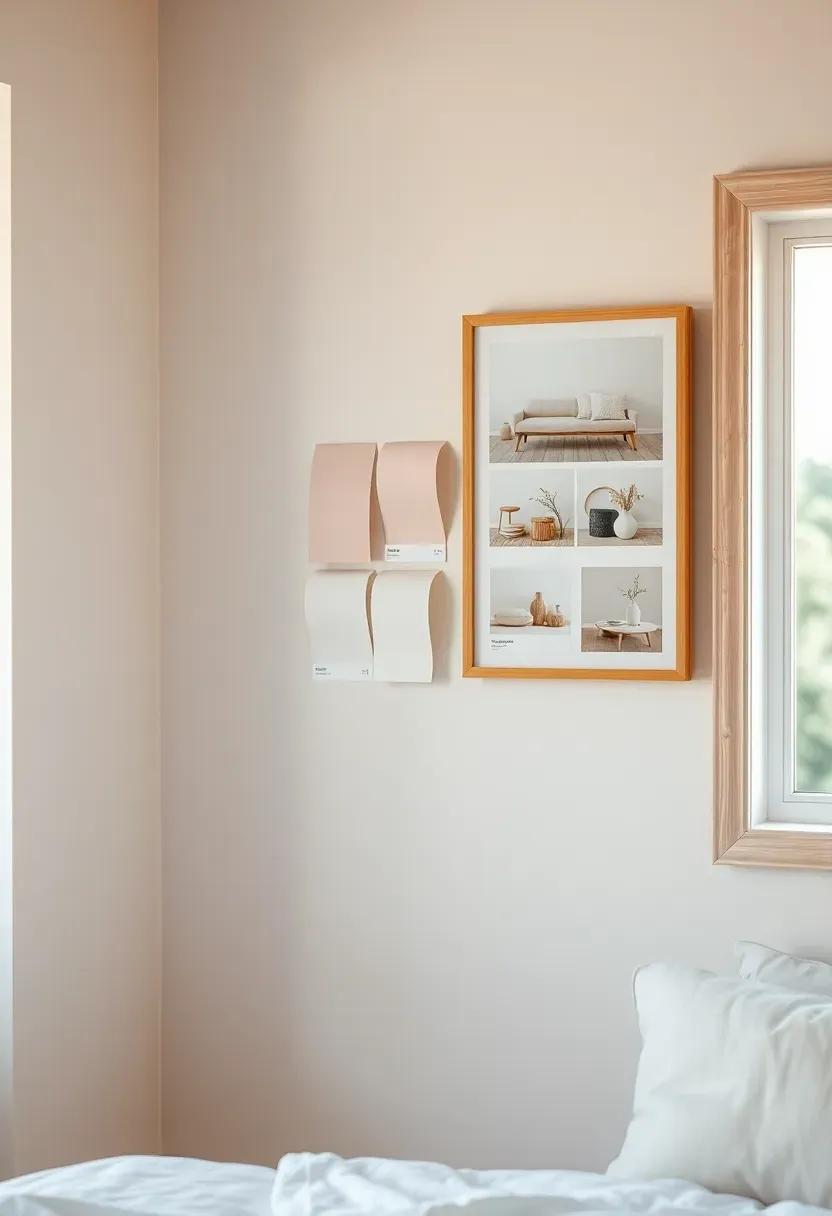
Color is the single highest-leverage decision in a small bedroom — and it costs almost nothing to get right if you test before you commit. Light, warm neutrals such as soft ivory, warm white, pale greige, or muted sage visually push walls outward and reflect natural light back into the room, making the space feel measurably larger without changing a single piece of furniture. The mistake most people make is reaching for stark white: it reads as cold and clinical under artificial light and can make a small room feel like a hospital corridor rather than a retreat. Warm-toned light colors — those with yellow, beige, or pink undertones — are consistently more flattering and more forgiving across different lighting conditions.
Recommended
Items for this idea
Pick one dominant wall color and keep everything — ceiling, trim, and built-in shelving if any — in the same family. Painting the ceiling the same soft tone as the walls removes the visual "lid" that makes low ceilings feel oppressive. For the bedding and any textiles you already own, aim for tones within two shades of your wall color. This tonal layering creates the impression of a room with more depth and dimension than its square footage would suggest. Buy three paint sample pots, apply 30 cm squares directly on the wall, and observe them at morning light, afternoon, and lamplight before committing.
- Do: paint the ceiling the same soft neutral as the walls to visually raise the room and remove the boxed-in feeling
- Don't: choose your paint color based on how it looks on a phone screen or in a tiny chip — always test at full scale on the actual wall
- Pro tip: eggshell finish reflects gentle ambient light without the clinical glare of flat paint, and it cleans far more easily — worth the small price difference
Step 2: Invest in Smart, Space-Saving Furniture
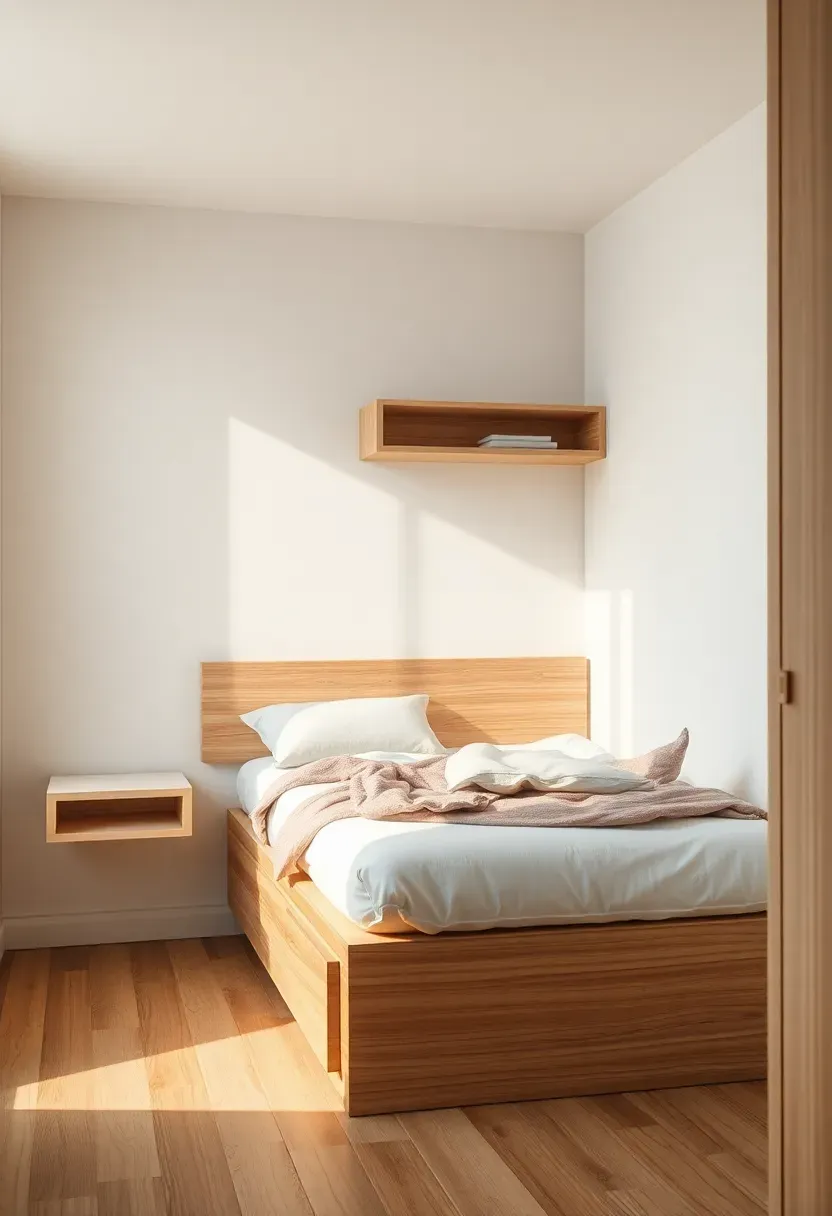
In a small bedroom, every piece of furniture must justify its footprint — ideally by doing more than one job. The biggest space-wasters in small rooms are oversized bed frames, bulky dressers that could be replaced by under-bed storage, and nightstands that are too wide for the space beside the bed. The most impactful budget swap you can make is to replace a conventional nightstand with a slim floating shelf mounted directly on the wall — it takes up zero floor space, costs around $15–$25 at any hardware store, and immediately makes the room feel less crowded. Similarly, a bed with built-in storage drawers beneath eliminates the need for a separate dresser, freeing up significant floor area.
Recommended
Items for this idea
Scale matters more than style in a small room. A bed frame that fits the mattress precisely — rather than extending 10–15 cm beyond it on each side — gives back meaningful floor space around the perimeter. Choose a frame with legs rather than a solid platform sitting flush on the floor: the visual gap beneath the bed makes the room feel airier and gives you practical under-bed storage with flat storage boxes. For any additional furniture, apply the one-in-one-out rule strictly: every new piece must replace something, not simply add to the existing count.
For a broader look at space-efficient small bedroom layouts and furniture arrangements, the ideas in 25 Bedroom Ideas for Small Rooms pair well with the furniture decisions described here.
- Do: use vertical wall space with floating shelves for nightstand function and light storage — it returns floor space and looks intentional
- Don't: buy furniture that sits flush on the floor with no legs — it visually anchors the room to the ground and makes it feel smaller
- Pro tip: measure the room before buying anything — the most common small-bedroom mistake is purchasing a bed frame or wardrobe that is 5–10 cm too wide and blocks circulation paths
Step 3: Layer Budget-Friendly Textiles and Bedding
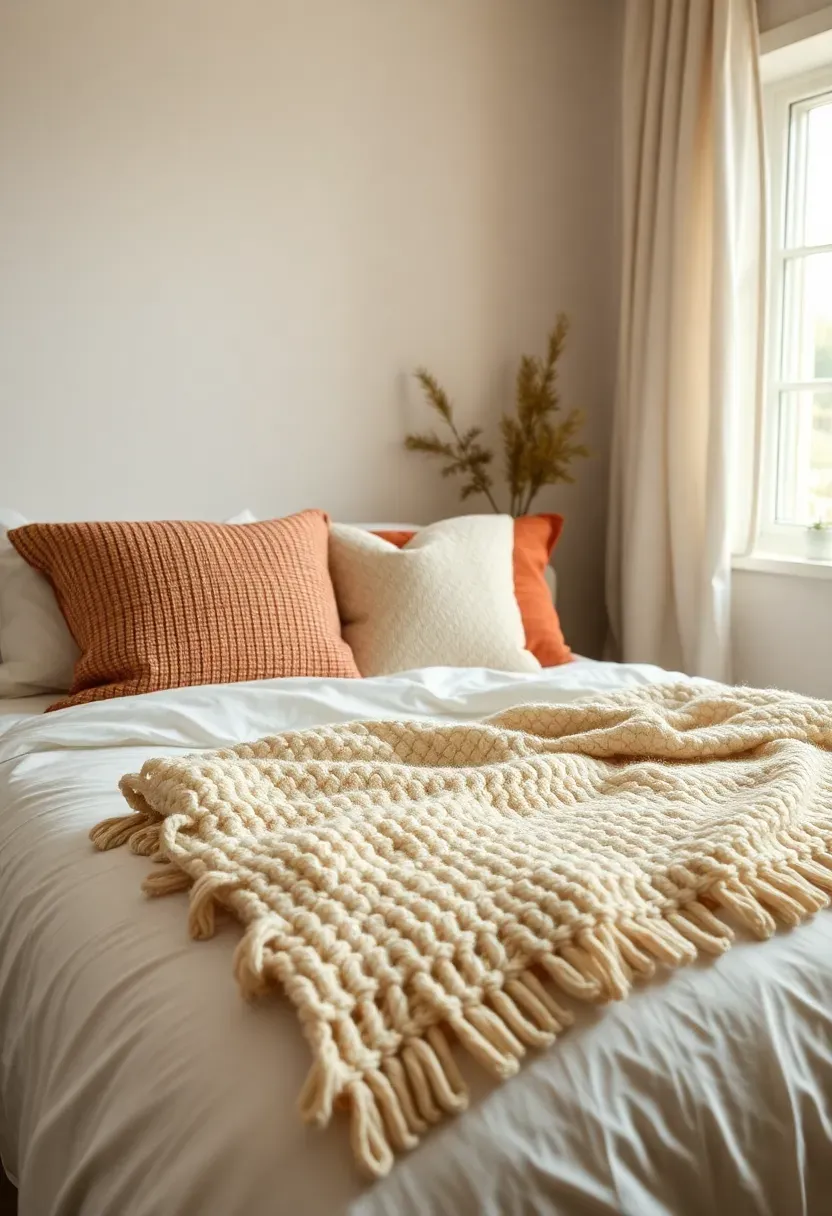
Textiles do more emotional work in a small bedroom than almost any other element — they are what makes a room feel warm, personal, and finished rather than sparse and transitional. The good news is that layering works at any price point: it is about building depth through texture and tone, not about spending on high-thread-count linens. Start with a clean, plain duvet cover in your dominant color (white, ivory, or warm cream are the most versatile), then layer a contrasting-texture throw across the foot of the bed. A chunky knit, a waffle-weave cotton, or a simple fleece in a warm accent tone — terracotta, dusty sage, soft blush — transforms the visual weight of the bed and makes it feel styled rather than simply made.
Recommended
Items for this idea
Two cushions on the bed are enough — more reads as busy in a small space. Choose them in the same accent tone as your throw for a cohesive look that appears deliberate. For curtains, go full-length even in a small room: curtains that hang from ceiling to floor (rather than sitting just above the window frame) draw the eye upward, making the ceiling feel higher. Budget linen-look curtains in a tone that matches or is slightly lighter than the walls are widely available for under $30 per panel and create a genuinely polished result. Avoid printed or patterned curtains in a small room — they add visual noise that shrinks the space.
- Do: hang curtains as high as possible — ideally from the ceiling rail or within 5 cm of the ceiling — regardless of where the window actually sits
- Don't: use more than two accent colors in your textiles — a small room reads as cluttered very quickly when the color count rises above three total
- Pro tip: a textured throw costs $15–$25 at most home stores and is the single fastest way to make a plain bed look styled and intentional
Step 4: Use Mirrors and Lighting to Open Up the Space
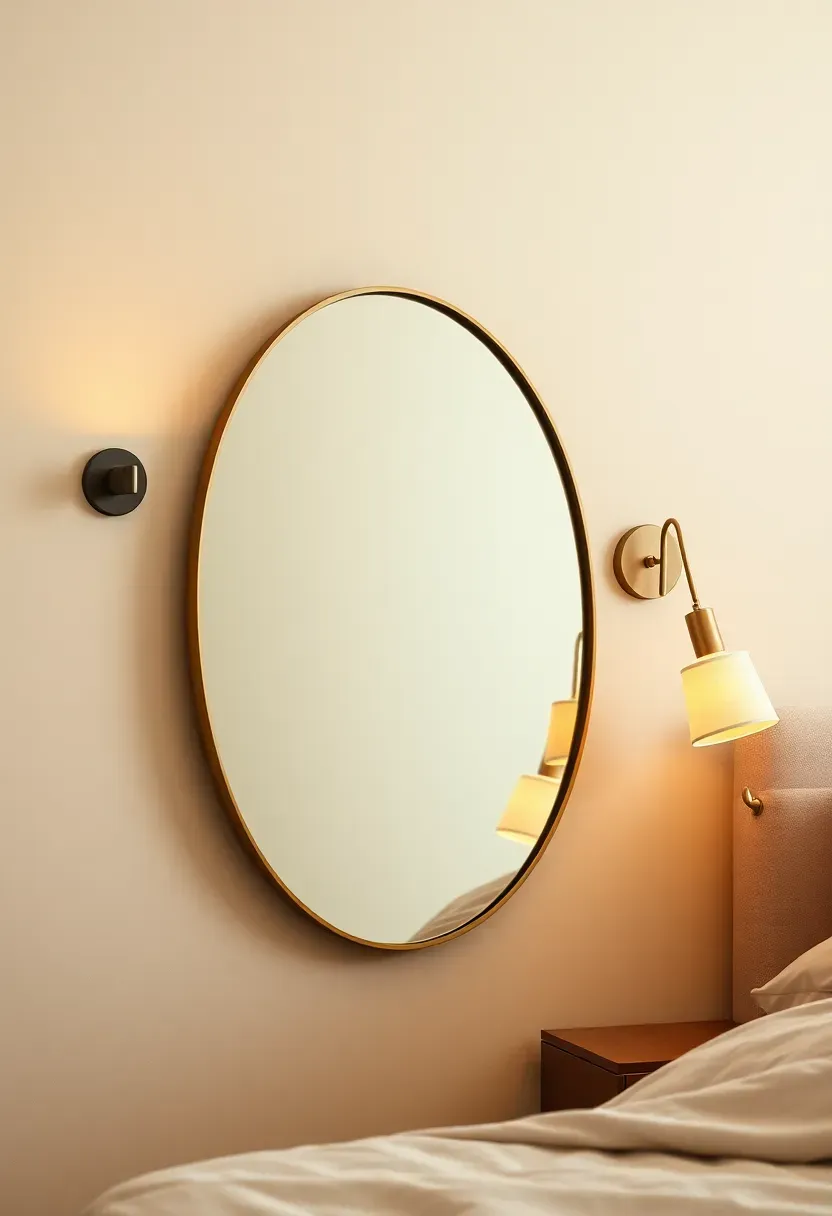
A large mirror is arguably the highest-return budget purchase you can make for a small bedroom. Placed opposite or adjacent to the window, it reflects the full depth of the room back at you — effectively doubling the perceived size of the space at a glance. A round mirror leaning against the wall (rather than hung) also softens the hard geometry of a small box room and adds a relaxed, layered quality to the decor. Mirrors don't need to be expensive: a simple round leaner in a thin powder-coated metal frame is available for $25–$50 at most home stores and performs the same optical work as a designer version at five times the price.
Recommended
Items for this idea
Lighting is the step most people skip on a budget — and the one that most visibly separates a finished room from an unfinished one. The goal is to eliminate a single harsh overhead light as your only source and replace it with at least two lower, warmer light points. Plug-in wall sconces (which require no wiring and no electrician) cost $20–$40 and mount with a single screw; a simple table lamp on the floating shelf adds a second warm pool of light. Every bulb should be in the 2700–3000K range — labeled "warm white." This single change, applied consistently to all your fixtures, transforms how the room feels in the evening more than almost anything else at this budget level.
For more ideas on using mirrors and light to make a compact bedroom feel spacious, the 21 Japandi Small Apartment Bedroom Ideas post has strong visual references throughout.
- Do: position the mirror so it reflects the window or the lightest wall — this maximizes the brightness it bounces back into the room
- Don't: place the mirror directly opposite the bed at eye level — it can feel unsettling and interrupts the calm of the room
- Pro tip: plug-in wall sconces are a renter-friendly way to get bedside lighting at the right height with zero electrical work required
Step 5: Add Affordable Accessories and Personal Touches
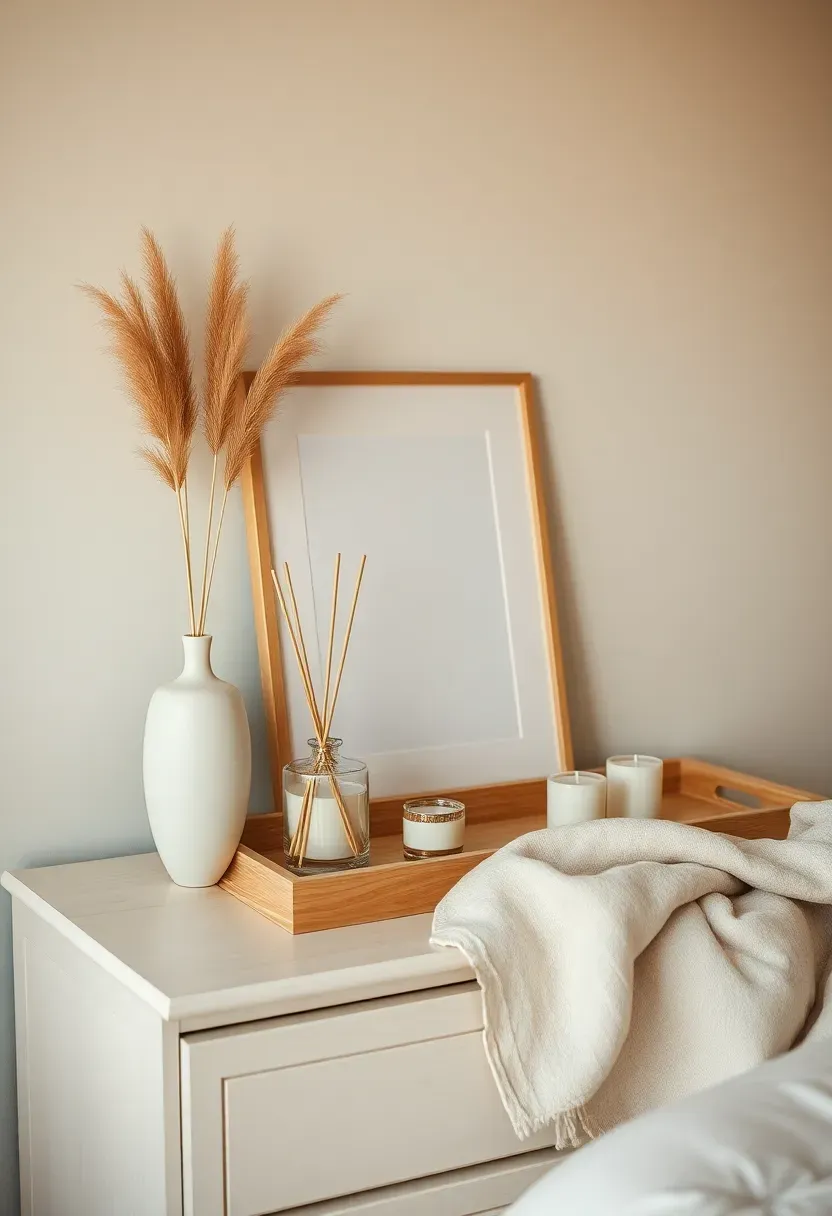
This is the step where a small bedroom either comes together or tips into clutter — and in a small room, the margin between "curated" and "cluttered" is very narrow. The rule to follow is: fewer objects, chosen better. Every surface in a small bedroom should hold no more than three items, and ideally only two. The floating nightstand shelf should carry one lamp and one small object — a ceramic dish, a single bud vase, a folded sleep mask. The dresser top, if you have one, should hold a small tray (which visually organizes whatever sits in it) and two or three objects of varying heights: a reed diffuser, a candle, a single dried botanical stem.
Recommended
Items for this idea
Wall art in a small room should be one piece, not a gallery wall — a single print or illustration, scaled to the wall it's on, centered at eye level (approximately 145 cm to center), creates a focal point without competing with the room's limited square footage. Dried botanicals are a cost-effective alternative to fresh flowers: a bundle of dried pampas grass or eucalyptus costs $8–$15, lasts indefinitely, and adds organic texture that reads as considered and calm. Scent is the invisible accessory: a reed diffuser in a warm, understated fragrance (sandalwood, linen, or cedar) makes a room feel complete in a way no object can fully replicate — and a decent one costs $10–$20.
- Do: use a small tray on any flat surface to group accessories — it contains visual noise and makes even simple objects look intentional
- Don't: hang art too high — the most common decorating mistake in bedrooms is artwork positioned near ceiling level rather than at eye level
- Pro tip: after you've finished styling, remove one item from every surface — the edit almost always improves the result, especially in a small room
Frequently Asked Questions
How much does it actually cost to decorate a small bedroom on a budget?
A meaningful transformation is achievable for $50–$150 if you already have the main furniture. The highest-impact items at the lowest cost are: a large mirror ($25–$50), a textured throw ($15–$25), a plug-in wall sconce or table lamp ($20–$40), and a small accessories tray with one or two objects ($15–$30). Paint, if needed, adds $30–$50 for a small room. The key is sequencing — spend on the things that change the most visual square footage first, not on decorative details that can come later.
What colors make a small bedroom look bigger without repainting?
If repainting isn't an option, focus on the textiles and accessories. Keeping all bedding, curtains, and cushions in soft, warm neutrals — white, ivory, cream, light beige — creates the same tonal unity that light paint provides, and it reads as intentional rather than default. Avoid dark or strongly patterned bedding in a small room: it absorbs light and emphasizes the room's boundaries rather than pushing them outward. A single large mirror will do more to open up the space than any color-based trick you can apply without painting.
About the author
OBCD
CGI visualization and interior design content. We create detailed 3D renders and curate practical design ideas for every room in your home.