23 Antique Wall Shelf Styling Ideas for a Timeless Home
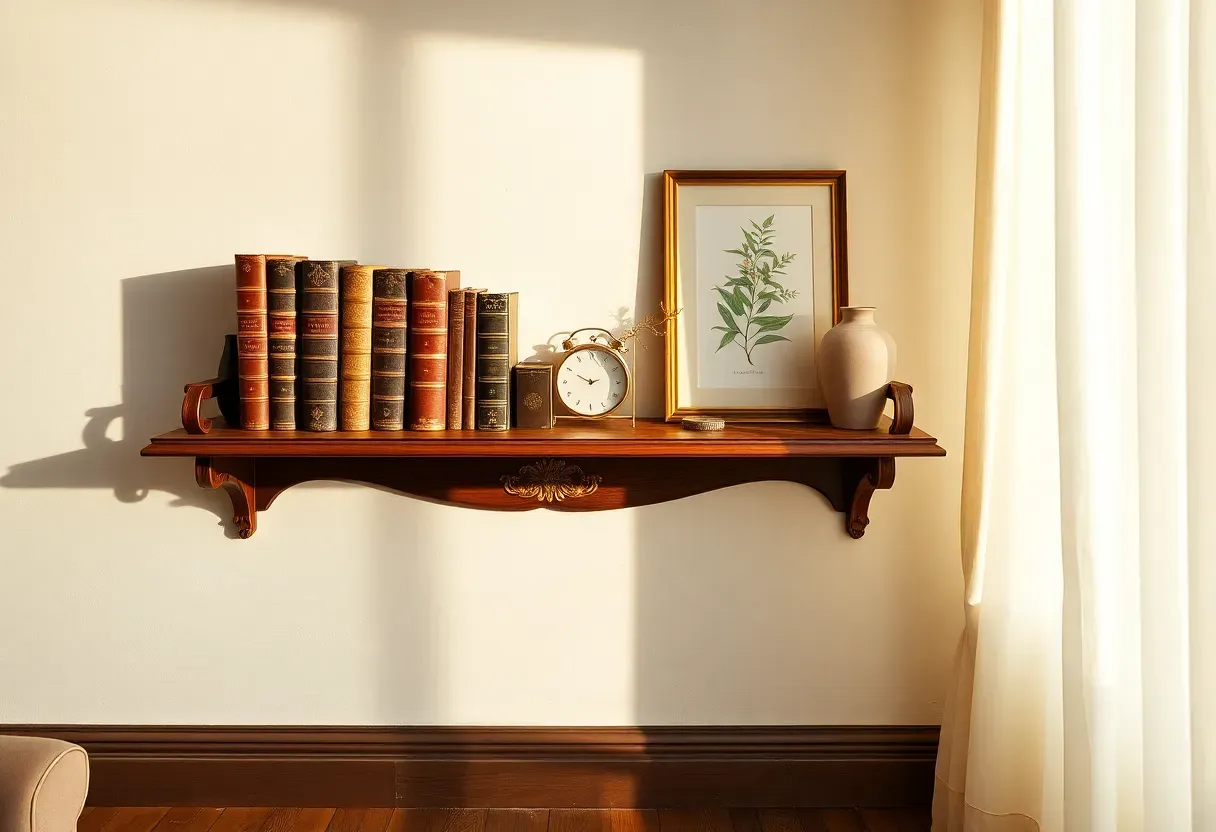
For centuries, shelves have been the storytellers of a home — the place where objects accumulate meaning, where every carefully chosen piece says something about the person who placed it there. An antique wall shelf does something a modern floating shelf simply cannot: it arrives with history already baked in, with imperfections that catch the light in interesting ways and surfaces that reward a closer look.
Whether you're working with a single narrow bracket shelf above a doorway or a full wall of staggered wooden ledges, what you place on them shapes the entire personality of a room. Below are 23 ideas drawn from cottage interiors, Victorian parlors, and today's most thoughtfully curated vintage-inspired homes.
In this article I've gathered approaches for every style and budget — from grand gilded compositions to a humble stack of weathered crates. Ready to transform your walls into something worth remembering?
Table of Contents
- Stacked Books with Vintage Bookends
- Botanical Prints and Pressed Flowers
- Antique Clock as a Focal Point
- Layered Frames and Mirrors
- Mismatched China and Ceramics
- Weathered Wooden Crates as Shelves
- Trailing Ivy and Potted Herbs
- Vintage Maps and Travel Souvenirs
- Antique Brass Candlesticks
- Mercury Glass Accents
- Heirloom Textiles and Doilies
- Black-and-White Family Portraits
- Apothecary Jars and Glass Bottles
- Painted Ceramic Animals
- Copper and Bronze Objects
- Wicker and Rattan Baskets
- Vintage Perfume Bottles
- Carved Wooden Boxes
- Antique Keys and Hardware
- Dried Flower Arrangements
- Vintage Clocks Collection
- Aged Leather Books
- Gilded Frames and Gold Accents
1. Stacked Books with Vintage Bookends
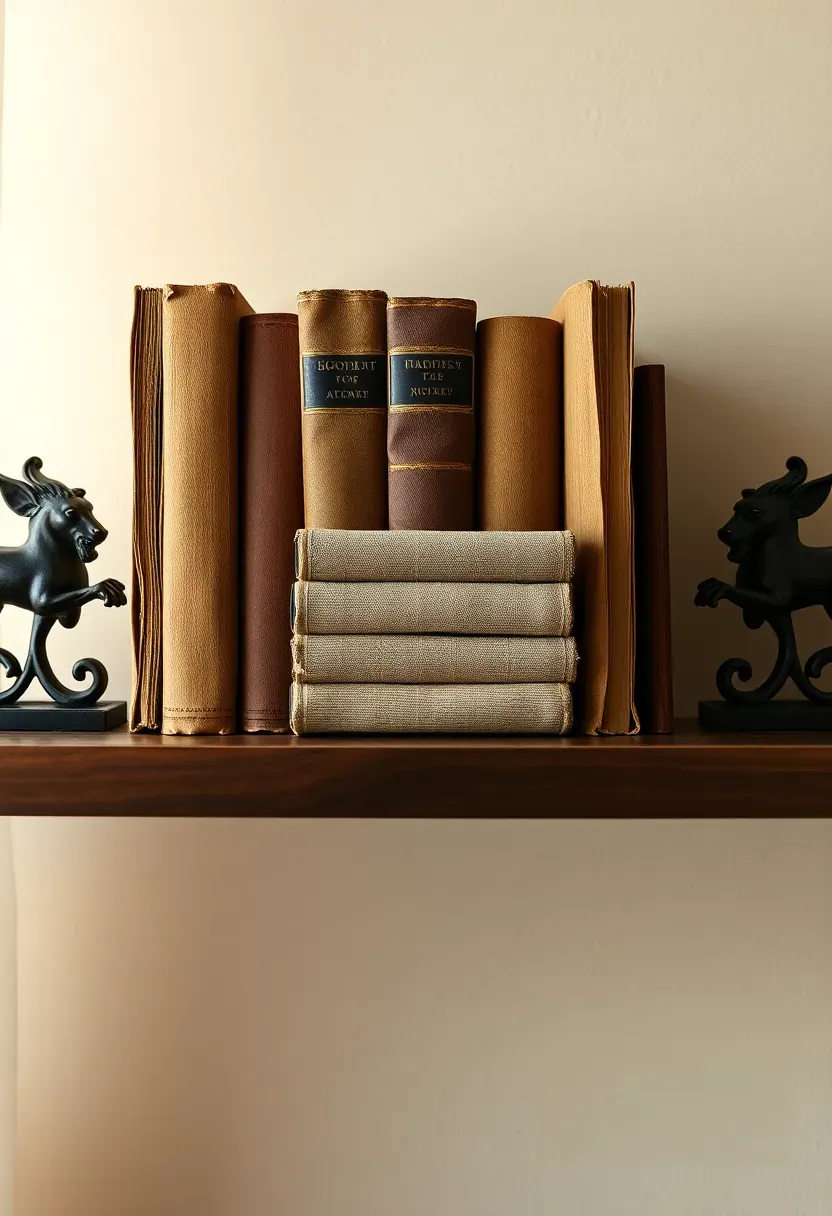
There is something deeply satisfying about a shelf built around books. Old hardcovers with worn linen spines, encyclopedias with frayed cloth bindings, and pocket-sized novels stacked horizontally add visual weight and texture that modern books rarely match. The key is the bookends: choose cast-iron, bronze, or carved marble versions that feel like they belong in a Victorian library. Mix horizontal stacks with upright rows for a composition that looks gathered rather than arranged.
Tips
- Group books by spine color for a subtle, curated palette effect
- Add a single small object on top of a horizontal stack to break the monotony
- Look for bookends at estate sales — mass-produced versions rarely have the same visual weight
We picked a few things that go well with this idea: Shadow Box 9-Slot Rustic Wood Floating Shelf (★4.2), French Country Vintage Antique Wood Wall Shelves (★4.6) and QEEIG Farmhouse Rustic Floating Shelves (Set of 3) (★4.7). As an Amazon Associate we earn from qualifying purchases.
2. Botanical Prints and Pressed Flowers
The Appeal
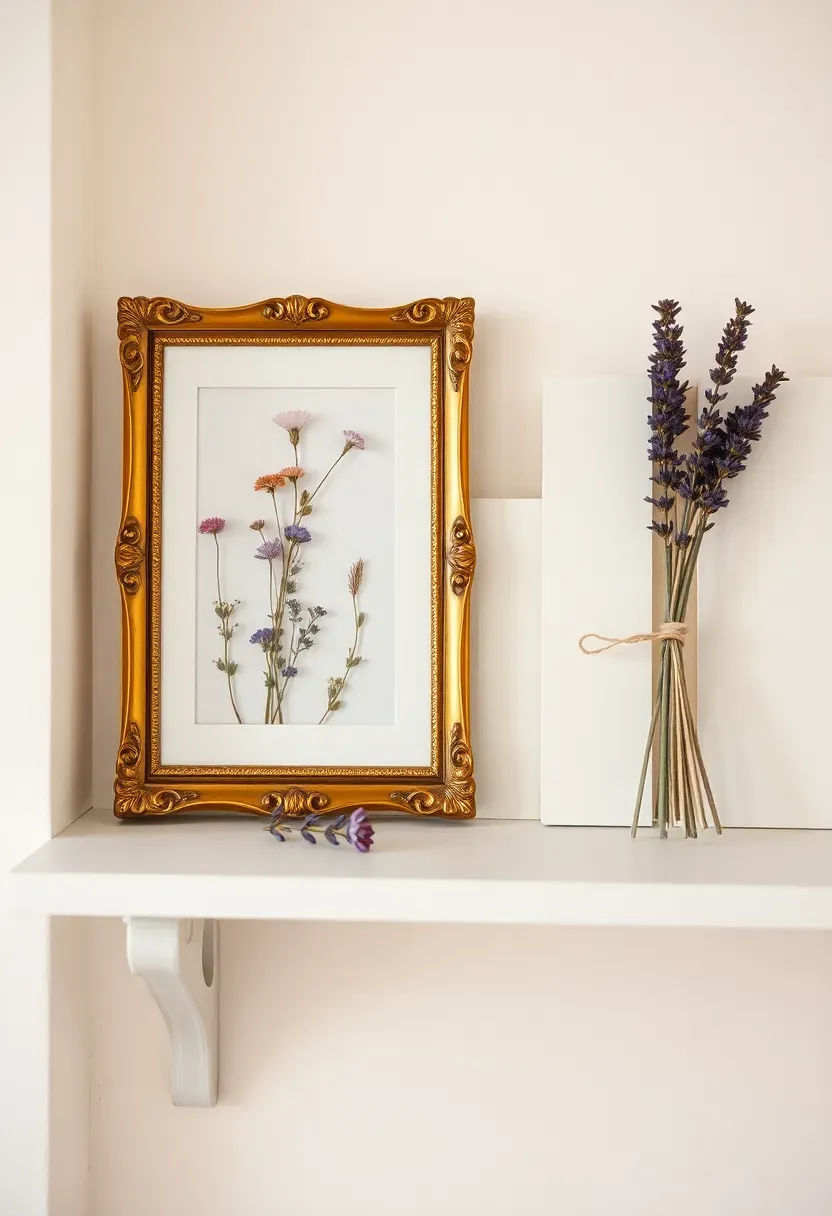
There is a category of shelf styling that feels genuinely delicate — and botanical displays sit right at its center. A framed pressed flower arrangement, a small watercolor botanical study leaning against a plaster wall, and a bundle of dried lavender tied with linen twine create something that feels both found and considered.
Building the Display
Lean frames instead of hanging them — it reads as more personal and allows easy rearrangement. Use gilded or dark wood frames for pressed botanicals to give them the gravity of scientific specimens. Add a small fresh or dried element (a stem, a sprig, a seed pod) on the shelf surface itself to bridge the two-dimensional art with the three-dimensional space.
Pros and Cons
Pros: Inexpensive to source, easy to change seasonally, adds softness to a room Cons: Dried botanicals fade over time and need occasional refreshing
We picked a few things that go well with this idea: Clear Glass Apothecary Jars Cork Lids (Set of 3) (★4.7), TOPZEA Amber Glass Apothecary Jars (Set of 8) (★4.9) and MyGift Embossed Fleur De Lis Glass Bottles (Set of 6) (★4.7). As an Amazon Associate we earn from qualifying purchases.
3. Antique Clock as a Focal Point
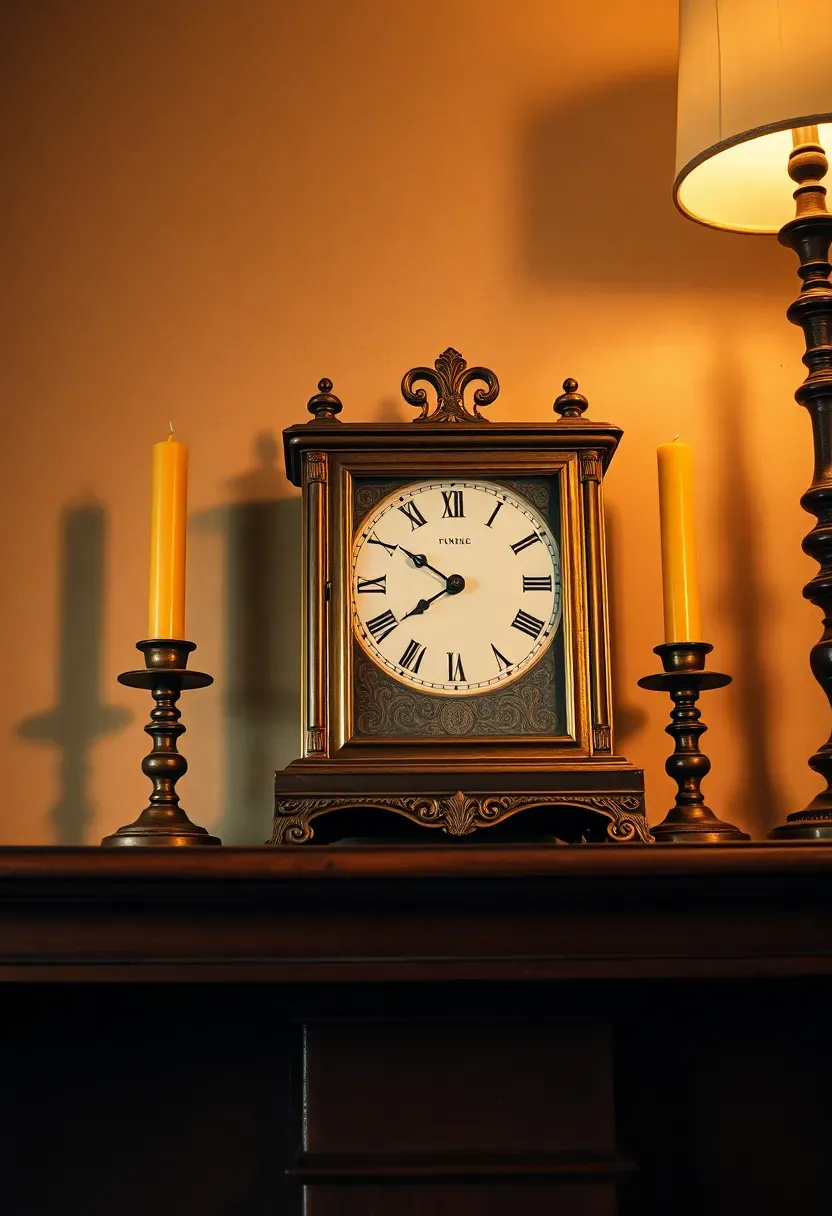
A single well-chosen clock can anchor an entire shelf composition. The carriage clock — a small rectangular brass case with a visible face — is the most versatile antique timepiece for shelf styling. It has enough visual mass to anchor a grouping without overwhelming it. Place it at center or slightly off-center, then build outward with objects of diminishing height: a pair of candlesticks on one side, a small framed piece on the other. The asymmetry makes the whole arrangement feel more alive.
What to Watch Out For
- Avoid placing clocks on shelves that catch direct sunlight — UV light damages enamel faces over time
- A non-working clock is perfectly fine aesthetically; many people prefer the silence
- Tarnished brass looks better than aggressively polished brass in a vintage context — let the patina stay
We picked a few things that go well with this idea: DongArts Boho Eucalyptus Dried Flower Wall Rack (★4.2), Boho Pampas Grass Olive Dried Flower Bouquet (★4.5) and Mini Natural Boho Dried Flower Bouquet (8 Sets) (★4.2). As an Amazon Associate we earn from qualifying purchases.
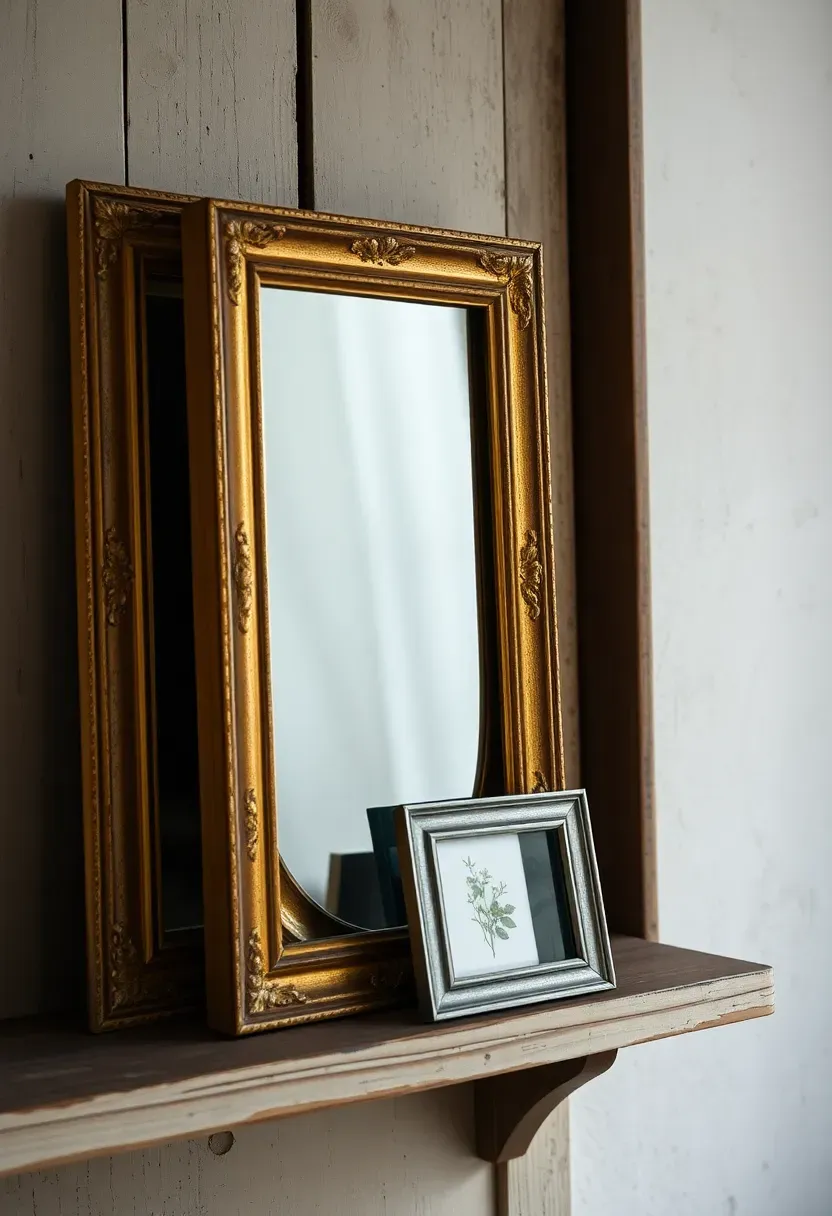
4. Layered Frames and Mirrors
The Concept
Instead of hanging everything on the wall at measured intervals, try leaning multiple frames directly on the shelf, overlapping slightly in depth. This creates a layered, salon-style effect that feels genuinely collected rather than decorated.
How to Layer
A small oval mirror with a silver frame adds depth and reflects light back into the room. Behind it, lean a slightly larger botanical or portrait print in a gilded frame. In front, prop a smaller card or miniature painting in a simple dark wood frame. The visual depth created by overlapping objects on a single plane is one of the most underused techniques in shelf styling.
Option A vs. Option B
Hanging vs. Leaning: Choose hanging if: you want a clean, permanent arrangement and have the wall space Choose leaning if: you prefer flexibility, enjoy rearranging, or want a more casual, gathered feel
Recommended
Items for this idea
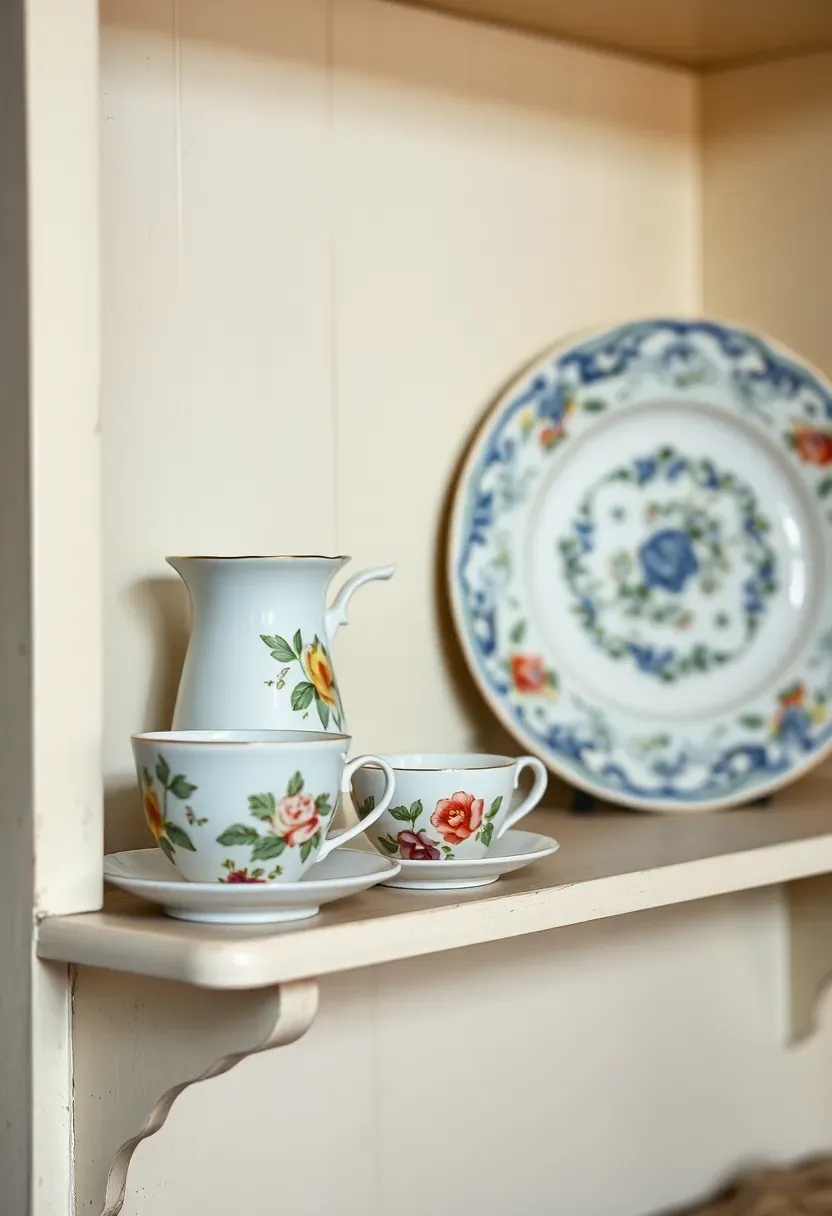
5. Mismatched China and Ceramics
Cottage kitchens and farmhouse dining rooms have long understood what modern minimalism sometimes forgets: an imperfect collection of mismatched pieces tells a richer story than a matching set. Look for transferware plates with blue-and-white pastoral scenes, hand-painted porcelain pitchers, and individual teacups separated from their original sets. Lean a plate against the wall for instant visual height. Stack a cup on its saucer for an object that reads as both practical and decorative.
Tips
- Stick to a loose color story: all blue-and-white, all creamware, or all hand-painted florals
- A single contrasting piece (a terracotta pot, a stoneware crock) stops the display from looking too matched
- Thrift stores and flea markets are better sources than antique shops for individual mismatched pieces
6. Weathered Wooden Crates as Shelves
Origins
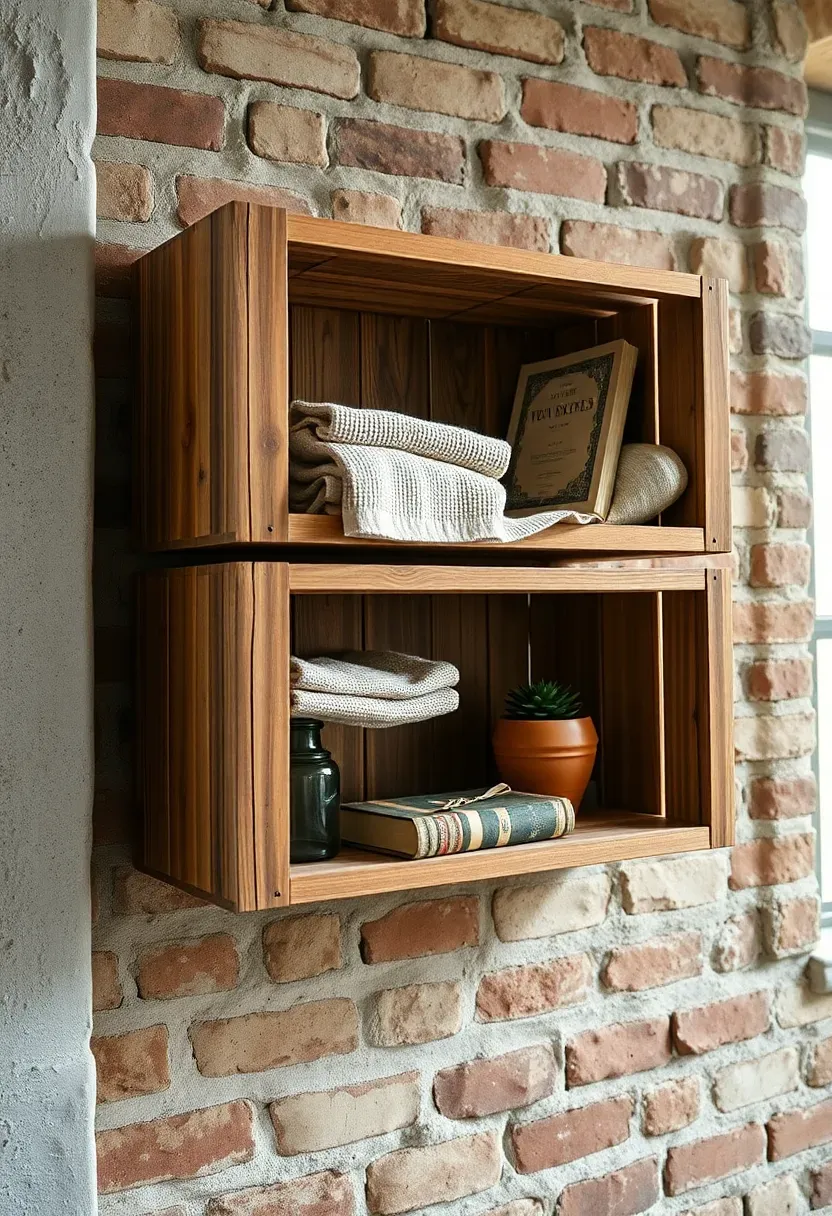
The wooden crate shelf is a country and industrial tradition — fruit crates, wine boxes, and factory storage crates repurposed as household storage. Mounted directly on the wall, they become shelving units with built-in texture.
Modern Interpretation
Today's weathered crate shelf is a deliberate design choice. Mount two or three crates at different heights, alternating orientation (horizontal and vertical) for visual rhythm. The rough-hewn pine, visible nail heads, and stenciled lettering that might remain on old crates all add layers of history. Keep the objects inside simple: a few folded linens, a small plant, a book.
How to Apply at Home
- Sand lightly but don't refinish — the worn patina is the entire point
- Use heavy-duty picture-hanging hardware rated for the weight you'll place inside
- Mix crate sizes for a less uniform, more genuinely collected look
- Pair with a simple brick or whitewashed wall for maximum textural contrast
Recommended
Items for this idea
7. Trailing Ivy and Potted Herbs
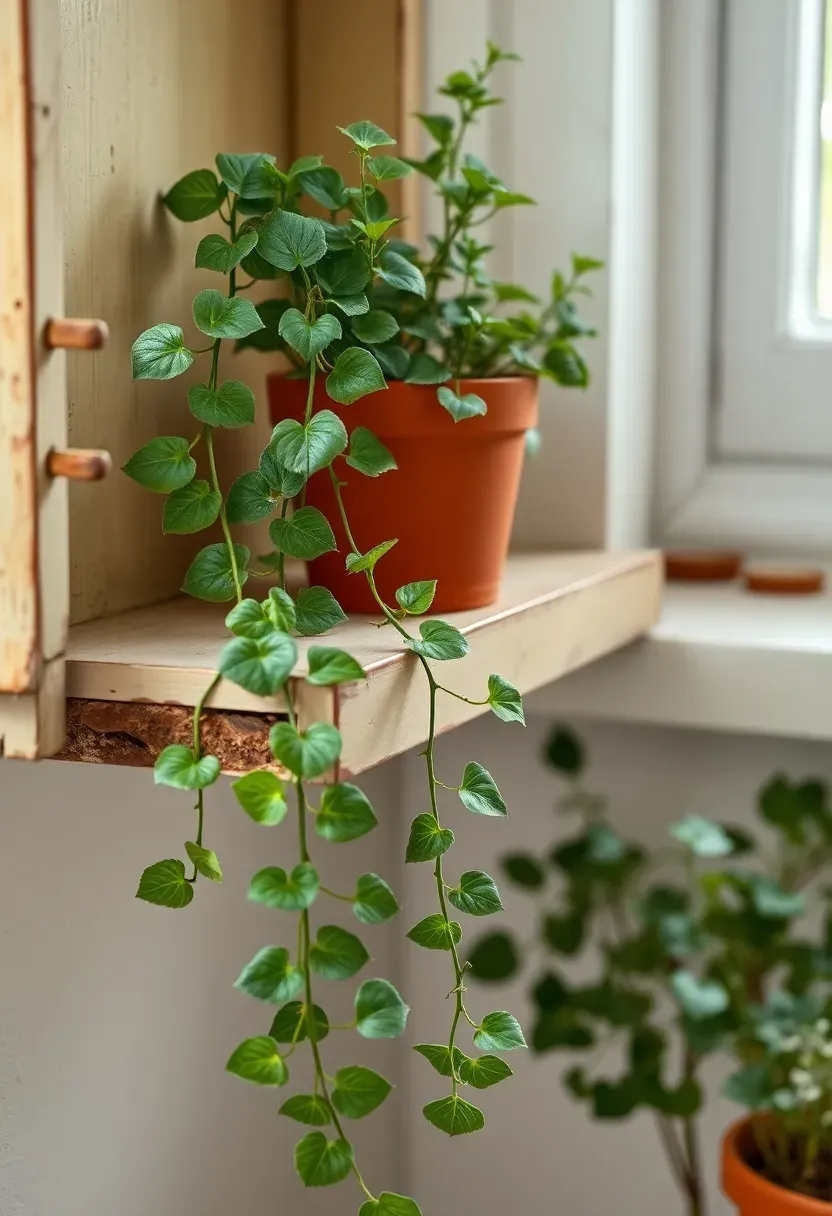
Living plants transform a shelf from a display into something that breathes. Trailing ivy is particularly suited to antique shelf styling because its cascading habit echoes the organic quality of vintage objects — nothing here is rigid or perfectly symmetrical. Pair it with a small pot of rosemary or thyme, both of which have the added advantage of fragrance and occasional practical use. Keep pots in aged terracotta rather than modern ceramic for a consistent aesthetic.
Tips
- Water plants on a tray or remove them to a sink — shelf staining from water rings is difficult to reverse
- Trailing stems that reach 30–40 cm long create the most dramatic visual effect
- Mix plant heights: a low spreading herb beside a taller trailing plant adds more interest than two similar pots
8. Vintage Maps and Travel Souvenirs
The Core Idea
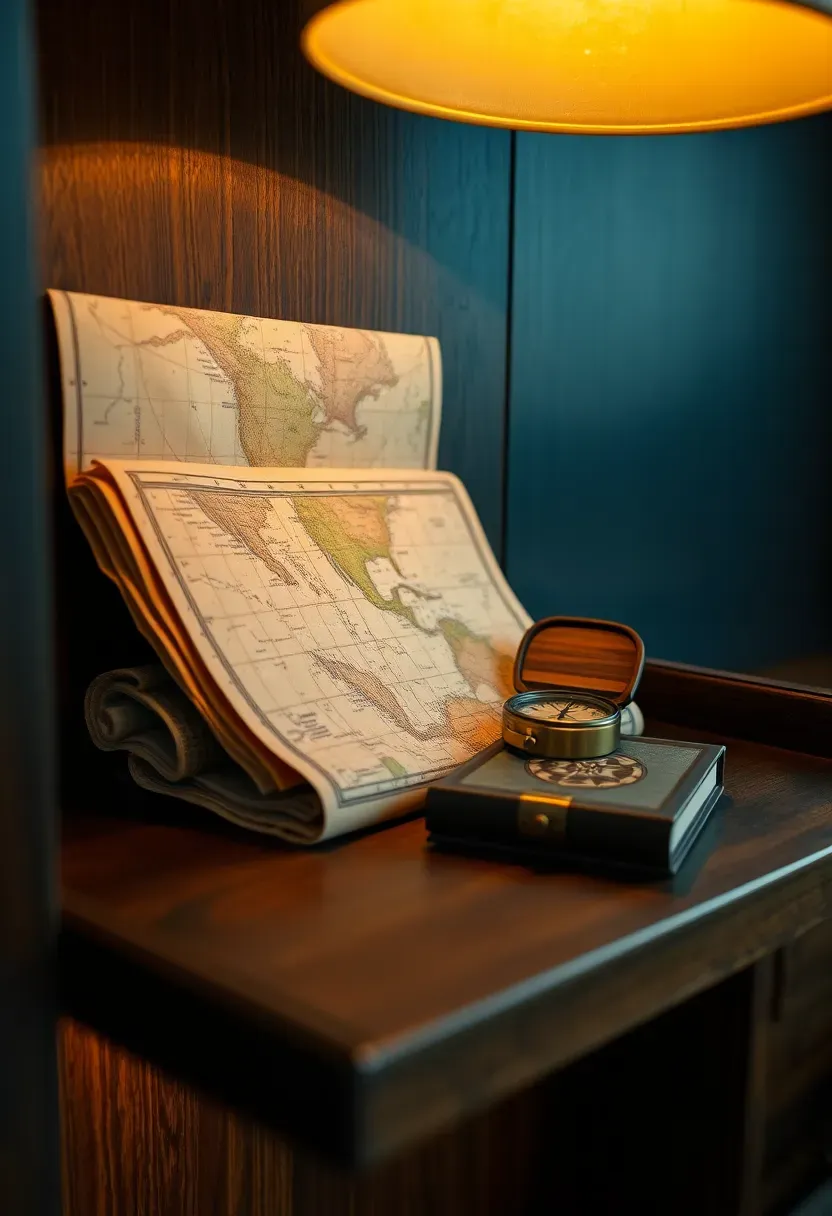
A collection built around travel and geography has a natural coherence — every object relates to place and movement. A folded vintage map with visible crease lines, a small brass compass, a carved wooden souvenir box, and a worn leather travel journal create a shelf that reads as a personal archive rather than a decoration scheme.
Building It
The map is the flat anchor — fold it loosely so the cartographic detail remains visible, or roll it and let it lean at an angle. The compass and small objects sit in front, the journal behind. Dark navy or forest green walls intensify the sense of depth and make the brass and warm-toned leather pop.
What to Watch Out For
- Avoid plastic or modern reproductions — they undermine the entire aesthetic
- Original vintage maps are available at surprisingly low prices in antique paper shops and online
- Layer a few objects at different depths to avoid a flat, single-plane look
Recommended
Items for this idea
9. Antique Brass Candlesticks
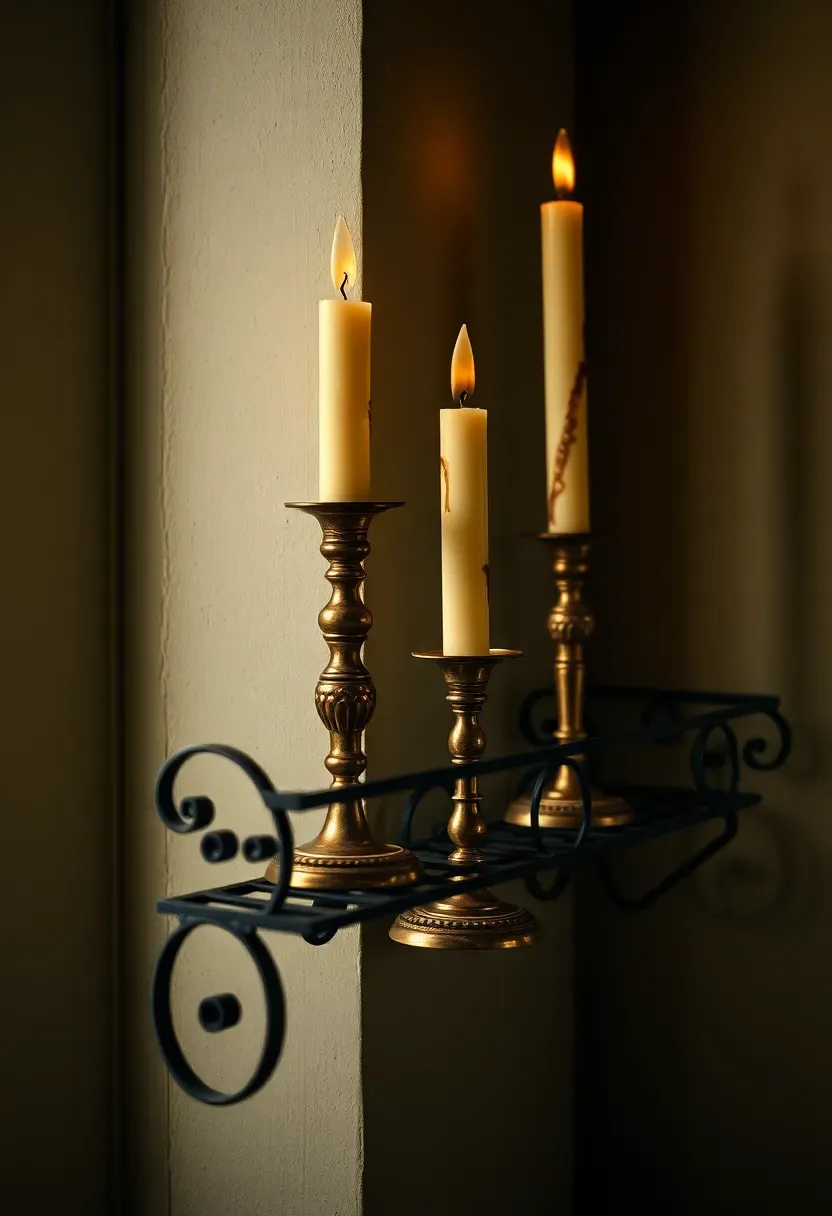
Few materials do more work in a vintage interior than brass — it catches light, it develops character with age, and it shifts in warmth depending on the light source. A grouping of antique brass candlesticks in varied heights is one of the most reliable anchor compositions for an antique wall shelf. The rule of odd numbers applies: three candlesticks at different heights (tall, medium, short) read as a composition; two read as a pair; four reads as a row.
Tips
- Keep actual burning candles for special occasions and use LED inserts for everyday styling
- Beeswax candles in ivory or cream suit the palette better than stark white
- A few hardened wax drips at the base of each candlestick look genuinely lived-in — don't clean them off
10. Mercury Glass Accents
What It Is
Mercury glass (also called silvered glass) is an American Victorian invention: a double-walled glass object with a silver nitrate solution sealed between the layers, creating a mirror-like interior. Antique examples show natural aging — cloudy patches, dark foxing spots, areas where the silvering has lifted or thinned. These imperfections are what make it beautiful.
The Solution
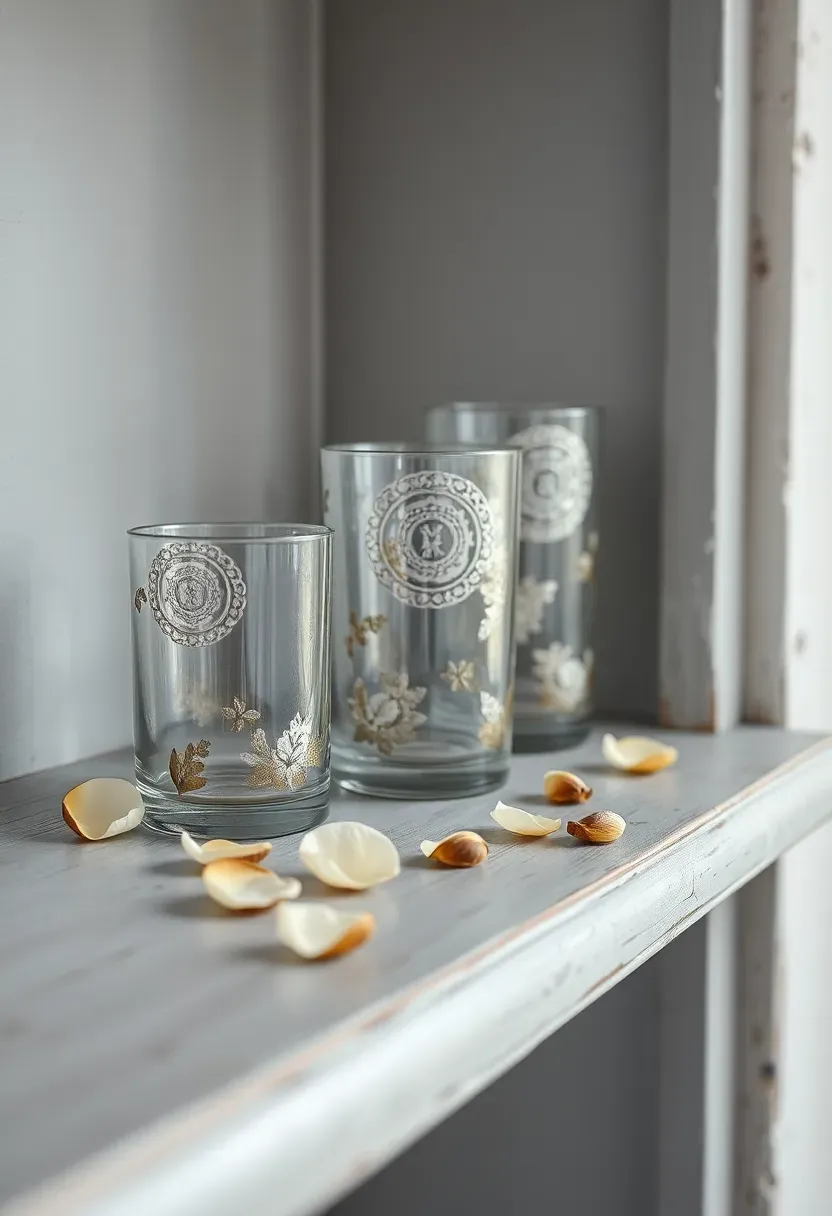
Use mercury glass votives or vases as secondary elements in a shelf composition rather than the sole focus. They add luminosity and reflected light without competing with textured objects. Three votives of different sizes grouped on a pale shelf against a grey wall create an understated, ethereal effect.
Pros and Cons
Pros: Reflects and amplifies natural light, adds vintage depth, pairs well with most color palettes Cons: Fragile, chips damage the silvering, difficult to clean properly
Recommended
Items for this idea
11. Heirloom Textiles and Doilies
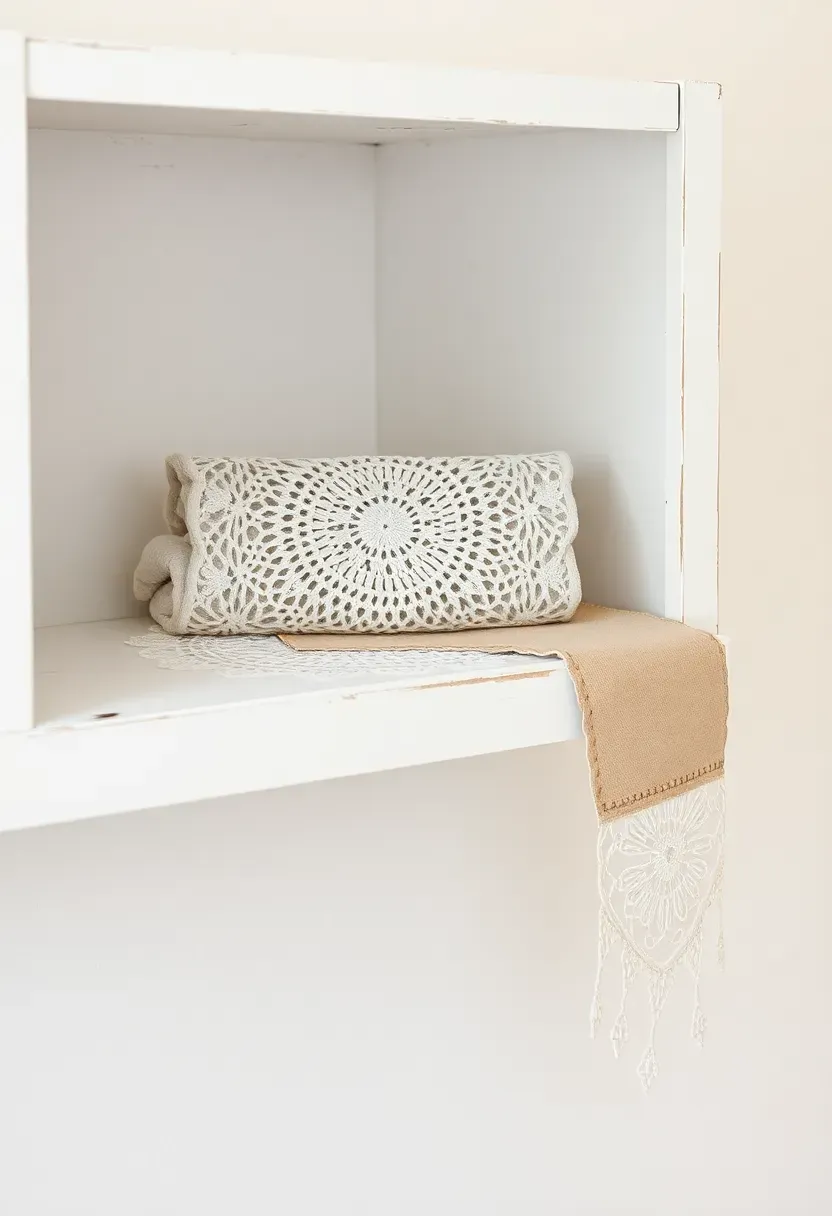
Textile elements on a shelf soften the hard edges of wood and ceramic. A crocheted doily used as a shelf liner, a small piece of hand-embroidered linen laid flat, or a fragment of bobbin lace draped over the shelf edge introduces material variety and a sense of quiet craftsmanship. These are objects that carry the most personal meaning — often inherited or found at estate sales — and they reward viewers who come close enough to see the detail.
Tips
- Layer a doily as a liner under a small grouping of objects, not as a standalone display piece
- Avoid over-pressing antique lace; a slight softness looks more authentic
- Pale cream, ivory, and white textiles read as heirloom; bright white reads as modern
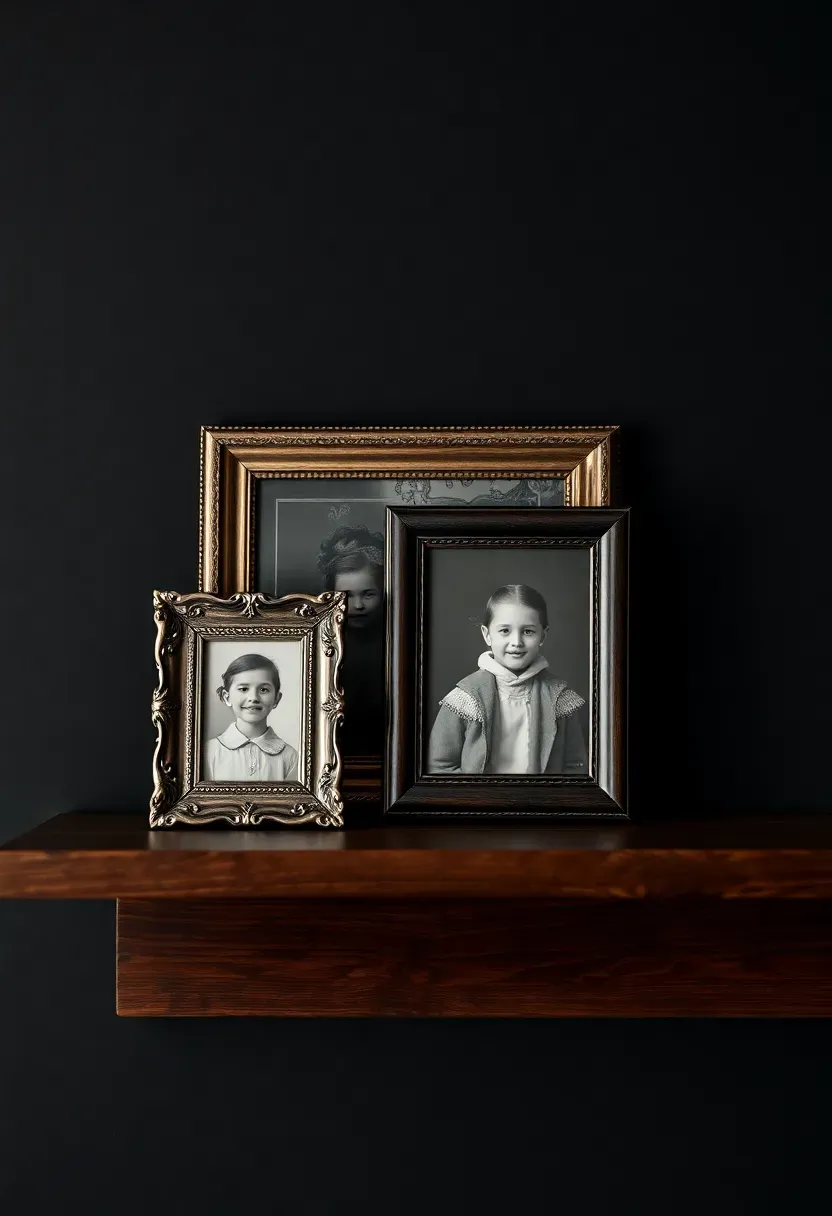
12. Black-and-White Family Portraits
The Appeal
There is an intimacy to old black-and-white photographs that color images rarely match. The reduction to tone and shadow forces the viewer to focus on expression, posture, and the details of period clothing and setting. A small cluster of framed family portraits transforms a shelf into something genuinely personal.
Executing the Idea
Choose frames that feel period-appropriate: oval silver-plate frames, ebonized wood frames with ornate corners, or simple dark wood with no decoration. Arrange portraits at slightly different heights and angles — one slightly turned, one overlapping another slightly. The composition should look like it accumulated over time rather than being purchased as a set.
What to Watch Out For
- Mix genuine family photographs with anonymous vintage portraits sourced from flea markets — they look equally personal once framed
- Avoid identical frames; visual variety is the entire point
- Dark or jewel-toned walls make black-and-white photographs particularly striking
Recommended
Items for this idea
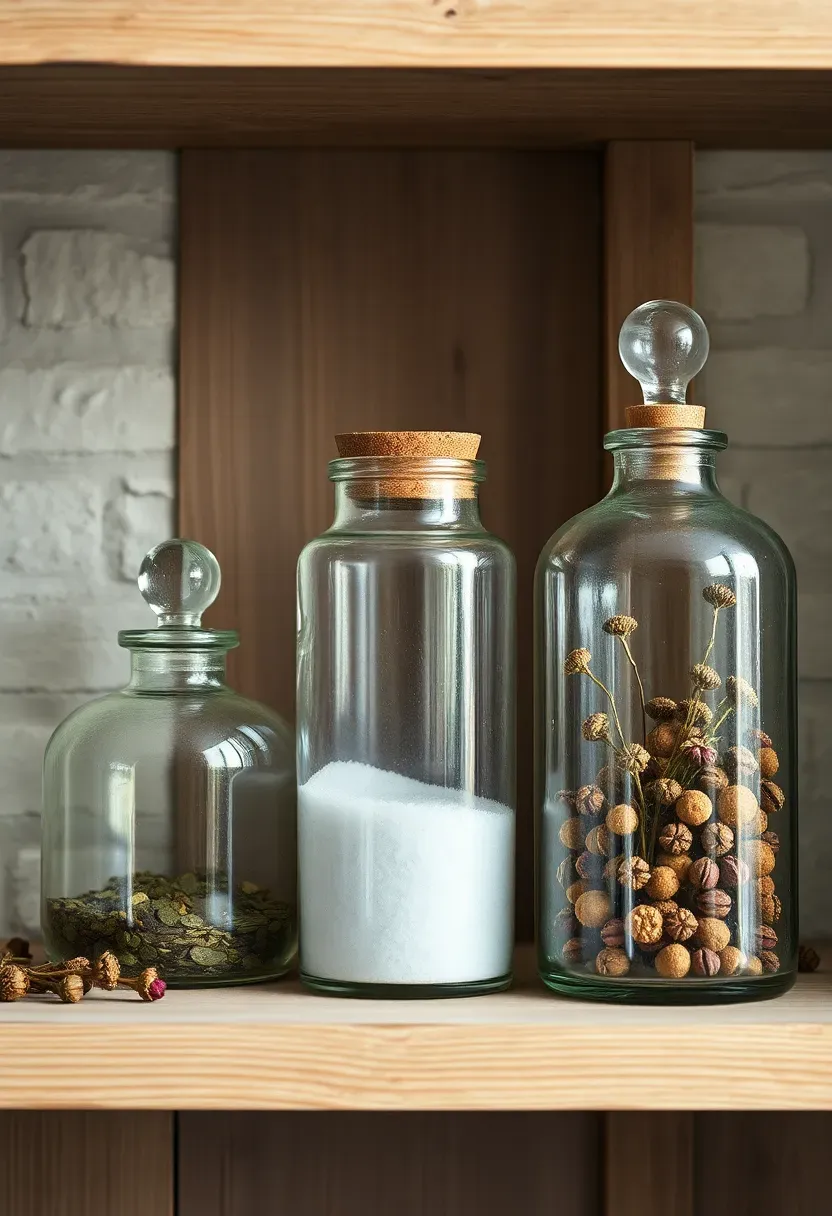
13. Apothecary Jars and Glass Bottles
Step 1: Choose the Right Jars
Look for hand-blown glass apothecary jars with visible irregularities — small bubbles trapped in the glass, slight greenish or amber tints, glass stoppers or cork lids. Modern reproductions exist but lack the weight and visual depth of genuine antique or vintage glass.
Step 2: Fill Thoughtfully
The contents add color and texture: dried rosebuds, lavender, grey sea salt, cinnamon sticks, or dried citrus slices all work. Avoid anything that will degrade, discolor, or attract insects.
Step 3: Arrange with Varying Heights
Group three jars of markedly different heights — squat and round, tall and cylindrical, medium hexagonal — in a loose triangle arrangement. The height variation creates natural visual rhythm.
What to Watch Out For
- Keep jars away from direct sunlight to preserve the color of dried contents
- Pair glass jars with matte ceramic or wood objects to avoid a too-shiny composition
- A whitewashed brick or plaster wall behind glass jars amplifies the apothecary effect
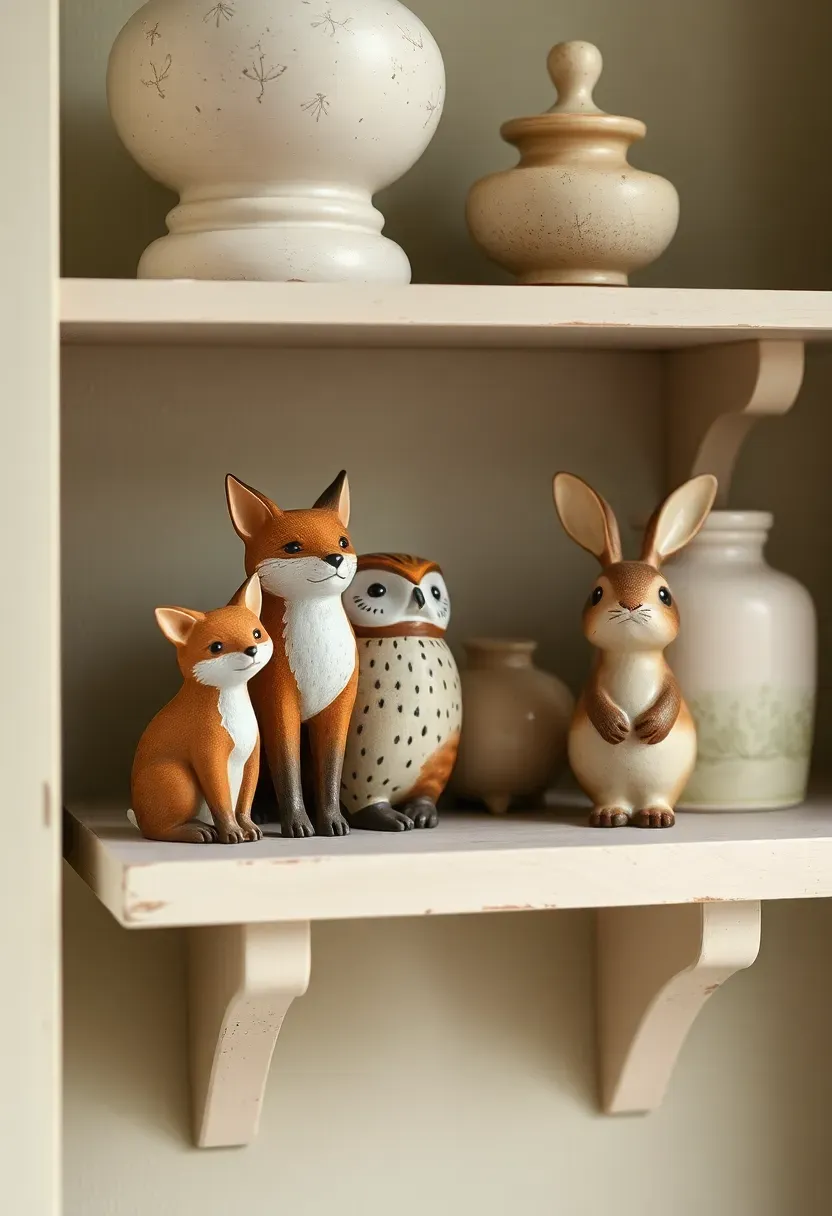
14. Painted Ceramic Animals
Small ceramic animal figurines have an unbroken tradition in European decorative arts — from eighteenth-century Meissen porcelain to mid-century folk pottery. A fox, an owl, a hare, or a small dog in muted earth tones with visible hand-painted detail brings warmth and a touch of whimsy to a shelf without tipping into kitsch, provided the color palette stays restrained. Look for pieces with a matte or satin glaze rather than high-gloss finish.
Tips
- Odd numbers (three figurines) work better than pairs or groups of four
- Space them at slightly uneven intervals — not marching in a row
- Choose earth tones: ochre, sage, terracotta, cream — avoid bright primary colors in a vintage context
Recommended
Items for this idea
15. Copper and Bronze Objects
Comparing: Copper vs. Bronze
Introduction: Both copper and bronze belong to the warm metal family that suits antique interiors beautifully — but they read quite differently on a shelf.
Copper
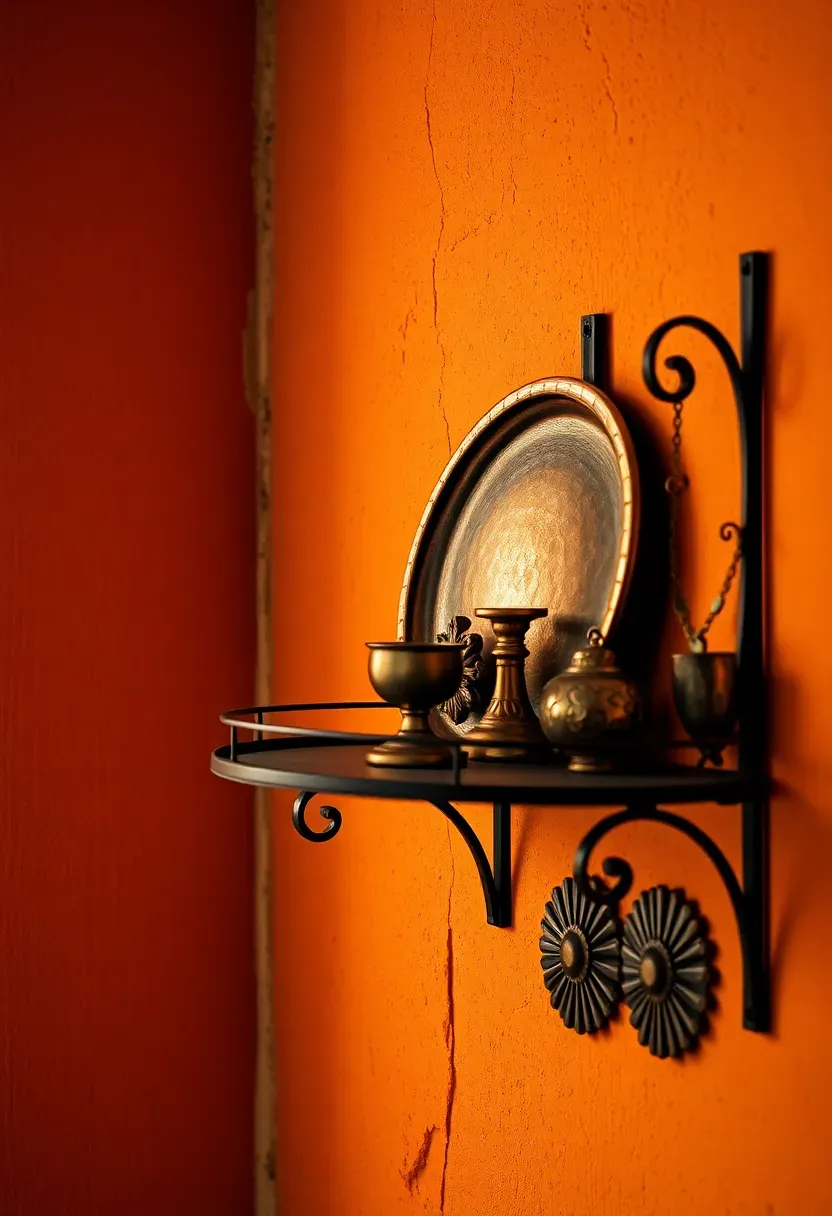
Copper is warmer and more orange-toned with a natural reddish glow. Hammered copper bowls, copper measures, and hand-formed vessels develop dark oxidation lines that emphasize form. It pairs well with warm ochre walls.
Bronze
Bronze is darker and cooler, with greenish verdigris developing in recessed areas. Bronze medallions, small figural objects, and cast bronze votives have a classical gravitas. It works well against deep green or charcoal walls.
What to Choose
Choose copper if: you want warmth, a rustic or cottage feel, and objects with hand-formed character Choose bronze if: you want a more refined, classical look with more visual weight
Recommendation
Mix both in a single shelf composition — a hammered copper bowl beside a patinated bronze figurine creates more interest than an all-copper or all-bronze arrangement.
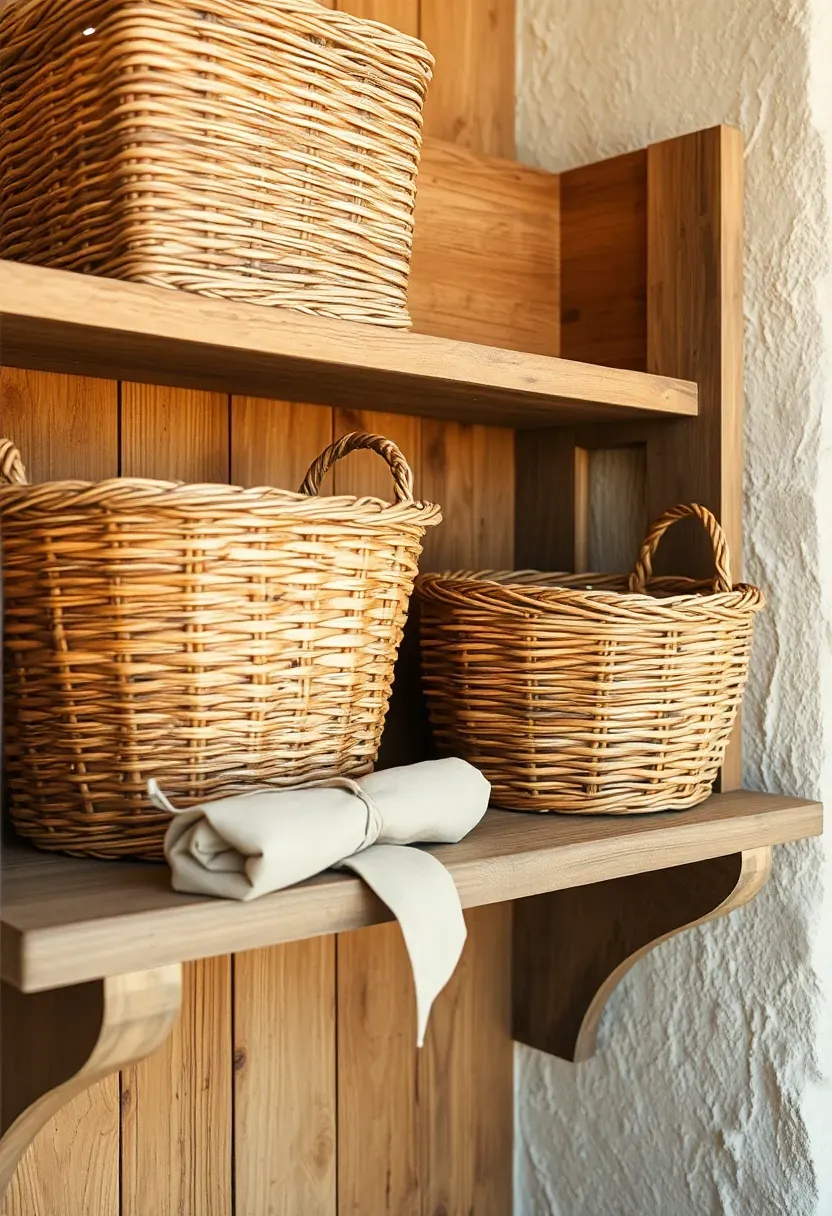
16. Wicker and Rattan Baskets
Wicker baskets are among the most practical antique shelf accessories — they provide hidden storage while adding texture and warmth. The key is choosing aged baskets with a honey-brown patina rather than fresh-from-the-store pieces. A large rectangular basket for folded linens beside a small round basket for small objects creates a functional grouping that also reads as styling. Leave a small gap between baskets to let the shelf surface show.
Tips
- Natural wicker in honey and brown tones pairs best with warm-toned wood shelves
- Place a small linen-wrapped parcel beside the baskets for additional texture layering
- Slightly mismatched basket styles (different weave patterns) look more authentically collected
Recommended
Items for this idea
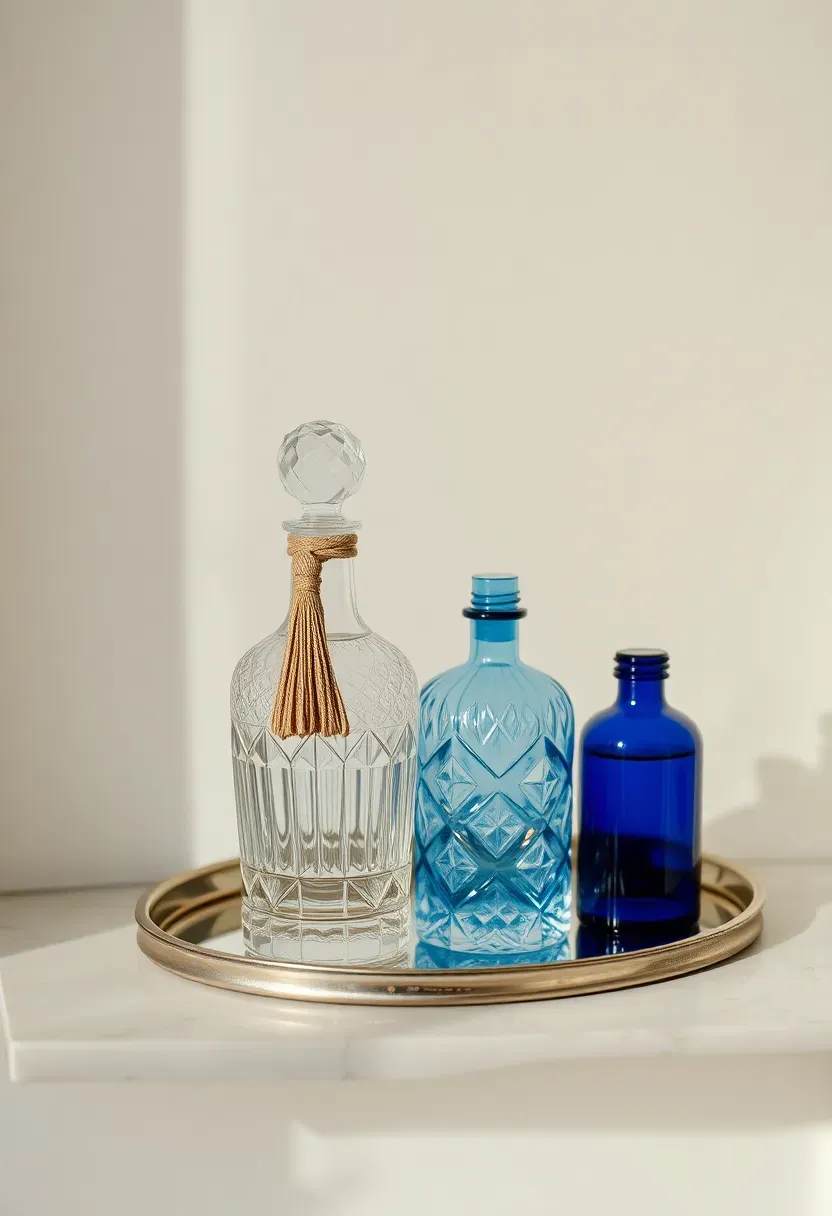
17. Vintage Perfume Bottles
Trend Origins
The collecting of antique and vintage perfume bottles has its roots in Victorian vanity culture, when glass-blowers created elaborate flacons for the dressing table. Cut crystal, frosted glass, colored glass, and atomizer-style bottles with fabric bulb or silk tassel represent the full range of this tradition.
Modern Interpretation
A small curated group of four to five perfume bottles on a marble-topped shelf or silver tray becomes a miniature sculpture garden. The variety of shapes — tall and narrow, low and round, angular — and materials — crystal, cobalt glass, frosted borosilicate — creates compositional interest. The prismatic light refractions that crystal flacons throw across a wall in afternoon light are an unexpected bonus.
How to Apply at Home
- Use a silver or mirrored tray to unify mixed bottles into a single composition
- Include one colored glass piece (cobalt, amber, or pale violet) to anchor the palette
- Position the group where it receives direct natural light for the best crystal refraction effects
- Look for genuine antique flacons at estate sales — reproductions lack the glass quality
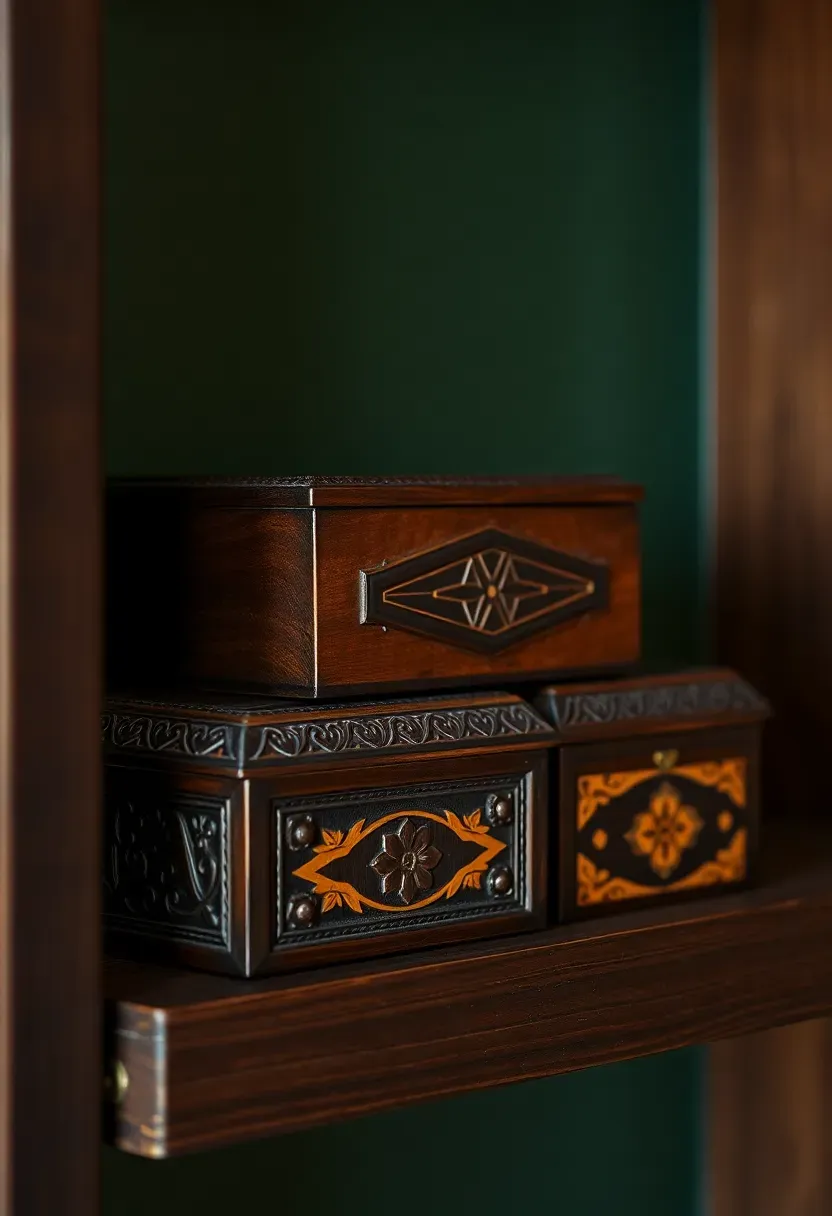
18. Carved Wooden Boxes
A carved wooden box is one of those objects that invites closer inspection — the relief patterns of chip carving, the precision of inlaid geometric marquetry, or the organic curves of floral relief work reward the viewer who stops and looks. Arranged in a group of three at different sizes, these boxes create a composition that has weight, depth, and genuine craftsmanship as its subject. Keep the interior contents hidden; the box as form is sufficient.
Tips
- Look for boxes with contrasting wood inlay — the color variation between walnut and maple or ebony and fruitwood adds visual richness
- Brass corner hardware or a small brass clasp gives a box an heirloom quality that plain wood lacks
- Stack the smallest box on top of the largest for a natural sculptural arrangement
Recommended
Items for this idea
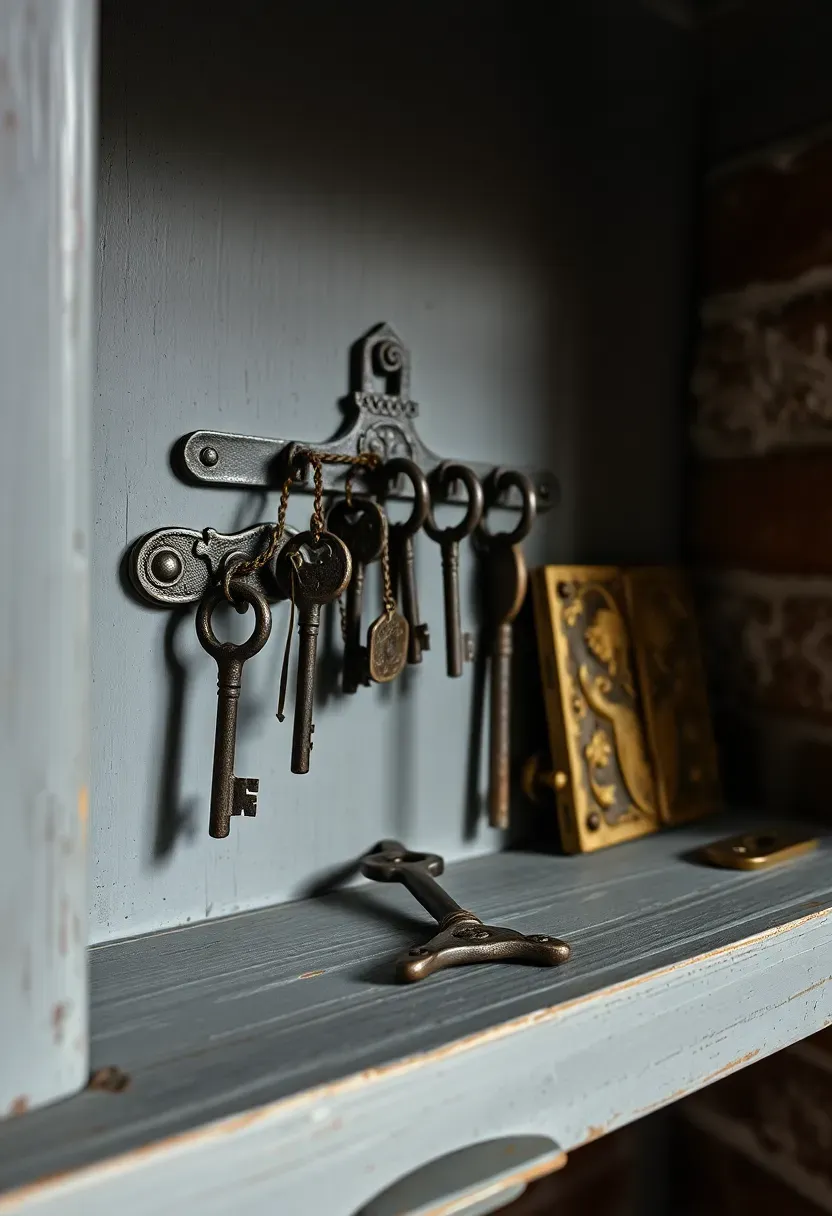
19. Antique Keys and Hardware
The Core Issue
Antique keys are one of the most underused decorative objects in home styling. They are inexpensive, widely available, and possess a visual complexity — bow shape, bit profile, barrel length — that makes a grouped collection genuinely interesting to look at. Yet most people encounter them only in oddity shops without knowing how to use them.
The Solution
Mount a small iron key rack (an original antique rack or a simple iron bar with hooks) on a shelf or the wall just above it. Hang keys of varied sizes and styles. Add a few pieces of supporting hardware — a cast-iron hinge displayed flat, a large brass door knocker leaning against the wall — to build out the collection beyond keys alone.
Pros and Cons
Pros: Inexpensive, endlessly available, scales from a few pieces to a large collection Cons: Requires a wall mount or key rack, which adds a step beyond simple shelf placement
20. Dried Flower Arrangements
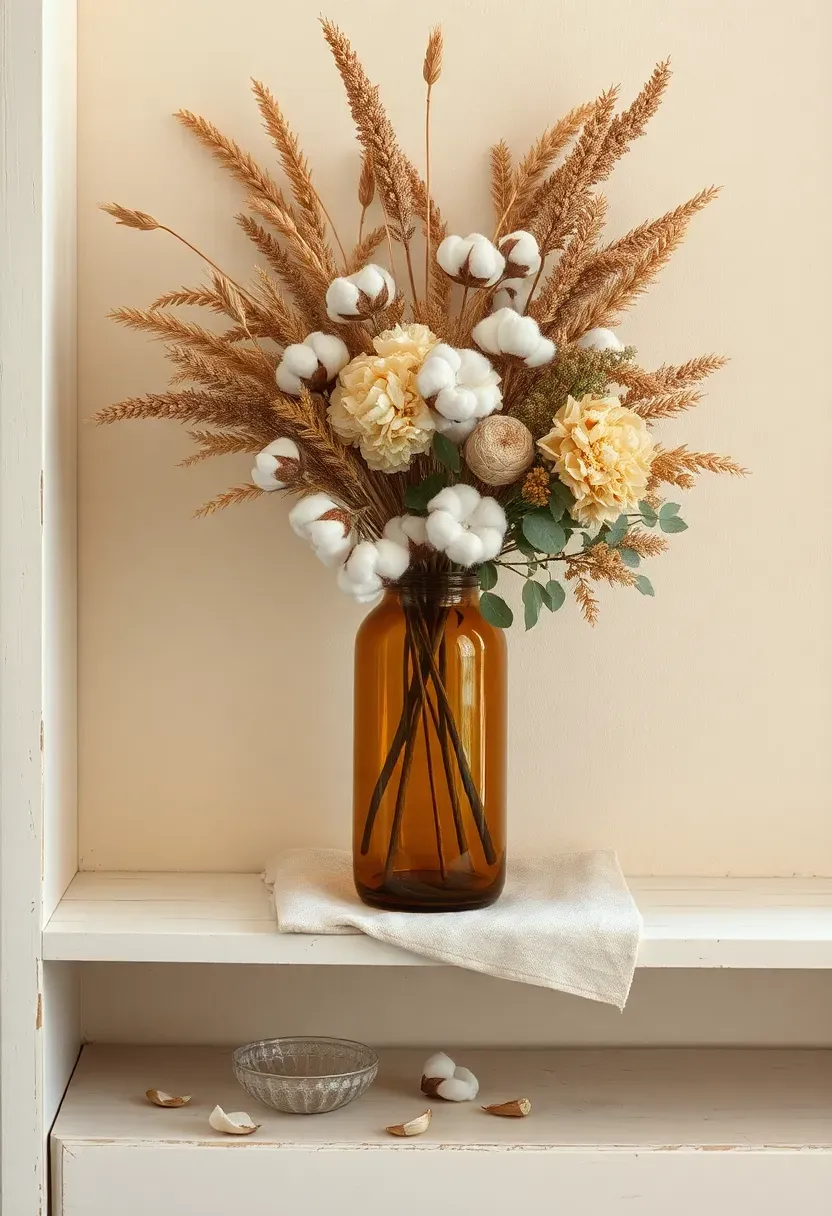
Dried flowers have made a genuine return to interiors over the past several years, and in a vintage context they are irreplaceable. The faded, muted tones of dried botanicals — dusty rose hydrangeas, wheat-gold stalks, sage-green eucalyptus, ivory cotton bolls — create a palette that is perfectly suited to antique wood shelves and plaster walls. Arrange them in a tall amber glass or stoneware vase rather than a modern vessel to keep the aesthetic consistent.
Tips
- Allow small fallen petals to rest on the shelf surface — they reinforce the lived-in quality of the display
- Rotate seasonal botanicals: winter cotton and wheat, spring dried tulips, summer lavender, autumn oak leaves
- A loose, naturalistic arrangement reads better than a formally structured one in this context
Recommended
Items for this idea
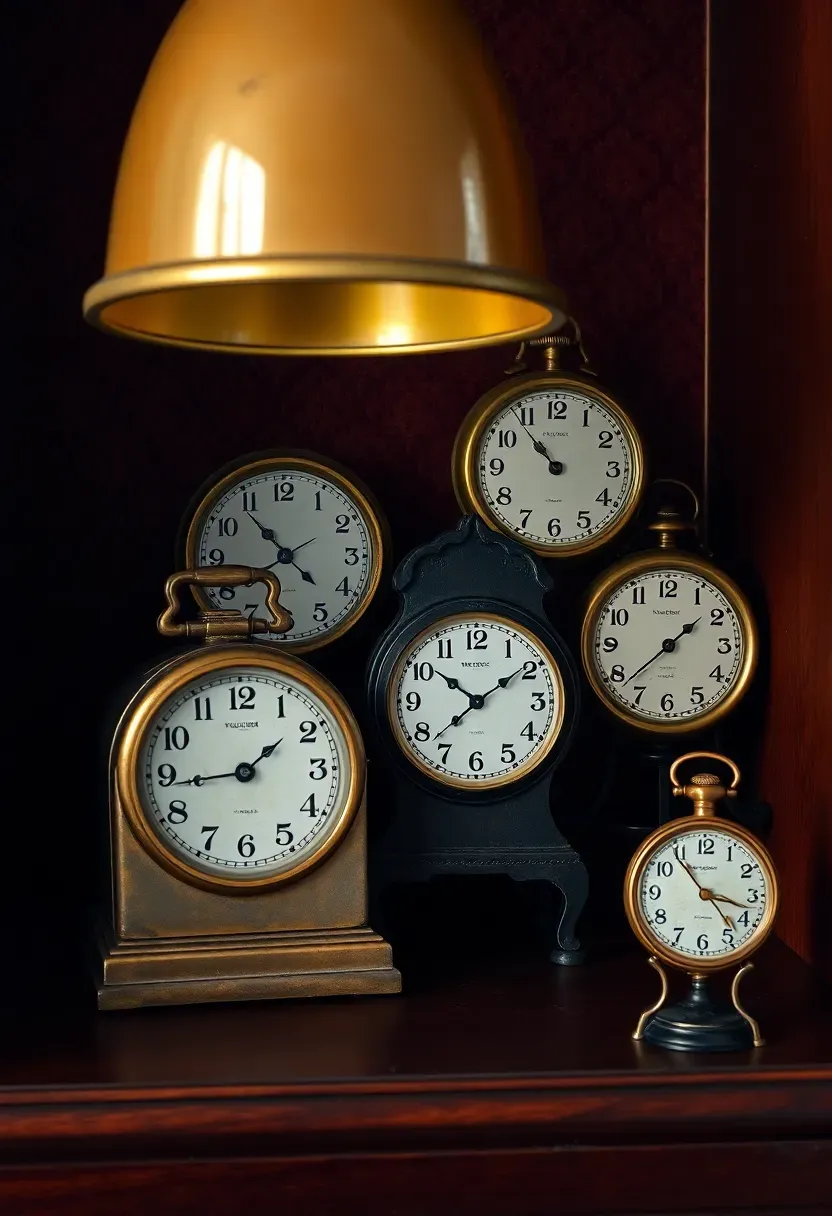
21. Vintage Clocks Collection
Step 1: Start with an Anchor Piece
Begin with one larger, statement clock — a mantel clock or a carriage clock with an interesting case. This becomes the visual center around which the collection grows.
Step 2: Add Complementary Formats
A small pocket watch on a brass stand, a round schoolhouse wall clock face mounted flat on the shelf, and a miniature alarm clock all bring different shapes and proportions into the composition. Variation in case material — one brass, one dark wood, one enamel-on-metal — adds further interest.
Step 3: Unify with Background
A rich burgundy wallpaper or deep jewel-toned painted wall behind the clocks unifies the collection and amplifies the collector-cabinet quality of the arrangement.
What to Watch Out For
- Non-working clocks set to different times look intentional and interesting, not broken
- Keep all clocks within a coherent period (Victorian, Edwardian, mid-century) for a more focused collection
- Use an odd number of clocks: three or five works better than four or six
22. Aged Leather Books
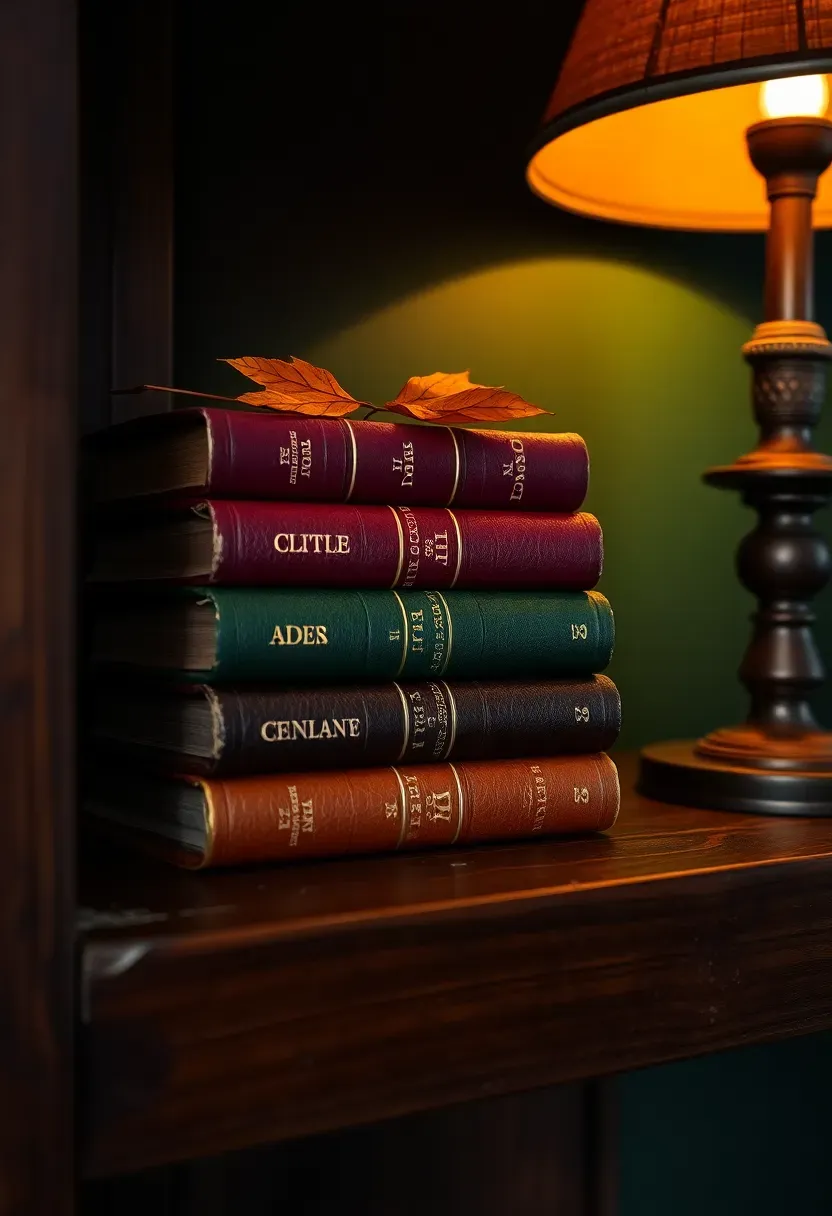
The pure material presence of aged leather-bound books — cracked burgundy calfskin, worn forest-green cloth boards, cognac-brown Morocco leather with raised spine ribs — is one of the most sensory pleasures available in shelf styling. These are objects that smell of history, that show decades of handling in the softness of their covers and the slight lean of their spines. A small stack of three to five aged leather volumes, ideally with embossed gold-leaf titling barely visible on the spine, is a complete shelf composition on its own.
Tips
- Seek out leather-bound sets at library deaccession sales — they often include full sets with matching spines in a single rich color
- A vintage brass bookmark resting across the top of a stack adds a finishing touch
- A single dried leaf or botanical specimen resting against the stack bridges books and nature in a natural way
Recommended
Items for this idea
23. Gilded Frames and Gold Accents
Step 1: Lead with a Large Gilded Frame
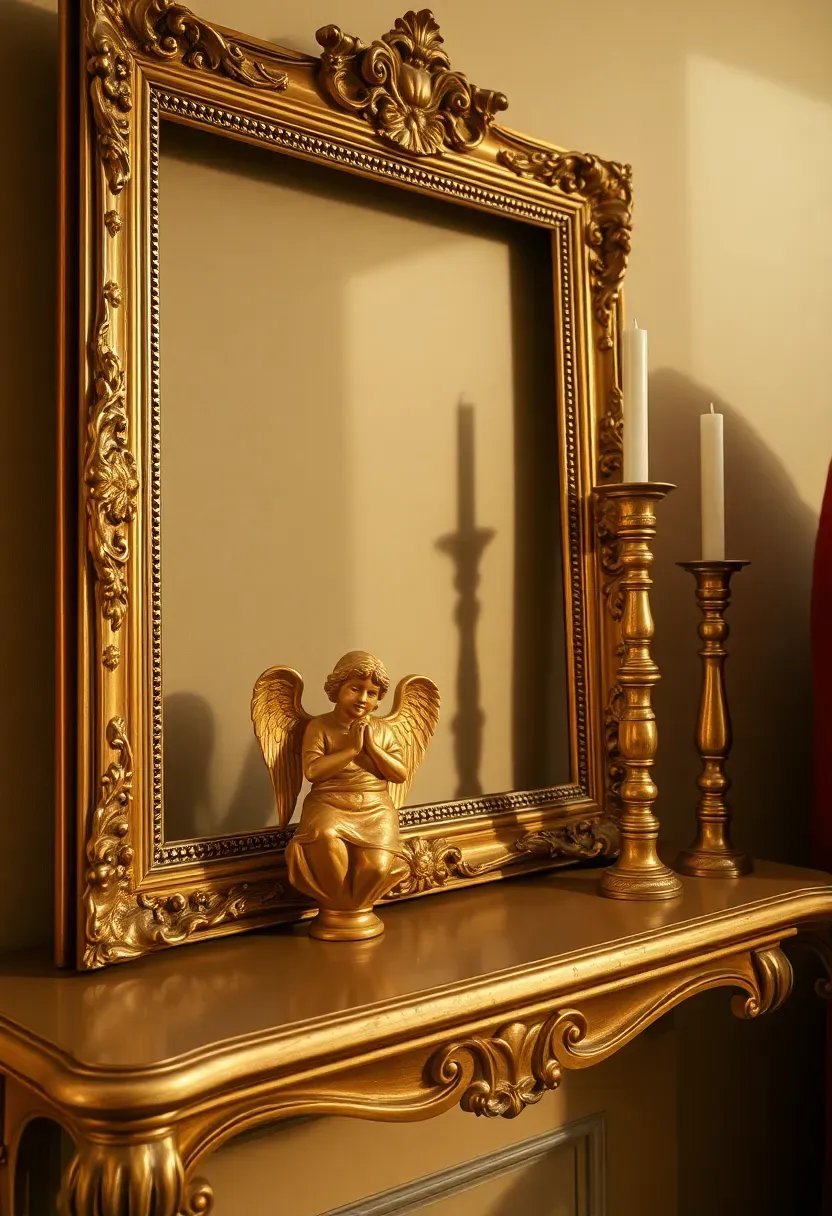
A substantial gilded frame — whether containing a mirror or a painting — commands attention and immediately reads as an heirloom object. Choose water-gilded gesso frames with visible areas of wear where the red bole shows through the gold leaf. The imperfection is the beauty.
Step 2: Support with Smaller Gold Elements
A small gold-leafed figurine, two gilded candlesticks, and a gilded votive holder create a warm, luminous composition around the central frame. Keep the objects at varying heights to avoid a flat, static arrangement.
Step 3: Choose the Right Wall Color
Warm ivory, deep sage, or charcoal all make gilded objects glow. Avoid cool white walls, which flatten gold tones and strip them of warmth.
What to Watch Out For
- Aged gold always reads better than shiny brass-colored substitutes in this context
- Real gold leaf objects are available at auctions, estate sales, and specialized antique dealers
- The combination of gilded items with soft ambient light creates an effect no modern decor can replicate
Quick FAQ
Is it possible to mix genuine antiques with modern reproductions on the same shelf? Yes, and in practice most styled shelves do exactly this. The key is maintaining consistent material quality and palette — a well-made reproduction that matches the color, patina, and weight of genuine antiques reads as part of the same story. Avoid obviously plastic or lightweight reproductions, which break the visual credibility of the arrangement.
Should antique shelves match the room's existing furniture style? Not necessarily. Some of the most compelling vintage interiors mix periods deliberately — a Georgian bracket shelf in a room with Victorian objects, or an industrial iron shelf in a cottage room. The objects placed on the shelf matter more than whether the shelf itself matches other furniture. Consistency of color palette and material quality creates visual cohesion more reliably than matching period styles.
What's the difference between a styled shelf and a cluttered shelf? Visual breathing room. Even a shelf with many objects avoids feeling cluttered when there is deliberate space between groupings, a clear foreground-to-background depth layering, and a limited color palette. Clutter happens when objects are the same height, the same distance apart, and the same visual weight — there is nowhere for the eye to pause.
Which materials age most gracefully on an open wall shelf? Brass, bronze, terracotta, aged wood, leather, and natural textiles all develop richer character over time with normal exposure to light and air. Glass and ceramic remain stable. Avoid materials that deteriorate: raw iron without protective coating will rust, and certain dyes in textiles will fade unevenly in direct sunlight.
How often should an antique shelf display be refreshed? A good arrangement can live unchanged for a year or more without feeling stale — if it was well considered in the first place. Seasonal additions (dried botanicals, a branch with autumn leaves, a festive textile) refresh the composition without requiring a full rearrangement. The urge to change everything frequently usually signals that the foundational arrangement wasn't quite right.
The best antique shelf display is one that looks like it has always been there — objects gathered over time, worn in by use and memory, arranged with care but not with anxiety. Start with one strong object you genuinely love, build outward with pieces that share its material world, and resist the temptation to fill every inch. A shelf with space is a shelf that invites you to look closely at what is actually there.
Pinterest cover for 23 Antique Wall Shelf Styling Ideas for a Timeless Home
About the author
OBCD
CGI visualization and interior design content. We create detailed 3D renders and curate practical design ideas for every room in your home.