21 Antique Wall Shelf Ideas to Add Vintage Charm to Any Room
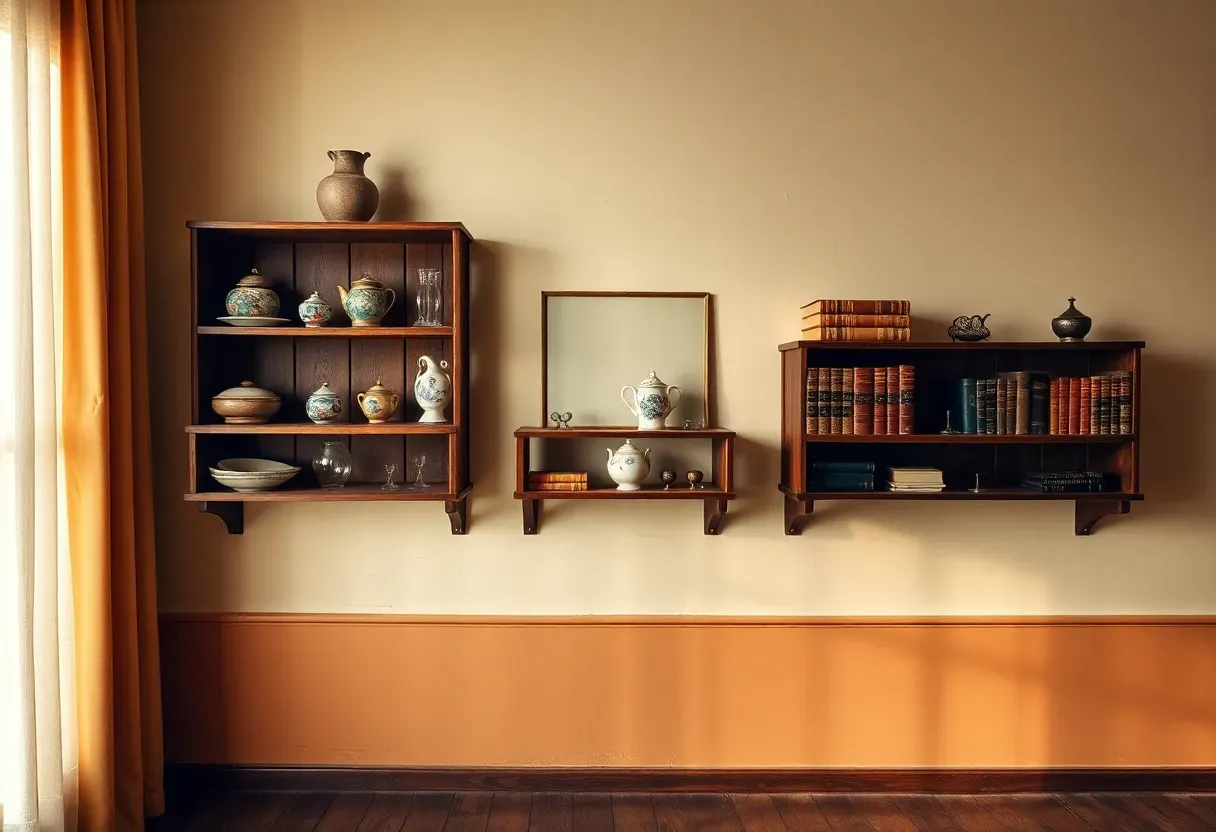
Walk into any room with antique wall shelves and you feel it immediately — that quiet sense of story, of accumulated time, of objects that have outlasted trends and fashions. Unlike modern floating shelves that prioritize sleekness, antique wall shelves carry texture, imperfection, and personality. They make a room feel like it has always been there, like it belongs to someone with genuine taste rather than a recent furniture catalog. Whether you are working with a Victorian parlor aesthetic, a French country kitchen, or a simple bedroom that needs a single focal point, an antique shelf transforms what hangs on your wall from storage into art. The following 21 ideas range from grand statement pieces to subtle single-bracket solutions — each one chosen for real-world applicability and lasting visual appeal.
Ready to explore? Below you will find structures, styling approaches, sourcing tips, and combination ideas that cover every room and every budget.
Table of Contents
- Ornate Cast Iron Bracket Shelf
- Reclaimed Barn Wood Plank Shelf
- Victorian Corner Shelf Display
- French Country Plate Shelf
- Distressed White Farmhouse Shelf
- Industrial Pipe and Wood Antique Shelf
- Painted Porcelain Bracket Shelf
- Stacked Antique Ladder Shelf
- Gilded Mirror-Back Display Shelf
- Raw Edge Live-Edge Shelf with Patina Brackets
- Gallery Wall with Floating Antique Ledges
- Apothecary Cabinet-Style Wall Shelf
- Wrought Iron and Marble Shelf
- Chippy Paint Cottage Shelf
- Wicker and Rattan-Trimmed Shelf
- Deep Mahogany Mantel Shelf
- Repurposed Window Frame Shelf
- Tin Ceiling Tile Shelf Back Panel
- Stenciled Folk Art Shelf
- Empire-Style Black and Gold Shelf
- Freestanding Antique Shelf Unit
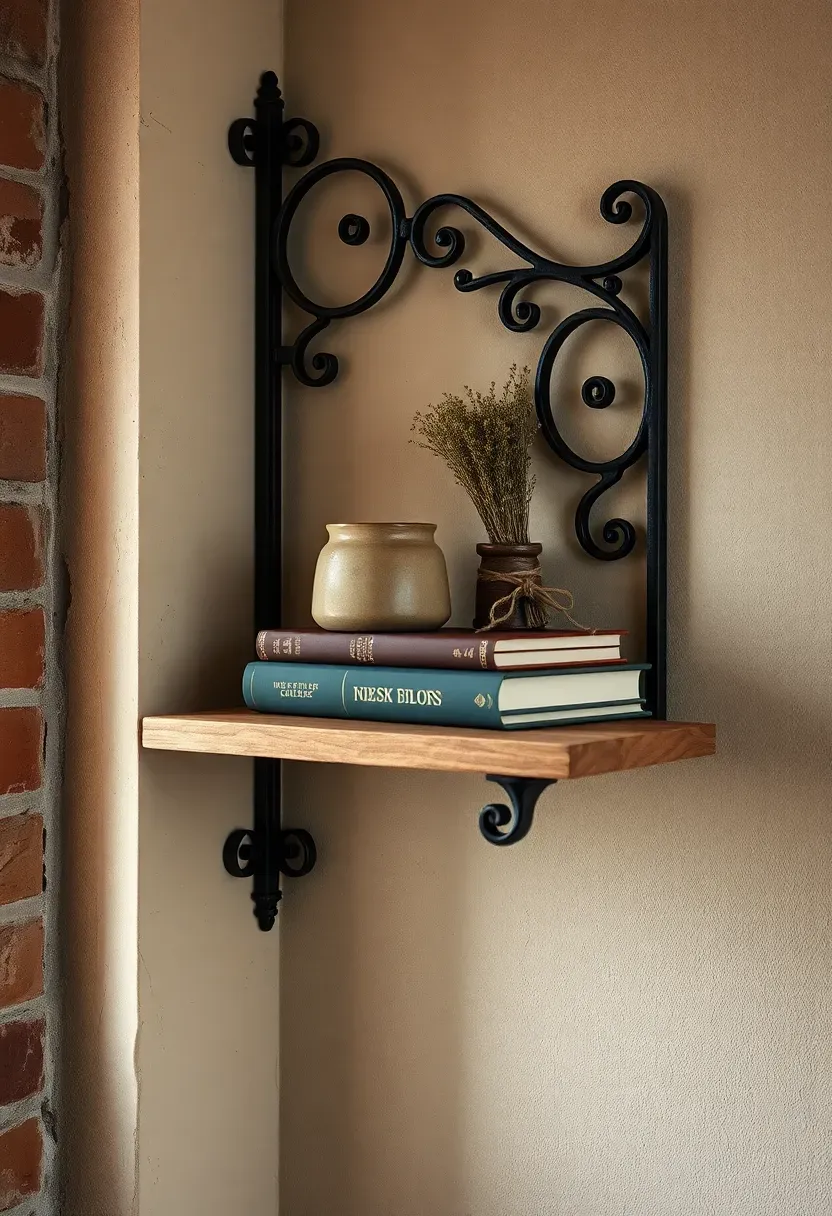
1. Ornate Cast Iron Bracket Shelf
Cast iron brackets were a staple of 19th-century interiors — sturdy, intricate, and built to outlast the buildings that housed them. When paired with a thick wood plank, they create a shelf that looks like it was installed a hundred years ago and simply never needed replacing.
How to Style It
Lean into the industrial-meets-decorative tension. Stack a few hardcover books with faded spines, add a small ceramic crock, and finish with a single dried herb bundle. The contrast between iron's weight and the delicacy of collected objects is exactly what makes this shelf compelling.
Where It Works Best
- Living rooms with exposed brick or aged plaster walls
- Farmhouse kitchens above a range or prep counter
- Home offices with leather-bound reference books
Sourcing Tip
Original cast iron brackets appear regularly at architectural salvage yards. Look for intact scroll detailing and original paint rather than modern reproductions, which lack the hand-cast irregularity of genuine antiques.
We picked a few things that go well with this idea: QsQueen scalloped wood rustic floating shelf (★4.3), Deco 79 vintage brown wood wall shelf (★5.0) and FRIADE two-tier Roman column display shelf (★4.7). As an Amazon Associate we earn from qualifying purchases.
2. Reclaimed Barn Wood Plank Shelf
The Core Idea
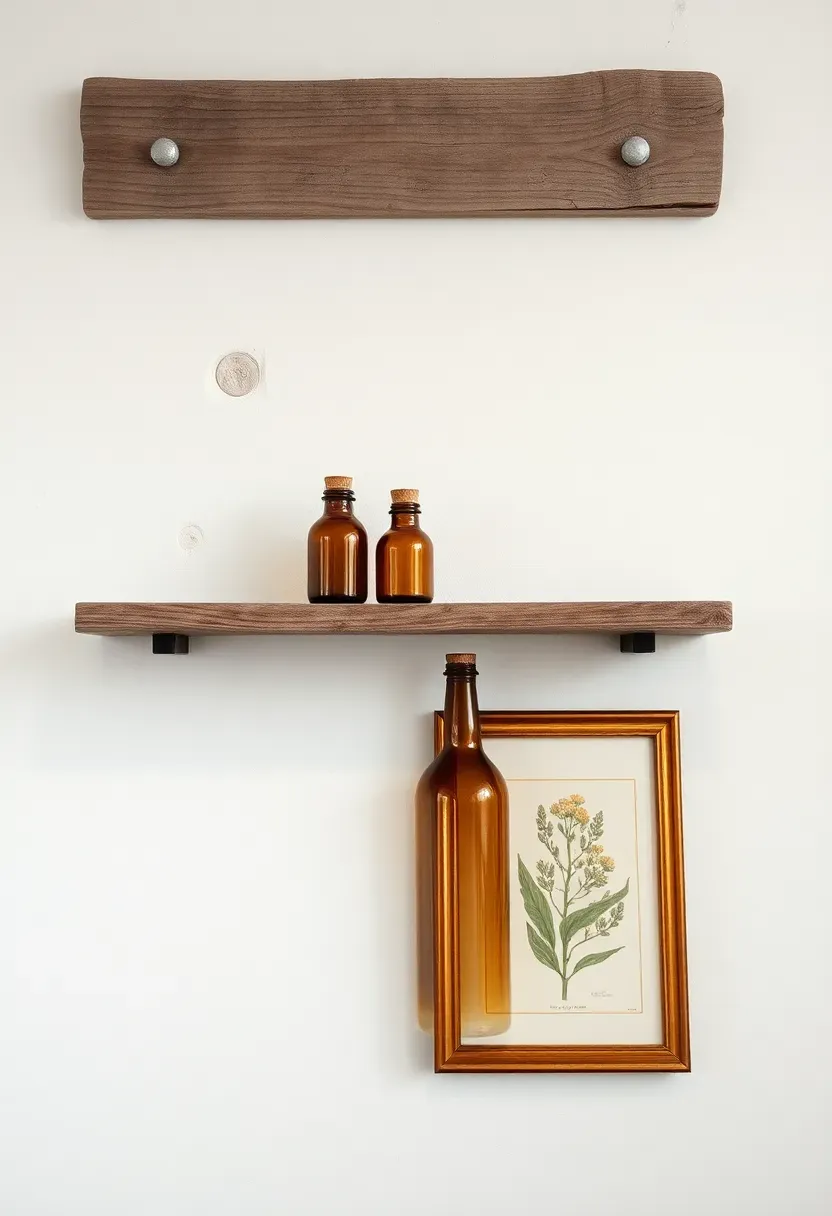
There is no shortcut to the look of a reclaimed barn wood shelf — the nail holes, the weathered grain, the silvery patina that comes from decades of sun and rain. A single plank pulled from a dismantled barn carries more visual history than any artificially distressed board from a home goods store.
Styling It Right
Minimal is more effective. Three or four objects with breathing room between them let the wood itself remain the focal point. Consider:
- A row of amber glass apothecary bottles
- A small framed botanical print leaned against the wall
- One ceramic piece in matte white or earth tones
Avoid: Crowding the shelf with too many objects. Reclaimed wood deserves negative space.
Pros and Cons
Pros: Genuinely one-of-a-kind appearance; each plank has unique markings; pairs with nearly every vintage style
Cons: Requires proper sealing for kitchens and bathrooms; sourcing authentic pieces takes effort; very heavy planks need adequate wall anchoring
We picked a few things that go well with this idea: MITREL rustic shadow box floating shelf (★4.2), Walasis white French country floating shelf (★4.6) and Walasis antique farmhouse rustic hanging shelf (★4.6). As an Amazon Associate we earn from qualifying purchases.
3. Victorian Corner Shelf Display
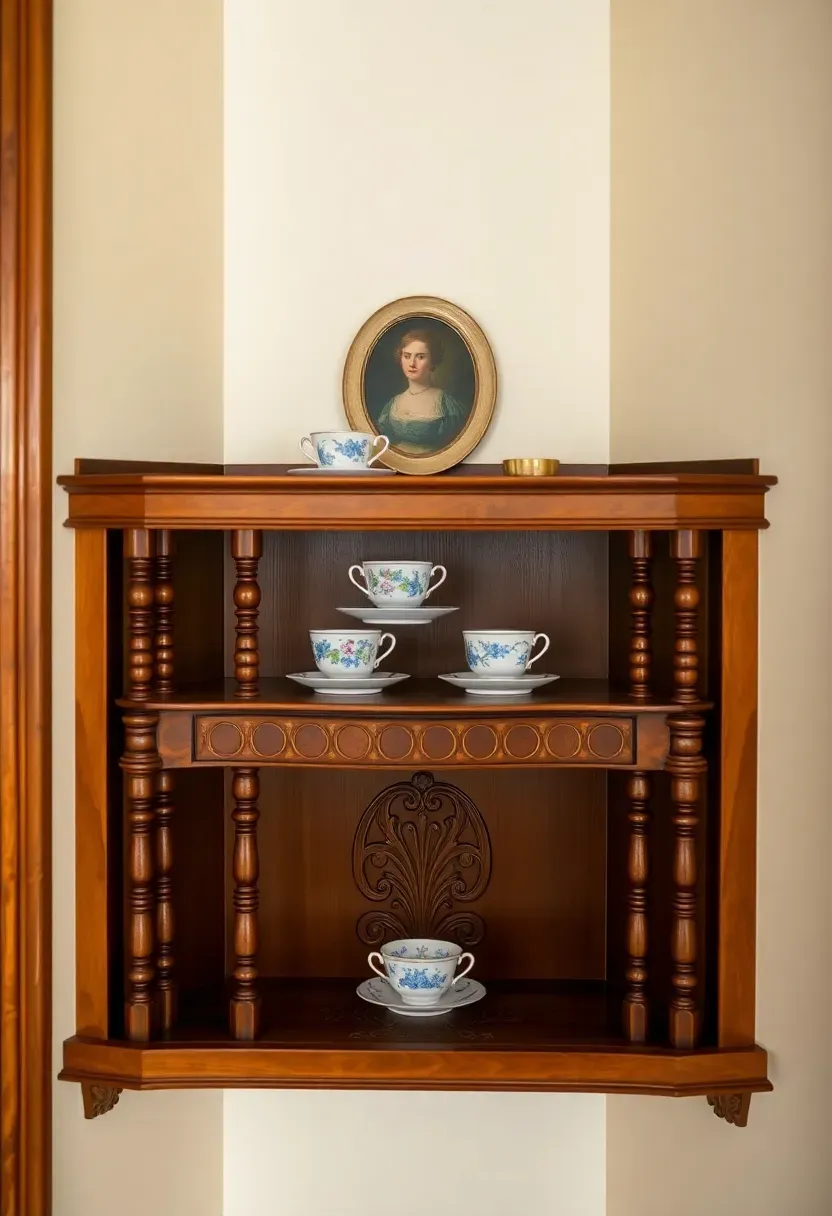
Corners are the most underused real estate in any room. A Victorian-era corner shelf — with its characteristic spindle railings, carved apron, and tiered platforms — turns a dead angle into one of the most charming focal points in the house.
Three-Tier Styling Approach
Top tier: Something tall and slender — a bud vase, a taper candle in a brass holder, or a small figurine.
Middle tier: A grouping of two or three mid-height objects — a stacked pair of antique books, a lidded box, a framed miniature.
Bottom tier: The heaviest or widest items — a ceramic bowl, a cluster of small pots, or a folded piece of vintage textile.
What to Watch Out For
Corner shelves attract dust in their carved details. Choose objects that are easy to move for cleaning, and avoid very delicate pieces that require constant repositioning. Carved Victorian shelves also need screws into studs, not just drywall anchors, given their weight.
We picked a few things that go well with this idea: ornate leaf cast iron shelf bracket (★4.1), PRESSINART ornamental forest cast iron brackets (★5.0) and Blulu antique cast iron decorative shelf brackets (★4.7). As an Amazon Associate we earn from qualifying purchases.
4. French Country Plate Shelf
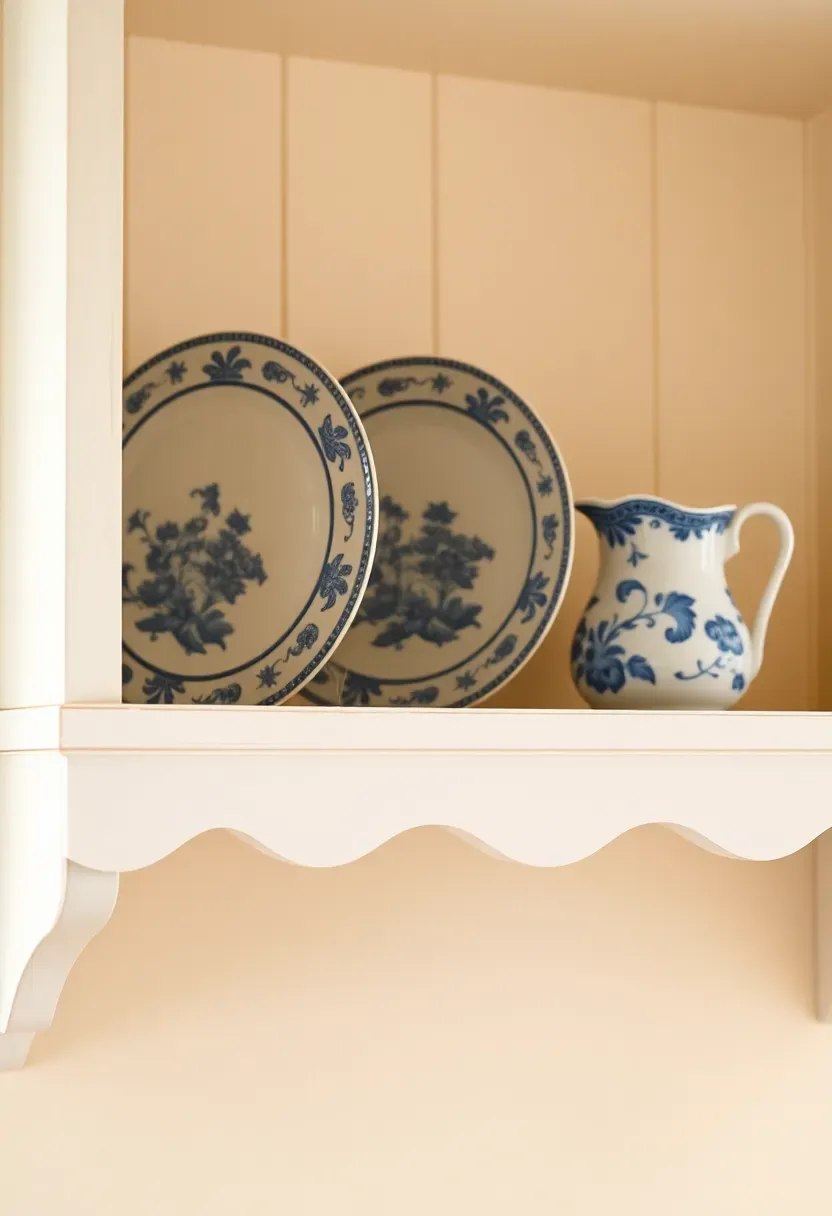
For centuries, French farmhouse kitchens displayed their best ceramics on narrow plate shelves running along the wall just above eye level. This tradition is both practical and beautiful — your most decorative dishes become part of the room's design rather than hiding behind cabinet doors.
Setting Up the Display
A proper plate shelf has a routed groove or a small dowel rail along the back edge to keep plates upright. Antique versions often feature scalloped or dentil trim along the bottom edge, which adds to the visual weight and authenticity.
Mix plate sizes for rhythm: a large oval platter flanked by medium dinner plates, with a few small salad plates filling gaps. Add a small ceramic pitcher or a bundle of lavender lying flat for texture.
The Result
The effect is immediately warm and gathered, as if the shelf has been accumulating pieces over generations rather than being assembled in an afternoon.
Recommended
Items for this idea
5. Distressed White Farmhouse Shelf
Origins
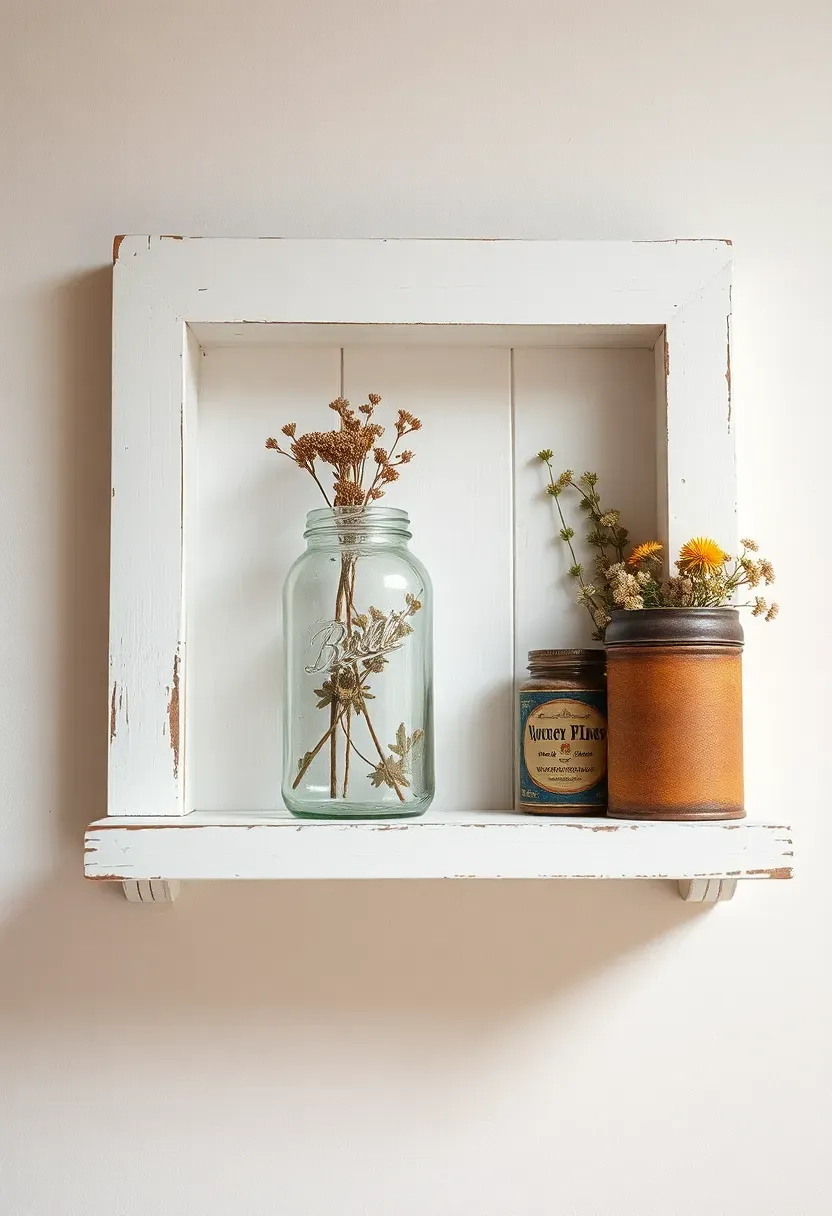
The distressed white shelf became a farmhouse interior staple because it solved a specific problem: how to bring antique character into newly built homes without sourcing genuinely old pieces. Layers of white milk paint applied over raw wood, then lightly sanded at edges and high points, create convincing wear that reads as age without requiring it.
Modern Interpretation
Today the distressed white shelf has evolved from a pure farmhouse signal into a more broadly applicable vintage accent. It works in:
- Coastal rooms where the worn white suggests driftwood and salt air
- Cottage bedrooms alongside floral wallpaper and linen curtains
- Minimal interiors where it provides the single warm, imperfect element
How to Achieve the Look at Home
- Start with raw or primed wood — pine or poplar work well
- Apply milk paint in off-white or linen; let dry completely
- Sand edges, corners, and any raised details with 120-grit paper
- Apply a thin coat of clear wax and buff lightly
- Let cure for 24 hours before loading with objects
6. Industrial Pipe and Wood Antique Shelf
Why It Works
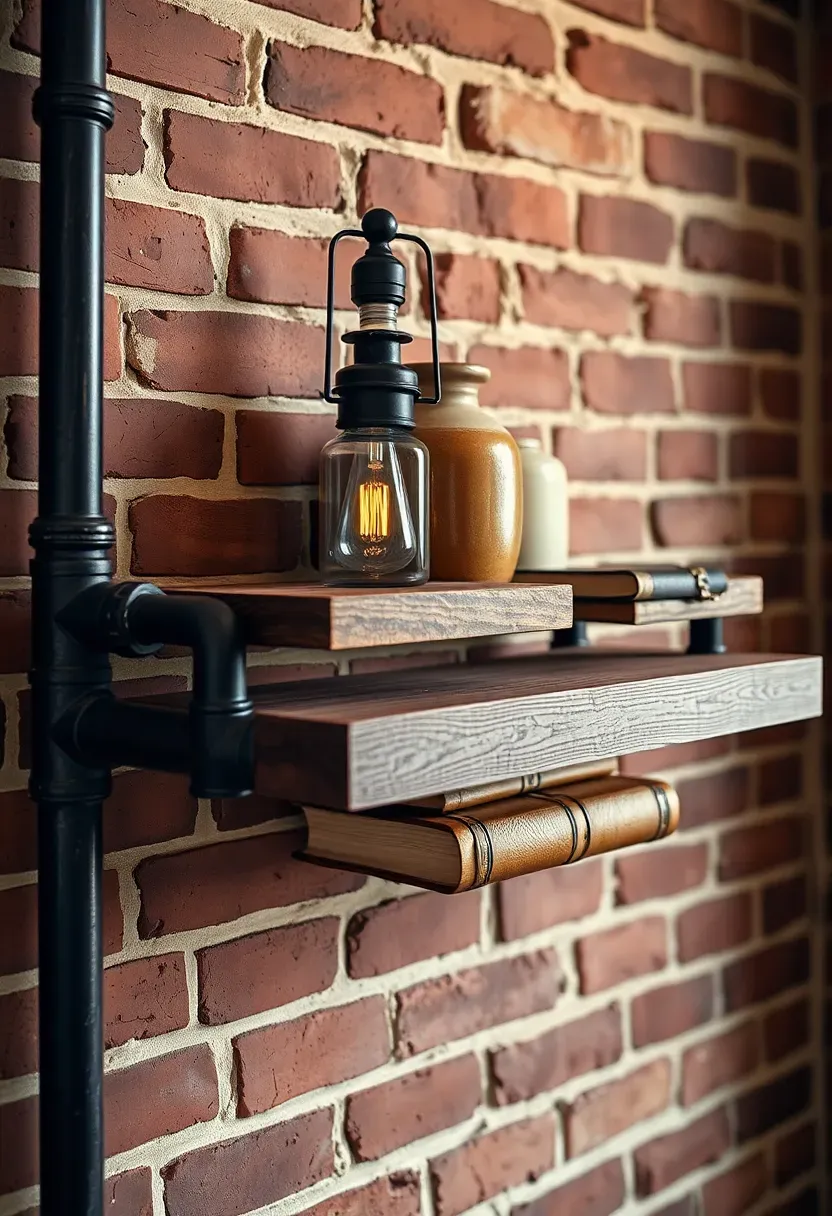
The combination of black iron pipe brackets and aged wood planks belongs to an aesthetic that references late 19th-century factory interiors — utilitarian design with incidental beauty. What makes it feel antique rather than merely industrial is the patina: the wood's grain and tone, the slight rust at pipe joints, the raw texture of materials that have been used.
Comparing Pipe Bracket Styles
Standard flange brackets mount flat to the wall and hold the shelf with a short vertical pipe section. Clean and simple.
Extended arm brackets project the shelf further from the wall, creating more shadow and depth. Better for deeper shelves holding bulkier objects.
What to Choose
Choose standard flanges if: Your wall is close to a doorway or window and depth is limited.
Choose extended arms if: You want the shelf to feel more substantial and have room for deeper objects like stacked books or a small lantern.
Recommendation
For a genuinely vintage look, source pipe hardware from plumbing salvage rather than buying new reproduction sets. Original fittings show use and variation that manufactured sets cannot replicate.
Recommended
Items for this idea
7. Painted Porcelain Bracket Shelf
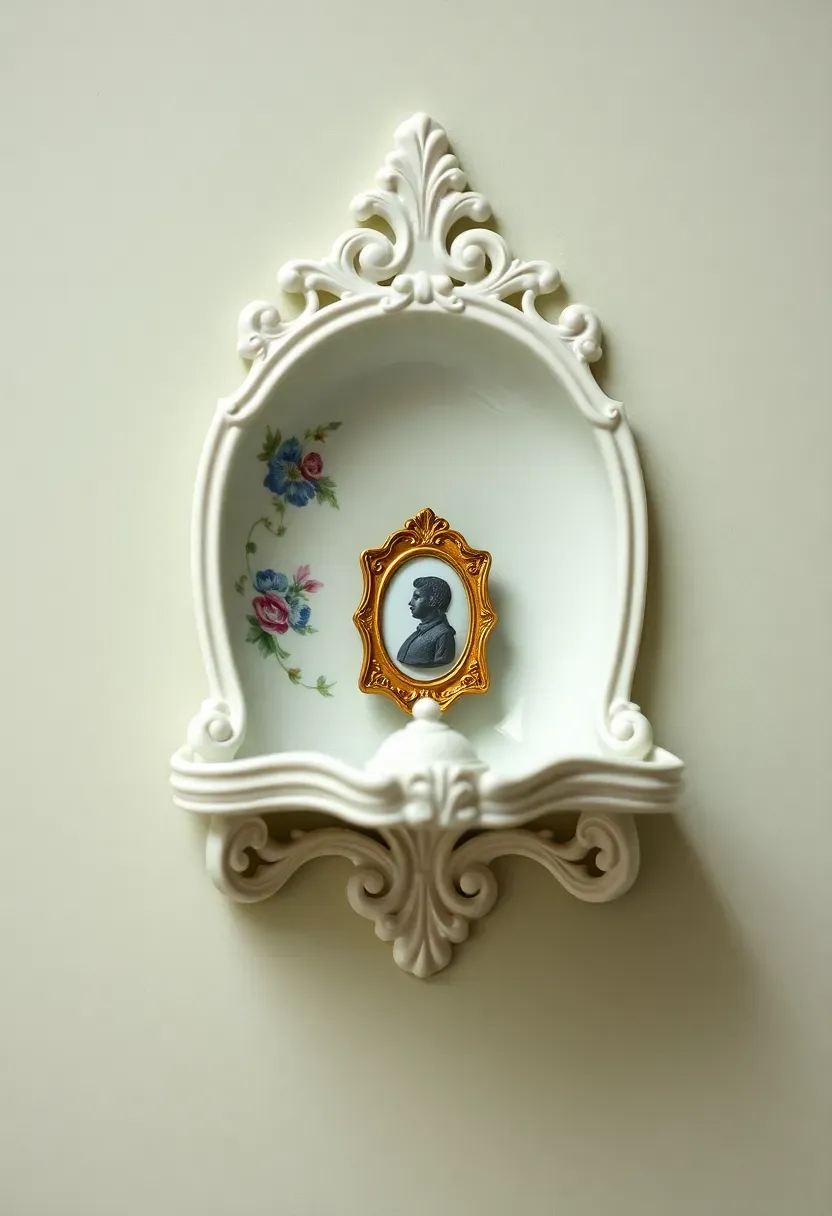
Porcelain bracket shelves were luxury objects in 18th and 19th-century European homes — hand-painted with florals, pastoral scenes, or classical motifs, and mounted in parlors or dressing rooms to display small treasures. Finding an authentic piece today requires patience and a relationship with specialist dealers, but the reward is extraordinary.
Styling Philosophy
The shelf itself is already ornate, so objects on it should be restrained. A single small figurine, a few coordinating pieces in the same porcelain tradition, or a tiny framed silhouette. The bracket should remain the star.
Where to Source Them
Specialist auction houses for European decorative arts are the most reliable source. Online platforms like 1stDibs or Chairish occasionally carry quality examples. Be cautious of reproductions — genuine pieces show slight imperfections in the painting and small kiln marks on the underside of the bracket.
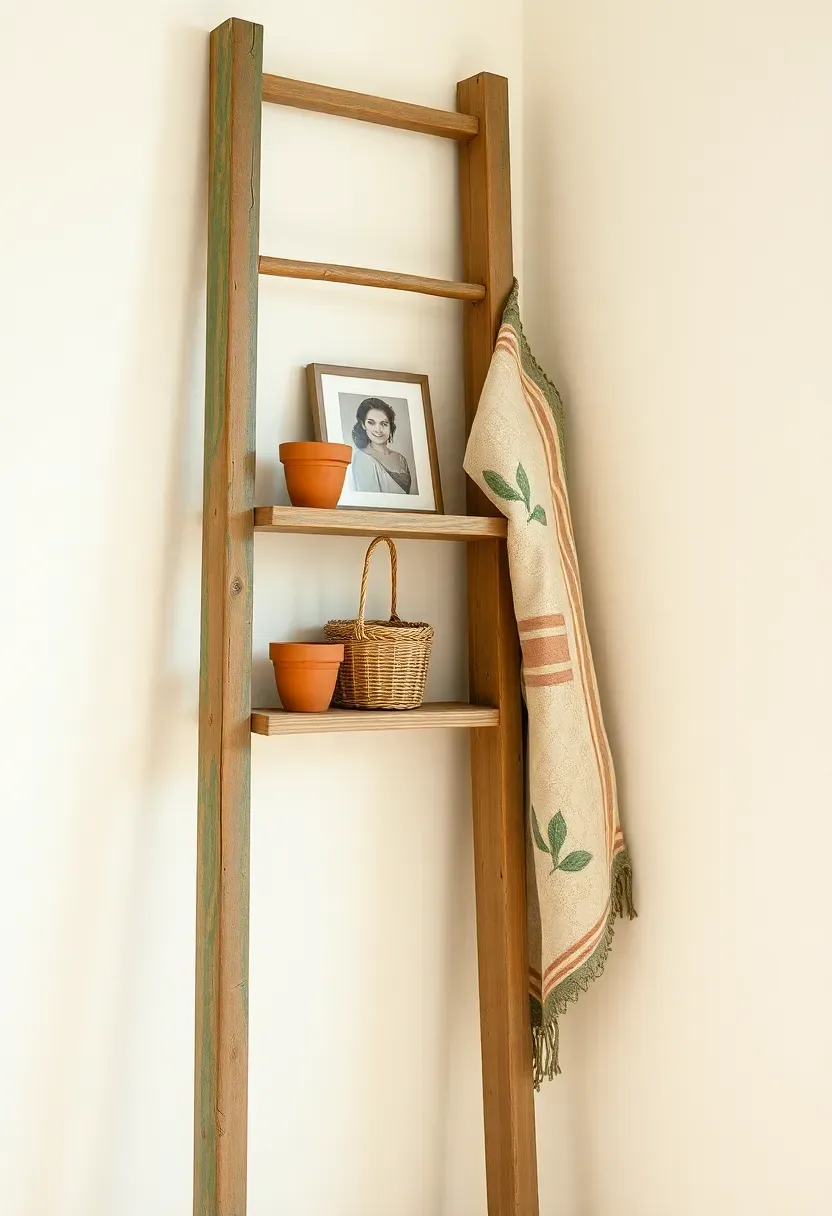
8. Stacked Antique Ladder Shelf
The Concept
An old wooden ladder — ideally with visible paint, worn rungs, and honest age — leaned against a wall and loaded with objects is one of the most economical antique shelf solutions available. What makes it work visually is the diagonal line it creates, which provides movement and height without requiring any mounting hardware.
Step-by-Step Styling
Step 1: Choose the right ladder. Old orchard ladders or household step ladders with splayed legs work best — they stand stable when leaned. Avoid modern aluminum ladders.
Step 2: Stabilize it. A small piece of non-slip mat under each foot prevents sliding. For permanent installations, a single screw through the top rung into a wall stud adds security.
Step 3: Distribute weight wisely. Heavier objects on lower rungs, lighter items ascending toward the top. Trailing plants or draping textiles add softness.
Step 4: Add layering. Lean small framed prints against the wall between rungs, hang a small basket from a rung, or rest a folded quilt over the top step.
What to Watch Out For
Ladders in high-traffic areas can be knocked. Reserve this display for corners or walls away from main walkways.
Recommended
Items for this idea
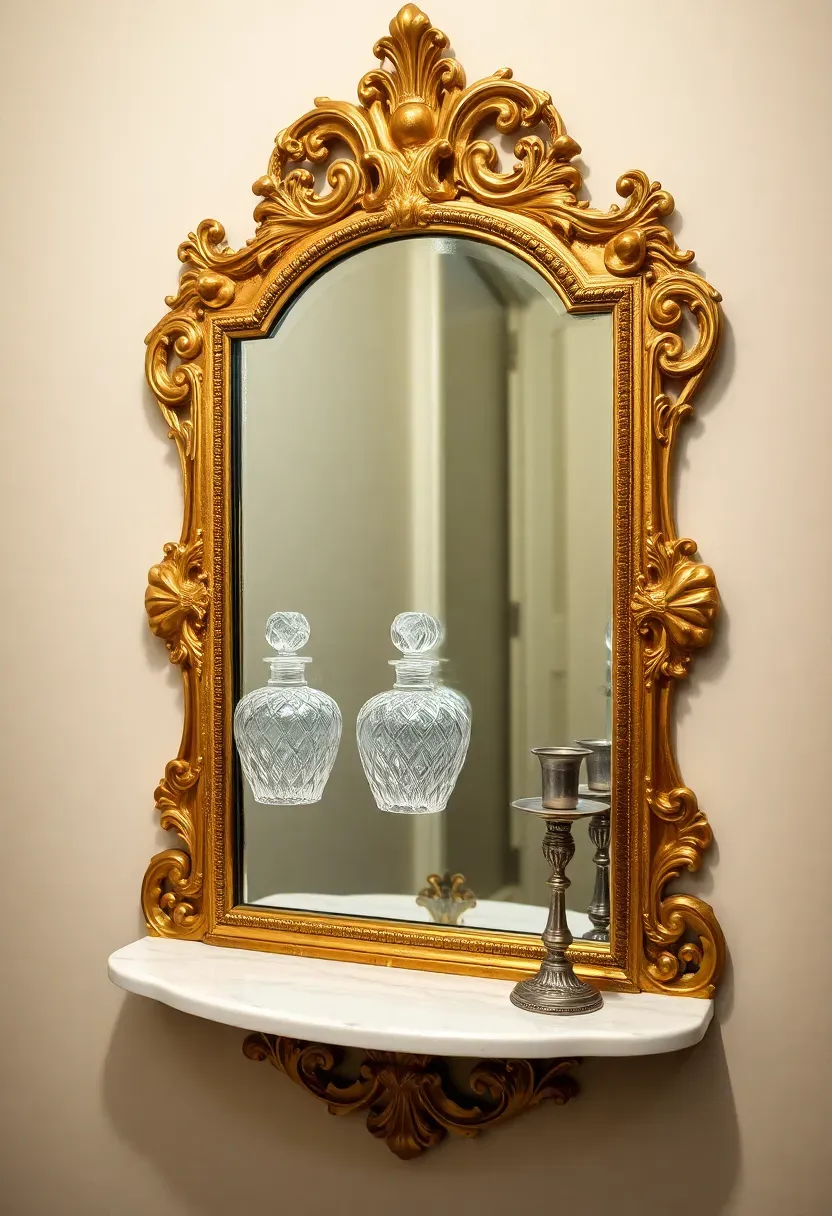
9. Gilded Mirror-Back Display Shelf
The gilded mirror-back shelf combines two of Victorian decorating's great loves: gilding and reflection. A small shelf — often just 12 to 18 inches wide — is mounted against a mirrored back panel framed in gold leaf or gilt wood, creating the effect that objects displayed on it float in a golden, endlessly deep space.
What to Display Here
Objects that benefit from multiple perspectives: cut glass perfume bottles that catch light from all sides, small silver candlesticks that look different from every angle, a single extraordinary piece of jewelry or decorative enamelwork.
Placement Strategy
These shelves work best in dressing rooms, master bedrooms, or powder rooms — spaces with a sense of intimacy. A single gilded mirror-back shelf positioned at eye level in a small bathroom transforms the entire character of the room.
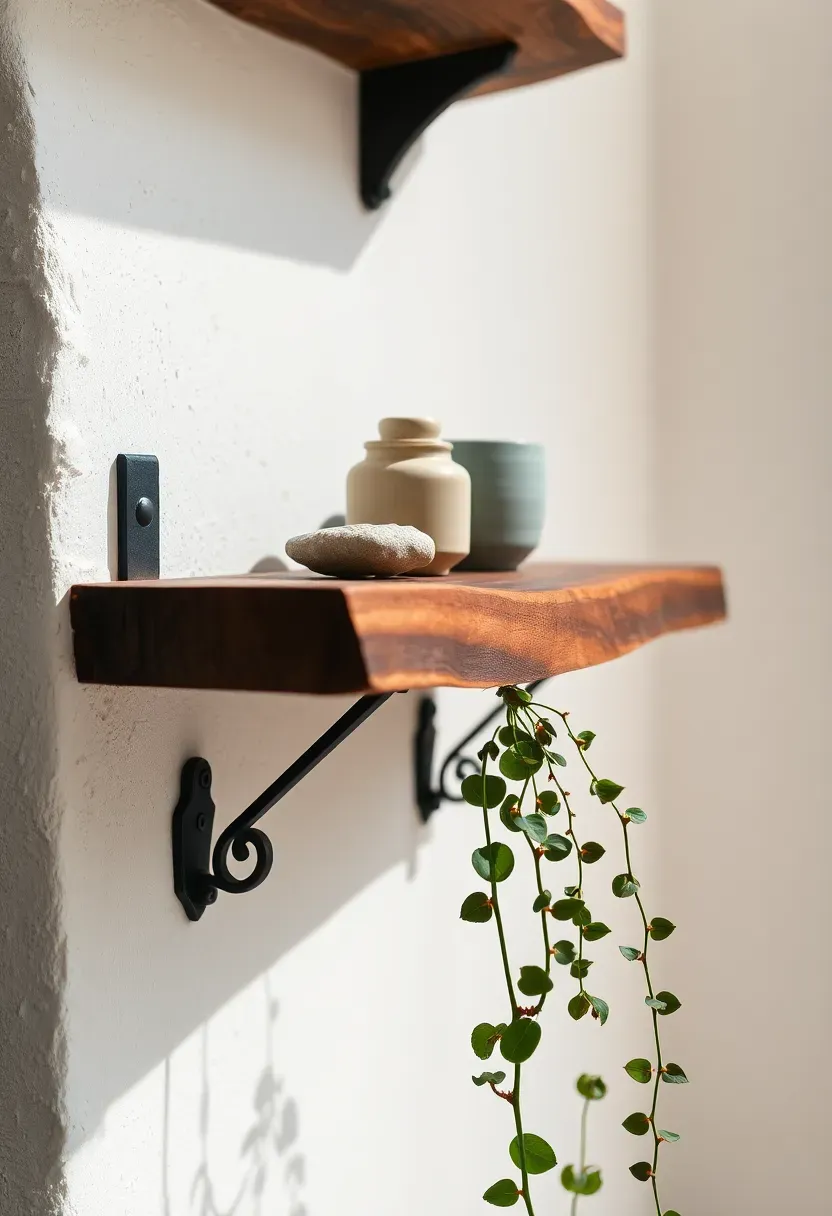
10. Raw Edge Live-Edge Shelf with Patina Brackets
Comparing Options
Standard antique plank shelf: Sawn edges, consistent width, historical accuracy for period-correct rooms.
Live-edge shelf: Irregular natural edge retained, each piece unique, suits more eclectic or craft-forward interiors.
What to Choose
Choose a standard plank if: You are building a period-correct Victorian, Edwardian, or farmhouse scheme where natural edges would read as anachronistic.
Choose live-edge if: Your interior already mixes vintage and contemporary, and you want the shelf to be a conversation piece in itself.
Bracket Pairing
Live-edge shelves pair best with hand-forged iron brackets — the slight irregularity of hammer-worked metal complements the organic edge of the wood. Avoid machine-perfect brackets, which create a visual mismatch.
Recommended
Items for this idea
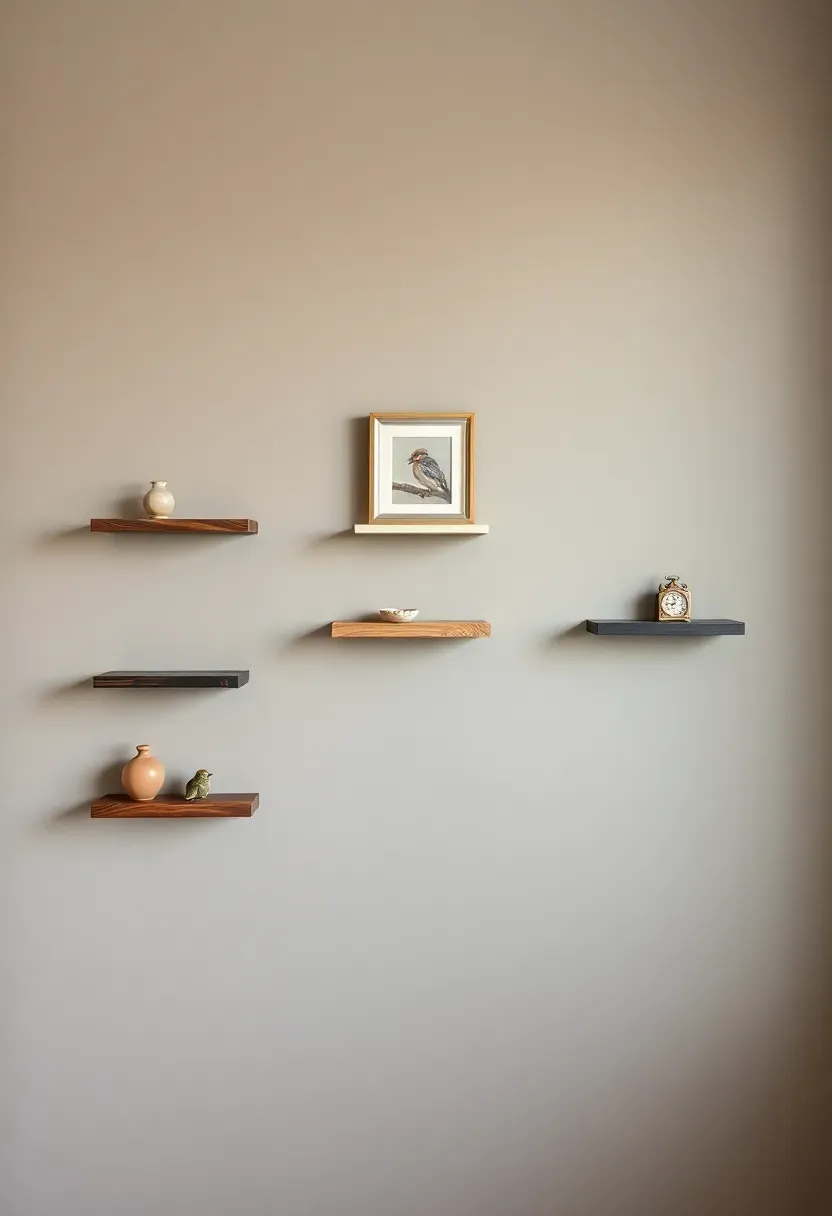
11. Gallery Wall with Floating Antique Ledges
The Core Idea
Instead of a single shelf, a gallery wall approach uses three to seven small antique ledges arranged at different heights across a broad wall section. Each ledge holds one or two objects; collectively they create a composition as rich as a traditional gallery wall but with three-dimensional depth.
Building the Composition
Start by laying the ledges on the floor in front of the target wall to experiment with spacing and height variation. Photograph the arrangement before mounting. The key relationships are:
- Vary height gaps: don't space every ledge exactly the same distance apart
- Use odd numbers of objects per ledge (one or three reads better than two)
- Create diagonal flow: the eye should travel naturally from one shelf to the next
What to Watch Out For
This approach requires more wall anchoring than a single shelf. Each ledge should be secured into studs or with appropriate toggle bolts rated for the load. Plan the wiring for any small accent lights before mounting — a few picture lights on individual ledges can transform this into an evening focal point.
12. Apothecary Cabinet-Style Wall Shelf
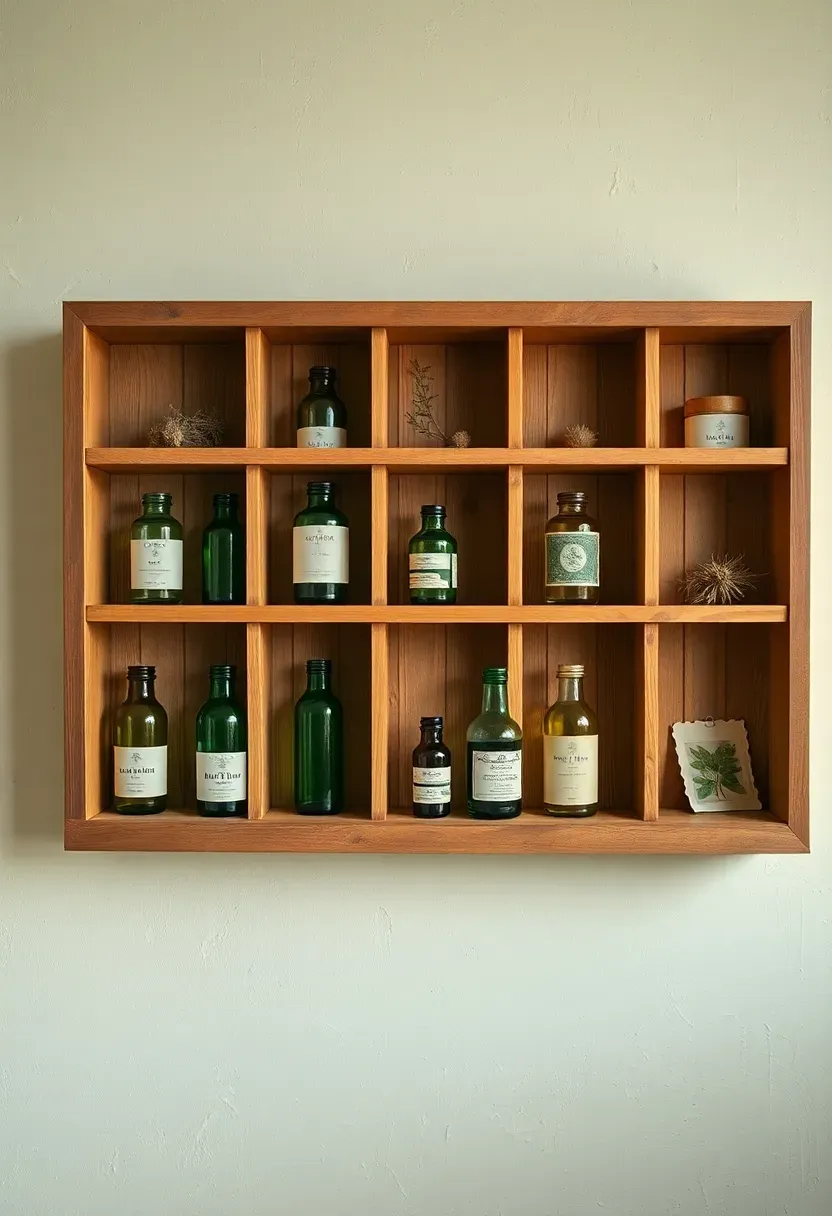
The apothecary cabinet — originally designed to hold remedies in labeled drawers and compartments — has become one of the most coveted antique wall shelf formats in current interior design. Its grid of small compartments creates visual rhythm and gives even a modest collection of objects a museum-quality presentation.
Styling by Compartment Type
Open compartments: Best for frequently accessed objects or items you want to read as a continuous collection — rows of matching bottles, small books with coordinating spines, folded textiles in a single color family.
Glass-doored compartments: Reserve for the most fragile or valuable pieces. The glass protects while maintaining visibility.
Where It Works
Home offices benefit enormously from apothecary-style shelves — the compartments create an organizational system that is also beautiful. Libraries, reading nooks, and mudrooms are other natural fits.
Recommended
Items for this idea
13. Wrought Iron and Marble Shelf
Why This Combination Has Lasted
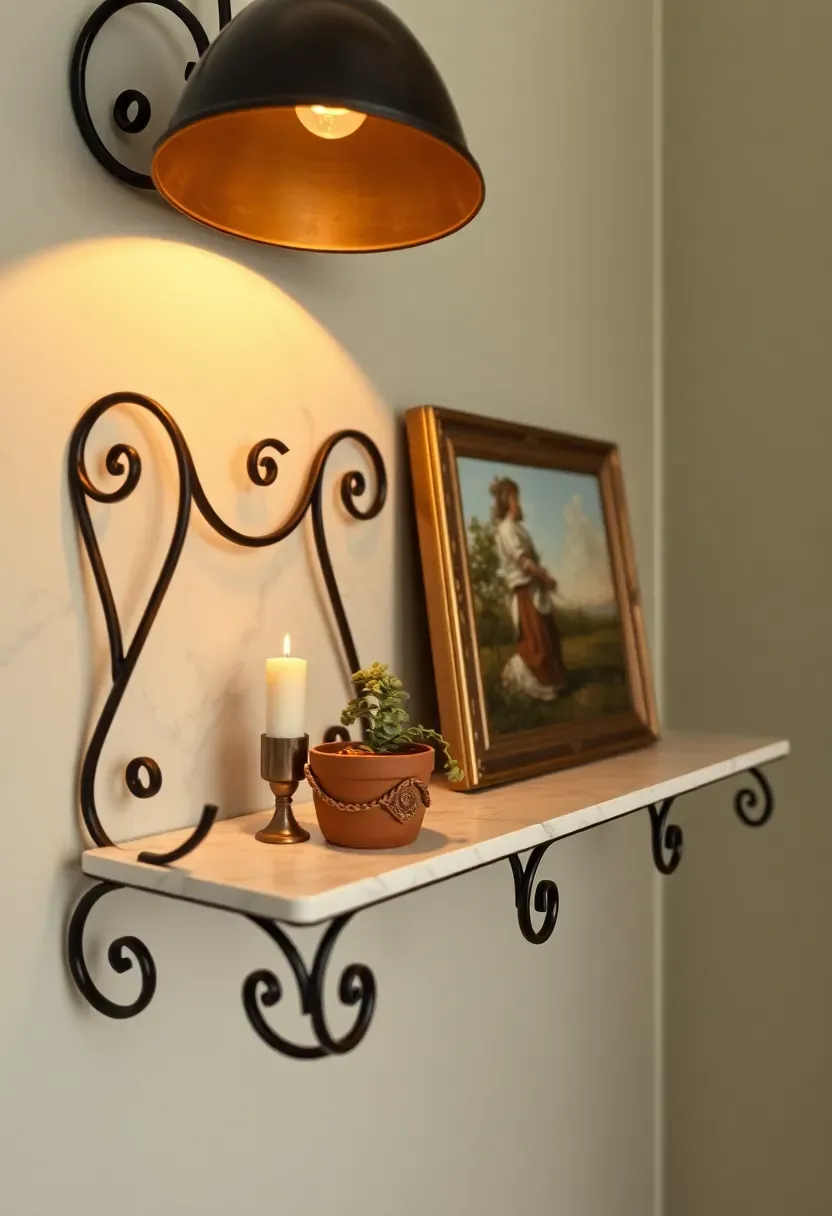
Wrought iron and marble have been paired in European architectural interiors since the Renaissance — the strength and malleability of iron complementing the weight and luminosity of stone. In shelf form, thick iron scrollwork supports a marble slab to create something that reads simultaneously as functional and sculptural.
Styling Notes
Marble tops are heavy and cold to the touch, which makes them ideal surfaces for objects with their own visual warmth: a beeswax candle in a bronze holder, a terracotta pot with a trailing succulent, a small framed oil painting propped against the wall.
Avoid: Plastic or synthetic objects. The authenticity of iron and marble demands objects with equally genuine material character.
Maintenance
Marble requires sealing if the shelf is in a kitchen or bathroom. Unsealed marble stains from water rings and oil — beautiful but unforgiving in high-use locations.
14. Chippy Paint Cottage Shelf
Origins and Appeal
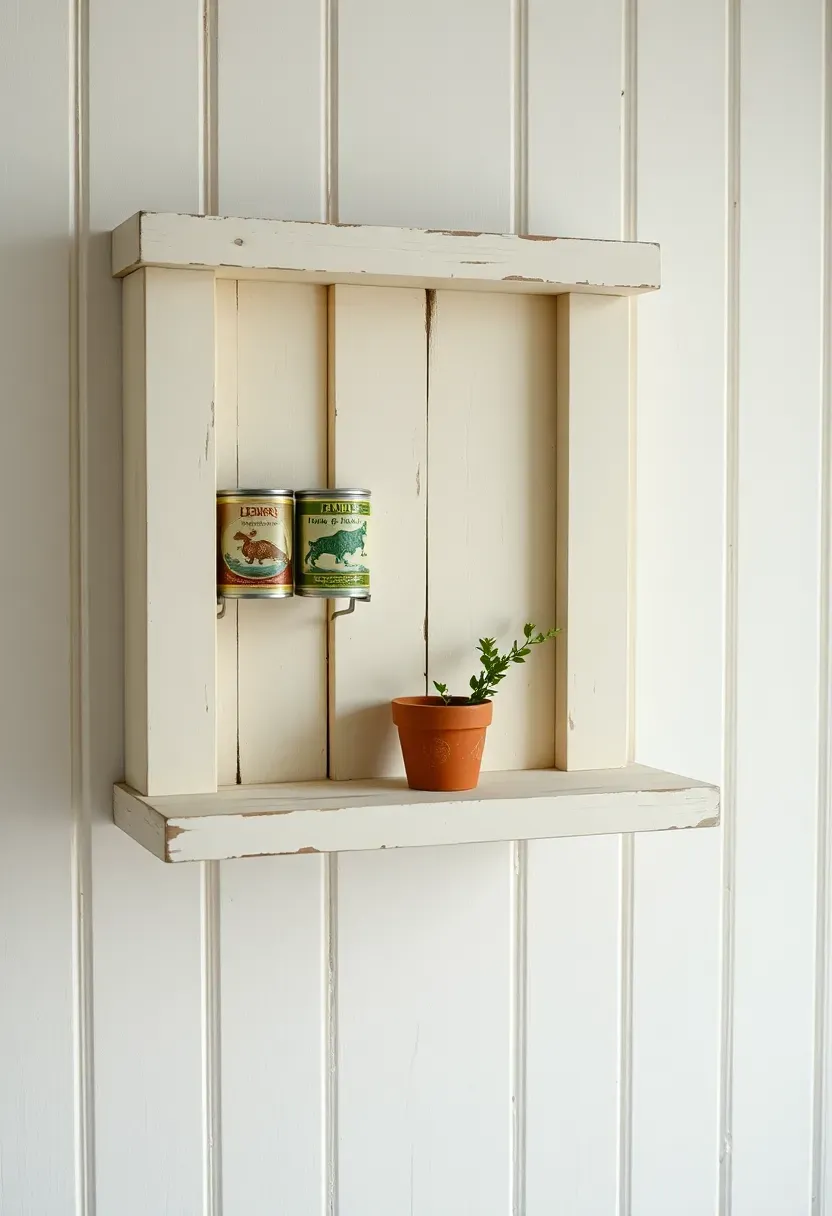
Chippy paint — where multiple layers of old paint have contracted and flaked to reveal earlier colors beneath — tells a specific kind of story. You can read the history of a room in the layers: cream over sage over white over bare wood. A shelf with this surface quality is less a piece of furniture than a small archaeological document.
What It Works Best Beside
Chippy paint shelves carry their own high level of visual noise, so they work best against calm, single-tone walls. An off-white plaster wall, a plain cotton canvas, or a plain tongue-and-groove panel backdrop lets the shelf's surface do the talking.
Achieving It Authentically
If you are creating chippy paint rather than sourcing a genuine antique, the most convincing technique uses actual aged milk paint:
- Apply a coat of chalk paint in a base color; let dry
- Rub petroleum jelly on edges and raised surfaces
- Apply a second coat in a contrasting color
- Once dry, use a putty knife and fine wire brush to lift paint at the jelly points
Recommended
Items for this idea
15. Wicker and Rattan-Trimmed Shelf
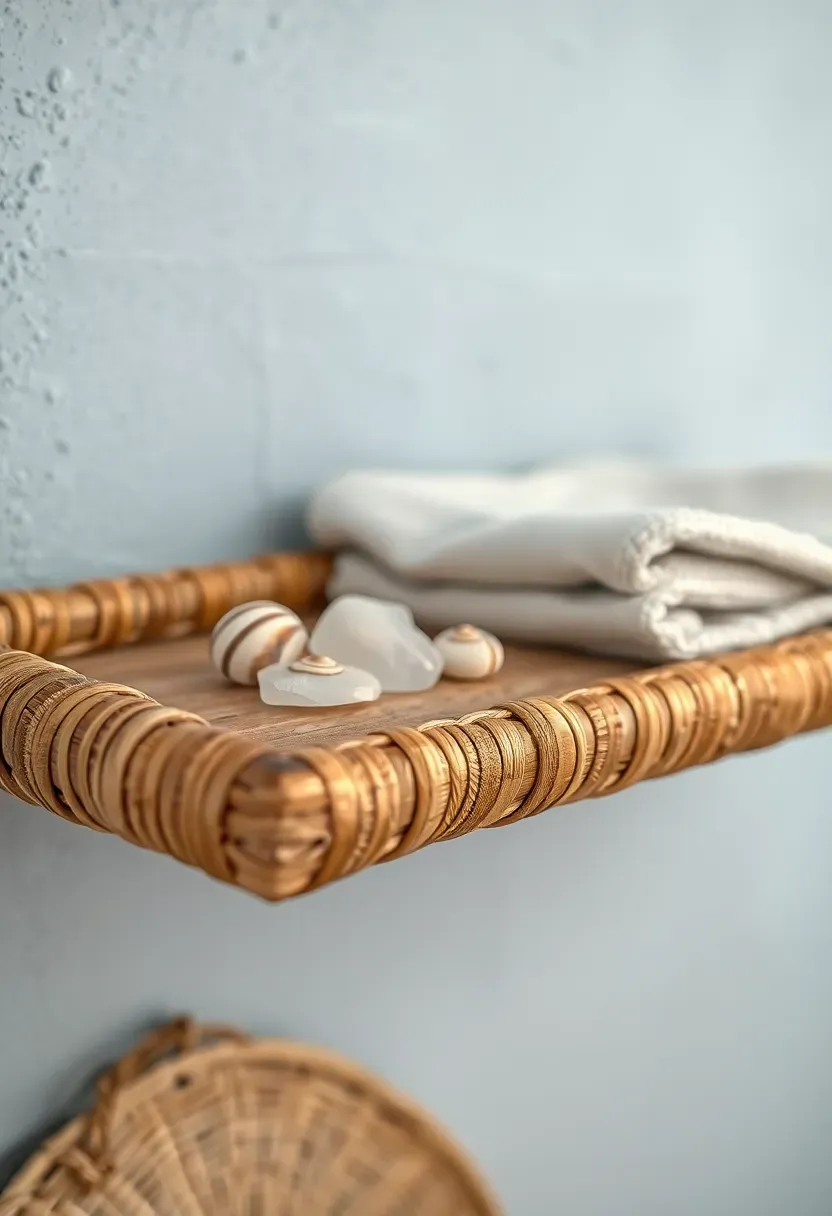
Wicker-trimmed shelves bring the warmth and texture of natural fibers to a wall display. Common in late Victorian and Edwardian sunrooms and conservatories, they suit any interior that values organic materials and relaxed, lived-in character.
Style Pairings
This shelf style connects most naturally to:
- Coastal interiors: Pair with shells, sea glass, and bleached driftwood objects
- Bohemian rooms: Layer with macramé wall hangings and potted trailing plants
- Garden-adjacent spaces: A conservatory or sunroom entrance, holding seed packets, small terracotta pots, and garden tools
Practical Note
Rattan and wicker are vulnerable to humidity over time. In bathrooms or kitchens with steam exposure, apply a clear protective coating to the woven elements annually to prevent brittleness and cracking.
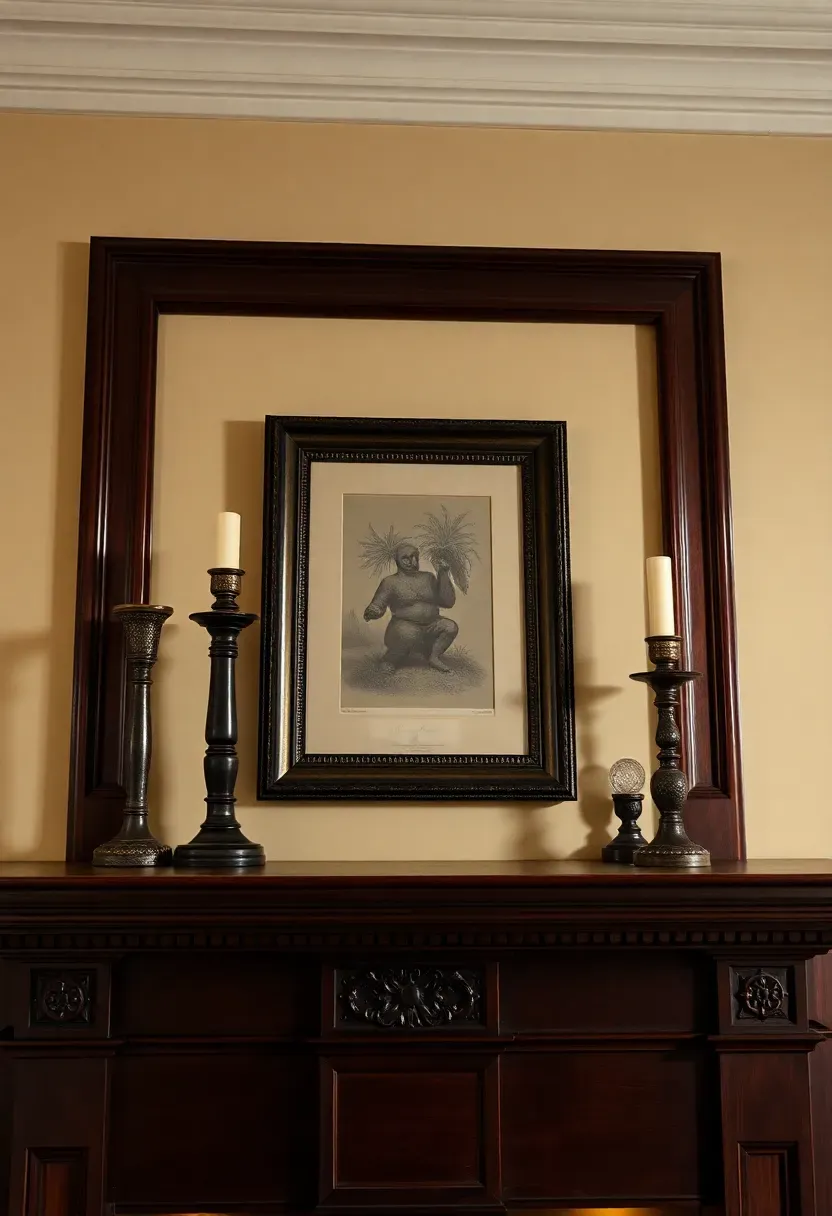
16. Deep Mahogany Mantel Shelf
The Shelf as Architecture
A deep mahogany mantel shelf does not read as furniture — it reads as architecture. With its thick profile, classical molding details, and the weight of genuine hardwood, it imposes itself on the room in the best possible way. This is not a decorative accent but a structural visual element.
Matching Molding to Period
- Federal/Georgian rooms: Simple dentil molding, restrained proportions
- Victorian rooms: Heavier egg-and-dart or acanthus-leaf carving
- Arts and Crafts rooms: Rectilinear detailing, square corbels, minimal carved ornament
Objects That Work at This Scale
The depth and visual authority of a mantel shelf require objects of corresponding substance. A single large bronze urn, a pair of tall candelabra flanking a framed portrait, or a row of leather-bound collected volumes — each holds its ground against the shelf's formality.
Recommended
Items for this idea
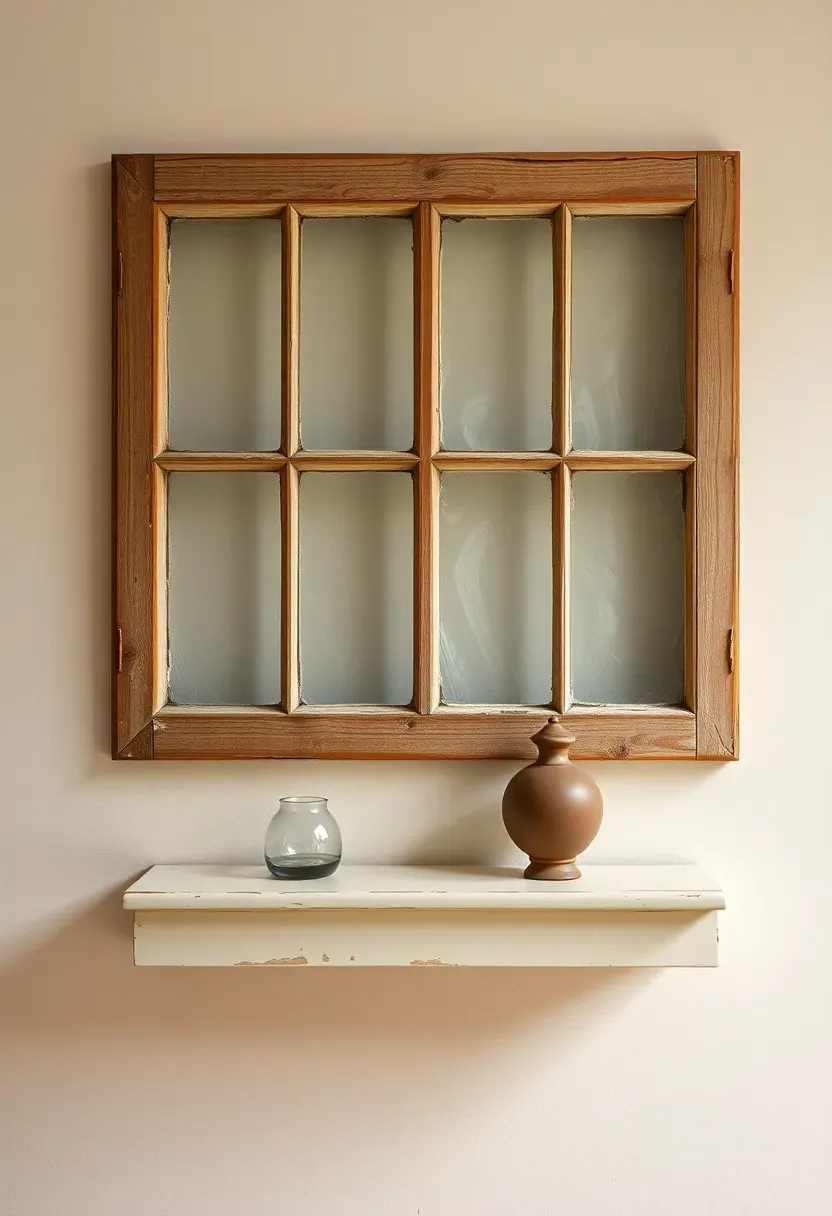
17. Repurposed Window Frame Shelf
Step-by-Step Transformation
Step 1: Source the window frame. Look for single-pane or multi-pane frames with original glass intact — the slight waviness of old glass is irreplaceable. Architectural salvage yards are the primary source.
Step 2: Decide on configuration. A window frame can be mounted flat against the wall as a decorative backing for objects placed on a narrow ledge beneath it. Alternatively, a deep-silled frame can hold objects within its opening if the sill is wide enough.
Step 3: Stabilize and mount. Remove any broken glass panes and replace with mirror for a functional display surface. Secure the frame to wall studs with appropriate hardware — old frames can be surprisingly heavy.
Step 4: Style the surround. Small hooks along the bottom rail can hold hanging objects. A narrow ledge attached beneath the frame creates additional shelf space.
What to Watch Out For
Original wavy glass is fragile. Mount these in low-traffic areas away from doors that slam or children's play zones.
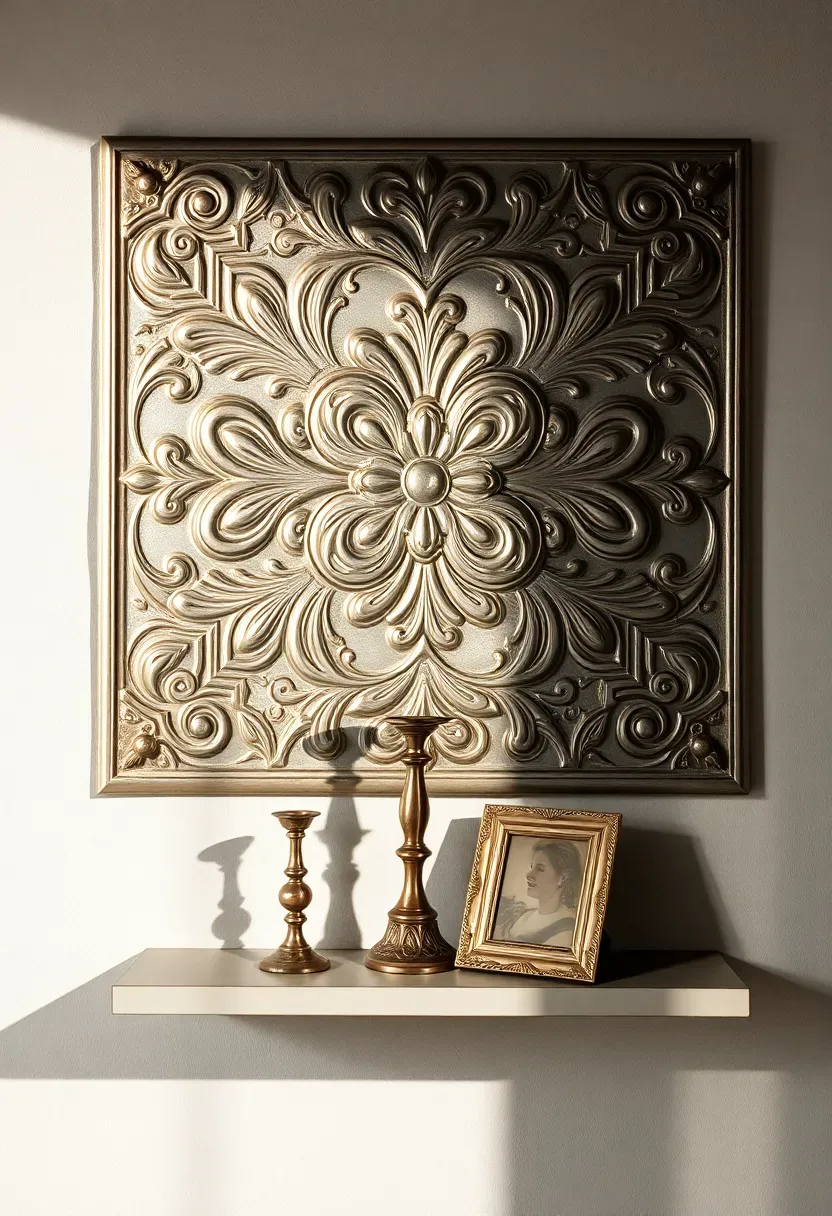
18. Tin Ceiling Tile Shelf Back Panel
The Core Issue
Plain wood-backed shelves, even when antique, can feel flat — just a ledge in space without a visual anchor to the wall.
The Solution
Mounting a salvaged tin ceiling tile as the back panel of an otherwise simple shelf creates an immediate sense of period authenticity. Tin ceiling tiles — ubiquitous in late 19th and early 20th-century commercial and residential buildings — feature pressed geometric or floral patterns that cast shifting shadows as light changes through the day. The tile becomes an active visual element rather than a static background.
Paint the tile to match the wall for a subtle monochromatic effect, or let it show its original patina — silver, aged brass, or painted white — for maximum contrast.
Objects That Echo the Tile's Character
Metalwork objects — small bronze figures, pewter candlesticks, silver picture frames — respond particularly well to a tin backdrop. The shared metallic quality ties the display together without requiring a single dominant color.
Recommended
Items for this idea
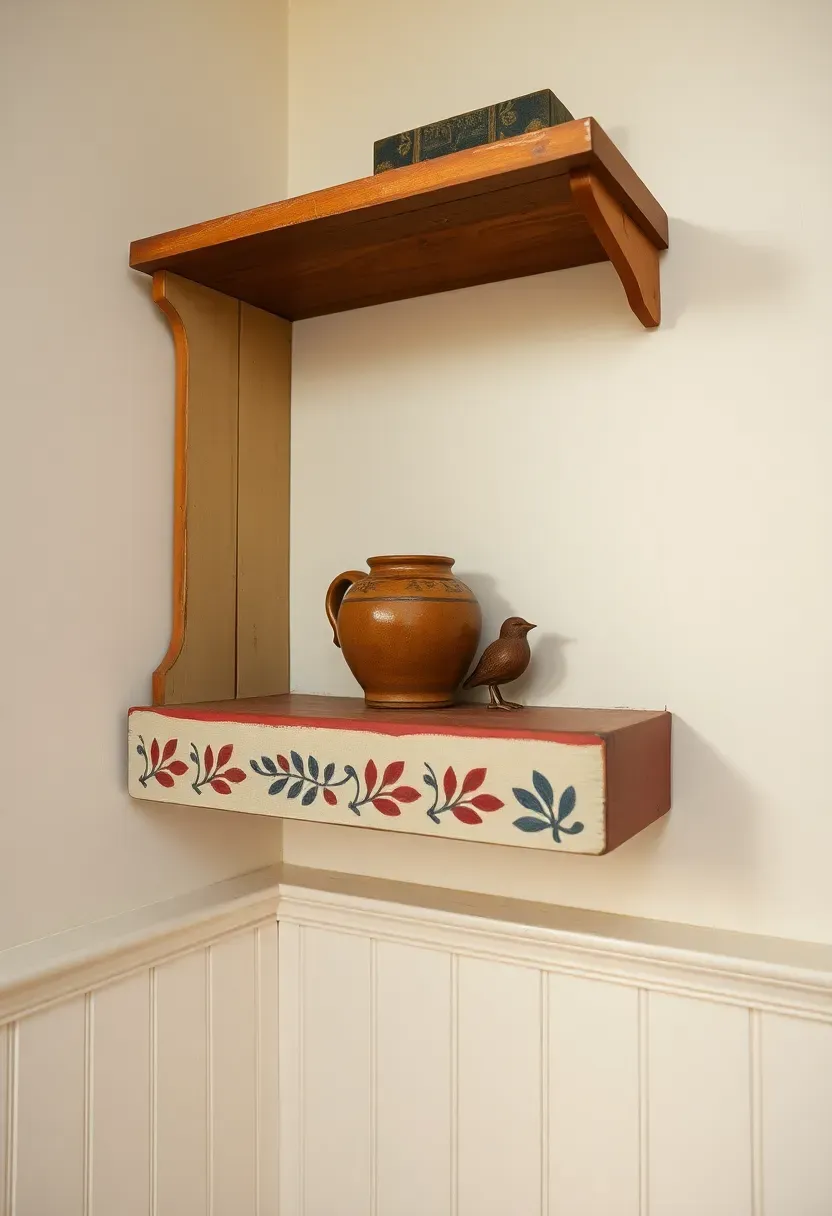
19. Stenciled Folk Art Shelf
American folk art shelves of the 18th and early 19th centuries were often decorated with hand-painted or stenciled motifs — pineapples symbolizing hospitality, botanical sprigs, stylized birds, and geometric borders. The paint was applied in earth pigments: barn red, mustard yellow, colonial blue, and soft cream.
Styling for Authenticity
Objects on a folk art shelf should echo its visual language:
- Early American redware or yellowware pottery
- Small carved wooden figures or animals
- Hand-stitched samplers in small frames
- Pewter or tin utensils used decoratively
Stenciling a Modern Shelf
Reproduction folk art stencils are widely available. Apply them in milk paint thinned slightly for a translucent, worn quality. Let dry, then sand lightly with 220-grit paper to knock back the design's sharpness and make it read as genuinely aged.
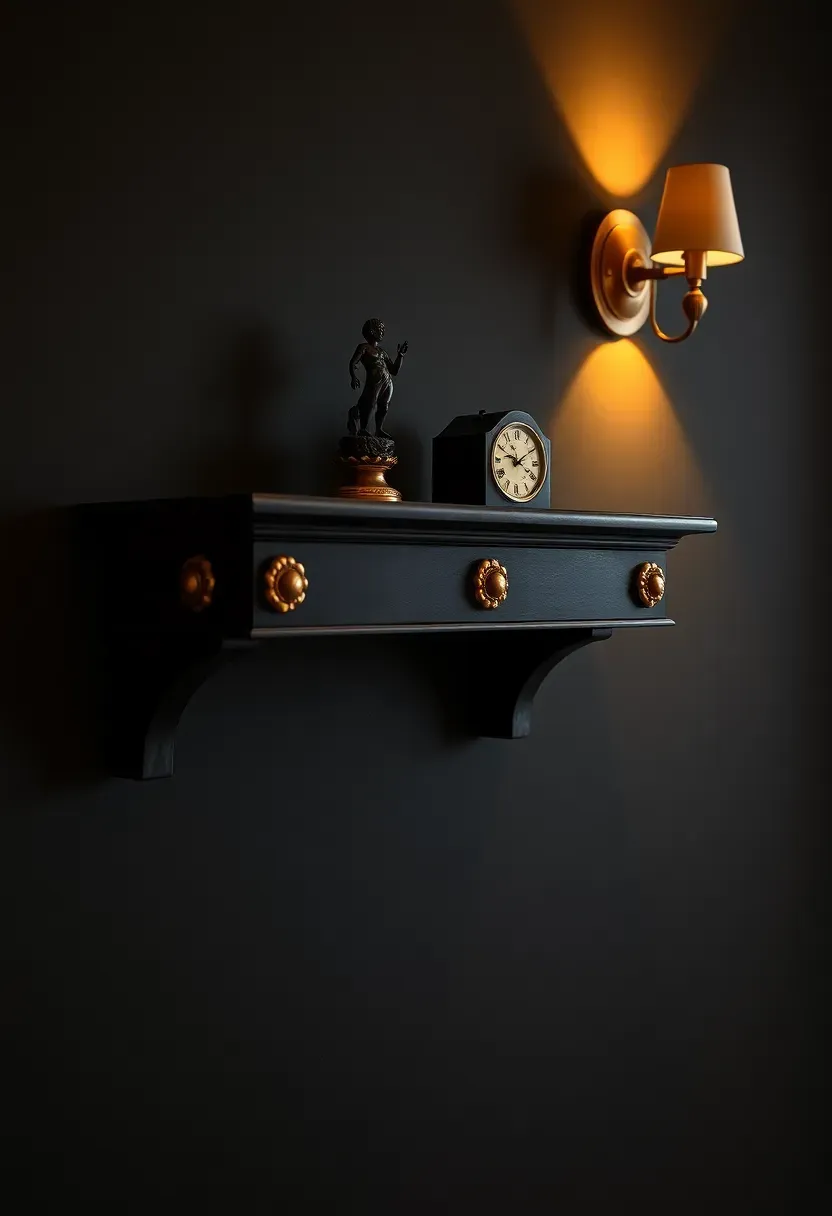
20. Empire-Style Black and Gold Shelf
The Empire style — developed in Napoleonic France and influential across Europe through the 1820s — favored dramatic contrasts: deep ebonized woods, polished brass mounts, and classical motifs drawn from Egyptian and Roman antiquity. A shelf in this tradition makes a bold statement without relying on excess.
Comparing Approaches
Full Empire period piece: Sourced from a specialist dealer, likely expensive, demands a room with period-appropriate architecture and furnishings.
Empire-inspired shelf: A simpler ebonized wood shelf with applied gilt molding or brass rosette details, sourced or custom-made, adaptable to contemporary interiors that can absorb a dramatic accent.
What to Choose
Choose a period piece if: You are furnishing a historically precise room or investing in antiques as objects of value.
Choose inspired styling if: You want the visual drama without the constraints of period accuracy — and the freedom to mix with contemporary pieces.
What to Display
Dark, formal shelves call for objects with their own gravity: a small bronze sculpture, a marble paperweight, an antique clock with visible mechanism, a pair of onyx bookends.
Recommended
Items for this idea
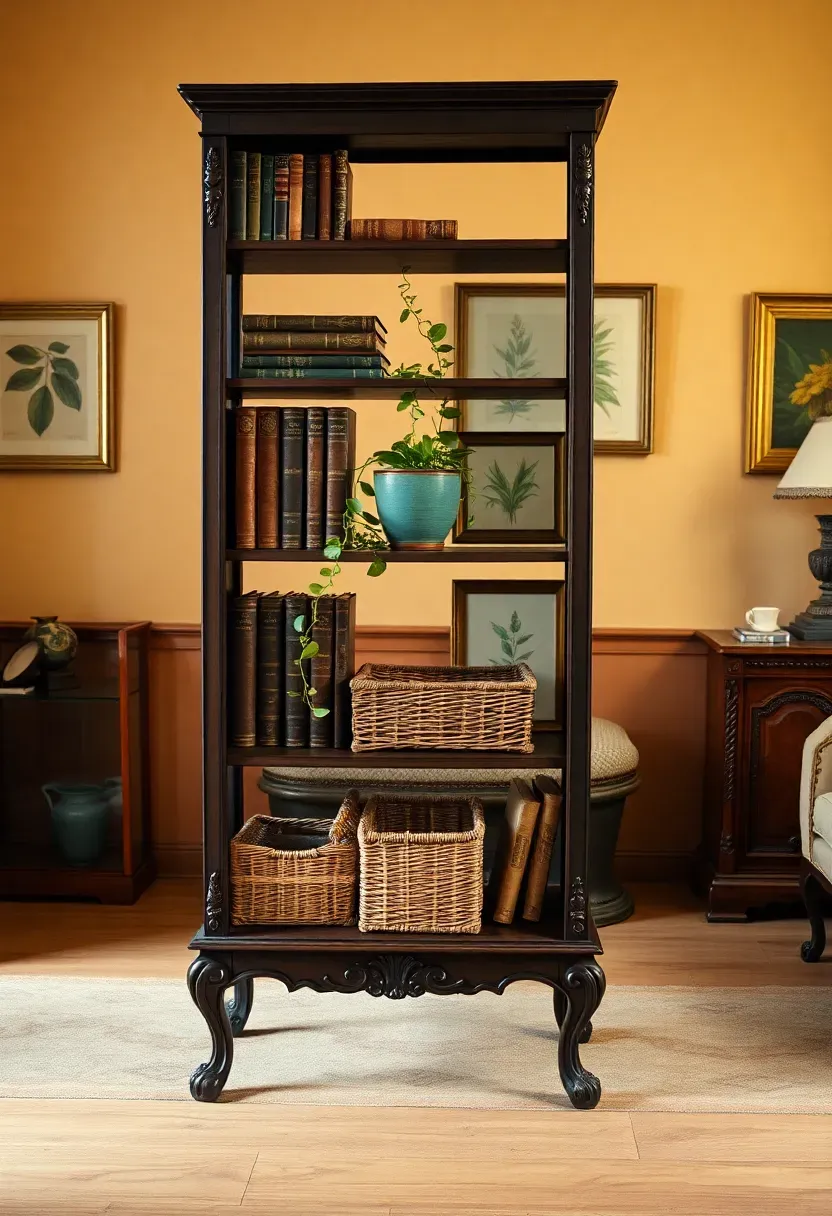
21. Freestanding Antique Shelf Unit
When a Wall Shelf Is Not Enough
Sometimes a single bracket shelf or floating ledge is insufficient — you need depth, volume, and the ability to rearrange frequently. A freestanding antique shelf unit, whether an original etagere, a Victorian whatnot stand, or a repurposed baker's rack, provides all of this while also functioning as a room divider in open-plan spaces.
Using It as a Divider
Placed perpendicular to the wall between a living area and a dining zone, or between a workspace and a bedroom, a freestanding antique shelf unit creates visual separation without the weight of a solid partition. Objects on the shelf filter the view between zones, allowing light and air to pass while defining distinct spatial identities.
Styling at Scale
With multiple tiers available, group by height on each level: tall items at the back, medium in the middle, small at the front. Introduce one recurring element — a specific color, a material, a type of object — that threads through all tiers to create coherence across the expanse.
Quick FAQ
Is it possible to mix antique wall shelves with a modern interior? Absolutely — the contrast between an antique shelf and a clean contemporary wall is often what makes both elements more interesting. The key is to treat the shelf as a deliberate accent rather than an afterthought. One authentic antique shelf in a minimal room creates visual depth that no modern piece can replicate.
Should you refinish an antique shelf before hanging it? Generally, no. Original surface patina — worn paint, natural wood oxidation, aged varnish — is what gives an antique shelf its character and value. If the finish is structurally compromised (flaking, actively deteriorating), a light wax or clear consolidant is preferable to stripping and refinishing.
What's the difference between an antique shelf and a vintage shelf? By convention, antique refers to pieces over 100 years old; vintage typically refers to pieces from roughly 20 to 99 years ago. For decorative purposes, both categories offer the same appeal of age and material authenticity, though genuine antiques often command higher prices and carry more historical specificity.
Which rooms benefit most from antique wall shelves? Living rooms and bedrooms gain the most from antique shelves because these spaces tolerate decorative objects and benefit from visual warmth and story. Kitchens and bathrooms can also use them effectively when the shelf material is sealed appropriately for moisture exposure.
Can a single antique wall shelf make a meaningful visual difference? One well-chosen shelf in the right location — above a sofa, flanking a doorway, centered on a bedroom wall — can anchor an entire room's character. The investment in a single quality piece often delivers more visual return than a room full of inexpensive accessories.
Trends come and go, but the appeal of antique wall shelves is anchored in something more durable than fashion — the human instinct to live among objects with history and weight. Whether you hang a single cast iron bracket shelf in a spare bedroom or build an entire gallery wall of antique ledges in your living room, you are choosing depth over novelty, story over surface. Start with one shelf, one collection of objects you genuinely love, and see how differently the room feels when the wall begins to hold memory.
Pinterest cover for 21 Antique Wall Shelf Ideas to Add Vintage Charm to Any Room
About the author
OBCD
CGI visualization and interior design content. We create detailed 3D renders and curate practical design ideas for every room in your home.