23 Bloom Bar Ideas to Create a Stunning Floral Display
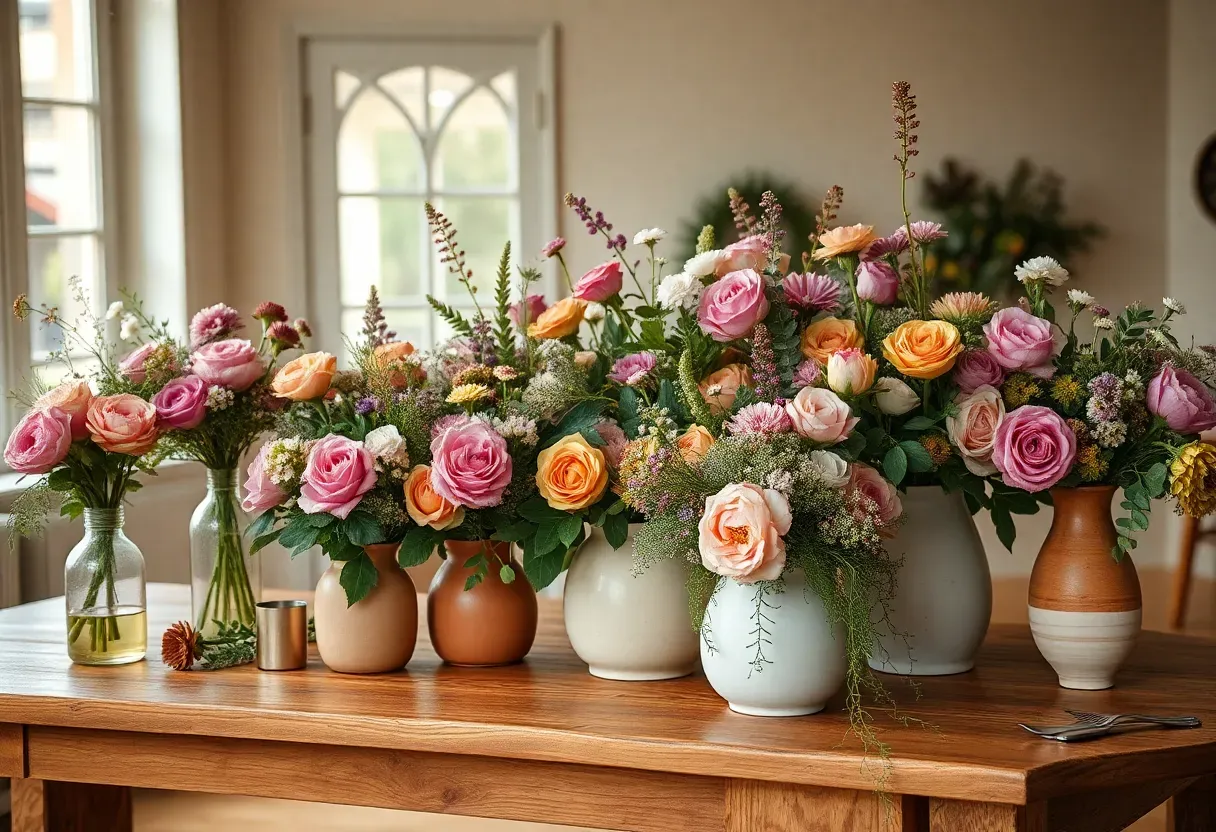
Imagine stepping into a room where the first thing that catches your eye is a wall of cascading flowers — whites, blush pinks, and deep burgundies tumbling over a rustic wooden frame. That's what a well-executed bloom bar does: it transforms any space into something unforgettable. Whether you're planning a wedding, a birthday party, a baby shower, or simply want a living installation in your home, a bloom bar is one of the most versatile, photogenic, and deeply personal decor choices you can make.
In this guide I've gathered 23 bloom bar ideas that range from budget-friendly DIY setups to lush professional installations — so whatever your skill level or event size, you'll find the right approach here.
Table of Contents
- Rustic Wooden Arch with Wild Blooms
- Minimalist Single-Stem Bar
- Ombre Flower Wall Panel
- Dried and Preserved Arrangement Station
- Tropical Paradise Bloom Bar
- Monochromatic White Floral Display
- Vintage Ladder with Hanging Florals
- Botanical Garden Buffet Style
- Greenery-Heavy Eucalyptus Bar
- Neon Sign Floral Backdrop
- Floating Bloom Cloud Installation
- Garden Trug and Basket Arrangement
- Succulent and Cactus Accent Bar
- Wildflower Meadow Vibe
- Macrame and Bloom Combination
- Luxe Peony and Rose Bar
- Seasonal Holiday Bloom Station
- Herb and Flower Combination Bar
- Hanging Floral Chandelier
- Terrarium-Style Enclosed Display
- Cascading Floral Staircase
- DIY Paper Flower Bar
- Lantern and Bloom Centerpiece Bar
1. Rustic Wooden Arch with Wild Blooms
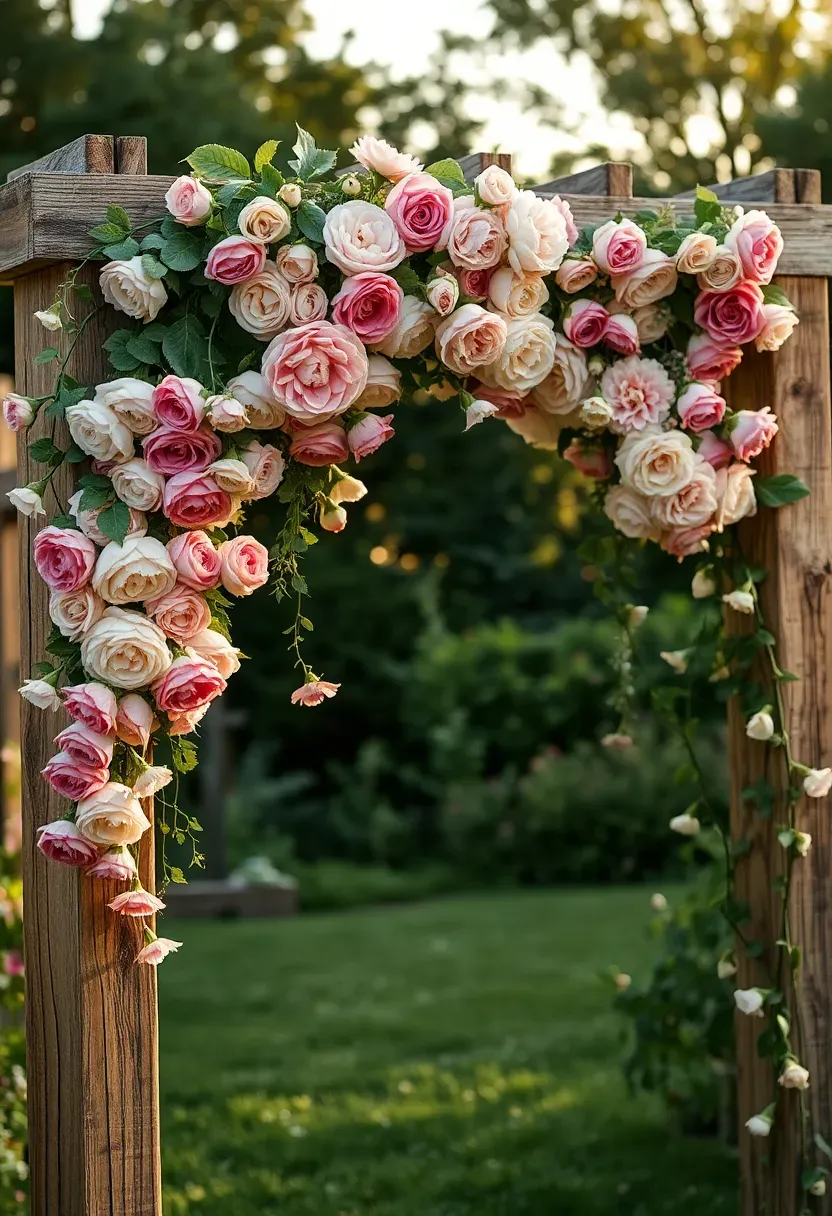
A raw-edge wooden arch draped with wildflowers is the ultimate bloom bar foundation for outdoor celebrations. Unfinished timber brings a natural, earthy quality that polished metal simply can't replicate. Layer in garden roses, dahlias, sweet peas, and trailing greenery for a loose, just-picked aesthetic. The key is asymmetry — don't aim for perfect balance. Let stems spill slightly more on one side, and mix in unexpected textures like dried wheat or thistle. This style works beautifully at outdoor weddings, farm-to-table dinner parties, and autumn harvest events.
Tips for Building This Look
- Source the arch from a timber yard and leave it unsealed for an authentic feel
- Use floral foam or water tubes to keep fresh stems hydrated on non-watered structures
- Add trailing ivy or wisteria to soften hard edges
We picked a few things that go well with this idea: Glass Ribbed Cylinder Vases (12-Pack) (★4.8), Artificial Hydrangea Centerpieces Set (6-Pack) (★4.6) and BLOSMON White Mums Faux Flowers Metal Vase (★4.8). As an Amazon Associate we earn from qualifying purchases.
2. Minimalist Single-Stem Bar
The Case for Restraint
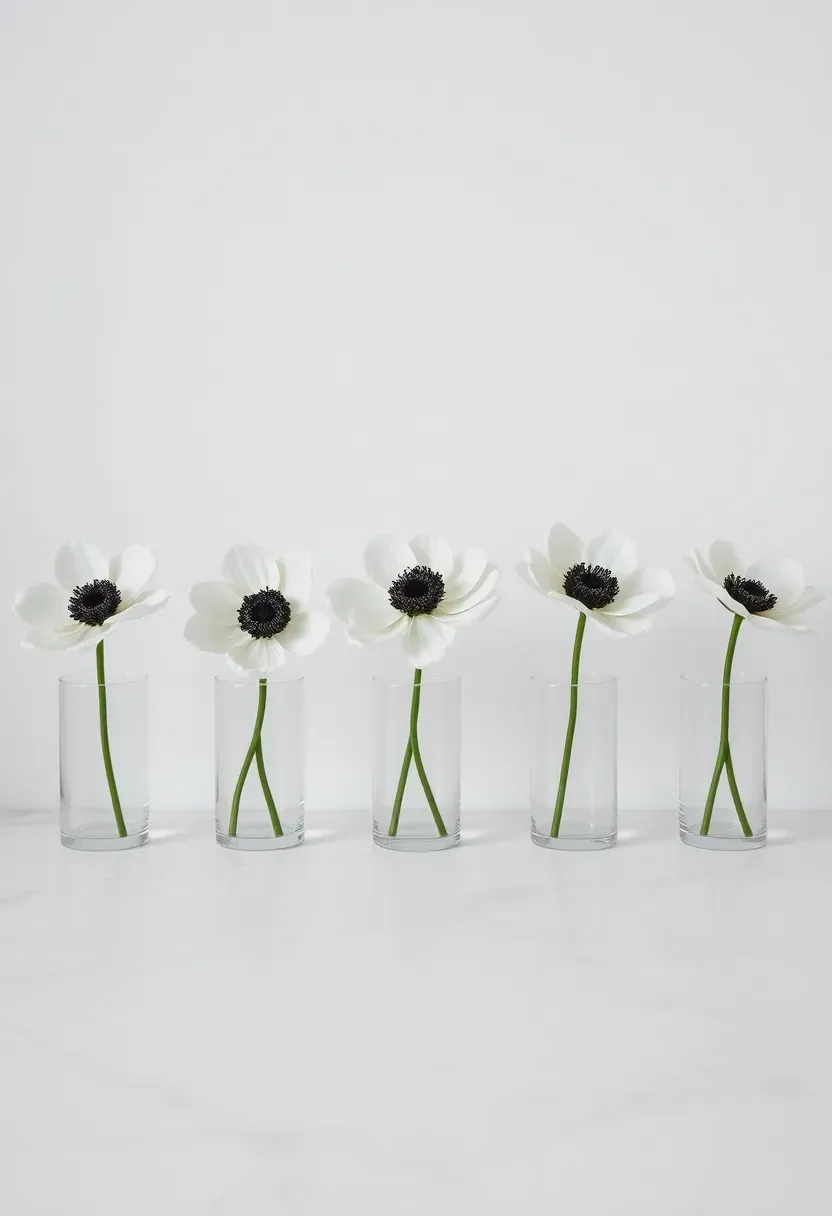
Most people assume bloom bars require armfuls of flowers. This idea challenges that completely. A single-stem display — one perfect flower per vessel, lined up in a row of clear glass bottles or bud vases — can be just as striking as a lush arrangement. It relies on form, color, and repetition rather than abundance.
How to Execute It
Choose 7 to 15 identical vessels in graduating heights or the same size for a grid effect. Select one hero flower: tulips, anemones, ranunculus, or long-stem roses all work exceptionally well. Place a single stem in each vessel, varying the stem height slightly for a gentle wave effect across the display.
Pros and Cons
Pros: Budget-friendly, easy to assemble, modern and editorial look Cons: Less dramatic from a distance — works best in intimate settings or styled flat lays
We picked a few things that go well with this idea: Natural Dried Pampas Grass Bouquet (96 Pcs) (★4.4), Dried Pampas with Bunny Tails Bouquet (100 Stems) (★4.5) and Green Pampas Grass Boho Bouquet (★4.4). As an Amazon Associate we earn from qualifying purchases.
3. Ombre Flower Wall Panel
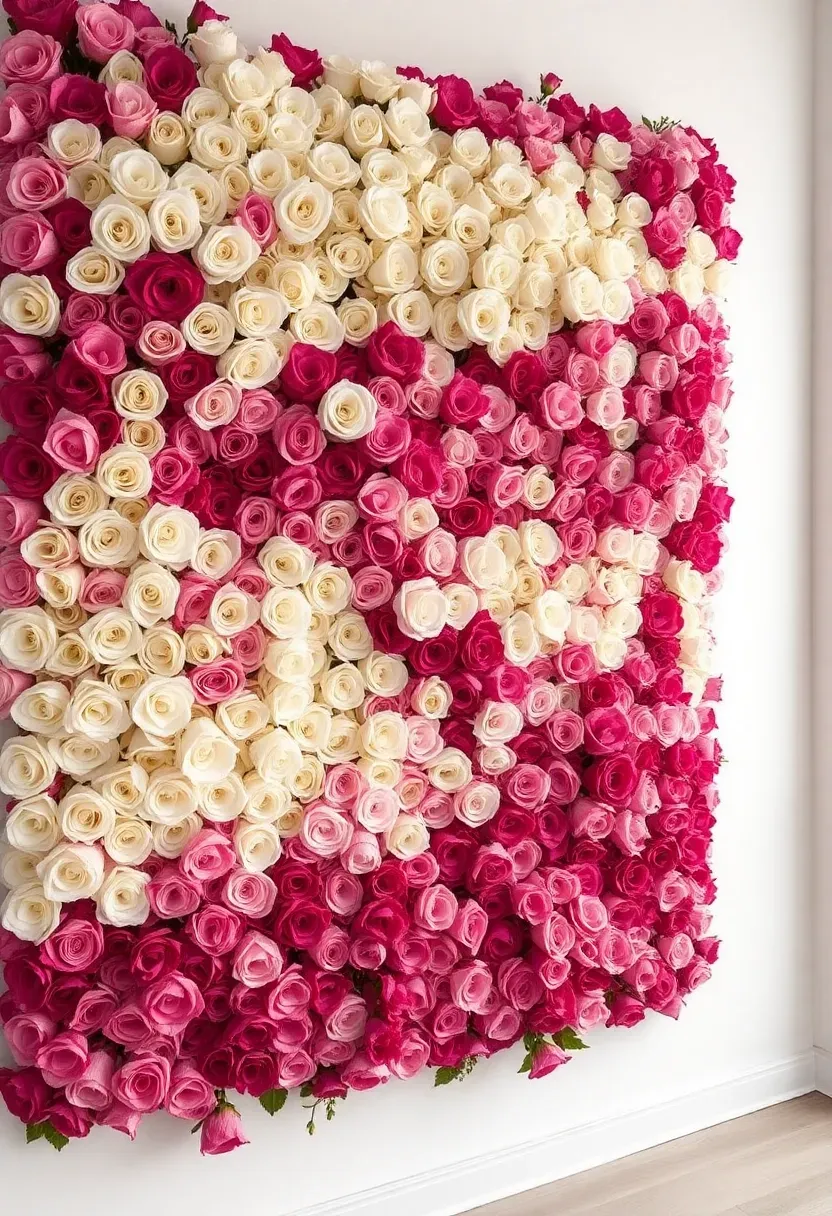
Walk into any high-end wedding venue in 2026 and you'll likely encounter an ombre flower wall. The technique — transitioning from pale to saturated tones across a panel of flowers — creates a photograph-ready backdrop that never gets old. Start with a frame built from chicken wire or a floral foam grid, then work from light to dark: ivory roses at the top, blush pinks in the middle, and deep magenta or burgundy blooms at the base. For even richer depth, add accent flowers in complementary shades like coral or plum.
How to Build It Step by Step
Step 1: Build the frame. Attach chicken wire to a lightweight wooden frame sized for your space (3×4 feet is a popular choice for table backdrops).
Step 2: Soak your foam. Cut floral foam blocks to fit the frame cavities and soak them in water with flower food for at least an hour.
Step 3: Sort your blooms. Divide flowers into three tone groups — light, mid, and dark — before inserting.
Step 4: Insert stems. Work top to bottom, angling stems slightly downward so blooms face outward.
Step 5: Fill gaps. Use small accent flowers or greenery to close any visible foam.
What to Watch Out For
- Foam dries out quickly in warm rooms; mist frequently
- Use flowers with similar face sizes for a consistent surface texture
- Roses, spray roses, and carnations are the most cost-effective choices for large panels
We picked a few things that go well with this idea: Lyellfe Floral Foam Arch Garland Kit (14 Pcs) (★4.3), Mwellewm Floral Foam Cage Holders (2-Pack) (★4.7) and Floral Foam Cage Rectangle Bricks (2-Pack) (★4.7). As an Amazon Associate we earn from qualifying purchases.
4. Dried and Preserved Arrangement Station
Why Dried Flowers Are Having a Moment
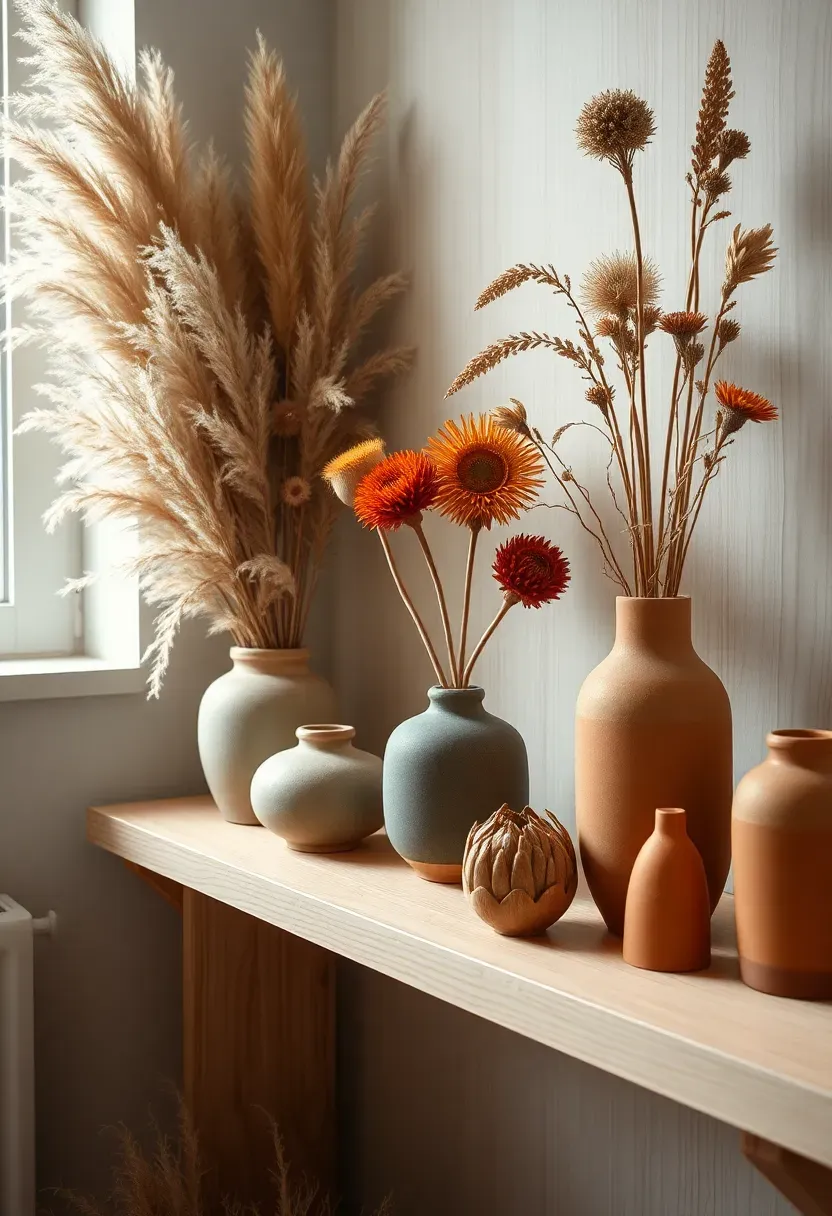
Fresh flowers are breathtaking but fleeting. Dried and preserved blooms — pampas grass, lunaria, strawflowers, protea, lagurus, and bunny tail grass — last indefinitely and require zero water or refrigeration. This makes them the practical choice for long-running installations, home displays, or events where setup happens days in advance.
Building the Display
Group dried stems by type in tall ceramic or terracotta vessels. Arrange vessels on a tiered wooden shelf or vintage sideboard for height variation. Mix textures deliberately: something spiky (protea), something soft (pampas), something delicate (lunaria), and something round (strawflowers). The neutral tones of most dried botanicals pair naturally with linen, rattan, and wood surfaces.
Practical Tips
- Spray dried arrangements lightly with hairspray to prevent shedding
- Keep them away from direct sunlight to preserve color
- Refresh the display seasonally by swapping out one or two stem types
Recommended
Items for this idea
5. Tropical Paradise Bloom Bar
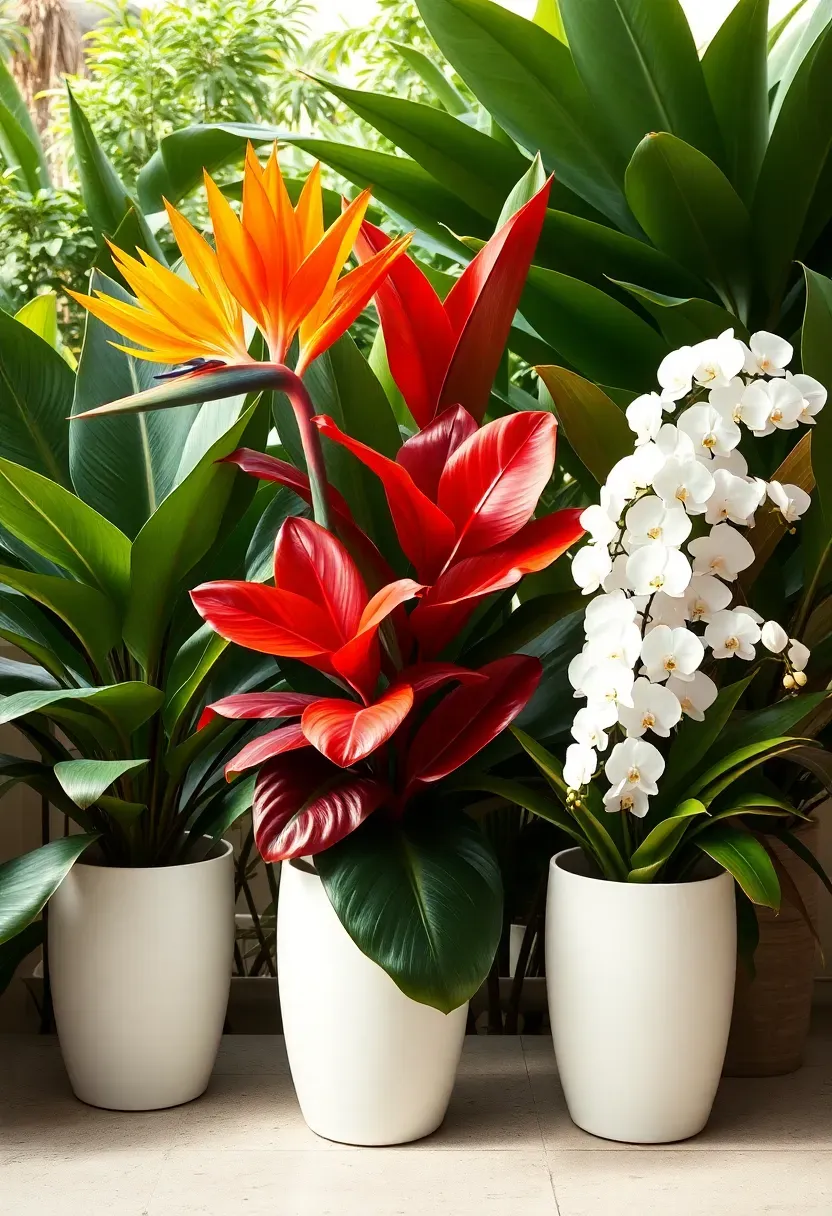
Trade soft pastels for bold, architectural shapes. A tropical bloom bar centers on plants and flowers with strong silhouettes — bird of paradise, anthurium, heliconia, monstera leaves, and orchid sprays. The color palette shifts to vivid oranges, deep reds, and clean whites against deep green foliage. This style suits beach weddings, resort-style celebrations, summer garden parties, and any event where you want the decor to feel warm and maximalist. Large ceramic planters in white or terracotta anchor the display, with stems arranged loosely so each plant's natural form can be appreciated.
Tips for This Style
- Pair with rattan furniture or bamboo accents for a cohesive tropical aesthetic
- Use monstera leaves as structural backing to fill large spaces economically
- Source orchid sprays from wholesale markets — they offer incredible volume at low cost
6. Monochromatic White Floral Display
One Color, Infinite Texture
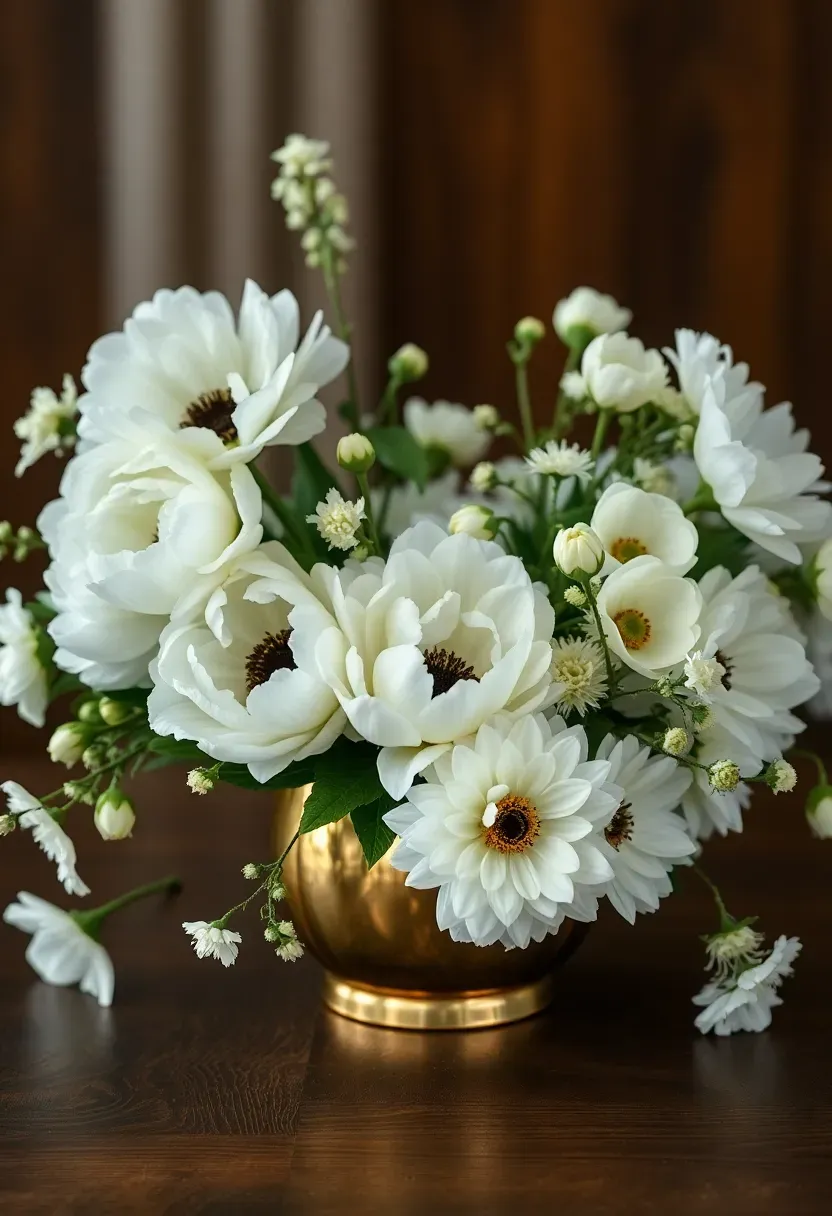
An all-white bloom bar sounds limiting until you actually build one. White exists in dozens of shades — warm ivory, cool paper white, creamy champagne, bright snow — and each flower variety brings a completely different texture. Combine fluffy white peonies, crisp white anemones with dark centers, frothy white astilbe, waxy white tulips, and feathery white cosmos for a display that's visually complex despite its restraint.
Best Applications
Choose this style if: You want an elegant, timeless look; the space already has strong color in walls or furnishings; the event is formal.
Skip this style if: The space is very dark and needs warm color pops; the crowd skews toward maximalist tastes.
Recommendation
An all-white bloom bar pairs especially well with aged brass vessels, dark wood surfaces, and candlelight. The contrast between white blooms and dark, warm supporting elements creates drama without relying on color variety.
Recommended
Items for this idea
7. Vintage Ladder with Hanging Florals
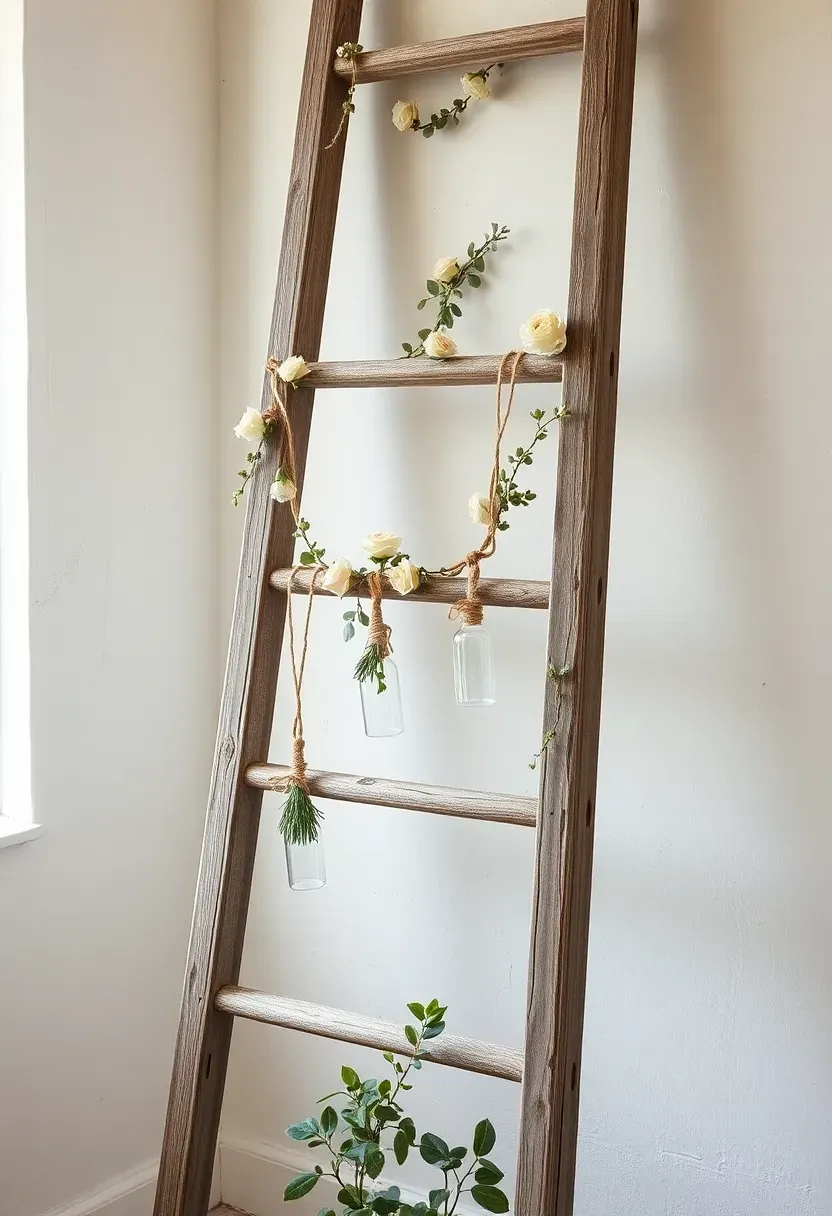
A weathered wooden ladder is one of the most affordable bloom bar structures you can find. Prop it against a wall, lean it against a fence, or anchor it freestanding for an installation that looks curated without requiring professional framing. Drape flower garlands across each rung, hang single stems in small vases using twine, and place potted plants along the bottom rungs. Vintage-found ladders with peeling paint, old orchard ladders, and architectural salvage pieces all work well. This is a favorite for baby showers, bridal showers, and rustic home displays.
Tips for This Setup
- Use Command hooks or small S-hooks to hang vessels from rungs without damaging the ladder
- Combine fresh and dried elements for a lived-in, eclectic feel
- Anchor the base with two heavy planters to prevent tipping
8. Botanical Garden Buffet Style
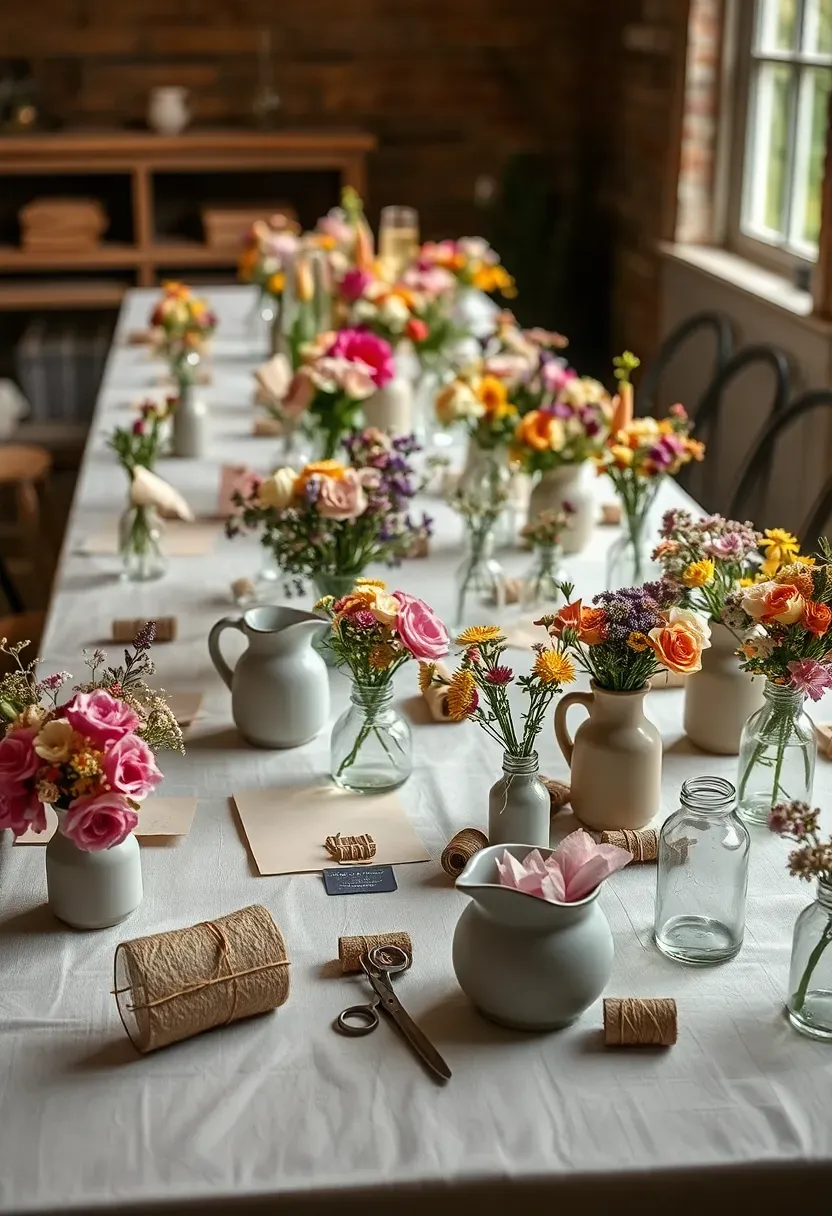
Instead of a single focal piece, a buffet-style bloom bar scatters vessels, plants, and clippings across an entire table — inviting guests to pick their own stems and assemble a personal posy to take home. This interactive format is wildly popular at weddings, garden parties, and milestone celebrations. Set out a mix of single stems in bud vases, bunched greenery in larger pitchers, and small bundles of textural accents like berries, eucalyptus, and feathery ferns. Provide kraft paper, twine, and scissors so guests can wrap their own bouquets.
Tips for Running a Guest-Participation Bloom Bar
- Label each flower type with small cards — guests love knowing what they're picking
- Trim stems before the event so they're ready to arrange
- Place the bar near the entrance or dessert table for maximum foot traffic
Recommended
Items for this idea
9. Greenery-Heavy Eucalyptus Bar
Why Greenery-First Works
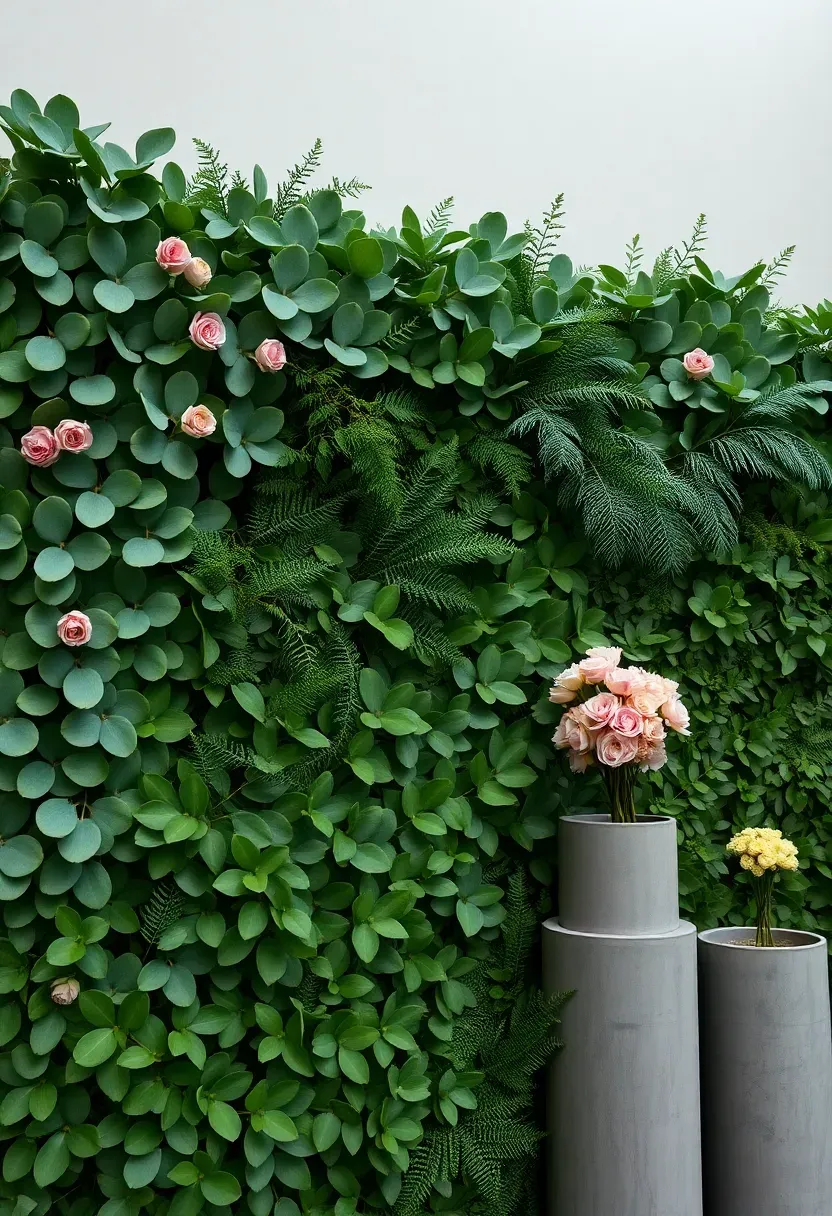
Not every bloom bar needs to be flower-forward. A display anchored in lush greenery — eucalyptus, ruscus, ferns, salal, and bay laurel — uses flowers as accent rather than foundation. The result is cooler, more natural, and often more cohesive than a traditional floral arrangement. It also tends to be more affordable since foliage is significantly cheaper per stem than flowers.
Building the Look
Start by filling your vessels or frame completely with greenery. Once the green base is established, add flowers selectively: three or four clusters of white or blush blooms scattered through the green mass. The restraint is the point — flowers become the eye's resting spots rather than the constant focus.
Pros and Cons
Pros: Budget-friendly, long-lasting, works in all seasons Cons: Can read as "unfinished" to guests who expect more floral density
10. Neon Sign Floral Backdrop
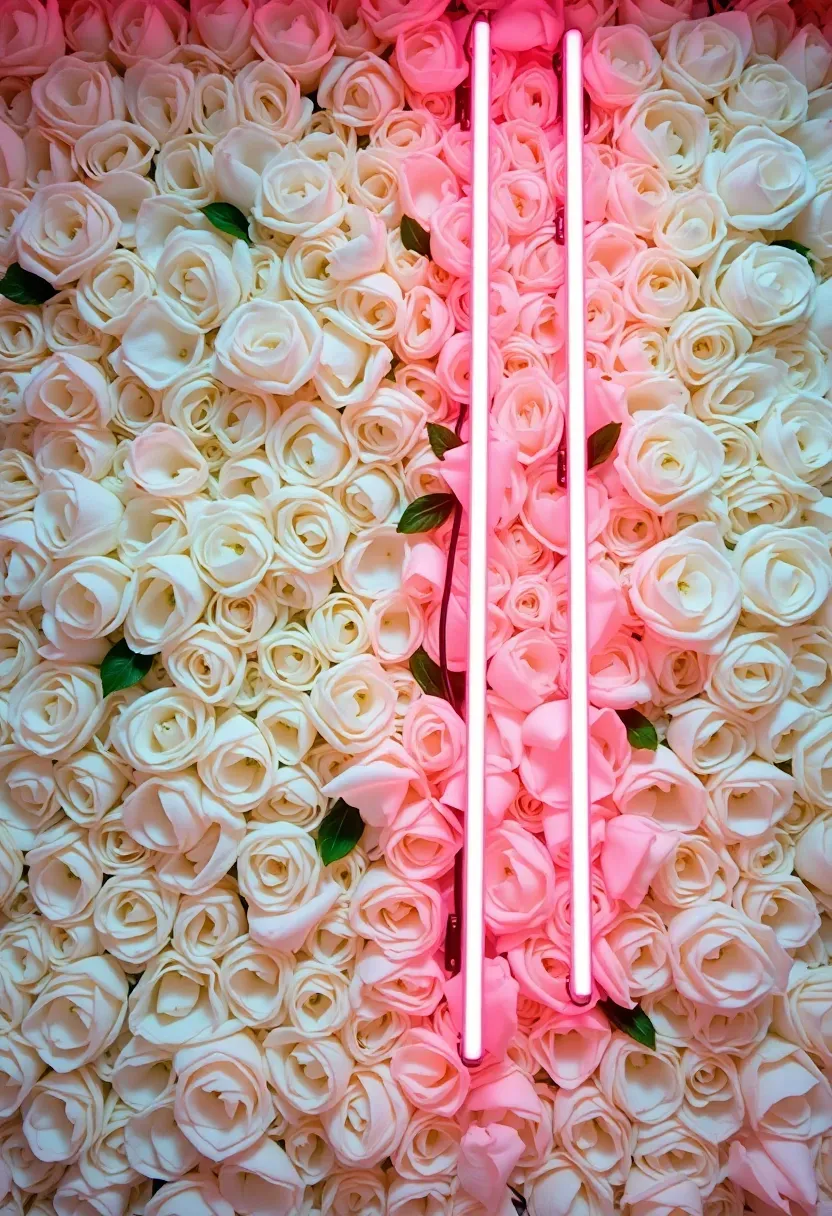
Pair a custom LED neon sign with a floral backdrop for a bloom bar that doubles as the ultimate photo opportunity. Phrases like "in full bloom," "forever after," or simply the event date glow warmly against a wall of white or blush flowers. The contrast between the soft organic texture of the blooms and the graphic, industrial quality of the neon creates visual interest that photographs extraordinarily well. This style is at its peak at weddings and engagement parties but translates beautifully to milestone birthdays and product launch events.
Tips
- Use warm white or soft pink neon for the most flattering light in photos
- Mount the sign slightly off-center for a more editorial composition
- Choose flowers in a narrow tonal range so the neon sign remains the focal point
Recommended
Items for this idea
11. Floating Bloom Cloud Installation
Step 1: Determine your ceiling anchoring points. Use ceiling hooks rated for at least 15 kg, spaced in a grid across the installation area.
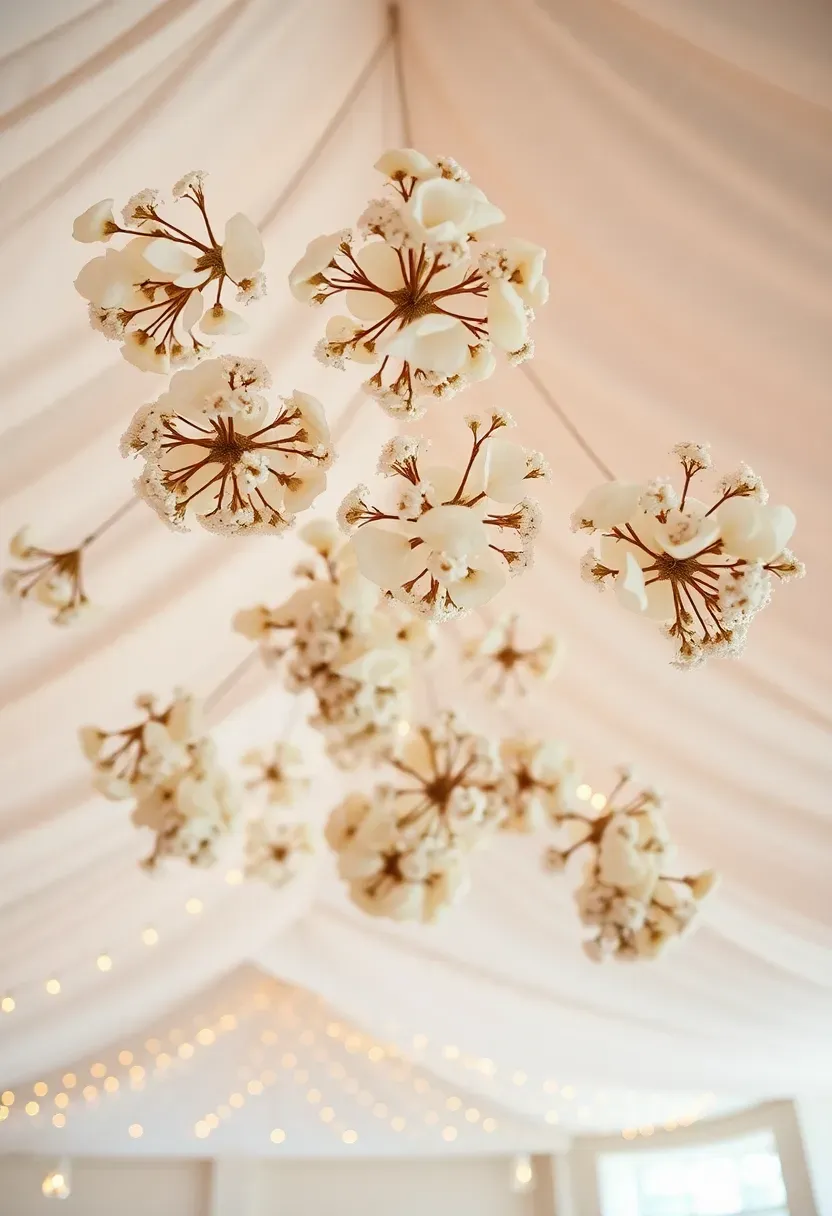
Step 2: Create the floral clusters. Bind bunches of flowers — peonies, garden roses, and baby's breath work well — with floral wire. Keep each cluster 8–12 inches in diameter.
Step 3: Attach to monofilament wire. Cut lengths of near-invisible monofilament at varying lengths (18–36 inches) so clusters hang at different heights.
Step 4: Suspend and fill. Hang clusters across the grid, then add trailing greenery vines or dried gypsophila between them to connect the installation visually.
Step 5: Test the view. Stand at the entry point and check the sight lines — adjust any clusters that appear too sparse or crowded from that angle.
What to Watch Out For
- Keep fresh clusters no more than 2–3 days before the event in cool conditions
- Avoid heavy flowers like sunflowers or large dahlias — they strain the monofilament
- Have a backup plan for venues with sprinkler systems that prohibit ceiling attachments
12. Garden Trug and Basket Arrangement
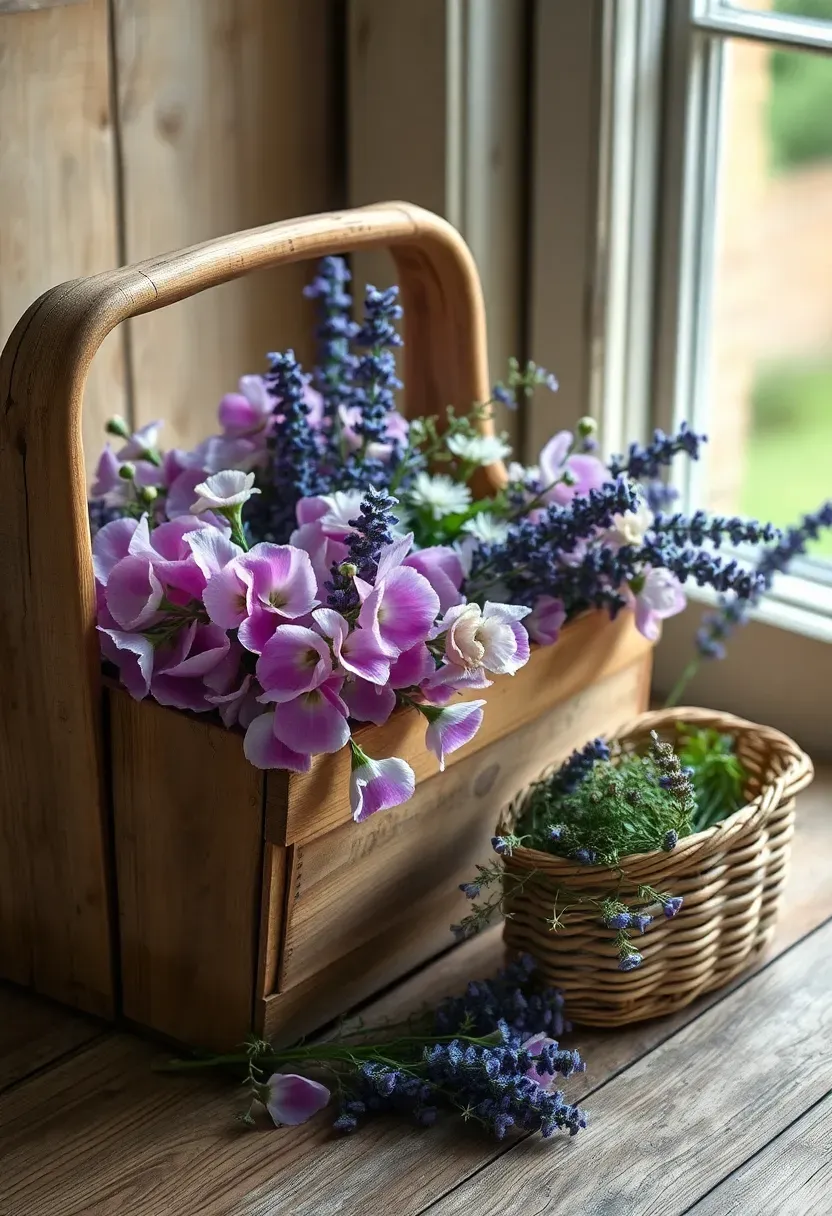
There's something irresistibly charming about flowers tumbling out of a worn wooden garden trug or a woven willow basket. This cottage-garden approach places the display in familiar, domestic vessels that suggest the flowers were just brought in from the garden — even if they came straight from a wholesale market. Stack two or three trugs or baskets at different heights using wooden crates or vintage stools. Fill the largest with an abundant mixed arrangement, the medium with a single flower type, and the smallest with a simple greenery bundle.
Tips for This Setup
- Line baskets with plastic sheeting before adding floral foam or water vessels to prevent leaking
- Lavender, sweet peas, stock, and cornflowers suit this style beautifully
- Add vintage gardening tools as props for extra character
Recommended
Items for this idea
13. Succulent and Cactus Accent Bar
A Bloom Bar Without the Blooms (Mostly)
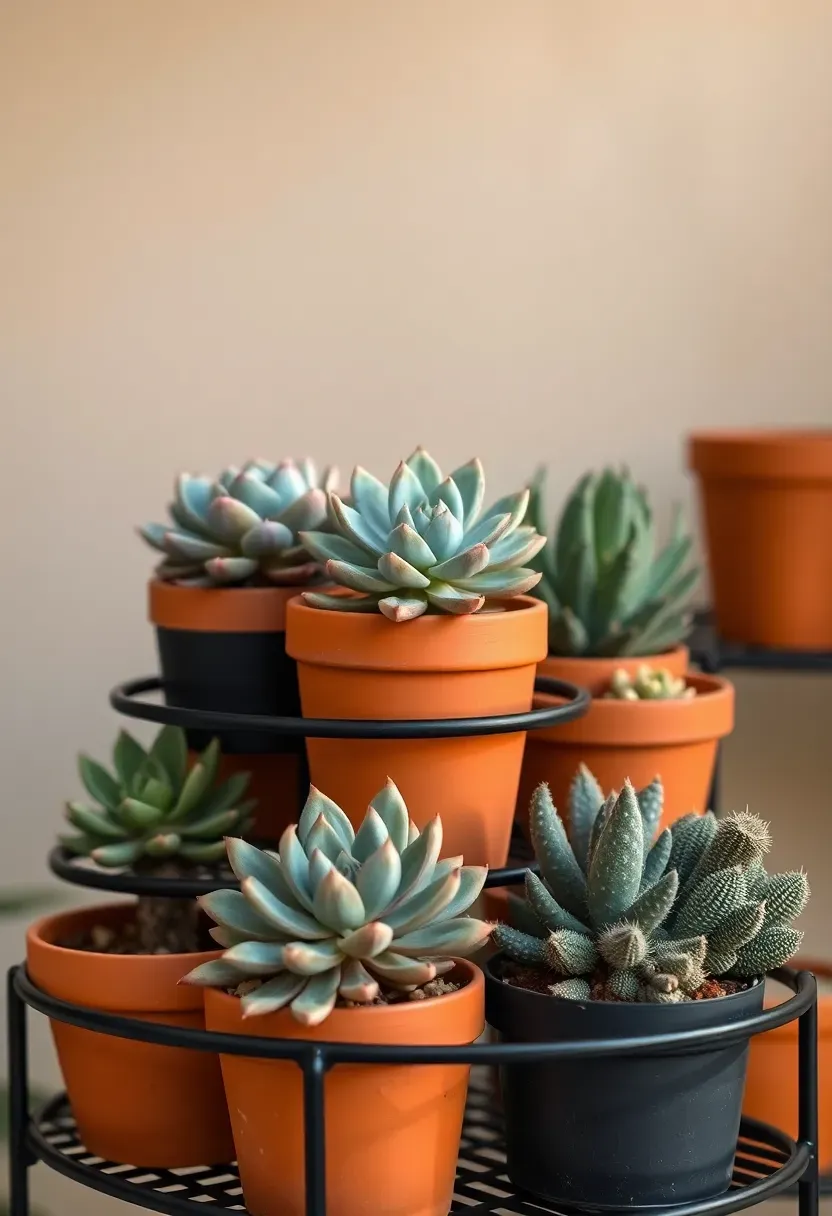
Is it still a bloom bar if succulents are the star? Absolutely — especially when you choose varieties that bloom: echeveria, aloe vera in flower, cactus in bloom, and sedum all produce extraordinary flowers. This style suits desert-themed weddings, modern home setups, and anyone who wants a display that genuinely lasts beyond the event. Arrange pots in clusters on tiered metal stands or wooden shelves, grouped by size: large terracotta pots at the back, small four-inch pots at the front. Add a few cut flower stems in thin bud vases as accents.
Practical Notes
- Succulents prefer terracotta pots over plastic — they breathe better
- Spray painted or dipped pots in a consistent color palette tie the display together
- After the event, guests can take pots home as favors
14. Wildflower Meadow Vibe
Why Wild Beats Perfect
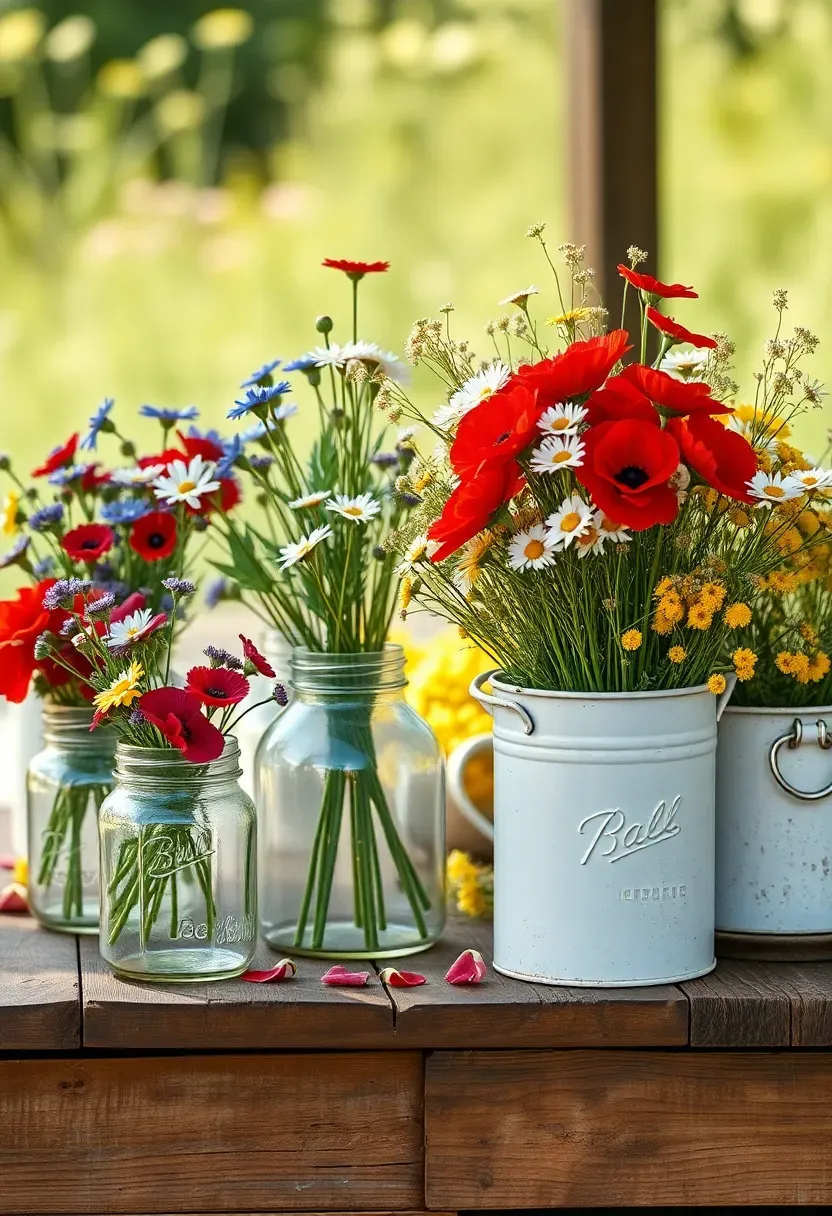
The current direction in floral design leans strongly away from structured, formal arrangements and toward the looser, less controlled aesthetic of a wild meadow. Wildflower-style bloom bars mix cornflowers, poppies, daisies, cow parsley, clover, yarrow, and grasses in abundantly full vessels that look accidental but are actually carefully composed. The key distinction is scale: individual stems should point in slightly different directions, varying heights by at least 30%, and the overall silhouette should be irregular rather than round or dome-shaped.
Application Tips
- Mason jars, enamel buckets, and zinc planters suit this aesthetic far better than crystal vases
- Forage locally if possible — even garden weeds like hogweed or Queen Anne's lace add authenticity
- This style is genuinely budget-friendly since "imperfect" stems are cheaper
Recommended
Items for this idea
15. Macrame and Bloom Combination
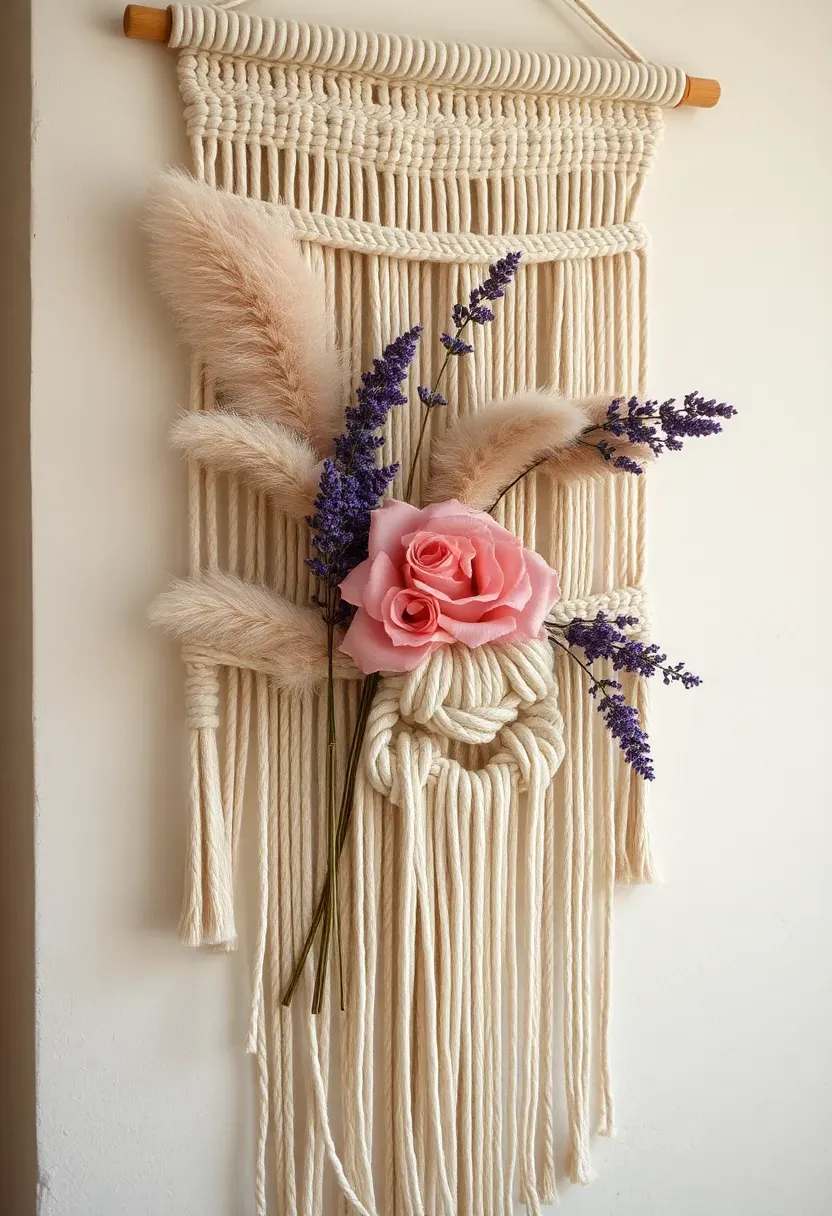
Combining macrame fiber art with fresh or dried flowers creates a textural bloom bar that belongs equally in the handmade craft world and high-end event decor. Hang a large macrame wall piece and weave flower stems directly into the knotted fibers, or attach small bud vase holders along the macrame. Dried florals — pampas, lavender, statice — integrate more permanently, while fresh stems can be replaced for events. This approach is popular at bohemian weddings, outdoor celebrations, and as a permanent home installation.
Tips
- Choose a macrame piece with open, loose knots that accommodate stem insertion easily
- Pastel cotton rope + blush roses = classic boho pairing
- Natural jute rope + dried wheat and pampas = earthy, neutral-toned version
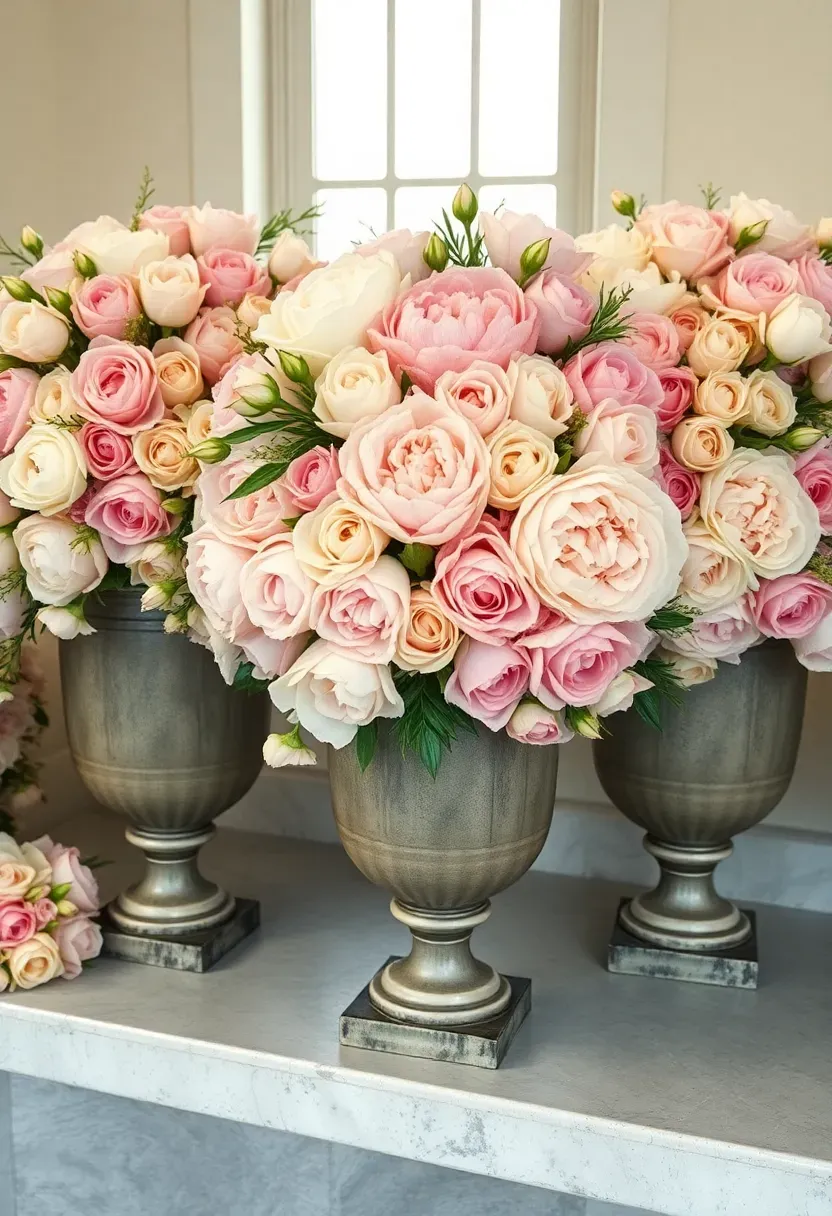
16. Luxe Peony and Rose Bar
When to Go All Out
Some events call for pure luxury. A bloom bar built almost entirely from peonies and garden roses is the floral equivalent of silk sheets — extravagant, undeniably beautiful, and worth every penny for the right occasion. The combination of peony's ruffled, full-headed blooms and rose's more structured petals creates visual interest within a tight color range of creams, blush, and soft pink.
Building the Display
Fill large urn-style vessels with abundantly full arrangements. For a table display, use 3–5 urns in graduating sizes down the center. For a backdrop, construct a full foam frame and pack blooms so tightly there's no visible negative space.
Choose this style if: The event is a wedding, bridal shower, anniversary, or high-end product launch Skip this if: Budget is the primary constraint — peonies and garden roses are premium price flowers
Recommendation
To stretch the budget without reducing visual impact, back-fill with spray roses and carnations (which photograph almost identically to standard roses) and use peonies only in the most visible zones.
Recommended
Items for this idea
17. Seasonal Holiday Bloom Station
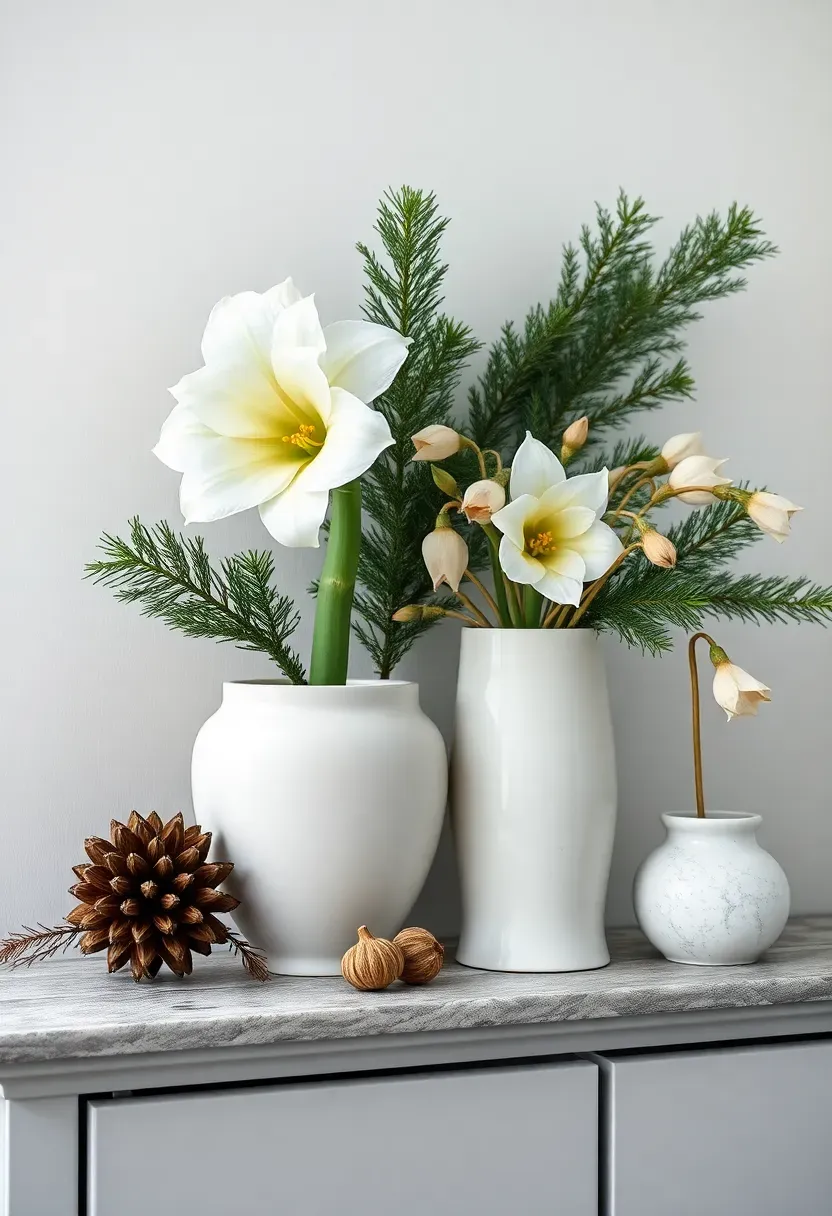
A bloom bar doesn't have to be an event-specific installation — it can evolve with the seasons as a permanent feature of your home. Spring calls for tulips and hyacinths in ceramic pitchers; summer brings sunflowers, zinnias, and dahlias; autumn transitions to chrysanthemums, dried grasses, and orange rosehips; winter centers on pine branches, amaryllis, and white hellebores. A dedicated spot in the home — a sideboard, a kitchen island end, or a hallway console — becomes a living seasonal marker that shifts through the year.
Tips for Year-Round Bloom Bars at Home
- Invest in 3–4 quality vessels that work across all seasons
- Keep a weekly flower budget even if small — a single bunch of seasonal flowers is enough
- Supplement with greenery from the garden to fill out small floral purchases
18. Herb and Flower Combination Bar
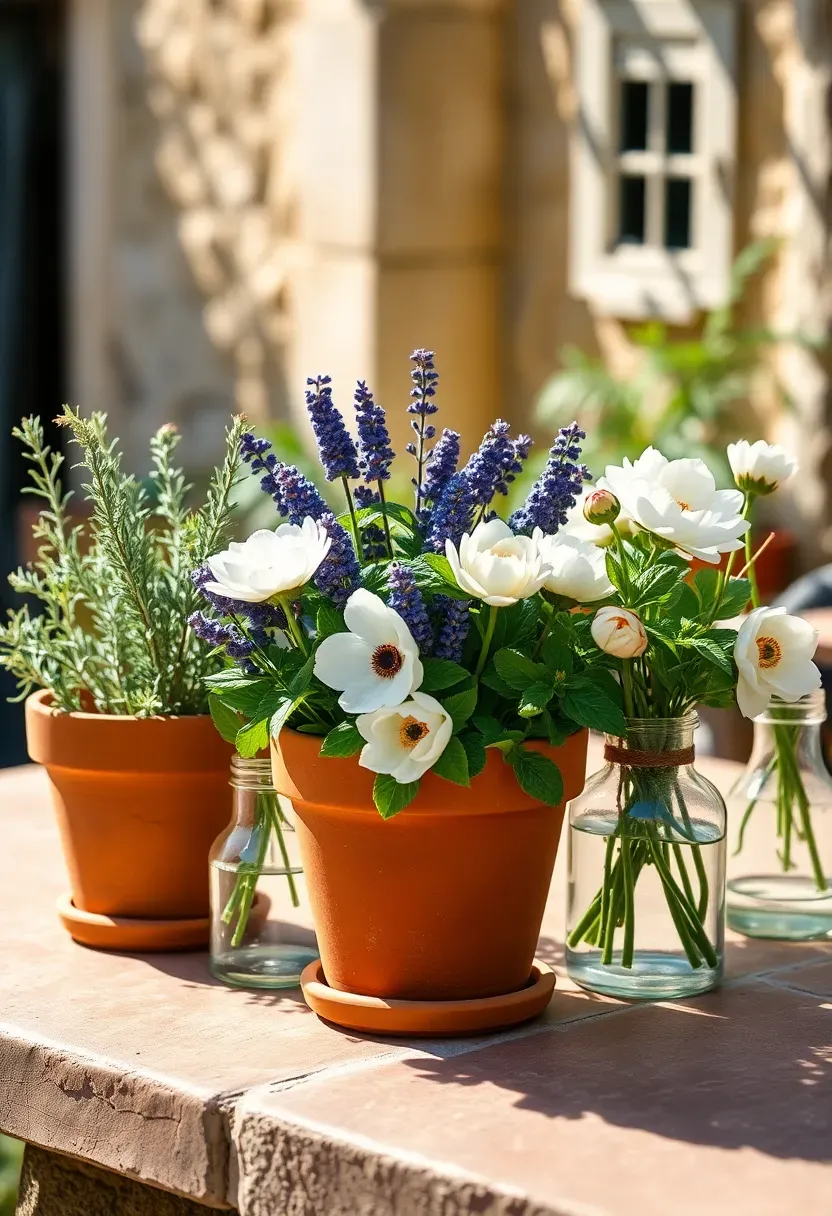
Scent is the underrated dimension of a bloom bar. Combining fragrant herbs — rosemary, lavender, mint, lemon thyme, basil — with flowers creates a display that engages two senses at once. Position this style near a seating area or entrance where guests will naturally brush past the herbs and release their fragrance. Lavender and roses are the classic pairing; rosemary and white anemones bring a Mediterranean quality; mint and ranunculus offer something unexpected and fresh.
Practical Notes
- Keep herb stems in water just like cut flowers — they last longer than expected
- Use potted herbs (still in their nursery pots, set into decorative planters) for multi-day events
- Label herbs with small tags so curious guests know what they're smelling
Recommended
Items for this idea
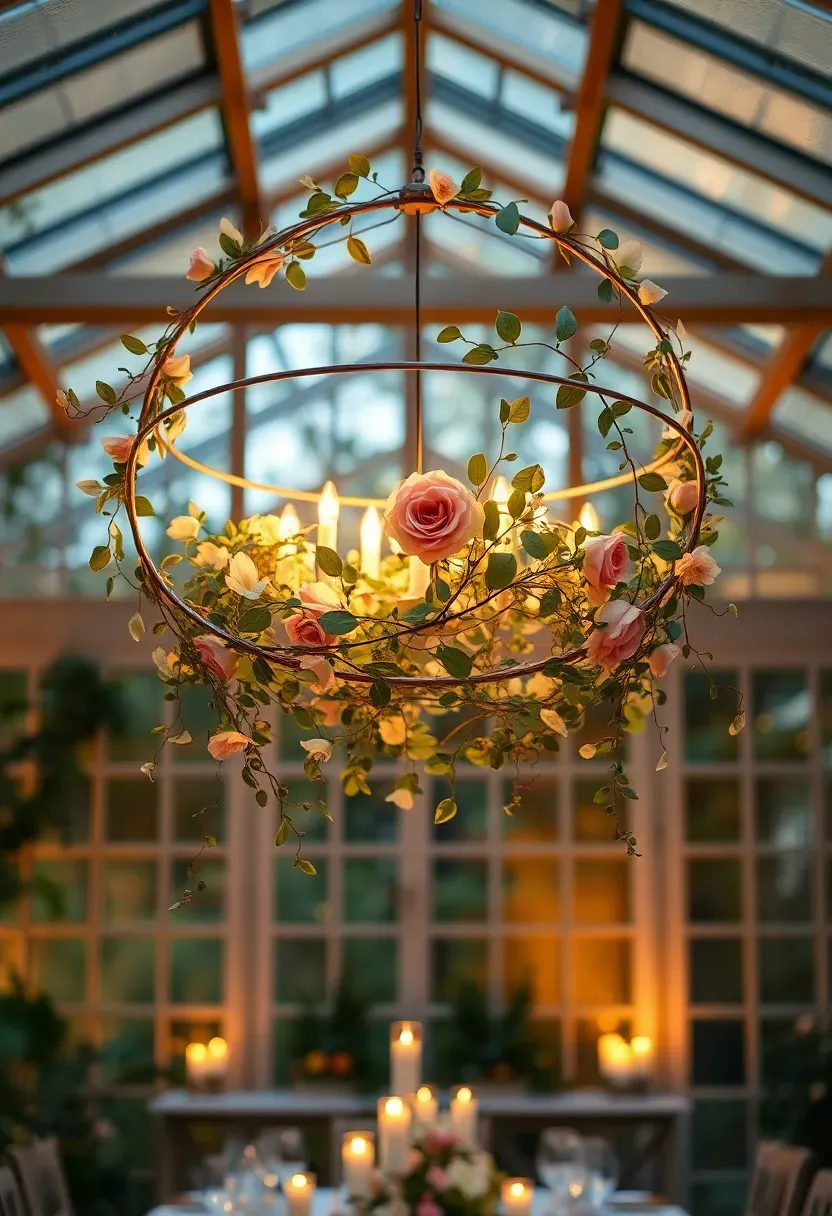
19. Hanging Floral Chandelier
Step 1: Create the base structure. Use a wire wreath ring or metal hoop (16–24 inches diameter) as your armature.
Step 2: Attach water tubes. Zip-tie small water vials around the hoop at 3–4 inch intervals; these keep stems hydrated without a visible water source.
Step 3: Add greenery first. Thread eucalyptus, fern fronds, and ivy through the hoop, creating a verdant base layer.
Step 4: Insert flowers. Push stems into the water vials, working around the hoop to distribute color evenly.
Step 5: Hang and balance. Suspend from a single ceiling hook using chain or thick ribbon, adjusting the three supporting wires until the chandelier hangs level.
What to Watch Out For
- A finished chandelier can weigh 3–5 kg; ensure your ceiling hook is rated appropriately
- Refill water vials daily for multi-day installations
- This style works indoors only — wind will destroy it outdoors
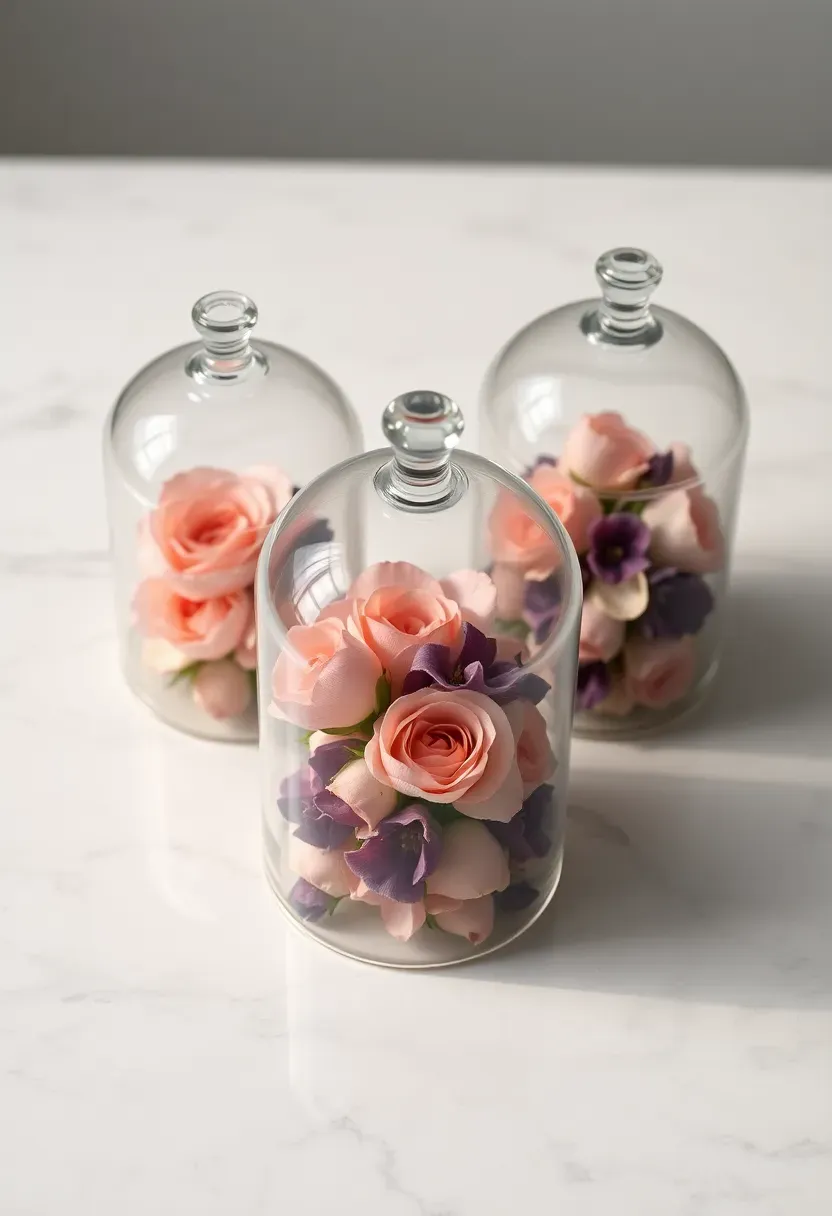
20. Terrarium-Style Enclosed Display
Why Enclosed Works
Glass domes, cloches, and open-top terrariums shift a bloom bar from party decor into something closer to art installation. An arrangement viewed through glass takes on a different quality — more precious, more intentional, slightly mysterious. This format suits intimate settings: a dinner table centerpiece, a library display, a bedside arrangement.
Best Flower Choices
Air plants and small orchids integrate permanently into terrariums. For temporary enclosed displays, use flowers with low water requirements and compact stems: spray roses, muscari, forget-me-nots, and small ranunculus.
Pros and Cons
Pros: Architectural quality, long-lasting, protects delicate blooms Cons: Limited to small-scale displays; not suitable as a large event focal piece
Recommended
Items for this idea
21. Cascading Floral Staircase
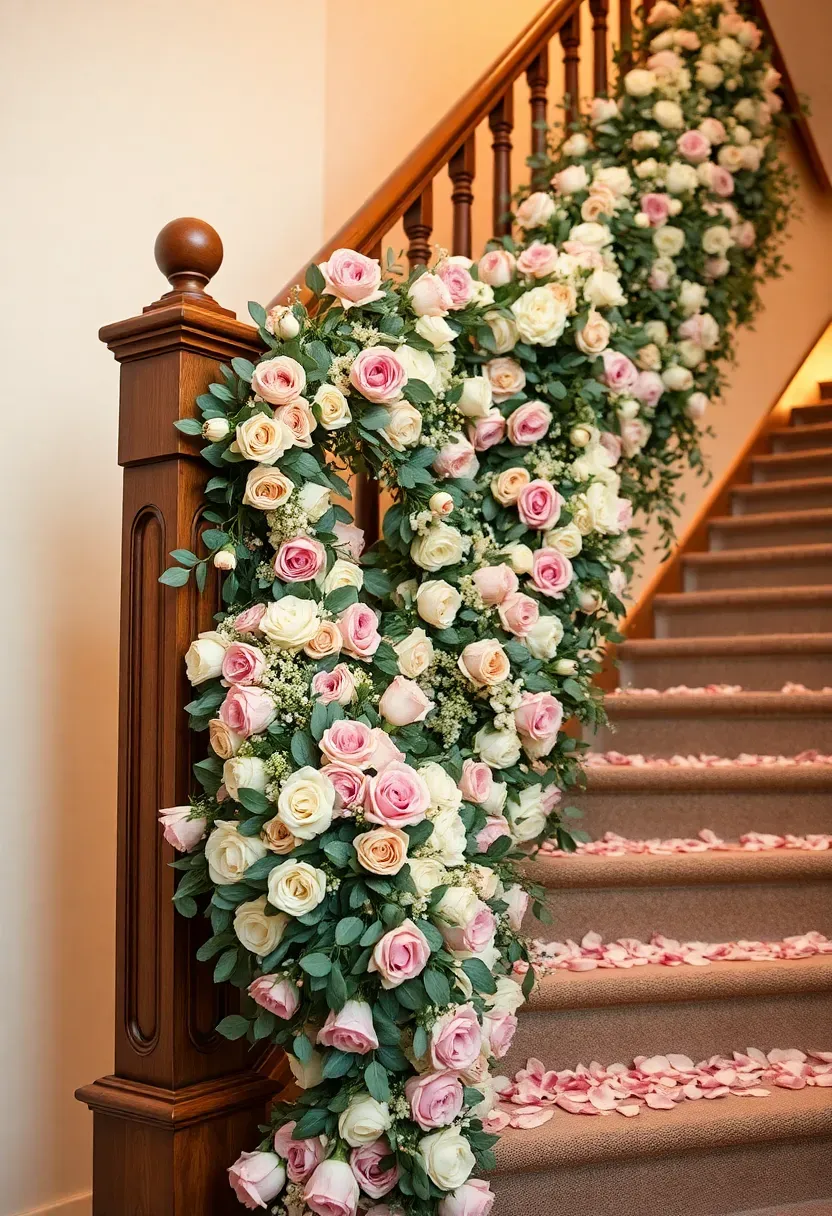
A staircase transformed into a bloom bar is one of the most dramatic floral installations possible in a residential or venue setting. Garlands of greenery and flowers wrap the banister, with clustered arrangements at the newel post at top and bottom. The cascade effect — blooms starting dense at the base and thinning as they climb — draws the eye upward and makes any staircase feel ceremonial. This is a signature look for wedding venues, holiday home decor, and milestone celebration backdrops.
Tips for This Installation
- Use zip ties or floral wire to secure garlands to bannisters rather than tape, which leaves residue
- Start building from the top down so you're not working over a completed section
- Combine fresh garland with pre-made dried or silk garland base to reduce fresh flower quantities
22. DIY Paper Flower Bar
Paper Flowers: The Practical Alternative
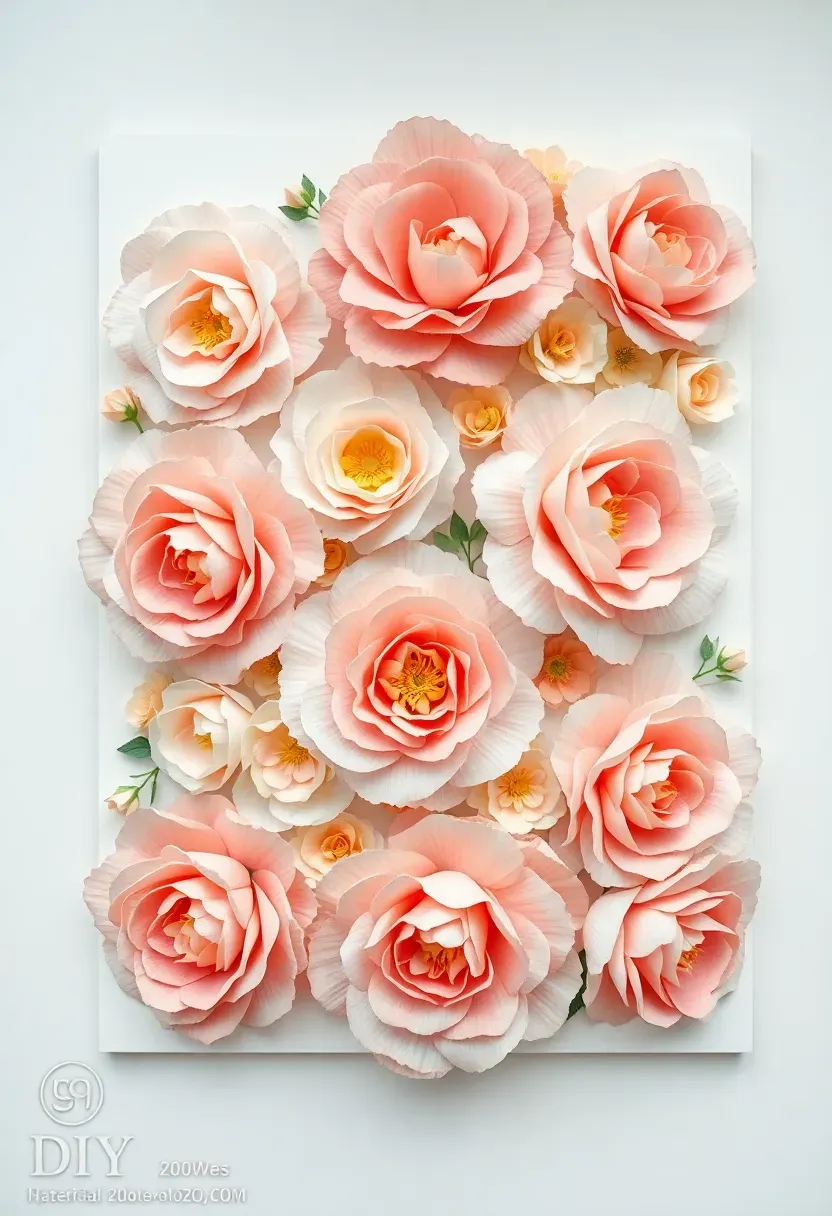
Should you consider paper flowers for a bloom bar? The honest answer: yes, in specific contexts. Giant crepe paper flowers — roses, peonies, dahlias — can be indistinguishable from real blooms in photographs and last indefinitely after the event. They're ideal for outdoor installations that would destroy fresh flowers (heat, wind), for venues that prohibit live plant material, and for budget-conscious setups that still need a dramatic visual.
Getting Started
Paper flower kits are widely available in craft stores. For a basic bloom bar, make 12–15 large flowers (8–12 inches diameter) in a cohesive color palette. Arrange them in a grid or scattered pattern on a foam board or chicken wire frame.
Pros: Indefinitely reusable, unaffected by heat and weather, highly photogenic Cons: Touch reveals the illusion; requires significant craft time to make well
Recommended
Items for this idea
23. Lantern and Bloom Centerpiece Bar
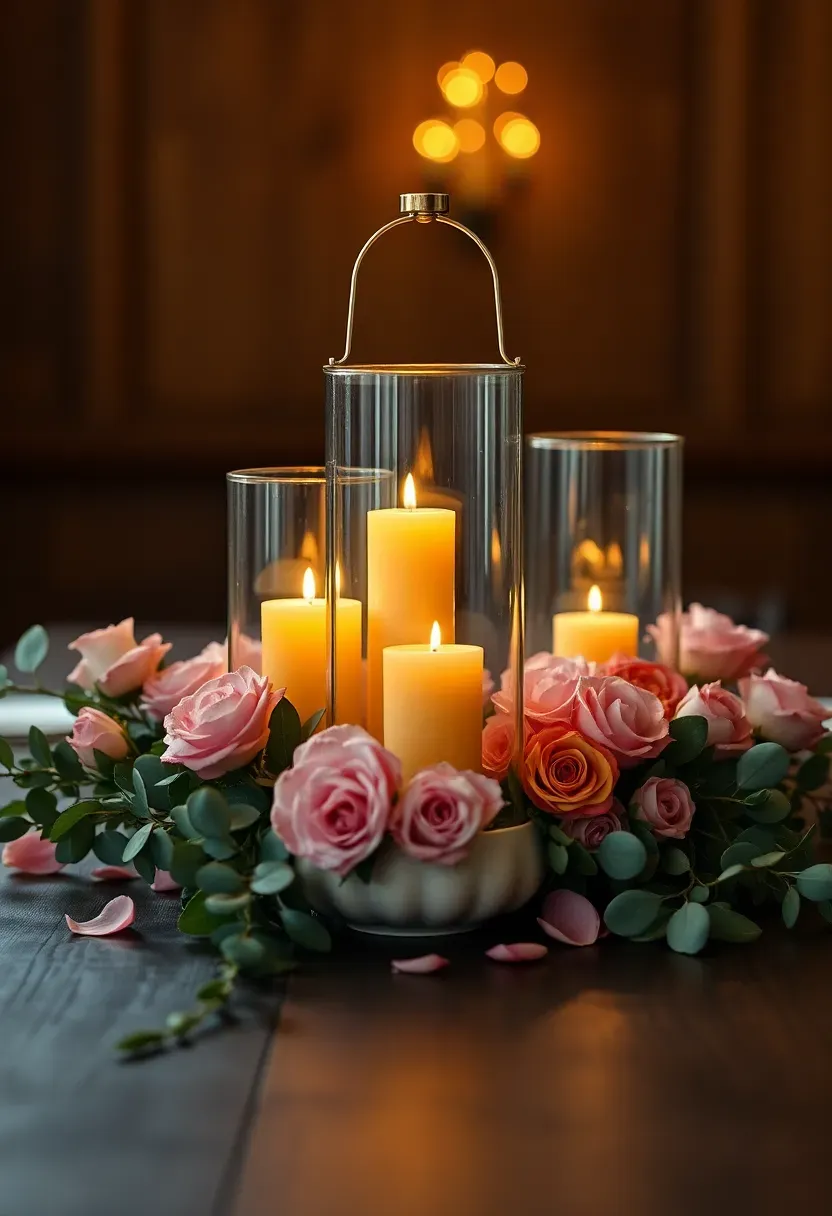
The combination of candlelight and flowers has held human attention for centuries — there's something deeply calming and celebratory about the pairing. A lantern-and-bloom centerpiece bar clusters glass lanterns, pillar candles, and floral arrangements together on a single surface. The flickering light animates the flowers, picking up petal translucency and casting soft shadows through the blooms. Use trailing greenery to connect the lanterns and flower vessels visually so the display reads as one cohesive piece rather than separate objects.
Tips for This Setup
- Never place candles directly inside floral arrangements — fire safety is essential
- Use LED tea lights inside vessels surrounded by flowers if the venue prohibits open flames
- This style works equally well as a table runner or a mantle display
Quick FAQ
Is a bloom bar hard to set up on a small budget? Not at all. Some of the most effective bloom bars rely on foliage, dried botanicals, and single-stem arrangements that cost very little. Eucalyptus, ferns, and dried pampas grass are inexpensive and highly impactful. Sourcing from wholesale flower markets rather than retail florists also significantly reduces costs.
Which flowers last the longest in a bloom bar display? Chrysanthemums, carnations, alstroemeria, and spray roses are among the longest-lasting cut flowers — often 10–14 days with fresh water. Protea, dried botanicals, and succulents last even longer. For multi-day events or permanent home displays, these are the practical first choices.
Should the vessels all match, or is mixing okay? Both approaches work, but they create different effects. Matching vessels — identical bottles in a row, or a cohesive set of ceramic pots — create a modern, curated look. Mixed vessels in various shapes and materials create a more eclectic, gathered-over-time aesthetic. Choose based on your event tone: formal settings favor cohesion; relaxed celebrations embrace the mix.
What's the difference between a bloom bar and a regular floral centerpiece? Scale and intention are the key differences. A centerpiece is a single arrangement placed on a table. A bloom bar is a broader installation — multiple arrangements, possibly a backdrop or arch, sometimes interactive — that functions as both decor and experience. Bloom bars are designed to be photographed, engaged with, and remembered.
Can I set up a permanent bloom bar at home without a huge weekly flower budget? Absolutely. Start with a base of dried or preserved botanicals that never need replacing — pampas, eucalyptus, lunaria — and add just 3–5 fresh stems weekly from a supermarket bunch. Rotating one or two fresh elements keeps the display feeling alive without requiring a full weekly flower delivery.
Trends come and go, but the desire to surround yourself with living, beautiful things is timeless. A bloom bar, whether you build it with $30 of dried botanicals from a craft store or commission a professional installation for a wedding, reflects that impulse beautifully. Start with one idea from this list that matches your skill level and budget — then let the flowers lead you somewhere you didn't expect.
Pinterest cover for 23 Bloom Bar Ideas to Create a Stunning Floral Display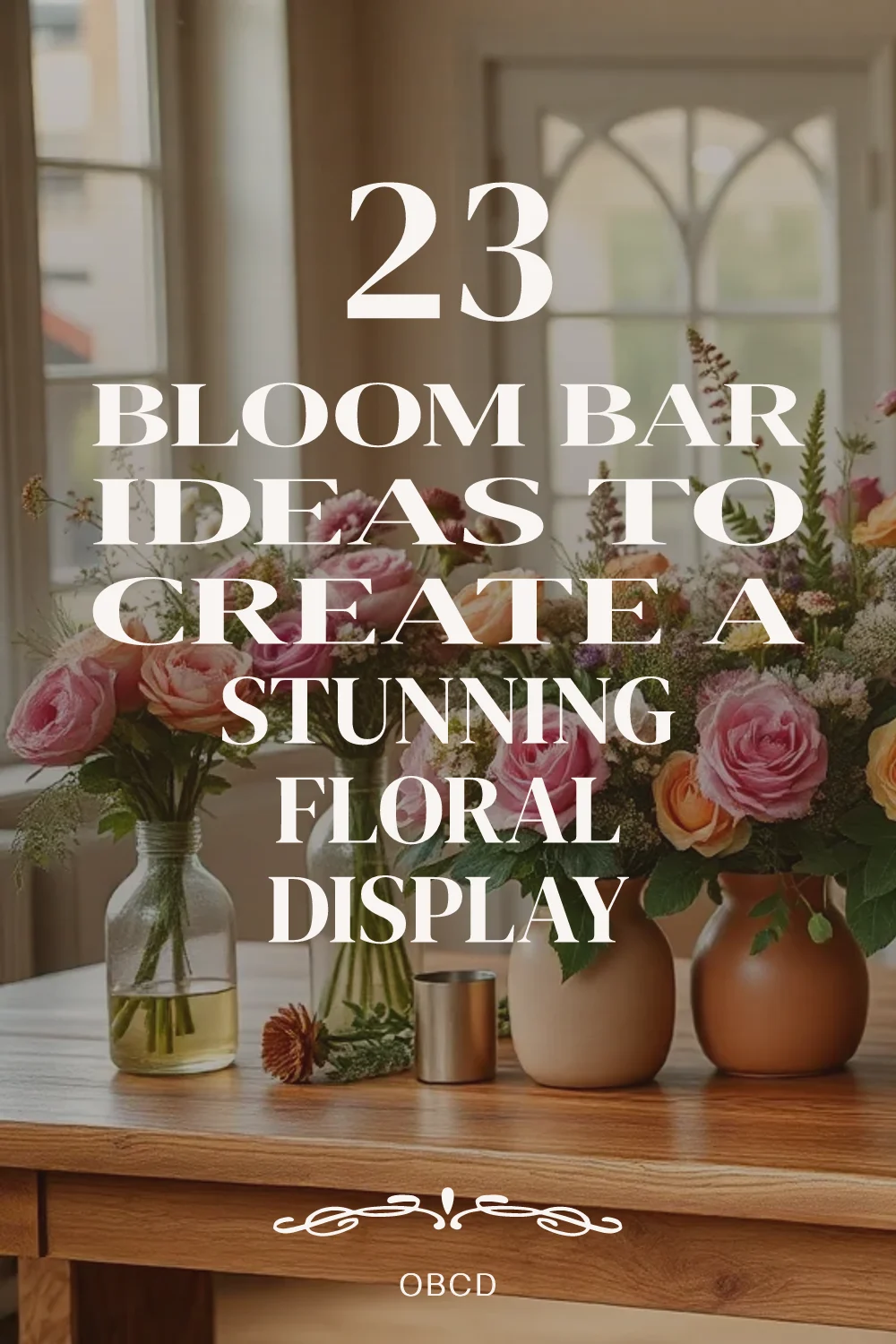
About the author
OBCD
CGI visualization and interior design content. We create detailed 3D renders and curate practical design ideas for every room in your home.